Sibling sexuality: the final offence
The sexual abuse of children by adults has long been criminalised. One grotesque form of it is sexual abuse by a parent, a crime often covered up by both parties. But now a File on Four programme on Radio Four (14 June) explores sexual abuse among siblings Abuse by adults is clearly outrageous and damaging; abuse of children by children is more difficult to pin down. It is not even clear whether sexual activity among children is always abusive. It may be a type of bullying—and sometimes not even that. When perpetrators are children, how do we view the issue of agency? Somewhere in Jane Goodall’s archives, there must be data on sexual activity among pre-adult chimpanzees. If sexual exploration is common among other young primates, where does that leave similar activity among children?
Looking for background, we discovered The Sibling Relationship by Joyce Edward, now 98 and a board member of the New York School for Psychoanalytic Psychotherapy and Psychoanalysis. Her book is not new—it was first published in 2010—but contains material we felt deserved to be better known. See pages 2 and 20.
Will democracy last this decade?
More than half the world appears either to support Vladimir Putin’s murderous campaign in Ukraine or, at least, not find it so offensive as to oppose it. On 21 June, when Volodymyr Zelenskyy tried to speak to the heads of the 55 nations and 1.2 billion people that make up the African Union, only two took part. South American countries (pop. 422 million) are also unenthusiastic about Ukraine, as is China (pop. 1.4 billion), India (pop. 1.38 billion|), Southeast Asia (682 million) and the Arab Middle East (pop. 400 million). That’s 5.4 billion out of a world population of 7.7 billion.
Why the reticence? Arguably, many countries do not wish to back a cause driven primarily by the USA, NATO and Europe, for fear of being seen as cats’ paws. Some are unimpressed by what they see as the West’s sanctimony and its hesitancy about supporting other non-European players, whether in the case of ongoing development or specific challenges such as global aid for Covid; others, including China, are demonstrative about the obligation of state players to mind their own business (not least in the light of Western concerns about China’s treatment of its Uyghurs). Others again, especially in the global South, have aligned themselves so much towards Russia and China, which have bought soft power by investing in infrastructure, that there are disbenefits in turning on their benefactors.

According to Anne Applebaum, whose Red Famine we featured in our last edition, the war is a clash between two different political systems: the idea of respecting state borders and resolving conflict through diplomacy versus a reversion to colonialism where larger states get to dictate the policy and identity of smaller states. The first view has been essentially Western for several
decades, she observes, and it is this that is now being challenged by Russia.

Niall Ferguson adds that Russia’s campaign aims not just to absorb Ukraine but to undermine international Western liberalism: that is, Democracy—a goal that appeals to other countries ruled by authoritarians and anti-democrats. At the same time, the West’s obsession with international liberalism is too abstract for many needy countries who mainly want money. Others are disillusioned with Democracy’s bold claims.
Given Britain and Europe’s centuries of imperialism and America’s ongoing failure to right the wrongs of slavery and black inequality, it’s not hard for Eastern superpowers, with no history of toxic contamination in countries far away, to present themselves as modern redeemers in the face of Western hypocrisy.
Where does this leave Democracy? In this latest issue, we look at why Democracy matters, why it evolved and how it works, from Paul Cartledge’s history of Democracy to Marcial Bóo’s explanation (in our extract) of the fundamental importance of taxation, which in turn is illustrated in more detail in the IMF’s book about the operation of border customs and, in a second IMF book, by research into what is needed to get sub-Saharan countries to develop their economic output by playing by the rules of supranational bodies (which, for decades, seemed to uphold democratic liberal values but are now coming under pressure to pursue or excuse narrower interests).
We also carry a memoir by an American gun industry executive of how he came to extricate himself from a sector overtaken by the NRA-Republican love affair, which we think has implications for the survival of Democracy in the USA.
Books we’d like to commission
Booklaunch runs extracts from books that deserve to be better known. But sometimes, the books we’d like to include don’t seem to exist. There are gaps.
Since we now publish our own books, we’re therefore flagging up topics we’d be interested in commissioning. If you or someone you know is covering any of the following, please get in touch. Call us about publishing other books too. We’re here to help.

Do liars believe their lies?
Long before Russia’s assault on Ukraine, its leader was fabricating lies about its historic entitlement to Ukrainian land, its superior claim on Ukraine (rather than the other way round), and the Nazi credentials of its Ukrainian cousins, not to mention NATO’s imperialist ambitions and its own innocence and good faith. When politicians lie, how much reality do their falsehoods have for them? Are they privately scornful of those— in the church or media, for example—who echo what they say? Can they build sound political strategy on falsehoods? And does a time come when the burden of untruth is so overwhelming that it collapses?
How do we end a war?
Much has been written about how wars start; how do they stop? Do the strong always win? Aggressors may end wars by erasing an enemy, as Putin has erased the Donbas. What does it take for an aggressor to stop fighting, back down and go home? Wars are hard to walk away from. The investment in them has to be justified. Reputations are on the line. So is survival. How can the little guy beat the big guy? How can the good beat the bad? Answers sought.
Where are the political psychologists? When we have trouble in our social relations and cognitive processes, psychologists are there to help. But when countries come apart, they’re liable to come to blows. National politics, too, is designed to be confrontational. And there’s nothing more rancorous than local politics. Universities teach political psychology—but to students, not to those in power. What would it take for politicians to accept help in settling disputes?
Help fund Booklaunch for readers abroad Overseas readers in economically depressed regions are crying out for better reading matter. Can you help fund supplies of Booklaunch to British Council offices, for local distribution?
Email book@booklaunch.london
EnvelopeBooks is looking for crowdfunders to sponsor new titles. If interested, email editor@envelopebooks.co.uk for details.
Booklaunch A digest of important new books in their own words. For readers who want to know more about more. Subscribe today. Issue 15 | Summer 2022 | £4.50 where sold We welcome enquiries from publishers and authors www.booklaunch.london ON OUR INSIDE PAGES 2 Sibling sexuality 3 Government report on illicit finance 4 The history of democracy 5 The rules of democracy 6 How Customs works 7 Inside US gun culture 8 Tackling sub-Saharan corruption 9 Life in war-torn Serbia 10 Mythologies of the Middle Ages 12 What happened to Thebes? 13 Arcadia and mythology 14 Geoffrey Grigson as BBC producer 15 Stalin’s pet architect 16 Linguistic mysteries and Kinder Eggs 17 Betjeman’s England on TV 18 Crowdfunding two new novels Booklaunch Booklaunch Literary Challenge “Relay Race” Set by Maggie Bawden booklaunch.london Readership 51,000 UK copies plus website users Booklaunch Booklaunch Literary Challenge No.4 “Relay Race” Set by Maggie Bawden A favourite game in our family involves making up name chains where the last surname becomes the next first name, thus Upton Sinclair Lewis Carroll Nye Bevan … or Leslie Stephen King Charles Kingsley Amis. I challenge you to produce the longest string, using famous names— or, if you prefer, literary works (This Side of Paradise Lost Horizon …). Want a harder challenge? Why not limit yourself to only male or only female writers, or see if your chain can lead back to where you started. Email your entry to comp@booklaunch.london putting “Comp4” in the subject booklaunch.london @booklaunch_ldn booklaunch.london @booklaunch_ldn
VISIT OUR BOOKSHOP
In our centre-page spread, we feature an extract from The Fantasy of the Middle Ages, brought out to accompany an exhibition at the J. Paul Getty Museum in Los Angeles from 21 June to 11 September. The book explores our numerous interpretations of medievalism over the centuries. Seen here, a still from The Queen of Medieval Times, Buena Park, CA Casey Sykes/Atlanta Journal-Constitution via AP.
Sibling sexuality: the last taboo to find a voice. How can it affect later lives?
Sexuality between siblings ranges from those early investigations children make of each other’s bodies to satisfy their curiosity, to touching and fondling in ways that provide some sensual pleasure, to more overtly sexual activities such as mutual masturbation and finally to coitus.
Sexual play, sexually tinged activities and erotic fantasies are thought to be commonplace among siblings (Parens 1988). Their psychological impact may be favorable or harmful and in some instances both, depending upon a variety of factors. The outcome depends, among other things, on whether the exchanges are consensual or forced and whether the relationship between the siblings is positive or discordant. Other influential factors include the nature of the acts, the ages and developmental levels of the children involved, the differences in age between the siblings, the emotional well-being of the family as a whole, the psychological strengths and vulnerabilities of each sibling, the accompanying fantasies, and the way each child subjectively experiences the encounters. Also of consequence are the secrecy with which the acts are carried out, the parents’ reactions if they are discovered, and
whether the sexual play or activity is occasional or is a regular occurrence spanning a lengthy period of developmental time and occupying a central place in the lives of the siblings.

The impact of early sexual play

In his study of 796 undergraduates at six New England colleges, David Finkelhor (1980), director of the Family Violence Research Program at the University of New Hampshire, found that 10 percent of the males and 15 percent of the females reported some type of sexual experiences with their siblings. Fondling and touching of the genitals were the most common activities reported. The respondents were equally divided between those who considered their experiences negative and those who thought them positive. (Finkelhor believed that there were probably many more students in the study who had sexual experiences with their siblings, but they were reluctant to share this information.)

Several psychoanalysts have suggested that under certain circumstances limited sexual behaviours can, in fact, serve developmental purposes. Melanie Klein (1937), for example, found that such exchanges, when consensual and occurring in the con-
text of a positive relationship, may help to promote capacities for relating and loving. Marie Bonaparte (1953), a French psychoanalyst, observed that in the case of some girls who feared sex as something destructive, limited sexual activities with a caring, supportive brother allayed their concerns and facilitated their move from their oedipal love for a parent to persons of their own generation.
Yet, Bonaparte (1953) also wrote of the deleterious impact of such activities. She pointed, in particular, to the danger of passivity in boys who are seduced by their sisters. Freud provided an example of this in his case of the Wolfman (1918), whose passivity he attributed to his sister’s involving him in showing and looking at each other’s bottoms, and later his allowing her to touch his penis. Bonaparte was also concerned about the responses of parents to their discovery of their children’s sexual involvement. She wrote of a young woman patient who had many lovers but was unable to reach orgasm with any of them. Her sexual inhibitions proved to be partly related to her mother’s severe punishments when she discovered the patient and her brother in sexual play. For this woman, each
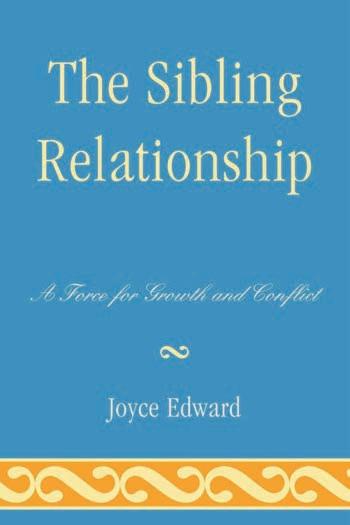
THE SIBLING RELATIONSHIP A FORCE FOR GROWTH AND CONFLICT JOYCE EDWARD
(Rowman
Softback, 234 pages 2012 9780765707338
Jason Aronson Inc.
& Littlefield)
To findoutmorecallClaireWalkeron 02072220605, email: legacy@nationalchurchestrust.org, visit: nationalchurchestrust.org/legacy or completethe couponbelow. IADORECHURCHBUILDINGS. They ’rehauntinglybeautiful, evocativeandstirsuchpowerfulemotions.Andthey ’vealways playedanimportantpar tinmylife. Buttime takesitstollonallof us andchurchesare no exception. Many arethreatenedwithleaking roofs, crumblingstonework andthe consequencesofrepeatedclosuresduringthepandemic. Churcheshavebeen keyplaces fo Covid-19,butoncetheyare gone,they’llbegone forever. Last year,giftsin WillsenabledtheNational ChurchesTrust to remove 26 historic churches from HistoricEngland’s At Risk register Alegacyfromyou canhelpsave even more Please sendmedetailsaboutleaving alegac ytotheNationalChurches Trust.(Pleaseaffix astamp.) Title Forename Surname Address Postcode ReturntoClaireWalker, NationalChurches Trust, 7TuftonStreet LondonSW1P3QB. Pleaseseeourprivacypolic yatwww.nationalchurchestrust.org/privacyastohow we hold yourdatasecurelyandprivately. Youwillnotbeadded to ourmailinglistand we willonlyuse yourdetails to send youthisspecificinformation. RegisteredCharityNumber:1119845 “Churchesaresuch heavenlybuildings. Yourlegac ywill helpkeepthem flourishingonearth.” Forpeoplewholove churchbuildings St Ma ry ’s and Al lS ai nt s’ Church, Fo theringha y, Northamp to nshi re ©B ob St ew ar t. BLSPR IN G22 PAGE 2 | BOOKLAUNCH ISSUE 15 | HUMAN SEXUALITY Subscribe today — www.booklaunch.london and access our online archive Nick Page | 07789 178802 | page@pagemedia.co.uk | Advertising
BrianBlessed,Ac tor, Writer andPresenter
continued on page 20
London’s role as a global financial centre is tarnished by its reputation as a hub for illicit finance. The consequences for our national security and the integrity of our institutions and services are laid bare by the current war in Ukraine; assets laundered through the UK are financing President Putin’s war in Ukraine. This interim report assesses the consequences of the complacency of successive Governments towards illicit finance and the adequacy of the current Government’s response.
The Economic Crime Act establishes a register of beneficial ownership of overseas
known, spreads corruption across the United Kingdom and costs every home and every community. It undermines our national security by supporting corrupt and autocratic regimes around the world, subverts our rule-of-law systems to hide and protect ill-gotten assets, deprives the world’s poorest communities of resources, prices citizens out of our housing market and infiltrates our academic and democratic institutions. It encourages fraud at home and sees British people, in the UK, victims of the spread of regimes that murder so many of their own people. Providing a haven for corrupt assets also, acknowl-
left itself unprepared to act internationally and hamstrung domestically. The war in Ukraine has shone a harsh light on the risks to which the UK has exposed itself— and the world—by taking a lax approach to dirty money; only now are we seeing a shift in gears from the Government. We regret that it has taken a war to persuade the Government to engage meaningfully with illicit finance as a foreign policy issue.
4. Our inquiry into illicit finance is the first in a programme of work on issues affecting the “rules-based international order”, the international institutions, rules and norms that shape our everyday life.
own measure “there is a realistic possibility that the scale of money laundering impacting the UK annually is hundreds of billions of pounds,” washed clean until it is “to all intents and purposes now apparently legitimate”.
7. We have long known of the particularly acute threat linked to the kleptocratic Russian state and have called for “coherent and pro-active strategy on Russia”. Kremlin-backed oligarchs rely on the Western financial system to protect their assets, which in turn support the “nefarious interests of the Russian state” at home and abroad. The ignominious role that London

Surprise! One of the best monitors of government is government
property and reforms Unexplained Wealth Orders. While welcome, we conclude that the measures in the Act do not go far or fast enough and do little to address the fundamental mismatch between the resources of law enforcement agencies and their targets. We call on the Government to increase substantially funding and expert resourcing for key law enforcement agencies.
Despite the Government’s threats to impose swingeing sanctions against Russia, the UK’s sanctions regime was found to be underprepared and under-resourced. Furthermore, the Government appeared to lack a grip on both the enablers of potential sanctions targets and, crucially, their proxies to whom wealth was transferred. We recommend that the Government provide the sanctions unit with the necessary additional resources for the duration of the Ukraine crisis as well as working to develop a professional sanctions cadre within the FCDO.
Illicit finance is a transnational challenge that exploits the space between legal jurisdictions. Building on the coordination and cooperation over the war in Ukraine, we urge the Government to develop a comprehensive transatlantic partnership to curb kleptocracy.
We regret that it has needed a war for the Government to make progress on longpromised plans to tackle the flows of illicit finance through London and beyond. Further action is now needed to ensure that those with dirty money no longer have a place to hide it.
Introduction
1. Illicit finance, as dirty money is politely
EDITOR’S NOTE
edges the Government, “tarnish[es] our global reputation”.
Illicit wealth from kleptocratic post-Soviet states and other corrupt foreign regimes has long been welcomed in London, and in the Crown Dependencies and Overseas Territories, without question. Despite repeated calls for action, including that of our predecessor Committee in its Moscow’s Gold report of 2018, there has been little commitment on the part of successive governments to tackle the problem.
With the invasion of Ukraine by Russia, there can no longer be any excuse for continued inaction. After 9/11 there was a concerted effort to degrade and deny access of terrorists to the global financial system. Domestically, the CONTEST strategy was ultimately presented as a whole of government effort to prevent, pursue, protect and prepare, to mitigate the impact of attack. This is precisely the approach we now need to combat economic crime, which seeks to use our financial and economic trading system to manage the resources used for state-led warfare.
2. The Integrated Review named Russia as the “most acute threat to our security”. The unprovoked and unjustified war of aggression in Ukraine has borne this out. We condemn the misery and violence President Putin is inflicting on the Ukrainian population and [stand] in solidarity with President Zelenskyy in his defence of Ukraine’s sovereignty and territorial integrity.
3. Ukraine has also “ignited a global reckoning over the dangers of kleptocracy and the international community’s decades-long complicity”, illuminating how the UK has
We all need to be better informed about what our government gets up to, and we all take too little notice of its own internal self-scrutiny. One excellent example, crying out for greater attention, is the reporting of the Foreign Affairs Committee. The FAC, currently made up of six Conservative MPs, three Labourites, one SNP member and an Independent, examines the spending, operations and policy of the Foreign, Commonwealth and Development Office and bodies associated with it, including the British Council.
We carry, here, a damning extract on what the FAC called “illicit finance” in the context of Russia’s war on Ukraine. In the last few months the FAC has also reported on “ Government policy on Afghanistan” (24 May), “Nigeria and the Integrated Review” (29 April), and “The FCDO’s role in blocking foreign asset stripping in the UK (5 April).
This interim report is a stocktake, assessing the Government’s progress on illicit finance since Moscow’s Gold, looking at the UK’s response to the Ukraine invasion in February, as well as the subsequent legislation on economic crime passed in March. Our final report will consider the wider, systemic illicit and emerging financial threats and innovations that are transforming the global economic and financial system, and how countries are competing to shape the system of the future. …
1. Inaction on illicit finance 6. Illicit finance, and the corruption it fuels, is a recognised threat to the UK’s national security and to democracies worldwide, through the corrosive effect it has on our institutions, our politics and our financial systems. A concerted push was made to tackle the UK’s role in illicit finance and corruption, both domestically and globally, following the 2016 Anti-Corruption Summit, but progress on this agenda has since stalled. Committees have continued to call for action, with our predecessor warning that “[c]ombating it should be a major UK foreign policy priority” and “stronger political leadership” was needed. Highlighting the years of inaction, the Intelligence and Security Committee said the “level of integration—in ‘Londongrad’ in particular— means that any measures now being taken by the Government are not preventative but rather constitute damage limitation.” Meanwhile, think tanks, NGOs and academics have continued to document the ways in which illicit money flows unimpeded into the UK economy. By the Government’s
and the Crown Dependencies and Overseas Territories (OTs) have played in undermining the integrity of our institutions and financial systems, as well as the UK’s international relationships, is no secret. In spite of the warnings about the cost of inaction, years of complacency from successive governments have led to an integration of kleptocratic Russian wealth into the foundations of our economy, with the Foreign Secretary admitting there had been a “decade of drift” on Russia.
Economic Crime (Transparency and Enforcement) Act 2022
8. Since the 2016 Anti-Corruption Summit in London, Members across the House have campaigned for legislation to fight the flows of dirty money. The Integrated Review raised hopes as it set out a serious case for prioritising corporate transparency and tackling corruption; legislation intended to contain measures for “use of UK corporate structures in facilitating high end money-laundering [ ... ] incorporate reform of Companies House registration and limited partnerships, and introduce a register of overseas entities owning property in the UK” was promised, although the priority to which the government accorded this action was repeatedly blunted by only committing to take action “as soon as parliamentary time allows”. A 2019 consultation on reforms to Companies House has only now led to the publication of a White Paper. The Committee underlines the imperative of implementing beneficial ownership rules and robust reform of Companies House, including new
continued in STATECRAFT | BOOKLAUNCH ISSUE 15 | PAGE 3
the book
THE COST OF COMPLACENCY ILLICIT FINANCE AND THE WAR IN UKRAINE FOREIGN AFFAIRS COMMITTEE (TOM TUGENDHAT, CHAIR, AND OTHERS)
of Commons 30 June 2022, 47 pages https://committees. parliament.uk/publications/ 22862/documents/167820/ default/
House
The attraction of these and other government documents lies not just in their range and detail but in their objectivity and, perhaps surprisingly, their clarity of expression. One other quality commends them to the innocent seeker after truth: they can all be accessed free of charge, not something that was the case in the days of the HM Stationery Office. www.booklaunch.london and access our online archive — Subscribe today Advertising | Nick Page | 07789 178802 | page@pagemedia.co.uk
EDITOR’S NOTE
Modern “evolved” democracy, such as it is, is far from Athenian democracy, and needs to be constantly tended, says Paul Cartledge. It is damaged by the demagoguery of the Left (qv former UK Labour leader Jeremy Corbyn) and of the Right (qv former US President Donald Trump), and both have had a ripple effect on the wider world. The appeal of crude emotionalism and nationalism over fact-based analysis not only undermines the merit of democratic liberalism as the most beneficial form of government but leaves it vulnerable to underinformed distrust. This book needs to be read.
READERS’ COMMENTS
Josiah Ober: A passionate and erudite biography of a revolutionary idea that became a way of life.
David Runciman: Reminds us how much we still have to learn from the ancient Greeks.
In the United Kingdom of Great Britain the leading intellectual and political opponent of the French Revolution—though not, a little surprisingly, of the American Revolution—was the Dublin-born Anglo-Irishman Edmund Burke (1729–1797). In the privately expressed view of his fellow parliamentarian and fellow member of Samuel Johnson’s Literary Club, Edward Gibbon, Burke was ‘the most eloquent and rational madman that I ever knew’. Burke placed his eloquence long term in the defence of the principles of representative government, as opposed to government by delegated elected officials; his 1774 Speech to the Electors of Bristol at the Conclusion of the Poll had made that plain quite early on in his career. But as to representative democracy, Burke shared pretty much the same three basic objections that had been voiced against democracy in its original, direct Greek form. First, ‘the people’—meaning non-elite, non-aristocratic persons—lacked the requisite intelligence
democracy—the socialised (sometimes also socialist) version of liberal democracy. But he was no democrat in any ancient Greek sense. Unarguably, the kind of democracy he believed in and advocated was of the representative, not direct, variety. Against Paine, in a friendly written exchange of 1791, the French revolutionary Emmanuel-Joseph Sieyès (1748–1836) pertinently observed that it wasn’t and couldn’t possibly be democracy that he was promoting, since the people would be unable to speak or act except through their representatives. He himself, like Paine, was all for representative government, but, unlike Paine, wished to distinguish in theory and on principle between a representative regime and a republic—of which latter form he too was equally fervently an advocate.

Paine himself, however, never stood for office and so missed the chance or the necessity of attempting to translate his political ideas into mundane parliamentary practice. A younger contemporary and com-
principal critic (or calumniator), Plato; this was also an integral part of his very nineteenth-century linkage of democracy with intellectual progress, to which he allied also a defence of the necessity of rhetoric as a means to enable ordinary people to make up their minds and thereby give their genuine consent to political decisions.
But although Grote did more than anyone to rehabilitate the ancient Athenian democracy, he did so as a historian, and not as an advocate of a return to Athenian-style governance. Like Paine, but even more like his friend and disciple John Stuart Mill (1806–1873), Grote believed in representative, not direct democracy. Grote’s History appeared in instalments over a ten-year period and at once attracted fierce criticism. Equally fiercely, Mill leaped to Grote’s defence, both intellectually and politically, in a telling series of reviews published in the Edinburgh Review. For example, he wrote: ‘The Athenian Many, of whose irritability and suspicion we hear so much, are rather to
Beware: democracy is at risk from crypto-oligarchs and non-rational emotion
and knowledge to be capable of exercising proper governance. Second, common people—unlike, ex hypothesi, members of the social-political elite—were congenitally incapable of resisting the passions that were all too easily and dangerously aroused by demagogues, and such passions were likely to be directed against established traditions and institutions, in particular those of conventional religion. Third (shades of both Xenophon and Plato), democracy was for him intrinsically a form of collective, majoritarian tyranny—wielded heavyhandedly against minorities whose views were deemed unpopular.
It was against Burke’s Reflections on the Revolution in France (1790) that Thomas Paine penned in 1791 his Rights of Man, an appropriately eloquent defence of not only liberal but also representative democracy. He completed his three-pronged programme for radical political reform— Common Sense had been published in 1776—with The Age of Reason, a religion-focused tract published in three parts (1794, 1795, 1807). Or rather it was an anti-religion tract, subtitled An Investigation of True and Fabulous Theology. This was a source for nineteenth-century free thought that kept on giving. As Edward Thompson brilliantly commented, Paine ‘had taken the polite periods of the comfortable Unitarian ministers and the scepticism of Gibbon, translated them into literal-minded English, and thrown them to the groundlings. He ridiculed the authority of the Bible with arguments which the collier or country girl could understand’. It was not of course necessary to be an atheist or freethinker to be a good democrat, but, if the goal was to open politics to the hitherto disenfranchised working man and woman in an inclusively egalitarian way, then Paine’s nostrums offered a viable if not painless programme.
By contending that all citizens could and should be protected by the State against the predictable hazards of poverty and insecurity, Paine arguably became, together with the French Marquis de Condorcet, a plausible if distant founding father of social
patriot of his, George Grote (1794–1871), did just that, and a great deal more besides. He is the principal subject, if not hero, of this final chapter in our life of democracy. Grote was educated in Classics at Sevenoaks and Charterhouse schools, but did not go on to university. Instead, he helped to found one: the University of London, initially just University College, in 1826. He came from a banking family, and worked for a while in the family bank, but between 1832 and 1841 he served as an elected Member of Parliament (MP) at Westminster, where he joined a tendency sometimes known as the Philosophical Radicals.
These were momentous times: the first Reform Act was passed on his watch in 1832, and extended the franchise to an appreciable degree. From the 1830s to the 1850s the movement for a People’s Charter—calling for manhood suffrage, pay for MPs, and secret ballots—gathered and then lost a head of steam under the leadership of William Jones. In 1839 Welsh Chartists, including Jones, actually led an armed uprising against Newport that resulted in more than twenty deaths. But the Chartists were ahead of their time, even if they made some impression upon Karl Marx and his Communist Manifesto of 1848. By that time, however, and clearly with a sense of relief, Grote had withdrawn from what Edward Gibbon, a historian-parliamentarian predecessor, had called a ‘school of civil prudence’, and taken up once again his bookish historical studies. For his History of Greece, eventually published in twelve volumes (1846–1856), had been begun as early 1822, when he was not yet thirty.
However, Grote was also, and from our standpoint most importantly, a pioneer in the re-evaluation of ancient Athens as a democracy. Grote, for example, did not shrink from defending the institution of ostracism that had attracted such ire from Aristotle onwards. He also spoke up in defence of the Athenians’ treatment of their leaders. As a specialist in ancient philosophy, he devoted a whole long chapter to a defence of the Sophists against their
be accused of too easy and good-natured a confidence, when we reflect that they had living in the midst of them the very men who, on the first show of an opportunity, were ready to compass the subversion of the democracy’. This was in reference to the so-called Thirty Tyrants, who reigned with terror from 404 to 403, but could be applied equally to the briefer but not much less terroristic regime of the Four Hundred in 411.
Mill himself not only approved Grote’s take on the ancient Athenian democracy but, unlike his mentor, went back to ancient Athenian democracy to help him formulate certain aspects of his own theory of democratic government. Thus was unwittingly created what has been dubbed the ‘myth’ of ancient Athens—as a model for today.
Yet actually Mill (like Tocqueville and Burke) greatly feared what he envisaged as the tyranny of the unenlightened, ignorant, fickle majority, and he was therefore, like Grote, much keener on representative than direct democracy. Indeed, so much keener was he that in Representative Government (1861) he elaborated a theory of what, and how, parliamentary representatives—as opposed to delegates—should represent. That work further developed the notions of ‘liberal’ democracy that he had expressed in his 1859 essay On Liberty: liberty of thought and discussion, limits set to the authority of society over the individual, and promotion of individuality. That essay was the proximate ancestor of Isaiah Berlin’s theories of negative and positive liberty.
For well over a century Mill’s version of democracy—Greek-inflected but not Greek-infected, if I may so put it—prevailed, as the only viable model on offer within the context and increasingly globalised presence of liberal, representative, parliamentary democracy. Or, as Winston Churchill famously put it in the House of Commons on 11 November 1947 (Armistice Day):
Many forms of Government have been tried, and will be tried
PAGE 4 | BOOKLAUNCH ISSUE 15 | POLITICAL PHILOSOPHY
DEMOCRACY A
PAUL CARTLEDGE OUP Oxford Softback, 416 pages 2018 9780198815136 RRP £12.99 Available from www.booklaunch.shop continued in the book
LIFE
Subscribe today — www.booklaunch.london and access our online archive Nick Page | 07789 178802 | page@pagemedia.co.uk | Advertising
Democracy has to update itself. That means getting its precepts to work better
Taxation has existed since at least Ancient Egypt. Pharaohs toured their kingdoms twice a year to collect a fifth share of all crops, or the labour of those too poor to give up their food. The Romans taxed wealth and property, including land, homes, slaves and animals, at the rate of 1 per cent a year, rising to 3 per cent at times of war. The first modern income tax was introduced in Britain in 1798 to pay for war against France at a rate of 1 per cent on annual incomes of over £60 (around £7,000 today) and up to 10 per cent on incomes over £200 (£26,000 today). Abraham Lincoln signed income tax into law in the US in 1861 at a flat rate of 3 per cent on all income over US$800 (about US$22,500 today).
These funds paid for activities that individuals in a community could not provide on their own. Instead, resources were pooled.
Early taxes were used to raise funds for war so that communities could protect themselves. Later, taxes paid for roads, aqueducts and drainage that brought benefits to whole communities. Today, by pooling our resources through taxation, we share benefits with others in our community. Our children are educated, our sick are treated and our elderly cared for. We travel safely and quickly to work. We enjoy the beauty of our natural environment. And we gather together in public places to appreciate history, music and the arts.
We pool our resources through taxation to stop bad things happening, whether violence, natural disaster, theft, poverty or disease. And we pool our resources to make good things happen too, including economic development, education, transport, clean air, parks and culture. It is easier to see the public goods that our taxes have bought: schools, hospitals and national parks. It is less easy to see the absence of the public bads, although we benefit from them, too. In the UK, we are rarely assaulted on the train or bus, or contract typhoid from contaminated food, or walk past human faeces or dead dogs. These events are avoided in part because, over many decades, politicians have invested our taxes in preventing them or reducing their likelihood.
But few of us like paying taxes. We often try to reduce the amount we pay. Accountants may advise us to put money into our pension or to give money to charity to reduce our taxes. Companies can be creative in their tax avoidance, including by moving profits to different tax jurisdictions to pay as little as possible. Google, Amazon and Facebook pay only 10 per cent tax on their profits in Europe compared to the 23 per cent paid by most other companies. In 2014, Apple sent profits to Ireland where it paid a 0.005 per cent tax rate, 2,500 times less than the 12.5 per cent corporate tax rate. Qualcomm, another tech giant, posted most of its profits in Singapore to get tax breaks, although its business is mostly in China and the West. Amazon posted its profits to Luxembourg for the same reason. Alibaba, a US$56 billion Chinese tech firm, is registered for tax in the Cayman Islands. Over 61 per cent of multinational companies report zero profit in the UK and pay no tax at all. A quarter of all the profits from US
multinational companies are posted to low tax countries, depriving US communities of between US$100 billion and US$155 billion of tax revenue between 2010 and 2019.
These and other firms lobby tax authorities to change tax rules in their favour. It is a big industry. There are 12,000 full-time lobbyists in Washington, DC alone putting their company’s case on tax and other issues. In 2019, US$3.5 billion was spent on all lobbying in the US, including US$7 million by Apple. The result is a variety of minor, and not so minor, tax exceptions and exemptions, with rebates to particular companies or to particular products or to particular areas. Common tax exemptions around the world include those for people who are soldiers, religious leaders or who start businesses in poor communities.
As a consequence, those who have more money tend to pay less tax, proportionately, than those who earn less. Yet rich and poor alike benefit from the same roads, public health, crime prevention and rubbish collection that are paid for from everyone’s taxes.
There are other ways we avoid tax. We may fail to declare the extra income from renting out a spare room or pay a builder or a cleaner in cash to avoid sales tax. This kind of tax evasion is illegal in most countries but it is commonplace, such that ‘black markets’ can be very large indeed. The underground economy in the US is worth about US$2 trillion a year, or about 5 per cent of all economic activity. In Greece and Italy, the illegal economy is said to amount to as much as 20 per cent of these countries’ wealth. In other countries it is higher still, amounting to between a fifth and a quarter of world GDP. As these transactions are untaxed, the individuals involved can benefit financially from the trade between them, while everyone else pays for the cost of creating the legal, economic, social and financial frameworks that make these transactions possible. Those people worth over US$40 million have been found to evade around 30 per cent of their taxes. Worldwide, the IMF estimates that the amount lost to communities from tax avoidance is between US$240 billion and US$600 billion a year.
Taxing a community thus becomes an endless game of hide and seek that pits its members against each other. We may each accept that taxation is necessary in theory, but we don’t want to pay much of it ourselves in practice. Tax authorities therefore try to take our money in ways that are hard to spot and harder to avoid. They design the tax system to be complex and opaque. Germany has 118 tax laws and 96,000 tax regulations. The US has 1,177 separate tax forms. The complexity creates loopholes around which accountants, lawyers and tax inspectors do battle.
The cost of this game of hide and seek between countries and companies is enormous, both in time and money, with different countries played against each other too. Each taxpayer in the US spends on average 12 hours and US$261 each year on their tax return. In Australia the same process takes each taxpayer 4 hours and AU$170 a year. Multiplied by millions of taxpayers, this is a lot of money. The cost
of tax compliance in Germany, where rules are particularly intricate, is €7 billion a year, or about 3.5 per cent of the country’s overall tax revenue.
These costs have long been recognised, with many attempts at tax simplification. In the UK, the Chartered Institute of Taxation has worked since 1930 to promote a better, more efficient tax system, and an Office of Tax Simplification was set up in 2010 to give the government advice on the matter, with mixed success. Simpler taxes may not be fairer for certain groups, and politicians will always find it useful to changes tax codes to achieve their immediate political goals. In the meantime, lawyers and accountants benefit from their US$500 billion industry, and tax authorities miss out on about £31 billion a year in the UK alone.
Tax transparency
The Global Technological Revolution has nonetheless given us new tools to help reduce the complexity and cost of taxation, and new ways to increase the accountability of those who tax us and spend our money. Greater tax transparency may help us see whether our tax contribution is fair and consistent with others’ payments, and whether money is being spent reasonably by politicians on our behalf, to benefit communities in ways that its members could not achieve on their own.
The leaders of undemocratic countries have no need to be transparent about how they spend public money. They can even give cash to friends and families and have no obligation to publish accounts or answer to taxpayers. In democracies, in contrast, politicians make decisions on behalf of others, both about the benefits to be provided and how they will be paid for. Their decisions involve taking and spending our money so that the community as a whole can benefit. In this way, politicians reflect choices about what we value, including how they tax and spend our money.
In practice, however, the current complexity of the tax system and its lack of transparency reduces the accountability of those who make decisions about how taxes are taken and how they are spent. Once we have elected our politicians, we have little knowledge of the decisions they take to tax us and to spend our taxes. We may fear that our money is spent poorly, but we are unlikely to know exactly where or how. This matters. We give politicians power to take lots and lots of our money, and to spend it as they think fit. Yet, at the moment, when politicians tell us that they are spending our money on education or the police, or that there is not enough money for housing or the environment, we have few independent ways to check that they are actually sticking to their promises or telling the truth.
Spending referees exist to regulate public expenditure, and they do their jobs well, but their reports necessarily take time to produce and can be technical to read, meaning report findings may be ignored. The Global Technological Revolution can now help us to do better and further improve the accountability of those spending public money. In continued in the book
THE RULES OF DEMOCRACY MARCIAL BRAGADINI BÓO

Policy Press
Softback, 192 pages June 2022 978-1447364146
RRP: £12.99
Available from www.booklaunch.shop
EDITOR’S NOTE
We have much to fear: that global trade and immigration threaten our identity, that we face environmental ruin and that cybercriminals and Big Tech can do as they please. Covid19 makes things worse. Marcial Bragadini Bóo argues that the best way to take back control is to update Democracy, making it more accountable locally, nationally and internationally. That means updating its rules so that politicians are better held to account, public services improve and people can contribute to their communities. In this extract, Bóo explains the importance of taxation.
READERS’ COMMENTS
Annwyn Godwin: A thoughtprovoking consideration of Democracy amid the global technological revolution. It outlines Democracy’s history, articulates its current challenges and, most importantly, provides hope in the institution’s adaptability and evolution.
Matthew Flinders: Makes a thoughtful contribution to the debate around alternatives to populism and authoritarianism.
THEORY | BOOKLAUNCH ISSUE 15 | PAGE 5
POLITICAL
www.booklaunch.london and access our online archive — Subscribe today Advertising | Nick Page | 07789 178802 | page@pagemedia.co.uk
parallel. The pressure from society and the authorities to step up customs action to prevent trafficking in illegal dangerous goods has increased significantly. It is revealing that many customs administrations now focus as much or more of their resources and efforts on seizures of illegal products as on revenue performance.
Drug trafficking is, more than ever, a major threat to society. According to the 2019 report of the United Nations Office on Drugs and Crime (UNODC), the number of drug users has increased by 30 percent since 2009 and the most worrying trends in drug use are related to cocaine, methamphetamine, synthetic opioids, and heroin.
Cocaine production has reached record levels and consumption has become globalised (143 countries in all regions reported cocaine seizures between 2013 and 2017, compared with 99 countries between 1983 and 1987). Seizures of these other substances have also increased and customs is at the forefront of the fight against international trafficking in drugs.
UNODC and the World Customs Organization (WCO) together launched a Container Control Programme (CCP) in 2004 that 59 countries have joined so far and that has resulted in establishing 98 port control units and 21 air cargo control units. During 2019, those units made 800 drug seizures involving 77 tons of cocaine, 1.5 tons of heroin, 850 kilograms (kg) of cannabis, 120 kg of psychotropic substances, and 37 tons of precursor chemicals.
In order to combat drug trafficking effectively, many customs authorities do more than strengthen their traditional intelligence and control capabilities. They may have legal powers to conduct covert investigation operations, and in addition to the actual seizure, they can succeed in dismantling entire networks and seizing the capital generated by trafficking (anti-money laundering).
In a more recent development, some of these customs authorities have also been given the legal power to monitor social networks in order to detect purchase orders and deliveries to individuals.
Another type of illicit trade that customs fights is the illegal trade in endangered
species. Customs participates in protection of biodiversity through the fight against illegal trafficking of species protected by the Convention on International Trade in Endangered Species of Wild Fauna and Flora (CITES, also known as the Washington Convention). In addition to its ongoing work in this area, customs also participates in coordinated interventions with police services organised by Interpol and the WCO or mobilises itself to run such activities.
An operation of this type was carried out in June 2019 in 109 countries and showed the magnitude of the problem. In less than one month, 582 suspects were arrested and more than 1,800 seizures were recorded, including 545 kg of ivory, 1.3 tons of pangolin scales, almost 10,000 live turtles, 30 big cats, 23 primates, more than 1,400 reptiles, more than 4,300 birds, 2,550 cubic meters of wood, and more than 2,500 plants.
Illegal trade flows also notoriously include cultural heritage goods, precious minerals and gemstones, food products, and goods subject to high excise duties such as tobacco, alcohol, and fuels, among others. In response to the growing threat posed by cross-border flows of small arms and light weapons, in 2015 the WCO started the Small Arms and Light Weapons Project, which aims to detect and prevent illicit trafficking of these items.
Customs’ contribution to national security and combatting terrorism
Following the attacks against the United States on September 11, 2001, a review of border security identified trade flows as a significant potential vector of international terrorism. Mitigation measures were taken, a number of which were the responsibility of customs administrations, to better secure the supply chain and ports. These included the Container Security Initiative implemented by the USA in 2002 and the Import Control System put in place by the EU 2005.
Whether by deploying teams of US Customs and Border Protection officers at the main ports of shipment to the United States (58 ports in 2021) or by requiring the sending to customs of a prior declaration before boarding to the EU, these measures respond to the same concern: to detect high-risk consignments as early as possible
(at or before the port of departure).
At the June 2005 WCO Council Sessions, WCO members adopted the SAFE Framework of Standards to Secure and Facilitate Global Trade, regularly updated since then, which is based on three pillars.
The core element of the first pillar— strengthening cooperation between customs administrations—is the exchange of advance information transmitted electronically to identify high-risk cargo and conveyances prior of their dispatch.
The second pillar—strengthening the partnership between customs and business—is based on the Authorized Economic Operator (AEO) status granted to traders who can justify their compliance with regulations and security of their supply chain and internal procedures.
The third pillar—strengthening customs cooperation with other government departments responsible for security—aims to avoid duplication of requirements and controls in the supply chain and to streamline procedures.
In addition to implementing the SAFE Framework, customs strengthens security through specific measures such as the WCO’s Strategic Anti-Fraud Program. This program aims to combat the trafficking and smuggling of weapons of mass destruction and related materials and to monitor compliance with restrictions on the movement of dual-use goods (that is, goods, including software and technology, that can be used for both civilian and military purposes).
Intelligence gathering and participating in the fight against cross-border crime Customs is involved in the fight against organised crime as an element in its border controls or search activities within the territory. At the border, many customs administrations have the mandate and power to arrest the persons involved in cases of trafficking in human beings, illegal migrant smuggling networks, or any other criminal activity. At the border and within the territory, customs may collect information relating to a criminal organisation or criminal acts (such as money laundering) and transmit it to the competent judicial and police services.
Applying standards and regulations on imports and exports
Customs is also involved in the application of the WTO Agreement on Trade-Related Aspects of Intellectual Property Rights (TRIPS). Counterfeiting of goods has been widely denounced, even more since it has been extended to products that threaten human health, such as car parts that do not comply with manufacturers’ standards, toys that are dangerous for children, and fake medicines that are inoperative or toxic. Evidence of the spread of counterfeit goods to all production sectors and the growth in this illicit industry have increased from $461 billion USD in 2013 to $509 billion USD in 2016 (that is, from 2.5 percent to 3.3 percent of world trade), thus highlighting the importance of combating this issue (OECD/EUIPO 2019).
In addition to detecting counterfeit goods, customs has a role in consumer protection by enforcing compliance with various technical quality standards (some customs administrations have their own laboratories for this purpose) and veterinary (animals and animal products) and plant health regulations. Veterinary and phytosanitary controls are examples of those usually undertaken by technical agencies at the border. Nevertheless, customs plays an essential role since, when releasing goods, it must ensure prior to release that these agencies have carried out their controls and have approved import or export.
The so-called ‘mad cow’ crisis (transmission of bovine spongiform encephalopathy to humans), which occurred in Europe at the end of the 1990s and caused fatalities and a serious crisis in the beef sector, bears witness to the importance of the customer protection aspect of the customs mission.
Dangerous goods, also known as ‘hazardous materials’, may serve as intermediate materials (for example, ethyl alcohol used for sanitiser) or semi-knocked-down products (for example, lithium batteries used for mobile phones) through the globalised production and account for a considerable portion of international trade in goods. Such goods are regularly transported and stored throughout global supply chains and therefore pose high risks to the security of societies. Customs takes responsibility for controlling
We may not like the taxman but tax protects and regulates democracy
EDITOR’S NOTE
Like the FAC report featured on page 3, reports by the IMF (here and on page 8) are fonts of knowledge and need to be better known. Some of the writing is highly technical but it rewards perseverance. Too much that we read is second hand. The attraction of IMF publications is that they are written by researchers at the forefront of economic inquiry. The ground that they cover is unique, comprehensively mapping out crucial issues for the entire planet as well as providing a database of solid evidence that cuts through assumptions that most of us never have the chance to correct.
READERS’ COMMENTS
Dr Kunio Mikuriya: Offers the reader a better understanding of customs’ diverse and complex roles in the areas of revenue collection, trade facilitation and border security, illustrated by a wealth of practical case examples and some valuable insights on the challenges faced. It is a recommended read, not only for individuals directly working in customs and other border agencies but for those involved in the development sector, business and academia.

PAGE 6 | BOOKLAUNCH ISSUE 15 | GOVERNMENT REGULATION
CUSTOMS MATTERS STRENGTHENING CUSTOMS ADMINISTRATION IN A CHANGING WORLD IMF Publishing PDF file 321 pages June 2022 9798400200120 Free download Available from www.booklaunch.shop continued in the book
Subscribe today — www.booklaunch.london and access our online archive Nick Page | 07789 178802 | page@pagemedia.co.uk | Advertising
a vector for illicit trade that runs
Legitimate trade has become
in
EDITOR’S NOTE
Ryan Busse was taught to hunt by his father, and taught his own son in turn. He then built a successful career selling millions of firearms for one of the US’s most popular gun companies. But he also watched as America’s gun industry shifted from prioritising safety and ethics to promoting fear, conspiracy, intolerance and secrecy, for its own financial gain (secure people don’t buy guns) and to aid Trump’s Republicans. He now advises progressive organisations on how to undo rightwing radicalisation. What flipped him?
READERS’ COMMENTS
Kristin Hussey and Rick Rojas: One of the few insiders to speak publicly, and critically, about the insular culture of gun companies.
Congresswoman Gabby Giffords: A fascinating, clear-eyed account of the gun industry’s slide into extremism
Robert Spitzer: Reveals the firearms industry to be the dark enabler of antigovernment conspiracies and radicalisationt.
GUNFIGHT
MY BATTLE AGAINST THE INDUSTRY THAT RADICALIZED AMERICA RYAN BUSSE

PublicAffairs
Hardback, 352 pages October 2021 9781541768734 RRP £23.73
An American gun enthusiast tells why he fled the NRA/Trump nexus
A couple of weeks before our trip to the NRA convention, in May 2016, Tom Daybrik called to ask me to attend an exclusive executive leadership lunch. ‘Wanna have lunch with Donald Trump Jr. and the top hundred gun execs in the country?’ Tom asked.
Don Junior had been making the industry rounds for months. The future president’s son had become a lifetime member of Backcountry Hunters and Anglers, the organisation to which I devoted the majority of my volunteer time. Don Junior’s membership both troubled me and provided a possible point of leverage. Within a year, it would be clear that he shared almost none of the foundational values of BHA— his membership was like going to church once in a while just so people see you there. But it was smart politics. He even got a free Kimber pistol or Mountain Ascent rifle for purchasing his lifetime membership, one of the generous perks of supporting our growing organization.
‘See? He’s one of us,’ Tom quickly reminded me as we compared notes. ‘He knows how to shoot a gun, and he’s important to us.’ Don Junior and his father both had strong political instincts, and they knew exactly what motivated NRA members and millions of other fed-up, scared voters across the country.
For many gun owners, Hillary and Bill Clinton were the worst offenders: Bill because he presided over the assault weapons ban and Hillary because she promised to reenact it. Hillary made everything much worse when she dismissed many Trump supporters as ‘deplorables’. No matter what her true intent was, the comment was precisely the sort of blatant disrespect that the NRA trained its army to be on the lookout for. Trump and his son knew how to use the resulting anger to their advantage.
The Trumps rightly sensed that gun owners and hunters would play a leading role in the 2016 election, which focused on ‘making America great again’ by protecting old cultural touchstones. Normally, political pundits don’t pay much attention to hunters. True, millions of them vote regularly, but well-funded national campaigns rarely discussed the demographic’s cultural significance. The Trump play in 2016, though probably devoid of actual policy, was a bril-
liant strategy, never mind that the elder Trump had no clue about actual hunting.
After the champagne and caviar that preceded our lunch, Trump Junior took the small stage and addressed our group. He spoke with sharp, excited vigor. ‘My dad is going to be the greatest president in the history of the country for the Second Amendment and the gun business,’ he declared. The crowd applauded, and even a few whistles emanated from the normally buttoned-down executives.
After Trump Junior finished, the NRA’s Chris Cox began his act: part auctioneer, part televangelist. ‘Let’s raise some money to make Donald Trump the next president of the United States!’ he exclaimed. ‘C’mon, everybody. No one in this room wants to wake up after Election Day with another Clinton as president.’
‘Five hundred thousand!’ one of the executives said, as if bidding in an auction.
‘Let’s raise a million to defeat Hillary!’ another added. ‘I’ll match the next half million.’
Hands shot up as their owners barked more dollar figures into the air. Within a couple of minutes, top gun executives had raised almost $5 million for Cox’s NRA Institute for Legislative Action.
The organization spent most of this money on securing a November 8 win for Donald J. Trump. The NRA pushed all in because in this rogue, unconventional candidate the organization immediately saw something others did not: Donald Trump had adopted so many of the NRA’s own messaging and operational tactics that the NRA was, in essence, supporting itself for president. The self-absorbed real estate tycoon embraced the same hatred of the media, the same criticism of cultural elites, the same overriding belief that only power mattered, and the same innate sense that promulgating fear was the most efficient way to reinforce all of it.
Trump’s inauguration, January 20, coincided with the last day of the 2017 SHOT Show in Las Vegas. That day, as I walked the long aisles toward our booth, I noticed something I had never seen at the huge convention: giant televisions tuned to network coverage in almost every booth. It may have been a Friday, but it felt like a
Sunday worship service. Just half an hour after the SHOT Show opened for the day, the entire convention center came to a stop. Tens of thousands of people who normally moved with frenetic trade-show speed froze to watch Trump’s inauguration as the audio piped in through the convention’s entire sound system. All of them were glued to a foreboding address that history will remember as Trump’s ‘American Carnage’ speech.
As if listening to a stern father, no one in the convention center moved. Only after the newly sworn-in president’s final words did they break into rapturous applause. The fear that our industry had relied on for so long suddenly relaxed.
Of course, the attendees in Las Vegas were happy, but the immediate impacts on the business prospects of some of us exhibitors weren’t going to be so joyous. ‘What do you think will happen to sales?’ a fellow gun-company executive asked over breakfast one of those mornings. ‘You know, now that we don’t have to worry about Hillary?’
‘I think you’d better get ready for a 20 percent decline,’ I told him. ‘The air is going to fizzle out of the gun market.’ My spreadsheets proved to be correct when, just weeks after Trump took office, the same people who contributed millions to the NRA and stood at rapt attention in the SHOT Show began to experience a precipitous drop in gun sales. Suddenly an industry that had geared itself for continuous years of growth had to deal with a nearly 17 percent drop in sales. Over the coming months, numerous national political and business articles highlighted the same ironic outcomes with headlines like the Wall Street Journal’s ‘The Trump Slump: With a Friend in the White House, Gun Sales Sag.’
For millions of Trump voters, the president’s victory released steam from the pressure cooker. But why didn’t they see that they actually lost on the issues that affected them? Over Trump’s turbulent four years in office, most of his voters experienced no improvement in income or living conditions, and the Trump administration continuously sought to overturn healthcare legislation that provided support for tens of millions of them.
And when it came to hunters, the new administration immediately embraced an energy-dominance policy that made
George W. Bush seem moderate, wrecking multistate bipartisan wildlife-conservation projects that had been decades in the making. The administration rolled back clean-water protections that had benefited wildlife across the nation, and it attacked bedrock laws such as the Antiquities Act.
Like a lot of other people in America, I hoped this would all soon wear thin on Trump’s voters. Hunters, and the other groups that had supported Trump, would surely awaken to the disastrous realities of his actual policies: Voters will abandon this bozo in droves. They’ll wake up
What I did not anticipate was a whole new round of fear-mongering from the industry that had perfected it. Following the election in 2016, the NRA had launched its massive NRA-TV digital platform, complete with thirty-five original shows and dozens of original ads. The network was the brainchild of seventy-oneyear-old Angus McQueen, the founder and CEO of the ad agency Ackerman McQueen. Angus had a fierce partisan reputation as the driving force behind many of the emerging conspiracy theories fermenting in the Republican Party.
The marketing slogan for the NRA’s new propaganda network highlighted the real mission, which was to further degrade the country’s shared facts: ‘America’s Most Patriotic Team on a Mission to Take Back the Truth.’
With a budget of more than $30 million, the NRA crammed its new network onto the nation’s most popular streaming platforms. Within months, the platform hosted dozens of original shows, including daily ‘news’ updates from a Texas talk-radio firebrand named Grant Stinchfield, who gained notoriety outside the platform by equating US deaths in Benghazi with the school shooting in Parkland, Florida, then blaming both on Hillary Clinton.
But the new network’s most visible and bombastic star was Dana Loesch, a college-dropout-turned-internet-sensation, named by CNN as one of the top fifty most powerful ‘mom bloggers’. Soon after being named as host of The DL with Dana Loesch, she went to work creating headlines with incendiary and racist rants. In one episode she attacked the media as ‘the rat bastards of the earth’ and
AMERICAN POLITICAL CULTURE | BOOKLAUNCH ISSUE 15 | PAGE 7
continued in the book
www.booklaunch.london and access our online archive — Subscribe today Advertising | Nick Page | 07789 178802 | page@pagemedia.co.uk
EDITOR’S NOTE
It’s another facet of the debate on Democracy. Institutions that guarantee integrity in how they run public affairs are more likely to see more inclusive growth. Corruption has the opposite effect, undermining trust in government policies and weakening the effectiveness of state programmes. Countries that have become more democratically accountable, such as Botswana, Rwanda and Seychelles, have reaped a “governance dividend”. Liberia, Sierra Leone and Angola have also shown that reforms are possible, even in fragile environments.
READER’S COMMENT
Kristalina Georgieva: Steadfast leadership from African policymakers can help improve domestic governance and ensure that public resources are well used.
Understanding poverty means understanding the Gini coefficient. Easy
Recognising the fundamental concept that governmental corruption—the abuse of public office for private gain—is a global problem that requires global solutions, most international organisations have revamped their approach to governance and corruption. In 2018 the IMF introduced a new framework to facilitate a more candid discussion with member countries on governance and corruption and to promote good governance in its lending conditionality.
The World Bank also launched anticorruption initiatives to help countries address corruption. And in 2017 the OECD adopted a new Recommendation on Public Integrity, calling for a comprehensive public-integrity system.
The momentum to improve integrity was also strong in Africa. The African Union named 2018 ‘the African anti-corruption year’ and approved a continental strategy to anchor national ones. The continental strategy advocated for more international cooperation to stem illicit cross-border transactions as a follow-up to the work led by the former South African president, Thabo Mbeki. Voices for better governance have been even more audible amid the suffering from the Covid-19 pandemic.
The call for more transparency reflects relentless work from civil society organisations in pointing at governance lapses and calling for more international pressure on governments to address corruption. Reflecting these calls and the implementation of the IMF’s 2018 framework on governance, 65 out of the countries supported by the IMF included governance conditionality in their program. In sub-Saharan Africa, about three in five countries that received funding from the IMF committed to publishing procurement information, four in five committed to publishing information on beneficial ownership, and all of them committed to some kind of audit.
This book posits that the establishment of sound institutions that guarantee integrity in public affairs may be one of sub-Saharan Africa’s most important milestones in its journey to sustainable development. The book leverages extensive analysis to focus on the macro-governance links in sub-Saharan Africa. This makes it the first to call for tailored approaches in fragile countries to consider capacity constraints and societal preferences.
Enhancing governance and integrity in public affairs is probably sub-Saharan Africa’s most urgent challenge to sustainably root poverty out of the region. Sub-Saharan Africa grew by 4.5 percent over the decade preceding the global Covid-19 pandemic, and volatility of growth declined substantially. This performance reflected a more benign international environment and sounder macroeconomic policies. It is, however, far below the region’s potential and what is needed to eradicate poverty sustainably.
Poor governance, including lack of basic freedoms, such as citizens’ rights to hold their government accountable, has held back most countries in the region from entering the club of emerging middle-in-
come countries and has prevented others from escaping the fragility trap. For the region’s average GDP per capita to move to upper-middle-income status, growth will need to increase sustainably by 2 percentage points to 7 percent over a minimum of 15 years. Improvements in governance will also reduce inequality substantially. The combined impact of better governance on growth and inequality will accelerate the eradication of poverty in the continent.
A large body of literature has shown that corruption impacts economic growth and therefore development. Corruption is also likely to undermine the inclusiveness of growth, increasing income inequality and poverty with negative feedback loops to the sustainability of growth. Corruption hampers domestic resource mobilisation and distorts public spending, moving it away from priorities; hampers central bank operations and financial supervision; weakens the quality of market regulations; and undermines the rule of law.
Several examples confirm that governance reforms and aggressive anticorruption strategies can lead to significant improvements in growth and other measures of macroeconomic performance. Singapore epitomises the benefits of governance reforms on people’s living conditions. In sub-Saharan Africa, Rwanda offers evidence of the impact of governance reforms on domestic revenue.

Corruption can diminish the efficiency of public spending and investment. In countries with weak institutional quality, governments may use capital spending as a vehicle for rent-seeking [i.e. manipulating public policy or economic conditions as a strategy for increasing profits], leading to inefficient public investment. As a result, investment efficiency is likely to be lower because project and contractor selection is less likely to be based on merit, and project costs are inflated because of poor procurement processes.
According to empirical studies, increasing the average sub-Saharan African country governance level to the global average would boost the region’s long-run per capita GDP growth significantly. This substantial potential payoff, which is two to three times larger than in the rest of the world, justifies prioritizing governance reforms in the region. The historical fact that reforms to reduce corruption may take considerable time and work is another reason to prioritise the reforms without delays.
Another critical reason for the region to step up reforms is the worrisome degradation in measures of political stability an increase in violence. This degradation finds its root in the combination of rapid population growth, poverty, inequality, and illiteracy, which can also be affected by governance reforms. Given the implications on migration of a growing young population and associated security risks, the international community has an obvious interest in undoing the status quo and supporting strong governance reforms.
Countries around the world that have reformed their governance systems are reaping the dividends. New Zealand, some
Nordic countries (Finland, Iceland, Norway, Sweden) and Singapore consistently feature among the 10 best performers on most indicators of the quality of public institutions and corruption perception. They hold transparency as an overarching principle in public affairs, and their governments typically provide adequate information to citizens on how public resources are levied and spent.
In these countries, inequality measured by the Gini coefficient is also lower than the world’s average. These countries are enjoying a low level of conflict, stable and sustained positive per capita growth, a low level of uncertainty, and a high resilience to shocks.
Against this backdrop, emerging economies are reflecting their aspirations for better living standards in deep-rooted reforms to improve the quality of institutions and eradicate corruption. Over the past 20 years, most of the countries that have achieved the fastest progress on the measurements of governance and corruption are middle and low income countries. Some are still grappling with the inheritances of fragility and conflict, and pervasive corruption was a common trait before governance reforms were initiated (for example, Georgia).
Many good examples are from sub-Saharan Africa. Botswana, Rwanda, and Seychelles are among the countries in the region that are leading in the effort to improve governance. Each country has leveraged its unique combination of societal preferences and resource endowments to formulate a vision for better management of public resources. Botswana developed a good policy framework to help prudently manage its wealth from mining resources. Rwanda rebuilt itself from a devastating conflict by adopting more advanced institutional models. Seychelles, a small island state, responded decisively to its 2008 debt crisis by embarking on a comprehensive program of economic and institutional reforms.
Beyond their individual circumstances, decisive political will and leadership strong enough to build a societal consensus underpinned the drive for governance reforms in all three countries. Common characteristics of their governance frameworks are the transparency of their economic policies and supervision, sound protection of economic rights, and criminalisation of corruption. While these countries have successfully established key pillars of governance, the book makes the case that further reforms— including strengthening and improving information on government-service delivery performance—would help ensure accountability and sustained implementation.
Other countries in the region are following this path. Angola, Liberia, and Sierra-Leone have been encouraging examples of countries outside the club of the 20 best performers on the Worldwide Governance Indicators that improved the overall quality of their institutions. All three countries, which are emerging from economic fragility, were afflicted by conflict and had dismal governance performance twenty years ago. They are
PAGE 8 | BOOKLAUNCH ISSUE 15 | ECONOMIC DEVELOPMENT
GOOD GOVERNANCE IN SUB-SAHARAN
OPPORTUNITIES AND LESSONS MONIQUE
Publications Softback, 352 pages May 2022 9781513584058 RRP £32.55 Available from www.booklaunch.shop continued in the book
AFRICA
LEWIAK, ALEX SEGURAUBIERGO, ABDOUL AZIZ WANE (EDITORS) IMF
Subscribe today — www.booklaunch.london and access our online archive Nick Page | 07789 178802 | page@pagemedia.co.uk | Advertising
A few days into the new month, Zora turns on the TV after breakfast. The melody of a pop song, ‘Sarajevo, My Love’, sweeps into her living room. Crowds of people are marching towards the parliament building. There’s no sound apart from the song, which appears to be playing on loop, but there must be many cameras, because sweeping shots reveal the length and depth of the protest, which fills all the main streets of Sarajevo. Giant red and green flags billow above the heads of the throng, as does the blue, white and red flag of Yugoslavia, its gold-edged red star dancing. Are those portraits of Tito
On the news, she learns that the peace march was fired on around two o’clock by gunmen shooting from the top floor of the Holiday Inn, where the Serb Democratic Party has been camping out. Six people have been killed, several more injured. The Bosnian Serb leader, Radovan Karadžić, has fled the hotel. Mortar bombs are being launched—seemingly under his orders—at the city centre from the hills to the east.
Dropping the remote, she sinks down on the sofa, her eyes dry and staring. She prays no one she knows has been hurt. The news continues. Bosnia’s Muslim president, Alija Izetbegović, is putting out
what type of a Bosnia was being born? She walks past the old town hall and continues for some time along the riverbank. Beyond the last houses on the edge of the city, the paved embankment gives way to a stony track, which leads into the mouth of a gorge. The honking of traffic is replaced by birdsong and the sound of the river coursing below. Sheer cliffs tower overhead, grassy shelves where sheep graze cutting into the rock. The trees are starting to green in the mountains. Zora breathes in deeply. Franjo will be back soon.
The route that she’s walking along used to be part of the great Imperial Road that
the Chetniks sewn on it. A memory of her mother sewing a red five-pointed star onto her father’s cap opens up and everything— the stony path, the cliffs, the grey sky—tilts to one side as if yanked sharply downwards. The nightmarish feeling of her childhood— of waiting and waiting for her daddy to return from the war—comes rushing back.
‘No access,’ the soldier says, motioning with his gun that she’s to turn around.
He’s smooth-cheeked and pink-lipped, no more than sixteen or seventeen. His teeth are skewed. He’s a village boy. Certainly, not from Sarajevo.
‘Why not?’ she says.
Radovan Karadžić: ‘You are on the highway to hell. It leads to extinction’
EDITOR’S NOTE

It is Spring, 1992, in Sarajevo, the capital of newly independent Bosnia. Yugoslavia is breaking up. Every night, nationalist gangs erect barricades to split a historically diverse city into separate ethnic enclaves; every morning, the residents—whether Muslim, Croat or Serb—push them aside. When violence finally spills over, Zora, an artist and teacher, sends her husband and elderly mother to safety with her daughter in England, staying behind while the city falls under siege and all they love is destroyed. Zora and her friends now need to rebuild their lives—but how?
READERS’ COMMENTS
Liz Nugent: Chronicles one of the darkest times in global history. I hope will open the hearts of all those who read it to refugees.
Kevin Sullivan: An elegy to the vibrant and inclusive society that was subjected to a murderous assault in 1992.
Sarah Burton: Chillingly resonant with the scenes unfolding in Ukraine, a book for our time.

that people are carrying? Banners read: ‘Say NO to Nationalism. We Want Peace’ and ‘Sex without Borders’. Fists are raised, some clutching bunches of what look like tulips. The song plays on.
Zora watches electrified, finger hovering over the on-off button on the remote. She wishes Franjo were here. This is certainly the biggest march yet. For a split second, she is torn. She sees herself gathering her things and going off to join the crowds, but her studio, her painting, are calling. Maybe later she’ll go.
On the way into her studio, she passes families, groups of teenagers and middle-aged couples going the other way to join the demonstration, smiling and calling to each other as if taking part in a carnival. Apparently, two hundred coachloads of people of all religions and nationalities have been brought in from the provinces. Last night, marchers succeeded in entering the parliament building and holding the floor. They exhorted ministers to resign and demanded a new government be formed.
She works for four or five hours in her studio. Just after three o’clock, soft explosions sound. Tremors shake the floor timbers and the canvas jumps in its easel. She goes over to the window, but all seems as normal. Still, she moves quickly, cleaning and drying her brushes, panic expanding in her chest. It’s probably nothing, she tells herself. But she has the sense that things have upended, as if somewhere a trapdoor has opened and everything is falling through.
Going back home, the streets are almost empty.
another mobilisation call. He’s asking citizens of all three nationalities—Muslim, Croat and Serb—to rise and defend the city.
And then, among all this, which Zora is struggling to make sense of, comes the announcement that the European Community’s recognition of Bosnia’s declaration of independence from the month before has come into effect.
For the first time in over five centuries, Bosnia-Herzegovina is her own country.
Zora has the urge to walk to the Goat’s Bridge to clear her head. The phone conversation with Franjo last night was upsetting. It was as if they were both too shocked to listen to one another. What they said came out in panicky bursts, one speaking over the other, nothing adding up. One moment he was saying how much he wanted to be there at this historic moment, when things were at last moving forwards; the next, he told her he wanted her to stay indoors, it wasn’t safe.
She’d said she was fine. She felt strangely alive, exhilarated even. It felt like a confirmation to have the world’s recognition, to be free of Milošević, who was so intent on warping Yugoslavia into something ugly and hate-filled.
And yet, in the next breath, she was terrified. The city was being bombed. Six ordinary people had been killed on a march she’d nearly joined herself. People carrying candles and singing peace songs had been fired upon. It could have been any of their neighbours or friends. For a moment, it’d seemed the anti-nationalist movement was getting somewhere, but now who knew
linked central Europe to what was then called Constantinople. She and her father would walk here often when she was little, looking for the shapes of animals in the clouds and the rocks. He used to tell the story of how a young goatherd called Mehmed found a sack of gold buried under the long grasses where his flock was grazing on the riverbank. With the money, he bought himself the finest education in Constantinople and went on to become a wealthy merchant. Returning home, many years later, he ordered a bridge to be built at the exact spot he’d found the gold. The Empire’s best architect—the one who designed the eleven-arched bridge at Višegrad—was employed. Soon a white stone bridge rose above the Miljacka. Nicknamed the Goat’s Bridge, it was the place where dignitaries from Sarajevo would welcome travellers from the East, weary from weeks on the dusty caravan route. The beautiful, single-arched Ottoman bridge was the first sign of the city of gardens and fountains, encircled by mountains, and renowned as a refuge for all faiths, that lay a few kilometres ahead.
Zora loves that story. She’s looking forward to her first glimpse of the bridge.
Rounding the bluff on which the old fort sits, the sight of several men erecting a barricade some fifty metres ahead draws her up short. They’re dressed in black, some with long beards and rifles. Her mouth grows dry as she glances around for another way past, but there is none. One of the men looks up. As he approaches, she sees, to her shock, that his cockaded cap has the skull-and-crossbones insignia of
He scowls and draws himself taller. ‘This is now Republika Srpska. Only Serbs here.’ ‘I’m a Serb.’
He stares at her, seemingly confused. One of the men erecting the barricade calls over and the boy points the gun at Zora again and does not drop it this time.
She turns quickly, fear closing her throat. She tries to walk away with dignity, without breaking into a trot. Sweat pricks under her arms and her cheeks burn as she glances over her shoulder once or twice, unable to believe what has just happened. Following the twists of the gorge back to the city, she thinks again of her father and wonders what these boys are doing dressed up in their grandfathers’ uniforms.
Zora’s father, a Partisan, never returned from the Second World War. He was killed, they said, by a Chetnik. A communist killed by a nationalist; a Serb killed by another Serb. His water-bloated body was found face down in a mountain stream nine days after liberation, stripped of his gun, his wallet, his shoes. Every family has stories like this.
The spring her father didn’t come back, Zora walked alone to the Goat’s Bridge and tossed a coin into the river, vowing to become an artist just like him. She was eight.
She spends the afternoon in her studio, windows shut to keep out the sound of explosions on the far edge of the city. Channelling her disquiet into her oils, she becomes absorbed by the act of building layer upon layer of buttery pigment, the Goat’s Bridge gaining solidity on the canvas. When she
HISTORICAL FICTION | BOOKLAUNCH ISSUE 15 | PAGE 9
BUTTERFLIES PRISCILLA MORRIS Duckworth May 2022, Hardback 288 pages 9780715654590 RRP £16.99 Available from www.booklaunch.shop continued in the book www.booklaunch.london and access our online archive — Subscribe today Advertising | Nick Page | 07789 178802 | page@pagemedia.co.uk
BLACK
Every generation remakes the Middle Ages for its own needs
Imagine the tale of King Arthur and the Knights of the Round Table. Which characters come to mind? What is the setting? When does the story take place? Is there magic? If you imagined a gallant cohort of chivalrous knights dressed in gleaming armour and gathered at a round table, damsels with long hair and flowing gowns, a mighty sword either pulled from a stone or bequeathed by an aquatic nymph, a wizard, fantastical fey folk, and a luxuriously furnished court, then you might be surprised to learn that those elements are an amalgamation of Arthur stories as told over many centuries.
Though there is sparse evidence that Arthur was a historical figure who may have lived in England in the fifth or sixth century, his story quickly moved into the realm of legend, taking on larger-than-life elements from the first hand-made decorated books chronicling his adventures in about the twelfth century to today.
The enduring stories of Arthur, layered on each other over the course of many centuries, are an example of the many ways in which ‘the medieval’ has been reimagined and reconstituted for new audiences.
The path of the Arthur stories, from about 500 to 1500, bookends what scholars call the European ‘Middle Ages’ or ‘medieval’ period, which might conjure images of castles, cathedrals, crusades and chronic diseases. Indeed, the ‘Dark Ages’—an idea evoked by the Italian writer Petrarch in the 1300s as a contrast to his own time and a phrase used pejoratively in texts from the 1500s to today—were always the Illuminated Ages. Scribes and artists of the time produced a vibrant culture of illuminated manuscripts, whose stories and images have inspired many creative genres to the present, especially that of fantasy.

Looking back to this past has become ingrained in popular culture, influencing revivalist versions of the medieval in art, architecture, literature, photography, film, television, reenactment, graphic novels, video games, and theme parks. These works of fantasy, sometimes referred to as medievalisms, blend historical source material to create worlds with legendary or magical elements in their characters, creatures, costumes, and cultures.
As iconic as illuminated manuscripts are of the Middle Ages, so too are illustrated books immensely popular within the fantasy genre in the modern era. From the Gothic stories in the 1700s, the emergence of the fairy-tale genre and manuscript facsimiles in the 1800s, to pulp fiction and dime magazines, comic books, graphic novels, and children’s and fantasy literature from the 1900s to today, images on covers and across the pages transport readers to the world of the past or to another realm.
Just as Tolkien’s Middle-earth was brought to life in many editions featuring the art of Barbara Remington, Alan Lee, and others, so too is Robert Jordan’s fourteen-volume The Wheel of Time series

(1990–2013, completed by Brandon Sanderson) inextricably linked to the cover art by Darrell K. Sweet, who animates the tale of timeless struggle between good and evil. The same can be said about the connection between artist and cinematographic renderings that support the worldmaking of Ursula K. Le Guin’s cycle Earthsea (1968–2001).
A global Middle Ages also provides especially popular source material for Japanese graphic novels, known as manga (some are called ‘light novels’ to indicate a young adult readership). A few examples include The Heroic Legend of Arslan (1986–2017), based on a Persian epic, by Yoshiki Tanaka with illustrations by Yoshitaka Amano and Shinobu Tanno; the dark fantasy set in a dystopian medieval Europe called Berserk (1989–present), by Kentaro Miura; and Spice and Wolf (2006–present), about the adventures of a young merchant and a wolf-deity. Each of the manga just mentioned has also become an anime series.
Medieval history has been continually reimagined, accruing magical and supernatural elements over time, resulting in the moder n understanding of the Middle Ages as a place that is simultaneously ‘real’ and entirely imaginary, moving fluidly between fact and fiction. These boundary crossings are very much in the spirit of the medieval imagination and intersecting ideas of history and myth; every generation reimagines the Middle Ages, changing and expanding the very notion of who and what belongs in these stories, and what is old becomes new again.
Medieval fantasy is often perceived as white, heterosexual, and cisgender, among other exclusive categories, because the formation of the idea of the Middle Ages in historical writing was founded on those principles. This perpetual cycle of a homogenous European Middle Ages is conditioned by and continually shapes the whiteness of conventional fantasy.

But some fantasy writers, especially women of color, are creating worlds that resist such hegemony: Nigerian American author Nnedi Okorafor blends fantasy and science fiction in what she calls ‘Africanfuturism’ or ‘Africanjujuism’ to describe the roots in African and Black diaspora traditions; the American writer N. K. Jemisin describes fantasy as ‘a way to train for reality’ and a genre that helps readers assess the forces that cause inequality. These creators do not rely solely on the Middle Ages for inspiration but broadly draw upon the concept of epic narratives with feats that expand beyond reality as some might know it.
In every medium and from every period after the Middle Ages, medievalisms offer many relevant insights into this bygone era. Even in medieval sources themselves, there is always a degree of artistic or authorial licence. Many of the stories preserved in medieval manuscripts are themselves a fantasy version of the Middle Ages, just as postmedieval imaginings of the period often blend a range of visual traditions.
PAGE 10 | BOOKLAUNCH ISSUE 15 | ART AND CULTURAL HISTORY
Subscribe today — www.booklaunch.london and access our online archive Nick Page | 07789 178802 | page@pagemedia.co.uk | Advertising
Top Left: Arthur Rackham, The Waiting Maid Sprang Down First and Maid Maleen Followed in Other Tales by the Brothers Grimm: A New Translation, by Jacob and Wilhelm Grimm, translated by Mrs. Edgar Lucas, London, 1917. University of California, Los Angeles, Library Special Collections, Charles E. Young Research Library, PT2281.G38 K5 EI, p. 59. Little Brother & Little Sister: and Other Tales. Library Special Collections, Charles E. Young Research Library, UCLA
Top Right: The Order of the Chivalry, by Ramon Llull, 1274–76, translated by William Caxton, 1484, designed by Edward Burne-Jones and William Morris, Kelmscott, England, 1893. The William Andrews Clark Memorial Library, University of California, Los Angeles

Bottom Left: Mary Kay Dodson, costume sketch of Virginia Field as Morgan Le Fay in A Connecticut Yankee in King Arthur’s Court, 1948 (Paramount Pictures). Gouache and pencil on paper with fabric swatch. Los Angeles County Museum of Art, Costume Council Fund, M.85.144.15. Digital image © 2021 Museum Associates/LACMA. Licensed by Art Resource, NY

Bottom Middle: Rockwell Kent, Sir Thopas in The Canterbury Tales, by Geoffrey Chaucer, vol. 1 (New York: Covici-Friede, 1930). Fine Arts Museums of San Francisco, A104029. Rights courtesy of Plattsburgh State Art Museum, Sate University of New York, USA, Bequest of Sally Kent Gorton. All rights reserved / Fine Arts Museum of San Francisco.
Bottom Right: Neuschwanstein Castle. imageBROKER / Alamy Stock Photo

READERS’ COMMENTS
Kristina Pérez: With wit and verve, The Fantasy of the Middle Ages explores the perennial popularity of the medieval world in the modern imagination from Tolkien to Game of Thrones. Grollemond and Keene convincingly demonstrate how storytellers of all kinds utilise the rich imagery of the Middle Ages to create an alternative fantasy space, almost a playground, where their own contemporary fears and anxieties can be more safely probed.
Geraldine Heng: A lavishly illustrated book full of delights and surprises: King Arthur’s knights, talking animals, music, movies, maps and Renaissance fairs all make an appearance, alongside insights into race, gender and sexuality, both in the medieval past and today. The authors even offer glimpses of vast, pre-modern worlds beyond Europe and Christendom.
Maggie M. Williams: This lively and engaging book highlights the key role that visual culture has played in constructing modern (mis)understandings of the so-called Middle Ages.
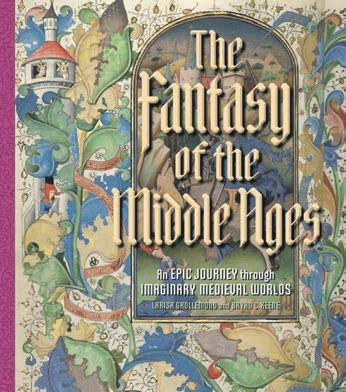
ART AND CULTURAL HISTORY | BOOKLAUNCH ISSUE 15 | PAGE 11
THE
THE
AN EPIC JOURNEY THROUGH IMAGINARY MEDIEVAL WORLDS LARISA GROLLEMOND AND BRYAN C. KEENE J. Paul Getty Museum Hardback, 144 pages July 2022 9781606067581 RRP £25.00 Available from www.booklaunch.shop www.booklaunch.london
access our online archive — Subscribe today Advertising | Nick Page | 07789 178802 | page@pagemedia.co.uk
FANTASY OF
MIDDLE AGES
and
A place’s meaning is not set in stone—or its stones. Certain sites seem especially liable to becoming the objects of contested meanings. The ancient Greek city of Thebes is undoubtedly a prime example, or indeed exemplar. This is a history not only of ancient events and processes but also of social and cultural memory, over a very long run indeed: from the Late Bronze Age to our own day, more or less.
Almost continuously inhabited for five millennia, and at one point the most powerful city in all ancient Greece, Thebes has often been overshadowed by its two
quer Aegean Greece, to being defeated by Pericles’s democratic Athens, to allying with Sparta—like Thebes at that time, an oligarchy—and triumphing over Athens, to becoming for a decade the single greatest power and power broker of mainland Greece, to being utterly destroyed on the orders of Alexander the Great: this was a chequered and turbulent history.
In this book, therefore, I shall be aiming to maintain throughout some sort of balance between the twin cities of Thebes: the Thebes of Myth and the Thebes of History. Indeed, it is precisely the interaction between these two conceptual and
eastern Spain from the very beginning of the sixth. New Greek settlements were still being founded in the fifth and fourth centuries bce, when Plato amusingly wrote that the Greeks lived like ants or frogs around a pond (actually two ‘ponds’: the Mediterranean and Black Seas), and that was before the massive further expansion eastwards in the wake of the conquests of Alexander the Great (reigned 336–323).
Thebes lay firmly in the centre of Old Greece, in the region known as Boeotia, but Boeotian Thebes was not the only mainland Greek Thebes. Not far to the north, in the region of Thessaly called Phthiotis, lay
to its east and south, and Phocis and the Megarid (territory of Megara) to its south.
Just as the history of Athens can be properly understood only within its overall regional context of Attica (Attikê in Greek), and ancient Sparta within its regional context of ‘Lacedaemon’, that is Laconia and Messenia combined in the southern Peloponnese, so the city and settlement of Thebes can be properly understood only in the wider context of Boeotia.
That context must, however, be both political and geographical, since, although Boeotia was bounded to the east by the sea, to the north, south and west there are no
Thebes: the testcase of a city that never learnt how to be neighbourly
EDITOR’S NOTE
Mythical Thebes was built by warriors who had grown from dragons’ teeth sown in the ground, and it went on to become Hercules’s birthplace and home to Oedipus’s Sphinx. Historic Thebes was more pragmatic and more of a problem, siding with Persia in its effort to conquer Aegean Greece and with Sparta to defeat democratic Athens. At one time the most powerful city in Ancient Greece, Thebes was overtaken by both Athens and Sparta, before being finally destroyed by Alexander the Great. Hardly surprising.
READERS’ COMMENTS
Daisy Dunn: Illustrates how hearsay, history and myth combined to form the basis of Theban culture . . . solves the riddle of why Thebes disappeared and puts the ancient city back on the map.
Mark Merrony: An outstanding work by a scholar of world renown. Tom Holland: Unrivalled command of complex, fragmentary and often contradictory sources. Enables us to see the Thebans as they themselves would have wished to be seen.
better-known rivals, Athens and Sparta. (Not to mention being confused with the Egyptian city of the same name, which is mentioned in the earliest extant work of Greek and European literature, Homer’s Iliad.) Among other indignities, we find that the ancient Thebans were the butt of ethno-political jokes directed at them by other Greeks, especially by snooty Athenians (who called them ‘Boeotian swine’). Undeservedly so, on many counts. The city has even been, literally, lost—and not just forgotten—on more than one occasion.
But why and how has ancient Greek Thebes been ‘forgotten’? And how can we best rescue it, permanently, from oblivion? From the very beginnings of Greek literature in Homer, Thebes was a rich source of myths: traditional tales of origins, of cultural development, both progress and regress, and of psychological and moral insight into the human condition. But the city’s history and indeed prehistory and protohistory are every bit as rich as its mythic origins.
An important stronghold in the prehistoric Late Mycenaean (or Late Bronze) Age—the ultimate real source of all that Theban heroic mythology—Thebes emerged into the light of history centuries later in the pages of Herodotus as one of the two major contending powers, alongside Orchomenus, of its ethno-geographic region of Boeotia. Sometimes allying with and sometimes fighting against Sparta and Athens, its course as a member of Greece’s fateful triangle was set from the late sixth century bce on.
From siding with the Persian invaders, who under Emperor Xerxes set out to con-
intellectual registers that makes Thebes so interesting, so different, and so eminently studiable. Or so I shall argue.
The origins of the name ‘Thebai’, a plural form hence the English transcription ‘Thebes’ or the German ‘Theben’—are lost in the mists of time. But no self-respecting historical—and indeed historic Greek city could be without a foundation story or myth (the Greek word muthos meant simply a traditional tale), or more than one if need be. The ancient Greeks (who called themselves ‘Hellenes’—‘Greeks’ is a legacy of the Romans, and not an entirely benign one) were myth-makers par excellence. Thebans, exceptional Greeks in many other ways, were no exception in this regard, and invented traditions with the best of them.
There was, however, no ancient Greek ‘country’ nor a ‘state’ of ‘Greece’. Hellas, the Greeks’ own term, meant the ancient Greek world, a cultural as well as geographical space that embraced all areas of permanent Hellenic occupation where Hellenic mentality and social practices predominated. The heartland—Old Greece—was the southern Balkan peninsula and adjacent islands, which is sometimes referred to as Aegean Greece. From there many Greeks emigrated permanently, beginning by settling in Cyprus in the Late Bronze Age, and moving thereafter ever further afield: to Asia Minor (western Turkey today) from the eleventh century bce on; to the northern Aegean, the Black Sea approaches, southern Italy and Sicily from the eighth century; to all round the Black Sea itself and to North Africa (Cyrenaica, in today’s Libya) from the seventh; and to southern France and
another; this was an altogether lesser affair. To complicate things further, there was also an ancient, non-Greek Thebes, a Nilotic town, lying within the Egyptian region of Waset. It was mentioned in Homer’s Iliad and visited by Alexander the Great in the late 330s bce, after his conquest of Egypt from the Achaemenid Persian Empire –that Egyptian Thebes sits within today’s Luxor.
Our Thebes lies in the fertile ‘Teneric’ plain in central mainland Greece, north of the Isthmus of Corinth, midway along a chain of hills running in a natural ridge from Mount Helicon (home of the divine Muses, although Homer also locates them on Mount Olympus) to Boeotian Tanagra (site of more than one major battle). Its prominent acropolis, known since antiquity as the Cadmea (Kadmeia), is a vast plateau measuring 700 metres in length by 400 in width. On all sides except the south it is blessed or cursed with steep slopes, making it difficult to access; moreover, it is flanked on the west and the east by two deep gullies. The ancient city where most inhabitants lived spread out to the north and east of this acropolis site. Another point of topography is hugely relevant: Thebes lies west-north-west of Athens, about 90 kilometres by today’s roads. A fast walker can get from one to the other in some twelve hours. Thebes and Athens, so often enemies, were far too close to each other for comfort.
Boeotia was mainly flat, relatively fertile and strategically crucial. It occupied around 3,000 km2 of central mainland Greece, with East (Opuntian) Locris to its north, Attica
‘natural’ fault lines determining its limits. The Boeotia visited by the Asiatic Greek traveller-pilgrim Pausanias in the third quarter of the second century ce was not the Boeotia of the geographer Strabo (also Asiatic Greek) in the late first century bce/early first century ce, nor was Strabo’s Boeotia the same as that of Theban Epaminondas in the fourth century bce, and Epaminondas’s again was not that of Boeotian poet Hesiod (from Ascra near Thespiae) in the late eighth/early seventh century bce
The eastern border district around Oropus often changed hands: in the years c. 500–411, c. 375–366, and 338–322 it was under Athenian domination. The town of Eleutherae was originally Boeotian, but became Athenian. And so on. Moreover, one major feature of the physical geography of ancient Boeotia that did play a determining—in the sense of decisively influential—role in the region’s ancient political history has simply disappeared: Lake Copais has been drained, even more drastically than the Fens of East Anglia. Finally, ethnic status, always to some extent a matter of self-ascription and self-identification, was liable to fluctuate: Orchomenus, for example, at its earliest mention in extant literature was described as ‘Minyan’, whatever exactly that meant, but in all historical periods was firmly Boeotian.
‘The Boeotians’ therefore are a bit of a moving target. But one way to begin to get a handle on those ancient Thebans and other Boeotians is to consider the work of a fourth-century bce Athenian historian, formally anonymous to us,

PAGE 12 | BOOKLAUNCH ISSUE 15 | CLASSICAL LITERATURE
THEBES THE FORGOTTEN CITY OF ANCIENT GREECE PAUL CARTLEDGE Picador Softback, 448 pages May 2021 9781509873180 RRP £9.99 Available from www.booklaunch.shop
continued in the book
Subscribe today — www.booklaunch.london and access our online archive Nick Page | 07789 178802 | page@pagemedia.co.uk | Advertising
ARCADIAN NIGHTS

MYTHS
Walking in the hills behind our house in Arcadia, I thought of Prometheus. It was a warm, sunny November day. The asphodels were over, dead stalks drooping over their huge bulbs, but there was pink heather with a sweet scent, colonies of wild cyclamen in all the sheltered spots and occasionally white crocuses. The crocus of the Caucasus mountains, not white but saffron, was supposed to have sprung from the blood of Prometheus as he lay shackled to a rock while an eagle savaged his liver. Saffron-coloured blood? Prometheus was an immortal, and the veins of immortals were filled not with our sort of blood, but a fluid called ichor, which might or might not be orangey-yellow. In the Iliad, Homer’s account of the Trojan War, both the goddess of love, Aphrodite, and the god of war, Ares, are slightly wounded and lose a little ichor, but Homer makes no mention of its colour.
Our hills, the lower slopes of the Parnon range, are steep enough for casual walkers, but no comparison to the Caucasus. When we got home, as the sun disappeared behind Parnon and the temperature dropped, I lit a fire of olive branches pruned from our trees last winter and thought again of Prometheus as the flames poured up towards the chimney. As it happened, there was a small handbook on our bookshelf called Walking in the Caucasus by the explorer, photographer and expert on all things Georgian, Peter Nasmyth. Peter was one of our earliest visitors and gave us this seemingly incongruous book to sit beside The Glory That Was Greece, The Spartans, plays by Aristophanes and the great tragedians, poems by Cavafy, guides to Mistras, Mycenae and the Peloponnese in general, books on European birds, Mediterranean wild-
sumus—a challenge to the Attic
Sitting on our terrace in Arcadia overlooking the Gulf of Argos, I thought that if we’d been there earlier—three millennia and a century or two earlier—we would have seen Agamemnon’s fleet passing on its way to Troy. According to Homer, who was born some three centuries later, there were 100 ships with 15,000 Argive soldiers on board and 60 ships with 9,000 Arcadians. Arcadia at that time was landlocked and its modern mountainous coastline, a district called Kynouria, was part of Argolis. But the Arcadians had a reputation as fierce warriors, so Agamemnon gladly lent them ships to take them to Troy.
When they came back, ten years afterwards, there were fewer ships. Thousands of men perished of wounds or disease on the shelterless plain of Troy. Many ships rotted on the beach and their timbers were burned to keep the men warm and cook their meals or to make funeral pyres for the dead. Many others were wrecked on the voyage home.
So when the remnant docked in Nauplia at the head of the Gulf and the Arcadians made their own way home past the Lernaian Marsh, it was a pitifully small army that marched up the road behind Agamemnon’s chariot to his palace at Mycenae. And this perhaps explains why the coup d’état which immediately followed his arrival met with no resistance and why the most powerful king in all Greece, who had come home victorious with a cargo of rich spoils, could be murdered without anyone lifting a hand to save or avenge him.
Still, however few soldiers remained, they were hardened fighters. Surely they
flowers and astronomy. But if one thought of Prometheus and his long agony in those much more inhospitable mountains, lasting by some accounts for thirty or even thirty thousand years, Peter’s book was not so incongruous after all.
Prometheus belonged to the third generation of Greek immortals, children of the Titans, themselves the children of Ouranos (still the Greek word for sky) and Ge (still the Greek word for earth). He was therefore first cousin to the three principal Olympian gods: Zeus, ruler of heaven and earth; Poseidon, ruler of the sea; and Hades, ruler of the Underworld. Prometheus’ father Iapetos was senior to Zeus’s father Kronos, the youngest of the Titans, but Kronos had seized power from his father Ouranos. Zeus, the youngest child of Kronos, kept up the family tradition by seizing power from his father. His uncles and cousins, the Titans, were angry and fought a mighty war with Zeus, in which mountains were torn up and thrown at him, while he enlisted various monstrous allies, including three fifty-headed, hundred-handed giants very handy at catching and throwing back mountains, and the one-eyed Cyclops, who armed him with thunderbolts and lightning. The Titans were eventually defeated and, since they were immortal and could not be permanently eliminated, were imprisoned in Tartaros, the deepest part of the earth. But there were three exceptions: three sons of Iapetos. The eldest, Atlas, was condemned to stand on a mountain in Morocco and hold up the sky, while his younger brothers, Prometheus and Epimetheus, who had sided with Zeus, were treated with honour and respect. They were not, however, quite the equals of Zeus’s own immediate family, his brothers and sisters and children, who
were a match for any force the conspirators could muster? No doubt. But the conspirators had the advantage of surprise and good warning of the army’s return. Even before he left Greece Agamemnon organised a chain of beacon-fires to announce victory.
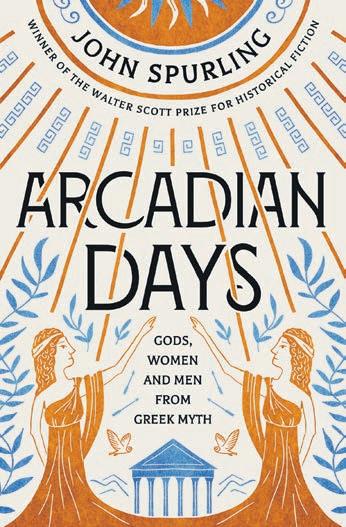
Each had its watchmen, charged with renewing the faggots and brushwood if necessary year by year and watching for its predecessor in the chain night and day. They could hardly have imagined that the job would last a decade and they must often have thought they would die of boredom, if not old age, at their posts, but none of them failed when the time came. As soon as Troy fell, Agamemnon’s messenger ran to the top of Mount Ida, overlooking the Trojan plain, and the first beacon was set alight just as the flames shot up from burning Troy. The second was on the island of Lemnos, the third on Mount Athos, and so on southwards, via the island of Euboia, Mounts Kithairon and Aigiplanktos, across the Saronic Gulf to the final beacon on the Peloponnese, visible from the palace tower of Mycenae.
We too, from our terrace in Arcadia, looking north-eastwards, might have seen that last beacon high on Mount Arachnaion, behind the lower range where there is now a stately line of wind-turbines.
So the conspirators had plenty of time to make their final arrangements. The fleet would take many days, even if the wind and weather were favourable—and as it turned out, they were not—to make that crossing of the Aegean which had been leapt so easily by the message of fire. Nor could the victorious general and his troops have guessed
became the twelve Olympians, living in splendour on Mount Olympos in Thessaly. Prometheus was clever and audacious and, as his name implies, gifted with foresight. His brother Epimetheus, whose name suggests ‘backward-looking’, was dim and lethargic. He only joined the winning side because Prometheus recommended it, and he was happy enough, once the war was over, to enjoy the quiet, lazy, pleasurable life of an immortal without responsibilities. But Prometheus could not be content with that and directed his energy and intelligence to the troubles of humanity, the miserable mortals living and dying on the earth’s surface.
Some storytellers say that Prometheus actually created them, out of clay and water. They are surely mistaken. The immortals, even the Olympian gods, even Zeus, did not have that sort of creative power. They could make simulacra, as Hephaistos did with Pandora (of whom more later), or transform people into stone or trees and vice versa, but they could not make living creatures from scratch. How, then, in the midst of all the turbulence surrounding the birth of the immortals, did mortals emerge? The poet Hesiod, a discontented farmer writing in the mid-eighth century BC, divides human history into five Ages—Golden, Silver, Bronze, the Age of Heroes, and Iron. He describes a steady up-and-down decline from the Golden Age, when mortals were on easy terms with immortals, down to his own Iron Age of incessant work and poverty. He suggests that the gods had some part in these successive Ages, perhaps even that they created the mortals who lived through them, but he is vague about human origins and about why things turned out so badly for them.
The poet Pindar, some two centu-
that their triumphant beacons would help to betray them or that they would be received with anything but joy and celebration. And consider the topography of Mycenae.
The play by Aeschylus, written six to seven centuries after the event, when Mycenae was a forgotten ruin and the whole Mycenaean civilisation had been erased by successive invasions of Greekspeaking northerners, is set in the city of Argos. Agamemnon was indeed King of Argos, but that (or sometimes ‘Argolis’) was the name of the whole kingdom as well as its principal city, and although he had a palace there and another just outside Nauplia in the fortress of Tiryns, the heart of his extensive domains was Mycenae.
Mycenae is a natural acropolis, a conical hill set in the southwestern flank of a range of higher hills, approached from the Argive plain by a steadily rising and winding road which ends at the famous Lion Gate. From there, within the massive walls of the fortress, a steep, narrow, twisting street between the buildings accommodating stores, shops, slaves, servants, administrators, guards and courtiers led up to the royal palace on the summit where, under the colonnaded porch of the palace, Agamemnon’s wife Clytemnestra awaited him. Her lover Aigisthos, who was Agamemnon’s first cousin, was out of sight inside the entrance-hall with some thirty well-armed men, none of them Argives, but mercenaries, malcontents and outlaws from other states whose only allegiance was to Aigisthos personally. In the open space in front of the palace was a small crowd of white-haired
CLASSICAL LITERATURE | BOOKLAUNCH ISSUE 15 | PAGE 13 www.booklaunch.london and access our online archive — Subscribe today Advertising | Nick Page | 07789 178802 | page@pagemedia.co.uk
Arcadio
ARCADIAN DAYS GODS, WOMEN AND MEN FROM GREEK MYTH JOHN SPURLING Duckworth Softback, 320 pages May 2022 9780715654569 RRP £10.99
Et in
320 pages 2015, reprinted 2022 9780715654583 RRP £10.99 continued in the book continued in the book
GODS, HEROES AND MONSTERS FROM GREEK
JOHN SPURLING Duckworth Softback,
EDITOR’S NOTE
Sir Nikolaus Pevsner was the single most visible art historian in Britain after the Second World War, becoming a household name through his talks on BBC radio, inspiring interest in subjects the British had never thought hard about and encouraging interest in conservation. During the war, however, the BBC had not wanted him, in spite of his potential as a black propagandist; it took a poet— Pevsner’s neighbour—to change its mind.
READERS’ COMMENTS
Hugh Chignell: A thoughtful and perceptive contribution to the field which will be seized on by broadcasting historians. Stephen Games is a leading authority on the life and work of Nikolaus Pevsner and this immensely readable history is as fascinating as it is informative.
Harriet Atkinson: This and [Games’s] volume of Pevsner’s broadcasts are important because they offer a fascinating insight into how Pevsner devel— oped his ideas and allow a glimpse into the culture of the nascent BBC, with all its flaws, prejudices and lumbering bureaucracy.

Geoffrey Grigson brought Pevsner into the BBC but thought he lacked a soul
Pevsner is said by his family to have been introduced to the BBC by the poet and publisher Geoffrey Grigson (1905-85). Grigson was Pevsner’s next-door neighbour in Wildwood Terrace, a short row of bleak Victorian brick houses, inaccessible by car, on the west side of the Hampstead Heath Extension in north London. Born in Cornwall and educated at Oxford, Grigson became acting literary editor of The Morning Post, founded New Verse and, just at the moment when Pevsner and his wife and children were moving into Wildwood Terrace in early 1936, started giving talks on a freelance basis on the BBC’s Western Region service.
According to R.M. Healey, Grigson is unlikely to have been taken on by the BBC had he not already been known as a seasoned reviewer. ‘A close friend of the then unfashionable Wyndham Lewis, whose genius he was never afraid to champion, he was also friendly with Herbert Read and Henry Moore, both of whom lived near him in Hampstead, and counted among his other friends figures as different as John Summerson, John Piper, Tom Hopkinson, Stephen Spender, Louis MacNeice, Hugh Gordon Porteous and W.H. Auden.’
Grigson’s poetry began to appear when he was nineteen, in 1924; after Oxford he started to review, writing assertive, challenging pieces for the Yorkshire Post that showed a love and knowledge of literature and the natural world, and considerable critical maturity. The emergence of a new, modern poetic culture in Britain was important to him and he responded powerfully to the publication (by Eliot at Faber) of Auden’s first collection in 1930. At the same time he was troubled by the ambiguities of modernism, which he said worked ‘like a mole in spring under the smooth beds of the garden’, and called himself as a socialist who, under the influence of Lewis, a former Fascist, had turned from ‘Toryism to dogmatic Toryism’.
As a critic, what mattered to Grigson was that his readers should feel the life that exists in writing, and that they should sensitise themselves to the difference between the excellent and the second-rate, a difference he feared that only he understood. For Grigson, reputations needed rebalancing; many of the biggest names he considered undeserving opportunists. He was perpetually angry about bad writing and its warm reception by those who should have known better, and he wanted to expose its recurring flaws: deafness to true rhythm, inapposite words, redundancy, lack of objectivity, failure to sublimate.
In addition to the written, Grigson cared about the visual. Apart from paying attention to what verse looked like on the page, he believed that poets should observe closely and describe accurately. He wrote about the appearance of rocks, seashells and flowers and criticised those who discounted reality. In a talk in 1939 he condemned Sir Joshua Reynolds for advising his pupils to look at their subjects through screwed-up eyes in order to achieve ‘the grand generalisation’ and in 1946 quoted approvingly a complaint about the theatricality of John Martin ‘who
was never afraid to tackle the end of the world, the last day, the gulfs of hell or the plains of heaven [but] could not paint a great toe from nature.’
For the BBC in Bristol Grigson gave short, highly polished talks about the literature and natural history of his native West Country, which he and others (including Betjeman and Betjeman’s BBC producer James Pennethorne Hughes) saw as being threatened by the creeping cosmopolitanism of London. His mission, in addition to that of sensitisation, was to bring attention to any work, artist or idea that was unjustly overlooked or underrated, as he felt Devon, Somerset, Wiltshire and his native Cornwall were.
Grigson’s first literary encounter with Pevsner was not auspicious. He had reviewed Pevsner’s 1937 study of design in manufacturing, An Enquiry into Industrial Art in England, for the leading literary magazine John O’London’s Weekly, and his third wife, Jane, remembers that her husband did not warm to it. Pevsner’s book depended on a particular view about ‘taste’, he wrote, and taste was a dangerous word that ‘drips with self-satisfaction, superiority and insult’. Grigson was also offended by Pevsner’s revelation that rickets, ‘bred mainly in slums’, was known as ‘the English disease’ in Germany (Grigson seems not to have felt equally offended by the British calling rubella ‘German measles’) and felt that Pevsner had slighted mainstream British art which Grigson—for once—now defended for its ‘easy and good-natured conservatism’.
Having put down his customary marker, Grigson was partly converted to Pevsner’s cause after getting to know him over the garden fence. His new wife Berta (Bertschy) Emma Kunert, an Austrian, had also become a close friend and confidante—perhaps the only close friend and confidante in England—of Pevsner’s wife Lola. ‘When the phoney war was on,’ Grigson wrote in his Recollections Mainly of Writers and Artists,
and the bombs were vaguely expected, I spent nights with the Pevsners—till the allclear sounded in their coal-hole under our common access pavement, garnished with rugs, and when at last two hard-faced Bow Street runners arrived in the early hours of the morning to take him off to his shortlived internment … I managed, clutching my pyjama trousers, to catch them up with the best parting present I could quickly think of, which was an elegant little edition, a new edition, of Shakespeare’s Sonnets.
Grigson felt, however, that Pevsner had no soul and no real love of art or literature, as Grigson did, and ended this memory of his parting gift with the sting
I doubt if he ever read them —which Pevsner gave the lie to in one of his first letters from his internment camp: ‘Geoffrey’s sonnets helped over odd hours.’ Grigson also claimed to have sent Pevsner
more care packages, though the extent of his saintliness is said to have been exaggerated.
Just before Pevsner was released in September 1940, the BBC offered Grigson a full-time job as a sub-editor at the BBC monitoring station at Wood Norton, just outside Evesham. The job ruled out any possibility of his reviewing and producing but gave him financial security and brought him into contact with other BBC monitors including Anna Kallin, who went on to produce his radio broadcasts later in the 1940s and Pevsner’s in the 1950s.
At the time Wood Norton was also being used to house the BBC’s Features and Drama departments, both of which had been moved out of London when the war started. Of Drama’s arrival, Gilbert Harding wrote ‘The town was inundated with young persons of either or doubtful sex carrying Siamese cats [a reference to the Head of Drama, Val Gielgud] and teddy bears.’
Grigson was rescued from Monitoring by another great maker of BBC careers, the young George Barnes, who had commissioned his early work and admired his radio style and tyro manner. In January 1942 Barnes offered Grigson a job as a Talks Assistant at the BBC’s Western Region studios in Bristol, where he took over from James Pennethorne Hughes, the producer who had discovered Betjeman in 1936 and who, like James Richards, was now being sent to do war work in Egypt).
Back at the BBC’s Talks Department, Grigson pressed as many of his contacts as possible into service. One of his first conquests was Betjeman, whom he swooped on to give five talks, not on Betjeman’s favourite subjects (urban planning and rural life) but on Grigson’s (publishing). He also called on Betjeman’s friend the artist John Piper and discovered the cricket commentator John Arlott, then a police inspector and poet.
Grigson wrote in his 1950 autobiography The Crest on the Silver that his BBC productions at Bristol brought him in contact ‘with a diversity of people from Ministers of the Crown and Members of Parliament to farmers and millers, from men on aerodromes and in army camps and on ships to parsons and gipsy knife-grinders’. This quickly palled. ‘Geoffrey at heart was not altogether delighted at spending his time producing other’s people’s work,’ recalled his colleague Frank Gillard; ‘He wanted to be the chap at the microphone presenting his own work.’ Within four years he had handed in his resignation and on 20 September 1945 left his post to take up the job of part-time poetry reader at Routledge.
Grigson now embarked on a series of informal trades with Pevsner. He had started soliciting items for a new hardback anthology that he was editing for Routledge called The Mint: A Miscellany of Literature, Art and Criticism and won from Pevsner an important essay on the architecture of Mannerism, a topic never previously explored succinctly in English. At the same time, he helped to improve Pevsner’s translation of Goethe’s Von deutscher Baukunst, which appeared in a spe
Subscribe today — www.booklaunch.london and access our online archive Nick Page | 07789 178802 | page@pagemedia.co.uk | Advertising
PAGE 14 | BOOKLAUNCH ISSUE 15 | ARTS AND MEDIA HISTORY
PEVSNER: THE BBC YEARS LISTENING TO THE VISUAL ARTS STEPHEN GAMES
continued in the book
Ashgate/Routledge Hardback, 400 pages 2015 9781409461951 RRP £120.00 Our price £29.99 inc. free UK postage www.booklaunch.shop
EDITOR’S NOTE
Ukrainian Boris Iofan spent ten years studying architecture in Rome because access to Russian universities was restricted for Jewish students. After marrying a half-Russian, half-Italian aristocrat, he joined the Italian Communist party, returned to Moscow and designed many of Stalin’s most iconic buildings such as the House on the Embankment, a megastructure of 505 homes for the Soviet elite, and the unbuilt Palace of the Soviets, a baroque Stalinist fantasy. Did Iofan have any commitments? Yes, says Deyan Sudjic: staying alive.
READERS’ COMMENTS
Edwin Heathcote: A breezy and readable text accessible to a nonspecialist audience … deals with the cascade of names, denunci–ations, political shifts and relationships, with agility and ease.
Anthony Paletta: There are normal levels of grubby client and then there’s Stalin. Boris Iofan, favourite of the Soviet dictator, had about as evil a client as you could imagine. When you’re runner up to Albert Speer in any contest, you’ve made some poor decisions.
STALIN’S ARCHITECT
POWER AND SURVIVAL IN MOSCOW DEYAN SUDJIC
Thames and Hudson Hardcover, 320 pages April 2022 9780500343555
RRP £30.00 Available from www.booklaunch.shop
Boris Iofan rose to become Stalin’s pet architect. Better than being shot
For Boris Iofan, the most prominent of Stalin’s architects, the patronage of a murderous dictator came at serious personal risk—as much to his critical reputation as to his life. Rather than not build at all, he was prepared to build what the dictator demanded of him. As a result, Iofan is now remembered not for his considerable talent, but for the way that his buildings came to define Stalinist architecture as it was practised from Warsaw to Beijing.

Ever since the summer of 2008, when I visited his former apartment on the top floor of Moscow’s famous House on the Embankment, I have been unable to get Boris Iofan out of my mind. The House— which is in fact a large complex with more than 500 flats and its own cinema, theatre and department store—was one of his most significant projects.
I began trying to learn as much as I could about what had gone on in Iofan’s mind as he saw his work turned into a monstrous tribute to Stalin. I tried to piece together all the disparate elements, the surviving objects and records, in a way that made sense. Mostly I was driven by a desire to understand the part that architecture had played in the state apparatus of one of history’s most murderous regimes. But I was also drawn in by Iofan himself and the remarkable life that this stylishly dressed, distinguished figure—who looked disarmingly like my own father—had lived. I had spent six years studying architecture myself; what would I have done in Iofan’s place?
Outside, on that June day, Moscow was booming. A cascade of oil money was floating an armada of Prada stores where the more discreet customers left their bodyguards, dressed in camouflage uniforms, waiting on the pavement while they shopped. There were sushi restaurants with cellars full of Petrus, streets lined with Hummers with blacked-out windows. But the House on the Embankment smelled of sour decay. It was no longer the heart of the city.
Things were very different in 1937, when Thomas Sgovio, a young and idealistic Italian American communist from upstate New York living in Moscow, visited Iofan in his apartment: number 426 on the sought-after top floor, facing the river. Sgovio was hoping for Iofan’s help in securing a place
at one of Moscow’s art schools. They had been introduced by a mutual acquaintance who knew Iofan from his own time as a student in Rome. Sgovio was baffled by the process of finding his way to the Iofans’ apartment in such an enormous building with so many entrances. He had to produce a special permit, leave his passport at the guard post and follow an official escort to the lift. From there, an attendant took him up to the eleventh floor. A maid let him into the apartment and he was welcomed by Olga, a stately-looking woman who spoke in perfect English and offered him tea. Then Iofan himself appeared, the streaks of white in his dark hair adding a distinguished touch to his appearance.
Sgovio had been horrified by his experiences of everyday life in Moscow. When he ate in a workers’ canteen, the scraps of food he left on his plate were grabbed from him by hungry neighbours. It was not what he had expected from the world’s first socialist country. The Iofans’ home felt like an entirely different world, and he was charmed by their kindness. He also remembered noticing that Iofan’s clothes ‘were foreign-made—grey tweed slacks, black sleeveless sweater, white shirt, brown Oxfords with thick sponge soles—which gave him a youthful appearance’.
After tea, Iofan invited Sgovio into the studio and settled down to examine his portfolio of drawings. He looked at them carefully and commented politely, handing them to Olga for her to see the work for herself. Standing in the centre of the room was a model of the Palace of the Soviets. Was this the actual model chosen by Stalin, Sgovio asked? Iofan laughed. ‘No, that one is even larger. This is my personal working model.’
They talked about New York, a city Iofan had recently visited. He told Sgovio that he did not think much of modern American architecture: ‘It represents an ugly expression of capitalism. The skyscrapers are tall, rectangular boxes, made of shiny steel and stone, made to hide the ghettos of the poor beneath them. This is the architecture of the rich, eh? There is no spaciousness, no room to breathe.’
As Iofan showed him the model of the palace, Sgovio recalls him saying: ‘You see what I mean about spaciousness. The Palace of the Soviets will be the tallest build-
ing in the world. The radius of the base is more than its height. Can you imagine the capitalists building something like this in New York? The land on which it would stand costs millions, perhaps billions. It would take centuries for them to capitalize on the cost of the land alone. Here the land belongs to the people, and the Palace of the Soviets will belong to the people.’
Sgovio never did go to art school; he was arrested by the secret police at the gates of the American Embassy shortly after his meeting with Iofan. Convicted of being ‘a socially dangerous element’, he was sentenced to sixteen years of forced labour. He survived a series of prison camps by using his artistic skills to draw tattoos for the criminals who were incarcerated alongside him. Many years later, back in America, he wrote an account of his disillusionment with communism—Iofan never had the chance to read it, but it might have prompted him to see some parallels with his own life story. Both men had joined the Communist Party out of conviction; both had chosen to move with their families to the Soviet Union; and both had used their talents as a means of staying alive.
Boris Mikhailovich Iofan died in 1976, the same year that The House on the Embankment, a bestselling novella by the Moscow writer Yuri Trifonov, was published. Iofan was eighty-four—a long life by any standards, but particularly impressive for the Soviet Union—and being cared for at Barvikha, a sanatorium he had built for the Communist Party elite nearly fifty years earlier.
The House on the Embankment is a lightly fictionalized account of the experiences of people living in Iofan’s austere complex of apartment blocks, located just across the river from the Kremlin. At the time he designed it, in the late 1920s—when the revolution was still a recent memory and an inspiration to many communists—it was known as Government House, and it would be home to most of the Soviet elite during the 1930s. Trifonov’s novella made such an impact that its title immediately became the building’s popular name, and today the House on the Embankment remains one of Moscow’s most prominent landmarks.
Iofan, his wife, two stepchildren and his younger sister Anna were among the first to take up residence in the House, moving
in at the start of 1931.
Yuri Trifonov also lived in the House on the Embankment during the 1930s. He was present on the night that his father, who had been a hero of the Bolshevik revolution, was marched away to his death. Shortly afterwards, his mother was sent to a labour camp. Trifonov was just twelve years old at the time; she did not return until he was twenty. Like many other victims of Stalin, the Trifonovs’ truncated lives are commemorated today in the line of wall plaques mounted near the entrances to the House. As many as 800 of their fellow residents – one-third of the people living there in 1932—were eventually arrested by Stalin’s secret policemen, and more than 300 of them were shot.
The House on the Embankment captures the paranoiac mixture of privilege and fear felt by all those, including the Iofans, who lived in this ‘huge grey apartment house with its 1,000 windows giving it the look of a whole town’. Trifonov depicts a building patrolled by white-gloved militiamen, with all-seeing lift operators employed by the Ministry of the Interior guarding access to its apartments, on corridors that smelled of cooking. He portrays the anxiety of lives spent in the unspoken knowledge of secret listening rooms where policemen laboured day and night, transcribing conversations relayed by microphones embedded in walls and listening in on telephone calls. Even as late as the 1970s, these things could not be discussed openly.
The novella examines the awkward relationship between the residents of the House, living in claustrophobic luxury, and those in its shadow who lacked everything. It illuminates the moral squalor of the endless compromises Stalin demanded of the Soviet elite, from admirals to philosophers to schoolchildren, politicians and architects. It exposes the jockeying for position and the emptiness of a society in which the ideology of the state is a weapon to be deployed in settling personal scores. It explores the political uses of privilege in a supposedly classless society.
It is impossible to know whether Boris Iofan read Trifonov’s book before he died. But he might well have encountered Trifonov as a child, decades earlier, playing around the fountain
CULTURAL BIOGRAPHY | BOOKLAUNCH ISSUE 15 | PAGE 15
continued in the book
www.booklaunch.london and access our online archive — Subscribe today Advertising | Nick Page | 07789 178802 | page@pagemedia.co.uk
The flimsy document found in Kinder Surprise Eggs—only 12 cms by 5 cms, covered on both sides with tiny text—crams into 120 cms2 a riot of blood red and jet black scripts, gnomic texts, strange diacritics and mysterious symbols. The most familiar lettering announces, with a Lilliputian gravity:
WARNING, read and keep: Toy not suitable for children under 3 years. Small parts might be swallowed or inhaled.
For me, the languages I find in translated messages on everyday products offer a tantalising glimpse of the linguistic pleasures available outside the English-speaking world. Before I encountered the Kinder Egg message, the most diversity I ever found was on the list of local distributors on boxes of Kleenex tissues. I had never seen Georgian, Azerbaijani or Latvian on product packaging.
Then I discovered Kinder Eggs. Packed into one tiny slip of paper are 37 different languages, in eight different scripts. These are, in order of appearance:
Side one: Armenian (1), Azerbaijani, Bulgarian, Czech, Danish, German, Greek, English, Spanish, Estonian, Finnish, French, Croatian, Hungarian, Armenian (2), Italian, Georgian, Kyrgyz
Side two: Lithuanian, Latvian, Macedonian, Dutch, Norwegian, Polish, Portuguese, Romanian, Russian, Slovak, Slovene, Albanian, Serbian, Swedish, Turkish, Ukrainian, Persian, Arabic, Chinese (Traditional characters), Chinese (Simplified characters)
Take a closer look at it and you will find inconsistencies and mysteries aplenty:
• Which is the original version of the message? Given that Ferrero, the company that produces the Eggs, is based in Italy, is Italian the mother of all the translations?
• What do the two-letter codes before each message refer to?

• Why do some messages mention under-3s (including the English one) whereas others appear not to?
• There seem to be two Armenian texts, one including the message and the other
including some kind of address. The warning message is written all in capital letters in Armenian script and marked with the code ‘HY’. The address text is written in lower case and marked with the code ‘AR’. Why? Why? Why?
• Some languages print the word ‘WARNING’ in capitals and others do not. In Danish and Norwegian it is Adversel and in Swedish VARNING. Do some languages prohibit the use of all-caps words?
Stare hard enough at the warning message sheet and it dissolves into anarchy, chaos and brain-melting puzzles. Why is it that the sheet of paper used in Europe includes all EU official languages except for two (Irish and Maltese)? Who decided not to include them? Given that millions speak ‘minority’ European languages like Catalan, there is a strong case for including them too.

In fact, there are 5,000–6,000 languages spoken in the world today, together with innumerable dialects. The Kinder Egg message is only translated into a fraction of them. When looked at in this way, the message sheet starts to look oddly impoverished. Why should a multilingual Dane need a specific message in Danish while a monolingual speaker of one of the indigenous languages of Greenland (an
autonomous Danish territory) not be provided with a translation into his or her own language?
Reaching out
I first came out as a warning-message-lover at a talk I gave at the 2017 Boring Conference in London. In preparation for the talk, I commissioned translations of the Kinder Egg warning message into more languages. I started with Irish and Maltese, in order to complete the set of EU languages. After that I found it hard to stop: I collected Luxembourgish, Cornish, Welsh and then Biblical Hebrew. At the end of the talk I led the audience in a joke pledge never to buy another Kinder Egg until they included a translation of the warning message into Cornish.
In 2018 I recorded a podcast for the BBC Boring Talks series and added yet more languages to the collection. I also included an appeal for listeners to send me warning message sheets from around the world, and listeners in South Africa, Brunei and Nepal duly obliged.
Spring and summer 2020 saw me firing off email after email: to language promotion officers in the Channel Islands, to professors of Sumerian, to Romani rights activists, to creators of invented languages, and to almost everyone I could think of in
my address book who spoke a language that wasn’t to be found on the original warning message slip. Some never replied, a few frostily refused, but the majority agreed and many more went further: sending me the translations by return, recommending experts in other languages, offering me reams of explanations as to word choice.
This book will try to convince you to become a language fan too (if you aren’t one already). I also have a serious agenda: my experience of reaching out to linguists and speakers of a vast array of languages across the world has taught me that the myth of Babel needs to be turned on its head: the splintering of human language into multiple tongues is not a metaphor for the fall of man into conflict and division. Rather, it is a metaphor for a different kind of unity. A world that speaks in one language could only be united in oppressive ways, forcing us to speak so plainly that all creativity and nuance is lost. In contrast, a world that speaks in many languages is one in which human individuality and invention can flourish. There is unity here too; unity in incomprehension. When I encounter a language I don’t understand I am reminded of the amazing tendency of human beings to forge new paths, to do things in different ways.
on children’s
in linguists
READERS’ COMMENTS
Simon Garfield: Quite simply and quite ridiculously one of the funniest and most illuminating books I have ever read … and I thought I was obsessive.
Mark Forsyth: There is a delicious humour implicit in every page … [the book] is filled with a sense of wonder, gazing at languages that neither the writer nor reader understands.
Ann Morgan: This is a wonderful book. A treasure trove of mindexpanding insights into language and humanity encased in a deliciously quirky, quixotic quest. I loved it. Warning: this will keep you reading.’
John Mitchinson: The Babel Message is a gloriously inflected record of an obsession … [It] manages to teach us a great deal about language—its protean energy and its slipperiness—but also makes us properly laugh (a rare Venn diagram, believe me). … Kahn-Harris’s fan-boy passion for the gorgeous surface of written language and his own skill in deploying it make the book a complete delight.
PAGE 16 | BOOKLAUNCH ISSUE 15 | LINGUISTICS Subscribe today — www.booklaunch.london and access our online archive Nick Page | 07789 178802 | page@pagemedia.co.uk | Advertising Warning: This advice
health may cause OCD
THE BABEL MESSAGE A LOVE LETTER TO LANGUAGE KEITH KAHN-HARRIS Icon Books Hardback, 336 pages November 2021 9781785787379 RRP £12.99 Available from www.booklaunch.shop
continued in the book
Betjeman’s England is constructed around some sixty television programmes that deal directly with the architecture and topography of England. Betjeman made many more films than are contained here—notably his series The Englishman’s Home (1957) and his ABC of Churches (1960-67) of which, apart from the first episodes of each, only fragments have survived. He also made films in which others participated, notably a series called Pride of Place (1966-7), which he copresented with Arthur Negus. But in terms of the films that he hosted alone, Betjeman’s England comes close to offering a reliably thorough guide.
As always, editorial choices have had to shape the selection and treatment. For example, the script has survived of Betjeman’s film about St Brelade’s, Jersey but a letter has also survived that he wrote to his producer, Ken Savidge, that covers all the ground in the film and much more. Given the attraction of showing how Betjeman
2007) but, to recap, when Betjeman was writing to an already edited film, the production secretaries tended to type his words as short lines to match the action. With these lines now transferred to the wider one-column format of a book, must they still be reproduced as short lines? And must long sentences that happen to sound like sequences of blank verse (unrhymed iambic pentameter) always be treated as lines of blank verse?
The approach taken by Tennis Whites and Teacakes was to try to reveal whether Betjeman’s television writing was essentially prose or essentially poetry. Where the narrative adopted a regular metre, rhyming or not, it was set as verse; otherwise it was set as prose. This seemed to make sense and made plain for the first time just how much Betjeman’s speech patterns tended towards the poetic. But its irregularity on the page meant that his narrative flow was constantly being interrupted as words bounced back and forth between formats, sometimes leav-
and television, he was equally likely to be thought of as an activist and ‘telly star’, to use his own words. If we are to understand him today—even if we wish only to understand his poetry—we have to construct a truer picture of him, and that means taking into account his other activities. His work on behalf of old buildings has been dealt with elsewhere but there has been very little effort to look closely at his creative work outside poetry and to assess its value in relation to his achievement as a whole.
The aim of Betjeman’s England is to correct that imbalance. This fourth collection of Betjeman’s prose writings contains some sixty television programmes that Betjeman wrote and presented. Except in a handful of cases, the scripts have never been seen before by the public. Following the publication of Trains and Buttered Toast and Sweet Songs of Zion, which first made available the best of his BBC radio work, and of Coming Home and Tennis Whites and Teacakes, which included examples of his occasional
How England’s favourite poet devised scripts for Britain’s favourite medium
visualised a film in advance, it seemed more revealing to publish the letter rather than the script.
In the same way, I have included a letter to Peter Hunt, another producer, suggesting a treatment for a film about Canterbury Cathedral but I have not provided a transcript of the quite different film that was eventually made (in which Betjeman was pleased to narrate a poem by a Canterbury choirboy that ran, ‘If I happen to trap / My toe in a tap / Or to step in a large bowl of trifle, / I wear a top hat, / Sit down on a mat / And shoot at my aunt with a rifle’). On the other hand, two alternatives proposals have been included for a short fundraising film about Winchester Cathedral precisely because they show different approaches. Film commentaries don’t necessarily read well on the page, because they are written to support images. In the pages that follow, Betjeman invites us some sixty times to look at something: an instruction the reader clearly cannot follow. Nevertheless, I was very rarely tempted to rewrite his words, because his request often proves to be redundant. When he says, for example, ‘notice the headstones in the churchyard, all of different shapes’, we understand this simply as ‘the headstones in the churchyard are all of different shapes’ and accept the information without difficulty. Rarely does it jar that the words are secondary to the missing images—and this comes as a happy surprise. In the few cases of difficulty, however, notes on what the camera is seeing have been added to the text in square brackets or, in the case of verse, in footnotes.
The layout of the commentaries has, however, been revised to conform to a standard book format rather than the two-column format of the original film scripts in which shooting directions appear on the left and speech on the right. This raises legitimate questions about presentation, especially where Betjeman alternates between prose and poetic forms of narration. These questions were aired in the Introduction to Tennis Whites and Teacakes (John Murray,
ing single lines or pairs of lines hanging awkwardly in the air.
In the end, a decision had to be taken on whether Betjeman’s commentaries must always correspond to the original layout or whether they can be presented in a new way for readers who don’t know the films. Mirzoeff says that he has always felt, with Betjeman, that the scripts could not be published separately from the images and should therefore not be published at all: that they are, and must remain, television—a dual medium of sound and vision. Betjeman’s England takes a different view and shows that, freed from their original formatting and the need to defer to the films that gave rise to them, the texts work remarkably well as pieces of independent writing. The commentaries to the films, mostly published now for the first time, have been set out in such a way as to make the experience of reading them as easy as possible and to give a sense of their own autonomy.
John Betjeman was one of England’s bestloved television personalities, a man whose comforting voice and crumpled appearance made him as much a public institution as the monuments he helped to preserve. He was not obviously a heroic figure: more than anything he represented human foible and it is perhaps because of that, and his emotional honesty about the things that pleased and pained him, that the public warmed to him as their ambassador against the dark forces of bureaucracy and philistinism.
writing and journalism, the availability of his TV scripts should act against any future tendency to focus on him only as a poet who did his best work as a young man and then went into decline.
The story of how Betjeman became a television performer and writer follows on from the story, already told in Trains and Buttered Toast, of his rise as a radio broadcaster in the 1940s and ’50s. As a young man newly down from Oxford in the late 1920s, Betjeman was keen to work in the exciting new medium of radio but was not taken seriously by the majority of those of his contemporaries who had already got BBC jobs. Between 1932 and the outbreak of war, he was only commissioned a handful of times by Broadcasting House in London, invariably as a comic turn, albeit a knowledgeable one. His proposals for serious talks—about architecture and conservation—were treated with bewilderment, as was he. At a time when historic buildings and traditional landscapes were being decimated by a massive and popular building boom, his concerns were not thought important enough to warrant much public attention. His own personality —that of a rebel and joker—may even have damaged the case he most wanted to make.

EDITOR’S NOTE
Betjeman’s heyday on television ran from the second half of the 1950s to the early 1970s. That means that his original core audience—those who remember him from first time round—is now shrinking fast. For younger people, his memory is kept alive mostly by his poetry, so that perceptions of him as a person are also shrinking fast. Admittedly he always insisted that he was above all else a poet but because of his frequent appearances in the press as a campaigner for architectural conservation and because of his broadcasts on radio continued in the book
Not until he moved out of London to Uffington (then in Berkshire, now Oxfordshire) in 1934 and made himself known to the BBC’s new Western Region studios in Bristol did his fortunes change. In Bristol he found an older, slower city which seemed to offer him a perfect base from which to attack the metropolis he felt had rejected him (even though he had formerly aspired to be one of its brightest young things). Crucial to this reinvention of himself was the BBC Bristol producer James Pennethorne Hughes, who had been in the year below him at Oxford. Pennethorne Hughes invited him to make two series of six-part broadcasts in 1937 and 1939, looking at the damage caused by modern town planning to a number of West of England towns. This established Betjeman as a serious broadcaster
For more than half a century, Betjeman’s poetry awakened readers to the intimacy of English places—from the smell of gaslight in suburban churches to the hissing of backwash on a shingle beach. Betjeman was England’s greatest topographic poet but he was also skilled in other literary forms—radio broadcasts, architectural criticism, ad-hominem attacks— the significance of which, to his oeuvre but also to cultural polemic, was often overlooked in his lifetime. In this collection, editor Stephen Games shows how Betjeman was able to adapt what he saw and how he wrote to the demands of television.
READERS’ COMMENTS
Robert Elms: Always thoughtful, always eloquent writing.
Sunday Telegraph: Remarkable collection ... a real treat for any fan of Betjeman and a testament to Games’s remarkable research and reconstruction.
TELEVISION STUDIES / POETRY | BOOKLAUNCH ISSUE 15 | PAGE 17
BETJEMAN’S ENGLAND JOHN BETJEMAN STEPHEN GAMES (ED) John
Softback, 320 pages February 2010 9781848540927 RRP
Our price
www.booklaunch.london and access our online archive — Subscribe today Advertising | Nick Page | 07789 178802 | page@pagemedia.co.uk
Murray
£10.99
£7.99 inc. free UK postage www.booklaunch.shop
To help crowdfund this new novel, please email book@booklaunch.london for details.
Trinka is lithe, tawny, and moody for an eight-year-old. The moodiness does not bode well for us as her teenage years slink closer but we will take things one day at a time. Yesterday I kept asking her to help with lunch by cutting up cucumber and tomatoes—I was spent, spent, spent—but she kept ignoring my request. I told her off and she began screaming, Yes, I am tired too, can’t you see, Mommy! Stop asking me to do things! I never get enough sleep!, then stormed off upstairs. Later she pushed a note under my door. On pretty writing paper with a border of flowers and sheep she had written,
I dont want to see you, Heer you or totch you. I dont want you to look at me.
LEEV ME ALON
From Trinka
My daughter was emotional. Oodles of moooody noodles, I sang to her. Although as highly strung as a Stradivarius, she was at least physically healthy, not constantly sick like Nicola’s kids. ‘Oh, until you’ve sat under the shower at two a.m., washing the vomit off yourself and your child, you haven’t lived,’ Nicola once told me sardonically. Her younger son had a serious house-dust mite allergy, so Nicola and her husband had to wash his whole gang of soft toys once a month and then freeze them overnight. And it all had to be done in secret. If young Charlie ever found out about his parents’ toy abuse, he’d throw a fit. I understood completely.
My daughter also brought me down to earth. On occasions when I was in a good mood, she would help neutralise it. I remember one little exchange:

We will be home in an hour,’ said Kulsum. The passengers in the red Chevrolet stopped talking and marvelled. It had been six long weeks since they had last seen their home, the Train House on Lobengula Street. On the drive north to the remote Ugandan village of Bushenyi there had been six of them; Dingaan, Shafeek, Kulsum, Jameeela, Latif and Ameera. Now, on their drive back south to Bulawayo in Rhodesia, there were ten.
Kulsum’s anxiety grew with every mile that brought them closer to her husband. Kulsum had missed the Train House, the home she had built, the home in which she had brought up her eight precious children. She was dying to be back with the two children she had to leave behind. She wanted to see them and hold them and love them.
A month and a half earlier Kulsum had set out, at her husband Razaak’s command, on a six-day drive to Buchenyi to find a wife for their eldest son, Shafeek, and then attend the wedding that followed. For Razaak, this was the sole reason for the trip.
But not for Kulsum. Years earlier, her two elder daughters, Zora and Rehana, had been married off, one after the other, at Razaak’s decree, to husbands in the same out-of-theway village. Kulsum was told it was kismet, but something deep inside troubled her, and on this new visit back to Bushenyi, she had made up her mind to go and check on them. In fact, Kulsum had only agreed to drive Shafeek to find a wife in Uganda so she could catch a glimpse of her daughters and put her heart at rest.
What she had seen of her younger daughter prompted a prayer of gratitude. Rehana was happy and fulfilled, teaching the village children and enjoying it. Merciful Allah had
Me: Mm, hm, I feel so happy!
Trinka: About what?
Me: Oh, everything.
Trinka: [archly] Are you happy about Jacob Zuma?
Me: Um, well, no.
Trinka: And that Ouma has cancer?
Me: No.
Trinka: Are you happy that we have an alarm in the house so we know when robbers are inside?
Me: Er, yes, I suppose so … [Sigh]
I had lost something, come to think of it, and the thought brought on sadness. Since moving into our too-big house, I had misplaced an item I had owned since I was a baby. My uncle and aunt had given me a sterling silver charm bracelet to celebrate my birth, hung with silver African animals—a lion (to mark the controversial British Lions rebel rugby tour to South Africa in the 1970s), a giraffe, an ostrich, an elephant—as well as a St Christopher and a few English thruppenny bits, some from as far back as the 1880s, featuring the profile of a youthful Queen Victoria, as well as a widowed Victoria, an Edward and a George.
My mother had warned me that the house-movers might nick jewellery. It had happened to Genevieve when she moved house in Cape Town; her rings and diamond earrings had vanished.
I’d made a point of wearing my charm bracelet each year on my birthday. The rest of the time it had to be kept hidden somewhere clever where nobody would find it. Sometimes I’d stash it in an evening bag, or at the bottom of a basket, or in a shoe. The problem was that now I couldn’t find it anywhere. I wondered whether it had finally
also provided the girl with an angel in the form of an agreeable grandmother-in-law to take care of her. Shukr Allah for giving Rehana Old Ma to protect her
But Zora, the older, was living a life of semi-slavery, and so, after taking part in the wedding ceremony of eighteen-year-old Hamida to Shafeek and loading her and her possessions into the Chevy, Kulsum had taken the opportunity to whisk Zora and her two daughters into the car as well, and drive them all back to Rhodesia.
‘Miracles happen!’ said Zora, in raptures. ‘Here I am in this car with Kulsum Ma when, back in that stinky village, I would have been up at dawn looking for firewood, then stuck in that smoke-filled kitchen for the rest of the day, cooking breakfast and lunch and supper.’ She whooped with laughter. ‘I am so happy to be with you all!’
Zora, the eldest of Kulsum’s eight children, took a deep breath and sank back in happy silence as her brother Shafeek turned to look at her. Kulsum saw the look of anxiety on his face. In the stillness, Kulsum marvelled at Zora’s resilience, glad her daughter had survived.
They all sat quietly, listening to the hum of the engine, until Zora, on impulse, scooped her youngest sister Ameera out of her nest on the car floor and rubbed noses with her, and kissed her, until her own daughters demanded the same attention and elbowed Ameera out of their mother’s lap.
On the second day of their journey back to the Train House Zora had sung, ‘Somewhere Over the Rainbow,’ and Kulsum had been transported to the time, thirteen years earlier, when Zora, in her last year at secondary school, had run into the Train
gone the way of precious items in this country: to a new owner, sans permission.
On Sunday morning I lay in bed with my laptop, loyal partner of my solitude. The rain had stopped, the sky was washed pale and I had nothing to do. I could read or I could write. Reading was what I’d done after Trinka was born. But writing was what I’d started doing after googling ‘life crisis’ and ‘how to handle change’ and eating carrot cake at Freedom Bakery and finding Soulcraft on the shelf next to the yellow piano. I found myself opening the new file called ‘Life Advice’ and the words tumbled out.
I used to feel like the only person awake in the world. Picture me eight years ago, breastfeeding my baby daughter every night between two and four a.m. Born a month before her due date, Trinka was prone to long, slow feeds, an hour per breast, and as I lay with her I’d hear winter wind gusting through the trees around the South African farmhouse that was my home for a few years. I also heard the gravelly voice of an instructor at a literary bootcamp calling to me: ‘Welcome to Camp Lit! It’s gonna be tough, lady, but hang in there because you’ll get to read all the books you always meant to read and never had the time. Great, huh? We’re gonna wake you up in the middle of the night, every night, no exception, and for two hours you’re gonna read. You’ll get through those titles one by one over ten months. Those piles of novels next to your bed? Done and dusted. You love reading? Literary fiction? This is your lucky day, honey.’
I had to sign up. I didn’t have a choice. When else was I going to get such an opportunity? And it would continued in the book
House one afternoon after school.
‘I’ve been chosen from all the senior girls to be Dorothy,’ she had said, bursting with excitement. ‘I have so many words and songs to learn.’
Kulsum had hushed her, saying she must wait a day or two before preparing for rehearsals. ‘First we need to get Pe’s permission,’ Kulsum said, something that had not even occurred to the girl.
‘Where’s Pe?’ Zora asked. ‘Let me go and ask him now.’
‘Be patient and leave it to me,’ Kulsum said. ‘There’s a time and place for everything. I’ll find the right moment.’
‘Yes, but what do I tell my teacher?’ Zora asked.
‘What do you tell your teacher? Say you’ll know by the end of the week.’
Kulsum worked on Razaak to let their daughter take the lead in The Wizard of Oz When he finally gave his permission, not without serious misgivings, Zora flung her arms around Razaak. ‘I love you, Pe,’ Zora said. ‘You’re the best father on Lobengula Street. No, in the whole of Bulawayo.’ And the Train House resonated with extracts from the play. The servants, Kulsum and all the children found themselves singing songs and reciting bits of dialogue, while Zora practised and practised until she had memorised every line and tune perfectly.
When the others in the car dozed off, Zora told Kulsum more about her first weeks of marriage in the far-away village of Bushenyi. She thought she would never survive. The other women were suspicious of her because she was educated and sophisticated and although Zora did all she could to fit in, everyone continued in the book
To help crowdfund this new novel, please email book@booklaunch.london for details.

Subscribe today — www.booklaunch.london and access our online archive Nick Page | 07789 178802 | page@pagemedia.co.uk | Advertising
Crowdfunding Page:
GIRL, GUIDE, MOTHER NOVEL EnvelopeBooks Softback 78,000 words February 2023 THE TRAIN HOUSE ON LOBENGULA STREET NOVEL EnvelopeBooks Softback 112,000 words February 2023 PAGE 18 | BOOKLAUNCH ISSUE 15 | CROWDFUNDING
The
two new novels set in Africa
Available from www.booklaunch.shop
ACC Art Books Hardback, 160 pages September 2021 9781788841443
RRP £35.00
Alice Neel (1900–1984) is one of the most interesting portrait artists of the 20th century. Her vibrant, expressionistic paintings revealed breathtaking depths of emotion within her subjects. This book highlights Neel’s political and social commitment to her art, as a figurative painter at odds with the styles of the avant-gardes of her time. Structured in two thematic parts—social injustice and gender inequality—this selection includes 60 paintings and drawings, as well as numerous documents. Ranging from her first works in the 1920s to her final evocative selfportrait, made shortly before her death, this is the defining treatise on Alice Neel.

COASTWISE UNDERSTANDING BRITAIN’S SHORELINE PETER FIRSTBROOK
Fernhurst Books Hardback, 256 pages November 2021 9781912621408
RRP £35.00
Available from www.booklaunch.shop
Coastwise examines the coastline of the British Isles as a dynamic environment, and explains how the coastline functions as a single entity, beginning with the way natural forces combine to create its physical features.

From the looking at the impact that wind and ocean have on ancient geology, the book then explores how plants, animals and other organisms keep the coast alive and healthy.
The third part of the book looks at how humans have interacted with the coast, using it for defence, commerce and leisure, from the earliest times to the present day. The last section shows where the features discussed in the book can best be observed and enjoyed by the reader.
All aspects of the coast are covered, making it essential reading—or a wonderful gift—for all those who spend time on Britain’s coast, with hundreds of stunning colour photos and illustrations.
READER’S COMMENT
Tom Heap: A practical loveletter to Britain’s waterfront and no seaside holiday home should be without it.
Bauhan Publishing Softback, 80 pages April 2022 9780872333338 RRP £12.95
BREXIT
WHAT THE HELL HAPPENED?
CHRISTOPHER BARTRAM
Independent Softback, 535 pages 2019 9781676181415
What really happened with Brexit? The decision to leave the EU transformed Britain’s future but how was it achieved? This book addresses both sides of the argument, identifying the facts, issues and rumours as well the illegal activities and foreign influences that helped misinform voters via social media.

Kama Sutra
Not by accident does the thigh hitch high over thigh to dangle a lean shank––or warm feet think to curve on a step’s sharp stone. See, there is no zone not possibly urgent, no tilted neck, no knee not entreating, no palm flesh-faced, not open to stroke, to crave.
But we women fast forget we once didn’t know our breasts could crowd our dress––our precious islands raised from a sophomoric sea, the praise of sudden boys backing away and watching.
They seem so artificial, then, in no time, part of ar tifice we bear smugly: our proud prows.
Available from www.booklaunch.shop
In Girl as Birch, Gibson turns her attention to the experience of growing up as a girl in the United States, coming of age while pushing against expectations for what a girl should be. These poems describe a first awareness of bodies, as in the poem ‘In Dance Class’ where the speaker catches a surprising glimpse of a naked man. In some poems, like ‘Maidenhood’, there’s a sense of danger and learning to avoid it.

Images of gardening and nature help show what it’s like to grow up and change. A father lifts a baby ‘light / as an azalea’ and a sister warns about ‘parched fields / that any year now would burn / for certain’.
In the poem ‘Way Too Bold’, a young girl tests the limits of her new strength by making a bet with her father that she can swim across a whole lake.
RRP £12.99
Author Christopher Bartram argues that the public was betrayed by all the political parties, none of whose referendum campaigns was adequate, and asks important questions about what role racism, immigration and multiculturalism played.
He looks at what voters thought they were voting for and against, how they were knowingly misled, and what lies and “alternative facts” were deployed to achieve outcomes sought by different vested interests.
With Brexit now a reality, what are proving to be the costs and benefits of Brexit, and how has the character of British democracy changed?
535 pages of pure information that will open your eyes to issues that the UK will face for years to come.
OTHER TITLES | BOOKLAUNCH ISSUE 15 | PAGE 19 www.booklaunch.london and access our online archive — Subscribe today Advertising | Nick Page | 07789 178802 | page@pagemedia.co.uk
ENGAGED EYE
ALICE NEEL AN
SERGE LASVIGNES AND 6 OTHERS
GIRL AS BIRCH A LOVE LETTER TO LANGUAGE REBECCA KAISER GIBSON
of her adult lovers unconsciously became her brother, and her fear of her mother’s discovery was revived.
Henri Parens (1988), in his observational studies, has observed how common sexual activities and fantasies are among young children. He has noted their adaptive as well as their developmentally disruptive potential. According to Parens, they can help transform parental incestuous wishes into age- appropriate ones directed toward peers. On the other hand, there is the danger that the siblings may remain overly attached to each other, making it difficult for one or the other or both to relate to non-familial lovers.
Frank
A man who seems to have used his sexual experiences with his sister as a bridge from his oedipal love for his parents to a lover of his own generation is Frank, a retired lawyer. Now in his seventies, long married, a father and grandfather, Frank regarded his sexual activities with his sister Myra, when he was thirteen and she was nine, as contributing positively to his capacity for loving a woman and to his sexual development.
According to Frank, Myra was an interested and willing partner. Their exchanges consisted of looking at and touching each other’s genitals. Frank knew little about sex at the time, but he was aware that he should not go beyond these actions and did not.
In looking back, Frank thought his activities with his sister were motivated both by the urges of his body and a need to know what the mystery of sex was all about. He thought that they helped both of them understand their sexuality better, and believed that they contributed to his capacity for pleasure and for loving a woman in a mature way.
Frank did not know, however, what impact their activities had on his sister. He wondered if she might ever think about or remember them. He never asked her, he claimed, for two reasons. He sensed that she was reluctant to look back at what had happened. He also acknowledged that he experienced some guilt about what he later felt was his having taken advantage of her.
While Frank was speaking of his experiences with his sister during our interview, his thoughts turned to his parents. As a child he was aware that they had a sex life, but he believed he managed in some way to deny it. He had been, he said, engrossed in his own sexual interests which, he claimed, ‘were totally separate’ from the sex lives of his parents and other adults.
Frank’s reference to his being ‘totally separate’ from his parents led me to think of Peter Blos’s (1979) recognition of adolescence as a second individuation phase during which young people must shed family dependencies, loosen their oedipal ties to their parents, and move to love objects of their own generation. In reflecting on Frank’s experience, it seemed to me that his involvement with his sister might partly be regarded as an unconscious effort in the service of accomplishing these adolescent developmental tasks.
Frank’s concern about his sister and his guilt with regard to her indicate, however, that his experiences were not without cost. With the exception of those early explorations young children make of each other’s bodies out of curiosity, the sexual activities between siblings and the conscious or unconscious fantasies that accompany them are likely to lead to some degree of guilt and/or shame. The secrecy with which these acts are usually carried out and the guilt that very often follows them suggests that the children sense that they are doing
Why have a stairlift when you could have a real lift?

something ‘wrong.’ Finkelhor (1980) found that regardless of their personal reactions, those students in his study who had had sexual experiences with their siblings had kept them secret. For many respondents, participating in the study was the first time in their lives that they had mentioned them, and they worried about the critical response they might receive. Whereas initially there is a fear of the reactions of others, with the development of the superego this concern derives from within as well.
On the other hand, according to Juliet Mitchell (2003), many therapists who report the prevalence of adolescent sibling sex comment on what seems to be an absence of guilt or even of a sense of having done wrong on the part of those involved. Mitchell points out that such responses should be considered an indicator of a problem, rather than being accepted at face value.
Margo
Guilt about childhood sexual encounters with a sibling weighed heavily on Margo, a forty-year-old woman who became depressed when her three-year-younger sister, Phoebe, was hospitalized for a severe depression. Phoebe had suffered from periodic depressive episodes since her college years, and Margo had long been troubled by a feeling that she was responsible for her sister’s difficulties.
Margo had been very involved in taking care of Phoebe during their childhood. Their parents were rarely home. Their father worked day and night and their mother was preoccupied with civic and social activities. The girls were largely attended to by a succession of maids. Phoebe had looked to Margo for the care and attention that neither of them received from their parents, and as Margo looked back she felt she had failed her sister. She spoke of teasing her,
being impatient with her, and sometimes refusing to play with her. However, when she herself was lonely and bored she had been glad for Phoebe’s company and felt guilty for having ‘used her’.
It seemed to her therapist that Margo tended to overly focus on her ill treatment of Phoebe and minimized the importance of the many ways in which she had treated her with kindness and caring. It was clear that she had supported Phoebe through many adolescent and adult crises and was for the most part very much there for her. The therapist was puzzled as to why Margo was assuming all of the responsibility for her sister’s illness. She wondered if there was something else that had transpired that led to her being so hard on herself. She recalled Margo saying she ‘used’ Phoebe and questioned what she might have meant by that. It took several sessions before Margo responded to that question. When she did, she spoke of how when she was about seven or so and Phoebe about four they shared a room. They were put to bed very early so that the parents could dine alone. In the summer they could hear the other children outdoors playing. It took a long while for them to fall asleep and they made up games such as jumping up and down on their beds to see who could jump the highest. At some point Margo initiated another game in which she would get into the same bed with her sister and rub up against her. She could still recall the good feeling, and she thought her sister felt good as well. However, she worries now about whether what she did with Phoebe had anything to do with Phoebe’s emotional problems.
It proved helpful to Margo to begin to understand that her sexual play with her sister was not that unusual. The therapist helped her to
continued in the book
Neat & Discreet
A Stiltz Homelift can be installed into almost any room in your home. A Stiltz is uniquely compact with the smallest model taking up just over half a square metre – now that IS discreet. The homelift plugs directly into a standard domestic socket and uses less power than boiling a kettle. The homelifts
run on self-supporting rails so there is no need to drill into walls and the motor is fully self-contained within the lift car. Neat.
Your Forever Home
While some Stiltz customers have an immediate need for a homelift, others are looking to future-proof their existing home for when the stairs do eventually become the unnecessary expense and emotional upheaval of moving house or the disruption of adapting your home for downstairs living. Save money instead; live comfortably and independently in the home you
love for as long as you want, with a Stiltz Homelift.
Peace Of Mind
Stiltz are proud to be rated ‘Excellent’ by their customers on Trustpilot. They use their own teams of expert installers, so you can choose a Stiltz Homelift with complete peace of mind, knowing you and your home are in a safe pair of hands.
“Excellent product installed by polite and very competent tradesmen. Fits perfectly into my home. Made a huge difference to my ability to live independently”.
Mark via Trustpilot
Free, No Obligation Survey
A Stiltz Homelifts Consultant can visit your property to help you plan the best location for your homelift.
They can also answer any questions you might have, as can any of the friendly, UK-based phone team.
So, why not give your lifestyle a lift with Stiltz. Call FREE today.

A Stiltz Homelift will help you continue living in the home you love. Call FREE on 0808 239 7673 For a FREE brochure or no obligation survey call us or visit stiltz.co.uk ADVERTISEMENT Elegant, practical and discreet. A Stiltz Homelift will transform your home and your life. • Speedy service • Cost-effective • Small footprint • Freestanding design - no wall needed • Wheelchair model available • Manufactured, installed and fully guaranteed by Stiltz • 3-floor travel available The UK’s Number 1 Homelift Stairlift? No
Thanks A Stiltz Homelift is an ideal and affordable alternative to a stairlift. You can now safely travel between the floors in your home while keeping your stairs the way they have always been.
AS ADVERTISED
TV
Rated ‘Excellent’
ON
PAGE 20 | BOOKLAUNCH ISSUE 15 | HUMAN SEXUALITY Subscribe today — www.booklaunch.london and access our online archive Nick Page | 07789 178802 | page@pagemedia.co.uk | Advertising
