10 minute read
The Caribbean Specter of Sargassum

BY MICHAEL ADNO
In the past decade, blooms of sargassum seaweed have blanketed the Atlantic from the Congo to Cozumel. What was once considered a floating rainforest has become a ghost haunting the entire Caribbean, revealing that the local effects have global counterparts.
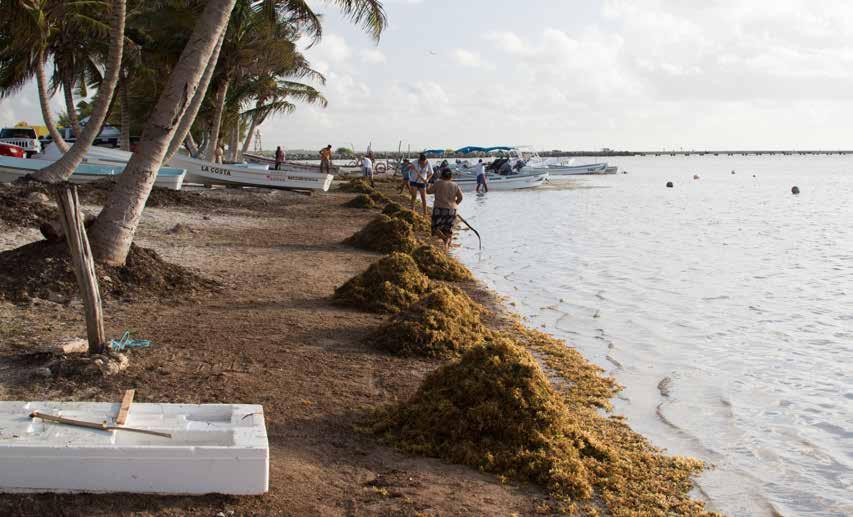
For Ali Gentry Flota, the co-owner of El Pescador Lodge in Belize, the vast rafts of seaweed lapping the beach on Ambergris Caye seemed fitting for the beginning of a parable. In nearly every year since 2011, acres of sargassum seaweed blanketed the reef before forming mountain ranges along the shoreline.
Mere days after the stranded sargassum began to rot on the beach, a noxious gas emerged, and soon the eastern edge of the peninsula sat under a film of seaweed as the acrid scent of sulphur crept through town. In the past decade, the seasonal nuisance turned into an existential threat. Soon, dead bonefish dotted the beaches. The ocean-side flats were wiped clean of seagrass. And in turn, the presence of sargassum seemed to signal a broader shift throughout the Caribbean.
As a stopgap measure, Flota anchored a boom just offshore to keep the rafts of sargassum from reaching the beach. The $15,000 investment went nowhere. “I just threw good money after bad,” she said. Next, the town of San Pedro followed suit with little luck, abetted by a national taskforce that locals only scoff at when asked. By 2019, Belize’s neighbor, Mexico, enlisted the navy to manage the influx of sargassum. While Mexico estimated the effort would cost $2.7 million, it grew tenfold, clearing $30 million by New Year’s Eve. That same year in Miami, the county’s Parks and Recreation Department spent $45 million removing sargassum from just 50 miles of coastline.
With the increased frequency and strength of hurricanes, development, and a warming climate, Flota didn’t mince words when she asked, “What do we expect?” But just like the storms that wind up off Cape Verde and churn across the Atlantic, sargassum forms another integral if not ancient part of the ocean’s rhythm.
The first rumblings of sargassum appeared when Christopher Columbus discovered a mat of seaweed stretching toward the horizon, what some called “the eighth continent.” By the 15th century, Portuguese sailors named the ever-changing boundary of floating seaweed in the North Atlantic the Sargasso Sea, deeming it unnavigable. For centuries, the mystery only deepened. By 1838, the first study of sargassum took place. Another followed in 1891. And finally, a third came in 1923, but few if any answers were revealed. It would take another century to understand why and how the Sargasso Sea formed.
In 2011, the Caribbean found itself inundated with sargassum as if a sheet had been pulled over the region from the Leeward Islands into the Gulf of Mexico. Soon, the decomposing tendrils collecting in bays and beaches from Barbuda to Cuba released their trademark hydrogen sulfide gas, and everywhere, the stench of rotten eggs hung in the air. Lovers cancelled honeymoons. Locals scratched their heads. And scientists couldn’t quite agree whether the phenomenon was a mystery or a plague.
In the following years, save 2013, blooms became omnipresent. In 2018, 20 million tons of sargassum stretched from West Africa across the Atlantic to the Caribbean, spilling into the Gulf of Mexico before slipping through the Florida Straits into the Sargasso Sea— garnering the title of “the Great Atlantic Sargassum Belt.”
In February last year, researchers at the University of South Florida’s College of Marine Science and the National Oceanic and Atmospheric Administration took centuries of myths coupled with decades of data stretching back to the 1960s and showed just how the phenomenon took shape.
In 2010, a medley of surface temperatures and salinity paired with a significant sargassum seed population spurred a massive bloom in 2011. The sequence, although interrupted in 2013, continued, and soon, sargassum blooms spread like wildfire. From 30,000 feet, the Atlantic between Ghana and Brazil almost glowed with sargassum. But what the new study revealed was that where the Amazon, Congo, and Orinoco Rivers meet the Atlantic, an unprecedented amount of nutrients, namely nitrogen and phosphorus—the residue of people— fed the blooms. In turn, the once benign and vital sargassum edged toward sinister.
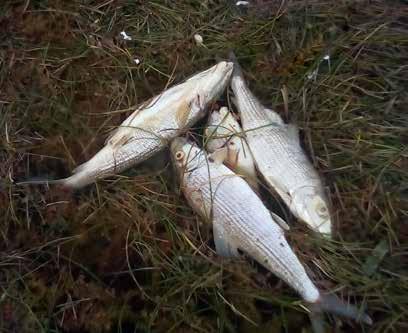
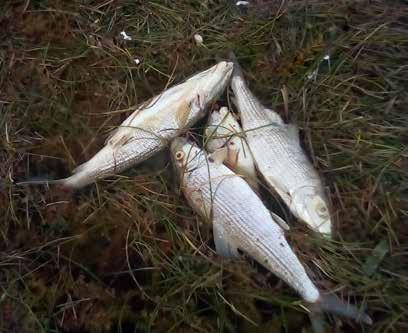
In Belize, the first signs of change came when dead fish larvae staked the perimeter of Ambergris Caye. Soon after, moribund baitfish followed. And today, it’s not uncommon to see adult bonefish floating. Sargassum, while abundant and essential to many species when it remains offshore, becomes problematic when it blankets reefs, eliminating sunlight that animates coral and depleting the water of oxygen. The same holds true for grass flats, which out front of El Pescador have all but vanished in recent years.
“That’s all gone,” said Flota. And what’s most concerning, she said, is the inextricable role those flats and shorelines play both in the lifecycle of juvenile permit and by proxy to the sort of ecotourism anglers enjoy. “It’s where permit grow up,” she said. It’s already bad, but as Flota says, “We won’t see the true impacts from a fisheries standpoint for ten years.”
“We have to first think regionally,” said Dr. Addiel Perez, Bonefish & Tarpon Trust’s Belize-Mexico Initiative Coordinator, pointing to the role that not only Central America and the Caribbean must play but also its counterparts in South America and West Africa, as well as the United States. Sadly, the story of sargassum has been one told in local news clips, of sleepy fly-paper towns strung along the coast overwhelmed by the insurmountable wealth of seaweed. At its core, however, it’s a story that requires a larger stage to portray the confluence of warming sea temperatures, the imprint of industrial countries, and the sway of just how interconnected we all are.
In Colombia and Venezuela, runoff that filters into the Orinoco river eventually finds its way into the Caribbean, acting as a catalyst for sargassum just as fertilizer runoff in Florida spawns red tide and other harmful algal blooms. The same holds true for the Congo river as it empties into the Gulf of Guinea. But where the Amazon meets the Atlantic appears to be the site where this story becomes most troubling, because not only is that the largest source of freshwater entering the Atlantic, but over the past decade it’s where the nucleus of the bloom appears visible in satellite imagery. During that same period, as vast stands of trees were felled to convert rainforest to agriculture, fertilizer use throughout the Amazon River Valley increased by 67 percent.
In just the first six months of 2020, deforestation in Brazil increased by an additional 25 percent. By June, humidity in the region had all but disappeared. Smoke drifted above treetops. The Amazonian forest began to glow, and soon, fire crawled across the valley. Ultimately, the relationship between Brazil and bonefish 3,000 miles away becomes clear as currents carry nutrients into naturally occurring sargassum blooms, exacerbated not only by the run-off but also by the spoils of climate change.
As Dr. Perez said, “It’s difficult to understand what we can do.” For Belize, Mexico, and the entire Caribbean, countries make do by removing the sargassum in areas where recreational tourism thrives, but as the years pass, it doesn’t begin to address the larger question haunting all those involved. “There’s a huge knowledge gap,” Dr. Perez added. “How we address those questions is a challenge.”
In Xcalak, Mexico, just north of the Belizean border, Denisses Angeles, a resource manager for the region, recalls 2015 and 2018 as particularly awful years. For hundreds of miles, sargassum stood as testament to what the future might look like. As in Belize, dead fish larvae preceded baitfish, and inexorably, fish integral to the character of the place like bonefish followed. “Every year, we still have these problems,” she noted, but it isn’t only the loss of species that have always drawn anglers to the region and undergirded recreational tourism—it is also the loss of land that gives her pause.
In broad terms, sargassum has become just one more factor in the erosion of southeastern Mexico, Angeles says. When it hangs over the Mayan reef, it suffocates one of the most important barrier reefs in the Caribbean Sea. And once it reaches shore and begins to rot, the noxious gases begin to gnaw away at mangroves and dune vegetation, the coast’s second and most promising line of defense.
But maybe most tragically, municipalities like Xcalak are charged with removing the sargassum themselves, and with rakes, shovels, tractors, and backhoes, each pile removed results in a bit of the coast disappearing with it due to the sand that goes with the sargassum. Most upsetting to Angeles, among an innumerable number of concerns, is that sargassum is not the result of Mexico’s mismanagement, and yet that country, like so many others, bears the brunt of the fallout.
As Angeles said, the sargassum comes from elsewhere. “It’s international.”
In a year marred by an unprecedented hurricane season and a pandemic with a death toll still climbing, the threat posed by sargassum remained at the back of most guides’ minds as they scrubbed their calendars and boarded up their windows. And yet in San Pedro, Omar Arceo, a BTT Conservation Captain, sounded equal parts hopeful as he did exasperated. “We don’t know where to start,” he said.
As early as Arceo can remember, sargassum was present in Belize, but not until 2014 did he take note when the stench washed over him as he approached downtown San Pedro. Suddenly, it was a problem. “It rots everything,” Arceo told me—a refrain I heard over and over.
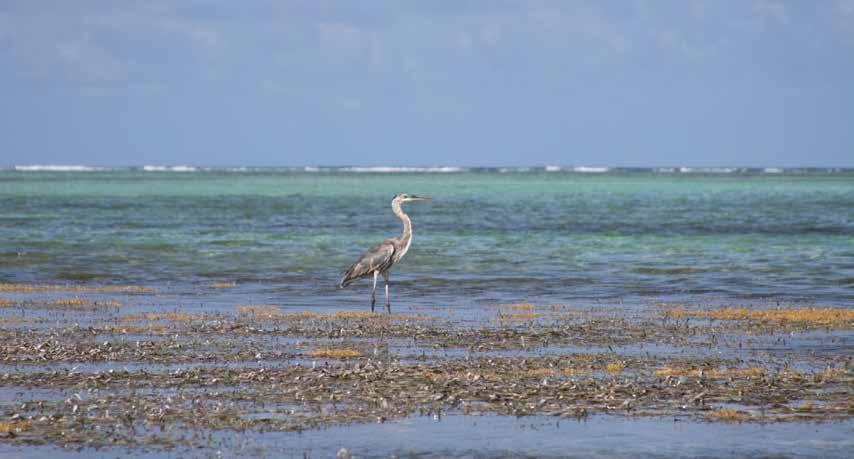
Along the Caribbean side of Ambergris, sargassum quickly killed what were once fecund flats—the same flats where bonefish have lived for generations and juvenile permit have come of age. On shore, its sulfur was making quick work of stainlesssteel appliances, corroding them in a matter of months. And soon, it drove developers away from the eastern side of the key, concentrating new developments along the bayside where guides spend much of their year looking for bonefish, tarpon, and permit. While the bayside still teems with gamefish, the central element of the fishery here, Arceo worried about how much longer it would flourish given the increase in sargassum, storms, and development.
In an intricate dance that binds the mouth of the Amazon to Ambergris Caye and Africa to the Americas, what is playing out in San Pedro and in Xcalak hung over Arceo and other guides like a summer squall. If countries continue to approach the issue of sargassum individually, there is little if any hope for a solution. Aside from raising awareness about its origin, it’s become unmistakably clear that a regional if not global approach to manage the massive blooms is necessary. As Arceo said, “You can’t beat it with manpower.”
Michael Adno contributes regularly to The New York Times, The Surfer’s Journal, and The Bitter Southerner, where he won a James Beard Award for profile writing in 2019. He lives in his hometown, Sarasota, Florida, along the Gulf of Mexico.


