

15 ON OUR RADAR
What’s Capturing Our Attention Right Now: From tennis court culture to the coolest places to stay on our map, the edit of what to know now.
19 ISLAND ESCAPISM
A Fine Romance: The Caribbean destinations redefining modern intimacy.
28 CRUISING THE WORLD
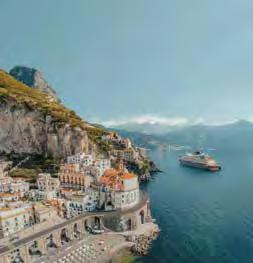
The journeys our intrepid travellers are booking and why you should too: Sailing the romantic Mediterranean and experiencing the world of wellness in Japan.

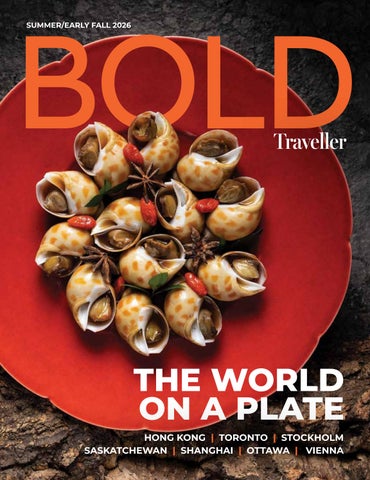
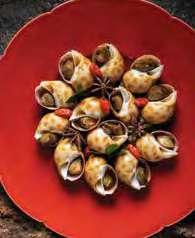
From the elegant coastal flavours of Ningbo and Stockholm’s culinary underground to Toronto’s high-end comfort food, Ottawa’s latest master chef debut, the urban vineyards of Vienna and the rural vineyards of Canada’s Niagara – savour our global culinary dossier.
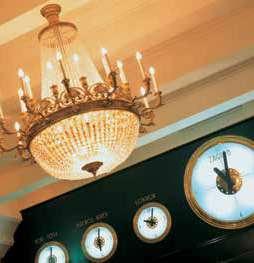
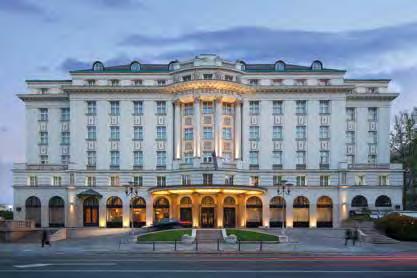
50 POSTCARD FROM The Esplanade Zagreb Hotel: Zagreb blends an old-world charm, anchored by this legendary, glamorous property.
EDITOR IN CHIEF Vivian Vassos
ART DIRECTION AND DESIGN
Megan Cronje
SENIOR CONTRIBUTING EDITOR Vawn Himmelsbach
CONTRIBUTING EDITORS
Liz Fleming, Ruth J. Katz, Brittany Johnson, Aaron Rasmussen
CONTRIBUTORS
Jim Bamboulis, Shelley Cameron-McCarron, Loren Christie, Meagan Drillinger, Lynn Elmhirst, Shinan Govani, Deepi Harish, Michelle Jobin, Tim Johnson, Magdalena Kaiser, Dick Snyder, Renée Suen
PUBLISHER + CEO
Marlon Moreno
DIRECTOR OF PUBLIC RELATIONS
Rebecca Marissa Cohen
WEB DEVELOPER Komodo Innovations Inc. info@komodoinnovations.com
Rahul Nair
BECOME A BOLD TRAVELLER INSIDER
Get the best of BoldTraveller magazine delivered straight to your inbox and sign up for our weekly #Postcard of the week newsletter. We’ll take you somewhere you never expected.




FOR THOSE OF US who travel, the act of going and exploring and sitting at a table in a farflung land, or simply around the corner, is a form of nourishment and sustenance –even before the first course is served. Is it the deft way the chef wields the knife or the whirling dervish of piledhigh trays spinning their way through busy dining rooms or the down-home aromas of a local granny’s soup bubbling on the stove? It is, I think, all three and more.
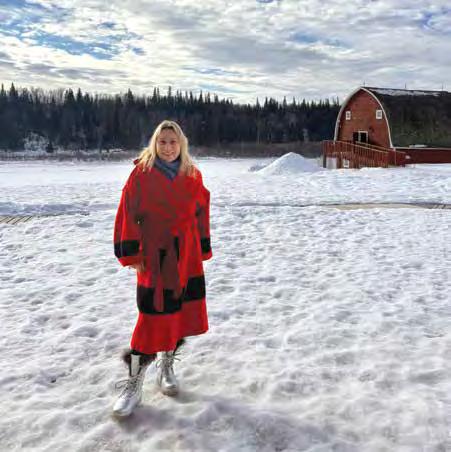
Earlier this year, I had the privilege of sitting around the fire in a traditional Tipi breaking bread – or rather baking bread – with Wendy Poseluzny, at her Mètisfamily owned The Woods Experience (atthewoods.ca), about a 90 minute drive from Edmonton. She sparked the kindling while smoke swirled upward through the Tipi’s opening, then handed me a stick and pointed to a tray of dough. “Have you ever toasted Bannock?” she asked. I had not, but I’m always willing to try something new. I chose a ball of dough and slowly spread it out over the end of the stick. I held it gingerly over the open flame.
We “baked” the bannock – an Indigenous culinary staple with Scottish roots – together, sitting at her “table”
while she told me more about the Tipi and The Woods. Her story of her family’s quest to create a real woodland retreat took my mind off other things; I felt suspended in this moment of simplicity. She pointed to my stick – mine was more burnt marshmallow than a decent bite of baked bread, but edible nevertheless. Poseluzny runs her hideaway in the woods along with her daughter-in-law, Kendra Dudzic. Rustic, off-and-on-thegrid cabins come complete with campchic decor, coolers filled with treats and little front porches to watch the sunset, surrounded by Alberta forest. But why stop there? An outdoor Nordic-style spa, set back into the woods, can be booked out for total privacy. After a dip in the cold plunge and the wood-fired hot tub, then a short go in the barrel-shaped sauna, the fuzzy bathrobes, flip flops and fluffy towels were a welcome little luxury. And, yet, what fed me most was that moment in the Tipi, sharing an Indigenous traditional bite, and experiencing this connection to our home and native land.
For this edition, we asked our #BoldContributors: What is the one meal or dish anywhere in the world you would board a flight for tomorrow?

RENÉE S. SUEN
Writer, “Ningbo Cuisine” Page 36
“Asador Etxebarri, the revered restaurant in the rural Basque village of Axpe. Here, chef Bittor Arginzoniz coaxes the absolute purest flavours from elvers, teardrop peas, Galician chuleta and even smokedmilk ice cream using custom live-fire techniques, all paired with Mohamed Benabdallah’s incredibly deep cellar. It’s a near-impossible reservation to secure, but I’m lucky enough to join an annual buyout just to get a seat.” @renee.s.suen

LOREN CHRISTIE
Writer, “Subversive Supper,” Page 40
“The eight-course champagne pairing menu at Henri Giraud in Épernay, France. I had one of the best culinary experiences of my life at this familyowned Champagne house, where my incredibly talented niece, Liz, serves as the Executive Chef. Unlike a traditional multi-course meal, the menu here is entirely engineered from the ground up to elevate and enhance the tasting experience of the Champagne.” @loren.christie

DEEPI HARISH
Writer, “Bringin’ Akira Back,” Page 44
Vivian Vassos Editor in Chief
“A bowl of laksa from a hawker centre in Singapore. I’ve eaten at Michelin-starred restaurants around the world, but it’s that inexpensive bowl I still crave. More than two decades later, I constantly wonder if it could possibly be as good as I remember.” @d33pi


FLAVOURS

Players aren’t the only ones serving aces. From luxury resorts and cruise lines to the runways of Paris, summer’s most enduring sport takes centre court. By Vivian Vassos Tennis, Anyone?
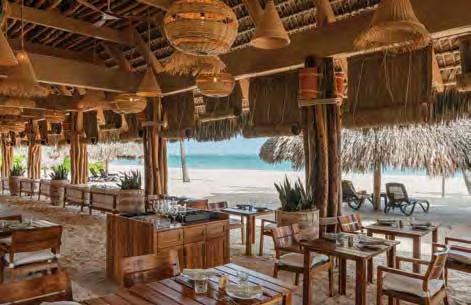
YOU MAY HAVE thought that tennis had had its day, what with all the social clubs around Pickleball and resorts adding Padel courts to the grounds. But classic tennis is making a comeback. Take resorts such as the Bahamas’ Baha Mar, where the John McEnroe Tennis Centre holds court, the Mouratoglou Tennis Center – where redhot Greek player Stefanos Tsitsipas trains– at The Westin Resort Costa Navarino in Greece’s Peloponnese peninsula, or the new Rafa Nadal Tennis Center Punta Cana, located right across the road from the ZEL Punta Cana resort. ⊲
But resorts aren’t the only ones serving aces. ME by Meliá has collaborated with tennis and athleisure wear icon Lacoste to create uniform designs coined ME by Meliá X Lacoste, while Matthieu Blazy at Chanel continues to channel the ghost of Coco with his exaggerated tennis-inspired jackets, knit vests and pleated skirts. Uniqlo has enlisted tennis great Roger Federer as a spokesmodel for its latest collection, and Explora Journeys has partnered with tennis star and global brand ambassador Jannik Sinner – who has developed a new “Ocean Wellness Program,” including his signature workout, for guests on board its Explora fleet of ships.

Editor’s Pick Avène High Protection Tinted Compact SPF 50 Honey. Perfect for travel, this 100% mineral-filtered formula beautifully protects against both UVA and UVB rays while you are out on the court. eau-thermale-avene.ca


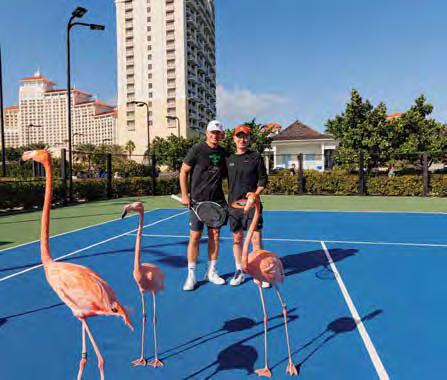
Tennis legends John McEnroe and Mark Knowles talk strategy with Baha Mar’s resident flamingos
The Scent Chanel Chance Eau Splendide. Spritz on this new floral-fruity blend of fresh raspberry and rose geranium for an olfactory lift postmatch. chanel.com


This minimalist trainer says effortless court-to-club style. miumiu.com

The Visor In lightweight canvas, it's refined and made for movement, on the courts, the fairways and beyond. ca.tilley.com

The Wardrobe (centre and above): Two looks from Uniqlo's current offering, including JW Anderson's take on Roger Federer tennis chic. uniqlo.com/ca/
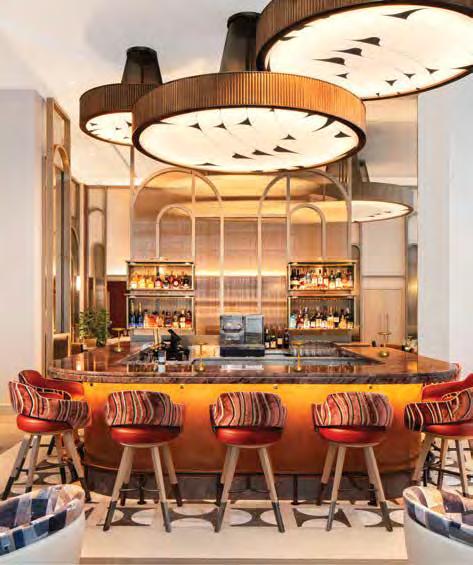
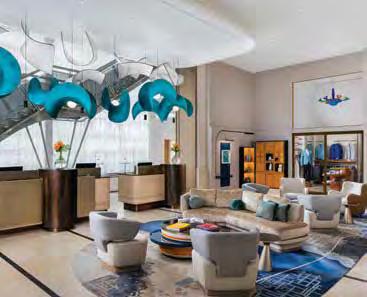

Historic grandeur meets modern Parisian soul as the newly transformed Sofitel Montreal Golden Mile makes its breathtaking North American debut By Vivian Vassos
THE PAST FEW years have seen a few hotels in Montreal get a facelift, particularly in the luxury space.
First, Fairmont The Queen Elizabeth reopened after extensive renos and now The Sofitel Montreal Golden Mile is making its grand re-entrance.
Let’s start with the where: The hotel sits on the spot where the Van Horne Mansion, the home of Canadian Pacific Railway magnate Sir William Cornelius Van Horne, once stood. It’s a rather interesting coincidence, as Fairmont, Sofitel’s sister property in the Accor Hotel Group, is known for its Grand Rail Hotels.
“Many of our hotel ambassadors [staff] know this history, they were chosen to work here for this reason, and they are proud of this legacy,”
Maud Bailly, CEO of Sofitel Legend, Sofitel, MGallery and Emblems hotel collections, tells me on the day of the grand re-opening. “We need to value this, as part of our brand promise.”
For Bailly, the adage location, location location is no joke. “I always say a good hotel is three things: great location; ease of reaching it via transportation; and brand match or fit. If you don’t have a great location –especially for our brands, well, it doesn’t work. We have to celebrate the local culture. And in this originally Victorian building, made modern, being able to respect this heritage.” Completely reimagined by the Canadian design firm 2pirdesign, it is the first North American property to receive a renewed look – completed in late 2025 – while New York followed suit earlier this year. ⊲

There is so much history here, yet the building feels alive and in the moment. A hotel tour given by GM Marc Pichot shows little touches to ensure a sense of place. Elevator doors slide open to reveal floor to ceiling photographs of the Montreal skyline, windows wrap around the lobby, as well as the Michelin recognized Renoir restaurant and Nini bar, right at bustling Sherbrooke Street level and much of the artworks were salvaged from the hotel’s former incarnation. It’s within walking distance of the Montreal Museum of Fine Arts and Mount Royal.
Of course, the brand is also showing its Parisian roots. Staff uniforms, a capsule wardrobe coined “Le Vestiare,” were created by the former Dior designer, Cordelia de Castellane, adding that je ne sai quoi. Rose and bronze metallics, sculptural lighting and textural and artistic elements are reminiscent of a French home. The lobby is bright and airy; a place where you really do want to sit and linger, people watch and perhaps peruse a coffee table book from the tiny library shelf across from the front desk. And, yes, there is a front desk, manned by welcoming and knowledgeable staff. Don’t knock it; it’s a dying amenity in this digital age at so many hotels.
At twilight, when the light begins to fade, another made-in-Paris ritual takes place. Each evening Sofitel’s Candle Ritual is held in the hotel lobby, where ambassadors light candles, to bid farewell to the day and softly illuminate the night, accompanied by a sultry soundtrack.
Like any good hotelier, Bailly is passionate about responsible travel. “We can’t go backwards; all of our hotels are eco-certified and Sofitel Montreal holds the 5 Green Key certification. But it’s not that easy. For example, I love breakfast – but did you notice, no buffet? No more waste. And, of course, water. We are trying to really not waste that resource, working with new technology.” Bailly and her team are working to change and embed this into the mindset of everyone at Sofitel, so that it creates thoughtful action that is feel-good and also financially beneficial.
“Canada is an emerging market for us, and we still have so much to do,” she says. And it's not just Sofitel in Canada Bailly is excited about. “Our first Emblems Collection property in North America, Rimrock Banff, opens in the summer of 2026. It is good timing to raise awareness of all these brands, Sofitel Legend, Sofitel, MGallery and Emblems. We are ready and Canada is ready, too.” sofitel.accor.com
By Jim Bamboulis
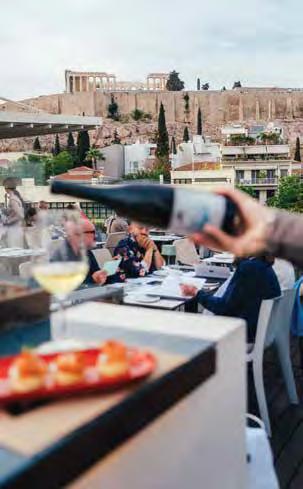
ATHENS IS MY KIND of city. I love its pulse – irresistible street food aromas drifting through the air, layers of ancient landmarks between modern storefronts, and the thrill of turning a corner to find another breathtaking view of the famed Parthenon. But after long days of exploration, the Herodion Hotel awaits. Established in 1976 by Michalis Tsimidopoulos, it remains family-owned and now female-led by his daughters, Katia and Anastasia. It’s a refined, peaceful retreat offering polished service, charming and quintessentially warm Greek hospitality and unforgettable rooftop views of the illuminated Acropolis.
Steps from the hotel, Dionysiou Areopagitou is a beautifully lit cobblestone promenade – lined with restaurants, cafes, bouzouki-playing street performers – that wraps around the Acropolis, connecting the city’s famed Plaka neighbourhood with Hadrian’s Gate, Acropolis Museum and the Temple of Zeus.
Then there’s Point A, the hotel’s rooftop restaurant – arguably the hotel’s crown jewel. Framed by olive trees, it offers unobstructed panoramic Parthenon views, making it an idyllic spot for a morning coffee and evening cocktail. herodion.gr/en
By Michelle Jobin
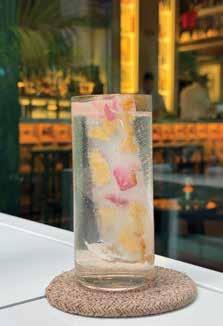
LOCATED AT THE Kimpton Seafire Resort + Spa, Library by the Sea was once again named one of the World’s 50 Best Bars in 2026, and its cocktail menu is organized into literary-inspired chapters. It was tough to choose, but I opted for the B612, for Consuelo: a gin-based drink inspired by The Little Prince. Sipping it at golden hour felt like a fitting reflection of Grand Cayman itself: creative, easygoing and quietly luxurious. As an aside: We based ourselves at The Locale Hotel Grand Cayman, a comfortable boutique hotel near Seven Mile Beach that proved to be an excellent value. Its central location (two blocks from Seven Mile Beach, a short walk to Camana Bay) made exploring the island by foot or by car easy. seafireresortandspa.com
We’re
having
a love affair with the Caribbean. Meagan Drillinger heads to the beach and discovers a few perfectly romantic idylls to visit – anytime you need an escape.
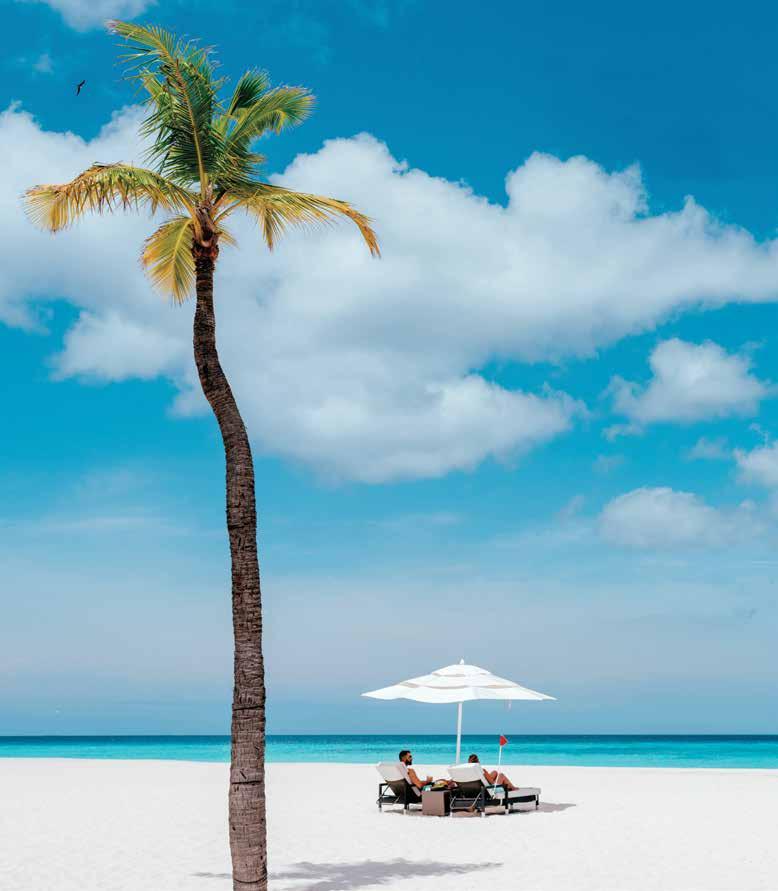
THE CARIBBEAN has long been the idyllic escape for those seeking sun, sea and romance. Powder-white beaches, jungle-covered peaks, soca rhythms and Creole-spiced cuisine. Smudgy sunsets and the gentle clink of ice in cocktail glasses. The Caribbean has it all. For Canadian travellers, paradise is just a few hours’ flight away.
BEST FOR: Couples who value reliable weather, beautiful beaches and plenty to do off-property
Aruba stands apart in the Caribbean for its climate and clarity. Set well south of the hurricane belt, the island is dry, bright and consistently warm in February, with steady trade winds that temper the heat. This predictability lends itself to days exploring brilliant beaches, bustling towns and a rugged interior without concern for sudden weather changes.
The island’s beaches are among its strongest assets. Eagle Beach stretches wide and pale along the west coast, its sand broken only by the silhouettes of divi-divi trees bent inland by the wind. Further south, Baby Beach forms a shallow, protected crescent ideal for long swims and idle afternoons. The west-facing shoreline also delivers some of the Caribbean’s most dependable sunsets, drawing couples quietly toward the water at day’s end.
Beyond the coast, Aruba has an austere beauty. Arikok National Park covers a long portion of the island and introduces a different palette altogether: cactus-studded plains, volcanic rock formations, hidden caves and rough paths leading to secluded stretches of coast where waves break hard against stone.
Aruba’s food culture reflects its layered history. Dutch, Caribbean, Latin American and Indonesian influences appear across menus, often centred on seafood and simple preparations that suit the climate. Evenings are informal, marked by open-air dining and deliciously warm breezes. WHERE TO STAY: Set directly on Eagle Beach, Bucuti & Tara Beach Resort is an adults-only retreat designed specifically for romance. The atmosphere is laid-back, with rooms opening toward the sea, and activities like swimming, long shoreline strolls and soaking up the sunshine. A dedicated concierge curates personalized experiences for guests, from private beach picnics and wellness sessions to intimate dinners under the stars. bucuti.com visitaruba.com
BEST FOR: Couples who enjoy island-hopping, sailing culture and a mix of socializing and seclusion
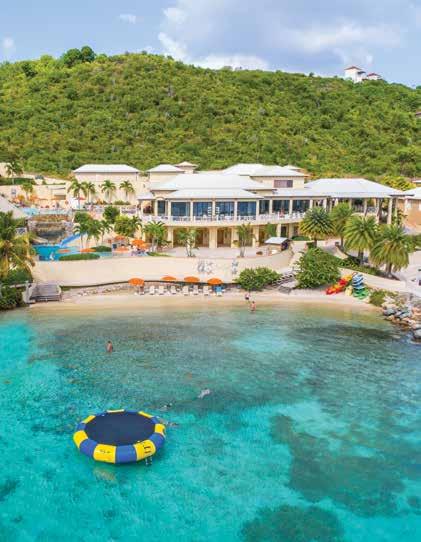
The British Virgin Islands are best understood as a constellation rather than a single destination. Made up of more than 60 islands and cays, the BVI is anchored by four main islands – Tortola, Virgin Gorda, Jost Van Dyke and Anegada – each offering a distinct experience within short reach of the others. Tortola is the busiest and most developed, home to the main airport and ferry terminal. Its hills rise steeply from the coast, offering views across Sir Francis Drake Channel, while Road Town provides the archipelago’s commercial centre. Virgin Gorda is more sculptural, best known for The Baths, where massive granite boulders form tidal pools and shaded passages at the water’s edge.
Jost Van Dyke brings a social note. Small, flat and relaxed, it is known for beach bars and an easygoing atmosphere that draws sailors ashore in the late afternoon. Anegada, by contrast, feels remote and elemental. Low-lying and surrounded by reef, it is prized for empty beaches, strong snorkelling and lobster pulled fresh from the sea.
Beyond the main islands, smaller outposts such as Scrub Island add another layer. These islands offer greater seclusion while remaining firmly within the BVI orbit, accessible by short boat transfers rather than long journeys.
WHERE TO STAY: Set on its own small island just off Tortola, Scrub Island Resort, Spa & Marina combines a private-island setting with easy access to the wider BVI. Suites and villas are spread across the hillside and along the water, many with terraces overlooking the Sir Francis Drake Channel. Guests can spend the days swimming from quiet beaches, watching boats move through the channel, or setting out to explore nearby islands before returning to Scrub Island's self-contained atmosphere. scrubisland.com bvitourism.com
BEST FOR: Couples interested in food culture, verdant landscapes and outdoor adventure
Grenada’s romance is grounded in the fertility of the land. This is an island shaped by what grows, cooks and carries to market. Known as the Caribbean’s Spice Island, Grenada remains one of the region’s most agriculturally expressive destinations. Cocoa, nutmeg, cinnamon, ginger and clove are working crops woven into daily life and cooking, infusing the air with a heady perfume. Cocoa estates across the island remain active, and visitors can walk among fermenting boxes and drying racks before seeing beans roasted and milled on site. Grenada has become a leader in the revival of Caribbean chocolate, with several small producers committed to single-estate bars and traditional methods. Early in the year, immortelle trees planted to shade cocoa groves bloom in vivid orange, a striking contrast against the rainforest canopy. In Gouyave, the nutmeg processing station offers a direct view into an industry that still anchors the local economy.
Grenada's landscape encourages active couples to get their steps in. Inland trails lead through forested hills to waterfalls, while the coast offers beaches that range from pale arcs to darker volcanic sand. Just offshore, the Molinere Underwater Sculpture Park adds a distinctive dimension, combining art and marine conservation in shallow, accessible waters. A ferry ride north brings visitors to Carriacou and Petite Martinique, smaller and quieter islands with excellent snorkelling, open beaches and a strong sailing tradition.
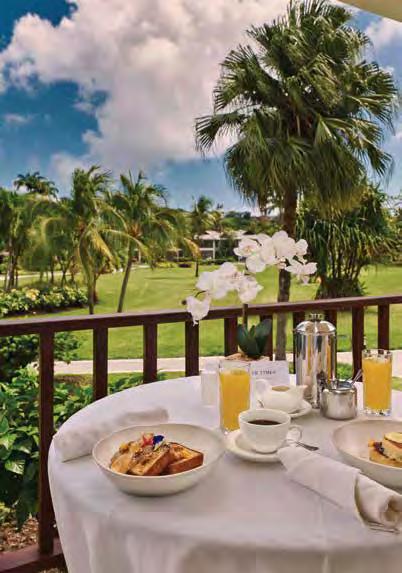
WHERE TO STAY: Set on a sheltered bay just south of Grand Anse, Calabash Hotel has a quietly intimate feel that suits couples well. With only 30 suites, the atmosphere is calm and personal, and most rooms look directly onto the Caribbean from private balconies. The beach is small, white and protected, making swimming easy at almost any hour, while the infinity pool sits just above the sand, framed by tropical gardens. puregrenada.com calabashhotel.com
BEST FOR: Couples drawn to sailing, open water and islands marked by simplicity
St. Vincent and the Grenadines is best understood from the water. A chain of more than 30 islands and cays extends from the volcanic bulk of St. Vincent, each separated by short passages that are primed for slow travel by boat.
Bequia, long a centre of boatbuilding and maritime tradition, remains the natural starting point. Its harbour is a bustling hub, and the island’s beaches – Princess Margaret and Lower Bay among them – are blissfully broad and largely undeveloped. Further south, Mustique and Canouan introduce a quieter strain of refinement, while Mayreau and the Tobago Cays return the focus to the landscape. The Tobago Cays Marine Park is the heart of the Grenadine experience: a horseshoe of low islands enclosing shallow, luminous water, protective reefs and broad swaths of beachfront.
On land, development is deliberately restrained. Villages are small, roads are few and daily life revolves around fishing and sailing. St. Vincent itself adds contrast, with rainforest trails, waterfalls and the looming presence of La Soufrière volcano, whose slopes and valleys give the island a physical depth.
WHERE TO STAY: Set along the wide curve of Friendship Bay, Bequia Beach Hotel sits directly on Bequia’s most appealing stretch of soft sand. The low-rise resort spreads across gardens that lead straight to the beach, with rooms, suites and villas oriented toward open sea views. Guests flit between the shoreline, the pools and shaded terraces, with everything within comfortable walking distance. bequiabeachhotel.com discoversvg.com
BEST FOR: Couples who want exceptional beaches, open space and a quieter version of a familiar Caribbean name
Turks and Caicos is often reduced to a single image: Grace Bay’s pale sand and calm, turquoise water. But the archipelago reveals far more when explored beyond Providenciales.
South Caicos offers a striking contrast to Provo’s polish. Here, milky blue water hovers just inches above powdery sandbars, creating a swirly landscape of whites and turquoise giving way to long, empty beaches backed by scrub and salt ponds.
February is also the height of humpback whale season. From the shore or on the water, it is possible to see mothers and calves moving through the deep channels between islands, a reminder that these waters remain part of a larger migratory world. Snorkelling and diving are particularly strong at this time of year, with clear conditions over coral walls and reef systems that drop quickly into deep blue.
Romance in Turks and Caicos is found across all islands, whether from the candlelit beachfront restaurants of Provo or the stretches of uninterrupted beach that fringe South Caicos.
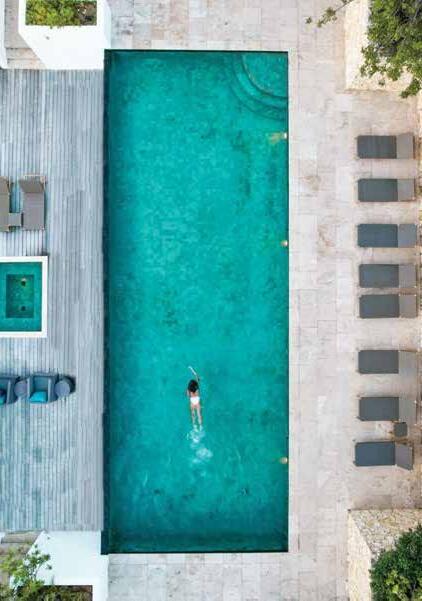
WHERE TO STAY: Perched above a quiet stretch of coastline on the more remote South Caicos, Sailrock Resort is intentionally removed. Suites and villas are spaced along the ridge and down toward the shore, many with wide terraces that open directly to sea views and steady trade winds. Wander the empty beaches or kayak the shimmering blue inlets. Camp up next to the evening beach bonfire, and watch the sky become freckled with stars. sailrocksouthcaicos.com turksandcaicostourism.com
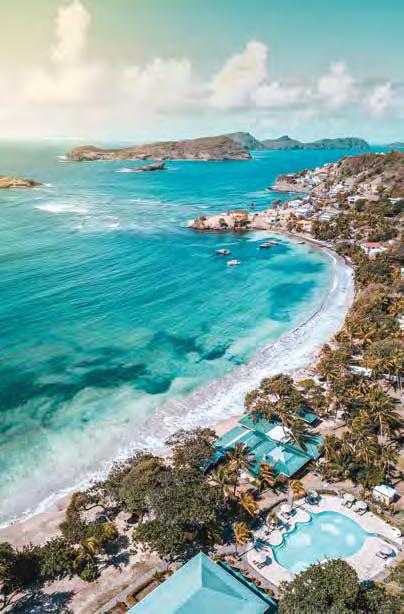

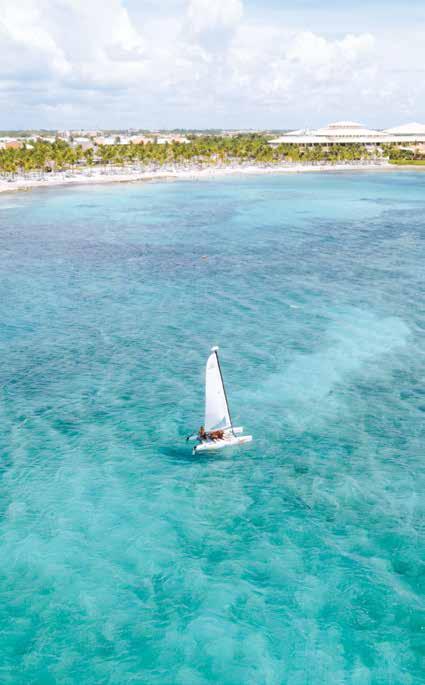
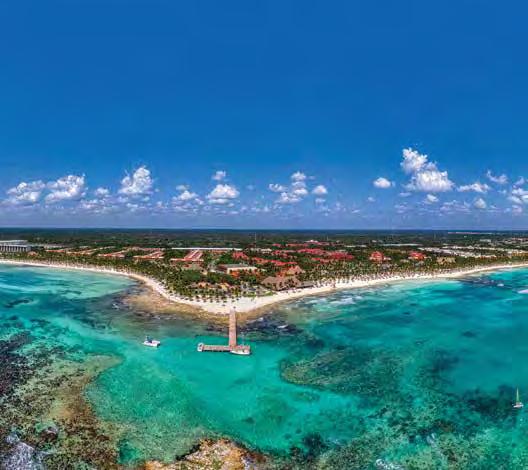
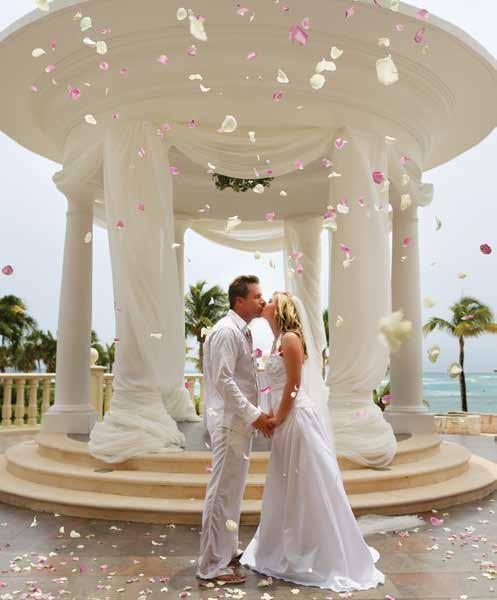
From barefoot beach weddings to more traditional ceremonies and suites with whirlpool tubs for the special couple to enjoy, Barceló Maya Grand Resort is designed for love in all its forms — with six all-inclusive resorts, two kilometres of beach and a wedding team that handles every detail.
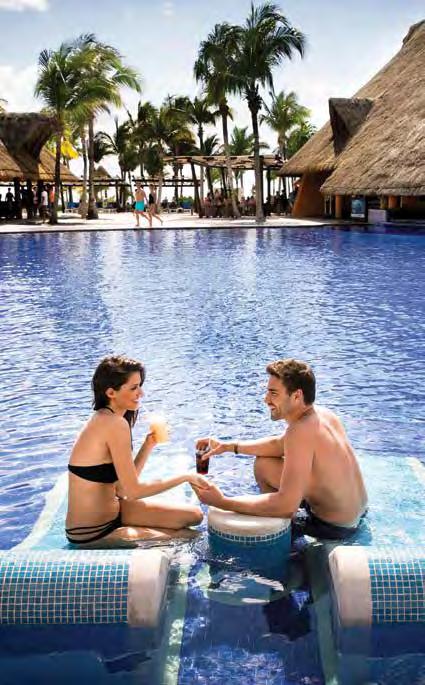
IFYOU’VE BEEN dreaming of a destination wedding in, well, an absolutely dreamy location, look no further.
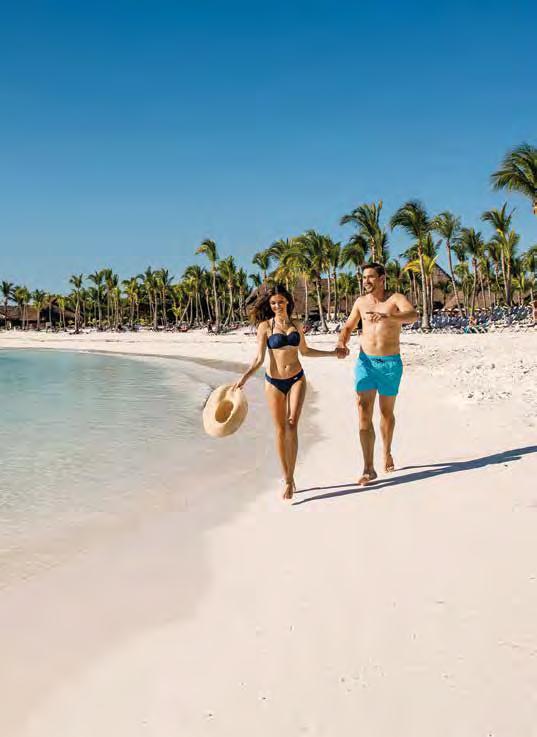
On the Mayan Riviera, Barceló Maya Grand Resort offers the best of all worlds: the crystal blue waters of the Caribbean, the powdery white sands and the luscious greens and vibrant colours of the riviera’s natural tropical flora and fauna – all wrapped up in six thoughtfully designed, interconnected all-inclusive resorts stretched
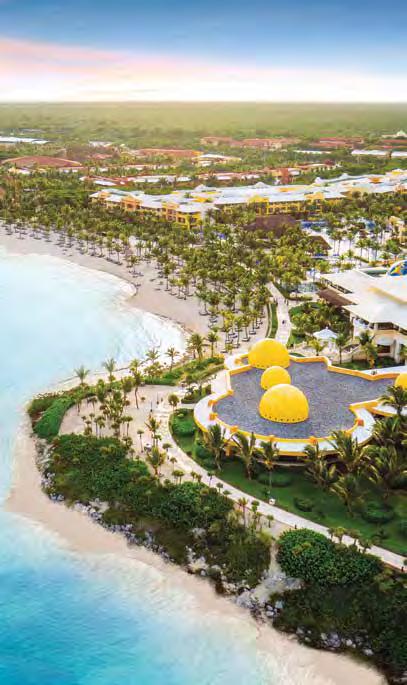
across two kilometres of private beach front. And, with on-site wedding planning experts, every detail – from bespoke wedding party activities to securing an officiant – is taken care of.
It’s easy to say that Barceló Maya Grand Resort has it all. Want to say your vows barefoot on the beach? Check. Want expert wedding planners at your service? Check. Hosting a family of foodies? Check, and then some, with some of the best cuisine in the Caribbean ready to savour. More traditional
couples will feel the spirit when saying I Do at the resort’s intimate Chapel of the Virgin of Guadalupe, with its classic architecture and Mayan motifs. Step outside and you and your guests are greeted by flowing fountains and verdant gardens. Or, share the love at the Gazebo Palace, while the waves kiss the beach and the majestic palms sway in the gentle breeze in the background. And a stay at one of the resort’s six hotels means you can also experience the amenities at many of the others, whether dining, watersports
or a little nightlife. Families with young children will love the joyful atmosphere of the Barceló Maya Beach, Barceló Maya Caribe, Barceló Maya Colonial and Barceló Maya Tropical. With their “Stay at 1, Play at 4” concept, guests staying at one resort have access to the amenities and facilities of the other three resorts. Up to 16 restaurants and 15 bars. A variety of spectacular swimming pools, including an adults-only pool and two semi-Olympic pools. Pirate Island Water Park ($) with surf rider and slides. Mini-golf and bowling alley ($). A kids’ club that keeps the little ones entertained — and a teen disco for older kids. The resort ensures no one in the wedding party is left out. And when it’s time to recharge, U-Spa ($) offers a serene hydrotherapy circuit, along with personalised treatments. There is also a state-of-the-art gym for those that don’t want to miss out on their daily routine.
For those who want to trade the bustle for the sea, Barceló Maya Palace sits at the quiet edge of the resort — where the coral reefs are just a swim away. Spacious suites, three swimming pools, including an adults-only pool, and oceanfront dining offer plenty to see and do, while the Barcy Kids’ Club ensures younger guests are entertained. It’s the kind of place where wedding guests can find their own rhythm — whether that means diving into the Caribbean or simply unwinding by the pool. And with the “Stay at 1, Play at 5” concept, guests also have access to all the amenities and facilities of the Barceló Maya Beach, Barceló Maya Caribe, Barceló Maya Colonial and Barceló Maya Tropical.
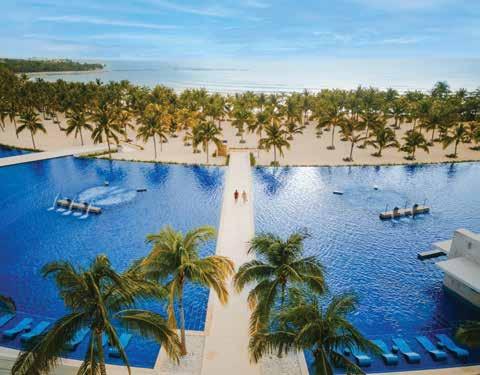
And for couples looking for their own private escape, they need not look further than the Barceló Maya Riviera Adults Only, the ultimate in sophisticated and intimate luxury and service. Away from the hustle and bustle of the main resort areas, it’s also conducive to adults-only wedding groups, with proximity to a variety of event spaces. Suites feature a private balcony and whirlpool tub, while the Swim-Up Suites offer exclusive pool access and spectacular views of the Caribbean. Balinese sun beds and lounges are plentiful and the infinity pool – the largest on the Riviera Maya – is an oasis of calm. A stay here also gives you access to the amenities and facilities of the rest of the five spectacular resorts, as part of the “Stay at 1, Play at 6” concept.
For those looking for a more elevated stay, guests can reserve the Barceló Maya Grand Resort’s Premium Level rooms or suites.
Premium Level provides guests with added amenities, like private check-in and check-out; access to the Premium Level Lounge with personalized concierge service, international drinks, canapés and more; priority reservations at à-lacarte restaurants; access to the U-Spa’s hydrotherapy area; complimentary room service; and more.
The best part? Barceló Maya Grand Resort invites couples to experience our resort before you book – at a special price. It’s as easy as choosing one of the six stellar all-inclusive resorts, confirming the date of your visit and, upon arrival, meeting with the wedding planning team, who will take you on a full tour of the resort, while making note of all your dream wedding wishes.
Air Transat is Canada’s flagship leisure airline and has once again been named Best Leisure Airline in North America at the 2025 Skytrax World Airline Awards. This marks the seventh time the airline has received this honour— and the third consecutive year— underscoring its commitment to delivering a quality travel experience built on comfort, genuine hospitality and attention to detail at every stage of the journey. With almost 40 years of experience, our commitment to attentive service, punctuality and reliability flying on our Airbus fleet, there are plenty of great reasons to fly with Air Transat. When you book one of our packages, you’ll benefit from one free checked bag with a round-trip Economy class fare, including service charges and taxes, round-trip transfers between your vacation destination airport and the hotel and the services of an on-site representative. transat.com


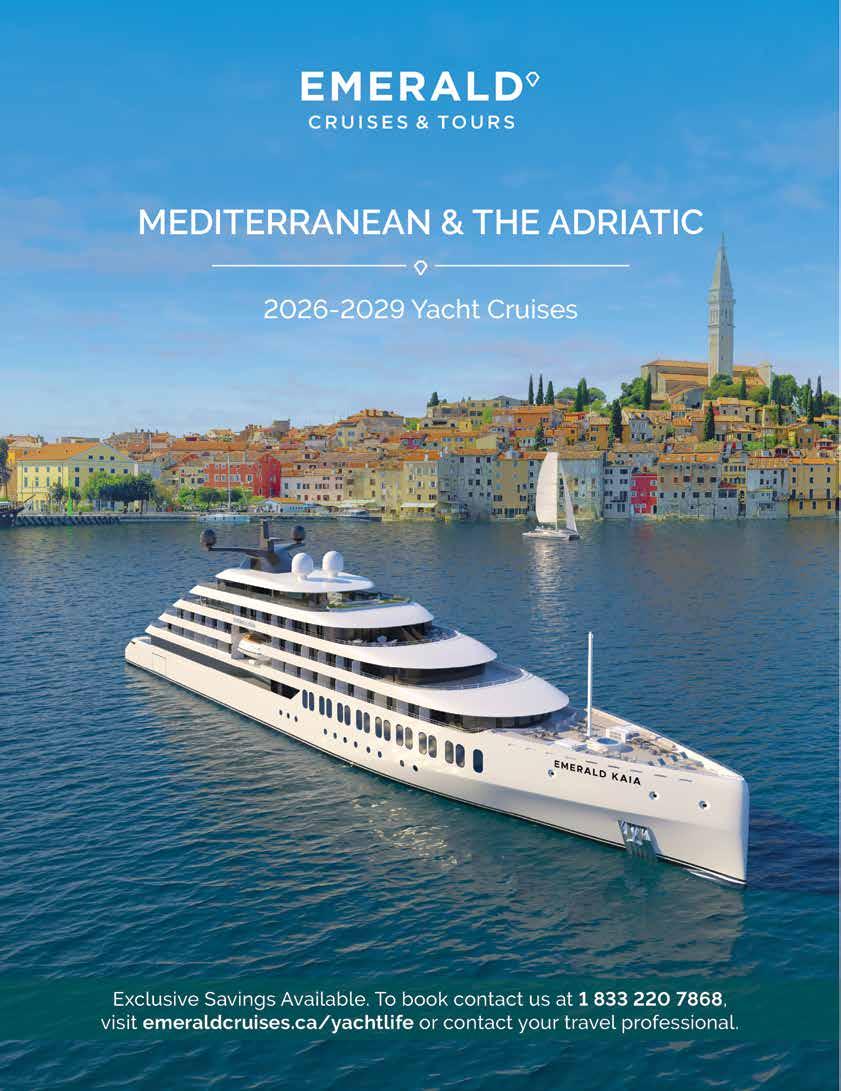
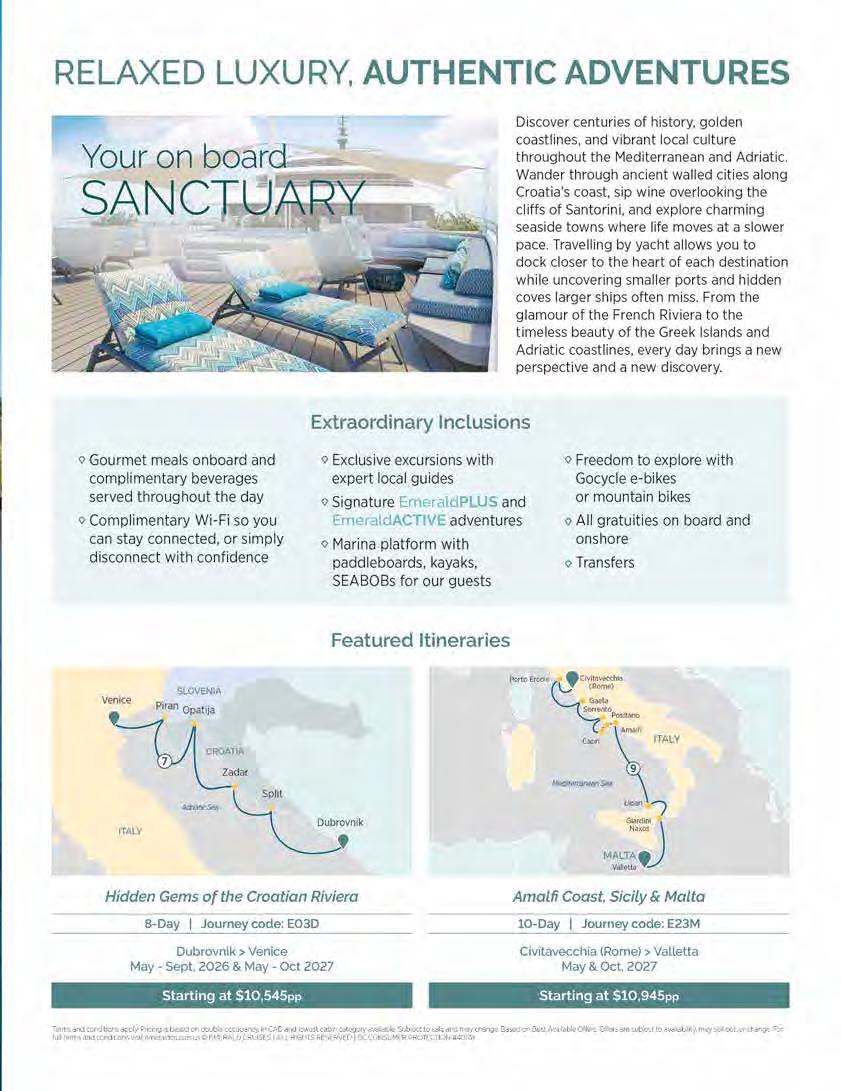
THE CRUISES OUR INTREPID TRAVELLERS ARE BOOKING AND WHY YOU SHOULD TOO
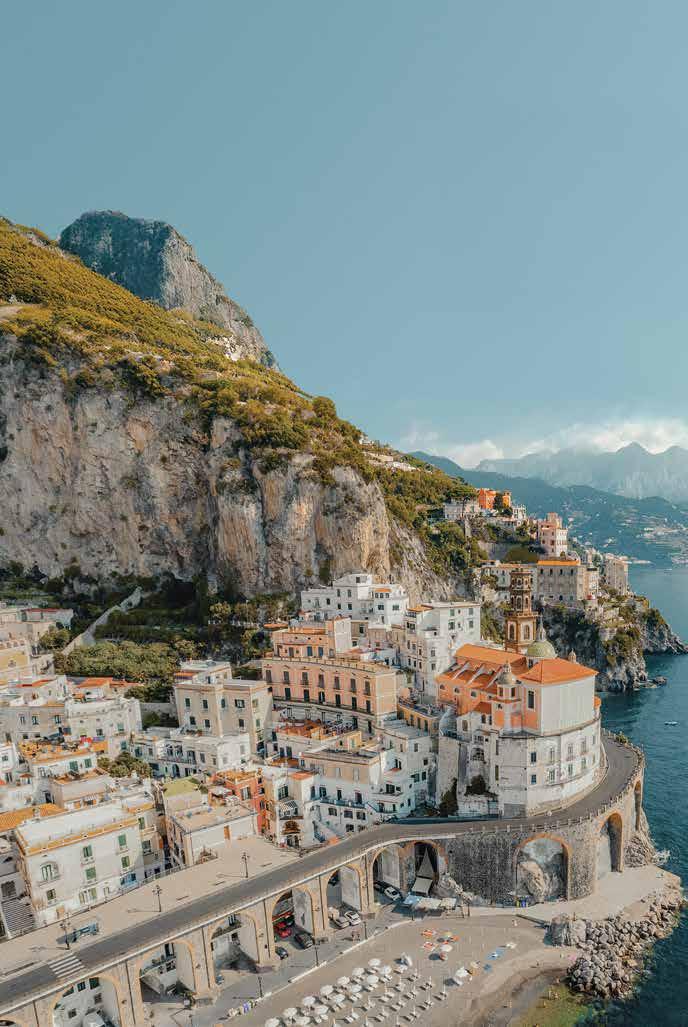

From
private ocean terraces on the French Riviera to advanced wellness on the open water – cruising is
built for deeper connection
STANDING AT THE RAIL, arms wrapped around the one you love, breezes wafting in your hair, together in your own little world at sea. Add Champagne, that sense of occasion that still exists on cruise ships; even the joy of dressing up for an elegant evening. There’s a reason no other style of travel can beat cruising for romance. From the sun-drenched ports of the Mediterranean to state-of-the-art wellness bays, these exceptional vessels are redefining what it means to escape together.
SMALL-SHIP YACHTING ON THE FRENCH RIVIERA Channel your inner billionaire or French movie star couple as you and your sweetheart sail from storied harbour to chic fishing village along the coastlines of the Mediterranean on the luxury “Discovery Yacht” Scenic Eclipse. From the elegant street markets and French fashion houses of Saint-Tropez to the casino and harbour-side cafes of Monte Carlo, you can rediscover your best selves together in the exquisite light and balmy breezes, sipping Provençal wines along the French Riviera. —Lynn Elmhirst scenic.ca
GET INTO AN OCEAN STATE OF MIND WITH YOUR BELOVED
Explore your amorous side while being immersed in the yachting lifestyle. Explora Journeys calls its approach to cruising an “Ocean State of Mind.” Drawing on the elegance of its European roots and modern, intimate, residential-style design and lifestyle, its fleet of floating boutique hotels, Explora I, II and newly launched Explora III, connects guests with the sights and rhythms of the sea: private terraces in every suite, ocean views even from retail areas, a distinctly European pace of life on board and even “Ocean Wellness” programs. When you feel this good, your primal connection with the sea translates to a primal connection with the one you love.
—Lynn Elmhirst explorajourneys.com/ca/en
WELLNESS WAYS What could be sexier than getting healthy together, all while sailing the Mediterranean? For it’s 2027 Spotlight Voyage Collection, utra-luxury cruise line Regent Seven Seas Cruises is featuring seven immersive sailings designed around guests’ passions and interests. Reset and recharge with Regent’s first-ever wellness-focused cruise – the Spotlight Voyage on Wellness & Longevity – in partnership with ELEMIS, which sails in the Mediterranean in August 2027, aboard the new Seven Seas Prestige. Feel like broadening your horizons? Other sailings are focused to wine, cuisine and heritage. —Vivian Vassos rssc.com
By Tim Johnson
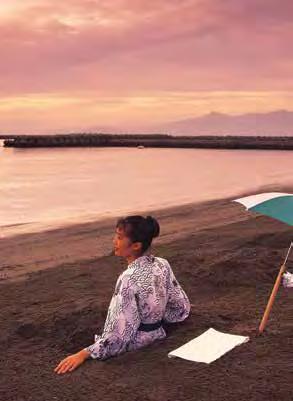
IT’S NOT YET NOON, and I’m already up to my neck. Donning a brown yukata and emerging from the change room, I behold quite a sight – a team of hardworking guys working the steaming soil with their spades. One by one, they dig them: people-sized plots, maybe a foot deep. Rejecting every human impulse, I step into the closest one, and lay down.
And then the diggers bury me completely, leaving only my face exposed. While it might sound a little claustrophobic, this “sand bath” is surprisingly pleasurable. Warm, but not hot, it’s like being wrapped up in a big, loamy comforter.
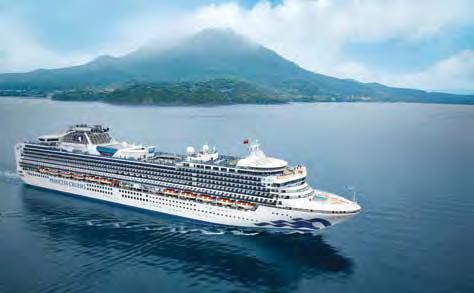
It’s an essential experience, and one of the many wonders you can take part in on the super-volcanic southern Japanese island of Kyushu. I’m sailing here aboard the Diamond Princess, a truly unique ship that brings the Japanese experience on board, with an onsen spa, specialty sushi and even a Japanese cruise director (in addition to the English-speaking one). On my voyage, about half of the guests were Japanese, so just walking the decks provided a cultural experience.
And it’s a wonderful way to hop from port to port in the volcanic, mineral-rich fantasyland of Kyushu. Where, as my guide Mayumi Uchiyama explains just beforehand as we roll away from the ship on a coach in the mid-sized city of Kagoshima, a sand bath is a very healthy experience. The benefits are similar to sitting in a sauna. “It’s all about the sweat,” she says. The warm embrace of the soil boosts blood circulation and relaxes muscles. “It’s very efficient for medical ailments, and to gain energy.”
Kagoshima is a dramatic place, dominated by Sakurajima, one of 11 active volcanoes on Kyushu. Grey puffs rise from the summit as we head south. “It will erupt several times a day, and rises more than a thousand metres,” she says. “In the morning, you check the ash report and decide, laundry inside, or out?”
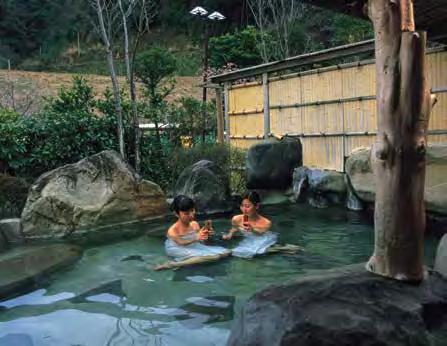
The coach curves along the coastline to Ibusuki, a small coastal town famous for sand baths. And hot springs. Uchiyama notes the importance of ritual “onsen” bathing in Japanese culture. It’s not unusual for people to gather daily in the natural springs, the pools believed to promote healing, the social bonding an added benefit.
An onsen awaits after the sand bath, and Uchiyama notes that precise rules govern the process of preparing for, and entering, the bath. The most important one? “When you leave the locker room, you must be wearing only your birthday suit.” When we arrive at the onsen, I overcome my Canadian awkwardness, and strip right down.
Back on board the Diamond Princess, the sail-away is spectacular, the volcano on Kagoshima Bay still puffing away. And over the course of the voyage, cruising the bays and inlets around the island, the mountainous terrain of Kyushu puts on a show. Each morning brings a new adventure and some of the best in ports I knew literally nothing about, before the ship pulled up to the dock.
One of the best is a small place called Miyazaki. Again on a coach and rolling along a curving road that traces the contours of the coast, we pass a number of beaches, and there’s a few surfers out there on the water, even on a Tuesday morning. The palm trees sway in a slight breeze.
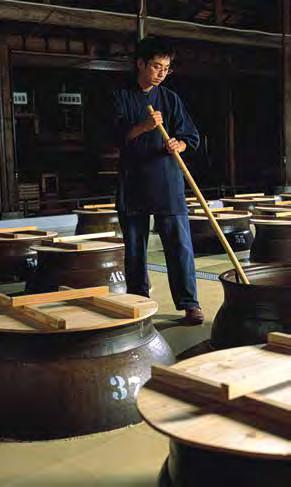
Approaching through rice paddies, the tour stops at a shochu distillery. People have made this clear spirit, which is created primarily from steamed rice, in the area for centuries. “You can taste as much as you like,” the guide, Miho Yamashita, jokes. “But after the tour, we still need to walk a lot!”
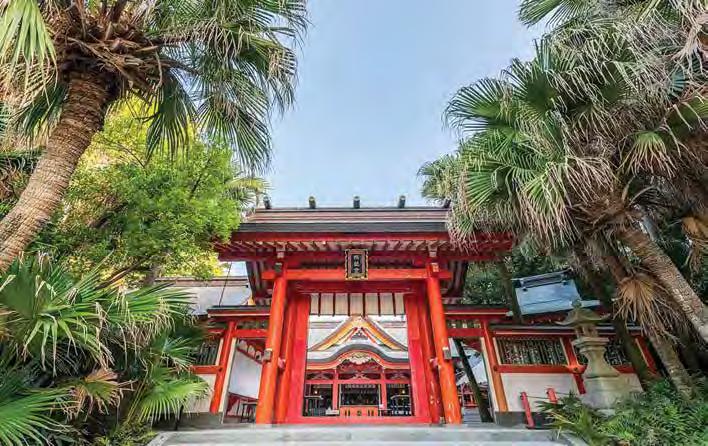
And on this point, she’s definitely not joking. The tour finishes in a beautiful and sacred place called Aoshima, where we take one of the loveliest walks you can imagine. Along a beach and through a subtropical botanical garden, and across a bridge to a tiny, 11-acre island.
It’s home to a Shinto shrine. Yamashita notes that while the shrine itself dates to the 9th century, this has been a sacred site for 2000 years. And for most of that time, only priests were permitted.
We pass under the Torii Gate, transitioning from the outside world, to the sacred. After purifying, we conduct a small, simple ritual. Tossing a clay disk against an area of rocks and trees, Yamashita explains that if it breaks, you’ll be protected from evil spirits.
Mine shatters. “Now, you’re protected,” Yamashita says. I don’t know much about Shintoism. But I most certainly feel very fortunate to be standing right here, right now, along the coast of Kyushu. princess.com

Photographs: Kagoshima Prefecture Visitors Bureau. Princess Cruises. Visit Kyushu
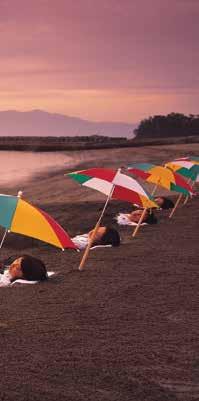
CLOCKWISE FROM LEFT: Centuries of tradition define the craft of distilling shochu from steamed rice at a local Kyushu facility; hidden away in Miyazaki Prefecture, the serene Shinto shrine of Aoshima is enveloped by subtropical greenery and framed by the dramatic, ribbed natural rock formations known as the “Devil’s Washboard”; a cherished pillar of Japanese culture, local onsen hot springs are visited daily for both their mineral-rich healing waters and community connection; Princess Cruises’ Diamond Princess sailing past Sakurajima, the iconic and active volcano of Kagoshima, Japan; geothermal indulgence on the shores of southern Kyushu, where the volcanic sands of Ibusuki offer a deeply restorative coastal escape.


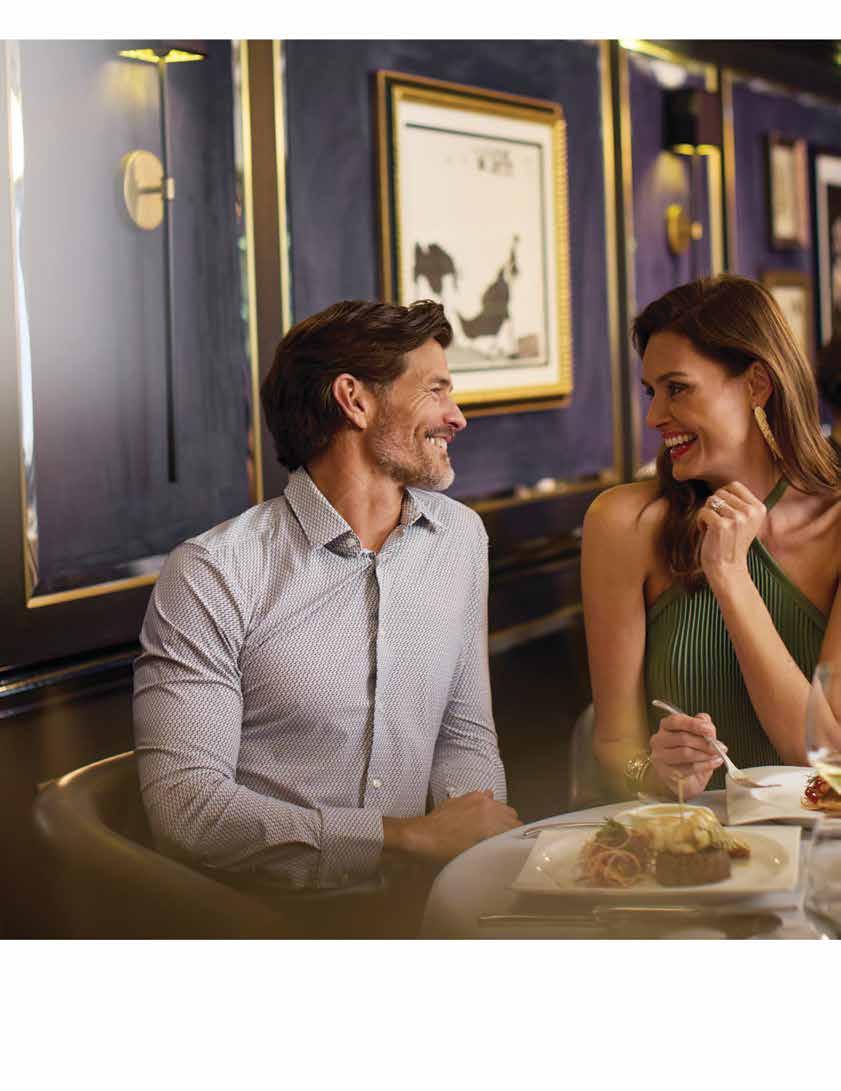
Cruising with Regent Seven Seas on a culinary journey is simply delicious
THE CULINARY TRAVELLER
in all of us has a constant appetite for learning. Learning about other cultures through their cuisines, learning from some of the top chefs of the world and learning how to take these experiences home and feed our wanderlust in a personal way.
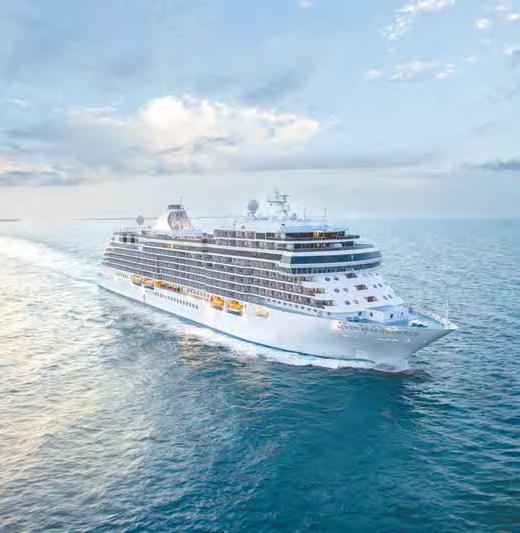
To allow its guests a better understanding of gastronomy and the art of selecting, cooking and, yes, eating good food, Regent Seven Seas Cruises® introduces its Epicurean Enrichment and Culinary Experiences program. Already world-renowned for its culinary excellence, Regent is dishing up even more diverse opportunities for guests to channel their inner chef, all while sailing
the world’s leading ultra luxury cruise line.
Providing unrivaled experiences for more than 30 years, and with its fleet of seven luxurious ships that carry between 496 and no more than 822 guests, including the soon to be launched Seven Seas Prestige™, Regent continues to pioneer chef-led destination discoveries. This year, the company has designed a menu of offerings that are guaranteed to get the culinary juices flowing and inspire gastronomic exploration.
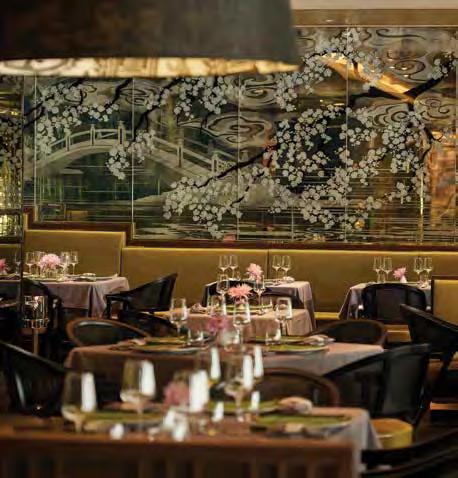
Onboard, Regent guests can look forward to true Epicurean Perfection, with a range of all-inclusive specialty dining venues: Prime 7, Pacific Rim, Chartreuse, Compass Rose and Sette Mari at La Veranda.
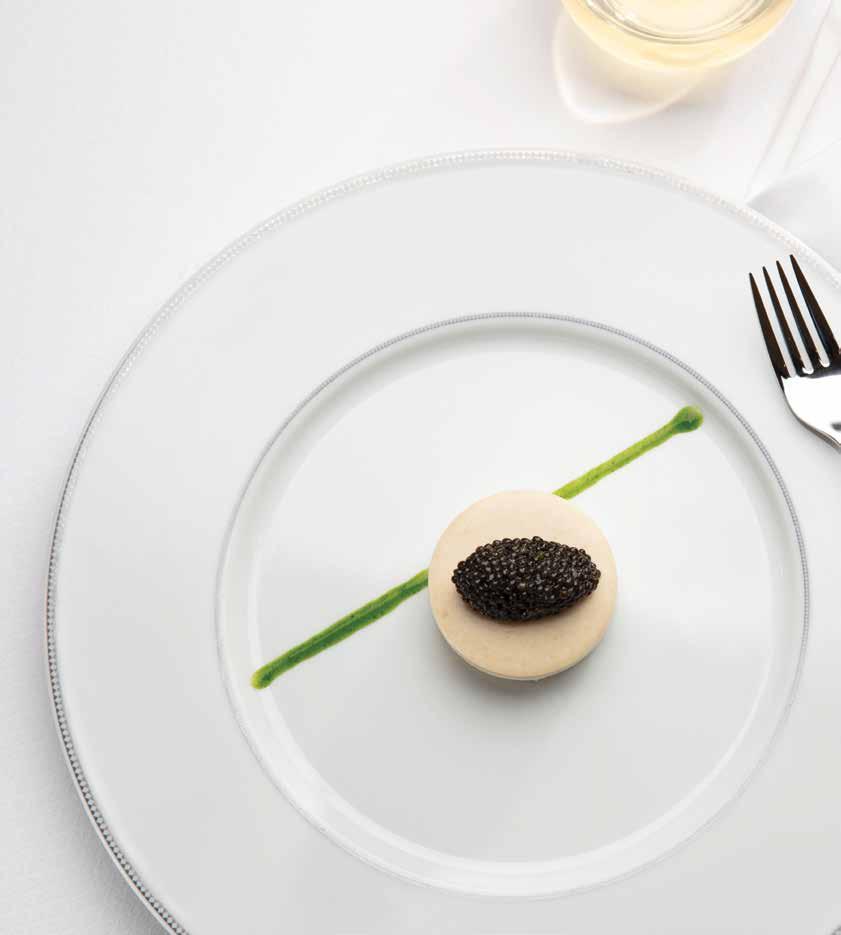
Every restaurant delivers distinctive menus crafted with the finest ingredients, ensuring that each meal upholds Regent’s uncompromising standards of luxury. Guests can create their own onboard culinary itinerary each day. Of course, it goes beyond the impeccable cuisine: The Most Inclusive Luxury Experience® Regent’s All-Inclusive Cruise Fares also means that beverages, including fine wines and spirits, are on the menu. For those looking for a more laid-back experience, Regent recently introduced evening services at the Pool Grill with a new gourmet pizzeria menu, for a nighttime al fresco experience.
Last year, Regent introduced 12 new Epicurean Explorer Tours—shore excursions where local cuisine and its culture are the driving forces, including Asia, Europe and Canada and New England. “Our Epicurean Explorer Tours represent the pinnacle
of culinary exploration and are designed following painstaking indestination research by our team of esteemed and accomplished chefs,” said chef Kathryn Kelly, executive chef and director of culinary enrichment, Regent Seven Seas Cruises. “We are a team of passionate professionals who love nothing more than sharing in-depth culinary and destination knowledge with our valued Regent foodie guests.”
“With these thoughtfully designed Epicurean Explorer Tours we’re providing a transformative experience that connects ultra luxury travellers deeply with the cultural heart of each destination through its most fundamental expression: food,” said Jason Montague, Chief Luxury Officer, Regent Seven Seas Cruises, of the cruise line’s unique promise of combining Epicurean Perfection™ and Immersive Exploration™. “At Regent, we don’t just take our guests to their most desired destinations, we offer the chance to truly explore through countless unique shore excursions, all
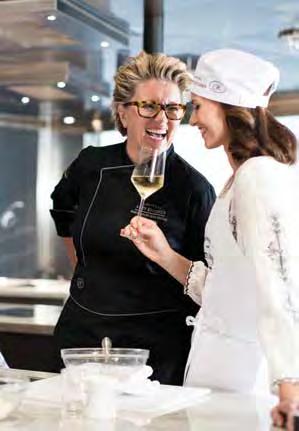
while enjoying the highest standards of service aboard The World’s Most Luxurious Fleet.”
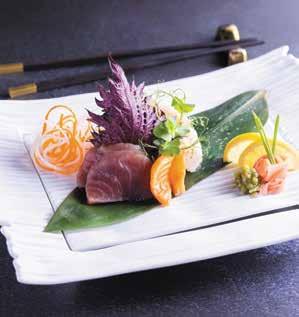
With these 12 new tours—think coastal flavours in Ireland or artisanal pastries in Malta, seafood delights in Nova Scotia or garden-to-table in Victoria, and market tours in South Korea or tasting Tataki in Japan— there are numerous foodie excursions while sailing on Seven Seas Explorer®, Seven Seas Grandeur®, or Seven Seas Splendor® from which to choose.

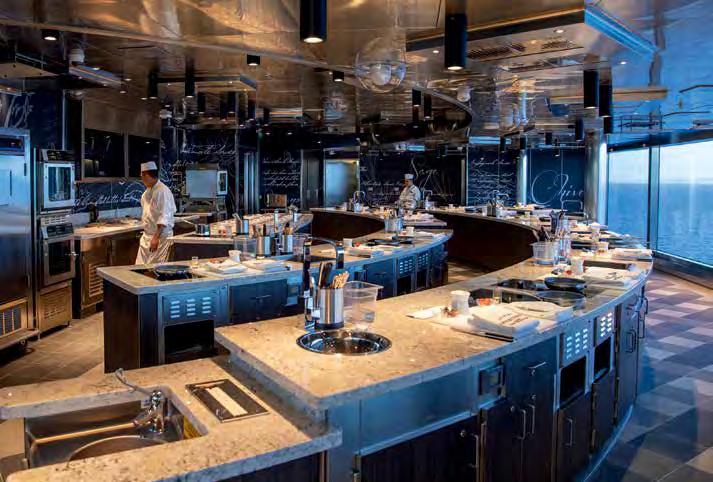
Chef Kelly is also instrumental in the evolution of RSSC’s onboard culinary brilliance. To wit, chef Kelly and her team have introduced the new Epicurean Enrichment Studio, stateof-the-art culinary theatres that can be experienced aboard Seven Seas Mariner® and Seven Seas Voyager®.
This year, guests can immerse themselves in local culture while deepening their understanding and appreciation for the cuisines that have shaped them. These culinary experiences are centred around five key pillars—the Epicurean Passport Series, Chef’s Circle, Chef’s Table, Chef-Led Epicurean Enrichment Tours and Chef-Hosted Dining. Whether you’re keen to attend destinationfocused lectures and learn more about a region’s history while enjoying its cuisine, gleaning insider cooking tips from chef instructors, having a seat at an ultra-exclusive dinner onboard or taking your pick of more than 70 culinary shore excursions, the Epicurean Enrichment Studio has something for everyone.
For guests who are the more
hand’s-on type, chef Kelly has also built Regent’s Culinary Arts Kitchen, inspired by her world travels. Available exclusively aboard Seven Seas Grandeur™, Seven Seas Splendor®, and Seven Seas Explorer®, optional gourmet cooking courses are developed exclusively for each voyage and can be experienced for $129 per person. Fancy honing your French cooking skills? Or how about learning more about preparing a gourmet feast inspired by rich culinary and cultural traditions of Morocco or Turkey. A class at RSSC’s Culinary Arts Kitchen can do that, all while sailing on the only truly all-inclusive cruise line.
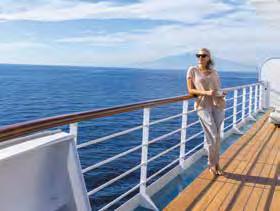
Regent’s all-inclusive cruise fares give guests the chance to sit back and relax, knowing that they have unlimited complimentary shore excursions, outstanding dining and wine and spirit options, valet laundry, gratuities and, for guests who choose Concierge-level or higher suites, RSSC will book a one-night, pre-cruise hotel package to make the transition from land to sea even smoother.
It’s time to book your culinary cruise adventure. Your seat at Regent Seven Seas Cruises’ table is waiting.

For more information, please visit RSSC.com, call 1-844-221-1543 or contact a professional travel advisor.
A bump of caviar from the back of the hand in Sweden. An $85 bird stuffed with foie gras in Toronto. Hungry yet? Six destinations where the meal is an invitation to delight.
SHANGHAI
The Coastal Purity of Ningbo Flavours
HONG KONG
The Canadian Cantonese Rebellion
STOCKHOLM Fine Dining Without the Stiffness
TORONTO Playing Chicken
OTTAWA Asian Fusion in Canada’s Capital
SASKATCHEWAN Pushing the Boundaries of Prairie Cuisine
NIAGARA
A Golden Age of Cool-Climate Terroir
VIENNA
Urban Vineyards and Coffeehouse Culture
By Renée S. Suen
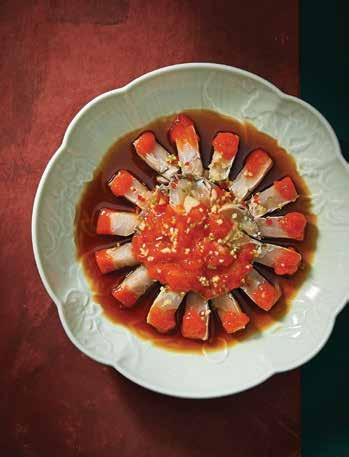
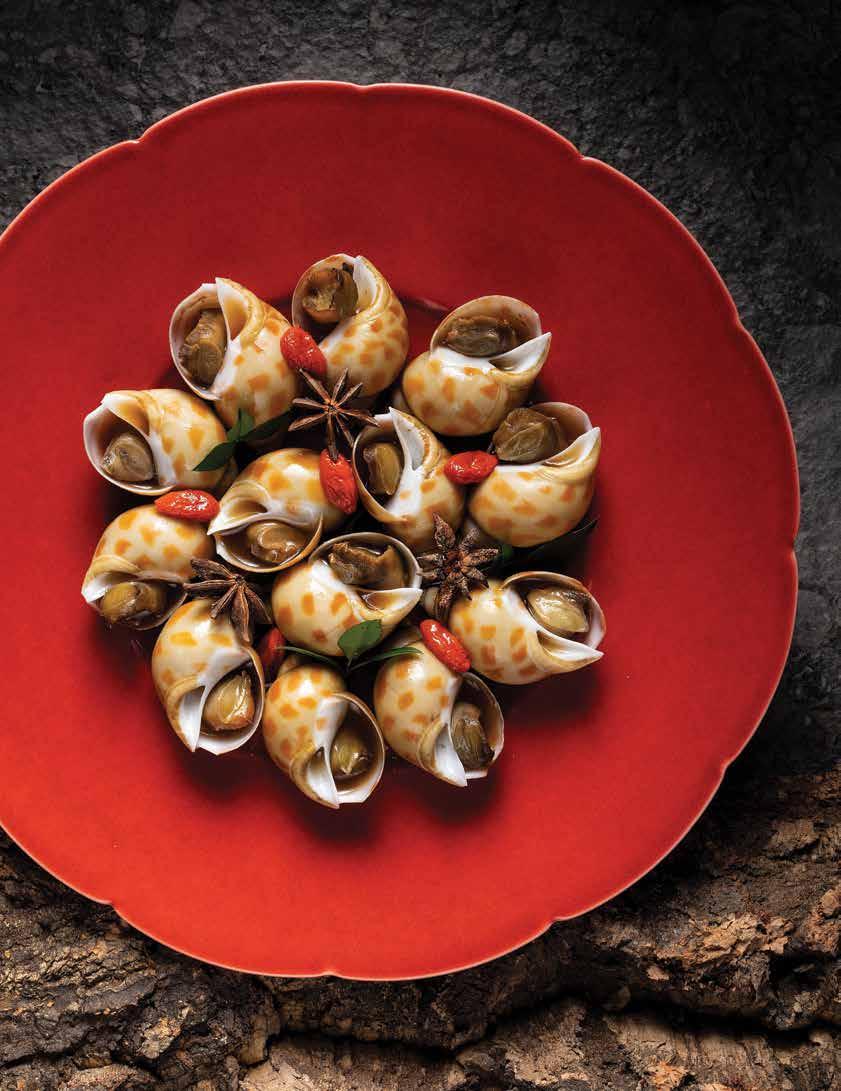
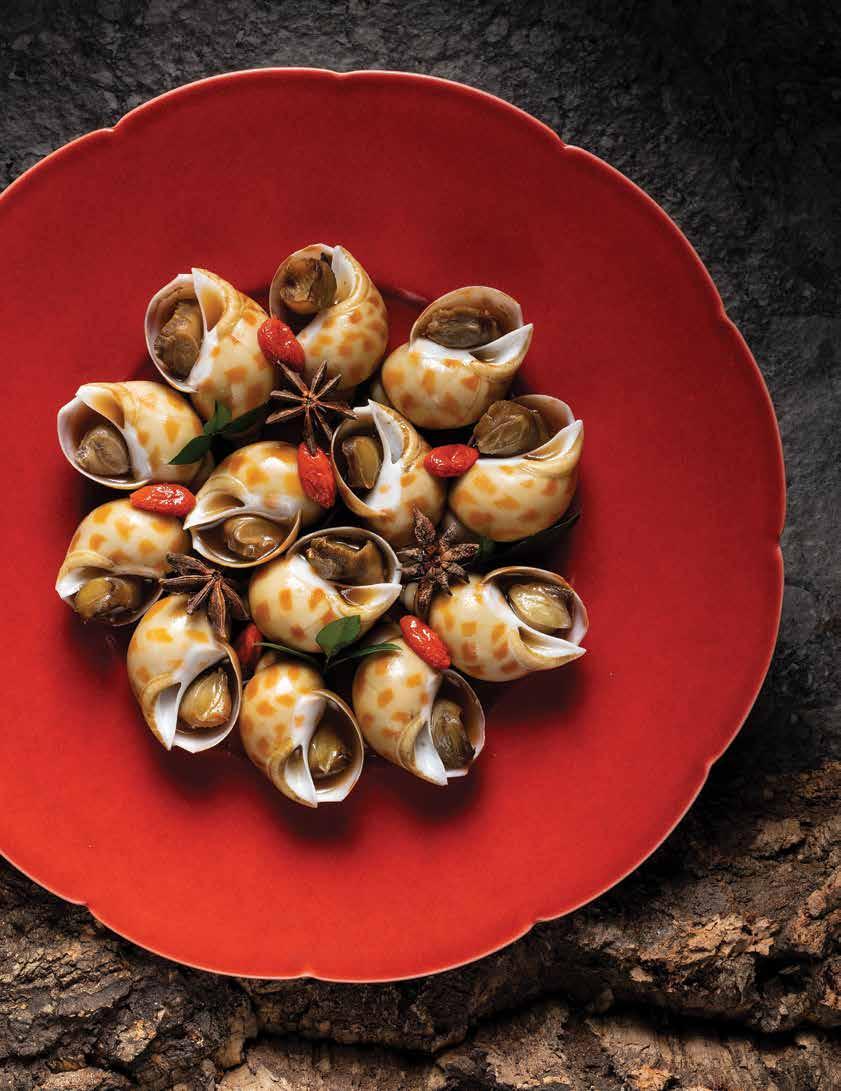
AS A DESTINATION DINER, I’ve long wanted to explore China’s regional flavours, a cuisine of remarkable depth that somehow sits just outside the global spotlight. I’d tasted refined dishes and top-quality ingredients elsewhere, but it wasn’t until my meal at Michelin-starred Yong Fu (pronounced Huangpu) that I became obsessed with the elegant coastal flavours of Ningbo. Exceptional ingredients take centre stage here, including several I’d never seen before, all prepared at a level beyond anything I’d experienced. (Yong Fu holds the prestigious three-diamond rating from the Black Pearl Restaurant Guide, China’s authoritative guide for Chinese cuisine.)
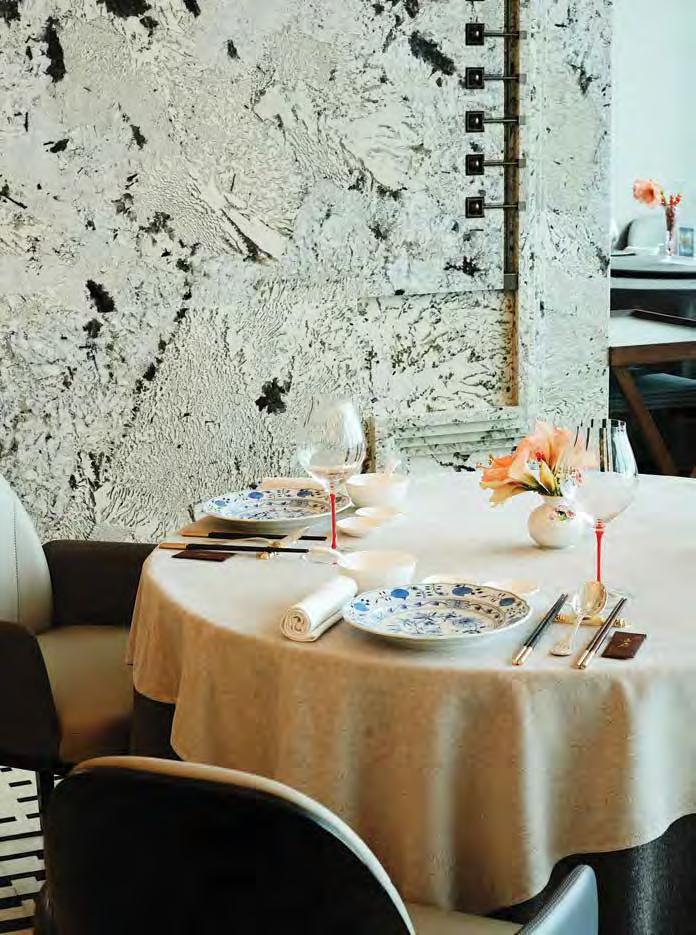
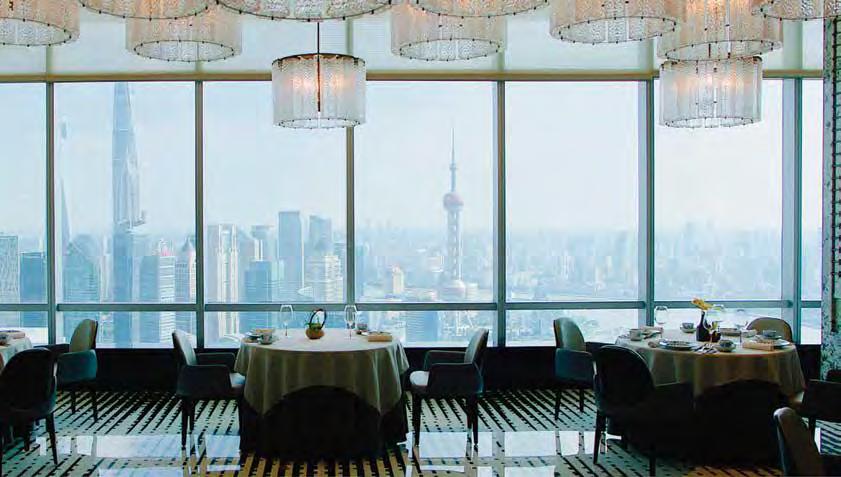
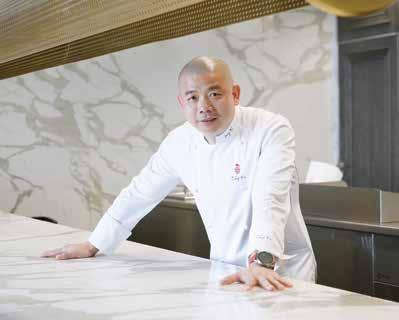
The flawless meal, with executive chef Xu Kunlei at the helm, was the definition of purity and restraint. Here, natural flavours shone as a welcoming array of live seafood – wild-caught daily from the East China Sea and displayed beside a serene open kitchen. The parade of delicately seasoned dishes and nourishing soups is served in a marblelined room overlooking the Pudong skyline and Huangpu River on Shanghai’s North Bund. Every bite captivated me further, from the briny-sweet and creamy raw mud crab – marinated in yellow wine and dissected into Ningbo’s classic 18 cuts – to the tender braised yellow croaker, and the finish of silky handmade glutinous rice balls filled with nutty black sesame paste. guide.michelin.com
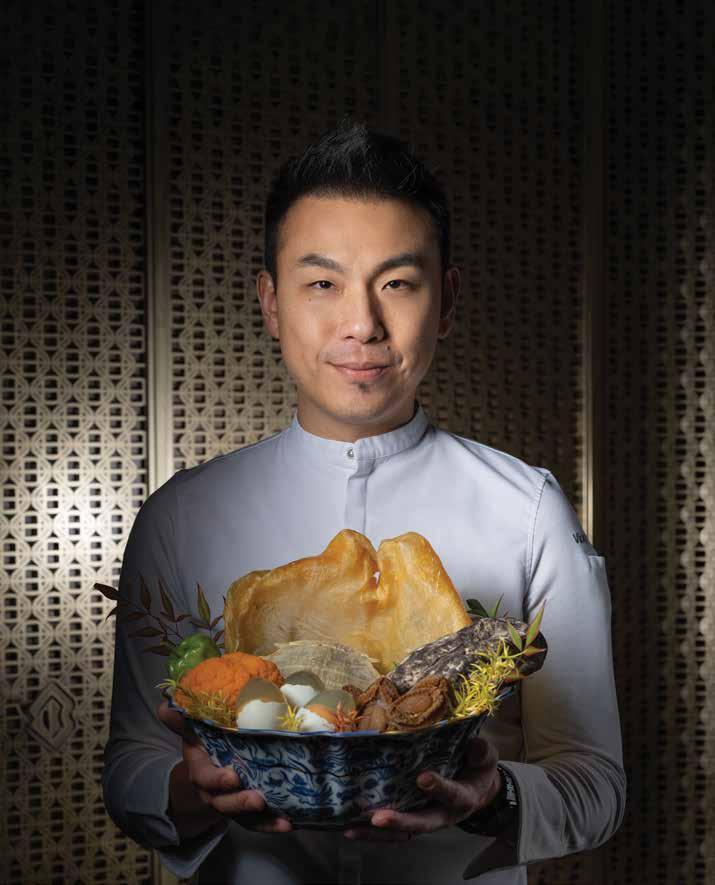
IN HONG KONG, Wing offers a different kind of revelation. Chef-owner Vicky Cheng describes his cooking as boundaryless Chinese cuisine, blending traditional Cantonese techniques and the Toronto-raised chef’s classical French training to prepare luxurious Chinese ingredients. The seasonal tasting menu draws from all eight major Chinese cuisines and features signatures like smoked squab with sugarcane, a show-stopping puffed spring roll that shields an unctuous braised sea cucumber core and Cheng’s take on the raw salted crab with crab vinegar, a lip-smacking dish that’s available for only three weeks a year. Recognized by The World’s 50 Best, Wing is part of the new guard of restaurants redefining contemporary Chinese cuisine. wingrestaurant.hk/
When dinner is a flavour assault on all the senses
By Loren Christie
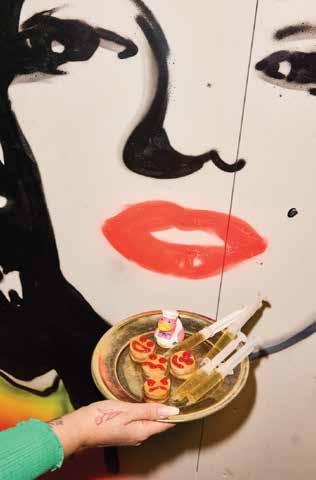
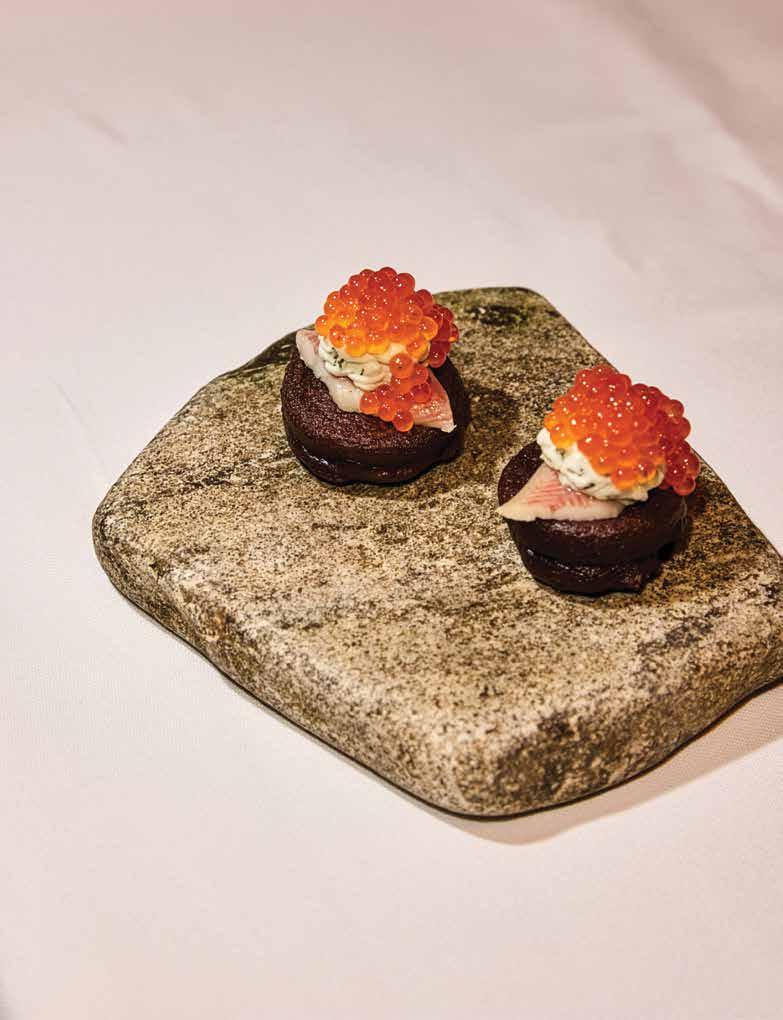
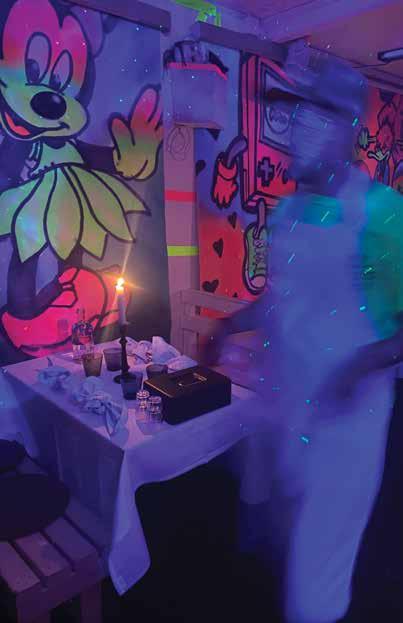
I SPENT MY LAST BIRTHDAY in Stockholm, Sweden, with my niece Kit, doing a bump in the kitchen of a celebrated local eatery called Punk Royale. But it’s not what you think.
When we arrived for our reservation at this hole in the wall in the city’s Södermalm neighbourhood, the door swung open to a small and darkly lit space overflowing with pounding music, neon lights and blasts of smoke from a ceiling-mounted smoke machine. Before my eyes could adjust, we were brusquely ushered in by a lean waiter wearing a gas mask and dressed only in a tank top and his underwear. After quickly confirming our names on the reservation list, he immediately slapped a piece of glowing lime-green duct tape with “En Nöt” on Kit’s back, alerting the staff and fellow patrons of the restaurant to her nut allergy. He then whisked us to our seats at the end of a communal table next to six Swedes, flipped open a small portable lock box and ordered us to put our phones inside. We didn’t see them again until we got our bill.
Then it was off to the kitchen for the bump. A surly and burly chef spooned the bump onto the back of our hands and ordered us to lick it – immediately followed by a shot of ice-cold vodka as a chaser. That bump was a heaping tablespoon of the creamiest, most delicious caviar I have ever had. And thus began a two hour and 15-minute dining experience that was the most immersive dining experience I have ever had. Each morsel of our 18-course tasting menu arrived with little refinement, which I quickly learned is all part of the experience. The servers were purposefully bordering on impolite, but it was all part of a sexy, rough swagger. When presented with the Foie Gras au Torchon with rose hip and brioche, we were instructed to shoot the syringe full of sweet wine laying next to it immediately after popping the brioche in our mouths. We were given a black glove as a utensil versus a spoon for the ice cream course. The Pork belly, Szechuan spice with pickled gooseberry and the smoked oyster with pineapple ice cream were both incredible. At one point I felt a tap on my shoulder and turned around only to have one of the cheeky servers shove a spoon with lobster, cep mushroom and truffle into my mouth. I think I heard him say “open up” over the din of the chattering crowd and throbbing music.
The included beverages were flowing generously. Riesling, Chardonnay and beer were poured into glasses followed by simple instructions, “drink this with that” and “hurry up.” And if red wine spilled onto the table during a pour, we were told not to worry about it. The Nordic staple of Aquavit was our final tipple.
Katherine Bont is part of the creative team behind all of the iterations of Punk Royale; one in Copenhagen, one in Oslo and the latest opening in London, England. But, she is particularly proud of the original Stockholm location where we ate, which opened in 2015. “The idea was to create fine dining without the stiffness and luxury without pretension in each location,” says Katherine, “But the Södermalm location reflects modern Swedish culture: bold, confident, experimental, slightly irreverent and deeply connected to ingredients. It also reflects the Swedish social culture of shared experiences, humour and intensity.”
The “Royale” in the name is supposed to represent the luxury, craftsmanship and the indulgence that diners will experience. The “Punk” in the name is meant to represent the irreverent attitude, not the music genre, which became evident as our ears were barraged with an eclectic wave of music, ranging from hip-hop and electronic to nostalgic pop and classics.
Our six Swedish table mates who nodded politely at us when we originally sat down had become fast friends somewhere between the eighth and ninth courses. As it turned out, they too were celebrating
a birthday, so communal table toasts became part of the meal. My immediate seat neighbour, Daniel Kasselmaas, taught me the words to “Euphoria,” Sweden’s second most famous Eurovision entry from some 20 years ago that had the entire restaurant screaming at the top of their lungs.
With our phones back in hand, we burst out of the restaurant to go find a bar and continue the party with our new Swedish posse. I asked Daniel what he thought of Punk Royale. “They brought the food, told me to open my mouth and shoved it in. It was controlled chaos,” he gushed. “It was delicious. And I loved it.”
The menus change constantly in each location. Bookings open 60 days ahead in each of the venues, on a rolling day-to-day basis. Email info@punkroyale.com with any specific requests, and people are encouraged to put themselves on the waitlist, as things change everyday. punkroyale.com/en/about-us/
By Shinan Govani
IT’S THE BOUGIE chicken that has Toronto in a tizzy.
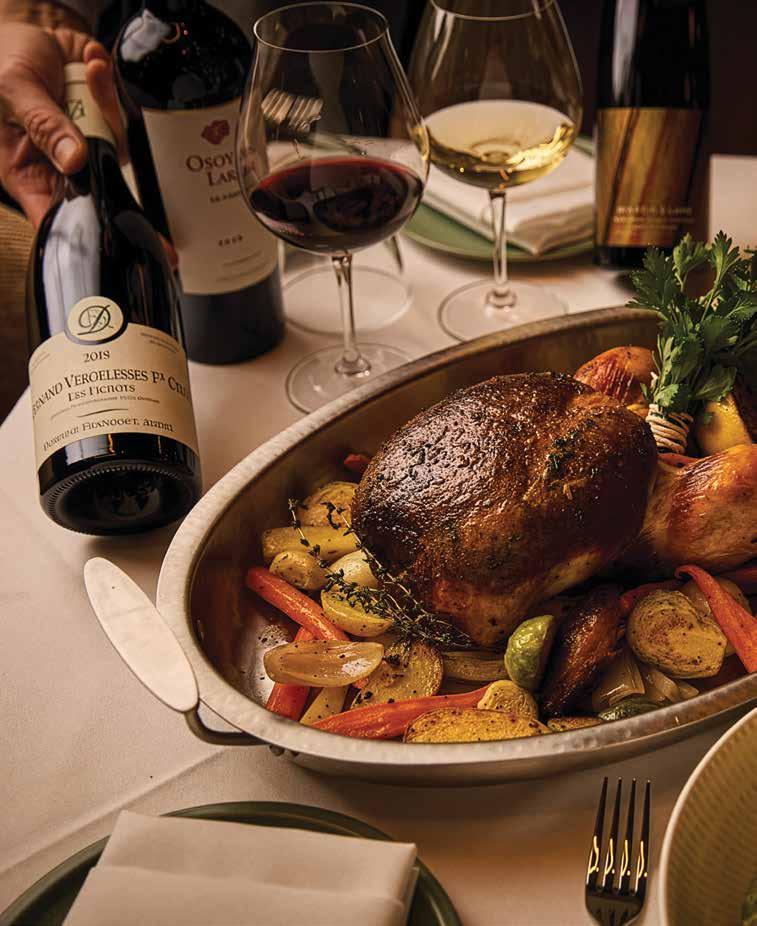
A breakout whole roast in what is one of the swankiest restaurants to open in Canada this year, Riley’s Steak and Turf, the latest from Vancouver’s Glowbal Group, where an $85 bird also manages to hit all the notes of Ina Garten real-ness. So real that there are only six of ’em available per night, spurring some diners to call in to book the chicken in advance.
“More bang for your cluck,” joked executive chef Scott Saunderson when I stopped by to discuss the pricey star poulet. One which actually involves a threeday process, and comes to the table perfectly golden and crisp, stuffed with foie gras and brioche, and served with a still-life of root vegetables and an unctuous jus.
The philosophy around it? One that hinges on “the art of sharing,” and “is indicative of the whole restaurant.” Yes, this may be a 725-square-metre space that looks like a classic film set, where the likes of Fred Astaire and Ginger Rogers might appear at any minute. And yes, it’s a restaurant where it’s about the quality of ingredients and the choreography of table-side servings, “but it’s still about comfort food.”
Nodding to a larger trend in restaurant-land, Frank Bruni in The New York Times pointed out in a recent article that the “once-humble plate of poultry has been elevated to luxury status,” singling out such word-ofmouth chickens as the one at Borgo in Manhattan.
Saunderson admits it’s an intensive process. “I’ve never seen more work go into a chicken in my entire life.” Hailing from a farm in Quebec, each bird is brined for 12-16 hours, then air-dried for about eight. Four people are involved along the way, down to the trussing and carving. Pressed with butter before it goes in the oven – with three different temperature changes while roasting – and pressed again with garlic herb butter when it comes out.
“It’s so laborious, it’s incredible,” says Saunderson. “But it’s also about giving people the sense of home.” rileysrestaurant.ca/toronto/
A Michelin Key and a chef whose restaurants have seen Michelin stars?
Time to make a reservation at Ottawa’s Fairmont Château Laurier.
By Deepi Harish
I’LL ADMIT, I didn’t immediately peg Ottawa as the next move for Akira Back. But a few appetizers in, I started to understand why.
Set inside the Fairmont Château Laurier, the restaurant feels part of something bigger. The castle-like landmark, which opened in 1912, has entered a new chapter, one that blends heritage with a sharper, more contemporary edge. The timing is notable: the hotel’s Fairmont Gold experience, (which is an exclusive “hotel-within-a-hotel” offering), earned a Michelin Key, making it the first in Ottawa to receive the honour, just as Akira Back’s namesake restaurant debuts.
I can confirm it’s a very special stay. Guests check in through a private entrance, enjoy a personalized concierge service and have access to a premium lounge serving breakfast, evening canapés, wine and desserts throughout the day. The Gold experience feels like a boutique hotel tucked inside the grand property, classic in style, but fully updated.
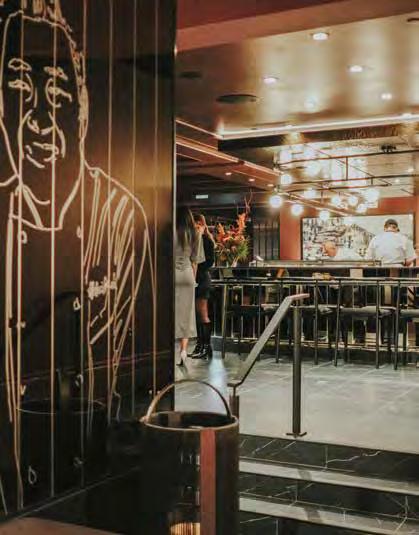
Inside Akira Back, the mood is dramatic yet polished, anchored by a striking sushi bar and bold artwork created by the chef’s mother. Before the first bite, you get the sense that dinner is meant to be an experience, not just a meal.
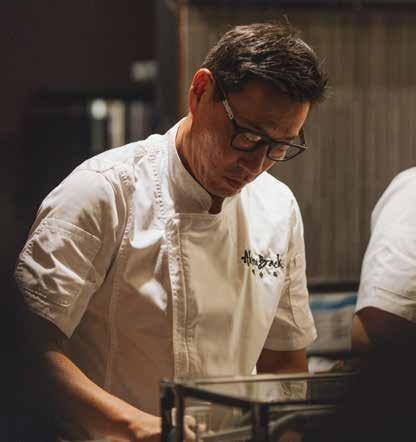
The menu leans into Back’s signature style: Japanese cuisine that draws on Korean influences and a global perspective. The AB signature pizzas are good, but for me, the standout is the ultra-rich A5 Wagyu tartare, the best I’ve had. Other highlights include the Hokkaido scallop with kiwi, hitting a precise balance of sweet, tart and clean. I’m also still thinking about the miso eggplant, the perfect storm rolls and the sesame-laced amazu cucumber salad.
Ottawa’s storied Fairmont might not seem to be the obvious choice for a modern Korean-Japanese restaurant, but in a world-class setting like this, where history, design and serious culinary ambition come together, it makes perfect sense. chateaulaurier.com
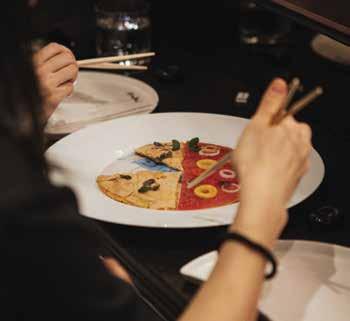

A surprising, satisfying culinary pilgrimage through southern Saskatchewan
By Shelley Cameron-McCarron
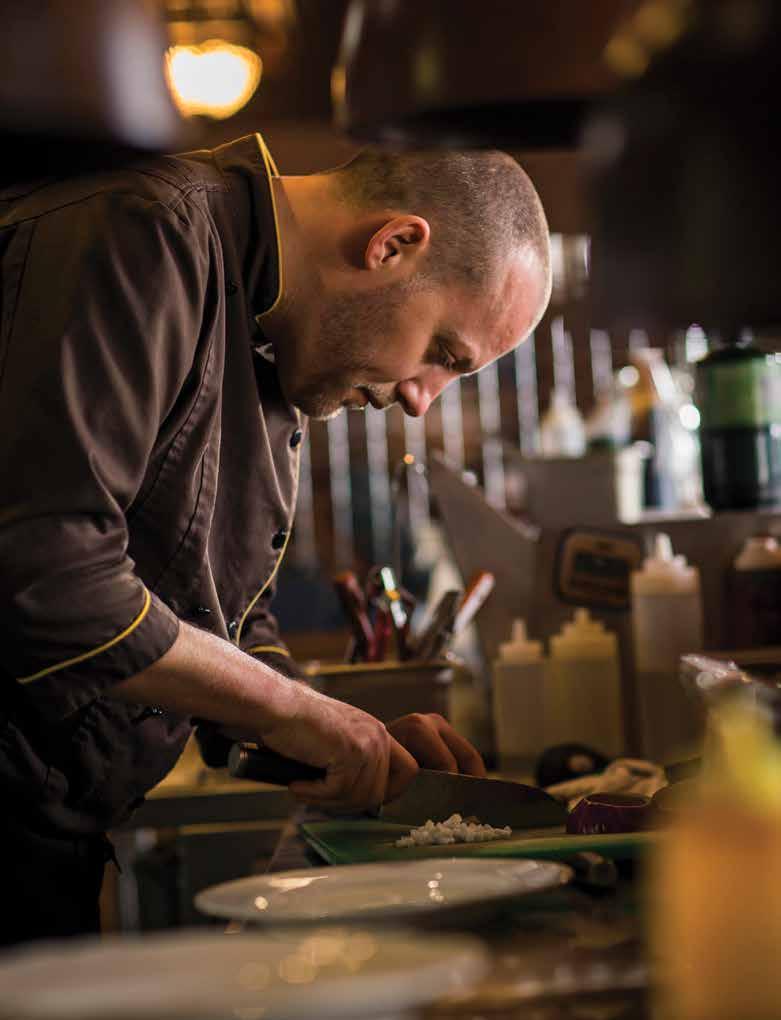

GOLDEN EVENING LIGHT greets us as we pull into Lafleche, Saskatchewan, where the prairie sky stretches above a main street so wide it could double as a movie set. This tiny enclave, population 380, seems an unlikely culinary destination. And yet.
Inside Trigo Restaurant, manager Shenae Reader deposits a boatshaped cheese bread topped with a runny egg. The dish, Adjaruli khachapuri, is part of a seven-course, wine-paired Georgian feast. The cheese represents the Black Sea; the yolk, the sun guiding sailors, she explains. The traditional way to eat it? Dip in. Get messy.
It’s as surprising as it is satisfying. From this pocket-size community on the vast Canadian prairie, lawyer-turned-chef Adam Henwood crafts a curated global tasting menu every six months complete with country-specific art, drinks and music. People drive for hours for a seat.
“There’s so much here beyond the main cities and highways, and some of the most rewarding experiences happen when you’re willing to go a little out of the way,” says Henwood. “Trigo exists because we believe those hidden places are worth seeking out and that something truly special can happen when people do.”
Over four days last June, that’s the promise we chased, dipping in and out of small towns on a culinary road trip through southern Saskatchewan. Each stop revealed something unexpected: inventive, passionate chefs; small town pride; and destination-worthy dining. Between meals, the open road offered its own feast for the eyes, with faded grain elevators, quiet farmland and sprawling horizon zipping past. Two hours away, the descent into Lumsden in the Qu’Appelle Valley feels like “one nice, deep breath,” says Chef JP Vives, who returned to his hometown 30 minutes from Regina to deliver on a mantra of “common food done uncommonly well.”
Diners at Free Bird (yes, an ode to Lynyrd Skynyrd) tuck into paella and chicken pot pie while the room reflects Vives’ personality: fireplace, wood-and-steel accents and portraits of The Notorious B.I.G., Tupac Shakur, Pink Floyd, Johnny Cash and Muhammad Ali sharing wall space. The soundtrack shuffles classic rock and old-school hip hop.
Growing up on the prairies, you learn to take care of each other, says Vives, who sources ingredients from nearby producers. People come to rural Saskatchewan for memorable meals and to feel immersed in a place, he says, and that’s what Free Bird aims to do.
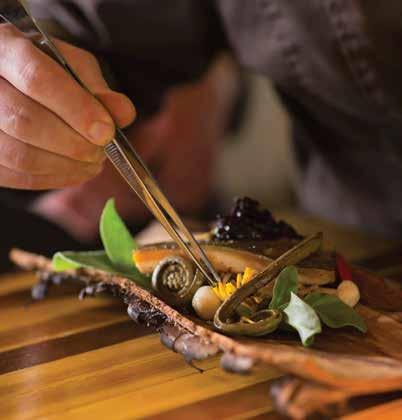
“You can be in a small town and do what you want,” says Chef Garrett “Rusty” Thienes at The Harvest Eatery, in the province’s southwest, where motorists pass sunsets over canola fields, wheat dancing in the wind and bison and antelope sightings as the road bends toward Shaunavon, a town of under 2,000 in ranching country near Grasslands National Park and the Alberta and Montana borders. Thienes has built a following recreating the buzz of the harvest table, using mainly Saskatchewan-grown and produced products.
People flock for Speckle Park steaks, brisket and burgers, Lake Diefenbaker steelhead trout and a lemon tart with pistachio ice cream I’m still thinking about.
“You feel like what it’s like to be in Saskatchewan at our house,” says Thienes, who moved back home with his family after a memorable visit to his parents. “It was so green and beautiful, and kids were out on their bikes. The feeling of wide open is really kind of how we approach the restaurant. Wide open skies make you feel you can go for miles and do anything.”
In Moose Jaw – past the oversized Mac the Moose monument and underground tunnels sharing Al Capone lore – lunch is artfully served beneath 18-foot ceilings at the Yvette Moore Gallery Café inside the historic 1910 Land Titles Building. Sipping Saskatoon berry iced tea and relishing a standout chicken, cranberry and spinach salad, pride of place is most evident in the family cookbook recipes anchoring the menu.
Possibility and passion weave through big-city Saskatchewan, too. In Regina, I drizzle honey over Saskatoon berry goat cheese crostini during cooking lessons at Schoolhaus Culinary Arts. In Saskatoon, Chef Andy Yuen showcases the beauty of Asian cuisine at The Odd Couple, a restaurant named for the dynamic between he and his late father. (Tip: the vegan spring rolls are worth the visit alone.) Just down the street, POP Wine Bar is the province’s first 100 per cent natural wine bar. As I sample Chef Christie Peters’ foraged dandelion fritters and baby chive blossoms that mimicked onion rings, only more delicate, it’s not lost on me that here again is another Saskatchewan table pushing the boundaries of prairie expectations. I tuck into another bite, more than happy to discover this point.
tourismsaskatchewan.com
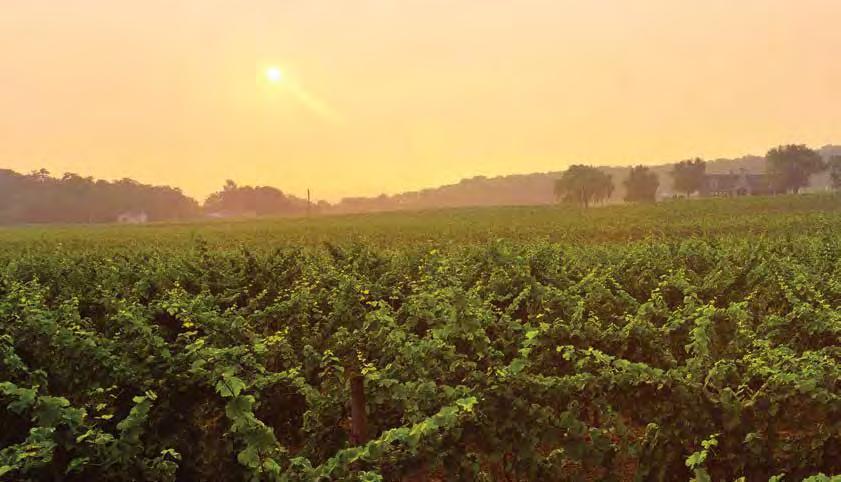
The wine country that put Canada on the oenophile’s map. In this excerpt from her new book, Magdalena Kaiser – a scion of Canadian winemaking trailblazers – shares what it was like growing up among the vines.
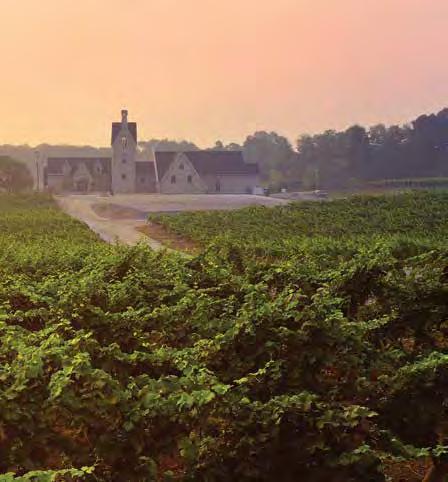
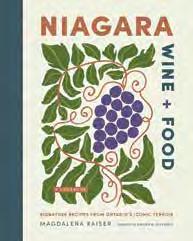
FOR TRAVELLERS, Niagara Peninsula offers far more than a weekend escape – it’s a landscape where geology, climate and culture converge to shape one of the world’s most compelling wine regions. In Niagara Wine & Food, author and local expert Magdalena Kaiser brings that experience to life as both a love letter to the region and a practical guide; part introduction to Niagara, part cookbook, and part wine and travel companion. The book features 44 winery profiles, each paired with two signature wines alongside curated recipes – 88 in total – offering readers a way to genuinely taste the story of Niagara.
The following excerpt from Kaiser’s introduction sets the stage, grounding readers in the natural forces, cultural history and personal connection that define Niagara – on the land, in the glass and at the table.
The Niagara Peninsula is a wondrous place. Technically an isthmus, this lush stretch of
southern Ontario lies between the Great Lakes Ontario and Erie, cradled by the Niagara River and anchored by the ancient spine of the Niagara Escarpment’s dolomitic limestone. It’s a landscape sculpted by massive glaciers and softened by the world’s largest freshwater system—complex, generous and surprisingly wild. The magical mist of Niagara Falls doesn’t blanket the land, but it connects it in spirit: a gentle veil that links past and present, land and water, memory and renewal.
That spirit lives in the lakes, too. These sea-like bodies of water aren’t just beautiful— they shape the way things grow, the way people gather and the way wine evolves. Lake Ontario, in particular, acts as a thermal moderator, buffering seasonal extremes, delaying spring frost and allowing fruit to ripen while preserving pristine flavours. For wine growers, it creates the kind of coolclimate growing season vintners dream of—one that brings freshness, precision and character to the wines made here.
Long before wineries and orchards, before borders and roadways, this land was—and remains—home to the Haudenosaunee and Anishinaabe peoples, whose deep and enduring relationship with it continues to this day. Their stewardship, knowledge and cultural presence remain a vital part of the region’s story.
Winston Churchill once called the Niagara River Parkway “the prettiest Sunday afternoon drive in the world”—and he wasn’t wrong. This winding road along the river shows off the flora and fauna of a precious Carolinian forest, radiating biodiversity with sprinklings of maples, oaks and staghorn sumacs. There’s a particular kind of magic in this landscape, a timeless beauty that draws people in, whether through the vibrant colours of the changing seasons or the sense of history that flows through the land.
To grow up here is to experience its rhythm intimately. For me, Niagara is as much about memories as it is about geography.
Photography: Rick O’Brien and Stephen Dominick. Copyright © 2026, Magdalena Kaiser. Republished with permission
It’s homemade strawberry-rhubarb jam bubbling on the stove, peach pie cooling on the windowsill, riding bikes along the river to spot wild asparagus and hiking through the Niagara Escarpment Biosphere Reserve to observe the tender curls of fiddleheads and the hidden caps of morels as they unfurl with spring. Its fruit stands filled with cherries and apricots in July, nectarines and plums in August, and zucchini, apples and acorn squash in September. It’s the soft smell of earth after rain and the hum of bees in spring’s blossoms. Long before I knew anything about wine, I understood Niagara through the bounty of its seasons.
Niagara’s long-held identity as Canada’s Fruit Belt is well earned—its soils and climate are perfectly suited to these cherished tender fruits and vegetables. That same foundation now defines Niagara wines: vibrant, expressive and deeply tied to place. So perhaps it was never really a surprise to
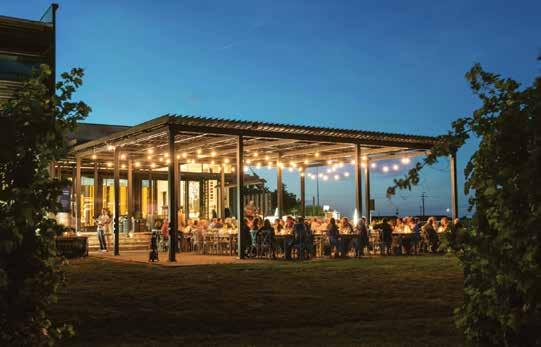
think that this extraordinary land was ideal for growing grapes to make premium wine. In 2025, the region marked a remarkable milestone—fifty years since the dawn of Canada’s modern wine industry, with Niagara at its heart and leading the way. This anniversary marks not just a number, but a story of perseverance, creativity and transformation. A half-century of innovation and passion has brought Niagara into a new golden age of wine. Wineries now dot the landscape from the lakeshore to the benchlands, and a new generation of winemakers and viticulturists are expanding on the vision that started it all.
Excerpted from Niagara Wine + Food: Signature Recipes from Ontario's Iconic Terroir, by Magdalena Kaiser. Photography by Rick O'Brien and Stephen Dominick. Copyright© 2026, Magdalena Kaiser. Republished with the permission of Figure 1 Publishing.
Niagara Wine + Food Cookbook is available at wineries, bookstores and online. Check IG @niagarawineandfood for details.
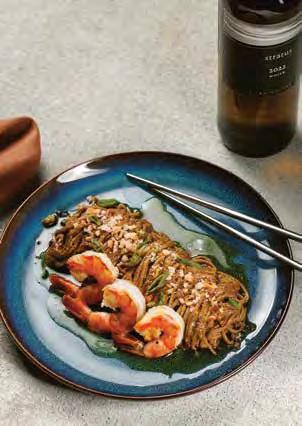
Stratus White with Nori Sesame Soba with Grilled Shrimp
CELEBRATED FOR its globally inspired cuisine, Pharmacii, owned by Korean wife-and-husband team Ashley Hwang and Ryan Guyoon Jeong, has one of Niagara’s most creative menus. This dish features cold soba noodles smothered in a rich seaweed-sesame sauce, topped with grilled shrimp, crispy breadcrumbs and basil oil.
Each vintage of Stratus White is a nuanced blend that is reflective of the year, layered with concentrated flavours and shaped by the season. It deserves a dish that lets its complexities shine. In this pairing, the savoury depth and subtle textures truly satisfy.
Vineyards.
By Dick Snyder
YOU’RE STROLLING in the eminently walkable downtown Vienna and, as you walk by the Palais Wiener von Welten, near the tram station at the Schwarzenbergplatz, what do you see? A vineyard. A tiny one, with just 75 vines. This urban vineyard is an ode to the vital role wine plays in the fabric of Viennese society – and it is harvested each year by the mayor, the proceeds going to charity.
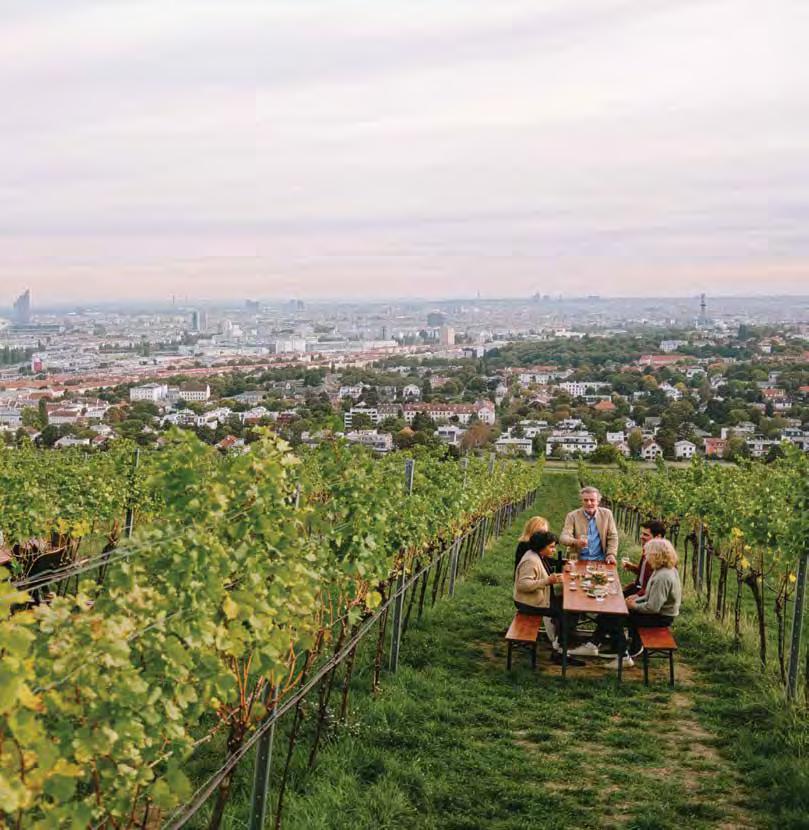
In German, Vienna is Wien. And wine is wein. A coincidence of language, perhaps. Vienna is the only city in the world to have its own formally recognized cuisine. It’s also the only capital city to have significant viticulture within city limits. The slopes surrounding Vienna rise from the Danube river and grow excellent Gruner Veltliner, Riesling, Pinot Blanc and many more. Vienna’s callingcard is a crisp and citrus-forward white wine called Gemischter Satz. This is a field blend: the grapes are grown, harvested and fermented together. Especially for wines coming from famed Viennese vineyards such as the Nussberg and Bisamber, more than a dozen varieties may be used. Gemischter Satz is often mixed with soda water for a spritz, to be enjoyed outside on a sunny day. Excellent producers include Mayer am Pfarrplatz, Stift Klosterneuburg, Wieninger and Zahel – all well respected for their Gemischter Satz as well as single-variety wines.
Some of these wineries – Mayer am Pfarrplatz, Wieninger and Zahel – have their own heuriger, which is a traditional and often rustic wine tavern serving hyper-seasonal dishes, often right next to the vineyards surrounding Vienna. In the heart of city, MAST Weinbistro is a charming and slightly elevated restaurant with inventive and contemporary seasonal cuisine, as well as a deep list of bottles and by-the-glass options. Gemischter Satz can be hard to find outside of Vienna, so if you are curious about the flavour profile and aren’t due in Austria any time soon, grab a bottle of the widely available Winzer Krems Sandgrube 13 Gruner Veltliner. Chill it well – and feel free to add soda water.
By Vivian Vassos
THE ONLY CULINARY tradition named after a city in the world, Viennese cuisine goes beyond Wiener schnitzel and sausage (although I won’t say no to these classics). Chefs mix traditional recipes with international influences, and have been since the city became a hub of international trade and royal position.
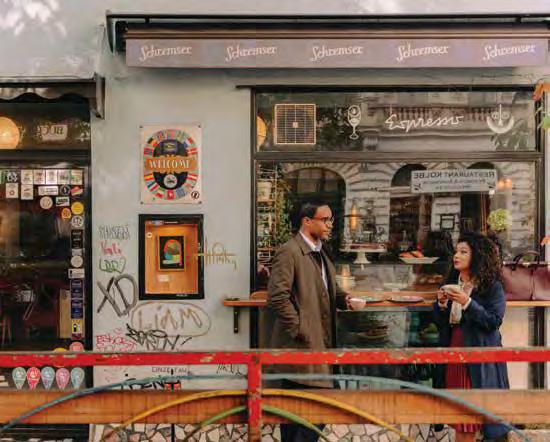
Jump start your day with a “Journey Through Vienna’s Coffeehouse Culture” tour led by Artemezzo’s Martha Tretter. Kafeefabrik, a modern, minimalist café that espresso roasts inhouse, experiments with organic and fair trade coffee beans from Guatemala, Colombia, Brazil and more. Every bean is ground to the way you want your coffee: espresso, drip, French press, melange (the local fave), you name it.
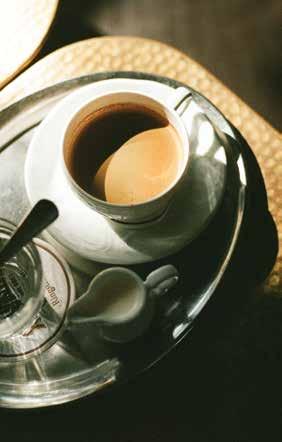
The grand Café Schwarzenberg, opened in 1861, is one of the oldest cafés in Vienna, always busy practicing the art of the coffeehouse, with its formally dressed waiters and strudel in the glass case upfront, piled high with apples, cream cheese or apricots, while locals talk politics, events and art.
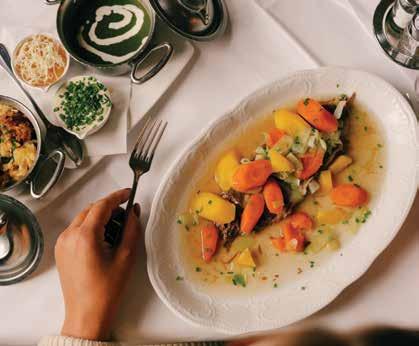
To get an idea of what traditional Viennese cuisine is all about, we head to Gastwirtschaft Sterman. It’s a no-fuss inn packed with locals, with waiters spinning around the noisy tables proffering trays piled with plates of schnitzel, dumpling soup, onion roast beef and Tafelspitz (a mix of boiled beef with minced apples and horseradish) and a Viennese favourite soft drink, lemon juice and soda water.
At tea time, there’s a knock at my hotel door. The Hotel Motto bartender makes his rounds, going door to door wheeling the bespoke cocktail trolley – just in time to prepare me a pick-me-up, roomside, so to speak. How civilized. On the rooftop of the hotel, dinner at Chez Bernard is as elevated as the place. It sits in the heritage building’s glass-domed top floor – at night, the city’s twinkling lights are the backdrop – and the restaurant has a Bib Gourmand Michelin designation. Fresh oysters, escargot in a garlicky pesto sauce and a radicchio salad with toasted walnuts and blue cheese are standouts, accompanied by Austrian wines to keep it local.
Speaking of local, a city with its own culinary designation deserves a day out on a guided food tour. Basti is half of a brother and sister duo that own Rebel Tours, and today he’s taking us through Vienna’s 7th district, Neubau, which he says is the coolest. It’s also where we’re staying at Hotel Motto, so we get the groove. Our sugar fix is filled at Ahrnst, a one-man artisanal bakery tucked away in a larger shop called Espresso Buffet, with the word Sauerkraut scrawled above the window, a bit of kitsch that is everywhere in Vienna, proof that this efficient city can also have a little fun. The buttery croissants stuffed with egg salad are savoury; the panettone is made with a sour-dough starter, giving it a less-sweet appeal. We finish with, what else, a sausage and Austrian wine tasting at Leitenbauer Delikatessen, where a button on the wall beckons: “Ring for Champagne.” Yes, please. But I’ll happily take a local Viennese sparkling. viennabites.wien.info
By Vivian Vassos
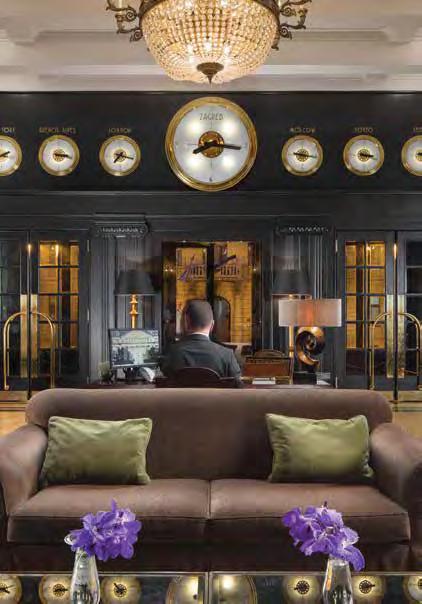
CROATIA IS HIGH on many travellers’ lists, but for many, it’s about sailing around the Dalmatian coast, visiting Dubrovnik or heading to the Tuscany-like setting of Istria (Olive oil! Truffles! Wine!). But Zagreb is worth more than just an airport transfer. The city has the qualities of Vienna, but with the edge of Budapest, for a mash up that is uniquely its own. And right in the heart of it is the Esplanade, a grand hotel that was created in 1925 specifically as a stop for monied guests along the rail route of the Orient Express.
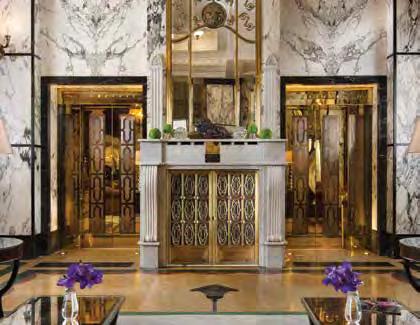
The lobby is soaring; its adjacent bar and restaurant an extension of nostalgic time. She may have a history, but this grand dame also has everything a guest will need. The location is an easy walk past some of the most stunning displays of Austro-Hungarian architecture – and still, in some cases, damaged from the devastating earthquake in 2020 – yet there’s a renewed energy here. The squares are alive with people; the pedestrian-only thoroughfares filled with busy cafes and restaurants. Salute the end of the day via a nightcap at Esplanade. It’s a welcome throwback to a more glamorous time. esplanade.hr/