As technology plays an ever-larger role in our lives, and AI dominates the headlines, I invite you to consider museums as possible antidotes. Museums are places where it is not just OK, but desirable to slow down, turn off your devices, take in the simple beauty of a work of art and ask yourself what it says to you, how it makes you feel, what it makes you think about.
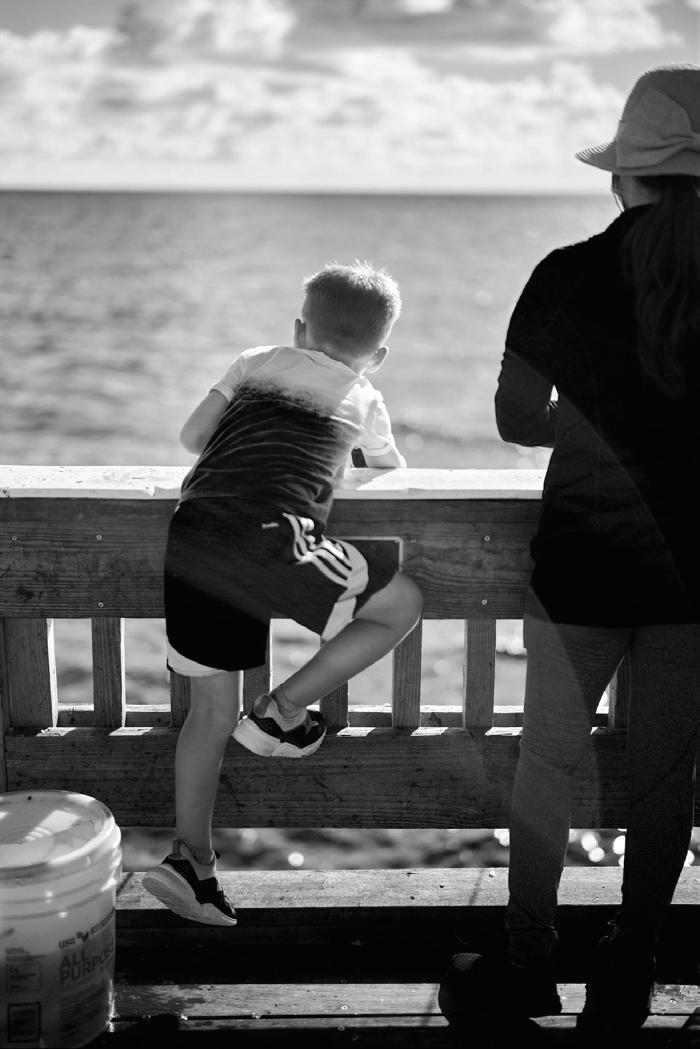
Last season, in the exhibition Eduardo Chacon: Postcards from Nowhere, we invited visitors to take an actual postcard (reproducing images in the exhibition generously provided by the artist) and write a message for a loved one (and put it in a special mailbox) or for fellow visitors (and display it in the gallery). On the back of the postcard featuring Chacon’s Eager Angler (fig. 1), a visitor wrote:
“The way you look at art is the way this little boy looks at the ocean, with wonder, joy, and a sense of endless possibility.”
us to jump back in time and enjoy the simplicity of basic shapes and colors while at the same time acknowledging that life is full of complex questions, to which art may provide unexpected answers. The other new exhibition, Modernisms: Art from the Manes Collection (on view March 25 –October 11, 2026), illustrates much of the historical foundation upon which contemporary practices are built. It was during the 20th century that artists shattered the existing canon, experimented freely, rebelled against societal norms, and in the process created an ever-fascinating kaleidoscope of styles and movements. The exhibition reminds us that the modern period liberated art from conforming to one style or aesthetic.
The sentiment resonated with me in a special way because it echoed our collective vision for the Boca Raton Museum of Art. We hope that our Museum can be the place that brings that sense of endless possibility to everyone in our community.
This spring’s exhibitions are a case in point. TYPOE GRAN: Anatomy of a Practice (on view March 25 – October 11, 2026) introduces playfulness into our everyday lives. TYPOE invites
In this issue of MUSE, alongside essays by our curatorial team previewing what’s ahead, you’ll find an in-depth profile of TYPOE that offers a closer look at the artist’s background and practice, as well as a guest commentary by a literary scholar tracing the vibrant cross-disciplinary collaborations between Beat writers and visual artists in connection with Exploring Jess: Beat Generation Visionary (on view April 22 – December 6, 2026).
My hope, as you visit the Museum this season, is that you will feel empowered to enjoy the exhibitions on your own terms. Every one of us experiences art differently, and no one experience is better than another. Find what speaks to you and take the time to ask yourself why? Which brings me back to the notion of slowing down. Art reveals itself slowly, one layer at a time, and rewards patience. In his 2017 book Seeing Slowly (which I wholeheartedly recommend), Michael Findlay writes about substituting “watching” for “looking” as the preferred term for how we engage with art: as with films or theater, which require prolonged
(fig. 1) Eduardo Chacon, Eager Angler, 2022 (printed 2025), archival print. Courtesy of the Artist
attention, we ought to afford a work of art the necessary time to unfold before our eyes.
I promise that investing the time to “watch”
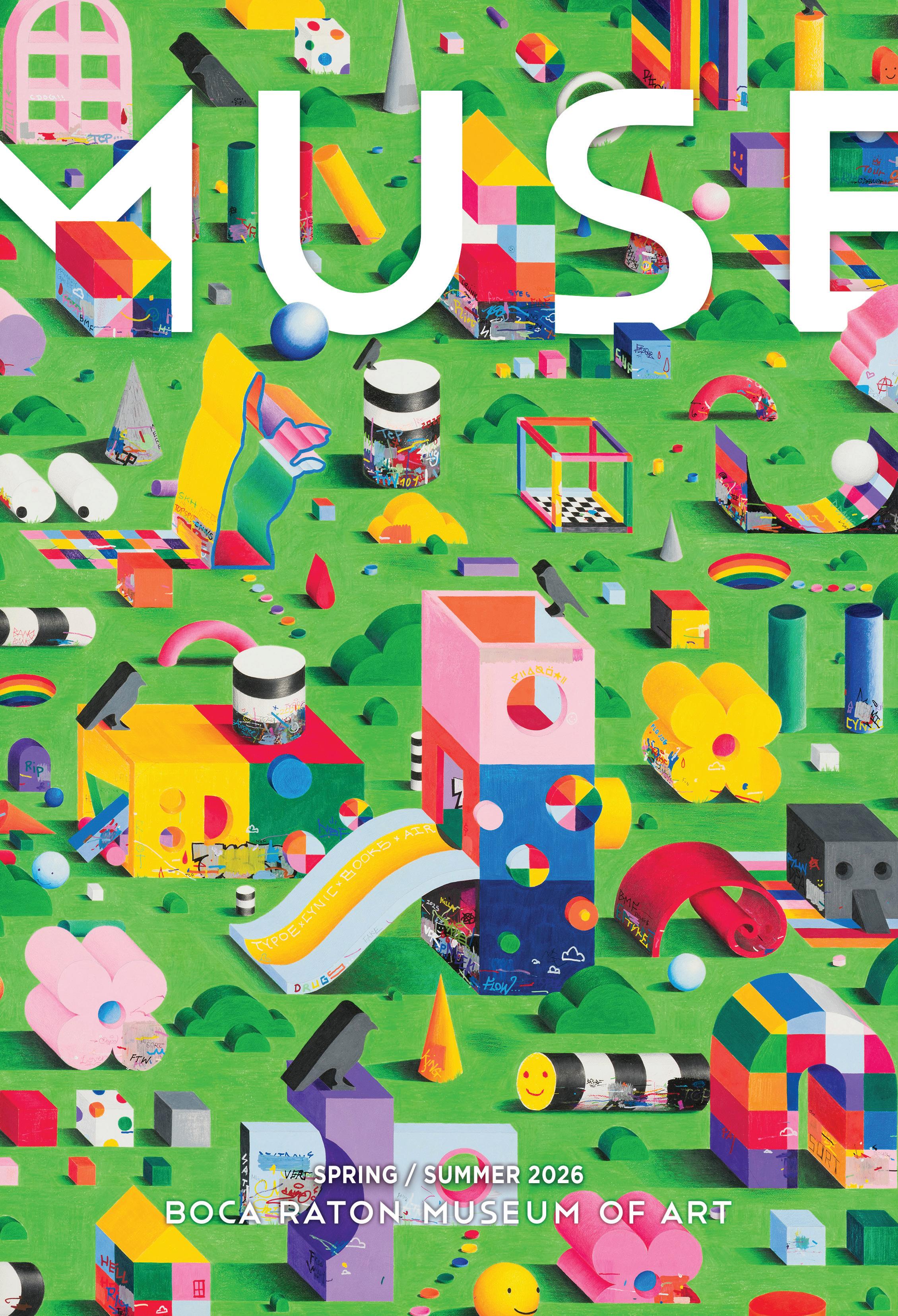
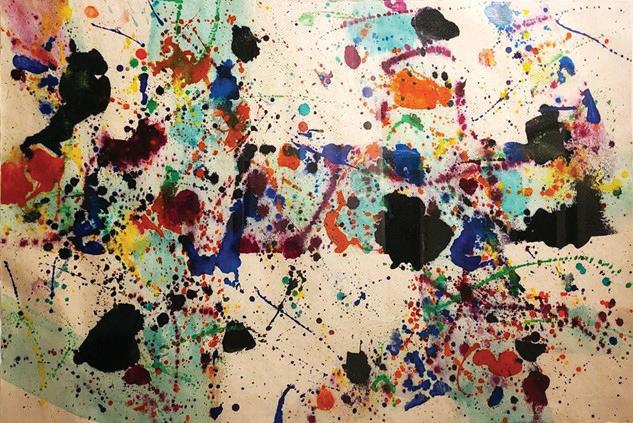
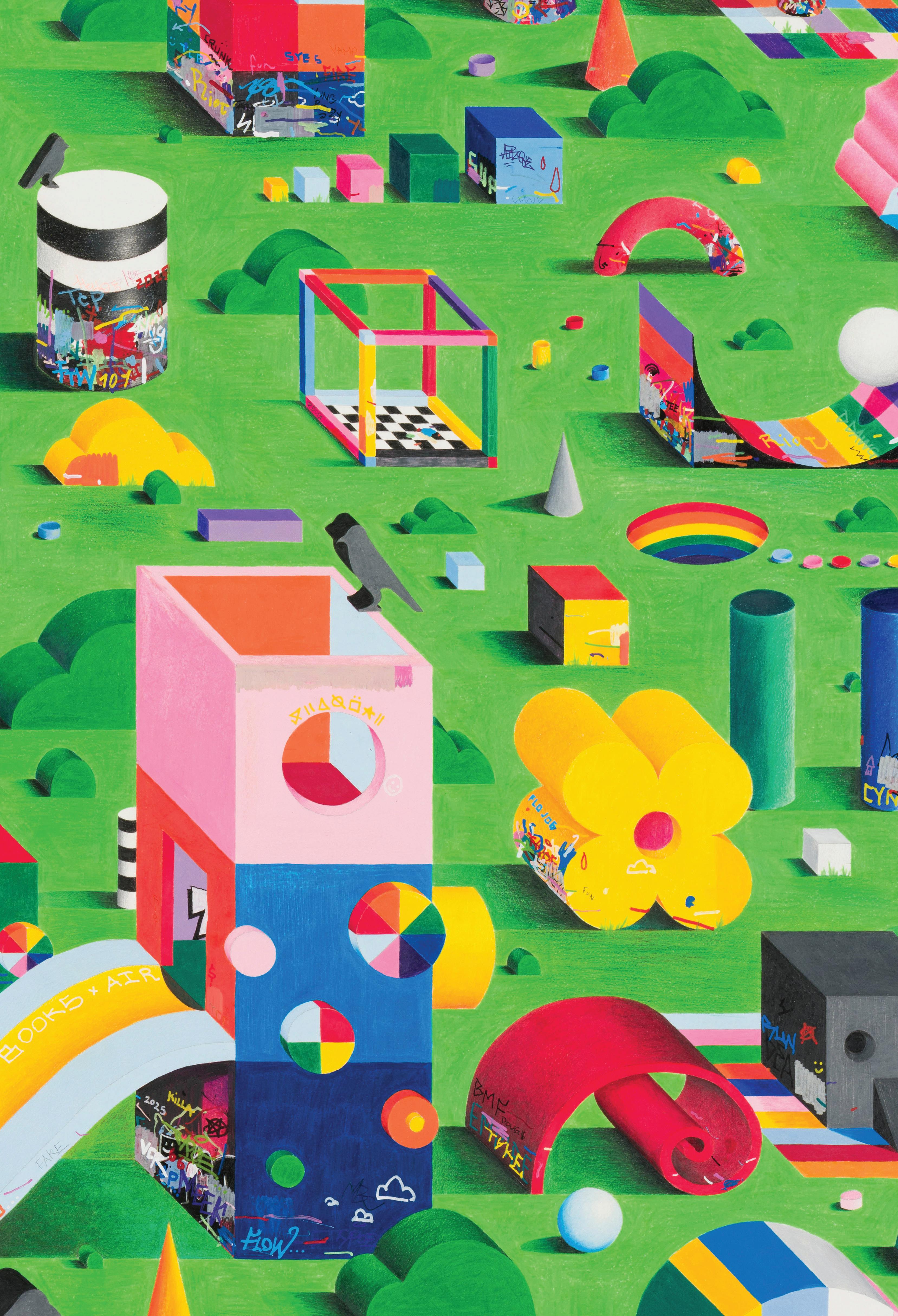
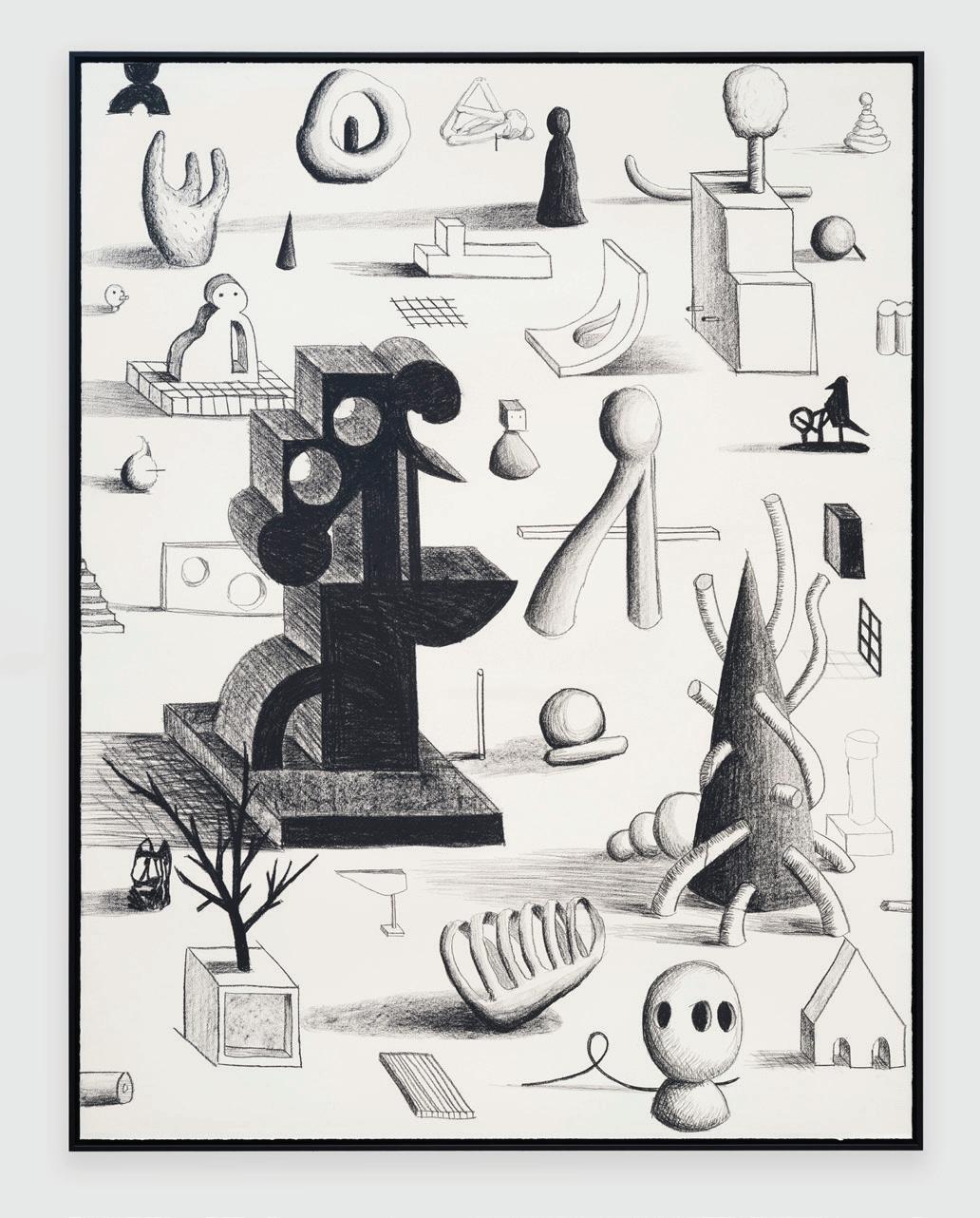
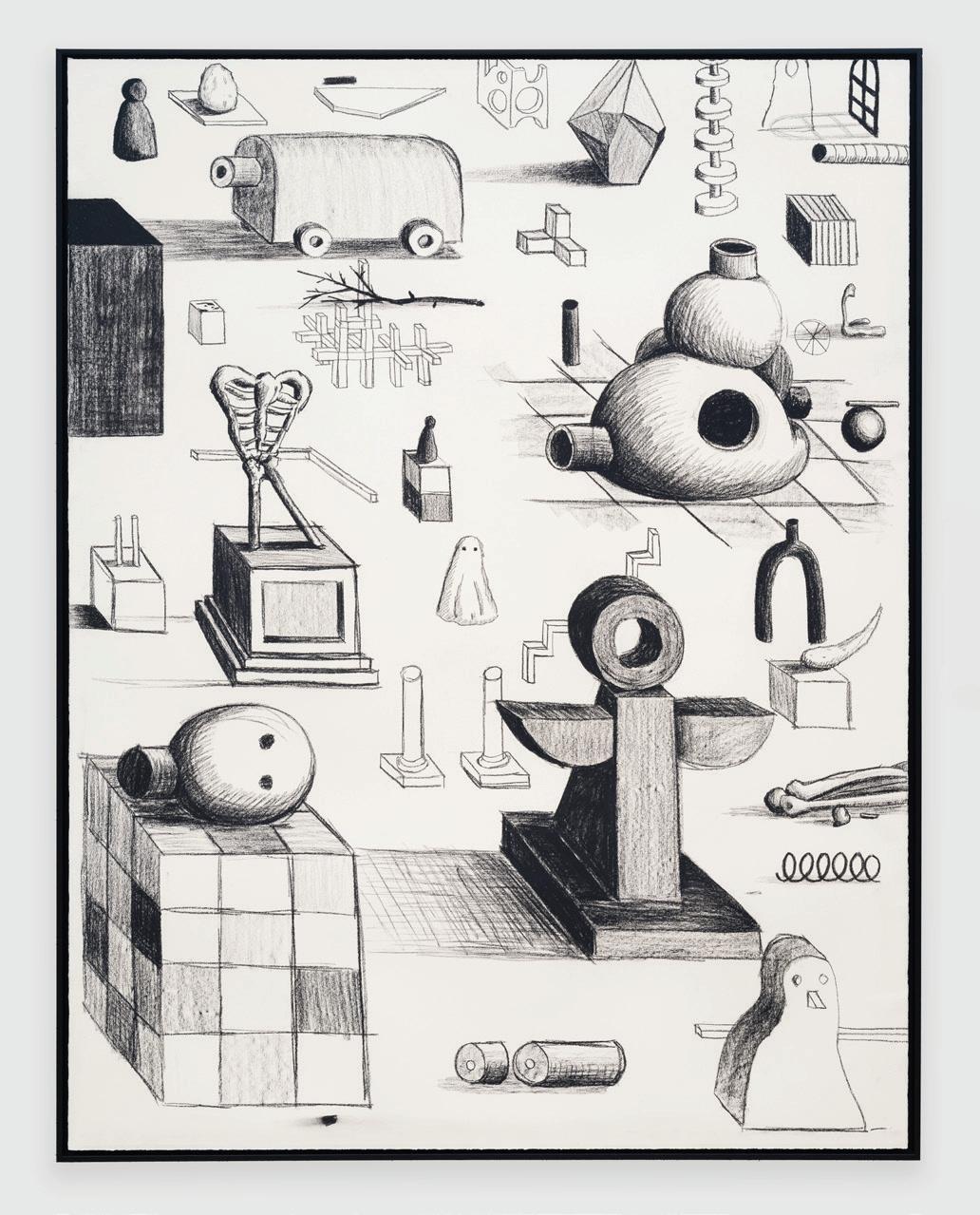
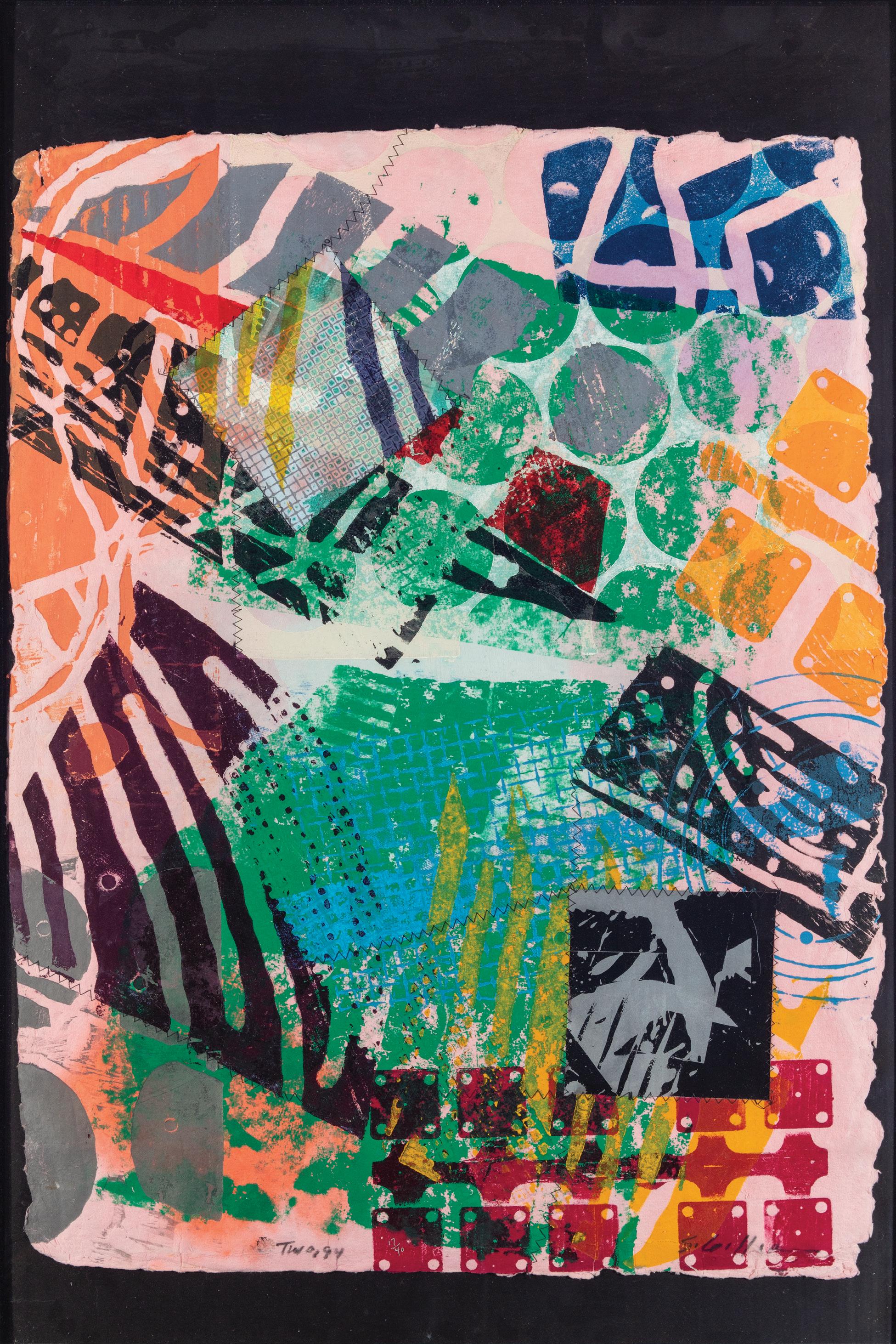
Sam Francis’s Untitled (fig. 2) in Modernisms, or TYPOE’s drawing Eden (cover), will pay off. The journey is different for every one of us, but when I watch the Sam Francis, for example, I start seeing beyond color and composition (both brilliant): I see a galaxy populated by different planets, the outline of a favorite pet, a tapestry of shapes (beings?) competing for attention, a symphony in light blue. I start allowing myself to read an entire story onto the surface of the canvas, and as the story unfolds, I feel its beauty washing over me.
And should you find yourself seeking guidance in how to “watch” works of art, I hope you will join us for one of the many programs scheduled this season—whether that be one of our daily docent-led highlights tours or our new art appreciation lecture series Breaking the Frame: Reflecting on Modern Art.
Most importantly, we always want to hear from you. Please fill out a comment card when you are at the Museum, reply to our social media posts, or drop us a line. The only way we can grow as an institution is to hear what resonates with you and what our community needs from an art experience at the Museum and Art School.
Happy art watching!
ENA HELLER, PHD DIRECTOR & CEO
2025 – 2026 BOARD OF TRUSTEES
OFFICERS
John DesPrez, Chair
Paola Luptak Jakobson, Vice Chair
Dr. Tamara Morgenstern, 2nd Vice Chair
Daniel Wolgin, Treasurer
Zachary Kirstein, Assistant Treasurer
Lorraine Gilden, Secretary
Jody H. Grass, Immediate Past Chair
Stacey Packer, Member-at-Large
Marta Batmasian, Member-at-Large
Dalia Stiller, Chair Appointee
Angelo Bianco, Chair Appointee
TRUSTEES
Renee Blatt
Aditi Deeg
Cindy Friezo-Ferrari
Daniel Hostettler
Åsa Lööf
Suzanne Klein
Martin Mallinger
Dr. Harvey Manes
Dr. Karen Mashkin
Julie Clairmont Shide
Houda Silcock
John Tolbert
HONORARY TRUSTEES
Norman Codo
Jean Colker
Beth Davis
June Gelb
Elayne Mordes
Pat Ohnell
Marlene Pomeranz
(fig. 2) Sam Francis, Untitled, 1974, acrylic on paper. Dr. Harvey Manes Art Foundation
A LOOK INSIDE TYPOE’S WORLD
For the first time, South Florida’s TYPOE GRAN takes viewers behind the curtain of his creative process, juxtaposing personal narrative against broader themes of human existence.
BY TRINA GRAY
Art often acts as a mirror, producing a visual language that interprets, reflects, and helps make sense of the world. But for multidisciplinary artist TYPOE GRAN (b. 1983 Miami, Florida), art is more introspective—less external observation than an inner musing of the opposing forces that dwell within the human experience: light and dark, chaos and discipline, strength and fragility.
“Everything in life has a duality,” he said. “I find that tension interesting because it shapes the worlds we choose to build.”
Themes of world-building abound in TYPOE’s work. Through an array of oversized building blocks, iconographic symbols, and electric color palettes, TYPOE creates a liminal space where childhood wonder and adult experience coexist. His fantastical, large-scale installations, which blend Pop Art whimsy with gothic imagery,
OF A PRACTICE ON VIEW MAR 25 – OCT 11, 2026
beckon the imagination and encourage partic ipation—prompting the question: What world would we build if there were no limitations?
In his first museum solo exhibition, Anatomy of a Practice, presented by the Boca Raton Museum of Art, TYPOE reveals the process behind his elaborate creations. From sculptures to lightboxes to a monumental drawing that will be his largest to date, the artist invites viewers, for the first time, into his studio practice. “A lot of this work is about how we’re building our world,” he says. “It’s a playful back-and-forth between looking at my drawings and then seeing those ideas come to life as sculptures.”
TYPOE GRAN: ANATOMY
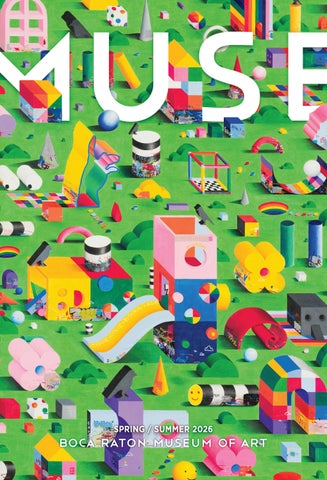
(opposite page & cover) TYPOE GRAN, Eden [detail], 2025, colored pencil on paper. Courtesy of the Artist and Primary Gallery
Beyond surveying TYPOE’s artistic approach, the show explores his evolution from clean, geometric designs toward more biomorphic forms, such as tree roots and human bones. “I’m fusing elements from my past with visuals that resonate with me today to create a new amalgamation of shapes,” he said, “or what I like to call ‘an inner landscape.’”
Born and raised in Miami, TYPOE grew up in a family of artists. He was first exposed to largescale works through watching his mother, who owned a party-decoration business when he was younger. “I would watch her build these faux columns and huge foam centerpieces that felt so massive and vast to me as a kid,” he says. “I would see her create these whole scenes—worlds that people could literally step into and experience.”
TYPOE learned at an early age that life is a delicate balance between our best and worst impulses. As a teenager, he battled addiction, and soon discovered the underground world of graffiti art. It wasn’t so much a newfound artistic medium as an outlet for his aggression. “Fighting, destroying property, going to jail—it all belonged to the same conversation for me,” he says.
After getting sober at 20, he became more intentional about his art. In 2007, he, along with two other emerging artists, opened Primary, an art collective and studio in Little Haiti, not only to give presence to the local art scene but to have more creative control over his work.
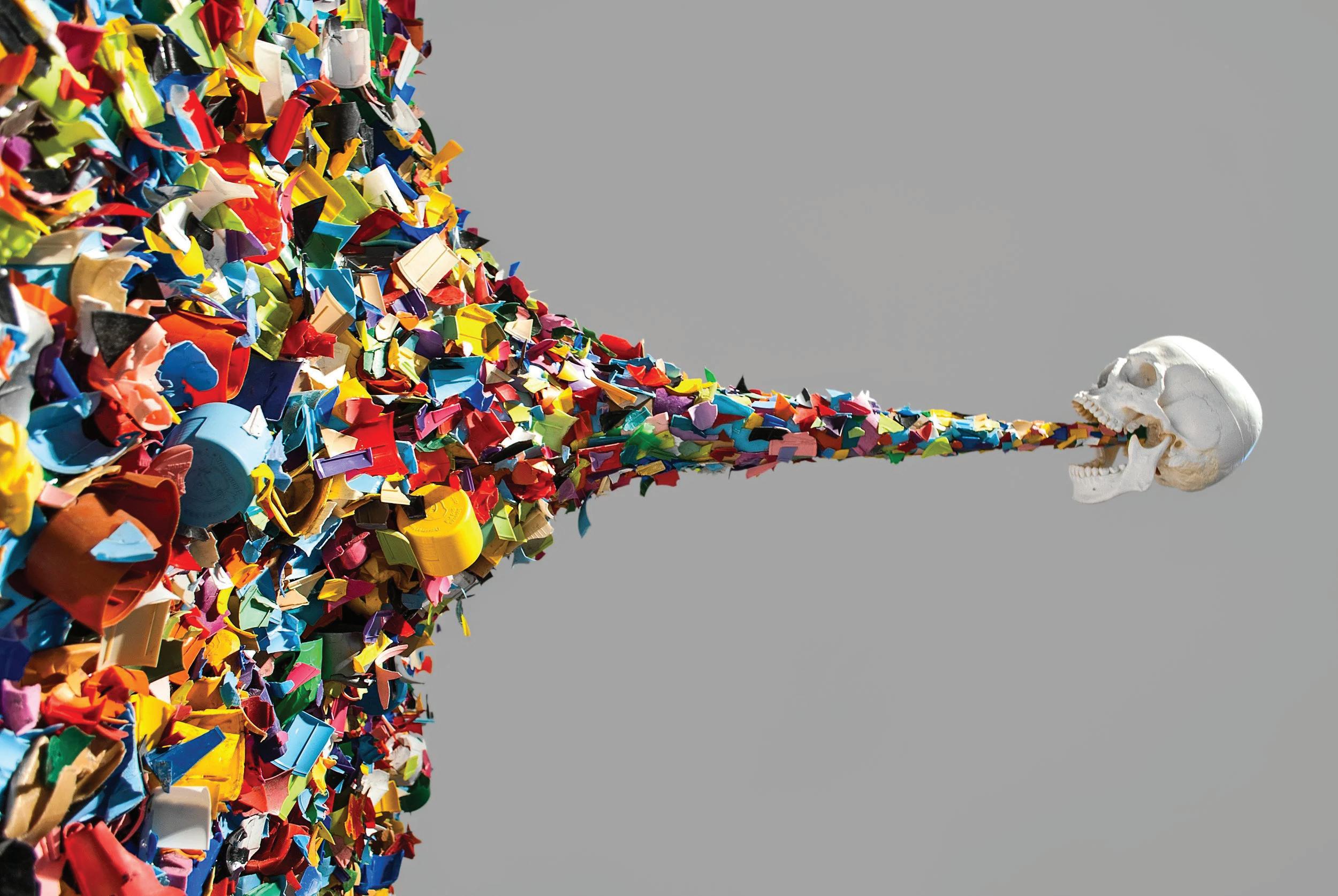
The turning point of his career came in 2010, with the debut of Confetti Death (fig. 1), a sculptural piece that captivated audiences worldwide. The work, crafted from multi-colored shards of spray paint caps, depicts an explosion of confetti projecting from the mouth of a human skull. It exemplifies TYPOE’s effortless ability to operate at the intersection of graffiti subculture and fine art.
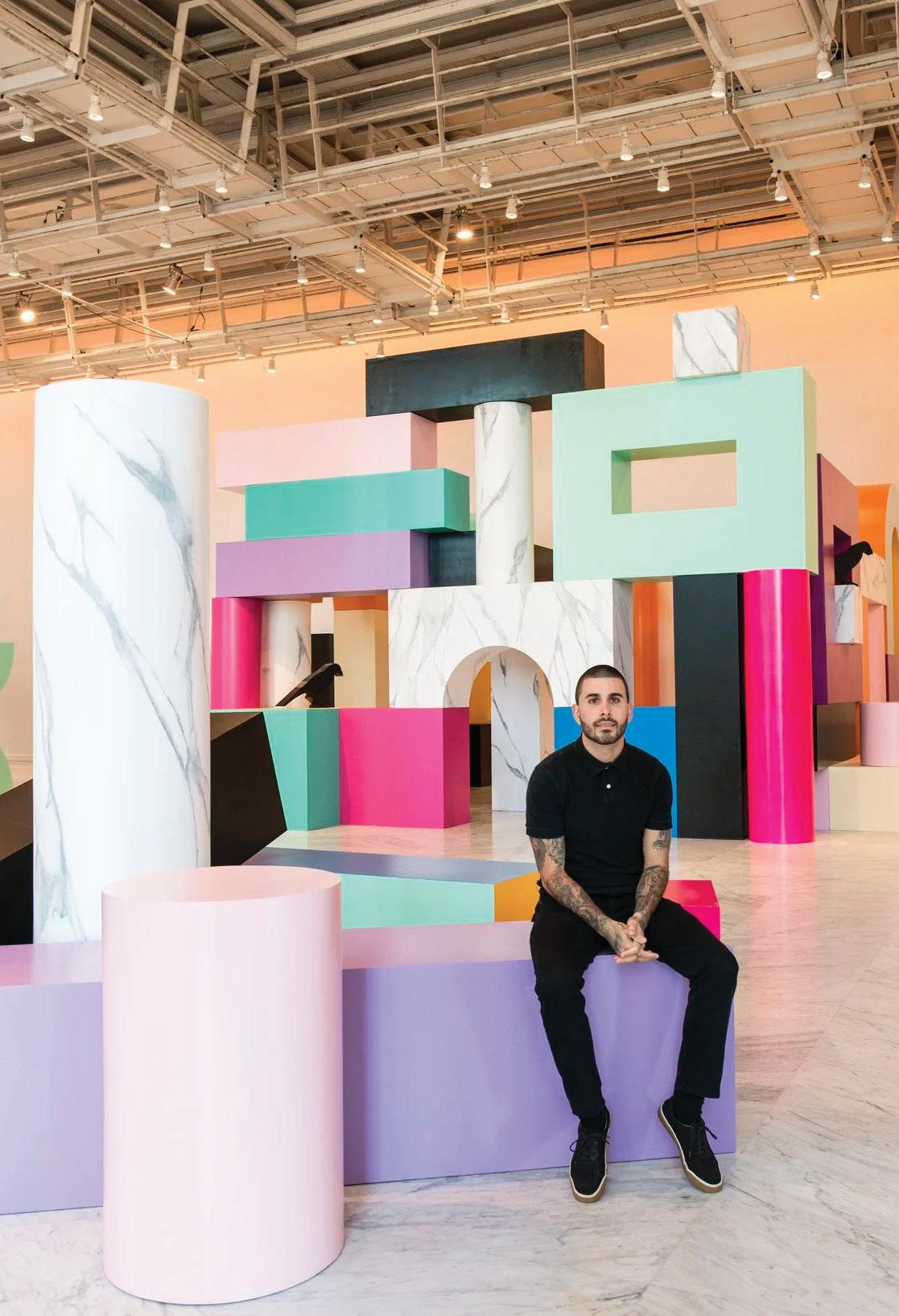
Though Confetti Death took TYPOE from the streets of Miami to international art galleries and museums, he wanted to create large-scale public art that could evoke a sense of joy and play in adults. He achieved that in 2016 with Forms from Life (fig. 2), originally exhibited at the Faena Art Center in Buenos Aires, Argentina.
(fig. 2, opposite page) TYPOE GRAN, Forms from Life, 2016, mixed media. Faena Art Center, Buenos Aires, Argentina. Courtesy of the Artist and Primary Gallery
(fig. 1) TYPOE GRAN, Confetti Death, 2009, mixed media installation. Courtesy of the Artist and Primary Gallery
The bigger-than-life sculptures, inspired by children’s building blocks, reimagine collective creativity in public spaces and continue to inform TYPOE’s artistic practice.
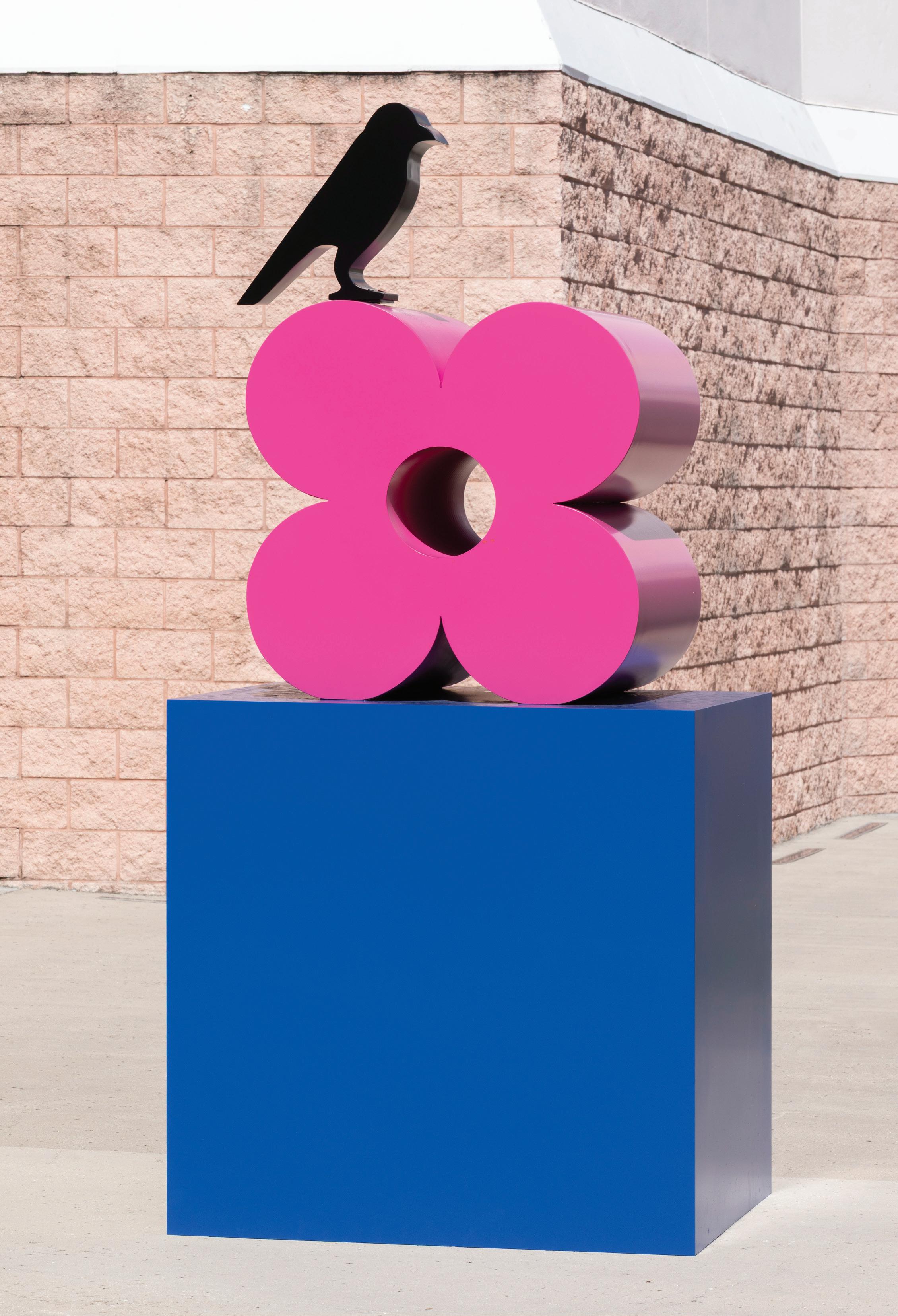
An extension of this series includes a recent acquisition by the Boca Raton Museum of Art, In the House of Shadows, Flowers Bloom (fig. 3). Displayed at the Museum’s entrance, the large-scale installation features a fuchsia-pink blossom resting on a cube-shaped blue pedestal, topped by a precariously perched raven.
“I wanted to reference stacking and building but also balance,” TYPOE says. “Sometimes it can feel like life is teetering on the edge, and with one small push, everything could collapse. Yet we still stand strong, and I think that’s beautiful.”
Anatomy of a Practice conveys TYPOE’s vulnerability, both professionally and personally, while leaving space for open dialogue between the art and viewer. Constructing a world of vibrant color and childlike objects, punctuated by symbols of decay and mortality, TYPOE reminds us that even in the darkest places, beauty can bloom.
“We all carry conflict,” he says. “There’s a balance between the light and the dark, and we have to decide, ‘Which one am I choosing today?’ We make those choices, and then we build from there.”
Trina Gray is an arts and culture writer based in Orlando, Florida, whose writing has appeared in The New York Times Magazine, People Magazine, PureHoney Magazine, and more.
(fig. 3, opposite page) TYPOE GRAN, In the House of Shadows, Flowers Bloom, 2025, aluminum, Lacryl
Skye; Stephanie & Charles Krobot; Sophia Ballesteros; Marleen & Martin Brody; Andrea & John Doyle; The Karlan Family
two-part polyurethane paint. Acquired with support from Jody H. & Martin Grass; Paola & Markus Jakobson; Åsa L. Lööf; Tamara & Richard Morgenstern [in honor of Irvin Lippman]; Abbe & Barry Prevor; Lorraine & Richard Gilden; Fernanda Froes & Emmanuel Hermann; Kathryn, Dan, Galt, &
TYPOE GRAN, Empty Heaven, 2025, charcoal on paper. Courtesy of the Artist and Primary Gallery
TYPOE GRAN, Eleventh Hour, 2025, charcoal on paper. Courtesy of the Artist and Primary Gallery
THE MANY ‘-ISMS’ OF MODERN ART
Cubism, Surrealism, Abstract Expressionism were more than stylistic labels. They were declarations of independence, each one a new visual language born from a world in constant upheaval.
KEFFIE FELDMAN, PHD, CHIEF CURATOR
Modernisms: Art from the Manes Collection explores the ways 20th-century artists rejected old visual paradigms of the past and created their own modes of expression to communicate the deepest and most essential elements of the human experience. The works in the exhibition are drawn exclusively from the collection of Dr. Harvey Manes, who has developed a significant and comprehensive collection focusing predominantly on modern and contemporary art. Representing a century of artmaking by the titans of 20th-century art, the breadth of work in the Manes collection provides an opportunity to investigate the long arc of European and American Modernism in light of the broader technological, social, and political factors that led to the period’s diverse artistic innovations.
Breaking with tradition is one of the hallmarks of modern art, a broad artistic movement that roughly spanned the period from 1860 to 1970 and was defined by experimentation with materials, processes, and perspectives. Artists on both sides of the Atlantic employed myriad techniques in their quest for innovation and pure expression, leading to the multiple “-isms” of the period. These “-isms” were a means of
ART FROM THE MANES COLLECTION
ON VIEW MAR 25 – OCT 11, 2026
classifying and labeling the distinctive aesthetic styles and conceptual sensibilities that arose during this time. Within this spirit of invention, a tension between advocates of figuration and proponents of abstraction underlies these artistic movements. This exhibition, however, argues that both figurative and abstract techniques are responsive to specific historical and social catalysts and are valuable visual strategies depending on how and what the artist seeks to communicate. Despite modern art’s many “-isms,” the artworks in this exhibition demonstrate how art is always a product of its historical context as it both informs and responds to broader social and political movements.
Figuration in art history refers to the practice of depicting the human figure and other recognizable symbols and subjects. Representing the world in recognizable form has been central in artistic production from cave paintings through the Renaissance and thus is often associated with
MODERNISMS:
(opposite page) Sam Gilliam, Two, 1994, monoprint with screenprint, collage, acrylic, stitching, and embossing on handmade paper. Dr. Harvey Manes Art Foundation
more traditional approaches to artmaking. While artists continued to rely on the figurative tradition, beginning in the late 19th century, many began to radically rethink how reality could be portrayed.
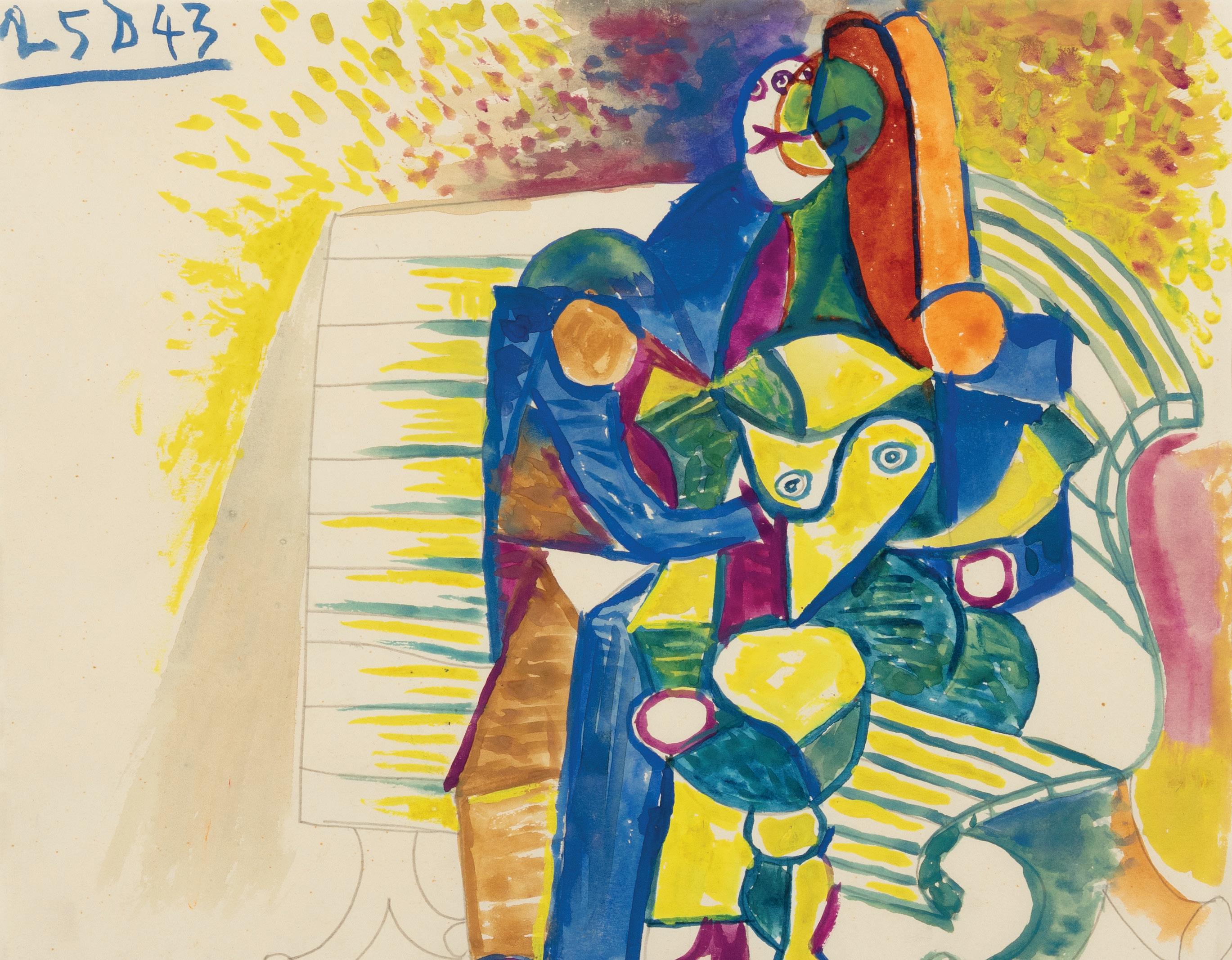
Responding to developments in technology and politics, modern artists created new modes of expression while relying on the familiarity of recognizable forms. Technological innovations such as photography and mass media transformed figuration by introducing new viewpoints, framing devices, and a heightened awareness of reproducibility. Rather than competing with photography’s realism, many artists like Pablo Picasso, Joan Miró, and Thomas Hart Benton distorted or stylized the figure to explore modern experience. For example, Pablo Picasso and Georges Braque developed Cubism in the early 20th century to argue that traditional art misrepresents reality by showing it from a single, fixed viewpoint. Instead, Cubism seeks to depict how rather than what we see by showing objects from multiple perspectives at once, breaking forms
into geometric facets and reassembling them to convey structure, time, and space simultaneously. In Couple sur un banc (fig. 1), Picasso (b. 1881 Málaga, Spain; d. 1973 Mougins, France) depicts a couple on a park bench in an amorous embrace. The movement of their activity is expressed in the fractured body parts seen from multiple perspectives, giving a sense of their turning and grasping through space and over time.
Figuration also became a powerful tool for social critique and personal testimony. Artists used the figure to address violence, labor, power, and identity, often responding to political upheavals in the 20th century that included two world wars, fascism, communism, and decolonization. Joan Miró (b. 1893 Barcelona, Spain; d. 1983 Palma, Spain) painted Three Characters from a Greek Tragedy, on the eve of fascism’s rise in his native Spain and other European countries. Depicted in his characteristic Surrealist pictorial sign language, the figures are both recognizable and strange, their exaggerated forms suggesting
(fig. 1) Pablo Picasso, Couple sur un banc [detail], 1943, gouache and pencil on paper. Dr. Harvey Manes Art Foundation
emotional pathos. Even as abstraction rose to prominence in the early 20th century, figuration persisted, continually adapting to modern conditions and serving as a vital means of confronting human experience in a rapidly changing world.
Abstraction, defined as the departure from realistic representation, instead emphasizes shapes, colors, forms, and gestural marks. While abstraction became a dominant force in 20th-century Western art, its roots extend far earlier, appearing in decorative patterns, symbolic imagery, and non-naturalistic traditions across time and cultures.
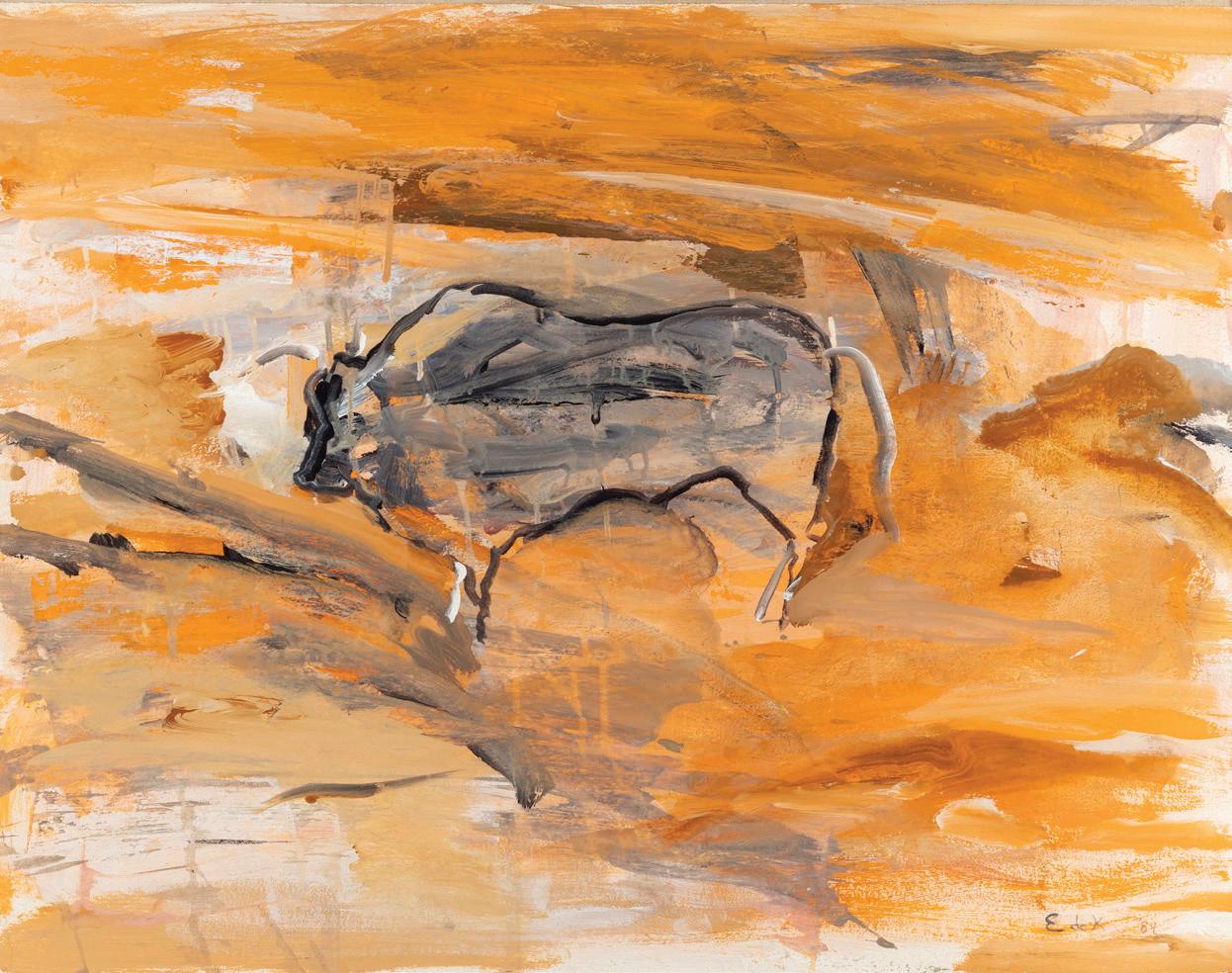
Developments in technology, psychology, and global politics played a crucial role in shaping abstraction by transforming how artists understood reality, the self, and society. Technological advances in photography, film, and industrial production reduced the need for art to function as realistic documentation, freeing artists to explore form and perception. New theories in psychology shifted attention inward, and artists such as Willem and Elaine de Kooning sought to visualize inner states rather than external appearances, viewing abstraction as a means of expressing spiritual, emotional, or psychological realities. The de Koonings were proponents of Abstract Expressionism, and Elaine de Kooning’s (b. 1918 Brooklyn, New York; d. 1989 Southampton, New York) Orange Grotto Cave #17 (fig. 2) expresses
the tenets of the style that relied on spontaneity, gesture, and the artist’s subconscious to create artworks where meaning arises from scale, color, and movement rather than narrative content.
The 20th century saw rapid social change through wars and revolutions, and some artists embraced abstraction as a universal human language, while others used it as a response to trauma and instability. Today, abstraction remains a central artistic language, as it is continually adapted to new cultural, political, and technological contexts.
Together, the works in Modernisms: Art from the Manes Collection reveal that the divide between figuration and abstraction is less rigid opposition than dynamic dialogue. Across the 20th century, artists adopted, transformed, or rejected visual conventions in response to profound change, using both recognizable forms and nonrepresentational strategies to grapple with modern life. By situating these artworks within their historical contexts, the exhibition demonstrates that modern art’s many “-isms” share a common impulse: to invent new visual languages capable of expressing the complexities, anxieties, and aspirations of the human experience. In doing so, the Manes Collection underscores that modern art is not a linear progression toward abstraction, but a multifaceted and ongoing negotiation among historical circumstances and how artists see, feel, and create meaning.
(fig. 2) Elaine de Kooning, Orange Grotto Cave #17 [detail], 1984, acrylic on paper mounted to canvas. Dr. Harvey Manes Art Foundation
EXPLORING JESS: BEAT GENERATION VISIONARY
KELLI BODLE, CURATOR
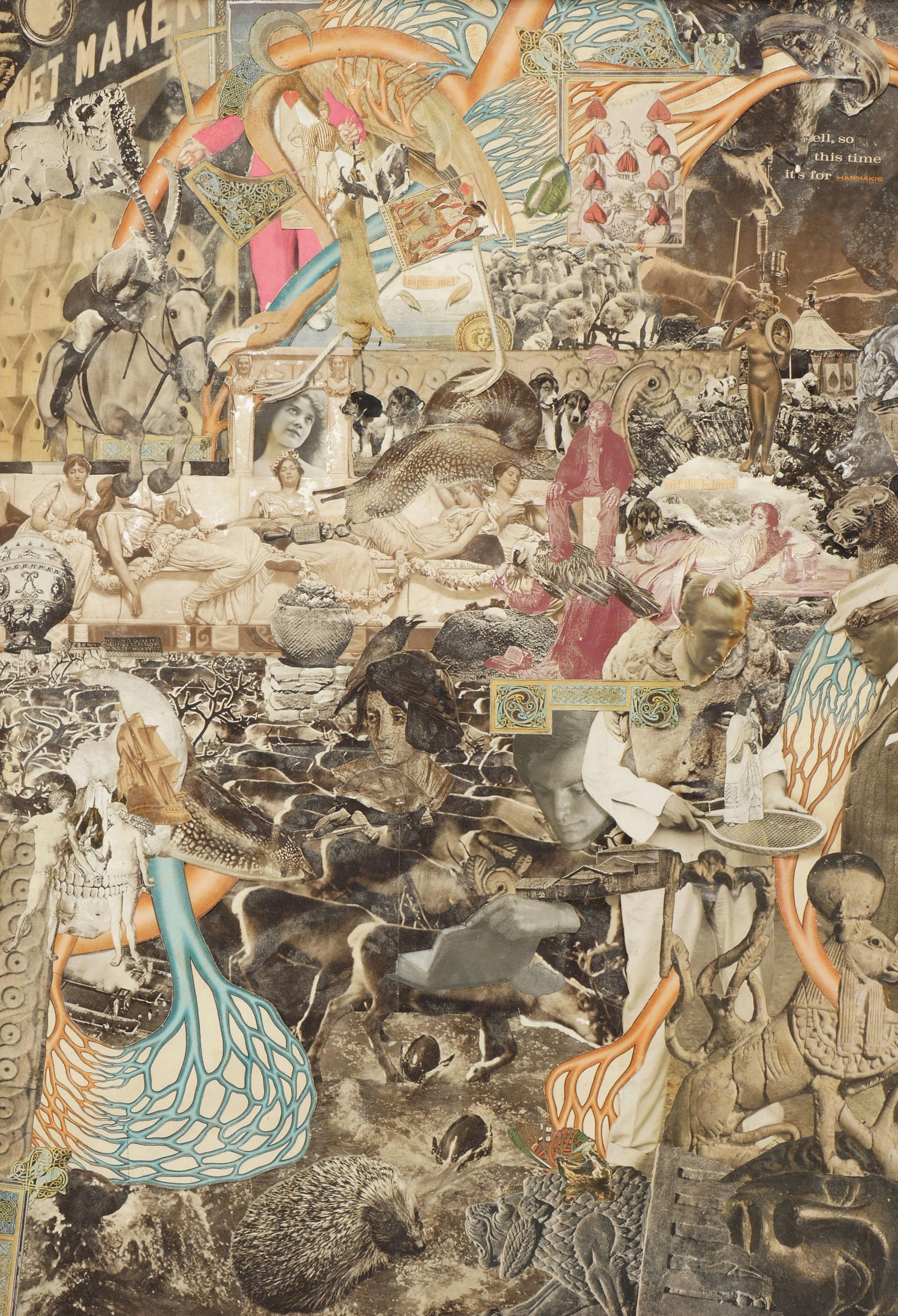
The 1950s and 1960s marked the era when Beat Generation philosophies emerged and were disseminated through performance and literary art; within this cultural milieu, painter and collage artist Burgess Franklin Collins (b. 1923 Long Beach, California; d. 2004 San Francisco, California)— known professionally as “Jess”—stands as a compelling case study in the translation of Beat sensibilities into visual art. Echoing Beat values, Jess’s collages draw upon the free-associative structures of free-form poetry and reject the capitalist culture prevalent in mid-century America.
Exploring Jess: Beat Generation Visionary offers a critical overview of Jess’s diverse artistic production from the 1940s through the 1980s, foregrounding his innovative collage technique—termed “paste-ups”—as an exploration of fragmentation, juxtaposition, and cultural sampling. The different sections of the exhibition contextualize how his relationships fostered experimentation with visual art and literature, how he subverted mid-century materialism through collage, and how his voracious reading habit nourished imaginary worlds and personal
EXPLORING JESS: BEAT GENERATION VISIONARY ON VIEW APR
22 – DEC 6, 2026
mythmaking in his painting cycles. Furthermore, the inclusion of hand-drawn theater posters, intimate portrayals of his partner Robert Duncan, and domestic ephemera from their shared home—a recognized hub for San Francisco’s countercultural networks—underscores the importance of social context for successful artistic production. This broad survey of his work invites audiences to consider the ways that Jess’s practice both reflects and complicates Beat preoccupations with narrative, identity, and subversion.
With loans from Tibor de Nagy Gallery; the Jess Collins Trust; Hosfelt Gallery, San Francisco; Fine Arts Museums of San Francisco; and The Poetry Collection of the University Libraries, University of Buffalo, The State University of New York; this exhibition’s broad scope reflects and celebrates his long and varied career.
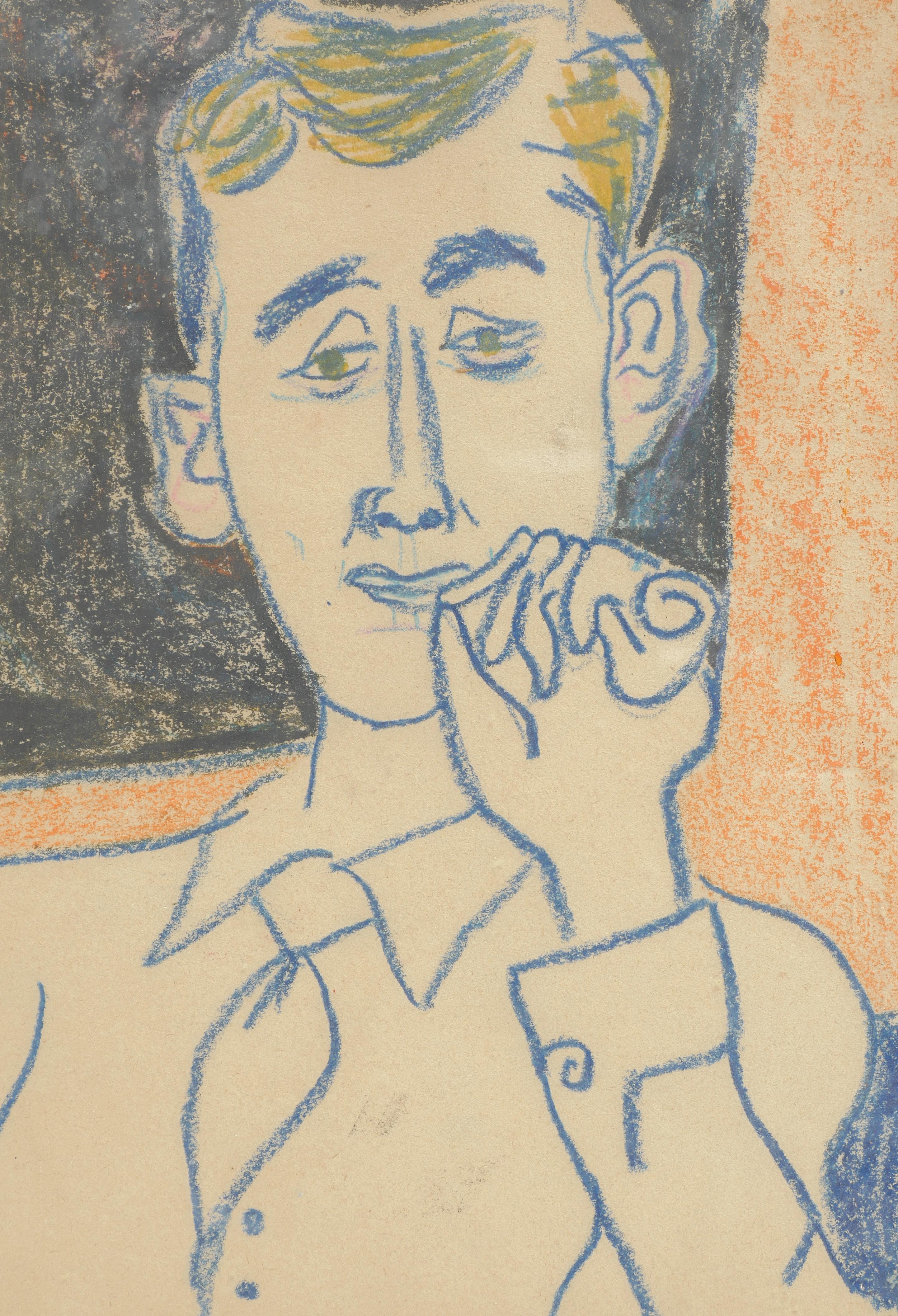
(opposite page) Jess, Self-Portrait [detail], early 1950s, handmade oil and wax crayon on paper in artist’s frame. Courtesy of Melissa and Christian Topham
BEATS BEYOND THE LITERARY
The Beat movement was never confined to the page. It spanned collage and canvas, film and photography, readings and small presses, all fueled by a restless spirit of collaboration.
BY RION LEVY
Exploring Jess: Beat Generation Visionary joins a growing body of museum exhibitions that have reexamined the Beats through an interdisciplinary lens.1 Long framed primarily as a mid-20th-century literary movement, the Beats emerged from dense, overlapping networks of writers, visual artists, musicians, filmmakers, and performers who shaped one another’s work. This broader view has prompted renewed debate about what it means to be “Beat” and who belongs within
the Beat orbit, as scholars expand the frame beyond a small circle of canonical writers.2
From its earliest years, the meaning of the term “Beat” remained unstable, carrying connotations that ranged from exhaustion and marginality to spiritual openness and ecstatic insight. Participants and observers disagreed about who counted as “Beat” and what qualities defined the movement. Rather than a fixed membership or a unified style, the Beats formed
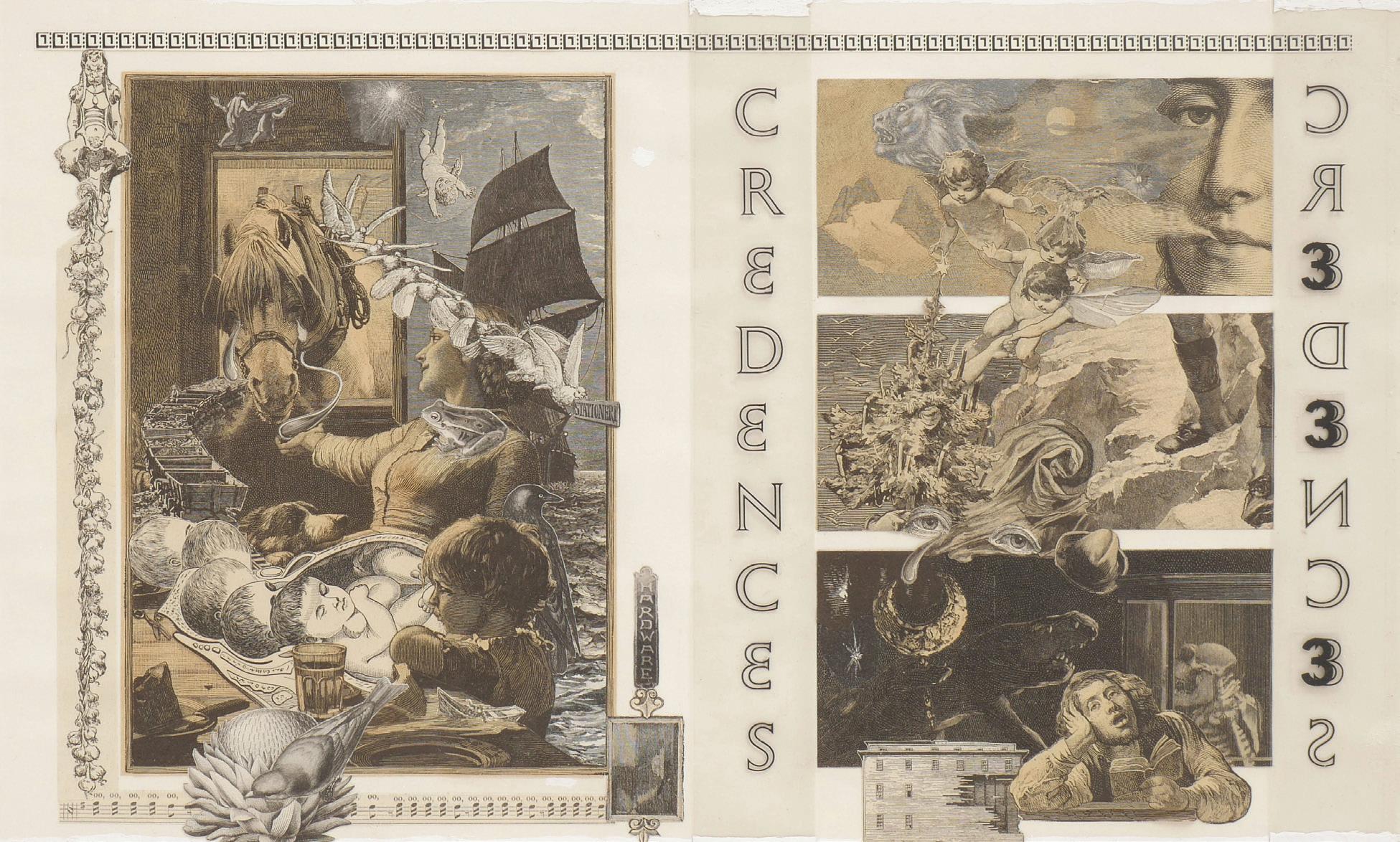
Jess, Cover for Credences 3, 1975, paste-up. Courtesy of Hosfelt Gallery, San Francisco and Jess Collins Trust. Photograph: Miles Peterson
a loose constellation of individuals connected by shared experiments in art and life.
Historically, the Beat Generation took shape in the early postwar years, coalescing around a small group of East Coast writers—most notably Allen Ginsberg, Jack Kerouac, and William S. Burroughs. In the 1950s, Beat culture gained wider visibility through overlapping West Coast scenes, particularly in San Francisco, where poets and artists associated with the San Francisco Renaissance cultivated experimental and community-oriented approaches to artmaking. Figures such as Jess moved within these circles, contributing to a broader Beat milieu that encompassed poetry readings, small-press publishing, visual art, and interdisciplinary collaboration.3
Across these shifting geographies and generations, the Beats shared a recognizable ethos.
They pursued artistic experimentation and spontaneity, explored altered states of consciousness, and drew inspiration from Buddhism and other spiritual traditions. Many rejected postwar norms of conformity and commercial culture, embraced pacifist or anti-authoritarian politics, and sought more expansive forms of personal and social connection. Romantic ideals of individual vision intersected with Surrealist strategies of juxtaposition and disruption, producing work that challenged both aesthetic conventions and social expectations. As the Beats pushed back against postwar mass-media culture—and against the reductive “beatnik” stereotype imposed by popular media—their anti-conformist sensibility and aesthetic experiments helped lay the groundwork for the broader 1960s countercultural movements.
Just as central to Beat identity was a commitment to collaboration. Beat culture unfolded through
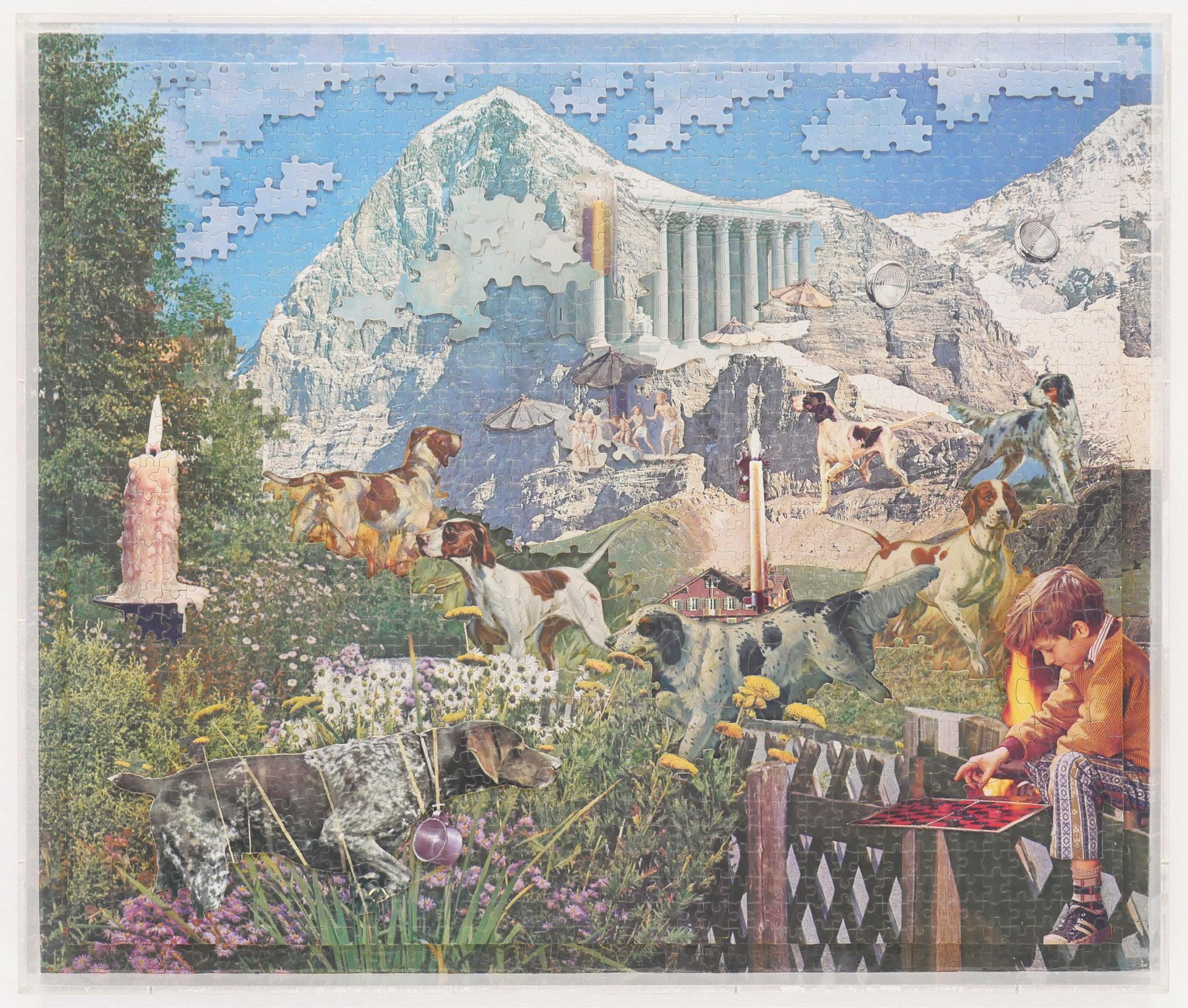
Jess, Game’s Up, 1981, jigsaw puzzle. Courtesy of Anton and Jennifer Segerstrom. Photograph: Miles Peterson
shared readings, collective travel, small presses, and sustained dialogue across artistic disciplines. Writers rarely worked in isolation; visual artists, musicians, photographers, and filmmakers participated in the same social worlds, responding to one another’s ideas and experiments. One of the most enduring of these relationships was between Jess and poet Robert Duncan, whose deep personal and artistic collaboration blurred the boundaries between text and image and helped shape each other’s work over decades—a partnership elaborated upon within Exploring Jess: Beat Generation Visionary. This collaborative mode of working helps explain why the Beat Generation cannot be understood as a purely literary phenomenon. From its beginnings, Beat practice extended across media, with artists translating shared concerns into distinct but interconnected forms of expression.
Seen through this lens, figures such as Jess occupy a vital place within the Beat constellation. Working primarily in visual media, Jess engaged experimental strategies—collage, free association, and surreal juxtaposition—that resonated with Beat literary practices and the movement’s
NOTES
1 Other recent exhibitions have similarly reexamined the Beats’ broader cultural context and their influence on visual art and visual culture. Notable examples include the Tate Modern and Museum Ludwig’s 2020 retrospective Andy Warhol and the National Air and Space Museum’s forthcoming exhibition The Ascent of Rauschenberg: Reinventing the Art of Flight, both of which situate key postwar artists within the wider artistic and countercultural networks shaped, in part, by Beat-era experimentation.
2 Recent scholarship has moved beyond narrow, writer-centered definitions of the Beat Generation, emphasizing its interdisciplinary, institutional, and transnational dimensions. Erik Mortenson and Tony
broader ethos. His sustained collaboration with Duncan exemplifies how Beat culture unfolded through dialogue across disciplines, as artists and writers shaped one another’s work in ways that exceeded any single medium. To restrict the term “Beat” to poets and novelists alone is to miss the movement’s core impulse. Medium functioned as a vehicle for Beat expression, not its limit. To be Beat, then, is to be “beat down” together and to answer that condition through artistic voice—freely, collaboratively, and across mediums. It is perhaps this collective, improvisational spirit that continues to find new resonance in the cultural urgencies of our present.
Rion Levy is a researcher, writer, and poet from Gananoque, Canada, who has aided in the publication of half a dozen academic volumes and 39 newspapers, academic journals, and magazine issues.
(opposite page) Jess, Net Maker [detail], 1960, paste-up. Collection of Graham Steele
Trigilio’s The Beats and the Academy: A Renegotiation (2023) and Nancy McCampbell Grace’s The Beats: A Teaching Companion (2021) reflect efforts to rethink the Beat canon and its place within academic and cultural frameworks. Grace and Jennie Skerl’s The Transnational Beat Generation (2012) extends this reframing globally, while Matt Theado’s The Beats, Black Mountain, and New Modes in American Poetry (2021) situates Beat writing within overlapping experimental communities. Together, these studies model the expanded perspectives that inform the interdisciplinary approach taken here.
3 Jess preferred to only be identified by his first name, a decision that is honored here and within the exhibition.
DRAWING WITH SCISSORS: COLLAGE FROM THE COLLECTION
KELLI BODLE, CURATOR
In its most basic form, collage is created by cutting and pasting paper to a backing. Because collage allows for the inclusion of disparate materials, the medium creates remarkable confrontations in one piece. Past and present, found and forged, delicate and sturdy—the wide variety of source material artists employ when creating collage and assemblage (one artwork made from a grouping of unrelated objects) creates unexpected dialogues between media and style.
Drawing with Scissors: Collage from the Collection augments Exploring Jess: Beat Generation
DRAWING WITH SCISSORS: COLLAGE FROM THE COLLECTION ON VIEW MAY 20, 2026 – FEB 8, 2027
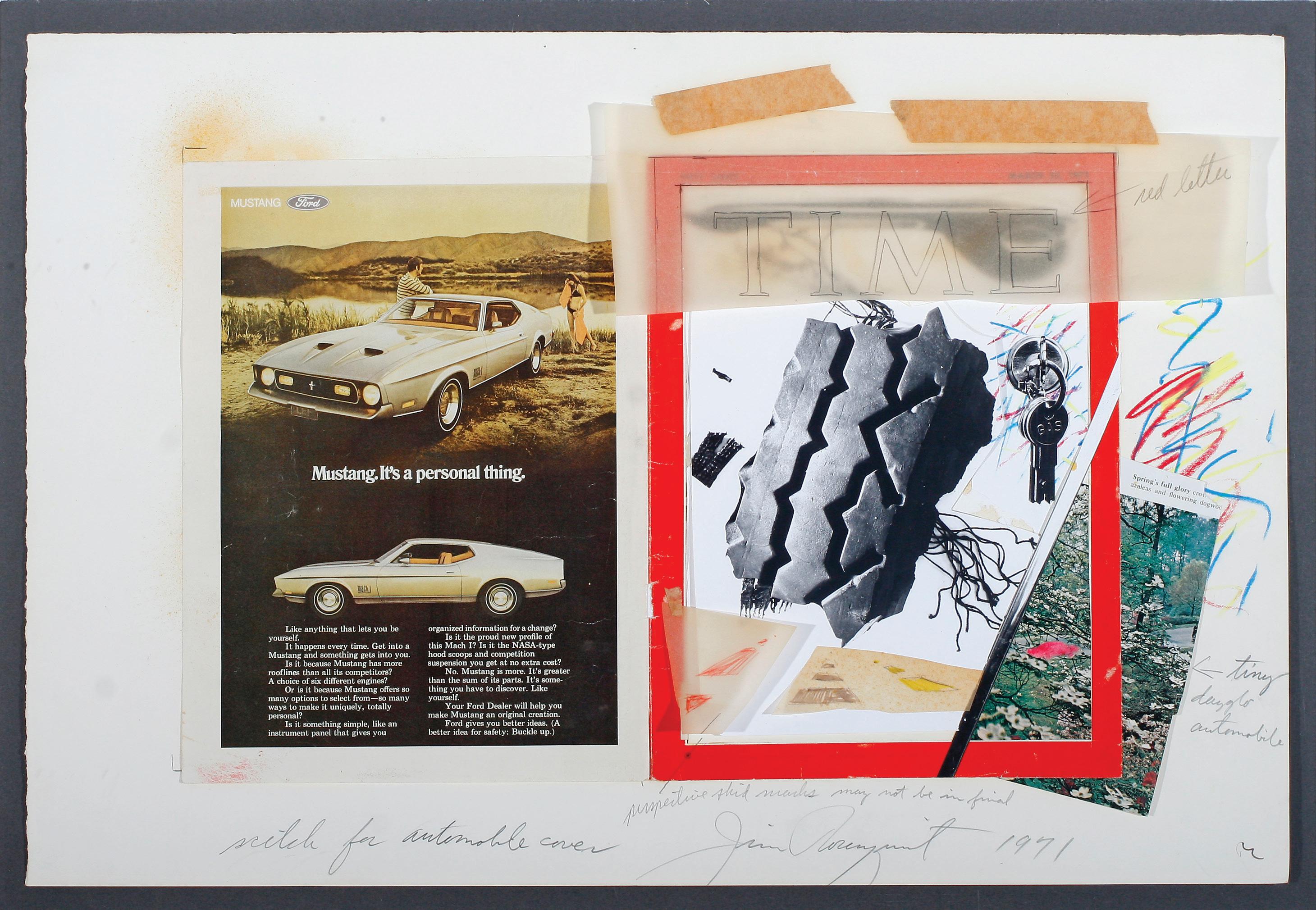
Visionary by presenting collages by artists who worked on both sides of the Atlantic from the turn of the 20th century to the present. This exhibition is formed exclusively from the Museum’s holdings of collaged works which are on display together for the first time. At its best, collage is a surprise meeting of materials that allows artists to expand their vocabulary. In Sketch for Automobile Cover
(fig. 1) James Rosenquist, Sketch for Automobile Cover, 1971, collage with magazine pages, tissue paper, tape, crayon, and graphite on paper. Gift of Mr. and Mrs. Arthur Steinman
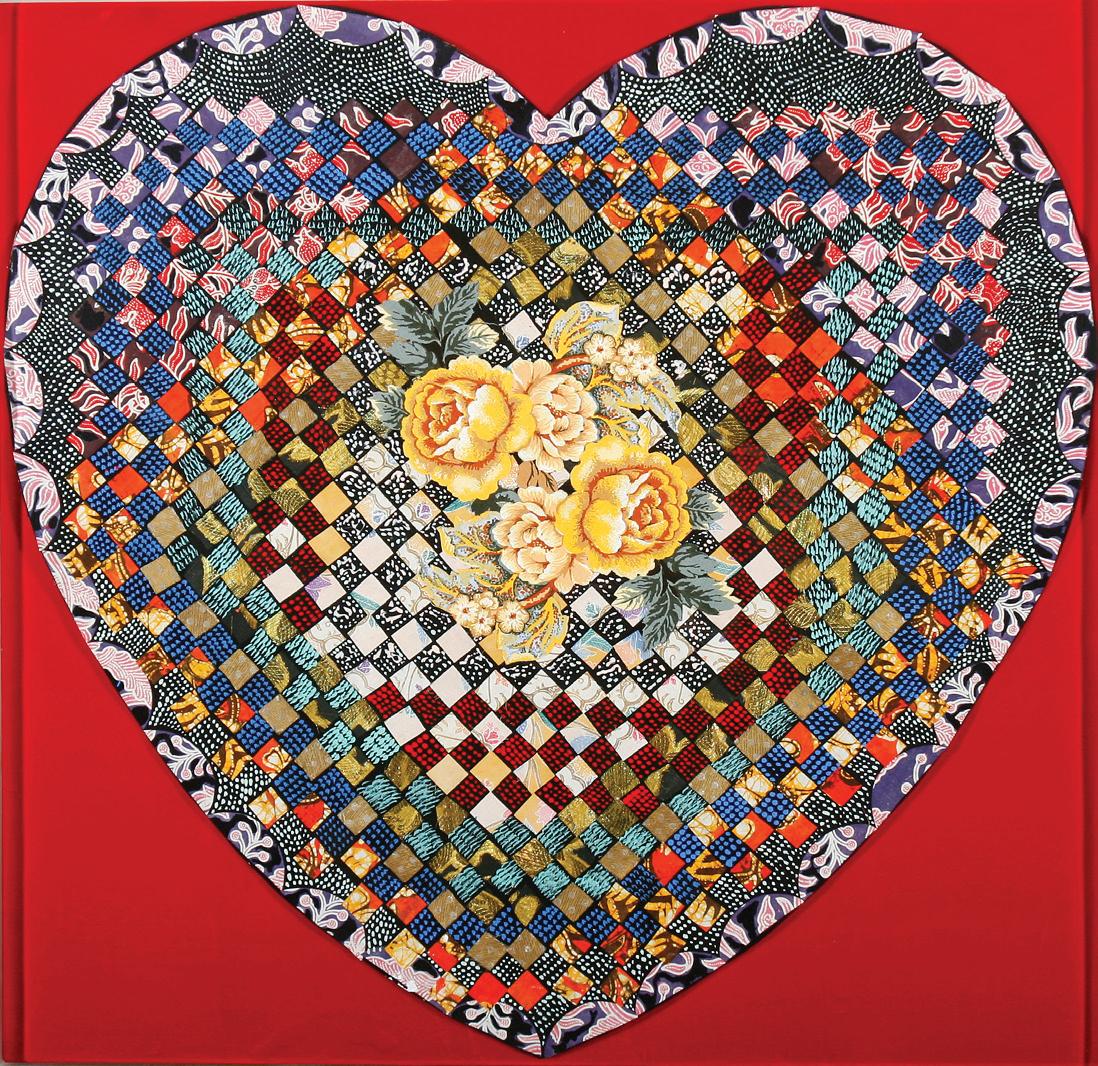
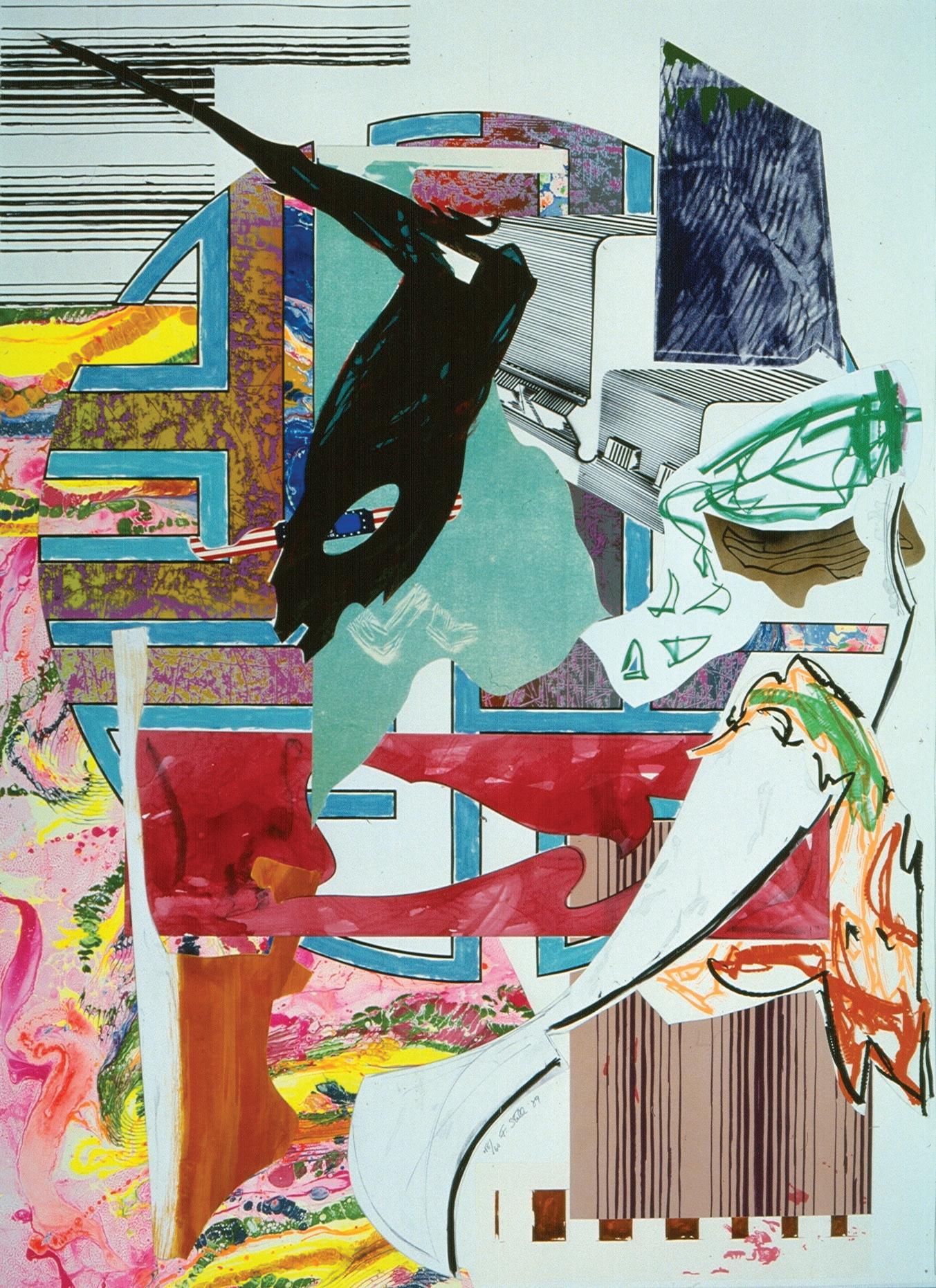
(fig. 1), James Rosenquist (b. 1933 Grand Forks, North Dakota; d. 2017 New York, New York) creates a small-scale version of the representation of commercial products as fine art for which he became famous. Here, he juxtaposes fragmented images from magazines, inconsistently scaled, to create a TIME magazine cover montage, playing with ideas of commercialism as surreal composition, questioning the logic of advertisement. Heart in the Highlands (fig. 2) highlights Miriam Schapiro’s (b. 1923 Toronto, Ontario, Canada; d. 2015 Hampton Bays, New York) important role as a leader of the Pattern and Decoration movement of the 1970s that upheld decorative art as fine art by its inclusion of Valentines, postcards, and block-printed fabrics. She weaves these disparate materials into advocacy for the feminist movement through the incorporation of messages camouflaged within the painted surfaces. Pioneer of Minimalism Frank Stella (b. 1936 Malden, Massachusetts; d. 2024 New York, New York) incorporates well-loved literature into his process in The Quarter-Deck (fig. 3), one from a series of 13 images he named after chapters in Herman Melville’s Moby Dick. This collage introduces a range of colors and shapes into his previously austere compositions, which often only featured one color.
Together, the pieces in this exhibition reveal how collage can transform across time and terrain. By looking through differing artists’ perspectives and considering how each of their life stories and areas of expertise guided them toward obsessions with things like advertising design, feminist action, and literary abstraction, it is evident how collage can be a tool for an artist of any stripe.
(fig. 3) Frank Stella, The Quarter-Deck from the Waves series, 1988, linocut, silkscreen with collage and hand coloring. Gift of Mr. and Mrs. Arthur Steinman
(fig. 2) Miriam Schapiro, Heart in the Highlands, 1979–80, fabric collage and acrylic paint on paper. Gift of Mr. and Mrs. Joshua Aber
DIVINE INSPIRATION
Praised as poet, philosopher, and ethnologist, yet often labeled “outsider,” Bouabré sits uneasily in the canon. His compact drawings argue for knowledge, care, and fraternity as art’s measure.
ROSS KARLAN, PHD, CURATOR AT LARGE
On March 11, 1948, at just 25 years old, Frédéric Bruly Bouabré experienced a celestial vision that changed his life. As the skies opened before him, he declared that he shall be called “Cheik Nadro,” or the “Revealer.”
Bouabré carried the “Revealer” identity throughout the remainder of his life and artistic career, as he sought to share knowledge about the world
FRÉDÉRIC BRULY BOUABRÉ: SELECTIONS FROM THE 404 ART COLLECTION ON VIEW MAY 20 – OCT 18, 2026
and create an entire archive of cultural information. His drawings—small, ballpoint pen and colored pencil works on found cardboard—are
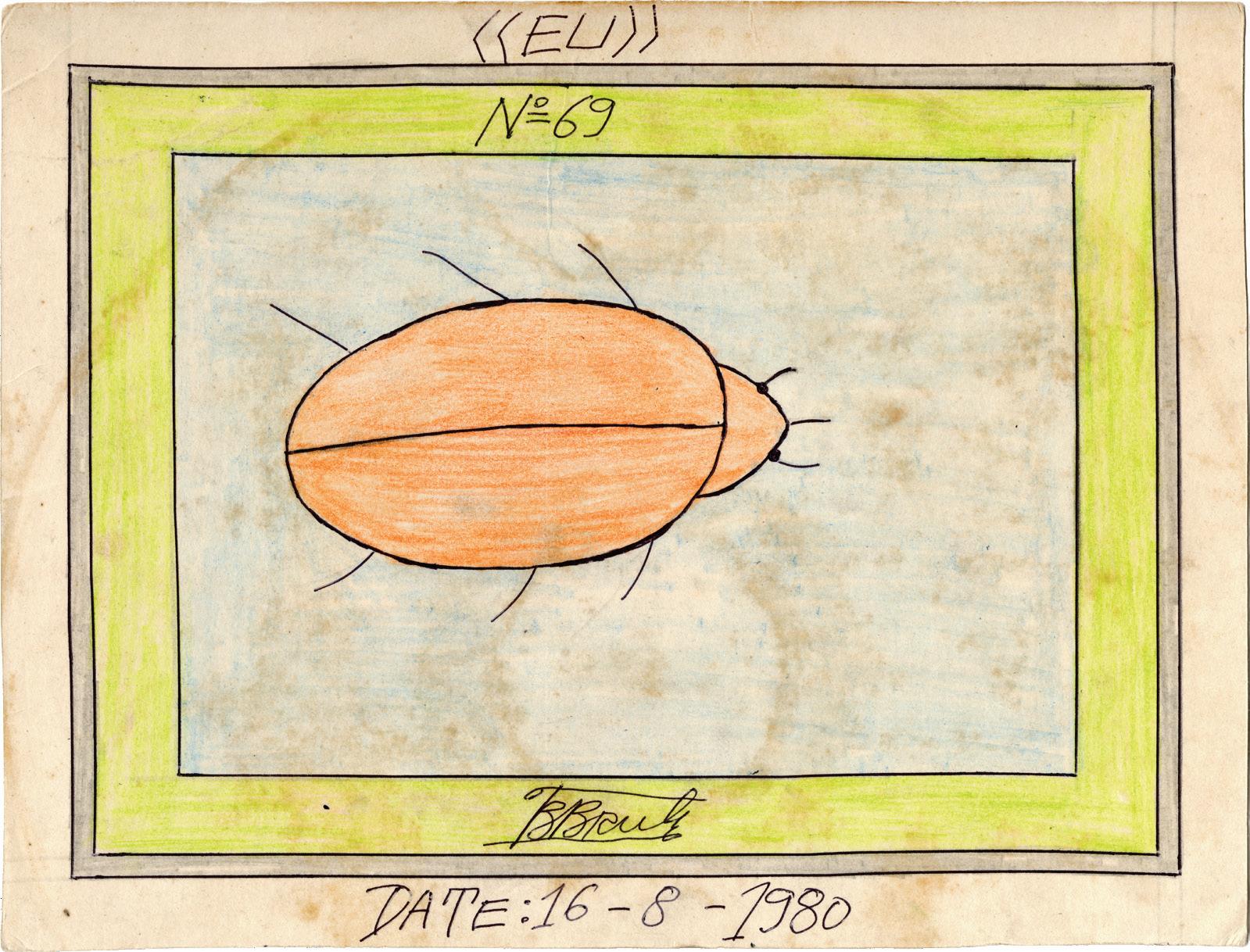
(fig. 1) Frédéric Bruly Bouabré, Alphabet Bété series: Eu, No. 69, 1980, ballpoint pen and colored pencil on cardboard.
Art Collection
a visual documentation of history, religion, language, and culture within and outside Côte d’Ivoire. As a “Revealer,” Bouabré examined local and global cultures. Locally, he created the first alphabet, or syllabary, for the Bété people, one of the Ivory Coast’s largest ethnic groups, but he also found common ground across cultures and identities. In his own words, Bouabré saw art as “a beautiful speech fraternizing humanity.”
Frédéric Bruly Bouabré: Selections from the 404 Art Collection is the artist’s second North American museum exhibition. It follows the Museum of Modern Art’s 2022 exhibition World Unbound, which broadly highlighted Bouabré’s career and important cultural contributions to the Ivoirian community. The exhibition at the Boca Raton Museum of Art takes a more personal approach, diving deeper into Bouabré’s unique artistic vision and exploring how his work captured the imagination of two young collectors, Javier Martín and Austria Ulloa, from the 404 Art Collection.
Bouabré was born in 1923 in Zéprégühé—a small Bété village in central Côte d’Ivoire. As a child, he was educated in the French system, only a few decades after Côte d’Ivoire became an official colony. His French education opened doors to European schools of thought and cultural history, which would later become a crucial piece of Bouabré’s global vision that informed his artistic practice. Bouabré later served in World War II and when he returned to West Africa, he held clerk posts across various locations, including Dakar, Senegal, and Abidjan, Côte d’Ivoire’s capital. A standard clerk job may not appear to have been an exciting part of Bouabré’s life, but the monotony of office life actually became one of the most influential parts of his practice, as
he turned to office materials—pens, cardboard, and colored pencils—as his go-to materials.
In the 1950s, Bouabré assembled the initial Bété syllabary, a written document that he would then turn into one of his most well-known artistic series by the 1990s, complete with illustrations in colored pencil and ink (fig. 1). Beyond the syllabary, and driven by his moment of divine intervention, Bouabré began to record every bit of wisdom he could, as part of Connaissance du Monde, or “Knowledge of the World,” an ongoing body of work he began in the 1970s. His artistic practice finally gained global recognition in 1989 with the notable Magiciens de la terre (Magicians of the Earth) exhibition at the Centre Georges Pompidou in Paris, a pivotal moment in contemporary African art as it was one of the first major international art exhibitions to highlight artists from the continent. Bouabré was much more than an artist. In the catalogue of MoMA’s exhibition, curator Oguchukwu-Smooth C. Nzewi poignantly notes that scholars “have addressed Bouabré as a poet, philosopher, thinker, ethnologist, folklorist, and draftsman on the strength of his oeuvre overall, yet simultaneously have referred to his artwork as outsider art or categorized it as art brut.” Bouabré thus exists in an art historical limbo: he remains one of Africa’s most important contemporary artists of the 20th and early 21st centuries, yet has not been fully adopted into the international canon.
Bouabré’s body of work is almost entirely made up of small-format ballpoint pen and colored pencil drawings on cardboard that explore topics of daily life and the observable universe, including religion, race, tribal practices, food, animals, and more. In early works, the images were often of ordinary objects onto which Bouabré posited
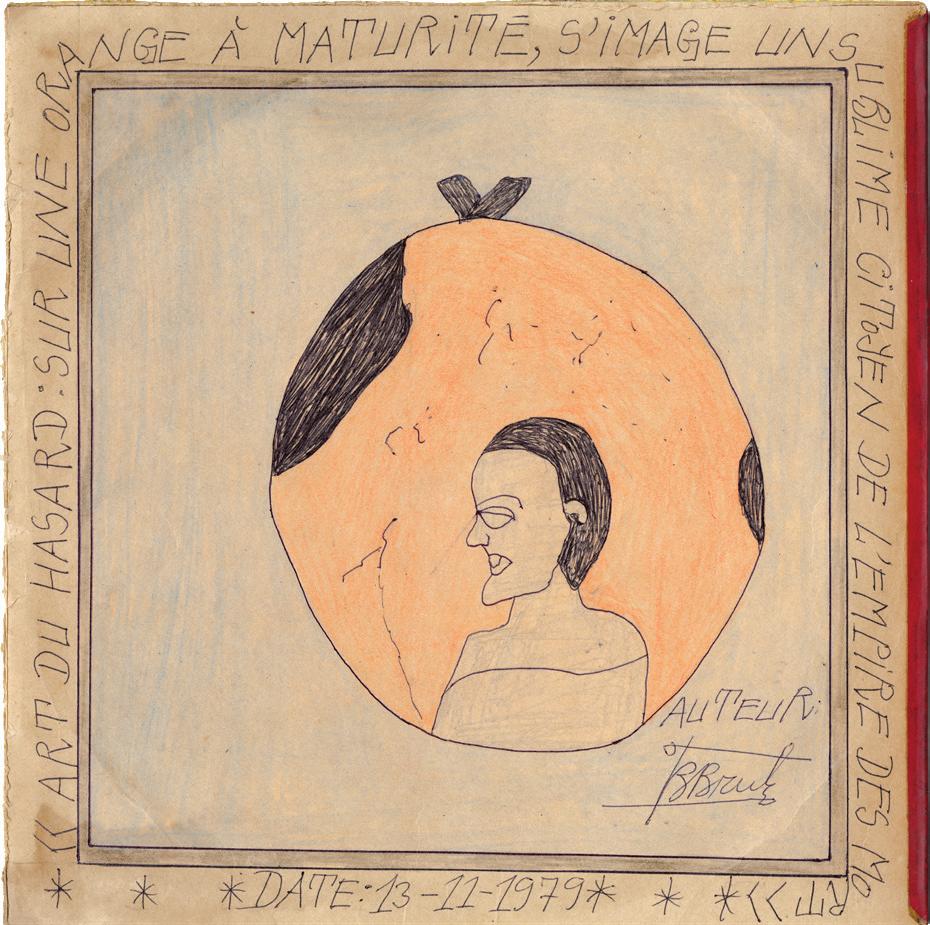
(fig. 2) Frédéric Bruly Bouabré, L’art du hasard: sur une orange à maturité, s’image un sublime citoyen de l’empire des morts, 1979, ballpoint pen and colored pencil on cardboard. 404 Art Collection
deeper meaning. Some pieces from the late 1970s, for example, pertain to a series the artist named, “L’art du hasard” (The Art of Chance), images that appear, perhaps by happenstance, in the artist’s daily life. For instance, in L’art du hasard: sur une orange à maturité, s’image un sublime citoyen de l’empire des morts (The art of chance: on a ripe orange, there appears a sublime citizen of the empire of the dead) (fig. 2), the skin of a ripe orange—and the blemishes on it—are a vision of someone deceased, perhaps an ancestor or community member that the artist still feels present.
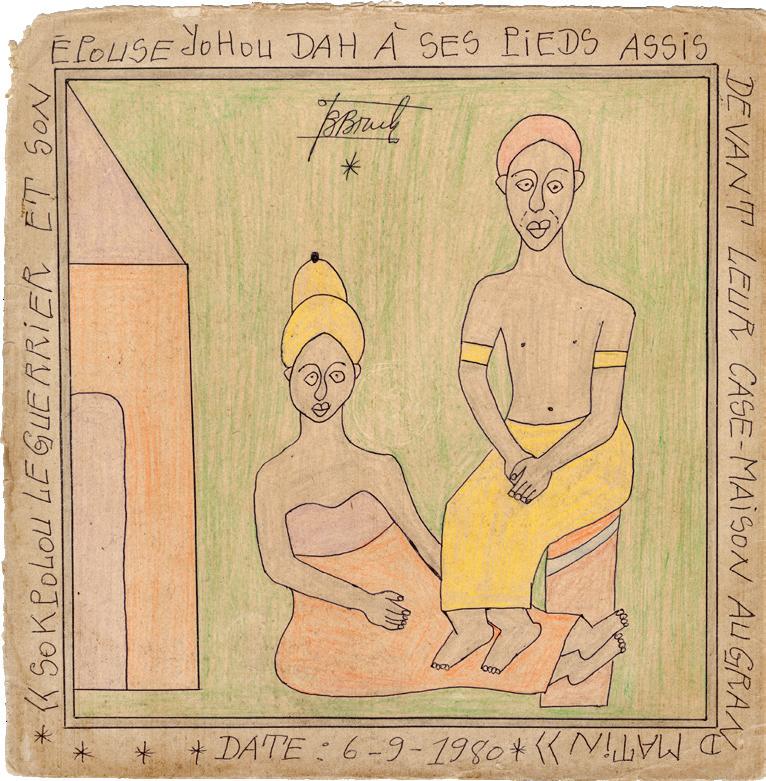
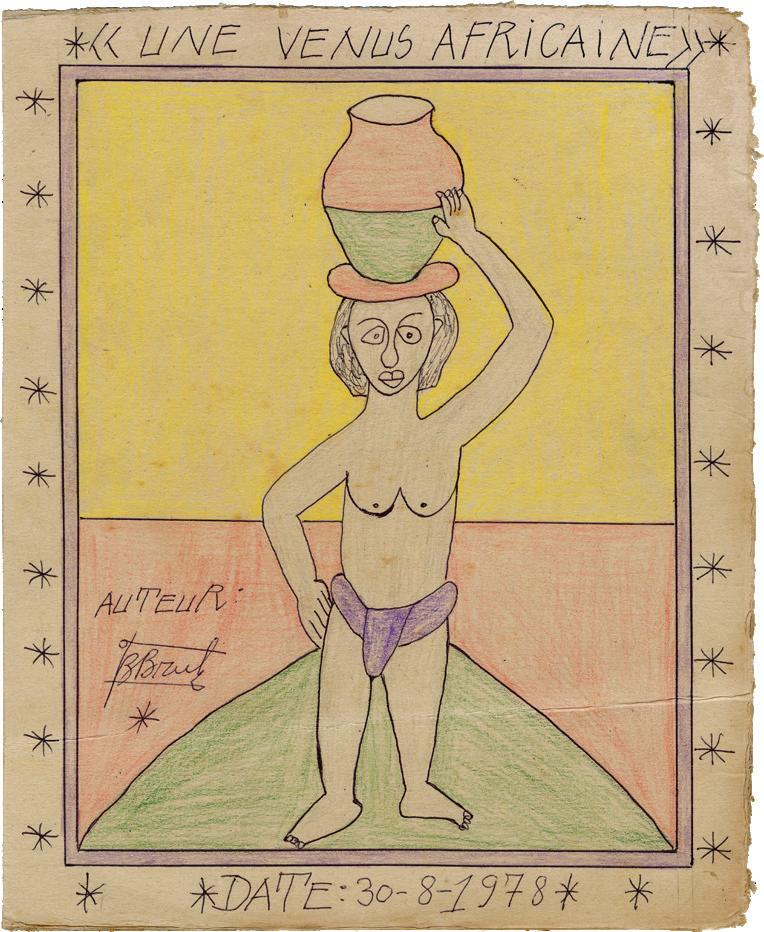
Beyond objects, some works tell stories of people, acting as windows into Bouabré’s community. Sokpolou le guerrier et son épouse Yohoudah à ses pieds assis devant leur case-maison au grand matin (Sokpolou the warrior and his wife Yohoudah at his feet in front of their hut in the early morning) (fig. 3) is almost ethnographic or documentarian. The drawing shows the warrior and his wife in a scene that illustrates their daily life, and the wife lies at her husband’s feet, showing their community’s patriarchal family structures. Une venus africaine (An African Venus) (fig. 4) similarly documents the common cultural practice of a woman walking while carrying a pot on her head. The allusion to Venus, the goddess of beauty and a nod to Western art history, reinforces the beauty of the Bété woman as a water carrier and proud provider to her community. Bouabré references the divine to depict something ordinary infusing a sense
of power and wonder into daily practices, but also documenting the realities of his world.
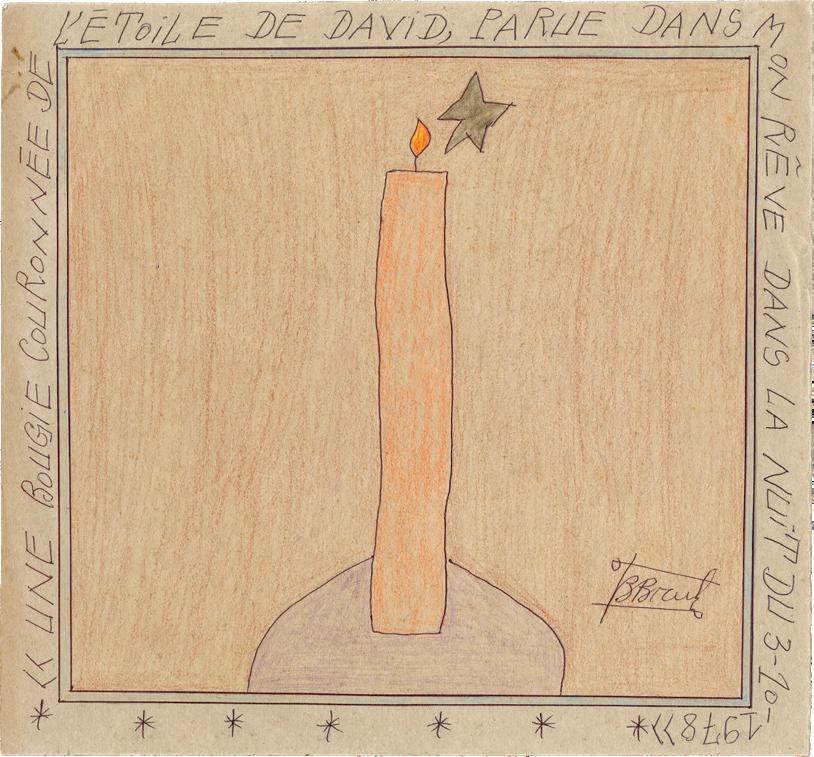
Bouabré’s interest in cross-cultural dialogue is also evident in his striking, yet simple Une bougie couronnée de l’étoile de David, parue dans mon rêve dans la nuit du 3-10-1978 (A candle crowned with the Star of David, appearing in my dream on the night of 3-10-1978) (fig. 5).
Here the Star of David is a sign of global iconography, a symbol of ancestry and cosmology. While often associated with Judaism, Bouabré posits that religion, spirituality, and mysticism can be universal and all-encompassing.
Frédéric Bruly Bouabré: Selections from the 404 Art Collection offers a unique opportunity to museum-goers to see these early works as the foundation of Bouabré’s later series, including his better-known works that extensively explore African masks, scarification practices, and additional works Bouabré created in the early 2000s, also on view in the exhibition.
In the early period of Bouabré’s career, both the images and materials offer a window into his world. As a life-long civil clerk, it’s no surprise that the artist drew much of his work with the pens and pencils he had with him on the job. The ballpoint pen—a symbol of office-place monotony—became a vehicle through which Bouabré kept track of the world; not in lists, but in pictures.
(fig. 3) Frédéric Bruly Bouabré, Sokpolou le guerrier et son épouse Yohoudah à ses pieds assis devant leur case-maison au grand matin, 1980, ballpoint pen and colored pencil on cardboard. 404 Art Collection
(fig. 4) Frédéric Bruly Bouabré, Une venus africaine, 1978, ballpoint pen and colored pencil on cardboard. 404 Art Collection
Before Bouabré began to use a more standardized 12 x 18 centimeter postcard size cardboard, he used found cardstock including vinyl record labels like those featured in the exhibition. Bouabré cut the sleeves of the vinyl open, drawing on the inside and leaving either the front or back cover intact as the verso. The albums provide insight into the music that surrounded him, his family, or his community.
Bouabré’s album collection, now immortalized in his artworks, offers a cross-section of the music he may have played, but also the popular music culture of West Africa in the 1970s, which includes everything from Julio Iglesias’ French albums to Afro-Jazz. In the current exhibition, you can see both sides of many of these album-based works, acting as a portal into the artist’s world beyond the images.
This exhibition would not be possible without the collectors, whose vision has led to a substantial record of his practice. Bouabré was an incredibly prolific artist, and with over 350 works in their collection, Javier Martín and Austria Ulloa are on a mission to conserve, protect, and share his vision with the world.
Ulloa has shared how finding Bouabré’s work felt “almost like fate […] as if he had been quietly waiting to enter our lives and our collection.”
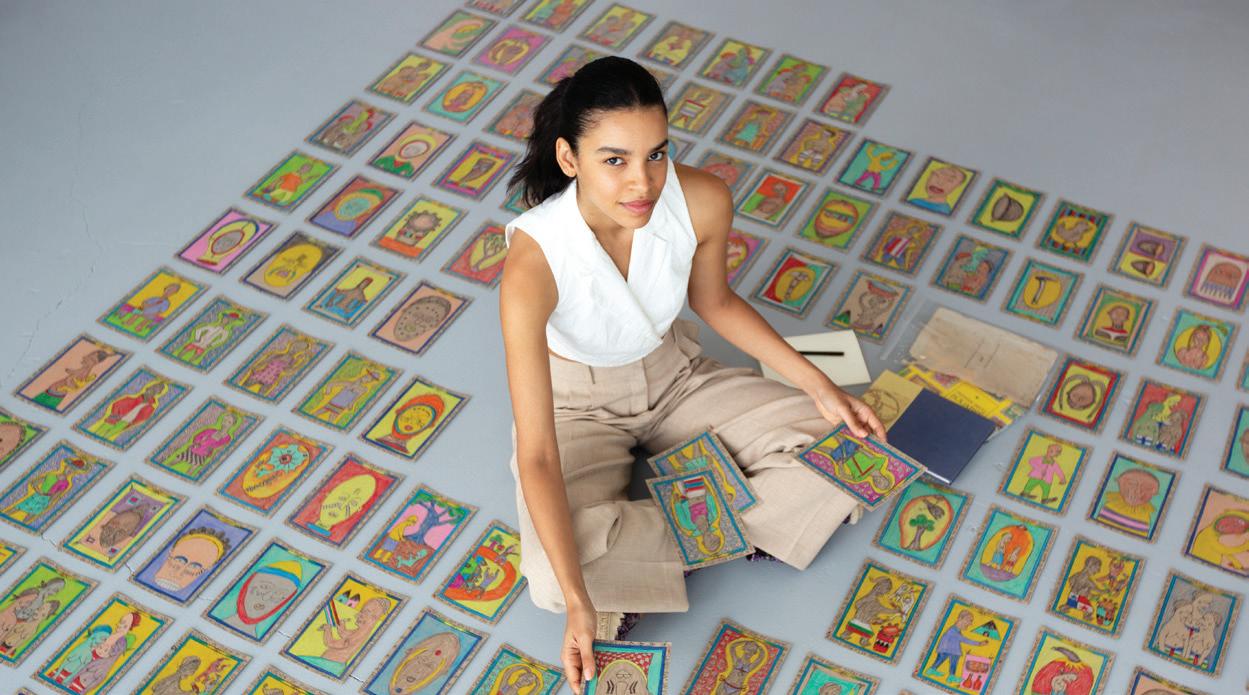
Dominican-born Ulloa (fig. 6) and Martín, a native of Ceuta in North Africa, don’t have direct connections to Côte d’Ivoire, yet found a profound connection to Bouabré’s deep universalist approach to disseminating knowledge. “He transformed simple materials into vessels for vast inner worlds, memories, and beliefs,” Ulloa states, “His universe of small cards reflects our belief that powerful art is often quiet, patient, and rooted in care.”
As collectors, Ulloa and Martín worked with the Bouabré family, international galleries, and the Consulate of Côte d’Ivoire to protect and share the artist’s story. In the process, the couple found friends and colleagues they never thought they would encounter, and his work became a window into a new world: “For us, inviting people into Bouabré’s universe is an act of love: love for African heritage, for all the spoken and unspoken languages of the continent, and for the possibility that art can quietly and insistently reveal how connected we all are.”
In the spirit of Ulloa’s wishes, Frédéric Bruly Bouabré: Selections from the 404 Art Collection is an invitation into Bouabré’s universe that seeks to share his practice with a wider public. Much like his role as a “Revealer,” the exhibition sheds light on Bouabré’s process, materials, and themes in a way that expresses just how universal his work can be.
NOTES
1 World Unbound, p. 8; “Art brut,” a French term meaning “raw art,” refers to outsider art, or art made by those separate from the established art world.
(fig. 5) Frédéric Bruly Bouabré, Une bougie couronnée de l’étoile de David, parue dans mon rêve dans la nuit du 3-10-1978, 1978, ballpoint pen and colored pencil on cardboard. 404 Art Collection
(fig. 6) Austria Ulloa with works by Frédéric Bruly Bouabré, Photo courtesy of 404 Art Collection.
MUSEUM PROGRAMS
LECTURES & TOURS
Art in Focus
Select Wednesdays / 1:00 – 1:30 pm
These staff-led gallery talks invite you to take a closer look at a selected artwork or theme within the exhibitions or collection. Each session offers focused insights, encouraging deeper connections with the art and new ways of seeing.
March 25 – Tobi Kahn, RKYIA
April 22 – TYPOE GRAN, Eden
May 6 – Thomas Hart Benton, Study for Palisades & Menemsha Pond
May 20 – Robert Rauschenberg, Bellini #5 & Larry Rivers, De Chirico’s Dilemma
June 3 – Romare Bearden, Lady and the Egret & Betye Saar, Cryptic Confessions, The Question
June 17 – Jess, Untitled (With Joan Crawford Head)
July 1 – Fernand Léger, Le chien et un oiseau dans le paysage
July 15 – Frank Stella, The Quarter-Deck & Miriam Schapiro, Heart in the Highlands
July 29 – Frédéric Bruly Bouabré, Select Album Covers
August 12 – Pepe Mar, Untitled & Cabeza IV
August 26 – TYPOE GRAN, In the House of Shadows, Flowers Bloom
September 9 – Hans Hofmann, Light Yellow Landscape & Elaine de Kooning, Orange Grotto Cave #17
September 23 – Jess, Beat Literary Connections
October 7 – Sam Gilliam, Two & Sol LeWitt, Wavy Vertical Brushstrokes
October 21 – Marcus Jansen, When Water Rises
NEW! Breaking the Frame: Reflecting on Modern Art
Select Fridays / 10:30 am – 12:00 pm
Travel through the defining moments of modern art in this four-part summer lecture series that charts the shift from representational imagery to abstraction. Through focused presentations of major movements and their innovators, attendees will gain a deeper understanding of how modern art challenged perceptions and paved the way for contemporary creativity. Ideal for both enthusiastic newcomers and seasoned art lovers.
June 12 - American Regionalism & Surrealism
June 26 - Abstract Expressionism
July 10 - Pop Art
July 24 - Conceptual Art
Docent-Led Highlights Tours
Daily / 2:00 pm
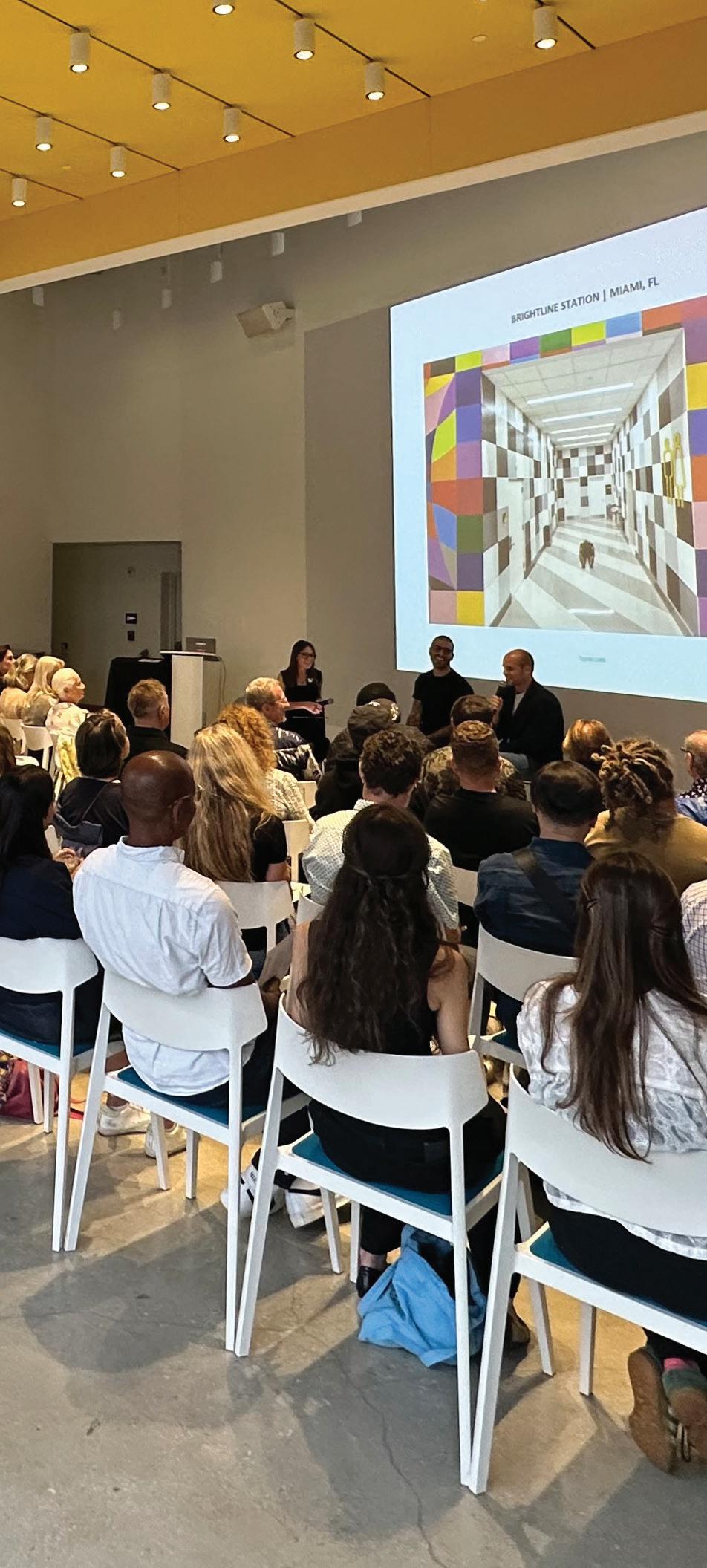
These hour-long tours provide insights into the Museum’s current exhibitions.
Public by Design: Net-Art, NFTs, and the Democratization of Digital Art
Thursday, March 26 / 6:00 – 7:30 pm
Net-art emerged from the open architecture of the internet, with a radical premise: work made on and for the web should stay public, ephemeral, and resistant to commodification. This panel talk traces the evolution of the movement and its complex, often ambivalent relationship with NFTs and digital ownership. The discussion takes place in person, with select panelists joining virtually in a hybrid format. Organized and presented in partnership with the Lynn NFT Art Museum and the Loop Art Critique.
NEW! The Art of Seeing: What Draws Us to a Work of Art
Friday, April 10 & 17 / 10:30 am – 12:00 pm
Discover what draws us to works of art in this two-part lecture series featuring close looking, lively conversation, and shared reflection on pieces from the Museum’s collection—open to all levels of prior art experience.
MUSEUM PROGRAMS
CARE & WELLNESS
Art of Dance
Select Dates
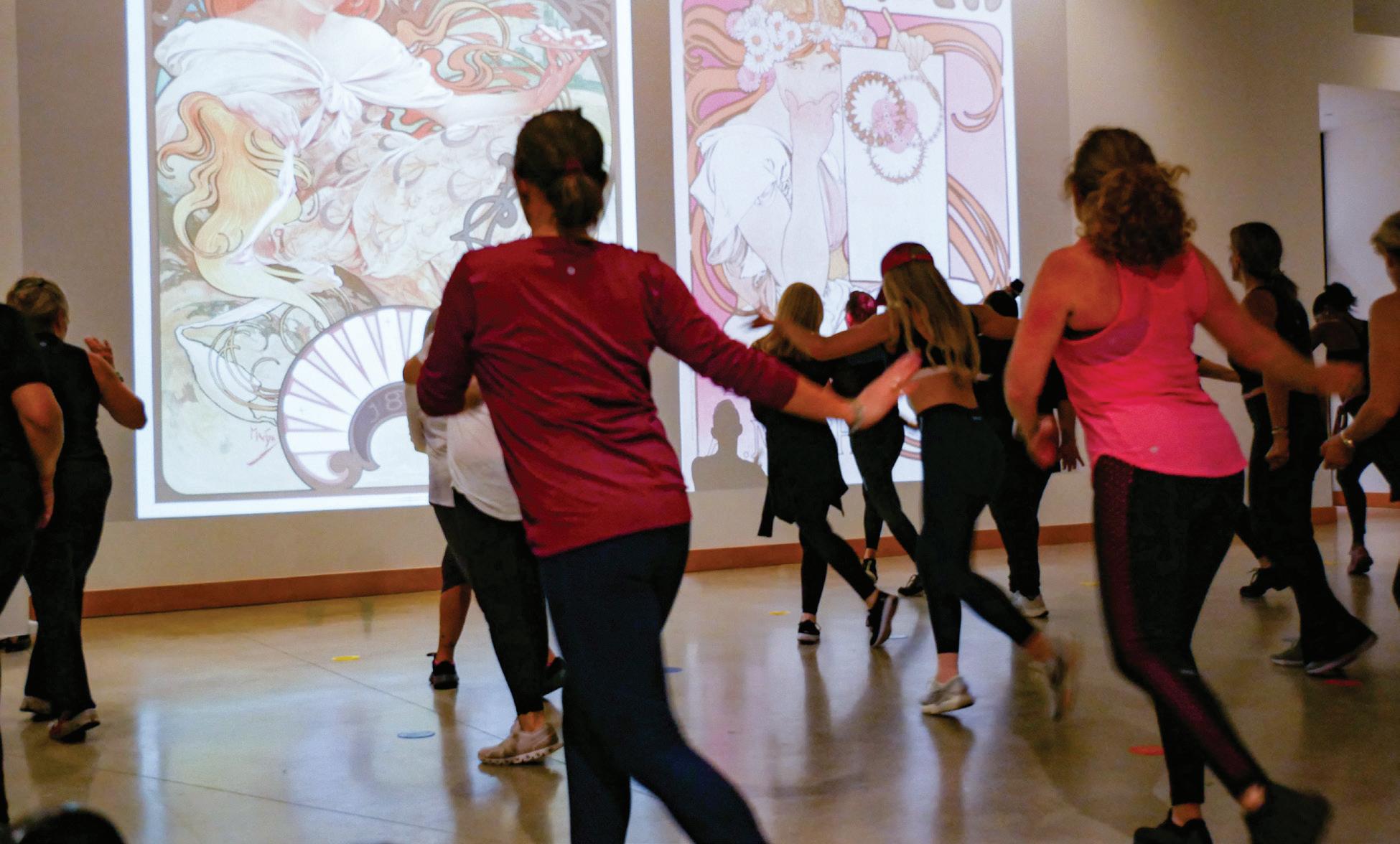
Join dance instructor Rocco Santorufo for a fun, high-energy DanceFit class. Set to a dynamic playlist, this all-levels class blends music and choreography from across decades and styles. Expect to move, groove, and sweat in a positive, affirming environment. Afterwards, cool off with a self-guided visit to the galleries.
March 29 / 10:00 – 11:00 am
April 11 / 10:00 – 11:00 am
April 25 / 10:00 – 11:00 am
May 7 / 6:30 – 7:30 pm
Practicing Kindness: Deepening Brain Regulation at the Museum
Select Thursdays / 6:00 – 7:30 pm
Presented in partnership with Kindness Matters, this four-part evening series offers neuroscience-informed regulation tools through meaningful discussion, guided reflection, and practical strategies for everyday life. Each session begins with facilitated mindfulness practices in the Ohnell Sculpture Garden, with coffee, tea, and light refreshments from the Muse Café, and concludes with a guided gallery encounter led by a museum educator, connecting kindness and well-being to works on view.
April 30 - Awareness: Noticing the Signals
May 14 – Compassion: Responding with Care
May 28 – Optimistic Thinking: Reframing for Regulation
June 11 – Gratitude: Creating Lasting
Calm & Connection
Sound Healing
Select Weekend Dates / 3:00 – 4:00 pm
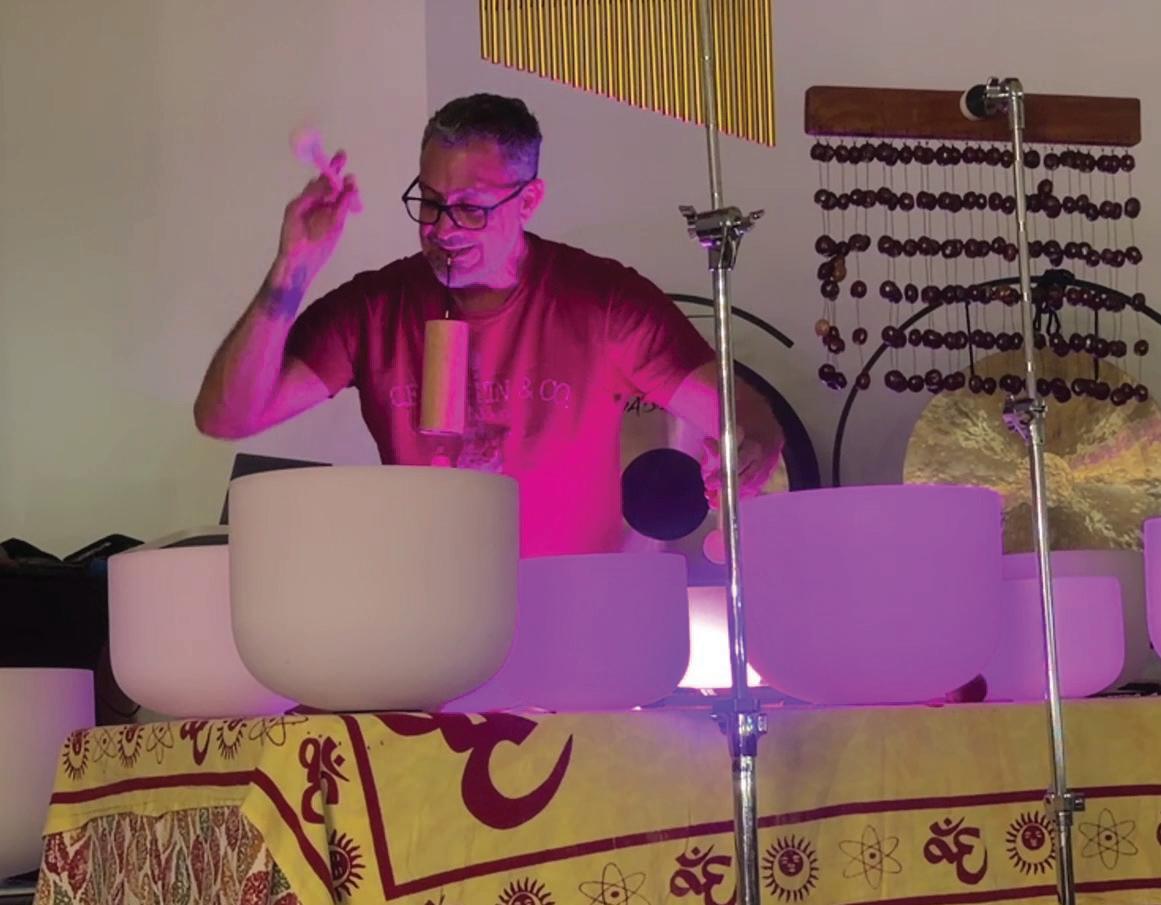
Join us for a restorative sound journey led by Sound Therapist Tecia Linville. Each session begins with a gentle guided meditation to soften the body and quiet the mind. From there, you’ll be immersed in healing waves of sound created by Tibetan bowls, crystal singing bowls, Native American flutes, drums, a crystal harp, and other sacred instruments.
April 19 / May 17 / June 13 / July 11 / August 15
September 19 / October 17
Yoga at the Museum
Select Sundays / 9:00 – 10:30 am
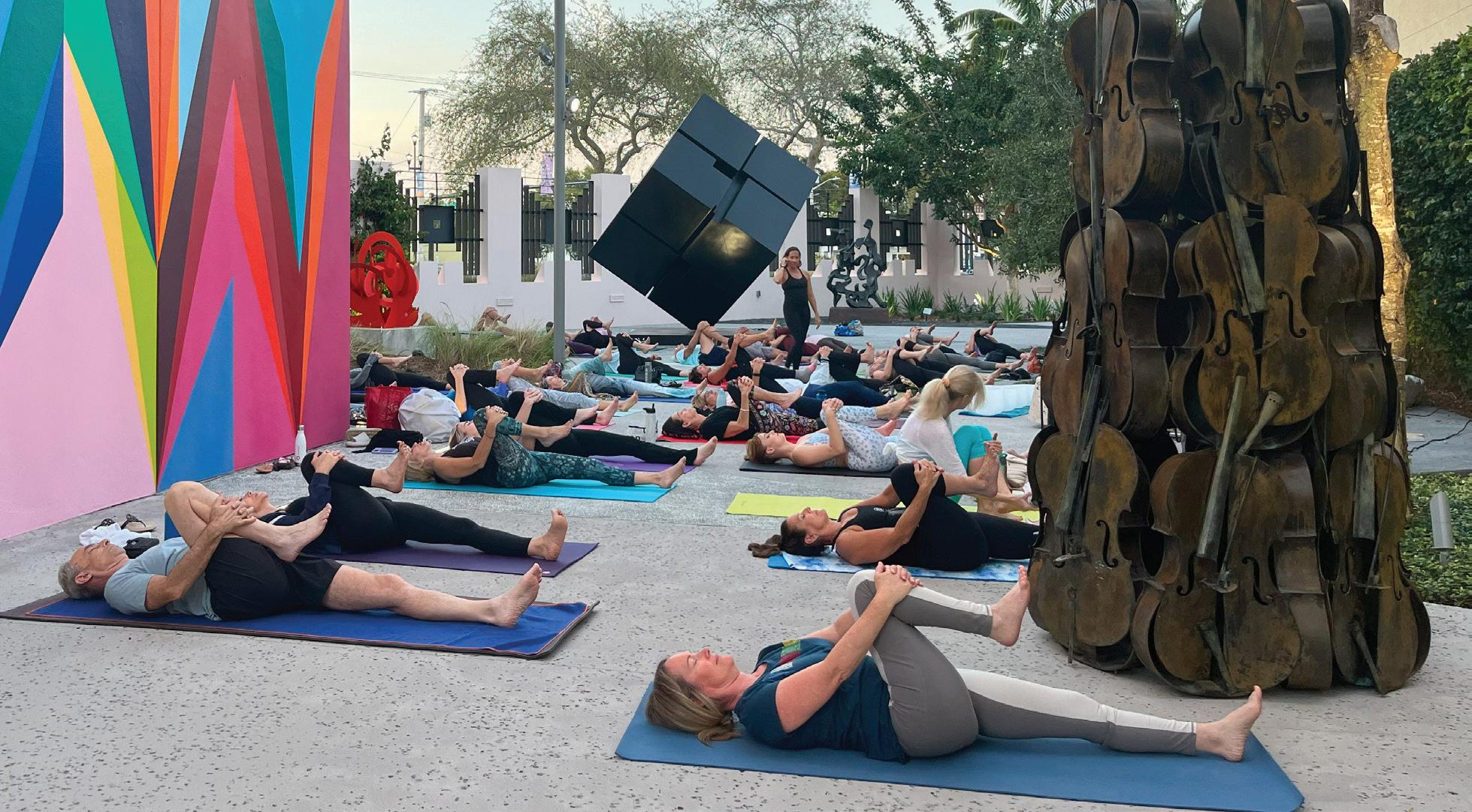
Embark on an energizing vinyasa yoga session, guided by Leslie Glickman, owner of Yoga Journey Studio. Surrounded by inspiring works of art, this practice connects breath with movement to awaken your body and mind. After class, stroll through the galleries and enjoy a brief connection led by a museum educator, featuring a single artwork and its captivating story.
April 12 / May 24 / June 14 / July 12 / August 9
September 13 / October 11
Yoga Under the Stars
Thursday, March 26 / 6:00 – 7:30 pm
Join Leslie Glickman, owner of Yoga Journey Studio, for an enchanting evening of yin yoga under the stars in the Ohnell Sculpture Garden. Yin yoga, a practice of deep relaxation, involves slow, deliberate poses held for extended periods. This allows for the release of tension and a focus on the breath. While suitable for yogis of all levels, prior experience is not required. Simply bring a mat and a desire to enhance your vitality and overall well-being.
MUSEUM PROGRAMS
FILMS & PERFORMANCE
Documentary ScreeningDorothy Gillespie: Courage, Independence, and Color
Thursday, April 30 / 6:00 – 8:00 pm
This documentary offers an illuminating introduction to the life and work of pioneering American artist Dorothy Gillespie, whose vibrant, ribbon-like metal sculptures and bold, expressive forms helped redefine the possibilities of contemporary sculpture. A trailblazer for women in the arts, Gillespie forged a distinctive style rooted in movement, color, and joyful experimentation—qualities that made her an influential figure in public art and an inspiration for generations of artists.
Following the screening, join us for a conversation with Gillespie’s son and daughter exploring her lasting impact, creative legacy, and the cultural context that shaped her career. The Boca Raton Museum of Art is proud to hold the largest institutional collection of Dorothy Gillespie’s works, offering unique insight into the depth and evolution of her practice.
Music in the Museum
Select Sundays / 3:00 – 4:00 pm
This series pairs visual and performing arts in intimate, one-hour programs that highlight musical traditions, cultural connections, and contemporary interpretations, offering audiences a multisensory experience that deepens their engagement with the Museum’s exhibitions and collection.
March 29 – A Celebration of Unity and Cultural Connections
April 12 – The Muse Duo: A Musical Journey
May 31 – Con Brio Quartet: Art in Motion
June 14 – Einstein’s “Beloved Piano-Witch”: Harriet Cohen
October 11 – A Viola and Piano Concert with David Pedraza
The Summer Film Series features a curated selection of films that illuminate art, culture, and creativity. Each screening offers a unique lens into the themes explored in our exhibitions, creating an engaging and inspiring experience for all audiences.
June 11 – Renoir: Revered and Reviled
July 9 – Young Picasso
August 13 – Frida Kahlo: The Definitive Film Exploring the Life and Art of a Global Icon
Dorothy Gillespie
SOCIAL & COMMUNITY
Art School Student Exhibition Openings
Select Thursdays / 5:30 – 7:00 pm
All are welcome at the celebratory exhibition openings of works created by the talented students at the Art School.
May 14 – Youth Student Exhibition
August 27 – Adult Student Spotlight Exhibition
September 24 – Adult Student Exhibition
7th Annual International Plaza Opening Reception
Wednesday, March 25 / 5:00 – 7:00 pm
International Plaza: 7284 W Palmetto Park Rd Boca Raton, FL 33433
Come enjoy the latest installation of artwork at International Plaza by Art School students and faculty. This partnership and event are made possible by the generous support given by George Brock and Liberty Equities USA who are proud to display the artwork of our instructors and students. Join us for an evening celebrating the exceptional talent of these accomplished artists. Refreshments and light bites provided.
Brushstrokes & Bookmarks
Select Thursdays / 3:00 – 4:00 pm
Deepen your appreciation for art and literature. Led by the Associate Curator of Adult & Community Access Programs, this book club invites you to reflect on, react to, and share insights about stories and artworks. Each month features a different title and an exclusive gallery experience. No time to read the book? You’re still welcome to join the fun.
April 16 – What Art Does: An Unfinished Theory
May 14 – Loudmouth: A Novel
Muse & Mingle
Third Thursday of the Month / 5:00 – 8:00 pm
The third Thursday of the month brings a different selection of evening performances and activities. Light bites and refreshments will be available for purchase as you connect with others over a shared love of art.
April 16 / May 21 / June 18 / July 16
August 20 / September 17
Muses & Mimosas - How to Get Involved in Your Local Art Community
Saturday, April 18 / 11:00 am – 12:00 pm
Enjoy a mimosa or bellini as you listen to a moderated discussion that connects today’s art scene with the ideas, influences, and collectors shaping it.
MUSEUM PROGRAMS
WORKSHOPS & DEMOS
Artists on Art
Select Sundays / 3:00 – 4:00 pm
Experience the Museum through the eyes of an artist. This engaging series of talks, tours, and live demonstrations showcases the talent of South Florida’s creative community, offering fresh perspectives, personal stories, and behindthe-scenes insights that bring the art to life.
April 26 / September 27
Make & Muse
Spark your creativity with these hands-on workshops that begin in the galleries and continue in the studio. Each session starts with close looking and conversation around selected artworks, followed by an artist-led workshop that transforms inspiration into personal creation. Designed for adults of all skill levels, these sessions encourage exploration, reflection, and artistic growth in a relaxed, supportive environment.
April 11 / 1:00 – 3:00 pm - iPhoneography
May 2 & 3 (Two-Day Workshop)
1:00 – 4:00 pm - Cut Paper Painting Collage
MEMBER EXCLUSIVE
Art Tastings with the Director & CEO
Select Wednesdays / 6:00 – 7:00 pm
Visionary Circle Members are invited to these intimate evenings of art and conversation led by the Director & CEO. Over specially selected wines, you will gain unique insights into the collection, discover little-known Museum stories, and learn about the personal and art historical contexts behind significant works of art.
April 22 / September 16
Member Morning
Select Mondays / 10:30 – 11:30 am
Enjoy the Museum in a more personal way during this series of staff-led programs offered on select Monday mornings when the galleries are closed to the public. With coffee in hand, you’re invited to explore special themes and insider perspectives in a welcoming setting designed exclusively for our Members.
April 13 / May 11 / September 14 / October 12
YOUTH & FAMILY
NEW! Art Tales in Tow
Art Tales invites children ages 4–8 years old and their caregivers to explore art and stories together in the galleries. Available to check out anytime at the front desk, each Art Tales kit is centered on a featured artwork currently on view in the museum. Inside each kit, families will find a book, looking prompts, and gallery-friendly activities that encourage shared reading, close looking, and conversation. This program is funded through the generous support of the Florida Blue Foundation.
Creation Station
Select Saturdays / 11:00 am – 4:00 pm
Offered monthly on Saturdays, Creation Station is a drop-in program featuring an art activity inspired by artworks currently on view. Start your visit with a fun gallery exploration using kid-friendly prompts and activity aids that highlight a featured artwork. Then head to the studio to create your own piece using a variety of materials and techniques. Each month brings a new theme to keep things fresh, creative, and connected to the exhibitions. Designed for children ages 5 and up. No preregistration required—just bring your imagination!
April 25 / May 30 / June 20 / July 25
August 29 / September 26
NEW! Family Nights
Select Thursdays / 5:00 – 8:00 pm
Family Nights invite families with children of any age to explore the museum together in a fun and welcoming atmosphere. Start in the galleries with playful prompts that spark curiosity and conversation as you discover new artworks together. Throughout the evening, enjoy a mix of creative happenings like hands-on artmaking, gallery games, and family-friendly performances.
June 25 – Summer Solstice
July 30 – Back to School Bash
October 22 – Mystery at the Museum
NEW! Morning Makers
Select Saturdays / 10:00 – 11:30 am
Offered monthly on Saturday mornings, this is a creative family program inspired by artworks currently on view. After a guided gallery experience, families head to the studio for a hands-on project led by a teaching artist, where children become the artist and bring their ideas to life! Each session features a new theme, artwork, and artmaking experience. Designed for children ages 5 and up. Preregistration is required.
April 4 / May 2 / June 6 / July 18 / August 1
September 5 / October 3
Mother’s Day at the Museum
Sunday, May 10 / 11:00 am – 3:00 pm
Families are invited to celebrate Mother’s Day with a special family guide and hands-on activities. Discover how the Museum is a warm, creative space to make memories, explore art side by side, and take home a keepsake made together.
Mother’s Day Afternoon Tea
Sunday, May 10 / 3:00 – 4:30 pm
Celebrate Mom with an elegant Mother’s Day afternoon tea in the Museum’s tranquil garden. Enjoy a tower with savory sandwiches, scones with clotted cream, and decadent desserts. It’s a memorable, charming experience to honor the special women in your life.
MUSEUM PROGRAMS
Page-turners in the Galleries
Select Thursdays / 10:00 am – 2:00 pm and 6:00 – 7:00 pm
This book club is just for middle school readers! Each session brings a new story and a new adventure through art—where books spark imagination, and the galleries become part of the tale.
April 2 - The Night War
May 7 - The Wanderings of Odysseus
September 3 - The Book Thief
October 8 - The Raven
Sketching in the Galleries
Select Saturdays / 11:00 am – 4:00 pm
All are welcome to slow down, look closely, and draw inspiration from the art around you. Sketching in the Galleries invites visitors of all ages to pick up complimentary drawing materials and sketch at their own pace. This is a drop-in program for participants of all ages, no preregistration required.
April 11 / May 9 / June 13 / July 11 / August 8
September 12 / October 10
Summer Sessions
June 8 – July 31
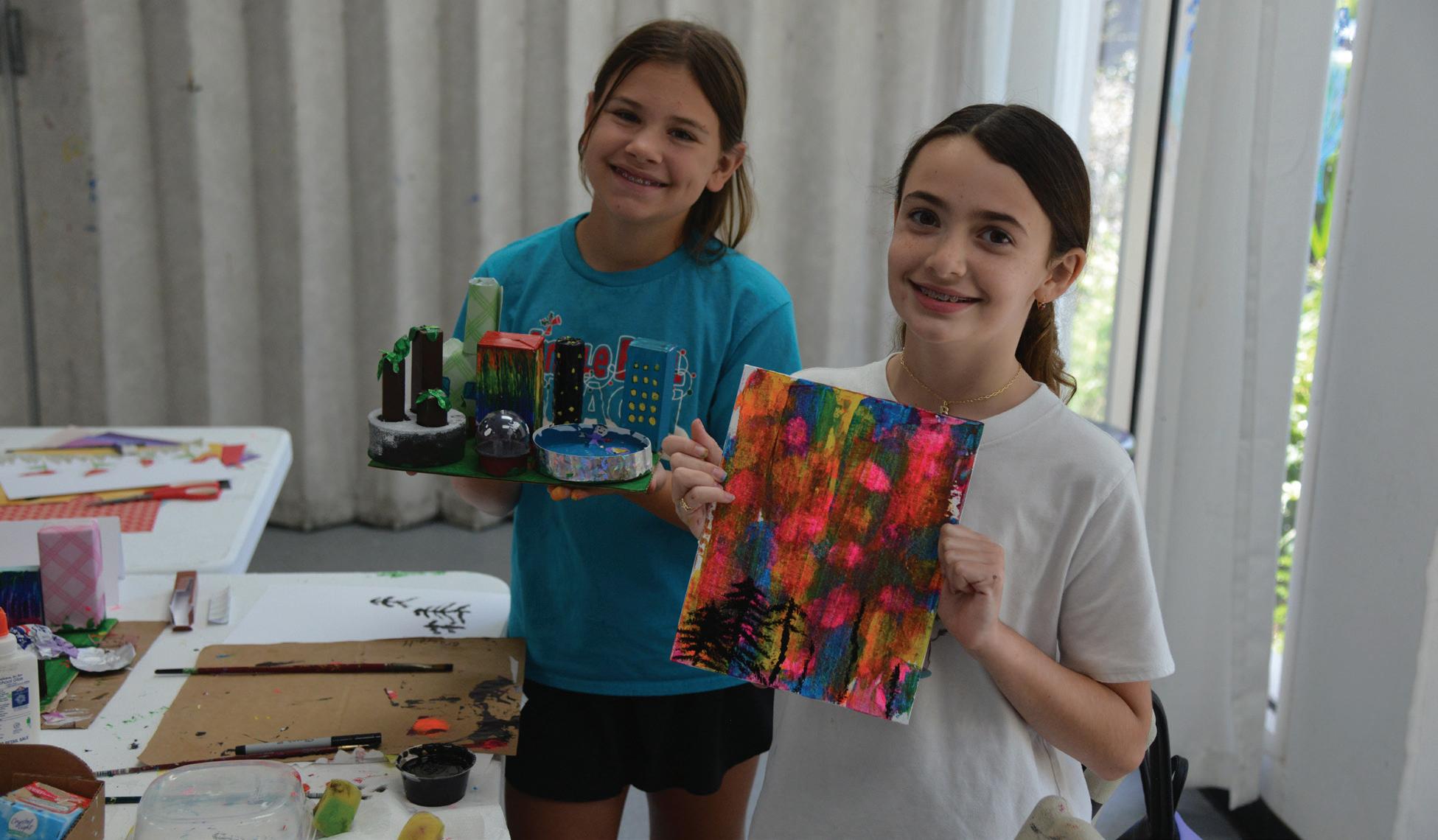
Immerse your child in the world of art with the Art School’s Summer Sessions. Week-long classes inspire students to explore new mediums and techniques under the guidance of our award-winning instructors. Classes are grouped by age and theme, with flexible morning and afternoon schedules available to fit your summer plans. Sign up for a single session or combine them for a full day of artistic discovery.
Program dates are subject to change. Please visit the website to register and verify program offerings.
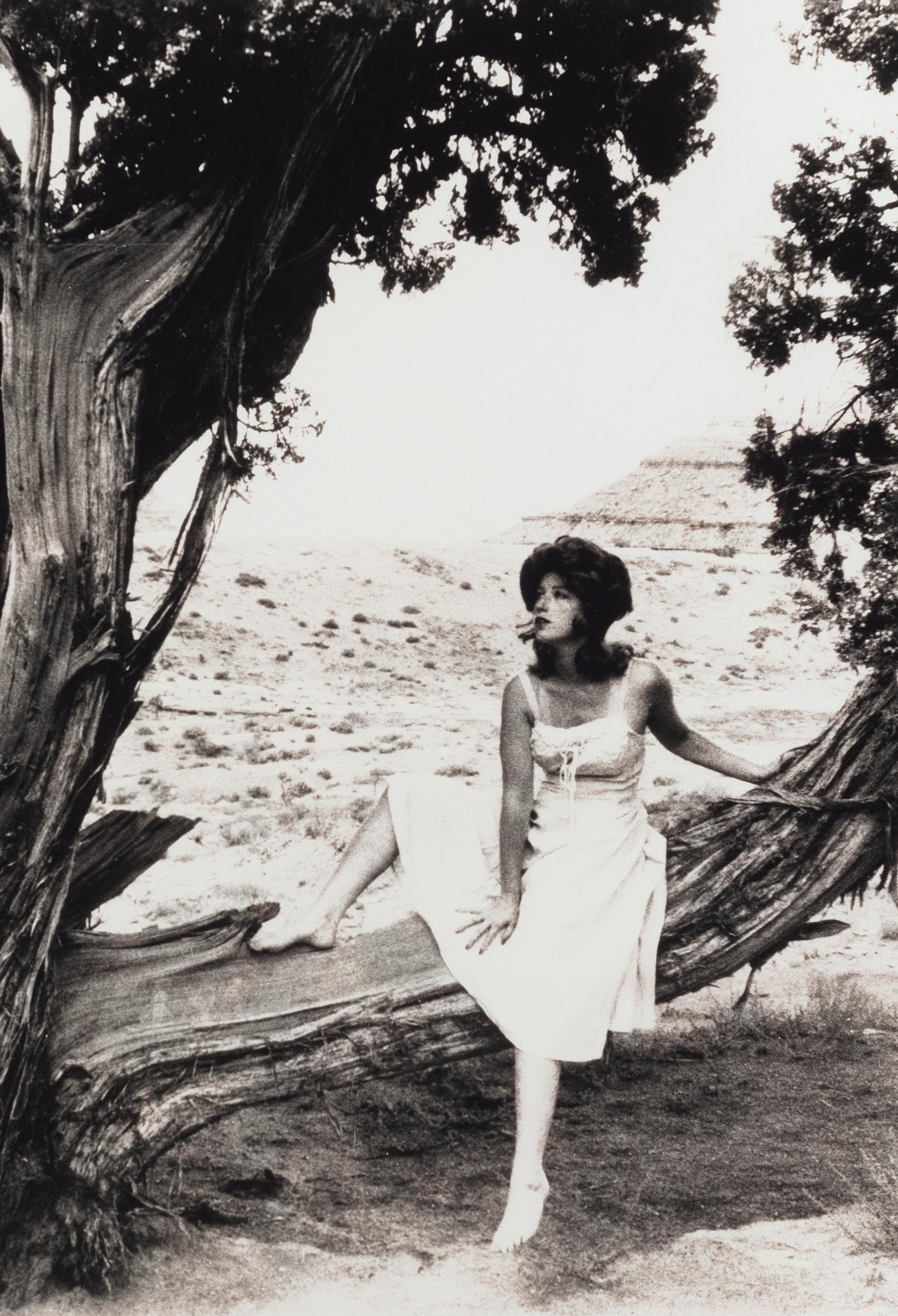
(opposite page) Cindy Sherman, Untitled Film Still #43, 1979, photograph. Dr. Harvey Manes Art Foundation