Introduction: Queer Urbanism 1
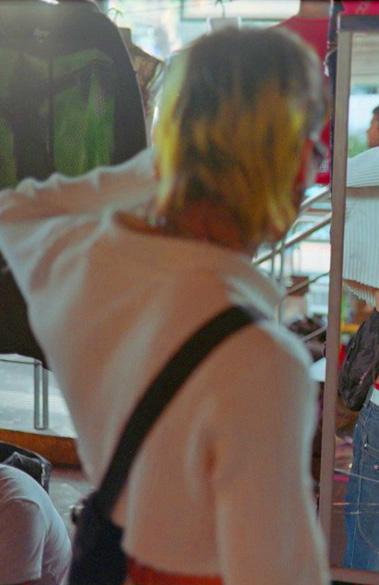
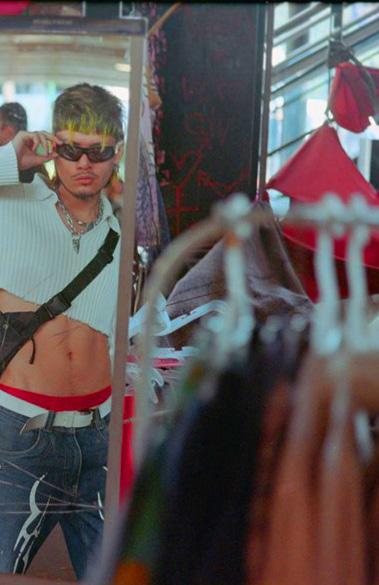
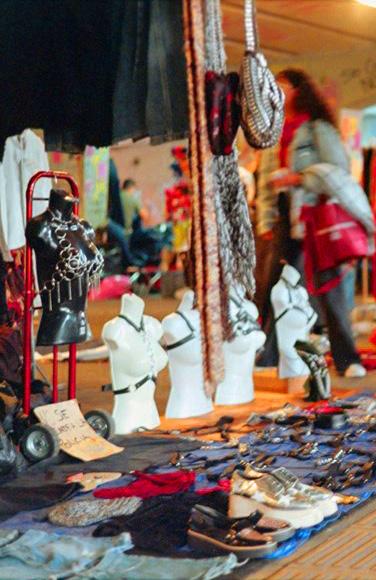
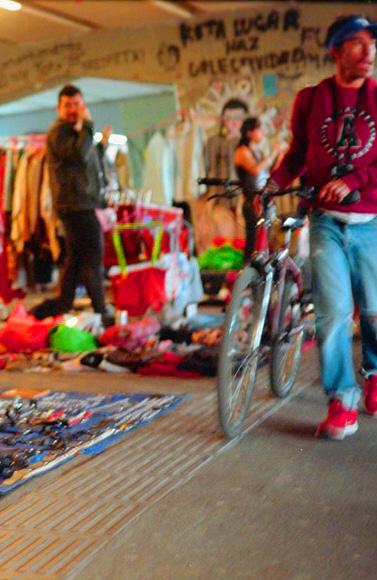
Figure 1.1 La Tianguis Disidente at la Glorieta de los Insurgentes, Mexico CIty, 2022.
Introduction: Queer Urbanism
Queer not as an identitarian, but as a non-normative analytic of urban space.
When lexicographer Eric Partridge published his wildly acclaimed Dictionary of Slang and Unconventional English in 1937, queer as an adjective referred to a “homosexual, derogatory from the outside, [and] not from within.”1 This term, which joined the social jargon of the United States in 1914, was employed as a pejorative slur aimed at those who did not conform to traditional heterosexuality. Moreover, these roots in anti-LGBT rhetoric, and in prejudice against anyone characterized by deviancy from masculine and feminine expectations for that ma er, prioritized a restrictive framework of gendered norms identi"ed as heteronormativity. Through heteronormative culture, male-dominated society strives to localize and institutionalize practices that legitimize and privilege heterosexuality as natural and revered. Therefore, the usage of the queer slur ostracized individuals with non-normative sexual practices as deviant and perverted, and, according to queer theorist Janet Jakobsen, rendered the “non-heterosex…odd, to be commented on, and policed.”2 Towards the end of the 19th century, however, queer’s legacy has been repurposed by the very individuals it had marginalized for decades.
Starting around the 1980s, many members of the LGBT community began to self-identify with “queer;” today, the LGBTQ+ acronym incorporates queer into its lexicon as Q for Queer and, at times, Questioning.3 This cross-cultural reconstruction of queer oppression signals the reclamation of the word’s historical animus. In addi-
1. Tom Dalzell and Terry Victor, The New Partridge Dictionary of Slang and Unconventional English (Oxford, UNITED KINGDOM: Taylor & Francis Group, 2012), 1810, http:// ebookcentral. proquest.com/ lib/yale-ebooks/ detail.action?docID=3569732.
2. For more on deviant sexuality and perversion, see Michel Foucault’s History of Sexuality. Michel Foucault, The History of Sexuality (New York: Vintage Books, 1988); Janet R. Jakobsen, “Queer Is? Queer Does? Normativity and the Problem of Resistance,” GLQ: A Journal of Lesbian and Gay Studies 4, no. 4 (1998): 518, https://doi.org/10. 1215/106426844-4-511.
3. Erin Blakemore, “From LGBT to LGBTQIA+: The Evolving Recognition of Identity,” National
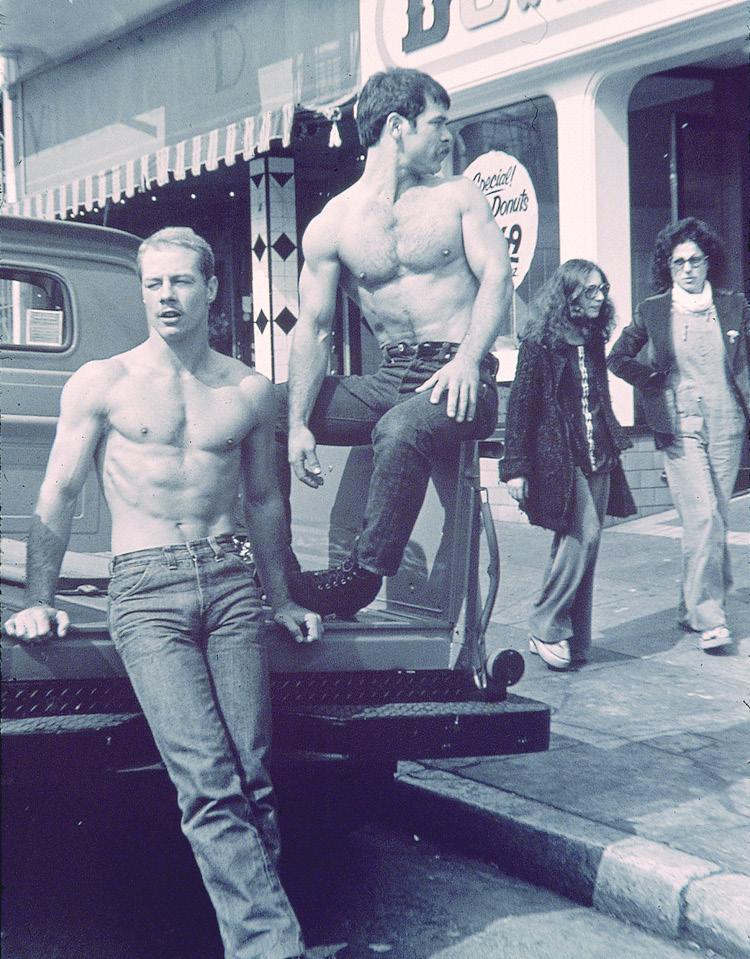
Figure 1.2 Shirtless Gay Men in truck, San Francisco Castro, c. 1978.
tion, queer’s usage as an identity serves as an extension of homosexuality and gender non-conformity to encompass a spectrum of non-normative practices and expressions, even within the larger restrictive identities that LGBT labels provide. Therefore, embracing one’s queer identity is not only an act of self-a rmation but also a political statement that challenges societal norms and expectations for queer people. Moreover, queer’s politicized landscape rejects the desired hostility of heteronormativity, subverts the rigid binaries which characterize heteronormative culture, and o$ers more inclusive and expansive frameworks for theorizing about LGBTQ+ life. For instance, in her work on the social constructivism of gender, queer theorist Judith Butler argues that “gender reality is performative which means, quite simply, that it is real only to the extent that it is performed.”4 A Butler-ist analysis, therefore, reveals that stable gender identity is an illusion of societal creation to sustain power hierarchies; thus, the performance of gender exists solely to promote the authority of masculinity, and, subsequently, heterosexuality, as absolute. This rejection of gender reality—pillared with the queer theories and politics of the late 20th century—implores the contemporary reevaluation of queerness as intersectional, one impacted by race, ethnic culture, and one’s overall positionality to state power.
While the term “queer” embodies the rich identity and spectral nature of non-normative sexuality and gender, Queer Urbanism, like the growing branch of queer politics in the 1990s, does not regard an identitarian movement; that is, it does not concern sexual and gender practice as the leading interest in the coalition of queer people. Moreover, the project of Queer Urbanism does not indicate that the urbanization of queer people in cities exists in formal architecture. Unlike Black Urbanism, Latine Urbanism, and any other urbanization of a racial or cultural group that can be traced to an architectural or urban archetype, spatial planning and architectural design are scarcely centered
Geographic, October 19, 2021, https://www. national geographic.com/ history/article/ from-lgbt-tolgbtqia-the-evolving-recognitionof-identity.
4. Judith Butler, “Performative Acts and Gender Constitution: An Essay in Phenomenology and Feminist Theory,” Theatre Journal 40, no. 4 (December 1988): 527, https://doi.or g/10.2307/32078 93.
around the welfare of queer people. Therefore, while the struggles of shared sexual identity and gender expression are relevant, the identities of queer people do not determine their urbanism. Rather, Queer Urbanism employs queer as a non-normative analytic of urban space to command the liberation of queer people from their oppressive positionality within state power. That is, while many queer people are the urbanists and spatial actors of said urbanization, it is the social righteousness and power of queer existence, rather than the composition of queer identity, which asserts an occupation that is inherently non-normative and in direct opposition to the formal praxis of architects, urban planners, developers, and politicians.
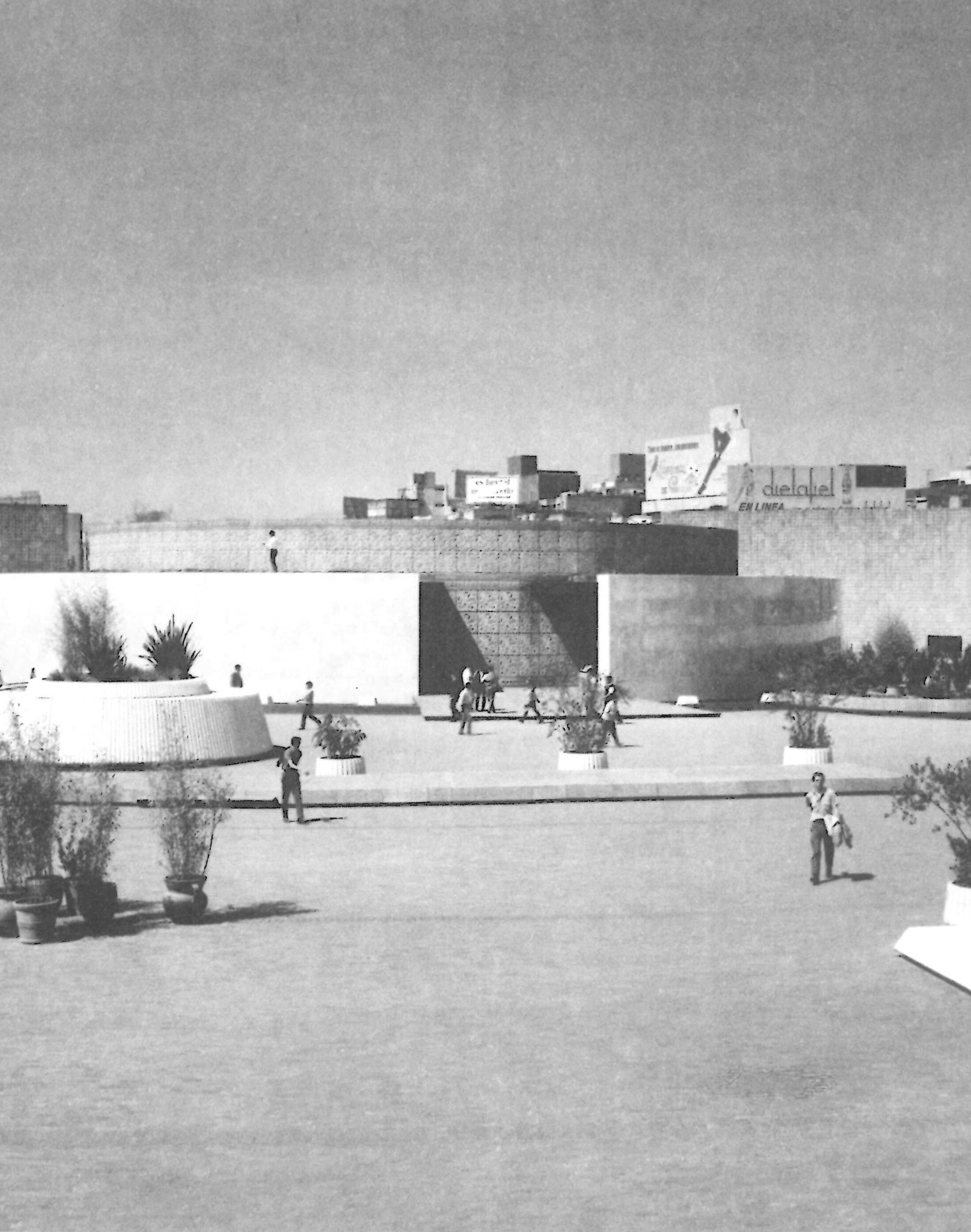
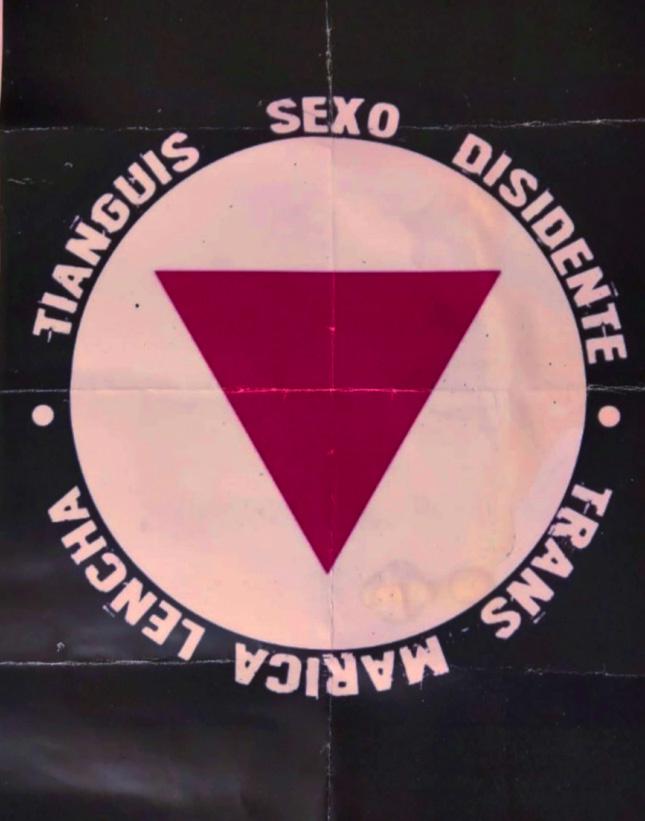
La Tianguis Disidente, an urban market run by an alliance of queer, cuir, trans, latina/o/x/e, gender non-conforming, and deviant communities in Mexico City, embodies the project of Queer Urbanism due to the appropriation of the pre-Hispanic tiangu practice, a contentious context with the Modernist site—la Glorieta de los Insurgentes—and the market’s contemporary treatment of public space. The market, which was founded in 2021, epitomizes non-normative practices of urbanization, or those in opposition to formal planning practice. Due to its urban and economic informality, the occupation at Glorieta de Insurgentes is unauthorized by the Mexican government yet persists to preserve queer life and corporeality in Mexico City. In addition, this market subverts Mexico’s Modernist movement which strived to cloak institutions of oppression—political, architectural, and urban—against disenfranchised communities throughout the country. Ultimately, this project positions queer as the primary quali"er in examining the urbanism of queer subjects at la Tianguis Disidente, not only by proving that the organized protest and occupation of the site is non-normative in the standards of architecture and urban design, but also by orienting their corporeal practice and subsequent urbanism in Mexico City as fundamentally queer.
Gendered Architecture as Normative
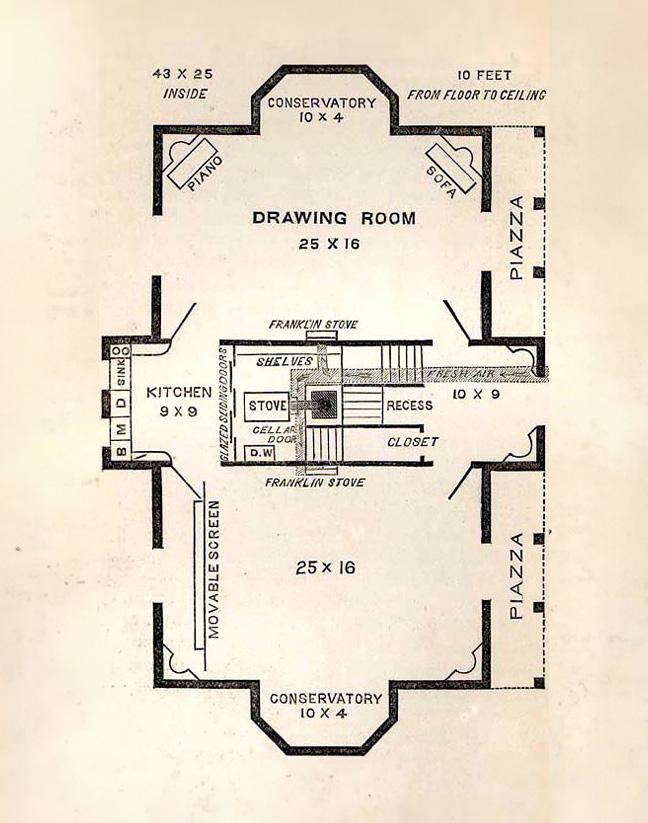
This entangled de"nition of Queer Urbanism contains roots in many places bridging queer theory and urban studies into a unique discipline. To be er understand the complexities of non-normative queerness as they translate to urbanism, common urban archetypes of normative and gendered conditions must be analyzed. Catharine Beecher and Harriet Beecher Stowe’s 1869 “American Women’s Home,” for instance, encapsulates the feminine architectural condition in America during the 19th century: an occupancy centered around domesticity and whiteness.5 According to the traditional plan drawing conceived by Beecher Stowe, the domestic sphere is located within a central chamber that contains the kitchen, stove, shelving, closet space, and circular access to public areas. This arrangement allowed the women to control the home and for them to become domestic caretakers. Meanwhile, the men, who were considered breadwinners, existed at the periphery of this central node and were o%en serviced by the women. Therefore, this plan re ects the normative tradition of femininity, one plagued by patriarchal standards and heteronormativity, as it adheres to the performance of womanhood through a domestic sphere centered around the welfare of both the home and the masculine authoritative "gure.
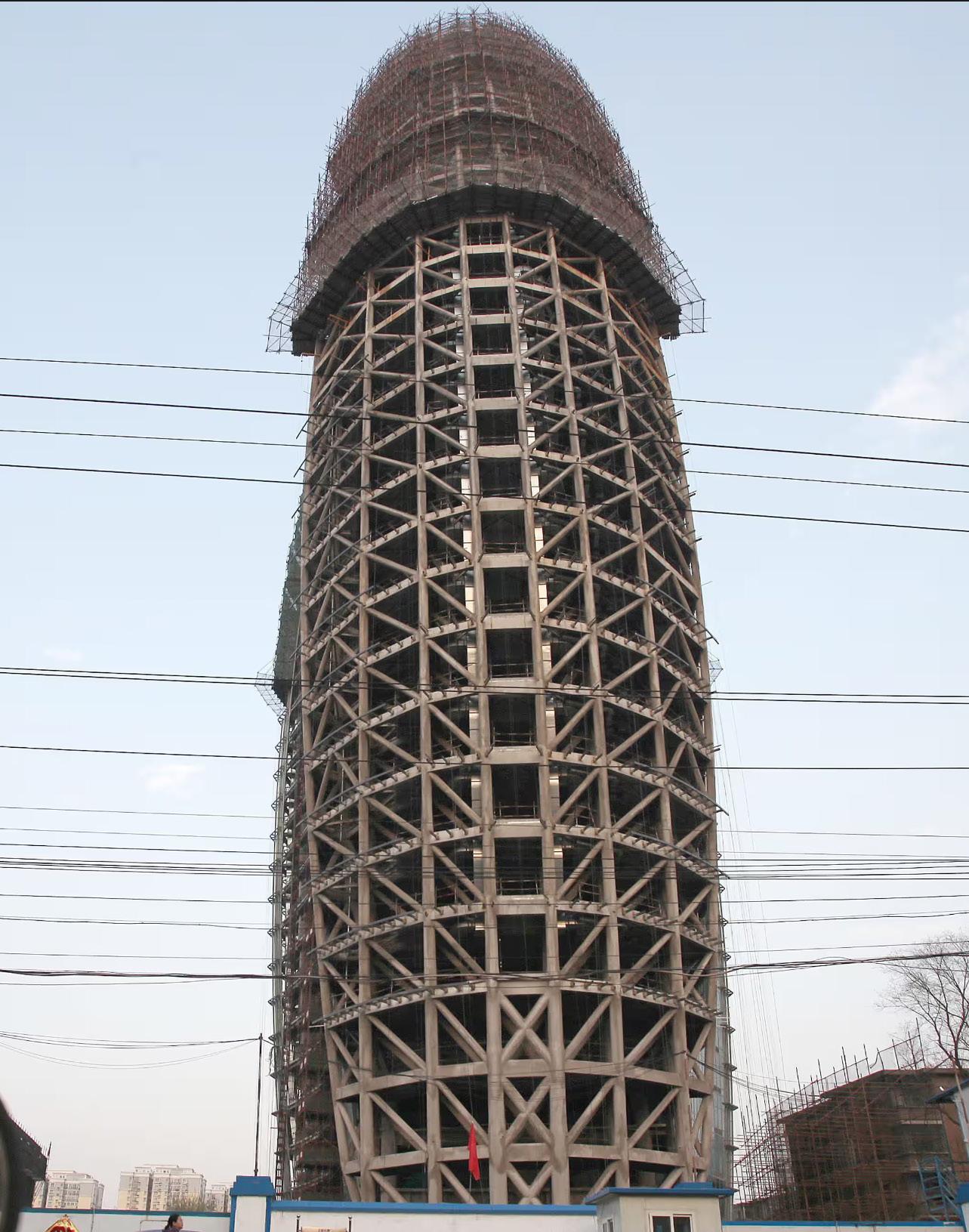
Similarly, gendered projections of masculinity in architecture emerge when looking at designs for contemporary skyscrapers, many of which assume the metaphorical image of the phallus. In the critically-acclaimed 1977 article, “Skyscraper Seduction, Skyscraper Rape,” Dolores Hayden chastises the masculine power embodied by the development of ever-taller urban towers. This desire for thrusting height imposes a phallic fantasy of the skyscraper which emblems male corporate economic power. Hayden argues that the o ce tower is another addition to a lineage of “phallic monuments in history—including poles,
5. Catherine Beecher and Harriet Beecher Stowe, “The American Woman’s Home: Or, Principles of Domestic Science : Being a Guide to the Formation and Maintenance of Economical, Healthful, Beautiful, and Christian Homes,” pdf, Library of Congress, Washington, D.C. 20540 USA, 1869, https:// www.loc.gov/ item/07035680/.
Figure 1.3 Catharine Beecher and Harriet Beecher Stowe's Plan for a Women's home.
obelisks, spires, columns, and watchtowers,” as architects designed with the language of the “base, sha%, and tip…ejaculating light into the night sky via spotlights.”6 However, the symbolism of the Freudian phallus—a phenomenon of perceiving objects longer than wide as phallic—preludes the symbolism of verticality as an icon of power via the masculine character of capitalism.7 Thus, a city skyline’s urban tradition of expansive verticality reveals the masculine presence of economy and power. It is these gendered associations, according to queer theory, that are inherently normative.
LGBTQ+ Representation in Cities as Normative
Normative culture also a $ects forms of LGBTQ+ representation in media, architecture, and the city, all of which are dissolved to generate “homonormativity.” The byproduct of neo-liberalism, homonormative culture promotes the acceptance of homosexual life into mainstream society as a white, private, and capitalistic endeavor.8 This standard has emerged through “gay ghe os” or “gayborhoods” which concentrate homosexual-owned businesses, homes, and resources within a distinct urban area.9 Furthermore, these neighborhoods sponsor much of the gay nightlife in these cities, many of which are activated by large-scale events like Pride. However, gay ghe os represent an accepted and normative restriction on the queer community by commodifying LGBTQ+ life; corporations will o%en capitalize o$ of homosexuality without reallocating funds to LGBTQ+ resources or vulnerable queer populations. Meanwhile, these neighborhoods tend to organize LGBTQ+ acceptance around a palatable stereotype: the white gay male with an athletic physique. Therefore, this lack of representation in gay ghe os not only prioritizes white masculinity as the leading constituent in LGBTQ+ acceptance, but actively excludes people of color, disabled queer people, lesbians, trans folks, and
6. Dolores Hayden, “Skyscraper Seduction, Skyscraper Rape,” R / D, 1977, https://www. readingdesign. org/skyscaper-seduction, quoted in Leslie Kern, “‘Upward-Thrusting Buildings Ejaculating into the Sky’ – Do Cities Have to Be so Sexist?,” The Guardian, July 6, 2020, sec. Art and design, https:// www.theguardian. com/artanddesign/2020/jul/06/ upward-thrust ing-build ings-ejac ulating-cit ies-sexist-les lie-kern-phallicfeminist-citytoxic-masculin ity.
7. For more on phallic architecture, see Liz Bondi, “Gender Symbols and Urban Landscapes,” Progress in Human Geography - PROG HUM GEOGR 16 (June 1, 1992): 157–70, https:// doi.org/10. 1177/0309132592 01600201.
8. Lisa Duggan, “The New Homonormativity: The Sexual Politics of Neo-Liberalism,” in Materializing Democracy, eds. Russ Castronovo and Dana D. Nelson (Durham: Duke University Press, 2002), referenced in Iván López
Figure 1.4 Office building of the People's Daily Newspaper, Beijing, 2020.
Introduction: Queer Urbanism
other deviant identities and sexual practices.
San Francisco’s Castro, for example—arguably the most famous gay ghe o in the world—reveals exclusive practices of white homonormativity. During the 1960s to 1990s, documentation of queer life solely captured white male residents engaging in homosexual practice including clusters of shirtless and semi-nude men mingling along Castro Street. This photographical analysis reveals the racial makeup of the Castro as exclusively white and devoid of BIPOC; in 1997, Black resident and performance artist Brian Freeman unveiled the Castro, once a “promised land” for all, as “a vanilla neighborhood.”10 Additionally, the Castro failed to represent other LGBTQ+ identities and sexual practices by the end of the 20th century. According to Peter Stein’s 1997 public television documentary “The Castro,” the neighborhood's “white enclave” was unfavorable towards “lesbians of any color,” many of whom were o%en ignored or even harassed.11 Consequently, the Castro’s prioritization of a white homosexual demographic normalizes gay male whiteness as tolerated and venial and positions other non-normative queer and racial identities as subordinate.
Similar accounts of discrimination against lesbians and trans people exist throughout Mexico City, even within emerging gay ghe os that boast rich LGBTQ+ nightlife. While Mexico City’s Zona Rosa has gained a reputation as a popular LGBTQ+ neighborhood, the extortion and harassment of trans women, both by Mexican citizens and the municipal police, persists.12 Notably, Mexico City, whose LGBTQ+ population exceeded 310,000 people in 2022, possesses the highest rates of transphobic murders in the country.13 These homicidal pa erns reveal a homonormative culture that tolerates homosexuality but simultaneously illuminates trans bodies as disposable. Moreover, existing traditions of mach mo in Mexico City complicate homonormative narratives in the Zona Rosa. Mach mo, the cultural concept of traditional male domi-
Munera, “Lands of Contagion,” e-flux Architecture, October 2020, https:// www.e-flux.com/ architecture/ sick-architec ture/363717/ lands-of-conta gion/.
9. A gay ghetto is not a place where the inhabitants are forced to live by law but rather where they choose to live. There exists no physical boundaries such as gates and walls; gays can move in or out at will. Movement is restricted instead by social boundaries, either self-imposed or from the rest of society. For more on gay ghettos, see Martin P. Levine, “Gay Ghetto,” Journal of Homosexuality 4, no. 4 (July 20, 1979): 363–77, https://doi. org/10.1300/ J082v04n04_04.
10. Scott Richard Lesher, “The Making and Meaning of Gay Space : The Case of the Castro in San Francisco,” January 2008, 57, https://archives. njit.edu/vol01/ etd/2000s/2008/ njit-etd2008-015/ njit-etd2008-015. pdf."
11. Lesher, "The Making and Meaning," 57.
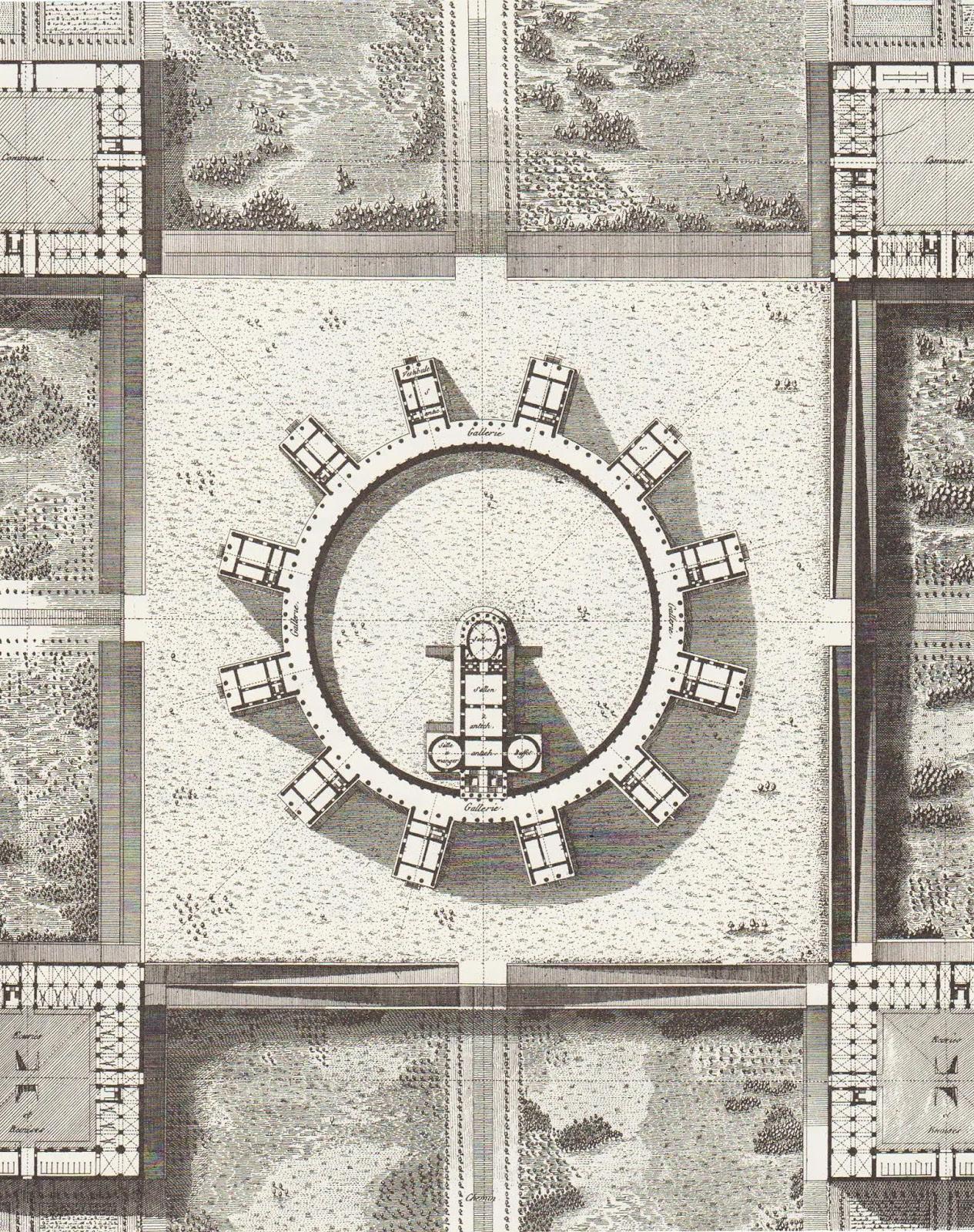
Figure 1.5 Plan of Claude Nicholas Ledoux's Oikema House of Pleasure, 1780.
Introduction: Queer Urbanism
nance and strength in Latin American societies, operates in male "gures to express toughness and aggression, to grant men sexual prowess and social domination, and to resist feminine traits.14 Because of these lasting social norms of machismo, the Zona Rosa fosters a closeted lifestyle for many whose homosexuality is practiced conditionally.15 In other words, the value of homosexuality exists in opposition to gayness where the former translates to sexual preference and the la er embodies a political movement many homosexual Mexicans reject.16 Therefore, homosexual tendencies, businesses, and overall life within Mexico City’s Zona Rosa thrive within restrictive cultural norms—similar to operations of white, gay idolization in San Francisco’s Castro—and "lter LGBTQ+ life as a homonormative practice permissible to a larger public.
This analysis on normativity within LGBTQ+ representation must not diminish the accomplishments of LGBTQ+ prosperity in the Castro, the Zona Rosa, and other gay ghe os around the world. The inceptions of political movements that advocate for LGBTQ+ rights are located at many of these sites. Instead, this analysis strives to distinguish cultural concentrations of LGBTQ+ populations in cities from non-normative practices of Queer Urbanism. The former’s legitimacy is composed of the bustling success of gay nightlife and capitalism, a commodi"ed culture that fails to represent non-cisgender, non-white, queers outside these socially sanctioned terrains. Meanwhile, the la er acts as resistance against normativity and proposes a radical non-conformity in the overall treatment of the built environment, one intrinsically tied to queer politics.
Queer as Non-Normative: Establishing A Framework
Queer politics, almost unanimously agreed upon by theorists and political scientists, emerged in the early 1990s as the developing extension to queer theory and its “wide
12. Transgender Law Center, “Report on Human Rights Conditions of Transgender Women in Mexico,” Transgender Law Center, accessed April 15, 2024, https://transgen derlawcenter. org/resources/ immigration-2/hu man-rights-mexi co/.
13. INEGI, “LGBTQ+ Population by State Mexico 2021,” Statista, 2022, https:// www.statista. com/statistics/1382267/ lhgbti-popula tion-by-statemexico/.
14. Fore more on Machismo, see Michiyo Hirai et al., “Machismo Predicts Prejudice Toward Lesbian and Gay Individuals: Testing a Mediating Role of Contact,” Sexuality Research and Social Policy 15, no. 4 (December 2018): 497–503, https:// doi.org/10.1007/ s13178-017-03087.
15. Mairys Joaquin, “In Macho Culture, Gays Find Acceptance in Mexico City District,” Idaho Statesman, May 21, 2009, https:// www.idahostatesman.com/news/ article40694730. html.
16. Joaquin, “In
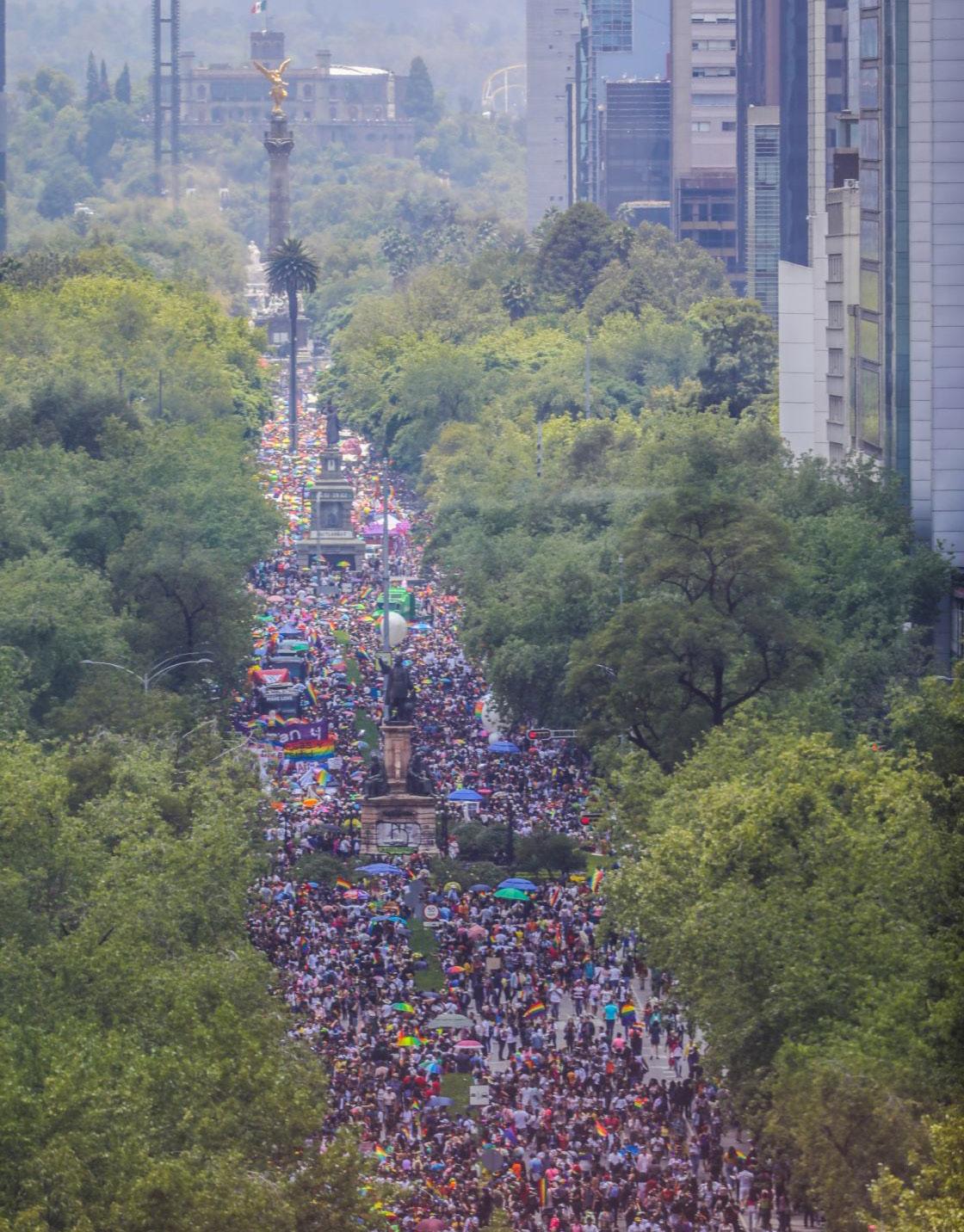
Figure 1.6 Mexico City Pride, Avenida Paseo de la Reforma, 2019.
continuum of sexual possibilities.” 17 Essentially, queer theory stands in opposition to the study of static sexuality and gender practice which previously normalized a binary gendered hegemony. These theories transformed into a new era of politics that confronted queer invisibility in traditional gay and lesbian civil rights discourse. Additionally, this new generation of activists adopted an “in your face” political organizing characterized by confrontation and representing the angry and o%en ignored voices of queer youth.18 Queer politics, in the same vein as queer theory, thus informs the non-normative framework of processes, practices, and aesthetics of Queer Urbanism.
The links between queer theory, politics, and identity, as essential to establishing a framework for queer, are explored in Cathy Cohen’s seminal work “Punks, Bulldaggers, and Welfare Queens: The Radical Potential of Queer Politics?” Cohen argues that “queer politics, much like queer theory, is o%en perceived as standing in opposition, or in contrast, to the category-based identity politics of traditional lesbian and gay activism.”19 These category-based identity politics campaign for same-sex marriage and same-sex equality instead of queer liberation. Yet, while the congruence of civil rights to LGBTQ+ liberation remains prominent, queer theorists argue that the institutional existence of legislative policy does not absolve heteronormative systems of homophobia, transphobia, racism, and class inequity. Instead, theorists such as Cohen argue that there is a radical potential of queer politics, outside of lesbian and gay politics, to directly challenge heteronormativity due to its destabilization of sexuality and gender within the LGBTQ+ community.20 Moreover, this queerness operates within le%ist politics and the intersection of identities; the discursive nature of oppressive systems, therefore, establishes the struggle for gay, lesbian, and queer liberation as inextricably linked to struggles against class oppression, racism, and sexism.21 Furthermore, these queer politics are continuous of Black Macho Culture, Gays.”
17. Cathy J. Cohen, “Punks, Bulldaggers, and Welfare Queens: The Radical Potential of Queer Politics?,” GLQ: A Journal of Lesbian and Gay Studies 3, no. 4 (May 1, 1997): 438, https://doi.org/10. 1215/106426843-4-437.
18. Cohen, “Punks, Bulldaggers, and Welfare Queens,” 439.
19. Cohen, “Punks, Bulldaggers, and Welfare Queens,” 440.
20. Cohen, “Punks, Bulldaggers, and Welfare Queens,” 440.
21. Cohen, “Punks, Bulldaggers, and Welfare Queens,” 442.
22. Cohen, “Punks, Bulldaggers, and Welfare Queens,” 442. For more on Black Radical Tradition and Black Marxism, see Cedric J. Robinson, “Black Marxism, Revised and Updated Third Edition: The Making of the Black Radical Tradition,” University of North Carolina Press, 1983, https:// uncpress.org/ book/97814696 63722/blackmarxism-re vised-and-up
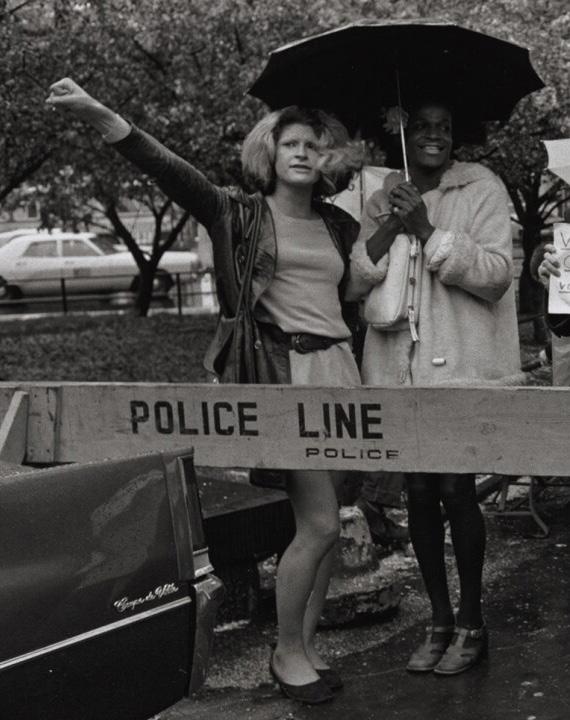
Figure 1.7 Sylvia Rivera and Marsha P. Johnson, Gay Liberation Movement, c. 1960s-1970s.
Radical Tradition and situate queer as a non-normative praxis relative to state power rather than sexual expression.22
Nevertheless, this framework does not propose that queer people with non-normative sexualities and genders—those deviant from cisgender lesbians and gays—are irrelevant in the discourse of queer politics. Twenty years a%er writing “Punks,” Cohen acknowledged that contemporary formations of queer politics have grown synonymous with proclamations of queer sexuality where, unlike the hesitation to identify with queer in the 70s, 80s, and 90s, today’s political organizers self-identify with the term. This development contrasts Cohen’s argument against identity politics and admits a correlation between queer as a politicized identity and the articulation of anti-capitalist, non-normative politics commi ed to the liberation of those most marginalized. However, Cohen warns about the reduction of queer as an identity of sexual desire and provokes a considerable misconstruction: “it becomes easier… to identify the “queers” leading the movement… than to detail what [is meant] by the queer politics of the movement.”23 Thus, it proves vital to acknowledge that queer politics concerns itself with positionality to state power and resists oppression through anti-capitalist processes. The continuous analysis of queer theory and politics declares that queer exists both as an identity of sexual practice as well as a consequential positionality to state authority. Moreover, it is not the sexual identities of activists that make their politics queer as the processes of political organizing disregard a shared sexual practice. Instead, the treatment and positionality of queer lives within oppressive systems against them develop a politics that exploits non-normativity as radically queer. This framework embodies the project of Queer Urbanism, which directly contrasts the normative representations of LGBTQ+ communities in gay ghe os. To spatialize the practice of Queer Urbanism within queer politics, Cohen remarks “if there
dated-third-edi tion/.
23. Cathy Cohen, “The Radical Potential Of Queer? Twenty Years Later,” GLQ: A Journal of Lesbian and Gay Studies 25, no. 1 (January 1, 2019): 143, https://doi. org/10.1215/106 426847275334.
is any truly radical potential to be found in the idea of queerness and the practice of queer politics, it would seem to be located in its ability to create a space in opposition to dominant norms, a space where transformational political work can begin.” These spaces, such as La Tianguis Disidente, are where Queer Urbanism "nds itself, in the urban spaces where political transformation and opposition to hegemonic patriarchy, heteronomrativity, racism, and class oppression occur. And, while it is important to acknowledge the rich queer identities and sexual deviancies that characterize these communities, Queer Urbanism, like queer politics, is not a praxis of identity, but a praxis, and an informal one for that ma er, that confronts schemes of urbanism and architecture generative of racial divides, class oppression, and heteronormativity.
Conclusion
Non-normativity is intrinsic to the goals of Queer Urbanism. Unlike normative urban analytics, which are reected in gendered architectural conditions and homonormative LGBTQ+ representation in cities, non-normativity concerns a deviance from formal institutions of power and urbanization. This conjecture is re ective of queer theory, queer politics, and, most notably, Queer Urbanism; the third, speci"cally, embraces its non-normativity through informality, political activism, ephemeral architecture, corporeal practice, insurgent planning, and other various forms of urbanization antithetical to normativity. In addition, since Queer Urbanism exists outside the operations of formal planning and architectural design, the political occupation of the built environment intends establishes urban preservations for queer people whose bodies are rendered disposable by exclusionary politics and threats of violence. Therefore, Queer Urbanism requires these non-normative methodologies to sustain the lives of oppressed queers and organize their right to survive as a political project of
public occupancy. Turning to Mexico City’s Tianguis Disidente embodies these practices of urbanization by upli%ing narratives of queer communities and, more speci"cally, trans women who encounter systemic violence in Mexico. These narratives are impacted by both the pre-Hispanic tiangu tradition of informality, as well as the Modernist site of la Glorieta de los Insurgentes, topics explored in the next two chapters. It is through these contexts that the queer occupation of la Tianguis Disidente—analyzed in the fourth chapter and positioned within the larger discourse of queer urban life in the "%h—persists as a non-normative urbanism tangential to the ambitions of queer politics.
Image Sources
1.1 Lily Bonesso, “La Tianguis Sexo Disidente: The Radical, Queer, Mexican Flea Market,” Dazed, December 23, 2022, https://www.dazeddigital.com/life-culture/ article/57772/1/la-tianguis-sexo-disidente-radical-queer-mexican-flea-market.
1.2 Wayne Barton, Crawford. Castro Street - Men in a Truck. c. -1979 1978. Photograph. Crawford Wayne Barton collection (1993-11), GLBT Historical Society. https://diva.sfsu.edu/collections/glbt/bundles/237519.
1.3 Catherine Beecher and Harriet Beecher Stowe, “The American Woman’s Home: Or, Principles of Domestic Science : Being a Guide to the Formation and Maintenance of Economical, Healthful, Beautiful, and Christian Homes,” pdf, Library of Congress, Washington, D.C. 20540 USA, 1869, https://www.loc.gov/item/07035680/.
1.4 Leslie Kern, “‘Upward-Thrusting Buildings Ejaculating into the Sky’ – Do Cities Have to Be so Sexist?,” The Guardian, July 6, 2020, sec. Art and design, https://www. theguardian.com/artanddesign/2020/jul/06/upward-thrusting-buildings-ejaculating-cities-sexist-leslie-kern-phallic-feminist-city-toxic-masculinity.
1.5 ArchEyes, “Oikema House of Pleasure by Claude-Nicolas Ledoux,” ArchEyes | Timeless Architecture, March 20, 2020, https://archeyes.com/oikema-house-pleasure-claude-nicolas-ledoux/.
1.6 Nación321, “GALERÍA: Así se vive la marcha del Orgullo LGBT en la CDMX,” Nación321, June 29, 2019, https://www.nacion321.com/ciudadanos/galeria-asi-sevive-la-marcha-del-orgullo-lgbt-en-la-cdmx.
1.7 Alexandra Burgos, “Marsha P. Johnson & Sylvia Rivera (U.S. National Park Service),” National Park Service, October 10, 2020, https://www.nps.gov/articles/000/ marsha-p-johnson-sylvia-rivera.htm.
Tianguis: Informality and Corporeal Practice
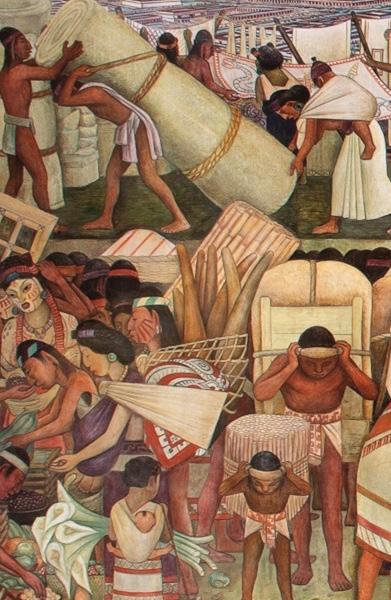
Figure 2.1 Diego Rivera's "El Tianguis de Tlatelolco," 1935.
From el Tianguis de Tlatelolco to la Tianguis Disidente.
La Tianguis Disidente in Mexico City is not the "rst tiangu of its kind. This tradition reminisces on pre-Hispanic market practice characterized by open-air street vendors and the occupation of public space. The term itself, tiangu or tianquiztli, is derived from the Aztec language náhuatl, and translates from the lasting legacies of indigenous informality in Mexico, both within economic and urban sectors, to contemporary spatial practices of the country’s informal markets.24 This chapter historicizes tiangu through an exploration of Mexico’s "rst, el Tianguis de Tlateloclo, as a vital case study in exploring informal vendorship as a cultural phenomenon in Mexico City. Consequently, practices of urban and economic informality re ect these types of occupancy in Mexico—likewise the tiangu practice—and reveal that these methods of survival are an extension of the body. Understanding this corporeal practice is essential for Queer Urbanism at la Tianguis Disidente as it identi"es a non-normative mode of occupancy, informal labor through the tiangu , and constructs its appropriation as an accessible method in the autonomy of queer lives.
El Tianguis De Tlatelolco
Mexico’s " rst tiangu , el Tianguis de Tlatlelolco, a ests to the cultural importance of informality in the daily life of the Aztec empire and contemporary Mexico. This market’s history is entangled with the ancient city of
24. Sandra Alarcón, El Tianguis Global, 1a. edición, Colección Trabajos Destacados de Titulación de Posgrado (México, D.F: Universidad Iberoamericana, 2008), 13.
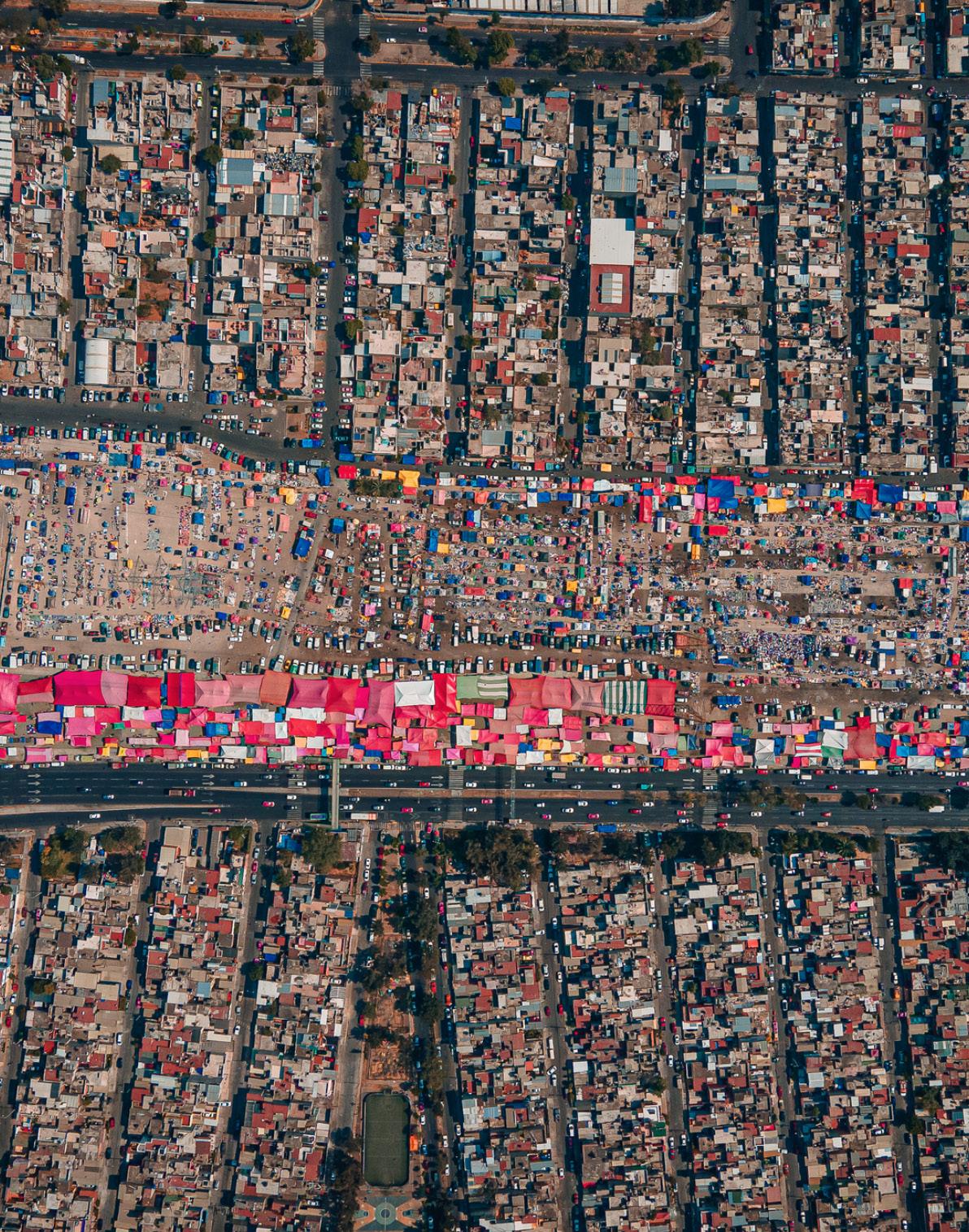
Figure 2.2 Aerial Photograph of Tianguis Las Torres in Mexico City, 2021.
Tianguis: Informality and Corporeal Practice
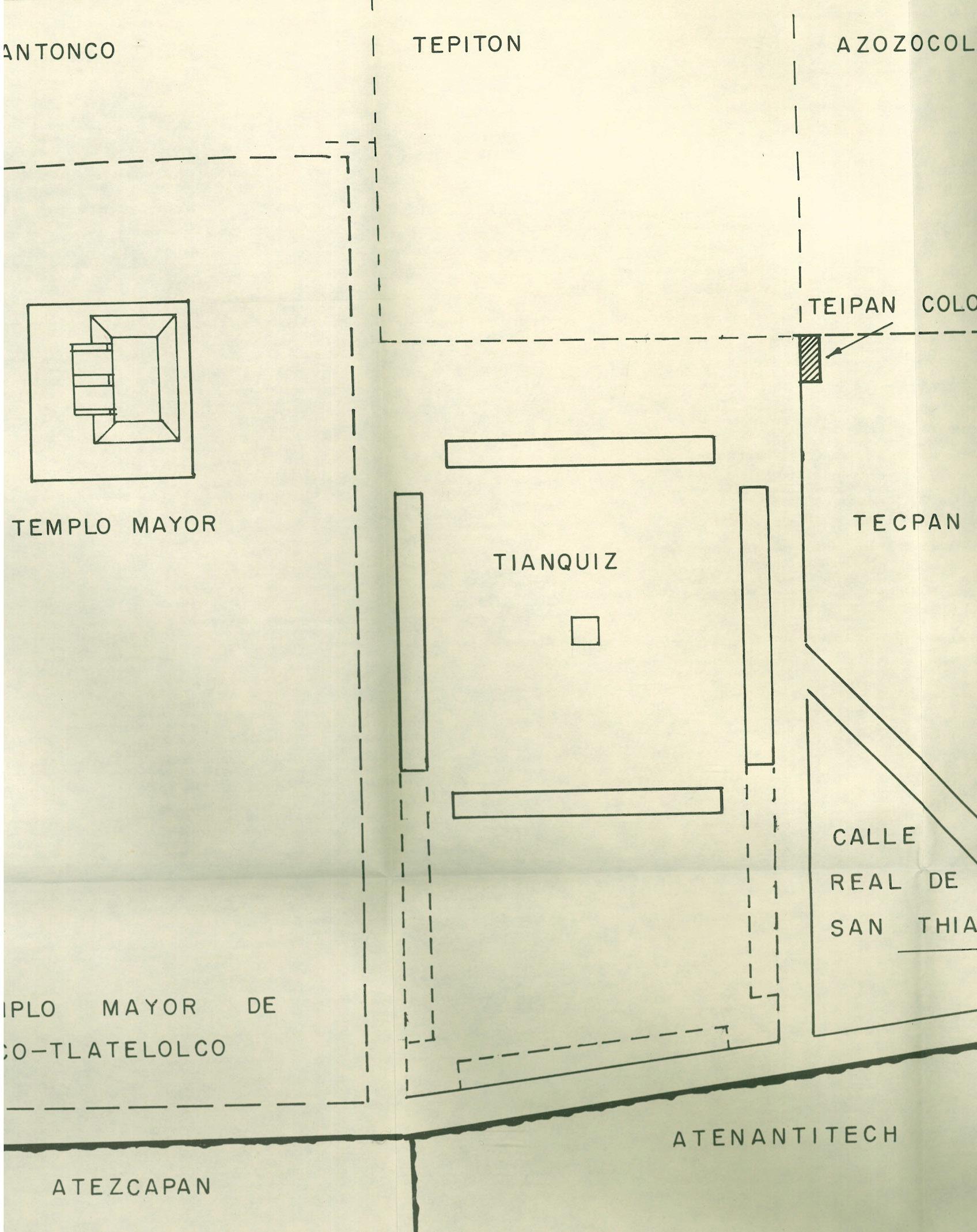
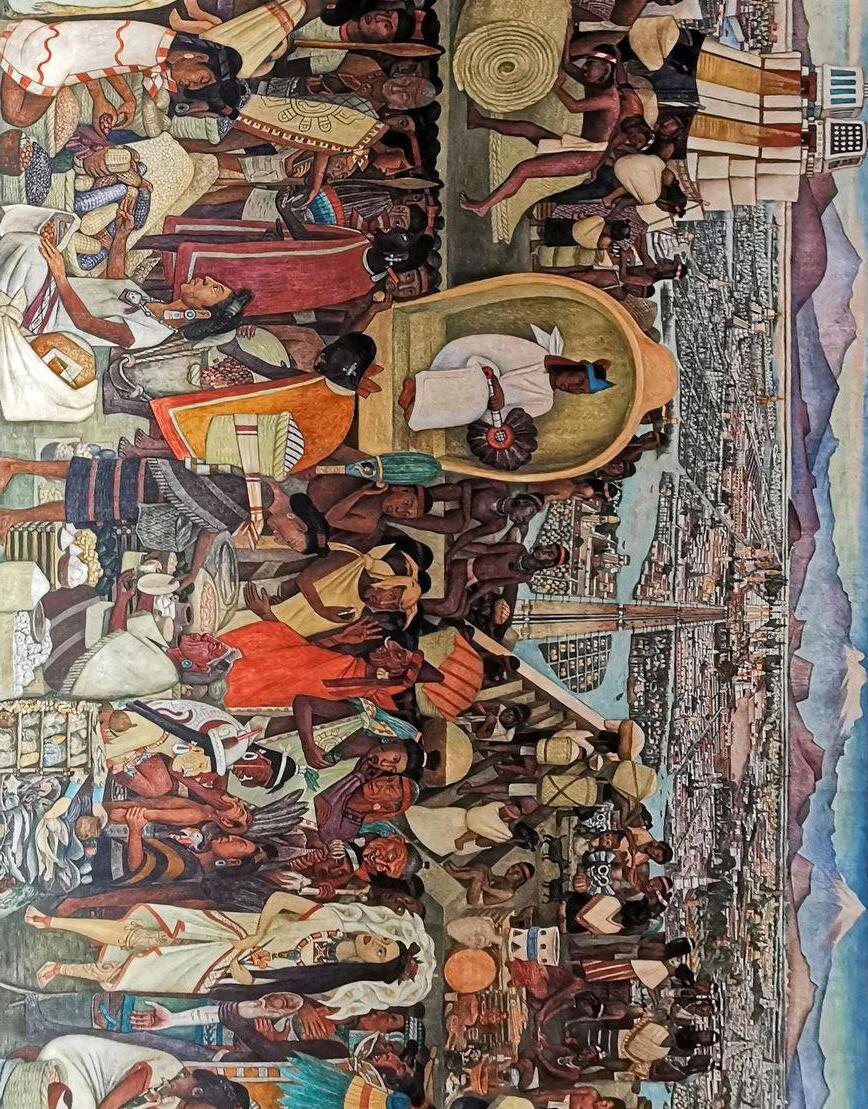
Tenochtitlan—today’s Mexico City— which was founded by the Aztec Empire in 1325 on the lakes of Texcoco and Xochimilco. This great empire expanded into smaller cities within these lakes, all connected by a series of calzad , or roadways, and canals within the islands. Furthermore, this urban archipelago included Tenochtitlan’s sister city, Tlaleteloco, which was founded on a small island north of the capital some 13 years later.25 With the founding of Tlatelolco, the great tiangu opened in 1351 as an urban and cultural microcosm of the Aztecs; el Tianguis de Tlatelolco changed locations in 1404 to the plaza where the Spanish knew it.26 The scale of this tiangu was astounding at best. Upon arriving at the great Tianguis de Tlatelolco, Spanish conquistador Hernan Cortes estimated its marvelous size to be “twice the size of the city of Salamanca.”27 The grandeur of the large plaza was later con"rmed by researchers at Mexico City’s National Museum of Anthropology who declared that the tiangu was approximated at 89,000 meters squared.28
As a result of its monumental scale, the tiangu in the city of Tlatelolco promoted informal urban commerce by empowering the Aztec peoples to sell and trade legumes, fruits, owers, various consumable goods, and luxury items at the public plaza. Bernal Díaz del Castillo, a Spanish conquistador who participated in the conquest of the Aztec Empire under Hernán Cortes, recalled later in his life the bewildering medley of goods sold at the tiangu :
Let begin with the dealers in gold, silver, and precio stones, feathers, mantles, and embroidered goods….Next there were other traders who sold great pieces of cloth and co on, and articles of tw ted thread, and there were cacahuateros who sold cacao… In another part there were skins of tigers and lions, of o ers and jackals, deer and other animals and badgers and mountain cats, some tanned and others untanned, and other cl ses of merchand e.29
Díaz del Castillo, as well as many other conquerors of “New Spain”—coined by Hernán Cortes a %er the conquest in 1521—documented this variety of essential and
25. Francisco González Rul, Urbanismo y arquitectura en Tlatelolco, Colección científica (México, D.F: INAH - Inst. Nacional de Antropología e Historia, 1998), 129.
26. González Rul, Urbanismo y arquitectura en Tlatelolco, 20.
27. Hernán Cortés, Cartas y documentos, translated by the author, (Editorial Porrúa, 1963), 72.
28. González Rul, Urbanismo y arquitectura en Tlatelolco, 40.
29. Bernal Díaz del Castillo, “How Our Captain Went out to See the City of Mexico and Tlaltelolco, Which Is the Great Market Place and the Great Cue of Huichilobos, and What Else Happened.,” in The Conquest of New Spain, vol. 2, 5 vols. (Kraus Reprint, 1967), 71, https://hdl. handle.net/2027/ heb06852.0002. 001.
Figure 2.3 Map of el Tianguis de Tlatelolco, concieved by researchers at the Museum of National Anthropology, Mexico City.
Tianguis: Informality and Corporeal Practice
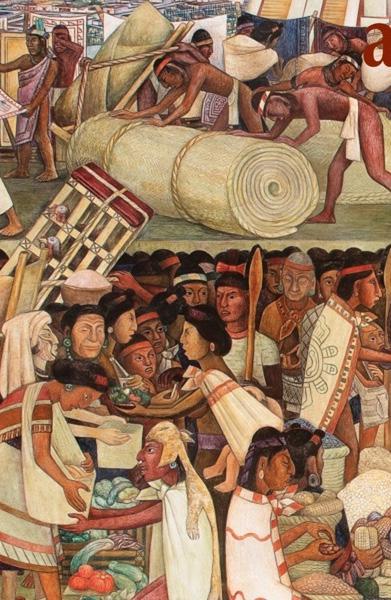
seemingly opulent commodities sold at the market. This culture of vendorship unveils the authority of an informal economy in Tlatelolco which operates to promote both the essential goods of the Aztec natives as well as insidious behaviors of human tra cking visible to the general public; Díaz del Castillo also noted wares of “Indian slaves both men and women… tied to long poles, with collars round their necks.”30 The presence of indentured servitude in the market challenges contemporary frameworks of Western morality and humanitarianism. Concurrently, there exist strict hierarchies ingrained in Aztec society where tlacoli are enslaved due to their status as war prisoners or criminals; the lawlessness of the market’s economy thrives in the plaza. Furthermore, this provision of the urban tiangu reveals that this economy, while informal by the standards of contemporary formal capital, emerges as an esteemed mode of power and survival for the Aztecs of Tenochtitlan, Tlatelolco, and many other neighboring cities. Not only did el Tianguis de Tlatelolco generate an economy of street vendorship and trade within the Aztec empire, but this cultural practice derived from an informal urban condition. The following painting by Diego Rivera depicts the ancient Tianguis de Tlatelolco at both the architectural and urban scale. Rivera’s painting depicts a sprawling economy existing on platforms, stairs, and pathways, all subsumed and extended from the spectacle of the large urban plaza. This unprescribed circulation through the market persists as a key facet of its urban informality and permits vendors the agency to sell agricultural products, luxury items, and even human body parts within the sporadic openings of the plaza; Rivera’s painting depicts a severed arm gi%ed to a woman further suggesting themes of homicide and contemporary tra cking. In addition, once Spanish conqu tadores drained the lake by the end of the 18th century, the tiangu developed into an occupation of infrastructure with the supply of carts, stalls, and even donkeys.31 The structures were increasingly ephemeral and
30. Díaz del Castillo, “How Our Captain Went,” 71.
Figure 2.4 Diego Rivera's "El Tianguis de Tlatelolco," 1935.
31. Alarcón, El Tianguis Global, 173.
Tianguis: Informality and Corporeal Practice
allowed the market to adapt to the needs of its vendors and buyers. Additionally, El Tianguis De Tlatelolco—and later urban market practices still existing throughout Mexico— exempli"ed urban autonomy through the provision of an accessible economy and the occupation of public land.
Urban Informality
Public occupancy and political autonomy are both natural to the tiangu market practice. These schemes not only provide agency to their practitioners including neglected communities in Mexico City, but they also reveal that this kind of urban informality is a direct survival response to one’s position within state power. Additionally, this positionality—one can be viewed as less than, impoverished, indigenous, an immigrant, or queer—generates an epistemology of the built environment—one that exists outside of formal capital and government-sanctioned planning—that is inherently unauthorized. Therefore, urban informality in housing, labor, and even leisure, perseveres as a source of non-normative planning practice crucial to urbanization in Mexico City.
In his de"nition of urban informality through research on Dwe ing Urban m: City Making through Corporeal Practice in Mexico City, German urbanist Christian von Wissel concerns urban informality with three systems:
First, it regarded a de ciency of planning and “lack of proper urban policies” that demands eradication and prevention through the promotion of strong local institutions… Second, informality, o en understand res tance, mobil ing, for example, the connotation of an urban m that in its essence anti-state… Third, urban informality regarded a deliberate form of governance that produces “grey spaces” and populations that are “neither integrated nor eliminated.”32
According to von Wissel’s research, informality in Mexico City is perceived as both an issue and a positive vision for the democratic state, one that extends resources into
32. Christian von Wissel, Dwelling Urbanism: City Making through Corporeal Practice in Mexico City, Bauwelt Fundamente 166 (Basel, Switzerland: Birkhäuser, part of Walter de Gruyter GmbH, 2019), 32.
33. Hernando de Soto, The Other Path: The Invisible Revolution in the Third World, 1st ed (New York: Harper & Row, 1989).
34. Ananya Roy, “Urban Informality: Toward an Epistemology of Planning,” Journal of the American Planning Association 71, no. 2 (October 26, 2007), 148, https://doi. org/10.1080/0194 4360508976689.
35. Roy, “Urban Informality,” 148.
36. Roy, “Urban Informality,” 148.
marginal territories. Furthermore, in these discussions of urban informality, past researchers have placed urban informality within an informal sector separate from the formal, government-sanctioned traditions of urbanization. This separation of the informal and formal imposes an urban condition of deterioration onto informal space rather than prioritizes the legal frameworks that underpin these de"nitions. Additionally, locating the informal outside of formal reduces informality as illegitimate; instead, informal must be regarded as an “exceptional legal system” placed not against but rather continuously intersecting with state rule.33 These sentiments are supported by Ananya Roy, who rejects the notion of an informal sector and instead views informality as a mode of urbanization.34 In her work on urban informality in the Third World, Roy advocates for the indications of “an organizing logic,” or a “system of norms that governs the process of urban transformation itself.”35 It is this system that regards informality as an extension, rather than a separate sector to formality, one that is a response to government neglect and regards a series of transactions that connect di$erent economies and spaces.36
Overall, this analysis reveals important contexts for urban informality by supporting practices of housing autoconstruction, independent labor organizing, and community resource allocation as legitimate extensions of formal sectors in Mexico. However, while these planning praxes may be generative of formal conditions, the mere public occupancy of state land threatens Mexican governmental systems and their authority. Therefore, these “threats” operate as both an urban spectacle in opposition to state power and a banal response of housing and labor formation within de"cient planning. This dichotomy contains the potential to simultaneously render urban informality as a method of survival and an anti-state, political device.
Disidente: Political Occupation
Figure 4.1 A Look inside la Tianguis Disidente.
Disidente: Political Occupation
Thus far, I’ve answered important contextual questions about practices of urban informality and formality, as well as revealed the importance of 20th-century Modernism and the total design campaign on behalf of Mexico City’s government. In addition, this project began by establishing a framework for queer as centered within non-normativity and queer politics. This model of spatial organization directly responds to queer people’s positionality to state power and re ects the desired expulsion of LGBTQ+ communities from formal housing and labor sectors. By applying these frameworks from Chapter One to contexts discussed in Chapters Two and Three, practices of formality and Modernism are implicated as normative restrictions on the built environment; meanwhile, alternative streams of occupancy not limited to political protest, urban and economic informality, and corporeal practice become non-normative. This chapter will discuss these applicative frameworks within the occupation of la Tianguis Disidente as a direct political response to contemporary violence against queer and trans women in Mexico City, an organization of informal labor fashioned as a public endeavor, a queer subversion of Modernist heteronormativity and taming design campaigns, and, lastly, the realization of Queer Urbanism exempli"ed through these processes. Furthermore, this chapter will present a series of drawings designed to visualize Queer Urbanism at la Tianguis Disidente as a non-normative urban design campaign re ective of the past, present, and future of queer space.
Queer occupation of public space at la Tianguis Disidente.
Figure 4.2 Signage at la Tianguis Disidente, 2022.
Disidente:
Contemporary Violence Against Queer People in Mexico City
The positionality of queer people within state power in Mexico City is one of rendered disposability; in other words, many homophobic and transphobic people in Mexico support social campaigns to eradicate LGBTQ+ communities from the built environment. However, the legal sector in Mexico City—and the country as a whole, yet less so—have adopted sexual preference protections to their legislation. In 2003, the Congreso General de los Estados Unidos Mexicanos passed the “Federal Law to Prevent and Eliminate Discrimination,” a legal regulation that includes “sexual preference” as a protected category. Furthermore, Article 9 of this law explicitly de"nes “discriminatory behavior” as not limited to:
Incitement to hatred, violence, rejection, ridicule, defamation, slander, persecution or excl ion; promoting or indulging in physical or psychological ab e b ed on physical appearance or dress, talk, manner ms or for openly acknowledging one’s sexual preferences.85
Unfortunately, activists and advocates of LGBTQ+ protections in Mexico reveal that these laws have not been maintained, and violence and discrimination, especially against transgender people—who account for at least 46.% of LGBTQ+ hate crimes in Mexico— has not stopped.86 Moreover, LGBTQ+ individuals in Mexico may hold fear in disclosing their sexual orientation or gender identity to federal agencies even as legal protections continue to pass since many are concerned about potential retaliation from public o cials. A study conducted by the Federación Mexicana de Empresarios LGBT+ in 2020 validated these fears, sharing that 27% of hate crimes against LGBTQ+ people were perpetrated by public servants.87 In addition, these concerns are especially relevant since the Ley Federal para Prevenir y Eliminar la Discriminación does not indicate a clear mechanism or provision that enforces the legislation and protection of LGBTQ+ people against
85. Ley Federal para Prevenir y Eliminar la Discriminación [LFPED] [Federal Law to Prevent and Eliminate Discrimination], Art. 9, DIARIO OFICIAL DE LE FEDERACIÓN [DO], (June 11, 2003) (Mex.) as quoted in, Johanna Theresa Fernandez, Transgender Law Center, and Cornell University Law School LGBT Clinic, “Report on Human Rights Conditions of Transgender Women in Mexico,” May 2016, 10, https:// transgenderlawcenter.org/ wp-content/ uploads/2016/05/ CountryConditionsReport-FINAL. pdf.
86. Fundación Arcoiris., “Distribution of LGBTQ+ Related Hate Crimes by Gender Identity Mexico 2020,” Chart, June 15, 2020, Statista, https:// www.statista. com/statistics/1280657/distribtion-lgbtq-hate -crimes-mexico-gender-identity/.
87. Federación Mexicana de Empresarios LGBT+ and PQR Planning Quant, “Main Perpetrators
of LGBTphobia in Mexico 2020,” Chart, August 2020, Statista, https://www. statista.com/ statistics/1173197/ main-people-exercising-violence-against -lgbt-mexicotype-perpetrator/.
88. Fernandez, Transgender Law Center, and Cornell University Law School LGBT Clinic, “Report on Human Rights Conditions,” 12.
89. United Nations High Commissioner for Refugees, “Refworld | Mexico: Situation of Sexual Minorities, Including in Mexico City; Protection and Support Services Offered by the State and Civil Society (2015-July 2017),” Refworld, accessed April 3, 2024, https://webarchive.archive. unhcr.org/202 30521190042oe_/ https://www. refworld.org/ docid/5ad5c5d24. html.
90. Refugees, “Refworld | Mexico.”
91. Due to the difficulties that gathering this data poses, sources estimates that the real figures of hate crimes against the LGBTQ+ community are considerably higher, with at least three unreported
retaliation. Furthermore, many hate crimes against the LGBTQ+ community go uninvestigated and the Mexican police o%en dismiss homicides of homophobia and transphobia as “crimes of passion.”88
Even as more LGBTQ+ rights have emerged within the last two decades, continued persecution of LGBTQ+ people, speci"cally trans women, has plagued Mexico’s urban environments. For instance, a %er same-sex marriage was legalized in Mexico City in 2010—making it the "rst jurisdiction in all of Latin America to do so—crime worsened and, as a result, the Federal Law to Prevent and Eliminate Discrimination was amended in 2014 to include homophobia and violence against sexual minorities as explicit grounds for discrimination.89 However, this law does not protect against gender identity discrimination and violence, and as protections increased for homosexual communities, trans lives were continuously ignored by the State. Fortunately, Mexico City has made some progress concerning protections for transgender and gender non-conforming individuals including the inclusion of anti-discrimination laws based on gender identity, and other legislation that promotes the legal change of one’s gender marker.90 However, between 2008 and 2023, 701 trans deaths were recorded in Mexico making it the country with the second-highest index of crimes motivated by transphobia in Latin America.91 Today, almost no database exists that spatializes transgender homicides in Mexico since many of these crimes go unreported. However, in an e$ort to visualize the locations of these deaths across the country, the following map utilizes Maria Salguero’s data on femicide in Mexico—Salguero’s recorded femicides include markers for trans-speci"c deaths. According to this map, which overlaps the exact locations of trans femicide with the LGBTQ+ population by state in Mexico, more killings occur against trans women in states with higher populations of LGBTQ+ people such as in the Federal District and the State of Mexico. Therefore, this map reveals that
Disidente: Political Occupation
increased queer visibility in Mexico translates to heightened vulnerability for trans women whose experiences are impacted by the spaces they occupy.
Overall, the Mexican cultural desire to expel LGBTQ+ people, speci"cally transgender and gender nonforming identities, is re ected in the absence of legislative protections for these groups. These cultural a itudes, as well as the continuous homicide rates against trans women, make it extremely di cult for queer people to become incorporated into an urban environment plagued by discrimination and heteronormativity. Additionally, these systems challenge the possibilities of queer living since queer people are persecuted not only by everyday citizens but by police and government o cials whose protective duties become inverted. And to worsen this political landscape for transgender communities, a human rights report conducted by the U.S. Department of State revealed that “transgender individuals… were marginalized even within the lesbian and gay community.”92 Ultimately, queerness and gender non-conformity cannot exist in normative practices of urbanism as these communities are actively ostracized and violently killed.93 As a result, questions arise regarding the methodologies of Queer Urbanism which re ect an insurgence born out of the threat to one’s body. Like the failures to uphold the rights of the Constitution of 1917 a%er the Mexican Revolution, the contemporary authoritarianism of Mexico continuously fails to fully authenticate the validity of queer life and labels queer people—their lives, their homes and jobs, and quite literally their bodies—as disposable.
La Tianguis Disidente: Un Espacio de Resistencia
La Tianguis Disidente was organized at la Glorieta de los Insurgentes in Mexico City in direct response to systems of heteronormativity and violence against trans and gender non-conforming communities. The market
incidents for each known crime. For rough estimates of LGBTQ+ and trans homicides see Fundación Arcoiris., “Distribution of LGBTQ+ Related Hate Crimes by Gender Identity Mexico 2020” and Transgender Europe and Carsten Balzer, TMM Numbers (Transgender Europe, October 2023), https:// transrespect. org/en/map/ trans-murder-monitoring/; Fernandez, Transgender Law Center, and Cornell University Law School LGBT Clinic, “Report on Human Rights Conditions,” 15.
92. United States Department of State Bureau of Democracy, Human Rights, and Labor, “MEXICO 2016 HUMAN RIGHTS REPORT,” 2016, https:// www.state.gov/ wp-content/ uploads/2019/01/ Mexico-1.pdf.
93. In this section, I withhold storied of extreme violence that characterize trans femicides. Meanwhile trans women have been found mutilated, decapitated, impaled, and more. For more information on the levels of extreme violence of these killings,