Complete Guide to Long Term RV Storage: Preparation, Options, and Best Practices Owning a recreational vehicle offers the freedom to travel at a moment’s notice, explore state parks, and spend extended periods on the open road. However, most RV owners spend more time with their vehicle parked than on the highway. When an RV sits idle for weeks or months at a time—whether during the off-season or between extended road trips—proper long term RV storage La Marque, TX becomes essential to preserve its mechanical integrity, interior condition, and overall market value.
Improperly storing a motorhome, fifth wheel, or travel trailer can lead to costly damages, ranging from tire dry rot and battery depletion to interior water damage and pest infestations. Navigating the various storage environments, maintenance checklists, and site amenities ensures your recreational vehicle remains protected and ready for your next adventure.
Understanding Long Term RV Storage Long term RV storage refers to parking and securing a recreational vehicle for an extended period, typically lasting anywhere from several consecutive weeks to several months or seasons. Unlike short-term parking between weekend trips, long-term arrangements require deliberate preparation to shield the vehicle’s mechanical, electrical, and structural components from extended inactivity and environmental wear. When an RV remains static, its systems are exposed to continuous factors such as ultraviolet (UV) radiation, atmospheric moisture, temperature shifts, and potential pest intrusion. Specialized long term RV storage provides a dedicated space designed to mitigate
these environmental hazards through physical enclosures, security measures, and tailored facility infrastructure.
Why Long Term RV Storage Matters Recreational vehicles are significant investments composed of complex mechanical systems, living spaces, plumbing, and sensitive exterior finishes. Leaving an RV parked indefinitely on a driveway, street curb, or open field exposes it to several long-term risks: ● UV and Solar Degradation: Direct sunlight breaks down fiberglass gel coats, fades exterior paint, weakens rubber roof membranes, and causes tire sidewalls to crack over time. ● ● Moisture Accumulation: Rain, high atmospheric humidity, and condensation build-up lead to mold, mildew, frame rust, and unseen wall rot if leaks develop around roof seams or window seals. ● ● Pest Infestations: Stationary vehicles left in grassy areas or near debris attract rodents and insects, which can chew through electrical wiring, nest in plumbing lines, and ruin interior upholstery. ● ● Neighborhood Restrictions: Many residential municipalities and homeowners associations (HOAs) enforce strict regulations against parking large recreational vehicles in driveways or along public streets. ● Utilizing dedicated long term RV storage removes these concerns by providing safe, compliant, and protective environments tailored to large vehicles.
Key Factors to Consider When Selecting Storage Choosing the ideal location and facility for extended RV storage requires balancing convenience, security, protection level, and budget.
Dimensions and Turning Clearance Before reserving a space, measure the exact overall length, width, and height of your RV. Be sure to account for rooftop accessories like air conditioning units, solar panels, vent covers, and ladder attachments. Additionally, evaluate the facility's driveway width to ensure you can easily maneuver and park a large rig without tight turns or hazard obstacles.
Security Measures Because long-term storage leaves your vehicle unattended for long periods, robust security infrastructure is vital. Look for facilities featuring gated access, individual keypad entry, fully fenced perimeters, bright LED lighting, and 24-hour video surveillance.
Ground Surface The surface beneath your parked tires impacts long-term tire health and chassis condition. Parking on dirt or grass traps ground moisture under the vehicle, expediting undercarriage
corrosion and accelerating tire deterioration. Concrete driveways and asphalt pads provide stable, clean, and moisture-resistant foundations.
Accessibility and Electrical Access Depending on your maintenance routine, you may want regular access to your vehicle. Facilities with 24-hour storage access offer flexibility for early-morning departure or late-night returns. On-site electric hookups are also beneficial, allowing you to run battery maintainers to keep house and chassis batteries fully charged throughout the storage period.
Different Storage Options for Long Term RV Storage RV owners generally choose between three primary storage configurations depending on their budget and required level of protection.
Outdoor RV Storage Outdoor storage involves parking the RV in an open-air, assigned parking spot within a secured facility lot. ● Pros: Most economical option; accommodates extremely tall or wide rigs; highly accessible. ● ● Cons: Full exposure to sun, rain, wind, hail, and humidity; requires high-quality, custom-fit RV covers to minimize UV exposure. ●
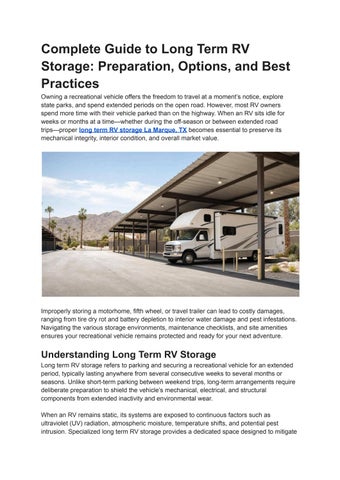
Covered RV Storage Covered storage features continuous overhead canopy structures that shield the roof and windshield of the vehicle while leaving the sides open to ambient air circulation. ● Pros: Protects against direct overhead sunlight, UV radiation, hail, and heavy rainfall; keeps the vehicle cooler; prevents roof seal breakdown. ● ● Cons: Leaves side panels and tires partially exposed to blowing rain, dust, and side-angle sun exposure. ●
Indoor RV Storage Indoor storage places the vehicle completely inside a fully enclosed garage unit or building, protected by a secure, roll-up door. ● Pros: Maximum protection from all weather elements, UV rays, windborne debris, and atmospheric moisture; enhanced security; protection against pest invasion. ● ● Cons: Highest price point; requires precise clearance measurements for entry doors. ●
Benefits and Considerations of RV Storage Types
Feature / Criteria
Outdoor Storage
Covered Storage
Indoor Storage
Protection Level
Basic exposure protection
Overhead weather shield
Complete perimeter protection
UV & Sun Shielding
Low (requires covers)
High (overhead)
Maximum (100% enclosed)
Cost
Budget-friendly
Moderate
Premium
Best Used For
Short-term or durable rigs
Seasonally used travel trailers
High-value motorhomes & classic RVs
Practical Tips for Preparing Your RV for Extended Storage Proper prep work before parking your vehicle for months at a time prevents unpleasant surprises when you retrieve it. 1. Deep Clean Interior and Exterior: Wash the exterior body, rinse the undercarriage, and apply a protective wax coating. Deep clean the interior by removing all food items, wiping down counters, and emptying trash to prevent attracting pests. 2. 3. Drain Plumbing and Tanks: Fully drain the freshwater tank, gray water tank, and black water tank. Flush black tanks thoroughly. If storing during cold seasons or freezing weather, winterize the plumbing lines with non-toxic RV antifreeze. 4. 5. Manage the Battery and Electrical Systems: Turn off all main disconnect switches. Connect chassis and house batteries to a battery tender via electric hookups, or disconnect and remove batteries entirely to prevent parasitic battery drain. 6. 7. Care for Tires and Suspension: Inflate tires to the manufacturer's maximum recommended cold pressure to prevent flat-spotting over time. Place rubber blocks or tire pads under the tires to isolate them from cold concrete, and put chocks in place to secure the vehicle on level ground. 8.
9. Protect Roof and Body Seals: Inspect all roof seams, lap sealants, and window seals for cracks or gaps before storing. Repair sealants to prevent moisture intrusion during heavy rains. 10. 11.Maintain Fuel Systems: If storing a motorized RV, fill the fuel tank to near capacity to prevent condensation build-up inside the tank, and add a quality fuel stabilizer running the engine long enough to circulate it through the fuel system. 12.
Common Mistakes to Avoid During RV Storage ● Leaving Food or Organic Materials Inside: Even sealed dry goods or small crumbs can attract rodents and insects, which can cause significant interior damage. ● ● Parking on Bare Dirt or Grass: Soft ground traps moisture against the undercarriage, accelerating rust on frame rails, axles, and suspension parts. ● ● Neglecting Battery Maintenance: Leaving batteries plugged in without a smart charger or letting them drain completely destroys battery chemistry, requiring full replacement. ● ● Using Non-Breathable Tarps: Wrapping an RV in low-cost blue plastic tarps traps condensation underneath, causing mold, mildew, and ruined paint. Always use breathable, purpose-built RV covers. ● ● Leaving Slide-Outs Extended: Keeping slide-outs extended during extended storage exposes rubber seals and hydraulic rams to the elements, increasing the risk of seal leaks and rust. ●
Choosing the Right Storage Facility Selecting the ideal venue for long term RV storage requires looking closely at security features, site conditions, and operational convenience. Confirm that the facility provides wide concrete driveways and spacious turn aisles to make parking stress-free. Facilities offering drive-up storage access, online bill pay, and month-to-month storage rentals allow owners to manage their storage arrangements with maximal flexibility. Security remains a top priority: verify that the property features bright perimeter lighting, automated keypad entry systems, fully fenced grounds, and continuous video surveillance to monitor vehicle access round-the-clock.
Long Term RV Storage Options in La Marque, TX For recreational vehicle owners living in or traveling through Galveston County and the greater Houston area, choosing a facility capable of handling coastal weather conditions is key. High humidity, direct sun exposure, and coastal air in eastern Texas require proactive vehicle protection to keep gel coats glossy and mechanical systems operating smoothly. In La Marque, TX, facilities designed specifically for oversized recreational assets offer tailored storage setups. For instance, Boat City Storage La Marque provides options such as
indoor RV storage, outdoor RV storage, drive-through storage access, and drive-up storage access on stable concrete grounds. Outfitted with features like 24-hour gated access, keypad entry, video surveillance, on-site electric hookups, wash-down areas, and wide concrete driveways, local facilities make it easy to maintain, protect, and store travel trailers, motorhomes, and fifth wheels securely between road trips.
Conclusion Securing reliable long term RV storage is one of the most effective steps you can take to preserve the value, appearance, and mechanical integrity of your recreational vehicle. By selecting the appropriate space—whether indoor, covered, or outdoor—and performing thorough pre-storage preparation, you shield your investment from premature wear, environmental hazards, and costly repairs. Taking the time to evaluate facility security, accessibility, and ground surfaces ensures that your motorhome or trailer stays fully protected and ready for your next journey.
Frequently Asked Questions How long can an RV safely sit in storage without being driven? An RV can safely sit in storage for several months if properly prepared. However, it is advisable to inspect the vehicle every 30 to 60 days to check tire pressures, verify battery charge levels, inspect for pest signs, and start motorized engines or generators to circulate fluids.
Should I keep my RV plugged in while in long-term storage? Yes, keeping your RV connected to an electrical outlet using a smart charger or trickle charger keeps house and chassis batteries fully charged without overcharging them. If electricity is unavailable, disconnect the battery cables to prevent parasitic drain.
Is indoor RV storage worth the extra cost? Indoor RV storage provides the highest level of protection by insulating the vehicle from direct sunlight, hail, extreme heat, heavy rain, and blowing debris. For owners of high-value motorhomes, new travel trailers, or classic RVs, the protection against roof leaks, paint fading, and seal breakdown often offsets the higher monthly investment.
How do I prevent tires from developing flat spots during storage? To prevent flat spots, inflate tires to the manufacturer's cold inflation pressure recommendation before parking. For long-term stays, park on clean concrete rather than soft earth, use level leveling blocks, or occasionally move the RV a few feet to shift the resting pressure points on the tread.
Can I leave liquid in my RV tanks during long-term storage? Freshwater, black, and gray tanks should be fully drained and flushed before placing an RV in extended storage. Leaving standing liquid causes foul odors, invites algae or bacteria growth, and risks severe pipe damage if temperatures drop below freezing.
What is the advantage of concrete driveways at an RV storage facility?
Wide concrete driveways provide a clean, level, and highly stable surface that prevents heavy RV tires from sinking into soft ground. They also minimize dust accumulation on vehicle exteriors and make backing up and turning wide-beam trailers and long motorhomes substantially easier and safer.
Contact us today to find secure, reliable long-term RV storage that fits your vehicle and storage needs.