

Hello, and Happy New Year! I’m Heather Arias de Cordoba and following Dave White’s retirement, I am stepping into the role of editor of BoardRoom magazine.
I’ve spent over 25 years in the private club industry and many rewarding years as John Fornaro’s business partner and I’m excited to bring my passion and experience to our readers.
Over the years, I have worked closely with many of you as associate editor / creative director and, most recently, chief content officer. I’ve watched firsthand as our magazine has grown into the trusted resource it is today. Together, we’ve celebrated countless achievements, shared invaluable insights and supported club leaders and board members nationwide and around the world, helping them elevate their member experiences and redefine their club culture.
I’ve had the privilege of driving our digital presence and engaging with you through social media. And these experiences have deepened my appreciation for our vibrant community and reinforced my commitment to elevating BoardRoom’s influence within the industry. As editor and co-publisher, I aim to build on this foundation and continue providing the insights and inspiration you rely on.
One of my main goals for the future of BoardRoom is to enhance our digital presence. We’re launching a new website that will serve as a comprehensive hub for all things related to private club governance. This robust platform will not only provide our readership with the past 10 years of BoardRoom magazine content online but also feature new and updated sections like Innovative Ideas for Clubs, ClubTalk Podcasts and Videos, Insight Exchange for vendors and clubs, and Alliance Insights for partner associations.
Our new website will make our rich content readily available when you need it most. It will also help foster connections within the club industry. Whether you’re a staff member, general manager, board member, committee leader, someone new to this industry or a seasoned veteran, BoardRoom will remain your go-to source, making it easier to find the content you need. And in some cases, providing solutions to questions you didn’t know you had!
A little further down the road, we will establish the BoardRoom Foundation. This initiative, which is close to my heart, will further our educational mission by working alongside leading hospitality schools by providing scholarships for students and interns, ensuring that the private club industry continues to thrive with a new generation of leaders.
I’d also like to take a moment to acknowledge Dave White, now our editor emeritus. His 22-year tenure has been remarkable. His mentorship has helped shape my approach to storytelling and leadership. Dave’s dedication to our mission has set a high standard, and I’m committed to carrying that mission forward. As part owner of BoardRoom, Dave will continue writing some stories throughout the year.
BoardRoom has always been more than just a magazine. Over the past 29 years under John’s leadership, we’ve focused on building a community of pas-

sionate professionals dedicated to excellence in private clubs. As editor, I will continue to emphasize storytelling that resonates, incorporate innovative ideas and focus on the human side of our industry. By highlighting the successes and challenges we face, we can learn from each other and drive our industry to new levels of success.
BoardRoom magazine will be at the upcoming CMAA World Conference in Tampa alongside representatives from Distinguished Clubs, Distinguished Golf Destinations, APCD and BoardRoom Institute, and I look forward to connecting with many of you there. It’s always inspiring to share experiences and discuss the future of our industry and I’m eager to hear your stories and learn how we can continue to support each other in our shared mission.
Thank you for your continued support and for being a part of the BoardRoom community. If you have an idea or story you’d like to share, please send me an email to heather@boardroommag.com.
Here’s to a successful year ahead!
Heather Arias de Cordoba Editor
Publisher/CEO
John G. Fornaro
Editor/Co-Publisher
Heather Arias de Cordoba
Editor Emeritus
Dave White
Copy Editor
Chryssoula Filippakopoulos
Innovative Ideas Editor
Chryssoula Filippakopoulos
APCD Executive Director
Bill Thomas
Co-Founder/CEO
John G. Fornaro
President
Keith Jarrett
COO Distinguished Clubs
President Distinguished Golf Destinations
Ron Banaszak, CCM, CCE
Chief Analyst
Frank Gore
Chief Technology Officer
Jeff Briggs
Vice President, DGD
Editorial & Marketing Director
Dee Kaplan
Business Development
Joshua Nuzzi
Operations Director/Subscriptions
Krystal Seidel
Marketing Coordinator
Kaiya Arias de Cordoba
www.BoardRoomMagazine.com
(949) 376-8889
Paul Levy
Managing Director, DGD
Thomas Fitzgerald
Director, DGD
Christine Fitzgerald
Director, DGD
Gordon Welch, CCM, CHE
Executive Director
Bill Thomas
Director of Support Joshua Nuzzi
www.DistinguishedClubs.com www.DistinguishedGolfDestinations.com

Henry DeLozier
John G. Fornaro
Steve Graves
Contributing Writers
Rita Barreto
Frank Cordeiro
Michael Crandal
Rob DeMore
Brian Dillman
Dave Doherty
Larry Hirsh
Jakle
David Mackesey
Joe Mendez
Russell Miller
Jeff Morgan
Dave Moyer
Robert Podley
Duncan Reno
James D. Skee
Brad D. Steele
Mike Strauss
Kevin Walls
Gordon Welch













Are private club board and committee members driven by personal agendas, representing themselves or a small group of friends instead of being goal-driven? That’s a very salient question. If so, this can manifest in decision-making that prioritizes the desires of a few over the club’s broader goals.

PHILIP J. HARVEY JR.
WINTER PREPARATION A VITAL STRATEGY FOR GOLF AND COUNTRY CLUB PROTECTION
Winter is here, and golf and country club owners and operators are bracing for the challenges that colder temperatures and seasonal storms can present. From property damage inflicted by inclement weather to liability risks that accompany slippery conditions, the hazards of winter can disrupt operations and jeopardize safety.

MEMBERSHIP
It is 2035 and you step into a private club. But it is not your grandfather’s mahoganypaneled, smoke-filled retreat. Instead, it is a space that feels more like a futuristic blend of a luxury hotel, a tech startup’s headquarters and a wellness retreat. The members are not just old-money elites but innovators, artists, tech moguls and socially conscious entrepreneurs. Welcome to the future of private clubs—where tradition meets tomorrow.

“We are running a multimillion-dollar business with no strategy. How can that be? Who does that?” Private club strategic thinking needs to focus on three mission-critical considerations for 2025 and beyond: (a) member engagement, (b) capital planning and (c) regeneration.

BY MICHELLE A. RIKLAN
In the dynamic environment of a private club, where teamwork is critical to ensuring smooth operations and delivering exceptional service, the language we use with each other has a profound effect on workplace culture. Every word spoken can contribute to a positive, respectful environment or undermine the overall morale. One particular phrase that stands out to me as detrimental is “do me a favor.”

I am no longer surprised by anything I see or hear, but I am compelled to chronicle a few of the most concerning things I saw and heard in 2024 (as a cautionary tale for us all!). These are common mistakes boards make. If you are working on governance this year, be sure you are not making these mistakes.

Is your club in the enviable position of boasting a sold-out golf membership? With dozens on a waiting list to join? If so, are plenty of tee times available for those high dues-paying golf members? (If not, you’re bound to hear complaints.) So, let’s address the issue of making more tee times available to accommodate more rounds of golf.

It takes an “equity whisperer” to unwind this issue with care, insight, experience and tact. The dilemma of refundable equity, a legacy marketing structure, has grown increasingly problematic for private clubs. Originally intended to give members a semblance of “ownership” by offering partial refunds upon resignation, it has instead significantly stifled clubs’ capital reserves success.

Leaders are teachers. Managers. Golf pros. Superintendents. Chefs. Dining room supervisors. Those who teach are trying to change behaviors, change the thinking, change the norms and make those changes stick. And making those ideas and those behaviors sticky “ain’t easy.”




GSI Executive Search is a premier executive search firm specializing in private clubs, hospitality and resort leadership across the U.S. With decades of expertise and an expansive network, we partner with clubs to identify and secure leaders who fit their unique culture. 12-24 month GUARANTEE PROVEN TRACK RECORD OF Culturally aligned PERSONALIZED EXPERIENCES








ON THE FRONTLINES 40
Be Essential and Exceptional So Your Club Can Be Indispensable By Russell Miller, MBA
GOVERNANCE 46
Leadership Lessons from a Board President By Robert Podley
EXCELLENCE IN CLUB GOVERNANCE . 60-62
Three Steps to Better Governance
Three Lessons to Learn from Club Employees By
Henry DeLozier
DISTINGUISHED CLUBS .......... 90-92
Montclair Golf Club
The Club at The Dunes By Ron Banaszak
DISTINGUISHED GOLF DESTINATIONS 94-96 Classic Club
The Ocean Club Golf Course By Ron Banaszak THE FACTS OF WINE 101 Teaching Wine to Your Members By Wes Hagen THIS MUCH I KNOW FOR SURE ......
A Club Leadership Lesson from Andrew Carnegie By Dick
Kopplin







Lynne LaFond DeLuca
Adventure Awaits at CMAA’s 2025 World Conference and Club Business Expo By Joe Mendez and Jeff Morgan GOLF COMMITTEE
a Membership Survey Gathering the Data You Truly
EXECUTIVE COMMITTEE
The Importance of Candor in Club Governance By Gordon Welch

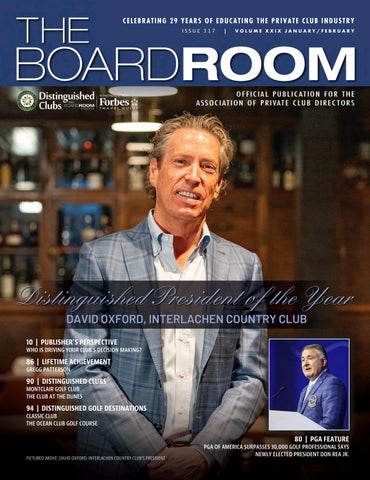
Country Club’s David Oxford Selected as BoardRoom’s Distinguished Club President for 2024
Dave White, editor emeritus

John G. Fornaro is the publisher/CEO of BoardRoom, co-founder/CEO of DistinguishedClubs and Distinguished Golf Destinations, CEO of APCD and president of BoardRoom Institute. He can be reached at (949) 376-8889 or via email: johnf@apcd.com.
Are private club board and committee members driven by personal agendas, representing themselves or a small group of friends instead of being goal-driven?
That’s a very salient question. It’s not uncommon for private club board and committee members to be influenced by personal agendas, especially if they have close relationships with certain members or if their interests align with a specific group. This can manifest in decision-making that prioritizes the desires of a few over the club’s broader goals.
However, the frequency of this behavior can vary widely depending on the club’s governance structure, the organization’s culture, and the members’ commitment to the club’s mission. Clubs with strong bylaws, transparent decision-making processes, and an emphasis on inclusivity and accountability tend to mitigate these issues more effectively.
jectivity, erodes trust, disrupts operations and damages organizational culture,” said Brett Morris, GM/COO, The Club at Admirals Cove, in Jupiter, FL.
“Decisions become biased, trust among members and staff diminishes, and the organization risks legal, ethical, and reputational harm. Addressing this requires strong governance policies, training, transparency and accountability to ensure decisions align with the collective interests of the membership.”
“It can,” he said, “disrupt the operation of a private club in several ways:
Skewed priorities, key initiatives or long-term goals are neglected in favor of short-term or self-serving decisions.
“Inefficiency, resources, time and staff energy are wasted on addressing disputes or implementing non-strategic
“When board or committee members prioritize personal agendas or the interests of their friends, it undermines objectivity, erodes trust, disrupts operations and damages organizational culture. Decisions become biased, trust among members and staff diminishes, and the organization risks legal, ethical, and reputational harm. Addressing this requires strong governance policies, training, transparency and accountability to ensure decisions align with the collective interests of the membership.”
Brett Morris, GM/COO, The Club at Admirals Cove
Many clubs implement practices such as regular evaluations, clear communication of goals, and encouraging diverse participation in leadership roles to address potential conflicts of interest. These practices help ensure that decisions are made in the best interest of the entire membership rather than a select few.
However, several things happen when personal agendas are prominent—and none benefit the private club.
“When board or committee members prioritize personal agendas or the interests of their friends, it undermines ob-
initiatives. Member discontent occurs when members feel excluded, leading to dissatisfaction, disengagement and potential loss of revenue and members resigning from the club,” he added.
Russell Sylte, general manager of The Santaluz Club in San Diego, CA, agrees. “It can have serious repercussions on the private club’s operation. Clubs thrive on collaboration, transparency and alignment with strategic goals, and when these principles are compromised, operational efficiency, member satisfaction and long-term stability can suffer.


HENRY DELOZIER
Henry DeLozier is a partner at GGA Partners. He can be reached via email: henry.delozier@ggapartners.com
“We are running a multimillion-dollar business with no strategy. How can that be? Who does that?”
This haunting description of one of many private clubs speaks to the need for an often-absent strategic plan. Private club strategic thinking needs to focus on three mission-critical considerations for 2025 and beyond: (a) member engagement, (b) capital planning and (c) regeneration.
Eric Brey leads GGA Partners’ Industry Perspective Research, which is an initiative dedicated to understanding what key stakeholders see for the future of the private club business segment.
“The Industry Perspectives research series explores unique views from within the private club, golf, resort, and residential community industry,” explained Brey, who holds a doctorate from Purdue University School of Hospitality and Tourism Management.
The 2024 Club Leaders’ Perspective, which is an integral part of this suite of research, reveals that approximately six in 10 (61 percent) club leaders, whose clubs are benefiting from the COVID-driven private club boom, are focused on three primary influences on their clubs’ going-forward strategy:
1. Member engagement is today’s priority. Most clubs have become full as a result of lifestyle changes enabled by the pandemic. While membership demand overall has cooled from 2022 levels, more than one-third of respondents indicated that their waitlists have increased over the prior year, and clubs with less than $5 million of annual revenue show softened demand while clubs with annual revenues between $10 and $25 million expect to maintain robust demand for memberships.
Three categories of concern draw the attention of club leaders:
• Increases in fees and dues have driven members—especially new members—to question the value proposition for their money. Initiation fees—the amount being charged to new members—have increased by 8.7 percent, according to GGA’s research. This amount shows a 4.8 percent year-overyear decline.
• Club leaders indicate an average dues increase of 6.2 percent, which is down 2 percent from the prior year. The pace of expense increases has decelerated over the past year as club leaders and operators have recalibrated their clubs’ operational factors.
• Capital dues—the funds intended for capital maintenance and replacements of existing assets and for capital improvement investments in new technologies and ameni-
ties for members – are forecast by club leaders to increase 12.5 percent.
2. Capital spending is surging forward. Capital planning requires intentionality, discipline and understanding. Clubs with annual revenues greater than $10 million intend to be “highly aggressive.” Overall, more than seven in 10 clubs (73 percent) intend to be highly aggressive while 25 percent of clubs plan to be highly conservative (10 percent) or neutral (10 percent).
3. Clubs are regenerating in real time. Something of a generation gap has appeared in most clubs where the most tenured and long-established members want very little capital spending and new members show the zeal of converts seeking new or improved member amenities.
Newer and younger members show impatience with aged or outdated amenities and facilities, pushing club leaders to re-invest in key attributes of the member experience. Specifically, new investments are sought for open-air or alfresco dining venues, game improvement technologies for golfers and more robust non-golf amenities such as pickleball, bocce and padel.
New club members who are savvy about capital planning and deployment are eager to invest in their clubs. Almost seven in 10 club leaders (68 percent) support this capital investment push and indicate an expectation of an improvement in their clubs’ financial position over the next 12 months.
Sound strategic planning in 2025 must reflect the real-time effect of these attitudinal trends for club leaders who recognize their duty to develop strategic solutions that keep their clubs relevant to members’ expectations. Members’ attitudes indicate the expectation that leading clubs will remain relevant to their members through steady, sound and continual investments in members’ expectations and readiness to fund primary capital projects and needs.
A forward-looking strategy for most clubs must address the evolving needs and expectations of new members, who are bent on making their clubs better and more highly relevant, while recognizing and respecting the reluctance of their clubs’ most tenured members to preserve the status quo of the club.
Strategic planning for today’s clubs must strike a balance for continuous investment, improvement and relevance to all members. This circumstance requires thoughtful planning based on high levels of member engagement and understanding within the strategic planning process. BR


At Club Data Services, we are passionate about unlocking your club's data into simple, live dashboards that are always available on your desktop and mobile device. We visualize the data hidden in your different software platforms to help increase revenue, cut expenses, and guide strategic decisions around sales, marketing, and member experience.
We're your one-stop shop for elevating your club's online experience and marketing.

Take your club to the next level with Elevate CFO & Technology Services. Our fractional CFO services help to raise the financial planning, reporting, and outlook while costing a fraction of what a full-time CFO would. With a combined 50 years of Club accounting experience, let us Elevate your club's financial performance.

Take control of your club’s inventory with NxtEdge by DiningEdge. Our platform automates inventory management, accounting integration, vendor price comparison, menu and event costing, on-property transfers, and more – all designed to simplify operations and boost accuracy.

We know club budgets are complicated and the details matter. XLerant provides cloud-based budgeting, forecasting, and reporting solutions designed with an easy-to-use guided approach for department heads, with the controls and functionality that finance needs. BudgetPak has been recognized for outstanding usability, quick implementation, and exceptional support.

NANCY M. LEVENBURG
Nancy Levenburg, PhD, professor emerita in management at Grand Valley State University’s Seidman College of Business in Grand Rapids, president of Edgewater Consulting, and a member of Spring Lake Country Club in Spring Lake, MI. She can be reached at levenbun@gvsu.edu or (616) 821-5678.
“In the midst of every crisis lies great opportunity.”
– Albert Einstein
Is your club in the enviable position of boasting a sold-out golf membership? With dozens on a waiting list to join? If so, are plenty of tee times available for those high dues-paying golf members? (If not, you’re bound to hear complaints.)
So, let’s address the issue of making more tee times available to accommodate more rounds of golf.
Option 1. One rather expensive option might be to electrify all 18 holes on the course to offer round-the-clock links play, much like outdoor platform tennis (or pickleball?) courts are lit at night to accommodate post-sundown play. I’m kidding, of course, about lighting the golf course. If we eliminate this option and consider Mother Nature’s sunrise-to-sunset schedule a binding constraint, what other options do we have?
events are not money-makers for your club. In all likelihood, the club is losing money on every meal served at the post-outing banquet despite the oft-repeated pitch from the board of directors that hosting nonmember events is neces sary to bring in revenue and profits.
It simply doesn’t work that way. The main reason, according to Mitchell L. Stump, a certified public accountant, is that these events use up your club’s assets, especially employees’ time that should be used to serve members. In other words, the direct labor costs used host these events aren’t appropriately charged to the events. Nor are the indirect costs of increased banquet traffic and the toll it takes on the facilities considered. This makes outside/nonmember events appear to be more profitable than they are.
And it means that members, in essence, are not only pre vented from playing their course while an outside golf out
If your club is faced with the “problem” of needing to create more tee times to accommodate more members wanting to play more rounds of golf, look at the number of golf outings/events you’re hosting for outsiders. If you host 10 such outings annually and can accommodate 175 rounds of golf on a typical day, this means yearly play for members can be increased by 1,750 rounds.
Option 2. Encourage golfers to play faster. If tee times are scheduled at nine-minute intervals, what would happen if you decreased this to eight minutes? Or lower? Could you speed up play if every golfer was equipped with his/her own golf cart? (This reminds me of my all-time favorite women’s event at Frankfort Country Club in Frankfort, IN...we played a two-person alternate shot event, with each golfer in her own cart. The object of the round was to play 18 holes in the shortest amount of time—not achieve the lowest score. In essence, it was a race. As I recall, it took about 80 minutes. But the amazing thing was that our scores were similar to those occurring on a leisurely four-hour round with umpteen practice swings.)
Option 3. If neither electrifying nor racing around the golf course seems like a good idea, how about this one? Eliminate golf outings/events hosted by nonmember groups that close the course to members.
No matter who is sponsoring the event – or for what cause or purpose— you must always recognize that outside
ing/event is in process, but they’re subsidizing the ability of nonmembers to play, dine and use your club’s facilities. This isn’t fair to your club members. Every tee time blocked out for outsiders’ play is a day your members can’t play.
So, if your club is faced with the “problem” of needing to create more tee times to accommodate more members wanting to play more rounds of golf, look at the number of golf outings/events you’re hosting for outsiders. If you host 10 such outings annually and can accommodate 175 rounds of golf on a typical day, this means yearly play for members can be increased by 1,750 rounds (175 x 10 = 1,750). And your club members are the raison d’être for your club’s existence.
The best part about Option 3 is that you’ll also be saving money. As President John Adams said, “Every problem is an opportunity in disguise.” BR
A LONGTIME CONTRIBUTOR TO BOARDROOM MAGAZINE, NANCY LEVENBURG IS THE RECIPIENT OF THE 2024 DAVE WHITE EDITORIAL AWARD. HER STORY WILL BE FEATURED IN THE MAY/JUNE ISSUE.




PHILIP J. HARVEY JR.
Philip J. Harvey Jr. is EVP and COO of PREFERRED CLUB Insurance Program, a leader in insurance and risk management for private and semi-private clubs. He can be reached at pharveyjr@ventureprograms.com, 1 (800) 523-2788 ext. 300, or visit www.preferredclub.com/quote.
Winter is here, and golf and country club owners and operators are bracing for the challenges that colder temperatures and seasonal storms can present.
From property damage inflicted by inclement weather to liability risks that accompany slippery conditions, the hazards of winter can disrupt operations and jeopardize safety. To stay ahead, club management should proactively approach these winter threats. Ensuring comprehensive risk management protocols and the right insurance coverage is a good place to start.
Before club owners can develop a winter risk mitigation plan, they need to be aware of the various challenges that come with the cold – including those that may be less obvious. For example, while winter weather poses risks for golf and country clubs in the form of severe snowstorms and slippery walkways, the movement of ice as it freezes also poses a serious threat.
It can expedite structural vulnerabilities within club buildings and systems. During winter, pipes can freeze, and water can find its way in via poorly maintained drainage systems. Malfunctioning heating systems and power outages are also common and can further exacerbate operational disruptions.
In addition to facility strains, outdoor spaces also pose risks to the business during the winter months. Icy walkways, unplowed parking lots and tree limbs weighed down by snow can create hazardous conditions for members, guests and staff. Liability exposures from slips, trips and falls increase dramatically during the winter months and can lead to costly legal claims and reputational harm.
Additionally, golf courses and equipment face risk exposures related to freezing temperatures and drainage issues, which can cause long-term damage if not addressed. By identifying the risks that a club may face in the cold months, club owners will be in a stronger position to develop an effective mitigation plan.
Once a risk assessment is complete and club owners understand their unique risk exposure, they should develop a plan that prioritizes proactive risk management and delegates mitigation tasks to appropriate team members. This information should also include clear timelines and task completion milestones. For example, when monitoring sprinkler systems and pipes in all buildings, including outbuildings, clubs should consider the following risk mitigation plans:
• Identify any areas that may be susceptible to drafts. Check attics and crawl spaces carefully to be sure pipes are insulated properly and that doors and access panels to non-heated areas are closed tightly.
• Ensure all heating systems are operational and the ther mostat is set to an acceptable temperature, especially when the temperature drops below freezing.
• Verify that the heat is reaching areas of the clubhouse that might be used during the winter months. Maintenance teams should be instructed to open the interior doors at times so the heat can reach unused areas of the club. These could include locker room bathrooms, offices, kitchens and board rooms/meeting rooms.
• List guidelines on how often these areas should be checked.
• Record the details of any issue found during inspections.
• Provide steps that should be taken if damage is discovered.
Club owners can minimize damage and prevent many com mon problems by developing a winter mitigation plan and preparing facilities and outdoor spaces before cold weather strikes. Winterization tasks such as inspecting fire suppression systems, servicing heating and electrical systems, and clearing drainage pathways can also help protect club assets.

An insurer who knows the golf and country club space can help owners and operators assess their unique risks, help them create a risk mitigation plan and understand the insurance coverage they need to protect the business.
A good insurance policy that covers winter-specific risks with adequate limits in place is critical.
Too often, club owners discover gaps in their coverage after a loss has occurred, leaving them vulnerable to significant expenses. Working with insurance professionals experienced in private club risk management can help you ensure your coverage matches your exposures.
Even with the best preparation, accidents and damage can occur. Tailored insurance coverage provides a safety net, helping clubs recover quickly from unforeseen events and reducing financial strain.
Winter may be unpredictable, but club owners can take steps to prepare for winter’s wrath. By combining proactive winterization strategies with robust insurance coverage, your club can reduce its risk exposure, create a safer environment and maintain operational continuity, no matter what the season brings. BR
At Clubessential, we don’t just follow trends—we set them. Our Essential Suite is designed to elevate private clubs, streamline operations, enhance member experiences, and deliver data-driven insights that position your club at the forefront of innovation.
Empower your club with tools to not just adapt but also excel in a competitive and evolving landscape.
DATA-LED DECISIONS: Harness predictive analytics to track member trends and drive strategic decisions with confidence.
INTEGRATED MEMBER JOURNEYS: Deliver cohesive, omnichannel experiences to exceed member expectations— anytime, anywhere.
SMART ENGAGEMENT
TOOLS: Capture real-time behavioral insights to foster deeper connections and retain valuable members.
EFFORTLESS SUSTAINABILITY: Leverage cutting-edge, cloud-based technology to optimize e iciency and reduce your environmental footprint.
UNMATCHED SECURITY: Ensure peace of mind with best-in-class governance and cybersecurity measures to safeguard member data.
For over 25 years, Clubessential has empowered clubs to meet challenges head-on and lead with innovation. The future of club management starts here.
DISCOVER WHAT’S NEXT FOR YOUR CLUB.
Schedule your consultation today.

MICHELLE A. RIKLAN
Michelle A. Riklan, ACRW, CPRW, CEIC, CJSS, is a Certified DiSC Trainer Career Strategist, Search and Consulting Executive for Kopplin Kuebler & Wallace. She can be reached via email: Michelle@kkandw.com
In the dynamic environment of a private club, where teamwork is critical to ensuring smooth operations and delivering exceptional service, the language we use with each other has a profound effect on workplace culture.
Every word spoken—whether to a member, colleague, subordinate or manager—can contribute to a positive, respectful environment or undermine the overall morale. One particular phrase that stands out to me as detrimental is “do me a favor.”
For example, the food and beverage director asks a restaurant manager, “Do me a favor and fix the table setups in the main dining room.” On the surface, it may seem like a harmless request, but the condescending undertone is unmistakable. It’s as if the director is saying, “Do me a favor and do your job,” which is not a favor at all. The server’s role is to ensure that the tables are ready for service, so framing it as a personal favor implies that the task is an inconvenience to the director rather than part of the manager’s responsibilities.
Language plays an outsize role in shaping the culture of a high-touch service environment like a private club, where every member’s experience matters. A simple change in wording can drastically shift how workers perceive their tasks and roles. When leaders misuse phrases like “do me a favor,” they risk souring the collaborative spirit essential for team success.
The phrase “do me a favor” carries implicit assumptions. It suggests that the person making the request is asking for something outside the ordinary that may require extra effort. However, when used in a context where the task falls squarely within the employee’s job description, the phrase trivializes the employee’s role and can seem dismissive. Instead of fostering a sense of shared responsibility, it can make the worker feel belittled.
Employees—from the pro shop staff to the groundskeepers and kitchen crew—are expected to work together seamlessly in a private club setting. Every role is integral to maintaining the club’s high standards. When management or colleagues misuse language, even unintentionally, it can create an environment where employees feel undervalued.
Let’s consider another example. A golf course superintendent says to a groundskeeper, “Do me a favor and make sure
the bunkers are raked.” The message might be clear, but the phrasing subtly implies that the task is a personal favor rather than an essential part of maintaining the course’s standards. Over time, this type of communication erodes respect, making employees feel their work is not recognized for its inherent value.
The “do me a favor” mentality isn’t the only linguistic trap managers and co-workers can fall into. Other phrases that may seem benign but can have similarly negative effects on team morale are:
1. “It’s not that difficult.” This phrase is often used when someone believes a task should be easy, implying that the employee’s struggle is due to incompetence. For instance, a clubhouse manager might say to a server having a problem with the POS, “It’s really not that difficult, you just need to …” The assumption that a task is easy for one person can make the recipient feel inadequate or embarrassed.
2. “You’re lucky to have this job.” Sometimes used to motivate employees, this phrase has the opposite effect. It frames employment as a favor given to the worker rather than a mutual agreement where both the employee and employer benefit. In a private club, where staff often take pride in their work, this phrase can be particularly demoralizing, stripping away the sense of partnership that should exist between employer and employee.
3. “That’s not my job.” While used in response to feeling overburdened, it can also serve as a roadblock to teamwork. In any club setting, everyone’s efforts contribute to the overall experience. Saying “That’s not my job” when asked to help out during a busy time can alienate co-workers and send the message that you’re unwilling to contribute beyond the bare minimum.
So, how can we shift our language to create a more positive and respectful culture? It starts with reframing how we ask for help or delegate tasks. Instead of saying, “Do me a favor and fix the table setups in the main dining room” try “Please fix the table setups in the main dining room.” This subtle change respects the worker’s role by framing it as a task rather than a personal favor.


“David Oxford’s leadership has been invaluable to Interlachen’s transformation over the last five years. His thinking around clubs and member experience, approach to governance, and support for our professional team and engagement with fellow members exemplify what it means to be a steward of an organization like Interlachen.” – Joel Livingood, Interlachen’s General Manager and CEO.
“Some boards want to run their clubs. Our board chooses to lead our club. There is a distinct difference: we spend our time talking about the brand, member experience, and strategies to drive engagement and investment. Put another way, as board members, few of us have experience running a restaurant or operating a golf course, so we choose to ask questions about what great looks like and what we can do to differentiate our club from the16 others around us.”– David Oxford, President, Interlachen Country Club.
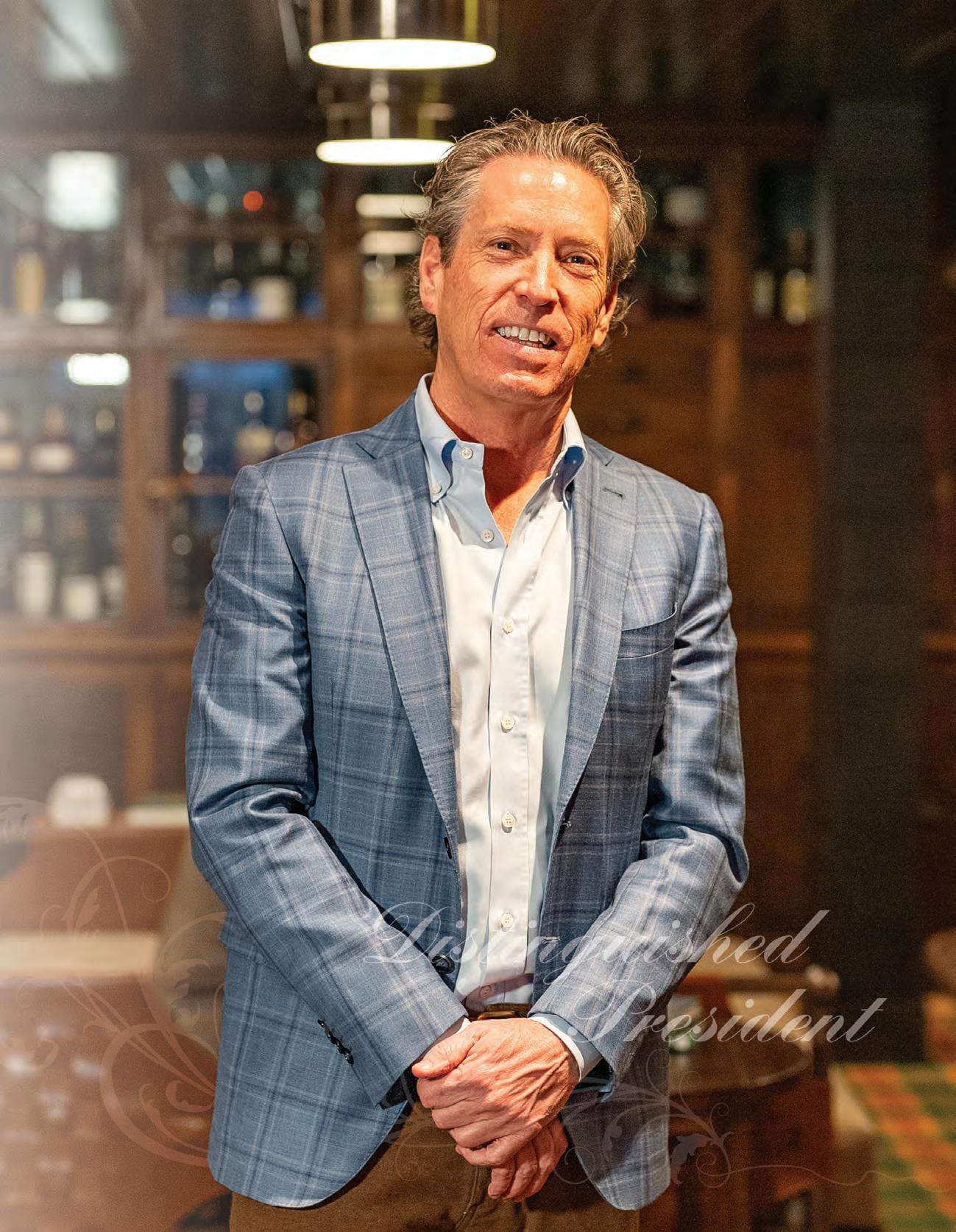
These statements highlight the reasons why David Oxford has been selected as BoardRoom’s Distinguished President of the Year for 2024.
BoardRoom magazine is again recognizing 22 Private Club Presidents of the Year 2024 for practicing what they preach: leadership for the betterment of their clubs as board presidents/chairs who serve as volunteer leaders.
This is the 17th year that BoardRoom magazine has recognized the industry’s top private club presidents for their outstanding work. BoardRoom continues to attract nominations from clubs and nominators worldwide, which confirms that the recognition of the best club presidents is relevant and required. That’s why BoardRoom magazine initiated this award many years ago.
“Our selection of the top 22 presidents and David Oxford as our Distinguished Club President signifies another successful search for leaders who have contributed so much to their private clubs and their member experience,” expressed John Fornaro, the BoardRoom magazine’s publisher and CEO.
“Helping their club define objectives, establish major goals, stay focused on its direction over time, and hire a CEO/GM are what we consider when making our decisions,” Fornaro added.
This award is based strictly on the time the board president served in 2024.
“Our goal with this award has always been to reduce micromanaging by the board of directors, show respect for the GM and recognize boards that have dealt with serious challenges, led major transformations, or maintained a successful status quo,” Fornaro added.
The basic requirements for being recognized as a top president board president are:
• Determining club mission and purpose
• Keeping, hiring or firing the CEO/COO/GM
• Reducing micromanaging of the CEO/COO/GM and staff while promoting collaborative governance
• Providing support for the CEO/COO/GM
• Financial oversight, and
• Ensuring legal and ethical integrity and maintaining accountability
• Ensuring that every board member participates, but no one dominates, and
• Board members supporting the president.
“In addition, we examine the situations the board president inherited. We then examine their role in fixing current club challenges or maintaining a club’s success if it has no issues. We also look at how they set the club up for success in the future.
“And our thanks to Kopplin, Kuebler & Wallace for their continued sponsorship and support over the past years. As one of the country’s leading private club industry consultants and executive search firms, KK&W is immersed in the private club industry. They understand the importance of a qualified, informed, and collaborative board president for a club,” Fornaro added.
The Association of Private Club Directors, the parent organization of BoardRoom magazine and Kopplin Kuebler & Wallace, involved in the program from day one, have provided the impetus for BoardRoom’s top president recognition program.
“We nominated David Oxford for Distinguished President of the Year 2024 because of his outstanding leadership and vision during his tenure at Interlachen Country Club. The main point is how progressive the club is and how it is a North Star for how great clubs will need to operate in the future,” said the KK&W partners, Dick Kopplin, Kurt Kuebler, and Tom Wallace.
“David’s approach to leadership exemplifies the ideal partnership between a club president and a general manager/CEO. His unwavering support and empowerment of the club’s GM/CEO, fellow board members and committees have set a high standard for collaborative governance.
“Under David’s leadership, Interlachen Country Club has become a premier example of excellence in private club governance, strategic planning, operations, and capital investment strategy. These efforts have resulted in a physical plant that is unparalleled in the Midwest.
“The club is widely recognized as an employer of choice, offering a workplace culture and environment that attract and retain top talent. This commitment to people, combined with David’s foresight, has enabled the club to deliver amenities, experiences, and overall satisfaction that consistently exceed expectations and set a benchmark for peer clubs,” added the trio.
“David has cultivated an environment where teamwork thrives and inspires others to push boundaries. He has guided the board and committees to achieve extraordinary results during favorable conditions, ensuring the club is prepared with resilience and strong foundations to navigate future challenges. By focusing on long-term strategy and aligning leadership efforts, David has positioned Interlachen Country Club for a vibrant and prosperous future.
“This nomination celebrates David’s ability to lead as an individual and leadership and commitment to good governance. His example reminds us that any club’s success lies in its ability to harness the collective talent, vision, and energy of its entire leadership team,” they said.
“It seems that top clubs have a few things in common: a clear identity and positioning on which they focus, a strong financial position that allows for ongoing investment, a level of hospitality and service that consistently meets or exceeds expectations, a highly capable professional team that delivers results, and an engaged membership that support the club,” responded President Oxford.
“We believe that governance is forward-looking. It’s about creating a process for making good decisions for our club’s future.
At Interlachen, our board of directors is highly focused on how to continue to deliver on the club’s mission over the next decade and beyond. We ensure the structure, funding, policy, and planning support our club’s collective, long-term interests. We don’t manage the club; we ensure it is well-managed.
“I cannot speak highly enough of my fellow board members. It is a group of leaders who put the club’s interests above their own. Each strives to look at decision-making through the lens of we and us versus me and I—easier said than done,” Oxford added.
“I believe boards should complement the management team. Over the last several years, Interlachen has shifted from operational to strategic governance. Led by a strong partnership with our general manager and CEO and a mutual understanding of expectations and accountability for results, we have created an environment where our professional staff can do their best work, and our board can have the biggest impact,” Oxford opined.
“Being a champion for the club’s mission and purpose, supporting the role of the CEO/COO/ GM, promoting good, collaborative governance, providing sound financial oversight, ensuring legal and ethical integrity, maintaining accountability and engaging all board members are points central to how we think about governance and I think our industry misses that sometimes,” expressed Livingood.
“Like many clubs, Interlachen faced a challenging mid-teens golf environment. The club fell behind in critical areas because of a shrinking membership and limited forward-looking investments, leading to significant deferred capital. In many ways, the lack of investment contributed to our lack of demand,” he added.
In 2017, David was serving on the Finance Committee, where he was highly engaged in a collaborative effort with Livingood and the board of directors to rally the membership around a strategy to:

See for yourself at CMAA Club Business Expo Booth #607
1. Deliver best-in-class hospitality
2. Create a top workplace
3. Strengthen the club’s financial position
4. Establish best-practice governance
5. Bring championship golf back to Interlachen
“In 2021, David took center stage to champion a major part of the strategy: a $30 million master plan to restore the golf course and expand the casual dining, fitness, and racquet facilities,” explained Livingood.
“The project costs increased significantly from the time the project was approved to construction, requiring a second vote of support from the membership. David’s leadership of the board, engagement with members from large town hall meetings to countless one-on-one conversations and commitment to Interlachen’s mission, values, and strategy were essential to the project’s success.
“He also championed the investment in the people and operating resources necessary for Interlachen’s team to deliver a best-in-class experience and be a great workplace. Today, the results speak for themselves, notably a several-year-long golf waitlist, record engagement across all areas of the club and a high satisfaction across our team,” Livingood added.
A commitment to good governance has been a cornerstone of David’s three-year tenure as president, a first in Interlachen’s 115-year history.
“He has helped the club get the right people involved through a well-defined nominating process and thoughtful succession planning. He ensured the board is equipped with the proper resources from a robust orientation and ongoing, fact-based education on the private club business model and Interlachen’s mission and performance. He has kept the board focused on what matters – the mission, values, strategy, financial condition, long-term capital needs and executive development,” Livingood stated.
“Put another way, effective boards understand the difference between governing and managing. Interlachen’s board considers some key questions when determining if issues rise to the level of the board of directors:
• Is it big?
• Is it about the future?
• Is it core to the club’s mission?
• Is a high-level policy decision needed to resolve a situation or improve the member experience?
• Is a red flag flying?
Interlachen, founded in 1909, has long been a top 100 golf course and neighborhood club in Edina, a first-ring suburb of Minneapolis. The membership comprises 850 families, most living within three miles of the club.
The club has hosted nine national golf championships, including the 1930 U.S. Open and the 2008 U.S. Women’s Open, which will return in 2030. Andrew Green recently led a complete renovation to restore the course to its original Donald Ross design. The 2024 Fried Egg Golf Awards recognized it as the Most Improved, and Golf Magazine recently ranked Interlachen 73rd on its list of Top 100 Courses in the U.S. for 2024-2025.
In addition to the golf course, the club, since 2018, has invested over $50 million improving and expanding its other facilities. This includes renovating the original clubhouse, which dates back to 1911 and building 43,000 square feet of new construction for fitness, racquet sports and a casual restaurant.
All good reasons why David Oxford has been selected BoardRoom’s Distinguished President of the Year for 2024 BR
David Oxford, BoardRoom’s Distinguished President of the Year for 2024, and his wife, Kari, joined Edina, Minnesota’s Interlachen Country Club in 2007. Before taking on the role of president, he served on the club’s finance committee, including two years as chair.
He is a senior executive at Game-Mill Publishing, an Edina-based software company with corporate partnerships, including the PGA Tour, Paramount Global, Mattel, and many more. From 2000 to 2016, David was the executive vice president and general manager at Activision, where he led strategic and operational efforts of the more than $4 billion software publisher around the globe.
David previously served on the board of trustees at the Blake School and is currently a board member of the Spring Hill Golf Club. He earned his degree in economics from the University of North Dakota. David and Kari have three children: Elise, Ava, and Harry.
“David has led Interlachen through a particularly transformative time. His approach has been to build consensus at the board level and with the membership, to adhere to the club’s mission, vision and values, and to support a strong management team and allow them to do what they do best. As a result, the club has made critical, strategic investments in the club’s infrastructure that has meaningfully enhanced the member experience and will pay dividends for years to come.”
Brett Habstritt, Treasurer/Finance Committee Chair
“David Oxford has the best leadership skills of anyone that I have ever met. I am constantly impressed by his decisive analysis and communication of complex administrative issues.”
John Strickler, Vice President/Golf Committee Chair
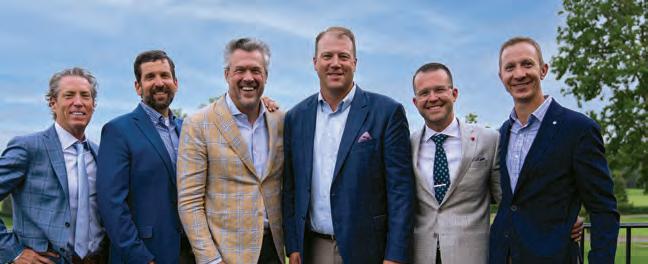

“creating your club’s road map to best in class facilities”
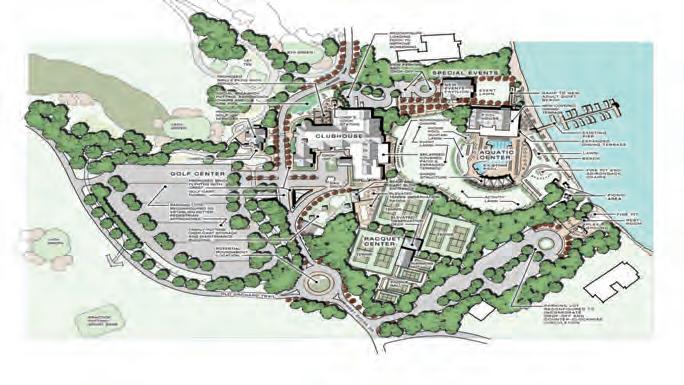
“ We interviewed six different companies, both local and national firms. The field was reduced to two national companies and in the end we overwhelmingly selected C2 Limited Design Associates. Their initial concepts were excellent, and their portfolio matched well with what we felt OLCC needed. We also felt comfortable with them handling both the design and decorating components of the project. C2 was wonderful to work with. Craig Smith has a lowkey style and is a great listener. He understands the committee process and the mind of club members. I can’t thank C2 enough for the time, effort and expertise they brought to our project.”
Nick Nicolay, Past President OLCC Board of Governor Orchard Lake Country Club
Kansas City Country Club

“transformative change to your member experience & operations”
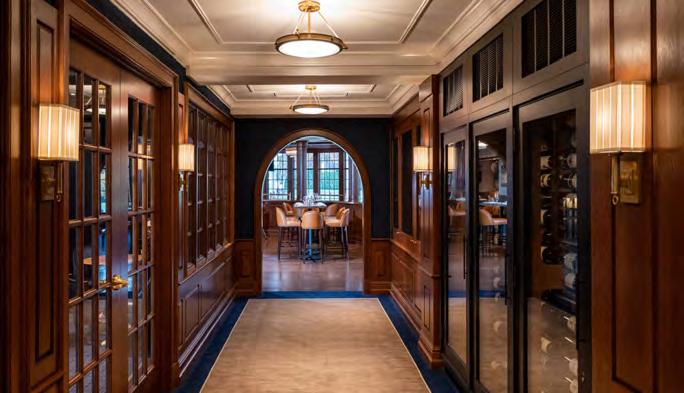








“Upon completion of a multi-million dollar clubhouse renovation, that included new and improved dining spaces, event spaces, locker rooms and overnight suites, C2 Limited Design proved to be incredible visionaries. They were able to strike a perfect balance between sophisticated and casual when it came to the different venues of Siwanoy’s new clubhouse. The outdoor space lends itself to accommodating members well into the fall season. We are excited to say that C2 delivered one of nicest the clubhouses that our members have ever experienced and we are pleased to have worked with them.”
Kevin McGuirk
General Manager
Siwanoy Country Club
Kansas City Country Club





BoardRoom magazine for the 17th year, is recognizing 22 presidents as 2024 Top Private Club Presidents of the Year for practicing what they preach – leadership for the betterment of their clubs.
Private club board presidents play a huge role in the professional operations of their club as volunteers working diligently with their board of directors and general managers, striving for well informed, but not emotional decisions.
BoardRoom magazine’s 21 most outstanding private club presidents for 2024, plus the selection of David Oxford, president of Interlachen Country Club as the BoardRoom Distinguished President for 2024, exemplifies the focus on the leadership responsibilities, the accountability and the management of the board, while providing a healthy respect for the club’s macromanagement.
“This kind of recognition for volunteers who give so much to the club has been long overdue, and since the first awards were presented 16 years ago, there’s been a steady growth in the nominations by club general managers and others in the private club industry,” expressed BoardRoom publisher John Fornaro.
These board presidents understand the importance of working, effectively and efficiently, with their volunteer boards and the dedication that’s required from everyone with whom they work.
They practice what they preach – outstanding leadership to maintain best practices and an extraordinary member experience for their members clubs.
Systems alone do not insure a good board. Key elements include commitment, competence, diversity, collective decision making, openness, transparency, effective communication with management and the membership, fiscal responsibility, development and establishment of the club’s mission, vision and policy direction, especially through establishment of a strategic plan.
Successful board presidents draw upon the expertise of other board members, the club’s institutional memory and stewardship of the club’s resources. As well, board presidents provide new board members and future presidents with information they need to perform effectively as board members.
Congratulations to BoardRoom’s outstanding private club board presidents and chairs for 2024.
David Oxford (Distinguished President of the Year) ......................................... . Interlachen Country Club
Jeanine Banks......................................... ............................ ........ Boca West Country Club
Jackson Bender............................ ......................................... ......... Piedmont Driving Club
ChristopherBurgess .............................. ................................... The American Club Hong Kong
Christine DeVita ............................ ....................................................... Governors Club
Rick Fernandes. ....................................................... .................... Grey Oaks Country Club
Shari Forman ............................ ................................................... White Eagle Golf Club
David Frank.............. ................................................................. BallenIsles Country Club
Cyndy Gilchrest .............. ............................ ........................ The Venice Golf and Country Club
Gary Lapidas............................................................................ Wyndemere Country Club
Jim Manley ............................ ............................................................ Idle Hour Club
Ken Marous Shoreby Club
Kevin Martin ......................................................................... Newport Beach Country Club
Kevin McFarlane ................................................................................... Jonathon Club
Susie Mumford ................................................................................. The Francisca Club
Trey Penny Colonial Country Club
Jeff Smith .................................................................................. Desert Mountain Club
Dwight Stone (Current President) ................................................. Grandfather Golf and Country Club
Marilyn Suey Diamond ..................................................................... Blackhawk Country Club
Miller Williams (Past President) ................................................... Grandfather Golf and Country Club
Rob Warren ............................................................................ Mission Viejo Country Club
Dennis Whalen Royal Oaks Country Club
“Kurt, I Just wanted to let you know I sat in on the training program Chris, from your team, presented at our Club. As a Board member chairing the House Committee, it is important to me that our staff gets the best training possible as we enter the new season. As I compare the training we have received in the past with what your company presented this year, I can say that I was blown away with the material, the presentation, and the staff engagement. Chris did an outstanding job and his presentation style and mannerisms resonated well with our staff. I hope you will pass this along to him.”
Chris Lesser, Board Member Tequesta Country Club, Tequesta, FL


























LYNNE LAFOND
Lynne LaFond DeLuca is executive director of ACCP and a private club industry consultant. She received BoardRoom’s GaryPlayerEducatoroftheYearAwardin 2016 and 2019 and the JohnFornaroImpactAwardin 2024. She can be reached at Lynne@TheACCP.com or by visiting www.TheACCP.com.
In a world increasingly focused on sustainability, future-proofing your club goes beyond adapting to trends; it’s about creating a long-term vision that prioritizes environmental responsibility, social equity and economic resilience.
As community leaders, clubs have a unique opportunity to drive positive change by integrating sustainable practices into their operations, events and outreach efforts, from reducing waste and conserving resources to launching green initiatives and advocating for environmental awareness.
Future-proofing your club through sustainability secures its longevity. It also strengthens your club’s role as a positive force in the community.
This article focuses on the event aspect of sustainability and explores practical steps your club can take to embrace sustainability and make a lasting, meaningful impact.
We all hear the term “sustainability,” but what is it, really, and how does it relate to club events? Let’s start with a definition for clarity purposes.
Sustainable event planning involves organizing events with minimal environmental impact while promoting social and economic benefits. The goal is to reduce an event’s carbon footprint, cut waste and conserve resources while fostering inclusivity and community support.
Focus on three key principles: environmental, social and economic responsibility.
Environmental responsibility:
• Minimize waste with fewer single-use items and promote recycling
• Use energy-efficient options, like renewable energy and LED lighting
• Conserve water and reduce pollution
• Encourage sustainable transportation, like carpooling or public transit.
Social responsibility:
• Support local businesses by sourcing materials and services locally
• Offer healthy food options and ensure venue safety.
Economic responsibility:
• Choose sustainable options that provide long-term cost savings
• Partner with local suppliers, reducing transportation emissions and boosting the local economy.
Sustainability is increasingly important to club members who want to reduce their environmental impact. Ecoconscious events allow members to feel they are contributing to a healthier planet.
Sustainable practices also enhance your club’s image, appealing to those who value forward-thinking and “luxury with a purpose.” Unique offerings like farm-to-table dining and zero-waste events blend environmental responsibility with exclusive experiences.
Sustainable events also help clubs build stronger ties with the local community by supporting small businesses and suppliers. Health and wellness benefits resonate with members seeking a balanced lifestyle. By embracing sustainability, clubs attract younger, eco-aware members and ensure long-term relevance.
RELEVANCE TO OUR ROLE AS A PRIVATE CLUB IN OUR COMMUNITIES
As a private club, prioritizing sustainability aligns with our leadership role in the community. It helps attract ecoconscious members, especially younger generations looking for venues that reflect their values.
We strengthen our commitment to the local economy by supporting local artisans and vendors. Demonstrating environmental responsibility boosts the club’s reputation and encourages innovation, creating memorable experiences that distinguish the club while benefiting the environment.
WAYS TO MAKE YOUR EVENTS MORE SUSTAINABLE
1. Reduce water usage
2. Eliminate plastic and paper products
3. Opt for local, organic food and beverages
4. Choose energy-efficient lighting, like LEDs
5. Host events outdoors to minimize energy use
6. Reduce waste by using digital invitations and materials
7. Partner with vendors who use compostable materials
8. Donate leftover food to local shelters.






RITA BARRETO
Rita Barreto is a national motivational speaker and awardwinning HR executive with over 30 years at a Fortune 500 company. She offers customized consulting to navigate change and build agile company cultures. Visit toptierleadership.com to schedule a free 20-minute consultation.
Building a culture of belonging where employees are engaged and genuinely love coming to work is essential for any business. Still, it presents unique challenges in environments requiring high-touch, in-person service, such as private clubs.
These settings often rely on the personal connection between employees and members, making traditional workplace flexibility harder to implement. However, with thoughtful strategies, clubs can create a work culture that balances their needs with employees’ desire for flexibility and respect. Here’s how to do it:
1.Understand and communicate the value of your mission
A shared understanding of the organization’s mission is at the heart of any thriving workplace culture. For private clubs, the mission often revolves around providing exceptional service and creating a welcoming atmosphere for members.
Make sure employees understand how their roles contribute to this larger purpose. When employees feel connected to the mission, they are more likely to find meaning in their work, which enhances their engagement and satisfaction.
Communication is key. Regularly reinforce the value of employees in terms of the club’s success and their positive impact on the lives of members and guests. Acknowledging the importance of employees’ work fosters a sense of pride and belonging, critical components of a positive work culture.
2.Offer flexibility where possible
While it may be difficult to offer traditional forms of flexibility in a high-touch environment, there are ways to accommodate employees’ needs. Flexibility doesn’t have to mean working from home. It can also involve adjusting shifts, allowing for personalized schedules, or offering time off for personal matters.
For example, consider implementing a shift-swapping system that allows employees to trade shifts with minimal hassle, giving them some control over their work hours. Additionally, you could explore compressed workweeks or part-time options, where feasible. Your attitude and support of flexibility will drive success.
3.Foster a culture of respect and inclusion
Respect is a cornerstone of any healthy workplace culture. Employees need to feel respected for their work and as individuals. This means recognizing and valuing differences, en-
couraging open communication and swiftly addressing issues of disrespect or discrimination.
Inclusivity also plays a critical role in building a culture of belonging. All employees should feel welcomed and included in the workplace regardless of their background. Leaders should actively listen to employees’ concerns and suggestions. By involving employees in decision-making processes, especially those that affect their work, you demonstrate respect for their opinions and experiences.
4.Invest in employee development
Employees are more likely to be engaged when they see opportunities for growth within the organization. Invest in training and development programs that help employees build their skills and advance their careers. Employee development should be viewed as an investment, not an expense.
Providing clear pathways for advancement within the club can also reduce turnover and increase employee loyalty. Employees who see a future within the organization are more likely to stay engaged and committed.
5.Create a supportive work environment
A supportive work environment is one where employees feel cared for and valued. This can be cultivated through small acts of kindness, recognition programs, and by focusing on mental and physical well-being. For instance, have you noticed employees out in the sun not using sunscreen? Show you care by providing training on the importance of wearing sunscreen.
6.Lead by example
Finally, leaders play a crucial role in shaping an organization’s culture. They set the tone for the team. Leaders who demonstrate a genuine commitment to their employees’ well-being encourage the rest of the staff to adopt the same mindset. Leaders should also be transparent and approachable. They can build trust and create a more cohesive team when they are open about the organization’s challenges and involve employees in problem-solving.
Building a culture of belonging in a high-touch environment like a private club is challenging, but it is possible with the right approach. When employees feel they belong, they are more likely to go above and beyond in their roles, ensuring the organization’s continued success. BR
From pre-hire to retire, ClubPay streamlines operations with a custom suite of outsourced Payroll and HR solutions to meet your club management needs.

History will chronicle the past 10 years as a “decade of change.” Global events have created change for time immemorial, bringing adaptation and invention.
Technology is now the ecosystem that shapes our lives, politics, markets, business, lifestyles, and societal norms. This decade, two forces have accelerated change more than anything else: pandemic policymaking and the explosion of artificial intelligence. Change has now been thrust upon us, and how we work, live and play will never be the same.
Today more than ever, success is less about having the answers and more about asking the right questions.
Pandemic policymaking unintentionally revitalized the club industry. The club experience became more relevant to people’s lives, and the national rise in club membership was a direct result. Staying relevant to both our longtime and newer members is the bold challenge ahead.

the club’s differentiation in the marketplace, and (3) knowing member preferences and usage patterns, clubs can gain insights and react with precision and speed. All of which increases the likelihood of hitting the target, and faster.
In financial planning, standard tools like balance sheets, cash flows and maintenance cost schedules were the best practices used to communicate to management for implementation and to members for transparency. Today, proper inquiry using AI can add things like a truly comprehensive tally of assets, condition, expected life, and the financial impact for proper planning and communication to the membership. Through proper inquiry, the members’ experience trends can be uncovered in real time and acted on more quickly, or even on the spot.
Like society, chief executive officers and business leaders either adapted or failed in the face of unprecedented
Today, asking the right questions...the power of inquiry is the new standard. The ability to ask the right questions might be new to the corporate suite but not to the private club professional. Successful club leaders in the C-suite have been flexing the inquiry muscle for decades. We are ahead of the curve, to be sure, but refining and improving this skill is more important than ever.
The old questions gave us answers and provided roadmaps creating a better sense of direction. We used demographics, market analysis, internal metrics and similar models. We added judgment, then action, and over time, we measured the results the best we could. While useful, much of the data was static. AI has inserted dynamic data with additional layers of context.
The power of AI has created new responsibilities. Asking questions in this era yields virtually unlimited information. Paralysis-by-data is the new risk. Used wisely, however, the power of inquiry can now affect the club industry in immediate and important ways.
Almost a decade ago, clubs used member inquiry to create the framework for initiatives such as a bold facilities improvement strategy. Bottom-up in every way, member surveys, focus groups, feedback and a successful member vote to approve the bold initiative were the common path. In today’s world, inquiry and feedback can be accelerated.
Through quality inquiry, such as (1) understanding the member’s perspective on desired amenities, (2) focusing on
change. The skill set required to succeed and thrive as a leader today has been inverted and flipped on its head. The C-suite has traditionally been the depository and resource center for finding the answers. As a senior executive and business leader, you were expected to know the answers and to articulate the path forward for all stakeholders.
Today, asking the right questions … the power of inquiry is the new standard. The ability to ask the right questions might be new to the corporate suite but not to the private club professional. Successful club leaders in the C-suite have been flexing the inquiry muscle for decades. We are ahead of the curve, to be sure, but refining and improving this skill is more important than ever. BR
Frank Cordeiro is Chief Operating Officer, Colonial Country Club, Fort Worth, TX. He can be reached via email: fcordeiro@colonialfw.com
David Mackesey was Diablo Country Club President-2013-2015, Club Historian and Retired President-The Wine Group, Inc.




When was the last time you explored the touchpoints of your club experience with a fresh set of eyes?
Have you ever sat in every chair in the members’ dining room … during dinner service? How about the bar?
Have you ever walked in the front door or pulled into the driveway with the viewpoint of someone who has never been to your club before? Were you able to figure out where to park and what entrance to use to access lunch, the pickleball courts or the pro shop? Have you ever made the turn and tried to order a drink? Do you know what it’s like to book a reservation on the mobile app or pay a monthly statement via the private website login?
Answering these questions and more is a great way to refine and/or develop perspective. Perspective is the point of view from which a story is told and factors into how the story is received. As club managers and operators, we are storytellers, and our operation makes up the pages of the book that is our club’s tale.
Every “reader” – every member and guest – experiences our story, and our details and cues carry them through to the next page, chapter and installment of the series until they reread it and/or share it with another.
One tool that supports the delivery of a great customer experience is journey mapping. By providing a roadmap of how your members and their guests interact with your brand, from being a prospective member and joining to fully using the club’s programming and amenities and connecting with fellow members, you can stay ahead of changing needs, guide capital expenditures and inform service decisions.
Whether you’re writing or rewriting your club’s story, the journey map provides insight into each touchpoint, especially in curating dining experiences and the membership sales and onboarding process. Journey mapping can also be effective in the development and design of physical spaces, digital interactions, and even for defining associate engagement.
The journey map begins and ends – and often begins again – while plotting moments and interactions that are key to the perceivers’ understanding of the story you’re telling. The real beauty of a journey map is that it is a dynamic document meant to be updated regularly. So, while the plot stays (mostly) the same, the supporting details and atmospheric features get more refined with time.
What are the components that make up this important resource? A journey map visually represents every interaction members and their guests encounter at your club and can be developed for each amenity, program, service, space and/or
department. It is an aspirational document that depicts the differentiated moments and elements at each stage of the member/guest journey, from pre-arrival to post-departure, and it provides the means to make visible all the brand moments and elements your club delivers. This tool helps ensure that all stakeholders – from leadership to associates – are on the same page about the experience your club intends to deliver. How can a journey map be beneficial in a private club environment?
• Identifies key moments of interaction: Clubs can pinpoint where the brand message is strongest and where it might be short by visualizing the steps members and guests take—from browsing the website, interacting on social media, entering the restaurant, ordering, dining, and sharing feedback. This allows decision-makers to focus on touchpoints that need better alignment with the club’s brand identity.
• Supports understanding of member and guest emotions and expectations: Journey mapping reveals customer emotions and expectations at each stage. This can inform decisions about brand tone, design elements and service styles that resonate with the target audience, creating a more cohesive experience.
• Uncovers friction points: The journey mapping process highlights pain points, such as confusing menus, long wait times or lack of personalization. Mapping out a journey helps identify moments of impact that align with or deviate from the desired brand experience.
• Guides design and service decisions: The journey map informs staff training and ensures that team members understand how to deliver the brand promise at each touchpoint. This consistency is crucial to effectively communicate and shape the repeat experiences of members and guests.
The journey map is more than a strategic tool – it supports your club’s commitment to continuously elevating its experience. By taking a step back and viewing the club and its experiences from a fresh perspective, you can gain valuable insights into every touchpoint that defines your brand and tells your story. As club managers and operators, embracing the journey mapping process allows you to write and rewrite existing moments to create a more cohesive narrative worth sharing over and over again. BR
Rob DeMore is President of Troon Privé, the private club division of Troon. He can be reached at rdemore@troon.com
Ed Doyle is President of RealFood Hospitality, Strategy & Design, a Troon company. He can be reached at eddoyle@rfhsd.com

SARAH JAKLE
Sarah Jakle is the founder and executive director of DemocraShe. She trains women to leverage their brains at Emily’s List and Northwestern University. Previously, she was Get Out The Vote Director for California NOW and National Outreach Director for Field Team 6. She holds degrees from Yale, USC, and UCLA.
Editor’s note: In Part I, Sarah addressed the imposter syndrome– the internalized belief that women, who are often uniquely suited for the connection and competence needed for club management, often have had the thought: What If I’m Not Good Enough? In Part II, Sarah focuses on seven tips to change the imposter syndrome and you find the “Inner Champion!”
Why an “Inner Champion” for women leaders? Our ancient anxious limbic system often runs off old scripts that no longer serve us.
Still, it can be easier to access encouragement for your authentically ambitious prefrontal cortex through an exterior figure you already trust to have your back.
Here are seven tips to find that “Inner Champion,” use her, and change “imposter syndrome” to “confident leadership!”
1. Pick an Inner Champion: Imagine a concrete “Inner Champion” figure who can encourage you when your anxious limbic chimes in. Who would you want in your corner, cheering you on? Some of us are lucky enough to have a real person we can turn to. But even if you don’t, science shows that a person you don’t actually know but admire works just as well. Internalizing this voice is called “resourcing.” You don’t need to know that fancy research, just that it’s incredibly effective.
2. Get specific: Is it your grandmother, your best friend, Oprah, Caitlin Clark or Sally Rambo - the very first female GM? Dogs work great - that’s unconditional support!
3. Hear the tone: The key is to think of someone who would not only encourage you and support you but who also makes you feel safe, comforted and anchored. That kind, supportive tone is the language that soothes our anxious limbic system (anxiety) just as much as being able to redirect our self-talk. So, you’re not looking for a harsh figure, you’re looking for someone that you would love to get a hug and a pep talk from when you’re in a tough situation.
4. Choose a go-to affirmation: What specific affirmation from your Inner Champion is most helpful? Is it Oprah reminding you, “You deserve to be here!” Or Caitlin Clark giving you a pre-meeting peptalk that “You miss 100 percent of the shots you don’t take - raise your hand in the meeting!” Is it picturing Sally Rambo’s hand on your shoulder as she says, “I’m right next to you in that interview - you’re not
alone!” What authentically do you need to hear - and who will best give you the message?
5. Write a note from your Inner Champion: As an exercise, picture yourself right before a big upcoming moment when your anxious limbic (our mind) tends to chime in. Really see what’s happening - who is in the room? What are you wearing? Once you have the image, write a note to yourself in the voice of your Inner Champion. What would she say about your right to be there? Put one minute on the clock and write without stopping, just letting anything flow from that Inner Champ.
6. Set reminders: How can you remember to call on your “Inner Champion” when you need her? Can you set a sticky note on your bathroom mirror? A note on the refrigerator? Can you put an “Inner Champion” reminder on your phone? What works for you?
7. Give your partner this language: Men tend to default to problem-solving, but they really want to show up for us. If you let your husband or male friend know, “Right now, I could use an Inner Champion, not a problem solver”, they immediately understand what we need to hear. Save yourself the frustration of miscommunication by establishing this shorthand for when you just need support and encouragement.
The key takeaways: imposter syndrome is not your fault. It’s the very normal response of the old part of our brain looking for threats that is aware these spaces have not looked like us and are not always warmly welcoming.
But we want agency to make our own decisions about how we show up rather than being triggered into an ancient response.
Use these tips to find and harness an effective, supportive Inner Champion. Then, let’s explore together what the world looks like when women step into their full potential. BR



BRAD D. STEELE
Brad D. Steele, JD, founded Private Club Consultants to provide legal and operational expertise to America’s top private clubs. He can be reached at steele@privateclubconsultants.net, (703) 395-5463, or linkedin.com/in/BradSteelePCC.
Now that the dust has settled from Nov. 5, 2024, and Washington, DC, is a much different place than it was a few months ago, what does it mean for private clubs?
First, it means that President Donald Trump has accomplished something that has not been done in over 130 years –win, lose and win back the White House. This last occurred in 1884, 1888 and 1892 by President Grover Cleveland.
Trump accomplished this unique feat by drawing more support from Latino and Black voters than before (and winning the Latino male vote). Over his last two campaigns, he also made gains in Democratic cities, counties and even states.
On the other hand, former Vice President Kamala Harris saw a significant number of female, male and younger voters stay at home compared to the two previous Democratic nominees for president. As an example, she won female voters by 8 percent over Trump, but that was nearly 50 percent less than former President Joe Biden’s margin of victory in 2020 and nearly 40 percent less than Hillary Clinton’s in 2016.
In addition to regaining the White House, Republicans also regained control of the Senate and maintained control of the House of Representatives (though they did so without increasing their House majority, which could cause issues moving forward). Nevertheless, with this Republican trifecta, private clubs should see more pro-club, pro-growth initiatives coming from the nation’s capital than they have in the last four years.
Under the new Trump Administration, club leaders will see a renewal of the Tax Cuts and Jobs Act. This bill, passed in 2017, reduced Americans’ income tax rates, increased the standard deduction and lowered the corporate tax rate.
Regrettably, many of the law’s provisions are set to expire at the end of 2025. However, with the Republicans in control of both chambers of Congress and the White House, it is assured they will extend the TCJA before any such provisions sunset. Not only will this bill maintain the lower tax rates, but it could also lower (or remove) taxes on tips and overtime earnings for club employees and remove taxes on members’ Social Security benefits.
In addition, Trump has proposed allowing all state and local taxes paid by an individual to be deductible from federal income taxes. Currently, a taxpayer may only deduct up to $10,000 of such taxes.
In addition to renewing the TCJA, four other major pieces of legislation must pass in 2025. First will be the government’s funding bill for the rest of FY25. This has always been a tough fight and the slim majority in the House means this will likely take time to get to Trump’s desk.
Legislation must also be passed to raise the government’s debt ceiling – allowing it to issue bonds and borrow money. Trump approved this during his first term and House and Senate Republicans should be able to pass such a bill, but some on Capitol Hill will have concerns about how much debt the country can and should amass. This issue, coupled with the FY25 government funding bill, could take time to resolve, which could slow other initiatives (like the TCJA).
Next, America’s main agriculture policy—the Farm Bill—must be renewed. The five-year bill protects our farmers, their loan guarantees and our agriculture infrastructure. Since club leaders know what their clubs’ food and beverage departments spend, this bill will go a long way to keeping those costs down.
Finally, FY26 begins in October and that means establishing the government’s funding levels for the next fiscal year must begin in April. Since Congress will be finishing FY25’s funding bill around that same time, members of the House and Senate will need to plow right into FY26. That means any FY25 fights will slip into the FY26 negotiations.
With the 2025 legislative agenda looking full, club leaders can expect the new Trump Administration to turn to the regulatory agencies to provide relief as well. How quickly new regulatory policies can be instituted will depend on how fast Trump’s cabinet is confirmed by the Senate.
At the outset, the new administration will look to repeal certain Biden-era regulations. One regulation targeted for immediate removal came from Biden’s Department of Labor: the independent contractor classification rule. While we can expect the new secretary of labor to rescind this rule, until that person is confirmed it will still be on the books.
The good news is Trump’s DOL will not enforce it. The bad news is this rule is not just enforceable by DOL. Any employee can claim that a club violated the independent contractor rule and file suit. So, while the regulatory environment will be good for clubs, a bad rule or two may still be here for a while.


RUSSELL MILLER
Russell Miller, MBA, is general manager of the Balboa Yacht Club, Corona del Mar, CA. He can be reached via email: russell@balboayachtclub.com
There are elements in life that are essential but not necessarily exceptional. These can include the things we rely on daily, like a morning cup of coffee, a comforting meal or a favorite activity.
They add value to our lives. Without them, something would feel amiss. They are necessary but not extraordinary. Similarly, some things are exceptional but not essential. These might be gourmet dinners, luxury cars or dream vacations—experiences or items that stand out due to their high quality, but we can live without them. They are memorable, even remarkable, yet we don’t rely on them to feel complete. When something is truly indispensable, however, it becomes irreplaceable and essential to the point where alternatives simply won’t do. Indispensable is what every club should aspire to be in the lives of its members. For a club to reach this status, it must be essential and exceptional, and provide reliable and superior value.
To be essential, a club must meet its members’ fundamental needs and desires, becoming a meaningful part of their lives. This process is a dialogue, responding to and amplifying the interests that led members to join in the first place. If members weren’t drawn to the core offerings, they wouldn’t have joined, so the goal is to create a consistent and positive reinforcement of what they already value.
Engaging members to become essential to them requires regular, meaningful interactions that reinforce the positive experiences they associate with the club. Every touchpoint— from communication to on-site experiences—should serve as a gentle reminder of the joy, relaxation or community they feel within the club. This fosters a connection where the club becomes integral to their routine, something that elevates their lifestyle consistently, not sporadically.
To build this habitual engagement, clubs should focus on understanding members’ preferences and personalizing their experiences. When members feel recognized and valued, they’re more likely to see the club as essential in their lives. A club that is a natural part of a member’s routine or lifestyle is well on its way to becoming indispensable.
While becoming essential is about dialogue and connection, becoming exceptional is a monologue where the club
consistently exceeds members’ expectations. To be truly exceptional, a club must not only understand the baseline expectations of its members but also surpass them in memorable ways that align with the club’s unique identity. Exceptional service isn’t just about meeting standards; it’s about offering experiences that members can’t easily find elsewhere.
The path to exceptional service begins with accurately assessing where members’ expectations lie. For some clubs, this might mean focusing on impeccable dining experiences or curating a superior golf course. For others, it may center on exceptional events or an environment where members can relax with unmatched privacy. Once these expectations are clear, the club should strive to exceed them, adding touches that make the experiences uniquely valuable.
Exceptional service doesn’t necessarily mean luxury. It is about attention to detail and creating memorable experiences that resonate deeply with members. Whether it’s a surprise gesture for a birthday or a seamless booking process for a last-minute dinner, exceeding expectations in genuine and thoughtfully crafted ways will make your club stand out as a place of superior quality and care.
Being only essential or only exceptional will not make a club indispensable. Essential and exceptional hospitality means blending the emotional connection members have with the things they love and delivering it with a high level of performance. To become truly irreplaceable, clubs must balance providing consistent value (being essential) and elevating the quality of every experience (being exceptional).
Consider the effect of this combined approach. When a club becomes a reliable space where members know their needs and preferences will be remembered, it creates a deep emotional connection. Adding exceptional delivery—such as seamless service, personalized details or a unique atmosphere—will set the club apart from any other venue. In this way, members begin to see the club as something that improves their quality of life, a place they would find difficult to replace.
CREATING AN INDISPENSABLE CLUB EXPERIENCE
To make a club indispensable, leaders should focus on combining essential, reliable service with exceptional, memorable

LARRY HIRSH
Larry Hirsh, CRE, MAI, SGA, FRICS, is president of Golf Property Analysts, a leading golf and club property consulting firm in Philadelphia. He blogs on club and appraisal issues at blog.golfprop.com and authored TheCultureofGolf–Isn’tIt JustaGame?available at golfprop.com/the-culture-of-golf.
Accountability and fiscal responsibility.
These are two terms we often hear in discussions of politics. Regardless of a person’s political persuasion, a balanced budget and reduced debt are always front and center in our national political discourse.
Member-owned private clubs often have the same issue. Legitimately, members, like voters, often question the finances of their private clubs, particularly the decision to invest in capital improvements.
Recently, I received a call from a member of an upscale and well-known club about that club’s plans for major investment and improvements, with a significant amount of debt funding proposed. Among the things he shared with me was that the club had recently modified the bylaws to allow the board to unilaterally incur significant debt for such improvements without an approving vote of the membership.
At many clubs, board and leadership positions are filled by a slate nominated by a committee often composed of former club leaders. Membership votes either don’t happen or are nothing more than a formality. Rarely are there candidates not nominated by the committee, and the “slate” often comes from the “same old crowd.”
Frequently, this results from most members not wanting to be involved. They joined the club to be free of the day-to-day responsibilities they encounter at home or in the office and seek to use the club for relaxation and recreation. Consequently, decisions are made and funds are invested with little input from the broader membership outside a club’s “inner circle.”
Many clubs have thrived during the COVID era, and some have embarked on (often aggressive) improvement plans. An outside consultant may be promoting these plans. The plans could include pet projects of board members or have amenities that only a small portion of the club membership might use.
Since I was once a member of a club that declined any improvements and (probably as a result) no longer exists, I am generally a proponent of sensible capital improvement plans for clubs. However, as in the case of the club referenced above (and others), many seem overly aggressive, especially those requiring substantial debt financing, incurred with no need for approval from the general membership. As we all know, that debt is considerably more costly today than it was two years ago thanks to higher interest rates.
As I wrote in 2015, again in 2022 and as recently as April 2023, debt can (and has) become a major problem for some clubs and has precipitated the financial failure of many. There are various methods to calculate how much debt is “right” for any given club. Some use a debt/equity ratio, others a debt/ gross revenue ratio or a debt coverage ratio.
There are differences from club to club in what line items they include in the calculation. Some clubs include entrance fees in their revenue calculations, even when that is generally not considered operating revenue. Whichever method they choose, they must build in a margin for error.
Most experts predict that the post-COVID surge in club membership will eventually (if not sooner) subside and that those clubs that planned projects during the low-interest rate COVID era and then incurred much higher cost of debt could find themselves “in a bunker.” Companies that acquire member-owned clubs are banking on that.
The question I’m addressing today is one of responsibility. In cases where club boards can unilaterally invest and incur debt on behalf of the club, what is the accountability and what is leadership’s responsibility to the members? The member mentioned above, a former board member at his club, suggested that if the debt became unmanageable, the board would simply “throw up their hands,” apologize and assess the membership. Then what happens?
In most cases, at the very least, the membership would be displeased. In a worst-case scenario, members would leave the club and the club’s economics would deteriorate further. In those cases, the clubs become targets for acquisition and are often sold. While most certainly some clubs are more capable than others of shouldering this financial burden, I maintain that no club is “bulletproof.”
The bullet may not kill a more capable club; however, the club could be injured through the necessity for higher dues, the need for more members (placing stress on the facilities), or simply the displeasure of the membership, which could sour the club’s atmosphere and alter the club’s culture.
Having worked with many clubs through the years, I’ve observed a variety of leadership styles. Those who successfully lead their clubs financially and culturally demonstrate accountability and fiscal responsibility through transparency
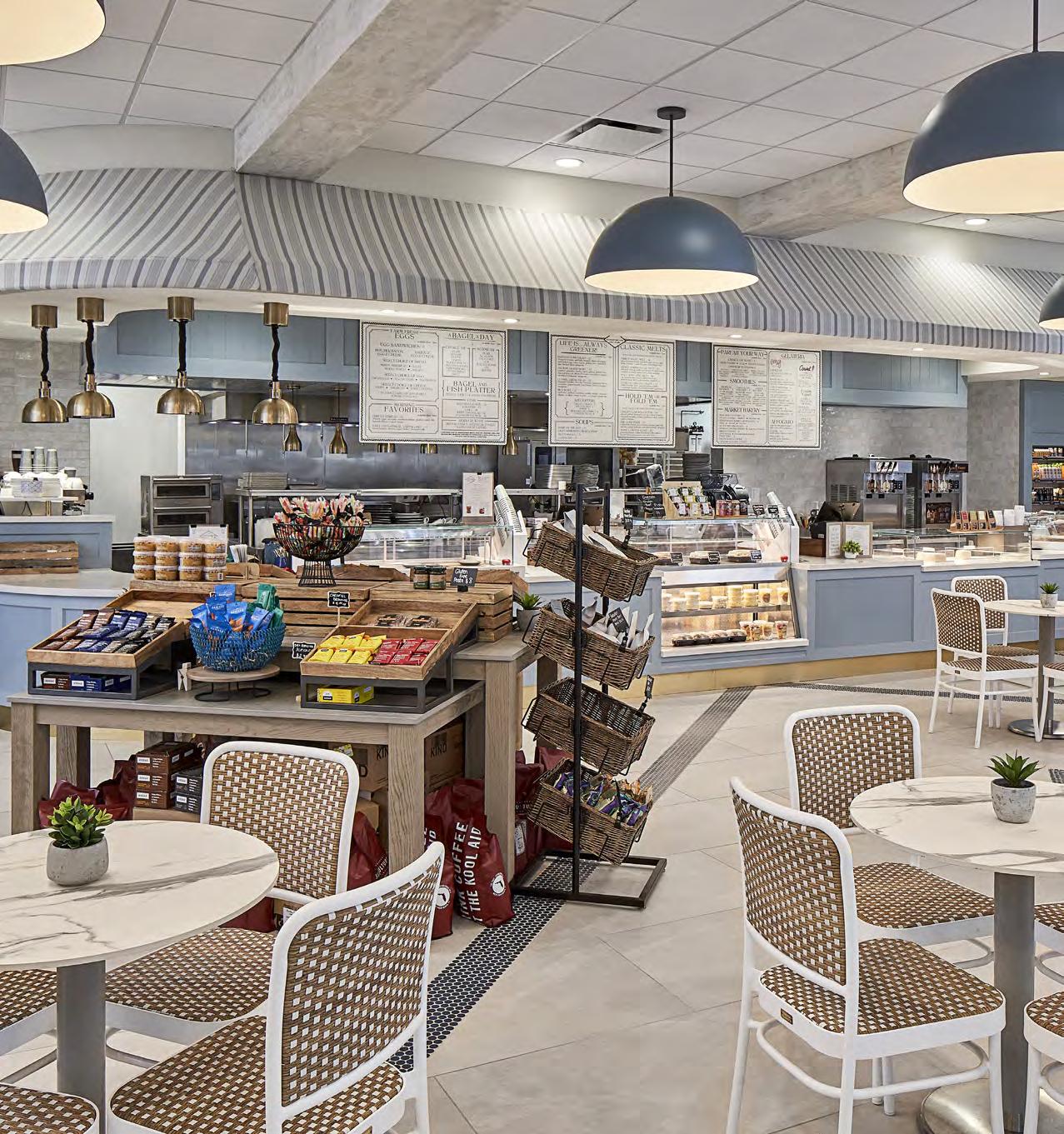

MICHAEL CRANDAL
Michael Crandal, CNG, is a national award-winning leader in building exemplary management teams. He co-authored TheABC’sof PlutoniumPrivateClubLeadershipand offers a complimentary preview at plutonium.club. He can be reachd at mjcatexmor@aol.com, (760) 464-6103 or linkedin.com/in/michaelcrandal.
The CNG black hole theory is akin to an epic outer space science fiction movie where a sudden gravitational pull is so strong that it pulls everything to the center. Orchestrating exceptional member dining experiences is similar.
The service team is constantly surveying the horizon and looking for blips on the radar screen. When a member enters time and space, all available staff immediately feel the gravitational pull toward the direction the member is headed and pull a chair. The palpable impact of a table of six being seated when suddenly six chairs are pulled creates a surreal, “Scotty, beam me up” experience.
Members are never asked for their name or membership number. Newer staff may ask a senior server. They may look it up. They will always do whatever is necessary, short of asking a member.
Greeting members by name is a commanding first impression to be repeated throughout the entire member dining experience.
As staff moves throughout the dining areas, they quickly acknowledge members they pass and move on. (Guests shake their heads. “Wow! This is incredible!”)
All beverages are served from a bar tray. Never just carried by hand. Always from the right side with the right hand, touching only the stem or bottom half of the glass when serving. Yes, ladies first.
Cocktail napkins are placed on the right side of each guest. This visually confirms to staff that drink orders have been taken. Note: This applies only to solid surface tables—no napkins on tablecloths.
When refilling water or coffee, staff “pours to the table” using a folded side towel to shield from splash. (While chances of splashing are minimal, the elevated perception of service is maximal. Is that even a word?)
The staff never asks a table who ordered what. The service team always knows where each plate is to go. Everyone is served exactly what they ordered without being asked. Boom!
The CNG black hole theory applies when delivering. Whenever staff members see a teammate serving a table, and have 30 seconds, they feel that gravitational pull and are compelled to go over and help. This blows guests’ minds
when suddenly two, three or even four servers surround their table and it’s over in seconds. Bam!
All food is served from the left side. Again—ladies first. Each plate so that the entrée is at 7 p.m. as if on the face of a clock. This means members aren’t spinning their plates to get to the entrée and conveys consistency and pride in presentation.
The CNG black hole theory applies when clearing. Whenever staff members see a teammate clearing a table, gravity in the room compels them to go over and help. It blows guests’ minds when two, three or even four servers suddenly surround their table and clear it in seconds, complete with the table being crumbed. Blam!
All plates are cleared from the right side. Ladies still first. For a smaller table, a bar tray may work. Otherwise, a larger tray and tray jack nearby. (Of course, always adhere to the service policies of your dining operation.) While these are general guidelines, the staff never scrapes plates in sight of guests.
Wrap-up: All the above can be massaged to fit your unique approach to a la carte dining service. The basic conceptual approach of the CNG black hole theory to member dining experiences can be used as a foundation to build upon team success.
Service is a managed, or orchestrated, perception left on the mind of the member/guest about the way you go about your business.
By uplifting the membership’s perception via orchestrated service, the plate presentation as if by magic is “suddenly” better. But wait. There’s more. The food tastes better and the overall dining experience is elevated simply by the staff collectively falling into a black hole.
Of note is that all the above is free. It requires no greater staffing or capital equipment purchases, just consistency and organization.
Yield to the gravitational pull of the CNG black hole theory. May the gravitational force be with you. BR

ROBERT PODLEY
Robert D. Podley, CCM, CAM is general manager at the Colonial Country Club, Ft. Myers, FL. He can be reached at (239) 768-7200 or via email: rpodley@Troon.com www.colonialgolfclub.com
As our club’s general manager/chief operating officer, I’ve often reflected on the qualities that drive sustained success in our organization.
I’ve also worked with many exceptional leaders, such as our current board president, Dan Casciano.
His approach to leadership is refreshingly simple: be authentic, be genuine and, above all, be humble. These qualities are not buzzwords but essential traits that can transform a team and foster an environment where everyone thrives.
As a latchkey child of the ’80s, much of my idealistic foundation was built upon afterschool movies and significant use of the VCR. One of my favorites from the era is “Big,” the 1988 film starring the ever-charismatic Tom Hanks.
To this day, I still love the piano scene duet with Robert Loggia. As many of you may know, in the movie, a young boy named Josh wishes to become an adult and wakes up in the body of a 30-year-old man. He navigates the complexities of adulthood with a child’s perspective and an impressive knack for making the best out of his new toy-filled life.
One of the standout moments in “Big” occurs when Josh lands a job at a toy company and gets to play with toys all day. His excitement about his work resonates with his colleagues, proving that authenticity builds trust. When leaders are true to themselves, it creates an atmosphere of honesty and transparency.
Like Josh, who embraces his inner child and isn’t afraid to share his love for all things whimsical, we, too, should cherish our passions—in today’s fast-paced environment, authenticity is often overlooked. Yet, it is the foundation upon which trust is built. Casciano understands that being true to yourself encourages others to do the same.
We shouldn’t shy away from sharing our experiences, both successes and failures, creating an atmosphere of openness. We encourage our team members at Colonial Country Club to embrace their true selves, like Josh, who unabashedly shows his excitement and curiosity. This leads to more honest communication and collaboration.
Josh’s sincere interactions, particularly with his friend Billy, underscore the importance of being genuine. Remember that memorable moment when he tries to impress his boss but ends up in an office filled with overly serious adults?
His attempts at adulting may have flopped, but his genuine spirit shines through, endearing him to everyone. In our clubs, leaders who take the time to understand their team members create a sense of belonging. When people feel valued, they’re more likely to contribute meaningfully and collaborate effectively. Just as Josh learns that authenticity is the key to building relationships, we can all benefit from a reminder that genuine connections make the work environment brighter—and possibly less prone to awkward silences.
The lesson of humility is woven throughout Josh’s journey. His realization that adulthood isn’t just about playing with toys but also involves handling responsibilities provides a profound insight.
His moment of truth comes when he confronts the consequences of his wish, leading to the realization that true strength lies in acknowledging one’s limitations and valuing the contributions of others. When Josh embraces being a kid at heart, he finds a deeper understanding of himself and his relationships.
Embracing humility in leadership allows us to create an environment where team members feel empowered to share their insights and skills. This component of Troon’s culture is part of why I have continued to consider the organization part of my extended family for 14 years. Why Troon has kept me around that long is up for discussion.
Incorporating authenticity, genuineness and humility into our leadership practices is essential for sustained success in our organizations. These values create an environment where team members feel engaged, valued and motivated to contribute their best efforts—just as Josh learns that being an adult involves more than wearing a suit; it’s about being grounded in who you truly are.
Just like Josh’s unforgettable journey in “Big” teaches us the importance of staying true to ourselves, we can elevate our clubs to new heights by fostering authenticity and genuine connections. After all, it’s not about the size of the office or the weight of the title; it’s about the depth of character and the wisdom we bring to our roles. In a world that sometimes pressures us to conform or put on a façade, we should strive to lead with these traits championed by Casciano. BR




Many of us are familiar with “The Horse Whisperer,” the film where Robert Redford plays a character gifted in understanding horses and calming even the most unmanageable ones.
His character, Tom Booker, achieves remarkable progress only because Grace MacLean, a woman grappling with trauma, agrees to participate.
A “whisperer” is someone skilled at managing difficult situations calmly and effectively—a skill crucial for private clubs entangled in the complexities of “refundable equity.” It takes an “equity whisperer” to unwind this issue with care, insight, experience and tact.
The dilemma of refundable equity, a legacy marketing structure, has grown increasingly problematic for private clubs. Originally intended to give members a semblance of “ownership” by offering partial refunds upon resignation, it has instead significantly stifled clubs’ capital reserves success.
Today, the majority of private clubs recognize that refundable initiation fees—a misnomer as refundable equity—are an unsustainable business model. Few new private clubs adopt this outdated structure, but many remain trapped in the wicked web of refundable equity.
When a private club engages Creative Golf Marketing (CGM), the first step is a thorough membership audit to evaluate and recommend strategies to optimize its membership structure for growth and financial health. Often, these audits reveal private clubs caught in the refundable equity trap. This system ensnares clubs in a tangled web that feels impossible to escape without significant upheaval and disruption to the membership. Transitioning away from refundable equity typically requires the expertise of a knowledgeable and objective third party.
The pain points of refundable equity become glaringly obvious when clubs realize that capital-starved budgets prevent needed investments while valuable initiation fees leak away with resigning members. The advice for club leaders who continue to offer this unwise structure is clear: stop immediately.
The term “equity” is frequently misused in private clubs, creating a dangerous precedent of members feeling as though their joining fees are a form of “savings” that is partially reimbursable upon departure. This misconception often results in private clubs being capital-starved because of the enormous outflow of needed cash reserves.
STEVE GRAVES
Steve Graves is president and founder of Creative Golf Marketing. He can be reached via email steve@creativegolfmarketing.com
I often hear that as an equity whisperer, I may be performing the unauthorized practice of law to tackle the bylaws that perpetuate this problematic equity structure. I’m not a lawyer—I’m a marketing consultant specializing in identifying and untangling these financial snares.
The first document I request from a club is its bylaws, to assess how the governing document dictates and impacts the club’s financial health. My recommendations to private club leaders aim to maximize a club’s financial performance by removing the constraints of refundable equity.
Club leaders and general managers often cannot address refundable equity alone. Club leaders are typically peers of the membership and, understandably, may find it challenging to champion changes that could upset long-standing norms. General managers, likewise, are cautious of spearheading initiatives that could risk their positions. This is why private clubs need to engage a third-party equity whisperer to handle the transition.
CGM has successfully guided hundreds of clubs in moving from refundable to non-refundable equity models. Here are a few notable examples.
Case Study No. 1: River Hills Club, Jackson, MS
River Hills Club needed to expand its membership base while addressing a growing “equity resale list,” with over 120 members waiting years for their memberships to be sold while maintaining their obligation to pay dues until their membership sold.
CGM’s audit highlighted the issue and developed a non-refundable membership option, which allowed members to resign on their own terms instead of waiting indefinitely. The new structure passed unanimously (230-0) at a membership vote— an exceptional outcome—and combined with a membership referral initiative, the club attracted over 80 new members within a year, stabilizing the club’s finances and reputation.
Case Study No. 2: North Ranch Country Club, Thousand Oaks, CA
In 2019, North Ranch struggled with a resale list and the burden of dues that resigning members had to pay until replaced, a process that took as many as five years. CGM conducted a strategic marketing retreat, resulting in bylaw changes that eliminated perpetual dues obligations for re-

DAVE MOYER
Dave Moyer is an RSPA Master Professional and the Director of Racquet Sports at The Country Club at DC Ranch in Scottsdale, AZ. He can be reached at dmoyer@ccdcranch.com
As racquet sports have continued to evolve over the past decade, it has been vital for clubs across the country to continue to evolve with them.
It used to be important to have a strong tennis program and maybe you offered platform, and in the last decade, it became vitally important to add pickleball. And now you see the rise in padel, which may become the next craze to sweep across the country.
The change from tennis being the dominant force in racquet sports to multiple sports has also been reflected in the United States Professional Tennis Association rebranding to the Racquet Sports Professional Association, with certifications available in tennis, pickleball, squash, platform and padel. It is more important than ever for clubs and organizations to hire certified professionals who are well-rounded in multiple areas.
If your club has invested in building new facilities and adding more amenities, make sure that you are truly building a racquet sports program, not a set of individual programs working separately. Provide a fun environment for those who play each sport, including crossover play, and for members who otherwise may never attempt to play a racquet sport.
ASSEMBLE A TEAM THAT WORKS TOGETHER REGARDLESS OF THEIR AREAS OF EXPERTISE
Hire a director of racquet sports or racquets manager to oversee the program and set a vision for the program where all areas work together.
If the program is large enough, hire a head professional to manage each department, someone with a certification for that amenity from the RSPA; the rest of the staff should be racquet sports professionals who can teach in multiple areas. The club/facility must recognize the importance of staff getting certified in multiple areas and support certification with a budget line for education.
The team should also have regular staff meetings and communication so everyone works together as a racquet sports program.
A good racquet sports program will have programming for existing members and new players. This can be done through introductory clinics and/or play or with an event open to all members. We recently hosted an open house at the courts for all club members regardless of whether they use the facility. We worked with food and beverage and mar keting to create an event that showed off our staff, facility and program. This was a free event so we budgeted for the complimentary items in the hospitality account. The night included displays of our staff and bios, our current program ming for both tennis and pickleball, an exhibition from the staff and demos by reps from Playmate and Head Racquet Sports. The event created a buzz around the club for the racquet sports program.
Hold some events together to build the synergy you want in your program. Put on a round robin with tennis and pick leball or padel so that members can socialize. This allows members to not think of each other as tennis or pickleball players but as all part of one racquet sports program.
If your club or facility has committees that meet regularly, you should have a committee to encompass all racquet sports. It is OK to have subcommittees if necessary, but creating a racquet sports committee with a cross-section of members from all the amenities you offer in your program will continue to create that synergy you seek in a wellrounded program. BR



BRIAN DILLMAN
Brian Dillman is CEO of the Racquet Sports Professionals Association (RSPA), expanding its reach to pickleball, padel, squash and platform tennis. With over 20 years in sporting goods, fitness and fashion, including leadership at Wilson Sporting Goods, he drives growth and innovation. Contact him at (773) 551-6541 or brian.dillman@rspa.net.
The Racquet Sports Professionals Association—formerly the United States Professional Tennis Association—has been the leading trade organization for racquet sports professionals since 1927.
Supporting tennis, pickleball, padel, squash, and platform tennis, the RSPA serves over 14,000 members worldwide through 17 divisions across the country. It offers career advancement support, certification and development opportunities in areas ranging from coaching and club management to executive development, sales, marketing and beyond.
Private clubs have long been the cornerstone of racquet sports, offering members exclusive experiences that blend the sports they love with community. I want to share how our organization’s evolution aligns with your club’s commitment to excellence and supports effective governance and operations.
3. Operational excellence: With leadership and management skills, RSPA-certified professionals enhance operational efficiency, staff development and positive member relations.
We understand that integrating multiple racquet sports can present challenges. Our goal is to facilitate a holistic racquet sports program through our certified coaches that enriches your club’s offerings and strengthens its competitive position.
By fostering a collaborative community, we encourage professionals and club leaders to share best practices and innovative ideas. This collective approach advances individual clubs and propels the private club industry forward, promoting a culture of continuous improvement and effective governance.
The evolution of racquet sports presents a significant opportunity for private clubs to enhance their value propo-
I invite club owners, board members and general managers to engage with the RSPA. Your involvement is invaluable, whether through hiring our certified professionals or collaborating on initiatives. Together, we can shape the future of racquet sports within private clubs, grounded in knowledge, expertise and a shared commitment to excellence.
Our mission aligns with BoardRoom magazine’s dedication to educating board members, general managers and club staff by “replacing emotion with fact.” We believe that well-informed, data-driven decisions are essential for effective governance within private clubs.
To that end, the RSPA provides comprehensive training that combines on-court expertise with off-court skills such as sales, marketing, leadership and strategic planning. Partnering with RSPA-certified professionals offers key benefits for private clubs:
1. Enhanced member experiences: Professionals trained in multiple racquet sports can offer a wider range of programs, attracting new members and increasing satisfaction among existing ones.
2. Community engagement: Our professionals excel at creating inclusive programs that foster a strong sense of community, enhancing member satisfaction and loyalty.
sition. Embracing this change can lead to increased member engagement, satisfaction and retention. We stand ready to support you by providing well-rounded, certified professionals who can drive growth and excellence.
I invite club owners, board members and general managers to engage with the RSPA. Your involvement is invaluable, whether through hiring our certified professionals or collaborating on initiatives. Together, we can shape the future of racquet sports within private clubs, grounded in knowledge, expertise and a shared commitment to excellence.
In the spirit of BoardRoom magazine’s mission to educate and inform, let’s work collaboratively to elevate our industry. By investing in the development of racquet sports professionals, we empower them to lead with integrity and create lasting, meaningful change within the private club community. Onward. BR


DUNCAN RENO
Duncan Reno, CCM, CCE is the GM/COO at Del Rio Country Club. He can be reached at (209) 341-2401 or via email: dreno@delriocountryclub.com
Committee structure can be challenging, especially with the green committee because some of the major decisions you make today for the golf course have expected results well after the green committee chair and representatives are gone.
The perfect example is the conversion of fairway turf from cool-season grasses to Bermuda and whether to overseed. How do you establish an effective committee structure for the green committee?
1. Defined roles
2. Overall golf course guiding principles (CAP)
3. Defined objectives for each aspect of the course
4. Effective approval process to protect the superintendent.
Overall golf course guiding principles: Establish guiding principles that steer golf course priorities and keep the committee and membership on task: Course Conditions, Course Aesthetics, Course Playability (CAP). With the help of the green committee, clearly define what these three principles mean for your course and begin building an operational and capital program for the club.
Defined objectives for each aspect of the golf course: The committee representatives play a major role in defining the objectives. They represent the membership and the quality of the golf course the club desires. For each area of the course (greens, tees, roughs, bunkers, lakes, etc.), clearly define the types of grass, the frequency of mowing,
The green committee protects the integrity and quality of the course. It is an advisory committee and makes recommendations for the golf course to the board of directors, which approves course actions after conferring with the golf course architect of record.
Defined roles: Having an overall understanding of the five key players in an effective green committee structure is critical in maintaining consistent and effective plans for golf course care and growth.
• Golf course architect of record: Have a credible architect who understands the design of your course because suggested or recommended changes to the course must be approved by the architect to avoid jeopardizing the integrity of the original design.
• Green chairman: Coordinates the communication between key players and administers recommendations and budget requests through the board. Clears the way for the superintendent or director of agronomy to do their job.
• Director of agronomy (GC superintendent): Is the expert. Establishes the plan and strategies to achieve the committee’s objectives.
• General manager: Supports the DOA, manages priorities and provides a plan to fund the projects and operation.
• Green committee representatives: Help define the expectations and objectives for each aspect of the club.
edging, trimming, the consistency of speed, grass heights, timing, the level of firmness, how often to verticut, aerate, apply chemicals, eradicate weeds, replace sand, etc. Then the expert can develop an operational and capital plan to achieve the objectives.
Effective approval process to protect the superintendent: The green committee protects the integrity and quality of the course. It is an advisory committee and makes recommendations for the golf course to the board of directors, which approves course actions after conferring with the golf course architect of record.
Make no changes to the golf course without the approval of the architect of record.
The board of directors approves all construction on the recommendation of the green committee. This prevents the superintendent from hanging from the proverbial limb. BR

DAVE DOHERTY
Dave Doherty is CEO and founder of the International Sports Turf Research Center, Inc. (ISTRC) and holds three patents for testing sand- and soil-based greens. He can be reached at (913) 706-6635, daveistrc@hotmail.com, or www.davedohertyistrc.com.
Why do we have underperforming turf on our golf courses? That’s a question that learning and investigation answers for us.
Recently while speaking at a couple of sales management seminars, one for a liquid sales fertilizer company and the other for a management company with about 20 different golf properties, a couple of interesting aspects arose.
The research the worldwide fertilizer company does and the components the company uses in the production of their products are in my opinion unmatched in the industry, while agronomic properties remain one of the top priorities of the management company servicing these worldwide properties.
And although the seminars for these companies—one from the consumer side and the other from the supplier side —focused on the agronomic science of physical properties, the approach needed to be tailored to the specific needs of each group.
For example, the production side of the industry stressed the importance that the finest chemical products in the world cannot function properly if the physical properties of the root zone are not in balance within themselves and with their microclimates.
ing the fact that there were issues involved that no one understood and therefore the greens needed to be rebuilt —that’s really something we have a tendency to do in this industry.
The reason for the management company’s success is two-fold. 1) The mental uniformity and tenacity of the staff of each course to find out why these particular greens were resisting all efforts to improve, and to investigate the physical properties, in addition to all of the normal causes for weak turf, such as sun amounts, air movement, quality of irrigation water, diseases etc. is a major strength.
2) The support of management in two areas: Financial and bringing in the help to assist their staffs in their investigations into the physical side of the equation.
So with the financial and moral support of management, the dollars and resources spent were minuscule in comparison to the results.
This deeper investigation into the reasons for stressed turf has allowed for quality products on the chemistry side to perform in the manner they were intended.
It’s time we as an industry started going the extra mile into investigating why we sometimes have underperforming turf. What this management company succeeded in achieving over these last few years seems miraculous today. However, it should be common in the future if we use the resources at our disposable along with a determination to find the cause for turf failure beyond what we suspect today.
The management company has had to address the major issues of repairing and/or rebuilding golf course greens.
But this company has not rebuilt one green since embarking on an agricultural program designed in part to balance physical properties and to totally check drainage using new age equipment and techniques. I’m informed that the quality of the greens has never been better, and that some of the greens being considered for rebuilding are now some of their healthiest and best greens.
The company saved millions of dollars by investigating the reasons for the greens’ failures and NOT just accept-
Yes, it’s time we as an industry started going the extra mile into investigating why we sometimes have underperforming turf. What this management company succeeded in achieving over these last few years seems miraculous today.
However, it should be common in the future if we use the resources at our disposable along with a determination to find the cause for turf failure beyond what we suspect today. So never stop learning and investigating. BR


Mike Strauss is GCSAA’s media relations manager.
One of the biggest challenges many golf clubs around the country face is finding and retaining qualified employees.
In the latest Golf Course Superintendents Association of America capital budget and labor survey, 63 percent of superintendent respondents reported finding labor very difficult to obtain. They indicated that the available labor market was bad or very bad. Only 9 percent said the labor market in their area was good or very good. Competing for maintenance team members can be difficult when fast-food chains and other jobs offer $15 or more per hour.
As an association, GCSAA is committed to helping golf course facilities attract employees and train and retain qualified staff to support the maintenance team’s efforts to provide sustainable, quality playing surfaces.
Under the leadership of Leann Cooper, GCSAA’s director, First Green and workforce development, and Shelia Finney, senior director of member programs, the association is working hard to build relationships with organizations, schools, associations and others to position the golf course maintenance profession as a viable career choice.
GCSAA is developing a career path program that attracts candidates to the profession and provides training options and educational opportunities for incoming workers and veteran employees. Beyond the GCSAA staff, the association encourages its 20,000-plus members to participate in programs to raise awareness of the profession.
Finding a labor pool begins by presenting the professional opportunities in golf course maintenance to the right segments of potential employees. Among the groups GCSAA and its members reach out to include:
First Green: GCSAA’s innovative, hands-on, STEAM-inspired field trips to golf courses introduce students from elementary through high school to potential careers in the turf industry. Superintendents have hosted more than 300 field trips, reaching nearly 18,000 students, in the last seven years.
FFA: In addition to being visible at FFA conferences and events, GCSAA has partnered with FFA to provide a competitive event for high school agricultural students emphasizing turfgrass science skills. The 2025 National Turfgrass Science Invitational debuts Feb. 3-5, during the GCSAA Conference and Trade Show. While at the industry’s biggest event, FFA
participants will have access to professional development and networking opportunities in addition to the competition. More than 1 million high school students are involved in FFA.
JAG: Jobs for America’s Graduates is a school-to-career program in 1,000 middle schools, high schools, alternative schools and community colleges across the United States and the United Kingdom. GCSAA members can serve as speakers, host interactive tours at a golf facility and/or provide job shadowing experiences for potential employees.
Warrior Alliance: GCSAA’s partnership with The Warrior Alliance develops a career pathway in the golf course maintenance industry for service members, veterans, their families and others. A nine-week skills development program in Augusta, GA, connects veterans to employers seeking job-ready veterans.
Universities/colleges/technical schools: GCSAA offers free memberships to students enrolled in a turf or related program to make them aware of the golf course maintenance profession. The annual Collegiate Turf Bowl Competition at the GCSAA Conference and Trade Show brings hundreds of college students to the industry’s largest gathering of turf professionals. GCSAA has scholarship programs to help turfgrass students pay for their education.
Career fairs: GCSAA encourages its members to act as a resource to their local community by participating in career fairs. These can take place at a golf course or in the schools, and GCSAA has a career fair toolkit for members to use at events.
Once employees are on board, an upcoming training video series for maintenance teams, which ranges from the basics to more elaborate golf course maintenance practices, will be provided. As employees progress through the ranks, there are educational avenues that help them grow. Videos, webinars, certificate and certification programs, and the GCSAA Conference and Trade Show allow golf course maintenance members to learn about the latest technologies and practices.
Retaining staff members is key, and GCSAA provides opportunities for members to stay engaged in the industry while improving their career pathways. The association offers career consulting, educational opportunities and certification series and programs, all focused on helping staff members reach their highest potential. BR

EXCELLENCE IN CLUB GOVERNANCE

HENRY DELOZIER
Henry DeLozier is a partner at GGA Partners. He can be reached via email: henry.delozier@ggapartners.com
The growing majority of clubs and club leaders seek to improve their clubs’ governance. Where to begin?
Three steps to better club governance begin with:
1. Nominations process: Club members’ trust in and respect for board nominations are built or broken through each club’s nominations process. In clubs where it is clear that a small group of members control the nominations process, be it “the old boys’ network” or otherwise, one finds disrespect for the club.
In clubs where the methods used to populate the board with trustworthy and capable members are open, fully explained and understood by all, one finds clubs that can be durable and sustainable for effective governance.
Nominations for top-performing and well-respected boards follow several important steps:
• The nominations committee is known to be trustworthy. It is clear in these clubs that members of the nominating committee have the club’s best interests at heart.
• Using a skills-based approach to nominations indicates the understanding that the nominating committee is looking at the work pending before the board and seeking highly qualified members to act well on the club’s behalf. For example, clubs exposed to high levels of risk to natural disasters should have a board member with an advanced understanding of risk management. For clubs preparing to undertake a major construction project, at least one board member should have proven experience with construction and project management.
• Nominating committee members do not have a “pet project” or preferred constituency in the club to which they may be beholden. After all, it is a private club, and everyone knows who is doing what.
2. Club committees: New guidance included within “Private Club Governance: A Handbook of Principles and Best Practices,” a guide developed by the National Club Associa-
tion and Club Management Association of America, provides seminal guidance for sound practices in club governance matters.
The handbook brings forward the concept of board committees and operating committees. Board committees - such as audit, nominations, finance - are accountable to the board. Operating committees - such as golf, grounds, tennis and house - are accountable to the senior manager. The primary objective of this structure is to align authority and accountability.
Copies of the new handbook are available on both the NCA and CMAA websites for club leaders to reference.
3. Board communications: Most club members believe that they are purposely ill-informed. In some cases that may be true and, in most cases, the lack and reliability of information from the board to the members is fixable.
Club boards must communicate in three parts:
• Redundantly: Once is not enough. Too many members miss—or fail to read—messages, so redundant messaging is essential to private clubs. Members require repetitive messaging to capture their attention and focus on key matters at the club.
• Consistently: Club boards should schedule and brand board communications to enable regular members to anticipate and identify board communications. Reliability is an important part of the message.
• Expansively: Beyond redundancy, clubs should use multiple media to ensure member awareness. These days, this approach can include hard-copy mailers, email, social media, posters and person-to-person telephone calls.
Better governance in most clubs comes down to the purposeful recruitment of board members, on-point club committees, and effective club committees. BR

a To ensure a successful result, our senior consultants do a deep dive to fully understand your operation, staffing and process flows.
a Working with you, they develop a blueprint for database construction, training and startup based on your specific objectives and time frames.
a Our team builds the database and provides position-targeted training using your data to implement the plan as designed.
a We continue the relationship over the long term to help you get the most benefit from the system and related processes. We do this through ongoing training, consulting and monitoring.


EXCELLENCE IN CLUB GOVERNANCE
HENRY DELOZIER
Henry DeLozier is a partner at GGA Partners. He can be reached via email: henry.delozier@ggapartners.com
Employees are a point of focus in most club boardrooms. There is a correlation between member satisfaction and staff satisfaction.
Staff retention and training are keys to improving the members’ experience in most clubs. In the 2024 GGA Partners Club Leaders Perspective report, club leaders indicated that enhancing the employee experience, fostering a teambased environment and improving the workspace are topmost concerns.
Most club leaders indicate an understanding that three lessons are to be learned from the survey results of some 1,700 club employees worldwide. These lessons originate from GGA Partners’ 2024 Industry Perspective Research:
1. Retention is the key. Keeping club employees drives member satisfaction and a greater sense of value received for members. The same outcome – member retention – is a top priority for employees who prefer to stay in a proven and safe environment that does not require relocation, renegotiation and re-learning.
While compensation is an understandable priority for most employees, employment benefits and stability are similarly important. Noteworthy within the survey data is the recognition that such traditional attitudes are most evident in the tenured and most experienced staff members. Newer and younger staff members prioritize compensation and recognition.
According to GGA’s Club Members’ Perspective report, most club members connect their satisfaction with employee training, which supports a reliable member experience that exceeds members’ expectations. Members emphasize their value for and appreciation of personal recognition by the staff and cross-connect that value to their overall satisfaction with the club. No one wants to be asked, “What is your number?” by a well-meaning club employee.
2. Relevance drives retention. When employees see that their needs are important and receive attention from the club’s leaders, their jobs become more relevant. The fact is that each element is important to durable staff retention planning.
Several examples of successful club programming are:
• Employee assistance funds: Pre-planned and funded employee assistance programming tells employees that the club is thinking of them when they encounter
unforeseen and insurmountable adversities such as childcare disruptions, changes in household budgeting and transportation issues getting them to and from work. Clubs with employee assistance programs report higher retention rates and great employee satisfaction scores.
• Employee scholarships: Many clubs now provide scholarship funding for tenured employees and their families. The longer-term employees can benefit the most, while all employees can benefit from financial support from the club that enables employees and their families to have better access to educational opportunities.
3. Respect is a key to employee relevance. Employees know their clubs and members very well … better than most members might guess. Thus, they know if they are respected and valued. No amount of money or innovative programming can replace club members’ genuine respect for employees.
The question is: “How should a club show its employees respect?” There are several well-proven examples at hand:
• Name recognition means a great deal. Do club leaders know the names of staff members? Employees neither expect nor want to be best friends with members. They do, however, appreciate being known and called by name. It is a form of mutual respect.
• Dining and break accommodations say a lot. Are the staff rooms and break spaces clean, well-lit, odorfree? Or are they out of the way after-thoughts? These spaces speak volumes to your staff.
• Holiday considerations matter to most employees, and the weight of the matter differs when one employee wants to work the holiday to earn extra pay and another wants time off to see their children’s faces at gift-giving moments. This factor signals to the employee that the employee is recognized and respected as an individual.
Three simple concepts – retention, relevance and respect – are interwoven to create the fabric of your club’s values and traditions. BR




TREVOR KLUKE
Trevor Kluke is marketing manager, Jonas Club Software. He can be reached via email: trevor.kluke@jonasclub.com
For those at clubs currently in the offseason, this is the time to start working on that list of technology updates and maintenance items you might have been putting off while you wrapped up the busy holiday season.
Like a personal New Year’s resolution, now is the time to get on track before members return in the coming months. Whether you need to clean up the data in your club management system, assess and replace hardware, or determine if training would help your staff, use the advice below as a maintenance guide for the new year so you can thrive in 2025.
Club staff come and go and departed staff should be deactivated as users in your club management system, club website and any other software they used. After you’ve done this deactivation process, you can plan to make it a step in a staff offboarding plan in 2025.
Next, with your food and beverage director and your chef, you’ll want to focus on your point of sale, particularly the menus and items added over the last year. Deactivate or remove old and outdated menus or those that might have been created for special events.
Menu items can also be cleaned up by removing duplicates. How many Cobb salads do you have in your point of sale? Deactivating duplicates will make it easier to build new menus and improve the accuracy of availability, pricing and modifiers.
Menu cleanup can also apply to the retail point of sale. For those running a pro shop, now is the time to clean up your SKUs by deactivating anything labeled 2024 if you’re no longer selling last year’s stock. You can also remove empty buttons from your menu designs and update pricing for 2025.
It is also important to note that Microsoft announced that it will end support for Windows 10 on Oct. 14. This means that Microsoft will “no longer provide free software updates from Windows Update, technical assistance, or security fixes for Windows 10.” Microsoft recommends upgrading to Windows 11. The upgrade could have implications for your hardware at the club.
If you haven’t updated to Windows 11, check your hardware to determine if it meets the system requirements. Even
meeting minimum requirements may not produce acceptable performance, so older hardware may need to be replaced.
A server’s lifespan is five to seven years. If you need to replace your server, it is recommended that you obtain hardware specification recommendations from your software provider and make sure you are running the recommended operating system version and SQL version if necessary.
While we’re focusing on hardware, receipt and prep printers should be tested in the weeks ahead and backup printers are a good idea to avoid downtime in the coming season. For clubs that use mobile point-of-sale tablets, it’s a good time to test battery life and order additional devices if you’re looking to expand coverage.
Unlike software that gets updated regularly, hardware can last many years without issue. The risk is that when it fails, your staff and members will feel the consequences immediately. Take the time now to assess and take action before the season begins.
As new staff members join the club in the coming months, it will be a massive advantage to your operations if they are well-trained in your club management software. Retraining by experienced staff members is a stopgap but not a substitute for professional training by your software provider.
This can come in different methods: an online session tailored to your club, webinars covering the latest features and enhancements available in your system or an on-site training session specific to your club’s needs. You should invest in training now to avoid common risks untrained club staff face, such as operational inefficiencies, uninformed decision-making and a lower quality of service for members.
The success of the upcoming season starts with today’s preparation. It’s likely that you’ve got a million things on your plate and that technology maintenance is another thing to add to your ever-growing list, but it is a crucial part of your club’s success. When your technology empowers staff to serve at their best, your members are more likely to receive an exceptional experience. To thrive in 2025, start your year with a technology resolution. BR



Adventure awaits the club industry at the Club Management Association of America 2025 World Conference and Club Business Expo, Feb. 5-9 at the Tampa Convention Center in Tampa, FL.
As the club industry’s premier annual event, CMAA’s World Conference brings together club management professionals from around the globe to connect, learn and explore the business of club operations. Attendees will experience a comprehensive range of educational sessions, networking opportunities and interactive forums, and the latest industry innovations and services showcased at the Club Business Expo. Is your management team planning to attend?
Attendees can select from more than 65 sessions across all 11 competencies essential for success in club management. Presented by industry and business experts, these sessions offer solutions to today’s challenges in club management. With nearly 50 percent of the speakers being new this year, the World Conference ensures a lineup of fresh perspectives and forward-thinking educational content.
Attendees can choose from a full slate of educational options, including six featured general sessions. Featured speakers include leaders like Opening Business Session speaker, Chef Carla Hall; General Education Session speaker, NFL Hall of Famer and Leader Brian Dawkins; CMAA Member & Chapter Awards Breakfast speaker, Colonel USAF (Ret.) DeDe Halfhill; General Education Session speaker, Strategist DeEtta Jones; General Education Session speaker, “The Hero Effect” author Kevin Brown; and Closing Business Session speaker, Celebrity Drummer Mark Schulman.
Attendees can also choose their own adventure with Open Space and tap into the wisdom of fellow managers by proposing their own topic, question or challenge for discussion. Additionally, the Idea Fair offers hundreds of club-tested solutions for events, holiday programs, staff management and incentives, membership development, and more.
NEW TREASURES AND SOLUTIONS
The Club Business Expo, Feb. 7-8, offers a two-day window to explore the offerings of more than 250 companies. Virtually every product and service essential for your club is on display at the Expo, presenting a prime opportunity for faceto-face discussions about potential purchases and a thorough exploration of possibilities.
By popular demand, CMAA will again showcase the latest in exhibitor products and services in the New Product Showcase. This year, CMAA will launch its Apparel Mart powered by Tee Commerce and offer new interactive features with a state-ofthe-art portable padel court, and an AI racquet component.
Beyond education, networking is a key feature of the World Conference. Featured networking events include the Before Dark: CMAA Welcome Reception and the Under the Sea: CMAA Networking Event at the breathtaking Florida Aquarium. This year’s World Conference bonus event will be the Super Bowl Event, bringing attendees together to watch the big game on Feb. 9.
CMAA’s on-site career resources allow clubs to post club openings at no cost and engage directly with attendees seeking new positions. Further, attendees can participate in the Career Opportunities & Networking Showcase to highlight their club and meet directly with CMAA student attendees from more than 40 hospitality programs in the US. This allows clubs to connect with individuals seeking internships and entry-level positions. For more information, including the full schedule, visit cmaa.org/conference. BR
Founded in 1927, the Club Management Association of America is the largest professional association for managers of membership clubs, with 7,800 members throughout the US and internationally. Our members contribute to the success of more than 2,600 country, golf, athletic, city, faculty, military, town, and yacht clubs. CMAA’s objectives are to promote relationships between club management professionals and other similar professions; to encourage the education and advancement of members; and to provide the resources needed for efficient and successful club operations. Under the covenants of professionalism, education, leadership, and community, CMAA continues to extend its reach as the leader in the club management practice. CMAA is headquartered in Alexandria, VA, with 40 professional chapters and 40 current and prospective student chapters. Learn more at cmaa.org.

BY DAVE WHITE, EDITOR EMERITUS
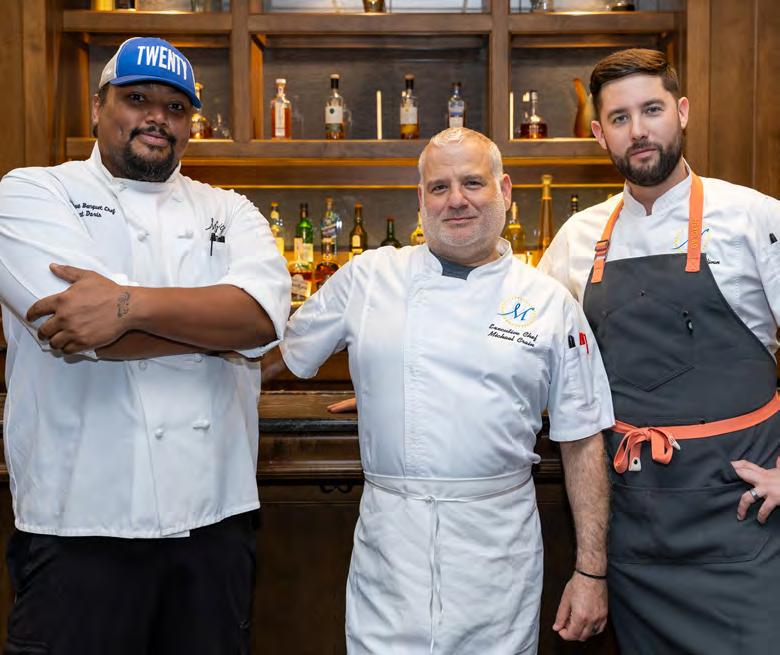
For many television watchers nationwide, Hell’s Kitchen, with raging celebrity chef Gordon Ramsay, is a must-watch show.
And participating in the reality show was an eye-opening experience for two chefs from The Country Club at Mirasol in Palm Beach Gardens, FL, who work under the mentorship of Chef Michael Crain, the club’s Director of Culinary Operations.
In fact, Mirasol’s Chef de Cuisine Ryan O’Sullivan battled his way to the top to win Hell’s Kitchen, Season 22. And Mirasol’s Executive Banquet Chef Egypt Davis competed in Season 23, now airing on Fox television, with the winner yet to be announced.
Hell’s Kitchen, a reality competition cooking show that premiered on Fox Television in May 2005, was renewed for seasons 23 and 24. Each season, a progressive elimination format reduces the field from 20 to 12 contestants to a single winner.
These two seasons were produced during the summer of 2024 at one of Ramsay’s Hell’s Kitchen at Foxwood Resort Casino in Mashantucket, Connecticut.
So, how did these two Mirasol chefs prepare for their Hell’s Kitchen experience?
“Food has been something that I never really had growing up and the lack of it made me want to surround myself with all types. So, I set out to become a chef, apprenticing under Master Chef Edward Leonard starting at the age of 17,” said Chef Davis.
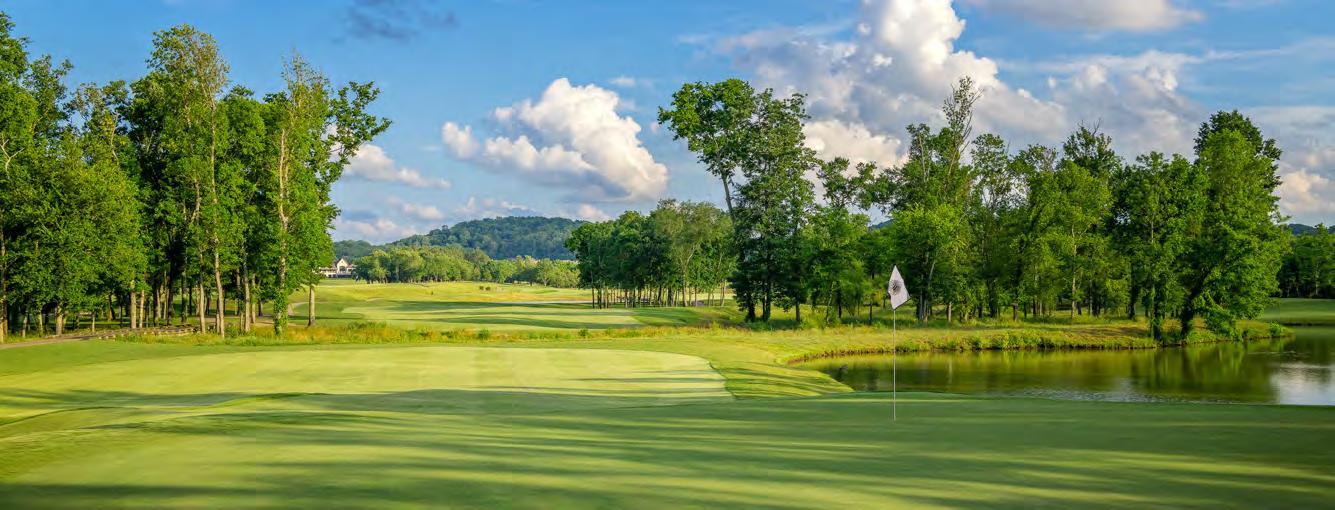

Every private club has its own unique identity and we want to help your club maintain yours. Of course, that requires a different approach than the status quo of self-management, which is why Troon Privé® continues to grow. As Troon’s dedicated private club division, we are a proven professional services organization that provides best-in-class systems, processes and resources to the private clubs we serve. Visit TheTroonApproach.com to learn more about who we are and why our clients partner with us.

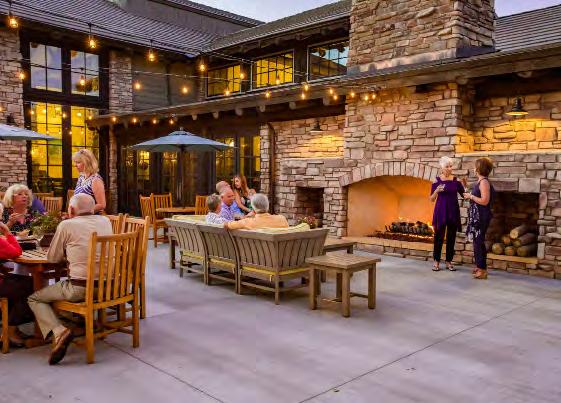

“I trained under him for about four years and another three years as the Banquet Chef at The Polo Club of Boca Raton. Ready for a new challenge and a chance to make a name for myself and my abilities, I happily joined the Mirasol family three and a half years ago upon hearing about the welcoming of creativity by the membership and Mirasol as a whole.”
For O’Sullivan, it was a family thing.
“My father is a chef, so cooking was always the main focus in my house for as long as I can remember. It seemed like the path was already laid for me, even though my parents warned me not to get into the industry.
“My journey led me to Mirasol by pure chance, as I met another cook at another club up north and he brought me to Mirasol for my second season in the US,” O’Sullivan related.
How did their experiences as chefs at a private club help prepare them for the competition?
“Working a lot of wine dinners and theme nights helped me prep for “Hell’s Kitchen” by giving me a little more of a repertoire in certain cuisines I generally wouldn’t have known much about earlier,” O’Sullivan added.
“Working as a chef in high-volume country clubs allowed me to enter into the competition with the knowledge of cooking in a high-intensity kitchen and how to be creative and come up with new dish concepts constantly,” Davis explained.
“Being the Executive Banquet Chef at Mirasol, where our membership hungers for new ‘wow factors’ in every style of cuisine, I was able to demonstrate my immense knowledge of international cuisines and modern takes on classic dishes while adding and encompassing full bodies of leveled flavor.”
Both chefs agree that Chef Crain’s leadership, combined with the advice and trust he places in them, has empowered them to take ownership of their operations, fostering confidence and growth in their roles.
What was the most important lesson you learned from competing professionally and personally?
“The biggest lesson I took away from the competition was that everyone has amazing skills in their own right, but the application of those skills varies from person to person and chef to chef. The takeaway is that there is no correct or perfect path, only the path you lay out for yourself,” Davis added.
“Probably the biggest takeaway for me was having more belief in myself and to stop professionally doubting myself. The biggest personal takeaway would be that even in a competition setting where it’s supposed to be headto-head, there is still camaraderie, which I adore the most about the industry. Also, nice guys don’t finish last,” O’Sullivan opined.
So, has life changed for these chefs since competing in Hell’s Kitchen?
“Since competing, I have gained substantial online attention in country clubs and public settings. But for the most part, life hasn’t changed,” stated Davis.
And for winner O’Sullivan, life, from a professional standpoint, has changed…a lot.
“I’ve been around America, Ireland, and the UK cooking with some top-class chefs, including a month-long stint at Gordon’s three-star restaurant in London, which was never part of the prize – but it was just always a dream of mine.
“I haven’t experienced any formidable challenges. The only obstacle I found hard to navigate was getting used to being super busy and not just dealing with day-to-day cheflife things anymore. It’s two or three full-time jobs, all balled into one now, but I’m here for it and loving every second of it,” O’Sullivan explained.
Will these experiences help the chefs enhance their club culture and elevate the member experience back at Mirasol?
“With so many talented head chefs competing, I was exposed to a wide variety of unique techniques and flavor profiles that were new to me,” said Chef Davis.
For example, the marrying of opposing flavors together, which would otherwise be on two different spectrums, being harmonized to completely change and elevate a dish, as well as implementing clearer lines of communication between cook to chef, chef to FOH and FOH to the membership, allowing for smoother services and consistency,” he added.
“Living with 17 other chefs in close quarters, for one, will definitely help you understand people’s personalities a little more, which then, in turn, gives you a little more patience when trying to communicate with people when you’re both not on the same page,” espoused Chef O’Sullivan.
“For example, understanding the language of food with members that don’t really understand cooking temperatures or certain preparations and send back food as they’re not entirely sure how or what they have ordered.
“This is always something we strive to make better/easier by simply communicating with them on a level they understand to ensure they have the best dining experience possible and everyone leaves happy. We all know it’s not that easy in the club world!” O’Sullivan added. BR


Forbes Travel Guide is the authority on hospitality excellence. We work with the best luxury hotel brands globally. Let us help you elevate your service to improve member satisfaction and retention.



Forbes Travel Guide worked with our leadership team to create custom standards and tailored training which have been implemented throughout the club. We value our partnership with Forbes Travel Guide.
Jeffrey P. McFadden Chief Executive Officer/General Manager The
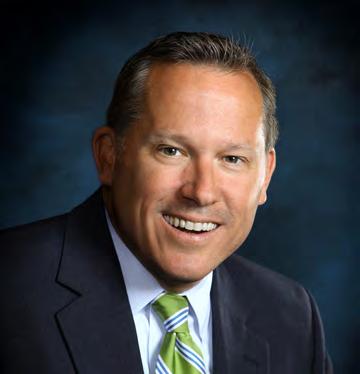

BONNIE J. KNUTSON
Bonnie J. Knutson, PhD, is a people watcher. A professor in The School of Hospitality Business, Broad College of Business, Michigan State University, Dr. Knutson is a member of the Country Club of Lansing and the Michigan Athletic Club. She can be reached via email: drbonnie@msu.edu
It is 2035—a mere decade from now—and you step into a private club. But it is not your grandfather’s mahogany-paneled, smokefilled retreat.
Instead, it is a space that feels more like a futuristic blend of a luxury hotel, a tech startup’s headquarters and a wellness retreat. The members are not just old-money elites but innovators, artists, tech moguls and socially conscious entrepreneurs. Welcome to the future of private clubs—where tradition meets tomorrow.
Private clubs have long been a bastion of exclusivity, networking and luxury. Whether it is a country club, yacht club or private social club, these institutions have traditionally catered to affluent members seeking to connect with like-minded individuals in exclusive settings.
However, as societal values evolve and technological advancements reshape how people interact, the future of private clubs is poised for transformation. To remain relevant and thrive in this changing landscape, private clubs must adapt by embracing inclusivity, leveraging technology and offering unique, personalized experiences.
Tradition has always been a cornerstone of private clubs, but today’s members seek more than just a prestigious address. Their focus is shifting toward curated experiences, personalized offerings and a keen sense of community. This trend underscores the need for clubs to redefine their value proposition. So here are the Fab Five to increase your club’s value proposition.
A new kind of community. The heart of private clubs has always been about community, but the definition of community is evolving. In the future, private clubs will focus less on exclusivity and more on creating a diverse and vibrant network of individuals who share common interests, passions and values. Inclusivity will be the new exclusivity.
Imagine that your club boasts members from every corner of the globe, each bringing unique perspectives and experiences. The criteria for membership will no longer be just about wealth or social status but about the value one brings to the community, be it through ideas, creativity or a commitment to making a difference.
The future private club will thrive on this diversity, fostering connections that might not happen elsewhere. Networking will still be key, but it will be networking with a purpose, driven by a desire to collaborate and create impact.
Social responsibility. As the world becomes increasingly conscious of sustainability and social responsibility, the private club of the future will reflect these values. Green spaces will become a norm, with clubs featuring sustainable architecture, eco-friendly materials and energy-efficient technologies. Rooftop gardens, organic farm-to-table restaurants and wellness programs focused on mental and physical health will become
standard offerings. Moreover, clubs will actively engage in philanthropic activities, using their resources and networks to make a positive impact on society. Members might participate in initiatives to support local communities, from funding educational programs to hosting events that raise awareness about pressing social issues.
Organizing charitable events, community service projects and collaborations with local organizations can allow members to contribute to meaningful causes while building deeper connections with fellow members. By aligning with causes that matter, clubs will attract those who are not just seeking luxury but also looking to be part of something bigger—making a difference in the world.
A holistic approach. Gone are the days when private clubs were synonymous with golf courses and formal dining. Today’s members prioritize wellness and recreation, seeking a holistic approach to health and well-being. Modern private clubs are incorporating fitness centers, yoga studios and healthy dining options into their offerings.
This trend aligns with the growing emphasis on mental and physical health. Clubs are introducing wellness retreats, mindfulness workshops and outdoor adventure activities to cater to the diverse interests of their members. By promoting a balanced lifestyle, private clubs can enhance member satisfaction and loyalty. Experience-driven. As consumer preferences shift toward experiences over material possessions, private clubs can focus on offering unique, memorable experiences to attract and retain members. This trend is particularly pronounced among younger generations, who value adventure, personal growth and social impact.
Clubs can capitalize on this trend by curating events and activities that cater to members’ interests and passions. This could range from organizing culinary experiences with renowned chefs to hosting talks and workshops by industry leaders and experts. By offering exclusive experiences members cannot easily find elsewhere, clubs can justify their membership fees and build loyalty.
The timeless appeal of private clubs. While the essence of private clubs will remain, the thriving private club of the future will be a dynamic, inclusive space that leverages technology to enhance human connection and enrich members’ lives. It will honor tradition but not be bound by it, embracing innovation and social responsibility.
In this vision of the future, private clubs will continue to be sought-after havens not because they exclude the many but because they celebrate diversity and bring together the exceptional few who are driven by passion, purpose and the promise of a better tomorrow. Yours will be this club.
Your bottom line will thank you. BR
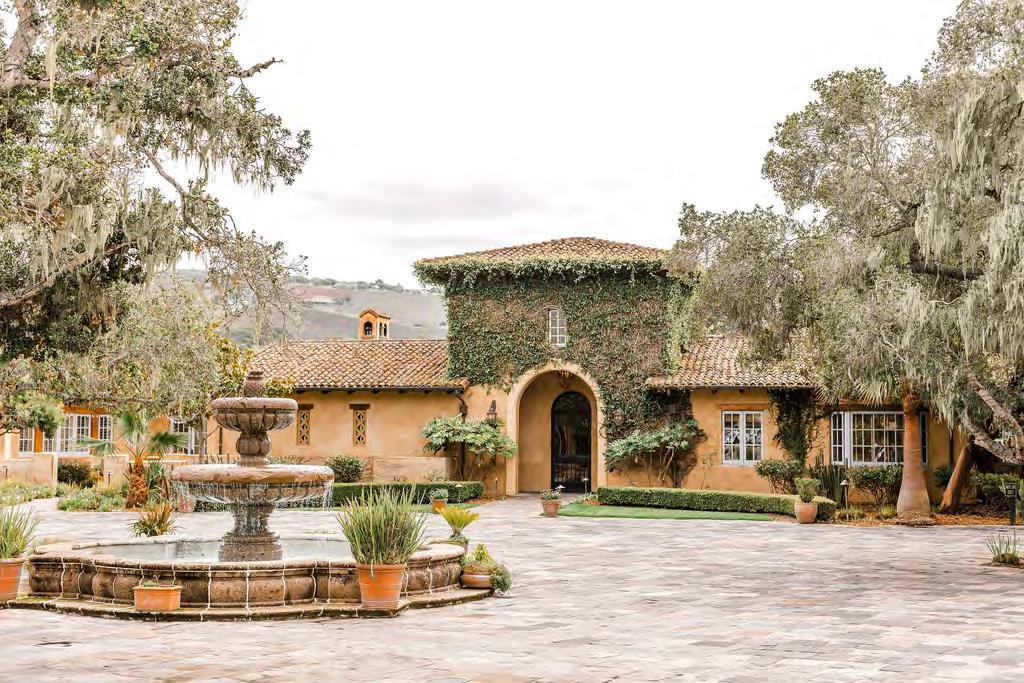

Our investor group of local residents and club members lovingly cared for this Nicklaus gem, but then ran into disagreements and capital calls.
We knew we needed an upscale, private club hospitality firm that invested for the long-term. We’ve found that partner - Concert Golf Partners is a breath of fresh air!

Many esteemed clubs, such as The Club at Pasadera, choose to partner with Concert Golf Partners as the best approach to preserve and enhance their clubs.

JOYCE M. HALAMA
Joyce M. Halama is principal trainer and club consultant at Strategic Club Solutions, offering diverse and effective training and professional development programs. She can be reached at Joyce@StrategicClubSolutions.com or (262) 661-2582
Being a leader, a key connector, means more than just training employees on tasks. It’s about bridging the gap between individual aspirations and organizational goals.
It’s the ability to inspire, guide and equip your team with the tools employees need to thrive professionally.
At the core of this connection lies employee training and development. By aligning these two processes, leaders can foster growth, build stronger teams and create an environment where success flourishes at every level. Let’s explore how these complementary strategies can help you connect with and empower your team members to reach their full potential.
It’s important to distinguish between “training” and “development,” as they refer to different yet complementary processes.
Employee development is the overall effort employers provide to help employees gradually improve their skills, acquire new knowledge and progress in their careers. It involves casting a vision and creating a growth plan or roadmap to help them grow and achieve their professional goals.
One could look at development as working with your employees to be the architects of their careers. Think of development as designing a career blueprint with your employees. It’s similar to a conversation with an architect or interior designer: What will the final renovation result look like? How many floors? What color will the walls be? Spiral or straight staircase?
During these conversations, seek to understand where the employee wants to be in the next month, year or five years. A brief SWOT (strengths, weaknesses, opportunities, threats) analysis can provide insight into the employee’s current position. Always remind your team members that weaknesses or threats represent skills they haven’t mastered—yet.
Employee training, on the other hand, refers to specific programs designed to enhance employees’ technical and soft skills so they can perform their jobs more efficiently, successfully or safely. Training supports each step of an employee’s development plan by delivering the “concrete” skills training necessary for growth, much like how a contractor brings an architect’s vision to life.
Just as the contractor is the architect’s partner in crime, focused on the nuts and bolts of construction, training zeroes in on the specific details that support the broader development vision for an employee. What supports are needed under the
flooring? What bolts secure the stairs? What type of wood is best for the hardwood floor? When do the doors get hung? Similarly, in training, you provide employees with the precise tools they need to build their skills, whether it’s mastering inventory management, understanding food costs, or knowing when and how to implement safety protocols.
Training gives employees the essential skills and knowledge needed at each stage, equipping them to install flooring, secure staircases or select the right wood, so to speak, so they can successfully move forward in their roles and careers.
Once the development vision is set, training steps in to help employees master the skills needed to progress in their careers. For example, not everyone is a natural when it comes to accounting, so training on food costs, liquor costs and how and why inventory is taken from shelf to paper NOT the other way around can be crucial.
It’s also important to strengthen mastered skills and teach employees how to train others. A strong server, for instance, may not know how to teach others, so involving the server in creating departmental manuals and training materials can be an excellent way to build this capacity.
After creating the vision and conducting detailed training (repeatedly, if needed), empower employees to deliver exceptional service at your club. As a leader, it’s critical to inspect what you expect. Manage by walking around not to find faults but to celebrate what’s done right. Even if tasks are 80 percent correct, that’s progress because last week, employees didn’t have those skills. People learn from both success and failure—each mistake is an opportunity to grow.
Effective employee training and development are essential to a thriving workplace, with each serving distinct yet complementary purposes. Training equips employees with the specific skills they need today while development focuses on their long-term growth.
Remember, the journey doesn’t end with training; it requires ongoing support and encouragement. As leaders, we must actively observe and celebrate our team’s successes, fostering a culture that values learning from both achievements and setbacks. When employees feel empowered and supported, they are more likely to deliver exceptional service, transforming challenges into opportunities for growth and contributing to the success of the organization. BR
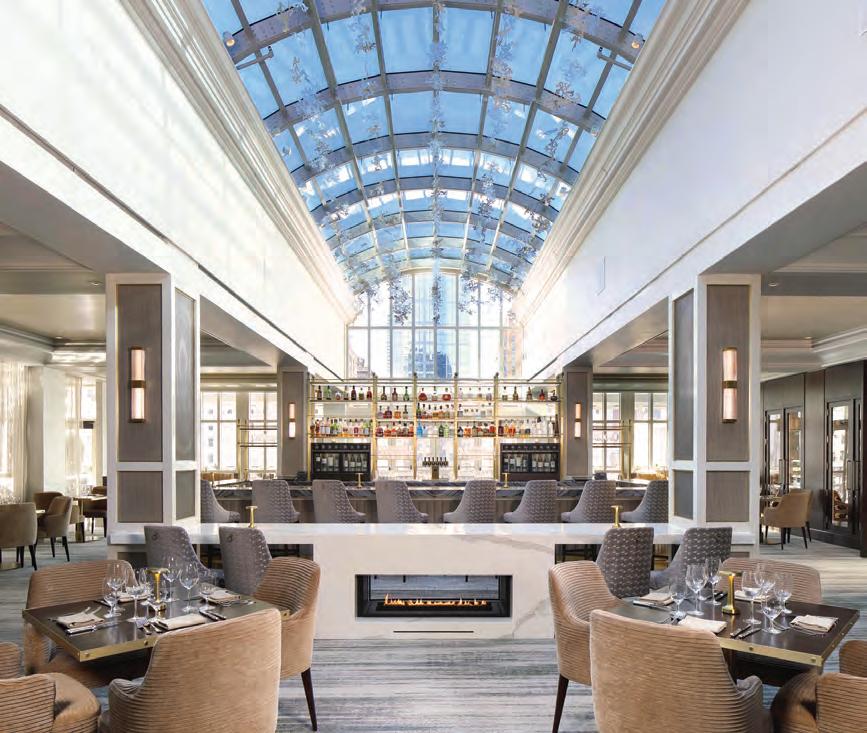











JAMES D. SKEE
James D. Skee, CPTD, PhD, is director of learning and development at NexusTek, a North American managed services provider. He also consults on talent development. Reach him at james.skee@jdsconsulting.co.
Board members of private clubs have very good reasons to pay attention to how their clubs recruit club managers and leadership team members.
At the least, a wrong hiring decision only costs time. At worst, and especially with leadership hires, poor hiring decisions can negatively impact employee engagement, team and organizational performance, as well as the club’s culture and member experience.
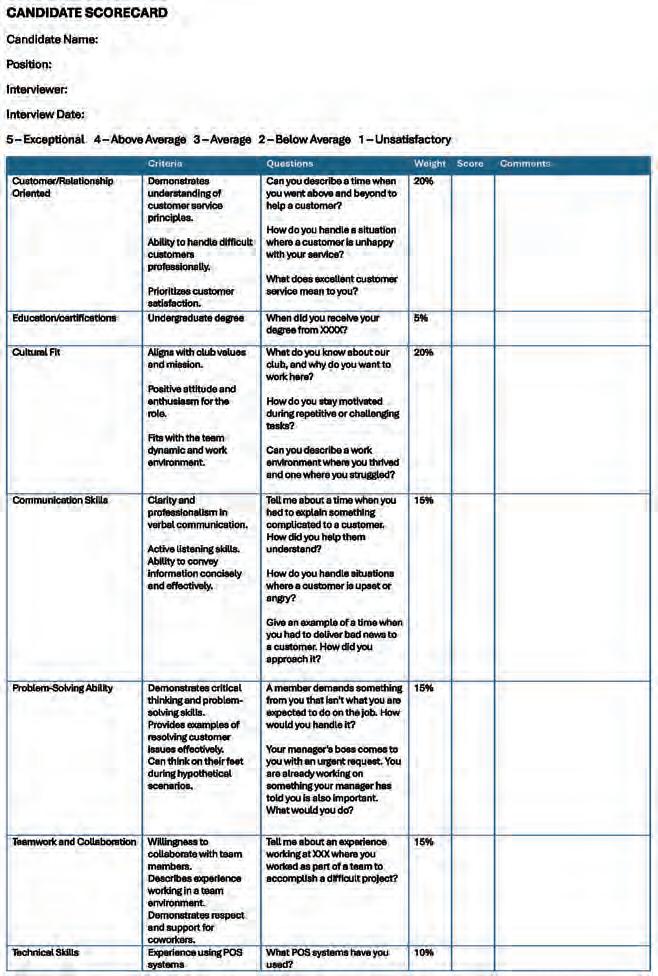
By adopting best practices in recruiting, onboarding, performance management and career development, club leaders can drive efficient operations, reduce staff turnover and enhance the member experience. That starts with the recruiting process.
My experience at NexusTek, a North American managed services provider where I am the director of learning and development, substantiates this. The four recruiting practices I will describe, paired with others we use throughout the employee lifecycle, have helped us reduce staff turnover by 63 percent and raise employee engagement by 88 percent against industry benchmarks. These steps can also be used when hiring for any role—not just leadership or management.
Step one: Align stakeholders on the role’s requirements
Before posting a job or scheduling interviews, ensure key stakeholders (e.g., HR, department heads and general managers) align with what is needed. An up-to-date job description is essential.
Role responsibilities often change over time. Job descriptions, if they exist, are frequently outdated. Outline the required knowledge, skills and attitudes that the role requires, spend time creating or updating the job description and get feedback from relevant stakeholders—including your HR team.
Don’t forget compensation. Check if your compensation is competitive with similar positions at other organizations, not just private clubs. There are many sources of benchmark data. Ask your payroll provider for recommendations.
Step two: Create a job posting
Don’t make the mistake of using your job description as your job posting. The two share common traits but have different purposes:
1. The job description is a formal, internal document outlining the role and responsibilities. It’s often lengthy and ill-suited for advertising on job boards.
2. On the other hand, a job posting is an advertisement designed to attract candidates who are a good fit. It should highlight what differentiates the position at your club and sets it apart from other organizations. It should be short and to the point, with a strong value proposition that inspires a qualified candidate to apply.
Review job postings for similar roles on sites like Indeed and LinkedIn for ideas. Generative AI tools like ChatGPT or Microsoft Copilot can help, but avoid sharing proprietary or confidential data, or data subject to privacy laws. Ensure your job posting satisfies relevant legal requirements, including compensation range, and if available, ask your marketing personnel to help optimize the posting.
A scorecard helps the hiring team compare and evaluate candidates by providing hard data about each candidate’s qualifications.
On the opposite page is a sample scorecard. A scorecard is easy to create. List your criteria. Record your score for a candidate using a 5-point scale. Leave space for written
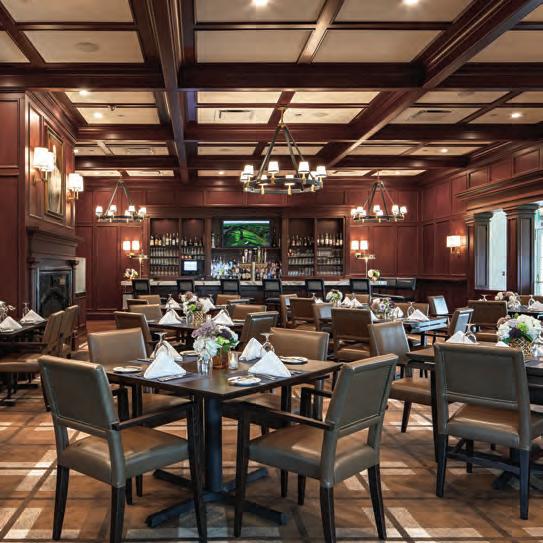
comments. You can then combine all candidate scores and ratings into a spreadsheet for easy comparison. Be sure you create questions that align with the scorecard so interviewers stay on track and focus on what matters. Ensure your questions don’t run afoul of labor laws.
You can also search the Internet for “candidate scorecard” or “candidate evaluation form” for more examples.
talent and navigating legalities
Consider internal candidates. While this means investing in their development and attention to succession planning, benefits include faster onboarding, ramp-up and lower overall cost. Hiring from within shows that your club is committed to retaining and building talent, positively driving employee engagement.
Ensure your recruiting process complies with labor laws and regulations and avoid questions about race, color, religion, sex, or national origin. Many states extend those “protected classes” to others, including age and gender identity. Additionally, in some states, it’s illegal to ask candidates about their compensation expectations.
This is the first of a two-part series on hiring best practices. In Part II, we’ll dive into how to onboard your top choice candidate. BR
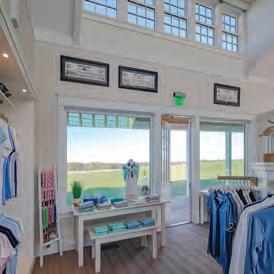

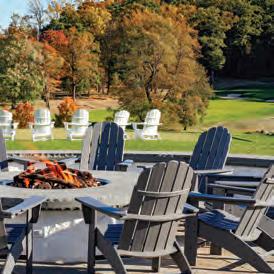


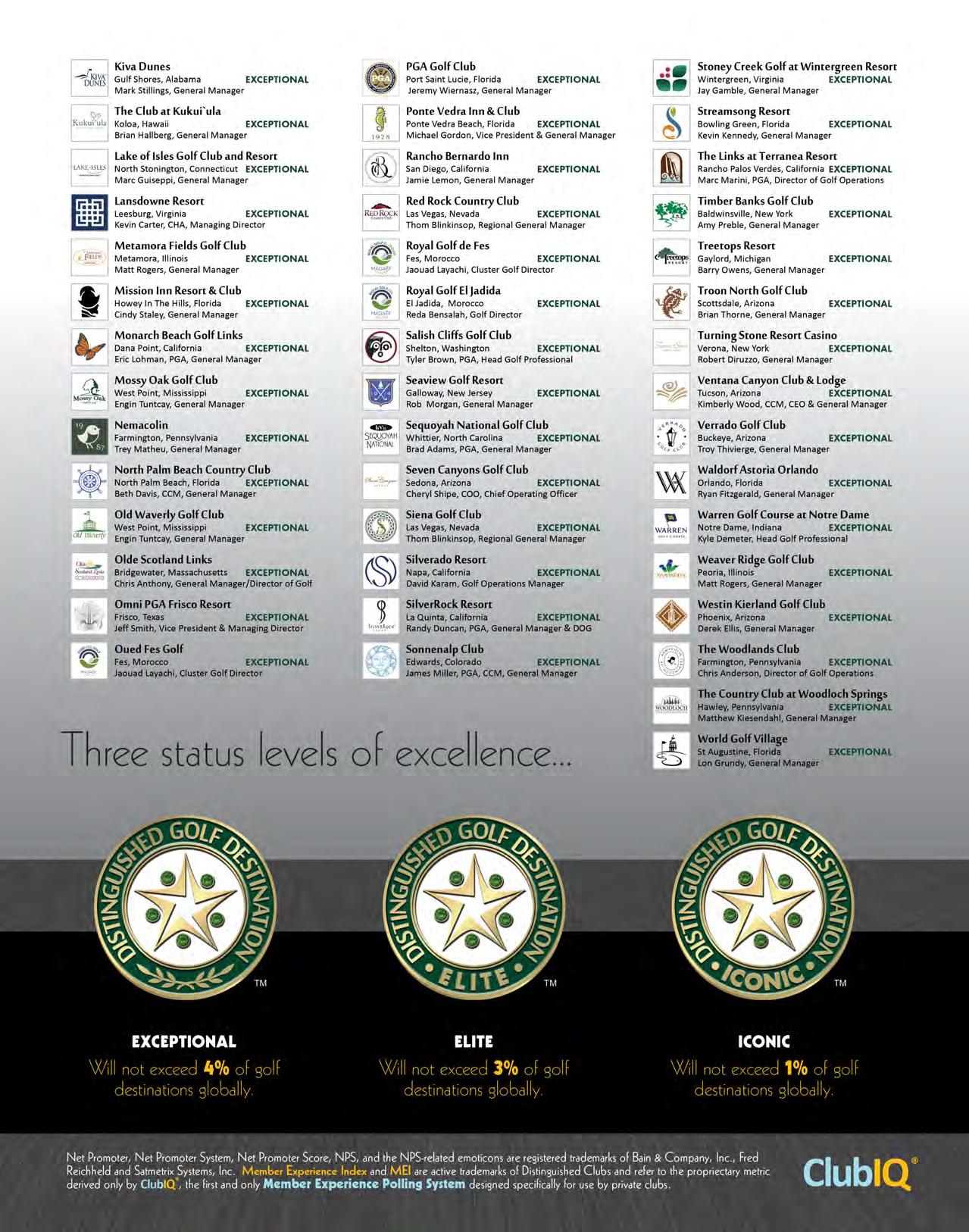
BY DAVE WHITE, EDITOR EMERITUS

“Working for a private club provides an incredible opportunity for our PGA of America Golf Professionals to create meaningful relationships with their members.”
And that will continue, said Don Rea, Jr., who was recently elected the 44th President of the PGA of America at the association’s 108th annual meeting held in Grand Rapids, MI.
“Our golf professionals see their club members every week, multiple times a week. They get to know their preferences, and that’s a powerful tool in excelling at exceeding expectations and building relationships, which leads to loyalty to the club.
“The relationships you create with members and customers are arguably the greatest aspect of a career as a PGA of America Golf Professional. When you know who you are serving, you become a better coach, tournament director, merchandiser, etc. They start to look to you as an expert in all things golf and life. You learn the value of focusing on solutions and tailoring your work to those you serve,” he added.
“I also think of some of our most accomplished Members who work for private clubs, such as our 2024 PGA of America Golf Professional of the Year, Tony Pancake, the Director of Golf at Crooked Stick Golf Club in Carmel, Indiana. He is such an incredible mentor to so many of our young Members and Associates because of the way he takes care of his members and their families.
“PGA Professionals significantly enrich the member experience through their expertise, passion and commitment to excellent service. No doubt we love this game, but we may love the people who love this game even more.”
BoardRoom: So, what is the role of private clubs in growing the game of golf, and how do you view the role of club professionals, especially within the private club industry?
Rea: The role of our PGA of America Golf Professionals is vital to the health and success of the recreational game, whether at a private club, a municipal course or an indoor coaching center like the PGA of America Coaching Center powered by T-Mobile in Frisco, Texas.
Most private facilities provide enjoyment for the whole family. The kids can go from swimming lessons to junior golf camps to getting hired for their first job, washing carts and picking the driving range or caddying. ➤

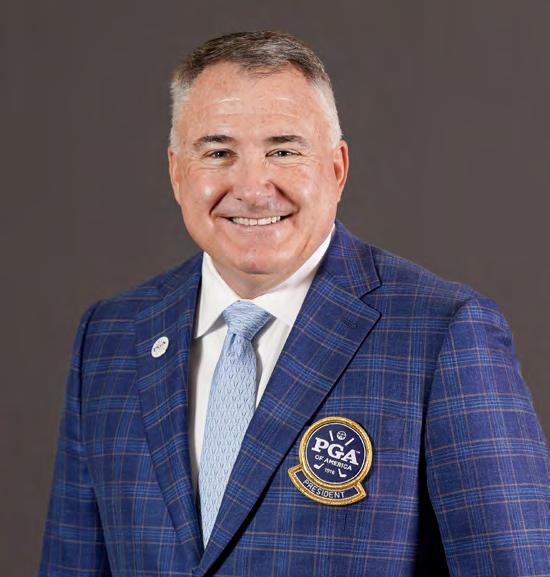
PGA Jr. League, PGA HOPE (Helping Our Patriots Everywhere), and programs like Drive, Chip & Putt are doing incredible things at country clubs across the country to increase the love of this great game, not only with mom and dad but with the whole family.
BoardRoom: Has golf returned to the halcyon days of the 1980s and ‘90s, and even during COVID-19, or are clubs struggling to grow? If they are struggling, why? What do you see as solutions?
Rea: Golf is cool again. Maybe cooler than it ever has been. People are lining up not only to play but also to work. In 2024, we surpassed 30,000 PGA of America Golf Professionals for the first time in the Association’s history, aided by an incredible number of new Associates benefiting from educational seminars at our home in Frisco, Texas, on their way to earning their Membership.
Clubs may now have the opportunity to choose their preferred membership size. We wondered if golf might cool down after the COVID-19 influx, but rounds continue to increase at a record pace, and participation continues to grow among underserved populations. Participation among women and people of color is at an all-time high.
Golf clubs’ struggles now may be more focused on ensuring their employees aren’t getting burned out because of the high demand for our game. Making sure their work-life balance is where it needs to be is important for recruiting and retaining employees.
We have great leaders in the right places, and the industry is thriving. The average compensation for our PGA of America Golf Professionals is now over $100,000.
There’s never been a better time to be a PGA of America Golf Professional.
BoardRoom: The PGA of America has core areas of focus, some of which are employment, education, properties and player development. Has there been any increased focus on club management as a core area of career path? If so, what is the focus and is this career path becoming more enticing for PGA Professionals?
Rea: In recent years, our Professional Golf Management Associate Program and University Programs have shifted to focus on three career tracks: Golf Operations, Teaching & Coaching and Executive Management.
Those who select the Executive Management path want to lead the entire operation of a club, and we’ve certainly seen that desire increase. We are molding and preparing our Associates to be prepared and comfortable leading the entire facility’s enterprise.
Our incredible education faculty focuses the Executive Management curriculum around every aspect of what general managers or directors of golf do daily. From strategic planning and budget forecasting to marketing, human resources, player development program management and food and beverage operations, we cover it all and more.
When our Associates get elected to Membership, they’re prepared.
BoardRoom: Does this conflict with other private club administrative bodies, such as the Club Management Association of America, with its programs leading to club management certification, or is this a program of equal value for PGA Pros wanting to enter club management?
Rea: First, I applaud the certification programs the CMAA has created. Very impressive. The PGA of America values continued education, and collaborating with industry partners is key. Once you become a Member of the PGA of America, additional educational opportunities include the Specialized Program, the Certified Program and finally, the Master Professional Program. Through each level, you get deeper and deeper in your research, knowledge and passion for your desired career track.
I joined a special group this year, becoming the 447th to earn Master Professional status. My focus was Executive Management and I found the process incredibly rewarding. We pride ourselves on being experts in the game, both on and off the course. Many of our Members are also members of CMAA. We encourage our Members to obtain as much knowledge and education as possible.
BoardRoom: The PGA of America focuses on long-range strategic planning. What will be the focus of this planning during your presidency, including core areas of focus? What do you view as key issues today for the PGA of America?
Rea: First and foremost, our mission and focus will always be to serve our Members and grow the game. Our main goal is to improve the lives and careers of our more than 31,000 PGA of America Golf Professionals. They dedicate their ca-
reers to making golf what it is today: fun, healthy and more accessible than ever. Golf has proven to be a tremendous outlet for millions of Americans, and our Members and Associates are the heart and soul of the game, the tangible connection to recreational golfers everywhere.
In 2024, we served more than 17,000 Veterans and Active Duty Military through PGA HOPE, our flagship military program of the PGA of America REACH Foundation. This program provides 6-8 weeks of programming taught by certified PGA of America Golf Professionals at no cost to our veterans.
We also had a record of more than 77,000 players participating in PGA Jr. League, with more than 80 percent identified as beginner or recreational golfers.
The recreational game is at an alltime high, and we want to maintain that positive momentum by taking care of our PGA of America Golf Professionals and ensuring our programs remain available to all. BR
For Don Rea Jr., turning the corner on one career led to another and, ultimately, his role as President of the PGA of America.
“I’m a second-career PGA of America Golf Professional. I spent nine years as a minor league baseball umpire before I started in the golf industry at Augusta Ranch, so I come from a unique background, giving me a broader perspective. I quickly caught the vision of the joy that comes from working in this industry,” explained President Don Rea Jr. Rea was recently elected the 44th President of the PGA of America at the 108th annual meeting in Grand Rapids, MI.
“My time as a PGA Officer and a member of several of our Association’s committees has been critical in my preparation to serve as our 44th President, not to mention my time serving on the National Golf Course Owners Association and Arizona Lodging and Tourism Association boards.”
Also, since 2012, Rea has owned Your Course Consulting. He also founded Community Course Rescue Services, LLC in 2017.
“As I served as Secretary and Vice President the last four years, I had the opportunity to witness Past Presidents Jim Richerson and John Lindert. I’ve seen Ryder Cups, PGA Championships, KPMG Women’s PGA Championships, PGA Junior League Championships and everything in between,” he explained. A member of the Southwest PGA Section, Rea is the owner and operator of Augusta Ranch Golf Club, a public course in Mesa, AZ. Rea, a PGA Member for 22 years, earned his PGA Master Professional Status in 2023, the highest educational designation a PGA Member can obtain.
“Now that the torch has been passed on to me, I realize how fortunate I am to serve alongside Vice President Nathan Charnes and Secretary Eric Eshleman, as well as our incredible board and the hard-working PGA of America staff.”
Charnes, PGA, is General Manager and Director of Golf of WingHaven Country Club in O’Fallon, Missouri, and a member of the Gateway PGA Section. Eshleman is PGA Director of Golf at the Country Club of Birmingham in Alabama and a Member of the Alabama-NW Florida PGA Section. Together, we will continue to serve our Members and grow this game we all love,” Rea concluded. BR
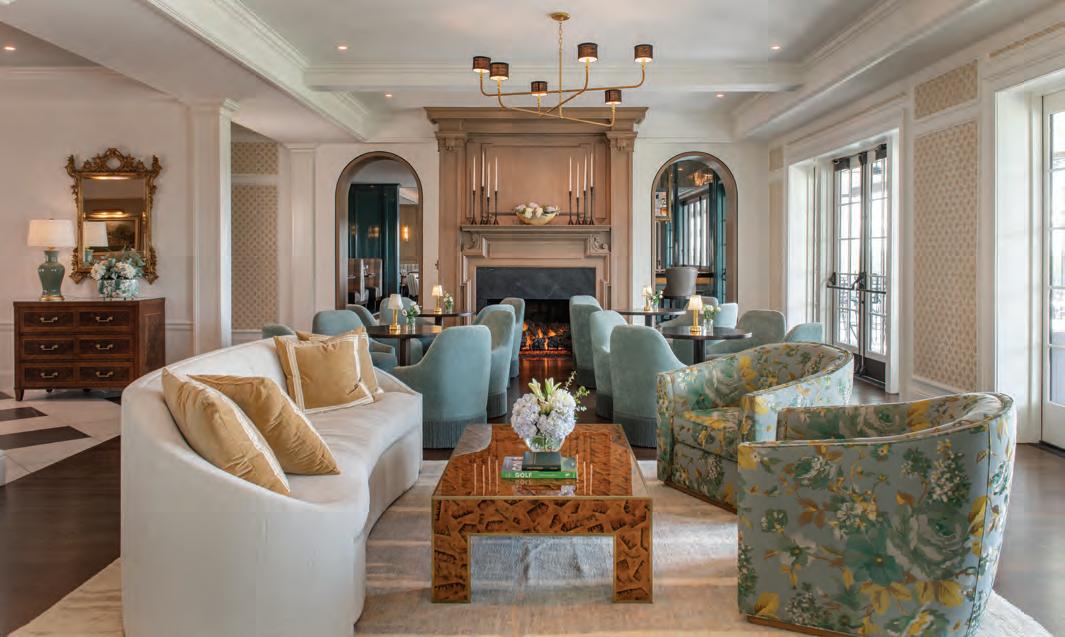





One unique challenge club managers face is addressing the needs of one customer/owner without compromising another.
In private clubs, the members are often the owners, and their diverse voices, while sometimes vocal, may not always represent the majority. For club managers, harnessing factual data is the most effective way to navigate these opinions and make informed decisions.
It is often beneficial for a club to work with an external group to oversee the member survey process to ensure a non-biased and more credible member report. A third party possesses the time and resources to enhance response rates and gather critical feedback directly from member focus groups, a task typically beyond the club’s internal capabilities. The PGA ExecuSearch team not only provides management-level searches, staff assessments and evaluations, but we also provide this service for clubs, offering a highly professional presentation.
As a club’s culture and demographics evolve, it is essential to update factual data regularly. Surveys are potent tools for comprehending issues, assessing member satisfaction and ensuring club services and amenities align with member desires. Moreover, member surveys significantly contribute to both short- and long-term planning. Much like private industries use customer surveys to drive satisfaction and, ultimately, boost revenues, club surveys should strive for the same outcomes. Typically, the club manager designs surveys that deliver actionable insights.
The essence of a survey lies in collecting answers and extracting insights that align with broader club objectives. For a new general manager, surveys can also facilitate introductions with members, fostering a sense of dialogue. To ensure surveys yield valuable results, consider the following steps:
1. Receive permission
Before conducting a survey, obtaining permission from relevant stakeholders is crucial. Unexpected surveys can provoke unfavorable reactions if members have dissenting views. Thus, securing approval from your club’s governing bodies is essential to avert potential backlash.
2. Determine your objective
KEVIN WALLS
Kevin Walls is a PGA Master Professional in General Management and a PGA Career Consultant serving the Alabama-NW Florida, Gulf States PGA Sections.
Having clear objectives is imperative. Avoid broad, unfocused surveys, which often result in insignificant data. Instead, concentrate on specific issues that require action. For instance, if the club’s food and beverage section is incurring losses, a focused survey on member satisfaction in this area can be more insightful than a general one.
3. Develop a list of questions
Compile a comprehensive list of questions that align with your survey objectives, preferably with input from a diverse committee. Incorporate demographic questions for segmentation to ensure that questions are directly tied to the survey’s goals.
4. Refine questions and avoid common mistakes
Craft questions that eliminate ambiguity, bias and complexity. They should be clear and concise, providing definitions as needed and focusing on singular issues. Avoid constructing leading questions that could influence responses, ensuring they are clear to members.
5. Consider the survey format
The format of your survey plays a critical role in affecting response rates. Structure your survey wisely, paying attention to length and question styles (such as grids or tables) to avoid making it seem overwhelming. Include a cover letter detailing the survey’s importance and objectives.
6. Pretest your survey
Conduct a pretest with a sample group of members to catch ambiguous or misleading questions. Collect their feedback to further refine and improve the survey before full distribution.
7. Maximize the response rate
Achieving high response rates is crucial for obtaining valid data. Personalize cover letters, use services like SurveyMonkey, and set clear return dates to boost participation significantly.
Creating a survey transcends mere question-making; it involves developing a tool that delivers factual, actionable insights to steer your club’s future decisions. By following these steps, you can craft a survey that resonates well with members and supports informed decision-making, maintaining a balance between members’ needs and club management goals. Remember, it’s your responsibility to the club’s larger membership base to gather factual data to make critical decisions concerning your club’s future. BR
At Stone Group Architects, we transform clubs into vibrant, inclusive spaces that inspire wellness and connection. Through strategic facility planning and innovative design, we align your spaces with your mission and create environments tailored to your members’ needs. Our approach goes beyond aesthetics—we craft restorative spaces that foster meaningful experiences and build thriving communities. Whether upgrading facilities or designing custom amenities, we’re committed to elevating your club to new heights. Partner with us to create extraordinary spaces that enhance member experiences and support long-term success. Let’s reimagine your club’s potential—contact Stone Group Architects today!
608.335.0342stonegrouparchitects.com CONTACT SKIP AVERY, CCM, CCE, CMAA FELLOW FOR ALL OF YOUR CLUB
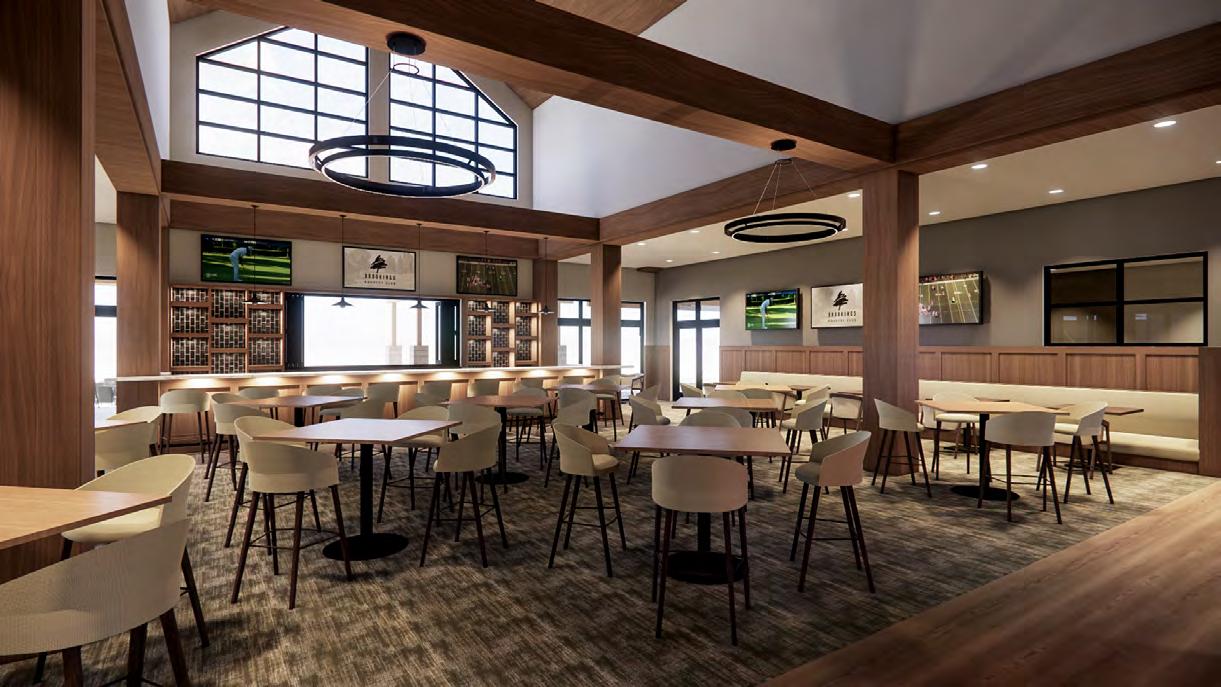

BY NITA HEIMBAUGH

Not everyone has such good luck. Don’t we all want a job that makes life more interesting? Complete with long-lasting positive vibes? Working with someone who challenges and inspires?
That’s Gregg Patterson, one of two recipients of BoardRoom’s Lifetime Achievement Award for 2024. Steve Graves, principal of Creative Marketing, also receives a BoardRoom Lifetime Achievement for 2024.
I worked for Gregg Patterson at The Beach Club of Santa Monica for over 30 years. We both started the same year and, dare I say, learned a lot together. From the start, he was full of energy, creative, very well-read, super smart and ENTHUSIASTIC!
I think we both learned a lot on the job. I may have been a bit of a challenge at first - a small-time opera singer, snobbish and initially not in the happiness business. However, Gregg accepted the challenge and inspired me to become part of the team.
Under his guidance, I learned how to do many essential tasksrunning the front office, planning parties, membership secretary and - very importantly, wearing strange costumes and doing Bingo, Halloween, assisting Santa (Gregg, of course!), using all my performing skills. We worked long hours. It was tiring and lots of fun.
Working with Gregg is a lot like showbiz, but it is always tempered with strong ethics, business acumen, and love for the club and its members. He is one of a kind and is respected all over the club universe. Gregg is an amazing, inspiring speaker, a creative manager, and, I am glad to say, a very good friend.
Gregg strongly believes that The Beach Club is a “home at the beach” – family-oriented with staff and members who care about each other. The club should be a home away from home and that is the guiding principle he still teaches. Watching him interact with members was a lesson in how to create long-lasting relationships. It’s remarkable how Gregg’s interaction with all members - from kids visiting Santa to clubhouse conversations with older members - created friendships that transcended age barriers.
How did Gregg Patterson become this beacon of joy and friendliness? His biography shows his extensive experience as a speaker, consultant and writer. He has a long history with club management, teaching courses and workshops all over the world. He writes for various club periodicals, is a prolific essayist on club cultures and operations, and has been a contributor to BoardRoom magazine for many years.
In addition to BoardRoom’s Lifetime Achievement award, he has received many other prestigious club industry awards. The list is long. But, to explain how Gregg arrived at this place of renown and expertise, one can deduce a few things from his life experience.
His journey began as a student of British Imperial history. The hospitality business was the last thing on his mind. After spending his senior year doing a research project in London and another year working as an illegal alien, Gregg loved London but developed a longing for a life of adventure. He returned to the United States, rebuilt a cheap motorcycle, and drove to California, ready to live a life of adventure!
Coming from a family of modest means in a small town in Maine with no experience of anything to do with hospitality, Gregg started out, and just by chance and in need of a job, started as a security guard at the Hillcrest Country Club. He then took a job as a busboy at the Bel Air Country Club.
The journey was getting more interesting! He moved up to be a captain, wine steward, and maître d’, and then, to get the business background he needed, he went to graduate school at Cornell. He returned to the Bel Air Country Club as clubhouse manager. Then, after two years, he applied for and got the GM’s job at The Beach Club.
Gregg realized that the Beach Club had the club culture that was right for him. He stayed there for 33 years. At the same time, working as an adjunct professor at Cal Poly for 14 years, he started a speaking business, commenced writing articles for publication and has been enjoying the “glide slope” ever since.
The Beach Club provided Gregg with many rich experiences that helped shape his hospitality philosophy. Relationships with staff and members were primary. Stand-out moments include Gregg being Santa Claus for 10 hours a day for eight days during the holiday season, officiating at over 70 member and staff weddings, evolving the club culture and aligning it with the needs, wants and expectations of the current members and delivering the club service experience cost-effectively.
Gregg has taken the varied and colorful experiences from his time at The Beach Club and used them in his speaking career, spreading the “WORD” and the philosophy. There were many memorable moments while addressing the industry worldwide. But, the first time he spoke at a Club Management Association of America World Conference over 30 years ago in Hawaii, at 7:30 in the morning, he remembers, “I was wired and knew, in that moment, I wanted to do this MORE because it energized ME and inspired an even deeper dive into clubdom.”
Great moments for Gregg are those that are very personal and meaningful, outside of the everyday managing of the operation. Two particular moments stand out: One was a pivotal Sunday during the Christmas season - the hired Santa was a no-show.
“I jumped in as Santa Claus and became the Beach Club Santa for 25 years,” espoused Gregg. The second involved a member who’d come to Santa with his children (by his first marriage) and his fiancée with her children (by her first marriage), who said: “They’d like me to officiate at their wedding, which then led to my officiating at over 70 weddings in the next 25 years!!!”
When asked about the most fulfilling aspects of his career, Gregg said, “Creating a CORE team that stayed with me for decades” and “creating member relationships that have continued since retiring and becoming a member myself at The Beach Club.”
Life is more than just working at one club, however wonderful it may be. Gregg continues to “reflect on the journey and enlarge and enrich that experience.”
That means he continues to write more, connect more, talk more, read more, and travel more in the club business. Gregg’s company, Tribal Magic, allows him to focus on delivering the Buzz to other CMAA members and managers worldwide.
BoardRoom Institute is the only user-friendly, online learning center designed specifically for private club’s board and committee members that sets out to create better clubs through collaborative governance and one-on–one training by industry experts.
BoardRoom Institute means well-informed board members who are better equipped to make meaningful decisions, develop strategies with less micromanagement.
• Clarifying roles & responsibilities
• Setting process & best practices
• Understanding the club business model
• Shared playbook between the board and the GM/COO
• And more.
BoardRoom Institute is your solution:
• Customizable to your club
• Non-technical user friendly
• Accountability: verification users have seen the course
• 24/7 access
• Over 70 interactive courses and training.


one-time set-up fee

INTRO TO PRIVATE CLUBS
COMMITTEE ROLES & RESPONSIBILITIES
2.1 Bylaws - The Relationship Between Governance & Members Randy Addison
2.2 What Makes Good Board Members and Cautions to Avoid
Kuebler
2.3 Role of the President & Executive Committee Michael Scimo
2.4 Role of the GM/COO
2.5 The Collaborative Governance Model
2.6 Ethics
2.7 Protecting Your Clubs Private Status
2.8 Protecting Your Clubs Tax Exempt Status
2.9 Setting Goals and Objectives
2.10 Norms and Standards
2.11 Board Orientations
2.12 Why Members Join Your Club and the Relevant Importance?
3.1
3.2 Bylaws and Governance
3.4 Role of the Secretary
Sereci
Brad Steele
Brad Steele
John Schultz
John Schultz
John Schultz
3.5 Role of the Treasurer / Finance Committee Kevin Reilly
3.6 Role of the House Committee Gregg Patterson
3.7 Role of House Committee Engineering / Maintenance
3.8 Role of the Golf Committee Peter Bevacqua
3.9 Greens and Grounds Committee Rhett Evans
3.10 Role of the Membership Committee Rick Coyne
3.11 Role of the Tennis Committee John Embree
3.12 Board Orientation
3.13 Leadership Development Committee
3.14 Role of the Search Committee Dick Kopplin
3.14 Transition Committee Tom Wallace
PRIVATE
INGREDIENTS OF SUCCESSFUL CLUB BOARDS
5.1 Role of the GM / COO
5.2 Role of the Controller
Sereci
Reilly 5.3 Role of the Director of Golf / Golf Professional
5.4 Role of the Golf Course Superintendent
5.5 Role of the Tennis Professional
Embree
5.6 Role of the Club Manager / Assistant General Manager Gregg Patterson
5.7 Role of the Membership Director Rick Coyne
6.1 Strategic Finance in a Data Driven Club Jim Butler
6.2 Capital KPIs Jim Butler
6.3 Club Capital Reserve Studies
6.4 Engaging Past Presidents
6.5 Managing the Renegade Director
Jim Butler
Gordon Welch
Bill McMahon
6.6 Risk Management for Private Clubs Phi Harvey
6.7 Effective Oversight by Volunteer Leadership VS Micromanagement Gregg Patterson
6.8 Managing the Agenda - Good Habits of Effective Boards
6.9 What Is GCSAA?
Kurt Kuebler
Rhett Evans
6.10 PGA , Who we are Peter Bevacqua
6.11 Sexual Harassment / Member Misconduct Gordon Welch
6.12 Security at Your Club Kevin Peters
6.13 15 Best Practices Tom Wallace
6.14 Uncontested Elections Tom Wallace
6.15 Board Portals John Schultz
6.16 Crisis Management Corey Saban
6.17 Staff Engagement Surveys Mike Morin
6.18 Member satisfaction surveys and NPS Mike Morin
6.19 GM Performance Reviews Kurt Kuebler

Ronald Banaszak, CCM, CCE, BoardRoom
Distinguished
Club COO. He can be contacted at (415) 420-5183 or ron@boardroommag.com.
For members of private clubs, exceptional dining is more than just a meal—it’s an experience that celebrates community, creativity and the art of hospitality.
At Montclair Golf Club, a Distinguished Club with Elite status, the culinary department is a shining example of how leadership, innovation and dedication converge to create unforgettable moments for members. As a Distinguished Club, Montclair Golf Club takes pride in its high level of member service, driven by a passionate and dynamic team.
At the core of this club’s culinary operation is a team that thrives on challenges and embraces change. This culture of adaptability and enthusiasm fuels the team’s mission to provide an elevated dining experience. Led by executive chef Maxwell Shteyman, the culinary team sources only the finest ingredients, partnering with reputable vendors to ensure quality that exceeds member expectations. Every detail reflects this commitment to excellence, from bespoke menus to artistic plating. The team welcomes feedback from the members, culinary team and front-of-the-house team members, as well as department heads and employees from other departments, and acts appropriately.
The club’s culinary department is best known for its ability to wow members with impeccable taste and stunning presentation. The Mediterranean salmon salad, a lunchtime favorite, and the miso-glazed halibut on the dinner menu showcase a mastery of flavor combinations that delight the palate. Weekly features further amplify member engagement, offering fresh, seasonal dishes that generate buzz throughout the club.
Members often brag about thoughtful attentiveness — such as remembering a member’s preferred wine pairing or customizing dishes for dietary preference. This attentiveness shines at every event, from intimate gatherings to grand celebrations. As well as at family-centric events, reflecting the joy and connection of the members’ home away from home.
Like many in the hospitality industry, the culinary department faced significant challenges during the COVID-19 pandemic, particularly in staffing. At Shteyman’s previous club, navigating a lean workforce required innovative thinking with hiring and retention. These lessons carried over to Montclair Golf Club, where investment in training and development has become a cornerstone of success.
Montclair Golf Club forged partnerships with local culinary schools to attract the best possible talent, ensuring a steady pipeline of passionate individuals. Retention strategies include comprehensive training, performance recognition, and fostering a culture where team members feel valued. Upcoming initiatives, such as an employee-of-the-month program, further solidify a commitment to the team’s satisfaction. The club has introduced bonuses tied to peak sales goals during wine-ofthe-month promotions and dining events to enhance staff motivation. Recognizing excellence within the team translates to constantly improved service.
Its forward-thinking approach to club management and member engagement sets Montclair Golf Club apart. As a Distinguished Club, it recognizes the importance of evolving to meet the needs of a diverse and growing membership and employee base. Authenticity is the club’s guiding principle. Members trust the club to deliver a consistent level of excellence and an environment where they feel connected and valued.
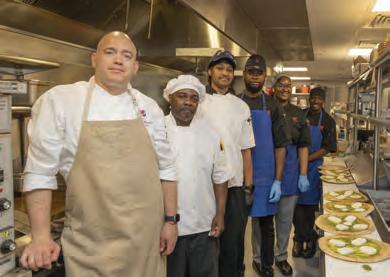
The club is also embracing technologies to modernize operations and stay relevant for younger members, who represent the future of our club. Whether through digital event planning tools or enhanced dining reservation systems, these efforts ensure a seamless member experience.
“Being part of a Distinguished Club is the pinnacle of achievement,” Shteyman said. “It affirms our standing as a leader in the private club industry, delivering an unparalleled experience that resonates across all aspects of membership. This honor inspires us to continually raise the bar, finding new ways to delight and engage our members.”
This Distinguished Club offers some great takeaways for general managers and board members in the private club community:
1. Invest in your team: Recruitment is just the beginning. Training, recognition and opportunities for growth create a dedicated workforce committed to excellence.
2. Be authentic: Build trust with members by delivering consistent quality and thoughtful service. Authenticity fosters loyalty and community.
3. Innovate and adapt: Stay ahead of industry trends by embracing change and adopting practices that cater to evolving member expectations.
Every club is much more than a venue— it’s a place where culinary artistry and member service unite to create extraordinary moments and inspire others to strive for excellence. BR
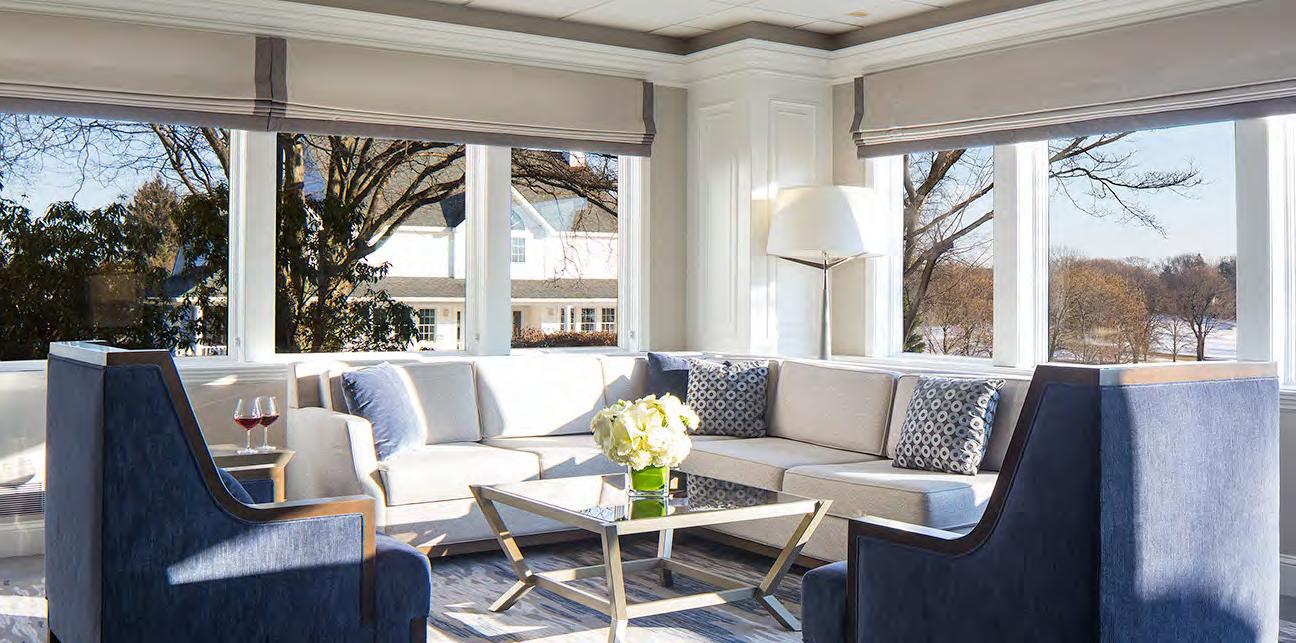

agrande@agrandedesign.com 917.873.2425 www.agrandedesign.com

RONALD BANASZAK
Ronald Banaszak, CCM, CCE, BoardRoom Distinguished Club COO. He can be contacted at (415) 420-5183 or ron@boardroommag.com.
As private clubs push aggressively towards a quality culinary and service environment, we are seeing Distinguished Clubs around the world attracting celebrity, credentialed, and Michelin-starred Chefs.
At the heart of any great dining experience lies more than just exceptional food—it’s the people, passion, and leadership that truly make a culinary department thrive. This is especially true at The Club at The Dunes, a Distinguished Club with Exceptional status. This is where Michelin-starred Chef Gerald Sombright and his dedicated team work in harmony to create unforgettable dining experiences for the club’s members. From freshly sourced ingredients to a cohesive staff, the culinary department here is a shining example of how leadership and a shared vision can elevate a club’s dining program to extraordinary heights.
Chef Gerald Sombright’s impressive career sets the tone for the entire culinary department. With a background that spans from his humble beginnings as a dishwasher to working alongside renowned chefs like James Beard-nominated Lou Rook. Sombright’s journey is a testament to his dedication to excellence. He further honed his skills at prestigious locations such as the Four Seasons Hotels and the Michelin-starred Michael Mina Restaurant Wit and Wisdom.
“I wanted to work at the best possible restaurants within the cities I lived in,” says Chef Sombright. This commitment to working at top-tier establishments has allowed him to gain invaluable experience and instill a culture of high standards in the club’s kitchen. His Michelin star background not only raises the bar for culinary excellence but also inspires his team, giving them a sense of pride. Members who understand the significance of this accolade are often filled with pride when dining at their club, boasting about their Michelin-starred chef and the unparalleled cuisine served. “Each of us is passionate about making people happy, and it makes it easy and fun since the majority of us have been together for years.” Says Sombright.
The camaraderie is evident in the kitchen’s day-to-day operations. The culinary leaders, all with backgrounds from prestigious hotel brands like Marriott and Ritz Carlton, share a common history that strengthens their ability to work seamlessly together. Their hiring philosophy of “tell a friend and hire a friend” further ensures that new staff members integrate smoothly into this collaborative environment, contributing to the positive atmosphere that fuels their creativity. We see the same ability to attract and retain quality employees from clubs that have earned their Distinguished Clubs designation.
One of the key factors that sets the club’s dining experience apart is its commitment to using fresh, locally sourced ingredients. The culinary team’s relationship with local fishermen is particularly special, allowing them to serve some of the freshest seafood in the region. “The fish we serve at dinner was sometimes swimming just eight hours before it’s on the plate,” says Sombright. This dedication to quality extends beyond seafood to scratch-made pizza dough to house-brined and smoked chicken wings.
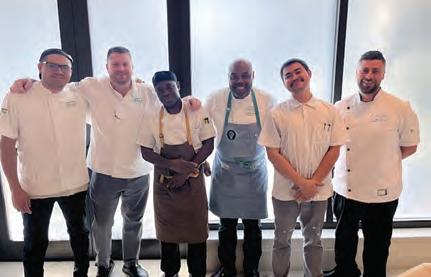
Innovation is another cornerstone of the club’s culinary program. The team recently introduced a dry-aging cooler, elevating their steak offerings and allowing them to experiment with dry-aged beef, foie gras and even fish. This innovative approach adds depth to the menu, offering members a dining experience that rivals the best restaurants.
Members have taken notice of these unique offerings, often bragging about the caliber of food and talent in the kitchen. The club’s dedication to providing high-quality meals shines through in its most popular dishes, with local catch of the day, freshly made pasta, and pizza being the top three favorites. The culinary team’s ability to consistently deliver on these favorites, while also introducing innovative items, has solidified the club’s reputation as a dining destination in its own right. Being recognized as a Distinguished Club is a point of pride for the entire team. “It’s a privilege to be recognized as one of the best clubs in the country,” Sombright reflects. “This recognition validates our hard work and efforts and inspires us to strive for even greater success in the future.” For the members, this distinction represents their pride in being part of a club that values quality, innovation, and community—a place where they can indulge in exceptional dining experiences led by a Michelin-starred chef and his talented team. BR
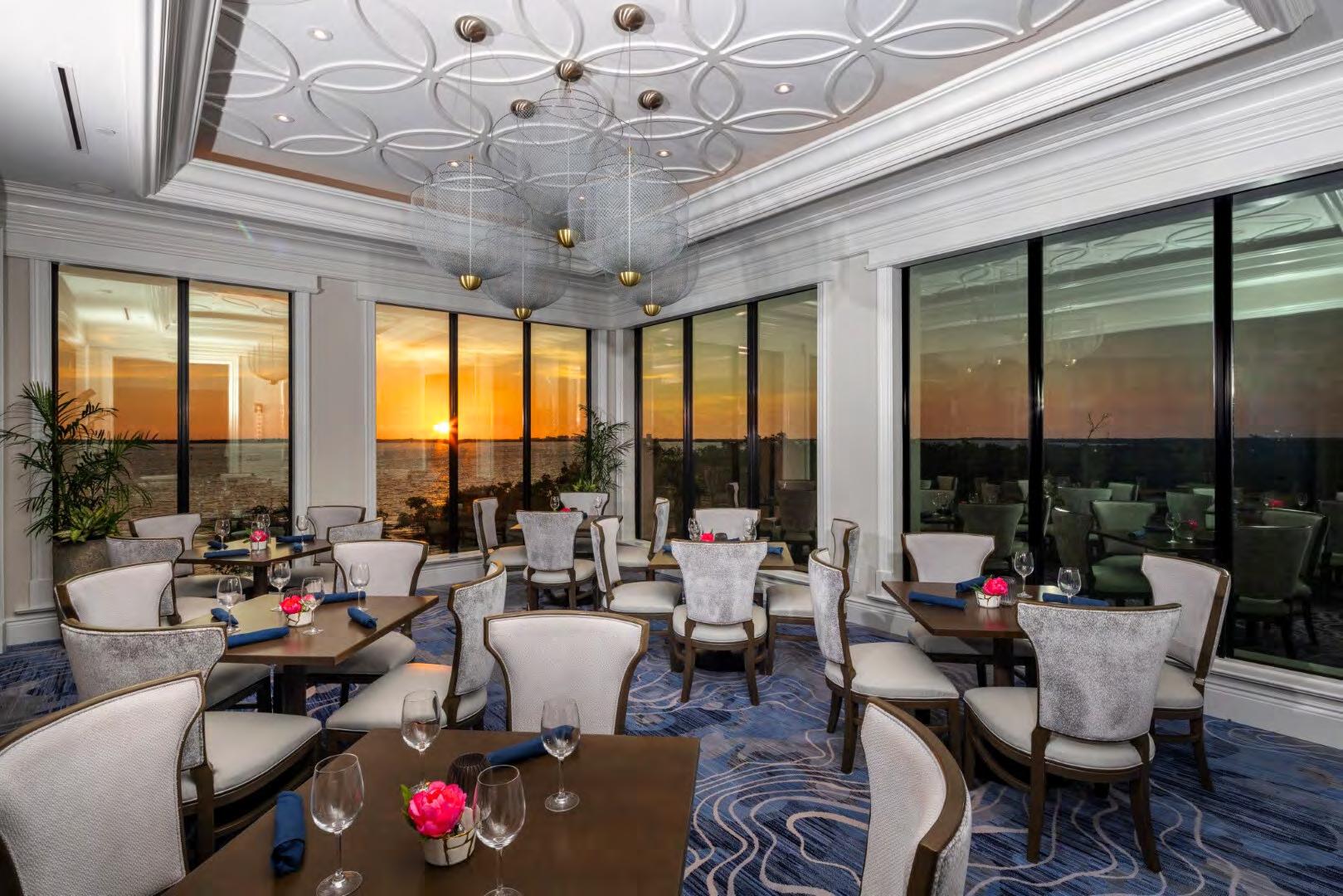

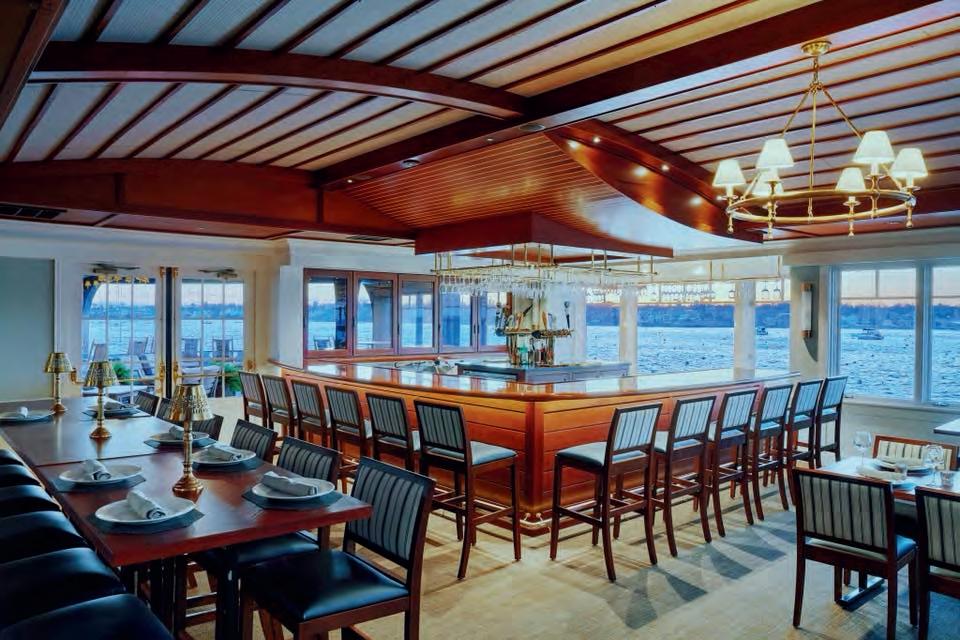



RONALD BANASZAK
Ronald Banaszak, CCM, CCE, BoardRoom’s Distinguished Golf Destinations president. He can be contacted at (415) 420-5183 or ron@boardroommag.com.
Nestled in the heart of Palm Desert, Classic Club, a DistinguishedGolfDestination with Exceptional status, stands as a testament to excellence in golf, hospitality and philanthropy.
The club is not merely a venue for exquisite golfing and fine dining but a hub of community engagement and charity. Under the stewardship of the H.N. and Frances C. Berger Foundation, Classic Club has seamlessly woven world-class standards with a profound commitment to giving back, creating a facility that is as inspiring as it is luxurious.
At its heart, Classic Club operates with a singular mission: to enable charities to thrive. By maintaining its facilities to PGA Tour standards and offering heavily discounted rates for charitable events, this property has empowered countless organizations to raise substantial funds for their causes. This ethos is rooted in the vision of its owners, who have donated hundreds of millions of dollars to charitable initiatives.
One standout event is the Warburton Golf Tournament, which benefits St. Jude Children’s Research Hospital. Held annually at Classic Club, this tournament has raised over $32 million to support groundbreaking research and treatment programs for pediatric diseases, particularly childhood cancer. This commitment to “play to give” is a defining element of Classic Club’s legacy.
The club’s Arnold Palmer-designed golf course is a masterpiece of sport and scenery. The course was originally developed as the host site for the PGA Tour’s Bob Hope Classic, and its design reflects the vision and standards of professional golf. The lush greens, challenging layouts and pristine practice facilities create a golfing experience that rivals the best in the country.
Golfers rave about the impeccable course conditions and the attentive service they receive. The club embraces a “Member for a Day” philosophy, ensuring every guest enjoys an exclusive, personalized experience that exceeds expectations.
A visit to Classic Club would not be complete without a stop at Bellatrix Restaurant to indulge in its culinary delights. Operating at the standards of the finest steakhouses in Southern California, Bellatrix boasts a Wine Spectator Best of Award of Excellence wine list, placing it among an amazing echelon of dining establishments. Bellatrix delivers outstanding dining experiences, with signature dishes and innovative menus highlighting the culinary team’s creativity.
The club’s success is underpinned by its commitment to quality service. Every team member is meticulously trained to provide guests with a seamless and memorable experience. This dedication is evident not only in the accolades the club receives but also in the testimonials of guests, who frequently cite the “WOW factor” of their visits setting a high bar for hospitality.
Greg Rubino, the club’s general manager, has over 25 years of experience at Troon and a global career spanning the US, England and Fiji. He leads with a philosophy of trust and empowerment. His “attitude of gratitude” permeates the team, fostering a culture of respect and collaboration that translates directly into outstanding guest experiences.

About the importance of achieving Distinguished status Rubino says, “It means that we are part of an elite group of clubs. It, no pun intended, distinguishes us from the 16,000-plus golf courses in the US. We are proud of this accomplishment.”
Rubino adds: “Being a Distinguished Golf Destination is more than a title; it is a responsibility to uphold the highest standards of excellence. For Classic Club, this means continuing to refine its offerings, support its community and inspire guests with its unique blend of luxury and purpose.”
Beyond its own initiatives, Classic Club serves as a community anchor. Its clubhouse, with its stunning architecture and state-of-the-art amenities, hosts a variety of events, from weddings to business functions, making it a versatile venue for the Palm Desert area. The location is complemented by nearby attractions, such as Acrisure Arena, the Berger Foundation Iceplex, The Living Desert and the Palm Springs Air Museum, creating a vibrant ecosystem of activities for visitors.
Like any premier facility, Classic Club has faced its share of challenges. A recent kitchen remodel, though delayed, showcased the resilience and professionalism of the team. The upgrade, featuring cutting-edge cooking technology, is a testament to the club’s commitment to innovation and continual improvement.
In the words of one frequent guest, “Classic Club isn’t just a place; it’s an experience—where the beauty of the course, the taste of the cuisine and the warmth of the service leave a lasting impression.” BR

“At Addison Reserve, we have been privileged to partner with Steve Berlin for nearly two decades. His custom outdoor, pool, and patio furniture has consistently exemplified the highest standards of quality. Beyond his craftsmanship, Steve’s reliability and commitment to his promises have been unwavering. He is not just a remarkable furniture maker but a tremendous individual whose integrity and dedication are second to none.”
Michael McCarthy, CEO & General Manager, Addison Reserve Country Club




your





RONALD BANASZAK
Ronald Banaszak, CCM, CCE, BoardRoom’s Distinguished Golf Destinations president. He can be contacted at (415) 420-5183 or ron@boardroommag.com.
The Ocean Club Golf Course at Atlantis, a Distinguished Golf Destination with Elite status nestled amidst the pristine beauty of Paradise Island, offers more than just a place to play golf—it’s a destination where crystal-clear waters, exceptional service and unparalleled experiences create memories that last a lifetime.
With every turn of the course revealing breathtaking views of the turquoise waters of the Bahamas, the Ocean Club Golf Course truly stands out in the golf world, blending natural beauty with top-tier facilities to create a remarkable experience for golfers, from beginners to seasoned pros.
From the moment you step onto the Ocean Club Golf Course, it’s clear that this is not your typical course. Designed by the legendary Tom Weiskopf, the thoughtfully crafted course integrates the stunning Bahamian coastline into every hole. Players can enjoy sweeping views of sparkling waters stretching out toward the horizon regardless of their skill level. Whether you’re teeing off on the challenging par-3 fourth hole, which plays straight out to the ocean, or navigating the scenic 17th hole that hugs the coastline with the beach along its side, you’re surrounded by the natural beauty that defines the Bahamas.
The course’s unique combination of playability and awe-inspiring scenery makes it a favorite for golfers of all levels. Its versatility ensures that even beginners can enjoy the game while seasoned golfers are challenged by its design. As Matt Truax of Sportfive said, “The Ocean Club is the single best course on the planet for amateurs. Challenging, fun, and absolutely gorgeous.”
Beyond the course, the club’s facilities are equally impressive. The luxurious spa and fitness center offer the perfect complement to a round of golf, allowing guests to relax and rejuvenate. The clubhouse features exceptional dining options for those seeking a more culinary indulgence.
While the Ocean Club Golf Course is a world-renowned destination for golfers, it’s also a community activity hub. From hosting the NCAA White Sands Invitational, which brings top collegiate golfers from across the US, to being the setting for major events, like Michael Jordan’s celebrity tournament, the course is at the heart of Paradise Island’s social calendar. But it’s not all about golf—philanthropy plays a central role in the course’s identity.
The club is a proud supporter of local causes, most notably the Sister Sister Breast Cancer Support Group, which helps provide much-needed support for Bahamians undergoing cancer treatment. The generous contributions of patrons like Robbie Leming, the club’s general manager, have provided over 100 port-a-cath devices and helped fund chemotherapy and radiation treatments for dozens of individuals.
Nurse Charlene McPhee, one of the founders of the Sister Sister Breast Cancer Support Group, praised Leming’s contributions, calling him “a perfect example of the popular saying ‘if I can help somebody along the way, then my living would not be in vain.’ “
As part of the Atlantis Paradise Island resort, the Ocean Club Golf Course offers guests an all-encompassing experience. Visitors have full access to the course, clubhouse dining and equipment rentals, and the resort itself provides luxurious accommodations and a wide array of attractions, including nearby downtown Nassau, shopping at the famous Straw Market, and excursions to neighboring islands, like Exuma and Eleuthera. Whether you’re playing a round of golf, relaxing at the spa or taking in the vibrant local culture, there’s no shortage of activities to enjoy.
As the first international property to be recognized by Distinguished Golf Destinations, the Ocean Club Golf Course sets the gold standard for what a golf experience should be. The club prides itself on its customer service record and ability to host world-class events, including LPGA tournaments and high-profile celebrity outings.
Leming, a 25-year veteran of the luxury golf industry, notes, “Our team meetings are held weekly to discuss how we can continuously improve our guest experience. We take pride in anticipating our guests’ needs and ensuring that each visit surpasses expectations.”
Ultimately, this dedication to excellence—in the course design, the service and the overall experience—brings guests back to the Ocean Club Golf Course year after year. Whether you come for the views, the golf or the luxurious atmosphere, one thing is certain: Your time at the Ocean Club Golf Course will be unforgettable. BR

Does it make a difference if you are a manager at a Distinguished Club?
Of course, it does! Both general managers and department heads of clubs who have earned Distinguished Club status are widely recognized by Kopplin Kuebler & Wallace and boards as leaders at providing a great Member Experience. It makes you a very strong candidate for leading clubs searching for top club management.
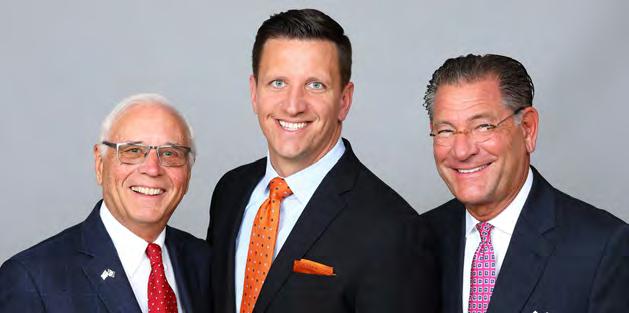
The only merit-based award program that recognizes private clubs and their management for outstanding delivery of exceptional Member Experience. www.distinguishedclubs.com
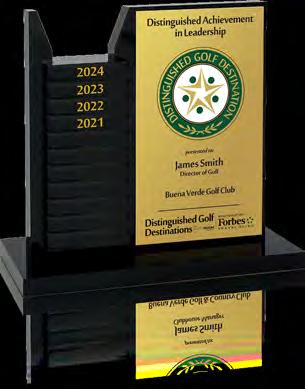

I am no longer surprised by anything I see or hear, but I am compelled to chronicle a few of the most concerning things I saw and heard in 2024 (as a cautionary tale for us all!).
These are common mistakes boards make. If you are working on governance this year, be sure you are not making these mistakes.
Board not following bylaws. Truly, general managers have told me, “We realize that is what the bylaws say, but we think it makes more sense to do something else.” Um, OK—NOT. You need to follow your bylaws or change them, but you cannot ignore them.
Board not following statutes. A general manager actually told me, “I really don’t care about statutes; I just want to know if our bylaws allow us to do this.” Um—also NO. The statutes that govern your particular entity apply whether you know about them and whether or not you like them (be educated –know about them).
Directors not aware of fiduciary obligations. Directors who are what I call “single-issue voters” get on the board to address their issue (more for tennis and less for golf).
Directors should understand their legal duties of care, obedience and loyalty. I suggest board candidates sign a “consent to serve form” that describes their legal obligations and the board’s expectations. That way, there are no surprises (and you have an additional ground to discipline a director who breaches a duty, such as confidentiality).
Directors act like employees/managers. If a director is working the bag drop or instructing employees, he is acting outside his role as a director (those are not director jobs). That creates possible liability for the director and for the club. Board using consent agenda incorrectly. Consent agendas are great and save hours of board meeting time each year. Use them correctly—for items considered before, such as meeting minutes approval, calendars and committee reports. Do not use them for financial or legal questions—where the use of the consent agenda says you did not consider these fundamental issues sufficiently.
Board proxy. In most states, directors cannot cast their vote by proxy. This aligns with each director’s fiduciary duty to make decisions in the club’s best interest. Voting “whatever Joe votes” is not an exercise of that duty. (A few states do allow board proxies.)
ROBYN STOWELL
Robyn Nordin Stowell is a club law attorney in the law firm Spencer Fane LLP. She can be reached at (602) 333-5467 or at rstowell@spencerfane.com.
Board vote by email. The board can act at a meeting or by a unanimous written consent in most states. It requires an appropriate setup to have a situation where the board can vote by email or poll without being unanimous. Be sure you understand what is allowed and required before you do it.
The minutes read like hours. Board meeting minutes need to reflect the topics discussed and state in full the resolutions adopted. That is it. They do not need to chronicle who said what or the other random ideas that crept into the discussion.
There is no requirement you list the details of all that was discussed. Do not name names. You can say, “The board addressed a discipline issue and ratified its decision to suspend the member” without saying, “It was Robyn, and here is what she did!”
Early-stage discussions of a possible major project can lead to wild gossip of a massive assessment—the minutes can reflect “discussed possible strategic projects” rather than “possible $20 million expansion.” I read published board minutes that said, “The board authorized the club to enter into the confidential settlement agreement with former member Mr. Smith that is attached to these minutes and to pay him $X.”
The agreement was attached without redaction. Be thoughtful about what you write, because in most states the members have a legal right to inspect and copy the board minutes. Keep that in mind and choose your words carefully. Read my prior BoardRoom article, “Goldilocks Minutes,” for more information.
Not leveraging consultants. The club’s paid advisors likely have additional information they can share. Insurance agents, CPAs, attorneys who work in the club space have seen issues at hundreds of clubs.
A simple query, “Have you ever seen” or “What is your reaction to this,” can garner significant information. We respond to these questions regularly—you can benefit from that collective experience.
On the other hand, clubs have taken documents I wrote for a different club and had a lawyer-director modify them, only to find out they do not work for their circumstances. Clubs have quoted to me an attorney-club member’s thoughts as “a legal opinion.” Unfortunately, you get what you pay for. A good option is to have these advisors in place before you need them. BR

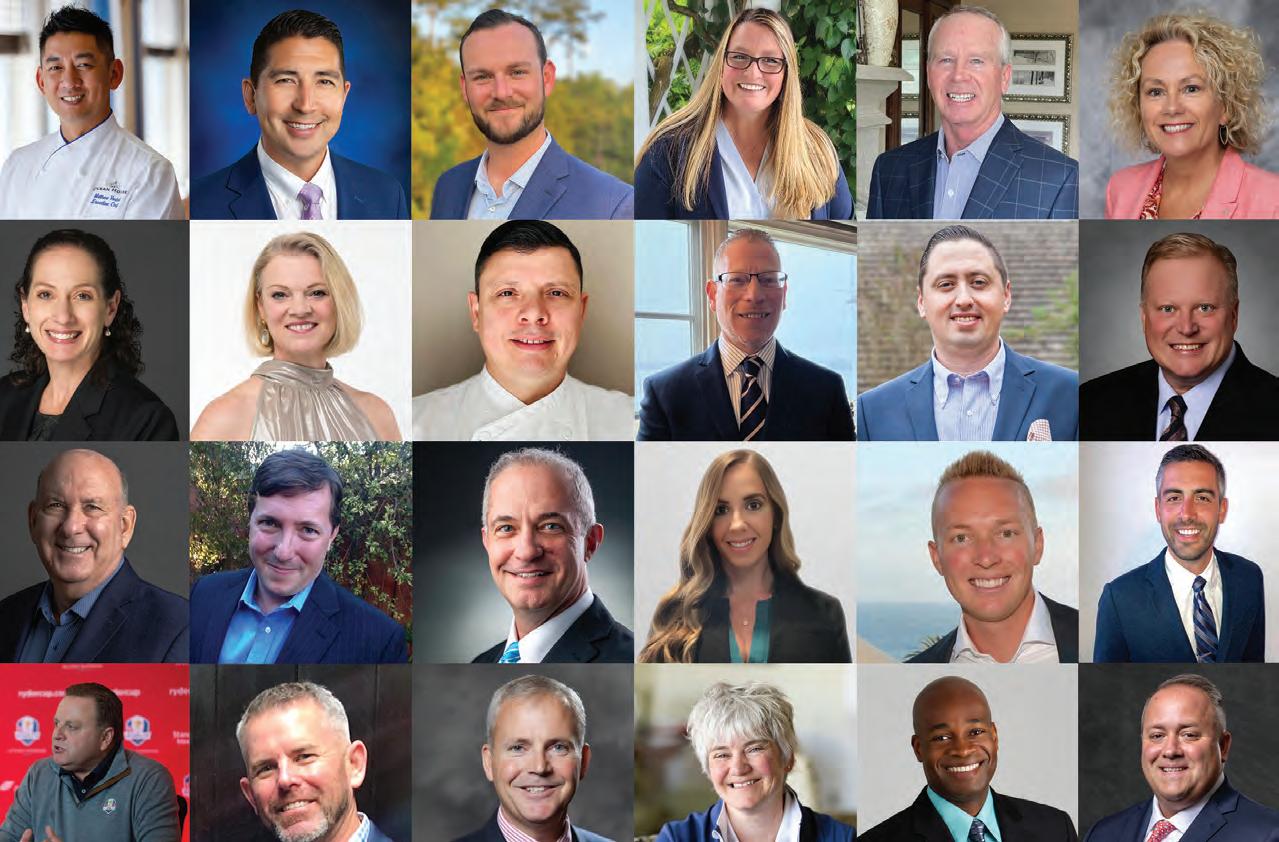
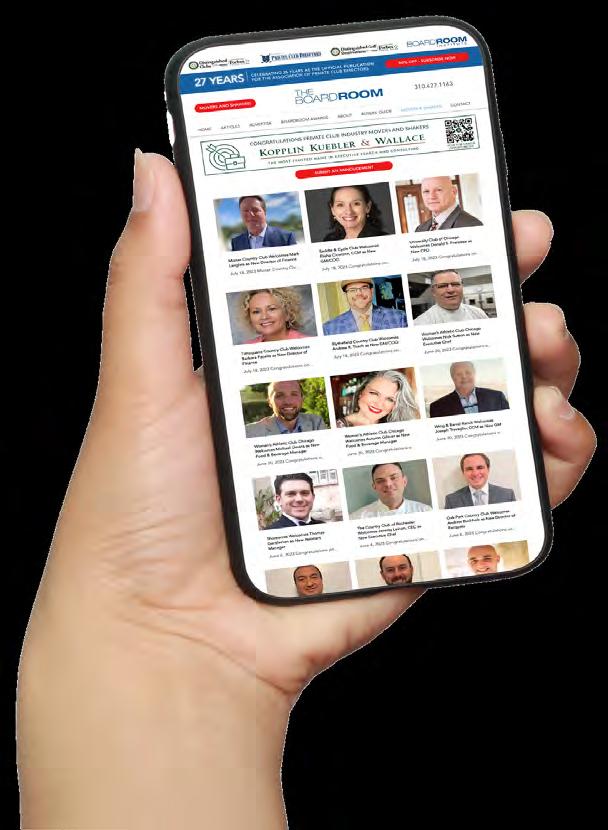

BOARDROOM magazine is promoting advancement in the club industry via its Movers and Shakers section on the website.
This section pays tribute to new placements and advancement for club executives and staff.
In addition to announcements on social media and on the website, these posts are shared through bi-weekly and monthly emails.





GORDON WELCH
Gordon Welch, president of the Association of Private Club Directors, has over 20 years’ private club experience and 12 years as an association executive and registered lobbyist. For more information or orientation, reach him at gordon@boardroominstitute.com or (918) 914-9050.
One of the core principles driving the philosophy at BoardRoom Institute is that “yes comes easy and no takes time.” This phrase reflects a critical truth about the decision-making process in business, especially within the private club industry.
When people see the value of what BoardRoom Institute offers, they immediately recognize it and are eager to say, “Yes! Sign me up!” However, those who feel threatened by the transparency and accountability the Institute promotes often respond with hesitation, saying, “Let me think about it.”
This hesitation is rooted in the broader culture around candor in business. Too often, people shy away from directness to avoid the risk of offending or being disliked. But in business, candor is essential.
When evaluating any product or service, if there are misgivings—whether due to budget concerns, personal fears or other factors—it’s far better to be straightforward than to waste time.
Yet, candor doesn’t always come naturally to those in hospitality and club management. Many professionals feel compelled to be agreeable, even if it means delaying necessary conversations.
BoardRoom Institute was created to address a gap in private club governance: the need for clarity, transparency and effective leadership. With a dedicated staff, the Institute’s mission is to equip clubs with the knowledge and tools to enhance their governance. When club governance is clear and well understood, clubs can benefit from better communication, alignment of goals and a shared direction.
This clarity is crucial because a lack of good governance often leads to challenges like mistrust, micromanagement, committee interference and inconsistent leadership, which contribute to the high turnover rate of general managers and chief operating officers. In fact, poor governance practices are a primary reason why the average tenure of a GM or COO is only about three years.
At the core of the Institute’s offerings is a library of 79 modules designed to provide a comprehensive foundation in club governance. The modules cover nine essential topics:
1. Introduction to private clubs
2. Private club governance
3. Committee roles and responsibilities
4. Private club finance
5. Management
6. Ingredients of successful club boards
7. Strategic planning/long-range planning
8. Homeowners associations/POAs
9. Coaching.
These videos, each lasting five to eight minutes, amount to over eight hours of content that can significantly improve board members’ understanding of their roles and responsibilities. The programs are tailored for private clubs, which are unique organizations that do not operate like other businesses or even traditional nonprofits.
The video content addresses the real-world needs of boards, committee members and senior staff, guiding them through the nuances of club governance. This practical education benefits club leaders from various backgrounds, including corporate executives and entrepreneurs. For example, after years on a club board, one corporate leader discovered how much he still had to learn after watching a few videos. The lessons prompted him to reflect on his assumptions and, ultimately, embrace BoardRoom Institute’s approach.
The Institute continually expands its resources, developing new content focusing on club profit centers and other operational insights. This commitment to growth underscores the Institute’s dedication to helping clubs thrive in every aspect of their governance and operations.
At its heart, BoardRoom Institute empowers club boards with the knowledge to govern effectively, provides management with the tools to communicate goals and fosters a culture of trust and respect within clubs.
When governance is well executed, everyone benefits—club boards can focus on strategic objectives, managers feel supported and members experience a better-managed club environment. Ultimately, BoardRoom Institute aims to lengthen the average tenure of a GM/COO by fostering environments of trust, respect and collaboration.
If you’re ready to explore how BoardRoom Institute can elevate your club’s governance and help create a sustainable, productive environment, reach out at (918) 914-9050. Let’s talk about how we build a stronger, better-governed club together. BR
WES HAGEN
Wes Hagen is brand ambassador and educator for Native9 Wine (native9.com) and an international wine consultant. He can be reached at weswines@gmail.com or (805) 450-2324.

Now that your staff is all trained up (you do train your staff, right?!), let’s shift to how we can help educate your membership to expand the breadth and quality of what sells in your programs.
How to provide meaningful wine education to your membership. Take inventory of the current state of your club’s “wine culture”:
• Are wine and wine culture important to your F&B program? Why or why not?
• What are the top 10 wines on your list?
• What listed wines are growing stale?
• How many events/dinners do you offer your members per quarter or year?
• On a scale from 1 to 10, how would you rate your average member’s wine interest?
• In one year, three years and five years, what criteria might you measure for an increase in wine knowledge, events and sales?
• Capture your membership’s interest in wine education with an email questionnaire or at a membership meeting. Show your passion and commitment to wine and gauge the membership’s interest.
Call to action: Knowing the current state of your program, how do you plan to budget and prioritize wine in your club? How many hours a week can you dedicate/pivot to improve wine education for the membership?
Draw up three goals for your club’s wine program in the next two years, for example:
• Plan to add three new white and three red wine varieties to your list, and sell them
• Schedule an extra wine event or dinner per quarter and an educational wine event once a month
• Aim for a 10 percent increase in wine sales within one year of increasing wine education.
Making it so: Increasing member wine interest and expertise
Teaching wine without wrecking your budget:
Your distributors would love to teach and pour their wine for your membership. Invite multiple producers and distributors to pour behind tables at least once a year and sell the wines at a significant discount. Have the membership vote on one white and one red to add to your list.
• Consider weekly tastings (Wine Wednesday) from your list with a theme (variety? region?).
• Monthly wine dinners with your list wines. Once a month, gently push the membership to the wines you love on the list and need more attention. Three courses, two wines with each course for $100 will give great value,
and teaching the staff a bit about the matches will benefit both staff and members.
• Wine dinners with producers. Choose a producer your members will love and ask the producer to provide the wines for the dinner and offer the wines for sale.
• Get creative. Have a different wine to taste at each hole at a golf tourney. Ask producers to offer prizes for members. Combine a short-game golf competition with a wine tasting in the evening. Do a wine blending seminar or a blind tasting showing two regions.
Focusing your members and your club culture on wine will drive your food and beverage program to increased profitability and reputation, but it will require real planning, investment and execution.
Next issue: Teaching wine to your members: assessing events and education and making course corrections in your program on the fly. BR

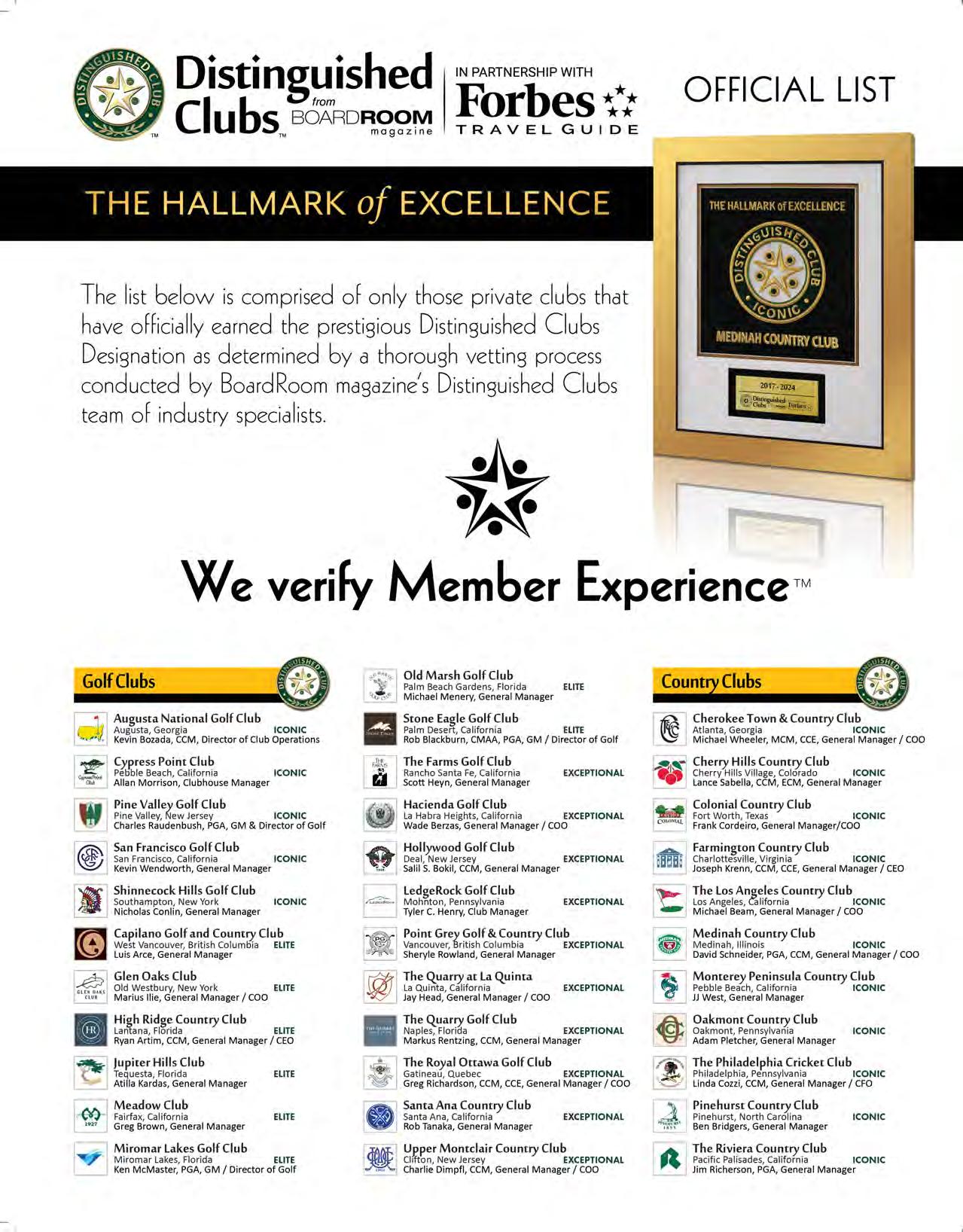
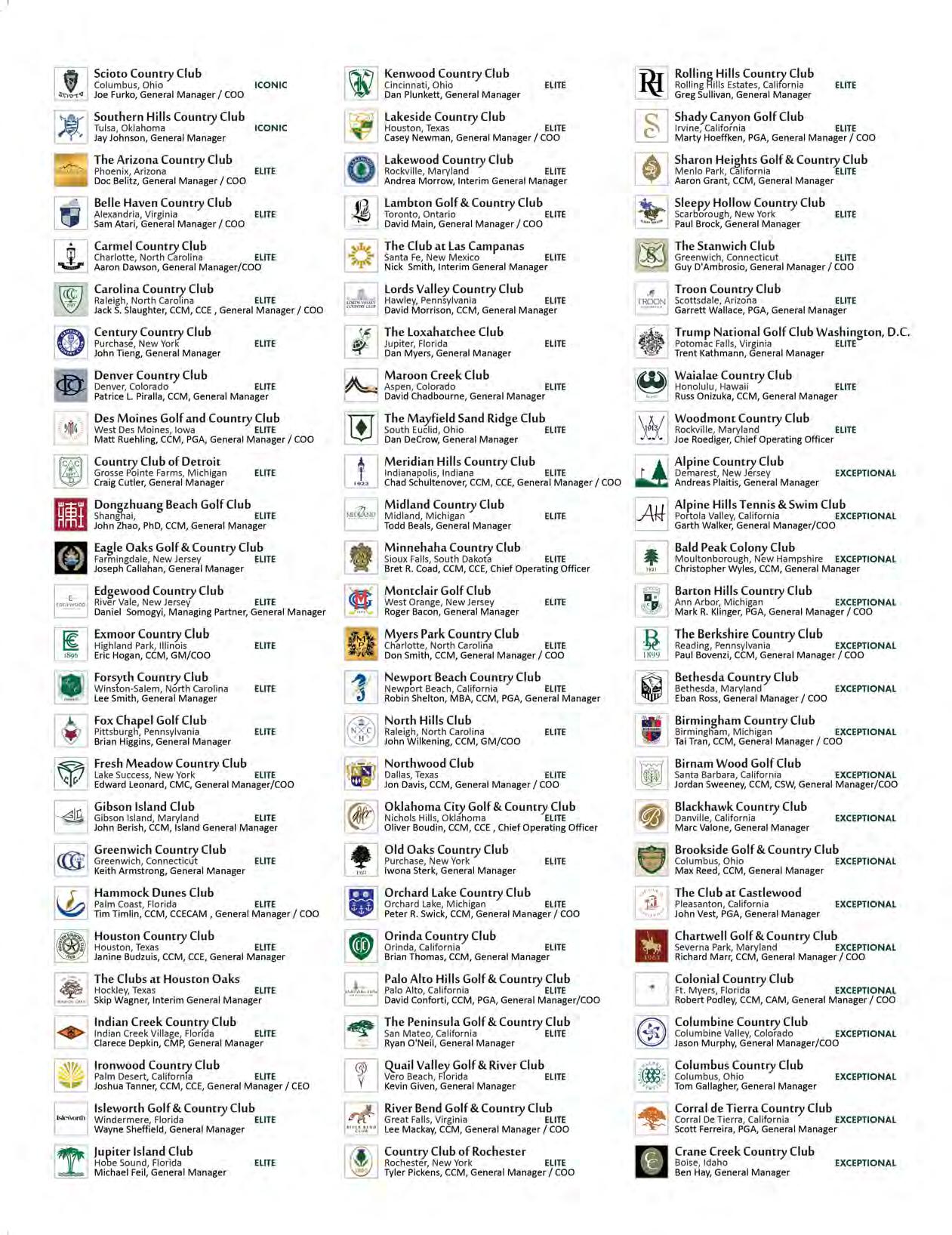
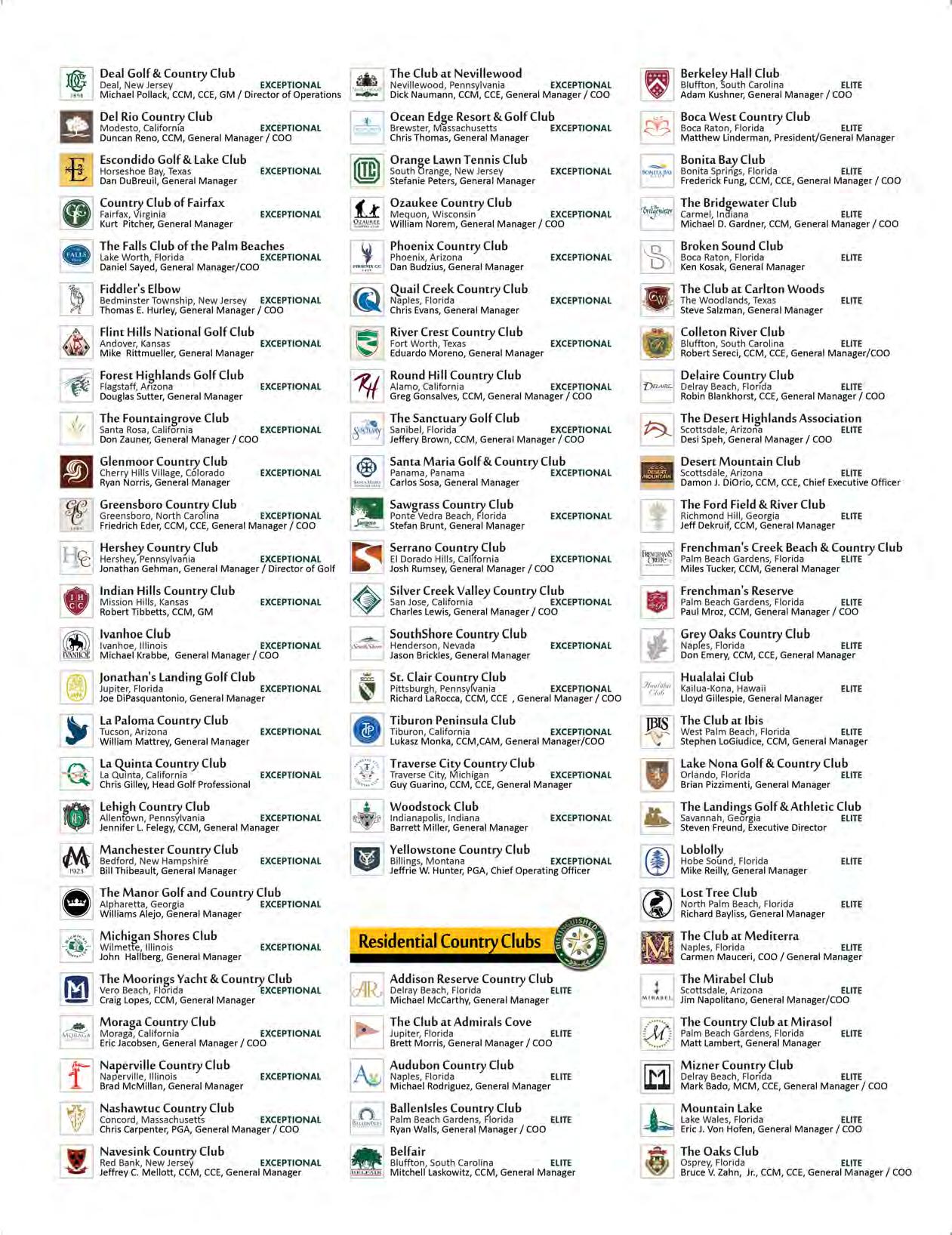
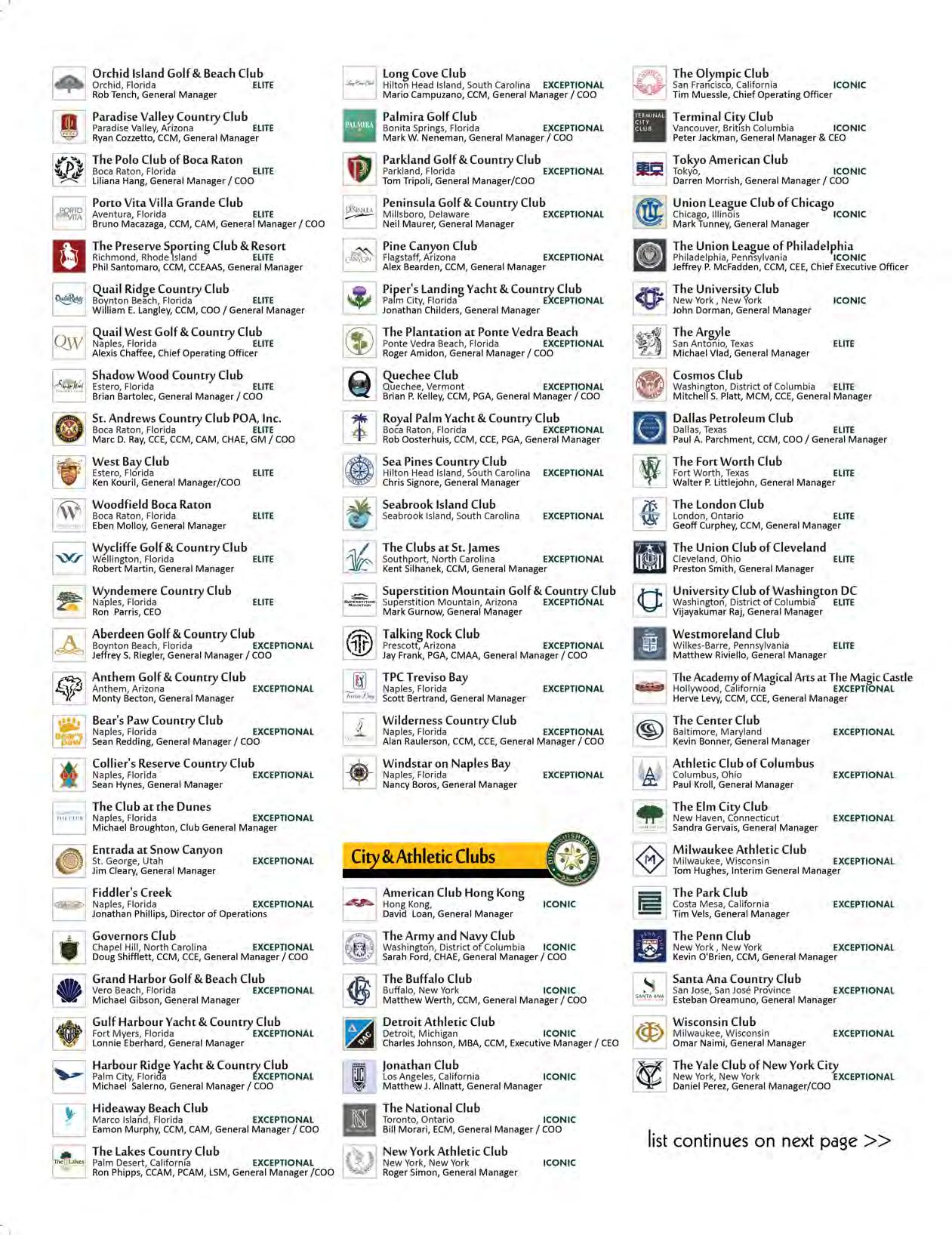
Similarly, rather than using condescending phrases such as “It’s not that hard,” a more constructive approach would be offering support: “Let me know if you need any help with POS.” This would open the door for collaboration and demonstrate respect for the challenges others may face.
At the heart of a successful workplace is respect. Private clubs rely on their staff to create a seamless experience for members, and how staff communicate is critical to maintaining a harmonious environment. Leaders and managers set the tone, and by paying attention to their language, they can foster an atmosphere where employees feel valued, re-
from On the Frontlines | 40
experiences. This doesn’t require grand gestures. The small, thoughtful details often leave the most lasting impressions. Consistently meeting basic needs and delivering them in an outstanding manner fosters a unique connection that members can’t find elsewhere.
Indispensable clubs understand and fulfill members’ fundamental and aspirational needs. They are where members feel seen, valued and uniquely connected to an experience they can-
from Case Study | 48
signing members, provided they relinquished their refundable equity claim and gave the club 12 months’ notice to resign. Following the approved changes by the membership, the club added nearly 200 members, increased its initiation fees from $15,000 to $57,000 and launched major renovation projects with the newfound capital.
Case Study No. 3: Doylestown Country Club, Doylestown, PA
Doylestown Country Club faced a million-dollar backlog of redeemable equity certificates valued at $17,500 each. With new memberships dwindling and resignations climbing, the club was financially trapped. CGM collaborated with the board and proposed reducing the certificate value from $17,500 to $5,000 for current and new members.
In return, the members who accepted this lower certificate value were provided an annual dues reduction over eight
from Gregg Patterson | 87
Gregg also created the annual Chautauqua bike ride for CMAA members at the World Conference. The Chautauqua brings people together in a “bond of sweat” where they can say anything in complete safety.
“Riding and Reflecting” is the motto. Using one of the greatest tools that he has, Gregg asks questions. “Curiosity is the key to my life,” he said. That encourages others to join him in reflecting and enjoying the journey.
One might ask, amid all this reflecting, preaching and teaching, does Gregg have time for anything else? The answer is “Yes!”
Gregg and his wife, Elaine, also love to travel. They have bi-
spected and motivated to contribute. The words we choose in the workplace matter. In a private club’s fast-paced, service-driven environment language can either lift or tear down employees. By avoiding saying “Do me a favor,” “It’s not that hard,” and “You’re lucky to have this job,” managers and co-workers can ensure they aren’t inadvertently undermining the very teamwork they seek to promote. When communication is respectful and clear, the workplace becomes more efficient and a place where employees feel recognized for their valuable roles.
As leaders and colleagues, it’s essential to watch our language. BR
not replicate elsewhere. This combination of essential reliability and exceptional quality builds loyalty and, ultimately, a level of indispensability that other clubs will find difficult to match.
In short, a club must work to become both essential and exceptional. Through continuous engagement, personalization and superior service, it can become an indispensable part of members’ lives. By achieving this balance, a club meets its members’ needs and earns a place in their hearts as a truly irreplaceable part of their world. BR
years equal to their redemption reduction. A referral program attracted over 80 new members. The club has now reached full membership (770 members) and because of an annual initiation fee income of over $500,000, has completed a $10 million clubhouse renovation.
Strong memberships support capital investments and operating income, funding high-performing private clubs. If your club is struggling to grow or experiencing capital leaks because of refundable equity, it may be time to consult an equity whisperer . CGM specializes in unraveling these complex systems and helping private clubs unlock their financial strength and growth. Is your private club ready to discuss your club’s refundable equity status with the equity whisperer? BR
cycled all over the world, carrying all their gear with them. They have seen amazing places, and of course, they also reflect and talk as they go. So, whatever he does and wherever he goes, Gregg continues to find new inspiration that enriches the journey. All good reasons why Gregg Patterson is the recipient of BoardRoom’s Lifetime Achievement Awards for 2024. BR
Nita Heimbaugh, formerly assistant manager, retired from The Beach Club in 2017, the year after Gregg Patterson left. She now spends much of her time and energy attending performances and supporting music groups in Los Angeles. Nita also serves as music advisor to Gregg, just to make sure he is well supplied with suggestions that enhance his musical knowledge and enjoyment. Life is good.

GREGG PATTERSON
Gregg Patterson is founder and president of Tribal Magic. He can be reached via email: GJPAir@aol.com
Leaders are teachers. Managers. Golf pros. Superintendents. Chefs. Dining room supervisors. Those who teach are trying to change behaviors, change the thinking, change the norms and make those changes stick.
And making those ideas and those behaviors sticky “ain’t easy.”
Those who teach are often discouraged, haunted by doubts that what they’re teaching won’t have a long-term, big-time impact on those being taught. Was an entire day wasted “preaching and teaching” to members and staff? Were the big bucks wasted on seminars, videotapes, prizes, books and the miscellaneous stuff of education? Did all that money and all that preaching and teaching go in one ear and out the other? Will they remember what was taught? Will they use what was taught? Will they act any different now than they did before? Were the big bucks wasted? Will anything that was taught stick?
And leader-teachers want to know—what’s needed to make stuff stick?
Teaching is all about making ideas, processes, procedures and behaviors stick. Something has “stuck” when it’s remembered and used.
Both the teacher and the taught want stuff to stick. It often doesn’t. Why sticky and why not?
There are lots of roadblocks on the journey to stick. Might be the message. Might be the teacher. Might be the “classroom.” Might be what’s taught. Job One is knowing and removing the roadblocks to stick.
Sometimes it’s the message. Good idea but the wrong club. Good idea but the wrong employee. Written when it should have been spoken. Spoken when it should have been written. Classroom when it should have been “workroom.” If it’s the wrong message delivered in the wrong way for the target market, it won’t stick.
Sometimes it’s the focus. Cellphones, interruptions, upcoming events, side conversations dilute focus and deny stick. Multitasking is a loser on the journey to stick. Sometimes it’s the student. They may be dumb as a rock. Their genes may be flawed, the synapses don’t work and nothing sticks. They may be genetically opposed to the ideas being taught—wrong psyche, wrong gray matter, wrong
persona. They may be indifferent to the message, to the teacher, to the passion. End result is no stick.
Sometimes it’s the teacher. They’re boring. They talk abstractions. They are not interactive. They don’t care. They fail to live the message. Are disorganized, confused, diverted, monotone. They deliver a “one-shot-never-repeated” message—and moan and groan because there ain’t no muscle memory. End result is no stick.
Sometimes it’s the classroom. It may be the “little c” classroom—no windows, too hot, no fan, bad karma, no flip charts, no VCR, bad acoustics. It may be the “Big C” classroom—the big picture cultural network of employee team, membership, the local community and contemporary society—that doesn’t care about what’s being taught, doesn’t reward it once stuck, is completely indifferent, cynical, or actively negative about the issues and ideas and the procedures being taught. Big C and little c classrooms can be barriers to stick. End result is no stick. Start with removing the roadblocks to stick.
A culture of stick is built on the principles of stick. Consider these.
Stick needs “the sticky.” Employees who care about the job want stuff to stick. Members who care about the club want the rules to stick. Sticky types. Filter out the indifferent. Be selective. Eject with prejudice. Select those with the potential for stick.
Stick takes personal. People remember stuff that affects them “right now.” The stick factor increases when the student knows that they benefit personally and directly from the stuff being taught.
Stick takes practical. Things that a student needs are remembered. Utility improves stick.
Stick starts at home. “Homeschooling” is club schooling—teaching at the club, on-site, every day, for the entire shift. Teach employees in the trenches, at the club, using local examples, taught with “professors” they work with each day. Every situation is an instructional opportunity. Stick improves when the stuff being taught is taught at home.
Stick takes examples. Current, personal and local. People learn from observing “right behavior” in others. Everyone they meet is a role model. Peers. Management. Members. If those examples are consistent with the message, taught behaviors stick.
Stick takes repetition. Ideas are lost without repetition. The big cheese needs to preach and teach “the message.” The supervisor needs to preach and teach the message. Peers need to repeat the message. Repeat it enough and the message will stick.
Stick takes consistency. “Right behavior” needs to be “right” everywhere in the club. If the GM says one thing, the clubhouse manager another, the supervisor a third, the membership a fourth and the president a fifth, confusion prevails. Things stick when there’s consistency in message and behavior.
Stick takes stories. Stories are entertaining and enlightening. Great teachers are great storytellers. Theories are forgotten but stories are remembered. Good stories and great storytelling help the message stick.
Stick takes simple. KISS helps stuff stick. Keep it simple, stupid. “This is right, this is wrong.” “This is good, this is bad.” The message being taught should be simple, clear and unambiguous. Breezy abstractions don’t stick. Confusion doesn’t stick. Clarity sticks.
Stick takes small bites. People can only digest and absorb so much at one time. Three-hour classes, all-day training sessions, yearly debriefs do little for stick. Small bites stick.
Stick takes passion. Teachers who teach with passion are heard more clearly and listened to more intently by those being taught. Good teachers with deep passion have high stick.
Stick takes interactive. Bull sessions improve stick. Talking outside the classroom about the stuff being taught helps stuff stick.
Stick takes brew time. Ideas stick when the “stickee” thinks about the issue when left alone. Why do I do this? Why should I do that? What were they thinking when they taught me this? Brew time helps stick.
Stick takes “doing professor.” People remember stuff better when they’re asked to teach others about the stuff they’ve been taught. Make everyone a professor and stuff will stick.
Stick takes neighborhood. Neighborhood is about “context.” The staff neighborhood. The member neighborhood. What you hear and see “in the neighborhood” affects what you do, think and say. A neighborhood that affirms right behavior helps stuff stick.
Stick takes quizzes. People love to take tests. Quiz questions are “goals” that allow clear achievement and reward. Staff and members enjoy the challenge of a short, direct, practical, focused quiz.
Stick takes rewards. Performance rewarded is performance remembered. Stuff sticks when people are rewarded for remembering and acting on stuff that’s been taught. Cash is king and praise is princely.
Stick takes patience. Stick starts slow and then accelerates. As the foundation grows, so does stick. A foundation takes time. Little seems to stick. Then the student gets really sticky, ideas snowball and everything starts to stick.
Ponder these, the principles of stick. They work.
Leader-teachers want what’s taught to stick—to be remembered and used. Behaviors that are taught have no value without stick.
The principles of stick are universal, but the tactics for delivering stick are unique to the management, the staff and the members of a given club culture. Finding the right tactics takes practice and patience.
Think stick. Teach sticky. Get sticky.
And enjoy the journey. BR

“Private clubs operate best when decisions are aligned with a clearly defined strategic plan that reflects the collective interests of the membership. When personal agendas take precedence, initiatives may deviate from these goals, creating operational inefficiencies and undermining the trust members place in their leadership.
“For instance, when decisions are made impulsively or without proper vetting, it can lead to misallocated resources, poor member communication and unintended consequences. These actions can destabilize the club’s long-term direction and tarnish its reputation as a member-focused organization,” Sylte added.
“Emotional decision-making frequently derails private clubs. New services aren’t added, facilities are poorly maintained, new facilities aren’t built, or policies that would help the club attract the next generation are eschewed because ‘we don’t do that here,’” explained Frank Vain, president of the St. Louis-based McMahon Group.
Core strategies for effective governance recommended by Frank Vain, president of the McMahon Group
1. Enhance Board Governance and Effectiveness
- Implement a comprehensive Board Policy Manual
- Clarify roles and responsibilities
- Establish clear reporting structures
- Develop and track specific KPIs for board performance
2. Optimize Committee Structure and Operations
- Realign committees to report to either the board or GM/COO based on function
- Implement annual goal setting for all committees
- Enhance committee member engagement and participation
3. Improve Strategic Communication and Member Engagement
- Develop and implement a comprehensive communication plan
- Increase transparency in decision-making and financial reporting
- Enhance member feedback mechanisms and responsiveness
4. Strengthen Financial Oversight and Long-term Planning
- Enhance capital reserve management and reporting
- Align operational and capital expenditures with strategic objectives
- Implement regular strategic plan reviews and updates
5. Elevate Operational Excellence and Member Experience
- Empower GM/COO to manage daily operations
- Focus on improving key amenities, particularly F&B services
- Implement and monitor member satisfaction metrics across all club areas
Each of these core strategies has multiple action items underneath it, but these five are the foundations of excellence in governance.
“Clubs tend to ossify because the older generation or a leadership segment is resistant to change. Over time, the club loses relevance in its marketplace or for the next generation of prospective members.
“Clubs are social organizations, so while they have their values and characteristics, they must also stay in contact with evolving norms for recreational and social activities and other behaviors if they want to continue,” Vain said.
“In such circumstances, these board members are failing in their duty of loyalty. The first obligation of every board member is to act without conflict of interest and –failing that – to disclose any conflict of interest and to withdraw from the debate and subsequent vote,” opined Henry DeLozier, principal with GGA Partners.
“In such circumstances, the board chair and other board members are obliged to advise the conflicted board member of the conflict and ask them to stand down.
This is when a board chair must stand tall to ensure that the boardroom can be a trusted and respected component of the club’s life.
“This circumstance undermines ordinary members’ trust in the board and the club’s governance. The most common complaint among ordinary club members is, ‘This has become an ‘Old Boys’ club, and one must be an insider to get things done and know what is happening.’
“Friends of board members know that they are held to a duty of
confidentiality, and while they enjoy knowing the internal gossip, they are disappointed when their friend or board member proves to be untrustworthy,” DeLozier added.
How do these actions manifest themselves? What issues does this raise for a private club and for the GM?
“These actions place the GM in the unenviable position of either choosing sides or choosing the side of the club and causing wholesale rejection of the manager. The GM is professionally bound to protect the club’s best interests rather than subsets of members.
“This circumstance requires three important management choices by the GM:
• Managing information by facilitating an open-air discussion of the conflicts of interest and making those conflicts - and their ramifications - known to all board members and, eventually, to all members.
• Managing resources to ensure that the club’s resources - financial, human, spatial or by privilege –are evenly and openly distributed.

• Managing anxiety by causing open discussion and enacting the premise that conflicts of interest in the boardroom are not to be tolerated. Clubs become unhealthy when their members cannot trust the board and its governing practices.”
McMahon’s Vain suggests the most common manifestation “is on pricing, where dues, fees or capital fees are suppressed because some directors are protecting themselves or their friends.
“Club leaders often spend an inordinate amount of time addressing the negative feedback on increases to dues and fees from the 10 percent or so who think a low-priced fee structure is better for the club or themselves. Then, they often complain if there are reductions in services or hours of operation to offset the budget shortfall.
“Inefficiency is rarely an issue in club finances while underfunding operations or capital is a huge problem. Despite the efforts of management and the Finance Chair to diligently identify the proper dues and fees for the upcoming year, you will hear some board members object to the rate increases because they don’t ‘feel’ a certain level Is appropriate, despite the math indicating otherwise,” Vain added.
“Holding dues artificially low for several years ultimately results in a big jump that is more likely to spur attrition. Importantly, these clubs also lose out on the compounding of the dues increase they skipped. A slow and steady approach is more appropriate and effective, but the shortsighted board and committee members can shoot this down so they can face their buddies in the grill room.
“The other big issue is the pushback on potential facility improvements. Despite overwhelming data on the benefits of making smart facility investments, i.e., better golf
Specializing in GM/COO, CEO, AGM, Clubhouse Management, F&B, Financial, Golf, Culinary, Agronomy, Racquets, HR, Fitness & Wellness, Membership, Marketing, Recreation & Activities Director searches.
We design programs to equip club leaders with knowledge and tools to successfully navigate their jobs. Our interactive sessions involve storytelling, sharing experiences, role playing & situational awareness.
Our Board Dynamics/Model has been presented to over 1000 private clubs and communities. Our best practices are respected and regularly highlighted by the leading industry publications and associations. WWW.KKANDW.COM
practice facilities, casual dining areas, and resort-style pools, some leaders will fight them tooth and nail because costs are attached.
“The worst is when members fight golf course improvements because they will disrupt play for a period of time even though professional agronomists or course architects prove the current approach is not sustainable,” Vain suggested.
“This is a big topic when choosing board members and the importance of nominating committees,” expressed GM Morris.
“Some of the issues that could arise include:
• Micromanagement: Where a committee member attempts to control staff decisions, such as food and beverage operations, to meet personal preferences
• Unfair policies: Board members may push for rules that favor specific groups (e.g., golf tee time privileges for their friends).
• Hiring bias: Decisions to recruit or retain staff may reflect personal relationships rather than professional merit based on personal relationships.
• Lastly, budget misallocation: As funds may be directed to projects that benefit a small group rather than most members. As a board member, it is important to remember that your job is to represent the entire club,” added Morris.
“The general manager will most likely be caught in the middle and forced to manage conflicting priorities or micromanagement that undermines their entire operation. Staff morale can also be affected if leadership decisions appear unfair or inconsistent. Board members who go directly to department heads instead of the general manager undermine their authority and cause the staff to question the club’s direction and leadership,” he stressed.
“When personal agendas influence governance, it often manifests in unplanned initiatives or projects that sidestep established processes,” espoused GM Sylte. “For example, a board member might propose a sudden change, such as switching from plastic to wooden golf tees, without consulting the golf committee or broader membership.
“While this may seem minor, private clubs are highly emotional ecosystems where even small changes can cause significant backlash. The general manager (GM) is then left to manage the fallout – developing an impromptu communication strategy, addressing member concerns and protecting the committee from criticism.
“This not only diverts attention from planned priorities but also strains relationships between members, committees, and staff,” he added.
However, checks and balances are available to private club staff.
“The most effective safeguard against personal agendas is a robust governance framework anchored by the club’s strategic plan. Here are key measures to implement,” Sylte explained.

• Annual Board Retreat: At the beginning of each year, the board should review and approve the strategic plan, prioritizing initiatives that align with the club’s long-term goals.
• Written Policy for New Initiatives: Establish a policy that any new ideas brought forward during the year be deferred to the next board retreat for vetting. This ensures ideas are evaluated objectively and in context with the club’s broader strategy.
• Orientation and Training: Clear communication of governance policies during board and committee orientations is critical. Stakeholders must understand their role as stewards of the membership’s collective interests.
“By institutionalizing these practices, clubs can reduce impulsive decisionmaking and foster a system-driven approach where all ideas are vetted equitably,” Sylte maintained.
“To safeguard against personal agendas, clubs can implement the following,” explained Admirals Cove’s GM Morris.
“Conflict of interest policies, which require board and committee members to disclose conflicts and recuse themselves when necessary.
“Defined roles and responsibilities of board members to ensure clarity about the board’s strategic role versus the general manager’s operational role.
“Term limits to prevent entrenched influence by enforcing term limits for board and committee members. Performance evaluations to regularly review board and committee effectiveness, with input from members and staff. Lastly, transparency by communicating decisions and providing a clear understanding of the club’s strategic plan and long-term goals,” Morris defined.
“The most powerful and effective solution is to address these conflicts


of interests directly and face-to-face with those who are conflicted,” stated DeLozier.
He outlined three constructive steps for checking and balancing personal agendas:
• Conduct a meeting evaluation after every board meeting. Provide all board members the opportunity to address conflicts and the concerns that arise from such circumstances. The meeting evaluation should also address effective time management of the meeting and its inherent discussions, the constructive engagement of board members, and the appearance of conflicts of interest.
• Execute a quarterly board self-evaluation, which enables board members to hold one another accountable.
• Publish the board self-evaluation to ensure that members can respect the openness and intentions of the board members to govern openly and as one.
A strategic governance model, aligned with best practices, gives private clubs ‘an ounce of protection rather than a pound of cure.’
“Have a strategic plan so the club is intentional in its direction and practices and educates the membership about what is in the plan,” explained The McMahon Group’s president, Vain.
“As they say, sunlight is the best disinfectant. Publishing the club’s strategic plan will help overcome personal agendas and align the membership into a unified force that can push back on personal agendas and old-guard cliques.
“Data-driven leadership: Clubs should continue to use member surveys, financial benchmarking, industry best practices and other tools to move from the emotional decision-making of the past to a data-driven perspective for the future. The most detrimental aspect of club governance
is members applying the principles and practices from their profession to the membership business model of private clubs,” Vain added.
“Restructure the committee system: There are two types of functions typically supported by club committees: (1) Board functions relating to governance and (2) management functions relating to operations. The board is a governing body with a strategic perspective. It needs committees to support strategic functions such as finance and membership. These committees appropriately report to the board, and
“In a strategic governance model fully aligned with best practices, the board delegates the authority and responsibility to the GM/COO to manage club operations. This includes efficiently and effectively delivering amenities, services and activities, such as golf, fitness, food and beverage and tennis.
“The committees supporting these functions are, therefore, best positioned to report to the GM/COO. As a leadership principle, the closer the committee is to the decision-maker, the more effective the relevant input and information will be,” Vain explained.
Of course, strong governance practices are required for these checks and balances and principles to work effectively.
“Good governance is rooted in the effective development of future leaders. Clubs must move from the contested election -as most have - and the short-term focus of a Nominating Committee and impanel a Board Development Committee with a broader mandate than simply filling seats on the coming year’s board,” Vain expounded.
“A Board Development Committee is in session all year. It can Improve governance functions by establishing criteria for directors, identifying the strong performers on committees, creating educational opportunities for directors and committees, and helping to develop agendas for the annual board retreats. As the title infers, they are focused on leadership development, not the seasonal tactic of filling board seats.
“Strong governance begins with a well-articulated strategic plan that is refreshed annually. The strategic plan should incorporate insights from member surveys, financial analyses and operational reviews to ensure alignment with member expectations and club sustainability. As chief operating executives, it is our duty to bring discipline and structure to private club governance. We have access to the tools and resources needed to support our volunteer leaders in making sound, strategic decisions. This is not just about following rules—it’s about building trust, preserving the club’s legacy and delivering an exceptional experience for members.”
Russell Sylte, general manager of The Santaluz Club in San Diego, CA
“Implementing a comprehensive Board Policy Manual to memorialize board decisions and to serve as a repository on the rationale and approach to decision making, clarify roles and responsibilities, establish clear reporting structures and develop and track specific KPIs for board performance,” Vain added.
“Strong governance begins with a well-articulated strategic plan that is refreshed annually,” outlined GM Sylte.
“The strategic plan should incorporate insights from member surveys, financial analyses and operational reviews to ensure alignment with member expectations and club sustainability. To strengthen governance further:
• Establish a Governance Committee (ECC): This committee ensures policies are followed, tracks progress on initiatives and provides oversight for board and committee actions.
• Use Data-Driven DecisionMaking: Rely on metrics from member surveys and operational performance to guide discussions, keeping decisions rooted in facts rather than emotions.
• Empower the GM: The general manager should act as the gatekeeper for governance processes, guiding stakeholders through a structured decisionmaking framework and ensuring adherence to the strategic plan.
“As chief operating executives, it is our duty to bring discipline and structure to private club governance. We have access to the tools and resources needed to support our volunteer leaders in making sound, strategic decisions.
“We ensure the club’s long-term health and vitality by fostering a governance culture that prioritizes the membership’s collective interests over individual agendas,” he added.
“This is not just about following rules—it’s about building trust, preserving the club’s legacy and delivering an exceptional experience for members. Our responsibility is to lead with clarity, provide guidance and ➤

uphold the principles that make private clubs successful. By doing so, we empower our boards and committees to govern strategically rather than reactively, ensuring a future that aligns with the membership’s shared vision,” Sylte explained.
“Three first steps for improving your club’s governance are:
• Read, understand, and use the Board Governance Handbook developed by CMAA and NCA.
• Call upon independent, third-party review by knowledgeable advisors like lawyers and consultants certified in non-profit governance practices.
• Conduct quarterly and annual board self-evaluations to empower members to hold their boards accountable for sound governance.
“Keeping score keeps everyone at the top of their game,” injected DeLozier. And there are several other points to be made, added DeLozier.
• “Private club boardrooms leak like sieves. A first-tier responsibility of each board member is to maintain the confidentiality of the board’s deliberations by keeping differences of opinion - which should be evident in the boardroom - within the boardroom. Once the board has decided on a matter, communicate the decision in one voice and refrain from telling stories outside the boardroom.
• Remember that the board speaks with one voice and in writing. Keep all board communications on point, succinct, timely and accessible to all members.
• Most club members call for transparency on their boards. However, transparency does not mean airing the board’s dirty laundry. Differences of opinion among board members are a sign of healthy and responsible governance, but those differences must remain in the boardroom.
• ‘Transparency’ does not mean that the board is obliged to prove a verbatim transcript of the board meeting. This is when an accurate and succinct summary serves members well. Less is more,” he opined.
“It is imperative to hold yearly training and education to offer orientation and ongoing governance training for board and committee members on their fiduciary responsibilities,” stressed GM Morris. Clubs should adopt governance models and use industry best practices to clarify roles and focus on strategic goals.
“There should be strategic planning to engage and align their focus with the club’s vision and mission. Have an off-
site yearly board retreat and ensure a third party facilitates the meeting to keep discussions objective and goaloriented. Lastly, regularly survey members to align board actions and member satisfaction with membership needs and expectations.
“It is important to understand that the board’s role is set policy and hold the general manager accountable, NOT RUN THE ORGANIZATION!
“The most successful clubs have a strong governance model that empowers the general manager to act as the professional leader of the club, with the board providing strategic oversight, not day-to-day interference.
“By implementing these practices, clubs can create an environment where governance is effective, fair, and beneficial for all members, ensuring long-term success,” Morris concluded.
Yes, private club board and committee members are sometimes personally agenda-driven, representing themselves or a small group of friends instead of being goal-driven.
The motivations of the private club board and committee members can vary significantly, creating a complex organizational dynamic. However, the dynamics can differ based on the club’s culture, governance structure and the individuals involved.
In some instances, people may be driven by personal agendas, prioritizing their interests or those of a small circle of friends. This can manifest itself in decision-making that favors certain events, initiatives, or policies that may not resonate with the broader membership.
This behavior can detract from the club’s overall mission, fostering divisions and dissatisfaction among members who feel their voices are not being heard.
Conversely, many board and committee members are genuinely committed to the club’s mission and the interests of the entire membership. These individuals typically focus on long-term goals, striving to enhance the club’s value and ensure that it meets the needs of all members. In other words, they are willing to act in the best interests of the entire club.
As our contributors have stressed, well-structured clubs with effective governance that focuses on transparency, accountability and a commitment to the private club’s vision and mission that aligns with the club’s goals can help mitigate personal agendas.
At least, that’s the way I see it. BR
John G. Fornaro, publisher
Evolving your club’s food and beverage offerings while respecting traditions is key to fostering a sustainable culinary culture. By integrating trends such as farm-to-table dining and hosting events like Chef’s Tables, you can engage members and provide education on sustainable practices. Using local and seasonal ingredients supports environmental responsibility and enhances the “club-to-table” experience. Exploring on-site gardening options can help reduce your environmental impact while offering fresh, exclusive menu options.
Achieving eco-friendly certification requires meeting specific sustainability standards, signaling your commitment
to environmental protection. This recognition boosts your club’s reputation and appeals to members and event planners looking for responsible venues. It differentiates your club as a leader in sustainability.
Embarking on the journey toward hosting sustainable events is more than just a commitment to the environment—it’s a pledge to create a lasting impact. Every thoughtful choice you make, from reducing waste to sourcing locally, reflects your club’s values and leadership in shaping a better, greener future. As you take these first steps, remember that sustainability is not about perfection but about progress. With each event, you can inspire your members, engage your community, and leave a legacy that benefits future generations. Together, we can make a difference—one sustainable event at a time. BR
Another federal agency that has impacted clubs is the National Labor Relations Board. The NLRB oversees union organizing efforts and determines if employers have violated union organizing laws. Its five members are appointed by the president and confirmed by the Senate for a five-year term. There are currently two Democrats and one Republican on the NLRB, with two vacancies.
With less than four members, the NLRB is prohibited from issuing rulings. Unfortunately, it cannot remove bad rulings, either. One particularly vexing ruling for club leaders, the independent contractor ruling, which established an 11-factor test to determine if independent contractors should be counted as employees for union elections, will be on the books until the two vacancies are filled by Trump. Once that occurs, this ruling will be removed and the NLRB will be far more pro-business.
As for regulations the Trump Administration wants to propose rather than just rescind, club leaders can be certain that any rules coming from the DOL, NLRB, Environmental Protection Agency and other departments/agencies will offer greater flexibility and more employer-friendly options than we have seen in the past.
When looking at the 2024 election, Trump’s return seemed inevitable based on one simple reality: the economy. History tells us how important the economy can be for presidential candidates.
In 1992, with inflation averaging around four percent, Democratic nominee Gov. Bill Clinton won the presidency over Republican President George H.W. Bush by campaigning with the “It’s the economy, stupid” mantra. In 2008, the Great Recession doomed Republican nominee Sen. John McCain as he looked to succeed a term-limited Republican president and defeat Democratic nominee Sen. Barack Obama.
From 2021 to 2024, Biden presided over an economy with inflation averaging around six percent. Not surprisingly, no Democratic candidate could overcome that, and no Republican candidate was likely to lose in such a political environment. As a result, the 2024 election results have allowed the private club industry to become much stronger financially.
From a legislative and regulatory perspective, Washington will now act more like a partner with club leaders rather than as an adversary. And, with luck, this will be a comfortable time for clubs—assuming the economy improves. If it doesn’t, expect the 2026 midterm elections to hit Trump and Republicans in Congress (and clubs) very hard because, after all, it’s the economy, stupid. BR
and avoid the sin of micromanagement. They take a genuine interest in the thoughts and opinions of the membership with the goal of happy members. They also exhibit confidence in the professional club management they’ve hired to make dayto-day operating decisions.
Club leadership is a thankless and time-consuming job. All of us who are club members should appreciate the time and energy commitment club leaders provide. Like politi-
cians, they should be term-limited and represent a broad cross-section of the membership. Like management and staff, club leadership is successful if members are happy. Both leaders and management must maintain the ability to make the tough decisions required of their positions while also being accountable and responsible for those decisions. While member votes would stonewall some projects, the board would be free of that total responsibility if things went wrong. Not a bad thing. BR
DICK KOPPLIN
Richard (Dick) M. Kopplin, CMAA Fellow, is a partner with Kopplin, Kuebler and Wallace, a private club industry executive search and consulting firm. You can reach Dick via email: dickopplin@aol.com
Legend has it that in the early 1900s, Andrew Carnegie, the founder of Carnegie Steel Corporation and arguably one of the first billionaires in the United States in today’s dollars, was interviewed by a newspaper reporter who said, “Mr. Carnegie, I understand you pay the president of your company a substantial amount of money.
Can you share with me how much compensation you give Mr. Schwab?” Charles Schwab became president of Carnegie Steel Corporation in 1897 at age 35.
Carnegie said, “Yes, I can share that with you. As a matter of fact, we are a publicly traded company so that knowledge is available to anyone. But to be specific, I pay Mr. Schwab an annual salary of one hundred thousand dollars.”
Now, $100,000 today is certainly a respectful level of compensation but in 1901 it was a significant amount of money. Carnegie continued, “In addition to his salary of one hundred thousand dollars, I also give him an annual bonus of one million dollars.”
I was fortunate as a young club general manager to accept a position at a club that was much larger and busier than the smaller club I was leaving. I was so overwhelmed that I almost quit because I was not experienced enough to deal with the challenges that the club presented. Thankfully, I had a club president who “talked me off the ledge” and directed me to a management consultant who took me and our club department managers through a two-day team workshop.
The most valuable takeaway from those two intense days was that I would only succeed by accomplishing our goals with and through the club department managers. There are no successful “lone rangers” in private club management; at least I haven’t met any. Our team had been waiting for me to ask them for their assistance, waiting for me to tap into their expertise, waiting for me to say, “How can we get this done together?”
I have been privileged, particularly during the last 30 years, to work with many outstanding general managers. The most successful of them clearly understand the valuable leadership lesson Carnegie outlined so many years ago. They know their value to the club lies in their ability “to get things done with and through other people.” This much I know for sure.
The newspaper reporter was astonished and asked, “With all due respect, sir, why in the world would you give someone a bonus that is 10 times their annual salary?”
Mr. Carnegie responded, “Let me explain. You see I give Mr. Schwab a salary of one hundred thousand dollars for what he does … but I give him a million dollars every year for what he gets other people to do.”
What does that have to do with you as a leader in the private club business? It has everything to do with you! Because whether you realize it or not the value you bring to your club does not reside in your skill set. You may think it does, but it doesn’t. Your skill set probably got you the job but that’s not what determines your true worth to the organization. Your value is truly determined by how effective you can be “in getting things done with and through other people.”
My “flying solo” days were over, and I began to spend considerable time with each of our department managers understanding how I could support them rather than dictating policy to them. I truly believe the most important epiphany moment I have ever had in my club management career was the day I learned how to engage the talents of fellow employees so that they could showcase their contributions to the club.
I have been privileged, particularly during the last 30 years, to work with many outstanding general managers. The most successful of them clearly understand the valuable leadership lesson Carnegie outlined so many years ago. They know their value to the club lies in their ability “to get things done with and through other people.” This much I know for sure. BR
Creating your club’s road map to best-in-class facilities while ensuring transformative change to the overall member experience and clubhouse operations.
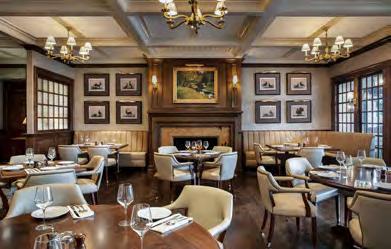


A crisp uniform speaks volumes about your organization. From elegant – to timeless classic – to crafted excellence. If Quality, Presentation, and Customer Centric Service are important to you, we’ve got you covered.



Empower your members to shape your club’s future with secure and transparent elections. Survey & Ballot Systems (SBS) provides trusted voting solutions and election management services to enhance the member experience and build lasting connections.



The Future of Club Data is Here With Advanced Real-Time Reporting

Club Data Services is revolutionizing how private club leaders use data to increase revenue, cut expenses, and make strategic decisions around sales, marketing, and member experience.
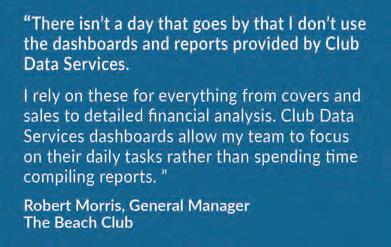


Range & Bearing’s specializes in designing custom apparel and accessories that embody the outdoor lifestyle. Each distinctive piece reflects your identity on the water, the course, or wherever your passions take you.



Xhibtz products are made in the USA. We offer a wide range of outdoor dining and patio furniture umbrellas, custom outdoor cushions, and pool furniture to meet all your needs.




















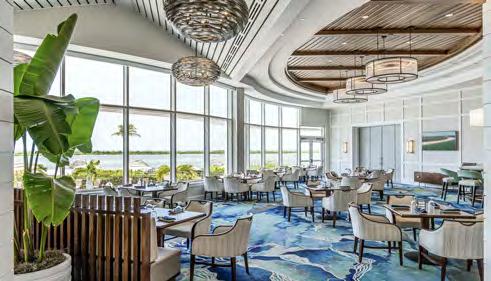



BOARDROOM MAGAZINE ADVERTISING INDEX
BoardRoom’s
CLUBS AND PEOPLE MENTIONED
Jeanine Banks, president, Boca West Country Club
Jaxon Bender, president, Piedmont Driving Club
Brian Boll, director of golf course and grounds, Interlachen Country Club
Christopher Burgess, president, The American Club Hong Kong
Nathan Charnes, PGA, GM and director of golf, WingHaven Country Club
Frank Cordeiro, COO of Colonial Country Club, Fort Worth, TX
Chef Michael Crain, director of culinary operations, The Country Club at Mirasol, Chef Egypt Davis, executive banquet, The Country Club at Mirasol
Christine DeVita, president, Governors Club
EricEshleman, PGA director of golf, Country Club of Birmingham
Rick Fernandes, president, Grey Oaks Country Club
Shari Forman, president, White Eagle Golf Club
David Frank, president, BallenIsles Country Club
Cyndy Gilchrest, president, The Venice Golf and Country Club
Andrew Green, golf course architect, Interlachen Country Club
Brett Habstritt, treasurer/finance committee chair, Interlachen Country Club
Bonnie Knutson, member, Michigan Athletic Club, Detroit, MI
Gary Lapidas, president, Wyndemere Country Club
Nancy Levenburg, member, Spring Lake Country Club, Spring Lake, MI
Joel Livingood, GM/CEO, Interlachen Country Club
David Mackesey, Diablo Country Club president (2013-2015)
Russell Miller, GM, Balboa Yacht Club
Jeff Morgan, FASAE, CAE, CEO, CMAA
Brett Morris, general manager/COO, The Club at Admirals Cover, in Jupiter, FL
Dave Moyer , RSPA Master Professional, director of racquet sports, The Country Club at DC Ranch
Susie Mumford, president, The Francisca Club
Nathan Ollhoff, director of golf, Interlachen Country Club
Chef de Cuisine Ryan O’Sullivan, The Country Club at Mirasol
David Oxford, president, Interlachen Country Club
Trey Penny, president, Colonial Country Club
Robert D Podley, CCM, CAM, GM/COO, Colonial Country Club
Duncan Reno, CCM, CCE , GM/COO, Del Rio Country Club
Greg Rubino, GM, Classic Club, Palm Desert, CA
Jeff Smith, president, Desert Mountain Club
Chef Gerald Sombright, The Club at The Dunes
Dwight Stone , president, Grandfather Golf and Country Club
Executive chef Ken Stelmack, Montclair Golf Club
Marilyn Suey Diamond, president, Blackhawk Country Club
Russell Sylte, general manager of The Santaluz Club in San Diego, CA
Miller Williams, president, Grandfather Golf and Country Club
Rob Warren, president, Mission Viejo Country Club
Dennis Whalen, president, Royal Oaks Country Club
Augusta Ranch Golf Club, a public course in Mesa, AZ
Frankfort Country Club in Frankfort, IN
North Ranch Country Club, Thousand Oaks, CA
Ocean Club Golf Course
River Hills Club, Jackson, MS