Influential Women Leading the Future of Private Clubs
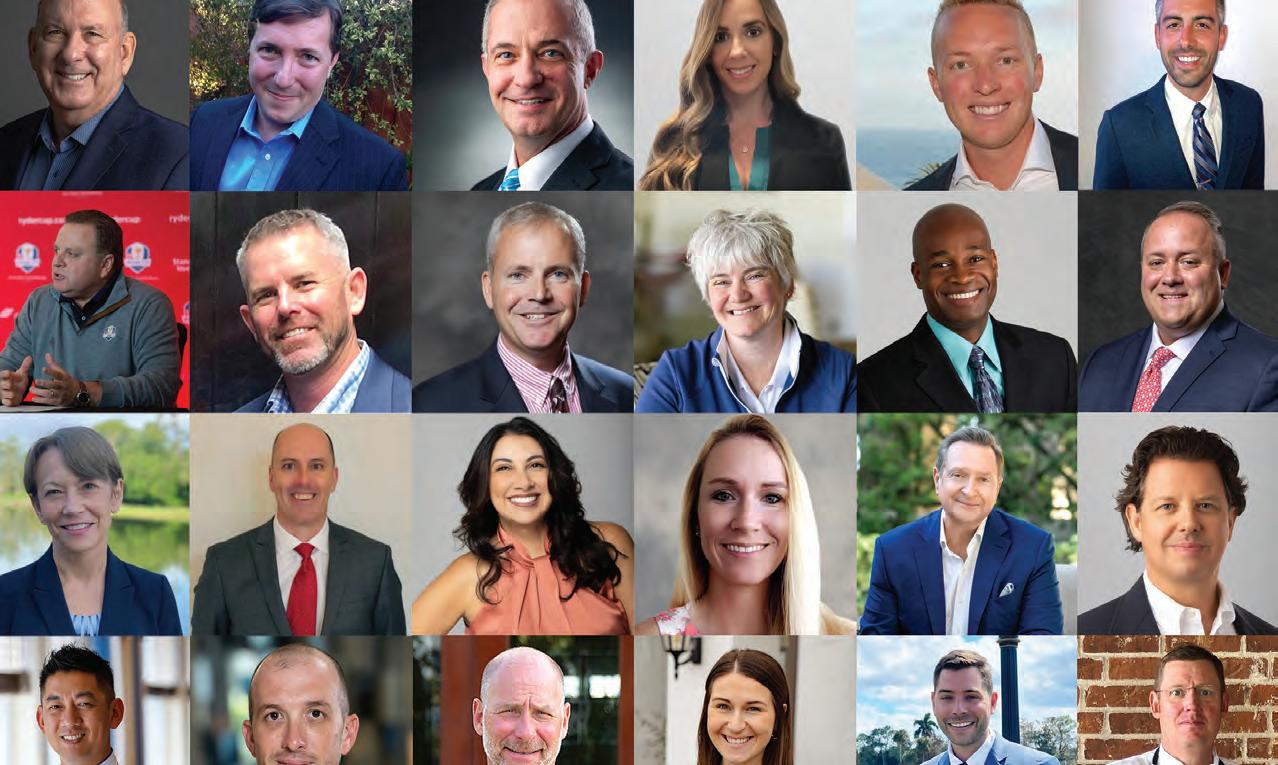
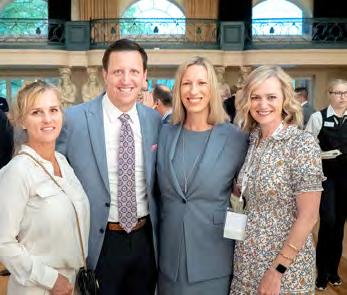
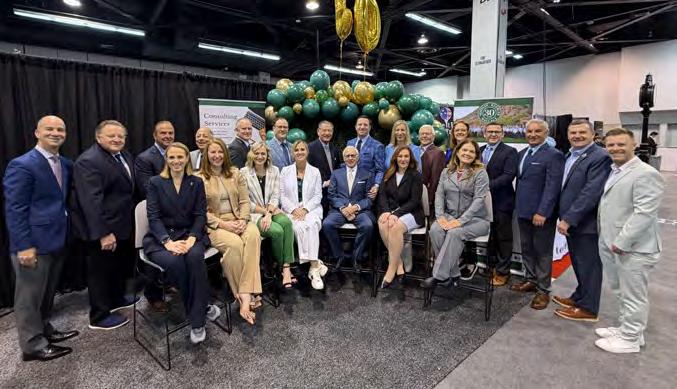
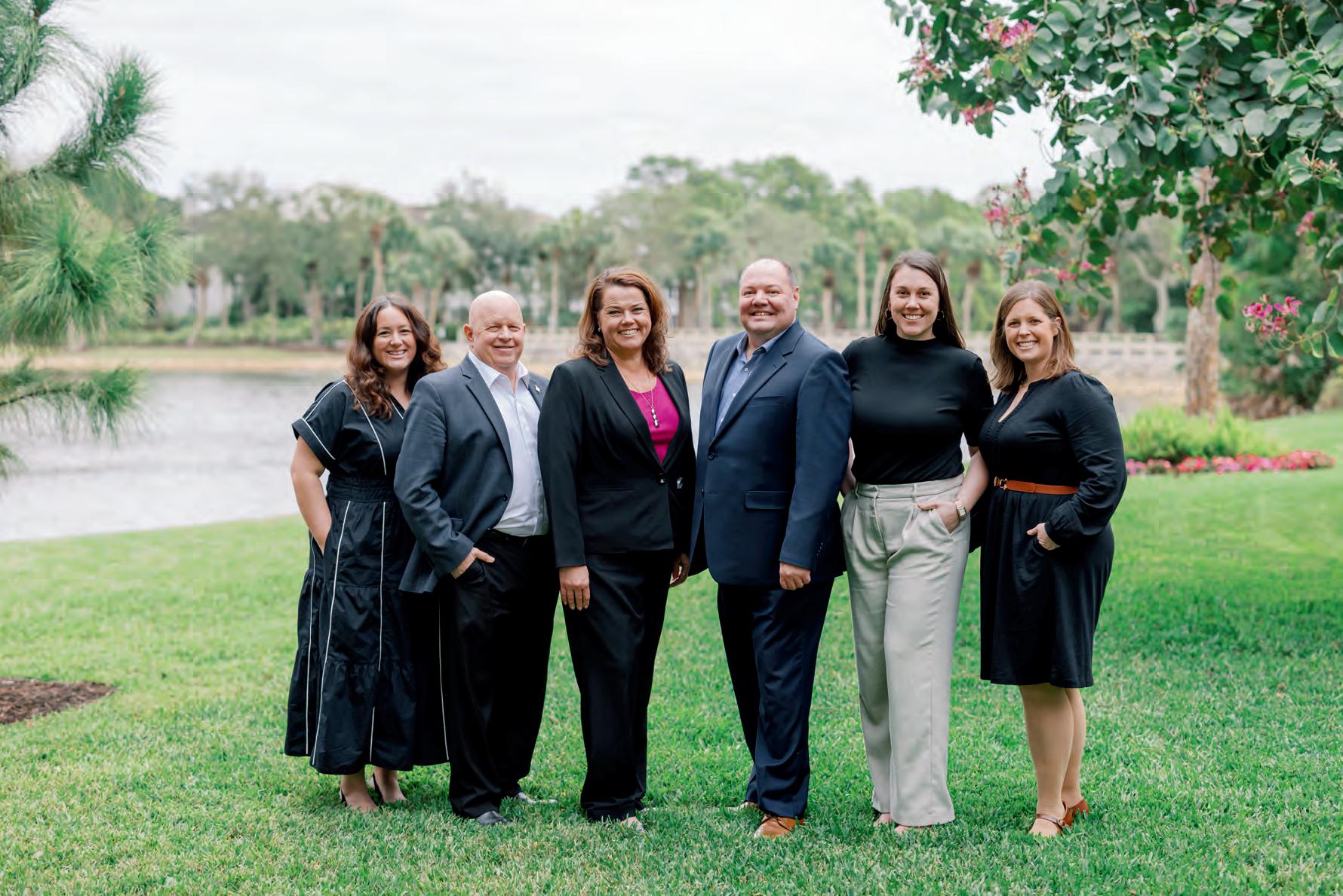
Celebrating 30 women leading, mentoring and innovating across the private club industry, selected from 86 nominations to commemorate BoardRoom’s 30th anniversary. Read insights from our cover 30, beginning on page 20 and see the full list of nominees on page 41.
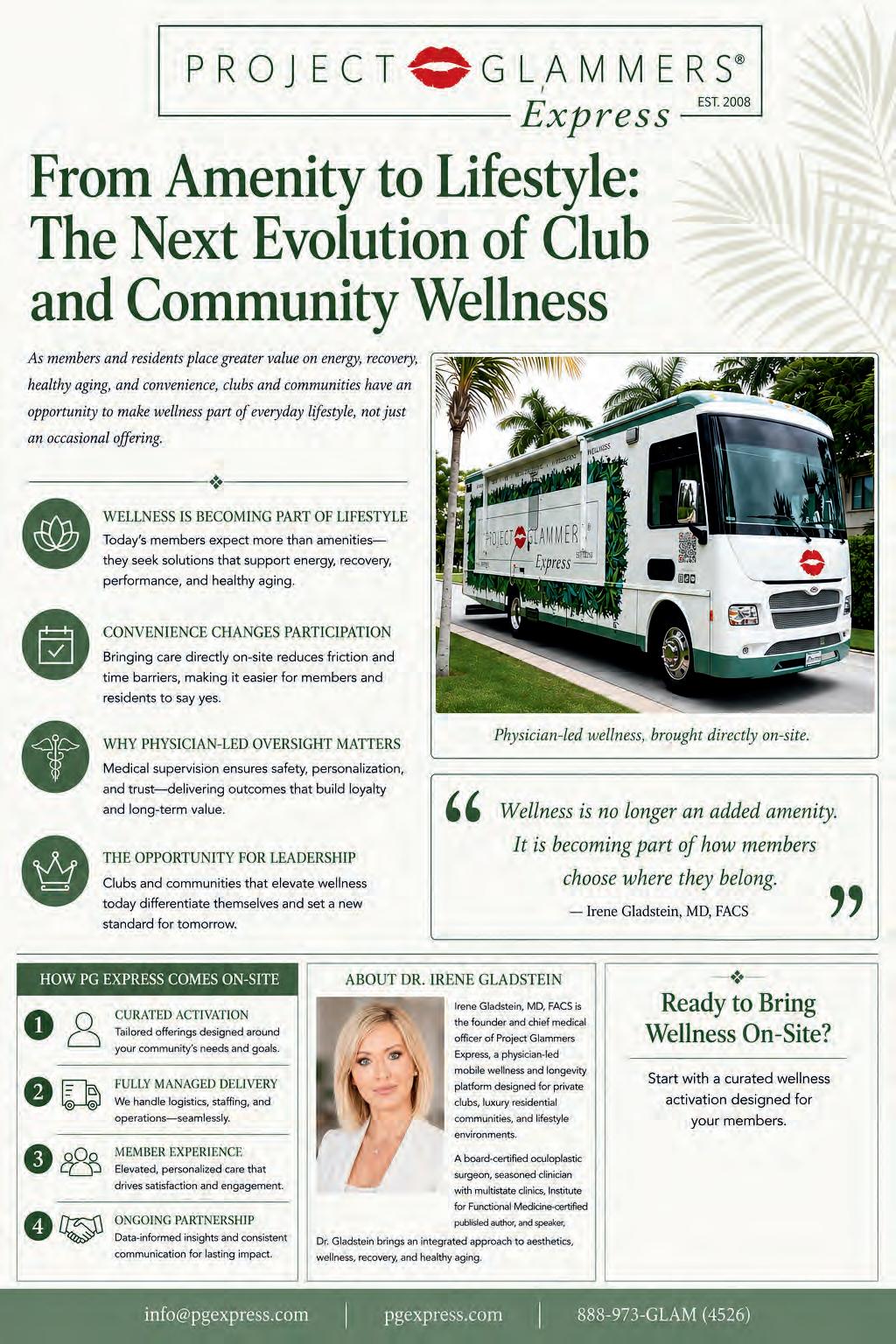
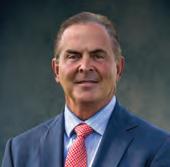
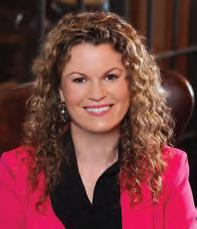
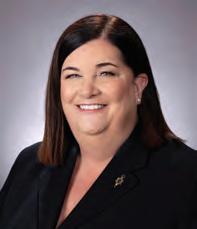
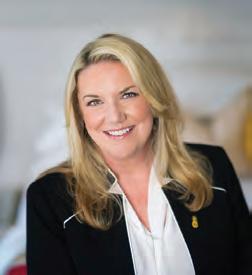
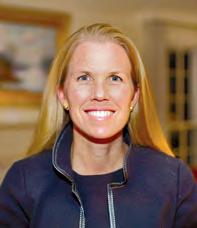
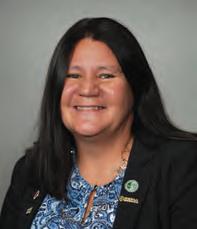
Pictured L-R Top Row: Martha M. Acker, Mary Megan Alvarado, Heather Arias de Cordoba, Janine Budzius, Lisa Carruth, Kimberly Clark Warren. 2nd Row: Dr. Alison Curdt, Lisa Dmitri, Robyn Duda, Nan Fisher, Nikki Gatch, Renee Geyer. 3rd Row: LuAnn Giovannelli, Jenny Gray, Judy Higgins, Paula Kelly, Lynne LaFond DeLuca, Melissa Low. 4th Row: Casey Newman, Robyn Nordin Stowell, Kim Pasquale, Christine Pooler, Whitney Reid Pennell, Cynthia Romstadt. 5th Row: Alyson Smith, Misty Stewart, Crystal Thomas, Jennifer Torres, Terra S. H. Waldron, Gihen Zitouni.
Workforce housing. Solved.
Workforce Stability Infrastructure
• No Assessments
• No Capital Outlay
• No Balance Sheet Impact
• Professionally Managed
• Affordable
• Fuel Internship Programs
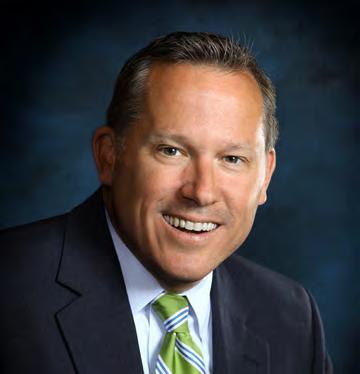
Dan Denehy President
With over 40 years of experience guiding some of golf’s most iconic courses like Walt Disney World Golf, resorts like PGA WEST, and clubs like The Nelson Golf & Sports Club, Century Golf Partners understands what it takes to help yours truly thrive. Whether navigating major transitions, rethinking member experiences, or optimizing everyday operations, our creative approach helps clubs find the best path forward, no matter how complex the challenge.
See what’s possible with us as your partners at CenturyGolf.com/partner
The trusted partners for your club’s future
Leading with Purpose
OVER THE PAST FEW WEEKS, I’VE FOUND MYSELF THINKING A LOT ABOUT TIME, HOW QUICKLY IT MOVES AND HOW OFTEN WE FORGET TO BE PRESENT WHILE LIFE IS HAPPENING AROUND US.
This month, my son graduated from California State University, Long Beach. Like so many parents, I found myself sitting there wondering how we possibly arrived at this moment so quickly. It feels like only yesterday he was a little boy building stories, creating adventures and trying to figure out who he wanted to become. Somewhere between work deadlines, travel, magazine production schedules and everyday life, the years quietly moved forward. And maybe that is exactly why private clubs matter so much.
At their best, clubs are not simply places to golf, dine, exercise or socialize. They are places where life unfolds in real time. They are where families gather for holiday dinners, children grow up at the pool and on the tennis courts, where lifelong friendships are built, and where memories are often created without us even realizing it at the time.
In many ways, clubs give people something that’s increasingly difficult to find today: a place to slow down, connect and be fully present.
As this industry continues to evolve, I believe understanding has become more important than ever. Clubs are no longer defined solely by amenities or tradition. They are being shaped by culture, wellness, emotional intelligence, innovation and the ability to create meaningful experiences across multiple generations. That evolution is reflected throughout the stories in this issue.
Our Influential Women Leading the Future of Private Clubs feature marks the return of a story package we haven’t published in more than a decade. When reading each of the responses, I was struck not only by the accomplishments of these women but also by how much the industry itself has evolved during that time. Twelve years ago, this list looked very different. Today, women are helping shape nearly every area of the private club industry, from executive leadership, governance and legal strategy to culinary operations, golf course management, wellness, membership marketing, events, hospitality and education. What stood out most to me was the depth of perspective these women bring to leadership. Their stories reflect resilience, innovation, emotional intelligence and a genuine commitment to people. They are helping shape not only club operations but also club culture itself, influencing how clubs think about governance, hospitality, wellness, mentorship, communication and the overall member and staff experience.
For this feature, BoardRoom received 86 total nominations submitted from industry leaders, associations and peers throughout the private club industry. From those nominations, 30 women were selected for their leadership, innovation, influence and meaningful contributions to clubs and the industry as a whole. Beginning on page 20, we invite you to meet these remarkable women and celebrate the many ways they continue shaping the future of private clubs around the world. Nominees are listed on page 41.
This issue also recognizes leaders whose influence continues to shape the private club industry in meaningful ways. Our Top Private Club Presidents feature highlights Richard De Schutter , president, Birnam Wood Golf Club ; Richard Kapner , president, Hunters Run; Dino Kostopoulos, president, Oakland Hills Country Club; Ken Malvey, president, The Mirabel Club; James Markano, president, the University and Whist Club, and; Charlie Martinez, president, Cat Cay Yacht Club
Each has demonstrated the importance of thoughtful governance, strategic leadership and support for management teams that strengthen both club culture and long-term sustainability.
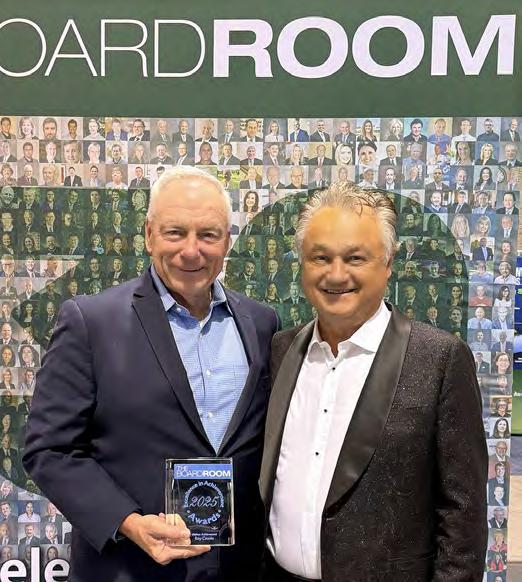
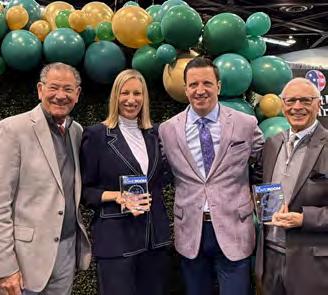
We also proudly recognize Ray Cronin with BoardRoom’s 2026 Lifetime Achievement award and Marcie Mills who is this year’s Gary Player Educator of the Year, two leaders whose contributions continue to leave a lasting mark on the industry.
Cronin shared the Lifetime Achievement honors this year with Steve Berlin, founder and CEO at Xhibtz Contract Furnishings.
What connects all of these stories is leadership. Not leadership defined by title alone, but leadership defined by service, mentorship, vision and the ability to positively impact the lives of others.
The private club industry is evolving because the people within it do too. Perhaps that is the greatest opportunity ahead of all of us, creating places where people feel connected, supported and present enough to fully experience the moments that eventually become the memories we carry forward for a lifetime. BR
Heather Arias de Cordoba Editor | heather@boardroommag.com
MICROMANAGEMENT IS OUT OF CONTROL FOR MANY CLUBS. WHY? AND WHAT CAN BE DONE ABOUT IT?
Micromanagement may begin with good intentions, but its impact on culture, staff retention and member experience can be costly. As boards and managers struggle to stay in their lanes, governance experts share strategies to build trust, strengthen accountability and empower professionals to lead. Is your club fostering excellence or unintentionally standing in its own way?
EXPANDING THE LEADERSHIP TABLE
As private club leadership continues to evolve, culture, governance and talent development are becoming critical drivers of long-term success. More women are stepping into leadership roles, bringing fresh perspectives and strengthening management teams across the industry. What can clubs do today to attract, develop and retain the next generation of exceptional leaders?
GOLF CART BATTERY FIRES AND RISKS TO CLUB OPERATIONS
Recent fire incidents at golf facilities serve as a reminder that risk management extends beyond insurance coverage. From cart storage and charging practices to facility design and business continuity planning, clubs must evaluate how prepared they are for emerging operational risks. Could a closer look at your club’s infrastructure today prevent a costly disruption tomorrow?
THE EVE OLUTION OF PRIVATE CLUBS
Women are reshaping the future of private clubs, influencing everything from wellness programming and racquet sports to travel experiences and boardroom decisions. As their impact continues to grow, clubs are discovering new ways to build community, strengthen engagement and enhance the member experience. Are today’s clubs doing enough to embrace the perspectives driving tomorrow’s success?
WHO’S ON THE BOARD (AND WHO SHOULD BE)?
Strong club governance requires more than popularity, status or a familiar face around the clubhouse. As clubs face increasingly complex challenges, selecting board members based on skills, experience and strategic fit has never been more important. Could a thoughtful approach to board succession planning help your club identify the leaders best equipped to navigate the future?
KEVIN P. VITALE
WHAT I’VE LEARNED IN MY FIRST 100 DAYS AS A CONSULTANT
After 100 days of advising private clubs, one theme has emerged above all others: success depends on alignment. From governance and leadership transitions to strategic planning and board-management relationships, even the best intentions can fall short without clarity and structure. What could your club achieve if everyone was moving in the same direction with confidence and purpose?
BONNIE J. KNUTSON
THE LOYALTY EQUATION
Member loyalty is rarely driven by amenities alone. It is built through belonging, personal connections and the countless small moments that make members feel known, valued and at home. By recognizing the subtle signs of disengagement before they become resignations, clubs can strengthen retention and deepen relationships. Is your club creating emotional connections strong enough to stand the test of time?
DEMYSTIFYING LEGAL REPRESENTATION LETTERS IN CLUB AUDITS
Annual audits involve more than financial statements. Behind the scenes, auditors and attorneys work together to identify legal risks, confirm pending claims and ensure accurate financial reporting. Understanding this process can help boards, finance committees and management teams avoid delays and strengthen governance. Is your club prepared for one of the audit’s most important final steps?
DELIVERING ‘KID FRIENDLY’
Family-friendly clubs do more than welcome children. They create experiences that engage every generation and inspire deeper member loyalty. From youth programming and family dining to leadership that genuinely embraces kids, the details matter. What separates clubs that simply talk about being family friendly from those that truly live it every day?
TRIBAL MAGIC BY GREGG PATTERSON
Finally, a Board Management Platform Built for Private Clubs
A Smarter Way To Manage Your Board And Streamline Governance!
Today’s private clubs must operate with professionalism and continuity to deliver exceptional member experiences. BellesBoard helps GMs and board leaders save time, reduce risk, and preserve institutional knowledge by centralizing governance documents, performance metrics, and candidate data in one secure platform. Identify qualified individuals, track experience, align nominees to committees, and ensure seamless transitions - so your leadership stays strong today, and prepared for tomorrow.
A Glimpse Into How Club Leaders Are Benefiting From BellesBoard
“Bellesboard transformed how we communicate with our Board and committees - eliminating paper, large emails, and attachments while making information easy to access. Governance is now far more efficient.”
Chad Schultenover CCM, CCE
General Manager
Meridian Hills Country Club
“We highly recommend them to any other private club that is looking to improve board governance and engagement.”
Marvin Jones General Manager San Antonio Country Club
Tools Designed to Support Modern Club Governance
New Member Module – Streamline and secure your membership application process while maintaining a complete admissions archive.
Governance Pipeline Module – Identify and develop future board and committee leaders before openings arise.
Risk Management Module – Access expert guidance, resources, and proactive tools to help reduce operational and liability risk.
The only board & committee governance portal built specifically for Private Clubs.
FEATURES ALLIANCE INSIGHTS
Hagen
Brad D. Steele
Robert D. Podley
Counterfactual and You By Russell Miller
DISTINGUISHED EXPERIENCES 76
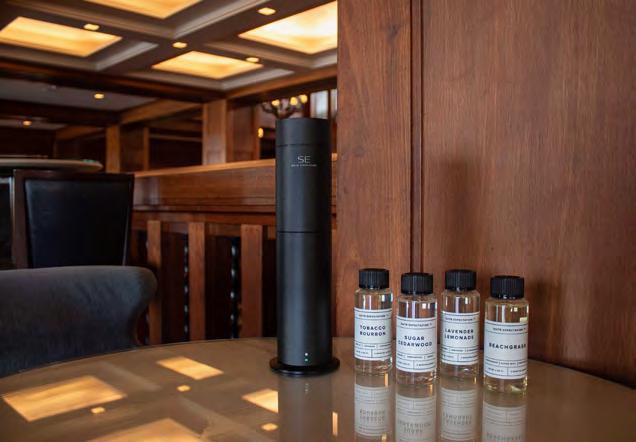
Fragrance: The Experience You Cannot Afford to Get Wrong By Colin Cowie
AUDUBON INTERNATIONAL......... 84
The Next Frontier of Sustainability By Christine Kane
CLUB CULTURE 85
Don’t Let Your Club’s Success Be Its Greatest Blindspot By Toni Shibayama
CULTURE PLAYBOOK 86 Values Aren’t What We Say, They’re What We Do By Karima Lanfranco
CULTURE AS CURRENCY ............ 87 From Transactional to Transformational Leadership By Passion Graham
INNOVATIVE IDEAS 94 By Kaden Arias
DISTINGUISHED GOLF DESTINATIONS 98-99
Aurora Anguilla Resort & Golf Club
Seaview Golf Club By Ronald Banaszak
DISTINGUISHED CLUBS 100 North Hills Club By Ronald
Banaszak
EXCELLENCE IN CLUB GOVERNANCE 104 & 105
Three Canaries in the Coal Mine
Three Points for Sound Governance By Henry
DeLozier
THIS MUCH I KNOW FOR SURE 118
‘Begin with the End in Mind’ To Have 90-Minute Board Meetings By Dick Kopplin
COMMITTEES
John G. Fornaro is the publisher/CEO of BoardRoom, co-founder/CEO of DistinguishedClubs and Distinguished Golf Destinations, CEO of APCD and president of BoardRoom Institute. He can be reached at (949) 376-8889 or via email: johnf@apcd.com.
Micromanagement Is Out of Control for Many Clubs. Why? And What Can Be Done About it?
Micromanagement, according to Merriam-Webster Dictionary is management especially with excessive control or attention to details. It’s a management style in which a leader or supervisor excessively controls, closely observes, or becomes overly involved in the minor details of other people’s work, often limiting independence, initiative, decision-making, and personal accountability.
It commonly involves frequent checking, reluctance to delegate authority and interference in day-to-day tasks that should normally be handled by staff or team members.
In the private club industry, micromanagement typically means a manager or board member becoming overly involved in day-to-day operational details that should be handled by department heads or staff, often undermining their authority, slowing decision-making and eroding trust.
In the words of Frank Vain, chairman of the St. Louis-based McMahon Group, micromanagement “is a problem we made ourselves. The governance structures we inherited are producing the behavior we resent.”
There seems to be consensus that micromanagement is out of control at many clubs and takes many forms. What are the dangers? How did we get here? What can we do about it?
“In the private club world, few leadership failures are as quietly destructive as micromanagement. It rarely announces itself. It creeps in through well-intentioned behavior, and by the time leadership recognizes it, the damage to culture, morale and member experience is already done,” said Ryan Doerr, president and CEO of Strategic Club Solutions. Essentially, micromanagement is how clubs undermine their own culture.
“Walk into almost any private club boardroom in America and ask the general manager what keeps them up at night. Somewhere near the top of the list, just below capital funding and membership retention, you’ll find micromanagement,” said Vain.
“Board members second-guessing hiring decisions. Directors fielding complaints in the grill room and dispatching instructions to department heads. Committees approving
the font on a menu. It’s endemic, it’s corrosive and the club industry has been bemoaning it for decades. But here’s the uncomfortable truth: we built this system. And we can’t fix it with a memo,” he added.
“Micromanagement doesn’t usually start with bad intentions. It starts with a structural void that someone steps into. The most common cause is a leadership chain with a weak link at the top, specifically, a board chair or club president who was never told what the job actually is.
“Most club presidents are elected because they’re popular, connected, or simply willing to serve. That’s not a criticism, it’s a reality of volunteer governance. But popularity doesn’t automatically confer an understanding of governance boundaries,” Vain added.
“At the board/committee level, micromanagement typically stems from a lack of process and clear governance standards,” said Dick Kopplin, Kurt Kuebler and Tom Wallace, principals with the search and consulting firm, Kopplin, Kuebler and Wallace.
“Micromanagement from GM to department heads is typically more of a reflection of their confidence or inability to understand that delegation is one of the key attributes of a leader. Some managers can’t let go of control and struggle to delegate because they believe mistakes can’t happen.
“Often, that vibe comes from the club board and/or membership when there is a lack of process and procedures. If board members overreact to every mistake, and one bad meal for a member means three phone calls and a drive over to the club, then of course a manager feels like he/she can’t delegate anything.
“But the truth is, hospitality is driven by people, and people make mistakes,” the partners said.
“Micromanagement within a club environment often has roots in tradition. Historically, boards and committee chairs were deeply involved in day-to-day operations, and in some clubs, that legacy still influences governance today,” said Judy Higgins, general manager of Valley Lo Club in Glenview, IL.
The EVEolution of Private Clubs
At the turn of the century, futurist Faith Popcorn introduced the notion of an EVEolution in her book “EVEolution, The Eight Truths of Marketing to Women.”
Riding on the force of her groundbreaking forward-looking book, “Clicking: 17 Trends That Drive Your Business—and Your Life,” Popcorn, whose family name is Plotkin, is a seer of the future. Her vision has proven remarkably accurate and profitable to those wise enough to listen to her.
If men and women are different, why do we market to them the same way? Today, women make 80 percent of all purchasing decisions.
“The time has come,” Popcorn said, “for businesspeople everywhere to realize that you can’t succeed in business without successfully marketing to women.”
Decades ago, she advised that women and women’s attitudes would—and do—direct future success. In those days, Popcorn was not speaking to private clubs per se, although today’s club leaders are wise to listen because her predictions proved accurate. The future of most clubs is in the hands of women.
The difference women are making in clubs can be seen in the member experience shared by so many members – male and female.
Popcorn predicted, “Whether you make cornflakes or concrete, pillows or pixels, women should be your chief target.”
Clubs that are listening to her advice have seen the impact women have made in three categories important to members’ day-to-day enjoyment and usage of their clubs:
1. Amenities: Private club women have largely driven the pickleball boom because the game conforms to primary points of emphasis within the relationship women develop with their clubs: fun, friends and belonging.
Popcorn’s key message is “there’s a huge difference between a customer who buys your brand and one who joins it.” Buying the goods or services is good for the moment, while joining the brand or product or club is for life. Popcorn suggests that attracting and engaging the lifelong customer requires rethinking traditional marketing and management methods using her eight “truths” of marketing to women.
Beyond pickleball, examples of how women have influenced their clubs include:
• Wellness Programming: Most clubs embraced the idea of fitness some years ago and developed spaces for free weights and training machines. With the urging of women, “fitness” expanded to include floor exercise, such as Zumba, yoga and stretching. Wellness has expanded to include mental health and wellness that keeps members more engaged, relevant and happy in their clubs.
HENRY DELOZIER
Henry DeLozier is a partner at GGA Partners. He can be reached via email: henry.delozier@ggapartners.com
• Non-Golf Recreational Options: Historically, golf has been the backbone of most private clubs, which were created by men and for men. As women have become more present in their clubs, recreational offerings have expanded to include racquet sports, such as tennis and paddle, and lawn games, such as croquet and bocce.
• Table games: bridge, mah-jongg and other card games—allow women to expand their platforms for socialization, the foundation of healthy and prosperous clubs.
This is not to overlook the persistent increase in the number of women who golf. The National Golf Foundation reports in its NGF Graffis Report that 8 million women and girls have become golfers. This historic milestone shows that female golfers have increased by 46 percent since 2019.
2. Programs: Beyond the recreational programming women have established, promoted and populated in many clubs, women have been integral to many clubs’ travel and social programming. Programming is the social glue that connects and retains club members.
Among the most frequently cited new programs in private clubs are cooking and baking, dance, theatrical and entertainment groups, and creative writing workshops. Travel clubs and opportunities have proliferated.
3.Governance: Thinking of women in private clubs requires rethinking club leadership.
Women continue to increase their presence in club boardrooms, adding a different perspective to the historic maleonly and golf-only focus of many boards. Women in private club boardrooms raise issues of work and break conditions for their clubs’ staff members, call for more open communication between their boards and rank-and-file club members, and seek improved living wages for all club employees.
Popcorn advises her clientele of leading brands and corporations, “Successful companies today must have a conscience, and their customers must be made aware that they do.”
This advice goes to the heart of her recognition that women join a brand more than they simply buy the brand. Noting that women call upon their peripheral vision and awareness to think beyond the immediate topic or concern on the board table, female board members think beyond the immediate question to its possible solutions and their consequences.
Women have arrived in private clubs. In doing so, they are impacting their clubs in historic and new ways. More and more private clubs are better for it… and them. BR
NANCY M. LEVENBURG
Nancy Levenburg, Ph.D., is Professor Emerita in Management from the Seidman College of Business at Grand Valley State University in Grand Rapids, Michigan. She has published hundreds of articles in business and professional journals, and has assisted over 200 organizations with strategic planning, marketing strategy, and improving operations. She is the President of Edgewater Consulting, a member of Spring Lake Country Club in Spring Lake, and the recipient of the BoardRoom 2024 David White Editorial Award. For more information, contact her at: levenbun@gvsu.edu or (616) 821-5678.
Who’s on the Board (and Who Should Be)?
“THE PESSIMIST COMPLAINS ABOUT THE WIND. THE OPTIMIST EXPECTS IT TO CHANGE. THE LEADER ADJUSTS THE SAILS.”
– JAMES MAXWELL
I used to live in a small town (15,000 people) in central Indiana. In fact, there were only 30,000 people in the entire county, and likely an equal number of hogs.
When we first moved there from the bustling Chicago suburb of Schaumburg, someone told me my new home was in a “funeral home town.”
I asked, “What does that mean?”
The person said, “It means that the biggest house in town and the wealthiest person in town owns the funeral home. And he’s also the president of the country club.”
But is the owner of the funeral home the best person to preside over the country club’s board of directors?
In addition to empathy and compassion for families going through a tough time, strong interpersonal and communication skills, and good organizational skills, what other skills uniquely position him to lead a mini-government? While he may have accrued significant status in the community and undoubtedly has established longstanding relationships with community members, what else is involved?
According to marketing consultant Carissa Duenas, “A truly effective board calls for a mix of directors with the right skill sets, interests, industry knowledge/experience, behavioral qualities and strong value systems … (and) there are a myriad of factors that impact the board’s composition – from evolving regulatory requirements to closing a technical skills gap. However, regardless of external or internal requirements, the selection of board members should
be the end result of a strategic exercise and a careful, deliberate process.”
In other words, clubs should recruit board members through a strategic, thoughtful matching of their needs with individual candidates’ skills, knowledge, experience, background and personal characteristics, such as integrity, willingness to collaborate and listening skills.
Simply because someone owns the biggest house in town doesn’t necessarily qualify the person to serve on the board (or assume the position of club president). As Jim Collins, author of “Good to Great and Built to Last,” once said, “People are not your most important asset. The right people are.”
So, how do you know who the right people are? To obtain a macro-level snapshot of your board’s composition, consider using a skills/competency/ characteristics matrix to identify gaps. The information will help the nominating committee identify, evaluate and recommend future board members.
Below is an example of such a matrix. What it shows is that this seven-member board is long on directors who possess accounting and financial skills. However, it is short on directors who have marketing expertise.
Thus, if the nominating committee is recruiting two new board members to bring its total to nine, it may want to target people with a background in marketing.
In fact, let’s say the club wants to attract new members by highlighting what it offers families, such as junior golf and swimming lessons. It is reaching out to younger audiences by showcasing the club’s facilities through digital marketing and social media targeting Millennials. In this case, the club is especially interested in filling board positions with marketing experts with knowledge of website development. In other words, IT professionals.
Using this type of skills and competencies matrix will support the club’s succession planning for future leaders and help the nominating committee zero in on those individuals who may be bestpoised to “adjust the sails.” Not just those who own the biggest house in town. BR
Today’s members expect club experiences to feel as seamless and personalized as every other part of their lives. Clubs that deliver connected mobile experiences are setting a new standard for engagement, convenience, and service.
Experience-driven and location-aware, the Clubessential Mobile App creates one connected member journey across every touchpoint of club life — bringing reservations, communication, payments, engagement, and now physical club access together in one seamless experience.
From booking a dining reservation to entering the fitness center, members move effortlessly through a fully connected club experience.
Connected Club Technology Helps You:
Provide secure self-service access through one connected mobile platform
Deliver seamless reservations, dining, payments, and communication experiences
Connect digital booking, communication, and physical access into one unified member journey
Personalize engagement with location-aware messaging and notifications
"Clubessential stays many steps further ahead than the competition. Everybody else is more reactionary, whereas Clubessential has that foresight into what the clubs are going to need."
Dave Whalen | General Manager, North Shore Golf Club
WHITNEY REID PENNELL
Whitney Reid Pennell, president and founder of RCS Hospitality Group, is a celebrated thought leader, club influencer, consultant, management educator, and speaker. RCS specializes in strategic planning, operations consulting and management, executive recruitment, and training programs. RCS has been recognized 18 times with BoardRoommagazine’sExcellenceinAchievement Awards, including Staff Training Company Nine times. RCS offers innovative solutions through RCSUniversity.com, culture lab for employees and managers, and plentiful in-person training programs for staff and managers. For more information, call (623) 322-0773 or visit RCS at www.consultingRCS.com.
Expanding the Leadership Table: Culture, Governance and the Next Generation of Club Leaders
The future of private club leadership is already taking shape, and women are playing an increasingly visible role in that evolution. Across the industry, women are leading operations, shaping member experiences and guiding clubs through periods of growth and change.
Their presence reflects something important about hospitality leadership itself. The qualities that define great club leaders—strong relationships, thoughtful communication, sound judgment and the ability to bring people together—have always been at the heart of our industry.
As leadership in our industry evolves, so do the assumptions people carry into the room about who is leading. For decades, many clubs reflected leadership patterns common across hospitality and business. Today, leadership teams are expanding.
More women are serving as general managers, department heads and executive leaders within their organizations. This progress does not replace the contributions of those who built the industry before us. It strengthens leadership teams by bringing together different perspectives and experiences that ultimately benefit the membership.
Many women in club management have also benefited from mentors, colleagues and board members who recognized their potential and encouraged them to step forward into leadership roles. The most successful clubs have always been places where talented people support one another and where leadership grows through collaboration. When men and women work together in that spirit, leadership teams become stronger, more thoughtful and more effective.
Earlier in my own career, advancement in club management often meant mobility. Leaders moved from club to club to gain experience and take the next opportunity.
For many professionals, that path worked well and produced outstanding leaders. For others, the expectation of frequent relocations created difficult choices. More than 25 years ago, I chose to pursue consulting in part because the traditional career ladder often required constant movement.
Today, the landscape is shifting. Many club leaders are part of dual-career households, and relocation decisions often involve two professional paths, schools and community roots. Talented professionals increasingly look for organizations where they can grow while also building stability in their personal lives. This shift affects both women and men entering the profession.
Clubs that recognize this reality will have a significant advantage in attracting and retaining leadership talent. Professionals entering the industry want to build meaningful careers. They also want to work for organizations that invest in their development and create opportunities to grow over time.
Culture plays a central role in that equation.
Many clubs have thoughtfully revisited their mission statements and core values in recent years, recognizing the importance of culture in shaping the member and employee experience. Those efforts are meaningful, yet values gain credibility through the way an organization operates every day.
Talented leaders quickly recognize the difference between values written in a strategic plan and values reinforced through governance practices, leadership development and consistent support of professional management. Culture ultimately lives in decisions, behaviors and accountability.
Strong governance is equally important.
Strong governance has always been one of the most important signals a club sends to leadership talent. Capable leaders are drawn to environments where roles are clear, professional management is trusted and boards focus on long-term strategy rather than daily operations.
When those boundaries blur, the most confident leaders often choose other opportunities. Over time, clubs can unintentionally attract managers who are more comfortable managing upward than leading forward. The result is exactly what boards hope to avoid: increased board involvement in operations and less strategic leadership guiding the club’s future.
When boards practice disciplined governance, they create the conditions where strong leaders can succeed. Leadership stability grows, teams develop with confidence and the organization benefits from thoughtful long-term direction rather than constant course correction.
The clubs that will thrive in the years ahead will be those that understand culture not as a statement on paper, but as a leadership commitment lived every day. They will invest in developing talent, mentoring emerging leaders and creating environments where exceptional professionals choose to stay and grow.
The rise of women in club management is one visible sign of a broader shift taking place across the industry. Leadership is expanding. New perspectives are strengthening leadership teams, and talented professionals are stepping forward with fresh ideas and energy.
Private clubs have always been defined by relationships, community and continuity. When clubs intentionally develop their leadership culture, they create the same sense of stability for their teams that members value in the club itself.
Culture is not defined by the words framed on the wall. It is defined by the decisions leaders make when those values are tested. BR
KEVIN P. VITALE
Kevin P. Vitale, CCM is a search and consulting executive for Kopplin Kuebler & Wallace and principal with Private Club Governance & Alignment Advisors. He can be reached via email: kevin@kkandw.com or kevin@pcgakkw.com.
What I’ve Learned in My First 100 Days as a Consultant in the Private Club Industry
When I stepped into a consulting role in the private club industry, I expected complexity. I expected nuance. I expected strong personalities, proud traditions and high expectations.
What I did not fully appreciate, at least not until I was in it every day, was how much of a club’s success or struggle comes down to one thing: alignment. Not agreement or consensus. Alignment.
Over the past 100 days, I’ve had the opportunity to sit in boardrooms, walk clubhouses, listen to general managers and observe leadership teams in moments of both clarity and tension. One lesson has remained consistent: Most challenges in private clubs are not operational. They are governance and leadership alignment issues that eventually affect operations.
THE GAP BETWEEN GOOD INTENTIONS AND REAL OUTCOMES
Every club I’ve encountered is filled with people who care deeply. Board members volunteer because they care about their clubs, while general managers and teams dedicate themselves to delivering exceptional experiences. Committees are often made up of highly successful individuals who want to contribute. And yet, despite all of that goodwill, clubs still find themselves stuck. Why?
Because good intentions are not a substitute for clear roles, shared expectations and disciplined governance. In many cases, I’ve seen boards operating in the gray area between governance and management. Not intentionally, but gradually. One decision at a time. One exception at a time.
Over time, that gray area becomes the norm. And when that happens, confusion follows:
• Who is responsible for what?
• Who makes which decisions?
• Where does strategy end and operations begin?
Without clarity, even capable leaders begin working against each other instead of with each other. Governance is not something you “fix” in a meeting or retreat. It is a process, a discipline and a way of operating.
The strongest clubs I’ve seen are not perfect. They simply have structure and consistency in how they govern themselves. They:
• Understand the distinction between governance and management
• Make decisions based on long-term stewardship rather than short-term agendas
• Reinforce accountability at the board level
• Create space for management to execute with confidence.
Effective governance allows management to execute, not react. That idea has surfaced repeatedly in my first 100 days. When governance is clear, management thrives. When governance is unclear, management survives.
THE SILENT RISK: MISALIGNMENT DURING TRANSITION
Many of the situations I’ve observed involve some form of transition:
• A new general manager
• Board turnover
• A major capital project
• Shifting membership expectations.
These are often the moments where misalignment becomes most dangerous. During transition, small gaps in clarity become large fractures:
• Strategic priorities become blurred
• Decision-making slows or becomes inconsistent
• Leadership confidence erodes.
What I’ve learned is that transitions do not create problems. They expose them. Without a clear governance framework, those moments can set a club back years instead of moving it forward.
STRATEGY WITHOUT STRUCTURE IS JUST CONVERSATION
Over the past few months, one pattern has stood out. Clubs are not short on ideas. They are short on structure. Clubs want to plan, improve and evolve. But without a clear distinction between policy, strategy and operations, strategy can quickly become reactive, agenda-driven or fragmented.
The most effective environments I’ve seen are those where:
• Strategy is tied to mission and long-term stewardship
• Policies reinforce consistency and accountability
• The board stays at the appropriate altitude. When that structure exists, strategy becomes executable. Without it, strategy remains aspirational.
STRONG GOVERNANCE ENABLES LEADERSHIP
One misconception I had early on was that stronger governance might feel restrictive. What I’ve learned is the opposite. Strong governance does not limit leadership. It enables it. When roles are clear and expectations are aligned:
• Boards can focus on oversight and direction
• Management can focus on execution
• Decisions can be made with confidence and consistency. Governance should create the conditions for operational excellence, not attempt to manage it directly. That distinction is subtle, but it matters greatly.
Influential W LEADING
THE FUTURE OF PRIVATE CLUBS
BY JOHN G. FORNARO, PUBLISHER / CEO
For BoardRoom magazine’s 30th anniversary, we felt it was the right time to revisit a feature we last published in 2014: Influential Women in the Private Club Industry
During my many visits to clubs across the country, those of us working in the private club industry have noticed that a great deal has changed over the past 12 years.
Today’s private clubs are more dynamic, multi-dimensional and experience-driven than ever before. Clubs are now serving as gathering places for as many as six generations of members, each with different expectations surrounding wellness, hospitality, communication, technology, programming and connection. As a result, leadership has evolved far beyond traditional operational models.
Today, leaders within the private club industry are increasingly defined by emotional intelligence, adaptability, mentorship, collaboration and the ability to create meaningful experiences for both members and employees.
BoardRoom contacted industry leaders, associations, peers and vendor partners throughout the private club industry seeking nominations for this special cover feature. We received 86 nominations representing an extraordinary group of women from nearly every area of club operations and leadership. Some longtime industry giants whose influence has shaped clubs for decades, while others represent a new generation of innovative leaders helping to redefine the industry’s future.
From those nominations, a committee selected 30 women based on their leadership, innovation, mentorship, industry influence and meaningful contributions to club culture, member experience and the continued evolution of private clubs. While we wish we had the space to recognize every woman nominated for this feature, we are proud to celebrate the many women across the industry who continue to make a lasting impact every day.
The breadth of leadership represented throughout these pages is what makes this year’s feature especially meaningful. These women influence nearly every aspect of club operations, including executive leadership, governance, golf, associations, culinary, golf course management, wellness, membership and marketing, racquets, communications, human resources, legal, events and education.
Most importantly, they are helping shape the future of private clubs for generations to come.
Many are mentoring future leaders. Many are redefining club culture. Many are challenging long-standing industry norms while helping create more collaborative, thoughtful and innovative environments for both members and staff.
Names are organized alphabetically, and the remaining 56 nominees are recognized on page 41. Please join us in honoring and celebrating not just these leaders, but all the remarkable women who are helping mentor, inspire and innovate throughout the private club industry.
Influential Women
LEADING THE FUTURE OF PRIVATE CLUBS
Martha M. Acker PRESIDENT MCMAHON
GROUP, INC.
38
YEARS IN THE INDUSTRY
WHAT DEFINING EXPERIENCE OR DECISION MOST SHAPED YOUR LEADERSHIP JOURNEY, AND HOW DOES IT INFLUENCE THE WAY YOU LEAD TODAY?
What the Military Taught a Green Consultant About Leading. Fresh out of college, my first assignment was evaluating club systems for a branch of the military. I was sent to installations across the country to meet with seasoned personnel, ask hard questions, and deliver honest assessments. This meant sometimes telling people things they didn’t want to hear.
I was terrified. But those rooms taught me everything I still rely on today. First, I learned to listen genuinely, not just waiting to speak. The most experienced people in the room will open up when they sense you’re truly present. Second, I learned that preparation is respect. Doing your homework before walking into a difficult meeting says the other person’s time matters. Third, I learned that directness builds more trust than softness. When I hedged, people noticed. When I was clear, even with unwelcome news, I was respected. There were moments I either couldn’t or was not allowed to accommodate what someone wanted or requested. Saying so, professionally and firmly, to people who outranked me in every way was uncomfortable. It was also non-negotiable. Looking back, I can’t believe I was handed that assignment so early. I’m grateful I was. Those rooms made me the consultant and leader I am today.
WHAT IS ONE SHIFT OR OPPORTUNITY IN THE PRIVATE CLUB INDUSTRY THAT EXCITES YOU MOST RIGHT NOW?
After decades in the club industry, I still get genuinely excited. That’s what happened when I read the recent Wall Street Journal coverage of Life Time Fitness.
Life Time has been building something remarkable. Through its Life Time Living concept, the company has integrated luxury apartments directly alongside its athletic clubs—where every lease includes full access to world-class fitness, wellness, and community. This isn’t a gym with amenities bolted on. It’s a reimagining of what club membership can mean in someone’s daily life.
What excites me most is what’s happening locally. Life Time acquired Creve Coeur Racquet Club here in St. Louis and is now investing heavily in the facility— adding indoor pickleball courts, upgrading the experience, and doing it right. The market has already responded; there’s a waitlist.
The private club industry should take note. Members today want more than a golf round or a dining room. They want community, wellness, and a sense of belonging that extends beyond a single amenity. Life Time isn’t just competing with gyms. It’s raising the bar for what an exceptional club experience looks like. I have a very good feeling about where this is heading, and that anticipation is exactly why I still love this industry. BR
Mary Megan Alvarado
MEMBERSHIP DIRECTOR THE ATHLETIC CLUB OF COLUMBUS
13 YEARS IN THE INDUSTRY
WHAT DEFINING EXPERIENCE OR DECISION MOST SHAPED YOUR LEADERSHIP JOURNEY, AND HOW DOES IT INFLUENCE THE WAY YOU LEAD TODAY?
One of the most defining experiences that shaped my leadership journey came at the beginning of my club career. I was fortunate to be surrounded by genuine colleagues, including senior leadership at The Athletic Club of Columbus, who recognized my strengths and provided a strong foundation within a positive work culture. Collaborating to strategize and solve problems in a respectful, teambased environment deeply influenced my leadership style and reinforced the principle that every voice has value.
Professional development was also strongly encouraged. One of the best decisions of my career was joining PCMA (Professional Club Marketing Association) and pursuing my Certified Membership Professional (CMP) designation. Earning my CMP provided practical tools that strengthened my abilities as both a leader and membership professional and directly contributed to recruitment and retention strategies still used by the membership department today. As responsibilities grew and membership initiatives expanded beyond the capacity of a one-person department, I became intentional about creating the same type of supportive environment that helped shape my own growth.
Today, I lead by prioritizing collaboration, encouraging professional development, and creating a culture where individuals feel valued.
WHAT IS ONE SHIFT OR OPPORTUNITY IN THE PRIVATE CLUB INDUSTRY THAT EXCITES YOU MOST RIGHT NOW?
One of the most exciting shifts in the private club industry is the growing presence of women at every level of leadership. More women are stepping into executive roles, earning their CCM, serving on club boards, and creating new opportunities to shape the future of hospitality.
What makes this shift especially meaningful is the diversity of perspective it brings to the industry. As a new mother, I find it incredibly inspiring to see women balancing leadership, family, and personal growth while continuing to move the industry forward. It reinforces that there is space to lead in a way that is both authentic and impactful.
This momentum is also supported by more women-led initiatives that complement traditional club career paths, such as the Fierce and Fearless Leadership Conference at The Oaks Club this October. Opportunities like these help build confidence, visibility, and mentorship for the next generation of leaders.
Ultimately, this shift excites me because it is not only changing who is at the table, but also how leadership is defined and experienced throughout the club industry. BR
CMP
Influential Women
LEADING THE FUTURE OF PRIVATE CLUBS
Heather Arias de Cordoba
CO-PUBLISHER / EDITOR BOARDROOM MAGAZINE
28 YEARS IN THE INDUSTRY
WHAT DEFINING EXPERIENCE OR DECISION MOST SHAPED YOUR LEADERSHIP JOURNEY, AND HOW DOES IT INFLUENCE THE WAY YOU LEAD TODAY?
One of the defining moments in my leadership journey came more than 24 years ago when I attended my first CMAA World Conference in Miami. Having grown up in Regina, SK, Canada, then moving to Calgary, AB at 18 and California at 23, my world had already expanded in ways I never imagined. I was raised by parents who never placed limitations on what I believed I could accomplish. They taught me the value of hard work, curiosity and resilience, and to always stay open to new experiences and opportunities. My father, Dave White, who served as BoardRoom magazine’s editor for 22 years, also instilled in me a deep appreciation for storytelling and meaningful conversations. That conference was the moment I truly understood the impact BoardRoom was having on the private club industry and how important collaborative governance is in helping clubs and boards lead more effectively. After meeting general managers, club leaders, and industry partners from around the world, I realized BoardRoom was far more than a publication. Under the leadership and mentorship of John Fornaro, whom I met more than 35 years ago, I saw firsthand how education and storytelling could help boards make more informed decisions for the long-term success of their clubs. That experience continues to shape the way I lead today. I believe leadership is about creating meaningful conversations, connecting people, elevating ideas, and helping industries move forward through education, collaboration and shared understanding.
WHAT IS ONE SHIFT OR OPPORTUNITY IN THE PRIVATE CLUB INDUSTRY THAT EXCITES YOU MOST RIGHT NOW?
One of the most exciting shifts happening within the private club industry right now is the continued evolution of club culture and leadership. Over the past two decades, the industry has moved far beyond the traditional general manager model into the more strategic COO role, creating stronger operational leadership and a more collaborative relationship between boards, management teams and department leaders. I’ve had the privilege of working alongside industry leaders such as the late Jay DiPietro, Jill Philmon and Gregg Patterson and watching clubs evolve into family-friendly third spaces that deliver unparalleled member experiences. Today’s clubs are no longer simply places to play golf or dine. They are communities where multiple generations gather, connect, celebrate and create lifelong memories together.
What excites me most, however, is the growing focus on club culture and the people behind the member experience. Club leaders are increasingly recognizing the importance of creating environments where staff can thrive, grow, and feel valued in careers that are both physically and mentally demanding. With as many as six generations of members interacting within clubs today, the opportunity to create meaningful experiences for both employees and members has never been more important or more rewarding. BR
Janine Budzius
CMAA CHAIR & GM/COO HOUSTON COUNTRY CLUB
30 YEARS IN THE INDUSTRY
WHAT DEFINING EXPERIENCE OR DECISION MOST SHAPED YOUR LEADERSHIP JOURNEY, AND HOW DOES IT INFLUENCE THE WAY YOU LEAD TODAY?
My leadership journey was most shaped by the generosity of mentors who invested in me early in my career. Years ago, someone took the time to explain something to me that they did not have to. They stayed late, answered questions and made the work feel a little less overwhelming. I do not think they realized how much that moment mattered, but I have carried it with me ever since.
That experience taught me leadership is not defined by title, but by taking care of people and helping them succeed. It also reflects what makes our profession so special. Through organizations like CMAA and strong peer networks, our industry thrives because people share knowledge, support one another and raise standards together.
A philosophy I often share is, “When one of us wins, we all win.” I have had the privilege of seeing talented team members grow into significant leadership roles, including individuals who now serve as successful general managers and senior leaders throughout the private club industry. Their accomplishments are deeply meaningful to me.
Those experiences continue to shape how I lead today by creating opportunity, investing in others and supporting the person who comes next.
WHAT IS ONE SHIFT OR OPPORTUNITY IN THE PRIVATE CLUB INDUSTRY THAT EXCITES YOU MOST RIGHT NOW?
One of the most exciting opportunities in the private club industry today is the continued evolution of how we attract, develop and retain talent. As member expectations become more sophisticated, the long-term success of any club depends on the strength of its team and its ability to cultivate future leaders.
I am especially encouraged by the industry’s growing commitment to mentorship, internships and professional development. Programs supported by organizations like CMAA, along with strong peer networks, create meaningful pathways for growth and connection. One of the defining strengths of our industry is the willingness to share knowledge, support one another and elevate the profession collectively.
At the same time, clubs are becoming more open to innovation. Whether through technology, data-informed decision-making, or new operational models, there is greater recognition that progress and tradition can coexist. Innovation should help us do the work better without losing sight of why it matters.
The responsibility of leadership in this moment is not to resist change, nor chase it blindly, but to guide it with purpose. When clubs invest in people and embrace thoughtful progress, stronger cultures, better experiences and a more sustainable future are created. BR
CCM, CCE
Influential Women
LEADING THE FUTURE OF PRIVATE CLUBS
Lisa Carruth
DIRECTOR OF MEMBERSHIP & EVENTS
PCMA NATIONAL PRESIDENT
BRAEBURN COUNTRY CLUB / PCMA
22 YEARS IN THE INDUSTRY
WHAT DEFINING EXPERIENCE OR DECISION MOST SHAPED YOUR LEADERSHIP JOURNEY, AND HOW DOES IT INFLUENCE THE WAY YOU LEAD TODAY?
As a member of PCMA since 2019, I have seen my career flourish. However, it wasn’t until I decided to get help get the Lone Star Chapter restarted in 2022 that I fully realized the true value and importance of my PCMA Membership. I am the perfect example of “you get what you give.” Getting involved locally and nationally has been a huge part of my career success, through the professional and personal connections that I have made with fellow PCMA members across the country.
I decided that I wanted to achieve the Certified Marketing Professional designation. My industry knowledge grew immensely after taking the CMP exam, and I look forward to becoming an MCMP next!
The incredible growth I have experienced on my leadership journey over the last few years has transformed my career and leadership journey. I am a better Club leader, equipped with more industry knowledge, and I owe it all to PCMA!
WHAT IS ONE SHIFT OR OPPORTUNITY IN THE PRIVATE CLUB INDUSTRY THAT EXCITES YOU MOST RIGHT NOW?
I am excited to see the shift in the private club industry from transactional memberships to true, lifestyle-driven belonging. I’ve always believed clubs are at their best when they become more than a place—they become an integral part of a member’s life story.
Members today want meaningful experiences, genuine connections, and a sense of community for their families. This gives us and an industry an incredible opportunity to be more intentional in how we serve them—through thoughtful programming, personalized touches, and moments that feel both elevated and authentic.
I’m especially inspired by how we can blend tradition with a more modern approach—honoring the history of a club while evolving to meet members where they are today. When done well, it creates something special: a place where members don’t just belong on paper but truly feel at home. That sense of connection and belonging is what makes this work so meaningful to me. BR
27 YEARS IN THE INDUSTRY
WHAT DEFINING EXPERIENCE OR DECISION MOST SHAPED YOUR LEADERSHIP JOURNEY, AND HOW DOES IT INFLUENCE THE WAY YOU LEAD TODAY?
Looking back, there wasn’t one defining moment. My leadership has been shaped by an amalgamation of experiences, many of which I didn’t recognize as formative until much later. I was raised with hospitable values and a quiet expectation of excellence, never handed answers, but encouraged to figure things out. That instilled a curiosity, and a love of service, that I’ve leaned on ever since.
When I found my way into Private Club leadership, I tried to be intentional about every step. I looked at the leaders before I looked at the clubs, and I sought out people I could learn from. I was trusted with autonomy early and blessed with a front row seat to a Master Class in Leadership of all styles. Over time, I borrowed pieces from each of them and slowly grew into an approach of my own, rooted in hospitality, and still very much a work in progress.
That’s why I lead the way I do, with a deep passion for our profession, giving my team the room to figure things out the way I was given, and leaning on our remarkable community of club leaders who make each other better. Most days, I feel like I’m just getting started.
WHAT IS ONE SHIFT OR OPPORTUNITY IN THE PRIVATE CLUB INDUSTRY THAT EXCITES YOU MOST RIGHT NOW?
There is a lot to be excited about right now. Our industry is healthier than it has ever been, a new generation of leaders is ascending into top roles, and the education and support available through CMAA, NCA, and many of our industry partners continues to get better every day. But the opportunity that energizes me most is the one still in front of us: telling our story to young people.
Private Club management is one of the most rewarding niches in all of hospitality. The careers it offers, the relationships you build, the craft of creating extraordinary member experiences, there is simply nothing else quite like it. And yet we continue to struggle to reach young people and introduce them to this profession.
Solving that is one of the most important things we can do for the future of our industry. The incoming generation is creative, curious, and unafraid to challenge the status quo, exactly the kind of talent our clubs need. We just have to do a better job of helping them find us.
If we get this right, the runway ahead is long, and the people stepping onto it will be remarkable. That’s what keeps me excited. BR
CCM, CCE
Influential Women
LEADING THE FUTURE OF PRIVATE CLUBS
Dr. Alison Curdt
PsyD, PGA MASTER, LPGA MASTER
DIRECTOR OF INSTRUCTION, ALISON CURDT GOLF / WOOD RANCH GOLF CLUB
21 YEARS IN THE INDUSTRY
WHAT DEFINING EXPERIENCE OR DECISION MOST SHAPED YOUR LEADERSHIP JOURNEY, AND HOW DOES IT INFLUENCE THE WAY YOU LEAD TODAY?
One defining decision that shaped my leadership journey was choosing to step fully into roles that extended beyond instruction and into governance, even when it meant being the only woman in the room. Accepting leadership positions within both the PGA and LPGA—and ultimately serving in executive roles—required me to move from focusing solely on individual player development to advocating for the broader membership.
That shift forced me to find my voice, make difficult decisions, and lead with both conviction and empathy. It also reinforced the importance of preparation, professionalism, and consistency—especially when representing others. Today, it influences how I lead by prioritizing inclusivity, transparency, and accountability. I’m intentional about creating space for diverse perspectives and ensuring others feel seen and heard, while also holding a clear standard for communication and follow-through.
It also drives my commitment to mentorship. I understand firsthand how impactful it is to have someone open doors or offer guidance, and I aim to do the same for others coming up behind me. Ultimately, that experience shaped me into a leader who balances strength with approachability, and vision with action.
WHAT IS ONE SHIFT OR OPPORTUNITY IN THE PRIVATE CLUB INDUSTRY THAT EXCITES YOU MOST RIGHT NOW?
One of the most exciting shifts in the private club industry right now is the evolution from a purely golf-centric model to a holistic lifestyle and community experience. Clubs are no longer just places to play—they’re becoming hubs for wellness, connection, and personal development.
This shift creates an incredible opportunity to engage a broader, more diverse membership base. By integrating fitness, mental performance, family programming, and social experiences alongside golf, clubs can meet members where they are in different seasons of life. It also allows professionals to deliver more value beyond traditional instruction—coaching the whole person, not just the swing.
From my perspective, this is especially impactful because it aligns with how people actually perform and thrive. When members feel connected, supported, and engaged, their participation increases—and so does their loyalty to the club.
Ultimately, this evolution positions private clubs to remain relevant, vibrant, and sustainable for the next generation, while elevating the role of the golf professional as a true leader in both performance and community building. BR
Lisa Dmitri
DIRECTOR OF LAKESIDE OPERATIONS: FITNESS, SPA, RACQUETS, AQUATICS & RETAIL
HARBOUR RIDGE YACHT & COUNTRY CLUB
20 YEARS IN THE INDUSTRY
WHAT DEFINING EXPERIENCE OR DECISION MOST SHAPED YOUR LEADERSHIP JOURNEY, AND HOW DOES IT INFLUENCE THE WAY YOU LEAD TODAY?
One of the most defining moments in my leadership journey was realizing that operational excellence alone does not build a great team, you also need emotional intelligence.
High functioning teams usually focus heavily on execution, standards, and results. While those matter, I learned that without trust and genuine connection, leadership can only go so far.
During a challenging time navigating team dynamics and change, I became more intentional about listening, more aware of how communication impacted others, and more thoughtful in how I supported my team. That experience pushed me to grow from managing tasks to truly leading people.
Today, I lead with a balance of accountability and empathy, creating an environment where team members feel heard, respected, and motivated. I prioritize open communication and trust, knowing that when people feel valued, they naturally deliver a higher level of service.
That shift not only strengthened my team, but also elevated the overall member experience, reinforcing that how you lead is just as important as what you achieve.
WHAT IS ONE SHIFT OR OPPORTUNITY IN THE PRIVATE CLUB INDUSTRY THAT EXCITES YOU MOST RIGHT NOW?
One shift in the private club industry that excites me most right now is the move toward truly integrated wellness. Clubs are no longer just offering fitness or spa as amenities, they are evolving into complete lifestyle environments that support physical, mental, and long-term health.
What is especially exciting is the growing focus on personalization, education, and measurable results. Members want more than a great class or spa service, they want experiences tailored to them, along with guidance that helps them better understand their bodies, improve movement quality, and support longevity. There is a real opportunity to educate members on how to move well, prevent injury, and maintain an active, healthy lifestyle over time.
This shift creates a meaningful opportunity for clubs to lead in a deeper way, becoming a central part of members overall wellbeing and daily lives.
For me, it is incredibly rewarding because it aligns with how I lead, focusing on the full experience, building strong teams, and creating environments where members feel supported, not just served. It is where hospitality and wellness come together, and I believe that is the future of the industry. BR
Influential Women
LEADING THE FUTURE OF PRIVATE CLUBS
Robyn Duda
CEO & CO-FOUNDER RACQUETX
22 YEARS IN EVENTS
WHAT DEFINING EXPERIENCE OR DECISION MOST SHAPED YOUR LEADERSHIP JOURNEY, AND HOW DOES IT INFLUENCE THE WAY YOU LEAD TODAY?
Growing up in northeast Pennsylvania’s coal country, my parents instilled something in me that I’ve never been able to shake: include everyone, talk to everyone, and remember that no one is better than you, ahem, “everyone puts their pants on one leg at a time.”
That mentality sounds simple. But it’s radical in practice, especially in rooms built around status and exclusivity.
It became my compass. I design for the person standing at the edge of the room wondering if they belong because I know exactly how that feels (everyone does).
That instinct helped me in launching RacquetX from scratch, to create frameworks for how human connection actually works inside a space, and to spend over 20 years arguing that the most valuable thing an event can produce isn’t content or the ROI or the data sets or the revenue (btw those are all great). It’s the feeling that you belong here, that your needs are understood, and that you are connected to something special.
I lead by creating conditions for others to feel capable, seen, and connected. Not because it’s a strategy. Because it’s the only kind of leadership I recognize as real.
WHAT IS ONE SHIFT OR OPPORTUNITY IN THE PRIVATE CLUB INDUSTRY THAT EXCITES YOU MOST RIGHT NOW?
The private club industry is at an inflection point and the opportunity that excites me most is the shift from amenity competition to experience architecture.
For decades, clubs competed on what they had: the best courts, the best dining room, the best fitness center. But members don’t stay or rave, or recruit because of amenities. They stay because of how a place makes them feel. Seen. Known. Like they belong to something worth belonging to.
The clubs getting this right aren’t just building better facilities. They’re building rituals, designing moments of recognition, and thinking about the emotional journey of a member from the first touchpoint to the hundredth visit.
That shift, from transactional to relational, from impressive to connective, is where the real competitive advantage lives. The clubs that invest in it now will be impossible to replicate later. BR
Nan Fisher
ADMINISTRATIVE MANAGER KOPPLIN KUEBLER & WALLACE
38 YEARS IN THE INDUSTRY
WHAT DEFINING EXPERIENCE OR DECISION MOST SHAPED YOUR LEADERSHIP JOURNEY, AND HOW DOES IT INFLUENCE THE WAY YOU LEAD TODAY?
Being recruited from The Ritz-Carlton Hotel Phoenix by Richard Kopplin to create the concierge program at Desert Mountain was a defining moment in my career. That opportunity introduced me to the club industry on a grand scale and challenged me to build a successful program for both the development and membership.
A few years later, Dick returned to Scottsdale after establishing his new search firm and asked if I would take a “leap of faith” and join him. That became the second defining moment of my leadership journey. Together, we set out to create not simply a search firm, but an organization committed to contributing to the betterment of the club management profession.
By 2006, we were honored by BoardRoom magazine with the Excellence in Achievement Award as “The Best Search Firm of the Year,” and we have continued striving to uphold that standard ever since.
Today, our success continues because of visionary leaders such as Kurt Kuebler and Tom Wallace, along with an outstanding team of industry professionals and support staff who keep everything moving forward.
WHAT IS ONE SHIFT OR OPPORTUNITY IN THE PRIVATE CLUB INDUSTRY THAT EXCITES YOU MOST RIGHT NOW?
What excites our firm most right now are two important shifts within the private club industry. First is the growing focus on emerging talent and leadership development. Hospitality’s future depends on attracting, mentoring and retaining exceptional people, and it is encouraging to see clubs investing more intentionally in the next generation of leaders.
Second is the increased emphasis on governance and leadership alignment. From day one, our firm has believed clubs perform best when volunteer leaders and paid management operate in true partnership. More clubs are recognizing how critical that synergy is to long-term success.
Seeing clubs prioritize both people development and collaborative leadership gives us tremendous optimism for the future of the industry. BR
“Tom and Marcie, we were highly impressed with your template for conducting a search and the extraordinary personal responsive relationship that you created. You were always immediately available for consultation and consistently delivered high quality advice. Your process was thorough, well-spaced and considered all the stakeholders on each side of the process. We appreciated that you were both fully personally engaged and we know that your back-office team worked tirelessly to create and timely provide your deliverables. Your integrity, wisdom and positive energy were invaluable to the transparent, effective and successful achievement of our goals.”
Michael C. Clar, President and Anthony M. Stiegler, Immediate Past President La Jolla Country Club, La Jolla, CA
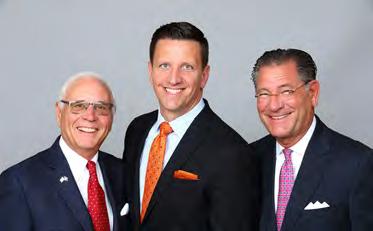
RICHARD KOPPLIN KURT KUEBLER THOMAS WALLACE
JODIE CUNNINGHAM
BRAD BAECHT
CHRIS DECHILLO J. G. TED GILLARY
MICHAEL HERD
MICHELLE RIKLAN
MARCIE MILLS TIM NELSON
EMILY MCCARVILL
ANNETTE WHITTLEY KEVIN VITALE
ARMEN SUNY
MICHAEL SMITH
LEN SIMARD
PAUL LEVY SAM LINDSLEY BEN LORENZEN LAWRENCE MC FADDEN
Influential Women
LEADING THE FUTURE OF PRIVATE CLUBS
Nikki Gatch
CEO
SOUTHERN CALIFORNIA PGA
30 YEARS IN THE INDUSTRY
WHAT DEFINING EXPERIENCE OR DECISION MOST SHAPED YOUR LEADERSHIP JOURNEY, AND HOW DOES IT INFLUENCE THE WAY YOU LEAD TODAY?
One of the biggest influences on how I lead comes from my Dad, a PGA Member, and the way he showed up every day.
Early on, I thought leadership meant having all the answers and driving everything myself.
But watching him, and learning from other strong PGA professionals, reshaped my perspective. Dad led with humility, consistency, and a deep commitment to serving his members and developing his team. He didn’t need credit - he just made everyone around him better.
What’s stayed with me is hearing from people across the country about how he impacted their careers and their PGA journey. That kind of impact stays with people. Losing him made me a lot more intentional about how I lead.
Now, I try to keep it simple. Put members first, develop people, and create an environment where the team has real ownership. That’s how you build something that lasts, and it’s what my dad modeled every day.
WHAT IS ONE SHIFT OR OPPORTUNITY IN THE PRIVATE CLUB INDUSTRY THAT EXCITES YOU MOST RIGHT NOW?
One shift in the private club industry that excites me is the move from being primarily golf-focused to more experience and community focused.
As golfers, we still care deeply about the game—that’s at our core. But what I see and hear consistently is that today’s golfers and club members are looking for more. They want connection, family involvement, wellness, and a sense that the club fits into their lifestyle, not the other way around.
From where I sit, working with and around club leaders and professionals, that creates a real opportunity. The role is evolving beyond just running a great golf operation to building a full member experience and a strong culture around it.
What excites me is helping leaders navigate that shift. Helping our PGA professionals stay true to the game, while expanding what their club can provide to its members.
The clubs that get that balance right won’t just attract and retain members, they’ll become places people genuinely feel they belong to. And with that, our game and industry will continue to thrive. BR
Renee Geyer
GOLF COURSE SUPERINTENDENT CANTERWOOD GOLF & COUNTRY CLUB
20 YEARS IN THE INDUSTRY
WHAT DEFINING EXPERIENCE OR DECISION MOST SHAPED YOUR LEADERSHIP JOURNEY, AND HOW DOES IT INFLUENCE THE WAY YOU LEAD TODAY?
Living through 13 televised PGA Tour events at my previous club, Firestone Country Club in Akron, Ohio, was certainly a defining factor in my growth and understanding of the turf industry. While those experiences were invaluable, something even more meaningful has shaped me throughout my career: connecting with other women who not only understand the daily realities of being a golf course superintendent, but who love the work just as deeply as I do.
That shared passion has given me a renewed sense of confidence and courage in my abilities. Finding common ground through shared challenges, exchanged solutions and the unique perspectives we bring to problem-solving has been incredibly powerful. Those connections have extended far beyond professional development and have also influenced my personal journey.
The people in my life have encouraged me to become more comfortable in my own skin as a leader and to guide and support others as they navigate their own paths within the industry, regardless of gender. In doing so, I believe I have helped contribute to a more inclusive and forward-looking future for the profession.
WHAT IS ONE SHIFT OR OPPORTUNITY IN THE PRIVATE CLUB INDUSTRY THAT EXCITES YOU MOST RIGHT NOW?
Private clubs are unique in that they are constantly evolving, shaped by their membership, shifting demographics and the experiences we choose to create for members and guests. In Western Washington, I have seen diversification play an important role in introducing private clubs to a new generation of members who value membership not only for themselves, but for their families as well.
As leaders within the private club industry, we must continue prioritizing member engagement, satisfaction and the overall perception of value membership provides. At its best, a club offers more than amenities. It creates a true sense of community, belonging and home. BR
Influential Women
LEADING THE FUTURE OF PRIVATE CLUBS
LuAnn Giovannelli
CCM, CAM, CMAA Fellow
COO, BAY COLONY COMMUNITY ASSOCIATION, INC.
39 YEARS IN THE INDUSTRY
WHAT DEFINING EXPERIENCE OR DECISION MOST SHAPED YOUR LEADERSHIP JOURNEY, AND HOW DOES IT INFLUENCE THE WAY YOU LEAD TODAY?
One of the most defining experiences in my leadership journey was the 2004 hurricane season, when Hurricanes Frances and Jeanne struck just three weeks apart. Leading through back-to-back disasters required not only operational endurance, but a deep sense of responsibility for our staff and members during an incredibly uncertain time. This is where having an extraordinary spouse makes all the difference. That support system allowed me to fully focus on recovery efforts.
In those moments, I realized leadership is not just about managing operations, it’s about showing up with clarity, consistency, and care when people need it most. Our staff faced personal loss while continuing to serve, and our members looked to us for reassurance and direction. I understood then that I had a duty to both.
Those experiences shaped how I lead today. It reinforced steady communication, decisive action, and supporting people beyond their roles. Having since led through multiple hurricane recoveries and the COVID-19 pandemic, that foundation remains constant.
Today, I lead with accountability, resilience, and empathy, knowing that in uncertainty, leadership is defined by how well you take care of others.
WHAT IS ONE SHIFT OR OPPORTUNITY IN THE PRIVATE CLUB INDUSTRY THAT EXCITES YOU MOST RIGHT NOW?
One of the most exciting opportunities in the private club industry right now is the need to challenge our own assumptions about what members truly value.
For a long time, we’ve defined excellence by amenities and tradition. Those things still matter, but they are no longer enough. Today’s members are looking for connection, responsiveness, and a sense that the club understands and evolves with them.
I’ve always seen myself as a bit of a change agent, and experience has shown me that change isn’t always easy. My team doesn’t always embrace it right away. There can be hesitation and discomfort in the moment. But what I’ve learned is that if you stay committed, communicate clearly, and bring people along with you, they begin to see the value in change, whether big or small. They often end up stronger because of it.
So, that’s one thing that excites me about this moment in our industry. We have an opportunity to move beyond “the way it’s always been done” and create more responsive, people-focused organizations. The clubs that will stand out are the ones willing to evolve and the leaders willing to lead that change. BR
Jenny Gray
RSPA NATIONAL VICE PRESIDENT AND DIRECTOR OF TENNIS
RSPA / ENCORE LEISURE GROUP / THE CLUB AT SONTERRA
30
YEARS IN THE INDUSTRY
WHAT DEFINING EXPERIENCE OR DECISION MOST SHAPED YOUR LEADERSHIP JOURNEY, AND HOW DOES IT INFLUENCE THE WAY YOU LEAD TODAY?
Working with several outstanding general managers who believed in me has been one of the defining influences in my leadership journey. Their support encouraged me to pursue opportunities I may not have sought on my own, including becoming involved with the Racquet Sports Professionals Association at both the local and national levels, where I now serve as a vice president.
That involvement introduced me to professionals from across the country, allowed me to learn from their experiences and gave me a much broader perspective on the industry. It has also made me a stronger leader within my own club by allowing me to bring back new ideas, best practices and a deeper understanding of where the industry is headed.
Another significant growth opportunity for me has been speaking at conferences, something that was well outside my comfort zone. Those experiences challenged me in unexpected ways and reinforced the idea that leadership often happens when you say yes before you feel fully ready.
What stood out most was how their belief in me shaped the way I lead today: by recognizing potential early, creating opportunities for growth and encouraging others to step into roles that challenge them.
WHAT IS ONE SHIFT OR OPPORTUNITY IN THE PRIVATE CLUB INDUSTRY THAT EXCITES YOU MOST RIGHT NOW?
The evolution of pickleball from an amenity into an established club program has been one of the most rewarding parts of my career. Since the installation of our eight dedicated courts in 2020, I have had the privilege of helping shape the direction and culture of a program that has grown far beyond our original expectations.
I am proud of what our team has built, including lessons, leagues, events and a citywide private club league that has strengthened connections both within our membership and throughout San Antonio. What has made the experience especially meaningful is watching members with little or no racquet sports background discover confidence, develop a genuine passion for pickleball and find a new sense of belonging within the club.
Managing a 31-court facility with active tennis and pickleball programming has required balance, adaptability and creativity, but it has also been incredibly energizing. The shift from a tennis-only environment to a multi-racquet culture has created exciting new opportunities for both members and professionals alike. BR
Influential Women
LEADING THE FUTURE OF PRIVATE CLUBS
Judy Higgins
GENERAL MANAGER VALLEY LO CLUB
37 YEARS IN THE INDUSTRY
WHAT DEFINING EXPERIENCE OR DECISION MOST SHAPED YOUR LEADERSHIP JOURNEY, AND HOW DOES IT INFLUENCE THE WAY YOU LEAD TODAY?
A defining decision in my leadership journey was making an intentional commitment to servant leadership. In the hospitality industry, employees are central to the member experience and I have come to believe the most important responsibility of a general manager is creating a strong and positive employee culture.
When staff feel valued and work within a thoughtful and respectful environment, their attitude and engagement improve. That, in turn, directly influences how they serve members. It creates a reinforcing cycle: engaged and supported employees deliver elevated hospitality, resulting in more satisfied members. It also creates a workplace where people genuinely enjoy coming to work each day.
This philosophy continues to guide my leadership approach. I place significant emphasis on the work environment and how we treat one another within the club. I genuinely care about each team member’s wellbeing, both professionally and personally, by learning names, asking about families and showing sincere interest in their lives beyond work.
WHAT IS ONE SHIFT OR OPPORTUNITY IN THE PRIVATE CLUB INDUSTRY THAT EXCITES YOU MOST RIGHT NOW?
One shift in the private club industry that excites me most is the increasing number of women being given opportunities to serve in senior leadership roles, including GM/COO positions, golf course superintendent roles, chief financial officer positions and executive chef leadership roles.
When I entered the private club industry in 1989, it was difficult to find female club managers. There were only a handful and leadership pathways for women were far less visible than they are today. Now, we are seeing more women advancing into operational and strategic leadership positions that directly influence club culture, member experience and organizational success.
This progress is especially important as women have also become primary decision-makers within many families regarding club membership. As a result, diverse leadership teams are increasingly essential to understanding and meeting member expectations.
What excites me most is that this is no longer the exception, but an emerging norm throughout the industry. The continued opportunity lies in strengthening the leadership pipeline and ensuring women are actively recruited, developed and supported throughout their careers. I remain committed to doing my part through mentorship and supporting the next generation of leaders. BR
Paula L. Kelly
GM/COO MERION GOLF CLUB
35 YEARS IN THE INDUSTRY
WHAT DEFINING EXPERIENCE OR DECISION MOST SHAPED YOUR LEADERSHIP JOURNEY, AND HOW DOES IT INFLUENCE THE WAY YOU LEAD TODAY?
My leadership journey is rooted in a decision I made early in my career to become a lifelong learner. While my leadership style has always been grounded in core values, it continues to evolve through education, mentorship and experience.
As a young manager, I decided to pursue my CCM designation. While attending CMAA BMI programs, particularly BMI Leadership Principles, I was able to identify a leadership style that felt authentic to me and could guide me throughout my career. CMAA education has been instrumental not only in shaping my career path, but also my leadership philosophy.
Beyond education, I have also been fortunate to learn from incredible mentors across all facets of club operations, especially the presidents at the clubs where I have served as general manager, including Vicmead Hunt Club/Bidermann Golf Course and Merion Golf Club. Working alongside these individuals was transformative because each brought leadership experience from their own industries and generously shared those perspectives with me.
From CMAA education to mentors, club presidents and the teams I lead today, each experience continues to influence the way I lead: remaining open to learning, embracing challenges and caring deeply for the people I have the privilege to work alongside every day.
WHAT IS ONE SHIFT OR OPPORTUNITY IN THE PRIVATE CLUB INDUSTRY THAT EXCITES YOU MOST RIGHT NOW?
What excites me most about the private club industry is the balance between honoring tradition and embracing the future. Looking back, the industry’s staying power and ability to adapt to changing world conditions, whether pandemics, demographic shifts or technological advances, has created tremendous opportunities for clubs to evolve and remain relevant.
The resilience shown by clubs, employees and members throughout those changes has been extraordinary.
Looking ahead, one of the greatest opportunities lies in harnessing technology to improve club facilities, golf courses, systems and operational processes. It is exciting to see technology becoming more integrated throughout the industry, especially when used to improve the work life of club teams and create greater efficiencies.
The next generation of club leaders will bring tremendous innovation and knowledge surrounding technology. At the same time, the industry must remain focused on people and ensuring technology enhances, rather than replaces, meaningful member and employee experiences. BR
CCM, CCE, CMAA FELLOW
CCM, CCE
Grey Oaks Country Club, Naples, FL
Influential Women
LEADING THE FUTURE OF PRIVATE CLUBS
Lynne LaFond DeLuca
EXECUTIVE DIRECTOR ASSOCIATION OF CLUB CATERING & EVENT PROFESSIONALS
35 YEARS IN THE INDUSTRY
WHAT DEFINING EXPERIENCE OR DECISION MOST SHAPED YOUR LEADERSHIP JOURNEY, AND HOW DOES IT INFLUENCE THE WAY YOU LEAD TODAY?
There have been many experiences throughout my career that shaped my leadership journey. It was not one single moment, but rather the combination of lessons learned, mentors who led by extraordinary example, working alongside club teams to truly listen to their needs and taking on difficult challenges that had never been done before while trusting I could figure them out.
If I had to identify one defining decision, however, it would be creating and launching the Association of Club Catering & Event Professionals (ACCP). My leadership philosophy has always centered around a people-first perspective and through ACCP, I have been able to provide club teams with the tools, support and inspiration they need to not only elevate member experiences, but also transform their own lives through professional development and confidence in their abilities.
The people I mentor and serve are true heroes. They create magic every day and enrich the lives of others. Helping them recognize their value, realize their potential and feel inspired in their careers brings me tremendous joy.
WHAT IS ONE SHIFT OR OPPORTUNITY IN THE PRIVATE CLUB INDUSTRY THAT EXCITES YOU MOST RIGHT NOW?
One shift in the private club industry that excites me most right now is the growing focus on intentional planning within the member experience.
Creativity and innovation through new events and programming are important, but the greatest value is created when clubs plan with authentic intention and a true understanding of their members’ lifestyles and preferences. The more club teams learn to listen carefully, observe member behaviors and translate those insights into thoughtful programming and experiences, the more essential clubs become in the lives of their members.
I am also incredibly excited about the launch of ACCP’s first certification program specifically designed for event and catering professionals within clubs. This represents another important step in elevating professionalism, education and innovation throughout the private club industry and strengthening the experiences clubs deliver to their members. BR
Melissa Low
VICE PRESIDENT, COMMUNICATIONS & ADVOCACY
CLUB MANAGEMENT ASSOCIATION OF AMERICA (CMAA)
23 YEARS IN THE INDUSTRY
WHAT DEFINING EXPERIENCE OR DECISION MOST SHAPED YOUR LEADERSHIP JOURNEY, AND HOW DOES IT INFLUENCE THE WAY YOU LEAD TODAY?
From starting out as a hostess in a local restaurant to working on Capitol Hill and throughout my time at CMAA, one lesson has remained constant: every voice matters and how you treat people matters.
Everyone brings perspective. Everyone has value. Everyone deserves the opportunity to speak, be heard and be acknowledged. I believe one of the most important roles a leader can embrace is the ability to listen, ask thoughtful questions and genuinely thank people for their contributions.
When you take the time to truly listen and value the individuals around you, you learn more about who they are as people, what matters most to them and what can be achieved together. That philosophy continues to shape how I lead today and reinforces the importance of empathy, communication and collaboration in building strong teams and meaningful relationships.
WHAT IS ONE SHIFT OR OPPORTUNITY IN THE PRIVATE CLUB INDUSTRY THAT EXCITES YOU MOST RIGHT NOW?
One of the most exciting shifts in the private club industry right now is the growing focus on employee experience and workplace culture. More clubs are becoming recognized as employers of choice within their local communities and that shift is helping clubs recruit and retain talented professionals across many areas of operations, including finance, human resources and marketing and communications.
That influx of talent is strengthening clubs and helping drive innovation throughout the industry. More individuals are now choosing careers in clubs, from college students entering the workforce to experienced mid-career professionals seeking new opportunities.
This evolution brings tremendous energy and diverse perspectives not only to clubs themselves, but also to the broader industry and CMAA’s membership. BR
Influential Women
LEADING THE FUTURE OF PRIVATE CLUBS
Casey Newman
GM/COO
LAKESIDE COUNTRY CLUB
HOUSTON, TEXAS
22 YEARS IN THE INDUSTRY
WHAT DEFINING EXPERIENCE OR DECISION MOST SHAPED YOUR LEADERSHIP JOURNEY, AND HOW DOES IT INFLUENCE THE WAY YOU LEAD TODAY?
I stepped into an opportunity that took me well outside the traditional food and beverage track within the club industry. As director of communications, a role that was new not only to me but, at the time, relatively uncommon within clubs, I gained a broader and more valuable perspective on operations and member engagement.
Over time, the position expanded to include greater administrative responsibilities, providing meaningful exposure to club governance through committee work and board meetings. What initially felt like a “left turn” in my career ultimately proved to be a defining move. It led me back to a leadership role at that same club as club manager, equipped with a depth and breadth of experience I likely would not have gained by following the more conventional path toward a GM/COO role.
That experience taught me not to be afraid of charting your own journey and reinforced the value of remaining open to opportunities that challenge traditional career paths.
WHAT IS ONE SHIFT OR OPPORTUNITY IN THE PRIVATE CLUB INDUSTRY THAT EXCITES YOU MOST RIGHT NOW?
Over the past decade, the private club industry has experienced remarkable growth, not only in the number of individuals drawn to clubs, but also in the diversity of backgrounds, experiences and skill sets they bring with them. To me, this represents more than momentum. It reflects meaningful progress.
The industry is becoming more sophisticated, inclusive and dynamic in how clubs think and operate. As a result, clubs are growing in both relevance and value to the communities they serve. There is a greater willingness to challenge traditional thinking, embrace new ideas and continuously improve the member experience.
In many ways, this is no longer the “old boys’ club” of the past, but an industry driven by creativity, innovation and progress. I am incredibly proud to be part of that evolution. BR
Robyn Nordin Stowell
PARTNER, CLUB ATTORNEY SPENCER FANE LLP
25+ YEARS IN THE INDUSTRY
WHAT DEFINING EXPERIENCE OR DECISION MOST SHAPED YOUR LEADERSHIP JOURNEY, AND HOW DOES IT INFLUENCE THE WAY YOU LEAD TODAY?
My leadership journey was significantly influenced by several mentors who generously offered opportunities that gave me the chance to excel. As a young lawyer, my mentors allowed me to lead stretch assignments while keeping an eye on me and lending support when needed. This accelerated my learning in client service, drafting, negotiation and other critical skills.
Within the private club industry, longtime industry leaders invited me to attend the CMAA World Conference, serve on the National Club Association board, write for BoardRoom magazine and participate in opportunities that accelerated my industry knowledge and professional growth.
While opportunity often comes after hard work and demonstrated skills, it is not always clear which opportunities should be pursued. Because I benefited from the confidence and support of mentors and industry leaders, I now intentionally look for ways to pay that forward by helping others step into new roles, embrace stretch opportunities and grow with guidance and support, just as others once did for me.
WHAT IS ONE SHIFT OR OPPORTUNITY IN THE PRIVATE CLUB INDUSTRY THAT EXCITES YOU MOST RIGHT NOW?
Women leaders within the private club industry have tremendous opportunities today. While recently sharing my career journey with younger lawyers, I reflected on how much smaller those opportunities were for women when I began my career and attended my first CMAA World Conference decades ago.
As I shared stories and answered questions, I was struck by how difficult it was for younger professionals to imagine a time when women did not have significant leadership opportunities. Today, women are proactively pursuing leadership roles at the highest levels while also reaching back to support and mentor others along the way.
Throughout more than 25 years in the club industry, I have always been impressed by the generosity of club leaders in sharing ideas, experiences and opportunities with one another. What excites me most is seeing that collaborative spirit continue to expand through women who are helping shape the future of leadership within the private club industry. BR
Influential Women
LEADING THE FUTURE OF PRIVATE CLUBS
Kim Pasquale
COO
CLUB MANAGEMENT ASSOCIATION OF AMERICA (CMAA)
35 YEARS IN THE INDUSTRY
WHAT DEFINING EXPERIENCE OR DECISION MOST SHAPED YOUR LEADERSHIP JOURNEY, AND HOW DOES IT INFLUENCE THE WAY YOU LEAD TODAY?
Spending 35 years at CMAA has shaped my leadership more than any single moment. I’ve had the opportunity to see real evolution over time, but also the consistency that strong organizations rely on--something clubs understand well, where progress works best when it respects what people care about most. Not everything needs to change, and part of leadership is knowing what to protect and when it’s time to move in a new direction.
Much of my work for the Association has centered on member engagement and experience across chapter relations, marketing, communications, and events, which has kept me close to the people we serve. That perspective has stayed with me. It influences how I listen and learn, how I make decisions, and how I think about long-term impact.
As we prepare for CMAA’s Centennial in 2027, that balance feels especially important--honoring what has defined us while being thoughtful about where we go next.
WHAT IS ONE SHIFT OR OPPORTUNITY IN THE PRIVATE CLUB INDUSTRY THAT EXCITES YOU MOST RIGHT NOW?
What excites me most right now is the industry’s continued shift toward connection--being more intentional about how we engage members, support teams, and build community across generations. Clubs have always been about relationships, but there’s a deeper focus now on creating experiences that feel personal and meaningful.
At CMAA, I see that same energy every day. Our members care deeply about their clubs and their profession, and they’re not shy about sharing ideas or perspectives. Even when we cannot act on everything, that level of engagement matters. It reflects a genuine investment in the future of the club industry.
Combined with a strong focus on students and mid-career professionals, it’s creating more pathways for connection, learning, and growth through mentoring, deeper engagement with faculty at universities with student chapters, and stronger connections among mid-managers and mentors that foster early, authentic pride in CMAA and what it stands for…what I affectionately call ‘bleeding CMAA blue!’
For me, the opportunity is in how we harness that--making sure members feel part of something bigger. When that happens, it creates momentum you can feel, and it brings out the very best in people and in this amazing industry. BR
Christine
Pooler
GM/COO WINDSTAR ON NAPLES BAY 32 YEARS IN THE INDUSTRY
WHAT DEFINING EXPERIENCE OR DECISION MOST SHAPED YOUR LEADERSHIP JOURNEY, AND HOW DOES IT INFLUENCE THE WAY YOU LEAD TODAY?
Entering the industry at 23 in high-visibility, demanding environments forced me to find my voice early. I was often the youngest in the room, and I made a conscious choice then to lead with authenticity rather than title.
By treating influential members and front line staff with the same consistent respect, I learned that true authority is earned, not assigned.
This shaped a leadership style defined by confidence and humility—holding high standards while remaining approachable. My ability to connect across all levels has been critical to building trust, allowing me to challenge the status quo when necessary while ensuring every team member feels supported.
Today, my leadership is rooted in being real, being fair, and creating an environment where everyone feels valued and expected to contribute at a high level.
WHAT IS ONE SHIFT OR OPPORTUNITY IN THE PRIVATE CLUB INDUSTRY THAT EXCITES YOU MOST RIGHT NOW?
One of the most exciting shifts in the private club industry is the transition from “traditional” management to data-informed leadership. Historically, club leaders relied on intuition, but a new wave of specialized technology and vendors now provides the data needed to pinpoint exactly where to direct time, energy, and resources.
This evolution is a game-changer. When we have clear data to inform us, we gain a deeper understanding of what members truly seek. This allows us to enhance their day-to-day flow and gear our efforts toward anticipating the membership’s needs rather than just reacting to them.
This shift empowers directors to step into the boardroom as true executives. By backing strategic insights with hard data, we can engage more confidently with stakeholders and provide a highly individualized member experience. It’s no longer just about operating the club; it’s about using modern tools to elevate the standard of excellence and ensure every member feels their experience was designed specifically for them. BR
CCM, ECM
Influential Women
LEADING THE FUTURE OF PRIVATE CLUBS
Whitney Reid Pennell PRESIDENT/FOUNDER
RCS
HOSPITALITY GROUP
40+
YEARS IN THE INDUSTRY
WHAT DEFINING EXPERIENCE OR DECISION MOST SHAPED YOUR LEADERSHIP JOURNEY, AND HOW DOES IT INFLUENCE THE WAY YOU LEAD TODAY?
Early in my club management career, I experienced firsthand how outdated views of leadership and success can limit potential, regardless of capability. That experience led me to seek out a more progressive and inclusive leadership environment. When I moved into a new role, several members of my team chose to follow. That was a defining moment that reinforced my belief in a people-first leadership approach where talent is recognized and developed regardless of background. When given the right leadership and workplace conditions, people thrive.
Over time, I also saw talented individuals placed into roles without clear expectations or support, often resulting in turnover, member disruption and longterm operational challenges.
Those experiences ultimately inspired me to found RCS Hospitality Group with the goal of bringing a more progressive approach to leadership, culture and team development. Rather than waiting for the industry to evolve, I chose to actively contribute to that evolution by helping organizations create cultures where people thrive and members receive exceptional service.
Today, I focus on helping organizations define culture intentionally and strategically while creating experiences that are meaningful, achievable and consistent.
WHAT IS ONE SHIFT OR OPPORTUNITY IN THE PRIVATE CLUB INDUSTRY THAT EXCITES YOU MOST RIGHT NOW?
What excites me most right now is the industry’s shift toward a more intentional and modern approach to leadership, culture, facilities and the overall club experience.
We are seeing a new generation of leaders, along with more women in leadership roles, bringing a more collaborative and inclusive perspective to how clubs operate. There is less reliance on hierarchy and more focus on communication, shared accountability and strong team dynamics.
Boards are evolving as well. Many are becoming more business-minded and open to long-term strategic thinking, allowing leaders to invest more meaningfully in teams, facilities and the member experience.
At the same time, clubs are serving a more diverse workforce and membership base. Members are looking for spaces that reflect how they live today, where tradition and flexibility can coexist and where clubs truly become a “third place” centered around connection, comfort and community.
Technology and AI are accelerating this shift while also reinforcing the importance of genuine human connection. That convergence creates an exciting opportunity for clubs to lead with intention, build strong cultures and deliver highly personalized experiences. BR
Cynthia Romstadt
EXECUTIVE CHEF
COLONIAL COUNTRY CLUB
20 YEARS IN THE INDUSTRY
WHAT DEFINING EXPERIENCE OR DECISION MOST SHAPED YOUR LEADERSHIP JOURNEY, AND HOW DOES IT INFLUENCE THE WAY YOU LEAD TODAY?
The defining experience that most shaped my leadership journey came early in my time as a sous chef when I learned a chef is nothing without a strong team. At that stage, I believed leadership meant controlling everything, carrying the workload myself and making sure every detail went through me. I tried to lead that way and I failed.
That experience taught me no one succeeds alone. In the kitchen, a strong team can make a leader look exceptional, while a weak or unsupported team will expose every gap. Real leadership is not about control. It is about building trust, developing people and creating an environment where everyone can perform at their best.
It also required vulnerability to admit my approach was not working and the courage to change it. I had to let go of ego, delegate responsibility and rely on others.
Today, I focus on empowering people, setting clear expectations and supporting growth. I believe in high standards, accountability and leading beside the team, not above them.
WHAT IS ONE SHIFT OR OPPORTUNITY IN THE PRIVATE CLUB INDUSTRY THAT EXCITES YOU MOST RIGHT NOW?
The shift that excites me most is the move toward concept-driven dining outlets. For too long, club dining has operated under a “one-size-fits-all” model where a single kitchen attempts to be everything to everyone, often resulting in inconsistent execution and team burnout.
When clubs replace generic menus with intentional concepts, whether a social lounge, refined steakhouse or wellness-focused café, teams gain the clarity needed to achieve mastery within a specific experience.
This shift is impactful because it benefits both the member and the culinary team. Members receive more distinct and curated dining experiences while culinary teams gain the creative space to innovate within a focused concept. It transforms the kitchen from an environment of constant multitasking into one centered around specialized excellence.
The clubs that will lead the future are those willing to prioritize purpose over endless variety. That evolution excites me because it allows clubs to elevate both the member experience and the professionalism of culinary teams. BR
Influential Women
LEADING THE FUTURE OF PRIVATE CLUBS
Alyson Smith
DORS, RSPA, PTR, PPTR, PPR
DIRECTOR OF RACQUETS
CHEVY CHASE CLUB
21 YEARS IN THE INDUSTRY
WHAT DEFINING EXPERIENCE OR DECISION MOST SHAPED YOUR LEADERSHIP JOURNEY, AND HOW DOES IT INFLUENCE THE WAY YOU LEAD TODAY?
At one point in my career, I was deeply involved in the administrative side of our racquets operation. It was an invaluable experience that gave me a comprehensive understanding of the program. However, as the department continued to grow, I realized my greatest impact would not come from doing more myself, but from building a stronger structure around the work.
Through conversations with my director and a desire to continue growing as a leader, I was challenged to rethink my role. That meant creating job descriptions, defining responsibilities and thoughtfully aligning team members with positions where they could succeed. More importantly, it meant investing in their growth and helping teaching professionals evolve into leaders within the organization.
What stood out most was the impact. I watched confidence grow, ownership increase and influence expand throughout the team. In turn, the entire program became stronger, more dynamic and more sustainable because it was supported by a team of leaders.
That experience reinforced a core belief I carry today: leadership is not only about guiding people to execute, but also developing people to lead.
WHAT IS ONE SHIFT OR OPPORTUNITY IN THE PRIVATE CLUB INDUSTRY THAT EXCITES YOU MOST RIGHT NOW?
One exciting shift within the private club industry is the growing integration between departments. While areas such as racquets, fitness and wellness, golf and aquatics have always existed within clubs, they have traditionally operated independently.
Today, clubs are becoming far more intentional about creating collaboration between departments in order to deliver a more connected and purposeful member experience. This evolution not only enhances the overall member journey, but also encourages a stronger culture of collaboration among staff and helps develop more well-rounded leaders throughout club operations. BR
Misty Stewart
DIRECTOR OF LIFESTYLE AND WELLNESS
BOCA WEST COUNTRY CLUB
20+ YEARS IN LUXURY HOSPITALITY
WHAT DEFINING EXPERIENCE OR DECISION MOST SHAPED YOUR LEADERSHIP JOURNEY, AND HOW DOES IT INFLUENCE THE WAY YOU LEAD TODAY?
One of the defining experiences in my leadership journey was my move to Macau in 2015, where I served as Director of Spas for MGM China. I oversaw all spa, fitness, salon, and swimming pool operations for MGM Macau, led pre-opening preparations for the same areas at the $3.4B MGM Cotai new-build, and executed a transition to our newly-created wellness brand.
This compelled a significant pivot from operational management to strategic, creative leadership, and immediately placed me in a high-stakes, executive-level capacity.
My responsibilities went beyond operational oversight, centering on building allnew programming, including rebranding and diversifying non-gaming revenue across two properties. It demanded a high degree of strategic creativity, inspiring me to innovate unique, wellness-focused experiences rather than simply manage existing operations.
I integrated wellness throughout the entire property and refined our multimillion-dollar programming, proving my capacity to lead and deliver large-scale, high-visibility projects at the senior level.
This challenging international experience influenced me to embrace highpressure environments that require big-picture thinking and creative problemsolving, and solidified my self-trust for turning complex, high-level goals into reality while mentoring others to thrive in similar challenges.
WHAT IS ONE SHIFT OR OPPORTUNITY IN THE PRIVATE CLUB INDUSTRY THAT EXCITES YOU MOST RIGHT NOW?
One of the most exciting shifts in the private club industry is the evolution from transactional amenities to a more holistic focus on member wellness and longevity programming.
Clubs are moving beyond the traditional fitness and spa model and becoming proactive partners in supporting members’ long-term health, wellbeing and sense of belonging. Wellness is no longer simply a department-level offering. It is becoming a core club philosophy integrated throughout food and beverage, golf, racquets and the overall member experience.
This creates tremendous opportunity for clubs to incorporate services such as functional medicine, personalized wellness programming and advanced technology into daily operations and member engagement strategies.
That evolution transforms clubs into high-touch lifestyle communities that foster deeper member connection, stronger engagement and long-term relevance for the modern member. BR
Influential Women
LEADING THE FUTURE OF PRIVATE CLUBS
MCM, CHE, CAE
Crystal Thomas CEO MANAGEMENT CONNECTION
52 YEARS IN THE INDUSTRY
WHAT DEFINING EXPERIENCE OR DECISION MOST SHAPED YOUR LEADERSHIP JOURNEY, AND HOW DOES IT INFLUENCE THE WAY YOU LEAD TODAY?
A defining decision in my leadership journey came in 2005 when I chose to step away from traditional club management and move into team training within private clubs. That decision not only expanded my impact on leadership development, but also opened the door to association management with the Golden State Chapter of CMAA.
This pivotal shift allowed me to fully embrace my entrepreneurial spirit by creating innovative programs, performance evaluation software and ultimately developing Club Leader 360. More importantly, it transformed how I lead.
I learned to lead from a mindset of possibility rather than limitation. That philosophy has become foundational in my work and continues to shape how I approach challenges, opportunities and team development. Today, I strive to inspire others to think beyond obstacles, lead with vision and create meaningful progress.
That decision redefined my career from managing operations to influencing leaders and that continues to be my greatest purpose.
WHAT IS ONE SHIFT OR OPPORTUNITY IN THE PRIVATE CLUB INDUSTRY THAT EXCITES YOU MOST RIGHT NOW?
One of the most exciting shifts in the private club industry today is the movement toward intentional culture as a strategic advantage. Clubs are increasingly recognizing that exceptional member experiences are not driven solely by amenities, but by the consistency, engagement and alignment of their teams.
There is a growing willingness to invest in leadership development, team member experience and cultural clarity, not as soft initiatives, but as business imperatives. That creates an important opportunity to redefine what excellence looks like within the industry.
What excites me most is the opportunity to elevate how leaders view their role, not simply as operators, but as architects of culture. When leadership teams are aligned in purpose, values and behavior, it transforms team retention, service quality and the overall member experience.
The industry is moving from reactive management toward more intentional leadership and that shift has the power to reshape the future of private clubs. BR
Jennifer Torres
GOLF COURSE SUPERINTENDENT
WESTLAKE GOLF AND COUNTRY CLUB
23 YEARS IN THE INDUSTRY
WHAT DEFINING EXPERIENCE OR DECISION MOST SHAPED YOUR LEADERSHIP JOURNEY, AND HOW DOES IT INFLUENCE THE WAY YOU LEAD TODAY?
I do not believe there was just one defining experience or decision that has shaped my leadership journey. It has been a culmination of lifetime events, growing up on a small family farm, serving our country and discovering a career that has allowed me to grow into a leader.
Many mentors in the industry have given me the opportunity to learn. They believed in me. Opportunities to attend events like the GCSAA Women’s Leadership Academy and U.S. Women’s Open as a volunteer have also had an impact on my journey.
After attending my first U.S. Women’s Open at Pine Needles, there was a shift in how my journey could become a turning point for others. It was a few days after returning from the event that I received a call that pivoted my direction. During the week at Pine Needles, there had been discussions about where the women in turf could possibly go from there.
As a member serving on the GCSANJ board of directors at the time, I was asked if I would think about running for the national board, becoming the first woman to ever take that step. It is opportunities like this that have shaped me and my belief that without my team I cannot succeed, influences how I lead.
WHAT IS ONE SHIFT OR OPPORTUNITY IN THE PRIVATE CLUB INDUSTRY THAT EXCITES YOU MOST RIGHT NOW?
The new technology that is readily available and more affordable to the private club industry is very exciting to me right now.
While working at Westlake Golf and Country Club in Jackson, New Jersey, I have been exposed to much more innovation since we proceeded with our irrigation renovation in 2021. Being part of the team researching all the new technology has given me the opportunity to see what is coming in the years ahead.
We eventually went with Rain Bird and it has been a game changer. The ability to create programs, troubleshoot using diagnostic programs and link other aspects such as weather and pump station information has allowed for better water management. The chance to use soil sensors in combination with our irrigation system has allowed us to use water much more efficiently.
That is why I would say technology is what excites me now. BR
Influential Women
LEADING THE FUTURE OF PRIVATE CLUBS
Terra S.H. Waldron
CCM, CCE, CMAA FELLOW, CMCA, CAAM, AMS
EXECUTIVE DIRECTOR, DESERT MOUNTAIN MASTER ASSOCIATION
40 YEARS IN THE INDUSTRY
WHAT DEFINING EXPERIENCE OR DECISION MOST SHAPED YOUR LEADERSHIP JOURNEY, AND HOW DOES IT INFLUENCE THE WAY YOU LEAD TODAY?
Being in both the private club and HOA worlds, what shaped me most was not a single moment, but a commitment to growth, a heart of service and a willingness to lift others along the way. Serving in leadership positions and on industryrelated boards, including CMAA, NCA and the CMAA Club Foundation, gave me the opportunity to lead at a high level, often in new spaces where new paths had to be created. Those experiences taught me the importance of resilience, honesty, integrity and building trust-based relationships with teams, boards and members. What means the most to me is the impact beyond operations, the people and helping shape their future. Having a scholarship established in my name is one of the most meaningful honors of my career. It represents mentorship, opportunity and a belief in the next generation of leaders.
That legacy continues to shape how I lead today. I prioritize developing talent, fostering inclusive cultures and ensuring others have the opportunity to grow and succeed. For me, leadership has always been about leaving a lasting impact, not just on organizations, but on people.
WHAT IS ONE SHIFT OR OPPORTUNITY IN THE PRIVATE CLUB INDUSTRY THAT EXCITES YOU MOST RIGHT NOW?
Collectively, I see a renewed focus on people, both team members and members, along with a deeper understanding of cultures, experiences and responding to evolving needs. The role of the GM/COO has become more complex and more impactful than ever before.
Clubs today are becoming more welcoming, dynamic and responsive to the needs of a changing membership. That evolution creates space for innovation while still preserving the traditions and sense of community that make clubs so special. The shift is intentional, embracing data-driven decision-making, elevating governance practices and redefining the member experience to meet the needs of a new generation.
Seeing emerging leaders step forward with new ideas and perspectives gives me great optimism about the future of the industry. BR
Gihen Zitouni
DIRECTOR OF CULINARY THE GREENWICH COUNTRY CLUB
26 YEARS IN THE INDUSTRY
WHAT DEFINING EXPERIENCE OR DECISION MOST SHAPED YOUR LEADERSHIP JOURNEY, AND HOW DOES IT INFLUENCE THE WAY YOU LEAD TODAY?
One of the most defining lessons in my leadership journey has been understanding that true leadership is not about authority, but about earning trust through respect, honesty and humility. Early in my career, I realized that the strongest teams are built when people feel valued, heard and appreciated, regardless of their role or title. That philosophy continues to guide the way I lead today.
My education at the Institut de Tourisme et d’Hôtellerie du Québec provided the foundation for my career in luxury hospitality and culinary leadership, but it was my international experience that truly shaped my leadership style. Over the years, I have worked with prestigious brands including The Ritz-Carlton Hotel Company and Edition Hotels, serving at eight Ritz-Carlton properties across multiple countries and participating in six hotel openings in Saudi Arabia, Madrid, Singapore and the United States.
Working alongside diverse teams and cultures taught me the importance of adaptability, collaboration and leading by example. Experiences such as working with Michelin-starred chef Sergi Arola in Portugal and helping Tampa’s first luxury hotel earn the city’s first Michelin star recognition reinforced my commitment to excellence, innovation and mentorship.
Today, I strive to create environments where teams feel empowered to grow, contribute ideas and take pride in delivering exceptional experiences together.
WHAT IS ONE SHIFT OR OPPORTUNITY IN THE PRIVATE CLUB INDUSTRY THAT EXCITES YOU MOST RIGHT NOW?
One shift in the private club industry that excites me most right now is the strong move toward wellness-driven programming and more personalized member experiences. Clubs are evolving beyond traditional dining and recreation and are becoming true lifestyle destinations for their members and families.
I love seeing clubs embrace a more holistic approach, from wellness events, recovery experiences, and healthier culinary offerings to curated social programming that creates meaningful connections. Members today are looking for experiences that feel personal, intentional, and memorable, and clubs now have the opportunity to deliver that at a very high level. BR
Influential Women
LEADING THE FUTURE OF PRIVATE CLUBS
The following list recognizes the remaining 56 nominees from the 86 submissions received for BoardRoom magazine’s Influential Women in the Private Club Industry feature. While space did not allow us to individually profile every nominee, we are proud to recognize the many accomplished women whose leadership, mentorship and contributions continue to shape the future of private clubs.
Mary Kate Addison, Principal & Search Consultant, GSI Executive Search
Bria Argrett, CCM, General Manager, Statesville Country Club
Louise Ball, LPGA, President, LPGA Professionals
Margaux Beuscher, CCM, ECM, Assistant General Manager, Sulgrave Club
Carol Bliss, CCM, CCE, ECM, GM/COO, The Chilton Club
Molly Boese, M.Ed, SHRM-SCP, Human Resources Director, The Country Club of Virginia
Erin Brooks, CCM, GM/COO, Bentwinds Golf & Country Club
Ana Burdge, Director of Human Resources, Quail Creek Country Club
Liz Callahan, Marketing Manager, National Club Association
Rachel Carter, Senior Director of Membership, NGCOA
Katina Cavagnaro, Vice President of Membership & Sales, National Club Association
Jennifer Chavez, Assistant General Manager, Hunters Run Country Club
Melissa Chuhran, Director of Membership & Marketing, Saucon Valley Country Club
Carly Wilson, Communications & Technology Manager, Forsyth Country Club
The Real Secret to Exceptional Clubs: It’s the People
The future of private clubs may depend less on golf courses and clubhouses and more on people.
With hospitality education enrollment declining and the industry still short more than 1 million workers, club leaders are realizing that their greatest competitive advantage is not facilities, but culture. At the heart of this transformation is a simple reality: the expectations of both members and employ ees have changed dramatically.
For decades, private clubs operated on a predictable model. Members joined primarily for golf, dining and social status. Staff members often stayed in their roles for many years, and leader ship focused largely on maintaining facilities and operations.
Today, many clubs enjoy strong demand, long waiting lists and significant investments in facility enhancements. However, an important question remains: What are clubs doing to build the workforce capable of delivering extraordinary experiences?
When you look at some of the best hospitality brands in the world, such as the Ritz-Carlton Hotel Company, one principle becomes clear: exceptional service is not accidental. It is designed, trained and reinforced every day by leadership. This deliberate attention to culture produces excellence. Unfortunately, some clubs still consider training an expense rather than an investment. Talk about this at an upcoming meeting.
Members increasingly expect a personalized, high-touch experience similar to what they encounter at luxury resorts. They want exceptional service, vibrant programming, modern facilities and a sense of community for their families. Social connections, family experiences, wellness programming and lifestyle activities have become as important as golf.
The workforce environment has changed dramatically. For private clubs, this means the talent competition has never been greater. Hospitality professionals today have more career options than ever before, and many are seeking work places where they can make a difference, feel respected and grow professionally. Clubs that fail to build strong workplace cultures often struggle with staff turnover, which directly im pacts service quality and member satisfaction.
As a result, leadership within private clubs must evolve. Both board members and club executives have an important role to play in shaping the future of their organizations. Five leadership priorities stand out for clubs that want to thrive in the years ahead.
1. Define the Club’s Exceptional Experience: Great clubs do not leave the member experience to chance. Leaders
CHRISTINA WATSON
Christina Watson, CCM, vice president of operations at Strategic Club Solutions, brings over 20 years of hospitality experience in private clubs, 4-diamond resorts and large corporations. She excels at leading diverse teams through complex operations, major renovations and high-profile events, transforming challenges into growth opportunities. A committed mentor, Christina has served on the Greater Chicago CMAA Chapter Board. Contact: (262) 661-2582, christina@strategicclubsolutions.com.
Balance Is a Myth, Seasons Are Real
We talk a lot about balance in this industry. Work-life balance. Generational balance. The balance between high performance and sustainable culture. And yet, for something we talk about so much, we seem to get it wrong just as often.
Here is what I have come to believe: balance is the wrong goal.
Not because it does not matter (it does!), but because the word itself sets a standard that does not reflect how our careers, our teams or our lives work. Balance implies an even distribution—a steady state. And in a 24/7 industry built on exceptional service and performance, chasing that steady state is a fast path to frustration.
What I have seen work in strong leaders and strong organizations is something closer to intention. Knowing what season you are in, being honest about what that season requires and leading accordingly.
That looks different at every stage.
In your 20s, the focus is usually on building. Saying yes, gaining exposure, proving what is possible. Energy is high and flexibility is greater. The foundation is being laid, even when it does not feel like it.
In your 30s, the picture gets more complicated. Careers take shape, leadership responsibilities increase and life outside of work often expands in significant ways. Time becomes more finite. The pressure to do everything well, all at once, tends to peak right here. And that pressure, if left unexamined, can do damage.
By your 40s and 50s, priorities often shift toward sustainability and impact. The questions change. It is less about what you are achieving and more about how you are achieving it and who you are bringing along. There is a greater pull toward mentorship, toward building teams that can outlast any single leader, toward creating something that holds.
And further down the road, many leaders find themselves focused on legacy, not necessarily in a self-congratulatory way, but in the quiet, purposeful sense of wanting to leave things better than they found them.
These are generalizations, of course. Every path looks different. But the point is not to create a rigid framework. Instead, permit yourself to be where you actually are, rather than where you think you should be. So, what season are you in right now? Are you leading in a way that reflects that answer? Be honest.
The most effective leaders I have worked alongside are not the ones who had it all figured out at once. They are the ones who were clear-eyed about their current season and understood that giving more attention to one area did not mean failing in another. It meant responding honestly to what was needed in that moment.
That clarity is also what makes them better leaders.
Today’s workforce spans multiple generations, each navigating different life stages. A team member early in their career may be hungry for opportunity and advancement. Another may be managing leadership responsibilities while raising young children. Someone else may be looking for stability, flexibility or a renewed sense of purpose after years of grinding. All of them are often working together on the same team, with the same organizational goals or expectations.
These are not competing needs. They are simply the realities of a diverse workforce. Ignoring them is a leadership choice, whether we recognize it as one or not.
Organizations that acknowledge this build stronger teams. Not by lowering standards or creating inconsistency, but by leading with clarity while allowing for flexibility where it genuinely matters. By building pathways that do not assume everyone is in the same season of life. By creating a culture where people feel supported in the stage they are actually in, not measured against a standard that was never designed for them.
Think about one person on your team right now: Are you leading them where they are or where you expect them to be?
None of this happens without some degree of personal honesty first.
As leaders, we have to be willing to define success on our own terms, based on what aligns with our values and our current reality. That definition will evolve. That is not an inconsistency. That is growth.
We also have to extend ourselves and each other a measure of grace. Not every season will feel balanced. Not every decision will feel clean. And not every path will look the way we thought it would.
But none of that diminishes the impact being made or the progress being built.
There is no perfect timeline. There is only the path in front of you and the opportunity to navigate it with a little more clarity, a little more honesty and a lot more intention. BR
MODERN CLUBS START IN THE CLOUD
Take the next step in your club’s digital journey.
Jonas Hosting gives your club secure, scalable access to your systems—anytime, anywhere—plus automatic updates and expert management.
With Jonas Hosting, you’ll enjoy:
• Lightning-fast access to club data, anywhere, anytime
• Enterprise-grade security and SOC2 compliance
• Early access to our modernized interface—designed to simplify workflows
• Mobile-ready tools like the Jonas Staff App
• Automated updates, backups, and zero maintenance headaches
Join the hundreds of clubs already transforming operations with Jonas Hosting. It’s more than infrastructure — it’s the foundation of your modernization journey.
A Fundamental Shift in the Private Club Industry Is Here
What does the private club of the future look like? How will success be defined in the next five to 10 years?
Should clubs continue focusing on the same priorities, or is it time to evolve alongside shifting social and societal changes? Do we respect tradition or thoughtfully transform it by adapting to changing times? Critically, are today’s leaders looking far enough into the future and asking the right questions?
Most long-term planning in the private club industry remains narrowly focused on capital improvements. Too often, clubs are merely asking about what must be replaced. The “let’s keep doing what we’ve been doing and call it a strategy” method. The result? Clubs are just replacing existing assets with newer versions of the same thing. Is this the right approach?
Historically, we know that values, priorities and lifestyles vary greatly from one generation to the next. Are we studying and understanding how human behavior changes generationally? Clubs should understand what future generations desire and study current trends to understand their evolution and trajectory.
Leaders who ask the right questions will conclude that a fundamental but important shift has occurred. It’s simple and easy to understand, but clubs that don’t embrace it might invest in the wrong assets and the wrong people. The industry has shifted, and the value a club provides is no longer defined by the products and facilities it offers, but rather by its purpose and the quality of the experiences it creates.
In the words of speaker, author and podcaster Simon Sinek, “People don’t buy what you do, they buy why you do it.”
The clubs that enrich their members’ lives through human connection will stand out. Purpose-driven clubs that offer human connections and a sense of community will thrive for decades to come.
Many indicators of this shift and the desire for social and human connection are all around us, but only those who are curious enough to pay attention and stay informed are aware of them. In March, The Wall Street Journal featured two articles that offer insights into what people value and where they will invest their discretionary time and money.
“Private Club to the Stars Tests Its Appeal by Pursuing New Investors,” which appeared in the March 18 edition, explores how major hoteliers and private club owners, like the owners of San Vicente’s celebrity-filled members clubs in major cities, including Los Angeles and New York, are considering partnering or selling to investors, including Goldman Sachs.
More importantly, this article offers two significant insights. First, the definition of a prospective member has changed. Second, institutional and private investors see the future demand for social connection and community, and they are bullish and willing to invest.
The March 24 edition of the Journal includes the article “Is it a Hotel or an Exclusive Social Club? The Answer Is Both.”
The article chronicles hotels in swanky California cities like Newport Beach and smaller, less familiar markets, such as Lone Mountain Ranch in Big Sky, MT.
Both articles feature a new and non-traditional segment of our industry. They provide keen insights into what large investors and experts have concluded about current and future trends in social behavior, lifestyles and demand for discretionary social time and dollars.
What should clubs do differently to appeal to current members and tomorrow’s prospects?
At Colonial Country Club, we have strategically designed spaces and curated programming to target members seeking unique and enjoyable opportunities for community and connection. One of our new restaurants was designed for experiential dining and includes a chef’s table in the kitchen and extends into the dining room.
The chef’s table and dining room offer members an immersive and unique opportunity to interact with the culinary team up close while enjoying curated specials paired with the finest wines and spirits. The restaurant also features a wine program with private wine lockers and a customized and personalized wine list for each member.
The restaurant also offers a sushi bar, seafood station and dry-aging displays. The space was designed to create an interactive, immersive social experience. Sitting at the chef’s table or the seafood bar is a great way to enjoy a unique meal, meet people, be entertained and participate in a unique, social experience that’s different every time members visit.
Colonial has changed its HR process and hiring philosophy, and we’ve added an HR staff member with recruiting expertise. HR is seeking outgoing, friendly personalities with specialized talent that meet the needs of our evolving programming.
An example of unique recruiting and programming is our newest executive position, the sommelier concierge. This position evolved from the traditional restaurant sommelier to a wine, travel and spirits concierge. Some of the projects and programming the sommelier concierge curates and oversees include a private wine locker program with nearly 200 individual lockers and a long waitlist to join, a private wine label and a private-label bourbon made specifically for our members’ palates.
Other programming on the horizon includes exclusive wine experiences and trips around the country and the world. In addition to programming, this position will assist members with their private wine and spirits purchases. A true “con-
THOMAS NOYES
Thomas Noyes, CCM, CCE, is a principal with GSI Executive Search specializing in executive placements throughout the Southeast. He can be reached at (941) 525-3211 or via email: TNoyes@gsiexecutivesearch.com.
It’s Your Resume, You Can Say Whatever You
Want, But Should You?
I want to share the perspective of someone who has written and updated my resume plenty of times and now “reads” them for a living.
Really, reads could more accurately be replaced with “glances.” Yep, you read that right. Not what you were hoping to hear? When I first heard that someone decides your fate in under 30 seconds based on your resume, I was skeptical.
Surely they read every carefully chosen word, right? Turns out … not so much. Not on the first pass, at least. Today, it might be as fast as 10 seconds. Here, rub some dirt on that.
To keep you reading, let’s get to it. I want to review what I look for in a resume and what makes my eyes cloud over.
The four main things someone is reviewing when reading a resume are in this order:
• Where you worked.
• Who you were. What was your position title?
• How long you were there (years, broken down by position).
• What you accomplished. Not really what you did.
Keep in mind that these are all relative to each other. What I mean is, don’t tell me you were the director of operations at Best in the Land Country Club for six months and in that time, you increased revenue year over year by 157 percent while you oversaw the construction of the new clubhouse. Those things don’t jive.
Don’t get me wrong. While your “what you dids” are important, I don’t really want to know what you did day to day. In fact, too much of that, and I am turning the page.
Most people who read your resume have a working knowledge of your position’s tasks. I once saw a resume on which an F&B manager highlighted responsibilities such as locking and unlocking doors, writing the service staff schedule, ordering bar supplies and handling member complaints. If you’re wondering what not to include, start there.
Unless your previous experience is outside the industry, leave obvious details out. What I really want to know is what you accomplished. Better yet, quantify it.
You say you improved member satisfaction or engagement. Great. By how much? Use percentages, rankings, growth figures or measurable results whenever possible. And be realistic.
Just because you worked somewhere during a project does not mean you led it. If you were not involved in concept de-
velopment, funding, member approval, planning, construction and opening, you probably did not “oversee” the clubhouse renovation. People reading resumes know the difference.
As you move backward through your work history, reduce the amount of detail. After three jobs or 15 years, you are generally safe listing only the where, who and how long.
Nobody needs to know you placed forks on the left and knives on the right when you were a bus person. No disrespect to my first real job.
What about size? Does it really matter?
The old saying that it should be kept to one page doesn’t apply anymore, in my opinion.
Most of this stuff is flying around in the ether, so does it matter whether your resume is one page or a few? That said, there is such a thing as too much. As an example of what not to do, I once received an eight-page resume. That’s not thorough. That’s TMI.
And what about attachments? Wait until you are asked. If you tell me you are an Eagle Scout, I believe you. I do not need the certificate. Same goes for food safety cards, pesticide licenses and every other supporting document. Do I like some personal detail? Absolutely
Volunteer work, running the Boston Marathon, professional involvement or community leadership can help round out the picture. Just do not let it take over. Bullet points are your friend. At the end of the day, it comes down to relevance.
Not too much, not too little. Give a bit of color about yourself, but like Goldilocks, you want it just right.
Your resume is not your life story. Your cover letter should explain how you can help the organization. Your resume should make someone interested enough to interview you.
The interview gets you to the next step.
And finally, be careful with artificial intelligence. AI is a useful tool, but do not let it tell your entire story. Most AI-generated resumes sound lifeless and generic. Use it to support your work, not replace your voice.
If you made it this far, thank you for your time. I hope it was worth it. And if you want another set of eyes to glance at, I mean read, your resume, let me know. BR
Our investor group of local residents and club members lovingly cared for this Nicklaus gem, but then ran into disagreements and capital calls.
We knew we needed an upscale, private club hospitality firm that invested for the long-term. We’ve found that partner - Concert Golf Partners is a breath of fresh air!
- CHRIS LAVER
Many esteemed clubs, such as TPC Monterey at Pasadera choose to partner with Concert Golf Partners as the best approach to preserve and enhance their clubs.
TPC MONTEREY AT PASADERA MANAGING MEMBER
TPC Monterey at Pasadera | Designed by Jack Nicklaus | Monterey, California
(Formerly The Club at Pasadera)
MICHELLE A. RIKLAN
Michelle A. Riklan, ACRW, CPRW, CEIC, CJSS, is a Certified DiSC Trainer Career Strategist, Consulting, and Search Executive with Kopplin, Kuebler & Wallace, and regular content contributor for HFTP Clubs-Online. She can be reached via email: Michelle@kkandw.com
Know, or No? The CFO Question Every Club Should Be Asking
The role of the chief financial officer has never been more consequential, or more misunderstood. As private clubs face increasing complexity in operations, capital planning and member expectations, the demand for financial leadership that extends well beyond the balance sheet has never been greater.
Still, many clubs find themselves working alongside a CFO who defaults to constraint rather than possibility. The difference between those two orientations isn’t technical; it’s philosophical. As general managers, CEOs and club leaders responsible for driving organizational performance, you must recognize that distinction and demand better.
The shorthand is simple: the CFNO says no. The CFKNOW leads with knowledge.
UNDERSTANDING THE CLUB’S UNIQUE FINANCIAL DNA
Private clubs don’t operate like corporations, and their financials shouldn’t be evaluated like those of corporations. Yet finance committee and board members who arrive from Fortune 500 backgrounds often bring assumptions that simply don’t translate. One of the most persistent and damaging beliefs is that food and beverage losses represent operational failure.
As Club Benchmarking notes, this is what they call the “F&B Trap,” incorrectly believing that corporate profit-and-loss logic applies to an environment where F&B functions as a member amenity, not a revenue engine. Dues are the economic engine, and capital reserves are the measure of long-term health. Member retention is the metric that matters most.
A CFKNOW understands this instinctively, and more importantly, can articulate it clearly to a boardroom full of intelligent people who may not. That interpretive function isn’t a nice-to-have. It’s the job.
THE CFO AS ORGANIZATIONAL CREDIBILITY
Have you watched a well-intentioned budget conversation derail because a board member is applying the wrong mental model to the right problem? This can be frustrating. The CFO who can avoid that by translating club financial reality into language that resonates with experienced executives becomes one of the most valuable assets in the room.
That kind of credibility isn’t established by credentials alone. It’s built through demonstrated operational fluency: understanding the golf course as well as the general ledger, grasping the connection between an F&B labor ratio and a member satisfaction score, and seeing a capital reserve projection not as a spreadsheet but as a promise to future members.
The CFKNOW earns the seat at the table by showing up prepared to lead, not just report. For GMs/CEOs evaluating
or developing their CFO, that distinction is worth examining closely.
FROM GATEKEEPER TO GROWTH PARTNER
Department heads, whether in golf, F&B, or facilities, operate in an environment that is often defined by uncertainty. Equipment may fail mid-season, product costs rise and member expectations shift. A vendor brings a compelling opportunity with a short window. In each of these moments, the CFO either accelerates the organization’s ability to respond or becomes its bottleneck.
Consider three scenarios every club leader will recognize:
The urgent equipment request. A CFNO cites the budget and closes the conversation. A CFKNOW has an “eagle eye.” They evaluate lease options, understand capital cycle timing, review budgets and assess operational risk. Then, they find a path forward that protects financial integrity without penalizing the operation.
The F&B investment case. When an executive chef requests new kitchen technology or additional staffing, a CFNO sees cost. A CFKNOW looks at member satisfaction data, labor efficiency, service quality metrics and retention implications, and builds the business case rather than shutting it down.
The time-sensitive vendor opportunity. A CFNO rejects it because it wasn’t in the plan. A CFKNOW evaluates long-term maintenance savings, operational benefit and budget flexibility, and recognizes that the plan exists to serve the club, not the other way around.
In each case, the CFKNOW arrives at the conversation with a 360-degree view of the organization. The result isn’t reckless spending; it’s confident, informed decision-making.
WHAT CLUB LEADERS SHOULD EXPECT—AND REQUIRE
The modern CFO in the private club space must function across four dimensions simultaneously:
• As a strategist, shaping tomorrow’s decisions—not just summarizing yesterday’s results
• As a communicator, translating financial complexity into organizational clarity
• As a partner, building trust with department heads and the GM/CEO alike
• As a business builder, asking “how do we get there?” before defaulting to “we can’t.”
For GMs/CEOs, this means recalibrating what success looks like for the CFO role. Technical competence is the baseline.
PAMELA RADCLIFF
Pamela Radcliff, SHRM-SCP, CCM, CAM is the director of human resources at Hideaway Beach Club on Marco Island, FL, and can be reached via email: pradcliff@hideawaybeachclub.org
Women in the Workforce: Stop Waiting, Start Owning
Let’s start here. Women do not need more confidence. We need fewer apologies.
For decades, the conversation around women in the workforce has circled the same themes:
• Lean in
• Speak up
• Build confidence
• Find balance
• Ask for a seat at the table.
All valid. But here’s the shift we actually need: Stop waiting. Start owning.
THE REAL ISSUE ISN’T CAPABILITY
There are talented, capable, driven women in private clubs right now—in HR, finance, membership, operations, food and beverage, golf, racquets, fitness, communications. The question isn’t whether women are in the workforce.
The question is: Are we positioning them for leadership, or parking them in support roles?
• Women are not underqualified
• Women are not underprepared
• Women are not lacking experience.
What are we often doing?
• We are over-questioning
• We double-check before speaking
• We rehearse before presenting
• We hesitate before negotiating
• We wait to feel “ready.”
Meanwhile, less-prepared people move forward without blinking. Let’s say this clearly: Readiness is rarely a feeling. It’s a decision.
THIS IS NOT A CONFIDENCE ISSUE
Women do not need more seminars on confidence. They need:
• Access to revenue-driving roles
• Exposure to strategic conversations
• Sponsorship, not just mentorship
• Clear succession pathways.
If women are clustered in administrative or support departments, we shouldn’t be surprised when few step into GM roles. Leadership development is intentional, or it doesn’t happen.
Here’s something we don’t say enough: Men are statistically more likely to apply for roles when they meet 60 percent of the qualifications. Women often wait until they meet nearly all of them.
STOP SHRINKING TO FIT
One of the most common patterns I see in professional women is subtle shrinking. They:
• Downplay achievements
• Use softeners like “just,” “maybe,” “I might be wrong but …”
• Take on more without asking for more
• Wait for recognition instead of claiming contribution.
Shrinking feels polite. It is not strategic.
• You can be kind and clear
• You can be collaborative and confident
• You can be strong without being harsh.
Those are not opposites.
THE BELONGING MYTH
Many women still operate from a quiet question: “Do I really belong here?”
Let’s dismantle that. If you were hired, promoted, elected or invited into the room, you belong.
Full stop.
Belonging is not granted by others repeatedly. It is claimed internally.
When you question your belonging, you unconsciously:
• Speak less
• Contribute less boldly
• Take fewer risks
• Accept less compensation
• Avoid bigger opportunities.
And the cycle continues.
The shift? Trust the evidence of your own life:
• Look at your resume
• Look at the rooms you’ve entered
• Look at the hard things you’ve already done.
That’s data. Not doubt.
THE LEADERSHIP STANDARD IS CHANGING
Today’s strongest leaders are not the loudest. They are not the most dominant. They are not the most aggressive. They are:
• Emotionally intelligent
• Steady under pressure
• Clear communicators
• Collaborative decision-makers
• Confident without being performative. These are not “soft” traits. They are performance multipliers. Many women already lead this way naturally and have been told it’s not enough.
It is more than enough. It’s the future of leadership.
THREE SHIFTS FOR WOMEN IN THE WORKFORCE
1. Speak in Statements, Not Questions
Instead of: “I was thinking maybe we could …”
Try:
“Here’s what I recommend.”
Drop the verbal hedging. Clarity builds credibility.
TROON PRIVÉ
YOUR CLUB. YOUR CULTURE. OUR RESOURCES.
Every private club has its own unique identity and we want to help your club maintain yours. Of course, that requires a different approach than the status quo of self-management, which is why Troon Privé® continues to grow. As Troon’s dedicated private club division, we are a proven professional services organization that provides best-in-class systems, processes and resources to the private clubs we serve. Visit TheTroonApproach.com to learn more about who we are and why our clients partner with us.
The Peninsula Golf & Country Club Millsboro, Delaware
Black Bull Bozeman, Montana
West Bay Club Estero, Florida
Champion Hills Hendersonville, North Carolina
The Clubs at St. James Southport, North Carolina
WES HAGEN
Wes Hagen is brand ambassador and educator for Native9 Wine and an international wine consultant. He can be reached at (805) 450-2324 or weswines@gmail.com | native9.com
Locker and Cellar Tasting and Sales at the Club
Members Love a Value and F&B Likes Profit and Ease
Country clubs were once built around static amenities: sports, dining and social calendars. Food and beverage programs can help create something far more dynamic: a curated lifestyle experience. One of the most effective and underutilized ways to support that evolution is through locker and member wine tasting programs that combine education, access and retail opportunity into a single high-value offering.
Fortunately, a locker and member tasting program is relatively simple to execute. Wine distributors or winery representatives are invited to the club to present and pour a curated selection of wines for members. These tastings are designed to be social, educational and approachable, encouraging discovery rather than intimidation.
The key differentiator comes next: members are offered the opportunity to purchase the wines they sampled at preferred pricing, with all sales processed through the club’s existing retail or sales permit. Wines can then be allocated to the member’s account, picked up or stored through an on-site locker program.
From the club’s perspective, the business case is strong. Even when wines are offered below traditional retail pricing, clubs can still generate meaningful margin on bottle sales. More importantly, these events drive incremental food-and-beverage revenue, increase member engagement and enhance the perceived value of membership.
A well-executed program also reduces inventory risk because many purchases can be structured as pre-orders or limited allocations rather than speculative stocking. Consider offering wines only in three-bottle increments to simplify ordering and increase sales. Clubs may also consider featuring the top-selling wines on the by-the-glass list for a limited time to keep offerings fresh and reinforce member interest.
Execution does not need to be complicated, but it should be intentional. Successful programs typically follow a consistent cadence. Monthly or quarterly tastings paired with rotating distributor partners help maintain variety and member interest.
Staffing can remain lean. A knowledgeable club representative, such as a beverage manager or sommelier, working alongside the distributor team is usually sufficient.
The purchasing process should also be simple. Whether using printed order forms, tablets or QR code systems, members should be able to place orders quickly and confidently during or immediately after the tasting. Clear communication
around fulfillment timelines, including when wines will arrive and how they will be stored or distributed, is essential to maintaining trust and momentum.
And don’t make members do math! A simple order form requiring only a name, email address and membership number often increases bottle and case sales. Clubs should also ask distributors whether they will support additional discounts such as 10 percent off 12 bottles or 15 percent off 24 or more bottles.
Members do love a deal!
Where great clubs distinguish themselves is in the experience itself. The most successful tastings are not transactional. They are immersive. Thoughtful themes, such as regional spotlights or seasonal selections, create structure and narrative. Light food pairings elevate both the wines and the overall perception of value.
Personal touches, including remembering member preferences, following up on past purchases or offering early access to limited wines, transform a good program into a great one.
Locker programs add another layer of engagement. By offering members dedicated space to store purchases, clubs encourage personal collections and deepen emotional connection to the program. Lockers can also be positioned as a premium amenity with benefits such as priority allocations or invitations to exclusive tastings.
Over time, this creates a sense of ownership and continuity that extends beyond individual events.
Marketing plays a supporting but important role. Consistent communication through email, club newsletters and reservation systems helps build anticipation and maintain participation. Highlighting upcoming themes, featured wines and the stories behind them ensures each event feels fresh and relevant. Postevent follow-ups, including reminders for last-chance orders, can also increase sales.
Ultimately, locker and member wine tasting programs represent more than an additional revenue stream. They position the club as a curator of taste, experience and community.
In a landscape where members increasingly seek personalization, education and social connection, these programs deliver on all fronts. When executed with clarity and intention, they not only drive revenue, they enhance relevance, deepen loyalty and bring the modern club experience to life. BR
Your members expect genuine Five-Star service.
Forbes Travel Guide is the authority on hospitality excellence. We work with the best luxury hotel brands globally. Let us help you elevate your service to improve member satisfaction and retention.
Forbes Travel Guide worked with our leadership team to create custom standards and tailored training which have been implemented throughout the club. We value our partnership with Forbes Travel Guide.
Jeffrey P. McFadden Chief Executive Officer/General Manager The
BOAR DROOM MAGAZINE’S
Top Private Club Presidents of the Year
By Chryssoula Filippakopoulos
BoardRoom magazine, now in its 18th year of honoring outstanding club leadership, is proud to recognize 34 board presidents as the 2025 Top Private Club Presidents of the Year. These leaders, volunteers who devote countless hours to the success of their clubs, embody the principles of collaborative governance, partnership and purpose-driven decision-making.
Private club board presidents play an essential role in the professional operations of their clubs. They work closely with their boards and general managers, striving for well-informed decisions rooted in fact rather than emotion. Their leadership strengthens communication, alignment, and accountability across the boardroom, management team and membership—ensuring each club moves forward with clarity and shared purpose.
BoardRoom’s selection of 32 outstanding private club presidents for 2025—along with the naming of two Distinguished Club Presidents, Jeanine Banks of Boca West Country Club and Jay McDermott of Desert Highlands Association—reflects our commitment to recognizing leaders who understand their responsibilities, uphold accountability and guide their boards with discipline, transparency and respect for macromanagement. These presidents don’t just serve; they elevate.
“This kind of recognition for volunteers who give so much to their club has been long overdue,” shared BoardRoom publisher John
Fornaro. “Since the first awards were presented 18 years ago, we’ve seen steady growth in nominations from general managers and industry professionals.”
These presidents understand the power of partnership, between board and management, between leadership and membership, between tradition and innovation. They practice what they preach, demonstrating the leadership required to uphold best practices and deliver an extraordinary and consistent member experience.
A successful board is never the product of systems alone. It depends on commitment, competence, diversity of perspectives, collective decision-making, openness, transparency, effective communication, fiscal responsibility and a clear mission and vision—ideally reinforced by a strategic plan. The strongest presidents draw on institutional memory, steward their club’s resources responsibly and equip new board members and future presidents with the knowledge they need to serve effectively.
We extend our gratitude to Kopplin Kuebler & Wallace for their continued insights and support of this recognition program. As the firm so aptly put it, “A great club president leads with vision, integrity and courage—leaving the club stronger, better and more enduring than they found it.”
The 2025 honorees reflect exactly that. Their leadership is not only respected, it is felt, seen and lived across their clubs every day.
Congratulations to BoardRoom’s outstanding private club board presidents and chairs for 2025 .
Jeanine Banks (Distinguished President of the Year)
Jay McDermott (Distinguished President of the Year)
David Bauer
Gregg Benson
Scott Bethune
Fergus Bolger
Broken Sound Club
Gleneagles Country Club
Indian Hills Country Club
Portmarnock Golf Club
Gregg Brase Meridian Hills Country Club
Steve Carmody
Thomas E
Carroll
Michelle Clifton
Richard DeSchutter
Jack Hubbard .
Joel Jutovsky
Richard Kapner
K . Dino Kostopoulos
The Country Club of Jackson
Baltimore Country Club
Forsyth Country Club
Birnam Wood Golf Club
Christine DiVita Governors Club
Rod Eichler
Scott Feinstein
Curtis Fuelberg
Jesee Green
Boca West Country Club
Desert Highlands
Belle Haven Country Club
Marin Country Club
Hunters Run Country Club
Oakland Hills Country Club
Ken Malvey Mirabel Club
Jim Markano
Charlie Martinez
Dr Douglas McBride
Michael McFadden
Montclair Golf Club
Shorehaven Golf Club
The Austin Club
Tokyo American Club
Jack Haugsland Quail Creek Country Club
Tim Hohulin
University and Whist Club
Cat Cay Yacht Club
Yellowstone Country Club
Eagle Creek Golf & Country Club
Gragg Miller Chaparral Country Club
Karen Orr
Tom Power
Robert J Ryan
Doug Stewart
Glen Oak Country Club
. The Oaks Club
Burlingame Country Club
Union League Club of Chicago
Hillcrest Country Club
Scott Tesser Montammy Golf Club
Lee Williamson . . . The Foreign Correspondents’ Club, Hong Kong
Private Club Presidents of the Year Major Sponsors
Richard De Schutter leads Birnam Wood Golf Club with calm confidence, integrity and thoughtful guidance.
“He listens carefully, supports me and brings clarity to even the most difficult situations,” Jordan Sweeney, the general manager and chief operating officer at Birnam Wood Golf Club, said about his president.
“I’ve learned a great deal from him as a leader and presenter, and I’m grateful to call him both a mentor and a friend.”
De Schutter, a retired chemical engineer and former chief executive officer of multiple companies,
An unwavering focus on revitalization has defined Richard Kapner’s presidency, guiding Hunters Run through consequential decisions that will shape the club for decades.
“Our responsibility is to make decisions today that ensure Hunters Run thrives for generations to come,” explained Kapner, whose leadership reflects integrity and a deep commitment to stewardship.
His decisions consistently reflect the club’s best interests, free from external influence or personal agenda.
One of Kapner’s most significant achievements has been leading Hunters Run through transformative, member-approved capital initiatives that resulted in
brings strategic leadership and financial discipline to the club’s long-term planning and capital initiatives.
One of De Schutter’s most significant accomplishments was leading Birnam Wood Golf Club, a BoardRoom Distinguished Club with EXCEPTIONAL status, through the development and member approval of a $15 million, 10-year master plan.
The master plan includes a golf course renovation and new kitchen, enhancing course playability, dining and club programming while ensuring Birnam Wood Golf Club continues to deliver an exceptional experience for members and their guests.
Working closely with the board, finance committee and management team, De Schutter helped build consensus and successfully guided the membership through the club’s first special assessment. His collaborative leadership ensured transparency, trust and alignment around a vision that will sustain Birnam Wood Golf Club for generations.
“Our responsibility is not only to protect what we have today, but to ensure Birnam Wood continues to thrive for the next generation of members,” De Schutter explained.
Member experience has improved through strategic investments in the club’s longterm infrastructure and amenities.
Birnam Wood Golf Club operates with clear governance. The board sets policy and strategy while management looks after operations.
“When I became GM in 2020, Mr. De Schutter stepped in as finance chair, and we built a strong partnership focused on long-term planning,” Sweeney noted.
“As president, he continued that disciplined approach, leading the board in approving the club’s 10-year master plan.” BR
the approval of two major golf course renovations and the membership’s approval of a $21 million racquet sports complex, which will break ground this summer.
Along with his fellow board members, Kapner played a pivotal role in securing membership approval through clear communication, straightforward videos and proactive engagement.
Under his guidance, the board also advanced critical initiatives to protect the club’s fiscal health, including a membership vote to eliminate equity refunds to fund capital. Kapner understands that long-term success is built on disciplined governance and strategic foresight. Central to his leadership philosophy is a clear trust in senior management.
His support in securing a strong management team and in providing the tools and resources the management team needs to deliver exceptional service has resulted in strong member engagement and pride.
Record-setting event participation and elevated service standards are felt throughout the club. The improvements reflect the club’s investment in its facilities and employees while creating memorable moments that foster connection and enhance the overall lifestyle at Hunters Run.
Working closely with Larry Savvides, the club’s chief operating officer, Kapner has strengthened governance by guiding the board and committees on policy refinement, planning and updates, consistently reiterating the club’s central mission to boost new memberships and secure long-term viability.
Kapner had a successful career in account management, including 25 years as a national account executive at Diebold Inc., before he retired in 2016. He earned master’s degrees in administration (Long Island University) and education (University of Albany) and a Bachelor of Arts (University at Albany). He started for the varsity soccer team as a freshman at the University of Miami and played on the basketball team at the University at Albany for two years. BR
RICHARD DE SCHUTTER PRESIDENT JORDAN SWEENEY GM/COO
RICHARD KAPNER, PRESIDENT | HUNTERS RUN COUNTRY CLUB | BOYNTON BEACH, FL
RICHARD KAPNER PRESIDENT LARRY SAVVIDES COO
As the first two-term president of Oakland Hills Country Club in nearly 60 years, Dino Kostopoulos has distinguished himself as a unifying and forwardlooking leader who brings people together, builds consensus and paints a compelling vision that others want to follow. At the same time, he has shown the resolve to make difficult decisions when required.
The combination of leadership and conviction is what stands out most to Marc Ray, the club’s general manager and chief operating officer.
“Dino is a thoughtful and strategic leader whose actions, decisions and process always reflect a clear understanding of what is best for Oakland Hills,” Ray explained.
Among his accomplishments, Kostopoulos helped lead the club through one of its most significant
chapters. Following the 2022 fire that destroyed Oakland Hills’ centuryold clubhouse, Kostopoulos played a central role in helping guide the club through an extraordinary period of challenge, transition and renewal.
Under his leadership, the club remained focused on honoring its storied heritage while embracing the future. That vision became reality when the new clubhouse opened on April 5, after four years of planning, construction and perseverance.
“Together, we have not only rebuilt our clubhouse but also strengthened the foundation of a club that will continue to shape the game of golf for generations to come,” Kostopoulos said.
His impact extended beyond the physical rebuilding effort. Kostopoulos also led the modernization of the club’s bylaws, helping to revamp and update the governance structure in a thoughtful and meaningful way. These changes better aligned the club’s governing framework with the needs of a modern private club while preserving its traditions and core values. At Oakland Hills, the board focuses on policy, long-term strategy and the overall direction of the club; the general manager and the management team are responsible for daily management and operational details. A comprehensive board policies manual outlines their roles and establishes clear expectations for governance.
Kostopoulos has been instrumental in reinforcing this approach to governance. This clarity allows the management team to operate effectively while ensuring the board remains focused on the long-term health and direction of Oakland Hills. During Kostopoulos’ presidency, the club also experienced historic growth in membership demand. Membership reached record levels, and the waitlist expanded significantly.
“I am deeply honored to have been entrusted by the membership to help lead Oakland Hills through this extraordinary chapter,” Kostopoulos noted, reflecting on his service.
In his professional life, Kostopoulos is the founder and managing partner of Kostopoulos Rodriguez, PLLC, a Michigan-based business law firm. He is a graduate of Michigan State University College of Law and the proud father of Sophia, Connor and Georgio. BR
KEN MALVEY, PRESIDENT | THE MIRABEL CLUB | SCOTTSDALE, AZ
Ken Malvey personifies the qualities of a top private club president: strategic vision, collaborative leadership and unwavering dedication to club excellence.
“He empowers his team, strengthens his board and makes sure the club succeeds,” said James V. Napolitano, the general manager and chief operating officer at The Mirabel Club, a BoardRoom Distinguished Club with ELITE status.
“He is, without a doubt, one of the best club presidents I have had the honor to work with.”
Among his accomplishments, Malvey strengthened club governance by updating key policies, supporting Napolitano on standard operating procedures and staffing, defining member discipline, launching Tees to Greens and advancing senior staff development.
Member experience has improved greatly thanks to Malvey’s support of the development of standard operating procedures, which created consistent, high-quality service across the club. The last two annual surveys show major gains in member satisfaction and net promoter score, proving that clearer expectations and stronger operations have delivered a significantly better overall experience.
At The Mirabel Club, the board focuses on strategic direction, policy and oversight, while Napolitano runs daily operations. Malvey has guided a governance model that ensures the board stays strategic and supports the club’s plan, fostering alignment, strong execution and long-term success.
“We have a great leadership team that is working hard to refine and enhance our member experience,” Malvey noted.
“We’re supporting leadership’s efforts by shrinking our committees to make them more responsive and effective at providing member feedback and input to management while keeping the board focused on high-level strategy, consensus building and protecting/nurturing our treasured culture.”
Malvey is retired from Tortoise Capital Advisors, where he was a founder, partner and managing director. He was previously a partner at Fountain Capital Management and served as global investment risk manager at GE. He enjoys golf, reading, wine, honing his flying skills and spending time with friends and family. BR
DINO KOSTOPOULOS PRESIDENT MARC RAY GM/COO
KEN MALVEY PRESIDENT JAMES V. NAPOLITANO GM/COO
JAMES
James Markano is a strategic, steady leader who elevates governance and empowers people.
“He builds consensus, sets clear priorities and ensures every decision strengthens the club’s longterm health,” Nicole Durney, the previous general manager at the University and Whist Club, noted about her president.
“His leadership brings clarity, confidence and a shared sense of purpose to the board.”
For his signature achievement, Markano launched strategic and financial plans that refocused the board on policy and set clear financial, membership and
President Charlie Martinez leads Cat Cay Yacht Club, a BoardRoom Distinguished Club with EXCEPTIONAL status, with integrity and dedication.
When the private island retreat in the Bahamas was involved in a seven-year lawsuit by a former member, Martinez served as the trustee of the Cat Cay United Trust. He and other members of the club raised $30 million in one month for a legal defense fund to protect the club and its members as they negotiated through a legal battle that threatened Cat Cay’s future.
The club came through the lawsuit, with its significant jury verdict and subsequent settlement, stronger and its members more united as a community.
capital goals, ensuring that decisions are consistent, future-focused and aligned with the club’s long-term sustainability and revenue growth.
By unifying leaders around membership, events, pricing and capital goals, Markano created a roadmap for the University and Whist Club.
“Our club benefits from the diverse experience of board members,” he said. “They dedicate time to projects, enabling more for staff, and embody value-based leadership. Respect, fairness and continuous improvement are critical to our mutual success.”
Governance at the University and Whist Club was strengthened after Markano refocused the board’s attention on policy and strategy, and entrusted club operations to the general manager.
The member experience at the University and Whist Club has improved through decisions driven by clear governance. Decisions such as extended hours, refreshed grounds, better event programming and transparent planning. Members now enjoy a more accessible, active and thoughtfully managed club. Improvements are tied to long-term strategy, not quick fixes.
Markano graduated from Penn State University with a Bachelor of Science degree in civil engineering. He spent more than 30 years working in supply chain and operations for companies such as Pepsi, Nestlé and DuPont.
He and his wife of 28 years, Pam, grew up in Wilmington, then moved away for 25 years. After they returned in 2018, they joined the University and Whist Club, and Markano was asked to join the board. He became vice president in 2023 and president two years later. BR
| BIMINI, BAHAMAS
John McCranie, the now retired island manager and chief operating officer at Cat Cay Yacht Club, described Martinez as a strategic visionary with a “naturally inclusive and collaborative style,” which Martinez used to move the board away from micromanaging club operations to focusing on policy, governance, and strategic vision and oversight.
Martinez established a master plan committee to develop a strategic plan for the club. Together, Martinez and the master plan committee have been following best practices. They have been conducting member surveys with high response rates, holding focus groups and collaborating with the Island Development Group on design plans.
He encourages and supports continuing education opportunities for senior management and supports staff health and wellness through the Cat Cay Medical Clinic.
Martinez has improved the member experience by informing members about board actions through regular communications, town hall meetings, and the posting of board minutes and club financials. He ensures the full board discusses and ratifies executive committee decisions.
As a result, Cat Cay Yacht Club members feel included, and the board is experiencing its highest approval ratings in decades.
Away from the club, Martinez is a partner in Grove Bay Hospitality Group, which owns and operates restaurants, including Michelin-starred Stubborn Seed. He is the president of CEM Investments and the president and founder of Caribe Homes Corp.
He has served on several other boards, including Baptist Health Systems of Miami, University of Florida Foundation and Riviera Country Club, and was appointed by Gov. Ron DeSantis to the South Florida Water Management District Board. Martinez, who received his education at the University of Florida, lives in Coral Gables with his wife of 35 years, three daughters and three grandchildren. BR
JAMES MARKANO PRESIDENT NICOLE DURNEY PAST GM
CHARLIE MARTINEZ, PRESIDENT | CAT CAY YACHT CLUB
CHARLIE MARTINEZ PRESIDENT
JOHN MCCRANIE RETIRED COO
Robyn Nordin Stowell is a club law attorney in the law firm Spencer Fane LLP. She can be reached at (602) 333-5467 or at rstowell@spencerfane.com.
Demystifying Legal Representation Letters in Club Audits
If your club’s financial statements are audited annually by a certified public accountant, your auditors will reach out to certain third parties to confirm key information. For example, they will confirm loan balances and terms with your bank, including whether any defaults exist.
When it comes to your lawyers, auditors send a request asking legal counsel to confirm whether there are any pending claims or material unasserted claims against the club as of yearend. As you can imagine, lawyers are appropriately cautious about responding to these types of requests.
To address this, the American Bar Association developed the Statement of Policy Regarding Lawyers’ Responses to Auditors’ Requests for Information, also known as the ABA Statement. First issued in 1976 and updated over time, the ABA Statement is designed to balance two competing needs: the auditor’s need for sufficient information to complete the audit and the lawyer’s obligation to preserve attorney-client privilege and avoid disclosing sensitive information.
As a result, lawyers typically respond by identifying claims they are actively handling, while placing clear limits on their responsibility to comment on unasserted claims or broader risks.
WHAT HAPPENS BEHIND THE SCENES
When your accounting firm sends a legal letter request (typically through management), your law firm initiates an internal process to gather information.
In larger firms, there is often a designated individual or department responsible for responding to audit requests. They may review administrative records, identify all attorneys who worked on the club’s matters during the year, and ask each whether they are aware of any pending or threatened claims. A second-level review is often performed before the response is finalized.
In smaller firms, the process may be more decentralized, with individual attorneys preparing responses for their own clients, often still subject to internal review.
Because this process requires coordination and professional judgment, law firms typically charge a fee to respond. The cost will vary depending on the complexity of the club’s matters and whether disclosures are required.
PRACTICAL TIPS FOR CLUBS
For boards, audit and finance committees, and management teams, a few practical steps can help the process run smoothly:
• Be complete. Ensure all law firms used during the year are identified to the auditors.
• Be proactive. If you are aware of disputes or potential claims, communicate early with both legal counsel and auditors.
• Be timely. Delays in sending the request can delay completion of the audit.
• Stay aligned. Make sure management, auditors and legal counsel have a consistent understanding of key matters.
THE AUDITOR’S PERSPECTIVE: WHY THIS LETTER MATTERS
From the auditor’s standpoint, the legal representation letter is not just a routine step—it is a critical part of completing the audit.
Auditing standards require auditors to obtain sufficient evidence that all material liabilities, including litigation and claims, are properly recorded or disclosed in the financial statements. Legal matters are often one of the most uncertain areas in financial reporting, which is why direct communication with legal counsel is required.
The purpose of the legal letter is straightforward:
• To identify existing or potential claims involving the club
• To understand the status of those matters
• To assess whether any financial impact should be recorded or disclosed.
Importantly, auditors are not asking attorneys to predict outcomes or provide guarantees. The goal is to confirm what is known and ensure that the financial statements appropriately reflect those risks.
This process naturally involves a balance. Auditors are focused on completeness, while attorneys must protect client confidentiality and privilege. The ABA Statement allows both parties to meet in the middle, providing auditors with the information needed while respecting legal boundaries.
WHAT THIS MEANS FOR BOARDS AND MANAGEMENT
For club leadership, the legal letter process is more than administrative; it can directly impact audit timing and the reliability of financial reporting.
A few key takeaways:
• Completeness starts with management. Auditors rely on management to identify all legal relationships and known issues.
• Early communication reduces risk. Surprises late in the audit can delay issuance or require additional disclosure.
• Timing matters. Legal letters are often one of the final items needed before an audit can be completed.
ROBYN STOWELL
Aerification and Science
Aerification without science is risky and not tolerated in today’s world of high-maintenance and high-performance greens. Aerification into greens, tees or fairways without knowing what you are aerifying into is a gamble that is no longer acceptable. Proper aerification based on science can and normally does result in a decrease in the amount of money you spend on chemicals and allows for better use of water. Without knowing what you are aerifying into, you cannot answer any of the following questions and will, in most cases, waste valuable resources.
Balancing physical properties through aerification:
1. How often should I aerify?
2. How deep should I go?
3. What size tine should I use?
4. What size spacing between tines?
5. Should I use hollows or solids?
6. Should I fill the holes or should I leave them open?
Dave Doherty is CEO and founder of the International Sports Turf Research Center, Inc. (ISTRC) and holds three patents for testing sand- and soil-based greens. He can be reached at (913) 706-6635, daveistrc@hotmail.com, or www.davedohertyistrc.com.
7. If I fill the holes, what should I fill them with?
Once you know the physical properties that you are considering aerifying, these questions answer themselves.
Here at ISTRC, we’ve worked with over 2,000 golf courses over the last 11 years and have analyzed the physical properties of over 15,000 greens, including organic matter and particle size in one-inch increments. I know of no greens that have regressed over those 11 years when the agronomic program was based on science and not guesstimating.
The first question to ask is: Why are we thinking of aerifying, and what are we trying to accomplish? Without a starting point or benchmark of the physical properties of what we are considering aerifying into, we are operating in ignorance.
Once we know what we have for physical properties based on science, we can determine whether we need to aerify and the amount of material we need to displace over the next 12 months with our hollow core aerifying.
We must understand the aging of a green from the day we seed, sod or sprig. Grass plants/turf breathe oxygen in through their root system and deposit CO2. We must have enough air pores (the larger spaces between solids) in our root zone to have an adequate supply of oxygen for our turf to breathe properly.
The roots of our turf deposit organic matter that is deposited in our air or larger pores, thus reducing the amount of space available for oxygen. The majority of organic matter is deposited in the top 2 inches of our root zone.
Organic matter deposited by the roots is a gift to us from Mother Nature, and it does three main positive things:
1. Holds moisture so the plant can cool itself
2. Contains CEC, which holds nutrients so the plant can feed itself
3. Provides food for our soils microbes.
Mother Nature is pretty smart. However, after a certain period of time, if we do not control the organic matter build-up in our root zone, it will reach a level that fills all of our air pores, and our plants/turf will stress and die from self-asphyxiation. Excessive organic matter is also susceptible to compaction, which reduces the ability of our root system to breathe and does not allow for effective use of chemicals or water. It’s a waste of our resources.
The most effective way to control excessive organic matter and reduce compaction is by aerifying. Both hollow and solid
tine applications are effective in keeping a balance of air and water-holding pores. Ideally, we want a ratio of 1-to-1 of air pores to water pores.
To have healthy turf, we must have balanced physical properties based on science. We can achieve this balance with many tools available to us. The first step in achieving this balance is to have a complete physical property analysis performed. Let the science-based analysis answer the seven questions we’ve mentioned.
Some academics have recently claimed that we no longer need to hollow tine. Based on over 15,000 green samples, I strongly disagree.
By using smaller hollow tines on closer spacing, such as a one-quarter inch on 1.5 X 1.5 inch spacing, we can eliminate play disruption and begin a program of non-disruptive aerification. This chart shows the displacement amounts.
In most cases, older turf plant varieties require a yearly displacement of 15 percent to maintain present air and water ratios. The newer varieties of grasses require a displacement of around 20 percent a year to maintain the present physical properties of air-to-water ratios.
If the physical properties are not in balance, the displacement amounts may be more or less than the 15 percent and 20 percent quoted.
Based on science, aerification was needed in 99.9 percent of the cases ISTRC has studied to maintain a proper ratio of air to water pores. BR
VLACH
Tom Vlach, CGCS, is founder of Triumph Group and a leader in golf course agronomy. He directed agronomic efforts for the PGA TOUR and more than 25 professional golf events, including The Players Championship. He can be reached at (904) 228-7374 or via email: tvlach@triumphgroupusa.com.
What Makes a Great Golf Course Equipment Manager
A Perspective from a Certified Golf Course Superintendent with 30-Plus Years of Experience
For general managers and golf course superintendents, hiring the right equipment manager is one of the most important decisions you will make in the agronomy department—second only to selecting your director of agronomy or golf course superintendent. After three decades in the industry, I can say confidently that great equipment managers don’t just maintain machines—they protect your golf course, your budget, your team culture and your reputation.
ORGANIZATION IS THE FIRST TELL
The first sign of a high-level equipment manager is organization. When you walk into the shop, it should be clean, structured and intentional. Equipment should be parked in assigned locations at the end of each day. Tools should have a place and be returned to that place consistently. Countertops should be wiped down, floors swept or blown out, and the overall environment should reflect pride in the craft. If your club has the resources, shop floors should be painted periodically to maintain a professional, high-performance environment.
Elite equipment managers operate with systems. Preventive maintenance should be tracked through software, not memory. There are many excellent platforms available today that allow for structured maintenance intervals, parts tracking and lifecycle planning. Great equipment managers are proactive—not reactive. They have sharpening and grinding schedules in place before the quality of cut becomes an issue.
Drive the golf course and look closely at the quality of cut across all surfaces. Is the cut clean and consistent, or white and shredded? Strong equipment managers don’t wait to be told when quality drops—they anticipate it. They ride the golf course, observe equipment in use and collaborate with their superintendents to ensure performance standards are met.
The best equipment managers are not confined to the shop. They spend time in the field, working alongside the superintendent to train operators on proper equipment use. They help build confidence and consistency within the crew, ensuring machinery is used correctly and respectfully.
RESPECT AND CULTURE IN THE SHOP
Pay attention to the relationship between the equipment manager and the team. Do crew members respect the equipment manager? More importantly, do they trust the person? In healthy environments, staff openly report equipment issues. In
unhealthy ones, machines get parked and problems go unreported out of fear. The equipment manager sets that tone.
PARTS ROOMS AND INVENTORY DISCIPLINE
Organization should extend beyond the shop floor. A strong parts room will have labeled bins, organized inventory and clear tagging for belts, hoses, tires and components. Every part should have a known purpose. Old equipment should be disposed of regularly. Very rarely does mothballed equipment provide parts of value that people hope for. If legacy equipment is retained, it should be stored in an orderly, intentional way. Exceptional equipment managers are also leaders. They develop technicians, mentor young mechanics and create an environment where people want to work. Ask yourself: Do aspiring technicians want to work for your equipment manager? That answer tells you a lot about the person’s leadership ability.
THE ROI OF A GREAT EQUIPMENT MANAGER
Top equipment managers are not just skilled—they are strategic assets. When empowered and respected, they can save a club their annual salary many times over through improved equipment longevity, reduced downtime and smarter capital planning. The best organizations also involve them in broader operational discussions where their expertise adds value.
FINAL THOUGHT
There is a growing shortage of elite equipment managers in the golf industry. Fortunately, they are beginning to receive the respect and compensation they deserve. For clubs that recognize their value early, the reward is significant: better turf conditions, stronger teams and long-term operational stability. Treat this hire with the same intentionality you would any senior leadership role—in many ways, that’s exactly what it is. Over the past several years at Triumph Group, we’ve worked closely with clubs nationwide to identify and place top equipment managers. The pattern is clear: when clubs take this hire seriously and elevate the role, everything improves— equipment longevity, staff morale and, ultimately, golf course conditions. The equipment manager is no longer a behind-thescenes role. It’s a leadership position that deserves the same intentional search and support as any key hire in the agronomy department. BR
TOM
KYLE JENNINGS
Kyle Jennings, CAE, is the Director, Communications & Advocacy for the Club Management Association of America.
CMAA Unveils Dynamic Online Fourth Edition of ‘Contemporary Club Management’
For users of the fourth edition of “Contemporary Club Management,” the definitive textbook on private club operations, having the latest edition available online through a digital platform means they can access the most current thinking and best practices in real time.
The Club Management Association of America unveiled the fourth edition of “Contemporary Club Management” in April.
The textbook, originally published in 1997, was developed by late Joe Perdue, a certified club manager, as a resource for club management professionals and students, covering club operations, including leadership, food and beverage, golf operations and finance. It has been used worldwide as the definitive resource to teach club management, and it shows no signs of slowing down.
“The first edition was a partnership between the American Hotel & Lodging Educational Institute and CMAA, serving as the primary resource for club managers studying for the CCM exam,” said Jason Koenigsfeld, CMAA’s chief learning officer.
“Joe (Perdue) did an extraordinary job editing each chapter and ensuring a comprehensive exam grounded in materials from CMAA
programs. He drew primarily from faculty who taught in the Business Management Institute programs, a deliberate choice that built credibility and tied the content directly to the industry’s certification standards.”
Today, the book serves as the sole resource for the certified club manager review course and has been translated into several languages to support professionals and students worldwide. It remains the most comprehensive teaching guide for undergraduate students studying club management and hospitality worldwide.
“The fourth edition of ‘Contemporary Club Management’ has been developed as a dynamic, living resource rather than a traditional static textbook,” explained Dawn Coleman, CMAA’s vice president of learning and career development.
“We made a strategic decision to release updated content in phases through the TopHat platform, which allows us to refine and publish chapters as they are completed. This approach gives users access to the most current thinking and best practices in real time, rather than waiting for a full edition.”
According to Koenigsfeld, club management is a forward-thinking, ever-evolving industry, and these chapters have evolved accordingly to reflect where the industry is heading.
“One of the most significant updates is the alignment of the content with CMAA’s competency framework and certification standards,” said Coleman and Karima Ouazzani, CMAA’s manager of education.
“Additionally, the digital format allows for more interactive and engaging learning elements, creating a more practical and applied experience for readers.”
Koenigsfeld noted, “The food and beverage, membership marketing, and accounting and finance sections have also seen meaningful additions, practical updates that point managers toward best practices while offering industry-specific examples for students and practitioners alike.
“We are also excited to introduce global perspectives throughout the textbook. As the international club industry continues to grow, fresh viewpoints on each competency area will significantly deepen the book’s value. Looking further ahead, we have plans to develop additional resources to support managers in their professional development, as well as tools to help hospitality faculty teach the fundamentals of club management with greater confidence and depth.”
According to Coleman and Ouazzani, several updated chapters are already live. Additional chapters will be published as they are completed. This phased rollout ensures that readers can begin benefiting from updated content immediately, with the full textbook expected to be completed by fall 2027. The content aligns with CMAA certification standards. Professionals preparing for their certified club manager exam will be notified of relevant updates.
BRAD D. STEELE
Brad D. Steele, J.D.,
started Private Club Consultants to provide in-depth legal and operational answers for America’s top private clubs. For more information about PCC, email Brad at steele@privateclubconsultants.net, call/text him at (703) 395-5463 or connect with him at www.linkedin.com/in/BradSteelePCC.
DOL Proposed Independent Contractor Rule Provides Clubs with New Guidelines for Classifying Workers
For private club leaders, finding exceptional staff has always been their biggest issue—and for good reason. Quality staff not only ensures the successful operations of a private club, but it is also one of the most important features for members.
No doubt, being surrounded by dedicated, vibrant and attentive staffers with whom members bond easily enhances the member experience and promotes more regular club use. As such, the current staffing environment places pressure on club leaders to get staffing decisions right.
To do that, many clubs have turned to using independent contractors. Whether it is fitness or yoga instructors, massage therapists, caddies or valets, the use of independent contractors has become a major part of any private club. Unfortunately, this increased use of independent contractors has also brought a major problem for club leaders: correctly classifying these workers as either independent contractors or employees.
While this may not seem difficult, misclassifications often arise and can cause significant penalties under the Fair Labor Standards Act. When clubs misclassify their workers, they fail to pay minimum wage and overtime. That can lead to major federal penalties and legal liability. If the claim is in the form of a class action lawsuit, it can be devastating to a club.
To make this classification process easier, the U.S. Department of Labor has released a proposed rule that provides clubs with new guidelines for classifying workers. If followed correctly, this rule will provide a safe harbor from FLSA penalties for all clubs. Should things go as planned, this proposed rule will likely go into full effect later this summer. Specifically, the rule creates a new “economic reality” test for club leaders to follow. The test is based on whether workers are economically dependent upon someone else’s business (the club) for the opportunity to render services (work) or are economically dependent on their own businesses for the opportunity to render services.
To help determine this economic dependence, the rule proposes two core factors to examine:
1. The nature and degree of the worker’s control over his work (schedule, fees, working for others, etc.)
2. The opportunity the worker has for profit or loss using his own business acumen (not just working more hours).
The rule offers additional factors to consider, including the skill required for the job, how permanent the worker’s and club’s relationship is, and whether the worker’s job is integral to the club’s services. However, DOL makes clear that the two core factors should carry the most weight.
While this proposed rule is good news for the club industry on the federal side of things, it does not alter state independent contractor classification laws, which have become more restrictive, especially in club states like California, New York and New Jersey. Additionally, federal courts have precedents that help to determine who is and is not an independent contractor, and this rule will not replace that case law. So, while we have a good proposed federal rule, it will not fix everything.
With that in mind, club leaders must consider their state laws and the application of federal case law in their home jurisdictions when classifying a worker. In other words, this new rule, when finalized, won’t be the last word on classifying staff, but it will provide some relief.
For now, club leaders should be aware that this proposed rule has been released, and staffing decisions should be a bit easier with it. We will see how much of a benefit we get over the next few months.
Finally, if this proposed rule seems familiar, that’s because it is. During the previous Trump administration, DOL issued this very same rule. It was to take effect in 2021, but was removed with the change in administration. The Biden administration put into effect its own rule in 2024. Now, the previous Trump administration rule has emerged again. With luck, this will be the last iteration we see for some time, though I wouldn’t bet the mortgage on it. BR
Stop Leaning on Unicorns
The best operators know their club’s rhythms instinctively. With tools like Power BI, that knowledge doesn’t have to live in one person’s head.
Every club has one.
It might be the GM who’s spent 15 years keeping the peace and instinctively knows how the club behaves. It might be the food and beverage director who understands surge patterns and manages inventory and staffing without missing a beat. Or the director of golf who plays Tetris with tee sheets like it’s second nature.
These people are extraordinary assets. They’re rare, both in talent and experience. Replacing their skills is unlikely. Replacing their experience is nearly impossible.
They’re unicorns. Rare creatures you’re unlikely to find again.
And your club is leaning on them.
Ask these leaders how they know when the dining room will get slammed, when staffing needs to expand or when it’s time to cut servers. The answer is usually simple: “I’ve just seen it before.”
That’s how great operators are built. Over time, they develop an internal map of the club. They learn its rhythms. They know which weeks get busy, which events reshape the dining room and where small decisions fall like dominoes across the operation.
For decades, that knowledge was earned slowly through experience and observation. It lived mostly in memory.
Today, with the data we capture every day in our systems, it doesn’t have to.
Modern reporting tools like Power BI bring operational data into one place. Patterns that once lived in someone’s head become visible to the entire leadership team. Utilization trends, spending behavior, labor relationships and seasonal demand start to reveal the club’s operational rhythm.
Dining operations offer a simple example.
In one week at a large club, the dining room might serve 900 covers on a busy evening. Four days earlier, it might have served 250. Both nights require the same commitment to member experience, but the operational demands are different. And both overstaffing and understaffing come with downsides.
Great managers recognize those swings. They remember the nights that surprised them and adjust over time.
When cover counts, reservations, events and spending patterns are looked at together, those swings stop looking
random. They transform into patterns. Certain weeks consistently drive higher demand. Certain events influence dining behavior more than others. What once felt unpredictable often turns out to be part of a repeatable rhythm. Once those patterns are clear, departments can plan differently.
Staffing can flex based on real demand instead of instinct alone. Purchasing can align more closely with expected volume. Teams can coordinate around known peaks instead of reacting to them in real time. The club becomes better at scaling up when needed and scaling down when appropriate.
For general managers, this visibility strengthens another responsibility: stewardship.
Boards and finance committees expect leadership to use member dollars responsibly while delivering a great experience. When utilization patterns are clear, decisions about labor, inventory and capital investment can be backed by operational data instead of instinct alone.
None of this replaces operational experience. Great clubs will always rely on leaders with judgment, intuition and a deep understanding of their members.
But the goal shouldn’t be to depend entirely on one exceptional person’s memory.
The goal is to make the club smarter as an organization. Knowledge shouldn’t be trapped with one person. Every operator should have the ability to succeed, whether it’s their first day at a new club or their 10th year.
Instead of keeping operational intelligence trapped in one person’s head, that knowledge becomes visible to the broader leadership team. Department heads can see it. Finance leaders can understand it. Boards can evaluate decisions with greater clarity. New leaders can get up to speed faster.
What used to be personal knowledge becomes institutional knowledge.
The best leaders have always understood the patterns that drive their clubs.
The difference today is that those patterns don’t have to live in one person’s memory. Because a great club can’t afford to wait for the next unicorn. BR
Jeremy Hoch is founder and CEO of Club Data Services, specializing in data and technology solutions for the private club industry. He can be reached at (786) 449-6079 or via email: jeremy@clubdataservices.com.
Jeremy Gordon, Chief Marketing
Officer,
IE Homes, Clubs & Resorts.
Emad Saedi is marketing content coordinator for Jonas Club Software. He can be reached via email emad.saedi@jonasclub.com
The Modern Club in 2026: Connected, Measured and Member-Oriented
The modern private club in 2026 reflects a shift toward clarity, integration and responsiveness. Technology is embedded across operations, shaping how clubs communicate, measure value and deliver experiences. Members expect seamless digital interactions alongside high-touch service, while leadership teams rely on data to guide decisions and governance becomes more transparent and strategic.
Clubs continue to balance tradition with evolving expectations around flexibility, communication and personalization. At the same time, leaders are navigating increasing complexity in member demographics, operational demands and risk management.
DEPARTMENTAL TRANSFORMATION ACROSS THE CLUB
Every department is evolving with a shared focus on coordination, visibility and responsiveness. Industry conversations, including those at the 2026 HFTP Club Summit and CMAA discussions, highlight a shift toward more connected operations where information flows across teams and supports informed decision-making.
Membership and communications teams are becoming more intentional in how they engage. Digital tools such as mobile apps and targeted messaging are standard, with greater emphasis on clarity, consistency and relevance across all member segments.
Food and beverage operations are increasingly guided by data. Usage patterns and member preferences inform planning, supporting more consistent experiences and improved cost control.
Golf, racquet and fitness departments are expanding their role within the overall club experience. Programming is more flexible and experience-driven, supported by integrated scheduling and participation tracking that improves visibility into amenity usage.
Finance and operations are shifting toward forward-looking metrics and benchmarking. Aligning performance with strategic priorities enables more proactive decision-making and a clearer understanding of member engagement.
Governance is evolving in parallel. Boards are placing greater emphasis on strategic oversight, supported by structured planning, improved communication and a growing focus on risk management and governance education.
THE ROLE OF AN INTEGRATED TECHNOLOGY ECOSYSTEM
Technology in 2026 is defined by how well systems connect. Clubs are moving away from fragmented tools toward
environments where membership, accounting, operations and communications share a common data foundation. This reduces duplication, improves accuracy and creates a more consistent experience.
The Jonas Club Software ecosystem reflects this approach through a connected set of solutions designed to support specific operational needs while working together.
At the core, Jonas Club Management supports membership, billing and accounting for larger clubs; Jonas Synergy provides a unified foundation for small to mid-sized clubs that value simplicity and clarity.
Member engagement tools such as ClubHouse Online (CHO) and MembersFirst extend the experience through communication, reservations and self-service capabilities offered via the mobile app and website.
Operationally, Dining Reservations and Jonas Club Payments provide visibility into food and beverage performance, while The Sheet and Activities 2.0 support golf and recreation management.
MetricsFirst, as a business intelligence solution, enables clubs to make evidence-based decisions through centralized reporting and AI-supported insights, including natural language queries for faster access to information.
Together, these systems create a unified view of operations. Teams spend less time reconciling information and more time responding to member needs, while leadership gains consistent reporting across departments.
Clubs are also prioritizing adaptability. As expectations evolve around communication, amenities and data security, a connected ecosystem provides flexibility without requiring a complete overhaul of systems.
Integration supports more than efficiency. It enables a coordinated organization where decisions are informed, communication is aligned and the member experience reflects the club’s full capability.
A STRATEGY FOR MODERNIZATION
Modernization depends on aligning governance, operations and investment decisions. A key development supporting this effort is the collaboration between Jonas Club Software and the National Club Association on the Technology Governance
ON THE FRONTLINES
ROBERT
D. PODLEY
Robert D. Podley, CCM, CAM is general manager at the Colonial Country Club, Ft. Myers, FL. He can be reached at (239) 768-7200 or via email: rpodley@Troon.com www.colonialgolfclub.com
Mission Possible: Executing Simultaneous Capital Projects Without Blowing Up the Club
In 2025, Colonial Country Club in Fort Myers, FL, took on what can only be described as an ambitious and, at times, humbling undertaking. It was one of those moments where you look at the scope, take a deep breath and commit to doing it right. The work ahead required focus, trust in the team and board, and a steady hand, because there was no room for shortcuts and no appetite for excuses.
The scope was extensive and happening all at once. A complete golf course renovation. A full remodel of the golf shop. A comprehensive renovation of the community center, including wellness, tennis, spa and meeting space. A refresh of the pool deck. And a teardown, rebuild and expansion of the cart barn. Each project on its own would have been significant. Taken together, they demanded a level of coordination and discipline that tested every part of the organization.
Layered on top of this work was something equally important. Over the prior three-plus years, Colonial had undergone meaningful cultural change, pivoting to a focus on member and staff experience. These projects were intended to be more than upgraded facilities. They were meant to be a physical symbol of the new Colonial, one rooted in continuous improvement for all, whether they work or live in the community.
With the golf course reopening on Dec. 15, 2025, the golf shop and cart barn coming online in late January, and the community center opening in early February, success depended on a high degree of cooperation, communication and planning.
While every club and every project is different, several lessons emerged that can apply to nearly any capital initiative.
PUT THE RIGHT PEOPLE AT THE TABLE EARLY
Key stakeholders from both staff and membership must be included from the outset. Staff provide operational reality. Members provide a historical and strategic perspective. Troon corporate functioned as a strategic partner, offering experience, guidance and an outside perspective that complemented the knowledge of our board, members and staff.
The key is clarity of roles. Members should advise and guide, not execute. This structure also helps avoid real or perceived conflicts of interest and an unconscious bias that
can surface when personal relationships, previous business dealings or preferred vendors enter the conversation. When millions of dollars are being spent, expertise matters, and good intentions are not a substitute for current, professional knowledge.
MEET OFTEN AND STAY AHEAD OF ISSUES
Weekly meetings with contractors are essential. The goal is not to dwell on what already went wrong, but to identify risks before they become problems. Proactive communication saves time, money and credibility.
HIRE RIGHT OR PAY FOR IT LATER
Investing in experienced project managers, construction teams, engineers and architects is non-negotiable. Every club has self-professed experts. At times, those member-experts have real value to add and should absolutely be listened to, but construction realities change quickly. Hiring professionals actively working in today’s environment will determine whether your project moves forward with confidence or becomes something everyone politely avoids talking about at future board meetings.
TREAT COMMUNICATIONS AS A CORE FUNCTION
Communication is not a side task. Weekly updates, particularly videos showcasing progress, help members feel connected and informed. Print and photography still matter. People consume information differently, and meeting them where they are reduces frustration and unnecessary noise later.
Bring members into the journey. At Colonial, we hosted weekly golf-cart tours of the construction and walking tours led by our wellness team. The walking tours were a once-in-alifetime experience on a course that normally does not allow walkers. These moments created excitement, ownership and connection.
AVOID TOO MANY CHIEFS
Empower a small, clearly defined group to guide the project within the framework of your governing documents and board approvals. Broad input is valuable. Diffuse authority is not.
If schedule matters, every meeting should reinforce how time is being protected or recovered. If budget matters, every change and contingency draw should be carefully vetted. Contractors respond best when priorities are consistent and clearly communicated.
EXPECT PROBLEMS AND DEMAND SOLUTIONS
Problems will arise. Guaranteed. Weather delays, supply chain disruptions and unforeseen conditions are part of the process. What matters is the response.
Our board president, Dan Casciano, was unwavering on one point. If a contractor told us we lost two weeks due to any issue, the following meeting had to include a plan for how that time would be recovered without sacrificing quality.
That expectation shifted conversations from explanation to execution. In some cases, recovery required flexibility from the club, including allowing nighttime, weekend or holiday work when those options were not typically allowed. While inconvenient in the short term, that flexibility ultimately benefited the membership through a more timely completion.
Equally important was composure. Never let them see you sweat. Members, staff and contractors take their cues from leadership. Confidence that the project is being managed thoughtfully and decisively is essential to maintaining trust and momentum.
PLAN FOR OPERATIONS AND ELEVATED EXPECTATIONS
Have backup plans for member services during closures and delays. Consider staffing implications, especially if construction overlaps peak season. Enhanced facilities bring enhanced expectations. The post-reopening experience must be better than before, and if that requires additional operating expenses, those conversations must happen during the budget process.
CONCLUSION
The mission was simple and non-negotiable: do it right the first time. What made it achievable was a disciplined team approach, clearly defined roles and a shared understanding that while the path might change, the objective never did.
Colonial’s projects were completed on time and under budget. While some lessons may appear instinctual, many were the result of assembling the right mix of member leadership, professional expertise and engaged staff perspectives.
I am not a contractor by trade, and I do not pretend to have all the answers. Participants understood their strengths and limitations and contributed meaningfully to the overall perspective. That alignment turned an ambitious slate of simultaneous projects into a series of significant wins for the club and its future. BR
The Counterfactual and You
There is a particular kind of anxiety that lives only in the boardroom.
It doesn’t show up when you’re walking the docks, solving a member issue, coaching a department head or reviewing the financials. It appears quietly, usually mid-sentence, when a board member leans back and says something like: “Well, you could have done X.”
And just like that, the room shifts.
What follows is rarely malicious. Often, it’s well-intentioned, even thoughtful. But it carries weight. Because “you could have done X” almost always implies “and if you had, Y would have happened.” And Y is almost always better than reality.
This is the counterfactual, and for us as general managers of private clubs, it can be exhausting.
A counterfactual is a claim about what might have happened under a different set of choices. It is inherently hypothetical, untestable, and when introduced after the fact, nearly impossible to disprove.
That’s what makes it so destabilizing.
Anyone can raise one. About anything. At any time. And once it’s on the table, the general manager is often put in the position of defending reality against an alternate universe. I don’t know about you, but it is what keeps me up at night more than anything reality-based.
The anxiety comes from the asymmetry.
You made a real decision, with limited information, real constraints, real tradeoffs and real consequences.
The counterfactual requires none of that. It is free from staffing shortages, timing pressures, budget ceilings, bylaws, member politics, weather, human behavior and uncertainty. It assumes perfect execution and ideal outcomes because nothing can contradict it.
And yet, it often lands as a critique.
This is especially true in private clubs, where governance models are volunteer-driven and board members have varied professional backgrounds. Many are accustomed to environments where decisions can be revisited, scaled or reversed more easily.
Club management doesn’t work that way. We operate inside fixed membership caps, cultural expectations and a service environment where yesterday’s decisions immediately become today’s lived experience.
So how do you deal with it without becoming defensive, dismissive or disengaged?
RUSSELL MILLER
Russell Miller, CCM, MBA, is general manager of the Balboa Yacht Club, Corona del Mar, CA. He can be reached via email: russell@balboayachtclub.com
The first step is recognizing what the counterfactual is and what it is not.
Counterfactuals are not evidence. They are not outcomes. They are not proof of poor judgment. They are, at best, tools for reflection.
At worst, they are vehicles for hindsight bias. The danger comes when boards unconsciously substitute counterfactual certainty for real-world complexity.
As general managers, we have to gently but consistently reframe the conversation.
One of the most effective ways to do this is by separating decision quality from decision outcome. Outcomes are influenced by variables no one controls. Decision quality, on the other hand, is measured by the information available at the time, the options considered, the constraints in play and the alignment with strategy and values.
A decision can be sound and produce mixed results. That does not make the alternative, raised later, automatically superior.
Another important distinction is between counterfactuals and opportunity cost. Opportunity cost is real. When we allocate resources to one area of the club, we are choosing not to allocate them elsewhere. That tradeoff exists at the moment of decision and deserves discussion.
But acknowledging opportunity cost does not require accepting the assumption that the forgone option would have delivered a better outcome. That leap is where counterfactuals often overreach.
In practice, one of the healthiest boardroom moves a GM can make is to invite rigor, calmly.
When someone says, “If we had done X, Y wouldn’t be happening,” it is reasonable to respond with something like: “Let’s unpack the assumptions behind that.”
What would have needed to be true? What risks would we have accepted? What other areas would have gone unsupported? What information would we have had to ignore or deprioritize?
This is my approach when presented with this line of questioning in the boardroom. I always find that it is in the details that we will find agreement as reasonable people, and it works almost every time.
Most counterfactuals lose their power when exposed to real operational gravity. Longer term, mitigation matters. Anxiety thrives where the process is unclear. Boards that understand
the frameworks behind decisions, strategic plans, capital prioritization models, experience metrics and financial guardrails are less likely to default to hindsight critiques. When decision logic is documented and communicated in advance, counterfactuals become learning conversations instead of judgment moments.
Perhaps most importantly, general managers need to permit themselves to be human in this space.
Leadership in private clubs is not about finding the perfect path; it’s about choosing the best available path, knowing full well that others will always exist. If you wait for a decision that cannot be counterfactually challenged, you will never move. You can never give a perfect performance; you can only give perfect effort.
The truth is this: Counterfactuals say more about the discomfort of uncertainty than they do about leadership failure. Our job is not to eliminate them, but to contextualize them, firmly, thoughtfully and without apology.
Because in the real world of club management, there is no alternate timeline. There is only the work. BR
Guide (2025), followed by Technology Governance Guide Plus (2026), which expands the guidance on cybersecurity and artificial intelligence.
This framework focuses on three priorities:
• Establishing governance structures that align technology decisions with strategic goals
• Strengthening risk management, particularly in data security and operational continuity
• Creating accountability through measurement, reporting and ongoing review.
Clubs that follow this model move from reactive adoption to a more structured approach to modernization.
The modern club in 2026 is defined by alignment. Technology, governance and operations are increasingly interconnected, creating a more informed and responsive organization.
Clubs that succeed maintain clarity in how they measure value, communicate with members and plan for the future. They invest in integrated systems while strengthening the leadership practices that guide their use.
This evolution reinforces the traditions that define private clubs with greater structure, insight and adaptability, ensuring continued relevance in a changing environment.
Request a copy of the Technology Governance Guide by scanning the QR code below. BR
Phil Harvey Jr. is executive vice president for Venture Programs’ PREFERRED CLUB Insurance Program (www.preferredclub.com). He can be reached at pharveyjr@ventureprograms.com.
Golf Cart Battery Fires and Risks to Club Operations
Recent fire events at golf facilities have renewed attention on cart storage, charging practices and building design within private clubs. While these incidents are often viewed as isolated, they highlight a broader set of exposures that warrant regular review as part of a club’s overall risk management approach.
Across the industry, fire losses have impacted cart storage buildings, maintenance facilities, and in some cases, clubhouse structures. Beyond physical damage, these events can disrupt operations during peak membership months.
For private clubs, the issue is how effectively the organization can limit severity and maintain continuity.
UNDERSTANDING THE BROADER RISK ENVIRONMENT
Discussion of golf cart fires often focuses on battery technology, particularly lithium-based systems. Lithium iron phosphate batteries are widely used because they are efficient, require lower maintenance and have strong performance. When used properly, they are generally considered stable for golf applications.
However, fire risk rarely results from a single cause. More often, it reflects multiple contributing factors, such as charging practices, equipment condition, storage environment and electrical system limitations.
Common contributors include:
• Use of incompatible charging equipment
• Variations in electrical system design or capacity
• Physical damage or wear to batteries and components
• Inadequate ventilation or heat buildup in storage areas
• Electrical faults unrelated to battery systems.
Clubs also manage other ignition sources, including maintenance equipment, fuel storage and chemical products. Together, these create broader operational exposure. Focusing too narrowly on one factor can obscure other important contributors to loss potential.
WHY SEVERITY OFTEN MATTERS MORE THAN FREQUENCY
While fire events are not frequent, their impact can be significant. Cart storage areas often concentrate high-value equipment and electrical systems in confined spaces. A single incident may involve multiple carts, charging infrastructure and structural components. moke and heat can extend damage beyond the ignition point and affect adjacent areas.
Where storage is located near or within clubhouse structures, exposure increases further. In these cases, even a localized fire can lead to partial or full operational shutdown during critical periods.
Fire risk, therefore, represents not only a property concern, but also a business continuity issue.
THE ROLE OF FACILITY DESIGN AND LAYOUT
Facility layout is a key factor in managing fire risk. Many clubs have evolved, adding storage and maintenance buildings as
operations expanded. While practical, this can create exposure when separation between areas is limited.
Important considerations include:
• Distance between cart storage and clubhouse facilities
• Separation of maintenance and member areas
• Use of fire-resistant construction where feasible
• Storage of combustible materials away from charging areas.
Even well-run operations can face elevated risk if structural separation has not kept pace with operational growth.
PRACTICAL RISK MANAGEMENT CONSIDERATIONS
Clubs can take several practical steps to reduce both the likelihood and severity of fire events. One of the most effective measures is to review storage and charging arrangements. Where possible, locating cart storage and charging activities in separate or dedicated structures can help limit exposure and reduce the potential impact of a single incident.
Standardizing charging practices is also important, including using manufacturer-approved equipment, working directly with manufacturers on recommended charging and storage practices, and maintaining consistent procedures across all operations.
Strengthening inspections helps identify potential issues early. Regular review of batteries, electrical systems and charging infrastructure can help detect wear, damage or irregularities before they escalate into more significant problems.
In addition, improving detection and response capabilities, such as early warning systems and clearly defined emergency procedures, can meaningfully influence outcomes if a fire occurs.
Clubs should also pay attention to environmental and storage conditions. Limiting combustible materials near charging areas and ensuring adequate ventilation can help reduce contributing risk factors.
Finally, continuity planning should be considered as part of a broader risk strategy, including evaluating how operations would continue if a key facility were temporarily unavailable.
A BROADER VIEW OF CLUB RESILIENCE
As clubs modernize, risk profiles continue to evolve. New technologies, changing energy systems and expanded facility use require ongoing attention to operational risk.
Periodic review of storage practices, facility layout and fire protection measures supports stronger resilience. The goal is not to limit innovation, but to support it with safeguards aligned with current conditions.
A disciplined approach helps clubs reduce exposure while maintaining service standards.
Clubs should focus on emerging exposures and mitigation strategies that support preparedness, asset protection and longterm stability, while ensuring they are properly insured to avoid coverage gaps. BR
PHIL HARVEY JR.
TOM NEILL
Tom Neill is president of Private Club Historical (www.clubhistorical.com). His company creates strategic historical plans, discovers club history, and designs historical exhibits, displays, books and historical videos. He may be reached at (949) 497-6543 or via email: tom@privateclubhistorical.com
Strengthening Club Identity Through Legacy and Storytelling
Private clubs have long been defined by the quality of their amenities—championship golf courses, racquet facilities, dining venues and wellness offerings. These remain essential. But as member expectations evolve, many club leaders are recognizing that what truly sets a club apart goes beyond physical assets. It’s identity.
More specifically, it’s the ability to clearly express who the club is, what it stands for and how members are part of something larger than themselves. And increasingly, that identity is being shaped and communicated through one powerful source: the club’s history.
A DEEPER LAYER OF CONNECTION
Amenities can be upgraded. Facilities can be redesigned. But a club’s legacy—its founding vision, defining moments, traditions and community impact—is unique.
When that legacy is made visible, it creates a deeper layer of connection for members. A timeline wall, a founder’s tribute or a display honoring tournament champions does more than decorate a space—it tells a story. It invites members to see themselves as part of an ongoing narrative.
For prospective members, this storytelling provides clarity and meaning. It answers an important question: What makes this club distinctive?
FROM SPACE TO EXPERIENCE
Clubs are increasingly rethinking how their physical environments can communicate identity. Hallways, locker rooms and gathering spaces are being transformed into storytelling environments—places where history is not stored, but experienced. Carefully curated exhibits, archival photography and digital displays create moments of reflection and conversation.
These elements don’t replace amenities; they enhance them. They add depth to the overall experience, reinforcing that the club is not just a place to spend time, but a community with a shared story.
SUPPORTING BRAND AND MEMBERSHIP GROWTH
A clearly articulated identity also supports broader club objectives. In membership marketing, legacy-driven storytelling provides compelling content that resonates with
See Historic Committee | 113
COLIN COWIE
Colin Cowie is Chairman & CEO for Colin Cowie Lifestyle and Chief Experiential Officer for Thrive Hospitality. Author of 11 books, contributor to the TodayShow, and BoardRoomGary PlayerEducatoroftheYear2025, Cowie continually sets the standard for luxury experiences worldwide. He can be reached at distinguished@colincowie.com
Fragrance: The Experience You Cannot Afford to Get Wrong
Over the past four decades, I have walked into some of the most beautiful hotels, clubs and private residences in the world. And without a doubt, the most memorable experiences are not always the most visually striking. They are the ones that stay with you and are stored deeply, without any effort. Only to be recalled years later in a single breath.
Fragrance has that power. And yet, in hospitality, it remains one of the most overlooked and misunderstood elements of the member experience.
Here is the truth: Fragrance allows for zero margin of error. There is no “economical” version of excellence when it comes to the most powerful sense tied to memory and emotion. In today’s private clubs, where expectations are higher than ever and differentiation is increasingly nuanced, clubs invest heavily in what can be seen—renovations, furnishings, table settings, lighting. All important. All necessary. But what cannot be seen is often what defines and enhances the experience.
Scent is not an accessory. It is identity. The science is clear. Of all the senses, scent is the most directly linked to memory and emotion. It bypasses logic and speaks straight to feeling. It is immediate, subconscious and deeply personal, which means it can reinforce or undermine everything your club experience stands for.
A poorly considered fragrance does not go unnoticed. It confuses the experience. It creates dissonance between what members see and what they feel. It lingers in a way that is inconsistent with your brand. You do not want to be smelling lavender when you are eating beef. You do not want to be greeted with a strong floral fragrance in a hot summer climate.
Unlike other elements of service, scent cannot be “recovered” in the moment. There is no one-minute apology for a misaligned sensory experience.
This is why scent must be approached not as a product, but as a creative process that starts with your club’s specific DNA. The most sophisticated brands in the world understand this. They do not choose a fragrance. They create one through discovery, distillation and intentional design.
They ask, “What is the story we are telling? Who is the audience? What do we want them to feel? What is the emotional signature we want to leave behind? How should the lobby smell versus the gym and the spa, or the cigar-smoking room?”
Each is an opportunity to create a signature fragrance that guests will resonate with.
Done correctly, scent becomes more than atmosphere. It becomes a narrative thread that runs through every touchpoint, from arrival to departure, quietly reinforcing a sense of place, belonging and memory. It becomes recognizable. Ownable. Distinct.
For private clubs, this is not just an opportunity. It is a responsibility. Your members do not simply visit your club. They experience it. Repeatedly. Over time. Across seasons and occasions.
Whether consciously or not, they are forming an emotional relationship with your environment.
Scent deepens that relationship in a way few other elements can. It can signal arrival. It can create calm. It can evoke nostalgia. It can elevate celebration. But only if it is crafted correctly and with intention.
There is no shortcut here. No off-the-shelf solution that can authentically represent the nuance, history and the DNA of your club. True sensory identity requires thoughtfulness, collaboration and craft. It requires a willingness to invest in something that, while invisible, is profoundly felt.
Because in the end, experience is not just defined by what we see. It is defined by how we feel. And how we remember. Scent, when designed with precision and purpose, becomes the invisible signature of your club, one that lingers long after your members have left and calls them back without ever saying a word.
That is the power of getting it right. And the cost of getting it wrong. BR
THE RCS ADVANTAGE: BUILDING TEAMS THAT STAY, SERVE, AND SUCCEED
Private clubs and hospitality organizations continue to face growing pressure to attract, develop, and retain high-performing teams while maintaining exceptional member experiences. Labor shortages, rising turnover costs, and shifting workforce expectations have made workplace culture and team alignment more important than ever.
RCS Hospitality Group helps clubs meet these challenges through interactive, hospitality-specific training designed for today’s multigenerational workforce. From Food & Beverage Boot Camps™ and leadership development to golf operations training and virtual learning through RCSU, every program is built around operational realities, communication, accountability, and culture.
According to Gallup, organizations with highly engaged teams experience 23% higher profitability and significantly lower turnover than disengaged workplaces. In hospitality environments, where service consistency depends on teamwork and communication, culture directly impacts member satisfaction and operational performance.
For nine consecutive years, BoardRoom Magazine has recognized RCS Hospitality Group as Staff Training Company of the Year. Clubs continue to partner with RCS because the focus extends beyond training sessions to building cultures that support long-term performance, engagement, and member satisfaction.
Whitney's presentation was spot-on! Our team has been meeting to brainstorm how to implement what they learned over the two days and make their new team commitments. I am forever grateful for the support from Whitney and RCS.
- Burning Tree Country Club
If you're looking for F&B training that drives real results, I highly recommend the team at RCS Hospitality Group. I know we're better for it.
- The Springs
The training sessions were incredibly fun, energetic, and truly motivational. RCS trainers were fantastic—they kept our staff fully engaged from start to finish. Their enthusiasm and ability to connect with everyone made the experience both enjoyable and impactful. We appreciate the effort they put into creating such a positive and uplifting environment!
- Heritage Palms Golf & Country Club
THE RCS ADVANTAGE
In today’s tight labor market, great people aren’t enough. RCS Hospitality Group’s specialized training programs deliver the skills, standards, and leadership your team needs to create legendary member experiences — while reducing turnover and driving performance.
JACQUELINE MADISON
Jacqueline Madison, PGA, LPGA is a PGA Career Consultant serving the Gateway & Midwest Sections. She can be reached at (432) 584-9633 or jmadison@pgahq.com.
Why a Workplace that Works for Women Works
for Everyone
For decades, the private club industry operated on a romanticized, yet exhausting “sun-up to sundown” philosophy. The archetype of the leader was a “primary breadwinner” physically tethered to the property 80 hours a week. But as we navigate 2026, that model is an operational liability.
The most significant shift in our industry has been the humanization of the workforce. By advocating for flexible scheduling, women have provided a “life raft” for their male counterparts. Making operations welcoming to women is now the blueprint for a healthier workplace for everyone.
BREAKING THE “FUNCTIONAL SILO”
While women make up 32.7 percent of CMAA membership, they hold only 13.7 percent of GM/CEO/COO titles at member-managed clubs. In golf operations, the gap is wider. Women represent just 5.5 percent (1,382) of nearly 25,000 actively employed PGA members.
Historically, female professionals have been “pigeonholed” into specialized roles like “teaching pro” or “merchandiser.” This often leads to frustration as women become the “perpetual assistant in charge of ladies’ golf”—a vital role that, without a path to advancement, often becomes a dead end.
When women are routinely passed over for head professional or director of golf roles because their experience is viewed as “niche,” the industry suffers a significant talent drain. Frustrated by the lack of upward mobility and the “grass ceiling,” many of these qualified professionals are leaving green-grass and club operations for opportunities in other industries.
This is a strategic error for boards. Women and girls represent 28 percent of on-course golfers and nearly 60 percent of the game’s net growth since 2019. To serve this demographic and retain talent, clubs need leaders who have mastered the entire operation.
AUDITING THE PIPELINE
To dismantle these silos, clubs must adopt a “rotational leadership” audit:
• The Cross-Training Mandate: Are female staff intentionally cross-trained in tournament software, budgeting and committee governance, or are they confined to the “merchandise and junior golf” silo?
• Mentorship Versus Sponsorship: Boards must move beyond advising and give opportunity—sponsoring
high-potential female staff for projects that impact the club’s bottom line.
• The Associate Surge: Since women make up 13.8 percent of active PGA associates in the pipeline, clubs must provide generalist leadership experience to ensure these aspiring professionals do not stall or exit the industry.
MOVING BEYOND “PRESENCE” AS A PERFORMANCE METRIC
The “presence trap”—the idea that a professional isn’t working unless they are visible late into the evening—has been a primary barrier to leadership. However, the modern male professional is no longer a silent partner at home. Data shows a surge in “lead dads” and dual-income households within the PGA ranks. When a club embraces work-life balance, it benefits the young male assistant who wants to be present for a child’s milestone, or the veteran superintendent managing an aging parent’s care. Shifting focus from hours clocked to operational excellence increases retention across all genders.
THE ROI OF A HUMAN-CENTRIC WORKPLACE
High turnover is expensive, often costing a club upwards of 1.5 times a professional’s annual salary in recruitment and lost member continuity. A workplace that refuses to pigeonhole talent—and instead offers “time autonomy”—becomes a magnet for high performers.
A BALANCE AUDIT FOR THE MODERN BOARD
Ask your leadership team these four questions to see if you are fostering an equitable workplace:
• The “Pathing” Check: Are we intentionally cross-training staff across all departments?
• The “Off-Grid” Rule: Does the leadership team have at least one designated “off-grid” day each week?
• Parental Parity: Do we offer paternity leave or flexible windows that match maternity policies?
• Quality over Quantity: Are we measuring department heads by member engagement rather than hours on property?
The “women’s movement” in golf has evolved into a “human movement.” By breaking the mold of the 1980s breadwinner, we have paved the way for a healthier, more engaged professional committed to the club’s long-term success. When the workplace works for her, it finally works for him, too. BR
PAUL K. LEVY
Paul K. Levy, PGA, 40th president and honorary president of the PGA of America, is a PGA Hall of Fame inductee and 2018 BoardRoomAwardofDedicationrecipient. A search executive with Kopplin Kuebler & Wallace, he brings decades of leadership as a golf professional, general manager and CEO.
Do You Have a Female on Your Golf Staff?
The PGA of America has more than 30,000 members and associates today who work as golf professionals in our industry. When I first started as a young PGA apprentice professional in the 1980s, we probably had about one-quarter of that number. Even with the growth we have seen, and with more people entering the profession than ever before, we still have a relatively small number of female golf professionals.
If you combine the number of female PGA and LPGA professionals currently working in the industry, the total is somewhere around 3,000. That means only about 10 percent of all working golf professionals are female.
Well, that makes the odds of every club having a female on staff very small. But what is the value of having a female member on your golf team? We always tried to have at least one female member on staff because they can relate to members in ways that sometimes differ from male staff members.
THE VALUE OF HAVING A FEMALE GOLF PROFESSIONAL ON YOUR STAFF
In today’s evolving golf landscape, country clubs are increasingly recognizing that diversity within their professional staff is not just a matter of representation. It is a strategic advantage. One of the most impactful ways to broaden a club’s appeal, strengthen its culture and grow the game is by including a female golf professional as part of the instructional and leadership team.
1. Expanding the Club’s Reach and Appeal
Golf has historically struggled with inclusivity, particularly regarding gender balance. By employing a female golf professional, clubs send a clear message that the environment is welcoming to everyone. Female members and prospective players often feel more comfortable when they see someone like themselves in a leadership or instructional role. Many women new to the game also prefer learning from a female instructor, particularly in the early stages when confidence and comfort are critical.
2. Enhancing Instructional Diversity
Every golf professional brings a unique teaching style, perspective and communication approach. A female golf professional often introduces different ways of explaining mechanics, course management and mental strategies. This diversity in instruction benefits all members by offering alternative methods that may resonate more effectively with certain learners.
Different perspectives are especially valuable in junior programs. Young girls gain a relatable role model, while all juniors benefit from varied coaching styles.
3. Strengthening Junior and Family Programming
Family-oriented programming is a cornerstone of many successful country clubs. A female golf professional can play an important role in creating and leading initiatives that engage women and children, such as ladies’ clinics, mother-daughter events and junior camps.
Having a visible female leader also helps reinforce the idea that golf is a sport for everyone, encouraging long-term participation among juniors, especially girls.
4. Fostering a More Inclusive Club Culture
Culture is one of a country club’s greatest assets. A diverse professional staff contributes to a more inclusive and forward-thinking environment. Female golf professionals often bring leadership styles and interpersonal dynamics that enhance team collaboration and member engagement.
5. Aligning with Industry Trends and Expectations
The golf industry continues working to grow participation among women. National organizations, manufacturers and governing bodies are investing in initiatives designed to make golf more accessible and appealing to female players. Country clubs that reflect these efforts internally are better positioned to remain relevant and competitive.
Having a female golf professional demonstrates alignment with these broader trends and signals that the club is committed to the future of the game.
6. Driving Business Growth
From a business perspective, inclusivity drives revenue. More women playing golf means increased participation in lessons, leagues, tournaments and social events. A female golf professional can help design programs that attract and retain members, contributing to the club’s financial health.
Including a female golf professional on a country club staff is more than a symbolic gesture. It is a strategic investment in growth, inclusivity and long-term success. By broadening the club’s appeal, enhancing instructional offerings, strengthening programming and fostering a more welcoming culture, female professionals play a vital role in shaping the future of the game at the club level.
As golf continues to evolve, the clubs that embrace diversity within their teams will be best positioned to thrive. BR
The Loyalty Equation
If you spend enough years in clubs, you start to notice a pattern. Members rarely resign because of the reason they give. They’ll cite travel, kids leaving for college, “just not using it enough,” or the ever-popular “we’re simplifying.”
But beneath those polite explanations lies a deeper truth: member loyalty is emotional long before it’s rational. And when the emotional bond weakens, the resignation letter is not far behind.
The psychology of loyalty is far more complex and nuanced than any club satisfaction survey can capture. Members stay when the club becomes part of who they are. They leave when that identity no longer fits. And in between those two decision points lies a landscape of micromoments, subtle signals and little stories that shape the member experience far more powerfully than any amenity ever could.
Consider the story of a longtime member at a country club. I’ll call him Bob. For years, Bob was the unofficial “mayor” of the men’s grill. He knew every server by name, and they knew him: his drink, his favorite table and the way he liked his burger cooked.
But when a new dining manager arrived, the team turned over, and suddenly Bob was “Mister” or “Sir” instead of “Bob.” His usual table was no longer held for him. His drink arrived inconsistently.
None of these were catastrophic, but the emotional thread that tied him to “his” club loosened. One day, he simply stopped coming in. Six months later, he resigned. The club chalked it up to “reduced usage.” But the real reason was far more human: he no longer felt known.
That’s the heart of loyalty. Members stay when they feel seen.
Psychologists call this identity fusion—the moment when a place becomes part of someone’s self-story.
A member doesn’t just belong to a club; the club becomes part of the member’s personal brand. It’s why they wear the logo on vacation, why they are proud to bring guests, why they talk about “my club” the way others talk about “my team” or “my hometown.”
Identity is powerful, but it’s also fragile. A club that changes too quickly, too dramatically or without a clear “why” narrative can unintentionally disrupt that identity.
One city club learned this the hard way when a renovation replaced the members’ beloved, slightly quirky pub with a sleek, modern bar. The new space was beautiful, but it wasn’t
BONNIE J. KNUTSON
Bonnie J. Knutson, PhD, is a people watcher. A professor in The School of Hospitality Business, Broad College of Business, Michigan State University, Dr. Knutson is a member of the Country Club of Lansing and the Michigan Athletic Club. She can be reached via email: drbonnie@msu.edu
theirs. They didn’t see themselves in it anymore. The club had upgraded the facility but downgraded the emotional connection.
Belonging, not satisfaction, is the real engine of retention. Members can be satisfied with the food and still leave. They can be satisfied with the golf course and still drift away. They can be satisfied with the club’s special events, but no longer attend. Satisfaction is a transaction. Belonging is a relationship.
A tennis club discovered this during a period of rapid membership growth. New members were joining in droves, but longtime members felt displaced. Events became crowded, court times harder to secure, and the familiar faces that once defined the club’s culture were suddenly outnumbered.
The club had succeeded operationally but failed emotionally. The result was a wave of resignations from members who felt the club no longer reflected “people like us.” It wasn’t about amenities. It was about identity loss.
Time plays an equally key role in loyalty. Members stay when the club becomes a place where their time feels meaningful and valued. They leave when the club becomes a place where time feels wasted or stressful.
A city club wanted to understand why its dining satisfaction scores were high, but its member retention was slipping. The answer wasn’t the food—it was the wait. Members were consistently waiting too long to be greeted, seated or served. The experience wasn’t bad; it was just slow.
But slow, in the psychology of membership, translates to “they don’t value my time.” Once the club redesigned its arrival flow and added a dedicated host during peak hours, the emotional response shifted. Members felt cared for again and retention stabilized.
Loyalty is built in micromoments, not grand gestures. A server remembering a member’s favorite wine. A golf pro noticing someone hasn’t been out in a while. A GM sending a handwritten note after a family milestone. These moments accumulate into a powerful message: you matter here.
The opposite is also true. Members rarely leave because of one dramatic failure. They leave because of a slow drip-dripdrip of small disappointments.
A favorite menu item disappears without explanation. A beloved staff member leaves and no one acknowledges it. A program feels designed for younger families, or older ones, or “the other crowd.” The member begins to feel slightly out
of sync with the club’s rhythm. Not unwelcomed—just unanchored. And once a member begins to drift emotionally, the resignation clock starts ticking.
The earliest signs of drift are almost always behavioral, not verbal. Members don’t announce their disengagement; they express it through absence, subtle shifts and quiet withdrawal.
A family that once came every Friday for dinner now comes once a month. A golfer who used to play in every tournament suddenly skips two in a row. A member who once brought guests regularly stops inviting anyone. Even language becomes a clue: “my club” becomes “the club,” a tiny but telling shift in ownership.
One club created a simple but powerful practice: Every department head reviewed weekly usage reports not for overall volume, but for individual member patterns. Who hadn’t been in? Who had changed their habits? Who seemed to be fading from the social fabric? When a pattern appeared, someone— not the membership director, but someone with a real relationship—reached out.
“We haven’t seen you in a while. How are you doing?” No sales pitch. No pressure. Just care. Members responded with honesty: illness, overwhelm, frustration, or simply feeling out of sync. Many reengaged. Some shared concerns the club could fix. A few members still resigned, but they left feeling respected and not ignored.
Spotting drift early is one of the most powerful retention tools a club can cultivate. Remember how the fictional Radar O’Reilly could hear approaching helicopters before anyone else in the iconic television series “M*A*S*H”? In clubs, this early warning system requires attentiveness, curiosity and a culture where noticing is everyone’s job. Member drift is reversible; member silence is not.
Ultimately, loyalty is a story members tell themselves. “This is where my kids grew up.” “This is where I got my first holein-one.” “This is where people know me.”
When that story is strong, loyalty is strong. When the story weakens, retention becomes fragile. “It’s not the same anymore.” “I don’t feel connected.” “I’m not sure it fits us now.”
The most successful clubs understand that they are not just managing facilities or programs. They are designing the emotional touchpoints that shape member loyalty: identity, belonging, time and meaning.
Members don’t stay because the club is perfect. They stay because the club feels like home. They stay because the club reflects who they are or who they want to be. They stay because the club makes their life feel more fulfilled, more connected, more joyful.
And when that emotional equation holds, loyalty becomes effortless.
Your bottom line will thank you. BR
BETTER TRAINING. REAL RESULTS.
Private clubs know training matters, and great member experiences start with well-prepared teams. JDS Consulting helps private clubs build talent development programs that strengthen onboarding, leadership and performance, all aligned with your club’s goals and measured against real results. Whether you are starting from scratch or improving what you already have. We meet you where you are. Unlock Your Club’s Performance Scan, call or email to book your free intro consult. 562.257.3983 | info@jdsconsulting.co
KRIS BUTTERFIELD CANCE
Kris Butterfield Cance is the director of membership and communications at La Cumbre Country Club in Santa Barbara, CA. She can be reached at (805) 563-1622 or via email: kris@lacumbrecc.org
The Power of Consistency in the Smallest Moments
Consistency earns trust. Inconsistency defines the story.
That truth has always existed in hospitality, but it’s becoming more consequential in private clubs, where members no longer evaluate value once a year when dues are increased. They evaluate it constantly, through hundreds of small, repeated moments that quietly shape how it feels to belong.
Members want their clubs to operate like luxury five-star hotels or resorts, seamless service, intuitive experiences, and a sense that someone is always thinking one step ahead on their behalf. At the same time, they want a voice in the smallest details, from the ballroom carpet to whether tablecloths belong in the dining room. They want the service experience of customers and the control of owners, without having to choose between the two, often without a full appreciation for how private clubs differ operationally from hotels, resorts and restaurants.
That tension is not going away. And it is where many clubs struggle.
The strongest clubs of the next decade won’t measure success by how long members stay, but by how well they support members through different seasons of life. That requires moving beyond a narrow focus on retention and toward something more durable: relevance.
Relevance isn’t created through grand gestures; it’s earned through repetition. It’s built through what hospitality professionals sometimes call “micromoments” —small, repeatable touchpoints that seem insignificant on their own but compound quickly across a full membership. How a phone is answered. How a reservation confirmation is written. How the staff explains a policy. How consistently a promise is delivered.
On a busy weekend, a single club might generate thousands of these moments. Across a year, tens of thousands. That is where perception is formed and where inconsistency does the most damage. And because those moments are delivered by different people on different shifts under different pressures, inconsistency isn’t usually intentional; it is structural.
The challenge, of course, is delivering consistency at scale when budgets are tight, labor is fluid and expectations continue to rise. Many clubs try to solve this through better hir-
ing, more training or heroic effort from a few key players. But effort alone doesn’t scale. Talent alone doesn’t replicate.
This is a full team effort, but the solution is standards. Not rigid rules, but clear and shared expectations that define what “great” looks like, so the experience doesn’t depend on who happens to be working, or who happens to be involved.
The best brands, inside and outside the club world, don’t leave experience to chance. They don’t rely on individual interpretation, mood or memory. They define, document and reinforce how the organization shows up at every touchpoint. Consistency isn’t achieved by asking people to try harder; it’s achieved by removing judgment calls from moments that should already be decided.
That starts with brand standards, so the club looks like itself everywhere it appears. It includes service standards, so members know what to expect regardless of who is working that shift. It extends to communication standards, ensuring messages are clear, consistent and aligned with the club’s voice. It requires governance standards clarifying how decisions are made and executed. And it demands onboarding standards, so every employee understands not just what to do but why it matters.
Standards don’t eliminate personalization. They make it possible. They create a stable foundation that allows clubs to adapt gracefully as members move through different club-life stages: young families, peak career years, active retirement, or eventual transitions out.
When clubs get this right, they stop chasing loyalty and start earning trust. They stop fearing resignation and start managing the membership movement with confidence. Most importantly, they create an experience that feels intentional, reliable and worthy of commitment, whether that commitment lasts five years or 50.
In the end, members may forget the dozens of times you got it right. But if you build the right standards, they’ll remember how consistently it felt like you never missed. BR
BRUCE BARILLA
Bruce Barilla has consulted at over 60 clubs. As a courtesy, he provides many complimentary teaching tools for a better locker room at: www.lrcgolf.com
Do Not Neglect the Women’s Locker Room
I am impressed that Liberty National Golf Club, in Jersey City, NJ, provides the same amenities for women as for men: full-size lockers, steam, sauna, whirlpool and massage. Not considering budget and space limitations, here are some thoughtful suggestions for a better women’s locker room.
Heated bath towels and heated robes
The first amenity I would add is heated bath towels and robes. The Cres Cor Sport Spa Series bath towel and robe warming cabinet is available from Duffy’s Tri-C Club Supply and Fore Supply. Heated towel racks in each shower drying area are also an option.
Shower heads
Showerheads need to have full, thick, wide spray patterns with no hollow spots. Installing a variety for a period of “testing” is doable, as I show, change and recommend different showerheads at the majority of clubs I consult.
Heated floors
I do not know of any clubs that have heated floors, but heated floors in the shower and sink areas will take the country club experience to the next level of comfort.
Hair and manicure salon
Barbershops for men are not uncommon, but hair and manicure services for women seem to be. Offering rental space to local salons or contracting licensed beauticians will make the club unique among others in the area. Bridal parties will welcome and enjoy these services.
Women-only cafe
The women’s TV lounge, featuring new couches, tables and chairs, can also serve as a café with comfort food, calorie-conscious food, and beverages. No men allowed.
Variety of locker sizes
Full-size lockers are important so dresses don’t touch the bottom and wrinkle. For ladies who simply want a place to store their golf shoes and a few small items, ample triple-stack or quad-stack lockers, each with an adjustable shelf, are necessary. A few “day only” full-size lockers will come in handy.
Makeup and hair styling area
I suggest private rooms for makeup application and hair styling, or use separate divider walls to redesign the often-seen large mirror that is above a long counter with chairs.
Dressing room shower suites
For ultimate privacy, offer separate rooms with a private shower, a sink with after-shower amenities and a toilet.
Water closets
Allow for floor-to-ceiling privacy, as these rooms are in addition to the shower suites.
Spa
Women’s locker rooms should follow Liberty National’s example and feature a steam, sauna, whirlpool and massage room. The massage rooms at Kenwood Country Club, in Cincinnati, OH, and Liberty National are located between the men’s and women’s locker rooms to service both.
Fresh flowers
No more dusty artificial plants and flowers, but only live plants and fresh flowers. The flowers do not have to be huge arrangements. A single carnation, rose or daisy in a small vase is classy.
Chocolates
Separately wrapped candy from Astor Chocolate with the club’s logo is a nice added touch that the women will enjoy.
Upsale amenities
Million-dollar locker rooms should not feature dollar-store amenities. Provide top-shelf choices from Caswell-Massey, Essential Amenities, Gilchrist & Soames, Hunter Amenities, Molton Brown and Ready Care. Offer matching scents for shower gel, shampoo, conditioner, lotion, liquid hand soap and bars of soap. Member home use purchase is an option.
Robes
Basic robes supplied and laundered by the club allow for modesty and comfort, especially when heated. Custom monogrammed robes are a desirable gift for new members. Make them available for sale in the pro shop.
A la carte amenities
Not everyone likes the same brand and scent, so ask members about their preferences. If you have an annual locker fee, use it to buy personally requested products. The women can keep them in their lockers if they want.
At times, clients tell me that female members do not use the locker room much, and it is an underused expense for the club. However, to retain members and attract new ones, put many of these suggestions into practice. After all, women are our better halves or perhaps three-quarters. As a board member and manager, do not neglect the women’s locker room. BR
CHRISTINE KANE
Christine Kane joined Audubon International as Executive Director in 2016 and became CEO in 2018. She oversees the nonprofit’s operations, including certifications, member services, and human and financial resources. With over 25 years in senior nonprofit management, she is skilled in program development, strategic planning, fundraising and communications. Learn more at www.auduboninternational.org.
The Next Frontier of Sustainability
Over the decades, the definition of “stewardship” has no doubt shifted and expanded. That’s certainly true among America’s private golf and recreation clubs. While stewardship of land, tradition, and community have long defined club culture, today’s more prominent emphasis on environmental best practices is leading clubs across the country to employ innovative measures that strengthen operations, reduce costs, and enhance the member experience.
The modern private club is uniquely positioned to lead. With expansive landscapes, professional expertise and engaged memberships, clubs can implement practices that deliver measurable environmental benefits while enhancing daily operations. Increasingly, these efforts are guided by independent third-party environmental certification, providing structure, credibility and long-term accountability.
The golf course itself remains the most visible arena for sustainability innovation. Advances in turf science now allow precision maintenance through soil testing, moisture sensors and data-driven irrigation systems that apply water and nutrients exactly where needed. This reduces inputs while improving turf health and playability.
Clubs are also adopting drought-tolerant turf varieties and converting maintained roughs into naturalized landscapes, lowering costs while enhancing biodiversity. A great example is Hole in the Wall Golf Club in Naples, Florida, an Audubon International ACSP for Golf certified course that has preserved roughly 50 acres of wetlands as wildlife habitat. Carefully managed shoreline vegetation improves water quality while supporting species such as herons, ospreys, and bald eagles. The property has even hosted university-led wildlife research to demonstrate how golf courses can function as living laboratories for conservation.
Water management remains one of the most critical aspects of sustainable golf operations. From the Southeast to the Southwest, clubs are adopting smart irrigation systems, weather-based controllers and soil-moisture monitoring to apply water with precision. Many are also integrating reclaimed water systems and natural filtration features such as bioswales, buffer zones and constructed wetlands that help protect surrounding ecosystems by filtering runoff before it enters waterways.
These innovations demonstrate that responsible water stewardship can coexist with the high-quality playing conditions members expect.
Many innovative clubs now integrate sustainability directly into course design. Sand Ridge Golf Club in Ohio, for example, was developed on land containing forests, wetlands and the headwaters of two river systems. Through conservation-minded planning, the club preserved these features while prioritizing wildlife management to become the first club in the state certified as an Audubon International Signature Sanctuary.
Private clubs are also taking cues from the hospitality industry. Many sustainability advancements, such as local food sourcing, are reshaping how clubs approach dining and member experiences. Partnerships with nearby farms and producers allow clubs to deliver fresher ingredients while reducing transportation impacts.
Hospitality has also redefined how natural landscapes are perceived. Rather than passive scenery, restored habitats and native landscapes are treated as amenities. Trained employees or local partners offer guided walks, wellness experiences, and wildlife observation. Private clubs can take a similar approach by integrating nature trails, pollinator habitats, and educational signage into the golf environment.
Technology is another area of crossover. Hotels use real-time energy monitoring, water tracking systems, and waste reduction technologies to improve efficiency while enhancing guest comfort. These same tools are applied to irrigation systems, clubhouse operations, and member communications.
Finally, hospitality’s embrace of circular systems such as composting, waste reduction, and elimination of single-use plastics offers a clear roadmap for clubs seeking to reduce operational waste while reinforcing environmental leadership.
The takeaway is clear: sustainability is no longer behind the scenes, and it’s showing up throughout indoor spaces, too. Clubhouses, event spaces, and maintenance facilities gain efficiency through LED lighting, high-efficiency HVAC systems, and smart building controls. Many clubs are also exploring solar energy installations, particularly for maintenance operations from electric mowers to cart charging.
Inside the clubhouse, initiatives such as water-saving fixtures, composting, and sustainable procurement policies further reduce environmental impact while delivering cost savings. The Club at Ibis in Florida offers a strong example of this integrated approach, combining habitat restoration, water conservation, and community engagement as part of its certification journey.
While many clubs implement sustainability practices informally, independent certification provides a roadmap for continuous improvement. Programs like those offered by Audubon International guide clubs through environmental assessment, goal setting and implementation to ensure sustainability efforts remain measurable, credible and aligned with best practices. By embracing innovation in turf management, water stewardship, energy efficiency and member engagement, clubs can strengthen daily operations while protecting the landscapes that define the game.
Private clubs have always been custodians of extraordinary places. Through thoughtful leadership and credible certification, they can help ensure those places remain vibrant, resilient and inspiring for generations to come. BR
TONI SHIBAYAMA
Toni Shibayama, Chief Risk Officer at S&K Financial and Insurance Services, can be reached at (213) 627-5304 ext. 7 or via email: Toni@sk-insurance.com
Culture or Collapse: Don’t Let Your Club’s Success Be Its Greatest Blindspot
Let’s use a football analogy. A quarterback takes the snap from center and hands it off to the halfback, who heads to his left. At the same time, the center, left tackle, left guard, maybe even another running back are all pulling in the same direction, working together to achieve one common goal … a touchdown run.
Never underestimate the power of everyone pulling in the same direction to achieve a common goal. Because when everyone’s on the same page and moving toward that same goal, you can overcome any challenges that might arise. That’s the kind of culture your club needs to establish momentum and help you build an environment you actually love leading. Does this sound like your club? To find out, let’s ask these three questions.
1. AM I CONNECTED TO MY TEAM?
People don’t automatically shut off their personal lives when they punch in. They may still be dealing with money issues, domestic issues, or trying to make sense of a volatile world. No matter; they need to know that you care. So, if you’re not making space to connect regularly and sincerely, trust will break down, their focus will slip, and they won’t zero in on the job at hand, which can create a domino effect back to membership.
What can you do?
• If you’re a good GM, understanding and making connections are your superpowers. You’re not prying; you’re caring.
• Show gratitude to your team members.
• Ask real questions and communicate with them in a way that builds trust.
When your team members know you’re for them, they’ll give you their best.
2. IS MY VISION CONTAGIOUS?
Every team needs a clear vision to stay focused on where you’re going and why. Otherwise, that focus turns into unfocus, and your club will suffer, and so will your business.
Establish a clearly defined vision statement and communicate it regularly with your team. It’s impossible to talk about it too much. Repeat it until it sticks on like super glue, so
the momentum continues to grow and flourish. If you don’t, things drift into silos and nothing good happens when that occurs. If your team isn’t aligned, it won’t move together as one unit and will miss the goals at hand.
Without a vision, culture cracks like dry earth in a drought and growth stalls. You want to create a work environment that people want to be part of. But they need to know they matter to you and to the club’s mission.
3. DO MY PEOPLE KNOW THEY MATTER?
Appreciation is what fuels the culture machine. It’s not just a pat on the back or a thumbs up; it’s being intentional and always grateful. You need to show your employees they matter by thanking them personally or honoring their hard work in front of the rest of the team.
The occasional lunch, grabbing them a coffee or maybe a trophy for their desk can go a long way. Of course, you could also raise the bar for appreciation by offering free wellness programs and profit sharing to show your appreciation for your team.
Someone once said, “It’s not the size of the gesture—it’s the consistency and sincerity,” and that couldn’t be more accurate because when you invest in people, they invest in the mission.
At the end of the day, your club’s culture isn’t just a random mention in an HR handbook. It’s the strong relationship between leaders and their teams that allows trust to grow and your club’s vision to take root.
From time to time, make the effort to go to the valet, receptionist, golf starter, outside services, bartender and wait staff, and tell them you appreciate the good work they do. And if they don’t know who you are, ask yourself, “Am I failing in my mission?”
Can your members feel the culture at your club? Culture is contagious, and identifying it isn’t just nice to have; it’s a necessity. Without it, you risk creating a toxic environment. Costly HR behaviors can derail your mission for years to come. As a general manager, you are essentially mission control, and gauging the culture is your key to success. BR
Values Aren’t What We Say,
They’re What We Do
Organizations often say their values define who they are. They guide decisions, shape culture and influence long-term success. And when truly lived, values create clarity, consistency and purpose.
But here’s the reality: Values don’t come to life because they’re written on a wall. They come to life through daily leadership.
At Boca West Country Club, we’ve learned that simply stating values isn’t enough. The real work (and the real impact) comes from how leaders embed those values into everyday moments: conversations, decisions, recognition and accountability.
FROM WORDS TO WORK
Strong organizations talk about values regularly. They bring them into team meetings, daily huddles and coaching conversations. They recognize employees who demonstrate them and use them as a guide when making decisions, especially when the right path isn’t the easiest one.
That’s where many organizations stop.
But the most effective cultures take it one step further: They measure values through performance.
Because what gets evaluated gets repeated.
When team members understand they are being evaluated not only on what they accomplish, but also on how they accomplish it, behavior begins to shift. Values move from being aspirational to operational. They become part of how work gets done every day.
MAKING VALUES OBSERVABLE
Within our PROMISE values, words like empathy, refined or innovative sound meaningful, but without clarity, they’re difficult to apply and even harder to evaluate.
The key is translation.
At Boca West, our PROMISE values are only as strong as how clearly they show up in action:
• Passionate brings energy and pride to every interaction
• Refined gives attention to detail and professionalism in presentation and service
• Ownership takes responsibility without waiting to be asked
KARIMA LANFRANCO
Karima Lanfranco, Ph.D. is director of people and culture at Boca West Country Club in Boca Raton, FL, where she oversees talent strategy, leadership development and organizational culture initiatives. She can be reached at (561) 765-5381 or via email: klanfranco@bocawestcc.org.
• Mindful is being present, aware and intentional in how we communicate
• Innovative speaks up with new ideas and better ways to improve
• Safe protects the well-being of our team and members in every environment
• Empathy listens first, understands context and responds with care.
These are observable behaviors.
And that’s what we measure. BR
The Takeaway
A strong, values-based culture is one of the most powerful advantages an organization can have. It attracts the right people, strengthens teams and creates a more consistent experience for everyone it serves.
But values only work if they are lived. And they are lived if they are clear, reinforced and measured. At Boca West, we believe excellence isn’t just about what we deliver. It’s about how we deliver it.
And that starts with making our values visible in every interaction, every decision and every evaluation.
Editor’s Note: This story is part of a year-long Culture Playbook series featured in both BoardRoom magazine and BoardRoom Briefs (QR Codes below), highlighting how Boca West Country Club, Inc. intentionally builds and sustains its culture from the inside out. Through the lens of everyday practices, leadership habits and values in action, the series offers practical, transferable insights for private clubs looking to strengthen employee experience and reinforce what makes their culture feel like home.
PASSION GRAHAM
Passion Graham, CCM, is the CEO of Passionate Productions—a coachsultant and educator with nearly 30 years of experience in hospitality. She has held leadership roles at Charlotte Country Club, Desert Mountain and Governors Club. Passion teaches in BMI’s F&B and Club Management programs and serves as an adjunct instructor at Central Piedmont Community College. She now helps others lead with purpose, culture and service at the core. She can be reached at (910) 988-4080 or passionateproductionsllc@gmail.com
CULTURE AS CURRENCY
From Transactional to Transformational Leadership
Why the future of private clubs depends on leaders who develop people, not just manage performance
If you’ve been following this series, then you already know that none of the challenges we’re facing in clubs right now are surface-level or isolated.
We’ve talked about the so-called labor shortage and uncovered the leadership gaps beneath it. We’ve reframed demanding members as expanded expectations. We’ve addressed the onboarding crisis and the missed opportunity of the first day. We’ve even said culture is not just a talking point; it is the system.
So now the question becomes … what ties all of this together? Leadership. And not leadership by title or tenure, but leadership by impact.
THE LEADERSHIP GAP NO ONE IS NAMING
If we are honest, many clubs are still operating from a transactional stance. Get the task done. Fix it if it’s wrong. Go on to the next. And listen, I get it. That will keep the operation moving, but it does not move people. It creates compliance, not commitment. In today’s environment, people can feel the difference.
Gallup found that managers account for 70 percent of the variance in employee engagement. That means when engagement is low, when turnover is high, when service feels inconsistent, we have to be willing to look at leadership first. That is where the shift must happen.
Transactional leadership focuses on what gets done. Transformational leadership focuses on who people become in the process. In our world, that distinction matters more than ever. We are not simply running operations. When executed right, we are creating experiences.
Experiences are emotional. They require presence, awareness and ownership. None of that can be demanded. It must be developed.
WHERE TECHNOLOGY ENDS, HUMANITY BEGINS
Now we are navigating all of this in a world that is rapidly being shaped by artificial intelligence. AI is changing how we operate. It is streamlining reservations, predicting preferences, optimizing staffing models and assisting in communication. Does this create efficiency? Absolutely. But it also introduces the risk of becoming transactional at scale.
Because the more automated things become, the more human the experience must be. Members are not coming to our clubs for efficiency alone. If that were the case, they could
stay home, order online and have everything delivered the way they want it.
They come for connection. They come to be known. They come to belong. They come to feel something. That does not happen through systems alone. It happens through people.
Which means leadership now carries an even greater responsibility. Not just to ensure systems are working, but to ensure humanity is not lost in the process. That your team knows how to look someone in the eye, use their name, anticipate a need, genuinely engage them and their children and curate a moment that no algorithm ever could. That type of presence does not just happen. It is developed. It is coached. It is modeled.
And let’s be clear. This is not just a leadership conversation. It is also about governance and strategy. You can have the most beautifully written strategic plan. Your mission, vision and values can be clearly defined and perfectly articulated. But if they are not being translated into behavior on the floor, they are not working. That translation happens through leadership.
It is the bridge between what is said in the boardroom and what is felt in the dining room. It ensures your values are not just framed on a wall, but lived in real time.
Because at the end of the day, your internal culture and your member experience are not separate conversations. They are the same. Your team experience is your member experience.
TWO SHIFTS THAT CHANGE EVERYTHING
• You do not need a full leadership overhaul to begin. Start here.
• Shift from asking “What happened?” to “What did you learn?”
• When something goes wrong, most leaders default to correction. Transformational leaders use it as a coaching moment. This builds problem-solving skills, confidence and ownership, all of which elevate performance over time.
• Create a line of sight to the purpose.
• Every role in your club, from dishwasher to director, should understand how their work contributes to the member experience. Make this explicit. Say it out loud. Reinforce it often. People perform differently when they know their work matters.
Success Isn’t What You Do, It’s Who You Become
Success isn’t a title. It isn’t a bio line. It isn’t the word leader stamped on a LinkedIn profile.
No one cares what you do.
They care who you are and how you changed your life. Early on, I thought programs mattered. Numbers mattered. Growth charts mattered. How many programs? How many members? How many partnerships? But the truth is this: people don’t follow numbers, they follow people. They want to know how you went from nothing to something.
How you built a brand when no one was watching? How you built clubs when resources were tight? How you built a business when it was just an idea and a vision? How you brought competitors together and turned them into collaborators? How you made money? How you created opportunity and refused to stay small.
That’s what people care about.
The word “leader” has grown old. It’s overused and under-earned. What matters now is connection. If you can’t connect, you can’t lead. If you can’t inspire, you can’t scale. If people don’t feel you, they won’t follow you.
I believe proximity changes everything.
If you are within 25 feet of a high achiever, you get 15 percent better. You think bigger. You move faster. You see what’s possible. Energy transfers. Standards rise. Excuses shrink.
JARRETT CHIRICO
Jarrett Chirico, DCA, is director of racquets at North Hills Club, Raleigh, NC, president of The Directors Club and BoardRoom’s Dave White Editorial Recipient for 2025. He can be reached at jarrettchirico@gmail.com
That’s why rooms matter. That’s why environments matter. That’s why I’ve always focused on building spaces where ambitious people collide.
Most people are lazy. Not physically, but mentally. They want to copy instead of build. They scroll instead of creating. They repost instead of risking. But we are in an age of building. We’ve always been in an age of building. The tools are everywhere. The opportunity is everywhere. The question is whether you’re willing to step forward and construct something that didn’t exist before you.
Do you want to make a lot of money? Say it.
Do you want to be wildly successful? Own it.
Then connect with the best people in the room or build a better room.
Tell your story. Tell them how you did it. Tell them what you make. Not to brag, but to show what’s possible. Transparency creates belief. Belief creates action.
Be the light in the dark that people are drawn to.
Not another motivational quote. Not another recycled post. Not another voice in the noise.
Build something real. Become someone real. And watch how many people decide to walk with you.
Success isn’t about what you do.
It’s about who you become and who you bring with you. BR
MOVERS & SHAKERS
BOARDROOM magazine is promoting advancement in the club industry via its Movers and Shakers section on the website.
This section pays tribute to new placements and advancement for club executives and staff.
In addition to announcements on social media and on the website, these posts are shared through bi-weekly and monthly emails.
Scan here to view or submit a placement.
Movers & Shakers is sponsored by
Ray Cronin Receives 2025 Lifetime Achievement Award
A consistent pattern has defined the career of Ray Cronin, the founder of Club Benchmarking: stepping into complex environments, identifying areas where decisions are being driven by instinct rather than evidence, and then building systems that replace opinion with fact.
Long before he got his start in the private club industry, Cronin had already built a reputation for leading high-technology businesses through early-stage growth, team building and strategic inflection points. He brought that unique skill set with him into the private club world with striking effect. Until the official launch of Club Benchmarking in 2009, clubs had never been examined through such a rigorous data lens, and the impact has been transformative.
Cronin was trained as both an engineer and a business strategist. He earned a Bachelor of Science degree in electrical engineering from Worcester Polytechnic Institute, followed by an MBA from Harvard Business School. The combination shaped his ability to balance analytical rigor with real-world leadership.
Over more than three decades, he built and led technology-driven companies, specializing in startup formation, scaling operations, and navigating the uncertainty that defines early growth stages. This experience reinforced his belief that sustainable success depends on clarity—clear data, clear models and clear alignment among leadership teams.
EPIPHANY ON THE GREENS (COMMITTEE)
Cronin’s initial entry into the club world was not professional; it was personal. As a 10-year board member, with three years as president of Thorny Lea Golf Club in Brockton, MA, he found himself immersed in boardroom debates that lacked data, were unclear and had no conceptual model (other than “we shouldn’t lose money in F&B”).
Strategic decisions were being made with great conviction, but little evidence. Financial discussions were fragmented, benchmarking was anecdotal, and emotion and opinion dominated governance conversations.
Cronin recognized the same gap he had seen in other industries: capable leaders making decisions without a shared factual foundation. His lightbulb moment came during a debate about golf course maintenance expenses. Abstract terms like “we spend too much” or “we don’t spend enough” dominated the debate.
There was little reference to what should be spent based on actual spending patterns across the industry. Upon further research, Cronin concluded that data about the private club business model did not exist in any meaningful manner.
In response to the absence of accurate, relevant data, Cronin founded Club Benchmarking in 2009 alongside Russ Conde, a colleague from his days in high technology. The premise was simple: collect and standardize financial, operational and compensation data from private clubs and analyze it in a way that allows boards and managers to see themselves clearly.
The goal was to change the way industry stakeholders understood and spoke about club finance. They weren’t just building a company; they were creating an entirely new category: data-driven insight and fact-based external benchmarking for private clubs to overcome the fragmented, cottage industry state of the business.
GROWTH AND EVOLUTION
As Club Benchmarking grew, so did its influence. Cronin became one of the most recognized educators in the industry, known for high-energy presentations that translated complex financial dynamics into language club leaders could understand. He helped introduce concepts such as business-model sustainability and fact-based capital planning into club governance discussions.
By the mid-2010s, Club Benchmarking had gathered data from more than 1,000 clubs and was partnering with leading trade associations, including the Club Management Association of America and the National Club Association, to publish widely referenced industry reports.
As the firm matured, growing over time to its current team of more than 60 people, Cronin evolved his role. While remaining founder and chief innovator, he helped transition day-to-day executive leadership to a broader management team, including hospitality academic and data science leader Jim Butler, who joined the company in 2017 as CEO. This shift allowed Cronin to focus on thought leadership, research direction and innovation, ensuring the company continued to unearth fact-based insight rather than becoming entrenched in existing myths around hot-button issues like dues rates, and food and beverage profitability.
Under Cronin’s founding vision, Club Benchmarking grew internationally. After establishing a strong North American presence, the company expanded into Australia in 2013 through a partnership with Golf Business Advisory Services. It was responding to similar governance and financial clarity challenges.
In late 2022, Club Benchmarking EMEA was formed, beginning work in Ireland and extending the firm’s reach into Europe, the Middle East and Africa. Each expansion was guided by the same principle that drove the company’s founding: clubs everywhere benefit when leaders elevate fact over opinion.
Cronin’s contributions have been widely recognized. In addition to his Lifetime Achievement Award and Educator of the Year recognition from BoardRoom magazine, he has received the John Fornaro Impact Award and been cited repeatedly as an industry influencer.
He is also a prolific author of white papers and articles, contributing regularly to BoardRoom magazine and other club industry publications on governance, finance and longterm sustainability. He has presented to the boards, committees and members of more than 1,000 clubs, shaping not just decisions, but the way those decisions are framed.
Club Benchmarking stands as a recognized leader and the definitive source of data-driven insight in the private club industry, with a strong leadership team, expanded global footprint and an ever-growing research library.
Yet the core mission remains unchanged from the moment Cronin sat in his first club boardroom: foster healthier clubs, empower managers and create more strategic boards. Cronin’s legacy is not just a successful, thriving company. It is a fundamental reframing of how an industry thinks, moving from opinion-led debate to fact-based strategic leadership. BR
1)
2)
3)
4)
5)
Ray Cronin and John Fornaro, CEO and of publisher of BoardRoom
Swilcan Bridge crossing the 18th hole of the Old Course in St Andrews
Howth Cliff Walk outside Dublin Ireland
Daughter Kerry’s wedding: Ray Cronin; daughter Kerry Medema; son-in-law Andrew Medema; wife Claire D. Cronin, former U.S. ambassador to Ireland; and daughter Kara Cronin
Celebration at daughter Kerry’s wedding.
Marcie Mills Receives 2025 Gary Player Educator of the Year
There are awards that recognize a title, and there are those that recognize a life’s work. The BoardRoom Gary Player Educator of the Year is firmly the latter and watching Marcie Mills receive this recognition is one of the more gratifying moments I’ve experienced in this industry. Not just as her teammate at Kopplin Kuebler & Wallace, but as someone who has had a front-row seat to who she is and what she gives to this profession. And what she gives, at her core, is education. Not in a classroom sense, but in the deepest and most lasting sense of the word.
I’ve known Marcie for a long time. Long enough to have seen her in the pressure of real leadership, navigating the complexity of running world-class private clubs. Long enough to have watched her transition from leading organizations from the inside to shaping them from the outside. And now long enough to see every single day what it looks like when someone is genuinely, fundamentally fueled by the success of other people. That is Marcie. Not occasionally, not when it’s convenient. Always.
What strikes me most, having known her across different chapters, is how consistent she has been. The same person who poured herself into her teams as a GM/COO is the same person sitting across the table from a young leader today, asking the right questions, listening carefully, and helping them see something in themselves they haven’t quite seen yet. The setting has changed. The scale has changed. The person has not.
She understood something early in her career, shaped by not always having great mentors to lean on: leadership is not about having all the answers. It is about creating an environment where others can find theirs. That shift changed how she led then, and it is the foundation of everything she does now. It also gave her something the best educators always have: a deep and personal understanding of what it feels like to need guidance, and the commitment to make sure others don’t have to go without it.
Her transition to KK&W as a Search and Consulting Executive has done something remarkable. It has multiplied her reach without diminishing her depth. The clubs and leaders she now serves span the United States and internationally, and she brings to every one of those relationships something that cannot be manufactured: the credibility of someone who has actually done the job. She has sat in the chair. She has managed the board relationships. She has made the hard calls at the end of a long week when the right answer wasn’t obvious. She is not teaching from a textbook. She is teaching from a career.
As a mentor, she operates with a level of intentionality that is rare. She does not offer generic encouragement. She listens first, really listens, and then asks the kind of questions that help people see themselves more honestly—their strengths, their blind spots, the potential they can feel but haven’t yet been able to name. Great educators don’t give people answers. They give people better questions, and Marcie has built her entire approach around that principle. The leaders she has mentored don’t just perform better in the next role. They think differently about leadership for the rest of their careers. That is the mark of a true educator: the impact outlasts the conversation. As a coach, she brings that same intentionality with a sharper focus on performance in the moment. She works with leaders in real situations, helping them navigate difficult board dynamics, communicate under pressure, and lead through ambiguity without losing their composure or their team’s confidence. Her coaching is not about fixing people. It is about unlocking what is already there—and teaching leaders to access it consistently, even when the path forward isn’t clear. Her work is grounded in emotional intelligence, built on trust, and always pointed toward what the leader needs to be ready for next.
As a speaker, Marcie educates a room the way only someone who has truly lived the content can. I have seen her just before she steps in front of a group, and what I notice in those moments stays with me. There is a nervousness to her, a quiet anxiety that surprises people who only know her from the stage. But it isn’t fear. It is reverence. It is what it looks like when someone feels the full weight of the opportunity in front of them. That feeling never gets routine for her, and that is precisely why the people in those rooms feel it too. She speaks from experience—specific, hard-won, real experience. People leave her sessions not just informed but genuinely changed in how they think. Her message resonates not because it is polished. It resonates because it is true.
What ties the mentoring, the coaching, and the speaking together is a consistency of purpose that I find genuinely remarkable. Marcie is not playing a different character depending on the room. Whether she is in a quiet one-on-one with a young professional, working through a high-stakes moment with a seasoned executive, or standing in front of a room full of club leaders at a national conference, she is always doing the same thing. She is teaching. She is lifting. She is making the people in front of her better than they were before they walked in.
That is nowhere more evident than in the way she has championed young women in this industry. For many of them, Marcie is not just a mentor. She is proof of what is possible. She has opened doors that were not always open, created pathways that did not previously exist, and invested deeply in women who needed someone to believe in them before they fully believed in themselves. Because when that level of trust exists, real education happens. The kind that changes not just a career but a life. And through all of it, Marcie keeps learning herself. She seeks feedback. She stays curious. She does not ask of others what she is unwilling to do herself, and that alignment between what she teaches and how she lives is, in many ways, her most powerful credential.
Marcie Mills has been leaving a lasting mark for her entire career—first in the clubs she led with excellence, and now across an industry that is measurably better for her presence in it. Her influence lives in the leaders she has developed, the careers she has shaped, the rooms she has moved, and the standard she continues to set every single day.
This one is well earned, Marcie. And all of us at KK&W are proud to call you a teammate. BR
Tom Wallace on behalf of all three Partners at KK&W.
1) Christine Pooler, GM/COO, Windstar on Naples Bay; Marcie Mills; Carol Gallagher, management consultant; Terra S. H. Waldron, executive director, Desert Mountain Master Homeowners Association; Jill Philmon, GM/COO Roaring Gap Club and HOA
2) Carmen Mauceri, GM/COO, The Club at Mediterra; Joel Livingood, GM/CEO, Interlachen Country Club; Marcie Mills, Tom Wallace, partner, KK&W
3) Patty Sprankle, lead support & development specialist, KK&W; Tom Wallace; Marcie Mills; Hannah Eanes, brand & operations leader, KK&W
4) Kurt Kuebler; Damon DiOrio, CEO, Desert Mountain Club; Jeff Morgan, president/CEO, CMAA; Marcie Mills; Chris DeChillo, search & consulting, KK&W; Michael Smith, search & consulting, KK&W
5) Kurt Kuebler; Marcie Mills; Tom Wallace, and; Dick Kopplin
6) Marcie with her kids (left) Madison Mills, and, (right) Maxwell Mills
7) KK&W team at the 2026 CMAA Expo.
INNOVATIVE IDEAS
BRINGING REAL-WORLD SOLUTIONS TO YOUR CLUB
KADEN ARIAS
Kaden Arias is the Innovative Ideas editor. He can be reached at kadenboardroomideas@gmail.com
Each issue, we highlight eight Innovative Ideas showcasing smart, practical ways clubs are strengthening culture, building connection and creating more memorable experiences for members and staff. In this issue, the featured stories explore how clubs are honoring history, activating underused spaces, reimagining evening and seasonal programming, creating familyfriendly traditions, encouraging member participation and building more inclusive, forward-thinking workforces. Scan the QR codes to read the full stories on BoardRoommagazine.com.
AVCC transforms a traditional wine tasting into an interactive passport experience, combining global wines, seasonal pairings, social connection and holiday-season revenue opportunities.
COUNTRY CLUB OF VIRGINIA:
CCV simplifies pool access for caregivers accompanying members’ children, improving convenience for families while streamlining operations and reducing guest check-in times.
COUNTRY CLUB OF VIRGINIA:
TODAY, STAFF TOMORROW
CCV connects hospitality students with club professionals through immersive experiences that build recruitment pipelines and inspire future leaders in the private club industry.
Boca Woods supports local first responders through member-driven philanthropy, strengthening community relationships, increasing engagement and creating a culture centered on service and shared purpose.
Desert Mountain Club brings members and staff together to support children in foster care, creating meaningful community impact while strengthening club culture and connection.
BAY
Bay Head Yacht Club partners with local students to support club operations, address staffing needs and strengthen community connections while enhancing the member experience.
BCC recognizes employees across all departments through dedicated appreciation programming, boosting morale, strengthening teamwork and enhancing the member experience through engaged staff.
The Houston Racquet Club transforms racquet facilities into a social destination with gathering spaces, mobile beverage service and programming that deepens engagement beyond the game.
Honoring club history, reimagining events, refreshing seasonal programming and creating family-friendly traditions are all part of strengthening the member experience.
Innovative ideas help clubs build connection, spark engagement and stand apart. To submit your Innovative Idea for consideration in BoardRoom magazine, send your idea to kadenboardroomideas@gmail.com.
INNOVATIVE IDEAS
sponsored by
ALISO VIEJO COUNTRY CLUB: TRAVEL THE WORLD OF WINE
BABYSITTER PASS
STUDENTS
BOCA WOODS COUNTRY CLUB: SUPPORTING LOCAL HEROES
DESERT MOUNTAIN CLUB: OCJ KIDS PARTNERSHIP
HEAD YACHT CLUB: SCHOOL PARTNERSHIP PROGRAM
BALTIMORE COUNTRY CLUB: ELEVATING TEAM SPIRIT WITH STAFF APPRECIATION WEEK
HOUSTON RACQUET CLUB: PICKLEBALL PLAZA
For Elevating the Member Experience,
Our vendor partners are more than sponsors, they are trusted problem solvers delivering smart, practical solutions that help clubs operate more effectively, innovate with confidence and lead with clarity.
Distinguished Clubs proudly thanks the partners below who help elevate the member experience every day.
Below is the current list of Distinguished Golf Destinations as determined by a thorough vetting and awarding process conducted by BoardRoom magazine’s Distinguished Golf Destinations team of industry specialists.
Scott DeLong, PGA, General Manager of Golf Operations
Aurora Anguilla Resort & Golf Club
British West Indies,
Scott DeLong, PGA, General Manager of Golf Operations
Bella Collina
Heritage Golf & Wellness Resort
Bel Ombre Territory,
Montverde, Florida
Bella Collina
Montverde, Florida
Stacy Sewell, General Manager
Ryan Dodds, Head of Golf Management and Projects
Hoiana Shores Golf Club
Birck Boilermaker
Quang Nam, Vietname
West Lafayette, Indiana
Wee Peng Siong, CCM, General Manager
Andy Elliott, General Manager
Stacy Sewell, General Manager
Birck Boilermaker
West Lafayette, Indiana
Andy Elliott, General Manager
Black Desert Resort
JW Marriott Miami Turnberry Resort & Spa
Aventura, Florida
Ivins, Utah
Raj Mohan, Managing Director
Colby Cowan, General Manager
Kiva Dunes
Carter Plantation
Gulf Shores, Alabama
Springfield, Louisiana
Mark Stillings, General Manager
Alex Boudreaux, General Manager
The Club at Kukui`ula
Koloa, Hawaii
Classic Club
Palm Desert, California
Brian Hallberg, General Manager
Greg Rubino, PGA, CMAA, General Manager
Omni Barton Creek
Austin, Texas
Desert Willow Golf Resort
Palm Desert, California
Spencer Cody, PGA, CMAA, Director of Golf
Derek White, PGA, CMAA, General Manager
PGA National Resort
Black Desert Resort
Ivins, Utah
Colby Cowan, General Manager
Carter Plantation
Springfield, Louisiana
Alex Boudreaux, General Manager
Classic Club
Devils Knob Golf at Wintergreen Resort
Palm Beach Gardens, Florida
Wintergreen, Virginia
Patrick O'Malley, General Manager
Zach Marlowe, General Manager
Preserve Sporting Club & Residences
The Dunes Golf & Beach Club
Richmond, Rhode Island
Myrtle Beach, South Carolina
Palm Desert, California
Greg Rubino, PGA, CMAA, General Manager
Desert Willow Golf Resort
Palm Desert, California
Derek White, PGA, CMAA, General Manager
Devils Knob Golf at Wintergreen Resort
Wintergreen, Virginia
Zach Marlowe, General Manager
The Dunes Golf & Beach Club
Myrtle Beach, South Carolina
Brian Miklaszels, General Manager
philip santomaro, CCM, CCEAAS, General Manager
Spring City Golf & Lake Resort
Fairfield Glade Community Club
Yunnan, PR, China
Fairfield Glade, Tennessee
Mervin Ho, Executive Vice President
Brian Miklaszels, General Manager
Fairfield Glade Community Club
Fairfield Glade, Tennessee
William Ward, MS, CCM, CAM, General Manager / COO
St. Francis Links
Fisher Island Club
Eastern Cape, South Africa
Fisher Island, Florida
Jeff Clause, MPGA, Chief Executive Officer
Sasha Gjorsovski, Chief Executive Officer
Streamsong
Gamble Sands Resort
Bowling Green, Florida
Brewster, Washington
Miles Blundell, General Manager
Blake Froling, PGA, General Manager
Tazegzout Golf
Garland Lodge & Golf Resort
Taghazout Bay, Morocco
Lewiston, Michigan
David Sanderson, General Manager
Vattanac Golf Resort
Golf Les Dunes
Phnom Penh, Cambodia
Chris DeSilva
Adadir, Morocco
Waldorf Astoria Orlando
Orlando, Florida
The Grand Resort
Warren, Ohio
Ryan Fitzgerald, General Manager
Kelli Denman, General Manager
American Dunes Golf Club
Grand Traverse Resort & Spa
Grand Haven, Michigan
Acme, Michigan
Doug Bell, General Manager
Tim Norman, General Manager
William Ward, MS, CCM, CAM, General Manager / COO
Fisher Island Club
Fisher Island, Florida
Sasha Gjorsovski, Chief Executive Officer
Gamble Sands Resort
Brewster, Washington
Blake Froling, PGA, General Manager
Garland Lodge & Golf Resort
Lewiston, Michigan
David Sanderson, General Manager
Golf Les Dunes
Adadir, Morocco
The Grand Resort
Warren, Ohio
Kelli Denman, General Manager
Grand Traverse Resort & Spa
Acme, Michigan
Tim Norman, General Manager
Grandover
Greensboro, North Carolina
Kelly Harrill, General Manager
Great River Golf Club
Milford, Connecticut
Jason Loomis, PGA, Executive Director
Half Moon Bay Golf Links
Half Moon Bay, California
Kevin Buckles, General Manager
Indian Wells Golf Resort
Indian Wells, California
Robin Graf, General Manager
Innisbrook, A Salamander Resort
Palm Harbor, Florida
J Michael Williams, Managing Director
Lake of Isles Golf Club and Resort
North Stonington, Connecticut
Ben Mackey, General Manager
Lansdowne Resort
Leesburg, Virginia
Carol Smith, Managing Director
Metamora Fields Golf Club
Metamora, Illinois
Kevin Brinkman, General Manager
Mission Resort + Club
Howey In The Hills, Florida
Cindy Staley, General Manager
Monarch Beach
Dana Point, California
Eric Lohman, PGA, General Manager
Mossy Oak Golf Club
West Point, Mississippi
Engin Tuntcay, General Manager
Nemacolin
Farmington, Pennsylvania
Kory Young, President
North Palm Beach Country Club
North Palm Beach, Florida
Beth Davis, CCM, General Manager
The Ocean Course Hokuala
Lihue, Hawaii
Thomas Freestone, PGA, Director of Golf Operations
Old Waverly Golf Club
West Point, Mississippi
Engin Tuntcay, General Manager
Olde Scotland Links
Bridgewater, Massachusetts
Chris Anthony, General Manager/Director of Golf
Omni PGA Frisco Resort
Frisco, Texas
Jeff Smith, Vice President & Managing Director
Will
Grandover
Oued Fes Golf
Greensboro, North Carolina
Fes, Morocco
Kelly Harrill, General Manager
EXCEPTIONAL
Great River Golf Club
PGA Golf Club
Milford, Connecticut
Port Saint Lucie, Florida
EXCEPTIONAL
Jason Loomis, PGA, Executive Director
Jeremy Wiernasz, General Manager
Half Moon Bay Golf Links
Ponte Vedra Inn & Club
Half Moon Bay, California
Ponte Vedra Beach, Florida
Kevin Buckles, General Manager
EXCEPTIONAL
Michael Gordon, Vice President & General Manager
Indian Wells Golf Resort
Princeville Makai Golf Club
Indian Wells, California
Princeville, Hawaii
Robin Graf, General Manager
EXCEPTIONAL
Michael Neider, PGA, General Manager
The Quail Golf Club
Innisbrook, A Salamander Resort
Palm Harbor, Florida
Carmel, California
EXCEPTIONAL
J Michael Williams, Managing Director
James Overbaugh, Managing Director
Rancho Bernardo Inn
Lake of Isles Golf Club and Resort
North Stonington, Connecticut
San Diego, California
Ben Mackey, General Manager
EXCEPTIONAL
Jamie Lemon, General Manager
Lansdowne Resort
Red Rock Country Club
Leesburg, Virginia
Las Vegas, Nevada
Carol Smith, Managing Director
EXCEPTIONAL
Thom Blinkinsop, Regional General Manager
Metamora Fields Golf Club
Royal Golf de Fes
Metamora, Illinois
Fes, Morocco
EXCEPTIONAL
Kevin Brinkman, General Manager
Mission Resort + Club
Royal Golf El Jadida
Howey In The Hills, Florida
El Jadida, Morocco
Cindy Staley, General Manager
EXCEPTIONAL
Monarch Beach
Salish Cliffs Golf Club
Dana Point, California
Shelton, Washington
EXCEPTIONAL
Eric Lohman, PGA, General Manager
Tyler Brown, PGA, Head Golf Professional
Seaview Golf Resort
Mossy Oak Golf Club
West Point, Mississippi
Galloway, New Jersey
Engin Tuntcay, General Manager
EXCEPTIONAL
Rob Morgan, General Manager
Sequoyah National Golf Club
Farmington, Pennsylvania
Whittier, North Carolina
Kory Young, President
EXCEPTIONAL
Brad Adams, PGA, General Manager
North Palm Beach Country Club
Seven Canyons Golf Club
North Palm Beach, Florida
Sedona, Arizona
EXCEPTIONAL
Beth Davis, CCM, General Manager
Cheryl Shipe, COO, Chief Operating Officer
Oued Fes Golf
Fes, Morocco
Stoney Creek Golf at Wintergreen Resort
Wintergreen, Virginia
Zach Marlowe, General Manager
PGA Golf Club
Sultan's Run
Port Saint Lucie, Florida
Jasper, Indiana
Jeremy Wiernasz, General Manager
Chris Tretter, General Manager
Ponte Vedra Inn & Club
The Links at Terranea Resort
Ponte Vedra Beach, Florida
Rancho Palos Verdes, California
Michael Gordon, Vice President & General Manager
Marc Marini, PGA, Director of Golf Operations
Princeville Makai Golf Club
The Quarry Golf Course
Princeville, Hawaii
San Antonio, Texas
Michael Neider, PGA, General Manager
Dustin Burell, PGA, General Manager
The Quail Golf Club
Treetops Resort
Carmel, California
Gaylord, Michigan
James Overbaugh, Managing Director
Barry Owens, General Manager
Rancho Bernardo Inn
Troon North Golf Club
San Diego, California
Scottsdale, Arizona
Jamie Lemon, General Manager
Brian Thorne, General Manager
Red Rock Country Club
Turning Stone
Las Vegas, Nevada
Verona, New York
Jerry Marrello, SVP Hospitality
Thom Blinkinsop, Regional General Manager
Royal Golf de Fes
Turtleback Mountain Golf and Resort
Fes, Morocco
Elephant Butte, New Mexico
JC Wright, General Manager
Royal Golf El Jadida
Ventana Canyon Club & Lodge
El Jadida, Morocco
Tucson, Arizona
Jeremy Duda, General Manager
Salish Cliffs Golf Club
Verrado Golf Club
Shelton, Washington
Buckeye, Arizona
Tyler Brown, PGA, Head Golf Professional
Troy Thivierge, General Manager
Seaview Golf Resort
Warren Golf Course at Notre Dame
Galloway, New Jersey
Notre Dame, Indiana
Rob Morgan, General Manager
Kyle Demeter, Head Golf Professional
Sequoyah National Golf Club
Westin Kierland Golf Club
Whittier, North Carolina
Scottsdale, Arizona
Brad Adams, PGA, General Manager
Nancy Dickens, CGCS, Director of Golf Operations
Seven Canyons Golf Club
Sedona, Arizona
The Woodlands Club
Farmington, Pennsylvania
Cheryl Shipe, COO, Chief Operating Officer
Chris Anderson, Director of Golf Operations
Siena Golf Club
The Ocean Course Hokuala
Lihue, Hawaii
Las Vegas, Nevada
EXCEPTIONAL
Thomas Freestone, PGA, Director of Golf Operations
Thom Blinkinsop, Regional General Manager
Siena Golf Club
Woodloch Springs
Las Vegas, Nevada
Hawley, Pennsylvania
Thom Blinkinsop, Regional General Manager
Matthew Kiesendahl, Director of Operations
Old Waverly Golf Club
Silverado Resort
West Point, Mississippi
Napa, California
Engin Tuntcay, General Manager
EXCEPTIONAL
Len Dumas, General Manager
Silverado Resort
Napa, California
World Golf Village
St Augustine, Florida
Len Dumas, General Manager
Lon Grundy, General Manager
Olde Scotland Links
SilverRock Resort
Bridgewater, Massachusetts
La Quinta, California
EXCEPTIONAL
Chris Anthony, General Manager/Director of Golf
Randy Duncan, PGA, General Manager & DOG
Omni PGA Frisco Resort
Frisco, Texas
Sonnenalp Golf Club
Edwards, Colorado
EXCEPTIONAL
Jeff Smith, Vice President & Managing Director
Paul Lovelace, General Manager
excellence...
SilverRock Resort
Yocha Dehe Golf Club
La Quinta, California
Brooks, California
Randy Duncan, PGA, General Manager & DOG
William Foust, PGA, Director of Golf & Hospitality
Sonnenalp Golf Club
Edwards, Colorado
Paul Lovelace, General Manager
Zach Chris Marc Dustin Barry
Brian Jerry
JC Wright, Jeremy Troy Kyle
Nancy Chris Matthew Lon William
Wintergreen, Jasper, Rancho San Gaylord, Scottsdale, Verona, Elephant Tucson, Buckeye, Notre Scottsdale, Farmington, Hawley, St Augustine, Brooks,
Stoney Sultan's
The The Treetops Troon Turning Turtleback Ventana Verrado Warren Westin
The Woodloch World
Yocha
Aurora Anguilla Resort & Golf Club: Crafting a Caribbean Legacy from Green to Sea
Aurora Anguilla Resort & Golf Club, a BoardRoom Distinguished Golf Destination with EXCEPTIONAL status, is a masterpiece of vision, hospitality and innovation. It opened in its current incarnation in late 2021 following a comprehensive transformation from its earlier life as the CuisinArt Golf Resort & Spa and has become one of the most compelling luxury experiences in the British West Indies.
THE JOURNEY BEGINS ABOVE THE WAVES
The experience of Aurora begins long before the first golf tee. As your flight descends toward the Clayton J. Lloyd International Airport runway, the first impressions set the tone: endless ocean blues meeting whispering white sands. Panoramic postcard views of Rendezvous Bay and the continuous shifting hues of the Caribbean are the overture to what guests describe as “incredible.”
At its core, Aurora’s distinction lies in its ethos: you win with people. This principle, championed daily by the club’s leadership, drives a culture whose genuine hospitality defines the golf experience. It’s a refrain heard repeatedly from returning members and first-time visitors alike.
Built from an arid landscape with no natural fresh water sources, Aurora’s grounds are a testament to human ingenuity. Through a reverse osmosis operation that converts millions of gallons of saltwater into potable and irrigation water each day, the property sustains lush fairways, vibrant gardens and cultivated corners.
THE SIGNATURE OF THE GAME
For golfers, Aurora is singular. The Greg Norman-designed 18-hole golf course, recently named Caribbean Golf Resort of the Year, is the only golf course on the island. It embodies sea-to-sky design principles, where every hole speaks to the island’s dramatic topography and sweeping ocean vistas.
Nowhere is this more striking than at the combined green for holes two and 10, where the sea breeze drifts in from the Caribbean and the silhouette of St. Martin is etched on the horizon, encapsulating the purest expression of Aurora’s scenic and strategic beauty.
Anguilla, settled by the Arawak people and later colonized by the British in the 17th century, has a deep and complex cultural heritage. Aurora’s programming acknowledges these roots through traditions like The Rumrunner, an annual member-guest event inspired by the island’s historic boat races and smuggling routes that sprouted from economic necessity and maritime culture.
Centuries of resilience and reinvention set the stage for Aurora’s current chapter: a narrative of renewal under the stewardship of owner Richard M. Schulze. His dedication extends beyond aesthetics. Schulze is committed to building a world-class resort while uplifting the island community.
Philanthropic efforts through the Richard M. Schulze Family Foundation support initiatives vital to Anguilla, such as the hot lunch program for school-
children and critical medical infrastructure, like the island’s first MRI machine. With these contributions, excellence in luxury hospitality coincides with tangible community impact.
BEYOND GOLF: A HOLISTIC LUXURY CANVAS
Aurora’s facilities extend well beyond its fairways. With seven diverse restaurants drawing on locally grown produce and global culinary techniques, a world-class spa and fitness center, the region’s largest pickleball courts, water park, amphitheater, tennis courts and more, the resort’s tapestry of experiences appeals to adventurers and those seeking repose.
What keeps guests returning is the smile that greets them at every turn, the authentic warmth of a team empowered to exceed expectations. This human element, woven into every service touchpoint, elevates Aurora from a collection of amenities into a destination that resonates with both emotion and distinction.
For Scott DeLong, Aurora’s general manager of golf operations, the BoardRoom Distinguished Golf Destination with EXCEPTIONAL status designation is “a culmination of all the hard work, dedication and support that our ownership and staff have put into our property. Being included with the best clubs and golf properties around the world is not something that we take lightly; we are among the best.” BR
RONALD BANASZAK
Ronald Banaszak, CCM, CCE, BoardRoom’sDistinguished Golf Destinations president. He can be contacted at (415) 420-5183 or ron@boardroommag.com.
Seaview Golf Club: A Century of Championship Golf and Contemporary Excellence
Along the marsh-lined shores of Reed’s Bay in southern New Jersey stands Seaview Golf Club, a BoardRoom Distinguished Golf Destination with EXCEPTIONAL status, where more than a century of golf tradition continues to shape a modern, service-driven resort experience. Seaview offers a compelling case study in how historic assets, thoughtful governance and intentional guest-experience design can coexist—and thrive—at the highest level.
Seaview has been part of the fabric of American championship golf since 1914. Its Donald Ross–designed Bay Course remains the club’s crown jewel and one of the most storied layouts in the mid-Atlantic. Legends Ben Hogan, Sam Snead and Gene Sarazen have walked its fairways.
Seaview is the longtime home of the ShopRite LPGA Classic. This tournament has brought global attention to the club while raising millions of dollars for regional charities and community organizations.
What makes Seaview stand out, however, is not history alone. Its leadership has paired heritage with a contemporary hospitality mindset. Guests sense this balance: classic architecture and memorabilia in the clubhouse coexist with polished service standards, pristine course conditioning and resort amenities designed for today’s expectations. Every detail feels intentional, reinforcing a consistency seasoned golfers recognize and appreciate.
If there is one place that captures the club’s essence, it is the 15th green of the Bay Course. Sweeping views of Reed’s Bay, winding marshland and the Atlantic City skyline in the distance remind guests why the property, which blends natural beauty, strategic golf design and a sense of place, has endured.
Guests frequently describe Seaview as an experience rather than simply a round of golf. They praise the condition and playability of both championship courses, the relaxed yet elegant atmosphere and the warmth of the service team.
Seaview’s leadership emphasizes alignment between management and ownership. Decisions are guided by transparency, trust and a shared focus on long-term value. The club addressed recent industry-wide challenges, including staffing pressures and increased guest volume, through cross-training, enhanced communication and employee-focused retention strategies. The result has been a more flexible, motivated team and a smoother guest flow across the property.
One of Seaview’s most innovative practices is its use of guest journey mapping. This process requires leadership to experience the club through the eyes of first-time visitors, evaluating every touchpoint from arrival signage to farewell interactions.
By identifying opportunities to anticipate needs and refine service moments, guest journey mapping creates consistency and elevates quality. It reinforces the idea that outstanding service is not accidental, but designed.
The general manager’s advice to peers reflects this philosophy: listen first, decide second and evaluate every choice through the lens of the guest experience. Empower staff, invest in training and never underestimate the impact of small details. At Seaview, that mindset has fostered a culture where employees feel valued and connected to the club’s mission.
Seaview exemplifies what it means to honor tradition while continually raising standards. Its story is one of stewardship: preserving a historic asset, supporting the broader community through charitable partnerships and delivering a golf experience that feels both timeless and relevant.
For boardrooms seeking inspiration, Seaview offers a clear lesson: heritage matters most when it is actively lived, thoughtfully managed and consistently shared with every guest who walks through the door.
For Seaview, earning the BoardRoom Distinguished Golf Destination with EXCEPTIONAL status designation means honoring the traditions of the game while delivering a level of service and hospitality that consistently exceeds expectations. It represents a commitment to excellence, a culture of pride and a guest experience built on authenticity, integrity and a passion for the sport. BR
Golf Pros and Directors of Golf. Scan the QR code to see Seaview Golf Club exclusive offer featured in BoardRoom’s Distinguished Golf Destinations Guidebook.
RONALD BANASZAK
Ronald Banaszak, CCM, CCE, is COO of BoardRoom magazineDistinguishedClubs. He can be contacted at (415) 420-5183 or ron@boardroommag.com.
North Hills Club: A Standard of Excellence
Rooted in Purpose
For nearly 65 years, North Hills Club, a BoardRoom Distinguished Club with ELITE status, has defined what it means to be a premier private club through its unwavering commitment to quality, community and continuous investment in what matters most. Widely regarded as one of the nation’s leading racquet-focused clubs, North Hills Club is a model of excellence in today’s evolving club industry.
At the core of its success is a clear philosophy: great clubs are built by great people. Under the leadership of John Wilkening, the club’s general manager and chief operating officer, North Hills has prioritized investment in its team. This commitment extends beyond competitive compensation to a culture rooted in respect, appreciation and shared purpose.
Employees are empowered, creating a workplace that fosters pride, accountability and a genuine connection with the membership. The result is a service experience that feels personal rather than procedural. Members are known, understood and valued as part of a community.
REDEFINING EXCELLENCE
What began as a modest neighborhood offering has evolved into a comprehensive, multisport racquet complex featuring tennis, pickleball and padel. The scale and quality of these facilities reflect investment and vision.
With Jarrett Chirico as the director of racquet sports, the program continues to build on a strong foundation. His emphasis on player development, inclusive programming and team culture aligns seamlessly with the club’s broader mission. The racquet program is not simply about competition; it is about engagement, growth and creating meaningful experiences.
Equally noteworthy is the club’s approach to food and beverage. Rather than focusing on banquet-driven revenue, the club decided in 2023 to remove its banquet facilities, reallocating that space to expand member dining and construct an additional kitchen. This move underscores the club’s singular priority: enhancing the everyday member experience.
The result is a dining program centered on consistency, quality and accessibility. Members are not waiting for special events to enjoy the club; they are experiencing it daily.
INVESTMENT IN FACILITIES WITH PURPOSE
Over the decades, the club has committed millions to thoughtful development, expanding racquet amenities, enhancing aquatics and continually refining its clubhouses. Each project is guided by purpose, ensuring that every improvement directly contributes to the member experience.
Yet, despite these investments, the club has remained grounded in its identity. It does not rely on opulence to define its value. There are no grand displays of luxury designed to impress at a distance. Instead, North Hills Club establishes itself through warmth, functionality and the strength of its community. That
sense of community is perhaps its most enduring quality. Since its founding, the club has been a place where families gather, children grow up and relationships are formed over time. Generations of members have built their lives around the club, returning not simply for amenities, but for connection.
Today, that legacy continues. Membership demand remains strong, reflecting both the club’s reputation and its ability to deliver an exceptional experience. It is a place where people join, stay and take pride in belonging.
North Hills Club stands as a clear example of what is possible when leadership is focused on its principles: quality, consistency and a deep commitment to people.
This club is more than a collection of facilities or programs. It reflects what a private club can be at its best: a place where excellence is expected, relationships are valued and every detail is designed with purpose.
“We are incredibly honored to receive the BoardRoom Distinguished Club designation with ELITE status due largely to the extensive selection proceedings,” Wilkening said about the importance of the designation.
“This award is clearly not something to be taken lightly nor given away easily. Whether we achieved the award or not, the process alone has provided us with one of the best and most unique learning opportunities that we could have gone through and has equipped us with invaluable takeaways for improving and enhancing the future of our club.” BR
Enabling club leaders to efficiently discover exceptional talent while helping the next generation of professionals and those transitioning career paths find top-tier opportunities. Learn more at nextlevelkkw.com.
Become An Entrepreneur
Empowering industry professionals to transform great ideas into thriving businesses through tailored guidance, expert mentorship, a supportive community, and a network of potential investors. Learn more at clubinnovationhub.com.
Creating Relevant, Enduring Clubs
Working together for the common good of the industry, serving clubs in all aspects of strategic planning, operations, finances, human capital, and facilities. Core values serving as a framework for their proven best practices include:
Informed Leadership Strategic Stewardship Empowered Management and Team Compelling Member Experience
Learn more at clubleadershipalliance.com and boardroominstitute.com.
Delivering ‘Kid Friendly’
GOOD BUSINESS
Family friendly is good for business. More admissions fees. More dues. More usage. When clubs “do family,” the members will cheer, the finance committee will glow, and the manager will smile because “cash is king.” The road to glory is named family friendly, and the highway is paved with gold. How so?
Life is busy. Dollars are tight. Members want more “bang” for every buck. Clubs that embrace the family—Grandma at the bridge table, Grandpa at the bar, Mamma in the spa, Pa on the golf course, Little Johnnie in tennis camp, Young Molly at the teen dance, and all of them at Sunday evening dinner—will win the battle for hearts, minds and pocketbooks. Loyalty comes from usage, and family friendly means more usage by more members of all ages.
The family-friendly campaign has begun. Clubs are preaching family friendly in their promotional literature and monthly newsletters. “We believe in the family!” “We’re no longer the geeky old folks home you remember!” “It’s official—children are welcome, encouraged, embraced!” “We love our families!”
But talk is cheap.
Doing family friendly is tough because there are demons in the details.
The kids. “They be demons.” Kids are “job one” when managers pursue family friendly. By nature, they’re messy creatures, loud, hyperactive, irreverent, unknowing, sometimes a joy but typically a pain. Calm and peaceful, they’re not. Reserved, respectful and low-key, they’re not. Kids are the mountain that managers must climb when doing family friendly.
Kids are the key to family friendly. If the pimply teen and the pouting 3-year-old don’t feel the love, the brats will be gone, and with them their parents and grandparents and friends of the family who are looking for a place where one set of dues gives a houseful of joy.
So how does a club show that it’s really, truly “cross my fingers and hope to die” kid friendly? How does a club dramatize that this club is a family-friendly place?
With a Pied Piper.
Family friendly starts at the top with the Big Cheese, a leader who oozes the love, is a magnet for kids, approachable for teens and “cool enough” for college kids. Someone who walks in the room and does high-fives, knuckles, hand clasps and shoulder knocks, someone who laughs and shouts and
GREGG PATTERSON
Gregg Patterson is founder and president of Tribal Magic. He can be reached via email: GJPAir@aol.com
shows some passion. The Pied Piper is a special type of personality who has the vision, feels the love, leads the way by being well-and-truly-honest-to-god-and-in-the-genes kid friendly.
The family-friendly club needs a GM who has a Pied Piper’s soul—big and bold and bursting with energy. Every word, gesture, comment or conversation between the Big Cheese and the kids screams either “family friendly” or “I’m fooling you.”
In a single encounter, in the blink of an eye, kids will tell you if the manager is kid friendly. If “no” is the answer, no amount of advertising, promoting and preaching family friendly will make the manager anything but what her DNA says she’ll be.
Want to know if the club’s on the road to family friendly?
Walk with the manager.
Look for the signals.
And check for …
TELLING DETAILS
People see things when they visit. They absorb details and remember. When people ask about family friendly, they want to hear facts, recollections, stories that highlight the spirit of the place and symbolize family friendly. They want telling details.
And when it comes to family friendly, parents want to know if the Big Cheese really cares about the kids. “You say the manager’s family friendly? Really? Show me how. Tell me when. Show me the beef.”
Every manager has a kid-friendly quotient with a personality that lies somewhere between “kids are radioactive” to “kids bring me joy.” Look for the signals. Do the audit. Count the ways.
Assign a number.
Do the audit:
1. Kids use the GM’s first name when giving the hello.
2. The GM uses the kid’s first name when giving the hello.
3. The GM makes the kids laugh when he meets them.
4. The GM laughs when he meets the kids.
5. The GM stops and talks with the kids when she meets them.
6. The GM and his assistant hold the front door open when the kids arrive and say, “You deserve a two-door opening today.”
7. The manager high-fives, knuckles or tosses kids into the air when she meets them in the lobby.
8. The GM carries free Frostie tickets in his pocket.
9. The kids run up to the manager and say, “You da man,” hoping to get a free Frostie.
10. The kids run up to the manager with a recently pulled tooth and say, “Pay up,” expecting to get a free Frostie.
11. The manager allows and encourages kids to use the front office as a kids’ clubhouse at night and hires a kid-friendly Auntie to run the office and embrace them.
12. The manager blows up balloons for toddlers when they arrive.
13. The manager allows and encourages kids to go into the GM’s office when she’s absent and sit in the manager’s chair.
14. The manager allows and encourages kids to write on the dry-erase board in the GM’s office when the Big Cheese is absent.
15. The manager has a chocolate jar on her desk and allows kids to visit and take one chocolate per day if they say, “Only one a day ’cause more will make you fat as a hog.”
16. The manager has manager and kid photos on the walls in GM’s office.
17. The youth director is one of the assistant managers.
18. The youth director’s office is beside the GM’s office.
19. A kids’ bulletin board, with kid photos and kid info, is prominently displayed in the family grill.
20. The GM does an official “10-yearold orientation” for member children and their friends when they hit their 10th birthday.
21. The GM does an official “red flag-green flag” walk-around-theclubhouse-and-talk orientation for children under 10.
22. The GM has created a family-friendly dining area where young families can let the kids run, howl and mess things up at night.
23. The GM is the MC for the club’s eighth-grade graduation luncheon, the father-daughter dinner dance, the holiday bingo and the New Year’s Eve family dinner and celebration.
24. The GM plays Santa during the Christmas holidays.
25. The GM defends the kids and the kids’ program to the bridge players.
26. The GM convinces the board to have a standing youth committee, with a board member assigned to chair it.
27. The GM convinces the nominating committee to select a board member each year with a passion for the youth program.
28. The GM fights for youth program funding at board meetings.
29. The GM preaches “youth program synergies” to the house, strategic planning, finance, and buildings and grounds committees.
30. The GM tosses prize-filled water balloons and shoots prize-filled tennis balls from a “potato cannon” on the clubhouse roof to the children assembled below. (Two points for a “yes.”)
Audit done. Count the “yeses” and the “nos.” What’s the ratio? That’s the score. Better than five to one and you’ve got a Pied Piper in charge. Less than five to one and you’d best start some “remedial education.” Parents will know if the GM got an “A” or an “F.” You’re hoping for an “A” so that members will say, “This manager, these members, this club is family friendly. Best we join.”
WORTH A THOUSAND WORDS
If you want to strengthen your club’s bottom line, become family friendly.
If you want to become family friendly, become kid friendly.
If you want to become kid friendly, start at the top with the general manager. Bring out his or her Pied Piper personality. Improve their report card. Give remedial education.
Feel the love.
And enjoy the journey. BR
Three Canaries in the Coal Mine
Most club leaders know the metaphor “canary in a coal mine” as an early warning sign of danger, referring to a person, thing or event that indicates a looming problem before it becomes widespread. The saying originates from early 20th-century mining, where miners brought caged canaries into tunnels; the birds’ high sensitivity to toxic gases served as a deadly alarm, signaling miners to evacuate.
The metaphor serves as a valuable reference point for club leaders who must look after their clubs’ best interests. The three following examples are harbingers that indicate “trouble ahead” in the club.
1. Tolerating Toxic Behavior: One often hears board members say after an unfortunate incident, “We should have seen this coming.” And they are correct with their Monday-morning comment; they should have seen it coming.
Boards that tolerate toxic behaviors can become complicit in the rule-breaking that they permit. In private clubs, toxic behaviors sort into three broad categories: selfishness, bullying and the assumption that “the rules don’t apply to me.”
• Selfishness: Some members—like some people—think only of themselves and damage their clubs and fellow club members in so doing. Boards and their clubs do well to address selfishness as a behavior that will not be tolerated.
This one step serves as an overarching guideline to help members consider whether “this is OK.”
Boards should see that selfishness is identified as an element of conduct unbecoming of a member and used as a foundation point for club member disciplinary discussions and decisions.
• Bullying: The next step for selfish behavior is the manifestation of a person’s selfishness into abusive treatment of fellow club members and/or employees. While workplace guidance is statutory in some states to protect employees, club boards must address their level of tolerance for bullying.
• Ignoring Rules: Most clubs can name members who are known—internally at the club, at least—to believe the rules do not apply to them. Club leaders do well to keep alert to rules and infractions, making it clear to members that
rule-breaking is unwelcome. Or, to remove these members from their clubs.
2. Promoting Self-Serving Agendas: In these politicized times, some board members seem to consider their friends as “constituents” who share similar values and interests. At clubs that rely on members to vote for board members, some board members take on campaign behaviors. Among the most common shared agenda examples are similar athletic interests, membership categories, and gender and generational similarities.
Board members must be sensitive to not promoting the activities that best serve them and their friends. The board members’ duty is to all members of the club.
3. Ignoring Employee Feedback: Club employees see—or hear about—everything. They know who cheats at golf. They know who steals from the locker room and the honor bar. They know who mistreats them and their members. Engaging with your staff is essential to sound leadership and a happy club.
Most clubs routinely survey their staff with brief “pulse” and interim-type surveys beyond the less frequent attitudinal surveys that serve to (a) demonstrate to employees how much their views are valued and (b) harvest new insights about the good health of the club.
How should club leaders heed these early warnings?
1. Establish disciplinary policies and procedures and share them with members and staff
2. Conduct one-on-one reviews with members who have been known to violate these guidelines
3. Maintain constant alertness and prompt follow-up when behaviors of these types are observed.
The most common mistake most club boards make is overlooking or dismissing these behaviors when they must act. BR
HENRY DELOZIER
Henry DeLozier is a partner at GGA Partners. He can be reached via email: henry.delozier@ggapartners.com
Three Focal Points for Sound Governance
A common question for club board members with good intentions is this: “On what points of emphasis should we focus?”
A benefit to the current generation is the newfound interest and enthusiasm for sound governance in private clubs. Most clubs receive the second edition of “Private Club Governance: A Handbook of Principles and Best Practices,” developed by the Club Management Association of America (CMAA) and the National Club Association (NCA).
Here are three focal points on which to focus your board:
1. Develop and rely upon strategic priorities. Most clubs in North America use a strategic plan as both a conceptual direction and a navigational “North Star” for club leaders. So, too, most clubs struggle with three keys:
• How to put strategy to work. Putting strategy to work requires that the board embrace the strategic plan and organize its committees and management to preserve and implement the plan. Doing so suggests the need for consistent review, confirmation of the strategic priorities and knowing the difference between strategy and tactics.
• How to keep strategy alive. A strategic review and update should be an agenda item for every board meeting. The board chair or the strategic planning committee chair should provide this update. When strategic focus is slipping, the board must act quickly to reestablish the strategic plan’s prominence.
• When to update strategy. Most active strategic plans have a three- to five-year useful life since strategic matters shift regularly in private clubs. If significant economic, legal or social changes occur within the club, the plan should be updated.
2. Establish and use a sound financial plan. Strategy without an economic or financial point of reference is simply pie in the sky. A sound strategy relies on sound financial underpinning.
Key economic components should include at least the following three components:
• Current capital reserve study: This study shows every asset on the club’s balance sheet, its useful life and the current estimated replacement costs. These elements require regular—at least annually—review and update.
• Current sources and uses of funds analysis: Based upon the current capital reserve analysis, the club must maintain and reference its current sources of funds. The capital reserve study is important, and so, too, is the answer to this question: “How will we pay for this or that need?”
• Current cash flow Analysis: The results of the studies of capital reserves and available funds yield a current statement of cash flow capability. Every board must know its club’s needs, how it will fund those needs and its current capability to do so.
3. Build a leadership pipeline. Sound club governance requires club members who (a) are dedicated to the standards of governing well, (b) understand the principles of sound governance and (c) are well enough prepared to take their seat at the board table.
Building reliable leadership is more than simply choosing friends and favorites for leadership positions. The steps that ensure sound future leadership at your club are:
• Establish a shared understanding of effective club governance as recommended by the CMAA and NCA.
• Conduct annual—and even more frequent when you have the enthusiasm for it—governance training updates for members.
• Identify the competencies and skill sets needed in your boardroom. Recognize that these skills may change from time to time, based upon the then-current matters with which the club is dealing.
The good intentions of conscientious board members are achievable in most clubs. Good intentions must be supported by purposeful action. These three steps help to put your club on the right road. BR
The list below is comprised of only those private clubs that have officially earned the prestigious Distinguished Clubs Designation as determined by a thorough vetting process conducted by BoardRoom magazine’s Distinguished Clubs team of industry specialists.
Stone Eagle Golf Club
Palm Desert, California
Rob Blackburn, CMAA, PGA, GM / Director of Golf
Augusta National Golf Club
Upper Montclair Country Club
Augusta, Georgia
Clifton, New Jersey
Kevin Bozada, CCM, Senior DOC
Charlie Dimpfl, CCM, General Manager / COO
Cypress Point Club
Banyan Golf Club
W. Palm Beach, Florida
Alan Morrison, Clubhouse Manager
Courtney Bibby, General Manager
Pine Valley Golf Club
The Farms Golf Club
Rancho Santa Fe, California
Charles Raudenbush, PGA, GM / Director of Golf
Scott Heyn, General Manager
San Francisco Golf Club
Hacienda Golf Club
Stone Eagle Golf Club
Colonial Country Club
Fort Worth, Texas
Blackburn, CMAA, PGA, GM / Director of Golf
frank cordeiro, General Manager / COO
Upper Montclair Country Club
Farmington Country Club
Charlottesville, Virginia
Charlie Dimpfl, CCM, General Manager / COO
Colonial Country Club
frank cordeiro, General Manager / COO
Joseph Krenn, CCM, CCE, General Manager / CEO
Banyan Golf Club
Hong Kong Golf Club
Sheung Shui, New Territories,, HK
Courtney Bibby, General Manager
Daniel O'Neill, General Manager
The Farms Golf Club
Jonathan Club
Los Angeles, California
Scott Heyn, General Manager
Matthew J. Allnatt, General Manager
Farmington Country Club
Joseph Krenn, CCM, CCE, General Manager / CEO
Hong Kong Golf Club
Sheung Shui, New Territories,,
Daniel O'Neill, General Manager
Jonathan Club
Los Angeles, California
Matthew J. Allnatt, General Manager
California
La Habra Heights, California
Kevin Wendworth, General Manager
Wade Berzas, General Manager / COO
Shinnecock Hills Golf Club
Hollywood Golf Club
Deal, New Jersey
Nicholas Conlin, General Manager
Salil S. Bokil, CCM, General Manager
Bay Colony Golf Club
Point Grey Golf & Country Club
Vancouver, BC
Michael Bradfield, General Manager / COO
Sheryle Rowland, General Manager
Capilano Golf & Country Club
Quarry at La Quinta
La Quinta, California
Michelle Mousseau, General Manager / COO
Jay Head, General Manager / COO
Glen Oaks Club
Quarry Golf Club
Naples, Florida
John Crean, General Manager / COO
Markus Rentzing, CCM, General Manager
Jupiter Hills Club
Royal Ottawa Golf Club
Gatineau, QC
Atilla Kardas, General Manager
Greg Richardson, CCM, CCE, General Manager / COO
Loxahatchee Club
Sanctuary Golf Club
Sanibel, Florida
Dan Myers, General Manager
Jeff Brown, CCM, General Manager
Meadow Club
Santa Ana Country Club
Santa Ana, California
Greg Brown, General Manager
Rob Tanaka, General Manager
Miromar Lakes Golf Club
Ken McMaster, PGA, GM / Director of Golf
Old Marsh Golf Club
Clubs Country Clubs
Michael Menery, General Manager
Quail West Golf & Country Club
Cherokee Town & Country Club
Atlanta, Georgia
Alexis Chaffee, Chief Operating Officer
Hacienda Golf Club
The Los Angeles Country Club
Los Angeles, California
Wade Berzas, General Manager / COO
Beam, General Manager / COO
Hollywood Golf Club
Medinah Country Club
Medinah, Illinois
Salil S. Bokil, CCM, General Manager
Dave Schneider, PGA, CCM, General Manager / COO
Point Grey Golf & Country Club
Monterey Peninsula Country Club
Pebble Beach, California
Sheryle Rowland, General Manager
JJ West, CCM, General Manager
Quarry at La Quinta
Oakmont Country Club
Oakmont, Pennsylvania
Jay Head, General Manager / COO
Robert Davis, GM/COO
Quarry Golf Club
Olympic Club
San Francisco, California
EXCEPTIONAL
Markus Rentzing, CCM, General Manager
Tim Muessle, CCM, CCE, Chief Operating Officer
Royal Ottawa Golf Club
Philadelphia Cricket Club
Philadelphia, Pennsylvania
EXCEPTIONAL
Greg Richardson, CCM, CCE, General Manager / COO
Linda Cozzi, CCM, General Manager / CFO
Sanctuary Golf Club
Pinehurst Country Club
Pinehurst, North Carolina
Jeff Brown, CCM, General Manager
EXCEPTIONAL
Ben Bridgers, General Manager
The Los Angeles Country Club
Michael Beam, General Manager / COO
Medinah Country Club
Los Angeles, California Medinah, Illinois
Dave Schneider, PGA, CCM, General Manager / COO
Monterey Peninsula Country Club
Pebble Beach, California
JJ West, CCM, General Manager
Oakmont Country Club
Robert Davis, GM/COO
Olympic Club
Pennsylvania San Francisco, California
Tim Muessle, CCM, CCE, Chief Operating Officer
Philadelphia Cricket Club
Linda Cozzi, CCM, General Manager / CFO
Pinehurst Country Club
Pennsylvania Pinehurst, North Carolina
Ben Bridgers, General Manager
Michael Wheeler, MCM, CCE, General Manager / COO
Shady Canyon Golf Club
Cherry Hills Country Club
Cherry Hills Village, Colorado
Marty Hoeffken, CCM, PGA, General Manager / COO
Emily Capone, Director of Operations
Santa Ana Country Club
River Club
Sandton, Gauteng, New York
Rob Tanaka, General Manager
Andy Bean, General Manager
Riviera Country Club
Pacific Palisades, California
Jim Richerson, PGA, General Manager
Scioto Country Club
Columbus, Ohio
River Club
Sandton, Gauteng, New York
Andy Bean, General Manager
Riviera Country Club
Pacific Palisades, California
Jim Richerson, PGA, General Manager
Joe Furko, General Manager / COO
Cherokee Town & Country Club
Sleepy Hollow Country Club
Scarborough, New York
Scioto Country Club
Columbus, Ohio
Joe Furko, General Manager / COO
Sleepy Hollow Country Club
Scarborough, New York
Paul Brock, General Manager / COO
Michael Wheeler, MCM, CCE, General Manager / COO
Hills Country Club
Southern Hills Country Club
Tulsa, Oklahoma
Emily Capone, Director of Operations
Paul Brock, General Manager / COO
Kimberly Clark Warren, CCE, General Manager
Southern Hills Country Club
Tulsa, Oklahoma
Rob
Park Club
Costa Mesa, California
Tim Vels, General Manager
Santa Ana Country Club
Santa Ana, CA
Esteban Oreamuno, General Manager
Tiberon Peninsula
Tiburon, California
Lukasz Monka, CCM,CAM, General Manager / COO
Winter Park Racquet Club
Winter Park, Florida
Ian Munroe, CCM, General Manager / COO
Wisconsin Club
Milwaukee, Wisconsin
Omar Naimi, General Manager
Yacht & Beach Clubs
Bel-Air Bay Club
Pacific Palisades, California
Barrett Eiselman, CCM, General Manager / COO
Grosse Pointe Yacht Club
Grosse Pointe Shores, Michigan
Aaron Wagner, General Manager
Royal Hong Kong Yacht Club
Kellett Island,
Jeff Merrin, MBA, General Manager / COO
Annapolis Yacht Club
Annapolis, Maryland
Brian Asch, General Manager
Balboa Yacht Club
Corona del Mar, California
Russell Miller, MBA, CCM, General Manager
Naples Yacht Club
Naples, Florida
Hallie Girardeau, SHRM-SCP, General Manager
Port Royal Club
Naples, Florida
Augusto Francisco, General Manager
Sailfish Club of Florida
Palm Beach, Florida
Ryan Barry, General Manager / COO
Sarasota Yacht Club
Sarasota, Florida
Karen Harmon, General Manager / COO
Shoreby Club
Bratenahl, Ohio
Shawn Tatarowicz, CSW, General Manager
Cat Cay Yacht Club
Fort Lauderdale, Florida
Rhett J. Robicheaux, CCM, General Manager
Coral Casino Beach & Cabana Club
Santa Barbara, California
Nash Tennant, General Manager
Corinthian Yacht Club
Tiburon, California
Marcus Canestra, Commodore, Inreim GM
Three status levels of excellence...
Will not exceed 4% of clubs globally.
Distinguished Clubs with EXCEPTIONAL status meet our baseline Distinguished Criteria, as they provide exceptional service, facilities, and amenities, while consistently acheiving strong NPS® and MEI™ metrics.
(The Club at the)
Will not exceed 3% of clubs globally.
Distinguished Clubs with ELITE status exceed our Distinguished Criteria, as they provide the highest standards of top-tier service, facilities, and amenities, and are one of the most highly regarded private clubs with membership fees/dues set accordingly. These clubs consistently achieve outstanding NPS® and MEI™ metrics.
Ena Lake Lodge
Ena Lake, AB
Stephen Petasky, General Manager
Manhassett Bay Yacht Club
Port Washington, New York
Cathy Caamano, General Manager
Moorings Yacht & Country Club
Vero Beach, Florida
Craig Lopes, CCM, General Manager
Palm Beach Yacht Club
West Palm Beach, Florida
Harris Levitt, General Manager
Royal Vancouver Yacht Club
Vancouver, BC
Claire Wright, General Manager
Royal Victoria Yacht Club
Victoria, BC
Louise McLean, General Manager
Savannah Yacht Club
Savannah, Georgia
Michael Ryan, General Manager / COO
Tampa Yacht Club
Tampa, Florida
Andreas Anagnostopoulos, Director of Club Operations
The House Newport Beach
Newport Beach, California
Karen So
Will not exceed 1% of clubs globally.
Distinguished Clubs with ICONIC status are 75+ year old clubs with membership by invitation only that have hosted a national or international championship sporting or political event and are widely considered as one of the most prestgious private clubs in the world. These clubs consistently achieve extraordinary NPS® and MEI™ metrics.
Does it make a difference when a club earns Distinguished Club status?
Yes! It says you’ve done the hard work. You’ve delivered an extraordinary Member Experience—and you’ve earned the recognition to prove it.
The top industry leaders noted below recognize and endorse Distinguished Clubs as the Hallmark of Excellence in the private club industry.
It is the only verified, merit-based designation that evaluates the Member Experience across all aspects of club operations.
Achieving Distinguished Club status isn’t given—it’s earned through the leadership, dedication and performance of you and your entire team.
Distinguished Clubs is the only merit-based designation program that recognizes private clubs and their management for the outstanding delivery of an extraordinary Member Experience. www.distinguishedclubs.com. For more information contact Ron Banaszak, ron@boardroommag.com
Jim Butler, CEO and Ray Cronin, Founder & Chief Innovator Club Benchmarking
Frank Vain, President McMahon Group
Paul Levy, Past President PGA of America
Steve Graves, President & Founder Creative Golf Marketing
Dick Kopplin, Tom Wallace and Kurt Kuebler, Partners Kopplin Kuebler & Wallace
GORDON WELCH
Gordon Welch, president of the Association of Private Club Directors, has over 20 years’ private club experience and 12 years as an association executive and registered lobbyist. For more information or orientation, reach him at gordon@boardroominstitute.com or (918) 914-9050.
Maintaining Standards: How Private Clubs Should Handle Member Misconduct
Private clubs pride themselves on offering sanctuary, an environment built on civility, respect and shared values. Yet even the most esteemed membership lists include the occasional rule breaker.
Whether it’s a member lighting up in a nonsmoking area, repeatedly ignoring the dress code or misbehaving toward staff, misconduct threatens club decorum and the atmosphere members expect. The question, then, is not whether rules should be enforced, but how discipline should be applied and by whom.
Enforcement of club rules often begins at the management level, where day-to-day oversight occurs. General managers and department heads are typically the first to encounter misconduct. Their challenge lies in addressing the issue promptly while preserving the discretion and diplomacy expected in private club culture.
For minor infractions, such as a forgotten jacket or cellphone use in a restricted area, an immediate, courteous reminder is usually sufficient. Staff should be empowered to act politely but firmly, making it clear that expectations apply uniformly to all members. These moments, handled well, reinforce the club’s standards without escalating tension or embarrassment.
The principle to remember is that enforcement is not punishment, it’s protection: protection of the club’s culture, its staff and other members’ enjoyment.
Not every incident can or should be resolved quietly on the spot. Repeated or more serious violations, such as harassment, verbal abuse of staff or conduct unbecoming of a member, require formal attention. Here, the process should move beyond management discretion into the framework set by the club’s bylaws.
Most private clubs have a disciplinary policy laid out within their governing documents. This typically outlines a graduated response process, ranging from a warning or written letter to suspension, or to expulsion in the most egregious cases. Beyond the procedures, transparency and fairness in their application are paramount.
A clear, consistent process protects not only the dignity of the members involved but also the credibility of the club’s leadership and staff. Any perception of selective enforcement, looking the other way for influential members or imposing harsher measures on others can damage trust far more than the misbehavior itself.
Questions of authority often surface: Who is responsible for discipline, the manager or the board? The answer lies in a partnership. General managers typically act as the initial gatekeepers. They investigate complaints, document incidents and ensure the process adheres to policy. But ultimate disciplinary authority usually resides with the board of directors or, more precisely, a designated disciplinary or membership committee. This structure ensures due
process and preserves an appropriate separation between management, which implements policy, and governance, which interprets it and makes final decisions.
Board involvement signals that discipline is not personal but procedural, applied in service to the institution, not as a reaction to individual frustrations.
A well-run club rarely needs to impose formal discipline because expectations are clear, staff are consistent and the culture self-corrects. Discipline should be the last resort in a broader framework of communication, education and mutual respect.
Training staff on how to address rule violations is essential. Employees should know what authority they have to intervene and when to report matters. Equally important is maintaining thorough records, incident reports, witness statements and correspondence to ensure fairness if the issue escalates.
At the member level, orientation sessions and regular communications through newsletters or digital platforms reiterate club values and standards. Members are more likely to respect a rule when they understand why it exists, whether for safety, comfort or tradition.
Fairness should guide every stage of the disciplinary process. Members deserve the chance to respond, explain or apologize before punishments are imposed. Confidentiality must also be required. Gossip or public shaming has no place in a private club.
In serious cases, formal letters should outline the specific behavior in question, reference the rule violated and describe the board’s decision, including any timeframe for suspension or the conditions for reinstatement. Communication should focus on the club’s values and community standards, not personal judgment, which keeps the tone constructive and professional.
Ultimately, discipline in private clubs isn’t about punishment; it’s about preserving the culture members joined to enjoy. A member who is corrected for a lapse in judgment is not an adversary but a participant in a collective effort to maintain standards of conduct.
Boards and general managers who approach misbehavior thoughtfully, combining discretion with decisiveness, set the tone for the entire membership. Leadership’s consistency sends a powerful message: that every member, regardless of status or tenure, is accountable to the same principles of respect and decorum.
A club’s appeal lies not merely in its amenities or its history, but in the mutual courtesy that defines its community. When misconduct is addressed with fairness and integrity, clubs not only protect their reputation, but they also strengthen the bonds that make membership meaningful. BR
2. Negotiate Without Apology
Advocating for compensation, flexibility or opportunity is not selfish. It is professional.
If you don’t advocate for your value, others may undervalue it. For you:
• Preparation beats emotion
• Data beats doubt.
3. Mentor and Sponsor Other Women
Representation matters, but sponsorship changes outcomes. You can:
• Open doors
• Make introductions
• Recommend someone by name
• Share the credit loudly. There is room at the table. Build a bigger table if necessary.
FINAL THOUGHT
Women do not need to become someone else to succeed. We need to stop questioning the evidence of who we already are:
• You don’t need permission
• You don’t need perfection
• You don’t need to feel 100 percent ready
• You need to act like the leader you already are.
To date, the following chapters are complete:
Chapter 1: Overview of Private Clubs and Their Operations
Chapter 2: The Board of Directors and the Chief Executive
Chapter 6: Club Marketing
Chapter 7: Membership Marketing
Chapter 8: Building Human-Centered Teams in Private Clubs
Chapter 9: Training and Professional Development in Clubs
Chapter 10: Club Food and Beverage Operations
Chapter 11 (Part 1): Accounting Fundamentals and Financial Operations for Club Management
Chapter 11 (Part 2): Performance Management and Corporate Governance Principles
prospective members seeking authenticity and belonging. In onboarding, it helps new members connect more quickly. For long-standing members, it reinforces pride and continuity.
Clubs that consistently communicate their story—across spaces, events and communications—create a more cohesive and differentiated brand experience.
A THOUGHTFUL PATH FORWARD
Strengthening identity through history doesn’t require a large-scale project to begin. It starts with intention:
• Identifying key moments and themes that define the club
Because you are not “almost there.” You’re already in the room.
Own it. Clubs that develop women leaders are not being progressive for optics. They are being strategic.
The future of private clubs requires:
• Emotional intelligence
• Financial acumen
• Cultural fluency
• Steady leadership.
Your organization already has women who embody this. The question is not whether they’re capable. The question is whether we’re intentional enough to elevate them. BR
Chapter 16 (Part 2): Racquet Sports
And in doing so, they create something far more enduring than any single amenity: a legacy that continues to grow with every generation. BR from CMAA | 66
• Organizing and preserving historical materials
In a world where technology is advancing at an unprecedented pace, the clubs that will lead are not the ones that simply adapt the latest tools. They are the ones who double down on what technology can never replace: human connection, emotional intelligence and intentional leadership.
A one-time payment provides lifetime access to the textbook through the online TopHat account, including access to future updates and new editions at no additional cost.
“(‘Contemporary Club Management’) is truly an industry resource—practical, cutting-edge, and built from the inside out,” Koenigsfeld said.
“The contributing authors have been a pleasure to work with, and we hope Joe (Perdue) is proud. Honoring his legacy while pushing the work forward is a responsibility we feel deeply.”
Scan here to learn more about the resource and explore the online textbook features through the tutorial video. BR
• Selecting meaningful ways to display and share those stories
• Updating content regularly to reflect ongoing milestones.
Over time, these efforts build a living narrative—one that evolves alongside the club itself.
MORE THAN A PLACE—A STORY WORTH JOINING
At their best, private clubs offer more than exceptional amenities. They offer belonging, continuity and a sense of place. By bringing history forward in visible and engaging ways, club leaders can strengthen that sense of identity, ensuring members enjoy the club and feel connected to its story.
So, as you think about your leadership team, your department heads, and even your own approach, I’ll leave you with this: Are you simply managing what needs to get done … or are you intentionally developing the people who make it happen?
One sustains where you are. The other determines where you are going. BR
LEADERSHIP DEVELOPMENT IS NOT OPTIONAL
Perhaps the most underappreciated area I’ve seen in my first 100 days is board and leadership development. Clubs invest heavily in facilities, amenities and experiences. Far fewer invest the same way in preparing leaders. And yet, leadership quality determines:
• Decision-making
• Strategic continuity
• Cultural consistency
• Long-term stability.
The most forward-thinking clubs are the ones that:
• Intentionally develop future board leaders
• Clearly define expectations for service
• Provide orientation and ongoing education
• Build leadership pipelines rather than reacting to vacancies.
Leadership in private clubs is too important to leave to chance.
from Executive Committee | 46
cierge” service assisting with everything from selecting wine for a special event in your home or business to stocking your private wine cellar. Personalized services and programming like this help differentiate our club and offer unique experiences for connection and community.
If you want to stay ahead, you must think differently about the amenities you build, the people you hire and the programming you create. Remember, new and unique amenities and programming are not intended to replace traditional amenities like golf and racquets. They are designed to complement traditional offerings.
Clubs were innovative and adaptive during a worldwide pandemic. That same innovation and creativity can help po-
from HFTP | 50
What separates an effective CFO from an exceptional one is the willingness—and the skill—to lead across the organization, not just managing within a function.
When that leadership is present, the impact is measurable: Boards gain confidence, and department heads gain a genuine
from Legal Committee | 60
• Alignment is critical. The most efficient audits occur when management, auditors and legal counsel are aligned on known matters and expectations. In practice, the legal representation letter serves as a crosscheck in the audit process. Management provides insight into operations, legal counsel confirms known matters, and auditors bring those perspectives together to ensure the financial statements are complete and reliable.
WHAT HAS STAYED WITH ME
After 100 days, I do not claim to have all the answers. But I do have a clearer understanding of the patterns. Private clubs are resilient organizations built on community, tradition and shared purpose. But they are also complex, and complexity requires structure.
If I had to summarize what I’ve learned so far, it would be this: Clubs don’t struggle because they lack talent or care. They struggle when alignment breaks down. And when alignment is restored, between board and management, between strategy and execution, between culture and behavior, everything else becomes possible.
The role of an advisor, at least as I’ve come to understand it in these first 100 days, is not to take over, direct or impose solutions. It is to help create clarity, ask better questions, bring structure to ambiguity and help good people move forward together. Because in the end, the best outcomes in this industry do not come from outside expertise.
They come from aligned leadership inside the club. BR
sition our clubs and our industry for success for decades to come.
Improve traditional amenities and introduce new and interactive ways for your members to connect and socialize. More than ever, people across generations are seeking enjoyable ways to build relationships and to participate in something bigger than themselves. They seek community, purpose and lifelong relationships. Clubs will thrive for decades if we are the best at offering what they seek. Think differently and thrive. BR
Frank Cordeiro, Chief Operating Officer, Colonial Country Club, Fort Worth, TX.
David Mackesey, Diablo Country Club President-2013-2015, Club Historian and Retired President-The Wine Group, Inc.
partner. The GM/CEO gains an ally who extends their reach into financial strategy. And members, ultimately, experience the difference in the quality and consistency of their club.
The private club industry is evolving quickly. The clubs that thrive will be led by teams where the CFO isn’t just keeping score; the CFO is helping shape the outcome. BR
When handled proactively, the process is smooth and predictable. When overlooked, it can become a bottleneck at the very end of the audit—precisely when timing matters most to the club and its members.
CLOSING THOUGHT
Together, auditors and attorneys play complementary roles— balancing transparency, confidentiality, and accuracy—to support strong governance and reliable financial reporting at private clubs. BR
Why does it happen?
“Micromanagement is almost always a trust and/or confidence problem. In club management, it typically emerges when a general manager lacks confidence in a department head’s judgment, or when a volunteer board cannot resist the pull of operational decisions that fall well outside their role. Both patterns share the same root: an absence of clearly defined roles, inadequate reporting structures and insufficient training that would otherwise give each stakeholder group the confidence to operate within their lane,” Doerr expressed.
“A department head who has never received a clear onboarding roadmap, performance benchmarks, or regular feedback will inevitably attract scrutiny. A board of directors that has never been formally educated about the boundary between governance and management will fill that vacuum with activity, often the wrong kind, or worse, overreact in defense of their fiduciary responsibility without context,” he said.
“If you have micromanagement, good board members will leave, and bad board members will stay. Good board members don’t want to manage hot dog and hamburger quality; they want to have a strategic impact. Good managers know what needs to be done and don’t want to be micromanaged at every turn.
“Good employees will leave and bad employees will stay. Good employees want to fail safely through learning opportunities. Ultimately, if you’re in a micromanagement culture, you won’t stick around, especially with how competitive the labor market is right now,” the KK&W partners explained.
“Micromanagement at the leadership level can also stem from a reluctance to allow staff to learn through experience or from a desire to control outcomes too tightly,” said Valley Lo’s GM Higgins.
“Effective leadership focuses on setting clear goals, defining expectations and communicating a compelling vision for each department. It requires trust, as well as an investment in ongoing professional development, so that team members can grow and take ownership of their roles.
“The risks of micromanagement are significant. Talented employees may disengage or leave altogether, and a culture of dependency can take hold. Instead of thinking critically and acting with confidence, staff may wait for direction at every step. Over time, this erodes initiative, slows decision-making and diminishes the overall member experience. Empowerment, accountability and clarity are essential to sustaining a high-performing club culture,” Higgins emphasized.
“When no one coaches the new chair on their role before they take the gavel, you have a predict-
Engaging an Interim Executive Leader ensures operational stability, empowers the board, and strengthens the executive search process, turning a challenging transition into a strategic opportunity for long-term success.
GOVERNANCE RETREATS
Our Board Dynamics/Model has been presented to over 1000 private clubs and communities. Our best practices are respected and regularly highlighted by the leading industry publications and associations.
WWW.KKANDW.COM
able outcome: a well-meaning leader who either drifts into operational territory themselves or fails to stop others from doing so.
“The chair is the linchpin. When that position is strong and clear-eyed about its responsibilities, the boundaries between governance and operations hold. When it’s not, everything downstream becomes negotiable,” stressed McMahon’s chairman Vain.
“The downstream effects are well-documented in high-performing club operations,” said Strategic Club Solutions’ Doerr.
“Micromanagement breeds a reactive culture, where staff spends energy anticipating correction rather than delivering excellent member experiences and thinking proactively. It creates silos and divisiveness, as department leaders who feel second-guessed stop collaborating and start protecting their turf.
“Front-line staff, perhaps most acutely, feel it. When a beverage manager cannot make a staffing call without GM approval, or when a board member questions a catering captain’s table setup at a member event, it signals that autonomy is not real and initiative is not rewarded. The best talent notices and eventually leaves,” he said.
In Vain’s view, several other contributing factors include “nominating committees that fill seats, not building boards; elections that reward popularity over competence; weak or nonexistent director orientation; a title that sets the wrong expectation.”
There’s also the member-governor paradox. “This one is structural and avoidable,” Vain said. “Board members are also members. They use the club. They eat in the dining room, play the course, stand at the bar. Other members approach them with complaints, suggestions and grievances. It’s entirely natural for a director to feel an obligation to respond, and all too easy for that response to bypass the general manager and land directly on a department head’s desk.”
Obviously, micromanagement carries a real cost.
“The damage from chronic micromanagement is not abstract. It shows up in concrete, measurable ways. The most immediate casualty is clarity. When board members issue instructions directly to staff, no one is entirely sure who’s in charge. Policies shift from administration to administration. Department heads learn to wait and see which directive will stick, rather than executing with confidence. Staff morale erodes and the club’s ability to maintain consistent service standards suffers.
“Then there’s the talent problem,” Vain emphasized.
“Good general managers, the ones who have options, do not stay in environments where their authority is routinely undermined. They leave. The managers who remain in chronically micromanaged clubs tend to be those who have
learned to accommodate the dysfunction, which is not the same as managing effectively. The knock-on effect reaches deep into the organization: with excess turnover at the GM level, departmental managers follow, institutional knowledge walks out the door and the training cycle never ends,” he added.
“Legal exposure is a less discussed but serious consequence. Volunteer directors who become entangled in employment decisions, personnel matters, or operational directives create genuine liability for themselves and the club. The fiduciary duty of a board member is to the institution, not to fix whatever complaint came up at the 19th hole last Saturday,” Vain added.
How do clubs prevent and stop micromanagement?
“The antidote is not softer management. It is better systems and true leadership,” Doerr said.
“Invest in leadership development, establish clear governance frameworks, define roles and responsibilities in writing, create reporting rhythms that build confidence and foster a culture of accountability rather than surveillance.”
“Micromanagement is not a personality flaw, it is a systems failure. Clubs that invest in training, governance clarity and honest communication structures remove the conditions that make micromanagement feel necessary. What remains is something far more valuable: a team that leads with confidence, a board that governs with purpose and a member experience that reflects both,” Doerr added.
“If you find yourself being micromanaged, and you value your club, it is important to address the issue directly and professionally. Begin by speaking with the club president or executive committee. Share your experience in a constructive manner, focusing on alignment rather than criticism,” said Valley Lo’s Higgins.
“Establishing a clear understanding of roles and responsibilities is essential. Boards may benefit from engaging a governance consultant or referencing resources such as the “Private Club Governance: A Handbook of Principles and Best Practices” authored jointly by the National Club Association and the Club Management Association of America.”
“Hopefully, micromanagement is improving as younger managers tend to be better at delegating. They understand that if you don’t delegate, no one will want to follow you, and they also know that mistakes are inevitable,” said the KK&W partners.
“Build in processes and procedures at every level. Ensure the club has good master goals, good charters, etc. to keep everyone in their lanes.
“Create a governance culture that understands the board is strategically focused, not operational. Recognize that talented, experienced professionals are being paid to run the club’s operations. GMs must be part of an organization that, culturally, sees the GM as a thought partner to the board, not an employee of the board. It’s essential to create a cul-
ture of one team where everyone is working together,” they added.
“It’s easy to understand that members love their club and because they love and care about club, it’s okay to micromanage, because it’s a reflection of how much they care. But loving the club can never be an excuse to interfere with the club’s operational success.
“There are paid professionals who have dedicated their lives to this profession who are responsible for managing the day-to-day operations. If a member truly loves their club, they should build strong processes, follow them and let the good people they have selected, who are trained and educated for their roles, run the club. A dentist or hedge fund manager isn’t going to do a better job of running the club or making decisions for the club than the trained and paid professionals.
“Members need to realize that GMs love their clubs and teams too, and to be their best, GMs need some wiggle room to operate. If there are good processes in place, there is space for members to provide good feedback and avoid micromanagement,” the trio concluded.
PUBLISHER’S FINAL THOUGHTS
To reiterate, board micromanagement often stems from a lack of trust, fear of risk, or unclear roles, leading to stifled staff innovation and inefficient operations. What are the ramifications of micromanaging at a private club?
• Member experience suffers when staff hesitation replaces confident, seamless service.
• High turnover occurs when skilled professionals leave micromanaged environments.
• Damages member relationships built on personalized, empowering service
• Undermines the club culture of excellence and trust, and
• Slows service delivery during time-sensitive situations.
To stop it, leaders must formally define the boundaries between governance and management, set clear strategic objectives and direct the board’s energy toward high-level oversight and committee work rather than daily operations.
• Clearly define roles: Create a written governance policy or charter that explicitly outlines the board’s role versus staff duties.
• Empower committees: Redirect overactive members to ad hoc committees with specific, time-bound tasks to keep them engaged without disrupting operations.
• Build trust and transparency: Share consistent reports on results and successes to demonstrate staff competence.
• Focus on the why, not the how: Ensure meetings focus on strategy, mission and policy rather than tactical or operational decisions.
• Use the emergency brake strategy: Set a policy that the board intervenes only in emergencies, such as illegal or unethical actions, rather than daily decisions.
• Educate and train: Use onboarding, retreats and training sessions to educate members about their appropriate roles, reminding them that they have authority only as a whole board, not as individuals.
Key Strategy: Use a governance charter to clearly define what the board manages (e.g., hiring the CEO, setting strategy) and what they delegate to staff.
The bottom line: Effective club management sets clear standards and expectations, provides the necessary resources and then trusts trained staff to deliver, intervening only when necessary.
At least, that’s the way I see it. BR John G. Fornaro, publisher
DICK KOPPLIN
Richard (Dick) M. Kopplin, CMAA Fellow, is a partner with Kopplin, Kuebler and Wallace, a private club industry executive search and consulting firm. You can reach Dick via email: dickopplin@aol.com
‘Begin with the End in Mind’ To Have 90-Minute Board Meetings
Perhaps the most vexing issue any private club board and general manager can face each month is how to truncate the seemingly endless monthly board meeting. I would submit that in finding a solution to this problem, we might need to turn to a renowned author.
My favorite habit in Stephen Covey’s best-selling book, “The 7 Habits of Highly Effective People,” is “begin with the end in mind.” I believe that private club board members who subscribe to that concept will enjoy the benefits of productive and efficient board meetings. Success in truncating the endless discussions most club boards suffer through each month requires preparation in three distinct areas.
First, each board member must contribute to the process by ensuring they are prepared to give a report for the committee they chair. Most club standing committees will meet each month, and it is incumbent upon the chairperson and the general manager to see that an agenda is published and followed at the committee meeting.
Discussion items requiring a recommendation for action by the entire board should be prepared as “action plans.”
These action plans will provide the rationale for the committee in making the suggested course of action and will also include any estimated costs that would result from the action plan.
Committee meeting minutes will document the thorough discussion and comments of the committee members, and these minutes should be attached to the committee chairperson’s report to the board. Keep in mind that the real work of the club should be done at the committee and staff levels, and not at the board level. Action plan items should receive a thorough hearing by the appropriate committee members before being referred to the board of directors for a final decision.
Second, the club president must be assertive enough to keep the board members focused on the agenda. The purpose of the board meeting is to review the work of the club committees and to act on the action plans presented by each chairperson. The president must ensure that the discussion does not rehash or replace the work of the committee members, but responds respectfully to the recommendations committees make.
Many clubs have developed an executive committee, usually consisting of the club officers and perhaps one other board member, which meets a couple of days before the board meeting to discuss agenda items. The executive committee will also review the minutes of committee meetings held during the month and discuss action plan items arising from the committees that will be presented to the entire board.
If the club does not have an executive committee, this important review function of the committee work falls primarily upon the club president, who must insist that each committee chairperson provide minutes and written action plans before the full board meeting.
Only committee chairpersons who have complied will be recognized for their reports at the board meeting.
Third, the club general manager should be the catalyst to ensure that committees meet regularly, with appropriate agendas and properly recorded minutes. The general manager will help committee chairpersons schedule their meetings, develop the agendas, notify the members of meeting dates and times, and take meeting minutes. Following the meeting, the general manager will provide a copy of the minutes for the chairperson to approve.
The committee meetings may result in action plan items recommended to the executive board and the full board. The general manager and committee chairperson need to encourage full discussion of these items by the committee members so that the board will respect their recommendation and not “rediscuss” all of the details at the board meeting.
Committee minutes and action plans form the basis for club board decisions. A successful club general manager, a perspicacious club president and committed board members will understand that to “begin with the end in mind,” which is the 90-minute board meeting, you must actively engage each committee to do the work of the club. If you start with that premise, you will enjoy the resulting 90-minute board meeting. This much I know for sure. BR
Club Master Planning, Design, & Furniture
Creating your club’s road map to best-in-class facilities while ensuring transformative change to the overall member experience and clubhouse operations.
Presentation is Everything.
The Future of Club Data is Here With Advanced Real-Time Reporting
Club Data Services is revolutionizing how private club leaders use data to increase revenue, cut expenses, and make strategic decisions around sales, marketing, and member experience.
I love it! I use it for every board meeting— covers, demographics of the club, yearover-year comparisons...it’s really been great.
“We’re spending far less time compiling spreadsheets... we all use it every day and we’re all ready enjoying it.”
Shaping the Modern Club
A crisp uniform speaks volumes about your organization. From elegant – to timeless classic – to crafted excellence, we blend style with functionality, providing uniforms that feel natural and intentional to your club’s aesthetic. If Quality, Presentation, and Customer Centric Service are important to you, we’ve got you covered!
Future-Focused Sustainability
Leading the future of private club design.
Chambers is an award-winning firm boasting over 75 years of experience in the private club industry.
Marsh & Associates, Inc. is a global leader in architecture, interior design, and clubhouse master planning for private clubs and resorts. Founded in 1996, the firm blends award-winning design, sustainability, and personalized service to create functional environments that elevate the member experience.
Why Branding Matters
Club Design Studio is a creative agency for clubs specializing in day-to-day creative support, covering everything from graphic design, email marketing, and social media.
“I just wanted to tell you that I finished a new member orientation, and she mentioned that she ‘absolutely loves our branding.’”
She went further to say that she interviewed all the clubs in the area and said that their materials were all flat and looked like they had not been updated in years. “So, a HUGE thank you for always making our materials look so great.”
Meghan Katch Director of Membership & Member Services
Neal Vohr, General Manager The University Club of Boston
CLUBS AND PEOPLE MENTIONED
CLUBS
Aliso Viejo Country Club
Baltimore Country Club
Bay Head Yacht Club
Boca Woods Country Club
Desert Mountain Club
Houston Racquet Club
Seaview Golf Club
The Country Club of Virginia
PEOPLE
Mary Kate Addison, principal & search consultant, GSI Executive Search
Martha M. Acker, president, McMahon Group
Mary Megan Alvarado, CMP, membership director, The Athletic Club of Columbus
Bria Argrett, CCM, general manager, Statesville Country Club
Heather Arias de Cordoba, co-publisher/editor, BoardRoom magazine
Louise Ball, LPGA, president, LPGA Professionals
Margaux Beuscher, CCM, ECM, assistant general manager, Sulgrave Club
Carol Bliss, CCM, CCE, ECM, GM/COO, The Chilton Club
Molly Boese, M.Ed., SHRM-SCP, human resources director, The Country Club of Virginia
Erin Brooks, CCM, GM/COO, Bentwinds Golf & Country Club
Janine Budzius, CCM, CCE, GM/COO, Houston Country Club; CMAA chair
Ana Burdge, director of human resources, Quail Creek Country Club
Kris Butterfield Cance, director of membership and communications, La Cumbre Country Club
Liz Callahan, marketing manager, National Club Association
Lisa Carruth, CMP, director of membership & events, Braeburn Country Club; PCMA national president
Rachel Carter, senior director of membership, NGCOA
Katina Cavagnaro, vice president of membership & sales, National Club Association
Jennifer Chavez, assistant general manager, Hunters Run Country Club
Jarrett Chirico, DCA, director of racquets at North Hills Club, and president of The Directors Club
Melissa Chuhran, director of membership & marketing, Saucon Valley Country Club
Kimberly Clack Warren, CCM, CCE, GM/COO, Southern Hills Country Club
Frank Cordeiro, Chief Operating Officer, Colonial Country Club