Celebrating 60 years of the BSA
SCHOOL HOUSE STUDIES
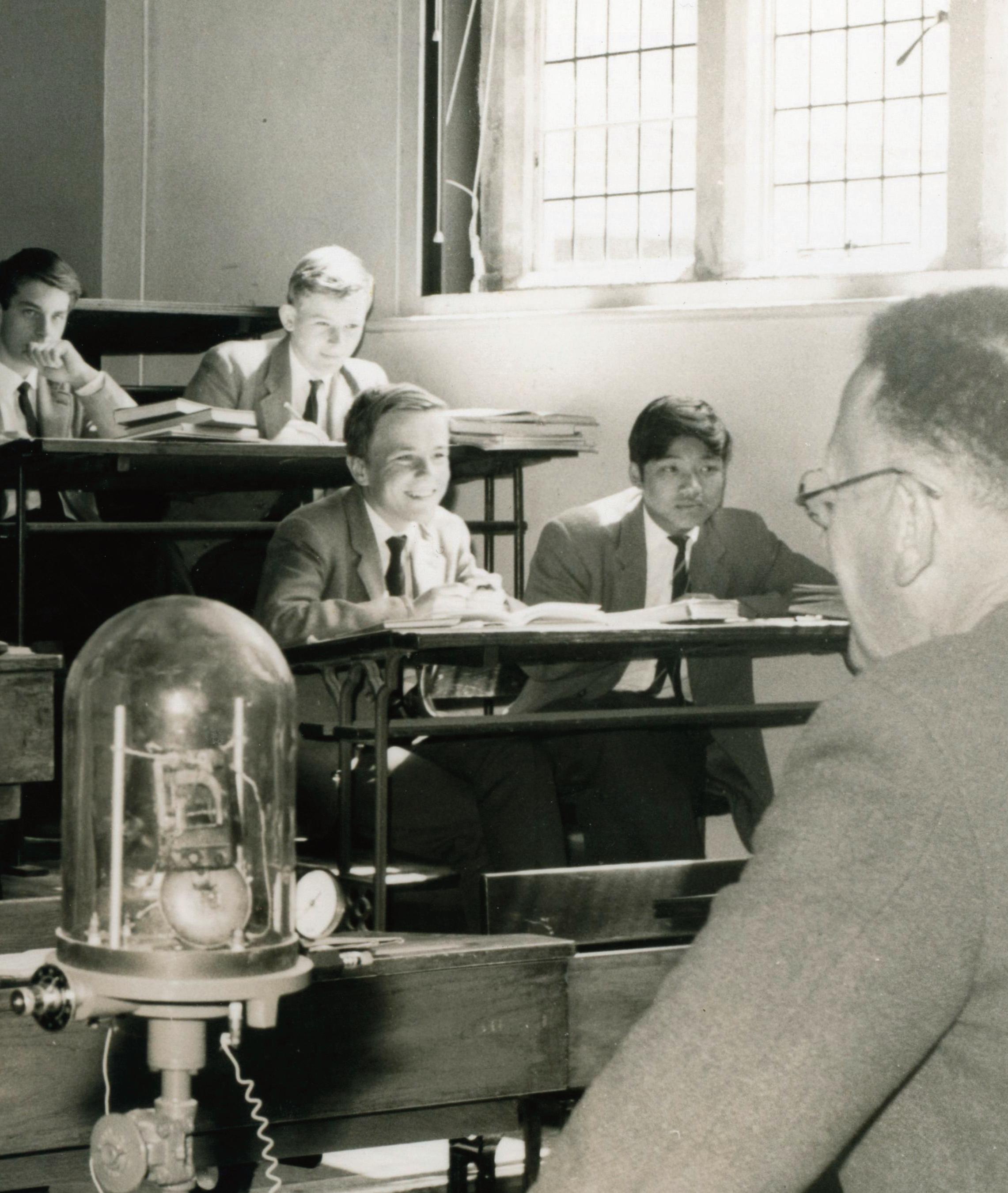
SHERBORNE BOYS
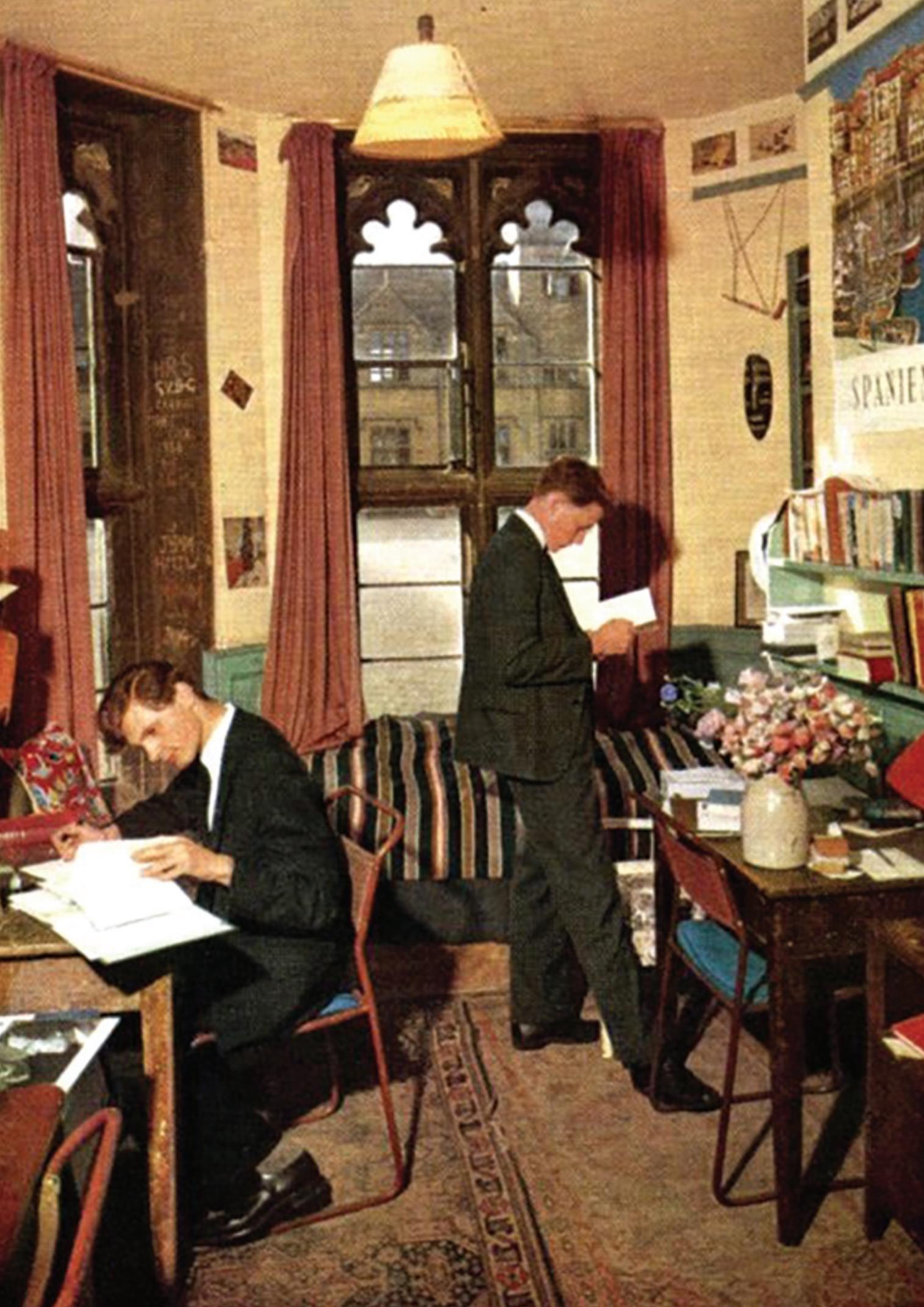
1960 s

David Walker FTIOB Director BSA

Communications Executive BSA

Celebrating 60 years of the BSA
SCHOOL HOUSE STUDIES
SHERBORNE BOYS
1960 s
David Walker FTIOB Director BSA
Communications Executive BSA
Welcome to this edition of the BSA magazine.
This year is the 60th anniversary of the BSA. Many schools in our membership will view us as a recent upstart while for others we have been an ever-present during their entire existence. Whatever your perspective, our mission remains the same – supporting excellence in boarding –and we aim to continue to work tirelessly for the sector for at least another 60 years. A look back at the list of delegates for our first-ever conference (see page 94 for founding members) reminds me that the sector is always changing and adapting to the climate of the day, but continues to thrive and flourish – much like our boarders! This edition celebrates some of the wonderful things currently happening in our sector including the BSA Boarding School Book of Remembrance.
Our work at BSA aims to balance the serious and crucial support for schools in matters such as safeguarding and compliance with those joyful aspects of working in boarding which make our roles so rewarding. As you read this magazine, there will be plenty of opportunity to reflect on your own experiences and find inspiration from others. Perhaps this inspiration might come from aiming for a ‘full house’ of boarding achievements – become a ‘Sleep Champion’, get ‘On Board’ and support your students in developing their Boarding ‘Life Skills’. I hope you enjoy reading this edition of the BSA magazine as much as we have enjoyed putting it together for you.
Welcome to our magazine for the boarding staff community.
We’re delighted to bring you a very special edition in our 60th anniversary year. We have lots of exciting events and activities taking place throughout the 2025-26 academic year and are encouraging schools to take part in any way they can.
Among the highlights, this issue considers how boarding has evolved over the last 60 years to become what it is today. It also explores the future of boarding, with insights from schools cautiously embracing and adapting to a rapidly evolving digital world.
Other highlights include reflections on our BSA Active engagement programme.
If you would like to contribute towards a future edition of this publication, please look out for a feature list via the BSA newsletter. If you’d like to write a guest article, please contact the BSA team via bsa@boarding.org.uk
We hope you enjoy reading this latest issue of the magazine.


GARETH JONES, HEAD, BILTON GRANGE
JESSICA BRIGGS, SENIOR DEPUTY HEAD (PASTORAL), SHERBORNE GIRLS
JILL
IAIN KILPATRICK, EXECUTIVE HEADMASTER, YK PAO SCHOOL
THROUGH CHANGE LEADERSHIP DIPLOMA GRADUATES FROM
GLENN MOODIE, PRINCIPAL, KOLEJ TUANKU JA'AFAR
LAURA
PAUL GARDNER
DEPUTY HEAD OF SECONDARY
SWISS INTERNATIONAL SCHOOL DUBAI
REBECCA JARRETT FTIOB
HOUSEMISTRESS, SHREWSBURY SCHOOL
BRIDGES
ASSISTANT HEAD (TEACHING AND LEARNING)
Boarding School Magazine
To subscribe: T. +44 (0)207 798 1580 bsa@boarding.org.uk
Editor
Lily Boyden, Communications Executive lily.boyden@boarding.org.uk
Advertising Neil Rust, Head of Commercial neil.rust@bsagroup.org.uk
Laura Brain, Senior Sales Consultant laura.brain@bsagroup.org.uk
Henry Price FTIOB Headmaster Oakham School

Meet the BSA chair 2026

It is a privilege and pleasure to be the Chair of the BSA for 2026. After 35 years living and working within boarding, I believe I can bring an authentic understanding of the challenges, but above all the warmth, joy and excellence of our unique sector.
It has never been more important that we keep our courage and our confidence, promoting the numerous benefits of boarding for pupils, as well as the enriching and rewarding experience for all the adults who make this possible. We all know that boarding schools are precious communities; families beyond a family, supporting learning, experiencing different values and guiding pupils as they navigate their personal journeys.
Just as we seek to give unwavering support to our pupils, whilst encouraging their independence, I would like the BSA to be seen as a place where we support each other in our common goal of shared standards and high expectations, whilst celebrating the nuance and greatness of individual schools. There is huge expertise and pride among us, and we are at our strongest when we communicate and collaborate.
I hope that I can play a small role, as part of the BSA team, in holding high the torch of boarding and ensuring our schools are known and cherished for what they are; places of security, joy and excellence where pupils grow and thrive, supported by the selfless professionalism of dedicated adults.
I wish everyone well for the year ahead and look forward to meeting you.
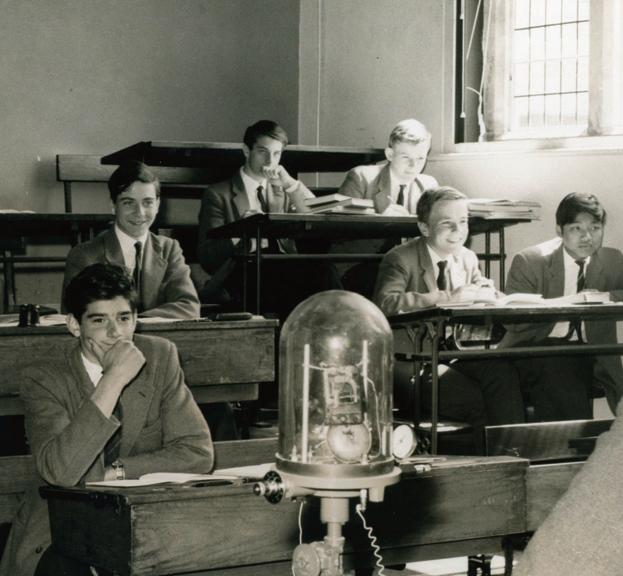
As appropriate as it is to celebrate the BSA’s diamond jubilee, looking back 60 years to see what has changed at Eastbourne College feels quirky and arbitrary. Much has changed in sixty weeks (a fundamental shift in how we do business) or sixty months (a novel coronavirus), never mind the gap between now and 1965.
Delving into the archived Eastbournian magazine gives us a sense of the school two generations ago.
In some ways, things were similar: sporting competitions were won by familiar house names, the debating society and a cappella scene thrived then as now, and the magazine featured school trips.
But it also reveals how much has changed beyond day-to-day school life. Among the trips that year was a tour of the USSR. “The Russians,” our correspondent wrote, “are the most amiable and helpful of people,” before breathlessly concluding: “I know that I for one would gladly live in Russia if I had to leave England.”
Tom Lawson Headmaster
Eastbourne College
In hindsight, the naivety is cloying: “Everything is state-controlled and very well controlled it is… and the majority of Muscovites have homes just as modern and comfortable as any middle-class family in England.”
I doubt today’s sixth form would tolerate Commodore D. R. P. Gun-Cuninghame OBE of The British India Steam Navigation Co. Ltd. as a visiting lecturer, nor consider a coach tour of the South Downs a decent summer holiday.

Yet the March 1965 editorial is strikingly relevant. It discusses distraction and the difficulty of being productive with so many options for entertainment and procrastination:
“It is amazing to sӷ to what extent self-delusion can be carried… The greater scope one has for spending one’s time, the less inclination one fӷls to do schoolwork...”
So, the 1965 equivalent of doom-scrolling was a curse then as now. Keeping a teenage mind on track is a perennial challenge. And perhaps that’s the point, while much changes, young people’s needs remain, and good schools provide the framework to help them thrive.


For 60 years, the Boarding Schools’ Association has championed environments where young people feel safe, supported and able to thrive. As boarding schools evolve, so too must the technology that protects their communities.
At Welcomm and Leversedge, we’re proud to support the UK education sector with advanced safety and security solutions designed for the challenges of today and tomorrow. Our holistic approach integrates AI-enabled Avigilon CCTV, smart communications and intelligent access control, giving schools peace of mind, operational efficiency and proactive protection.








Looking for a simple, flexible and effective way as ‘in loco parentis’ to keep pupils positively engaged with technology?
THREAT PROTECTION

DIGITAL WELLBEING
SCHOOL POLICY DELIVERY
PARENTAL SUPPORT

My appointment as Principal at Collège Alpine Beau Soleil, Villars-sur-Ollon in 2013 was announced in The Times in an unexpected manner: a cartoon in the paper by David Haldane, instigated by my move from Roedean to Switzerland. And certainly in public perception such a move could provoke a wry smile. The quintessential move for a young girl from a previous era. To what extent did my experience live up to the cartoonist’s stereotypical projection?
Despite endless attempts to present it otherwise, Roedean has not been UK’s super ‘posh’ school; no royals were ever educated there and it has traditionally educated the daughters of middle-class families who relished the bracing climate of the south coast.

In contrast, I would accept that the move to Swiss private education does lead you into an elitist world, from cost alone, and Beau Soleil was no exception. The first adjustment that I had to make for this particular role was that I had moved into a different demographic: those who choose Swiss boarding schools generally have significant financial funds and come from a much broader span of countries.
The most numerous nationalities signing up at our school some ten years ago who came from Europe, were from Russia and Ukraine, (a significant challenge in 2014). Very few came from the Far East but we had a significant percentage from Mexico. Their reason for the choice of our school on the top of a mountain was its offer of a safe haven for children.
As the school offered both English and French medium curricula, we
also drew in a significant number of French-speaking students, particularly from North West Africa. For some of these students, the idea of an outdoor education programme was a revelation: the proposal to go on a 10-mile hike through the mountains was met with disbelief as “this is what poor people did”!
Being a bilingual school brought its challenges. Running two different curricula with the associated educational philosophies, regulations, inspection regimes and teaching perspectives took some getting used to. I had not realized how different the French approach to education was until I had to manage their approach to academic thinking, testing, and to special needs and educational provision. The British love for sports was something the French teachers regarded with huge amusement; although everyone, obviously, was up for the skiing!
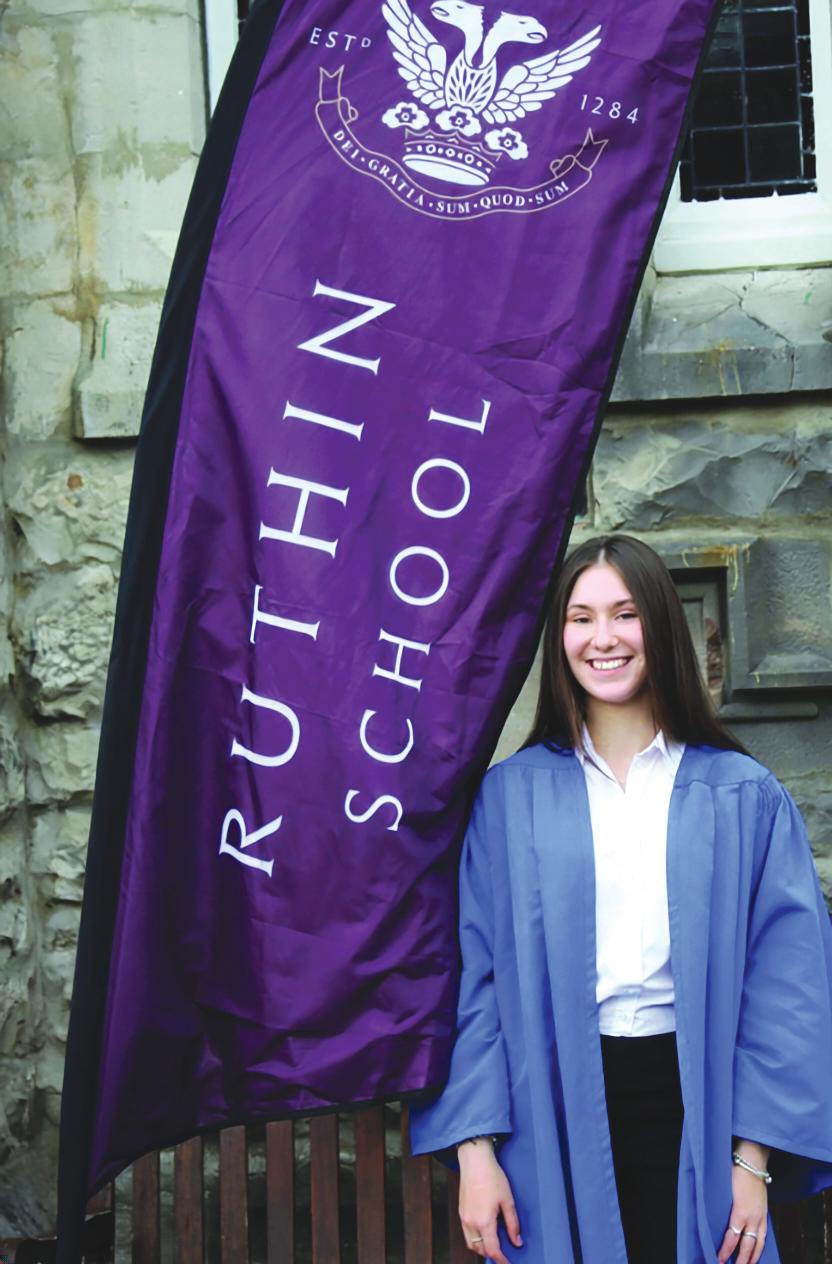
Over my years in office, I hope I moved the dial at the school with regard to safeguarding. When seen from outside, this seemed to be a very British obsession but it is, as we would all agree, a crucial one. It was hard work to move forward a culture that had traditionally taken what seemed a somewhat laissez faire approach to all things regulatory; traditionally growing up in the Swiss Alps far from civilization breeds a very independent tribe of people.
Boarding was central to life at the school; we had no day students. I learnt a great deal about how important it was to create a sense of community through activities, food and feasts, and the ritual of regular outdoor challenges which drew together the whole

community. Life on the top of a mountain out of ski season could be quite quiet otherwise, especially for oursophisticated clientele. We were certainly grateful for the support and training that BSA provided to both our boarding house parents and our French national teachers who had to learn quickly about the boarding tradition.
I thoroughly enjoyed my time in Switzerland and would warmly recommend a stint overseas to any individual. Beau Soleil College was by 2013 owned by Nord Anglia Education and this brought an element of the UK to all we did, so the foreign culture shock was not so great. Indeed, having spent my childhood in East Africa and Pakistan, Switzerland really seemed a touch of luxury.

The key with any overseas appointment is to embrace the new and the different. To try to learn the language, and to work hard to make sense of the culture. I brought back from my time away a real love for the open air, the environment, for the wider cultural mix that our school represented, and a deep interest in the contrasts in educational thinking between France and the UK. I have been returning to Switzerland every year since I left as I developed a deep love for the countryside and the people. Day to day, I am fortunate enough to enjoy a different but still spectacular countryside at Ruthin School, set at the foot of the Clwydian Range in North Wales. There, I often find myself reflecting and drawing upon my experiences gained in previous schools including at Beau Soleil.
The British love for sports was something the French teachers regarded with huge amusement “
“


FOUNDED BY DR KURT HAHN , A GERMAN EDUCATIONALIST WITH A PROFOUND BELIEF IN HOLISTIC EDUCATION, GORDONSTOUN REMAINS ROOTED IN THE PRINCIPLES HE ESTABLISHED OVER 90 YEARS AGO. HAHN BELIEVED ACADEMIC ACHIEVEMENT ALONE WAS INSUFFICIENT PREPARATION FOR LIFE’S COMPLEXITIES. INSTEAD, HE CHAMPIONED AN APPROACH THAT FOSTERED MORAL INTEGRITY, PHYSICAL RESILIENCE, AND A STRONG SENSE OF RESPONSIBILITY TO OTHERS.

Over the last 60 years, boarding has evolved significantly, but the core principles of a Kurt Hahn education – academic rigour, physical challenge, and spiritual growth – have remained steadfast.
At Gordonstoun, wellbeing is not an add-on but is interwoven into every aspect of the curriculum through challenge, compassion, and service to others. Hahn’s visionary approach, which revolutionised education by placing equal value on character and intellect, continues to shape our ethos and practice. His ideas were so ahead of their time
that they are still profoundly relevant today, more than 90 years after he founded the school. While many other institutions have since embraced and adapted Hahn’s educational philosophy, Gordonstoun remains true to its roots as a full boarding school, offering a unique and immersive environment where holistic development is part of everyday life. Undoubtedly, there has been change and improvement in boarding across the independent schools sector.
There is now a greater emphasis on family and community with schools


actively involving parents in student life through events, performances and even unique experiences like open ocean sailing at Gordonstoun. There has been a shift toward a more nurturing and supportive pastoral approach, underpinned by enhanced safeguarding, individualised care and specialised mental health support. Technological advances have further enabled open communication between students, families and staff House parents and tutors play increasingly proactive roles in supporting each individual’s academic and personal growth. Feedback from students is further encouraged through surveys and student-led forums, ensuring their voices help shape the boarding experience. These developments reflect a more modern model of boarding that complements the enduring values set out by Hahn.
Central to Hahn’s philosophy was the conviction that young people must be given opportunities for self-discovery beyond the classroom. This is particularly relevant today, in an age shaped by rapid technological change and growing concern over digital dependency. At Gordonstoun, we address these challenges by offering an education that values physical, academic, emotional, and spiritual development equally, preparing students to lead balanced, reflective lives.
Outdoor education remains a defining feature of the Gordonstoun experience. While spontaneous, student-led voyages to the Black Isle may be a thing of the past (shame!), students continue to learn seamanship aboard our ocean-going yacht, Ocean Spirit of Moray, and through our dinghy sailing programme. These experiences – whether on the
Moray Firth or sailing to the Arctic – build leadership, cooperation and resilience, qualities that cannot be taught in a classroom.
The purpose and shape of co-curricular life in boarding schools have also changed. In the 1960s and ’70s, structure and discipline were prioritised; today, the emphasis is on developing initiative, creativity and emotional intelligence. At Gordonstoun, this has meant a continued investment in programmes that encourage student voice and self-direction – such as leadership roles within the boarding community and opportunities for student-led service initiatives.
To ensure our curriculum reflects Hahn’s ideals today, we recently launched our Back to the Future initiative, enriching the school week with a broader range of

outdoor and academic challenges. These are not novelties; they foster perseverance, adaptability and teamwork.
Earlier this year, students won the Strathpuffer endurance race in sub-zero conditions, while others completed our Dark Skies overnight run-cycle challenge through remote woodland.
Adventure and service remain central to our ethos. The Duke of Edinburgh’s Award, created here with Hahn, thriveswith most Year 13s completing the Gold expedition and many the full award. These experiences reflect a modern understanding of what boarding should provide: not only comfort and structure, but challenge, opportunity and a lifelong sense of purpose.
We are now expanding our outdoor provision with the Gordonstoun Adventure Campus in the Cairngorms, a hub for expeditionary learning, ecological study and leadership training. It is a modern interpretation of Hahn’s vision – deepening students’ connection to the natural world and their own potential.
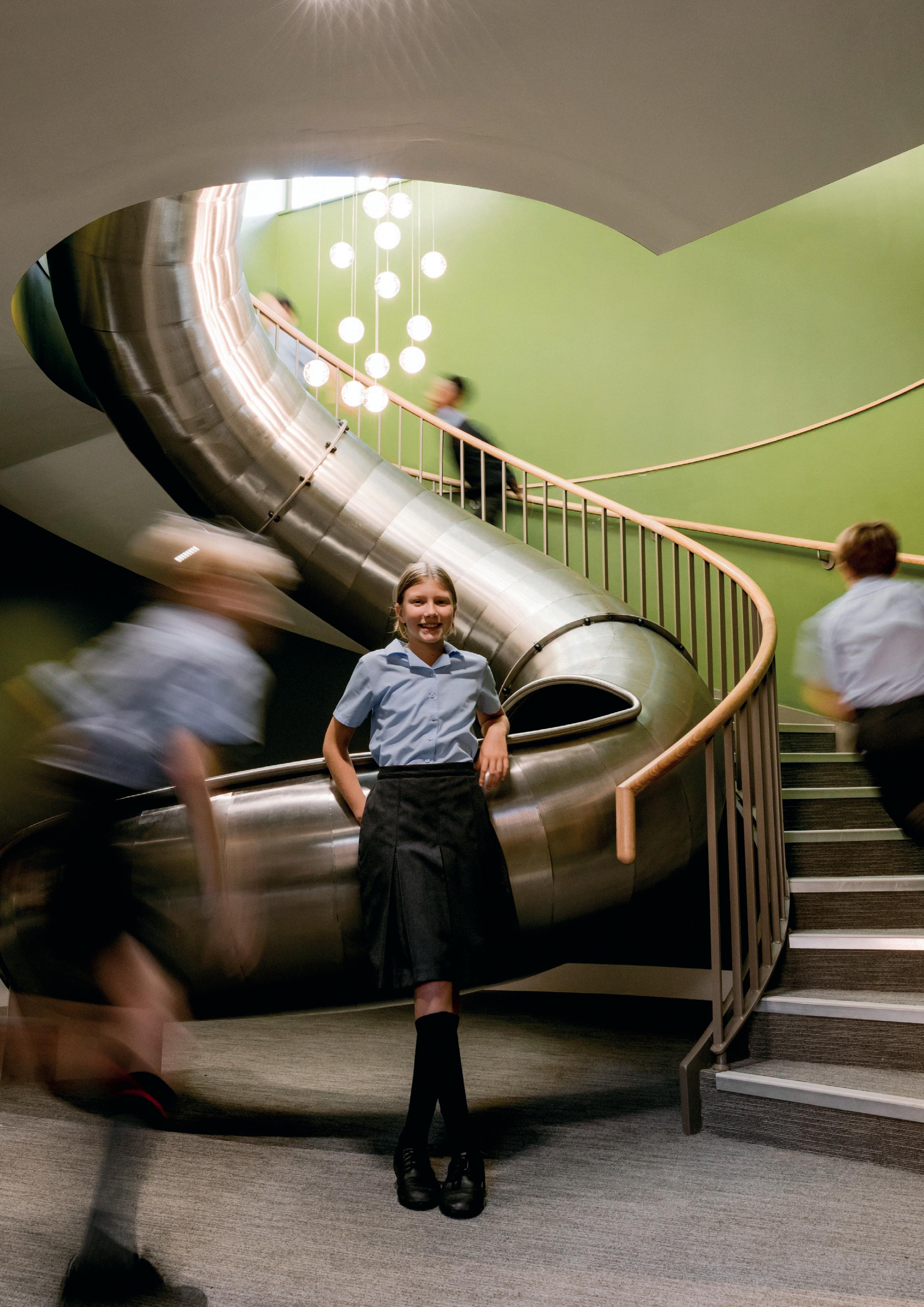
I’ve always loved the thought of children sliding down to breakfast –it’s whimsical, joyful and exactly the sort of magical moment childhood should hold on to.
“ “
Gareth Jones Head, Bilton Grange
When we first began imagining Earle House, our ambition was to create not just a building, but a place that protects the joy of childhood, supports family life in a changing world and sparks the sort of memories pupils carry with them forever.
While recognising that prep boarding, overall, was in decline, we took the view that those schools which do it well will always have demand. But parental expectations have changed. If families are going to invest, and entrust their children to a boarding environment, it has to be exceptional in every way.
We challenged our architects to think from the child’s point of view, and to create a space deliberately distinct from our main Pugin mansion. Keeping the buildings separate – much debated initially – turned out to be the best design decision we could have made, creating a natural flow and giving pupils a place where they could leave school to ‘go home’. The relocation of boarding is also allowing us to repurpose old spaces into new classrooms, communal areas and an expanded Learning Development department.
Looking back at our early design meetings, one idea caused more excitement than any other: a slide. I’ve always loved the thought of children sliding down to breakfast – it’s whimsical, joyful and exactly the sort of magical moment childhood should hold on to. I will admit, I thought Health and Safety might stop
the idea in its tracks, but our architects understood the brief instantly and the slide was a ‘yes’ from the very beginning.
The build became a living classroom, from DT pupils observing ceiling panels being fabricated in a local workshop to our Early Years provision winning a national award for a project inspired by the build. Of course, no major project is without its challenges. We unearthed asbestos, discovered a forgotten underground chamber and endured the relentless rain of 2024, a year that seemed determined to test our patience along with our waterproofs. Yet with each obstacle there were unexpected positives. For example, we found the
shared effort of teachers and pupils fostered a collective sense of ownership.
From the moment Earle House opened, the response from parents and pupils has been extraordinary. Interest in boarding, from one or two nights a week to flexi or full boarding, has increased, and we’ve seen significant growth in enquiries both from existing families and those joining us from London and beyond.
Parents often describe the building as having a “wow factor” and a sense of warmth that feels like “a little home from home.” One parent described it as “the future of boarding.”

Boarding patterns have changed significantly in recent years and I have no doubt that the modern style seen in Earle House will influence future developments across the sector. One trend I expect to become even more important is guiding healthy screen use. While technology remains essential for family communication, boarding should prioritise active play, independence and in-person social connection.
At the same time, safety and wellbeing must remain uncompromised. Several staff live in Earle House with their families, which helps create a strong sense of belonging and security, and they access rooftop gardens when they need their own tranquil personal space
(the best staff are the happiest staff). Matrons are on duty 24/7, medical bays on every floor allow children to rest in comfort when they’re unwell, and wristband access ensures that every child is safe.
I am a strong believer in co-educational boarding at prep level. Boys and girls learn so much from sharing communal spaces, just as they would in a family home. It brings balance, normality and the sort of social confidence that serves them for life. I suspect that within ten years, more prep schools will move towards co-ed boarding models that mirror modern family life. When pupils talk about Earle House, they rarely mention the architecture –
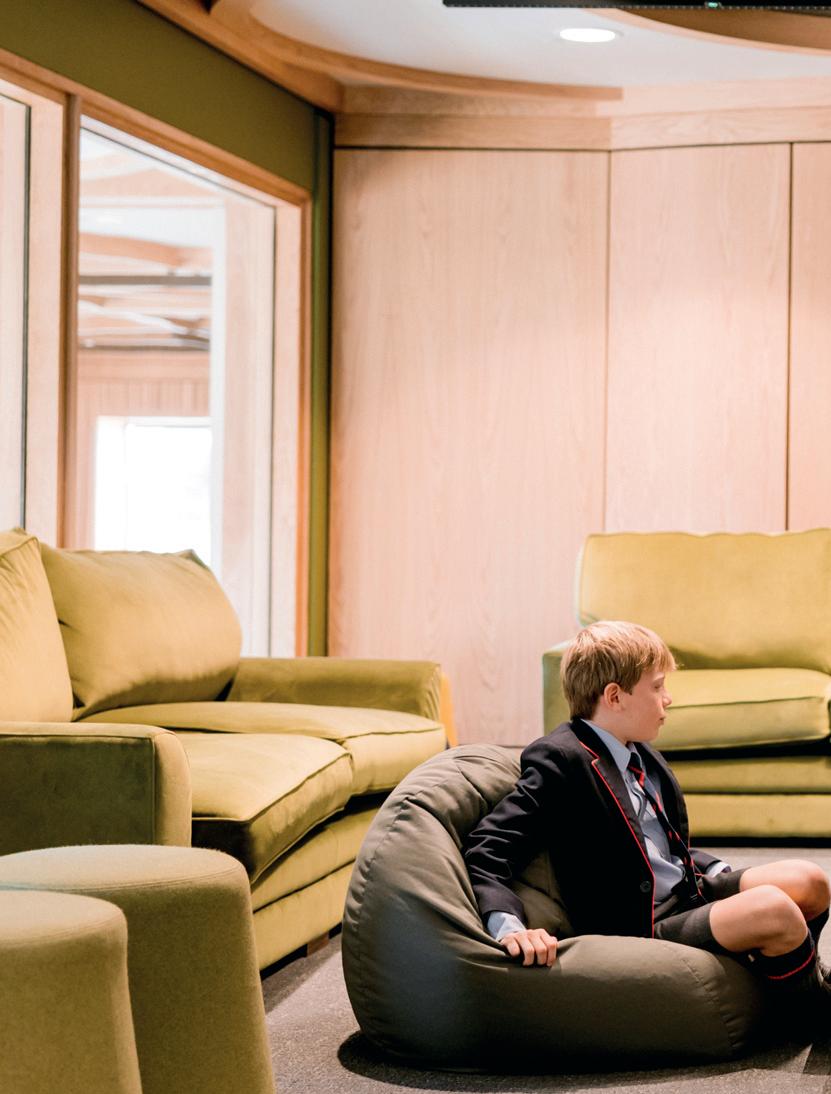
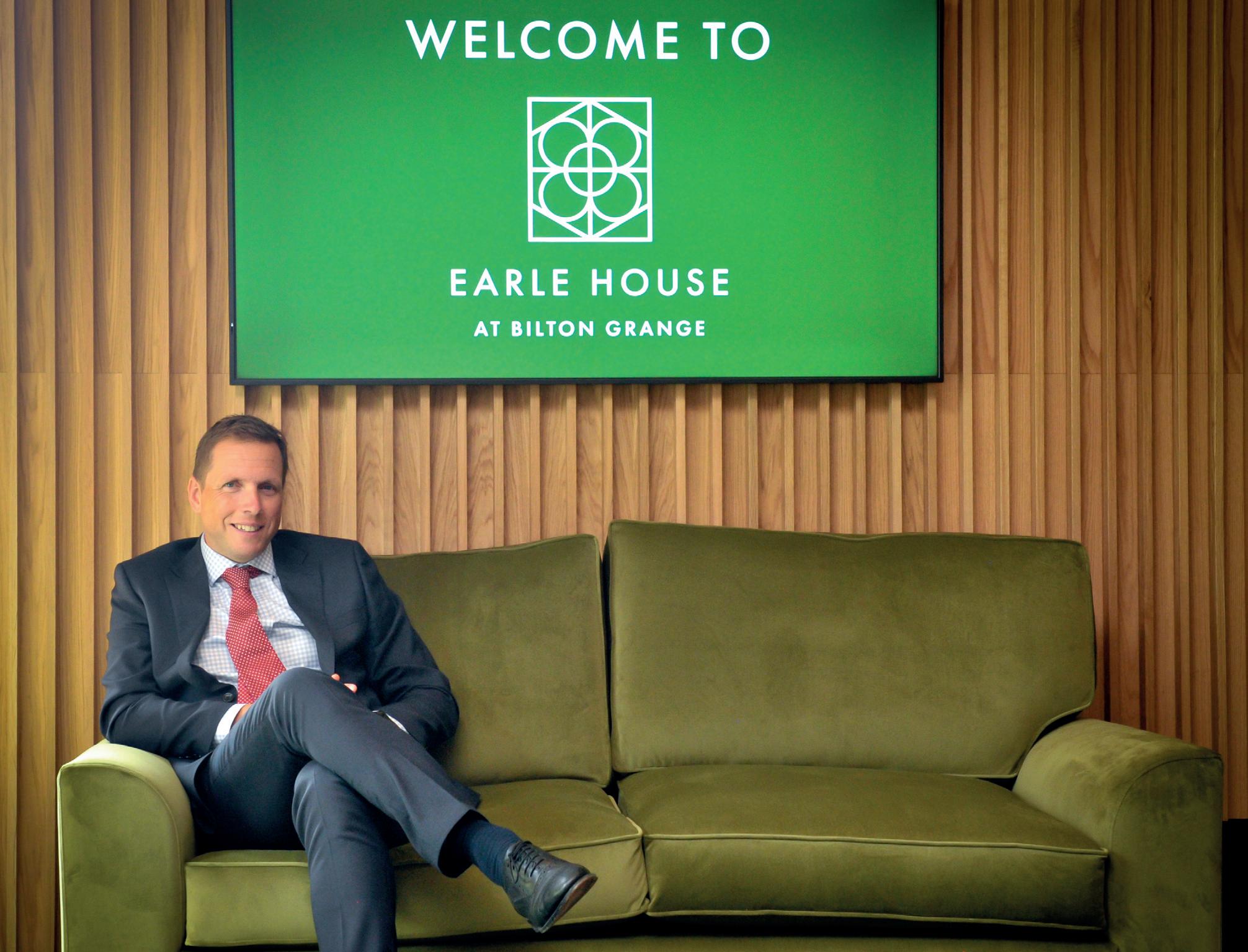
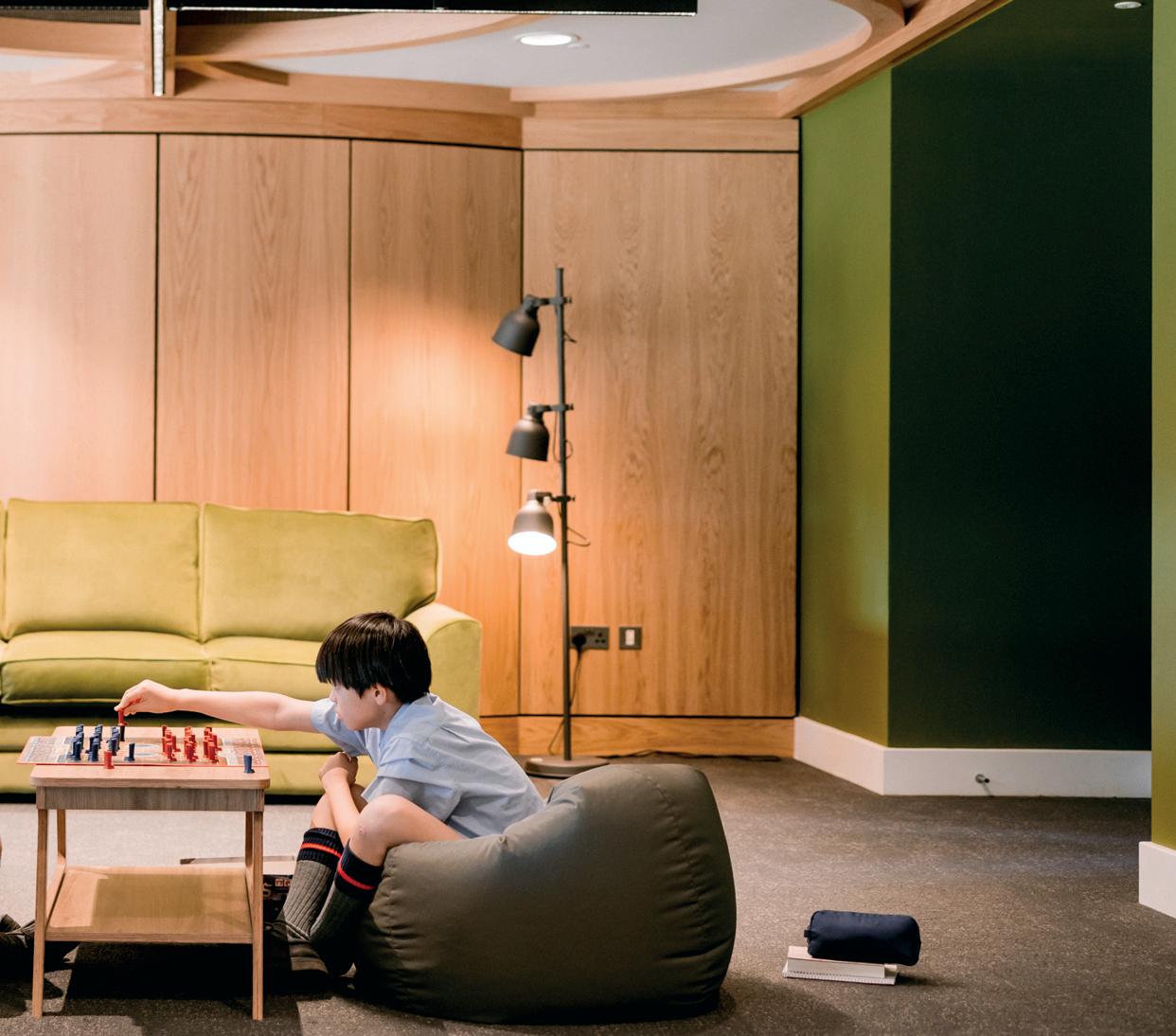
they talk about the laughter, the friendships, the slide, the cosy bedrooms, the sense of belonging. That is exactly as it should be. And it is why I believe so strongly in the future of prep boarding: it gives children a second home filled with joy, structure, warmth and opportunity. Flexi-boarding in particular continues to grow because it balances family life with the richness of boarding life in a world where working schedules can change week by week.
Looking ahead, I believe prep boarding will increasingly mirror the model we’ve created at Earle House: smaller bedrooms, en-suite bathrooms (budgets permitting) and a domestic, family-home feel. Boarding should feel like a quality sleepover with your friends, not a dormitory system from another era.
simple.
Choosing the right UK boarding school is one of the most important decisions parents make for their child. With so many options available, it’s easy to feel overwhelmed. That’s where Academic Families comes in - we guide families through the entire process and stay by their side for the whole journey. We were the first to achieve BSA double accreditation as both an agent and a guardian.
Every family is unique, and so is every school. Our role is to
understand each child’s personality, interests and goals, then match schools to their aspirations. No endless searching, no guesswork - just expert advice and personalised recommendations.
Register
Complete our online form.
Getting to know you Introductory video call.
School matching
We recommend 5 best-fit schools.
Applications
We manage registration and paperwork.
Interview prep Tips and practice for assessments.
Offers & acceptance
Review offers and confirm your choice.
Visa & guardianship
Guidance and accredited support.



Each child’s journey doesn’t end when they start school - and neither does ours. With our accredited guardianship, families stay with the partner they trust, one that already knows their child. We provide caring hosts, escorted holiday trips, and 24/7 support, so each child feels safe and happy throughout their UK education.


One trusted partnerevery step of the way.
+44 7883 328264 enquiries@academicfamilies.com



In November 2025, St Paul's School, led by Sally-Anne Huang, announced the launch of the St Paul’s School Research Centre for the Education of Boys.
Nationally and internationally, over recent years, a cyclical pattern of boys’ underachievement has emerged. This starts during early schooling and continues through to further education and into the world of work. Young men and boys have been frequently branded as a ‘problem’, with schools sometimes struggling to respond to their needs. It is in response to this that we have established the St Paul’s School Research Centre for the Education of Boys, which seeks to advance best educational practice through research and collaboration.
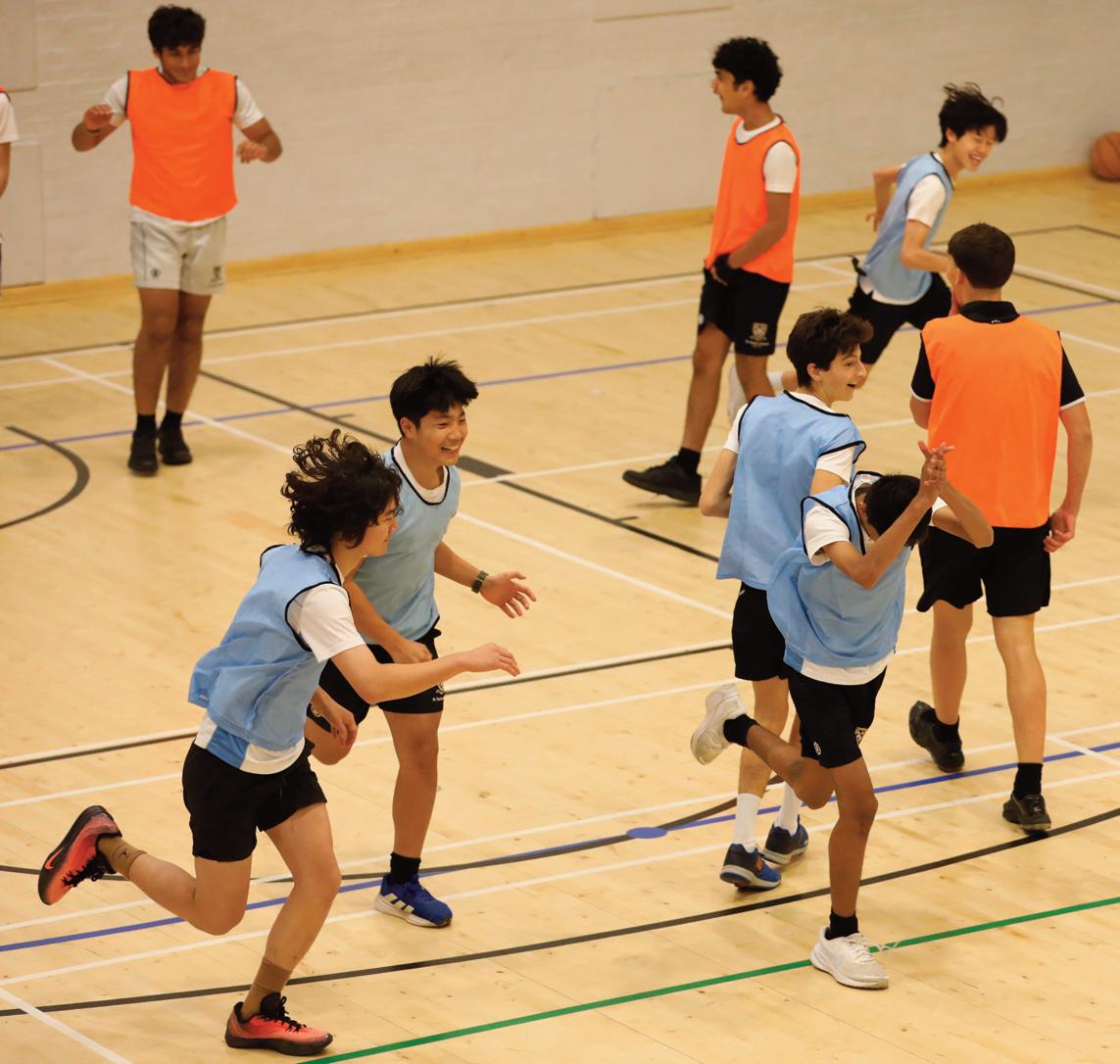
The purpose of the Centre is threefold: firstly, to generate high-quality research into boys’ learning, wellbeing, identity and educational experiences. Secondly, to contribute to the national and international understanding of boys’ education through academic partnerships, dissemination of research and leadership in the field. Thirdly, to improve teaching and pastoral care across the St Paul’s School Group by embedding evidence-based approaches to boys’ education.
At St Paul’s we have a proven track record in this field but want to continue improving our own practice and disseminating work to those working with young men and boys in all settings. At the heart of the Research Centre’s mission is improving teaching practice concerning boys and their development. This will involve working with educators ranging from the primary sector to higher education, collating and investigating their techniques and, from this, publishing the most effective ways to positively impact boys’ academic and
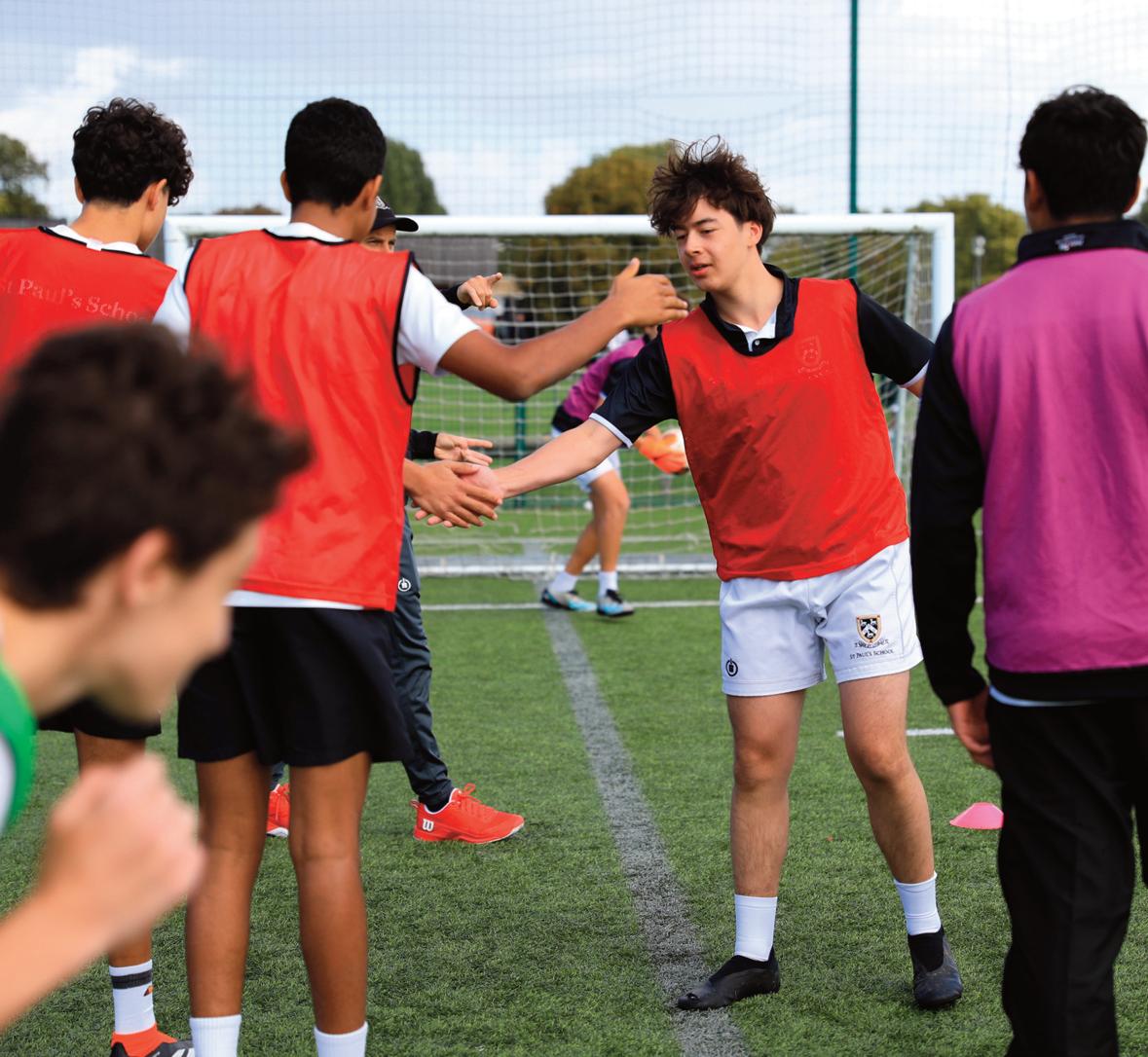
co-curricular performance and to prioritise their wellbeing, happiness, behaviour and mental health.
Significant research will also be conducted around how to cultivate an environment of healthy masculinity in schools, celebrating all that is best about an adolescent male learning environment (competition, physical activity, technology) whilst also fostering a culture of emotional availability, peer-support and inclusivity. This research will be informed by the award-winning diversity, inclusion and equality provision at St Paul’s and the important work being done by the school’s character education team. It will also be informed by surveying boys in various settings, both in and out of school, including in the classroom, engaging in creative and sporting activities, and in social settings amongst peers, parents and role-models.

Pastoral care and pupil wellbeing is central to our ethos. Every pupil is a member of a small and close-knit 'vertical' tutor group that includes pupils from each year group who remain with the same tutor throughout their time at the school, ensuring strong, consistent support. Each tutor group is part of a House, led by an Undermaster, meaning each child has multiple trusted adults who know them well and are a consistent pastoral presence. If they have any concerns, pupils are encouraged to reach out to their tutor or Undermaster who are both trained in Youth Mental Health First Aid. They can also arrange to see the school's clinical psychologists, chaplains, nurses, doctors or safeguarding team if greater need arises.
The House system supports wellbeing in many ways. Older pupils in the tutor group and House take responsibility for helping new pupils navigate the school (and as they mature, they provide support and inspiration to younger pupils themselves in turn). Inter-House
activities build tremendous spirit and friendship, augmenting our broader co-curricular programme and provide a sense of warmth and belonging for all.
Although most boys at St Paul’s are day pupils, boarding plays an important role for some. We have two boarding houses: School House is a small and welcoming community for 44 full boarders, and West House has 11 flexi boarding spaces.
Around half of our boarders stay each weekend. They benefit from our proximity to central London and activities include trips to the cinema, theatre, museums, cookery courses,
paintball, go-karting, white-water rafting, indoor skydiving, clay pigeon shooting, football matches and pizza parties.
While our boarding provision is modest in size, we like to think that our pastoral structure and House system provide the collegiate atmosphere most associated with the best boarding experiences, and that our pupils form long-lasting friendships which they carry with them into the future. We look forward to the St Paul’s Research Centre into the Education of Boys formally opening in September 2026.
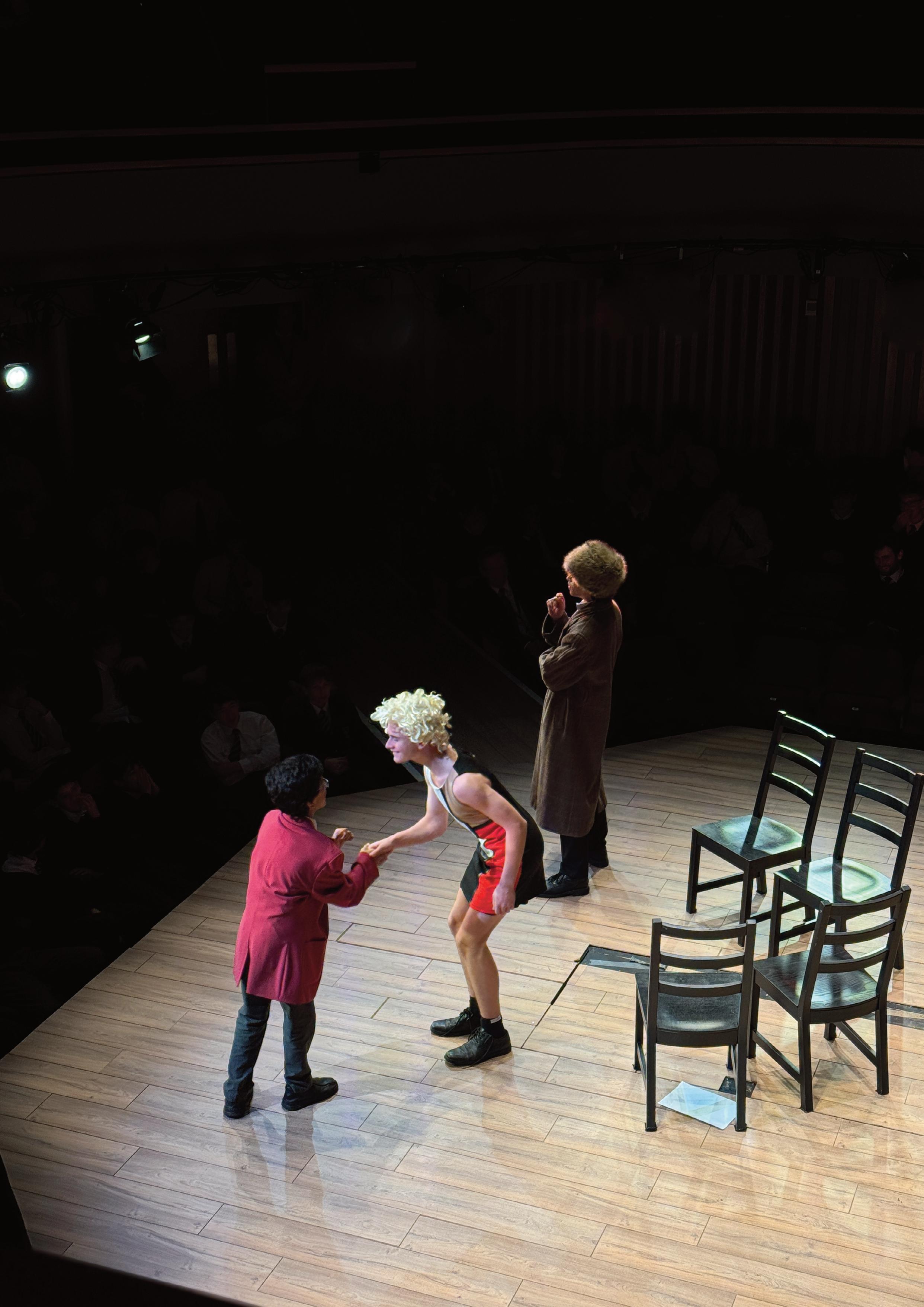
At St Paul’s School, we aim to create an environment where every boy fӷls valued and fully supported so they can reach their full potential. “ “

Sixty years ago, Sherborne Girls was a school that, while shaped by the norms of the 1960s, quietly but confidently stood apart. At a time when girls were often steered toward practical roles and faced limited career opportunities, Sherborne Girls offered something more. We held a progressive vision that women could achieve as much as men, and deserved equal opportunities to learn, lead and thrive. While our curriculum reflected the world girls were living in, our ethos focused on the world they could shape and preparing them to take their place within it.
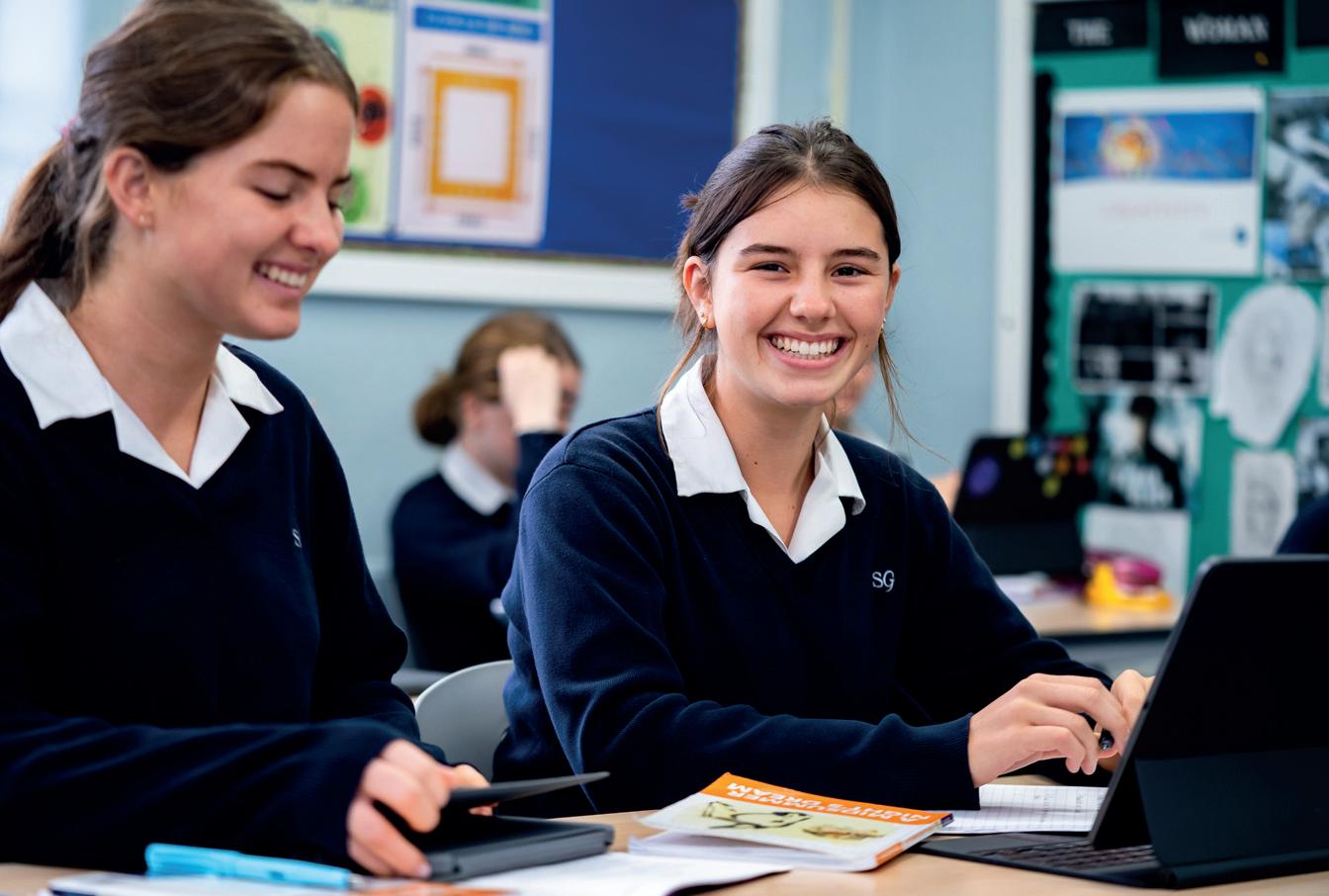
Today, Sherborne Girls equips pupils to lead and shape the global future, confident in voice, innovative in thought, and compassionate in action. Our classrooms are vibrant, discussion-led spaces where students debate everything

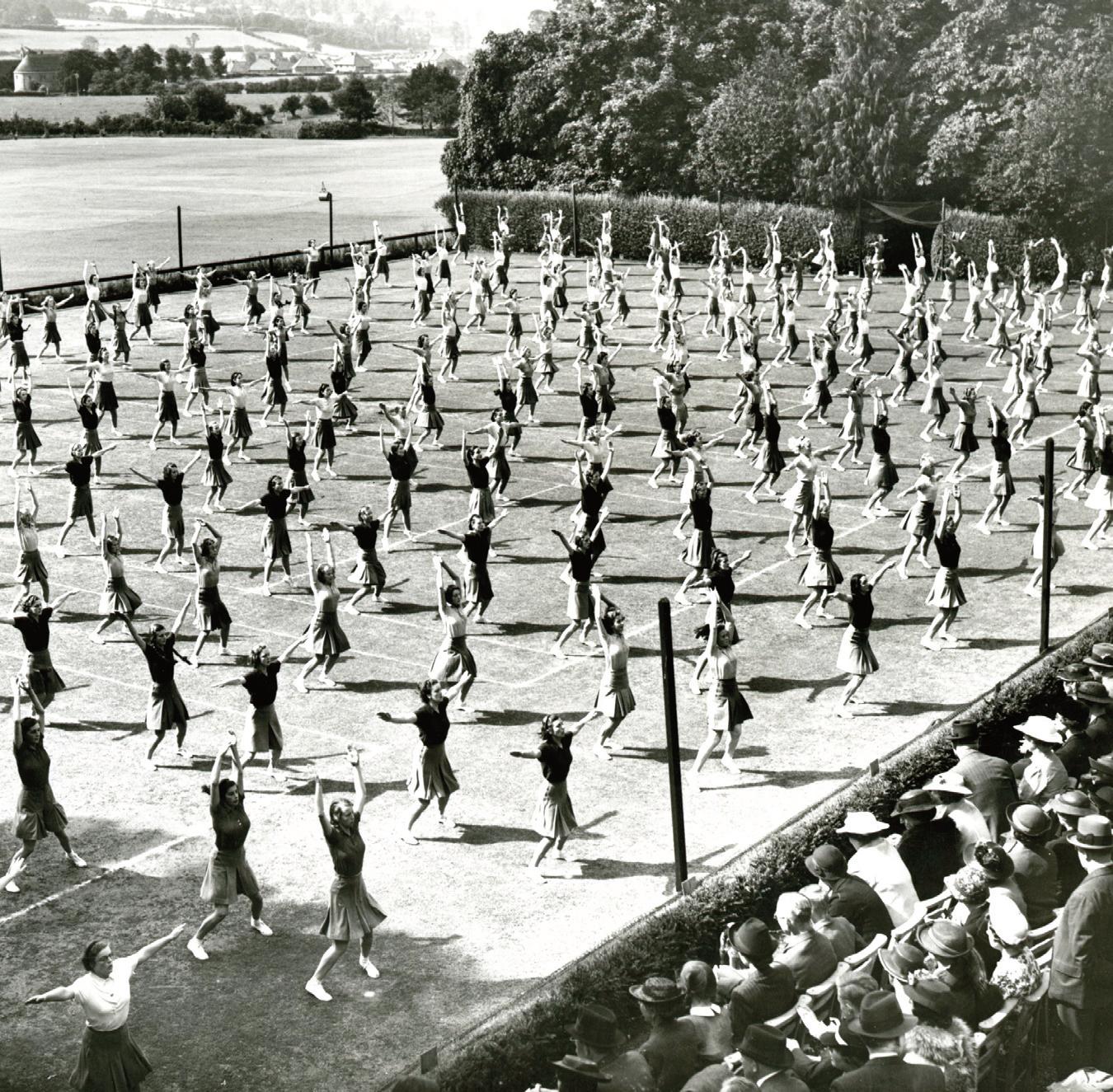
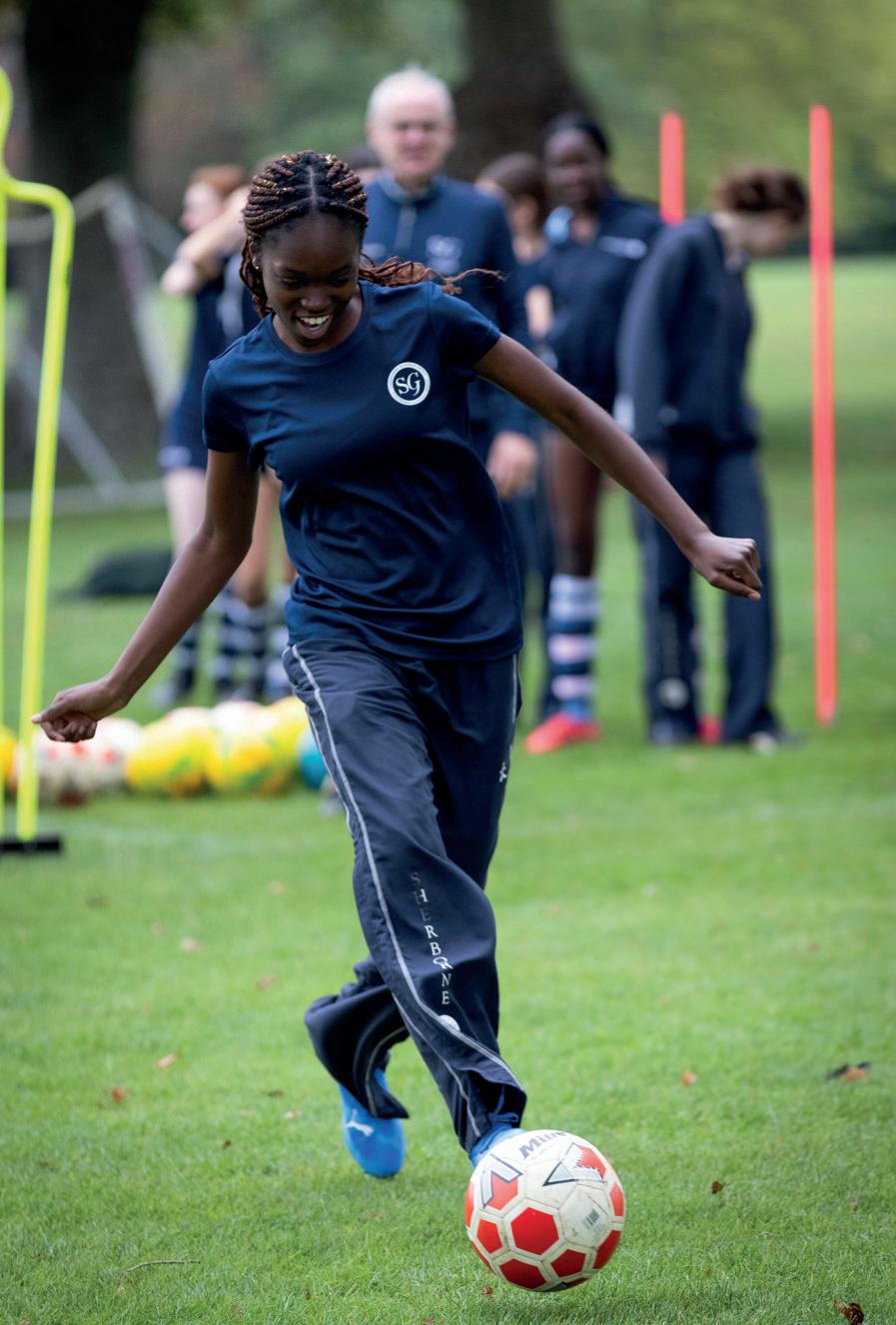
from climate justice to digital ethics, developing as global citizens and future changemakers. Our boarding houses are nurturing, family-style communities, centred on wellbeing and independence.
Girls’ boarding has evolved from a model of pastoral care and academic delivery into a holistic, future-ready experience. It now champions mental health, DEI, digital fluency and global citizenship, areas where Sherborne Girls leads the way. As we reapply for Microsoft Showcase School status, we continue to deepen the integration of digital tools to enrich learning both in and beyond the classroom. Our education is continually enhanced with entrepreneurship, expeditionary learning, music, sport and leadership opportunities.
Looking ahead, the future of girls’ boarding is exciting and full of promise. At Sherborne Girls, this means continuing to
lead in digital learning, expanding global perspectives through exchange and partnership, and embedding sustainability not just in lessons, but across school life. The creation of the Sherborne Schools Group in 2024 is a powerful step toward deeper collaboration, innovation and opportunity.
Above all, it means staying true to our founding values of courage, curiosity and compassion, continuing to empower every girl to thrive in a world of rapid change.

Alex Foreman Chair of the BSA State Boarding Forum and Principal, The Duke of York’s Royal Military School
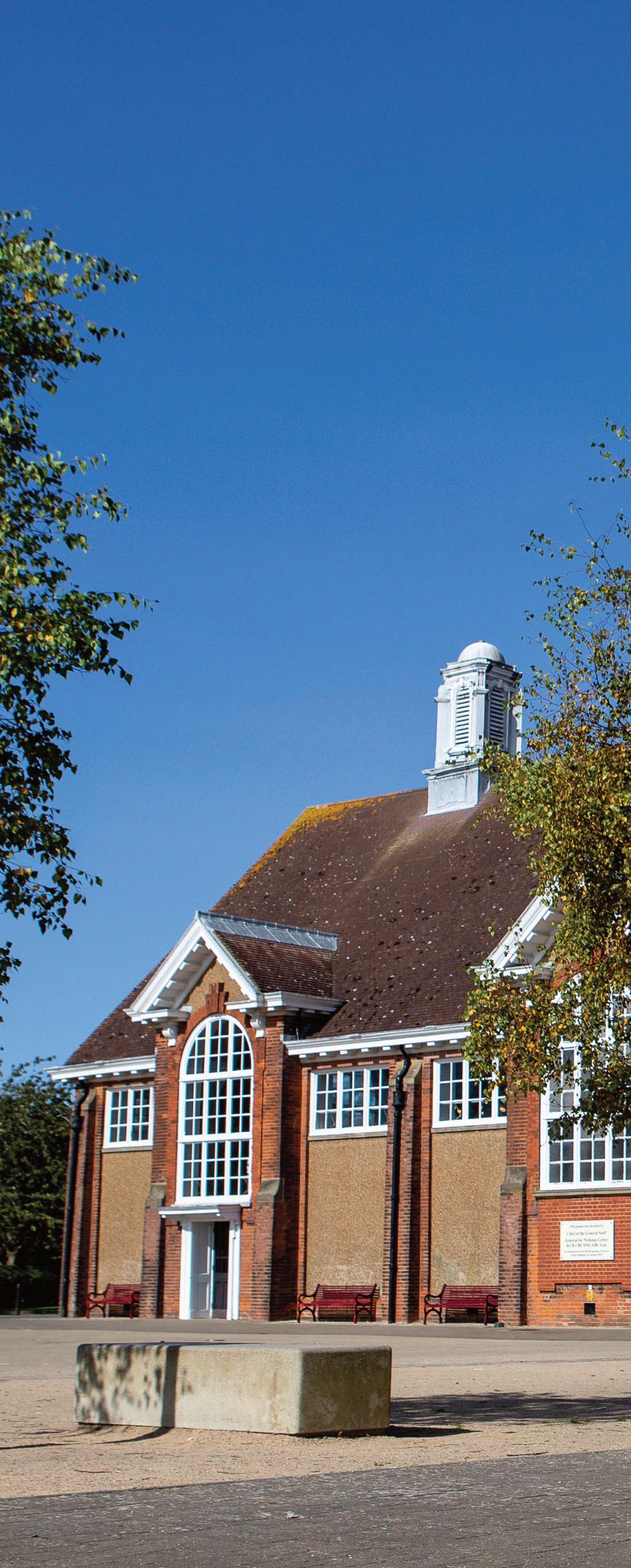
State boarding, where education is statefunded but the boarding element is paid for by families, remains one of the least understood parts of our education landscape. As Chair of the BSA State Boarding Forum (SBF), I am determined that this changes. State boarding should be part of the national vocabulary.
In the BSA’s early years, many boarding schools were run by local authorities, and several BSA Chairs, starting with Essex councillor Robert Eden, came from the state sector. As local authority boarding declined through the 1970s and 1980s and many Direct Grant schools became independent, the state sector’s presence risked being lost. To protect its voice, what is now known as the BSA State Boarding Forum was founded in 1990. Today, the SBF continues that mission with renewed purpose, championing what I often call education’s best-kept secret.
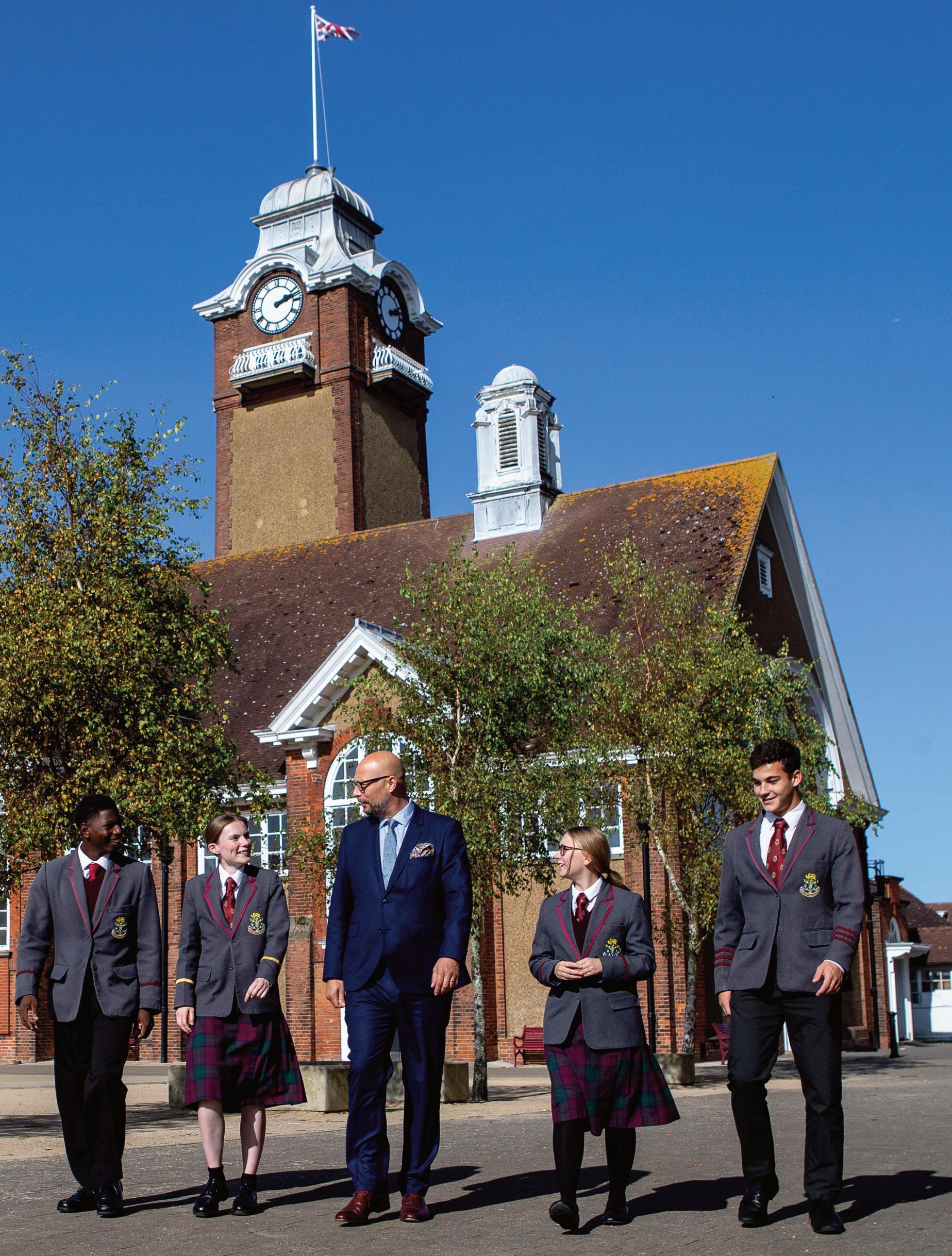
In November 2025, Lord Black of Brentwood, Honorary President of the BSA, hosted a gathering at the House of Lords where Heads and students from The Duke of York’s Royal
Military School spoke about the transformational potential of state boarding. The most compelling contributions, unsurprisingly, came from the students themselves.
One young man described a childhood shaped by military mobility: Germany, Aldershot, Tidworth, Sussex, then back again. Every posting meant another uprooted identity and another set of friendships that expired the moment the car pulled away. State boarding gave him continuity and a community that did not vanish because of the next military instruction. It gave him the chance to become a Grade 8 musician, a firstteam sportsman, and a confident, grounded young adult. And, crucially for his family with three children boarding, it did so in a way that remained affordable and sustainable; even with the MOD’s Continuity of Education Allowance, independent boarding simply would not have been possible.
Another student, bright, spirited and once deeply challenging, spoke about joining boarding at 13 with habits that placed her at
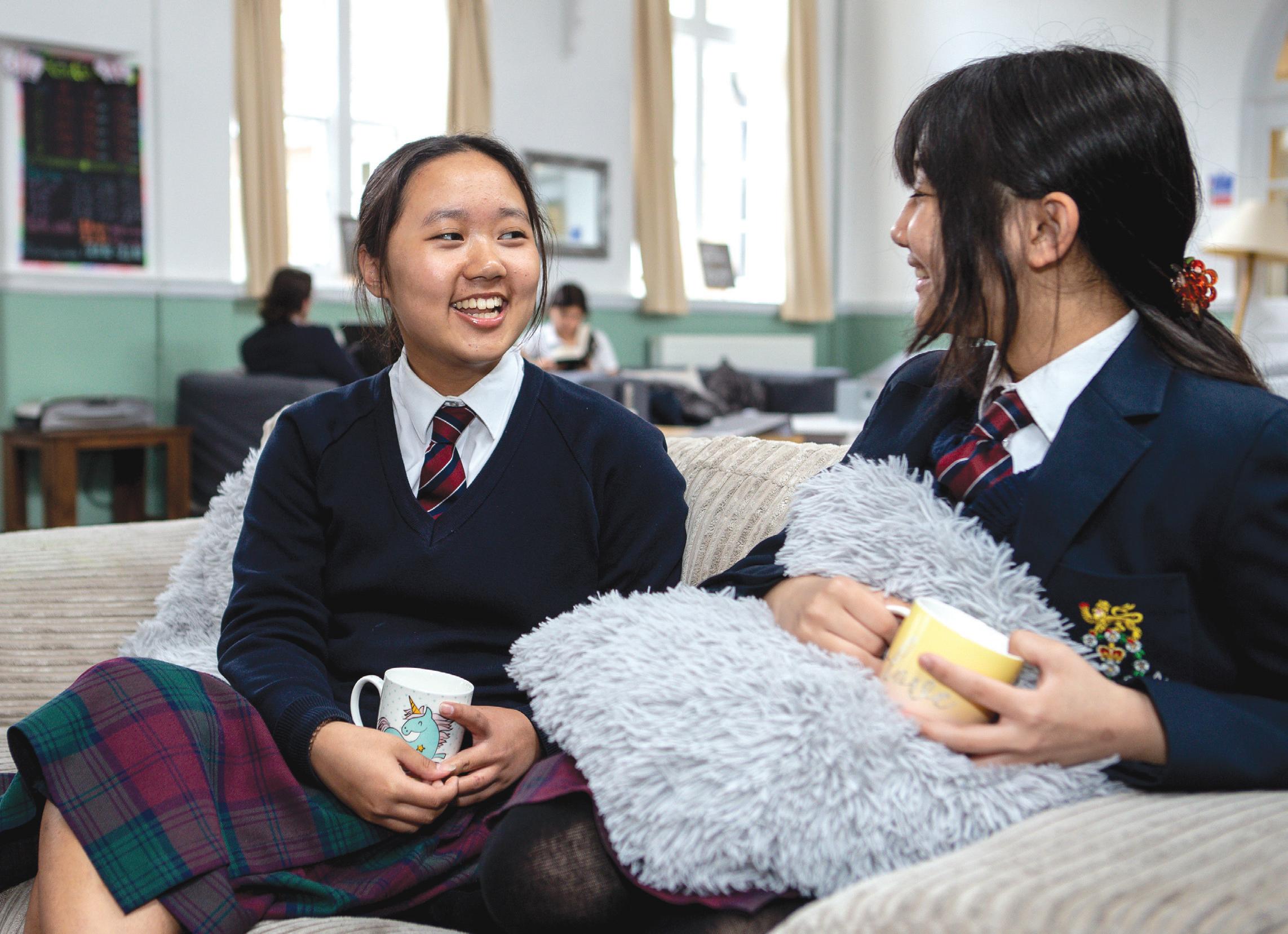
serious risk. She fought every rule, pushed every boundary, and tried her hardest to be removed. But she was never given up on. When she left at 16, she quickly discovered she had walked away from structure, safety, friendship and staff who understood her. She returned within six weeks. Two years on, she is a prefect, drama captain, star of school productions and a confident young woman.
Their stories were unfiltered and profoundly human, demonstrating that state boarding changes lives. It delivers the pastoral structure, stability, safety and enrichment of boarding alongside academic rigour and high expectations. It offers social mobility in its clearest form; access to life-changing opportunity at an accessible cost.
For military families, for children whose home circumstances make boarding a pathway to safety and aspiration, and potentially for many of the 80,000
looked-after children in the UK, state boarding should be a lifeline that too few know exists.
Like the independent sector, state boarding has seen a small decline in numbers (3.5% between 2023 and 2024). Around 4,700 children now board in state schools, just 6% of all UK boarders. Some might be tempted to overlook the 6%. We will not. These 4,700 children deserve the same advocacy, investment and national recognition as any other boarders in the country.
It is precisely because the sector is small, dispersed and often overlooked that collaboration has become essential. The SBF has evolved into a genuinely collective endeavour, where Heads

increasingly see themselves not as competitors, but as custodians of a shared national provision. Building that trust required deliberate choices; we took an unapologetic ‘no compromise’ approach. Meetings for Heads had to be attended by the Head, and those inperson meetings had no option for dialling in remotely. Whilst this might appear inflexible or simply oldfashioned, the key was to build trust and social capital.
The results are tangible. Regular communication between Heads, Deputies and Heads of Boarding now allows issues to be surfaced early, practice to be shared openly, and collective positions to emerge where appropriate. The WhatsApp groups light up with regular questions and debate.
Schools visit one another, support one another through challenges, and speak with greater coherence on matters of policy and public understanding. Importantly, collaboration does not erase individuality; schools retain distinct identities and approaches, while recognising where unity strengthens the sector as a whole.
Where do we go from here? Our mission at the BSA State Boarding Forum is clear:
• To raise national awareness
• To protect and grow this unique provision
• To secure investment
• To ensure that every family who could benefit from state boarding knows it exists.
The students who spoke in the House of Lords reminded us that the impact of state boarding is best measured not in spreadsheets, but in stories of resilience, stability, belonging and possibility.
State boarding is not just the sector’s best-kept secret; it is one of the nation’s quiet strengths. It is time more people knew.
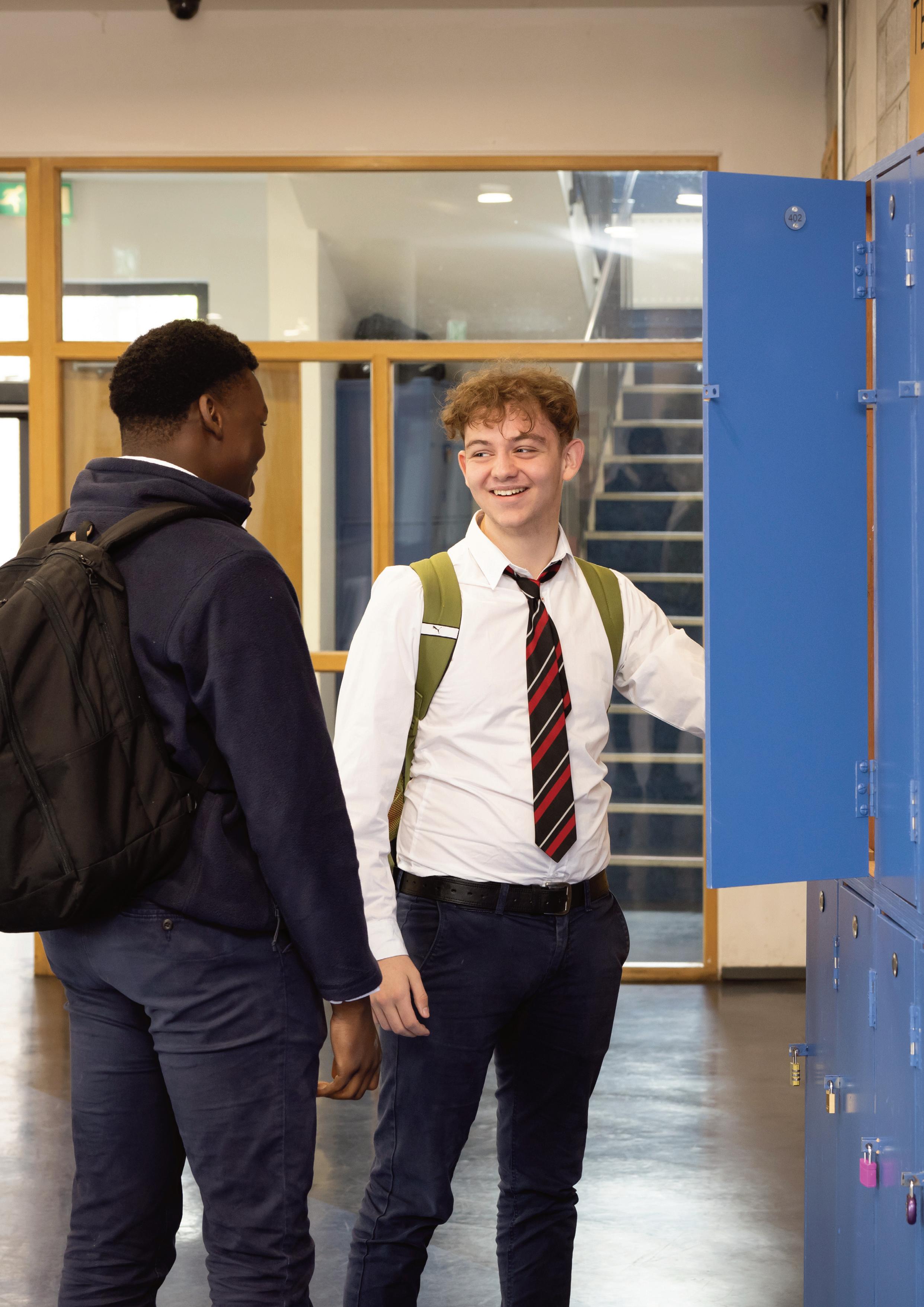
A whole-school commitment to inclusion

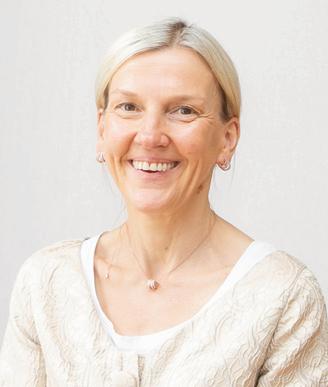
Jill Storey Head of School Villiers School
Achieving the BRIDGE Standard from the Inclusion & Equity Leadership Association (IELA) this academic year marked an important milestone in our school’s inclusion journey. While our community has always valued kindness, respect and belonging, the events of 2020, particularly the aftermath of the pandemic and the wider societal issues it brought into sharper focus, prompted us to reflect. Commitment alone was not enough; we needed to understand what daily life in our school was truly like for every student of every identity.
The starting point was listening and accepting that we were not always reaching the standards we aimed for. We commissioned an independent survey that engaged students, teaching and nonteaching staff, parents and guardians, and board members. The data gave us insight into experiences we had not fully understood and highlighted both strengths and areas requiring attention. In many ways, the findings almost ‘wrote’ our action plan, providing a clear mandate for change grounded in lived experience.
Our next step was to build knowledge and confidence among staff. Whole-staff engagement was essential, not only among those directly involved in pedagogy but across all roles. Colleagues attended BSA professional development courses, and two staff members undertook postgraduate study in equity, diversity and inclusion at the University of Limerick. This investment signalled that inclusion is a shared

professional responsibility, and gave us confidence in the measures we needed to take. A staff leadership team provided strategic oversight, while a wider collaborative working group ensured representation across departments and roles.
Student voice was central. At the same time as staff groups, we established a range of action groups to ensure we continued to both listen and give a platform from which to steer progress and maintain momentum. Student affinity groups and allyship groups created safe and empowering spaces for dialogue, reflection and advocacy.
Education and conversation became ongoing features of school life. We hosted events, workshops and structured discussions designed to build understanding and empathy. We recognised that students needed to see measurable impact. We learned listening without acting erodes trust. Early changes therefore focused on visible and meaningful adjustments. For example, we moved towards the nongenderisation of many aspects of school life, including uniform options and the language used in official communications. We also ensured that students from minority identities had representation on the student council.
In parallel, we reviewed recruitment practices to work towards a staff body that better reflects the diversity of the student population. Representation matters, not only as a matter of fairness, but because it enriches the educational experience for all. Additionally we sought and received recognition from external bodies for our work in inclusion; this holds us to account, demonstrates commitment, and expressly communicates the school’s ethos to the wider community.
“Inclusion cannot sit within a single department or role; it must be woven into the fabric of daily practice.”
Beyond our own campus, we are committed to contributing to wider systemic change. We believe schools have both an opportunity and a responsibility to influence the educational landscape in which they operate. We have actively engaged with Department of Education and Youth commissioned studies and focus groups, sharing our experiences and learning from others. Staff members regularly contribute to local and regional training
events, supporting colleagues across the sector to strengthen inclusive practice in their own contexts. We also seek to use our voice constructively to advocate for equity, diversity and inclusion to be recognised as central, rather than peripheral, to educational policy and decision-making. In doing so, we hope not only to sustain progress within our own school, but also to play a meaningful role in shaping more inclusive educational environments for all young people.
Like any meaningful cultural shift, work is ongoing. One of our continuing challenges is the need to revisit and clearly articulate our purpose. Inclusion initiatives can sometimes be misunderstood or perceived as temporary priorities. We have learned it
is essential to consistently explain the rationale behind decisions and to connect them to our core educational values. Alongside this, we have adapted reporting systems and strengthened our approach to data collection, enabling us to track progress more effectively and respond with agility.
For other schools considering a similar journey, several insights stand out. First, begin with evidence. Independent research into the experiences of your community provides both direction and credibility. Second, commit to wholeschool engagement. Inclusion cannot sit within a single department or role; it must be woven into the fabric of daily practice. Third, empower students as partners. Student perspectives are indispensable and real, and their
leadership can be transformative. Fourth, develop resilience, this work is challenging, often emotionally charged, and frequently misinterpreted. Admit to mistakes, and try again, but better. Finally, focus on visible change while sustaining long-term strategic work. Quick wins build confidence, but deep cultural change requires patience and persistence.
The award of the IELA BRIDGE Standard is not an endpoint but an encouragement. It affirms that when schools listen carefully, act thoughtfully and remain open to learning, they can create environments in which every student feels seen, respected, and able to flourish.

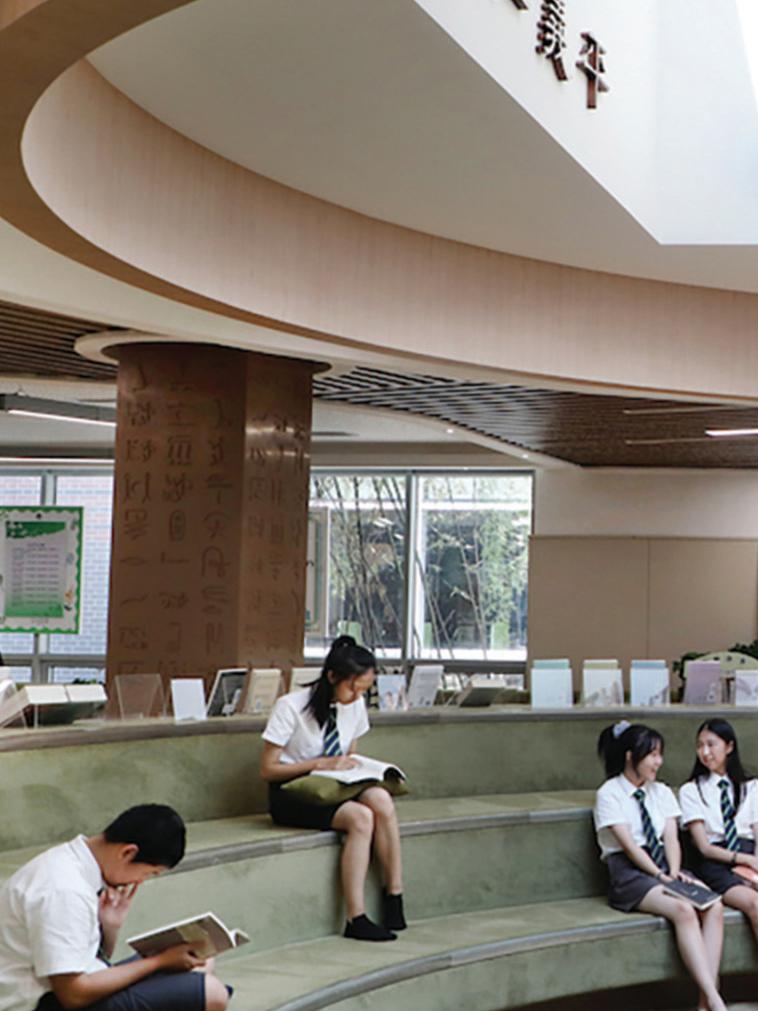
I began my boarding career in 1995, some 30 years after the BSA was founded. Arriving in the beautiful Perthshire countryside, fresh from teacher training, I was excited but, coming from a state-school day background, totally unaware of what lay ahead. That was a full boarding school, where I stayed for ten happy years. My career since has taken me to Scotland, England and China.
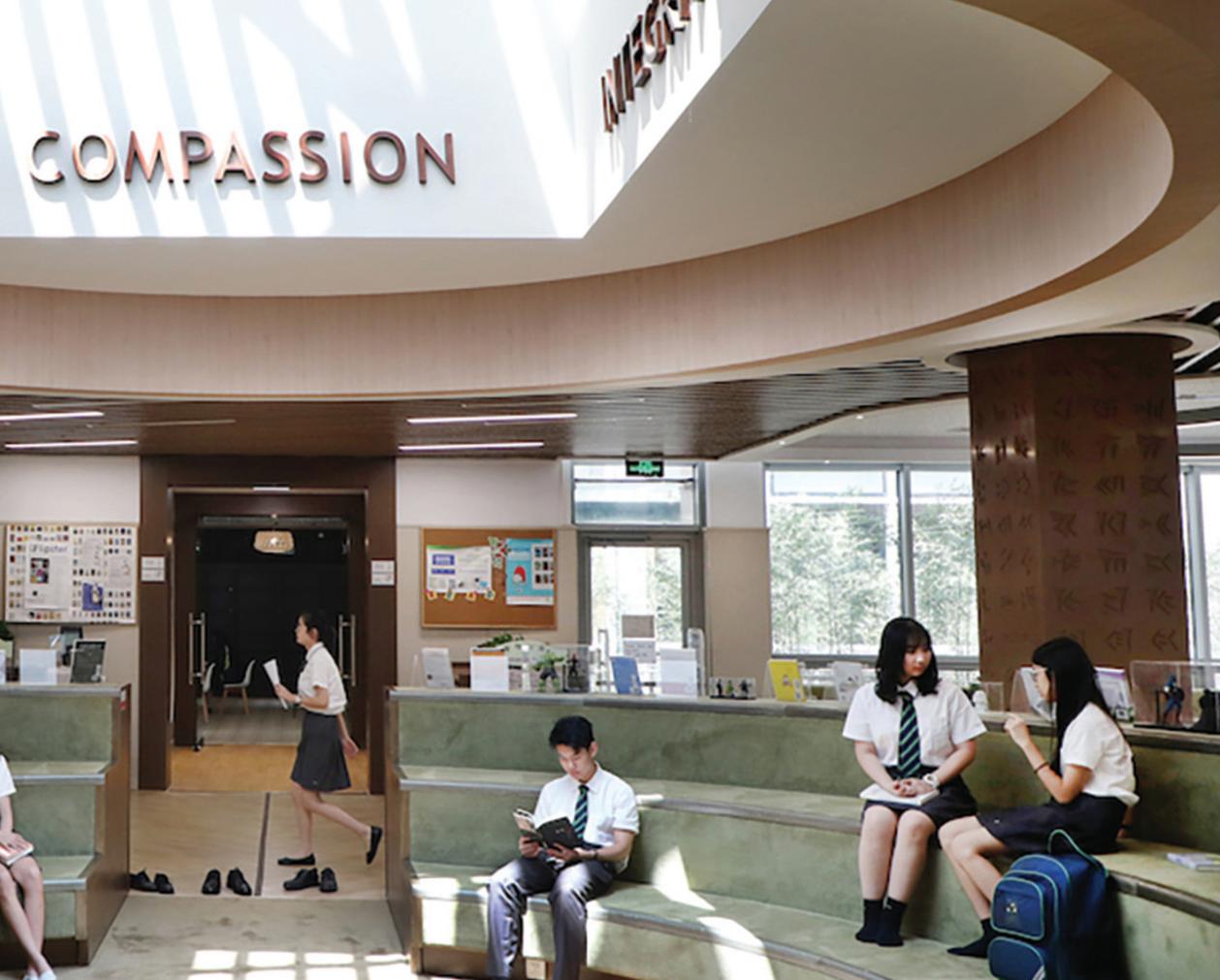
My current role is in the wonderfully diverse city of Shanghai. YK Pao School (YKPS) is an all-through bilingual school with three campuses across the city. If we were in London, one would be in Mayfair, one in Hammersmith and one at Heathrow – such is the expansive nature of Shanghai! The campuses are divided into a Primary, Middle and High School, with the High School being a residential campus to approximately 550 boarders in eight boarding houses. Many of our boarders come from the
city and progress from the Middle School. However, we also have international boarders from outside China as well as a campus teaching faculty of around 120, many of whom live on campus and hail from around the world. To this extent, the High School really is an international melting pot where students and staff live and learn together.
In China, boarding schools are increasingly adopting bilingual and
bicultural approaches to cultivate wellrounded global citizens. By integrating Chinese and Western pedagogical traditions, they foster linguistic proficiency, cultural adaptability, and critical thinking – essential traits for future leaders.
A bilingual curriculum, in our case Mandarin and English, enhances students' academic and communicative abilities while preserving their cultural identity. Immersive language programmes,

such as content-based instruction (for example, teaching science or history in English) ensure fluency while broadening intellectual horizons. This sits comfortably with the ethos and philosophy of the International Baccalaureate, and our students study the IB Diploma in the final two years of school. Meanwhile, bicultural education goes beyond language, embedding cross-cultural understanding through comparative studies in literature, ethics and social sciences.
Boarding schools provide a unique environment for this dual approach. Living in a diverse community allows students to practice intercultural dialogue daily, bridging Eastern collectivist values with Western individualism. Co-curricular activities –debating global issues, celebrating international festivals and collaborating on multicultural projects – reinforce empathy and open-mindedness. Moreover, partnerships with overseas institutions and exchange programmes deepen students' global perspectives.
Ultimately, bilingual and bicultural education in Chinese boarding schools equips students with the tools to navigate global complexities while retaining pride in their heritage. This holistic approach nurtures not just academic excellence but also ethical, globally conscious citizens ready to contribute to a harmonious future.
My journey from the rolling Perthshire hills to the vibrant streets of Shanghai has been enormously rewarding – more than I can have possibly imagined. The

Boarding schools provide a unique environment for this dual approach. Living in a diverse community allows students to practice intercultural dialogue daily, bridging Eastern collectivist values with Western individualism. Co-curricular activities – debating global issues, celebrating international festivals, and collaborating on multicultural projects – reinforce empathy and open-mindedness.
“ “
nature of boarding has changed: the physical environment of boarding houses and the staffing structures are undoubtedly different from thirty years ago. Increased regulation has certainly professionalised the approach schools are required to take. However, the essence of boarding – creating a safe, nurturing and stimulating space for young people to live and learn –remains as important and precious today as ever.
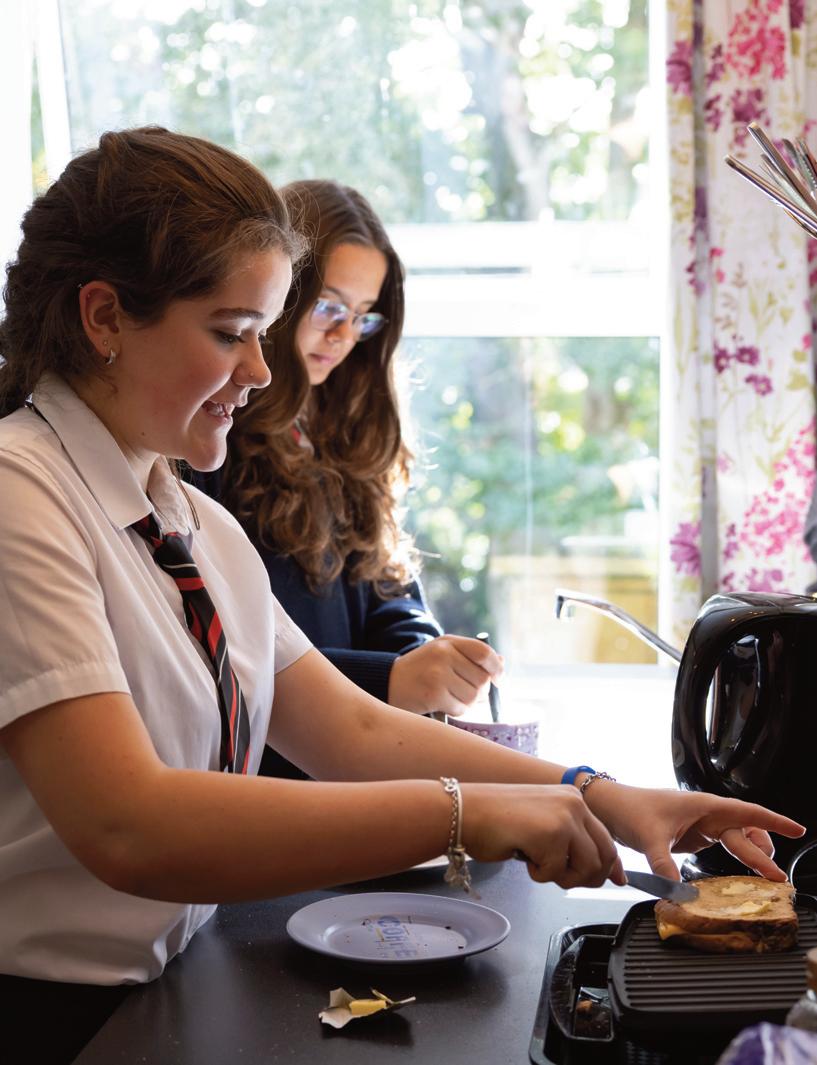
Boarding to me is characterised by students having a cup of tea and a slice of toast at the end of a busy day; ‘shooting the breeze’ with their friends and catching up with the member of staff on duty. This image prevails over time and across continents because it is a vignette of the human condition. I hope it remains the case and that boarding continues to be the cornerstone of community and the beating heart of school life.
Reflections from the first BSA Leadership Diploma graduates
In 2011, the BSA launched the Leadership Diploma, a pioneering qualification designed to prepare senior boarding professionals for the complexities of modern school life.
Fifteen years later, graduates from the first cohort reflect on how boarding has evolved, what the course meant to them, and where their journeys have led.
boarding.org.uk/accredited


Bart Wielenga was among the first to complete the BSA Leadership Diploma. He identifies three key areas in boarding that have changed since:
Email! The sheer volume of email traffic that Houseparents have to process is a huge distraction from the job.
Pupil mental health is far more prominent. We knew about it and we did our best –but the world we live in now has a whole new literacy around mental health which is as helpful as it is unhelpful. It certainly makes the houseparents’ job infinitely more complex. I am certain Houseparents today are much better trained to handle it – but that does not alter the sense of responsibility and the burden that they carry for the wellbeing of their pupils.
Parents’ expectations have changed. There is no question that the world is a more challenging environment for our pupils, and parents know that. Parents are more determined than ever to make sure that their children are set up for success. Our parents are finding it harder and harder to see their children struggle or suffer, but struggle and suffering are part of growth – and the danger is that our parents deny their children those moments of growth.
What hasn’t changed is the ‘why’. “Ironically, the most satisfying thing is to see kids struggle and suffer and emerge as sensible, decent, purposeful young
adults,” he says. “Walking alongside them during those challenges is our great privilege.”
On the BSA Leadership Diploma, Bart feels he learnt as much from his fellow students as he did from the course material. He adds, “I don’t remember much about the content itself, but it helped me to think through things in a structured way. I always say to staff now that I would never appoint someone because they have a certificate, but if they can talk me through the processes they went through in completing the certificate, then I am interested.”
For Bart, that process included researching a shift to coeducation, which forced him to think through a challenging topic in a “holistic and strategic” manner.
After 14 years at Blundell’s – six as Second Master and eight as Head – Bart is preparing for his next adventure. In September 2026, he’ll return to South Africa to become Rector of Michaelhouse, a boys’ boarding school in KwaZulu-Natal.
“We’ve loved our 23 years in the UK and being part of two wonderful boarding communities,” he says. “But now it feels right to take all that experience back home.”

Boarding has been both a vocation and a way of life for Guy Ayling, from his own schooldays to his years in leadership.
When Guy completed the BSA Leadership Diploma in 2011, it became a springboard for his next chapter. He says, “It was the forum in which I tested, for the first time, planning whole-school initiatives.” That experience was a “vital step” in his progression to Headship.
Reflecting on the changes in boarding, Guy’s perspective spans decades. Since 1978, when he boarded himself, he feels it’s become “kinder, safer, and more enriching” for pupils. This trend has continued since 2000, when he became a Housemaster, but Guy
questions whether it is as fun for staff as it once was, due in part to changing demands.
What still drives him, though, is the closeness of life in boarding; the incredible relationships developed with staff and pupils when you live “cheek by jowl”.
As he looks ahead to retirement, Guy is fully engaged and doing his best work yet, with his main goal being to position the school well over the next five years. He adds, “I’m utterly knackered though. In many ways, boarding is becoming a young person’s game!”

Students live online together — at night, in houses, within friendships and power dynamics. When harm occurs, it escalates fast, loudly, and publicly.
We embed digital safety into leadership, safeguarding, and boarding life through strategic education, governance, incident readiness, and year-round advisory. Independent. Globally trusted. Never platform-aligned.
For 17 years, we have led this work worldwide — staying relentlessly current as risk, regulation, and technology evolve.
Through our world-leading Online Safety Coach Program, we build internal leadership capability, so schools are confident, self-sufficient, and prepared.
Not reactive assemblies.
Not damage control.
Because in boarding, digital safety is proved under pressure — and leadership is what holds.

hello@ctrlshft.global www.ctrlshft.global
Our team will connect your business with the right suppliers and develop tailored solutions in waste management, merchant services and energy procurement.
Tell us about your operational requirements, and let’s discuss cost savings, operational improvements and your sustainability goals.



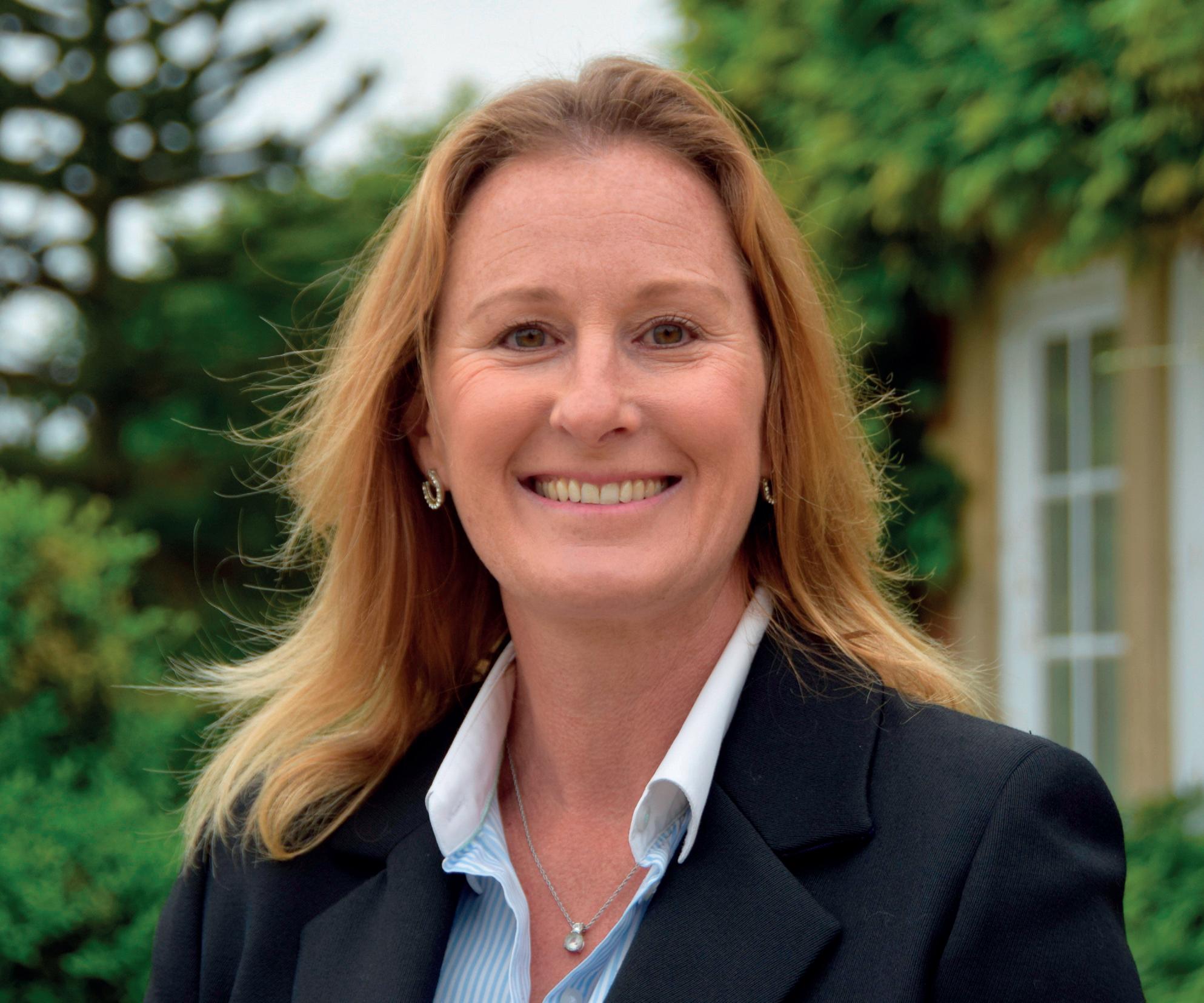
For Helen Keevil, the BSA has been a constant companion throughout her career. “The BSA has played a significant role in supporting me in my job and various promotions,” she reflects.
Completing the BSA Leadership Diploma in 2011 proved a turning point. “The course gave me confidence and clarity in my decision making,” she says. “I loved meeting similar people who shared my values of wanting to look after young people in a safe, fun and collegiate environment.” Drawing on the wisdom of her peers, she adds, has been invaluable when navigating tricky safeguarding or digital safety challenges. Her advice to others considering BSA-accredited training is simple: go for it. “It’s an enriching experience that helps you
reflect on your role and see how policies translate into real practice,” she explains. “You can adapt ideas from other schools to suit your own community and the boarders in your care.”
Since 2011, Helen has seen boarding transformed by digital communication and increasing accountability. “The paperwork has quadrupled,” she says, “but the evening chats with boarders remain precious.”
Looking ahead, Helen is energised by leading Abingdon’s move to co-education and by tutoring BSA management courses. “I love sharing my experience,” she says. “Next, I’m excited to explore how AI can help us redefine what success looks like in a boarding setting.”
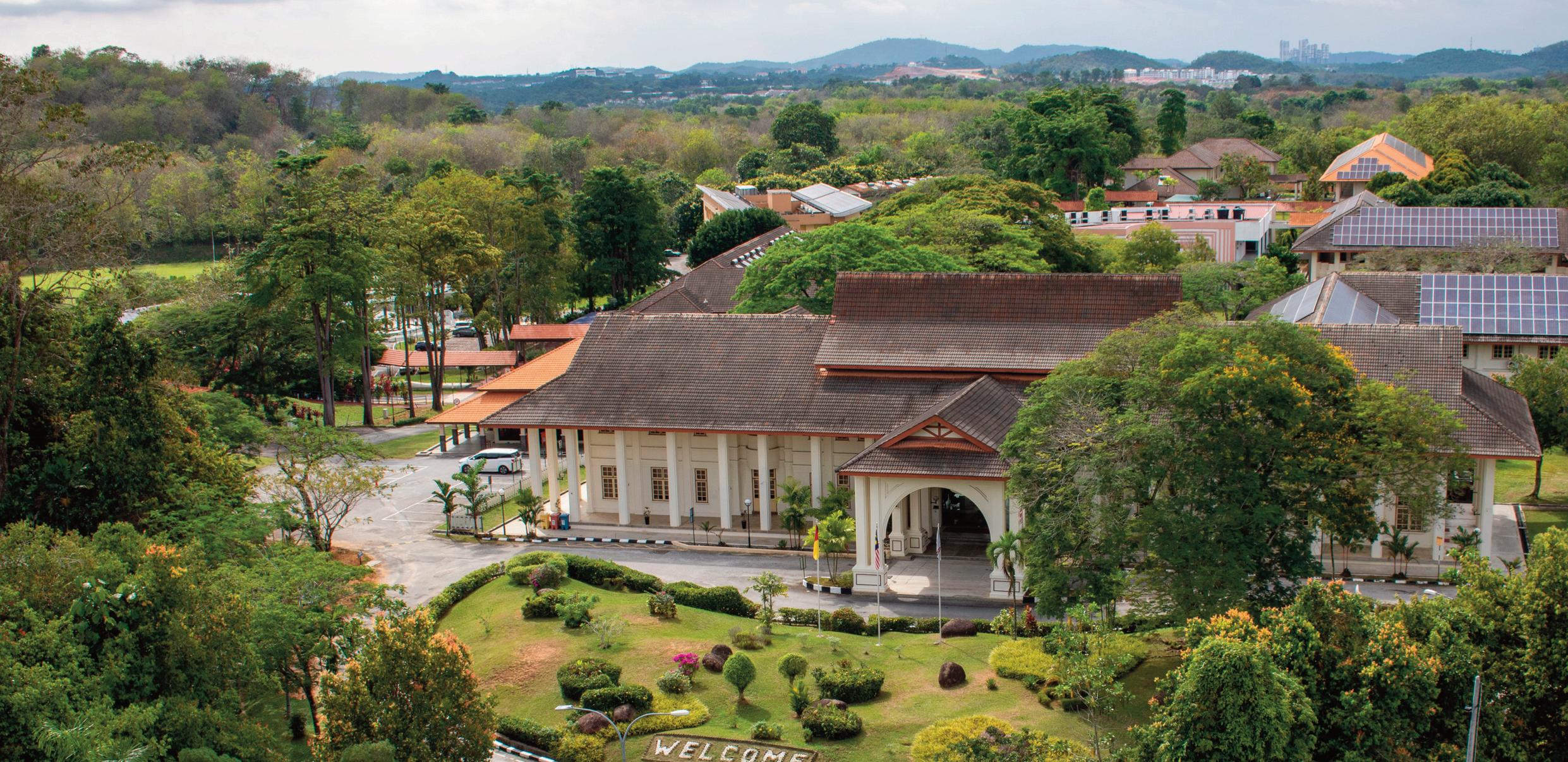

Dr Glenn Moodie Principal Kolej Tuanku Ja'afar School
Growing up in New Zealand, the idea of boarding school never once crossed my mind. Had I paused to think about it, I’m sure I would have dismissed it as an utterly unappealing notion. A week away on a school camp was challenge enough. The thought of living at school would have seemed, at best, bewildering and, at worst, an outrageous imposition on teenage freedom.
It is therefore something of an irony that I now look back on a 25-year career spent entirely in boarding schools – all of them BSA schools –including 13 years living on site. For long stretches, my world has existed almost entirely within the school gates, punctuated only by the occasional weekly trip to the supermarket. It is an all-consuming “boarding bubble”, though one I came to value deeply.
My introduction to boarding happened almost by accident. Clifton College needed a part-time Classics teacher and, as a PhD student at the University of Bristol, I happened to be free. I didn’t apply with any grand plan or sense of vocation; it was simply a job that fitted around my studies and helped pay the bills. Yet from the outset, I was struck by something fundamentally different about the
atmosphere at Clifton. With the majority of pupils boarding, the relationships within the school felt richer and more expansive than anything I had known as a pupil myself – or what I imagined teaching in a day school might be like. It was abundantly clear that the boarding environment shaped these relationships.
As I settled in, something unexpected happened: I began to feel drawn toward school teaching as a long-term career, despite having been determined to remain on a university pathway. While the improved pay (compared to university lecturing) was helpful, there was something else – an intangible but compelling sense of purpose that came from working in a boarding school community.

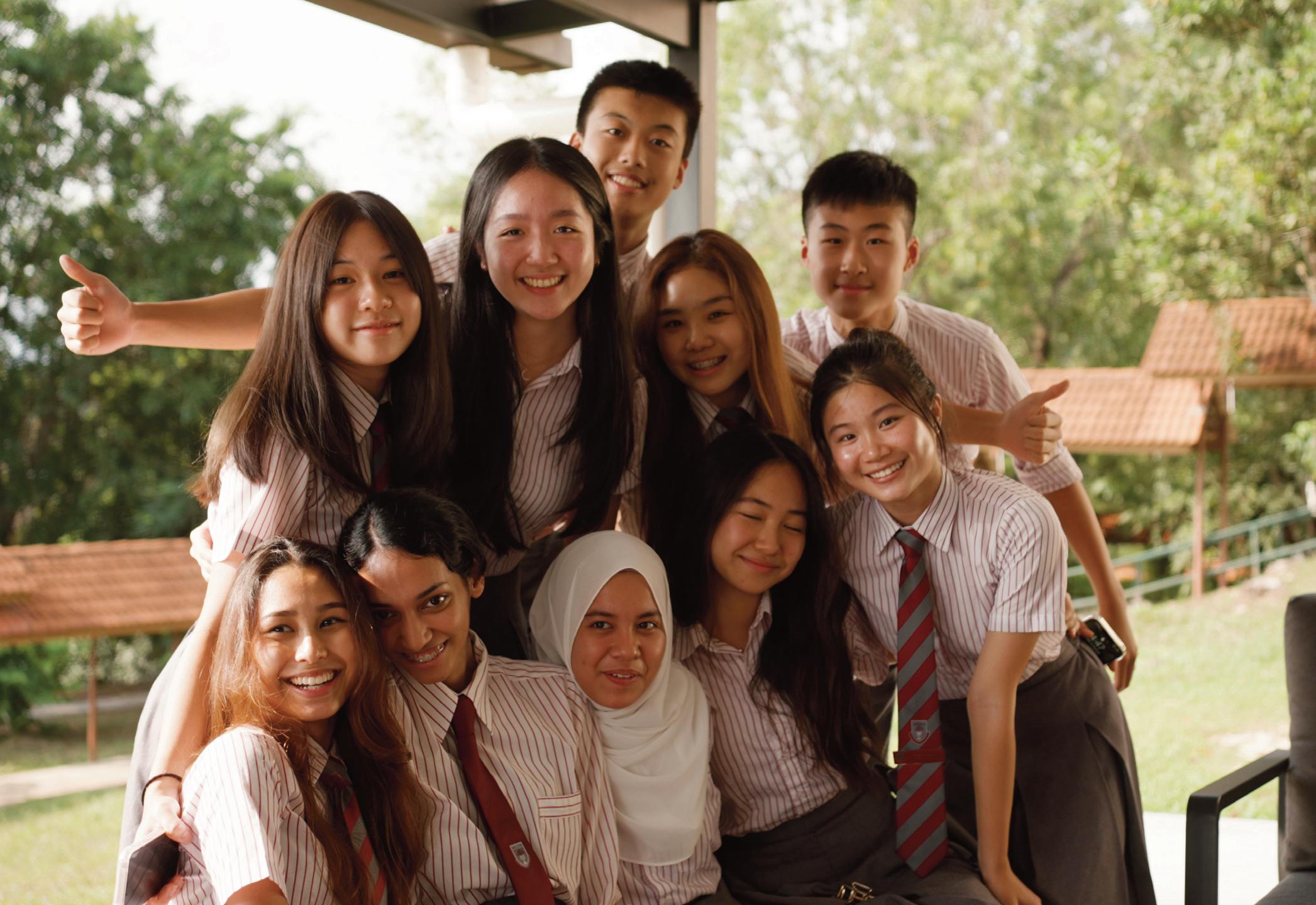
This doesn’t mean I embraced everything immediately. When I was offered a fulltime post at Clifton, I remember being alarmed by my appointment letter: one evening a week on duty in a boarding house until 11pm, Saturday lessons, three afternoons of games, and even lessons on bank holidays. How on earth, I wondered, was I going to find time for a personal life, let alone survive those long evenings supervising teenage boys?
Yet the duty evenings – the part I had most dreaded – rapidly became the highlight of my week. The conversations, the humour, the offbeat worldviews, the sense that pupils genuinely valued the guidance I offered: all of it opened my eyes to the real heart of boarding. It was more rewarding, and simply more fun, than I had ever imagined.
And so, I stayed. I became Assistant Housemaster at Clifton, then moved on
to roles at Uppingham School, Wycombe Abbey School and Truro High School for Girls.
For the past eight years, I have served as Principal of Kolej Tuanku Ja’afar, an international boarding school in Malaysia. Boarding here feels no different; the same strengths, challenges and joys exist, shaped by the same fundamental human connections.
Across these many years, I have learned countless lessons, but two stand out above all others.
First, to thrive in a boarding school, you must be able to intertwine your personal and professional lives. The days are long and the responsibilities can weigh heavily, but few careers offer such an extraordinary opportunity to influence the lives of young people in such meaningful ways.
Second, the great strength of boarding schools lies in their ability to build confidence. When pupils live in a community 24/7, they cannot pretend to be something they are not. They learn to be comfortable in their own skin and to accept others for who they are. This authenticity, nurtured daily, becomes the cornerstone of confidence – and it lasts a lifetime.
There may be challenges facing UK boarding today, but globally the picture is very different. Demand continues to grow, driven by the unique way boarding enriches the lives of all involved. As for me, I cannot imagine working anywhere else. Boarding schools have shaped my professional life, my personal values and the relationships I treasure – and I remain wholeheartedly committed to the world I once thought I would never enter.
If you’re looking for a holiday… you’re on the wrong page
WE DO ISN’T JUST TOURISM. IT’S TRANSFORMATION.
Flooglebinder designs immersive, educational, and conservation-based adventures that connect young people and their educators to the natural world and each other. Our journeys align with the UN SDGs, building global citizens, and inspire connection, compassion, and con昀dence.
Our four core pillars: conservation; sustainability; personal development and mental health; are instilled in everything that we do. Shaping every programme, partnership, and experience. They ensure that each journey creates positive meaningful impact for people and planet.

Our programmes link directly to speci昀cation requirements, turning classroom theory in Geography, Biology, Environmental Science and Outdoor Education into real-world experience.
AQA Unit Award Scheme (UAS)
Flooglebinder integrates the AQA UAS into every expedition, with pre-trip workshops and in-country activities mapped to units in conservation, geography, biology and sustainability. Students gain recognised certi昀cates that evidence their learning and progress.
OF OUR TRIPS...

Uganda
Wildlife conservation, chimp and gorilla trekking with community partnership in the Pearl of Africa.

Level 3 Diploma in International
Volunteering accredited with CGCS
This quali昀cation provides a structured pathway before, during and after the trip, awarding 16 UCAS points, up to 9 US college credits or 20 ECTS. Students specialise in Global Citizenship, Marine or Wildlife Conservation, or Global Health while developing valuable skills.

Sri Lanka
Elephant conservation with immersive cultural experiences in biodiversity hotspots.

Our sports tours take students into the heart of each sport - that means: playing against local teams; being coached by professionals; watching the game at an elite level and team training. But the sporting side is only half the story. Every tour is combined with cultural immersion, conservation projects and meaningful community engagement, giving students a deeper understanding of both the game and the world around them.
Sri Lanka Cricket
India
Cricket & hockey
South Africa
Cricket, hockey, rugby & netball
info@昀ooglebinder.co.uk www.昀ooglebinder.co.uk 020 3633 0163

Morocco
Desert landscapes, mountain communities, trekking and invaluable cultural learning.
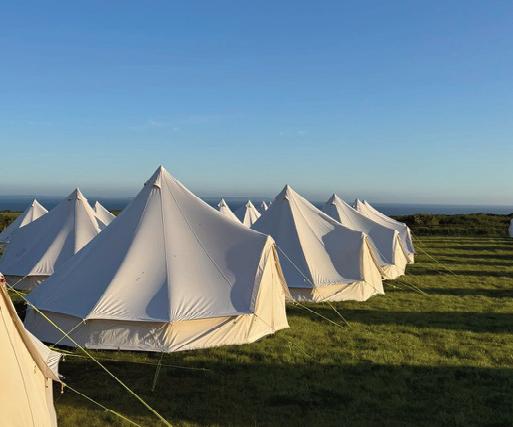
Wales
Adventure, rewilding, coastal exploration and environmental discovery closer to home.


Food cost savings and risk mitigation
Enhanced quality and retained flexibility

Admin efficiencies and greater visibility
9 Consolidated billing - fewer invoices
9 Hands-on support and consultancy
9 Allergen, nutrition and compliance training
9 Sustainability assessments and advice
Take control of food costswith the peace of mind your busy team deserves
In the complex world of boarding school operations, senior leaders juggle everything from pastoral care to compliance, all while navigating rising costs and stretched budgets. That’s why more schools are turning to allmanhall, the food procurement experts who help you stay in controlwithout the stress.
With food inflation expected to remain at around 4% in 2026, pressures are only increasing. Many are tempted to outsource catering entirely. But before you add a management fee and lose transparency, consider another solution...
allmanhall act as an extension of your in-house team, helping you mitigate inflation & negotiate costs. Every penny works harder - all while you remain firmly in charge of your operation.
allmanhall.co.uk
Our award-winning service goes beyond procurement. From supplier and pricing management to nutritional consultancy and sustainability support, we give you the tools and insight to optimise quality, cost, and efficiency.
“Managing suppliers, contracts and pricing is something we would find challenging to balance alongside our daily operations, so having assistance from allmanhall to help negotiate our food costs is priceless.” - Neil Cufley, Director of Operations & Finance, Royal Russell School
Results that speak for themselves
Royal Russell School saw a 12% food cost saving after partnering with allmanhall - and the reassurance of expert support.
Watch the full case study video for the complete story!

We understand the demands of leading a boarding school. Let us give you the peace of mind that comes from knowing your food spend is being professionally managed - with no loss of autonomy, and no hidden costs.
No hidden costs. Just good food cost savings. For your peace of mind.



2015
#National Boarding Week is born
2017
Commitment to Care Charter becomes membership requirement
2021
Formation of BSA Group, comprising BSA, BAISIS, HIEDA and SACPA
2023
Launch of BSA Legal, the BSA Foundation charity and IELA
2025
BSA Boarding School Book of Remembrance (BOBOR) goes live
2016
First courses for supporting international students
2020
Certified Agent, Guardian and Supplier schemes open
2022
Launch of The Institute of Boarding (TIOB) for boarding staff
2024
Creation of Boarding Schools’ Parliamentary Network (BSPN)
2026
Launch of BSA Centre for Boarding Leadership (CBL)
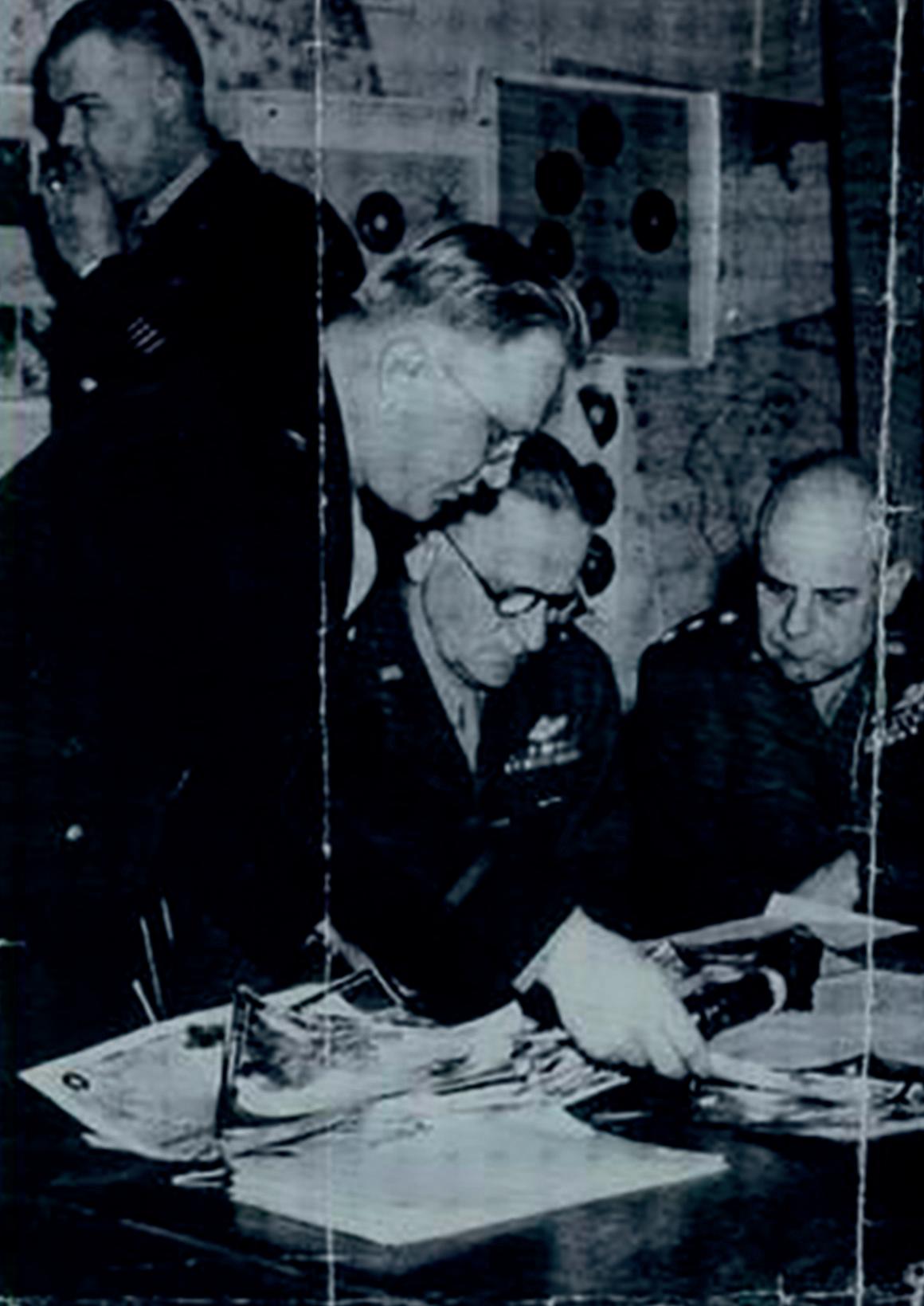
The BSA Boarding School Book of Remembrance (BOBOR) project is the first digital archive recording the service or contribution of pupils, staff or volunteers at boarding schools across the world. BOBOR Director Robin Fletcher traces its story.
Any student of modern history should know what links Neville Chamberlain, Franklin D Roosevelt and Winston Churchill.
The obvious answer is that all three men led their country during the Second World War. The less obvious one is that they all attended boarding school,
namely Rugby, Groton and Harrow.
The education connection of three war leaders may seem unimportant. But in truth boarding schools are the common thread for so many over the centuries who have died in conflict, served in the military, or contributed in other ways. That is why in November 2023 the Boarding Schools’ Association launched BOBOR, which stands for the Boarding School Book of Remembrance – a digital archive for any boarding school in the world to record their pupils, staff or governors who served.
Alongside specialist digital archive specialists SDS Group, BOBOR has over the past two years welcomed to the project more than 120 schools in Australia, England, New Zealand, Scotland, USA and Wales. Most are BSA members, some are not.
Each participating school has their own section on BOBOR to upload archive details. That could be just one old photograph of an unidentified boarder in uniform or a fully searchable, digitised database. Taking part is the key, not how many names or a state-ofthe-art school archive.
When BOBOR launched, we thought it would mainly honour former pupils who died, probably in two world wars. Inevitably however there have been twists and turns requiring some extra thought. Should BOBOR include, for instance, entries from schools which were once day but are now boarding, or vice versa?
What should it do about schools that no longer exist, or nurses from a girls’ school who supported wounded soldiers but did not fight, or volunteer ambulance drivers from Quaker schools?
Where also should BOBOR record the contribution of boarders like Winston Churchill who made a significant contribution in several conflicts,

Robin Fletcher MTIOB Director, BOBOR bobor.org.uk

militarily and politically, but did not die on the battlefield?
What about conflicts before the First World War or after the Second World War (one participating school in the USA has a roll of honour for the American Civil War)?
Or schools in different countries whose pupils fought against each other?
Or scientist boarders who contributed out of uniform, such as Barnes Wallis (Bouncing Bomb) or Alan Turing (codebreaker)?
Or those whose names appear on the rolls of both junior and senior schools?
The ability to iron out these creases has been greatly assisted by the wisdom of volunteer BOBOR Military Advisors including historians Sir Anthony Seldon and Sarah Wearne.
And BOBOR Honorary Patrons who attended boarding school, such as former UK First Sea Lord Sir Benjamin Key, former US General Walt Lord, current UK Air Vice Marshal Suraya Marshall and Lord Alistair Lexden. The support and advice of such distinguished experts has been and continues to be invaluable as the project moves from a nascent concept to a fully-fledged website.
BOBOR launched publicly in autumn 2025 to coincide with two milestones, the 60th anniversary of the BSA and the 80th anniversary of the end of the Second World War.
While the launch was a moment in time, like the VE Day anniversary in May 2025, BOBOR is an enduring legacy project which it is hoped will grow, develop and continue for decades to come.

BOBOR has the names or stories of brave service personnel, volunteers, politicians, scientists and many others from the boarding family whose sacrifice or contribution in other ways should, rightly, be recorded and remembered.
That is what BOBOR is for.

“One of the most powerful features of boarding schools across the country is that they have often existed for many years and embody a sense of continuity through many generations. Remembering those former pupils who often lived and breathed in the same rooms as today’s young people is a duty and an honour. We are all better people for remembering and celebrating the past, especially those who fell in the service of their country.”
SIR ANTHONY SELDEN Military Advisor
“Christ College Brecon supports BOBOR so that Old Breconians can be honoured in a digital memorial to those in the boarding community whose lives were sacrificed in events that shaped the world.”
FELICITY KILPATRICK
Archivist, Christ College, Brecon Participating school

“As a serving officer, BOBOR is an initiative that is very important to me. It commemorates, honours and celebrates the memory of those who have served their country and made the ultimate sacrifice. It also recognises the vital role that boarding schools have played in providing our nations with young men and women who have an ethos of service and patriotism –they deserve to be remembered.”
AIR VICE MARSHAL SURAYA MARSHALL Honorary Patron

“I very happily support this Book of Remembrance since recalling to life the many thousands of members of Britain’s boarding community whose sacrifice and service contributed to the Allied victory gives real substance to the mantra, We will remember them.”
SARAH WEARNE Military Advisor

Laura Brookes Head of Boarding Harrogate Ladies’ College

Over the past 60 years, technology has revolutionised how boarding schools operate. From the introduction of overhead projectors in the 1960s, computers into classrooms in the 1990s, to the introduction of AI in the 21st century.
At the crux of a boarding school experience are personal connection and positive experiences for both boarders and their families. Here at Harrogate Ladies’ College, we have robust practices in place (both technological and pastoral) to ensure our boarders are safe, happy and thriving.
Technologically, we use programmes like CPOMS to monitor child protection, safeguarding and welfare concerns, which has seen an increase in organisation and efficiency among staff members. Pastorally, our multi-disciplinary welfare team (led by our Designated Safeguarding Lead) discuss every pupil each week, which forms the foundation of our pastoral
offering, ‘Flourish’, and provides families – whether in the UK or internationally – confidence and belief we are doing everything we can for their child. For boarding schools, AI has the potential to revolutionise efficiency and ensure boarding pupils are prepared for an increasingly digital future.
Despite arguments around AI decreasing the level of human interaction, the use of AI in time-consuming tasks like planning trips and extra-curricular activities facilitates an increased level of human engagement between boarding staff and boarders.
We need to be aware of the benefits of AI and how it can enhance our boarding experience. We must, however, also find the balance between implementing AI without renouncing the key component of what makes boarding here so special: creating a family, something that AI can’t replicate, like knowing exactly when to offer comfort, conversation or cake.
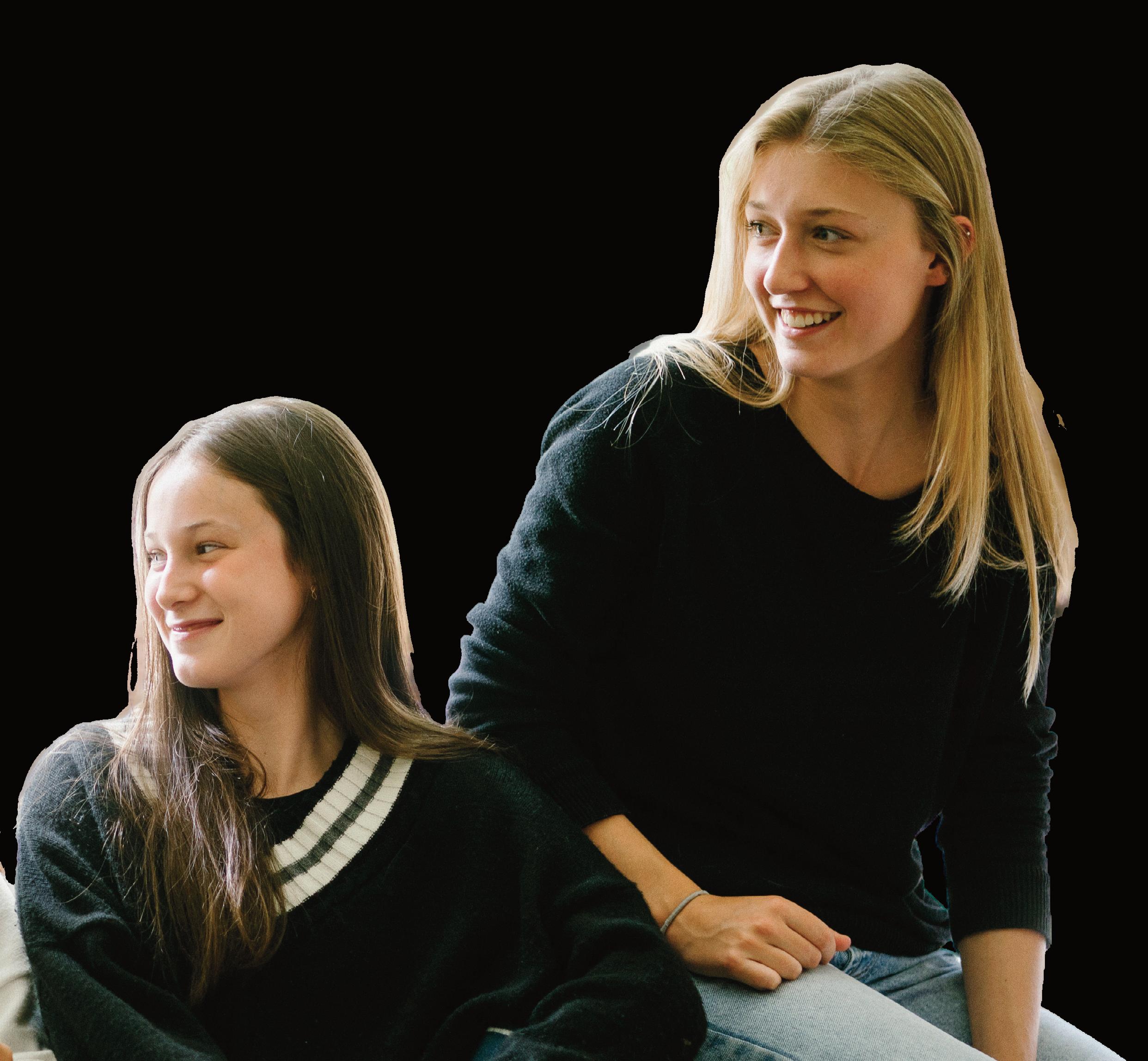
“ Here at Harrogate Ladies’ College, we have robust practices in place (both technological and pastoral) to ensure our boarders are safe, happy and thriving. “
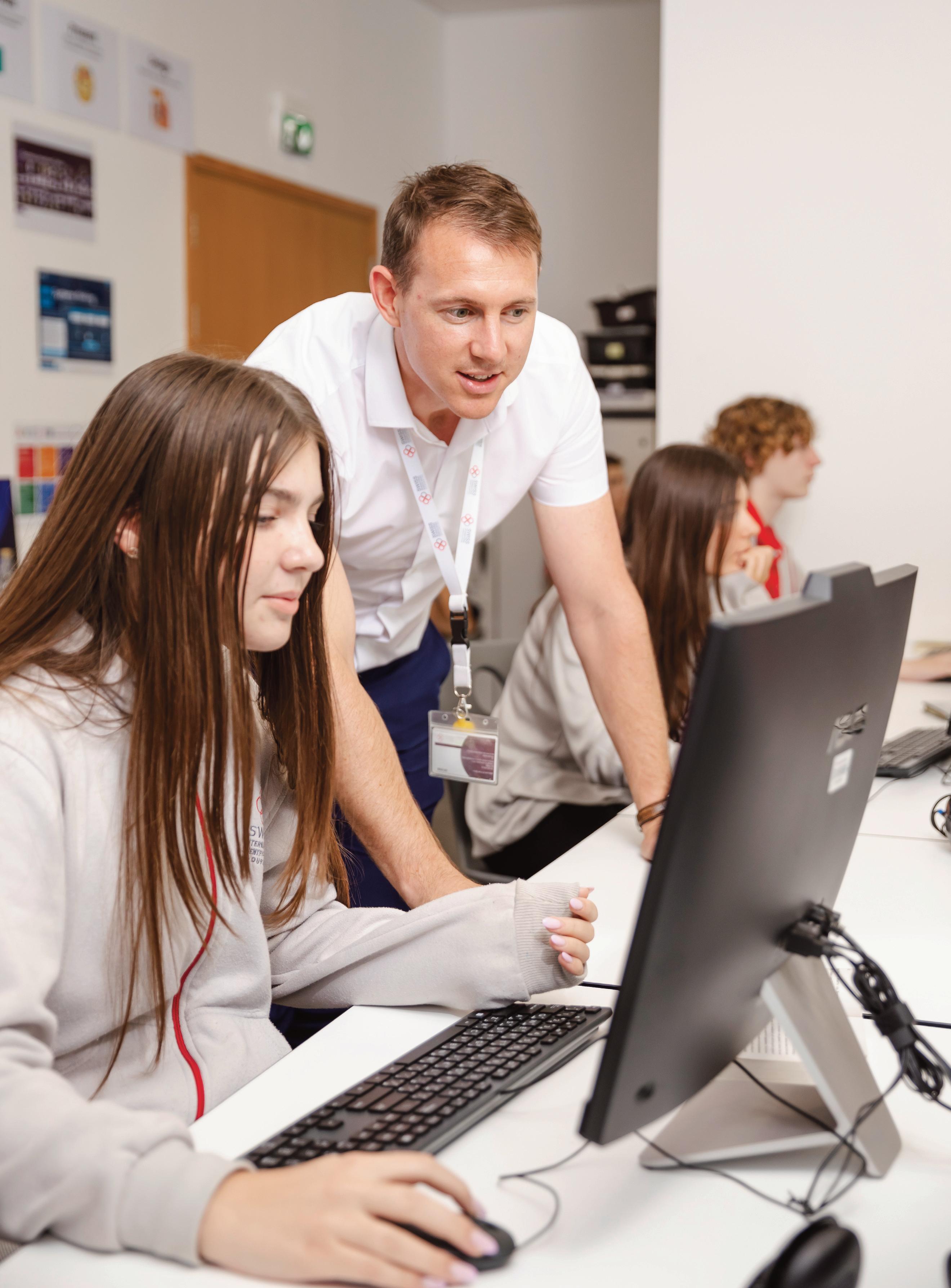



As a school leader in Dubai, I’ve seen how technology can enhance, but not replace, great teaching and pastoral care.
At SISD, we’ve championed the thoughtful use of educational technology. From adaptive learning platforms to wellbeing trackers, tech is embedded into every layer of school life. Beyond academics, innovations such as AIpowered timetabling systems are beginning to reshape how schools operate – streamlining the day-to-day experience for staff and students alike.
AI offers exciting potential, provided we stay anchored in pedagogy and pastoral care. It can personalise learning, support early intervention, and give students more agency over their progress. But no algorithm can replace the intuition of a teacher who truly knows their pupils.
Paul Gardner Deputy Head of Secondary Swiss International School Dubai “ “
Technology should serve people, not the other way around. AI in schools must enhance relationships, not replace them—that’s where true transformation lives.
Smartphones have become a double-edged sword. On the one hand, they facilitate communication and access to information; on the other, they pose significant challenges to mental health and online safety.
The constant connectivity they offer can exacerbate feelings of isolation and anxiety. Many find it difficult to disconnect, leading to sleep disturbances and decreased focus on academics. Social media can amplify issues of comparison, FOMO and bullying.
To mitigate these risks, Shrewsbury School has adopted policies that balance tech with mental health, including a school-wide acceptable use policy that pupils are asked to sign when they join us. The tutor programme covers digital literacy and digital footprints, as well as navigating online interactions responsibly. It includes regular workshops on mental health and strategies to manage stress and foster resilience. Parents are always delighted to hear that boarders’ devices are locked away overnight (and all day for younger years) with varying degrees of freedom, depending on age.
Needless to say, robust online safeguarding measures are essential; as with all schools, we are trying to find the balance between implementing monitoring systems to ensure safe internet usage whilst promoting a culture of open communication and responsible use.

In the 1960s, pupils queued with punch cards for remote mainframes, while the early 1980s brought humming computers into school libraries. Databases gradually replaced handwritten mark books, freeing tutors to mentor pupils.
Fibre-optic cabling transformed boarding house rooms into study-bedrooms, and email, online research and a bespoke virtual learning environment reshaped how boarders studied and submitted work. Behind the scenes, digital admissions, bursary software and algorithmic timetables delivered ‘invisible’ efficiencies.
Today, Bryanston’s dashboards track submission, effort, and attainment in real time, giving teachers early insight and parents instant transparency. Generative AI is not banned but taught, with pupils learning to craft informed prompts, cross-check against trusted sources, and use outputs ethically, accepting that some tasks should remain human.
Bryanston’s approach is to stay curious, stay critical, measure impact, and keep people at the centre.
Will Bridges Assistant Head (Teaching and Learning) Bryanston School
20 years of innovation. 20 years supporting schools.
Our strong foundations
2005: iSAMS launches with Rugby & Warwick Schools.
2006–2010: New modules, parent and student portals, secure cloud hosting and early mobile tools began connecting whole school communities.
From local growth to global communities
2011–2015: Tools like iTeacher, Fee Billing and Census Manager made school life simpler and compliance easier.
2016–2019: Wellbeing, iFinance and integrations empowered schools to do more, while our reach expanded to independent schools in Asia, the Middle East, and beyond.
2020: Welcomed our 1,000th school and joined IRIS Software Group.
2021–2023: New solutions for Admissions, HR, Payroll and iSAMS Central turned iSAMS into a truly integrated, all-in-one school platform.
2024-2025: Celebrating 20 years of innovation and proud to be a trusted partner for more than 1,700 Independent schools, all over the world.
Scan the QR code to experience the full iSAMS journey
Proudly supporting the BSA for over a decade, with 60% of schools choosing iSAMS to manage and grow their communities.
AS I REACH THE MILESTONE OF A 25-YEAR CAREER IN BOARDING , IT FEELS LIKE THE RIGHT MOMENT TO REFLECT ON A LIFETIME SPENT WITHIN SCHOOL WALLS, NOT JUST AS A PROFESSIONAL, BUT AS SOMEONE WHO GREW UP IN THIS UNIQUE ENVIRONMENT.
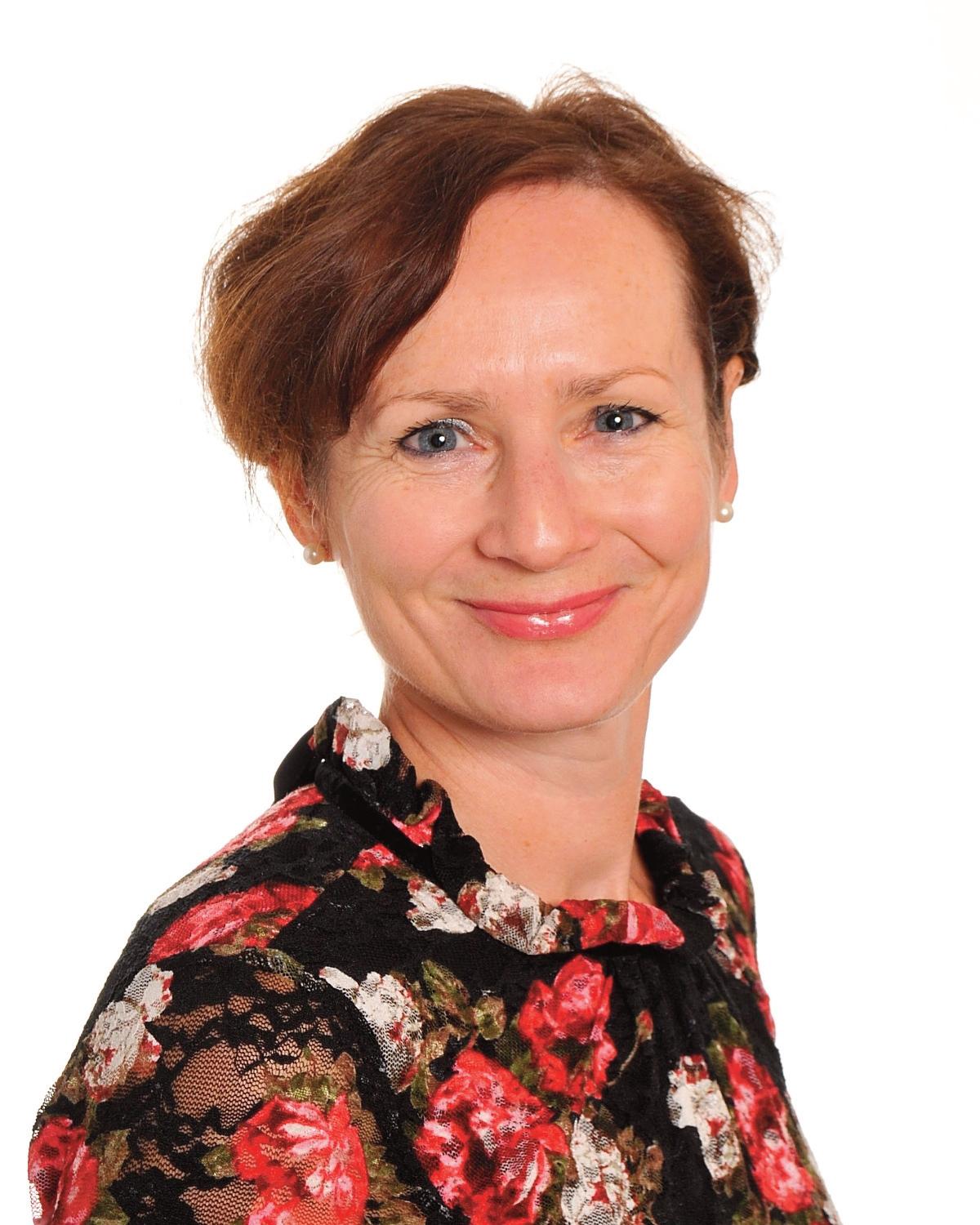
Violaine Ludwick Assistant Head (Boarding) Queenswood School
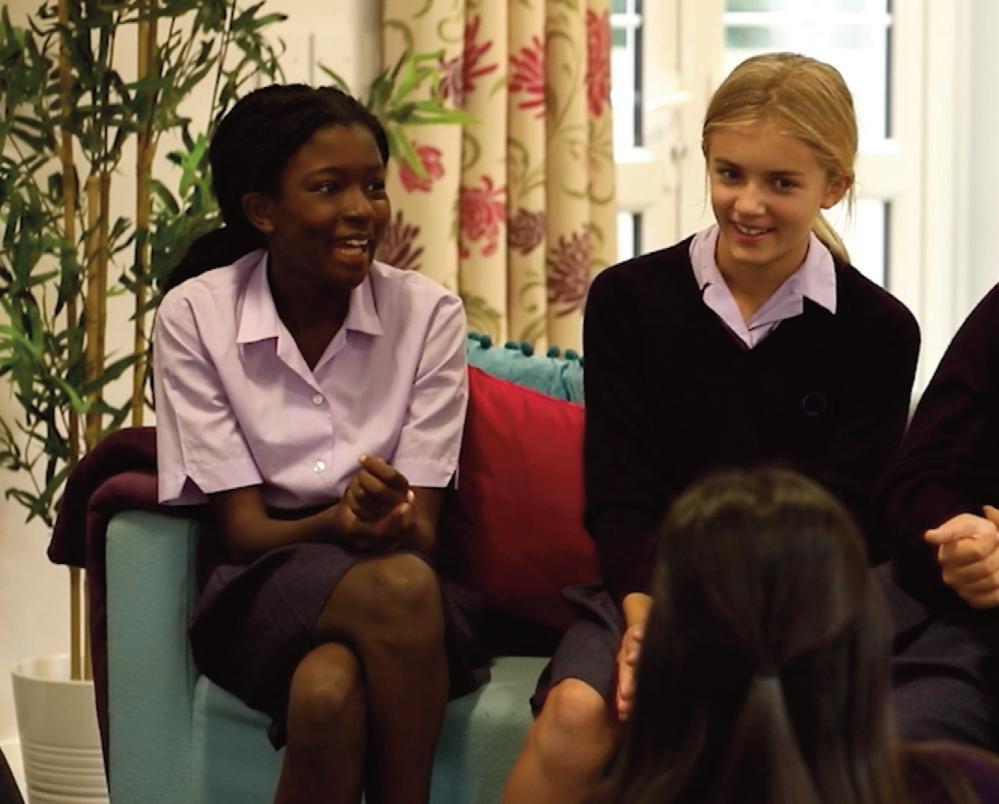
My journey began as a boarder in the late 1970s at a small independent school by the sea in Cornwall. It was a wonderfully ‘Enid Blyton-esque’ experience! Fittingly, the school was even named St Clare’s. In those days, our weekend highlight was a traditional crocodile walk through the town.
Weeknights revolved around Top of the Pops on a Thursday night. As one of the youngest boarders, my duty was to arrive early and save seats for the prefects while I happily perched on the floor. That was simply the social contract of the time! While my Housemistresses were distant figures compared to the dedicated teams we see today, that era lacked the robust support structures of nurses, counsellors and specialised pastoral staff who now ensure every child is closely supported.
Boarding has undergone a remarkable and positive transformation. The austere days of cast-iron beds, scratchy blankets and unappetising meals have been replaced by environments that truly feel like a home away from home. Today’s boarders enjoy highquality dining that rivals many restaurants and are encouraged to personalise their spaces with photos and comforts. I am immensely proud to have played a part in this evolution toward comfort and wellbeing. When I began my career in the late 1990s, the landscape was very different. Emails were
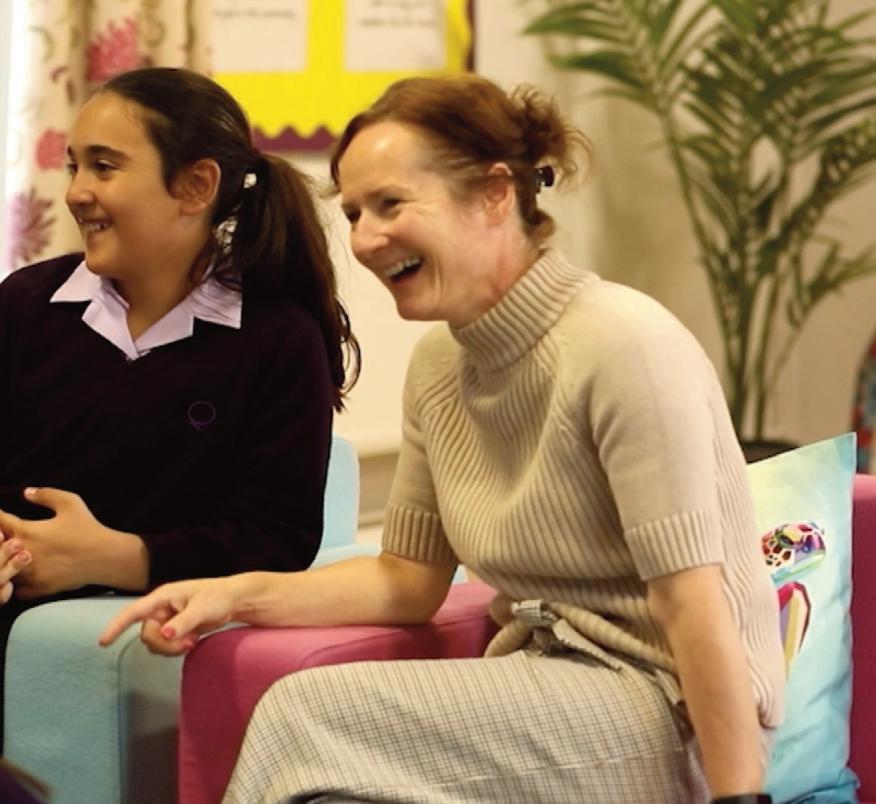
a rarity, and the pace of communication was slower. This allowed for a certain type of immersive community building. Without the distractions of mobile phones or social media, we spent Friday and Saturday evenings with boarders piled into my sitting room for DVDs, pizza and fizzy pop.
While the introduction of more formal frameworks was necessary and right, there is a certain nostalgia for that simpler time when professional intuition was the primary guide. Today, we balance those memories with incredible new opportunities. At my current school, our ‘treat nights’ and organised weekend activities and outings provide a level of engagement and excitement that was nonexistent when I was a boarder.
As we see a growing conversation around restricting mobile phones and social media in schools, I wonder if we are moving toward a ‘new old’ era, one that recaptures that focused, face-to-face connection of my early career, but with the superior facilities and safeguarding of the modern day.
What does the future hold? Who knows but it is certainly exciting for those who are starting in the profession. And me? I shall be watching from afar like a benevolent aunt, deeply interested, forever supportive, but perhaps finally enjoying a full night’s sleep!
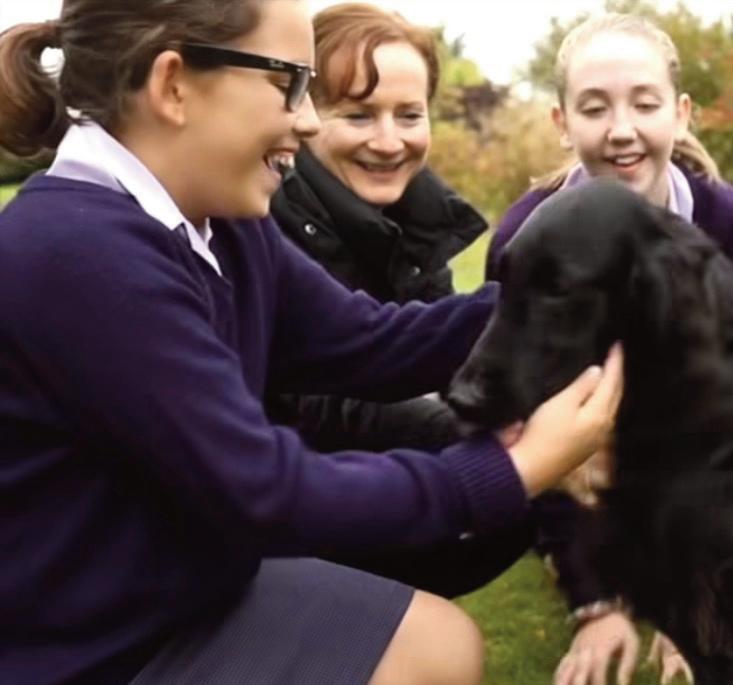
Queenswood’s Zennor (pictured with Violaine) was a winner in the Best in Show category of #BSABrufts, the new boarding school twist on Crufts. Arriving as a puppy nine years ago, Zennor has grown up alongside boarders, providing a consistent sense of home, comfort and ‘pawsitive’ energy. See more of Zennor in the Brufts final, which was broadcast live in March 2026:

THE OTHER WINNERS WERE:
Best Therapy Dog - Freyja, Keswick School

Best Trained or Best Trick - Ruby, Leweston School
People’s Choice Award - Rolly, Hazelgrove Prep School
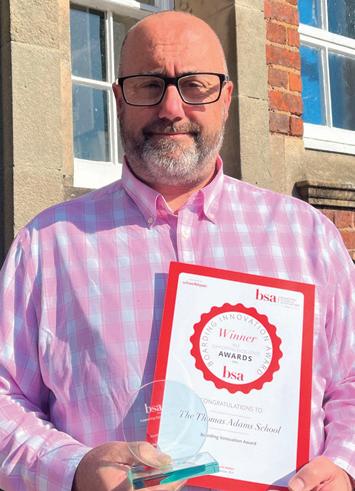
Lee Irwin
Deputy Head Co-Curricular, Kingham Hill School
(and former Director of Boarding, Thomas Adams School)
In the world of boarding schools, where academic rigour meets holistic development, effective evaluation is the absolute key to achieving excellence. But how do we truly measure our success when the very nature of a boarding environment can lead to insularity? Our solution –a triad inspection model of peer assessment –proved to be a highly successful and transformative force.
This collaborative approach provided the objective lens necessary to break down the walls, foster genuine collaboration, and embed continuous improvement into the DNA of our operations. It’s a concept perfectly captured by Dylan Wiliam (2011), who said, “Evaluation should not be seen as judgment but as an opportunity to learn and improve together.” This principle of mutual growth was the bedrock of our successful bid and subsequent win of the BSA Boarding Innovation Award 2025.
The traditional model often relies heavily on internal selfassessment. While valuable, staff members, deeply involved in daily routines, can often struggle to identify areas for improvement with true objectivity. Peer assessment is the corrective mechanism. It brings in experienced boarding professionals from other schools to offer an essential external perspective. These external
assessors scrutinise our operations against national benchmarks, such as the National Minimum Standards (NMS), injecting a crucial element of consistency and rigour.
The benefits extend far beyond a simple checklist:
• The triad model is inherently collaborative, encouraging schools to work together, share ownership of improvements, and build lasting professional partnerships. As Francis Cole Jones wisely put it, “As with any endeavour, you will improve if you play with people whom you feel have a stronger ‘game’. Pick people who are going to challenge you.”
• Boarding leaders gain invaluable professional development. Exposure to different operational models broadens their understanding and enhances their effective practice toolkit.
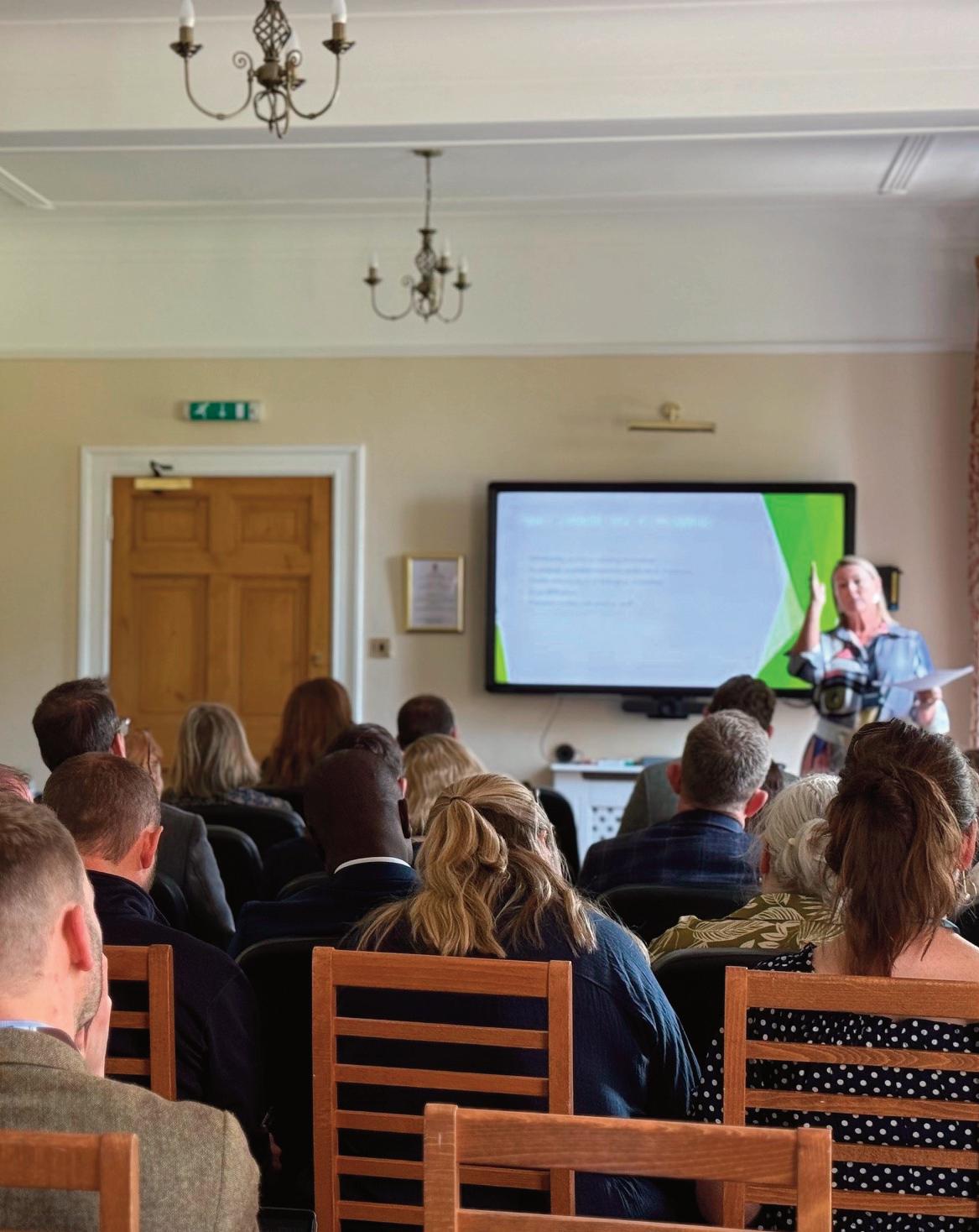
Schools have reported greater objectivity, improved practices, and stronger collaboration “

• This peer-to-peer process promotes accountability and continuous improvement, driving a culture of openness and transparency across the boarding setting.
• Implementing a model based on external scrutiny requires careful planning. Crucially, we ensured objectivity through training for peer assessors, emphasising evidence-based evaluations to minimise personal bias. We also established clear protocols for data handling and communication to balance transparency with the necessary confidentiality.
The initial trial, which I oversaw as Director of Boarding at Thomas Adams School, was instrumental in proving the model's efficacy. I owe a deep debt of gratitude to the expertise of Alex Large from The Royal Wolverhampton School and Sam Obeng-Asare from Haberdashers’ Adams for their commitment to this initial phase and their subsequent work driving this forward across the Midlands boarding network. The results speak for themselves: the initial three schools reported significant improvements in objectivity, practices, collaboration, accountability and the student voice. The sharing of best practices facilitated innovation, and peer-to-peer accountability drove continuous improvement and was recognised as outstanding practice by OFSTED. Following this preliminary success, the framework and inspection documents are now being utilised by a growing network of schools across the Midlands, all reaping the benefits of true peer assessment.
Peer assessment is a powerful, collaborative and reflective tool that fosters a genuine culture of excellence. By embracing the triad inspection model, boarding schools can create a more supportive and enriching environment where, to paraphrase Dylan William, peer evaluation truly becomes an opportunity to learn and improve together.
I am now at Kingham Hill School and keen to see this model adopted further afield. If you would like to explore how triad inspections could benefit your school in your area, please contact me directly at Lirwin2015@gmail.com







Scan to book a demo!
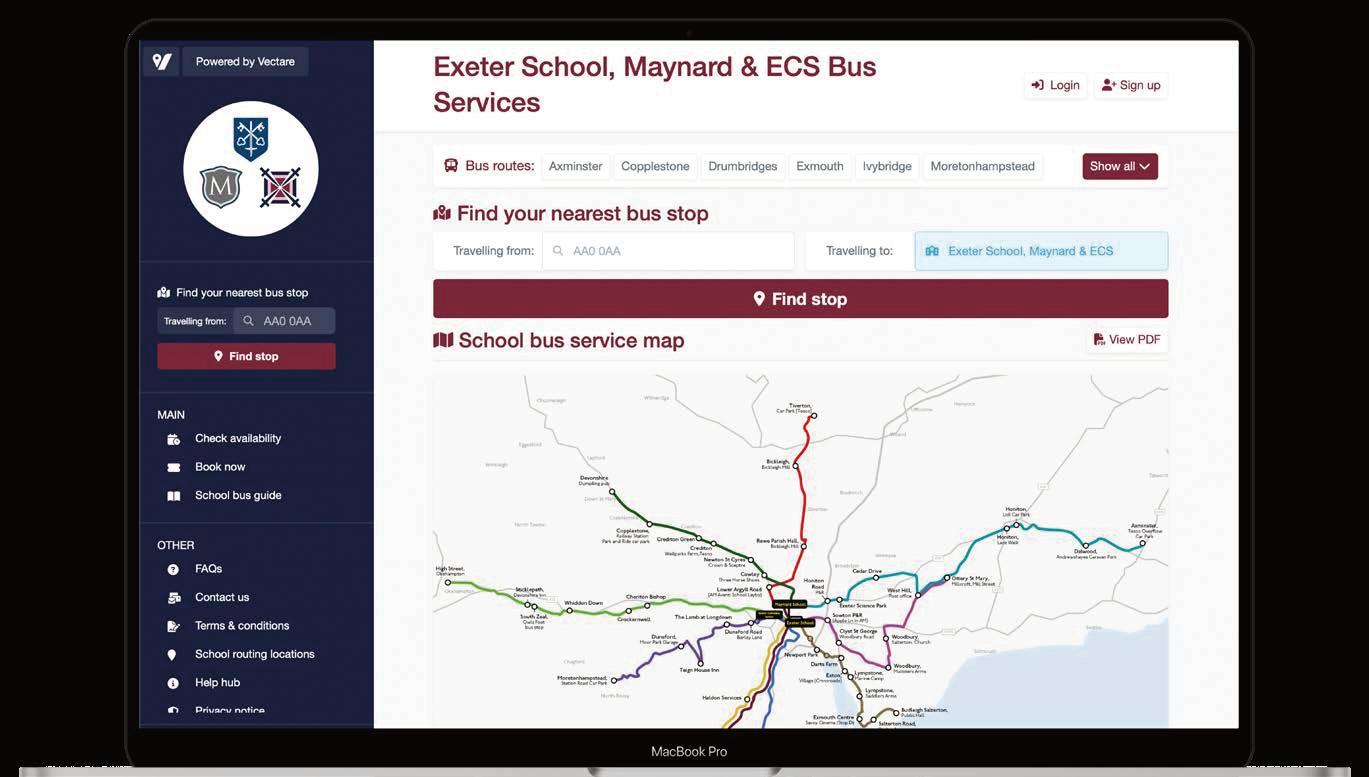
“The website offers excellent functionality. Its intuitive design ensures effortless navigation and ease of use. The real-time bus tracking feature provides invaluable benefits, allowing you to monitor bus arrivals and departures, ultimately streamlining our transport management system for us and parents.
Peter Goodyer, Headmaster & CEO Bede’s School
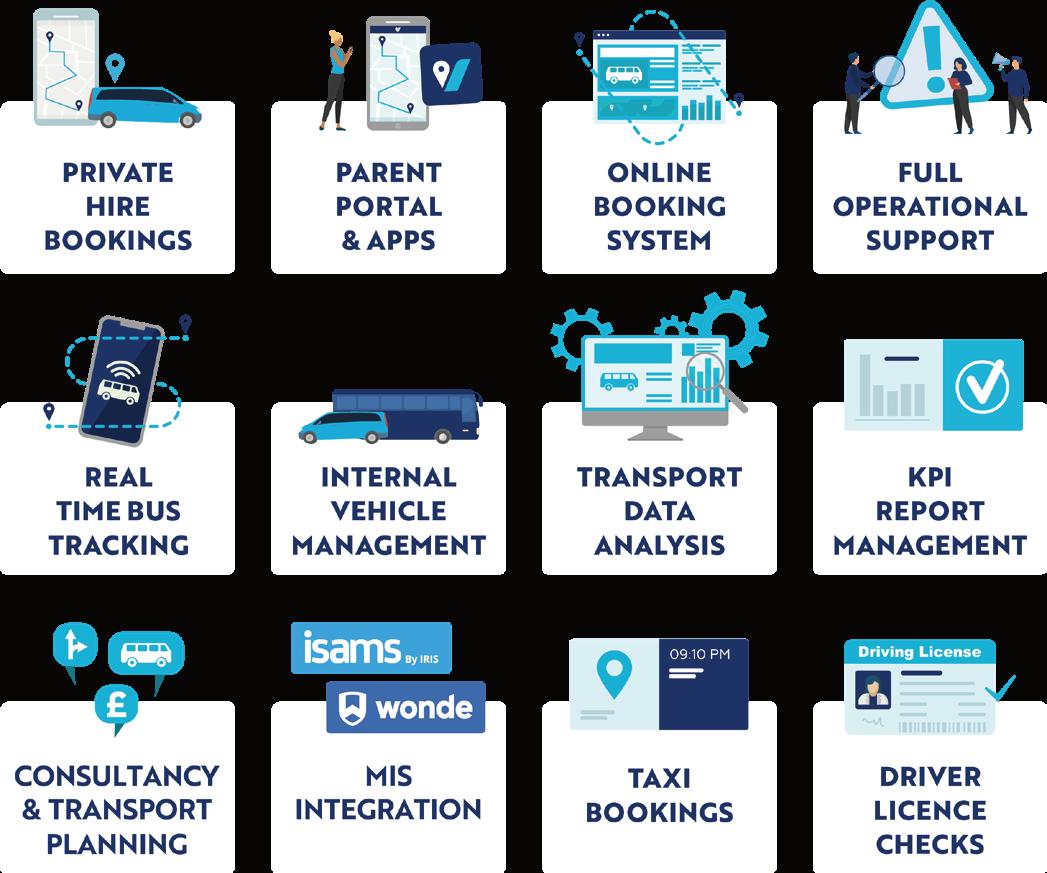





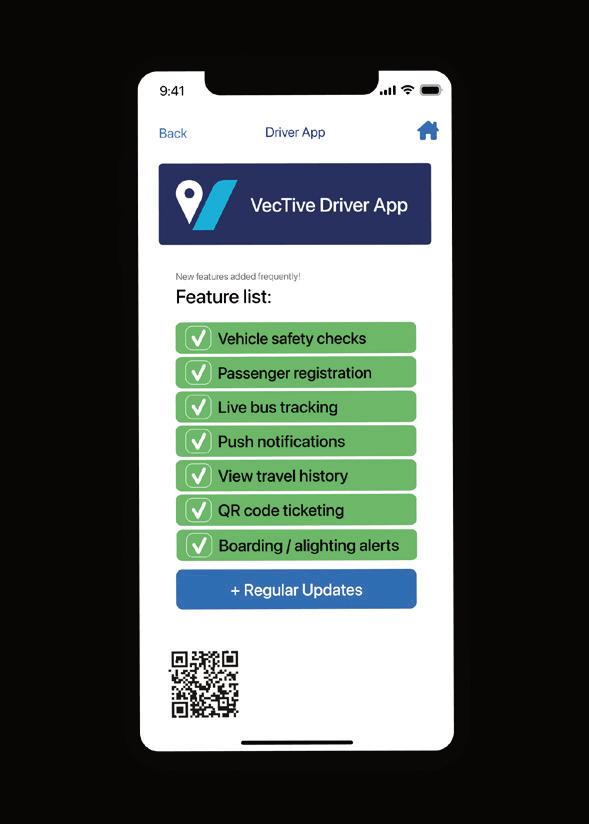








Kieran Jones Director Boarding
Oxford
International College
Boarding at Oxford International College provides students with a unique opportunity to thrive in a vibrant, intellectually rich environment. However, with several boarding houses spread across the city, accommodating our ambitious international cohort presents unique challenges, particularly in ensuring a balanced lifestyle.

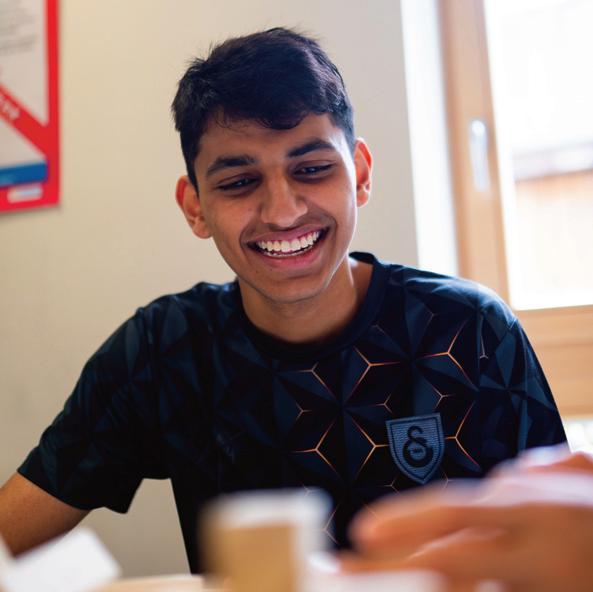
Recognising the vital role sleep plays in academic achievement and mental health, OIC adopted the BSA’s Sleep Champion initiative to strengthen student wellbeing. This served as a catalyst for a comprehensive review of our boarding provision.
Together with my Assistant Head of Boarding and wider boarding team, we conducted a detailed audit of our boarding sites, producing a thorough report of action points to enhance sleep hygiene and overall wellbeing.

KEY CHANGES INTRODUCED:

1. Structured routines
Earlier curfews, structured ‘quiet’ periods and designated ‘own room’ time were introduced across houses. These subtle changes supported more consistent sleep patterns, encouraging a culture of rest and balance.
2. Night house parents
In our larger houses, dedicated Night House Parents now provide overnight support. They monitor noise, discourage unhealthy study habits, and offer pastoral care throughout the night.
3. Healthy nutrition
A selection of sleepfriendly snacks, including fresh fruit, cereals, herbal teas and juices, was made available in houses. A particular success was the introduction of eggs, which students enjoyed using to create their own recipes. These ideas were inspired by expert advice from Dr Lindsay Browning, a leading sleep expert, psychologist, neuroscientist and founder of Trouble Sleeping, who emphasises the importance of healthy food in promoting quality sleep.
4. Upgraded sleep facilities
Following a thorough review, we upgraded selected houses with new mattresses, bedding and linen to significantly enhance sleep comfort for our students.
5. Dimmable lighting
Modern, dimmable bedside lamps and tables were installed, creating calm and restful environments conducive to quality sleep.
In collaboration with our PSHE and RSE programmes, we introduced sessions focused on healthy sleep habits, screen time and balanced diets, empowering students to make informed lifestyle choices.
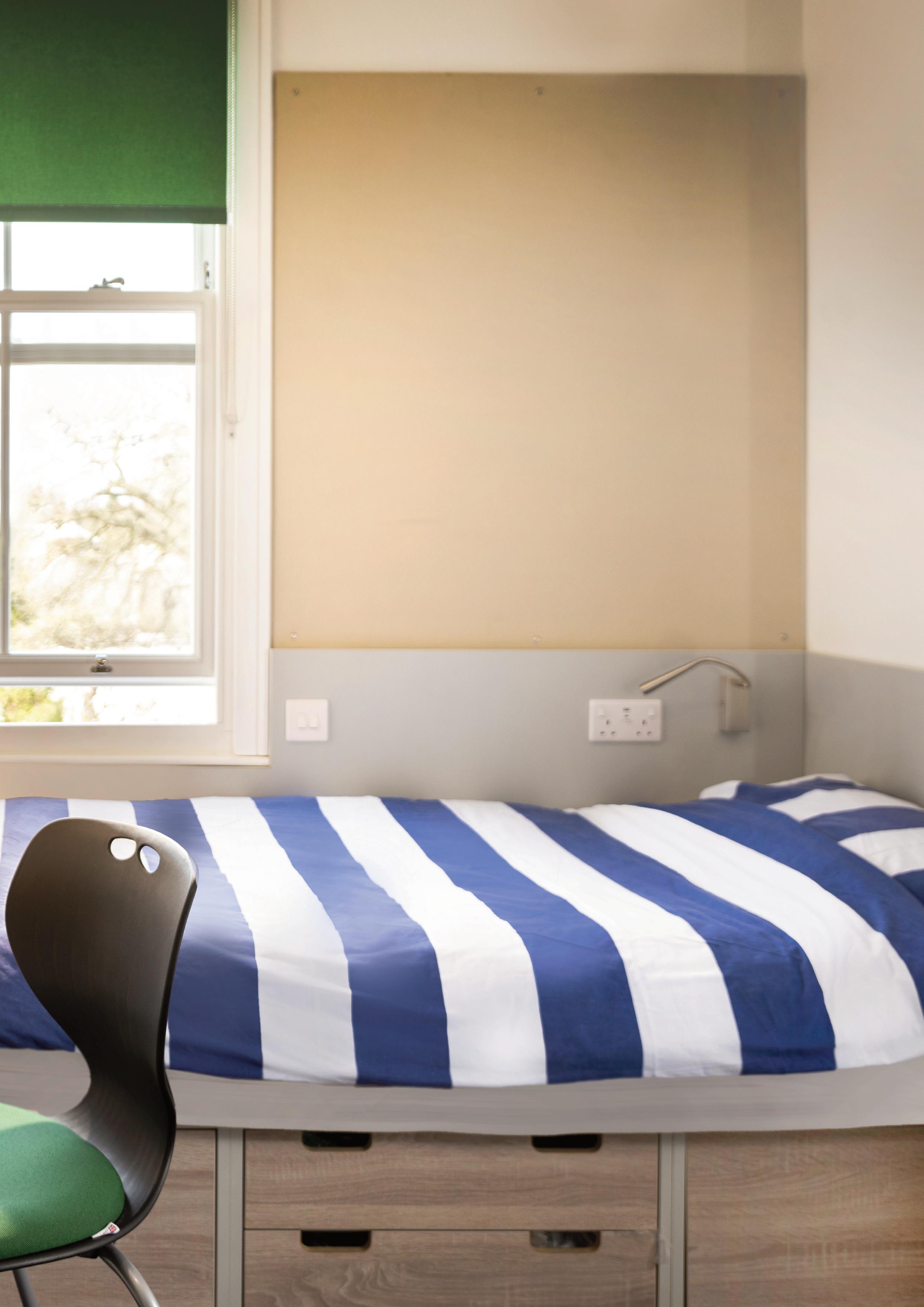
7. Enhanced pastoral structure
Each student is now supported by both a Strategy Tutor and a Boarding Mentor, promoting holistic care and stronger links between academic and boarding life.
8. Local community engagement
We worked closely with local authorities and businesses to reduce nighttime noise around our sites, fostering stronger community relations and a more peaceful atmosphere.
Through these measures, OIC has embedded sleep hygiene into our core pastoral approach. Achieving the BSA Sleep Champions Award validates our efforts and motivates us to continue developing innovative wellbeing strategies.
By placing student wellbeing at the heart of our boarding philosophy, we are empowering students to build resilience, embrace selfcare, and achieve their full potential, academically and personally.
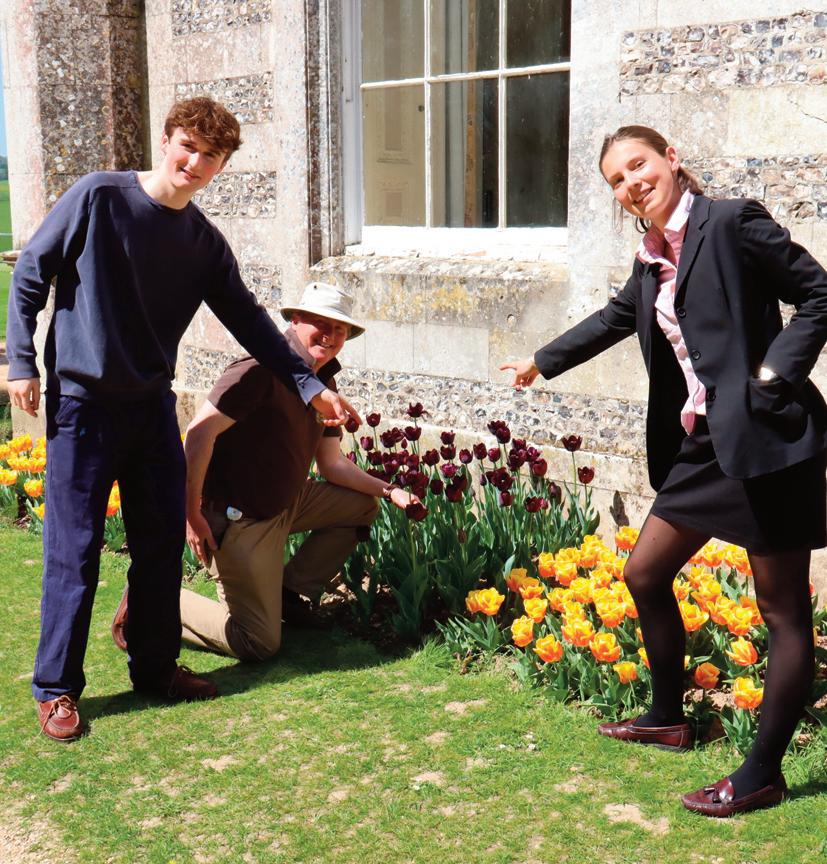
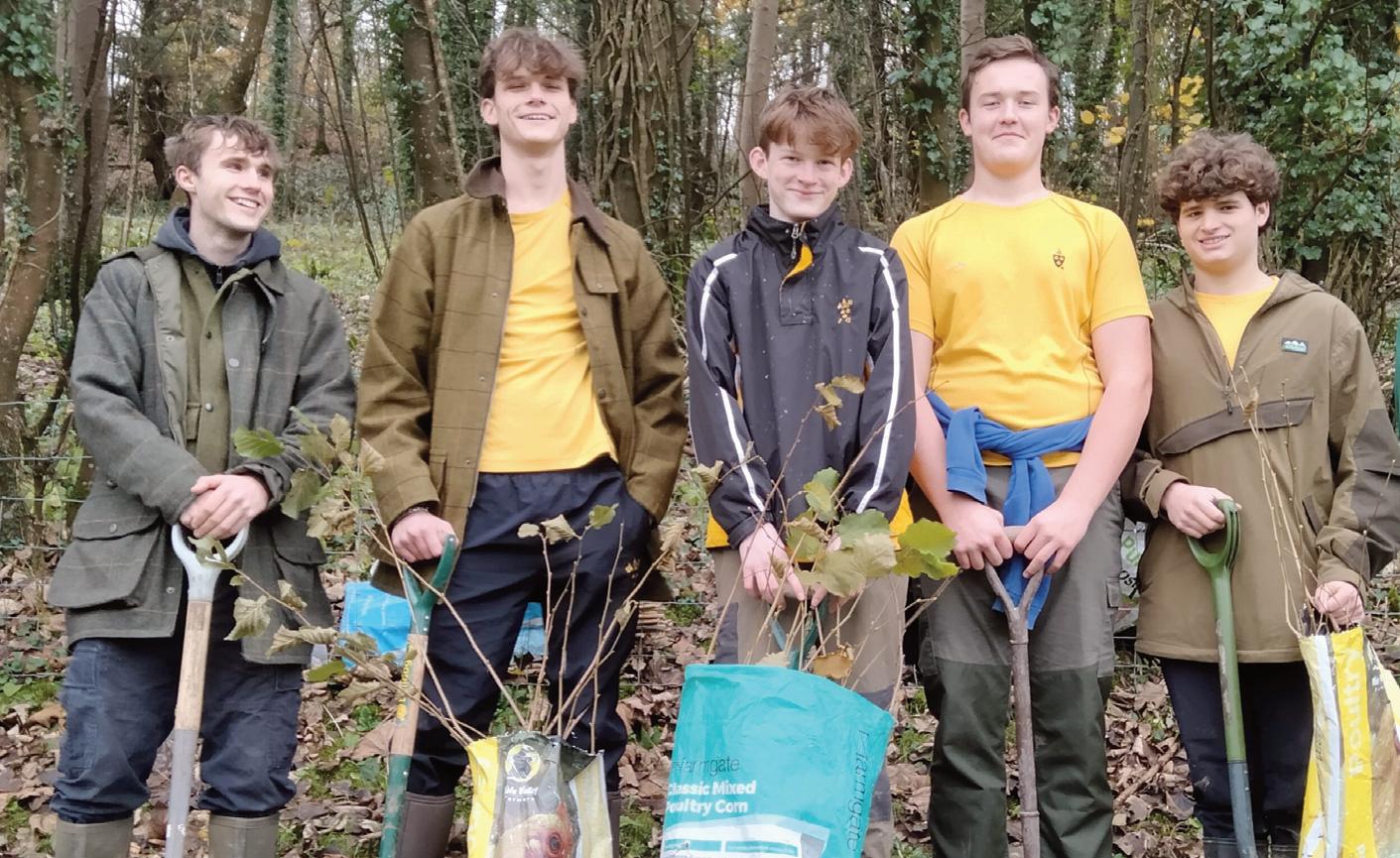

Will Fraser Deputy Head Co-Curricular Milton Abbey School
On Board is a BSA community action programme that celebrates and supports the positive impact boarding schools have in their local communities. Find out more at boarding.org.uk/active/on-board
Originally established by students, the Environmental Committee is a popular Wednesday afternoon activity, drawing students from all year groups. Jimmy L in Middle Sixth has spearheaded efforts and competitions to create gardens in every boarding house. The newly formed gardening club meets every Friday afternoon as part of our Round Square activities, with a focus on the environment. The group has transformed the polytunnel and planted bulbs and flowers to brighten the classrooms. They have also recently achieved Level One of the Royal Horticultural Society School Gardening Award, which supports schools in nurturing a love of gardening and sustainability.
The committee has also worked with Simon Burnham-Slipper, Head of Land Based Studies, to plant 600 stunning tulips in the school colours of black and gold, and Lower Sixth Countryside Management students planted trees in woodlands affected by ash dieback during National Tree Week.
A highlight in March 2025 was an exhilarating day of challenges to support the school's 75th Fund, raising more than £9,000 for charities Tiny Miracles and Project Planet Earth. As part of the day, the Milton Abbey Peaks Challenge offered a 7km or 12km run around the school. The Oceans Seven Swim Challenge, inspired by the world's toughest sea channels, saw students and staff replicate epic swims in the school pool. In total, 27 team members swam more than 9,840 lengths (246km), with special recognition going to student Leila P, who swam 600 lengths.
Other highlights have included the Lower Sixth Hospitality students’ afternoon tea, attended by guests from the local community; Hughie's House raising £649 for Shelter through a Vinted clothes sale; Damer students supporting Dementia UK by selling doughnuts; and Housemaster Adam Treadaway running the London Marathon.














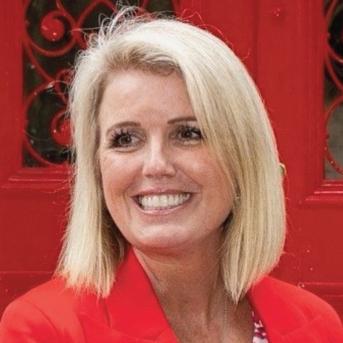


Ardingly
Alastair





St John’s Beaumont School
Andrew De Silva
Taking over from Phillip Barr September 2026
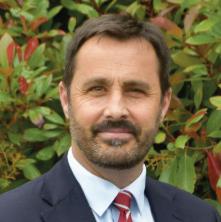
Gareth Pearson
Taking over from Bart Wielenga September 2026

Richard Girvan
Taking over from Helen Harrison September 2026

September 2026

Inaugural
August 2026

William Doherty
Taking over from John Browne May 2026

Chris Eades
Inaugural Head September 2026

John Wilson
Taking over from Carmel O'Dolan September 2026

September 2026


Neil Tomlin OBE
Taking over from Olly Langton August 2026

Taking
from Chris Townsend September 2026

September 2026
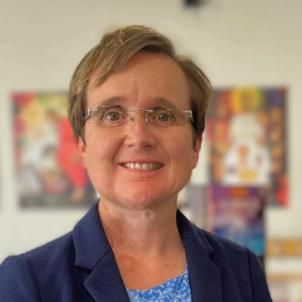
January 2026

September 2026

THE BEAR TOURING SCHOOLS IN BSA’S 60TH YEAR

• Millfield Prep
• Embley
• Twyford
• Peter Symonds
• Prior’s Field
• Bede’s
• Holmewood House
• Earlscliffe
• Brighton Prep Handcross
• Papplewick
• Leighton Park
• St George’s
• MPW
• Westminster Abbey Choir
• Bishops Stortford
• OIC
• Tudor Hall
• Bromsgrove
• Malvern St James
• The Elms
• Sherborne Girls
• Taunton Prep
• Hazlegrove
• Bryanston Prep
• Saint Felix
• Repton Prep
• Tettenhall
• Moreton Hall
• St Leonards
• Fettes
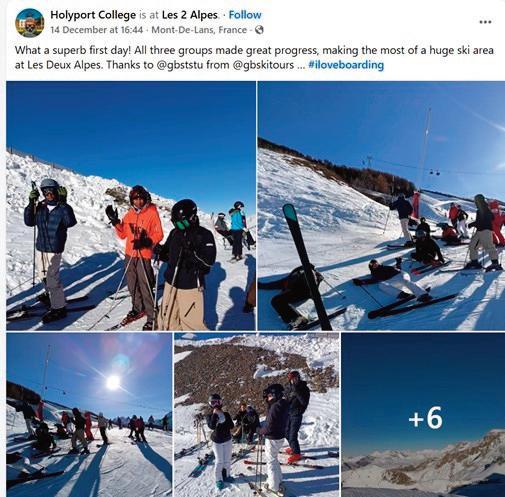

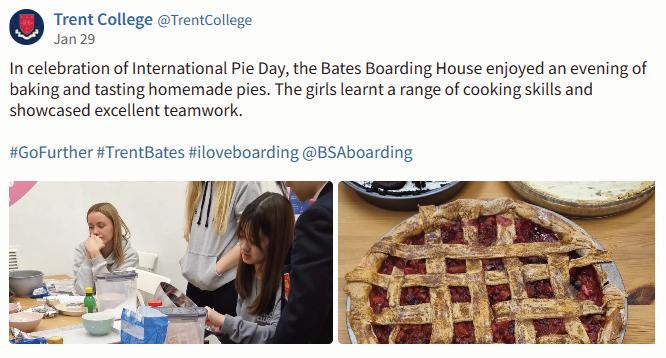

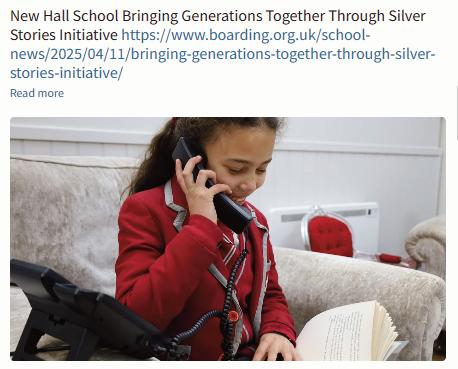
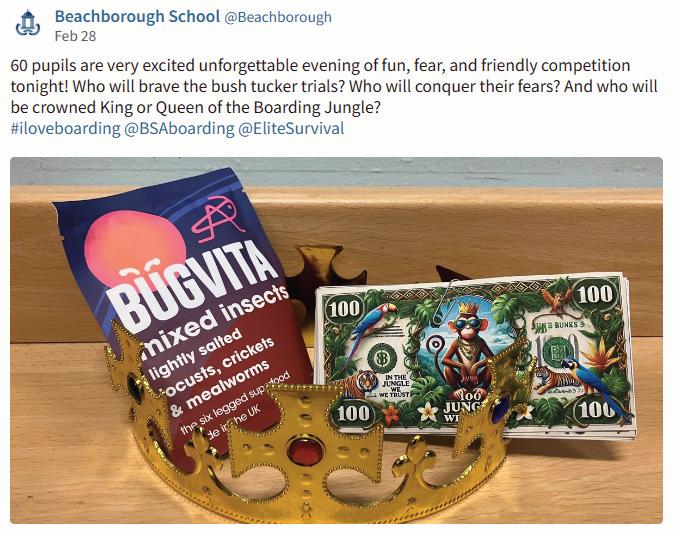


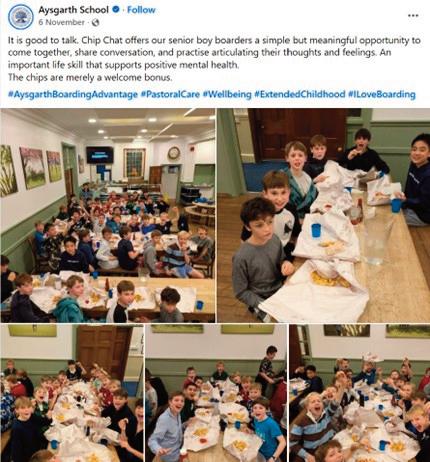

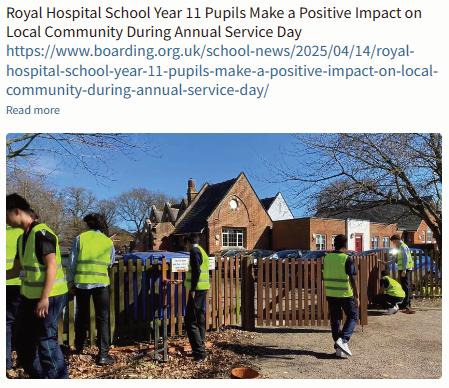

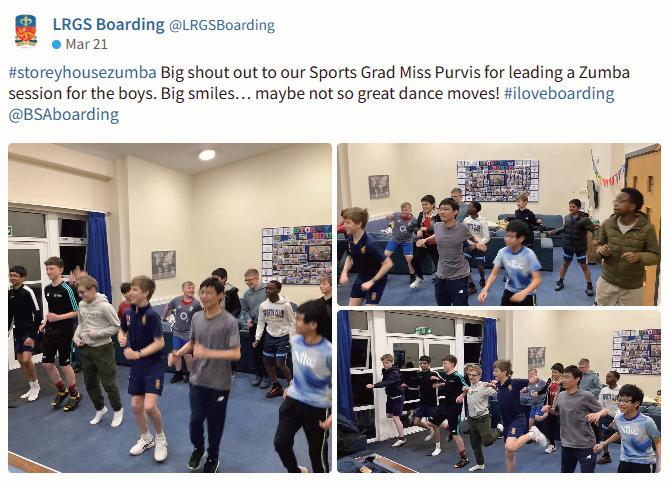

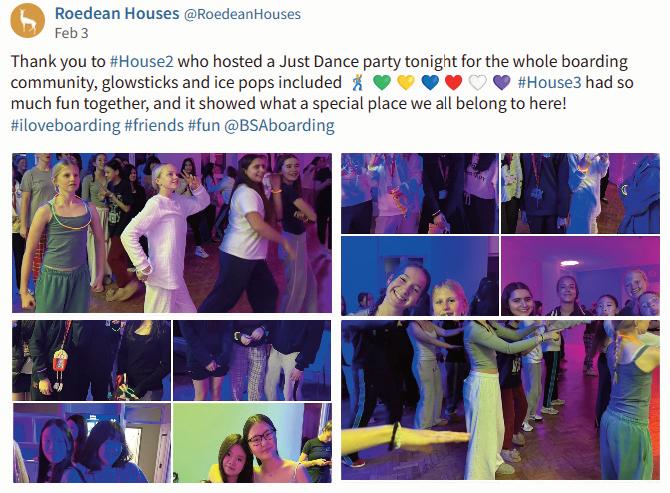

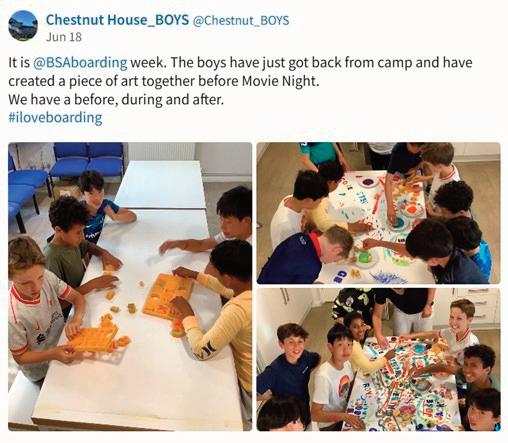

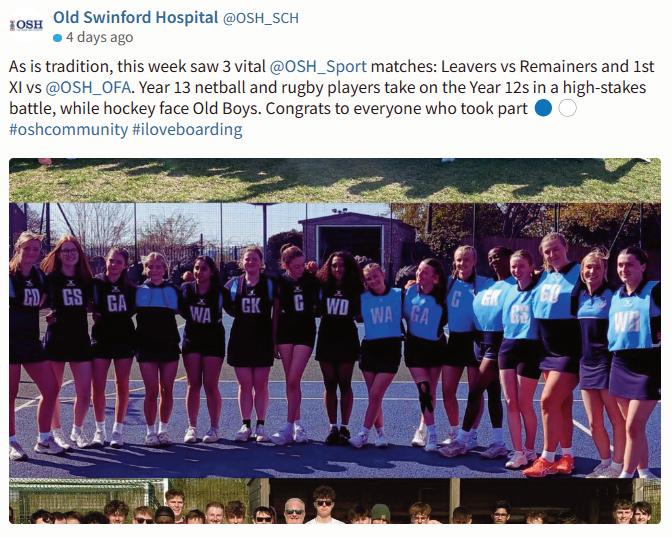

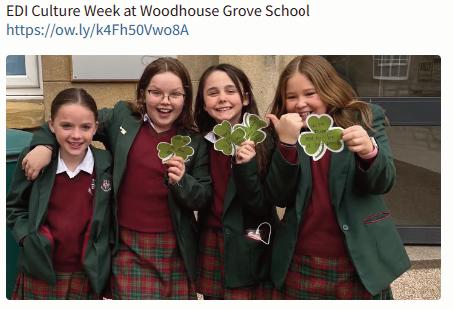

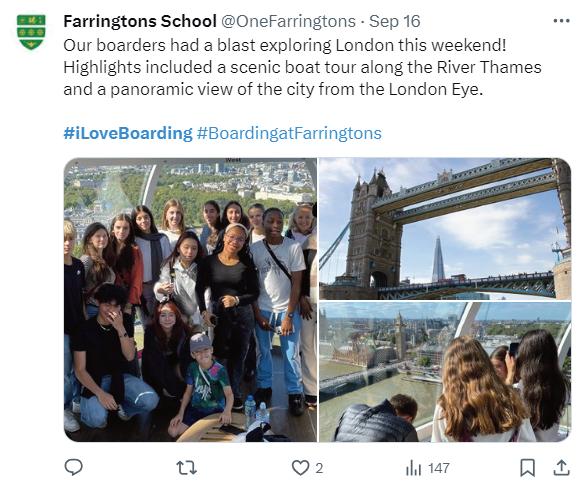

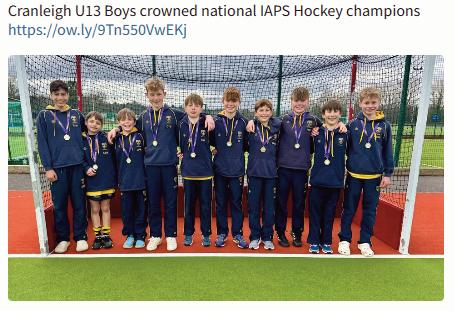
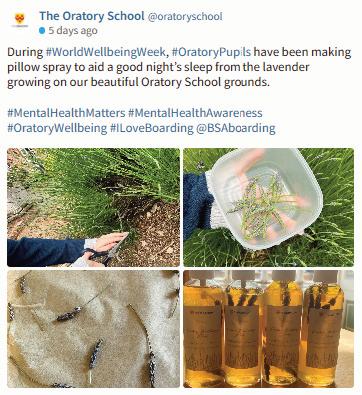






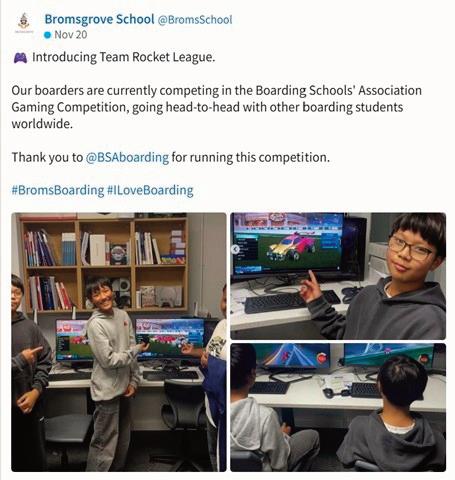

# I L O V E B O A R D I N G
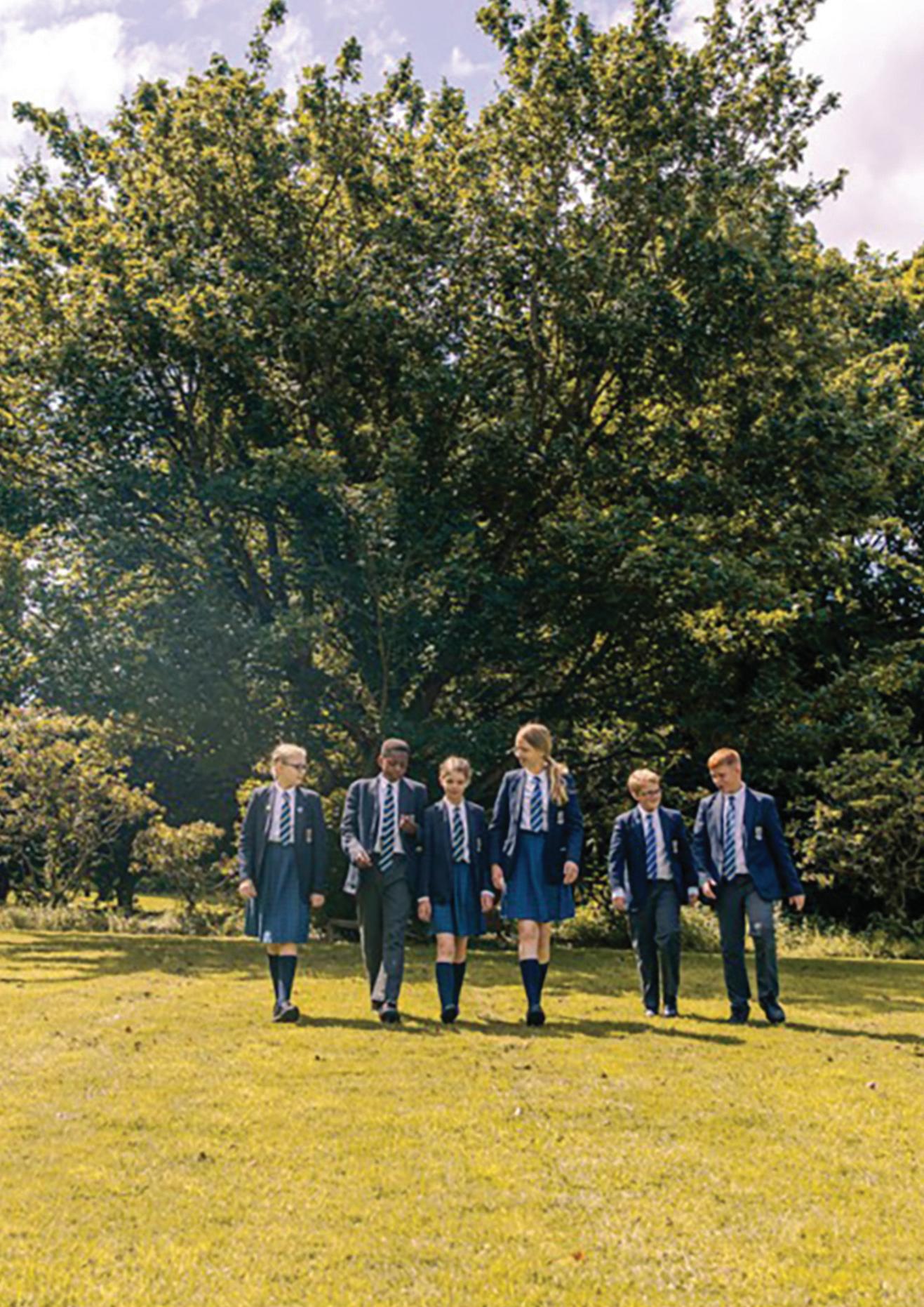

Ten years ago, BSA partnered with brand agency Studio Certain to coin #iloveboarding, a hashtag that has reached millions and is still used around the world. To mark the BSA’s 60th, we’ve co-created a graphic for the boarding community to use: free and open to all.
The graphic combines three elements: house, heart and hands. The house represents the boarding house, the heart an extension of #iloveboarding, and the two halves look like hands making a heart.
Download at boarding.org.uk/graphic/
Throughout the years, the boarding school crest has stood as a salient symbol of identity, a meaningful mark of tradition, prestige and belonging. It has been stitched into blazers, embossed onto letterheads and even engraved in stone.

Ed Smallman Business Development Director, Studio Certain
But in today’s more connected and fluid world, it goes without saying that a boarding school brand can’t live on heraldry alone. Of course, the crest should honour the heritage and aspiration of the sector, but the brand must also tell a living, breathing, more encompassing story to create a sense of belonging and inclusion.
So how do you celebrate history and tradition while informing the future, expressing it in the now and not just looking back?
The heart of the modern boarding school brand lies in its narrative, in the stories it tells. What’s the history, why does it matter today, and what does your boarding school offer that no one else does? Delving into these questions will help you understand internally if your values and principes ring true to your institution and the priorities of today’s students and parents.
Once defined, how do you articulate this externally?

life, enabling prospective students and their families to see how life on campus can shape character, foster resilience and help build lifelong connections.
Translated digitally, the story extends beyond the campus gates and onto the social feeds of prospective students and parents, giving them a taste of the experience before they even set foot on site. It needs to be able to move effortlessly between situations, audiences and channels, from the formality of academic ceremonies to the energy of student-led initiatives.
The real differentiator in a boarding school brand therefore lies beyond the crest. The crest is still there, respected and intact, but surrounded by a brand ecosystem that feels dynamic, fun and human and unites past, present and future.
If you’d be interested in finding out how Studio Certain build strong, confident and modern boarding school brands, please contact Ed Smallman at ed.smallman@studiocertain.com or on +44 78887 54106
From your crest or logo to the colour palette, photography and videography, a successful brand needs to demonstrate its values and principes at every single touchpoint. It needs to authentically capture life on campus, whether it’s quiet study in the library, the intensity of the sports field, or the hive of activity in hallways between classes. Fundamentally, it’s the opportunity to create a window into everyday boarding
Ultimately, building a modern boarding school brand is about earning trust and sparking connection, making students and parents feel like they’re part of something. Because the true brand isn’t just worn, it’s lived and breathed across all of the school’s touchpoints.
This mindset was the foundation of our brand work with The Beacon School and Clifton College. From refining visions and values to redefining brand articulation, we kept these education brands rooted and relevant.

Academic Asia (China)
Academic Families (Worldwide)
(Certified Agent and Certified Guardian)
Akademis (Germany, Austria, Switzerland)
Anderson Education (Middle East, Africa, Military)
Anglo International Student Centre (China)
ApplyEasyPro (China and Taiwan)
Arthur-Reese Education Consultancy
Aston Education (Hong Kong)
Athena Tuition
@School-in-UK (Russia)
Baltic Council for International Education (Latvia, Lithuania, Estonia and Poland)
Barbara Glasmacher Internationale (Germany)
Beach Education (Bermuda)
Beatrix Woodhead (UK & International)
Be Education (China, Hong Kong, Singapore)
BEC Education (south korea)
Bespoke Education (Kazakhstan, Uzbekistan)
Better School! Internatsberatung (Germany)
BOSSS UK (China)
Brains & Butter (Nigeria)
Bridgeway Education (Bermuda)
Bridging British Education Virtual Academy (Worldwide)
Britannia StudyLink (Hong Kong)
Brighteru
British International Consulting Ltd (China)
Buckell & Drew Education Management llp (Senegal, Gambia and Sierra Leone)
Cambridge Academic Tuition (Worldwide)
Chamberlain Educational Services (Hong Kong and China)
Cherry Education Consultancy (China)
Connexcel (China)
(Certified Agent and Certified Guardian)
Convoy Education (China)
Crest Education (China)
CSF Educational Consultants (Military Families)
Dese Advisory Limited (nigeria)
Dickinson School Consulting (Germany and Worldwide)
EduExcellence Consulting Services (China)
Edugo Guardian (South Korea, Worldwide)
Edu S.O.S Consulting (Italy)
Edumap (Turkey)
Edukatus (China, Hong Kong, Singapore)
EIC Education Consultancy (worldwide)
Epsom UK Education (UK)
Esta Educational Consultancy
Explore Consulting (China)
Fortis Education (Middle East, China,Russia, Europe)
Future Perfect
Genesis Education Planning (China)
(Certified Agent and Certified Guardian)
Global Education Tumulka (GET) (Germany)
Golden Apple Tree (China)
Golden Future (China)
Hampton Education (China and Taiwan)
HKIES Overseas Education Centre (Hong Kong)
Imega Culture and Education (China, Singapore, Spain, Italy)
Intake Education (Worldwide)
InterGreat Education Group (China)
IQ Consultancy (Russia)
ITEC (Russia)
J3 Group (HK)
JD Consultancy (China)
(Certified Agent and Certified Guardian)
Kens Cube (Japan & Asia)
Kew Learning (China)
Kolumbix Ltd (Ukraine & Eastern Europe)
Kulturwerke Deutschland Sprachreisen (Germany)
Leo Education
London Family Office (China)
Maple Overseas Education Centre (Hong Kong)
Mark Brooks Education (Ghana, Nigeria, Worldwide)
Meridian Group (Latvia)
Navigator Education Consultancy (Hong Kong, China, Japan)
Next Step Education (Worldwide)
Orpington Education Group
One School Group (China)
Overseas Personal Development Services (China)
Oxbridgecrew Education
Panoba (Nigeria and Saudi Arabia)
Pen Students (Iran, Turkey, Emirates)
Petra Heinemann Internationale Schulberatung (Germany)
QED Education Group (China)
Quest Tokyo (Japan)
Rise Smart Overseas Education Centre (Hong Kong)
RV Sport and Education
Sarah Jochums Internatsberatung (Germany)
Say Languages (Spain)
Schoolsgroup Uk (Grandvision Education) (China & Uk)
Sishu Connect (China)
Sino-UK Arts & Cultural Bridge Ltd (China)
Sovereign Education UK (China)
Test Education Centre
The Independent Education Consultants (Worldwide)
The Watanabe Office (Japan)
Toechter and Soehne (Germany)
UCAC International (Pakistan, Afganistan)
UK Academics & Guardianship (UKAG) (China)
UK Boarding Schools Admissions Service (UKBS) (China, Hong Kong and Singapore)
UK Cloud Primary School (China)
UK Education Guide (Middle East, Worldwide)
UK Epsom Education (China)
Uk Pioneering Education (China)
UK Tuition Services (China)
(Certified Agent and Certified Guardian)
UKEI (China)
Ultra Education Services (China)
UM Education
Which Boarding School (Spain, Italy, Germany)
Which British School - WBS (China)
Academic Families
Access UK Education
Al-Cademic (provisional) (South East England)
Alderwood International (provisional)
Alina Yegorova (provisional)
Alpha Guardians
Anglo International Student Centre (provisional)
Amber Education
Aurora Education and Guardianship (provisional) (UK wide)
Bec education (provisional) (UK wide)
Belgravia Guardians
Berkeley Guardians
British guardianship (provisional) (UK wide)
Boarding schools ireland (provisional)
(Ireland and Northern ireland)
Brit Education & Travel Ltd (provisional)
Cambridge Guardian Angels
Cherry Education Consultancy (provisional) (England)
Churchill Education Services
Chinese UK Study Company
Clarendon International Education (UK wide)
Compass Culture and Education (UK wide)
Connectia Education (provisional)
Connexcel
Convoy Education (UK wide)
Cotswold Guardians (UK wide)
Coventry Street Advisors (UK and Europe)
Crown Guardians (England, Wales)
CrownGuardians, Bath (provisional)
Crown International Guardians (UK wide)
Divine Guardianship (UK wide)
Double Wings International Ltd (bbeva) (provisional) (UK wide)
Dr Jasmine Murray (provisional) (UK wide)
Dreamline International (provisional) (UK wide)
East Coast Guardians (East England)
Edinburgh Guardian Angels (Edinburgh & Lothians, Perth & Perthshire, Fife, Dundee & Berwick-upon-Tweed)
Educatius UK (provisional) (UK wide)
Eduexcellence Consulting Services
EduExcellence Consulting Services (provisional) (England) (provisional) (England)
Education and Exchange in Europe (provisional)
Edukatus (provisional) (England)
Edukatus (provisional) (UK wide)
Edinburgh Guardian Angels
Elite Anglo-Chinese Services
English Country Guardians
Gabbitas
Genesis Education Planning
Great British Guardians
Guardians etc (provisional) (UK wide)
Guardians International Support
Guardians UK (South UK)
Hebe Education (provisional) (Ireland)
High Schools International
Hyde Global Education
International Student Guardianship Ireland
IQ Consultancy
Japan-London Study and Sport (provisional) (England)
JD Consultancy
Kitt Mcarthur Education (provisional)
Kolumbix Ltd (provisional)
Orpington Education Group (England)
Overseas Personal Development Services
Oxbridge Guardians
Maryadi Limited (provisional)
Prestige Guardians (provisional) (England)
PrimeGuardians Ltd / Alpha Capital Education (UK wide)
PJL Global Students (provisional) (England)
Redoor Education (provisional)
Regent Guardians
Robin Education
Ruyang Guardian Service (England)
RV Sport and Education (provisional)
Sable Guardians (UK wide)
Schoolsgroup Education (UK wide)
Scion Mastery (provisional)
Scottish Overseas Guardianship Association See World
See World (London and Southern England)
Sishu Connect
SmartPath Education Technology
St David’s International Education Limited (provisional)
St George’s Guardians
Study Links
Test Education Centre
The Guardian Family Network
Trusted Guardianship
UK Academics and Guardianship (England and Wales)
UK Cloud Primary School (provisional) (UK wide)
UK Education IV Consulting
UK Guardians
UK Guardianship
UK Tuition Services
UM Education (provisional)
VIP Guardians (England and Wales)
Yb Student Services Ltd (provisional) (UK wide)
Ying Lang Guardian, Glamour Edu Ltd
Gold Member 2025/2026
Witley Jones
Designers, manufacturers and installers of quality school furniture for BSA boarding schools.
Innermedia Printing and Design.
I-GTM Compliance and Travel.
Academic Families: Wellbeing/ Educational Visits / Mental healthcare / Health and Wellbeing
Allergy Team: Wellbeing
Allmanhall: Food and Nutrition / Procurement / Catering / Catering Advisors
Avvanz Pte Ltd: Risk Management / Technology / Safer Recruitment / Screening
Blakedown Sport and Play LTD: Landscaping / sports facility construction specialist / civil engineering
Charlie Waller Trust: Educational Visits / Mental healthcare / Health and Wellbeing
Connect Catering: Catering
CTRL+SHFT: Safeguarding / Online Safety
DRN Nutrition Group: Food and Nutrition
esenda Ltd: Technology
EVOLVE Advice Ltd: Advice / guidance / training
Eye Film: Digital Marketing / Media / Video Production
Flooglebinder: Travel
Gateway Education: Travel / Educational Visits
Haven Hall Ltd: Advice / Adverse Childhood Experiences (ACEs) expert / training
Hihilulu: Interactive / Language Learning / Educational Resources
IDAT: International Diagnostic and Admissions Test
Inkling: GGTW Education Limited: Educational Resources
International SOS Assistance UK Limited: Risk Management
iSAMS: School Management Solutions / MIS / Management System
K9 Deployment: Drugs search dogs and patrol dogs
La Suzy: Health and Wellbeing
Noble + Eaton: Environmental and Design
Northern Gas and Power Utilities: Energy Management / Technology / Procurement
Opus Pharmacy: Accredited medicines training
OrcaNation: Travel / Environmental / Educational Resources
Pelican Worldwide Ltd: Risk Management / Security / Financial Services / Screening
Reach Student Life: Wellbeing / Compliance / Safeguarding / Health and Wellbeing
Safeguarding Supervision: Safeguarding
School of Esports: Technology and Esports
School Teeth: Orthodontic and dental treatment
SDS Group: Archives / history / development / alumni
Seqrd Technology: Safeguarding / Technology
Shelleys: Design and print for the BSA
SWJ Consulting: Construction
TG Escapes: Construction
The Awareness Key: Supporting people and organisations
The Manager’s Training Company Ltd: Supporting people and organisations
The Stevenson Group: Uniform and Sports Suppliers
The Wellbeing Hub: Wellbeing
Unyfi: Energy broker / renewable energy / Waste Management / facilities management / Merchant services
Utility Aid: Energy broker
Vectare: Transport management
Welcomm Communications Ltd: IT Communications and Cyber Security
Yes We Can Youth Clinics: Mental healthcare




Natalie
– School Teacher




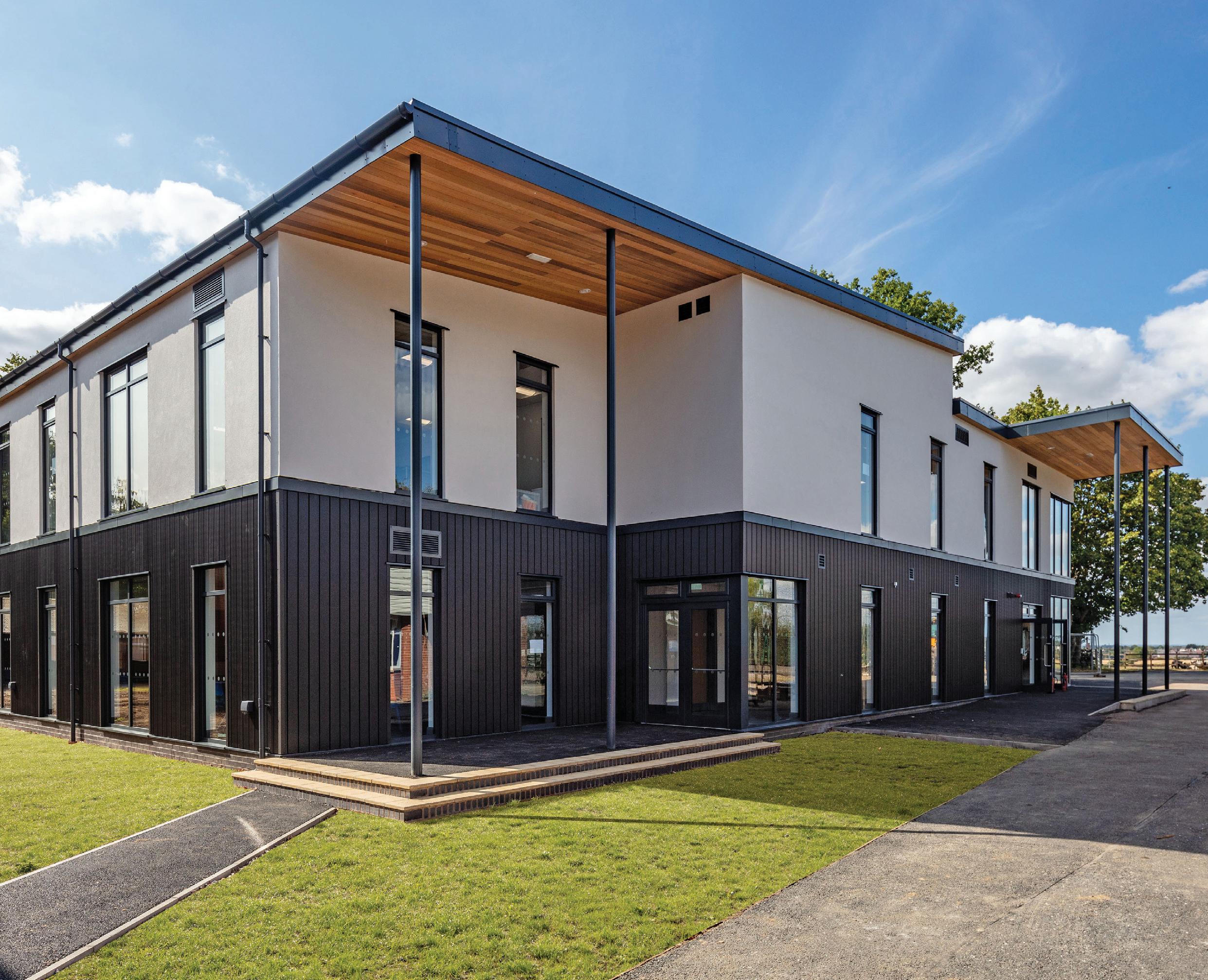








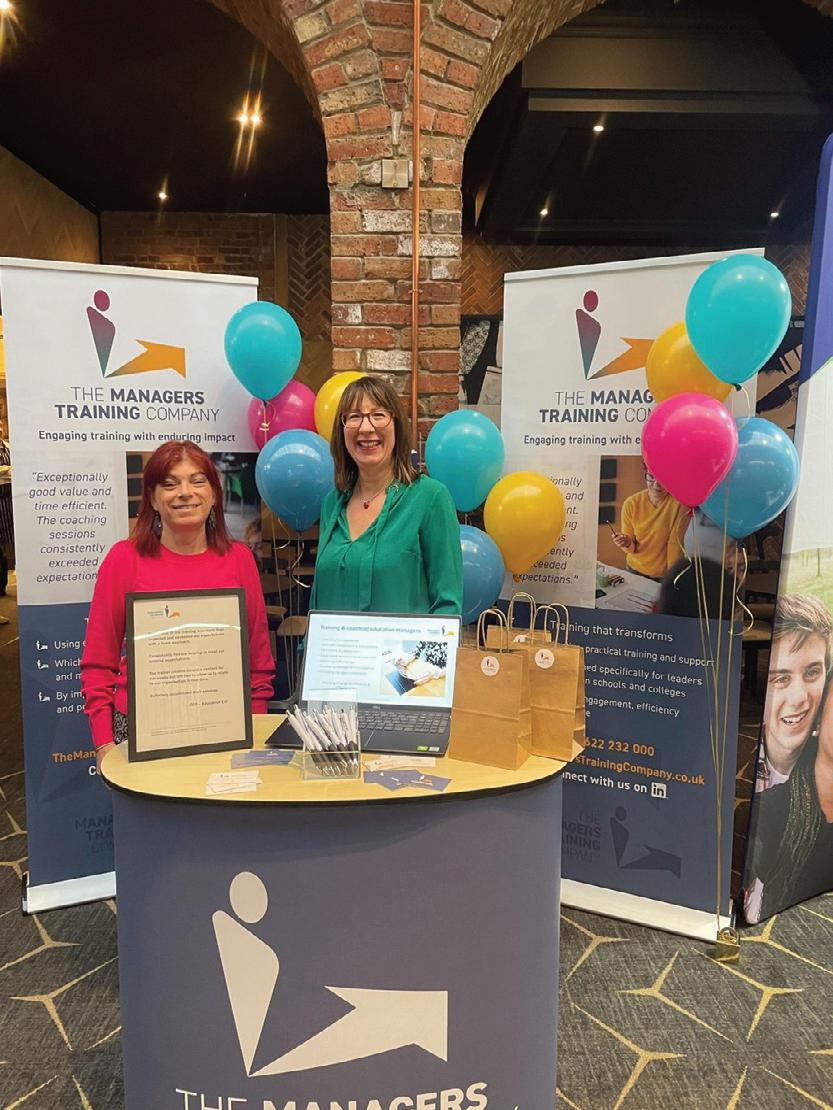
Over six decades, boarding education has evolved in many ways; structures have changed, expectations have grown, and accountability has increased. Yet one thing has remained constant.
At its heart, people.
The Boarding Schools’ Association’s 60 anniversary reflects more than longevity. It marks a continued commitment to community. Schools thrive not because of systems alone, but because of the people who lead them, support them and work together to create safe, stable and caring environments.
Leadership in boarding has never been straightforward, it requires balancing care with consistency, warmth with boundaries, and autonomy with accountability. While the context has changed over time, the core challenge remains the same: leading people well.

Today’s managers and middle leaders oversee diverse teams across boarding, operations, admissions, HR, finance, estates and pastoral care. Their role extends beyond oversight, it demands strong communication, clarity and confidence.
Many leaders find this challenging, not through lack of commitment, but because managing people is complex. Holding difficult conversations, encouraging ownership and maintaining standards are skills developed through reflection and practice, not simply through promotion.
At The Managers Training Company, we support education leaders who want to lead with respect, responsibility and care for others. If you want to lead your team with more clarity and confidence, sign up to Lessons in Leadership, our weekly email offering practical insight and reflection for those managing people in education today.


RRP £49.99
Use code BSA20 to get 20% off your first order
Reusable Period Bed Mat
HASSLE-FREE SLEEP. PERIOD. No more messy sheets from period leaks. No more bedtime anxiety.

Abbey College, Cambridge
Abbey College, Manchester
ABBOTSHOLME SCHOOL
Abingdon School
ACKWORTH SCHOOL
ACS International School Cobham
Adcote School
Aldenham School
Aldro School
All Hallows School
Alliance Francaise
Amesbury School
AMPLEFORTH COLLEGE
Appleford School
Ardingly College
Ardvreck School
Atlantic College
Aysgarth School
Badminton School
Barnard Castle School
Barnardiston Hall Preparatory School
Bath Academy
Battle Abbey School
Beachborough School
Beaudesert Park School
BEDALES SCHOOL
Bede’s Preparatory School
Bede’s Senior School
Bedford School
Beech Grove School and Academy
Beechen Cliff School
Beechwood Park School
Beechwood Sacred Heart School
Beeston Hall School
Belhaven Hill School
BENENDEN SCHOOL
Berkhamsted School
Bethany School
Bilton Grange School
Bishop’s Stortford College (incl Prep)
BLOXHAM SCHOOL
Blundell’s School
Bootham School
Bosworth Independent College
Boundary Oak School
BOURNEMOUTH COLLEGIATE SCHOOL
Brambletye School
Bredon School
Brentwood School
Brighton College
Brighton College Prep Handcross
Brockhurst And Marlston House Schools
Brockwood Park School
Bromsgrove School (incl Prep)
Bruern Abbey School
Bryanston School
Brymore Academy
Buckswood School
Burford School
Burgess Hill Girls
Caldicott Preparatory School
Campbell College
Canford School
Cardiff Sixth Form College
Cardiff Sixth Form College, Cambridge
Cargilfield Preparatory School
Carsterton Sedbergh Preparatory School
Caterham School
CATS College, Cambridge
CATS College, Canterbury (Worthgate School)
CATS College, London (Guildhouse School)
Charterhouse School
Cheam School
CHELTENHAM LADIES' COLLEGE
Cherwell College Oxford
Chetham’s School of Music
Chigwell School
Christ Church Cathedral School
CHRIST COLLEGE, BRECON
Christ’s Hospital School
City of London Freemen’s School
Claremont School
Clayesmore Preparatory School
Clayesmore School
CLIFTON COLLEGE
Clifton College Preparatory School
Cobham Hall School
Colchester Royal Grammar School
Concord College
Copthorne Preparatory School
Cothill House School
Cotswold Chine School
Cottesmore School
CRANBROOK SCHOOL
CRANLEIGH SCHOOL
Culford School (Incl Prep)
Cumnor House School
Cundall Manor School
Dallam School
Darul Uloom Dawatul Imaan
Darul Uloom London School
Dauntsey’s School
David Game College
Dean Close Preparatory School
DEAN CLOSE SCHOOL
Dean Close St John’s
Denstone College
DLD College, London
Dollar Academy
Dorset House School
Dover College
Downe House School
Downside School
Dragon School
Dulwich College
Dulwich Prep & Senior
Durham School
Earlscliffe
EASTBOURNE COLLEGE
Edgeborough School
EF Academy Oxford
ELLESMERE COLLEGE
Elmfield Rudolf Steiner School
Elmhurst Ballet School, Birmingham
Elstree School
Embley
Epsom College
ETON COLLEGE
Exeter College
Fairview International School
Farleigh School
Farlington School
Farringtons School
FELSTED SCHOOL
Feltonfleet School
Fettes College (incl Prep)
Finborough School
Foremarke Hall, Repton Preparatory School
Forres Sandle Manor School
Framlingham College
FRENSHAM HEIGHTS SCHOOL
Frewen College
Fyling Hall School Trust LTD
GIGGLESWICK SCHOOL
Glenalmond College
Godstowe Preparatory School
Gordon’s School
Gordonstoun (Incl Junior)
Gresham’s School (incl Prep)
Haberdashers’ Adams
HABERDASHERS' MONMOUTH SCHOOL
Haileybury
Hall Grove School
Handcross Park School
Hanford School Harrogate Ladies’ College
Harrow School
HATHEROP CASTLE SCHOOL
Hazlegrove Preparatory School
HEADINGTON RYE OXFORD
Heath Mount School
HEATHFIELD SCHOOL
Hereford Cathedral School
Highfield and Brookham School
Hockerill Anglo-European College
Holmewood House School
Holmwood House School (incl Prep)
Holyport College
Horris Hill School
Hurstpierpoint College
Hurtwood House School
International School of Creative Arts
Ipswich High School
Ipswich School
Jamea Al Kauthar
Jersey College for Girls
Junior King’s School, Canterbury
Kensington Park School
KENT COLLEGE, CANTERBURY
Kent College, Pembury (Incl Prep)
Keswick School
Kimbolton School
Kimichi School
KING EDWARD'S SCHOOL, WITLEY
King William’s College, Isle of Man
KING'S COLLEGE, CAMBRIDGE
KING'S COLLEGE, TAUNTON
King’s Hall School
King’s High School, Warwick
King’s School , Rochester (Incl Prep)
King’s School, Bruton
King’s School, Ely (Incl Junior)
Kingham Hill School
KINGSLEY SCHOOL
Kingswood Preparatory School
Kingswood School
Kirkham Grammar School
Lambrook School
LANCASTER ROYAL GRAMMAR SCHOOL
Lancing College
Langley School
Lathallan School
LEIGHTON PARK SCHOOL
Leweston School (Incl Prep)
Lime House School
Liverpool College
Llandovery College
Lockers Park School
Lomond School
Longridge Towers School
Lord Wandsworth College
Loretto School (Incl Junior)
LOUGHBOROUGH GRAMMAR SCHOOL
Luckley House School
Ludgrove School
LVS Ascot
MALVERN COLLEGE
Malvern St James
MARLBOROUGH COLLEGE
MARLBOROUGH HOUSE VINEHALL SCHOOL
Marymount London
Mayfield School
Merchiston Castle School
Mill Hill School Foundation
Millfield Preparatory School
Millfield School
Milton Abbey School
Monkton Combe Preparatory School
Monkton Combe Senior School
Moor Park School
MORE HOUSE SCHOOL
Moreton Hall School
Moulsford Preparatory School
Mount Kelly School (Incl Prep)
Mowden Hall School
Moyles Court School
MPW London
Myddelton College
New College Worcester
New Hall School
North London Grammar School
Northbourne Park School
OAKHAM SCHOOL
OLD BUCKENHAM HALL
Old Swinford Hospital
Orwell Park School
Oswestry School
OUNDLE SCHOOL
Oxford International College
Oxford International College Brighton
Packwood Haugh School
Pangbourne College
Papplewick School
Perrott Hill School
Peter Symonds College
Pinewood School
Plymouth College
Pocklington School (Incl Prep)
Port Regis Preparatory School
Prestfelde School
PRIOR PARK COLLEGE
PRIOR'S FIELD SCHOOL
QUEEN ANNE'S SCHOOL
Queen’s College, London
Queen Ethelburga’s Collegiate
Queen Mary’s School
Queen Victoria School Dunblane
Queen’s College, Taunton (Incl Prep)
Queenswood School
RADLEY COLLEGE
Ratcliffe College (Incl Prep)
RGS Surrey Hills
Reading School
Reddam House Berkshire
REED'S SCHOOL
RENDCOMB COLLEGE
REPTON SCHOOL
Richard Huish College
Rikkyo School in England
Rishworth School
Rochester Independent College
Rockport School
Roedean School
Rossall School
Royal Alexandra & Albert School
Royal High School, Bath
ROYAL HOSPITAL SCHOOL
Royal Russell School
Rugby School
Ruthin School
Rydal Penrhos School
RYDE SCHOOL WITH UPPER CHINE
Rye St Antony School (Incl Prep)
S.Anselm’s Preparatory School
Saint Felix School
Saint Ronan’s School
Salisbury Cathedral School
Sandroyd School
SCARBOROUGH COLLEGE
Scarisbrick Hall School
Seaford College (Incl Prep)
SEDBERGH SCHOOL
Sevenoaks School
Sexey’s School
SHEBBEAR COLLEGE
SHERBORNE BOYS
SHERBORNE GIRLS
Sherborne Preparatory School
Sherfield School
Shiplake College
SHREWSBURY SCHOOL
SIBFORD SCHOOL
Sidcot School
Slindon College
St Andrew’s College, Cambridge
St Andrew’s Preparatory School, Eastbourne
St Andrew’s School, Pangbourne
St Bees School
St Catherine’s, Bramley
ST CHRISTOPHER SCHOOL, LETCHWORTH
St Clare’s, Oxford
St David’s College, Llandudno
St Edmund’s College & Prep School, Hertfordshire
ST EDMUND'S SCHOOL, CANTERBURY
St Edward’s Oxford
ST FRANCIS' COLLEGE
St George’s School, Ascot
St George’s School, Harpenden
St George’s School, Windsor
St George’s, Edinburgh
St Hugh’s Prep School, Lincolnshire
St Hugh’s Prep School, Oxfordshire
St John’s Beaumont Preparatory School
ST JOHN'S SCHOOL, LEATHERHEAD
St John’s School, Sidmouth
St John’s College School, Cambridge
St Joseph’s College (Incl Prep)
St Leonards School, Fife
St Margaret’s School, Bushey
St Mary’s Calne
St Mary’s Music School
St Mary’s School, Ascot
St Mary’s School, Cambridge
St Michael Abbey School
St Michael’s School
St Paul’s Cathedral School
St Paul’s School, London
St Peter’s School, York (incl St Olave’s)
ST SWITHUN'S SCHOOL
St Teresa’s School
Stamford Endowed Schools
Stamford Junior School
Stanborough Secondary School
Stephen Perse Foundation
Steyning Grammar School
Stoke College
Stonar School
Stonyhurst College
Stover School (Incl Prep)
Strathallan School (Incl Prep)
Summer Fields School
Sunningdale School
Sutton Valence School (incl Prep)
Swanbourne House School
Talbot Heath School (Incl Junior)
TASIS, The American School in England
Taunton Preparatory School
Taunton School
Teikyo Foundation School
Terra Nova School
Terrington Hall School
Tettenhall College
The Downs Malvern
The Duke of York’s Royal Military School
The Elms School
The Hammond School
The King’s School, Canterbury
The Leys School
The Marist School
The Montessori Place, Hove
THE MOUNT SCHOOL
The New Beacon School
The Thomas Adams School UK – with founding members present at 1966 BSA conference in red
d’Overbroeck’s
The National Mathematics and Science College
The Oratory Preparatory School
The Oratory School
The Pilgrims’ School
The Purcell School for Young Musicians
The Read School
The Royal Ballet School
The Royal Grammar School, High Wycombe
THE ROYAL MASONIC SCHOOL FOR GIRLS
The Royal School, Armagh
The Royal School, Dungannon
THE ROYAL SCHOOL WOLVERHAMPTON
Kitebrook Prep School
The Wellington Academy
Thomas’s College
Thornton College
Tonbridge School
Trent College
Tring Park School for the Performing Arts
Truro School
TUDOR HALL SCHOOL
Twyford School
Uppingham School
Vinehall School
Walhampton School
Warminster School (Incl Prep)
Warwick School
WELLINGTON COLLEGE
Wellington College Prep (Eagle House)
Wellington School
WELLS CATHEDRAL SCHOOL
WEST BUCKLAND SCHOOL
WEST HILL PARK SCHOOL
Westbourne House School
Westbourne School
Westerfield College
Westminster Abbey Choir School
Westminster Cathedral Choir School
Westminster School, Westminster
WESTONBIRT SCHOOL
Whitgift School
Winchester College
Winchester House School
Windermere School
WINDLESHAM HOUSE SCHOOL
Wisbech Grammar School
Witham Hall School
Woldingham School
Woodbridge School
Woodhouse Grove School
Worksop College
Worth School
Wrekin College
Wychwood School (Oxford) Ltd
WYCLIFFE COLLEGE
Wycombe Abbey
Wymondham College
Wymondham College Prep School
Yehudi Menuhin School
A+ World Academy, Switzerland
Aiglon College, Switzerland
Amadeus International School, Austria
American Academy Private School Limassol, Cyprus
Apex 2100, France
Bandon Grammar School
Berlin Brandenburg International School, Germany
Blackrock College, Ireland
Brillantmont International School, Switzerland
Cabella International Sahaja School, Italy
Canadian College Italy (CCI), Italy
Clongowes Wood College, Ireland
College Alpin Beau Soleil, Switzerland
College Champittet, Switzerland
College du Leman International School, Switzerland
Cologne International School
Ecole d’Humanité, Switzerland
Ecole Jeannine Manuel, France
Exupery International School, Latvia
Glenstal Abbey School, Ireland
Hamelin Laie International School
Haut-Lac International Bilingual School, Switzerland
Institut Montana Zugerberg, Switzerland
International School Eerde, Netherlands
International School of Milan
International School San Patricio Toledo
John F. Kennedy International School, Switzerland
Kilkenny College, Ireland
King’s College School Cascais, Portugal
King’s College, The British School of Madrid, Spain
La Garenne, Switzerland
Leysin American School, Switzerland
Lundsbergs Skola, Sweden
Lyceum Alpinum Zuoz, Switzerland
Midleton College, Ireland
Open Gate Boarding School, Czech Republic
Préfleuri International Alpine School
Rockwell College, Ireland
Sage College
Saint Charles, Switzerland
Sigtunaskolan Humanistiska Läroverket, Sweden
Sotogrande International School, Spain
St Columba’s College, Ireland
St George’s International School, Switzerland
St Gilgen International School GmbH, Austria
St John’s International School, Belgium
St. Stephen’s School, Rome, Italy
Surval Montreux, Switzerland
The Island Private School of Limassol, Cyprus
The Kings Hospital, Ireland
The Koc School, Turkey
Verbier International School, Switzerland
Villiers School, Ireland
Wilson’s Hospital School
Aga Khan Academy
Asheville School
Asheville School, USA
AUPP LLA, Cambodia
Braeburn Garden Estate School
Branksome Hall, Canada
Bromsgrove International School, Thailand
Charterhouse Lagos
Choate Rosemary Hall, USA
Deerfield Academy, USA
Episcopal High School, USA
Epsom College in Malaysia
Fettes Guangzshou
Frensham, Australia
Haileybury Bhaluka
Harrow Appi Japan
Harrow Innovation Leadership Academy Chongqing
Harrow Innovation Leadership Academy Nanning
Harrow Innovation Leadership Academy Zhuhai
Harrow International School Bangkok, Thailand
Harrow International School Bengaluru
Harrow International School Haikou
Harrow International School Shenzhen Qianhai
Harrow International School, Hong Kong
Hulli School Nantong
Idyllwild Arts Academy, USA
International School Brunei, Brunei
IQanat High School of Burabay, Kazakhstan
Jerudong International School, Brunei
John F. Kennedy International School
Kaiyo Academy
Keystone Academy, China
Kincoppal-Rose Bay, Australia
King Henry VIII College, Malaysia
King’s Academy
Kolej Tuanku Ja’afar, Malaysia
Lady Eleanor Holles International School Foshan, China
Luderitz Blue School, Namibia
Marlborough College, Malaysia
Michaelhouse, South Africa
New Summit Academy Costa Rica
Ningbo British International School, China
Nord Anglia Guangzhou Panyu School
North London Collegiate School, Jeju, Korea
Oldfield’s School
Peponi School, Kenya
Planet Spiti Boarding School
Prem Tinsulanonda International School, Thailand
Prince of Wales Island International School, Malaysia
Pymble Ladies’ College, Australia
Queen Margaret's School, Canada
Regents International School Pattaya, Thailand
Repton Dubai, Dubai
Ridley College
Rugby School, Japan
School of Leadership, Afghanistan (SOLA)
Shenzhen College of International Education, China
Shenzhen Foreign Languages GBA Academy
Shenzhen Merchiston International School, China
Shrewsbury International School India
St Andrew’s College, South Africa
St Andrew’s Prep School Turi, Kenya
St Andrew’s Senior School Turi, Kenya
St Christopher Schools, Kenya
St Constantine’s International School
St George’s College
Swiss International Scientific School Dubai, UAE
Thailand KIS Reignwood Park School
The British School of Lome’, Togo
The Doon School, India
The Forman School, USA
The Hun School of Princeton, USA
The International School, Bangalore, India
The King’s School, Australia
The Regent Secondary School, NigeriaThe Sultan’s School, Oman
Toowoomba Anglican School, Australia
United World College South East Asia, Singapore
Wellington College International Hangzhou
Westlake International School, Malaysia
Whanganui Collegiate School, New Zealand
Woodcreek School
Woodstock School, India
Wuxi United International School, China
Wycombe Abbey School Changzhou, China
Wycombe Abbey School Nanjing, China
Wycombe Abbey School, Hangzhou, China
Wycombe Abbey School, Hong Kong
XCL American School of Bangkok, Thailand
Xi’an Liangjiatan International School
Y K Pao School
Yew Chung International School of Qingdao (YCIS -QD), China
Yew Wah International Education School of Guangzhou (YWIES-GZ) , China
Yew Wah International Education School of Shanghai Lingang (YWIES - SHLG), China
Yew Wah International Education School, Zhejiang Tongxiang Campus, (YWIES-TX), China
Yew Wah School of Shanghai Changning. (YWIES - GB), China
Yew Wah International Education School of Shanghai Lingang (YWIES - SHLG), China
With 60 years of boarding experience, member schools in 45 countries, and a strong team of pastoral, legal and compliance specialists, BSA is uniquely placed to advise, support and connect you.
Please find below some of our exclusive member benefits. If you have any queries, feedback, or suggestions, please get in touch via bsa@boarding.org.uk
;655CA@GG BF>G=6D>BF?E
@ABDFDF=GBF>G AE?A6D@:EF@

EF=B=E:EF@
FE-; ?CFFE?@DCF;
(C11*DF= 561(D?D@*
B-BA>;GBF>G AE?C=FD@DCF 5AC D>EAG ?C::EF>B@DCF AE?C::EF>B@DCF;



LISTEN ON SPOTIFY