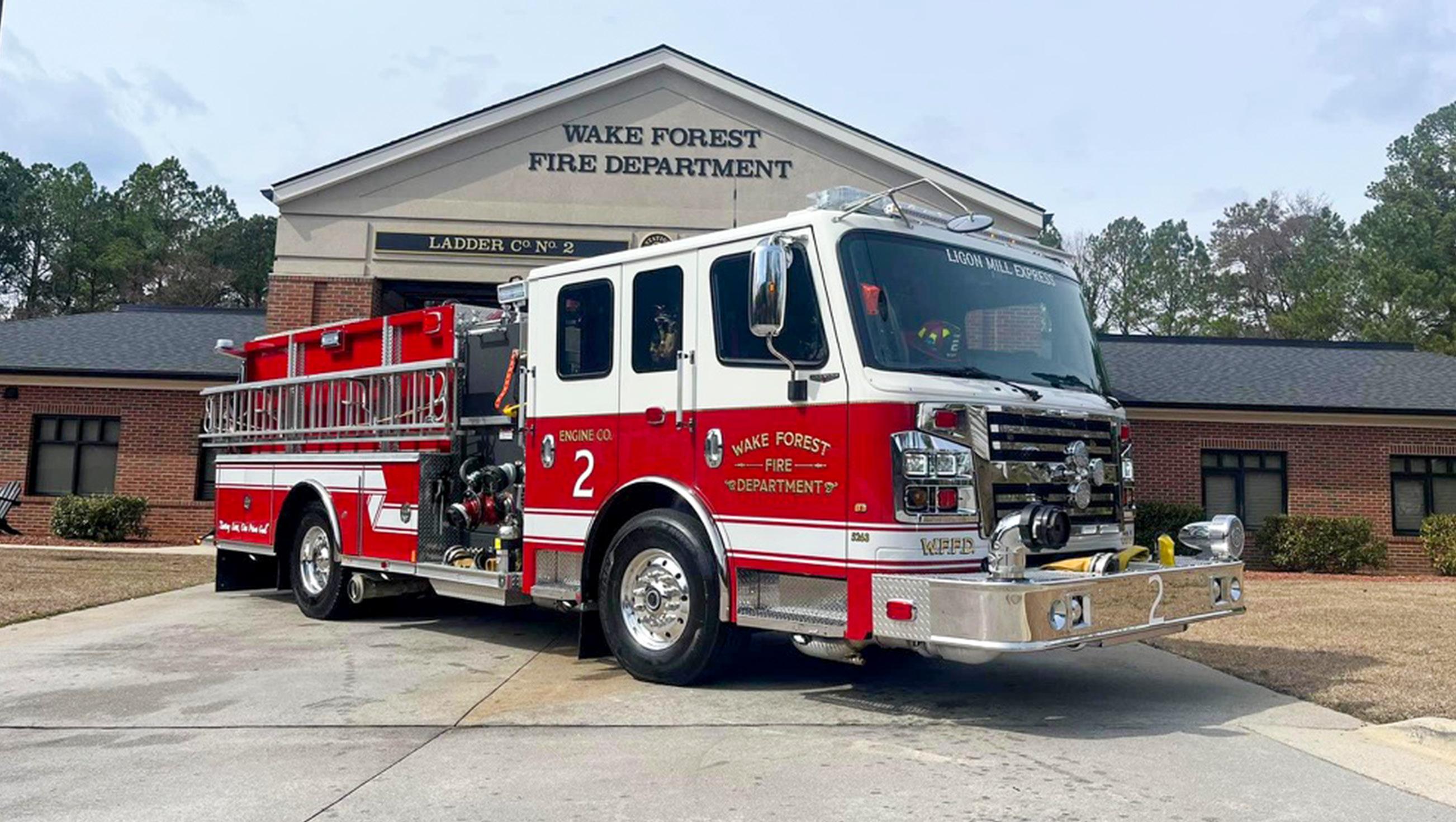
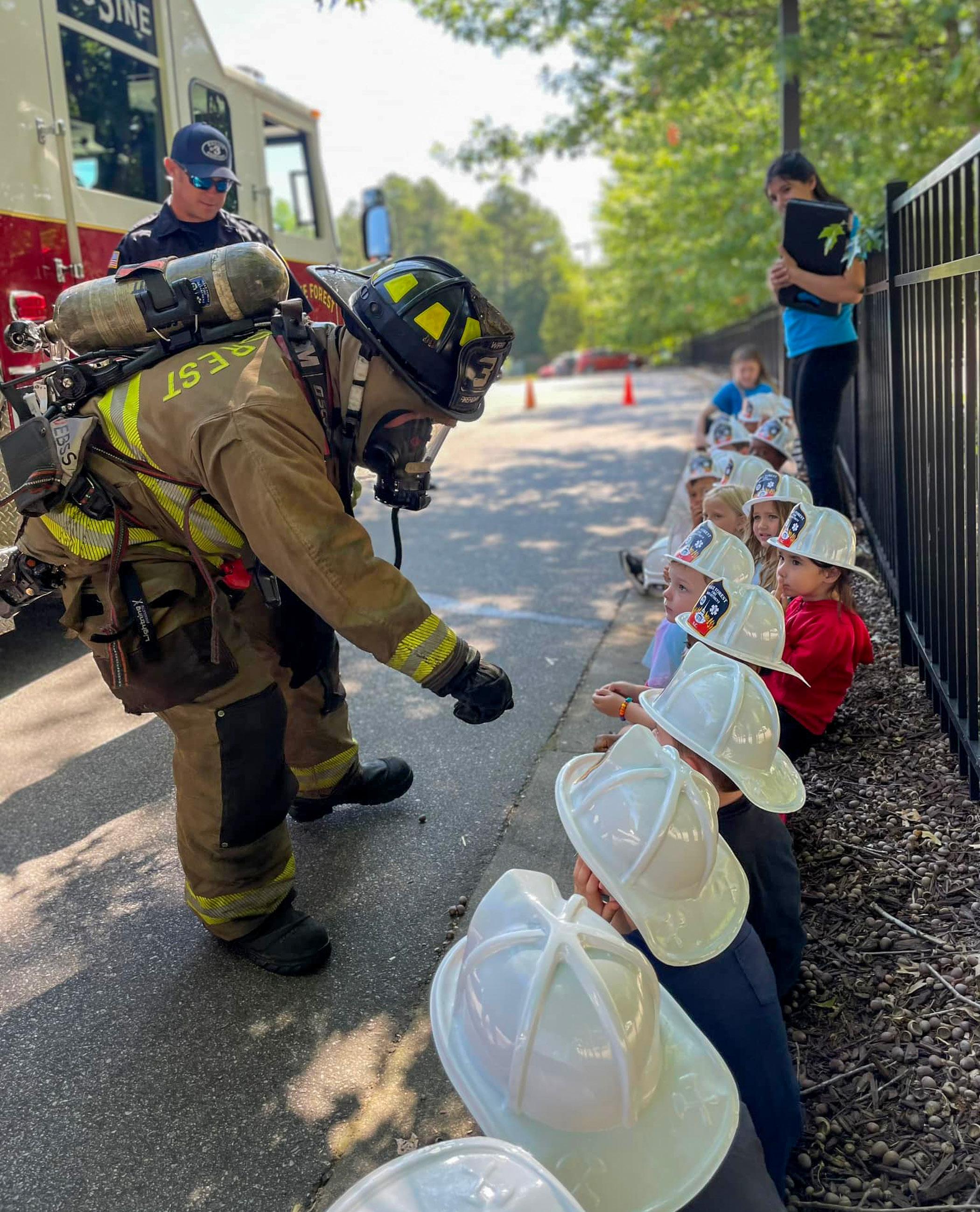
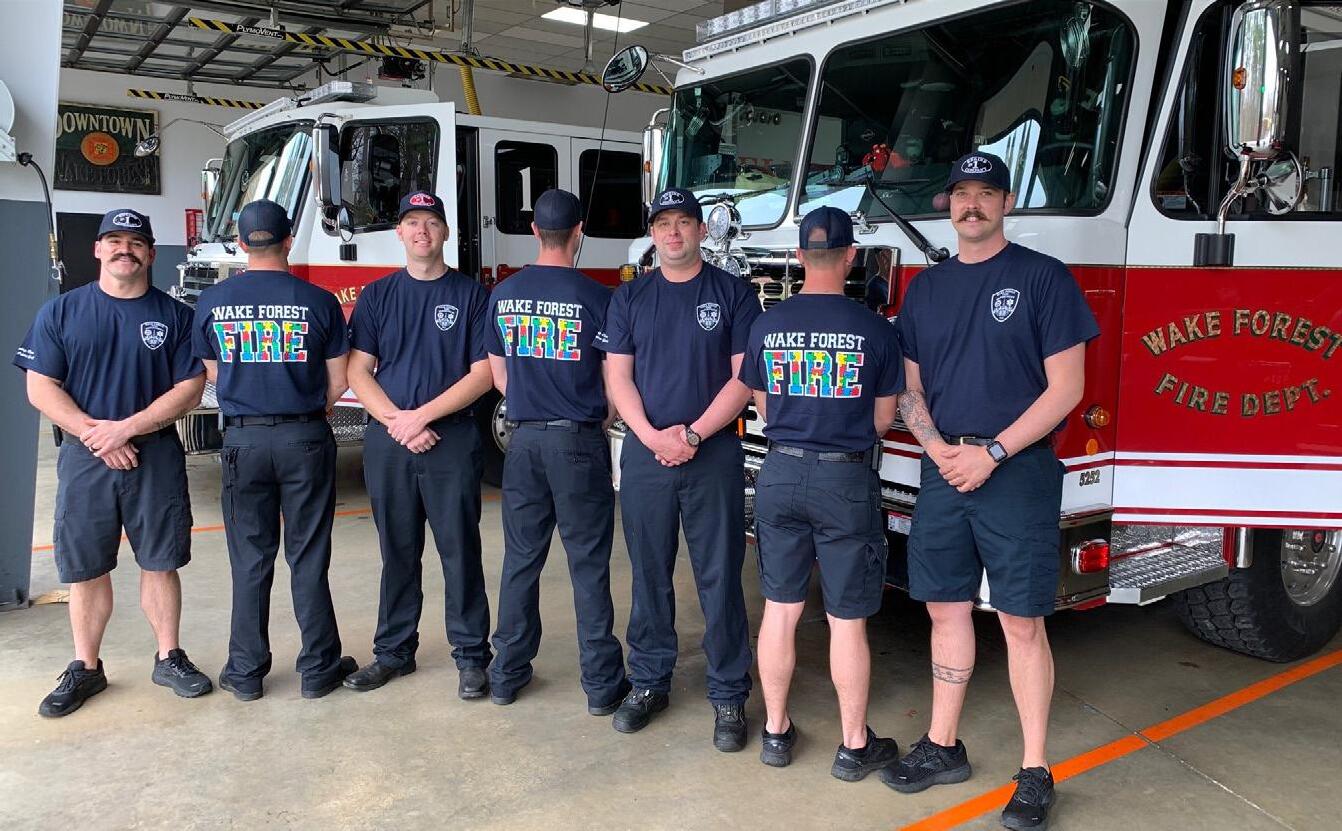
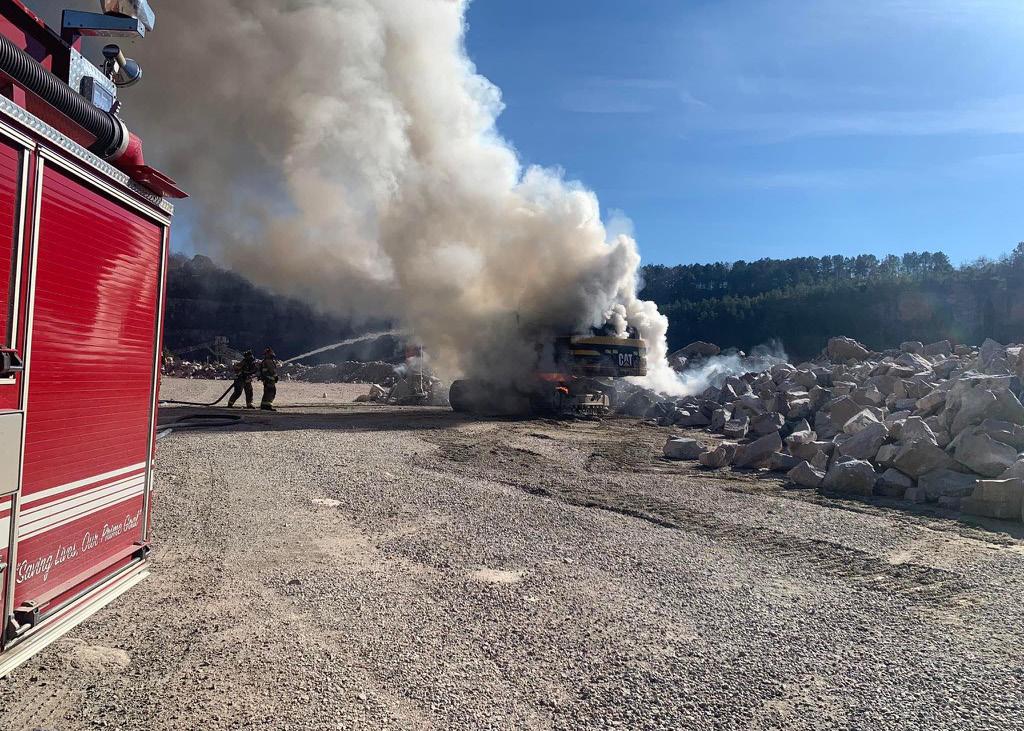
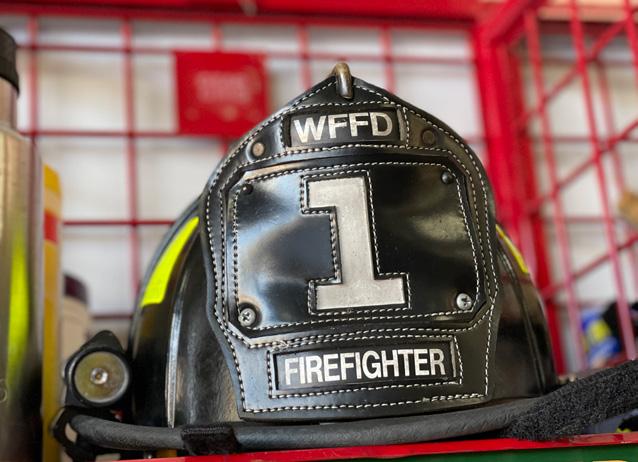

The Wake Forest Fire Department has always been more than trucks, stations, and equipment; it is people bound by a shared purpose: To Save Lives Through Superior, Selfless Service. This Strategic Plan is not just a document; it is a roadmap that unites us around our mission, vision, and values while preparing us to meet the needs of a growing and diverse community.
OUR MISSION is simple yet powerful: Save Lives Through Superior, Selfless Service.
OUR VISION calls us to lead with proactive engagement, training, and excellence.
OUR MOTTO “Saving Lives, Our Prime Goal” reminds us daily why we serve.
Through collaboration with our members, our community, and Town leadership, nine guiding goals have emerged that will focus our work for the next five years:
1. Strengthen internal organization and communication.
2. Strengthen the department’s workforce.
3. Invest in the management and maintenance of our physical assets while being fiscally responsible.
4. Evaluate compensation structures and strengthen collaboration with Town departments.
5. Strengthen accountability and standardization.
6. Strengthen organizational structure, career progression, and leadership development.
7. Obtain and maintain CPSE Accreditation.
8. Advance the health, wellness, and resilience of our members.
9. Strengthen training and readiness.
These goals are bold but achievable because they were built together. They reflect the input of citizens, community partners, firefighters, officers, and staff. They also directly align with the Town of Wake Forest’s 2022 to 2027 Strategic Plan priorities: sustaining excellent services, fostering a safe and welcoming community, investing in infrastructure, supporting prosperity, and ensuring accessible opportunities for all.
This plan is a commitment to each other and to the people we serve. It asks every member, from probationary firefighter to chief officer, to march to the beat of the same drum: to be accountable, to train with purpose, to serve with compassion, and to take pride in leaving the department stronger for those who will follow.
By embracing this plan, we affirm that the Wake Forest Fire Department will not only respond to emergencies but also lead with vision, resilience, and heart. Together, we will continue to be a department worthy of the trust placed in us and a vital part of a thriving, resilient Wake Forest.
The Wake Forest Fire Department (WFFD) is committed to continuous self-evaluation and improvement, striving to provide the highest quality of selfless service to our community and beyond. The needs and expectations of the public are constantly evolving, and it is our responsibility not only to meet but also to exceed those expectations. To achieve this, WFFD actively seeks feedback from both internal and external stakeholders, ensuring that our organization adapts to the needs of those who rely on us; whether they are residents of the Town of Wake Forest, visitors, surrounding communities, or partner agencies we support during mutual aid responses.
This strategic plan reflects our dedication to excellence and accountability. Through surveys, meetings, and discussions, we gathered insights that identified areas for improvement and growth. This inclusive process shaped our priorities, built on strengths, addressed challenges, and ensured every member’s voice was valued.
As WFFD moves forward with the implementation of this plan, we remain focused on our purpose: protecting lives, property, and the environment through selflessness, professionalism, and training. This plan serves as both a roadmap for progress and a testament to our commitment to serving wherever we are called. With the continued support of our community and stakeholders, we are confident that we will achieve our goals and maintain the highest standards of service our community deserves.
Above all, this plan reflects what makes the Wake Forest Fire Department unique, which is our commitment to living out our motto every day, “Saving Lives, Our Prime Goal.”
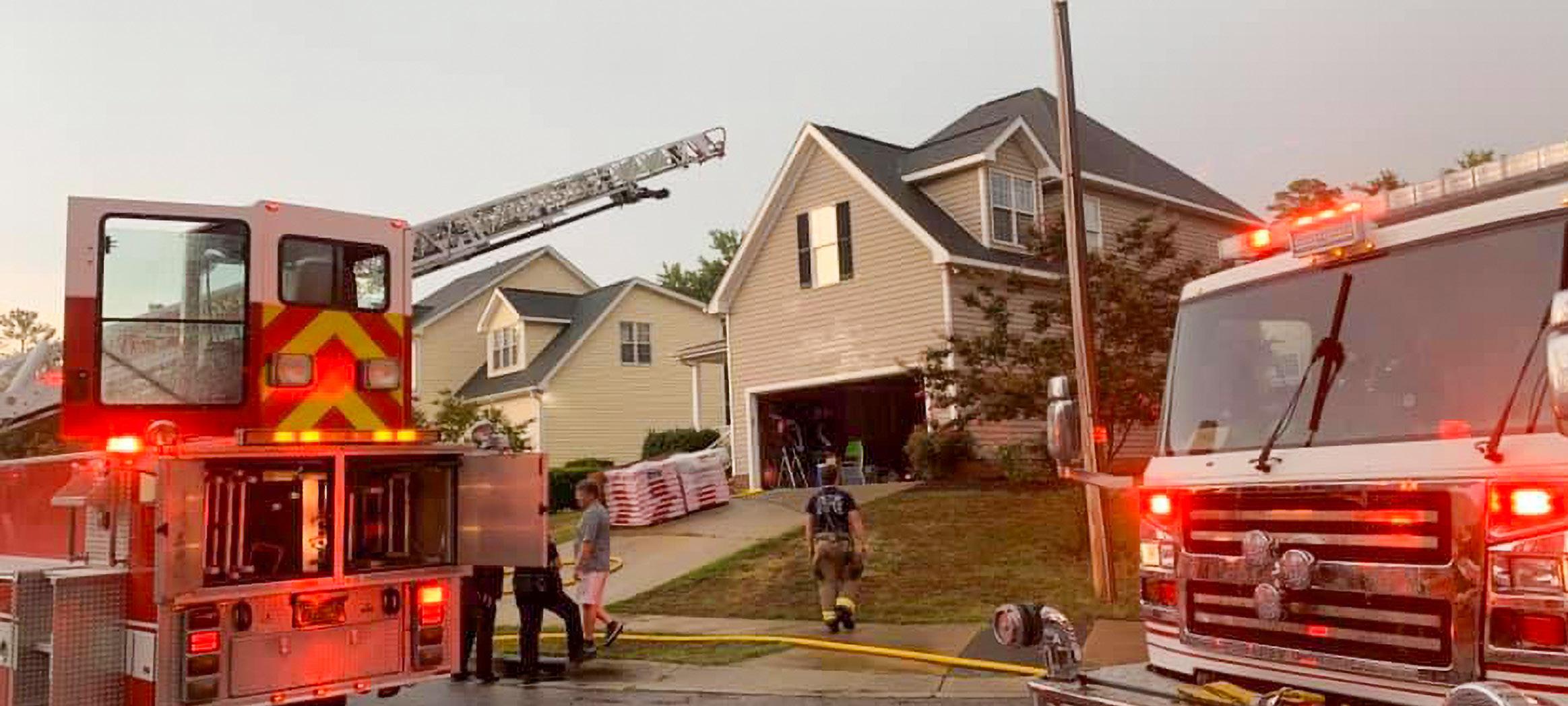
Wake Forest, North Carolina, has a rich and fascinating history that dates to the early 19th century. The town’s origins are closely tied to education, dating back to 1832 when the North Carolina Baptist Convention purchased a 615-acre plantation from Dr. Calvin Jones. This land was used to establish the Wake Forest Institute in 1834, which later evolved into Wake Forest College by 1838. The town itself was not initially designed as a commercial center but as a place of learning, with its layout reflecting a focus on residential areas rather than commerce. This unique planning decision, driven by the college trustees’ need to sell parts of the plantation to finance the school, sets Wake Forest apart from other towns with typical “Main Street” commercial arteries.
The town of Wake Forest was officially chartered in 1909, but its roots in the “Forest District” go back much further. This area, known for its dense oak forests, was settled in the 18th century by large landowners who set up a society noted for its refinement and commitment to education. Early schools such as the Forest Hill Academy and the Macedonian Academy played crucial roles in shaping the community’s educational landscape long before the town was formally recognized.
Wake Forest is also home to some intriguing historical anecdotes and notable figures. Dr. Calvin Jones, the town’s namesake, was a multifaceted individual who served as a General in the North Carolina militia during the War of 1812, in addition to his work as a physician. During the Civil War, Wake Forest College continued to run even as many students and faculty members left to join the Confederate Army, and the campus was periodically used as a Confederate hospital, highlighting the town’s deep involvement in the war.
In more recent history, Wake Forest has produced influential individuals like John W. Thacker, a pioneering computer scientist who played a key role in developing the JPEG image compression standard, which has had a significant impact on digital technology. Additionally, the town is associated with C.J. Hunter, a former shot putter and Olympic athlete who grew up in Wake Forest and went on to achieve national recognition in his sport. Other notable athletes who are from the area are Dexter Lawrence, Akshay Bhatia, Bryce Love, and Mac Williamson.
Today, Wake Forest is a vibrant town that blends its historical roots with modern growth. It is home to a thriving downtown area, cultural events, and a keen sense of community, all while maintaining much of the charm that characterized its early days as a small educational hub nestled in the oak forests of North Carolina.
The Town of Wake Forest’s fire protection service has a longstanding tradition that dates to 1921, when it was first organized by Thomas Arrington, Sr., who served as the department’s Fire Chief. Originally set up as a community fire brigade, the WFFD was tasked with providing fire protection services to both the Town and Wake Forest College. Additionally, on May 7th, 1942, the Town Board encouraged the formation of Wake Forest Fire Company 2. Wake Forest Fire Company 2 was an all-African American volunteer station, led and organized by the principal volunteer Edward Alston, and an influential member of the Northeast community. On July 6th, 1944, the Town Board members elected for the African American volunteers to be paid the exact same wages as the white firefighters across town. Unfortunately, in 1983, a fire occurred within the firehouse of Station 2, leading to the total loss of the Town’s second municipal fire department.
As the community expanded, the municipal department moved its quarters to the old town hall building and remained there until 1973, when the need for more space led to a move to a newly renovated station on South White Street. In 1956, the Wakette Fire Protection District was founded, with Willis Winston serving as its first Fire Chief. This organization handled delivering fire protection services to the unincorporated areas surrounding the Town of Wake Forest. Initially, the Wakette District’s equipment was housed in the basement of the old town hall until it was moved to a new firehouse constructed in 1966 at the intersection of South White Street and Elm Avenue. Despite operating side by side, the Wake Forest Fire Department and the Wakette Fire Protection District remained separate entities, using the same personnel but different equipment.
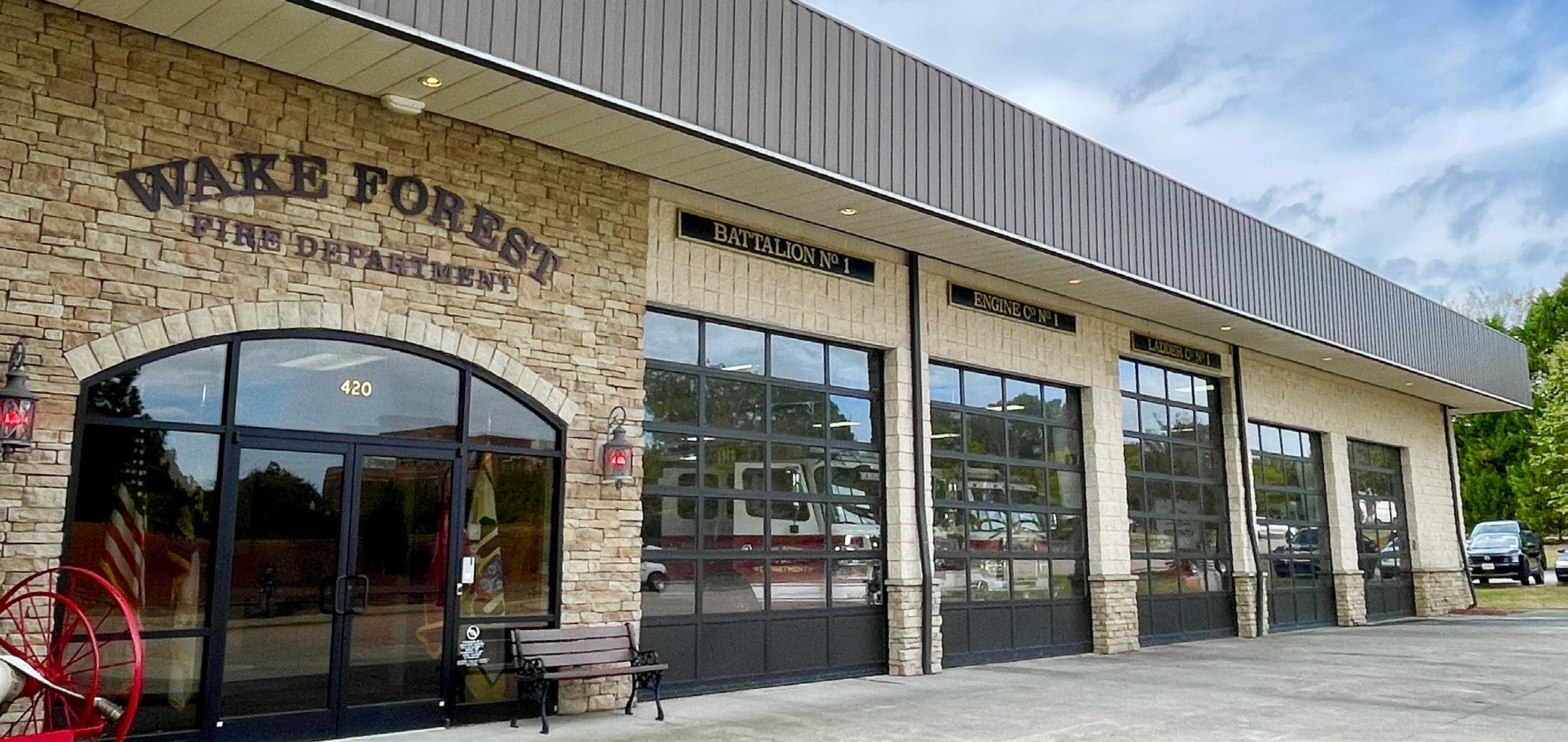
In 1983, with the aid of Sherman Pickard from the North Carolina Institute of Government, these two organizations merged to form the Wake Forest Fire Department, Inc., marking the first time in North Carolina that a municipality contracted its fire protection to another agency. A new firehouse was constructed in 1986 at 420 Elm Avenue to meet the housing demands for the combined apparatus and equipment.
Recognizing the challenges posed by the area’s rapid growth, the Board of Directors in 1993 created three full-time staff positions to ensure a guaranteed response to fire and medical emergencies within the Wake Forest Fire District. In the year 2000, the department expanded its services to include emergency medical first responder duties, enhancing the Wake County Emergency Medical Services’ efforts to reduce response times to medical incidents. Over the years, additional stations were constructed to meet the community’s needs, including Station 2 on Ligon Mill Road in 2001, Station 3, a modern two-bay station on Forestville Road in 2009, and Station 4 in 2016.
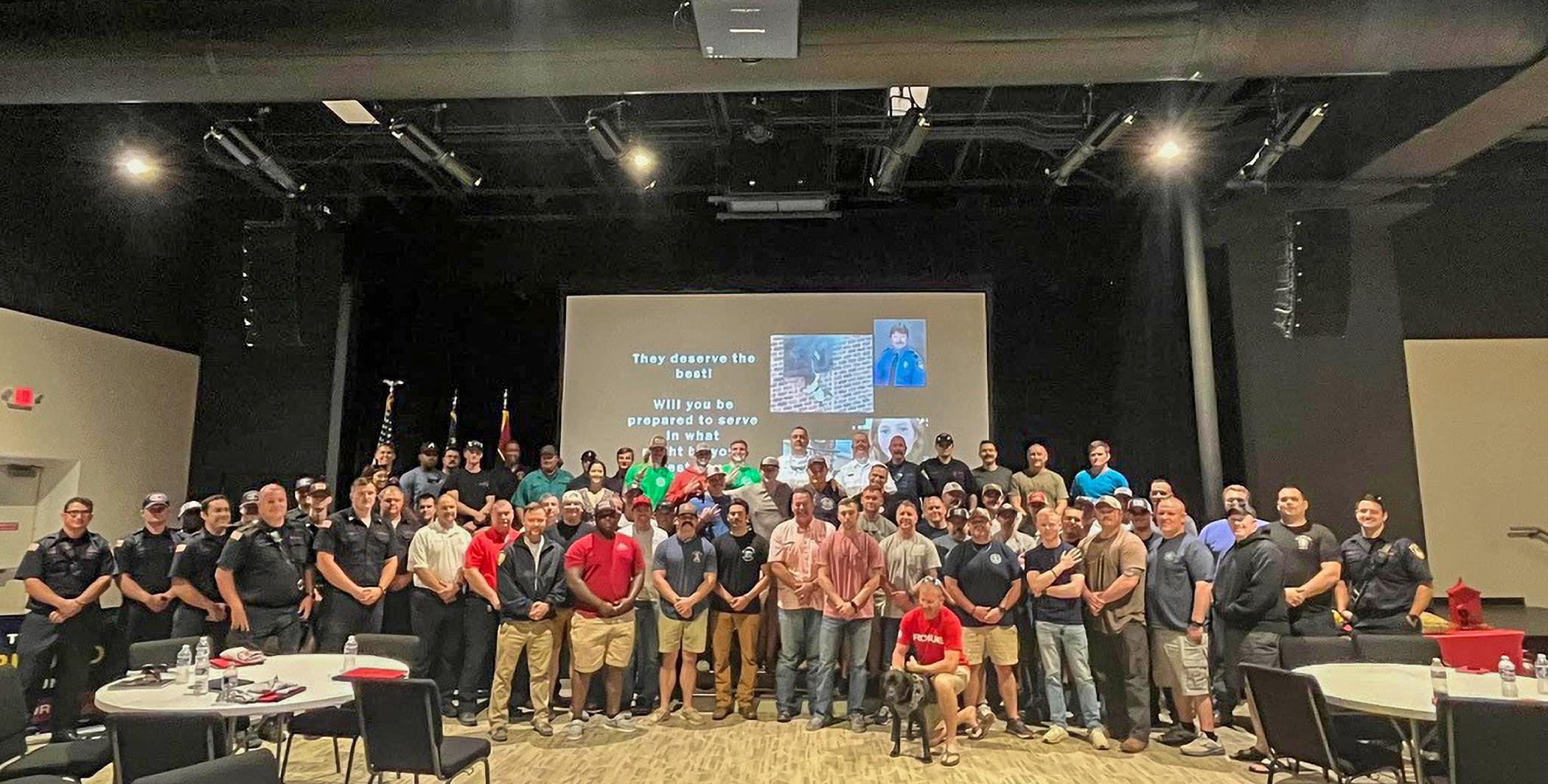
In 2012, the Falls Fire Department, housed in Wake County Fire Station 21, merged with the Wake Forest Fire Department, bringing together resources to improve services to both communities. Today, the WFFD runs out of five strategically located stations, providing various emergency services to the community. However, land for a future Station 6, including space for a training center and related facilities, was acquired in February 2024. The department maintains a fleet that includes five engines, two ladder trucks, two brush trucks, two tankers, and two battalion chiefs (one full-time and one volunteer), each essential for addressing the diverse challenges met during emergency responses.
In July of 2020, WFFD Inc. was finally brought back under the town. This transition was both beneficial for the town and for the members of the fire department. WFFD continuously strives for excellence by meeting the growing demands of our community. As of April 2022, the Wake Forest Fire Department achieved an ISO Class 1 rating, the highest level of fire protection, reflecting the department’s exceptional capabilities and dedication to community safety. This top-tier classification places the department among the best in the nation, enhancing fire insurance benefits for residents and businesses within the town. In the Wakette Fire District, or the county’s unincorporated districts, WFFD holds an impressive ISO Class 2 rating, underscoring its commitment to delivering high-quality fire protection services across diverse areas.
As of 2025, the WFFD has 101 full-time equivalent approved positions, 24 part-time approved positions, 25 duty crew volunteer positions, and another 15 volunteers that assist the WFFD. Engine Companies 2 through 4 and both Ladder Companies currently operate with five members each, while Engine 1 has four members. Station 5 is staffed by three part-time members Monday through Friday and by volunteers at night and on weekends. Station 3 is particularly notable within the department, as it houses the department’s specialized water rescue equipment. The WFFD’s capabilities extend beyond traditional firefighting to include hazmat operations, water rescue operations, underwater body recovery using a remotely operated vehicle (ROV), and a drone program that aids in various aspects of emergency management and water rescue. These specialized services are vital for a community with diverse needs, particularly in areas prone to water-related emergencies.
In addition to these operational roles, the WFFD is also involved in several other critical areas. The department has an Honor Guard that takes part in ceremonial duties, offering a dignified presence at major events. The WFFD is also engaged in emergency management, fire investigations, and a fire and life safety education program, all of which contribute to the overall safety and well-being of the community. Additionally, the WFFD had a Tactical Support Unit (TSU) Team that supported Wake Forest Police Department (WFPD) during high-risk incidents by integrating with SWAT as support EMS personnel.
These services highlight the department’s comprehensive approach to public safety, ensuring that they can handle a wide range of emergencies while also playing a proactive role in community engagement and prevention. Delivering these services presents unique challenges, as the population within our 42-square-mile service area has grown more than tenfold since 1990, now pushing approximately 67,778 people.
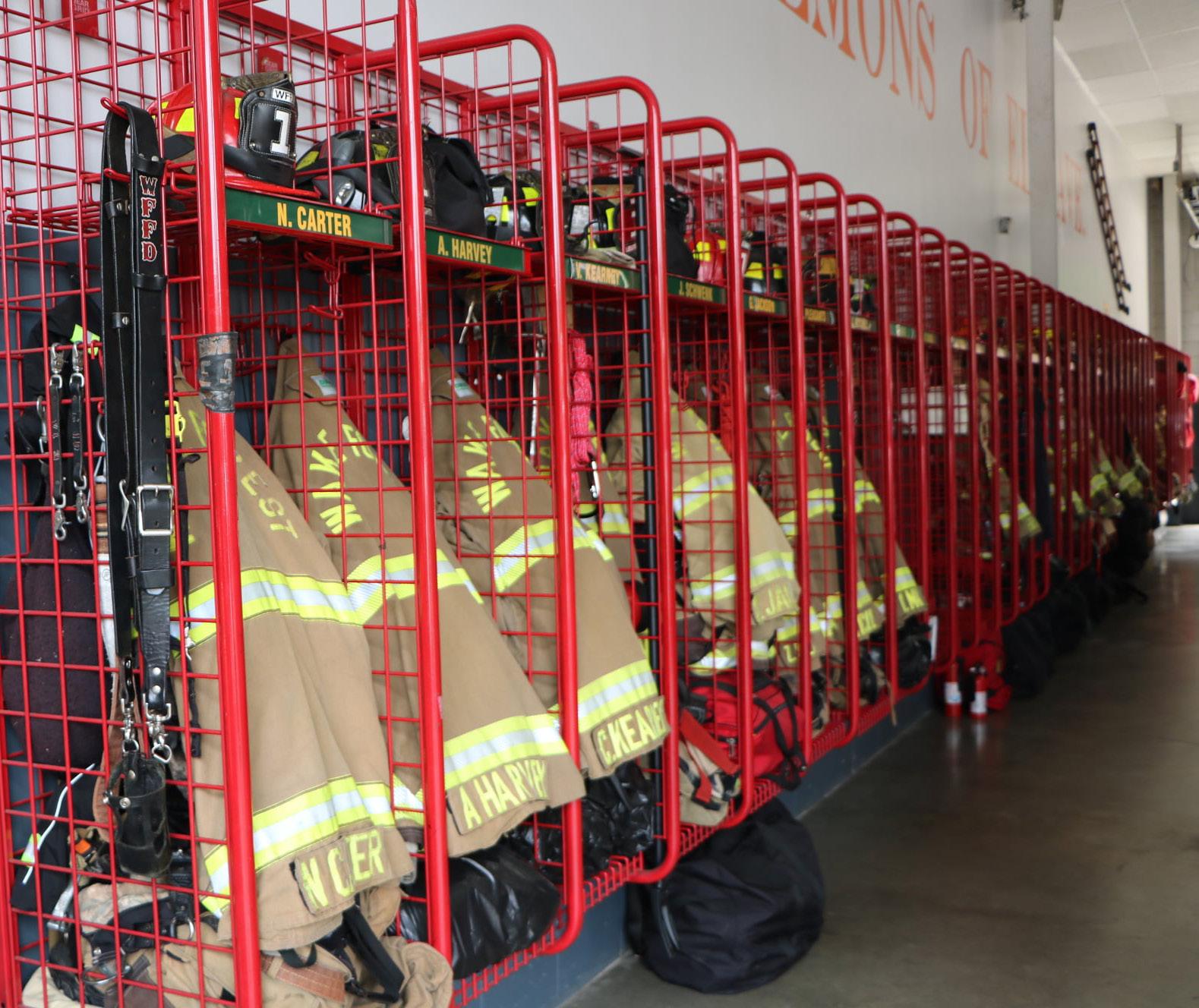
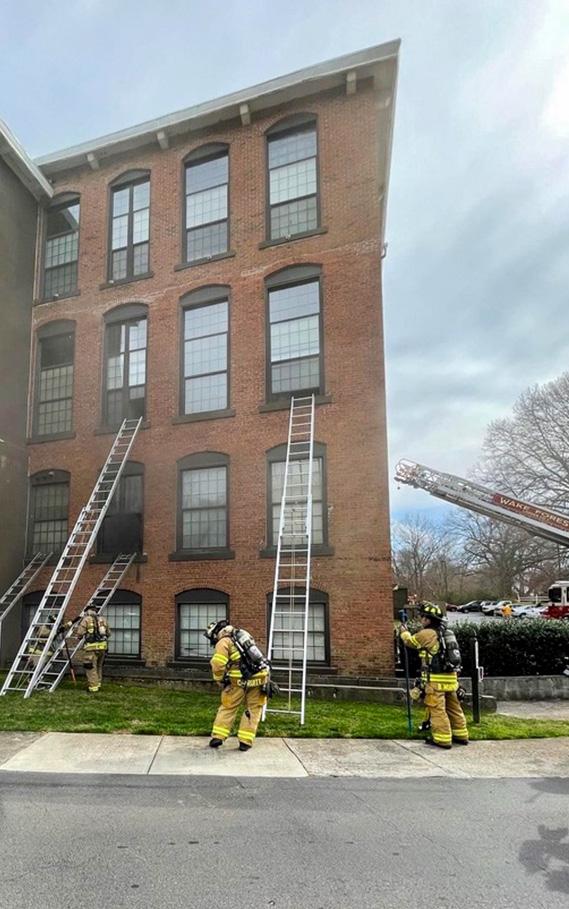
A strategic plan is an essential tool for any organization, especially in fields as dynamic and critical as fire and emergency services. For the WFFD, it serves as a roadmap that guides our decisionmaking, ensuring resources are distributed appropriately, efforts remain focused, and operations align with long-term goals. Planning and budgeting for the future is not about maintaining the status quo; it’s about anticipating change, addressing challenges, and seizing opportunities for growth and improvement. A well-crafted plan lays out clear goals, objectives, and the steps needed to achieve them.
One of the biggest benefits of a strategic plan is how it improves efficiency and effectiveness. With a clear mission and vision supported by defined goals, we can streamline our work, reduce redundancy, and focus energy on initiatives that deliver the greatest impact. The plan also pushes us to re-evaluate our programs and services regularly, ensuring they remain relevant to community needs. This ongoing assessment highlights where innovation is possible and where resources can be better applied.
The development of a strategic plan is never done in isolation. Input from internal and external stakeholders makes the plan stronger and more effective. This feedback forms the foundation of the plan and directly influences every goal.
For a strategic plan to succeed, it must be consistent and formal enough to provide a stable framework everyone can understand and follow. Consistency ensures every member of WFFD knows the plan and can apply it in their daily work. This shared understanding builds unity and purpose, as everyone works toward the same goals while being guided by the same principles.
At the same time, a plan must be flexible. Fire and emergency services face unexpected challenges daily, and the ability to adapt is essential. While the plan provides structure, it also leaves room to adjust as circumstances change, allowing us to meet new challenges without losing sight of our core priorities.
Communication is also critical. The plan must be clearly explained and shared with every member of the organization, from the highest-ranking officer to the newest recruit. When everyone understands the goals and their role in achieving them, the plan becomes more than a document on a shelf. It becomes a living guide that influences daily decisions and actions across the department.
Finally, the plan creates accountability. By setting clear objectives and benchmarks, we can measure progress and hold ourselves responsible for results. Accountability builds community trust and keeps us focused on our mission to serve and protect.
Where applicable, WFFD aligns its goals and objectives with nationally recognized standards, such as those published by the National Fire Protection Association (NFPA). These standards provide a respected baseline for safety, staffing, training, wellness, and operational effectiveness; however, this plan adapts them to the unique needs, resources, and circumstances of our community.
In conclusion, the strategic plan is a vital tool for the WFFD. It helps us prepare for the future, improve our operations, and stay true to our core values. It gives us a consistent framework while remaining flexible in a constantly changing environment. Most importantly, it ensures that we can continue to provide the highest level of service to the citizens of Wake Forest, or wherever we are called, both now and in the years ahead.
The development of the Wake Forest Fire Department’s strategic plan was a comprehensive and collaborative effort shaped by the voices of both internal and external stakeholders. Through a combination of strengths, weaknesses, opportunities, and challenges (SWOC) meetings, along with anonymous surveys, valuable perspectives were gathered that helped identify priorities and shape meaningful goals for the future.

This process highlighted the importance of inclusiveness and transparency. Every participant, citizen, member, or partner contributed insights that shaped a plan balancing organizational realities with the community’s evolving needs.
We extend our gratitude to all who contributed their time, ideas, and commitment to this effort. The development of this strategic plan truly represents a collective vision, built on collaboration, accountability, and a shared dedication to advancing the mission of the Wake Forest Fire Department.
The Wake Forest Fire Department places the highest priority on serving its citizens and community. Our commitment to providing the best possible service is reflected in the way we engage with and listen to our external stakeholders. Their satisfaction is vital, as it directly influences both the effectiveness of our operations and the quality of service we provide. By maintaining open dialogue with the community, we ensure our services continue to meet their needs while upholding the highest standards of safety and care.
To prepare for our external community meetings, it was important to bring together a diverse group representing many facets of the community. This group included citizens, business owners, school representatives, community leaders, and members of various Town of Wake Forest departments. Their input and feedback proved invaluable, as they participated enthusiastically in open and honest discussions about the department’s future.
Through guided conversations, the group explored core services and their prioritization, conducted Strengths, Weaknesses, Opportunities, and Challenges (SWOC) analysis, examined community expectations, and ranked future strategic priorities. External stakeholders expressed their appreciation for being included in the process, feeling heard, and for the time and effort invested in professionally organizing the sessions and educating them along the way.
The Wake Forest Fire Department extends sincere gratitude to these stakeholders for their time, effort, and thoughtful contributions in helping us create a community-driven strategic plan. The insights gathered during the two external stakeholders focus group meetings are summarized below and have been integrated, where appropriate, into our goals, objectives, and critical tasks.
• David McCracken
• Melissa Lloyd
• Michael Lawson
• Nathan Robb
• Buck Buchanan
• John Schulz
• Suzanne Lucey
• Tim Forrest
• Allison Snyder
• Julius Jefferson
• Jennie Griggs
• Jennifer Currin
• Joe Grimm
• Octavius Jefferys
• Tim Bailey
• Yolanda Taylor
• Andi Curtis
In the first part of the sessions, we guided participants through an exercise comparing their perceptions of our core services with the actual services we provide. This allowed us to clarify any misconceptions and ensure a shared understanding of terminology related to our operations. We then
utilized a Poll Everywhere ranking survey to capture their input on the prioritization of these services in real-time. The results of this interactive exercise are displayed below, providing valuable takeaways into community priorities.
Conducting a Strengths, Weaknesses, Opportunities, and Challenges (SWOC) analysis is essential for the WFFD because it gives us a clear picture of how well we are meeting the community’s needs and where improvements are needed. By looking closely at our strengths, we can build on what we do well, while also addressing weaknesses, taking advantage of opportunities, and preparing for challenges. This process helps ensure that our strategic plan is both realistic and aligned with our organizational capabilities and the expectations of the community.
The WFFD takes pride in delivering exceptional services that meet the unique needs of our community. Highlighted below are key strengths identified by our external stakeholder focus groups, which we acknowledge as essential to the continued success of our mission. The topics are listed in the order of how frequently they were mentioned during the discussions.
• Fire & Life Safety Education
• Response Times
• Opportunity & Level of Training
• Professionalism
• Operational Partnerships
• Future-Focused Resource Management
• Broad Spectrum of Services
• Public Engagement and Accessibility
The WFFD values the importance of identifying weaknesses as part of a comprehensive S.W.O.C. analysis. Recognizing these areas for improvement enables us to address potential challenges proactively and enhance our ability to serve effectively. Highlighted below are weaknesses identified by our external stakeholders, reflecting honest feedback from the community we serve. The topics are listed in the order of how frequently they were mentioned during the discussions.
• Community Outreach
• Adapting to Growth and Evolving Community Needs
• Interdepartmental Collaboration and Integration
Opportunities
• Balancing Core Responsibilities with Time Constraints
• Humility & Collective Responsibility
• Equipment Availability
• Lack of Bilingual Employees
Identifying opportunities is a key part of the WFFD’s commitment to growth and continuous improvement. Detailed below are opportunities identified by our external stakeholder focus groups, focusing on areas where we can expand and enhance our services to better meet the community’s evolving needs. This proactive approach ensures we remain effective, efficient, and prepared for the future. The topics are listed in the order of how frequently they were mentioned during the discussions.
• Internal and External Collaboration
• Fire & Life Safety Education
• Expanding Funding and Resource Opportunities
• Leverage Technology
• Enhance External Training Opportunities
Understanding challenges is essential for the WFFD to proactively address potential obstacles that could impact our mission. Below are challenges identified by our external stakeholder focus groups, providing valuable perspectives into areas that may hinder our service delivery. These challenges have shaped our goals and objectives, enabling us to develop strategies to overcome them while maintaining high-quality service for the community. The topics are listed in the order of how frequently they were mentioned during the discussions.
• Growth (Population, Infrastructure, Call Volume)
• Budget/Funding
• Large Scale Responses/Disasters
• Recruitment and Maintaining Workforce Experience
• Overcoming Public Misconceptions and Ensuring Operational Safety/Security
• Cancer in the Fire Service
During the external stakeholder focus group meetings, two external stakeholder meetings were engaged to better understand and address community expectations. Each group offered valuable insights, though they often reached different conclusions about strategies and priorities. These differences highlight the diverse needs within our community and reinforce the importance of this planning process.
To ensure all perspectives were captured, we facilitated open discussions where participants shared their expectations for the WFFD. From these conversations, we worked with each group to identify common themes such as response times, public and community education, and professionalism. Once expectations were established, participants used Poll Everywhere to prioritize them. The resulting priorities were then analyzed and translated into achievable goals and actionable objectives.
The WFFD is committed to integrating the community’s expectations, priorities, and input throughout this strategic plan. Contributions from the external stakeholders are incorporated throughout WFFD’s Strategic Goals.
Beyond the key expectations and priorities outlined above, two additional themes emerged during the discussions that merit inclusion in this strategic plan.
First, stakeholders expressed a strong desire for follow-up after calls, not only to check on the wellbeing of our citizens but also to support the physical and mental health of our personnel. This practice reinforces a culture of care and accountability for everyone involved.
Second, there was a clear expectation that fire department personnel would continue to show gratitude for the apparatus and equipment entrusted to us. This means treating resources with respect, maintaining them diligently, and demonstrating pride in the tools that allow us to fulfill our mission.
Although these two topics did not rank among the condensed strategic priorities, they remain highly significant and reflect the values that WFFD strives to uphold.
Ranking Strategic
(Group 2)
Quick/Quality Service
Competency
Professionalism (Moral & Trustworthy)
Community Education
Fiscally Responsible
Poll Everywhere, 2024
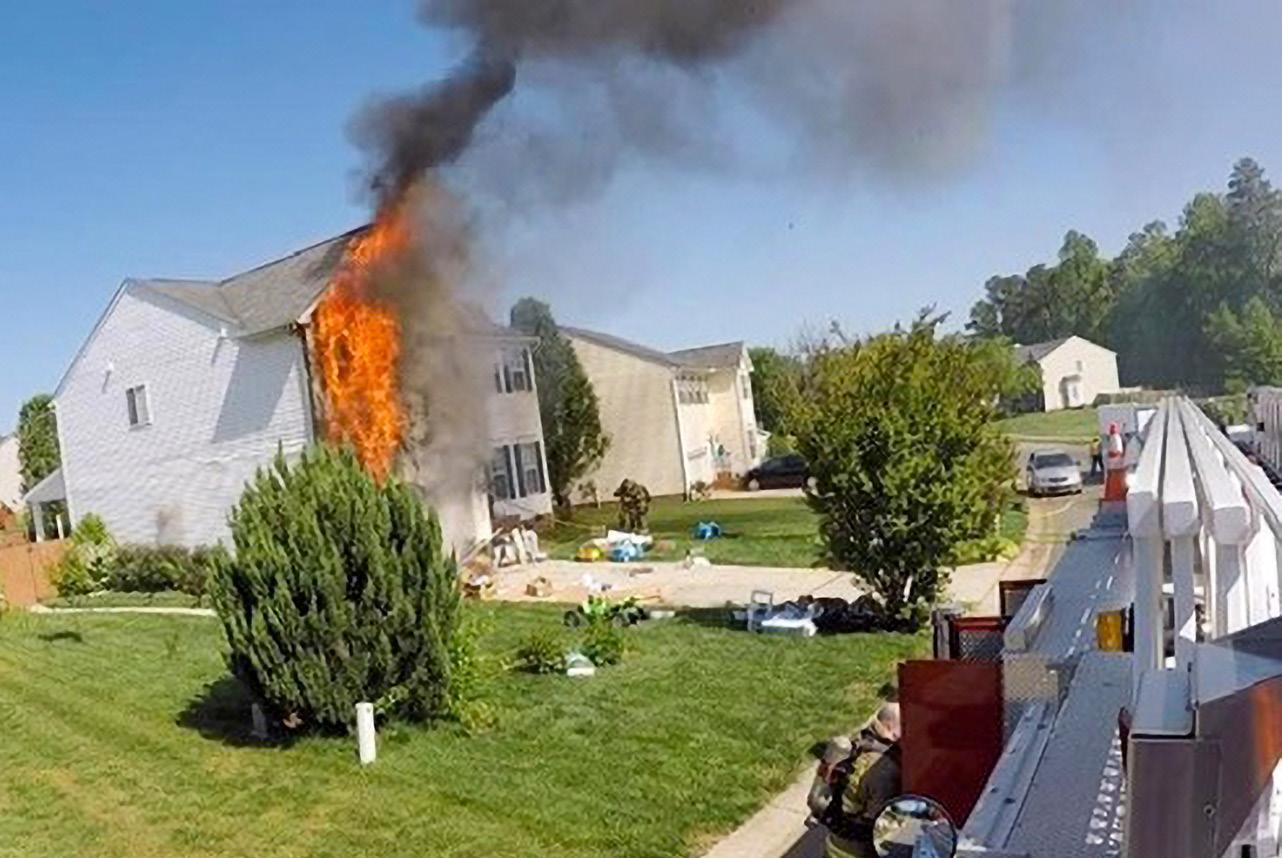
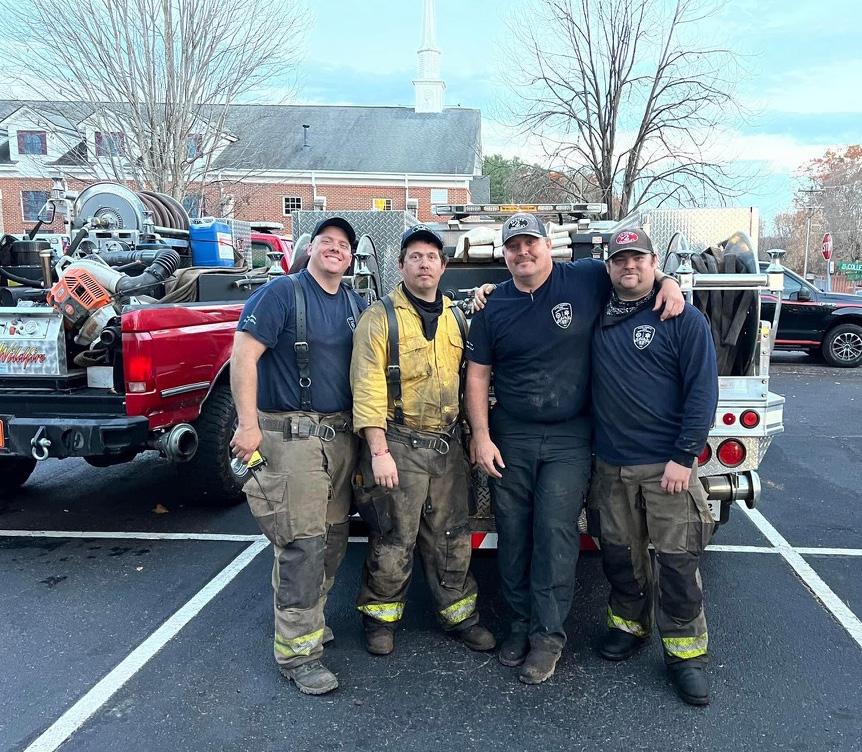
Our internal stakeholders, including firefighters, administrative staff, and volunteers, are the backbone of the WFFD. Their commitment, skills, and passion for serving the community are vital to our success. We value their input and recognize that their engagement and satisfaction are essential to delivering the highest level of service to our citizens. By fostering a supportive and inclusive environment, we empower our team to live out the WFFD’s mission, vision, and values every day.
To ensure every member’s voice was heard, WFFD conducted on-shift discussions where all personnel reviewed the department’s mission, vision, motto, and core values, and participated in a Strengths, Weaknesses, Opportunities, and Challenges (SWOC) analysis. In addition, an anonymous survey was distributed to gather measurable feedback, which can be revisited in the future to track progress and improvement. After compiling this data, a focus group was formed to identify trends, refine details, and ensure the goals in this strategic plan reflect the collective insights of the entire department.
As part of the SWOC analysis and through numerous open discussions, it was determined that WFFD’s mission statement needed to be updated. The mission statement serves several important purposes for our department:
Guidance and Direction: It provides a clear and concise statement of our core purpose, guiding decision-making and ensuring that all actions align with departmental goals.
Memorable and Recitable: It is written so every member can easily remember and recite it, keeping it at the forefront of daily actions and decisions.
Applicable: It applies to every aspect of our work, from emergency response to community engagement, serving as a practical tool that shapes behavior and performance.
Accountable: It sets clear expectations for performance and behavior, providing a standard against which the department’s actions can be measured.
Overall, the mission statement is a foundational element that shapes WFFD’s culture, priorities, and actions. It is designed to be memorable, recitable, and applicable to daily operations.
THE NEW MISSION STATEMENT OF THE WAKE FOREST FIRE DEPARTMENT IS: Save Lives Through Superior, Selfless Service.
A vision statement is essential for our organization because it acts as a compass, guiding us toward long-term goals and defining what success looks like. It provides direction, ensuring that everyone
understands what we are striving to achieve. The vision statement aligns our efforts, motivates continuous growth, and helps measure our progress. In this way, it serves as a roadmap that keeps us focused on our mission and committed to reaching our desired future.
Much like the discussions surrounding our mission statement, it was also determined that our vision statement needed to be updated.
THE NEW VISION STATEMENT OF THE WAKE FOREST FIRE DEPARTMENT IS:
Through proactive engagement, education, training, and fostering an aggressive department of highly skilled members dedicated to the needs of the public, we will forge a standard of excellence.
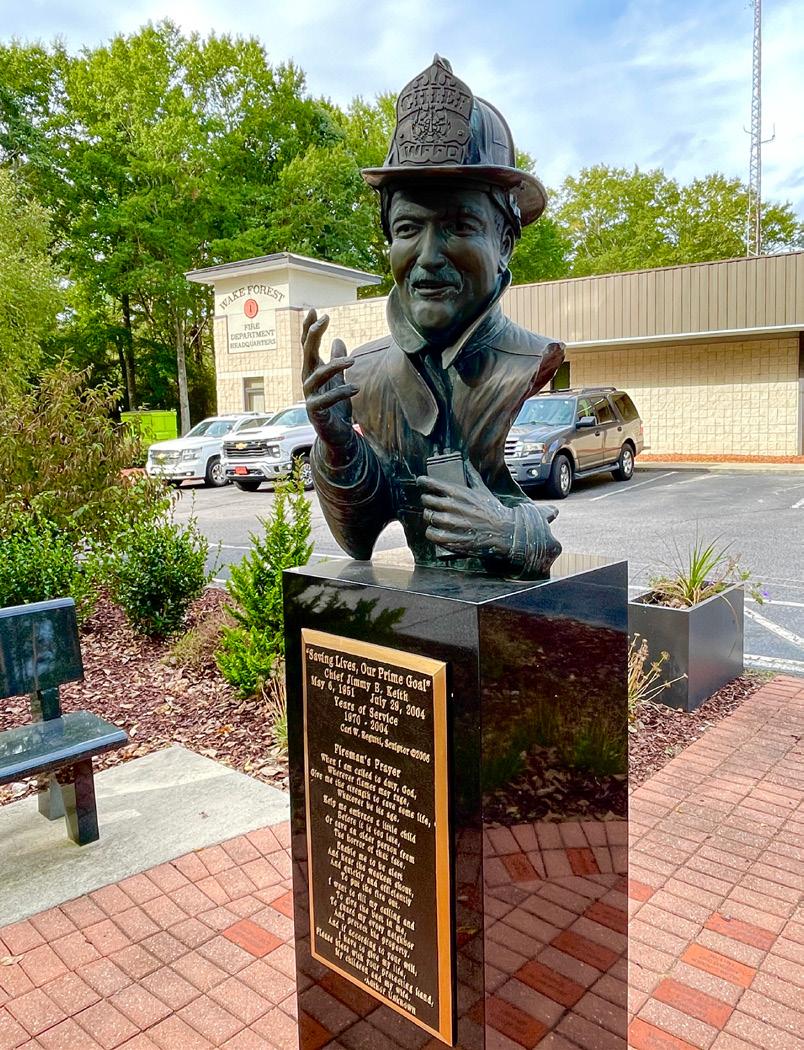
The motto of the Wake Forest Fire Department was given to us by Chief Jimmy B. Keith and continues to embody the dedication, leadership, and commitment that define our values. Chief Keith was a leader who consistently went above and beyond, working after hours, taking on responsibilities outside his formal duties, and investing in the growth and well-being of every member of the department. His example set a benchmark for excellence that we continue to strive toward, reminding us to lead with integrity, work with relentless commitment, and support one another in all that we do.
This motto stands as both a tribute to his legacy and a constant reminder of the qualities we seek to uphold in our daily service.
THE MOTTO OF THE WAKE FOREST FIRE DEPARTMENT IS:
Saving Lives, Our Prime Goal.
Our core values are the foundation of everything we do as an organization. They guide our actions, decisions, and interactions—within the department, in service to our community, and in our everyday lives. These values are not just words; they represent the principles our members live by each day, ensuring the WFFD maintains the highest standards of conduct and service. By embodying these values, we honor the trust placed in us by the public and uphold the legacy of those who have served before us.
The Wake Forest Fire Department’s Core Values are:
Duty: Duty compels us to do the right thing at the right time, regardless of adverse consequences. It is the precursor of discipline and obedience. Duty requires that we accept responsibility for our actions.
Honor: The enormous commitment necessary to perform the Department’s tasks requires excellence of character. We inspire each other through pride in our department, both past and present.
Pride: We take pride in ourselves as individuals, our members as a team, our department as a family, and our citizens as a community.
Family: We are a fire department family. We are committed and accountable to each other because our lives depend on it. We value each member in our organization. We respect those who came before us and will strive to make the organization better for those who follow.
Integrity: We are committed to honesty and ethical behavior, and we will make decisions based on moral standards regardless of personal belief or benefit. We will work hard every day to maintain the highest professional standards and to earn the public’s trust through our actions.
Professionalism: We are dedicated to serving at the highest level of excellence, in a manner showing commitment and respect to our mission. A commitment to excellence, possessing a positive attitude, and having pride in your work while conforming to a high standard of conduct.
Courage: Courage is the value that gives us the moral and mental strength to do what is right, even in the face of personal or professional adversity.
In summary, these core values define who we are as an organization and shape our culture. They keep us focused on our mission, guide us to act with integrity, and strengthen the bonds of our team. By living these values, we not only achieve our goals but also earn the respect and trust of the community wherever WFFD is called to serve.
As a department committed to community service, we offer a variety of core programs designed to enhance our ability to respond to various emergencies. These programs are key to fulfilling our mission and reflect our dedication to meeting the diverse needs of our community. Our internal stakeholders were able to identify the following core programs provided by the Wake Forest Fire Department.
Core Programs of the Wake Forest Fire Department
• Rescue Operations
• Fire Investigation
• Training Division
• Accreditation
• Hazardous Materials Mitigation
• Water Rescue
• ROV Program
• Emergency Medical Services
• Drone Program
• Emergency Management
• Honor Guard
• Explorer Program
• Chaplain Program
• Community Events
Supporting Services of the Wake Forest Fire Department
• Youngsville Fire Department
• Northern Wake Fire Department
• Rolesville Fire Department
• Wake Forest Police Department
• Red Cross
• Public Works
• Wake Tech Community College
• Power Companies
• Facilities
• Human Resources
• Wake County EMS
• Media
• Training Divisions Across the State
• IT Department
• Raleigh Wake Emergency Communications Center
• State and Federal Agencies
• Wake County Fire Services
• Senior Town Leadership
• Wake Forest Chamber of Commerce
Conducting a Strengths, Weaknesses, Opportunities, and Challenges (SWOC) analysis is vital for the WFFD because it provides a clear understanding of how well we are meeting the community’s needs and where improvements are necessary. By carefully examining our strengths, we can build on what we do well, while also identifying weaknesses, seizing opportunities, and preparing for challenges. This process ensures that our strategic plan remains both realistic and achievable, grounded in our organizational capabilities and aligned with the expectations of the community we serve.
The Wake Forest Fire Department’s greatest strength is its ability to deliver high-quality, responsive services that align with the needs of the community. Our skilled and dedicated personnel excel in both fire suppression and emergency medical services, ensuring comprehensive care in times of need. The department’s commitment to continuous, purposeful training, along with strong public education and community engagement, further enhances our ability to meet and exceed expectations. These qualities have made WFFD a trusted and reliable resource for the citizens we serve.
The following is a list of strengths identified by our members and valued by the department. We remain committed to upholding these strengths and will continue to focus on them as a core part of our foundation.
• Training
• Willingness to explore innovative Technology
• Aggressiveness
• Highly motivated
• High standards
• Family
• Passion
• Progressive with learning & training
• Fire Prevention
• Service
• Funding and administrative support
• Culture
• Benefits
• Opportunities for learning
• Education
• Belonging to something bigger than ourselves
• Welcoming environment
• Community focused
• Fireground operations
• Brotherhood
• Advancement opportunities
• Health & Wellness
• Pride
• Data-driven/Data tracking
• Entry-level screening
• Dedication
• In-house academy & Recruit Class
• Budget
• Easy for volunteers & part-timers to become full-time
Recognizing weaknesses during Strengths, Weaknesses, Opportunities, and Challenges (SWOC) analysis is essential for the WFFD because it highlights areas where improvement is needed and helps us address potential vulnerabilities before they affect our ability to serve effectively. Identifying weaknesses is not a sign of failure but a proactive step toward strengthening the organization. By being honest about our shortcomings, WFFD can develop targeted strategies to overcome them and ensure we continue to meet the high standards expected by the community we serve.
Below is a list of weaknesses identified by our members. These findings guided the development of eight strategic goals and multiple objectives aimed at addressing these concerns, demonstrating our commitment to listening to feedback and implementing meaningful changes that will enhance the department’s effectiveness and responsiveness.
• Better understanding of hours worked
• Acting pay timeline
• Discussing equal paychecks
• Vacation and sick time are considered hours worked
• Station 5 is lacking the 5th person
• Accountability
• Set of standards for volunteers and parttimers
• Station 5 is not a priority
• Onboarding
• Volunteer expectations
• Level of training between full-time, parttime, and volunteers
• Station 5 facility
• Equipment at Station 5
• Fleet mechanic
• Fleet maintenance
• Equipment & apparatuses are outdated and need a replacement plan
• Need equipment for the Academy
• No headsets in the apparatus
• No Succession Planning
• Lack of a formal mentoring or coaching program
• Not mission-focused
• Lack of officer development
• Work to fix issues instead of collective responses
• Consistency among shifts
• Standardization of standards
• More Administration positions
• Transparency
• Information sharing
• Educating decision makers
• Town relationship
• Overtasked on all levels
• Cutting grass
• No second set of turnout gear
• Programs and committees blocked by the admin
• Peer support
• Cancer screening
• Comprehensive exposure plan
Opportunities identified through the S.W.O.C. analysis is vital for WFFD, as they highlight areas where we can grow and strengthen our services. By pursuing these opportunities, we position the department to innovate, expand capabilities, and better serve both our members and community. This proactive approach allows us to anticipate future challenges, improve effectiveness, and build longterm organizational resilience. Below is a list of opportunities identified by our members that reflect pathways to innovation, growth, and enhanced service delivery.
• Organizational Equity
• Ability to offer training in-house
• Ability to train outside people
• Grants
• Integrated training opportunities
• Technology infrastructure
• Utilizing other Town departments
• Resources (computers, etc.)
• Technology
• Hiring a Fleet Mechanic
• Fleet Replacement Program
• Targeted recruiting
• Utilizing inter-agency agreements
• Officer Development Program
• Working on statewide and regional collaboration
• Crew integrity
• More open forums
• Educate external decision makers
• Accreditation
• Purchasing apparatus off the line for reserve vehicles
• Staffing Squad 5
• Fire Department Open House
• Supplemental retirement and insurance benefits
• Mental health initiatives
• Dietitian
• Explore Technical Rescue Programs to aid in better serving our community
During the challenges portion of the S.W.O.C. analysis, internal stakeholders identified several factors that could hinder WFFD’s mission. Recognizing these challenges is essential, as it allows the department to prepare for obstacles before they have an impact on service delivery or long-term goals. By acknowledging and analyzing these difficulties, WFFD can develop strategies to reduce their impact, ensuring the organization remains resilient, adaptable, and committed to maintaining high service standards.
The following challenges, identified by our members, shaped the development of our goals and objectives. Addressing them proactively will help the department safeguard its effectiveness and reinforce our commitment to delivering high-quality service to the community.
• Growth (population)
• Aging population
• Increase call volume
• Rapid speed of growth
• Infrastructure outgrown
• Major weather events
• Electric vehicles
• Amount of Special Events
• Amount of Special Teams
• 911 is the primary healthcare
• Raleigh FD operations are changing
• New kinds of drugs
• EMS wait times
• Organization leadership change
• Neighborhood designs
• Turnover knowledge loss
• Recruitment & Retention
• Succession planning
• Maintaining our culture
• Inflation
• Build time for stations
• Build time for apparatuses
• EMS training and standards
• Working in a combination department
• New OSHA standards
• Cost of living
• Another pandemic
These goals were developed through extensive feedback from both internal and external stakeholders. From this input, WFFD identified eight guiding goals that will shape future decision-making. Alignment around these goals is essential, ensuring that all members of the organization work cohesively toward shared outcomes. Together, they provide a clear framework for developing objectives and strategies that remain adaptable while meeting the evolving expectations of the community.
Additionally, WFFD’s strategic goals are intentionally designed to align with the Town of Wake Forest’s 2022 to 2027 Strategic Plan. Our initiatives directly support the Town’s five priorities: Sustaining Excellent Town Services; Fostering a Safe, Diverse & Welcoming Community; Investing in Transportation & Infrastructure; Creating Accessible Housing Opportunities; and Advancing Community & Economic Prosperity.
By maintaining this alignment with both the community and the Town, the WFFD ensures that our progress strengthens not only the department but also the broader mission of the Town. This approach guarantees that our efforts to enhance communication, workforce development, wellness, training, and accreditation are coordinated with Town leadership’s vision for a thriving, resilient, and inclusive community.
Effective communication is the backbone of a high-performing fire department. For WFFD, enhancing communication systems, standardizing committee work, and ensuring members are consistently informed creates an environment of transparency, trust, and collaboration. By streamlining platforms, introducing structured updates, and improving organizational alignment, we will increase efficiency and ensure all members (career, part-time, and volunteer) remain engaged and connected to our mission.
Time Frame: 1 year
Assigned to: Administrative Chief
Critical Tasks:
1A.1. Implement a standard committee structure and standard committee rules.
1A.2. Update WFFD policies to reflect these organizational changes.
1A.3. Develop a standardized form for recording meeting minutes.
1A.4. Ensure that all meeting minutes are sent to the membership.
1A.5. Establish a biannual cross-committee meeting between all committee chairs to enhance organization efficiency, effectiveness, and communication.
OBJECTIVE 1B: CONSOLIDATE VARIOUS PLATFORMS TO STREAMLINE OPERATIONS AND IMPROVE INTERNAL COMMUNICATION.
Time Frame: 1–1.5 years
Assigned to: Accreditations/Data Analysis Specialist
Critical Tasks:
1B.1. Evaluate and consolidate our various software platforms.
1B.2. Improve internal communication through the various software platforms.
1B.3. Educate the membership on the specific platform rollout plan and usage.
1B.4. Carry out a post-implementation review to evaluate the effectiveness of the platforms.
OBJECTIVE 1C: ESTABLISH A MONTHLY BULLETIN TO KEEP ALL MEMBERS INFORMED ABOUT DEPARTMENTAL UPDATES AND IMPROVE INTERNAL COMMUNICATION.
Time Frame: 6 months
Assigned to: Administration Chief
Critical Tasks:
1C.1. Establish a routine subject matter meeting to discuss administrative updates and progress check-ins.
1C.2. Track meeting minutes and create a centralized place where they can be collected
1C.3. Develop and distribute a monthly bulletin summarizing subject matter updates and progress check-ins.
1C.4. Create a process for collecting and addressing questions submitted by members to be included in the next bulletin.
1C.5. Assess the monthly bulletin effectiveness and adjust as needed to improve internal communication.
OBJECTIVE 1D: DESIGN AND IMPLEMENT A CYCLE OVERVIEW REPORT TO NOTIFY PERSONNEL OF UPCOMING SCHEDULED ACTIVITIES, ENSURING THEY ARE INFORMED ABOUT EVENTS BEFORE REPORTING TO WORK.
Time Frame: 6 months
Assigned to: Operational Battalion Chiefs
Critical Tasks:
1D.1. Design a Cycle Overview Report template.
1D.2. Determine the information that needs to be in the report.
1D.3. Determine who is responsible for creating the report.
1D.4. Determine the time and process for sending out the Cycle Overview Report.
1D.5. Evaluate the Cycle Overview Report for efficiency, confirm that the information is clearly communicated, and adjust based on feedback.
OBJECTIVE 1E: EXPAND OUR OUTREACH THROUGH COMMUNITY ENGAGEMENT, EDUCATION, AND RISK REDUCTION.
Time Frame: 5 years
Assigned to: Fire and Life Safety Education Committee Chair
Critical Tasks:
1E.1. Strengthen the foundations and program reach for our Fire & Life Safety Committee.
1E.2. Generate new targeted fire and life safety initiatives and community approaches for at risk populations.
1E.3. Build upon current and create new external stakeholder relationships.
1E.4. Assess both community and departmental needs to determine if a Fire & Life Safety Educator position(s) are warranted to enhance public safety programs, education initiatives, and risk reduction efforts.
OBJECTIVE 1F: IDENTIFY THE MEMBERS RESPONSIBLE FOR COLLATERAL DUTIES AND THEIR ASSOCIATED RESPONSIBILITIES FOR FULL-TIMERS, PART-TIMERS, AND VOLUNTEERS.
Time Frame: 1 year
Assigned to: Accreditation/Data Analysis Specialist
Critical Tasks:
1F.1. Generate and publish a master list of all the department’s collateral duties.
1F.2. Assign Collateral duties to a Captain and his crew.
1F.3. Establish a list that identifies the various members within the organization who handle collateral duties.
1F.4. Establish a formal process for documenting and reporting matters to the appropriate personnel.
1F.5. Schedule regular check-ins where collateral duty members use the Objective 1C monthly bulletin to provide updates and address any issues.
1F.6. Evaluate and review the system where members can offer feedback on the collateral duties process, fostering continuous improvement.
OBJECTIVE 1G: EVALUATE OUR PROGRAMS AND TEAMS TO SET PRIORITIES ALIGNED WITH THE ORGANIZATION’S MISSION, VISION, AND VALUES.
Time Frame: 3 years
Assigned to: Administration (Fire Chief, Administration Chief, and Accreditation/Data Specialist) Critical Tasks:
1G.1. Have every team and program initiate a comprehensive evaluation.
1G.2. Conduct alignment analysis to compare program and team evaluations with the mission, vision, and values. Then identify gaps and adjust priorities.
1G.3. Promote integrated operations by coordinating teams with related functions, such as Water Rescue, Drone Ops, and Emergency Management, to enhance inter-team efficiency and streamline response capabilities.
1G.4. Establish regular program and team reviews to report progress and ensure alignment with organization goals.
1G.5. Share program and team status, goals, and priorities across the department to maintain transparency and accountability.
1G.6. Develop and offer feedback to program and team leads, recommending adjustments to better align with the department’s mission.
The strength of WFFD lies in its people. To sustain our culture of excellence, we must invest in the growth and development of every member, from recruits to future leaders. By promoting mentorship, providing leadership education, and creating pathways for succession, we will foster a culture where learning, development, and accountability are embedded into daily operations. This focus not only supports our members’ professional aspirations but also ensures the department remains strong, resilient, and prepared for the future.
OBJECTIVE 2A: DEVELOP AND IMPLEMENT A STRUCTURED MENTORSHIP AND PROFESSIONAL DEVELOPMENT PROGRAM.
Time Frame: 1–2 years
Assigned to: Training Division / Administrative Chief
Critical Tasks:
2A.1. Deliver mentorship training by rank (Captains first, followed by Lieutenants, Firefighters First Class, Firefighters, and Volunteers) to ensure every member is educated on the principles of mentoring.
2A.2. Provide resources, peer support, and refresher training so members continually improve their ability to mentor others.
2A.3. Create a volunteer-based mentorship pool, with the goal of having at least one mentor per shift who is available to guide others.
2A.4. Pair new hires and newly promoted officers with mentors during key transition periods, ensuring consistency and fairness.
2A.5. Develop feedback tools to track progress, identify challenges, and capture success stories.
2A.6. Recognize effective mentorship and professional development contributions in a way that highlights inclusivity and culture-building.
OBJECTIVE 2B: CREATE AN OFFICER DEVELOPMENT PROGRAM, FOCUSING ON ESSENTIAL SKILLS AND KNOWLEDGE.
Time Frame: 1–1.5 years
Assigned to: Training Division
Critical Tasks:
2B.1. Develop a detailed Officer Development Program outline.
2B.2. Establish a dynamic list of Instructors.
2B.3. Initiate the annual Officer Development Program.
2B.4. Create and integrate a continuous education component to the Officer Development Program.
2B.5. Develop metrics to assess the effectiveness of the program and make improvements based on participant experience and feedback.
2B.6. Regularly revise program materials and curriculum to reflect the latest industry trends, leadership techniques, and organizational needs.
OBJECTIVE 2C: DEVELOP SUCCESSION AND CONTINUITY OF OPERATIONS PLANNING TO STRENGTHEN ORGANIZATIONAL RESILIENCE AND LEADERSHIP STABILITY.
Time Frame: 2–3 years
Assigned to: Fire Chief
Critical Tasks:
2C.1. Identify critical leadership roles and the core skills required for success in those positions.
2C.2. Encourage all personnel to complete self-assessments to identify career aspirations and leadership interests, aligning those with succession opportunities.
2C.3. Build a structured leadership development pathway, connected to mentorship and training programs in Objectives 2A & 2B, that is open to all members.
2C.4. Provide tailored development opportunities (training, education, project assignments) for those expressing interest in leadership roles.
2C.5. Update the Continuity of Operations Plan annually to ensure leadership continuity in the event of unexpected vacancies or transitions.
2C.6. Communicate succession processes openly to maintain transparency across the organization.
2C.7. Track organizational readiness by monitoring progress toward skill development, ensuring the department as a whole is prepared for future leadership transitions.
OBJECTIVE 2D: RE-EVALUATE AND RE-ALIGN OUR TRAINING, MENTORING, PROMOTIONAL, AND OTHER PROCESSES TO INCORPORATE VOLUNTEERS AND PART-TIMERS.
Time Frame: 1–2 years
Assigned to: Administration Chief and Training Division
Critical Tasks:
2D.1. Reassess our current standards for training, developing, and promoting our volunteers and part-timers.
2D.2. Develop a blanket onboarding process for new hires, including full-time, part-time, and volunteers.
2D.3. Publish a set of expectations, checklists, and formalize the promotional process for all members, including volunteers and part-timers.
2D.4. Integrate volunteers and part-timers into our monthly and quarterly multi-company training sessions with full-time members.
2D.5. Develop a plan to create a Volunteer or Part-Time Training Officer position to collaborate with the Full-Time Training Division in coordinating and delivering training for all personnel.
2D.6. Evaluate our new process programs, while staying open to feedback.
OBJECTIVE 2E: CONDUCT A THOROUGH ASSESSMENT AND IMPLEMENT NECESSARY ADJUSTMENTS TO THE STAFFING LEVELS OF ALL COMPANIES TO ACHIEVE AND SUSTAIN FULL NFPA 1710 RECOMMENDATIONS.
Time Frame: 1–1.5 years
Assigned to: Accreditation / Data Analysis Specialist
Critical Tasks:
2E.1. Examine our current level of staffing, policies, and future organizational needs to ensure that all companies receive added staffing to meet NFPA 1710 recommendations.
2E.2. Ensure that the normal hiring process is completed.
2E.3. Integrate new staff into operations and provide necessary equipment and training.
2E.4. Continuously evaluate the department’s staffing levels, gather feedback, and make improvements as needed.
Goal 3: Invest in the Management and Maintenance of our Physical Assets while being Fiscally Responsible
The management and maintenance of WFFD’s physical assets are critical to ensure safe and effective operations. Apparatus, equipment, and facilities are the backbone of daily readiness, and their reliability directly impacts our ability to protect lives and property. By developing structured replacement plans, standardizing equipment, and carefully monitoring facility needs, WFFD will maximize the lifespan of its resources while maintaining fiscal responsibility. These efforts ensure that taxpayer dollars are used appropriately, while also providing our firefighters with the tools and facilities they need to perform at the highest level.
OBJECTIVE 3A: ESTABLISH AN APPARATUS REPLACEMENT AND MAINTENANCE PLAN.
Time Frame: 2 years
Assigned to: Services
Critical Tasks:
3A.1. Research various apparatus maintenance and replacement strategies.
3A.2. Establish a cost-effective maintenance and replacement plan that aligns with NFPA recommendations, industry standards, and/or create our own internal schedule and goals with the assistance of the Fleet Department.
3A.3. Reflecting the priorities set in Objective 1B, build out and utilize an Asset module to track and manage apparatus inventory, maintenance issues, fixes, and out-of-service time.
3A.4. Move all apparatus work orders and tracking to an Asset module.
3A.5. Establish standardized minimum requirements for apparatuses, including engines and ladder trucks, for all future purchases.
3A.6. Create a priority chart to determine work order urgency and whether the apparatus should be placed out-of-service (OOS).
3A.7. Continuously evaluate our fleet and use the Asset module data to adjust our apparatus replacement plan as needed.
Time Frame: 2 years
Assigned to: Services
Critical Tasks:
3B.1. Research various equipment replacement strategies and establish a fiscally responsible equipment replacement plan.
3B.2. Keeping with the directives of Objective 1B, build out and utilize an Asset module to track and manage equipment inventory, maintenance issues, fixes, and out-of-service time.
3B.3. Move all equipment work orders to the Asset module.
3B.4. Standardize equipment across all apparatus to ensure crews can operate seamlessly on scene, including tools, rescue equipment, radios, headsets, etc.
3B.5. Establish standardized minimum equipment requirements for each type of apparatus, while ensuring compliance with ISO standards.
3B.6. Create a priority chart for determining work order urgency and whether a piece of equipment should be placed out-of-service (OOS).
3B.7. Continuously evaluate our equipment and use the Asset module data to adjust our equipment replacement plan as needed.
OBJECTIVE 3C: EVALUATE THE TRAINING DIVISION’S EQUIPMENT TO ENSURE ADEQUATE RESOURCES FOR EFFECTIVE TRAINING.
Time Frame: 1–3 years
Assigned to: Training Division
Critical Tasks:
3C.1. Conduct a needs assessment to identify equipment gaps and determine essential tools for effective training operations.
3C.2. Develop a standardized list of essential tools and equipment for the Training Division, mirroring the standardized list of equipment on our frontline apparatus.
3C.3. Collaborate with the Equipment Committee and budget for the necessary tools and equipment, prioritizing items that will most significantly enhance training efficiency.
3C.4. Secure and allocate essential tools at the Training Facility, ensuring consistent access for all future training sessions and academies to maintain high training standards.
3C.5. Implement a system for tool and equipment tracking, regular inspections, and maintenance within our various software platforms.
3C.6. Annually assess the Training Divisions’ equipment needs and adjust the inventory as necessary to keep up with evolving training demands and standards.
OBJECTIVE 3D: MONITOR AND EVALUATE FACILITY NEEDS TO ENSURE THEY MEET OPERATIONAL AND SAFETY REQUIREMENTS WHILE ADHERING TO BUDGET-CONSCIOUS PRACTICES.
Time Frame: 1–2 years
Assigned to: Administration Chief
Critical Tasks:
3D.1. Form a Facility Committee to set and assess standards for updates, replacements, layout evaluations, and minimum standards for healthy living quarters, ensuring recommendations align with budgetary constraints.
3D.2. Develop a standard for reporting and repairing facility issues while inspecting facilities quarterly in coordination with the Facilities Department, Risk Management, the department Safety Officer, and the Safety Committee, prioritizing cost-effective solutions.
3D.3. Report findings to the Facility supervisor and identify trends.
3D.4. Continuously evaluate all facilities to maintain alignment with evolving industry trends and operational requirements, adjusting as needed based on regular feedback, while balancing enhancements with financial stewardship and long-term sustainability.
As WFFD grows, maintaining fairness and consistency in how our members are supported is critical. Compensation, pay practices, and incentive structures must be accurate, transparent, and aligned with both Town policies and industry best practices. By working collaboratively with Human Resources and Finance, we will strengthen trust, educate our members, and ensure that pay practices and support programs are managed in a way that promotes fairness, retention, and organizational stability.
OBJECTIVE 4A: EDUCATE MEMBERS AND DECISION MAKERS ON OTHER TOWN DEPARTMENTS’ ROLES AND RESPONSIBILITIES.
Time Frame: 1–3 years
Assigned to: Administration Chief
Critical Tasks:
4A.1. Analyze the S.W.O.C. Analysis and Internal Evaluation Questionnaire to highlight recurring themes regarding the roles and responsibilities of other town departments.
4A.2. Organize cross-departmental workshops to facilitate understanding of roles and responsibilities, fostering collaboration and improving interdepartmental communication.
4A.3. Identify station duties and responsibilities that could be handled by relevant town departments, collaborating with those departments to establish clear standards for maintaining quality and consistency, while improving our overall efficiency.
4A.4. Develop information materials and presentations for department members, outlining the specific functions and responsibilities of other Town departments to enhance awareness and promote cooperation.
4A.5. Create regular feedback mechanisms where members can share experiences or challenges related to interdepartmental interactions, helping identify opportunities for improvement and further education.
Time Frame: 1–2 years
Assigned to: Fire Chief (in collaboration with HR/Finance)
Critical Tasks:
4B.1. Work directly with Human Resources and Finance to evaluate paycheck distribution, accrual practices, and related processes to improve consistency and clarity.
4B.2. Develop a summary of findings and potential options that address member concerns while aligning with Town policies and industry standards.
4B.3. Explore with HR/Finance the feasibility of adjustments, such as reducing the number of paycheck variations and considering whether vacation or sick leave may be recognized as “time worked” for overtime eligibility.
4B.4. Provide education sessions for members on compensation structures, accruals, retirement options, and Town policies, ensuring clarity on key terms such as acting pay, training leave, and overtime.
4B.5. Establish a process for members to regularly verify their accrual balances and pay details, promoting accuracy and transparency.
OBJECTIVE 4C: REEVALUATE AND STANDARDIZE MEMBER RECOGNITION AND SUPPORT PROGRAMS.
Time Frame: 1–3 years
Assigned to: Fire Chief (in collaboration with HR/Finance)
Critical Tasks:
4C.1. Compile a comprehensive list of current recognition, support, and incentive-type programs available to full-time, part-time, and volunteer members.
4C.2. Gather input from members about how these programs are perceived, identifying areas for improvement and opportunities for new initiatives that could enhance morale, retention, and recruitment.
4C.3. Assess current recognition/support efforts to ensure they effectively align with departmental goals and foster member development.
4C.4. Partner with Human Resources to evaluate how recognition and support programs can remain fair, consistent, and sustainable across the organization.
4C.5. Adjust recognition/support programs based on member feedback, organizational priorities, and available resources, ensuring they continue to strengthen culture and align with WFFD’s evolving goals.
Accountability, supported by clear policies and measurable expectations, is fundamental to sustaining a high-performing fire department. By standardizing policies and procedures, reinforcing accountability across all ranks, and developing performance measures for fire suppression and other critical operations, WFFD will ensure consistency, fairness, and continuous improvement. These
efforts build confidence among our members and the community we serve while reinforcing the professionalism and integrity of the department.
Time Frame: 1–3 years
Assigned to: Accreditation / Data Analysis Specialist and Policy Review Committee
Critical Tasks:
5A.1. Redesign the processes and practices of the Policy Review Committee.
5A.2. Conduct an audit to determine the status of all policies, procedures, handbooks, and operations manuals, prioritizing critical/high-risk policies first.
5A.3. Review and update all policies, procedures, handbooks, and operations manuals to ensure accuracy, relevance, and consistency, with updates completed as needed and/or on a two-year cycle.
5A.4. Publish updated policies/procedures and obtain electronic acknowledgment from personnel to ensure accountability.
5A.5. Establish a consistent tracking and review schedule for all essential documents to ensure timely updates, alignment with industry standards, and ongoing relevance.
Time Frame: 3–4 years
Assigned to: Administration Chief
Critical Tasks:
5B.1. Promote a culture where accountability is valued by encouraging members to take ownership of their actions and decisions.
5B.2. Establish a baseline set of performance and behavior expectations for all ranks to ensure consistency and clarity of responsibilities across the department.
5B.3. Ensure clear communication of policies and procedures, supported by training, documentation, and accessible resources.
5B.4. Monitor adherence to all SOGs, SOPs, and performance measures to ensure compliance across all full-time, part-time, and volunteer members.
5B.5. Implement Human Resources’ recommendation to provide monthly constructive feedback on member performance through the evaluation software to clarify responsibility and improve accountability.
5B.6. Communicate the importance of following the chain of command for reporting violations or concerns, encouraging a sense of shared responsibility and accountability.
5B.7. Clearly outline the consequences of non-compliance and apply them fairly and consistently.
5B.8. Regularly monitor accountability measures, making adjustments as needed to ensure improvement and alignment with departmental goals.
Time Frame: 3–5 years
Assigned to: Training Division
Critical Tasks:
5C.1. Create a committee to gather input and gain buy-in from the department during development of fire suppression performance measures.
5C.2. Develop a comprehensive list of fire suppression performance measures, using NFPA 1710 benchmarks, to assess individual and company operational effectiveness.
5C.3. Define measurement criteria for each performance measure and conduct trials to validate their reliability and impact.
5C.4. Link the finalized performance measures to both individual and company evaluations, ensuring they are used as a tool for assessment and training.
5C.5. Continuously evaluate and adjust performance measures based on member feedback and alignment with industry standards, ensuring ongoing relevance and effectiveness.
As the Wake Forest Fire Department continues to grow, our organizational structure, career progression opportunities, and leadership development must remain aligned with both operational demands and community expectations. By optimizing our structure, we can ensure responsibilities are clearly defined and distributed to maximize efficiency. A structured career progression model will provide pathways for professional growth, recognize expertise, and help retain talent. Finally, targeted leadership development across all levels will prepare current and future leaders to guide the department effectively, promote unity, and maintain the culture of service that defines WFFD. Together, these efforts will strengthen our foundation and prepare us for sustainable growth.
OBJECTIVE 6A: OPTIMIZE THE ORGANIZATIONAL STRUCTURE BY EVALUATING ALL ROLES TO DISTRIBUTE RESPONSIBILITIES BETTER AND MANAGE DEPARTMENT GROWTH.
Time Frame: 1–5 years
Assigned to: Fire Chief, Administration Chief, Accreditation / Data Analysis Specialist Critical Tasks:
6A.1. Conduct comparative studies of similarly sized departments to identify best practices and assess needed positions.
6A.2. Prioritize key positions required to support growth and improve efficiency.
6A.3. Draft job descriptions and collaborate with Town Senior Leadership for approval of position changes or new positions.
6A.4. Recruit and hire for approved roles.
6A.5. Regularly review and adjust the organizational structure to ensure alignment with department growth, updating roles and responsibilities as needed.
OBJECTIVE 6B: DEVELOP AN ENHANCED CAREER PROGRESSION STRUCTURE WITHIN RANKS TO SUPPORT PROFESSIONAL GROWTH, RECOGNIZE EXPERTISE, AND ACCOMMODATE INCREASED RESPONSIBILITIES.
Time Frame: 2–4 years
Assigned to: Fire Chief and Battalion Chiefs (in collaboration with HR)
Critical Tasks:
6B.1. Research career progression models in similar departments to evaluate best practices for rank-based grade levels.
6B.2. Collaborate with HR to draft descriptions and criteria for each level, defining skills, experience, and responsibilities.
6B.3. Engage members in a feedback process to refine the career progression model, ensuring alignment with department needs and personnel aspirations.
6B.4. Develop training and professional development plans specific to each level, incorporating skill-building activities and mentorship opportunities.
6B.5. Implement the enhanced career progression structure and establish a regular review process to ensure alignment with evolving department needs and operational priorities.
OBJECTIVE 6C: PROVIDE TARGETED LEADERSHIP TRAINING WITH FULL-TIME, PART-TIME, AND VOLUNTEER OFFICERS TO ENHANCE THEIR SKILLS AND EFFECTIVENESS.
Time Frame: 1–3 years
Assigned to: Training Division
Critical Tasks:
6C.1. Conduct joint training and team-building sessions to promote unity and shared understanding among officers across all shifts and statuses.
6C.2. Facilitate open dialogues and feedback sessions to provide a safe space for members to discuss leadership and organizational dynamics, helping dismantle the “Us vs. Them” mentality.
6C.3. Implement the mentorship program outlined in Objective 2A.
6C.4. Define specific leadership standards and expectations for officers, coordinated with Objective 5B.
6C.5. Extend leadership principles and training opportunities to all members to promote consistent messaging and reinforce officer development initiatives from Objective 2B.
6C.6. Regularly evaluate leadership training effectiveness by gathering participant feedback and adjusting the program as needed.
Accreditation through the Center for Public Safety Excellence (CPSE) provides WFFD with a proven framework for continuous improvement, organizational credibility, and accountability to the community we serve. This process challenges us to measure performance against national standards, identify and address service gaps, and build a culture where excellence is not a destination but an ongoing commitment. By preparing deliberately, involving our members, and steadily working through each milestone, WFFD will position itself as a model department that honors its tradition while advancing into the future with transparency and professionalism.
OBJECTIVE 7A: DEVELOP A CPSE ACCREDITATION IMPLEMENTATION PLAN.
Time Frame: 6 months
Assigned to: Accreditation and Data Analysis Specialist
Critical Tasks:
7A.1. Build and train an Accreditation Team.
7A.2. Formally declare WFFD’s interest in accreditation and register as a CPSE Registered Agency.
7A.3. Develop a roadmap with timelines, deliverables, and assignments to ensure accountability and timely completion of all tasks.
Time Frame: 1–2.5 years
Assigned to: Accreditation and Data Specialist
Critical Tasks:
7B.1. Conduct a comprehensive Community Risk Assessment (CRA), documenting findings, establishing goals and objectives, and aligning emergency response priorities with identified risks.
7B.2. Develop a Standard of Cover (SOC) with benchmarks tied to CRA findings and agency goals; analyze performance to identify service gaps across all risk categories.
7B.3. Update the department’s Strategic Plan to incorporate insights from the CRA and SOC.
7B.4. Create the Self-Assessment Manual (SAM), addressing each performance indicator and criteria statement.
7B.5. Establish systems to address deficiencies, close benchmark gaps, and ensure continuous improvement during the documentation process.
ACCREDITED STATUS
Time Frame: 2.5 –5 years
Assigned to: Accreditation / Data Analysis Specialist
Critical Tasks:
7C.1. Register as an Applicant Agency upon completion of the CRA/SOC, updated Strategic Plan, and significant portions of the SAM.
7C.2. Transition to Candidate Agency status once documents are finalized and WFFD is ready for peer assessment and a site visit.
7C.3. Prepare the department for the site visit to secure a positive recommendation for Accredited Agency status.
7C.4. Sustain accreditation by completing Annual Compliance Reports, addressing continuous improvement opportunities, and supporting succession planning for the Accreditation Manager and team.
The fire service is built on people, and the well-being of those people is central to the strength of the organization. Wake Forest Fire Department recognizes the physical, mental, and emotional toll of the profession, as well as the risks of cancer, cardiovascular disease, and post-traumatic stress. By creating a comprehensive, standardized health and wellness framework, WFFD will not only support its members’ ability to serve effectively but also ensure long-term resilience, readiness, and quality of life.
OBJECTIVE 8A: EXPAND AND STANDARDIZE THE DEPARTMENT’S HEALTH AND WELLNESS PROGRAM
Time Frame: 1–2 years
Assigned to: Health & Wellness Officer or Committee
Critical Tasks:
8A.1. Review current wellness offerings and identify areas for expansion, including access to dietitian consultations, tailored workout programs, and other health resources.
8A.2. Implement scheduled wellness assessments, with optional one-on-one consultations for nutrition and fitness guidance.
8A.3. Develop a library of standardized workout routines designed to prevent injury and support the physical demands of firefighting, adaptable for both on-shift and off-shift use.
8A.4. Gather and evaluate feedback on wellness initiatives, adjusting programs to reflect participation levels, effectiveness, and member needs.
Time Frame: 1–2 years
Assigned to: Safety Officer
Critical Tasks:
8B.1. Partner with local healthcare providers to expand annual firefighter-specific health screenings, including cancer, cardiovascular, and respiratory evaluations.
8B.2. Educate personnel on carcinogen reduction practices, incorporating the Lavender Report recommendations and industry standards (PPE use, decon, on-scene hygiene, and equipment handling).
8B.3. Assess and upgrade decontamination equipment and procedures to ensure effective removal of contaminants from gear, apparatus, and facilities.
8B.4. Provide training and resources focused on cardiovascular health, including fitness, nutrition, and stress management strategies.
8B.5. Strengthen respiratory health initiatives through regular SCBA fit testing, training on exposure reduction, and smoking/vaping cessation resources.
8B.6. Continuously evaluate new research, technology, and best practices in cancer, cardiovascular, and respiratory prevention, integrating them into WFFD’s health initiatives.
OBJECTIVE 8C: PROVIDE MENTAL HEALTH SUPPORT AND CRITICAL INCIDENT STRESS MANAGEMENT.
Time Frame: 1–2 years
Assigned to: Chaplains & Health and Wellness Committee
Critical Tasks:
8C.1. Expand mental health resources, including confidential counseling services, stress management workshops, and peer support programs.
8C.2. Collaborate with Wake Forest Police Department to evaluate securing a dedicated mental health professional for critical incident debriefings.
8C.3. Establish ongoing resilience training to equip members with tools for managing occupational stress and trauma.
8C.4. Create a confidential, accessible system for post-incident debriefings and counseling referrals, leveraging resources such as NC Peer Support and EAP.
8C.5. Collect member feedback to evaluate program effectiveness and adjust mental health offerings to ensure they meet evolving needs.
OBJECTIVE 8D: DEVELOP AND IMPLEMENT A COMPREHENSIVE EXPOSURE CONTROL PLAN.
Time Frame: 1 year
Assigned to: Safety Committee & Training
Critical Tasks:
8D.1. Develop a written exposure control plan addressing hazardous materials, respiratory/ inhalation risks, and infectious diseases.
8D.2. Train all members on exposure control practices, emphasizing PPE use, hygiene, and emergency decontamination procedures.
8D.3. Create a system to monitor and document exposures, allowing for proactive identification and mitigation of recurring health risks.
8D.4. Review and update the exposure control plan regularly to incorporate evolving standards, technology, and member input.
Training is the foundation of WFFD’s operational excellence. It ensures members are prepared, confident, and capable of responding to the diverse and complex emergencies our community faces. Beyond skill development, training reinforces our culture, instills discipline, and builds trust among crews. By protecting our training culture, enhancing our facilities and resources, and aligning our response model with the best national practices, WFFD will continue to raise the standard of service delivery while preparing the next generation of firefighters and officers.
Time Frame: Ongoing (1–5 years)
Assigned to: Training Division
Critical Tasks:
9A.1. Protect training hours in the schedule to ensure consistent company-level and multicompany training, even during high call-volume periods.
9A.2. Expand HOT (hands-on training) opportunities by partnering with neighboring agencies, Wake County Training, regional, and national events.
9A.3. Develop a formal evaluation system for training sessions to measure effectiveness and capture member feedback.
9A.4. Ensure training records are consistently tracked and integrated into the department’s reporting systems to maintain ISO class 1 ratings, and achieve accreditation and performance measurement goals.
Time Frame: 3–5 years
Assigned to: Training Division & Facilities Committee
Critical Tasks:
9B.1. Conduct a needs assessment of the Training Division’s facilities and props to identify gaps.
9B.2. Prioritize the development of Station 6’s Training Center to provide live fire, technical rescue, and multi-discipline training in-house.
9B.3. Standardize essential training tools and props across all sites, ensuring consistency with on-shift training.
9B.4. Collaborate with Town and County partners to secure long-term investment in Station 6 training grounds facilities.
Time Frame: 1–2 years
Assigned to: Training Division
Critical Tasks:
9C.1. Develop a structured program for officer-level scenario training (tactical command, Mayday management, RIT, etc.).
9C.2. Expand the internal instructor pool through Instructor Qualification opportunities.
9C.3. Provide refresher classes or off-shift training opportunities to officers to ensure consistency across shifts.
9C.4. Require Post-Incident Reviews (PIRs) from significant incidents to feed back into officer training curricula.
Time Frame: 1–3 years
Assigned to: Accreditation/Data Analysis Specialist, Fire Chief, Operations Chiefs
Critical Tasks:
9D.1. Conduct a full evaluation of WFFD’s current deployment model using CAD/AVL data, response times, and incident benchmarks.
9D.2. Compare WFFD’s response model to NFPA 1710 recommendations, ISO requirements, and peer departments.
9D.3. Analyze staffing levels against critical task analysis for high-risk, high-frequency incidents (single-family fires, multi-family fires, MVCs, water rescue).
9D.4. Make recommendations to the Fire Chief for deployment adjustments (apparatus placement, minimum staffing, station coverage).
9D.5. Reassess the response model every three years to ensure alignment with community growth and evolving risks.
Time Frame: Ongoing
Assigned to: Fire Chief, Training Division, Accreditation/Data Analysis Specialist
Critical Tasks:
9E.1. Use accreditation performance measures and SWOC feedback to identify areas for new training programs.
9E.2. Incorporate emerging technologies into WFFD training.
9E.3. Share best practices learned from deployments, mutual aid, and regional partnerships through bulletin updates and in-service training.
9E.4. Promote an environment where training is valued equally by all members: full-time, parttime, and volunteer



We extend our heartfelt gratitude to all stakeholders who contributed to this strategic planning process. Your input has been invaluable, and we look forward to seeing these goals and objectives come to fruition. We hear your concerns and are committed to addressing them effectively. Following the approval and adoption of this document, the Wake Forest Fire Department will diligently track the progress, results, and accomplishments of our strategic goals and objectives. We pledge to share these updates to maintain transparency and accountability.
To ensure steady advancement, we will hold quarterly meetings with administrative staff and individuals assigned to specific goals and objectives. These meetings will help us assess what has been achieved, identify areas requiring further attention, and determine if any goals or objectives need to be adjusted to enhance progress. By aligning our goals with the Town of Wake Forest’s strategic priorities, this plan ensures that the fire department’s progress strengthens not only our organization but also the Town’s broader vision for excellence, growth, and resilience.
This plan reflects not only where we are going, but who we are: a family of professionals committed to duty, honor, and service to the people of Wake Forest. WFFD will present annual progress updates to our Town Manager and Town Commissioners, reinforcing our dedication to achieving the vision outlined in this Strategic Plan. Together, we will build a stronger, more resilient Wake Forest Fire Department, equipped to serve our community with excellence.
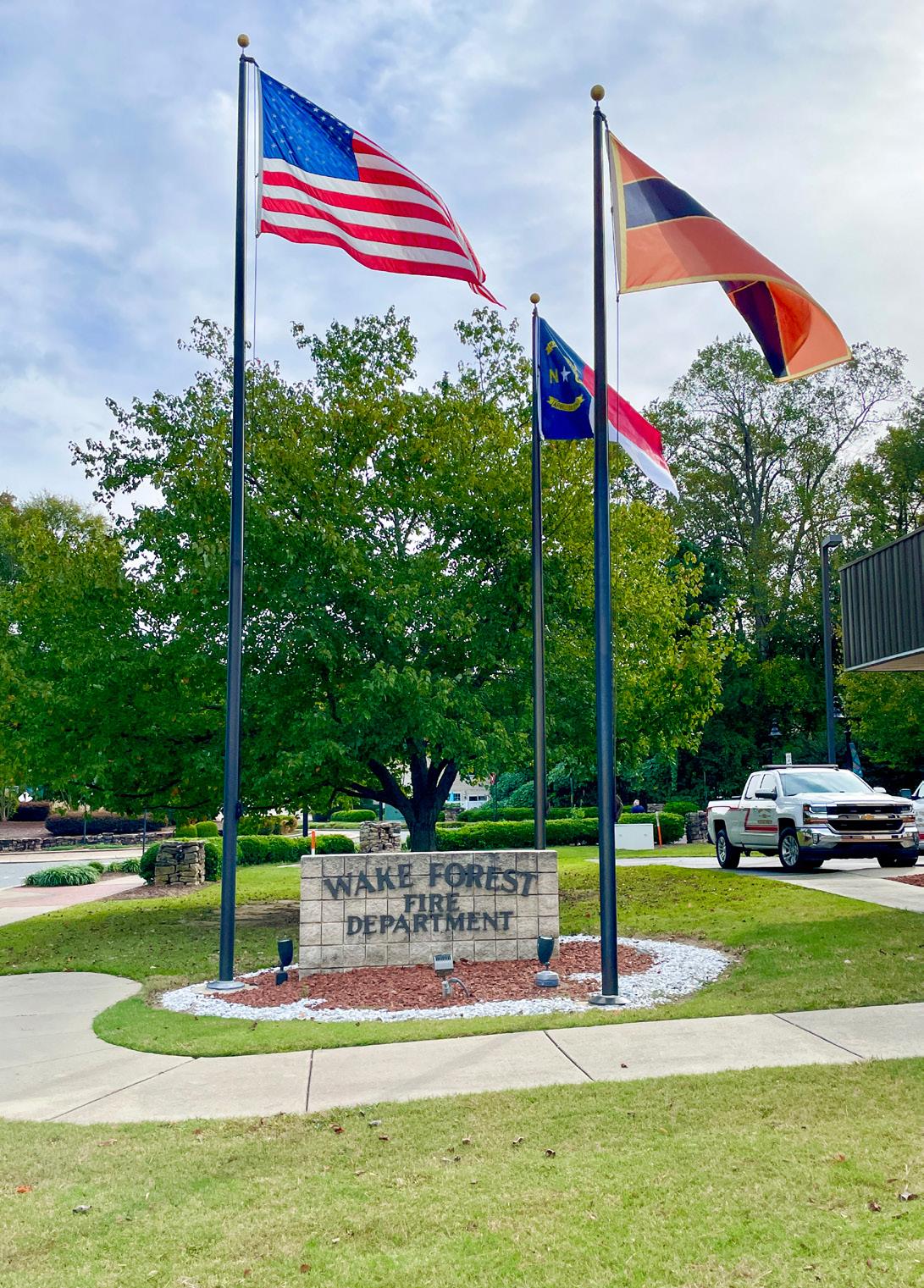
Center for Public Safety Excellence (CPSE). (n.d.). Accreditation Programs Retrieved from Insurance Services Office (ISO). (n.d.). Public Protection Classification (PPC) Program. Retrieved from https://www.verisk.com/insurance/products/ public-protection-classification-ppc-program/
International Association of Fire Chiefs (IAFC). (2018). Lavender Ribbon Report: Best Practices for Preventing Firefighter Cancer. Retrieved from https://www.iafc.org/docs/default-source/1assoc/lavender-ribbon-report.pdf
National Fire Protection Association (NFPA). (2016). NFPA 1710: Standard for the Organization and Deployment of Fire Suppression Operations, Emergency Medical Operations, and Special Operations to the Public by Career Fire Departments. Quincy, MA: NFPA.
Poll Everywhere. (2024, November 21-22). Engage your audience with live polls and Q&A. Retrieved from https://www. polleverywhere.com
Town of Wake Forest. (n.d.). History | Town of Wake Forest, NC. Retrieved from https://www.wakeforestnc.gov/history
The Wake Forest Gazette. (n.d.). Just a little history: How Wake Forest began. Retrieved from https://wakeforestgazette. com/just-a-little-history-how-wake-forest-began/
Town of Wake Forest. (2022). Strategic Plan 2022–2027. Retrieved from https://www.wakeforestnc.gov/strategic-plan
The Wake Forest Fire Department Strategic Plan was formally presented to the Town Manager for adoption and alignment with the Town of Wake Forest’s overarching priorities and strategic vision. This document represents a collaborative effort between the Wake Forest Fire Department, Town leadership, and the community we are honored to serve. By adopting this Strategic Plan, the Town of Wake Forest reaffirms its commitment to advancing the goals and objectives outlined within, ensuring continued growth, accountability, and excellence in service delivery.
Adopted by the Town of Wake Forest on this day of , 20
Town of Wake Forest Leadership
Town Manager
Kip Padgett

Signature