CLIMATE ACTION PLAN




The Town of Dalton, Massachusetts, is committed to addressing climate change and building a sustainable future for its residents. As climate impacts intensify, reducing greenhouse gas (GHG) emissions, improving energy efficiency, and strengthening climate resilience have become urgent priorities. This Climate Action Plan (CAP) provides a strategic framework to guide Dalton toward achieving net-zero emissions by 2050 while enhancing preparedness, wellbeing and economic opportunity and while focusing on a sustainable economy.
Developed with input from the Green Dalton Committee, a Dalton CAP Advisory Group, and Dalton residents through the CAP survey, this plan aligns with Massachusetts’ Clean Energy and Climate Plan and other state initiatives to transition to a low-carbon future. It establishes clear goals, strategies, and actions that prioritize emissions reductions in four key areas: Transportation & Mobility, Buildings & Efficiency, Resource Conservation, and Green Community. These focus areas provide a structured approach to advancing sustainability while offering clear steps for implementation. Recommendations for addressing each of these focus areas were made with strong preference for approaches with the greatest feasibility.
Key strategies include promoting electric vehicle (EV) adoption and charging infrastructure, improving public transit options, and reducing overall vehicle miles traveled (VMT). In the building sector, the CAP encourages energy efficiency upgrades, electrification of heating and appliances, and expansion of renewable energy projects to power homes and businesses. Waste management initiatives emphasize increasing composting, recycling, and sustainable materials recovery, while green space protection efforts seek to preserve Dalton’s forests, parks, and natural habitats.

Promote electric vehicle (EV) adoption and the needed charging infrastructure
Improve public transit options and reduce overall vehicle miles traveled (VMT)
Electrify heating and appliances
Expand renewable energy projects to power homes and businesses
Identify and implement energy efficiency upgrades
Establish and grow both home and community composting
Increase recycling and sustainable materials recovery
Reduce water consumption and leakage
Preserve Dalton’s forests and natural spaces
Make Dalton more resilient to extreme weather and natural disasters

Recognizing the staff capacity and budgetary requirements of certain strategies, the implementation of the CAP is structured in three phases:
PHASE 1 2025–2028
Focuses on foundational efforts, such as hiring a Sustainability Manager, expanding community awareness of financial incentives, identifying viable renewable energy projects, and supporting community resilience efforts.
PHASE 2 2029–2034
Advances infrastructure improvements, including fleet electrification, expanded public transit, and waste management initiatives.
PHASE 3 2035–2040
Improves on stormwater management and expands water conservation measures.
To ensure financial feasibility, the CAP highlights state, federal, and utility-based funding opportunities that can offset costs and accelerate implementation. Programs such as the Mass Save Energy Manager Grant, Green Communities Grants, and MassEVIP Fleet Electrification incentives provide critical support for municipal initiatives, while additional funding sources are available for waste reduction, water conservation, and urban greening projects.
The CAP also includes scenario modeling to illustrate the potential impact of various emissions reduction strategies. By transitioning to 100% clean electricity, electrifying buildings and transportation, and expanding waste reduction and diversion programs, Dalton can significantly lower its carbon footprint. More ambitious pathways are also considered, demonstrating how accelerated action can yield deeper emissions reductions and greater long-term benefit.
As climate change accelerates, Dalton must also prepare for its growing risks, including extreme heat, severe storms, and flooding. The CAP includes critical resilience measures such as expanding community education on disaster preparedness, establishing cooling centers during extreme heat events, and improving stormwater management to reduce pollution and flooding. By taking proactive steps to enhance the town’s resilience, Dalton can protect public health, infrastructure, and natural resources while ensuring long-term sustainability.
This Climate Action Plan is not just a roadmap for reducing emissions—it is a commitment to building a stronger, healthier, and more resilient Dalton. Through collective action, strategic investments, and sustained community engagement, the Town can lead the way in climate leadership while securing economic, environmental, and social benefits for all residents.


FIGURE 1 The Greenhouse Effect
FIGURE 2
FIGURE 3
FIGURE 4
Global Greenhouse Gas Emissions by Sector, 1990–2015
2023 Community-wide emissions by sector
2023 Community-wide emissions from stationary energy (buildings) by subsector
FIGURE 5 2023 community-wide emissions from transportation by subsector
FIGURE 6 2023 Municipal emissions by sector
FIGURE 7
FIGURE 8
FIGURE 9
Community-Wide BAU Emissions Forecast by Sector
Adjusted Business as Usual Forecast
Community-Wide Emissions: 2023 baseline against ABAU forecast and CECP target reductions
FIGURE 10 2023 baseline municipal operations emissions against municipal reduction targets
FIGURE 11
FIGURE 12
Moderate Change Scenario- 2023 Baseline, ABAU forecast, scenario results, and targets (all community-wide)
Accelerated Change Scenario- 2023 Baseline, ABAU forecast, scenario results, and targets (all community-wide)
Business-as-Usual Forecast
Adjusted Business as Usual Forecast
GHG Inventory and Reduction Targets
Stakeholder Engagement Report
Community Survey Results

ABAU Adjusted Business-As-Usual
BAU Business-As-Usual
BRTA Berkshire Regional Transit Authority
CAFE Corporate Average Fuel Economy
CAP Climate Action Plan
CEC Clean Energy Center
CECP Clean Energy and Climate Plan
CH4 Methane
CO2 Carbon dioxide
CO2e Carbon dioxide equivalent
CPA Community Preservation Act
CSO combined sewer overflows
DEP Department of Environmental Protection (Massachusetts)
DCR Department of Conservation and Recreation (Massachusetts)
DOE Department of Energy (US)
DOER Department of Energy Resources (Massachusetts)
DPH Department of Public Health (Massachusetts)
DPW Department of Public Works
EOEEA Executive Office of Energy and Environmental Affairs
EECBG Energy Efficiency and Conservation Block Grant
eGRID Emissions & Generation Resource Integrated Database
EMA Emergency Management Agency
EPA Environmental Protection Agency (US)
EV Electric Vehicle
EVIP Electric Vehicle Incentive Program
FEMA Federal Emergency Management Agency
FHWA Federal Highway Administration
FTA Federal Transit Administration
GDC Green Dalton Committee
GHG Greenhouse Gas
GWP Global Warming Potential
HMGP Hazard Mitigation Grant Program
HVAC Heating, ventilation, and air conditioning
ICE Internal combustion engine
ICLEI USA International Council for Local Environmental Initiatives
kW kilowatt

kWh kilowatt hour
L1/2/3 Level 1, 2, or 3 charger
MassDOT Massachusetts Department of Transportation
MEM Municipal Energy Manager
MEMA Massachusetts Emergency Management Agency
META Municipal Energy Technical Assistance
MET Massachusetts Environmental Trust
MPSC Massachusetts Product Stewardship Council
MS4 Municipal Separate Storm Sewer System
MT metric ton
MT CO2e Metric Ton of Carbon Dioxide equivalent
MVP Municipal Vulnerability Preparedness
N Nitrogen
N2O Nitrous oxide
NBSWMD Northern Berkshire Solid Waste Management District
NEVI National Electric Vehicle Infrastructure
PAYT Pay as you throw
PDM Pre-Disaster Mitigation
PFCs Perfluorocarbons
RDP Recycling Dividends Program
SBT Science Based Target
SF6 Sulfur hexafluoride
SMRP Sustainable Materials Recovery Program
SSO sanitary sewer overflows
VMT Vehicle Miles Traveled
WIFIA Water Infrastructure Finance and Innovation Act

Robert Bishop, Chair
Dan Esko, Vice Chair
John Boyle, Member
Marc Strout, Member
Robert Collins, Member
David Wasielewski, Chair
Steve Marantz, Clerk
Todd Logan, Assistant Clerk
Tom Irwin, Member
Laurie Martinelli, Member
Tony Pagliarulo, Member
Kathy Perney, Member
Alison Peters, CRA Director
Heather Hunt, Dalton Town Clerk
Karen Schmidt, AJ Schnopp Construction representative
Darin Middlebrook, Council on Aging administrative assistant
Jack Crow, Wahconah High School Junior
Richard Lacatell, CBRSD School Committee, member
Jeffrey Burch, Dalton Buildings & Grounds Superintendent
Robert Collins, Planning Board member
Rich Swanson, Blue Strike Environmental • Director, Energy & Climate Division
Cisco Tomasino, Blue Strike Environmental • Manager, Energy & Climate
We wish to express our extreme gratitude to support staff, committee volunteers, and residents in the Town of Dalton who participated in our survey and meetings. We also extend our deep appreciation to the Green Dalton Committee who served as members of the CAP Project Team, and to every individual who supplied data requests and offered their insights, expertise, and support in shaping this Climate Action Plan – THANK YOU

Dalton has been a Massachusetts Green Community member since 2014, successfully pursuing the goals of reduced municipal energy consumption and more recently aligning itself with the state mandate to decarbonize by 2050. This Climate Action Plan outlines specific strategies and recommendations designed to assure Dalton remains on a path to long term decarbonization.
This plan points to the context in which the town’s energy management decisions are to be made through 2050. The plan details Dalton’s current greenhouse gas inventory along with the challenges and opportunities to reduce that inventory. This analysis details the community’s physical assets as well as the awareness of Dalton citizens regarding the subject of Climate Change Preparedness. The Green Committee has, to this point, focused on municipal assets, concentrating on a reduction of fossil fuel use in townowned facilities. This Climate Action Plan offers an expanded vision that identifies sustainability and decarbonization as important components of our larger community identity. This Climate Action Plan transforms that vision of decarbonized sustainability into action, by offering a strategic roadmap for the Town to work toward carbon neutrality in both municipal operations and across the community.
The plan integrates contributions from knowledgeable members of the Green Dalton Committee, selected advisors from the community at large, a survey of the broader residential and business community as well as key themes and policy commitments from existing town documents, specifically, the recently revised Master Plan and updated MVP strategies. This integration effort points to the notion that creating a sustainable community is not specifically a Green Committee effort but rather requires all elements of the community to engage in a common goal. Our effort is validated by the fact that Dalton is not alone in this effort but is one of 351 towns across the state that have adopted a green community philosophy.
The plan sets a context and strategy for decision making regarding energy matters. It does not mandate or prescribe actions. It is impossible to anticipate the multiple variables that might color any specific town decision over time, as it is unreasonable to anticipate the development of new technologies and choices that might exist as we move into the future.

Recognizing finances as a major concern in the community, Green Committee encourages the community to view implementation expenses as investments rather than expenses. Investing in decarbonization likely results in decreased energy usage and lowered utility bills. Most, if not all, implementation expenses are covered by state sponsored grants and rebates. The committee continues to investigate ways to access State and Federal incentives (grants) to support the stated sustainability goals. The creation of a Climate Action Plan enhances Dalton’s ability to access those grants. The adoption of the plan is consistent with Dalton’s goal of attaining Climate Leader Status among Massachusetts Green Communities.
This, finally, does not account for the unmonetizable but important benefits of an enhanced local and global living environment for ourselves and future generations, The sense of well-being that derives from protecting our cherished environment.
The plan uses data from 2023 as a baseline measure for greenhouse gas production in Dalton. The target of ‘zero’ greenhouse gas emissions by 2050 is consistent with Massachusetts State mandates as referenced in the text.
While physical elimination of fossil fueled power sources is the goal here, it is apparent that educating the community regarding the methods and advantages of these changes is a critical precursor to those changes. Green committee recognizes this required ‘cultural’ change and the obvious challenges to overcome through education and facilitating access to state and federal financial incentives as they evolve. To that end, a comprehensive list of currently available financial resources is included in the plan.
The Green Dalton Committee has engaged with Blue Strike Environmental to create this Climate Action Plan as an enduring legacy that will guide Dalton toward a decarbonized, sustainable future.
The Green Dalton Committee expresses its thanks to the town residents for supporting this significant 2-year effort and appreciates the opportunity to present these results to the Select Board and the larger community.
Respectfully,
2025 Green Dalton Committee


Dalton, Massachusetts, has long been celebrated for its close-knit community, natural beauty, and commitment to preserving its rich heritage. However, like communities across the globe, Dalton faces growing challenges from climate change, including extreme weather events, fluctuating temperatures, and substantial environmental shifts that threaten the Town’s ecosystems and way of life. Recognizing these challenges, Dalton has taken a proactive step with the creation of its first Climate Action Plan, a comprehensive roadmap that greatly improves the chances of a sustainable and resilient future for its residents and environment.
While long-term efforts to reduce greenhouse gas emissions (mitigation) are essential for addressing the root causes of climate change, resilience measures provide immediate relief by helping the community adapt to its current and future impacts. Investments in resilience—such as stormwater management, cooling centers, and climate disaster preparedness—protect residents and infrastructure in the short term, while broader mitigation efforts, such as transitioning to clean energy and reducing emissions, ensure a lasting solution to climate change over time. Both approaches are necessary to safeguard Dalton’s future, striking a balance between urgent adaptation needs and the long-term goal of climate stabilization.
This plan represents a collective effort, shaped by the voices of community members, local businesses, and stakeholders who are united in their vision for a greener Dalton. The successful implementation of the Climate Action Plan cannot rely solely on the efforts of the Green Dalton Committee (GDC); rather, it requires broad collaboration across municipal departments, community organizations, and regional partners. Achieving regional transportation improvements will depend on partnerships with the Berkshire Regional Transit Authority (BRTA), while enhancing energy efficiency in municipal and school buildings will require coordination with school district officials and municipal building management. Additionally, residents play a critical role in communitywide decarbonization efforts by making sustainable choices in their homes and daily lives. To strengthen short-term climate resilience, Dalton must work closely with the Municipal Vulnerability Preparedness (MVP) Committee to develop preparedness strategies and ensure that the town remains adaptable to climate-related risks. Through these partnerships, Dalton can take meaningful action to meet its climate goals while fostering a resilient and engaged community.

As a living document, Dalton's Climate Action Plan not only addresses current environmental priorities but also creates a framework for ongoing innovation, collaboration, and progress. It reflects Dalton’s enduring spirit of stewardship and responsibility to future generations, reaffirming its commitment to leading by example in the fight against climate change.
Nestled in the Berkshire Hills of Western Massachusetts, Dalton is a picturesque New England town known for its rich history, vibrant community, and dedication to preserving its natural beauty. Originally settled in the mid-18th century and incorporated in 1784, Dalton quickly became an industrial hub, particularly noted for its role in papermaking. Home to the iconic Crane & Co., the Town has been the source of high-quality paper for currency production by the U.S. Treasury since the 19th century. Dalton’s legacy as a hardworking, innovative community continues to shape its identity today.

"DALTON'S CLIMATE ACTION PLAN…REFLECTS DALTON’S ENDURING SPIRIT OF STEWARDSHIP AND RESPONSIBILITY TO FUTURE GENERATIONS, REAFFIRMING ITS COMMITMENT TO LEADING BY EXAMPLE IN THE FIGHT AGAINST CLIMATE CHANGE.

Climate change refers to the long-term alteration of temperature and typical weather patterns in a place largely driven by human activities. The primary cause is the increase in greenhouse gases (GHGs) such as carbon dioxide (CO₂), methane (CH₄), and nitrous oxide (N₂O), which are released when fossil fuels like coal, oil, and natural gas are burned for energy or gasoline is burned for transportation. These gases trap heat in the Earth's atmosphere and this trapped heat causes temperatures to increase- this process is known as the "greenhouse effect". As the concentration of these gases in the atmosphere increases, more heat is trapped and temperatures rise even more in a process we refer to as global warming. These increases in temperature cause more water from our rivers, lakes and oceans to evaporate, which fuels more extreme weather events.1
Figure 1: The Greenhouse Effect2
1 National Aeronautics and Space Administration. (n.d.). Steamy relationships: How atmospheric water vapor amplifies Earth's greenhouse effect. NASA Science. Retrieved March 14, 2025, from https://science. nasa.gov/earth/climate-change/steamy-relationships-how-atmospheric-water-vapor-amplifies-earthsgreenhouse-effect
2 U.S. Environmental Protection Agency. (n.d.). Basics of climate change. Retrieved December 4, 2024, from www.epa.gov/climatechange-science/basics-climate-changewater vapor amplifies Earth's greenhouse effect. NASA Science. Retrieved March 14, 2025, from https://science.nasa.gov/earth/climate-change/ steamy-relationships-how-atmospheric-water-vapor-amplifies-earths-greenhouse-effect

Under normal conditions, GHG emissions in the atmosphere naturally retain some of the Sun's heat, keeping the planet warm enough to support life. However, since the Second Industrial Revolution of the late 19th century, human industrial activities have significantly and progressively increased the concentration of these gases in the atmosphere, intensifying the greenhouse effect3. This increase of greenhouse gases in the atmosphere is primarily due to the burning of fossil fuels involved in energy production, transportation, and industrial processes. Increases in agricultural production and deforestation have also contributed to the rise of greenhouse gases.
As a result, average global surface temperatures have risen by approximately 1.1°C (2°F) since the late 19th century4. Scientists project that without significant reductions in GHG emissions, average global temperatures could increase by 2.1-3.5°C (3.8-6.3°F) by the end of the century, with serious, possibly dire, consequences for both natural ecosystems and human societies5.
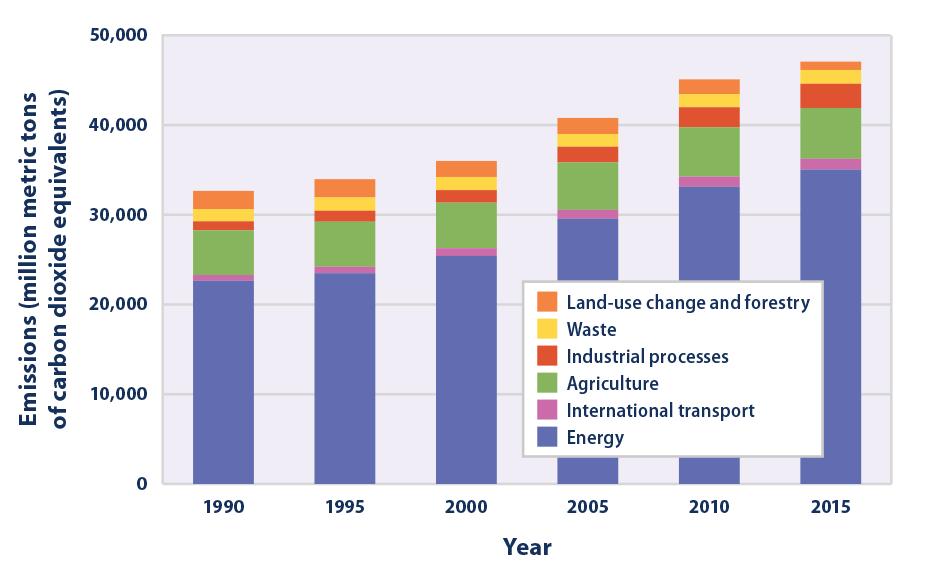
Figure 2: Global Greenhouse Gas Emissions by Sector, 1990–20156 global temperatures could increase by 2 1-3 5°C (3 8-6 3°F) by the end of the century, with serious, possibly dire, consequences for both natural ecosystems and human societies5.
Figure 2: Global Greenhouse Gas Emissions by Sector, 1990–20156
3 U.S. Environmental Protection Agency. (n.d.). Causes of climate change. U.S. Environmental Protection Agency. Retrieved March 15, 2025, from www.epa.gov/climatechange-science/causes-climate-change
4 Intergovernmental Panel on Climate Change. (2023). Climate change 2023: Synthesis report. Summary for policymakers. IPCC. From www.ipcc.ch/report/ar6/syr/downloads/report/IPCC_AR6_SYR_SPM.pdf
The effects of climate change are already evident worldwide and are expected to intensify:
5 Intergovernmental Panel on Climate Change. (2023). Climate change 2023: Synthesis report. Summary for policymakers. IPCC. From www.ipcc.ch/report/ar6/syr/downloads/report/IPCC_AR6_SYR_SPM.pdf
6 U.S. Environmental Protection Agency. (2024). Climate Change Indicators: Greenhouse Gas Emissions
● Extreme Weather Events: Increased temperatures contribute to more frequent and severe weather events, such as hurricanes, heatwaves, droughts, and floods and may contribute to conditions that elevate the risk of wildfires
● Ecosystem Disruption: Many species struggle to adapt to rapidly changing temperatures, leading to shifts in ecosystems, reduced biodiversity, threats to food security, and a greater risk of species declining to extinction.

The effects of climate change are already evident worldwide and are expected to intensify:
➜ Extreme Weather Events: Increased temperatures contribute to more frequent and severe weather events, such as hurricanes, heatwaves, droughts, and floods and may contribute to conditions that elevate the risk of wildfires.
➜ Ecosystem Disruption: Many species struggle to adapt to rapidly changing temperatures, leading to shifts in ecosystems, reduced biodiversity, threats to food security, and a greater risk of species declining to extinction.
➜ Health Risks: Climate change can worsen air quality, increase the spread of infectious diseases, and exacerbate health conditions due to extreme weather events and heat.
Addressing climate change requires reducing greenhouse gas emissions and building resilience to its impacts. By adopting sustainable practices, communities can lessen climate change and prepare for its effects, protecting ecosystems and maintaining quality of life. Dalton’s Climate Action Plan is part of a global effort to limit the increase in the average global temperature to 1.5°C above pre-industrial levels, a target set by the Paris Agreement7 in 2015 to avoid the most severe impacts of climate change. In a 2020 report by the Institute for Economics & Peace (IEP), the IEP claimed over one billion people live in 31 countries where the country’s resilience is unlikely to sufficiently withstand the impact of ecological events by 2050, which will contribute to mass population displacement8. Through collective action, we can help safeguard the planet for future generations.
7 The Paris Agreement is a landmark international treaty adopted in 2015 by nearly 200 countries to combat climate change by limiting global warming to well below 2°C (3.6°F) above pre-industrial levels, with an ambition to keep it below 1.5°C (2.7°F).
8 Institute for Economics & Peace. (2020, September 9). Over one billion people at threat of being displaced by 2050 due to environmental change, conflict and civil unrest [Press release]. www.economicsandpeace. org/wp-content/uploads/2020/09/Ecological-Threat-Register-Press-Release-27.08-FINAL.pdf

Dalton’s CAP serves as a strategic roadmap for addressing climate change, strengthening resilience, and fostering sustainability throughout the community. More than just a plan, it reflects the Town’s commitment to reducing greenhouse gas emissions and preparing for environmental challenges, resulting in a more resilient, equitable, and economically sustainable future. Developed through collaboration between Town staff and engaged community members, the CAP represents a shared vision for Dalton’s long-term well-being.
Taking on climate change requires a holistic approach that balances environmental protection, social equity, and economic growth. The impacts of climate change—including extreme weather events, rising energy costs, and environmental degradation—affect everyone, but they pose the greatest risks to low-income and historically marginalized groups. In Dalton’s CAP, equity is a priority. This ensures that all residents, especially the most vulnerable, benefit from initiatives within the CAP.
Sustainability refers to an approach to living that assures the needs of the present are met without compromising resources and thereby the ability of future generations to meet their own needs. By advancing sustainability, the CAP lays the foundation for Dalton to conserve resources, support biodiversity, and promote a healthy living environment for future generations. Strengthening resilience is also key—efforts like improvement to stormwater management and installing energy-efficient infrastructure will help Dalton better withstand and recover from environmental and economic disruptions. Additionally, sustainability supports overall quality of life by improving air quality, creating safer neighborhoods, and expanding access to parks and public spaces.
Investing in sustainability also drives economic benefits, attracting new businesses, encouraging innovation, and creating jobs in emerging industries. Through these initiatives, the CAP positions Dalton as a forward-thinking community that values both its people and its environment, enhancing the prospects for a prosperous, viable, and sustainable future for all.

In recent years, Dalton has taken important initial steps to address climate change and sustainability, recognizing the importance of protecting its natural resources and enhancing the resilience of its community. The Town has actively participated in the Massachusetts Green Communities program, implementing energy efficiency projects in municipal buildings to reduce energy consumption and costs. Dalton has also worked to modernize its infrastructure by upgrading streetlights to energy-efficient LED technology, a move that has both lowered greenhouse gas emissions and reduced municipal expenses.
Additionally, Dalton has been actively considering renewable energy initiatives, including the installation of solar panels on municipal properties and on the town's capped landfill, hoping to save money and contribute to the town's renewable energy goals. The Town has also supported sustainable land use practices by preserving open spaces and maintaining its vibrant network of parks and recreational areas, which serve as both ecological buffers and cherished community resources.
These efforts demonstrate Dalton’s commitment to sustainability and form the foundation upon which its first Climate Action Plan is built. The plan builds on these achievements, providing a strategic framework to accelerate progress toward reducing emissions, transitioning to renewable energy, and adapting to the impacts of climate change. Dalton’s proactive approach reflects the values of a community deeply connected to its past and determined to secure a sustainable future for generations to come.
The origins of this Climate Action Plan can be found in the Green Dalton Committee (GDC). The GDC was established in 2013 by the Dalton Select Board, with a mission to identify, investigate, and recommend initiatives that protect the community’s natural resources and enhance environmental health and sustainability in Dalton.
Since its inception, GDC has secured over $385,000 in grants to finance municipal energy-saving efforts. These projects include installing LED lighting in Town Hall, the Library, and the Senior Center; converting over 700 Town streetlights to LED bulbs; acquiring electric vehicles; insulating municipal buildings; and transitioning heating units to electric heat pumps. These initiatives have reduced the Town's energy use by approximately 25% and utility expenses by $75,000 annually.

These sustainability efforts will be accelerated through the development and adoption of this CAP - a strategic roadmap for reducing greenhouse gas emissions and enhancing resilience to the impacts of climate change. It includes a baseline assessment of emissions, measurable reduction goals, and actionable strategies such as transitioning to renewable energy, improving energy efficiency, and preparing infrastructure for extreme weather. The CAP reflects community input from the 246 Dalton residents who took the CAP survey, which ensures the plan reasonably aligns with local priorities and values, while also providing a framework for implementation, monitoring, and adjustment over time. By addressing both mitigation and adaptation, Dalton’s Climate Action Plan aims to protect the Town’s environment, improve quality of life, and position the community as a leader among other towns within the Commonwealth in sustainability .
A comprehensive approach was taken to develop Dalton’s first Climate Action Plan. It was structured into three key phases: Baseline Assessment, Stakeholder Engagement, and Strategy Development. These phases aligned the work plan with the Town’s objectives and priorities, ensuring a thorough, inclusive, and actionable plan that addressed climate resilience, sustainability, and emissions reduction.
The Baseline Assessment focused on gathering and analyzing existing data to establish a foundation for the Climate Action Plan. This included compiling information on Dalton’s greenhouse gas (GHG) emissions, energy use patterns, and the Town’s existing policies, plans, and initiatives related to sustainability and climate resilience. Specific tasks included reviewing the Town’s participation in programs like the Massachusetts Green Communities initiative, assessing the energy performance of municipal buildings, and analyzing zoning, land use, and building codes that impacted energy efficiency and renewable energy integration. The result of this phase was a detailed understanding of Dalton’s climaterelated activities, gaps, and opportunities.
BASELINE ASSESSMENT
STAKEHOLDER ENGAGEMENT
STRATEGY DEVELOPMENT

Stakeholder engagement was a critical component of the Climate Action Plan to ensure community buy-in and alignment with local priorities. This phase involved working closely with Town staff, the Green Dalton Committee, and the broader community to identify needs, priorities, and goals. Biweekly meetings with the Green Dalton Committee (GDC) ensured close collaboration and project alignment. Blue Strike also attended Dalton's Climate Fair in person to provide a CAP overview and invite feedback from the community. A significant effort was also made to survey Dalton residents about climate concerns and solutions. This process engaged a broad cross-section of residents, capturing valuable perspectives and ideas about priorities for sustainability. The surveys not only informed the plan but also deepened community awareness and enthusiasm for addressing climate challenges. The public engaged further with the CAP through two community outreach events. Stakeholder input and input from the CAP advisory committee shaped the direction and focus of the plan, ensuring it reflected Dalton’s values and aspirations.
Building on the baseline data and stakeholder input, the Strategy Development phase focused on crafting a Climate Action Plan that reflects Dalton’s unique priorities while aligning with broader state and federal climate goals. This phase involved identifying key strategies to reduce GHG emissions, enhance energy efficiency, integrate renewable energy, and strengthen climate resilience. Scenario modeling tools were utilized to project the potential impacts of proposed strategies, helping to refine approaches that best support sustainable growth and environmental stewardship. The plan also outlines funding opportunities, policy recommendations, and a structured implementation roadmap that includes phased timelines, performance metrics, and mechanisms for accountability.
By taking a comprehensive and data-driven approach, Dalton’s Climate Action Plan ensures that both immediate actions and long-term sustainability goals are addressed. The plan builds on the Town’s existing successes, such as its participation in the Green Communities program, while introducing ambitious yet achievable initiatives designed to accelerate climate action. Through a structured, phased implementation process, Dalton is positioned to take meaningful steps toward reducing emissions, increasing climate resilience, and fostering a sustainable future for generations to come.


A GHG inventory for a town such as Dalton (MA) is a comprehensive assessment of the greenhouse gas emissions generated within the Town's boundaries. It serves as a foundational tool for understanding the sources and magnitude of emissions across various sectors, including transportation, residential and commercial energy use, waste management, and industrial activities. This inventory provides a baseline against which progress toward climate goals can be measured and helps identify priority areas for emissions reductions. By quantifying emissions, Dalton can develop targeted strategies to mitigate its carbon footprint, enhance energy efficiency, and support long-term sustainability and climate resiliency initiatives.
Two separate inventories were conducted for the Town. The first, a communitywide inventory, measures all GHG gases, in “carbon equivalents”9, generated by residents, businesses and government operations within the Town’s jurisdictional control. The second, a government inventory, extracts the emissions that result exclusively from government operations within the Town. This second category is important, because direct interventions can often reduce high percentages of emissions from operations. At the same time, community action is vital, due to the significantly higher quantity of emissions that come from community-wide activity. The two inventories are presented below.
The Town of Dalton’s 2023 community-wide emissions totaled 101,763 MT CO2e. (Of these, 268 MT CO2e came from municipal operations in the Town, representing 0.3% of total community-wide emissions.) Community-wide emissions include all emissions from residents, businesses, and municipal operations within Dalton. Breaking down the sectors of the emissions sources, stationary energy (energy used to heat and cool buildings) was the largest contributor of emissions, followed by transportation, then waste. Table 1 and Figure 3 below outline the sector breakdown of community wide emissions in 2023.
Table 1: 2023 Community-wide emissions by sector
9 Carbon equivalents (CO2e) are a standardized unit expressing the impact of various greenhouse gases (GHGs) in terms of their global warming potential (GWP) relative to carbon dioxide (CO2). By converting emissions of gases like methane and nitrous oxide into CO2e, it simplifies the comparison and assessment of overall climate impact.

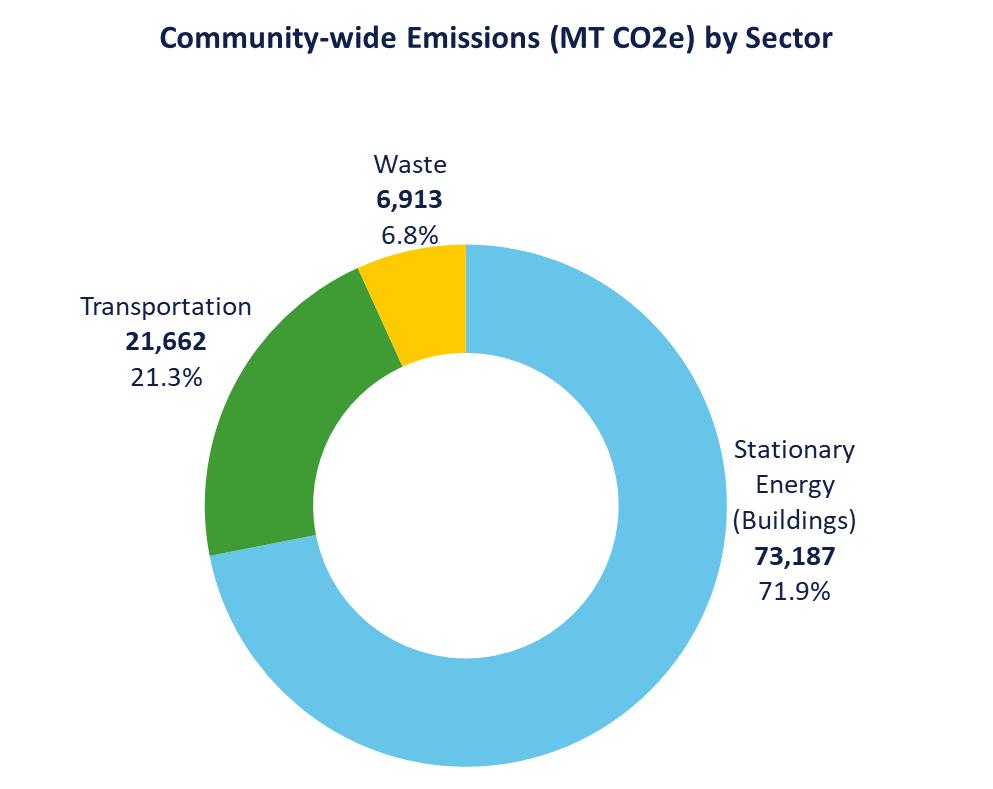
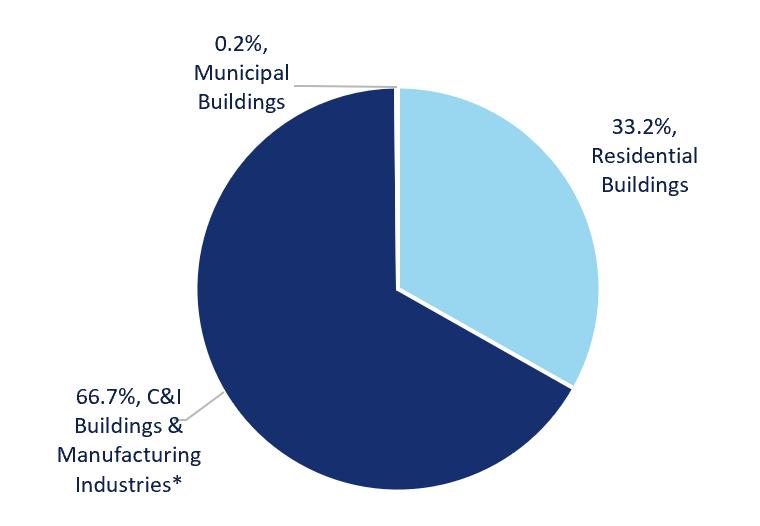
Within stationary energy, Commercial & Institutional (C&I) Buildings & Manufacturing Industries was the largest contributor of emissions, followed by residential buildings. Municipal building operations contributed only a very small share. Disaggregating the emissions from buildings, Figure 4 shows the breakdown of emissions by subsector within the stationary energy subsector.

Transportation is the second largest contributor of emissions, resulting primarily from passenger vehicles. Passenger vehicles were responsible for 91.7% of total transportation emissions, and 19.5% of total community-wide emissions. Figure 5 below shows the share of transportation emissions by each source.
Figure 5: 2023 community-wide emissions from transportation by subsector
COMMUNITY-WIDE EMISSIONS FROM TRANSPORTATION 0.7% MUNICIPAL VEHICLES
Figure 5: 2023 community-wide emissions from transportation by subsector
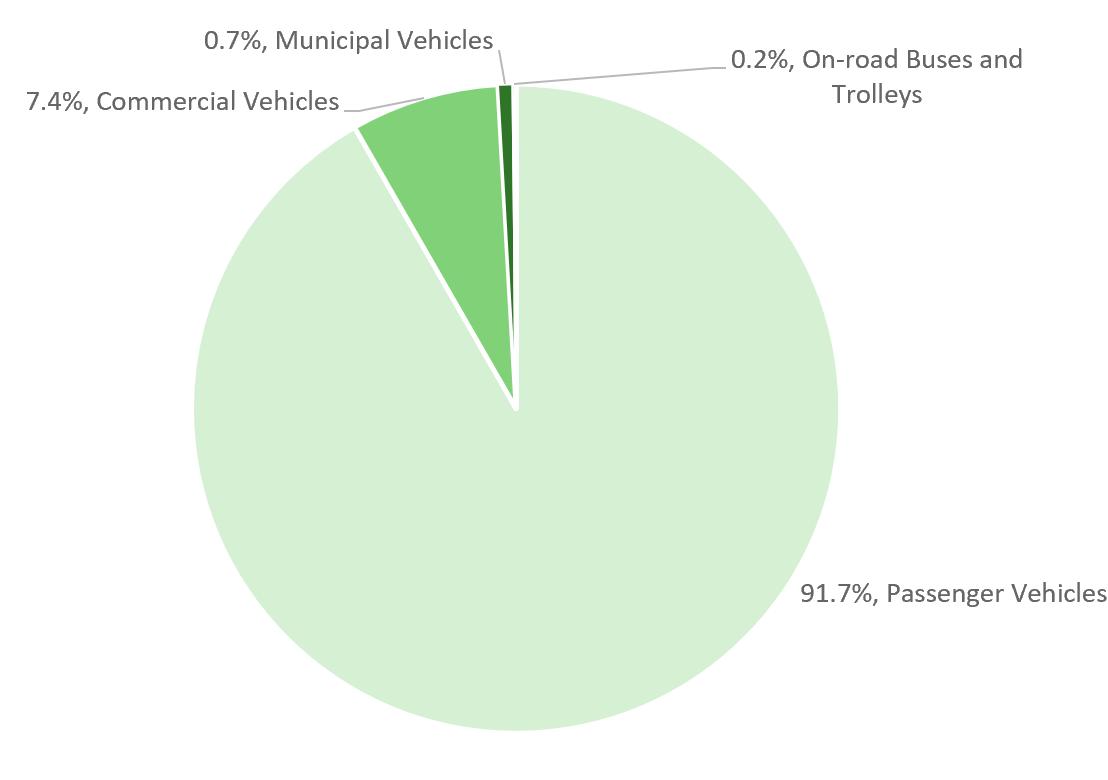
ON-ROAD BUSES AND TROLLEYS
The third largest sector by emissions, waste, is made up primarily of legacy emissions from the closed Dalton and Warren landfills Collectively, the legacy emissions from the closed Dalton and Warren landfills make up 87 0% of all waste emissions, and 5 9% of all community-wide emissions
Because the waste collected at the Dalton Transfer Station is sent to out-of-state facilities, the emissions associated with waste collection and transport have been included in our inventory as Scope 3 emissions However, the legacy emissions from waste decomposing in landfills outside our operational boundary have not been included, as they are the responsibility of the landfill operators. Remote landfills represent a significant component of Dalton's GHG legacy. The Green Dalton Committee efforts will continue to investigate the elimination of exported municipal waste.
The third largest sector by emissions, waste, is made up primarily of legacy emissions from the closed Dalton and Warren landfills. Collectively, the legacy emissions from the closed Dalton and Warren landfills make up 87.0% of all waste emissions, and 5.9% of all community-wide emissions. Because the waste collected at the Dalton Transfer Station is sent to out-of-state facilities, the emissions associated with waste collection and transport have been included in our inventory as Scope 3 emissions. However, the legacy emissions from waste decomposing in landfills outside our operational boundary have not been included, as they are the responsibility of the landfill operators. Remote landfills represent a significant component of Dalton's GHG legacy. The Green Dalton Committee efforts will continue to investigate the elimination of exported municipal waste.
The Town of Dalton’s 2023 municipal emissions totaled 268 MT CO2e, representing 0 3% of total community-wide emissions Breaking down the sectors of the emissions sources, transportation (from municipal vehicles) was the largest contributor of emissions, followed by stationary energy (energy used to heat and cool municipal buildings) Table 2 and Figure 6 below outline the sector breakdown of municipal emissions in 2023.
Table 2: 2023 Municipal emissions by sector

The Town of Dalton’s 2023 municipal emissions totaled 268 MT CO2e, representing 0.3% of total community-wide emissions. Breaking down the sectors of the emissions sources, transportation (from municipal vehicles) was the largest contributor of emissions, followed by stationary energy (energy used to heat and cool municipal buildings). Table 2 and Figure 6 below outline the sector breakdown of municipal emissions in 2023.
Table 2: 2023 Municipal emissions by sector
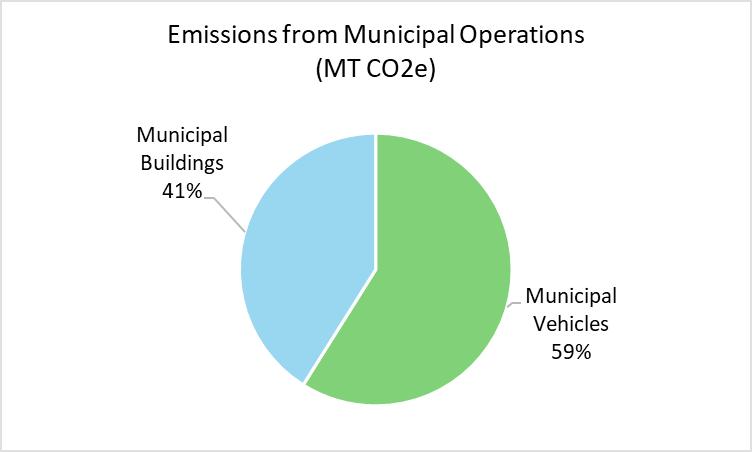
community-wide emissions and made up 0.2% of community-wide emissions from the stationary energy sector. Emissions from municipal vehicles contributed a slightly larger share, accounting for 0.2% of Dalton’s community-wide emissions. This represents 0.7% of emissions from the transportation sector.
Emissions from municipal building operations accounted for only 0 1% of total community-wide emissions and made up 0 2% of community-wide emissions from the stationary energy sector Emissions from municipal vehicles contributed a slightly larger share, accounting for 0.2% of Dalton’s community-wide emissions This represents 0 7% of emissions from the transportation sector

Emission forecasts incorporate a range of factors, including demographic changes, technological advancements, policy interventions, and socioeconomic trends to paint a comprehensive picture of future emissions patterns. As the global community grapples with the urgent need to address climate change, accurate and reliable forecasts are essential for guiding efforts towards a sustainable and resilient future. Two forecasts were created for this CAP, a Business as Usual (BAU), and an Adjusted Business-as-Usual Forecast (ABAU).
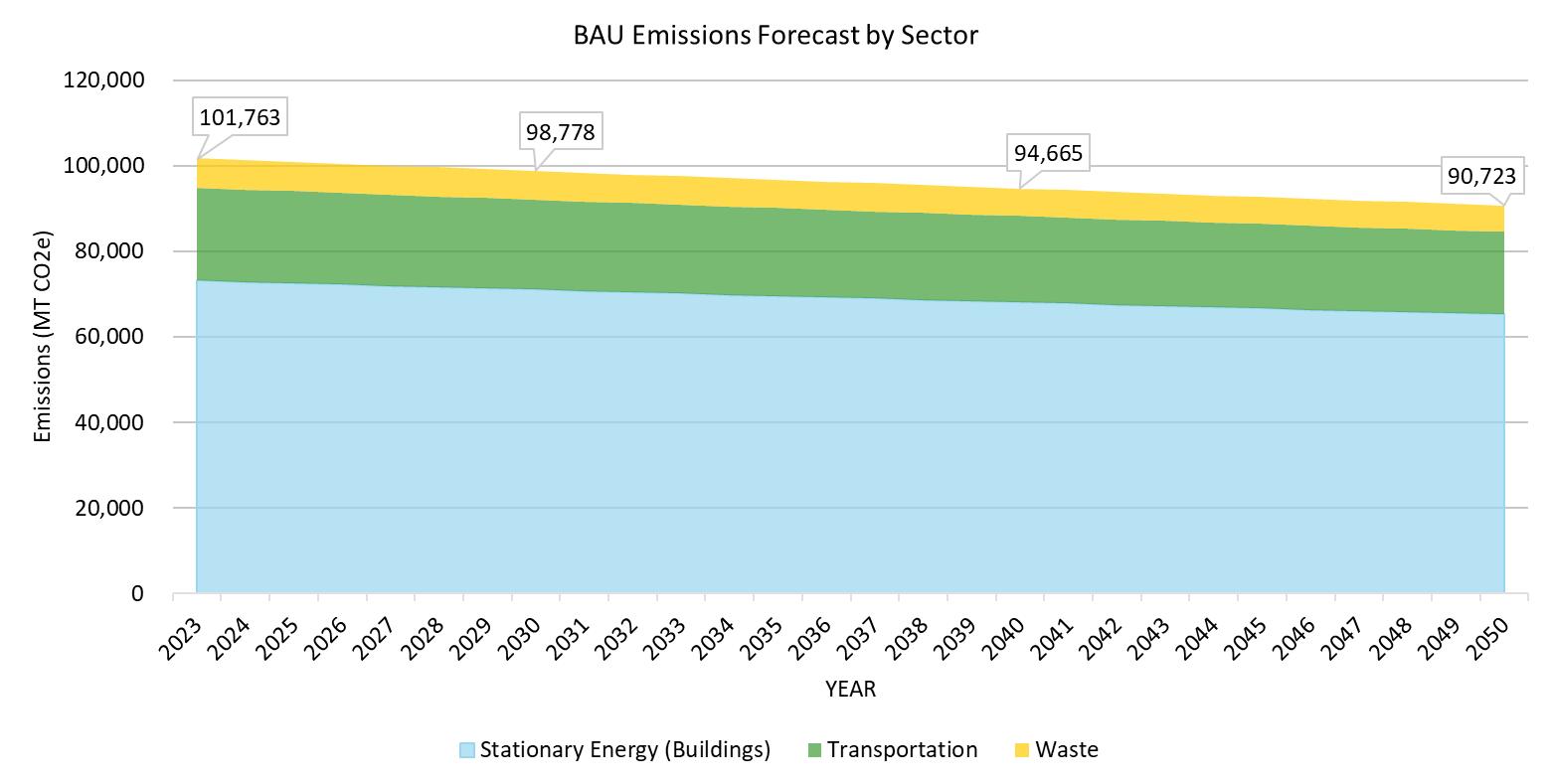
A Business as Usual (BAU) Forecast provides an estimation of emission projections from the base year of the GHG Inventory (2023) to a future horizon year, in this instance, 2050. This forecast (Table 3 and Figure 7) will show where emissions are anticipated to stand in 2050 if no action is undertaken for emission mitigation, with population growth being the sole influencing factor. Utilizing US Census Bureau data from 2000 to 2020, the observed compound annual growth rate (CAGR) for Dalton’s population has been -.42%. Only accounting for this population change to continue, the total greenhouse gas emissions are expected to decrease from 101,763 MT CO2e in 2023 to 90,723 MT CO2e by 2050.

The Adjusted Business as Usual Forecast (ABAU) for the Town offers insight into the emissions landscape for 2050 under the premise of actions deemed highly probable to be implemented. This forecast (Table 4 and Figure 8) considers two crucial factors. First, the regulation set by the Massachusetts Executive Office of Environmental Affairs and the Massachusetts Department of Environmental Protection in 310 CMR 7.75: Clean Energy Standard, sets a minimum percentage of electricity sales that must be procured from clean energy sources and projects a 100% clean energy grid by 2050. Second, is the Corporate Average Fuel Economy (CAFE) standards, which are fleet-wide miles per gallon (MPG) averages that must be achieved by each automaker for its car and truck fleet. An analysis of the CAFE standards from 2000 to 2031 shows an average improvement of 2.7% in year-over-year combined passenger car and light-duty truck fuel efficiency, measured using MPG. These influential elements shape the ABAU forecast, reflecting a proactive stance toward emission reduction strategies. In this scenario the Town’s emissions would decrease approximately 32.8% between 2023 and 2050.

Table 4: Community-Wide Emissions Forecast in an ABAU scenario
Figure 8: Adjusted Business as Usual Forecast
Figure 8: Adjusted Business as Usual Forecast Greenhouse Gas Reduction
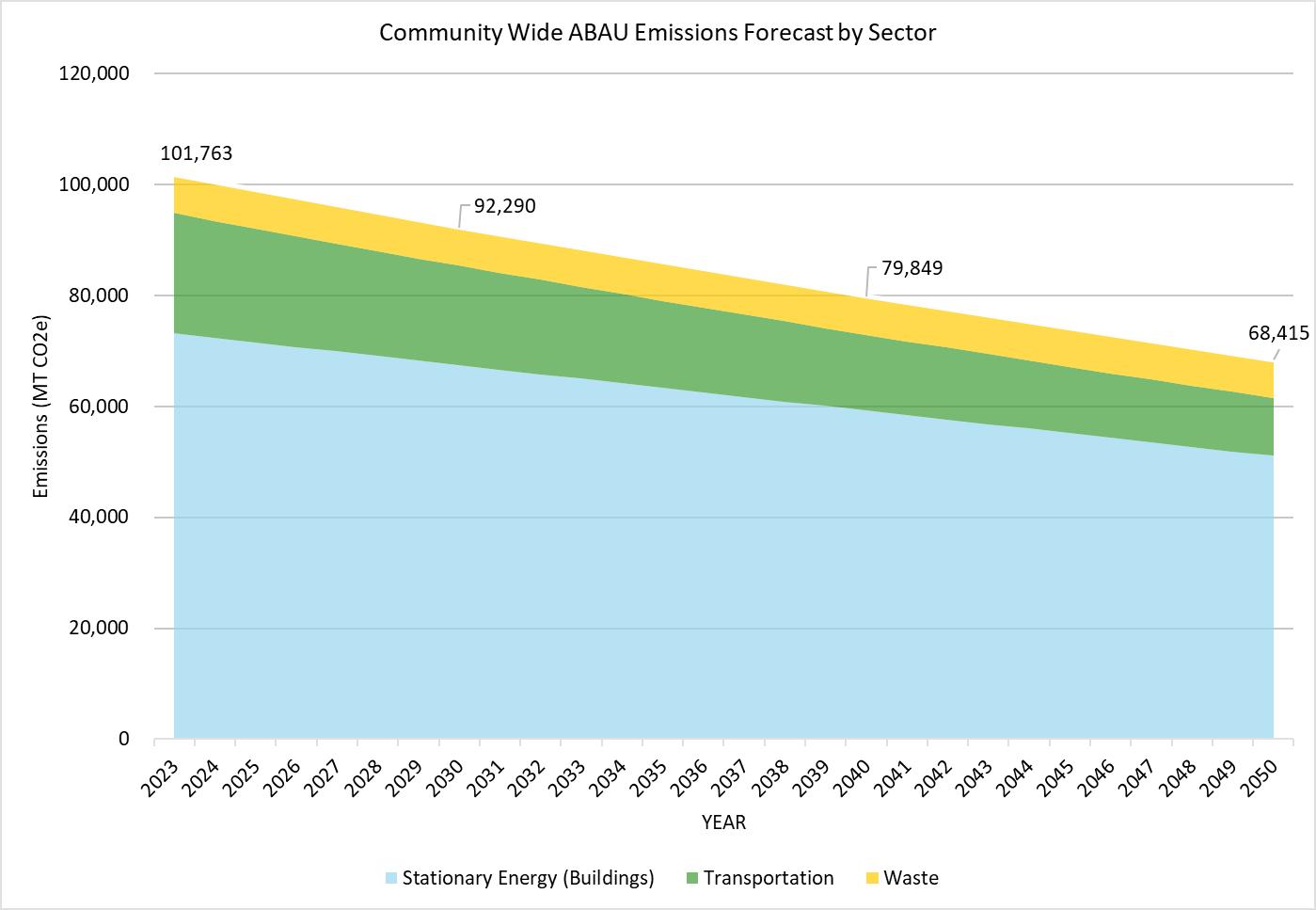

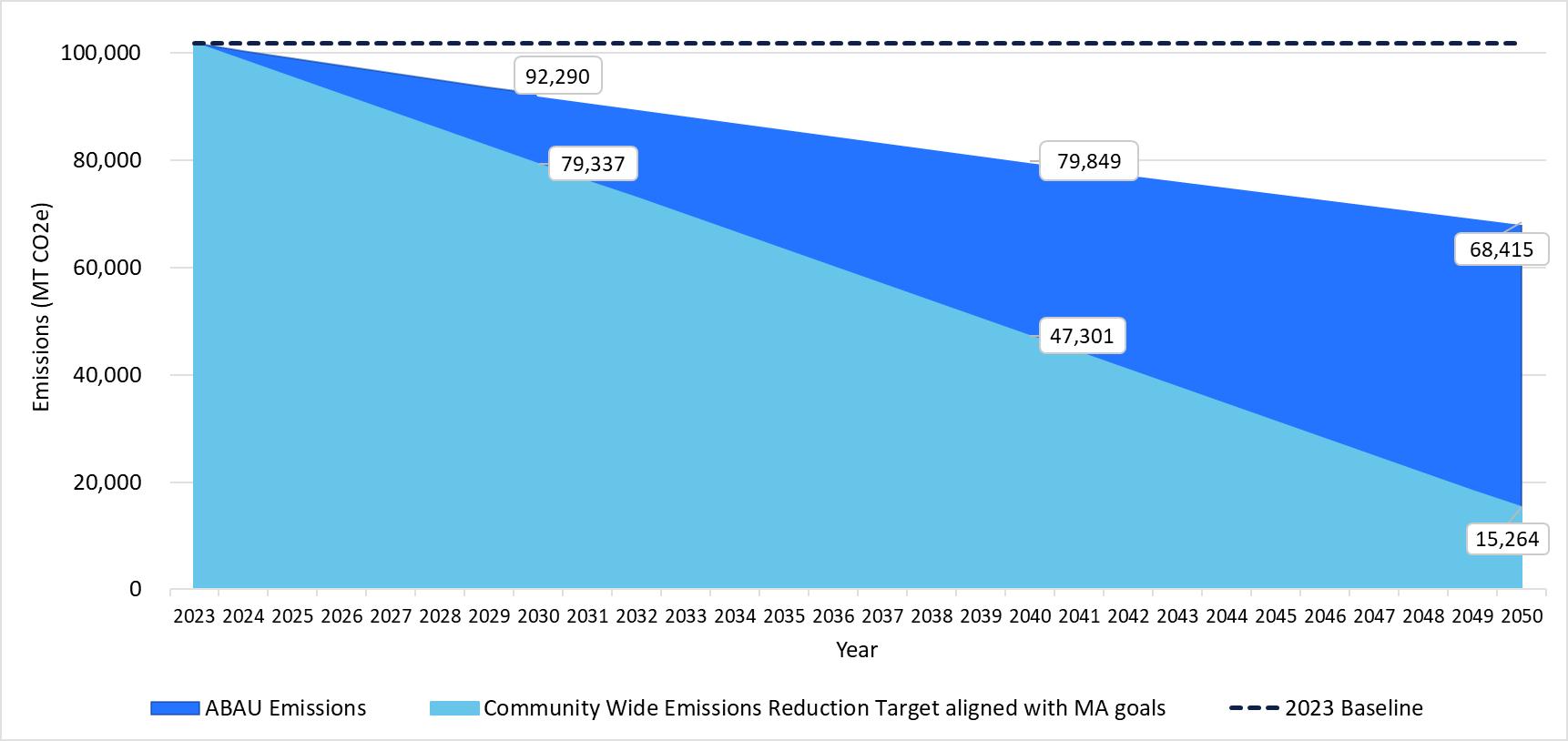
Table 5 illustrates the emissions levels for Dalton in line with the final (2050) CECP community minimum target scenario and utilizes a 2023 baseline. Starting from a 2023
Table 5: Community-Wide Emissions Target in line with CECP
Figure 9: Community-Wide Emissions: 2023 baseline against ABAU forecast and CECP target
Figure 9: Community-Wide Emissions: 2023 baseline against ABAU forecast and CECP target reductions
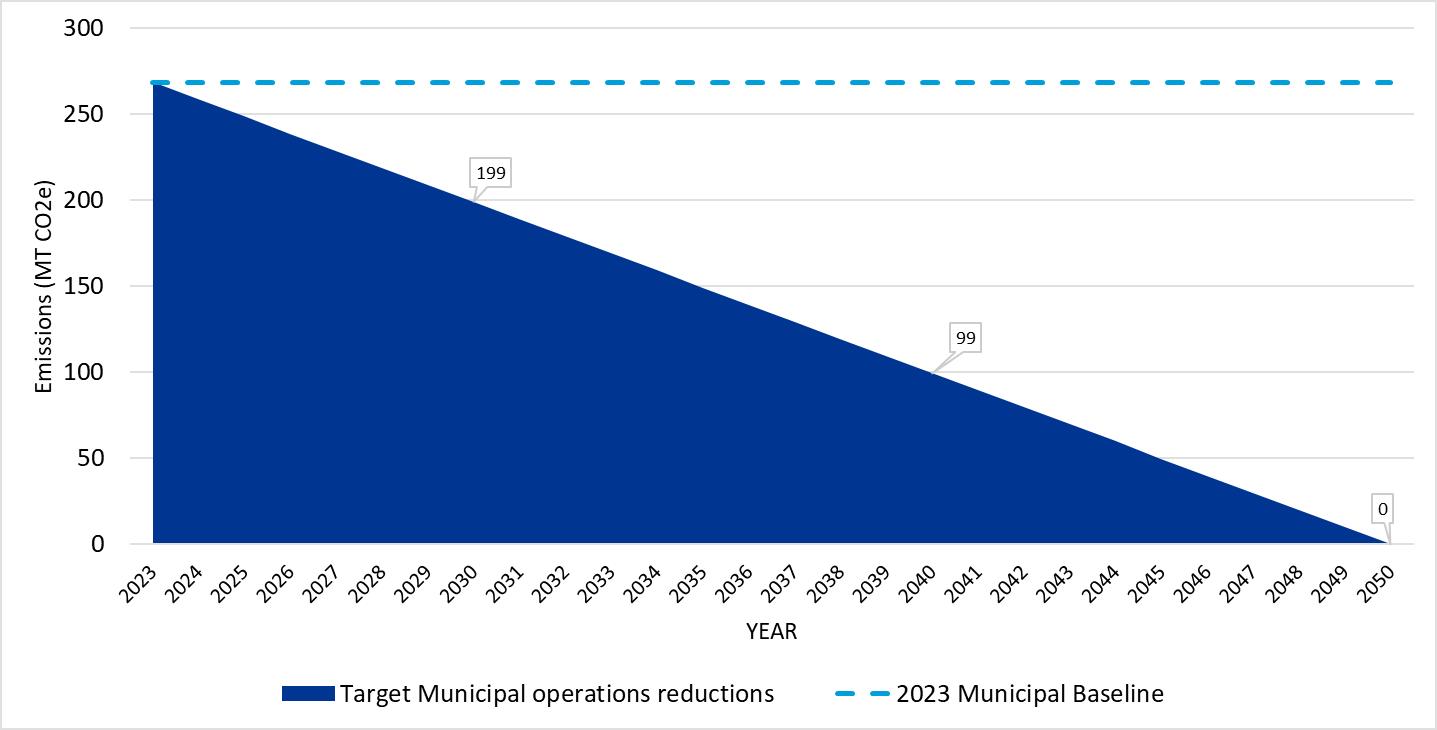
Having greater control of the emissions from municipal operations, Dalton can take more aggressive action to reduce its emissions from municipal operations. In line with the requirements associated with Climate Leader certification, Dalton should pursue a complete elimination of

Having greater control of the emissions from municipal operations, Dalton can take more aggressive action to reduce its emissions from municipal operations. In line with the requirements associated with Climate Leader certification, Dalton should pursue a complete elimination of fossil fuels from its municipal buildings and vehicles. Assuming a straight line reduction, Dalton should look to reduce its emissions from municipal operations to 199 MT CO2e by 2030 and to 99 MT CO2e by 2040 from a baseline of 268 MT CO2e in 2023. The municipal operations targets are shown in Table 6. These ambitious targets highlight Dalton’s commitment to mitigating climate change and aligning with statewide targets. Achieving municipal decarbonization targets is feasible, as proven technologies for building electrification are already available, and continued advancements in electric vehicles (EVs) are expected to make full municipal fleet decarbonization attainable by 2050.

Figure 10: 2023 baseline municipal
Figure 10: 2023 baseline municipal operations emissions against municipal reduction targets


The climate action measures outlined in this plan are a direct reflection of both community priorities and a data-driven evaluation process. The goals, strategies, and actions presented in the following section were selected based on the results of a community-wide survey, which gathered input from residents on the sustainability initiatives they most support. Additionally, each strategy was evaluated using a set of selection criteria to ensure that it is feasible, impactful, and aligned with Dalton’s long-term sustainability goals. Many of these strategies were suggested by community members, while others have been successfully implemented in other municipalities and have been adapted to suit Dalton’s unique needs.
To ensure that the Climate Action Plan (CAP) reflects the priorities and concerns of Dalton residents, the Green Dalton Committee (GDC) conducted a community-wide survey from October 27, 2024, to December 11, 2024. This survey provided residents with a platform to share their perspectives on climate-related challenges, express their level of concern about environmental issues, and indicate which strategies they believe the Town should prioritize to enhance sustainability and resilience.
The survey was first previewed at the Dalton Climate Fair, allowing the GDC to gather preliminary feedback and refine the questions for clarity and accessibility. After this initial phase, the survey was made widely available in multiple formats to ensure broad participation. Residents could complete it online via a QR code or direct link, or fill out a printed version distributed throughout the community. The GDC leveraged various communication channels, including Town newsletters, local Facebook groups, and press releases in local media, to encourage participation. Additionally, survey kiosks were placed at the Dalton Public Library and the Senior Center, ensuring that residents who may not have internet access could still share their input. To further promote inclusivity, GDC members conducted door-to-door outreach, personally inviting residents to take part in the survey. This comprehensive engagement process helped capture a diverse range of perspectives, ensuring that the CAP reflects the priorities of the entire Dalton community.

A total of 250 Daltonians participated in the survey, providing valuable insights into community concerns and preferred climate strategies. 66% of respondents reported being very or extremely concerned about climate-related environmental challenges, while 68% stated that it is very or extremely important for the Town to take proactive measures to increase climate resilience. The climate-related risks that ranked highest among respondents included the impact of climate change on the Berkshires' natural environment, the rising cost of food, wildfires, and health risks associated with insect-borne diseases.
Survey respondents also expressed strong support for local renewable energy generation for municipal facilities, as well as investments in energy efficiency upgrades such as insulated windows, doors, and high-efficiency appliances. Waste reduction strategies, particularly community-wide composting, were well received, with 69% of respondents supporting the establishment of a food waste composting program at the Dalton Transfer Station and 58% advocating for organic composting made available to residents. Additionally, more than half of respondents reported using home heating oil or natural gas, reinforcing the importance of expanding education and incentives for home electrification.
The results of this survey played a critical role in shaping the CAP by identifying the climate solutions that matter most to Dalton residents. The next section outlines how these community priorities were evaluated alongside additional criteria to select the most impactful and feasible strategies for implementation.

The strategies included in Dalton’s Climate Action Plan were carefully evaluated to ensure they are effective, feasible, and aligned with community priorities. Each strategy was assessed using five key criteria: greenhouse gas (GHG) reduction potential, cost, funding availability, adaptation and resilience impact, and community support. While all criteria were important, the analysis placed greater emphasis on strategies that would result in significant emissions reductions and were financially viable, ensuring that the CAP remains both ambitious and realistic.
Strategies with high emissions reduction potential and manageable costs were prioritized, especially when external funding opportunities were available to offset expenses. Community support was a key consideration, particularly for strategies that require strong public participation to succeed. In some cases, strategies with high-impact potential were included alongside plans for additional public outreach and education to ensure their successful adoption. Additionally, strategies that enhanced Dalton’s climate resilience were prioritized when they aligned with other high-scoring factors. This structured approach ensured that the selected strategies maximize impact while remaining achievable.

To organize Dalton’s climate action efforts, this plan groups its goals, strategies, and actions into four framework categories. These categories provide structure to the plan, helping to align initiatives with key focus areas. While they do not dictate implementation or feasibility, they serve as a way to organize Dalton’s approach to reducing emissions, conserving resources, and enhancing community resilience.
Each framework category focuses on a specific set of priorities that address Dalton’s unique opportunities and challenges. TRANSPORTATION & MOBILITY initiatives aim to support electric vehicle (EV) adoption, municipal fleet electrification, and reductions in vehicle miles traveled (VMT). BUILDINGS & EFFICIENCY strategies focus on improving energy efficiency, retrofitting buildings, and integrating renewable energy sources. The RESOURCE CONSERVATION category highlights waste reduction efforts, including composting, recycling, and stormwater management. Lastly, the GREEN COMMUNITY framework emphasizes enhancing parks and green spaces, expanding the urban tree canopy, and promoting community education and youth engagement. These categories create a clear organizational structure, ensuring that Dalton’s climate action strategies are well-defined and easy to navigate.
Table 7: Four-point framework categories
The Transportation & Mobility category is a critical component of climate action planning, focusing on reducing greenhouse gas emissions from the transportation sector. This sector is a major contributor to carbon emissions due to the reliance on fossil-fuel-powered vehicles. By prioritizing strategies that reduce vehicle miles traveled, promote active and public transportation, and transition to electric vehicles, Dalton can create a more sustainable and low-carbon transportation network. These efforts not only help in mitigating climate change but also contribute to improved air quality, reduced traffic congestion, and enhanced community well-being.
The goals, strategies, and actions outlined below focus on both municipal and community-wide initiatives. Strategies to reduce vehicle miles traveled emphasize active transportation, including the assessment and enhancement of walking and biking infrastructure in high-traffic areas. Expanding and improving public transit through collaboration with BRTA, BRPC, and adjacent communities is another key strategy to increase accessibility and reduce individual car use. To support a transition to electric vehicles, municipal efforts include electrifying the fleet and installing EV charging stations at municipal facilities. Community-wide initiatives focus on expanding EV infrastructure, educating residents on EV incentives and rebates, and partnering with businesses and school districts to accelerate the shift to electric transportation. By implementing these strategies, Dalton can foster a more sustainable and efficient transportation system that benefits both residents and the environment.

Table 8: Transportation & Mobility Goals, Strategies & Actions
GOALS STRATEGIES
IMPACT- MUNICIPAL OR COMMUNITY-WIDE ACTIONS
Promote active transportation Community-wide
Reduce Vehicle Miles Travelled (VMT)
Expand and improve public transit Community-wide
Transition To EVs By 2050
Electrify the municipal fleet Municipal
Support The Transition To EVs Support a community-wide transition to EVs Community-wide
Develop a plan to assess transportation infrastructure and identify walking and biking paths that may better connect high traffic areas and interconnect with regional pathways and destinations
Build and repair sidewalks, bike lanes, and shared-use paths in high-priority areas
Engage and collaborate with BRTA to conduct a public transit assessment to analyze travel patterns, identify gaps in the existing system such as unmarked bus stops and lack of bus stop shelters, and increase usage Utilize assessment results to determine what projects may be worth piloting or supporting.
Audit the municipal fleet and develop a phased schedule to replace gas and diesel vehicles with electric and zero-emission alternatives.
Install EV charging stations at municipal facilities, prioritizing level 3 chargers where funding and feasibility allows.
Install EV charging stations in high traffic areas with moderate parking durations
Educate the community on the incentives and rebates associated with purchasing and owning an electric vehicle
Work with businesses to help facilitate their installing of EV charging stations by informing them of the incentives and rebates associated with EV charger installation
Partner with other towns in the school district to transition school buses towards electric buses
Buildings, both residential and municipal, contribute the majority of Dalton’s emissions due to their reliance on fossil fuels for heating, cooling, and electricity. As a result, creating efficiencies that reduce overall energy demand will help minimize our GHG footprint. Further, by making an intentional transition to renewable forms of energy Town-wide, Dalton can move toward the elimination of GHG emissions from the places we live and work. By implementing strategies that enhance energy efficiency, electrifying heating systems, and increasing the use of renewable energy, municipalities can lower emissions, reduce energy costs, and improve building performance and comfort for residents and businesses.
The Town of Dalton's Climate Action Plan outlines both municipal and community-wide strategies to reduce emissions in buildings. Municipal efforts focus on assessing energy use in Town-owned buildings, implementing efficiency upgrades, and transitioning municipal facilities to clean heating and cooling systems. Community-wide strategies include providing incentives and education to encourage residents and businesses to adopt energyefficient upgrades, electrify heating and cooling systems, and increase the use of renewable energy sources. By taking a comprehensive approach that addresses both public and private buildings, these initiatives support a longterm transition to a more sustainable and resilient built environment.

Establish a dedicated Sustainability Manager position to coordinate and advance the Town’s climate action initiatives, secure funding opportunities, and ensure measurable progress toward sustainability goals
Hire a sustainability manager10
Develop a job description focusing on grant writing, program execution, and tracking climate initiatives
Community-wide, Municipal
Reduce community-wide emissions from non-industrial buildings
50% by 2035 and 100% by 2050.
Expand community awareness and access to financial incentives, programs, and renewable energy options that support the transition to energy-efficient, electrified, and renewable-powered buildings
Establish a dedicated Sustainability Manager position to coordinate and advance the Town’s climate action initiatives, secure funding opportunities, and ensure measurable progress toward sustainability goals
Hire a sustainability manager10
Achieve a fully decarbonized and energy-efficient municipal building portfolio powered by renewable energy by 2050
Reduce community-wide emissions from non-industrial buildings
50% by 2035 and 100% by 2050
Increase in-territory renewable energy supply.
Community-wide
IMPACT- MUNICIPAL OR COMMUNITY-WIDE ACTIONS
Apply for available state funding for a part-time sustainability manager role in conjunction with other Towns.
Educate on all MassSave incentives, such as electric heat pump installation in homes and businesses
Educate on all MassSave incentives, such as low-income weatherization programs with subsidies for insulation and efficiency improvements
Educate on State financial incentives and streamlined permitting for solar installations
Promote Dalton's Community Choice Power Supply Program, and the 100% renewable energy product
Develop a job description focusing on grant writing, program execution, and tracking climate initiatives
Community-wide, Municipal
Adopt policies and implement measures to transition municipal facilities to clean energy, improve efficiency, and reduce carbon emissions
Municipal
STRATEGIES
Expand community awareness and access to financial incentives, programs, and renewable energy options that support the transition to energy-efficient, electrified, and renewable-powered buildings
Conduct energy audits and prioritize upgrades in municipal facilities
Apply for available state funding for a part-time sustainability manager role in conjunction with other Towns
Retrofit municipal buildings with heat pumps where possible
Identify feasible locations for municipal solar arrays, like parking lot canopies and rooftops
Educate on all MassSave incentives, such as electric heat pump installation in homes and businesses
IMPACT- MUNICIPAL OR COMMUNITY-WIDE ACTIONS
Develop policies requiring fossil-fuel-free, net-zero standards, and the decarbonization of existing and new municipal buildings
10 As one resource, consult with BRPC on their progress with DOER Energy Manager Program Town of Dalton, MA DRAFT 1 Climate Action Plan 36
Expand local renewable energy generation by identifying viable project sites and exploring municipal ownership opportunities to enhance energy resilience
Community-wide
Community-wide
Educate on all MassSave incentives, such as low-income weatherization programs with subsidies for insulation and efficiency improvements
Assess landfills, substations, and other sites for solar projects and pair with energy storage where feasible
Educate on State financial incentives and streamlined permitting for solar installations
Explore feasibility for creation of Dalton Municipal Light Dept to own and operate in-territory supply source.
Promote Dalton's Community Choice Power Supply Program, and the 100% renewable energy product
Achieve a fully decarbonized and energy-efficient municipal building portfolio powered by renewable energy by 2050.
Adopt policies and implement measures to transition municipal facilities to clean energy, improve efficiency, and reduce carbon emissions
Municipal
Conduct energy audits and prioritize upgrades in municipal facilities
Retrofit municipal buildings with heat pumps where possible
Identify feasible locations for municipal solar arrays, like parking lot canopies and rooftops
The Resource Conservation category focuses on reducing greenhouse gas emissions by improving waste management, protecting natural ecosystems, and enhancing water and stormwater systems These efforts not only mitigate climate change but also build resilience against extreme weather events, safeguard public health, and promote sustainable land use By integrating conservation-focused strategies into municipal operations, partnering with Dalton’s Municipal Vulnerability Program (MVP) and Conservation Committee, and engaging the community in responsible resource use, Dalton can reduce environmental impact while enhancing the quality of life for residents.
Develop policies requiring fossil-fuel-free, net-zero standards, and the decarbonization of existing and new municipal buildings
10 As one resource, consult with BRPC on their progress with DOER Energy Manager Program
The table below outlines both municipal and community-wide strategies to achieve these goals. To strengthen climate resilience, the Town aims to improve stormwater and sewer systems, conduct community education programs on responsible stormwater management, and promote the use of native plants to reduce chemical runoff Water conservation initiatives include installing smart water meters and educating residents on rebates for water-efficient appliances. Efforts to protect green spaces involve revising zoni
The Resource Conservation category focuses on reducing greenhouse gas emissions by improving waste management, protecting natural ecosystems, and enhancing water and stormwater systems. These efforts not only mitigate climate change but also build resilience against extreme weather events, safeguard public health, and promote sustainable land use. By integrating conservation-focused strategies into municipal operations, partnering with Dalton’s Municipal Vulnerability Program (MVP) and Conservation Committee, and engaging the community in responsible resource use, Dalton can reduce environmental impact while enhancing the quality of life for residents.
The table below outlines both municipal and community-wide strategies to achieve these goals. To strengthen climate resilience, the Town aims to improve stormwater and sewer systems, conduct community education programs on responsible stormwater management, and promote the use of native plants to reduce chemical runoff. Water conservation initiatives include installing smart water meters and educating residents on rebates for waterefficient appliances. Efforts to protect green spaces involve revising zoning regulations to encourage smart development while preserving forests and open areas, managing Dalton’s tree canopy, and promoting the use of native vegetation in municipal landscaping. Waste reduction strategies focus on expanding recycling and composting infrastructure, supporting the Pay-AsYou-Throw program, and working with private haulers to improve recycling practices. By implementing these actions, Dalton can foster a more resilient and environmentally sustainable community while reducing its overall emissions footprint.

Table 10: Resource Conservation Goals, Strategies & Actions
Table 10: Resource Conservation Goals, Strategies & Actions
Strengthen Dalton’s resilience to climate impacts by preparing for extreme weather, improving stormwater and water management systems, and empowering the community with knowledge and resources to protect public health and the environment.
Stormwater management: maintain and upgrade sewer and stormwater systems to enhance safety, efficiency and mitigate environmental impact
Water usage: support smart metering and inform the public on rebates for water-efficient appliance upgrades
Community-wide, municipal
Conduct a comprehensive assessment of the sewer and stormwater systems to identify and prioritize areas requiring upgrades to address inefficiency, flooding, and pollution
Develop community education programs and reporting mechanisms to promote responsible stormwater practices and at-home solutions.
Utilize native plants in riparian buffers to limit the runoff of chemicals into waterways
Install smart water meters with ability for property owners to monitor usage in real-time and have alerts sent based on usage thresholds
Community-wide
Ensure a thriving and resilient natural ecosystem by safeguarding green spaces, enhancing biodiversity, and fostering a harmonious relationship between
development and the environment.
Protect Dalton's green spaces
Community-wide, municipal
Conduct public outreach campaigns to educate the community about the benefits of smart metering and water-efficient upgrades, as well as the rebates associated with the purchasing of water-efficient appliances, such as low-flow showerheads, faucets, and toilets
Revise local zoning and land-use regulations to encourage higher-density development in already built environments, limit the development of open and green spaces, and protect forested and greenfield areas from unnecessary clearing
IMPACT- MUNICIPAL OR COMMUNITY-WIDE ACTIONS
Establish a cadence and process for which a tree census is conducted and Dalton's tree canopy is effectively managed
Town of Dalton, MA DRAFT 1 Climate Action Plan 38 GOALS STRATEGIES
In partnership with Dalton Beautification Committee, organize workshops to educate the community about the importance of landscaping with native plants naturally fit for Dalton's environment.
Ensure parks and municipal buildings utilize native plants and vegetation that require minimal maintenance.
Encourage increased use of Dalton’s Transfer Station and develop approaches that encourage this
Support use of the Pay-As-You-Throw (PAYT) program by residents and haulers
Transform waste management practices to reduce landfill reliance and provide opportunities for citizens, businesses, and Town facilities to
Establish opportunities to reduce solid waste
Community-wide, municipal
Begin dialogue with private haulers and Northern Berkshire Solid Waste Management District (NBSWMD) to better understand their needs and the options that would support their affordably implementing separation and recycling of recyclable materials
Create a Solid Waste Advisory subcommittee in the Green Dalton Committee, charged with developing a comprehensive solid waste management plan that includes ongoing metrics and monitoring of implementation
Support and call for state and local Product Stewardship initiatives
Encourage increased use of Dalton’s Transfer Station and develop approaches that encourage this.
Support use of the Pay-As-You-Throw (PAYT) program by residents and haulers.
Establish opportunities to reduce solid waste Community-wide, municipal
Transform waste management practices to reduce landfill reliance and provide opportunities for citizens, businesses, and Town facilities to contribute to sustainable waste solutions.
Establish a composting program in Dalton Community-wide
Begin dialogue with private haulers and Northern Berkshire Solid Waste Management District (NBSWMD) to better understand their needs and the options that would support their affordably implementing separation and recycling of recyclable materials
Create a Solid Waste Advisory subcommittee in the Green Dalton Committee, charged with developing a comprehensive solid waste management plan that includes ongoing metrics and monitoring of implementation
Support and call for state and local Product Stewardship initiatives
Initiate composting at Dalton’s Transfer Station.
Support backyard composting and produce a document that describes details of successful backyard programs
Partner with the regional school district (CBRSD) and local businesses to investigate and implement an affordable means of food waste composting.
Investigate options to expand transfer station to accommodate additional recycling needs
Increase recycling infrastructure and education Community-wide
Establish a waste management program educational campaign to improve recycling within Town facilities, businesses and the community. This effort should include a means of engaging the community, using tools such as surveys, to maximize awareness of community concerns, wishes and needs
The Resource Conservation category focuses on reducing greenhouse gas emissions by improving waste management, protecting natural ecosystems, and enhancing water and stormwater systems. These efforts not only mitigate climate change but also build resilience against extreme weather events, safeguard public health, and promote sustainable land use. By integrating conservation-focused strategies into municipal operations, partnering with Dalton’s Municipal Vulnerability Program (MVP) and Conservation Committee, and engaging the community in responsible resource use, Dalton can reduce environmental impact while enhancing the quality of life for residents.
The table below outlines both municipal and community-wide strategies to achieve these goals. To strengthen climate resilience, the Town aims to improve stormwater and sewer systems, conduct community education programs on responsible stormwater management, and promote the use of native plants to reduce chemical runoff. Water conservation initiatives include installing smart water meters and educating residents on rebates for waterefficient appliances. Efforts to protect green spaces involve revising zoning regulations to encourage smart development while preserving forests and open areas, managing Dalton’s tree canopy, and promoting the use of native vegetation in municipal landscaping. Waste reduction strategies focus on expanding recycling and composting infrastructure, supporting the Pay-AsYou-Throw program, and working with private haulers to improve recycling practices. By implementing these actions, Dalton can foster a more resilient and environmentally sustainable community while reducing its overall emissions footprint.

Table 11: Green Community Goals, Strategies & Actions
Table 11: Green Community Goals, Strategies & Actions
GOALS
Strengthen Dalton’s resilience to climate impacts by preparing for extreme weather, improving stormwater and water management systems, and empowering the community with knowledge and
STRATEGIES
IMPACT- MUNICIPAL OR COMMUNITY-WIDE ACTIONS
Educate residents on climate disaster preparation and the resources available to them within the Town
Prepare for extreme weather and natural disasters Community-wide
Establish an extreme heat plan that provides residents with cooling spaces during the warmest hours of extreme heat events
Educate the community on measures that can be taken to reduce the risk of wildfire via a new or expanded webpage on the

Scenario analysis is a valuable tool for assessing how different emissions reduction outcomes could shape Dalton’s overall climate trajectory. Rather than modeling the specific actions or behavioral shifts that lead to emissions reductions, this analysis focuses on the direct impact of emission changes in key sectors. By quantifying these reductions, the Town can better understand the scale of transformation needed to meet its long-term climate goals. This approach does not predict the success of any particular policy or program but instead illustrates what Dalton’s emissions could look like if certain reduction targets are achieved.
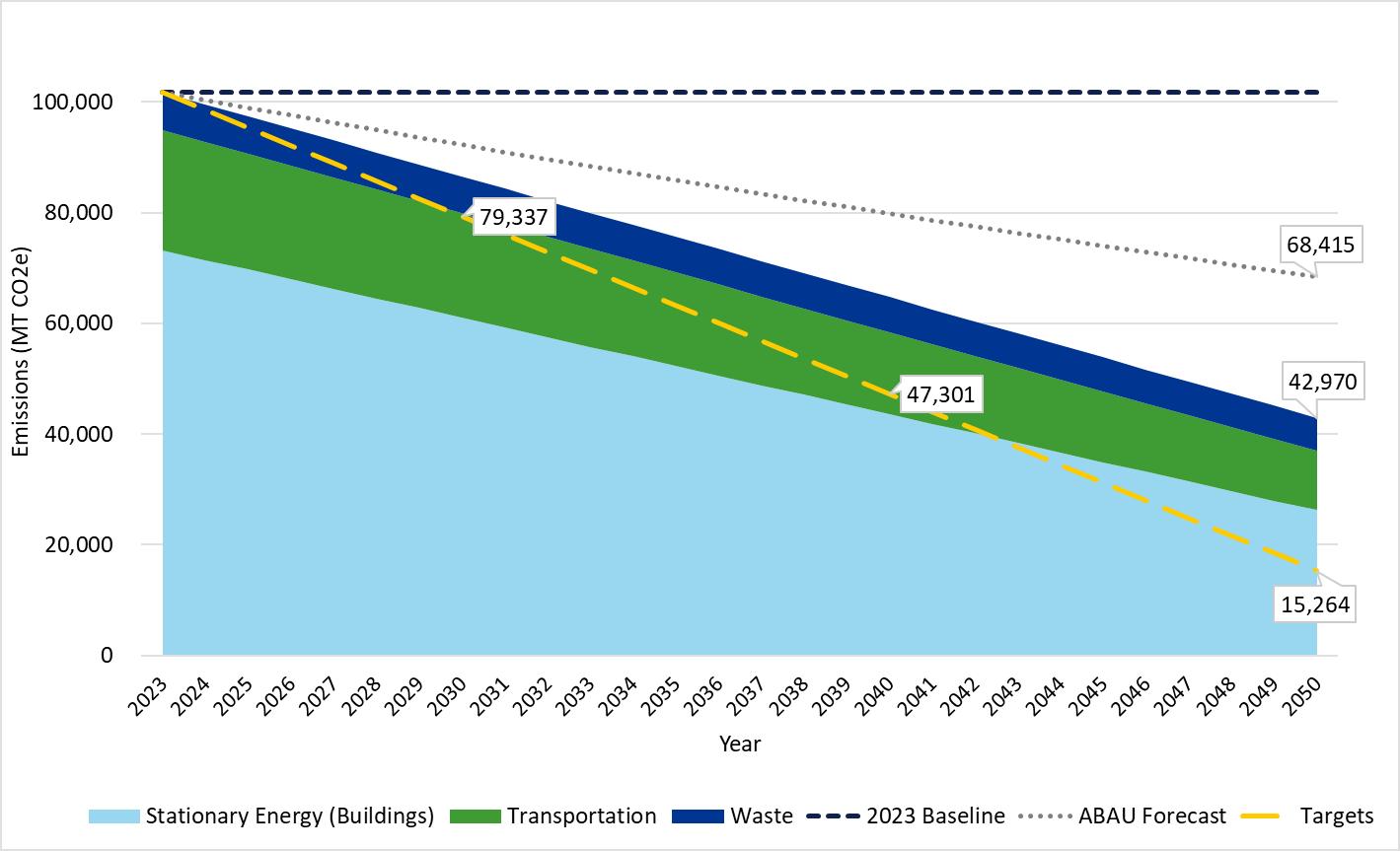
This scenario models emissions reductions based on four key assumptions. First, by 2050, 100% of the electricity powering Dalton will come from clean, zero-emission sources, eliminating emissions from grid electricity use. Second, non-electricity emissions from buildings will decline by 50% compared to 2023 levels, reflecting improvements in heating efficiency and fuel switching. Third, non-electricity transportation emissions will also decrease by 50%, assuming a shift toward cleaner transportation options. Lastly, methane emissions from waste will fall by 15%, reflecting an increase in composting and recycling efforts. While these reductions could be driven by a combination of policies, technologies, and behavioral changes, this analysis strictly evaluates the impact of achieving these reductions, rather than the pathways to get there.

The following graph presents the results of this emissions reduction scenario, illustrating how these sector-wide changes would alter Dalton’s emissions profile over time. This visualization helps contextualize the Town’s decarbonization trajectory and highlights the potential impact of significant but realistic reductions in electricity, building, transportation, and waste emissions.
Figure 11: Moderate Change Scenario- 2023 Baseline, ABAU forecast, scenario results, and targets (all community-wide)
Figure 11: Moderate Change Scenario- 2023 Baseline, ABAU forecast, scenario results, and targets (all community-wide)
We can also model a more accelerated emissions reduction scenario, illustrating the potential impact of deeper reductions in building, transportation, and waste emissions. As with the previous scenario, this analysis does not evaluate specific programs or behavioral changes but instead quantifies what Dalton’s emissions could look like if accelerated reductions occur.
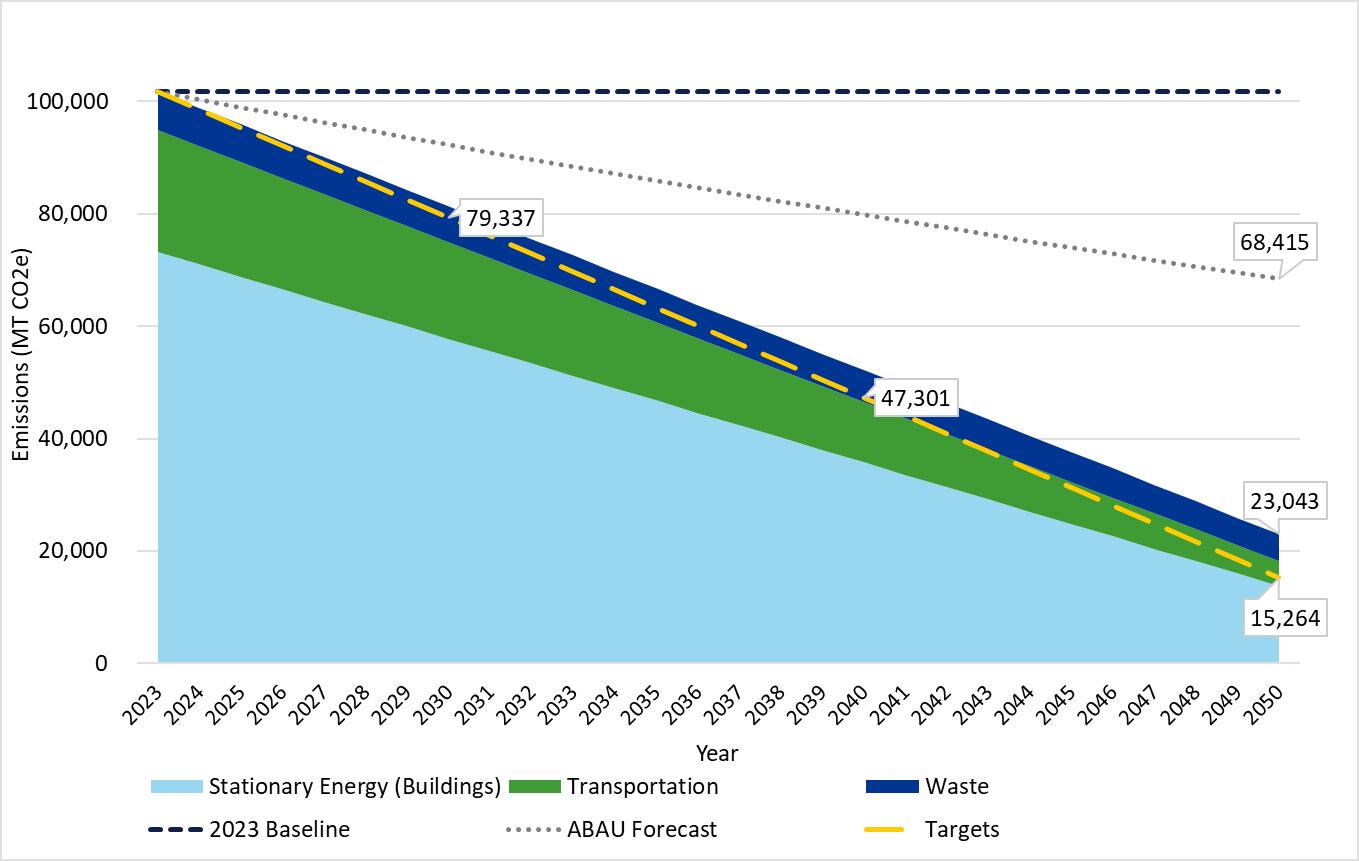
This scenario still assumes that by 2050, 100% of the electricity powering Dalton will come from clean, zero-emission sources, eliminating emissions from grid electricity use. However, it models a 75% reduction in non-electricity building emissions and an 80% reduction in non-electricity transportation emissions compared to 2023 levels, reflecting a more significant shift toward clean energy and transportation solutions Additionally, methane emissions from waste are modeled to decline by 30%, assuming a higher level of composting, recycling, and waste diversion. The following graph presents the emissions reductions that would result from these assumptions, helping to illustrate what a more ambitious decarbonization pathway could look like for Dalton.

We can also model a more accelerated emissions reduction scenario, illustrating the potential impact of deeper reductions in building, transportation, and waste emissions. As with the previous scenario, this analysis does not evaluate specific programs or behavioral changes but instead quantifies what Dalton’s emissions could look like if accelerated reductions occur.
This scenario still assumes that by 2050, 100% of the electricity powering Dalton will come from clean, zero-emission sources, eliminating emissions from grid electricity use. However, it models a 75% reduction in non-electricity building emissions and an 80% reduction in non-electricity transportation emissions compared to 2023 levels, reflecting a more significant shift toward clean energy and transportation solutions. Additionally, methane emissions from waste are modeled to decline by 30%, assuming a higher level of composting, recycling, and waste diversion. The following graph presents the emissions reductions that would result from these assumptions, helping to illustrate what a more ambitious decarbonization pathway could look like for Dalton.
12: Accelerated Change Scenario- 2023 Baseline, ABAU forecast, scenario results, and targets (all community-wide)
12: Accelerated Change Scenario- 2023 Baseline, ABAU forecast, scenario results, and targets (all community-wide)


To ensure a manageable and effective rollout of Dalton’s Climate Action Plan, strategies are organized into three phases based on priority, feasibility, and impact. This phased approach allows the Town to focus on early foundational actions, build momentum with infrastructure and policy improvements, and ultimately complete the transition to a more sustainable and climate-resilient community. By spacing out initiatives over time, Dalton can avoid overburdening staff and resources while maintaining steady progress toward its long-term goals.
Phase 1 (2025–2028) lays the groundwork for Dalton’s climate initiatives by establishing leadership, expanding awareness, and setting key policies. This includes hiring a Sustainability Manager, increasing community education on financial incentives for electrification, identifying local renewable energy opportunities, and launching a composting program. Municipal facilities will also begin transitioning to clean energy and improved efficiency through policy adoption. Additionally, Phase 1 will strengthen Dalton’s ability to withstand climate impacts by improving stormwater and water management systems and equipping the community with the knowledge and resources needed to prepare for extreme weather events and protect public health.
Phase 2 (2029–2034) builds on this foundation by scaling up investments in clean transportation and waste reduction. Key strategies include electrifying the municipal fleet, supporting a Town-wide transition to EVs, increasing recycling infrastructure, and promoting active transportation and public transit. These actions help reduce emissions from vehicles and waste while enhancing sustainable mobility options.
Phase 3 (2035–2040) focuses on long-term resilience and environmental protection, ensuring Dalton is prepared for climate challenges while maintaining sustainability progress. Strategies are centered on water conservation measures and the protection of green spaces. While some efforts will extend beyond these timelines, this structure ensures that climate action remains strategic, achievable, and well-paced to support Dalton’s vision for a sustainable future.
Establish a dedicated sustainability manager position to coordinate and advance the Town’s climate action initiatives, secure funding opportunities, and ensure measurable progress toward sustainability goals.
Hire a sustainability manager11
ACTIONS
Develop a job description focusing on grant writing, program execution, and tracking climate initiatives
Apply for available state funding for a part-time sustainability manager role in conjunction with other Towns.
Educate on all MassSave incentives, such as electric heat pump installation in homes and businesses
Establish a dedicated sustainability manager position to coordinate and advance the Town’s climate action initiatives, secure funding opportunities, and ensure measurable progress toward sustainability goals.
Reduce community-wide emissions from non-industrial buildings 50% by 2035 and 100% by 2050.
Hire a sustainability manager11
Increase in-territory renewable energy supply
Reduce community-wide emissions from non-industrial buildings 50% by 2035 and 100% by 2050.
Expand community awareness and access to financial incentives, programs, and renewable energy options that support the transition to energy-efficient, electrified, and renewable-powered buildings
Increase in-territory renewable energy supply
Expand community awareness and access to financial incentives, programs, and renewable energy options that support the transition to energy-efficient, electrified, and renewable-powered buildings
Develop a job description focusing on grant writing, program execution, and tracking climate initiatives
Educate on all MassSave incentives, such as low-income weatherization programs with subsidies for insulation and efficiency improvements
Educate on State financial incentives and streamlined permitting for solar installations
Apply for available state funding for a part-time sustainability manager role in conjunction with other Towns
Promote Dalton's Community Choice Power Supply Program, and the 100% renewable energy product
Educate on all MassSave incentives, such as electric heat pump installation in homes and businesses.
Expand local renewable energy generation by identifying viable project sites and exploring municipal ownership opportunities to enhance energy resilience
Expand local renewable energy generation by identifying viable project sites and exploring municipal ownership opportunities to enhance energy resilience
Assess landfills, substations, and other sites for solar projects and pair with energy storage where feasible
Educate on all MassSave incentives, such as low-income weatherization programs with subsidies for insulation and efficiency improvements
Explore feasibility for creation of Dalton Municipal Light Dept to own and operate in-territory supply source
Educate on State financial incentives and streamlined permitting for solar installations
Promote Dalton's Community Choice Power Supply Program, and the 100% renewable energy product.
Assess landfills, substations, and other sites for solar projects and pair with energy storage where feasible
Explore feasibility for creation of Dalton Municipal Light Dept to own and operate in-territory supply source
11 As one resource, consult with BRPC on their progress with DOER Energy Manager Program
Transform waste management practices to reduce landfill reliance and provide opportunities for citizens, businesses, and Town facilities to contribute to sustainable waste solutions.
Achieve a fully decarbonized and energy-efficient municipal building portfolio powered by renewable energy by 2050
Establish a composting program in Dalton
ACTIONS
Initiate composting at Dalton’s Transfer Station
Support backyard composting and produce a document that describes details of successful backyard programs.
Partner with the regional school district (CBRSD) and local businesses to investigate and implement an affordable means of food waste composting
Conduct energy audits and prioritize upgrades in municipal facilities
Adopt policies and implement measures to transition municipal facilities to clean energy, improve efficiency, and reduce carbon emissions
Strengthen Dalton’s resilience to climate impacts by preparing for extreme weather, improving stormwater and water management systems, and empowering the community with knowledge and resources to protect public health and the environment.
Prepare for extreme weather and natural disasters
Retrofit municipal buildings with heat pumps where possible
Identify feasible locations for municipal solar arrays, like parking lot canopies and rooftops
Develop policies requiring fossil-fuel-free, net-zero standards, and the decarbonization of existing and new municipal buildings
Educate residents on climate disaster preparation and the resources available to them within the Town
Establish an extreme heat plan that provides residents with cooling spaces during the warmest hours of extreme heat events.
Educate the community on measures that can be taken to reduce the risk of wildfire via a new or expanded webpage on the Town's website
Phase 2 (2029-34)
Table 13: Phase 2 Goals, Strategies, and Actions
Table 13: Phase 2 Goals, Strategies, and Actions
Transition to EVs by 2050
Support the transition to EVs
STRATEGIES
Electrify the municipal fleet
Support a community-wi de transition to EVs
ACTIONS
Audit the municipal fleet and develop a phased schedule to replace gas and diesel vehicles with electric and zero-emission alternatives
Install EV charging stations at municipal facilities, prioritizing level 3 chargers where funding and feasibility allows
Install EV charging stations at municipal facilities, prioritizing level 3 chargers where funding and feasibility allows
Install EV charging stations in high traffic areas with moderate parking durations.
Educate the community on the incentives and rebates associated with purchasing and owning an electric vehicle
Work with businesses to help facilitate their installing of EV charging stations by informing them of the incentives and rebates associated with EV charger installation
Partner with other towns in the school district to transition school buses towards electric buses
Table 13: Phase 2 Goals, Strategies, and Actions
GOALS
Transform waste management practices to reduce landfill reliance and provide opportunities for citizens, businesses, and Town facilities to contribute to sustainable waste solutions
STRATEGIES ACTIONS
Encourage increased use of Dalton’s Transfer Station and develop approaches that encourage this
Support use of the Pay-As-You-Throw (PAYT) program by residents and haulers.
Transform waste management practices to reduce landfill reliance and provide opportunities for citizens, businesses, and Town facilities to contribute to sustainable waste solutions.
Establish opportunities to reduce solid waste
Begin dialogue with private haulers and Northern Berkshire Solid Waste Management District (NBSWMD) to better understand their needs and the options that would support their affordably implementing separation and recycling of recyclable materials
Create a Solid Waste Advisory subcommittee in the Green Dalton Committee, charged with developing a comprehensive solid waste management plan that includes ongoing metrics and monitoring of implementation
Support and call for state and local Product Stewardship initiatives
Investigate options to expand transfer station to accommodate additional recycling needs
Reduce vehicle miles travelled (VMT)
Increase recycling infrastructure and education
Reduce vehicle miles travelled (VMT)
Promote active transportation
Establish a waste management program educational campaign to improve recycling within Town facilities, businesses and the community This effort should include a means of engaging the community, using tools such as surveys, to maximize awareness of community concerns, wishes and needs
Develop a plan to assess transportation infrastructure and identify walking and biking paths that may better connect high traffic areas and interconnect with regional pathways and destinations
Build and repair sidewalks, bike lanes, and shared-use paths in high-priority areas
Town of Dalton, MA DRAFT 1 Climate Action Plan 50 GOALS STRATEGIES ACTIONS
Expand and improve public transit
Engage and collaborate with BRTA to conduct a public transit assessment to analyze travel patterns, identify gaps in the existing system such as unmarked bus stops and lack of bus stop shelters, and increase usage. Utilize assessment results to determine what projects may be worth piloting or supporting
Table 14: Phase 3 Goals, Strategies, and Actions
GOALS
STRATEGIES ACTIONS
Ensure a thriving and resilient natural ecosystem by safeguarding green spaces, enhancing biodiversity, and fostering a harmonious relationship
Protect Dalton's green spaces
Revise local zoning and land-use regulations to encourage higher-density development in already built environments, limit the development of open and green spaces, and protect forested and greenfield areas from unnecessary clearing
Establish a cadence and process for which a tree census is conducted and Dalton's tree canopy is effectively managed
In partnership with Dalton Beautification Committee, organize
system
Table 14: Phase 3 Goals, Strategies, and Actions
Table 14: Phase 3 Goals, Strategies, and Actions
GOALS
STRATEGIES ACTIONS
Ensure a thriving and resilient natural ecosystem by safeguarding green spaces, enhancing biodiversity, and fostering a harmonious relationship between development and the environment.
Protect Dalton's green spaces
Revise local zoning and land-use regulations to encourage higher-density development in already built environments, limit the development of open and green spaces, and protect forested and greenfield areas from unnecessary clearing
Establish a cadence and process for which a tree census is conducted and Dalton's tree canopy is effectively managed
In partnership with Dalton Beautification Committee, organize workshops to educate the community about the importance of landscaping with native plants naturally fit for Dalton's environment.
STRATEGIES ACTIONS
Ensure parks and municipal buildings utilize native plants and vegetation that require minimal maintenance
Town of Dalton, MA DRAFT 1 Climate Action Plan 51 GOALS
Strengthen Dalton’s resilience to climate impacts by preparing for extreme weather, improving stormwater and water management systems, and empowering the community with knowledge and resources to protect public health and the environment.
Strengthen Dalton’s resilience to climate impacts by preparing for extreme weather, improving stormwater and water management systems, and empowering the community with knowledge and resources to protect public health and the environment.
Stormwater management: maintain and upgrade sewer and stormwater systems to enhance safety, efficiency and mitigate environmental impact
Water usage: support smart metering and inform the public on rebates for water-efficient appliance upgrades
Conduct a comprehensive assessment of the sewer and stormwater systems to identify and prioritize areas requiring upgrades to address inefficiency, flooding, and pollution
Develop community education programs and reporting mechanisms to promote responsible stormwater practices and at-home solutions.
Utilize native plants in riparian buffers to limit the runoff of chemicals into waterways
Install smart water meters with ability for property owners to monitor usage in real-time and have alerts sent based on usage thresholds
Conduct public outreach campaigns to educate the community about the benefits of smart metering and water-efficient upgrades, as well as the rebates associated with the purchasing of water-efficient appliances, such as low-flow showerheads, faucets, and toilets

Implementing the strategies outlined in Dalton’s Climate Action Plan will require significant investment, but a wide range of funding opportunities can help reduce costs and ease the financial burden on the Town. Massachusetts offers numerous state-administered grants, incentives, and technical assistance programs to support municipalities in achieving their energy, transportation, waste reduction, and climate resilience goals. Dalton is also considering pursuing Climate Leader status, which would further expand access to competitive state grants for municipal climate initiatives. Achieving this designation would open new funding opportunities beyond those currently listed in the table, providing additional financial support for ambitious sustainability and greenhouse gas reduction projects. Additionally, federal funding programs provide resources for large-scale infrastructure projects, fleet electrification, and climate adaptation efforts. By leveraging these funding opportunities, Dalton can take meaningful climate action without placing excessive strain on the Town’s budget.
The following table highlights key grant, rebate, and incentive programs that align with the strategies in this plan. Each funding source is linked to a specific strategy, ensuring that Dalton can identify the most relevant financial support for its initiatives. The table also identifies the lead municipal department responsible for implementation and the anticipated start year for each strategy. While some projects will require ongoing funding or multiple funding sources, this section provides a clear roadmap for securing financial assistance and ensuring that Dalton’s climate initiatives remain ambitious yet financially viable.
Hire a sustainability manager12
Select Board, Town Manager, and Green Dalton Committee
Mass Save Municipal Energy Manager (MEM) Grant: The Mass Save program, sponsored by Eversource and National Grid, offers up to $120,000 per year for three years to municipalities without a full-time energy or sustainability manager This grant is designed to supplement the salary of a municipal employee focused on energy efficiency, climate action, and sustainability initiatives. By securing this funding, Dalton can significantly offset the costs associated with hiring a Sustainability Manager, enabling the Town to implement climate policies effectively without substantial budgetary constraints
Massachusetts Municipal Association (MMA) Community Grant Finder: The MMA’s Community Grant Finder is a resource that helps municipalities identify available state and federal grants for various local initiatives, including sustainability and energy efficiency efforts Dalton can use this tool to explore funding opportunities specifically for hiring a sustainability-focused grant writer, leveraging state and federal programs designed to support municipal climate action and community development.
Hire a sustainability manager12
Expand community awareness and access to financial incentives, programs, and renewable energy options that support the transition to energy-efficient, electrified, and renewable-powe red buildings Green Dalton Committee, Town Manager's Office, and Department of Public Works (DPW)
Mass Save Community Education Grants (Mass Save Sponsors: Eversource, National Grid, etc.): Provides $5,000 to $25,000 per year for municipalities and community organizations to deliver energy efficiency education and outreach. Since 2022, over $1 million has been awarded to 48 recipients statewide Offered twice a year
Select Board, Town Manager, and Green Dalton Committee
Expand community awareness and access to financial incentives, programs, and renewable energy options that support the transition to energy-efficient, electrified, and renewable-powe red buildings Green Dalton Committee, Town Manager's Office, and Department of Public Works (DPW)
DOER Municipal Energy Technical Assistance (META) Grants (Massachusetts Department of Energy Resources - DOER): Provides technical assistance funding, with grants averaging $14,000 per recipient In 2023, 24 grants totaling $344,736 were awarded to support municipal energy planning and outreach
Massachusetts Clean Energy Center (MassCEC) Clean Heating and Cooling Programs (MassCEC): Offers financial assistance for community outreach on clean heating technologies, including rebates up to $10,000 per household for heat pump installations
Mass Save Municipal Energy Manager (MEM) Grant: The Mass Save program, sponsored by Eversource and National Grid, offers up to $120,000 per year for three years to municipalities without a full-time energy or sustainability manager. This grant is designed to supplement the salary of a municipal employee focused on energy efficiency, climate action, and sustainability initiatives By securing this funding, Dalton can significantly offset the costs associated with hiring a Sustainability Manager, enabling the Town to implement climate policies effectively without substantial budgetary constraints
Massachusetts Municipal Association (MMA) Community Grant Finder: The MMA’s Community Grant Finder is a resource that helps municipalities identify available state and federal grants for various local initiatives, including sustainability and energy efficiency efforts Dalton can use this tool to explore funding opportunities specifically for hiring a sustainability-focused grant writer, leveraging state and federal programs designed to support municipal climate action and community development
Mass Save Community Education Grants (Mass Save Sponsors: Eversource, National Grid, etc ): Provides $5,000 to $25,000 per year for municipalities and community organizations to deliver energy efficiency education and outreach Since 2022, over $1 million has been awarded to 48 recipients statewide Offered twice a year
DOER Municipal Energy Technical Assistance (META) Grants (Massachusetts Department of Energy Resources - DOER): Provides technical assistance funding, with grants averaging $14,000 per recipient In 2023, 24 grants totaling $344,736 were awarded to support municipal energy planning and outreach
Massachusetts Clean Energy Center (MassCEC) Clean Heating and Cooling Programs (MassCEC): Offers financial assistance for community outreach on clean heating technologies, including rebates up to $10,000 per household for heat pump installations.
12 As one resource, consult with BRPC on their progress with DOER
Expand local renewable energy generation by identifying viable project sites and exploring municipal ownership opportunities to enhance energy resilience.
Department of Public Works (DPW), Select Board
Green Communities Designation and Grant Program: Administered by the Massachusetts Department of Energy Resources (DOER), this program provides grants to municipalities that achieve Green Community designation Initial grants consist of a $125,000 base amount, with additional funds based on population and income, potentially totaling up to $200,000 or more per municipality These grants support energy efficiency and renewable energy projects
Massachusetts Gap Energy Grant Program: Managed by the Massachusetts Department of Environmental Protection (MassDEP), this program offers grants to fill the final funding gap for energy projects In its third round, the program awarded up to $200,000 per project, with a total of $8 1 million distributed among eligible entities These grants assist in implementing energy efficiency and renewable energy projects, including those at municipal facilities
Municipal Energy Technical Assistance (META) Grants: Offered by the DOER, META grants provide funding to municipalities for the management of energy projects or studies supporting energy initiatives. These grants assist towns in conducting feasibility studies, technical analyses, and other preparatory work essential for implementing renewable energy projects, such as assessing the viability of establishing a municipal light department
Establish a composting program in Dalton Department of Public Works (DPW), Green Dalton Committee
Massachusetts Department of Environmental Protection (MassDEP) Sustainable Materials Recovery Program (SMRP): Grants for municipalities to implement composting programs and improve recycling initiatives The program supports the establishment of municipal composting programs, including infrastructure and outreach efforts Grants typically range from $10,000 to $50,000 Administered by MassDEP
EPA Food Waste Reduction Grant Program: Supports projects that address food waste by promoting composting and other diversion programs. Grants range from $20,000 to $200,000, depending on the project. This program is administered by the Environmental Protection Agency (EPA)
Massachusetts Environmental Trust (MET) Grants: Provides funding for projects that help reduce environmental harm, including composting initiatives Grants can range from $1,000 to $10,000, depending on the project’s focus and impact Administered by MET
2026
Adopt policies and implement measures to transition municipal facilities to clean energy, improve efficiency, and reduce carbon emissions Department of Public Works (DPW), Building Inspector's O
Green Communities Grants: Administered by the Massachusetts Department of Energy Resources (DOER), these grants provide financial assistance to municipalities for energy efficiency and renewable energy projects. Grants have been awarded up to $225,000 for various projects, including building retrofits and renewable energy installations Eligible applicants include Massachusetts municipalities designated as Green Communities
Energy Efficiency and Conservation Block Grant Program (EECBG): Funded by the U.S. Department of Energy (DOE), this program allocates funds to state energy offices to support municipal energy efficiency and renewable energy initiatives The Massachusetts DOER received $14 75 million, which includes sub-grants for municipalities with fewer than 35,000 residents, such as Dalton These grants can support projects like energy audits, building retrofits, and policy development aimed at reducing energy consumption and greenhouse gas emissions.
Massachusetts Gap Energy Grant Program: This program offers funding to fill the "gap" in project financing for energy efficiency and clean energy generation projects It encourages facilities to utilize energy utility incentives alongside other funding sources to implement selected projects Municipalities can apply for this grant to support energy efficiency upgrades and renewable energy installations in public buildings.
Massachusetts Electric Vehicle Incentive Program (MassEVIP) Fleets: Provides grants up to $7,500 per electric vehicle purchased for public fleets Administered by the Massachusetts Department of Environmental Protection (MassDEP). Funding amounts vary based on vehicle type and availability.
Electrify the municipal fleet Department of Public Works (DPW)
MassEVIP Workplace & Fleet Charging: Offers grants covering 60% of the cost of Level 1 or Level 2 EV charging stations, up to $50,000 per street address Eligible entities include public workplaces and fleets with 15 or more employees on site Administered by MassDEP.
Massachusetts Clean Energy Center (MassCEC) Mass Fleet Advisor Program: Provides technical support for fleet electrification, including site assessments and total cost of ownership analysis While it does not offer direct funding, it assists municipalities in planning and optimizing fleet electrification efforts
Support a community-wide transition to EVs Department of Public Works (DPW), Select Board, Green Dalton Committee, and Central Berkshire Regional School District
Massachusetts Electric Vehicle Incentive Program (MassEVIP), Public Access & Workplace Charging Grants: Covers up to 100% of the cost of Level 2 charging stations for municipalities, with a maximum of $50,000 per location Administered by Massachusetts Department of Environmental Protection (MassDEP)
Massachusetts Offers Rebates for Electric Vehicles (MOR-EV): Provides up to $2,500 per EV purchase for individuals and $7,500 for municipal fleet purchases Administered by Massachusetts Department of Energy Resources (DOER).
EPA Clean School Bus Program: Allocates $5 billion (2022-2026) to help school districts transition to electric school buses Covers full or partial costs of new EV school buses, charging infrastructure, and workforce training Administered by the Environmental Protection Agency (EPA)
Massachusetts Clean Energy Center (MassCEC) Accelerating Clean Transportation (ACT) School Bus Program: Provides $33.3 million in funding for school bus fleet electrification, including technical assistance and gap funding to help school districts transition.
Federal Low- or No-Emission (Low-No) Bus Program: Offers grants for purchasing zero-emission buses and related charging infrastructure, supporting transit agencies and municipalities Administered by the Federal Transit Administration (FTA)
National Electric Vehicle Infrastructure (NEVI) Formula Program: Part of the Bipartisan Infrastructure Law, this program provides funding for municipal EV charging infrastructure to support local and regional EV adoption. Administered by the Federal Highway Administration (FHWA).
EPA Diesel Emissions Reduction Act (DERA) Program: Provides grants and rebates to reduce diesel emissions by replacing or retrofitting older diesel vehicles and equipment with cleaner alternatives, including electric and hybrid technologies Funding amounts vary by project type and applicant eligibility Administered by the Environmental Protection Agency (EPA)
Town of Dalton, MA DRAFT 1 Climate Action Plan 57 STRATEGY LEAD DEPARTMENT FUNDING OPPORTUNITIES
Establish opportunities to reduce solid waste Department of Public Works (DPW), Green Dalton Committee, Northern Berkshire Solid Waste Management District (NBSWMD)
Massachusetts Department of Environmental Protection (MassDEP) Sustainable Materials Recovery Program (SMRP): Provides grants to municipalities for waste reduction and recycling programs. This program funds projects such as PAYT programs, solid waste education, and waste diversion strategies Grant amounts typically range from $10,000 to $50,000 Administered by the Massachusetts Department of Environmental Protection (MassDEP)
EPA Solid Waste Management Grants: These grants support projects that reduce, manage, or recycle solid waste and improve waste management infrastructure Projects may include waste diversion programs and promoting waste reduction. The funding typically ranges from $20,000 to $200,000, depending on the project’s scope. Administered by the Environmental Protection Agency (EPA)
Massachusetts Product Stewardship Council (MPSC) Program: Offers funding for communities to explore product stewardship programs and implement best practices for recycling and waste management Local municipalities can apply for support for educational campaigns, product stewardship research, and waste management initiatives. Funding varies depending on the scope of the program.
Massachusetts Department of Environmental Protection (MassDEP) Sustainable Materials Recovery Program (SMRP): This program offers grants for municipalities to improve recycling infrastructure and outreach programs Municipalities can use these funds for program development, outreach, and facility upgrades Funding typically ranges from $10,000 to $50,000. Administered by MassDEP.
EPA Recycling Education and Outreach Program: This program provides funding to support educational campaigns that promote recycling and waste reduction Grants typically range from $20,000 to $100,000, depending on the project’s scope and outreach efforts Administered by the Environmental Protection Agency (EPA)
Massachusetts Recycle Smart Program: Offers funding to municipalities and businesses to improve recycling programs and educate the public on best practices. This includes funding for marketing materials, outreach efforts, and system upgrades. Grants can range from $5,000 to $30,000 Administered by MassDEP and partnering organizations
Increase recycling infrastructure and education Department of Public Works (DPW), Green Dalton Committee
Massachusetts Environmental Trust (MET) Grants: MET provides grants for projects that focus on sustainability and environmental education, including recycling programs Schools, businesses, and municipalities can apply for funding for recycling initiatives, educational campaigns, and improvements in infrastructure Grant amounts range from $1,000 to $10,000, and funds can be used for educational efforts, including community outreach and recycling infrastructure. Administered by MET.
Massachusetts Department of Environmental Protection (MassDEP) Recycling Dividends Program (RDP): This program rewards municipalities, including schools and businesses, that have robust recycling programs It provides funding to municipalities that demonstrate best practices in recycling and waste diversion Eligible municipalities can receive grants ranging from $5,000 to $10,000. This funding can be used for outreach campaigns, improvements to collection systems, and recycling infrastructure upgrades. Administered by MassDEP
RecyclingWorks Massachusetts: This initiative offers free technical assistance to businesses and schools in Massachusetts to improve their recycling practices and infrastructure RecyclingWorks can help with setting up new recycling programs, creating educational materials, and finding appropriate recycling solutions for various materials While direct funding is not always provided, this service helps businesses and schools identify low-cost options for expanding recycling efforts. Administered by the MassDEP.
Promote Active Transportation Department of Public Works (DPW)
Massachusetts Department of Transportation (MassDOT) Complete Streets Funding Program: Grants up to $400,000 for municipalities to improve pedestrian and bicycle infrastructure.
Federal Highway Administration (FHWA) Transportation Alternatives Set-Aside Program: Supports pedestrian and bicycle projects Funding varies
Massachusetts Executive Office of Energy and Environmental Affairs (EEA) MassTrails Grants: Grants from $10,000 to $100,000 for shared-use paths and recreational trails
Massachusetts Department of Transportation (MassDOT) Community Transit Grant Program: This annual, competitive grant program supports operating and mobility management projects for Regional Transit Authorities, municipalities, Councils on Aging, and nonprofit organizations In 2023, over $4 7 million was awarded to 43 organizations for 55 projects The program includes federal funding from the 5310 program and state funding from the Mobility Assistance Program (MAP). Applications typically open in the fall, with funding for operating and mobility management projects available as of January 1 of the following year
Expand and Improve Public Transit Planning Department
Federal Transit Administration (FTA) Urbanized Area Formula Grants (Section 5307): Provides federal resources for public transportation capital, planning, and job access projects in urbanized areas. Eligible activities include planning and technical studies related to public transit Funding amounts vary based on formulas considering population and other factors Municipalities can apply through their state's Department of Transportation
Federal Transit Administration (FTA) Flexible Funding Programs: Federal-aid highway programs have specific eligible transit activities identified in legislation. Funds from other programs that do not have specific transit eligibility may be transferred by states to other Federal-aid Highway programs that do have such eligibility This can include intermodal facilities and transit-oriented development Funding amounts vary; municipalities can apply through their state's Department of Transportation
Prepare for extreme weather and natural disasters Emergency Management Agency (EMA), Department of Public Health, Department of Public Works (DPW), Green Dalton Committee, Dalton Fire Department, Dalton Police Department
Federal Emergency Management Agency (FEMA) Pre-Disaster Mitigation (PDM) Program: This program offers funding to municipalities to support disaster preparation and mitigation projects, including creating cooling centers and disaster preparation plans Grants range from $50,000 to $200,000, depending on the project scope Administered by FEMA
Massachusetts Emergency Management Agency (MEMA) Hazard Mitigation Grant Program (HMGP): MEMA offers funding to support the development of strategies to reduce the impact of extreme weather events, including educational outreach and cooling centers Grants typically range from $10,000 to $100,000 Administered by MEMA
Massachusetts Department of Public Health (DPH) Emergency Preparedness Grants: These grants fund projects aimed at improving community resilience to extreme weather, including educational campaigns and response initiatives. Funds can range from $5,000 to $50,000, depending on the initiative. Administered by DPH.
Protect Dalton's green spaces Department of Public Works (DPW), Building Inspector's Office, Green Dalton Committee, Parks and Recreation Department
Massachusetts Community Preservation Act (CPA) Grants: Offers funding for open space protection, recreation, and land conservation Grants range from a few thousand dollars to several hundred thousand dollars depending on the project and town’s contribution. Administered by the Massachusetts Executive Office of Energy and Environmental Affairs (EOEEA).
EPA Urban and Community Forestry Program: Supports projects that improve urban forestry, including tree planting and canopy management Funding can range from $5,000 to $100,000 per project, with priority given to projects that benefit underserved communities Administered by the Environmental Protection Agency (EPA)
Massachusetts Department of Conservation and Recreation (DCR) Stewardship Program: Provides grants to municipalities for open space preservation and environmental education The program offers funding for projects that aim to enhance or protect the natural environment, including parks and forests Grant amounts vary, typically ranging from $10,000 to $50,000
2036
Stormwater management: maintain and upgrade sewer and stormwater systems to enhance safety, efficiency and mitigate environmental impact Department of Public Works (DPW), Conservation Commission
Stormwater MS4 Municipal Assistance Grant Program: Managed by the Massachusetts Department of Environmental Protection (MassDEP), this program supports municipalities in meeting the requirements of the 2016 Small Municipal Separate Storm Sewer System (MS4) General Permit Grants have been awarded to regional coalitions to share resources, training, and best management practices related to stormwater management.
Sewer Overflow and Stormwater Reuse Municipal Grants Program: Administered by the U S Environmental Protection Agency (EPA), this program provides funding for projects addressing combined sewer overflows (CSOs), sanitary sewer overflows (SSOs), and stormwater management In May 2024, the EPA announced the availability of approximately $41 million in grants through this program
Section 604(b) Water Quality Management Planning Grants: Offered by MassDEP, these grants focus on nonpoint source assessment and planning projects, including stormwater management Funding supports activities such as determining pollutant load reductions necessary to meet water quality standards and developing implementation plans
EPA Drinking Water System Infrastructure Resilience and Sustainability Program: Administered by the U.S. Environmental Protection Agency (EPA), this program provides grants to small, underserved, and disadvantaged public water systems to enhance resilience and sustainability While specific funding amounts vary, grants have been awarded to projects ranging from $23,890 to $100,000, supporting infrastructure improvements and advanced metering technologies
Water usage: support smart metering and inform the public on rebates for water-efficient appliance upgrades
Department of Public Works (DPW), Communications Department
EPA Water Infrastructure Finance and Innovation Act (WIFIA) Program: The EPA's WIFIA program offers loans for water infrastructure projects, including the installation of smart water meters For instance, the City of Redlands received $2,722,500 in funding to replace and retrofit over 14,000 meters with advanced metering infrastructure, aiming for significant water savings
Eversource Rebates: Eversource offers rebates for water-saving products like low-flow showerheads, faucet aerators, and high-efficiency washing machines. These rebates are primarily for residential customers, though businesses may also benefit from some programs Rebates typically cover up to $50 for smaller products and more for larger appliances
National Grid Rebates: National Grid provides rebates for products such as low-flow showerheads, faucet aerators, high-efficiency toilets, and water-saving dishwashers and washing machines. These rebates are available to residential customers, with larger incentives for bigger appliances Rebate amounts can range from $50 for smaller items to larger amounts for washing machines and dishwashers
Mass Save Rebates: Mass Save offers rebates for water-efficient appliances, including high-efficiency washing machines, low-flow showerheads, and faucet aerators These rebates are aimed at residential customers, encouraging the reduction of water and energy use Rebates typically range from $50 to $150, depending on the product


The choices you make every day contribute to Dalton’s climate resilience and sustainability. By taking steps to reduce energy consumption, embrace sustainable transportation, manage waste responsibly, conserve water, and prepare for extreme weather, residents can play a significant role in achieving the goals outlined in Dalton’s CAP. This guide provides actionable steps, financial incentives, and community engagement opportunities to help you make a lasting impact.
The Town of Dalton has developed its Climate Action Plan (CAP) to create a healthier, more resilient future by reducing greenhouse gas emissions and preparing for climate impacts. The success of this plan relies on community participation, as individual and collective actions can contribute significantly to Dalton’s sustainability goals. This guide serves as a roadmap for residents, offering practical steps to integrate sustainability into daily life while also taking advantage of available incentives and resources. The CAP is not just about municipal initiatives; it is about empowering residents to make meaningful changes that benefit the environment, the local economy, and future generations.
Climate change refers to long-term shifts in temperature and weather patterns, driven largely by human activities such as burning fossil fuels. In Dalton, climate change is already affecting our environment in several ways. More frequent and intense extreme weather events, including heat waves, storms, and flooding, pose risks to public health, infrastructure, and natural ecosystems. Warmer winters and shifts in seasonal patterns affect agriculture, wildlife, and local biodiversity. Rising energy costs and disruptions to energy supply due to climate-related factors highlight the need for increased efficiency and clean energy solutions. Additionally, drier conditions and extended periods of drought elevate the risk of wildfires, making fire prevention and preparedness essential for the safety of residents and the preservation of Dalton’s forests and green spaces. By understanding these impacts, residents can take action to both reduce emissions and protect their homes and community from climate-related risks.

The CAP outlines several strategies that require community-wide participation. There are many ways residents can support these efforts by making conscious choices at home, on the road, and in the broader community.
Improve Energy Efficiency. One of the most effective ways to reduce emissions is by improving home energy efficiency. Simple upgrades such as installing LED lighting, improving insulation, and using programmable thermostats can reduce household energy use and lower utility bills. Residents are encouraged to schedule a home energy audit through Mass Save, which can help identify costeffective energy improvements and provide rebates for insulation, heat pumps, and high-efficiency appliances. Those considering a switch to renewable energy can explore options like rooftop solar panels or participation in community solar programs, both of which reduce reliance on fossil fuels and offer long-term financial benefits.
Change Your Transportation. Transportation is another significant contributor to emissions, and there are many ways to adopt more sustainable mobility choices. Walking, biking, and using public transit whenever possible can help reduce vehicle emissions, improve air quality, and support a healthier lifestyle. For those who rely on personal vehicles, carpooling with coworkers or neighbors can help cut down on unnecessary trips and fuel consumption. Residents considering purchasing a new car should explore electric and hybrid vehicle options, which offer long-term savings on fuel costs and qualify for state and federal incentives. Businesses and property owners can also contribute by installing EV charging stations, making it easier for residents to transition to clean transportation options.

Reduce Waste. Reducing waste is another key component of the CAP. Soon, the Dalton Transfer Station will hopefully offer a composting program that allows residents to divert food scraps from landfills, reducing methane emissions and supporting soil health. At home, residents can take simple steps such as composting food waste in backyard bins, minimizing single-use plastics, and properly sorting recyclables. Choosing second-hand goods, repairing items instead of replacing them, and supporting businesses that prioritize sustainable packaging can also help reduce overall waste generation.
Conserve Water. Water conservation is essential in mitigating climate change impacts and preparing for potential drought conditions. Residents can install lowflow showerheads, faucets, and toilets to reduce household water consumption. Collecting rainwater using barrels for irrigation and planting native, droughtresistant vegetation can also help conserve water resources. Additionally, taking steps to manage stormwater runoff, such as clearing storm drains and minimizing impervious surfaces like concrete driveways, can prevent localized flooding and protect Dalton’s waterways from pollution.

The Town of Dalton’s 2023 community-wide emissions totaled 101,763 MT CO2e. Community-wide emissions include all emissions from residents, businesses, and municipal operations within Dalton. Breaking down the sectors of the emissions sources, stationary energy (energy used to heat and cool buildings) was the largest contributor of emissions, followed by transportation, then waste. The table and figure below outline the sector breakdown of community wide emissions in 2023.
2023 Community-wide emissions by sector

Within stationary energy, Commercial & Institutional (C&I) Buildings & Manufacturing Industries was the largest contributor of emissions, followed by residential buildings. Municipal building operations contributed only a very small share. Disaggregating the emissions from buildings, the figure below shows the breakdown of emissions by subsector within the stationary energy subsector.
Figure 4: 2023 community-wide emissions from stationary energy (buildings) by subsector
2023 community-wide emissions from stationary energy (buildings) by subsector
0.2% MUNICIPAL BUILDINGS
66.7% (C&I) BUILDINGS & MANUFACTURING INDUSTRIES*
COMMUNITY-WIDE EMISSIONS BUILDINGS
33.2% RESIDENTIAL BUILDINGS
Transportation is the second largest contributor of emissions, resulting primarily from passenger vehicles Passenger vehicles were responsible for 91 7% of total transportation emissions, and 19 5% of total community-wide emissions Figure 5 below shows the share of transportation emissions by each source
Of the emissions coming from residential buildings within the stationary energy sector, 39% of these emissions came from the use of residential natural gas. Similarly, 38% of emissions from residential buildings in the stationary energy sector are from residential fuel oil. This indicates that 76.8% of emissions from residential buildings, or 16.4% of Dalton’s community-wide emissions, come from non-electricity fuel sources that can be converted to electrified heating sources like air- or ground-based heat pumps, which in turn are powered by an increasingly green electrical grid.
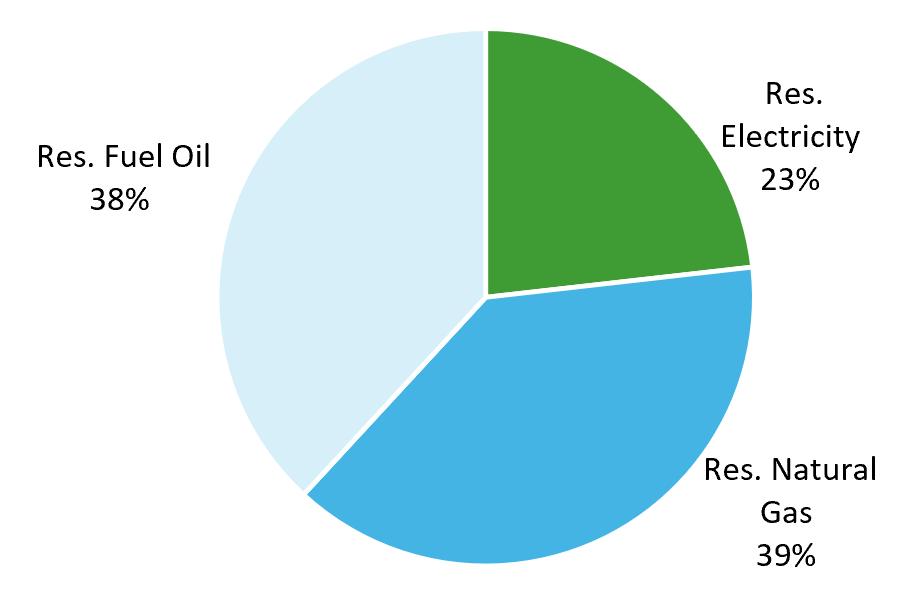
Transportation
Transportation is the second largest contributor of emissions, resulting primarily from passenger vehicles. Passenger vehicles were responsible for 91.7% of total transportation emissions, and 19.5% of total community-wide emissions. The figure below shows the share of transportation emissions by each source.
2023

Given that residential vehicles were responsible for 19.5% of total community-wide emissions and non-electricity fuel sources (fuel oil and natural gas) in residential buildings were responsible for another 16.4%, it should be noted that 35.9% of the Town’s total emissions can be substantially reduced by the choices Dalton residents make when purchasing a vehicle or appliances used in heating their homes.
The third largest sector by emissions, waste, is made up primarily of legacy emissions from the closed Dalton and Warren landfills. Collectively, the legacy emissions from the closed Dalton and Warren landfills make up 87.0% of all waste emissions, and 5.9% of all community-wide emissions. Because the waste collected at the Dalton Transfer Station is sent to out-of-state facilities, the emissions associated with waste collection and transport have been included in our inventory as Scope 3 emissions. However, the legacy emissions from waste decomposing in landfills outside our operational boundary have not been included, as they are the responsibility of the landfill operators. Remote landfills represent a significant component of Dalton's GHG legacy. The Green Dalton Committee efforts will continue to investigate the elimination of exported municipal waste.
Emission forecasts incorporate a range of factors, including demographic changes, technological advancements, policy interventions, and socioeconomic trends to paint a comprehensive picture of future emissions patterns. As the global community grapples with the urgent need to address climate change, accurate and reliable forecasts are essential for guiding efforts towards a sustainable and resilient future. Two forecasts were created for this CAP, a Business as Usual (BAU), and an Adjusted Business-as-Usual Forecast (ABAU).

A Business as Usual (BAU) Forecast provides an estimation of emission projections from the base year of the GHG Inventory (2023) to a future horizon year, in this instance, 2050. This forecast (outlined in the table and figure below) will show where emissions are anticipated to stand in 2050 if no action is undertaken for emission mitigation, with population growth being the sole influencing factor. Utilizing US Census Bureau data from 2000 to 2020, the observed compound annual growth rate (CAGR) for Dalton’s population has been -.42%. Only accounting for this population change to continue, the total greenhouse gas emissions are expected to decrease from 101,763 MT CO2e in 2023 to 90,723 MT CO2e by 2050.

The Adjusted Business as Usual Forecast (ABAU) for the Town offers insight into the emissions landscape for 2050 under the premise of actions deemed highly probable to be implemented. This forecast (outlined in the table and figure below) considers two crucial factors. First, the regulation set by the Massachusetts Executive Office of Environmental Affairs and the Massachusetts Department of Environmental Protection in 310 CMR 7.75: Clean Energy Standard, sets a minimum percentage of electricity sales that must be procured from clean energy sources and projects a 100% clean energy grid by 2050. Second, is the Corporate Average Fuel Economy (CAFE) standards, which are fleet-wide miles per gallon (MPG) averages that must be achieved by each automaker for its car and truck fleet. An analysis of the CAFE standards from 2000 to 2031 shows an average improvement of 2.7% in year-overyear combined passenger car and light-duty truck fuel efficiency, measured using MPG. These influential elements shape the ABAU forecast, reflecting a proactive stance toward emission reduction strategies. In this scenario the Town’s emissions would decrease approximately 32.8% between 2023 and 2050.

As climate change increases the frequency and severity of extreme weather events, preparedness is more important than ever Wildfire prevention should be a top priority for residents, particularly in areas where dry vegetation can act as fuel for fires Clearing brush, leaves, and other debris from around homes, maintaining a defensible space of at least 30 feet, and ensuring access to emergency water sources can help reduce wildfire risks. Residents should also be mindful of safe fire practices, such as properly disposing of yard waste and avoiding outdoor burning during dry conditions
As climate change increases the frequency and severity of extreme weather events, preparedness is more important than ever. Wildfire prevention should be a top priority for residents, particularly in areas where dry vegetation can act as fuel for fires. Clearing brush, leaves, and other debris from around homes, maintaining a defensible space of at least 30 feet, and ensuring access to emergency water sources can help reduce wildfire risks. Residents should also be mindful of safe fire practices, such as properly disposing of yard waste and avoiding outdoor burning during dry conditions.
In addition to fire preparedness, residents should take steps to prepare for extreme heat, storms, and flooding Keeping an emergency kit stocked with essentials such as water, non-perishable
In addition to fire preparedness, residents should take steps to prepare for extreme heat, storms, and flooding. Keeping an emergency kit stocked with essentials such as water, non-perishable food, medications, and flashlights can ensure readiness in case of power outages or evacuation orders. Identifying local cooling centers and ensuring access to backup power solutions for critical needs, such as medical equipment, can provide added protection during heat waves. Staying informed about local emergency alerts and understanding evacuation routes will help residents respond effectively to potential disasters.

Several programs provide financial assistance for making sustainable upgrades. Mass Save offers rebates and discounts on home energy audits, insulation, heat pumps, and other energy-efficient appliances. The federal government provides tax credits of up to $7,500 for purchasing an electric vehicle, while Massachusetts offers additional state incentives for EV adoption. The federal government still offers 30% federal tax credit on items such as heat pumps and other energy savings devices. Grant programs are available to help property owners install solar panels, upgrade heating systems, and invest in other clean energy improvements.
Residents should regularly check Dalton’s town website for updated funding opportunities and sustainability programs.
Massachusetts residents can also take advantage of the EnergyCENTS tool, provided by the Massachusetts Department of Energy Resources (DOER). This online platform helps households identify energy-saving programs, rebates, and assistance opportunities tailored to their specific needs. By using EnergyCENTS, residents can easily navigate available financial incentives, ensuring that cost is not a barrier to making sustainable upgrades. Whether seeking assistance with home weatherization, heat pump installations, or renewable energy options, this tool simplifies access to crucial resources that support energy efficiency and climate action.

ELECTRIC VEHICLE
MOR-EV (Massachusetts Offers Rebates for Electric Vehicles)
$3,500-$6,000 mor-ev org/ HEAT PUMP
Mass Save Heat Pump Rebates
$1,250-$10,000
WINDOW
HOME ENERGY ASSESSMENT
single-pane windows upgrade to ENERGY STAR® "Most Efficient" certified windows
Energy Specialist will seek out energy-saving opportunities, recommend upgrades, and help you navigate available rebates, incentives, and 0% financing
LAWN EQUIPMENT
Switch to battery-powered lawn equipment such as lawnmowers, leaf lowers, string trimmers, chainsaws
Up to $75 per window
https://www.masssave.com/e n/residential/rebates-and-inc entives/heating-and-cooling/ heat-pumps
https://www masssave com/e n/residential/rebates-and-inc entives/insulation-and-windo ws/windows
$0
https://www masssave com/r esidential/programs-and-ser vices/home-energy-assessm ents/home-energy-assessme nts
$30-75
https://www masssave com/e n/residential/rebates-and-inc entives/appliances-and-prod ucts/lawnequipment
Creating a sustainable Dalton requires collective effort, and there are many ways residents can get involved Attending local sustainability workshops, volunteering for tree-planting initiatives, and participating in waste reduction programs can help build momentum for climate action The Green Dalton Committee welcomes community members who want to contribute ideas and support climate initiatives Spreading awareness among neighbors, advocating for climate-friendly policies, and supporting local businesses that prioritize sustainability are all valuable ways to foster long-term environmental stewardship.
Creating a sustainable Dalton requires collective effort, and there are many ways residents can get involved. Attending local sustainability workshops, volunteering for tree-planting initiatives, and participating in waste reduction programs can help build momentum for climate action. The Green Dalton Committee welcomes community members who want to contribute ideas and support climate initiatives. Spreading awareness among neighbors, advocating for climate-friendly policies, and supporting local businesses that prioritize sustainability are all valuable ways to foster long-term environmental stewardship.

Dalton’s CAP is a living document that evolves with community needs. Residents are encouraged to track their own sustainability progress by monitoring energy use, waste habits, and transportation choices. Public meetings provide opportunities for community members to report challenges and share success stories that can help the community build momentum and continuously improve its climate resilience efforts.
Every action, no matter how small, contributes to a more sustainable and resilient Dalton. Whether it’s making your home more energy-efficient, adopting ecofriendly transportation, or preparing for extreme weather, every step matters. By taking action today, residents can help build a thriving, climate-ready community for generations to come.
The organizations listed below play a significant role in advancing sustainability initiatives in Dalton. For those interested in actively contributing to the community's climate action efforts, consider reaching out to or supporting these organizations and departments.
• Green Dalton Committee
• Dalton Conservation Commission
• Berkshire Environmental Action Team
• Berkshire Natural Resources Council
• Massachusetts Climate Action Network
• Center for EcoTechnology
• Environmental League of Massachusetts
• The Nature Conservancy – Massachusetts Chapter

It is recommended that the Town update the CAP every three to five years to ensure it remains relevant and effective in addressing the evolving challenges of climate change. Throughout this process, the Town should continue to monitor the progress of the 2025 CAP’s implementation, making necessary adjustments to stay on track with its goals. In each new iteration of the CAP, the Town should consider emerging technologies that could enhance efficiency and mitigation efforts, explore new funding opportunities to support climate initiatives, and leverage partnerships with local, regional, and national stakeholders to drive innovation and collaboration. This approach will ensure the CAP stays dynamic and responsive to changing circumstances while maintaining focus on long-term climate goals.
If Dalton pursues Climate Leader Community status, periodic updates to the CAP will be necessary to meet program requirements. Achieving certification will require the development of a municipal decarbonization roadmap and the adoption of the specialized stretch energy code, while maintaining certification will require updates to the roadmap every three years and the implementation of new climate best practices. These updates will ensure Dalton remains eligible for Climate Leader Community grant funding and continues to advance clean energy and emissions reduction initiatives.
Additionally, it is recommended under the Paris Agreement that GHG inventories are updated every five years to synchronize international efforts and encourage consistency in tracking progress against climate goals.

Appendix A: GHG Inventory and Reduction Targets
This report provides details on Dalton’s greenhouse gas inventory, recommended reduction targets, and emissions forecasts under various scenarios to guide the Town’s climate action efforts.
Appendix B: Stakeholder Engagement Report
This report details the stakeholder engagement process for Dalton’s Climate Action Plan, including community survey results and public outreach efforts that informed the Town’s climate priorities, key concerns, and preferred strategies for sustainability and resilience.
Appendix C: Community Survey Results
This appendix item provides the raw data for how survey participants answered questions within the survey and details some summary information regarding demographic participation.
In response to the pressing threat of climate change, the Town of Dalton faces a pivotal opportunity to align its efforts with statewide climate goals. The Commonwealth of Massachusetts has set ambitious greenhouse gas (GHG) emissions reduction targets, outlined in the Massachusetts Clean Energy and Climate Plan (CEPC) for 2025 and 2030 These targets include:
● A 50% reduction below 1990 levels by 2030
● A 75% reduction below 1990 levels by 2040
● Achieving net-zero emissions by 2050, with no more than 15% of emissions remaining above 1990 levels
The Massachusetts Climate Leader Communities (CLC) program builds on the Green Communities program, shifting the focus from energy reduction to GHG emissions reductions through electrification and efficiency improvements. This program provides municipalities with tools, resources, and expanded grant opportunities to support decarbonization To achieve CLC certification, municipalities must make a formal decarbonization commitment and develop a roadmap to phase out on-site fossil fuel use in municipal operations over time
Dalton is considering pursuing Climate Leader status in the future but is not currently seeking certification However, the Town recognizes the value of the CLC program as a guide for municipal decarbonization and will use its framework as a reference point in shaping local climate action The development of the Climate Action Plan (CAP) represents a key step in laying the groundwork for meaningful contributions to statewide efforts while advancing sustainability and resilience within the community
To further these efforts, the Green Dalton Committee (GDC) recommends that Dalton adopt reduction targets that align with the community-wide Massachusetts CECP goals while aligning with municipal targets outlined for climate leader communities. These targets support the broader aim of reducing global warming in line with the Paris Agreement’s 1.5°C goal, positioning Dalton as a leader in responsible climate action
The recommendations are supported by emission forecasts showing potential trajectories under different scenarios:
1 Business-as-Usual (BAU): This forecast projects future emissions assuming no additional efforts or policies are implemented beyond current practices and population is the only factor driving emissions
2 Adjusted Business-as-Usual (ABAU): This forecast incorporates anticipated changes from existing state, regional, and national policies, such as utility decarbonization and improved fuel economy standards, even if Dalton implements no new local actions
The proposed Climate Action Plan will serve as a roadmap for achieving these targets, outlining actionable steps that build on Dalton’s strengths and its dedication to a sustainable future By embracing these recommendations, Dalton can lead by example, demonstrating its commitment to mitigating climate change and ensuring the long-term well-being of its community and environment.
This memo describes the methodology and results of a GHG inventory and forecasts for the Town of Dalton. It also includes forecasts of future emission scenarios, if the Town implements some, or all, of the recommended strategies within the Climate Action Plan
The Commonwealth of Massachusetts recognizes greenhouse gas (GHG) emissions and the impacts of global warming as a serious threat to public health, the environment, economic well-being, and natural resources. The GDC recommends that Dalton align its climate action efforts with state-level goals and initiatives, many of which are summarized below
1. Massachusetts Global Warming Solutions Act (GWSA):
○ The Global Warming Solutions Act (GWSA) of 2008 establishes Massachusetts' framework for reducing greenhouse gas (GHG) emissions and addressing climate change. It mandates a 25% reduction in GHG emissions from 1990 levels by 2020 and at least an 80% reduction by 2050
2. Massachusetts Clean Energy and Climate Plan (CECP):
○ The GWSA was later updated by the 2021 Clean Energy and Climate Plan, which set additional targets: at least a 50% reduction by 2030, 75% by 2040, and achieving net-zero emissions by 2050, with emissions no higher than 85% below 1990 levels.
3. Green Communities
○ Launched in 2008, this program supports municipalities in reducing emissions through energy efficiency and renewable energy initiatives, offering grants and resources for local clean energy projects.
4. Climate Leader Communities
○ Introduced in 2024, this program builds on the Green Communities Program by recognizing and assisting municipalities that demonstrate leadership in advancing ambitious climate action and resilience efforts aligned with the state's net-zero goals
The Town of Dalton has demonstrated a strong commitment to addressing climate change and enhancing community resilience through various proactive initiatives. Since becoming a designated Green Community in 2014 under Massachusetts' Green Communities Program, Dalton has leveraged over $385,000 in grant funding to implement energy efficiency measures in municipal buildings, upgrade public lighting, and pursue renewable energy projects that reduce emissions and energy costs These initiatives have laid the groundwork for Dalton's broader climate action efforts and strengthened its dedication to sustainable development.
The town's Green Dalton Committee (GDC), established in 2013, has further advanced climate action by organizing educational events such as the Dalton Climate Fair, engaging residents in sustainability efforts, and spearheading the development of the Dalton Climate Action Plan The GDC also established the Dalton Library thermal camera checkout program to help residents assess their home energy efficiency and have played an active role in the development of the 2019 Municipal Vulnerability Plan, the 2024 Emergency Management Plan, and the 2024 Hazard Mitigation Plan
A GHG inventory for a town such as Dalton (MA) is a comprehensive assessment of the greenhouse gas emissions generated within the Town's boundaries It serves as a foundational tool for understanding the sources and magnitude of emissions across various sectors, including transportation, residential and commercial energy use, waste management, and industrial activities. This inventory provides a baseline against which progress toward climate goals can be measured and helps identify priority areas for emissions reductions By quantifying emissions, Dalton can develop targeted strategies to mitigate its carbon footprint, enhance energy efficiency, and support long-term sustainability and climate resiliency initiatives
Two separate inventories were conducted for the Town The first, a community-wide inventory, measures all GHG gasses, in “carbon equivalents”, generated by residents, businesses and government operations within the Town’s jurisdictional control The second, a government inventory, extracts the emissions that result exclusively from government operations within the Town This second category is important, because direct interventions can often reduce high percentages of emissions from operations. At the same time, community action is vital, due to the significantly higher quantity of emissions that come from community-wide activity. The two inventories are presented below
The Town of Dalton’s 2023 community-wide emissions totaled 101,763 MT CO2e (Of these, 268 MT CO2e came from municipal operations in the Town, representing 0.3% of total community-wide emissions ) Community-wide emissions include all emissions from residents, businesses, and municipal operations within Daton. Breaking down the sectors of the emissions sources, stationary energy (energy used to heat and cool buildings) was the largest contributor of emissions, followed by transportation, then waste Table 1 and Figure 1 below outline the sector breakdown of community wide emissions in 2023.
The Town of Dalton’s 2023 community-wide emissions totaled 101,763 MT CO2e (Of these, 268 MT CO2e came from municipal operations in the Town, representing 0.3% of total community-wide emissions ) Community-wide emissions include all emissions from residents, businesses, and municipal operations within Dalton. Breaking down the sectors of the emissions sources, stationary energy (energy used to heat and cool buildings) was the largest contributor of emissions, followed by transportation, then waste. Table 1 and Figure 1 below outline the sector breakdown of community wide emissions in 2023
Table 1: 2023 Community-wide emissions by sector
Table 1: 2023 Community-wide emissions by sector
Figure 1: 2023 Community-wide emissions by sector
Within stationary energy, Commercial & Institutional (C&I) Buildings & Manufacturing Industries was the largest contributor of emissions, followed by residential buildings Municipal building operations contributed only a very small share. Disaggregating the emissions from buildings,
Figure 2 shows the breakdown of emissions by subsector within the stationary energy subsector
2: 2023 community-wide emissions from stationary energy by subsector
Within stationary energy, Commercial & Institutional (C&I) Buildings & Manufacturing Industries was the largest contributor of emissions, followed by residential buildings Municipal building operations contributed only a very small share. Disaggregating the emissions from buildings, Figure 2 shows the breakdown of emissions by subsector within the stationary energy subsector
2: 2023 community-wide emissions from stationary energy by subsector
from stationary energy (buildings) by subsector
Transportation is the second largest contributor of emissions, resulting primarily from passenger ehicles Passenger vehicles were responsible for 91 7% of total transportation emissions, and 9 5% of total community-wide emissions Figure 5 below shows the share of transportation emissions by each source
Transportation is the second largest contributor of emissions, resulting primarily from passenger vehicles. Passenger vehicles were responsible for 91.7% of total transportation emissions, and 19 5% of total community-wide emissions Figure 3 below shows the share of transportation emissions by each source.
Transportation is the second largest contributor of emissions, resulting primarily from passenger vehicles. Passenger vehicles were responsible for 91.7% of total transportation emissions, and 19 5% of total community-wide emissions Figure 3 below shows the share of transportation emissions by each source.
5:
community-wide emissions from transportation by subsector
7.4% COMMERCIAL VEHICLES
0.7% MUNICIPAL VEHICLES
0.2% ON-ROAD BUSES AND TROLLEYS
COMMUNITY-WIDE EMISSIONS FROM TRANSPORTATION
91.7% PASSENGER VEHICLES
The third largest sector by emissions, waste, is made up primarily of legacy emissions from the closed Dalton and Warren landfills Collectively, the legacy emissions from the closed Dalton and Warren landfills make up 87 0% of all waste emissions, and 5 9% of all community-wide emissions Because the waste collected at the Dalton Transfer Station is sent to out-of-state facilities, the emissions associated with waste collection and transport have been included in our inventory as Scope 3 emissions However, the legacy emissions from waste decomposing in landfills outside our operational boundary have not been included, as they are the responsibility of the landfill operators. Remote landfills represent a significant component of Dalton's GHG legacy. The Green Dalton Committee efforts will continue to investigate the elimination of exported municipal waste
The Town of Dalton’s 2023 municipal emissions totaled 268 MT CO2e, representing 0 3% of total community-wide emissions Breaking down the sectors of the emissions sources, transportation (from municipal vehicles) was the largest contributor of emissions, followed by stationary energy (energy used to heat and cool municipal buildings) Table 2 and Figure 6 below outline the sector breakdown of municipal emissions in 2023.
The third largest sector by emissions, waste, is made up primarily of legacy emissions from the closed Dalton and Warren landfills. Collectively, the legacy emissions from the closed Dalton and Warren landfills make up 87.0% of all waste emissions, and 5.9% of all community-wide emissions. Because the waste collected at the Dalton Transfer Station is sent to out-of-state facilities, the emissions associated with waste collection and transport have been included in our inventory as Scope 3 emissions However, the legacy emissions from waste decomposing in landfills outside our operational boundary have not been included, as they are the responsibility of the landfill operators Remote landfills represent a significant component of Dalton's GHG legacy The Green Dalton Committee efforts will continue to investigate the elimination of exported municipal waste.
SECTOR Emissions (MT CO2e) Share of Municipal Emissions Town of Dalton, MA
The Town of Dalton’s 2023 municipal emissions totaled 268 MT CO2e, representing 0 3% of total community-wide emissions. Breaking down the sectors of the emissions sources, transportation (from municipal vehicles) was the largest contributor of emissions, followed by stationary energy (energy used to heat and cool municipal buildings). Table 2 and Figure 4 below outline the sector breakdown of municipal emissions in 2023.
Table 2: 2023 Municipal emissions by sector
The Town of Dalton’s 2023 municipal emissions totaled 268 MT CO2e, representing 0.3% of total community-wide emissions Breaking down the sectors of the emissions sources, transportation (from municipal vehicles) was the largest contributor of emissions, followed by stationary energy (energy used to heat and cool municipal buildings) Table 2 and Figure 4 below outline the sector breakdown of municipal emissions in 2023.
sions from municipal building operations accounted for only 0 1% of total community-wide sions and made up 0 2% of community-wide emissions from the stationary energy sector sions from municipal vehicles contributed a slightly larger share, accounting for 0.2% of on’s community-wide emissions This represents 0 7% of emissions from the transportation or.
Emissions from municipal building operations accounted for only 0 1% of total community-wide emissions and made up 0.2% of community-wide emissions from the stationary energy sector. Emissions from municipal vehicles contributed a slightly larger share, accounting for 0 2% of Dalton’s community-wide emissions. This represents 0.7% of emissions from the transportation sector
sion forecasts incorporate a range of factors, including demographic changes, technological ncements, policy interventions, and socioeconomic trends to paint a comprehensive picture ture emissions patterns As the global community grapples with the urgent need to address te change, accurate and reliable forecasts are essential for guiding efforts towards a ainable and resilient future Two forecasts were created for this CAP, a Business as Usual ), and an Adjusted Business-as-Usual Forecast (ABAU).
Emissions from municipal building operations accounted for only 0 1% of total community-wide emissions and made up 0.2% of community-wide emissions from the stationary energy sector. Emissions from municipal vehicles contributed a slightly larger share, accounting for 0.2% of Dalton’s community-wide emissions This represents 0 7% of emissions from the transportation sector.
Dalton’s 2023 GHG inventory was executed using Version 4 of the MAPC Community Greenhouse Gas Inventory Tool The inventory is designed according to the Global Protocol for Community-Scale Greenhouse Gas Emission Inventories (GPC) and includes raw data, assumptions, and calculations for the Town in GPC emission sectors including Stationary Energy, Transportation, and Waste The tool does not include emissions from the Industrial Process and Product Use (IPPU) and Agriculture, Forestry and Other Land Use (AFOLU) sectors due to lack of available data Legacy emissions from the Dalton and Warren landfills were estimated using the California Air Resources Board (CARB) Landfill Gas Tool. The California Air Resources Board (CARB) Landfill Gas Tool estimates greenhouse gas (GHG) emissions from landfills by modeling methane generation, capture, and oxidation based on waste composition, landfill age, and management practices This tool follows established IPCC and U S EPA methodologies to provide reliable projections of landfill emissions. Emissions are broken out by sector, subsector, source and scope
These tools were used to calculate emissions from the consumption of electricity, natural gas, and various other sources within each sector using a plethora of publicly available data (see
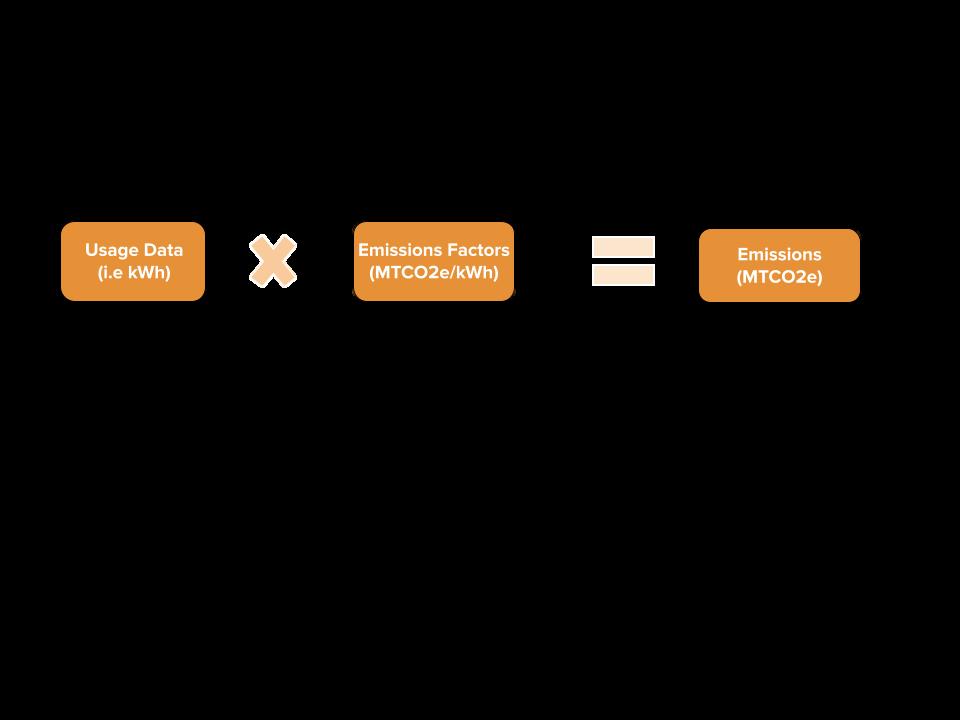
stations in the region. Finally, analysis of public transit emissions assumed that 50% of MBTA Silverline buses are battery electric and 50% are diesel hybrids based on GIS mapping data and route schedules.
Table 4: Data sources
Table 4: Data sources
Subsector Source
SUBSECTOR SOURCE
Electricity
Electricity
Data Providers
DATA PROVIDERS
MassSave
MassSave
Electricity T&D Losses EIA Massachusetts Electricity Profile 2017
Electricity T&D Losses EIA Massachusetts Electricity Profile 2017
EOLWD
EOLWD
MAPC Data Common Housing by Units
MAPC Data Common Housing by Units
MAPC Data Common Housing by Fuel Type
MAPC Data Common Housing by Fuel Type
Residential Buildings
Residential Buildings
Fuel Oil
Fuel Oil
EIA Table CE2 1
EIA Table CE2 1
EIA Table HC2 8
EIA Table HC2 8
EIA Table CE2.2
EIA Table CE2.2
American Fact Finder
American Fact Finder
Nat. Gas. Dist. Losses EIA Massachusetts Electricity Profile 2017
Nat Gas Dist Losses EIA Massachusetts Electricity Profile 2017
Natural Gas
Natural Gas
Electricity
PNAS Article (Fugitive Emissions)
PNAS Article (Fugitive Emissions)
MassSave
MassSave
MassSave
Commercial & Institutional
Commercial & Institutional
Buildings & Manufacturing
Industries
Buildings & Manufacturing Industries
Electricity
MassSave
Electricity T&D Losses EIA Massachusetts Electricity Profile 2017
EOLWD
Fuel Oil
Electricity T&D Losses EIA Massachusetts Electricity Profile 2017 Fuel Oil
Natural Gas
Natural Gas
EOLWD
EIA Table C34
EIA Table B22
EIA Table C34
EIA Table 6.1
EIA Table B22
EIA Table 1.1
EIA Table 6.1
EIA Table 5 4
EIA Table 1 1
MassSave
EIA Table 5 4
PNAS Article (Fugitive Emissions)
MassSave
PNAS Article (Fugitive Emissions)
Nat Gas Dist Losses EIA Massachusetts Electricity Profile 2017 O
US Census Data
Nat Gas Dist Losses EIA Massachusetts Electricity Profile 2017
-Road (Various Fuels)
Off-Road (Various Fuels)
Construction Off-Road (Various Fuels)
Construction Off-Road (Various Fuels)
Electricity
Municipal
MAPC Data Common - Estimated Landscaped Area
US Census Data
EPA Source
MAPC Data Common - Estimated Landscaped Area
MAPC DataCommon - MOVES Off-Road Estimates
EPA Source
US Census Data
MAPC DataCommon - MOVES Off-Road Estimates
MAPC Data Common - Estimated Landscaped Area
US Census Data
EPA Source
MAPC Data Common - Estimated Landscaped Area
MAPC DataCommon - MOVES Off-Road Estimates
EPA Source
MassEnergyInsight
MAPC DataCommon - MOVES Off-Road Estimates
PNAS Article (Fugitive Emissions)
Natural Gas
Compressed Natural Gas (CNG)
MassEnergyInsight
MAPC DataCommon - MA Vehicle Census Summary Statistics
MAPC DataCommon - MA Vehicle
Diesel
Municipal
Electricity
Natural Gas
Table 4: Data sources
SUBSECTOR SOURCE
Compressed Natural Gas (CNG)
MassEnergyInsight
PNAS Article (Fugitive Emissions)
MassEnergyInsight
MAPC DataCommon - MA Vehicle Census Summary
DATA PROVIDERS
Statistics
Municipal
On-road
Residential Buildings
On-road
Rail
Electricity
Electricity
Diesel
Electricity T&D Losses
Natural Gas
Electricity
Compressed Natural Gas (CNG)
Electricity T&D Losses
Fuel Oil
Diesel
Gasoline
Electricity
MBTA Public Transportation
Municipal Gasoline
Electricity T&D Losses
Nat Gas Dist Losses
Diesel
Gasoline
Natural Gas
Diesel
MBTA Public Transportation
Electricity
Municipal Gasoline
Solid Waste Disposal
Rail
Biological Treatment of Waste
Commercial & Institutional
Electricity
Electricity T&D Losses
Diesel
Electricity (T&D Losses)
Diesel
Methane Commitment
Fuel Oil
Direct Emissions
Electricity
Electricity (T&D Losses)
Incineration and Open Burning Incineration
Solid Waste Disposal
Buildings & Manufacturing Industries
Wastewater Treatment and Discharge*
Natural Gas
Biological Treatment of Waste Direct Emissions
Effluent
Nat Gas Dist Losses
Incineration and Open Burning Incineration
Off-Road (Various Fuels)
Wastewater Treatment and Discharge* Effluent
Construction Off-Road (Various Fuels)
MassSave
MassEnergyInsight
MAPC DataCommon - MA Vehicle Census Summary
EIA Massachusetts Electricity Profile 2017
Statistics
PNAS Article (Fugitive Emissions)
MassEnergyInsight
MAPC DataCommon - MA Vehicle Census Summary
EOLWD
Statistics
MAPC DataCommon - MA Vehicle Census Summary
MAPC Data Common Housing by Units
Statistics
MAPC Data Common Housing by Fuel Type
EIA Massachusetts Electricity Profile 2014
MAPC DataCommon - MA Vehicle Census Summary
EIA Table CE2 1
MAPC DataCommon - MA Vehicle Census Summary
Statistics
Statistics
EIA Table HC2 8
MAPC DataCommon - MA Vehicle Census Summary
EIA Table CE2.2
Statistics
MAPC DataCommon - MBTA Frequency Weighted Trip Miles
American Fact Finder
MassEnergyInsight
EIA Massachusetts Electricity Profile 2014
EIA Massachusetts Electricity Profile 2017
MassEnergyInsight
MAPC DataCommon - MA Vehicle Census Summary
Statistics
PNAS Article (Fugitive Emissions)
MAPC DataCommon - Frequency Weighted Trip
MassSave
Miles
MAPC DataCommon - MBTA Frequency Weighted Trip Miles
MassSave
MassEnergyInsight
MAPC DataCommon - Frequency Weighted Trip Miles
EIA Massachusetts Electricity Profile 2017
MassEnergyInsight
EIA Massachusetts Electricity Profile 2017
EOLWD
MAPC DataCommon - Frequency Weighted Trip
MA DEP Waste
EIA Table C34
Miles
EIA Table B22
MA DEP
EIA Table 6.1
MAPC DataCommon - Frequency Weighted Trip Miles
EIA Table 1 1
2006 IPCC Guidelines, Vol 5, Ch 2
EIA Massachusetts Electricity Profile 2017
EIA Table 5 4
Methane Commitment MA DEP Waste
Massachusetts Waste Combustion Overview
MassSave
EPA Inventory of U S Greenhouse Gas Emissions and Sinks: 1990-2017
PNAS Article (Fugitive Emissions)
MA DEP
EIA Massachusetts Electricity Profile 2017
MA DEP GHG Report
US Census Data
2006 IPCC Guidelines, Vol 5, Ch 2
MAPC Data Common - Estimated Landscaped Area
Massachusetts Waste Combustion Overview
EPA Source
EPA Inventory of U.S. Greenhouse Gas Emissions and Sinks: 1990-2017
MAPC DataCommon - MOVES Off-Road Estimates
US Census Data
MA DEP GHG Report
MAPC Data Common - Estimated Landscaped Area
EPA Source
MAPC DataCommon - MOVES Off-Road Estimates
As stated, the GDC recommends adopting community-wide targets, and municipal operation targets, that align with the state goals set out in the Massachusetts CECP and municipal operations goals that align with Climate Leader Community guidance. These targets are in line with the goals necessary to mitigate the impacts of climate change effectively. The recommended GHG reduction targets for Canton are as follows:
● A 50% reduction below 1990 levels by 2030
● A 75% reduction below 1990 levels by 2040
● Achieving net-zero emissions by 2050, with no more than 15% of emissions remaining above 1990 levels
● Eliminate the use of onsite fossil fuels in municipal buildings and vehicles by 2050
These targets are designed to align with the State of Massachusetts climate goals Given the significant role that state and federal policies play in achieving these reductions, local actions in Dalton will need to be ambitious and innovative to meet these targets The Climate Action Plan, and the municipal decarbonization roadmap within it, outline the steps for the Town to reach its targets
In line with Dalton’s commitment to sustainability and responsible climate action, the Town was designated a Massachusetts Green Community in 2014, making it eligible for grants to fund renewable energy and energy efficiency projects. Since then, the Green Dalton Committee (GDC) has leveraged this designation to secure over $385K in grants for municipal energy-saving initiatives.
Massachusetts has since introduced the Climate Leader Communities (CLC) program, which expands beyond energy reduction to focus on achieving significant greenhouse gas (GHG) reductions This program aligns with the Clean Energy and Climate Plan (CECP) and Massachusetts' broader climate targets, offering municipalities enhanced funding opportunities for decarbonization efforts Participating communities must commit to eliminating on-site fossil fuel use in municipal operations through a "zero over time" approach and develop a roadmap for achieving those reductions.
While Dalton is not currently pursuing CLC status, the Town is considering this pathway as a future opportunity. The CLC program provides a useful framework for guiding municipal decarbonization, offering best practices and structured milestones that can help Dalton make meaningful progress in reducing emissions. If the Town chooses to pursue certification in the future, it would gain access to expanded funding opportunities beyond those currently available, supporting more ambitious climate action while positioning Dalton as a regional leader in sustainability.
Emission forecasts incorporate a range of factors, including demographic changes, technological advancements, policy interventions, and socioeconomic trends to paint a comprehensive picture of future emissions patterns As the global community grapples with the urgent need to address climate change, accurate and reliable forecasts are essential for guiding efforts towards a sustainable and resilient future. Two forecasts were created for this CAP, a Business as Usual (BAU), and an Adjusted Business-as-Usual Forecast (ABAU)
A Business as Usual (BAU) Forecast provides an estimation of emission projections from the base year of the GHG Inventory (2023) to a future horizon year, in this instance, 2050. This forecast (Table 5 and Figure 5) will show where emissions are anticipated to stand in 2050 if no action is undertaken for emission mitigation, with population growth being the sole influencing factor. Utilizing US Census Bureau data from 2000 to 2020, the observed compound annual growth rate (CAGR) for Dalton’s population has been -.42%. Only accounting for this population change to continue, the total greenhouse gas emissions are expected to decrease from 101,763 MT CO2e in 2023 to 90,723 MT CO2e by 2050.
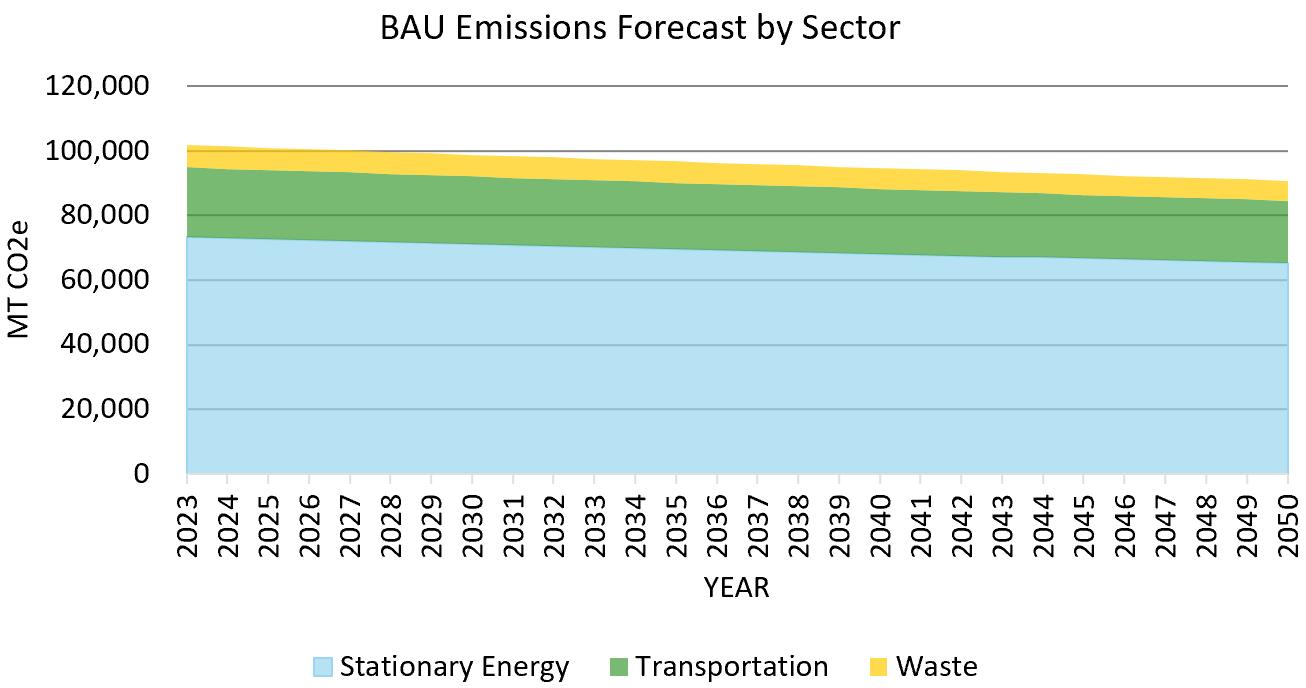
The Adjusted Business as Usual Forecast (ABAU) for the Town offers insight into the emissions landscape for 2050 under the premise of actions deemed highly probable to be implemented. This forecast (Table 6 and Figure 5) considers two crucial factors First, the regulation set by the Massachusetts Executive Office of Environmental Affairs and the Massachusetts Department of Environmental Protection in 310 CMR 7 75: Clean Energy Standard, sets a minimum percentage of electricity sales that must be procured from clean energy sources and projects a 100% clean energy grid by 2050. Second, is the Corporate Average Fuel Economy (CAFE) standards, which are fleet-wide miles per gallon (MPG) averages that must be achieved by each automaker for its car and truck fleet. An analysis of the CAFE standards from 2000 to 2031 shows an average improvement of 2 7% in year-over-year combined passenger car and light-duty truck fuel efficiency, measured using MPG. These influential elements shape the ABAU forecast, reflecting a proactive stance toward emission reduction strategies In this scenario the Town’s emissions would decrease approximately 32.8% between 2023 and 2050.
Figure 6: Adjusted Business as Usual Forecast
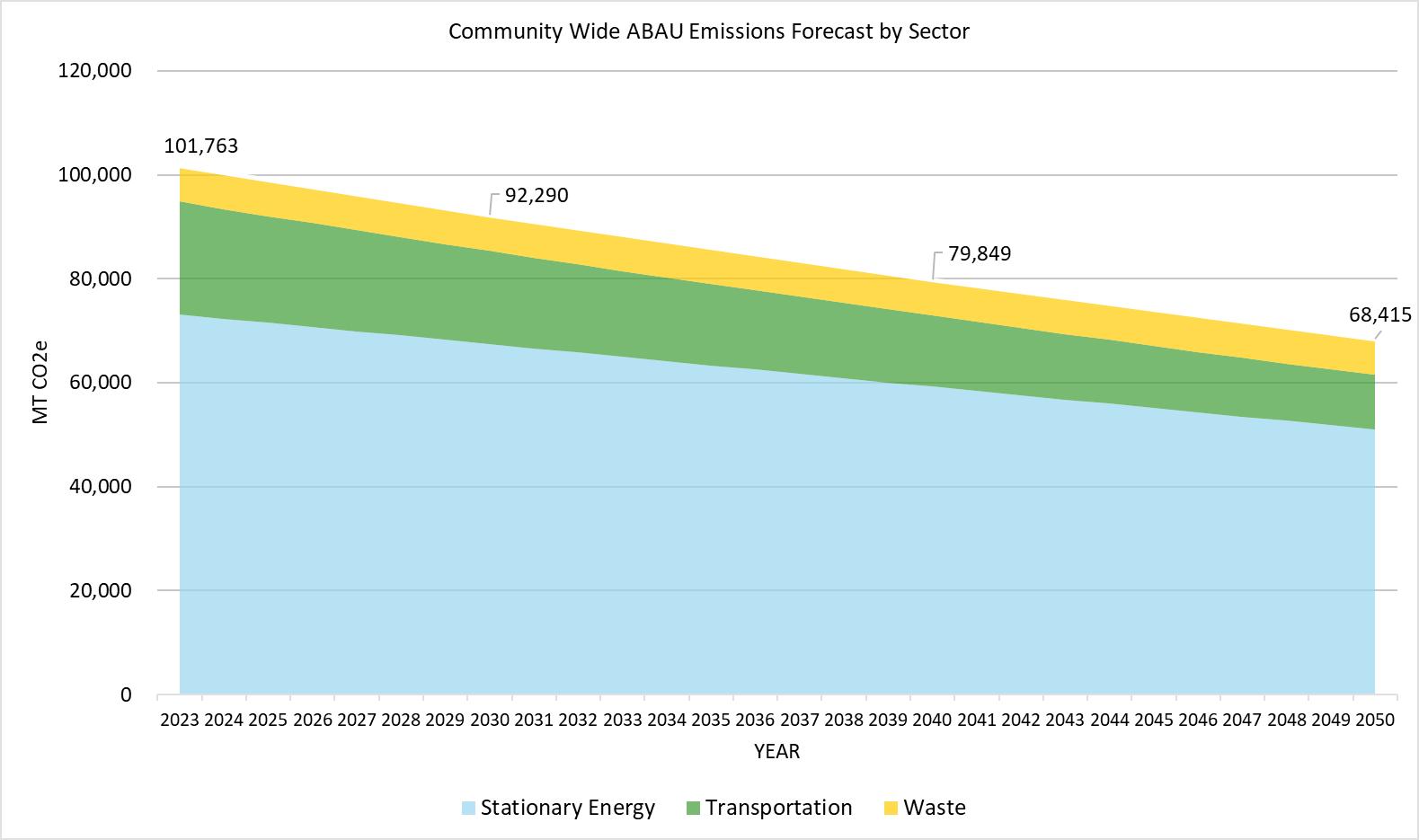
Table 7 illustrates the emissions levels for Dalton in line with the final (2050) CECP community minimum target scenario and utilizes a 2023 baseline Starting from a 2023 baseline of 101,763 MT CO2e, the target is to reduce emissions 85% to 15,264 MT CO2e by 2050
Table 7 illustrates the emissions levels for Dalton in line with the final (2050) CECP community minimum target scenario and utilizes a 2023 baseline. Starting from a 2023 baseline of 101,763 MT CO2e, the target is to reduce emissions 85% to 15,264 MT CO2e by 2050
Table 7 illustrates the emissions levels for Dalton in line with the final (2050) CECP community minimum target scenario and utilizes a 2023 baseline Starting from a 2023 baseline of 101,763 MT CO2e, the target is to reduce emissions 85% to 15,264 MT CO2e by 2050.
Having greater control of the emissions from municipal operations, Dalton can take more aggressive action to reduce its emissions from municipal operations In line with the ambitious requirements associated with Climate Leader certification, Dalton should pursue a complete elimination of fossil fuels from its municipal buildings and vehicles by 2050. Assuming a straight line reduction, Dalton should look to reduce its emissions from municipal operations to 199 MT CO2e by 2030 and to 99 MT CO2e by 2040 from a baseline of 268 MT CO2e in 2023. The municipal operations targets are shown in Table 8 These ambitious targets highlight Dalton’s commitment to mitigating climate change and aligning with statewide targets.
Having greater control of the emissions from municipal operations, Dalton can take more aggressive action to reduce its emissions from municipal operations In line with the ambitious requirements associated with Climate Leader certification, Dalton should pursue a complete elimination of fossil fuels from its municipal buildings and vehicles by 2050 Assuming a straight line reduction, Dalton should look to reduce its emissions from municipal operations to 199 MT CO2e by 2030 and to 99 MT CO2e by 2040 from a baseline of 268 MT CO2e in 2023. The municipal operations targets are shown in Table 8 These ambitious targets highlight Dalton’s commitment to mitigating climate change and aligning with statewide targets.
Having greater control of the emissions from municipal operations, Dalton can take more aggressive action to reduce its emissions from municipal operations. In line with the ambitious requirements associated with Climate Leader certification, Dalton should pursue a complete elimination of fossil fuels from its municipal buildings and vehicles by 2050. Assuming a straight line reduction, Dalton should look to reduce its emissions from municipal operations to 199 MT CO2e by 2030 and to 99 MT CO2e by 2040 from a baseline of 268 MT CO2e in 2023. The municipal operations targets are shown in Table 8 These ambitious targets highlight Dalton’s commitment to mitigating climate change and aligning with statewide targets.
Table 7: Community-Wide
Table 7: Community-Wide Emissions Target in line with CECP
Figure 7: 2023 baseline emissions against ABAU forecast and CECP target reductions (all community-wide)
Figure 7: 2023 baseline emissions against
Figure 7: 2023 baseline emissions against ABAU forecast and CECP target reductions (all community-wide)
Table 8: Municipal Operations Emissions Targets in line with Climate Leader Communities
Table 8: Municipal Operations Emissions Targets in line with Climate Leader Communities
Table 8: Municipal Operations Emissions Targets in line with
Figure 8: 2023 baseline municipal operations emissions against municipal reduction targets
8: 2023 baseline municipal operations emissions against municipal reduction targets
Scenario Analysis
Scenario analysis is a valuable tool for assessing how different emissions reduction outcomes could shape Dalton’s overall climate trajectory Rather than modeling the specific actions or behavioral shifts that lead to emissions reductions, this analysis focuses on the direct impact of emission changes in key sectors By quantifying these reductions, the Town can better understand the scale of transformation needed to meet its long-term climate goals. This approach does not predict the success of any particular policy or program but instead illustrates what Dalton’s emissions could look like if certain reduction targets are achieved.
Scenario analysis is a valuable tool for assessing how different emissions reduction outcomes could shape Dalton’s overall climate trajectory Rather than modeling the specific actions or behavioral shifts that lead to emissions reductions, this analysis focuses on the direct impact of emission changes in key sectors By quantifying these reductions, the Town can better understand the scale of transformation needed to meet its long-term climate goals. This approach does not predict the success of any particular policy or program but instead illustrates what Dalton’s emissions could look like if certain reduction targets are achieved.
Scenario analysis is a valuable tool for assessing how different emissions reduction outcomes could shape Dalton’s overall climate trajectory. Rather than modeling the specific actions or behavioral shifts that lead to emissions reductions, this analysis focuses on the direct impact of emission changes in key sectors. By quantifying these reductions, the Town can better understand the scale of transformation needed to meet its long-term climate goals This approach does not predict the success of any particular policy or program but instead illustrates what Dalton’s emissions could look like if certain reduction targets are achieved
This scenario models emissions reductions based on four key assumptions. First, by 2050, 100% of the electricity powering Dalton will come from clean, zero-emission sources, eliminating emissions from grid electricity use. Second, non-electricity emissions from buildings will decline by 50% compared to 2023 levels, reflecting improvements in heating efficiency and fuel switching Third, non-electricity transportation emissions will also decrease by 50%, assuming a shift toward cleaner transportation options. Lastly, methane emissions from waste will fall by 15%, reflecting an increase in composting and recycling efforts While these reductions could be driven by a combination of policies, technologies, and behavioral changes, this analysis strictly evaluates the impact of achieving these reductions, rather than the pathways to get there
This scenario models emissions reductions based on four key assumptions First, by 2050, 100% of the electricity powering Dalton will come from clean, zero-emission sources, eliminating emissions from grid electricity use Second, non-electricity emissions from buildings will decline by 50% compared to 2023 levels, reflecting improvements in heating efficiency and fuel switching Third, non-electricity transportation emissions will also decrease by 50%, assuming a shift toward cleaner transportation options. Lastly, methane emissions from waste will fall by 15%, reflecting an increase in composting and recycling efforts While these reductions could be driven by a combination of policies, technologies, and behavioral changes, this analysis strictly evaluates the impact of achieving these reductions, rather than the pathways to get there
This scenario models emissions reductions based on four key assumptions First, by 2050, 100% of the electricity powering Dalton will come from clean, zero-emission sources, eliminating emissions from grid electricity use. Second, non-electricity emissions from buildings will decline by 50% compared to 2023 levels, reflecting improvements in heating efficiency and fuel switching. Third, non-electricity transportation emissions will also decrease by 50%, assuming a shift toward cleaner transportation options Lastly, methane emissions from waste will fall by 15%, reflecting an increase in composting and recycling efforts. While these reductions could be driven by a combination of policies, technologies, and behavioral changes, this analysis strictly evaluates the impact of achieving these reductions, rather than the pathways to get there.
The following graph presents the results of this emissions reduction scenario, illustrating how these sector-wide changes would alter Dalton’s emissions profile over time This visualization helps contextualize the Town’s decarbonization trajectory and highlights the potential impact of significant but realistic reductions in electricity, building, transportation, and waste emissions
The following graph presents the results of this emissions reduction scenario, illustrating how these sector-wide changes would alter Dalton’s emissions profile over time. This visualization helps contextualize the Town’s decarbonization trajectory and highlights the potential impact of significant but realistic reductions in electricity, building, transportation, and waste emissions.
The following graph presents the results of this emissions reduction scenario, illustrating how these sector-wide changes would alter Dalton’s emissions profile over time This visualization helps contextualize the Town’s decarbonization trajectory and highlights the potential impact of significant but realistic reductions in electricity, building, transportation, and waste emissions.
Figure 9: Moderate Change Scenario- 2023 Baseline, ABAU forecast, scenario results, and targets (all community-wide)
Figure 9: Moderate Change Scenario- 2023 Baseline, ABAU forecast, scenario results, and targets (all community-wide)
Figure 9: Moderate Change Scenario- 2023 Baseline, ABAU forecast, scenario results, and targets (all community-wide)
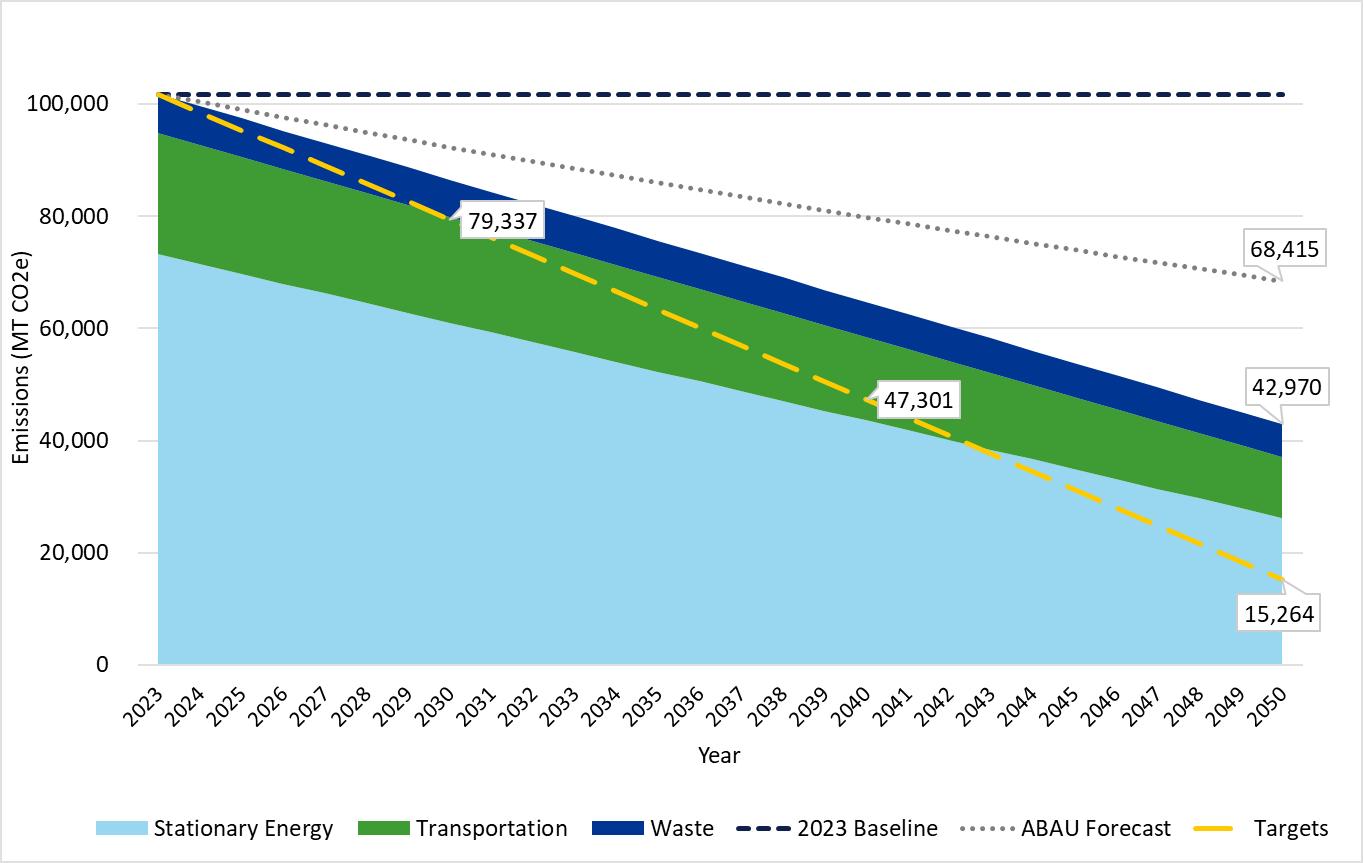
We can also model a more accelerated emissions reduction scenario, illustrating the potential impact of deeper reductions in building, transportation, and waste emissions. As with the previous scenario, this analysis does not evaluate specific programs or behavioral changes but instead quantifies what Dalton’s emissions could look like if accelerated reductions occur.
We can also model a more accelerated emissions reduction scenario, illustrating the potential impact of deeper reductions in building, transportation, and waste emissions. As with the previous scenario, this analysis does not evaluate specific programs or behavioral changes but instead quantifies what Dalton’s emissions could look like if accelerated reductions occur.
We can also model a more accelerated emissions reduction scenario, illustrating the potential impact of deeper reductions in building, transportation, and waste emissions. As with the previous scenario, this analysis does not evaluate specific programs or behavioral changes but instead quantifies what Dalton’s emissions could look like if accelerated reductions occur.
This scenario still assumes that by 2050, 100% of the electricity powering Dalton will come from clean, zero-emission sources, eliminating emissions from grid electricity use However, it models a 75% reduction in non-electricity building emissions and an 80% reduction in non-electricity transportation emissions compared to 2023 levels, reflecting a more significant shift toward clean energy and transportation solutions. Additionally, methane emissions from waste are modeled to decline by 30%, assuming a higher level of composting, recycling, and waste diversion. The following graph presents the emissions reductions that would result from these assumptions, helping to illustrate what a more ambitious decarbonization pathway could look like for Dalton.
This scenario still assumes that by 2050, 100% of the electricity powering Dalton will come from clean, zero-emission sources, eliminating emissions from grid electricity use However, it models a 75% reduction in non-electricity building emissions and an 80% reduction in non-electricity transportation emissions compared to 2023 levels, reflecting a more significant shift toward clean energy and transportation solutions. Additionally, methane emissions from waste are modeled to decline by 30%, assuming a higher level of composting, recycling, and waste diversion The following graph presents the emissions reductions that would result from these assumptions, helping to illustrate what a more ambitious decarbonization pathway could look like for Dalton
This scenario still assumes that by 2050, 100% of the electricity powering Dalton will come from clean, zero-emission sources, eliminating emissions from grid electricity use However, it models a 75% reduction in non-electricity building emissions and an 80% reduction in non-electricity transportation emissions compared to 2023 levels, reflecting a more significant shift toward clean energy and transportation solutions. Additionally, methane emissions from waste are modeled to decline by 30%, assuming a higher level of composting, recycling, and waste diversion The following graph presents the emissions reductions that would result from these assumptions, helping to illustrate what a more ambitious decarbonization pathway could look like for Dalton APPENDIX
Figure 10: Accelerated Change Scenario- 2023 Baseline, ABAU forecast, scenario results, and targets (all community-wide)
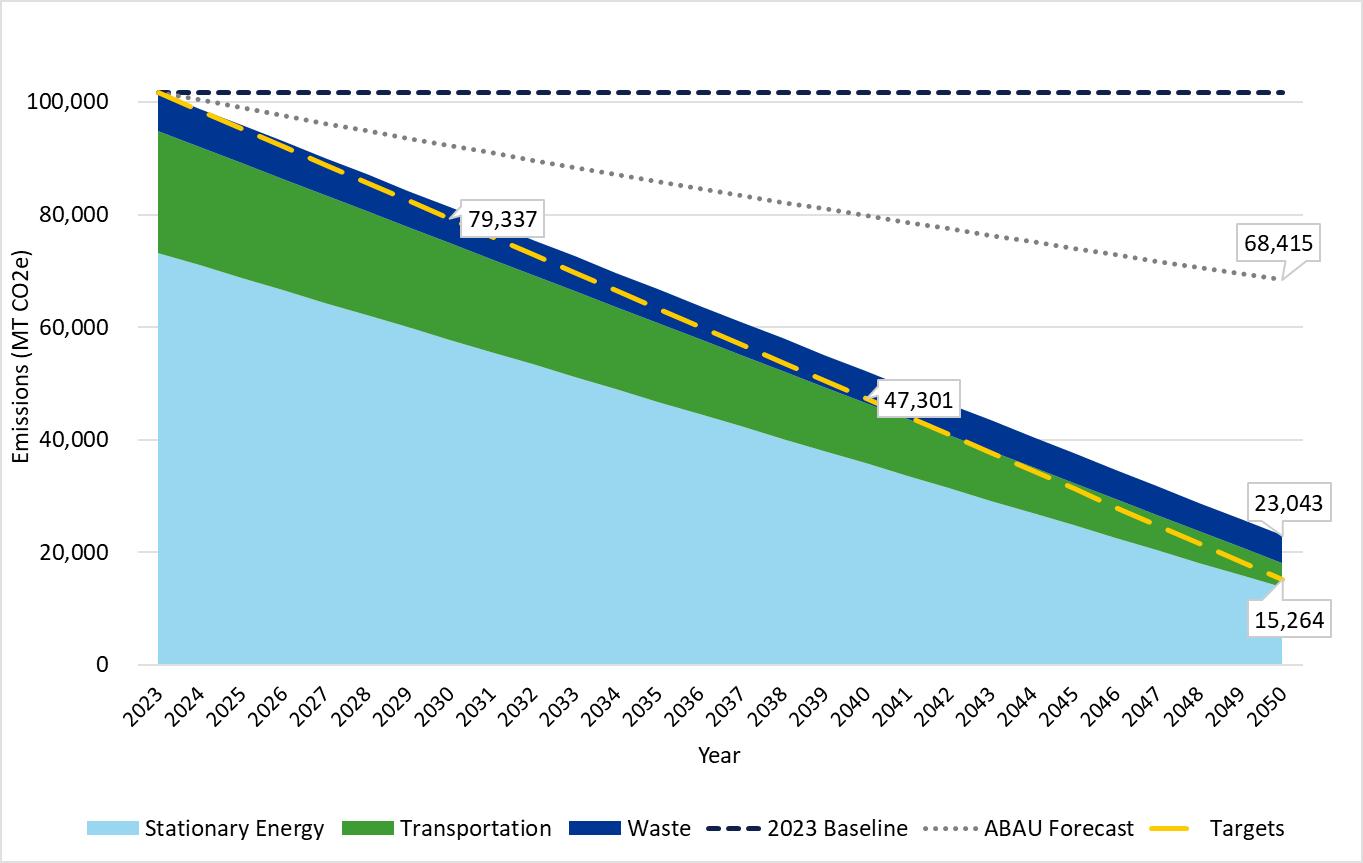
Project Title: Climate Action Plan
Project Title: Climate Action Plan
Collaborators: Town of Dalton
Collaborators: Town of Dalton
Blue Strike Environmental
Blue Strike Environmental
Date: October 27, 2024 - December 11, 2024
Date: October 27, 2024 - December 11, 2024
Participants: 250 community members
Participants: 250 community members
Comprehensive Results: Linked here
Comprehensive Results: Linked here
Key Takeaways:
Key Takeaways:
● The community survey collected input from 250 Daltonians from the end of October to early December The survey provided a platform for all members of the community to voice their climate related concerns and provide input on the strategies that should be taken to address those concerns
● The community survey collected input from 250 Daltonians from the end of October to early December The survey provided a platform for all members of the community to voice their climate related concerns and provide input on the strategies that should be taken to address those concerns
● Participant Demographics:
● Participant Demographics:
○ 11% of respondents reside in EJ communities
○ 11% of respondents reside in EJ communities
○ 83% of respondents own their home
○ 83% of respondents own their home
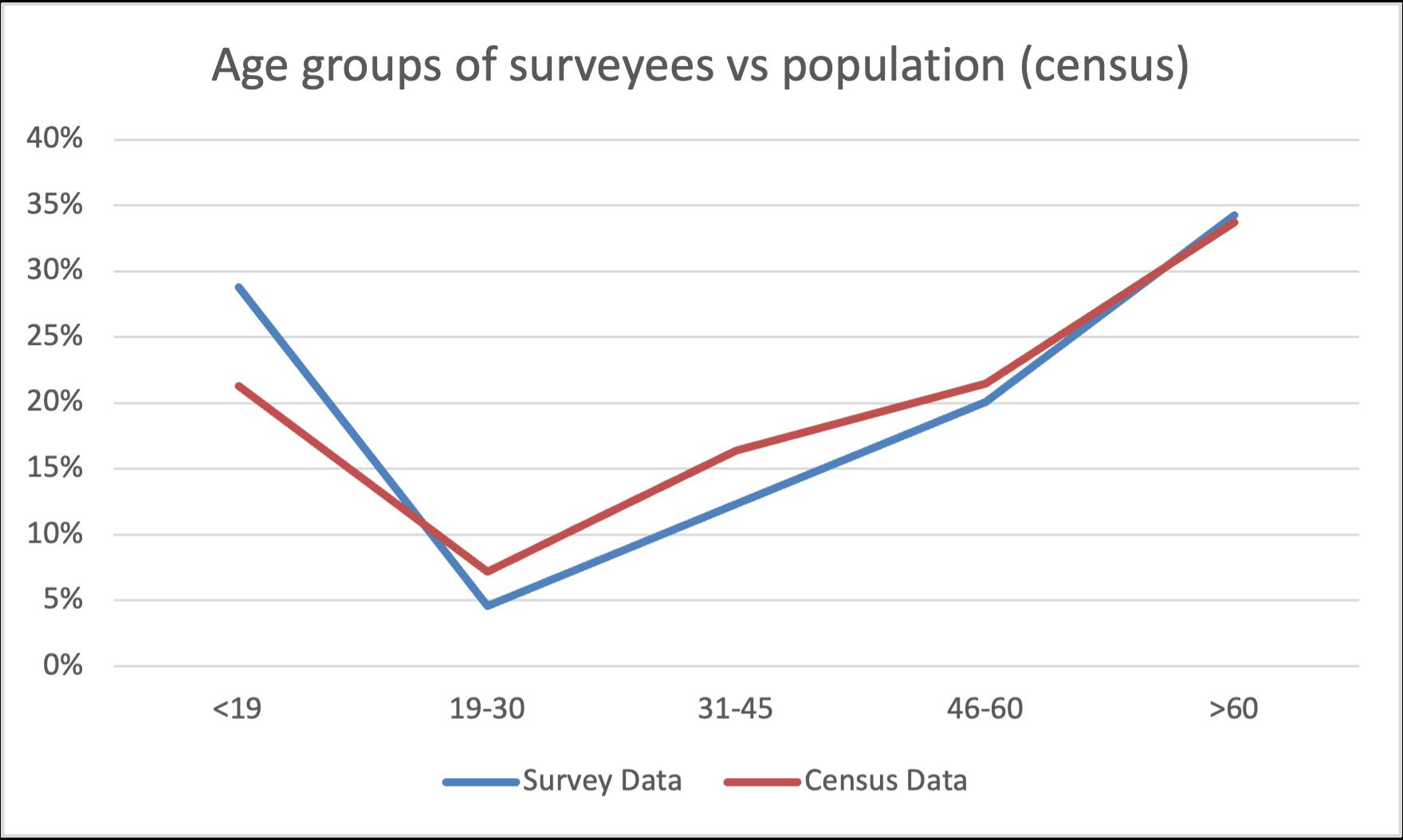
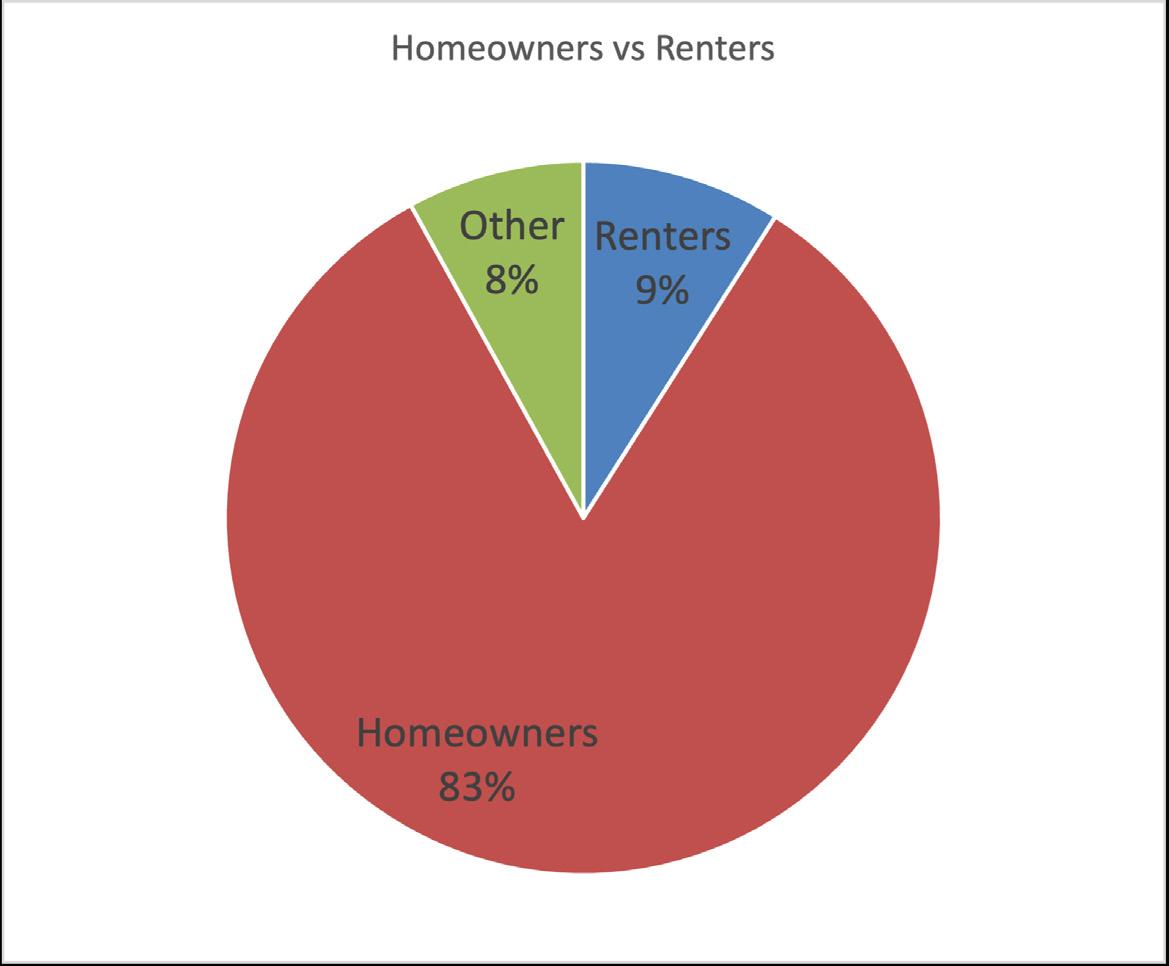
● 66% of participants are very concerned or extremely concerned about future environmental challenges related to climate change
● 68% of participants feel it is very important or extremely important that the Town take proactive measure to increase the community’s resilience and ability to adapt to climate challenges
● Climate related risks identified with the highest level of concern for Daltonians include: impact of climate change on the natural environment (plants and animals) of the Berkshires, impact of climate change on cost of food, wildfires, and health dangers from increases to insect-borne illnesses
● The development of a management plan for town-managed forests that reduce concentrations of forest fire fuels (such as snags, fallen trees and branches, dried out root systems, etc.) was also identified as a key resilience and adaptation strategy
● Respondents support the Town taking proactive measures, particularly by increasing Local renewable energy generation (wind and solar PV) for Town facilities, investing in energy efficiency at Town facilities (i e insulation, insulated windows and doors, more efficient control systems, higher efficiency appliances and lighting, etc.), and community composting
● Respondents advocated for expanding and repairing sidewalks in the community while favoring improved attic and/or wall insulation, solar panels, and energy efficient appliances in business and residential settings
● Those surveyed demonstrated a strong support for a food waste composting program at the Dalton transfer station and organic composting at their place of residence made available to them by the town
● More than half of respondents heat their home with either home heating oil or natural gas
The Green Dalton Committee (GDC) spearheaded a comprehensive effort to gather community input for the development of a Climate Action Plan in Dalton, MA, demonstrating their commitment to inclusive and thorough engagement. The survey, a key component of this process, was first introduced at the Dalton Climate Fair, where it was previewed to solicit preliminary feedback. This preview phase allowed the GDC to identify and address potential areas of confusion or ambiguity in the questions, ensuring the survey was clear and accessible to all participants.
Following this refinement, the survey was made available in multiple formats to maximize reach and participation It was accessible online via a link and QR code and distributed in print for those who preferred a physical format. The GDC leveraged several distribution channels, including town newsletters, various Dalton community groups on Facebook, a press release in local news media, the local high school, and personal networks, to ensure broad dissemination. To further enhance accessibility, survey kiosks were strategically set up at the Dalton Public Library and the Senior Center. Additionally, GDC members demonstrated their dedication to inclusivity by conducting door-to-door outreach, personally inviting residents to participate This proactive approach ensured that every individual in the community had the opportunity to contribute their perspectives, reflecting the committee's commitment to an equitable and representative engagement process.
Date: Oct 13, 2024
Location: Dalton Stationary Factory
Attendees: Multiple presentations were made as part of Dalton Climate Fair, which drew 15-22 attendees
Objective: Present initial GHG inventory findings and test a draft of the survey
Comprehensive Results: Linked here
Key Takeaways:
● Attendees were presented with an overarching schedule of the CAP engagement, and had a chance to ask questions. The questions primarily focused on effectiveness of climate action planning, and how to be sure initiatives are fully implemented
● We were able to refine the survey format and questions to more appropriately assess the Town’s interest in climate change mitigation activities.
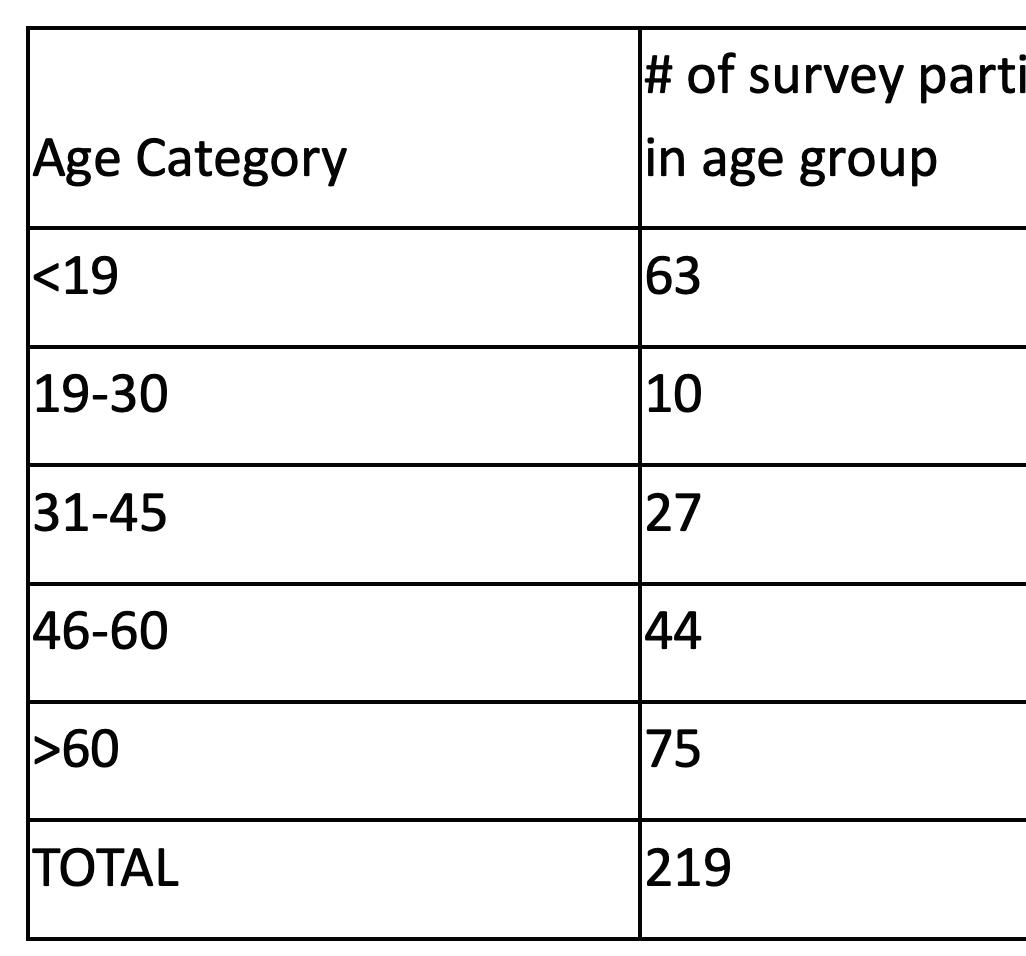
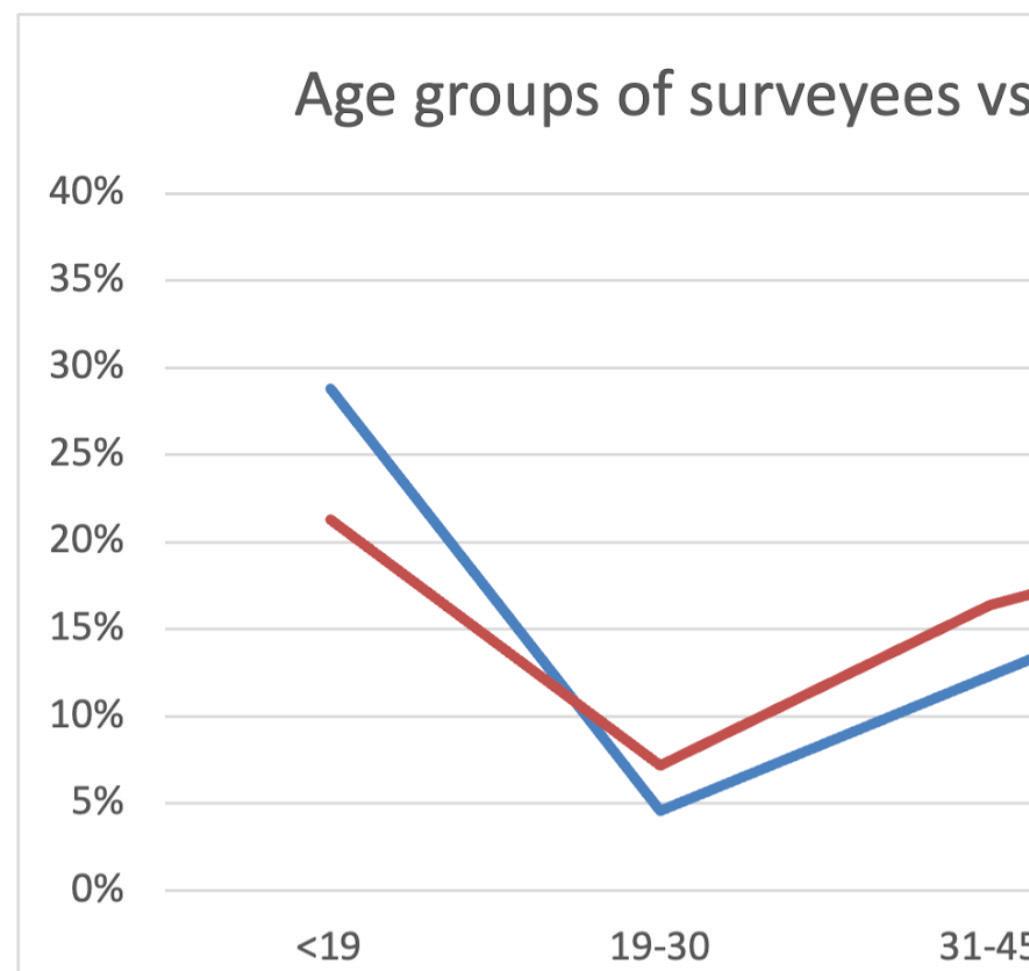

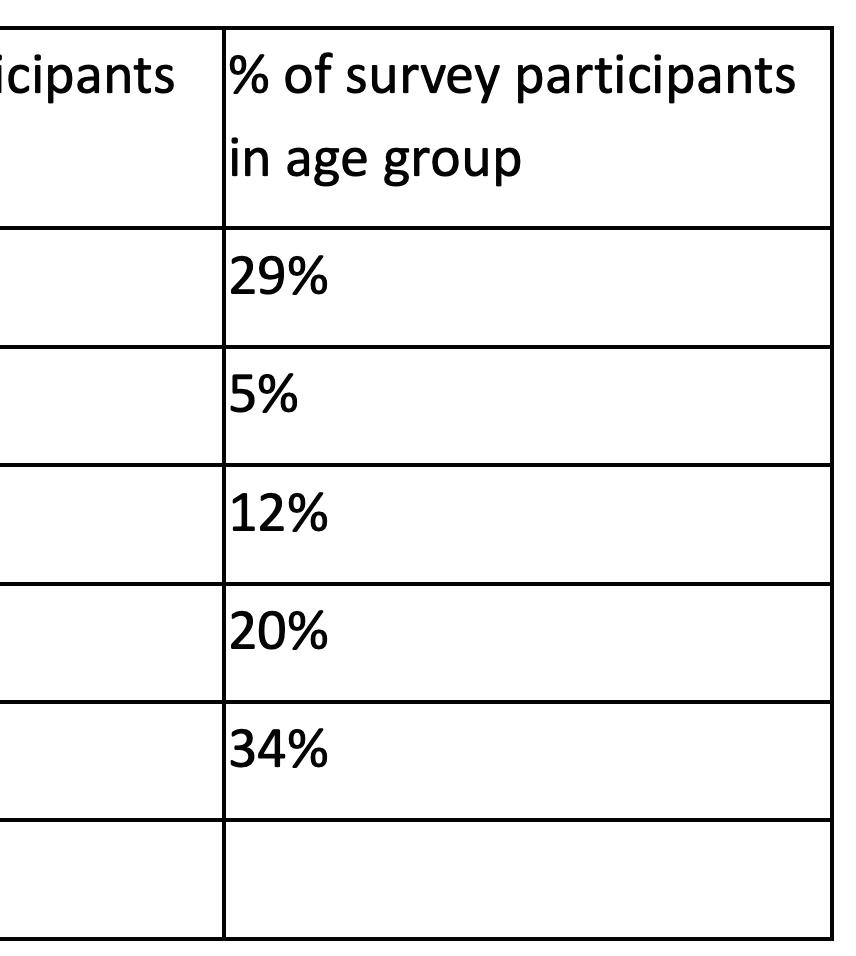
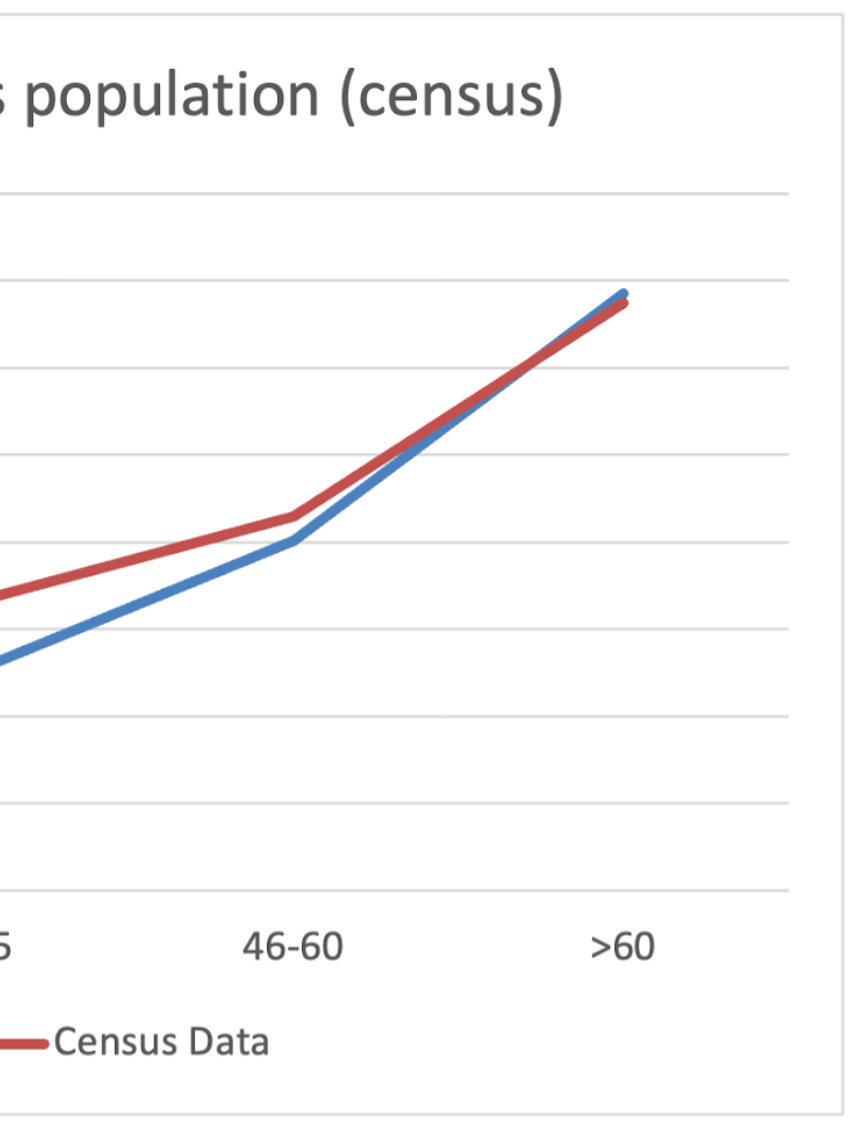
FIGURE 1: DESIGNATED EJ COMMUNITY OUTLINED IN RED
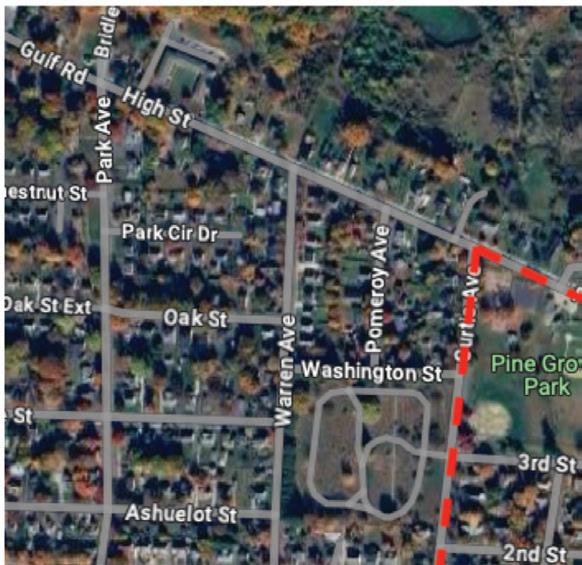
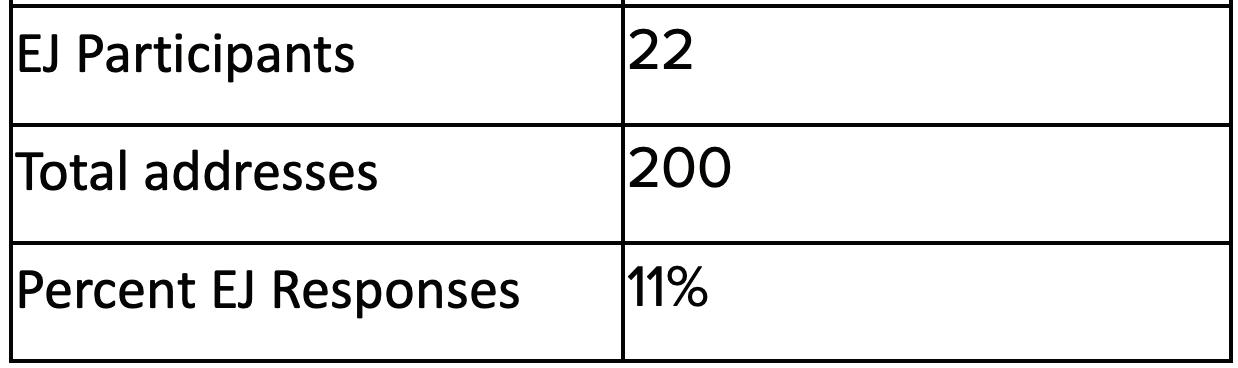
NOTE: Total addresses includes only participants who provided a viable address in their response.
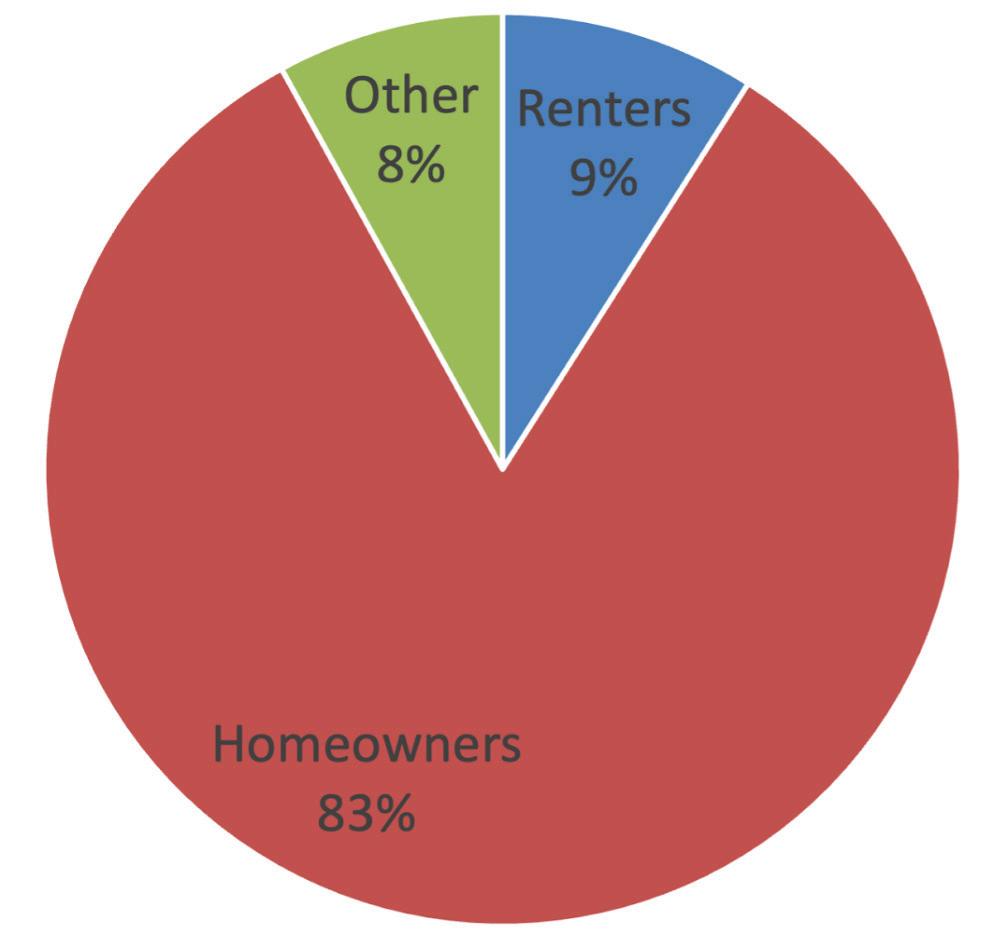
1 HOW CONCERNED ARE YOU ABOUT FUTURE ENVIRONMENTAL CHALLENGES, ESPECIALLY THOSE RELATED TO CLIMATE CHANGE? (250 RESPONSES)
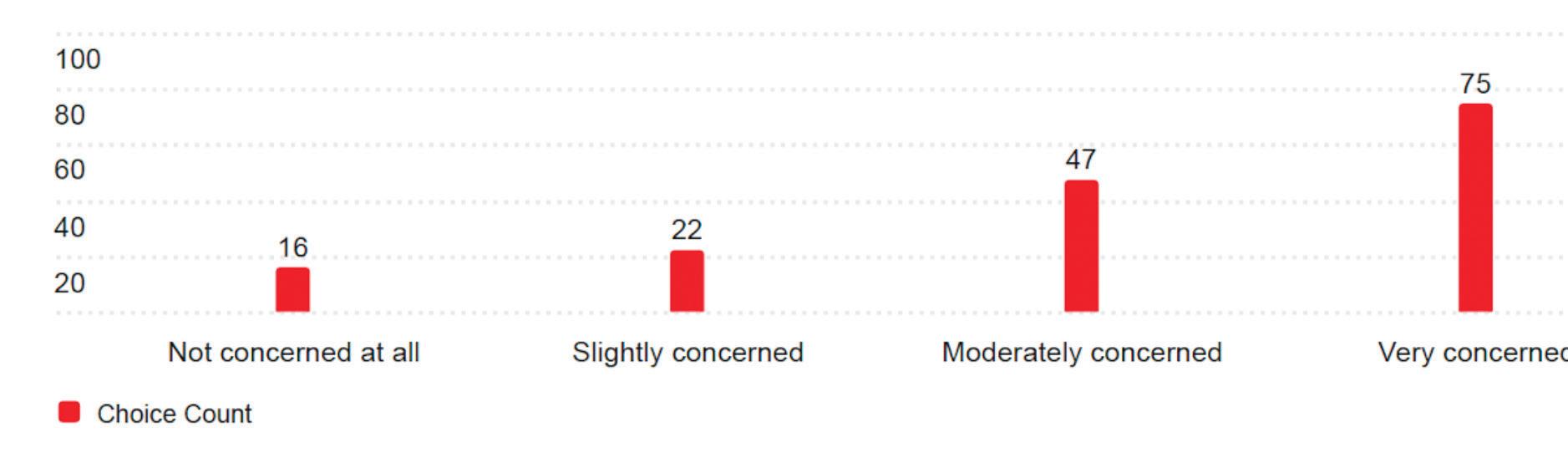
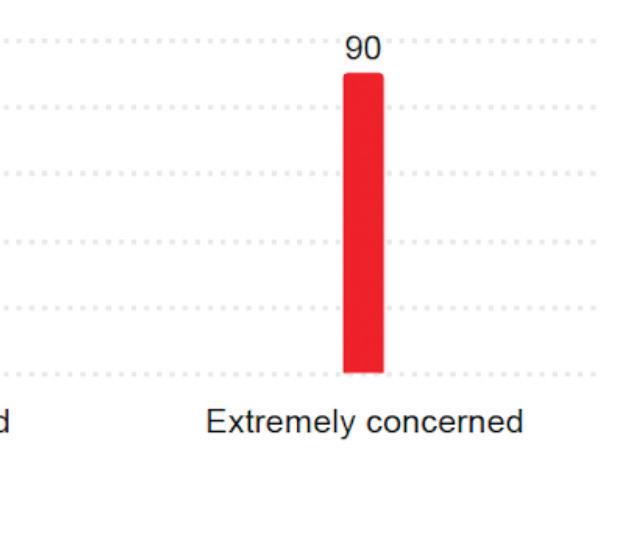
2 HOW IMPORTANT IS IT TO YOU THAT THE TOWN TAKE PROACTIVE MEASURES TO INCREASE THE COMMUNITY’S RESILIENCE AND ABILITY TO ADAPT TO CLIMATE CHALLENGES? (250 RESPONSES)
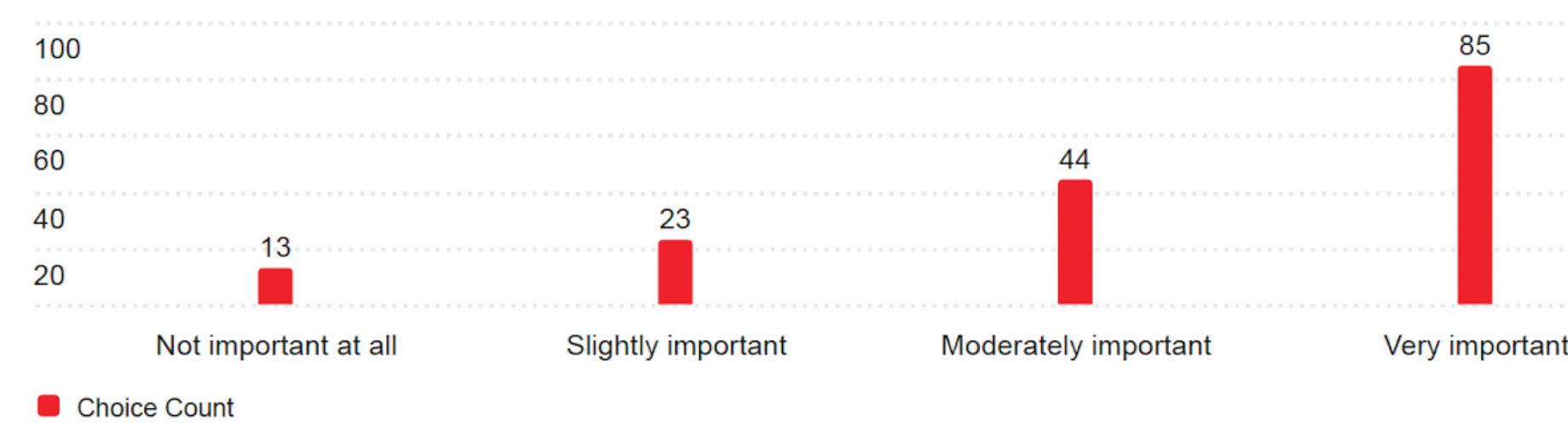
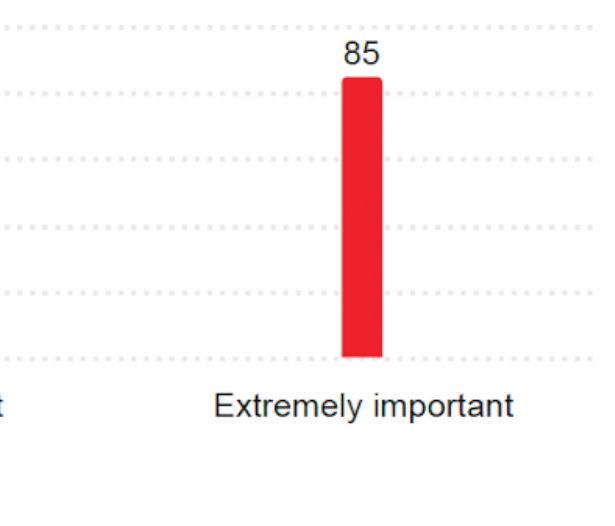
3 PLEASE EVALUATE EACH OF THE FOLLOWING CLIMATE-RELATED RISKS FOR YOUR LEVEL… (246 RESPONSES)
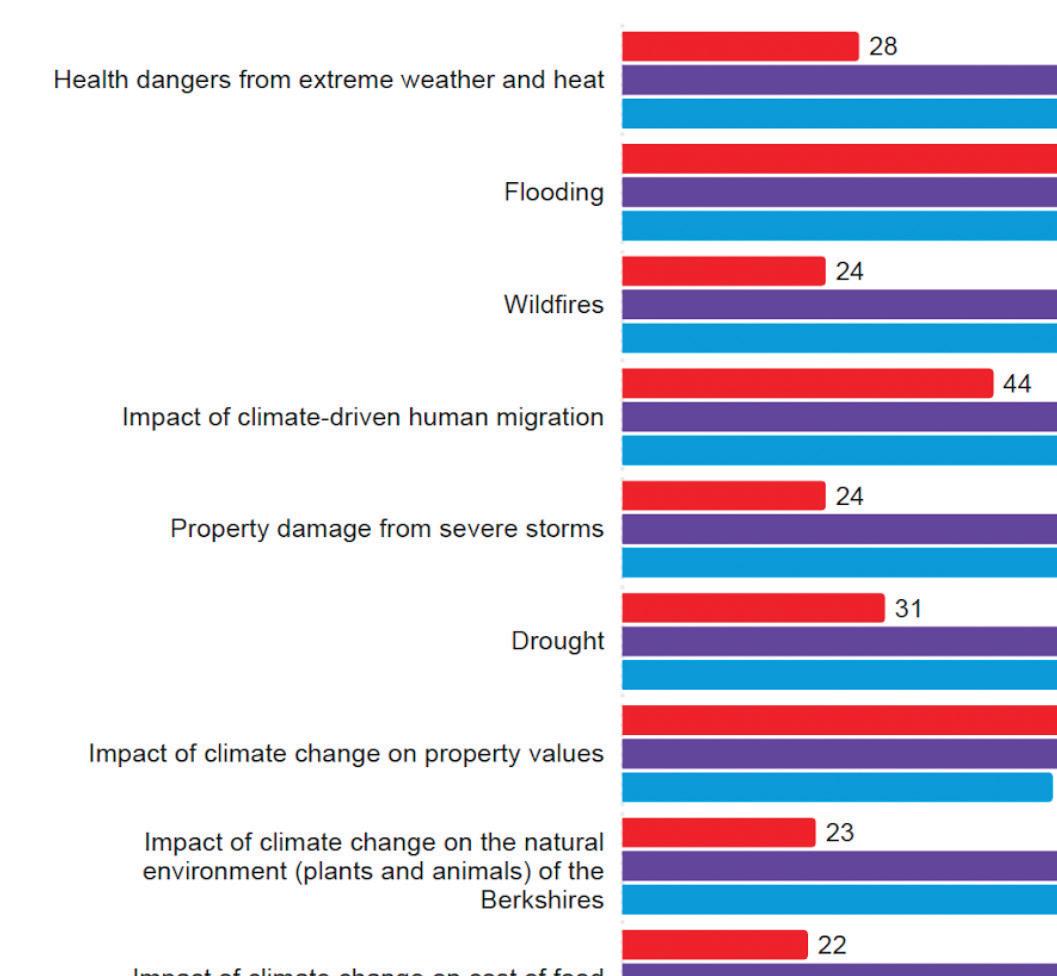
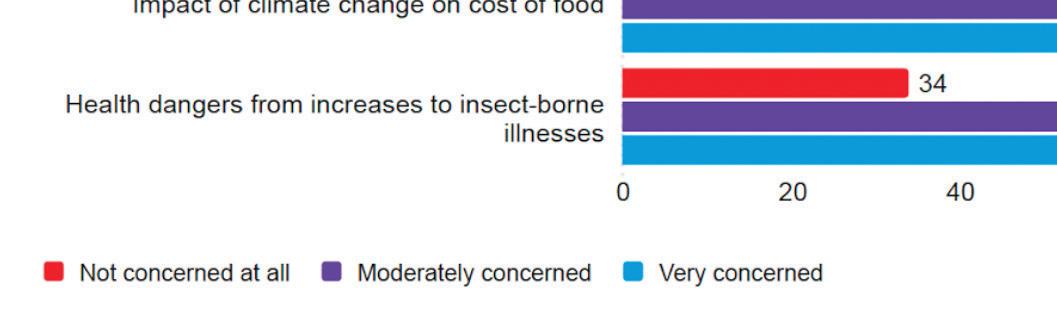
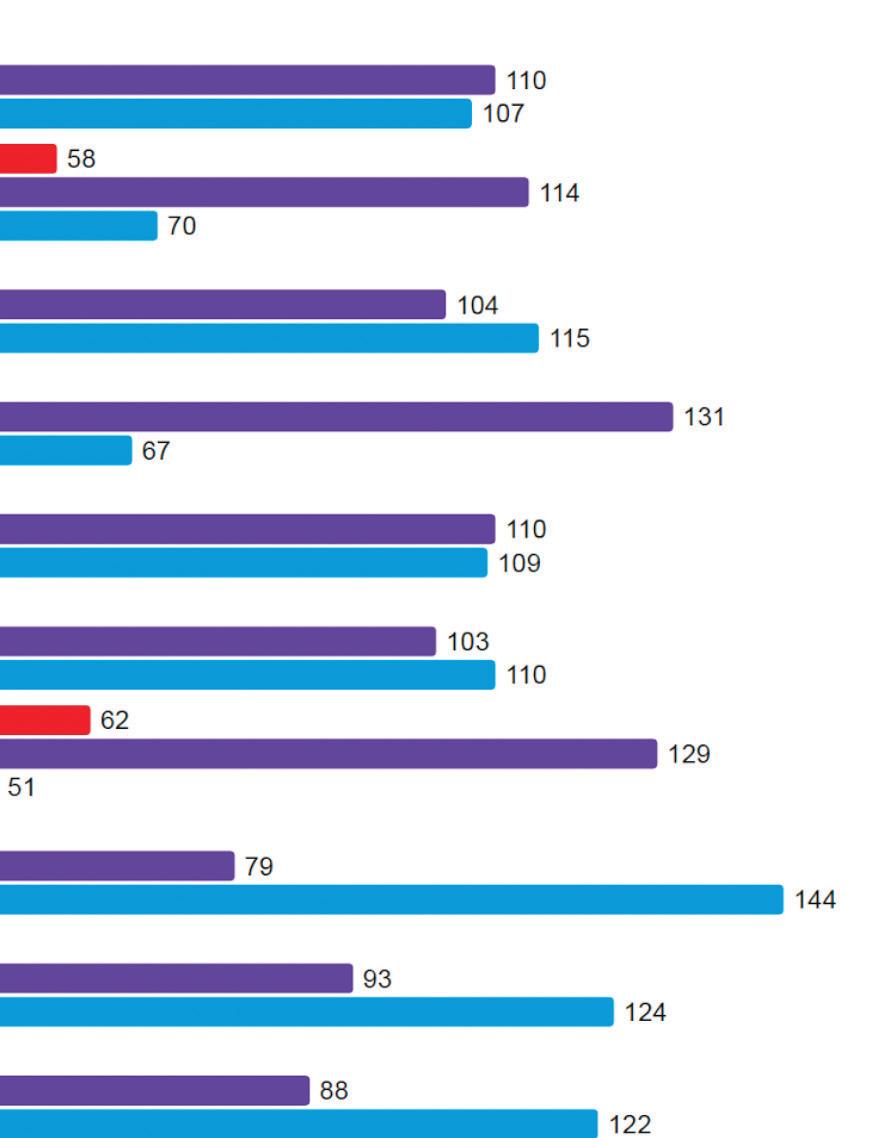

3.1 FLOODING (242 RESPONSES)
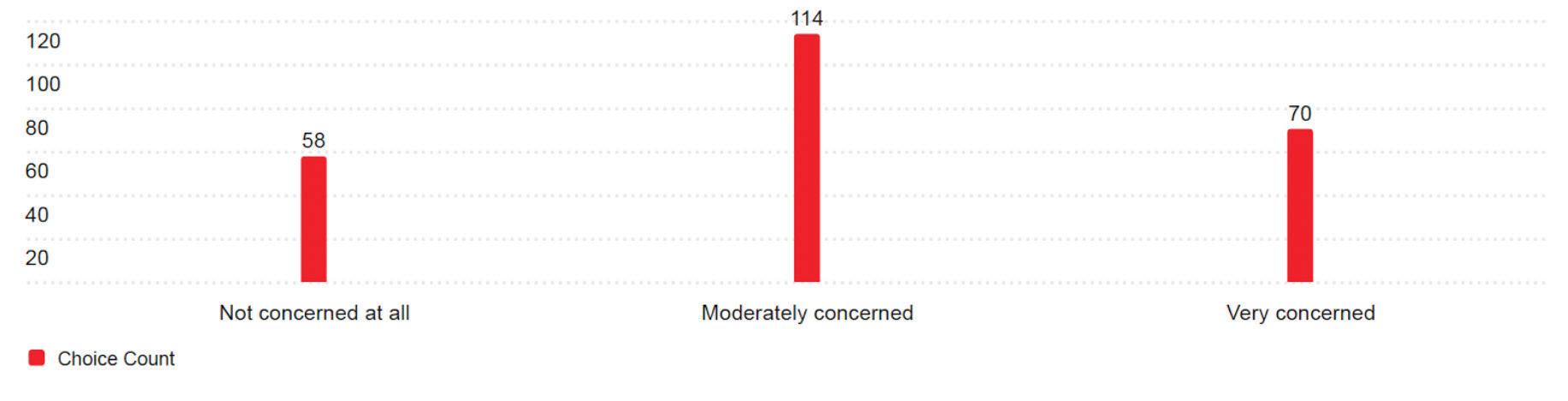
3.2 DROUGHT (244 RESPONSES)
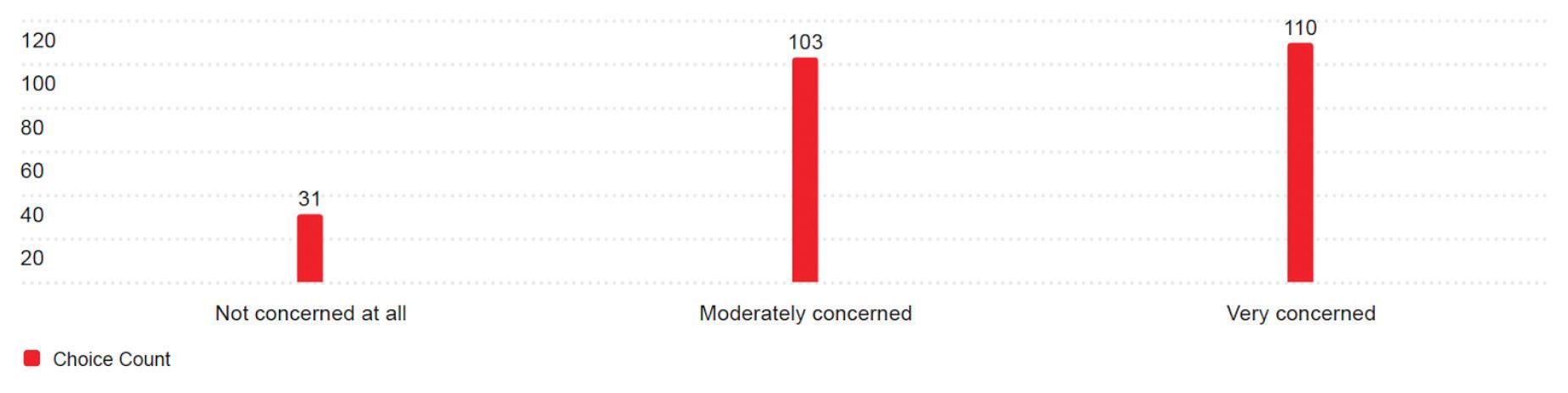
3.3 WILDFIRES (243 RESPONSES)
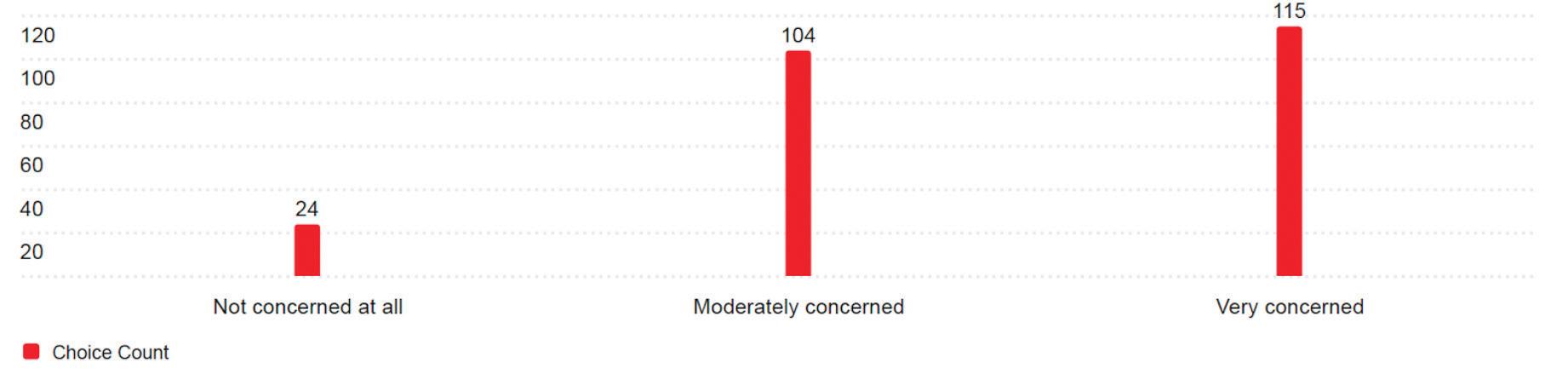
3.4 PROPERTY DAMAGE FROM SEVERE STORMS (243 RESPONSES)
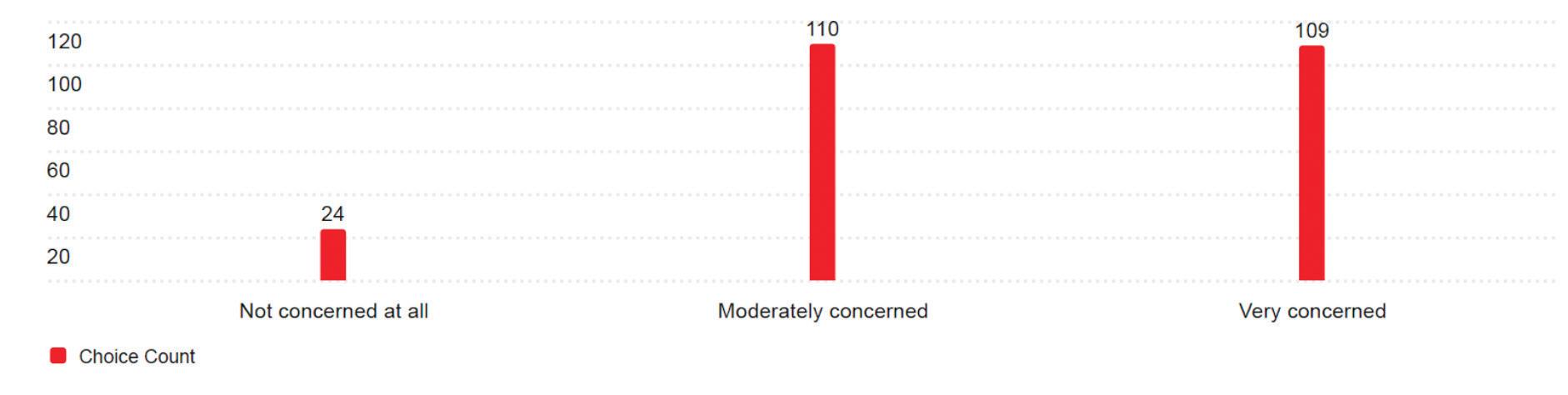
3.5 IMPACT OF CLIMATE CHANGE ON PROPERTY VALUES (242 RESPONSES)
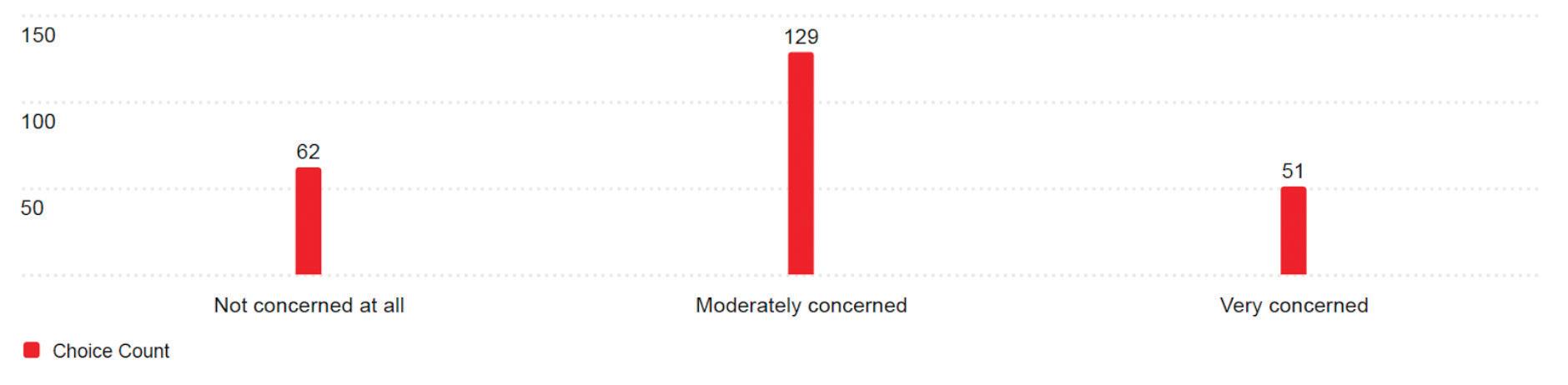
3.6 IMPACT OF CLIMATE CHANGE ON THE NATURAL ENVIRONMENT (PLANTS AND ANIMALS) OF THE BERKSHIRES (246 RESPONSES)
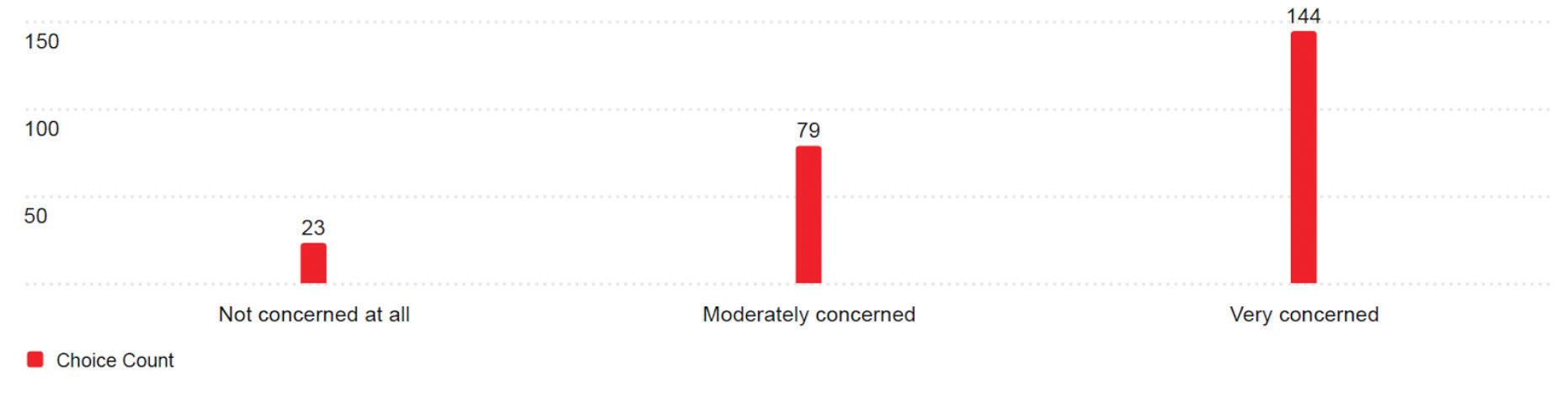
3.7 HEALTH DANGERS FROM EXTREME WEATHER AND HEAT (245 RESPONSES)
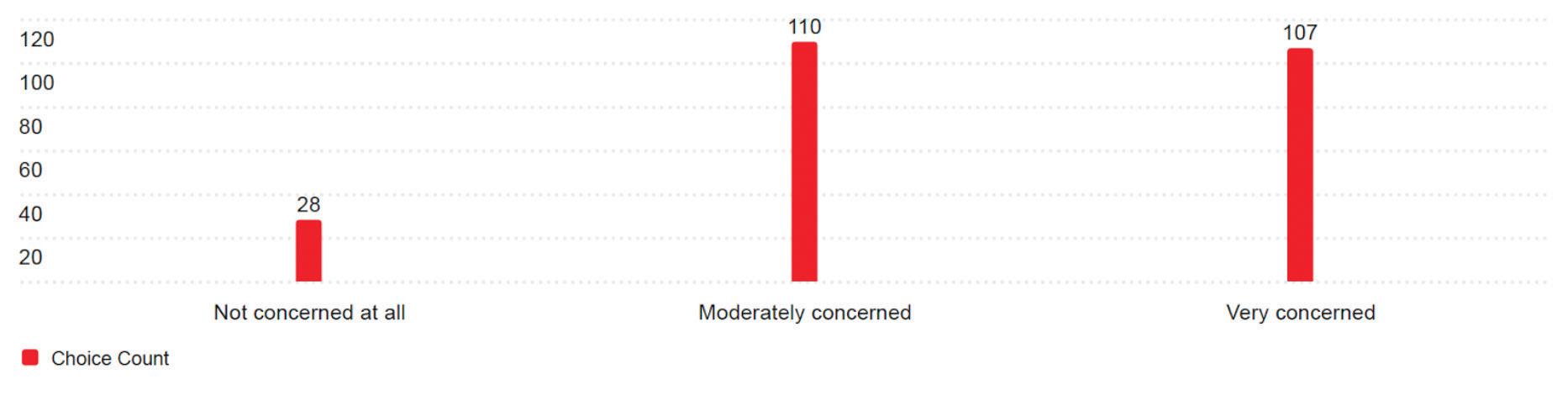
3.8 HEALTH DANGERS FROM INCREASES TO INSECT-BORNE ILLNESSES (244 RESPONSES)
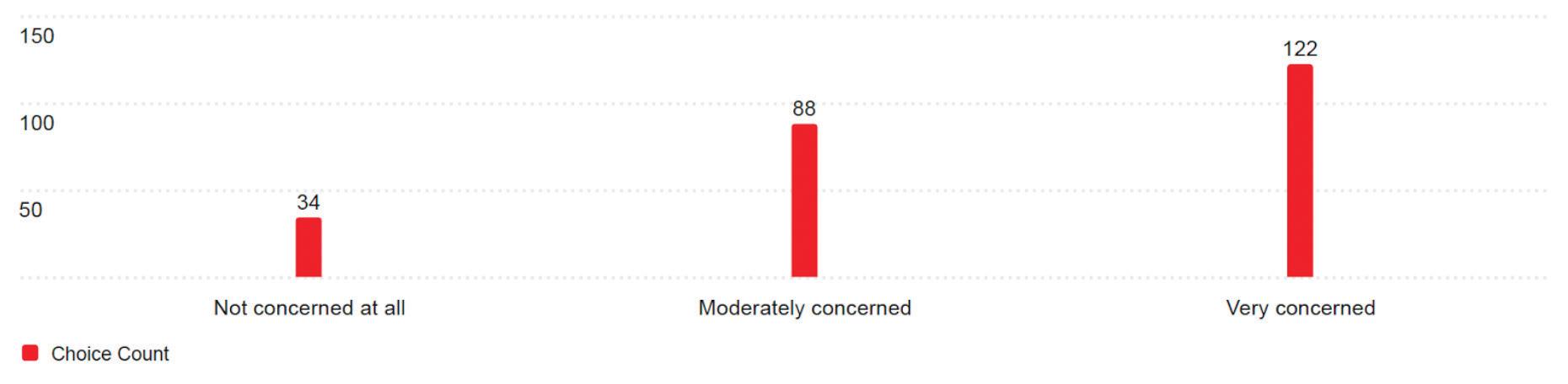
3.9 IMPACT OF CLIMATE-DRIVEN HUMAN MIGRATION (242 RESPONSES)
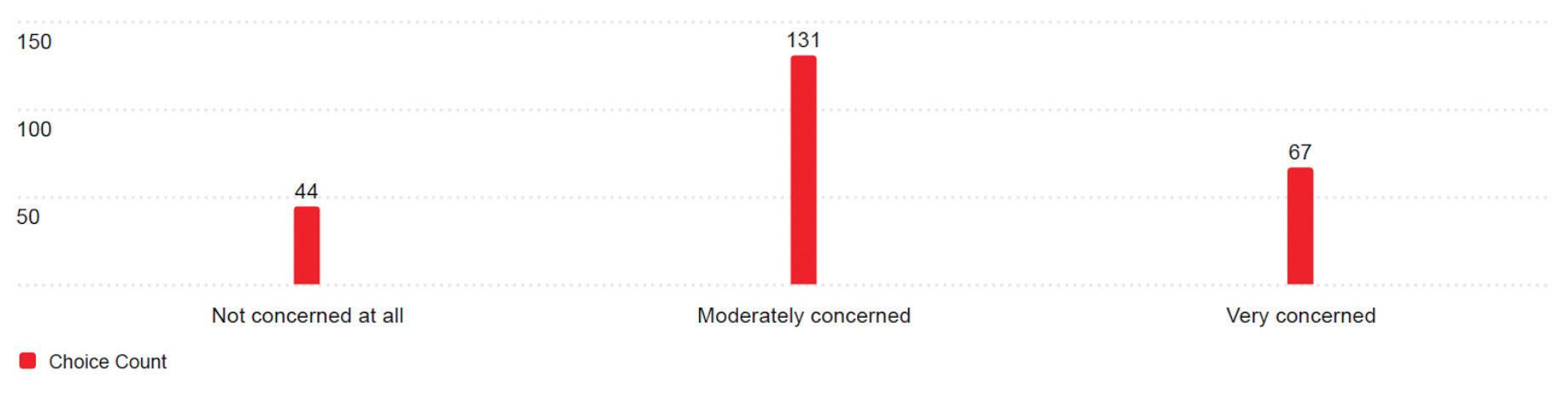
3.10 IMPACT OF CLIMATE CHANGE ON COST OF FOOD (239 RESPONSES)
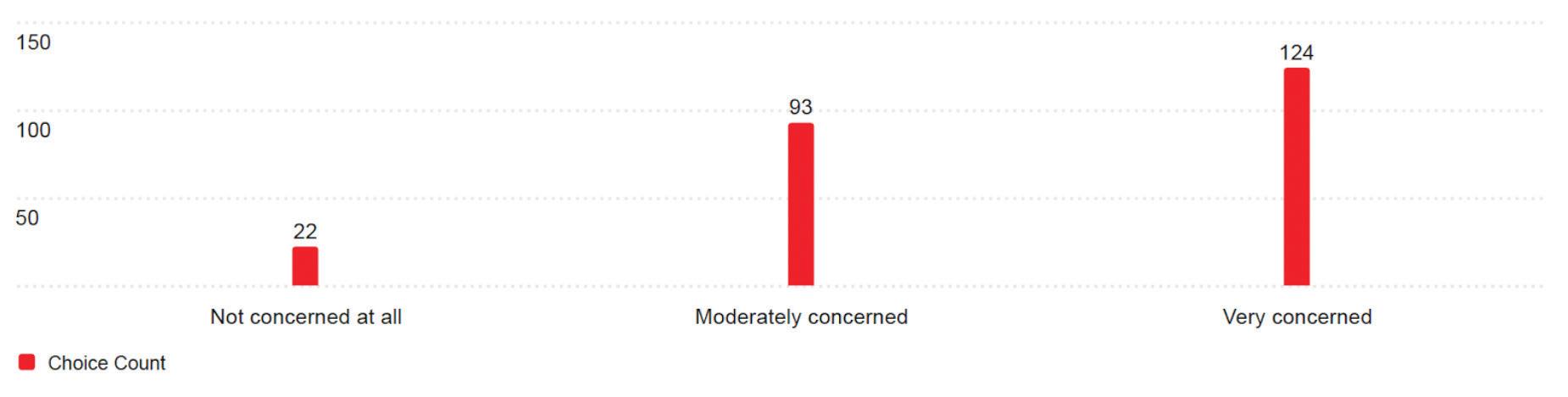
4 HOW AWARE ARE YOU OF LOCAL/STATE/FEDERAL INCENTIVES & REBATES FOR ENERGY SOLUTIONS FOR HOME/VEHICLE/ BUSINESS? (241 RESPONSES)
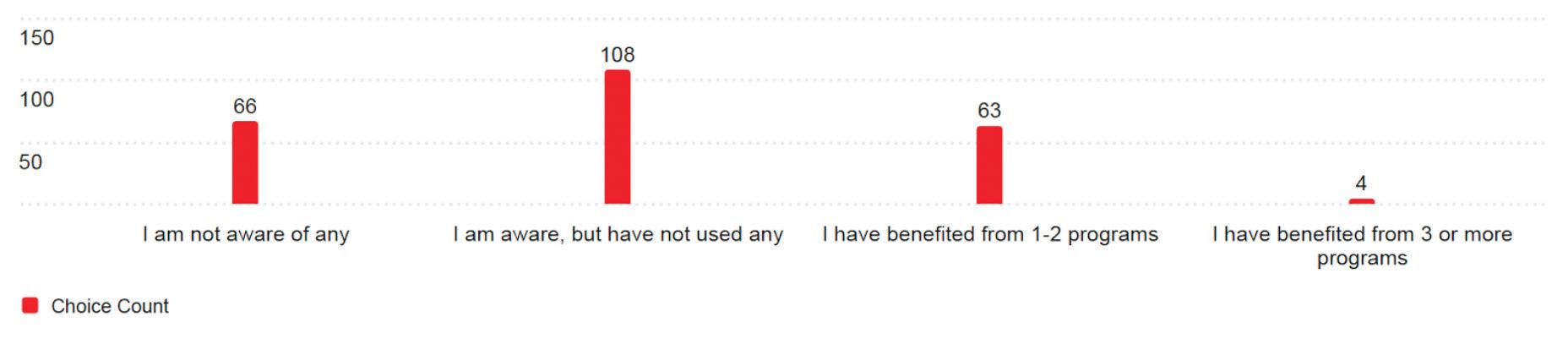
5 PLEASE SELECT THE TYPES OF CLIMATE FRIENDLY STRATEGIES YOU THINK THE TOWN SHOULD FOCUS ON FOR TOWN GOVERNMENT OPERATIONS (SELECT ALL THAT APPLY) (235 RESPONSES)
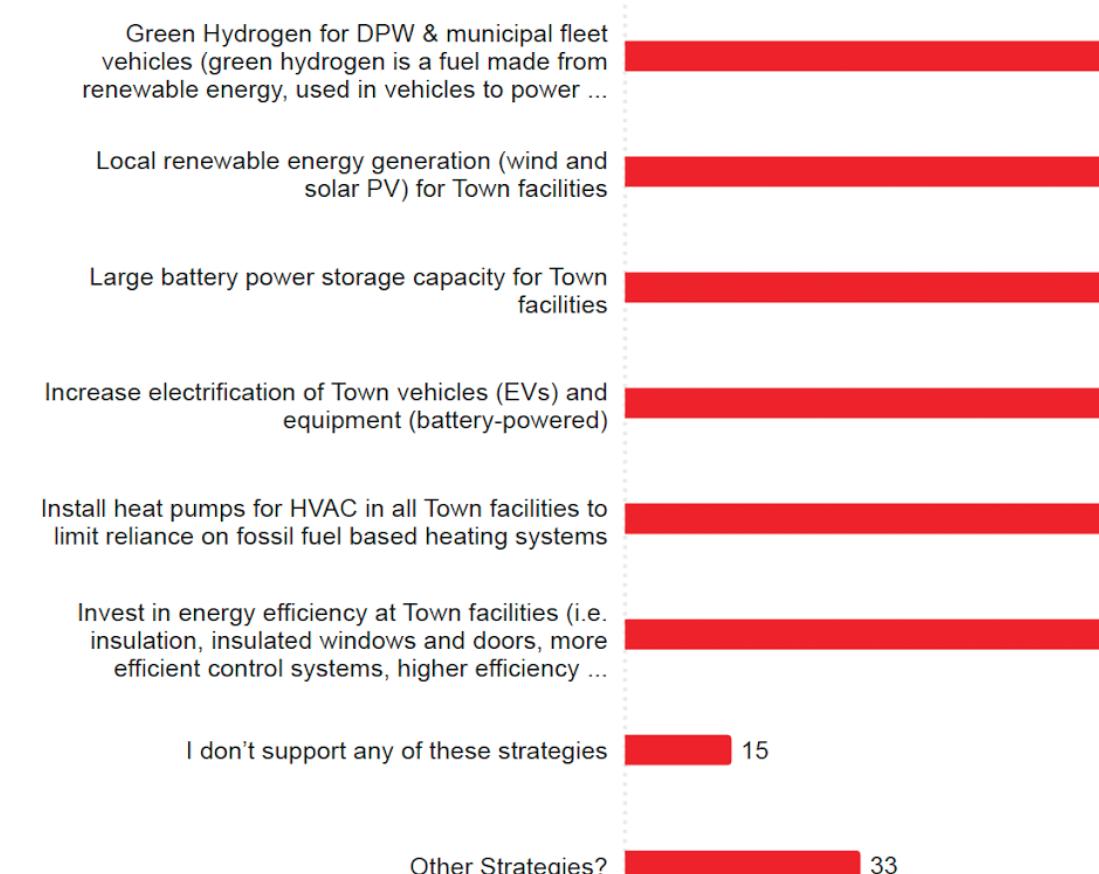
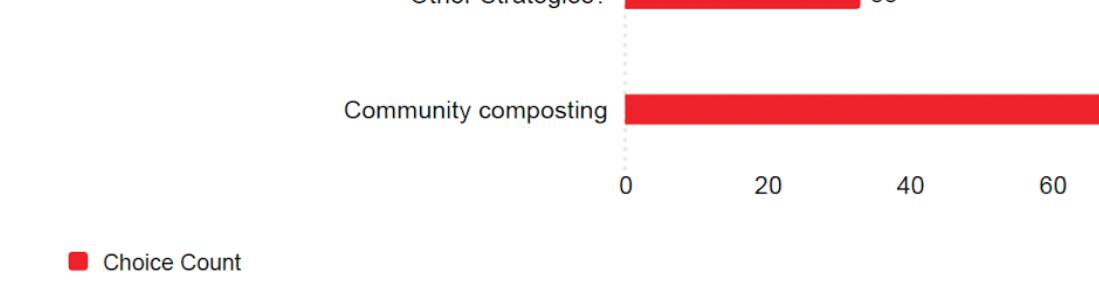
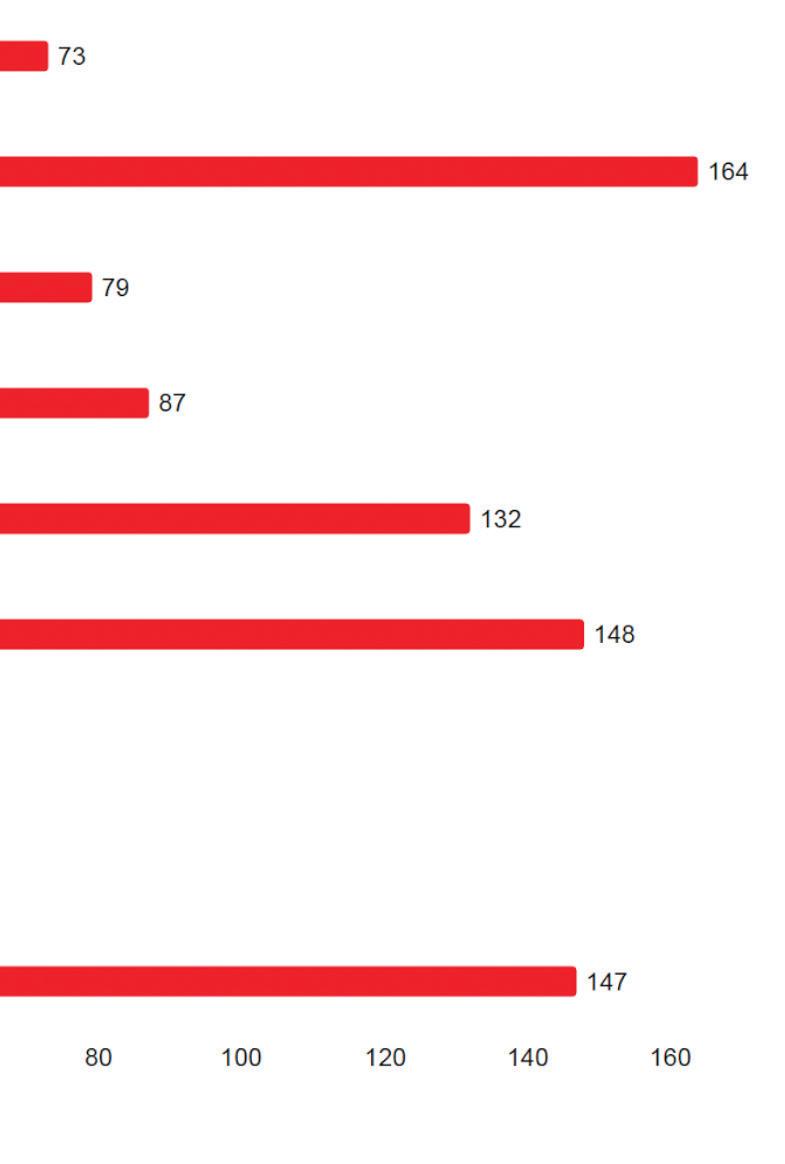
OTHER:
• Plant more trees x15
• Stop trash burning
• A program to plant trees, maybe a program at school or a program where you donate and in return volunteers plant trees
• Geothermal energy for heating schools
• Incentives for towns people to get solar or energy efficient vehicles.
• Install solar on the roof of all schools and town buildings, implement solar roof requirements on all new construction
• Note that heat pumps still use fossil fuel for generating electricity as there is not enough solar energy in winter
• Recycling programs? (plastics/papers) I am not really aware that we have any if we do.
• As a town as small as Dalton I do not think focusing on switching municipal vehicles to rely less on fossil fuels is not going to make as big of an impact as retrofitting buildings will. Maybe in a larger municipality like Pittsfield it would make more sense but not in Dalton.
• Evaluate environmental impacts of current garbage & recycling program; implement all possible improvements.
• Electrify school busses, green parking lots, green storm drains, smart traffic lights, solar over parking lots, remove dams on Housatonic, actively manage forests for pest devastation and non-productive planted stands, protect open spaces, modify building codes to promote use of existing structures verses new buildings, develop subsurface water source, reduce open gravel operations and require proper reclamation
• Make it easier to recycle. Or have incentives for those who do.
• Clearing of undergrowth in woodlands abutting populated areas
• More Solar for private homes as well as for town property
• Reduce extent of turn lawn area
• LED lights- too bright! Batteries involve mining- as so do some solar and wind for components- not food.
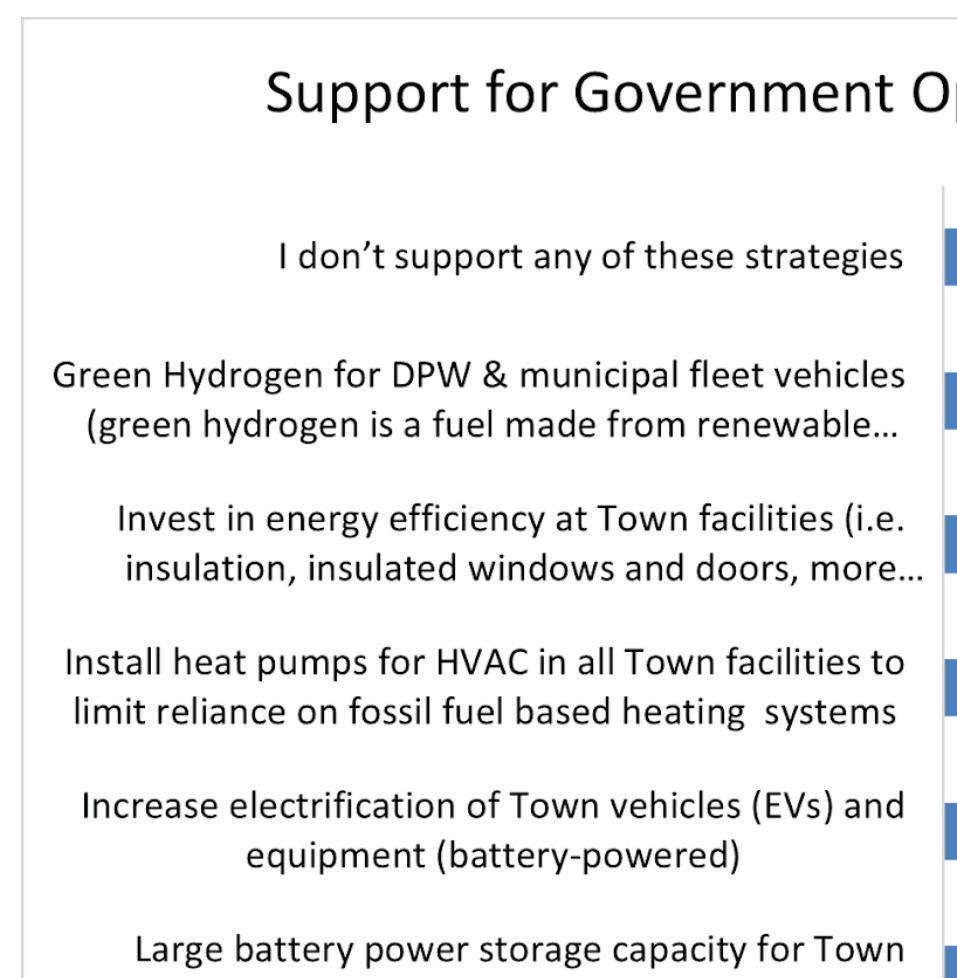
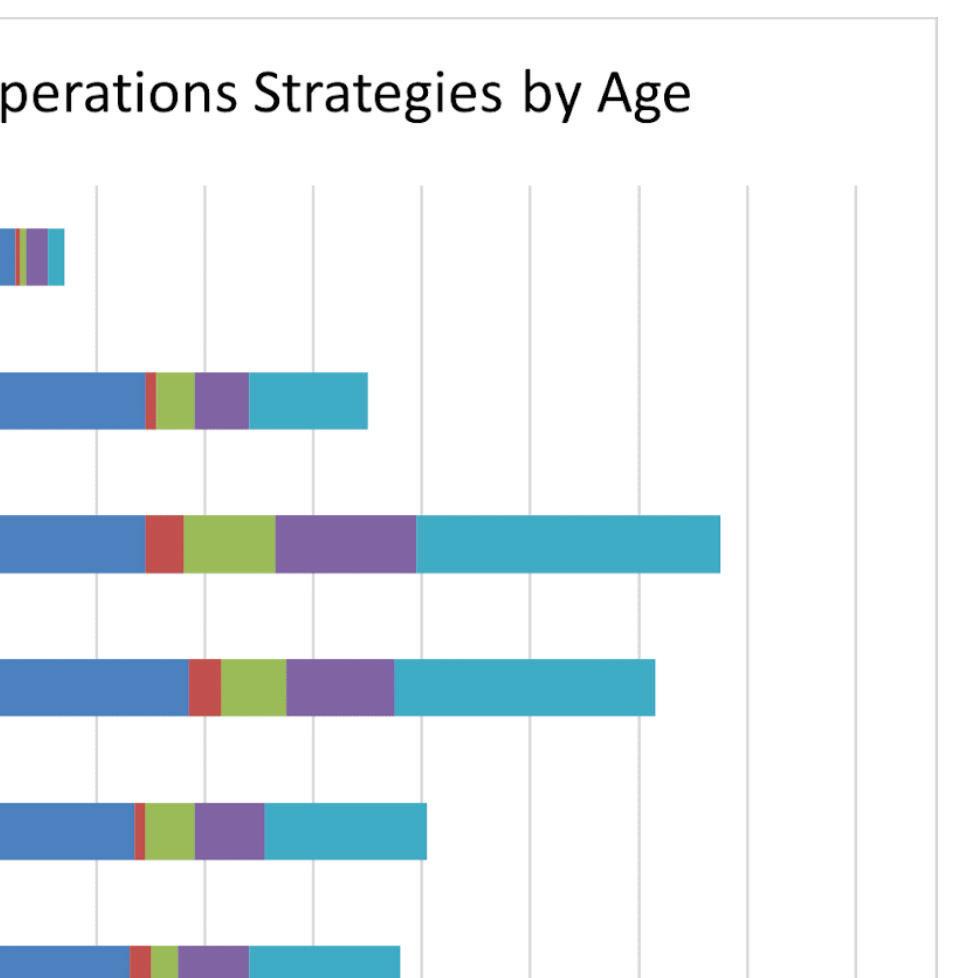
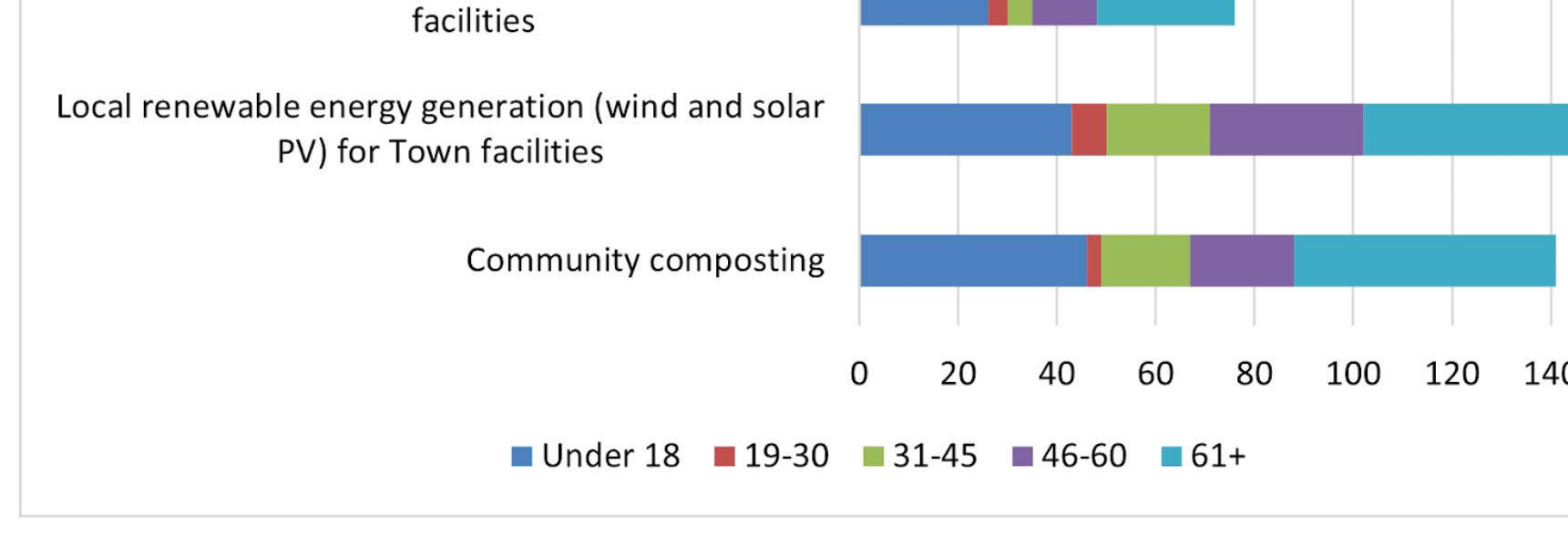
6 PLEASE SELECT THE TYPES OF STRATEGIES YOU THINK WE AS A TOWN SHOULD FOCUS ON TO REDUCE OUR VEHICLE GREENHOUSE GAS EMISSIONS (SELECT ALL THAT APPLY).SELECTED CHOICE (235 RESPONSES)
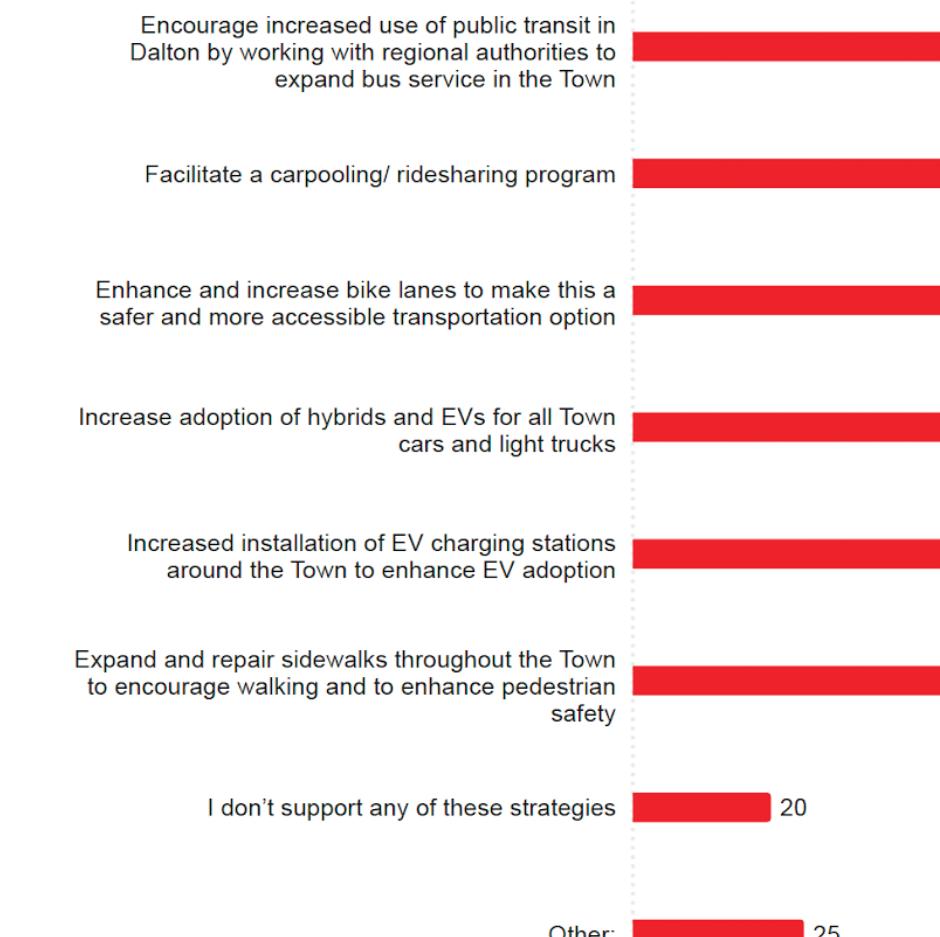
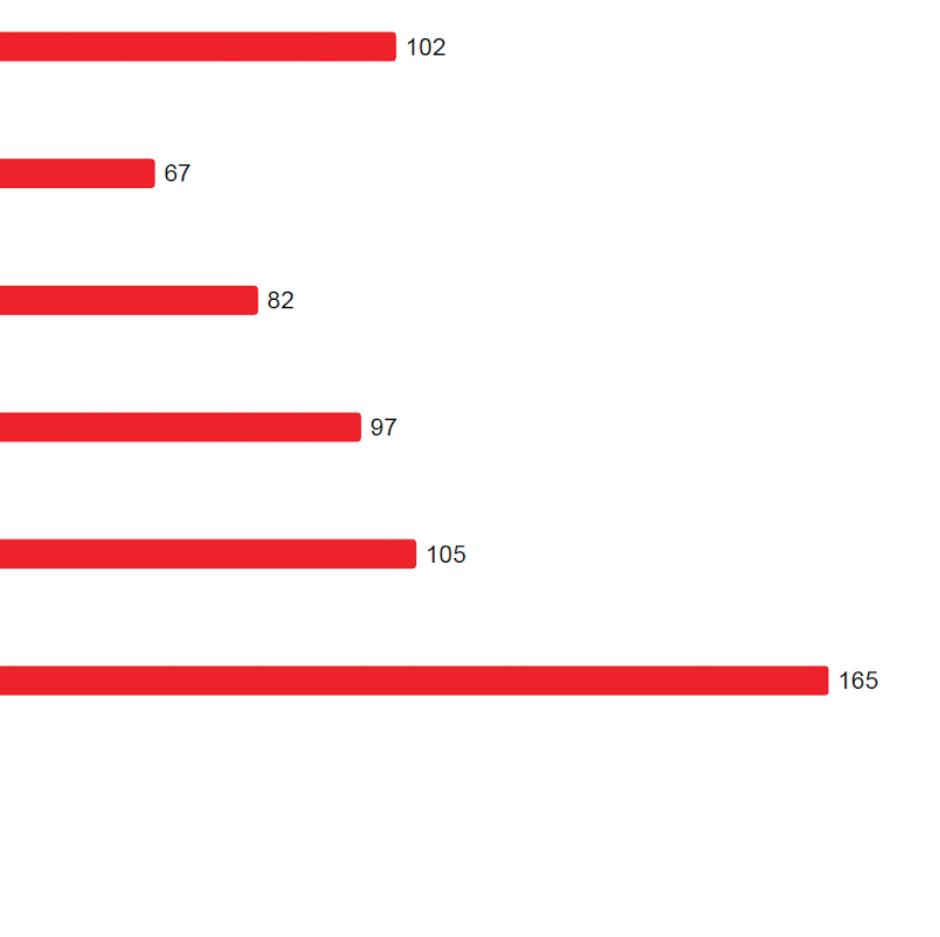
• Plant more trees x5
• Electric cars aren’t even that much better than gas ran cars. Maybe try and get people to stop using diesel fuel.
• Offer more public transportation
• Increasing bike lanes and sidewalks would be a good idea, but everything is so spread out, people wouldn’t be encouraged to walk/bike
• Incentivize carpooling
• Electric bicycles
• Improved sidewalks makes sense
• Also repair roads.
• Force schools to bus children. There are insane emissions due to car lines at the schools 5 days a week.
• Increase green delivery options to residents
• Discourage personal use of town vehicles of any kind
• PLEASE WORK ON THE SIDEWALKS AND BIKE LANES
• Hybrid vehicles, no EV
• This is just a comment - I don’t support EV vehicles for a number of reasons. If a battery catches fire, it is extremely difficult to put out. Sourcing lithium should also be a concern. I am more open to hybrids that straight EVs.
• Educate people on individual actions they can take. Give examples of cost savings that result from energy saving strategies. Cost savings mean more to the average person than climate chande.
• All school vehicles including yard maintenance, town maintenance such as lawn mowing and trimming, and
• More people would use public transportation if bus stops and schedules were clearly marked
• Maybe bikelanes depending on design. See Pittsfield’s efforts as a design to avoid
• More tree planting, more walking and bike trails
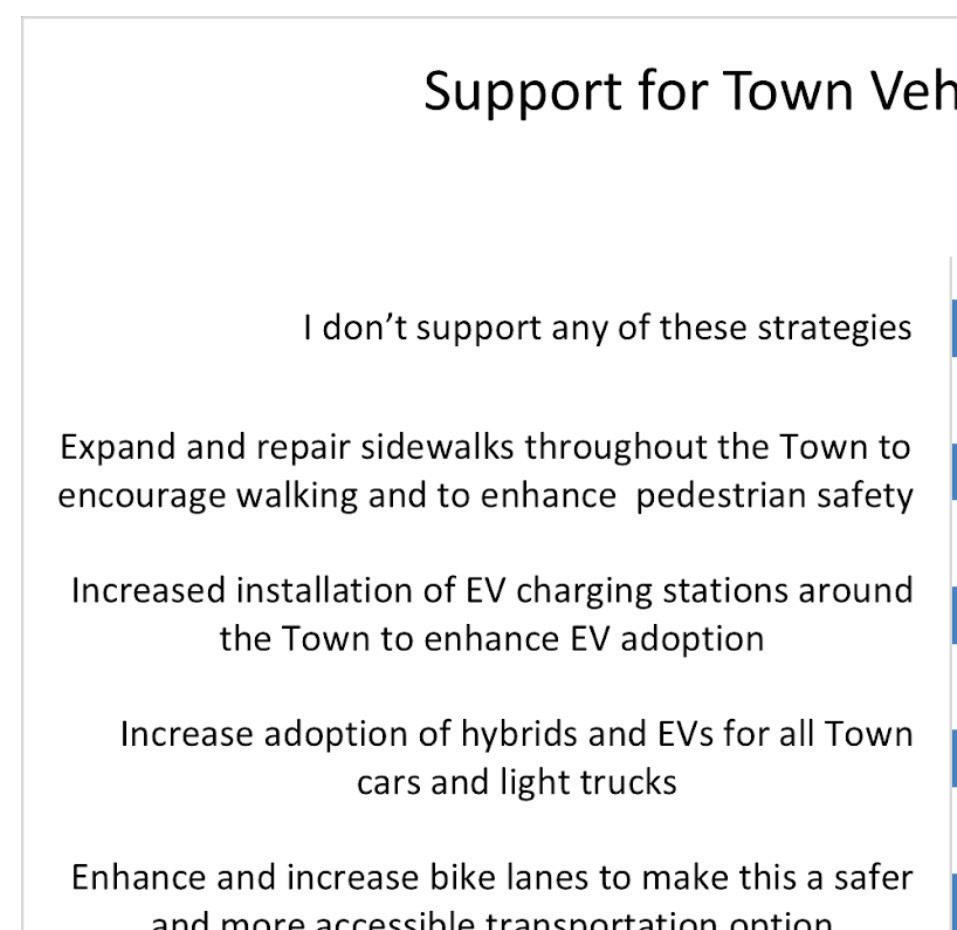
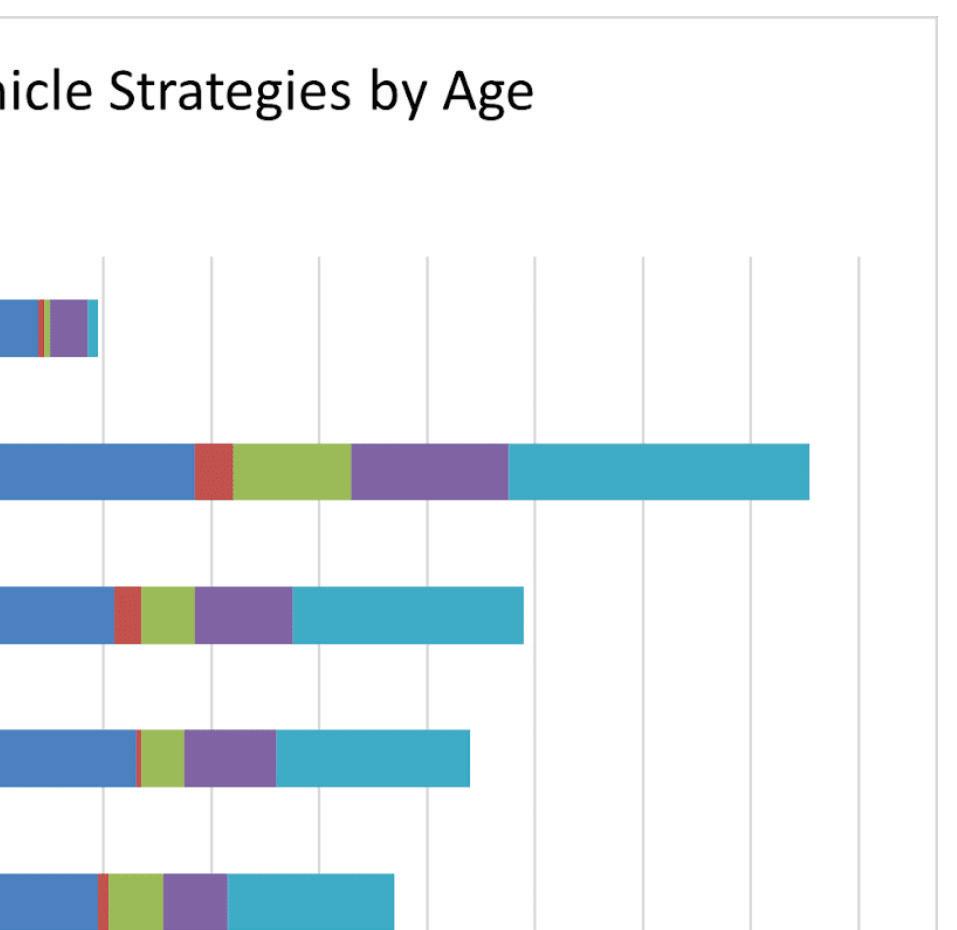
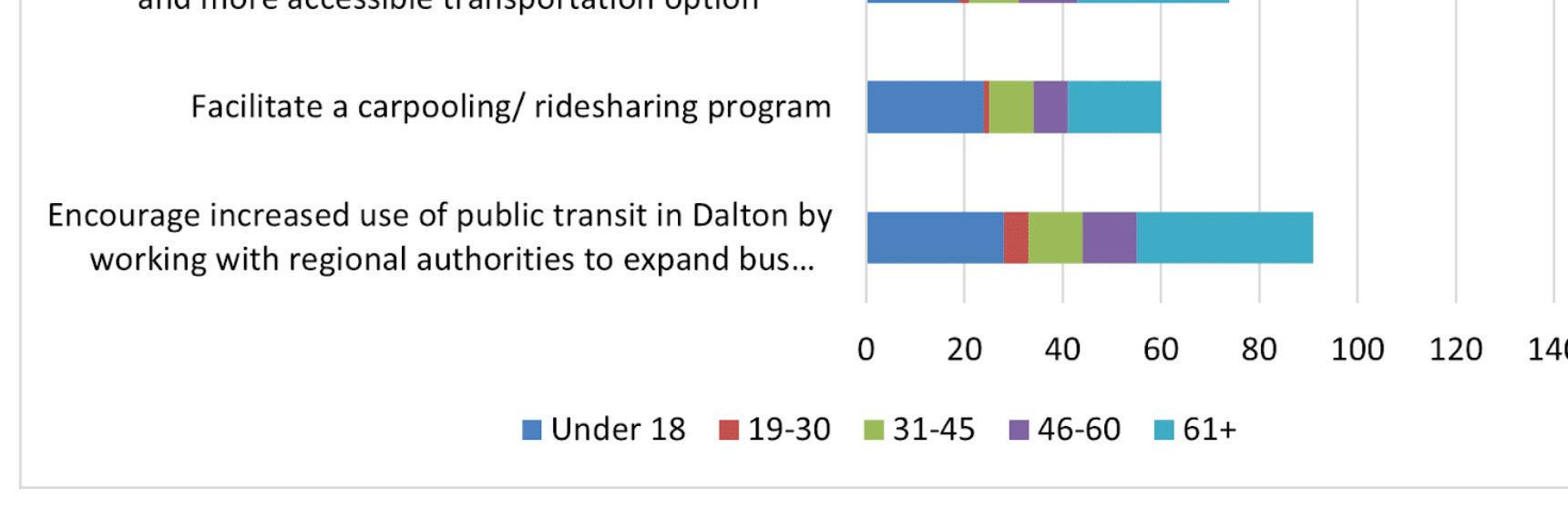
7 PLEASE SELECT THE STRATEGIES YOU THINK RESIDENTS/BUSINESSES SHOULD PURSUE TO REDUCE FOSSIL FUEL BASED ENERGY USE (SELECT ALL THAT APPLY). - SELECTED CHOICE (231 RESPONSES)
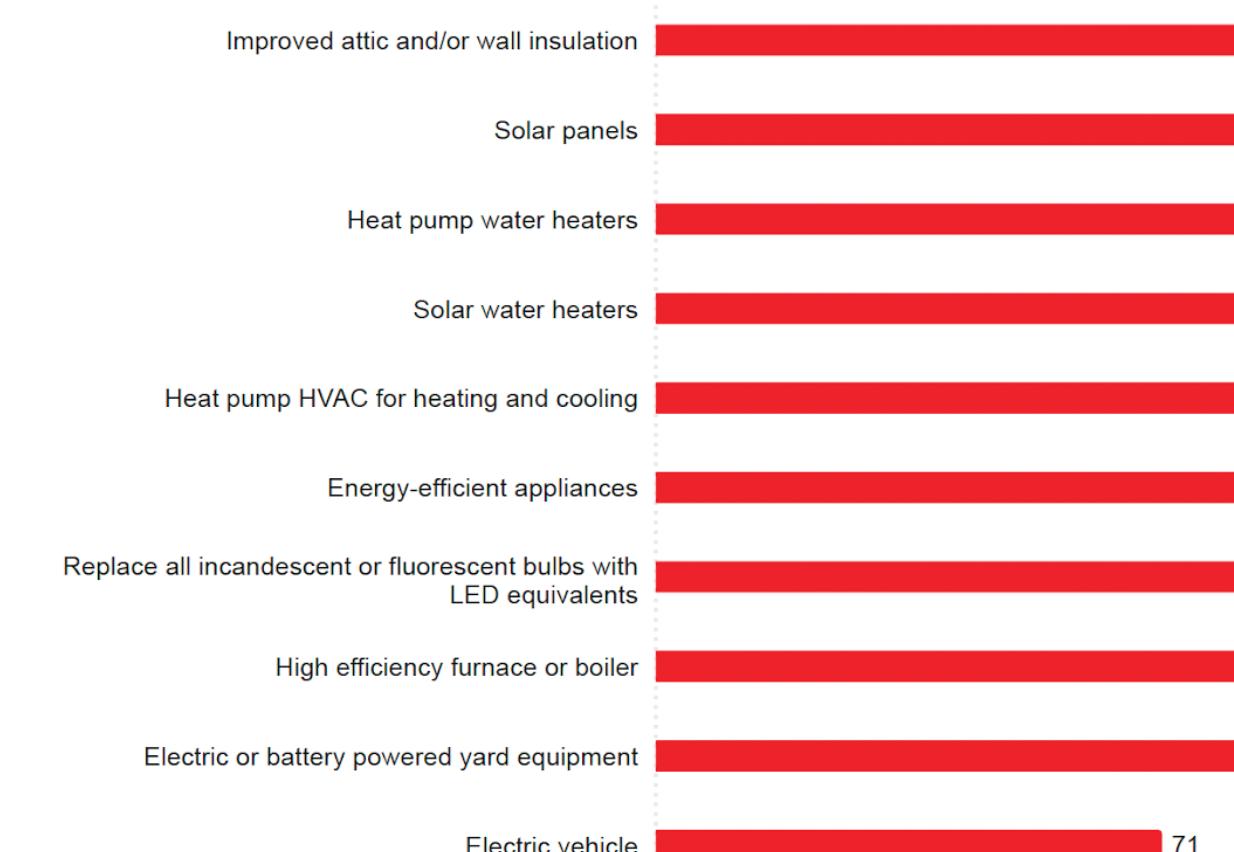
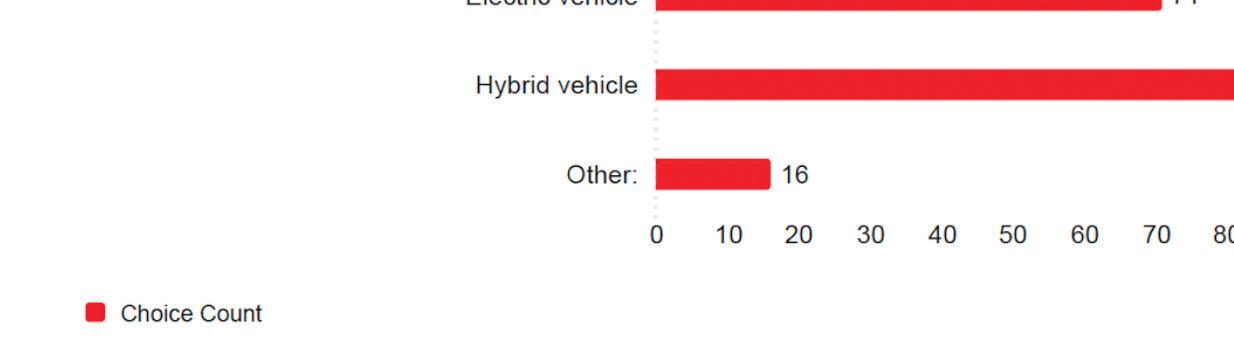
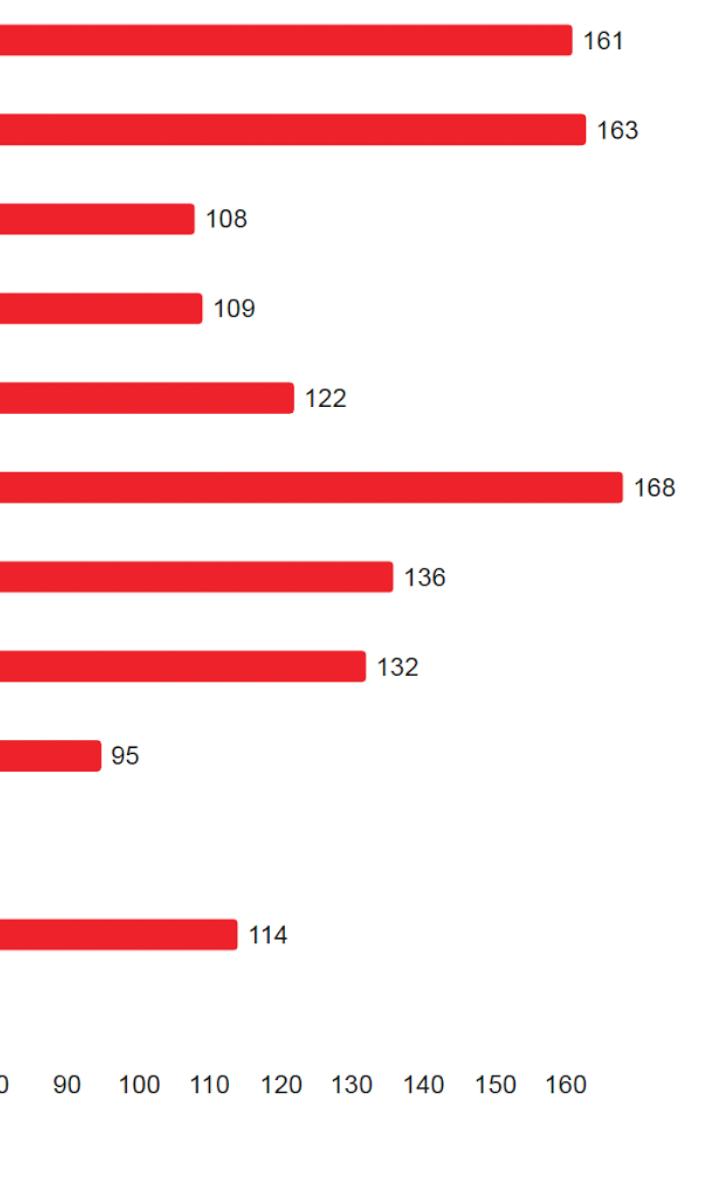
OTHER:
• Plant more trees x4
• Above selections are for replacement of broken equipment, not functional equipment.
• Again, focus on cost savings. Bottom line is most important in making investments.
• Subsidize metal roofs to reduce threats from wild fires
• prefer hybrids over EVs
• Heat pump HVAC should be powered by solar. High efficiency furnace or boiler if used as a backup for heat pumps
• Hate LEDs. Less traffic- slower roads in dalton encourages walking.
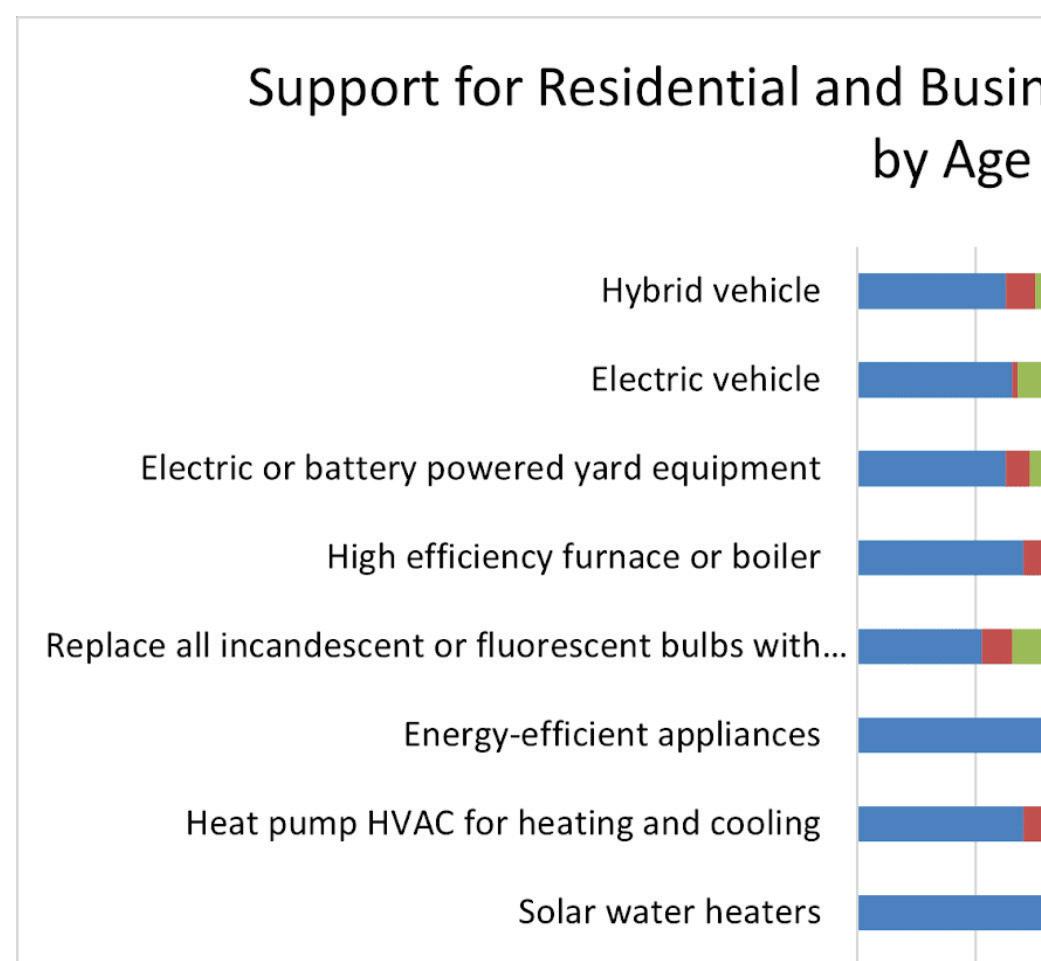
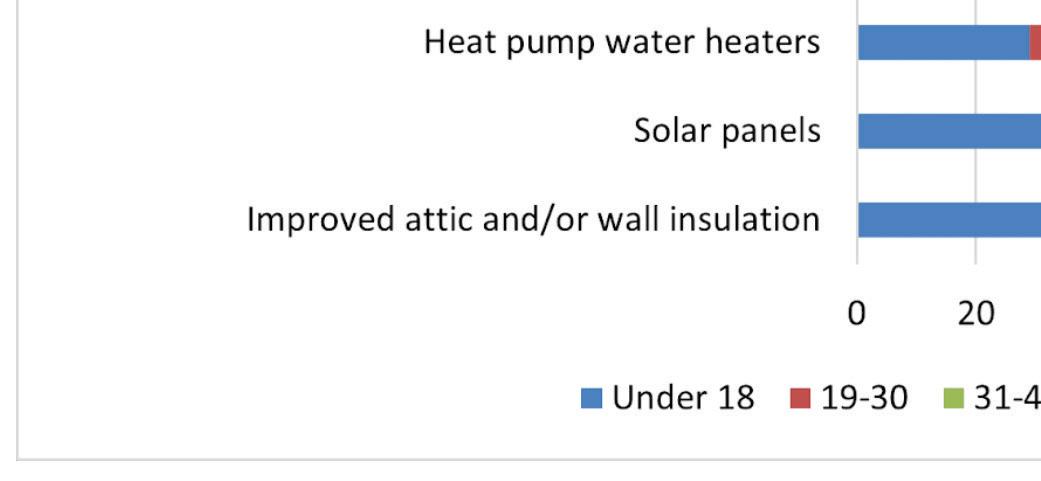
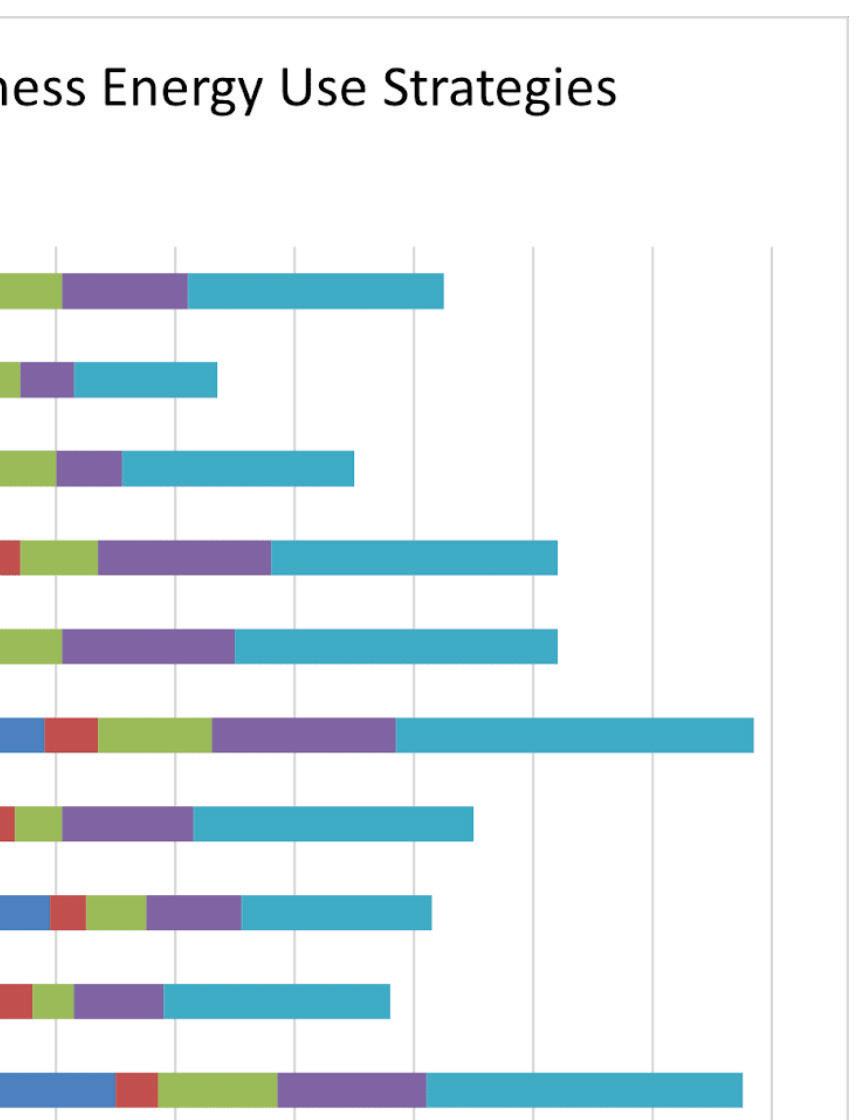
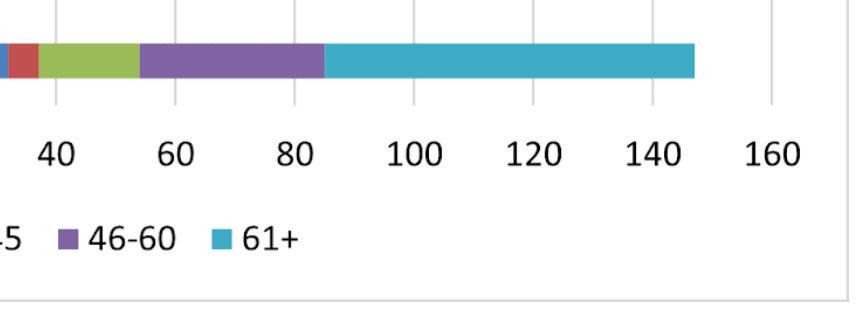
7 FOOD WASTE ACCOUNTS FOR NEARLY A QUARTER OF TRASH GOING TO LANDFILLS, AND ITS RESULTING GREENHOUSE GAS EMISSIONS HAVE POTENT NEGATIVE LONG-TERM IMPACTS ON CLIMATE CHANGE. PLEASE SELECT THE TYPES OF FOOD WASTE REDUCTION PROGRAMS YOU THINK THE TOWN SHOULD IMPLEMENT (SELECT ALL THAT APPLY). (232 RESPONSES)
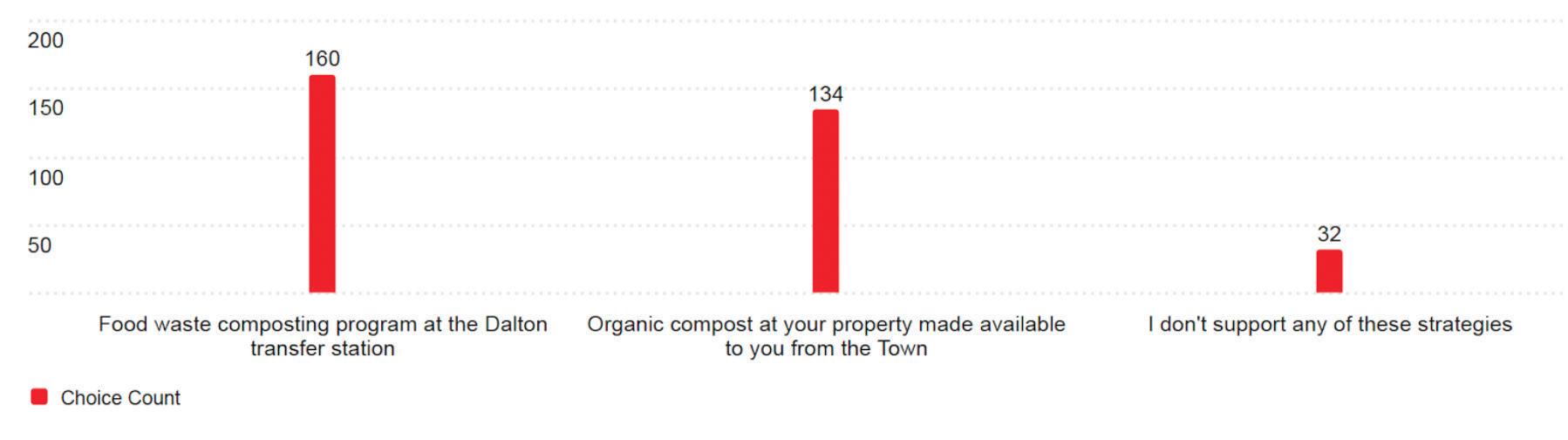
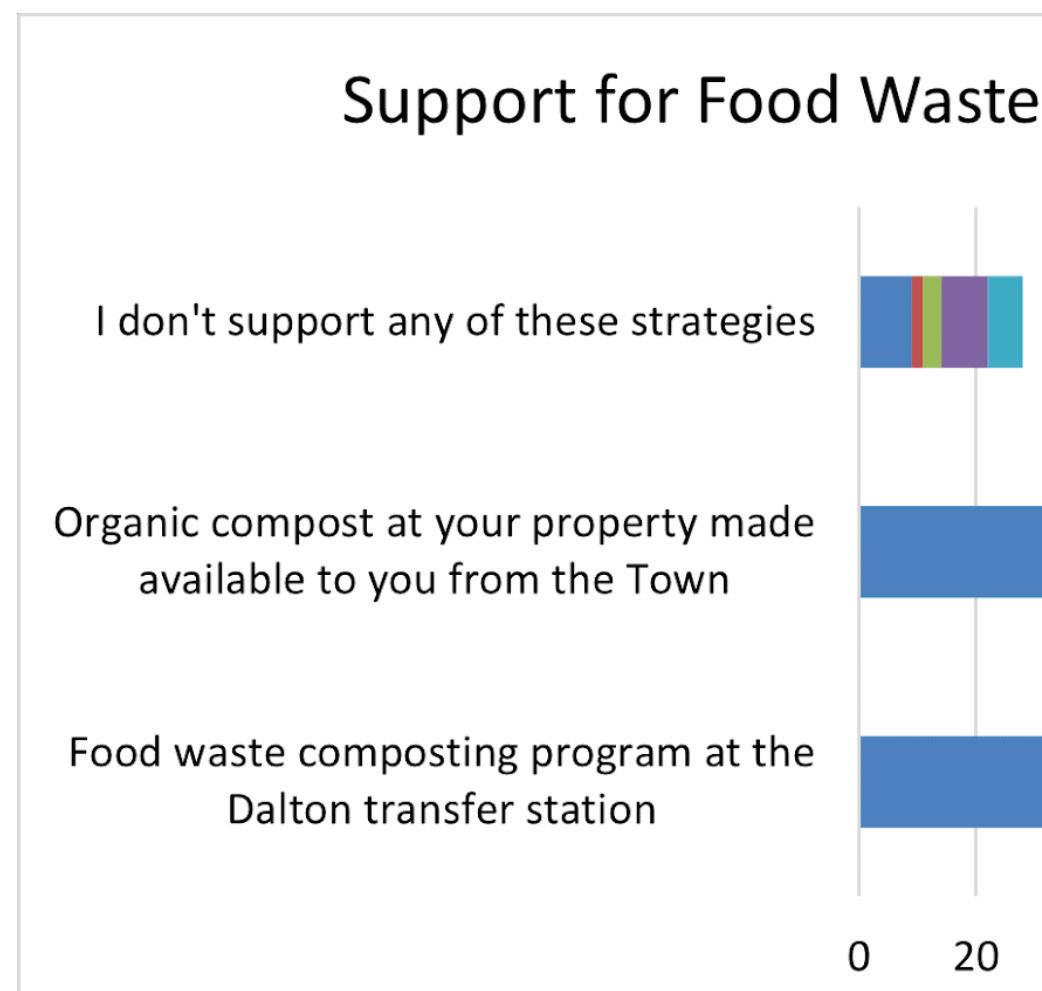

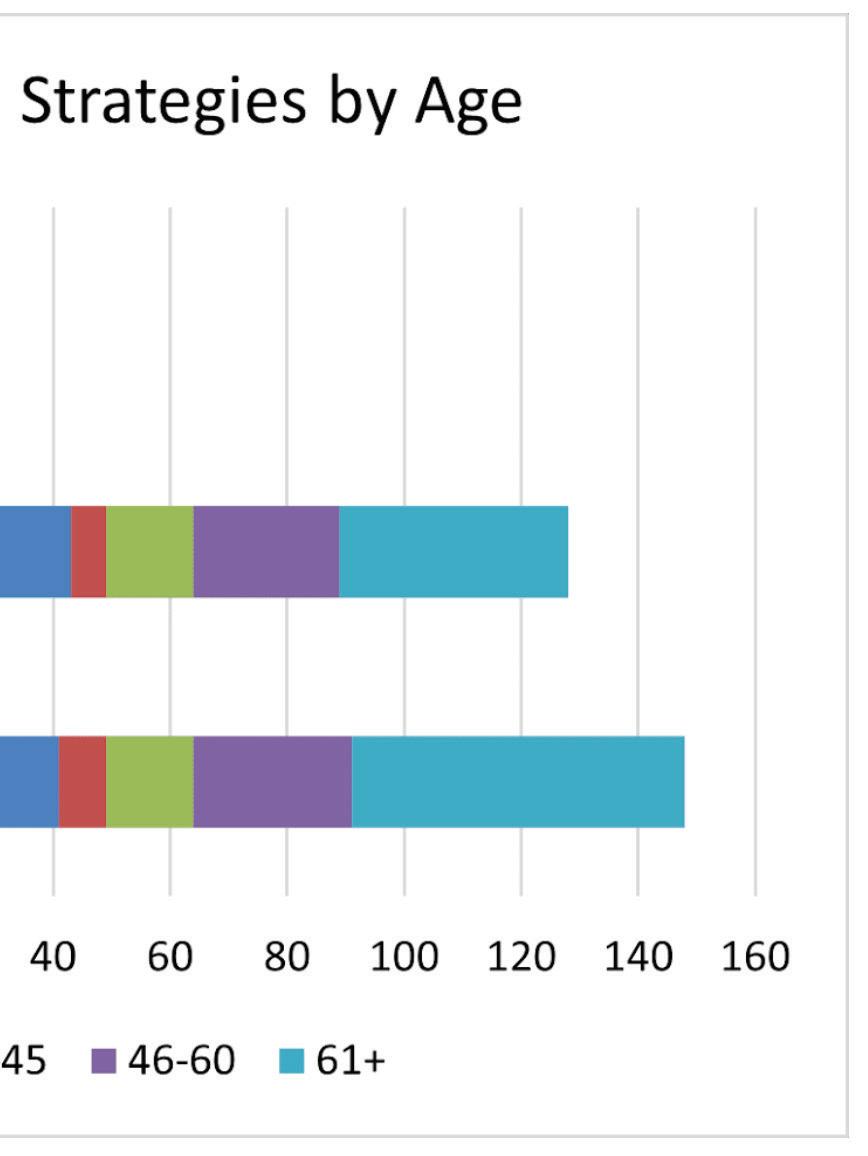
9 PLEASE SELECT THE TYPES OF CLIMATE RESILIENCE AND ADAPTATION STRATEGIES YOU THINK THE TOWN SHOULD FOCUS ON (SELECT ALL THAT APPLY). - SELECTED CHOICE (229 RESPONSES)
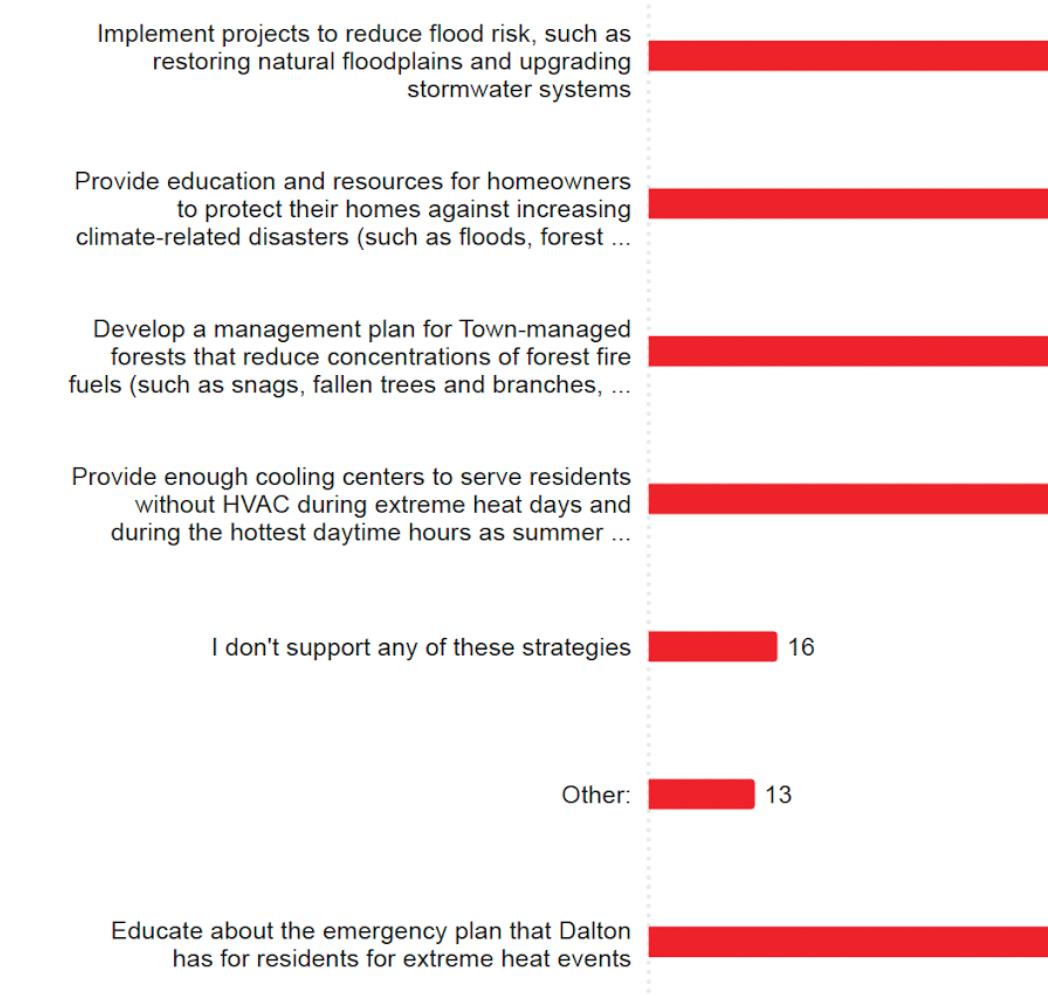

• Plant more trees x4
• Build more
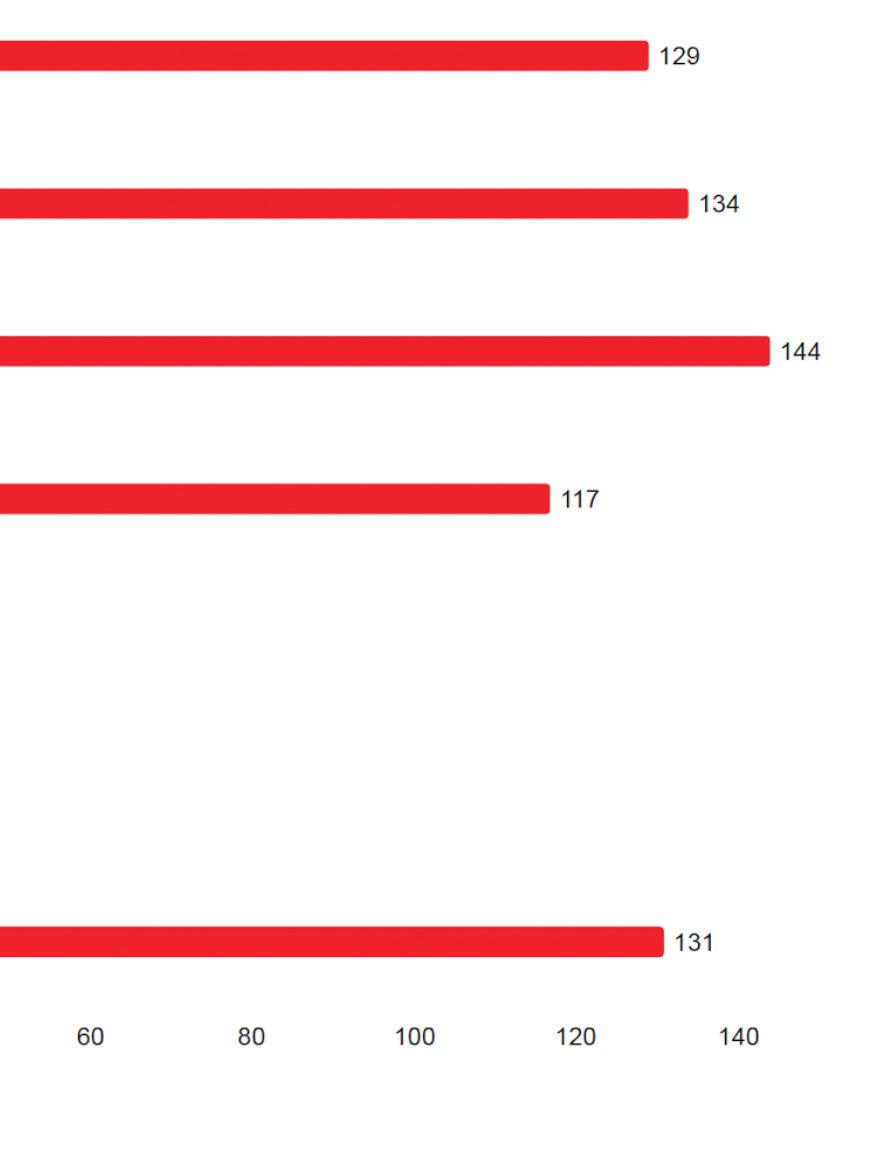
• Plant big trees along the streets. Dalton used to be great at this but now only cuts these beautiful trees down instead of replanting them.
• Restore Pioneer Street access to the town so that there is more than one West travel exit out of Dalton.
• Get grant money or other funding to help low income residents and elderly afford air conditioners or central air.
• The Dalton senior center is one of the only ADA accessible buildings in town that is also a dedicated heating / cooling shelter. It should be noted that the senior center is connected to the towns fiber “ring” the ring is not complete though and a few weeks ago the line was broke and the senior center HVAC units were not able to function. I think this is a serious problem that needs to be addressed by the town.
• Provide incentives for residents to install heat pumps not only for heat in winter but cooling in summer
• Dredge what is called Center Pond from the silt migration from Windsor Reservoir and use the silt for garden use. I don’t see how town compost could ever be considered “organic” since the sources will most likely contain various chemicals
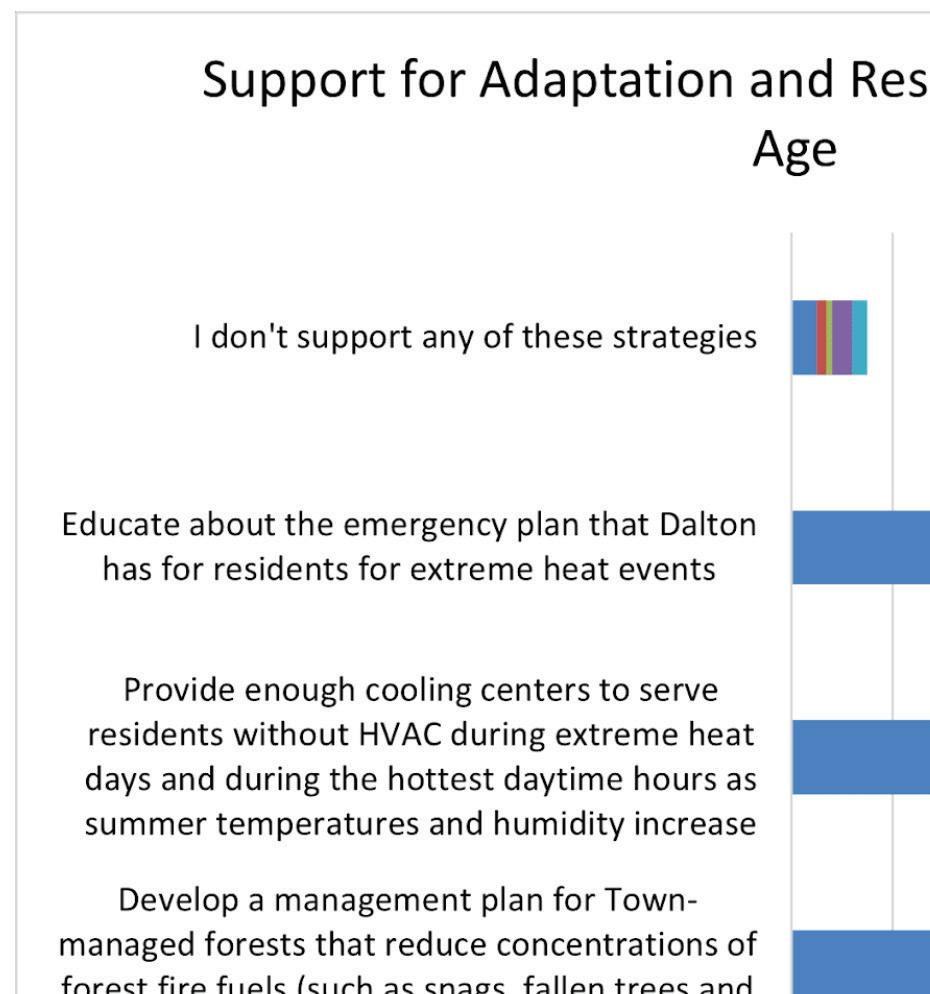
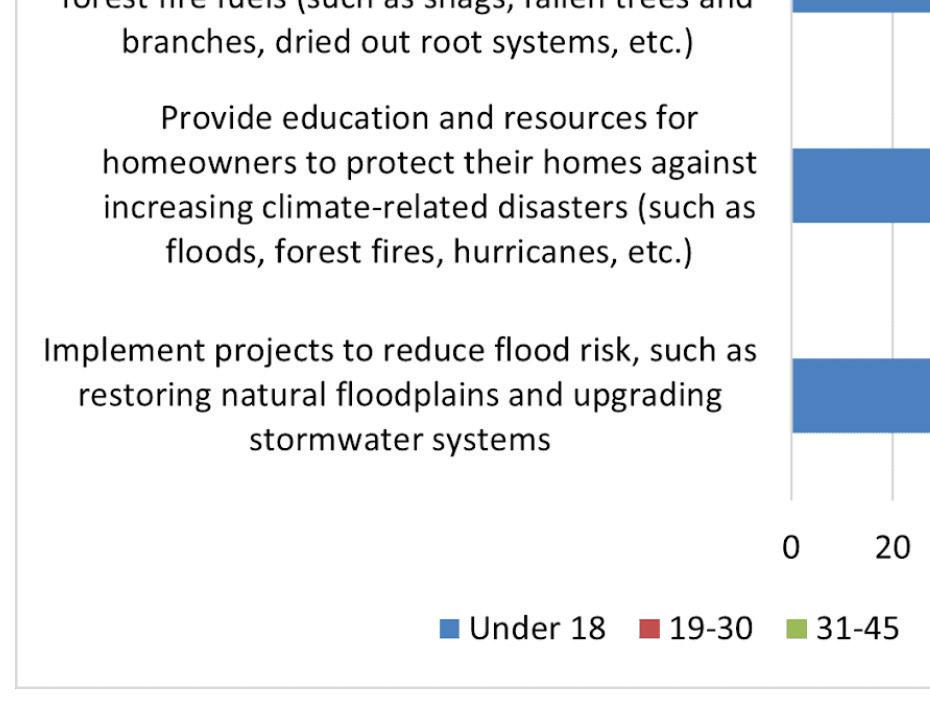
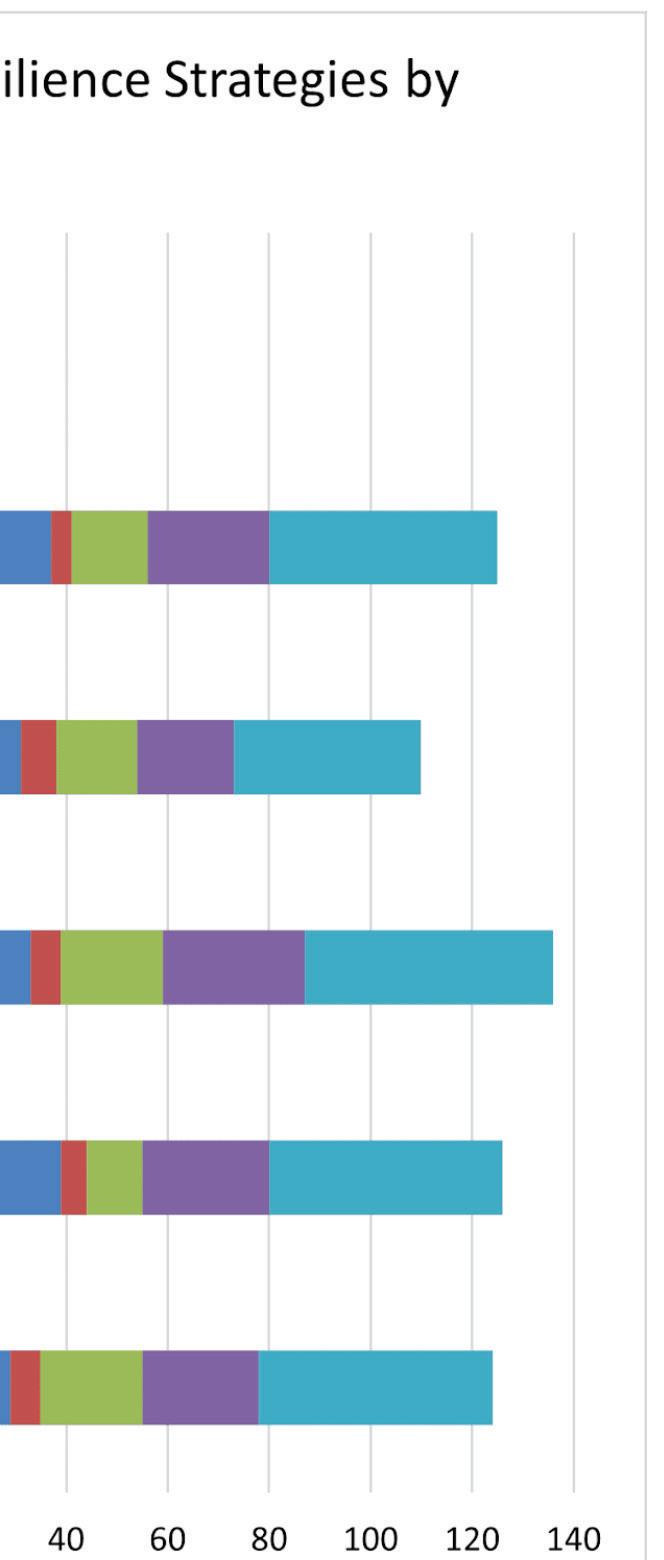
13 ON AVERAGE, HOW MANY MILES DO YOU DRIVE IN A SINGLE WEEKDAY (MON-FRI)? (221 RESPONSES)
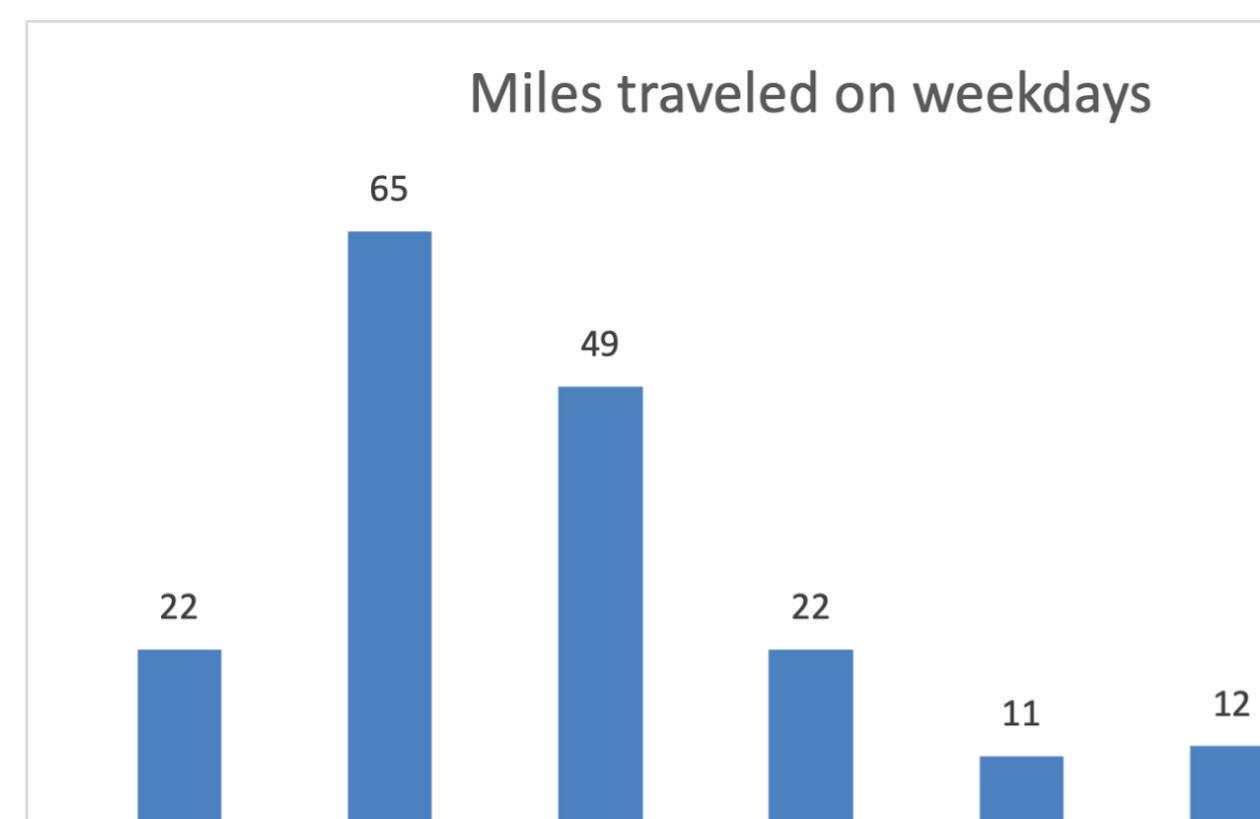

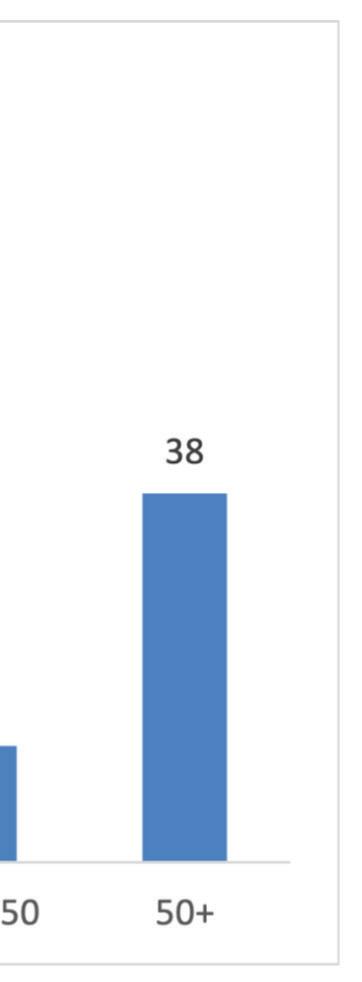
NOTE: For responses where a mileage range was provided, only the top end of the range was included in the data.
14 ON AVERAGE, HOW MANY MILES DO YOU DRIVE IN A SINGLE WEEKEND DAY (SAT-SUN)? (216 RESPONSES)
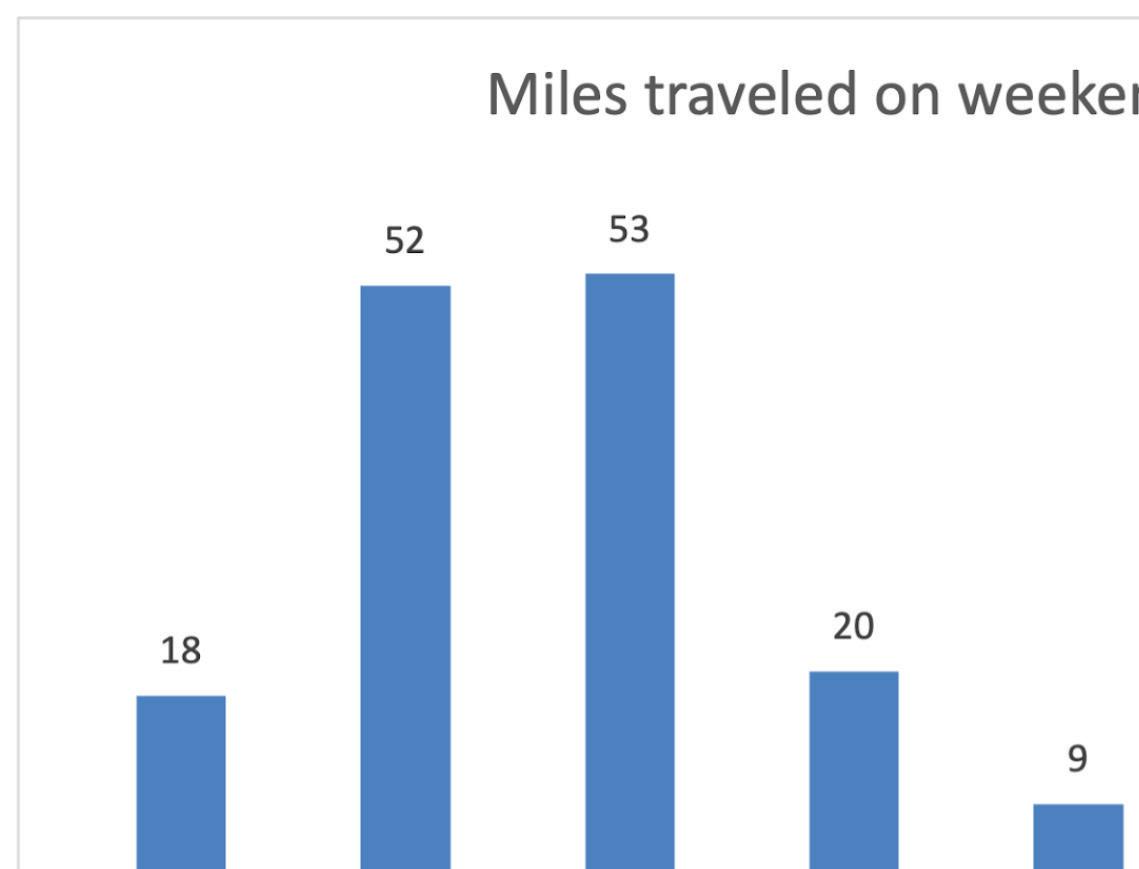

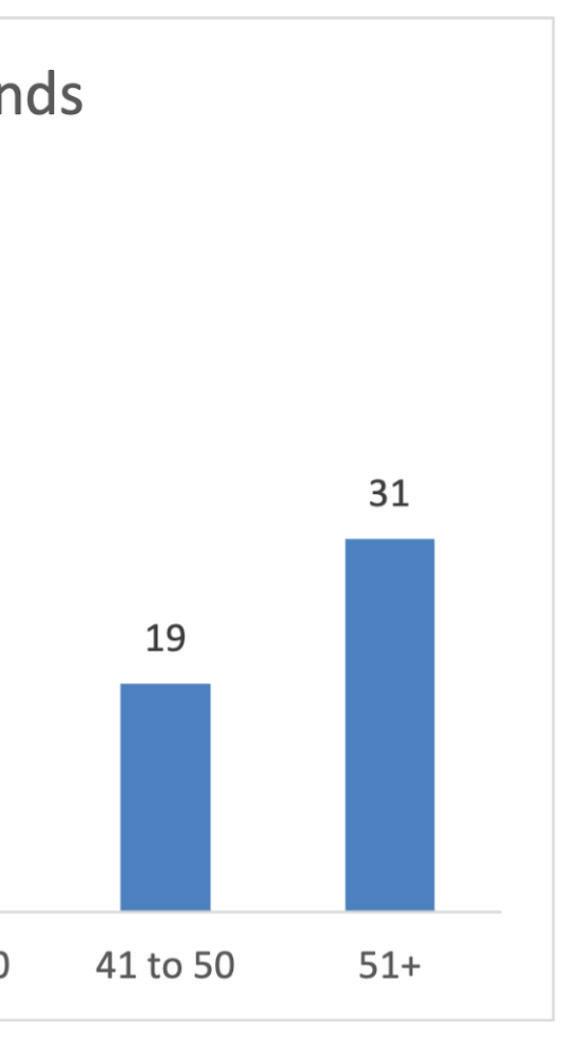
NOTE: For responses where a mileage range was provided, only the top end of the range was included in the data.
15 HOW IS YOUR HOME HEATED? (SELECT ALL THAT APPLY)SELECTED CHOICE (230 RESPONSES)
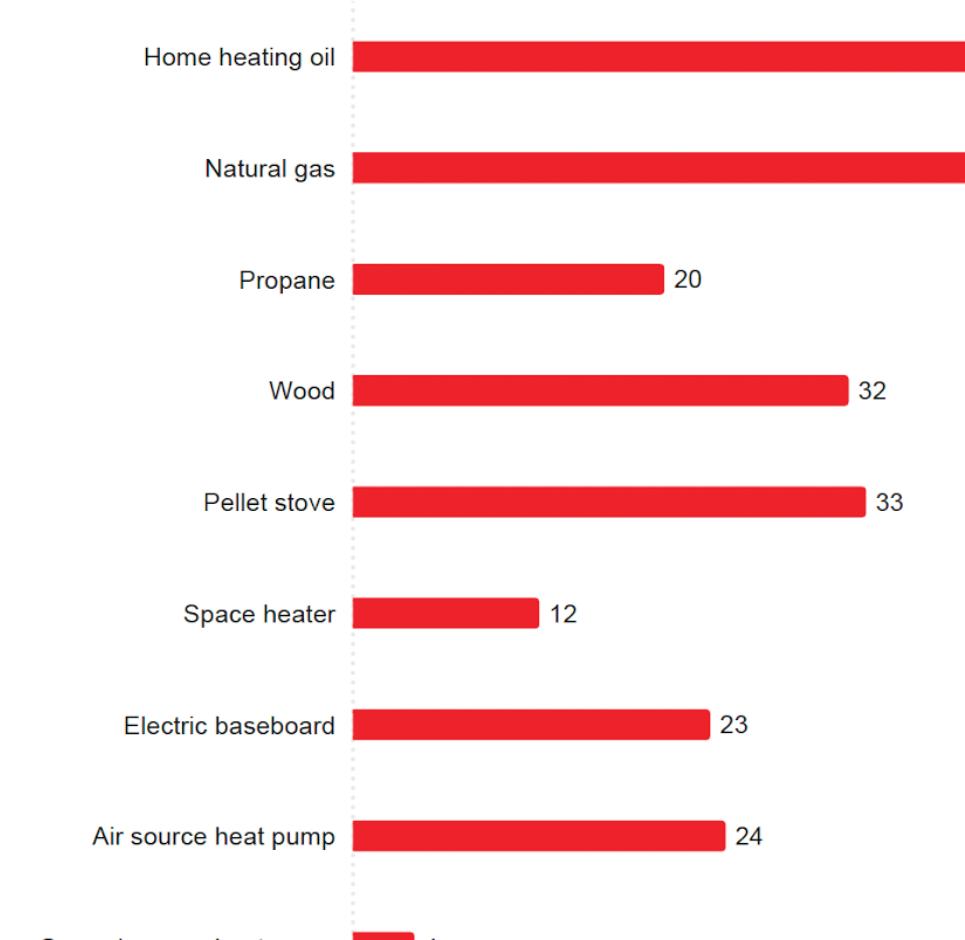
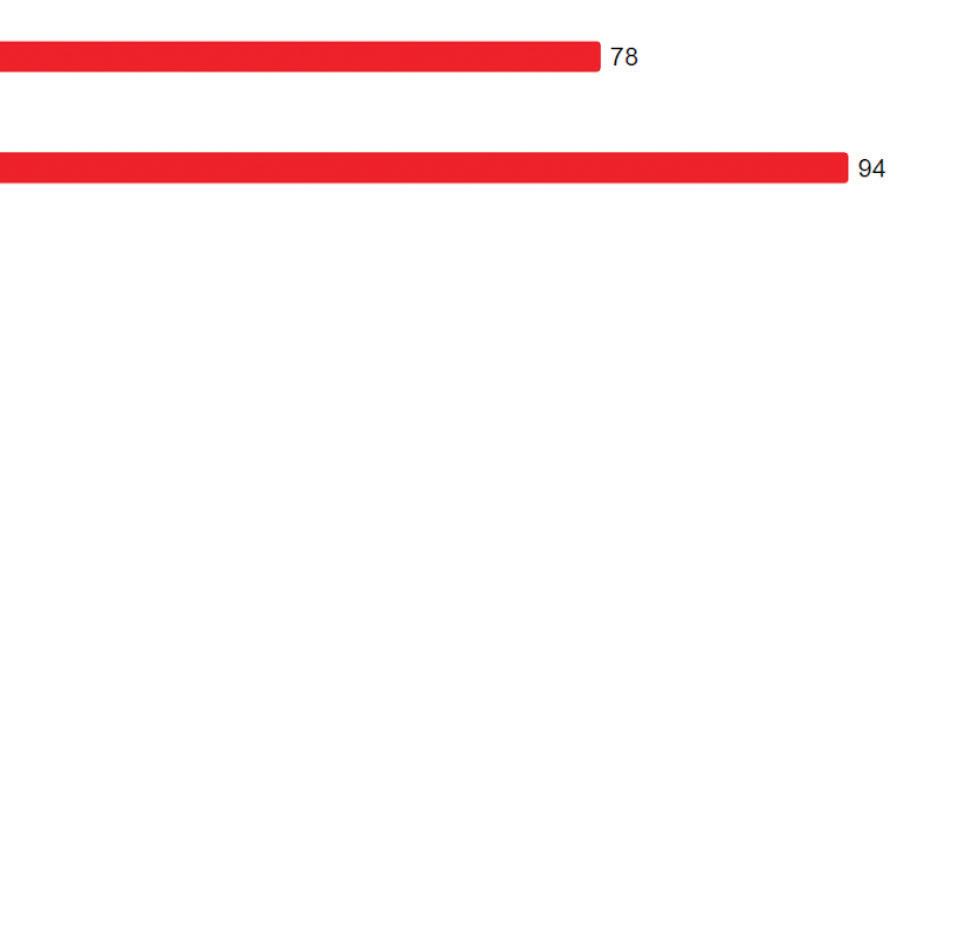

OTHER:
• Wood stove
• Pellet stove
• Passive solar
• Heat pumps and solar array
16 HOW IS YOUR HOME COOLED ON HOT DAYS? (SELECT ALL THAT APPLY) - SELECTED CHOICE
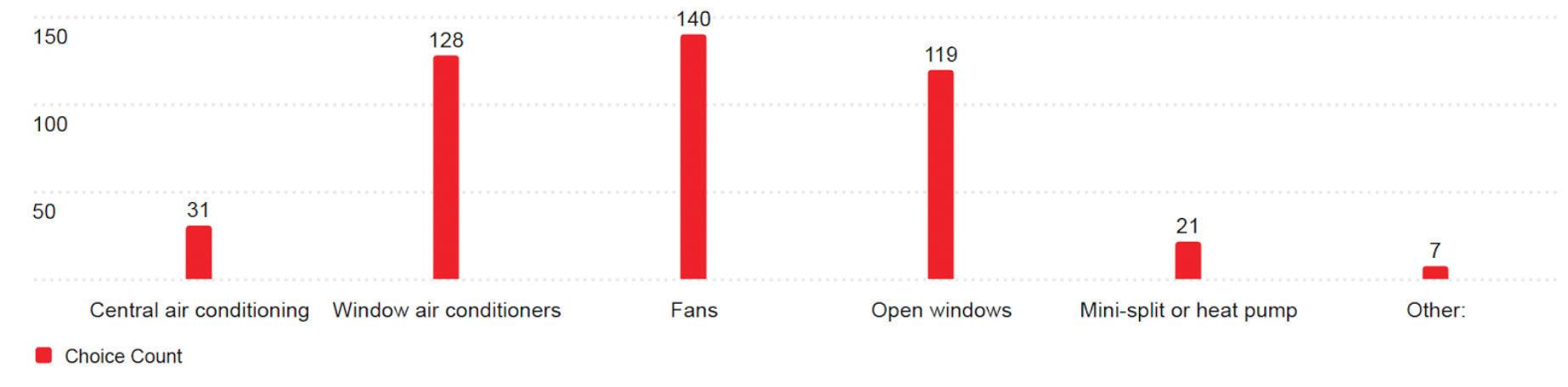
OTHER:
• Closed up window coverings. Blinds,curtains
• Whole house fan drawing upper heat down under house through stones then up through vents
• Heat pump plus solar array
• Dehumidifier keeps my home cool in summer
• My de- humidifier cools my home
• Passive solar designed roof shading of windows in summer
17 WHICH OF THE FOLLOWING STRATEGIES HAVE YOU ALREADY ADOPTED TO IMPROVE ENERGY EFFICIENCY AND/OR REDUCE GREENHOUSE GAS EMISSIONS? (PLEASE SELECT ALL THAT APPLY) - SELECTED CHOICE
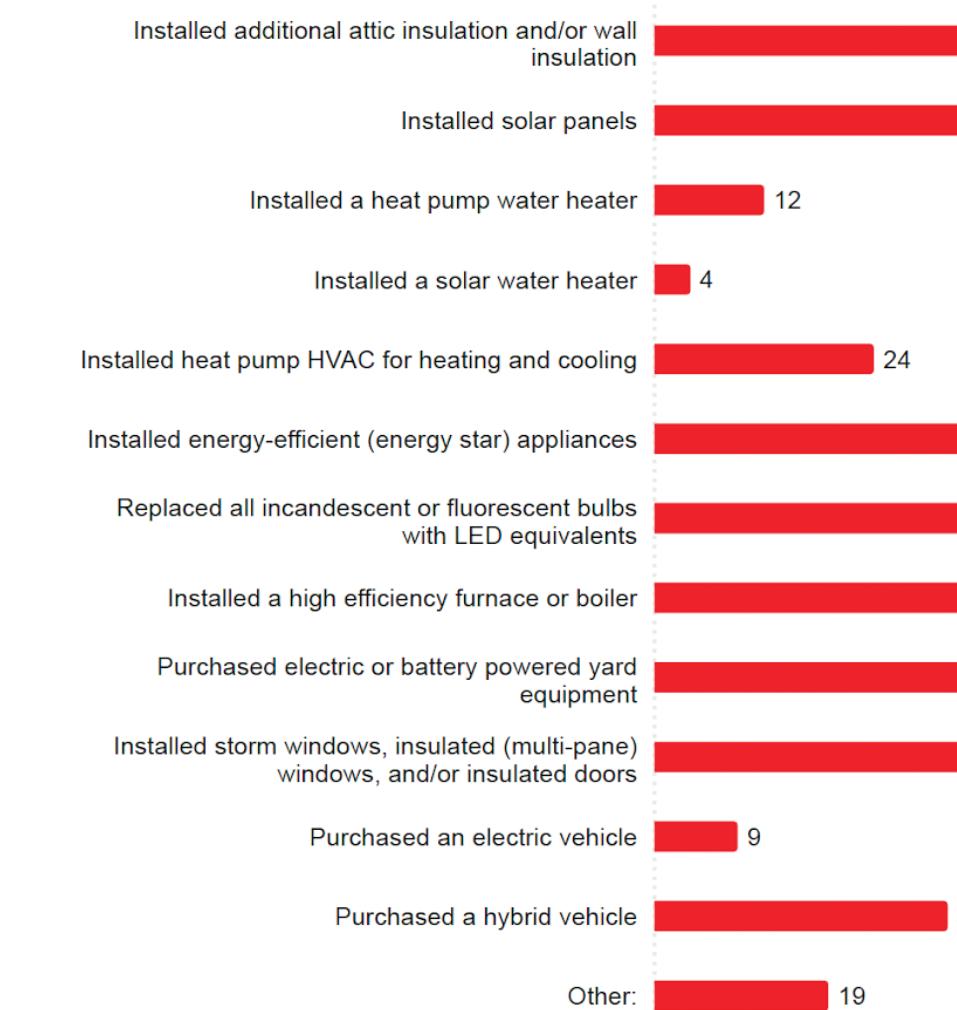
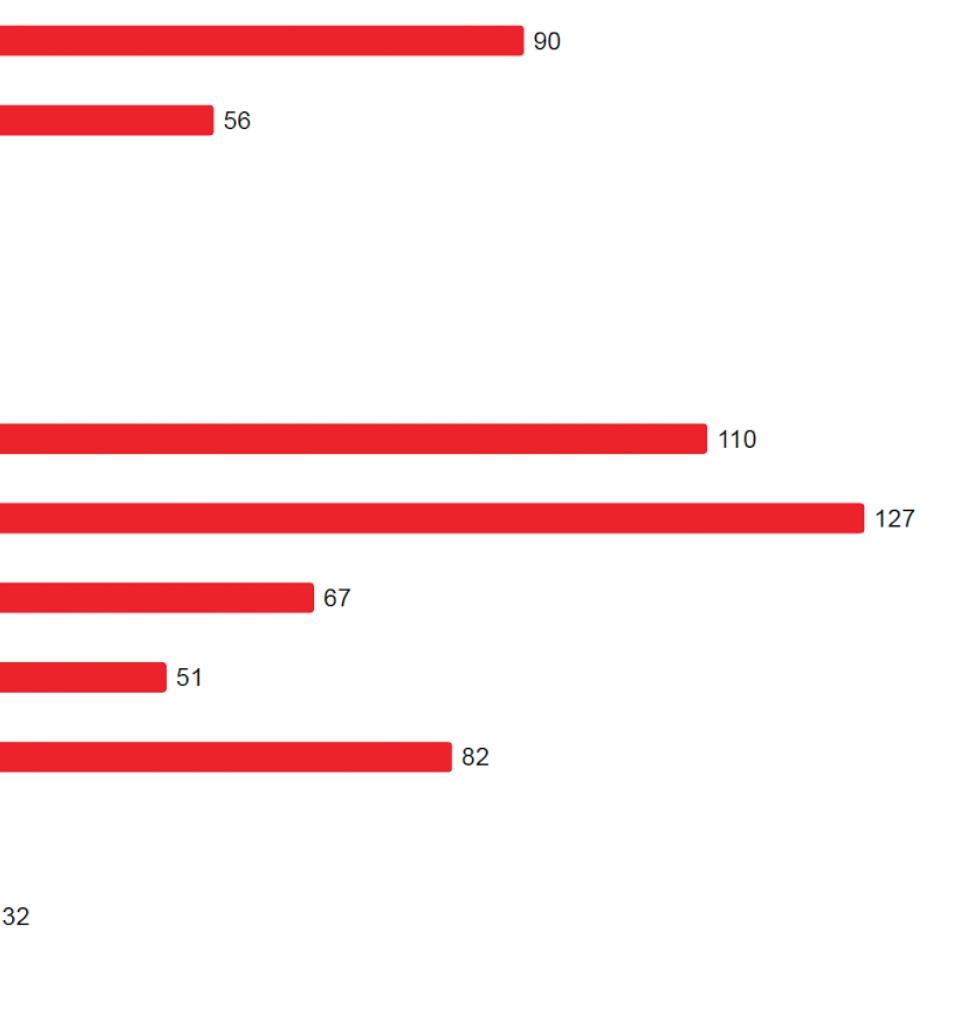
OTHER:
• Closed up window coverings. Blinds,curtains
• Plant more trees x2
• Furnace heats the water
• Planted a garden (organic).
• installed on-demand water heaters
• Composting for 30+ years, used wood from property to build house, use wood from property to help heat, passive solar designed house, organic gardening and forest garden development (American Chestnuts, Black Walnuts, Hazelnuts, currants, fruit trees and bushes, grapes, no till gardening, pollinator gardens....
• Hybrid with plug in
18 HAVE YOU HAD A FREE MASSSAVE ENERGY AUDIT PERFORMED AT YOUR HOME? (244 RESPONSES)
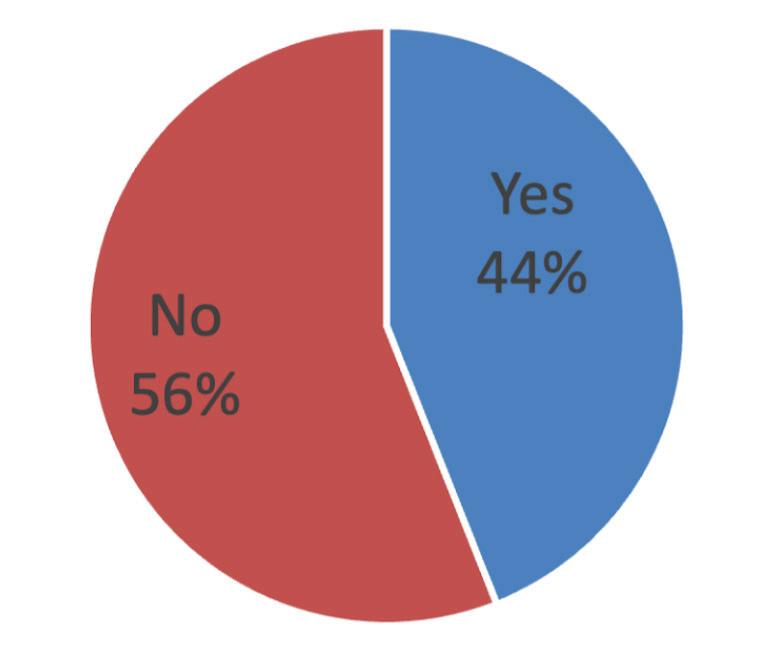
19 WHAT ADDITIONAL TOPICS WOULD YOU LIKE TO LEARN MORE ABOUT?
• How badly this will affect our lives in the future
• How we can conserve wildlife
• How to install solar panels and different renewable energy systems in apartment buildings.
• Plant more trees x3
• How the community wants to help
• Solar panels x2
• Better heating
• Concerns about EV’s: battery operation in sub zero weather; disposition of batteries at cars end-of-life; recharging car during extended power outages.
• Names of solar companies that offer panels that actually save me money. The companies to date want to charge rates on par with the electric company in addition to selling energy back to WMECO.
APPENDIX
C• What steps to take if a long term power outage occur in the area.
• What are the biggest offenders to fossil fuel usage in everyday use that could be easy to substitute?
• Climate change
• Managing carbon. Building an energy consciousness that encourages people
to pay more for products that are sold with excessive packaging and short life cycles.
• Protecting our home from wildfires. How to prepare for emergency evacuation.
• Have asked MassSave for audit, but gotten no response.
• Lower taxes because we pay for everything
to pay more for products that are sold with excessive packaging and short life cycles.
• Protecting our home from wildfires. How to prepare for emergency evacuation.
• Have asked MassSave for audit, but gotten no response.
• Lower taxes because we pay for everything
to pay more for products that are sold with excessive packaging and short life cycles.
APPENDIX
CProtecting our home from wildfires. How to prepare for emergency evacuation.
• Have asked MassSave for audit, but gotten no response.
• What steps are being taken to reduce arboreal disease and fire risk in the woods near our home? What can we do to help?
• Air source heat pump assistance
• Lower taxes because we pay for everything
• How about we start cleaning all the litter and trash plaguing our streets and forests and waterways first?
• What steps are being taken to reduce arboreal disease and fire risk in the woods near our home? What can we do to help?
• Air source heat pump assistance
• I don’t support spending tax dollars for much of this. Daltons property taxes are getting too high for seniors. Agree climate change is a problem, but the more urgent need is ensuring our elderly can continue to live in their homes.
• How about we start cleaning all the litter and trash plaguing our streets and forests and waterways first?
• I don’t support spending tax dollars for much of this. Daltons property taxes are getting too high for seniors. Agree climate change is a problem, but the more urgent need is ensuring our elderly can continue to live in their homes.
• Hybrid/electric vehicles. Commercial credits for going green for business. Commercial credits for businesses for new buildings and expansions. We need not to drive green down everyones throats, but they need to educate and promote to allow people to absorb it and not mandate. Everyone cares about the environment but hate to be forced to do something and change is hard. We have to be mindfull
• More community education about why a CAP is necessary
• Add question related to saving money on energy bill. How aware are you of local/state/federal incentives/rebates for energy for your home/car/business? Have you benefitted from using X # of programs? [gather number of programs people have benefitted from using]
• Reducing impervious surfaces (asphalt, concrete)
• Would like to see examples of best practices for communities in MA that have successfully transitioned to renewable energy. Check out Herington, MA. All municipal buildings are powered by solar arrays. How did this transition take place? How much did it cost? How much money is the town saving? Who was in charge of the transition process?
• Would like to see examples of best practices for communities in MA that have successfully transitioned to renewable energy. Check out Herington, MA. All municipal buildings are powered by solar arrays. How did this transition take place? How much did it cost? How much money is the town saving? Who was in charge of the transition process?
• Composting, carpooling, reforestation, animal migration, travel around county. Water testing- more info regarding taking out metals. Solar panels are popping up in Dalton forests- taking down tree and wiping out wildlife communities- bad! Just stop using so much energy! Take a break- slow down- live more simply :)
• Hydrogen vehicles
• Rebates for home heat conversion system
• Composting, carpooling, reforestation, animal migration, travel around county. Water testing- more info regarding taking out metals. Solar panels are popping up in Dalton forests- taking down tree and wiping out wildlife communities- bad! Just stop using so much energy! Take a break- slow down- live more simply :)
• Hydrogen vehicles
Hardcopy/Paper entry: 51
• Rebates for home heat conversion system
Of the 250 total surveys completed, 199 were completed digitally while 51 were completed by hand. The 51 surveys done by hand were entered into the system by a member of the Green Dalton Committee or Blue Strike team.