




Redwood
Sycamore
Sycamore Redwood

As members of Sonoma State University’s (SSU) President’s Sustainability Advisory Council (PSAC), it is our honor to lead SSU’s vision to build a more sustainable and resilient community on campus and beyond. In April 2020, President Judy Sakaki became the first SSU President to join the Presidents’ Climate Leadership Council, committing the campus to developing and implementing a Climate Action Plan (CAP). The PSAC was charged with fulfilling the obligations of the commitment, and commissioned this inaugural Climate Action Plan to set SSU on a path towards carbon neutrality, community resilience and academic experiences that train students to excel and contribute to the healing of a changing world
Under the visionary leadership of Sonoma State University (SSU), President Judy Sakaki, SSU joined the University Presidents’ Climate Commitment on April 5, 2019. Her signature set in motion a series of efforts to address climate change impacts affecting our education and research mission and placing our students, employees and communities at risk.
The SSU Climate Action Plan, scheduled for completion in May 2022, will lay out a path with concrete, measurable actions needed to: (1) reduce our carbon emissions, (2) increase resilience to climate disruption, and (3) prepare our students for careers in a changing world. We hope to inspire every SSU student to apply what they learn while at SSU to contribute to a just and sustainable future.
SSU’s resulting Climate Action Plan is an actionable and transparent roadmap for achieving a series of ambitious but urgent sustainability and resilience goals. The ideas come from students, staff, faculty, partnering organizations and community members engaged in a multi-year planning effort. The plan summarizes this input into a suite of fully-integrated strategies and actions needed to achieve sustainability goals and that create exceptional learning experiences for our students as they help campus and community bring about meaningful change.
This document, the Carbon Neutrality Roadmap (CNR), is an integral part of the Climate Action Plan. It establishes a path to carbon neutrality by 2043 and will be appended in its entirety to the Climate Action Plan.
Under the visionary leadership of Sonoma State University (SSU), SSU joined the University Presidents’ Climate Commitment on set in motion a series of efforts to address climate change impacts and research mission and placing our students, employees and
In the coming months, we will be working with stakeholders to synthesize ideas, strategies, and approaches that integrate the carbon neutrality goals with resilience and academic planning to create a concise and effective Climate Action Plan.
The goals of this Climate Action Plan can only be achieved by a collaborative community that crosses jurisdictional and disciplinary boundaries to find solutions and promote change. Our success as a community is dependent on our inclusivity; it is only when all voices are heard that we will find the viable solutions we seek.
We have the tools, creativity, and willpower to change our trajectory. Let’s get to work!!
The SSU Climate Action Plan, scheduled for completion in May with concrete, measurable actions needed to: (1) reduce our carbon increase resilience to climate disruption, and (3) prepare our students changing world. We hope to inspire every SSU student to apply SSU to contribute to a just and sustainable future.
The PSAC commits to serving as SSU’s guiding body to ensure that the Climate Action Plan follows the funding and implementation schedule outlined in the following pages, and to coordinate our activities with the CSU Office of the Chancellor on policy reform, budgetary needs and CSU-wide sustainability commitments.
This document, the Carbon Neutrality Roadmap (CNR), is an integral Action Plan. It establishes a path to carbon neutrality by 2043 entirety to the Climate Action Plan.
In the coming months, we will be working with stakeholders to strategies, and approaches that integrate the carbon neutrality academic planning to create a concise and effective Climate Action
Megan Varnadore Director of Resiliency and Sustainability Operations
We know that time is short and commit wholeheartedly to the actions identified in this Climate Action Plan. These are ambitious goals that we need to get underway as soon as possible. By taking strong and immediate action today, we can leave a legacy of a sustainable, healthy, equitable planet for future generations.
We have the tools, creativity, and willpower to change our trajectory.
Sincerely,

Claudia
Luke,
PhD Sustainability Programs Director
Claudia Luke, PhD Sustainability Programs Director


Megan Varnadore Director of Resiliency and Sustainability Operations
Megan Varnadore Director of Resiliency and Sustainability
This CAP is a product of a three-year collaboration between technical experts, community members, students, faculty, staff, government agencies, environmental justice advocates, and many others who offered their time, expertise, and passion to plan for a thriving future.
The CAP builds on decades of work from students, faculty and staff who devoted exceptional effort and expertise to laying the foundation for this CAP. Their efforts include establishing working groups and committees (including the earlier Sustainability Executive Committee), sustainability-related centers, green infrastructure, and sustainability and environmental Inquiry as a strategic plan core value. Strategies and goals presented in this plan include ideas compiled from the 2017 sustainability and diversity World Cafes hosted during the SSU strategic planning process.
We acknowledge that the SSU campus and three preserves are on the traditional territory and homelands of Southern Pomo, Coast Miwok and Wappo People who have stewarded the land for generations. With this acknowledgement, we commit ourselves as a campus community to being allies to Native people and to the beings who inhabit this land.
The North Bay Forward “Building Resilience” Lunch Series, led by the Center for Environmental Inquiry, Regional Climate Protection Authority, and the PSAC Regional Resilience Working Group, engaged organizations and the public in conversations with SSU administrators and faculty to identify opportunities for campuscommunity collaborations. Participating organizations and departments included:
F.E.E.D. Cooperative
Sonoma County Transportation Authority
Sonoma County Resource Conservation District
Sonoma Clean Power
Sonoma County Economic Development Board
Latino Service Providers
Sonoma Water
County of Sonoma, Human Services Department
Zero Waste Sonoma
Permit Sonoma
City of Rohnert Park
UC Cooperative Extension
Providence Sonoma County
Community Urgent Response & Aid
Petaluma Wetlands Alliance
PRESIDENT’S SUSTAINABILITY
ADVISORY COUNCIL
PROVOST’S OFFICE
Claudia Luke
Merith Weisman
Mark Perri
PRESIDENT’S OFFICE
Julia Gonzales
ADVANCEMENT
Kirsten Tellez
ADMINISTRATION & FINANCE
Kindra Kautz
Jen Barnett
Nancy Keller
Megan Varnadore
Tyson Hill
Cody Smith
ACADEMIC SENATE
Mary Gomes
Justine Law
Adele Santana
Nadiya Parekh
ASSOCIATED STUDENTS
Madison Hayes
Molly Clemmons
Claudia Mayo
GREEN MUSIC CENTER
Madison Annala
STAFF COUNCIL
Barbara Frohlech
STUDENT AFFAIRS
Mike Dominguez
Annie Greaney
Marina Briones
ADDITIONAL CAMPUS CONTRIBUTORS
Kristi Marian
Kerry Wininger
Dana Twedell
David Chun
Alicia Hodenfield
Kimberly Kaido-Alvarez
Kevin Fang
Damien Wilson
Sandy Destiny
Andy Shepherd
Omyra Ortega
Karen G. Schneider
Rob Cunningham
Travis Wagner
Janet Hess
John Lynch
Audra Grady Verrier
Giovanni Mejia
Amanda McGowan
Zeke Baker
Neil Markley
CONSULTANTS
EcoShift Consulting
Optony
Glumac
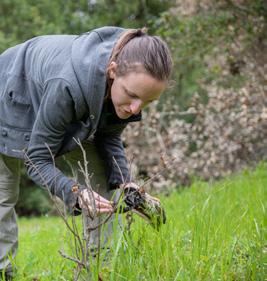
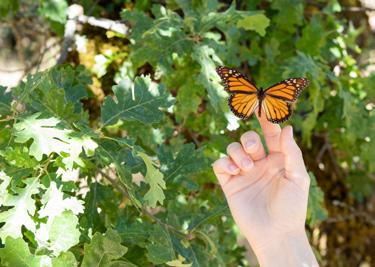
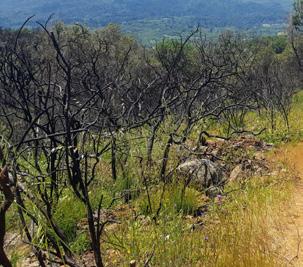
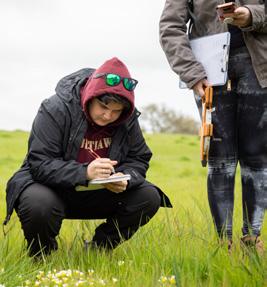
As our lives continue to be impacted by widespread changes in the earth’s climate, it is more important than ever to authentically build sustainability and resilience into everything we do - from the way that we operate our campus to the learning experiences we provide for our students. We are at a crossroads where we need to dramatically and authentically align our everyday actions with our desire for a healthy and productive future on this planet. With this inaugural CAP, SSU identifies the goals, strategies, and actions needed to make significant progress toward reducing our impact on the earth and boosting the knowledge and skills needed to find and implement creative solutions.
As an institution of higher education, we have the opportunity to develop new approaches that better prepare students across disciplines for success in a changing world. Climate change can no longer be perceived only as the realm of science and technology, but rather must be addressed by professionals across all sectors of society: business and economics, social sciences, education, and arts and humanities. Providing a liberal arts and science education is no longer complete without a strong background in climate change knowledge and skills.
SSU is a liberal arts and sciences university and Hispanic Serving Institution in Sonoma County that offers degrees in 46 bachelor’s and 15 master’s degree programs within six schools: Arts & Humanities, Business & Economics, Education, Extended & International Education, Science & Technology and Social Sciences. The campus was ranked in 2021 by US News and World Report as 14th among top public schools in the U.S. and 48th among top performers on social mobility.
CONTINUED
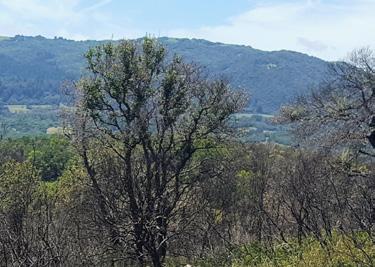
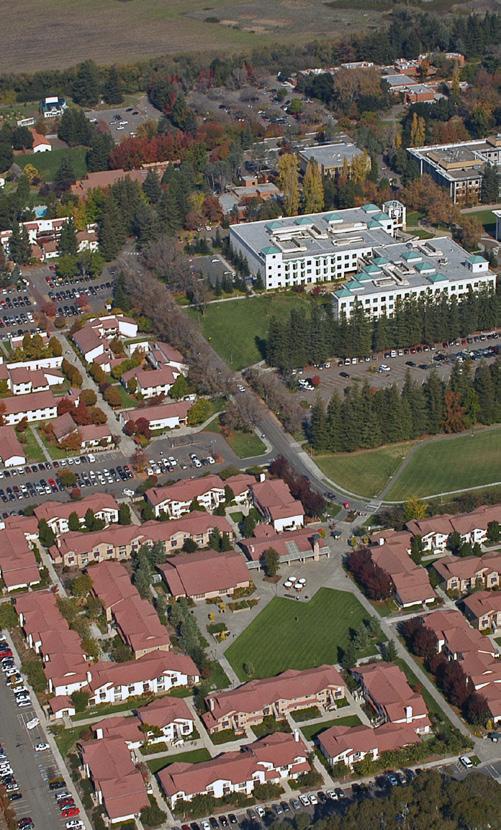
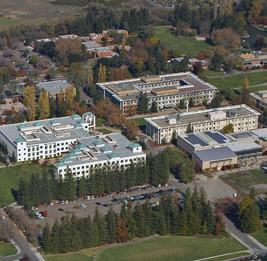
The campus lies in the City of Rohnert Park along Copeland Creek in the Russian River Watershed. Its eastern boundary lies at the wildland-urban interface at the foot of Sonoma Mountain. The 269-acre campus is one of the most residential campuses in the California State University system, with 34 percent of the 8,500 students living on campus. Notable facilities include the Wine Business Learning Center, the Cerent Engineering Science Laboratories, the Green Music Center, and the Schulz Information Center which houses one of the largest libraries in the state of California. Innovative sustainable construction and green infrastructure include the Environmental Technology Center and 4,200-acres of natural lands at three preserves. The campus is sometimes referred to as “Sonoma County’s 10th city” due to its economic and cultural influence.
As the only 4-year university in the North Bay, we realize that higher education has an important role to play in catalyzing the creativity, innovation, and collaboration needed to ensure a thriving future. This document lays the foundational framework for decades of action needed to make this vision a reality. As a campus, we have a strong desire to succeed but also a recognition of the reality of the challenges ahead. Implementation must be flexible if we are to face significant financial and logistic barriers and take advantage of opportunities as they arise.
According to the most recent report from the Intergovernmental Panel on Climate Change (IPCC), the Earth has warmed 1.09°C since 1850 and many changes such as sea-level rise and glacier and arctic ice melt are now irreversible. Global temperatures are likely to increase to a total of 1.5°C by the mid-2040s which will further stress our environmental systems and, at a local level, will result in more frequent and intense heatwaves, winter floods, drought, wildfire, and air pollution. As a global community, we are rushing to find ways to mitigate the worst of what is to come. As a
local community, we are seeking ways to thrive despite the disruptions to our lives and well-being.
These impacts will not be felt equally. Some of us are more vulnerable to climate events because we lack the physical or mental ability to adapt to changing conditions. Isolated individuals have a more difficult time receiving warnings and emergency services and may depend on sources of food, water, and energy that are more subject to interruption. People without adequate financial resources may not be able to afford the rising
costs of utilities, be more likely to lack sufficient health insurance, and have more restricted access to transportation and evacuation during emergencies. Outdoor workers have greater physical exposure to high temperatures and poor air quality. Language ability, citizenship status, or issues surrounding racism can increase social isolation, elevate barriers to using emergency or health services, decrease participation in planning and preparation, and slow responses to evacuation warnings.
Resilience to Environmental Threats
An extensive and exceptional body of work has been produced over the last decade by non-profits, agencies, and governments in Sonoma County, the San Francisco Bay Area, the State of California, and beyond. The seminal work of North Bay Climate Adaptation Initiative’s “A Roadmap for Climate Resilience in Sonoma County” received White House recognition for excellence in climate planning and includes a detailed summary of climate projections for the County. This detailed summary informed SSU’s Resilience Assessment, Appendix B, offering a snapshot of what the Climate Action Plan is designed to tackle.
Drought: Sonoma County will experience longer and more frequent droughts. Climate models predict that climatic water deficit (CWD), a measure of drought stress, will increase significantly, with some models predicting increases as much as 411% by mid-century. The greatest deficits are projected for the south and southeastern portions of the county.
Extreme Heat: By mid-century, Sonoma County will experience more “very hot days” (above 93 F) and generally higher temperatures over a longer warm season. Days on which the high temperature exceeds 93°F (considered an extreme event) on the Santa Rosa plain are projected to increase from 39 per year to 148 per year by the end of the century. Average high temperatures and low temperatures overall will also increase.
Rainfall / Flooding: Rainfall will likely be more intense during a shorter period of time resulting in more frequent and severe floods. Climate scenarios predict 19-25% increases in average annual rainfall falling during a shorter rainy season.
Extreme Winds and Wildfire: Diablo winds, hurricane-like warm winds that move from the Great Basin into California’s coastal range, are anticipated to increase in frequency. As a consequence, large wildfires will likely continue to be more common and occur over a longer fire season. By the end of this century, chances of wildfire are projected to increase to 25–33% in the mountainous areas of the county.
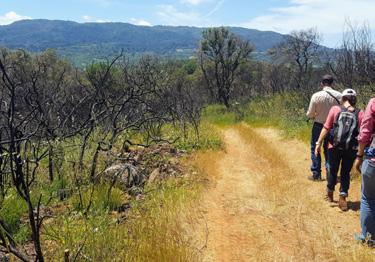
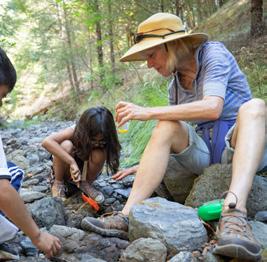
In April 2020, SSU joined the Presidents’ Climate Leadership Council (PCLC), committing the campus to develop and implement a Climate Action Plan (CAP). To meet the obligations of the PCLC, SSU established the President’s Sustainability Advisory Council (PSAC), a formal governance structure needed to develop and implement a comprehensive list of sustainability and resilience goals, strategies, and actions. The PSAC gathered information from previous campus-wide sustainability planning efforts and hosted 8 public workshops exploring opportunities for collaboration on regional sustainability initiatives. The information was compiled and goals, strategies, and actions and broadcast to students, faculty, staff, and community members for comment.
We have made a concerted effort in this CAP to fully integrate opportunities for high-impact educational experiences as we implement projects and programs needed for carbon neutrality and regional resilience. Woven throughout is the vision of personal resilience, diversity, equity, and inclusion. No solution will be lasting if it does not ensure that every student, staff, and faculty member feels safe and supported, both mentally and physically, and forms personal meaningful connections with local landscapes.
A key goal of the CAP was alignment with best practice guidelines, policies, and goals at local, state, national, and international levels. In 2018, the California governor Jerry Brown signed Senate Bill 100, committing
California to 100 percent use of zero-carbon electricity by 2045, and encouraged cities and counties to consider greenhouse gas (GHG) emission reduction targets of at least 40% from 1990 levels by 2030 and 80% from 1990 levels by 2050. Executive order B-55-18 signed the same day committed California to total, economy-wide carbon neutrality by 2045. The CSU took the executive order as a call to action and called for carbon neutrality of all campuses by 2045. Currently, CSU’s early action goal is an 80% reduction from 1990 emissions levels by 2040.
In 2014, the California State University Office of the Chancellor passed CSU’s Sustainability policy. This policy offers guiding principles for uniting all 23 campuses under a sustainability framework centered
around all facets of the CSU, including academics, facilities operations, the built environment, and student life. Focus areas include integrating sustainability principles into strategic plans, collaborating to improve student learning and promote workforce preparation, increasing opportunities for directed research, and creating best practices to facilitate broader adoption of climate goals and partnerships with communities.
At a national level, this CAP meets the obligations of Second Nature’s Presidents’ Climate Leadership Commitment, a platform for higher education institutions to align efforts around carbon neutrality and resilience. Great strides have been made across the CSU system to institutionalize sustainability as a planning commitment using this platform. Similarly, SSU’s planning
process aligns with the United Nations’ Sustainable Development Goals, international benchmarks addressing local climate solutions.
At a local level, the CAP is aligned with campus and county initiatives. The CAP was developed in alignment with SSU’s core values identified in the campus Strategic Plan 2025 These values, integral to the SSU mission, are woven as a central focus throughout the planning process which prioritized ongoing stakeholder feedback from students, staff, and faculty. Regional resilience planning efforts also highlighted the opportunities for joint action and compliance with local county initiatives, such as Zero Waste Sonoma. Potential partnerships identified as part of this process have been folded into the planning process to strengthen the implementation and reporting of these mandates.
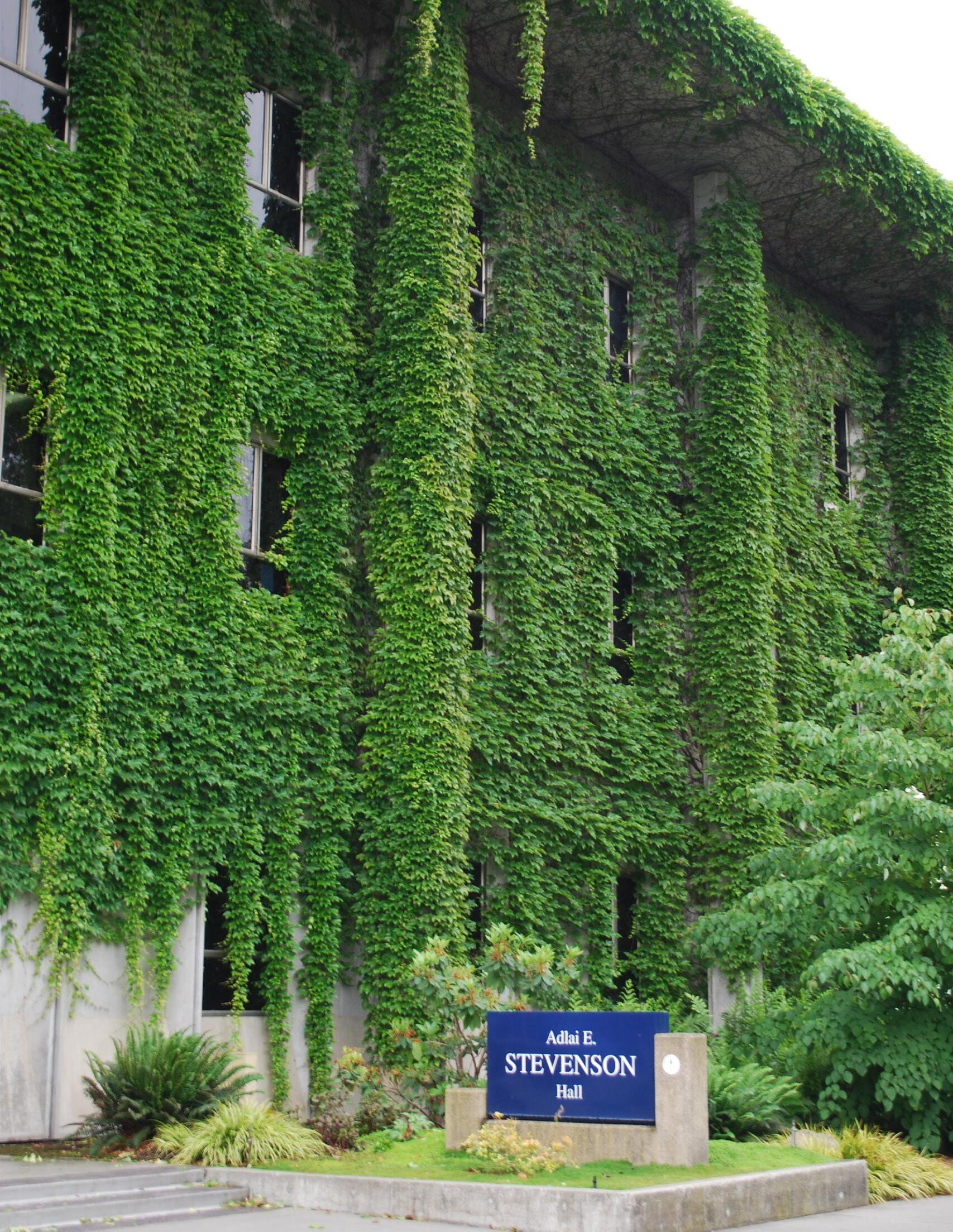
Development of the CAP began with an assessment of existing conditions. In 2016, the campus began benchmarking progress using the Sustainability Tracking and Reporting System (STARS), a common framework used across universities in the United States.
Over three years, SSU has been able to achieve a silver rating. Some of the highlights are listed below.

› 11.9% of energy supplied by clean and renewable sources
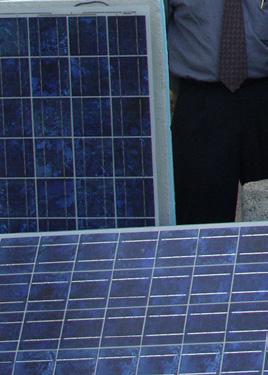
› 161 kW of solar photovoltaics installed on campus
› 22% decrease in emissions per person since 2017
› Tie into domestic city water systems as a backup for existing campus well and reclaimed water supplies during emergencies
› Upgrade vulnerable/failing water lines and valves
› 12% of dining and 100% of retail establishments offer vegan options
› 100% of coffee pods are reusable
› Campus has put a ban on single use plastic
GROUNDS AND PRESERVES
› 0% use of RoundUp™ herbicide
› 45% reduction in chemical inventory
› 80% of all the eucalyptus (invasive species) have been removed for fire safety
› 4,160 acres at three preserve for use as outdoor classrooms
› 26 personal vehicles and 198,400 lbs of CO removed through Car Share program
› 37,355 kg GHG emissions avoided through EV charging
› 1026 responses to 2021 Transportation survey
› Compost bins installed at campus housing
› 4,335 pieces of paper avoided by using electronic system
› 52% of solid waste is diverted from the landfill annually
› 54% (average reduction in bathroom water use from low-flow toilet upgrades)
› 20% (average reduced water usage from low-flow showerhead upgrades)
› 32% (average reduced water usage from water-saving faucet upgrades)
We augmented STARS reporting with a thorough assessment of campus carbon emissions to document baseline conditions. Carbon emissions at SSU have been in decline since 2019, largely due to COVID-related lock downs and campus policies related to the pandemic. This comes after a slight uptick in emissions between 2018 and 2019. The overall emission totals have fallen from about 18,000 metric tons of carbon emissions (MTCO2e) in 2019 (when the campus was at full operations for the entire year), to about 13,500
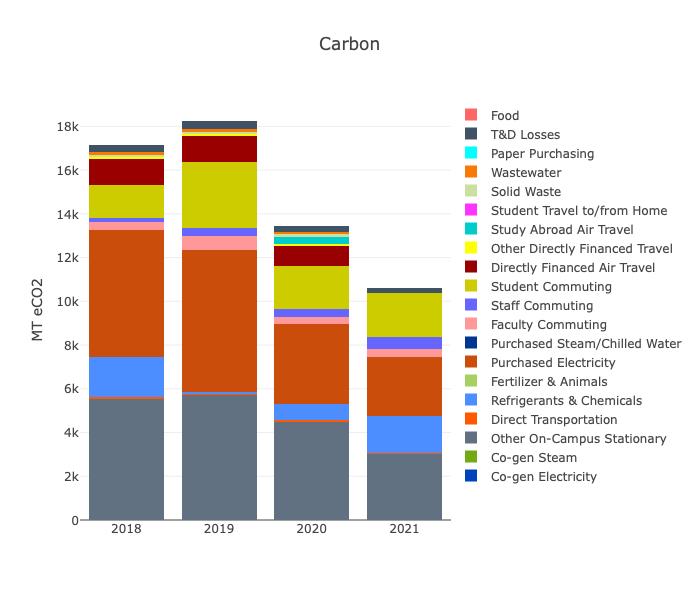
MTCO2e, in 2020, to about 10,500 in 2021. The largest emitting activities during all three years remained natural gas use on campus (Scope 1), purchased electricity (Scope 2), and student commuting (Scope 3). It is anticipated that 2022 emissions will rise year on year, as the campus fully opens its doors.

The most urgent need for climate action planning is the reduction of GHG emissions. Achieving carbon neutrality (i.e., reducing net campus GHG emissions to zero) necessitates ambitious policies and programs, an intensive assessment of campus operations across all levels, and strategic funding approaches.
The Carbon Neutrality Roadmap (Appendix A) is a standalone document that outlines a plan to achieve carbon neutrality by 2043. An accompanying Climate and Energy Scenario Analysis (CESA) tool allows the campus to track efforts and quantitatively assess progress towards this goal. The Roadmap is divided into four phases: Phase 1: Baseline and Emission Forecast; Phase 2: Framing the Gap Analysis Phase; 3: Scenarios and Individual
Strategies for Implementation; and Phase 4: Implementation Timeline and Budget Scope.
Phases 1-3 identify four strategies needed for SSU to achieve carbon neutrality: reducing building electricity consumption with energy efficiency, achieving 100% building electrification, replacing fossil-fueled vehicles with electric options, and implementing behavior change actions with a conscious focus on social and environmental impacts. Recommended scenarios were determined using specific, measurable, achievable, relevant, and timely (SMART) considerations. These specific measurements allow SSU to follow a concrete time frame for strategy completion driven by the feasibility and costs of each action.
The CESA was used to test and create three scenarios for carbon reduction that align growth, phasing, and infrastructure investment over various time horizons and can be adjusted as market trends change or to account for budgetary uncertainty.
The Climate Neutrality Roadmap includes a thorough breakdown of costs associated with individual projects and each scenario, over a 21-year time horizon. Depending on the scenario, capital costs range from an average of $1.4 million per year to $2.5 million per year.

Climate neutrality goals from the Climate Neutrality Roadmap were integrated with resilience and curricular goals via a series of goals, strategies, and actions across key sectors. Here we describe the approach used to guide the development of these actions which simultaneously create exceptional learning experiences for our students.
Figure A: Modeled Relational Graph
This CAP was developed in alignment with SSU’s core values identified in the campus Strategic Plan 2025. These values, integral to the SSU mission, are the overarching guides (outer ring in Figure A) for CAP development woven as a central focus throughout the planning process. The only way we can be effective in combating climate impact is by building a collaborative, inclusive approach to reducing GHG emissions and mitigating their impact.
Throughout the implementation of this plan, SSU commits to:
The development of sustainability and resilience practices require that the needs and points of view of everyone are considered, especially those from disproportionately impacted populations. As we implement this plan, we must find solutions that build equity and rectify inequality. A key tenet of this value is authentic representation. The more diverse a network, the greater its ability to respond to change. Resilient responses require that the needs and points of view of everyone - especially vulnerable populations - are considered in disaster and recovery plans and in building equity needed to enhance resilience. We believe that resilience can only be achieved through planning processes that are inclusive of all stakeholders, iterative, flexible, and transparent.
This SSU core value links our goals for a sustainable planet with
academic excellence. Three primary mechanisms for integrating inquiry with sustainability goals are presented throughout this plan: 1) develop innovative, interdisciplinary research opportunities for students and faculty to engage in inquiry, 2) incentivize and support faculty in incorporating sustainability and resilience content and themes into curricula and research across disciplines, and 3) continue to identify funding to expand sustainability offerings in the curriculum.
The goals of this CAP can only be achieved by a collaborative community that crosses jurisdictional and disciplinary boundaries to find solutions and promote change. This CAP focuses on how SSU can collaborate in community initiatives and leverage those efforts for state and national funding. A key approach in this CAP is multi-stakeholder collaboration: Communities that collaborate can
anticipate threats, limit their effects, and rapidly restore functionality after a crisis. Collaboration is needed for effective response to extreme events and achieving meaningful regional resilience goals. Collaborative efforts include leveraging efforts of state and national organizations engaged in resilience.
We address the adaptability of students and staff through a focus on individual resilience and reduction in stressors and barriers. A core theme of this CAP is the adoption of wellness and outdoor focus and a commitment to providing outdoor learning areas and opportunities for students to connect with nature in support of mental health, wellness, and educational benefit. In addition, emphasis is placed on building disaster response and recovery initiatives that protect students in need and lend special attention to our communities’ vulnerable populations.
The core goals of this CAP are developed through the lens of SSU’s core values (Figure A). The CAP is the result of an integrated planning process that considers how the campus’ core values can be distilled into actionable core goals, representing the campus’ overarching commitment. The following three core goals frame CAP actions.
1) Carbon
Achieve climate neutrality by 2043
2) Resilience
Increase community resilience to climate change through our actions
3) Curriculum
Build curriculum and co-curriculum learning for students in sustainability and resilience
CARBON
Based on the SSU’s current and forecasted GHG emissions, SSU has elected to pursue a goal of Carbon Neutrality by 2043. This goal aligns
us with the latest science and puts us on a path to a sustainable, equitable, healthy future. However, it will take the entire campus and a commitment from the President’s office to ensure that the proper funding and staff support are available. The campus will need to remain vigilant and flexible, adjusting the roadmap as new technology emerges. The Carbon Neutrality Roadmap (Appendix A) outlines specific steps and funding needed annually to propel the campus toward its goal.
SSU recognizes its role as a stakeholder in building regional resilience to climate change. As a 4-year university, SSU can bring a wealth of academic resources –neutral convening spaces, faculty expertise, student research, and operation partnerships – to work collaboratively on improving resilience on campus, preserves and
across Sonoma County communities. The 2020 Resilience Assessment (Appendix B) identifies and guides CAP opportunities to strengthen regional public-private partnerships in ways that build mental, physical, and environmental health across the North Bay.
SSU prioritizes student success as a key driver in shaping an interdisciplinary approach to academics. Success involves igniting innovation, cultivating leadership skills, and transforming students’ lives by providing unique experiences, insight, and workforce development opportunities. The SSU 2025 Strategic Plan outlines a vision for preparing students “to meet the challenges of the 21st century and to make an impact in the community and the world.”

To enhance the coordination of CAP, the implementation by staff, faculty, student, and the community have divided the cap into 10 sectors (Figure A). Within each sector, we identified sector goals, strategies, and actions to meet CAP core goals.

A. Improve energy measurement and tracking systems
B. Reduce total energy consumption per gross square foot to 50% of 2018 baseline
C. Improve Building performance
D. Increase renewable energy
E. Engage students and faculty in projects needed to achieve carbon neutrality
A.1 Develop electrical systems in ways that allow easy sharing of building-specific energy
B.1 Implement energy conservation measures in existing buildings and infrastructure
B.2 Improve the energy efficiency of newly constructed buildings
B.3 Pursue campus-wide energy efficiency projects
C.1 Establish a campus energy efficiency (EE) program to reduce energy demand
C.2 Transition to an all-electric, fossil fuel free campus
C.3 Electrify Central Plant
A.1.1 Evaluate what energy systems are being monitored currently.
A.1.2 Add monitoring to remaining energy systems for compliance with CSU Energy Metering Guidelines.
A.1.3 Use existing energy management software to analyze, report, and forecast energy consumption.
A.1.4 Document energy savings over time, correlated with energy efficiency improvements.
B.1.1 Conduct an ASHRAE Level 1 or Level 2 energy efficiency audit as part of the RCx program (see C.1.3 below).
B.1.2 Implement energy conservation measures (ECMs) recommended in the audit report.
B.1.3 Evaluate effectiveness of ECMs and document energy savings over time.
B.1.4 Update Facilities O&M policy with best management practices for energy efficiency.
B.2.1 Establish Basis of Design and Owner's Project Requirements to meet and exceed the CSU goal of 10% better overall than T24-2019 using the performance approach.
B.2.2 Incorporate advanced energy design features where possible and practical, including daylighting, passive solar heating and shading, natural ventilation,
B.3.1 Implement a geothermal heat exchange system in Athletic Village if deemed feasible in D.4 below.
C.1.1 Hire a full-time energy manager and establish an annual energy investment plan
C.1.2 Complete a campus LED lighting retrofit program
C.1.3 Establish a campus RCx / continuous commissioning program
C.1.4 Identify optimal HVAC upgrade projects (see B.1.2 above) and establish funding & financing source
C.2.1 Implement a no-new gas policy and update campus design standards to support electrification
C.2.2 Replace natural gas system during building retrofit projects and at equipment failure
C.2.3 Electrify existing heating and DHW systems, as outlined in the CESA tool
C.3.1 Complete a CUP electrification study and establish a long-term implementation plan
C.3.2 Implement base heating system upgrades to reduce HW temperatures
C.3.3 Implement Phase 1 (partial electrification)
C.3.4 Implement Phase 2 (full electrification)
D.1 Complete Development of Currently Contracted Solar + Storage Project with SunPower
D.2 Complete feasibility analysis, procure and install additional on-site carport and/or ground mount solar projects at 1-5 locations on the SSU campus
D.3 Identify backup power for Lobo's Pantry
D.4 Explore geothermal heat exchange system for Athletic Village
D.1.1 Complete contract signing
D.1.2 Implement agreed-upon site improvements prior to construction
D.1.3 Monitor system construction performed by SunPower
D.2.1 Complete a financial and technical feasibility study, assessing multiple financing options, for each potential project included in the CESA tool
D.2.2 Engage with PG&E to gain a complete understanding of electricity export limits
D.3.1 Analyze the feasibility of tying into energy storage project or creating a similar solution
D.4.1 Include a geothermal feasibility study for student team as part of Campus as a Living Lab
D.4.2 Engage a geothermal design consultant to estimate costs based on a student feasibility study.
E.1 Create a funded annual research challenge that focuses on carbon neutrality goals.
E.2 Engage classes across disciplines in service-learning projects related to energy
E.3 Organize and support a student-led energy-use training and monitoring program
E.1.1 Conceptualize research projects based on goals in the Carbon Neutrality Roadmap and Climate Action Plan. Consider past research projects, current priorities for energy upgrades, and future projects being planned.
E.1.2 Prioritize entrepreneurship in environmental challenges.
E.1.3 Advertise challenge including a list of concepts to faculty
E.1.4 Review applications and select finalists
E.1.5 Solicit sponsors to fund finalists
E.1.6 Award research funding based on sponsorship received
E.2.1 Conceptualize service-learning projects based on goals in the Carbon Neutrality Roadmap and Climate Action Plan. Consider past service-learning projects, current priorities for energy upgrades, and future projects being planned.
E.2.2 Distribute list to faculty with service-learning courses each semester and encourage participation. Request a presentation of students' findings when projects are complete.
E.3.1 Include presenting a summary report of campus and building-specific energy use in the list of responsibilities for the Facilities Department Student Intern. See Strategy F.1 in the Built Environment section.
E.3.2 Advertise the presentation to student groups including sustainability-oriented clubs and courses.
E.3.3 Recruit the next Facilities Department Student Intern at the presentation.
A. Reduce water use 5% from 2019 baseline levels by 2023
B. Pilot novel water conservation strategies through regional partnerships
C. Develop water systems in ways that allow easy sharing of building-specific data
D. Protect and conserve water resources
E. Align campus goals and reporting with regional water resource management strategies
F. Collaborate on regional initiatives that decrease risk of flooding and enhance groundwater replenishment
G. Infuse examples of local water challenges into curriculum across disciplines
H. Engage students and faculty in research, creative inquiry, and monitoring programs surrounding water
A.1 Expand low flow infrastructure in all campus buildings
A.2 Reduce carbon needed for irrigation on campus (See also Grounds & Preserves)
A.3 Update policy and technical standards for Low Impact Development
B.1 Partner with Applied Solutions to test sustainable water and energy technology
B.2 Assess the viability of rainwater capture for irrigation use
C.1 Improve water measurement, tracking and enforcement systems
D.1 Expand recycled water distribution to buildings
A.1.1 Research cost and implementation
A.1.2 Specify maximum flow rates of fixtures and fittings based on LEED O+M
A.1.3 Update campus Facilities O&M policy with maximum flow rates
A.2.1 Remove water-intensive landscaping where possible and replace with native and droughttolerant plants
A.3.1 Create water efficiency guidelines for small projects that do not fall within the scope of the CSU policy
B.1.1 Assess the effectiveness of condensate capture from air handlers and estimate the daily volume generated
B.2.1 Identify site locations and distribution network
C.1.1 Partner with Sonoma Water to update metering infrastructure
C.1.2 Track total annual volume of wastewater generated in partnership with Sonoma Valley County Sanitation District
D.1.1 Conduct a feasibility study for retrofitting existing buildings with recycled water for toilet flushing
D.1.2 Update Basis of Design and Owners Project Requirement documents for new construction project to specify separate plumbing for recycled water.
D.2.3 Include recycled water distribution in plans for updated infrastructure.
D.2 Improve biodiversity and water quality while preserving flood capacity of Copeland Creek
E.1 Align SSU water goals with regional plans
F.1 Collaborate on the Copeland Creek Watershed Enhancement and Restoration with Sonoma Water, City of Rohnert Park, and others
G.1. Support faculty to bring examples of regional water challenges into the course curriculum
H.1. Engage students and faculty in inquiry with community partners into water-related challenges
D.2.1 Draft an integrated stormwater management plan for campus
D.2.2 Draft comprehensive Copeland Creek Restoration Plan
E.1.1 Actively participate in Sonoma Water's Regional Integrated Water Resource Management Strategy
E.1.2 Actively participate in Santa Rosa Plain Groundwater Management Plan and Santa Rosa Plain Groundwater Sustainability Plans
F.1.1 Contact project partners and actively participate in planning efforts.
H.2 Engage students and faculty in monitoring and training to reduce water use on campus
G.1.1 Make disciplinary-specific information on Russian River Watershed (especially Copeland Creek) easily available to all faculty and provide field trip tours
H.1.1 Increase support for Rising Waters to expand annual water research challenge that engages faculty and students with campus and cross-sector community leaders
H.1.2 Prioritize entrepreneurship in environmental challenges.
H.1.3 Build on WATERS Collaborative to increase funding for faculty and student research and creative inquiry on water-related challenges
H.1.4 Engage classes across disciplines in service-learning projects surrounding water challenges
H.2.1 Organize and support a student-led water training and monitoring program that includes annual electricity reduction competitions in the dorms
A. Reduce carbon footprint of foods sold on campus
B. Increase sustainable choices across all culinary amenities
C. Reduce food insecurity on and off campus
D. Infuse understanding of food systems on and off campus throughout the curriculum
E. Increase inquiry and training surrounding sustainable food systems
A.1 Increase percentage of locally-grown foods purchased and plant-based meals served
A.2 Estimate and track carbon footprint of foods purchased.
B.1 Expand campus plastics bans, such as those for straws and water bottles. Reference CSU policy on Single Use Plastics
B.2 Increase the number of Fair-Trade products purchased each year
C.1 Expand free food services to students and employees with food insecurity
C.2 Make information about off-campus free food services readily available on campus
D.1 Incentivize integration of regional food challenges into the course curriculum
A.1.1 Build on collaborations with FEED and expand to other local food growers.
A.2.1 Reinstate food tracking via the Inventory and Purchasing Management Program, and add carbon footprint (and other sustainability attributes)
B.1.1 Identify the most-easily compostable products for all single-use items
E.1 Support student and faculty research and creative inquiry on food-related challenges
B.2.1 Identify foods and items offered that are sustainable, compostable, etc. See sidebar on food attributes.
B.2.2 Create a Sustainable Purchasing Policy that includes foods and beverages. (also see Procurement)
C.1.1 Increase support for Lobos’ Pantry and explore other options such as food vouchers (also see Health and Safety)
C.1.2 Expand garden classroom production and direct harvesting opportunities
C.2.1 Partner with community organizations to raise awareness
E.2 Engage students and faculty in monitoring and training to achieve sustainable food goals
D.1.1 Make disciplinary-specific information about regional food challenges easily available to faculty and provide curriculum revision stipend support
D.1.2 Provide presentations and invited speakers from local food initiatives to interested faculty
D.1.3 Develop the Garden Classroom, Copeland Creek, and Native Plant gardens as outdoor classrooms for learning about agricultural and natural systems
D.1.4 Develop an agricultural Education-into-Action team (similar to Rising Waters) to engage faculty and student research teams in regional agricultural challenges.
E.1.1 Leverage on-going speaker series (e.g., North Bay Forward) to build faculty-community servicelearning collaborations on food-related issues
E.1.2 Launch annual research challenge that provides funding for faculty and students to study sustainable food practices
E.1.3 Prioritize entrepreneurship in environmental challenges.
E.1.4 Engage classes across disciplines in service-learning projects surrounding food challenges on and off campus
E.2.1 Create a student-run “No Food Left Behind” program - possibly through JUMP - to reduce food insecurity
A. Reduce carbon used to maintain campus landscapes
B. Develop carbon sequestration initiatives for campus and SSU preserves
C. Transition to climate-smart goals for SSU lands
D. Increase abundance and diversity of native species
E. Infuse understanding of natural landscapes (on and off campuses) throughout the curriculum
F. Increase inquiry and training on natural and sustainable agriculture systems
A.1 Transition to landscaping that does not require irrigation
B.1 Adopt practices that increase carbon sequestration
C.1 Reduce impacts of increasing drought and flood and impacts to water quality
C.2 Reduce impacts of increasing fire risk
C.3 Reduce impacts of increasing heat
D.1 Protect native species vulnerable to declines on campus and at SSU preserves
D.2 Expand native vegetation on campus
A.1.1 Draft and implement a landscaping plan that transitions campus from water-dependent to drought-tolerant. See Policy & Plan Recommendations table in Appendix C.
B.1.1 Incorporate carbon sequestration goals into a Forestry Management Plan for SSU preserves
B.1.2 Incorporate carbon sequestration goals into Campus Landscaping Plan. See Policy & Plan Recommendations table in Appendix C.
B.1.3 Adopt and demonstrate best practices in carbon sequestration as part of the Garden Classroom
C.1.1 Assess and implement landscaping and restoration approaches (e.g., Copeland Creek) that improve rates of water infiltration, water capture and storage on campus, and preserve lands.
C.1.2 Reduce the risk of campus lakes contamination of Copeland Creek during floods
C.2.1 Apply best practices in buffer zones near structures on campus and preserves
C.3.1 Adopt urban forestry goals on campus that minimize illness, extreme heat, and poor air quality
D.1.1 Map location of native species and their habitats on campus and preserves
D.3 Control invasive species and other threats to biodiversity
E.1 Incentivize faculty to integrate ecosystem services and challenges into course curriculum (See Curricular and Cocurricular Section for more actions)
F.1 Increase support for student and faculty research and creative inquiry on ecosystem services challenges. (See Curricular and Co-curricular Section for more actions)
D.2.1 Adopt campus-wide landscaping policies that increase native species on campus. See draft policy linked here. See Policy & Plan Recommendations table in Appendix C.
D.2.2 Create an agricultural-ecological corridor on campus (includes Copeland Creek, native, butterfly, garden classroom, and campus lakes)
D.3.1 “Restore” Copeland Creek riparian corridor
D.3.2 Draft invasive species control plans for SSU Preserves
E.1.2 Provide regular field trips, tours, and information for faculty and their classes to campus (e.g., such as Copeland Creek, campus gardens, and landscaped areas) and preserves
F.1.2 Leverage on-going speaker series (e.g., North Bay Forward) to build faculty-community collaborations that lead to service-learning opportunities
F.1.2 Continue to grow on-campus funding (e.g., Norwick, WATERS, Fire Up and Rising Waters) grants for faculty and students to research regional challenges
A. Consider carbon footprint for purchasing decisions
B. Consider sustainability for purchasing decisions
C. Support diversification of local economy
D. Support regional partnerships through North Bay Forward to launch a Buy Local campaign
E. Engage students and faculty to study procurement/supply chain solutions.
A.1/B.1 Adopt campus-wide policy to make sustainability a criteria for purchasing decisions at all levels
A.2/B.2 Identify and transition to sustainable purchases
A.3/B.3 The CSU is implementing a Procure to Pay software throughout the system. Explore the possibilities of this system being able to track transitions to sustainable purchases
C.1 Buy local across a range of economic sectors
D.1 Incentivize faculty to infuse an understanding of product life-cycles throughout the curriculum (See Curricular and Co-curricular Section for more actions)
E.1 Raise awareness on campus of the impacts of buying locally and sustainably
E.2/F.2 Increase research and creative inquiry (See Curricular and Co-curricular Section for more actions)
A.1.1/B.1.1 Strategize and establish a campus-wide sustainable procurement policy.
A.1.2/B.1.2 As a state agency, the CSU gives preference to Small Business Enterprises (SBE) and Disabled Veterans Business Enterprise (DVBE). Establish language in the RFP to create a sustainable criteria section.
A.2.1/B.2.1 Identify alternatives for high-impact common purchases (e.g., two products per year)
A.2.2/B.2.2 Reduce or eliminate non-recyclable packaging materials used in shipments
A.2.3/B.2.3 Increase percentage of green cleaning supplies purchased to 100% by 2025
A.3.1/B.3.1 When possible attend sustainable procurement training/conferences and then provide the information back to the procurement team.
C.1.1 See Action A.1.2/B.1.2
D.1.1 Provide information resources for Life Cycle Cost Analysis (LCCA) at the SSU Center for Teaching and Educational Technology
D.1.2 Document student research and projects involving LCCA as part of Campus as a Living lab, research results should be reported back to Procurement
E.1.1 Host events, or partner with existing events, to connect and educate the campus community on the impacts of buying local (e.g., host a local vendor market) and report back to Procurement
E.2.1/F.2.1 Leverage on-going speaker series (e.g., North Bay Forward) to build faculty-community collaborations that lead to service-learning and report back to Procurement
E.2.2/F.2.2 Launch annual research challenge that provides funding for faculty and students to study and report to procurement on product life-cycles and supply chain management
A. Increase vehicle fuel efficiency and fuel switching
B. Reduce Vehicle Miles Traveled (VMT) by 30% from 2019 baseline by 2043
C. Align affordable well-connected public transportation options (paths, bike trails, buses, trains) with critical needs (food, work, health care) and healthy lifestyles (parks, recreation)
D. Design infrastructure in ways that encourage walking and biking
E. Infuse understanding of transportation mitigation throughout the curriculum
F. Increase inquiry and training surrounding transportation challenges
A.1 Transition to electric vehicles
A.2 Increase number of EV charging station ports on campus
B.1 Incentivize carpooling and public transport such as SMART train and buses
B.2 Incentivize bike share and e-bike use
B.3 Implement Concur, an online travel tool, that tracks annual VMT for auto, rail and, train travel
B.4 Increase faculty and staff flexibility in terms of how many days they need to be on campus
C.1 Make alternative transportation information readily available to students and employees
D.1 Reduce logistic challenges to using bikes to commute to campus
E.1 Raise awareness about carpooling, bike and public transportation
F.1 Write a Transportation Plan for entire campus
A.1.1 Replace all 36 fleet passenger vehicles with electric vehicles by 2035, averaging 3 per year
A.1.2 Implement “EV-first” vehicle purchasing policy to ensure that EVs are considered as the primary replacement option for every vehicle
A.2.1 Assess the best locations to meet the needs of on-campus residents and those who need to park in more centralized parking lots on campus
A.2.2 Follow the installation schedule outlined in the CESA tool (cater to housing)
B.1.1 Include an annual bus/SMART train pass to all new employees who express interest
B.1.2 Distribute commuting survey to all staff, faculty and students annually. Include a question around the barriers to the “last mile” issue.
B.1.3 Promote SMART train, bus, EV and carpool resources
B.1.4 Promote carpool apps
B.2.1 Explore potential partnership opportunities surrounding subsidized and/or no cost fares for students and employees with public transportation agencies: Sonoma-Marin Area Rail Transit EcoPass Program, Sonoma County Transit – Subsidized Fare Program
B.3.3 Report annual VMT
B.4.1 Write a Working Remote Policy
C.1.1 Share clearly identified walking and biking routes to campus and from campus to outdoor destinations: Copeland Creek trail and trail to Crane Creek
D.1.1 Promote e-bike incentives
D.1.2 Evaluate feasibility of installing bike lockers with e-bike chargers
D.1.3 Secure bicycle parking along with showers and lockers to make active commuting a viable option; Consider gym or rec facilities as options
E.2.1 Create an annual commuter challenge led by student leadership
F.1.1 Create a Transportation Demand Management Plan (TDM Plan) per CSU policy
F.1.2 Identify local challenge and provide $10K for faculty-student research or creative inquiry teams to support community partner working on a transportation challenge
F.1.3 Prioritize entrepreneurship in environmental challenges.
F.1.3 Engage classes across disciplines in service-learning projects surrounding transportation challenges on campus
A. Reduce landfill contributions
B. Pilot innovative technology to create a local composting program
C. Reduce use of plastics and non-sustainable materials
D. Infuse understanding of waste systems (on and off campus) throughout the curriculum
E. Engage students and faculty in research and creative inquiry with community and campus partners into waste challenges
F. Engage students and faculty in monitoring and training to reduce waste on campus
A.1 Draft and implement a plan to achieve 90% waste diversion from campus
A.2 Continue to expand the three-stream recycling across campus
A.3 Initiate Go Paperless campaign
A.4 Build programs around Move In– Move out Day
A.5 Launch a “Supply Share” item lending library
B.1 Collaborate with local community to install an anaerobic digester to capture food waste and green waste from campus landscaping
C.1 Adopt and support applicable Zero Waste Sonoma goals
C.2 Ensure all single-use items provided at cafeteria and catering areas are certified compostable post-Covid
C.3 Identify build out and implement a plan for hydration stations across campus
C.4 Eliminate SWAG items that are not sustainable
C.5 Include eco-friendly packaging as a purchasing criteria
D.1 Make discipline-specific information on local waste systems and their connection to climate easily available to faculty for integration into curriculum
A.1.1 Ensure that all construction and demolition (C&D) materials are source separated
A.1.2 Capture a list of non-recyclable items that need to be replaced with a more sustainable option. Reference waste audit results (see E.2.1 below)
A.1.3 Track monthly diversion with Recology
A.1.4 Share monthly diversion figures with students and staff. Consider LEED tracking using the Arc Platform.
A.2.1 Partner with Recology to provide pre- waste audit services. (See also the audit process described in E.2.1 below.)
A.3.1 Use Risk Management Solutions training/conferences to gather information and skills needed to move administrative processes online
A.3.2 Centralize printers throughout campus
A.4.1 Partner with local food bank and reuse store
A.5.1 Communicate central storage area to be able to stage equipment for people to shop from
A.5.2 Set up a textbook exchange
B.1.1 Track green waste tonnage
B.1.2 Apply compost on local Preserves as part of a carbon farming project
B.1.3 Research implementation and cost
C.1.1 Expand food recovery and food waste programs on and off campus by creating a service learning opportunity around SB1383
C.2.1 Consider replacing chip bags in the cafeteria or ,partner with Terracycle to recycle chips bags
C.2.2 Document compliance with CSU Single Use Plastics policy requirements
C.3.1 Research cost and implementation schedule
C.3.2 Document phase out of plastic water bottles on campus by 1/1/23 per CSU policy requirements
C.4.1 Find alternative recognition programs
C.5.1 Use waste audit (ref. E.2.1) to identify sources of plastics and other landfill-bound packaging material
C.5.2 Contact vendors and encourage them to change packaging material to reusable (start a take-back program), biodegradable, or recyclable
D.1.1 Informational resources include Recology (waste hauler, website), Zero Waste Sonoma County (public agency, website), CalRecycle State Agency Buy Recycled Campaign (SABRC, website)
E.1 Create an annual research challenge with campus or community partners in reducing waste and impacts of waste systems (e.g., circular economy)
E.2 Engage classes across disciplines in servicelearning projects surrounding waste and life cycle assessment
F.1 Organize and support a student-led waste reduction training and monitoring program that includes annual waste competitions
E.1.1 Use results of waste audit (see E.2.1 below) to identify opportunities to reduce waste and/or improve diversion
E.1.2 Post research challenge to recommend innovative solutions to reduce waste or improve diversion
E.1.3 Prioritize entrepreneurship in environmental challenges
E.1.4 Submit responses for grant funding
E.2.1 Incorporate waste auditing in the curriculum for GEP 396.4 Waste Management, Recycling, and Policy course. LEED-compliant waste audit guidelines are linked here.
F.1.1 Coordinate with Associated Students, including the SSU Sustainability Student Senator

A. Increase the number of small projects that incorporate green building strategies
B. Increase the number of certified green buildings
C. Improve the use of sustainable materials in construction
D. Incorporate sustainability into planning
E. Improve backup power systems
F. Increase student involvement in sustainable construction on campus
G. Improve awareness of green buildings and sustainable construction principles and practices
H. Increase outdoor teaching facilities
A.1 Create sustainable construction and operations guidelines for small projects and existing buildings that do not fall within the scope of the CSU Sustainability policy
B.1 Use the CSU Sustainability Policy as a platform for increasing the number of certified green buildings on the SSU campus
A.1.1 Create energy efficiency guidelines
A.1.2 Create sustainable materials purchasing guidelines
A.1.3 Create water efficiency guidelines
C.1 Identify sources of sustainable materials
D.1 Collect information about building performance (energy and water savings, indoor environmental quality, etc.) over the long term
E.1 Ensure essential services are supported by backup power systems during outages
F.1 Recruit a student intern from the Construction Management Certificate program or sustainability courses
G.1 Educate students, staff, and faculty about sustainable buildings
B.1.1 Attempt LEED certification on more newly constructed buildings
B.1.2 Attempt LEED certification on an existing building
B.1.3 Enter all campus buildings into ENERGY STAR Portfolio Manager
B.1.4 Pilot the Living Community Challenge on Academic 3. It is recommended that the University pursue new building designs taking into account the Living Community Challenge Standards as a pilot project.
B.1.5 Certify the campus for LEED to facilitate LEED certification/equivalent of future buildings
C.1.1 Review Environmental Product Declarations (EPDs) for frequently used construction materials
C.1.2 Utilize consultants and contractors that are local and source a high percentage of materials locally
D.1.1 Extend budget cycle to look at long term economics of buildings that incorporate sustainable features
H.1 Build additional outdoor seating areas on campus and at preserves that can be reserved for class use
E.1.1 Verify internet service at campus housing buildings and water pumps to ensure water pressure stays above 20 psi to avoid 3-day boil notice
F.1.1 Create a paid internship for students to assist with LEED certification/ documentation, ENERGY STAR tracking, and learn about sustainable construction, 15-20 hours per week. See sample job description in Appendix C.
G.1.1 Add signage on existing buildings highlighting sustainable features
G.1.2 Educate students, staff, and faculty about sustainable buildings and campus ecology. Tree species could have signs with QR codes to allow students to learn, also for facilities managers to know if they are research trees. Identify native plants also.
G.1.3 Capture information about stormwater management and educate students about the volume that runs off parking lots and how it’s managed
G.1.4 Incorporate sustainability in training for maintenance staff
H.1.1 Construct permanent outdoor classroom on campus with roof and comfortable seating that can be reserved by faculty and complies with Copeland Creek Master Plan
H.1.2 Build facilities identified in Galbreath Wildlands Preserve Facilities Master Plan that increase immersive experiences for students in local ecosystems
A. Provide telecommuting options for faculty and students
B. Enhance learning in ways that increase health, wellness and academic success of students
C. Improve wifi on campus and access to internet off-campus
D. Expand sustainability offerings in the curriculum
E. Develop innovative, interdisciplinary academic sustainability programs
F. Incentivize and support faculty to make curriculum changes
G. Promote sustainability classes to students
H. Increase Student Awareness of Sustainability
I. Infuse campus, preserve, and North Bay sustainability and resilience challenges into teaching, research, and events
J. Engage students and faculty in research and creative inquiry into local sustainability and resilience challenges with campus, preserves and community partners
K. Infuse key resilience workforce needs into certification courses and skill-development programs, including leadership programs and Construction Management certification program
L. Work with entrepreneurship program support projects addressing sustainability and resilience challenges
A.1 Identify which courses could be taught online
B.1 Encourage and support outdoor instruction by faculty in all disciplines
C.1 Provide hotspot devices for students to check out
D.1 Create new courses related to climate change, resilience, environmental justice, carbon neutrality, etc.
D.2 Incorporate sustainability in Construction Management certificate program
E.1 Create a Sustainability Sea Lane or Minor
F.1 Apply for Grants, RTP credit, create a Sustainability Faculty Learning Community
F.2 Increase philanthropic funding for student and faculty engagement in sustainability
G.1 Identify academic opportunities in sustainability across all disciplines
H.1 Infuse high-impact educational practices in sustainability into existing course work in all disciplines: outdoor learning (e.g., SSU preserves, outdoor classrooms), service-learning, entrepreneur programs, problem-solving activities (e.g., Maker Space), crossdisciplinary courses
A.1.1 Study the students' experience and thoughtfully increase online course offerings to promote student success while decreasing our carbon footprint.
A.1.2 Track Scope 3 carbon emissions savings associated with telecommuting
B.1.1 Identify existing areas where outdoor teaching has been provided in the past and additional locations suitable for outdoor teaching. Ensure areas may be reserved through Academic Affairs
B.1.2 Inventory existing infrastructure and teaching aids for outdoor learning (mobile whiteboards, shade structures, seating, etc.)
B.1.3 Procure additional infrastructure and teaching aids as needed
B.1.4 Promote outdoor teaching as an option through email, CTET, and other outreach options
C.1.1 Determine the inventory of existing hotspots
C.1.2 Work with appropriate lender (IT, Library, etc.) to set up a loan system
C.1.3 Notify students
D.1.1 Identify specific pathways that a student could follow to participate in Sustainability Sea Lane. Include an immersive, sustainability-focused educational study program. Include metrics of diversity and social justice in establishing and reviewing programs.
D.1.2 Use a list of courses that include sustainability or are sustainability courses and identify those that would apply to Sea Lane or Minor.
D.2.1 Add LEED AP accreditation to Construction Management Certificate program
E.1.1 Identify host department (GEP if appropriate)
E.1.2 Find funding
F.1.1 Identify grants pertaining to sustainability and inform faculty
F.1.2 Increase campus funding for faculty engaged in sustainability initiatives
F.1.3 Identify RTP credit opportunities in sustainability
F.1.4 Create a Faculty Learning Community
F.2.1 Highlight areas where giving is needed (Sustainability in the Classroom, Campus as a Living Lab, Preserves, Collaboratives, more).
F.2.2 Consider funding via CEI channels
G.1.1 Identify classes meeting sustainability criteria in the course catalog
G.1.2 Provide sustainability information to student advisors across all disciplines
H.1.1 Infuse campus, preserve and North Bay sustainability and resilience challenges into teaching, research and events
H.1.2 Engage students and faculty in research and creative inquiry into local sustainability and resilience challenges with campus, preserve and community partners
I.1 Create new courses related to climate change, resilience, environmental justice, carbon neutrality, etc
I.2 Identify and support invited speakers to speaker series and classrooms on North Bay sustainability and resilience challenges
I.3 Develop interdisciplinary structures to promote learning about sustainability and resilience across all disciplines
J.1 Support inquiry partnerships surrounding environment and inquiry
J.2 Engage classes across disciplines in servicelearning projects
J.3 Build on WATERS
Collaborative to develop grants or faculty and students to address local challenges
J.4 Present sustainability and resilience project ideas to students choosing capstone projects (e.g., Engineering Science capstone process)
K.1 Share successful models for co-curricular models that teach skills and give students practice applying skills to regional projects (e.g., Naturalist Training, Land Management Training)
L.1 Incentivize and facilitate faculty to add to their courses examples of local challenges and how their discipline is needed to address those challenges.
I.1.1 Find out which departments are designing new courses and whether sustainability and resilience may be appropriate content for integration in the course.
I.1.2 Incentivize and create a clear process for developing interdisciplinary courses that integrate economic, culture and environmental aspects of sustainability and resilience.
I.2.1 Focus speaker series, such as North Bay Forward, Dig into Nature, and Ecology Forum, on local earth and equity issues issues and make a library of recordings available
I.2.2 Make disciplinary-specific information about ecosystems services and regional challenges easily available to faculty and provide curriculum revision stipend support
I.2.3 Provide presentations and invited speakers to interested faculty
I.3.1 Create team-taught, cross-cutting courses and find a funding mechanism to incentivize this and remove administrative hurdles
J.1.1 Expand Education-into-Action Research Teams (e.g., Rising Waters, Fire Up model) that partner faculty and students with regional leaders on emerging challenges
J.1.2 Bring expertise of faculty to support community challenges through contracts and services, such as Center for Sustainable Communities, and Anthropological Studies Center
J.2.1 Build on CCE and CEI activities to create opportunities for class research and inquiry that supports long-term, inter-disciplinary meaningful contributions to sustainability challenges in the region
J.3.1 Develop donor support fund or build existing endowed funds (e.g., Stephen Norwick Memorial Fund) to generate meaningful funding that encourages faculty and students to work on sustainability and resilience projects with community members.
J.4.1 Develop list of current capstone courses across campus
J.4.2 Fund staff time needed to compile lists of community leaders and challenges, scale projects to meet capstone course structure, and present targeted opportunities to students in capstone courses.
K.1.1 Package existing co-curricular opportunities (e.g., volunteer opportunities, training, certifications, etc.) for students interested in developing skills in sustainability and the environment.
K.1.2 Explore opportunities to integrate sustainability and resilience into existing co-curricular programs
L.1.1 Collaborate with the Faculty Center to provide inter-disciplinary consultation for faculty who would like to incorporate sustainability into their programs.
L.1.2 Resurrect “Sustainability in the Classroom” grants to provide summer stipend for faculty integrating sustainability into course curriculum
L.1.3 Create a Sustainability Faculty Learning Community
L.1.4 nhance support for class field trips to campus eco-ag corridor and SSU preserves for students to learn about local human-environment interactions. Streamline field trip paperwork to make it easier for students, staff, and faculty.
A. Engage students and faculty in energy and waste reduction programs in classrooms, labs and student programs
B. Improve student wellbeing and resilience on campus, particularly in response to wildfires, but also related to food security, cost of living, etc. (ASL 1ai)
C. Increase students’ ability to continue learning during climate emergencies
D. Reduce existing stressors on vulnerable student populations
E. Promote experiences, jobs, and career opportunities in sustainability and resilience-related fields
F. Make sustainability and resilience a key part of the lived student experience
A.1 90% of all academic departments complete the Green Office Certification Program by 2030
A.2 Scope out a solution for providing electric vehicles for field trips
B.1 Create experiences for all incoming Freshmen that connect students to each other, campus, environment, and local community members
B.2 Infuse place into existing programs (e.g., Summer Bridge)
C.1 Increase exposure to remote instruction technologies and accessibility
C.2 Identify Cool down locations on campus
D.1 Conduct gap analysis for Basic Needs Initiative to determine where students may be vulnerable during emergencies and recovery
D.2 Align MESA program with a research challenge focused on climate resilience
D.3 Infuse outdoor experiences into physical and mental health programs
D.4 Determine how SSU can increase resilience of students at risk.
E.1 Expose students to sustainability-related career paths, employers and professionals
E.2 Boost training opportunities and experiences that make students competitive for green jobs
A.1.1 Conduct EcoAssessment™, an easy-to-use online tool that credits campus for completed initiatives.
A.1.2 Complete transition to electric fleet vehicles (see Transportation Action A.1.1)
B.1.1 Expand introductory tours to SSU to Preserves
B.1.2 Use outdoor classroom spaces for orientation activities
B.1.3 Ask students to share any experiences they have had in natural disasters and how they affected them. Follow stories with descriptions of resilience measures currently in place and those that are planned.
B.1.4 Introduce students to outdoor areas on campus.
B.2.1 Add an element of historical ancestry or field trips to the Preserves
C.1.1 Ensure instructors are aware of remote instruction technologies available at CTET
C.1.2 Communicate remote instruction process to students during orientation
C.2.1 Identify the buildings with high occupant capacity that have air conditioning and standby generators.
C.2.2 Discuss designating them as cooling centers during heat emergencies with facilities staff and building administrators. The Student Center is already designated as such, although the air conditioning does not have backup power.
C.2.3 Update campus maps with cooling centers identified.
C.2.4 Plan upgrades to other buildings to be designated as cooling centers in the future.
D.1.1 Merge findings into the campus Emergency Plan
D.2.1 Prioritize entrepreneurship in environmental challenges.
D.3.1 Work with SSU health programs and therapists to find appropriate opportunities to provide students, faculty and staff with information about the physical and mental benefits of outdoor experiences
D.4.1 Assess the cumulative effects of SSU pre-school, elementary school, middle school, highschool, college readiness and retention programs that increase educational opportunities for vulnerable populations (e.g. TRIO, CAASE, Summer Bridge)
D.4.2 Identify ways that SSU can coordinate regionally for the best possible outcomes for at-risk students
E.1.1 Partner with faculty to provide relevant information to students on green career opportunities and employers
E.1.2 Create opportunities for students to speak with professionals working on climate-change initiatives
E.1.3 Highlight green job opportunities at career-related annual events
E.1.4 Include green job opportunities as part of career advising information
E.2.1 Create new or modify existing programs (e.g., leadership) and certificate courses (e.g., Construction Management) in ways that make students competitive for green careers.
F.1 Make sustainable practices and branding a visible part of introductory and campus-wide events
F.2 Recruit student participation in helping to enhance sustainability awareness and adopt sustainability behaviors
F.3 Make sustainable behaviors part of daily living practices in dormitories, classrooms and offices
F.1.1 Update and highlight sustainability information in student orientation and campus tours
F.1.2 Adopt a minimum sustainability best practices and information protocol for campus-wide student events
F.2.1 Maintain a list of all opportunities on campus and in the local community for ways students can get involved and share on Sustainable SSU website
F.2.2 Recruit students to participate during Earth Week and appropriate events
F.3.1 Expand existing residential life materials and programs in ways that establish sustainable behaviors as part of daily life.
F.3.2 Create clear messaging that identifies sustainable practices adopted by faculty and staff and departments
F.3.3 Whenever possible, provide educational materials to increase students’ understanding of sustainable options.
This plan sets clear goals and pathways for infusing sustainability and resilience into all aspects of university operations and programs. As a campus, we have a strong desire to implement these changes rapidly and on schedule. However, we also recognize the reality of the challenges ahead. Implementation must be flexible if we are to face significant financial and logistic barriers, respond to unanticipated events, and take advantage of new opportunities as they arise.
Above all, implementation is dependent on broad and coordinated participation from divisions, departments, programs, individuals, and community partners. In this section, we outline key implementation tools, initial staffing, and funding recommendations and resources.
We have created implementation tools and plans for three key implementation areas.
Infusing sustainability (including carbon neutrality) and resilience across divisions, departments, and programs requires collaboration and synergistic approaches among all parts of campus. The Integrated Goals, Strategies, and Actions section of this plan identifies
goals, strategies, and actions and includes climate neutrality goals. The SSU Sustainability Tracker is the supporting tool for the campus to prioritize and coordinate annual targets and to track overall performance metrics. The tracker integrates qualitative and quantitative elements of sustainability. Most accomplishments within sustainability sectors (e.g., waste, water, procurement, academics) are tracked qualitatively to describe the actions of individuals and programs (e.g, “SSU eliminated 35% of paper purchases''). Quantitative estimates of the GHG emission reduction (i.e., GHG emissions of projects related to energy efficiency, renewable energy, and electric vehicle transition) made using the Climate and Energy Scenario Analysis tool (CESA, see below) are additionally entered into the Tracker to create a single integrated source of information about accomplishments.
The Sustainability Tracker can be used to assign various action and reporting items to key departments responsible for reporting on qualitative performance metrics specific to their focus area. The Tracker is additionally designed to feed information into Second Nature’s annual reporting of GHG emissions and the Sustainability Tracking Assessment & Rating System (STARS). Additional information about the Sustainability Tracker is included below under PSAC Responsibilities.
The most urgent need for implementation is the reduction of GHGs. Achieving carbon neutrality by 2043 requires that the campus increase energy efficiency, building electrification, electrical vehicle use, and energy conservation behaviors. The Climate Neutrality Roadmap (Appendix A) and accompanying Climate and Energy Scenario Analysis (CESA) tool were created to help campus prioritize projects, track efforts and quantitatively assess progress towards carbon neutrality. The Roadmap includes a thorough breakdown of costs associated with individual projects and three scenarios over a 21-year time horizon and an assessment of how the necessary funding can be achieved through a Green Revolving Fund (see page 51). The CESA tool allows rigorous quantification of GHG emissions for energy efficiency, renewable energy, and electric vehicle transition.
Infusing new approaches into standard procedures and forging new relationships requires new ways of communicating and engaging administrators, staff, faculty, students, and community partners. A Communication and Engagement Plan (Appendix D) identifies mechanisms for distributing information on key concepts, promoting behavioral change on campus, and integrating with the Sustainability Tracker to report progress over time.
The PSAC is charged by the President with coordinating the implementation of the CAP. Four key leadership positions that also serve on the PSAC are needed to implement the CAP (Table A). (FTEs for these and other recurring or onetime staff needs are listed under project costs and staffing needs).
The operations director serves as PSAC Co-Chair and also chairs the Zero-Impact Working Group (Table A). The director is generally responsible for leadership, project implementation, and fundraising in the areas of carbon neutrality (Climate Neutrality Roadmap and CESA tool) and resilience of infrastructure and operations (Integrated Sustainability and Resilience Goals and Sustainability Tracker). The operations director works with campus leadership to track carbon and resilience goals, identify and implement critical path projects, track Green Revolving Fund savings (see below), secure off-campus funding through grants, chancellor’s office proposals, contracts, and privatepublic partnerships. The director additionally develops partnerships with regional leaders and participates in regional initiatives in ways that leverage federal and state funding. The director is responsible for annual reporting obligations required by the Presidents’ Climate Leadership Commitment and needed to communicate and encourage the participation of the campus community in projects. This position
is currently filled by the Director of Transportation and Parking Services but a full-time position is needed
The programs director serves as PSAC Co-Chair and also chairs the Regional Resilience Working Group (Table A). The programs director is generally responsible for leadership, project implementation, and fundraising in the areas of learning and resilience of people, lands, and ecosystems and engaging working groups in Integrated Sustainability and Resilience Goals. The director works collaboratively with other sustainability staff, campus and community leaders to develop and sustain programs that: (a) create highimpact educational and professional experiences for students, improve personal resilience for students; (b) support faculty to integrate sustainability into the curriculum; (c) establish campus as a demonstration site for best practices, and; (d) adopt climate-smart goals, including carbon sequestration on grounds and preserves, The director develops partnerships with regional leaders and participates in regional initiatives in ways that leverage federal and state funding for CAP goals. The director is responsible for providing key sections of the annual reporting obligations required by the Presidents’ Climate Leadership Commitment and is a leader in managing the Sustainability Tracker. This position is currently
filled by the Center for Environmental Inquiry Director but a full-time position is needed.
The faculty sustainability chair leads the Academic and Student Life Working Group (Table A). The faculty chair is generally responsible for supporting the integration of sustainability in the curriculum, service-learning projects in sustainability and resilience, and the development of student-led monitoring programs. The chair also works with the strategy, advancement, and communications working group to create and host non-curricular student learning experiences. This part-time position (3 WTUs) is appointed by the Provost and additional teaching unit allocation may be needed.
The Sustainability Communications Coordinator serves as the Chair of the Strategy, Advancement and Communications (SAC) Working Group (Table A) which oversees the implementation of the Communication and Engagement Plan (Appendix D) and more generally enhances SSU branding with regards to sustainability. The communications coordinator is responsible for consistent communication that raises the profile of sustainability research, education, and carbon projects, and increases awareness of learning opportunities. This position is currently unfilled and unfunded.
Table A: Key PSAC Leadership Responsibilities. Positions in red do not have full or permanent funding.
PSAC CO-CHAIRS
PSAC WORKING GROUP (CHAIR)
Director of Resilience and Sustainability Operations
Zero-Impact (Director of Resilience and Sustainability Operations)
PLANNING Integration & Planning
CARBON
RESILIENCE
ACADEMICS & STUDENT LIFE
COMMUNICATION & ENGAGEMENT
Campus Carbon Neutrality (State Mandated by 2045)
Broader Carbon Footprint
Campus Infrastructure and Operational Resilience to Extreme Events
Regional Resilience (Sustainability Programs Director)
& Planning
Resilience of People to Extreme Events
Resilience of Ecosystems and Lands
Sustainability Programs Director
Academics & Student Life (Faculty Sustainability Chair)
& Planning
Service-learning projects and research challenges
Student-led monitoring and training programs
Integration in curriculum
Strategy, Advancement & Communication
Sustainability Communications Coordinator
Integration & Planning
Internal Communications
External Communication
Behavioral Change Initiatives
1 PRIORITIZE PROJECTS
5 MONITOR AND REPORT
4 PROMOTE PROJECTS
2 ESTABLISH PROJECT TEAMS
3 SCOPE, BUDGET AND SCHEDULE
Working Groups will use the Sustainability Tracker to assist in the development of CAP strategies and actions. planning and evaluation. Key areas of responsibility are to:
1. Prioritize Projects
The Sustainability Tracker provides initial priority rankings and timelines for each Climate Action Plan strategy. Priority rankings were developed based on the following factors:
› GHG reduction potential
› Impact on campus and community resilience
› Promotion of academic excellence
› Alignment with core university values
› Availability of funding
› Potential for behavioral change
› Alignment with other university plans and policies
These scores were then used to develop an implementation timeline broken down into three categories: those set to begin in 2023, 2026 or 2030.
Working groups will review and refine the results of the initial prioritization analysis. Scheduling will be an ongoing process. Sustainability is inherently
wide-ranging and not every action can be implemented at once. Some strategies can be started immediately. Other strategies, such as policies and regulations involve staff time “up front,” but in the long run rely on the activity of faculty, staff, and community partners following established protocols. Still other strategies, including capital investments, involve a common series of steps from project scoping, fundraising and procurement, to planning, design, and construction.
2. Establish Project Teams
Working groups will recruit and form teams composed of staff, student, faculty and community leaders to undertake prioritized strategies and actions. Participation of groupsincluding those disproportionately affected by CAP strategies, actions or climate change events - must be a hallmark of implementation. A non-exhaustive list of stakeholder groups needed for undertaking projects in the CAP include:
› Associated Students, Student Clubs and Organizations
› Academic Schools & Departments
› Facilities Management
› Emergency Operations
› Financial Services
› Transportation
› Risk Management and Safety Services
› SSU Preserves
In addition, Working Groups will support faculty, students and staff volunteering to undertake elements of the CAP.
3. Scope, Budget and Schedule
Working Groups will work with project teams to determine specific project goals, deliverables and tasks, and update budgets and schedules. The Sustainability Tracker provides initial estimates of infrastructure costs (e.g., Table A), staff and faculty full-time equivalents (FTEs) needed to undertake projects, and a short list of possible funding sources for a variety of activities (Table B).
4. Promote Projects
Working Groups will work with project teams to identify how they can assist each team with project goals. Project promotion includes securing funding, assisting with administration and logistics, and publicizing on-going projects.
5. Monitor and Report
The Presidents’ Climate Leadership Commitment obligates SSU to report every year on greenhouse gas emissions and progress towards CAP goals. Monitoring and reporting are not only important for communicating progress against clear benchmarks but also for driving creative solutions and transparently communicating SSU’s commitment to prospective students, foundations, partners and internal and regional stakeholders. SSU’s primary monitoring and reporting tool is the Sustainability Tracker.
Working Groups will use the Sustainability Tracker to contribute information on project accomplishments. The Sustainability Tracker serves both as a coordination platform and as the ultimate source of information for all reports (e.g., PCLC, STARS) and communications (e.g., annual campus Sustainability Snapshot). The Sustainability Tracker integrates two required approaches for monitoring and reporting:
› Qualitative Approach
A qualitative approach tracks the sustainability actions of individuals and programs. This approach can help answer questions related to whether an action had its intended impact, whether it did so in a cost effective manner, and other lessons learned from its implementation.
› Quantitative Approach
A quantitative approach tracks SSU’s progress specific to GHG emissions. This is important for understanding if we are on track to meet our carbon neutrality goals, or if we need to consider adjusting the timeline of project implementation. Annual GHG emission inventories are a necessary part of monitoring reductions of GHG emissions year to year.
Above all, the approach to implementation must be flexible. As technologies, business models, and politics evolve, SSU will need to adjust approaches to implementation. Similarly, as progress towards key targets is tracked, SSU may need to scale up or down its efforts. As costs and feasibility change, the campus will need to periodically evaluate and adjust course. Updating and revising the CAP will be needed on a regular basis and the campus should plan on updates every five years (in 2027 and 2032).
The CAP will require substantial investment. One-time and ongoing funding will be needed in the form of capital investments, equipment, faculty and staff time, and professional services contracts. (Note that some costs not included here may fall under other plan implementation budgets, such as a Transportation Demand Plan, Landscaping Plan, or Forestry Management Plan, and costs and FTE will need to be determined within those plans).
Initial infrastructure and consulting cost estimates for each of the CAP strategies are included in the Sustainability Tracker. An example of cost estimates from the Energy sector
is given in Table B and potential funding sources by sector in Table C. These should be considered estimates only. Investment-grade analyses are needed before beginning implementation. Based on these initial estimates, the total cost of implementing projects identified in the CAP are:
› $54 M in electrification and renewable energy
› $10 M in additional climate action projects
› $64 M total
In addition to the project costs, a rough estimate of full-time equivalents (FTEs) needed to undertake the projects was made for each strategy.
Based on these initial estimates, the total FTEs needed to implement the CAP are:
› 2.5 recurring FTEs for leadership, fundraising, project management (1.0 FTE Director of Sustainability and Resilience Operations, 1.0 FTE Sustainability Programs Director, 0.5 FTE Sustainability Communications Coordinator)
› 3.5 recurring FTEs technical support staff
› 11 one-time FTEs divisions and departments
The position most urgently needed to meet the State’s carbon neutrality obligations by 2045 is a 1.0 FTE Director of Sustainability and Resilience Operations.
E.3
Energy
CSU Capital Funding
CEC loans
PG&E on-bill financing
ESCO
CSU Systemwide Revenue Bonds
PPA
DOE Office of Science Funding opportunities
SSU Center for Environmental Inquiry grants
EPA P3 program
EPA Environmental Education grants
SSU Maintenance Funding budget
SSU Center for Environmental Inquiry grants
SSU Sustainability in the Classroom grants
Water
Culinary
Grounds & Preserves
Procurement
Transportation
Waste
Built Environment
Academic Instruction
Gordon and Betty Moore Foundation Environmental Conservation grants
SSU Maintenance Funding budget
CSU Basic Needs Initiative
SSU Center for Environmental Inquiry grants
SSU Sustainability in the Classroom grants
EPA Environmental Education Grants
SSU Maintenance Funding budget
SSU Center for Environmental Inquiry grants
DOE Office of Science Funding opportunities
EPA Environmental Education Grants
CSU Minor Capital Outlay (MCO) funding
Cost Recovery revenue
DOE Office of Science Funding opportunities
EPA Environmental Education Grants
SSU Center for Environmental Inquiry grants
CSU Systemwide Revenue Bonds
CSU Minor Capital Outlay (MCO) funding
Public-Private Partnerships
CSU General Fund
SSU Sustainability in the Classroom grants
EPA Climate Justice grants
EPA Environmental Education Grants
CSU-funded reserves
CSU Systemwide Revenue Bonds for Academic Programs
SSU Center for Environmental Inquiry grants
SSU Sustainability in the Classroom grants
EPA Environmental Education Grants
CSU Basic Needs Initiative
EPA P3 program
American Rescue Plan Act
EPA Climate Justice grants
Gaia Fund Sustainable Agriculture grants
The central strategy for funding CAP projects is the SSU Green Revolving Fund (GRF). GRFs are a financially meaningful and feasible path to achieving all of SSU’s CAP goals. A GRF is an internal capital pool that accumulates budgetary savings from energy efficiency projects on campus to invest in further CAP projects (Figure B). The GRF model is a widely successful strategy among universities throughout the United States with at least 79 funds ($111 million) established since 2012. (Green Revolving Funds: A Guide to
Implementation & Management 2013. Sustainable Endowments Institute & the Association for the Advancement of Sustainability in Higher Education).
The timing of GRF establishment and staff onboarding is critical for achieving CAP goals:
› The more investment that is made upfront, the fewer GHG emission reductions will need to be invested over time (ex.: Investments in highperformance buildings will reduce future building decarbonization investment needs)
ENERGY EFFICIENCY - EV ADOPTION - ELECTRIFICATION
1. Reducing emissions will reduce the need for infrastructure and deferred maintenance
› Return on investment can be substantial leading to significant financial savings over time (ex.: Investments in energy-efficient appliances can save on future energy bills.
EUI BREAKDOWN
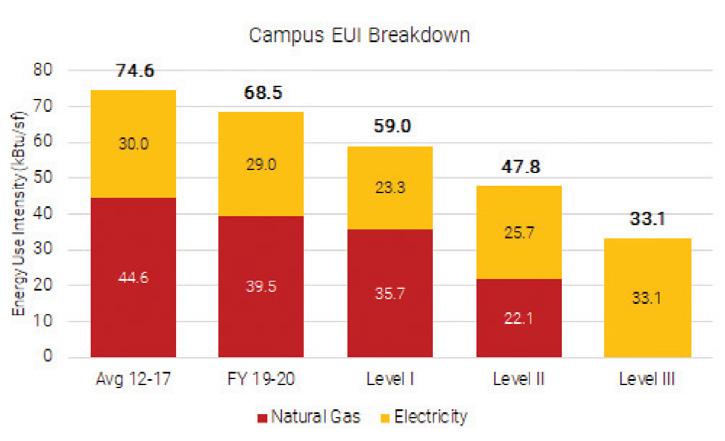
2. Implementing Level 3 will cost an upfront $2.5 M but will generate
SAVING OVER TIME
› The cost of inaction is much higher. Investments in sustainability and clean infrastructure reduce costs for the university, promote growth in local jobs and the economy, and reduce recovery costs from climate-related disasters. An analysis by the National Institute of Building Sciences found that for every $1 spent on mitigating natural hazards, $6 is saved. ANNUAL AND CUMULATIVE CASH FLOWS (INDICATIVE)
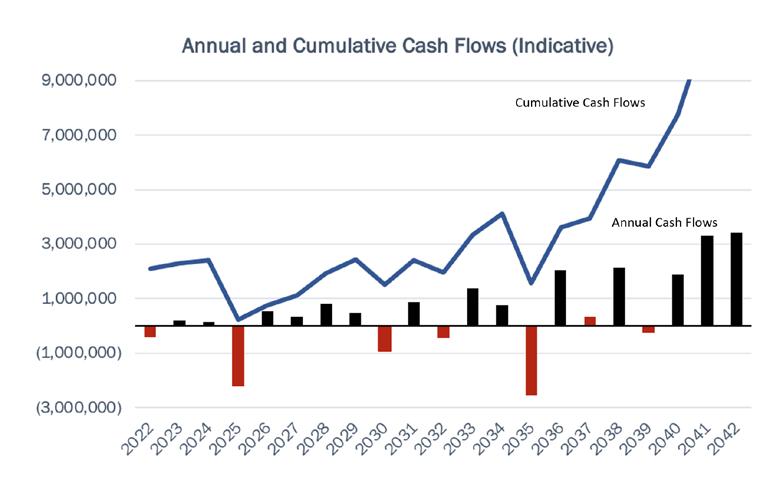
Figure B. Savings realized by the reduction in energy costs can be used to fund carbon, resilience, and curriculum goals.
Three immediate actions are needed to kick-start the GRF (for details see Appendix A):
1. Capitalize the GRF in 2022. A SSU GRF is currently established and allows the university to fund limited upgrades. The following modifications to the fund are needed to provide the funding needed for CAP projects:
a. An energy consumption baseline needs to be established to accurately track savings.
b. The actual expenses associated with that baseline needs to be recorded and tracked over time. This means that when energy costs rise over time, the expenses that SSU would have incurred considering baseline consumption, are measured and recorded.
c. A system to measure deviations from baseline consumption is required (i.e. metering and submetering).
d. The difference between what would have been spent, and the actual expenditures is transferred into a dedicated internal GRF.
e. An oversight committee is established which vets candidate projects.
2. Seed GRF with $2.5 M in 2022. An initial investment of $2,5 million is needed to jump-start a project that will result in energy savings and the accumulation of GRF funds.
If needed, this initial investment will be repaid from the GRF once energy savings are realized. If SSU (or Chancellor’s Office) does not seed the GRF, an additional $17.3 million-plus staff salary will need to be expended over the next 20 years to ensure the 2045 legal requirements are met.
Four leadership positions (2.5 additional FTEs identified above) are needed to steward SSU’s pathway to sustainability. The most urgent of these is the Director of Sustainability and Resilience Operations. This position is needed immediately to ensure capitalization of the GRF, launch implementation of a kick-off energy saving project that will accumulate funding in the GRF, and meet annual reporting requirements.
Costs to the university and its partners of implementing the CAP can be substantially reduced by leveraging existing and future funding streams. The Director of Resilience and Sustainability Operations and the Sustainability Programs Director must be able to work with GRF investment teams, prepare proposals, collaborate regionally, and pursue grants. Potential funding sources - in addition to the GRF - fall into four categories:
› Chancellor’s Office - Some types of funding are made available through the Chancellor’s Office, Systemwide collaborations may also be an important strategy for securing funding that benefits all campuses.
› Grants - Grants have the advantage of being “free cash,” but the disadvantages are that they are typically competitive, have funding criteria that may not align exactly with the desired strategy, and reporting requirements. Grants are typically one-time or multiyear and not available for longterm strategies. Table B describes several potential sources of regional, state and federal funding that the university can consider. Searchable databases, including the university’s grantsmanship portal, can be monitored regularly to take advantage of all available funding opportunities.
› Public-Private PartnershipsPublic-private partnerships can also be evaluated as a funding option for many CAP projects. Traditional university public-private partnerships include bookstore management, food services, and security. Going forward, the university can pursue these types of partnerships for energy efficiency, renewable energy, capital projects, and many other types of projects.
› Self-Funded - The university must also consider funding projects itself if outside funding cannot be secured. It’s important to note that, although not quantified in this plan, the costs of inaction on climate change can be substantial and often far outweigh the costs of mitigation and adaptation.
The goals of this plan are to set SSU on a path toward carbon neutrality, climate resilience, and academic success. While the proposed CAP actions can be daunting, the cost of inaction is much higher. Investments now substantially reduce longterm operation costs, reduce recovery costs from climate-related disasters, and promote growth in local jobs and the economy.
The goals are ambitious, but ones that we believe we can achieve. There will undoubtedly be twists and turns on this path, and we will need to stay flexible and adapt along the way. But if we can achieve these goals, we believe that we can build a community that is healthy, connected, and vibrant. We encourage everyone to embrace and fully participate in implementing this CAP.