
Campus SustainabilityPlan
Inclusive sustainability to support the natural environment and all people living within it

SUSTAINABILITY IS IMPORTANT TO CSUMB STUDENTS
In the 2019 Student Experience Survey, over 60% of students indicated that sustainability was important or very important factor in their decision to attend CSUMB. The percentage was even higher for under-represented minority students, students with lower GPAs and students with Pell grants. Serving our students is the core mission of CSUMB and deeply integrating sustainability into all areas of campus operations will ensure the grandchildren and great-grand children of our current students will continue to thrive at CSUMB.

Letters from the President & Associated Students

EDUARDO OCHOA PRESIDENT OF CSUMB


FROM THE PRESIDENT
As President of Cal State Monterey Bay, it is my honor to uphold the vision and goals outlined in the American College & University Presidents’ Climate Commitment. Achieving these goals will enable the campus to be a good steward for our community and the natural environment that we call home.
Cal State Monterey Bay is responding to the need to actively care for our environment and all people who rely on a healthy, functioning environment by creating and implementing the 2020 Campus Sustainability Plan. This Plan is an extension of the CSUMB 2013 Climate Action Plan, establishing ambitious goals to ensure that carbon neutrality can be achieved by 2030.
Cal State Monterey Bay is committed to making operational and academic decisions that have beneficial impacts on our region. Through this Plan, we encourage students, staff and faculty to participate in the process. Climate change poses real challenges for our society and Cal State Monterey Bay is uniquely positioned to lead through education and innovation.
Sincerely,
Eduardo Ochoa
FROM THE ASSOCIATED STUDENTS
The Associated Students continue to play an active role in the implementation of the goals in the American College & University Presidents’ Climate Commitment. As the student voice, we view sustainability as an important aspect of daily life on campus and wholeheartedly support the Campus Sustainability Plan and the goals outlined within it. We also understand the impact that sustainability will have on our future careers after finishing at CSUMB. The Campus Sustainability Plan includes three core coals which offer a broad vision for priorities when it comes to Sustainability at CSUMB. The three goals include reducing greenhouse gas emissions, planting trees, and diverting waste more effectively. As a university devoted to student learning and engagement, each one of us should play a role in supporting the goals of the Campus Sustainability Plan. We encourage everyone on campus to figure out which core goal they most align with and take action to aid in their accomplishment.
Sincerely,
Ana Gonzales, President, Associated Students
Ethan Quaranta, Sustainability Senator, Associated Students
Integrated Planning
This plan includes 12 topic areas with Environmental Justice and Inclusion being integrated throughout the plan. The goals and recommendation in each topic area consider existing campus guiding documents and plans, as shown in the exterior rings of the wheel. The 12 topic areas are categorized into relevant themes. Themes which are found in existing plans and guidelines: Student Success (Master Plan and Strategic Plan), Stewardship (Master Plan and Strategic Plan) and Placemaking (Master Plan and Living Community Challenge). The Sustainability Tracking Assessment and Rating System Report provides data collection and consistent review of metric that support efforts in every topic area identified.
RDSHIP
STUDENTSUCCESS
NALPCIGETARTS
GNIKAMECALP LIVINGCOMMUNITYCHALLENGE MASTERPLANGUIDELINES
TROPERSRATS
Timeline
2007 Associated Students funds an Environmental Committee
2009 Dining Commons and Otter Express achieve LEED Silver certification
SECOND NATURE CLIMATE COMMITMENT
In an effort to address climate change, colleges and universities around the world have committed to achieving carbon neutrality and accelerate the research and educational efforts of higher education to equip society to re-stabilize the earth’s climate. As part of this commitment, CSUMB has committed to carbon neutrality by 2030.
LIVING COMMUNITY CHALLENGE
In order to strengthen and provide structure around certain aspects of sustainability the campus integrated the Living Community Challenge (LCC) into the 2020 Campus Master Plan Guidelines.
STARS
The Sustainability Tracking, Assessment & Rating System™ (STARS) is a transparent, self-reporting framework for colleges and universities to measure their sustainability performance. We hope to continue to report annually, exceeding the requirement to report every three years.
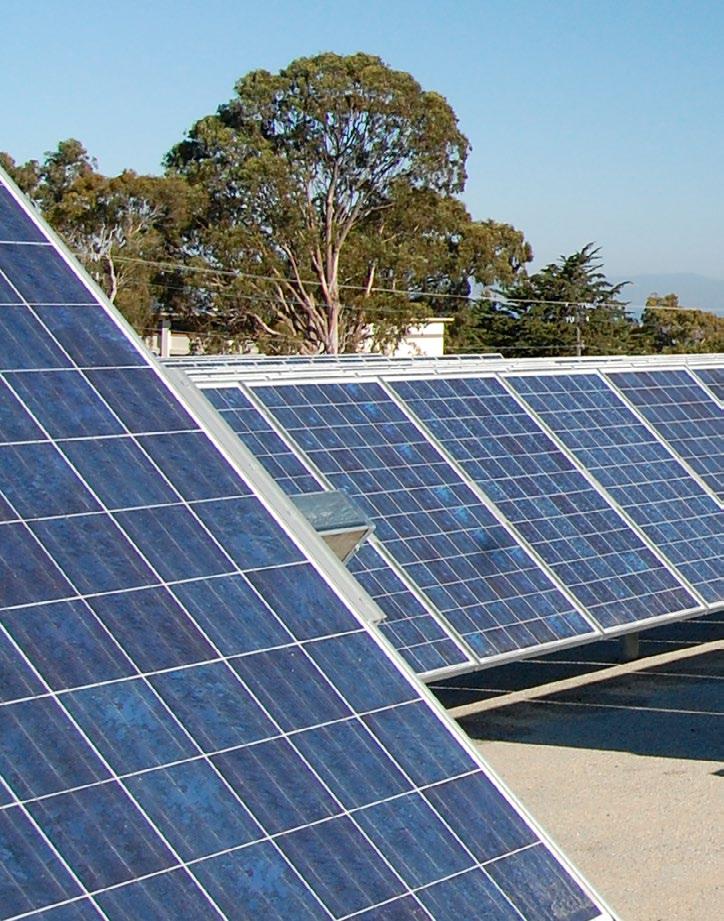
2011 1 MW solar installation complete Begins using Sustainability Tracking Assessment and Rating System (STARS)
2013 CSUMB completes first Climate Action Plan
Launches Environmental Studies and Marine Science program
2014 Board of Regents approve CSU Sustainability Policy
Sustainable Otters Living Learning Program - A sustainability focused residential living learning program launches in Student Housing & Residential Life
2015 Sustainable Hospitality program in College of Business launches
2016 Joel and Dena Gambord - Business and Information Technology building receives Platinum LEED certification
First Sustainability Director hired
2017
First campus to register as Living Community Challenge
2018
First campus to develop an approved Living Community Challenge Vision Plan
2019 College of Arts Humanities and Social Sciences building on track to receive LEED Gold Certification
Core Goals
The university has developed core goals that focus the campus community on three priority areas and serve as guideposts to unify the campus around a bold vision for sustainability. By aligning around these goals, CSU Monterey Bay can continue to be a leader and truly move the needle.
While efforts will be made to reach all of the strategies in this plan, by focusing communication, outreach and engagement efforts on these core goals, we can channel our collective effort to make a real difference for our campus and our global community.
In addition, every member of our campus community will be encouraged and expected to identify a way in which they can support these goals. This will allow a focused effort while still allowing for freedom of action. CSUMB is a campus that cares and a campus that gives back, actions taken to support these goals will collectively make a lasting difference.
1 Reduce Greenhouse Gas Emissions and Achieve Carbon Neutrality by 2030
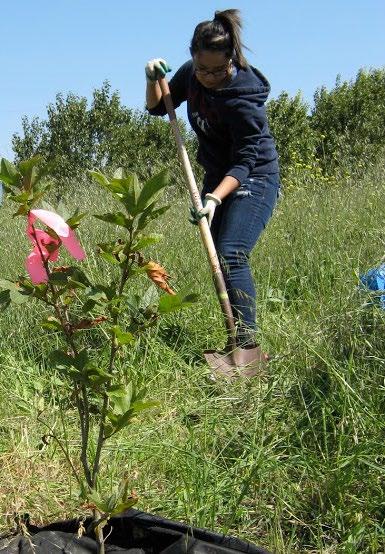
2 Plant 2,030 trees
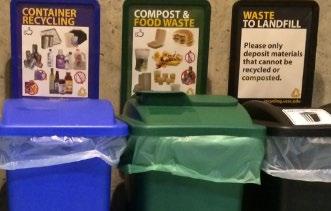
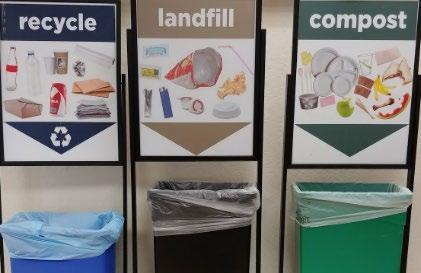
3 Divert 90% of waste from landfill

Environmental Justice & Inclusion
THE SUCCESS OF ACHIEVING A SUSTAINABLE CAMPUS, COMMUNITY & WORLD
is entirely dependent on the ability of everyone to engage in independent and collective action. In an effort to recognize and address the structural barriers and bias that limit full participation and action, every section of this plan integrates goals and recommendations that are aimed to break down these barriers.
In addition, the goals and recommendations below specifically address the need to further align the work of sustainability and social justice.
GOALS
1.Promote inclusive sustainability.
We recognize that the impacts of environmental destruction and pollution disproportionately affects already marginalized communities by conscious design or systemic neglect.
Therefore, “Inclusive Sustainability” is a commitment to improve the environment and the lives of those living within it regardless of income, class or identity.
In fact, it seeks to promote all unique cultural and ethnic traditions that support, respect and provide stewardship for the earth and its resources.
Recommendations:
Encourage members of sustainability-focused groups to participate as members of diversityfocused groups, and vice versa.
Consult with diversity-focused stakeholder groups on and off campus to ensure all viewpoints are integrated into sustainability-related projects and/or programs. (This may include campus, local and regional partners and contractors).
2. Deepen the campus understanding of how sustainability and social justice are interconnected and respond to opportunities to address intersectional issues.
We acknowledge that environmental degradation is directly and intricately related to social injustices. Recommendations listed throughout this plan aim to support this goal, most predominantly in the areas of food, transportation and habitat.
Recommendations:
Integrate sustainability and environmental justice into existing and planned social justice, equity and inclusion trainings and integrate inclusion and social justice into any future sustainability or climate change trainings.
Examine campus service contracts and make social justice a criteria for doing business with the the campus.
3. Ensure all students wanting careers in sustainability, environmental conservation, or similar fields are included and have access to opportunities that will further their professional ambitions.
We recognize that barriers to participation for sustainability and environmental positions exist for marginalized community members who have equal interest and ambition to address environmental concerns.
Recommendation:
Support traditionally marginalized students holding positions in the Sustainability Office, or other dedicated sustainability student positions on campus (including but not limited to Dining, the Otter Cross Cultural Center and the Associated Student Sustainability Senator).
Inclusion is all and while the motivation and avenue may vary, the collective effort and intention is shared.
-NIZHONI CHOW-GARCIA & ANA HERNANDEZ
Stewardship
WATER ENERGY FOOD WASTE
PROCUREMENT
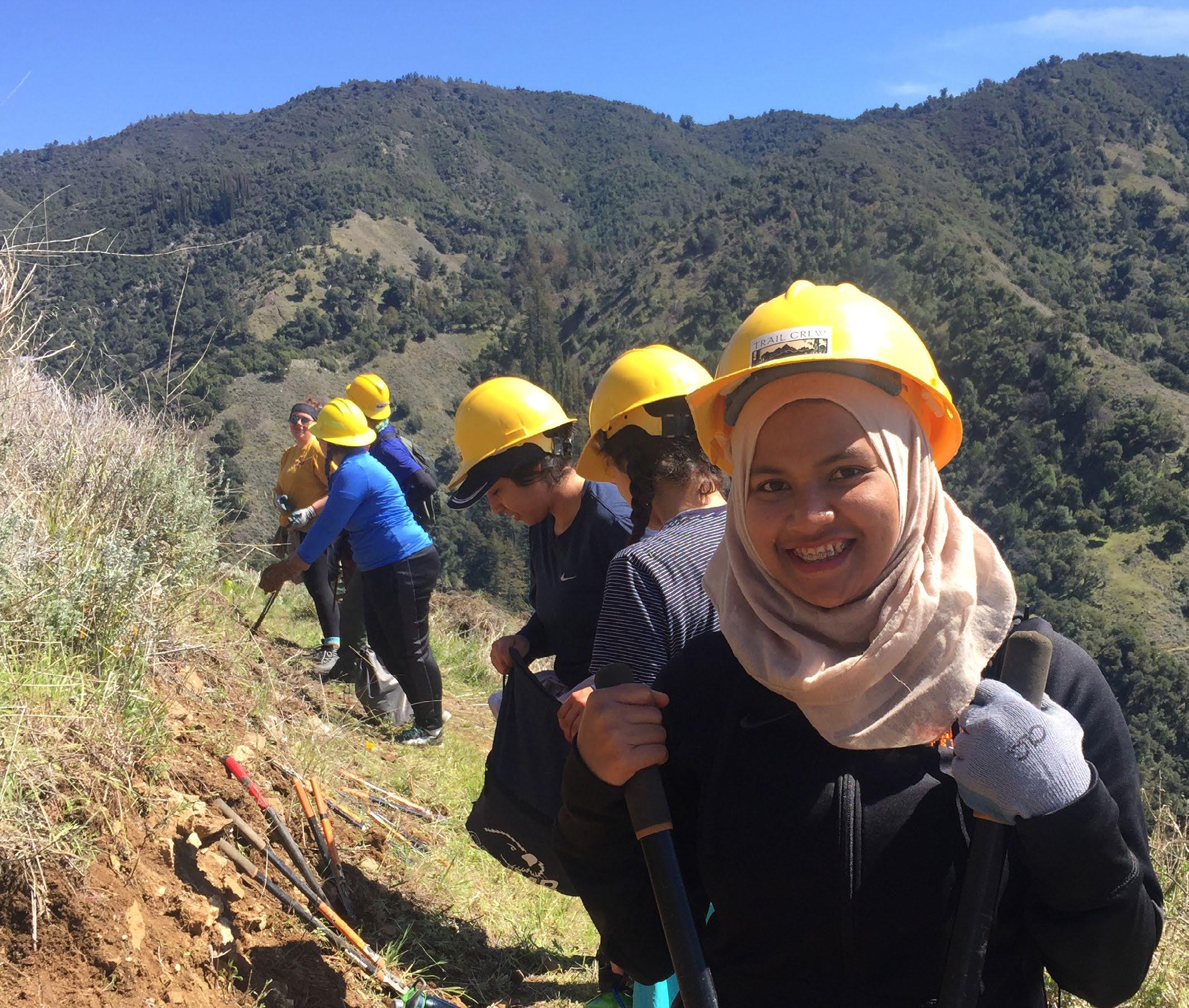
Photo: CSU Monterey Bay alternative spring breakers working to preserve the mountains of Big Sur.
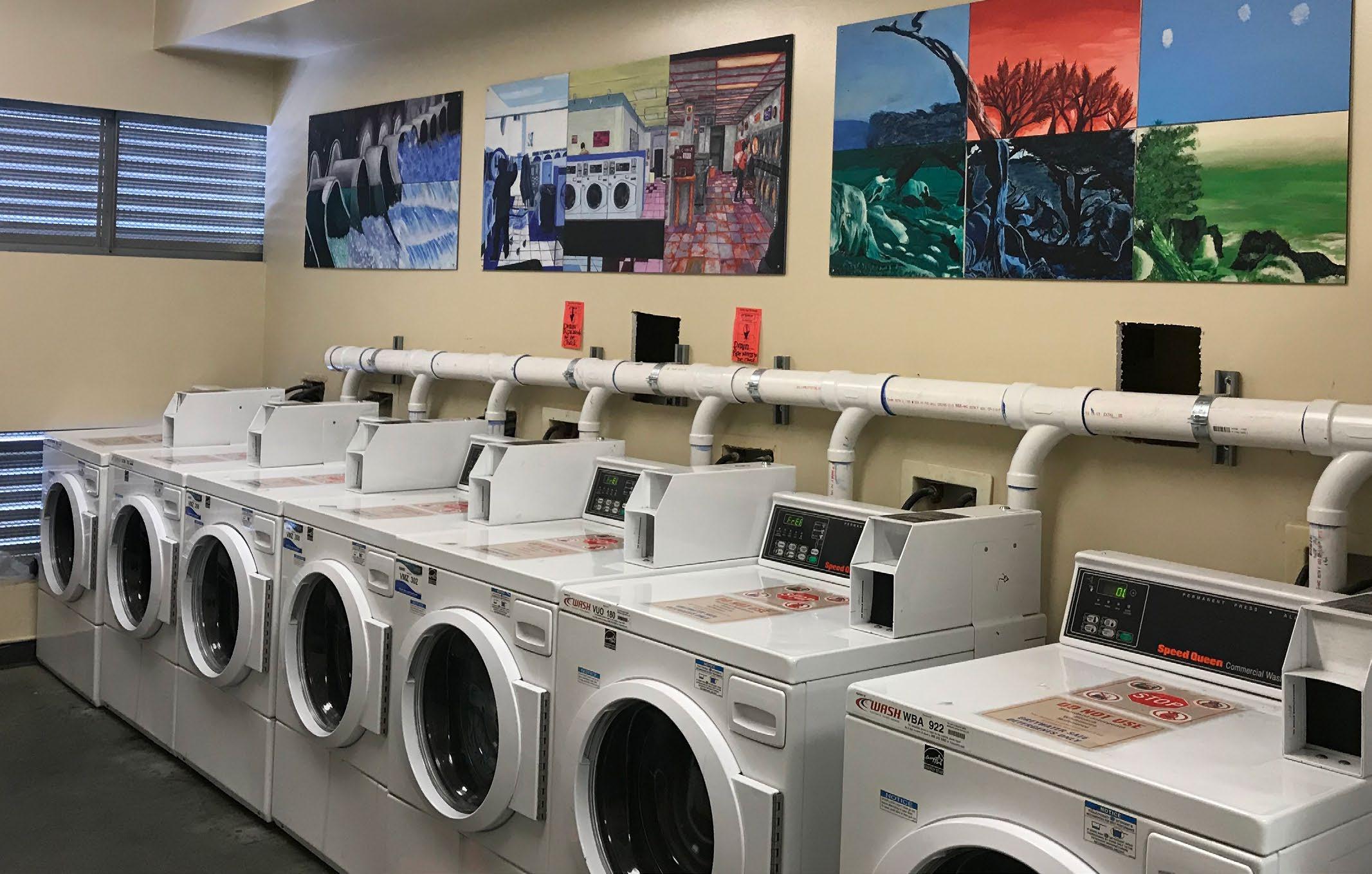
Laundry to landscape system installed in Pinnacles and features art developed by CSUMB faculty and students
WATER
Conserving water protects finite clean water sources, saves resources used in water treatment, and makes the campus more resilient in times of climate crisis or natural disaster. The campus responded well to the most recent drought, which lasted from 2011-2019, and exceeded all water reduction mandates, primarily by reducing irrigation. The goals in this section support lasting reductions.
ACHIEVEMENTS
• Installed low-water plumbing fixtures used to reduce building water use throughout campus.
• Laundry to Landscape model system installed in Pinnacles Residential Hall, collecting, filtering and irrigating adjacent landscaping with water from 8 washing machines.
• 26% decrease in potable water use since 2011.
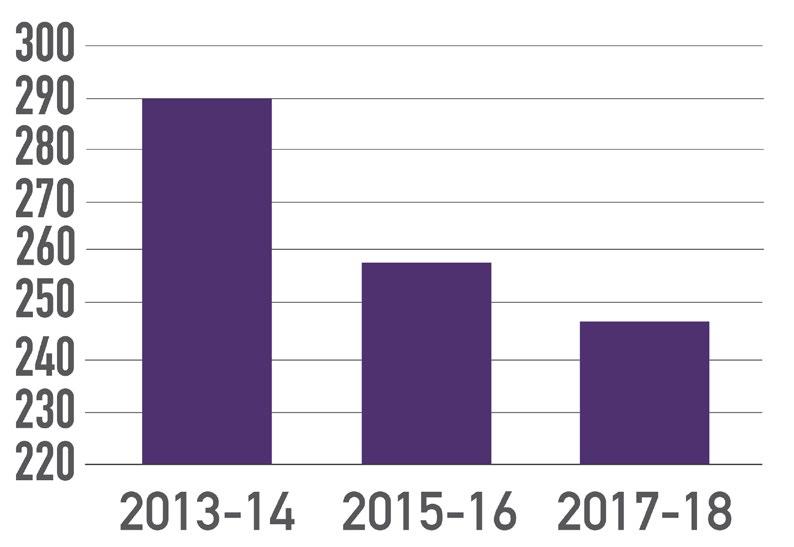
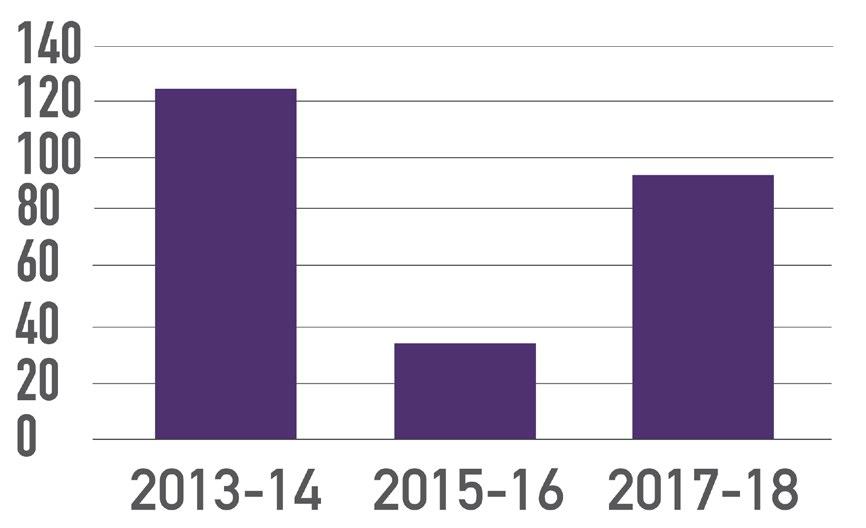
Reduction in per-person water use from 2010-18.
Building Water Use
Acre Ft/Year
GOALS
Irrigation Water Use
Acre Ft/Year
1. Advance innovative opportunities and partnerships to support water conservation and sustainability goals.
a. Use non-potable water supply for all non-potable water demands in any new improvement on campus and feasible retrofit.
b. Explore opportunities to meet Net Positive Water for campus.
c. Remain an active partner in discussions and agreements regarding regional, potable, and reclaimed water supply.
d. Explore partnerships and opportunities to show the natural cycle of water and our connection to it.
2. Reduce water use in all areas of campus operations.
a. Eliminate the use of water delivery services on campus. Install hydration stations in all buildings and key outdoor areas.
b. Increase native and/or drought-tolerant landscape.
c. Eliminate the use of potable water on landscape.
d. Use non-potable water supply for all non-potable water demands in any new improvement on campus.
e. Reduce potable water use to levels below CalGreen standards in all new construction projects.
f. Percolate all storm water within the campus boundary.
g. Implement storm water design guidelines and Low Impact Development for all new building construction and major renovation while enhancing landscape and beautification.
h. Identify the percentage of campus water fixtures that meet the highest standard of water conservation and upgrade 10% of fixtures below this standard every year to reach 100% water efficient fixtures.
ENERGY
The campus has committed to achieving carbon neutrality by 2030 for scope 1 (on site generation and fleet vehicles) and scope 2 (purchased electricity) emissions. We are also working very hard to reduce scope 3 emissions (travel, waste related emissions and embodied carbon emissions). In appendix A, we describe a detailed road map for how the campus will achieve scope 1 and 2 carbon neutrality. As a core goal, all members of our campus community are encouraged to identify ways to reduce their individual and department greenhouse gas emissions.
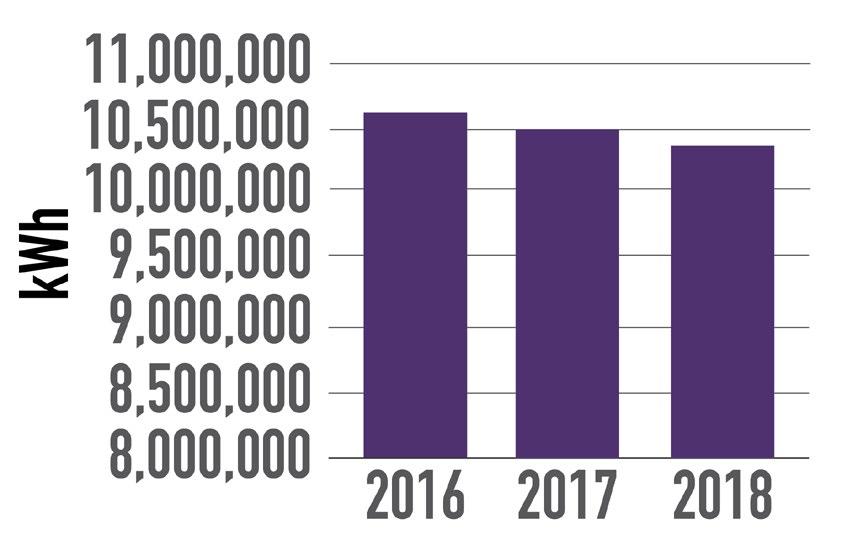
Campus Electricity Use
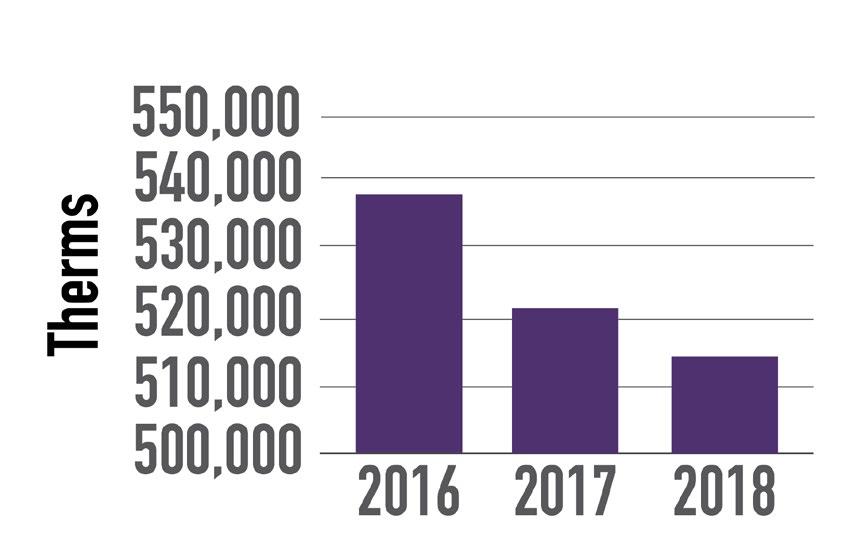
Campus Natural Gas Use
ACHIEVEMENTS
• The university has not increased energy use since 2010 despite 50% more square footage and twice the number of students.
• 300 lighting fixtures upgraded to LED bulbs.
• 17% of all campus energy use supplied by onsite renewable energy.
GOALS
1. Reduce greenhouse gas emissions and achieve Carbon Neutrality* by 2030.
Reduction in building energy use from 2010-18.
a. Identify a preferred scenario and make progress on the Carbon Neutrality Roadmap detailed in Appendix 1.
b. Explore Installation of a microgrid (renewable energy generation + energy storage) connected to the main campus enhancing the campus’s ability to maintain operations during power outages and serve its community during disasters.
c. Ensure that a CSU-wide community choice aggregation (CCA) supports campus sustainability goals and enables CSUMB to achieve carbon neutrality by offering a 100% renewable electricity option.
d. Formalize process for implementing infrastructure projects to ensure that a review of each project is conducted with respect to stated energy policies and existing plans and guidelines, including whether connection to the District heating and cooling system is feasible.
e. Continue to identify and implement energy efficiency upgrades in existing buildings.
f. In accordance with existing CSU policy, CSUMB will prioritize electrification of campus fleet vehicles.
g. Collect data related to business travel and study abroad carbon emissions.
2. Support individual and departmental behavior change to lower greenhouse gas emissions.
a. Remove all desk-side heaters and install smart power strips where possible.
b. Host energy-efficiency training for building occupants to support optimal energy efficiency.
c. Promote energy score cards for each building.
d. Encourage each department to designate an “energy owl” to support energy reductions within departments and offices.
e. Implement residential hall energy-saving competitions.
f. Expand energy-saving programs for Information Technology, to reduce energy use associated with computers, monitors, servers and other types of equipment.
*Carbon Neutrality means achieving a state in which the net amount of carbon dioxide or other carbon compounds emitted into the atmosphere is reduced to zero because it is balanced by actions to reduce or offset these emissions.
FOOD
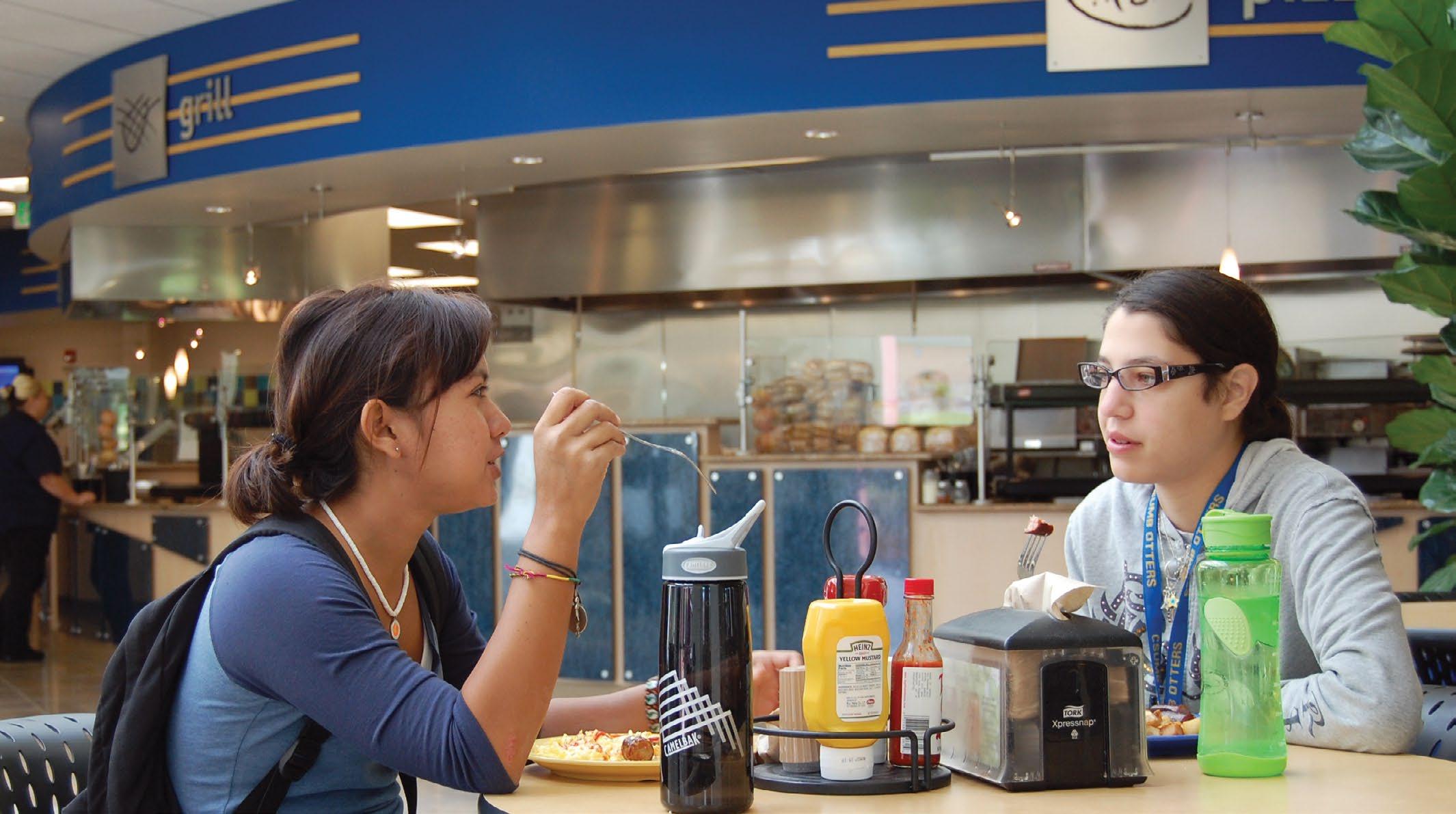
Providing and promoting healthy eating options has a positive influence on the health and wellness of our students and the environment. Food insecurity can impact students’ academic success and simultaneously food waste is a major contributor to GHG emissions. By redirecting good food to students we can create a win-win situation. The food system is directly connected to water use, GHG emissions and human rights, by conscientiously choosing what food we purchase and eat, our impact can extend far beyond campus.
Annual food and beverage expenditure on products that are ethically produced, according to STARS
Annual food and beverage expenditures on plant-based food Dining Commons menu is vegan Seafood purchased is sustainable according to Real Food Challenge
ACHIEVEMENTS
• CSUMB Starbucks donated 8,328 individual packaged items to students in the year 2019 and 285 Dining Commons meals were donated in Fall 2019.
• Sustainable dairy purchasing is at 4%.
• Food pantry received 1,037 unique visitors in 2019 and over 100 pounds of food were collected during Winter 2019 move-out and distributed in January to students.
GOALS
1. Promote food justice and access for all students, staff, and faculty.
a. Increase food collected and storage during move out for redistribution to students, staff or faculty in need and then to local organizations.
b. Provide better access to off-campus grocery stores through multiple modes by coordinating shuttle trips once a week.
c. Work with campus partners to continue to find new viable products that fit within the scope of Fair Trade, Non-GMO and/or RainForest Certified each year that suits the operations of the unit.
d. Provide produce or products that may be gathered through field “gleening” programs or programs similar to “imperfect produce”. These could provide food at a lower cost, while reducing food waste.
e. Continue collection of metrics and reporting on food recovery to meet and support basic needs.
f. Partner with local agricultural businesses to advance conversations and highlight advancements on sustainable agriculture.
g. Host events, or partner with existing events, to connect and educate the campus community on the relationship between food and the people who harvest, process and transport food.
2. Increase locally sourced* food in all campus food service venues.
a. Create expanded sustainability commons and transition campus garden into a community garden, including aquaponics, to promote food cultivation and farm-to-table practices.
b. Continue the Farmer’s Market on campus and encourage the purchase of locally grown food within the campus community. Provide more information on vendors and opportunities to meet and learn about them.
c. Identify and meet targeted percentage (by volume) of local food within each dining services location tailored to each unit’s program and offerings.
d. Increase education around the health, social justice and environmental benefits of sourcing food locally.
*Locally sourced means any fresh product being grown and sourced within 250 miles of CSUMB and processed within California
WASTE
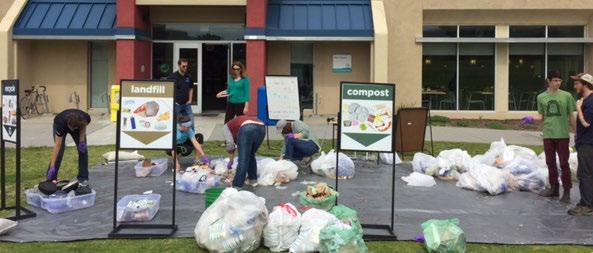
The state of California has mandated to divert at least 75% of waste related materials by 2020. Although the campus has historically met this requirement based on the high demolition and construction diversion, the daily practices of the campus community will need to improve to continue to meet these goals. Implementing programs that allow students to benefit from reuse initiatives both improve student success and help the University meet its state mandate.
ACHIEVEMENTS
• Initiated compost collection in all buildings where food service is provided.
• Pilot residential compost collection launched in 2019 and East Campus compost collection initiated as part of a student capstone in 2018 continues.
• Launched e-waste collection sites in 4 areas throughout campus.
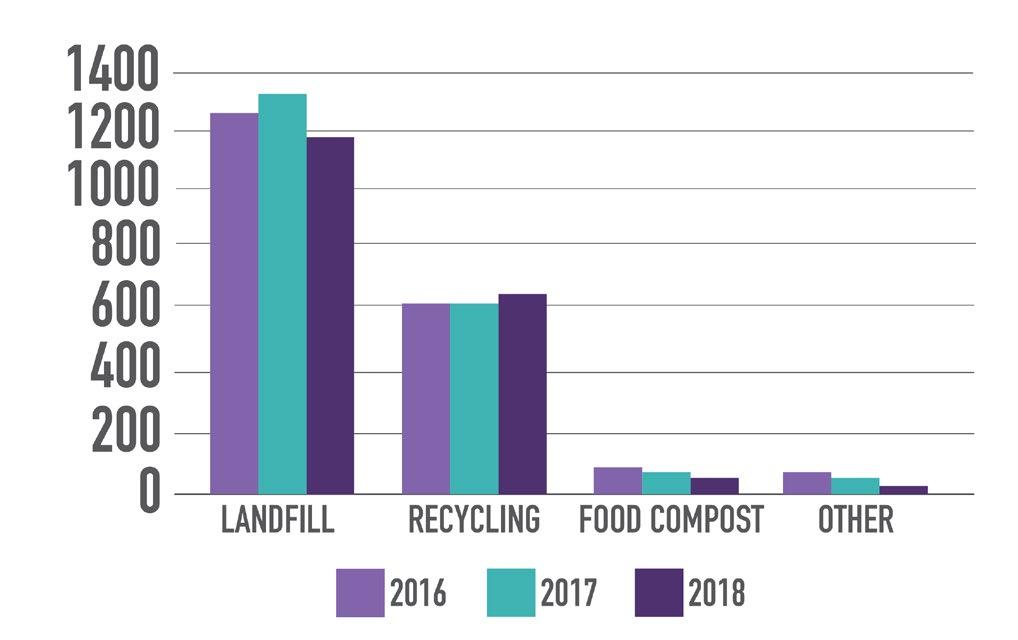
Tons of Material Generated by Disposal Category
Reduction in perperson waste generation compared to base year (2016)
Demolition related waste is diverted from landfill
GOALS
1. Achieve 75% diversion of non-demolition and construction waste by 2025.
a. Increase staffing to support the diversion requirements in an increasingly complex regulatory system. This could include hiring a full time Materials Manager and establishing a paid Zero Waste Ambassador program (5 – 10 students each year).
b. Ensure all events (student events as well as internal and external-partner sponsored) serving food integrate zero waste practices (such as “Bring Your Own”, provide 3-stream zero waste station and have zero-waste ambassadors present).
c. Enhance e-waste collection for the Information Technology department and host regular e-waste collection events once a year.
d. Eliminate all single-use plastic, except those necessary for medical or research by January 2022.
e. Host or provide 30 zero waste presentations and/or trainings to students, staff and faculty per year, ensuring content includes social justice impacts and the waste economy.
f. Eliminate SWAG at tabling events; annually choose one item campus-wide for the campus “gift”. If SWAG is necessary, ensure it is a sustainable option.
g. Integrate centralized waste stations, adding compost as appropriate, in all non-residential buildings on campus by January 2025.
h. Eliminate plastic liners in all centralized waste station recycling bins by January 2022.
i. Identify options for eliminating and reducing all non-recyclable materials in packaging for computers, monitors and peripherals. (primarily styrofoam).
j. Implement the Materials Management and Conservation Plan to reach consistency in bincollection infrastructure and signage.
k. Introduce an “otter-mug”, reusable cup program.
l. Market and expand food to-go container program. Allow students to use their own clean reusable containers.
2. Reduce waste associated with move out by 25%.
a. Identify an avenue for re-use of excess supplies, either as a zero waste reuse store on campus or an online exchange for goods.
b. Provide compost collection to all residential halls by 2023.
c. Host 2 “Swap” & “Fix it” events prior to move-out.
d. Host a dorm-garage sale prior to move-out.
e. Expand the Move-out window for Main Campus and East Campus.
f. Create and pilot a program for recovering household goods (furniture, sheets, dishes, etc.) and distributing them through re-sale, barter or as re-usable welcome kits.
g. Rent more fully furnished units.
h. Review campus or CSU policy that may hinder the ability to donate excess office supplies.

PROCUREMENT
Sustainable procurement means choosing products or services that have a lesser or reduced effect on human health and the environment when compared with competing products or services that serve the same purpose. Procurement also includes the integration of sustainability into contracts and vendor agreements. The University reports on all recycled content products purchased through CalRecycle’s “Buy Recycled” Program and supports CSU policy requirements such as those related to single use plastic reduction.
Percentage of Expenditures on Sustainable* Cleaning & Janitorial Products
Percentage of expenditures on office paper that is 90-100% post-consumer recycled and/or agricultural residue content and/ or FSC Recycled label
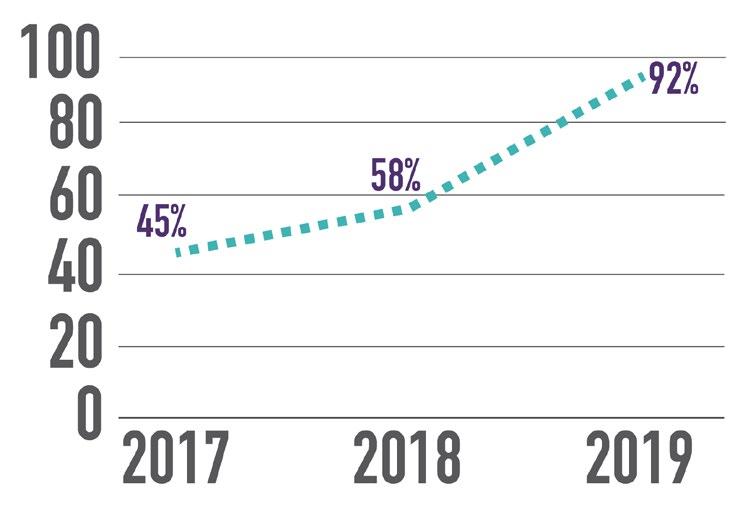
*Products are third party certified to meet sustainability standards
ACHIEVEMENTS
• 100% of electronics purchased in 2018 were EPEAT Gold certified.
• In FY 2018-19, the campus awarded contracts to 47 Disabled Veteran Business Enterprise qualifying companies and 309 contracts to small and micro businesses.
• Paperless business practices launched in 2018-19.
GOALS
1. Establish a framework for implementing sustainable procurement practices.
a. Create a “Green List” of sustainable products, and transition the top 10 most commonly purchased office supply items to sustainable alternatives by 2025.
b. Incorporate sustainability criteria into all vendor and contract decisions for State and Corporation.
c. Explore opportunities to better identify metrics and track sustainable supply chains (software).
d. Identify strategies for gathering sustainable procurement related data from non-preferred vendor purchases.
e. Complete “pre-waste” audits to identify ways to eliminate unnecessary purchases, identify conscientious alternatives and evaluate potential cost savings.
f. Complete an audit of packaging waste generated by large or frequently purchased items (food, technology equipment, etc.) and advocate for zero-waste packaging at the source by 2025.
2. Expand leadership opportunities and actions to promote sustainable procurement.
a. Include sustainability into training for P-Card use by individual offices.
b. Integrate 2 annual trainings on sustainable procurement into the business operation forum including, but limited to, staff from Finance & University Personal business services, for both the State and Corporation.
c. Increase the number of certified Fair Trade products and campaigns in an effort to become a Fair Trade University.
d. Ensure at least 3 staff procurement officers attend a sustainable procurement conference before 2025 and then provide lunch and learn sessions to colleagues.
e. Centralize printers and eliminate single-user printers.
f. Implement a policy requiring all campus departments to purchase 100% tree-free paper.
Place Making
BUILT ENVIRONMENT TRANSPORTATION HABITAT RESILIENCY
BUILT ENVIRONMENT
The physical built environment of the campus provides its overall look and feel in addition to housing students, staff, and faculty, providing learning environments, and creating the structure around which other systems interact. The planning and construction of capital projects (buildings and other systems) requires thoughtful planning, and allows the university to design not only sustainable buildings, but also create a sense of place and identity.
Office space is maintained in accordance with energy and water management benchmarking programs
All new buildings have achieved, or are on-track to achieve, LEED Ratings (2 Gold, 1 Platinum and 2 Silver)
ACHIEVEMENTS
• Living Community Challenge integrated into Master Plan
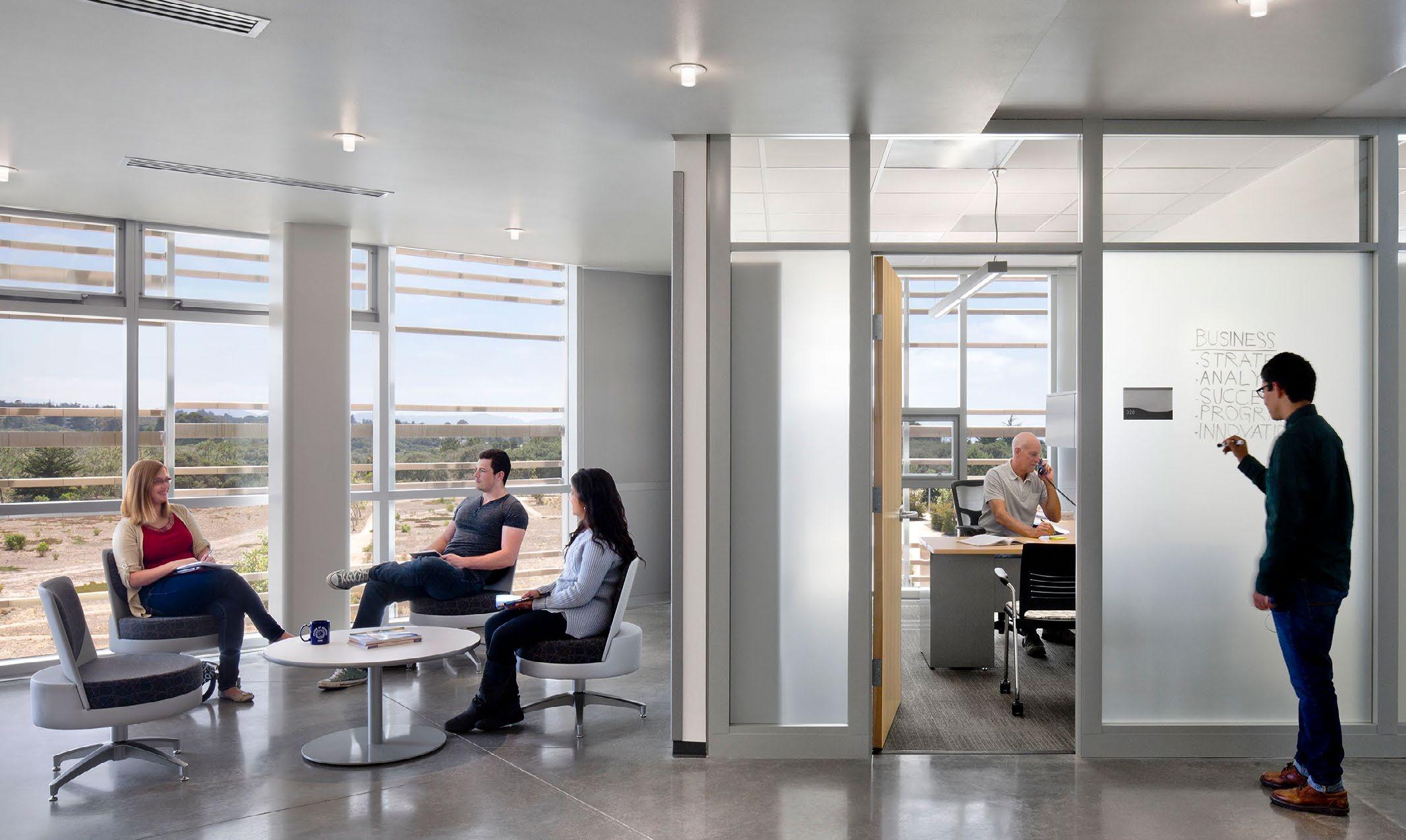
• In partnership with an academic course, a Biophilic Design Plan was created to integrate the historic, cultural and natural environment into the building design.
• Over 300 buildings and structures have been demolished with sustainable practices, including material reuse or recycling (over 90% diversion), falconry to prevent nesting, and water efficient techniques for removing lead paint.
GOALS
1. Plan for future projects to integrate Living Building Challenge certification options, in support of campus-scale efforts to meet Living Community Challenge goals.
a. For new construction integrate sustainability elements (and their lifecycle costs) during the feasibility study.
b. For relevant minor capital projects identify and integrate sustainability into scope, budget and project planning.
c. Design buildings to connect to exterior natural environments through application of biophilic design principles, emphasis on local ecology, history of local places, and maintenance of views as new buildings are constructed. It could also include specific elements such as living roofs and rainwater catchment.
d. Implement Universal Design guidelines to support equity and inclusion in the built environment.
e. Explore embodied carbon footprint for new buildings or other relevant projects to meet the Living Community Challenge.
f. Develop standards and guidelines for high-impact building materials (those more frequently used) to comply with AB262 and support the materials petal of Living Building Challenge.
g. Support beauty within and around the built environment by adding 15 major art installations and 76 minor art installations.
h. Support healthy buildings by ensuring the environment surrounding each building is beautiful and alive with healthy soil, native plants and pollinators.
2. Integrate user-perspectives and occupant behavior before and after building construction.
a. Incorporate behavioral science with post occupancy surveys to assess comfort, functionality and sustainability.
b. Plan for user-participation and engagement to meet optimal building efficiency.
c. Study open office concepts, co-working and shared-space use models by identifying 2-3 data points and key statements to influence cultural shifts in support of more efficient space use and community building impacts.
d. Incorporate and identify window “shading” best practices to prevent shades being drawn for extended periods.
e. Plan for monitoring indoor air quality.
TRANSPORTATION
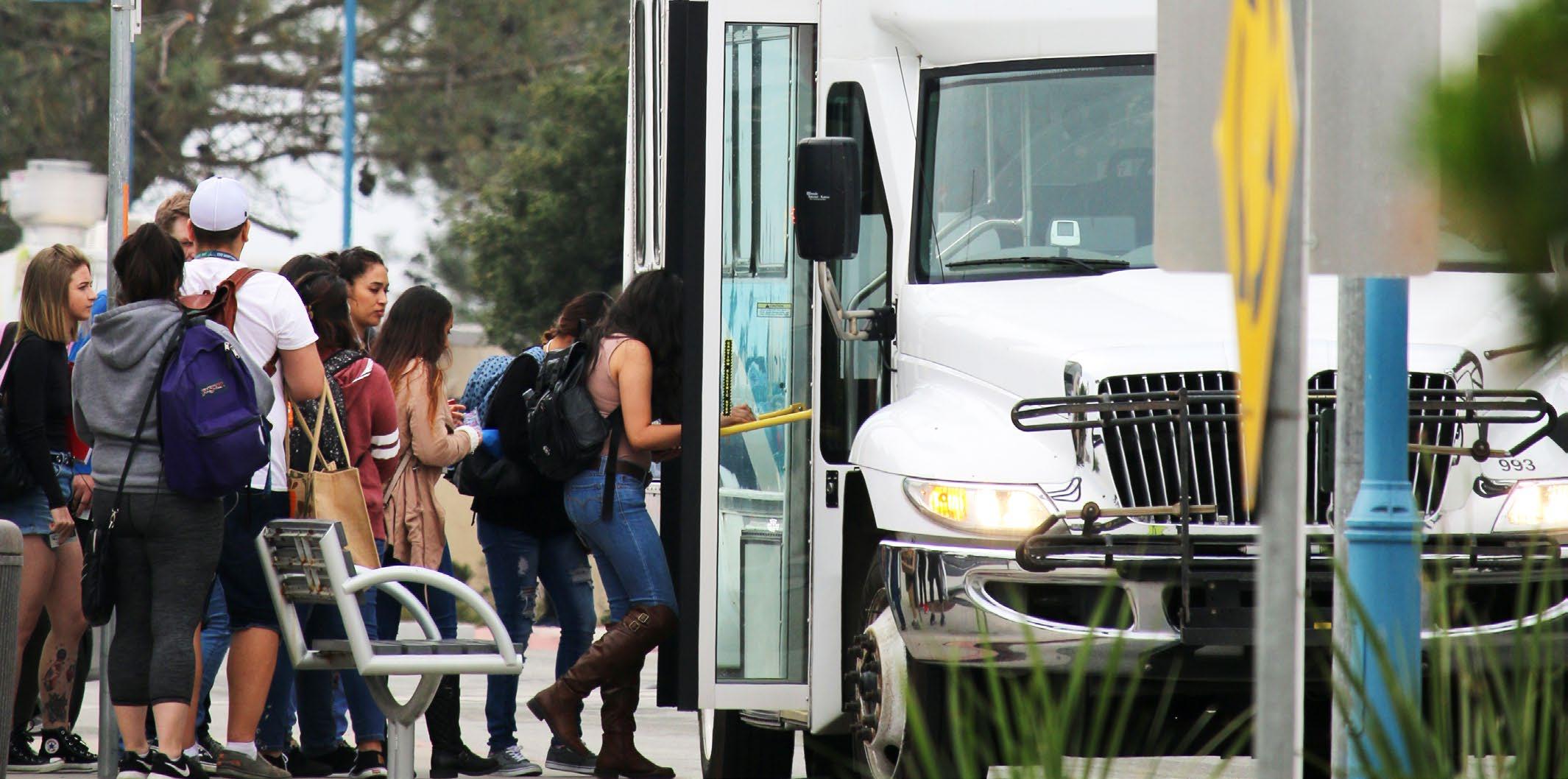
Globally, transportation is the second-leading source of emissions behind energy use. There are many benefits to reducing transportation-related emissions including increased health and wellness, reduction of on-campus traffic congestion, and a decrease in air pollution. On campus, the Otter Cycle Center offers commuter and high-performance bicycle rentals for students of all abilities. There are also 2-4 Zipcars on campus, reducing the need for car ownership. Investing in sustainable transportation options will be critical to support campus growth and build community.
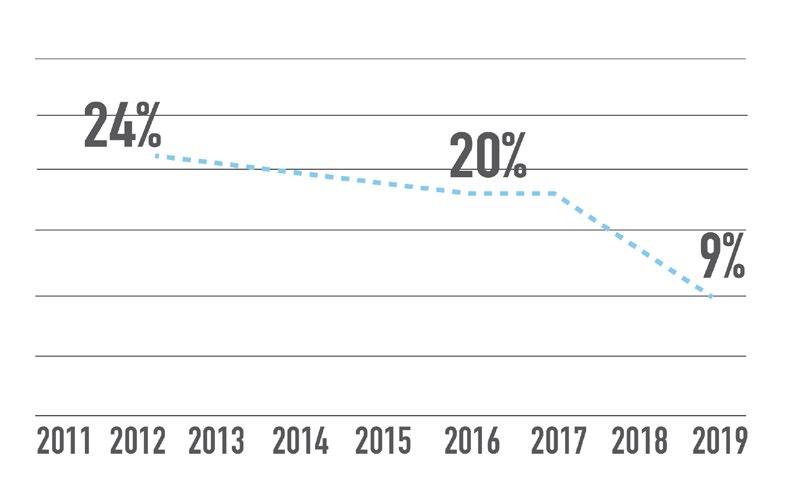
Decrease in EV/hybrids as a percentage of campus fleet since 2011
% of Students Using Sustainable Commute Options
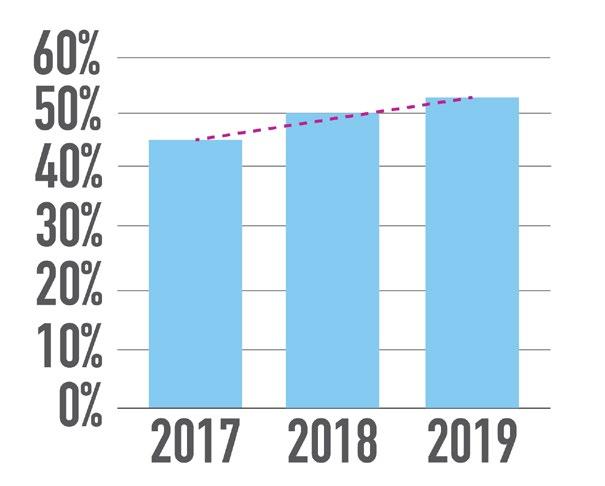
% of Students Taking Shuttle or Using Public Transit
ACHIEVEMENTS
• Two roundabouts added reducing congestion and GHG emissions.
• Free boarding of any MST network buses, with service from San Jose to Big Sur (237,000 trips were taken during the 2018-2019 academic year).
• Approximately 115,000 rides taken on electric scooters during the 2018-19 academic year.
• CSUMB named a Bronze Level Bicycle Friendly University by the League of American Bicyclists in 2019.
GOALS
1. Support modeshift from Single Occupancy Vehicles; double percent of bicycle, walking, carpool and bus/shuttle commute trips each by 2030.
a. Support the construction of the Fort Ord Recreation Trail and Greenway (FORTAG) through campus including a separated bicycle lane between East and Main campus.
b. Expand the campus multi-modal transportation system incrementally in every infrastructure project and new program.
c. Implement an zero emission campus shuttle and build in 2-3 trips/week to grocery stores.
d. Implement management practices that encourage employee commute travel by modes other than single occupancy fossil-fuel run vehicles.
e. Expand para-transportation services on campus. Maintain wheelchair accessibility on transit service through campus.
f. Expand accessible pedestrian pathways at every bus stop, bicycle parking area and parking lot, and connect to the closest appropriate building.
g. Provide Indoor secure bike parking and storage lockers for commuters.
2. Prioritize mobility access for those with limited physical abilities.
a. Hire a Transportation Demand Management (TDM) Coordinator and Student Outreach Assistant.
b. Create a Transportation Demand Management Plan (TDM) to reduce single-occupant vehicle trips.
c. Implement the existing policy limiting residential vehicles for first and second year residential students by 2021.
d. Increase the number of electric vehicle chargers on campus to 40+ by 2025.
e. Create a tiered parking permit structure with more specific permit types by fall 2025.
f. Use carshare (Zipcar) for faculty and staff business travel off campus, in place by Fall 2021. Pursue accessible Zipcars and Zipcar locations for East Campus.
g. Address reliable and affordable transportation as a Basic Need for students.
h. Increase the number of subscribers to GO-831, RideAmigos, and other rideshare platforms as they become available by 10% every year.
i. Outline a plan by 2021 to begin the transition of campus fleet vehicles to zero emissions.
HABITAT
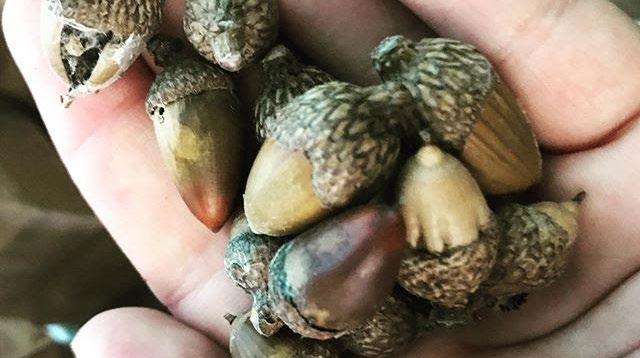
Habitat is vital for maintaining the health of wildlife and natural systems. The University’s natural habitats also contribute to its sense of place, student health and wellness, and promote a connection to and concern for our natural environment. CSUMB’s natural habitat should honor the history of place, including indigenous communities and military uses.
ACHIEVEMENTS
• Campus restoration fund established for native plants and trees.
• New buildings support infill development and reduce impact to natural open space.
Acres of campus designated as open space preserve (14%)
Students per year engaged in habitat restoration Students participated in nature-focused outdoor recreation activities in 2018-19
GOALS
1. Create a strong sense of place by connecting people to the natural environment.
a. Plant 2,030 native trees and plants.
b. Grow campus plants for formal landscape and habitat restoration projects.
c. Improve formal and informal outdoor spaces for people to gather (areas for sitting in groups and for being reflective and contemplative).
d. Highlight the history and changing geography of place, including indigenous, ranching, and military uses. Seeking to integrate natural habitat that reflects cultural and historical uses and planting.
e. Integrate edible landscaping into landscape design and maintenance, Create a method for sharing (map, signage, etc.).
f. Create a Special Area Plan for the Sustainability Commons and explore funding opportunities.
2. Strengthen management and oversight of habitat on campus.
a. Continue to utilize and expand existing programs, staff and faculty expertise to care for our natural environment.
b. Plant all native and/or drought tolerant plants in 100% of the new and “refresh” planting projects.
c. Form a landscape and habitat advisory committee to support campus ecosystems and habitat. Ensure the committee memberships reflects cultural and natural knowledge as well as operational stakeholders.
d. Restore and Improve degraded habitat and soil on campus.
e. Reduce the use of in-organic herbicides by reducing opportunity for weeds to grow: increase native plants, add mulch and manage irrigation. Use herbicides as a last resort.
f. Create a campus position to oversee land and soil restoration, habitat management and landscape support.
g. Create an adopt-a-zone program by 2025 for groups or departments to take care of specific areas on campus.
h. Create an easy to use best management practices guide to manage campus landscape and special status species and train Main and East Campus landscapers.
i. Create and follow an Integrated Pest Management Plan.
RESILIENCY
Having a resilient campus is vital for protecting the well-being of the University’s students, faculty, and staff in times of climate or public health emergency, or natural disaster. University campuses are natural hubs for the communities they serve, and as such are perfect candidates to become resiliency centers. CSUMB has completed an Adaptation Strategy to comply with the Second Nature Climate Commitment and also identified campus assets and vulnerabilities in the context of climate change.
Two terms are often used when planning for the impacts of climate change:
RESILIENCE refers to the ability to recover (bounce back) to the original state before the exposure to shock from the effect of climate change.
ADAPTATION refers to those crucial actions or plans that a community or household or individual will employ against a current or anticipated impact of climate change.
ACHIEVEMENTS
• The University has designated community resiliency centers on campus in the case of a climate emergency or natural disaster.
• Fire-load reduction continues to occur on Main and East Campus.
• A Director of Enterprise Risk Management and Environmental Health and Safety was hired in 2019 and is now updating all business continuity plans.
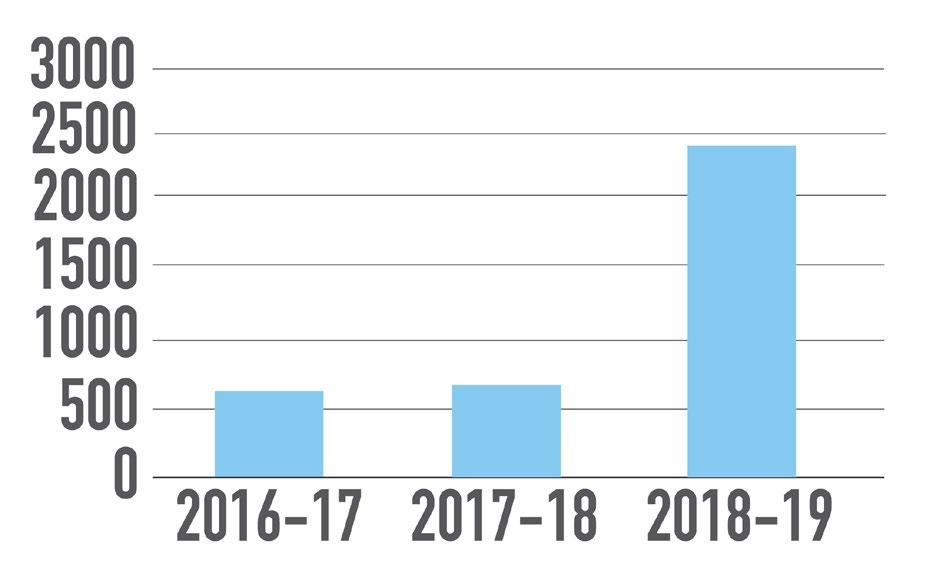
Increasing risk of power safety shut off event state-wide, which could impact the campus
GOALS
1. Promote wellness and encourage healthy behaviors alongside disaster preparedness to help communities face everyday challenges as well as major disruptions or disasters.
a. Review policies and systems that address food and housing insecurities impacting students as well as staff and faculty.
b. Create meditation and wellness gardens to promote mental health and peace.
c. Increase the percent of staff, faculty and students trained in emergency preparedness to support self-efficacy when responding to an emergency situation.
d. Support work from home for employees whose jobs can accommodate this option.
2. Align Emergency Preparedness and the Office of Enterprise Risk Management and Environmental Health and Safety goals to prepare for potential operational impacts that result from climate effects.
a. Create an Energy Resiliency Plan to reduce reliance on the electricity grid and maintain critical operations during emergencies.
b. Continue to focus on “wildfire fuel reduction” in East Campus and Main Campus in accordance with Campus Community Wildfire Protection Strategic Plan.
c. Ensure sufficient food and water supply will be available for the campus community in case of an emergency.
d. Audit indoor air quality monitoring systems and evaluate the ability for buildings to filter various degrees of air quality.
e. Require 100% of departments to complete and regularly update a Business Continuity Plan annually and share it with their staff by 2021.
f. Ensure all buildings and departments are educated on the University’s Emergency Operations Plan and develop individual department or building Emergency Procedures.
Student Success
ACADEMIC & CURRICULAR
STUDENT AFFAIRS & CO-CURRICULAR COMMUNICATION & ENGAGEMENT
ACADEMIC & CURRICULAR
Sustainability should be woven into all aspects of learning at CSUMB. Through a sustainability lens, science can uncover how climate change is affecting our ocean, business can prove the return on investment on sustainable choices, and theater and art can portray the impacts that environmental degradation is having on our communities. Every Academic department may learn from and contribute to sustainability through operational and procurement choices.
ACHIEVEMENTS
• Sustainability Literacy Assessment (SULITE) completed in 2017 and 2019 and indicated CSUMB student’s knowledge of sustainability across majors.
• Undergraduate Learning Outcome 2 integrates sustainability.
• 3,198 students participated in service learning (112,996 hours total).
Courses offered that are sustainability related
Departments that offer a sustainability course
Sustainable City Year Capstone projects completed
GOALS
1. Integrate sustainability practices into classroom and departmental operations.
a. 30% of all academic departments complete the Green Office Certification Program by 2025. (This would be 7 departments).
b. Create a sustainability statement for syllabi, striving to ensure 50% of all syllabi contain a sustainability statement by 2025.
c. Annually identify and recognize faculty and lecturers by college or program who are “Inclusive Sustainability Champions” in the classroom.
d. Pilot the Green Classroom/Lab program, once developed.
e. Identify/construct outdoor classroom spaces.
f. Track the location of and how many courses have outdoor instruction.
g. Develop a sustainability course designation by 2023.
h. Offer sustainability training opportunities to new faculty, lecturers and instructors.
2. Ensure all students experience sustainability-related topics in the classroom.
a. Support Undergraduate Learning Outcome 2: Ensure all students, upon graduation, can answer these two questions: (1) “How does my major or future profession contribute to environmental and social justice problems?” (2) “How does my major contribute to environmental and social justice solutions?
b. Administer the Sustainability Literacy Assessment every 3 years to track student knowledge and understanding of sustainability in support of the United Nations Sustainable Development Goals and Undergraduate Learning Outcome 2.
c. Offer faculty learning opportunities to support integration of climate change and sustainability into their curriculum, request the attendance and participation of two faculty from each department.
d. Integrate sustainability as a theme in the General Education Program.
e. Explore options for integrating sustainability and climate change into the First Year Seminar.
f. Support Service Learning outcomes through opportunities that increase awareness of, and address, the intersection of ecological and social justice issues.
g. Track Service Learning hours by environmental-justice focused partners, and increase by 10% by 2025.
h. Support the civic agency of students, empowering personal and professional behavior that rises to the challenge of climate change and motivates others to engage and act.
i. Increase total faculty applicants of CSU Campus as a Living Lab grant, from 3 to 15 by 2025.
j. Encourage faculty, class and (therefore) student participation in the Sustainable City Year Program, which partners class projects with the sustainability needs of partner cities. By 2025 we encourage each college to have had at least one course participate in the program.

STUDENT AFFAIRS & CO-CURRICULAR
Co-curricular education encompasses all areas of learning that happen outside the classroom. This is a great opportunity for the campus to weave sustainability throughout the student experience, especially in the areas of Student Life. By developing co-curricular opportunities, different groups can help unlock each other’s potential and create programs that are greater than the sum of their parts.
ACHIEVEMENTS
• The Campus Planning Department, School of Natural Sciences, and CSUMB Basketball team collaborated to plant trees and develop an innovative Fog Collection project that collects water.
• 3 Campus as a Living Lab grants received, supporting class projects that support campus sustainability.
• Over four campus departments offer sustainability-focused student positions on campus, including in the Sustainability Office, Otter Cross-Cultural Center, Associated Students and Dining Services.
Students received zero waste training in Fall 2019
Students that held sustainability positions from 2016-2019 indicated their job helped empower them to be engaged in their campus and/or community (of the same students) indicated their position helped them understand how to make change within an institutional setting
GOALS
1. Expand and integrate sustainability efforts into the operations and structure of Student Affairs.
a. 4.1 Encourage campus clubs to identify a sustainability advocate or representative within each club and meet with each other on a regular basis. Incorporate 2 new sustainability efforts into regular club operations (i.e., food, waste, Otter ware, promotion and advertising, sustainable swag).
b. 4.1 Partner with the Sustainable Otters Living Learning Program in Student Housing & Residential Life to identify 2 campus projects annually to implement for campus beautification and care.
c. 4.2 Identify additional opportunities for student positions that will support sustainability and provide leadership and professional development opportunities. Aim for 10 new positions by 2025, ensuring the recipients reflect the demographics of our student population.
d. Improve data collection regarding student learning impacts from co-curricular sustainabilityrelated engagement activities. Using 2018-19 as the baseline, increase the number of students volunteering or participating in nature-based, social justice opportunities.
2. Expand leadership opportunities for all students to promote professional success, community betterment and deepen their knowledge of sustainability.
a. Develop a Sustainability Co-Laboratory (or Collective) to: provide support for students working to advance sustainability efforts on campus, host trainings, events and speakers, and provide resources to our campus and regional community.
b. Partner with International Programs to integrate global perspectives on sustainability into their campus programs,
c. Ensure at least 5 students are serving on the President’s Sustainability Committee each year.
d. Continue to build the Green Office Certification Program as a student-led program, increasing student assistant positions, and expanding the number of offices certified to 25% of campus departments certified by 2025. Incorporate modules for Green Living as well as Green Classroom/ Lab Certification Programs.
COMMUNICATION & ENGAGEMENT
Communication and engagement is critical for all areas of the Campus Sustainability Plan. In many ways, this section is about the implementation of the plan.
GOALS
1. Enhance and develop a campus culture of sustainability.
a. In summer 2020 work with campus partners to create a communications plan for the core goals identified in this plan. Implement in Fall 2020.
b. Make training programs available to 100% of the campus population and have 50% of campus members participate in a sustainability-related training during the duration of their employment or study on campus.
c. Develop community based social marketing campaign efforts to promote the core goals to ensure that by 2025, 50% of the campus know what the core goals are and actions they can take to support them.
d. Identify sustainability champions in each department, unit or college to serve as a resource and motivator for action.
e. Recognize campus community members and partners that serve as champions for sustainability.
2. Use available programs and platforms to advance a broad range of sustainability recommendations that are measurable & scaleable.
a. Develop Inclusive Sustainability focused video training modules for students, staff, and faculty.
b. Identify 2-3 major campus events and publicly integrate sustainability measures.
c. Host at least 3 regional sustainability gatherings by 2026 to bring the community and CSUMB together to learn about and address sustainability challenges facing campus and the community.
d. Integrate an Eco-Justice themed speaker into the President’s Speaker Series.
e. Increase interpretive signage and learning opportunities related to campus operational, natural and cultural history by 50%.
f. Collaborate with external community agencies and partners to increase support for regional stewardship of natural resources.
g. Begin tracking the number of Sustainability Tour participants, specifically off-campus community members.
Do the best you can until you know better. Then when you know better, do better.
-MAYA ANGELOU
Acknowledgments
Thank you to the following departments and committees who participated in the Campus Sustainability Plan process:
Academic Senate
Associated Students
Athletics
Basic Needs Committee
Campus Planning and Development
Campus Safety Committee
Curricular and Co-Curricular Focus Group
Department of Education
Facilities Management
Health and Wellness Services
Information Technology
Inter-Club Council
International Programs
Materials Working Group
Otter Cross Cultural Center
President’s Committee on Equity and Inclusion
Social Justice and Inclusion Working Group
Student Life
Teaching Learning & Assessment Learning Group input
Transportation Committee
PROGRESS ON MEETING 2013 CLIMATE ACTION PLAN GOALS
The Campus Sustainability Plan is a continuation of this process.
26 of the 45 action steps identified in the 2013 Climate Action Plan have been achieved.
DEFERRED/IRRELEVANT, 5
INCOMPLETE/ NO ACTION, 14
Campus organizations
COMPLETE, 16
IN-PROCESS, 10
CREATING THIS PLAN INCLUDED :
Unique views of draft plan
Students, staff and faculty Ideas generated
Total comments received during plan development