

BEYOND TECHNOLOGY
Dr Stella Tsani on the economics, trust and policy needed to power the energy transition.
Stella Tsani





Publishers Note
Dear
Readers,
When we began planning this edition, we wanted to explore where the global energy transition really stands today. The more we spoke to experts, industry leaders and our editorial contributors, the clearer it became that the conversation has shifted.
The challenge is no longer simply developing new technologies. Around the world, innovation is moving at an incredible pace. The focus is now on how we connect everything together—our grids, infrastructure, investment, policy and people—to turn ambition into delivery.
Throughout this issue, our editorial team examines the opportunities and challenges shaping the next phase of the energy transition. From the economic and societal perspectives explored in our cover feature with Dr Stella Tsani, to insights into electric mobility, energy storage, industrial decarbonisation and emerging technologies, each article looks at a different piece of a much bigger picture.
One thing I’ve enjoyed most while bringing this edition together is seeing just how collaborative this industry has become. Whether it’s researchers, policymakers, manufacturers, utilities or technology innovators, there’s a genuine willingness to share knowledge and work towards common goals. That’s exactly what Climate Global News aims to support.
As a relatively new publication, we’re incredibly grateful to everyone who has contributed to this issue. To our writers, interviewees and industry experts—thank you for sharing your knowledge and helping us create something we hope informs, challenges and inspires our readers.
This magazine is only just beginning its journey, and we’re excited about what’s ahead. We look forward to continuing to bring you independent journalism, expert insight and the stories that matter across the global climate and energy sectors.
Thank you for reading, and I hope you enjoy this edition.
Abby Davey Publisher and Co-Founder


4-7
BEYOND TECHNOLOGY

Dr Stella Tsani explores why economics, policy, trust and social fairness are central to delivering a successful energy transition.

8-19
EDITOR INSIGHTS
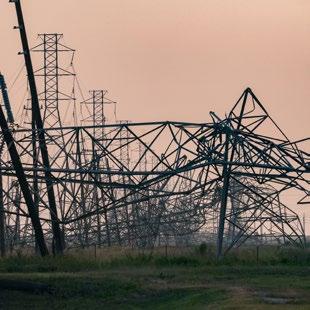
CGN editors Natasha Posnett, Darby Bonner and Martyn Shuttleworth examine the infrastructure pressures shaping the energy transition, from industrial electrification and offshore wind to climate-ready grids.
20-22
EV CONFIDENCE
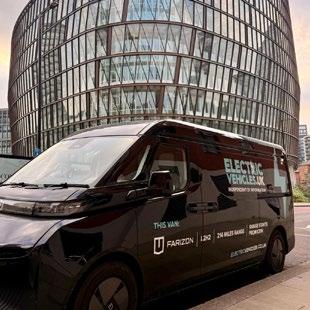
Tanya Sinclair discusses the UK’s electric mobility transition, from charging infrastructure and grid readiness to the need for clearer driver-focused policy.
23-24
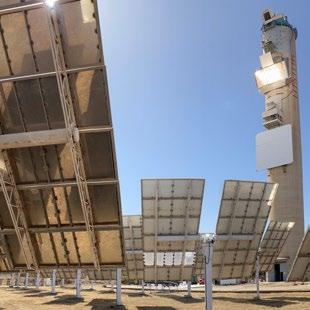
Odqa explains how concentrated solar thermal technology could help decarbonise industrial heat, replacing fossil-fuel burners across cement, metals, ceramics and mining.
25-27
ENERGY STORAGE
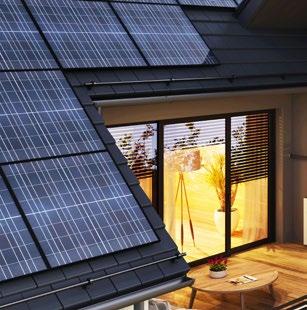
Guy Clark explains how batteries, long-duration storage and consumer flexibility can support renewables, reduce bills and strengthen the UK power grid.

28-29
ENERGY TRANSITION 2026
Abby Davey examines why the next phase of the energy transition depends on infrastructure, coordination and delivery, not targets alone.
30-31
ACROSS CONTINENTS
32-33
EMERGING PLAYERS

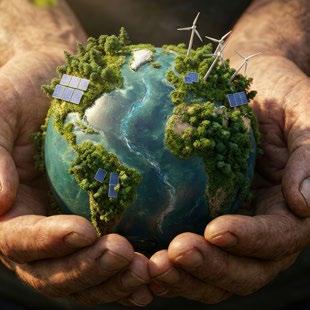
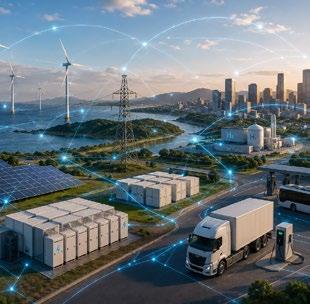
This regional overview explores how Europe, North America, AsiaPacific, the Middle East, Africa and Latin America are navigating different transition pathways.
A look at global innovators developing practical solutions for energy storage, grid flexibility, electric mobility, clean steel and industrial decarbonisation.
ECONOMICS AND THE ENERGY TRANSITION: BREAKING DOWN THE SILOS
INTERVIEWED BY MARTYN SHUTTLEWORTH
While we often look at the energy transition in terms of technology and the environment, the economic perspective is critical. Upgrading energy infrastructure needs to reach across society and tie the energy transition to economic growth. Governments need to develop long term policies that reduce inequality and see the transition as an opportunity rather than a burden.
To find out how economics shapes energy planning and brings together expertise drawn from across society, business, and academia, we talked to Dr Stella Tsani, Associate Professor of Economics at the National and Kapodistrian University of Athens, Greece.
Could you tell us about yourself?
I work at the intersection of sustainable development, energy transition, climate policy, natural resource management, and economic governance. My work focuses particularly on systems-level approaches linking energy, water, sustainability and resilience. Alongside academic research, I contribute to international policy processes, including IPBES, IPCC, UNEP’s Global Environment
Outlook (GEO-7), European sustainability initiatives, and governance discussions connected to the energy, natural resources and climate change community. A central theme of my work is that climate and energy transitions cannot succeed when treated purely as

Stella Tsani Associate Professor, Department of Economics, NKUA
“Climate and energy transitions cannot succeed when treated purely as technological challenges.”
technological challenges; they are also social, economic, institutional, and geopolitical transformations. I also support youth and female engagement in the energy and sustainability transition through research, network and outreach activities.
How do you see the energy system of the future, especially Europe and the Mediterranean?
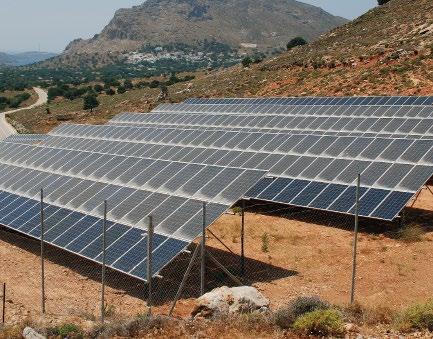
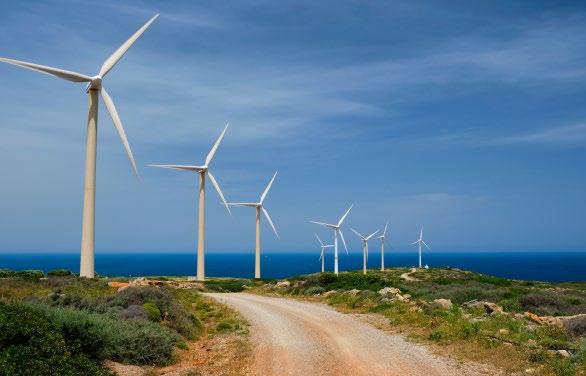
The future energy system in Europe and the Mediterranean will be more electrified, decentralized, interconnected, and renewable-based. We are already witnessing this transition. In the last two years renewables account for more than 40% of EU electricity generation, with wind and solar driving most of the growth. Greece itself generates more than 50% of its electricity from renewable.
The Mediterranean region is particularly important because it combines abundant solar and wind resources, strategic geographic positioning, interconnection potential between Europe, North Africa, and the Middle East, and major shipping and energy infrastructure corridors. With a diverse group of countries in its north and south shores, the Mediterranean is faced with environmental pressures related to energy and water demand, and infrastructure upgrades. At the same time the Mediterranean is highly climate vulnerable. Rising temperatures, wildfires, and water stress make adaptation inseparable from energy planning.
The renewable energy future of Europe and the Mediterranean requires major grid modernization, energy storage, flexible markets, digitalization, regional interconnections, and investment in resilience against climate extremes.
These are the areas where rapid developments should take place.
How do we integrate low carbon energy systems with economic systems? Can we create win-win situations?
Yes, we can create win-win situations, but only if the transition is designed carefully and fairly. Overall, integration of low carbon energy with economic systems, and win-win outcomes are possible through investment in clean infrastructure, industrial innovation, local manufacturing and skills development. It may be argued that decarbonization harms competitiveness. Increasingly, empirical evidence shows the opposite. Renewable energy improves energy security, reduces exposure to fossil fuel price shocks, lowers long-term operating costs, and creates investment opportunities. In the case of Europe, the energy crisis following the Russian-Ukranian conflict demonstrated its vulnerability to imported fossil fuels. In this case the expansion of domestic renewable capacity and efficiency was, and remains, both a climate strategy and an economic security strategy.
Energy transition may create imbalances, winners, and losers. Thus, the transition must also address inequality. If climate policies increase costs without social protection, public resistance grows rapidly. Social justice is therefore not secondary to climate action; it is central to its political viability.
What
are the biggest challenges and how can they be overcome?
Technological innovation and uptake show that the biggest challenges are not technological. They are institutional, financial, geopolitical, and social. Key challenges include insufficient grid infrastructure, slow regulatory responsiveness and update, fragmented governance, energy poverty, geopolitical instability, and lack of public trust.
The International Energy Agency estimated in 2024 that over 1,650 GW of renewable projects globally were waiting for grid connections. In Europe

specifically, electricity grids are designed for centralized fossil systems. Grid expansion and storage deployment are now critical bottlenecks.
Another major challenge is political fragmentation. Energy transitions require long-term policy consistency, predictable regulatory frameworks, targeted support and stronger regional
Continued on page 6
coordination. Ongoing policy, regional and global cooperation developments are not necessarily working into this direction, if not moving in the opposite one.
“Social justice is therefore not secondary to climate action; it is central to its political viability.”
You advocate crossdisciplinary approaches and preventing silos. What sectors are needed and what roles will universities play?
The energy transition cannot be delivered by the energy sector alone. For example, electrification increases water demand in some sectors, while climate change-driven water scarcity affects
hydropower and cooling systems. Food systems, land use, biodiversity, and energy infrastructure are deeply interconnected. To address the ongoing crises (e.g. climate change, biodiversity loss, pollution) and to meet sustainability and energy transition, we need strong sectoral cooperation across energy, water, agriculture, transport, industry, finance, digital technologies, and education.
Universities occupy a unique position in the sustainability transition. They are spaces where knowledge is produced, but also where different parts of society can meet. Universities are critical because they can integrate knowledge across disciplines while training future professionals. Sustainability challenges do not fit neatly within disciplinary boundaries or institutional silos. They require dialogue across sectors, from governments and businesses to civil society and younger generations. Universities must act as research centers and also as conveners connecting policymakers, industry, local
communities, and civil society.
Universities have a unique capacity and responsibility to lead sustainability by empowering students, fostering interdisciplinary collaboration and strengthening links between science and policy.
A successful energy transition requires community involvement.
How can we mesh policies with local needs?
The transition will fail if citizens perceive it as something imposed from above that does not concern them or include them. Trust is extremely important. Public resistance often emerges not because people oppose climate action, but because they feel excluded from decision-making or fear unequal burdens. Local participation is essential because communities experience both the benefits and costs of transition directly. Energy infrastructure affects landscapes, jobs, local economies, and

quality of life. As such, it requires inclusive, equitable and engaging policies that prioritize participatory planning, revenue-sharing mechanisms, local ownership models, targeted support for vulnerable households, and transparent consultation processes.
One issue with the shift to smarter, cleaner systems is the cost. Customers worry about rising bills while populations are weary of austerity and tax rises. Who pays and how?
This is one of the defining political questions of the transition. Indeed, system transformation comes with costs. But we should consider the time frame, what these costs capture as well as the costs of no-action and no-transformation. Transition costs need to be differentiated between short- and long-term costs as well as considering inter-generational burden allocation. Rising costs are also associated to environmental and social costs that have not been fully incorporated in the past in the market prices; consider for instance pollution and CO2 emission taxes. Most important, we should consider the cost of no-action, which is not just considerable, but it poses an existential threat to societies and economies.
When discussing the costs associated with energy transition we should consider whether it is better to bear them through unmanaged climate damages or through planned investments in resilient systems. Financing of transition and fair burden sharing can be addressed through a combination of private capital, public investment, innovative financial instruments, and targeted industrial policy.
Cost distribution matters enormously in the process. Low-income households and those contributing the least to the
problem should not bear disproportionate costs. This requires appropriate and targeted fiscal policies, energy efficiency support, and protection against energy poverty. As research shows and large financial institutions repeatedly emphasize, poorly designed climate policies increase inequality, while well-designed policies can reduce it through redistribution and investment.
“The biggest challenges are not technological. They are institutional, financial, geopolitical, and social.”
Marginal pricing ties the price of electricity to gas, with steep rises during global crises. What mechanisms could break this link and better use renewables?
Europe’s electricity market was designed around fossil-based systems where gas plants often set the marginal price. At times of crisis, this created extremely high electricity prices even when renewable generation costs remained low. The EU has already introduced electricity market reforms to accelerate the surge in renewables and the phase-out of gas and make consumer bills less dependent on volatile fossil fuel prices. Several mechanisms that help break the link with fossil fuels and promote better use of renewables include long-term contracts such as Contracts for Difference, Power Purchase Agreements, storage deployment, regional interconnections and more flexible demand systems. To move forward focus should not be just on generation from renewables but on flexibility, storage and balancing services as well.
The energy transition will need young professionals to bridge the skills gap. How do we promote this, and why is
encouraging female scientists, politicians, and entrepreneurs important?
The energy transition poses a significant challenge to have timely and adequate human capital. Address the increasing need for engineers, grid specialists, digital experts, energy economists, and technical professionals in clean energy deployment requires strong STEM education, interdisciplinary training, vocational reskilling and stronger links between universities and industry. Encouraging women’s participation is especially important because diversity improves innovation, decision-making, and institutional resilience. Excluding half the talent pool during a major structural transformation is simply inefficient.
As a potential energy hub, what role can Greece play?
Greece can play a role as a regional energy and interconnection hub linking Southeast Europe, the Eastern Mediterranean, North Africa, and wider European markets. The country has strong solar and wind potential, expanding LNG infrastructure, growing interconnections, and strategic maritime positioning. At the same time, it has made substantial progress in renewable deployment, particularly in solar energy. The energy transition opens a window of opportunity for Greece, that if appropriately managed can address structural issues the economy is facing such as high energy (fossil fuels) imports dependence and low competitiveness. The opportunity does not relate just to renewable energy production, but to regional electricity interconnections, green shipping, renewable energy in islands, energy storage, innovation ecosystems, and climate adaptation expertise relevant to the Mediterranean region. The central challenge that defines the opportunity for uptake is ensuring that governance, finance, education, and public trust evolve quickly enough to support the transformation at national level.
WATER, LAND AND MATERIALS: THE CONSTRAINTS RESHAPING INDUSTRIAL ELECTRIFICATION
WRITTEN BY NATASHA POSNETT
As heavy
industry electrifies,
the challenge is no longer just technological. Natasha Posnett explores how grids, water
systems, land availability
and material supply chains are beginning to determine
where industrial
decarbonisation can happen — and how fast.
As heavy industry electrifies, the challenge is no longer primarily technological. It is whether grids, water systems and material supply chains can scale fast enough to support it — and where that transformation is even possible.
The Real Limits
Industrial electrification is often framed as a question of emissions and scaling clean power. The focus is on technologies, targets and timelines.
But there is another side to this transition that is spoken about less; a more structural constraint, one that is beginning to dictate not just how industry decarbonises, but where it can happen at all.
Electrifying heavy industry is not only energy intensive. It is materially demanding and spatially constrained. Hydrogen production requires water. Renewable generation requires land. Grid expansion depends on vast volumes of copper, aluminium and specialised equipment. None of these systems scale instantly, and none operate in isolation.
The result is a growing tension at the heart of the industrial transformation because decarbonisation is reducing dependence on fossil fuels while increasing reliance on physical resources.
And as projects move from pilot stage to industrial scale, these constraints are shaping investment decisions, delaying deployment and beginning to redraw the map of industrial activity.
The Structural Constraint: Industrial Demand Meets Physical Limits
Electrification significantly increases industrial energy demand, but it is the concentration of that demand that creates the most immediate pressure. Strain is placed on regional grids that were not designed for such a level of intensity or speed of change.
The scale of the shift has already been predicted. Across the EU, electricity’s share of final energy demand is expected to rise from around 23% today to approximately 32% by 2030[1], and over 50% by 2050[2]. This expansion is not linear; it is clustered, uneven and infrastructure-dependent.
Electricity, however, is only one dimension of the transformation. Electrification introduces parallel resource requirements that are less visible but equally material. Hydrogen production creates sustained demand for high-purity water. Renewable generation requires land at scale, alongside transmission infrastructure that can take years to permit and build. Grid expansion depends on materials such as copper, aluminium and specialised components that are already subject to supply constraints and long lead times. Electrification increases demand not only for these core
“Decarbonisation is not only a technological shift, but a physical transformation.”
materials, but also for batteries and electrolysers, which rely on minerals such as lithium, nickel and platinum-group metals.
These supply chains are global, capitalintensive and slow to scale. As demand accelerates, they introduce cost volatility and procurement risk, while upstream environmental pressures increase as extraction becomes more complex and resource-intensive.
These systems do not operate independently. Water availability is shaped not only by natural supply, but by infrastructure, competing demand and seasonal variability. Land is finite and increasingly contested, with permitting processes extending project timelines. Material supply chains are global, exposed to geopolitical risk and upstream environmental pressures as ore grades decline and extraction becomes more complex.
The result is a set of interlocking constraints that must be resolved simultaneously. Electrifying an industrial asset is no longer a question of deploying a single technology, but of aligning energy, water, land and material systems within the same geography and timeframe.
Translating Constraint into Operation Risk
For industrial operators, these dynamics are translating directly into project risk.
Grid access has emerged as the most immediate constraint. Electrified assets depend on stable, high-volume power delivered at predictable cost. Where capacity is insufficient, projects face delayed connections, reduced utilisation
Continued on page 10
or structurally higher electricity prices. In some regions, connection queues are extending into multiple years, effectively slowing the pace of industrial deployment regardless of technological readiness.
Water introduces a different but equally significant limitation. Producing one kilogram of hydrogen requires roughly nine litres of purified water. At industrial scale, this creates sustained pressure on local water systems, often in regions where supply is already tightly managed. The challenge is not only availability but quality, as purification processes increase both energy consumption and operating costs, reinforcing pressure on electricity systems.
Time becomes a critical variable across all three constraints. Natural systems such as aquifers and watersheds operate on slower replenishment cycles than industrial investment timelines. Grid infrastructure can take years to expand. Material supply chains cannot be scaled instantly. Projects that are technically viable can therefore be delayed not by engineering challenges, but by the pace at which supporting systems can respond.
Land adds further complexity. Expanding renewable capacity to meet industrial demand requires both physical space and social acceptance. Permitting delays, competing land use and local opposition can extend development timelines significantly, introducing additional uncertainty into project planning.
Taken together, these factors shift industrial electrification from an engineering challenge to a coordination problem with direct financial implications. Capital is exposed not only to technology performance, but to infrastructure readiness, resource availability and regulatory timelines.
Market Response
In response to these overlapping constraints, industrial strategy is beginning to converge around a smaller number of system-level responses. Rather than optimising individual assets in isolation, projects are increasingly being designed around the availability of energy, water and infrastructure as
integrated inputs.
The most immediate shift is geographic selectivity. Electrification is progressing fastest where renewable electricity is abundant, stable and aligned with industrial demand. In Northern Europe, SSAB’s HYBRIT[3] initiative reflects this logic, with fossil-free steel being developed in regions with strong access to low-carbon electricity and supporting infrastructure. The project has demonstrated technical feasibility at pilot and demonstration scale, highlighting how industrial decarbonisation is closely tied to system conditions rather than technology alone.
Elsewhere, Iberdrola[4] is developing projects that link renewable generation with hydrogen production, typically at early commercial or demonstration scale. These projects aim to reduce exposure to grid constraints and improve system integration, although they remain dependent on further scaling of both renewable capacity and electrolysis infrastructure.
ArcelorMittal’s[5] decarbonisation efforts highlight the unevenness of grid readiness across its asset base. They are pursuing a range of approaches, including electric arc furnaces, hydrogen-based direct reduction and carbon capture technologies, depending on regional conditions such as energy prices, policy frameworks, scrap availability and infrastructure readiness. Rather than a single constrained trajectory, the company’s strategy reflects a portfolio approach shaped by local feasibility and system economics.
Water is being absorbed into the same logic. In constrained regions, developers are embedding desalination and reuse systems directly into project design, treating water not as an external input but as part of the industrial system itself.
In carbon-intensive sectors, individual projects are increasingly dependent on common transport and storage networks that sit outside traditional industrial boundaries. Shell[6] is investing in carbon capture and storage infrastructure, including projects designed to enable shared CO₂ transport and storage for multiple industrial emitters. These initiatives are
primarily in development or early operational phases, reflecting a broader shift toward shared decarbonisation infrastructure rather than standalone site-level solutions.
This is reshaping investment logic. Capital is flowing toward integrated developments that combine generation, infrastructure and industrial demand within a single system. These projects are more complex and capital intensive, but reduce exposure to bottlenecks that cannot be easily priced or mitigated.
The result is a gradual shift toward system-designed industrial strategy, where success is increasingly defined not by asset efficiency, but by
“Electrifying an industrial asset is no longer a question of deploying a single technology, but of aligning energy, water, land and material systems within the same geography and timeframe.”
compatibility with regional infrastructure capacity.
The Return of Industrial Geography
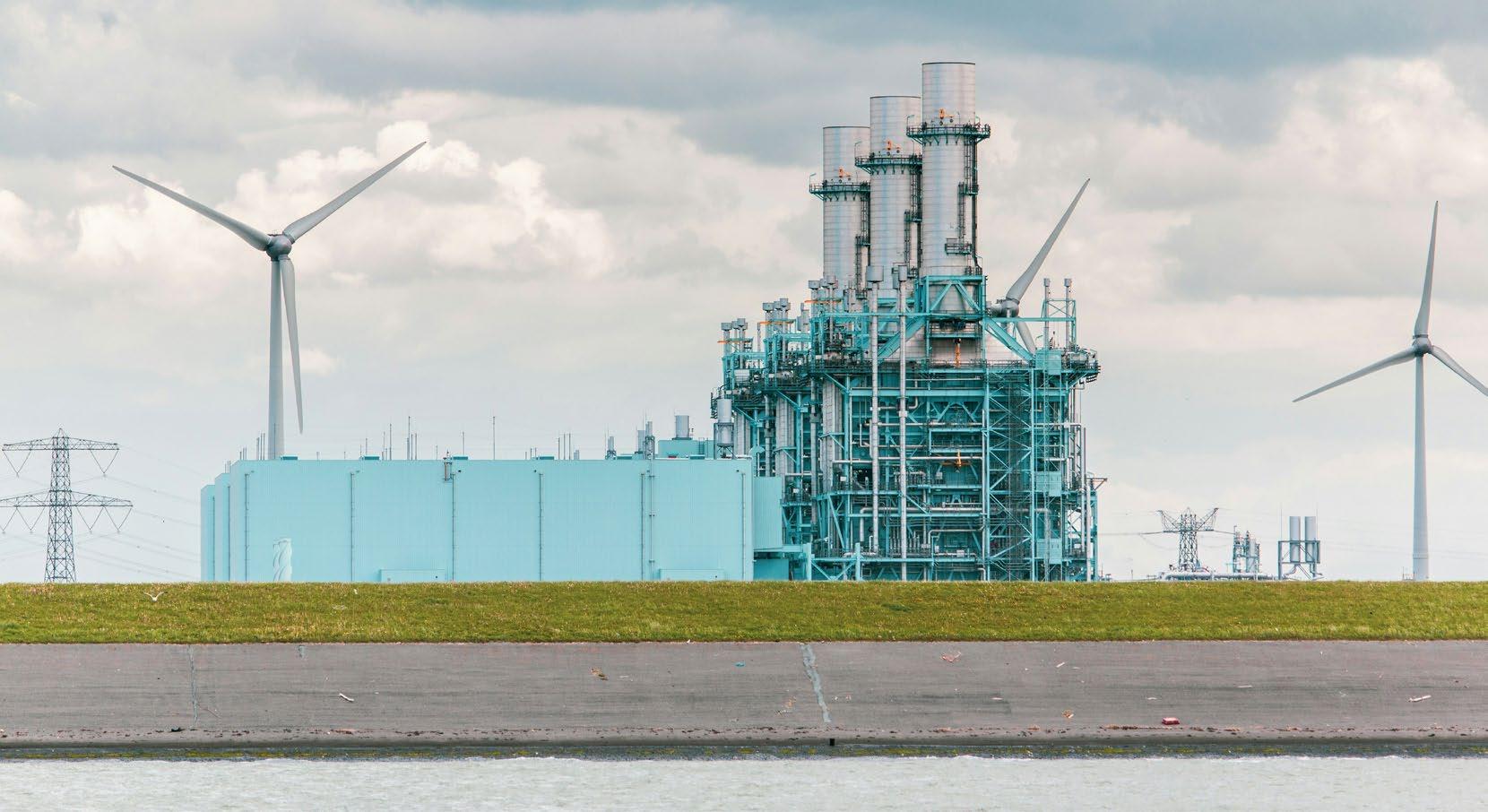
One of the most significant outcomes of these constraints to electrification is the resurgence of industrial clustering. Clusters are evolving from simple geographic concentrations into coordinated infrastructure systems that integrate power generation, hydrogen supply, carbon transport and water management at regional scale.
In Northern Europe, this model is already taking shape. Industrial hubs are aligning with offshore wind, hydrogen pipelines and carbon storage networks, creating interconnected systems rather than standalone projects.
Shell’s investment in shared carbon transport infrastructure reflects this shift toward collective solutions designed to serve multiple emitters.
This approach addresses multiple constraints simultaneously. Shared infrastructure improves utilisation, reduces duplication and enables more coordinated capital deployment.
However, it also reshapes competitive dynamics. Regions capable of aligning infrastructure investment with industrial demand are accelerating their transition. Those that cannot are facing increasing pressure. Industrial transformation is becoming geographically selective.
A Reordering of Industrial Activity
Taken together, these pressures are beginning to reshape industrial geography. Regions with abundant renewable energy, reliable water supply and available land hold a structural advantage. They are better positioned to support large-scale electrification with fewer bottlenecks and lower system costs, making them increasingly attractive for new industrial investment. By contrast, legacy industrial centres face a more complex transition. Retrofitting existing assets within constrained systems raises costs, extends timelines and increases risk. In
some cases, electrification may prove economically unviable without substantial infrastructure investment.
The result is not simply uneven decarbonisation, but the potential relocation of industrial activity. Production may shift toward regions where resource constraints are less binding, altering trade flows and reshaping industrial policy.
Capital allocation is already reflecting this shift. Investment is moving toward integrated projects that combine generation, infrastructure and industrial demand within a single system. These projects require higher upfront capital but offer greater long-term resilience.
The Next Phase: Integration Over Innovation
The first phase of industrial decarbonisation demonstrated that technological solutions are viable. The next phase will be defined by integration. Electrification is no longer driven primarily by innovation, but by the ability to coordinate complex systems.
Grid expansion must anticipate industrial demand rather than respond
to it. Water management must be embedded within energy planning and material supply chains must be secured alongside infrastructure development.
Electrifying heavy industry remains achievable, but it is not frictionless. The strain on water, land and materials reveals a deeper reality. Decarbonisation is not only a technological shift, but a physical transformation. The regions that align infrastructure with resource availability will move fastest. Those that do not may find that ambition continues to outpace capability.
Sources
[1] European Commission. Electrification https://energy. ec.europa.eu/topics/eus-energy-system/electrification_ en
[2] World Economic Forum (2024) Industrial Electrification: Strategies and Policies for Europe https:// initiatives.weforum.org/future-power-system/ industrial-electrification
[3] SSAB, HYBRIT – Fossil-Free Steel Initiative https://www. ssab.com/en-gb/fossil-free-steel
[4] Iberdrola, Renewable Energy Projects Overview https://www.iberdrola.com/label/iberdrola-projects
[5] ArcelorMittal, Climate Action Report https:// corporate.arcelormittal.com/sustainability/2025sustainability-report
[6] Shell, Energy Transition Strategy https://www.shell. com/sustainability/climate/shell-energy-transitionstrategy.html
OFFSHORE WIND GRID EXPANSION MEETS MARINE CONSTRAINTS
WRITTEN BY DARBY BONNER
As Europe races to scale offshore wind capacity, the next major constraint is no longer turbine technology or investor appetite. Darby Bonner explores how seabed congestion, grid bottlenecks, cable supply and marine regulation are reshaping the future of offshore wind deployment.
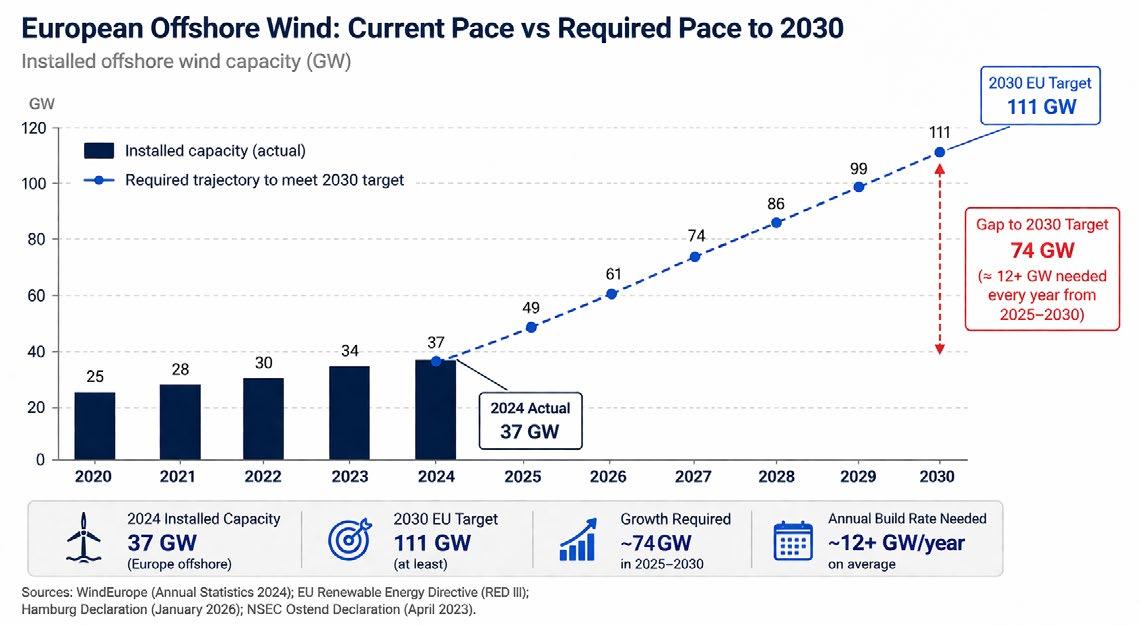
The offshore wind industry is no longer solely defined by technology or investor appetite, it’s entering a new phase constrained by the physical and regulatory limits of the ocean floor itself. Currently, Europe has 37 GW of installed offshore wind capacity, and the EU has recently set a new target of at least 111 GW by 2030. This requires regions to essentially triple its installed base in only six years. In the meantime, ten North Sea nations have signed the Hamburg Declaration earlier this year (Jan 2026), committing to deliver 100 GW of jointly developed offshore wind capacity across shared North Sea waters by 2050. This is part of a much wider regional determination, first pledged back in 2023 to reach 300 GW by 2050, with an immediate target of 120 GW by 2030[1].
The gap between those targets and current trajectory is not a question about wind resource of capital, but spatial conflict, regulatory bandwidth, and transmissional architecture. Each of these pressures are meeting at the same point - the seabed. Cable routes intersect with international shipping lanes, naval zones, fishing areas, and marine protected areas (MPAs)
that are themselves expanding as biodiversity targets and conservation goals tighten. The transmission infrastructure needed to bring electricity onshore is struggling to keep pace with the number of projects in development. The result is that offshore wind has shifted from being a generation story to a systems infrastructure hurdle.
Why Does This Matter At System Level?
The impacts stretch well beyond the offshore sector. Offshore wind is forecast to provide a growing proportion of the electricity supporting electrification in industry, transport and hydrogen generation. Offshore grid connection constraints or delays directly affect onshore decarbonisation timelines.
The magnitude of this problem is already measurable. Europe has more than 500 GW of potential wind energy capacity
awaiting grid connection assessments, and there is an urgent need to free up grid capacity. One example of the risk is the Borkum Riffgrund 3 wind farm in Germany [2]. Although fully installed, it will not be able to connect to the German
“The result is that offshore wind has shifted from being a generation story to a systems infrastructure hurdle.”
grid until Q1 2026 because the offshore transmission link is not ready [3]
In 2024, new installations were lower than expected, with grid bottlenecks, challenging financial conditions, and
Continued on page 14
“The offshore wind industry is entering a phase where the binding constraint is no longer capital availability or turbine technology, it’s integration.”
permitting delays preventing wind energy from expanding as quickly as governments had planned. As a result, only 2.6 GW of new offshore wind capacity was connected to the grid across Europe, just a fraction of the annual rate needed to meet the ambitious 2030 targets [4]
This mismatch is structural, as many offshore projects still heavily rely on radial connections linking individual wind
farms directly to the onshore grid. As deployment expands, this model multiplies cable corridors, blocks landfall sites, and creates bottlenecks at onshore substations.
Environmental regulation adds another layer of complexity. Habitat protections, detailed impact assessments, and biodiversity monitoring requirements extend permitting deadlines for projects already carrying multi-billion-pound capital commitments.
Responses Shaping the Market Today
The industry is not waiting for policy to solve these challenges. There are three distinct adaptive responses that are now visible.
Transmission as Infrastructure at Scale
TenneT, the Dutch-German transmission system operator system operator, has made the most progress toward a
system-level response. TenneT is not connecting individual wind farms, instead, it’s building standardised 2 GW HVDC offshore platforms designed to aggregate power from multiple wind farms before transmitting it to shore. These platforms will be designed to be multi-terminal ready and capable of connecting offshore converters across borders in the future. The operator has awarded €23 billion in contracts for eleven grid connection systems that will connect 22 GW of offshore wind in the Dutch and German North Sea. The systems are expected to be delivered by 2031. By 2031, TenneT plans to invest more than €40 billion to expand the offshore grid, raising its current capacity of 10.6 GW to a goal of 45 GW [5]
Cable Supply as a Binding Constraint
The shift towards coordinated offshore networks has surfaced a parallel bottleneck in subsea cable manufacturing. Nexans, one of only two global leaders in high-voltage subsea
cable systems, has seen a huge increase in demand. By the end of 2025, its adjusted backlog in power transmission was €7.7 billion, mostly from subsea interconnection and offshore wind projects, providing order visibility through 2028. By the first quarter of 2026, that backlog had grown even more, reaching an all-time high of €8.1 billion. In response, the company has doubled manufacturing capacity at its Halden plant in Norway and is commissioning a third cable-laying vessel. Prysmian is expanding its production capacity in a similar way. Long lead times for specialised cables are already causing problems with project schedules all over Europe. This is a supply issue that no one developer can control [6]
Ecological Risk as a Planning Variable
Developers with credible environmental plans are navigating permitting processes more efficiently than those who see ecology as a way to tick off a box. Ørsted has expanded biodiversity monitoring programs to many of its European projects. These programs keep track of how construction noise, cable installation, and seabed disturbance affect marine species. The importance is both environmental and commercial: showing that ecological mitigation reduces regulatory exposure on assets carrying multi-billion-pound capital commitments. This calculation is getting sharper as projects move into more sensitive marine areas.
The Implications for Capital and System Design
The above market responses are shaping how capital is distributed across the offshore wind value chain. Investment that once flowed primarily into turbine manufacturing and project development is increasingly directed toward transmission assets, grid technology, and cable infrastructure.
Long-term institutional capital and pension funds which are attracted by the regulated asset models linked to grid development, are starting to treat offshore transmission as a key and primary asset class rather than a secondary component of generation
projects like wind farms.
Energy companies like Equinor and RWE are developing offshore energy hubs that combine interconnectors, wind farms, and in some areas hydrogen production. These are not separate projects; they are groups of infrastructure that share grid connections and marine space. This model needs operators, regulators, and grid planners to work together ahead of time in ways that the industry has not been able to do on a large scale before.
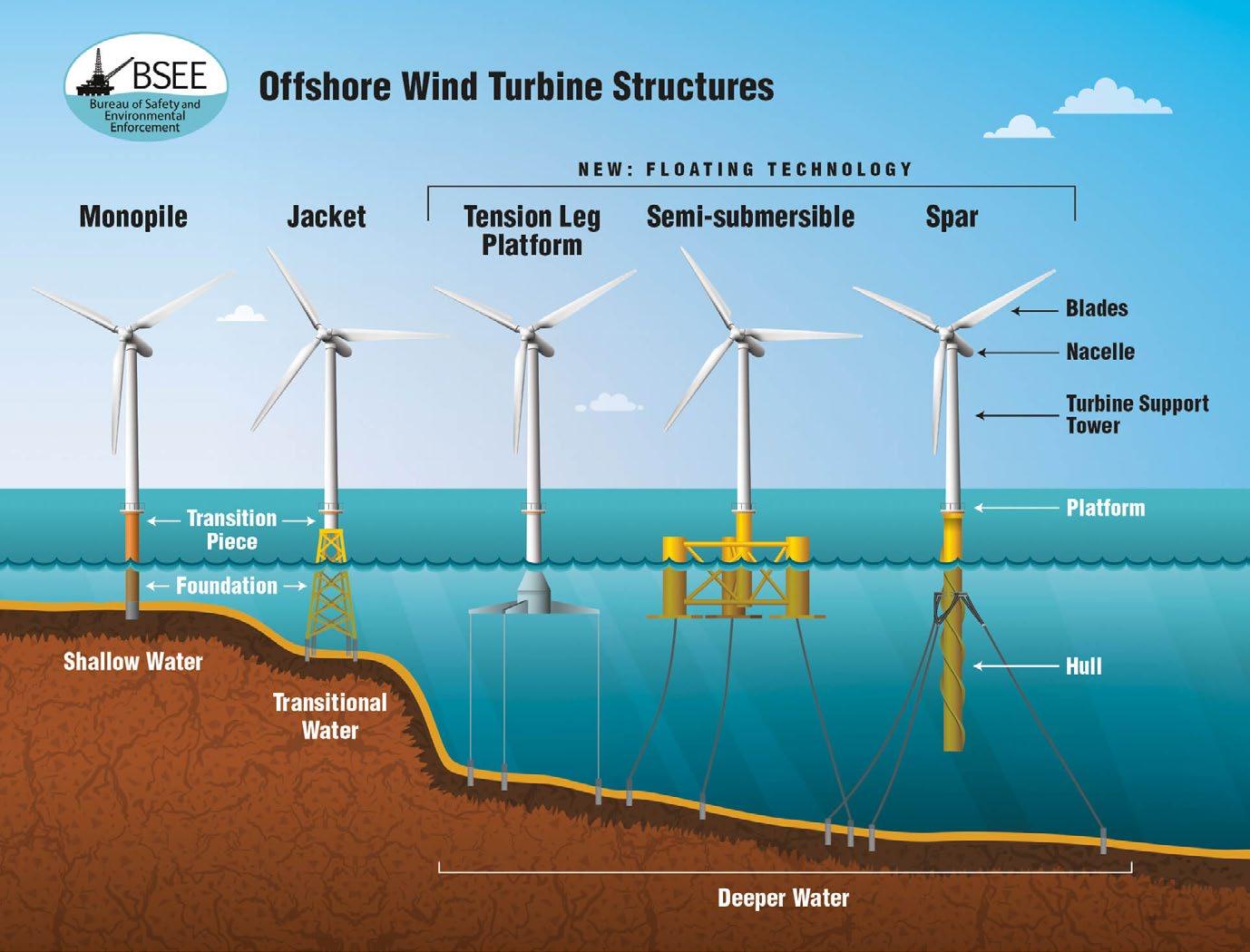
Floating wind technology could ease some of the spatial pressure by letting turbines work in deeper waters that aren’t as crowded as the continental shelf. The commercial use of floating wind is still in its early stages, but costs are expected to drop significantly. DNV predicts that by 2050, floating wind costs will drop by 70%, bringing them closer to the levelised cost of bottomfixed installations. This would greatly increase the area where offshore generation could work without adding to the congestion on the seabed that is currently limiting deployment [7]
What Is Defining the Next Phase?
The offshore wind industry is entering a phase where the binding constraint is no longer capital availability or turbine technology, it’s integration. The question is, can transmission networks, environmental regulation, and marine planning frameworks be coordinated fast enough to support the scale of ambitious goals that governments have committed to? The Hamburg Declaration marks a step forward to answering just that. It is committing North Sea nations for the first time to deliver part of their 2050 300 GW pledge via jointly developed offshore hybrid assets. This method will directly connect wind farms to more than one country via subsea interconnectors. What we see here is that political architecture is starting to align with the physical one [8]
But political alignment doesn’t fix problems with supply chain lead times, seabed spatial conflicts, or delays in getting permits in each member state.
“Closing it is the infrastructure challenge of the decade.”
The next step in offshore wind will be less about how many turbines can be put up and more about how quickly the industry can close the gap between how much electricity is generated and how quickly it can be sent to homes. Right now, that gap is measured in gigawatts. Closing it is the infrastructure challenge of the decade.
Sources
[1] https://windeurope.org/intelligence-platform/product/ wind-energy-in-europe-2024-statistics-and-the-outlookfor-2025-2030/
[2] https://orsted.com/en/media/news/2025/12/ borkum-riffgrund-3-orsteds-largest-offshorewind-f-14698236
[3] https://www.renews.biz/offshore-wind/europeinstalled-15gw-of-wind-in-2024/
[4] https://www.rinnovabili.it/wp-content/ uploads/2025/02/Wind-energy-in-Europe-2024.pdf
[5] https://www.tennet.eu/2gw-program
[6] https://www.windtech-international.com/companynews/nexans-reports-higher-margins-on-subsea-cablesand-grid-activity
[7] https://northseaenergyroadmap.nl/offshore-wind
[8] https://renews.biz/109632/north-sea-nations-to-sign100gw-offshore-pact/
CAN THE UK'S RIIO FRAMEWORK SHAPE
CLIMATE RESILIENCE INVESTMENTS FOR US ELECTRIC UTILITIES?
As electricity demand rises from data centres, electric vehicles and industrial automation, utilities face growing pressure to modernise ageing systems while preparing for more extreme weather. Martyn Shuttleworth explores whether new regulatory models can help deliver climate-resilient power infrastructure.
WRITTEN BY MARTYN SHUTTLEWORTH
With the energy transition underway, society’s reliance on data centres, electric vehicles, and industrial automation grows. Alongside rising power demands, consumers want fewer outages while governments promote Net Zero, creating a perfect storm for electricity providers. Addressing these challenges requires significant investment, but climate change influences every decision.
When modernising infrastructure, utilities have to develop electrical systems that shrug off extreme weather, but the processes used to
prioritise investments struggle with the uncertainty behind climate change. A utility risks wasting money preparing for an event that never happens, but failing to invest in climate resilience can mean destroyed systems.
In the US, climate resilience challenges the traditional cost-benefit methods used to prioritise investments and regulators are exploring new approaches. One model, the UK’s RIIO, encourages climate resilience through innovation rather than just strengthening infrastructure. Could this performance-based model transfer to the US and help deliver climate resilient systems?
Nature’s Threats
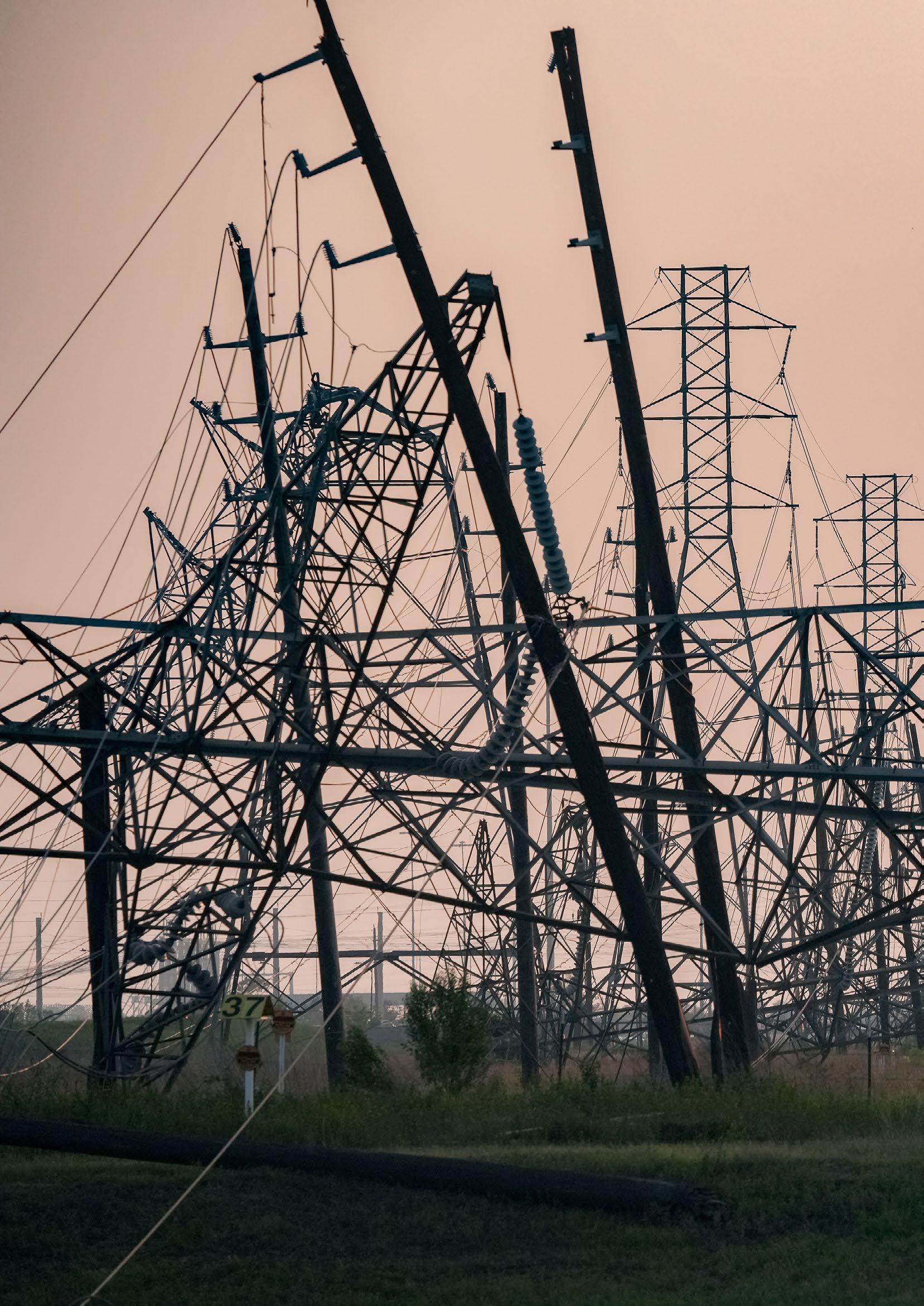
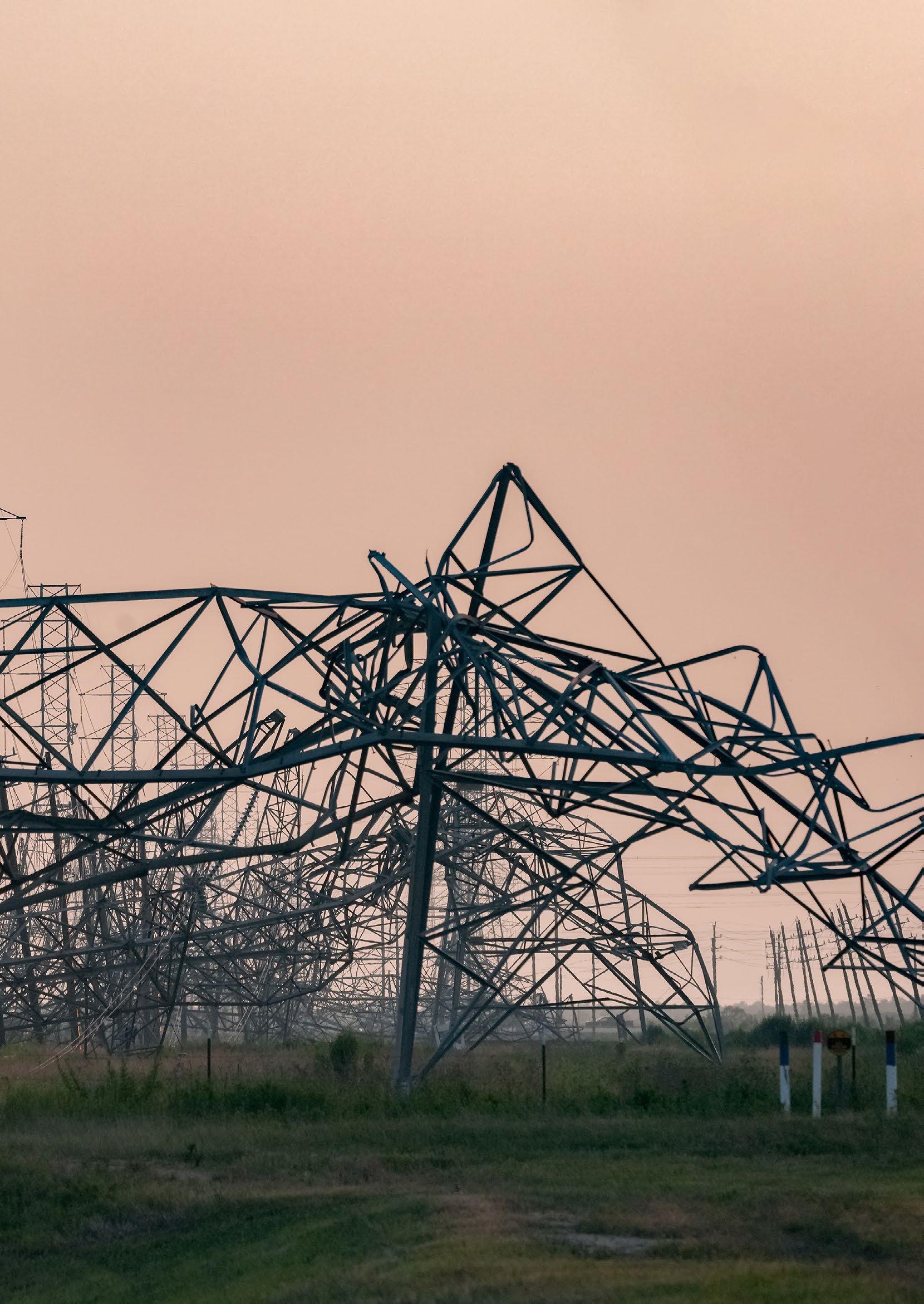
Electric systems are particularly vulnerable to extreme weather events, and failures affect every part of society. Storms and falling tree branches damage overhead structures; floods inundate substations; while heatwaves strain components and increase wildfire risk.
Extensive outages require resources to repair and cause extensive economic and social damage, even contributing directly to deaths if people cannot heat homes, use air conditioning, or rely on powered medical equipment. Critical facilities such as water pumping stations and hospitals need reliable
“Electric systems are particularly vulnerable to extreme weather events, and failures affect every part of society.”
power, so governments demand climate resilience.
What is Climate Resilience?
At its core, climate resilience is the ability of a system to withstand or
recover from restricted operation or failure caused by extreme weather events. Traditionally, upgrading electric systems involved planning load growth and using historical failure data and metrics to guide investments. Now, utilities look towards climate resilience:
Prevent: Mitigation and planning before an event, such as trimming vegetation, asset management, and climate modelling.
Resist: Hardening the system to withstand damage, such as strengthening utility poles against strong winds and raising substations above predicted flood levels.
Recover: Regain some system functionality, such as distribution automation to detect faults and redirect power, while microgrids and batteries power critical facilities.
Restore: Return the system to its normal state quickly by deploying more repair crews and holding extra spares in inventory.
To direct resources effectively, regulators and utilities use various processes to prioritise climate resilience investments.
Prioritising Investments
In response to extreme events, the electricity sector needs to enhance climate resilience, but finite funds dictate selecting investments carefully. However, the established methods used to prioritise investments struggle. In the US, utilities are legal monopolies, undergoing annual rate cases to justify significant spending and provide funds for operating, maintaining, and improving systems.
With this cost-of-service method, regulators determine revenue requirements, including operational costs, capital investments, and reasonable returns. They ensure that customer rates remain reasonable and investments deliver value, often using cost-benefit analysis.
Continued on page 18
Cost Benefit Analysis
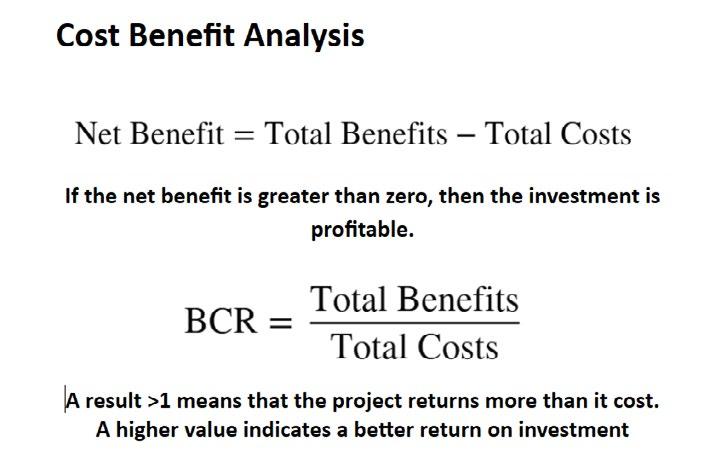
Cost-benefit analyses (CBAs) compare which investments offer good rates of return.
• Costs include:
• Capital costs (CapEx)
• Cost of borrowing
• Operational costs (OpEx)
• Other expenditure
The benefits, preferably expressed as dollar values, include:
• Avoided outage restoration costs
• Avoided operation and maintenance costs
• Avoided outage cost for customers
Subtracting the total costs from the total benefits gives the net present value (NPV) of an investment as a monetary value, with a positive value indicating profitability. Calculating the cost-benefit ratio (CBR) divides the benefits by the costs, with CBR of over one indicating a justified investment, and the utility can rank projects. While CBAs are useful, they struggle to quantify climate resilience investments.
event never happens, the benefits are not truly realised while the cost remains.
Another problem when quantifying benefits is determining outage costs for customers and society, especially with the growing dependence on electricity. The Value of Lost Load (VoLL) metric captures outage costs but does not always differentiate between customer classes or regions. An outage causes more economic damage in a high economic value business district than a suburb. Organisations are developing better VoLL models, but climate resilience CBAs remain problematic.
Probabilistic Approaches
The Intergovernmental Panel on Climate Change (IPCC) predicts global temperature rises based on emissions, and these shape climate predictions and scenarios. However, knowing which emissions pathways to select during climate modelling is difficult over the decades-long lifecycle of electrical infrastructure.
Problems with CBAs
CBAs for climate resilience face problems because some benefits are difficult to express as monetary values. In addition, extreme weather is difficult to predict because High Impact, Low Frequency (HILF) events rarely occur but wreak extensive damage. If an
Traditionally, using historical data, utilities knew the likely frequency and intensity of weather events and built infrastructure accordingly. Now, they do not know how future events will unfold. They could build for a worst case climate scenario, but if it does not happen, over-engineering costs money. Similarly, a best case scenario means events more intense and/or more frequent than predicted will damage infrastructure, risk fines, and create lawsuits that can bankrupt utilities
To capture uncertainty, utilities can use probabilistic risk assessments (PRA) where:
Risk = Probability of Event x Consequences.
In other words, add up the potential consequences of an event and multiply it by the probability of the event happening to give the baseline risk. Then, recalculate with a climate resilience improvement in place to see if it reduces the probability and/ or consequences and, therefore, risk. States such as California are developing probabilistic approaches and PRAs suit CBAs and multifactor analyses
Multifactor Analysis
A multifactor framework helps a utility assess and rank projects when balancing different objectives, using quantitive and qualitative data alongside subjective assessments. One variant, a Multi-Criteria Decision Analysis (MCDA), lets utilities select the climate resilience aspects they feel are important.
The utility selects investment alternatives and chooses criteria to evaluate them, such as environmental goals, climate resilience, and protecting disadvantaged communities. They assign a percentage weighting to each criterion, signifying its relative importance, before scoring each alternative for each criterion. The resulting scores can be divided by the cost to give a cost-efficiency ratio that supports investment prioritisation. Multifactor analyses can shift prioritisation to a performance based approach more in line with RIIO.
Revenue, Incentives, Innovation, Outputs (RIIO)
In the UK, the RIIO model developed by regulator, Ofgem, shapes power system investments and includes climate resilience. RIIO ensures that companies provide good service and value for money, capping their maximum revenue.
Overall, it is performance-based and rewards utilities for innovation, efficient operation, safety, environment, and reliability while penalising them if they fall short. Importantly, RIIO covers five year periods, encouraging long term planning. RIIO follows a broad process:


Revenue = Incentives + Innovation + Outputs
• Revenue: Baseline revenue a company can take from customer bills to cover costs and capital investments.
• Incentives: Financial rewards or penalities tied to performance metrics for reducing outages, customer satisfaction, and the environment.
• Innovation: Companies can access funding for projects covering renewable energy, net zero, and climate resilience trials.
• Outputs: Legal service objectives covering reliability, safety, and environmental sustainability.
After negotiating performance targets, the regulator determines how much the utility will need to spend. Achieving targets at a lower cost gives increased profit while overspending reduces profits.
RIIO and Climate Resilience
RIIO-3 and RIIO-ED3, the latest iterations, move from reactive investments to preventative climate resilience. Rather than using historical data to justify investments, utilities provide a climate resilience strategy to protect systems against future climate threats and accounting for society’s increased reliance on electricity.
Ofgem demands that networks should undertake:
• Climate Scenarios: Assess risk against many future climate
scenarios rather than a single projection, and test systems against a range of potential climate hazards.
• Stress-Testing: Identify potential HILFs and stress-test the system against them, using these to plan and cost potential mitigations.
• Adaptation Pathways: Show how chosen resilience measures will reduce the identified risks and can be audited to monitor effectiveness over time.
Climate resilience is a core environmental output that Ofgem monitors with Climate Resilience Metrics and Indicators (CRMI).
RIIO in the US Context
Could the US adopt RIIO to prioritise climate resilience investments? In reality, it is difficult to transfer RIIO in its entirety due to the patchwork of different state regulatory environments. However, some aspects could influence the present US rate case system.
Most investor owned US utilities are subject to a cost-of-service model where rate of return relates to capital expenditure, especially building physical infrastructure. Some regulators are shifting to a performance-based model where profits relate to public goods.
For example, Hawaii now includes reliability, integration of renewables, and customer satisfaction metrics within rate cases. Other states may
shift from annual cases to longer term agreements, or use scorecards to measure performance in non-capital areas, giving incentives and penalties. The focus on outputs rather than inputs suits MCDA approaches because outputs can become measurable criteria. Utilities in New York State are already using MCDAs and similar methods for climate resilience.
Ideas that could shape US approaches include:
• Longer time between rate cases to encourage long term thinking.
• Shifting the focus from capital expenditure to total expenditure, so that utilities go beyond investments in assets and extending/strengthening systems. For example, encouraging customers to install renewable energy can support resilience.
• Adding social and economic targets to the rate process so that companies improve environmental performance, support social issues, improve customer service, and encourage education/training.
Innovation funds could encourage cooperation between electric utilities and other sectors for shared resilience.
Utilities create roadmaps for future investments, giving them room to change approach as more data about the climate emerges
In summary, RIIO’s emphasis on multi-year planning and proactive grid development fits climate resilience. Basing rates on outcomes rather than making utilities justify every asset investment lets them explore other ways of achieving the same goals, such as distributed energy resources, software, advanced monitoring, or climate prediction.
While RIIO will not transfer directly to the US context, its performance-based approach, long term thinking, and support of innovation could be useful, especially with MCDA approaches where RIIO’s outputs can become the criteria used to score investments.
Driving Confidence in the UK's Electric Future
Electric Vehicles UK CEO Tanya Sinclair discusses the progress of the UK's transition to electric mobility, the importance of collaboration across the EV ecosystem, and why improving driver confidence—not just technology—will determine the pace of adoption over the coming decade.
1. The conversation around electric vehicles has evolved significantly over the past decade. From your perspective, where is the UK today in its transition towards electric mobility?
The UK is taking great strides. Today’s drivers have access to a much wider range of well-priced, high-performance electric vehicles and that choice will continue to improve over coming years.
Charging infrastructure has expanded significantly, vehicle capability continues to improve, and the used EV market is beginning to mature as values stabilise.
But we’re also at a critical point in the transition. Policy has been frankly contradictory, creating uncertain signals for consumers and industry.
We’ve also seen some manufacturers questioning the transition itself, rather than focusing on how to make their EVs more attractive to buyers. That kind of messaging risks undermining consumer confidence just when momentum is building.
But I’m optimistic. The foundations are in place, the next phase depends less on technology and more on confidence, consistency and clarity of vision.
2. Charging infrastructure is often highlighted as one of the biggest barriers to EV adoption. What progress has been made, and where do the biggest challenges remain?
Charging is indeed the biggest perceived barrier to non-EV drivers. Even if most charging happens at home or work, drivers need confidence that the public network
will be there when they need. For those who rely entirely on public charging, that confidence is even more important.
The reality is that charging has improved dramatically. The network is larger, faster and more reliable than it was even a few years ago. The challenge is that public perception, and some of the legacy estate, hasn’t caught up. One bad experience, or even hearing about someone else’s, can reinforce long-held concerns and put people off making the switch.
There’s also still work to do on the customer experience. Pricing isn’t always transparent, payment methods vary between operators, roaming isn’t always straightforward, and information about reliability or faults can be inconsistent. The industry has advanced, but charging needs to become genuinely seamless. When drivers stop thinking about the charging experience altogether, we’ll know we’ve succeeded.
3. Collaboration between government, energy networks and the private sector is critical to accelerating the rollout of charging infrastructure. Where do you believe the greatest opportunities for collaboration lie?
Over the years I’ve spent in this industry I have seen how collaboration accelerates the transition.
One of the reasons EVUK was established was because there wasn’t a single forum bringing together the full e-mobility ecosystem. When sectors solve in silos, challenges become opportunities to apportion blame rather than solve problems together.

E-mobility is a true ecosystem.
Vehicle manufacturers, charge point operators, energy systems, network operators, fleet and leasing and insurance all depend on one another. None of us succeeds unless the whole system succeeds.
4. Grid capacity and network readiness are recurring themes throughout this edition of Climate Global News. How significant are these challenges for the EV charging sector, and what needs happen to address them?
Grid capacity and network readiness are fundamental to the future of EV charging. Their lack of readiness is a business-critical challenge and directly affects investability, particularly as demand grows for charging hubs and higher-powered infrastructure.
EV charging isn’t the only sector competing for grid connections, which only reinforces the importance of modernising our networks and improving the speed and flexibility of the connections process.
There’s a lot of voices calling for radical reform. That’s certainly one option but it tends not to be the preferred approach. of UK governments. So instead what we need is a clear destination, commitment to investment, faster decision-making and greater agility and responsiveness across the network. We can’t prevaricate any longer, we need to make meaningful progress with the tools we have while continuing to plan for the future.
Tanya Sinclair CEO, Electric Vehicles UK
“The next phase depends less on technology and more on confidence, consistency and clarity of vision.”
Continued on page 22
5. Innovation is rapidly transforming the charging landscape. Are there any technologies, business models or emerging trends that you believe will have the greatest impact over the next decade?
Having worked in the charging sector between 2018 and 2023, it’s been incredible to see how quickly the technology has evolved.
For me, the most significant trend over the next decade will be automatic authentication. Whether that it will be delivered through Plug & Charge, AutoCharge or another solution, the important thing is that it will remove friction from the driver’s experience at the charger.
confidence, charging infrastructure for commercial operators, and helping businesses realise the long-term financial and operational benefits.
Today, drivers still have to think about apps, cards or payment methods. In the future, they’ll simply plug in and charging will begin. Whenever I explain that capability to drivers today, they’re amazed that it already exists.
Years ago, we used to talk about a future where charging would be better than refuelling. Automatic authentication is what will make that vision a reality.
6. Looking beyond passenger vehicles, where do you see the greatest opportunities for electrification, and what barriers still need to be overcome?
I’m particularly excited about the potential for electric vans.
Adoption remains lower than many expected. But that’s an enormous opportunity, particularly for urban and regional fleets where operating patterns are often ideally suited to electrification.
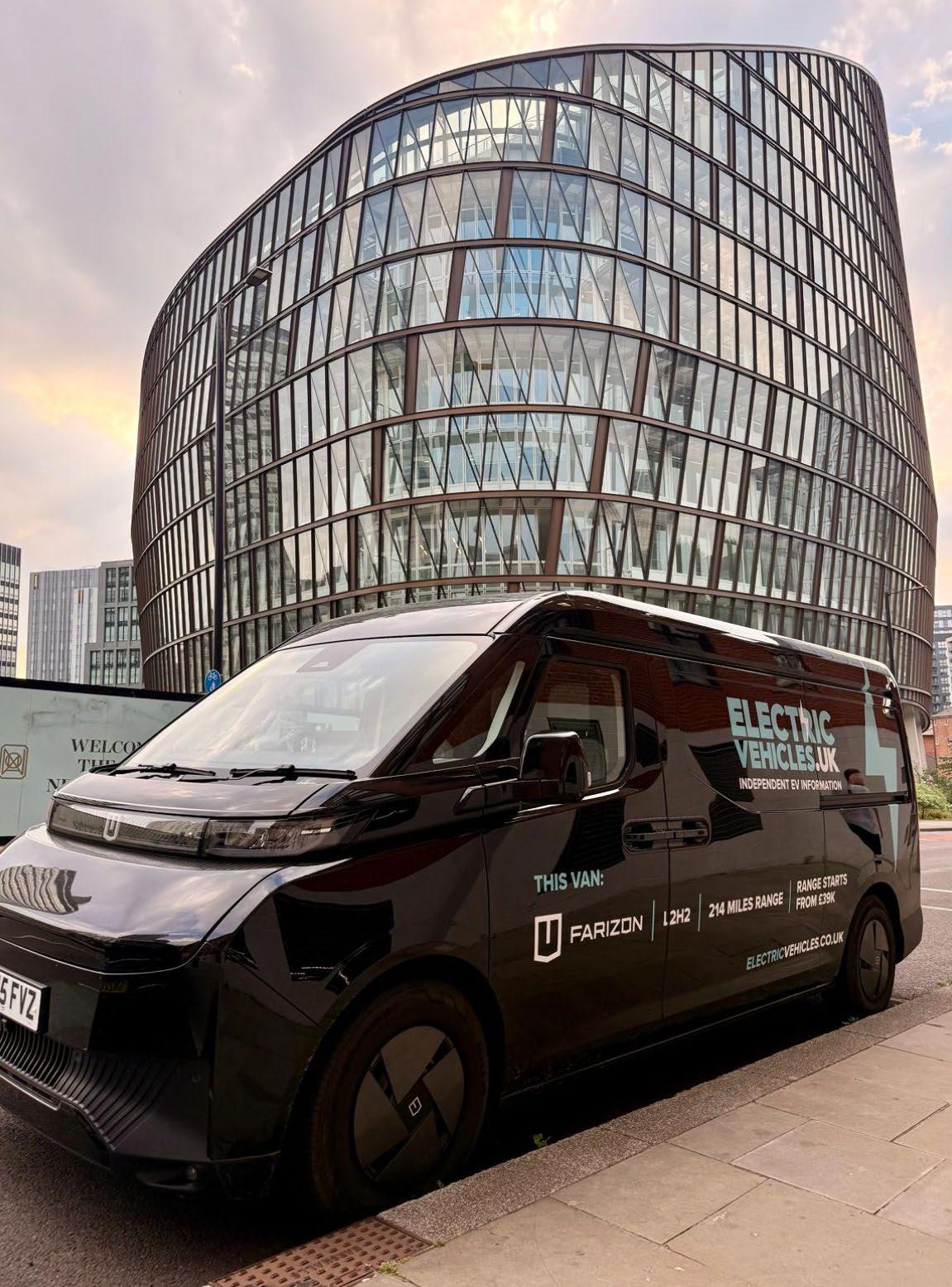
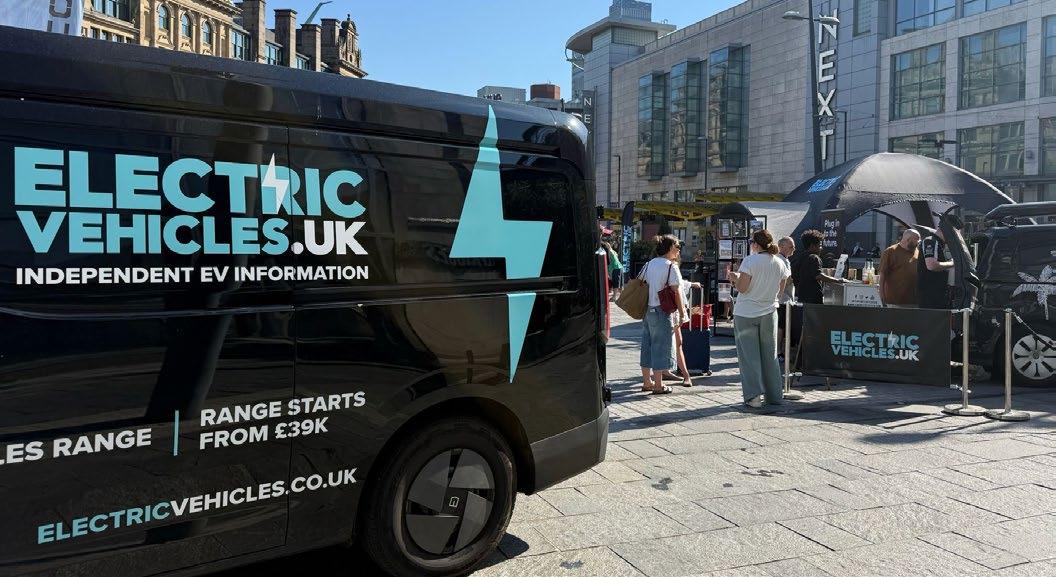
A few years ago, the vans on the market were not fit for commercial operations nor were they specced or priced for the prospective customer. That’s no longer the case. Vehicles like the vans we use for EVUK events are capable, comfortable, high-spec and completely suited to real-world operations.
The remaining barriers are less about the vehicles themselves and more about
7. If you could influence one policy or investment decision that would significantly accelerate the UK’s transition to electric mobility, what would it be, and why?
If I had to choose just one, it wouldn’t be a single funding announcement or regulation, it would be creating a coherent, driver-centric strategy for full electrification.
Government maintains that it’s committed to phasing out ICE but its policies of late have lacked consistency. They haven’t always put drivers first, they haven’t been communicated through a single coherent narrative, and they haven’t painted an inspiring picture of the UK’s electric future.
Running an EV advertising campaign whilst proposing to weaken the ZEV mandate. Or proposing to impose eVED whilst offering a purchase grant. Neither are consistent or driver-centric.
At EVUK, our mission is simple: we drive demand for electric vehicles. Every decision we make is assessed through that lens. If it doesn’t help build consumer confidence and encourage adoption, we don’t do it.
That’s the approach I’d like to see reflected in public policy. Greater coherence, clearer communication and a laser focus on facilitating supply and demand would go a long way.
8. Looking ahead to 2035, what do you hope the EV charging landscape will look like, and what role do you see EVUK playing in helping to achieve that vision?
By 2035, I hope public charging is simply something people don’t have to think about. We’ll naturally have more chargers, faster charging speeds and more visible ultra-rapid charging hubs, but I’d like the focus to move from quantity and towards quality. Particularly reliability, ease of use and customer experience.
But the area I’m most excited about is actually residential charging. It’s nowhere near fully realised and we still need to unlock charging for people living in rented and multi-unit accommodation.
But there’s not just an untapped commercial opportunity. Widespread smart home charging also unlocks flexibility benefits for the electricity system, potentially strengthening our energy security and making the transition more affordable.
And of course I hope EVUK will be there too in 2035, continuing to bring the sector together and ensuring that every part of the ecosystem is focused on making electric mobility simpler, more accessible and more attractive for everyone.
Decarbonising the Forgotten 20%: Can Solar Thermal Transform Industrial Heat?
Odqa is developing concentrated solar thermal technology to replace fossil-fuelled industrial heat. Its approach targets sectors such as mining, metals, cement and ceramics, where high-temperature processes remain difficult to decarbonise.
Industrial heat is often described as one of the most difficult sectors to decarbonise. Why has it received less attention than electricity generation?
Historically, there has not been a clear solution at a competitive cost. Electricity generation has had a credible, scalable renewable pathway for years. Industrial heat has not, so it has understandably received less attention, even though the emissions at stake are just as significant.
Much of the conversation around clean energy focuses on electricity, batteries and hydrogen. Why do you believe industrial process heat deserves a far greater place in the energy transition?
Industrial heat accounts for 20% of global emissions, and progress against it has been minimal. Electricity, batteries and hydrogen have all had years of investment, innovation and a reasonably clear roadmap to decarbonisation. Industrial heat has

had none of that. It deserves a far greater place in the conversation simply because so little ground has been covered so far.
Continued on page 24
Chris Kimmett CEO, Odqa
Odqa is developing concentrated solar thermal technology capable of producing high-temperature heat. How does this differ from conventional solar technologies, and what problems is it designed to solve?
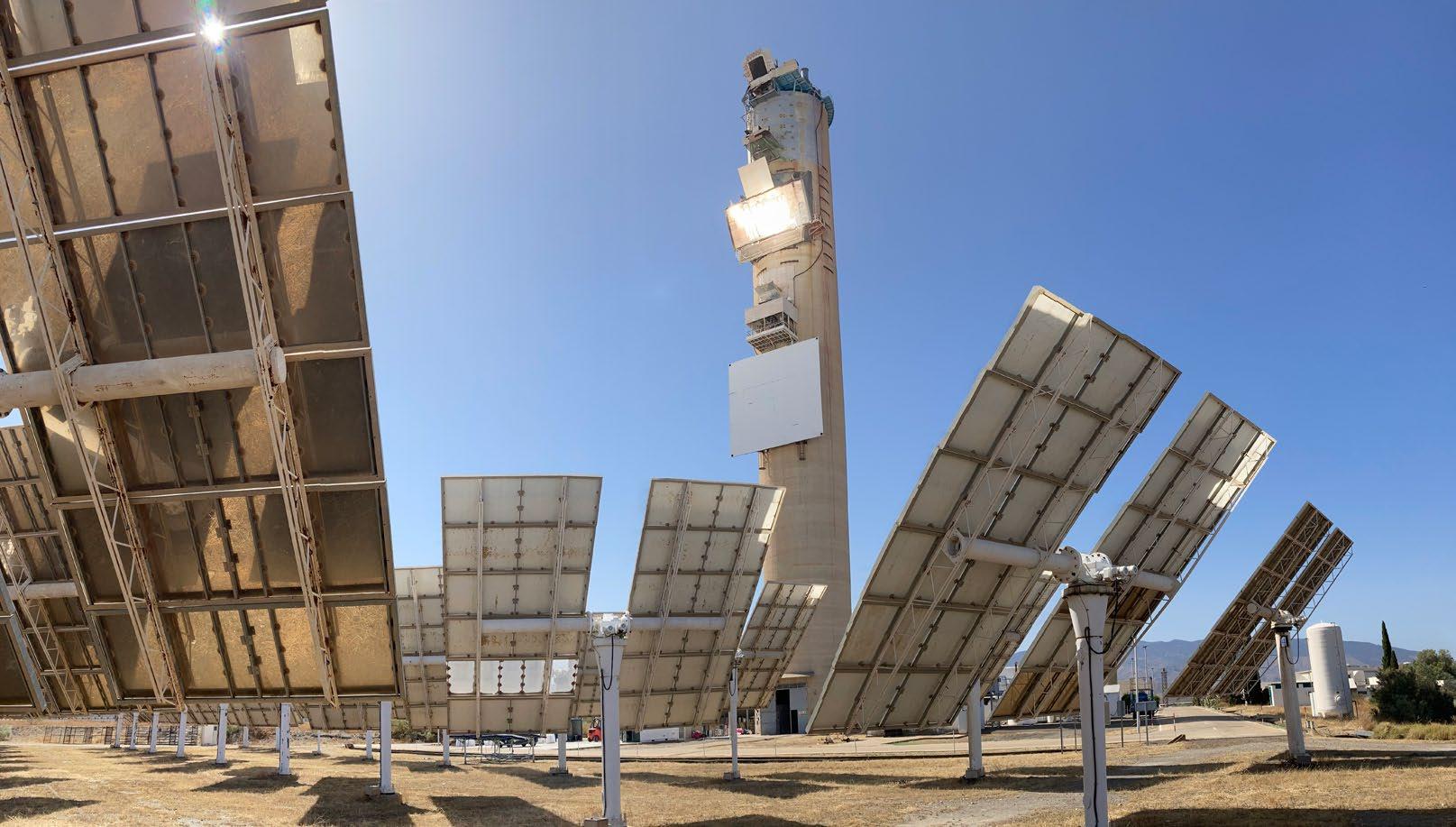
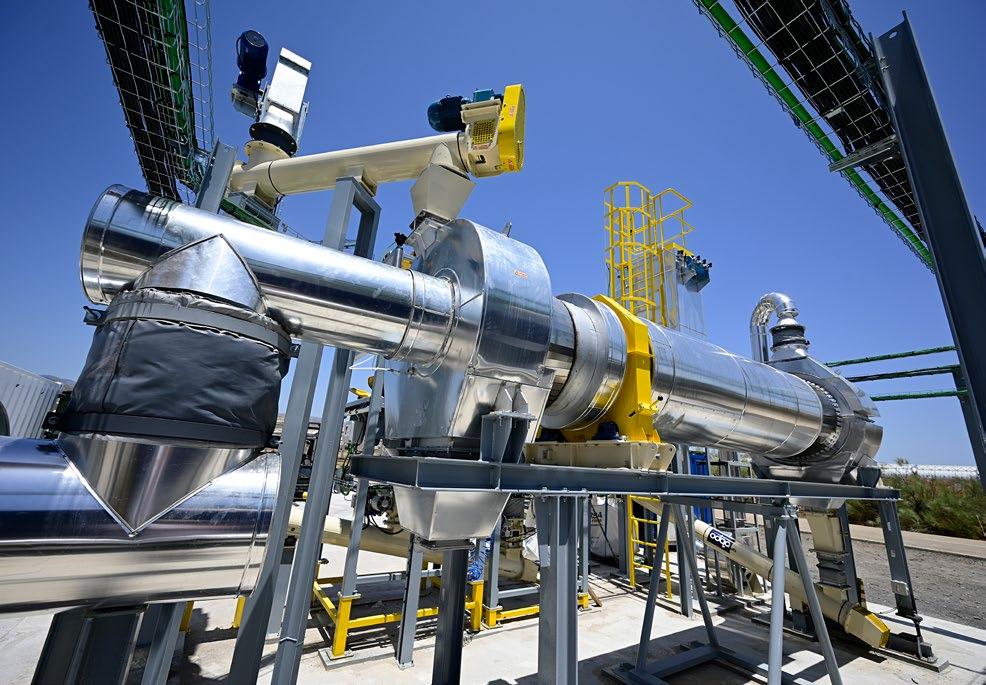
Conventional solar, photovoltaics (PV), produces electricity to feed into the grid. Our technology is different: it produces high-temperature heat directly, which we deliver as a synthetic flame into industrial processes across sectors as varied as mining, metals, cement and ceramics. It solves a problem that solar PV was never designed to address: replacing the fossil fuel burners that heavy industry depends on.
Your technology has its roots in Oxford’s Thermofluids Institute and draws on aerospace heattransfer science. How has that research influenced the development of your solution?
Aerospace heat transfer gave us the toolbox to develop our air-based concentrated solar receiver, which is a genuine breakthrough within the concentrated solar thermal category. The Oxford Thermofluids Institute is world-leading in this field and has a long history of collaboration with organisations like Rolls-Royce, which is exactly the kind of engineering rigour we have brought into our own technology development.
Many heavy industries rely on temperatures of several hundred degrees Celsius. Which sectors do you believe are closest to making the transition away from fossil-fuelled heat?
Honestly, industry as a whole is not close to making that transition yet. That is precisely the problem Odqa was founded to solve. That said, we are seeing strong early traction with customers in Southern Europe, where there is a genuine appetite to be at the forefront of the shift.
Cost is often seen as the biggest barrier to industrial decarbonisation. What needs to happen to make low-carbon industrial heat commercially attractive at scale?
It has to be cost competitive, full stop. Industry has already experimented with electricity and hydrogen for heat, and neither will achieve scale because neither can get down the cost curve. Solar thermal is different. To become cost competitive, we need to operate at scale, and we believe we can move down that cost curve quickly, because unlike other technologies, our approach does not depend on rare earth metals or complex manufacturing processes.
Beyond emissions reduction, what commercial benefits can manufacturers expect from transitioning to renewable industrial heat?
The clearest benefit is a reduction in volatility. Energy security has been in the headlines for good reason, given the current geopolitical environment. Industrial plant is typically built to last for decades, and over that kind of timeframe, fuel price spikes are not a risk, they are a guarantee. Renewable heat removes that exposure entirely.
“It solves a problem that solar PV was never designed to address: replacing the fossil fuel burners that heavy industry depends on.”
Looking ahead five to ten years, what role do you see concentrated solar thermal playing within the wider energy transition?
We see it as foundational. Green aluminium, green cement, green bricks, green fertilisers: these become the literal building blocks of a new low carbon economy, and concentrated solar thermal is what makes that possible at the temperatures heavy industry actually requires.
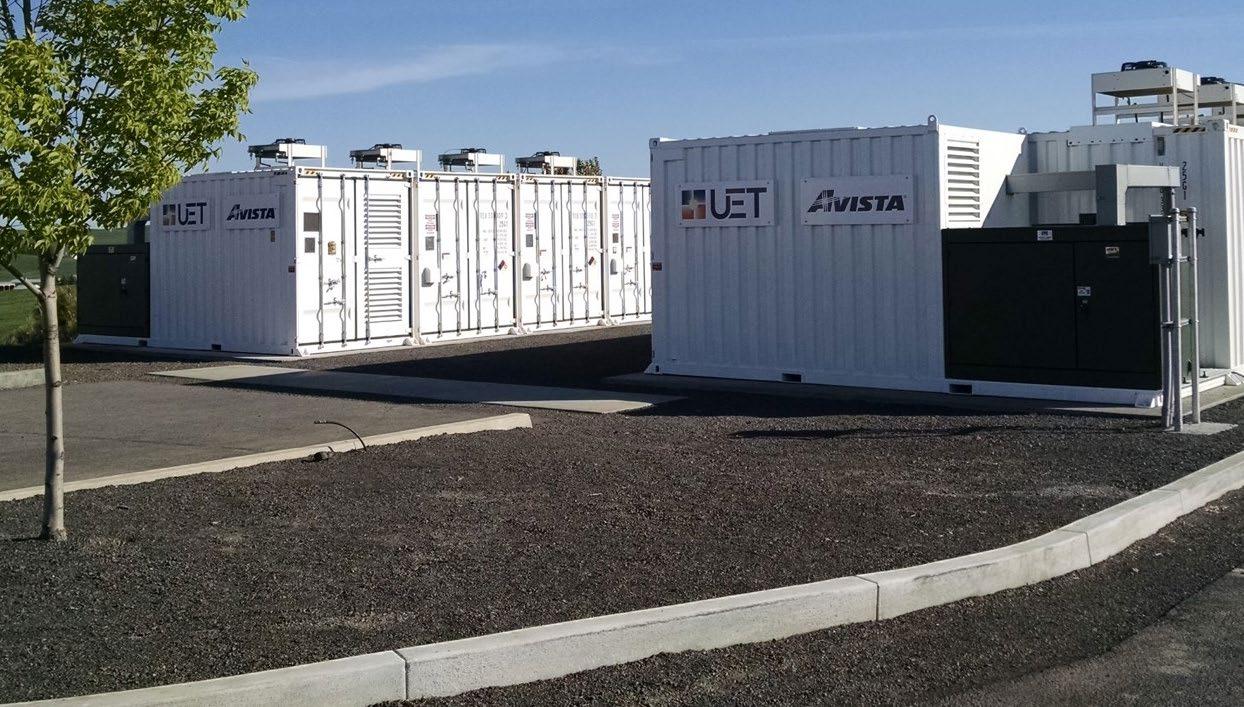
Batteries, Warm Homes, and Dunkelflaute: The Role of Energy Storage in the UK’s Energy Transition
Energy storage will be important for the UK’s energy transition, supporting renewables, reducing bills, and helping reach Net Zero. To learn more, we spoke to Guy Clark, Policy Lead at the Energy Storage Association (UK). He explains the concepts, reveals some exciting new technologies, and shows how storing energy will underpin the future power grid.
What is the Energy Storage Association?
Founded in June 2025, the ESA gives voice to the energy storage sector, especially behind-the-meter and long duration energy storage (LDES) organisations. The sector has grown rapidly because batteries help homes and businesses maximise cost savings from renewables. We have over 40 members, including the top two UK energy suppliers, E.on and Octopus, UK-based LDES pioneer Invinity, and leading international manufacturers like Sunsynk
Why is energy storage crucial to the UK’s energy transition?
Storage maximises the benefits of renewable energy at individual and system levels. Installing heat-pumps and solar panels could save an average 3-bedroom house £550 a year – at a conservative estimate. That rises to £850 a year with a battery – by storing solar energy for later use or charging during cheap periods of electricity and discharging during peak periods.

moment we have so much surplus power in Scotland that we are paying £1.5 billion a year to turn wind farms off on windy days, to prevent them overloading the grid. More storage –especially LDES – solves that problem too, bringing down everyone’s bills.
Efficient energy impacts the system because the grid accommodates peak electricity demand – like building a motorway big enough for rush hour traffic. If people don’t travel at the same time, peak flow is lower, so you need fewer lanes. Home batteries lower peak demand and reduce network costs for everyone.
Large grid-scale batteries and LDES (which store power for 8+ hours) are essential for a renewables-based system. Sceptics sometimes ask: ‘What happens when there’s no sun or wind?’ The answer is energy storage. Big battery plants like Thurrock West or pumped storage hydropower systems like Cruachan store surplus power to discharge during shortfalls. At the
What are the UK’s main types of energy storage? What new technologies are promising?
Lithium iron phosphate batteries (LFP) are the stars of the global storage market. They dominate residential, commercial and grid-scale applications due to low cost and high energy density. They also have an impressive safety record – despite how the media may portray them. Stationary LFP batteries use a different – much safer – battery chemistry to power banks or scooter batteries, they also contain advanced fire prevention systems. There have been fires at grid-scale battery plants, in Nottingham and
Continued on page 26
Guy Clark Policy Lead at the Energy Storage Association (UK)
California, however, these used an older, lithium nickel manganese cobalt (NMC) chemistry that is long gone today. The technology has become drastically safer and these days the fire incident rate at grid-scale battery plants is lower than non-domestic buildings generally.
There are some important challengers to lithium. Battery manufacturer, CATL, recently signed a deal for 60GWh of sodium-ion batteries. These replace lithium – a critical metal in huge demand – with sodium – one of the most abundant elements on earth. Sodium-ion is less energy dense, and it can’t compete on cost yet, but most analysts expect it will soon.
Promising LDES technologies include vanadium flow and zinc bromine batteries, which store energy for a longer duration, exceed the 10-15 years lifespan of lithium batteries, have zero fire risk, and use common elements. Non-battery technologies include Compressed Air Energy Storage, which compresses air and stores it underground. When power is needed, the air is released, heated and expanded through turbines. This technology can store power for months, has no mineral supply chains, and uses conventional machinery. These technologies presently cost more than lithium, but can provide vital services lithium is not suited for.
How much energy storage is the country likely to need?
In terms of grid-scale storage, the UK government targets 23-27GW of short duration and 4-6GW of LDES by 2030, rising to 39GW and 17GW by 2050. For context, peak demand in 2025 (the busiest rush-hour) was 46GW. There are no official targets for residential or industrial storage, but targets for
‘consumer-led flexibility’ (CLF) - capacity for consumers to change when they use electricity. This is easier with batteries, but includes factories changing output, or charging EVs at different times. The government wants 10-12GW of CLF by 2030 and 74.6GW by 2050.
What are the main challenges to installing energy storage technologies?
For consumers, cost. Residential batteries can cost £3000-£10,000 depending on the needs of the home and the size of the system. That’s inaccessible for many, and a significant outlay for anyone. That’s why we lobby hard to keep costs down.

Regulation is also struggling to keep up with the pace of innovation. UK fire regulations were written for those older NMC batteries and prevent installations in lofts, internal cupboards, under stairs or in corridors. That excludes large swathes of the UK’s housing stock, particularly smaller homes without outdoor space. So only those wealthy enough to afford large homes can access this cost-saving technology. These regulations need to be reviewed to recognise the progress the industry has made and widen access to residential batteries.
What are the UK’s main policies for encouraging and regulating energy storage?
The two main policies are the Clean Power 2030 Action Plan (CP2030) and

the Clean Flexibility Roadmap (CFR). The Warm Homes Plan and the LDES Cap and Floor scheme help deliver those goals. CP2030 promotes a >95% fossil fuel free electrical system by 2030 – including targets for solar and wind generation, alongside grid-scale and LDES batteries. The CFR works with CP2030 the UK’s legal commitment to Net Zero by 2050, supplying longer term battery targets alongside mechanisms to enable consumer-led-flexibility.
The Warm Homes Plan is the biggest government investment in housing upgrades in British history. I’m astonished there has been so little news coverage of it. £15 billion for low carbon technologies in people’s homes – solar, batteries, heat pumps, the lot.
First networking event in the House of Lords. (Left to Right) – Patron, Baroness Luciana Berger; Minister of State for Energy, Michael Shanks MP; Bill Esterson MP; CEO, Jason Howlett
£5 billion is grants for low income households, and the remainder includes low/no interest loans for other groups. A huge investment in cutting carbon emissions and lowering bills.
The LDES Cap and Floor is designed to enable 8+ hour storage systems. With multiple days of low wind and sun –something the Germans call Dunkelflaute – short-duration batteries of 2-4 hours can’t cope. That’s where LDES comes in. Battery plant economics suit more cycling – more energy bought and sold – and therefore favour short duration systems, so market forces won’t typically build LDES capacity. The UK government’s scheme reimburses LDES plants if revenues fall below a certain floor and they share excess profits above a certain cap. That gives investors the certainty they need, at net zero cost for the taxpayer.
What policies have been successful and which have proved problematic?
The Warm Homes Plan is a brilliant move for the sector and for British consumers. However, it has yet to be rolled out. The government presently does not impose VAT on Battery Energy Storage Systems (BESS), a very helpful recognition of their value for bill savings and net zero goals – that exemption expires in 2027, something we are lobbying against. We’re also working on the review of PAS63100, the fire regulations mentioned earlier.
What new or amended policies would you like to see?
We want to see the government introduce a salary sacrifice scheme for batteries. The EV scheme gave employees and employers significant tax breaks when leasing an EV. This
contributed to sharply rising EV adoption – from 79,000 on the roads in 2017 to over 1,900,000 today. A similar scheme for batteries could boost adoption, helping the sector to grow and in turn bring down prices for consumers more widely.
How can energy storage create employment, strengthen domestic supply chains, and contribute to growth?
Firstly, more money in people’s pockets means more disposable income and economic growth, and batteries are fundamentally a money-saving technology. The Kight Powerhub, a battery developed with social housing landlords in Scotland, reduced tenants’ energy bills by 80% on average. That’s a game-changer.
Secondly, we represent businesses building a UK manufacturing base and contributing to local economies. I attended the opening of Offgrid Energy Labs’ new battery factory in Hampshire last week. That’s bringing well-paid, advanced manufacturing jobs and over a thousand jobs for local SMEs. Kight’s facility in Dumfries could create over 700 skilled jobs directly and 2000 jobs indirectly. Invinity has manufactured its innovative vanadium flow batteries in Scotland for years, building a large new facility in Motherwell in 2024.
Finally, the government wants investment in data centres to boost economic growth and support sovereign computer capability. Data centres – counter-intuitively – could lower energy bills. The cost of building networks is shared by everyone according to electricity use - about 28% of a typical home’s electricity bill. A data centre with high power demands takes on a huge share of
those network costs, so ordinary consumers pay less.
Energy storage translates intermittent renewables into the firm power data centres require, avoiding the need for costly, carbon-intensive onsite gas turbines. Data centres with energy storage can reduce power use during system stress, supporting NESO’s continuous grid balancing. The unchecked spread of data centres across the US caused significant problems for consumers and environment – we must avoid that. However, smart, effective deployment of energy storage means data centres could contribute to economic growth.
To support energy storage, what are the best ways to overcome the growing skills gap?
We do need trained installers to speed up rollout, and some of our members are already tackling this challenge: E. on’s Net Zero Training Academy has been training installers of low carbon technologies since 2017. The Warm Homes Plan will be allocating government funding to schemes of this kind.
However, even the existing workforce is facing a bottleneck. Most battery installations require an upgrade to a home’s grid connection, so consumers must apply to the District Network Operator. LCT uptake has dramatically increased the number of applications and DNOs couldn’t keep pace – one major installer has a backlog of over 1000 applications. That’s preventing installer businesses from growing and tackling it – as Ofgem is presently trying to do – will be crucial.
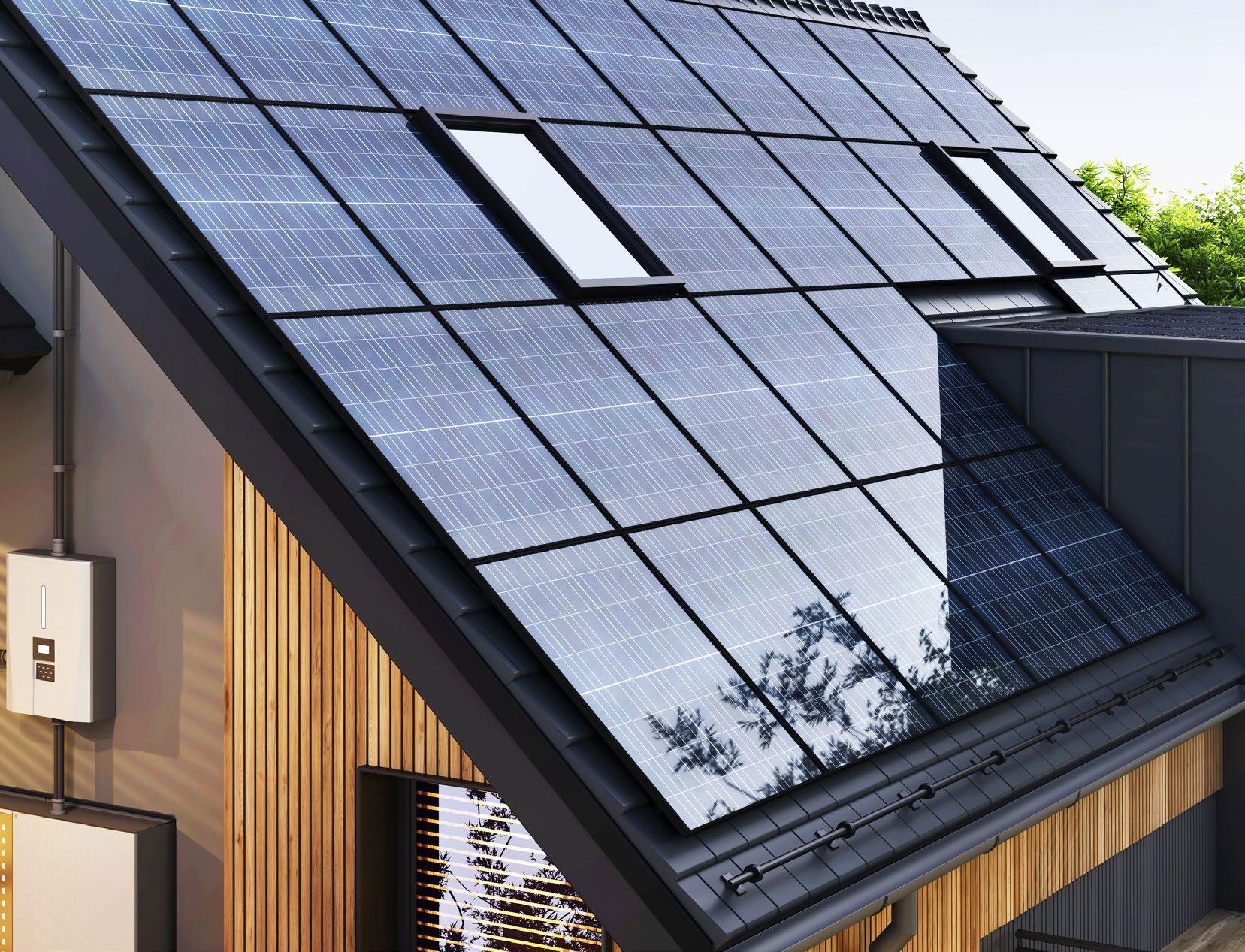
The Energy Transition in 2026: A System Under Pressure
WRITTEN BY ABBY DAVEY
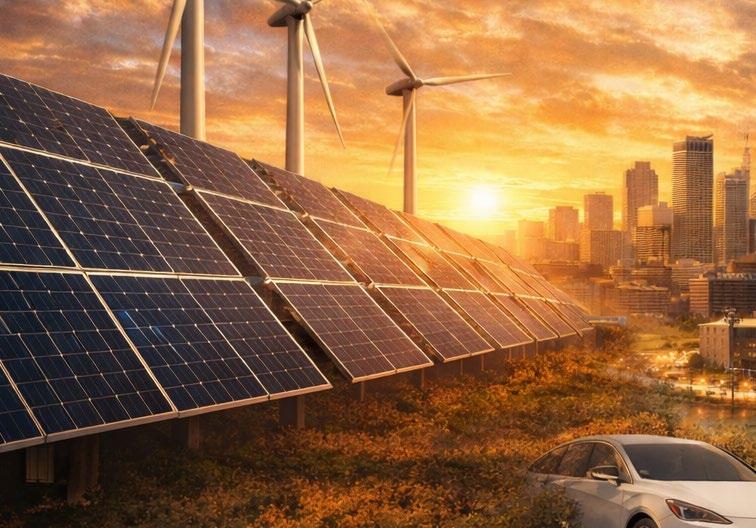
For much of the past decade, the conversation around the energy transition has been driven by ambition. Governments set increasingly bold targets, renewable technologies matured rapidly and investment flowed into clean energy at an unprecedented pace.
In 2026, the conversation has changed.
The question is no longer whether renewable energy can scale. Around the world, it already is. Instead, attention is turning to something less visible, but arguably more important: whether the infrastructure supporting that transition can keep pace.
Electricity grids, planning systems, supply chains and workforce capacity are all being tested by the speed of change. The technologies are arriving faster than many expected. The challenge now is integrating them into energy systems that were largely designed for a different era.
This is no longer simply an energy story. It is a systems story.
Renewables Are Growing – But Integration Is the New Challenge
The pace of renewable deployment continues to exceed expectations. According to the International Energy Agency
(IEA), more than 580 gigawatts (GW) of renewable capacity was added globally during 2024, marking the largest annual increase on record. Renewables also accounted for more than 90% of new global power capacity, underlining how quickly electricity generation is changing.
Yet success brings new challenges.
Across many regions, renewable projects are no longer waiting for technology to mature or investment to arrive. They are waiting for permission to connect to electricity networks that are struggling to accommodate unprecedented levels of new generation.
As deployment accelerates, the conversation is shifting from building renewable energy to building the infrastructure that allows it to operate efficiently.
Investment Alone Will Not Deliver the Transition
Investment remains strong. BloombergNEF estimates that global energy investment exceeded US$3.3 trillion during 2025, with around two-thirds directed towards clean energy technologies including renewable generation, electricity networks, battery storage and electric vehicles.
But money alone cannot solve structural challenges.
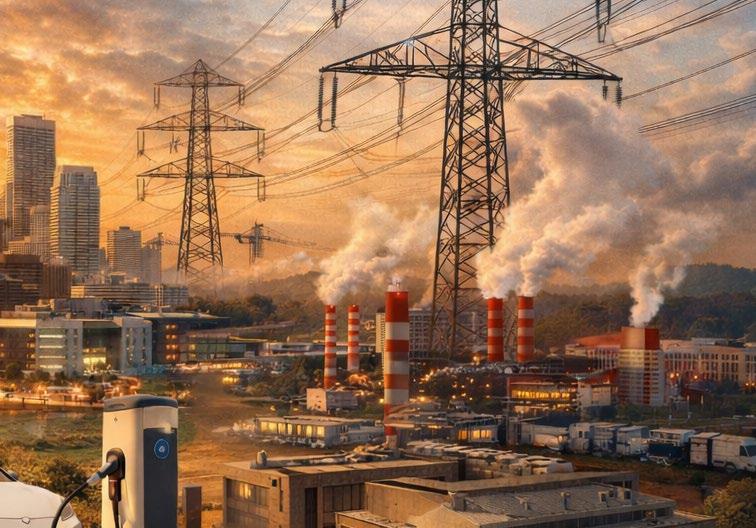
"Success will increasingly depend on how effectively governments, utilities, manufacturers and investors modernise the systems that underpin the transition."
Grid expansion, permitting reform, digital network management and long-term planning are increasingly becoming the determining factors behind project delivery. Around the world, governments are recognising that strengthening electricity infrastructure is now just as important as increasing renewable capacity.
At the same time, electricity demand continues to evolve. The electrification of transport, buildings and heavy industry is reshaping consumption patterns, while the rapid growth of AI-powered data centres is creating new pressures on networks already adapting to unprecedented change.
The transition is no longer defined solely by how much clean energy can be generated, but by how effectively entire systems can respond.
The Next Phase Is About Coordination
The energy transition is becoming increasingly interconnected with industrial strategy, economic competitiveness and energy security.
Countries are investing not only in renewable generation, but also in domestic manufacturing, critical mineral supply chains and technologies that strengthen long-term resilience. At the same time, utilities are modernising networks, businesses are electrifying operations and policymakers are reassessing planning frameworks designed for a very different energy landscape.
Progress is undeniable.
But so is the scale of the task ahead.
Perhaps the defining characteristic of the energy transition in 2026 is that success can no longer be measured by renewable deployment alone. It will increasingly depend on how effectively governments, utilities, manufacturers and investors work together to modernise the systems that underpin it.
The next phase of the transition will depend less on setting new targets and more on delivering the infrastructure, coordination and investment needed to achieve those already in place.
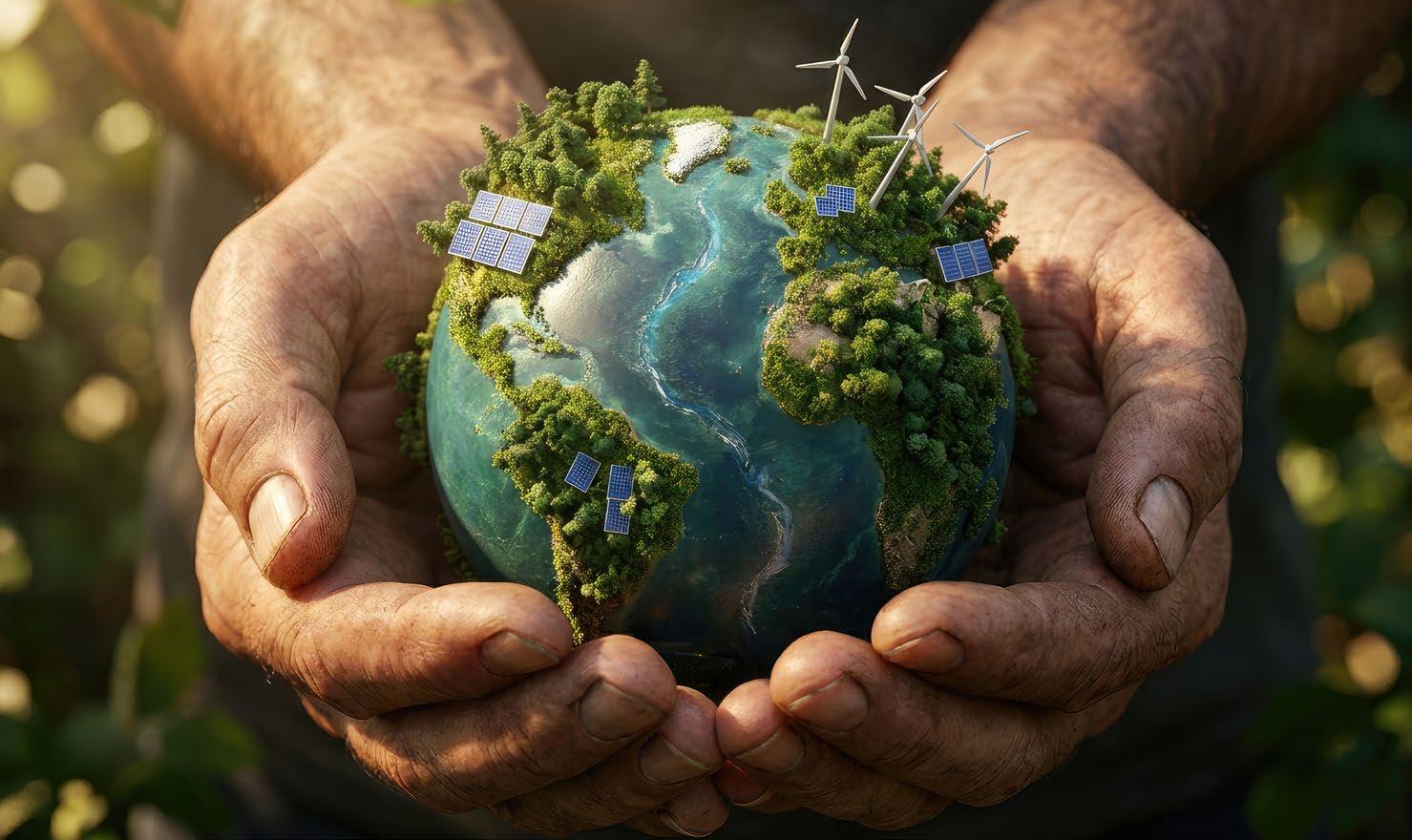
Energy Transition Across Continents
WRITTEN BY ABBY DAVEY
The energy transition isn't happening at the same pace everywhere and that's exactly what makes it so fascinating.
Every region faces a different set of challenges. Some are modernising ageing electricity grids, others are building entirely new renewable industries, while many are balancing energy security, economic growth and climate commitments at the same time.
Although the destination may be shared, the route certainly isn't. Here's what's defining the energy transition across five key regions in 2026.
Europe
Building the grid for the next phase
Europe has spent years establishing itself as a global leader in climate policy and renewable energy. Now, the focus is beginning to shift.
Instead of asking how quickly more renewable generation can be built, attention is increasingly turning towards the infrastructure needed to support it. Across much of Europe, grid connection queues have become one of the biggest barriers to new renewable projects, prompting governments and network operators to accelerate investment in transmission, battery storage and digital grid technologies.
Offshore wind continues to expand, while policymakers are also looking at how permitting processes can be simplified without compromising environmental standards.
Europe has shown that ambition matters.
The next challenge is making sure the infrastructure can keep up.
At a glance
• Grid connection reform gathers pace
• Battery storage continues to scale
• Offshore wind remains a major growth sector
North America
Investment is moving faster than infrastructure
North America continues to attract huge levels of investment in clean energy.
From battery manufacturing to utility-scale solar and critical minerals, the region is investing heavily in building a domestic clean energy economy. Government incentives have helped accelerate that momentum, particularly across the United States. But rapid growth is exposing familiar challenges.
Transmission infrastructure is struggling to expand at the same pace as renewable deployment, while permitting reform remains a major topic across both energy and infrastructure sectors.
The opportunity is enormous.
The challenge is ensuring electricity networks evolve quickly enough to support it.
At a glance
• Battery manufacturing continues to grow
• Utility-scale renewable projects expand
• Grid modernisation remains a priority
Asia-Pacific
Scale continues to set the pace
No region is moving at the scale of Asia-Pacific.
China remains central to global solar manufacturing, battery production and renewable deployment, while India continues investing heavily in new renewable capacity and electricity infrastructure.
That scale gives the region enormous influence over global supply chains and clean technology costs.
At the same time, countries across Asia-Pacific are following very different transition pathways depending on their economic priorities, natural resources and energy mix.
What unites them is the pace of change.
Few regions are shaping the global energy transition more quickly.
At a glance
• Solar manufacturing remains dominant
• Ultra-high-voltage transmission expands
• Electric vehicle production continues to grow
Middle East & Africa
Diversifying for the Future
Across the Middle East and Africa, the energy transition is creating new opportunities as well as new challenges.
Countries across the Gulf continue investing in large-scale solar projects and green hydrogen, while many African nations are expanding renewable generation to improve electricity access and strengthen long-term energy security.
Investment is growing, but infrastructure financing and grid reliability remain key priorities in many markets.
For this region, the transition is about far more than reducing emissions.
It's also about building more diverse and resilient economies for the future.
At a glance
• Green hydrogen projects continue to expand
• Utility-scale solar investment grows
• Grid reliability remains a priority
Latin America
Natural Resources Create a Strong Foundation
Latin America has many of the natural advantages needed to play a significant role in the global energy transition.
Brazil continues expanding wind and solar generation alongside its established hydropower sector, while Chile is strengthening its position in both lithium production and green hydrogen development. Across the region, renewable resources are plentiful.
The challenge lies in unlocking that potential.
Continued investment in transmission infrastructure, stable regulation and long-term planning will all be needed if the region is to fully capitalise on its natural strengths.
The opportunity is clear.
The next step is turning that opportunity into long-term delivery.
At a glance
• Wind and solar deployment continues
• Transmission investment increases
• Lithium and hydrogen projects gather momentum
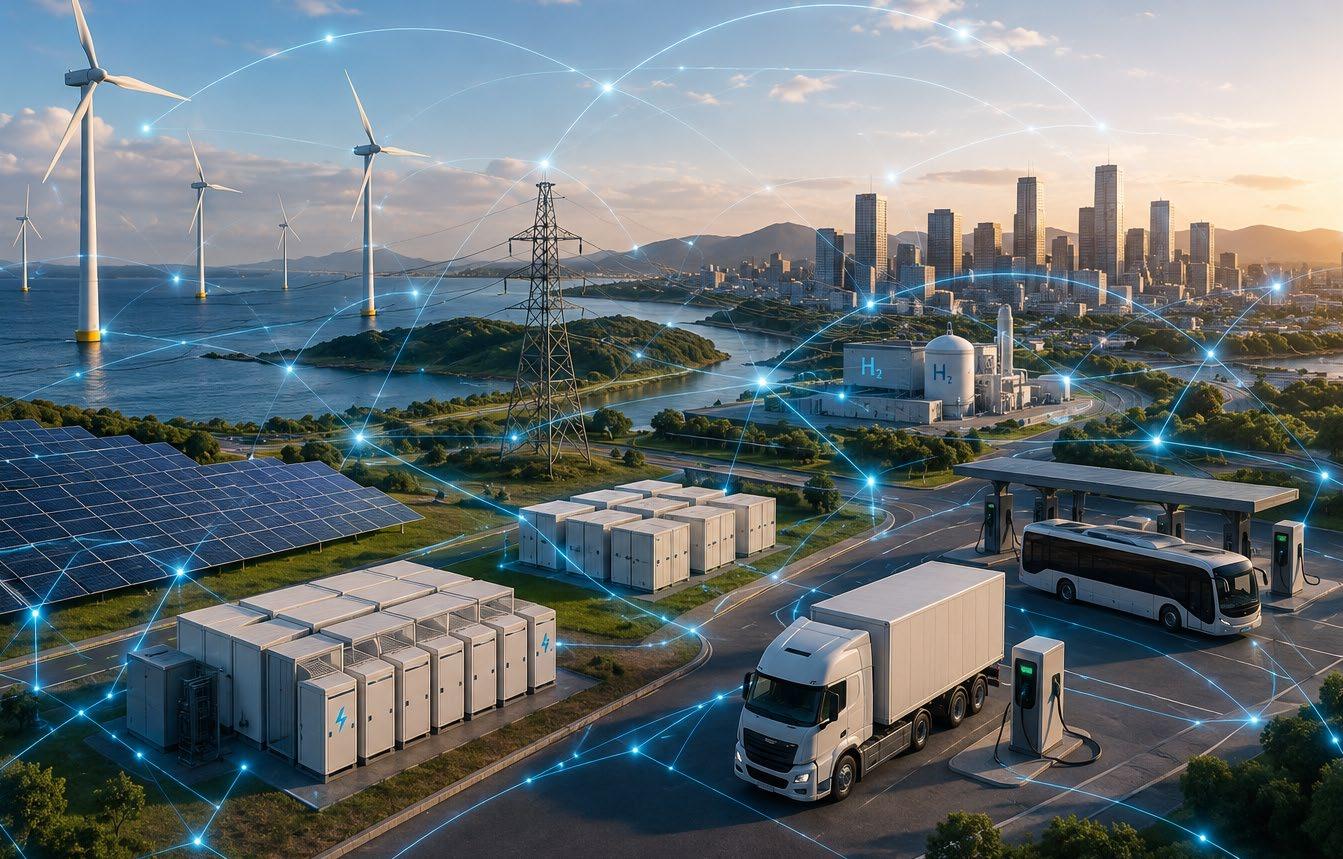
Emerging Players Reshaping the Energy Transition
WRITTEN BY ABBY DAVEY
From long-duration energy storage and AI-powered grid management to electric mobility and industrial decarbonisation, a new generation of innovators is tackling the practical challenges that will define the next phase of the global energy transition. While established energy companies continue to deliver large-scale infrastructure, these emerging players are developing the technologies that could accelerate progress towards a more resilient, low-carbon future.
Innovation beyond renewable generation
The global energy transition is entering a new phase. While the past decade has been defined by record investment in renewable energy generation, attention is increasingly turning to the technologies needed to integrate, manage and optimise those resources.
As renewable electricity becomes a larger part of national energy systems, new challenges are emerging around storage, grid flexibility, industrial decarbonisation and transport electrification. Addressing these issues requires more than additional wind farms or solar parks; it demands innovation across every part of the energy ecosystem.
Increasingly, that innovation is coming from a new generation of specialist companies. Rather than competing directly with established utilities or energy majors, these organisations are developing highly targeted technologies designed to solve specific bottlenecks within the transition.
Some are reimagining how electricity is stored. Others are transforming how grids operate, accelerating electric mobility or finding new ways to reduce emissions from some of the world's most carbon-intensive industries.
Collectively, they demonstrate that the future of clean energy will be shaped not by a single breakthrough, but by thousands of practical innovations working together.
Solving the next generation of energy challenges
The companies featured in this overview operate across a broad range of sectors, but they share a common objective: removing barriers that continue to slow the pace of decarbonisation.
Long-duration energy storage remains one of the industry's most pressing priorities, with organisations such as Form Energy, Energy Dome and Highview Power developing technologies capable of storing renewable electricity for significantly longer periods than conventional lithium-ion batteries.
At the same time, digitalisation is becoming increasingly important. Companies including Piclo and Amperon are applying artificial intelligence, forecasting and data analytics to improve grid flexibility and help network operators balance increasingly complex electricity systems.
Elsewhere, innovators such as Stegra and Boston Metal are tackling one of the energy transition's greatest challenges: reducing emissions from heavy industry. Their work demonstrates that decarbonisation extends far beyond electricity generation into sectors including steel production, manufacturing and industrial processing.
Meanwhile, the rapid growth of electric mobility is driving demand for new charging technologies. Companies including Voltempo and Exponent Energy are developing solutions designed specifically for commercial fleets and heavy transport, while African innovators such as BasiGo and Roam are demonstrating how locally developed technologies can accelerate cleaner transport in emerging markets.
A global movement
Innovation is no longer concentrated within a handful of established technology hubs.
From Kenya's expanding electric bus sector to India's fast-charging
infrastructure, solar generation across the energy reflect conditions.
This transition's the challenges markets developing ideas regions global Rather to decarbonisation, transition thousands each the challenge. Looking Many remain but their well Through governments, and infrastructure helping into commercially Whether modernising zero-emission industrial illustrate the scope As governments ambitious demand accelerates, solving challenges increasingly The next transition technology will be of innovators continents, build resilient
infrastructure, Nigeria's distributed solutions and Japan's nextgeneration battery systems, companies across every region are contributing to energy transition in ways that reflect local priorities and market conditions.
diversity is becoming one of the transition's greatest strengths. While challenges facing mature electricity markets differ from those in rapidly developing economies, the exchange of ideas and technologies between regions is accelerating innovation on a global scale.
Rather than relying on a single pathway decarbonisation, the energy transition is evolving through thousands of complementary solutions, addressing a different aspect of challenge.
Looking ahead
Many of today's emerging players remain relatively young organisations, their influence is already extending beyond their home markets. Through partnerships with governments, utilities, manufacturers infrastructure operators, they are helping transform promising concepts commercially viable solutions.
Whether improving battery storage, modernising electricity grids, enabling zero-emission freight or reducing industrial emissions, these companies illustrate how innovation is broadening scope of the energy transition.
governments continue to pursue ambitious climate targets and global demand for clean energy technologies accelerates, organisations capable of solving practical deployment challenges are likely to play an increasingly important role.
next chapter of the energy transition will not be written by one technology or one company alone. It be shaped by a growing ecosystem innovators working across continents, sectors and disciplines to build a cleaner, smarter and more resilient energy future.
Global Innovators to Watch
Selected companies developing technologies and business models helping accelerate the global energy transition.
COMPANY COUNTRY FOCUS WHY THEY’RE ONE TO WATCH
Newcleo France/UK
Advanced nuclear
Exponent Energy India Fast charging
Energy Dome Italy
CO₂ energy storage
PowerX Japan Energy logistics
BasiGO Kenya
Roam Kenya
Arnergy Nigeria
Electric buses
Electric mobility
Solar & storage
Stegra Sweden Green steel
Yellow Door Energy UAE
Highview Power UK
Commercial Solar
Liquid air storage
Piclo UK Grid flexibility
Voltempo UK
Heavy-duty EV charging
Amperon USA AI forecasting
Boston Metal USA
Form Energy USA
Clean steel
Iron-air batteries
Developing next-generation lead-cooled reactors
Reducing charging times for commercial EVs
Commercial alternative to lithium-ion for multi-hour storage
Exploring new ways to transport and store electricity
Accelerating clean public transport in Africa
Expanding affordable electric transport solutions
Improving reliable access to clean electricity
Decarbonising one of the world’s highest-emitting industries
Scaling solar deployment across the Middle East and Asia
Utility-scale storage for renewable grids
Helping unlock flexible electricity markets
Enabling zero-emission heavy freight
Improving grid reliability with predictive analytics
Reinventing steel production using electricity
Could reduce long-duration storage costs dramatically
Q&A Q&A
Simon Smith
CEO - Voltempo
What do you believe is the single biggest challenge preventing the energy transition from accelerating at the pace required?
The biggest barrier is infrastructure. Fleet operators are ready to decarbonise, but without timely grid connections, scalable charging infrastructure and a commercially viable operating model, the transition simply can’t accelerate at the pace required.
Which technology, innovation or system change do you believe will have the greatest impact on the energy transition over the next decade, and why?
The biggest impact will come from integrated megawatt charging infrastructure. It’s not just about faster chargers; it’s about combining highpower charging, smart energy management and grid integration to make zero-emission freight commercially viable at scale. Where do you believe governments and policymakers should prioritise investment or reform to unlock faster progress?
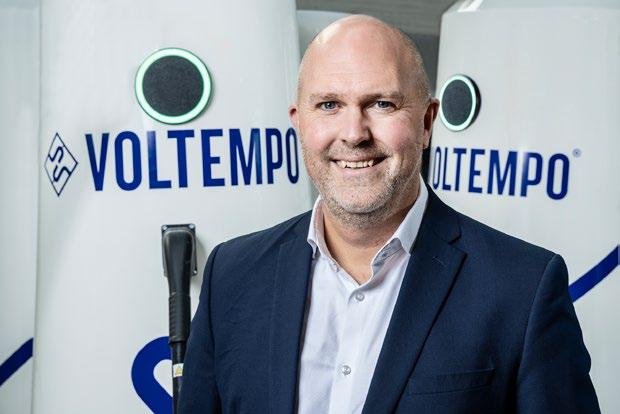
Infrastructure is the deciding factor. Government backing and private sector investment must work hand in hand to enable fleets to move forward with electrification and operate with certainty.
Which sector do you believe will undergo the most significant transformation by 2035?
Road freight. Heavy goods vehicles are one of the hardest sectors to decarbonise, but with the right charging infrastructure and industry collaboration, they have the potential to undergo one of the most significant transformations in their history over the next decade.
What is one misconception about the energy transition that you believe the industry should challenge?
The biggest misconception is that the energy transition will mean higher costs for operators. With the right partner and model, this simply isn’t the case. There is a financially viable solution for making zero-emission freight work at scale, and even more than that, to make it pay for operators.
Looking ahead, what gives you the greatest confidence that the energy transition will continue to progress despite today’s challenges?
What gives me confidence is that we’re no longer talking about what’s possible, we’re proving it. Electric freight isn’t a future ambition, it’s happening now. Government support has kick-started the market, and industry is now demonstrating that zero-emission freight can operate reliably at scale.
“The energy transition in 2026 is...”
The energy transition in 2026 is moving from ambition to delivery, and leading the charge will be our legacy at Voltempo.
Nilofer Taher
Geospatial Researcher
What do you believe is the single biggest challenge preventing the energy transition from accelerating at the pace required?
The biggest challenge is not the availability of technology, but the friction between systems, data structures, and operational processes. The energy transition is creating increasingly complex infrastructure environments involving renewable assets, distributed systems, and multiple sources of information. In my experience working with infrastructure data workflows, valuable information often exists across different formats and platforms before it can become actionable intelligence. The challenge is transforming fragmented information into trusted, interoperable systems that support better decisions. Without reliable data foundations, technologies such as artificial intelligence and digital twins cannot deliver their full potential.
Which technology, innovation or system change do you believe will have the greatest impact on the energy transition over the next decade, and why?
The greatest impact will come from
combining AI with geospatial intelligence and semantic infrastructure models. Future AI systems will benefit from more than access to data
they will require a common understanding of infrastructure concepts. A modular architecture could provide a universal concept layer — defining assets, relationships, and attributes such as location, material, condition, and operational status — while allowing regional organizations to maintain their own operational data. This approach would enable AI systems to understand infrastructure faster, supporting applications such as predictive maintenance, digital twins, and smarter resource management.
Where do you believe governments and policymakers should prioritise investment or reform to unlock faster progress?
Investment should extend beyond physical infrastructure to include digital foundations. Governments should encourage interoperable standards and shared semantic frameworks that allow different organizations to describe infrastructure consistently while maintaining regional flexibility. A common infrastructure language could

reduce duplication, improve collaboration, and allow AI-enabled systems to scale more effectively across regions without requiring every organization to solve the same data challenges independently.
What is one misconception about the energy transition that you believe the industry should challenge?
A common misconception is that the energy transition is only a technology or generation challenge. While renewable energy and storage are essential, success also depends on the ability to manage increasingly complex infrastructure intelligently. The transition requires alignment between physical assets, digital systems, data governance, and human decisionmaking.
“The energy transition in 2026 is...”
The energy transition in 2026 is the shift from simply building new energy capacity to building the intelligence, interoperability, and governance systems required to manage a more connected and resilient infrastructure future.
EVENTS EVENTS
CLIMATE WEEK NYC 2026
20–27 SEPTEMBER 2026 — NEW YORK, USA
Climate Week NYC brings together governments, businesses, investors and NGOs during the UN General Assembly. With more than 1,000 events taking place across the city, it is one of the world's largest annual climate gatherings, covering energy transition, finance, resilience, technology and sustainable development.
UNFCCC CLIMATE WEEK 2026
7–11 SEPTEMBER 2026 — BAKU, AZERBAIJAN
Hosted by the UN Framework Convention on Climate Change (UNFCCC), Climate Week supports collaboration between governments, industry and civil society ahead of COP31. Discussions focus on implementing climate commitments, accelerating decarbonisation and strengthening international cooperation.
WORLD CLIMATE SUMMIT – NEW YORK
24 SEPTEMBER 2026 — NEW YORK, USA
Held during Climate Week NYC, the World Climate Summit brings together business leaders, investors, policymakers and innovators to explore climate finance, clean technologies and
public-private partnerships accelerating the global energy transition.
ENLIT EUROPE 2026
20–22 OCTOBER 2026 — MILAN, ITALY
Enlit Europe is one of Europe's leading events for the power and energy sector. Bringing together utilities, grid operators, technology providers and policymakers, the exhibition focuses on digitalisation, grid modernisation, renewable integration and the future of energy systems.
COP31 – UN CLIMATE CHANGE CONFERENCE
9–20 NOVEMBER 2026 — ANTALYA, TURKEY
COP31 will bring together world leaders, negotiators, businesses and civil society to advance international climate action under the Paris Agreement. Key discussions are expected to centre on emissions reductions, climate finance, adaptation and energy transition.
WORLD CLIMATE SUMMIT – COP31
14–15 NOVEMBER 2026 — ANTALYA, TURKEY
Taking place alongside COP31, the World Climate Summit provides a platform for governments, investors and industry leaders to announce
partnerships, showcase climate solutions and accelerate investment in clean energy and sustainable infrastructure.
REUTERS EVENTS: ENERGY TRANSITION EUROPE
NOVEMBER 2026 — EUROPE (DATES TBC)
Reuters Events' Energy Transition Europe conference explores the strategies shaping decarbonisation across power generation, utilities, heavy industry and finance, with a focus on accelerating the transition to a low-carbon economy.
SUSTAINABILITY TALKS ISTANBUL
8 DECEMBER 2026 — ISTANBUL, TURKEY
Sustainability Talks brings together leaders from business, government and academia to discuss climate action, circular economy, ESG, sustainable manufacturing and innovation driving the transition to a more resilient global economy.



A NEW PUBLICATION FOR A NEW ERA OF LIFE SCIENCES

INNOVATION DOESN'T HAPPEN IN ISOLATION.
It happens across research laboratories, manufacturing facilities, universities, biotech companies, pharmaceutical organisations and healthcare providers.
Life Sciences Global News brings the entire ecosystem together in one global publication.
Inside the inaugural issue
• Exclusive cover interview with DuPont
• GLP-1 purification and peptide manufacturing
• Biotechnology
• Laboratory science
• Digital Health
• Medical Devices
• Diagnostics
• Pharmaceuticals
Become one of our Founding Partners
Advertising • Sponsored Features • Executive Interviews