






Editor
Randy Smith
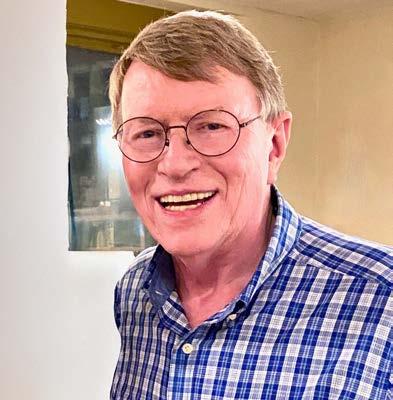
Randy Smith retired in 2025 after teaching high school English, AP psychology, and musical theater for 40 years, a job he truly misses. He has been honored with being High School Teacher of the Year three times, Lincoln County Schools System Teacher of the Year, and he was selected as STAR Teacher seven times. He lives just off Lewis Family Road, and his uncle by marriage was Pop Lewis’s nephew. He taught Lewis Phillips, former musician for The Lewis Family; he went to high school and the University of Georgia with Sheri Easter (she was also his disco dance partner); and, his students have performed at the Bluegrass Festival in Lincolnton, Georgia. “I have been tangentially connected to Bluegrass music all my life,” Smith admits. “I am a storyteller by nature, and I appreciate anyone who can write or tell a great story.”

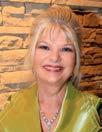


Creative Director Sales Director Writer Writer
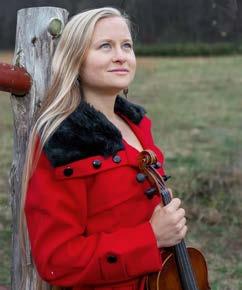
Rebekah Speer
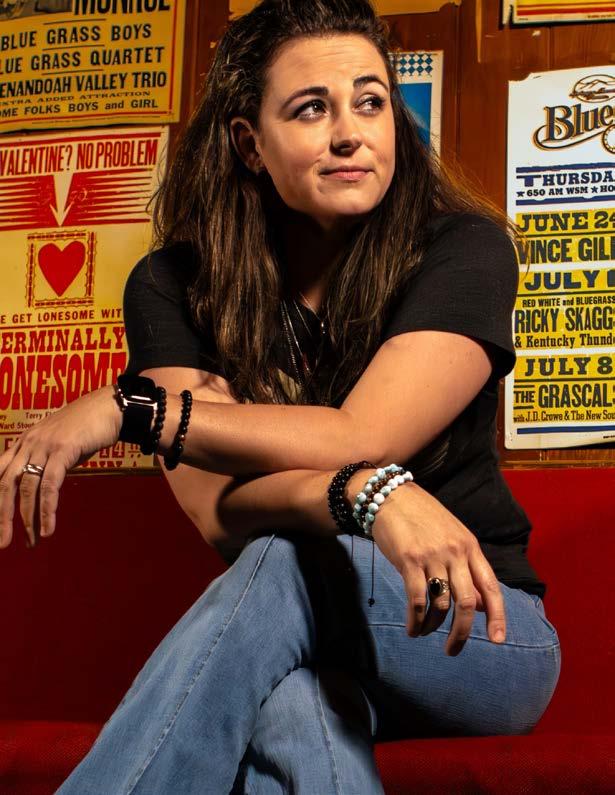
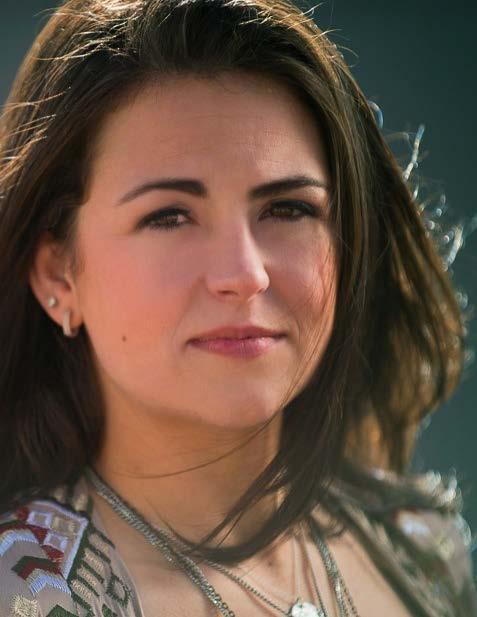
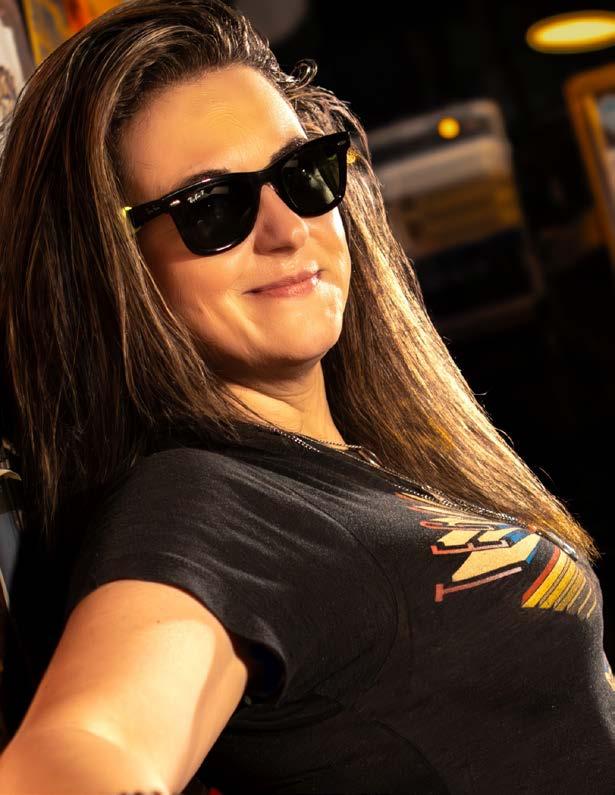
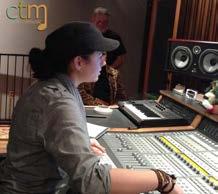
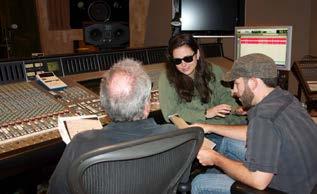
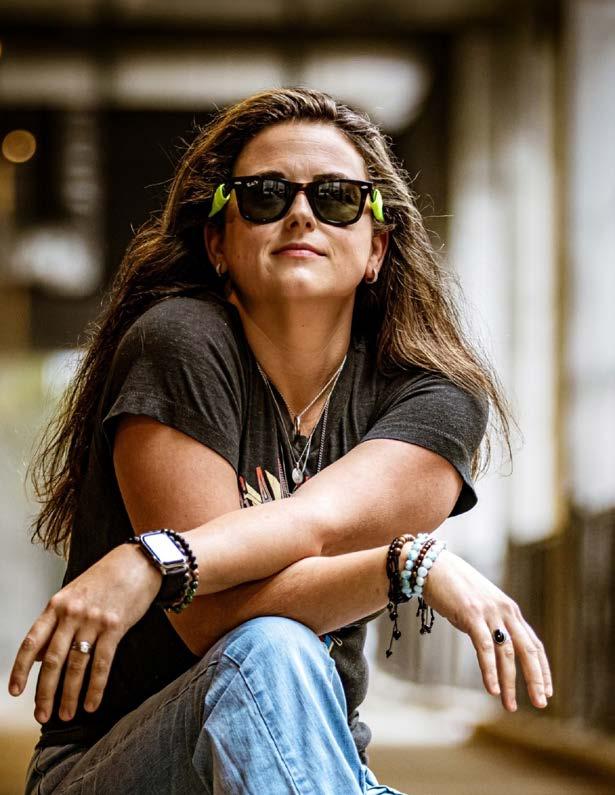
Rebekah Speer is a Nashville, Tennessee based artist and creative professional with more than twenty years of experience in the music industry. A singer-songwriter with recorded cuts and a growing presence as a recording artist, she also works extensively behind the scenes as a live sound and recording engineer, including front of house for the Grammy-nominated group Sister Sadie. As Creative Director for The Bluegrass Standard, she crafts a unique visual identity for each issue while gaining a deep appreciation for the artists and stories behind the music. In addition to her work with the publication, Speer provides graphic design, recording, and technical support to a wide range of clients, bringing both artistic vision and technical expertise to every project. www.rebekahspeer.com
Susan Woelkers
Susan traveled with a mixed ensemble at Trevecca Nazarene college as PR for the college. From there she moved on to working at Sony Music Nashville for 17 years in several compacities then transitioning on to the Nashville Songwritrers Association International (NSAI) where she was Sponsorship Director. The next step of her musical journey was to open her own business where she secured sponsorships for various events or companies in which the IBMA/World of Bluegrass was one of her clients.
Susan Marquez Brent Davis
Curious by nature, Susan Marquez thrives on knowing the backstory. After a long career in advertising and marketing, Susan began writing feature articles in 2001. Her specialty is culture, and music is her passion. She has written over 3500 articles for magazines, newspapers, business journals, trade publications, and online sources. “Just like you shouldn’t have a favorite kid, perhaps I should love every publication I write for the same, but there is no doubt that I love writing for The Bluegrass Standard the best. My job allows me to meet some of the most talented folks on the planet, and writing about them is a huge honor for me.”
Susan is a teaching artist for the Mississippi Arts Commission, and she served as the president of the Mississippi Writers Guild for nine years. She and her husband, Larry, split their time between homes in Madison, Mississippi, and New Orleans, where they love listening to live music every chance they get.
Brent Davis produced documentaries, interview shows, and many other projects during a 40 year career in public media. He’s also the author of the bluegrass novel Raising Kane. Davis lives in Columbus, Ohio.

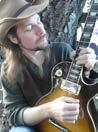



Kara Martinez Bachman is a nonfiction author, book and magazine editor, and freelance writer. A former staff entertainment reporter, columnist and community news editor for the New Orleans TimesPicayune, her music and culture reporting has also appeared on a freelance basis in dozens of regional, national and international publications.

A Philadelphia native and seasoned musician, has dedicated over forty years to music. Starting as a guitar prodigy at eight, he expanded his talents to audio engineering and mastering various instruments, including drums, piano, mandolin, banjo, dobro, and bass. Alongside his brother, he formed The Young Brothers band, and his career highlights include co-writing a song with Kid Rock for Rebel Soul.
Stephen Pitalo has written entertainment journalism for more than 35 years and is the world’s leading music video historian. He writes, edits and publishes Music Video Time Machine magazine, the only magazine that takes you behind the scenes of music videos during their heyday, known as the Golden Age of Music Video (1976-1994). He has interviewed talents ranging from Ray Davies to Joey Ramone to Billy Strings to Joan Jett to John Landis to Bill Plympton.

David Haley Lauver is a songwriter and freelance writer from Knoxville, Tennessee, who is a columnist for The Bluegrass Standard magazine. Three songs Lauver has co-written topped national Bluegrass charts. Along with Jerry Salley, Karen Bowles, and Bobby Johnston, Lauver was a co-writer of “The News That Never Changes,” a 2025 Bluegrass Gospel #1 for The King James Boys. “Appalachian Blue,” created by the same writers, was an international hit for recording artist Kristy Cox and received a “Roots Music” Grammy nomination. Lauver also worked with Donna Ulisse and Ali Shumate to write “Jezebel,” a #1 song for Shumate. In 2014, Lauver was selected to the East Tennessee Writers Hall of Fame. He has performed at Nashville’s Tin Pan South Music Festival and North Carolina’s “Merlefest,” where he was a five-time finalist in the Chris Austin national songwriting competition. Lauver’s career has included work as a news reporter, U.S. Senate staffer, university communications director, and executive speechwriter.
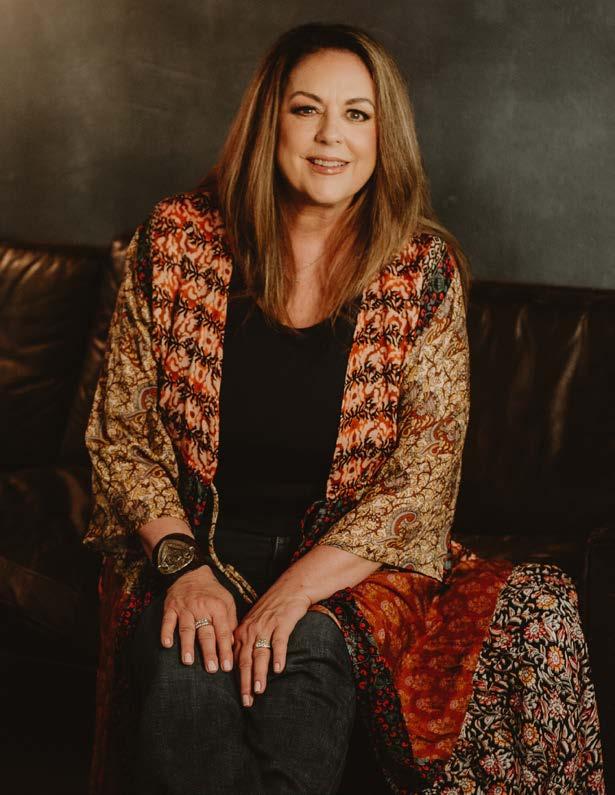
Donna Ulisse is an awardwinning American singersongwriter known for her powerful voice and deeply rooted bluegrass and acoustic music. A Hampton, Virginia native, she first gained national attention in the early 1990s as a country artist on Atlantic Records before finding her true artistic home in bluegrass. Ulisse has earned multiple honors, including the International Bluegrass Music Association Songwriter of the Year award, and her songs have been recorded by leading artists across the genre. Today, she is widely respected as one of bluegrass music’s premier songwriters, performers, and educators.

by Brent Davis
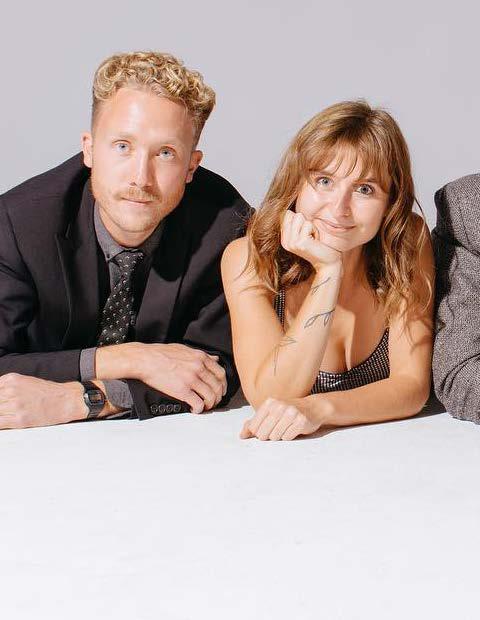
It’s natural, perhaps, to be inspired to form a bluegrass band if you’re from a place where the music is part of the culture, such as Kentucky or North Carolina.
But how does a band in Kelowna, British Columbia,---that’s Canada, folks--come to bluegrass?
For the members of Under the Rocks, it took curiosity, happenstance, a love of traditional Canadian fiddle music, and the discovery of a five-string legend.
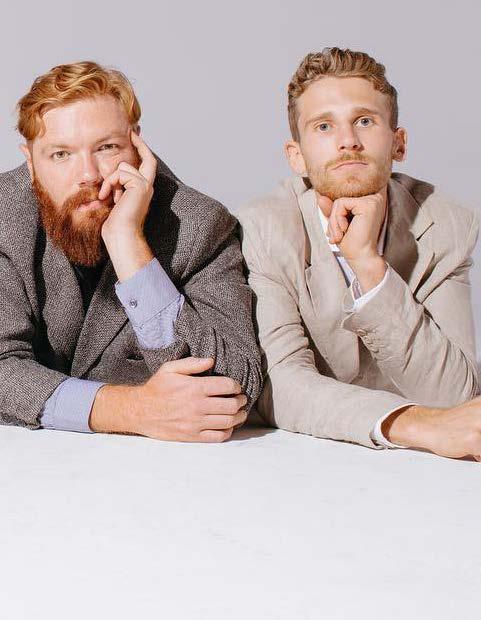
“Yeah, we definitely stumbled into it,” says guitarist and vocalist Jordan Klassen. "There's a few people who play in town, but there's not really a scene.”
More than ten years ago Klassen formed a friendship and then a musical partnership with Chris Baxter, who began as a drummer.
“I was always really into folk music,” Klassen continues. “We were playing music in this sort of bluegrass-adjacent world. We were fans of bands like The Milk Carton Kids and Punch Brothers and people playing Americana music, but not quite bluegrass. And so the influence hadn't come from that world yet.”

Then Baxter got a banjo.
“All of a sudden we were listening to Earl Scruggs, and it all kind of dominoed from there,” says Klassen.
Now Under the Rocks is releasing its third album and has become one of Canada’s popular bluegrass bands. Recent tours have included forays into the United States and showcases at the International Bluegrass Music Association’s World of Bluegrass annual gathering. Their original songs don’t address typical bluegrass preoccupations
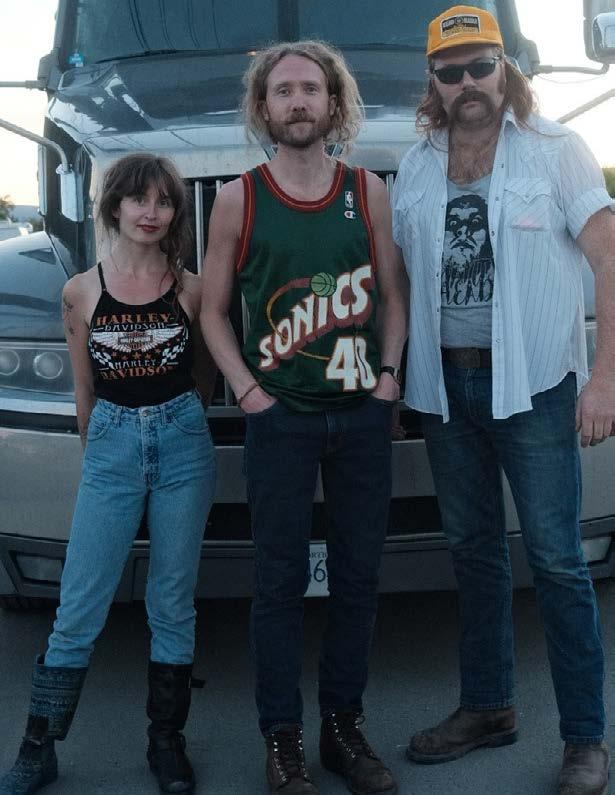
such as nostalgia for an old way of life or working in a coal mine. Their sensibilities reflect their lives in Canada, and they sing about wanderlust, wide open spaces, and the natural world.
“We can't help but make music that is the result of sitting down and just writing what comes to mind,” says Baxter. “Those other things aren't our stories.”
Fiddler and vocalist Chloe Davidson also adds unique Canadian elements to the band.
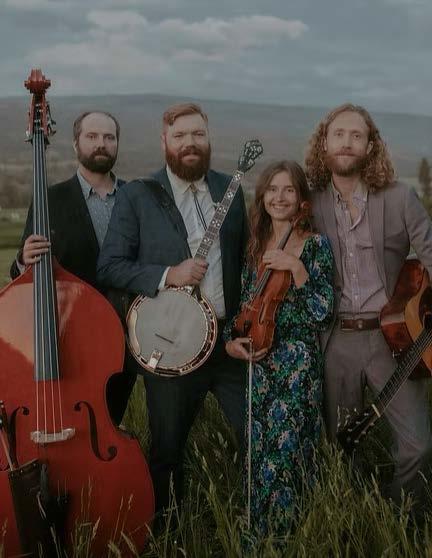
“She's deeply influenced by East Coast Canadian music, like Cape Breton fiddle playing,” Klassen says of his bandmate and spouse. “But if you listen to Canadian fiddle music, British Columbia fiddle music really has its own flavor. And so I think there is a certain sensitivity or sensibility or musicality that sprouts out of the region.
“Our sound is unique because Chloe, Chris, and I all come from such different musical backgrounds, and then we became inspired by bluegrass. But none of us are steeped in it from childhood. We're trying to do something that is authentic to the music we all like, while holding these bluegrass instruments and being inspired by the great tradition.”
“The three of us do all the writing and arranging,” says Baxter. “We all live in Kelowna, which is nice. We all live 20 minutes from each other, and we can get together on a regular basis and just workshop things. And I think what’s neat is that with all our different backgrounds, we kind of come together in this cohesive way when we work on each other's tunes.”
But there were challenges trying to learn a bluegrass instrument without other pickers around.
“For the first few years, I didn't even really ever use a pick,” Klassen recalls. “My foundation is as a fingerstyle guitarist. But I definitely fell in love with Tony Rice right away, and I still remember discovering ‘Nine Pound Hammer’ on YouTube. So he was a big influence at first. And in those early years I also learned a lot from the online teacher, Banjo Ben, who sort of got me acclimated to the genre.”
Baxter also felt isolated when he picked up the banjo.
“There weren’t any--- well, I still don't know of any banjo players that really play bluegrass music properly to learn from around here. So there's a lot of awesome online resources that I really dove into. Like Jordan mentioned, Banjo Ben was one I used a lot at the beginning.”
In addition to the new album, the band is looking forward to a busy summer of touring, including a slot at the celebrated RockyGrass festival in Colorado. Still, they realize the financial challenges full-time musicians face.
“You would need to be on the road so much, and it's just not sustainable,” says Klassen. “Chris has three kids, and we all have other aspects of our lives that we are invested in. So we sell merch, and that helps. Sometimes we've got support from our friends and family. We ran a crowdfunding campaign before our last record, and that helped immensely. Just this last year we got a grant for a tour last spring from the Canada Council for the Arts that we're very grateful for. There's important reasons outside of money why we do it and we just try to approach it in a way where it's sustainable and beneficial for all parties.”
Baxter agrees that it's about more than the money for Under the Rocks.
"We’re excited to continue to bring our music to new places. Our hope is to use the music to inspire and to share our hearts and what we like to do. Honestly and genuinely, that's our hope and goal.”
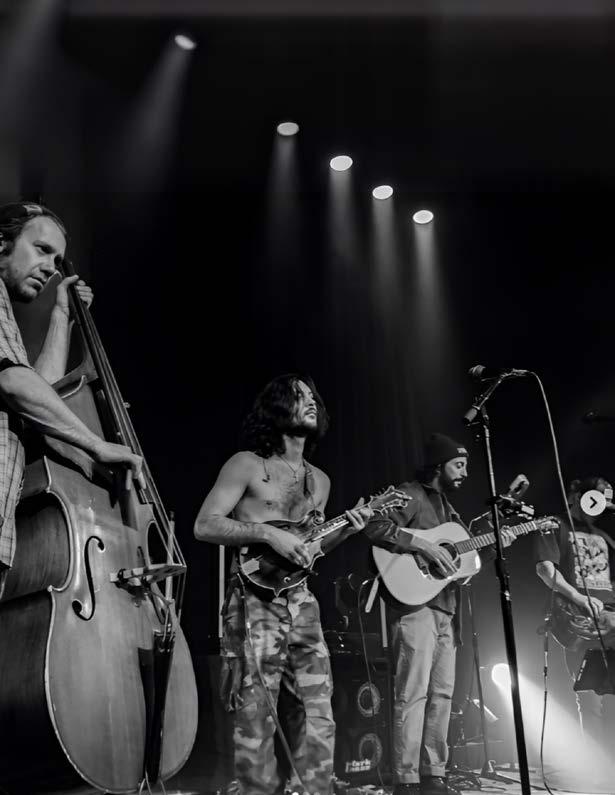

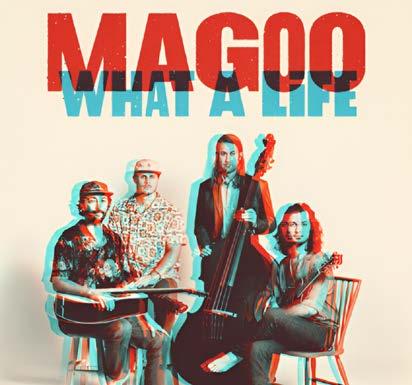
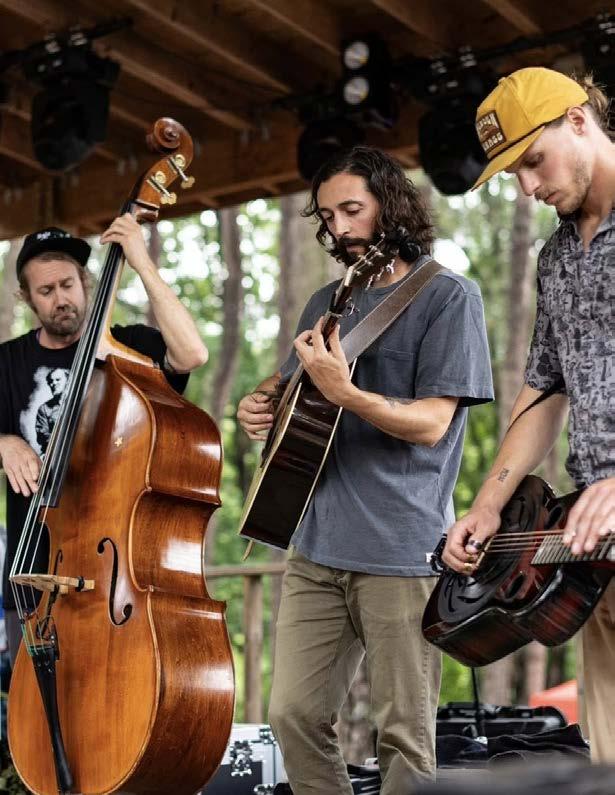
If jamming bluegrass fires you up, What a Life—Magoo’s debut album—will catch your ear. Based in Colorado, Dylin Flynn (dobro), Erik Hill (guitar, lead vocal), Courtlyn Bills (mandolin), and Denton Turner (bass) stretch tradition beyond its boundaries.
Unable to participate in a phone interview, the band corresponded via email.
Magoo says the album represents the payoff of relentless effort, often recording into the
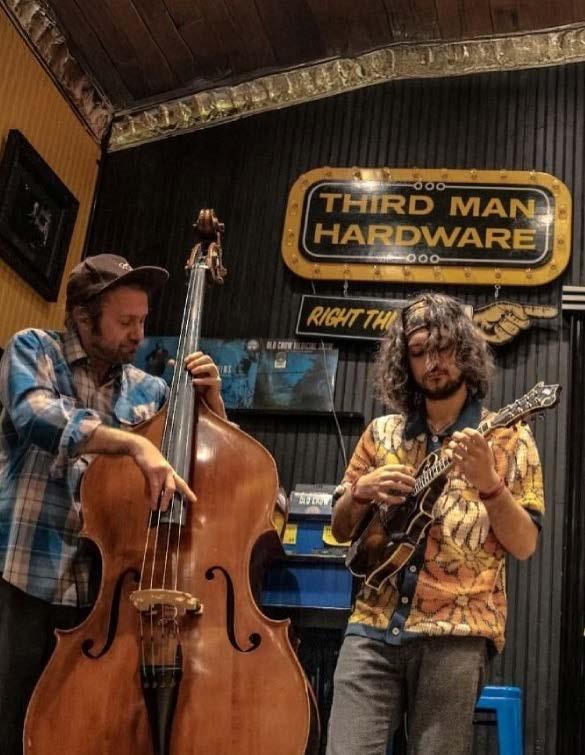
early morning hours at Courtlyn’s home studio in Rollinsville, Colorado. “Releasing this album has been a rewarding experience for us… it feels like the culmination of a lot of hard work.”
Recalling their early days, bluegrass musicians Erik Hill, Dylan Flynn, and Paul Flynn (Erik’s uncle) formed as a trio in the Centennial State’s jamgrass circuit.
Bringing onboard mandolin player Courtlyn Bills was a “game changer”—the band adds.
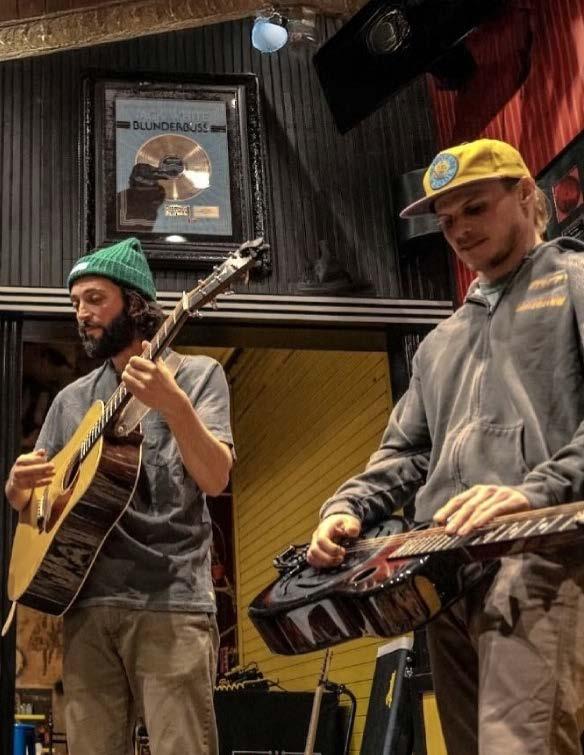
Bassist Denton Turner replaced Paul Flynn. “We played our first show together at a small Halloween party, and the rest was history!”
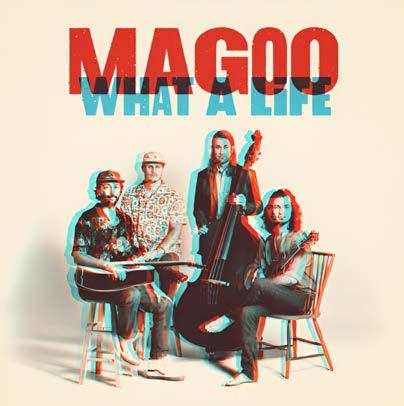
Each musician brings a distinct background to Magoo’s sound, blending jam-band sensibilities with bluegrass roots. “Erik has played in jam bands since he was 13 years old,” the band shares. “Courtlyn and Denton have been in bands that improvised as well, and they both love a variety of jam bands and bluegrass.”
Magoo says about their dobro player, “Dylan… grew up going to bluegrass festivals. He only recently started playing the more progressive, improvisational side of bluegrass—collectively, all of our backgrounds come together nicely for Magoo,” the band agrees.
“At our core, we are a bluegrass band,” Magoo points out. “We always strive to work on our arrangements. We don’t want
to play songs just for the sake of a jam—we all love traditional bluegrass and do our best to honor it in our own way.
Going on, “The improvisational jams are something we love to do. We might play a traditional tune like ‘Ain’t Nobody Gonna Miss Me When I’m Gone’ and then throw a jam in the middle,” adding that, “We don’t always do this, but it’s fun to be able to do it when the moment strikes.”
The title track urges people to keep an open mind. “’What a Life’ talks about a neardeath experience and encourages listeners to seize the day and say yes to opportunities that present themselves,” says the band.
“We felt it summed up our experience as a young band—we’re so grateful to be on this journey with everyone, and we can’t thank our community of friends, family, and fans enough for all of the support they’ve given us,” says the quartet, also naming the album
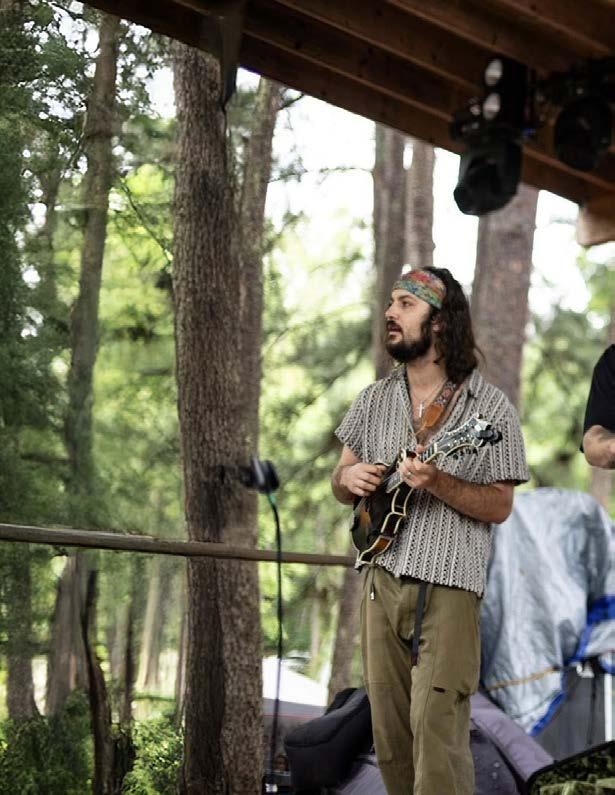
A legendary mandolinist appears on the album. “We had Sam Bush sing and play fiddle on the song ‘Angel of Telluride ’” The band hopped a plane. “We flew out to Nashville to record and hang with Sam. It was an incredible experience!”
Bush spoke to the band about Tony Rice, Bela Fleck, Jerry Douglas, and David Grisman. “He talked about all of those legends he grew up with.” The band adds, “We could have listened to those stories all day.”
What a Life was recorded in a home studio. “We recorded and engineered this album almost 100% DIY in Courtlyn’s home studio in Rollinsville, CO,” explains Magoo. “We had Eric Wiggs (Vermillion Road Studio) do the mixing and David Glasser (Airshow Mastering) do the mastering. Eric and David’s touch certainly made the songs come to life.”
They have enough material for their next album. “[What a Life] came together effortlessly given we had a pretty solid catalog of original tunes to choose from,” the band adds. “Courtlyn, Erik, and Dylan are all writing songs pretty consistently, so we already have enough work for our next fulllength album.”
Spreading positive vibes with their music, Magoo says, “We hope listeners enjoy our songs and feel good while listening to them! We love how our community of family, friends, and fans prioritizes love and care for one another. We want to pay it forward. We hope listeners can feel just how much love we have for them and what we’re building together.”
by Susan Marquez
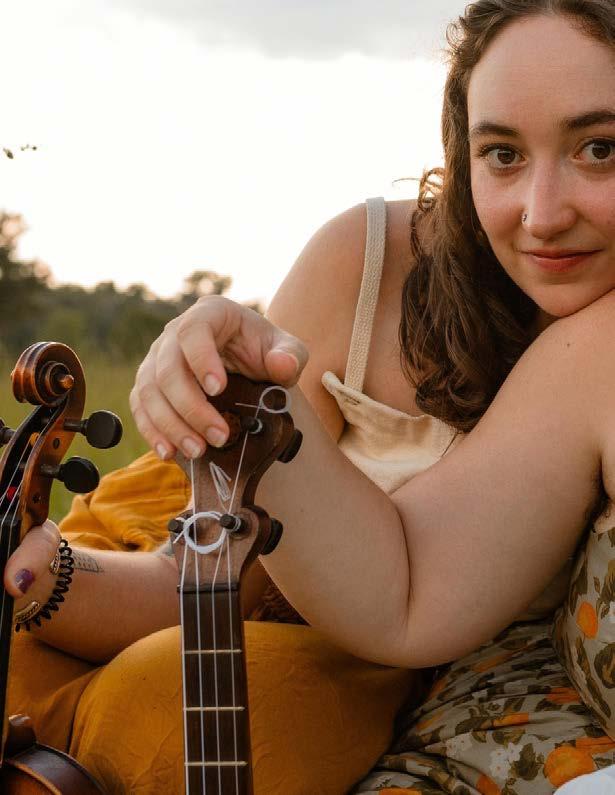
On a Saturday afternoon in March, three musicians stood on a wooden stage built around the base of an old-growth sycamore tree on an idyllic piece of property outside of Kosciusko, Mississippi. They were playing for the kickoff of Heart Farms, the passion project of Terry Hunt. “I call Rosalee Walsh my niece,” Terry says. “I just knew I had to get her band to play today.”
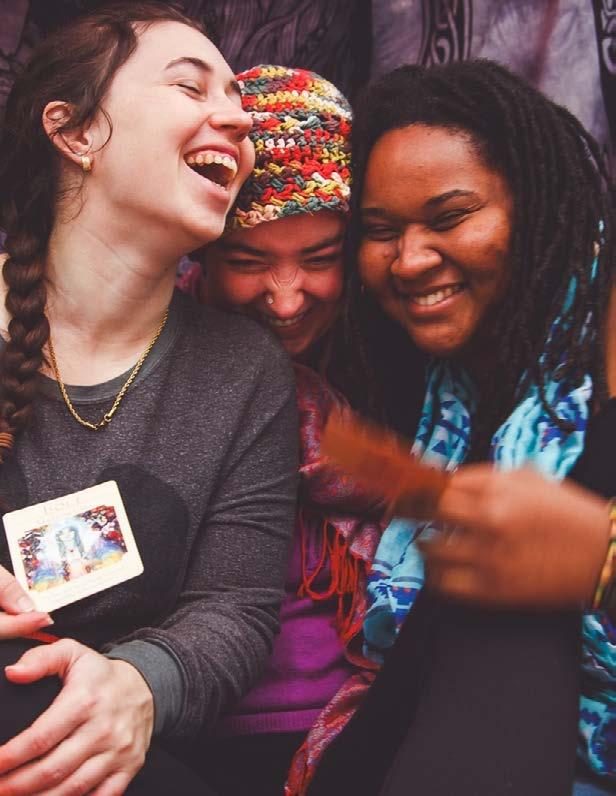
It was the end of a week of teaching for The Little Mercies, the band Rosalee has with her friends, Shanice Richards and Bronwyn Chelette. The three spent the week teaching students at a camp hosted by the Congress of Country Music, a project by Marty Stuart in his hometown of Philadelphia, Mississippi. Several children in Neshoba County participated in the weeklong camp during spring break, making art and learning the art
of songwriting. “We finished the week with a show on Friday, on the same stage where Dolly Parton played,” says Shanice. “That was super exciting for us.” Equally exciting was teaching the kids and seeing how well they responded to learning how to put their feelings into words for a song. “It was a week we’ll always remember.”
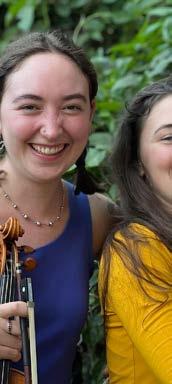
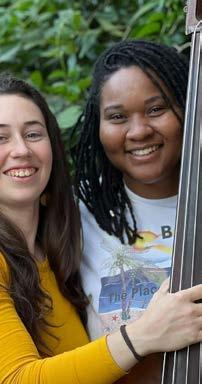
Multi-instrumentalists songwriters, Bronwyn, Shanice, and Rosalee met at the Blue Tavern in Tallahassee at an old-time music jam. “There weren’t many women there, and certainly not many young women,” explains Rosalee. “We gravitated towards each other, and we began hanging out as friends.” Before long, they united through their love of old-time music, and they started playing together. “The idea of starting a band together just happened naturally.”
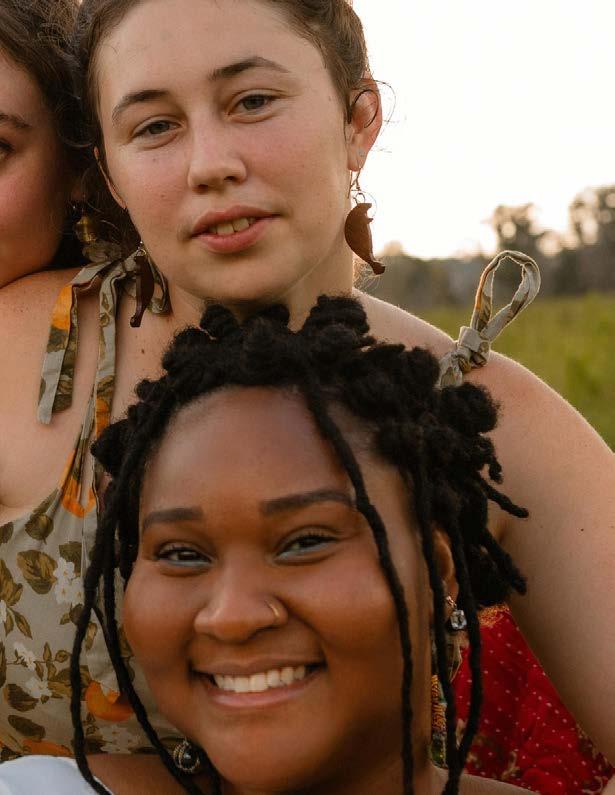
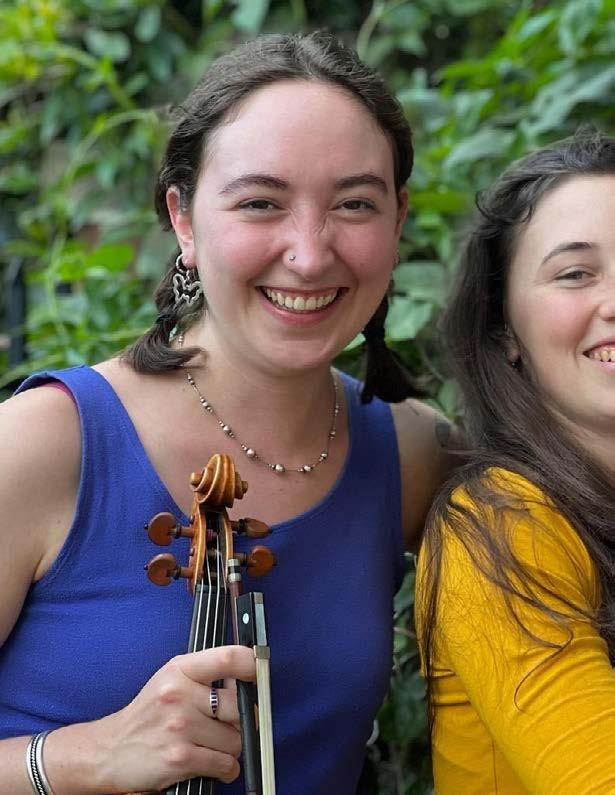
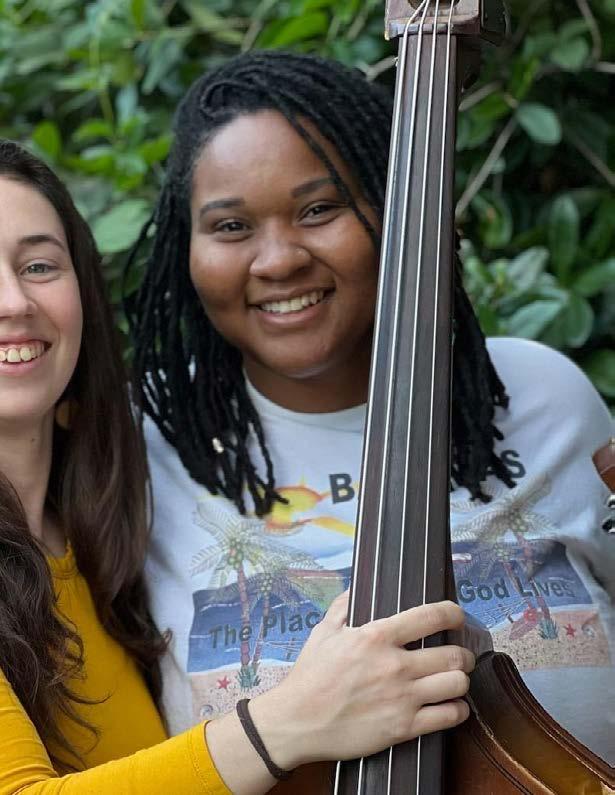
Both Bronwyn and Shanice were in the healthcare field. “I have a degree in nursing, and I worked in labor and delivery,” says Bronwyn. “And I was working on my master's in music therapy,” adds Shanice. “I had the opportunity to play so many genres of music in Tallahassee, but music therapy seemed like a more stable career plan.” But both Bronwyn and Shanice became disillusioned with the healthcare system and began to consider music as a career when they started the band three years ago.
Because they had an upcoming gig, the band needed a name. “We played off our names, looking up the meaning of each person's name,” says Rosalee. Bronwyn means White Raven, Rosalee means “Rose Garden,” and Shanice means “God is merciful.” They homed in on merciful and came up with The Little Mercies. “We checked, and there was no other band by that name,” laughs Shanice. “So we went with it.” Rosalee adds, “We joke that one day we’ll grow up and be The Big Mercies.”
While they bring individual expertise in a variety of genres, including bluegrass, classical, folk, reggae, and jazz, their collective sound pays homage to tradition while blurring genre lines. Their old-time and bluegrass stylings come from an honest place. “I grew up going to bluegrass festivals in Colorado,” says Rosalee.
“My mom sang old American ballads to me when I was young, and I always loved that,”
Bronwyn recalls. “I learned to love singing. In high school, there was no marching band, only a bluegrass band. So that’s what I leaned into.”
Shanice says she loves the rhythms of bluegrass. “I played in my parents’ church in Hollywood, Florida, and in high school I learned to play classical violin.” When she began to learn how to play the fiddle, it opened a whole new world to her. “The rhythms of the fiddle felt like a different instrument from the one I had previously tried to master.”
Another factor in learning to love the music came from the dance floor through their interest in contra dancing. “Shanice and I were in a clogging troupe called the Hot Pepper Steppers,” says Rosalee. “The more we danced, the more I got into the music.”
For two years now, The Little Mercies has been a full-time gig for Bronwyn, Rosalee, and Shanice. “We still have passion projects on the side,” explains Bronwyn, “but we put our main focus and energy on The Little Mercies.”
When asked what influences them musically, all agreed that the old-time players they’ve met while traveling and other friends in the music scene are their biggest influences. “And we egg each other on to be creative,” says Bronwyn. “We often try to sound like each other.” They all have individual influences, but their real inspiration comes from each other. Because they are all so proficient on so many instruments, there is room for experimentation that brings depth to their music. They write songs, and that has become another way to develop their own unique sound. “Bronwyn and Shanice tend to write lyrics, and I am more into music arranging,” says Rosalee. “I am moved by colors, shapes, and feeling, to convey what is happening in the moment.” Shanice adds that she appreciates the storytelling aspect of folk music. “Other genres use a lot of metaphors, but folk music is pure storytelling about what’s going on in my life.”
The band’s first official EP, The Little Mercies, was released on April 17. Recorded in Greensboro, North Carolina, the EP is available on all platforms. The EP features all original songs and one arrangement of a traditional tune. Each member brought two songs to the project, which they arranged together, and they wrote one song together. “We are already cooking on our first album,” says Bronwyn.
In a short time, the band has grown from playing local jams to headlining festivals. Their distinct sound has brought them recognition and awards, including being finalists for the Freshgrass Awards and Official Showcase Artists for the Southeastern Regional Folk Alliance (SERFA). Known for their powerful harmonies, authentic lyrics, and energetic shows, The Little Mercies will, no doubt, evolve into the aforementioned Big Mercies.
Check out The Little Mercies on their YouTube channel. https://thelittlemercies.com
by Jason Young
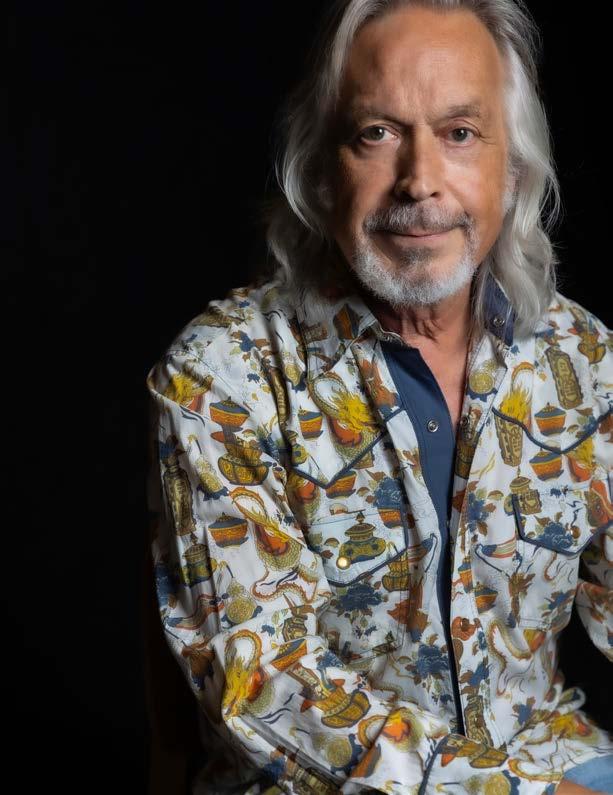
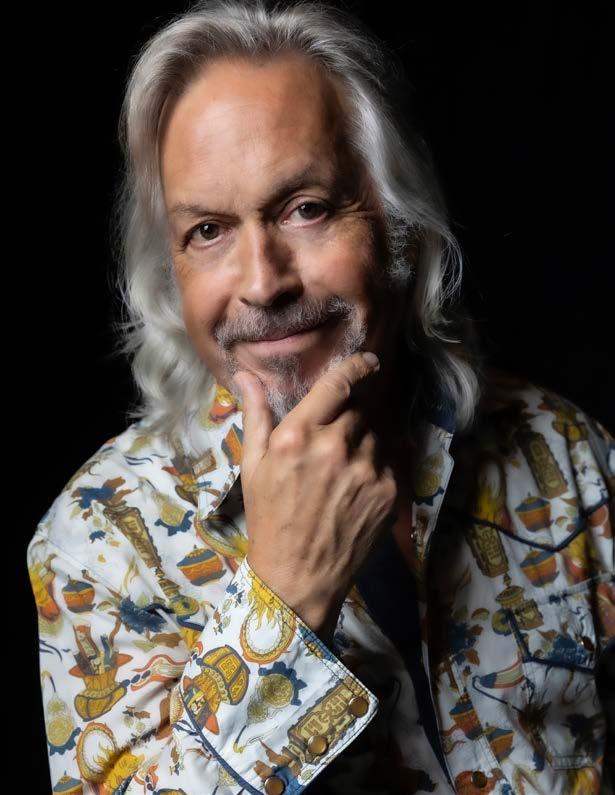
Nashville Songwriting Hall of Famer Jim Lauderdale might make you think country and western, Grammy Award winner spoke about his bluegrass heroes, Ralph Stanley, Rolland White, and his the hard driving Po Ramblin Boys.
Known for his country songs, Lauderdale had an early struggle. “I used to be concerned years ago just one style of music. And if I didn't do that, then people might not be accepting of me. But I didn’t true,” shares the Nashville artist—with fans in both country and bluegrass.
While planning the release of his thirty-eighth and thirty-ninth albums this year—one of them, Hits Volume 2, with his rollicking band The Game Changers—Lauderdale said he’s teamed up Ramblin’ Boys for some straight-ahead bluegrass.
“I'm really excited about the bluegrass album!” Lauderdale shares. “The album is called The Birds be out by March—I thought I would have the record with the Po Ramblin’ Boys out several months touring and stuff, I'm unfortunately very slow” [laughs].
Lauderdale praises the Gatlinburg, Tennessee, band.
“They're so good! I really enjoy watching them. They are really into what they're doing, and players and wonderful people. I think the Po Ramblin’ Boys, to me, really continue that great tradition bluegrass,” Lauderdale explains. “That’s such a big part of my makeup—it’s fun to write in that the songs with them.”
“I appreciate their energy,” offers the seasoned songwriter. “I'm a little older, and it's refreshing for make music with them and to hang out with them—it's inspiring.”
The singer recalls being the younger musician and meeting his hero, Rolland White.
“I was so fortunate to get to record an album (Forgive and Forget) with Roland White when I went to Nashville to seek Roland out because he was such a big hero of mine.”
“It was a real dream to cut the record. But then I couldn't get a record deal for it,” Lauderdale remembers. really get things going in Nashville, so I moved up to New York City because there was a kind of that time.”
Lauderdale kept writing songs. “While traveling around between Nashville, New York, and then to write more and more,” recalls “The King of Broken Hearts” singer. “I did eventually get three of Nashville.”
Lauderdale’s songs have been recorded by George Strait, Vince Gill, Patty Loveless, Mark Chesnutt, Chicks—as well as Ralph Stanley & The Clinch Mountain Boys, and Rolland White.
“People started recording my songs and having radio success with them. And so that enabled me and keep writing.”
He collaborated with Ralph Stanley.
western, but the two-time his latest work with
ago that I had to do didn’t find that to be
them, Country Super again with The Po
Birds Know and should months ago, but with
they're such great tradition of hardcore that style and to sing for me to just get to was twenty-two. I remembers. “I couldn't of country boom at
then LA, I was trying three record deals out Chesnutt, and The Dixie
me to make a living
“I did a TV show called Ricky Skaggs Live at the Ryman. Ralph Stanley was a guest. I had a contract with RCA at the time for a country record, and I asked Ralph if he would be on the record. I said I could write something for him and the Clinch Mountain Boys, and he agreed.”
He wanted to do more.
“After that, we recorded our first full album together (I Feel Like Singing Today). Ralph said, ‘When are we going to do another one?’ So we did a follow-up called Lost in the Lonesome Pines, which won a Grammy for Best Bluegrass Album of the Year.”
Lauderdale holds a special place for bluegrass.
“I am really struck by the feeling that people get for bluegrass. When that bug bites you— it is really unique. There is devotion people have as listeners and musicians. I'm sure the people reading this will understand what I am talking about. It’s a profound experience.”
Going on, “I'm really encouraged by seeing how bluegrass has gone through the years and seeing how young folks are really running with it, and that includes the Po Ramblin’ Boys.”
“I'm going to a conference in Belfast. Wyatt Ellis’ band will be there, and Ron Block and Southern Legacy. It's called the Showing Your Roots Festival. From there, I'm doing a bunch of European dates, opening up for Emmylou Harris on her farewell tour. Then it’s back to the States.”
With that, we eagerly wait for some new Jim Lauderdale music—both country AND bluegrass!


As spring turns into summer, weddings in city churches, country chapels, and the great outdoors are echoing with tunes familiar to Bluegrass brides and grooms.
“If a June night could talk,” said English writer Bernard Williams, “it would probably boast that it invented romance.” When those romances lead Bluegrass fans to the altar, they have a wide selection of songs for ceremonies and receptions.
And while June has long staked its claim as the leading month for marriage, a couple’s favorite music is appropriate for tying the knot at any time of the year. In fact, two of my favorite Bluegrass wedding stories took place in the fall.
“Bluegrass Royalty” and Lifelong Love
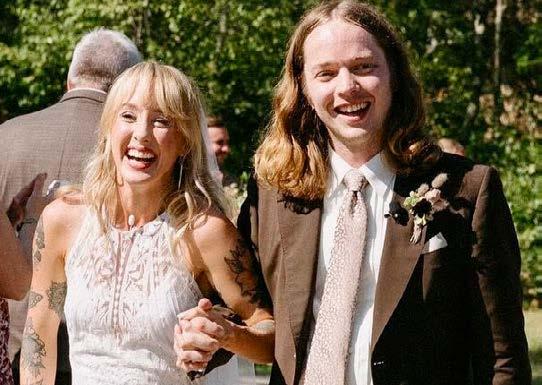
October, which recently passed June in wedding popularity, was the marriage month for Donna Ulisse and Rick Stanley. Donna always says she “married into Bluegrass royalty,” and their guests in Norfolk, Virginia, could understand what she meant.
Traveling to the Tidewater region from

Virginia’s Blue Ridge was Rick’s cousin, Ralph Stanley, and the Clinch Mountain Boys (Junior Blankenship, Charlie Sizemore, Curly Ray Cline and Jack Cooke). When “Dr. Ralph” and the band played at the reception, guests were treated to an up-close concert of favorite Stanley tunes.
In the years since their wedding, Donna and Rick have written and recorded plenty of their own songs suitable for ceremonies and anniversaries. “I Want To Grow Old With You” affirms “There’s a Higher Power who’s always known/That we weren’t meant to go through life alone.”
“You and Me” follows up that belief: “We walk on through this life, knowing we are right where we should be/We keep each other strong, so nothing much goes wrong/ As long as you are holding me.” The title line to a third song confirms that lifelong romance: “He and me, we make a perfect us/ Tailor-made for each other, no doubt/We act just like mushy movie stars/He and me, We Got This Love Thing Figured Out.”
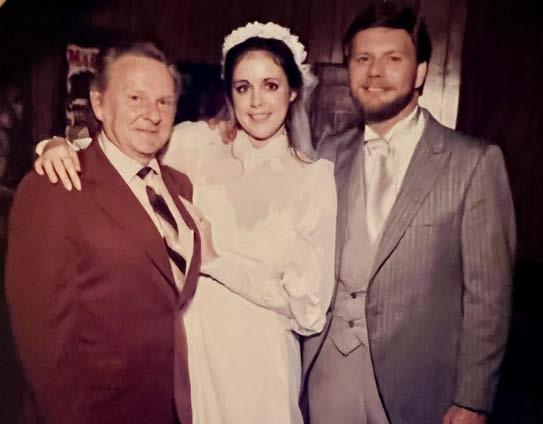
At another fall wedding, Billy Strings and Ally Dale were married on the grounds of Michigan’s Hoxeyville Music Festival. That September ceremony combined Bluegrass melodies and a Jamgrass feel.
The processional included traditional tunes such as “Forked Deer,” “Cherokee Shuffle,” “Clinch Mountain Backstep,” and “Home Sweet Home.” Leftover Salmon was the house band for the reception, and an all-star jam featured Billy, Bob Weir of The Grateful Dead, Trey Anastasio of Phish, and Les Claypool of Primus. The couple’s first dance was to the John Hartford song, “No End Of Love.”
Several Billy Strings songs are becoming new wedding standards. “In The Morning Light,” written by Billy and Paul Hoffman of Greensky Bluegrass, expresses hope and awe for redemptive love. “She’s a wonder to behold/I’ll love her ‘til I’m growing old/And that’s the plan . . . And it seems so easy now/I can’t believe it but somehow/I made her mine.”
Billy and Jon Weisberger wrote another song assuring the object of the singer’s affection that she’ll never find another “Love Like Me.” The song promises, “Darlin’, if you’ll walk beside me/I will be a steady hand/If you need a rock to stand on/Honey, I will be your man.”
As I began looking at songs for a Bluegrass wedding playlist, I thought . . . who better to ask than members of the IBMA Songwriters’ Committee?
This is Bluegrass, though, so I made it clear that I was seeking “happily ever after” song plots. No characters named “Willie”—whether from Knoxville or “The Banks of the Ohio”—are on this musical guest list. They’ll get their due in a “haunting melodies” column for Halloween.
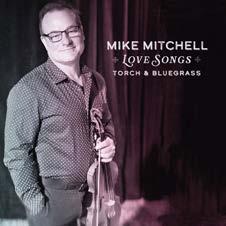
I appreciate all the writers who contributed, starting with Chair Mike Mitchell. He and cowriter Dawn Kenney had Zoom session conversations with two friends who were getting married and wanted an original wedding song.
The writers used real-life stories of how “Love Came True” for their friends, and that authenticity proved to be relatable to other couples. Mike included this song on his new Love Songs, Torch and Bluegrass album. He also wrote “Jenny Lynne,” a song for his wife that fits this category. It’s on his Small Town album, with Mark Schatz, Jarrod Walker and Claire Lynch.
Among other songs Mike recommended are Volume Five’s “Forever’s Just a Start,” expressing the optimism of new marriage; Authentic Unlimited’s “The Vow,” which he called, “a perfect modern ‘Wedding March’”; and Rick Faris’ “Walking on Air,” a happy tune that “captures that ‘newlywed’ feeling—light, joyful and rhythmically driving.”


Songwriter/artist Caroline Owens said her pick would be “I Was Meant To Love You” by The Whites. She said she first heard it played at a friend’s wedding “and it has stuck with me all these years later.” In the song, the singer confides that, “It might have been that very first touch . . . Remember when you took my hand and wouldn’t let go?/ It’s crazy, but I’ve known ever since/That I was meant to love you.”
Johnny Williams of Shelton & Williams chose “Your Love Holds The Key” . . . “a song I wrote many years ago that we have performed at weddings and receptions.” The upbeat tune on his Last Days Of Galax album features great harmonies by Johnny and Jeanette Williams.
The singers play it cool at first but reveal in the chorus . . . “My heart’s on fire with desire for you/When we’re far apart, I don’t know what to do/I believe in you and you believe in me/There’s a lock around my heart/Your love holds the key.”
“Walk Beside Me” is a song that Kevin Slick wrote and performed with the Orchard Creek Band. “We sang this one at a wedding and, even though it was a new song that I had just written, the crowd was singing along by the end of the first chorus,” he said. “Everyone asked for an encore at the reception.”
The song builds throughout, adding voices and changing keys in an upbeat invitation to “Walk beside me, my love/Hold my heart, my hand/As we follow the sunrise/Across this promised land.”

Songwriter Nancy Posey remembered the wedding of Ella Allman, a friend from the Swannanoa Gathering, and her new husband. The newlyweds got a great response at their reception when they sang the classic “How Mountain Girls Can Love.”
Nancy also shared a father/daughter dance song that she and Jeff Walker wrote called “Love Enough (To Go Around).” It begins, “Everybody’s eyes are upon us/The father and the beautiful bride/I’m dealing with a big ol’ mess of emotions/Folks are betting on whether I cry . . .” Somebody needs to cut this beautiful song! And if it ends up on my daughter’s reception playlist, I’ll remove any suspense about whether I’ll be blinking back a tear. Finally, Nancy cautioned brides and grooms to think about the meaning of songs they select, however beautiful the melodies may sound. She said, “I recall a college friend who had an instrumental version of ‘Yesterday’ played at her wedding.” The implication: do you really want wedding guests singing along in their heads to “Yesterday, all my troubles seemed so far away. Now it looks as though they’re here to stay . . .”
by Kara Martinez Bachman
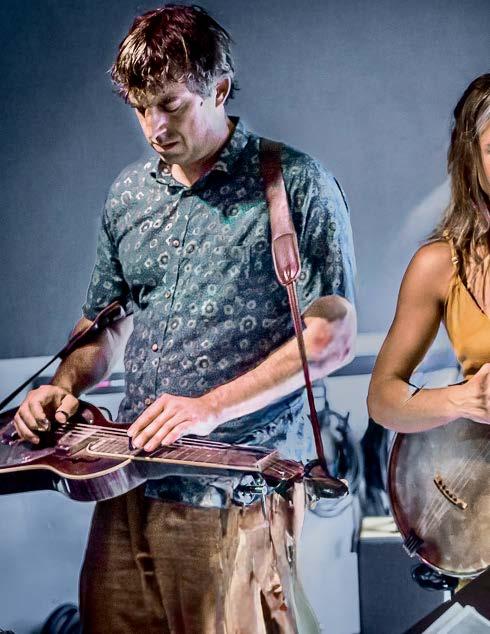
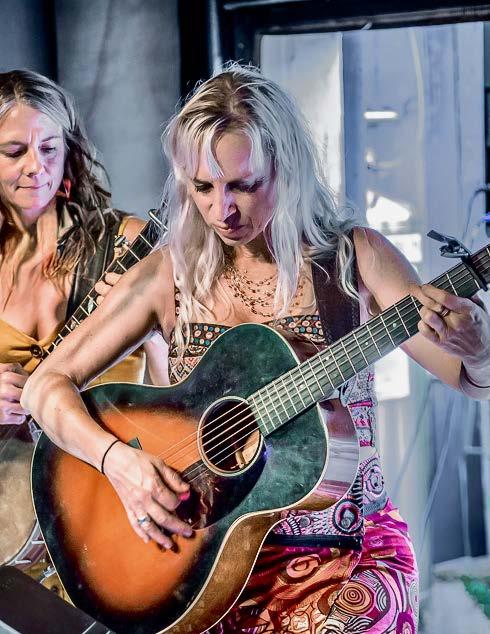
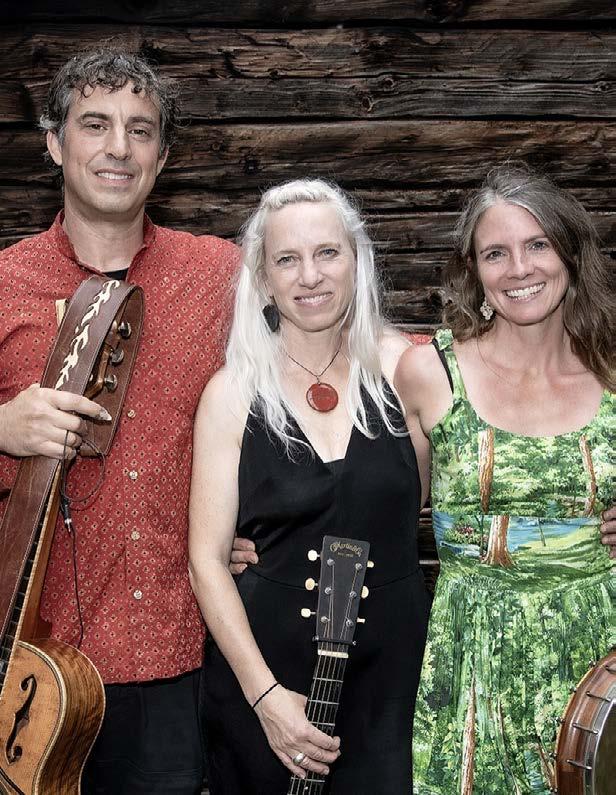
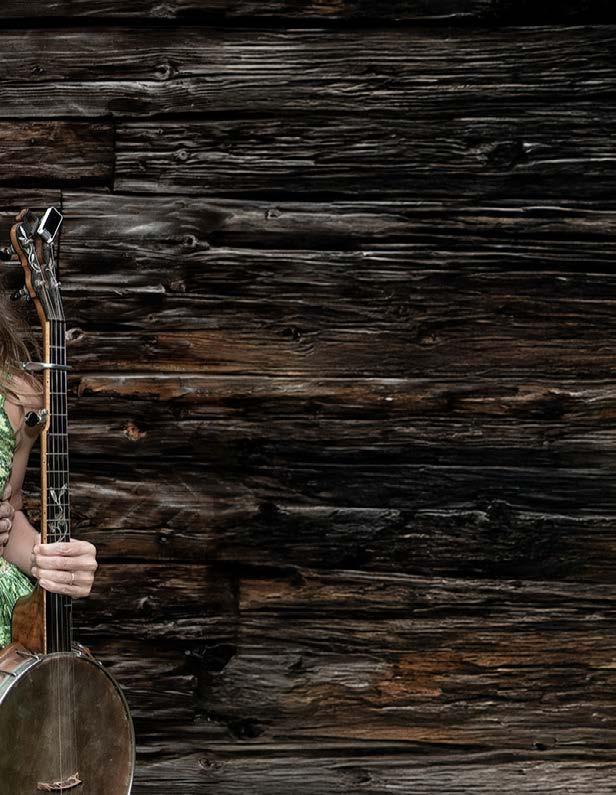
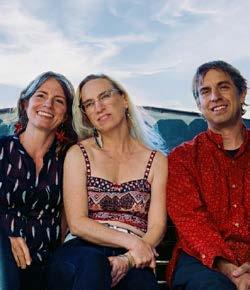
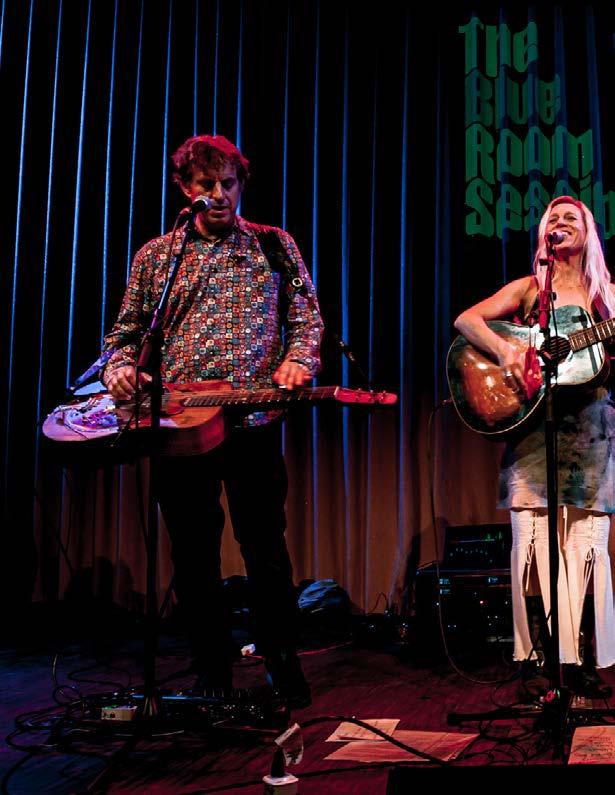
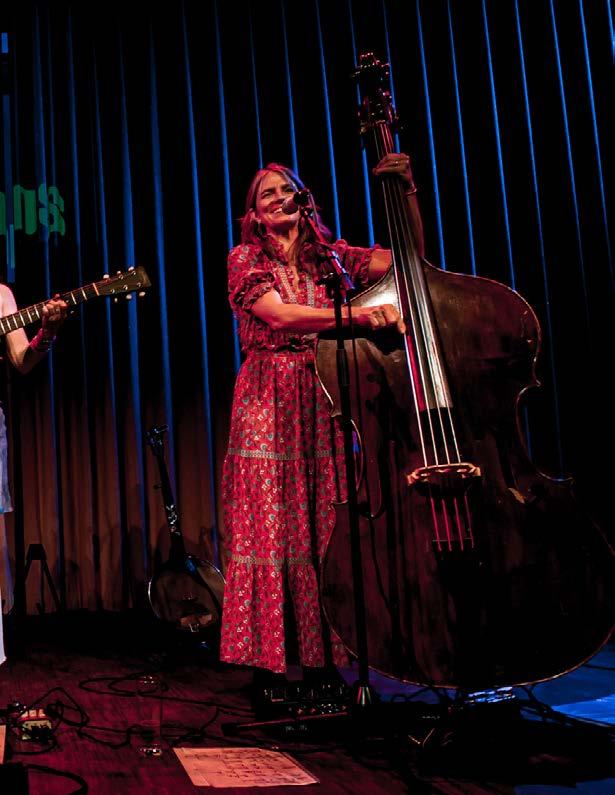
For “worldgrass” trio Tanasi, music is about ideas that are understood personally but felt globally. The people, ideas, and music of different places and cultures provide inspiration and prove yet again that music is a universal language.
“One of the things the three of us realized early on – beyond our shared love of tight Appalachian harmonies and beautiful melodies – is how deeply we all value travel and the chance to meet people from around the world who share that same love of music,” explained Mary Lucey, who brings upright bass, clawhammer banjo, and vocals to this trio. “We’ve felt the power of music to connect in so many places.”
She said it doesn’t matter whether that connection happens “during late-night jams on a porch back home” or in a small village in Nepal, “with people we’ve just met and can’t even speak to in words, yet we can play together for hours.”
“We’re mindful of the privilege it is to travel and immerse ourselves in different cultures,” she continued, “and we don’t take that lightly. Instead, we’re leaning into these influences for inspiration while celebrating the simple truth that we have far more in common with one another than we do differences.” She said in her other career as a nurse, she’s reminded daily of the common threads that are understood and experienced by much of humanity.
“I’m grateful to have the chance to share that perspective from the stage as well,” she added.
Lucey performs with bandmates Billy Cardine (dobro and slide instruments) and Anya Hinkle (vocals and guitar). Based in Asheville, North Carolina, they came together as a trio in 2018.
“At first, it was just Mary and I,” Hinkle reminisced. “We just enjoyed spending time out on the front porch picking tunes and learning each other's songs, singing harmonies, and getting to know each other. We started an old-time duo. Mary on banjo and bass, and I played guitar and fiddle.” Soon, Cardine became the third member of the trio.
“During the pandemic, the three of us actually played more than ever around the region,” Hinkle said. “Doing all those gigs together showed us that we were a good team, both musically and professionally. When things work, they just work. When we began working on the music for Tanasi, we felt that the songs should capture where we are at this moment in our careers and in our lives. A big part of our development musically and personally came from our experiences traveling and playing music in other countries. So we felt the songs should reflect that while also opening the door to more cross-cultural collaboration.”
The group just released its debut album in May, the eponymously-titled Tanasi. It was recorded at Indidog Studios, Lucey and Cardine’s home studio that’s “tucked into the side of a mountain in Pisgah National Forest just outside of Asheville.” That setting seems to have added to the feel of the record; Lucey described it as “quiet, surrounded by trees, and just far enough removed from everything to let you really listen. I think that sense of space found its way into the record.”
Musical contributions also came from musicians Cody Wright (electric bass) and Julian Pinelli (fiddle).
“There are nine songs on the album,” Lucey said. There are original tracks, with some “shaped by music we’ve learned from different parts of the world,” plus a couple
of covers “that have stayed with us over the years.”
There’s a song based around a melody written by a South African slide guitarist who taught it to Cardine and Lucey while on his first trip to the U.S.; an instrumental written by Cardine in 5/4 time, inspired by his extensive study of Indian classical music while under the tutelage of Hindustani slide-guitar master, Debashish Bhattacharya; a song penned by Steve McMurry, a founding member of Acoustic Syndicate, which echoes the legacy of family farming in the hills of western North Carolina; and, even a tune “inspired by the rhythms and melodies of a traditional West African Yoruba chant.” There’s music inspired by Nepal, and an instrumental written by Cardine “while sitting in an aspen grove on a mountain overlooking Flagstaff, Arizona.” Sometimes the listener will even hear the Indian Chaturangui, an instrument you’ll be hard-pressed to find on most other “grass” records, even if inspired by roots music from afar.
The scope of influences is far-reaching, spanning continents and bringing to bear years of study and performance for members of the trio. For Tanasi, this record is not just a record; it’s an expansive description of the things they learn from, and the things they are passionate about.
“We are grateful for the opportunities we have with this record to share our music with the world, and are excited to see what the future brings,” Hinkle said.
by Susan Marquez
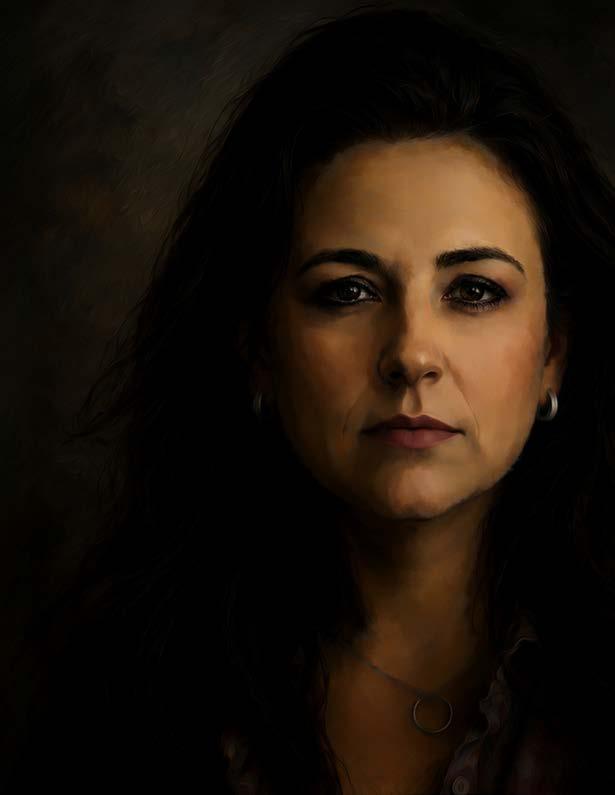


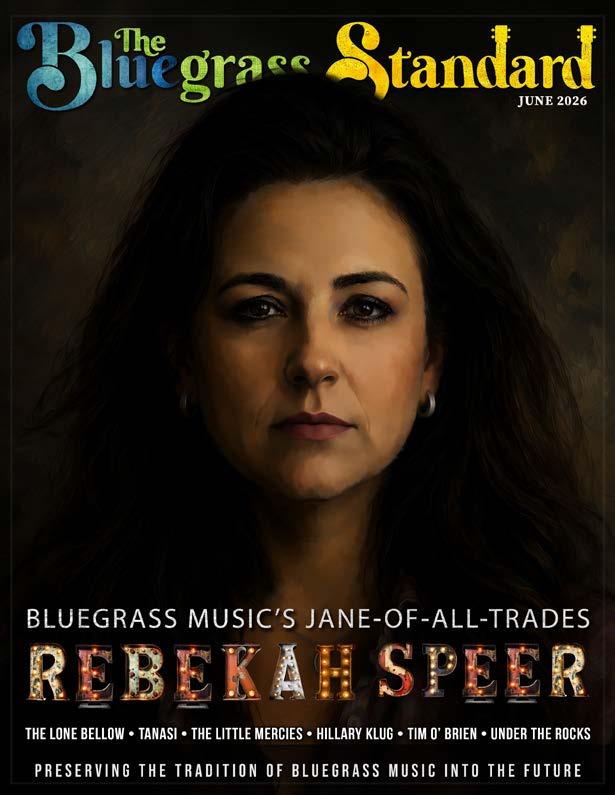
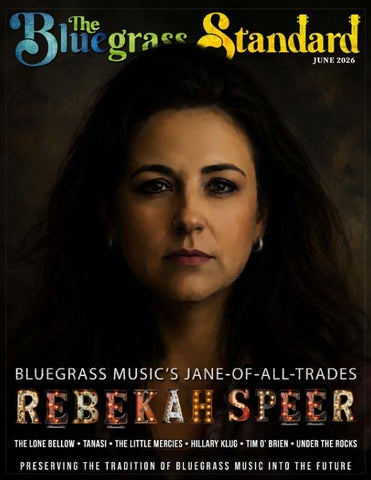
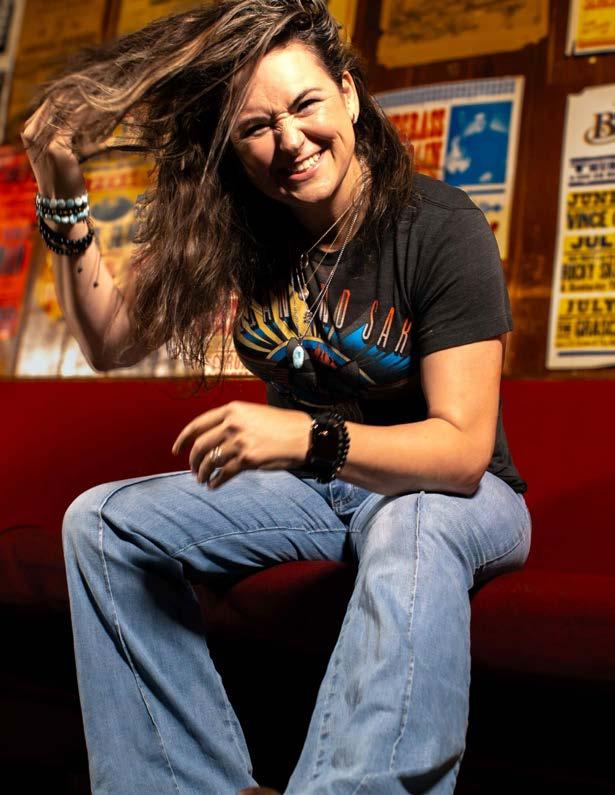
Don’t tell Rebekah Speer she can’t do something. She will, no doubt, prove you wrong. In the eight years that I have known her, I haven’t seen much that Rebekah can’t do, and what she does, she pours her heart and soul into.
Maybe it was growing up on a family farm in Lincolnton, Georgia, where she did handson work like tending to cattle, logging, carpentry, brick masonry, and even septic services, that Rebekah became a real janeof-all-trades.
Childhood was difficult for Rebekah, whose parents divorced when she was five. “Dad got remarried when I was seven, and mother remarried at some point.” She stayed with her dad before going to live with her birth mother when she turned 14. That lasted a year before Rebekah returned to live with her dad.
In November 2000, Rebekah, her twin sister, Lizzy, and their little brother, Drum, were put into foster care. Lizzy was placed with Little Roy and Bonnie Lewis, while Rebekah and Drum were placed with their youth pastors, Robert and Holly Newberry. Drum eventually moved back with their dad after three months, and Lizzy and Rebekah chose to stay in foster care.
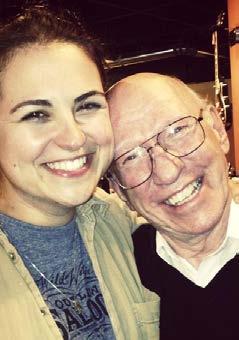
Rebekah stayed with the Newberrys for about nine months. They worked overseas building embassies and other government buildings. They had to be able to leave at a moment’s notice, and soon the Newberrys were packing for their new assignment. They had to leave the country, and Rebekah was left without a place to stay. She could either find a place, or the system would place her outside the county with strangers. “I was fortunate that Randy and Jeanie Smith invited me into their home. Randy was my English/drama teacher, and Jeanie was the media specialist at our school. I lived with them through my freshman year of college,
and I’m so grateful for them. I know I was a handful at times with all the issues I toted and struggled with. One of the issues was that I never understood why Little Roy and Bonnie didn’t take both my sister and me. I never voiced that at the time, and I never realized how much it bothered me until it surfaced years later. It took me a long time to get over that feeling of not being good enough – way into my twenties.”
Having Randy and Jeanie in her life was a godsend for Rebekah. “I needed a mama really bad,” she sighs. “I like to think maybe she needed a daughter, too.” The two remain close to this day.
Rebekah has other siblings as well – ten in all, including her foster brother, and an older sister her birth mother revealed a few years ago.
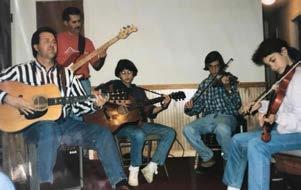
Rebekah grew up around old-time, bluegrass, and country music. “My dad’s family was very musically inclined. My grandfather, his brother, and various cousins were local musicians. My Aunt Paulette was a great pianist and was well-known throughout the surrounding counties.”
Rebekah recalls when Little Roy came to a pickin’ party during Thanksgiving when she and Lizzy were young. “They lived down the road from us. Hearing that music really set a fire in us, especially Lizzy. She was the star of the show.”
Influenced by popular music, Rebekah says she listened to a lot of Fleetwood Mac and Bette Midler. “I absolutely fell in love with the Divine Miss M. I loved her antics, her wit, and her powerhouse vocals. And I could really lose myself and escape in her torchy ballads.” Rebekah says she is also a big Motown fan. But she always steers back to bluegrass and old-time. “Lizzy always had The Lewis Family and Flatt & Scruggs blaring in her room next door to mine, so I
couldn’t help but know the songs.”
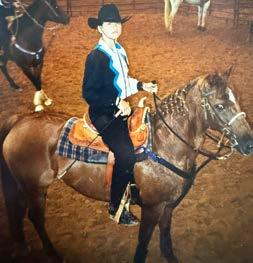
When she wasn’t listening to music while growing up, Rebekah loved barrel racing. “I had a little Arabian and quarter horse mix – a red mare named Betty. She was a hussy, and once I got on her, we would tear the ground up. But she also tore me up.” Rebekah suffered a head-butt to the mouth, a (twice) broken arm, toes, and fingers – all thanks to horses.
When it was time to go to college, Rebekah attended Georgia Southern University for two years, where she majored in music education. “I had a focus on percussion, but my dreams of being a drummer were ruined with a broken arm.” She persevered, playing through the pain. Realizing that was not sustainable, Rebekah knew she needed a change.
She looked at Glenville State College in West Virginia, where her sister Lizzy had earned a bluegrass certificate. “I visited her there and met Buddy Griffin. Sadly, we lost
Buddy to cancer a little over a year ago. He was a major influence on my bluegrass life. I liked the idea of a smaller college, so I transferred and got a degree in Music Ed, with an emphasis in percussion (I did it!), and I earned the world’s first Bachelor’s in Music-Bluegrass.”
To make money, Rebekah formed a band called Mountain Fury. She played bass, and Lizzy joined her on banjo and fiddle. Rounding out the band were Eileen MarshMetheney on guitar and Rachel SingletonBurge on mandolin. “We started playing in a little club called Bear Fork. We also played in a lot of churches and festivals around the state.”
Rebekah met the love of her life when she least expected it. Jeff and Sheri Easter asked her to sell merchandise for them on a Gaither Homecoming Cruise in 2003. We did a couple of land dates before leaving on the cruise. I was learning the ropes from the
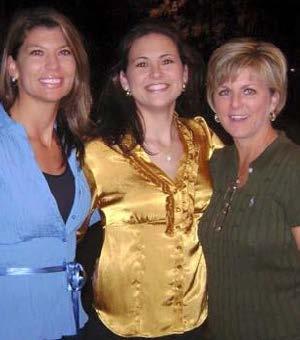
other merch girl, and I couldn’t see who was playing. But I heard Gaither start the show with “Old Friends.” Ben came in on the second verse, and I immediately asked her if she knew who was singing. She told me it was Ben Speer. I just remember how I felt hearing his voice echoing through the arena. A couple of days later, Ben sat down next to me at the merch table and asked who I was. I shot back, asking who he was. He got a big laugh out of that and loved to tell people it was a blow to his ego. That started our friendship. A year later, we started ‘courting’ as we would call it.”
Twelve years later, Rebekah and Ben tied the knot. “He asked me several times over the years to marry him. “It was the fall of 2014, and I was taking the trash out, and he came out on the back deck and asked me to marry him. I don’t know. Seemed like a good time to say yes.” She still hemmed and hawed for a couple of weeks until Ben took her to Tiffany’s to get a ring. “I led him out of there and into Kay Jewelers. I told him, ‘Darling, I will always know you took me
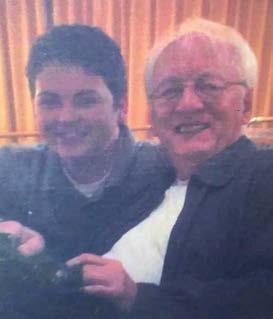
to Tiffany’s, but we both know I have Kay’s hands!’”
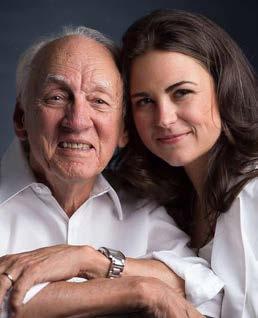
Ben’s Alzheimer’s kicked up in late 2015. “What a terrible disease,” Rebekah says. He passed away in April 2017. “I’m still trying to get over losing Ben.”
Rebekah moved to Nashville in 2004 and landed her first professional side musician role with Lizzy and Little Roy Lewis in 2005. She interned at The Sound Shop under GRAMMY-winning engineer Mark Capps while continuing to perform with Lizzy and Lewis. “Mark was a big influence on me and how I do things in the studio. I set up many of his sessions and worked with him for many years, off and on. Another one gone too soon; I miss him dearly.”
In 2010, she joined Valerie Smith and Liberty Pike for a year. Rebekah decided to come off the road sometime in 2011. Depression and anxiety sent her into a month-long episode of what she referred to as ‘bed rot.’
“Lizzy called and told me Tom T. and Dixie Hall needed someone to do graphic design work, which grew into doing in-house recording and engineering for the Halls.” She and Dixie worked together to release the final box set of The Daughters of Bluegrass, a project that included 120 female bluegrass artists and 70 songs from Hall. “Tom T. and Dixie were family.”
Rebekah accepted a job at Catch This Music Studios on Music Row, and she also worked as a house engineer for The Tracking Room. “I was setting up for 80+ piece orchestras and working with Top 40 artists. I learned a great deal, but I didn’t sleep a lot back then.”
Rebekah began doing graphic design for the Halls, but it was Ben who had a big hand in teaching her about the printing process. “It was a necessity during the Mountain Fury days. Ben told me how much a graphic designer would cost, and I melted. Then he showed me how much a graphic design program would cost. I wasn’t daunted. Thanks to a program called LimeWire, I managed to get my hands on a copy of Photoshop and learned to do my own graphics. Don’t come for me Adobe – I’m a bonified full on subscriber now!”
She still does graphic design work, including album covers and posters. You are looking at her work now – Rebekah is a two-time IBMA Designer of the Year nominee for her work as graphic designer of The Bluegrass Standard and for many of your favorite bluegrass

album and single covers.
Rebekah’s first live sound gig was for James King at Nashville’s Station Inn in 2011 or 2012. “I was paid with a XXXL bright yellow hoodie of James riding on a tractor.” She is still running sound there. “Josh Ulbricht called me in 2020 during Covid, and I started running sound for an empty room. That gave me an opportunity to learn that room, and the grace to mess up, and no one would know. It’s a very intricate room to mix, so learning how to do it without the bodies in there really put a feather in my cap.”
One of the shows she ran at Station Inn was one Deanie Richardson was playing fiddle for. “We had worked together on the Daughters’ project and hadn’t seen each other in a while. I reckon I impressed her enough during that show that when I arrived at IBMA in 2022, she asked me to run sound for the Sister Sadie shows. They asked me to join them officially in February 2023.”
Studio
Rebekah will soon be bringing her recording skills in-house with a new five-isolation booth recording studio. “I designed and built it myself.” She converted the garage of the home in Lebanon, Tennessee, into a studio, which she calls The Queendom Sound. “I’m putting in state-of-the-art equipment. I’m looking forward to getting it up and going along with my guard dog, Birdie.”
Solo Artist
Rebekah’s single, Needle in the Heart of West Virginia, was released in September 2025 on the Huckleberry Records label, earning tremendous airplay and strong reviews, including becoming one of the top-played songs on SiriusXM’s Bluegrass Junction.
“Donna Ulisse was having one of her Little House songwriting camps back in 2018 or 2019, and I got off work (doing carpentry) and popped in to listen to the songs. It was a song she wrote with her students, Mark Bondurant and Terry Jacobs, and her husband, Rick Stanley. I knew immediately that I wanted to cut it. She wouldn’t let me have it for a few years.”
The song is about the opioid epidemic in West Virginia. “I have ties there, and a lot of drug abuse in my immediate family,” Rebekah says. “It was easy for me to connect with the song.”
In March 2026, she followed with the release of her latest single, Why Worry, further showcasing her expressive vocal style and growing artistry as a performer.
With a focus on recording more and developing a catalog of music, Rebekah’s plans for the future are many and varied. “I am getting back into writing as well,” she says. “There’s no telling what I’ll do next.”
by Kara Martinez Bachman
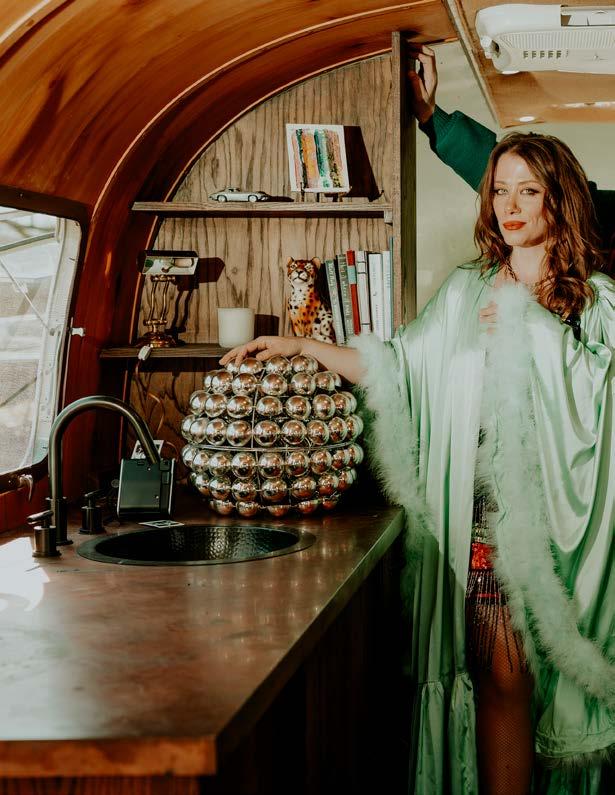
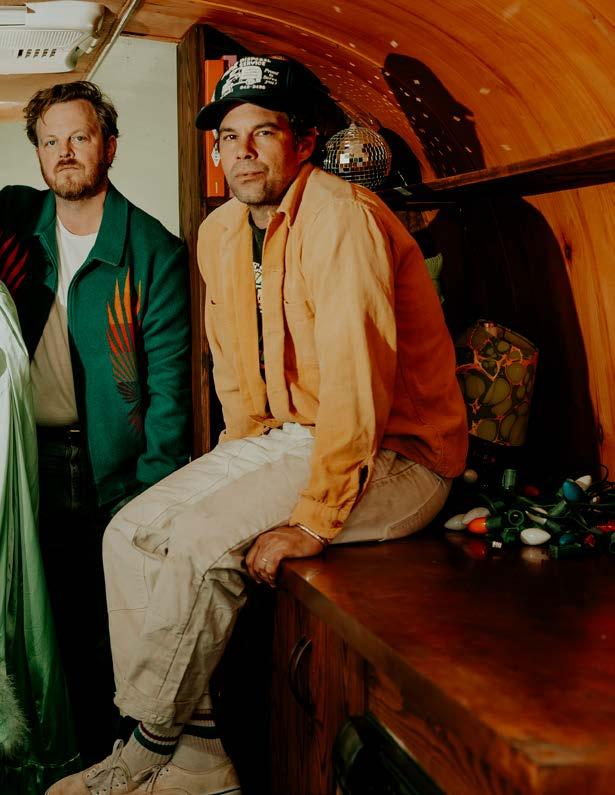
A few years ago musician, vocalist and songwriter Zach Williams stretched himself to do something he didn’t want to do. It was outside his comfort zone. For Williams and his bandmates, however, an unexpected reliance on community would leave a creative mark.
The Lone Bellow is known for heartfelt Americana soulfulness, and rootsy, emotionally sensitive lyrics. The group’s gospel-esque harmonies are capable of making even the hardest among us get a little misty when the music is witnessed live. They’ve performed everywhere from The Grand Ole Opry and Carnegie Hall to the most intimate of venues.
In 2023, Williams – alongside Brian Elmquist and Kanene Pipkin – were working on their sixth studio album. One night during a tour stop in Chicago, someone broke into their van. Computers, hard drives, costumes, cash, equipment they needed to gig – and even the new recordings they’d made that were in the process of being mixed – were all stolen.
In an act of desperation to continue with the record – and continue with the tour, even – Williams said he did something he never thought he could do. He asked for help. Just before a sound check for the next performance, they set up an online fundraiser. Even though the recordings would be forever lost, at least they hoped they might begin anew from scratch.
Williams revealed that crowdfunding was a difficult step for him; reaching out for help does not come naturally. What happened next, however, ended up infusing this new album with unexpected meaning.
“We tried to raise 10 grand,” he said. “Just to raise 10. But literally by the time the sound check was over, we had raised 25.”
The fan community stepped up to the plate. They wanted the tour to continue. They wanted this record to happen.
“We witnessed the beauty of what happens when you ask for help,” Williams said, with a tone of true gratitude. This experience grounded the 12-track album – titled “What a Time to Be Alive” – in a theme that he said had, oddly, already been represented in the lyrics of some of the tracks.
One example he gave is the lyrical phrase repeated in one of the songs: “we’re not strangers anymore.” It’s from one of the album’s first singles, “I Did it For Love.”
“It’s definitely a song about togetherness, in the most simple way,” he said.
Also included on the album is The Lone Bellow’s cover of “Islands in the Stream,” written by the BeeGees and famously recorded by Dolly Parton and Kenny Rogers. Including it feels right for a record made possible, in part, by fans. “Islands” is an oft-anticipated high point of audience-artist connection at their shows. Big fans of The Lone Bellow know the song is coming and can’t wait to sing along.
Made in Muscle Shoals, Alabama, the record was produced by Elmquist. Williams said they decided they were capable of taking more of their creative work into their own hands. Formerly signed to established labels – including a division of Sony – they decided for this outing, they’d experiment with doing things differently.
“We started our own label,” Williams said, of the yet-to-be-named indie startup. “This is the first record that we’re releasing on our own label. It’s a big leap of faith.”
That leap of faith – combined with an expansive new approach to recording the
second-time around – resulted in something Williams believes is even better than the first version of the songs.
The theme of community – of togetherness – showed up yet again in a new creative approach. The core trio usually wrote in a closed circle of the three, and then added additional musicians when touring. This time, they wanted something bigger.
Williams said they wanted to include all five touring members, so drummer Julian Dorio and multi-instrumentalist Tyler Geertsma were brought in for “What a Time to Be Alive” from the very beginning. Williams said it established a “really safe, creative, beautiful space.” Usually, he said, The Lone Bellow is a “big vocal band that concentrates hard on story and lyric.” This new approach allowed for a bit more musical “space.”
“More space allowed for more jamming… more space to just…be,” he said. “That created a new, collaborative energy.”
The Lone Bellow was born in Brooklyn, but is now based in Nashville. Even though he’s spent years living and working in big cities, Williams originally hails from Georgia and clearly retains a genuine love for all-thingsroots. For him, music is first and foremost about honesty. He dislikes social media. He really dislikes music made by artificial intelligence. He even dislikes trying to shape what the “next step” should be for The Lone Bellow. He’s not interested in using or interacting with social media more than absolutely necessary, or following proscribed industry formulas, or trying to figure out what type of songs or image might work best for the future. He’s only concerned with one thing: musical honesty. That’s what matters.
“I would rather try to hunt honesty down,” he said. “It’s very important to us to make creative decisions out of a place of just being here and now.”
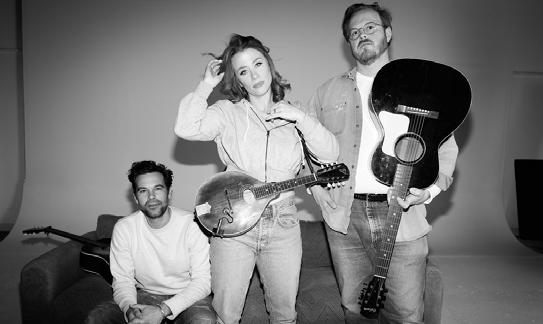
by Donna Ulisse

3:00 a.m., the spooky hour here on the Wee Farm. Why do my eyes fly open consistently at this time of a morning? If I fell asleep at 2:45 a.m. I would still come out of a dream around 3:00 a.m. …sigh. I cain’t have nuthin’ nice. Now granted, most times I lie there and argue with my sleepy self, insisting I fall back to sleep but it’s usually a battle. I always wake up the next morning patting myself on the back for winning the war. But this morning, yep, here I sit in the silence in the dark trying to find a way to make good use of this spooky hour…so I do what I do and write.
There is something about the utter silence at this time of the morning that blankets me with a feeling of reverence. In the silence there lies a stillness, and in the stillness my mind connects to something larger than life. My soul does, too. Maybe the 3:00 a.m. hour offers an opportunity for my spirit to restore, so I drink that prayerful thought in. After taking a moment to let my thoughts travel past my understanding, I snap back to what my consciousness can observe. The ebony coloring filling the picture window is a blank canvas for imagination. To honor this moment, I fight the urge to turn on the T.V., though the temptation is strong. Sometimes I’ll cave, hit the remote, and find a movie. Without fail, I’ll push Ginger Bread (our sweet puppy) out of the way and lie beside her on the couch and drift back off. However, if I fight that pull, leave the remote alone, and let my mind be the only background noise, usually, floating inside the quiet, an idea shakes loose, and I’m racing to type as fast as the idea unfolds. When this happens, well, I’m too sleepy to get in the way of my thoughts and that’s a good thing…and also a spooky thing because I never know what my mind will come up with.
As this particular early morning whispered in my ear, I started pondering on threads of a
song forming as I was still snuggled beneath the covers. I could actually hear my mind sighing, almost begging me to quit thinking. You see, I’m currently frantic about a project I’ve been trying to finish now for 5 years. The songwriter in me has been on fire lately, writing 4 songs in the past 3 weeks towards a cantata of the Easter story. Folks, this is NOT an easy story to tell. The struggle to finish it up so I can record the thing in this century has been hard and certainly a sleep disrupter, hence the reason I’m sitting in the dark at thus hour. I suppose I should give you some backstory to my plight…
In 2010 I was touring with my 5-piece bluegrass band which includes my lovely husband of many years who acts as my road manager, acoustic guitar player, harmony singer, co-writer and main driver for these long trips we take all over the country in a 15-passenger van. It’s cozy to say the least. Well, on one of the runs we were taking through Illinois, Iowa, Indiana…one of those, anyway, it was really late and we were stuck having to take a less than spectacular set of rooms to sleep in on our way to the next show because there were just no rooms available on the way. Of course, the fellas were tired. They all hit their rooms and were out like lights, including Farmer Rick, my husband. I, however, was sitting in that smelly, icky room on a chair I had covered with what I hoped were clean towels at the very hour of 3:00 a.m. feeling sorry for myself and wondering why I chose to make a living this way. All of a sudden the thought occurred that Mary and Joseph, parents of Jesus, must have felt this way trying to get into Bethlehem, being turned down by the innkeeper and having to then stay in a less spectacular room, a stable actually. So, I sat there in the dark and quietly wrote a song called “You Cannot Stay Here.” This thought launched a two-year writing frenzy to tell the Christmas story in song. I think I ended


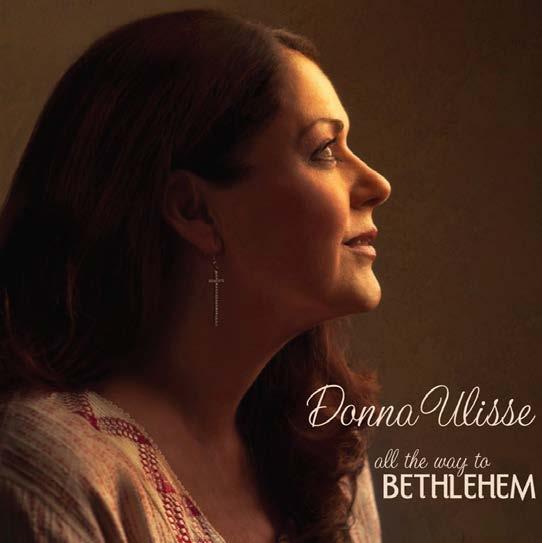
up writing about 80 songs for this project and narrowed it down to 11 for the recording. The album is called All The Way To Bethlehem and is one of the greatest things I’ll ever have a hand in writing, telling the Nativity story through song. I tell you all this just to say that fans I’ve gathered over the years have begged to hear this done for the Easter story, too…but it’s really been a tough road for me, trying to tell something that makes me cry and then rejoice and then cry and then rejoice. Whew! The Easter story is a rollercoaster for my heart.
Now back to the beginning of this rambling story. I had a deep thought as I fought my way out of semiconsciousness this morning, that Mary Magdalene must have had to navigate broken terrain to get to the tomb on the third day. Why I was thinking about this at 3:00 a.m. is beyond me, but I dragged myself out of my comfy bed and started researching what the land must have looked like in Jerusalem after the earthquake that occurred during the crucifixion. Sure enough, it would have been broken, rocky, dusty ground. Also, it would have been dark and creepy, kinda like what I’m experiencing now. IN FACT, I bet Mary woke up around 3:00 a.m. to gather the oils and spices and wake the other Marys up to walk with her. Ahhhh, I’m onto something, I just know it! So, what do I do next, you ask as I sit here in the dark? I start writing this article instead of the song, lol. I can’t figure me out to save my life.
I haven’t counted how many songs I’ve composed for the Easter project yet, but it’s quite a few. There is more scripture to this story than there was for the birth of Christ; I’m having trouble trying to figure out what the most compelling parts are. The emotional elements to this tale seem to be easier for me to write versus the literal facts. I can’t let the idea on Magdalene reaching the tomb go, even as I write this…I suppose I’ll carve on the song after I finish this article. And you wonder why I’m crazy?
All kidding aside, I am loving this journey. Songwriting is a gift without a schedule or a single care to interrupting sleep. If I want to keep honing and improving as a writer, I have to strike when the inspiration happens, even if it’s at the eerie hour of 3:00 a.m., hence this long-winded column I’m pecking out right this moment. The sky is starting to lighten up, and I pick now to get drowsy so I guess I better go make another cup of coffee. I have a song to write!
Until next time…

by Susan Marquez
Hillary Klug is a dancing fiddler who wows audiences wherever she goes. And recently, she was in New Orleans, along with Meredith Moon, where they had the crowd at the Cigar Box Guitar Festival on their feet for a power-packed show in the New Orleans Jazz Museum. “The organizer of the festival, Collins Kirby, wanted me to find an accompanist for my gig there. I met Meredith a while back, and we have been wanting to play together.”
As fate would have it, Meredith, the daughter of Gordon Lightfoot, was going to be in New Orleans at the same time. “We hung out and worked on a show,” says Hillary. “She is so incredibly talented. I believe we make each other shine.”
The first question I had for Hillary was which came first – dancing or fiddling? “I have been dancing since I can remember,” says Hillary. “Growing up in Fayetteville, Tennessee, my parents had big mirrors on their closet doors. I loved to dance so much. I had a little CD player, and I would choreograph dances all day.” She listened to mostly pop and mainstream country music.
“No one in my family plays or dances. My first exposure to bluegrass was from the movie Oh Brother, Where Art Thou? When I was eight years old, I joined the clogging team. I saw a girl clogging to a pop song, and I wanted to give it a go.” Hillary loved it. When she was 13, she had the opportunity to take up the fiddle. “I had a friend who was taking a violin class, and she invited me to join her. We couldn’t afford it, but my mother made it happen, and she said if I quit playing I’d have to pay her back for the fiddle.”
She was teaching fiddle and dancing while she was still in high school. Hillary began going to a local square dance every other week. “I ended up playing fiddle for the square dance, and I also clogged while fiddling to some of the songs.” As she learned about festivals and other artists, a whole new world opened up for her. “I was a street performer for 15 to 20 hours a week, every weekend. That was where I really honed my skills.”
She began busking in 2016 when she was a freshman in college at MTSU. “I was on Broadway in Nashville to go to a fiddle contest, and it was my first time driving downtown. Parking was $20, and I didn’t have it. I decided to play on the sidewalk and I got enough to get my car out of the garage. I didn’t set out to be a busker; it just happened. “I met other street performers and learned from them as well. But I was wondering if anyone would actually pay me to do this.”
“I began posting videos two and a half years later, and that led to getting inquiries,” recalls Hillary. “I used social media to my advantage, and I was in the right place at the right time to get noticed. I posted on Facebook around the time they wanted more videos to keep people engaged.”
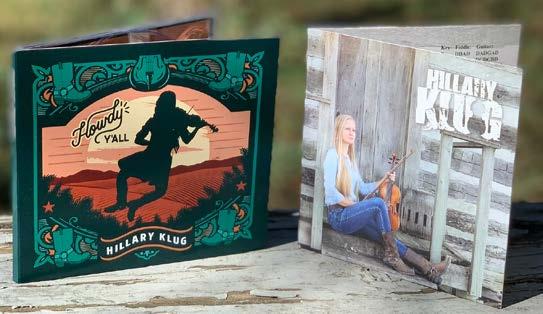
Hillary didn’t set out to build a big brand for herself. She was already a national buck dancing champion. She says her success came organically. Her first viral video just happened to come out the same time her first CD was released. At first, she was amazed that people from around the world – places she’d never been – were ordering her CD.
Her hard work and dedication to her dancing and music have paid off. Success has followed Hillary. Her viral videos opened doors for her to play across the United States and in Europe. She learned about homemade instruments when her neighbor down the road, Steve Holladay, who makes all sorts of homemade instruments. “He shares them with folks by bringing them to festivals and letting people play them. I got to play some of his incredible homemade cigar box instruments with friends at some festivals and jam sessions,” says Hillary. “We posted some videos, and they went viral. Then we had the idea to film a video for the Cigar Box Guitar Festival using his instruments. We won second place in the competition, and I was invited to perform the following year.”
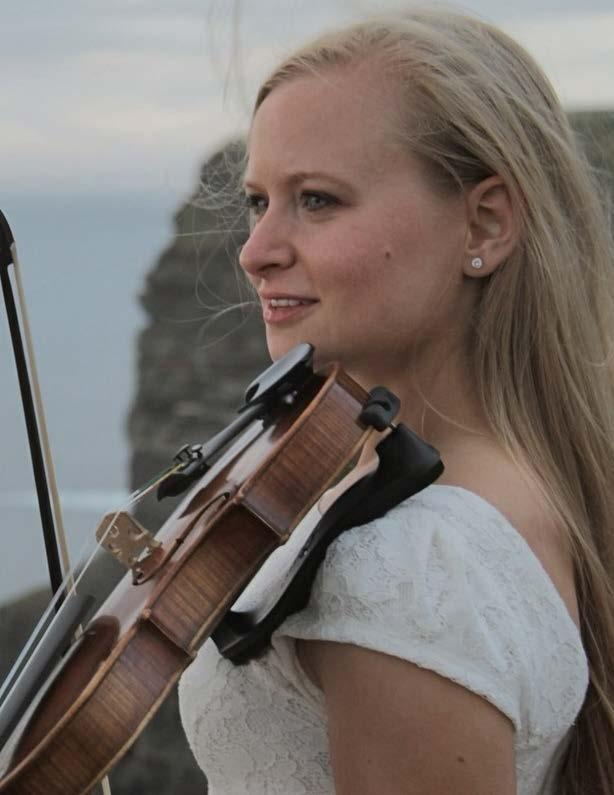
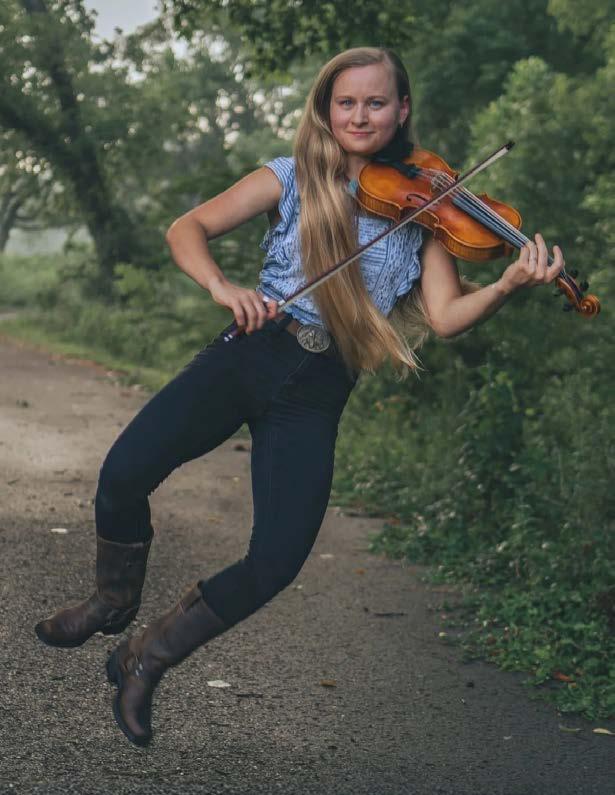
Hillary’s first two CDs climbed to the number three spot on the Bluegrass Billboard chart. She has conducted residencies at Dollywood and Silver Dollar City, and she was featured in an award-winning independent film, Wild Rose. The movie’s soundtrack includes Hillary’s original music. Her unique dancing-while-fiddling talent has been recognized by Cirque du Soleil for their new show, Songblazers, which combines circus with country music.
Hillary and her long-time beau, Evan Winsor, married in a small ceremony in Connecticut in 2023. The couple resides in Nashville. Also a musician, Evan plays with Grand Ole Opry member Josh Turner and has performed with luminaries such as Rhonda Vincent, Doyle Lawson, and Billy Ray Cyrus, among many others. As for Hillary, her role as new wife has not diminished her ambitions – be on the lookout for her new CD coming out later this year.


by Stephen Pitalo

Some festivals pass through your life, and others stay with you. The High Sierra Music Festival earned that kind of loyalty over more than three decades, drawing people back each July for something that feels both familiar and new. It stands as a place where music, community, and discovery come together in a way that keeps people returning.
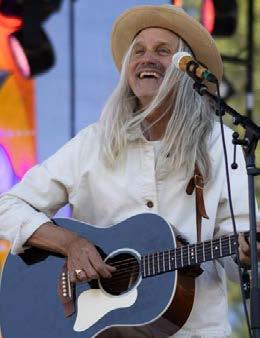
This year, that experience moves to a new setting. The festival relocates from Quincy to the Nevada County Fairgrounds in Grass Valley, a site known for its shaded grounds, scenic lake, and walkable layout across nearly 90 acres. Festival director David
Margulies made the decision with a clear goal, which was to keep the festival thriving while improving access, lodging, and overall comfort for attendees.
“It was a very difficult decision,” he says. “Quincy will always hold a special place in our hearts, but we have to be in a location that offers patrons a variety of lodging options.”
Margulies frames the move as necessary, as he faced the limits of the Quincy location and then acted to secure the festival’s future. The Grass Valley site sits adjacent or close to nearby hotels, short-term rentals, expanded camping, RV hookups, and more convenient access to and from major airports.
“We just couldn’t sustain it any longer in a place where there were no places for people to stay,” he says. “Our only way to survive was to move it.”
Margulies approaches the new site with a focus on continuity. He longs for attendees to recognize the festival they love the moment they arrive, even as the environment offers more shade, space, and amenities. He seeks to keep the familiar flow intact while improving comfort and accessibility.
“We’re not missing a beat at all,” he says. “We’re actually adding another stage.”
The 2026 festival will feature five daytime stages and three nighttime venues, including the troubadour sessions where songwriters perform in a circle and trade songs. Latenight sets, expanded viewing areas, and

improved stage layouts give artists and fans more room to move during the event. The grounds will support signature experiences like parades, yoga, vendor villages, and latenight performances that will stretch well past midnight.
Festgoers can celebrate a band list that keeps High Sierra Music Festival connected to today while giving respect to the elders. Major acts like Steel Pulse and The Word sit at the top, alongside Don Was & The Pan Detroit Ensemble performing The Grateful Dead’s Blues for Allah. Karl Denson’s Tiny Universe will deliver a Jimmy Cliff tribute, while Dumpstaphunk anchors the New Orleans contingent with a Sly Stone tribute, as both bands will also play late night funk sets. Groovers will embrace both Cymande and Eggy, two bands bringing their funk and soul sounds to the fest.
Bluegrass and roots music keep their traditional position of prominence on the festival lineup. Mountain Grass Unit returns with a fast-rising profile, while Magoo brings a newer edge that reflects the genre’s next wave. Hot Buttered Rum adds a longtime West Coast presence, and Lebo & Friends features George Porter Jr. alongside players from across the jam and roots spectrum.
“We feel like we’ve built trust with our audience,” he says. “That they can come to High Sierra year after year and they’re gonna leave with a handful of new favorite bands that they’d never heard before.”
And beyond the headliners you’ll find worldwide talent. Artists like Anders Osborne, The Rumble, Holly Bowling, Scott Pemberton, Pink Talking Fish, The Breaks, Judith Hill, Marty O’Reilly, Steve Poltz, and River Eckert fill out a schedule that rewards movement between stages. Acts such as Rose City Band, Cassandra
Lewis, Dylan LeBlanc, Boy Golden, and Minor Gold extend the Americana thread, while bands like Steely Dead push toward more experimental territory.
The crowd makes this thing go, plain and simple. People come back every July like it’s a standing date and bring someone new with them each time. Margulies knows that’s the
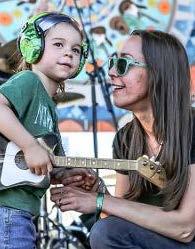
engine, not advertising, just people pulling more people into it with the promise of a good time and a memorable weekend.
“We have lifers, we have people who’ve been coming for 5, 10, 15, 20, 25 years to High Sierra,” he says. “We need those people to be ambassadors to the High Sierra Music Festival and bring their friends.”
That sense of community extends beyond the stages. High Sierra offers daily parades, yoga sessions, sunrise kickball, craft
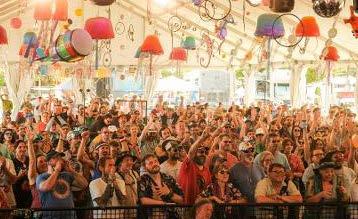
vendors, food and beverage offerings, and immersive programming that fills the entire weekend. The expanded grounds in Grass Valley give these elements more room to grow, including a larger Family Village and additional gathering spaces.
“These are all programs that have just become more and more refined and honed over the years,” he says. “They all just happen really organically.”
Families remain a core part of the festival’s identity. The Rockin’ Nannies program provides professional childcare, allowing parents to move freely between sets while their children take part in structured activities. These features reflect how the festival has evolved alongside its audience while maintaining its core identity.
Margulies also points to the playshops as a defining feature. These sessions bring artists together for collaborations, tribute

performances, and unique interpretations that happen only once. They give audiences a chance to see musicians step outside their usual roles and create something new in real time.
“The play shops are these like one-of-a-kind performances that are either collaborations or tribute sets or album recreations,” he says. “And they’re all one of a kind.”
As the festival enters this new phase, Margulies focuses on maintaining balance. He wants to welcome new audiences while preserving the experience that longtime attendees expect. That balance guides how he allocates resources, builds programming, and shapes the overall event. But Margulies understands that the festival’s identity depends on more than its lineup or location. It comes from the people who attend, perform, and contribute to the experience. That shared energy defines what High Sierra continues to be.

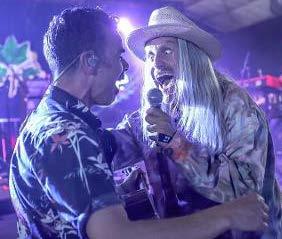
“Everybody at High Sierra brings the best of themselves to the event,” he says. “And that’s what makes High Sierra really special.”
As July approaches, Margulies looks ahead to the new event location with a clear sense of responsibility to both the festival and the fans. The move to Grass Valley improves access, comfort, and infrastructure, but the true measure of success will come from how the festival feels once it begins. He wants attendees to continue to embrace the experience that delivers on its promises, with this year's promise of conveniences raising those expectations. But Margulies isn’t worried. He’s looking forward to the familiar smiles.
“I’m excited to see how much people are gonna enjoy this new facility,” he says. “They’ll experience High Sierra in a new way but with the same sort of familiarity.”