This is The Place ‘Deep Dive’ Research Report
tialt // there is an alternative
October 2025

tialt // there is an alternative
October 2025
Core Components Activities
Weekly Music Sessions
Trauma-informed, cofacilitated, responsive to needs
Music Bags & Online Resources
Distributed to all early years CEC in Darlington & Redcar
Training & Workforce Development
Carers, artists, local authority & early years professionals
Artist Supervision & Reflection
Trauma-informed support for music leaders
Singing, lullabies, movement, play, storytelling
Co-creation of bespoke songs (e.g., Sing Our Story)
Use of props, puppets, instruments, and scarves
Session documentation (photos, memory books, portraits)
Care-Experienced Children (0-5)
Foster Carers
Music Leaders (Carol & Katie)
Local Authority Staff
Blue Cabin / Groundswell Arts
Darlington & R&C Virtual Schools
Care-Experienced Children
• More ‘musical childhoods’
• Stronger bonds with carers
• Improved cognitive & socialemotional development Foster Carers
• Greater community & peer support
• Sustainable use of music for connection
• Enhanced transitions through music memory materials
Local Authorities & Blue Cabin
• Embadded practice in service plans
• Record keeping improvements
• Scalable model with regional potential
• Strengthened, supported creative workforce
Extend to adopted children & kinship carers
Increase days/sessions (inc. weekends)
Deepen continuity through transitions
Explore new funding models
This report is based on a ‘deep dive’ exploration into This is The Place (TiTP), as part of an ongoing learning and evaluation partnership between Blue Cabin and Tialt – There is an Alternative.
While evaluation has been ‘built in’ to the programme from the beginning, including regular reflections sessions with the music leaders, project team, partners, surveys with participating foster carers and local authority teams, there was an opportunity to explore the programme more holistically and collect additional, richer, data about its emerging impacts. This report is therefore based on data from the following sources:
Ongoing surveys with participating foster carers
Ongoing surveys with the music leaders and local authority staff
2 x site visits (one each to Darlington and Redcar and Cleveland) including observation, participation, and ‘deep hang’ discussions with participants
The programme is ongoing, and further data will continue to be collected to explore the summative impact over three years. This report discusses the successes and learning to date and acts as a point of reflection for future planning.
Blogs, podcasts and additional reflection material from music leaders and partners
Reflective interviews with the project manager, music leaders and Redcar and Cleveland virtual school
SupportedbyYouthMusic,CreativeDarlington, DarlingtonBoroughCouncilandRedcar& ClevelandCouncil,ThisIsThePlace (TiTP)isamusic-basedinitiativededicatedto enrichingthelivesofcare-experiencedchildren (CEC)andtheadultswhosupportthem.TiTP emergedfromBlueCabin’slong-standing commitmenttoworkingwithchildrenincare, particularlythoseaged0-5,ademographic oftenoverlookedintraditionalcreative provision.
Therootsofthecurrentprojectlieinearlier worksupportedbyYouthMusic’sTrailblazer fund,whereBlueCabinbeganpilotingmusic sessionsforchildrenandtheircarersin partnershipwithDarlingtonBoroughCouncil. Theseearlysessionsrevealedaprofound impactnotonlyonthechildrenbutalsoonthe trustedadultsaroundthem.Carersconsistently reportedincreasedbonding,enhanced communication,andimprovedconfidencein usingmusicasatoolforcareandconnection.
Buildingonthesuccessofthisinitialphase, BlueCabinsoughttodevelopandscaleTiTP throughYouthMusic’sCatalyserFund.The ambitionwastosustaintheirexistingworkin DarlingtonandexpanddeliveryintoRedcar& Cleveland(R&C),whereasimilarneedforearly yearsmusicinterventionhadbeenidentified.
TiTPoffersweekly,trauma-informed, 90-minutemusic-makingsessionsdesignedfor

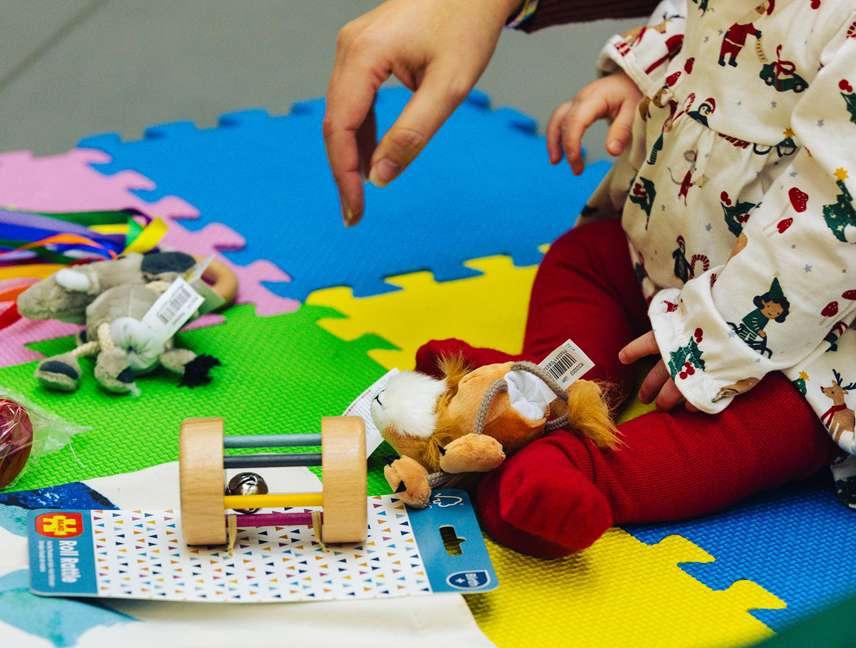
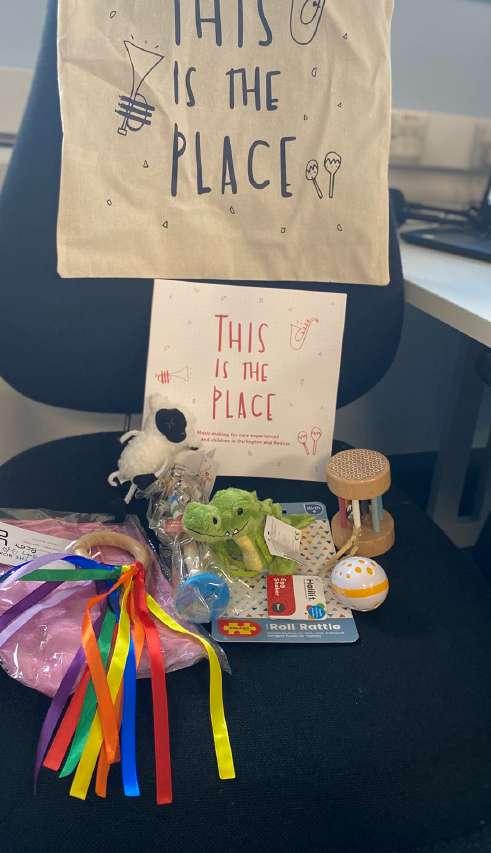
small groups of children and their trusted adults. These sessions are co-facilitated by Associate Artists (highly trained music leaders Carol Bowden and Katie Doherty), and blend singing, movement, play, and lullaby traditions to foster attachment and developmental growth. This thoughtful integration of care, creativity, and continuity supports transitions (e.g. to adoptive homes) and helps build a musical thread through children’s life stories. Recognising the limitations that exist with weekly sessions, in both local authority areas music bags (including instruments, puppets, props and additional online resources) have been sent to all early years children in care.
Alongside the direct work with children and carers, the programme invests in workforce development through regular training for local authority staff and carers. These sessions aim to equip adults with the skills and confidence to continue music-making outside of TiTP sessions.
Institutional backing for TiTP is robust. Blue Cabin has secured multi-year commitments from key partners including Darlington Borough Council, Redcar & Cleveland Virtual School, and Theatre Hullaballoo. These partnerships provide funding, venues, and integration with broader cultural and care strategies, and represent a significant endorsement of TiTP’s impact and potential.

“Walking into the Kirkleatham Museum grounds feels like a special day out! We sit in a circle on the floor in one of the learning rooms, there are instruments all around, mixed between fabric and cushions. All of a sudden the air is filled with music – the Hello Song! We go round the room welcoming each child into the space. There is a mix of babies and toddlers and their carers sitting with us. There is an ease to the situation, lots of smiles, a clear familiarity mixed with a sense of adventure on what songs, puppets, or interactions might emerge next. This is clearly ‘their’ musical place, a space that feels special and one where everyone belongs.
The music leaders of This Is The Place bring a deeply thoughtful, flexible, and relational approach to their work with careexperienced children and their carers. Far more than simply running ‘music classes’, these sessions create a nurturing, traumainformed space where music becomes a tool for connection, communication, emotional processing, and developmental growth.
At the heart of TiTP’s approach is the priority placed on trust-building. This is especially crucial when working with foster carers and children in care. The music leaders emphasise the importance of quickly establishing safe, supportive relationships, understanding that foster carers often navigate a professionalised system and may initially approach new initiatives with caution. Once trust is earned, sessions open up emotionally: carers feel able to speak honestly, share experiences, and connect with one another. This peer support is as vital as the musical work itself.
– Researcher fieldnotes
By creating a space exclusively for foster carers (i.e., rather than a generic ‘stay and play’ group), the programme enables a rare sense of solidarity. Both music leaders and carers recognise that carers’ challenges, and triumphs, are often unique, and TiTP gives them a space to be seen and understood.
The music leaders’ practice is grounded in responsiveness rather than rigid structure. Sessions are tailored each week to the energy, mood, and needs of the children and adults present. Carol and Katie observe closely, reflect together, and adapt on the fly, sometimes repeating songs for comfort, sometimes stretching breaks to allow for key conversations, or even removing instruments altogether if overstimulation is a risk.
Crucially, the music leaders are not just skilled practitioners, they’re trusted partners. Their deep knowledge of early years pedagogy, combined with their humility and openness, creates an atmosphere where carers feel supported rather than judged. Leaders often shift roles within a session, sometimes facilitating, sometimes stepping back to allow the children or carers to lead. This democratic approach fosters a strong sense of ownership among all participants.
This flexibility allows sessions to meet people where they are, which is particularly important in a group where participants may be navigating emotional volatility, attachment transitions, or social anxiety.
Though music is the central medium, it is not an end in itself. Music leaders describe music as ‘the glue’ that binds together play, emotional exploration, and relationship building. The sessions blend singing, movement, rhythm and storytelling in ways that are developmentally appropriate and emotionally resonant. Songs are chosen or created to foster routine, attachment, and interaction, not just musicality.
Children’s musical development is clear and joyful, from mastering ukulele posture to coordinating breath and finger movements on the melodica, they visibly grow in confidence and ability. Importantly, they carry songs into their home lives, teaching them to others and using them as tools of comfort and communication.
The TiTP model recognises that the sessions are not only about the children, they are equally for the carers. TiTP offers carers respite, connection, and a space to express the often-complex emotions of fostering. In some cases, carers attend even when they have no children in placement, testifying to the deep sense of belonging and support the sessions offer.
We don’t do the same every week. We listen to what the carers are saying… observe the children and adapt accordingly… Sometimes someone needs to have a conversation… and if it needs to finish 15 minutes early, that’s absolutely fine.
(Music leader)
As Project Manager, Lucy Ridley has been essential in conceiving, structuring and sustaining This is the Place. Her work has spanned the full life cycle of the project –from its first conversations with funders to its current stage of consolidation and future planning. Lucy’s mix of strategic vision, practical problem-solving and relational care has been central to the project’s success and to the trust it has earned among partners, artists and local authorities.
Lucy led on early funding bids, notably the Youth Music application, and designed the project’s structure as a “jigsaw” – aligning artistic ambition with the operational realities of working across Darlington and, later, Redcar & Cleveland. This meant shaping the facilitation model, budget planning and artist recruitment, as well as supporting the local authorities to recruit participants and managing expectations across different teams.
Lucy’s management style balances insight and distance: she describes being “half in and half out,” present enough to understand the detail but removed enough to see patterns others might miss. This dual perspective allowed her to notice issues as they emerged and facilitate “really great joined-up conversation and thinking” between artists, volunteers and local authority staff. She credits this position with helping her “see things from lots of different angles… what everybody needs and wants and to hold that space safely alongside Katie and Carol.”
A defining aspect of her contribution has been relationship-building and systemslinking across partners. Lucy has brokered new networks between neighbouring local
authorities and virtual schools, observing that “local authorities, who are literally neighbours, often don’t know who their counterparts are in the region… Blue Cabin has done a lot of that work.” Her relational leadership has strengthened inter-authority collaboration and deepened understanding of the needs of children, carers and staff alike.
Lucy brings the Blue Cabin way of working into every interaction: empathy, kindness, active listening and respect. She describes her role as “being able to stand in people’s shoes and see things from their perspective… being kind and considerate and listening to what people are telling you, even if you can’t always action everything.” This humane, traumainformed ethos has helped create safe, nurturing spaces for both foster families and professionals to connect and learn.
Trust, built through consistent communication, empathy and competence, has enabled new investment and sustained enthusiasm from partners: “Redcar and Cleveland Virtual School… said we want to invest in this programme because we know the impact it has on children and young people.”
Lucy’s contribution has been both strategic and relational, embedding care, reflection and collaboration at every level of This is the Place. Her leadership has ensured the project not only runs smoothly but embodies the very values it seeks to promote – creativity, connection and collective care.
Musical Outcomes
Social outcomes
Organisational outcomes
Other outcomes
• Communication and language
• Physical development
• Personal, social and emotional development
• Relational development
The programme offers meaningful developmental gains for the early years’ children taking part, especially in communication, coordination, and emotional expression. Musical engagement has encouraged exploration, experimentation, and joy.
“Of all of the songs/activities that we do, I notice significant development in the following the most;
1. The hello song (name recognition)
2. Puppets, (alertness, engagement, gross mobility)
3. Frog song (language development)
4. Instrument song (starting and stopping)
5. Sound bath (fine motor skills with children playing with beaters) (Music leader)
Children demonstrated increased confidence and skills, such as holding and strumming ukuleles, playing melodicas, and initiating songs:
“ “
“ “
O is pretty little to be able to hold the ukulele correctly and strum it… It’s taken him a number of tries to get the melodica, and now he does it.
(Foster carer)
Even children who can be a bit quieter in sessions have shown visible growth:
We’re told that back home she reenacts the sessions… sings and plays instruments. She’s soaking it up like a little sponge!
(Music leader)
The structure of the sessions have groups of songs which promote and encourage all of these types of developments.
There is so much development going on in both Darlington and Redcar. The music-making is an outlet for creativity, there is movement and eye contact in the singing and activities, there is play and cooperation, sharing and engagement. All of this supports the children’s physical, emotional and brain development and is strengthening the bonding between foster carers and children.
(Music leader)
Physical development in babies is an obvious sign of their growth. What we are seeing is, once they start to become more independently mobile, they are learning about their bodies through moving the instruments and scarves, testing them out through taste, and noticing that noise happens when they move them. They are also trying to get across space to reach toys that have caught their eye, and some are bouncing along to the music. One of our little boys is interested in the ukulele and is crossing the room to look at ours. He has attracted the attention of other babies who are copying him and joining him in his enquiries.
(Music leader)
“ “ “ “ “ “
• Enhanced relationships and strengthened attachment between care experienced children and young people and their carers
• Carers experience increased confidence to facilitate music making in the home with every child in their care
The foster carers are doing the songs and activities we do in the sessions with the children at home which clearly strengthens a bond. The consistency of engagement with the sessions and also the soothing effect of music on the brain for both children and carers seems to me to create really positive shared experiences between children and carers. The foster carers can participate in the same way the children can.
(Music leader)
This is the Place is a deeply relational project. In both Darlington and Redcar and Cleveland the project has been made possible through the strong relationships built between Blue Cabin and the respective local authorities. Within the sessions themselves the foster carers in attendance have built a meaningful community within the group. This is particularly appreciated given the relatively few opportunities that exist for foster carers to come together and participate in relaxed developmental activities with the children in their care. The artists have also developed strong relationships with the children and foster carers, ensuring that the sessions can be adapted to fit the needs of the group on a week-by-week basis.
First and foremost, it’s the relationships. You have to develop them as quickly as possible… Once [foster carers] realise they’re just here to have a bit of fun… they let their guards down.
(Project manager)
It’s a little space where they can just be who they are and talk about the trials and tribulations and the joys… of being a foster carer.
(Music leader)
The ripple effects of the programme extend into the wider care environment. Songs and approaches have been passed between family members, other carers, and childminders:
S’s mum taught some of the songs to the childminder… that kind of spillover is really interesting.
(Foster carer)
This builds a communal repertoire of lullabies and songs that support attachment and emotional wellbeing, a cultural tradition some felt had diminished in modern life:
The kids have been just randomly singing the songs at home… trying new instruments… having more of a kind of musical childhood.
(Foster carer)
I don’t think people sing in the home as much as they used to… this gives people those tools again.
(Music leader)
The programme plays a unique role in easing difficult transitions, including moves to adoption. Music bags, books, and memory materials created during the sessions travel with the children to new placements:
A little boy who’s gone into adoption… his new parents and he are sitting doing the songs together with the bag.
(Music leader)
• Improved local authority record keeping for care experienced children and young people reflecting music making as part of their life story work
• Improved Blue Cabin record keeping for care experienced children and young people reflecting music making as part of their life story work
The deep engagement of both Darlington Borough Council and Redcar and Cleveland Virtual School is core to the success of TiTP. In both locations foster carers have shared how they are using the music sessions as records of positive developmental activities being carried out with the children. Locally, the programme is now embedded in Redcar and Cleveland’s service improvement plan, a strong endorsement of its value and potential for systemic impact.
Participation and achievement in the sessions is also recorded on the children’s care files. This intentional continuity of experience was described as emotionally valuable to both the child and the carer.
“S’s memory book for A had a whole double-page spread on music… It was obviously really important to her that that goes with him.
(Music leader)
The extension of the project to include ‘Sing Our Story’ with Groundswell Arts has enabled bespoke songs and lullabies to be created for specific children that are then ‘owned’ by them and their carers and included in their care records.
Across both groups, the project manager regularly uses polaroid photography to document the participation and
achievements of the children, creating more material for use in files and records.
In Year 2 Blue Cabin commissioned a portrait artist to work with the Darlington group to illustrate the children and carers taking part. This is yet another way to capture the relational and developmental outcomes taking place in a non-intrusive way. While there is great care being taken to assure anonymity within the group, the artistic outputs can be shared with those taking part, and can be displayed confidentially in the DBC offices as a reminder of the care and joy that is being created by the project.
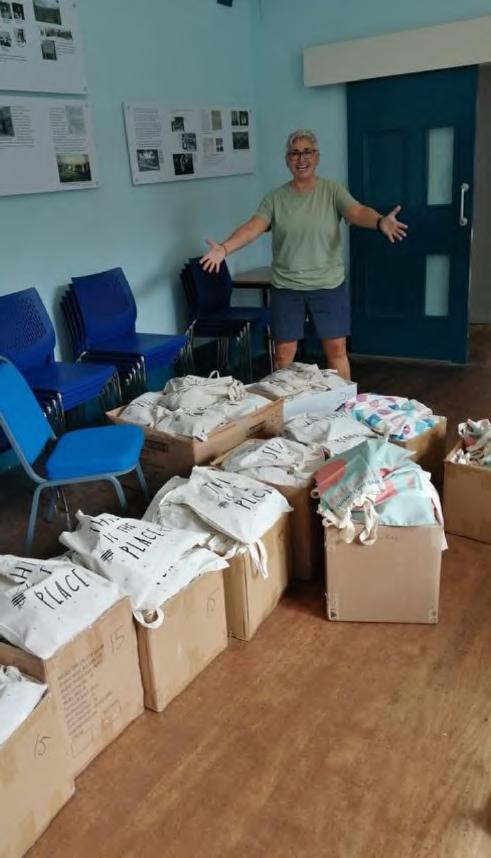
By providing and distributing over 200 music bags across both local authority areas, TiTP extends a warm invitation to participate beyond those it would ever be possible to accommodate in the sessions themselves. Impact evaluation of the bags is challenging and responses to the online survey of how they are being used have been low. Data from those who have taken part in person clearly indicates that the bags are proving essential for embedding practice in the home outside of sessions.
There may be scope in Year 3 to further explore how the bags are being introduced to carers (i.e., highlighting the additional online resources and the opportunity for in-person attendance for those who may be interested), while at the same time recognising the capacity limitations within existing local authority care and virtual school teams.
The project has had a significant impact on the freelance music leaders, who receive ongoing supervision, peer support, and reflective space through Blue Cabin’s trauma-informed framework. For example, one musician noted that their TiTP session is their “favourite day of the week.” The music leaders had never accessed professional supervision before and have described how it is fundamentally contributing to their understanding of the context of their work, the emotional labour required in the work, and how to navigate emerging difficulties. This artist support is helping to retain and nurture a skilled, resilient freelance workforce in the North East’s creative sector, an outcome with potential long-term regional benefits.
The programme has delivered six workforce development events to date, including an Early Years Music Making training session in partnership with MusInc. This has brought together musicians, local authority staff, and early years professionals, spreading understanding of trauma-informed, music-based approaches and influencing broader care practice. Postcard feedback from the training included:
The session provided good insight into using music as a deeper learning tool and how it has wider social impacts for both the child and their carer.
- Participant
I enjoyed every aspect of this training. The charity that I create youth music programmes for does not currently include early years provision, and I am inspired to change that. I am interested in working with/in partnership with Blue Cabin. Thank you, Carol, Katie for an inspirational day!
- Participant
Foster carer events and informal coffee mornings have further helped share tools and techniques with carers who may not attend weekly sessions, building broader awareness of the project’s relational model and the developmental opportunities of music making.
Taken together we can see that the overlapping outcomes emerging from This is The Place are leading to strong emerging impacts for the children taking part, their carers, and the supporting organisations.
Emerging impacts for care experienced
Emerging impacts for foster carers
Emerging impacts for supporting organisations
Improved musicality, fine motor skills, social and personal skills and stronger bonds with their carers and other children. Increased curiosity and engagement with music outside of the sessions and in the home. An improved ‘musical childhood’.
An improved sense of belonging, a stronger community with other foster carers, respite and support, improved caring skills via the use of music within and outside of sessions, increased bonding with children in their care, additional transition resources (via music bags, Sing Our Story songs and additional positive material for care files).
Both Darlington Borough Council and Redcar and Cleveland Borough Council have committed to the project, its principles and practice, wholeheartedly. This has included financial and in-kind support, along with noticeable shifts in internal policy and practice. The direct involvement of the virtual school in the sessions in Redcar and Cleveland, and the enhanced training offer being made across both regions, is establishing early years music making as an essential and effective element of the early care plans and approaches being made available to children and foster carers.
For Blue Cabin and its Associate Artists there is a meaningful model of practice emerging that can be replicated in other contexts and settings. The reflective and enquiry-based approach applied in TiTP ensures that emerging learning is being shared and embedded across and beyond the organisation.
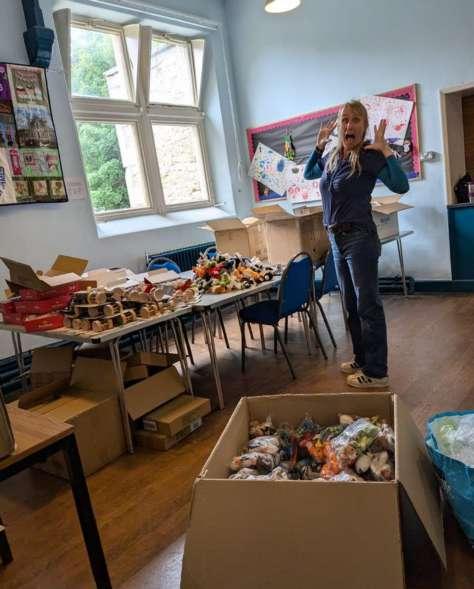
Capacity to build from these impacts is limited, particularly given the growing need and diminishing resources available for enhanced care offers across and beyond these local authority areas.
Developing the offer in other areas may be challenging. Extending the programme from Darlington to Redcar and Cleveland was slow to get off the ground given the competing demands on foster carers and the need to build relationships and trust with the local authority, virtual school and other partners.
Ensuring and maintaining impact form the music bags is tricky. While the distribution of the bags has been supported by local authorities to date, the maintenance of this approach in a quickly evolving care ecosystem is challenging. There is a need to consider how the resource can be maximised with little extra demand on already strained resources. Evaluating the impact of the bags also remains a challenge and may need additional consideration.
Overall evaluation remains difficult. While there are several children who attend regularly in each setting (making tracking their development somewhat simpler), there is also a level of transience in attendees given the complex nature of early years care experience. There is a good level of consistency in attendance by carers, who are broadly happy to engage in evaluative activities about their own and the children’s development, but can be less engaged in attempts to regularly do so in surveys or other forms of ‘assessment’. This additional ‘deep dive’ evaluation exercise has sought to enhance the methods already embedded but further thinking is needed to find the correct balance between rigour and pragmatism in evaluating the successes and learning from the programme.
This is The Place is in a very strong position after multiple years of financial support and development. It has become an essential part of Blue Cabin’s offer, and that of its partners in both local authority areas. The efficacy of the current model has been demonstrated from multiple data sources. A challenge remains on how to maintain the current offer, at the same time as considering how it could be developed further to maximise possible impacts. Some suggested ideas include:
Extending the offer to newly adopted children and parents. The use of music as a key aspect of babies and children’s transitions into adoption has been shown several times in the existing programme. This indicates that a more structured opportunity for parents and children to continue direct engagement with musicians could be a valuable aspect of continuity in terms of both musical and social development. This would require additional resourcing and careful planning from all partners involved.
Extending the offer to kinship carers and connected carers. There is arguably also a need for other types of care arrangements to be offered the developmental space created by TiTP. Respondents in this research indicated that this would require a careful and thoughtful approach, given the clear bonding opportunity the programme currently offers to foster carers as a specific group (i.e., whether to expand the current offer, or develop new bespoke opportunities).
Considering alternative offers within the current format. It was discussed how even greater value could be created by extending the offer to two full days in each current location. This would reduce the travel burden and could enable the expansion of the offer along the lines of the above suggestions or enable splitting sessions between younger and older babies and toddlers. The inclusion of a Saturday session for those attending nursery during the week was also mentioned as potentially beneficial. All these options would require considerations of resourcing, capacity, and maintaining the quality of the current format.
Exploring and seeking alternative funding models. The time-limited funding format of programmes like TiTP is always a consideration. There are clear impacts being reported because of the careful and thoughtful approach to relationship and community building through music that is apparent in TiTP. The multiple creative experiences on offer in the sessions is clearly valuable, as is the wide variety of positive outcomes being achieved. This should be clear to current and potential funders. Maintaining, expanding, or scaling the current offer must be considered alongside the potential funding available and its sources over the coming years.