ACTIVITY REPORT OF THE BELGIAN AUDIT OVERSIGHT BOARD 2025

ACTIVITY REPORT OF THE BELGIAN AUDIT OVERSIGHT BOARD 2025
For the BAOB, 2025 was a year of deepening, dialogue and strengthening the public oversight of auditing. In an increasingly complex environment, with new quality standards, heightened expectations around sustainability and an evolving anti-money laundering landscape, the BAOB stayed true to its mission: to monitor and promote the quality and integrity of audit services.
In 2025, as in 2024, the BAOB took an educational and awareness-raising approach to implementing ISQM1. As highlighted in this activity report, the BAOB chose to give the sector time to implement the standard correctly. This approach resulted in valuable key findings, observations and examples of good practice, which provide guidance to the sector as it continues to build a robust quality management system.
The BAOB also took significant steps in the fight against money laundering and terrorist financing. The completion of the FATF mutual assessment and the publication of the key recommendations for the audit sector marked an important moment. The BAOB made a substantial contribution towards the evaluation of the effectiveness of the Belgian framework, in which it was found that “the sector has made progress in managing its money laundering risk”.
The BAOB also continued to invest in dialogue and knowledge sharing. The annual discussions with PIE and non PIE firms, participation in international forums and the holding of the “Strengthening audit quality through culture, critical thinking and professional judgement” conference underscore the importance the BAOB attaches to cooperation and transparency. This conference brought together international experts around a central message: audit quality is not just about standards and processes, but also about culture, professional judgement and critical thinking.
The BAOB’s supervision was further strengthened by a risk-based approach, both in quality reviews and in the handling of supervision cases.
Lastly, the BAOB would like to thank all auditors, the IRE-IBR, the CSPE-HREB, regulators, policymakers and other stakeholders for their constructive cooperation. Tomorrow’s challenges, from sustainability to digitalisation, demand a sector that remains agile, critical and quality-focused. The BAOB remains committed to supporting this, in the interest of public trust.
We thank you for your interest and efforts.
Bénédicte Vessié Chair
Overview of the sector in figures 2025
849
702 active auditors (natural persons) active audit firms
Active and inactive auditors on 31 December 2025 82.75% 17.25% active auditors inactive auditors
French- and Dutch-speaking auditors on 31 December 2025
34.47% 65.53% active French-speaking auditors active Dutch-speaking auditors
TABLE 1 : Professional activities of auditors in 2025 and 2024
Number of statutory audit engagements related to annual financial statements active on 31/121
Revenues from statutory audit engagements related to annual financial statements 2 (EUR 1,000)
1. The BAOB counts the number of active engagements on 31 December 2025 so as to take account of changes of mandates from one auditor to another. At present, the quality of the data provided by the auditors on joint audits is insufficient to eliminate the double counting that arises due to joint audits involving two or more auditors.
2. The statutory audit engagements relating to the annual accounts, including all assignments that constitute the natural extension of the statutory auditor’s mandate. These include, in particular—but are not limited to—the certification engagement performed for the works council (in the capacity of statutory auditor), the audit of the compliance of the annual report with the European Single Electronic Format (ESEF), the statutory auditor’s engagement as referred to in Articles 5:142 and 6:115 of the Companies and Associations Code (solvency test), the statutory auditor’s engagement as referred to in Articles 5:143 and 6:116 of the Companies and Associations Code (liquidity test), the limited review of interim financial reporting (ISRE 2410) (in the capacity of statutory auditor), the statutory auditor’s engagement as referred to in Article 7:213 of the Companies and Associations Code (distribution of an interim dividend), the statutory auditor’s engagement as referred to in Article 7:97 of the Companies and Associations Code (conflict of interest), audits of financial statements prepared in accordance with special purpose frameworks (ISA 800) (in the capacity of statutory auditor), audits of a single financial statement and of a specific element, account or item of a financial statement (ISA 805) (in the capacity of statutory auditor), engagements to report on summary financial statements (ISA 810), the audit of the consolidation reporting package, the issuance of a comfort letter, the issuance of a report in the context of a prospectus, the audit of accounting information of a branch established in Belgium, and cooperation engagements of approved statutory auditors in the supervision exercised by a supervisory authority such as the NBB, the FSMA, etc. In addition, contractual audit engagements of the annual accounts are also covered, which may be performed where there is no statutory obligation to appoint a statutory auditor.
3. The BAOB counts the number of active engagements on 31 December 2025.
4. The assurance engagements relating to (consolidated) sustainability information as referred to in Article 3:55, paragraphs 2 and 3 of the Companies and Associations Code.
5. Other assurance engagements providing reasonable or limited assurance that a statutory auditor may perform by or pursuant to law. These engagements may be reserved exclusively to statutory auditors or shared with other professionals. These include, in particular—but are not limited to—the certification engagement performed for the works council (in the capacity of statutory auditor), as well as the specific engagements referred to in the Companies and Associations Code (contributions in kind, quasi-contributions, conversion of a company, mergers and demergers, dissolution and liquidation of a company, amendment of the rights attached to classes of shares or profit certificates, issuance of shares below, above or at the fractional value of existing shares of the same class, with or without an issue premium, additional contributions and issuance of new shares, convertible bonds or subscription rights, restriction or cancellation of pre-emptive rights). In addition, the following are also covered—though not exhaustively—judicial liquidation proceedings, the role of trustee in bankruptcy, the audit of the accounting records of political parties, the audit of copyright management companies, audit engagements in the context of an application for recognition as a contractor, audits of non-governmental development organisations, audits of (medical) laboratories, audits of subsistence security funds, and audits relating to stock options.
6. Contractual assurance engagements providing reasonable or limited assurance, based on an audit file, which cannot be classified under “Statutory audit engagements related to annual financial statements”, “Assurance engagements of sustainability information” or “Other statutory audit engagements”. These include, in particular—but are not limited to—audits of financial statements prepared in accordance with special purpose frameworks (ISA 800) (in the capacity of statutory auditor), audits of a single financial statement and of a specific element, account or item of a financial statement (ISA 805) (in the capacity of statutory auditor), assurance engagements other than audits or reviews of historical financial information (ISAE 3400), and other specific engagements performed in the capacity of statutory auditor (notably ISRE 2400 (Revised) “Engagements to Review Historical Financial Statements”, ISAE 3402 “Assurance Report on Controls at a Service Organization” and ISAE 3420 “Assurance Engagements to Report on the Compilation of Pro Forma Financial Information Included in a Prospectus”).
7. Non-audit services must be broken down into three categories: accounting services, tax services, and other non-audit services (engagements for which the statutory auditor provides no assurance).
TABLE 2 : PIE engagements in 2025 and 2024
of all revenues (EUR 1,000)
from PIE engagements (EUR 1,000)
GRAPH 2 : Contribution of audit and non-audit engagements to sector revenues (%)
Generally speaking, the revenues of auditors are composed primarily of fees from audit engagements. In 2025, such fees made up 86.90% of total revenues for the PIE segment and 74.41% of total revenues for the non-PIE segment. This shows that, on the whole, audit engagements constitute the main activity within the sector.
Audit firms performing statutory audit engagements on the financial statements of PIEs on 31 December 2025 (in alphabetical order) 1 :
BDO Bedrijfsrevisoren - Réviseurs d’entreprises Ltd (B00023)
Callens, Vandelanotte & Theunissen Ltd (B00003)
Deloitte Bedrijfsrevisoren - Réviseurs d’entreprises Ltd (B00025)
Ernst & Young Bedrijfsrevisoren - Réviseurs d’entreprises Ltd (B00160)*
Forvis Mazars Bedrijfsrevisoren - Réviseurs d’entreprises Ltd (B00021)
KPMG Bedrijfsrevisoren - Réviseurs d’entreprises Ltd (B00001)*
Luc Callaert Ltd (B00342)
Michel Weber, Réviseur d’Entreprises Ltd (B00377)
PricewaterhouseCoopers Bedrijfsrevisoren - Réviseurs d’entreprises Ltd (B00009)*
PVMD Bedrijfsrevisoren - Réviseurs d’entreprises Ltd (B00416)
RSM InterAudit Ltd (B00091)
* Firms that obtained more than 15% of their total fees from performing the statutory audit of financial statements of PIEs in Belgium during the previous calendar year.
The above data have been taken from the figures reported by the auditors in the Auditors Annual Cartography.
The Auditors Annual Cartography is an annual survey of the sector conducted by the BAOB at the end of each calendar year in order to collect relevant data pertaining to the year in question. This oversight tool, which is managed and used exclusively by the BAOB, allows the BAOB to gain insight into the activities of the sector, providing important information for the regular updating of the BAOB’s risk-based oversight activities.
Therefore, it is extremely important that the Auditors Annual Cartography is completed by the sector correctly and promptly. In the past, administrative sanctions have been imposed by the FSMA Sanctions Committee to curb repeated breaches.
Auditors can enter their data in the Auditors Annual Cartography on the BAOB website, and after completion, they receive an overview of the submitted data. In this way, each auditor can submit these data to the IRE-IBR to the extent necessary and useful for the IRE-IBR to calculate the contribution owed to it.
In its annual report, the BAOB thus publishes the aggregated data that will help the public gain an understanding of the sector, based on the declarations submitted by the auditors in this Auditors Annual Cartography. As a result, these data may contain certain discrepancies relative to the sector data the reader may encounter in other sources.
Finally, prudence is necessary when making comparisons based on the information displayed in the above table, since some auditors do not analyse their fees in this manner but have made an informed estimate of the figures. Moreover, auditors may divide their revenues from audit and non-audit engagements somewhat differently over time, which can affect the comparability from year to year. Apart from this, the above table does not take into consideration auditors and audit firms that were late in submitting their Auditors Annual Cartography. Neither does the table take into consideration revenues from activities subcontracted to other auditors.
The BAOB’s budget and cost estimate are prepared under a strict procedure. This procedure must be approved not only by the BAOB itself, but also by the Supervisory Board and Management Committee of the FSMA, and it requires a positive opinion of the FSMA’s Audit Committee.
The Royal Decree of 25 December 2016 on the budgetary limits and the coverage of the operating expenses for the public supervision of auditors provides for a maximum budgetary limit which is adjusted in line with salary scales and inflation. The IRE-IBR collects the contributions from the sector and pays an overall amount to the FSMA each year. The maximum contribution for 2025 was EUR 3,954,774. The BAOB’s expenses for 2025 amounted to EUR 3,948,570.
The BAOB consists of a Committee and a General Secretariat. The Committee is the decision-making body of the BAOB, is composed of six members, and its functioning is partly governed by the internal rules of procedure of the BAOB. The Chair of the Committee, Ms Bénédicte Vessié, represents the BAOB vis-à-vis third parties and in legal proceedings. The composition of the Committee is as follows:
Bénédicte Vessié, Chair of the Committee and former statutory auditor
Sadi Podevijn, Deputy Chair and expert
Dieter Hendrickx, Member appointed by the NBB
Grégory Nguyen, Member appointed by the NBB
Vincent De Bock, Member appointed by the FSMA
Antoine Van Cauwenberge, Member appointed by the FSMA
Mr Dieter Hendrickx and Mr Grégory Nguyen have replaced, as from 1 December 2025, Mr Vincent Magnée and Mr Jo Swyngedouw as members of the Committee appointed by the NBB. Mr Jo Swyngedouw had served on the Committee since the early years of the BAOB and helped lay the foundations on which the BAOB continues to build today. Mr Vincent Magnée, during his tenure, made a valuable contribution and demonstrated strong commitment. The Committee thanks both for their dedication.
In its quality reviews, the BAOB opted for an educational and awareness-raising review of ISQM1 in order to give the sector time to implement this standard correctly. It formulated key findings, observations and examples of good practice from the findings made at all reviewed audit firms. Only in the exceptional event of total non-compliance with the standard did the BAOB impose legal measures.
Regarding the CSRD, the BAOB performed the first exploratory review at a PIE audit firm.
Regarding AML , the BAOB completed its input on the effectiveness of its audit approach in connection with the FATF’s mutual assessment of the Belgian legal framework for countering ML/TF. The FATF published its report on the evaluation of Belgium on 16 December 2025. On 19 December 2025, the BAOB published the key recommendations arising from the report for the audit sector.
On 22 September 2025, at the invitation of the IRE-IBR, the BAOB took part in a panel discussion on private equity investment in the audit profession at the Audit Day conference.
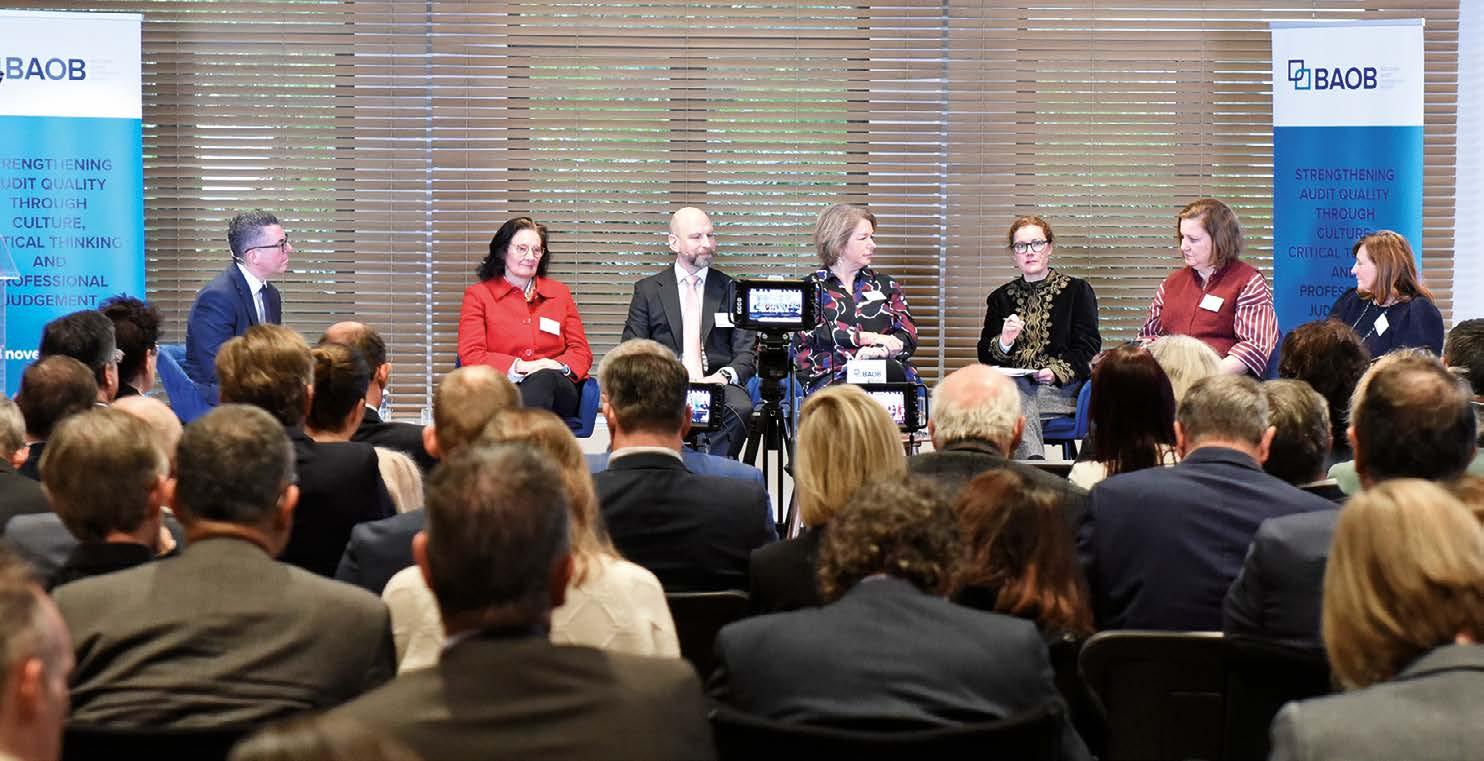
On 28 November 2025, the BAOB organised an international conference on “Strengthening audit quality through culture, critical thinking and professional judgement”, which was held in Brussels and online.
In line with its annual custom, the BAOB again engaged in dialogue with 3 PIE audit firms and a representative sample of non-PIE audit firms, in order to continuously refine its understanding of changes and challenges in the sector.
The BAOB received 19 complaints, of which 16 were admissible. The BAOB also received 10 whistleblower reports, of which 8 were admissible.
The BAOB Committee held 10 meetings, ruled in 46 written proceedings and referred 12 investigation files to the FSMA Sanctions Committee.
In the following chapters, we present more details of the BAOB’s oversight activities, covering its audit quality reviews (Chapter 5), the results of its ML/TF reviews (Chapter 6) and other supervisory activities (Chapter 7).
To interpret this information correctly, it is helpful to take the following information into account.
Since the selection of reviewed auditors changes every year, the results of oversight activities are not directly comparable from year to year.
First and foremost, this is because the Law of 7 December 2016 requires the BAOB to perform a quality review at least once every 3 years on PIE auditors and at least once every 6 years on non-PIE auditors.
Moreover, certain auditors may be included in the annual quality review sample due to the targeted selection of auditors considered to be high-risk. This can affect the interpretation of the results.
The BAOB uses a risk-driven method to select audit files (and specific parts of those files) for inspection, but does not aim to collect a representative sample of an auditor’s audit procedures.
The BAOB thus focuses on selecting audit files with a potentially elevated risk of poor audit quality, such as audit files involving more complex entities or higher-risk sectors, or audits for which unusually low fees were charged. Risk-driven selections and sampling are always complemented by random sampling to ensure that the review results are reliable and representative.
Our inspections do not examine every aspect of every audit file.
The inspection results should not be extrapolated to the performance of other statutory auditor mandates or audit engagements, but should be considered as an indication of how auditors approach their potentially high-risk audit engagements.
The inspector’s findings are not binding on the BAOB Committee.
The inspectors employed by the BAOB may be part of the FSMA’s Central Inspection Team or other inspectors appointed by the Board.
For each individual file, the BAOB Committee performs an analysis to determine the findings it will include or exclude from its assessment of the file and the findings for which it thinks a measure is appropriate and/or necessary. This is part of the Committee’s discretionary oversight policy.
Therefore, findings that are not the subject of a decision by the Committee should not be considered as an approval by the Committee of the underlying audit procedures of the auditor. Moreover, a breach that goes undetected by an inspector may be identified subsequently by the General Secretariat and retained as a finding by the Committee.

On the basis of its risk analysis, the BAOB makes an annual selection of the auditors on whom it will perform a quality review. The selection is made irrespective of whether they conduct statutory audits of public-interest entities (PIEs). For a general understanding of our approach to quality reviews, please see our website.
The BAOB regards quality reviews as long-term review cycles carried out on a recurrent basis. As is the case for every aspect of its oversight, the BAOB deploys its resources for these quality review cycles in a risk-based manner, not only addressing potentially more harmful situations, but also examining new trends and developments.
The BAOB attaches great importance to carrying out its quality reviews in a proportionate manner, taking into account the size of the audit firm, the nature of the services it provides and the social impact of its client base. The BAOB therefore uses an internal segmentation of the sector, based largely on the responses to the Auditors Annual Cartography as well as to any questionnaires it has produced on specific topics. The BAOB also considers the approach of other European regulators and the experiences of the CEAOB’s inspection working group, which serve as a benchmark.
In conducting inspections of PIE auditors, the BAOB is assisted by the Central Inspection Team of the FSMA 2
Quality reviews of PIE auditors involve a longer period of fieldwork and are therefore mainly carried out sequentially. They are thus spread out over the course of the year and may span more than one calendar year. The results of the quality reviews of PIE auditors are included in this report in the year in which the BAOB Committee makes a final decision on the results of the review. As a result, the timing of the reporting on the results of these quality reviews differs from that for non-PIE auditors, for whom the quality reviews follow a set timeline and the findings can be processed in a more or less grouped manner.
In 2025, quality reviews were started and/or carried out at 5 PIE audit firms, of which 2 were joint inspections with the PCAOB, the audit regulator in the United States. At the end of the year, these quality reviews were at various stages of performance, reporting and decision-making.
In the course of the quality reviews, the BAOB reviews both the organisational structure of the firm and the performance of audit engagements by the PIE auditors. For 7 PIE audit firms and 16 affiliated auditors performing audits at one or more PIEs, the BAOB imposed 43 measures3 under the Law of 7 December 2016 and the AML Law, comprising:
4 reprimands; 2 compliance deadlines; 11 (AML) injunctions 4 ; and 26 recommendations.
By imposing measures, the BAOB seeks essentially to take preventive action and prevent the identified deficiency from recurring 5
2 Article 52, § 4 of the Law of 7 December 2016.
3 A summary of the different decisions the BAOB may take can be consulted on the BAOB website.
4 The BAOB can impose an injunction as a measure under Article 116/2 of the AML Law.
5 More information on the measures the BAOB may take is available on the BAOB website. Reprimands are disciplinary measures. Only the FSMA Sanctions Committee has the authority to impose administrative sanctions and thus punitive measures.
Regarding the implementation and application of ISQM1, the BAOB adopted an educational and awareness-raising approach in its thematic reviews in order to give the sector time to implement the standard correctly.
The BAOB therefore did not impose measures under the Law of 7 December 2016 on the PIE audit firms reviewed, but instead informed them of its:
key findings: important key findings by the BAOB, based on which the audit firm should take action to improve ISQM1 compliance and thus its audit quality. The BAOB reserves the right to evaluate the remediation of these findings during a later review if there are grounds to do so; observations: observations by the BAOB on initiatives to improve ISQM1 compliance and thus audit quality. The BAOB encourages the firms to consider implementing these initiatives; examples of good practice: examples of good practice that the BAOB was able to identify at the reviewed firm. The BAOB encourages the firms to continue these good practices.
Inspections of the organisational structure of firms focused on the implementation and application of the ISQM1 components covering “The Firm’s Risk Assessment Process”, “Human Resources” and “Governance and Leadership”.
During 4 thematic reviews, the BAOB noted 3 key findings in relation to the implementation and application of ISQM1
The BAOB’s findings at PIE firms relate to the legal and regulatory framework as shown in the chart below. The findings on breaches of the AML Law are discussed in Chapter 6 of this activity report.
5.1.1. Non-compliance with organisational structure requirements
International Standard on Quality Management 1 (ISQM1) came into force on 15 December 2023. It covers the design and implementation of a quality management system for audit, assurance and related engagements. The evaluation of the quality management system required under the standard must be carried out within one year from 15 December 2023. This standard replaces International Standard on Quality Control 1 (ISQC1), which, however, is applicable to BAOB findings that refer to the period when it was still in force.
50.00% - Other
Quality risks, objectives and responses - 50.00% 50 %
1. Inadequate assessment and unclear documentation of quality risks, objectives and responses
2. Other findings
Inadequate assessment and unclear documentation of quality risks, objectives and responses (ISQM1.25, ISQM1.37, ISQM1.57 and ISQM1.58)
The BAOB found that certain quality risks were not appropriately assessed as a basis for designing the responses. In this regard, the BAOB believes it is unlikely that all quality risks, individually or when combined with other risks, will adversely affect the achievement of one or more quality objectives to the same degree. An adverse impact can arise for a variety of reasons, and varies according to the conditions, events, circumstances, actions or inactions that give rise to the risk. These things also impact on the nature, scope and timing of monitoring activities.
The BAOB also found that it is not always sufficiently clear from the documentation of the quality management system that the quality objectives specified in ISQM1 are being addressed. When a firm uses terminology that is not derived from ISQM1, it is at the very least unclear whether the firm’s quality objectives are the same as those in ISQM1 (the “mapping” exercise) and thus whether ISQM1 is being fully applied. It falls to the firm to clearly document and demonstrate this compliance with ISQM1.
Half of the deficiencies identified concern different issues, among them the inadequate application of firms’ policies and procedures on personal financial independence requirements. These identified deficiencies relating to the independence of PIE auditors concerned incomplete disclosures of privately held investments – a matter that may be relevant to safeguarding independence in the performance of audit procedures.
One recurring finding also concerns firms having policies and procedures that did not result in the timely archiving of audit files. To be timely, archiving must occur no more than sixty days after the signing of the audit report.
It was also found that firms’ procedures did not provide reasonable assurance that the engagement quality reviewer had adequately assessed the key audit matters and significant judgements.
5.1.2. Deficiencies in the performance of audit engagements
5 : Deficiencies relating to ISAs at PIE auditors
27.60% - Other
1. Deficiencies relating to overall audit objectives, including responses to assessed risks (ISA 330) and obtaining sufficient appropriate audit evidence (ISA 200 and ISA 500)
2. Findings on quality management for an audit of financial statements (ISA 220)
3. Incomplete, late and insufficient documentation of the audit procedures performed and resulting conclusions (ISA 230)
Deficiencies relating to overall audit objectives, including responses to assessed risks (ISA 330) and obtaining sufficient appropriate audit evidence (ISA 200 and ISA 500)
The deficiencies identified by the BAOB in relation to this ISA touch on the essence of the audit and have a decisive impact on audit quality and the substantiation of the audit report.
34% of the deficiencies concerned responding to assessed risks and obtaining sufficient appropriate audit evidence. This audit evidence is the essential foundation of the audit opinion and auditor’s report.
ISA 200 defines the overall objective of the audit as being to obtain sufficient appropriate audit evidence in order to reduce audit risk to an acceptably low level. This enables the auditor to draw reasonable conclusions upon which to base the audit opinion;
ISA 500 considers this approach in greater depth and defines how the auditor can obtain this appropriate audit evidence, an important element being the requirement for the auditor to maintain professional scepticism;
ISA 330 describes how the auditor should respond to the assessed risks.
The correct application of these standards is crucial to reaching an appropriate and informed conclusion on audit work.
Most of the deficiencies identified by the BAOB relate to inadequate or insufficiently conclusive audit evidence. Audit procedures, however, must be formulated in sufficient detail so that they lead to a wellsubstantiated conclusion.
In some cases, the BAOB also found that the auditor had used information obtained from the entity without adequately assessing whether this information was sufficiently reliable for the auditor’s purposes (ISA 500). Sampling (ISA 530) was also inappropriately designed to obtain audit evidence.
These findings made by the BAOB concerned audit procedures on several key sections of the financial statements.
Findings on quality management for an audit of financial statements (ISA 220)
17% of the deficiencies identified relate to ISA 220, which defines the responsibilities of the engagement quality reviewer in the performance of engagements. The engagement quality reviewer should conduct an objective evaluation of the significant judgements made by the engagement team and conclusions reached in formulating the audit opinion. The BAOB found that these evaluations were not carried out with sufficient thoroughness.
Moreover, the BAOB found that certain independence requirements were not met, a matter that is also addressed in ISA 220.
Incomplete, late and insufficient documentation of the audit procedures performed and resulting conclusions (ISA 230)
14% of the deficiencies identified in audit engagements related to audit documentation. The BAOB found in certain cases that the documentation of the audit procedures carried out was incomplete or insufficient and was archived late.
A well-documented audit file is much more than a mere formality, and ISA 230 unequivocally states that the auditor is required to prepare the audit documentation in the audit file so as to enable an experienced auditor with no previous connection with the audit to obtain an understanding of the audit procedures performed.
The BAOB published its insight on the importance and the four characteristics of a well-documented audit file in 2021 6 . Here it is explained that archiving – no later than 60 days after the signing of the audit report – is the final part of a legally compliant audit file.
Failure to obtain adequate information from management (ISA 240)
ISA 240 notes that management is in a unique position to perpetrate fraud. Due to the unpredictable way in which such an override of internal control could occur, this constitutes a risk of material misstatement due to fraud and thus a significant risk.
Addressing this risk requires the auditor to request and evaluate information from management. The BAOB found that in 7% of the identified deficiencies, this work had been inadequately performed and documented.
The remaining deficiencies concerned:
Audit procedures that were cited as a key audit matter in the auditor’s report but were not adequately performed or were not sufficiently evidenced by the audit file (ISA 701);
Inadequate evaluation of management’s assessment of the entity’s ability to continue as a going concern (ISA 570);
Failure to sufficiently evaluate the procedures performed by the auditor’s expert, including in terms of the assumptions (hypotheses) and methods and the relevance, completeness and accuracy of the source data used by the expert (ISA 620);
The assessment of estimates, where for estimates leading to significant risks the auditor did not sufficiently evaluate whether the significant assumptions used by management were reasonable (ISA 540); Failure to document the amounts and factors that the auditor considered when determining materiality (ISA 320);
Missing analytical procedures in relation to risk assessment and at the end of the audit (ISA 315 and ISA 520, respectively);
Inadequate understanding of the internal control environment, information system and related business processes relevant to financial reporting (ISA 315);
Failure to mention in the auditor’s report that the financial statements for the previous financial period were not filed within the legal deadline (Additional standard to ISAs applicable in Belgium).
6 BAOB communication dated 18 November 2021: “The importance and four characteristics of a well-documented audit file”.
Each year, the BAOB subjects various non-PIE auditors to a quality review. The selection consists of auditors that are selected to comply with the oversight cycle (at least every six years) and auditors that have been identified as posing a potentially elevated risk of poor audit quality, potentially supplemented with a random selection. The BAOB tends towards an accelerated audit for the largest or highest-risk non-PIE audit firms.
During 2025, the BAOB dealt with non-PIE quality reviews that were initiated in 2024 and completed in 2025. During these non-PIE quality reviews, the BAOB audited the organisation of 18 audit firms, and inspected at least one audit engagement 7 at 32 auditors
At the end of this monitoring campaign, the BAOB imposed a total of 116 measures under the Law of 7 December 2016 and the AML Law, comprising:
1 reprimand;
32 compliance deadlines;
52 (AML) injunctions 8 ; and 31 recommendations.
By imposing measures, the BAOB seeks essentially to take preventive action and prevent the identified deficiency from recurring 9
Regarding the implementation and application of ISQM1, the BAOB adopted an educational and awareness-raising approach in order to give the sector time to implement the standard correctly.
The BAOB therefore did not impose measures under the Law of 7 December 2016 on the audit firms reviewed, but instead informed them of its:
key findings: important key findings by the BAOB, based on which the audit firm should take action to improve ISQM1 compliance and thus its audit quality. The BAOB reserves the right to evaluate the remediation of these findings during a later review if there are grounds to do so; observations: observations by the BAOB on initiatives to improve ISQM1 compliance and thus audit quality. The BAOB encourages the firms to consider implementing these initiatives; examples of good practice: examples of good practice that the BAOB was able to identify at the reviewed firm. The BAOB encourages the firms to continue these good practices.
Following the review campaign, the BAOB made 147 findings on the implementation and application of ISQM1 . This resulted in the formulation of:
69 key findings; 32 observations; and 46 examples of good practice.
7 During the inspections related to audit engagements, the BAOB generally reviewed one engagement in relation to the statutory audit of financial statements and/or one or more other audit engagements performed pursuant to the law.
8 The BAOB can impose an injunction as a measure under Article 116/2 of the AML Law.
9 More information on the measures the BAOB may take is available on the BAOB website. Reprimands are disciplinary measures. Only the FSMA Sanctions Committee has the authority to impose administrative sanctions and thus punitive measures.
The inspections scrutinising the organisation of non-PIE audit firms focused on: the implementation and application of the ISQM1 components concerning “The Firm’s Risk Assessment Process”, “Human Resources” and, at the larger non-PIE audit firms, “Governance and leadership”; and compliance with legislation on preventing money laundering and terrorist financing.
In the inspections of audit engagements, particular attention was paid to the performance of a statutory audit of financial statements and/or one or more other audit engagements performed pursuant to the law.
The BAOB mainly made findings in the following areas:
organisational structure of the firm (ISQM1); duties regarding the prevention of money laundering and terrorist financing (AML Law); performance of the audit engagement (ISAs).
The chart below shows a breakdown of the findings.
6 – Breaches of the legal and regulatory framework at non-PIE auditors
0.50% - Other standards
2.80% - Companies and Associations Code
6.90% - Law of 7 December 2016
The high proportion of findings on the implementation and application of ISQM1 (49.3%) seems understandable, given that this is a new standard.
The reviews identified deficiencies regarding the organisational structure obligations of the audit firms (ISQM1). The graph below shows a breakdown of the identified deficiencies.
10.30% - Other
4.70% - Designing and implementing responses to quality risks
4.70% - Forming an appreciation of changes within the firm
9.30% - Risk assessment process
11.20% - Specified responses
12.10% - Governance quality objectives
1. Identification and assessment of quality risks
2. Resource quality objectives
3. Governance and leadership quality objectives
and assessment of quality risks - 28.00%
Deficiencies in the identification and assessment of quality risks (ISQM1.25)
Several audit firms failed to identify certain quality risks because they did not obtain a sufficient understanding of the circumstances, conditions, events, actions or inactions that might adversely affect the achievement of the quality objectives required by ISQM1.
Some audit firms did not correctly interpret the term “service provider”10 as used in ISQM1 and, as a result, failed to identify the risks arising from the firm’s use of a service provider. The BAOB drew attention to this misinterpretation in its publication on 31 March 2025 11 . Service providers are external parties, to the express exclusion of the firm’s network, other network firms or other structures or organisations in the network.
10 In ISQM1.16 (v), a service provider is defined as “an individual or organisation external to the firm that provides a resource that is used in the system of quality management or in the performance of engagements. Service providers exclude the firm’s network, other network firms or other structures or organisations in the network.”
11 BAOB insight dated 31 March 2025: “Initial insights from inspections conducted in 2024 at non-PIE audit firms on the implementation of the ISQM 1 standard”.
In addition, some audit firms did not take changes in their organisational structure during the year into account in their quality management system. An example is the hiring of an employee by an auditor who previously worked alone. Such a material change must be taken into account, albeit within a reasonable timeframe.
It is important to identify each quality risk clearly and meticulously in the quality management system. The BAOB noted on several occasions that the risks identified and assessed were too vaguely formulated. Sometimes this is due to the terminology of the tooling (software) used.
It was also found that some audit firms failed to estimate the likelihood of a risk occurring (occurrence) and/ or the impact the risk would have if it did occur (effect). However, this assessment is crucial to designing and implementing responses that manage these risks adequately and proactively.
Some audit firms documented quality risks that they had identified in both their IT management software and their ISQM1 manual, but without aligning these two documentation sources. Cross-referencing between the two is helpful and improves insight.
The BAOB noted good practices for identifying and assessing quality risks, such as:
Involving all staff in the risk assessment process; Assigning formal scores when estimating the likelihood of a quality risk occurring (occurrence) and its impact (effect).

%
Deficiencies with regard to resource quality objectives (ISQM1.32)
The BAOB found that some audit firms do not, or do not sufficiently, consider resource quality objectives in their quality management system even though the firm’s circumstances require it.
For example:
One audit firm did not consider how it holds its staff accountable for actions or behaviours that adversely affect quality 12 , even though this is required by the quality objective in ISQM1.32 (b): “Personnel demonstrate a commitment to quality through their actions and behaviours, develop and maintain the appropriate competence to perform their roles, and are held accountable or recognised through timely evaluations, compensation, promotion and other incentives.”
One audit firm failed to identify any risks related to a shortage of human resources, or a shortage of competent human resources, although this is required by the quality objective in ISQM1.32 (d): “Engagement team members are assigned to each engagement, including an engagement partner, who have appropriate competence and capabilities, including being given sufficient time, to consistently perform quality engagements.”
One audit firm made use of component auditors who did not form part of its own network and thus qualified as external service providers, without considering the quality objective in ISQM1.32 (c), namely: “Individuals are obtained from external sources (i.e., the network, another network firm or a service provider) when the firm does not have sufficient or appropriate personnel to enable the operation of firm’s system of quality management or performance of engagements.”
The last example illustrates the misunderstanding of the notion of “service provider” already pointed out by the BAOB 13 . According to ISQM1.A28, service providers include component auditors from third-party firms that are not part of the firm’s own network.
The BAOB noted good practices in terms of measures taken to achieve resource quality objectives, namely:
Purchases of software to document quality objectives, quality risks and responses in relation to managing the firm’s risks;
Drawing up a specific time budget to perform the tasks required to operate the quality management system;
Checking whether those in charge of quality management spend sufficient time on it by providing a separate code (e.g. “ISQM1”) in the firm’s timekeeping system; Defining criteria for assigning audit engagements to partners in the firm (e.g. industry specialisation, specific knowledge required, seniority, workload, independence, etc.); Conducting annual workload monitoring for each partner in the firm, taking into account all their engagements and tasks.
12 ISQM1.A93 provides examples of actions the firm may take when staff exhibit actions or behaviours that negatively affect quality: (a) training or other professional development; (b) considering the effect of the matter on the evaluation, compensation, promotion or other incentives of those involved; (c) disciplinary action, if appropriate.
13 BAOB insight of 31 March 2025: “Initial insights from inspections conducted in 2024 at non-PIE audit firms on the implementation of the ISQM 1 standard”.
Deficiencies relating to governance and leadership objectives (ISQM1.28)
The BAOB found that some audit firms did not or did not sufficiently take governance and leadership quality objectives into account in their quality management system even though the firm’s circumstances required it.
For example:
One audit firm stated that strategic decisions on the firm’s internal organisation are made by the board of management, but did not systematically take minutes of board meetings. Consequently, the audit firm could not demonstrate compliance with the objective of ISQM1.28 (a) (iv), namely: “The importance of quality in the firm’s strategic decisions and actions, including the firm’s financial and operational priorities” Audit firms must pursue the objective of ISQM1.28 (e): “Resource needs, including financial resources, are planned for and resources are obtained, allocated or assigned in a manner that is consistent with the firm’s commitment to quality.”
One audit firm with a rather complex organisation had not worked out its resource planning in sufficiently concrete terms. Because resource needs may change over time, it is not practically feasible to anticipate all resource needs. The firm’s resource planning may involve determining what resources are currently needed, forecasting the firm’s future resource needs and establishing processes to deal with unforeseen resource needs as and when they arise. For this, it may be useful for the audit firm to: prepare a formal budget indicating the expertise and working hours required for audit engagements per staff member and per partner, as well as an allocation of resources over time (monthly or at least quarterly); check whether resources are sufficient; and provide a buffer to cover future training, any other responsibilities (such as AML or the quality management system), unforeseen circumstances and non-recurring engagements. In the opinion of the BAOB, such measures could ensure in particular that sufficient resources are available in the event of a new mandate or a renewal of a mandate (e.g., depending on the timing of the planned work). Ideally, this exercise should be carried out for each staff member (to ensure that sufficient time is provided) and for each job (to check that the seniority of the assigned personnel is commensurate with the complexity of the assignment). If the analysis shows that the resources are lacking, the firm should draw the appropriate conclusion from it.
The chart below shows the categories of audit procedures where the BAOB identified deficiencies during its audit quality review of individual audit files.
8 : Deficiencies relating to ISAs at non-PIE auditors
20.00% - Other
4.00% - Documentation of engagement materiality
4.00% - Data-driven analytical procedures
6.00% - Disclaimer of opinion
6.00% - Audit documentation
6.00% - Management override of controls
1. Inadequate identification and assessment of risks and inadequate response to assessed risks
2. Archiving of audit file delayed or not performed in a secure manner
3. Inadequate performance of sampling
Inadequate identification and assessment of quality risks (ISA 315) and response to assessed risks (ISA 330)
A statutory auditor’s objective is to identify and assess the risks of material misstatement, whether due to fraud or error, at the financial statement and assertion levels by obtaining an understanding of the entity and its environment, including its internal control, in order to obtain a basis for designing and implementing responses to the assessed risks of material misstatement.
The BAOB identified deficiencies in the risk assessment procedures required under ISA 315.6. For example, some auditors did not make inquiries of the audited entity’s management and of other appropriate persons within the entity who might have information that could help them identify risks of material misstatement (ISA 315.6 (a)).
It is essential to document these discussions in the audit file. If no significant changes have occurred within the entity, the report of the discussion can be more concise, although it should always allow an understanding to be formed of the issues discussed.
Inquiries are combined with other risk assessment procedures to help identify risks of material misstatement.
Usually, most of the information is obtained from inquiries made of management and those responsible for financial information. Nevertheless, inquiries made of other individuals within the entity and of employees with different levels of responsibility may also offer varying perspectives and additional intelligence that may be useful in identifying risks of material misstatement that would otherwise go undetected. For example, a conversation with the sales manager might reveal that certain sales transactions (at the end of the reporting period) were held over and not recorded in accordance with the rules for determining the entity’s revenue.
Other auditors failed to perform analytical procedures during their risk assessment work. However, ISA 315.6 (b) requires the auditor to perform simple analytical procedures at the start of the audit (e.g. comparing the results of the previous financial year with those of the audited financial year). These analyses can help the auditor obtain an understanding of the entity and identify a problem that should be followed up during the audit.
Analytical procedures that are used as risk assessment activities help to identify items that have an impact on the financial statements and on the audit, such as transactions, events, amounts, ratios and trends that appear unusual.
The BAOB also found that some auditors failed to properly document how the audited entity responded to risks arising from IT (ISA 315.21).
Furthermore, the BAOB noted that some auditors identified risks of material misstatement without disclosing the relevant assertions (ISA 315.25 (b)).
16%
Archiving of audit file delayed or not performed in a secure manner (ISA 230.14, Article 17, § 3 of the Law of 7 December 2016, ISQM1.31 (f))
It is disappointing that the BAOB continues to identify several deficiencies regarding the basic obligation to archive the audit file 14 , which is by no means a formality, namely:
14 ISA 230.14 states that an auditor should assemble audit documentation in an audit file and complete the administrative process of compiling the final audit file on a timely basis after the date of the auditor’s report.
Article 17, § 3 of the Law of 7 December 2016 specifies that the audit or assurance file must be closed no later than 60 days from the date of signing of the audit report or assurance report.
According to ISQM1.31 (f), engagement documentation should be assembled on a timely basis after the date of the engagement report and should be appropriately maintained and retained to meet the needs of the firm and comply with law, regulation, relevant ethical requirements, or professional standards.
Archiving was not formally accomplished on a specified date; Audit documentation assembled without ensuring its integrity, often on the C:// drive of a PC, such that the stored digital audit documents are neither locked nor protected against subsequent changes; Late archiving, either more than 60 days after the signing of the audit report, or failure to archive at all.
Examples of such breaches include:
Digitally filing the working papers (Word and Excel documents) and all supporting evidence (.pdf documents) in a documentation folder and storing them on a server with various folders and subfolders, without taking any other measure to ensure their integrity;
Marking working papers as checked by the engagement manager in the firm’s audit software, without taking any other measure to ensure their integrity;
Failing to activate the “lockdown” procedure in the firm’s audit software, or activating it too late (more than 60 days after the date of signing of the audit report);
Signing by the engagement manager of a sworn statement indicating that the audit file was archived on a specified date, without taking any other measure to ensure its integrity.
The storage and maintenance of engagement documentation includes managing the secure archiving, the integrity, and the accessibility or ease of use regarding consultation of the underlying information, as well as the management of related technologies.
Auditors may record audit documentation on paper, on an electronic medium or on any other medium that allows all readable data to be retained for the statutory retention period of the file.
Auditors must monitor the integrity of engagement documentation. If information is changed, added or removed without the required permission, or is permanently lost or destroyed, there is a risk that the documentation will cease to be accurate.
Archiving is the final element in a properly assembled audit file and should ensure that the audit file and the documents it contains are preserved without any alteration or change.
All auditors must be able to demonstrate that they have archived their audit file no later than 60 days after the signing of the audit report and that the integrity of the archived audit file is guaranteed.
The BAOB therefore advises auditors still working with paper documents to scan their entire audit documentation into PDF format, archive it on a specified date and store it securely in order to safeguard its integrity.
Inadequate performance of sampling (ISA 530)
The BAOB found that some auditors did not document their sampling in such a way that an informed third party, such as an inspector from the BAOB, can ascertain that the sample size was sufficient to reduce sampling risk to an acceptably low level (ISA 530.7).
In other files, the auditor did not select the items to be tested in such a way that each sampling unit in the population had a chance of selection (ISA 530.8). The sampling methodology used was inadequately explained in the audit file.
In other cases, the auditor did not project a deviation detected in the sample to the population as a whole, but failed to provide reasons in the audit file as to why such a projection was not necessary.
The BAOB also found that some auditors, at the end of a sample test, failed to formulate a final conclusion. An auditor should, however, evaluate the results of the sample and assess whether the use of audit sampling has provided a reasonable basis for conclusions about the population tested (ISA 530.15).
An auditor uses sampling in an audit in order to have a reasonable basis from which to reach conclusions about the population from which the sample was taken.
Good, complete, properly prepared and sufficiently detailed documentation is essential.
Auditors should therefore document in sufficient detail the objective of the test, the sampling method used, how any deviations or identified anomalies were investigated, and their assessment of the result of the sample test.

Article 85, § 1, 6° of the AML Law designates the BAOB as the competent authority to oversee how auditors comply with this Law 15 in the performance of their audit engagements and other activities that they are authorised to perform based on their registration or entry in the public register of auditors or based on their status of trainee auditor.
To establish the individual risk profile of each auditor, as required by the AML Law, the BAOB must collect the relevant information for this purpose. This is the reason why the BAOB conducted the first AML Survey in 2018; it then repeated the exercise in 2022.
Since 2023, the questions on inherent ML/TF risk factors have been integrated into the general annual mapping procedure (“Auditors Annual Cartography”). As every year, the risk profiles of the auditors were updated accordingly in 2025. The BAOB found no significant changes in the risk profiles.
Since 2018, the sector has made progress in managing its money laundering risk and client risk profiles. However, there is room for further improvement. The focus is on the effective application of firms’ internal procedures, not only for audit engagements but also for special engagements involving higher risks and for accounting services. In this regard, the BAOB points mainly to the relatively low, though increasing, number of abnormal transaction reports submitted by the sector to the CTIF-CFI, as well as to the identification and monitoring of PEPs, which could be improved.
Effective risk management is essential for ML/TF prevention. Auditors must analyse and assess their clients’ risks and conduct appropriate due diligence in accordance with the individual risk profile.
In 2025, the BAOB monitored AML obligations at PIE and non-PIE auditors in the course of its quality reviews (see Chapter 5 of this activity report). In so doing, the BAOB focused on both the organisation of the firm and the application of internal procedures in a selection of audit engagements.
In 2025, thematic reviews on combating ML/TF also remained important. These sample-based checks took into account the auditor’s risk profile, the results of the 2022 AML Survey and the updated sector risk analysis published by the BAOB in early 2023.
15 The BAOB is responsible for the oversight of entities subject to the AML Law as defined in Article 5, § 1, 23° of the AML Law (free translation): “natural or legal persons operating in Belgium that are registered or recorded in the public register held by the Institut des réviseurs d’entreprises / Instituut der Bedrijfsrevisoren (Institute of Registered Auditors), in accordance with Article 10 of the Law of 7 December 2016 on the organisation of the profession and the public supervision of auditors, natural persons that are trainee external auditors as referred to in Article 11, § 3 of the aforementioned law, and audit firms and persons exercising the profession of statutory auditor”.
The BAOB reviewed AML obligations at PIE auditors as part of its quality reviews. In 2025, it processed results on:
the organisational structure of 3 PIE audit firms; and at least one audit engagement at 7 auditors who had performed audits of one or more PIEs.
In terms of measures, the BAOB formulated 11 injunctions for the following deficiencies:
9 : Deficiencies relating to AML obligations at PIE auditors
9.10% - Entry into the business relationship
9.10% - Politically exposed persons
18.20% - Agents
18.20% - Ownership and control structure
1. Late or incomplete performance of procedures relating to identification and identity verification
2. Incomplete procedures on ownership and control structure
3. Late review of provisions governing the power to bind the legal person (agents)
Late or incomplete performance of procedures relating to identification and identity verification (Articles 30, 27 and 23 of the AML Law)
A large proportion of the deficiencies identified (45%) concerned the identification and identity verification of the client, its ultimate beneficial owners and its agents. The deficiencies identified primarily related to late or incomplete performance of these procedures.
Incomplete procedures on ownership and control structure (Articles 23, 29 and 74 of the AML Law)
In 18% of the deficiencies, the BAOB found that auditors did not take sufficient reasonable steps to understand the client’s ownership and control structure. Such procedures are essential to identify the client’s ultimate beneficial owners, as well as for other reasons.
A deficiency of this type was clearly noted when an audit firm failed to notice that the conclusions it drew from these mandatory procedures were inconsistent with the UBO register. The discrepancy had not been reported to the General Administration of the Treasury, which is, however, a legal obligation.
Late review of provisions governing the power to bind the legal person (agents) (Articles 30 and 26 of the AML Law)
In 18% of the deficiencies identified, it was found that the auditors failed to examine what provisions were in place regarding the power to bind the legal entity and thus who the agents are.
Incomplete procedures on detecting PEPs (Article 34 of the AML Law)
9% of the deficiencies identified concerned the detection of politically exposed persons at the client. These mandatory procedures had not been carried out or were not documented.
Start of business relationship (Articles 8, 30 and 34 of the AML Law)
The BAOB found that the firm’s procedures did not correctly specify the time at which the business relationship commenced (9% of findings). On its website, the BAOB has published its AML Recommendation of 30 May 2024 on the time of the identification and identity verification of the client and of the client’s beneficial owners and agents16 which discusses in a structured manner the time at which the business relationship commences in several commonly occurring situations.
During 2025, the BAOB dealt with non-PIE quality reviews that were initiated in 2024 and completed in 2025. In the course of these quality reviews, it reviewed AML obligations in relation to: the organisational structure of 18 auditors; and at least one audit engagement (a statutory audit mandate and/or another statutory audit engagement) at 32 auditors.
As a result of the quality review campaign, the BAOB imposed 52 injunctions for deficiencies relating to AML obligations at non-PIE auditors.
16 AML recommendation by the BAOB dated 30 May 2024: “Time of the identification and the verification of the identity of the client and of the client’s beneficial owners and agents”. 18% 18% 9% 9%
In connection with the prevention of money laundering and terrorist financing, the BAOB audited the procedures drawn up and applied by firms on the basis of a selection of audit files. The BAOB examined not only whether the firm’s policies and procedures are designed to meet the requirements of the AML Law, but also whether the firm applied those procedures correctly.
In the reviews performed, it found deficiencies in respect of several AML obligations. The deficiencies identified are broken down in the graph below.
GRAPH 10 : Deficiencies relating to AML obligations at non-PIE auditor
5.60% - Identification and identity verification of clients 17.00% - Other
7.40% - Time of identification of clients and UBOs
9.30% - Enhanced due diligence in respect of PEPs
13.00% - Overall risk assessment
1. Late or non-compliant individual risk assessment
2. Late or inadequate identification of the client’s agents
3. Late or inadequate identification of client characteristics & Non-compliant overall risk assessment
%
Individual risk assessment in relation to ML/TF (Article 19, § 2 of the AML Law)
The BAOB found in several cases that it could not be determined from the available documentation whether the auditor had taken all the variables and factors referred to in the Annex to the AML Law into account in their individual risk assessment.
In another case, an auditor’s individual assessment of ML/TF risks failed to take account of the national risk assessment referred to in Article 68 of the AML Law, which specifically identifies the sectors or fields that represent a higher ML/TF risk.
In yet another case, an auditor’s individual assessment of ML/TF risks failed to take account of the increased ML/TF risk posed by their client due to its links to a State with zero or low taxation.
Moreover, the BAOB repeatedly found that individual risk assessments were not carried out in good time, i.e. no later than upon entry into the business relationship or performance of the one-off transaction. The BAOB also found in some cases that the risk assessment was undated, meaning that the auditor was unable to show when it was carried out.
Identifying the client, its beneficial owners and its agents forms part of the due diligence measures taken by an auditor with regard to their client17. These due diligence measures and the appropriate level of due diligence derive from the individual risk assessment and the risk level determined on the basis of it18
Hence, it follows logically that the individual risk assessment of the client should be carried out before the auditor identifies the client, so that the appropriate level of due diligence can be applied19
Deficiencies in the identification of the client’s agents (Article 22 of the AML Law)
The BAOB found in several files that the auditor had not identified with certainty the client’s agents, including their authority to act on the client’s behalf.
The AML Law defines the relevant information to be collected:
1° if the identification requirement concerns a natural person: his surname, first name, place and date of birth and, if possible, his address;
2° if the identification requirement concerns a legal person: its registered name, its registered office, the list of its directors and the provisions governing the power to bind the legal person;
3° where the identification requirement concerns a trust, fiduciary arrangement or similar legal arrangement: its name, the information referred to in 1° or 2° on its trustees or fiduciaries, its settlors, its protectors, if any, and as well as the provisions governing the power to bind the trust, fiduciary arrangement or similar legal arrangement.
In certain files, the BAOB also found that the auditor had not complied with its obligations to identify and verify the identity of the client’s agents before they exercised their power to bind the client they represented 20
In practice, the power to bind the client will usually (but not always) be exercised when the client’s agent signs the engagement letter, so the obligation to identify and verify the identity of the agent should be fulfilled before that point in time 21
17 Article 19, § 1 of the AML Law.
18 Article 19, § 2 of the AML Law.
19 AML recommendation by the BAOB dated 30 May 2024: “Time of the identification and the verification of the identity of the client and of the client’s beneficial owners and agents”.
20 Article 30, paragraph 2, of the AML Law.
21 AML recommendation by the BAOB dated 30 May 2024: “Time of the identification and the verification of the identity of the client and of the client’s beneficial owners and agents”.
Auditors must gather sufficient information to comply with their obligation to identify their client’s agents.
The information on those persons must allow them to be distinguished with sufficient certainty from any other person, taking into account the individual assessment of the client’s ML/TF risks22 .
Obligation to identify client characteristics (Article 34, § 1 of the AML Law) and the audit firm’s general risk assessment (Article 16 of the AML Law)
The BAOB repeatedly found that the auditor failed to take reasonable steps to determine whether the client, the client’s agents or the client’s beneficial owners were politically exposed persons (PEPs) 23 , relatives of PEPs or persons known to be close associates of PEPs.
Such a check is made in the context of the obligation to identify customer characteristics referred to in Article 34, § 1 of the AML Law. It must be carried out no later than upon entry into the business relationship or the performance of the one-off transaction.
In several cases, the auditor belatedly consulted a specialist website on the matter (after the date of their appointment by the general meeting).
With respect to deficiencies regarding the performance of a general risk assessment as referred to in Article 16 of the AML Law, the BAOB noted in particular that:
the overall risk assessment listed a set of ML/TF risk factors without attaching a risk level to them; the firm’s general risk assessment was undated; the overall risk assessment did not take account of the factors indicating potential elevated risk listed in Annex III to the AML Law; the audit firm did not provide convincing reasons as to why certain clients were assessed as less risky (particularly clients active in used car trading, the hotel industry and real estate agents); the general risk assessment did not consider certain types of assurance engagement commonly performed by members of an audit firm (in particular, contributions in kind, quasi-contributions and liquidation engagements).
22 Article 26, § 1 of the AML Law.
23 The term “politically exposed person” is defined in Article 4, 28°, of the AML Law.
In addition to quality reviews, the BAOB also conducted thematic reviews based on the risk profile of certain auditors and auditor firms.
In 2025, it identified the following breaches in 4 thematic reviews:
The near-total absence of firm-level organisational procedures at one auditor;
In two cases, insufficient work was carried out to determine who the ultimate beneficial owners of the clients were;
In one case, the ultimate beneficial owner was not recognised as a politically exposed person.
The FATF’s mutual assessment of the Belgian legal framework in relation to combating money laundering and terrorist financing (ML/TF) and its application in practice began in 2023 and continued in 2025. As the competent regulator, the BAOB also provided the required input, with an emphasis on the effectiveness of its oversight.
In 2025, the BAOB participated in the interviews conducted by the FATF evaluation team. Some auditors also took part. The BAOB also supplied the required feedback on the FATF’s draft reports.
The assessment process culminated in approval by the FATF plenary meeting and publication of the final report. The BAOB published the key recommendations arising from the report on its website 24 on 19 December 2025. Below is a brief summary of the report’s main findings:
Monitoring, enforcement and support
The FATF finds that the BAOB conducts robust and risk-based supervision through periodic and thematic reviews and has effective enforcement powers. Administrative measures are imposed for breaches and there is cooperation with other supervisors. The FATF recommends further strengthening the sanctions regime and stresses the importance of ongoing training and practical support, especially for smaller firms.
Access to the profession
The FATF notes that the sector has strict and rigorous admission procedures, with high training requirements, exams, a mandatory internship and a criminal record check. Refusals are rare and mainly concern foreign candidates lacking equivalent qualifications. Post-registration checks of licence conditions are more limited and constitute a limited vulnerability, according to the FATF.
Risk concept and application of ML/TF obligations
According to the FATF, the BAOB and the sector have a sound grasp of money laundering risks, whereas the understanding of terrorist financing is less thorough. Auditors, especially in medium-sized and large firms, conduct detailed internal risk analyses and use specialised IT tools. The sector is subject to strict ethical rules and effective controls.
24 BAOB notice dated 19 December 2025 “Publication of the FATF report on Belgium: recommendations for the audit sector”.
Client due diligence, reporting obligations and risk mitigation Auditors generally apply appropriate client due diligence measures, including identification of clients and UBOs, often through the UBO register. Business relationships are refused in high-risk situations, which contributes to risk mitigation. The attention paid to ML/TF risks and reports has increased, with the sector accounting for a significant share of reports from the non-financial sector.
The BAOB attaches great importance to clearly communicating its expectations for the proper application of the regulatory framework on combating ML/TF. The BAOB shares its findings 25 in order to raise awareness in the sector of common breaches or difficulties and promote good practices, thus helping to make its enforcement policy more predictable.
In its ongoing efforts to improve its approach to combating ML/TF, the BAOB holds meetings with the FSMA and the NBB at least once and preferably twice a year. The main purpose of these meetings is to share knowledge and ideas, while also maintaining each party’s professional confidentiality. Holding these “trilogues” and systematically promoting knowledge sharing between these three institutions is fully in line with the importance given by international organisations (such as the Council of Europe and the FATF) to cooperation between the various oversight authorities in a country.
As part of this cooperation, the BAOB sat down with the NBB, the FSMA and the other authorities supervising the non-financial sectors in December 2025 to review the initial months of cooperation with AMLA (see Section 6.8 of this activity report).
The Sixth European Anti-Money Laundering Package (AML6 Package) includes a new Regulation and Directive that aim to harmonise both preventive money laundering rules and their supervision. In addition, a new European anti-money laundering authority, AMLA, was set up and began operations in 2025. The BAOB may sit on AMLA’s General Board on an ad hoc basis, depending on the issues on the agenda.
The BAOB was involved in the preparatory work for AMLA in 2025, with a view to developing the regulatory technical standards needed to implement the new Directive and Regulation. In addition, the BAOB is part of the working group responsible for monitoring the transposition of the Directive into Belgian law under the coordination of the Treasury.
25 The BAOB shares these findings, for example, in the form of “Insights” or “News” on its website.
7.1.
In addition to the quality reviews, the BAOB may also decide to perform its public oversight by carrying out ad hoc or thematic reviews of one or more audit firms based on trends, developments and new insights.
Other common sources of oversight files are going concern problems, bankruptcies, disputes, or allegations of fraud received by the BAOB (e.g. from complaints or whistleblower reports, newspaper reports and notices of early termination of the statutory auditor’s mandate). When an oversight file is opened at the BAOB’s initiative, the BAOB’s Secretary-General may also take into consideration information received from other authorities or third parties.
Some of these files have a considerable societal impact and demand a lot of review resources from the BAOB. However, investigating these files is important to bolster trust in the services provided by auditors.
In handling the oversight files, the BAOB considers it very important to assess each file on its individual characteristics, without bias and without regard to subsequent events.
During 2025, the BAOB received 19 complaints, of which 16 were admissible. It also received 10 whistleblower reports, of which 8 were admissible.
As it does every year, in the summer of 2025 the BAOB held a series of dialogues with auditors on recent developments in their profession. In this way, the BAOB aims to continually refine its understanding of the challenges facing auditors, as well as to further clarify its own expectations.
In accordance with the annual tradition, the BAOB met the representatives of the Belgian Consultative Committee of Auditors (BOBR-CBCR), as well as a representative number of auditors from non-PIE audit firms of various sizes. In addition, the BAOB also held talks with three PIE audit firms.
In 2025, the BAOB expanded its discussion panel by also inviting auditors who have only recently taken the oath to take part in the dialogue.
The BAOB also entered into dialogue with the Institute of Auditors Approved for Financial Institutions (IREFIIRAIF).
Points raised during the dialogues included:
Developments in the audit market; Experiences of staff recruitment and retention difficulties; Investments in meeting the requirements of ISQM1; Fee pressure in relation to shared statutory engagements; Sustainability assurance engagements; and Supervision exercised by the BAOB.
A summary of the topics discussed can be found in the publication on the BAOB’s website 26
26 BAOB notice dated 9 October 2025 “In summer 2025, during its annual dialogue with auditors, the BAOB took stock of new developments in the profession”.
The BAOB issued a publication 27 in late 2025 to inspire audit firms wishing to use audit quality indicators (AQIs) on a voluntary basis.
This publication is the result of a study conducted by the BAOB in 2024 in collaboration with the FSMA Central Inspection Team, which examined AQIs in order to understand their use and utility for various stakeholders. For this, the BAOB relied on information from representative audit firms and publications from various regulators and professional organisations. The BAOB held a round table with representative audit firms on 28 April 2025 and consulted the IRE-IBR. Looking ahead, the BAOB will also consider the results of the working group on AQIs set up by CEAOB in early 2025, in which the BAOB is an active participant.
The BAOB wants to inspire audit firms who wish to use AQIs on a voluntary basis. There is currently no regulatory requirement for firms to introduce AQIs or on how to calculate them. The BAOB study led to a selection of 10 relevant AQIs that are commonly used in practice. Each audit firm forms its own assessment of which AQIs are most suitable, based on its own activity, the time required and the available data. Proportionality is always the rule.
AQIs do not measure audit quality in and of themselves, but they constitute metrics whose results can directly or indirectly influence a firm’s audit quality. ISQM1 requires firms to build a dynamic quality management system with ongoing quality monitoring. Well-chosen AQIs can help monitor and continuously improve the quality of the firm’s organisation and its engagements.
27 BAOB insight 17 November 2025 “BAOB suggests 10 Audit Quality Indicators (AQI) for the audit sector’s ongoing quality monitoring”.
8.1.
Enforcement is the cornerstone of a strong oversight authority that acts proportionately in the public interest and, through its actions, ensures that trust in the sector is upheld.
The BAOB will use all measures in its toolbox to achieve the objective set by parliament and will propose additional measures, or a fine-tuning of the existing measures, to the relevant minister if necessary.
This section provides an overview of the figures relating to the measures taken by the BAOB in individual oversight files and individual quality reviews in 2025.
However, for various reasons, the reader should be careful not to jump to conclusions based solely on the number of measures.
Firstly, the number of oversight files varies from year to year. The BAOB deals both with files opened in the current calendar year and with files opened in previous calendar year.
The scope of the oversight varies from year to year and even from file to file. This also applies to the number of auditors reviewed in a calendar year and their risk profiles, as well as the scope and themes retained for the review. Therefore, the initiation of – efficiently conducted – thematic reviews may have a significant impact on the number of breaches detected and thus influence the results from year to year. The number of oversight files pending and the time and effort required to complete the various files also influence the results for each calendar year.
Regarding the quality reviews, auditors are selected so as to comply with the oversight cycle, whereby a review must be conducted at least once every three years (PIE auditors) or six years (non-PIE auditors). The selection also includes auditors who are considered to have a higher risk of poor audit quality. Finally, selections are always supplemented by random selections. Since the selection of auditors changes each year, review results are not directly comparable from year to year.
In addition, when interpreting the number of measures, it is important to note that the BAOB Committee considers each breach separately and imposes a measure for each breach. Only in the exceptional case that breaches are the same or very similar in nature does the BAOB Committee impose a single measure for multiple breaches. This method of working is an efficient way of gaining insight into the nature of the different types of measures and analysing them. This may differ from the approach followed by other oversight authorities, which is relevant when assessing the figures for Belgium in reports from international institutions.
The summary table below does not include files for which the BAOB imposed no measures.
TABLE 3 : Decisions taken by the BAOB in 2024 and 2025
In addition to the measures included in the previous table, the BAOB imposed the following measures in 2025: 1 fine, 1 interim abstention order, 1 publication of a measure and 1 suspension.
The above table shows that the BAOB took a total of 181 measures in 2025 under the Law of 7 December 2016 and the AML Law, compared with 233 in 2024.
In 2025, the BAOB took the following decisions on deficiencies relating to ISQM obligations (see Chapter 5):
TABLE 4 : Decisions of the BAOB on deficiencies relating to ISQM1 obligations in PIE and non-PIE files in 2025
When there are strong indications of the existence of a practice that may give rise to the imposition of an administrative measure or pecuniary sanction, the Secretary-General of the BAOB may decide to initiate an investigation file. The Secretary-General then undertakes various investigative actions, based on which a report is submitted to the BAOB Committee.
All investigation files initiated by the Secretary-General are handled by the BAOB Committee. Only the BAOB Committee is competent to decide on the appropriate action to be taken based on the final investigation reports of the Secretary-General. It may decide to refer the matter to the Sanctions Committee of the FSMA, to impose appropriate measures itself or to close the case without further action.
At the beginning of 2026, there were around 40 open investigation files. The matters under investigation concern, among others, the performance of substandard audit procedures during an audit engagement, the irregular addition of documents to an audit file, the inconsistent preparation and amendment of audit documentation and non-compliance with anti-money laundering obligations.
The BAOB Committee decided in 2025 to refer 12 files to the FSMA Sanctions Committee. In one case, a reprimand was imposed. In three cases, additional measures such as a remediation period and/or suspension were imposed.

Decision of 29 April 2025 – Breaches of the former Article 4 (old) of the Law of 22 July 1953 and Article 4 of the Law of 7 December 2016 – Reprimand – Anonymous publication
On 29 April 2025, the FSMA Sanctions Committee decided to reprimand two auditors and their audit firm and to publish this decision anonymously.
The Sanctions Committee held that the auditors had each committed a separate breach of Article 4 (old) of the Law of 22 July 1953 and Article 4 of the Law of 7 December 2016 by having failed to perform as their primary activity engagements exclusively reserved to auditors by or pursuant to the law in the period from 2013 to 2023. The Sanctions Committee held that the uncontested findings of the Belgian Audit Oversight Board showed that during this period the auditors performed their auditing activities only in a secondary capacity and mainly performed accounting activities. The Sanctions Committee held that their audit firm had also committed a breach of Article 4 (old) of the Law of 22 July 1953 by having failed to perform as its primary activity engagements exclusively reserved to auditors by or pursuant to the law in the period from 2013 to 2018.
However, the Sanctions Committee held that by doing so, the parties had not breached Article 12 of the Law of 7 December 2016, since the Belgian Audit Oversight Board had not shown concretely that its findings regarding non-compliance with the Article 4 (old) of the Law of 22 July 1953 and Article 4 of the Law of 7 December 2016 had had an impact on the development and maintenance of the parties’ competence, nor that it had affected their independence
The Sanctions Committee held that by doing so, the parties had also not breached Article 19 of the Law of 7 December 2016, as the Belgian Audit Oversight Board had not concretely demonstrated a lack of proper work structure and organisational structure
The Sanctions Committee held that by doing so, the parties had also not breached Article 29, § 1, of the Law of 7 December 2016, as failing to perform, as their main activity, engagements exclusively entrusted to auditors by or pursuant to the law does not ipso facto qualify as an act incompatible with the dignity, probity and discretion required under Article 29, § 1.
The Sanctions Committee was then required to assess whether the parties had breached Article 55 of the Law of 7 December 2016 by providing inaccurate and incomplete information in their annual reporting
The Sanctions Committee held that the parties had not breached Article 55 of the Law of 7 December 2016 for lack of evidence. In the absence of a breach of Article 55 of the Law of 7 December 2016, the Sanctions Committee held that no ensuing breach of Article 29, § 1, of the Law of 7 December 2016 could be inferred.
The Sanctions Committee then had to assess whether the parties had committed a breach of ISA standards 230.2, 230.3, 230.5, 230.7, 230.8, 230.9, 230.13, 230.14 and 230.16, as well as Articles 12, 17 and 29 of the Law of 7 December 2016, by subsequently adding documents to audit files that had already been closed
The Sanctions Committee held that the parties had not breached Article 17 of the Law of 7 December 2016 or the aforementioned ISA standards, as the Belgian Audit Oversight Board had failed to demonstrate that the documents in question had been subsequently added to, and thus effectively formed part of, the audit files in question that had already been closed. In the absence of a breach of the ISA standards and Article 17 of the Law of 7 December 2016, the Sanctions Committee held that no ensuing breach of Articles 12 and 29, § 1, of the Law of 7 December 2016 could be inferred.
Lastly, the Sanctions Committee had to assess whether the firm had breached Article 19, § 1, first paragraph, 2°, 3°, 6°, 7°, 8°, 9° and 11°, and Article 29 of the Law of 7 December 2016 and ISQC1.20, ISQC1.32, ISQC1.45, ISQC1.46 and ISQC1.47 by failing to have effective procedures that could have prevented the breaches mentioned above. The Sanctions Committee held that this was not the case due to lack of evidence. No appeal was filed against this decision in the Council of State.
Decision of 29 August 2025 – Breaches of Articles 8, §§ 1-2, 9, § 2 and 17 of the AML Law – Warning –Anonymous publication
On 29 August 2025, the FSMA Sanctions Committee decided to issue a warning to two audit firms and their AML Compliance Officer (hereinafter “AMLCO”) and to publish this decision anonymously.
The Sanctions Committee first had to assess whether the Belgian Audit Oversight Board had lost its competence to refer the case to the Sanctions Committee due to an unreasonable delay in the investigation phase of the proceedings. The Sanctions Committee held that exceeding a reasonable timeframe (if deemed to be the case) does not result in the loss of the committee’s competence, nor is it punished by the inadmissibility or illegitimacy of the proceedings, and that the Sanctions Committee should only take the exceeding of the reasonable timeframe into account when determining the sanction or penalty.
The Sanctions Committee then had to assess whether the two audit firms had breached Articles 16 and 17 of the AML Law by failing to have an appropriate, documented overall risk assessment . The Sanctions Committee held that the audit firms had adequately demonstrated that they had indeed made an overall risk assessment (albeit not in one static document, but rather in the form of various policies integrated into an “AML tool” linked to a continuously updated “data warehouse”). The Sanctions Committee held that this overall risk assessment also satisfies the variables listed in Article 16 and the Annexes to the AML Law. However, the Sanctions Committee held that the firms had breached Article 17 of the AML Law by failing to document and update their overall risk assessment in such a way that it could be kept available to the Belgian Audit Oversight Board.
The Sanctions Committee then had to assess whether the audit firms had breached Article 19 of the AML Law by failing in their general vigilance obligations. The Sanctions Committee held that this was not the case and that the parties had adequately demonstrated that they had complied with the general due diligence obligations.
The Sanctions Committee then had to assess whether the firms had breached Article 8, §§ 1-2 of the AML Law by not having adequate policies, procedures and internal controls. The Sanctions Committee held that it follows from the fact that the audit firms had breached Article 17 of the AML Law by failing to document and update their overall risk assessment in such a way that it could be kept available to the Belgian Audit Oversight Board that their policies, procedures and internal controls were insufficient to comply with Article 8 of the AML Law. Indeed, the finding of a breach of Article 17 of the AML Law shows that the policies, procedures and internal controls of the audit firms concerned with regard to the retention of documents and records, as well as the management of compliance with the obligations stipulated by the AML Law, were inadequate.
The Sanctions Committee was then required to assess whether the firms had breached Article 29, § 1, of the Law of 7 December 2016. The Sanctions Committee held that this was not the case, as the mere finding of a breach of Article 17 of the AML Law is not sufficient to infer a breach of the obligation of dignity, probity and discretion
The Sanctions Committee then had to assess whether the audit firms had breached Article 9, § 2, of the AML Law by appointing an AMLCO who had neither the necessary professional good repute nor the appropriate expertise to properly perform his duties. The Sanctions Committee held that this was not the case, as the Belgian Audit Oversight Board had not shown concretely and sufficiently that the AMLCO did not meet the conditions of Article 9, § 2, of the AML Law (i.e. power, good repute and expertise).
The Sanctions Committee then had to assess whether any member of senior management had breached Articles 4, 31°, and 9, § 1, of the AML Law and Article 29, § 1, of the Law of 7 December 2016 by not properly monitoring the application of and compliance with the AML Law. The Sanctions Committee held that this was not the case because it had not been shown concretely by the Belgian Audit Oversight Board.
The Sanctions Committee then had to assess whether the AMLCO had breached Article 9, § 2, of the AML Law and Article 29, § 1, of the Law of 7 December 2016 by not properly performing the duties of an AMLCO. The Sanctions Committee held that the AMLCO had breached Article 9, § 2, of the AML Law, as he was responsible for monitoring and implementing the organisational measures concerning the documentation of the overall risk assessment in such a way that it could be kept available to the Belgian Audit Oversight Board. However, the Sanctions Committee held that the mere finding of a breach of Article 9, § 2, of the AML Law is not sufficient to infer a breach of the obligation of dignity, probity and discretion
Lastly, the Sanctions Committee had to assess whether the ban on cumulation in Article 59, § 2, of the Law of 7 December 2016 had been breached by the referral of both the AMLCO and the audit firms to the Sanctions Committee. The Sanctions Committee held that there had been no such breach as the referrals concerned separate breaches.
No appeal was filed against this decision in the Council of State.

Decision of 17 December 2025 – Breach of Article 11, § 1 of the Law of 7 December 2016 – No administrative sanction – Anonymous publication
On 17 December 2025, the FSMA Sanctions Committee held that two persons had breached Article 11, § 1 of the Law of 7 December 2016 but decided not to impose an administrative sanction. The Sanctions Committee decided to announce this decision anonymously.
The Sanctions Committee held that it lacked competence to rule on some of the alleged offences, which were of a criminal nature.
The Sanctions Committee held that the two persons, in breach of Article 11, § 1 of the Law of 7 December 2016, had conducted an audit or assurance engagement without being registered in the public register.
Indeed, the Sanctions Committee found that the fact that these persons were appointed as statutory auditors of a public limited company was not disputed, nor was the fact that they had never been registered in the register of auditors. In addition to their appointment as statutory auditors by the general meeting, the Sanctions Committee found that the individuals had also performed acts that could be considered to be an audit or assurance engagement within the meaning of Article 3, 10° of the Law of 7 December 2016.
The Sanctions Committee held that, given the specific circumstances of the case, no administrative fine should be imposed on the two persons. In doing so, the Sanctions Committee took into account: the limited seriousness of the breach; the fact that the persons did not obtain any financial benefit (as a result of the breach); the fact that the breach did not cause any (proven) financial loss to third parties and that the persons had not committed any breaches in the past (of the Law of 7 December 2016). The Sanctions Committee considered that imposing an administrative fine for the identified breach would be disproportionate in light of these specific factual circumstances.
No appeal was filed against this decision in the Market Court.
Twelve further cases were referred to the Sanctions Committee in 2025 pursuant to Article 58 of the Law of 7 December 2016. Four of these cases have already been dealt with at hearings that took place in the final quarter of 2025 or the first quarter of 2026. The eight remaining cases will be heard at hearings in the second, third or fourth quarter of 2026, depending on the time granted for the submission of the briefs of arguments, taking into account the complexity and size of the cases concerned.

10.1.
10.4.
The BAOB underlines the importance of a high-quality cooperation with national and international bodies.
The key points relating to cooperation in 2025 are contained in this activity report. More information on these partnerships can be found on the BAOB’s website.
The BAOB works very closely with the FSMA . The relations between these two independent bodies are governed by the memorandum of understanding of 18 October 2017.
As set out in Chapter 8 of this activity report, the BAOB may decide to refer a matter to the Sanctions Committee of the FSMA . In that case, the BAOB initiates proceedings which may give rise to the imposition of administrative measures, ranging from a warning to the withdrawal of the status of auditor and the imposition of a pecuniary sanction 28 . Chapter 9 of this activity report reprises the decisions taken by the Sanctions Committee in 2025 in cases referred to it by the BAOB.
The BAOB works very closely with the NBB. The cooperation in the performance of their respective missions and the procedures for the exchange of information are governed by the memorandum of understanding of 14 June 2019.
In its consultations with the IRE-IBR , the BAOB paid close attention to the completion of the Auditors Annual Cartography. The information in the Cartography is used by the BAOB in its oversight of the sector. Completing it correctly is therefore important so that the BAOB can perform its oversight in a risk-driven manner. The evolution of the profession, evolving standards and the IRE-IBR’s handling of the tasks legally delegated to it were also widely discussed. At the invitation of the IRE-IBR, the BAOB took part in a panel discussion on the evolution of private equity investments in the audit sector at the Audit Day conference (22 September 2025).
In terms of national dialogue, the BAOB regularly exchanges views with the CSPE-HREB. The CSPE-HREB requests the BAOB’s advice on draft standards prepared by the IRE-IBR, while the BAOB requests advice on other matters relating to standards, or there may be an exchange of views on developments in the sector. In accordance with Article 31, § 1, paragraph 4 of the Law of 7 December 2016, the BAOB may submit its remarks within six weeks of a request sent by the CSPE-HREB.
Also in 2025, the CSPE-HREB requested advice from the BAOB on various matters relating to standards, including the draft standard on mergers and demergers and the draft standard on dissolutions and liquidations.
In 2024, the BAOB entered into a memorandum of understanding with the Federal Ombudsman, which is tasked under the Law of 28 November 2022 with the coordination of external whistleblower reports in the private sector.
The Federal Ombudsman and the BAOB cooperate, exchange information and issue reports in accordance with this Law of 28 November 2022. In some cases, different authorities may have competence for different aspects of the same report.
28 The administrative measures and pecuniary sanctions the Sanctions Committee can impose are defined in Article 59 of the Law of 7 December 2016.
The purpose of this memorandum of understanding is to define the respective fields of competence of the BAOB and the Federal Ombudsman and to set out the practical terms for cooperation and information sharing between the Federal Ombudsman and the BAOB in the handling of whistleblower reports.
The consultative assembly for public oversight of the profession of registered auditors is held annually. The consultative assembly deals with general issues concerning the public oversight of the profession. It is composed of the Chair of the BAOB Committee, two representatives of the BAOB, two representatives of the CSPE-HREB, four representatives of the IRE-IBR and two representatives of the FPS Economy.
The BAOB also maintains its ongoing dialogue with the General Administration of the Treasury, the NBB and the FSMA in the context of the fight against money laundering.
Finally, the BAOB also provides technical advice to ministers’ offices at their request.
In terms of international cooperation, the BAOB worked closely in 2025 with the US regulator, the Public Company Accounting Oversight Board ( PCAOB ).
In 2021, the BAOB and PCAOB signed a historic transatlantic cooperation agreement that provides permanent support to the US listing of Belgian companies.
Under this cooperation agreement, the PCAOB can conduct joint inspections with the BAOB in Belgium at audit firms that act as the statutory auditors of Belgian companies listed on a regulated market in the US (the NYSE, NASDAQ, etc.). Joint inspections of this type were also carried out in 2025.
The 2021 cooperation agreement also provides for international cooperation on administrative investigations by both the Belgian and US regulators.
In October 2025 in Washington, the BAOB attended the annual seminar of the International Institute on Audit Regulation, which is part of the Public Company Accounting Oversight Board ( PCAOB ), the US regulator. The seminar covered various topics such as the inspections carried out in different countries, the attractiveness of the profession and regulatory enforcement. Special attention was also paid to artificial intelligence and its impact on the conduct and supervision of auditing, as well as to attracting capital via private equity.
The BAOB is also part of the Committee of European Auditing Oversight Bodies (CEAOB ).
Regulation (EU) No 537/2014 provides that “With regard to specific networks, competent authorities of the Member States where the network carries out significant activities may request the CEAOB to establish a college with the participation of the requesting competent authorities.”29 In this context, the BAOB participated in the CEAOB Colleges on EY (the “EY College”) and Deloitte (the “Deloitte College”).
29 Article 32(3) of Regulation (EU) No 537/2014.
During these meetings, the topics discussed included recent developments within the network, the implementation of sustainability obligations and the ISQM, and the results of the quality inspections carried out both by regulators and by the network itself.
The BAOB also participated in meetings of the CEAOB’s Inspections Subgroup, which aims to improve the cooperation and consistency of action between CEAOB members on inspections, and to develop effective communication with auditors. In 2025, the focus was on implementing sustainability obligations and the ISQM, sustainability inspections, the inspection approach, etc.
During October 2025, the CEAOB Standards Sub-Group (SSG) met to deliberate on international standards and sustainability reporting with the International Ethics Standards Board for Accountants (IESBA) and the International Auditing and Assurance Standards Board (IAASB).
On the international front, the International Forum of Independent Audit Regulators ( IFIAR ) is the international association of independent supervisory authorities for auditors. The BAOB was again represented at the April 2025 forum, participating in the General Assembly and in the Inspection Workshop, which had sustainability, blockchain and artificial intelligence as its main topics.
On 28 November 2025, the BAOB organised an international conference on “Strengthening audit quality through culture, critical thinking and professional judgement”, which was held in Brussels and online. The event brought together European and international regulators, audit professionals, standard setters and market participants for a full day of knowledge-sharing and reflection on the human drivers of audit quality.
The conference was opened by Bénédicte Vessié, the Chair of the BAOB. Ms Vessié welcomed participants and stressed that the profession is founded on three mutually reinforcing pillars: organisational culture, critical thinking and professional judgement. She called on organisations to create environments where auditors feel free to ask questions, challenge assumptions and openly discuss mistakes. In Ms Vessié’s view, technological developments such as artificial intelligence and data analytics, combined with increasing expectations of transparency, make these human dimensions more essential than ever.
Following her speech, Panos Prodromides, Chair of the Committee of European Auditing Oversight Bodies (CEAOB) and Director-General of the Cyprus Public Audit Oversight Board (CyPAOB), gave an introduction. Mr Prodromides emphasised that while regulations and standards set the framework, audit quality is ultimately human in nature and is shaped by behaviour, mindset and the courage to dissent. He underlined the importance of values-driven leadership, consistent European cooperation and continuing education.
Anneke Thordsen, Project Director in the Audit Market Supervision team at the UK Financial Reporting Council delivered the first keynote. She outlined how culture influences audit outcomes, from the tone at the top to evaluation systems and psychological safety.
This was followed by a high-level panel discussion, moderated by Mr Prodromides with the participation of Hilde Blomme (Deputy CEO of Accountancy Europe), John Boulton (Policy Director at ICAEW and CCAB Technical Advisor to Accountancy Europe), Marie-Noëlle Godeau (Audit & Assurance Partner, Deloitte Belgium), Gilly Lord (Global Leader, Policy and Regulation at PwC), Eef Naessens (Audit Partner & Managing Partner, Assurance at EY Belgium) and Inge Saeys (Deputy Chair of the IRE-IBR and Partner at RSM Interaudit BV).
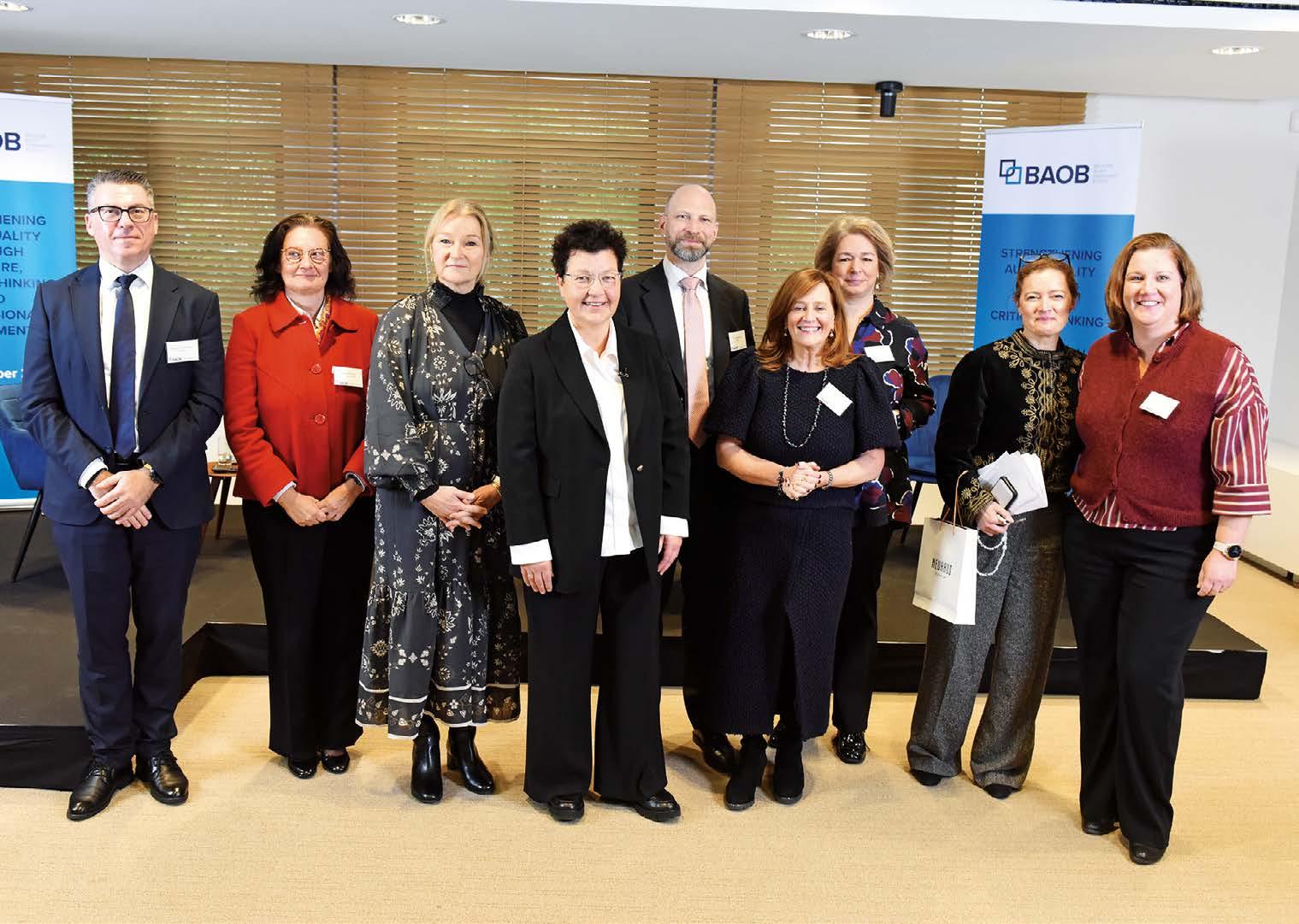
The panellists discussed how firms can promote critical thinking, reconcile time pressure with audit quality, and cultivate openness and constructive dissent at all levels of the organisation. The consensus was clear: culture is both a root cause of deficiencies and a lever for sustainable improvement.
The afternoon started with a session led by Florence Peybernès, Chair of the Haute autorité de l’audit (H2A) in France. She set out the supervisory perspective on critical thinking and pointed to recurring findings from inspections in relation to inadequate professional scepticism.
A second panel, moderated by Ann De Roeck, Secretary-General of the BAOB, brought several regulators together: José Miguel Almeida (Member of the Executive Board of the Portuguese Financial Markets Authority, CMVM), Jacek Gdański (Chair of the Polish Audit Supervisor, PANA), Ramana McConnon (Project Director in the Audit & Assurance Policy team at the UK Financial Reporting Council) and Agathe Pignon (Deputy Head of the Audit Oversight Department at the CSSF, Luxembourg and Chair of the CEAOB inspection subgroup).
They discussed how professional judgement is shaped by technology, standards, monitoring systems and regulators’ expectations. They also stressed the growing need for a responsible integration of digital tools in order to maintain professional scepticism.
Later, Sietze De Leeuw of the Dutch Authority for the Financial Markets (AFM) led a separate session on fraud awareness. He emphasised behavioural indicators, a questioning attitude and structured scepticism during risk assessment and audit evidence gathering.
In his closing remarks, Jean-Paul Servais, president of IOSCO, Chair of the FSMA and Chair of the OECD Corporate Governance Committee, stressed that a critical mindset and strong ethical standards are indispensable for ensuring market integrity. He underlined that constructive cooperation between regulators and the audit sector is crucial for strengthening governance frameworks and promoting international consistency.
The conference was made possible by the great commitment of all the speakers, the participants for their insights and involvement, and our motivated staff. The conference affirmed a shared commitment to strengthening the human foundations of audit quality and ensuring that auditors, regulators and stakeholders continue to learn, adapt and collaborate in an evolving environment.
An aftermovie of the conference is available on the BAOB website.
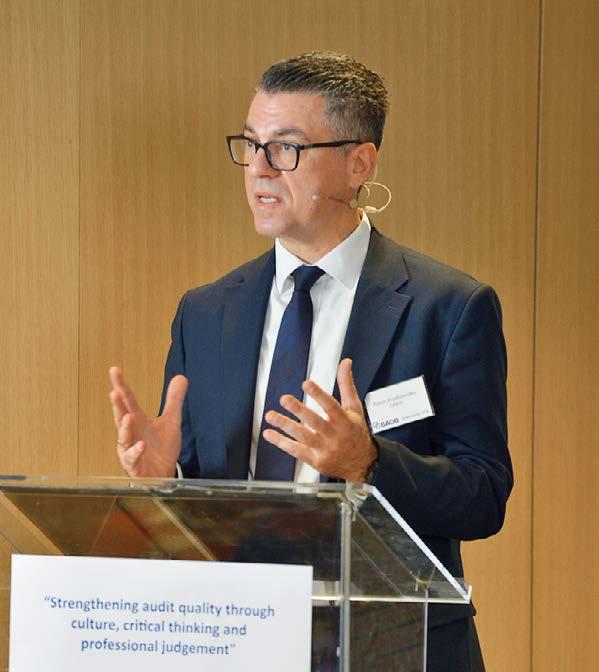
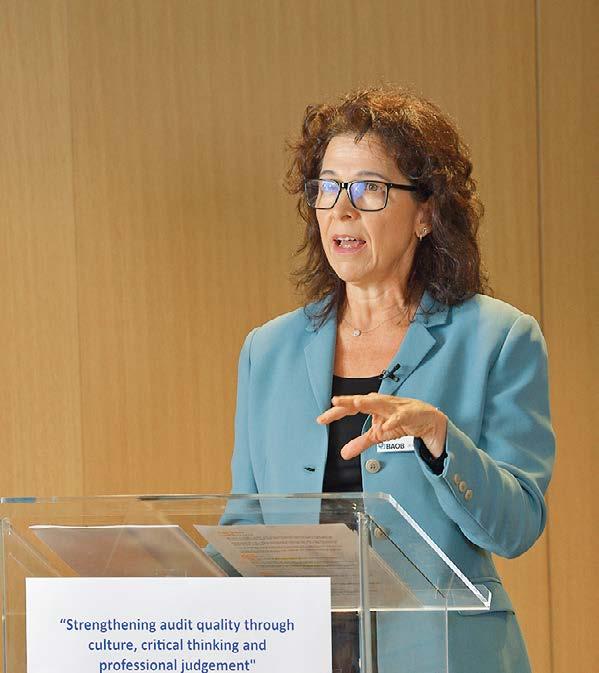

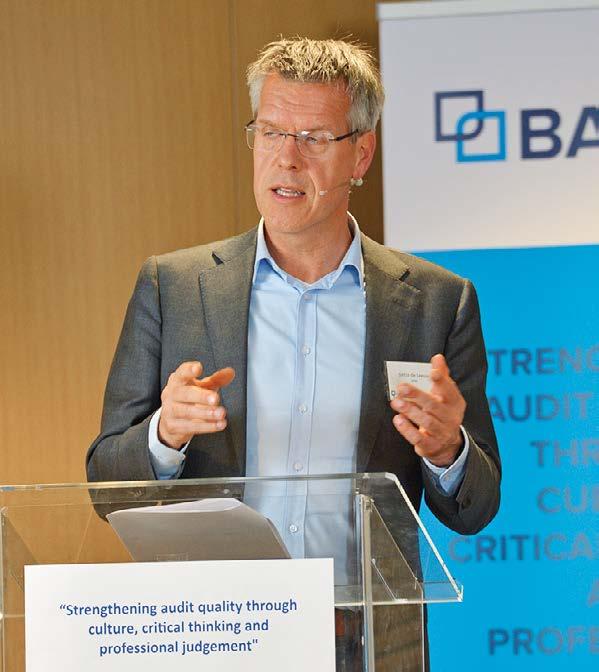

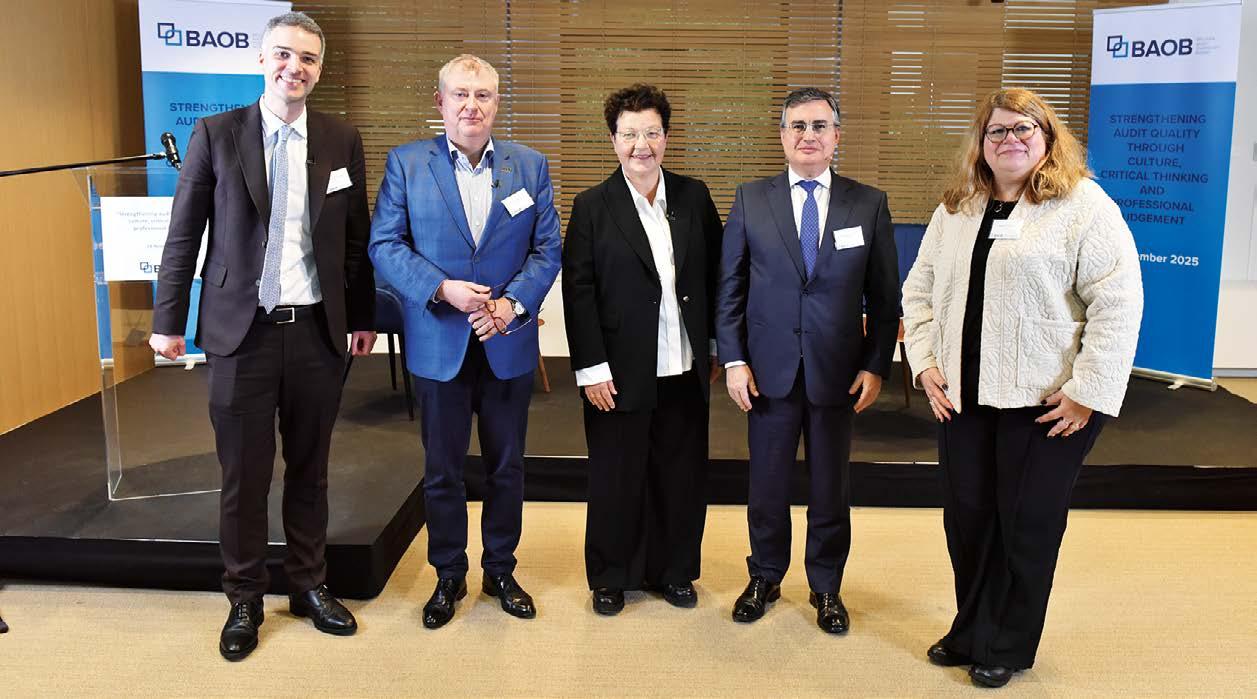


AML
Anti-money laundering, as defined in the AML Law
AMLA Anti-Money Laundering Authority: the Authority for Anti-Money Laundering and Countering the Financing of Terrorism is a decentralised European Union agency tasked with coordinating national authorities to ensure the correct and consistent application of EU rules
AML Law Law of 18 September 2017 on the prevention of money laundering and terrorist financing and on the restriction of the use of cash: https://www.ejustice.just.fgov.be/ eli/wet/2017/09/18/2017013368/justel (French and Dutch only)
AML standard
AQI
Standard of the IRE-IBR dated 27 March 2020 on the application of the Law of 18 September 2017 on the prevention of money laundering and terrorist financing and on the restriction of the use of cash: www.ibr-ire.be/docs/default-source/nl/Documents/ regelgeving-en-publicaties/rechtsleer/normen-en-aanbevelingen/normen/NormAML-2020-NL.pdf (French and Dutch only)
Audit Quality Indicators.
Auditor A registered auditor who is a natural person or an audit firm
BAOB Belgian Audit Oversight Board, established by Article 32 of the Law of 7 December 2016
BOBR-CBCR Belgian Consultative Committee of Auditors (Belgisch overlegcomité der bedrijfsrevisoren – Centre belge de concertation des réviseurs d’entreprises)
CAC Companies and Associations Code: http://www.ejustice.just.fgov.be/eli/wet/2019/ 03/23/2019A40586/justel (French and Dutch only)
CEAOB
Consultative assembly
CSPE-HREB
CSRD
CSRD Directive
Committee of European Auditing Oversight Bodies, as referred to in Article 30 of Regulation (EU) No 537/2014
Consultative assembly for public oversight of the profession of registered auditors, as referred to in Article 63 of the Law of 7 December 2016
High Council for the Economic Professions (Conseil supérieur des Professions économiques – Hoge Raad voor de Economische Beroepen), established by Article 54 of the Law of 22 April 1999 on the accounting and tax professions
Corporate Sustainability Reporting Directive
Directive (EU) 2022/2464 of the European Parliament and of the Council of 14 December 2022 amending Regulation (EU) No 537/2014, Directive 2004/109/EC, Directive 2006/43/EC and Directive 2013/34/EU, as regards corporate sustainability reporting (Text with EEA relevance): https://eur-lex.europa.eu/legal-content/EN/TXT/ PDF/?uri=CELEX:32022L2464
CTIF-CFI
Directive 2006/43/EC
Directive (EU) 2015/849
Financial Intelligence Processing Unit (Cellule de traitement des informations financières – Cel voor financiële informatieverwerking), as referred to in Article 76 of the AML Law
Directive 2006/43/EC of the European Parliament and of the Council of 17 May 2006 on statutory audits of annual accounts and consolidated accounts, amending Council Directives 78/660/EEC and 83/349/EEC and repealing Council Directive 84/253/EEC. Text with EEA relevance: https://eur-lex.europa.eu/legal-content/EN/ TXT/?uri=CELEX%3A02006L0043-20240109&qid=1773938666014
Directive (EU) 2015/849 of the European Parliament and of the Council of 20 May 2015 on the prevention of the use of the financial system for the purposes of money laundering or terrorist financing (Text with EEA relevance): https://eur-lex.europa.eu/ legal-content/EN/ALL/?uri=%20CELEX%3A32015L0849
EEA
European Economic Area
ESG Environmental, social and governance
EU European Union
FATF
Financial Action Task Force. The FATF leads global efforts to combat money laundering, terrorist financing and proliferation financing. This 40-member organisation sets international standards so that national authorities can take effective measures against illicit financial flows related to drug trafficking, illegal arms trafficking, cyber fraud and other serious crimes.
FPS Economy Federal Public Service Economy, SMEs, Self-Employed and Energy
FSMA Financial Services and Markets Authority
IAASB International Auditing and Assurance Standards Board
IESBA International Ethics Standards Board for Accountants
IFIAR International Forum of Independent Audit Regulators
IREFI-IRAIF
IRE-IBR
Institute of Auditors Approved for Financial Institutions (Instituut van de Revisoren Erkend voor de Financiële Instellingen – Institut des Réviseurs Agréés pour les Institutions Financières)
Institute of Registered Auditors (Institut des Réviseurs d’Entreprises – Instituut van de Bedrijfsrevisoren)
ISAs International Standards on Auditing
ISQC1 International Standard on Quality Control 1
ISQM1 International Standard on Quality Management 1
ISQM Standard
Law of 22 July 1953
Law of 7 December 2016
Law of 28 November 2022
IRE-IBR Standard on the application of International Standards for Quality Management 1 and 2 (ISQM 1 and 2) and of ISA 220 (revised) in Belgium
Law of 22 July 1953 establishing an Institute of Registered Auditors and organising the public oversight of the profession of registered auditor: https://www.ejustice.just. fgov.be/eli/wet/2007/04/30/2007A11234/justel (French and Dutch only)
Law of 7 December 2016 on the organisation of the profession and the public oversight of registered auditors: http://www.ejustice.just.fgov.be/eli/wet/2016/ 12/07/2016011493/justel (French and Dutch only)
Law of 28 November 2022 on the protection of whistleblowers reporting breaches of Union or national law identified within a legal entity in the private sector: https:// www.ejustice.just.fgov.be/eli/wet/2022/11/28/2022042980/staatsblad (French and Dutch only) .
ML/TF
Money laundering and terrorist financing
NBB National Bank of Belgium
Non-PIE Entities other than public-interest entities
Non-PIE auditor
Auditors that do not audit a PIE that individually exceeds more than one criterion as referred to in Article 1:26 of the CAC
PCAOB Public Company Accounting Oversight Board
PEP
PIE
PIE auditor
Regulation (EU) No 537/2014
Regulation (EU) 2020/852
Royal Decree of 10 January 1994
Royal Decree of 21 July 2017
Sanctions Committee
Standard on continuing professional development
UBO Register
Ultimate beneficial owner
A politically exposed person, defined in Article 4, 28° of the AML Law as “a natural person exercising or having exercised prominent public functions. This includes in particular:
a) heads of state, heads of government, ministers and secretaries of state;
b) members of parliament or of similar legislative bodies;
c) members of the governing bodies of political parties;
d) members of supreme courts, of constitutional courts or of other senior judicial bodies, including administrative judicial bodies, whose decisions are not subject to appeal other than in exceptional circumstances;
e) members of courts of auditors or of the boards of central banks;
f) ambassadors, consuls, chargés d’affaires and senior officers in the armed forces;
g) members of the administrative, management or supervisory bodies of stateowned enterprises;
h) directors, deputy directors and board members or persons occupying an equivalent position in an international organisation;
i) natural persons exercising a function considered to be an important public function included on the list published by the European Commission under Article 20b (iii) of Directive 2015/849.
The public functions referred to in points a) to i) do not include middle-ranking or more junior functions.” (free translation)
Public-interest entity, defined in Article 1:12 of the Companies and Associations Code as “listed companies whose shares, jouissance rights or certificates relating to these shares are admitted to trading on a regulated market, companies whose securities as referred to in Article 2, 31°, b) and c) of the Law of 2 August 2002 on the supervision of the financial sector and on financial services are admitted to trading on a regulated market, credit institutions, insurance or reinsurance companies, settlement institutions and institutions deemed equivalent to settlement institutions” (free translation)
Auditors that audit one or more PIEs that individually exceed more than one criterion as referred to in Article 1:26 of the CAC
Regulation (EU) No 537/2014 of the European Parliament and of the Council of 16 April 2014 on specific requirements regarding statutory audit of public-interest entities and repealing Commission Decision 2005/909/EC (Text with EEA relevance): https:// eur-lex.europa.eu/eli/reg/2014/537/oj?eliuri=eli%3Areg%3A2014%3A537%3Aoj&locale=en
Regulation (EU) 2020/852 of the European Parliament and of the Council of 18 June 2020 on the establishment of a framework to facilitate sustainable investment, and amending Regulation (EU) 2019/2088
Royal Decree of 10 January 1994 on the duties of registered auditors.
Royal Decree of 21 July 2017 on the granting of the status of registered auditor and on enrolment and registration in the public register of auditors
Sanctions Committee of the FSMA as referred to in Article 47 of the Law of 2 August 2002 on the supervision of the financial sector and on financial services
IRE-IBR standard of 30 August 2007 on continuing professional development
Register of Ultimate Beneficial Owners, being the ultimate owners or persons able to take decisions within an organisation, company or association.
Ultimate beneficial owner as referred to in Article 4, 27° of the AML Law, i.e. the natural person or persons who ultimately own(s) or control(s) the client, the client’s agent or the beneficiary of life insurance contracts and/or the natural person or persons on whose behalf a transaction is performed or a business relationship is established
Legal responsibility for this publication
Bénédicte Vessié, Congresstraat 12-14 rue du Congrès, 1000 Brussels
Congresstraat 12-14 rue du Congrès, 1000 Brussels