Althoughsometradenamesmaybe mentionedinarticlescontainedinthis publication,noendorsementisintendedor impliedbytheOntarioGolfSuperintendents’ Association OGSAiscommittedtoservingitsmembers, advancingtheirprofession,andenrichingthe qualityofthegolfenvironment
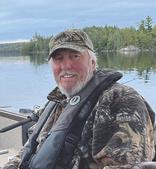
Jeff Eyers, Superintendent, Port Hope G&CC
A Season of Opportunity
As the golf season is now upon us, this spring has presented its share of challenges across the province. Below normal temperatures combined with frequent rain events have made it difficult for many facilities to prepare conditions following a long winter Despite these obstacles, it has been encouraging to see the progress made and the resilience shown by our members and their teams as they work toward delivering quality playing surfaces for the season ahead.
The association office remains active as we prepare for upcoming golfing events, continue our planning efforts for the conference, and strengthening our governance practices. Thank you to everyone who took the time to complete the post-conference survey, your feedback is invaluable as we look ahead to 2027. Planning is already well underway, including the development of our speaker lineup and continued expansion of the Equipment Managers’ track
We recently met with the EM Committee to review programming plans for Niagara and received
excellent input that will help strengthen both this year’s event and future conferences. We are also pleased to once again partner with Golf Canada to deliver the First Green program during the week of the Canadian Open This year, we anticipate welcoming over 500 students to learn more about the golf industry.
Labour continues to be a significant challenge across the industry, and it is clear that ongoing efforts are needed to attract new individuals to the workforce.
It is a tremendous opportunity to showcase the many career paths within our profession and to introduce young people to the work we do every day Labour continues to be a significant challenge across the
industry, and it is clear that ongoing efforts are needed to attract new individuals to the workforce Programs like First Green provide a meaningful first introduction and are already proving to be impactful, even if the long-term benefits will take time to fully realize. If you have an interest in participating or would like to learn more, I encourage you to reach out to the office or connect with one of our liaisons. The OGSA offers financial support to assist with associated costs, including transportation, making it easier for schools and facilities to get involved
Thank you for your continued engagement and support as a valued member of the association. We sincerely appreciate your involvement and hope to see you at various events throughout the season Wishing you all the best for a successful and enjoyable year ahead
Writer, Content Development, Past President, OGSA, Retired Superintendent
WHAT’S NEW
Courtney White, Executive Director, Ontario Golf Superintendents’ Association manager@ogsaca
ROUNDS 4 RESEARCH
Thank you to the clubs who participated in this year’s Rounds 4 Research initiative The auction is powered by the GCSAA, but 80% of donations generated by Ontario clubs are directed to the OGSA which will support funding for youth outreach at schools, job fairs, and other places of connection to highlight our
Aug 10, 2026 OGSA Assistants’ Tournament Galt Country Club
August 6, 2026
17th OGSA Seniors Tournament
Victoria Park Valley GC
August 17, 2026
NTRF Fundraising Tournament Credit Valley G&CC
Sept 21-22, 2026 OGSA Championship The Rock & Rocky Crest Resort
Feb 2-4, 2027 OGSATurfgrass Management Conference FallsviewCasino
WHAT’S NEW
OGSA TURFGRASS
EDUCATION AWARD WINNERS
Congratulations to Nicole Shaw and Kyle Trumper, students of the DTM program at the University of Guelph for winning this year’s Turfgrass Education Award! Each have been awarded $1,500 to help support their futures in the industry
G.C. DUKE PAUL BROWN INTERNSHIP AWARD WINNER
In honour of OGSA member Paul Brown, and in partnership with G.C. Duke Equipment Ltd., we are excited to congratulate Krzysztof Torunski on winning this award! We wish Krzysztof all the best with his future endeavours in the industry
SCHOLARSHIP DEADLINES
June 30, 2026
William Sansom Distinguished Service Award
Sept 2, 2026
OGSA Professional Development Bursaries
OGSA Heritage Awards
April 1, 2027
OGSA Turfgrass Education Awards
Paul Brown Internship Award
WHAT’S NEW
2026 CAN/AM USA BACK TO BACK CHAMPS
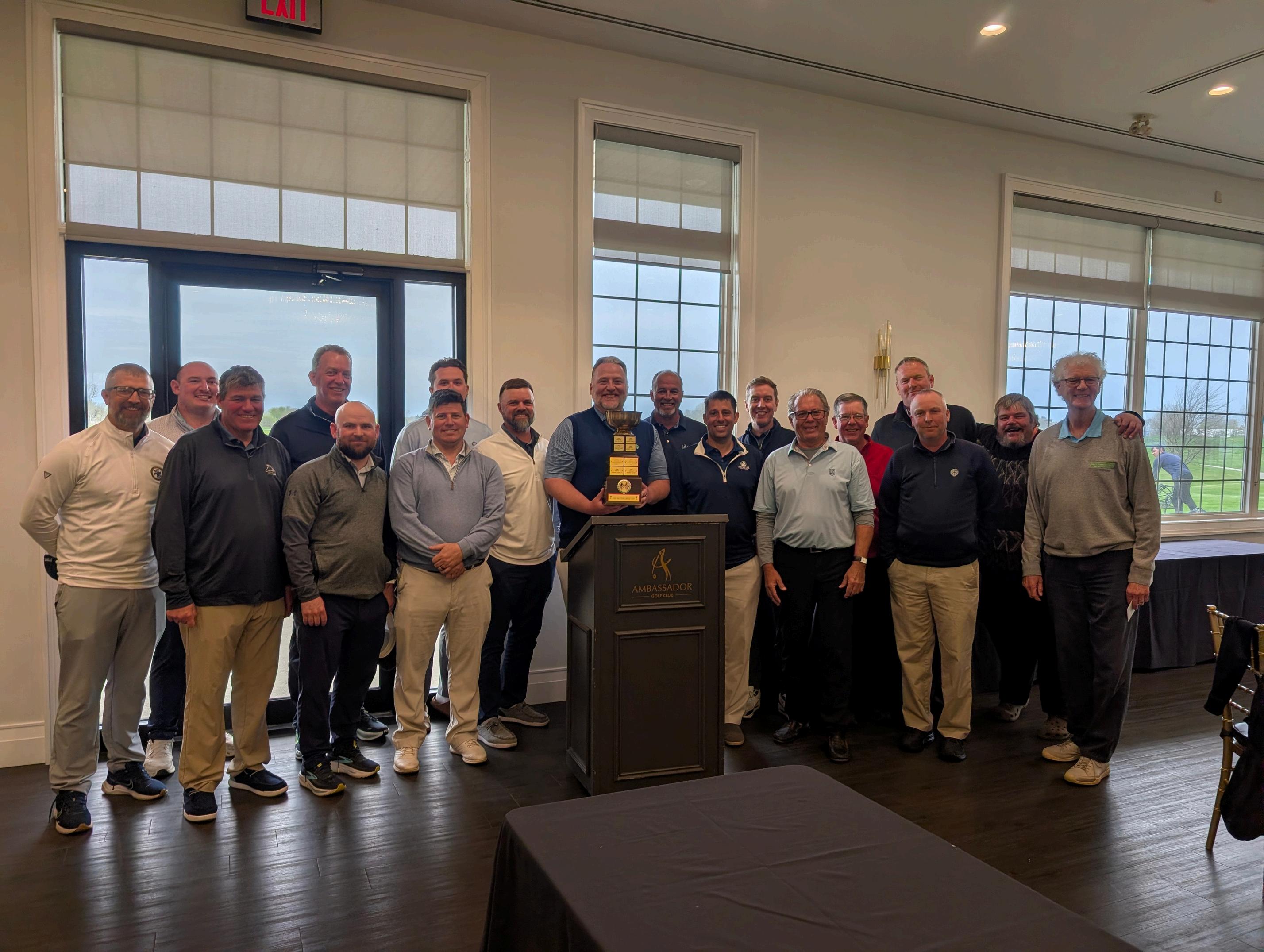
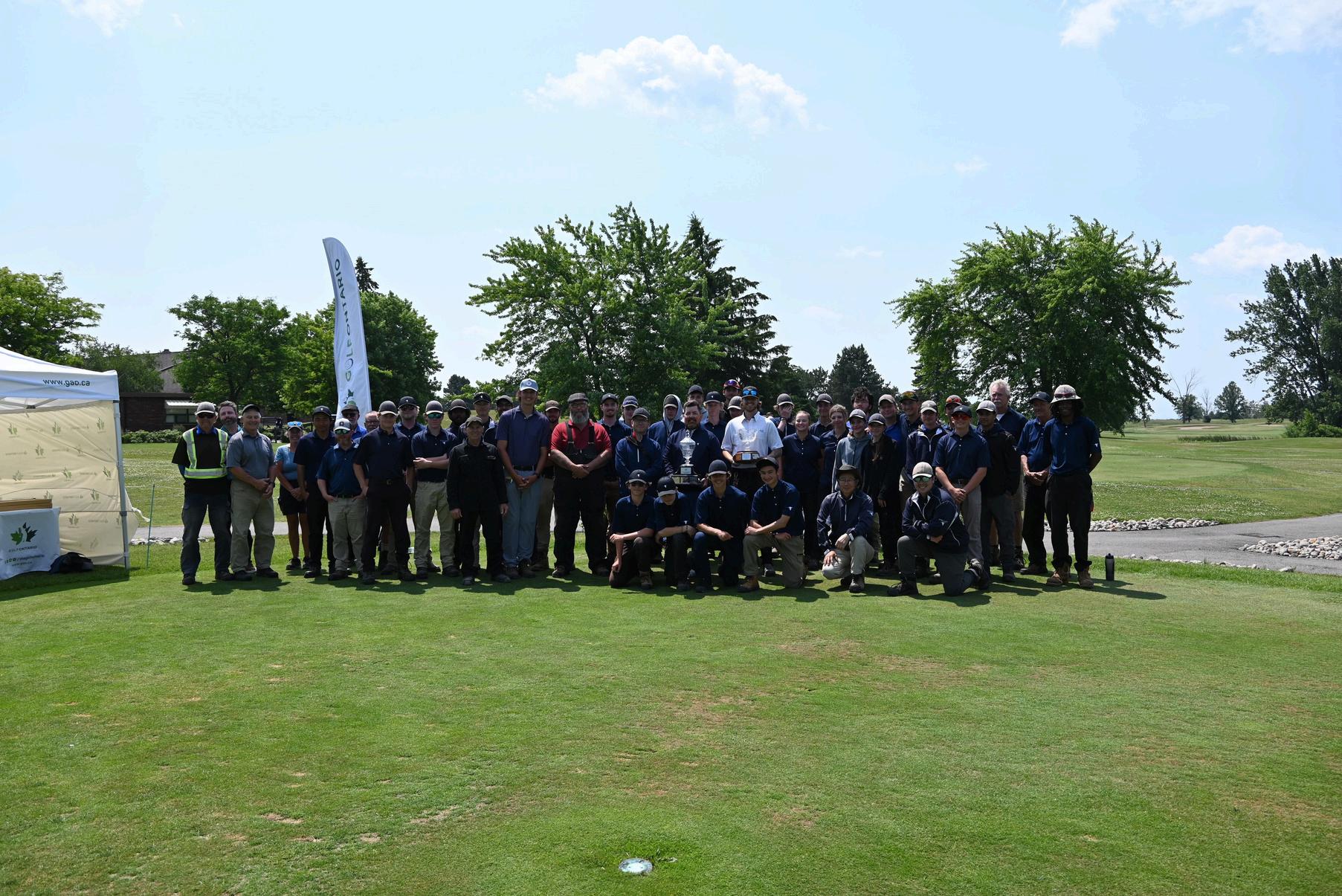
On April 27, 2026, the Ontario Golf Superintendents' Association (OGSA), alongside the team at Ambassador Golf Club, proudly hosted participants for this year’s CAN/AM Challenge
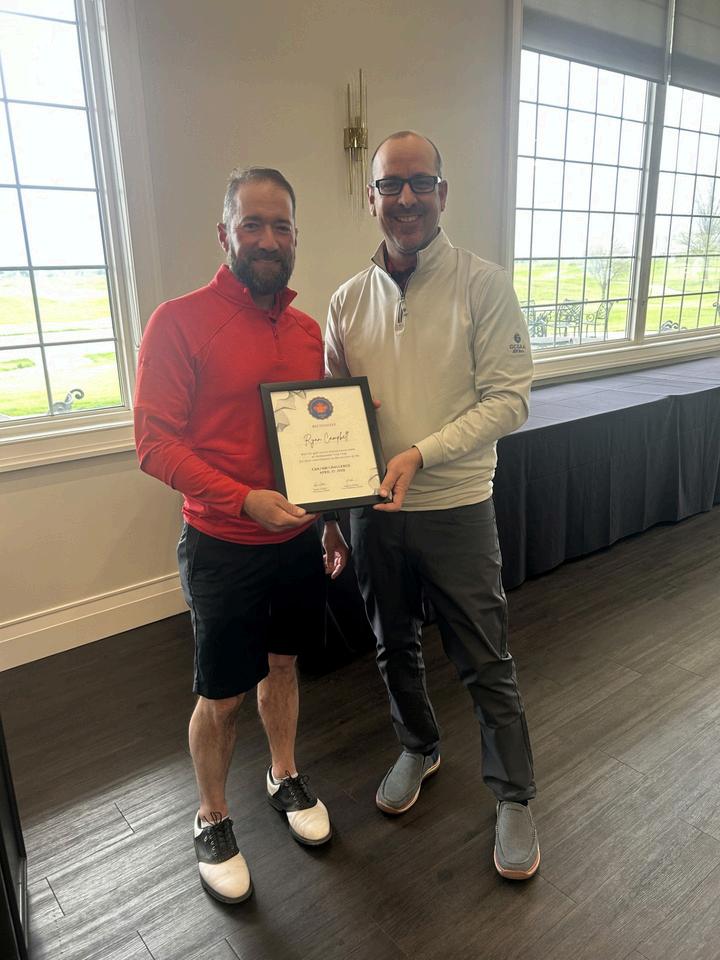
Thank you to superintendent Ryan Campbell and his crew, whose hard work and attention to detail ensured the course was in great condition for play. Equal thanks goes to the Pro Shop staff, who kept the tournament and players on track
While the wind made its presence known, the early spring weather ultimately cooperated and players were able to enjoy a full day on the course and return from their rounds dry and in great spirits.
Off the course, the experience was just as memorable A special shoutout goes to the Chef and kitchen team, who kept participants well fueled from start to finish
Thank you to everyone who in this year’s event and help it such a success Congratu Team USA for taking home th – we’ll get em’ next time, Until then, we look forward everyone next year on the o of the border.
Founded in 1894 and relocated to Penryn Park in 1904, Port Hope Golf & Country Club is one of only five Ontario courses gracing the shores of Lake Ontario. Five holes stretch along the water’s edge while 13 offer sweeping lake views, none more breath‐taking than the moment golfers cross a 220‐foot clear‐span bridge, custom built 60 feet above four active railway lines
Type of Club: Semi-private Architect: Unknown. Renovated by Jason Miller
Holes: 18
Annual Rounds: 24,000
Practice Facility: 1 putting green
Size of fairways: 13 8 ha / 34 acres
Maintenance Staff: 1 12 seasonal part time: (Lee Thompson, Jody Fiske, Kris Gowdy, Jordan Brown, Jeff Jemmett, Josh Brunton, Darle Desmond, Dave Staples, Derek Jones, Dennis Mclean, Troy Langstaff, Corey Brandwood
Written
Courtney White, ED, OGSA
After more than three decades in the turfgrass industry - and roughly 25 of those as a Golf Course Superintendent - Jeff Eyers still believes there are “not very many bad days on a golf course” It’s a perspective shaped by experience, loyalty, and a deep appreciation for the craft of creating great playing conditions for thousands of golfers each year. Jeff’s journey in the golf industry began at age 17 at Springwater Golf Course, a small, family-run “mom and pop” operation just outside Barrie, Ontario Like many in the profession, his introduction was humble; seasonal summer work that included weed whacking, raking bunkers, and doing whatever needed to be done. “I loved golf long before I ever worked on a golf course,” he says “Once I started
working there, it just clicked” That early connection turned into a career. Jeff attended Seneca College’s Golf Course Technician Program, graduating at age 25. Remarkably, that same year he became Superintendent at Springwater, a role he would hold for nearly a decade Following his time at Springwater, Jeff spent five years as Assistant Superintendent at Port Carling G&CC, gaining valuable experience before accepting the Superintendent position at Port Hope G&CC, where he has now been for 14 years.
“I tend to end up somewhere and
by
Photos provided by: Jeff Eyers.
220‐foot clear‐span bridge, custom built 60 feet above four active railway lines
IN THE HOT SEAT
Q. FAVOURITE GOLF TOURNAMENT?
A The Open Championship
Q. FAVOURITE PIECE OF EQUIPMENT?
A Husqvarna Ceora EPOS
Q. FAVOURITE GOLF COURSE?
A Kawartha Golf & Country Club
stay,” he reflects “I’ve always believed that if you find the right place, there’s no reason to keep looking”
While Jeff has worked with mentors throughout his career, he credits his parents particularly his father as the greatest influence in his professional life “My parents owned a small business in Barrie,” he explains “From a young age, my brother and I were taught the importance of work ethic and just as importantly, to do something you love.”
That lesson stuck. Jeff’s steady, loyal career path reflects that philosophy, as does his approach to leadership. Jeff’s management style is simple and deliberate: treat people with dignity and respect
WHAT YOU NEED TO KNOW
Predominate grass type: Pure
Distinction (new greens) & Bent/poa
Predominant soil type: Sandy loam
Course length: 6,483 yards
Size of greens: 1.4 ha
Size of tees: 2.0ha
Size of fairways: 12 ha
Major Challenges:
Cooler spring temperatures on Lake Ontario equals a slow start to the growing season Little to no snow cover during the winter leads to desiccation of the turf
Q. ULTIMATE FOURSOME?
A My Father, Jon Hanna, Rob Brakel
Q. LOWEST ROUND & WHERE?
A. Wait! I am supposed to keep score?
Q. FAVOURITE MOVIE?
A Interstellar
Q. FAVOURITE BAND?
A. The Hip
Q. FAVOURITE MEAL?
A. Prime rib, Yorkshire pudding, mashed potatoes, roasted veg, copious amounts gravy
Q. FAVOURITE COURSE DESIGNER
A. Stanley Thompson
“I’ve never had anyone quit because of me or because of working conditions,” he says proudly. “I still have staff who have been with me for 10, 12, even all 14 years I’ve been here.” He believes listening to his staff, valuing their ideas, and creating a respectful workplace are critical to building long-term teams and maximizing productivity “It’s not just ‘do as I say,’” he notes “I want people to learn, to grow, and to feel like part of a team.”
If you ask Jeff whether there was a defining moment when he knew he wanted to be a superintendent, he doesn’t point to a single event. “It’s the idea that we create something,” he says “Every day, hundreds or thousands of people come out and enjoy the golf course, and you’re a big part of why they’re there.” That sense
of pride, he explains, never gets old
Some memories stick for a lifetime. One of Jeff’s favourites dates back more than 25 years to an irrigation repair at Springwater. While working in a muddy hole, a colleague newly married and determined to keep his wedding band on lost the ring despite multiple layers of protective duct tape What followed was nearly an hour of careful, handby-hand mud removal. “We eventually found it,” Jeff laughs. “Still wrapped in tape. To this day, every time I’m in an irrigation hole, I think about that.”
For much of his career, Jeff focused on his courses rather than industry involvement That’s now changing This year, he joined the Eastern Ontario Golf Superintendents
Jeff, Walt and Mickey getting re-aquainted.
Association (EOGSA) board his first formal role within an association “With my kids grown, now felt like the right time,” he says. “The association went through changes after Covid, and it felt good to step in and help refocus things.” It’s a new chapter, but one Jeff approaches with the same humility and commitment that’s defined his career
Jeff lives on the golf course, property an arrangement that suits both him and the ownership. Evenings often include quiet drives around the course with his dog Bauer, simply enjoying the setting rather than thinking about work. Family remains central to his life Jeff and his wife Donna have been together since 1999 and married since 2001 He also has a son, Jeffrey, and a daughter, Evelyn His mother still lives in Port Hope, and extended family has long been a strong
support system Jeff also describes himself, without hesitation, as a “Disney nerd” He’s visited Walt Disney World nearly ten times with his daughter and cherishes the memories they’ve made together with this shared love. Jeff sees clear parallels between Disney and golf course operations. “The attention to detail is mind-blowing,” he says “For someone who does this for a living,
it’s inspiring” At 51, Jeff isn’t thinking about slowing down anytime soon “I’ll retire here,” he says simply “They’ll have to kick me off the property.”
With a high quality of life, low stress, and a career built on loyalty and respect, Jeff embodies the quiet professionalism that keeps golfers coming back season after season
Beyond his technical expertise, Jeff is a genuinely great person who is always willing to lend a hand or share equipment whenever needed. Living on site with his wife and daughter, Jeff is deeply connected to the club and its community. - Brad Hutchinson, Superintendent, Warkworth Golf Club
Large-Scale Operations
SPRING LAKES GC - A 54-HOLE PROPERTY
Written by & photos provided by: Christopher Contois, Superintendent, Spring Lakes Golf Club
Running a 54-hole golf facility is not simply an extension of managing an 18-hole course it is an entirely different operational animal. The scale of the operation introduces a level of complexity that touches every corner of the property, from agronomics and staffing to logistics and vendor relationships Success at this level requires not only technical expertise, but also a disciplined and calculated approach to organization, communication, and of course, the three ‘P’s’ we live by: patience, perseverance, and long-term planning.
THE CHALLENGES OF SCALE
More holes mean more greens, more bunkers, more irrigation infrastructure, more cart paths, and more opportunities for something to go wrong. Weather events are amplified what might be manageable on a smaller property can quickly become overwhelming when spread across three courses.
Consistency becomes one of the biggest hurdles Golfers expect a uniform experience regardless of which course they play and delivering that consistency across 54-holes requires precise coordination Variability in soil types, sun exposure, drainage, microclimates and wear patterns from traffic (both caused by maintenance and
golfers) can create subtle differences that demand constant attention. Equipment management is another major consideration A larger fleet is necessary, which increases maintenance demands, replacement planning, and capital budgeting Downtime on key equipment can have a ripple effect, delaying task completion for crews, daily maintenance and long-term projects
Then there is the pace of play and daily volume of rounds. As a 54-hole facility, often accommodating a higher number of rounds, outings, and club events can be a tremendous undertaking. This level of traffic accelerates wear and tear, requiring proactive maintenance strategies and planning, plus careful scheduling to ensure conditions are maintained without disrupting play and having significant delays to membership
THE POWER OF BUYING IN BULK
One of the significant advantages of operating at this scale is purchasing power Buying in bulk allows for cost efficiencies that smaller operations simply cannot access Whether it’s fertilizers, pesticides, seed, sand/aggregates, or irrigation components, larger quantities often translate into better pricing and more favorable terms, freeing up capital finances that can be available to rising labour costs. Beyond pricing, scale
SLGC Ariel View of 18E Looking South: Autumn colours from a bird’s-eye view
strengthens relationships with manufacturers, vendors, and distributors. High-volume operations become key accounts, often gaining access to priority service, early product availability, enhanced technical support and opportunity to test upcoming, yet-to-be-released chemistries, equipment, or even on-course hardware. These partnerships can be invaluable, particularly during peak season or when dealing with supply chain disruptions, rising fuel costs, and availability
However, buying in bulk requires careful planning Storage capacity quickly runs out, product shelf life, and financial considerations all come into play. It’s not just about purchasing more it’s about purchasing smarter and being timely. Forecasting needs accurately and aligning deliveries with usage ensures that the benefits of bulk buying are fully realized without creating unnecessary waste or logistical challenges
Strong vendor relationships also open the door to collaboration Trials, demonstrations, and customized solutions become more feasible when suppliers see the value in working closely with a large-scale operation. This can lead to innovations in product use, application techniques, and overall efficiency. This can do a tremendous job keeping your property on the leading edge in the industry.
MANAGING A 65-PERSON TEAM
Staffing is perhaps the most dynamic aspect of managing a 54-hole property. A team of 65 individuals requires structure, leadership, and clear communication. Without a well-defined organizational framework, even the most talented crew can struggle to perform efficiently.
Delegation is critical Superintendents and assistant superintendents must rely on a tiered leadership system with hierarchy, with foremen or crew leaders overseeing specific areas and functions. This not only improves accountability but also ensures that decisions can be made quickly and effectively on course.
Training and consistency are ongoing priorities With a team this size, varying levels of experience and skill are inevitable Standard operating procedures must be clearly defined and consistently reinforced to ensure that tasks are completed to the same standard across all courses.
Communication drives everything. Daily briefings, clear job assignments, and real-time updates help keep everyone aligned and keeps progress moving forward. Technology can play a role here, whether through scheduling software or daily job tasking boards, radios, or phone apps, but the foundation is always clarity and
SLGC 2025 Turf Crew: "Camaraderie, united We stand together!"
repetition. Equally important is fostering a positive culture with camaraderie that gels the team. Large crews can easily become fragmented if not managed intentionally. Recognizing contributions, maintaining morale, and creating opportunities for growth help build a cohesive team that takes pride in the product that is produced daily
LOGISTICS, LOGISTICS, LOGISTICS
At this scale, logistics are the backbone of the operation. Every task, from mowing greens to rebuilding bunkers, irrigation repairs or top dressing the practice facility must be planned with efficiency in mind Poor logistics can quickly lead to wasted time, duplicated effort, and unnecessary frustration.
Routing is a key consideration. The team must move through the property in a way that minimizes travel time and maximizes productivity. This often involves dividing the property into zones and assigning dedicated teams to each area Equipment and materials should be strategically located to reduce the need for constant back-and-forth movement which can help reduce traffic and compaction wear zones
Scheduling is equally important. With multiple courses in play, maintenance activities must be carefully coordinated to avoid interfering with golfers. This requires a deep understanding of tee times, event schedules, peak usage periods and member routines.
Inventory management also falls under the logistics umbrella Knowing what materials are on hand, where they are stored, and when they need to be replenished is essential Running out of a critical product, as simple as divot mix, in the middle of the season can disrupt operations, while overstocking can tie up finances unnecessarily.
Workflow sustainability is the goal. It’s not just about getting through today’s tasks it’s about creating systems that allow the operation to run smoothly day after day This involves constant evaluation and adjustment, identifying bottlenecks, and refining processes to improve efficiency Keep the team in motion and forward momentum.
TAKING IT ONE BITE AT A TIME
Perhaps the most important mindset when managing a 54-hole property is not being intimidated by the scale. At first glance, the workload can seem overwhelming. However, success comes from breaking it down into manageable pieces
Daily goals provide focus Rather than trying to tackle everything at once, effective strategies can prioritize tasks and concentrate on steady progress Small, consistent improvements add up over time, leading to significant results.
Planning plays a crucial role here. Having a clear vision of daily, weekly, monthly, and yearly objectives allows for better decision-making on a day-to-day basis. When the bigger picture is understood, it becomes easier to determine which tasks deserve immediate attention and which can wait
Flexibility is also essential No matter how well an operation is planned, unexpected challenges will arise weather changes, equipment failures, staffing shortages. The ability to adapt without losing momentum is what separates successful large-scale operations from those that struggle. Confidence grows with experience. As systems are refined and the team becomes more cohesive, the scale of the operation becomes less daunting What once felt overwhelming becomes routine, and the focus shifts from simply managing the workload to optimizing performance
Operating a 54-hole golf property is a complex and demanding endeavor, but it also presents unique opportunities. The challenges of scale are matched by the advantages of purchasing power, strong vendor relationships, and the ability to build a highly skilled team
At its core, success comes down to organization, communication, and mindset By mastering logistics, fostering a cohesive crew, and approaching the workload one step at a time, large-scale operations can not only meet expectations but exceed them.
In the end, it’s not the size of the property that defines success it’s the systems, people, and discipline behind it
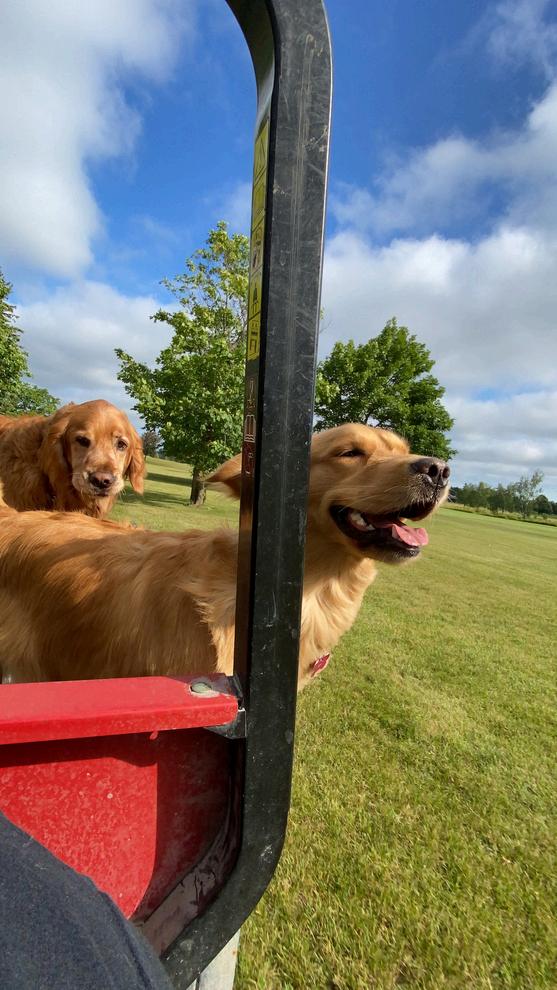
Team mascots, Barley and Kona in a moment of quiet elegance and celebration, aka Happy Doggos.
Standards in Marketing
PEST CONTROL PRODUCTS
Written by Chris Lecour, Turf Sales Specialist, BASF.
I am truly fortunate to visit golf courses across Canada and talk with superintendents about their growing conditions and the wide range of pest pressures they encounter throughout the golf season. These regional differences often lead superintendents to seek answers to one critical question: how can they be confident that a pesticide will perform as advertised across such diverse environments, and more importantly for them, on their golf course? With so many products available to Canadian superintendents, strong supporting evidence – not just marketing claims – is essential to earning their trust and guiding sound agronomic decisions
In Canada, Health Canada's Regulatory Directive DIR2016-01 outlines strict guidelines for advertising pest control products to ensure compliance with the Pest
Control Products (PCP) Act It emphasizes that all advertising must be truthful, evidence-based, and nonmisleading, with claims aligning precisely with approved product labels. It prohibits any implication of government endorsement and restricts promotional language around safety, environmental benefits, and comparative performance unless substantiated For manufacturers, it provides a clear framework for acceptable advertising claims, helping to avoid regulatory violations and ensuring consistency
across marketing efforts By requiring proven or substantiated claims, trust becomes established between the superintendent and the manufacturer, which is critical in a competitive market. The directive also aligns with the PCP Act, clearly outlining what can be communicated to superintendents while a product is pending, and following, final registration Accurate labeling and advertising protect manufacturers from liability if a product is misused based on misleading claims. And by regulating and enforcing value-based
claims, innovative products are allowed a fair chance to stand out in the market
For superintendents responsible for maintaining healthy turf, DIR2016-01 provides a framework that supports responsible decision making when selecting fungicides and other pest control products. It ensures that product advertising is clear, accurate, and aligned with product labels Key benefits for superintendents include:
Reliable Product Information – Turf managers benefit from advertising that is strictly regulated to ensure all claims such as efficacy, environmental impact, and safety are scientifically validated and consistent with the product’s registered label This helps eliminate confusion and ensures that decisions are based on trustworthy data rather than marketing exaggerations.
Better Decision-Making – With clear rules governing advertising content, turf managers can confidently evaluate and compare fungicide options The directive reduces the risk of being misled by inflated claims, enabling professionals to select products that best meet the specific needs of their turf environments.
·Risk Reduction – By discouraging unsupported claims and enforcing label alignment, the directive helps turf managers avoid ineffective treatments that could lead to turf damage, wasted resources, or regulatory violations This contributes to more consistent turf health and operational efficiency.
It’s early June, and dollar spot is popping up across several tees and fairways on the golf course. You’ve applied several different products in the past two seasons; some worked
great, some not so much Now you’re staring at a new label and wondering “will this one actually deliver?” With all the marketing material available on registered pesticides in Canada, it can be daunting to wade through it all to determine if a product is worth trying out on a golf course. When looking through trial data or pictures from trial work, one should be mindful of the location, the timing, the types of products being tested, how the untreated areas look at the end of the trial, and how the data is presented in marketing material
Location is key. Look for product testing that was carried out in a location or region like your own. Dollar spot trials carried out in Northern Alberta, where disease pressure during the golf season is minimal, will have little relevance to superintendents in southwest Ontario that battle dollar spot from May into October. Gather as much information as you can on products that have been evaluated in similar climates and zones, on the same diseases that pose problems in your regions and with comparable levels of disease pressure throughout the growing season
EVALUATE GRAPHS AND COMPARE DATA ACCURATELY
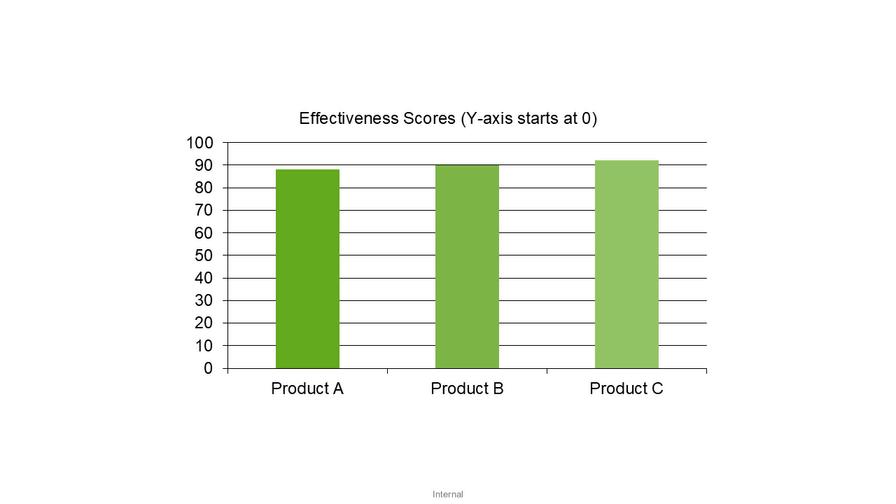
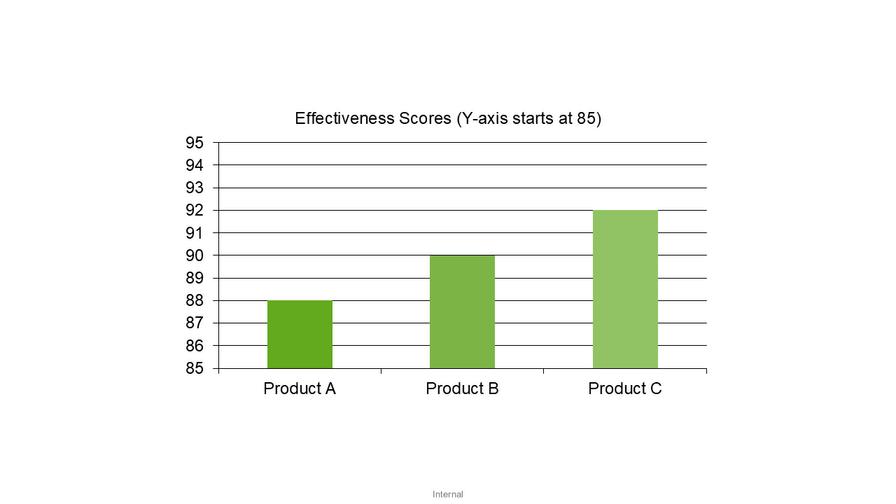
Axis manipulation, although not mentioned in DIR2016-01, is a common data visualization pitfall that can make graphs and charts misleading. Starting the Y-axis at a number other than zero can make small differences look big, making one product appear to be a stronger or weaker performer against competitive products than it really is. Leaving out or shrinking axis labels hides the true scale, making it hard to understand or compare values. Using two Y-axes with different scales can be confusing to the viewer, especially if the chart makes it look like two unrelated
things are connected. These manipulations can lead to unfair comparisons To show data clearly and honestly, it’s important to keep axes consistent, label them properly, and avoid designs that exaggerate or mislead the customer Selective data presentation can give a false impression of a product’s effectiveness. Focusing on data from just one region may not be representative of how the product will perform in other climates or conditions. Leaving out control or baseline data removes important context, making results look better than they are These tactics can make a product seem more reliable than it really is. To present data fairly, it’s important to include a wide range of results and show comparisons to other products and control plots, ideally from different locations and time periods.
Misleading metrics can confuse viewers and distort comparisons Using vague terms like “high performance” without explaining what they mean can lead to misunderstandings. Mixing units like percentages and raw numbers makes it hard to compare products. To avoid confusion, it’s important to define terms clearly, use consistent units, and make fair comparisons based on equal conditions
To present visuals honestly, it’s important to use balanced colors, scale sizes properly, avoid suggestive labels, and choose clear chart types. Using bright or bold colors for one item and dull tones for others can draw attention and suggest it’s better.
Changing the size of bars or points beyond scale can exaggerate differences Choosing chart types like 3D graphs or pie slices can hide true proportions and make comparisons harder. These design choices can mislead viewers, even if the data is neutral.
Canadian golf course superintendents need reliable, evidence-based information when choosing pesticides due to varying pest pressures across regions. Health Canada's DIR2016-01 directive requires all pesticide advertising to be truthful, substantiated, and consistent with product labels, prohibiting misleading claims and unsubstantiated comparisons This benefits both manufacturers and turf managers by ensuring clear, accurate, and trustworthy product information
Superintendents should educate themselves against misleading data visuals and selective presentation in marketing materials and are urged to critically assess trial data and its relevance to their own conditions.
To learn more about Regulatory Directive DIR2016-01, Guidelines for the Advertisting of Pest Control Products
Scan the QR Code
Player Surveys
DRIVING INSIGHT AND IMPROVEMENT
Written by: Written by OGSA President Kevin Collier, Superintendent, RiverBend GC & Erik Vaughan, Superintendent, Rebel Creek GC
In today’s golf industry, the expectations placed on course conditions have never been higher. Members and public alike are more informed, more engaged, and more attentive to detail from green speeds and bunker consistency to overall playability and course presentation For maintenance teams, delivering at this level requires more than technical expertise; it requires a clear understanding of how the golf course is experienced every day.
Conducting player surveys has become one of the most effective tools to bridge that gap When used strategically, a survey will provide superintendents and maintenance teams with direct insight into player perception, allowing them to refine practices, prioritize resources, and
continuously improve course conditions in a measurable way.
This article explores how effective surveys support maintenance operations through two different approaches to surveying players: GolfNorth’s large-scale, ongoing data-driven approach and RiverBend’s focused, evolving strategy.
GOLFNORTH: POST-ROUND SURVEYS
Across its network of facilities, GolfNorth utilizes surveys as a key component of its maintenance strategy With a diverse customer base and a high volume of annual rounds, the organization relies on consistent feedback to monitor course conditions and identify trends across multiple properties.
Course-level player surveys play an important role in understanding how
maintenance practices are perceived at each facility Feedback related to turf quality, bunker conditions, green speeds, and overall playability provides valuable context to the daily work of the maintenance team. This information helps validate agronomic programs while also highlighting areas where adjustments may be needed based on player expectations.
The most impactful tool, however, is the integration of post-round surveys into the booking system With feedback collected continuously throughout the season, maintenance teams gain access to real-time data that reflects current course conditions. This allows for a more proactive approach to course management For example, if trends begin to emerge around bunker consistency or green firmness, adjustments can be made quickly rather than waiting for end of season reviews. This steady flow of JUNE 2026 | ONCOURSE 23
information also helps identify the differences between properties, enabling leadership to share best practices and align maintenance standards across the portfolio. Over time, this contributes to greater consistency in playing conditions, regardless of location.
Surveys following group events further support maintenance operations by providing insight into how the course performs under higher traffic conditions Feedback from these events can highlight stress points on the golf course and inform recovery strategies, scheduling, and resource allocation.
RIVERBEND: ONCE A YEARMID-SEASON SURVEY
At RiverBend Golf Community, surveys have evolved into a highly focused tool that directly supports maintenance decision-making.
Moving from a traditional year-end survey to a mid-season survey has allowed for more timely and relevant feedback during the playing season when course conditions are most dynamic
This shift has been especially valuable for maintenance operations. The team can now understand how course conditions are being experienced. This includes insights into green performance, fairway conditions, bunker playability, and overall course setup
Importantly, surveys provide a perspective that complements internal evaluation. While maintenance teams rely on data, experience, and industry standards to guide their work, player feedback reflects the reality of how those conditions translate into the golfing experience This alignment between technical performance and player perception is critical in delivering a high-quality product.
The ability to identify consistent themes in feedback allows the team to make targeted adjustments where they will have the greatest impact. Whether it is refining mowing patterns, adjusting moisture management practices, or reallocating resources to key areas of the course, surveying helps ensure that decisions are both informed and intentional
Equally significant is the role surveys play in communication. By sharing feedback trends and explaining the reasoning behind maintenance practices, RiverBend is able to build understanding and trust with its membership This transparency helps manage expectations while reinforcing the value of the work being done on the golf course
THE OPERATIONAL IMPACT ON MAINTENANCE TEAMS
Across both models, surveying has a direct and measurable impact on how maintenance operations are planned and executed It provides clarity around what matters most to players, helping teams focus their efforts on the areas that define the overall experience.
Feedback on course conditions allows superintendents to fine-tune agronomic programs, from fertility and irrigation strategies to cultural practices such as aeration and topdressing It also supports better prioritization of labor and equipment, ensuring that resources are allocated where they will have the greatest effect.
Surveying also plays a critical role in evaluating the success of maintenance initiatives Whether introducing a new bunker program, adjusting green speeds, or implementing changes to course setup, feedback helps determine whether those efforts are achieving
the desired outcome Beyond daily operations, the data collected through surveys support long-term planning. Trends over time can highlight the need for capital improvements such as drainage upgrades, bunker renovations, or irrigation system enhancements In this way, surveying becomes a valuable tool not only for maintaining conditions, but for advancing the overall quality and sustainability of the golf course. For golf course maintenance teams, surveying is far more than a feedback mechanism it is a strategic tool that connects agronomic practices with player experience It provides the insight needed to make informed decisions, respond to challenges, and
continuously refine the product delivered on the golf course Whether through GolfNorth’s broad, data-driven system or RiverBend’s focused and responsive approach, the integration of surveying into maintenance operations leads to better alignment, improved conditions, and stronger engagement with the golfing community
By listening closely and responding thoughtfully, maintenance teams can ensure that their work not only meets specific standards but exceeds player expectations creating a golf experience that is both consistent and exceptional throughout the season
A FEW HONEST THOUGHTS
Written
and photos provided by Jerry
Richard, Superintendent, Craigowan G&CC
For most who work in our industry, aging and retirement are not our first waking thoughts at 4:30 a m each day. But for a 63-year-old who’s spent 48 years working on golf courses, the idea of packing it in begins to seep into the daily routine of work and life. How long can I keep doing this? Can I handle the workload today? These are questions older guys don’t always admit we ask ourselves The superintendents I know have thick skins and confident demeanors, but Father Time catches up to all of us eventually.
As a young assistant, I remember knowing the names of older superintendents and looking up to them for what they’d accomplished Now it’s me and my peers in that role, doing our best to keep up and, hopefully, remember the names of the next generation coming along.
If I’ve learned anything in my professional years, it’s that longevity and success are much easier when you have help In fact, it’s everything I’ve had two stellar co-workers, plus a great team, who have enabled me to transition into my working 60s. Mark Ryder and Jon Atkinson combined have over 75 years at Craigowan. I’ve spared them both the administrative minutia of the job, for which they are grateful, and their skill and experience have allowed me to stay on task and not contend too much with the art of machine mechanics or supervising and running a crew It’s an efficient relationship and a formula that has produced results as the three of us age, sticking to what we’re best at.
Almost as important is having a network of friends and peers Sharing experiences and talking things out with like-minded friends on a Friday afternoon is one of the best things any superintendent can do, at any
age, for their mental health. I can honestly say my industry friends have extended my time at work by being supportive, reducing negativity, and reinforcing that somehow, we’re all in this together The older I get, the more friends I make a perfect consequence of aging. You can never have enough friends, and they will help keep you going.
Aging at work can feel troubling The truth is that there’s a tipping point where, as human beings, we’re not quite as efficient as we used to be, both physically and (some days) mentally. This doesn’t mean you’re less effective, since experience can easily make up for the change. Balancing on-course maintenance, physical work, and desk work is key
Physical work is great exercise and a way to spend time with your team but know your limits and understand that your position will confine you to
your desk more than you might like. As someone close to the finish line, though, I think we administrators can be sought-after commodities and can certainly keep a career going, possibly extending into a semi‐retirement phase, and it crosses my mind often Superintendents have worked effectively past 65 in different capacities - and I’m sure we all know a few them. It’s true that some of us view retirement as almost worse than work itself because we mostly enjoy what we do and may not have enough to keep us busy at home Plus, the extra income helps This could include practical tasks for veteran supers, without the stresses that go along with being the boss: IPM recording, staff training, HR and health and safety, or even cutting grass.
I’ve found myself at times thinking, Do I really need to work on long‐range plans when I won’t be around to implement them? When you get closer to retirement, some of what you do, you’re doing for your successor. I’m okay with that and I’m still proceeding as usual, but it’s a different way of looking at the job. Old habits die hard, and my
generation has been well trained to stay focused. On the flip side, there’s comfort in knowing that the onerous responsibilities will eventually be someone else’s concern I won’t miss those when the time comes
The older I get, the more friends I make - a perfect consequence to aging. You can never have enough friends, and they will help keep you going.
Sometimes I wonder if people question my effectiveness and if a younger person would be preferable It’s a valid question experience versus youth I work with an older, more experienced group who are flexible and committed. We seem to get results while avoiding conflict and turnover, though it can be difficult at times, when physical work is
required. Still, I think we’ve made it work.
Perhaps the biggest challenge with getting older is balancing work with home life and family I’ve been very fortunate to have a wife and family who have stood by me throughout my career. But like many, Erin and I are now juggling a lot: aging parents, four sons in different stages of young adulthood, and busy work lives. Sometimes we both come home overwhelmed by responsibility and uncertainty about the future A superintendent’s job doesn’t change just because of age The same effort and hours are still required, and there’s no “mailing it in.” We’re all going to age on the job.
I don’t want these years to feel like a sprint to the finish. I want to enjoy them to stay motivated, useful, and continue to be a resource where I can I want to maintain relationships, and my team on the property I’ve worked at for over 37 years, and to give back to this industry. And like so much in this business, I won’t do it alone. I’m looking forward to the conversations.
jerry@craigowan.com
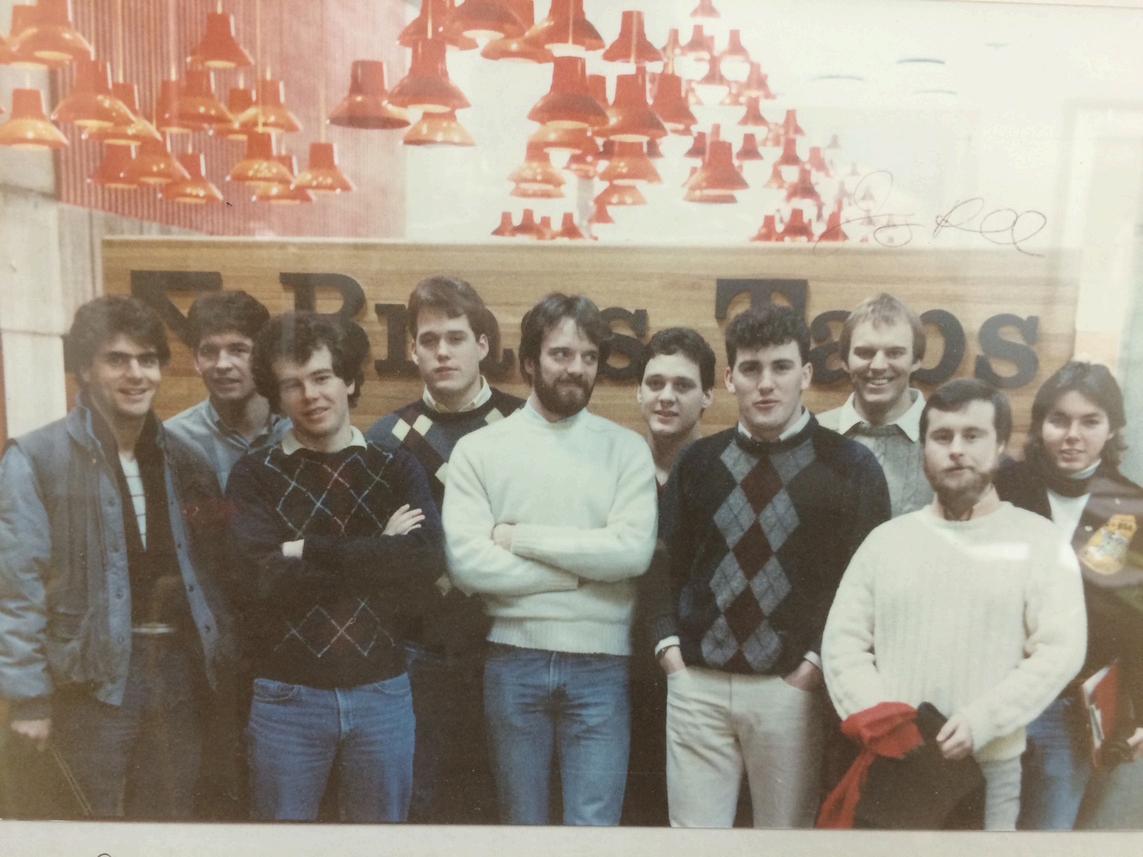
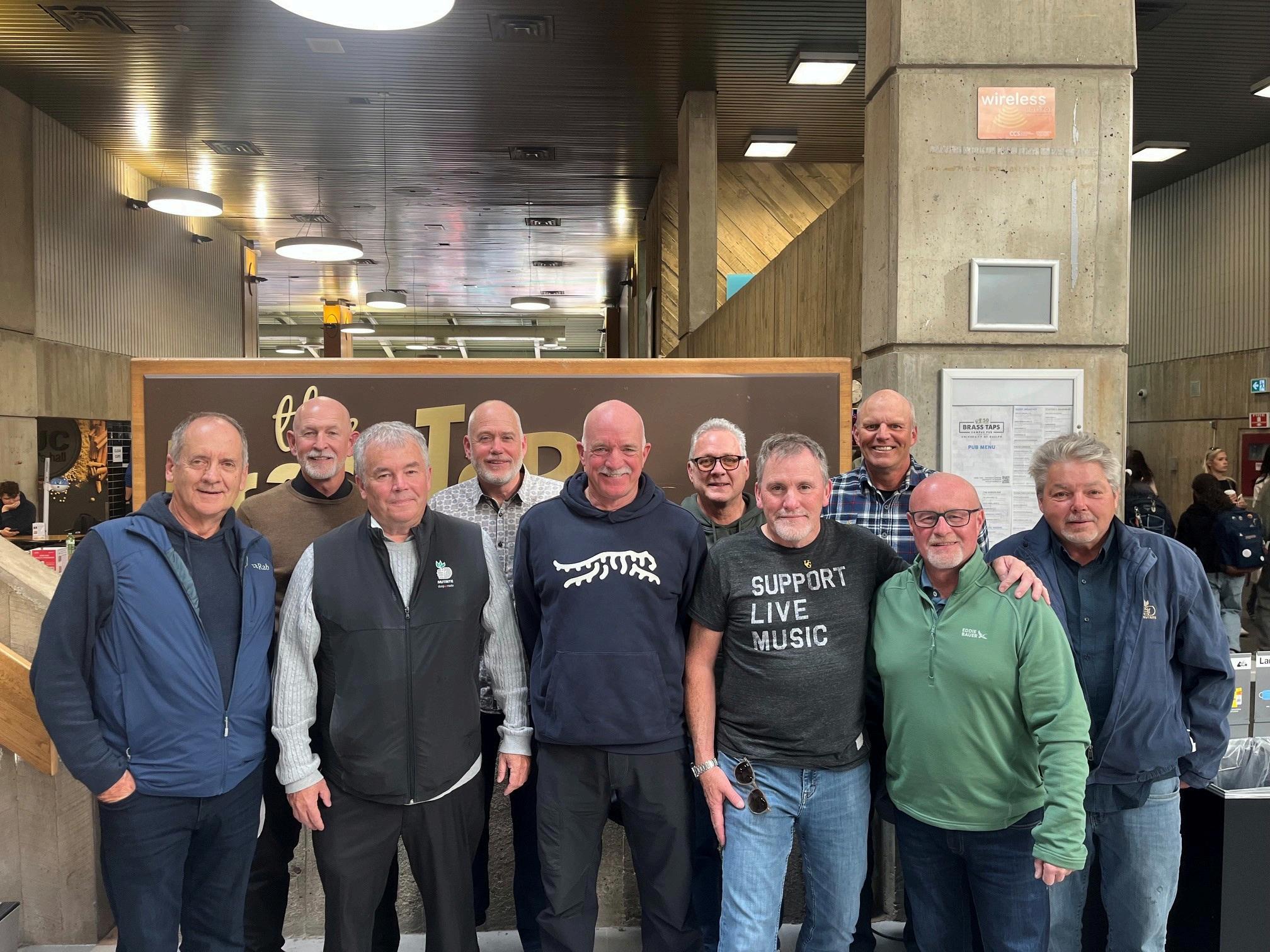
2026 - Friendship Forty two years strong. (L-R) Rod Trainor, Angelo Capannelli, Mark Schneider, Jim Flett, Eric Ruhs, John Scott, Dean Baker, Jerry Richard, Ian Bowen, John Cherry
TURF OR CONSEQUENCES
Written by Doug Breen, Regional VP, Golf North Properties
I have seen the future, and it is in Stittsville, Ontario We have all seen those autonomous mowers buzzing around industrial buildings, parks, and rich people’s backyards, but until recently, I was convinced that they would have very little application on golf courses. Sure, maybe have a Grass Roomba farting around the clubhouse lawn, or trimming some out of play area, but to replace the fine cut of a mower that’s worth more than my pickup, and piloted by a surly, retired postal worker – why would we want to do that?
But I was wrong. Just like I was wrong about the internet, cash free societies, and online shopping for dates I’m not saying that any of these things have made the world a better place, but I’m openly admitting that I was utterly incorrect when I said that people would never accept them. I assumed that folks would want to live IRL (as the kids say), that they would want to touch things before they purchased them, meet dates in bars, and use cash so that the government can’t bankrupt you for thought crimes but nope All wrong
I saw with my own eyes, that 95% of the course can be cut with robots Unsupervised, don’t need the weekend off for Boots & Hearts, or ten days for their cousin’s wedding, and never show up late or hungover robots. They still haven’t really sorted out autonomous greens mowers, and I think there will always be an upside to having an actual human look at the greens every day for problems, but I recently saw an AI sensor that looked for disease, damage, and drought, which can be bolted onto any mower. So, I’m probably wrong about that too. But greens aside – in Stittsville, they used nine units to mow rough,
tees, and fairways on 18 holes in 2025. By cutting labour in half and not having to replace current mowers –the return on investment is shockingly short It seems like an obvious path forward economically, and the technology will only continue to improve, but I’m still worried about turning our courses over to the robots - because if Hollywood has taught me nothing else, it’s that the robots eventually become sentient and try to kill us all
“The factory of the future will have only two employees, a man and a dog. The man will be there to feed the dog. The dog will be there to keep the man from touching the equipment.”
- Warren Bennis
I’ve seen 2001 Space Odessey, “What are you doing Dave?”. I’ve seen the Terminator, “I’ll be baaaack.” Most of all, I’ve seen the 1988 classic Blades Now a bunch of you are going to your phones right now to Google “Blades”, and you are in for a bit of a wild goose chase
Your phone will likely autocorrect to “Blade” – the series of Wesley Snipes vampire movies. You will also have to sift through Blade Runner, Blades of Glory, and Mel Gibson’s Zorro - The Gay Blade But way down, about 53 on the result list is Blades, a slasher movie from when I was in University, where a private country club is rd
attacked by a rogue toro standing triplex mower
They even added a fourth reel to the front, on top of the original reel, which would serve no practical grass cutting purpose, but allowed the mower to chomp its “jaws” at its victims.
The hero is a disgruntled former superintendent who seems to know the secret to why the mower came to life and is killing people, but never offers up the information, and nobody seems to think to ask. Spoiler alert, the day is saved when the new Golf Pro recovers his “iron game” in the nick of time. Well not really the nick of time – dozens of people died first, and the “big tournament” was a televised bloodbath
I have watched this movie many times, and it might be the worst thing ever produced. Not the worst movie –the worst thing. I’m always amazed that someone wrote it, sold it to a studio, convinced someone to direct it, hired actors and crew, and spent actual money It’s not on any streaming service that I can find (it’s that bad), but you can watch it on YouTube! Thank you, You Tube
My point is, that robots always rise up against their human creators. Remember Maximum Overdrive, “Who made who?” I think that the transition to autonomous mowers is inevitable, so from now on, I will only be saying positive things about all mechanical devices When they become our overlords, I want them to remember that I was always kind to my toaster, that I did everything I could to extend the life of GM3’s, and I never had anything bad to say about an Irrigation Controller.