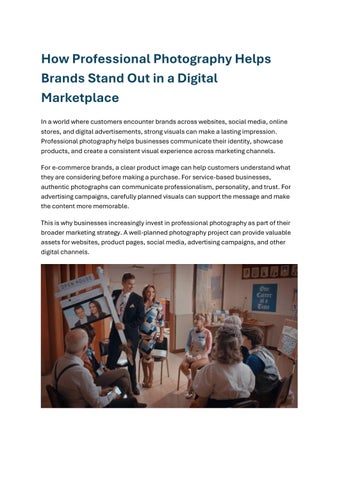
How Professional Photography Helps Brands Stand Out in a Digital Marketplace In a world where customers encounter brands across websites, social media, online stores, and digital advertisements, strong visuals can make a lasting impression. Professional photography helps businesses communicate their identity, showcase products, and create a consistent visual experience across marketing channels. For e-commerce brands, a clear product image can help customers understand what they are considering before making a purchase. For service-based businesses, authentic photographs can communicate professionalism, personality, and trust. For advertising campaigns, carefully planned visuals can support the message and make the content more memorable. This is why businesses increasingly invest in professional photography as part of their broader marketing strategy. A well-planned photography project can provide valuable assets for websites, product pages, social media, advertising campaigns, and other digital channels.
Why Professional Photography Matters for Modern Brands Photography is more than an attractive addition to marketing content. It is a communication tool that helps audiences understand a brand quickly. A strong image can show how a product looks, demonstrate how it is used, or communicate the atmosphere and personality of a business. High-quality photography can help brands: • • •
Create a stronger first impression Present products and services clearly Build a consistent visual identity
• • • •
Support social media and content marketing Improve the appearance of e-commerce pages Make advertising more engaging Help customers visualize products in real-life situations
Visual content also allows businesses to communicate without relying entirely on written explanations. When images and messaging work together, the audience can understand the brand more easily and connect with its offerings.
The Role of Ecommerce Product Photography Ecommerce Product Photography is essential for businesses that sell products online. Since customers cannot physically examine an item before purchasing, photographs provide important visual information about its appearance, design, size, texture, and details. A strong e-commerce photography collection may include: • • • • • •
Clean product images on simple backgrounds Multiple angles of the product Close-up shots of important details Lifestyle images showing the product in use Images that demonstrate scale or functionality Consistent visuals across product listings
The goal is to give customers a clearer understanding of what they are buying. A product image should represent the item accurately while presenting it in a visually appealing way.
For example, a furniture brand may use lifestyle photography to show how a piece fits into a home. A beauty brand may use close-up images to highlight packaging and texture. A clothing retailer may combine product images with lifestyle shots to help customers imagine wearing the item. Professional product photography can also create consistency across an online store. When product images follow a similar style, background, and lighting approach, the website feels more organized and trustworthy.
Creating a Strong Visual Identity with Product Photography Los Angeles Product Photography Los Angeles can support brands that need high-quality images for e-commerce, advertising, websites, and marketing campaigns. A professional photography team can help determine the appropriate setting, lighting, styling, and composition for each product. The photography approach should reflect the brand’s identity. A luxury product may require a refined and minimal visual style, while a lifestyle brand may benefit from warm, natural, and authentic imagery. Before a shoot, businesses should consider: • • • • • •
What makes the product unique? Who is the target audience? Where will the images be used? What visual style reflects the brand? Which product features need to be highlighted? Are both studio and lifestyle images required?
These decisions help ensure that the final images are not only attractive but also useful for the brand’s marketing goals. Professional photography can include both studio and on-location shoots, depending on the product and campaign requirements. Blend’s photography services describe experience with different businesses and a range of commercial photography needs, including product, service, and brand imagery.
How Photography Supports Digital Marketing for Photographers Digital Marketing for Photographers involves using online platforms and marketing strategies to promote photography services, attract potential clients, and build a recognizable professional brand. While photographers provide visual expertise to others, they also need strong visuals to communicate their own capabilities. A photographer’s digital presence may include: • • •
A professional portfolio website Search-optimized service pages Social media profiles
• • • •
Blog content Email marketing Online advertising Client testimonials and project galleries
High-quality images are central to these efforts. A portfolio allows potential clients to evaluate a photographer’s style, technical ability, and experience before making contact.
However, digital marketing for photographers is not only about displaying beautiful images. It also involves presenting services clearly, explaining the types of projects the
photographer handles, and making it easy for potential clients to understand the next step. For example, a photographer specializing in commercial products may create separate portfolio sections for e-commerce, lifestyle, advertising, and brand photography. This organization helps visitors find relevant examples and understand how the photographer can support their needs.
The Importance of Storytelling in Commercial Photography Commercial photography should do more than show what a product or business looks like. It should help communicate a message. A photograph can tell a story through its setting, lighting, composition, styling, and subject. Lifestyle images can show how a product fits into everyday life, while brand photography can communicate a company’s personality and values. For example, a fitness brand may use energetic images that reflect movement and motivation. A hospitality business may use photography to create a sense of comfort and atmosphere. A technology company may choose clean, modern visuals that support its positioning. The right visual approach depends on the campaign’s objectives and the emotions the brand wants to create. Professional photography helps businesses communicate these ideas through carefully planned images.
Choosing a Commercial Photographer Los Angeles A Commercial Photographer Los Angeles can help businesses create professional images for advertising, branding, product marketing, and other commercial purposes. Choosing the right photographer involves more than reviewing a portfolio. Businesses should also consider experience, creative understanding, production capabilities, and communication. Important factors to evaluate include:
Relevant Industry Experience A photographer with experience in a specific product category may better understand how to highlight its important features. Different products require different approaches to lighting, styling, composition, and presentation.
Creative Direction The photographer should be able to translate a brand’s objectives into a visual concept. This may involve developing mood boards, selecting locations, planning styling, and creating a consistent look.
Production Quality Professional equipment, lighting, studio resources, and post-production techniques can influence the quality of the final images. These elements help ensure that the photographs are clear, detailed, and suitable for their intended use.
Flexibility Some projects may require studio photography, while others may benefit from onlocation or lifestyle shoots. A flexible photographer can help businesses choose the approach that best suits their campaign.
Understanding of Marketing Needs Commercial images should be created with their final purpose in mind. Product pages, social media advertisements, websites, and print materials may each require different image formats and compositions. Blend describes its commercial photographers as experienced professionals who collaborate with creative stylists and graphic designers. Its photography services include studio and on-location shoots, supported by professional equipment and postproduction techniques.
Using Photography Across Marketing Channels One photography project can provide content for multiple marketing channels when planned effectively. A product shoot may generate images for an e-commerce website, social media posts, digital advertisements, email campaigns, and promotional materials.
This makes it important to plan the intended uses before production begins. Businesses should consider whether they need: • • • • •
Horizontal and vertical images Product-only and lifestyle photographs Close-up detail shots Images with space for text overlays Different crops for social media
•
High-resolution files for advertising or print
Planning these requirements early can help businesses maximize the value of their photography investment. Photography can also complement other forms of content. Images may be used alongside blog articles, product descriptions, videos, and social media captions to create a more engaging and consistent marketing experience.
The Process of Creating Professional Commercial Photography A successful photography project usually begins with a clear understanding of the brand and its objectives. The process may include: 1. Discovery and Planning: Understanding the campaign goals, audience, products, and intended platforms. 2. Creative Direction: Establishing the visual style, mood, composition, and overall photography approach. 3. Pre-Production: Organizing locations, styling, props, products, schedules, and other requirements. 4. Photography Session: Capturing the planned images using appropriate lighting, equipment, and creative direction. 5. Post-Production: Refining images through editing, color correction, retouching, and other techniques. 6. Final Delivery: Preparing the approved images in the formats and resolutions required for marketing use. This structured process helps ensure that the final photographs are consistent with the brand and suitable for their intended applications.
Conclusion Professional photography plays an important role in helping businesses communicate clearly and stand out in a competitive digital marketplace. From Ecommerce Product Photography to brand storytelling and advertising campaigns, high-quality images can support customer understanding, strengthen visual identity, and create more engaging marketing content. Working with a Commercial Photographer Los Angeles or a professional Product Photography Los Angeles team can help businesses develop images that reflect their products, services, and brand personality. At the same time, Digital Marketing for Photographers demonstrates how important strong visuals are not only for clients but also for promoting photography services themselves. With thoughtful planning, creative direction, and professional execution, photography becomes more than a collection of images. It becomes a valuable part of a brand’s marketing strategy, helping businesses connect with audiences and present their offerings with confidence.