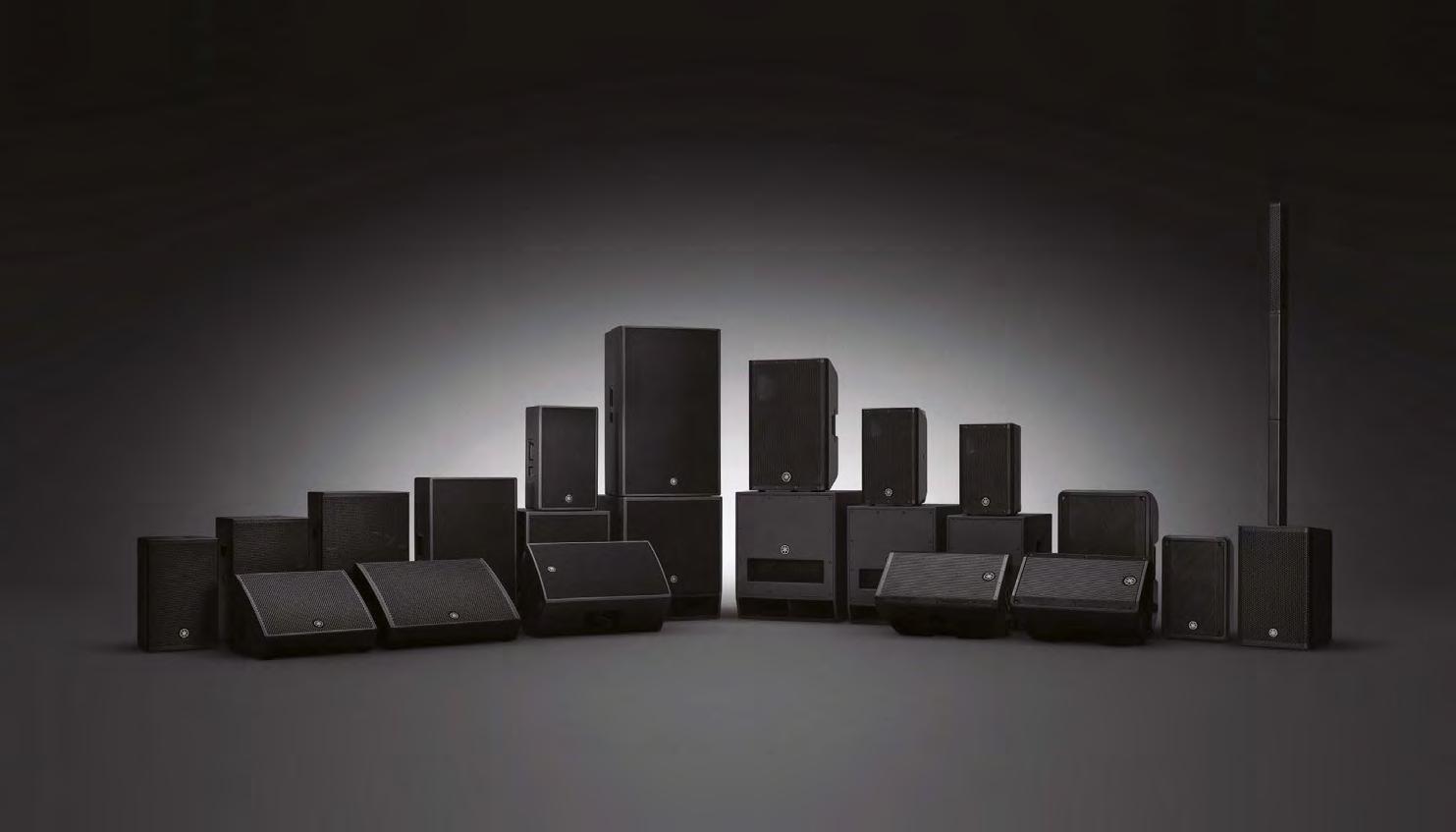
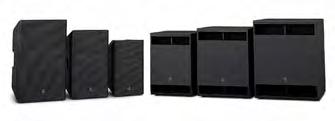
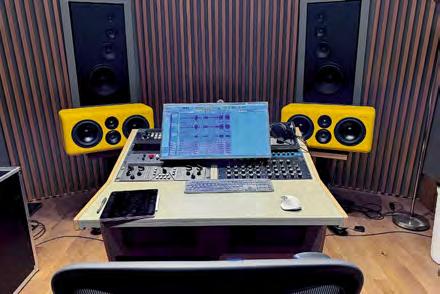
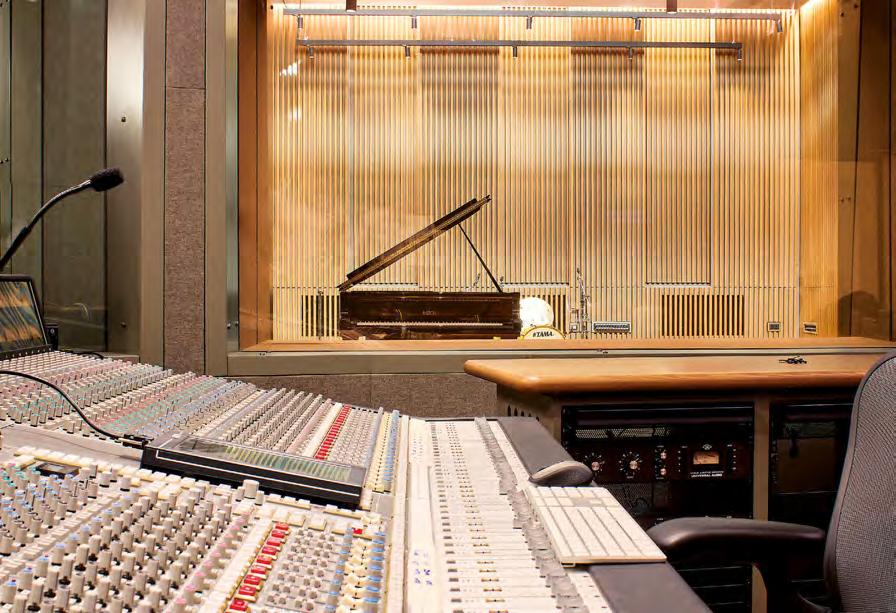
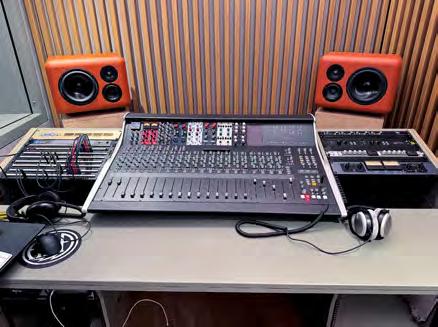
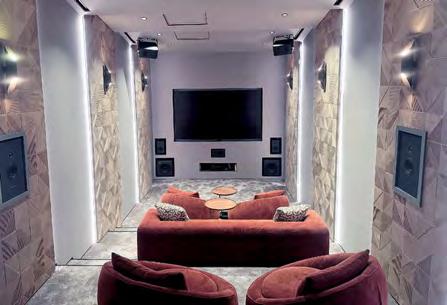
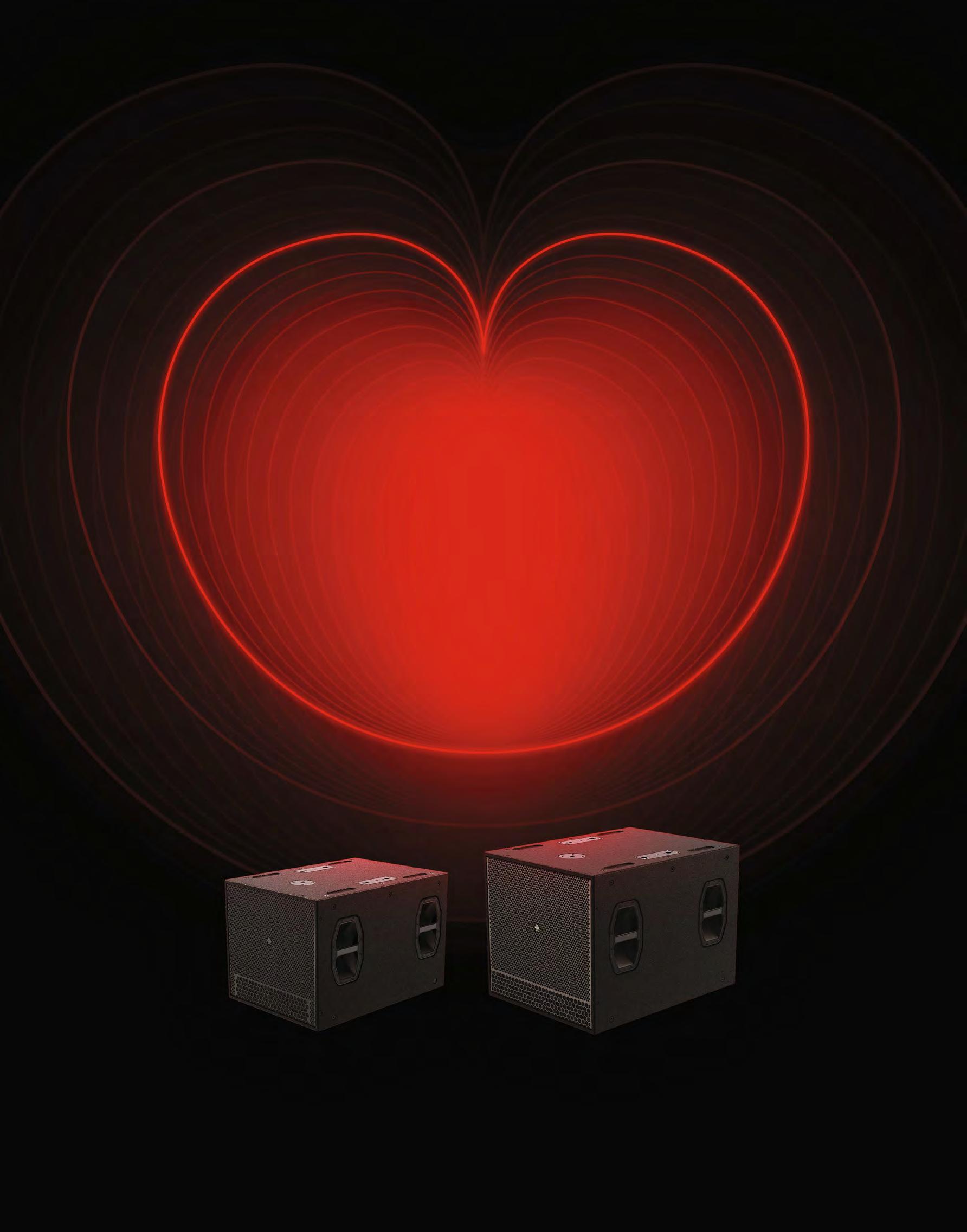
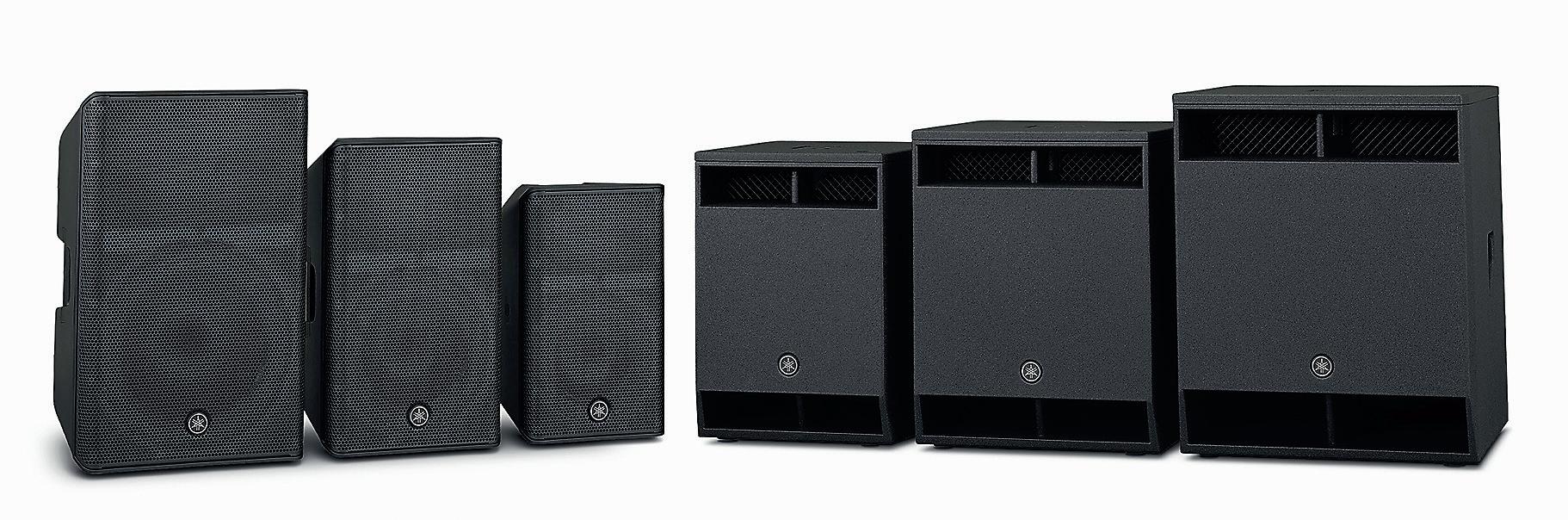
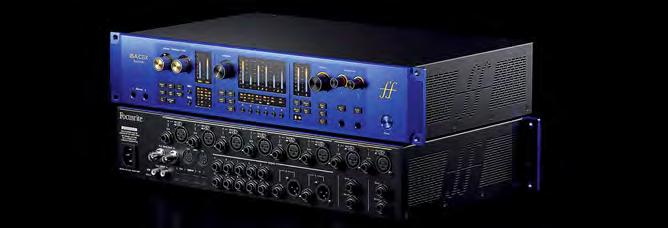
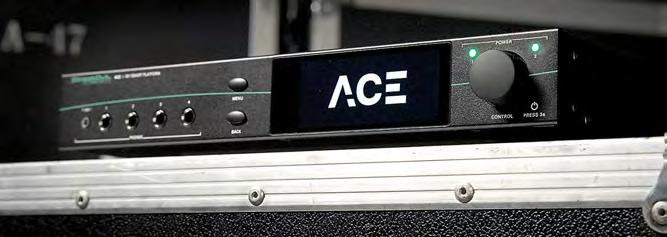
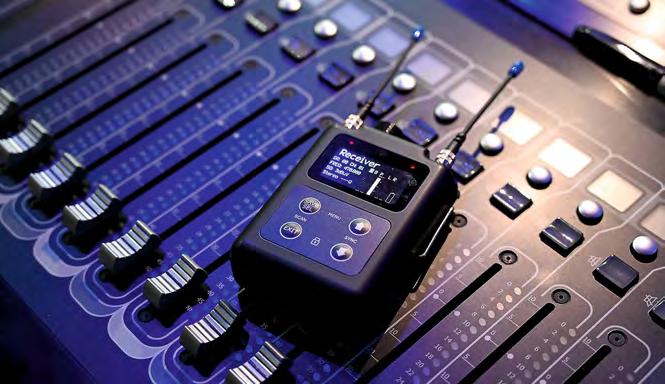
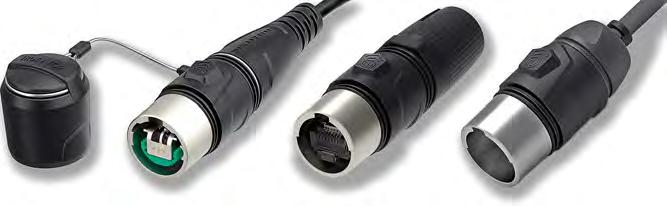
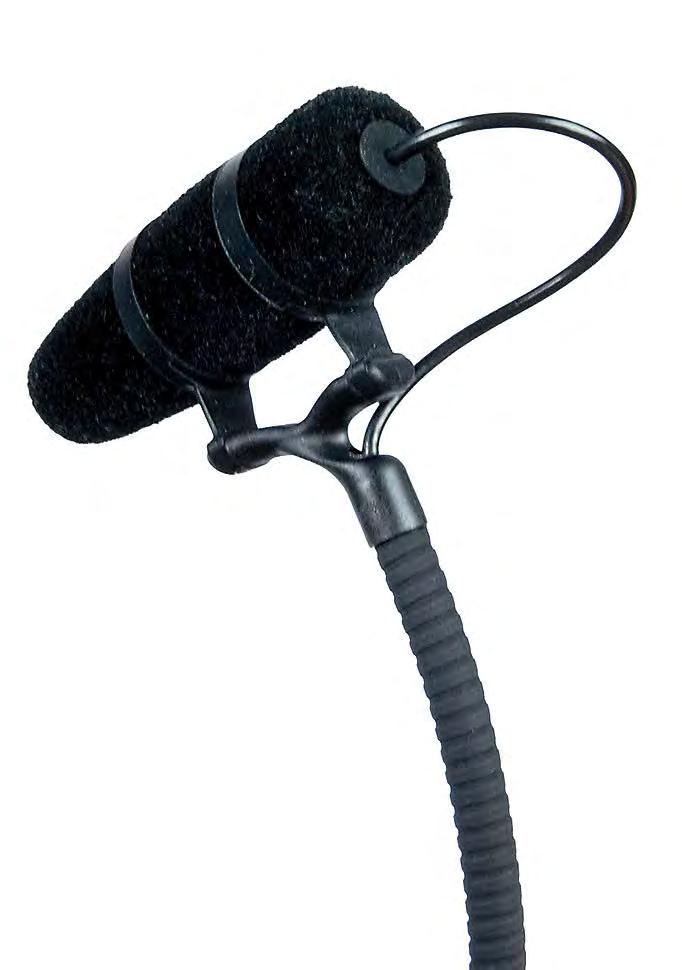
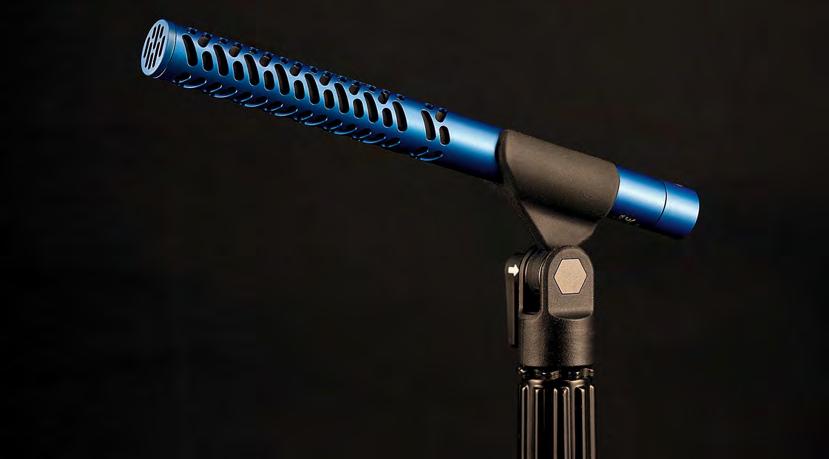
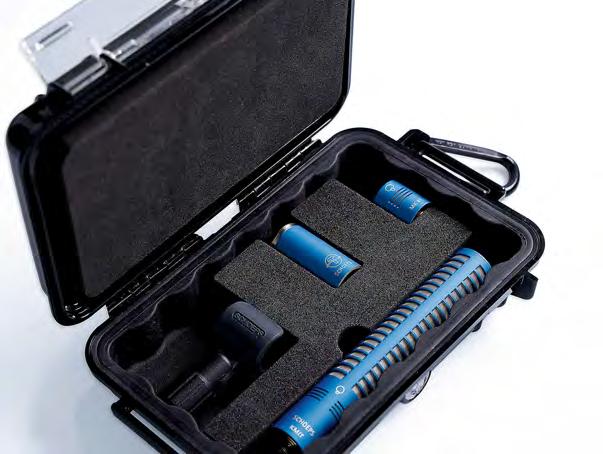
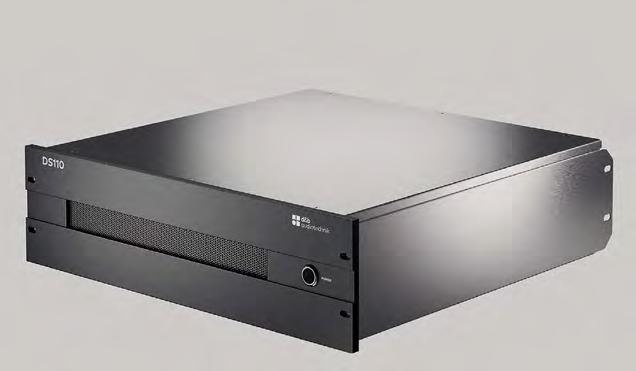
The extended warranty offer is applicable to products purchased from authorized Yamaha distributors or approved resellers on or after 1st April 2026. To avail of this offer, the product must be registered online within six months from the date of purchase. Customers are also required to keep a valid invoice or receipt as proof of purchase. For complete details, please scan below QR code.
HOW IT WORKS
Editor’s Letter
Football fever is back. Historically, major sporting events have accelerated the adoption of new technologies. Colour television, satellite broadcasting, HD production, 4K workflows and IP-based broadcast infrastructure all gained momentum through global tournaments. With the 2026 FIFA World Cup now underway in North America, innovations such as sensor-tracked balls, semi-automated officiating systems and real-time player visualisation are once again demonstrating sport’s ability to showcase emerging technologies on a global stage.
Up until now it has seemed a lifetime away, but attention will soon begin turning towards Saudi Arabia and the 2034 FIFA World Cup. By then, the technology conversation will likely look very different.
Much of the discussion so far has focused on striking stadium
stadiums, fan zones, entertainment districts, transport infrastructure and visitor attractions on an unprecedented scale while simultaneously developing the workforce required to operate them.
Perhaps this is where the future promise of AI could enter the conversation. In a region where demand for skilled technical talent continues to outpace supply, the prospect is difficult to ignore.
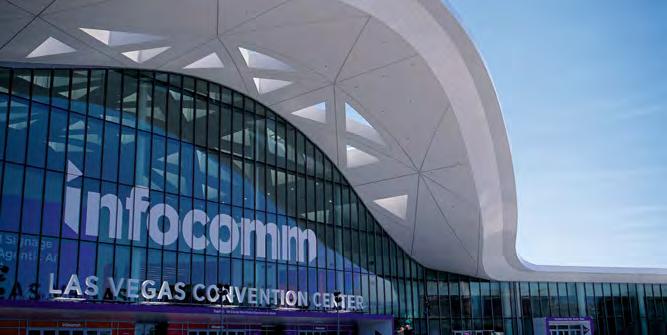
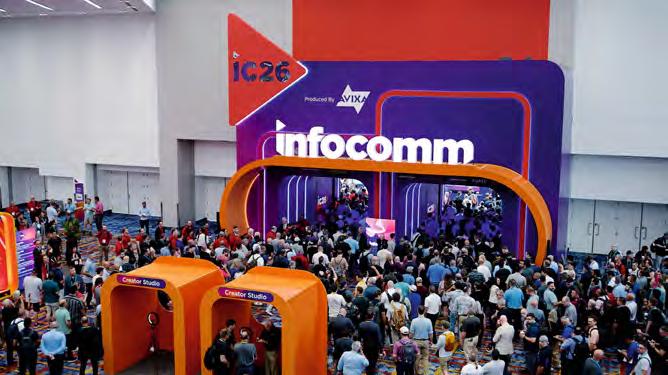
But perhaps I’m getting ahead of myself. Conversations at this year’s InfoComm in Las Vegas suggested the shine may already be wearing off AI, with a growing number of industry professionals questioning whether the technology is being oversold. By 2034, the discussion may have shifted away from content creation entirely.
Email: sluckhurst@proavl-mea.com
Richard Lawn General manager rlawn@proavl-mea.com
Nick Smith Digital media manager nsmith@proavl-mea.com
Sue Gould Advertising director sgould@proavl-mea.com
Chris Yardley Video editor cyardley@proavl-mea.com
Disguise has announced a major expansion of its presence across the Middle East, including the launch of a new business entity in Saudi Arabia later this year, followed by a second entity in the UAE in 2027. According to the company, the move reinforces its commitment to supporting the region’s rapidly growing immersive technology and live events sector. The expansion also includes strategic partnerships and new regional hires aimed at providing closer support to customers and partners across MENA.
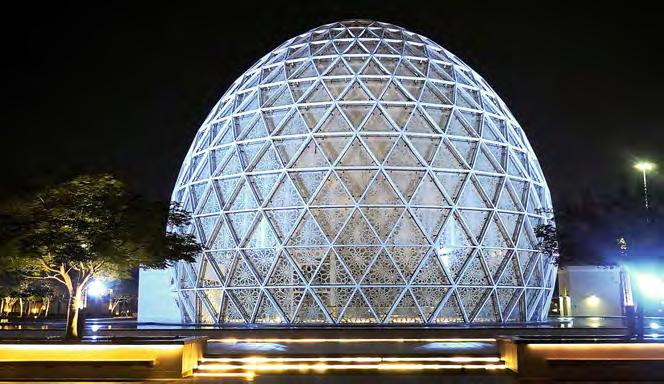
With an established footprint in the region, Disguise’s technology has powered visuals for high-profile projects including MDLBEAST Soundstorm, the Burj Khalifa and Al Wasl Dome. The manufacturer said that the expansion will create a stronger foundation for long-term collaboration across Saudi Arabia, the UAE and the wider Middle East.
According to Raed Al Tikriti, chief product and technology officer at Disguise, the Middle East has been an important market for the brand: “For years, we have worked with some of the UAE’s most innovative venues, attractions and live events.
Over that time, we’ve seen immersive technology become increasingly central to how experiences are designed and delivered. Strengthening our presence in
the region allows us to build on that history while supporting the next generation of projects taking shape across the Middle East.”
Christie cancels sale of its assets
Christie Digital Systems and VistaPHX have ceased negotiations regarding the previously announced agreement in principle to sell its broadcast and professional video group assets, including intellectual property and operational infrastructure, to VistaPHX.
Under the agreement, Christie will retain its image processing and compositor product lines – Spyder, Terra, Hedra, Phoenix and Mastering Gateway – along
Panasonic acquires Hive
Panasonic Projector & Display Corporation has announced the acquisition of UK-based company Hive Media Control, expanding its capabilities in media playback and control for immersive and fixed-installation environments. According to Panasonic, the acquisition forms part of a wider strategy to evolve beyond a hardware-focused business model into a broader visual solutions provider spanning projection, display, workflow and integrated media-delivery technologies.
Despite the acquisition, Hive will continue to operate as a standalone vendor-neutral business, maintaining support for customers using its systems alongside third-party projector and LED display brands.
“This is a strategically important step for Panasonic as we continue to evolve our business beyond a hardware-oriented model towards broader visual solutions and workflow value,” commented Yousuke Adachi, CEO of Panasonic Projector & Display Corporation. “Hive brings proven
L–R: HIVE’s co-founders Dave Green and Mark Calvert with Yojiro Matsubara and Jan Markus Jahn from Panasonic
expertise in media playback and control, and, when combined with our projector and display portfolio, we believe it can create meaningful customer value through simpler deployment, greater flexibility and a better end user experience.”
Hive develops media server and playback technologies for immersive attractions, museums and permanent visual installations. Its BeeBlade platform is based on the Intel Smart Display Module (SDM) standard, allowing direct integration with professional display systems.
Sarah Lewthwaite, SVP of customer excellence at Disguise, echoed those sentiments: “Our expansion in the region is a natural next step. It allows us to be closer to our customers and partners, strengthen local collaboration and provide the hands-on support needed to deliver complex projects in the region. By growing our team on the ground, we’re ensuring customers have direct access to the expertise they need throughout every stage of a project.”
Through the initiative, Disguise has formed a partnership with Tanmiya, which will support the company’s growth across Saudi Arabia and the wider Gulf region. In addition, the manufacturer has partnered with technical production and design consultancy A Loud Minority, known for projects including Terhal by Dragone in Saudi Arabia and UNTOLD Music Festival in the UAE. Lastly, the company has appointed Issa Al Azry as solutions design specialist, based in Dubai, with a second regional hire currently in progress.
www.disguise.one
with the operations supporting them. In light of the news, Christie said it is evaluating future opportunities and cited its commitment to supporting customers, partners and ongoing business activities tied to these products. The manufacturer stated that no additional details regarding the negotiations will be disclosed.
www.christiedigital.com www.vistaphx.com
“We are inspired and honoured by the opportunity to work with Panasonic, while continuing to grow Hive as an open and independent ecosystem,” said Mark Calvert, cofounder and CEO of Hive Media Control. “This partnership gives us the scale to accelerate our vision while preserving the openness and platform-agnostic approach our customers rely on.”
Panasonic stated that the combination of Hive’s media-control technologies and its own display portfolio is expected to improve deployment flexibility while reducing infrastructure complexity, cabling and external hardware requirements across immersive installations. Hive systems have previously been deployed on projects including the BBC Earth Experience, the National Museum of Qatar and the Michelangelo’s Sistine Chapel exhibition.
www.eu.connect.panasonic.com www.hive.run
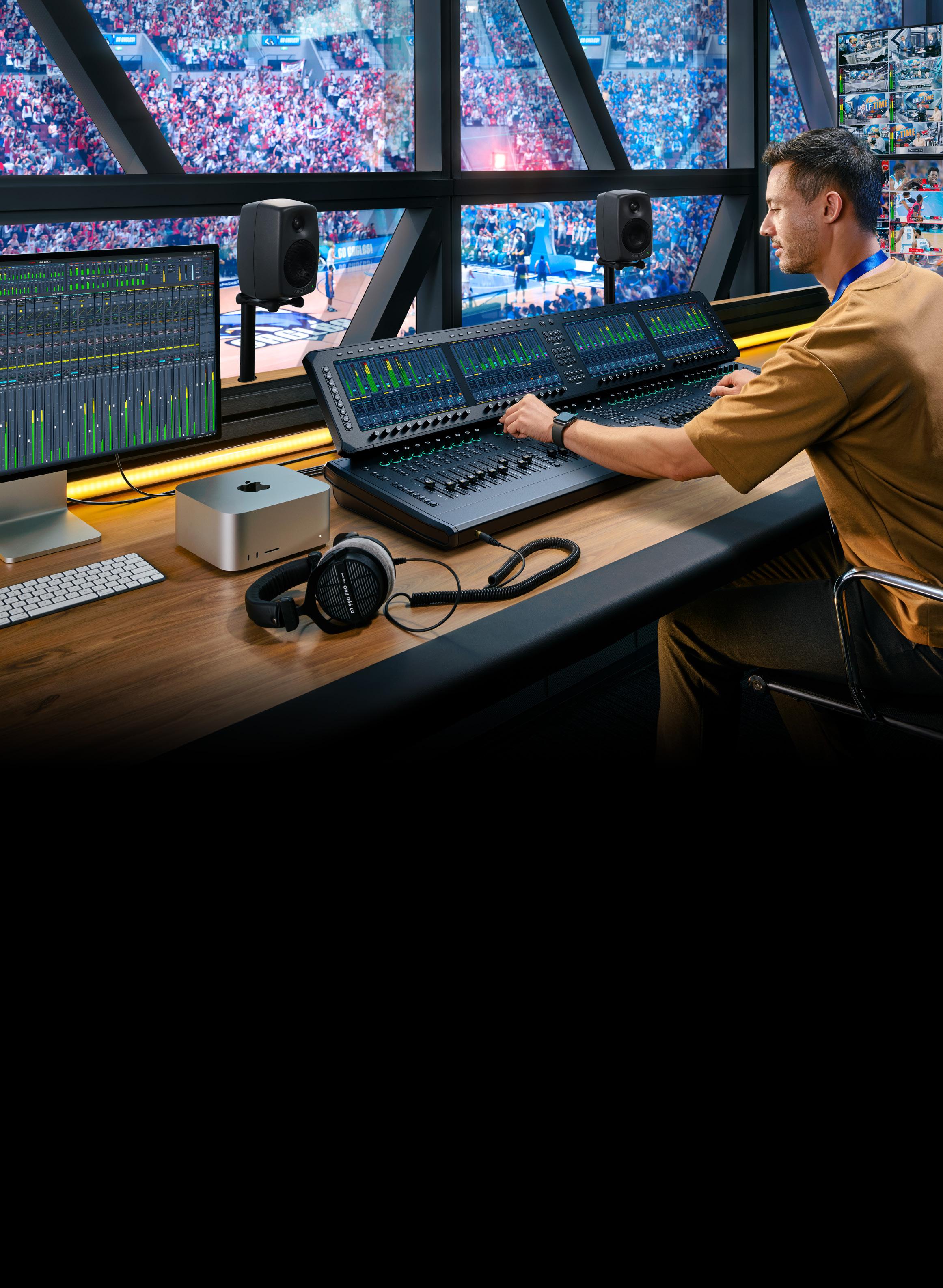
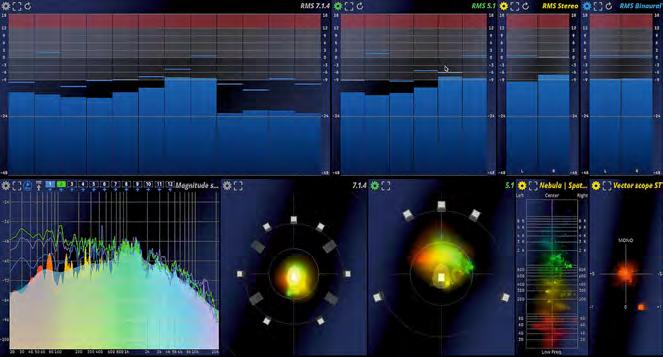
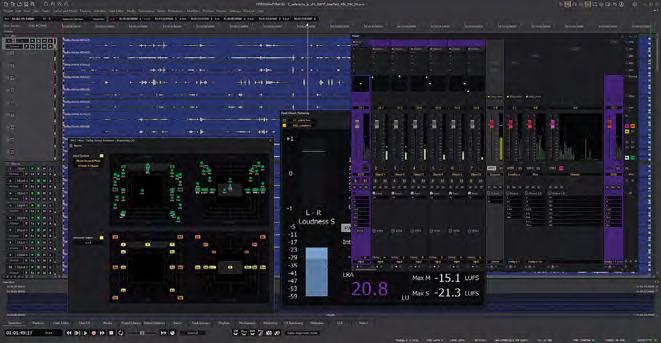
Fairlight Live is a software-based audio mixer which means it can support incredibly powerful features such as spatial audio mixing and SMPTE-2110 broadcast workflows. It’s a fully customizable live audio mixer with built-in effects and professional features such as a cue player, talkback busses, third-party plug-in support, snapshots and more. But the best feature is you can download it free!
Fully Customizable Software Mixer
Fairlight Live makes it easy to design your own audio mixer for any project from stereo to immersive formats. You can add, modify or move inputs and busses at any time. Simply click the channel number in the mixer to update inputs, or use the menu for bus management and I/O patching. Audio channels can be managed in the tracks index to show, hide or rearrange inputs and busses.
Thousands of Input Channels
From mono and stereo to LCR, 5.1 and fully immersive ambisonics, Fairlight Live supports hundreds and even thousands of input channels. Each channel has builtin EQ, dynamics and panning options including 1D, 2D, 3D, and spherical panning for spatial audio. Each channel has four effects slots with ChainFX hosting sixplugins per slot for up to 24 plugins per channel.
Introducing Fairlight Live
Build Your Own Bussing Structure
Fairlight Live let’s you create a customized bussing structure that can be changed dynamically as your show evolves. Use the bus management menu to add main, sub, aux or mix-minus busses, and choose their format, name and color. Assign input-to-bus or bus-to-bus routing in the bus assign window or right in the mixer! Plus multiple mixer channels can be assigned simultaneously.
Create a Fairlight Live Show
All of your productions are saved as a complete show including the mixer layout, routing, processing, cue player, snapshots and more! The file menu lets you quickly open existing shows or create a new one. Templates for common workflows are included plus there are layouts to match supported ATEM live production switchers. Unique productions can be custom built in the new show dialog.
Fairlight
Sound Creations unveils Immersive Lab
Sound Creations has announced the opening of Immersive Lab, a new creative technology facility located at its office in Tashkent, Uzbekistan, aimed at AV professionals working across integration, consulting, cultural venues and live events.
The 500m² space has been designed as a working environment for experimentation, solution modelling and full-scale testing of multimedia concepts. It allows users to explore and evaluate spatial audio, projection mapping and lighting systems, as well as test project designs prior to deployment.
The lab integrates audio, video, lighting and control into a single workflow, enabling the development and validation of multimedia applications across cultural, entertainment and commercial projects.
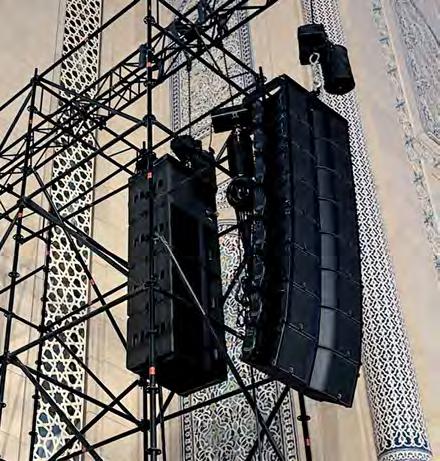
At the heart of the facility is an L-Acoustics L-ISA immersive sound system, including an L-ISA Processor II, LA7.16i amplified controllers, LA4X, LS10 network infrastructure, P1 processors and LC16D. The loudspeaker solution comprises Syva and Syva Low arrays, KS21 subwoofers and X8 series enclosures arranged across frontal, surround and overhead layers.
“At Immersive Lab, we are demonstrating how L- ISA spatial audio can be applied in theatres, multimedia venues, concert halls and immersive environments, where
sound becomes part of the overall spatial dramaturgy and enhances audience engagement,” said Danila Khavtorin, sales manager for L-Acoustics and DiGiCo at Sound Creations.
Pavel Aheunin, territory manager at L-Acoustics , added: “The development of this space involved close collaboration at every stage – from design to installation and calibration – to ensure full compliance
with L-ISA standards. The result exceeds expectations. The facility enables not only demonstrations but also the full range of official L-Acoustics training programmes, supporting the growth of the regional audio industry.”
Lighting provision includes Ayrton fixtures and ETC Eos control systems, supporting a range of stage lighting applications. An interactive touch-based control interface,
developed by Sound Creations, enables users to explore lighting behaviour without prior console programming experience.
“Immersive Lab sets a new standard for experiencing light as an environment that engages and inspires,” said Kseniia Igoshkina, regional sales manager at Ayrton. “It provides a unique opportunity to explore lighting technologies not only through demonstrations, but through hands-on interaction and training.”
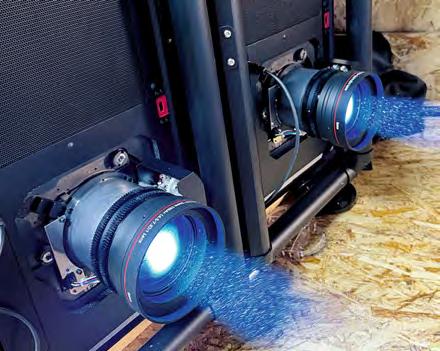
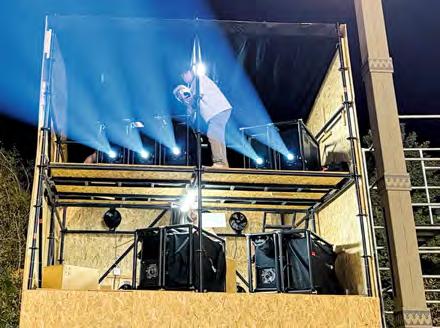
The visual system features 11 Barco I600 4K15 projectors configured for projection mapping and immersive content. A 360° audiovisual show, developed with Artnovi, demonstrates synchronisation between projection and spatial audio systems.
“It was inspiring to see such a forward-thinking immersive space come to life,” commented Nehir Özdemir, territory manager at Barco. “Our projection technology is at the core of this experience, making it possible to deliver powerful visuals and truly immersive storytelling. This lab is also a unique milestone for the region, as there is no comparable immersive space in Uzbekistan or across Central Asia. We are proud to play a central role in bringing this vision to reality.”
www.sc-electronics.com
SAW Namibia completes Logitech boardroom upgrade
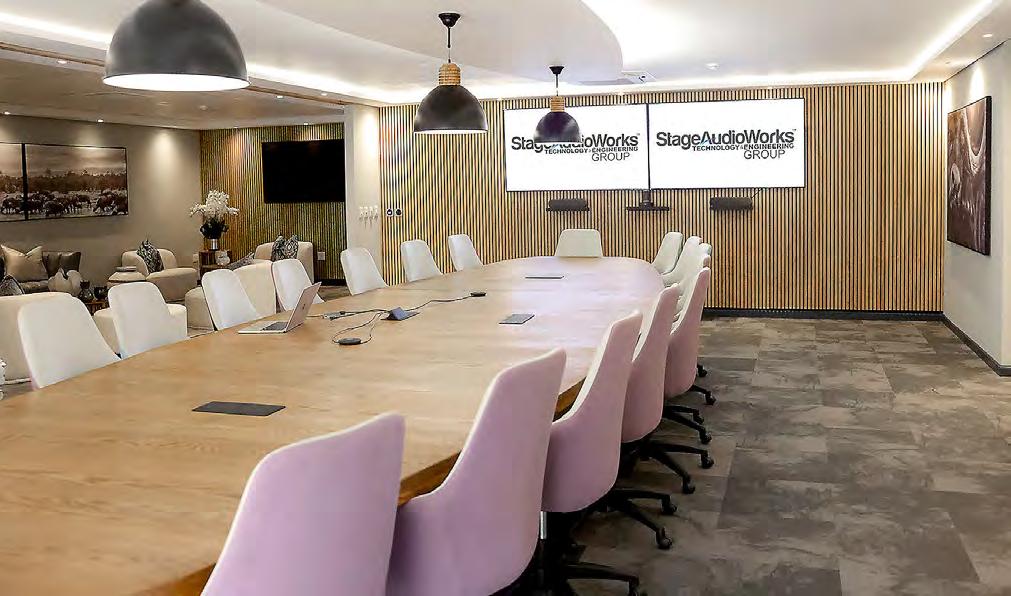
Stage Audio Works (SAW) Namibia has delivered a videoconferencing system upgrade for an insurance company’s headquarters, focusing on standardised AV integration built around Logitech solutions. The project centred on updating existing meeting spaces while aligning with the client’s established use of Logitech systems. According to Emcé Smit, technical manager at SAW Namibia, the company
was engaged following renewed discussions with the client. “We knew this client for a long time and recently reached out to reconnect,” he said. “When they told us that upgrades were needed for their existing system, we were ready to assist. The client already had a good idea of what was required, with only a couple of brainstorming sessions required to finalise the equipment list.”
A key aspect of the integration was the transition to Microsoft Teams Rooms. In the main boardroom, SAW Namibia implemented a Logitech-based Teams Room system, combining new components with elements of the existing installation. The approach was intended to support continuity while improving usability for hybrid collaboration.
A second meeting space was also equipped with a Logitech conferencing system,
including a Rally Bar Mini, Rally Mic Pod and Tap IP control interface. The room was configured as a Microsoft Teams Room on Android, maintaining consistency with the organisation’s broader technology standards.
Installation took place alongside wider refurbishment works within the building, including new lighting and interior modifications. “As part of the wider building upgrade, the meeting space was being completely refurbished with custom joinery and new lighting to modernise the space,” Smit explained. “The only challenge we faced during this project was the extremely tight deadline. We were very dependent on the other subcontractors completing their tasks before we could proceed with our own installation work.” Despite scheduling constraints, the project was completed within the required timeframe.
SAW Namibia sees the upgrade as an example of its dedication to long-term partnerships and delivering future-ready environments for its clients. “We aim to be more than a service provider; our customers rely on SAW Namibia as a dependable partner dedicated to safeguarding and strengthening their projects every step of the way,” concluded Smit. “Customer centricity is one of our core values and we take pride in offering reliable, long-term support whenever it’s needed.”
www.logitech.com
www.stageaudioworks.com
Qvest modernises Bahrain TV
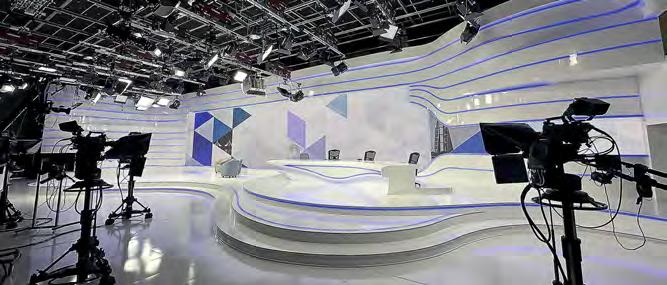
Introducing a new media-workflow platform designed to modernise content management, storage and archiving operations, Qvest has completed a major upgrade of Bahrain TV’s media archive infrastructure on behalf of the Kingdom of Bahrain’s Ministry of Information.
Delivered during ongoing live broadcast operations, the project upgraded Bahrain TV’s media asset management environment without interrupting day-to -day transmission activities. According to Qvest, the implementation focused on improving workflow efficiency, scalability and collaboration while supporting Arabic-language metadata and production requirements.
The installation includes an Avid MediaCentralbased media-asset management system, upgraded Spectra Stack Library storage infrastructure and Telestream Kumulate archive
management integration. The solution also incorporates high-capacity Avid NEXIS storage engines providing 240TB per engine alongside integration with Adobe Premiere Pro via MediaCentral Panel workflows.
CCL deployed for Pretty Woman: The Musical
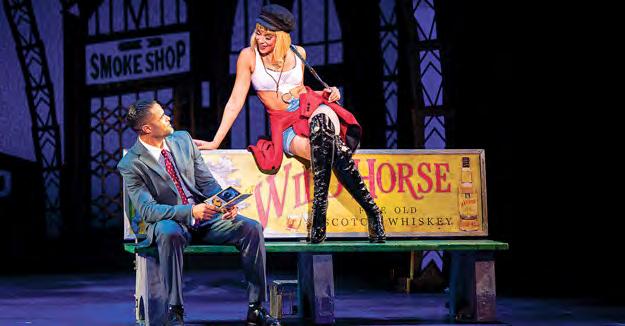
The South African premiere of Pretty Woman: The Musical has become the first local production to deploy d&b audiotechnik’s new CCL compact cardioid line array system, with the technology supplied by Eastern Acoustics and supported by local distributor Stage Audio Works. Produced by Showtime Entertainment, the musical opened at the Artscape Opera House in Cape Town before transferring to the Teatro at Montecasino in Johannesburg. To meet the demands of the production’s rock-influenced score, sound designer David Classen selected the newly launched CCL system as the foundation of the audio design.
A key attraction of the CL-Series for theatrical applications is its broadband cardioid performance, designed to reduce rearward energy and improve microphone gain before feedback. According to Classen, the system’s ability to minimise stage spill proved particularly valuable in an environment reliant on headset and lapel microphones.
“The passive cardioid behaviour of both the CCL tops and the flying CCL subwoofers kept the stage incredibly quiet,” he explained. “This clean stage environment gave us significantly more usable gain
before feedback than we’ve ever had with a compact rig, allowing the vocals to sit effortlessly on top of the mix.”
The Pretty Woman deployment comprised 14 d&b CCL loudspeakers and six CCL-SUBs per side, supplemented by V-Series and E-Series systems for centre-cluster and fill duties. Amplification was provided by D25 and D80 amplifiers connected via a Milan-AVB network infrastructure.
Classen also praised the system’s high-frequency performance and the use of d&b ArrayProcessing technology to maintain consistent coverage throughout the auditorium. “Whether you were sitting in the front row or the back of the balcony, the listening experience was identical,” he said.
Nathan Ihlenfeldt, CTO of Stage Audio Works, described the project as an important milestone for the local market.
“The CL-Series represents a major technological leap, packing world-class broadband directivity control into an incredibly lightweight and efficient footprint.”
www.dbaudio.com
www.stageaudioworks.com
As lead technology partner, Qvest handled the systems integration, migration and deployment process, including metadata migration and integration with existing ingest, tape and newsroom systems. “The new media archive
system has significantly improved our teams’ productivity and offers a state-of-the-art environment that promotes creativity and collaboration,” said Eng Abdulla Ahmed Al Balooshi, assistant undersecretary of technical affairs directorate at Bahrain’s Ministry of Information.
The upgraded platform enables simultaneous multi-user access, faster content retrieval and improved handling of large media files through enhanced search, transcoding and storage capabilities. “Our goal was to create an exceptional working environment that reflects the core values and production standards of Bahrain TV while fostering a positive atmosphere among the staff,” said Philipp Glänzel, managing director of Qvest MENA.
www.qvest.com
DHABI
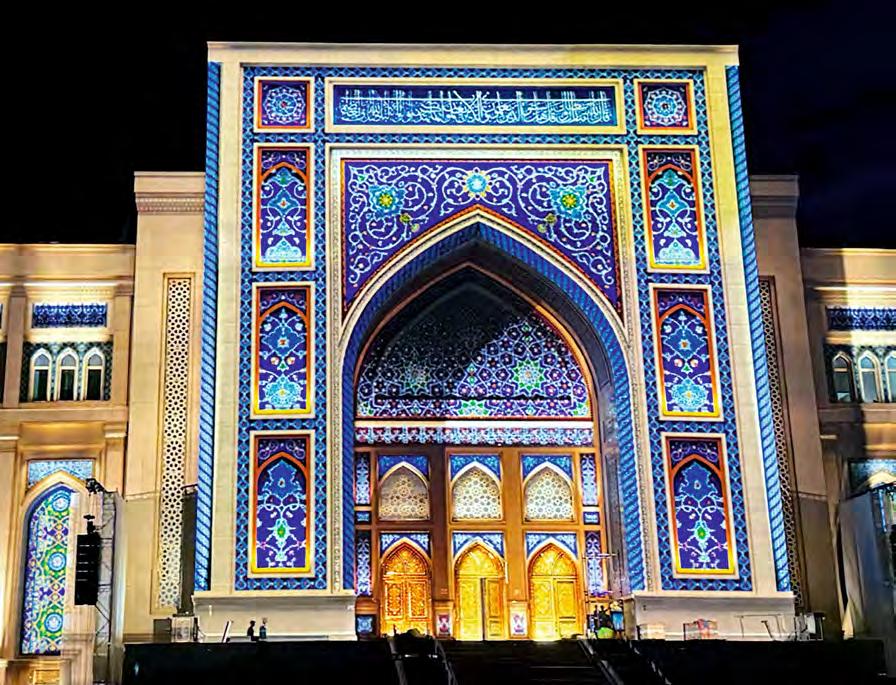
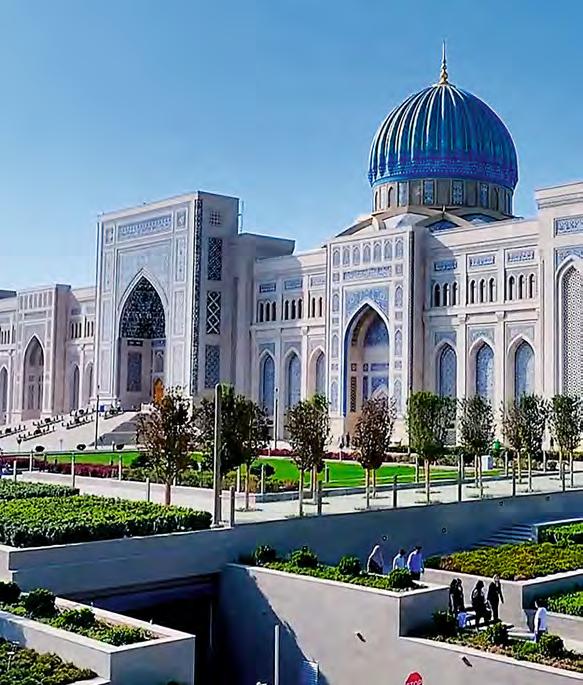
Sheikh Zayed Grand Mosque (SZGM) has tasked ICONICA Design & Supply with supplying and installing a new exterior lighting setup for two glass dome structures, with support from ADJ’s UAE distributor, GSL Professional. The mosque features 82 domes of various sizes, including 14 glass domes, distributed above the female and male ablution areas, which form part of the traditional design elements of Islamic gardens in mosques.
When the mosque was first constructed in 2007, strip lighting was installed to illuminate
with 3 -pin and 5 -pin XLR input and output jacks, and one myDMX5 control package. With the domes surrounded by water, ICONICA Design & Supply wasn’t able to run signal cables to the lighting fixtures, which were mounted to custom-fabricated decorative towers. Four towers have been installed surrounding each dome, set back by 30m, with each tower created to match the mosque’s exterior design. It was also necessary to install control for the system inside the domes. “This was overcome by using the Encore LP32IP’s integrated wireless
the domes. “However, most of these lights have now failed, so the client was looking to replace them,” explained Jasper Bryan, sales executive at GSL Professional. “The mosque contacted us to provide an IP-rated solution capable of functioning outside with the ability to light two of the domes in both white and blue, matching the colour scheme used across the site.”
The setup comprises 32 ADJ Encore LP32IP LED wash fixtures with barndoors, eight ELP32L20 20° frost filters, eight ELP32L60 60° frost filters, four Aria X2 Bridges which bridge the gap between the Aria X2 serial protocol and existing wireless DMX solutions, two D4 Branch RM 4 -way distributor/booster
antennas,” added Bryan. “Two Aria X2 Bridge wireless transceivers have been installed in each dome – one at either side – which transmit DMX control signals to all 32 lighting fixtures. Control is provided via ADJ’s myDMX5 software and hardware, programmed with ease-of -use scenes covering the client’s requirements (white/blue/blackout), with two D4 Branch RM DMX signal distributors/ boosters splitting the signal from the myDMX5 interface out to the Aria X2 Bridges.”
www.adj.com
www.gslprofessional.com
www.iconica.ae
ABU
SOUTH AFRICA
Vitec and LG Electronics join forces
VITEC and LG Electronics have announced a partnership to deliver IPTV and digital signage over private 5G networks, combining VITEC’s video distribution technologies with LG Electronics’ private 5G networking expertise. The integrated solution is aimed at large-scale venues including sports and entertainment facilities, airports, conference centres, hotels and casinos.
According to the companies, the technology enables IPTV and digital signage deployments without wired network connections. This allows organisations to add displays without additional network drops, support temporary or portable installations and extend existing systems into new indoor and outdoor areas without additional cabling.
“We are very excited to be working with LG Electronics and bringing this private 5G technology to market,” said Eli Garten, senior vice president, global IPTV and partner solutions, VITEC.
“This combined solution gives large-scale venues flexibility to deploy IPTV and digital signage without the constraints of wired infrastructure. With video applications, performance has traditionally been a limiting factor over wireless networks, but with this new integrated solution we can now confidently deliver the same low-latency streaming and reliability our customers expect from VITEC.”
Private 5G networks are onsite cellular networks that operate on licensed spectrum, providing organisations with greater control over network performance, security and reliability. The companies said the technology offers a more predictable environment for real-time video applications than networks operating on shared spectrum.
“While private 5G is already being adopted across sectors such as manufacturing, transportation and healthcare, its use for enterprise video remains at an early stage,” noted Joon Sung Lee, private 5G head in the
LG Electronics CTO’s office. “Now, together with VITEC, we are demonstrating how video can be delivered reliably over next-generation wireless networks.”
The integrated offering includes onsite core networking, distributed antennas and centralised management software. A further advantage of private 5G is reportedly improved
coverage, particularly in large or complex environments. Compared with Wi-Fi, the technology is said to offer a greater range and improved penetration through walls and structures, making it suited to environments that combine indoor and outdoor spaces. VITEC and LG Electronics said the solution had undergone testing using commercially available technologies and was designed to support more flexible and scalable AV deployments.
www.lg.com/uk/business www.vitec.com
Sportway and Broadcast Solutions buy Studio Automated
Sportway Media Group and Broadcast Solutions have jointly acquired Studio Automated, an AI technology provider for automated and remote live sports production. The acquisition is designed to bring together AI-driven production technology, software-defined workflows, broadcast hardware and operational expertise. The companies state that the combined platform is intended to address a wide range of live sports production requirements, from grassroots to international events.
Studio Automated’s software currently supports automated multicamera production and remote workflows, operating across thousands of cameras at venues in Europe. The platform is used in sports including football, ice hockey, basketball and handball, and is designed to support scalable production and sustainability targets.
Sportway contributes large-scale production operations, delivering hundreds of thousands of matches annually across multiple markets. The
company’s workflow provides environments in which AI-based production tools are developed and deployed in live settings.
Broadcast Solutions adds system integration and infrastructure capabilities, including OB vans, remote production systems and VAR solutions. Its 2025 acquisition of Egripment B V extends access to camera movement technology and related engineering expertise.
The three companies have also collaborated with DMC Production in recent years, with
DMC involved in developing and refining Studio Automated’s AI-based multicamera systems in live sports environments.
The combined platform aims to integrate production elements from capture through to distribution, including AI-driven automation, camera systems and infrastructure design.
Future developments include real-time event detection from live video feeds, enabling the creation of highlights and replays during matches.
“It is a major step in the evolution of Sportway Media Group to bring core software capabilities fully in-house across the production value chain,” said Daniel Franck, CEO of Sportway.
“We have worked closely with Studio Automated for more than seven years. A shared technology roadmap allows us to further strengthen our offering and deliver even more scalable and reliable live productions to our clients.”
www.broadcast-solutions.de www.sportway.com
Uniq Digital expands Dubai experience centre
Uniq Digital has opened a new experience centre in Dubai designed to demonstrate how interactive LED displays, immersive environments and sensor-driven technologies can be applied across sectors including retail, construction and education. Named the Uniq Digital Garage, the facility expands on the company’s previous showroom in the city, more than doubling the available demonstration space and introducing a wider range of real-world use cases for customers and consultants.
Uniq has also partnered with several technology manufacturers and software providers within the space, combining LED hardware with control, audio and content platforms from brands including Igloo Vision, MultiTaction, Pantheon Lab, Activu, Notch, Bose Professional, RCF, Sennheiser and Q-SYS. “When like-minded technology partners converge, the sky is the limit and the Uniq Digital Garage stands as a true testament to that vision, reflecting innovation, collaboration and immersive experiences at their finest,” stated Uniq Digital general manager Jemy Mohan.
Located within the company’s existing premises, the new facility combines multiple demonstration areas intended to show how LED technology can move beyond conventional display applications. According to Uniq Digital head of sales Lalit Bal, the aim was to create a space where visitors can experience complete solutions in action rather than simply viewing standalone screens and hardware. Among the new showcases is an immersive visualisation space powered by Igloo Vision’s Igloo Core Engine 2.0. The environment is designed to support sector-specific
demonstrations, including architectural walkthroughs, museum visualisations and automotive presentations. “We wanted to set up live case examples,” explained Bal. “If a customer walks in, they want to see exactly how content can be triggered or how an immersive space can actually be used.”
Also housed within the new space is a 5m interactive LED touchscreen display integrated with a MultiTaction table, creating what Bal describes as an “infinity canvas”. The setup allows users to manipulate digital content across both surfaces, while additional object-recognition and gesture-based sensors can trigger changes to displayed media. This concept is aimed primarily at luxury retail and experiential product launches, where brands increasingly want customers to interact directly with content and physical products. There is also a new custom LED wall built using a combination of straight and flexible LED modules and custom-designed cabinets, created to highlight the structural possibilities available with non-standard cabinet
Rise launches global training initiative
The industry advocacy group Rise has opened applications for a new global training initiative – Rise Upskill –aimed at increasing access to cloud and artificial intelligence skills for women working in broadcast and media technology. Delivered by Rise and supported by Amazon Web Services, the programme is designed for members of the Rise community and will run fully online from 1 June to 1 September 2026.
The initiative offers two certification pathways: AWS Certified Cloud Practitioner and AWS Certified AI Practitioner. Both are entry-level qualifications delivered via AWS Skill Builder and are intended to provide foundational knowledge of cloud computing or artificial intelligence concepts without requiring prior technical experience.
According to Rise, the programme was developed in response to community demand for structured, career-focused training and certification opportunities. It is open globally and free to participants within the Rise network.
configurations. The display is integrated with sensors, allowing onscreen content to respond dynamically to user movement.
Rather than relying solely on generic demonstrations, the team plans to further tailor the experience to specific vertical markets by preparing relevant content and workflows ahead of customer visits. This includes the ability for visitors to provide their own content in advance, allowing the team to configure demonstrations that reflect real operational scenarios.
The offical opening welcomed around 60 guests including technology partners and systems integrators. Visitors had the opportunity to engage directly with the Uniq Digital team and experience the solutions showcased within the centre.
“A brief overview of the technologies and applications was presented to the systems integrators, who were highly impressed by both the vision behind the space and the functionality of the solutions implemented throughout the experience centre,” concluded Mohan.
www.digitaluniq.com
The Cloud Practitioner pathway covers basic cloud computing concepts, AWS services, security and compliance, and pricing models. The AI Practitioner pathway focuses on artificial intelligence, machine learning and generative AI fundamentals, and is suited to professionals working with AI in business or operational roles, without requiring deep technical expertise. The programme will be delivered through self-paced online learning, supported by optional study drop-in sessions and cohort-based guidance.
Results are due to be announced on 10 September 2026, with an introductory session for the selected cohort scheduled for June 2026.
Rise Upskill said it will select 50 participants for the inaugural intake, with successful applicants expected to complete coursework and sit their chosen certification exam within the programme period.
www.risewib.com
GTX 7C | GTS 16C
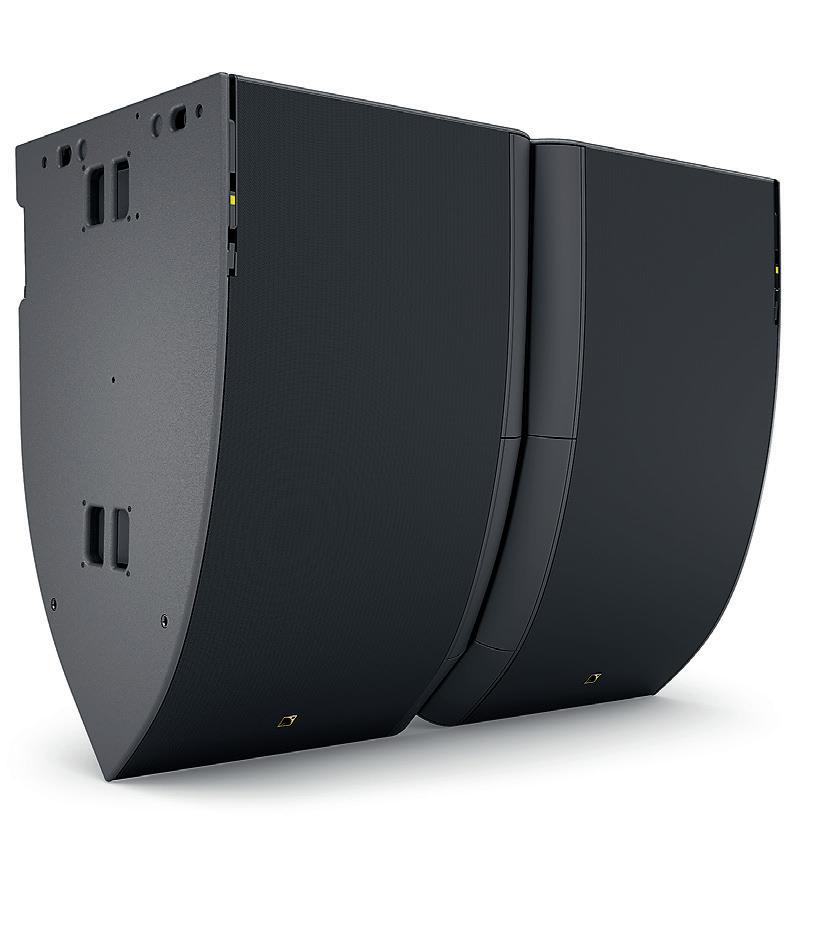
CARDIOID LINE ARRAY SYSTEM
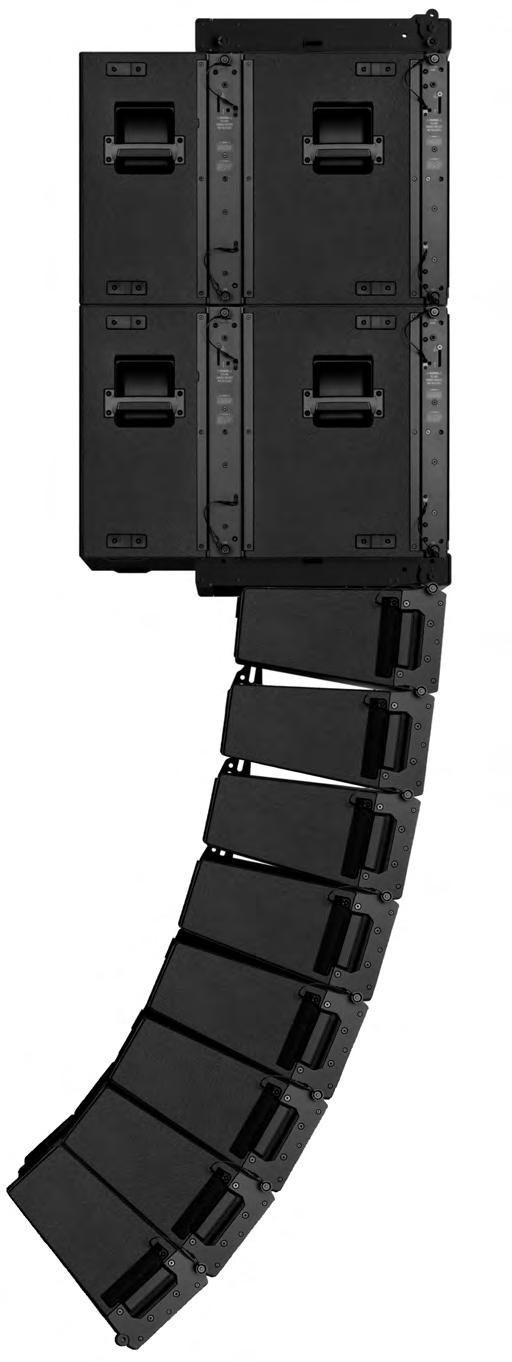
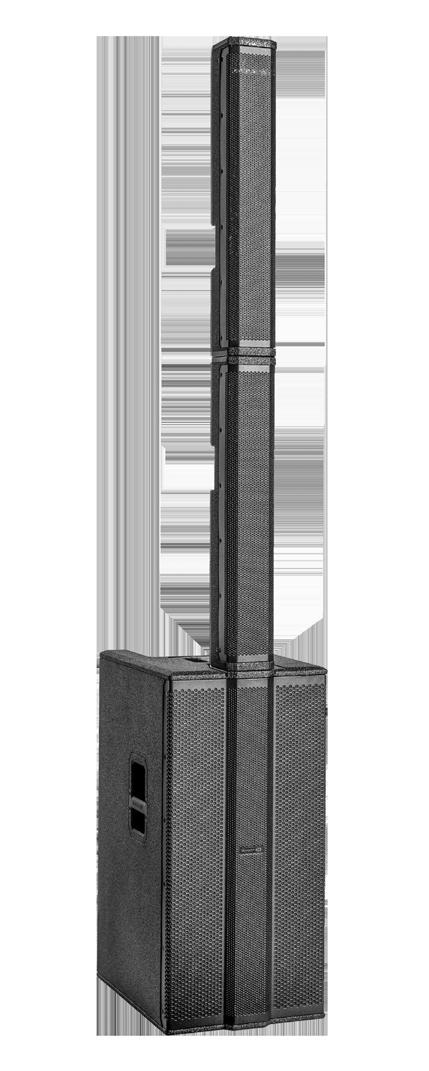
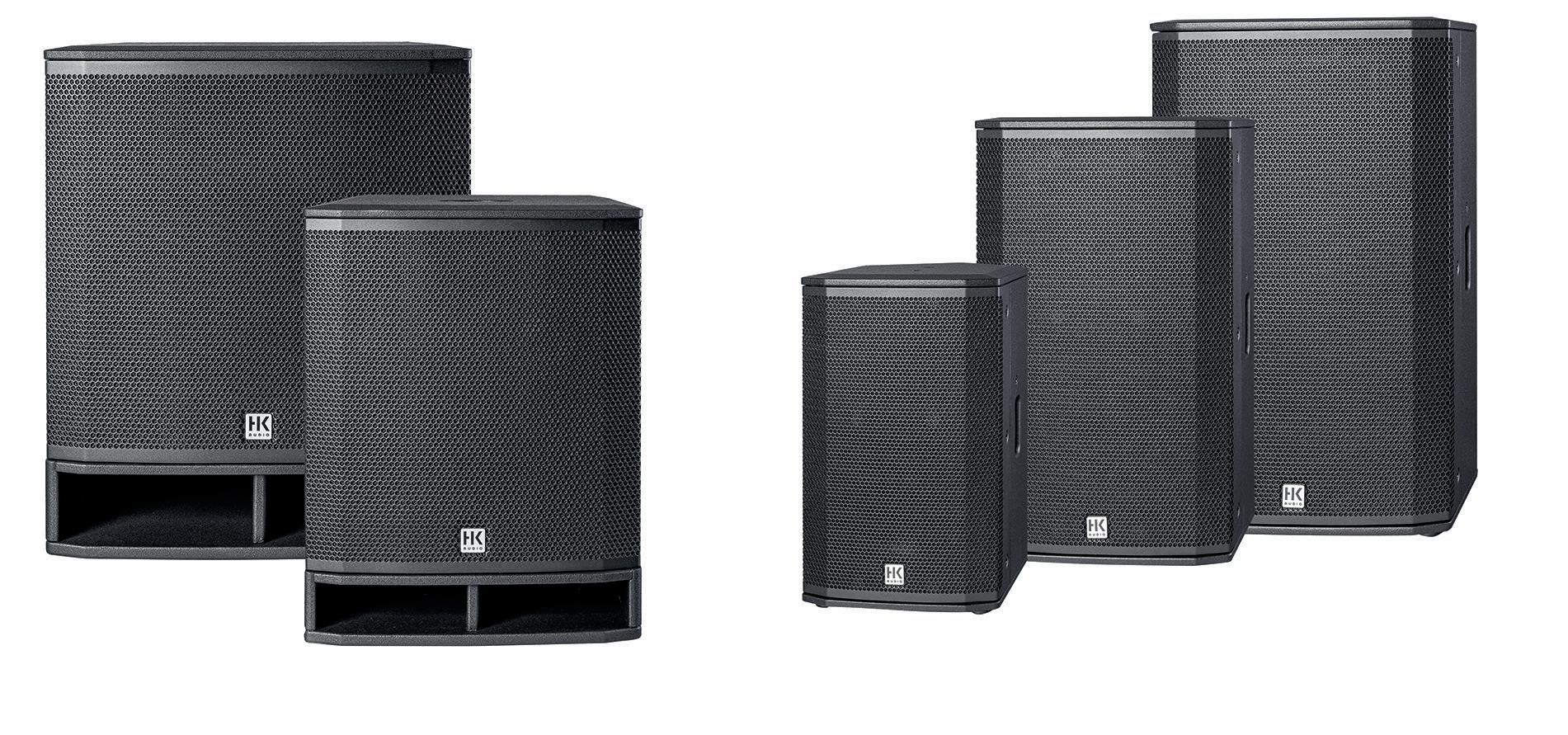
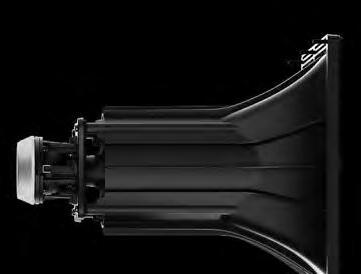
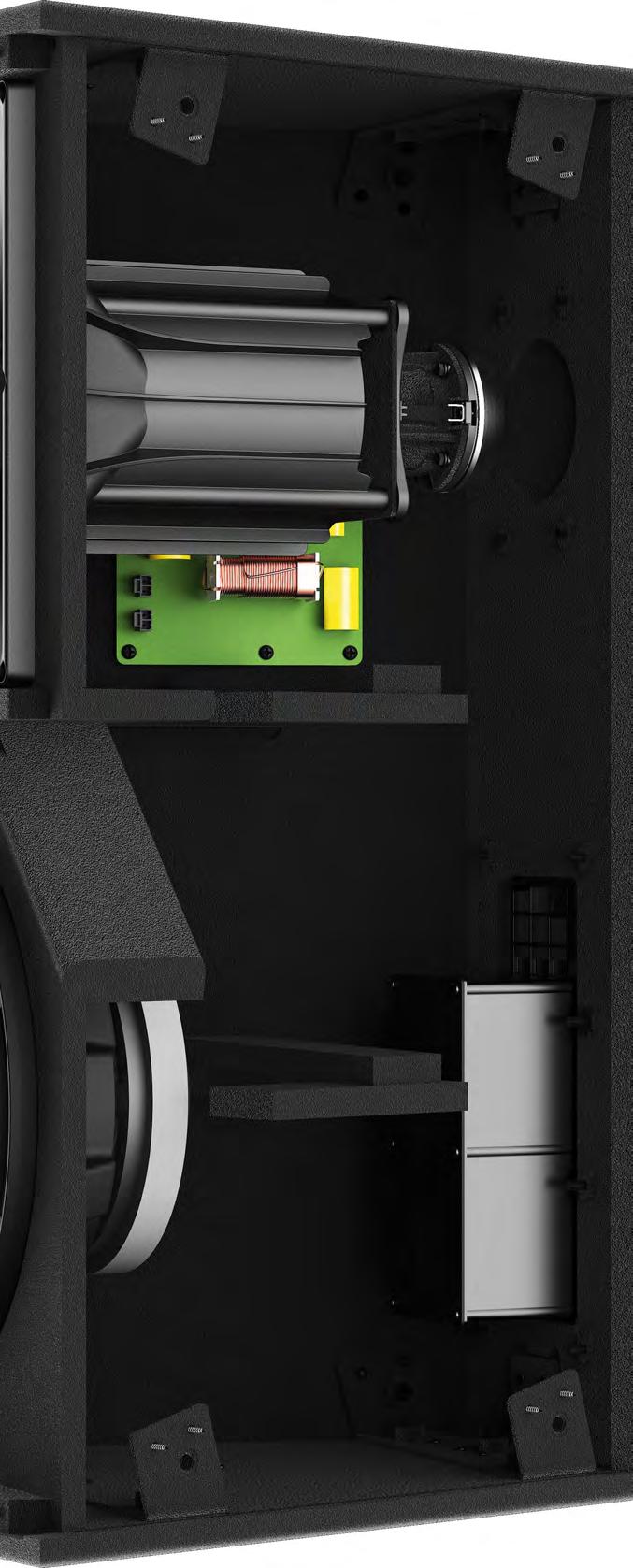
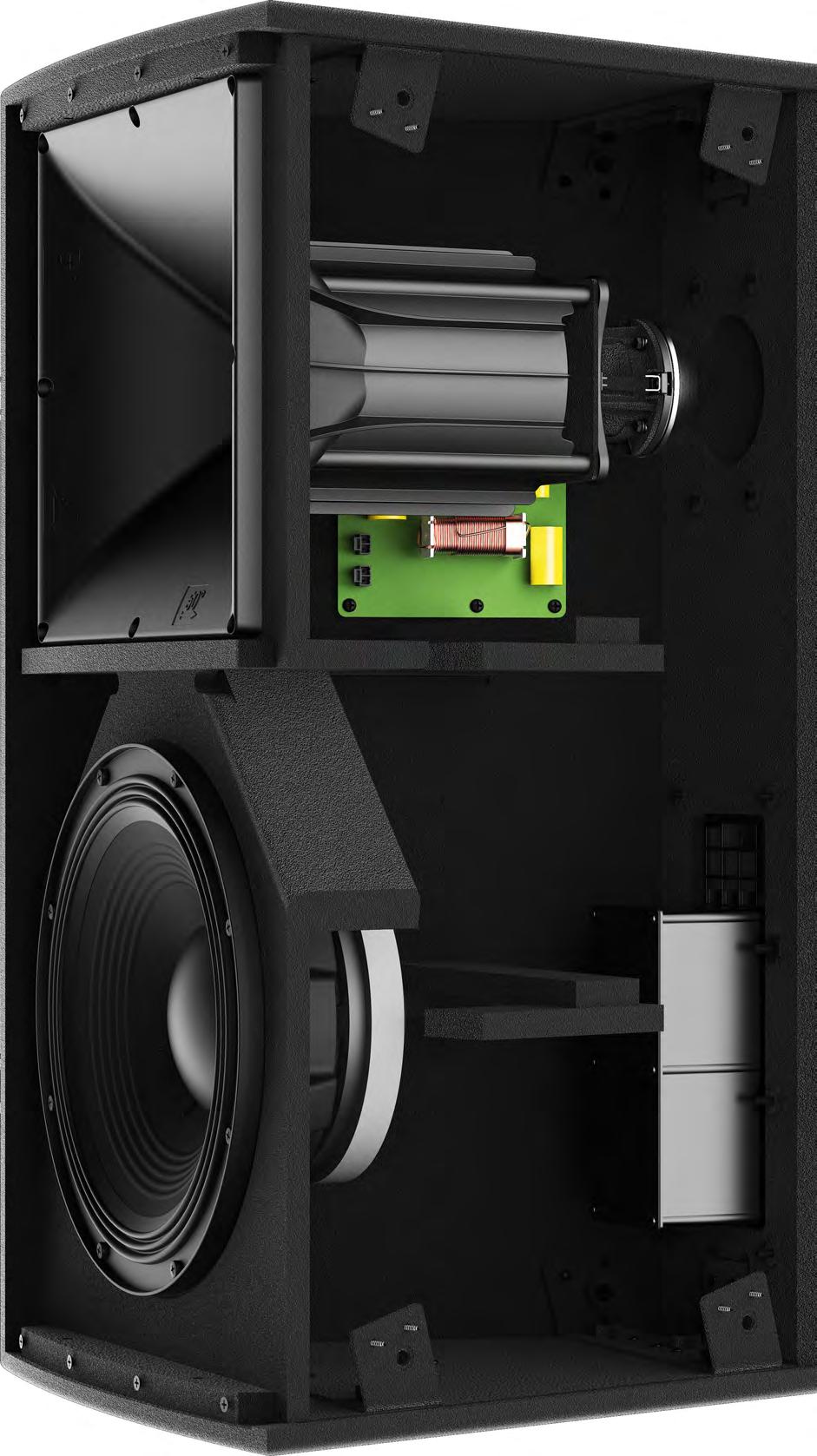
The GTX 7C pushes cardioid performance into a new class of precision. Its front and rear transducers are independently driven and DSP-shaped via the XPS platform, creating a controlled, broadband frontal radiation that stays clean and predictable in real venues, making it perfect for theaters, auditoriums, and acoustically challenging venues. Rear energy drops by an average of 22 dB, preserving clarity on stage and unlocking higher usable headroom in any venue. Add the GTS 16C subwoofer for a full-range cardioid system with uniform directionality from top to bottom.
Grass Valley and Lawo join forces Extreme Productions with Green Hippo
Grass Valley and Lawo have announced a technology collaboration aimed at validating orchestration, control and media exchange integration between Grass Valley’s AMPP platform and Lawo’s HOME management platform.
The initiative aligns with both companies’ open systems approaches and supports industry efforts including the European Broadcasting Union’s Dynamic Media Facility (DMF) initiative and the Media eXchange Layer (MXL) project.
According to the companies, the collaboration is intended to address growing demand for interoperability as media organisations adopt hybrid production environments that combine on-premises infrastructure with public cloud resources. By connecting AMPP and HOME, the project seeks to demonstrate how software and hardware platforms from different vendors can work together across operational environments.
The initial phase will focus on validating interoperability in areas including control, orchestration, media transport and exchange, operational monitoring and security-focused deployment. Planned areas of exploration include multi-platform routing, cross-environment resource visibility and MXL-aligned media exchange between software-based media functions.
“At Grass Valley, Open by Design is a foundational commitment to helping customers build the future of media infrastructure on their terms,” said Jon Wilson, chief executive officer at Grass Valley. “The industry is moving toward dynamic, software-based media facilities where customers need confidence that leading platforms can interoperate across control, orchestration and media exchange. By collaborating with Lawo, we are together helping to show how DMF principles can be applied in real-world, multi-vendor deployments.”
Grass Valley and Lawo said the collaboration forms part of their broader efforts to support operational modernisation while maintaining flexibility in deployment choices. Both AMPP and HOME are designed to support live production and media workflows across cloud, edge and hybrid environments.
The companies stated that the work is intended to reduce integration complexity, improve deployment confidence and support the adoption of open, dynamic media facility architectures. According to both parties, the focus is on validating interoperability and orchestration approaches that enable multi-vendor media operations.
www.grassvalley.com
www.lawo.com
MIDDLE EAST
Dubai-based Extreme Productions has invested in Green Hippo’s Hippotizer MEUSE MX Series Media Servers, reportedly making it the first rental house to do so in the Middle East. Through the move, the platform is now available to designers, programmers and production teams across the region.
Founded in Jordan in 1997, Extreme Productions now operates across Dubai, Riyadh and Amman, serving clients including Amazon, Microsoft, MBC Group and Publicis Live. Over nearly three
level of media server performance, right here in the region. That’s a game-changer for the productions we’re delivering.”
Tom Etra, senior sales manager for Green Hippo, added: “This is an important milestone for both companies. Having MEUSE available through Extreme Productions significantly expands the visibility and accessibility of the MX Series in one of the fastest-growing production markets in the world. Their track record and client relationships make them the ideal
decades, the company has contributed to a range of significant events in the region, from high-profile government summits and international sporting ceremonies to landmark concerts, brand activations and large-scale cultural celebrations.
According to Extreme Productions, the choice to invest in the MEUSE MX Series was spurred by the rise in scale and technical sophistication in productions in the Middle East. “We need tools that match the ambition of this market,” said Vincenzo Testa, partner and technical director at Extreme Productions. “The MEUSE MX gives our clients access to the highest
BE begins ownership transition
Broadcast Electronics (BE) has been acquired by a new ownership group led by CEO Rich Redmond and majority investor The Alzana Group. The transaction, structured as an asset purchase from ELENOS, sees the business continue operating under a new legal entity, BE Systems.
“Since 1959, Broadcast Electronics has been serving the global media and broadcast industry with a complete line of hardware and software products,” commented Redmond. “I could not be more excited to launch the next chapter in the history of BE, dedicated to customer-focused innovation and new products that will deliver breakthrough
capabilities to our worldwide radio broadcast customer base.”
John Danner, founder and chairman of The Alzana Group, said: “The Broadcast Electronics investment is an ideal example of Alzana’s commitment to providing capital solutions to businesses with tremendous, untapped potential.”
Redmond added: “I enthusiastically look forward to collaborating with John Danner of The Alzana Group to strengthen our capabilities, accelerate our aggressive growth ambitions and redouble our commitment to excellent customer service.”
Following the acquisition, BE has announced a series of executive appointments, including
partner to bring this technology to the region.”
The purchase was facilitated by the manufacturer’s local distributor, Procom Middle East. It was noted that Procom has played an integral role in Green Hippo’s regional expansion, providing distribution, local market expertise and dedicated technical support to ensure that customers across the Middle East have direct access to both the technology and the knowledge required to deploy it successfully.
www.extreme-productions.com
www.green-hippo.com www.procom-me.com
Andrew Berry as chief revenue officer. Berry, who previously served as VP of global service, becomes the company’s first CRO and will oversee global sales and service operations.
“Andy has proven to be an exceptional leader over his career, with a diverse customer-focused background in service, management and technology that has been the hallmark of his success,” concluded Redmond. “We are thrilled to welcome Andy to this important new executive leadership role.”
Additional appointments include Stuart Peters as senior VP of operations and Angela Holtschlag as chief financial officer.
www.bdcast.com
Rich Redmond of Broadcast Electronics
CTME delivers Make it in the Emirates
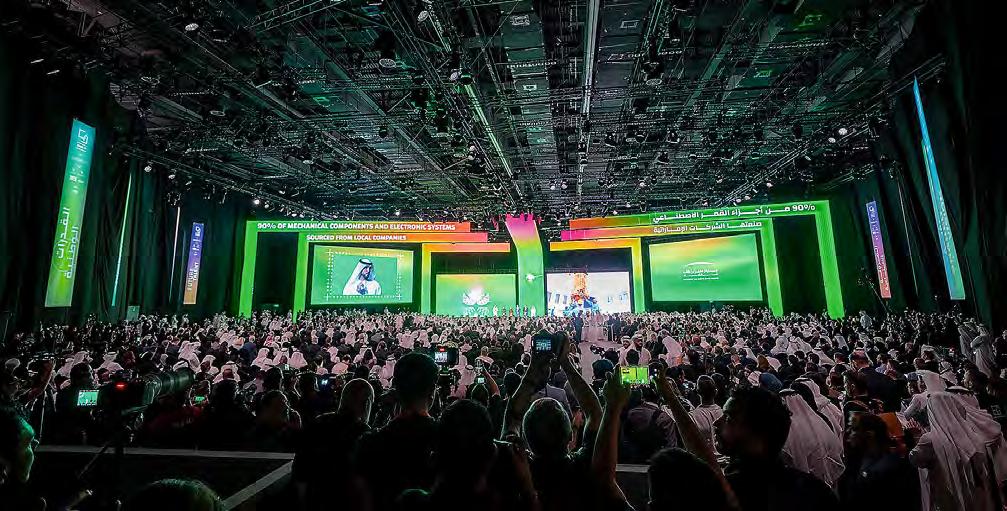
Creative Technology Middle East supplied technical production infrastructure for Make it in the Emirates (MIITE) 2026, delivering large-scale lighting, LED, broadcast and audio systems across the UAE industrial showcase. Organised by ADNEC Group on behalf of the Ministry of Industry and Advanced Technology, the exhibition brought together manufacturing, technology and investment sectors through a series of staged presentations, immersive installations and conference environments.
For the main production spaces, Creative Technology deployed 356 lighting fixtures across the central rig. The system incorporated Ayrton Perseo Profile and Levante fixtures for key lighting alongside 192 Ayrton Argo 6 FX units for beam and pixel effects. Robe fixtures included iFORTE LTX wash beams, iTetra2 LED bars and 47 of the newly released iESPRITE LTL models. Video infrastructure centred around an LED deployment totalling approximately 66 million pixels using ROE Black Pearl 2.8 panels powered by Brompton processing. More than 1,900 LED panels were installed across the Vision Stage, Makers Space and Investment Hub environments.
The media server and broadcast infrastructure was built around a Disguise workflow incorporating eight VX media servers and 14 Brompton SX40 processors managing real-time content playback across multiple stages
simultaneously. Broadcast operations were handled through a Ross Ultrix Carbonite platform supporting a full 4K workflow with Panasonic UC4000 camera chains and Panasonic UE150 PTZ cameras.
Audio systems included flown d&b audiotechnik arrays and V-Sub low-frequency reinforcement, with DirectOut Prodigy systems managing
playback and system redundancy. Control was handled via a DiGiCo Quantum338 console supporting the UAE orchestra alongside Shure Axient wireless systems used throughout the conference environments. Additional breakout spaces deployed d&b E6 loudspeakers with DiGiCo S21 consoles, D2 racks and Shure ULX-D wireless systems.
According to the team, the project represented one of the company’s largest integrated production deployments in the UAE, combining immersive visual environments with large-scale broadcast and live event workflows.
www.ct-group.com
Powersoft and Bose Professional renew partnership
Extending a long-standing collaboration, Powersoft and Bose Professional have renewed their technology partnership which has seen the two brands develop a shared amplification platform for the professional installed sound market. Under the renewed agreement, Bose Professional will continue to market the PowerShareX 4-channel amplifier series, comprising the PSX1204D, PSX2404D and PSX4804D, built on Powersoft’s amplification technology. The PowerShareX series has been engineered for high-energy efficiency, precise audio-signal control and significant power density in a compact form factor. The series operates within the Bose Professional ControlSpace ecosystem, which brings together amplifiers, processors and loudspeakers under a single unified software platform. The system is designed for use in a range of environments, including corporate spaces, hotels, retail outlets, educational facilities, theatres, performing arts centres, places of worship and sports facilities.
“Powersoft has been an exceptional engineering partner and together we have created an amplifier platform that truly reflects
Qvest has announced it has joined forces with Rise to support the launch of the organisation’s new MENA initiative.
The partnership focuses on a dedicated mentoring programme aimed at empowering women across the broadcast and media industry in the region.
Rise was founded in 2017 as a global advocacy organisation dedicated to advancing women in broadcast and media technology. Since it was launched, it has mentored hundreds of women across Europe, North America, ANZ, APAC and India. Following its participation in the 2025 Rise Mentoring Program in Australia and New Zealand, Qvest will now serve as headline partner to support the Rise community in MENA, contributing expertise, resources and local commitment to help build a lasting platform for women in broadcast media and technology.
The Rise MENA Mentoring Programme will officially launch in September 2026, offering structured mentorship, networking opportunities, exchange platforms and speaking opportunities at industry events, as well as targeted upskilling and career advancement initiatives.
“Qvest’s involvement strengthens our peer-led mentoring network – a powerful platform where women at every stage of their career gained the confidence, connections and insight needed to thrive in broadcast media and technology,” said Deborah Cross, operations director at Rise Women in Broadcast. “At Rise, we are committed to accelerating gender equity by creating spaces where women can share expertise, learn from lived experience and step into leadership with clarity and purpose. Qvest’s commitment reflects a shared belief in the importance of inclusive growth and meaningful industry progress. Together, we are expanding opportunity, amplifying voices and driving lasting impact for women.”
Pilar Márquez, head of project management at Qvest, will serve as a mentor in the MENA programme, drawing on her extensive project experience across the region. “The initiative supports and empowers women at all stages of their professional growth, from education to the highest executive positions,” said Márquez. “Mentorship is a powerful catalyst for confidence, visibility and long-term career progression. In a rapidly evolving media landscape like MENA, it is essential that we actively champion talent and create structured pathways that enable women to thrive and lead.”
Building on their initial activities, both organisations have planned joint initiatives at CABSAT 2026 and upcoming regional events, with the aim of creating platforms for exchange, visibility and opportunity for women across the media technology landscape.
www.qvest.com www.risewib.com
the performance and reliability our customers expect,” said Matt Calhoun, chief operating officer at Bose Professional. “The PowerShareX line is the result of deep technical collaboration, combining Powersoft’s amplification expertise with our commitment to seamless integration within the ControlSpace ecosystem. This
partnership enables us to continue delivering powerful, efficient and highly integrated solutions that help our AV customers design better systems with greater confidence.”
Luca Lastrucci, chief executive officer of Powersoft, added: “Bose Professional is one of the most trusted names in professional installed sound and renewing this partnership reflects a shared commitment to delivering amplification solutions that perform reliably within complex, integrated AV environments. The PowerShareX range is the product of genuine technical collaboration and we look forward to continuing to build on that foundation, providing integrators and their customers with the performance and confidence they need.”
www.boseprofessional.com www.powersoft.com
Egerton University selects AEQ Capitol
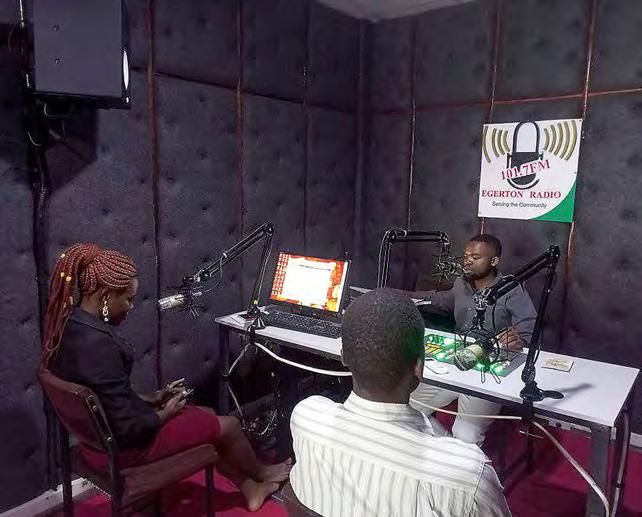
Located on the Nakuru campus of Egerton University, Egerton Radio combines the university’s community radio station with training facilities specifically designed for students of journalism and audiovisual communication, all under one roof. A recent upgrade has seen AEQ’s digital technology take centre stage, with a Capitol IP mixer serving at the heart of the entire system. All signals produced in the radio station pass through the mixer, giving the station’s experienced operators access to reliable digital audio quality and ease-of -use features. The Capitol IP is an 8 -channel fixed-configuration digital audio mixing console, with IP connectivity implemented via a single module with 16 input and 16 output channels integrated into its core. It comes with four mic/line inputs, 12 analogue inputs, four AES/EBU (AES3)
stereo digital inputs, two USB stereo digital inputs, two optional telephone lines and optional digital multichannel audio links, 16 AoIP channels over two Ethernet connectors or 64 MADI channels via fibre optic input.
Egerton Radio, transmitting on 101.7 FM or streamed from the university’s website, offers a wide variety of programming that covers all the educational activities included in the institution’s academic curriculum, alongside the typical music, news and current events content that is popular among the campus’s young student body. The Capitol IP mixer has provided the station with digital technology with IP capabilities, supporting its future endeavours with a simple yet robust setup.
www.aeq.eu
KENYA
Pilar Márquez of Qvest
Meet the new ShowTime STS118E
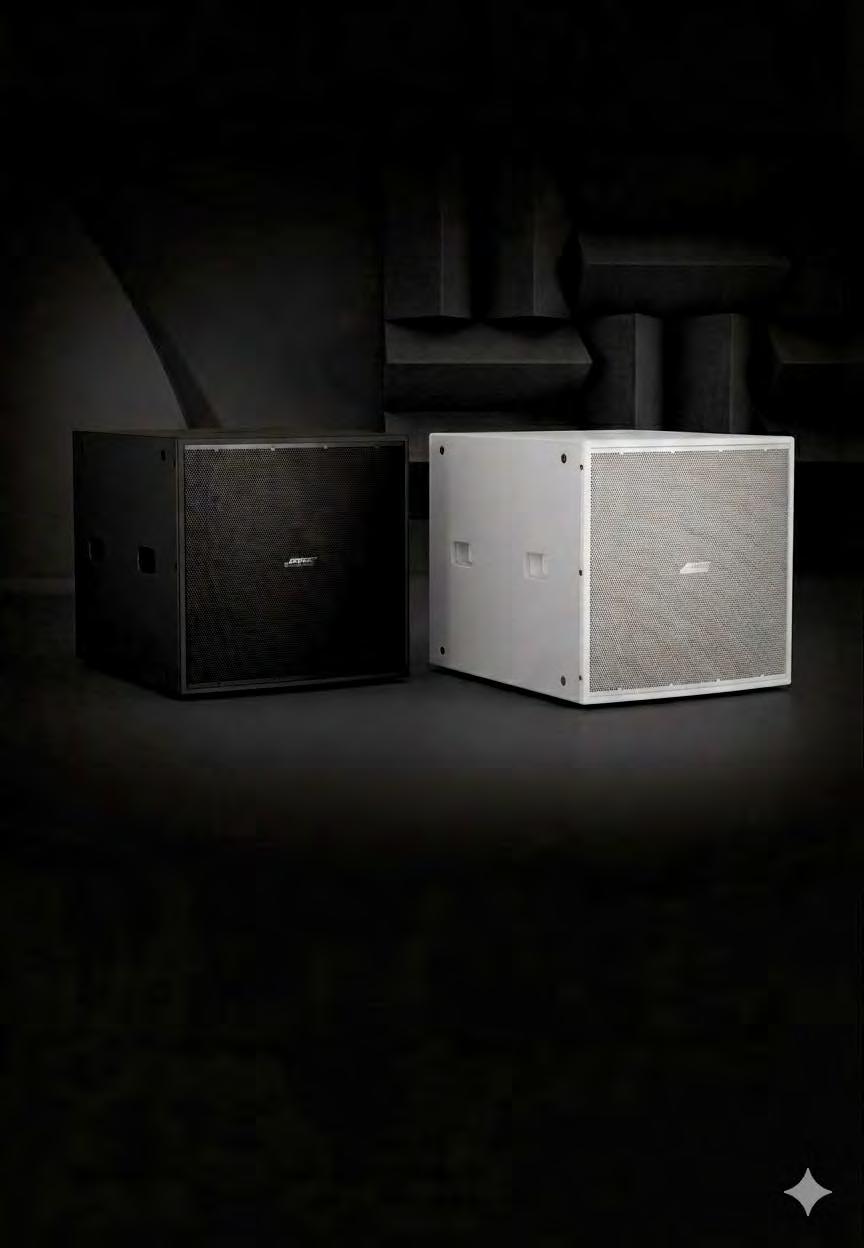
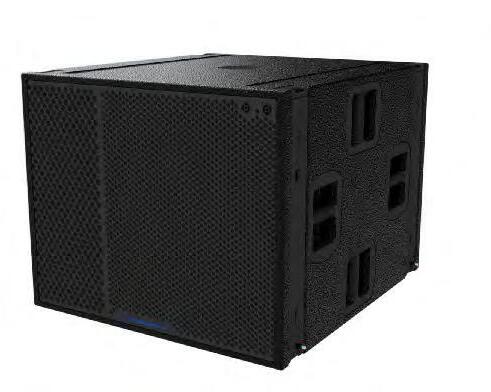
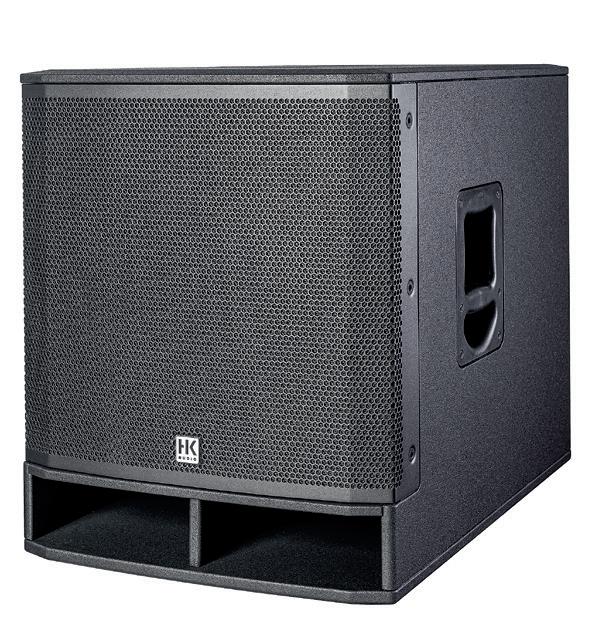
A new, passive, installationgrade 18-inch subwoofer designed to match the scale and voicing of high-output AMM, Forum, and AMU systems. Extending down to 29 Hz, STS118E delivers the low-frequency impact required for music-forward and high-energy applications while offering practical installation features for permanent indoor and outdoor environment.
Shure invests in experiential audio startup
Shure has taken a minority stake in EDGE Sound Research, a US-based startup focused on experiential audio technologies.
The company, founded in 2019 by University of California, Riverside students Ethan Castro and Valtteri Salomaki, is developing systems aimed at changing how audiences experience sound. Castro, a hard-of-hearing music producer and engineer, and Salomaki, who has a background in information systems and marketing strategy, have built the business around new approaches to audio delivery.
The two companies have already collaborated on technology combining Shure’s DCA901 array microphone, designed for broadcast, with EDGE Sound Research’s Virtual Sound Engine software. The system analyses audio captured during live events, identifying and isolating sound elements such as crowd noise, player interactions and in-game moments to create a more immersive listening experience for viewers at home.
“Through this partnership, Shure aims to leverage EDGE Sound Research’s groundbreaking developments to further its mission of delivering exceptional audio quality and innovation,” said Christine Schyvinck, president and CEO of Shure. “By combining Shure’s 100 -plus years of expertise and market presence with EDGE Sound Research’s
breakthrough technologies, this collaboration aligns perfectly with Shure’s commitment to pushing the boundaries of audio technology and creating extraordinary listening experiences.”
The companies say the technology could be applied across sports leagues, broadcasters, venues and audiences. Proposed uses include enhanced audio formats for media rights,
new subscription-based listening options, streamlined production workflows and more detailed in-venue sound experiences. For audiences, this could include access to a wider range of on-field and ambient audio.
EDGE Sound Research has already worked with organisations including the NBA, MLS and the US Tennis Association, and the company said its technology could also be used beyond sports.
“We’re excited to be partnering with such an established audio leader like Shure,” said Valtteri Salomaki, cofounder and CEO of EDGE Sound Research. “The most iconic moments in history have been captured by Shure microphones, and we’re thrilled about the possibilities of creating the new generation of sound experiences.”
www.edgesoundresearch.com www.shure.com
VIVID Studios joins forces with Stage Precision
Stage Precision has appointed Dubaibased VIVID Studios as an authorised service partner within its global Service Partner Program, strengthening support for SP Grid deployments across immersive AV and experience-led projects. The move will see VIVID Studios incorporating Stage Precision’s SP Grid platform into its wider ecosystem of creative technology and automation tools, supporting projects spanning immersive environments, AI-driven experiences and virtual production workflows.
Launched in 2023, the programme was created to establish a network of technical partners capable of delivering the manufacturer’s solutions across live events, virtual production and integrated AV environments. According to the company, partners are required to demonstrate experience integrating SP Grid into real-world workflows before joining.
“Stage Precision has become an important part of how we think about control,
automation and intelligent environments at VIVID,” said Moe Tarakomyi, cofounder and chief creative officer at VIVID Studios. “We started using it inside our own virtual production studio, VO1D, where we needed a flexible way to connect media servers, lighting, tracking, camera and creative workflows.”
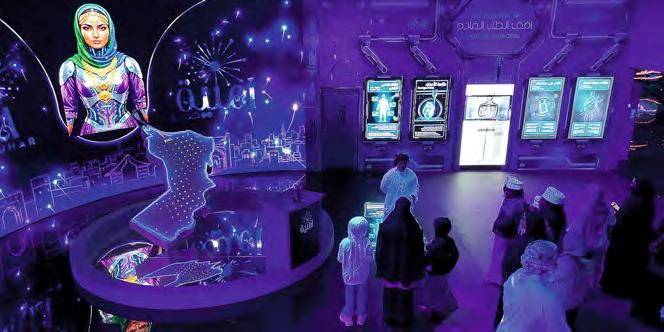
One of the partnership’s largest projects to date is Woohoo, an immersive restaurant concept in Dubai where SP Grid acts as the central control layer connecting media servers, lighting, audio and AI-driven content systems. The platform has also been integrated into VIVID’s OMNIA interactive exhibition project in Oman, where Python scripting was used to link AI-generated content with show-control workflows.
Having completed SP Core Skills Training, the VIVID team is positioned to integrate Stage Precision software across complex, experience-led environments. “It has become
part of our internal language for building immersive spaces,” Tarakomyi said.
“We’re thrilled to welcome VIVID Studios as an official service partner,” said Sarah Cox, CCO at Stage Precision. “The team has already proved how SP Grid can be applied
across complex creative technology projects, from virtual production through to AI-driven environments.”
www.stageprecision.com www.vividstudios.ai
Sound by design at NYX Hotel Limassol
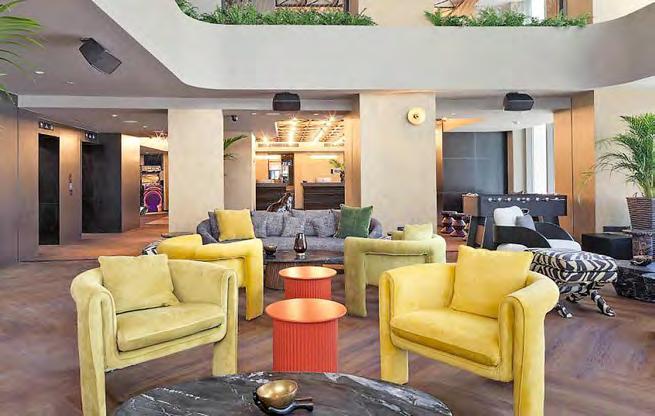
Located in central Limassol near the marina and Limassol Castle, the 189-room NYX Hotel Limassol has been installed with a comprehensive RCF sound system throughout, delivering distributed audio coverage across the lifestyle hotel’s public areas, rooftop hospitality spaces and leisure facilities.
According to systems integrator Megasound, audio is a key part of the architectural experience across the public areas and has been carefully integrated without interrupting the visual language of the interiors. The system combines ceiling, wall-mounted and weatherproof loudspeakers alongside multiple subwoofer models to provide background music and distributed audio coverage across restaurants, bars, wellness spaces and outdoor hospitality areas.
The installation includes 46 PL 8X and 22 PL 6X coaxial ceiling loudspeakers, supplemented by 18 WMR 60T and three WMR 50T wall-mounted systems for directional reinforcement within selected public areas. Outdoor and semi-outdoor coverage is provided through eight P 3108 weatherproof 2-way loudspeakers designed for terraces and exterior hospitality environments. Low-frequency reinforcement is handled by five S 12 subwoofers, one S 10 and an Ayra Ten active sub.
The coaxial ceiling loudspeakers were selected to provide even audio distribution while preserving the clean visual appearance of the hotel interiors, with wall-mounted systems used where room geometry required more directional coverage control.
www.rcf.it
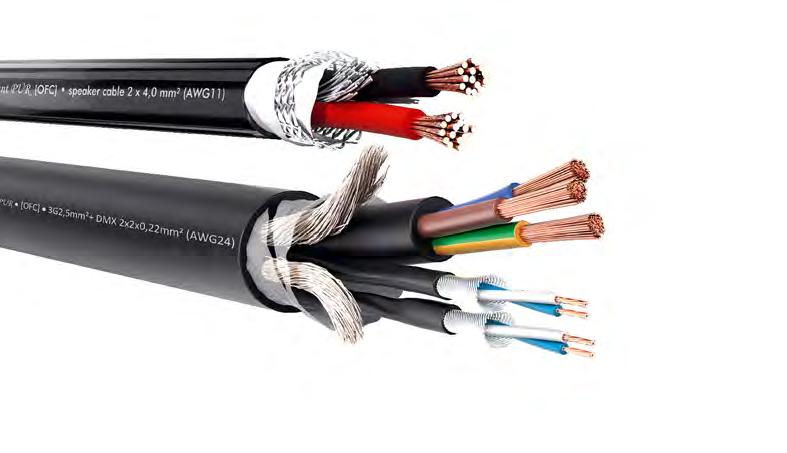
our robust, sporty and long-distance-proven multimedia infrastructure solutions come into play.
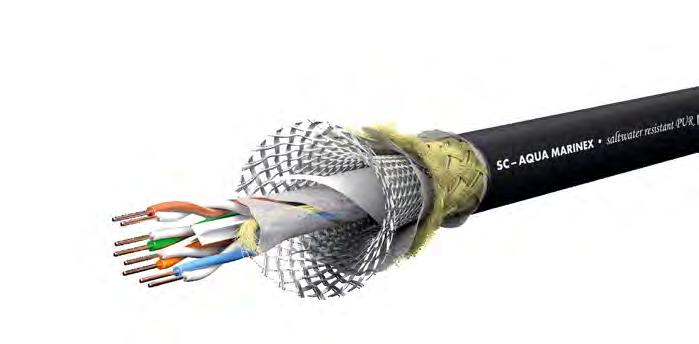
Robust, transversely watertight and aramid-reinforced custom-designed cable solutions for outdoor use
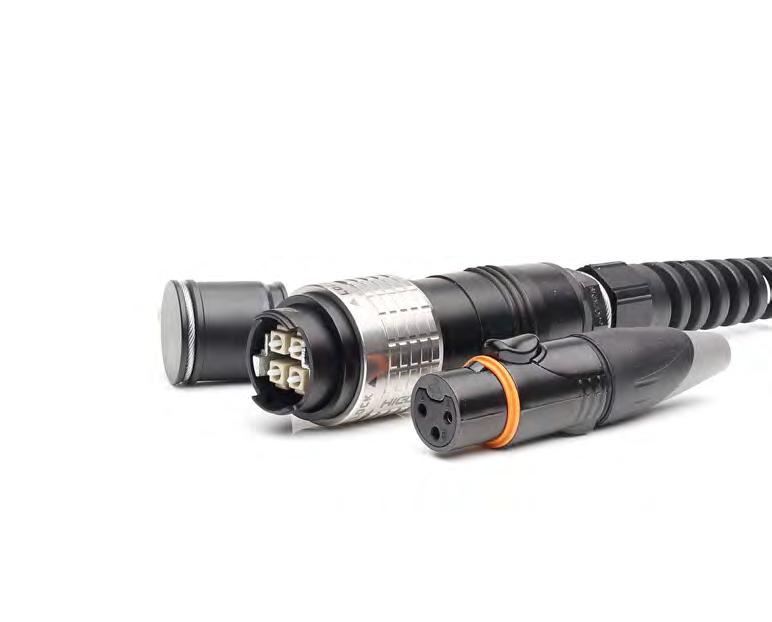
Wide range of cable and connection technology products for fully networked installation concepts
Classified cable bulkware in line with the EU Construction Products Regulation (CPR)
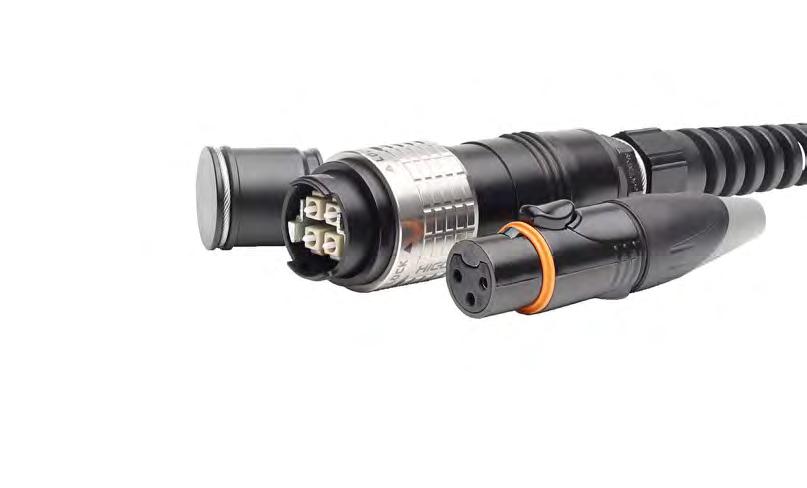
Connection-ready media/network/fiber optic systems for robust mobile and installation applications
Transversely watertight, halogen-free, UV- and microbe-resistant Salt and fresh water resistant outer jacket
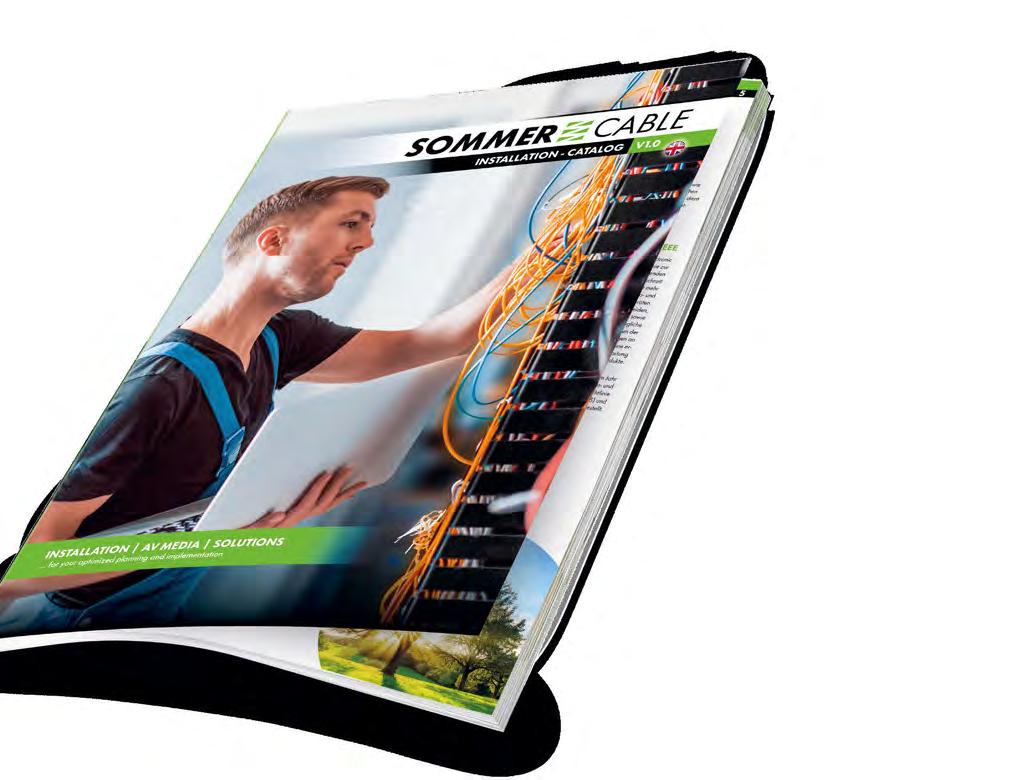
SOMMER CABLE, headquartered in Straubenhardt (Germany) and founded in 1999, is an international supplier of professional connection technology for the audio, video, broadcast, studio/media technology, and installation business. In addition to its in-house brands HICON, CARDINAL DVM, and SYSBOXX, the company offers a range of over 25,000 products, including bulk cables, connectors, assembled cables, customizable distribution systems, and active components.
A B2B shop guarantees customers fast availability and a 24/7 service.
REQUEST YOUR FREE INSTALLATION CATALOG!
Event Technology
K-array hits the ice in Rabat
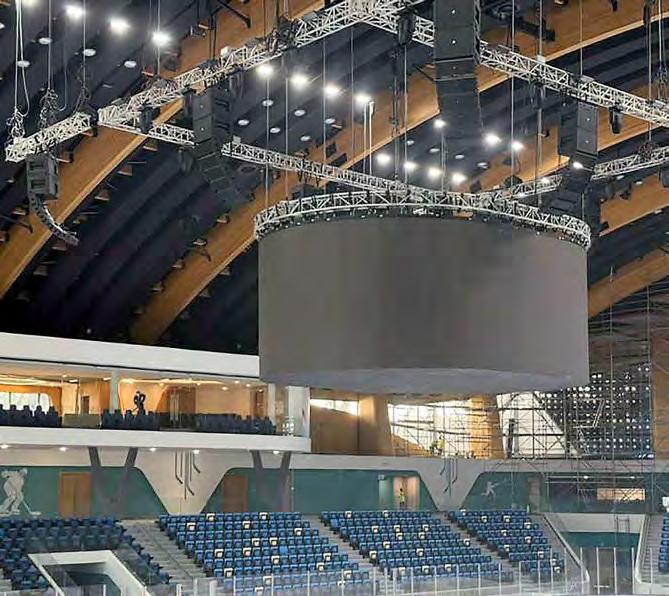
Situated in the Moroccan capital, the new Rabat Ice Hockey Arena recently added an Olympic-sized ice hockey rink that doubles as a multi-purpose event space, integrating lighting, structural elements, LED walls and a K-array sound system.
The venue is reported to be the largest and most modern hockey arena on the African continent, setting a new benchmark for sports and entertainment infrastructure in the region. The project was delivered by Cegelec, a subsidiary of VINCI Energies that specialises in consulting, design, engineering, construction and the maintenance of commercial and industrial buildings and infrastructure projects on a large scale. The company’s audiovisual division managed the installation of professional equipment across the venue. The K-array equipment was supplied through the brand’s exclusive distributor in Morocco, EcmaPro Systems.
The venue sought an audio system capable of supporting 360° entertainment across a wide variety of use cases, from speeches and sporting announcements to music performances and large-scale public events. Furthermore, it was imperative that the sound was immersive, intelligible and able to fill the entire area.
The large sports venue presented a complex acoustic environment, including reverberation, crowd noise and structural reflections, which could significantly undermine intelligibility. Therefore, the team sought a compact and precisely controlled system, which also needed to be capable of delivering high output without creating the acoustic problems that less directional alternatives can introduce.
According to the crew, K-array ’s combination of line array technology, active subwoofers and integrated DSP amplification met those requirements while remaining architecturally unobtrusive. The installed system consists of 48 Mugello KH2P I passive line array elements, 16 Thunder KS3 I active subwoofers and nine Kommander KA208 amplifiers. The KH2P incorporates electronic beam-steering
technology, which allows sound beam dispersion to be digitally adjusted for aiming across the listening area, while mechanical steering provides additional control over both horizontal and vertical coverage patterns.
Both the Thunder KS3 I active subwoofer and 8 -channel Kommander KA208 are integrated with the K-array Connect ecosystem, enabling remote configuration
and signal routing of the entire system via a mobile app. The KA208 is also manageable at scale via K-framework3, the brand’s professional loudspeaker design and system-tuning software.
K-array ’s engineering team worked closely with Cegelec throughout the project, providing system design consultation, acoustic modelling and analysis, onsite setup and tuning, and audiometric measurements and optimisation.
“Installing a system of this scale in a purpose-built hockey arena brought its own set of acoustic demands,” said Najib Bouskour, director of Axians, a VINCI Energies company. “ K-array ’s combination of precise beam-steering and clean, high output gave us the tools to achieve consistent coverage throughout the venue, whether the arena hosted a hockey match, a concert or anything else.”
The system has already been put to use for various events, including the first tournament held on the ice, where Morocco’s national hockey team claimed the championship, defeating several competitors.
Looking ahead, the hockey arena will host the 2026 IIHF Men’s Development Cup in June, bringing international ice hockey to Rabat and to the African continent at that level for the first time.
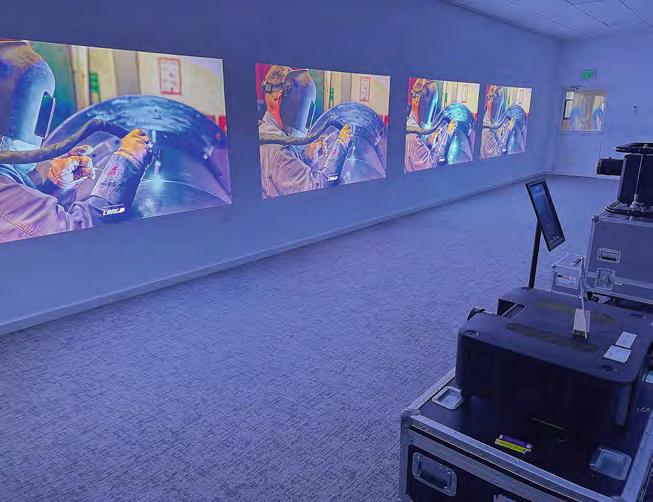
LANG Middle East recently welcomed customers, manufacturers and industry professionals to its Dubai Investment Park facility for an open house event designed to
provide hands-on access to the latest projection technologies. The event brought together representatives from multiple manufacturers, giving visitors the opportunity to compare
competing technologies side by side and discuss their applications directly with manufacturer specialists.
“Our objective with the Open House was to give customers a genuine opportunity to compare technologies and make informed decisions based on their specific project requirements,” said LANG Middle East managing director Oliver Luff.
As part of the demonstrations, LANG Middle East showcased Panasonic’s new RQ45 projector alongside Epson’s EB-PQ 2030 B , allowing visitors to evaluate the two platforms under identical conditions. The company also demonstrated a Panasonic RQ35 alongside a double-stacked pair of Epson PQ2220B projectors, illustrating how different technologies and deployment approaches can be used to achieve similar brightness levels and visual results.
“As the region’s only independent, brand-agnostic rental and distribution partner, we are uniquely positioned to present competing technologies in the same environment,” added Luff. “Rather than telling customers which solution is best, we believe in creating opportunities for them to see the differences for themselves.”
The event reflected a broader strategy at LANG Middle East to position its Dubai facility as both a demonstration space and a centre for professional development through its recently launched LANG Academy, which will be led by senior market development specialist David Vandevelde.
The academy’s first training programme – an Epson projection course – took place on 16–17 June. Future sessions will form part of a wider programme covering technologies and workflows across the video sector, with future courses expected to address a range of skill levels from fundamental system knowledge through to advanced projection, media server and networking topics.
Luff believes events such as the open house complement the academy’s wider mission. “Events like this reflect LANG Middle East’s commitment to remaining vendor neutral while giving our customers access to the latest technologies, expert advice and real-world demonstrations that help them make the right choice for their application,” he concluded.
www.lang-me.com
Gearhouse lights Cats with Robe
SOUTH AFRICA
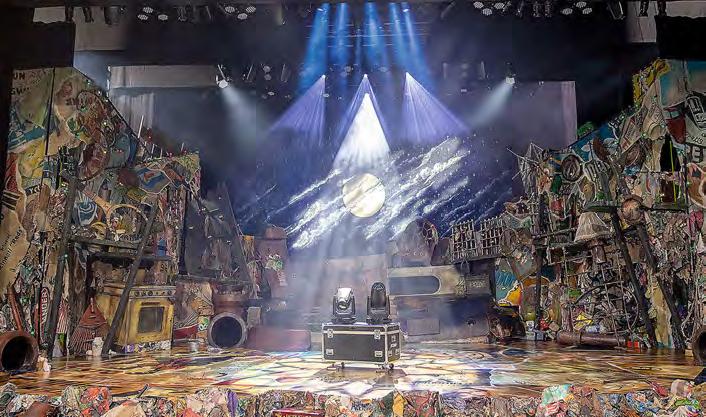
South African theatrical production specialist Gearhouse Splitbeam has invested in 16 Robe iFORTE moving lights, which are currently in use on a touring production of Cats by GWB Entertainment.
Presented in collaboration with Peter Toerien Productions, The Really Useful Group and Cape Town Opera, the production opened in South Africa with 77 performances at Artscape in Cape Town and Teatro at Montecasino, Johannesburg. The show is scheduled to tour Asia for at least 18 months.
The original 1981 lighting design by Howard Eaton has been adapted for this version, with Eaton overseeing the re-lighting in Cape Town. Lighting direction and programming were handled by David Totaro.
Gearhouse Splitbeam was engaged to provide the lighting for the tour. The company’s head of lighting, Mathew Lewis, said he sought lights that were robust, flexible and futureproof. “In terms of high-powered long-throw fixtures, we think iFORTE is the best available right now, especially in colour and output quality,” he said.
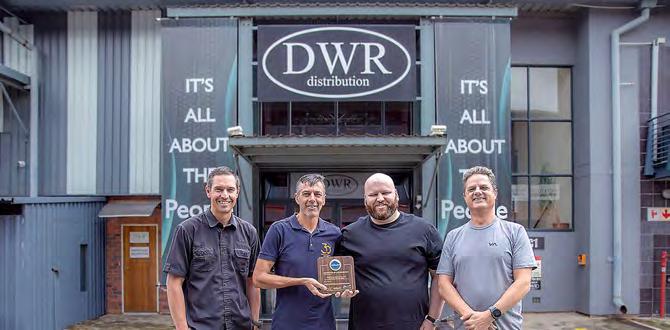
The fixtures were supplied by DWR Distribution in time for rehearsals in Cape Town. During the South African run of Cats , the iFORTE fixtures were installed on balcony rails and trusses at both front and rear positions, where they were used for key lighting, specials and effects throughout the production.
Gearhouse Splitbeam already operates a range of Robe fixtures, including 48 ESPRITE Fresnels purchased in 2025 with the HCF (High Colour Fidelity) LED engines installed, together with a set of HP (High Power) Transferable Engines –ready for swapping out according to show requirements – along with a set of PC lenses to offer a choice of ESPRITE Fresnels or PCs and 22 Tetra2s, all of which have been in regular use across its wider portfolio. The company stated that previous experience with the brand, combined with the performance of the iFORTE units, informed the investment decision, alongside a broader strategy to align equipment across the Gearhouse South Africa Group.
Gearhouse Splitbeam CEO Alistair Kilbee proposed the use of iFORTE fixtures for front and back lighting, which was supported by the creative team. “International LDs are
generally happy to work with Robe products,” he said.
Kilbee also pointed to the compatibility of the fixtures with RoboSpot systems, which are increasingly specified on technical riders. He noted a preference for systems that retain flexibility and control, with a human operator at the core.
AtlasIED has announced a partnership with Netgear AV focused on developing integrated audio-over-IP and networked audio solutions for commercial installations. The collaboration brings together AtlasIED’s expertise in intelligent audio and security solutions with Netgear AV’s managed switching and network infrastructure platforms.
According to the companies, the partnership is intended to support the growing convergence between AV and IT environments, with a particular focus on simplifying deployment and improving interoperability for integrators.
“Interoperability is key to unlocking the full potential of AV-over -IP,” said John
Henkel, product marketing director at Netgear AV. “We’re looking forward to this
At the core of the partnership is a focus on optimising audio deployments over
collaboration with AtlasIED to showcase how our solutions work together to deliver powerful, scalable and easy-to -deploy systems for integrators.”
high-performance networks. By pairing AtlasIED’s Atlas+Fyne POE++ loudspeaker solutions with Netgear AV managed switches, it is hoped that customers
SMART BY CHOICE
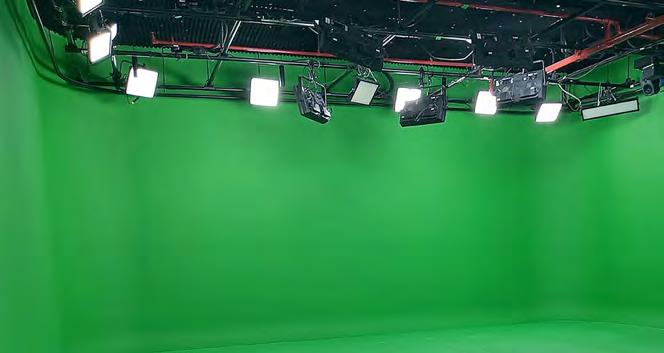
Oasis Enterprises has delivered a Rosco Chroma Key System for Arabic broadcaster Al Arabiya’s new virtual production studio in Riyadh.
The solution was implemented to create a seamless greenscreen environment for daily live and recorded news programming.
“The primary objective of this project was to enhance Al Arabiya’s Riyadh studio facilities, increasing production capacity while maintaining consistent broadcast quality and technical standards aligned with the network’s established workflows,” explained Karim Abdel Massih, head of sales – Dubai at Oasis Enterprises.
The installation incorporates Rosco Chroma Key Paint, Chroma Key Floor and Chroma Gaff to create a floor-to -ceiling greenscreen studio. The colour-matched Chroma Key System has
will benefit from simplified installation, reduced infrastructure complexity and consistent audio performance across a wide range of commercial environments.
“As AV systems continue to converge with IT networks, it is critical that manufacturers work together to ensure reliability, performance and ease of deployment,” said Dan Saenz, senior product manager at AtlasIED. “Our partnership with Netgear reflects a shared vision of delivering validated, end-to -end solutions that empower integrators and end users alike.”
www.atlasied.com www.netgear.com
Oasis Enterprises was responsible for the end-to -end delivery of the Rosco solution, including the supply, installation, testing and commissioning of the Chroma Key System, as well as the associated studio lighting and lighting control systems.
“Rosco chroma key products were selected based on their exceptional colour accuracy, consistency and predictable response under studio lighting,” added Massih. “In addition, the client placed strong confidence in Oasis Enterprises’ technical recommendations and execution capabilities, with the assurance that the entire solution would be delivered and supported by Oasis’ experienced in-house team.”
inMusic acquires Native Instruments
inMusic has announced its acquisition of Native Instruments, bringing the music technology developer and its associated brands under the same ownership as Akai Professional, Denon DJ, Numark, M-Audio and Moog Music.
The deal also includes audio software companies iZotope, Plugin Alliance and Brainworx, significantly expanding inMusic’s presence across music production, audio processing, mixing and mastering technologies.
Native Instruments is known for platforms including Kontakt and Traktor, alongside a wider portfolio of software instruments, DJ systems and production tools used throughout studio, live and broadcast environments. According to the companies, the acquisition builds on an existing relationship between the
businesses,
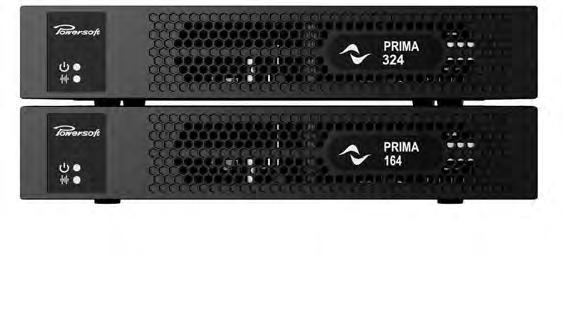
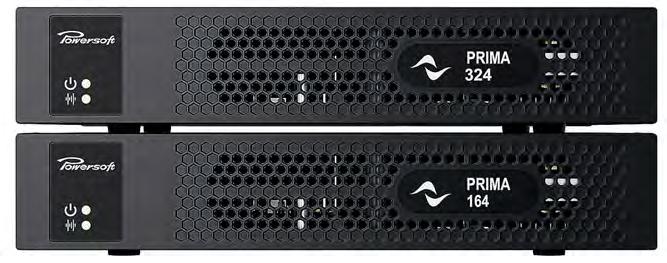
Choose simplicity that works. PRIMA delivers compact professional amplification with dependable performance, practical value, and all the qualities you’d expect from a Powersoft amplifier.
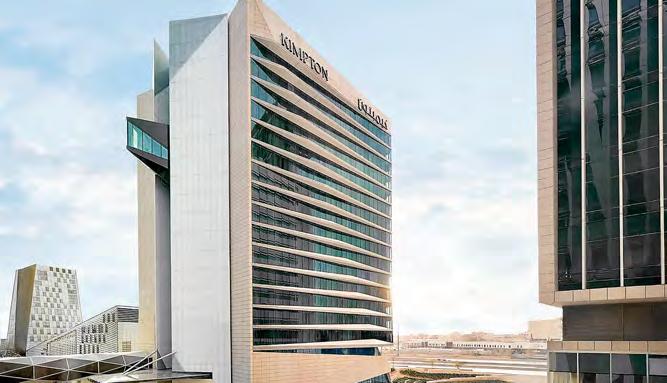
Biamp upgrades Kimpton KAFD Riyadh
Kimpton KAFD Riyadh, part of the IHG Hotels & Resorts portfolio, has implemented a Biamp background music (BGM) and audio distribution system designed to support its guest experience through enhanced sound environments. Sonic Electronics supplied and supported the integration of the Biamp AV solutions, working alongside a local systems integration partner. The system has been deployed across multiple areas of the hotel, including lobbies, restaurants, lounges, ballrooms and wellness spaces, with each zone designed to maintain consistent audio quality while supporting distinct acoustic requirements.
The installation includes Biamp 55 ceiling loudspeakers, the Vocia BGM control panel and Vocia multichannel amplifier. The system delivers BGM distribution, integrated paging, sound masking and centralised control, enabling hotel staff to manage audio across the property.
Sonic Electronics also provided a broader AV infrastructure, including audio DSP platforms, loudspeakers and control interfaces. The system has been designed with scalability in mind, allowing for future expansion without significant infrastructure changes.
“At Sonic Electronics, we are committed to delivering innovative AV solutions that
of view on what musicians want,” said inMusic CEO Jack O’Donnell. “Bringing these platforms together allows us to move faster, deepen integration and build better tools for creators.”
The acquisition follows a difficult period for Native Instruments, which recently entered restructuring proceedings while seeking new investment and ownership.
Nick Williams, CEO of Native Instruments, described the agreement as “the beginning of a new chapter” for the company and confirmed that Native Instruments, iZotope, Plugin Alliance and Brainworx would continue operating under the new ownership structure. Financial terms of the transaction were not disclosed.
www.inmusicbrands.com
www.native-instruments.com
enhance user experience and operational efficiency,” said Ravindra J, manager –audiovisual, Sonic Electronics. “This project reflects our dedication to supporting our partners with reliable technologies
and scalable systems tailored for modern hospitality environments.”
ae.sonicelec.com
www.biamp.com
including previous integrations involving Akai Professional and M-Audio products.
“Native Instruments represents everything we look for in a partner: exceptional products, a deeply engaged community and a clear point
SAUDI ARABIA
Alec awarded Sphere Abu Dhabi contract
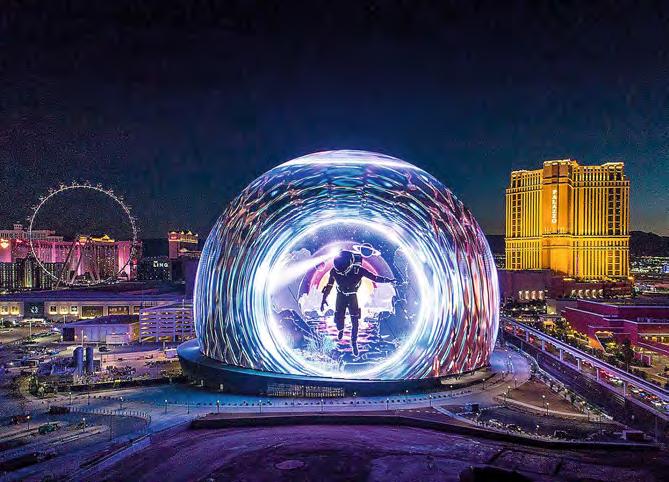
Alec Engineering and Contracting has been awarded a US$1.7bn contract to design and construct Sphere Abu Dhabi, the first Sphere venue to be developed outside the United States. Located on Yas Island between Yas Mall and SeaWorld Abu Dhabi, the project is scheduled for completion by the end of 2029 and will accommodate up to 20,000 visitors. The venue will host a range of immersive experiences, concert residencies, sporting events and brand activations, expanding on the concept first introduced by the Sphere in Las Vegas, which opened in 2023.
According to Alec, the scope of works includes the complete design, procurement and construction of the venue, incorporating immersive technology systems, specialist structural and mechanical engineering, bespoke manufacturing and integrated sustainability features.
“Securing the Sphere Abu Dhabi contract is a profound endorsement of our capability as a homegrown UAE company,” said Barry Lewis,
Alpha Acoustics enhances Dubai Mar Thoma Church
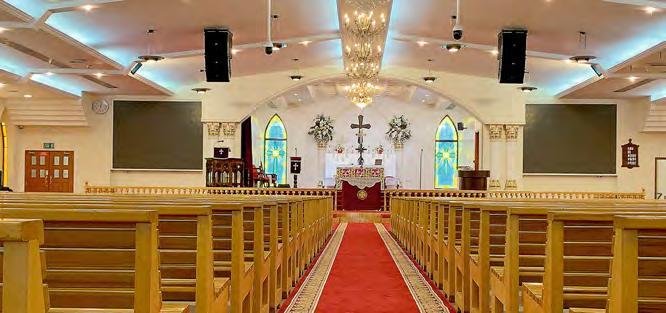
With phase one in the main first-floor sanctuary completed in 2024, AV consultant and product specialist, Middle East, Africa and India at Alpha Acoustics, Joe Mathew, has returned to Dubai Mar Thoma Church to focus on the three spillover rooms on the ground floor that are used as overflow spaces. These rooms can be run independently or can receive an audio feed from the Allen & Heath mix desk in the main sanctuary upstairs.
Mathew has fitted Alpha Acoustics’ Kompact 10A units into the two smaller rooms, while the larger room has two KITE 10 boxes and one KITE SUB 18 subwoofer for added low end. These boxes are powered by Alpha’s DAMP 4.300CM 4 -channel DSP power amplifiers and linked to a Yamaha MG Series mixer. Two Alpha Acoustics Ambience W66T loudspeakers have also been fitted in the stairway, while two Ambience C65T models have been installed in the lobby.
“We also wanted to enhance the audio in the main sanctuary even further,” said Mathew. “Behind the choir, there are seats for officials when they visit for special events, but again we couldn’t put loudspeakers there because of the hanging mics for the choir. So as side fills, we’ve added two KITE 6 boxes to improve intelligibility
because the line array is hung almost above the first row of the congregation. We’ve also installed two Kompact 10A as floor monitors for the priests and four Kompact 10A as choir monitors.”
As part of phase two, Mathew has also enhanced the main sanctuary’s existing Shure microphone inventory with a new Shure SLX-D wireless system with three DH5T omnidirectional headset microphones for the priests, 12 MX202 overhead mics for the choir, three MX418 gooseneck condenser microphones for the podiums and two SM58 vocal microphones on the altar.
“We are very satisfied with the performance of the entire audio system,” concluded vicar Reverend Jijo T Mutheri, church trustee Vinodh Sam Isaac and church secretary Mathew P Thomas. “Since the upgrade, we have experienced no issues such as howling or feedback. The sound output is exceptionally clear, ensuring a pleasant and effective audio experience for all. We appreciate the quality of work and professionalism demonstrated throughout the project.”
www.alphacoustics.com www.marthomaparishdubai.org
CEO of Alec. “This is a globally iconic venue that will attract millions of international visitors and establish Abu Dhabi as a world-leading centre for immersive entertainment and cultural experience.”
The Las Vegas Sphere is known for its large-scale LED exterior and immersive audiovisual technologies, including a high-resolution internal LED display and advanced concert sound system.
“The Sphere Abu Dhabi is both technically complex and architecturally ambitious,” said Sean McQue, managing director at Alec. “It will demand precision at every level, from design integration and supply chain orchestration to onsite execution and quality assurance.”
The project forms part of Abu Dhabi’s wider strategy to expand its entertainment, tourism and cultural offering on Yas Island.
www.alec.ae
www.sphereentertainmentco.com
MPME
MIDDLE EAST
Martin Professional Middle East (MPME) has invested in 100 Barco QDX-4K45 projectors as part of an expansion of its rental and installation portfolio, with delivery and rollout scheduled for the second half of 2026.
The agreement follows MPME’s recent appointment as an official Barco distributor for the Middle East and builds on a long-standing partnership between the two companies across live events, themed entertainment and projection mapping projects.
Al Dhafra desert, UAE, where Martin Professional used Barco QDX projectors to create a permanent night-time projection-mapped installation on the landmark structure.
Bilal Assidi, sales director at MPME, said: “By adding 100 QDX- 4K45 projectors to our fleet, we’re strengthening our ability to support ambitious creative projects – from touring productions to complex permanent outdoor installations – while giving our customers confidence in both image quality and operational efficiency.”
According to Barco, the investment will increase local availability of its three-chip projection platform and support growing demand for 4K projection solutions in the region. The company said the expanded fleet will help rental companies that require immediate access to projection equipment across the Middle East.
The QDX- 4K45 projectors are used in applications including large-scale events, cultural landmarks, themed attractions and immersive experiences. One recent deployment was at the Liwa Sign in the
Domien De Witte, vice president sales Barco, added: “This agreement marks a natural next step in our closely aligned strategies. The investment reflects strong confidence in high-resolution, high-brightness projection that’s built to last. We’re proud to continue supporting Martin Professional as they help customers push creative and technical boundaries across the region.”
www.barco.com
www.martinpro-me.com
AVE Audio provides clear speech at Hacı İbrahim Demir Mosque
KALEPRO, AVE Audio’s Turkish partner, has carried out a complete audio system installation at Hacı İbrahim Demir Mosque in Ankara, with ASCOLTO AH1635 Dante-enabled column speakers used for the indoor areas. The project has highlighted the important role that digitally steerable column loudspeakers can play in modern mosque sound reinforcement. In worship spaces, sound is not only a technical matter – it is closely linked to the spiritual and architectural experience of the congregation. For this reason, one of the main goals of the Hacı İbrahim Demir Mosque project was to ensure that the imam’s voice would be perceived as coming naturally from the front of the room, in visual coherence with his actual position.
“This may sound straightforward, but it is often not the case in many religious buildings,” said Dr Matteo Romanin, R&D and application engineering, AVE Audio. “Conventional loudspeaker systems are frequently placed behind the worshippers or suspended overhead, for example on large chandeliers. While such solutions may provide sufficient sound level, they can weaken the natural connection between voice and source, making speech feel less direct and less engaging.”
To avoid this effect, the ASCOLTO AH1635 columns have been installed frontally along the wall of the mosque, including the area of the mihrab. This configuration has helped create a more natural acoustic image, supporting the perception of speech as clearly
originating from the imam rather than from distributed sound sources above or behind the congregation.
“Another important objective was to achieve more even sound coverage throughout the prayer hall and in the lateral areas,” added Romanin. “In a mosque, listeners are spread across a wide floor area and may be either seated or standing, which makes consistency of coverage particularly important. Strong variations in sound pressure level from one
listening position to another can reduce comfort and make spoken words less intelligible.”
The use of ASCOLTO AH1635 digitally controlled column speakers allowed the system designers to direct sound with greater precision and to reduce coverage differences across the audience area. The result is a more balanced listening experience for worshippers throughout the hall, with improved clarity and more uniform level distribution.
At the same time, the controlled directivity of the system helped reduce unnecessary sound energy towards reflective surfaces, an important benefit in large religious interiors where reverberation can otherwise compromise intelligibility.
The project also made use of Dante networking, providing a modern and flexible infrastructure for audio distribution. This supported a system design capable of managing both indoor and outdoor zones within a unified installation concept.
“The Hacı İbrahim Demir Mosque project shows how sound system design in worship spaces is evolving beyond the simple question of loudness,” concluded Romanin. “Today, the focus is increasingly on delivering speech with clarity, natural localisation and consistency throughout the space.
With the installation of ASCOLTO AH1635 column speakers, KALEPRO and AVE GmbH have delivered a solution carefully aligned with the acoustic and functional needs of a contemporary mosque, helping create a clearer and more natural listening experience for all worshippers.
www.ave-audio.de kalepro.com
VuWall powers Burj Khalifa security control room
VuWall has delivered an integrated videowall management platform for the security control room at Dubai’s Burj Khalifa, working alongside systems integrator MVP Tech, part of Convergint. The deployment supports security and operational monitoring at the 828m tower, which welcomes approximately 17 million visitors annually and combines residential, hospitality, commercial and visitor attractions within a single development.
A key element of the project was integration with Emaar’s existing security infrastructure. As the organisation uses Milestone XProtect as its video management system, the installation incorporates the VuWall Milestone Plugin for TRx, allowing operators to access and control videowall content through a unified user interface.
According to the companies involved, the resulting platform provides security personnel with access to live and recorded video feeds,
Operated by Emaar Properties, the Burj Khalifa requires continuous oversight of a wide range of systems and infrastructure. With an average of around 47,000 visitors passing through the building each day, the operator sought a control room solution capable of consolidating video feeds, operational intelligence and infrastructure monitoring into a centralised environment.
To address these requirements, VuWall supplied its TRx Video Wall Management Software as the core platform for visualisation and control within the security operations centre. The software enables operators to manage, distribute and display information across the control room’s videowall infrastructure through a single interface.
The deployment also incorporates VuWall Application Server technology, providing access to websites, dashboards, remote desktop sessions and files from within the platform. Additional components include PAK 40 videowall and KVM nodes, alongside VuStream 150 AV-over-IP encoders, enabling IP-based distribution of video and data throughout the system.
operational dashboards and other critical information sources from a single operational environment. By bringing multiple systems together under one platform, the control room is designed to simplify monitoring and coordination activities. The project also includes LED display technology from Absen and operator consoles from CTF Consoles, supporting visualisation and day-to -day operations.
The completed installation has been designed to support 24/7 operations while allowing future expansion as operational requirements evolve. The architecture enables additional sources, displays and monitoring functions to be added over time without requiring a complete system redesign.
For a facility operating at the scale of the Burj Khalifa, the project demonstrates how videowall management, AV-over-IP distribution and integrated control platforms can be used to centralise information in large-scale security environments.
www.vuwall.com
SOUTH AFRICA
Splashy Fen marked its 35th anniversary with a redesigned main stage, introducing a 90m x 30m dome structure that became a central visual feature of this year’s festival. To maximise the impact of the new roof, lighting designer Shaniel Laloo turned to Chauvet Professional’s COLORado PXL Curve 12 fixtures, using them to transform the dome into an extension of the show itself.
A total of 18 COLORado PXL Curve 12 motorised battens were deployed across the stage. Twelve fixtures were positioned above the central videowall, while the remaining six were placed on the stage deck. The fixtures were used to wash the dome in colour, create pixel-mapped effects and generate visual separation between headline artists and their backing musicians.
“They fanned out a beautiful curtain of light,” said Laloo. “This fixture also worked out great to separate the main artists visually from their bands. It handled a lot of the pixel work.”
According to Laloo, the versatility of the fixtures proved particularly valuable for the festival’s intimate acoustic performances and high-energy electronic acts. “I wanted to group the fixtures to create big looks but still have good coverage over the artists,” he concluded.
www.chauvetprofessional.com
Broadcast Solutions delivers UHD fleet to TRT
Broadcast Solutions is completing delivery of eight new outside broadcast vehicles to Turkish public broadcaster TRT, reportedly marking the largest single OB contract in the systems integrator’s history. The project comprises two large trailer-based units and six mid-sized rigid chassis trucks, all designed for Ultra HD production. The fleet was commissioned as part of TRT’s wider modernisation strategy ahead of a series of major international events, including European football competitions and the NATO summit scheduled to take place in Ankara later this year.
The two flagship trailer units are configured to support up to 23 UHD cameras, including slow-motion and ultra-slow -motion
systems, while the six smaller vehicles can accommodate up to 12 UHD cameras each.
A key requirement of the project was support for TRT’s ongoing transition from an SDI to IP-based production infrastructure. To provide operational flexibility, all eight vehicles were designed with hybrid architectures capable of supporting both 12G-SDI and IP workflows.
“We needed a technical partner with a real depth of knowledge and experience in systems integration and outside broadcast manufacture,” said Alperen Aydin, CTO of TRT. “Broadcast Solutions had these skills, and they also demonstrated their understanding of the philosophy behind these projects.”
According to Broadcast Solutions COO Wladislaw Grabowski, TRT involved the
company from the earliest planning stages to help optimise both technical design and operational workflows. “This was a very important project for all parties involved,” said Grabowski. “TRT wanted us involved from day one to ensure we delivered the most technically secure and operationally convenient production spaces and to ensure we had the time to get everything right.”
The contract was signed in September 2024, with all eight vehicles scheduled for delivery within a two-year period. Broadcast Solutions stated that the first trailer unit entered service within eight months and is already being used for live sports, entertainment and event productions.
www.broadcast-solutions.de
HK Audio’s COSMO energises Doek & Slay
Divine Concert Sound has selected an HK Audio COSMO system to cover the recent Harare edition of Doek & Slay. The longstanding HK Audio partner has a rental inventory consisting of the COHEDRA line array, along with the COSMO system, CONTOUR X point source cabinets and C Sub subwoofers.
Described by its organiser as “a safe space where women can express themselves openly and without judgement”, Doek & Slay is a travelling festival that brings major Zimbabwean acts to all-female audiences across the country. Headline performances included Winky D, Killer T, Oriyano and the Travellers Band, plus a surprise set from Atenda Chinx. The event attracted a crowd of 25,000 women to the open-air venue.
“We are proud to be the first rental company in southern Africa to invest in COSMO,” said David Mwale, owner of Divine Concert
Ross Video has announced the expansion of its manufacturing and research and development operations in Ontario to accelerate the next generation of Ultrix, the company’s flagship hyperconverged media processing platform. The announcement was made at Ross Video’s Ottawa facility alongside representatives from the Government of Ontario and Invest Ontario, including Minister Vic Fedeli, Minister Nolan Quinn and Invest Ontario CEO Khawar Nasim. Supported through the Invest Ontario Fund, the expansion will help advance the development of new Ultrix capabilities including AI-enabled processing, modular standalone deployment options and a redesigned architecture built for greater scalability and future innovation. The enhanced platform is expected to significantly expand processing capacity while enabling more flexible and efficient live production workflows for broadcasters and media organisations worldwide.
“Ross Video is a true, homegrown success story that speaks not only to the high calibre of Ontario-made technologies but to the resilience of our workforce and investment landscape,” said Vic Fedeli, minister of
economic development, job creation and trade. “Through their expanded footprint in Ottawa and Iroquois, Ross Video will continue to unlock new opportunities for Eastern Ontario’s highly skilled workforce and
Sound. “Doek & Slay is a popular event that attracts a big crowd. It was important for us to deliver the kind of sound that reflects the scale of the show, and COSMO ensured that we could do that. I’m delighted with how it went and I can’t wait to see the rig out on more events in the future.”
“Using a brand-new system on a major event can be nerve-wracking , but David Mwale and his team at Divine Concert Sound did an excellent job,” said HK Audio application support engineer Karel Noon. “They have a deep knowledge of HK Audio equipment and were able to get the best out of COSMO. It was great to play a small part in such an important event and I’m pleased that we were able to give the audience the show they deserved.”
www.hkaudio.com
reinforce the province’s global leadership in advanced manufacturing and tech innovation.”
“Ontario has been an important part of Ross Video’s growth and innovation story for decades,” added Troy English, chief technology officer and senior vice president at Ross Video. “This investment will help accelerate the next generation of Ultrix with expanded AI-enabled capabilities, greater flexibility and increased processing performance, while continuing to invest in Ontario talent, innovation and manufacturing.”
Ross Video says the project reflects long-term confidence in Ontario as a place where advanced technology companies can continue to innovate, compete globally and create meaningful opportunities while remaining rooted in Canadian communities.
www.rossvideo.com
SP Grid supports Games of the Future
Stage Precision’s SP Grid platform played a central role in the delivery of the latest Games of the Future event, held at the ADNEC Centre in Abu Dhabi. The 10-day occasion brought together physical and digital competition across multiple “phygital sports” disciplines, including Phygital Fighting, Football and Basketball, alongside VR games and drone racing, staged across eight arenas.
Event technology specialist bright! studios led the integration of systems, content and creative technologies, with SP Grid forming the core control and integration platform. “This was the first time we worked on Games of the Future and the project involved two clients: lead agency Ethara and the broadcast provider, PLG,” explained Leon Herche, project lead at bright!. “We were hired to handle everything content-related and to also develop creatives to enhance the overall viewing and gameplay experience, from AR concepts to digital worlds for at-home viewers to interact with.”
From the design phase onwards, SP Grid’s Grid Studio software was used to connect APIs and data streams into a unified control environment, combining gameplay data, media servers and system processes. Additional onsite support was provided by Stage Precision during deployment.
“Firstly, we used SP Grid for show control of the media playback,” said Herche. “A lot of this was focused on API and data integration with content to display different stats and milestones from the gameplay. In SP Grid, we had data coming in from the games, which were merged,
translated and, in turn, triggered Disguise media servers to play relevant content on the screens around the gaming stages.”
Custom user interfaces within SP Grid enabled operators to monitor and act on gameplay data, while built-in backup switching reduced the need for separate failover systems.
“We were able to show the operators one of the custom UIs we had built in SP Grid to display the data they were interested in, to help them make decisions and instruct the production team during these live gameplay moments,” said Herche. “The new extension capabilities in SP Grid meant that even in cases where there
DW Audio & Backline chooses Absen
SOUTH AFRICA
Pretoria-based rental company DW Audio & Backline has expanded its production inventory with the purchase of Absen NT3.9W LED display panels from DWR Distribution, marking the company’s entry into LED display services for live events and entertainment productions.
Founded in 2008 by De Waal Bothma, DW Audio & Backline has gradually expanded from backline and audio rental into a broader technical production provider covering lighting, AV and staging services across the South African events sector.
“I’ve waited a long time for this moment, and I’m so happy,” said Bothma. “We were going to buy a 5m x 3m LED display but ended up doubling the panels from the start.”
According to the company, the investment was driven by increasing demand for visual production elements across live music
were no existing plugins for the integration we needed, our team could code an extension using Python to adapt quickly to changing needs or different hardware. No matter how much planning goes into a production, you’re always going to need to adjust things on the fly. The addition of Python scripting in SP Grid just extended the platform’s flexibility even further.”
SP Grid was also used to support broadcast elements, including a virtual environment developed by bright! for online audiences, alongside interactive features for streaming platforms.
The team built a city with eight districts to correspond with the different disciplines in Games of the Future. According to Herche, this helped to engage remote viewers, and the broadcasters had the option to use this created universe in different ways between gameplay sequences. The team also used SP Grid to write a data integration that allowed viewers on Twitch to enter a specific command into the Twitch chat to name characters in the content of the virtual districts that was being broadcast.
Augmented reality elements across both virtual and physical competitions were delivered using SP Grid workflows, supported by tracking data and calibration tools.
“The toolkit for AR camera calibration was both effective and accurate in SP Grid, cutting down setup time considerably,” concluded Herche. “That was what we found with SP Grid: it just made complex tasks a lot simpler to handle.”
www.bright.de www.stageprecision.com
events, festivals and theatre productions.
“LED is no longer a nice-to -have – it’s a must,” added Bothma. “Visually, it brings a lot of energy depending on how you use it.” DW Audio & Backline primarily supports productions within the Afrikaans music market alongside school productions and festivals, and has served as the main technical supplier for AfriForum Theatre for the past six years. As part of the purchase, the team also completed technical training at DWR Distribution covering LED display installation, calibration and NovaStar configuration workflows.
“We are very excited and grateful for this opportunity,” said Duncan Riley from DWR Distribution. “Many companies in the rental industry have Absen, and there is a big pool to sub-rent .”
“Thank you very much to De Waal and the team at DW Audio & Backline for your support,” added Werner Nieman from DWR, who orchestrated the sale. “We know this purchase will enable you to offer a full solution to your clients, and you can count on DWR to support you all the way. It’s been such an encouragement to see the passion and excitement of De Waal and his team, and we are confident that this investment will serve them well for many years to come.”
www.dwaudio.co.za www.dwrdistribution.co.za
Elevating the Modern Meeting Experience
In today’s meeting rooms, clear and intelligible sound is essential for effective collaboration.
The Vyper-KV25 II offers a discreet yet powerful solution, seamlessly integrating into the architecture thanks to its ultra-slim design, whether on-wall or recessed. Engineered for precise coverage, it ensures consistent speech clarity across the room—ideal for presentations
and hybrid meetings—while minimizing reflections in acoustically challenging spaces. Built from precision-extruded aluminum and available in multiple finishes, it combines elegance with performance, and when paired with K-array subwoofers and Kommander amplifiers, it delivers a complete, scalable audio system tailored to modern corporate environments.
www.k-array.com
Vyper-KV25 II
Wisconsin
The foundation for better meetings
Crestron’s Collab Compute is a purpose-built platform for today’s collaboration environments
Most hybrid meetings fail for a simple reason. The technology behind them is not consistent. Some rooms work beautifully. Others don’t. Performance varies, users lose confidence and the experience suffers, no matter how good the cameras or displays may be.
That inconsistency usually comes down to one thing: the compute. It is not a glamorous problem. It rarely appears in budget discussions or planning documents. But it is the reason a room that looks complete on paper still underdelivers in practice. The cameras are there. The display is there. The platform licence is active. And still, the experience feels unreliable. Fragile. Like it might not hold.
Crestron has addressed this with Collab Compute, a purpose-built, AI-ready platform designed to deliver the same high standard of performance in every room. It is not another component. It is the system beneath the system.
Introducing Collab Compute
Collab Compute provides the processing power required for today’s collaboration environments, supporting Microsoft Teams Rooms and Zoom Rooms software on Microsoft Windows operating systems with reliability that holds up across deployments at scale. This matters more than it sounds.
The demands placed on meeting rooms have changed significantly. Multi-camera views, speaker tracking, intelligent framing, live transcription and meeting summaries are no
longer premium features reserved for flagship spaces. They are expected. They are part of how people work. And they depend entirely on a compute layer that was purpose-built to handle real AI workloads, not one that was adapted for the purpose after the fact. With Collab Compute, that foundation is built in from the start.
Processing power with headroom to grow
At its core is an Intel Core Ultra processor with an integrated Neural Processing Unit. The processing architecture is designed to handle the AI workloads that collaboration platforms are already delivering, and to absorb what is coming next. As Microsoft and Zoom continue shifting AI functions to the edge, the hardware will be ready to receive them, without a forklift upgrade or a room redesign.
This is what it means for AI to operate at the edge. Not in the cloud, not somewhere upstream, but in the room, in real time, where the experience is actually happening.
Zoom Rooms Smart Gallery, which creates individual video feeds for multiple participants sharing a single room, requires that kind of local processing to work without lag. So does Microsoft Teams Cloud IntelliFrame, which zooms into faces and eliminates background distractions to improve how in-room participants appear to remote colleagues. These are not trivial workloads. They require stable, capable hardware that was built to carry them. Collab Compute is that purpose-built solution.
Standardisation that scales
Just as important, it standardises how rooms are built and behave. For IT teams managing dozens or hundreds of spaces,
Real outcomes
And for users, the difference is immediate. Meetings start without hesitation. Systems respond the same way in every room. The technology disappears into the background, where it belongs. The experience that someone expects from their home office, complete with transcription, AI assistance and intelligent framing, is the same experience waiting for them when they walk into a conference room at headquarters, or in a regional office three time zones away. That kind of consistency is what people are starting to expect. And once they expect it, anything less is a failure, regardless of how the room is spec’d on paper.
Ready for what’s next
convenience. It is operational leverage. Deployment becomes simpler because the solution was designed to scale. The mounting bracket requires no tools. The cabling is organised for both installation speed and long-term serviceability. And the Crestron XiO Cloud operations management platform allows every space to be monitored, configured and updated from a single location, alongside support for the Microsoft Teams Rooms Pro Management Portal and the Zoom device management portal. Troubleshooting becomes faster because every room behaves the same way. Support becomes predictable because the variables have been removed.
Crestron has also designed Collab Compute to adapt over time. As collaboration platforms evolve and AI continues to expand its role in how meetings work, the underlying compute layer is already equipped to support what comes next. The processing power and memory are there. The headroom exists. Future platform updates from Microsoft Teams Rooms and Zoom Rooms will find hardware that was built to receive them. That means fewer redesigns. Fewer compromises. And a longer useful life for every room in the portfolio.
In the end, the quality of a meeting is determined long before anyone joins it. It is determined by the foundation beneath it. Crestron Collab Compute – the AI ready foundation for modern collaboration.
The CCC‑120‑T is a video conference solution for use with Microsoft Teams Rooms software
The CCCA CMK 110/120 toolless mounting bracket for Collab Compute devices
Collab Compute is built around an Intel Core Ultra processor with an integrated Neural Processing Unit
Funktion-One Central Aziya launches
Funktion-One has expanded its regional footprint with the launch of Funktion-One Central Aziya, a new distribution entity established by sound engineer Andrey Kremenchugskiy and business development specialist Askar Salikhbaev.
The partnership will focus on growing the brand’s presence in Uzbekistan, Kazakhstan, Tajikistan and Kyrgyzstan, markets where demand for professional audio solutions is increasing across entertainment, hospitality, sports and public infrastructure sectors.
Kremenchugskiy will lead the technical side of the business. “I’ve been working with Funktion-One systems for almost 25 years,” he said. “I share the company’s philosophy and their support has always been world-class. I just love how Funktion-One loudspeakers sound.”
According to Funktion-One, the region is experiencing steady development and growing investment in technical infrastructure, with recent projects including a Funktion-One installation at the Humo Ice Dome in Tashkent.
“We’re delighted to collaborate with Andrey and his team again,” commented Andrew Low, director of sales at Funktion-One. “Having
worked together on a number of standout projects over the last 20 years, we know his technical standards are exceptional. Askar’s local market knowledge will be invaluable as we explore these markets.”
www.funktion-one.com
HOF partners with VUEAV
HOF has strengthened its presence in the Middle East through a new distribution agreement with Dubai-based VUEAV.
Under the partnership, VUEAV will serve as the official regional partner for HOF’s portfolio of truss, staging and lighting support solutions across the Middle East. The distributor said it will support the partnership through local product availability, pre-sales assistance, demonstrations and training services across the region.
Operating across Dubai, Qatar and Saudi Arabia, VUEAV supplies professional audio, video and lighting technologies and has delivered a range of entertainment and installation projects throughout the region since 2018.
ARX Systems appoints Stabilite
ARX Systems has expanded its international distribution network with the appointment of Ankara-based Stabilite as its exclusive distributor in Türkiye.
Founded in 2019 by architect and sound engineer Serdar Taskesen, Stabilite provides systems integration services across a range of professional audio and AV projects. Under the agreement, the company will manage ARX’s sales, marketing and distribution activities in
the Turkish market. The partnership originated from a project requirement that led Stabilite to evaluate ARX’s product range. “As a result of our detailed research, we discovered ARX’s product line and during the evaluation process we found that their products met our expectations both technically and in terms of design,” said Taskesen.
“Their solution-oriented approach, professional demeanour and industry
standing aligned very well with our way of doing business,” added Taskesen, referring to the company’s experience working with ARX.
Stabilite noted that Türkiye’s professional audio and installation market continues to grow across sectors including corporate, hospitality, retail and live events, with increasing emphasis on reliability, technical support and after-sales service.
“With VUEAV, we have gained a highly professional and exceptionally well-connected partner with an in-depth understanding of the Middle Eastern market,” said Edwin Duivelaar, export and sales manager at HOF. “This partnership marks an important step in further positioning our truss systems in this strategically significant region.”
Simon Smith, owner and partner at VUEAV, added: “VUEAV is delighted to collaborate with HOF, as this partnership aligns with our strategy of building long-term partnerships with renowned manufacturers of premium-quality products.”
www.hof.de
www.vueav.com
To support the rollout, Stabilite plans to introduce product demonstrations and training sessions for integrators and end users, while providing local stock availability and technical support for installation, maintenance and after-sales service.
DWR Distribution has announced two new partnerships that expand its offering to the South African professional AV and entertainment technology markets.
The company has been appointed as the exclusive distributor for Unilumin’s indoor fixed installation and rental LED displays in South Africa, while also serving as a strategic partner for the manufacturer’s outdoor products. The agreement enables DWR to provide a broader range of LED display solutions to rental and staging companies, as well as systems integrators, supported by local technical expertise and after-sales service.
“We want to continue that journey with our customers and look forward to introducing Unilumin to our market,” said Robert Izzett, sales director at DWR. “We really look forward to this new venture, which will offer customers a wide product portfolio and more competitive pricing.”
DWR has also entered into a partnership with German manufacturer König & Meyer, bringing the company’s full range of stands, seating products and AV accessories to
the South African market. The agreement is intended to strengthen König & Meyer’s regional presence while providing local users with access to its product portfolio
through DWR’s established distribution network.
“South Africa is an exciting and growing market with a vibrant creative scene,” said Christian Kämmer, export manager at König & Meyer. “With DWR Distribution, we have gained a partner who strongly shares our values: quality, reliability and the ambition to support professional users in the best possible way.”
Duncan Riley, founder and director of DWR Distribution, said both partnerships align with the company’s focus on delivering established technologies and long-term customer support. “König & Meyer has stood for decades for products that professionals around the world rely on. This level of quality fits perfectly with our commitment to offering only the best solutions to our customers.”
www.dwrdistribution.co.za
www.k-m.de
www.unilumin.com
L–R: Robert Izzett, Duncan Riley, Dylan Jones and Bruce Riley at the DWR facility in South Africa
Andrey Kremenchugskiy
Matt Reed and Simon Smith of VUEAV flank HOF’s Edwin Duivelaar
Allen & Heath welcomes Republik
TÜRKIYE
Allen & Heath has named Republik Teknoloji as its distribution partner for Türkiye. Through the agreement, the Istanbul-based company will oversee sales, support and market development for the brand’s installation, live sound and professional audio solutions throughout the region.
“This is a very exciting time to join with Republik Pro AVL in a fast-growing market,” said Spyros Pappas, EMEA sales manager at Allen & Heath. “As a distribution-focused company, they fit our needs and are a great outfit.”
Through the partnership, Republik’s founder and pro AV strategist Kemal “Kal” Yener will lead Allen & Heath as its brand manager in
Türkiye, personally overseeing the company’s brand launch and market establishment phase.
Yener said: “As a dedicated distribution business working exclusively through our dealer and systems integrator networks, we are built to serve the channel – not compete with it. My hands-on involvement at this stage is a deliberate choice: we are laying the right foundations for Allen & Heath in Türkiye and that demands personal commitment from day one.”
www.allen-heath.com www.republik.com.tr/en
Shure joins forces with Hub Media
Shure has appointed Hub Media as its authorised distributor for Africa. The agreement will leverage Hub Media’s established local presence and distribution capabilities to make Shure’s portfolio more readily available across the region.
Yassine Mannai, associate sales director, Shure MEA, commented: “As demand continues to evolve across Africa, it is
increasingly important for customers to have both access to the right technology and the support needed to deploy it effectively. Our partnership with Hub Media reflects that focus, allowing us to strengthen availability, technical engagement and customer support across key markets.”
The alliance is expected to support customers across sectors including corporate, education, government, broadcast, houses of worship, live events and musical instrument retail channels. Beyond distribution, the collaboration will include solution design support, system configuration, technical consultation, partner training and after-sales support, helping ensure customers can deploy Shure solutions with greater confidence and relevance to local market needs.
Olga Elena, sales leader, Hub Media, commented: “Our focus will be on making Shure’s portfolio more accessible across Africa, while supporting partners and end users with the service, training and technical guidance needed in the field.”
www.hubmediamea.com www.shure.com
Nettuno 10
All-in-one PA system: 120° coverage, integrated 8-channel mixer and appcontrolled EQ with Nettuno 10 App.
Featuring high output up to 132.5 dB SPL, wide dispersion and accurate response, it’s ideal for live, DJ, and corporate applications . Its modular design scales from compact setups to more articulated ones, making it suitable for both mobile use and fixed installations. Ready for mono or stereo 2.1 use out of the box.
AFRICA
Yassine Mannai of Shure MEA
Clear-Com appoints Ben Turnwell
Clear-Com has expanded Ben Turnwell’s role to business development manager for EMEA live to strengthen customer engagement across global markets.
In this position, Turnwell will lead business development across the EMEA live production sector, focusing on long-term growth and strategic partnerships. His role includes working with production companies, venues, promoters and other stakeholders to identify new opportunities and support sustainable business development across the region. He will also work closely with internal teams to ensure alignment between commercial strategy, product capabilities and customer expectations across the EMEA market.
Turnwell brings more than a decade of experience in live sound, systems design and technical sales. His background spans touring, theatre and large-scale live productions, as well as close collaboration with consultants
and production teams on complex projects.
Chris Willis, vice president of worldwide sales at Clear-Com , commented: “Ben brings a practical understanding of how our customers operate in high-pressure, real-world environments. He’s focused on building trust and long-term partnerships, which is exactly how this industry works and how Clear-Com continues to grow globally.”
www.clearcom.com
Jim Bakker joins S-Track
MIDDLE EAST
S-Track has appointed Jim Bakker to the newly created position of senior technical consultant and business developer for Europe and the Middle East as the Shenzhenbased company looks to expand its presence across both regions.
Bakker brings more than 25 years of industry experience,
work with them and get them introduced into the European and Middle East market,” commented Bakker. “The first thing to do is set up a distribution network and then help make those partners as self-sufficient as possible.”
Jubilee Bao, director of international sales at S-Track, added: “It is important to have
having previously spent a decade at Harman Professional followed by 15 years with Lectrosonics. His responsibilities will include sales support, customer engagement and the development of a regional distribution network.
“S-Track is a very good DSP company, it’s a pleasure to
someone in Europe and the Middle East who can bring connections to the local market. Jim is very experienced in market development and also has extensive experience in building distribution networks, so he is perfect for the role.”
www.s-track.com.cn
Sam Craig returns to Grass Valley
Sam Craig has re-joined Grass Valley as vice president, global pre-sales, where he will lead the company’s international pre-sales organisation, supporting regional teams while driving alignment across tools, processes and customer engagement strategies globally.
Most recently, Craig served as vice president of advisory services at Diversified, where he led the company’s technical consultancy and solutions organisation. Prior to this, he spent seven years at Grass Valley, serving in multiple leadership positions including vice president, global pre-sales
In his new role, Craig will work closely with regional pre-sales leadership across the Americas, APAC and EMEA to further strengthen collaboration, standardise best practices and support strategic customer initiatives to accelerate adoption across the Grass Valley Media Universe.
“Sam brings a unique combination of technical expertise, operational
leadership and deep knowledge of the media technology industry,” said Tim Banks, chief revenue officer, Grass Valley. “Having previously played an important role in the evolution of our
global pre-sales organisation, he understands both our customers and our business.”
www.grassvalley.com
Bartosz Pętlak has joined AtlasIED as applications engineer for the EMEA region
Vince Tan has joined AISpeech in the newly created role of vice president, global sales
Audix has appointed Eric Reese as VP
Benjamin Desbois assumes the role of CEO at Telestream
PK Sound has strengthened its leadership team through the addition of Conrad Whelan as chairman of the board
Riedel strengthens leadership team
Riedel Group has announced a series of senior leadership appointments across its businesses, reflecting the company’s continued growth and the evolving structure of the wider group following founder Thomas Riedel’s acquisition of ARRI.
At Riedel Communications, Marc Engroff has been appointed chief financial officer, while long-serving executive Frank Eischet transitions from CFO to chief operating officer of the Riedel Group. In his new position, Eischet will focus on group-level strategy, operational scalability, cross-functional alignment and the continued development of global structures. Engroff assumes responsibility for finance, controlling, M&A, global purchasing and IT. Commenting on the appointment, Thomas Riedel said: “With Marc, we are appointing a highly capable and trusted leader from our own ranks who combines strong financial expertise with a proven ability to translate data into strategic direction.”
The leadership changes also extend to Riedel Networks, where Gudrun Scharler has been appointed CEO, succeeding Michael Martens. Scharler joins with leadership experience across the telecommunications and technology sectors, having previously held senior
positions at Unitymedia, Nets Group, E-Plus, Sunrise Communications and Telefónica Germany.
“Riedel Networks is a great company with a strong team, a clear customer
focus and significant potential for further development,” said Scharler. “I am very much looking forward to getting to know the team and working together to continue the company’s transformation while preserving
the flexibility, speed and collaborative spirit that make Riedel Networks special.”
The appointments coincide with leadership changes at ARRI, where Eischet has also joined the management board as interim chief financial officer while continuing in his role at Riedel. In addition, Marcel Koutstaal has joined ARRI as chief operating officer, taking responsibility for global operations and company-wide product development activities.
Thomas Riedel said the expanded ARRI leadership team would strengthen links across the group. “By expanding the management board, we are strengthening the connection between technology, operations and commercial execution. Frank Eischet deepens collaboration within the Riedel Group, while Marcel Koutstaal adds valuable international expertise to accelerate innovation and operational performance across the company.”
The appointments underline Riedel’s strategy of strengthening leadership across its communications, networking and technology businesses while fostering closer alignment between companies within the wider group.
www.riedel.net
L–R: Frank Eischet and Marc Engroff
David McKinney
Going the extra mile
David McKinney talks to Bea Meikle about how he finds time amidst a busy schedule at Generation AV to complete ultra marathons and how his passion for running helps him to de-stress
fundamentally I still see myself as a technical sales engineer.
Tell me about your passion for running
Running is my main way to de-stress. Like most people, I have a busy schedule – travel, meetings and calls – so it’s important to have something that resets the mind. I got back into running about 15 years ago and set myself the goal of completing a marathon. My first one was in Malaysia in intense heat – it was slow and tough, but I loved it.
Since then, I’ve moved into ultra marathons, ranging from 50km to over 125km, often on mountainous trails. One of the longest I’ve done was around 125km with 7,000m of elevation. You’re out there for close to 30 hours and it really takes you to another place mentally. You finish completely drained physically, but mentally refreshed. For me, it’s about pushing limits, embracing the challenge and using it as a reset.
What’s an ultra marathon experience that stands out?
A memorable moment was a 100km-long road ultra marathon in Singapore that I did with a friend. We completed it in around 16 hours and raised money for the National Cancer Society Malaysia. The race itself was great, but the best memories were actually from training.
We used to do long night runs around Kuala Lumpur for five or six hours at a time. Halfway through, we’d stop at street stalls for food such as roti pisang, banana-filled flatbread and then
Have most of your races been in Southeast Asia?
Yes, primarily. I’ve run marathons across Malaysia, Singapore, Hong Kong and China, with a few in the UK and the US. But most of my ultra marathons have been in Asia – it’s where I’m based, so it’s more accessible.
What kind of preparation goes into an ultra marathon?
Running becomes part of your lifestyle. Even without a race coming up, I try to get out for long runs at the weekend. Consistency is key – building mileage, doing hill training and incorporating some strength work.
I aim for 8–10 hours of running a week, though that’s not always possible with travel. To be honest, I’m probably at the lower end of preparation compared to others, I just try to fit it in where I can. But the more consistent you are, the more manageable the race becomes.
With such a demanding job, how do you make time for it?
It can be a challenge – you have to really want to do it. I prefer running in the morning; it sets the tone for the day. Even when you don’t feel like it, getting out there makes a huge difference –you feel more energised and focused afterwards. Travel makes it harder, but I try to fit in runs wherever possible, even a short
30 -minute run before dinner can help. Work comes first, of course, but if there’s a gap, I’ll use it.
How does running benefit your work life?
It helps me manage stress and maintain perspective. In business, everything can feel urgent, but stepping away for a run often makes you realise that most things can wait an hour. Running clears my head and helps me think more clearly. If I need to make an important decision, I’ll often go for a run – it’s where I do my best thinking. It helps me stay balanced and perform better overall.
It’s also become a way to connect with others in the industry. I often run when I’m travelling or attending tradeshows and it’s a great way to catch up – whether for a casual conversation or even a business meeting. If you’re in the industry and interested in running, feel free to get in touch and join me for a run!
www.generationav.net
The Generation AV MD competed in a UTMB trail running event
McKinney has run marathons in various locations across Asia
The art of escape
Pür Recording & Residence reimagines the modern studio as a destination environment, combining advanced acoustic design, flexible recording spaces and integrated living to place creativity back at the centre of music production
ON A SMALL ISLAND OFF TÜRKIYE’S NORTH AEGEAN coast, a new recording facility is attempting to answer a question that has been quietly hanging over the professional audio sector for more than a decade. In a world where high-quality recording tools are widely accessible and production workflows have become increasingly decentralised, what is the role of the traditional recording studio in the 21st century?
For Erce Kaslioglu, founder of the newly constructed Pür Recording & Residence, the answer lies not only in competing on pure technical capability, but redefining the experience around it. “Nowadays, if you are offering recording as a purely utilitarian service, you are already out of business,” he explains bluntly. “People can do that anywhere now, so what we are offering at Pür has to include more than the recording itself.”
This thinking has resulted in a facility that sits somewhere between a high-end recording complex, a residential retreat and a creative campus. Located on the remote Cunda Island, Pür brings together five purpose-built studios, integrated accommodation, a restaurant and a series of shared spaces designed to encourage interaction and collaboration. The intention is not only to provide a place to work, but to create an environment that actively contributes to the creative process. Set against the tranquil backdrop of lightly undulating Aegean waves, the logic behind the project quickly becomes apparent.
At the core of the complex is a flagship 110m² live room that reflects Kaslioglu’s philosophy in both design and technical execution. Rather than a fixed acoustic environment, the space has been engineered to be fully adjustable, allowing engineers to shape the response of the room depending on the requirements of each
Founder Erce Kaslioglu (centre) and the team at Pür
session. Surfaces throughout can be configured to be reflective, absorptive or diffusive, with moveable panels and rotating elements enabling precise control over how sound behaves.
“The acoustics inside our live room are completely customisable,” explains Pieter Snapper, chief mastering engineer and a key figure in the studio’s design. “If we want a tighter, more controlled sound for drums, we can increase absorption. If we want something more open and lively, we can do that as well. The idea is that the room adapts to the music, rather than the other way around.”
This flexibility extends beyond the walls. Adjustable ceiling panels, constructed using carbon fibre to maintain structural strength while allowing movement, can be lowered or reconfigured to alter the acoustic profile of the space. Diffusion and absorption can be
Particular attention has been paid to classical recording requirements, where the perception of space is critical. “In classical music, you do not want strong reflections from the side walls, because a stage does not behave like that,” Snapper continues. “So we use diffusion to control those reflections and create a sense of openness, more like a concert hall.”
The result is a recording environment that can be tuned not only for different genres, but for different artistic intentions within those genres. Further acoustic flexibility is provided through a series of dedicated physical reverb chambers integrated into the structure itself, allowing engineers to capture natural ambience rather than relying solely on digital processing. Combined with the adjustable surfaces and isolation architecture, the system gives Pür a level of spatial control more commonly associated with large-scale legacy
spaces all sit approximately 10m below ground level, an approach that enhances isolation while contributing to the distinctive character of the complex. The studio lobby and performance space itself is constructed from glass fibre reinforced concrete, formed from 149 individually moulded elements that create a highly irregular geometry across walls and ceilings.
Originally conceived as an aesthetic choice, this fragmented structure has proven to be acoustically beneficial, helping to break up reflections and reduce standing waves. “We wanted the space to feel unusual and visually striking,” notes Kaslioglu. “But once we started building it, we realised that the geometry was also working in our favour sonically.”
Even the flooring has been treated as a critical component of the acoustic system. The live room features 25mm solid oak
Acoustic ceiling panels
Control Room A
tracking. “It is very easy to save money on something like flooring, but that wasn’t the approach we wanted to take,” he notes. “These small decisions have a real impact on how the room performs.”
Beyond the live room, the facility includes a network of interconnected studios and production spaces, allowing projects to move seamlessly between recording, editing and mastering. Signal paths and infrastructure have been designed to support this workflow, with recording capabilities extending into non-traditional spaces such as the main lobby, which can be converted into a performance area for live sessions and small events if required. The production infrastructure is divided across three principal control environments, each designed around a different stage of the recording process. Control Room A serves as the main tracking and mixing hub, centred around an SSL 4000 G+ console and directly connected to the live room. Alongside this sits a dedicated mastering suite configured for stereo, 5.1 and Dolby Atmos workflows, while additional writing, production and overdub rooms allow artists to move fluidly between composition, editing and final mix preparation without leaving the complex.
Despite the SSL 4000 G+ forming the centrepiece of the facility, the intention was never to force artists or engineers into a purely analogue workflow. Instead, the studio has been configured to support everything from fully in-the -box production through to traditional analogue summing and hybrid mixing.
“We’re trying to cover the whole spectrum,” details Snapper. “A lot of people think they want to mix entirely on the SSL, but what they often actually want is in-the -box mixing with tactile control and analogue colour where it matters. So we built the rooms to support all those approaches.”
The SSL desk has been heavily modernised behind the scenes to accomplish this. Rather than relying on its original computer architecture, the system has been rebuilt around an entirely new operating platform supporting both DCommand and EUCON protocols, alongside high-accuracy Total Recall functionality. According to the team, recall precision now reaches within 0.2dB, significantly improving workflow speed while retaining the sonic characteristics of the iconic original console.
While Snapper admits his own instincts remain firmly “old school”, the studio’s engineering team has deliberately avoided taking a dogmatic position on workflow. Chief engineer Arın Baykurt, who oversaw much of the integration work, favours a more hybrid approach, combining in-the -box processing with analogue summing and outboard routing depending on the project.
“It was about being ready for every possibility,” explains Baykurt. “We wanted a large colour palette for different production styles and different genres, so we matched a wide range of outboard equipment to the rooms.”
Integrating contemporary networking and digital routing into a large-format analogue environment proved one of the project’s more complex engineering challenges, particularly given the differing cabling standards and protocols involved. Ultimately, the entire facility was connected via Dante, allowing all five rooms to operate as part of a unified environment while still retaining dedicated analogue workflows where required.
“Everything is networked,” says Snapper. “All the rooms are Dante-connected, all the monitoring systems are integrated and all the KLANG headphone monitoring devices sit on the same network infrastructure.”
While specific configurations vary between rooms, the underlying principle is to ensure that artists and engineers can trust what they are hearing, regardless of where they are working within the complex. Primary monitoring throughout the facility is handled by systems from Telegrapher Speakers, a fledgling brand also founded by
Kaslioglu boasting homegrown Turkish manufacturing and an increasingly high-profile roster of artist/producer endorsees. Flush-mounted Rhino main monitors are installed in Control Room A and the mastering suite, while Gorilla-S midfield systems are deployed elsewhere throughout the facility. The mastering room itself is configured for both stereo and immersive workflows, including 5.1 and Dolby Atmos monitoring configurations.
For Snapper, the mastering environment in particular represents one of the project’s biggest achievements. “Every mastering room I’d worked in before had some compromise,” he says. “Something you had to mentally compensate for. Here, I don’t feel that. I can hear everything.”
The complex’s broader equipment list reflects a similar balance between modern workflows and classic studio traditions. Alongside the SSL desk and immersive monitoring systems, the facility houses a growing collection of vintage synthesisers, outboard processing and acoustic instruments, including a Fazioli concert grand piano and Steinway B211. Recent additions include a Rhodes Mark 1, Hammond H 262, Leslie 122, Minimoog, Prophet 5, Korg MS-20 and DW8000, together with a range of guitar amplifiers and rare instruments collected by the team over time.
For Kaslioglu, this is an important counterpoint to the increasing reliance on software-based production tools. “There are things you can only get from real instruments,” he says. “Having those available, ready to use, is part of what makes the experience here different.”
“We wanted all the things people already have access to at home,” continues Snapper, “plus the things they simply cannot realistically recreate in a home studio. Giant recording spaces, adjustable acoustics, reverb chambers, high-end instruments, immersive monitoring. Those are the things that still matter.”
Pür’s emphasis on flexibility reflects a broader shift in how studios are increasingly being used. Rather than serving a single function, the complex has been designed to accommodate a range of creative activities, from album production and writing camps to informal performances and industry gatherings. The ability to reconfigure spaces quickly is central to that approach.
“If we want to record in the lobby, we can,” says Snapper. “The wiring is already there. It is about removing barriers between spaces and allowing creativity to happen wherever it makes sense.”
This focus on the physical and the experiential is closely tied to the project’s broader philosophy. As digital tools and AI-driven workflows continue to reshape music production, both Kaslioglu and Snapper see a growing need for environments that prioritise human interaction and creative immersion. In many ways, the setting is considered just as important as the equipment.
This perspective is evident in the way the facility has been structured. Accommodation, dining and leisure spaces are integrated into the same site, allowing artists to remain within the creative environment for extended periods. Rooms are deliberately simple and uncluttered, designed to support rest without distraction, while shared areas encourage informal interaction between guests. The aim is to recreate, in a contemporary form, some of the conditions that historically defined major studio projects, where artists would spend weeks or months immersed in a single location.
However, rather than isolating individuals, Pür seeks to foster a sense of community. A visitor might arrive for an event, return later for a recording session and eventually become part of a wider network of collaborators. “You might have different artists here at the same time,” says Snapper. “They hear each other’s work, they start talking and before you know it, they are collaborating. That is something you cannot easily replicate in a city studio.”
Kaslioglu’s high ambitions for Pür are underpinned by his own background. Having started his career as a musician and producer before moving into the automotive sector, he brings a perspective that combines creative and technical thinking. For him, this interconnected approach is not just a business strategy, but a response to the changing nature of the industry. “We are not trying to replace traditional studios,” he says. “We are trying to offer something that they cannot.”
Ultimately, the success of the project will depend on whether it can deliver on its central promise: that environment matters and that the right environment can meaningfully influence the outcome of a creative process. Early indications are encouraging, with artists responding positively to both the technical capabilities and the broader experience.
For Snapper, the difference is already clear. “In most studios, there is always some kind of compromise,” he says. “Something you have to work around. Here, we have tried to remove as many of those compromises as possible.”
www.purcunda.com www.telegrapher.com
The view from the main control room
The mastering suite setup
The private listening room for testing mixes
The smallest studio is used for overdubbing and creative sessions
Terminal velocity
Samir Trading and Marketing has delivered a large-scale digital signage and FIDS overhaul at King Khalid International Airport, combining fine-pitch LED, centralised content management and architectural integration across Riyadh’s expanding aviation hub
AS SAUDI ARABIA CONTINUES TO INVEST HEAVILY IN transport infrastructure under Vision 2030, airports across the Kingdom are being asked to serve a growing range of operational and commercial functions. Beyond passenger throughput alone, terminals are increasingly expected to operate as highly coordinated communication environments capable of delivering real-time information, wayfinding and advertising at enormous scale.
At King Khalid International Airport in Riyadh, that shift has recently taken physical form through a major overhaul of the airport’s digital signage and Flight Information Display System (FIDS) infrastructure spanning Terminals 1 through 5. Delivered by Samir Trading and Marketing, the project combines fine-pitch LED technology, centralised content management and architecturally integrated display design as part of a broader transformation taking place across one of the Middle East’s busiest aviation hubs.
Located approximately 35km north of the capital city, King Khalid International Airport has undergone significant operational restructuring in recent years to accommodate rising passenger demand and evolving airline requirements. The airport’s terminal reallocation programme has seen Terminals 1 and 2 assigned primarily to international services operated by national carriers, while Terminals 3 and 4 focus on domestic operations and Terminal 5 serves international flights operated by foreign airlines. The reconfiguration is expected to increase annual passenger capacity from 42 million to 56 million passengers.
Against that backdrop, Riyadh Airports Company sought to modernise a fragmented legacy display environment and establish a unified communications platform capable of operating consistently across all terminals. Rather than approaching the project as a straightforward hardware replacement exercise, Samir Trading and Marketing explains
that the scope soon evolved into a wider digital transformation programme covering system design, LED deployment, custom structural integration, network cabling, software integration, commissioning and staff training. This required a solution capable of combining operational information, commercial content and architectural integration within a single centralised platform.
While the overall design philosophy remained consistent throughout the airport, the scale of deployment varied considerably between terminals. Installation work across Terminals 3 and 4 remains ongoing, while Terminal 2 alone contains more than 30 distinct videowall zones distributed across landside and airside areas, departures and arrivals, alongside an extensive check-in display infrastructure.
A key element of the project involved the deployment of Sharp/NEC FE3 Series LED displays using pixel pitches ranging from 1.2mm to 1.9mm for indoor applications, alongside more than 50 larger-pitch outdoor displays across the wider
Custom LED ribbon displays above the check-in area
Freestanding digital signage kiosks help direct passengers to key airport facilities
signage, the project team opted for a modular LED approach designed to deliver higher brightness, seamless visual continuity and greater long-term flexibility within high-ambientlight terminal environments.
The most visually prominent elements of the installation are the large-format “ribbon” displays positioned above check-in counters in Terminals 2 and 5. Designed as sweeping, continuous LED structures integrated directly into the surrounding architecture, the ribbons required the precise alignment of hundreds of Sharp/NEC FE015i3 LED cabinets alongside custom mounting and structural integration work. Unlike conventional flat videowalls, the structures had to align closely with the architectural language of the terminals while maintaining consistent visual performance across very large continuous surfaces. Behind the display layer, the installation combines Novastar H-Series processing –including H2, H9 and H15 splicers – with a Navori-based content management and FIDS platform. Standardising the hardware and software ecosystem across the airport allowed the project team to centralise content distribution, simplify day-to -day management and maintain consistency between terminals despite their differing operational roles. The system architecture was designed around three primary layers comprising content management, processing and display infrastructure. Navori STiX 3800 media players were selected to support continuous 24/7 operation, while the wider platform was designed with scalability in mind to accommodate future expansion across the airport estate.
Reliability was another central consideration throughout the project. Installing large-format display infrastructure inside a live international airport operating around the clock presented significant logistical challenges, particularly around passenger movement, check-in operations and phased installation sequencing. As a result, deployment was carefully coordinated across multiple terminals simultaneously without disrupting day-today airport operations. Every stage of the deployment needed to be coordinated around passenger flow, operational schedules and active terminal infrastructure.
The integration of FIDS and digital signage within a shared communication environment also reflects a broader shift taking place across transport infrastructure projects globally.
Rather than functioning as isolated systems, messaging, advertising and wayfinding are increasingly being brought together within unified content ecosystems capable of delivering real-time updates across hundreds of endpoints simultaneously.
At King Khalid International Airport, airport operators can now manage content centrally across the display estate, allowing real-time flight updates, emergency messaging and commercial content scheduling to be coordinated from a single
platform. The result has been much improved passenger flow, enhanced wayfinding and reduced congestion within terminal areas.
For the integrator, the project also reinforced wider trends shaping the future of large-scale public-space AV deployments. Among the most significant is the continued migration away from LCD-based display infrastructure towards fine-pitch LED technology capable of operating continuously within demanding transport environments.
Perhaps the most notable takeaway from King Khalid’s upgrade is the realisation that as airports continue to expand in both physical scale and operational complexity, the systems responsible for informing, guiding and communicating with travellers are becoming just as critical as the buildings themselves.
www.samirgroup.com
A Navori-powered information display guides arriving passengers through immigration
Architecturally integrated LED displays at the airport’s automated e-gate facilities
Ready for the world stage
Audio Technology delivers a professional AVL environment for Alexandria’s Université Senghor, combining hybrid learning infrastructure with a theatre capable of supporting diplomatic events
THE OFFICIAL INAUGURATION OF UNIVERSITÉ
Senghor’s new campus in Alexandria was always going to attract international attention. Opened during a visit by French president Emmanuel Macron and Egyptian president Abdel Fattah el-Sisi, the university’s new headquarters represents a significant symbol of educational cooperation between Egypt and France. Behind the political significance, however, sat a more practical challenge: creating a venue capable of functioning simultaneously as an educational institution, conference facility and professional performance environment.
Tasked with delivering the audiovisual infrastructure across the campus, Egyptian integrator Audio Technology supplied and installed systems spanning classrooms, laboratories, boardrooms, lecture halls, meeting spaces and the university’s main theatre. While hybrid learning and campus-wide AV control formed an important part of the wider deployment, the technical centrepiece of the project became the university’s multifunctional theatre and event venue. Beyond day-to -day academic activities, the theatre is expected to host conferences, official ceremonies, visiting delegations and cultural performances within a single integrated environment.
The primary objective of the project was to create a modern educational facility aligned with international university standards. “Another major objective was achieving professional production quality while maintaining operational simplicity for the university’s internal technical team,” explains Tuodour Ibrahim, senior design and pre-sales engineer, pro systems at Audio Technology. “Speech intelligibility, audience coverage consistency, lighting flexibility and long-term reliability were all considered essential performance targets. The university also wanted the venue to reflect the institution’s international identity and cultural importance through high-end technical infrastructure.”
The university’s main theatre was designed to support conferences, ceremonies, performances and diplomatic events
Furthermore, the project arrived with an additional complication. Audio Technology entered the site during the final stages of construction, after most architectural finishes, wall cladding, ceilings and fixed seating installations had already been completed.
“This significantly increased the complexity of the integration process and required customised installation methodologies to preserve the finished architectural appearance,” continues Ibrahim.
The new setup inside the theatre centres around a JBL Professional sound reinforcement system built on the manufacturer’s BRX line array platform. The system combines BRX308-LA line array loudspeakers with BRX325SP powered dual-15 -inch subwoofers for primary
reinforcement, while JBL Control 28-1 loudspeakers provide front-fill coverage throughout the venue. JBL PRX908 systems were deployed for stage monitoring, complemented by JBL studio reference monitors within the control environment. Audio control and signal management are handled through a Soundcraft Si Impact digital mixing console and Soundcraft digital stageboxes, with BSS Soundweb London processors providing centralised DSP management and system optimisation.
Wireless infrastructure came from Shure and includes SLX-D wireless systems, handheld microphones, bodypack transmitters, DuraPlex headset microphones and podium microphones. Active antenna and RF distribution systems were also integrated to support stable wireless operation during conferences, presentations and live performances.
“The selected manufacturers were chosen based on performance reliability, international reputation, integration compatibility and suitability for professional theatre environments,” notes Hany Emad, senior design engineer within Audio Technology’s AV department. “JBL Professional systems were selected because of their strong performance in speech intelligibility, controlled coverage and live event reinforcement applications. The venue needed to support both speech-focused academic activities and higher-energy live events within the same environment and the BRX platform provided the necessary output power and acoustic consistency required for the theatre environment.”
The lighting infrastructure inside the theatre spans Lightsky profile fixtures, Fresnel fixtures and moving heads alongside LED bar systems and DMX distribution networks. Audio Technology also supplied professional truss systems from Fenix, stage rigging infrastructure and the venue’s wider signal and power distribution systems.
According to the team, balancing aesthetics with performance became one of the defining elements of the project. Loudspeaker suspension angles, truss positioning and lighting focus points all had to be carefully coordinated to
preserve architectural sightlines and the finished appearance of the theatre while still achieving the required production performance.
“Routing large quantities of audio, power, RF and DMX cabling through finished ceilings and confined spaces required careful site coordination,” adds Ibrahim. “Extensive onsite adjustments and optimisation were required to ensure both technical performance and visual integration.”
The completed venue was ultimately designed to support a broad range of applications. Given the university’s international profile, support for governmental and diplomatic events also formed part of the operational brief.
While the theatre formed the project’s technical focal point, Audio Technology also implemented a wider campus AV infrastructure designed to support both in-person and hybrid learning environments across the university.
Philips 86BDL4052E interactive displays were installed throughout classrooms and laboratories, while Uniguest U670 PTZ instructor-tracking cameras and TP5-HDMI -QUAD lecture recording systems were integrated to support distance learning and e - learning applications. Audio systems incorporating microphones, BSS BLU-100 DSP platforms and TOA PC-648R , TZ-606 and PC-2852 loudspeakers were deployed throughout teaching and meeting spaces to ensure speech clarity across both local and remote environments.
Meeting rooms also received discussion systems integrated with PTZ camera tracking functionality, while the theatre incorporated a large Absen CPS2.5 dvLED videowall with a 2.5mm pixel pitch to support presentations and event content. The project additionally included a simultaneous interpretation system from Televic, reflecting the university’s multilingual and international operational requirements.
Campus-wide AV control is standardised around Crestron processors, allowing centralised management of systems across different teaching and conferencing spaces.
Audio Technology’s wider integration team involved approximately 25 engineers and installation specialists, working alongside architectural, electrical and structural contractors throughout the final stages of construction.
Tight project deadlines linked to the presidential inauguration required accelerated installation schedules and extensive testing ahead of the official opening. Commissioning included loudspeaker optimisation, DSP programming, RF coordination, lighting scene testing and full operational rehearsals under live event conditions before final acceptance by the university.
Despite the compressed timeline and integration constraints, Audio Technology views the project as one of its most significant recent education-sector deployments, not only because of the university’s international profile, but because of the complexity involved in merging professional live-event infrastructure with modern educational technology inside a single unified environment.
“This project demonstrates our ability to deliver solutions at international standards while adapting to complex real-world construction conditions,” concludes Andrew Helmy, senior sales account manager at Audio Technology. “It also highlights the company’s capability to bridge the gap between educational infrastructure and professional live-event technology, creating a venue that serves both academic and cultural purposes at a very high operational level.”
www.audioteceg.com
An Absen dvLED videowall forms the visual centrepiece of the theatre environment
Hybrid learning environments combine projection, lecture capture and AV systems to support both inperson and remote learning
JBL Professional BRX cabinets provide primary reinforcement within the multifunctional theatre
Fenix truss above the stage
The theatre control room centres around a Soundcraft Si Impact console with integrated audio and production control systems
Beneath the bamboo
Club Iris’ latest renovation transforms its signature bamboo architecture into a pixel-mapped visual canvas
CREATING A NIGHTLIFE VENUE THAT FEELS EQUALLY AT
home in daylight and after dark is a common challenge many Dubai hospitality operators face. Working alongside the Club Iris management team at Addmind Hospitality, freelance lighting designer Alex Douglas was tasked with evolving the venue’s visual identity while preserving the natural aesthetic that has become one of its defining characteristics. Central to that identity is the extensive bamboo structure that runs throughout the space. During the day, it contributes to the venue’s open, organic atmosphere. At night, however, Douglas wanted the bamboo itself to become part of the visual experience.
“The main challenge was to do something with the bamboo,” he recalls. “There were lots of ideas about hiding LEDs inside the structure, but I wanted to keep it simple and work with what was already there. By integrating the LED runs directly onto the bamboo, we could transform the space visually at night while keeping the architecture itself as the focus during the day. It’s become a real highlight of the space.”
Rather than relying on large numbers of visible fixtures, Douglas’ design centred around embedding technology directly into the structure. Sixty runs of Cyclops Lighting PixiNeon Outdoor RGB digital LED neon were integrated throughout the bamboo installation, with each section of bamboo becoming part of a larger pixel-mapped system. This approach allowed the lighting infrastructure to remain largely hidden during daylight hours while providing significant creative flexibility after sunset, transforming the venue’s architectural framework into an active visual canvas after dark.
The pixel-mapped system is driven by a Madrix 5 control environment capable of handling up to 128 DMX universes. Three Madrix Luna 16 nodes and a Madrix Stella interface provide signal distribution across the venue, while a Netgear AV Line Layer 3 switch forms the backbone of the network infrastructure. Lighting control was integrated via an Avolites platform, allowing the conventional lighting fixtures and pixel-mapped bamboo installation to operate as a single visual system. The result is a control architecture capable of supporting everything from subtle ambient colour changes to synchronised, music-driven effects across the entire venue. By distributing intelligence throughout the network rather than relying on traditional point-to -point control systems, the installation was also designed with future expansion in mind.
Although the integrated pixel system forms the centrepiece of the renovation, the project also included a comprehensive upgrade of the venue’s conventional lighting inventory. Existing moving heads were replaced with 10 Cyclops Lighting ILLUMA 500P LED profile fixtures, providing greater output, improved beam definition and reduced maintenance requirements.
“These enable a wider variety of visual effects,” notes Douglas, “from aerial beam work and textured gobo projections through to broad sweeps of light across the venue. When combined with the pixel-mapped bamboo installation, they provide designers with a significantly expanded creative palette while maintaining a clean visual appearance when not in use.”
A further focal point of the renovation can be found above the DJ position, where the venue’s central chandelier has been
transformed into a dynamic visual feature. Two kits of Astera LunaBulbs were integrated into the structure and connected to the wider lighting system via a LumenRadio CRMX Aurora wireless control platform. Avoiding additional cabling, the wireless approach allowed the chandelier to become fully integrated into the show’s visual language while preserving its decorative function.
Alongside the lighting upgrades, Club Iris also received a significant expansion of its video capabilities. A 3m x 3m LED display constructed from VisioTekk LiveTekk P2.604 indoor LED panels positioned behind the DJ booth provides a high-resolution visual focal point, while VisioTekk ClearTekk transparent LEDs have been integrated between sections of the bamboo.
According to Douglas, the use of transparent LED technology proved particularly important in maintaining the venue’s open feel. Rather than introducing large solid display surfaces that would obstruct sightlines, the screens add visual depth while allowing guests to continue seeing through the structure. Video content across the system is handled via a NovaStar VX16S controller, providing low-latency playback and flexible content distribution across both solid and transparent display surfaces. Behind the visible, customer-facing technology sits a substantial infrastructure upgrade designed to support long-term operation. More than 2,200m of Cat6A cabling was installed throughout the venue, alongside dedicated DMX distribution, rack-mounted power systems and network hardware.
Procom Middle East supplied the Cyclops Lighting, Madrix, Astera, LumenRadio and Netgear systems used throughout the project, while also providing technical support during implementation, where particular attention was paid to signal routing, network stability and hardware configuration to ensure reliable operation within a demanding hospitality environment.
For Douglas, the project ultimately represented more than a straightforward equipment upgrade. By integrating lighting, video and control systems directly into the venue’s architecture, the renovation sought to blur the distinction between technology and environment.
“At the beginning of the night, the bamboo structures are often just a subtle warm white or a single colour so they feel like part of the architecture,” he explains. “As the energy builds, the content becomes more dynamic, with colour chases, gradients and effects running across the entire space. It gives the venue two very different personalities without changing the character of the room.”
www.irisdubai.com
Freelance lighting designer Alex Douglas
The illuminated bamboo structures become part of Club Iris’ visual identity after dark
subs with heart
CS15 & CS18 cardioid. passive. gorgeous.
Bridging tradition and tech
Projection mapping, spatial audio and immersive storytelling all combine at Tashkent’s Islamic Civilization Center, where Sound Creations has helped bring Islamic history to life with AV
FOR CENTURIES, ISLAMIC SCHOLARSHIP HAS preserved knowledge through manuscripts, architecture and oral tradition. In Uzbekistan, a new landmark cultural institution is attempting to reinterpret that heritage through the lens of modern immersive technology on a monumental scale. Tashkent’s Islamic Civilization Center has been designed to make an impression long before visitors step inside, dominated by a 65m dome and framed by four 34m portals. But after sunset, the building takes on a second identity entirely, transforming into a vast projection canvas where light, sound and animation bring centuries of Islamic history to life.
Initiated in 2018 under the direction of President Shavkat Mirziyoyev, the complex was conceived as both a cultural landmark and educational institution dedicated to preserving Islam’s scientific, spiritual and intellectual legacy. The monumental site has also entered the Guinness World Records as the world’s largest museum dedicated to the history of Islamic world. Alongside interactive exhibitions and rare Qur’an manuscripts, the centre incorporates a permanent immersive multimedia installation designed to reinterpret Uzbekistan’s cultural heritage for contemporary audiences.
“The Islamic Civilization Center is a landmark cultural and educational institution created to preserve and present the rich intellectual, scientific and spiritual heritage of Islamic civilisation,” explains Sound Creations sales director Andrey Nikitin. “History, architecture and modern technology all come together to tell a broader story about knowledge, culture and identity, and the contribution of Islam to global civilisation.”
Sound Creations was involved in the project as the official Uzbek distributor for Barco, L-Acoustics and Xilica, supporting equipment supply and technology selection while also carrying out acoustic modelling and user training. The wider AV concept and implementation brought together several specialist companies, including multimedia studio Sila Sveta and Pitch Bureau, which handled the artistic concept, content creation and commissioning of the projection systems, and YASTREB Sound, which undertook installation and final calibration of the audio system.
“The brief was to provide a reliable audiovisual solution for the mapping show on the northern façade of the Islamic Civilization Center,” furthers Nikitin. “Barco projectors were selected for their brightness, image clarity and stable outdoor performance. The chosen system had to deliver an impactful visual experience during regular evening shows.”
Developed by Sila Sveta in collaboration with the centre’s academic council, the permanent installation guides visitors through different eras of Uzbekistan’s history using large-scale animation, projection and immersive storytelling.
“During the show, the façade comes alive as more than 40 characters from different eras guide the viewer through the nation’s history, culture and achievements,” explains Sila Sveta technical director Mursal Mamedov.
A total of 47 Barco QDX-W45 projectors were deployed across five custom-built towers positioned around the site. With each projector delivering 40,000 lumens of brightness,
multiple projectors were stacked together to achieve consistent coverage across the building’s façade. Detailed façade modelling and 3D calculations were carried out by Sound Creations to determine projector positioning, brightness consistency and image alignment, while Barco’s Projector Toolset software was used for geometric calibration and centralised system management.
The scale of the installation also required audio coverage across an outdoor audience area measuring approximately 147m x 55m (WxD). As a result, Sound Creations’ engineers carried out full electroacoustic modelling in L-Acoustics Soundvision to develop the final reinforcement design.
The resulting system is built around L-Acoustics K3 line arrays, with two main hangs positioned on either side of the building’s grand staircase. Each cluster comprises eight K3 cabinets alongside four KS21 subwoofers, configured in cardioid mode to minimise reflections from the building façade and reduce rearward sound pressure.
The projectors were housed across five custom-built towers positioned around the site
Forty-seven Barco QDX-W45s were required to provide the necessary brightness
According to Sound Creations’ technical director Evgeny Shparenkov, system efficiency formed an important part of the design process. “The key advantage of this setup is its efficiency. A single LA7.16 amplified controller drives eight K3 elements, while one LA4X powers four KS21 subwoofers,” he
explains. “As a result, the entire façade area is covered by just four amplifiers.”
At the centre of the audio infrastructure sits an L-Acoustics P1 processor handling signal routing, measurement and AVB/ AES conversion for redundant audio streaming, while monitoring and control are managed through L-Acoustics Network Manager. Control and routing across the site are managed through a Xilica Solaro FR1-D DSP platform equipped with Dante networking and modular I/O architecture, allowing the system to accommodate multiple audio sources and future expansion.
Custom presets allow operators to manage routing between media servers, microphones, distributed audio zones and the L-Acoustics reinforcement system without requiring dedicated engineering support onsite. The configuration was programmed using Xilica Designer software, providing a simplified user interface while maintaining detailed control over signal management behind the scenes.
“This was not a typical concert sound installation,” recalls YASTREB Sound system engineer Eduard Asadov. “The system had to support a permanent cultural experience where sound, projection and architecture all work together while remaining balanced and naturally connected to the visual narrative.”
Beyond the technical specification, the project reflects a wider trend emerging across parts of Central Asia, where cultural institutions are increasingly turning to immersive AV technologies to reinterpret historical narratives for contemporary audiences. In the case of the Islamic Civilization Center, projection, sound and architecture have been combined not simply to entertain visitors, but to create a more emotionally engaging connection with the region’s cultural identity.
“Since the centre’s opening, feedback has been very positive,” says Nikitin. “Visitors have been actively sharing their impressions on social media, describing it as one of the most memorable experiences of their visit.”
For Sound Creations, the installation also represents a significant milestone for the regional AV market, which has undergone something of a resurgence in recent years. “Today, we see more
and more professional AV brands being used in new multimedia spaces, museums, cultural venues and public projects across Uzbekistan,” concludes Nikitin. “This is raising the overall quality of installations and changing expectations in the market. Clients are no longer looking only for equipment – they want reliable, integrated systems that can support storytelling, long-term operation and international-level visitor experiences. The Islamic Civilization Center is a strong example of this new stage in Uzbekistan’s development.”
K3 hangs provided coverage across the outdoor audience area
A letter from America
Dan Daley looks at how some US states are uniting in an effort to break Live Nation’s stranglehold on the live music industry
RECENT LITIGATION AROUND LIVE NATION’S ALLEGED dominance of the US live music industry further reinforces how the entire business has become financialised. If you thought Bowie Bonds and their successors, like traders Hipgnosis Songs Fund (now Recognition Music Group) and Primary Wave, were the ne plus ultra of the convergence of Wall Street/The City and Broadway/Denmark Street, that was nothing compared to how Live Nation has come to utterly dominate what in this century had become the primary revenue source for music: live concerts. Fans complained about insanely high ticket prices and never-ending add-on fees. But Live Nation seemed to have only solidified its market supremacy. Last year, the company reported a record-breaking annual revenue of US$25.2bn, a 9% increase over the previous year, while its operating income jumped 52% to $1.3bn, driven by surging international demand and record-setting, high-margin concert promotions. And, despite ongoing antitrust scrutiny in the US, Live Nation maintained a near-monopoly on live entertainment, with 159m fans attending 55,000 shows globally in 2025. This year, however, an interesting thing happened to that tale of seeming world domination. After the US Department of Justice essentially gave up on pursuing further litigation
against the company (despite a jury determining Live Nation indeed held a monopoly and after the company had spent nearly $5mn on federal lobbying, which even the presiding judge described as “disrespect for the court”), a consortium of individual American states decided it would pick up the banner. These included ones with entertainment centres, such as New York City, Los Angeles and Nashville. Amazingly, they won.
Back in April, in a case brought by a coalition of 40 state attorneys general, a jury decided that Live Nation and its ticketing subsidiary Ticketmaster were maintaining illegal monopolies in the live events industry that led to fans being overcharged for tickets. It wasn’t as hard as it might have looked. Jurors heard Live Nation executives referring to their customers as “so stupid” and how they loved “robbing them blind”. Behind closed doors, these executives bragged about “goug”[ing] customers in every possible way, including charging “$50 to park in the grass” and “$60 to park in closer grass” (my emphasis). Live Nation CEO Michael Rapino banned customers from bringing lawn chairs to the company’s outdoor venues – for their own safety, of course – and then proceeded to make millions of dollars renting them out at the venues.
A letter from Europe
It remains to be seen what penalties Live Nation might face. With legal appeals all but assured, it’ll take years for any real resolution to become clear. But the way that the states’ legal departments – many of which despise each other’s politics – banded together to continue the fight is heartening. The court’s ruling becomes an inflection point in the music industry’s otherwise technology-led journey –from its democratisation back in the Tascam Portastudio in the 1980s; to its corporatisation in the 1990s, when a dozen or so major labels were whittled down to three; to the financialisation of the business, when the aforementioned Hipgnosis Songs Fund et al. tranched and made a market of copyrights.
The abandonment of the federal lawsuit reflects how, in the current US administration, corporations can run rampant. So it was also a nice touch to have the states’ action, the first time a fractious bunch of creatives acted together, occur during the 250th anniversary of the country’s independence. When common interests are clear, so is some common sense. Now, we may be on the verge of yet another era, one in which some semblance of balance may re-emerge for an independent music sector that’s been trampled by Live Nation like the grass that it offers for $50 parking.
Phil Ward examines the need for regulation in our ever-increasingly connected, AI-driven world
IT DOESN’T SEEM
TO MATTER WHAT THE INDUSTRY
IS, or what the technology is, but there is a perennial battle between regulation and laissez-faire. The first must, by definition, be the responsibility of government, whatever the complexion. The second is the prerogative of enterprise, entrepreneurship and –let’s be honest – creativity, given that dreams and clipboards don’t usually go together unless your lifelong ambition was to read gas meters. Wealth is built by taking risks, not meter readings. But regulation is supposed to mean that the risk is to yourself, not innocent people, as far as can be judged.
I doubt if these two priorities can ever be reconciled. The best example today is AI, the science fiction Golden Egg now hatching as science reality. Silicon Valley has been left to its own, er, devices for decades and, as a result, its obscenely rich bosses are practically in control of the White House, rather than the other way round. They scorch the Earth with “data factories” in a race with China for global supremacy, building Large Language Models to train the machines to help us. Help us? Well, in pro AVL, yes, they do. We may worry about the potential of a model like Mythos (built by XBOW) to fall into the wrong hands – it tests for weaknesses in cyber-defence – but in
the meantime we can enjoy the benefits of AI as our networks grow. Mostly, we use “agentic” AI as opposed to “generative” AI: it performs highly complex tasks as required, such as analysing acoustics or predicting dropouts in 256 channels of audio, while generative AI occupies the more controversial realm of content creation.
As we begin to connect AV networks globally, the need for trustworthy all-seeing eyes grows exponentially. The expansion of digital media networks increases the burden of control and management of AV systems, and Audinate has seen this coming. From early on, Dante customers needed straightforward methods to manage their systems, with so many audio and video devices proliferating; for this, the Dante Controller software was introduced. Later, Dante Domain Manager gave more access to the farthest reaches of the networks.
Joshua Rush, Audinate’s chief marketing officer, told me several years ago that “the cloud-based workflows of today are all underpinned by the same control and management tools, identifying devices right around the world. It’s less about the individual product and the technology that’s in there, and more about the management tools that pull it all together. That’s
beyond any individual device manufacturer; it’s something that falls upon us to solve.” He might well have been predicting AI. The more successful a technology like Dante is – and, of course, this is just one example – the more the manufacturer has to address monitoring and network surveillance as a direct consequence of its own progress, a requirement that only makes safe and regulated AI all the more attractive.
Perhaps sensing a backlash, in one charm offensive Amazon hosted a complimentary one-day AWS (Amazon Web Services) Summit in London in April, offering an olive branch tellingly devoted exclusively to agentic AI. More significantly, the European Conference on Artificial Intelligence took place recently in Bologna, Italy, with a much longer perspective than you would ever imagine; it has been held regularly since 1974, in cities all across the continent, with responsibility and sustainability always to the fore.
I didn’t know this until recently, but there is also such a thing as Small Language Models that use far fewer resources and are much more targeted at specific, localised problems like our own. They needn’t be a threat. They needn’t cost the Earth. They needn’t make Peter Thiel any richer.
InfoComm 2026
Mixed numbers as InfoComm 2026 brings together the future of work, experience and AI
AS THE THERMOMETER HIT THE 42° MARK, INFOCOMM 2026 returned to the Las Vegas Convention Center (LVCC) in mid-June, bringing together the global professional AV industry for a week of innovation, education, networking and business development.
This year, the event welcomed 28,132 verified attendees from 94 countries, with international visitors accounting for 20% of that figure, and while all those numbers were lower than the last Vegas show in 2024, organisers were unsurprisingly keen to promote that end user attendance had hit a record 37%.
With the renovation works around the North Hall area finally finished, the show certainly felt easier to navigate. Spanning almost 37,000m2 of exhibition space, 807 exhibitors (slightly down on the 833 in 2024) showcased the latest developments in audiovisual technology, collaboration, broadcast, digital signage, workplace solutions, immersive experiences and AI-powered systems.
Across the LVCC’s North and Central Halls, it was no surprise that artificial intelligence emerged as the defining theme of this year’s event, influencing everything from keynote presentations and education sessions to exhibitor product launches, demonstrations and interactive experiences. Attendees explored how AI is transforming workplace collaboration, content creation, customer engagement, enterprise communications and operational efficiency.
From the show floor
Laura Gaffurini, Outline: “It’s been great to be here as Outline hasn’t exhibited at an InfoComm for 11 years and we’ve had a great reaction on the booth. It’s a more relaxed show than ISE and we’ve had lots of visitors on the booth including some from Canada and South America, but we’ve decided it’s now important to be present at events like InfoComm and allow people to hear our products. We’ve been around for 53 years and, while people recognise the products, they don’t necessarily link it to the brand, so we’ve been working hard on strengthening that.”
Four major show floor activations highlighted these trends. Smart Workplace demonstrated how AI-enabled collaboration tools, workplace analytics and integrated communications are creating more intelligent working environments. The Pitch explored the convergence of sports, broadcast, live events and fan engagement technologies. Retail Experience demonstrated how AI, digital signage and connected systems are reshaping customer journeys and in-store engagement. Meanwhile, AVIXA TV transformed part of the exhibition into a live broadcast studio, offering attendees a behind-the -scenes look at modern production workflows and content creation.
The event’s keynote programme focused heavily on the future of AI-powered collaboration. Microsoft’s Ilya Bukshteyn outlined the company’s vision for AI-enhanced communication, highlighting new capabilities for Microsoft Teams, intelligent meeting experiences and tools designed to improve productivity and hybrid working. Cisco’s Espen Løberg presented the concept of “Connected Intelligence”, demonstrating how AI-driven collaboration technologies can create more immersive and equitable experiences across platforms including Microsoft Teams, Google Meet and Zoom.
Education continues to be a major focus, with more than 300 sessions covering AI, workplace technology, broadcast AV, digital signage, enterprise IT and integrated experiences. New features included the AI Accelerator, Vision Stage and Spotlight Stage,
Nick Longford, Keenfinity: “Without a doubt, this was the best demo we’ve done in terms of sound, coherence and messaging. We’ve done a great response and a lot of people have really enjoyed it. Our message here is ‘hearing is believing’ and we’ve achieved that. Customers could listen to our EVID commercial loudspeakers, the LRC family and the EVF G2 and EVH G2 arrayable point source systems. We wanted to bring the best experience and I think we’ve done that this year. We’ve got a lot more to come, particularly as we look ahead to Electro-Voice’s 100-year anniversary next year.”
alongside specialist tours showcasing real-world AV applications both on the show floor and throughout Las Vegas.
Looking ahead, InfoComm 2026 also served as the launch platform for Reside, a new event focused on residential integration that will debut alongside Lightapalooza at next year’s InfoComm in Orlando. The initiative reflects the growing convergence between residential and commercial AV markets.
And while it was not unexpected that the final attendance figures were lower than in previous years, all the exhibitors we spoke to attested to the high quality of those visitors. InfoComm clearly remains a key platform for the AV community but there is nevertheless a feeling that it has become a much more localised exhibition than in the past. Whether that will change in future is the million-dollar question facing AVIXA.”
2026 Dates: 17 – 19 June
2027 Dates: 16 – 18 June
Venue: Las Vegas Convention Center
Total exhibitors: 807
Attendance: 28,132
Contact: www.infocommshow.org
Mark Wadsworth, VIOSO: “Happy to discover that the halls are now connected and we’ve met quite a lot of new customers that we haven’t seen before. It’s also been a steady flow which is encouraging and I think although the market has been down for a little while, I feel it’s now picking up. We’ve seen some very positive signs, visitors who have come by and said that VIOSO was on their list to talk to and we’ve actually had some people who’ve come on the booth to discuss a specific project and they were customers that we didn’t know about before, so that’s really positive.”
Kevin Shove, Lavoce:
“InfoComm has always been an exhibition that is more relaxed than others we attend, you have more time to talk to people and that is always a good thing. It’s a valuable show – the US market is important for us and a chance to meet our US partners. This show is more commercial versus traditional pro audio, and we get a lot of interest in the smaller products that go into smaller, compact applications. But it’s certainly not been as busy this year, it’s more local and we haven’t had that many international visitors.”
Andreas Hilmer, Lawo:
“It’s definitely been less international this year; however, the quality of the visitors we’ve met has been very good and we’ve seen a lot of people from churches, universities and stadiums. It’s still important to be here in some shape or form – the US is basically the largest market in the world, so even if it became a lot more national or regional, depending on perspective, it’s definitely worth being here. We’ve got some really great customers and projects out there.”
CP Lin, Mipro:
“Of course, the US has always been one of our most important markets –you have to be here and you can always see and introduce something new. It’s an ideal time to meet different people, but it’s also a good opportunity to see what’s coming to market. Mipro is here not only to see and gauge the market, but also to see what we can do to support our distributors in the US and globally. We hope our presence in different parts of the country or the world will make us more visible and at the same time help our distributors.”
Matt Morgan, Ross Video: “I like how InfoComm has separated the work and play environment. I believe we’re on the play side – basically anything that’s interactive technology or that is outside of standard conference rooms or similar. For us, being in a place where we’re able to showcase how Vertex, our experiential technology, can fit into an experience centre in a lobby area and then across the aisle run a full-blown TV studio from the show floor is definitely more on the ‘play’ side. Budgets are scrutinised more and the money has to go further. So, a lot of vendors are showing how you can make some really good investments for a longer shelf life.”
Joanna Lovell, Marshall:
“It’s been busy for us, I’ve seen a lot of customers and probably more end users than at previous shows. Higher-education end users tend to come to look at our cameras as the show is an opportunity for them to physically see our products. Marshall has a very niche market because we sell these tiny point-to-view cameras. We are still one of only two manufacturers that make them and people are understanding their usefulness.”
Kim Brown, Matrox: “It’s been a good show but I did find that traffic was a bit light. It’s now become localised in my opinion – we saw fewer Latin America and European visitors but the conversations were still of a really good quality. We’ve been talking about the convergence between AV and broadcast for a while, but now we’re really feeling it. If you look at corporate AV, that’s a new terminology within the last couple of years. We have these big enterprises and education communities with a need for broadcast-quality equipment, whether they are broadcasting internally or externally. That’s really where we’re starting to see the convergence and we’re very happy with that trend.”
Bart Swinnen, Luminex:
“Overall it’s a good show because you get quality visitors who are interested in your products but there are definitely fewer people here, and that’s the trade-off. We used the show to present our GigaCore O26I in addition to the new GigaCore S30I and, with these solutions, it means we can continue to focus on what matters most to AV professionals: reliability, simplicity and performance. What was good is that we saw all our major customers but unfortunately not that many new ones.”
Giacomo Previ, DirectOut: “It was a little bit slow in the beginning, yet by the end I’d say the quality of the attendees was very high. What we were really surprised about was that visitors were coming to our booth specifically to see the new products based on a message we posted online a month ago. We introduced ACE here, with the aim of presenting it as an extension of the technology and innovation that DirectOut gives to the market. We want to expand the number of people that can take advantage of what we have created already with Prodigy and Maven so it was a perfect opportunity.”
customers generally tend not to travel to other shows, they’ll only come to domestic ones. I’ve been to busier shows, but the people that are here are of a decent quality and we have time to have longer conversations with them and that’s what matters. We’ve seen people from Peru, Mexico, China and even Eastern Europe, but it’s mostly a domestic show.”
Smart scaling
Mark Graham, CEO of AV processing, control and monitoring solutions specialist Symetrix, takes a look at what true scalability looks like in the contemporary pro AV environment
FOR TOO LONG, “SCALABLE” HAS BEEN A MARKETING
word in pro AV, tied to product lineups where growth just means upgrading to a larger model. But, as AV systems become more software-driven, networked and tightly integrated with IT infrastructure, that definition is no longer sufficient. In the systems designed to meet today’s customer expectations across hybrid corporate campuses, multi-room education buildings, transportation hubs and any venue where the AV system exists to enhance the user experience, scalability is no longer about the size of the box in the rack. It is about whether the AV platform architecture the solution is built on can grow, remain resilient under adverse conditions and evolve without a forklift.
The “bigger box” trap
The old model treated scalability as a procurement question. If a system needed to support more rooms, more inputs and more channels, the answer was to specify a larger processor. That logic worked well enough when AV systems were isolated, one-off spaces. But that model breaks down in real-world environments where systems are constantly changing due to new rooms coming online, technologies evolving and customer expectations shifting over time.
Buying ahead of demand ties up budget in hardware the customer may never use. Buying behind demand often forces redesigns, replacement and disruption later. Neither is a good outcome for the customer or the integrator.
Incremental vs rip-and-replace
This is where much of the confusion around scalability still exists. Many systems can scale in capacity, but far fewer can scale incrementally. True scalability is incremental and bidirectional. It assumes a system will grow in ways no one
fully anticipated at design time: additional zones, new control surfaces, integrations with platforms that didn’t exist when the project was spec’ed and so on. It also means that the change can happen in either direction, growing to accommodate additional needs (temporary or permanent) or contracting when spaces no longer serve the greater goal.
The key distinction is that scalability must be designed into the AV platform architecture from the beginning. A scalable system should not force a redesign every time the needs of the customer changes. Expansion should happen incrementally, without downtime, substantial network or system rework or replacing hardware that is already doing its job. The system should grow by adding intelligent nodes into the network, not by tearing out infrastructure and starting over.
Across recent enterprise deployments, the systems that hold up best are the ones designed for change from day one. They are not built around a fixed end state but around the expectation that requirements will shift: new spaces coming online, new technologies emerging and new demands being placed on the system over time. That expectation is what ultimately separates systems that scale gracefully from those that require constant rework. This kind of flexibility does not come from buying larger centralised processors; it comes from designing systems that are distributed from the start. It’s a fundamentally different approach to AV platform design.
Distributed architecture as the mechanism
Elasticity in AV comes from the same place it came from in computing: distributed processing. When intelligence lives at the edge, in modular nodes that act as peers rather than as children of a central processor, capacity becomes a function of how many nodes are online, not how big the central unit is.
IT learned this lesson years ago. Systems scale more reliably when intelligence is distributed instead of being concentrated into a few centralised devices. AV is now experiencing that same transition, prioritising flexibility over fixed capacity. Edge processing reduces single points of failure, lowers latency for control surfaces near user-system interactions and allows one part of a deployment to be upgraded without disrupting the rest. The practical impact is that designers can build what the customer needs today without locking them into a final-state system years before those requirements are fully understood. This phased approach lets customers address their existing needs today, then grow without forcing everyone back to the drawing board later.
The consultant’s risk argument
Specification is a risk management exercise. A consultant putting their name on a six-figure equipment list is staking
Symetrix CEO, Mark Graham
their reputation on the spec ageing well. Distributed, software-defined architectures reduce that risk in two specific ways.
Firstly, they decouple capability from a single product generation. When intelligence lives in software, refresh cycles can extend hardware lifespan and introduce new features without a re-spec or a capital project. Secondly, they preserve interoperability. Open APIs and IP-native designs allow the system to adopt new control surfaces, new analytics tools and new third-party devices without standing up parallel infrastructure.
In this sense, scalability is no longer just about growth; it’s about protecting the system from premature obsolescence. For the IT decision-makers who increasingly own these budgets, this is the language they already speak: distributed, software-defined, API-first. Pro AV is finally catching up to where the rest of the enterprise stack arrived at a decade ago.
What end users actually get
Ultimately, this is about protecting the customer from unnecessary disruption, cost and redesign over the life of the system. A facilities director who spec’ed a system in 2020 should not be told in 2026 that costly control and AV processors have to be ripped out and replaced with even more costly components and associated network expansion to support a new use case. A school district that built a campus AV plan around 50 rooms should be able to add the 51st without a procurement cycle. A courtroom that must add new ADA-compliant system capabilities should be able to upgrade capabilities without a major redesign.
Increasingly, end users expect systems to behave like software platforms, evolving – and improving – over time, rather than being replaced in cycles. That is what scalability means when it is delivered in earnest. The system the designer commissioned in year one is the same system in year five and year 10, only bigger, smarter and adapted for modern challenges.
The test that matters
The integration industry has spent recent years debating whether AV is becoming an IT discipline. The answer was always yes. The more useful question is how integrators and consultants apply the lessons IT learned about scale: that elasticity is a property of architecture, not of product selection. For designers evaluating their next platform, the test is not how many channels the flagship product supports. It is whether
the underlying AV platform architecture lets a project of any size start at the scale it needs to, then grow incrementally, and never need to be redesigned to keep pace with the customer’s ambition. In other words, the real measure of scalability is not how large a single processor is in the system, but how easily and elegantly the system can evolve over time.
www.symetrix.co
Built for reliability
As Wisycom enters a new phase under Audiotonix ownership, the Italian wireless specialist is attempting to scale internationally without sacrificing the engineering speed and RF expertise that established its reputation across broadcast and live production
KNOWN THROUGHOUT THE BROADCAST AUDIO
industry as a reliable and respected heavyweight, Wisycom has undergone nearly as many changes in post-pandemic years as it had in perhaps its entire 27-year history. New ownership, a new management team and most intriguingly, new ambitions –providing the perfect excuse for a trip to the manufacturer’s headquarters in the Italian town of Tombolo to find out more. It doesn’t take long after stepping through the doors to see that this is still a company heavily centred around what has made it so successful – product development and 100% Italian engineering. Upstairs sits the R&D department, which CEO Davide Morsiani describes as “the heart of the company”, with the production floor combining assembly, RF testing, machining and manufacturing engineering within the same facility. While the production line is already geared up for ambitious expansion, it’s a relatively compact complex given Wisycom’s RF pedigree – its equipment organically making its way to all corners of the globe in search of challenging RF environments.
“Whenever the guys in R&D are happy, we are happy,” says Morsiani with a smile while walking through the building. “When they are worried, we also get worried.”
The close relationship between departments has always been an important part of the company’s culture. Development, manufacturing and operations sit within easy reach of one another, something Morsiani believes helps maintain communication between teams, as well as giving staff a stronger sense of ownership and adding valuable speed to the production process.
According to COO Andrea Bulfon, the decision to retain so much manufacturing control internally is not simply a matter of quality assurance, it is fundamental to the company identity. “A part of
Inside the Tombolo headquarters
L–R: Wisycom CTO Gerrit Buhe, CSO Marika Stangherlin and CEO Davide Morsiani
the DNA of Wisycom is speed,” he says as we walk through the production floor.
This emphasis on speed appears throughout the facility. Alongside RF test benches and assembly stations sits an in-house machining department capable of producing aluminium components for new products long before mould tooling has been realised, allowing them to reach market earlier while the final production processes are still being prepared.
“This saves six months in the cycle of a new product development,” explains Bulfon. “We also keep a large amount of testing and finishing in-house, which enables us to remain very flexible during development and production.”
Despite this, over the past 18 months the company has introduced significant changes to its manufacturing approach as it enters a new phase of international growth, moving away from more traditional lot-based production towards a one-piece flow system designed to further improve efficiency and shorten delivery times, for products sold at high frequencies. “Every six or seven minutes, you have a finished product in the box,” says Bulfon.
These changes have helped reduce lead times by approximately 50%, something increasingly important as customers consistently demand ever faster delivery and more flexible production schedules.
Longevity is another core philosophy the team are keen to promote. Part of the production operation remains dedicated to servicing older products still active in the field, something both Morsiani and Bulfon view as an important reflection of Wisycom’s long-term approach to design. “When we see, for example, an MTP40 out in the field, for us it’s just the trademark of the reliability of Wisycom,” says Morsiani.
Bulfon agrees, adding that older products can also still provide useful feedback for future development. “It is a baseline for developing new products which are still solid, robust and reliable,” he says.
Rather than separating disciplines into isolated departments, Wisycom’s mechanical and electronics engineers work closely together throughout the design process. “We have people that are designing, realising the product, fixing the product, then redesigning,” says Morsiani. “Normally in a couple of iterations, you basically get to the finished result.”
While speed, engineering prowess and longevity are traits that have emerged organically within Wisycom over its history, the change of ownership is also beginning to drive some new changes. Following the planned departure of longtime founders Massimo Polo and Enzo Frigo, Wisycom has spent recent years introducing a more structured management organisation intended to better support future growth.
Morsiani initially joined the company when it was acquired by venture-capitalist Palladio Group before becoming CEO in 2025. “The goal was really to progressively structure the company to be able to better grow in the future and to become more scalable,” he says.
Despite these organisational changes, Morsiani insists the company’s identity remains firmly tied to engineering and product development. “The DNA of Wisycom is really that of a super technical company,” he says. “The product is the central soul of our company.”
The next chapter in the company’s development will come through increasing integration into the wider group. One of the major attractions of joining Audiotonix for the CEO is the group’s approach
For Buhe, such organisational changes do not significantly alter Wisycom’s technical priorities. “The requirements of our customers are reliability, reliability, reliability,” he says. “Our systems have traditionally been associated with demanding RF environments across broadcast, touring and live events, and RF robustness, frequency agility and frequency efficiency remain central to the development philosophy as available spectrum becomes increasingly congested globally.”
Buhe points to developments such as Wisycom’s 100kHz transmission modes, equidistant RF channel assignment and the recently introduced 3 -channel IFB mode as examples of where the team is consistently innovating, attempting to increase channel density within increasingly limited spectrum.
Another area he believes Wisycom differentiates itself is RF-over-fibre, which Buhe describes as increasingly important for large-scale productions and outside broadcast applications where reliability and long-distance RF transport are critical. At the same time, he acknowledges that customer workflows are changing as systems are increasingly deployed by smaller teams operating under tighter schedules and without dedicated RF specialists. As a result, the company is placing greater emphasis on supporting customers’ workflows to simplify deployment while maintaining RF performance.
As a company whose success has been built off the back of a small pool of highly experienced engineers, Wisycom has historically relied heavily on technically specialised distributors and partners rather than large-scale volume distribution networks. It’s a strategy that has served it well and something that CSO Stangherlin says is particularly important for a company operating
to preserving the identity of the companies within its portfolio. “Being able to build on what we are today is really key for us,” he says. At the same time, the new leadership team – which in addition to Morsiani and Bulfon also includes chief sales officer Marika Stangherlin, chief technology officer Gerrit Buhe, group product director René Moerch and chief marketing director Anne Berggein – is quickly seeing the advantages of being part of a larger organisation, particularly in areas such as sourcing, strategic planning and international reach.
in such technically demanding RF environments. But the new ownership also brings new possibilities and a much wider world via the group’s existing brand distribution networks. Stangherlin has identified the Middle East, India and parts of APAC as important growth regions moving forwards, particularly across live events, outside broadcasting, corporate AV and RF-over-fibre applications.
“We’re looking into new regions such as the Middle East and Latin America. Now that we are part of the Audiotonix Group, we’re seeing lots of possibilities for expanding our presence in these areas where, until now, we have been exploring more cautiously. These are increasingly important territories for us and we are definitely looking to have a reliable partner that can support our growth and enter into these markets. There are great opportunities, especially in the live market and broadcast as well as corporate, for example.”
She also highlights houses of worship as a potentially important future vertical as larger campuses and distributed productions create growing demand for long-distance RF transport and more complex wireless infrastructures: “At the end of the day, people feel relaxed in using Wisycom because they know that we provide reliable solutions and they can play in every situation.”
As Wisycom enters this next phase under Audiotonix ownership, the challenge for the company is scaling internationally while maintaining the engineering-led culture that shaped the business under its founders and established its reputation in the first place. Walking through the facility in Tombolo, where machining, testing, assembly and development still operate side by side, it is clear the company sees that structure not as a limitation to future growth, but as one of its greatest strengths.
www.wisycom.com
COO Andrea Bulfon with a laser-etched rackplate
In-house machining remains a central part of Wisycom’s manufacturing and development process
Production, testing and assembly continue operating side by side
The new Wisycom leadership team
A NEW HIGH IN THE LOW END
Designed and built in the UK, Ten Squared (Ten2) is a range of premium, low frequency loudspeakers. Engineered without compromise, they deliver consistently superior levels of performance in the most demanding professional sound reinforcement applications. All the time. Every time. 18, 21 and 24-inch models available.
Discover Ten Key Features that add up to a new standard in LF driver performance celestion.com
Yamaha upgrades DXR/DXS and CXR/CXS mk3 series
and
The DXR/DXS mk3 and CXR/CXS mk3 models have been designed to improve the acoustic performance, functionality and power of the ranges
THE DXR mk3 powered loudspeakers and DXS mk3 powered subwoofers –along with their CXR/CXS mk3 unpowered counterparts – have been designed for live music, DJ sets, speeches and corporate events. The DXR mk3 range is available in three models: the DXR15, DXR12 and DXR10. Respectively featuring high-durability 15-, 12- and 10-inch low-frequency drivers with 1.75-inch high-frequency units, all models are housed in a lightweight, injection-moulded enclosure. As well as weight reduction, this attenuates cabinet resonance, with optimised port positions to reduce standing wave effects.
The DXS mk3 subwoofers share the same 96kHz DSP, power supply and rear LCD panel design, with a 2,500W Class-D amplifier and long-excursion 18-, 15- or 12-inch bass cones, plus 4-inch (DXS18 mk3) or 3-inch voice coil.
The DXS18, DXS15 and DXS12 are housed in durable, acoustically optimised plywood cabinets with a scratch-resistant polyurea coating. All feature switchable D-XSUB processing for extended low-frequency reproduction down to 32–38Hz.
The CXR mk3 and CXS mk3 series are unpowered versions of the DXR/DXS range,
primarily intended for installation, fixed system and corporate event applications, such as situations where nearby power sources may be limited.
The SWX3220-30TCs and SWX2322P-30MC switches comes with support for 100/25 Gigabit and Multi-Gigabit Ethernet. The SWX3220-30TCs 100G/25G standard L3 switch ensures stable, low-latency transmission of audio and video signals. Fibre connections provide noise resistance and long-distance coverage.
An IEEE 1588 PTPv2 Boundary Clock (BC) enables the construction of highly accurate media synchronisation environments. The SWX2322P-30MC 100G/25G intelligent L2 PoE switch can be used to distribute between FOH and stage-side locations, allowing flexible signal routing and high-density encoder/decoder connections with PoE++. In corporate facilities, it supports AV systems spanning multiple floors or departments.
The manufacturer has also expanded ProVisionaire Cloud, its cloud-based licence management service. The platform now includes the Room Planner feature from ProVisionaire Plan, an Automatic Voice Lift Designing feature that recommends device
selection and optimises audio settings based on room size and layout, and an AI-powered image recognition feature that accelerates early-stage designs by generating room layouts from images to improve speed and accuracy. ADECIA firmware v3.0 includes auto design and setup for Voice Lift with ProVisionaire Cloud and ProVisionaire Plan updates, the ability for up to 64 RM-W wireless microphones to be automatically mixed and managed by a single RM-CR processor, an AI-powered Denoiser for clearer, more focused audio and expanded admin tools of Wireless microphones.
Finally, RIVAGE PM v7.0 firmware allows engineers to control the immersive panning of Sound xR Image direct from the screen of a RIVAGE PM digital mixing system. The update also creates a seamless connection to the Yamaha DME7 or NEXO DME10 signal processor which is used by Sound xR Image. It also supports ADM-OSC, an industry initiative designed to standardise the real-time exchange of object-based audio positioning metadata in live production and broadcast environments.
www.yamaha.com/2/proaudio
The NA-4I4O-AES72 is a 4-channel (4I/4O) stagebox for transmitting microphone levels, analog line levels, AES3, DMX or even intercom via one single CAT cable. The device has male and female XLRs in the same housing and can be used directly as a splitter for monitoring. An additional etherCON serves as feedthrough and allows further looping of the signals to other devices. A ground lift at each input prevents possible ground loops. In addition, each input connector offers the possibility to invert the signal.
1 SOUND gets more Panoramic
1 SOUND has added the Panorama 75 and Panorama 85 to its Panorama Series, extending the range of single-enclosure loudspeaker systems for commercial and residential applications. Built around the company’s Mono+Stereo+Sub technology, the self-powered loudspeakers are designed to create a spatial stereo image and extended low-frequency performance from a single enclosure measuring 4 inches deep.
The larger Panorama 75 and 85 increase bass extension and overall enclosure length, with each version sized to align with corresponding display formats. The Panorama 65 extends its output down to 40Hz, while the Panorama 85 reaches
30Hz without requiring an additional subwoofer. Applications include conference rooms, classrooms, museums, front-fill reinforcement and residential environments. Each model includes integrated amplification and onboard DSP, with input options including analogue L-R, HDMI eARC and network connectivity supporting AES67 and Milan/AVB.
The loudspeakers ship with a flush-mount bracket for wall installation, while optional tilt brackets and stand accessories are also available. Active and remote-powered versions are offered alongside custom colour and finish options.
www.1-sound.com
HK Audio’s newest family members
THE LUNAR series from HK Audio comprises three versatile, high-performance loudspeakers with 10-, 12- and 15-inch woofers. These can be flexibly deployed as full-range systems, monitors or as mid/high units in combination with subwoofers from the PORTABLE SUB series. Predefined presets provide direct access to optimally tuned sound settings for various applications such as music, monitor or voice. A 32-bit DSP with FIR filter and phase correction reportedly result in precise, dynamic reproduction with high impact, even at high volumes. Flexible connectivity options, including Bluetooth True Wireless Stereo, also allow for easy integration of a wide variety of signal sources.
SUB 118
preset also allows the subwoofers to be easily combined with loudspeakers from other manufacturers. With 1,400W of peak power and a maximum sound pressure level
LUNAR and PORTABLE SUB families
The PORTABLE SUB series consists of two subwoofers with 15- and 18-inch drivers. These are not only tailor-made for LUNAR but also work alongside the HK Audio POLAR MK2 and SONAR systems. Specially developed presets for the respective HK Audio series provide precisely tuned, phase-stable interaction at the touch of a button. A general
THE L1 – and its companion cardioid subwoofer, the CS1 – have been added to L-Acoustics’ L Series. Built on the manufacturer’s patented Progressive Ultra-Dense Line Source (PULS) technology, the L1 reportedly achieves a categorically higher concentration of transducers in an efficient form factor. Each enclosure integrates two 18-inch low-cardioid (LC) transducers side-mounted for frontal energy and rear rejection, four front-facing 15-inch low-frequency drivers, eight 8-inch midfrequency drivers and six coaxial 4-inch + 2.5-inch HF compression drivers. This HF coaxial configuration, new to the L Series, increases SPL and long-throw capabilities. The result is a maximum SPL of 160dB per enclosure, across a full bandwidth of 35Hz–20kHz. The companion wide vertical coverage L1D element matches this transducer architecture with a progressive 60° vertical coverage pattern for nearfield zones, achieving 155dB SPL.
The CS1 features four 21-inch transducers in a cardioid topology, delivers peak SPL up to 150dB and extends bandwidth down to 25Hz. A new-generation Autofilter algorithm works within L-Acoustics Soundvision software to shape the
low-frequency beam of an L1 array to reportedly match – or even surpass – the low-frequency control of a much longer conventional professional sound system of equivalent power, down to 20Hz, with no added latency. The result is said to be greater tonal balance stability across the venue and noticeably less low-frequency spread from front to back.
Horizontal directivity is managed by two Panflex modules per enclosure, offering 70° and 90° symmetrical patterns plus an 80° asymmetrical mode. The L1D extends options to 110° or 70° symmetrical and 90° asymmetrical for nearfield coverage. Vertical control is built into the pre-shaped progressive
of 131dB, the models are said to deliver a well-defined bass. The integrated DSP technology provides precise impulse response and reliable performance, even at high volumes.
www.hkaudio.com www.labgruppen.com
coupling for long-throw formats and 5° for complex audience profiles.
Meanwhile, the manufacturer has also released Source Intelligence, a proprietary voice-separation technology that delivers clearer, more intelligible vocals for live performances. Running as an exclusive licensed application on the L-ISA Processor II and fully integrated in the L-Acoustics system workflow, Source Intelligence gives front-of-house engineers mixing on an L-Acoustics PA a tool to clean up vocals from noisy stages and allow performers to move freely across any stage configuration, including in front of the PA, without risking feedback or sacrificing vocal clarity.
Source Intelligence uses machine learning to continuously identify the voice in a microphone signal and remove everything else. PA bleed, crowd noise, stage instruments and room reverb can all be stripped away in real time, leaving a cleaner, more natural-sounding vocal. The result is a vocal that “preserves the natural tone, character and intelligibility of the source”. The technology also reduces feedback risk by eliminating the PA bleed and ambient noise that cause it, rather than reacting after it starts.
www.l-acoustics.com
Panorama 65
L1D
The
PORTABLE
Can there be ANNY more?
LD SYSTEMS has extended the ANNY series with the ANNY 12, a battery-powered, mobile, full-range PA system in a 12-inch format that “combines the lifestyle flexibility of a Bluetooth speaker with the audio quality, performance and connection options of a professional PA speaker”. Regardless of location, the ANNY 12 is said to be at home wherever high-quality sound is required quickly, easily and without a power socket.
Based on an active 2-way loudspeaker system with a 12-inch woofer and 1.4-inch tweeter, the fixture has a sound pressure level of up to 122dB (peak) and an output of 185W RMS. For self-sufficient operation, the ANNY 12 relies on a long battery life of up to 50 hours (in ECO mode) and the hot-swap concept to enable the four battery modules to be replaced and charged without interruption, even during operation.
is also designed as an The integrated EQ and effects such as delay and reverb. Two microphone/line inputs, a stereo channel (3.5mm jack or RCA) and Bluetooth 5.0 are available for the flexible connection of microphones, instruments and external equipment. For wireless applications, it has two slots for wireless receiver modules (with 12dB
more gain), which can be combined with handheld microphones or bodypacks.
The unit has a priority/ducking mode for speech reinforcement, which automatically lowers the level of other signals as soon as speech is heard. At the same time, the DynX DSP (Generation 2) ensures transparent and low-distortion sound, even at high levels.
Thanks to True Wireless Stereo (TWS), two ANNY systems can also be paired wirelessly and operated as a stereo PA.
Castors, a telescopic handle and additional side carrying handles reportedly make transport and handling easier when travelling.
In addition, practical floor protection ensures that the housing is not damaged by abrasion or scratches when rolling, pulling and positioning. A protective cover is available for use in the rain.
Peavey
TARGETING DJs, karaoke, public address and general playback applications, Peavey has expanded its portable sound reinforcement range with the PBK 12BT and PBK 15BT powered loudspeakers. The biamplified 2-way systems combine analogue amplification with onboard DSP processing, with the company positioning the range around a warmer voicing intended for extended listening and high-output playback environments.
Both models feature 56-bit DSP processing with selectable EQ presets for speech, monitor and music playback applications. Bluetooth streaming is included, alongside a stereo link function allowing two compatible speakers to be paired wirelessly. Rear-panel connectivity includes dual combo XLR/TRS inputs, additional RCA and 3.5mm inputs, plus an XLR mix output for linking to additional loudspeakers or subwoofers.
The PBK 12BT uses a 12-inch woofer paired with a 1-inch compression driver, while the PBK 15BT incorporates a 15-inch
woofer with the same HF section. Both employ injection-moulded enclosures with monitor wedge angles, steel grilles and pole-mount compatibility.
www.peavey.com
MEYER SOUND has expanded its selfpowered loudspeakers with the introduction of the TIGRA line array loudspeaker and the 1800-LFC low-frequency control element. Both loudspeakers are suited for venues such as performing arts centres, music venues, houses of worship and corporate environments.
The TIGRA-L produces 146dB SPL (140.5dB AES75 maximum linear SPL) maintaining sound at close audience proximity. In addition, TIGRA arrays exhibit a similar cardioid low-frequency pattern as PANTHER modules.
The 1800-LFC improves on the 2100-LFC’s low-frequency performance delivering comparable response and dynamic range. It delivers an operating range of 30–125Hz and a 134dB AES75 maximum linear SPL.
Both products contain Meyer Sound’s GEN-1 technology that integrates signal processing, control, networking and a Galileo GALAXY output channel. They support Milan AVB networking as well as analogue inputs, with the flexibility to combine both in hybrid signal
paths. With processing integrated into the speaker, the systems remove the need for external processing, reducing the need for supporting racks. Crews can configure PAs for analogue deployments or add networking for control and audio with integrated failover options – all using the same hardware.
www.meyersound.com
THE SP8 from Portuguese manufacturer NEXT-proaudio is an active, high-output, fullrange 2-way point source system engineered to deliver “powerful acoustic performance, extended low-frequency response and precise vocal clarity” across a wide range of professional applications. It has been designed to provide sound reinforcement in both portable and installed environments, combining acoustic engineering with electronics and network control.
Low and mid frequencies are reproduced by two 8-inch long-excursion neodymium transducers, with band-pass loaded in a dipole configuration. Featuring dual voice coil technology, the system achieves extended bass response, reducing even-order distortion, improving thermal management and reportedly delivering up to 20% more acoustic output under sustained high-power conditions.
High frequencies are handled by a 1.4-inch exit neodymium compression driver with a 3-inch voice coil. The system incorporates the same externally rotatable waveguide design found in the SP12, providing consistent dispersion and flexibility across different deployment scenarios. Additionally, the dipolar low-frequency configuration enables directional control down to 500Hz.
At its core, the SP8 is powered by a high-performance 2-channel Class-D amplifier delivering 3,500W peak power, combined with a 96kHz DSP platform fully controllable via NEXT-proaudio’s X-NET software. The X-NET ecosystem enables system control and real-time monitoring of all connected loudspeakers, including automatic
device mapping. Users benefit from processing capabilities such as individual EQ, level, phase and delay adjustments, as well as unlimited group creation. The system also features automatic fallback between analogue and digital inputs.
Designed for versatility, the SP8 is suitable for a wide range of applications including corporate events, theatres, concert halls, sports venues, nightclubs, small festivals, live performances, mobile DJ setups and side-fill use.
FaitalPRO unveils midrange, HF and coaxial drivers
FOCUSING ON the mid and low frequencies, FaitalPRO has released the 6-inch midrange 6PR130 and 8-inch 8PR150 midwoofer. The 6PR130 loud focused midrange output comes through a lightweight aluminium voice coil, flat rubber surround and stiff, optimised suspensions. It offers 200W AES power handling (400W max) and 101dB sensitivity. The 8PR150 features an aramid fibrereinforced pulp cone and high-grade neodymium magnet, providing clear and defined mid/low frequencies, with 250W AES power handling (500W max) and 94dB sensitivity. Both models have a demodulation feature to minimise distortion and provide accurate, efficient performance across compact line arrays or larger multi-way systems.
In the high-frequency range, the 1-inch HF1006 combines an annular diaphragm with a neodymium motor, offering a sensitivity of 110dB and power handling
of 60W AES (120W max). In contrast, the HF1000T features a titanium dome diaphragm and a slightly larger neodymium motor, with 108dB sensitivity and power handling of 70W AES (140W max). Both drivers have optimised crossover points, allowing them to integrate seamlessly into
various configurations while maintaining coherence and a balanced frequency response. They deliver clear, precise highs with predictable coverage and efficient power handling.
Rounding out the lineup,
performance in a compact unit. Its
voice coil with 150W AES power handling (300W max), delivering controlled, mid-bass . The section combines aluminium voice coil with a ketone polymer dome and 30W AES power handling (60W max). It has been
section with smooth, articulate highs, a precise transient response and consistent dispersion. With a coherent output across the frequency spectrum, the 5HX220 is suitable for small-format installations, single-source setups or any application where clarity and compactness are essential.
www.faitalpro.com
Extending the frequency Sound Devices reaches for the stars
THE S 08 from RCF is a high-power subwoofer ideal for installations where a compact size and the impact of an 8-inch driver are required. With an extended frequency response below 40Hz, the unit is reportedly capable of providing output levels normally associated with considerably larger enclosures. It is suited to background music in applications such as clubs, bars and cafés, as well as theatres and AV presentations. The low-frequency transducer is an 8-inch woofer with a
Meanwhile, the S 08-A is a self-powered amplifier featuring a 4-channel Class-D amplifier capable of powering the integrated 8-inch woofer, two satellite lines for both mono and stereo applications, and an additional passive S 08 subwoofer. Three line and two mic inputs can be mixed in an optimised way to balance each single level. Bluetooth connectivity allows audio streaming from any mobile device, while the speaker comes with traditional RCA, combo XLR and 3.5mm jack connectors. The model offers eight different equalisations,
S 08
1.5-inch voice coil. It has a compact active and passive subwoofer design, said to result in a fast and controlled reproduction of the bass frequency range. It comes with 120W RMS power handling, 110dB max SPL and a 40–160Hz frequency range.
optimised for music and voice reproduction. Specific HIPASS filter values allow users to combine the system with a wide range of RCF speaker models. It has a 20Hz–20kHz frequency range.
www.rcf.it
during long shoots or live events. It also takes advantage of Sound Devices’ SpectraBand extended 169–1,525MHz tuning range, which provides RF control to find clean, usable and legal frequency bandwidth anywhere in the world regardless of region, making it ideal for international productions or long, globe-hopping live tours.
The Mini Plus incorporates the manufacturer’s GainForward technology,
management tools keeping essential information visible and easy to access. Finally, the 8-Series will be integrated with the upcoming Viviana Cloud Box 2, enabling an instant upload feature to the cloud of your choice and providing a more streamlined workflow and additional backup during critical shoots.
www.sounddevices.com
6PR130
HF1000T
II
MORE SHOWS. LESS SETUP.
Designed for the fast-paced world of live production, the Pinnacle-KR802YP II delivers the perfect balance of power, coverage and deployment efficiency. Combining the Thunder-KS4P dual 18” subwoofer, Kayman-KY102 PAT column and Kommander-KA104LIVE amplifier, the system provides exceptional SPL, longthrow performance and consistent coverage for concerts,
festivals, corporate events and large venues. Lightweight, compact and quick to assemble, Pinnacle helps rental companies reduce setup time and simplify logistics. Its modular design and dedicated rigging accessories allow the system to scale effortlessly, adapting to productions of any size while maintaining the renowned precision of K-array’s Pure Array Technology.
Pinnacle-KR802YP
OPTIMOD gets optimal updates
ORBAN HAS announced changes to its OPTIMOD 5950 HD, introducing a range of software and processing enhancements. Updates include customisable access control, front-panel security tools and fully
remote Date/Time and NTP management. Monitoring and diagnostic capabilities have also been expanded, alongside support for offline updates via USB. HD processing has been refined with the addition of transient
enhancement controls and increased headroom, while further updates improve overall system security. Several optional features have also been extended. The Streaming option
Plugging the gap
POWERSOFT HAS introduced the PRIMA Series, a compact 4-channel professional amplifier range for installed audio systems requiring reliable low/mid power amplification. Available in two versions differentiated by power output, the PRIMA 164 and PRIMA 324 are designed specifically for applications where signal processing is already handled upstream or where DSP is not part of the system architecture.
The series has been designed to sit between entry-level commodity amplifiers and fully featured DSP-integrated platforms. Both models support Hi-Z and Lo-Z operation, with each output channel independently configurable to suit the connected load.
Auto Setup automatically optimises the amplifier’s operating parameters on first
startup, reducing commissioning time and simplifying onsite deployment. The unit uses a fixed diagonal matrix routing architecture with each input feeding its corresponding output channel, keeping signal flow clean and predictable. A dedicated connector also enables one-to -all routing, feeding a single input source to all output channels. Power Sharing technology allows available power to be distributed across channels according to system requirements, while Eco Mode, Auto Standby and low-consumption operation help reduce the energy footprint of the installation over time.
The compact half-rack form factor means the amps can be deployed in a variety of ways, including as a standalone unit, behind a display or beneath a conference table. This
now supports dual streams, enabling fully cloud-based input configurations. The optional Nielsen encoder supports three simultaneous watermarking engines for FM, HD1 and HD2, while HLS+Metadata adds a metadata decoder with EAS chain triggers. The optional uMPX feature now includes support for legacy encoders (v1–3). An optional fallback file feature is also available, providing backup audio when other inputs are unavailable.
www.orban.com
enables discreet, space-efficient installation in environments where visible equipment is undesirable. Onboard gain trimmers, status and signal LEDs, and straightforward rear-panel controls allow for quick adjustment
NEXT Audiogroup powers ahead
THE X80 from NEXT Audiogroup is a 4-channel Class-D amplifier that delivers up to 4x2,000W at 4Ω. At the core is 96kHz, 32-bit SHARC DSP, providing system control and tuning. Users can configure parametric EQ, FIR filters, limiters, delay, polarity and advanced routing, supporting optimisation across a wide range of loudspeaker systems and venue conditions. Up to 24 onboard presets can be stored and recalled, supporting use across multiple applications. Designed as a network-ready platform amplifier, the X80 integrates directly with X-NET software via Ethernet connectivity. This enables real-time monitoring, remote configuration and centralised management of multiple devices within complex sound systems, supporting deployments across touring setups, performance venues and multi-zone installations.
Connectivity options include balanced analogue inputs, AES/EBU digital inputs and balanced signal outputs. This provides routing options for hybrid system architectures. It also incorporates protection systems including thermal protection, short-circuit protection, DC protection and overload protection. The amplifier is housed in a 2U 19-inch rack chassis with intelligent cooling.
The AD3000 smart matrix DSP amplifier has been designed to target multi-zone installed audio applications. Delivering
4x750W within a 2U chassis, the Class-D amplifier is designed to support both low-impedance (2–16Ω) loudspeakers and 70V/100V distributed systems, including
mixed-impedance configurations within the same installation. Software-selectable operating modes include Normal Low-Z, Bridge Low-Z and Bridge Hi-Z configurations.
and system monitoring without requiring dedicated software or additional configuration layers.
www.powersoft.com
At the core of the AD3000 is a full matrix DSP engine designed to eliminate the need for additional external processing equipment, allowing users to manage multiple input sources, configure up to four independent audio zones, apply room correction and optimise loudspeaker outputs directly within the amplifier.
Remote access and monitoring are supported via Ethernet connectivity or the unit’s integrated wireless access point, with DSP configuration, routing and system management available through a browser-based interface compatible with PCs, tablets and smartphones.
Additional connectivity options include SPDIF digital I/O for system expansion and digital bridging between multiple amplifiers, alongside five programmable GPIO ports for external control functions including standby, mute and zone volume adjustment.
The unit incorporates an active PFC (Power Factor Correction) power supply, supporting universal AC mains operation while maintaining stable and regulated performance across international power standards. The amplifier has been engineered for a broad range of multi-zone commercial installed sound applications, including retail environments, hotel lobbies, conference rooms, bars and restaurants, museums, theatres and houses of worship.
Waves Audio releases ILLUGEN 2.0
DESCRIBED AS the next evolution of its sample creation app, ILLUGEN 2.0 offers two selectable sound-generation engines directly within the app: the new “Studio Engine”, trained to deliver high-fidelity and musically realistic production-ready loops and samples for professional music creation, and the original “Creative Engine”, designed for “sonic exploration”. This dual-engine approach is said to give users the freedom to choose between polished studio-grade output and raw sound design material within the same workflow. The update also includes Lock to Key, which is the ability to set and lock the musical key;
Loop Length Control, which allows users to define loop length and create shorter or longer loops that fit the track; and Stereo Control which provides the ability to control stereo width, from tight mono to wide stereo.
The manufacturer has also introduced the Voice ReGen service, extending its offering across voice processing and vocal production workflows. Voice ReGen is a web-based service designed to process spoken audio for video, podcast and content production. Users upload audio or video files, with the platform handling noise reduction, echo control, tonal balancing and level smoothing to deliver a consistent voice track. The service also supports direct recording within the application and includes a built-in teleprompter.
Sync Vx has been updated to expand compatibility across major DAWs, with support for VST, AU and AAX formats alongside ARA and AudioSuite workflows. The plugin is designed to align the timing and pitch of multiple vocal tracks within a single interface. Users can manage up to 16 tracks, assign reference tracks and adjust timing and pitch at both global and individual levels. Additional controls include transposition and format adjustment, supporting use across music production and postproduction.
www.waves.com
Focusrite unveils first ISA audio interface
REPRESENTING THE next evolution of the company’s mic preamp circuit, the ISA C8X is a 26-in/28-out USB-C audio interface in a 2U anodised aluminium rackmount unit in Focusrite’s original house colour. It is said to combine the ISA series’ warm, rich character with an analogue console and 430 Air modes, analogue and digital I/O, and full remote control via Focusrite Control 2.
Two of the ISA C8X’s eight preamps are built with that same Lundahl LL1538 transformer that Rupert Neve originally selected in 1985 for its warm, open and detailed character. With up to 79dB of gain, switchable impedance, balanced inserts and high-pass filtering, the two ISA preamps support a wide range of microphones, including low-output dynamics and ribbons. The two ISA preamps also feature relay-switchable, analogue circuits. Console mode reportedly introduces warm saturation and low-end punch via a variable soft-clip
circuit. 430 Air mode, lifted directly from the ISA 430 MkII, adds “high-end shimmer” through an inductor-based high-shelf filter. Alongside the ISA preamps, six ultra-lownoise Focusrite mic preamps offer 69dB of gain. Two front-panel instrument inputs run through the Lundahl transformer circuitry for a console-like feel. All eight preamps are fully remote controllable via Focusrite Control 2 software. The ISA C8X uses the same 24-bit /192kHz AD/DA converters as Focusrite’s RedNet range, delivering up to 125dB of dynamic range. Twelve balanced line outputs support monitoring in formats from mono to 7.1.4, with up to three monitor groups switchable from the front panel or via Focusrite Control 2. Further digital expansion is available via ADAT and S/PDIF, with MIDI I/O and Word Clock also onboard.
www.focusrite.com
DirectOut shrinks Smart Audio Platform into portable ACE
DIRECTOUT HAS introduced ACE, a compact Smart Audio Platform designed for playback, drive rack and custom processing applications within a portable form factor. Built around the same FPGA core used in the company’s PRODIGY Series, ACE combines audio networking, routing and processing within a backpacksized chassis intended for touring and live production workflows.
The platform operates across three selectable ACE Modes. Playback Mode supports redundant playback systems and vocal processing workflows with
unlocks the full globcon environment for custom signal routing, mixing, summing and snapshot control. Users can switch between modes as requirements change, with additional functionality enabled through perpetual licensing.
Connectivity includes MADI, AES3, analogue I/O and audio-over -IP formats including Dante and Milan variants. The platform also integrates with Ask.DirectOut, the company’s AI-based support and configuration service.
www.directout.eu
WISYCOM’S LATEST firmware update for the MPR60 receiver has introduced a multichannel IFB mode designed to increase channel density in RFconstrained environments. The update enables up to three IFB audio channels to be transmitted within a single 200kHz RF carrier. When used with the MTK982 transmitter, the system can deliver high channel counts within standard broadcast bandwidths, supporting dense IFB deployments while reducing overall spectrum usage.
The approach allows multiple audio feeds to be handled with fewer transmitters and associated RF infrastructure, helping to
reduce rack space and system complexity in large-scale broadcast and live production environments.
The MPR60 maintains wideband operation across 470–1,260MHz, with the new mode designed to preserve RF stability and performance in demanding conditions. The update also introduces additional operating modes, allowing users to select between single-channel wideband, narrowband and multichannel configurations depending on application requirements.
Further updates include support for additional compander modes to improve compatibility with existing Wisycom systems, alongside continued integration
with the company’s transmitter range for single-channel operation. The firmware update is aimed at applications including broadcast, OB production and large-scale
www.wisycom.com
A true connection
NEUTRIK HAS released the TRUE1 DATA Connector Series, built to support modern high-performance data standards. The platform includes the mediaCON TRUE1 which comes with USB-C (USB 3.2 Gen 1x1, 5Gbps) and USB power delivery 3.0 up to 100W; the etherCON TRUE1 which features RJ45 with Cat6a performance supporting 10 Gigabit Ethernet; and the opticalCON TRUE1 which offers 2-channel fibre-optic connectivity available in both multimode and singlemode versions. The series has been engineered for applications where mechanical stress, environmental exposure and frequent mating cycles are part of daily operation. Some of its key features include ingress protection up to IP65/IP66/IP67 (in mated and locked condition), 1,440 hours of salt spray corrosion resistance, UV-resistant
certified materials and an airtight design for RJ45 and USB-C connections. These elements make the connectors suitable for outdoor productions, OB vans, remote broadcast operations, rental staging, touring and temporary indoor or outdoor installations. The robust construction also supports long service life in high-cycle environments, helping reduce maintenance requirements and downtime in mission-critical systems.
Ease-of -use features include a locking cable connector enabling one-hand operation, colour-coding options for fast identification, minimal integration space requirements, replaceable and customisable sealing caps, and easy chassis integration via standardised D-Size format.
www.neutrikgroup.com
High-energy cabling
KLOTZ AIS has unveiled the EMC8HMFT Energy Multicore, a solution designed for event, production and media. Developed in compliance with DIN 15765, the multicore meets legal requirements for use in theatres, multipurpose halls, tradeshows, exhibitions, film, radio and television.
The EMC8HMFT Energy Multicore features a UV-resistant PVC outer jacket that combines thermal stability with flexibility, remaining operational at temperatures as low as –30°C. It comes pre-assembled with Harting HAN 16ES connectors in male and female configuration, featuring a black metal housing for integration into stage setups. A
EMC8HMFT
The EMC8HMFT uses Klotz EnergyCore EC-1 as its base cable. It features 16 2.5mm² bare conductors with a copper purity exceeding 99.95%, meeting Class 6 requirements. The EnergyCore EC-1 is equipped with a 4mm² protective conductor ensuring protection for 16A operation, over long distances up to 90m.
compound strain relief ensures tensile strength and a transparent heat-shrink sleeve at one cable end allows for identification. With the EMC6HMFT, a 6-channel variant with 2.5mm² protective conductor is also available, which can be used over distances of more than 90m. www.klotz-ais.com
All good things come in threes
SOMMER CABLE
SC-MONOCAT 303 with three Cat7 lines and three DMX lines combined in a single, rugged hybrid cable, developed for professional live and touring applications where compact, flexible and durable solutions are essential. With an outer diameter of 18mm, the slim cable reportedly provides flexibility and resilience in demanding touring environments. Due to its UV-resistant PVC jacket, the cable is suitable for both mobile applications and permanent installations (−20°C to +75°C). High-quality OFC conductors and an effective shielding are said to provide a stable and reliable signal transmission, even under challenging conditions.
Combined with the HI-LKH222 connector developed by HICON, it makes a fully integrated system: up to three Cat and three audio (NF) or DMX signals can be consolidated within the form factor of a 54-pin circular connector (CIR size 32). This reduces mating cycles, saves rack space and creates clean, well-structured signal paths in OB vans or touring productions, for example. The cable is available by the metre as well as a pre-assembled system solution. With transfer rates of up to 120Gbps in unidirectional mode or 80Gbps in bidirectional mode, the HI-T5CC USB-C has been developed for data-intensive applications such as high-resolution video workflows, ultra-fast storage solutions or high-performance docking setups. The cable is complemented by signal transmission such as DisplayPort 2.1 in full
capabilities
NTP TECHNOLOGY has unveiled a 128-channel Ravenna Card with SRC. Ravenna AoIP connectivity with built-in AES67 and ST 2110-30 is now available for manufacturer’s
support for current USB4 architectures. At the same time, the HI-T5CC delivers up to 240W of power delivery for even the most power-hungry devices.
The triple coaxial shielding provides a loss-free signal quality even in demanding environments. Features include robust, potted metal connectors with gold-plated contacts, while the high-quality microfibre braid combines durability with high flexibility for everyday use. Technical reliability is provided by an integrated eMarker chip (EJ903W), which precisely controls the communication of all performance parameters.
Whether in professional studio use, demanding IT environments, high-end workstations or complex multi-device setups, the HI-T5CC enables fast data transfers, the operation of high-resolution displays and stable connections in daisy-chain configurations.
www.sommercable.com
interfaces for support of ST 2110-30 in managed and unmanaged mode. The Thunder | Core and Penta interfaces offer a range of digital and analogue I/O
audio interfaces, including the Thunder | Core series, Penta series and the AX32 via the new card and free updates to the DADman control software and device firmware. DADman version 5.8.2 provides support for the Ravenna card as well as updates to the current 128-channel Dante SRC card and the native Dante technology in the brand’s
options, with all signals accessible via an internal 2,048x2,048 routing matrix. A 64-channel bus summing system is also included, allowing flexible summing and monitoring configurations depending on system requirements.
www.digitalaudio.dk
Clear-Com promotes free speech
CLEAR-COM HAS unveiled FreeSpeak Cell, a cellular-based wireless intercom system that uses LTE and 5G infrastructure to support large-scale production communications. It has been designed to operate over public and private LTE and 5G networks, enabling full-duplex wireless intercom across wide geographic areas without relying on traditional radio frequency coordination. FreeSpeak Cell directly addresses increasing congestion in UHF, DECT and Wi-Fi bands, particularly in large venues and highdensity live event environments.
Unlike traditional wireless intercom systems constrained by local spectrum and physical coverage boundaries, FreeSpeak Cell leverages cellular networks to support communications across much larger areas with fewer onsite components. It has been created for large-scale and distributed environments where conventional wireless systems can face channel limits, coverage constraints or spectrum coordination challenges. The system supports deployments of 100 or more beltpacks and can scale to hundreds of users depending on network configuration. Because it operates over LTE and 5G, coverage can extend beyond a single building or compound,
enabling communications across large properties or distributed production areas.
Meanwhile, the manufacturer has announced updates to its Arcadia Central Station as well as enhancements to the Eclipse HX Digital Matrix System now running the latest EHX v15 software. EHX v15 delivers expanded configuration capabilities, increased system capacity and enhanced network resilience, while also enabling the introduction of ARC (Access, Resource, Configuration). ARC introduces a new architectural model that redefines how intercom systems are designed, deployed and experienced, with the aim of shifting the industry towards a more flexible, software-defined future. Rather than binding users, devices and resources to fixed physical infrastructure, ARC decouples hardware from system behaviour, transforming intercom into a more flexible, software-defined platform.
Updates to Arcadia Central Station include IFB support, expanding programme audio and monitoring workflows, as well as support for AES67-enabled panels.
www.clearcom.com
PreSonus goes live
THE STUDIOLIVE SE Rack Mixers from PreSonus have been designed to fit into a 1U or 2U rack. The three models – SE 16R, 24R and 32R – feature FLEX DSP processing, seamless recording and playback, Milan-
preamps, 32 ¼-inch line inputs (via combo) and stereo RCA line inputs and 16 ¼-inch TRS mix outputs.
and a software suite including a perpetual licence for the DAW, Fender Studio Pro, Capture live multitracking software, Universal Control and QMix- UC.
The 1U 18-channel SE 16R comes with 16 XMAX-R recallable mic preamps, 16 ¼-inch line inputs (via combo) and stereo RCA line inputs and six ¼-inch TRS mix outputs. The 2U 40-channel SE 24R has 24 XMAX-R recallable mic preamps, 24 ¼-inch line inputs (via combo) and stereo RCA line inputs and 12 ¼-inch TRS mix outputs. The 2U 40-channel SE 32R has 32 XMAX-R recallable mic
All three models have dedicated XLR(M) main L-R outputs and a front-panel ¼-inch stereo headphone amp with 100mW/ channel. They have nine state-space modelled EQ and 10 compressor options available on every input and bus. AVB audio networking ecosystem makes it easy to connect PreSonus NSB stageboxes, EarMix 16M personal monitor mixers, other Studiolive Series III mixers and AVB-D16 Dante bridge. The SE 16R comes with a continuously bidirectional 18x18 USB 2.0 interface (64x64 for the SE 24R and SE 32R) with included PreSonus Capture multitracking software with automated Virtual Soundcheck. Integration with Fender Studio Pro helps to simplify recording with direct preamp control and seamless switching between onboard and plugin processing with Fat Channel XT. www.presonus.com
Workplace
Biamp expands Workplace
A SERIES of updates for Biamp’s Workplace platform have been announced alongside the launch of Parlé Participant Lift, a software feature for its conferencing ecosystem.
Updates to Biamp Workplace extend the platform’s role in managing AV systems across their lifecycle, with new tools aimed at deployment, monitoring and system control.
The Workplace Tools desktop app enables local and remote device setup, configuration and firmware management, with support for both cloud-connected and offline workflows during installation and commissioning.
Workplace Command has also been expanded with support for Qt X Zone Control, allowing real-time adjustment of sound masking, background audio and paging levels across different zones. Elsewhere, a new Personal Organization environment allows users to test features and store designs without affecting live systems, while an updated floor plan view incorporates non-AV assets to provide a broader overview of building infrastructure. Additional updates include a system status page for monitoring platform performance and expanded
SQ plus more
ALLEN & HEATH has released the SQ+, an extension to the SQ range, introducing RackUltra FX processing, expanded DEEP processing power and a “bigger and bolder” interface across three new models: the SQ5+, SQ6+ and SQ7+.
The SQ+ brings the same 48-input, low-latency
compatibility across Biamp devices, including UC Compute platforms and USB peripherals.
Alongside the Workplace updates, the company has also introduced Parlé Participant Lift, a software-based voice reinforcement feature designed for larger meeting and learning environments. Building on the existing Presenter Lift functionality, the system uses Parlé microphones and Tesira processing to reinforce voices from multiple positions within a room, allowing participants to hear each other clearly without the need for handheld or wearable microphones.
The feature incorporates beamforming control and feedback suppression to maintain intelligibility and system stability, while new tools within Tesira aim to simplify system configuration. A Dynamic Processing Library automatically generates processing structures based on system size, while a Mix Minus Calculator and matrix import function reduce the time required to configure routing and gain settings. The feature is delivered as a software update within Tesira.
www.biamp.com
The user interface is built around a larger 9-inch touchscreen and a new dark GUI for improved clarity in all mixing environments. All models retain SQ’s full connectivity suite: a 128x128 Intelligent SLink port, a dedicated I/O expansion slot supporting Dante, MADI, Waves and SLink cards, dual USB ports for
RackUltra FX delivers a suite of effects including reverbs, vocal tuning, pitch processors, amp modelling and saturation. All four engines come as standard on every SQ+ model, with Add-Ons available from the Allen & Heath shop.
four SoftRotaries; and the SQ7+ with 33 faders, 32 XLR inputs, 16 SoftKeys and eight SoftRotaries.
www.allen-heath.com
Wheatstone expands IP audio range
WHEATSTONE HAS introduced several additions to its audio and broadcast technology portfolio, including a console, centralised mixing platform plus expanded redundancy features for its IP audio network. The Audioarts DMX 12 is a 12-channel IP audio console designed for standalone or
enabling centralised processing across a facility.
Alongside VMX, Wheatstone has developed VML, a browser-based virtual mixing console.
Built on HTML5, it enables access to mixing functionality via laptops, tablets, smartphones and desktop systems. The platform is intended for remote production, temporary studio setups and backup operations.
API has a Vision
Also introduced is the VMX mixing platform, a backend system designed to support multiple studios and control surfaces within a single infrastructure. It is compatible with Wheatstone LXE, Glass LXE, Strata and Virtual Strata consoles, as well as I/O Blade utility mixers. VMX can be deployed on commercial servers, standard PCs or dedicated hardware,
expanded redundancy within its WheatNet
hitless failover
available for Blade 4 I/O units and console
backup systems without audio interruption or packet loss. The system uses dual synchronised units and continuous monitoring to maintain
Additional updates to the Blade 4 architecture include path redundancy via dual Ethernet connections and real-time failover between mirrored mix engines, aimed at maintaining continuous broadcast operations during system faults.
www.wheatstone.com
Quantum225 DS doubles down
DIGICO’S QUANTUM225 console
has evolved with the introduction of the Quantum225 DS. This latest addition to the Quantum lineup has been designed as a festival-ready, cost-effective console featuring dual integral screens to give users expanded capabilities.
Compared to the standard Quantum225 which features a left-panel bracket to accommodate a channel or overview screen, KLANG:kontroller or laptop, the Quantum225 DS is equipped with two 17-inch, full-colour, TFT multitouch screens for enhanced workflow functionality and control.
The desk also includes DiGiCo’s optional Pulse software package to raise its input channel count from 72 to 96, bus count from 36 to 48 and Mustard and Nodal Processor tallies from 24 and 32 to 36 and 48, respectively. Mix Minus is also included in the
console’s Pulse feature set and the desk may be further enhanced with the manufacturer’s optional T software package for bespoke theatre-centric amenities.
An upgrade path is additionally available for existing Quantum225 consoles, for users wanting to increase their functionality and performance.
Engineered for festivals and fast-paced live environments, the Quantum225 DS features 41 mini TFTs located across the surface to provide enhanced user feedback and interaction. Also included are a 12x12 matrix, four MADI ports and dual DMI ports for added connectivity, 8x8 analogue and four AES channels for local I/O, built-in UB MADI, optional optics, Fourier Audio and Waves SoundGrid integration, plus dual PSU.
www.digico.biz
API HAS launched an update to its Vision console. The Vision+ retains the core strengths of the original version while introducing upgrades across the input module, centre section, automation system and frame design. It features an analogue inline signal path with two 100mm motorised faders per channel and is available in 32-, 48-, 64-, 80- or 96-channel frame sizes. Key highlights include 24 multitrack busses, three stereo busses, one stereo grand master bus, 10 aux sends, stereo/L-C-R/ surround panning on every channel with a high-pass filter on both signal paths, optional classic API EQs available on every channel and comprehensive centre section control with eight playback selections and three surround monitor outputs with individual solo/mute.
Final touch automation has also been upgraded, while a dual touchscreen automation control module (ACM) has been added for easy navigation of the expanded
analogue automation controls. An integrated DAW control via HUI and MCU protocols allows channel faders to function as a control surface for a user’s preferred digital audio workstation. The final touch automation system is now fully self-contained A new alt-line input option doubles line inputs during mixdown, and individual control of lower 200-Series dynamics modules is now assignable to either fader path. Patch bay design and power distribution have been improved, while the power monitor and input module have been redesigned. An optional 2500+C bus compressor has been integrated into the centre section. Additional customisations are available, including an optional 30-inch producer’s desk with monitor mount, as well as an options bucket pre-wired for 200 Series and/or 500 Series modules, allowing clients to tailor the Vision+ to their specific workflow.
www.apiaudio.com
EM-i5 goes frameless
POINT SOURCE Audio has introduced the EM-i5, a frameless headset that aims to redesign traditional 2-way communication headsets through a universal-fit concept that frees users from headframes. The modular concept supports wireless microphones or intercoms and adapts in-ear monitoring to one or both ears from the same device.
The EM-i5 is built on the company’s patented Embrace on-ear mounting platform. Without the constraint of a headband, the device can be configured as needed for dual-ear isolated monitoring or single-ear situational awareness. A patent-pending signal integration module supports this
modularity, enabling adaptation between the two use cases within a single device. Compatibility across professional systems is a key feature. The EM-i5 provides a single wearable interface that supports up to two wireless devices. A series of modular connectors enables the EM-i5 user to move between wireless microphones, such as Shure and Sennheiser, and intercom platforms, including Clear-Com and Riedel. The interchangeable earphones build on the company’s CM-i3 and CM-i5 in-ear headsets, allowing users to swap the included earphones with preferred custom IEMs.
www.point-sourceaudio.com
Double the response with A-T
AUDIO-TECHNICA HAS introduced two MS (mid-side) stereo broadcast microphones: the BP350ST-UB and BP350ST-UL. Both mics have been designed to give users a wide range of stereo image options with the MS capsule arrangement, making them suitable for professional broadcast, production and field recording applications.
The BP350ST-UB’s mic element can be configured using either of the two included mounting solutions – a low-profile boundary housing and a 5-inch gooseneck with clip-on mount – to enable inconspicuous capture of true stereo sound. The BP350ST-UL – a compact stereo shotgun mic with its cardioid element mounted on a 6.3-inch interference tube that rejects off-axis noise to focus on distant sounds – is configured to mount securely to video cameras or support rigs (ideal for ENG and other on-the -move applications).
For both the BP350ST-UB and BP350ST-UL, the MS capsule configuration is said to provide a crisp, clear, well-balanced response, even at high SPLs. A switch on the included AT8547 power module allows users to choose between L-R stereo output (wide or narrow) and discrete MS signals for later
manipulation. MS operation reportedly offers several advantages for postproduction editing, making it easier to place voices naturally in a mix, and providing audio that won’t lose its depth when stereo channels are combined into a mono track. The two-mics -in-one configuration also helps reduce common problems with stereo miking, such as time alignment and comb filtering.
The BP350ST-UB’s element is enclosed within the same compact body as Audio-Technica’s ATM350a instrument mic, allowing it to be used not only with the included boundary housing, gooseneck and clip-on mount, but with any of A-T’s ATM350a mounts and mounting systems. On the BP350ST-UL, the included AT8495 mount clip secures the mic to the power module, providing adjustable, modular placement around other peripherals; the power module can be mounted into a camera’s microphone mount or secured using third-party mounts.
Lastly, the manufacturer has announced that its ATND1061 ceiling array microphone and ATUC digital discussion systems have been certified by Crestron for use with its Automate VX voice-activated camera switching solution.
www.audio-technica.com
DPA expands 4097 series
DPA MICROPHONES has added to its CORE+ microphone selection with the 4097 CORE+ Micro Shotgun, designed for houses of worship, speech, choir, film and broadcast applications. The integration of CORE+ technology aims to eliminate the non-linearities generated by microphone membranes and electronic components, producing a natural, distortion-free sound that is particularly critical for spoken word reinforcement.
The 4097 has been designed with a simplified foam shape with a flock finish and an upgraded gooseneck. Its lightweight and compact form factor allows flexible placement and aiming without visual clutter. The updated construction includes an improved shockmount that reduces interference from external disturbances, both structural and cable-born. It offers a supercardioid pickup pattern that provides off-axis to minimise ambient noise and feedback in acoustic environments. The CORE+ technology allows the microphone to handle a wide range of vocal levels, from subtle speech to vocal performances. When purchased as a part of the choir miking solution, the 4097 CORE+ comes with a pre-assembled be folded down into a storage compartment.
The MicroLock connector on the 4097 is rotatable and non-reflective also backwards compatible to devices with MicroDot connectors for integration into existing infrastructure and runs on a range of phantom power voltages to accommodate both studio and location setups.
4097 CORE+ Micro Shotgun
The company has also engineered a new mounting system that is designed to deliver a seamless and secure user experience across an even broader range of applications. The Gooseneck Mount (G-MOUNT) integrates a 2-step locking mechanism that allows for precise mic placement with just one hand and
reportedly improves vibration isolation and overall stability. It is backwards compatible with many existing DPA clips, ensuring a smooth transition for current users. Select clips have also been refined to enhance usability, adaptability and acoustic performance.
www.dpamicrophones.com
THE S1 shotgun microphone from Lectrosonics has been designed for high-end sound capture applications such as location sound and studio production for film and TV, sports broadcasting and news coverage. The lightweight module can be used in both indoor and outdoor harsh environments and on extended boom poles. It features a true condenser capsule with RF biasing, offering resilience and resistance to humidity. This is coupled with a line tube that offers a tight, consistent polar pattern with uniform off-axis rejection coupled with low colouration. It measures 215mm long and is manufactured in aircraft-grade aluminium. With a diameter of 19mm, it is fully compatible with a wide range of suspensions and other microphone mounting options.
The S1 has a broadly flat frequency response profile with a slight lift in the upper frequencies to deliver clarity for dialogue capture. The electronic design offers a low self-noise of 10dBA, with a maximum
with Wireless Designer software for system monitoring, frequency coordination and setup.
The IFBT2.0 offers IFB, NU Hybrid and EU Hybrid compatibility modes so that the unit can be used in IFB and other applications -point audio where audio fidelity is critical. The transmitter unit is fully compatible with the existing line of IFBR1B, IFBR1C (IFBlue), legacy IFBR1 and IFBR1A receivers, along with all Digital Hybrid Wireless and current digital Lectrosonics receivers from the Venue 2 to LR, DSQD, DCR822 and DSR4. Finally, the manufacturer has updated digital transmitters and receivers. Improvements include over 10% more battery life, giving the unit a maximum battery life of over 7 hours. Both the DSR 4-channel digital slot receivers now have revised internal circuitry and modifications to the cases that further improve the sensitivity and self-noise performance of the receivers.
www.lectrosonics.com
Schoeps packages the Desert Island Boom Set
SCHOEPS MICROPHONES has developed the Desert Island Boom Set. Expanding on the Desert Island Set family, the compact kit is built around the CMC 1 U microphone amplifier, the MK 41 supercardioid capsule and the
KMIT shotgun capsule in the CMIT’s signature blue finish.
Packaged in a Pelican Case, the latest set reflects how boom operators work in two scenarios. Indoors, the MK 41 delivers a controlled pickup pattern and natural sound character for dialogue recording. Outdoors, the KMIT provides the additional directivity required on location.
RØDE expands its ecosystem
THE LPA1 expands RØDE’s studio ecosystem with a low-profile studio arm engineered for placement without visual obstruction. Designed for modern recording, streaming and broadcast setups, the LPA1 sits below the camera’s line of sight, keeping creators unobstructed onscreen while delivering accurate microphone positioning. With an extended horizontal reach of 650mm and a wide vertical adjustment range, the LPA1 offers the flexibility to accommodate both end-address and sideaddress microphones. It features a high load capacity of up to 2kg and universal thread compatibility.
The DS3 introduces a new standard for compact desktop studio arms, delivering precise positioning, exceptional stability and a refined design for modern content creation. Built for creators who demand flexibility without compromise, the DS3 provides effortless placement for microphones, cameras, smartphones, lights and accessories in any desktop setup.
Scaping sound
D&B AUDIOTECHNIK has introduced the DS110, an upgraded Soundscape processing engine that builds on the DS100, featuring updated processing hardware and expanded I/O capabilities. Channel capacity now includes up to 128 Dante input channels at 96kHz, alongside integrated MADI connectivity with up to 128 inputs and
without the need for clamps or mounting points. A precision-engineered ball head offers smooth, controlled movement and a wide range of adjustment, allowing users to
broadcasts. It features universal mounting compatibility with included 5⁄8- and ¼-inch thread adaptors and supports devices up to 1.5kg. Integrated cable management keeps XLR and USB cables secure and out of sight.
64 outputs at 48kHz or 96kHz. The DS110 maintains full compatibility with existing Soundscape software and licences to provide a seamless transition for current users while providing a future-ready platform for new projects.
www.dbaudio.com
Designed specifically for the RØDE PodMic, the PodMic Flag allows users to display their logo or artwork with a refined, broadcast-ready finish. Engineered to integrate with the WS14 pop filter, it preserves the PodMic’s silhouette while adding a distinctive branded element. Its durable construction is said to provide a secure, reliable fit, making it suitable for video podcasts, livestreams and professional studio productions.
RØDECaster Studio is a desktop application designed to help podcasters and audio creators edit, refine and publish spoken-word content. Available for both Mac and Windows, it supports seamless import from compatible RØDECaster devices, including direct-to -cloud workflows via RØDE Cloud. Creators can record on a RØDECaster Pro II or RØDECaster Duo and continue editing instantly in the app, with projects automatically synced and accessible across devices.
www.rode.com
Shure adds transmission mode to Axient Digital PSM
SHURE HAS released a firmware update for Axient Digital PSM that introduces a new digital transmission mode alongside expanded CueMode functionality for monitor engineers and live production workflows. The update adds Single Carrier Narrowband, a transmission option designed to provide a workflow more closely aligned with traditional analogue IEM systems while retaining the low latency and spectrum efficiency of a digital platform.
Intended for productions where RF coordination time or antenna infrastructure is limited, the mode is designed to offer greater resilience in challenging environments including reflective stages
and compact performance spaces. Axient Digital PSM continues to support wideband, narrowband and analogue FM operation, allowing mixed transmission workflows within the same production.
CueMode has also been updated to support multiple transmission modes simultaneously. Engineers can now preview CueMode entries before applying changes, with navigation between different setups streamlined for productions using varied monitoring configurations. The firmware update is available through ShureCloud and Shure Update Utility.
www.shure.com
Sennheiser reintroduces MD 9235 capsule
SENNHEISER HAS reintroduced its MD 9235 dynamic microphone head for wireless handheld transmitters following renewed demand from touring engineers and performers. The capsule returns to the German manufacturer’s portfolio after previously being discontinued, offering a cardioid option designed for high stage levels and applications where strong rejection of ambient sound is required. The MD 9235 connects via the manufacturer’s standard capsule interface and is compatible with several wireless systems including Spectera, Digital 6000, Digital 9000, EW-DX, EW-D, EW-DP, the 2000 series and evolution wireless G4 300 and 500 series transmitters. It offers a frequency response of 40–20,000Hz with sensitivity rated at 1.8mV/Pa and maximum SPL of 163dB. The capsule weighs 119g and measures 51mm in diameter with a height of 72.5mm. The microphone head is supplied with a pouch and five replacement foam inlays.
A firmware update for Profile Wireless introduces Bluetooth connectivity, allowing the clip-on microphone to connect directly to smartphones, tablets and laptops. The update supports both Bluetooth LE Audio and Bluetooth Classic, enabling a simplified recording setup without the need for a receiver. The system can still be used with an external lavalier microphone, with automatic switching between the internal and external mic. The update is designed to offer greater flexibility for mobile recording, with the option to prioritise convenience or maintain higher audio quality when using the dedicated receiver.
Within the Spectera ecosystem, a new module for Bitfocus Companion and Buttons enables integration with stream deck-style control interfaces. This allows users to trigger functions such as instrument switching or system control directly from button panels or touchscreen devices, extending Spectera
into wider control workflows. Following feedback from the user community for a clear preference for Spectera WebUI over LinkDesk and interest in SoundBase for advanced management, the manufacturer has also announced a change in the software landscape for Spectera. The platform will not continue LinkDesk development beyond version 1.6.0, and SoundBase will put a focus on the integration of Spectera to cover all LinkDesk features in the future.
Also new is Spectera Studio, a system planning and configuration tool designed to support setup and deployment. The software allows users to build and edit configurations offline, migrate existing system files and calculate RF capacity requirements based on system parameters. The tool also enables batch editing of device settings and supports the creation of system documentation, with configurations exported and uploaded to base stations for deployment.
Lastly, the manufacturer has unveiled the HD 480 PRO headphones designed for studio and live monitoring, with a focus on accurate
DHD’s XD3 expands with AI audio
DHD AUDIO has added an AI-based audio noise reduction option to its XD3 IP Core, developed in cooperation with ai-coustics. The feature is available on a licence basis for both new and existing XD3 modules. The system is designed to reduce background noise in audio content such as sports commentary and outdoor news reporting. Processing intensity can be adjusted via DHD mixing consoles or remote control and up to three stereo instances can run simultaneously on a single XD3 core.
The XD3 IP Core is part of DHD’s modular system architecture, where cores manage audio processing, routing and control
integration. They interface with control surfaces including RX2, SX2, DX2 and TX2, and support IP-based workflows, remote device control and virtualised environments. Connectivity options include Dante, AES67/ Ravenna, AES3/EBU, MADI and analogue. The XD3 range comprises a controller and IP core, a router extension and a DSP extension. Systems can be configured with redundancy, allowing synchronous main and standby operation. Different DSP configurations support varying channel counts, summing busses and routing capacities.
www.dhd.audio
Connecting the cloud
DBTECHNOLOGIES HAS introduced Aurora Cloud, a cloud-based Platform as a service (PaaS) designed to extend the capabilities of dBTechnologies’ proprietary Aurora Net software, providing an advanced environment for remote monitoring, device management and data analysis of the manufacturer’s professional audio systems.
Developed to address the demand for connected, data-driven workflows, Aurora Cloud enables the centralisation of projects, devices and operational data within a single platform. It has been designed for systems integrators and rental companies who need full control and visibility of their audio systems.
The platform is accessed via a web-based interface, designed to be accessible by computer, tablet and smartphone, structured around a dashboard that is organised by venues, devices and alerts, enabling immediate navigation between system overviews and more granular levels of detail. The venue- and project-based management logic allows for efficient organisation and control of distributed setups, supported by system mapping that identifies device locations and enhances operational oversight.
From an operational perspective, once online, Aurora Cloud provides full monitoring of device
parameters, with access to both real-time data and historical telemetry. This approach allows users to identify potential issues and take targeted action when needed and analyse system behaviour over time through the acquisition of historical data, which is archived and made available for in-depth analysis and system optimisation. The platform also integrates a real-time alert function, which reports disconnections or operational anomalies through immediate notifications, enabling proactive management and reduced response times.
On the analysis side, Aurora Cloud features advanced tools for report generation and scheduling, fully configurable in terms of time intervals and content. This functionality supports structured, data-driven workflows and facilitates documentation, verification and maintenance activities.
Extended storage capacity allows data, configurations and projects related to one or multiple venues to be securely stored in a continually accessible environment. Stored data can be downloaded at any time and re-imported into Aurora Net, ensuring full continuity between cloud-based management and local operation.
www.dbtechnologies.com
Online configuration
AUDINATE HAS released Dante Preset Creator, companion to Dante Controller. It is a free online tool to help users configure network settings prior to setting up hardware. When hardware is available and ready for configuration, presets generated by Dante Preset
Creator can be imported into Dante Controller and applied to the network. Settings can be applied selectively, ensuring any existing configuration changes are maintained.
www.getdante.com
FLUX:: HAS updated its SPAT Revolution and MiRA software platforms, adding new tools for immersive production, playback and system tuning. Described as a landmark upgrade, SPAT
source, room and output control into a single workflow. Furthermore, a redesigned interface adds customisable layouts and improved navigation.
Revolution 26.04 introduces integrated media recording and playback, allowing immersive sessions to be captured and replayed directly within the software. A built-in media player enables timeline-based playback without external hardware, while maintaining live object control during performances.
A new cue sequencer expands show control, enabling programmable events to be triggered by internal or external conditions. Additional updates include support for ADM file import, allowing immersive content to be brought in from external workflows, alongside expanded synchronisation options and object movement tools.
The release also incorporates further processing within the SPAT environment, bringing
MiRA 26.04 focuses on system analysis and tuning with the introduction of an AI-based Auto EQ tool designed to generate EQ settings based on defined target curves. The updated loudness metering scope adds Peak-to -Loudness Ratio (PLR) and Peak-to -Short-Term Loudness Ratio (PSR) metrics, while the update also adds support for a higher number of simultaneous input streams, up to 24 channels per stream, enabling analysis of larger systems in real time. Further enhancements include expanded measurement workflows, additional loudness metrics and updates to visualisation and system configuration tools.
www.flux.audio
MiRA 26.04
Merging unveils Pyramix 16
MERGING TECHNOLOGIES has released Pyramix 16, introducing new audio processing tools, expanded immersive capabilities and workflow improvements across its digital audio workstation platform.
A key addition is PanNoir, developed with recording engineer Jean-Daniel Noir. The tool is designed to improve the integration of spot microphones with a main stereo pair by combining level differences with time-of-arrival information. This approach aims to maintain phase coherence and reduce comb filtering, while improving stereo imaging in acoustic recordings. PanNoir is integrated directly into the Pyramix mixer and includes features such as microphone position detection and directivity presets for Neumann microphones.
Pyramix 16 also extends support for immersive production. The Premium version includes a built-in Dolby Atmos renderer, supporting configurations up to 9.1.6 as well as binaural monitoring. Additional tools include live re-rendering and loudness metering within the DAW environment, reducing the need for external processing.
Performance updates and expanded I/O capabilities have been introduced in response to user feedback. The software now supports Parallels Desktop, allowing operation on macOS systems alongside native applications.
The software is offered in three tiers. Elements provides core recording and editing tools with PanNoir included. Pro targets professional editing and postproduction workflows with extended I/O, mastering and loudness features. Premium is aimed at high-end music, film and immersive production, combining advanced mastering, multirecorder support and integrated immersive audio tools.
Described as a major update, Ovation 12 introduces native video playback within the software, allowing video files to be added directly into playlists and handled alongside audio cues. Up to four video streams can be played simultaneously using standard graphics hardware, with timing and fades aligned during rehearsals and live operation.
Elsewhere, video playback, synchronisation and expanded system performance form
Newton and Isaac updated
OUTLINE HAS released a firmware upgrade for its Newton FPGA-based signal processing platform. Firmware update 98 allows users to seamlessly save and recall whole-platform snapshots of all its functional parameters and settings. The possibility of saving and recalling a complete Newton operational status as a snapshot addresses different usage scenarios in multipurpose rooms and venues, where different portions of the sound system need to be activated or when specific event types in the same venue rely on different technical suppliers, each with their own production setups. The update allows Newton users to choose which specific elements of its logic blocks
can be saved in each snapshot instance. System engineers tasked with the alignment and optimisation of complex PAs will now be able to run checkup and troubleshooting test routines in full compliance to previous service status. Safe areas have also been implemented to protect output groups which can’t be overridden by snapshot recall plus a user-defined safety switch can be locked to its current status as “recall safe”.
In Isaac 1.2.0, a new offline and virtual provision of Newton devices allows users to modify the operating parameters of a disconnected unit, which will be synchronised as soon as it is online again. The user manual
SSL updates System T platform
SITTING ALONGSIDE the existing 256 path option for the VTE1 engine, Solid State Logic has introduced a smaller DSP package with 140 paths, designed for small systems that still demand broadcast-grade audio processing. The feature set is exactly the same as the larger engine, including an integrated Effects Rack, Automix, full processing capability on every path, support for 5.1 and immersive audio (with path formats up to 9.1.6) and on-the-fly, flexible assigning of DSP resources between channel and bus paths as required. In addition, the software can now be utilised for both public and private cloud or directly on a COTS server.
The manufacturer has also released short-term, flexible licences to make the entry point to System T “lower than ever before”. The aim is to give broadcasters the freedom to scale production resources precisely when they need them, without long-term commitments or significant upfront investment. The more flexible licensing
the focus of the latest version of the show control and audio playout platform. Ovation 12 also adds support for multiple LTC outputs, enabling independent timecode feeds for external systems including lighting, automation and video. Timecode can be routed to any audio output and sourced from different show elements depending on workflow requirements.
Integration with Pyramix has been expanded with bidirectional automation exchange,
allowing cues and automation data to move between production and playback environments without losing detail during revisions.
Additionally, the update also increases available I/O counts across the Ovation Elements, Pro and Premium editions in native mode, providing additional headroom for larger multichannel productions.
www.merging.com
is now built into the application itself, while an extended set of keyboard shortcuts means that customers no longer have to only rely on cursor-logic pointing peripherals when they
are setting the configuration parameters in Newton’s DSP channels.
www.outline.it
options are designed for organisations handling temporary, variable or one productions.
Meanwhile, the TCA Flypack Tour package is composed entirely from System T components in a compact and portable format engineered for deployment across broadcast, touring and live production environments. The unit features 16 faders, integrated Fader Tile Plus, onboard I/O featuring headphone monitoring and a custom mount for a Tempest Control App PC and touchscreen. Integrated wiring provides a reliable setup with ruggedised etherCON or Opticon connections to Tempest Engines and I/O.
System T V4.3 software includes onboard SolidPitch automatic tuning, permanent path links, additional send busses and an increased number of scenes, up to 500 per show file.
effect designed for everything from gentle pitch correction to over-thetop, modern, pop vocal effects. The Doubler effect sums two copies of the tuned signal before sending it to the output, which can be detuned and delayed to create an impression of greater thickness, or increased width when a stereo path is used, while the Harmony section adds another pitch-shifted copy of the tuned signal.
SSL Live V6.2 also adds seamless console integration with KLANG immersive processors, allowing immersive monitor mixes to be created and controlled directly from the console. Audio can be routed across any interface, including MADI and Dante, and control is provided via network integration, enabling any KLANG processing device to be fully incorporated into the SSL Live workflow.
www.solidstatelogic.com
Pyramix 16
SSL Live V6.2 has also been released. It includes SolidPitch, an onboard vocal tuning
TCA Flypack Tour package
RME rebuilds TotalMix FX with scalable new interface Pleneo debuts online room design tool
TOTALMIX FX 2.0 has been introduced by RME, replacing the previous bitmap-based interface with a new graphics engine designed to adapt across different monitor sizes and resolutions. Mixer and Matrix views can now be zoomed and scaled independently using mouse or trackpad gestures, allowing users to adjust channel sizing and layout to suit different workflows and screen configurations.
The Control Strip sidebar can also be resized separately, while fixed scaling presets are available for consistent layouts across systems.
A new Light Theme option has additionally been introduced for alternative visual presentation. Despite the redesign, RME has retained the previous interface style within the software, allowing users to switch between classic and modern layouts where required.
TotalMix FX 2.0 is available as a standalone application for all RME interfaces, with support for Windows 10 and above alongside macOS 10.15 or later.
www.rme-audio.de
Crestron is AI-ready
THE DM NAX audio platform and the 1 Beyond i12D camera from Crestron have been designed to simplify how organisations deliver professional, AI-ready meeting experiences at scale. The platform is a network-based audio ecosystem that brings together an expanding lineup of microphones, speaker pods and PoE speakers, all orchestrated by the DM NAX AP-100 audio processor. The system leverages Crestron DM NVX technology for audio-over-IP, PoE for single-cable simplicity and AES67 compatibility to integrate additional third-party microphones such as Sennheiser’s TeamConnect Ceiling solutions. Devices autodiscover on the network, which helps cut configuration time and make it easier to scale from a single huddle room to a full collaboration space. DSP includes acoustic
WITH MEETING room design increasingly moving towards automated workflows, Pleneo Planner has been developed to generate complete AV room layouts from a set of room dimensions.
Built around AVIXA design standards, the online tool automatically places microphones, cameras, loudspeakers and processing inside a room based on factors including coverage, sightlines and performance requirements. The resulting layout is presented within an interactive 3D environment, allowing users to visualise pickup zones, speaker coverage and camera fields of view in real time.
From studio to stage
TIMAX HAS released TiMax panLab version 1.4, which introduces ADM-WAV playback capabilities alongside several workflow enhancements. panLab is widely used as a flexible environment for designing, demonstrating and deploying spatial audio experiences across live events, installations and immersive environments.
In version 1.4, users can play back and render audio files that contain Audio Definition Model (ADM) metadata, allowing immersive mixes created in studio environments to be imported directly into a TiMax spatial playback workflow. The software supports playback of WAV, AIF, AIFF and CAF audio files through any connected soundcard, while rendering ADM object position metadata directly to TiMax panLab Sources for output to mixing consoles, system processors or TiMax rendering platforms. Previously, spatial productions often required producers and sound designers to export audio in multiple stems, after which system operators
Components can be repositioned or swapped within the design, with changes reflected immediately inside the model. Users can also view spaces from the perspective of the installed cameras to preview participant sightlines. Alongside room visualisation, Pleneo Planner can generate project documentation including bills of materials, wiring diagrams and presentation renders. The platform supports both Pleneo and selected third-party products, allowing different system configurations to be compared within the same environment.
www.pleneo.com
echo cancellation (AEC), automatic gain control (AGC), noise reduction and auto-mixing, while “direction of arrival” audio allows the system to track who is speaking for natural conversation and intelligent video integration. Audio is tuned specifically to support Microsoft Copilot software for an accurate transcription of every word.
The 1 Beyond i12D delivers three 4K cameras, built-in microphones for speaker detection and Visual AI for speaker framing and tracking in a single, streamlined device. It features dual 4K PTZ lenses with 12x optical zoom and a 4K wide-angle lens for full-room framing and AI analysis. Onboard Visual AI powers automatic group framing, speaker tracking and composition
TiMax panLab version 1.4
would recreate object positioning and movement within the playback system. With ADM-WAV support, the full creative intent, including audio objects, position automation and track metadata,
can be preserved in a single file and rendered directly within the TiMax environment. This reportedly enables a much smoother collaboration between content creators and playback engineers.
modes, including picture-in -picture and Conversation Mode. Meanwhile, intelligent switching can coordinate views with up to four companion 1 Beyond cameras without the need for Automate VX. Built-in microphone arrays are used exclusively for speaker location detection up to 7.6m, allowing organisations to pair the i12D with the audio system of their choice. Reference audio can be brought in via AES67 or analogue connections to avoid false triggers and ensure accurate tracking. The i12D comes with USB-C and HDMI outputs, RTSP streaming and certifications for Microsoft Teams Rooms and Zoom Rooms.
www.crestron.com
Users can now connect or disconnect from mixing consoles and system processors via OSC, while the software automatically reopens the last project file when launched. The ability to create multiple Sources simultaneously and add them directly to the 3D panner is said to speed up file setup, while batch editing within the Source Manager allows parameters to be adjusted across multiple Sources at once. Visualisation of spatial Zones has also been improved, while OSC handling has been optimised for smoother positional updates during snapshots, sequences and animated playback. The manufacturer has also added native integration for TiMax SoundHub, which builds on the September 2025 overhaul of the TiMax OSC implementation. The development comes from sonicLAB, whose newly released SpatAI v2 now addresses TiMax SoundHub directly over OSC, bringing AI-driven, prompt-based object motion into the TiMax workflow.
www.timaxspatial.com
DM NAX
TASKER HAS introduced the T43, a coaxial cable designed for outdoor mobile use and optimised for 12G-SDI applications. Its flexibility comes from its 26/7 AWG (0.8mm) stranded OFC (oxygen-free copper) conductor, a 4.8mm foam PE dielectric and double shielding. The outer jacket is available in TPV for outdoor applications or PVC for indoor use. The TPV jacket is particularly suitable for rental and touring applications, offering high resistance to UV exposure, water, chemicals and oils. In addition, the cable is flame-retardant and halogen-free, ensuring compliance with modern safety requirements.
Extensive testing has demonstrated that the T43 supports the frequencies and data rates required by the latest SMPTE standards, enabling reliable 12G-SDI transmission up to 78m. Thanks to these characteristics, the T43 is ideal for pre-terminated cable assemblies, available under the code PC43CTV in lengths of 1m, 3m, 5m and 10m. It is also offered as pre-assembled cable reels (GT43CTV) in lengths of 50m, 75m and 100m. Custom lengths are available upon request to meet specific operational needs. For applications requiring multiple coaxial lines within a single jacket, Tasker offers the T443, T643 and T843 multicoaxial cables, incorporating four, six and eight T43 elements respectively. These are available with a full NBR (nitrile) outer jacket for outdoor use or PVC for indoor installations.
www.tasker.it
WYRESTORM HAS unveiled a number of solutions spanning hybrid collaboration, longdistance signal transport and AV-over-IP workflows, including conferencing bars, HDBaseT extenders, fibre transport and wireless collaboration tools.
Designed for unified communications environments, the manufacturer’s APO-VX20 -UC v2 combines a 4K camera, microphone array and stereo speakers within a single conferencing bar and switcher. The system supports USB-C connectivity with 60W charging, HDMI input, dual
Bosch expands DICENTIS platform
BOSCH CONFERENCE Solutions has unveiled the next generation of its DICENTIS Multimedia device. Engineered for meetings, it delivers visuals, audio and interaction features from small boardrooms to large parliaments. It is available in two versions: the Full-function version features a 10-inch touchscreen with an adjustable viewing angle, ensuring readability for every participant. It unites audio and visual performance in a single unit and is ideal for integrated design. The second version with a docking station offers a bring-your-owndevice (BYOD) approach. This solution allows participants to use their preferred screen size by connecting off-the-shelf tablets running the DICENTIS Participant App. Both solutions support video streaming, presentation sharing and interactive documents.
In addition to offering a stem microphone, it also captures voices with the integrated microphone array, creating an AI-powered virtual stem microphone. To avoid interruptions, the device offers built-in redundancy to safeguard critical functions. Microphone redundancy ensures that if the stem microphone fails, the integrated microphone array takes over. For docking variants, quick tablet replacement keeps meetings on track.
Visually impaired participants benefit from haptic feedback for tactile confirmation, braille markings for orientation, colour-coded icons for simplified navigation and audible beeps during voting for added reassurance. Support for hearing-impaired participants is provided via third-party subtitle integration.
Bosch has also unveiled the PRA-AR616 router amplifier, which provides alarm functionality for public address zones while also allowing some background music. This complements the two multichannel and single-channel router amplifiers with relay-switched outputs, which handle performance zones already part of the Praesensa ecosystem. The combination of these amplifier types offers a wide range of applications, from security and everyday public address systems to medium-sized and large-scale projects such as shopping malls,
Lawo moves to the Edge
WITH EDGE One, Lawo has created a compact stagebox for enabling flexible audio and video connectivity in broadcast and pro AV workflows. Functioning either as inputs or outputs, one side of the device integrates eight bidirectional HD-BNC connectors for SDI signals and four HDMI outputs, two of which can alternatively be used as inputs. SFP ports for MADI I/O, GPI I/O, an audio interface via USB-C and Sync, Reference and Wordclock connectors are also available. On the other side of the device, three audio interface modules cover a variety of I/O applications.
Since not all connectors and software functionality may be needed in every use case, Edge One supports Lawo’s software-licensable functionality. Available in audio, video and audio + video, Lawo Flex allows users to activate exactly what they need. Functions including video signal instances (in or out), video frame
HDMI outputs and wireless casting via AirPlay, Miracast and WyreStorm casting devices. Within the company’s extension range, the EX-100 -KVM-8K extends HDMI 2.1 and USB 2.0
The router amplifier covers the essential zones as part of a complete Praesensa system. Its single 600W amplifier channel can be shared over relays to route the same audio to 16 loudspeaker outputs. With its built-in spare amplifier channel, the router amplifier supports system availability, meeting EN 54-16 certification requirements. It allows systems designers to configure zones, speaker load and required functionality, and also ensures Praesensa systems can meet emergency standards while also providing performance for everyday use.
syncs, JPEG XS en-/decoding, the Edge One Commentary App and audio MADI I/O with built-in SRC can be licensed if they are not included in the selected package. SMPTE ST 2110 native with a bandwidth of up to 25Gbps, the 1U rackmountable Edge One comes with an optional mounting bracket and is equipped with both RJ45 ports including PoE++ and SFP ports.
signals up to 100m over a single Cat cable using HDBaseT. Supporting resolutions up to 8K60 4:2:0 and 4K120 4:4:4, the unit also includes USB extension, RS-232 pass-through and audio de-embedding for KVM and conferencing applications. The EX-35 -8K HDMI 2.1 extender supports 8K60 4:2:0 transmission over HDBaseT up to 35m, while incorporating bidirectional IR, RS-232 and balanced audio breakout. Also new is the EX-70 -H2C, which extends 4K60 4:4:4 HDMI signals up to 70m and adds ARC support, S/PDIF audio de-embedding and EDID
servers, with support for open industry standards such as SMPTE ST 2110, AES67, Dante, NDI and SRT. Partially derived from Lawo’s mc² console DSP algorithms, HOME Power Core delivers high-quality sound for AV and broadcast productions.
www.lawo.com
management for conference room installations. Further additions include the EX-40 -H2-ARC, combining 4K HDBaseT extension with ARC and S/PDIF audio return functionality, alongside the EX-60 -USB2, which enables USB 2.0 extension up to 60m over Cat cable. WyreStorm has also expanded its fibre transport offering with the EXF-10KM -5K SDVoE extender, designed to carry uncompressed 5K60 4:2:0 video over fibre up to 10km with low latency.
www.wyrestorm.com
DICENTIS family
Lightware adapts Taurus for rack-based environments
RACKMOUNTED AV deployments are the focus of Lightware’s latest Taurus release, with the new Rack Taurus range designed for centralised installations in education, corporate training and large shared spaces.
Available in two versions, the Rack Taurus UCX-4x3 - TPX-TX30 -R and UCX-4x3 - TPN-TX30 -R combine USB-C and HDMI matrix switching with extension capabilities for video, audio and USB data. Both support 4K and 5K signal transport alongside BYOM workflows and the manufacturer’s LARA room automation platform. The TPX version is designed for direct-link SDVoE extension without
requiring a network switch, while the TPN model supports one-to -many AV-over -IP distribution across 10G Ethernet networks. Designed specifically for rack integration, the 1U units feature rear-facing connectivity, internal power supplies and front-to -back cooling to simplify installation and servicing within racks, lecterns and credenzas. Rack Taurus also provides dual 100W USB-C charging for connected laptops and can deliver 30W PoE+ power for connected devices. Video, control and USB 2.0 data can be extended up to 100m over SDVoE infrastructure.
www.lightware.com
AJA extends its Bridges
OFFERING BIDIRECTIONAL SMPTE ST 2110
conversion to and from streaming IP video and audio codecs, Bridge Live IP simplifies the integration of compressed media into ST 2110 broadcast, live event production and streaming infrastructures. Intended specifically for use in 10/25GigE ST 2110 workflows, the Bridge Live IP transmits and receives up to four channels of UltraHDp60 or up to eight channels of 1080p60 HD. Built in collaboration with Comprimato, the 1U device unlocks many core remote production, synchronous multichannel video contribution, streaming and multi-bit rate/multi-format delivery
Riedel expands IP production tools
IP-BASED PRODUCTION continues to consolidate video, audio and communications within a single infrastructure, and Riedel’s latest releases reflect that shift with new tools across monitoring, commentary and signal transport.
The MediorNet HorizoN ST 2110 MultiViewer App brings multiviewing into SMPTE ST 2110 environments as a software-based solution running on the HorizoN platform. It integrates directly within IP infrastructures, supporting video, audio and ancillary data alongside NMOS-based control. The application enables high-density configurations, handling up to 128 picture-in -picture windows and 16 outputs within a 1U system.
capabilities of other AJA Bridge Live SDI-based models.
Designed to support live and remote production, applications include multi-camera podcasts, security and surveillance, esports and over-the -top (OTT) content delivery. The device can bring most IP video formats onto an ST 2110 network, including H.262, H.264 and
H.265 – with MPEG-TS, HLS, RMTP, RTMPS and SRT formats.
With the OG-GEN1, the US brand has devised an HD/SD/AES-11 sync generator that overcomes common timing challenges in broadcast, production, post and pro AV environments. Capable of unlocking equipment to a master clock for audio and video synchronisation in broadcast
Panasonic expands control and display lineup
PANASONIC HAS added two products to its professional AV portfolio in the form of Image Adjust Pro, a plugin for Media Production Suite, and the TL-55LV12A, a 55-inch dvLED display panel.
Image Adjust Pro is a software-based control plugin that allows operators to adjust image settings for multiple Panasonic studio and PTZ cameras from a PC or tablet. Intended for multi-camera environments, it brings camera management, status monitoring and image
adjustment into a single interface, reducing the need for multiple dedicated remote operation panels.
A single licence supports registration of up to 99 cameras, with control of up to 20 simultaneously. The manufacturer says that the plugin mirrors the functionality of its AK-HRP series hardware panels, allowing it to be used in hybrid environments where some cameras remain on hardware control while others are managed in software. An overview screen
provides system status across the network, while different GUI options are intended to suit varying workflows and operator preferences.
Meanwhile, the TL-55LV12A is a 55-inch dvLED display panel designed to simplify LED deployment in professional environments.
The unit combines a bezel-less design with controller-less HDMI input, removing the need for an external LED controller, while VESA mounting compatibility allows existing LCD videowall infrastructure to be reused.
With a 1.26mm pixel pitch and brightness of up to 800cd/m², the display is aimed at applications including corporate spaces, retail environments, transport hubs and control rooms. Multiple panels can be combined to form larger seamless displays, while the slim cabinet and front-access design are intended to simplify installation and servicing.
Panasonic says the display is designed for 24/7 operation and uses COB-type LEDs to improve durability.
The manufacturer has also strengthened its professional MEVIX display portfolio with the introduction of the SQ3 Series of 4K LCD displays aimed at applications requiring continuous operation across corporate, retail, education and monitoring environments. Addressing organisations’ demands for display solutions that are not only visually impactful
Also new is the Commentary Control App for 1200 Series Desktop SmartPanels, designed to support IP-based commentary workflows. The application allows a single panel to operate across multiple roles, including commentary unit, intercom panel and audio monitoring interface, with a user interface that can be adapted to different requirements. Completing the lineup is the StageLink NSA-008A Network Streaming Adapter, a 1U device designed to provide audio interfacing within IP-based systems. Supporting SMPTE ST 2110-30 and NMOS standards, the unit offers six universal inputs and six outputs.
www.riedel.net
settings, the openGear-compatible card features nine HD/SD reference outputs and one AES-11 reference output.
Introducing more reference outputs, redundant power and remote control through Ross DashBoard software, the OG-GEN10 adds to the GEN10 Mini-Converter feature set. Simultaneous HD tri-level and SD sync output is also supported, with the ability to toggle between HD formats for HD sync and Colour Black or Colour Bars for SD synchronisation.
www.aja.com
but also dependable and easy to integrate, the SQ3 Series is said to maintain a balance of performance, flexibility and operational reliability – making it suitable for applications where consistent, around-the -clock operation is essential.
The series supports 4K (3840x2160) resolution with 4K/60p playback, delivering detailed image reproduction for signage, presentation and control room use. A 25% haze anti-glare treatment is included to reduce reflections in bright spaces, maintaining visibility across a range of lighting conditions. Available in six sizes from 43- to 86-inch, the range is designed to suit both smaller meeting spaces and larger public-facing installations. Larger models use ADS panel technology to maintain colour and brightness across wide viewing angles, while smaller sizes incorporate VA panels. Installation flexibility is supported with tilt capability of up to 20° in both directions, alongside a signal detection function that powers the display on or off based on input activity to reduce energy usage. Connectivity includes three HDMI inputs with CEC control and HDCP 2.2 support, while RS-232C and PJLink compatibility enable integration into centrally managed AV systems.
pro-av.panasonic.net
Absen brings finer pitch to Saturn Series
DESCRIBED AS a fine pixel pitch LED panel designed for indoor rental applications, Absen has expanded its Saturn Series with the introduction of the SA1.5. With a 1.56mm pixel pitch, the SA1.5 offers a higher resolution option within the range, and is suitable for use in live events, broadcast and corporate environments. The panel retains the mechanical design of the existing series, allowing it to integrate with established workflows and accessory systems.
The SA1.5 is built around flip-chip COB technology, using a monolithic panel structure intended to improve durability and stability compared with conventional LED designs. Absen states that this approach also supports
lower power consumption and more consistent performance over time.
Visual performance is supported by an anti-reflection design incorporating a dark coating and anti-glare treatment, reducing surface reflections and improving black uniformity. The panel is also protected against dust, moisture and impact through a multi-layer protection system. The cabinet measures 500mm x 500mm and weighs 7.2kg, with a die-cast magnesium construction designed to maintain flatness during installation and use. A fast-locking system is included to support assembly, alongside edge protection to safeguard LEDs during handling.
www.absen.com
BOLIN HAS unveiled Range, reportedly the first PTZR camera built to function as an anywhere camera, allowing production teams to use the same camera across both indoor and outdoor environments. While most outdoor cameras sacrifice the size and usability expected from indoor production systems, Range maintains the form factor and visual presence of a professional indoor PTZ while adding the durability required for outdoor operation.
With 4K60 video and 25x zoom powered by a 1/1. 8-inch Sony sensor, Range is suited for applications ranging from studios and performing arts venues to sports production and live events. Its IP65 rating, concealed rain wiper and operating range from –40°C to +60°C allow the camera to operate in changing weather conditions.
Range also introduces a motion system, with brushless motors capable of PTZR movement up to 300° per second and acceleration from 0–120° per second in 200ms. The image module can rotate up to 270°, enabling vertical video, creative camera angles and horizon correction.
Additional features include an integrated screen for reviewing settings
and live preview, a built-in carrying handle with threaded accessory mounting points and support for both Ethernet and Wi-Fi connectivity. Connectivity includes 12G-SDI , HDMI 2.0, USB-C (UVC) and IP outputs, along with support for NDI, SRT, RTMP, RTSP and ONVIF workflows.
www.bolintechnology.com
Modulo Kinetic updated to Version 7 Analog Way enhances CorePlay Solo
MODULO PI has released Modulo Kinetic Version 7, 10 years after its launch. The upgrade sees the media server platform streamline production pipelines while reportedly offering greater flexibility, performance and control to designers,
platform’s 3D study capabilities. In addition, Version 7 adds new simulation features, including 3D LiDAR simulation for interactive experiences. Users can visualise sensor coverage, beam emission and occlusions, helping define optimal system configurations
integrators and operators. The user experience has been refined to simplify operations in multi-screen environments, while 3D capabilities have also been expanded. Native support for major 3D formats – including Cinema 4D and SketchUp – and point cloud data, combined with integrated prefab assets, enable users to design and prepare projects more efficiently within a single environment.
Projection workflows have also been further developed, with full 3D models of projectors, including lenses and frames, refined editing tools and direct 3D pre-warping capabilities. An optional 3D auto-calibration module is said to accelerate setup by automating multi-projector blending and warping, reducing calibration time compared to manual processes.
LED study and simulation have also been introduced, with an integrated database of over 2,000 LED panel models. This allows users to simulate real-world LED panels with accurate pitch representation, further extending the
based on venue constraints and audience conditions.
A new tracking and crowd simulator enables realistic testing of audience behaviour and generative content, allowing designers to validate interactive scenarios ahead of onsite installation. Media workflows are also strengthened with broader format support, automated file synchronisation with remote servers and integrated content versioning for more efficient asset management.
Interactivity continues to evolve with spatially triggered video playback, an improved particle engine and high-performance rendering. A new multi-user particle system enables real-time generative behaviours that adapt to the number of active users. Real-time processing capabilities have been extended with over 150 new GPU-powered effects enabling advanced visual treatments, including live content, with minimal latency.
www.modulo-pi.com
NDI 6.3 brings visibility to workflows
NDI HAS announced the release of NDI 6.3, which focuses on advanced discovery, monitoring and control. The update addresses the need for clearer insight by enabling real-time monitoring of multiple active sources, providing diagnostics for stream health, and helping operators identify issues such as packet loss or jitter before they impact production.
WITH THE release of CorePlay 1.4, Analog Way has updated the software of its CorePlay Solo media player designed for live production environments. The update simplifies the management of multiple playback systems by centralising control, improving system visibility and streamlining media distribution workflows across CorePlay units. To manage multiple playback systems deployed across different locations, CorePlay 1.4 enables operators to view and control multiple CorePlay units on the network from a single interface. Providing a consolidated view of system status across multiple servers, a side panel displays discovered units with live thumbnail previews and key playback information.
To monitor complex primary and secondary playback systems, CorePlay 1.4 brings both systems into a single remote control application interface. Ensuring a backup server is ready if required, visibility can be maintained without relying on additional screens or manual checks. To maintain stable connections to playback systems that can be affected by IP changes or device resets, CorePlay 1.4 also introduces automatic discovery of CorePlay units on the network. Enabling media to be deployed to multiple CorePlay units, the update promotes transfers from the remote control system, where transfers are queued and processed sequentially.
www.analogway.com
Planning ahead
VIOSO HAS launched Experience Designer, a cloud platform enabling AV professionals to design, simulate and validate complex projection systems before entering the venue. The platform introduces the concept of a virtual site survey for projection installations, enabling designers to evaluate projector placement, brightness, lens behaviour and potential occlusions before arriving onsite. While seamlessly integrating with VIOSO’s calibration and playback solutions, the platform is deliberately open and vendor-neutral and can be flexibly integrated into existing workflows of AV planners, systems integrators, creative agencies and simulation environments.
In addition to monitoring and control enhancements, NDI 6.3 expands secure pro AV workflows through new HDCP compatibility. NDI now supports HDCP-enabled devices’ built-in collaboration with ProITAV, enabling protected content workflows that were previously out of reach for many pro AV environments, including use cases that require encrypted sources, licensed playback devices or end-toend content protection. Working closely with ProITAV, NDI developed the first NDI-enabled, HDCP-compliant encoder and decoder, which is fully integrated with NDI 6.3 for HDCP streams and non-HDCP streams.
The release also supports Agilex 7 FPGA chipset enablement, with the aim of expanding hardware support and strengthening the NDI ecosystem for high-performance deployments.
ndi.video
Experience Designer addresses the fragmented nature of multiple disconnected tools by enabling full-system simulation in advance – allowing designers to validate feasibility, optimise system design and reduce uncertainty before equipment reaches the venue. Using real-time GPU rendering and physics-based photometric
analysis, users can instantly evaluate projection coverage and edge blending, brightness distribution and screen interaction, pixel density and visual fidelity, and line-of-sight constraints. Designers can import venue geometry, position projectors from manufacturer libraries and simulate real-world optical behaviour, including lens characteristics, frustum geometry and brightness falloff. Advanced capabilities include camera simulation, including fisheye systems for calibration planning, automatic multi-projector spacing with dynamic repositioning and occlusion detection using GPU-accelerated depth analysis. Experience Designer improves communication between technical teams, clients and stakeholders by replacing static drawings with interactive visualisation. Projects can be shared via simple links, allowing users to explore system layouts, coverage and visual outcomes directly in 3D.
www.vioso.com
Modulo Kinetic V7
STAGE PRECISION has released Grid Studio 2.1 with redesigned camera calibration workflows reportedly delivering a 16x faster process. The update also includes spatial sensing through new Grid Extensions and the release of Grid Recorder, a capture and replay software that eliminates repeat studio time for calibration, rehearsal and pipeline testing. Eliminating the margin for error that can exist when calibrating cameras for virtual production and similar environments, the automated calibration engine monitors and analyses tracking data continuously once the process has been initiated. There is no longer a requirement to hold the camera still, navigate to specific zoom steps or press a capture button, making calibration a fluid and natural part of the workflow.
Grid Studio 2.1 also introduces a new approach to lens modelling. Rather than
No margin for error It’s
a
collecting measurements at fixed positions and interpolating between them, the system builds a predictive model of how a lens actually behaves across its full range. Even a sparse calibration delivers reliable results across the entire zoom and focus range.
kind of Blackmagic
DESIGNED SPECIFICALLY for television, Blackmagic Ethernet Switch models are equipped with network connections are on the rear, for looming cables neatly. The latest Blackmagic Ethernet Switch 820 features front-to-back cooling, six fans for
NMOS control Ethernet connection ensures NMOS management traffic is separated from video and audio data. Critical for syncing video, audio and data streams, two redundant PTP clock inputs maintain precise timing for all equipment connected to the switch.
redundancy, dual redundant power supplies and simple router control. This quiet design is very important when users are working near equipment such as in broadcast trucks and mini racks.
Using QSFP sockets, the eight separate 100G Ethernet connections connect data ports on the HyperDeck ISO Recorder 100G and Blackmagic Cloud Store Ultra but can also be used for SMPTE-2110 networks with ATEM Constellation IP switchers and the HyperDeck ISO Recorder 100G. Ensuring low-latency switching over an SMPTE-2110 IP video network, the dedicated
Designed to record all cameras for live production, the HyperDeck ISO Recorder 100G records up to eight separate channels of ProRes HQ in Ultra HD SMPTE-2110 IP video onto high-speed network storage over 100G Ethernet. Featuring two dedicated 100G data ports for redundancy, recording to network disks onto the network storage servers commences once the desired folder is selected. With an ability to edit media while it’s being recorded, DaVinci Resolve allows multiple workstations to access
Roland switches to 4K60p
THE V-1-4K from Roland Professional A/V is a compact 4K60p video switcher that provides an easy transition to 4K workflows in today’s production environments. In addition, Graphics Presenter Version 3.0 software now offers 4K operation, and the VenuSet control panel software has been updated to support the V-1-4K.
Designed to address the need for imaging tools that deliver high-quality results without the size, cost and complexity of traditional broadcast systems, the V-1-4K delivers 4K performance in a portable and approachable design suitable for both emerging and experienced operators. Building on the workflow of Roland’s V-1 series, the V-1-4K offers 4K60p and HDR processing in a compact footprint.
Features include five HDMI 2.0 inputs and six total outputs, including HDMI, USB and multi-view scalers on every input for seamless operation with mixed 4K and HD video sources; 4K streaming output for direct use with popular conferencing, streaming and capture platforms; and multichannel audio mixing with effects and processing.
Operators can zoom and adjust focus freely while moving; the system captures the lens profile alongside spatial calibration in a single continuous pass. Higher distortion resolution means the profiles are also compatible with other lens model formats.
For LED walls, Grid Studio 2.1 introduces a spatial topology model. The system now understands that panels in a wall are structurally connected, so it can infer the position of panels it has not directly seen from the positions of their neighbours, directly addressing real-world pain points around minute variations in panel installations, complex curved configurations and the surface mesh gaps that cause set extension feathering artefacts in media server platforms. As calibration progresses, calibration screen feedback appears in the 3D viewport in real time with colour-coded status indicators. Camera positions are shown as preview markers in space. The state of the calibration is visible at every moment to guide the calibration engineer, without waiting for a full pass to complete.
www.stageprecision.com
the same storage. Simplifying live action sports replay, cameras can be displayed in a multiview viewer for live scrolling all the angles in real time. While playing to air, a new angle can be selected in DaVinci’s multiview.
Featuring a machined metal search dial with increased mass and a soft rubber surface, the design combines broadcast deck controls with front-to -back cooling and full redundancy on all video and data connections. The LCD screen supports both light and dark modes, and the search dial
it compares incoming RTP packets by sequence number before reconstructing a video frame from whichever packet of pixels arrives first.
Delivering 16 channels of 12G-SDI and SMPTE-2110 conversion via a single 100G Ethernet connection, the SD Expander 8x12G simultaneously converts bidirectionally at the same time. Capable of supporting eight bidirectional 12G-SDI connections, the converter features two separate 100G Ethernet connections allowing SMPTE-2022-7 redundancy. It converts eight independent
features an active clutch like a traditional broadcast deck. SMPTE-2022 -7 Seamless Protection Switching sends two identical copies of video and audio across both connections, and on the receive side
It also comes with control for a wide range of PTZ cameras, with remote operation supported through dedicated Roland control apps for macOS, Windows and iPadOS.
Roland’s companion Graphics Presenter software has also been updated to version 3.0 with full 4K rendering and output. When paired with the V-1-4K, operators can create polished,
channels of 12G-SDI to SMPTE-2110, while simultaneously converting a separate set of eight SMPTE-2110 channels back to 12G-SDI
www.blackmagicdesign.com
broadcast-style visuals without requiring a dedicated graphics workstation.
VenuSet version 1.2 (iPadOS, macOS and Windows) works with the V-1-4K and other supported Roland video products, allowing users and systems integrators to create customisable control interfaces tailored to specific events or operator skill levels. This approach is suitable for environments where non-technical staff may be asked to manage AV systems. By enabling operators to build minimal, purpose-driven layouts, VenuSet is said to reduce barriers to high-quality video switching and ensure consistent, reliable operation.
proav.roland.com
Ethernet Switch 820
SDI Expander 8x12G
Brute strength from beamZ
THE KX9980 5K DisplayPort dual-display KVM-over-IP from ATEN International integrates USB 3.2 for data transfers and VM (virtual machines) support via KVM-based IT/OT network separation. The model supports broadcasting, industrial control, NOCs, energy, transportation, medical training, imaging and traffic management.
KVM-over-IP with USB 3.2 support allows users to access and control peripherals over an IP connection via a local setup.
Beyond remote console monitoring, a local PC console dedicated to operations allows access to both physical servers and virtualised
environments, while keeping the physical OT infrastructure isolated. This hardware-based isolation supports operational security and system integrity in the event of a network breach or system downtime.
It also delivers 5K@60Hz (4:4:4) visualisation with lossless compression and a wide colour spectrum for image rendering, supporting up to 240Hz at 1080p or 144Hz at 1440p. It supports uptime via network and power redundancy, while Panel Array Mode and Video Wall integration support multi-user operations.
www.aten.com
THE IMPRESSION X5 Dot Wash from GLP is described as the most compact fixture in the line to date, bringing the colour quality, consistency and system logic of the X5 platform to an ultra-compact form factor barely larger than a classic MR16 “Birdie”. It has been designed for applications where powerful, highquality light is required in the tightest of spaces. At its core is a 40W RGBL LED engine drawn from the X5 family, operating at up to 20W and delivering a light output of up to 550 lumens
at 6,500K. Weighing 580g, the fixture is light and versatile, and, thanks to its fanless design, reportedly operates in complete silence. The combination of an RGBL LED engine and GLP’s iQ.Gamut colour algorithm deliver “precise colour mixing, consistent white points and finely graded pastel tones”. 16-bit colour control further enables smooth transitions and clean dimming curves.
By rotating the front lens, the X5 Dot Wash’s beam angle can be adjusted manually from 16° to 68° without altering the physical dimensions of the unit. Meanwhile, the Colour Boost function gives the impression X5 Dot Wash a power management system that provides additional output when producing deep, saturated colours. This allows the fixture to achieve high intensity even in bold hues. The X5 Dot Wash carries an IP65 rating; a supply voltage of 24–48V DC is sufficient – no dedicated external drivers or elaborate additional hardware are required. Control is available via DMX/RDM or wirelessly through GLP iQ.Mesh.
Finally, JDC2 IP V2.0.1 reportedly increases output by 25%, simplifies the setup workflow and expands the DigiFX functions for dynamic content directly from the lighting console, without the need for an external media server. Integration of Canvas, Device Position and external NDI sources has been improved, while and sACN control options have been www.glp.de
BEAMZ HAS expanded its professional laser offering with the introduction of the Brute series, comprising 12W and 20W models with both FB4-integrated and standard control variants. The range includes the Brute 20000FB4 and Brute 12000FB4, which feature integrated Pangolin FB4 control, alongside the Brute 20000 and Brute 12000, which are designed for operation via ILDA and DMX. Across the series, all models use analogue RGB modulation to deliver smoother colour transitions and a wider colour spectrum.
Output options are available at 20W and 12W, with diode configurations providing up to 4,000mW red, 4,000mW green and 12,000mW blue on the higher-powered units. All fixtures incorporate 35K@8° optical scanners with a maximum scan angle of 50°, supporting detailed graphics projection and beam accuracy.
The FB4-equipped models support network-based control via Art-Net and sACN, with etherCON connectivity, while the standard versions offer DMX and ILDA control alongside standalone auto and sound-activated modes. Both configurations
Brute 20000FB4
are designed to suit fixed installations as well as touring and event applications. Each unit is housed in an IP65-rated enclosure with a dust-resistant aluminium construction, allowing use in both indoor and outdoor environments. Additional features include scan fail safety systems, emergency stop connectivity, temperature-controlled cooling and front-panel displays for system monitoring and setup.
www.beamzlighting.com
Anolis puts Calumma in the spotlight
DESIGNED FOR architectural lighting applications, Anolis has introduced Calumma Arts and Calumma UN (Ultra Narrow). Calumma Arts uses interchangeable textured glass and lens options to create a range of visual effects, allowing light to be adapted to different surfaces and structural features. The fixture is available in three sizes – XS, S and M – supporting use across a variety of installation scales.
Calumma UN is designed for applications requiring tightly focused output, enabling accurate highlighting of fine architectural details as well as longer throw projection. Both fixtures form part of the Calumma range, targeting projects where control over beam shaping and visual flexibility is required.
www.anolislighting.com
Calumma Arts
Saving power
FEATURING ROBE’S optical design and seven 55W RGB Lime multichip LEDs, the LEDBeam 200 delivers 25,000 lux at 5m from a compact 6kg fixture, while drawing just 330W of power. A CRI of 86 and a variable white CCT range from 1,800–10,000K are said to result in accurate colour reproduction. Lampselectable tungsten emulation and onboard DataSwatch virtual colour library provide consistent colour control via RGBL or CMY control. The noise-dampened 15.5:1 zoom ratio offers a beam angle of 3.8–60°, allowing smooth transitions from tight beams to wide, even coverage. ScreenPix reportedly enhances visual impact through multi-zone RGB control across the fixture display, while intuitive macro access adds an additional layer of effects.
The Arianne 6 features 19 55W RGB lime LED multichips and delivers 100,000 lux at 5m from a compact chassis. With variable CTO from 1,800–10,000K and authentic tungsten lamp emulation for 750W, 1,000W, 1,200W, 2,000W and 2,500W lamps, users reportedly gain improved colour fidelity with a maximum attainable CRI of 86. A motorised zoom range of 3.8–60° enables seamless transitions from tight, concentrated beams to broad, expansive washes. The onboard DataSwatch colour library provides 66 pre-mixed colours and tones, including commonly used whites.
Equipped with a digital camera on its head, the T3 Profile FS can be easily connected with the RoboSpot BaseStation. Designed for long-throw applications, it delivers over 40,200 lumens (integrating sphere) from its 1,400W MSL ( Multi-Spectral -Light) LED engine. The fixture offers user-selectable CMY, RGB or individual colour emitter control. Colour features include the DataSwatch virtual colour library, factory calibrated whites, a 2,700–8,000K CCT range and lamp-selectable tungsten emulation. Finally, the T10 Profile MFS uses the MSL additive colour mixing system with advanced TE technology. To maximise output from the compact 200W design without overdriving the LEDs, ECHO2 (Enhanced Colour Homogenisation and Output) technology has been added to increase lumens per watt performance while ensuring white and colour homogenisation and eliminating tint shifts, colour artefacts and fringing. The 200W LED engine produces over 8,300 lumens and delivers the same colour characteristics, response and control of other T Series luminaires. Virtually controlled CCT ranges from 2,700–8,000K (extended 1,800–10,000K) with calibrated whites and tungsten emulation for precise adjustment.
www.robe.cz
Chauvet strikes a hit
ADDITIONS TO Chauvet Professional’s lighting portfolio see the STRIKE Array Ultra blinder and COLORado PXL Curve 1 batten targeting flexible stage and production design applications. The STRIKE Array Ultra combines a highoutput central LED source with an RGB halo ring, creating a dual-layer fixture that can deliver both intense white output and colour effects, while the COLORado PXL Curve 1 is a compact RGBW batten designed for pixel-mapped applications. Independent control of the STRIKE Array Ultra’s core and halo allows designers
Return of the Hog
ETC HAS released the newest member of the Hog family, the Tour Wing. The playback hardware is described as the go-to for Hog users looking for additional faders. It has the same road-tested design as other Hog family members and brings motorised playback control to any Hog system.
Complete with 10 motorised, RGB-backlit playbacks, RGB-backlit keys and a full dashboard display, the Tour Wing seamlessly integrates with all consoles in the Hog family, as well as the Hog PC, allowing users to unlock 12 universes of control directly. Users can customise their workflow with intuitive controls and a modular design, making the Tour Wing suitable for productions of any size that require or desire a wider array of playback options.
device converts DMX or sACN control into DALI, providing a link between entertainment and architectural lighting systems.
The DIN-mounted unit supports four DALI subnets, each with an integrated bus power supply, allowing multiple fixtures and control groups to be managed from a single gateway. A web-based interface is included
with compliant third-party enabling integration into wider lighting
The launch of the Hog Tour Wing brings with it the release of Hog OS v5.1. Version 5.1 supports the Tour Wing on all new Hog consoles, the HPU and Hog PC, and brings improvements to direct entry, adjusted UI for the dashboard displays and support for dashboard sleep, new toolbar defaults and additional functions for the U Keys.
Meanwhile, the manufacturer has also unveiled the Response DALI Gateway MK2, a DALI-2 certified device developed to meet the growing demand for DALI applications. The
control systems. It is designed for use in environments such as commercial buildings, hospitality spaces and public infrastructure, where DALI-based control is increasingly adopted. By bridging DMX and DALI protocols, the Response DALI Gateway MK2 supports hybrid systems where theatrical control and building management requirements need to operate alongside each other.
www.etcconnect.com
to build a variety of looks within a single unit. Built for touring and outdoor use, the IP65-rated fixture can be configured vertically or horizontally and integrated with other units in the range to form scalable blinder arrays. A motorised pan function adds further versatility, allowing multiple fixtures within a rig to move independently.
The COLORado PXL Curve combines a primary RGBW LED source with a linear array of warm and cool white strobe LEDs, enabling wash and strobe effects from a single fixture. Motorised pan, tilt
and zoom allow the unit to be adapted to different rigging positions and beam requirements, while alignment pins support consistent spacing when multiple fixtures are used together. Control is supported via DMX, Art-Net and sACN, with RDM and NFC included for addressing and configuration. Housed in an IP65-rated enclosure, the COLORado PXL Curve 1 is intended for both indoor and outdoor use across touring, broadcast and installation environments.
www.chauvetprofessional.com
STRIKE Array Ultra
LEDBeam 200
Beyond the casino floor
The arrival of integrated resorts in the Gulf is set to create a new category of venue in the region. While discussions often focus on hospitality and gaming, established markets suggest live entertainment may prove just as important to long-term success
ACROSS THE MIDDLE EAST, BILLIONS OF DOLLARS ARE being invested in tourism destinations, cultural districts, sports venues and integrated resorts. New attractions continue to open, but a more difficult challenge remains – convincing people to visit.
Building a venue is relatively straightforward. Building a destination that attracts visitors year after year is considerably harder. Increasingly, the answer lies in programming. Concerts, sporting events and cultural experiences have become powerful tools for driving tourism, extending visitor stays and increasing spending across hotels, restaurants and retail outlets. For developers, entertainment is no longer simply an amenity – it has become a business strategy.
The concept is sometimes referred to as the “concert economy”, a model that treats live entertainment as a catalyst for wider economic activity rather than a standalone revenue stream. A sold-out arena show generates income from ticket sales, but its wider value often comes from hotel bookings, restaurant reservations, retail spending and destination visibility.
As governments and developers across the Gulf continue to invest in tourism infrastructure, the idea is becoming increasingly relevant. One of the clearest examples can be found in Macau. For decades, the territory’s economy revolved around gaming. Even today, the sector remains dominant, generating US$30.7bn in revenue during 2025. Yet despite that success, Macau’s government has spent recent years encouraging operators to broaden their appeal beyond the casino floor.
When gaming concessions were renewed in 2022, Macau’s six operators committed almost $15bn in investment over the following decade. Significantly, around 90% of that expenditure was earmarked for non-gaming attractions. The reasoning was simple – long-term growth would require more reasons to visit. As a result, entertainment has moved to the centre of Macau’s tourism strategy. Large-scale productions, international concert tours, sporting events and immersive attractions are increasingly
being used to attract audiences that may have little interest in gaming itself.
With visitor numbers reaching a record 40.1m in 2025, representing growth of 14.7% year-on -year, it appears to be working. What makes the strategy particularly interesting is the way entertainment has been integrated into broader destination planning.
Rather than developing standalone venues, operators are focusing on creating interconnected ecosystems where events drive activity across hotels, restaurants, retail outlets and leisure attractions. Entertainment becomes the trigger that activates spending throughout an entire development.
The approach can be seen clearly within Sands China’s portfolio. Together, The Venetian Macao, The Londoner Macao, The Parisian Macao, The Plaza Macau and The Sands Macau offer more than 12,000 hotel rooms, 150 dining venues, extensive retail facilities and entertainment venues with a combined capacity exceeding 26,000 seats. Collectively, they reveal a destination designed around visitor engagement.
The success of the concert economy depends on infrastructure capable of attracting world-class productions. A venue cannot become a tourism driver if it cannot meet the technical requirements of promoters, broadcasters and touring crews. As a result, AVL systems increasingly occupy a strategic rather than purely operational role.
Audio quality influences artist selection. Rigging capacity affects production possibilities. Communications infrastructure impacts operational efficiency. Broadcast capabilities determine whether an event can reach audiences beyond the venue itself. Flexibility dictates how many different event formats can be accommodated throughout the year. In short, venue technology helps determine what programming a destination can attract. Macau’s major operators have invested accordingly. The recently refurbished 14,000 -capacity Venetian Arena features enhanced audio and lighting systems, expanded rigging
capacity and retractable seating designed to support rapid transitions between concerts, sporting fixtures and corporate events. Elsewhere, operators have deployed technologies from manufacturers including L-Acoustics, Robe, GLP, MA Lighting and Clear-Com while continuing to invest in communications networks and venue infrastructure capable of supporting increasingly complex productions.
“By maintaining strong in-house infrastructure, we can support a wide range of events, from international concerts to large-scale sporting fixtures,” explains Cormac Veale, technical director at Sands China. “At the same time, we provide promoters with the freedom to use our equipment or bring in their own.”
Veale’s statement highlights an important shift in thinking. The objective is no longer simply to operate a venue, but to create an environment capable of attracting the events that drive wider economic activity. This distinction matters.
Casinos in Ras Al Khaimah, Cairo or Sharm El Sheikh are unlikely to replicate Las Vegas in revenue mix any time soon, where non-gaming activities account for roughly two-thirds of total income. However, that is not necessarily the objective. Instead, entertainment investment can be used to strengthen the wider visitor economy by creating reasons for audiences to travel, stay longer and engage with multiple attractions during a single visit.
Across the Middle East, attention often focuses on the scale of new developments, whether measured in hotel keys, venue capacity or construction budgets. But the long-term success of many projects may ultimately depend on something less tangible: their ability to generate a compelling and sustainable programme of events. Buildings attract attention. Programming attracts visitors. Macau’s experience suggests that the two are inseparable. As tourism markets become increasingly competitive, this lesson is likely to resonate far beyond the Cotai Strip.
Wynn Al Marjan Island, Ras Al Khaimah
THE BOX THINK INSIDE
A FULLY REDESIGNED ACOUSTIC PLATFORM
Redesigned from the ground up, the EVF and EVH Series feature newly developed Electro-Voice transducers at their core. These transducers deliver smoother coverage and greater consistency across all models, along with increased full-range output and more low-frequency headroom.
JOIN THE NEXT GENERATION OF THE EVF & EVH SERIES
Trusted in thousands of venues across the globe, the front-loaded EVF Series and the horn-loaded EVH Series have become two of the most widely installed Electro-Voice point-source solutions for indoor and outdoor applications.
Now the next generation, featuring four models, sets a new benchmark in premium performance and pattern control at a lower system cost.