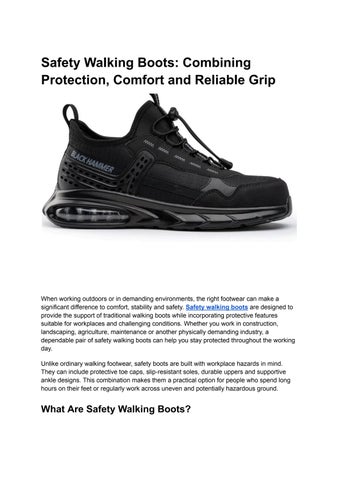
Safety Walking Boots: Combining Protection, Comfort and Reliable Grip
When working outdoors or in demanding environments, the right footwear can make a significant difference to comfort, stability and safety. Safety walking boots are designed to provide the support of traditional walking boots while incorporating protective features suitable for workplaces and challenging conditions. Whether you work in construction, landscaping, agriculture, maintenance or another physically demanding industry, a dependable pair of safety walking boots can help you stay protected throughout the working day. Unlike ordinary walking footwear, safety boots are built with workplace hazards in mind. They can include protective toe caps, slip-resistant soles, durable uppers and supportive ankle designs. This combination makes them a practical option for people who spend long hours on their feet or regularly work across uneven and potentially hazardous ground.
What Are Safety Walking Boots?
Safety walking boots combine the design principles of outdoor walking footwear with essential workplace protection. They are generally made to provide support, durability and comfort while helping protect the feet from common workplace hazards. Many styles feature reinforced toe protection to help guard against impact and compression. Depending on the design, they may also offer penetration-resistant midsoles, slip-resistant outsoles and water-resistant materials. These features make safety walking boots suitable for both indoor and outdoor work. Their walking-boot-inspired construction can also provide better ankle support than low-cut safety trainers or shoes. This can be particularly useful when working on rough terrain, construction sites, fields, pathways or other uneven surfaces.
Why Choose Safety Walking Boots? One of the main advantages of safety walking boots is their versatility. They can be worn in environments where ordinary footwear may not provide sufficient protection or support. A well-designed pair can offer several benefits: ● ● ● ● ● ● ●
Protection around the toes from impact and compression Improved grip on different surfaces Support around the ankle and foot Durable construction for demanding working conditions Greater comfort during long working hours Protection from wet or muddy conditions, depending on the materials Stability when walking across uneven ground
Choosing footwear that combines these qualities can make everyday tasks more comfortable while helping workers deal with common hazards more confidently.
Comfort for Long Working Days Comfort is an important consideration when choosing work footwear. Workers who spend eight or more hours standing or walking need boots that provide suitable cushioning, support and flexibility. Safety walking boots are often designed with supportive footbeds and cushioned midsoles to reduce discomfort during extended periods of use. A properly shaped boot can also help keep the foot stable, reducing unnecessary movement inside the footwear. It is important to select the correct size and fit. Boots that are too tight can cause discomfort, while boots that are too loose may allow excessive movement and rubbing. Wearing appropriate work socks and checking the fit before purchasing can help ensure a more comfortable experience.
Grip and Stability
Work environments can include wet floors, muddy paths, gravel, concrete and uneven surfaces. Good traction is therefore an essential feature of reliable safety footwear. Many safety walking boots use specially designed outsoles with tread patterns intended to improve grip. Slip-resistant soles can provide additional confidence when walking across potentially slippery surfaces. A strong outsole can also contribute to stability on uneven ground. This is particularly valuable for outdoor workers who frequently move between different types of terrain.
Protection from Workplace Hazards Workplaces can present a variety of risks to the feet. Falling objects, sharp materials, rough surfaces and accidental impacts are just some of the hazards workers may encounter. Safety walking boots can incorporate protective features designed to reduce these risks. Toe caps are one of the most recognisable safety features, while some boots also include penetration-resistant midsoles to help protect against sharp objects underfoot. When selecting footwear for a particular job, it is important to consider the safety requirements of the workplace. Different industries may require different levels or types of protection, so workers should choose boots that meet the relevant workplace standards.
Weather-Resistant Safety Walking Boots Outdoor workers often have to deal with changing weather conditions. Rain, mud and cold temperatures can make working conditions more difficult, particularly when footwear becomes wet. Some safety walking boots are made with water-resistant or waterproof materials to help keep feet dry. Features such as sealed construction and gusseted tongues can also help reduce the amount of water entering the boot, depending on the design. For workers who regularly operate outdoors, choosing footwear appropriate for the weather and working environment can make a noticeable difference to comfort throughout the day.
Suitable Industries for Safety Walking Boots Safety walking boots can be useful across a wide range of occupations. Construction workers may benefit from their combination of toe protection, grip and durability, while landscapers and gardeners can appreciate their stability on muddy or uneven ground. They can also be suitable for agricultural workers, warehouse staff, maintenance teams, delivery workers and outdoor tradespeople. Anyone whose job involves significant walking, standing or working on challenging surfaces may find this style of footwear useful.
However, the best boot will depend on the specific hazards associated with the job. Employers and workers should always consider workplace safety requirements before selecting footwear.
Choosing the Right Safety Walking Boots There are several factors to consider when purchasing safety walking boots. Start by identifying the main conditions in which the boots will be used. Outdoor workers may prioritise waterproofing, grip and durability, while workers on construction sites may focus more heavily on toe and underfoot protection. Consider the following features: Safety rating: Make sure the boots provide the level of protection required for your workplace. Toe protection: Look for an appropriate protective toe cap if impact or compression hazards are present. Sole grip: Choose an outsole designed to provide reliable traction on the surfaces you regularly encounter. Materials: Durable leather and modern synthetic materials can both provide useful performance characteristics. Fit: Ensure there is enough room for your toes without allowing excessive movement. Ankle support: A higher boot can provide additional support when working on uneven terrain. Weather protection: If you work outdoors, consider water-resistant or waterproof options.
Looking After Your Boots Proper care can help extend the useful life of safety walking boots. Clean dirt and mud from the boots regularly, particularly after outdoor work. Allow wet boots to dry naturally rather than placing them directly against a strong heat source, which can damage some materials. Check the soles, stitching, toe area and other protective components regularly. If the boots show significant wear or no longer provide the protection required for your workplace, they should be replaced. Keeping boots clean and maintained can also help preserve their comfort and appearance.
Final Thoughts Safety walking boots offer a practical combination of protection, support and outdoor performance. With features such as protective toe caps, durable construction, slip-resistant
soles and supportive designs, they can be a valuable choice for workers who spend long periods walking or working on challenging surfaces. The key to choosing the right pair is to consider your working environment, required safety protection, comfort needs and weather conditions. By selecting well-fitting boots with suitable safety features and maintaining them properly, workers can enjoy dependable footwear designed to support them through demanding working days.