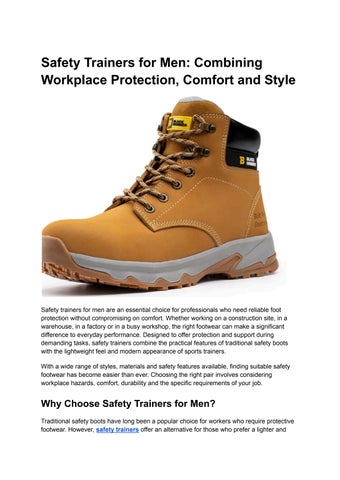
Safety Trainers for Men: Combining Workplace Protection, Comfort and Style
Safety trainers for men are an essential choice for professionals who need reliable foot protection without compromising on comfort. Whether working on a construction site, in a warehouse, in a factory or in a busy workshop, the right footwear can make a significant difference to everyday performance. Designed to offer protection and support during demanding tasks, safety trainers combine the practical features of traditional safety boots with the lightweight feel and modern appearance of sports trainers. With a wide range of styles, materials and safety features available, finding suitable safety footwear has become easier than ever. Choosing the right pair involves considering workplace hazards, comfort, durability and the specific requirements of your job.
Why Choose Safety Trainers for Men? Traditional safety boots have long been a popular choice for workers who require protective footwear. However, safety trainers offer an alternative for those who prefer a lighter and
more flexible design. They are particularly useful for professionals who spend long hours standing, walking or moving between different work areas. Many safety trainers for men feature protective toe caps, cushioned insoles and durable outsoles. These features help provide protection against common workplace hazards while supporting natural foot movement. Their trainer-inspired designs also make them suitable for workers who want practical footwear with a contemporary appearance. Depending on the model, safety trainers may offer additional features such as slip-resistant soles, breathable uppers and resistance to oil or water. Selecting footwear with the right combination of features can help improve comfort and confidence throughout the working day.
Essential Safety Features to Consider When buying safety trainers, it is important to look beyond appearance. The most suitable pair should meet the safety requirements of your working environment. Protective Toe Caps Protective toe caps are among the most important features of safety footwear. They are designed to help protect the toes from impacts and compression caused by falling objects or heavy materials. Depending on the model, toe caps may be made from steel, aluminium or composite materials. Steel toe caps are known for their strength, while composite alternatives are generally lighter and do not conduct heat or cold as readily as metal. The best option depends on your workplace conditions and personal preferences. Slip-Resistant Outsoles Workers often encounter smooth, dusty, oily or damp surfaces. Slip-resistant outsoles can help improve grip and stability, reducing the likelihood of slipping in suitable conditions. However, no footwear can eliminate every slipping risk, so it is important to choose soles designed for the surfaces encountered at work. Puncture-Resistant Protection For construction workers, maintenance professionals and tradespeople, sharp objects on the ground can present a serious hazard. Certain safety trainers include puncture-resistant midsoles designed to help prevent sharp materials from penetrating the sole. This feature can be particularly valuable when working around nails, metal fragments or building debris. Water Resistance and Breathability Some workplaces require footwear that can handle wet conditions, while others demand good airflow during physically demanding tasks. Water-resistant materials can help keep feet drier, whereas breathable uppers may improve ventilation. Consider your working environment carefully before choosing between these features.
Comfort for Long Working Hours Comfort is one of the main reasons many professionals choose safety trainers over heavier footwear. A typical working day can involve hours of walking, standing, lifting and climbing, making supportive footwear particularly important. Look for cushioned insoles that provide comfortable support underfoot. Padded collars and tongues can help reduce pressure around the ankle and the top of the foot. Flexible construction may also allow more natural movement during everyday tasks. The fit is equally important. Safety trainers should provide enough room for your toes without allowing your feet to slide excessively inside the shoes. A pair that is too tight may cause discomfort, while footwear that is too loose can affect stability. Workers who spend much of the day on hard floors may benefit from designs with supportive midsoles and effective cushioning. Trying on footwear towards the end of the day can also be useful, as feet may swell slightly after prolonged activity.
Lightweight Safety Trainers for Everyday Work Heavy footwear can become tiring when worn throughout a long shift. Lightweight safety trainers are designed to reduce unnecessary weight while retaining the protective features required for specific jobs. Composite toe caps, lightweight sole materials and flexible uppers can contribute to a lighter design. This can be beneficial for delivery workers, warehouse staff, engineers and other professionals who need to move frequently during the day. However, lightweight construction should not be the only consideration. Always check that the footwear provides the appropriate protection for the hazards present in your workplace. A comfortable pair is most useful when it also meets the relevant safety requirements.
Choosing the Right Safety Trainers for Your Industry Different occupations require different types of protective footwear. Understanding your daily responsibilities can help you make a more informed choice. Construction and Building Work Construction environments may involve falling materials, uneven ground and sharp debris. Safety trainers with suitable toe protection, puncture-resistant soles and durable construction may be appropriate, provided they meet the site's footwear requirements. Warehousing and Logistics Warehouse employees often walk long distances, handle stock and work around equipment. Comfortable cushioning, secure fitting and slip-resistant outsoles can be useful features. The
selected footwear should also meet any impact or compression protection requirements associated with the role. Manufacturing and Engineering Factories and engineering facilities can present hazards involving machinery, metal components and slippery floors. Workers should choose safety trainers that offer the specific protection required by their risk assessment, including suitable toe protection and sole resistance where necessary. Maintenance and Trade Work Electricians, plumbers, mechanics and maintenance professionals may need footwear that balances flexibility with dependable protection. Depending on the job, useful features may include puncture resistance, durable uppers and soles designed for the surfaces encountered during work.
Understanding Safety Standards Before purchasing safety trainers for men, check the applicable safety standard and product certification. In the UK and many European markets, EN ISO 20345 is a key standard for safety footwear. The relevant edition and product classification should be checked when comparing models. Safety footwear classifications indicate which protective features a product provides. These may include toe protection, resistance to water penetration, puncture resistance or other specified properties, depending on the classification. It is important not to assume that every safety trainer includes every protective feature. Read the manufacturer's specifications and select footwear that matches your workplace risk assessment. If your employer has specific footwear requirements, confirm that your chosen pair meets them before use.
How to Maintain Your Safety Trainers Regular maintenance can help keep safety footwear in good condition and extend its useful life. Remove dirt and dust after work using a suitable brush or cloth. Follow the manufacturer's cleaning instructions, especially when the trainers contain specialist materials or protective components. Allow wet footwear to dry naturally in a well-ventilated area. Avoid excessive heat, which may damage adhesives, materials or the structure of the shoe. Inspect the soles, uppers and toe-cap area regularly for visible damage or excessive wear. Replace safety trainers when their protective features are compromised or they no longer provide a secure and comfortable fit. Even if the exterior looks acceptable, damaged footwear may not offer the intended level of protection.
Finding Affordable Safety Trainers for Men Price is an important factor when choosing work footwear, but it should not be the only consideration. An inexpensive pair may appear attractive initially, yet unsuitable footwear can become uncomfortable or wear out quickly in demanding environments. Compare different models according to their safety ratings, materials, comfort features and expected durability. Consider how frequently you will wear them and the conditions in which they will be used. Investing in a suitable pair can provide better value over time. When shopping online, check the size guide, product description, certification details and returns policy. Reading product reviews may also help you understand how a particular model performs in everyday working conditions.
Conclusion Safety trainers for men offer a practical combination of workplace protection, comfort and modern design. With options featuring protective toe caps, slip-resistant outsoles, supportive cushioning and lightweight materials, there are suitable choices for many different occupations. The key to finding the right pair is to understand your workplace hazards and prioritise the protective features you genuinely need. A secure fit, comfortable construction and appropriate certification are all essential considerations. By comparing available options and maintaining your footwear properly, you can choose safety trainers that support your daily work while helping you stay protected, comfortable and ready for demanding tasks.