JUSTICE FACILITIES AS CIVIC INFRASTRUCTURE
By Kyle Yardley, AIA, LEED AP
ABSTRACT
Courthouses, detention centers, and sheriff operations are often planned and constructed as separate projects. In practice, however, these facilities function as an interconnected system that supports the administration of justice. When planned independently, important operational relationships such as detainee movement, prisoner transport, and coordination between courts and detention facilities can become inefficient or difficult to manage.
This article explores how viewing justice facilities as civic infrastructure can improve long-term planning and operational performance. By examining the justice system as an integrated
ecosystem, architects and planners can better evaluate site selection, facility adjacency, secure circulation, and campus planning strategies. Because justice facilities are often developed incrementally over decades, early planning decisions can significantly influence operational effectiveness far into the future.
Through discussion of justice campus planning and a realworld courthouse planning example, the article illustrates how coordinated infrastructure strategies can strengthen operational relationships, improve efficiency, and support the civic institutions that uphold the rule of law.
Every community depends on institutions that uphold the rule of law. Courts adjudicate disputes, detention facilities hold individuals awaiting trial or sentencing, and law enforcement agencies investigate crimes and enforce public safety. Together these institutions form the justice system that maintains social order, protects individual rights, and provides a framework for resolving conflict within society.
JUSTICE FACILITIES AND THE CIVIC ROLE OF THE JUSTICE SYSTEM
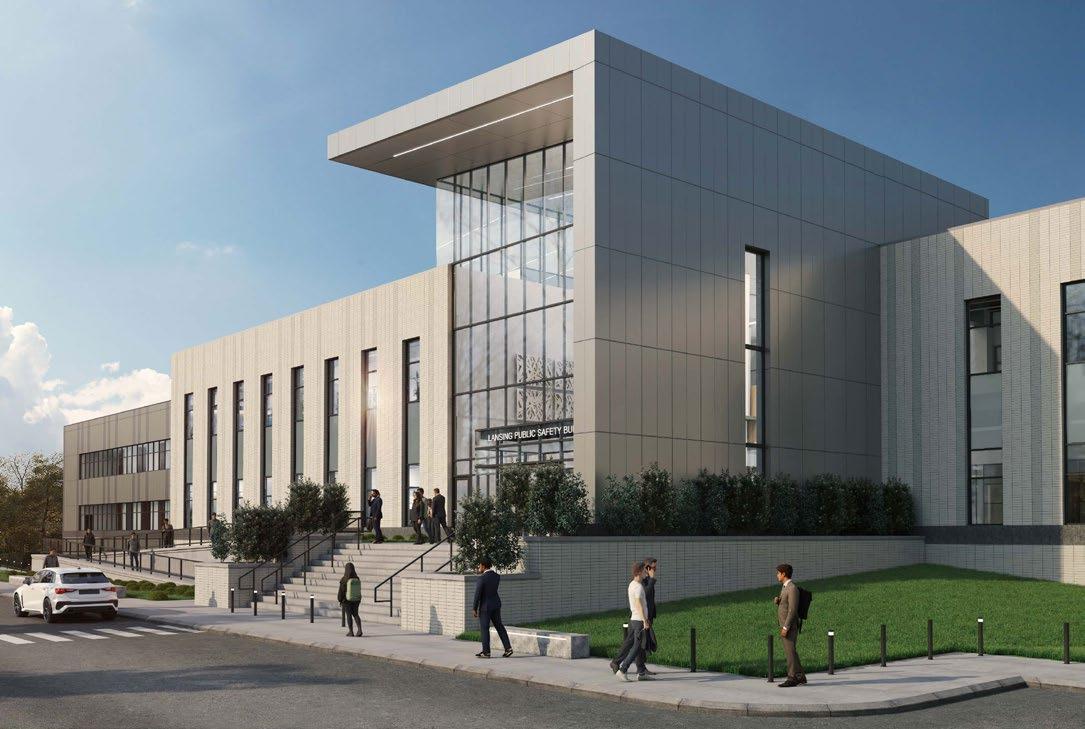
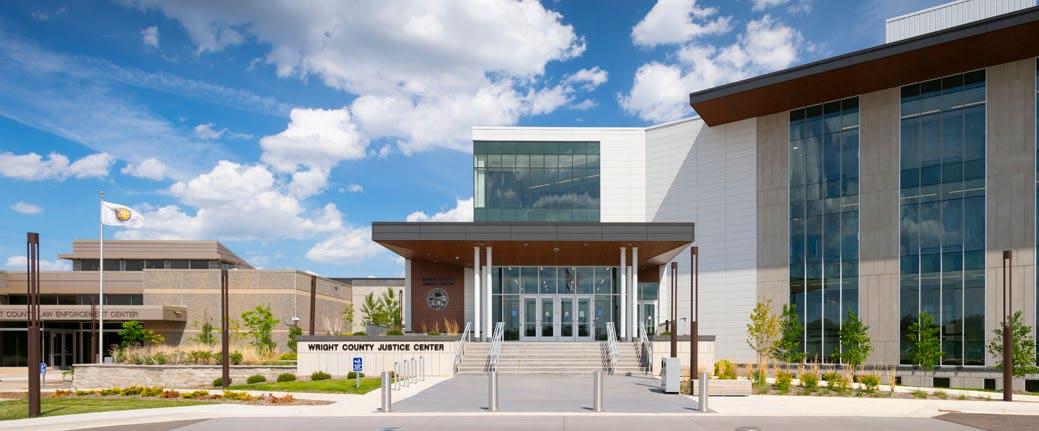
Justice facilities, including courthouses, detention centers, and sheriff operations, form the physical infrastructure through which communities administer the rule of law. These facilities are where citizens most directly encounter the justice system, whether as jurors, litigants, witnesses, detainees, or observers. Because of this role, justice facilities occupy a unique position within the civic landscape. They must operate as highly functional and secure environments while also serving as visible public institutions that represent the authority and legitimacy of the legal system.
Historically, justice facilities have often been developed through a series of individual capital projects rather than as part of a coordinated long term plan. Courthouses, detention facilities, and sheriff operations are typically constructed or renovated at different times as funding becomes available, and facility conditions require replacement. Because these projects are often separated by decades, each project is frequently planned to address immediate operational needs rather than the long term organization of the justice system. While this incremental approach is largely unavoidable given the scale and cost of justice facilities, it can create challenges when future projects must adapt to earlier planning decisions that did not anticipate the broader operational relationships between courts, detention facilities, and sheriff operations.
In practice, these institutions operate as an interconnected system. Law enforcement agencies generate the cases that enter the courts, detention facilities house individuals awaiting trial or serving sentences, and courts adjudicate disputes and administer judicial processes. Sheriff departments frequently provide both courthouse security and prisoner transport between detention facilities and courtrooms, creating an important operational link between these environments.
Recognizing justice facilities as civic infrastructure encourages planners and designers to move beyond the traditional view of individual buildings and toward a broader understanding of how the justice system operates as a coordinated network. When approached from this perspective, facility planning can better support the operational realities of modern justice systems while reinforcing the civic role these institutions play within their communities.
THE JUSTICE INFRASTRUCTURE ECOSYSTEM
The justice system operates through a series of interconnected processes linking law enforcement agencies, detention facilities, courts, and supporting justice services. While each institution performs a distinct function, the effectiveness of the system depends on how these operations work together.
Law enforcement agencies initiate the justice process through investigation and arrest. Individuals charged with crimes are typically transported to detention facilities, where they remain while awaiting hearings, trial, or sentencing. From there, detainees must be securely transported to courthouses for court appearances. County sheriff departments typically oversee both detention operations and courthouse security, creating a direct operational relationship between these facilities.
These relationships create complex operational flows that influence facility planning and design. Detainees must move through secure circulation systems that separate them from the public while allowing efficient transport between holding areas
and courtrooms. Evidence collected during investigations must be securely transferred and stored as cases progress through the judicial process. Judges, prosecutors, public defenders, and sheriff personnel must coordinate closely as cases move from arrest to adjudication.
When justice facilities are planned independently, these operational flows can become inefficient or difficult to manage. Long-distance prisoner transport between detention facilities and courthouses increases staffing requirements and security risks. Separate buildings may duplicate infrastructure and administrative support functions, while coordination between agencies becomes more complex when facilities are geographically dispersed.
Understanding the justice system as an operational ecosystem highlights the importance of planning facilities in ways that support these interdependent processes.
INFRASTRUCTURE PLANNING AND CAMPUS STRATEGIES
Viewing justice facilities as civic infrastructure changes how jurisdictions approach long term planning and site selection. Across the United States, counties replacing aging courthouses and detention facilities are increasingly evaluating these projects as part of long term justice campus strategies rather than isolated capital improvements.
In practice, justice facilities are rarely funded or constructed simultaneously. Courts, detention facilities, and sheriff operations are often developed through separate capital projects spread across many years or even decades. Communities typically address urgent facility needs one project at a time as funding becomes available. While this incremental approach is unavoidable, it reinforces the importance of long term infrastructure planning so that each new project supports the broader organization of the justice system rather than creating future operational constraints.
Rather than evaluating individual projects in isolation, planners can consider how courts, detention facilities, sheriff operations, and justice services function together within a broader system.
In many jurisdictions, the preferred planning approach is to locate related justice functions in close proximity whenever site conditions and funding allow. Coordinated justice campuses or civic districts can bring together multiple justice related functions within a unified planning framework. While each facility remains operationally distinct, adjacency allows agencies to improve coordination, support secure movement, and strengthen overall campus efficiency.
Coordinated planning can produce significant operational benefits. Locating courthouses near detention facilities reduces the need for long distance prisoner transport and allows secure movement between buildings through tunnels, enclosed bridges, or controlled transport routes. Shared campus infrastructure such as parking
facilities, site circulation, perimeter security planning, and secure transport routes can reduce duplication and improve efficiency while allowing each facility to maintain its own secure operational environment. Proximity between agencies can also improve coordination among judges, prosecutors, public defenders, and sheriff staff.
Infrastructure planning also supports long term flexibility. Justice systems evolve over time as populations change, case volumes shift, and operational models adapt to new legal and technological conditions. Campus planning strategies allow jurisdictions to anticipate future expansion and identify locations where additional justice facilities may be developed over time.
By planning justice facilities as part of an integrated infrastructure system, jurisdictions can create environments that support operational efficiency while allowing the justice system to evolve as community needs change.
CASE EXAMPLE: LONG TERM JUSTICE CAMPUS PLANNING
The value of system level planning becomes particularly clear when evaluating long term courthouse site selection.
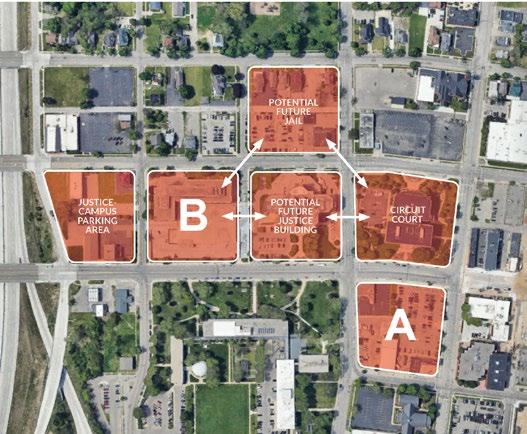
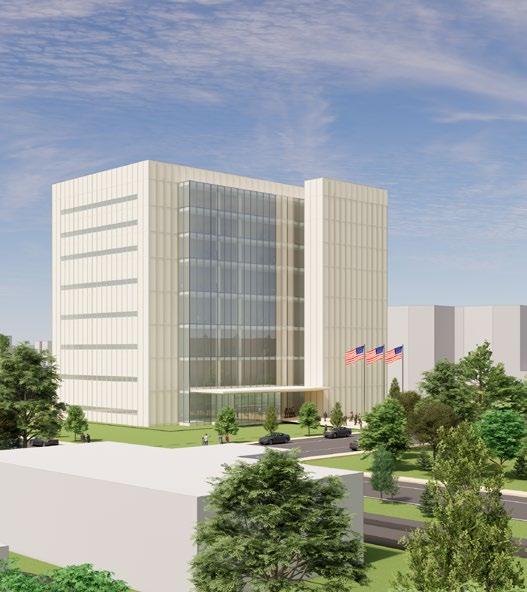
In one project, a county client initially selected a site for a new district court adjacent to its existing circuit courthouse. At first glance, this location appeared favorable because it consolidated court functions. However, the site was not immediately adjacent to the county jail, which was nearing the end of its useful life and likely to require replacement within the next two decades. While a connection could be made to the existing jail, relocation of the detention facility would make prisoner transport between detention and the district court significantly less efficient. 1
By evaluating the long term operational relationship between courts and detention functions, the project team proposed an alternative site strategy. The revised concept positioned the new courthouse adjacent to the existing jail while also aligning it with the most likely location for a replacement detention facility.
This strategy created the opportunity for a more efficient long term relationship between court operations and detention functions. Secure detainee transport between facilities could be simplified, and proximity between agencies would support improved coordination between court security staff and detention operations.
Equally important, the revised plan allowed the existing jail site to be redeveloped over time for additional court related functions. This approach would allow the justice campus to expand in an organized manner over the next fifty years or more while maintaining clear operational relationships between its components.
This example illustrates how early planning decisions, particularly those related to site selection, can shape the operational effectiveness of the justice system for decades.
IMPLICATIONS FOR FUTURE JUSTICE FACILITY DESIGN
As jurisdictions continue to modernize justice facilities, architects and planners are increasingly asked to consider how individual projects fit within the broader justice infrastructure. Designing a courthouse or detention facility today requires an understanding not only of the building itself but also of the operational relationships that connect it to other components of the justice system.
This perspective encourages project teams to evaluate key questions early in the planning process. How will detainees move between detention facilities and courtrooms? Where should sheriff operations be located to support both court security and detention management? How can campus planning strategies allow justice facilities to expand over time while maintaining efficient operational relationships?
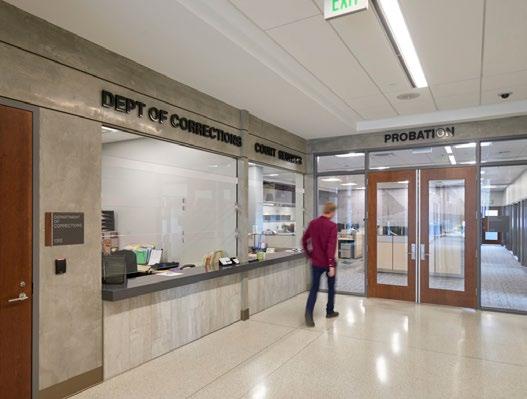
Design solutions must balance these operational considerations with the civic responsibilities of justice institutions. Justice facilities must remain secure and carefully controlled environments while also providing public spaces that support transparency, accessibility, and confidence in the judicial process.
Approaching justice facilities as civic infrastructure allows planners and designers to address these challenges more effectively. By thinking beyond individual buildings and toward the larger justice ecosystem, jurisdictions can create facilities that support efficient operations, strengthen institutional relationships, and reinforce the civic infrastructure that sustains the rule of law.
1: Genesee County 67th District Court Facility Masterplan; Hobbs + Black/BKV Group