
by Michael Heathcote, Trustee, Friends of Arundel Cathedral
Gatwick Detainees Welfare Group Refugees’ Tales Event at Arundel Cathedral
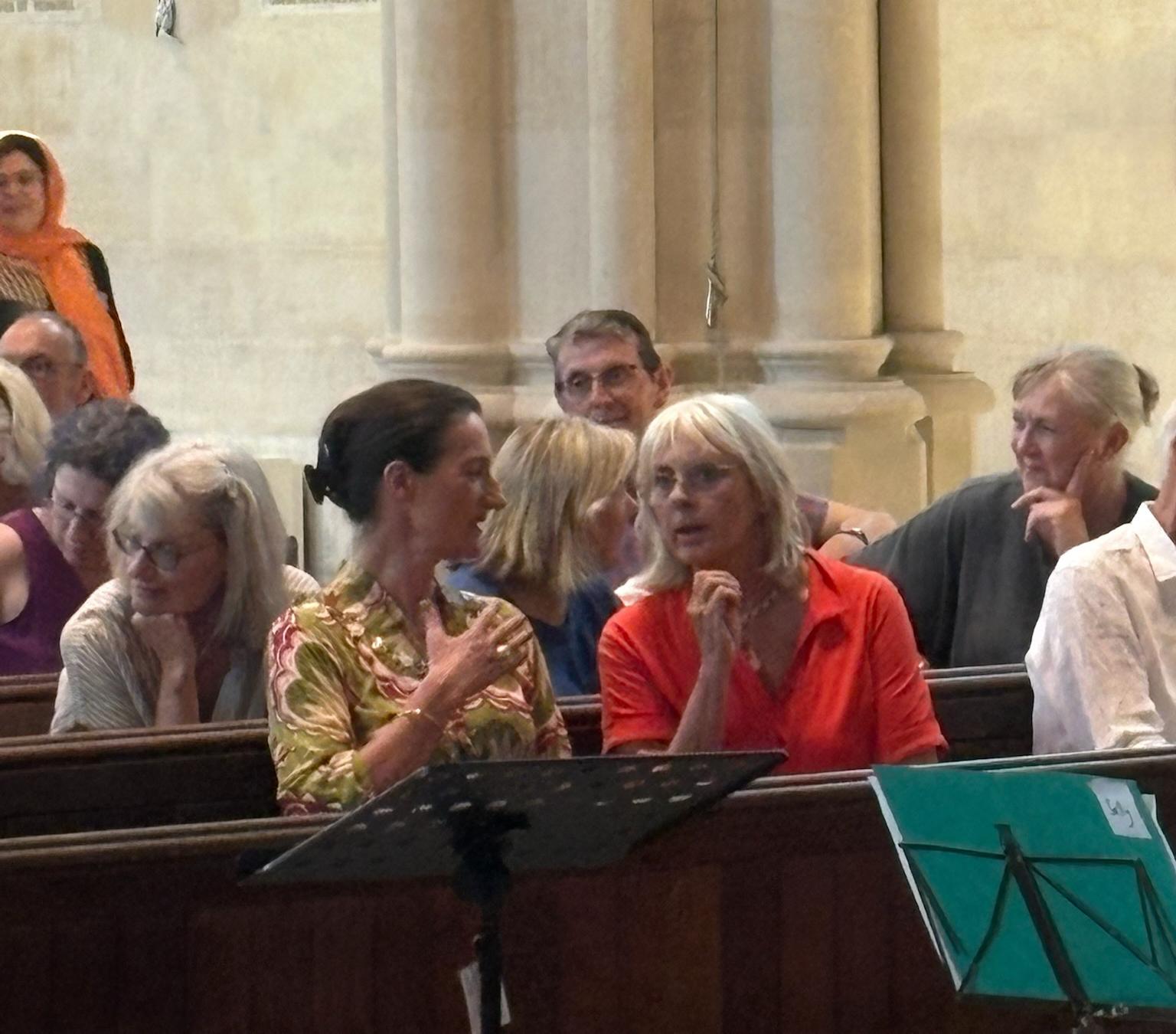
Attended by Mayor of Arundel and Georgina Duchess of Norfolk
The Friends of Arundel Cathedral had the pleasure of welcoming 150 Refugees Tales walkers from this year’s 5-day walk from Angmering to Portsmouth. I liken their annual 5-day walks to the Canterbury Tales!
Their first night’s stop-over was at Arundel Cathedral Centre. Tea / coffee / water / cakes and biscuits were provided by the Friends as the walkers arrived at the Centre. Even after an 11 mile walk in the scorching heatwave, they all appeared happy and good humoured and obviously found the experience a bonding and supportive one. After tea and cakes they had supper prepared by their own caterer.
This was followed by an event at Arundel Cathedral comprising readings from prominent writers, their lived experiences, and performances from the Dovetail Da Capo Refugee Orchestra comprising musicians from many countries around the world.
The event was welcomed to the Cathedral by Fr Stephen and hosted by the CEO of CAFOD, Christine Allen. It was a packed Cathedral in the presence of the Mayor of Arundel and Georgina Duchess of Norfolk. A vote of thanks was given by Lara Bligh-Caplan (Chair of the Gatwick Detainees Welfare Group – GDWG).
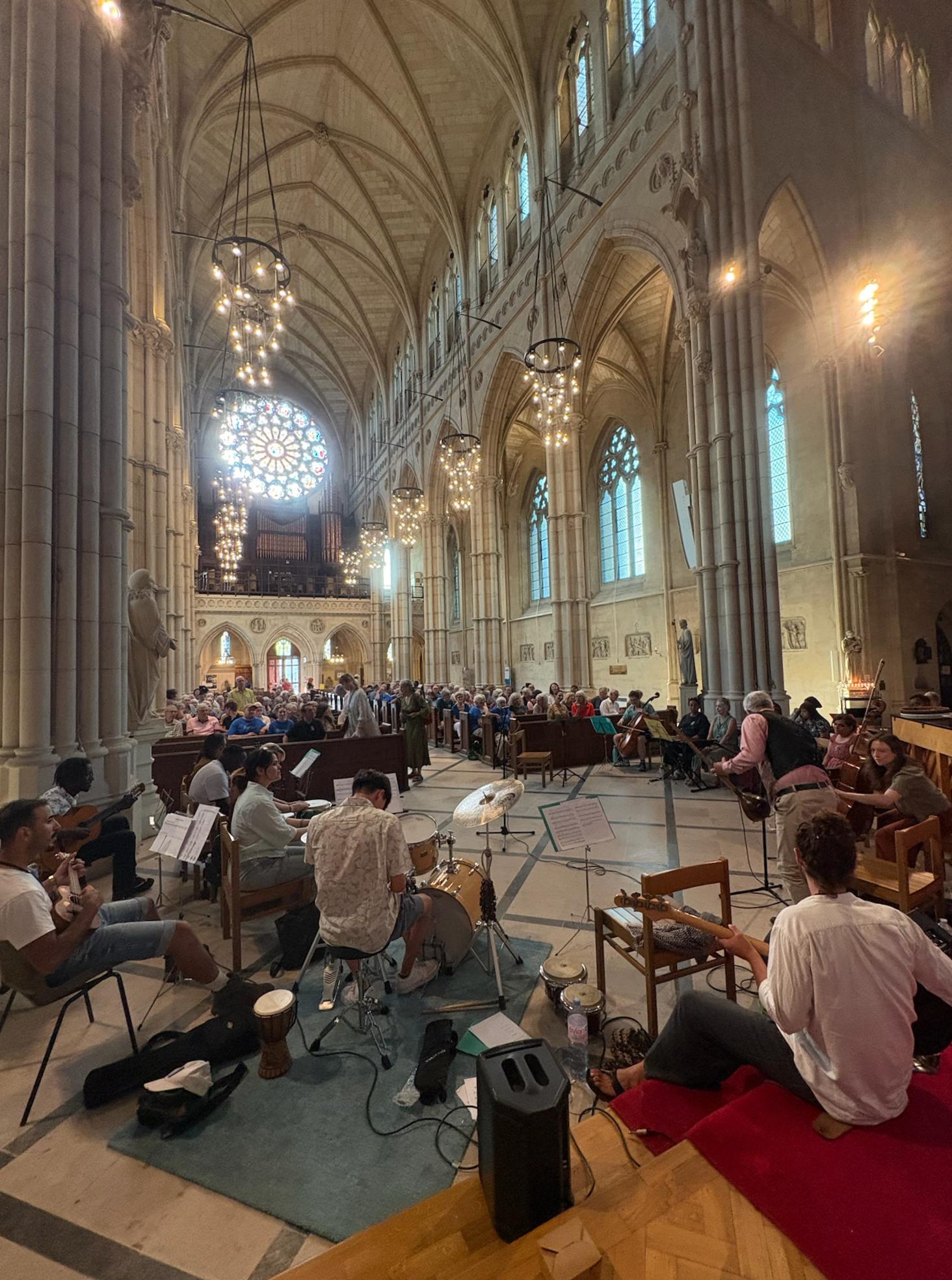
Refugee orchestra (Dovetail Da Capo Orchestra) comprising players from many different countries
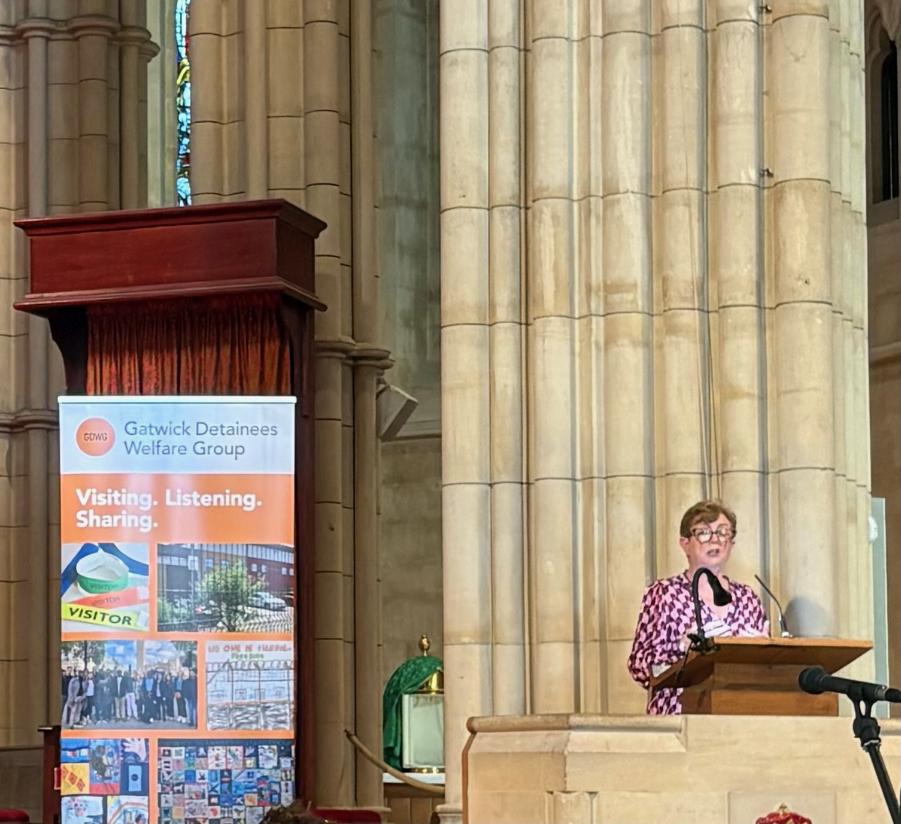
Vote of thanks
by GDWG chair Lara Bligh-Caplan
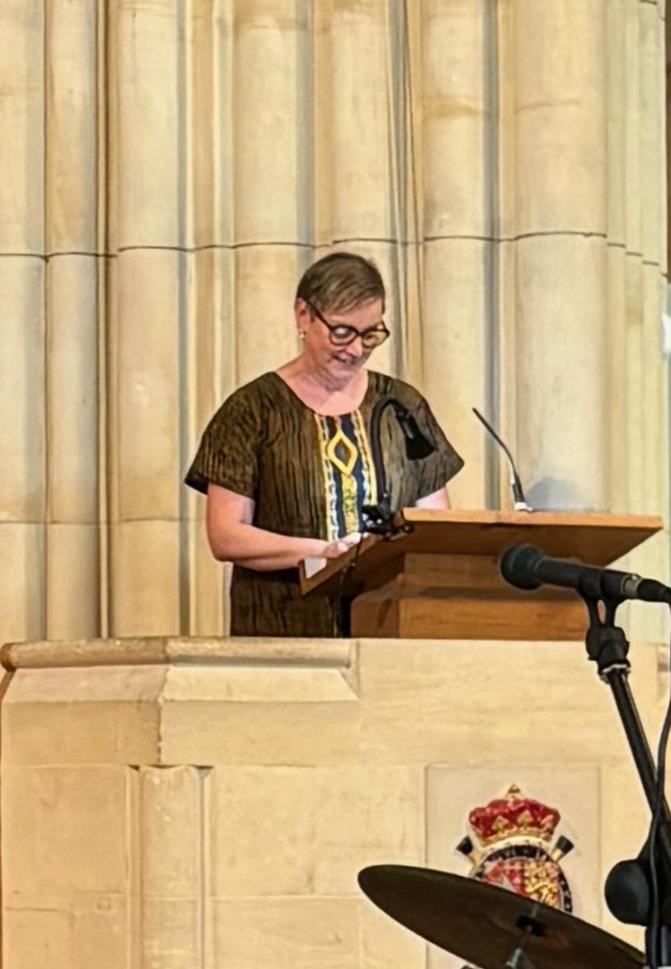
Hosted
by
CAFOD CEO Christine Allen
It was a memorable event and much enjoyed by all. An open letter by Fr Paul Fleetwood (Parish Priest of Worth Abbey) was read out. He was the original chaplain at the refugee detention centres at Gatwick and his first-hand insight and experience and Christian humanity, that we should all try to follow, was a moving example that touched all our hearts. A copy of this letter is shown below.
Dear Refugee Tales,
Thank you so much for inviting me to write to you. I was privileged to spend a good many years working in the chaplaincies of the Immigration Removal Centres at Gatwick Airport. I survived there by never saying what I thought about the whole system of detention, so it’s a great pleasure to be able to share my honest reactions with you today, knowing that you will understand and share them. My thanks also to whoever is kind enough to read these words to you. I am sorry not to be able to join you in person.
I would like to begin with a word of deep appreciation for the act of witness which you are giving during these days. In a society which has turned our national flags into symbols of hate and exclusion, you are the true nationalists, because you care about the culture of our nation, in which hospitality and welcome have such a long and honourable tradition, and you see the urgent need to preserve these values. Thank you for this.
What we encounter in the detention centres is the very opposite of this. Built as a maximum security prison, with a constant succession of metal doors and locks, Brook House imposes a regime which treats all detained people as if they were dangerous criminals. They are locked in their cells for up to 12 hours each day, with the company only of their room mate. They are effectively cut off from contact with the outside world, usually depending on the generosity of the Gatwick Detainees Welfare Group for phone credit to speak with family or friends, and, of course, a phone signal which works. The visits which members of the group make to detained people whose families are far away are a real lifeline for them, offering friendship and support, and helping to find a legal representative, and to maintain contact with them. Medical care is very rudimentary – Paracetamol for everything – and, if someone does manage to see a doctor outside the centre, the visit will often be made in handcuffs, and even on the end of a chain. Above all, the process of detention is psychologically so destructive, being of indefinite length, and renewable for no apparent reason. It frequently leads to serious mental illness, especially for those who are survivors of torture.
Is this an acceptable way to treat a human being? Somehow the authorities maintain the unspoken lie that it is. For a long while, on entering the centre one was greeted by a huge poster bearing words which purported to be those of a detained person, here styled a “resident”. It read: “Here we are all members of one big family, no matter who we are.” On reading that I always felt that I was entering the world of Through The Looking Glass.
But I would like to bear witness too to the strength of faith and character of so many men whom I met there, perhaps above all to their religious faith, which helped them somehow to rise above all the horrors and helped them trust that the God in whom they believed was on
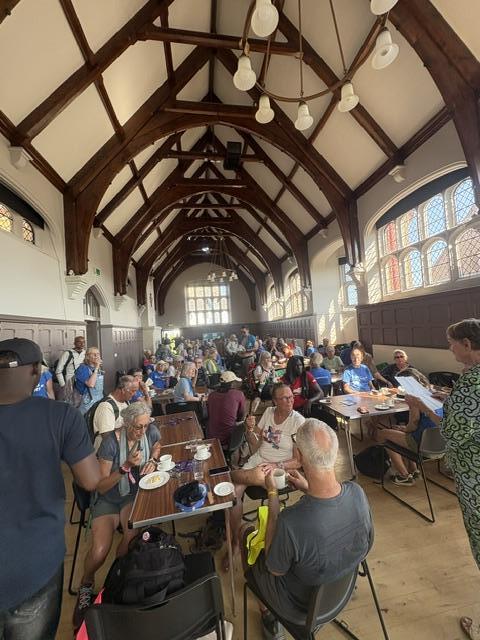
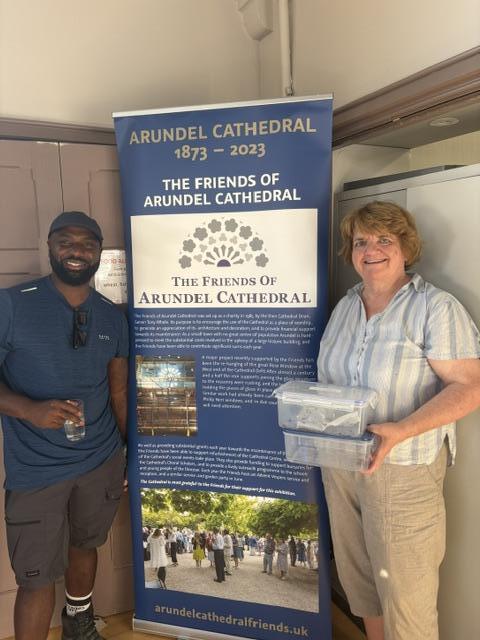
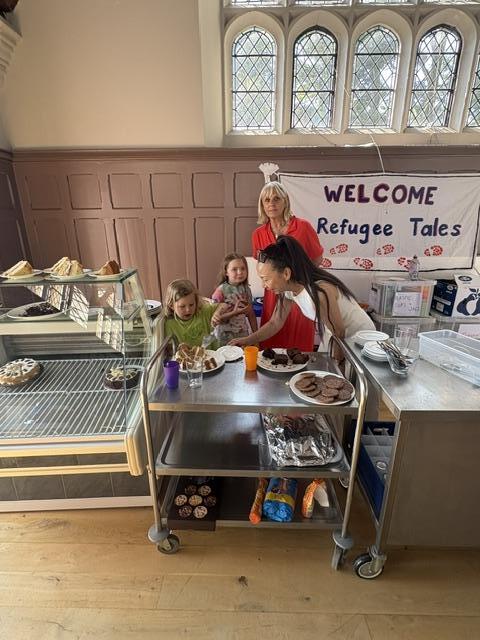
Refreshments provided at the Cathedral Centre for the walkers
their side and supported them in every circumstance. I remember that in one of the chapels there was an icon – a traditional religious painting – a copy of the famous icon by Rublev. It tells the story of the visit which three strangers make to Abraham’s tent as they journey through the desert.
Abraham immediately gets up to welcome them and begs them to stay for a meal. He offers them the very best which his tent can offer. Before they leave to go on their way, they give him a gift – they promise that within a year his wife, Sarah, will give birth to the son for whom they long. A little later in the story it is revealed that they are God Himself. In the Greek tradition the icon is called Philoxenia, Love of the stranger, or Hospitality. I reflected that this icon, hanging there in the chapel, was a wonderful, if unconscious, piece of subversive iconography. I think it offers us a valuable insight into hospitality: that those who come to us bring us something of the presence of God, and they bring gifts, though at the time we may not be aware of this. It also reminds us that the value of hospitality, which in the desert will often mean the difference between life and death, is a value which is central to our Jewish Christian heritage.
In the book of Leviticus in the Hebrew Scriptures there is passage which tells the people how they must act as the people who belong to God. We read here, Do not ill-treat any foreigners who live in your land. Instead, treat them as well as you treat citizens and love them as much as you love yourself. Remember, you were once foreigners in the land of Egypt. The call to hospitality is so clear. It demands that we recognise the equal dignity of every man and woman, regardless of their status and nationality. This recognises the truth that each of us is made in the image and likeness of God, and, as such, each deserves to be recognised as one who must be respected. Indeed, the tradition goes further, emphasising that those who are most vulnerable are those of whom we must take care the greatest care: in the ancient world this meant widows, orphans and strangers. When the author speaks of the Jubilee Year, the redistribution of wealth, God affirms, The land belongs to me, and you are only strangers and guests of mine. In other words, no one has absolute ownership of land, and no absolute authority to exclude those who need to seek refuge.
This of course was the tradition which Jesus inherited, and he made it centre of the work of his ministry. He laid out what we might call his pastoral plan: he declares that he has been sent by God to bring good news to the poor, proclaim release for captives, to let the oppressed go free. This expresses his intention to defend the dignity of all, most especially of those in greatest need. In one of his parables he affirms that he identifies with all of these: When I was a stranger, you welcomed me…When I was in prison you visited me. He now invites us to fulfil his words.
When Pope Francis began his pontificate one of his first acts was to visit Lampedusa, a small island off the east coast of Tunisia, and, as an Italian possession, the southern most point of Europe. As such, it had become the point which many men and women tried to reach in small boats from African countries. Overlooking a beach which was littered with life jackets and the remains of boats which had been wrecked offshore, he celebrated the Eucharist to show that God was indeed present in that place, among those who had survived the crossing and those who had died in the attempt.
Thank you all so much for coming today. May I close by wishing you every success in your chosen act of witness. May your walk bring joy and hope to many.
Yours.
Fr Paul