
by Barbara Isbister
The Feast of Corpus Christi
The Feast of Corpus Christi – Meaning and Significance
‘Corpus Christi’ is the Latin term for the body of Christ. The feast of Corpus Christi, also known as ‘The Solemnity of the Most Holy Body and Blood of Christ,’ is a celebration of the Real Presence of Christ in the Eucharist.
A presence revealed by Jesus to the apostles at the Last Supper: ‘This is my body,… this is my blood.’ Echoed by Saint Paul, who reminds us of the mystery of the Eucharist:
‘The bread that we break, is it not a participation in the body of Christ?’
Corinthians 10: 16-17
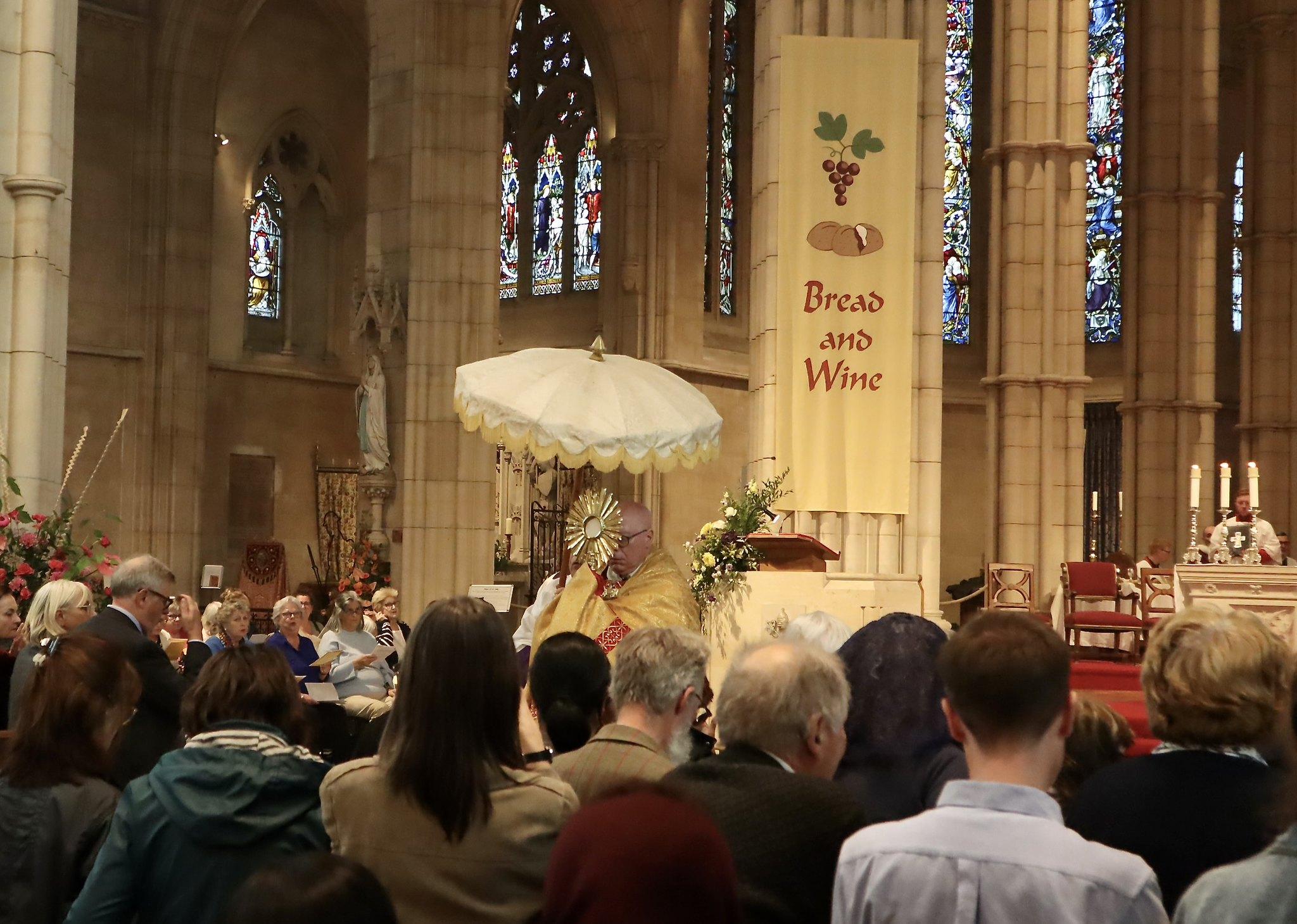
Abbot Paul Gunter carrying the Eucharist, Arundel Cathedral, June 2026
Date of Celebration
It seems fitting that the liturgical celebration of the feast was originally set by Pope Urban IV in 1264, and celebrated nine weeks after Maundy Thursday or 60 days after Easter Sunday, on the Thursday after Trinity Sunday.
However, from 1970, following the second Vatican council, (1962-5), local bishops were given permission by Pope Paul VI to transpose the feast to the following Sunday, in order to accommodate attendance for the working public.
It was not until 2006 that the Church in England and Wales transferred the day of celebration to the Sunday after Trinity Sunday. The feast is still also celebrated on Thursday in many countries (in 25, it is a public holiday), although Thursday is not a Holy Day of Obligation. Arundel has a historic exemption to celebrate the feast on Thursday, as it has done for almost 150 years, since 1877.
Origins and Development of the Feast
The feast originated in 1264 following several events. It started in the early thirteenth century when a Belgian nun, Saint Juliana of Liège, had a vision of the moon with a dark spot on it. She heard a voice telling her the meaning of the vision was that a feast in honour of the Eucharist needed to be established. In 1246 she recounted her experience to a local archdeacon, which resulted in the Bishop of Liège holding a local celebration in the same year.
Secondly, in 1263 a miracle occurred in the Italian town of Bolsena when a consecrated host bled onto an altar cloth. It was thought that this was due to the doubt of the priest in the Real Presence of Christ in the Eucharist.
As a result, Pope Urban IV (previously the local archdeacon that Saint Juliana had confided in), established the feast. By the following year, in 1264, Pope Urban IV decreed that everyone in the Latin Church should observe the feast on the Thursday after Trinity Sunday. He commissioned the theologian Saint Thomas Aquinas to write prayers and hymns for the feast.
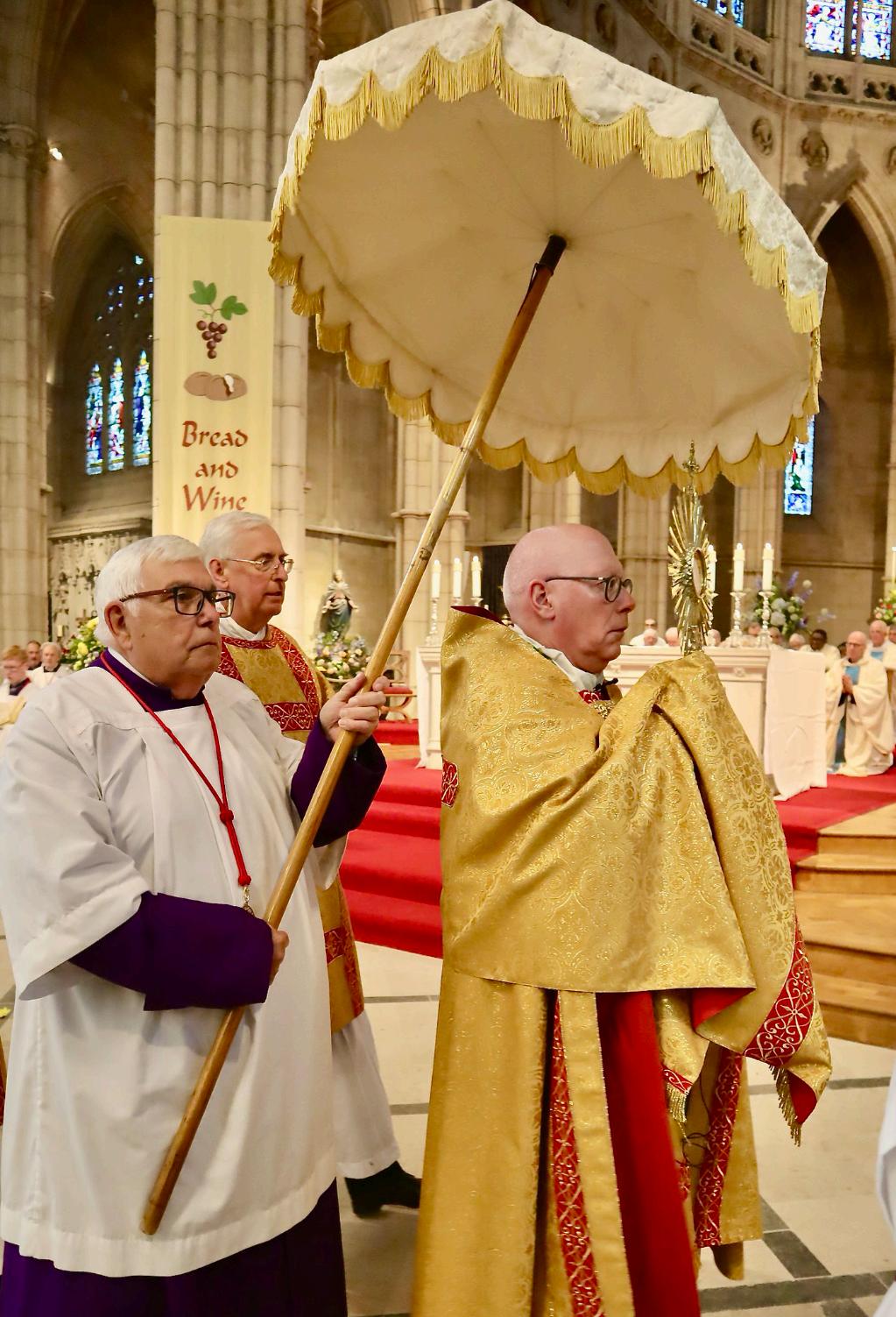
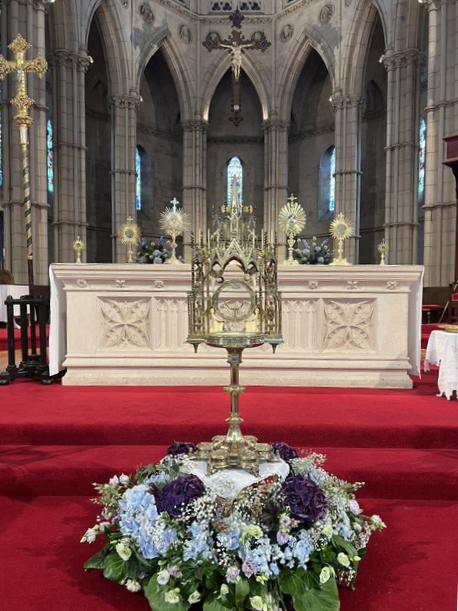
The three elements of the Corpus Christi celebration which have been widely adopted are: Solemn Mass, Procession and Benediction. In the Procession, the celebrant carries the Blessed Sacrament in a monstrance (see photo) beneath a baldachin (canopy) supported on four poles
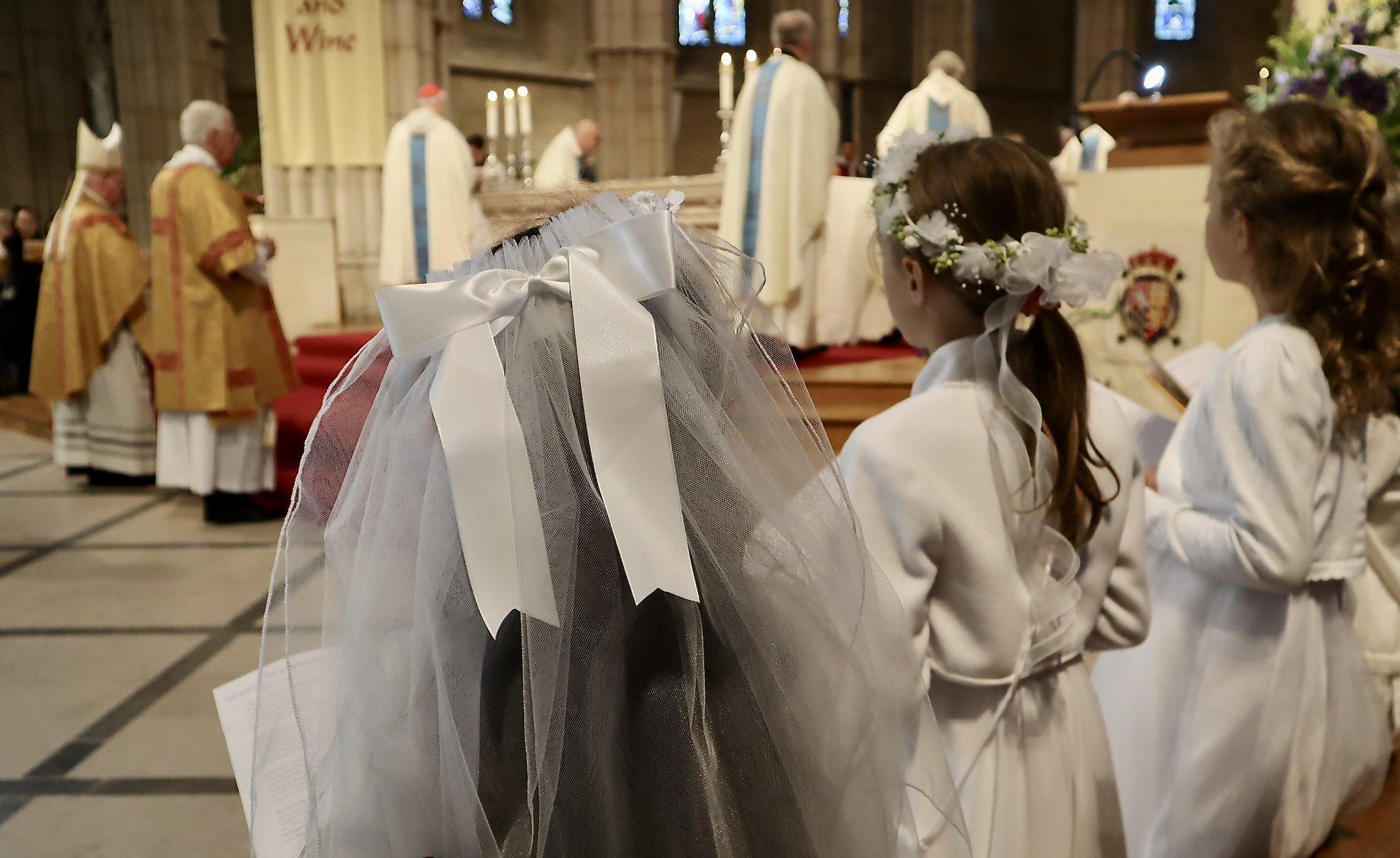
and carried by four bearers. The clergy, lay orders and the congregation follow. The strewing of flowers by children along the procession route in front of the celebrant, together with the purpose of the Carpet of Flowers, prepared specifically for the celebrant to walk on while carrying the Blessed Sacrament are signs of love and devotion to the presence of Christ in the Eucharist.
The Spread of Corpus Christi in Europe
One of the first processions was in Cologne in 1270. By the early fourteenth century the practice had spread to several other European countries. From 1320 Spain had a solemn procession and streetwide floral carpets. In the same year in Poland, children in Kraków were throwing flower petals in the outdoor procession; a custom which had started in 1247. The first recorded outdoor processions with many wearing traditional costumes, were in Vienna in 1363. In Portugal flower-petal carpets filled the streets, the celebration became a grand royal event and included the blessing of the sea. In many European countries, traditional costume was worn, or First Holy Communion clothing for those who
Corpus Christi, Arundel Cathedral, June 2026
had received the Sacrament for the first time in the preceding weeks. Children would strew flowers in the path of the clerical procession carrying the Eucharist. These customs are still followed in a number of European countries today and in diasporas worldwide. Observance of the feast has spread to other parts of the world, including South American and African countries.
By 1311-12 the feast was confirmed obligatory for the whole church by Pope Clement V at the Council of Vienne.
In Rome the feast is celebrated by the Pope every year with a Papal-led procession in which he carries the Blessed Sacrament from the Basilica of San Giovanni in Laterano to the Basilica of Santa Maria Maggiore where Benediction follows.
Corpus Christi, Arundel Cathedral, June 2026
The tradition was brought to Arundel by the Duke of Norfolk, Duke Henry XV, who in 1873 built the church which later became Arundel Cathedral. Following a visit to Sutri, near Rome, where he first saw the custom of the carpet of flowers, he was inspired to introduce the tradition to Arundel Cathedral in 1877. Since then, a carpet of flowers has been laid every year until the present day. The only exceptions were two years: one during World War I and in 2020 during the Covid pandemic.
The monstrances at Arundel Cathedral, June 2026
Corpus Christi in Arundel 2026 - The Celebration
The Mass, the Procession, Benediction
‘Like being in Heaven’
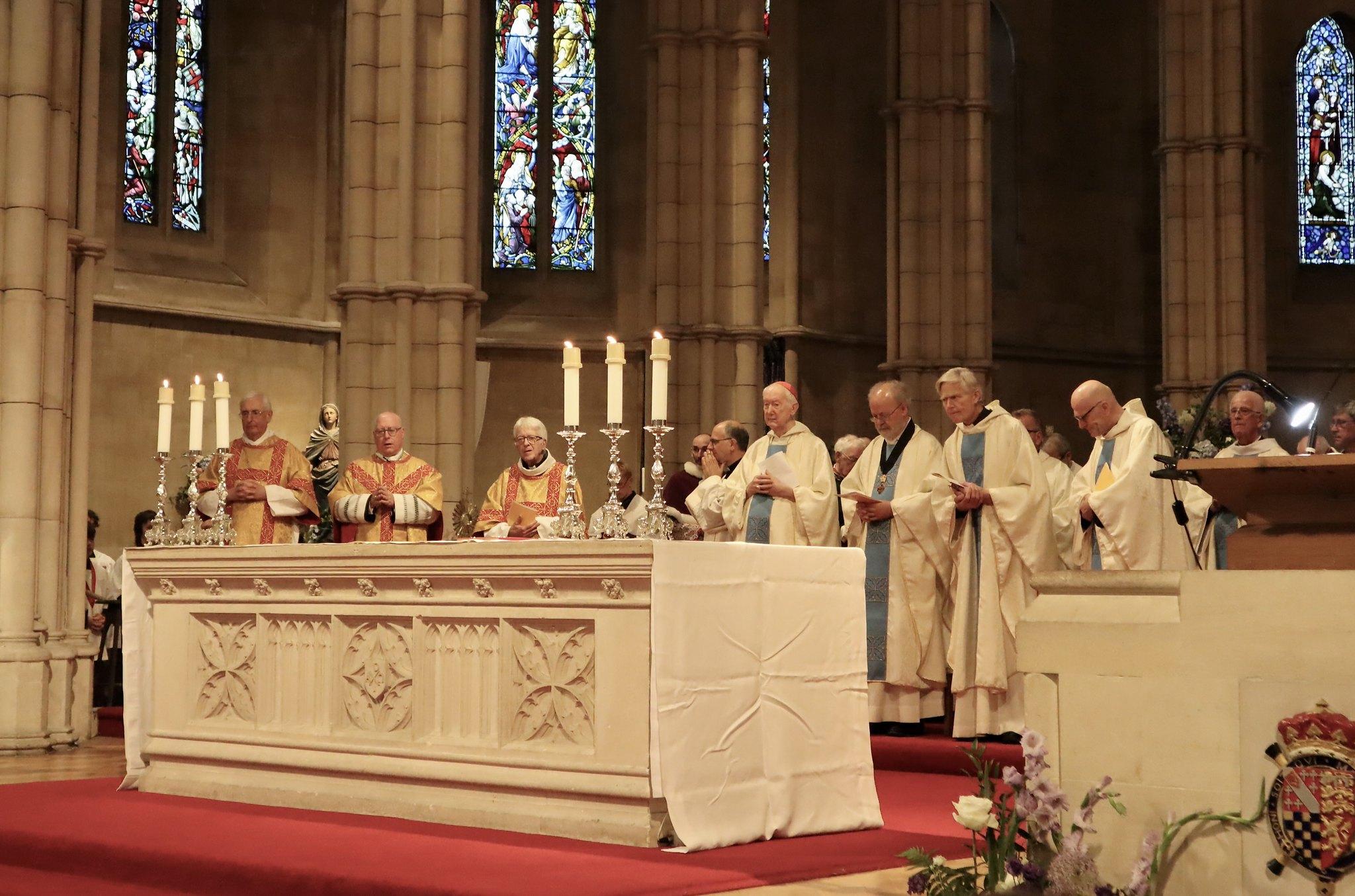
Abbot Paul Gunter celebrated the Mass for the feast of The Most Holy Body and Blood of Christ, Corpus Christi at 5.30pm on Thursday, 4th June 2026. In attendance were canons, priests and deacons from the diocese of Arundel and Brighton. The lay orders of the Knights and Dames of the Holy Sepulchre and the Knights of Saint Columba were also present. The Cathedral was full.
Abbot Gunter delivered an uplifting homily, literally, inviting us to look up at the fan-vaulted ceiling and the skyward-rising columns. Also, inspirational: exploring the significance of ritual in religion, it was familiar, ‘it was like coming home,’ he said. The solemn mass was followed, by the procession. Due to weather conditions, this took place inside the Cathedral this year. The Abbot carried the monstrance containing the Blessed Sacrament under an ombrellino (a small canopy) over the carpet of flowers and around the cathedral. The clergy and servers followed. The First Holy Communion children strewed flowers for the procession. One visitor I met afterwards, said to me. ‘It was like being in Heaven.’ I agreed.
Corpus Christi, Arundel Cathedral, June 2026
Corpus Christi – The Preparations and Process in Arundel
Every year in Arundel, an innumerable number of volunteers from the diocese, the parish, local and even distant communities, some of whom make an annual trip, gather to prepare for the feast of Corpus Christi. Planning starts months earlier, including discussions about the design, themes, selection, quantities and colours of flowers and greenery needed for the carpet and for all the floral displays.
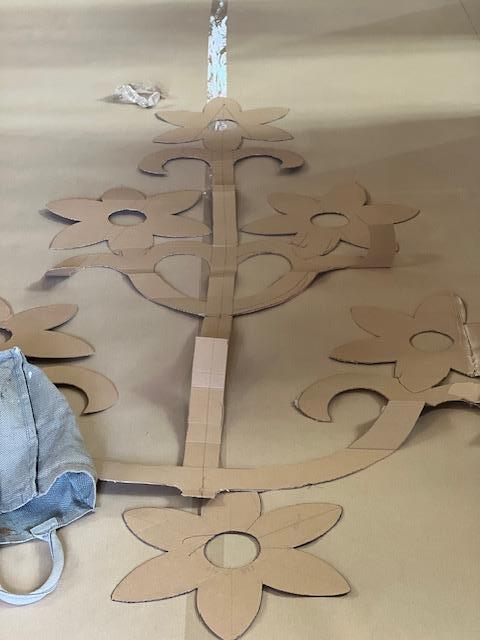
Once the design for the carpet is agreed, the designers, Oliver and Diane Hawkins start work. The key theme of the carpet is, of course, Corpus Christi. To this end, images of the host and chalice
Preparations: the underlay and stencils for the design of the Carpet of Flowers, June 2026
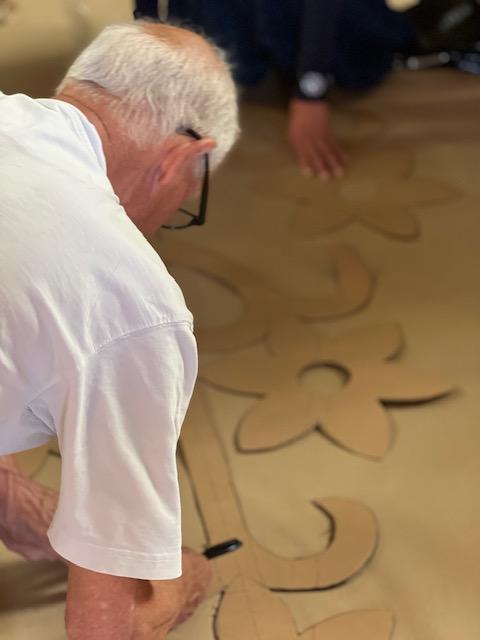
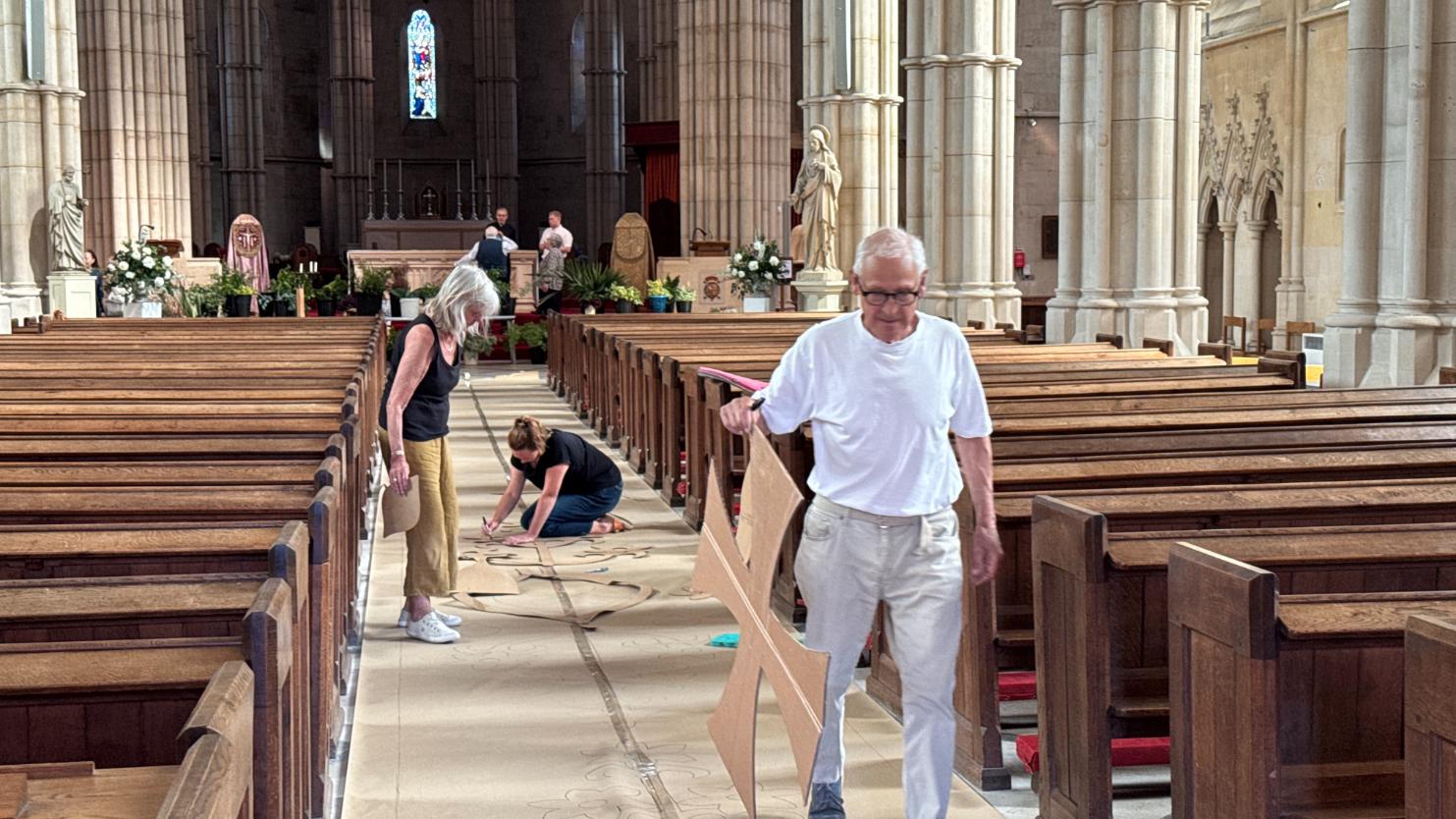
are always included, and this year the centre piece was a cross. There were no other themes this year. In previous years, themes of Jubilee Year, Peace, Pope Francis and Pope Leo were used. Also, this year, the design was ‘different’ and more ‘abstract’ than usual, said Oliver. In previous years the patterns consisted of a series of regular shapes: diamonds, circles, for instance, filled with flowers. This year’s was more open, delicate and lighter in texture. The result? As usual, stunning. Visitors and parishioners alike did not cease to be impressed. On the Sunday before Corpus Christi, the designers fix the ‘underlay’ in place along the length of the 90-foot, stone aisle. It consists of thick brown paper. On to this, they draw round the pattern, using stencils they have made and architectural rulers. This takes most of the afternoon. The lines on the base paper provide the guidelines for the flower carpet layers.
Before any of this can start, the invisible battalions start work: tree cutting, loading and transporting branches for the greenery, from the Castle Estate, by kind permission of the Duke of Norfolk, and from other locations; heavy lifting, carrying, moving candle stands, carrying the surprisingly heavy water-filled containers of flowers are just some of the invaluable and important work they do behind the scenes.
We were delighted, for the second year running, to have pupils from St Philip Howard School who had recently been confirmed and other young people who generously gave of their time to help with some of the heavy lifting, carrying and other tasks. It was also very fortunate that there were many first-time volunteers who were very helpful. We hope they enjoyed the experience and will return next year.
In addition, there is an army of dedicated cutters, who spend hours cutting greenery for displays and for the carpet which takes place on Monday. On Tuesday many of them return, and more cutters join them to cut the flower heads. The care, precision and patience required is offset by the happy chatter, tea/coffee, sweet treats and encouragement provided by the Flower Team Leader, Sylvia Jones.
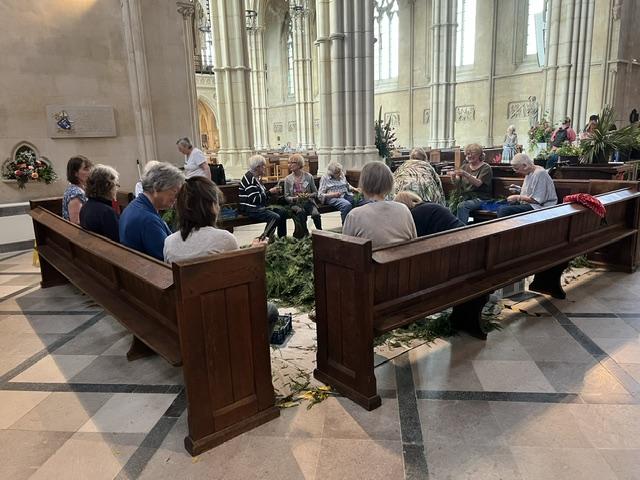
Preparations: cutting the greenery, June 2026
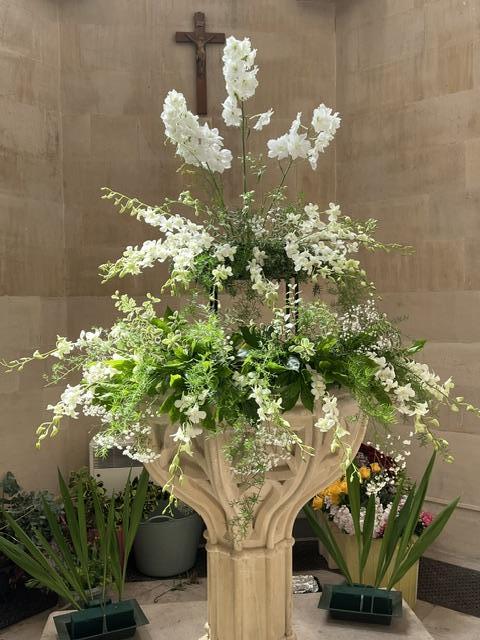
On Monday morning the flower arrangers arrive and produce magnificent displays on the altars, statues, the baptistry and in any nook that can be found. There is also a beautiful display of vestments enhanced by accompanying information.
On Tuesday morning, the laying of the carpet begins. First the greenery is laid and then the flowers. This year there were between 12 and 16 ladies working on the carpet. It took all day.
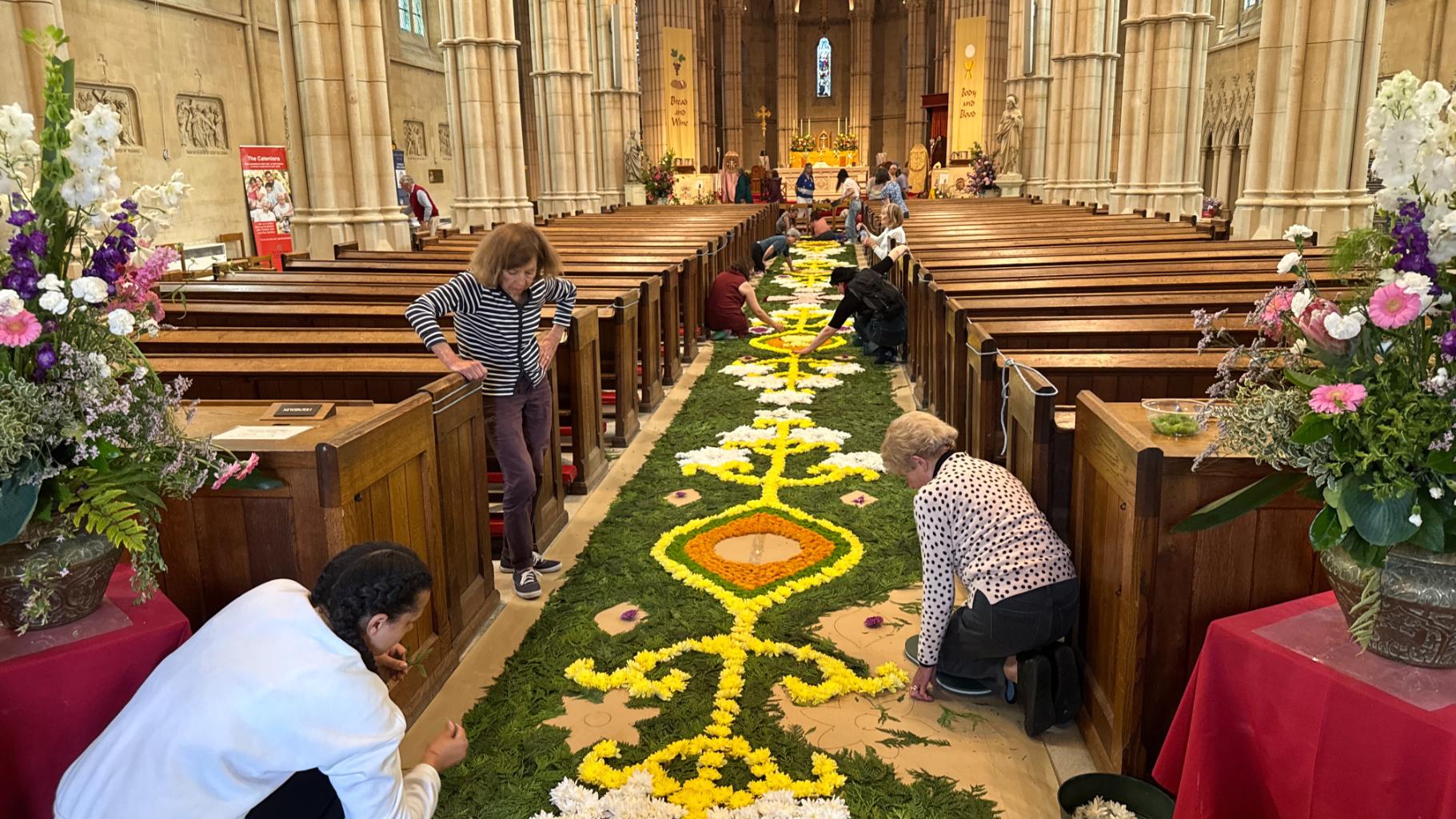
Laying of the Carpet of Flowers for Corpus Christi, June 2026
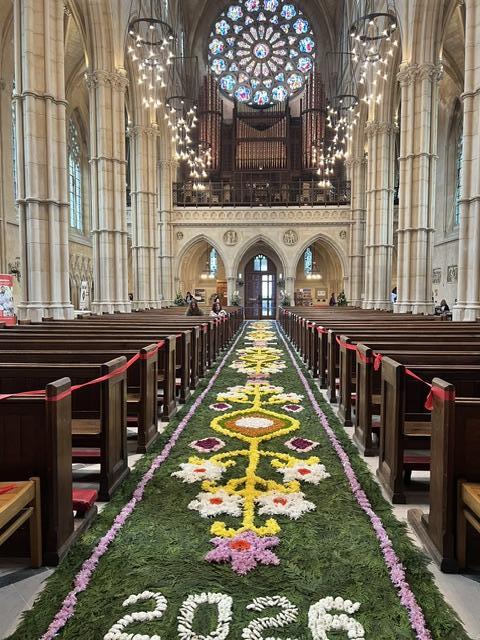
The Carpet of Flowers, Arundel Cathedral, June 2026
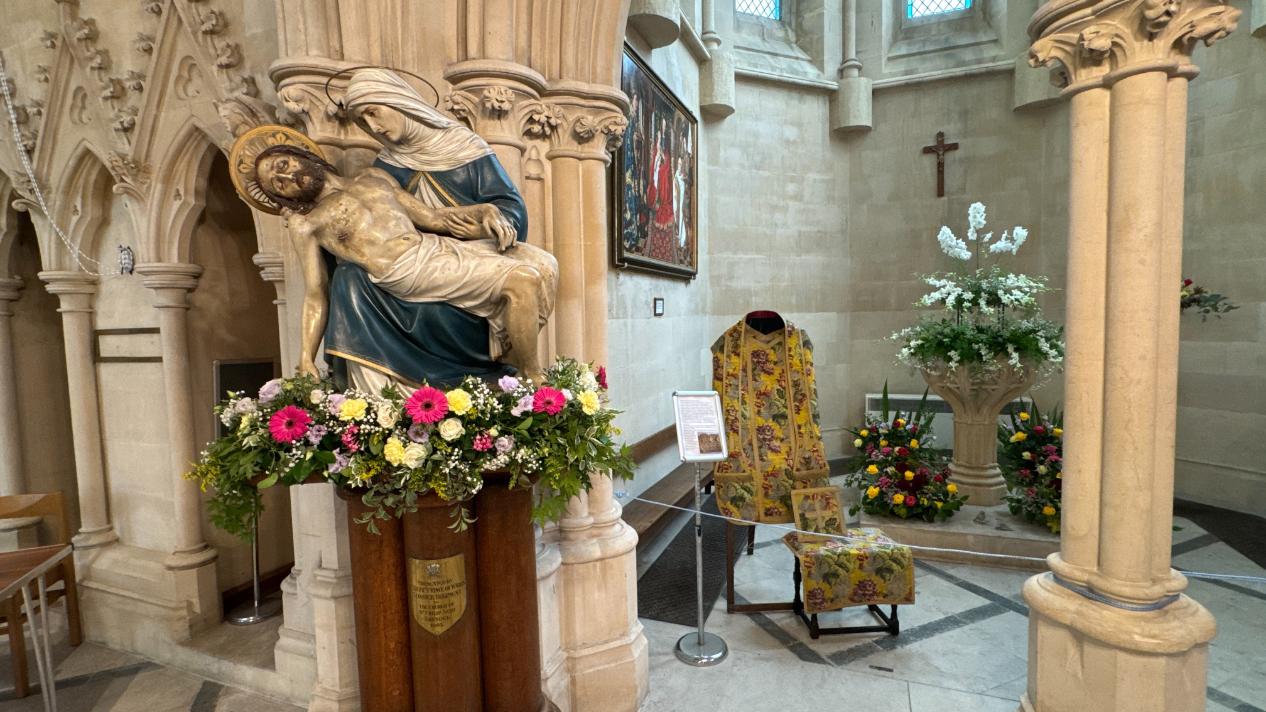
Floral displays for Corpus Christi, June 2026
Video of the 2026 Carpet Preparation, Floral Arrangements and Drone View can be seen at: https://arundelcathedral.uk/view-2026-corpus-christi-carpet-of-flowers
Special thanks to the Flower Team who oversee all things floral, and especially to the Leader, Sylvia Jones.
Anyone interested in helping in any way is very welcome to come along. Please contact the Cathedral Office.
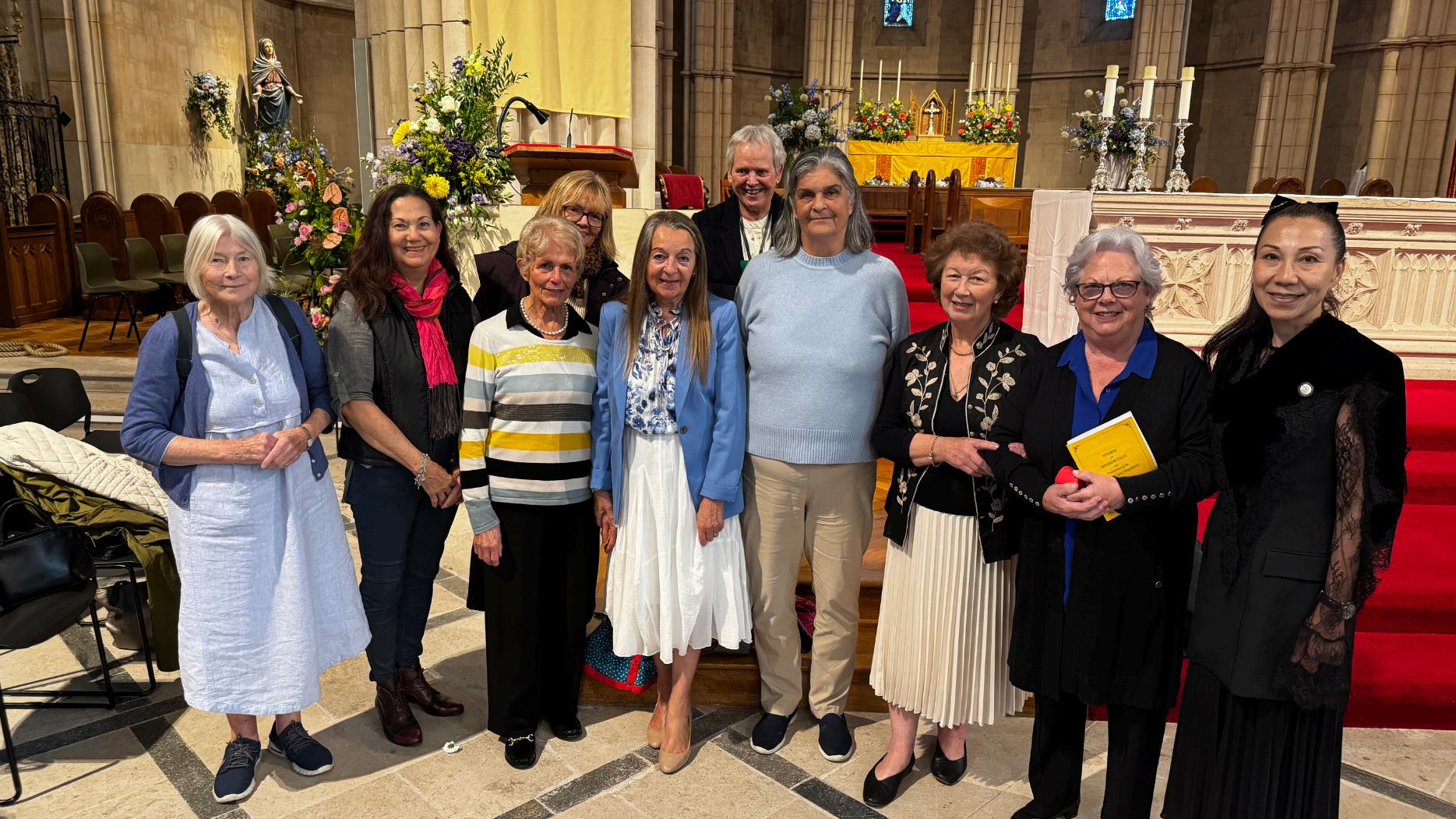
Members of the Flower Team, Floral Arrangers and Helpers, June 2026