











Experienced. Capable. Predictable. Responsive. All things you expect from your banking partner when navigating complex transactions. Ixonia Bank provides innovative financing solutions and a relationship that exceeds expectations.
$6,000,000 Industrial Building Financing for Growth
$4,000,000 Equipment Financing


$3,900,000 Capital Expenditure Financing for Growth
$2,900,000 Partner Buyout & Working Capital Financing
$1,957,000 Real Estate Acquisition Utilizing SBA Programs
$1,605,000 Industrial Manufacturing Acquisition
$1,400,000 Working Capital & Real Estate Financing
$695,000 Mixed Use Construction
$600,000 Capital Equipment Upgrade Financing
$500,000 Working Capital Increase for Growth




$733,000 Succession Plan & Working Capital Financing












The Business Bank Run By Business People





By Andrew Weiland, staff writer
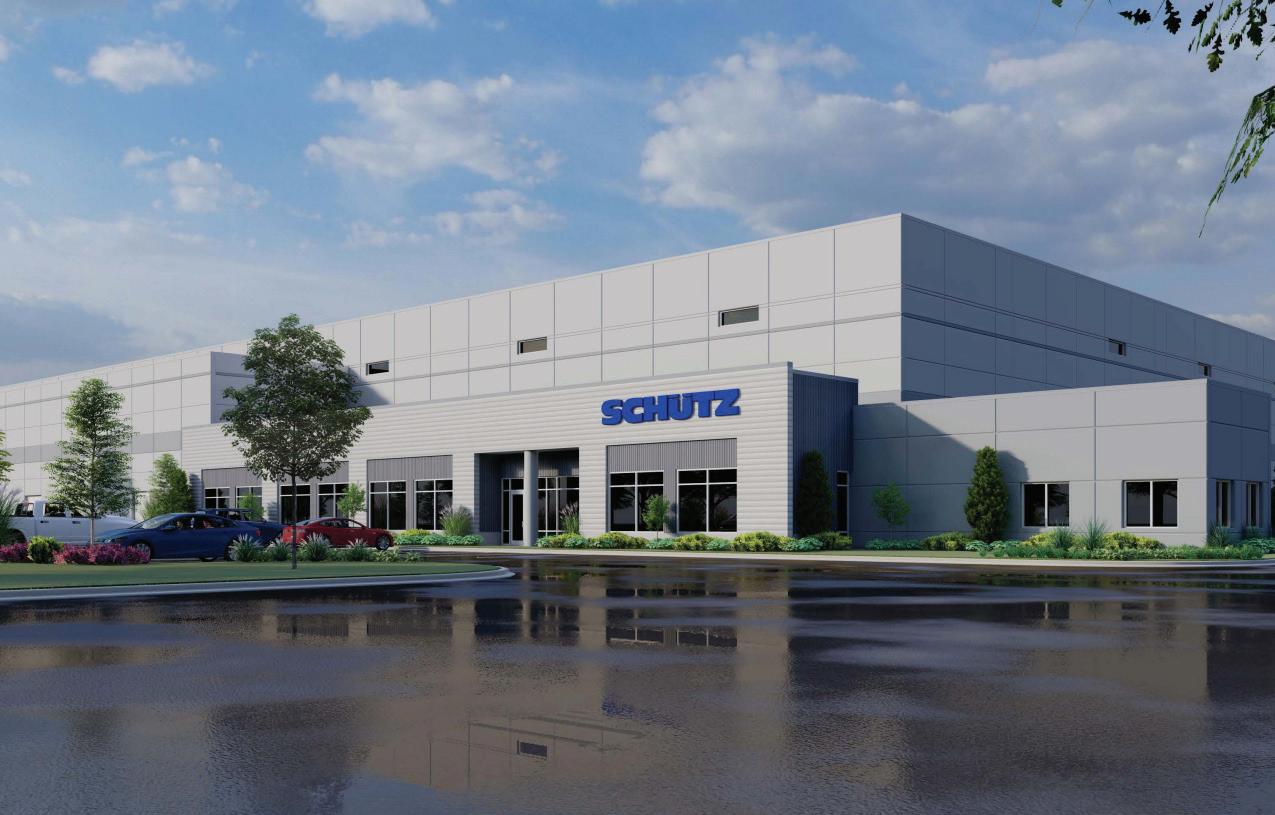
Rendering of the 167,000-square-foot building planned by Schutz Container Systems in Kenosha.
BY THE NUMBERS

$8.2 BILLION

Schutz Container Systems Inc., a subsidiary of Germany-based Schutz, which is currently building a 370,000-square-foot plant in Kenosha, is planning to build three more facilities in the city, including two that would be used for steel drum and steel component fabrication and distribution.
Construction began earlier this year on the 370,000-square-foot facility at 7517 60th St. It will be used to manufacture, store and distribute plastic drums and bulk containers. The $38.9 million facility will have 97 employees.
The company plans to build three additional facilities in Kenosha. According to plans submitted to the city, the company plans to develop a vacant site north of the city’s industrial park at approximately 70th Avenue and 45th Street.
Schutz plans to build the three facilities in two phases, with two buildings planned in the first phase. The westernmost building would be about 167,000 square feet and be used for steel drums. The second building would be about 240,560 square feet and be used for steel component fabrication. The third building would be about 172,000 square feet and would be used for manufacturing for a yet-to-be-determined product, according to information submitted to the city.
Plans include a rail extension on the west side of the property. Rail cars carrying raw steel
materials would be brought into the buildings and unloaded to be used in the manufacturing process. Steel coils delivered by rail would be converted into steel drums or steel cages, according to information submitted to the city.
Kenosha County has been a hot spot for industrial real estate development for years. That has slowed recently as an influx of supply has driven up the county’s industrial space vacancy rate to 13.1% in the second quarter, up significantly from 6.9% in the second quarter of 2023, according to market reports from the Commercial Association of Realtors Wisconsin and Moody’s.
Kenosha County has the highest industrial space vacancy rate in southeastern Wisconsin, by far, with the next highest being Racine County at 8.5%.
However, Kenosha County also leads the region in industrial space absorption. For the first half of the year, the Kenosha County industrial market absorbed more than 2.1 million square feet of industrial space. That’s higher than the entire southeastern Wisconsin region, according to CARW and Moody’s.
The demand for industrial real estate in Kenosha County has largely been driven by the growth of Uline Inc. The distributor of shipping, industrial and packaging materials is currently building a 1.4 million-square-foot warehouse in Kenosha.
Mike Jones, managing director of California-based Science Ventures, led a panel discussion on consumer trends at NVNG Investment Advisors’ recent +Venture North event in Milwaukee. Jones and his team have helped launch a number of consumer brands, including Dollar Shave Club and Liquid Death. Before the panel, Jones shared insights on his approach to investing.
“I’ll take as many board seats as I can possibly buy through the journey. I will try to push all other external forces away. I do not want my founders distracted by bad advice and bad board members.”
“We target old, tired sectors. We look for old businesses where they’ve been selling the same thing for 50 years. We go and talk to Walmart, I ask them, ‘What’s boring? What are you not moving on? Who do you not like working with? Who’s your least favorite bill you pay every month?’ I want to go after that sector.”





“We want feelings. We want emotions. We want things that stand out. I’m not looking for things that are 10% better. I’m looking for things that are 200% different. I want half price. I want two-x price. I want to challenge you. When you look at Liquid Death on a shelf and it says it’s a healthy beverage, I want your brain to break a little and be like, how is that healthy? It says ‘Death’ on the can. I’ve got to challenge you to stand out, right? Nothing a little bit better is working right now. You need major better.”































“If we can’t launch it direct to consumer, if we can’t launch it online, we have no interest. Full stop. I want a million dollars a month before I even talk to a retailer.”
“If you’re a startup with me and we’re measuring the goal of your startup as daily app downloads, number of transactions in the marketplace, sales through Amazon, sales through TikTok, I want that data coming into my inbox daily to understand the trajectory. The reason being is I need to learn what’s working and not … if I get the updated quarterly at a board meeting, I’m learning slow. It’s not helpful.”
“When we start a company, we’ll come up with a concept, the founder will pitch us; within about a month we’ll basically find ways to smoke test it against consumer receptiveness. So, I’m looking for really, really fast ways to know whether it’s something I want to spend the next seven to 10 years of my life with the founder building. Our goal is to shut stuff down within three months, under a quarter million dollars of spend if it ends up not working and if it works, our goal is to deploy a hundred million-plus to the business, get it to scale, take it public, sell to a big strategic.”
LEADERSHIP:
Paul Anton, Frankie Anton and Lyth Saeed
HEADQUARTERS: Milwaukee
WEBSITE: huupe.com
WHAT IT DOES:
Created a ‘smart’ basketball hoop
FOUNDED: 2019
EMPLOYEES: Approximately 20
NEXT GOALS: Achieve profitability
FUNDRAISING: $11 million
By Ashley Smart, staff writer
A GROUP of childhood friends from Milwaukee has taken a love for playing basketball and turned it into an international company.
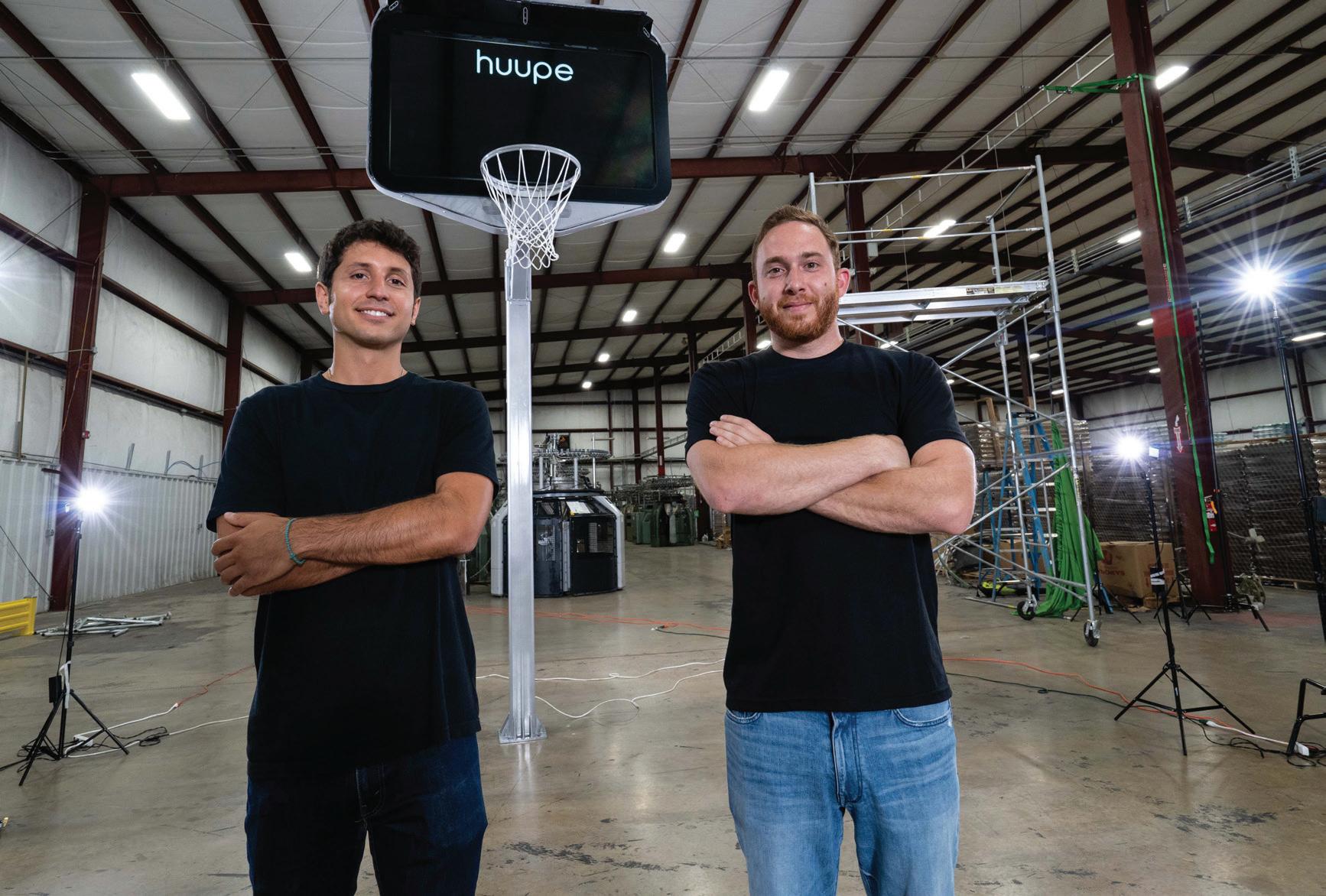
Brothers Paul and Frankie Anton, along with childhood friend Lyth Saeed, are the masterminds behind huupe, a Milwaukee-based sports technology startup that has created what it calls the world’s first smart basketball hoop. The product allows users to play against one another remotely while also offering features like streaming and shot tracking.
The Anton brothers, along with family and friends, used to play basketball virtually via Snapchat. Participants would record videos of themselves taking a shot and send them between one another, allowing players to par-
ticipate globally.
“That was really the genesis of the idea, to be able to play basketball against one another from all parts of the world,” said Paul Anton.
His first thought was it would make sense to create an app that could be used to play basketball through virtual reality glasses. Saeed first pitched the idea of taking the technical aspect of the game and transitioning it into a physical basketball hoop.
Saeed has experience as a startup founder, previously creating a luxury rideshare app and co-founding an artificial intelligence recruitment startup in California.
“I have good experience in tech and building out tech teams, so that’s the experience I brought to the table,” said Saeed.
huupe was founded in 2019. It took the company five years to bring its flagship product to market. A small team of engineers built the first huupe prototype in-house.
“We had no idea how to build a computer before we started this,” said Anton. “We were just passionate and figured it out. Inside the huupe is a whole computer – the first of its kind that we built.”
There are no true competitors to huupe and the company’s patented technology, said Anton. This has allowed the company to rely on
in-person demonstrations and social media to grow its following organically.
huupe has even garnered the attention of several NBA players including Thaddeus Young and Trevor Booker. Professionals often opt to buy a huupe PRO, which is ideal for homes or outdoor courts.
“We’re really doing something that just hasn’t been done before, and that’s what is really spurring our growth,” said Saeed.
huupe has nearly quadrupled in size every year of its existence, according to Anton. The startup has orders in more than 30 countries. To date, huupe has raised $11 million in funding.
“We have clients all over the world now,” said Anton.
huupe continues to bring new products to market, recently launching a mini version of its smart basketball hoop. The huupe mini has all the features of a full-size product but can be placed in easily accessible places like a bedroom or an office.
Among the startup’s biggest goals is achieving profitability, but the huupe brand could soon be expanding into new sports, like soccer.
“We have about five products in the pipeline, one is a soccer product,” said Saeed. “We’re just going to keep cranking out cool things.”
“The people. The industry is full of so many kinds of people from all walks of life. Building relationships with colleagues in the office as well as the men and women in the field, those in the design community, subcontractors, and clients is truly rewarding.”
“The University Club Tower was so unique in that each condominium in the building was custom designed with the highest end of quality I have ever seen. I met and worked with some wonderful people in the trades as well as building management and condo owners. I learned a ton and still carry lessons from that project with me to this day.
“The Couture is another of my favorites. The three years working on The Couture were filled with great challenges and very rewarding moments. I got to work with many agencies at the City of Milwaukee, Milwaukee County and at the federal level with HUD, which taught me a lot about how a complicated project like The Couture gets completed.”
“I spend a lot of time with my family. My wife of 15 years, Rachel, and I live in Franklin with our 8-year-old son, Declan, and 4-year-old daughter, Estelle. We cart them around attending sports and activities as often as possible. My family and I also love to travel. My wife started her own travel agency years ago, and I have been fortunate to travel to many places around the world. It is deeply rewarding to learn about different cultures and share adventures with my family.”































Senior project manager




Hunzinger Construction Co. 40


AGE:





HOMETOWN: Franklin
EDUCATION: Bachelor’s degree in building construction management from the University of Wisconsin-Platteville
PREVIOUS POSITION: Senior project manager at J.H. Findorff & Son Inc.




































CEO, Advanced Ionics
Chad Mason knows first-hand the importance technology plays in solving major modern issues like carbon emissions. Here are some tech tools he uses in his professional life to tackle large-scale problems, along with one he uses at home.
“I use AlDente on my Mac, but for other computers, like Asus with Windows, there’s often a built-in app to limit battery charging to between 70% and 80%. I do this on my phone and EV as well. Having worked in the battery industry overseas, I can confidently say this is the way to ensure your battery outlasts the device itself. When buying any device, make sure it has this feature.”

“Think of it as Tables in overdrive with Word processing capabilities. It’s distinct from Airtable, Smartsheets, Jira and other popular business software. We use it for OKR tracking, and I use it for organizing technical brainstorms. It integrates well with other software, including project management tools.”

“I use this for specific file storage needs. It’s great for pooling different hard drives, and its ‘btrfs’ file system checks for bit rot – something I’m oddly paranoid about. The software is user-friendly, with handy apps for off-site backup and other cool features.”

“This is my favorite, though it’s just in my home (for now). When replacing your old HVAC or water heater system, this is a no-brainer. It functions like an air conditioner but can also heat your house in winter. We’ve eliminated all gas appliances and pipes from our house, improving both our family’s health and our finances. Just remember to do electrical upgrades beforehand – it makes for an easy swap, even in a January emergency.”







This Q&A is an extended profile from Wisconsin 275, a special publication from BizTimes Media highlighting the most influential business leaders in the state. Visit: biztimes.com/wisconsin275 for more.
Education:
Bachelor’s, Georgetown University; J.D., University of Wyoming
What was your first job, and what did you learn from it?
“Working in my mother’s medical office. She taught me that caring for people means listening to them, hearing them and then taking actual steps to help them with their challenges, from their view, not yours.”
What piece of advice has had the most significant impact on your career?
“Be a deal maker, not a deal breaker.”
If you could have dinner with any two business leaders, who would you choose and why?
“Willie Smith, of Northwest Side Community Development Corp., because he’s lovely and a friend, and because he reminds me of the work we need to do to really change Wisconsin. Gina Raimondo, the U.S. Secretary of Commerce, because she has eyes on the entire global marketplace.”
What are some of your favorite destinations or places to visit?
“Wisconsin businesses!”
What is one book you think everyone should read and why?
“‘Subtract: The Untapped Science of Less’ by Leidy Klotz. It’s based on the concept that instead of always adding (programs, resources, money, construction), sometimes we need to take away, subtract, do more with less.”




What’s your hobby or passion?
“Working outside on my 100-acre farm in the Driftless Region.”
What is your favorite Wisconsin restaurant and what do you order there?
“Driftless Cafe in Viroqua. Whatever Luke is cooking.”
What would people be surprised to learn about you?
“I’m actually a New Yorker.”
What was your first car? How long did you drive it for?
“Jeep Cherokee. From New York to Wyoming, and then some.”
If you could take a one-year sabbatical, what would you do?
“Learn how to be a glassblower.”
What’s the toughest business challenge you’ve had to overcome?
“Helping people see that change is good. Humans keep doing things because they think it’s the right way, doing something different must be wrong. Asking people to trust you enough to change, and then delivering on that trust is very hard.”
What advice would you give to a young professional?
“Pick up the balls that are laying on the ground and run with them. Do things no one else is willing to do.”



Secretary and CEO



Wisconsin Economic Development Corp. MADISON

for executing a statewide
and helping existing businesses expand with various tax incentives and grants.
Prior to leading WEDC, Hughes was chief mission officer and general counsel for La Farge-based Organic Valley, an organic food brand and independent cooperative of organic farmers. Founded in 1988, Organic Valley is the nation’s largest farmer-owned organic cooperative and one of the world’s largest organic consumer brands. She also served as vice president of the Organic Trade Association from 2013 to 2019.
What is one thing you would change about Wisconsin to make it even better?
“What got us here won’t get us there. We need a renewed sense of excitement for the future – there is so much opportunity for every Wisconsinite.”
As you enter your office, what would you choose to be your walk-up or theme song and why?
“Honestly, I don’t really like music.”
Is there a nonprofit cause that has special meaning to you?
“Any cause that provides food security. It’s a human right to have access to good, healthy food.”
What is the biggest risk you have ever taken?
“I had a great job before this one. There was no reason to leave, except the governor called. It has been the biggest honor to serve in this role.”
What’s at the top of your bucket list?
“I don’t have a bucket list.”
What has you most excited about the future?
“That my kids and their friends will be in charge. They are so ready, us old people just need to get out of the way.”



By Maredithe Meyer, staff writer
Sequoya Borgman is not one to shy away from taking on a challenge. In fact, his bucket list focuses on activities specifically designed to push his physical, emotional and mental strength. The founder and CEO of Milwaukee-based private equity firm Borgman Capital fulfilled one of those bucket list items in August, when he climbed to the top of Mount Kilimanjaro.
hard, it’s really just the elevation. … It’s like working out with half as much oxygen,” he said.
Joined by his guide, four porters and a handful of other hikers from around the world, Borgman embarked on the six-day expedition on his 49th birthday – a gift to himself, he said. The first night on the mountain brought a bout of altitude sickness that was “pretty painful” but didn’t stop him from reaching the summit by the dawn of day five.



Located in Tanzania, Kilimanjaro is considered the highest free-standing mountain in the world, with an elevation of nearly 20,000 feet above sea level.
Borgman signed up for the climb earlier this year – on “probably a stressful day” – and spent three months working with personal trainers at Fit Pro MKE, mainly to build cardiovascular endurance for the trek’s high-altitude conditions.
“It’s not so much the physical part that’s
GROTH DESIGN GROUP N58 W6181 Columbia Road, Cedarburg
NEIGHBORHOOD: Downtown
YEAR FOUNDED: 1994
OWNERS: Peter Schneider, Peter Damsgaard and Mike McGraw
SERVICE: Architectural design
What is the history of GROTH Design Group and your Cedarburg location?
“GROTH Design Group focuses on serving the needs of faith-based and nonprofit organizations. The firm established its first home in the historic Cedarburg Mill in 1997 with just six employees. This Cedarburg location remains the firm’s home base. In our 30 years, GDG has grown to a staff of 40 talented architects, planners, interior designers, marketing and support staff professionals and has established additional office locations in Milwaukee and Appleton. This year, GDG also underwent an exciting and bit-
It turns out the experience of climbing a mountain, one step at a time, can be compared to the world of business and investing, said Borgman.
“It’s like goals in business,” he said. “If you have a very large goal and just focus on that, it may be harder to reach that goal, whereas if you focus on just one day at a time, one small goal at a time, eventually you’ll get to the larger goal and get to the peak or the summit.”
tersweet ownership transition from Mike Groth to long-standing management team members, and now partners, Peter Schneider, Peter Damsgaard and Mike McGraw.”
Who are your clients?
“GDG is proud to provide our firm’s full suite of architecture, planning, and interior design services to clients including Children’s Wisconsin, Gundersen Health System, Azura Memory Care, Annex Wealth Management, Johnson Controls Intelligent Laboratories, Stone Creek Coffee, The Commodore, Marquette University, Notre Dame of De Pere Catholic School
and more than 250 faith-based clients across all denominations.”
How have you seen Cedarburg evolve since you’ve been located there and how has it affected your business?
“Cedarburg continues to evolve for the betterment of our community and its future, all while honoring our past through careful preservation of our historic buildings, documentation, historical milestones and traditional celebrations. We feel honored to play a role in honoring the past and building the future of Cedarburg.” ■


By Ashley Smart, staff writer
AS SUSSEX-BASED Quad leans into its transformation into a marketing experience company, the business is unveiling a new partnership aimed at making the job of marketers even easier.
Quad has teamed up with Google to use its cloud services to offer new marketing solutions powered by artificial intelligence.
“Quad’s history and legacy for the past 50 years has been in household data,” said Joshua Lowcock, president of media at Quad. “We see that as a unique and important differentiator for us and we believe our approach to data is future proof.”
Quad regularly updates its data stack, which touches 92% of all U.S. households and nearly 97% of the adult U.S. population. Across any given 18-month period, Quad’s data stack contains more than 3 billion validated or revalidated data points.
Households provide more resilient data points than phone numbers, email addresses, IP addresses and other digital identifiers. They also reveal audience passions and interests through the types of content recipients proactively request.
Quad reaches a large percentage of households through its legacy print services. This provides
the company with a unique way to collect consumer data that’s not already available to data brokers, along with unique data sets for each type of consumer.
“Imagine as a marketer, if you had access to this brilliant data stack that is super predictive and can help you build audience dynamically,” said Lowcock. “Imagine if it was as easy (to use) as ChatGPT. You can say, ‘I want to create an audience. Here’s what I want to achieve and the type of consumers I want to reach’ and out the back end comes a customized audience plan that gets down to the (media) channel itself.”
Using Google Cloud’s AI optimization capabilities and large language models, Quad’s new AI-powered solutions seek to allow brands to create highly personalized content at scale across multiple marketing channels.
“Using AI to dynamically create creative (content) is not particularly novel, but the ability to build audiences that are truly omni-channel and the ability to optimize looking across channel, that’s really hard, and that’s unique,” said George Forge, senior vice president of client technology and product development at Quad.
In addition to providing image generation, processing, content
Interactive and Ivie & Associates – have bolstered Quad’s creative and digital offerings and expanded the business beyond print services.
“We grew up as printers,” said Forge. “We’d love to do more direct mail, but we need to lead with the data. What does the data say is going to be the most efficient way to connect with an audience for a particular brand’s goals? Data will tell you that.”
In February, Quad acquired North Carolina-based DART Innovation, an in-store digital media solutions provider. Quad says the acquisition is intended to position it to become a leader in marketing for retailers, consumer packaged goods and consumers.
creation, layout design, translation and more, Quad’s new offerings will address the challenges of managing large product catalogs and diverse audience segments.
“The real value in data is actually democratizing access and taking it out of the hands of the data scientists,” said Forge. “I need to get it in the hands of our marketing clients. I need to get it in the hands of the people who are client-facing every day, because that’s the way we’ll actually do transformational marketing for clients.”
Through its new partnership, Quad will also use AI to deliver enhanced workflow optimization, content production, asset development, scaled creative and media capabilities.
For several years, Quad has been expanding and tailoring its offerings to address modern marketing challenges.
Long known as a printing company, Quad now offers integrated marketing services. Those new offerings have helped the company navigate the decline of its legacy printing businesses.
A handful of acquisitions over the past several years – including Apple Tree Group, Periscope, Rise
In May, Quad also announced the launch of a new creative agency named Betty. Betty integrates all of Quad’s creative business lines. This includes the company’s brand strategy and design, content creation, campaign ideation, and retail and adaptive design businesses.
Over the past 18 months, Quad has continued to tailor its suite of marketing solutions. The company recently announced Rise, a firm providing brand, performance and content media services, and Household Fusion, a co-mailing option that combines multiple pieces from different marketing or periodical mailers to reduce postage costs.
At its West Allis facility, Quad will soon open a Marketing Experience Innovation Center that highlights the company’s capabilities as a marketing agency. Modern technologies including 3D scanning to create digital twins and In-Store Connect, a solution that allows brands to create direct connections with shoppers through digital screens and kiosks, are all on display.
“This is about us, as a marketing experience company, helping our clients connect in the most efficient, accurate manner that we can across all channels,” said Lowcock. “That’s the foundation of all this work.”
Thursday, November 7
2:00 PM: Registration | 2:30 PM – 6:30 PM: Program & Reception | Brookfield Conference Center
The City of Milwaukee taking control of former Northridge Mall property and demolishing the existing buildings creates an opportunity for a new development to bring needed investment on the far northwest side of the city. Teams of developers will share their ideas for transforming the site before the audience has a chance to pick their favorite.
Confirmed Speakers:
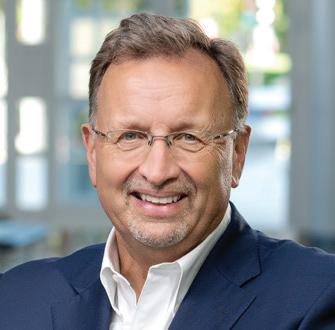
Scott Lurie, Founder, F Street (1)
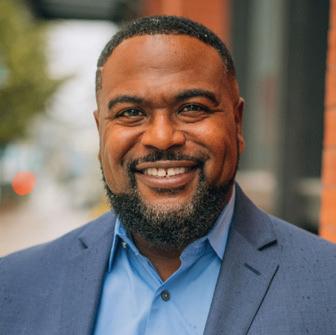
Team Member: Ariam Kesete, CEO, AK Development (2)
Bob Monnat, Senior Partner, Mandel Group (3)
• Team Member: Michael Adetoro, Managing Partner, FIT Investment Group, LLC (4)
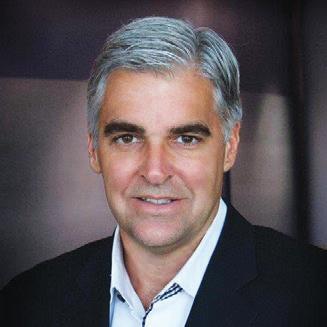
• Scott Yauck, President and CEO, Cobalt Partners (5)
Team Member: Stephanie Mercado, Supplier Diversity Supervisor, Michels Corporation (6)
Moderator: Andy Hunt, Director for the Vieth Institute for Real Estate Leadership, Marquette University College of Business Administration (7)
Update on Milwaukee’s Development with Q&A Lafayette Crump, Milwaukee City Development Commissioner (8)
Current State of Capital Markets
Billy Fox, Senior Vice President at MLG Capital (9)
BizTimes and Commercial Association of Realtors Wisconsin Annual Member Survey Results
Tracy Johnson, President & CEO, CARW (10)
Networking Reception








The program concludes with an engaging networking reception, featuring an open bar and a selection of light hors d’oeuvres. This is your chance to mingle with the speakers and fellow attendees, exchange ideas, and build valuable professional connections in a relaxed and inviting atmosphere.
Sponsors:






MORE THAN 10 YEARS into development, another 500 apartment units are on track to be added to The Mayfair Collection at the intersection of I-41 and Burleigh Street in Wauwatosa, as some of the mixed-use development’s retail transitions into its second generation of tenants.
Mayfair Collection master developer Citadel Property Advisors, a Chicago firm spun off from HSA

Rendering of the Foundry at Mayfair Collection.
Commercial Real Estate (the original developer of Mayfair Collection), has so far tackled about 80% of the site’s 69 acres, which once was primarily a warehouse and distribution facility for Roundy’s.
With two approvals from Wauwatosa’s Design Review Board in hand, Citadel is eyeing a spring 2025 construction start for another 289 apartment units and a spring 2026 construction start for 234 more. An additional roughly 200 units could be built in a subsequent phase for a total of more than 700 units, according to Tim Blum, founder of Citadel. The company is planning to partner with Mount Prospect, Illinois-based Wingspan Development Group for all three of these projects.
“If we’re successful in this first phase, we would like to execute an additional phase in that area,” Blum said. “And we anticipate we will be successful, given vacancy and rents in the area.”
Known as the Foundry at Mayfair Collection, the project will add density to the retail-based development. In total, there is about 400,000 square feet of retail space at Mayfair Collection, all of which is leased, according to Blum.
“It’s been a long time coming,” Blum said of the process to fill all of the retail space.
Most of the development’s retail space was built in 2014 and 2016, and tenancy has been stable

Well known for its three-story tall mural of Milwaukee Bucks star Giannis Antetokounmpo, the building at 600 E. Wisconsin Ave. has become a downtown Milwaukee landmark.
Officially called 600 EAST, it was built in 1913 and was once home to Spencerian College. The building is now owned by local marketing and advertising executive Dan Nelson Jr., president and CEO of Nelson Schmidt Inc., which is based in the building. He transformed the building from a class C commercial building into a blend of office and retail uses, including a first-floor cafe and coworking space, offices on the second and third floors and the Antetokounmpo mural, painted in 2022, that some consider a must-see Milwaukee attraction.
ADDRESS: 600 E. Wisconsin Ave., Milwaukee
OWNER: East Wisconsin Avenue Owners Association LLC
ASSESSED: $2.2 million

when it comes to merchandise and clothing retailers. The most recent tenants to set up shop at Mayfair Collection include sports merchandise retailer Rally House, which opened last year, and shoe store Boot Barn, which opened earlier this year. Following the 2019 closure of Saks Off Fifth, one of the original tenants at Mayfair Collection, Blum said clothing retailer Burlington will fill the space early next year.
Finding and keeping tenants in the development’s several restaurant spaces has been more challenging. Four concepts operated by Chicago-based Phoenix Hospitality Group closed in the wake of the COVID-19 pandemic, plus two other restaurants at Mayfair Collection closed at the same time. Many of those spaces have found new life with restaurants such as Mex Avenue, Crafty Crab Wauwatosa and a Good City Brewing taproom.
The Foundry apartments will join the Synergy apartments directly to the south, which opened in 2018 with 270 units.
“Those had a good leaseup and have since had stable occupancy, so we’re confident we can be successful with Foundry,” Blum said.
Citadel previously proposed a summer 2023 construction start on the Foundry apartments, but that timeline was delayed as the developers sought city approvals, including for tax incremental financing.
Wauwatosa in April approved a term sheet for a development agreement outlining its support for the Foundry with two forms of tax incremental financing.
Under the TIF, the city is providing up to $5 million to reimburse the developers for infrastructure costs related to the parking structure, public-use pedestrian path, stormwater vaults, dog park facilities and roads, according to the term sheet.
Additionally, the developers will annually receive a portion of the tax increment the development generates, equaling a future value of up to $14.75 million. Much of that will reimburse the devel-
opers for the cost of installing below-grade parking and public infrastructure. During the approval process in April, the developers told the city the below-grade parking is designed to enhance the area’s pedestrian experience by eliminating the need for surface parking lots.
The Foundry’s estimated taxable value will be more than $91.5 million, the term sheet shows.
Construction of Foundry will join a construction project at the northern end of Mayfair Collection by West Allis-based MSP Real Estate that will include 80 units of senior housing, many of which will be below market rate. That project received about $2.5 million from Milwaukee County as part of a push to build more affordable housing in the Milwaukee suburbs.
If all three projects that Citadel and Wingspan have planned materialize, the only remaining piece of developable land at Mayfair Collection will be a 3-acre site at the far north end of the project site.


Hales Corners-based Wimmer Communities is the latest firm planning to develop a vacant property in New Berlin, planning hundreds of apartments and commercial space.
The development site, located southeast of West Greenfield Avenue and South Moorland Road, was sold to Wimmer for $11 million in August after another developer, Milwaukee-based Mandel Group, dropped its plans for the site.
Known as The Conservancy, Wimmer’s project would be walkable and interwoven with nature trails, the proposal says. About two-thirds of the site would be set aside for woodlands, wetlands, ponds and green space.
Pending city approval, site work for the project could begin next August and, under that timeline, the first apartment units could open in the fall of 2027.
SIZE: 361 apartment units; 19,800 square feet of retail space
DEVELOPER: Wimmer Communities PROPERTY: 34 acres
Milwaukee’s network of business builders and entrepreneurs growing their organizations, developing high-performance teams, and transforming their industries.

HUNTER TURPIN Reporter

to get
Contact Chauntele Kreutz at ckreutz@mmac.org
Backed by private equity, company seizes opportunity to acquire former Angelic Bakehouse facility in Cudahy
BY ASHLEY SMART, staff writer





Now in its 107th year of business, Legacy Bakehouse is entering a new period of growth. The Waukesha-based manufacturer began as a small bakery run by German immigrants and has since grown into one of the country’s largest producers of baked snack components – an evolution not without its challenges.
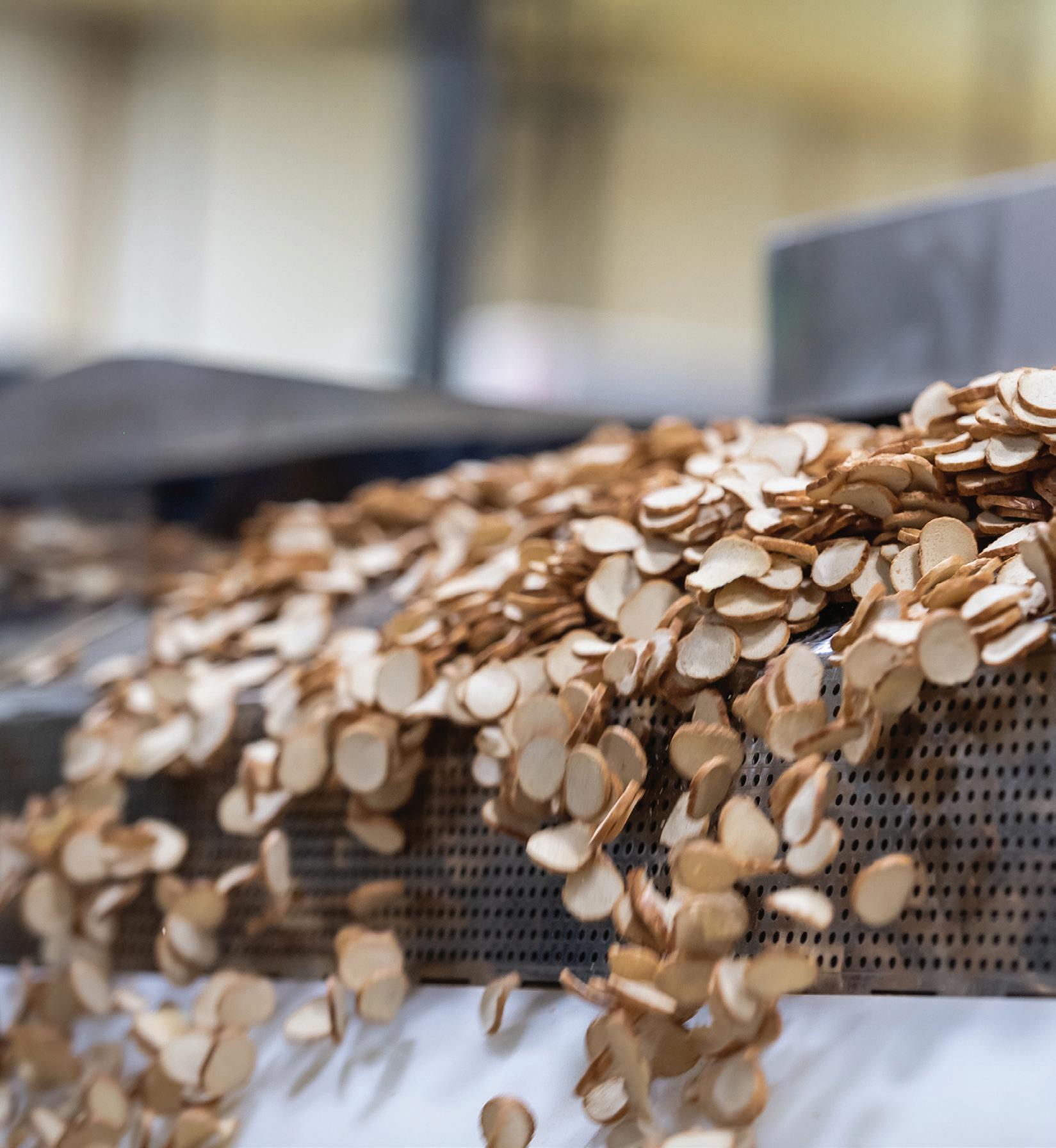
The maker of breadsticks, rye chips, snack mix, croutons and more is currently on track to nearly double its workforce and production capacity, in large part due to the financial backing of Benford Capital Partners, the Chicago-based private equity firm that acquired the company in 2023.
Just a year after the acquisition, Legacy in July bought a 42,000-square-foot facility in Cudahy, the site of the former Angelic Bakehouse, on East Layton Avenue. The $5.5 million purchase of a second production site is just the start of a series of investments, including new technology and production lines, to support the company’s growth.
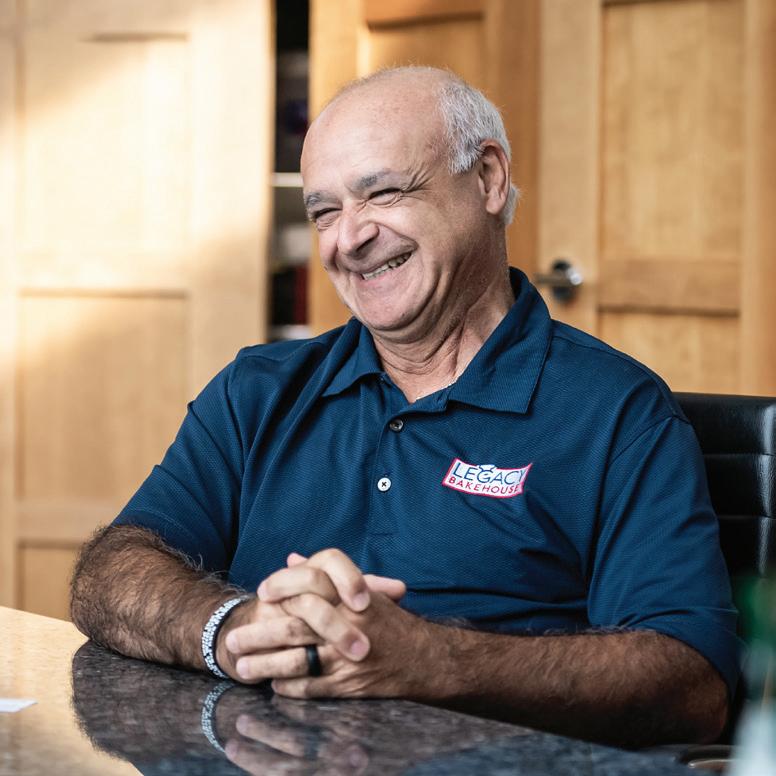
While the introduction of new technologies over the years has streamlined the process of baking fresh bread for snack ingredients, the business itself has remained mostly the same, according to Legacy Bakehouse president Peter Sardina, who has been with the company since the 1990s.
“As far as the physical part of the business, we basically have different equipment,” said Sardina. “As far as the atmosphere and the culture of the company, I don’t think (Legacy has) changed much.”
As Legacy anticipates double-digit growth in 2025, Sardina is shepherding the business through its latest period of expansion while also helping it maintain its longstanding heritage and a culture that prioritizes employees.
“We care about our people,” said Sardina. “That’s


our main goal. I want you to come in to work and go home safe to your family.”
Legacy Bakehouse began as a small, family-owned German bakery, called Pinahs, in Milwaukee in 1917. The business made traditional German rye breads, sweets and more.
In the 1970s, snack mixes started to become more popular with American consumers. Pinahs broke into this market by creating a rye chip from its homemade bread.
“They used to make rye chips for kids, and people really loved that product,” said Sardina. “From there, (Pinahs) kept on growing in that category.”
The company opened its current Waukesha headquarters, at N8 W22100 Johnson Drive, in 1991. Faced with financial challenges during the late ‘90s into the early 2000s, Pinahs filed for receivership in 2007; it was purchased and renamed as Legacy Bakehouse shortly thereafter.
Today, about 90 people work at Legacy’s Waukesha headquarters facility, where fresh

bread is baked round the clock. Its newly acquired Cudahy facility will eventually have a team of 100 employees.
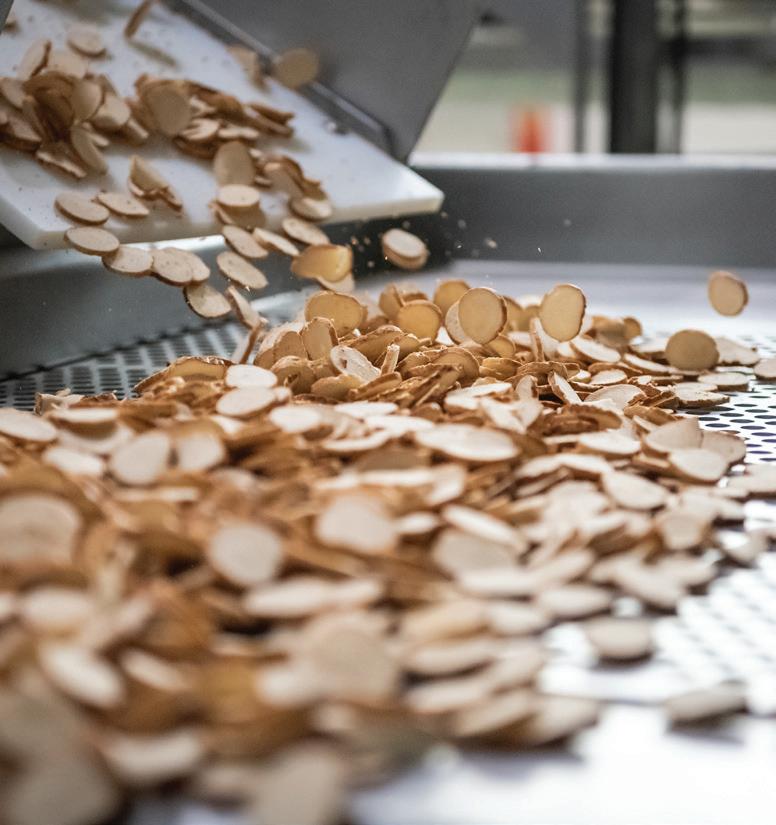
Joining Pinahs as a plant manager, Sardina was tasked with helping manage the business and developing new products. At the time, the company’s only product was its flagship rye chips. The manufacturer has since added modern snack staples like pita chips, flour tortillas and, its most popular product, bagel chips. Legacy makes several variations of bagel chips including multigrain and clean label, a product that uses a short list of ingredients with minimal artificial additives.
The original Pinahs moniker lives on as now the only brand Legacy owns. Pinahs Rye Chips and Snack Mixes are manufactured and packaged at Legacy’s Waukesha location for distribution to retailers nationwide.
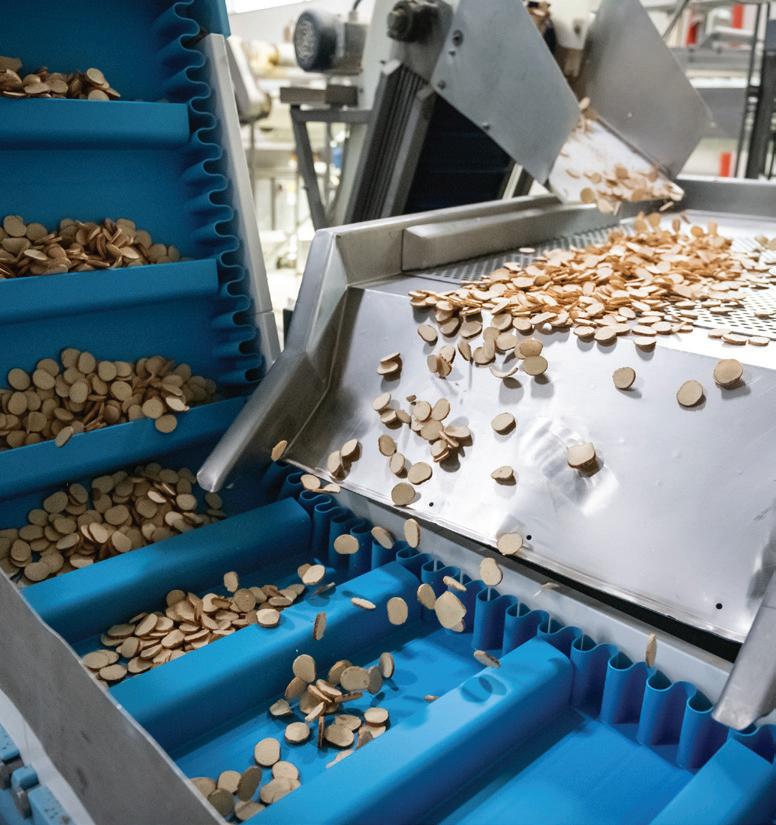
Historically, Legacy Bakehouse has been a bulk supplier that ships components to clients that then combine those pieces into snack mixes themselves. As it expands its capabilities, the company will soon be able to produce customized snack mixes for
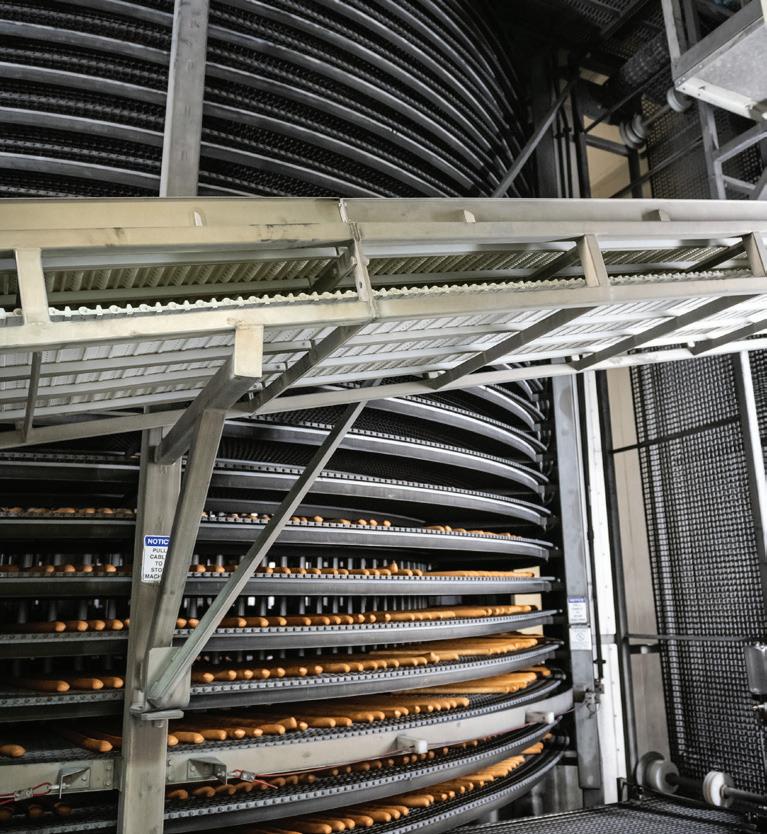






its clients in-house.
Legacy’s latest product addition is a checkered square product made from corn. The checkered morsel, made from dry corn pellets that have been imported from Europe, can be uniquely flavored and added to any sort of snack mix.
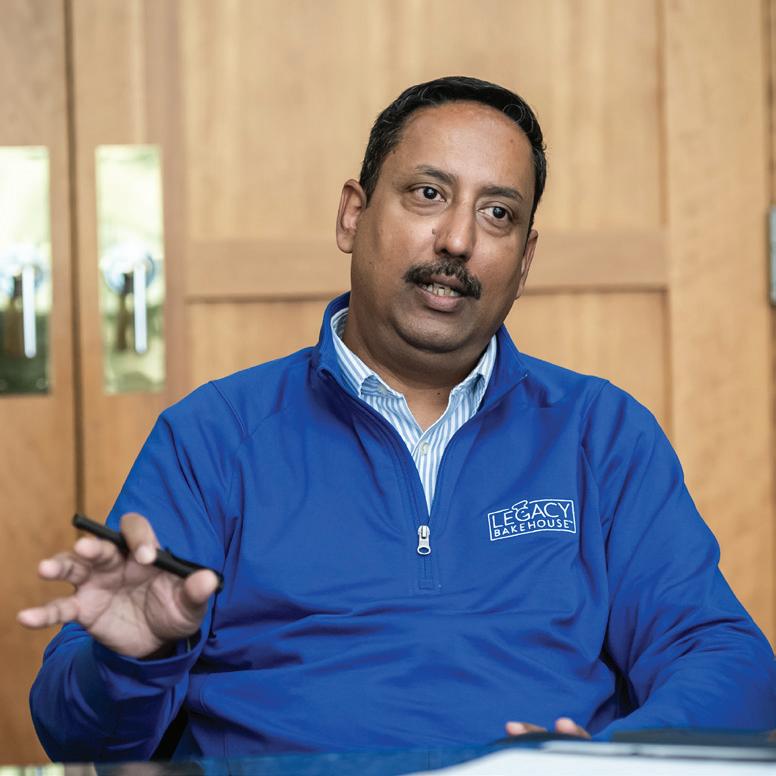
“That innovation shows where we are headed,” said Inderjit Kang, chief operating officer at Legacy Bakehouse. “That corn piece is part of the end solution to provide the entire snack mix to a customer.”
Last year, Legacy manufactured approximately 12 million pounds of its baked products. The company’s Waukesha site has capacity to make up to 20 million pounds of product, with the Cudahy site capable of adding 10 to 15 million pounds to that total.
“We are a co-manufacturer that has a good quality product at a low cost, and we can basically produce and be fast and flexible to deliver on time every time,” said Kang. “That’s the key for the success story.”
We care about our people. … That’s our main goal. I want you to come in to work and go home safe to your family.”
— Peter Sardina
Waukesha-based Z.T. Distribution has been working with Legacy for more than 20 years as the exclusive distributor of the Pinahs brand. Company president Scot Trojanowski witnessed firsthand the massive turnaround Pinahs experienced, recovering from bankruptcy to once again becoming a baking powerhouse.
Z.T. Distribution distributed for Chris Pinahs, the third-generation family owner of the Pinahs business, as far back as the 1990s, although the companies did not have an exclusive agreement in place at that time.
“There was some challenged decision-making by the original owner that put the company in jeopardy,” said Trojanowski.
Pinahs hit financial trouble when it lost a supply contract with Gardetto’s Bakery after the longtime Milwaukee snacking company was sold to General Mills in 1999. Pinahs went into receivership in 2007 and then was purchased by Mike Heyer, then-owner of Racine Danish Kringles,

along with a group of investors. The new ownership group changed the company’s name to Legacy Bakehouse.
“We reinvigorated the (business) relationship when the new ownership team came in, with Mike (Heyer) and Peter (Sardina) heading things,” said Trojanowski. “We all had aligning goals. Both our companies were growing at the same time.”
Despite Legacy’s comeback success, the company was constrained by the physical space it had available at its Waukesha headquarters, he explained.
Trojanowski had approached Legacy to discuss producing and packaging additional brands but
found the business couldn’t take on more work.
“They just didn’t have the ability to even consider a new project because they were so busy,” said Trojanowski. “When I heard they bought the Angelic property, I said, ‘That’s brilliant.’”
He believes Legacy’s second site will be a boon for the business as it can expand its packaging capabilities and brand development partnerships.
Right now, Z.T. Distribution is preparing for the Pinahs brand’s busiest season: the holidays. Employees are working to build out the large retail displays needed to keep Pinahs Rye Chips in stock. Demand for the brand will at least quadruple during the season, according to Trojanowski.
“Rye chips can be divisive. People either love or hate them,” he said. “When you talk to people, it’s the first thing they pick out of a snack mix.”
Legacy’s growth can be attributed in part to a major consumer trend: Americans’ growing love for snack foods.
The salty snacks category grew 6.9% in 2023 with more than $31.1 billion in sales reported, according to SNAC International’s 2024 State of the Industry Report. Snack mixes are ranked among the 15 most popular snack options, raking in an estimated $1.59 billion in sales last year.
More than one-third of consumers “use snacks as a key ingredient in no-prep dinners” multiple times a week and some are even integrating their favorite snacks into meals, according to the report.
“Snacks are one of the fastest-growing categories. That’s what major food companies are focused on,” said Alain Vallet-Sandre, chief commercial officer at Legacy. “These types of shelf-stable products are primarily consumed for convenience, and that’s just the way that people eat these days.”
To that end, Legacy is currently using its newly acquired Cudahy facility to produce fresh-baked tortillas that later become components in frozen meals. Legacy can produce 140 tortillas per minute using a simple dough made from all-purpose flour and oil, and a press line once used to make sprouted grain flatbread. It’s one example of how the company is creating new uses for the equipment Angelic Bakehouse formerly used to manufacture its breads, rolls, wraps and other sprouted whole grain baked goods.
“Our original thought was we would run pita because it’s very similar to a tortilla,” said Vallet-Sandre. “We quickly received some direction from folks that there was a need for tortilla capacity, so that’s where we focused.”
Legacy is currently producing two types of tortilla – a traditional flour version and a lower-carb option – for one customer out of the Cudahy plant.
As a contract manufacturer, Legacy doesn’t often get to decide what kinds of food it produces, rather the business focuses on fulfilling orders from its clients. This requires Legacy to keep an
We are a co-manufacturer that has a good quality product at a low cost, and we can basically produce and be fast and flexible to deliver on time every time.”
eye on larger trends in the snack market, including rising demand for gluten-free products – a segment the company has considered but not yet broken into – as well as organic products.
“We make ourselves available to what the market needs,” said Vallet-Sandre.
Since Benford Capital acquired Legacy Bakehouse in April 2023, the manufacturer has seen double digit growth in both revenue and EBITDA, according to Rupal Patel, operating partner at Benford Capital. The company also anticipates double-digit growth in 2025.
Benford Capital typically looks to invest in companies that are under $100 million in revenue, for a typical hold period of between five and seven years. During that time, Benford aims to at least double the size of its platform companies.
“(Legacy) was very much in our niche area,” said Patel. “Food manufacturing is at our core.”
Legacy’s former ownership team decided to start planning for retirement in 2022. With no family members readily available to take over the business, private equity was the option that made the most sense, Sardina explained.
“Benford Capital, what they brought to the table ... it wasn’t money. There were people with bigger offers, but the owners wanted to make sure that Legacy kept going,” Sardina said. “Benford was the best group to address the future of the company.”
Benford Capital takes a “partnership-based” approach with its portfolio companies, said Patel. The firm believes in investing the money necessary to drive commercial growth and capacity expansion.
— Inderjit Kang
In addition to the $5.5 million spent to buy the Cudahy facility, Benford Capital also purchased a custom-made toaster dryer that has allowed Legacy to double production capacity for its rye and bagel chips at its Waukesha headquarters. The company declined to share the dollar figure of that investment.
“The acquisition of the Cudahy facility from Angelic Bakehouse was an add-on acquisition we did because we really saw a good fit in terms of the capability of the equipment as well as the team’s core competency,” said Patel. “We have a proven playbook for food and beverage manufacturing companies of this size.”
It only took a matter of days for Legacy to acquire the assets of the former Angelic Bakehouse facility. The company shut down in March after its owner, Ohio-based T. Marzetti Company, exited the business, saying its products didn’t meet financial expectations.
In June, Sardina had learned about an auction taking place at the Angelic Bakehouse site. He quickly headed over to look at the available equipment, taking particular interest in the tortilla press.
Legacy’s leadership team toured the Cudahy plant on a Monday at 1 p.m., and by 3 p.m. the same day, they were on the phone with Benford Capital discussing whether purchasing the site made sense for the company.
“We’re constantly looking at and evaluating potential add-on acquisition targets but we’re very selective in our process,” said Patel. “We don’t just jump at any add-on acquisition.”
After taking a short time to pull together a financial thesis and model, Benford Capital’s leadership quickly discovered investing in the Cudahy facility would support its value creation plan.
“We all looked at each other and said, ‘Somebody’s gonna buy it all, somebody’s gonna come in and just take all the equipment,’” said Vallet-Sandre. “Then we kind of started to kick it around and thought, ‘Well, why can’t it be us?”
By 4 p.m. on Tuesday of the same week, Legacy had sent a purchase agreement to T. Marzetti Company. Legacy officially purchased the building on June 27 and was able to begin production there by July 15.

Angelic Bakehouse constructed the Cudahy production facility in 2013, investing $2.3 million in the project. Crediting Angelic’s ownership for careful maintenance of the facility and its equipment, Vallet-Sandre said the space is one of the nicest food manufacturing plants he’s ever seen.
When Angelic Bakehouse ceased operations, 40 employees lost their jobs. Legacy has brought back approximately 20 former Angelic employees to continue working at the Cudahy site, with the expectation of eventually staffing up to 100 people there.
“Those people have been on-site for the last two and a half months learning the equipment,” said Vallet-Sandre. “They had been there before, so they knew it, but learning it as tortilla equipment, as opposed to the flatbreads.”
The Cudahy facility has room for two more production lines as well as a sizable cold storage space that Legacy is still determining how to use, said Vallet-Sandre, but there is a possibility of expanding into an entirely new product category due to high demand for cold storage.
What’s more, there is also the ability to increase the footprint of the building into a neighboring parcel of land owned by the city of Cudahy.
Patel has signaled that Legacy’s growth period is nowhere near finished. Plans to expand at the company’s Waukesha headquarters, which are still being considered, and the open site next to the Cudahy facility provide additional growth opportuni-



ties for the business.
“It’s very attractive to have an open piece of land right next to us, where we have the option to break the wall down and further expand our footprint,” said Patel. “We’d be very open to start having those conversations with the city.”
Snacks are one of the fastest-growing categories. That’s what major food companies are focused on.” “
— Alain Vallet-Sandre


BY SONIA SPITZ, staff writer
WITH THE FREQUENCY and intelligence of cyberattacks on the rise, companies small and large are now faced with the need for more extensive cybersecurity insurance coverage and additional warranty protections.
Cyber criminals are developing more complex and damaging ways to infiltrate private data held beyond company security barriers.
“Data loss prevention and cyber management is three parts: confidentiality, integrity and availability,” said Justin Musil, shareholder and attorney at Milwaukee-based Reinhart Boerner Van Deuren.
The “CIA triad” is the model Musil and many others in the field use to define the goals of cybersecurity. Confidentiality refers to securing information systems and the sensitive data they house against breaches and cyberattacks. Integrity protects the reliability and correctness of systems and data. Availability ensures authorized users have timely and uninterrupted access to systems and data, according to Musil.
executive officer of Milwaukee-based River Run. The managed service provider works as an outsourced IT department for small and mid-sized companies in southeastern Wisconsin.
“Please hear one thing, you have to have all three: insurance (coverage), security tools, and a warranty,” said Riedl.

“I think something that most companies have to understand first is where their data is and where their services are located,” said Riedl.
Having that information is an important part of securing cybersecurity insurance coverage.

Deciding on the extent of coverage is different for every business. Typically, insurance providers ask insurance-seeking clients to complete a questionnaire on protections a company already has installed.
security over its data. An insurance broker and an IT department, internal or outsourced, will determine insurance coverage, rates and deductibles accordingly.
A new development in cybersecurity insurance is the inclusion of middle-man coverage and warranties for managed service providers and the companies they represent. These warranties can cover the gaps in insurance policies and deductibles from insurance providers when a data breach occurs.
Boston-based Cork is a cyber-risk insight platform designed to evaluate risks in a company’s cybersecurity management and offer warranties to fill any gaps in insurance coverage. Founded in 2023 as the first of its industry, Cork offers supplemental cybersecurity insurance coverage without the use of questionnaires that insurance providers distribute.
Musil has seen his work transition from primarily patient health information cases to entirely cybersecurity focused as the issue becomes more pressing and the need for cybersecurity legal counsel grows.
He now is often retained by company representatives as a mediator to ensure that insurance brokers offer appropriate coverage based on the needs of the business.
While the ransoms and insurance payouts continue to grow, insurance premiums are down about 15% from 2022 to 2024, according to a report from London-based insurance intermediary Howden. However, the declines come after a significant ramp-up in pricing from late 2020 to 2022. The increases came amidst “a rapidly deteriorating loss environment, highly constrained insurance capacity, rising demand globally and a major (perhaps overexaggerated) pricing correction,” according to the report.
“Pricing is now falling, competitive forces are yielding more tailored underwriting decision-making that reflects companies’ risk profiles,” the report says.
Just as cyber management has three parts, so too does cyber insurance: coverage, security tools and warranties, according to Paul Riedl Jr., chief
Questionnaires vary based on provider and business size but most cover similar topics pertaining to various cybersecurity aspects of the business, such as incident response plans, security and email management, employee training, data backup and recovery.
“Different companies are using different (questionnaires), so our clients are kind of pulling their hair out trying to figure out which question they’re supposed to be answering,” said Riedl.
Ideally, all insurance companies will start using a standardized questionnaire to streamline the insurance coverage process, said Riedl. This, in turn, could lower costs for insured companies because there would be set industry standards and better practice methods, Riedl added.
Security tools like firewalls, encryption and multi-factor authentication are among several protections listed on cybersecurity insurance questionnaires.
“There’s a specialized tool watching my workstation, watching my Microsoft 365 account, watching my emails going back and forth,” said Riedl.
To ensure proper coverage and liability awareness, companies are asked to disclose which software and hardware tool it uses to maintain
Dave Stamm, chief executive officer of Milwaukee-based Stamm Technologies, emphasized the need for all companies to be covered heading into 2025.

“Small companies, who sometimes don’t believe they need the coverage that a larger company would pay for, are affected because of the trickle down of the same software usage,” he said.
A decade ago, ransoms were “cheap” ranging anywhere from $500 to $3,000, Stamm said. Today, ransoms are starting at $200,000 to $300,000 and can surpass $1 million dollars depending on the size of the company and the breach.
That is why all companies need at least $1 million worth of cybersecurity insurance coverage, he said.
Insurance companies are now paying out larger sums of money to cover an influx of attacks. As a result, insurance providers are becoming more stringent on coverage before sending an offer to insurance recipients to ensure that they have the necessary cybersecurity tools to recover from an attack.
“Everyone needs coverage,” said Stamm.
However, there is a gap in coverage. Globally, just 21% of companies with less than 250 employees have cyber insurance, according to the Howden report, compared to 85% among large companies with more than 100,000 employees.

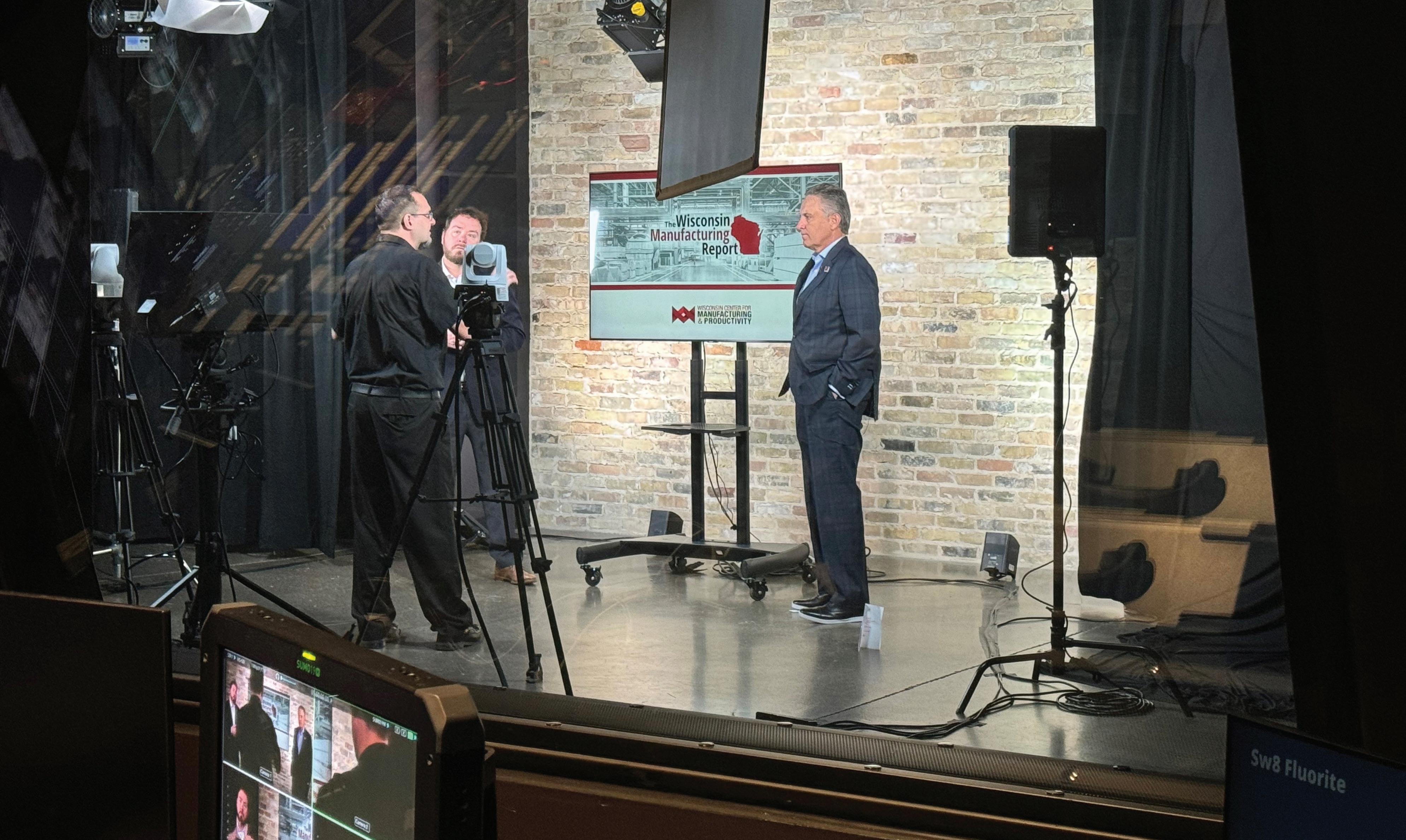



The latest findings from the 2024 Wisconsin Manufacturing Report highlight critical trends impacting the manufacturing sector. Conducted by the Wisconsin Center for Manufacturing & Productivity (WiCMP) and facilitated by Meeting Street Insights, this year’s survey of 400 manufacturing executives underscores persistent concerns and emerging opportunities within the industry.
shortages remain a major concern
The report reveals that labor shortages are still the foremost issue for manufacturers, with many struggling to find and retain qualified workers. This chronic workforce shortage is transforming the industry, compelling companies to invest in employee engagement and training. As manufacturers face increased difficulty in hiring, those who actively lean into workforce challenges report lower turnover rates and greater productivity.
uncertainty
Economic confidence among manufacturers has dipped, with less than half believing the business climate is headed in the right direction. While many companies remain optimistic about their individual financial outlooks, a decline in strong confidence—particularly among larger manufacturers— signals growing uncertainty. This year, manufacturers are also expressing renewed concerns about inflation, global uncertainties, and cybersecurity threats, which may further complicate their operations.

Technological adoption on the rise
To address workforce challenges, manufacturers are increasingly looking to automation and artificial intelligence (AI). Approximately one-third of respondents plan to adopt AI within the next five years, recognizing its potential to enhance efficiency and productivity. The report indicates that companies embracing technology and experimenting with AI are gaining a competitive edge in the marketplace. As a result, manufacturers are encouraged to develop practical strategies for technological integration.
Despite economic uncertainties, over half of manufacturers are investing in sales and marketing initiatives. New customer acquisition primarily relies on referrals and word-of-mouth, which are particularly effective for smaller firms. As companies look to grow, identifying and reaching new markets is essential. A robust strategic plan focusing on revenue growth, profitability, and capital expenditures is vital for long-term success.
The 2024 Wisconsin Manufacturing Report provides a comprehensive overview of the current landscape facing manufacturers. To thrive in this complex environment, businesses must invest in their workforce, embrace technological advancements, and enhance their sales and marketing efforts. Engaging with the Wisconsin MEP Network, WMEP Manufacturing Solutions and UW Stout Manufacturing Outreach Center, can offer valuable resources and support in navigating these challenges.


BY SAMANTHA DIETEL, staff writer
AN INCREASING NUMBER of employers are turning to individual coverage health reimbursement arrangements for their employee health insurance plans.
ICHRAs, which were first created in 2019 and officially became an available option in 2020, are an alternative to group medical insurance plans. Under an ICHRA, employers establish a budget that their employees can use to purchase their own health insurance plan. The employer then reimburses the employees tax-free for that pre-established amount. Employees can get reimbursed for qualifying monthly premiums, copays and deductibles, according to the U.S. Department of Health and Human Services’ health care website.
New Berlin-based Pindel Global Precision is one Milwaukee-area employer that has recently implemented an ICHRA plan with its employees. Bill Berrien, the company’s chief executive officer, learned about ICHRAs in 2021, when faced with a 20%-30% increase in group medical plan premiums.
Todd Catlin, a health insurance, small group and Medicare specialist at Brookfield-based Transition Health Benefits, serves as the individual medical benefits broker for Pindel’s ICHRA plan. Catlin said double-digit renewal increases have prompted some employers to consider an ICHRA plan.
“An ICHRA offers a good path to get out of, say, staring down a 40% rate increase, as long as they’re comfortable with the concept of ICHRA and what’s going to work for their employees and what the company’s trying to accomplish,” Catlin said.
ICHRAs have offered greater flexibility and
potential cost savings for both employers and employees, Catlin said. With ICHRAs, employers can have a “known, set dollar amount” that they’ll spend on employee health insurance each year, Catlin said.
Berrien looked into the ICHRA model and found that it could cut costs for both the company and his employees, while also maintaining the same – or achieving greater – capabilities of the previous group plan, he said. Berrien went on to implement an ICHRA plan in 2021. Pindel Global Precision has about 75 employees, with 50 to 55 of them participating in the ICHRA plan, Berrien said.
“One of the best things is, employees get to tailor their insurance to their specific needs,” Berrien said.
Hartland-based Diversified Benefit Services currently has more than 230 clients implementing ICHRAs, with most of those clients located in southeastern Wisconsin, said president and founder Tim Pederson. DBS handles the administration of Pindel’s ICHRA plan.
“Especially the last couple of years, the uptick or upturn in interest in ICHRAs and actually having employers implement those types of plans has grown tremendously since the inception,” Pederson said.
Similar to group market plans, most employers utilizing an ICHRA plan do not fund 100% of the cost of an employee’s coverage, he added.
M3 Insurance, a Madison-based company that
provides brokerage services, “didn’t see a ton of traction” when ICHRAs initially entered the market, said Rebecca Menefee, vice president of M3 Insurance’s Elevate division.
“But we spent a ton of time digging into the space, learning more about it, and we’ve since had a number of clients that have engaged and are implementing and utilizing an ICHRA today,” Menefee said, adding some of those clients are located in the Milwaukee area.
While there’s been an increasing interest in ICHRAs within the business community, many people are not entirely familiar with the option, Catlin said.
Diversified Benefit Services sales manager Tony Burlo said about half of brokers know about ICHRAs and have started to implement them.
“There’s still a large sector of the broker community that does not know about this, though,” Burlo said. “There’s a huge opportunity here, and I think once that additional community of brokers learns about this and understands it, it’ll grow even more.”
When ICHRAs first rolled out, the idea was that small businesses with up to about 50 employees would be the ones utilizing this option, Pederson said.
“In the last year to year-and-a-half, we have seen the ceiling of that blown off,” he said. Diversified Benefit Services clients that are using ICHRA plans range in size from five employees to more than 200, he said.
Menefee also said there’s been an uptick in larger organizations turning to ICHRAs for their employees. For example, Menefee has a client with about 300 employees using an ICHRA plan.
Catlin said there is a misconception that ICHRAs “won’t work for certain-sized companies or employee populations.”
“Whether it’s a group of two or 2,000, it’s functionally going to work exactly the same,” Catlin

said. “I don’t think there’s a better group than another that an ICHRA would work for.”
There’s been a growing interest in ICHRAs among some larger organizations because they are hiring across state lines, Menefee said. With the rise of remote work that came from the COVID-19 pandemic, some employers “no longer need to have people that live in your community to do the job
that you need them to do,” Menefee said.
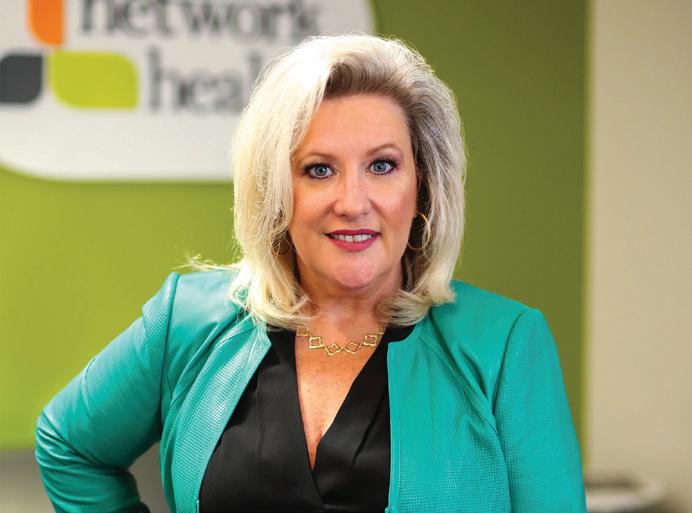
Remote employees may move because they similarly feel they don’t need to live in the same city or state as their employer, said Coreen Dicus-Johnson, CEO of Menasha-based Network Health.
“Well, if you get your health insurance benefits from your employer, sometimes where you’re moving, there may be different options, or the option that your employer is offering is no longer available to you in that state,” Dicus-Johnson said.
ICHRA regulations outline 11 employee classes, such as whether an employee maintains full-time or part-time status, works seasonally or works within the same geographic location as the employer. Catlin said these different classes can allow employers to set up different contribution strategies for remote employees living outside the employer’s geographic area.
“All health care’s local,” Catlin said. “It changes all over the place, and what you’re doing with maybe a
company in Wisconsin is not what’s good for an employee out in Minnesota or California. So, you can tailor those benefits to those specific people.”
Berrien said the different employee class distinctions have allowed his company some flexibility to additionally support team members who are on Medicare.
The employee classes defined through ICHRAs can also help employers retain seasonal and parttime employees, Burlo said.
“There’s employers that have seasonal folks that are just great and they want to be able to provide some sort of a benefit to them,” Burlo said.
Even within the same geographic area, though, a unified health care program “might not be the best fit for every employee,” Menefee said. Employees may need or want particular providers or plans with varying levels of deductibles, she said. ICHRAs provide a greater ease of choice for employers because they can “remove themselves from that decision-making process,” she said.
“As an employer, I can say, ‘I’m going to give you money, and you can go find the right solution for you, and we’re going to provide a resource for you to do that, so now you can decide what’s best for you and your family,’” Menefee said.







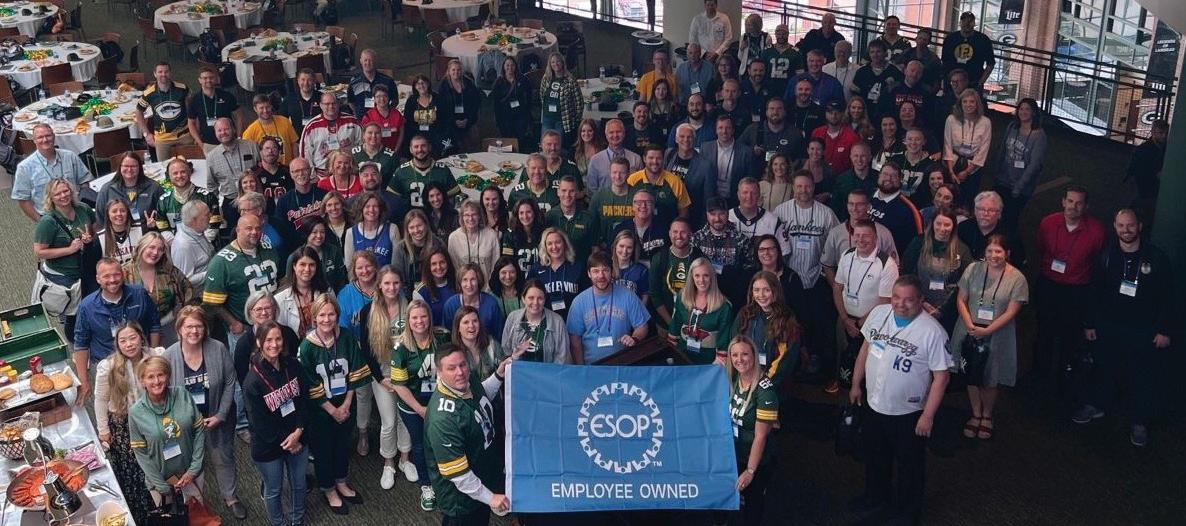
Exiting via ESOP What to know about the financing side of employee ownership
BY MAREDITHE MEYER, staff writer
FOR BUSINESS OWNERS considering their exit, employee ownership could be one of several options on the table.
The most common way of pursuing a sale to employees is through an employee stock ownership plan (ESOP), a business model and type of employer-funded retirement plan often touted for its win-win tax benefits and as a tool for culture building and talent attraction and retention.
This structure has grown in popularity in recent years, with the number of employee stock ownership plans in Wisconsin increasing 30% from 173 in 2012 to 225 in 2022, according to data from the U.S. Department of Labor.
Simply put, in the case of an ownership transfer, an ESOP allows an owner to sell some or all of the company to its employees, who then accrue shares of company stock over time to be paid out upon exiting or retirement. The company buys out the departing owner at a fair market price, using either tax-deductible cash contributions or, in most cases, borrowed funds.
While the ESOP route as a succession strategy has proven successful for many, it’s not a fit for every company. Businesses weighing this option should consider the financial implications of both the initial transition process and long-term operations under the ESOP model.
At minimum, a company must be profitable before even considering transitioning to an ESOP. The National Center for Employee Ownership points out that the company should be “generating enough cash to buy the shares, conduct its normal business, and make necessary reinvestments.”
A good rule of thumb is at least $2 million in annual earnings and/or at least 25 employees, said Tom Venner, vice president and shareholder of Milwaukee-based investment banking firm Taureau Group.
“If you’re any smaller than that, it’s probably not going to make a lot of financial sense to do it yourself,” said Venner. For smaller companies, he noted a lower-cost alternative: selling to an existing ESOP – rather than creating one internally.
Not unlike selling to a third party, the process of forming an ESOP can be complex and expensive, said Venner, ranging in some cases from $150,000 to as much as $700,000.
Much of the initial cost is made up of fees for attorneys, accountants, appraisers and other advisors involved in the process as well as for the ESOP trustee – either an individual employed by the company or an outside firm – who is appointed to represent the employees’ best interest.
A business valuation is critical – and legally
required – during the ESOP formation process and on an annual basis once the ESOP is formed. An independent valuation firm will conduct an analysis of the company’s financial statements, examining key metrics like revenue, profitability and cost structures, to determine the fair market value of the business and, in turn, the company stock price. From there, the owner and ESOP trustee can negotiate the sale price and other terms of the transaction based on the value of the business.
When it comes to financing the transaction itself, one option – though rare – is the “pay-as-yougo strategy,” said Venner, noting an example of a client that sold 10% of the business to the ESOP each year for 10 years until it was 100% employee-owned.
“That just allowed them to finance it through the cash flow of the business, it just took a little bit longer than doing it all at once,” said Venner.
It’s more common for a company to take out a loan from a bank and then reloan that money to the ESOP, which can then purchase up to 100% of shares from the departing owner. As the ESOP pays back the company over time, shares are gradually released to employees on an annual basis.
Some banks specialize in ESOP lending, but they tend to be expensive, says Venner, noting the best route is usually a standard local commercial bank.
“Bankers do get a little bit nervous, especially if they don’t completely understand the process, though if you find a solid local bank that has financed an ESOP before or maybe has ESOP clients, that’s probably the best way to go,” he said.
Once the transaction is closed and the ESOP model is in place, the company’s day-to-day operations – and in some cases, leadership – remain the same. But under the hood, the business must adjust to a new financial structure and everything that comes along with it.
Like a 401(k), an ESOP is a qualified retirement plan that must meet certain regulatory requirements of the IRS and Department of Labor. Among them is an annual business valuation by an independent appraiser.
Beyond fulfilling the legal requirement, valuing the company on an annual basis determines the updated price of the company’s stock, giving employees a complete picture of “what their stake in the business is worth,” said Craig Olinger, managing partner at Waukesha-based valuation firm ESI Equity.
ESI works as a “partner” with its ESOP clients in helping them understand what produces the company’s value and why it fluctuates.
“We explain, both in good times and in bad, what’s driving the value, what’s making it go up – it could be profitability, the balance sheet is strengthening – and vice versa, sometimes company values

just go down because … a lot of times there are external factors that are beyond management or a company’s control and they’re just at the will of the broader economy,” said Olinger.
Either way, ESOP employees have a unique, front-row seat to the financial health of the business because it’ll show up as a dollar figure on their annual statement.
The valuation also examines the company’s ability – and helps it plan – to fulfill its ongoing obligation to buy back shares from employees when they leave. This obligation can weigh heavily on a company’s cash flow, especially for mature ESOPs with long-tenured employees that have accrued numerous shares.
In the case of Oconomowoc-based Sentry Equipment – which transitioned to 100% employee ownership in 1986, with all shares allocated after 2012 – the repurchase obligation meant buying out 65 of its 200 employees over the past 15 years as a wave of baby boomers retired.
“We were able to do it with our ongoing earnings but in some years, it would be half of our earnings,” said Brian Baker, president and CEO of Sentry. “And then we have investments we have to make in the business and debt we have to pay off, so we didn’t have a lot left.”
Granted, there’s flexibility in the timing of payment distributions; for example, Sentry’s ESOP structure gives it five years to pay out former employees.
“I think of it as making the ship a little easier to steer,” said Baker.
Still, the repurchase obligation is something companies “absolutely have to plan for,” he added.
A key piece of that planning is constantly forecasting employee turnover, including termination and retirement, the amount of shares the company will need to buy back and the future price of those shares.
Between the regulatory compliance and repurchase obligation forecasts, the internal management team has a lot to keep track of – and that’s where the guidance of an outside advisor can come in handy, said Olinger, who works with Sentry Equipment as one of ESI’s clients.
“When someone is doing ESOP advisory on a daily basis and they see 60 or 70 or maybe even a couple hundred firms that they work with on an annual basis,” Olinger said, “you can really get best practices together and say, ‘hey, it looks like you guys are headed down this route, have you thought about doing this because we’ve seen this work better in the past.’”
















Responding to a changing industry landscape and the needs of our professionals, BDO sought a new business model to support continued quality, growth, investment and long-term sustainability for a resilient future. In 2023 the firm established an Employee Stock Ownership Plan (ESOP), boldly embracing transformational change and our core purpose of helping people thrive every day. BDO is proud to be the first large accounting and advisory organization to establish an ESOP — making it one of the largest ESOPs in the nation.

An ESOP is a qualified retirement plan established as a trust for the benefit of its participants – and so much more. BDO’s ESOP provides more than 10,000 participating BDO professionals a stake in the firm’s success through beneficial ownership and a unique opportunity to enhance their financial well-being. Today’s employees want a different type of relationship with employers. According to Gartner, 82% of employees agree it is important that their organization sees them as a person, not just an employee. They want a greater sense of purpose and control over their careers, and a voice in the direction of their company.
Responding to a changing industry landscape and the needs of our professionals, BDO sought a new business model to support continued quality, growth, investment and long-term sustainability for a resilient future. In 2023 the firm established an Employee Stock Ownership Plan (ESOP), boldly embracing transformational change and our core purpose of helping people thrive every day. BDO is proud to be the first large accounting and advisory organization to establish an ESOP — making it one of the largest ESOPs in the nation.
An ESOP is a qualified retirement plan established as a trust for the benefit of its participants – and so much more. BDO’s ESOP provides more than 10,000 participating BDO professionals a stake in the firm’s success through beneficial ownership and a unique opportunity to enhance their financial well-being. Today’s employees want a different type of relationship with employers. According to Gartner, 82% of employees agree it is important that their organization sees them as a person, not just an employee. They want a greater sense of purpose and control over their careers, and a voice in the direction of their company.
An ESOP is the embodiment of BDO’s people-first culture, staying true to the firm’s core purpose of helping people thrive every day. It is a tangible way to invest in BDO professionals and ensure that everyone who contributes to the firm’s success can participate financially in the firm’s success.
An ESOP is the embodiment of BDO’s people-first culture, staying true to the firm’s core purpose of helping people thrive every day. It is a tangible way to invest in BDO professionals and ensure that everyone who contributes to the firm’s success can participate financially in the firm’s success.
ESOPs are among the most flexible of all succession strategies. An ESOP can boost recruitment and employee retention and drive business growth by providing incentives to the company’s management team. ESOP transactions offer many benefits for the selling owner.
ESOPs are among the most flexible of all succession strategies. An ESOP can boost recruitment and employee retention and drive business growth by providing incentives to the company’s management team. ESOP transactions offer many benefits for the selling owner.
For owners of privately-held businesses, ESOPs provide a flexible option for selling all or a portion of their business. ESOP transactions can be tailored to meet the unique needs of the owner, the business and the employees. Moreover, there are distinct tax advantages for all parties.
For owners of privately-held businesses, ESOPs provide a flexible option for selling all or a portion of their business. ESOP transactions can be tailored to meet the unique needs of the owner, the business and the employees. Moreover, there are distinct tax advantages for all parties.
X ESOP Feasibility, Valuation and Tax Analyses

The BDO Capital ESOP Advisory team consists of professionals with a wide range of experience in investment banking, tax, valuation, benefits and commercial banking. Our ESOP professionals work closely and collaboratively with your accounting and legal teams to achieve the result everyone wants: a sale that benefits the company, protects your legacy, and provides both you and your employees with the financial rewards and purpose-based culture you and your people have worked hard to earn and build.
X Capital Raising for Leveraged ESOPs
X ESOP Feasibility, Valuation and Tax Analyses
X M&A Comparative Analyses
X Capital Raising for Leveraged ESOPs
X M&A Comparative Analyses
X ESOP Benefit Plan Design and Analyses
X Tax and Accounting Services
X ESOP Plan Administration and Compliance
X ESOP Benefit Plan Design and Analyses
The BDO Capital ESOP Advisory team consists of professionals with a wide range of experience in investment banking, tax, valuation, benefits and commercial banking. Our ESOP professionals work closely and collaboratively with your accounting and legal teams to achieve the result everyone wants: a sale that benefits the company, protects your legacy, and provides both you and your employees with the financial rewards and purpose-based culture you and your people have worked hard to earn and build. As an ESOP company,
X Tax and Accounting Services
X ESOP Plan Administration and Compliance

As an ESOP company, together we thrive. We are focused on delivering exceptional and sustainable outcomes and value for our people, our clients, and our communities.
Managing Director
BDO Capital Advisors
SEAN AUGER Tax Principal sauger@bdo.com
BLAKE HEAD
bhead@bdocap.com
Managing
Director
BDO Capital Advisors
bhead@bdocap.com
SEAN AUGER Tax Principal sauger@bdo.com
SHELLY ZINDA Client Relations Director szinda@bdo.com
SHELLY ZINDA Client Relations Director szinda@bdo.com
TIMOTHY L. STEWART President and Managing Partner DeWitt Law Firm

IN DEWITT’S ESOP PRACTICE GROUP, we are often asked: what type of company is a good fit for an ESOP? This question comes from an outdated perception that an ESOP is a good fit only for manufacturing companies and/or very large companies.
The reality is that fitness for an ESOP is less about the type of industry or size of a company, and more about identifying the primary succession planning priorities for the company’s current ownership.
In other words, the question is not: “What type of company is a good fit for an ESOP?” The question is: “What type of seller is a good fit for an ESOP?”

Although some might call us “ESOP evangelists,” we describe our mindset differently. Our goal is to educate the business community about which succession planning priorities are best served by an ESOP. We know that ESOPs are not (*gasp*) a good fit for every seller. However, for sellers whose succession priorities align with the tried-and-true benefits of an ESOP, employee ownership might be a near-perfect option.
Here are some of the common priorities of any business sale:
» Maintaining company legacy;
» Obtaining the highest possible sale price;
» Receiving high liquidity at close of sale;
» Minimizing customer disruption;
» Rewarding key employees; and
» Minimizing employee turnover.
If you are a business owner and you think you have found a business succession option that checks ALL of your boxes, you should probably take a closer look. A perfect solution is rarely available. Instead, you should be looking for the solution that checks the boxes you value the most.
An ESOP is a good option for a business owner whose most important priorities include: 1) LEGACY of the company; and 2) LOYALTY to employees.
We often refer to these as the “Two Ls,” and an ESOP is one of the best succession planning alternatives for serving those priorities.
There are also favorable economic benefits to the seller in an ESOP transaction, especially from a tax planning perspective. However, if your top priorities in the sale of your business are maximizing the sale price and receiving as much liquidity as soon as possible, then you may be better served with selling your business to a third party in an auction process.
There is an old axiom about the dangers of narrowminded focus: To a hammer, everything looks like a nail. We are careful not to see the world of business owners from the hammer’s perspective.
To the contrary, our mission is to educate the business community about what ESOPs are, and perhaps as importantly, what they are not. n


CRAIG CERBINS Vice President
WHILE MANY retirement plans involve investing in stocks, bonds, or mutual funds, Employee Stock Ownership Plans (ESOPs) turn a company’s own workers into its shareholders. This exit strategy continues to gain traction — ESOPs manage over $2 trillion in assets across more than 6,300 U.S. companies with more than 14 million participants, according to the National Center for Employee Ownership.
Greg Block and Craig Cerbins, two of First Business Bank’s commercial banking experts, provide insights about ESOPs from firsthand experience guiding clients through the financial complexities of ESOP transitions and ongoing ESOP operations.
Benefits of ESOPs
ESOPs offer many advantages for business owners and employees. While allowing owners to gradually transition out of their businesses, ESOPs also provide tax benefits, improve employee retention and productivity, and preserve the legacy of the business.
“ESOPs create a sustainable ownership model that rewards the workforce and can improve employee morale and engagement in meaningful ways,” Block said. “Studies have shown that ESOP companies often outperform non-ESOPs in productivity, profitability, and employee satisfaction.”
ESOP considerations for business owners
Careful planning is essential to improve success throughout the ESOP transition.
“Start planning early, as ownership transition takes time and companies need to be in the best possible position before initiating the transition,” said Cerbins. “Owners often
significantly underestimate the time it takes to transition company ownership.”
Important steps include:
1. Assess Company Readiness: Evaluate financial stability and growth potential. ESOPs work best for companies with consistent cash flow and a strong management team.
2. Seek Expert Guidance: Partner with advisors experienced in ESOP transactions, including bankers, attorneys, and valuation experts.
3. Educate Employees: Inform staff about the ESOP concept in advance. Their buy-in is essential for a smooth transition.
4. Plan for Costs: Consider the expenses associated with setting up and maintaining an ESOP, including annual valuations and financial reporting.
Choosing a banking partner with extensive ESOP experience helps to avoid pitfalls and ensure long-term success. An experienced banker can guide you through the complexities of ESOP structures and operations.
“Your banking partner should understand the cash flow dynamics and repurchase obligations inherent in ESOP structures,” Block said. “Having experience with other ESOPs is very important, and their bank needs to assist with complex financial needs.”
A knowledgeable banking partner can also help structure financing to balance needs of the seller, the company, and the ESOP trust, while complying with regulatory requirements.
Both experts agree that while ESOPs are excellent for many companies, they’re not right for everyone.
“It’s important to weigh all your options,” Cerbins said. “Consider your company’s specific circumstances, financial health, and long-term goals before deciding. At First Business Bank, we’re here to guide business owners through this process. We can help evaluate if an ESOP aligns with your company’s objectives and assist in structuring a transition that works for everyone involved.”

ROB DILLON CEO OwnersEdge
CHRISTINE ADEE CEO OwnersEdge
OWNERSEDGE is a 100% employee-owned holding company based in Waukesha. It is dedicated to acquiring and growing mid-market businesses while fostering a culture of ownership and long-term success. As a unique entity in the marketplace, OwnersEdge offers a ready-made ESOP solution that benefits both business owners looking to transition and employees seeking to be invested stakeholders in their company’s future.
OwnersEdge recently changed its leadership structure to support an aggressive acquisition cadence. In January 2024, Lisa Reardon, founder and former CEO, transitioned to Executive Board Chair to focus on identifying and acquiring high-performing businesses. Rob Dillon and Christine Adee were appointed as co-CEO’s and currently oversee the day-today operations of OwnersEdge and its portfolio of companies.
Rob leads all five companies to drive differentiation and increase shareholder value while ensuring each company has culturally aligned leadership. Christine is a nationally recognized ESOP leader, and her unique skillset allows her to strategically plan, direct and manage the fiduciary complexities of the ESOP.
OwnersEdge began its ESOP journey in 1992 when its legacy company, CC&N, transitioned to employee ownership. This initial success led to the creation of OwnersEdge in 2015, which was designed to acquire and support healthy, culturedriven businesses. Today, OwnersEdge encompasses over 350
employee owners across multiple companies, all benefiting from a 100 percent gifted ESOP, meaning there are no out-ofpocket expenses for employees.
OwnersEdge continues to focus on strategic acquisitions in industries including communications technology, industrial automation, media, and manufacturing. The company provides its portfolio businesses with strategic shared services and deep expertise in managing an ESOP, ensuring long-term stability while preserving each entity’s unique culture.
OwnersEdge believes that the future of employee ownership lies in sustainable, diversified growth, enabling employee owners to participate in the financial success they help create, providing a pathway to their American Dream.
Being part of an ESOP company offers numerous advantages for both employees and business owners. For employees, ownership fosters a deeper connection to their work, increasing morale, retention, and overall investment in the company’s success. For business owners, selling to OwnersEdge ensures their company’s legacy remains intact, and their employees continue to thrive under a culture of shared success.
For business owners considering the transition to employee ownership, OwnersEdge offers a streamlined alternative to traditional ESOPs. OwnersEdge’s ready-made ESOP structure simplifies the process, reducing legal, financial, and regulatory complexities. By joining OwnersEdge, companies benefit from deferred tax advantages, enhanced financial flexibility, and the peace of mind that their employees will continue to drive the company’s growth.
With a focus on long-term success, OwnersEdge continues to invest in its current businesses and expand its portfolio while preserving the employee ownership culture that defines its approach. Through its innovative business model, OwnersEdge empowers employees to take ownership of their future, creating a sustainable and prosperous environment for all stakeholders. For more information about how OwnersEdge is transforming employee ownership, visit www.OwnersEdge.com. n




WHEN A COMPANY consistently falls short of its sales goals, the natural response is to look to the sales team for answers. As a result, sales strategies are likely reassessed with new expectations (and pressures) placed on the sales team.
The next conversation is typically with marketing. What is marketing up to? Do we need to cut our marketing spend because sales are in a slump? Or, do we need to increase our marketing spend? Are we doing the right types of marketing? Should we try something different? Do we have the right marketing team?
All good questions to ponder. But is anyone thinking about the brand?
Although not often the first thing to be considered, lukewarm sales can frequently be attributed to a weak or blurry brand — meaning one that isn’t properly or adequately differentiated and marketed.
Companies that overlook their brand as a potential culprit for slow sales often have an over-inflated sense of their brand value and positive market perception, or they simply don’t understand what a brand is.
This is a problem because 100% of buying decisions are based on brand beliefs and perceptions.
A brand is the unique set of distinctions a company owns that make a positive and noteworthy difference in the lives of customers, partners and employees. So, what is the unique set of distinctions your company owns that makes a positive and noteworthy difference in the lives of customers, partners and employees? How relevant and important are those distinctions to customers, partners, and employees? If you were a customer, would you buy from your company given the
many choices you have?
If your sales aren’t where they need to be, or even if they are, but you’re interested in continued growth and market leadership, take some time to evaluate the strength and influence of your brand.
Evaluating your brand will involve looking deep into the soul of your company to identify who you are, what you stand for, why you’re in business, what problems you solve, and the value you bring.
You’ll need to involve all of your employees in this initiative because you’ll need the diverse perspectives of different people in different roles. You will gain insights you would likely never think of.
A bonus would be to do an external brand assessment with your partners and customers. They will be more than happy to share their feelings and insights with you about your brand strengths, weaknesses, brand performance, and their loyalty.
A competitive assessment will also be required to understand exactly who you are competing with to attract and retain customers.
Once you’ve defined and articulated a compelling brand for your company, it’s time to go full throttle on your marketing.
With your new brand-driven marketing strategy, all of your brand metrics and KPIs will grow, in their natural order.
Brand awareness: This metric will naturally improve because people pay attention to interesting and compelling brands.
Brand differentiation: As you have properly differentiated your brand from your competitors’, more people will understand your sales tiebreaker. In other words, when everything appears equal between you and the competition, your unique brand attribute(s) will make them less relevant and your brand will be awarded priority.
Brand consideration: With strong brand differentiation comes much stronger brand consideration.
Brand conversion: This is where a sale is made, a contract is signed, or an employee agrees to join
your team. And although brand conversion is a huge victory for you, it’s where your brand needs to perform to the expectations you have set in your marketing messaging.
Brand loyalty: This takes time and must be earned by delivering on your brand promises. Customers, partners, and employees will analyze everything about their new relationship with your company and will be quick to notice what is and isn’t going well.
Brand advocacy: This is the natural progression from brand loyalty and rewards high-performing brands with the best marketing there is: referrals, recommendations, and word of mouth.
Brand reputation: Much like brand loyalty, this will take time to earn and establish, and it will be your everything.
Schedule some time to do a full assessment of your brand, no matter how weak or strong your sales happen to be. Make it a part of your annual planning and meetings to keep it at the forefront of your mind, and the minds of everyone within your company.















Scott Seroka, the president of Brookfieldbased Seroka Industrial Branding, is an entrepreneur, consultant, trainer, and mentor. He can be reached at (414) 628-4547.





What really goes into college rankings, and what actually matters
Editor’s note: This is the second of a two-part series by David Borst on college rankings.
A LOCALLY RANKED engineering school told their students at orientation freshman year to look to the student to their left and to their right….as only one of those will be present at graduation.
This highly ranked school was proud of the fact that their graduation rate from freshman to senior year was only around 33%. Touting the concept that only the best make it through our program may be great if you are the lone person standing, but if you are the tuition payer among the 67% not remaining, it is very bleak indeed.
Which concept do you think the accreditation and ranking bodies will like better? You can put your money down on the more selective program. I get it. If I am going in for brain surgery, I want that doctor to be well-trained, well-vetted, and at the top of their class. Funny, though, I have never asked my doctor before or during the exam where they went to school or where they finished in their program. Perhaps it is out of mortal fear that they tell me they were a “C” student just as they are giving me the morphine…zzzz…
Another piece to college rankings involves money. If we are true with ourselves, doesn’t everything college related come down to two things: money and ego?
College sports is a perfect example of the impact of ego on the public perception of a university. My school is better because they finished the basketball tournament in the Elite 8. So what? How
is their accounting program? Putting a ball into a hoop or running or passing for more touchdowns does not one bit a brighter student make. It gives the school notoriety, and it builds ego. The rankings for the top 20 athletically have nothing to do with the rankings academically.
Besides ego, money is the next issue when it comes to college rankings. One ranking system I am aware of gauges the quality of the school by how many graduates give back to the school upon graduation. Another looks at salaries 5, 10, and 20 years out to judge which student got the better bang for the buck and thus the higher ranking in the scores. Still another ranking looks at the employers and how much they are paying for students coming out of that college. Apparently, money is how we judge the quality of an academic program.
For most of my 39 academic life years, I taught business. Within the business school there is plenty of discussion about which accrediting body we should have. There is AACSB, ACBSP, and IACBE. If you have one accreditation, that school will tell you they are the best and tell employers not to hire those inferior grunts with that other accreditation. Some years back, I got to meet the genesis of all three business accreditation bodies, Dr. John Greene. He started one body, got disgruntled and founded the second, only to experience the same thing before founding the third. All three organizations basically do the same thing, holding business schools to the highest standards of teaching and education possible. What bothers me is when employers refuse to hire someone from the wrong accreditation organization just because their alma mater told them to do so. Remember what I shared at the beginning of this discussion: money and ego. Don’t be that employer.
Understand that the federal government has a huge say in this matter too. There are six main accrediting regions and seven main accrediting bodies that have been trusted by the federal government with handing out financial aid. Going to a
school that is not accredited by one of these bodies may result in your inability to qualify for grants and student loans. The best thing the consumer can do is ask the school about their accreditation status.
College is a complicated issue with the average student going to two different schools and pursuing three different majors. For the student or their parents, this adds up to cost, a cost the prospective employer doesn’t need to proliferate with artificial requirements for their future employees. At the end of the day, what is it most of us want from a college degree? An inflated ego? A spouse? Or that first job?


David Borst, Ed.D., is a former dean of the Concordia University Wisconsin School of Business. He currently sits on several boards, teaches at the doctoral level and runs the Milwaukee Lutheran High School honors academy. He can be reached at david.borst@cuw.edu.


IN THE COMPETITIVE and ever-evolving landscape of business, making swift and effective decisions is crucial. While traditional forms of intelligence such as IQ (Intelligence Quotient) and EQ (Emotional Quotient) have long been recognized, there’s another form of intelligence that is becoming increasingly valued: Gut Intelligence. This intuitive insight, which women often possess in abundance, can be a game-changer in leadership and business success.
Gut Intelligence, also known as the ability to trust and act on our intuitive feelings, serves as a vital complement to rational decision-making. It’s grounded in the science of the gut-brain axis, highlighting the profound connection between our emotional and physical responses. For many women, this intuitive ability is a natural strength, refined over years of balancing multifaceted roles and navigating complex social interactions.
Research has shown that women tend to have a stronger connection to their intuition. This heightened sensitivity enables them to pick up on subtle emotional and physical cues, making them exceptionally adept at reading situations and people. Evolutionarily, women have developed this skill through nurturing and caregiving roles, where intuition was essential for survival and well-being.
One prominent example of Gut Intelligence in action is Oprah Winfrey. Throughout her illustrious career, Oprah has frequently emphasized the role of intuition in her decision-making process. Whether it was launching her own network or selecting guests for her show, she relied heavily on her gut feelings.
Her success story serves as a testament to the power of trusting one’s instincts in business.
However, cultivating and harnessing Gut Intelligence requires deliberate effort and practice. Here are some practical tips for women to develop and trust their Gut Intelligence:
Engaging in mindfulness practices such as meditation can help women tune into their intuitive signals. By quieting the mind, one can better hear and trust those gut feelings. Self-awareness, cultivated through regular reflection, is crucial in recognizing and understanding intuitive cues.
Keeping a journal of experiences when intuition played a key role can reinforce trust in one’s Gut Intelligence. Reflecting on these moments helps in recognizing patterns and validating intuitive decisions. Over time, this practice can strengthen one’s confidence in their gut feelings.
Learning to value and act on first impressions can be incredibly powerful. Often, our initial gut reactions are accurate and can guide us in making better decisions. Trusting these instincts, especially in high-stakes situations, can lead to more effective leadership.
Despite these advantages, women often face societal biases and stereotypes in the business world. Trusting one’s gut can be perceived as less rational compared to data-driven decisions. Overcoming this challenge requires confidence and resilience. Building a supportive network of mentors and peers who value intuition can provide the necessary encouragement and validation.
Moreover, the future of business leadership will increasingly rely on a blend of data-driven insights and Gut Intelligence. As the business landscape continues to evolve, the ability to make quick, effective decisions will become even more critical. Women, with their natural intuitive strengths, are well-positioned to lead in this new era.
A study by the International Journal of Business Management found that companies with gender-di-
verse leadership teams are 21% more likely to outperform their peers on profitability. This is not only due to the diverse perspectives women bring but also their ability to leverage intuition alongside data to make well-rounded decisions. By embracing Gut Intelligence, women can enhance their leadership effectiveness and drive significant business success.
In the context of everyday business, Gut Intelligence can manifest in various ways. It can help women navigate office politics, make hiring decisions, identify market opportunities, and build strong, empathetic teams. For instance, a marketing executive might sense a shift in consumer preferences before it becomes evident in the data, allowing her company to pivot strategies and stay ahead of the competition.
Gut Intelligence is a powerful tool that women can harness to achieve leadership success. By cultivating this innate ability, women can navigate the complexities of the business world with confidence and foresight. It’s time to trust our gut and support women leaders who do the same. As I often say, “Your gut knows the way; all you have to do is listen.”
The future of business leadership is intuitive, empathetic, and inclusive — and women are at the forefront of this transformation.


Susan K. Wehrley has been an executive coach for 35 years. She is the owner of BIZremedies and has written 12 books on personal empowerment and leadership. You can learn more at BIZremedies.com. She can be reached at Susan@BIZremedies.com.



October is Cybersecurity Awareness Month in the United States. A recent article from SCORE shares tips on how small businesses can prevent potential cyberattacks.
USING COMPLEX PASSWORDS AND MULTI-FACTOR AUTHENTICATION
Encouraging everyone in the workspace to use


strong passwords and multi-factor authentication could save a company from a myriad of threats, according to SCORE. A good password should be changed every three months and have more than eight characters, including special symbols, numbers and letters. Multi-factor authentication and biometric encryption on mobile devices is also effective in protecting company assets.
Accidents are unavoidable and potentially damaging. It’s best to protect your data with a backup plan in case of emergency, says SCORE.
“Invest in a file backup solution that automatically moves your files to cloud storage for easy access,” the article says. “You can also create a disk image to back up all the files on your computer.”


ENCRYPT ALL DEVICES
It can make things much more difficult for an intruder to capture data behind an encrypted device.
“Without the key, your lost or stolen device will be just useless to them,” according to SCORE.
Employees should be able to detect scams and suspicious activity in their workspaces. Without training and awareness, employees could be illequipped to stop threats such as phishing, smishing and fake online ads.
“Regardless of what you do to prevent attacks, there’s nothing as important as employee training and awareness,” says SCORE.




























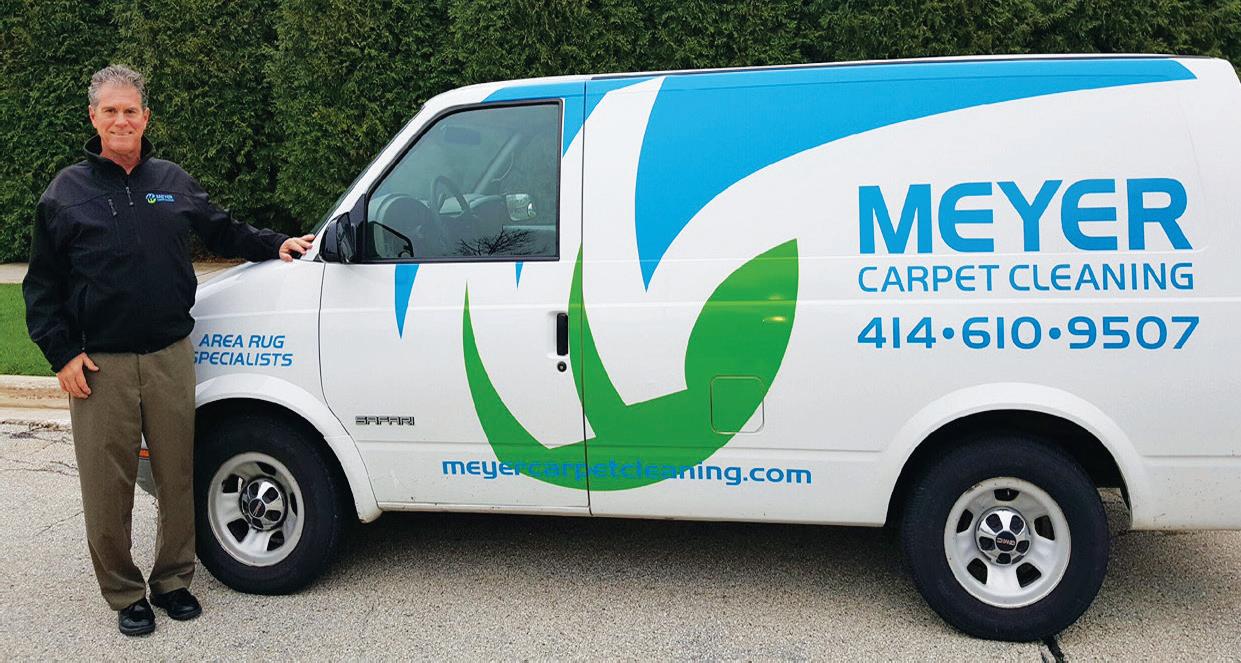



CHILDREN’S WISCONSIN ANNOUNCES $300 MILLION FUNDRAISING CAMPAIGN
Children’s Wisconsin recently announced a $300 million community fundraising campaign to support its child care services and research.
The campaign, called Brighter Than Ever, is the largest campaign in Children’s Wisconsin history and aims to raise $300 million by Dec. 31, 2025. Children’s Wisconsin has already raised $266 million toward that goal, and the funds will support the organization’s efforts to improve the physical, dental, social and mental health of children across the state.
“Children’s Wisconsin is committed to doing what’s best for the health and well-being of kids and families so they can reach their full potential,” said Gil Peri, president and CEO of
Children’s Wisconsin. “So much of the innovative and essential work being done inside our walls and out in the community wouldn’t be possible without philanthropic support. Brighter Than Ever will enable our talented team to do even more.”
Funds generated through the Brighter Than Ever campaign will be directed to four priority areas, including immediate impact through childhood cancer research and the addition of staff during viral seasons or emergencies; clinical work and research; connecting families with community resources and child life specialists; and mental and behavioral health solutions.
— Samantha Dietel, staff writer


Women’s Fund of Greater Milwaukee will host its annual Women’s Fund Presents event on Thursday, Oct. 24, from 11:30 a.m. to 1:30 p.m., at the Pfister Hotel, 424 E. Wisconsin Ave., Milwaukee.
TEMPO will host its 19th annual Leadership Event on Thursday, Nov. 7, from 11 a.m. to 2 p.m., at the Baird Center, 400 W. Wisconsin Ave., Milwaukee.
The Women’s Leadership Council of United Way of Greater Milwaukee & Waukesha County will host its Women United SPREE event on Friday, Nov. 15, from 5:30 to 9:30 p.m., at Saint Kate - The Arts Hotel, 139 E. Kilbourn Ave., Milwaukee.
Hunger Task Force’s Food For Families campaign kicked off Oct. 1 and runs through Dec. 31.
The Boys & Girls Clubs of Greater Milwaukee will have its annual Holiday Gift Drive throughout the month of December.
Acts Housing raised $417,000 and unlocked 100% of the $100,000 matching challenge funds at its Neighborhood Table event. | The MKE 2024 Host Committee distributed $40,000 to four local organizations, Notre Dame School of Milwaukee, Kingdom Prep Lutheran High School, Veterans Community Project and Fisher House Wisconsin, as its first post-Republican National Convention charitable contribution. Each organization received a $10,000 grant.

833 N. 26th St., Milwaukee 414-344-7676 | penfieldchildren.org Facebook: facebook.com/PenfieldChildrensCenter Instagram: @penfieldchildrenscenter LinkedIn: linkedin.com/company/penfield-children’s-center
Year founded: 1967
Mission statement: Ensuring children have positive early experiences from pregnancy through age 5 when the foundations for lifelong development are established.
Primary focus: For more than 55 years, Penfield Children’s Center has been a leader in child development and has an extensive network of community partners to support all aspects of early childhood needs.
Starting in November, we are excited to expand our offerings with Head Start services.
promote healthy pregnancies and positive birth outcomes.
Number of employees: 100
Key donors: Kohl’s Corp.
Executive leadership: Polina Makievsky, president and CEO; Kara Coleman, CFO, vice president of administration; Ann Becker, vice president of programs; Megan Wurz, vice president of development and communication

Other focuses: Our First Connections Autism Services provides early intervention and tailored support for children with autism, or autistic-like behaviors, focusing on enhancing communication, social skills and daily living abilities. We also offer Respite Care, giving families essential relief and ensuring medically fragile children receive compassionate care in a safe early education environment. Additionally, our Prenatal Care Services support expectant mothers with education, resources and personalized care to
Board of directors: Al Araque (chair), Jeff Barth (treasurer), Michael J. Brophy, Betsy Brown Wyatt, Dirk Carson, Erickajoy Daniels, Patrick S. Fennelly, Ann Granitz, Gavin Hattersley, Steve Keane, Rahim Keval, Phyllis M. King, Scott Kolodzinski, Jennifer La Macchia, Robert L. Mikulay, David Navarre, Kimberly Rennie, Joe Schmidt, Sarah Schneider, Jon Schumacher, Patricia Schuyler, Steven Thomas, Lisa Van Landeghem, Madonna Williams, Donald H. Wilson, Jessica Zeratsky Ways the business community can help: Event sponsorships, financial contributions, employee volunteer opportunities, book drives
Key fundraising events: Annual Croquet Ball in August




Event







Thursday, January 23, 2025
Italian Community Center

7:00 - 7:30 AM Registration & Networking
7:30 - 10:30 AM Program & Breakout Sessions
Sponsors:












What’s next? Where is the economy headed in 2025?
How will emerging trends, innovations and industries shape Wisconsin’s future?










Make plans to attend the 24th annual Economic Trends on January 23rd to learn how your business may be impacted by the issues and trends shaping the economy in 2025. Economist Michael Knetter and leading industry experts will provide their perspectives and predictions for the year ahead.





Featured Speakers: Michael Knetter, Ph.D., President, University of Wisconsin Foundation











VOLUME 30, NUMBER 11 | OCTOBER 21, 2024
126 N. Jefferson St., Suite 403, Milwaukee, WI 53202-6120
PHONE: 414-277-8181 FAX: 414-277-8191
WEBSITE: www.biztimes.com
CIRCULATION: 414-336-7100 | circulation@biztimes.com

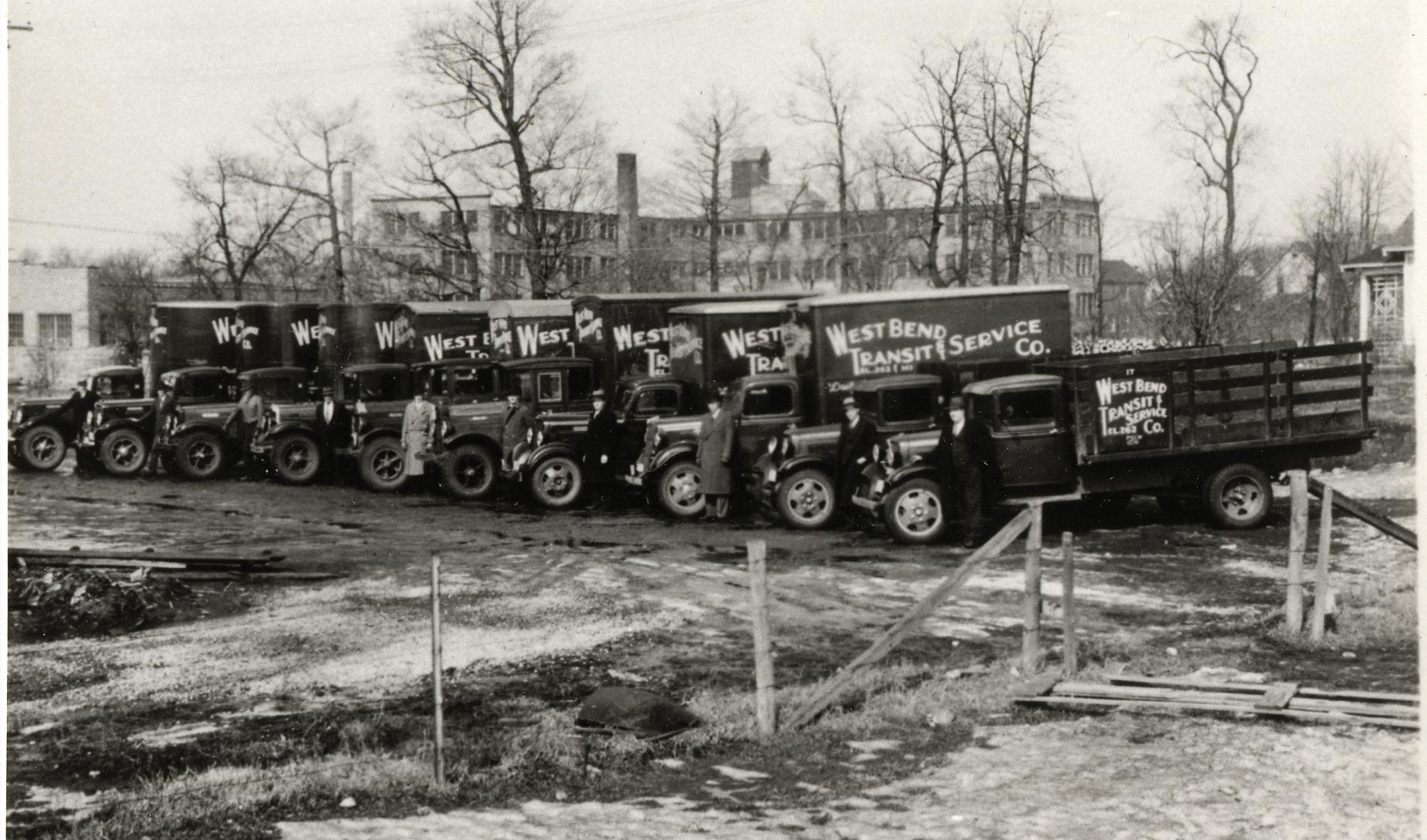


This photo from around 1930 shows West Bend Transit & Service Co. trucks at the company’s terminal at 105 S. Forest Ave. in West Bend. WBT got its start in 1911 when cousins Henry P. and Henry E. Schloemer started West Bend Drayage Co., using three teams of horses to move goods for local companies. The company bought its first truck in 1916. Today, the business is in its fourth generation of Schloemer family leadership. The Forest Avenue property was acquired by F Street Group in 2023 for the development of a multifamily project.
— Photo courtesy of West Bend Transit & Service. Submit your company’s historic photos at biztimes.com/glance
THE MILWAUKEE Department of City Development made waves in July when it picked a stunning redevelopment project for the Marcus Performing Arts Center parking structure site downtown.
The $700 million proposal includes 750 apartments, 190,000 square feet of office space, 40,000 square feet of retail space and a 300room hotel. It would consist of several towers, including a 55-story structure that would be the tallest building in the state.
It’s an incredibly ambitious project for Milwaukee, and the development firm proposing it, Madison-based Neutral, has a limited track record.
The city has never had a development on this scale. But, a lot of concerns have risen that have stalled the project at City Hall.
Tim Gokhman, managing director of New Land Enterprises, one of the other two firms that responded to the RFP for the site, made public his dissatisfaction with the process, criticized DCD, and the company dropped out of
the competition.
New Land has a lengthy portfolio of development projects in Milwaukee. Its proposal for the Marcus Center parking structure site was massive: a $350 million mixed-use development, but the project pitched by Neutral is much bigger and won over DCD.
DCD wants to provide Neutral a one-year exclusive right to negotiate a purchase of the site from the city. But that requires approval from the Common Council and some aldermen are balking.
There are legitimate concerns. Gokhman’s complaints about the RFP process is a big red flag and why weren’t there more proposals?
Neutral’s project is so ambitious, it’s hard to believe it’s feasible in Milwaukee. And Neutral lacks the track record to indicate it can pull this off.
Ald. Robert Bauman wants the city to do a feasibility study on the project and suggests DCD re-do the RFP.
DCD could use the one-year negotiating process to study the feasibility of the project. It’s certainly worth examining if the downtown housing market has enough demand for this, and where are the office tenants going to come from?
Neutral also plans to build a 32-story, 383-
ADVERTISING: 414-336-7112 | advertising@biztimes.com
EDITORIAL: 414-336-7120 | andrew.weiland@biztimes.com
REPRINTS: 414-336-7100 | reprints@biztimes.com
PUBLISHER / OWNER
Dan Meyer dan.meyer@biztimes.com
DIRECTOR OF OPERATIONS
Mary Ernst mary.ernst@biztimes.com
COMMUNITY
ENGAGEMENT / OWNER
Kate Meyer kate.meyer@biztimes.com
EDITORIAL
EDITOR
Andrew Weiland andrew.weiland@biztimes.com
MANAGING EDITOR
Arthur Thomas arthur.thomas@biztimes.com
ASSOCIATE EDITOR
Maredithe Meyer maredithe.meyer@biztimes.com
REPORTER
Samantha Dietel samantha.dietel@biztimes.com
REPORTER Ashley Smart ashley.smart@biztimes.com
REPORTER
Sonia Spitz sonia.spitz@biztimes.com
REPORTER Hunter Turpin hunter.turpin@biztimes.com
SALES & MARKETING
DIRECTOR OF SALES
Linda Crawford linda.crawford@biztimes.com
SENIOR ACCOUNT EXECUTIVE
Christie Ubl
christie.ubl@biztimes.com
ACCOUNT EXECUTIVE
Robin Briese
robin.briese@biztimes.com
ACCOUNT EXECUTIVE
Paddy Kieckhefer
paddy.kieckhefer@biztimes.com
ACCOUNT EXECUTIVE
Christy Peterson christy.peterson@biztimes.com
SALES ADMIN Shannon Whiting shannon.whiting@biztimes.com
ADMINISTRATION
ADMINISTRATIVE
COORDINATOR Sue Herzog sue.herzog@biztimes.com
AUDIENCE DEVELOPMENT
ASSOCIATE/CIRCULATION
Derik Sneide
derik.sneide@biztimes.com
PRODUCTION & DESIGN
SENIOR GRAPHIC DESIGNER
Alex Schneider alex.schneider@biztimes.com
Independent & Locally Owned
— Founded 1995 —
unit apartment tower next to the Marcus Center parking structure site. It sure would help to get that project financed and under construction first to prove to naysayers that the firm can get a major development built.
The Marcus Center parking structure situation reminds me of The Couture project. A prime location owned by the government not putting it to its highest and best use, an RFP seeking development proposals, a flashy project picked by a developer with a limited track record over less ambitious projects from more established developers.
It took 12 years of struggle, but The Couture eventually got built.
The city should give Neutral a chance. It’s going to take time and a city subsidy (TIF), but the project would be transformational for downtown if successful. It’s worth a shot. ■

ANDREW WEILAND
EDITOR
/ 414-336-7120 / andrew.weiland@biztimes.com / @AndrewWeiland



5 MINUTES WITH…
Vice president of revenue, Jet OUT 5 MINUTES WITH


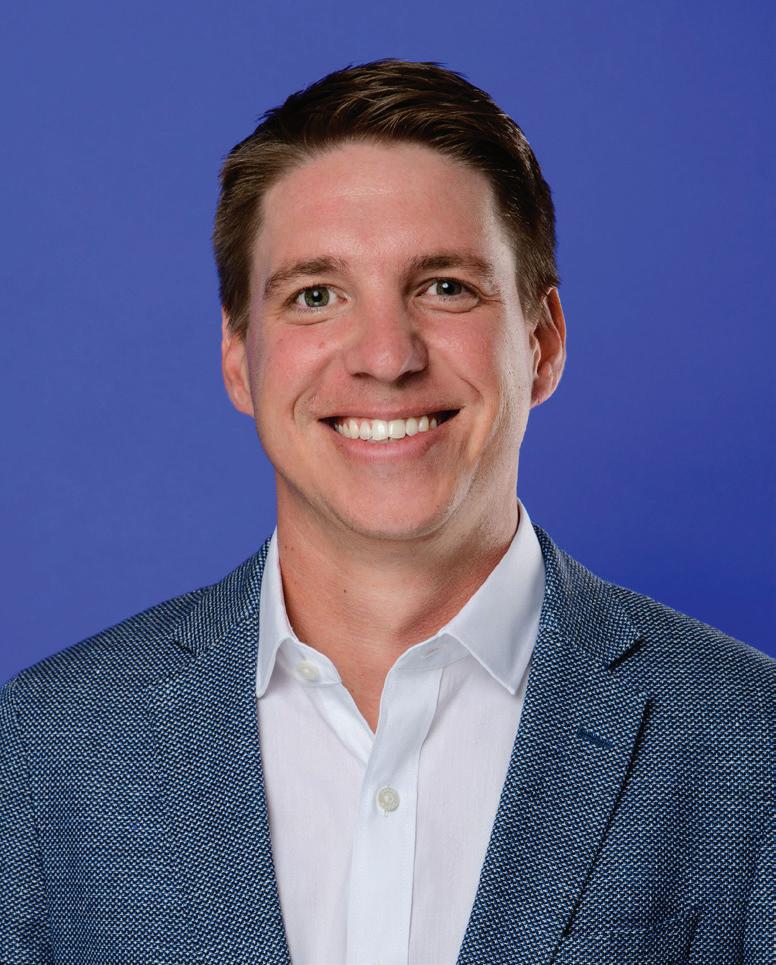
A 22,000-SQUARE-FOOT HANGER and terminal at Waukesha County Airport is expected to be completed in the first half of 2025 and is one of several developments underway for Jet OUT, a Milwaukee-based private jet charter and co-ownership company. Jet OUT is growing not only in Waukesha, but also in South Florida where it plans to expand into an existing fixed base operator (FBO) owned by Fort Lauderdale-based Sheltair Aviation. In September, former sister company Jet IN’s Milwaukee operations were acquired by Jet Aviation, a subsidiary of Virginia-based aerospace and defense company General Dynamics. BizTimes reporter Sonia Spitz recently spoke with Gordon Cameron, Jet OUT’s vice president of revenue, regarding the growth of the company and what it means for aviation in the Midwest and the Milwaukee area.
“When you look at the map of aviation in the country, the Midwest is an underserved market in general, specifically with light jets. There’s no one providing access to new airplanes in the midwestern market. Our CEO, Joseph Crivello, grew up around here and he’s a Milwaukee-first


person, which I love. We’ve got this great midwestern attitude that permeates throughout our business. We’re excited to unlock and expand our headquarters here. About 85% of (Jet OUT) employees are based here in Milwaukee, and we will continue to see that throughout the growth into next year and the years after.”
“We hire (locally) first, so salespeople, back-of-house, 24-hour dispatch and concierge staff, all that is Milwaukee-based. That’s the talent pool that we predominantly pull from. We look to hire at HQ first and if we’re unable to hire there, or it’s a satellite job where you need to be on site, we’ll go down to Florida where our next location is. We’ve got a little over 100 (employees) and it’s a dynamic number based on pilots. We’ve got 50 to 75 pilots at one time and right now we’re closer to 65.”
“I’m excited about diversifying Milwaukee and the talent pool. Again, there’s not a lot of aviation companies (in the Milwaukee area), so being kind of the predominant player in the space is really exciting for us. I think Milwaukee is known for a number of other industries, but certainly not aviation. I’m also excited about the amount of people we’re hiring and the growth that we’re going to have. My guess is we’ll be at about 120 (employees) next year, and that’s 50% office staff. That’s a pretty good boom for the local city. In addition, you talk about partnerships and how the revenue trickles down. There’s a lot of good in here for the city of Milwaukee and for the state of Wisconsin.”