






National recognition as a great workplace helps Baird attract top talent from across the financial industry to serve our clients’ needs. And commitment to remaining a great workplace helps us retain those people, ensuring the quality and continuity of the advice and service you receive across changing market environments.
rwbaird.com
ASSET MANAGEMENT
PRIVATE EQUITY
©2022 Robert W. Baird & Co. Incorporated. Member SIPC. MC-986850A.










By BizTimes staff
The Republican National Convention brought an estimated 50,000 visitors to Milwaukee to see Donald Trump accept the GOP’s nomination for president, and thousands of journalists to cover it.
Visit Milwaukee said the RNC would provide an economic impact of $200 million. But that im-
pact wasn’t felt by all. While hotels were packed, many restaurants in the downtown area reported a sharp decline in business during the week as many convention-goers stayed within the hard security perimeter near Fiserv Forum and many downtown workers opted to work from home during the week.
Dozens of event venues bene-
fitted from hosting ancillary RNC events held throughout the city, with locations that included American Family Field, the Harley-Davidson Museum, the Mitchell Park Domes, the Bradley Symphony Center, the Pfister Hotel and many others. Still, some venues that hoped to attract RNC-related events were left out and sat empty, most notably The Pabst Theater and the Riverside Theater.
moving towards another man in a dispute.
There were several protests during the RNC, including demonstrations in response to the police shooting, but they remained peaceful.
With Milwaukee leaders hoping to make a strong impression on RNC visitors, the weather was mostly cooperative. Storms rolled through the area the night before the convention when a welcome party was held at Henry Maier Festival Park. The weather was hot and humid on the first day of the RNC, followed by another storm, but it was cooler and more pleasant the rest of the week.
BY THE NUMBERS



Wisconsin’s Biohealth Tech Hub will receive

$49 MILLION




Other businesses that benefited from the RNC included ground transportation companies and event production businesses. At Mitchell International Airport, airlines added several flights for the RNC. The day after the convention, a global Microsoft outage disrupted airline operations, creating significant flight delays as attendees tried to head home.
While Milwaukee leaders were hoping for an immediate economic boost from the RNC, they are also hoping that exposing thousands of new people to the city and a global audience through media coverage of the RNC would help raise the city’s brand awareness, and that the logistical success of the RNC will help the city attract more major events.

in federal funding for six projects focused on



Thousands of police officers from across the country came to Milwaukee to help provide security and were on heightened alert after Trump survived an assassination attempt two days before the RNC. Officers from Columbus, Ohio, fatally shot a Milwaukee man who police body camera video showed was armed with knives and was
“The RNC brought tons of visitors who fell in love with MKE,” Milwaukee restaurateur and MKE 2024 Host Committee member Omar Shaikh wrote on X. “With the 15,000 credentialed (media), we’ll continue to get millions of media hits putting us on a world stage to win future business. We have proven Milwaukee is world class.”




This Q&A is an extended profile from Wisconsin 275, a special publication from BizTimes Media highlighting the most influential business leaders in the state.
Visit: biztimes.com/wisconsin275 for more.
Education:
Bachelor’s, Marquette University; J.D., University of Minnesota Law School
What was your first job, and what did you learn from it?
“I delivered the Milwaukee Sentinel (when it was a morning publication). I learned the satisfaction and independence that comes from a paycheck. I also learned the importance of customer service; my tips depended on it.”
What piece of advice has had the most significant impact on your career?
“Jay Rothman, our former CEO and now president of the UW System taught me to embrace the path of servant leadership. Leadership is all about others, not yourself.”
If you could have dinner with any two business leaders, who would you choose and why?
“Definitely Elon Musk. I am fascinated by how he transforms his curiosity into thriving businesses, his passion for innovation, and his refusal to take ‘no’ for an answer, even in the face of remarkable technological and political obstacles. Jamie Dimon. I admire his straight-forward, no-nonsense approach, and would like to learn how he has enjoyed sustained success in such a volatile and unpredictable industry.”
What are some of your favorite destinations or places to visit?
“Door County is our family’s happy place and always will be.”
What is one book you think everyone should read?
“‘Atlas Shrugged.’ Whatever your political or sociological perspectives, it asks thought-provoking question about the proper relationship between the individual and society.”
What’s your hobby or passion?
“Baseball is my avocation. I am a passionate fan of the Milwaukee Brewers and have been lucky enough to have





Managing partner, Foley & Lardner LLP MILWAUKEE
In 2021, trial lawyer Andrew Wronski took the helm of Foley & Lardner LLP’s Milwaukee office, where he is responsible for nearly 300 lawyers and legal professionals. Wronski was former vice chair of Foley’s litigation department and president of the Milwaukee Bar Association. The largest Milwaukee-area law firm and one of the top 50 largest firms in the country, Foley counts the likes of Johnson Controls, CVS and Harley-Davidson among its clients.
the baseball industry be a part of my professional life. But, more importantly, baseball has been central to the bonds between me and my four sons. From coaching them in little league, to traipsing around the country with them for travel ball, to watching them play in high school and college, baseball has given me the greatest gift of all: time with them.”
What is your favorite Wisconsin restaurant and what do you order there?
“Eddie Martini’s in Wauwatosa. Best steak in town and I always order a filet mignon and, of course, the garlic mashed potatoes.”
What was your first car? How long did you drive it for?
“A 1984 Ford Fairmont, a selfless gift from my parents given our circumstances. I drove it until it literally fell apart in 1991.”
If you could take a one-year sabbatical, what would you do?
“Train and compete in an Ironman triathlon.”
What’s the toughest business challenge you’ve had to overcome?
“I became the managing partner of our Milwaukee office in the middle of COVID. Figuring out how to keep people safe, keep our culture vibrant in a remote working environment and make people feel secure as we returned to the office was definitely the toughest and most important challenge I have faced. Fortunately, I am surrounded by a bunch of really smart and creative people who care deeply about out firm, and I leaned on them heavily.”
What advice would you give to a young professional?
“Family first, always. You’ll never regret that decision.”
What is one thing you would change about Wisconsin to make it even better?
“Our politics have become almost as dysfunctional and
adversarial as that in the country at large. That has been a pronounced (and unwelcome) change over my lifetime. A collaborative focus on what we have in common would serve us all – and our children – far better. There is tremendous opportunity in this state if we can find a way to work together and unleash it.”
As you enter your office, what would you choose to be your walk-up or theme song and why?
“‘Centerfield,’ John Fogarty. It’s about baseball and wanting your shot – what could be better?”
Is there a nonprofit cause that has special meaning to you?
“Our firm has had a long relationship with Hunger Task Force. I was fortunate enough to have played a role in the early stages of our partnership and see firsthand the good that they do. In my eyes, their mission is all about the caring for the children of this community, and I cannot think of a more important cause.”
What is the biggest risk you have ever taken?
“Borrowing a ton of money to attend law school. I didn’t have any lawyers or other professionals in my family. I didn’t really know what lawyers do or what I was getting myself into. But the intellectual challenge, rigor and discipline fascinated me. I wanted to see if I could swim in a bigger pond and make my way. I am blessed that it turned out OK, but that seemed far from a sure bet back then.”
What’s at the top of your bucket list?
“Visiting every Major League Baseball stadium in the United States.”
What has you most excited about the future?
“I am so excited to see what our four amazing boys become and what God has in store for them. And then, when they are on their path, sitting on a deck overlooking the lake in a little Door County retirement home with my amazing wife, Marti.”
In June, Milwaukee-based Harley-Davidson marked the opening of Davidson Park, a new community gathering place located on the southeast part of the company’s headquarters campus on the city’s west side. During the grand opening event, Harley-Davidson CEO Jochen Zeitz discussed the importance of the $20 million investment and shared insights into the ongoing changes at the company’s longtime headquarters complex. Future campus developments will include the addition of a STEAM lab and the relocation of the company’s Factory Race team headquarters.
“Racing has been part of our history for over 100 years and with this move, the HarleyDavidson Factory Racing team will come back to where it all began, giving visitors an exciting, engaging behind-the-scenes look at racing.”
“This (park) has been four years in the making. We’ve been thinking about what we can do to improve our home, not only for our employees but to importantly further integrate HarleyDavidson into the community.”
“We recognize the importance of science, technology, engineering, art and math in education, along with the importance of helping build the next generation of skilled workers. The STEAM lab will enable Harley-Davidson to further partner with local organizations and schools to provide students with direct access to resources.”

“This park is about motorcycles. That’s why it’s round, and that’s why it’s called The Hub.”
“A lot has changed in 120 years but there’s one thing that won’t change ever. It’s that Juneau Avenue is our home. Over the last four years, we’ve been thinking about how we can improve our home, not only for employees, but for the community.”


By Arthur Thomas, staff writer
The Wisconsin Center District – which oversees the Baird Center, Miller High Life Theatre and UW-Milwaukee Panther Arena – saw its total operating revenues climb 5.4% to $17 million in 2023, according to recently filed financial statements. Selling naming rights for the Baird Center helped push that total higher, but it’s unclear exactly how much.
$400,000
WCD’s advertising revenues went from $631,267 in 2022 to $1,035,631. The district inked a naming rights deal for the downtown convention center with Baird on March 10, 2023. The deal did not take full effect until May 1 this year. While the Baird deal helped, the figure was also boosted by new, renewed and escalators in existing partnerships, a district spokesperson said.
$41.3 million
Future lease receivables from 2024 onward went from $27.6 million at the end of 2022 to $41.3 million at the end of 2023. Those receivables cover leases of buildings, advertising space and naming rights. Like advertising revenue, the increase wasn’t entirely due to the Baird deal.
Down 2.3%
Rental and labor service revenue in the district decreased 2.3% to just under $5.7 million. Event driven revenue was down in the fourth quarter as some inventory was taken offline to complete the $456 million expansion of the convention center.

• Michael “Mick” Hatch, partner, Foley & Lardner
• Bruce Keyes, partner, Foley & Lardner
• Jeff Morgan, VP, Allied Insulation Supply Co.
• Michele Bria, CEO, Journey House
• Patrick O’Connor, retired senior VP, BMO Harris
• Jennifer Bognar, manager of local affairs, WEC Energy Group
• Mike Brockman, VP of facilities and projects, Milwaukee Brewers
• Chytania Brown, president and CEO, Employ Milwaukee
• Wendy Bushell, VP of people and culture, Palermo’s Pizza
• Lafayette Crump, commissioner, Milwaukee Dept. of City Development
• Bill Davidson, VP, HarleyDavidson
• Kerry Janovitch, CFO, Potawatomi Casino Hotel
• Sara Everts, director of corporate marketing and communications, Rite-Hite
• Jerrel Kruschke, commissioner, Milwaukee Dept. of Public Works
• Katherine Lazarski, director of legal services division, Milwaukee Metropolitan Sewerage District
• Gene Manzanet, senior director of diverse business development, Wisconsin Economic Development Corp.
• Glenn Margraff, executive VP, Wintrust Commercial Banking
• Claudia Paetsch, VP of HR, Marquette University
• Juile Penman, principal, Penman Consulting
• Sheri Schmit, VP of transportation and parking services, Milwaukee Regional Medical Center
• Craig Thompson, secretary, Wisconsin Department of Transportation
Net tax revenues increased 13.2% to $46 million, including $10.6 million from the basic room tax, $18.1 million for the additional room tax, $15.1 million from the food and beverage tax, and $3.4 million from the local rental car tax.
Up 13.2% $51.2 million
Operating expenses climbed 11.9% to $51.2 million, including $5 million for wages tied to specific events, up 11.8%; $5.1 million for administrative salaries and wages, up 13.6%; and $10.3 million for advertising and promotion, up 44.9%, primarily due to a higher payment to Visit Milwaukee because of higher tax revenues.
Share your opinion! Visit biztimes.com/bizpoll to cast your vote in the next Biz Poll. BIZ POLL A recent survey of BizTimes.com readers. No, not at all: 52% Are you using AI in your business? Some – we’re still trying to figure it out: 32% Yes, extensively: 8% What’s AI?: 8%
BIZTIMES MILWAUKEE: What is your favorite success story?
SPANO: Over the last four decades, there have been so many stories of Annex helping people achieve and surpass their goals that it’s hard to pick one. We recently recorded an interview with a firefighter and nurse talking about the beginning of their journey. This couple and their story really resonated with me because it’s a story we will continue to see. Especially considering the impending transfer of trillions of dollars from the greatest generation and baby boomers to future generations, it’s great to know we plan to help people like them for decades to come.
BIZTIMES: How does your firm ensure high standards of service for clients?
SPANO: Our focus is to provide excellence and continuity to our clients, even in the face of change. Some firms might be devastated when facing the loss of a team member. At Annex, our clients interact with a variety of team members; from advisor to estate planner, to attorney, to CPA/tax planner, to the marketing and investment teams, we’re all here working towards your goals. Our clients realize the value they’re receiving isn’t from one person, but through the depth of the entire firm. We’re confident the loss of a single team member will not take the depth of the team experience and our firm’s reputation from us.
BIZTIMES: Where do you see your company in one year, in five years?
SPANO: Annex has a strong foundation to build from, given our 24-year history of serving our clients’ financial needs and beyond, providing them with a sense of security and a path to peace of mind. We continue to strive towards scale, effectiveness, and expansion over both the next one and five years, allowing Annex to serve families of all wealth and complexity levels in the communities we serve and live in. Our focus is to proactively anticipate the needs of our clients, providing solutions and services they’ll need as we help them navigate their financial journey.
BIZTIMES: What do you see as your most important responsibility to your employees?
SPANO: Our most important responsibility to our employees is to create an environment where they feel valued, supported, and empowered. We aim to provide opportunities for growth, ensure work-life balance, and foster a culture of trust and transparency. By investing in their well-being and professional development, we enable them to deliver exceptional service to our clients and drive Annex’s success while having fun doing it.
BIZTIMES: What inspires your approach to business, and how do you embody this philosophy in your work?
SPANO: There’s an old Jesuit maxim that has stuck with me through the years: “Men for others.” It’s a call for us to focus on service and the needs of those around us. We’ve all met and worked beside those who live their life by that maxim, and they’re real heroes.

I’ve devoted my entire career to attempting to deliver a culture of service in an industry that is sometimes guided by less wholesome goals. For me, consulting as a fee-only fiduciary and working only in our clients’ best interest lives out that old Jesuit phrase.


THE 2024 Republican National Convention took place against a backdrop of unprecedented historic events, from an assassination attempt on former President Donald Trump just days prior to now-confirmed rumors that President Joe Biden would withdraw from the 2024 presidential race. As people across the nation – and parts of the world – tuned in to watch it all play out, they saw glimpses of Milwaukee: a mid-sized metro that has made headlines in recent years for its NBA team, tourist attractions and food scene and now will be recognized on an even greater scale for its ability to host a largely successful full-scale political convention. The 2024 RNC brought an anticipated 50,000 visitors, including delegates, party guests, media, volunteers and law enforcement, to Milwaukee for the July 15-18 event, which took place at Fiserv Forum as its main venue.
1. Fiserv Forum and its adjacent public plaza were the center of convention activity during the week.
2. The arena was configured around the main stage, which spanned 26 feet tall and 60 feet wide against a backdrop of nearly 1,200 high-density LED panels.
3. In his first public appearance following an assassination attempt, Trump and his newly named running mate, JD Vance, perched in the former president’s friends and family suite the first night of the convention.
4. Former Gov. Tommy Thompson autographs a cheesehead hat while sitting amongst the Wisconsin delegation on the convention floor.
5. Billionaire Wisconsin businesswoman Diane Hendricks was among the “everyday Americans” to speak at the RNC.
6. 100,000 balloons dropped from the ceiling of Fiserv Forum on the final night of the RNC.


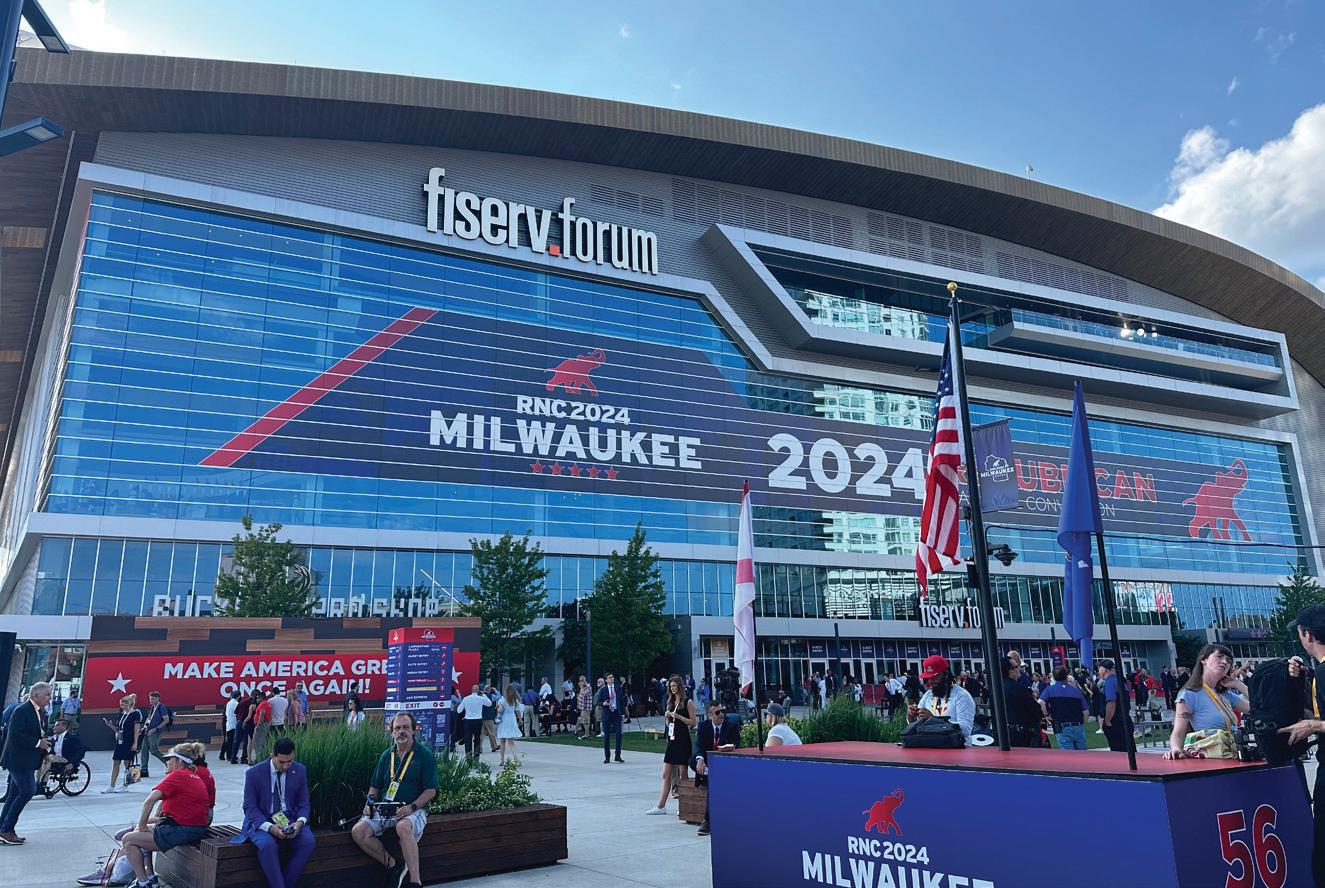



ORGANIZERS spent months touting the convention as a potentially huge economic boon for the region – projecting a $200 million impact – and that proved to be mostly true for businesses within the convention complex. But outside the RNC’s high-security perimeter, activity at many bars and restaurants was far slower than expected. Still, hotels as far as Madison and Kohler were full and many local venues benefitted from hundreds of RNC-related events that took place throughout the week. Plus, dozens of local vendors got the chance to sell their goods to convention-goers at Convention Fest, a street festival that took place each afternoon outside the Baird Center.
1. Iconic German restaurant Mader’s was a popular dining spot among convention-goers.
2. Tracy Way and Megan Maze of Wauwatosa-based Ultimate Confections show off some of the treats for sale at Convention Fest.
3. Travelers arrive at Milwaukee Mitchell International Airport the evening before the convention. The airport saw between 2,000 and 3,000 more travelers arrive in the days leading up to the RNC than on a typical summer day.
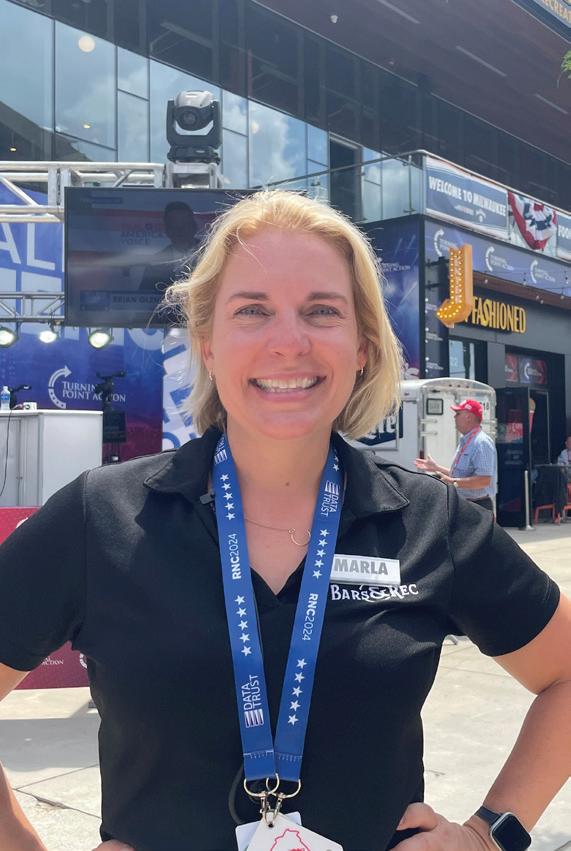
4. Marla Poytinger, president and CEO of Bars & Rec, standing outside the New Fashioned, which was one of the only full-service restaurants inside the RNC’s secure perimeter.
5. A trio of environment- and energy-focused political groups held an “American Energy CARES” reception at the Mitchell Park Domes, giving attendees a chance to explore the gardens between programming.
6. Delegates and guests walked the red carpet into the Summerfest grounds for the RNC’s “Red, White and Brew” welcome party, held the night before the convention.





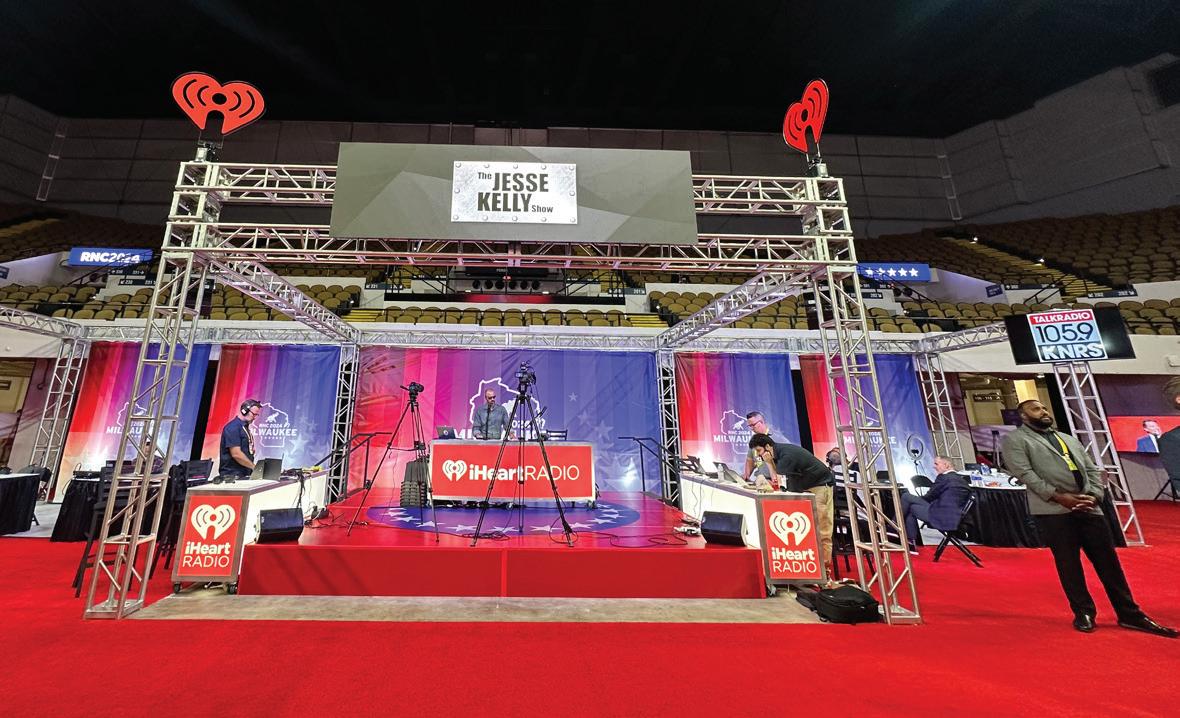
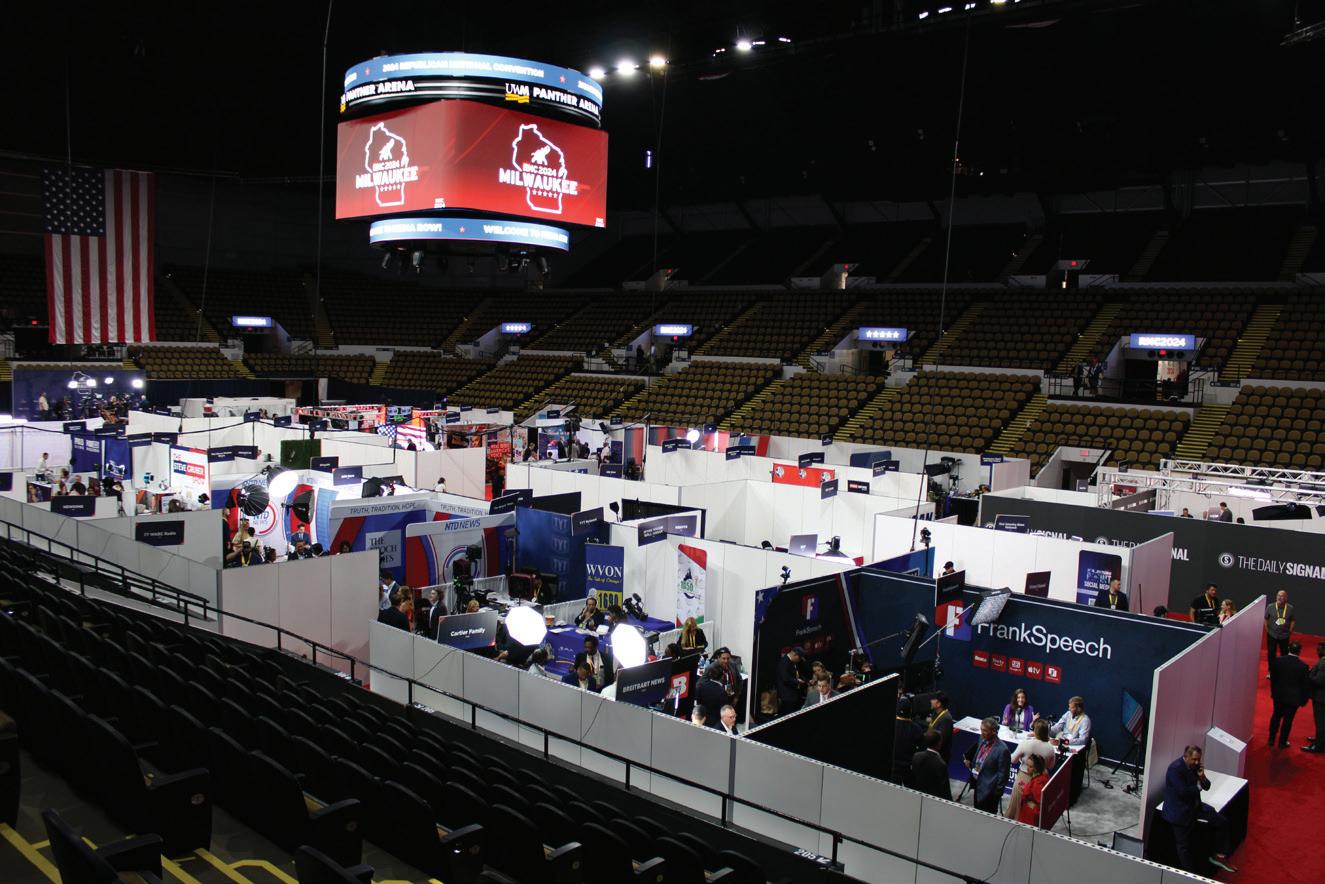
MORE THAN 15,000 credentialed members of the media traveled to Milwaukee from across the country and overseas to cover the 2024 RNC. In addition to working and covering the event from the convention hall at Fiserv Forum (1), members of the media took over part of the Baird Center and the UW-Milwaukee Panther Arena (2), where the arena floor was divided up into sections for different broadcast media outlets. Milwaukee civic leaders are hoping the massive media coverage of the RNC will help raise the city’s profile as a destination for tourists and business travelers alike.
3. iHeartRadio’s massive recording booth at media row inside the Panther Arena was designed by New Berlin-based Exciting Events. It featured five designated podcasting/radio broadcasting areas.
4. NBC News anchor Hallie Jackson records a sound bite during former President Trump’s walkthrough of the stage a day before delivering his acceptance speech.
5. A look at Fox News’ “Democracy 2024” broadcast set at Fiserv Forum.
6. Broadcasters utilized the Baird Center’s third-floor balcony for standups.




SAFETY AND SECURITY were major focal points of the RNC’s production, especially in the wake of the assassination attempt on former President Trump. As part of the U.S. Secret Service’s comprehensive security plan for the event, a hard security perimeter – marked by heavy-duty fencing, street closures and entry checkpoints – walled off the convention complex from the rest of the city, and thousands of law enforcement officers were on-site around the clock, patrolling and guarding the area. On the convention’s second day, police officers from Columbus, Ohio – in town to help provide security for the RNC – fatally shot a man near 14th and Vliet streets in Milwaukee, which is about 1 mile west of Fiserv Forum.
Demonstrations during the convention were peaceful – and few. Much of the protest activity took place Monday when several different groups rallied and marched near the convention complex (1).
2. The U.S. Coast Guard patrolled the Milwaukee River, a portion of which was closed to maritime traffic during the RNC.
3. Lines to enter the security perimeter, which had five vehicle screening points, often stretched for blocks.
4. Police officers traveling by horse could be seen throughout Milwaukee’s streets during the RNC.
5. Demonstrators marched past the Riverside Theater, which sat empty during the RNC and displayed a different pro-Milwaukee message each day of the convention.








REPORTS throughout the first and second quarters of 2024 have found that Milwaukee is one of the nation’s most competitive apartment rental markets, has some of the fastest-rising rents and is one of the worst cities for renters in the country.
Multiple luxury apartment towers have gone up downtown recently while some low-income tenants regularly struggle with landlords and housing affordability, putting a lot of eyes on the city’s multifamily market.
While the methodologies of these reports vary, local real estate experts agree that a myriad of local and national trends suggest the metro Milwaukee apartment market could get even tighter and
more expensive in the coming months.
Rent growth in metro Milwaukee currently stands at 2.4% yearover-year, according to CoStar, which tracks 110,000 apartment units in the metro area. That puts Milwaukee at 19th out of the largest 50 markets in the country. Earlier this year, Rent.com reported metro Milwaukee’s rent growth at 6.3%, 10th highest in the nation and, this month, Zillow Group reported rent growth at 5.7%, the fifth highest in the nation.
“Rents are typically always rising, but rents are rising at a pace that this market is not accustomed to,” explained Gard Pecor, a senior market analyst with CoStar.
Before the pandemic, apart-
ment rent growth in the area tracked pretty well with inflation at about 1.5% to 2%, followed by a period of aggressive rent hikes starting in 2021. Since then, rent growth in the area has been decelerating – still rising but at a slower pace – and bottomed out late last year. Now, analysts are expecting Milwaukee and many other markets to enter a “higher for longer” period of about 3% to 4% rent growth for the next few years.
In dollars, that means that the average rent in, say, downtown Milwaukee, which is about $1,900 per month, is 2.4% more expensive now than this time last year – an equivalent of about $45. A 4% increase from there would be about $76 for a total of around
$1,976 per month.
This is in part because rent growth follows vacancies and supply and demand curves pretty closely.
Several reports rank Milwaukee’s rental market as one of the tightest in the nation. According to CoStar data, Milwaukee is currently the third tightest in the nation, at 4.4% vacancy.
“When you have such a low-vacancy environment and the pipeline of new inventory slows up, renter mobility is restricted,” Pecor said. “When renters have fewer options, the competition for available units is heightened and property owners have more room to raise rents. It’s supply and demand 101.”
However, rent growth isn’t being seen evenly across asset classes. For instance, four- and five-star properties, which include the newer, nicer properties like The Couture or Ascent downtown are seeing the least amount of rent growth at around 0.8% yearover-year, compared to one- and two-star and three-star properties at 3% and 2.6%, respectively, according to Pecor.
That’s primarily because there’s been the most inventory expansion in the luxury asset class recently. In 2023, which was a record year for multifamily deliveries overall in the area, rents across all asset classes began to decelerate.
Beyond a low vacancy rate, property owners and managers also cite operating costs as a contributing factor to rents. The two biggest are property taxes and labor costs, which also includes the cost of benefits, according to Mike Testa, business development manager at Milwaukee-based commercial real estate firm Ogden. Property insurance is a slightly lower expense but has had significant increases with some of
“There is definitely a risk that the affordability of our market comes into question, particularly for low-income workers.”
— Gard Pecor, senior market analyst, CoStar
Ogden’s properties seeing up to a 150% increase, Testa said.
“Just because rent’s going up 10 to 12 cents a square foot doesn’t mean we’re making an extra $10 to $12 a square foot,” Testa said. “In today’s environment it’s not the easiest to keep cash flow positive and where investors expect it to be, but we’re getting by and we’re figuring it out because that’s our job.”
Despite the increases in rent, Milwaukee-based Mandel Group, which develops, owns and manages multifamily properties around the region, is not seeing significant increases in revenue.
According to Bob Monnat, a senior partner at Mandel, the company generally forecasts around 3% annual compounded growth of revenue, which is the level of rental growth needed to offset the growth in operating expenses and provide a competitive return for investors. Monnat said that while some properties over- or under-achieve, the compounded annual growth rate from 2020 to 2024 was 3.12%.
“In other words, when you average over the entire period in which COVID was a major player in household economics, the average growth rate in rental revenue collected at the property level was near normal,” he said.
In the coming year, Mandel is forecasting rents on existing inventory to remain essentially flat for new leases and a modest increase in renewal rates, according to Monnat.
With construction projects more difficult to get off the ground these days amid height-
ened construction costs, elevated interest rates and limited access to capital, developers and analysts predict slowing construction in the near term. This is coupled with a tight single-family home market keeping many people, primarily millennials, renting apartments for longer and Generation Z becoming the fastest-growing renter demographic, which will increase demand further, according to Monnat.
“There is definitely a risk that the affordability of our market comes into question, particularly for low-income workers,” Pecor said. “And it shouldn’t just be incumbent on housing advocacy groups and affordable housing developers to bang the drum on the issue. This is such an important issue for our regional economy. Any time a restaurant owner or a factory owner is in the news talking about hiring difficulties, we should be asking ourselves if there is enough housing in that area that is affordable enough to allow people to work those jobs.”

TURPIN Reporter

Milwaukee-based Barrett Lo Visionary Development has unveiled plans for up to 675 apartments that it plans to build at Southridge Mall in Greendale.
The apartments will be built in phases at the site of the mall’s former Boston Store, which will be razed to make way for the development.
Barrett Lo reached an agreement with the village to redevelop the former Boston Store in 2021, but plans have been held up in part due to decades-old covenants on the Southridge Mall properties that prohibit developments like Barrett Lo’s from being built at the mall site.
The development will also include about 20,000 square feet of new retail space.
The apartments will center around a village green and exterior plaza space allowing for community events and connectivity between the mall and the new apartment community.






















BY ASHLEY SMART, staff writer





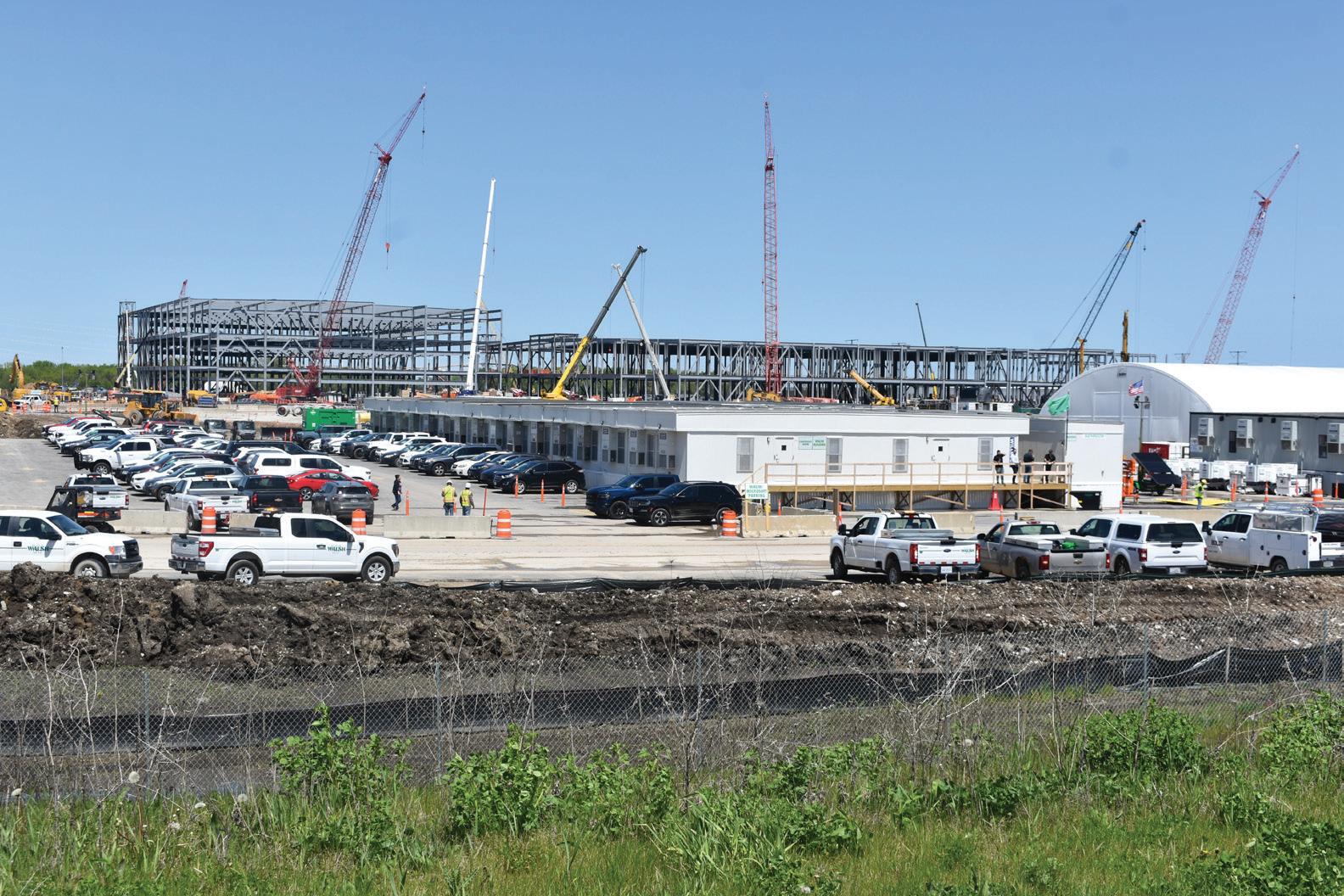
Microsoft’s $3.3 billion investment to build an artificial intelligence data center campus in Mount Pleasant is being touted by economic development officials and business leaders as a watershed moment for Wisconsin.
The investment, to be made now though the end of 2026, was announced in May, along with several corresponding community partnerships involving the Redmond, Washington-based tech company.


Microsoft has more than 300 data centers around the world, but its Mount Pleasant campus will be among the most cutting-edge facilities the company has ever built. Designed to support Microsoft’s cloud and artificial intelligence infrastructure, the data center project will create 2,000 union construction jobs, according to an announcement from Gov. Tony Evers’ office. A separate announcement from the White House said the project will create another 2,000 permanent jobs over time.


“We are going to be building among the world’s most advanced AI and cloud data centers that you will see anywhere,” said Brad Smith, vice chair and president of Microsoft, during a press conference held earlier this year. Microsoft declined to answer questions or make a company representative available for this story.

BIZTIMES MILWAUKEE: What is Centers for Independence?
ELSMO: Since its founding in 1938, Centers for Independence has been strengthening communities by helping people of all abilities advance their total health. The organization provides medical daycare for children with complex conditions, mental health and substance abuse treatment, job training and placement services, in-home personal care services, and more. Today, our team of 800 employees provides support and care across CFI’s 30 vital programs.
BIZTIMES: How important are partnerships in contributing to the success of the organization?
ELSMO: Our work would not be as effective or reach nearly as many clients and patients without our strong community partners who share our mission and want to improve the situation for the many communities we serve. Near West Side Partners, Marquette University, the state of Wisconsin, Milwaukee County DHHS, Waukesha County DHHS, and area schools are just some of the trusting relationships we value. It is through these partnerships that CFI can provide integrated services and achieve improved health outcomes.
BIZTIMES: How are you working to advance and or redefine DEI within CFI?
ELSMO: We strive to create a more inclusive and equitable environment for our staff and our clients and patients. For example, we have implemented a robust talent acquisition strategy to align our workforce to reflect the diversity of those we serve.
Furthermore, our hiring practices, as well as our job training programs, are enabling people with physical and developmental challenges the opportunity for gainful employment—many of whom have never held a job before. We believe it is not only the right thing to do but also good business and good for the short- and long-term viability and sustainability of our communities.
At CFI, our workforce and client populations are a vibrant tapestry of backgrounds, perspectives, and talents. And we are the better for it.
BIZTIMES: What impact is CFI having on the lives of your clients, and the community overall?

On a macro level, the organization is having a tremendous impact on unemployment and underemployment, food insecurity and healthcare inequity, poverty and homelessness. Through the work of our dedicated and talented team, fostering unique collaborations, innovative partnerships and programs, CFI is creating stronger more resilient communities.
ELSMO: Our purpose is to inspire hope in the lives of individuals, families and communities. On a micro level, you can see the effect we’re having on the lives of individuals every day. If you visit our medical daycare for children, you can see the care and nurturing they’re receiving from our medical staff. If you tour one of our commercial kitchens you can see people being trained for food service jobs, while the healthy meals they prepare feed thousands of area school children. The good we do for individuals is profound. 2020







Continued from page 16
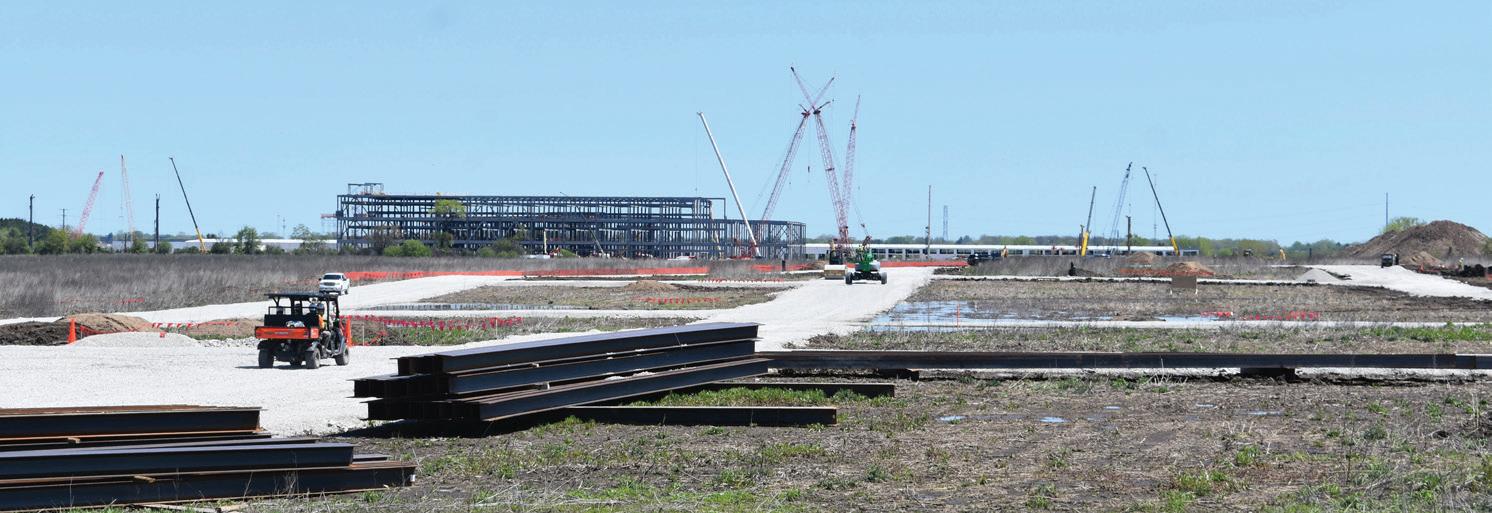
The complex is being built on land where Foxconn had planned to build a massive LCD screen manufacturing complex. Originally touted as a $10 billion project that would create 13,000 jobs, Foxconn’s development in Mount Pleasant has been far short of those plans and much of the land where it had planned to build remains vacant.
While state leaders have initially focused on the financial investment from Microsoft – as well as the potential job numbers – the impact the data center could have on Mount Pleasant and the greater southeastern Wisconsin region could be even farther reaching.
In addition to its financial investment, Microsoft will help upskill businesses and workers throughout southeastern Wisconsin. Through a partnership with Green Bay-based venture capital firm TitletownTech and the Green Bay Packers, Microsoft is building a manufacturing-focused AI Co-Innovation Lab at the University of Wisconsin-Milwaukee. The lab is the first of its kind in the United States, according to Evers.
Microsoft also forged partnerships with Madison-based startup accelerator gener8tor and Gateway Technical College, both aimed at upskilling the state’s workforce. The company hopes to train more than 100,000 Wisconsinites in artificial intelligence by 2030.
“This isn’t just about building a building, and it’s not just about the manufacturing jobs of today,” said Smith. “More than anything, this project is about using the future of AI to fuel the future of manu-
facturing companies and jobs and skills across the state of Wisconsin and around the country.”
Microsoft’s data centers have several dedicated buildings that help the entire operation run smoothly. The heart of a data center is the server room, home to the cloud’s computing and storage capacity. Hundreds of server racks are equipped with compute blades that help run programs like Microsoft 365 and Azure, a cloud computing platform.
High-capacity fiber optic network switches move data to and from the server blades. That data is then transferred by higher capacity network switches to and from each of the server rooms to a core data center network.
The core data center network is connected by hundreds of thousands of miles of fiber optic and subsea cable to Microsoft’s global network of data center regions, where all data is stored securely.
Within the data center’s operations room, trained technicians – including cybersecurity experts and cross-company engineering teams – and artificial intelligence monitor hundreds of thousands of critical data points, including power, cooling and security. Azure AI uses machine learning to review those same data points, as a method of predictive monitoring.
Microsoft data centers also contain a “circular center,” where decommissioned servers and hardware components are processed to be recycled.





BIZTIMES MILWAUKEE: How does being a family-owned company change the way you deliver construction services?
SCHMIDT: One of our overarching goals is to successfully lead CG Schmidt into the next generation. I view my leadership style as being the steward for our company so that highly qualified people who share our values can continue to build exceptional facilities for the family name like we have been doing for over 100 years.
From that perspective, our focus is more about customer service and our core value of caring. We care about our clients, we care about the communities where we build, and we want to hand these values down throughout the generations to come. Some businesses tend to focus solely on the bottom line; we don’t ignore it, but our primary concern is providing exceptional service for our clients and the communities we serve. We believe that profitability and financial metrics are outcomes of delivering exceptional client service.
BIZTIMES: What sets you up for success as president?
SCHMIDT: It’s the teams and the individuals that I am fortunate to work alongside every day who make an real impact on our achievements. When you surround yourself with talented and committed people, you become a team that clients are eager to partner with on projects.
BIZTIMES: CG Schmidt just opened an office in Arizona. What prompted you to leave the Midwest?
SCHMIDT: It boiled down to us traveling with an existing client to a new geographic region. Our client has an office in Phoenix and was struggling with finding a construction partner that collaborated and delivered projects the way CG Schmidt does. They approached us about working in Phoenix together on a medical office building. We have developed the capability to travel and deliver the same level of service and expertise that our clients have come to expect from CG Schmidt, wherever they need us.
BIZTIMES: How is CG Schmidt changing to succeed for the next 100 years? What are you doing to build that culture?
SCHMIDT: I view our organization as constantly evolving by utilizing emerging technologies efficiently to provide real value for our clients. We are going to keep evolving to stay at the forefront of innovative technologies and systems to best serve our clients.

improve the lives of others, will never change. We are going to continue to look for people who believe and practice our values, and who are honest, transparent, and diligent, so that we can yield successful outcomes for our clients. With our unrelenting goal to make exceptional our standard, we are dedicated to building a better tomorrow, today.
cgschmidt.com
What will remain constant is our culture and the values that guide our decision making. We always act in the best interest of our clients, regardless of the short-term costs to CG Schmidt. The way we manage our construction projects, and our mission of creating exceptional facilities that 11777 West Lake Park Drive • Milwaukee, WI 53224

Continued from page 18
High-efficiency evaporative cooling air handlers are placed throughout the data center campus, allowing the facility to use the energy it needs while reducing its environmental impact.
The company is constantly looking to innovate and implement new data center technologies. It has twice in recent years lowered a data center to the bottom of the Atlantic Ocean to gauge the feasibility and practicality of underwater operations.
Historically, high-tech data centers that focus specifically on the cloud and AI – like the one under construction in Mount Pleasant – have been built on the coasts, in proximity to the nation’s major tech companies. But that doesn’t mean Wisconsin is new to the fast-growing data center market.
Milwaukee-based Potawatomi Ventures, formerly known as the Potawatomi Business Development Corp., broke into the data center market more than a decade ago when it launched a subsidiary known as Data Holdings, which operates a 50,000-square-foot data center on West Highland Boulevard on the west side of Milwaukee.
“We’re only less than a millisecond away from Chicago, (via) open fiber. Wisconsin has always been a legitimate place to put data centers and be very well connected to the internet, but it’s taken a long time for people to realize that,” said Ryan Brooks, general manager of Milwaukee-based Data Holdings.
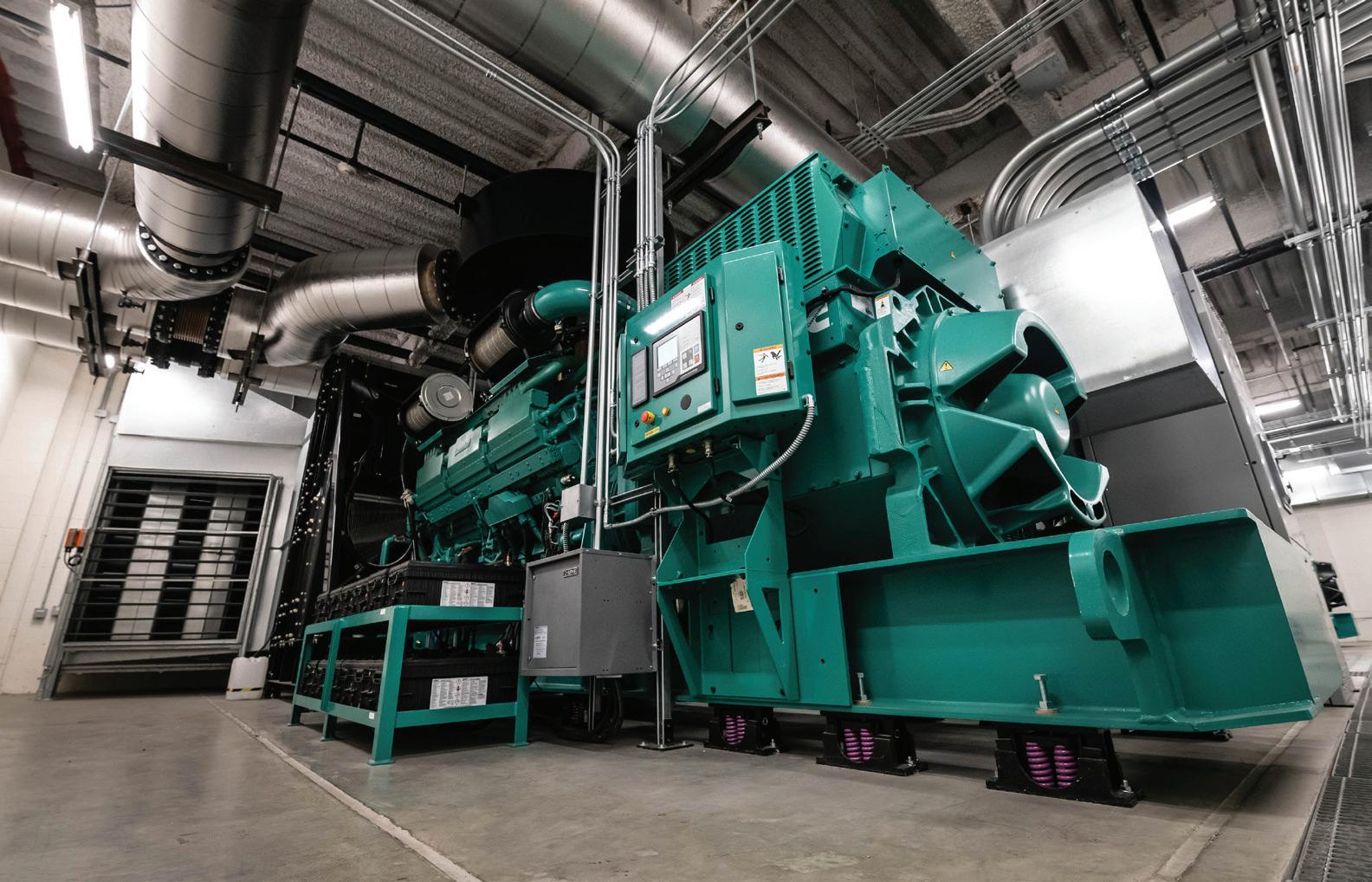
Construction of a data center involves the inclusion of several redundancies, like backup generators and battery power systems, in case power is lost.
“It has to be able to survive anything that you can think of,” said Brooks. “In our world, if something can happen, it’s just a matter of time. It’s the data center version of Murphy’s Law.”


Wisconsin’s cooler climate is a benefit to data center operators. During the winter months, companies can take advantage of lower energy costs since they don’t need as much power to cool equipment. That could be of particular interest to Microsoft as the operator of an AI-focused data center that will require substantially more energy than traditional data centers facilities.
Brooks estimates that a typical sever cabinet, which at Data Holdings’ Highland Boulevard facility can hold up to 42 servers, uses the same amount of power as a single household. Meanwhile, a server rack being used for an AI application uses the same amount of power as 30 households.
“Adding the electrical power and then just getting the (AI) chips themselves? Very difficult,” said Brooks. “Everyone wants them. It’s like a gold rush.”


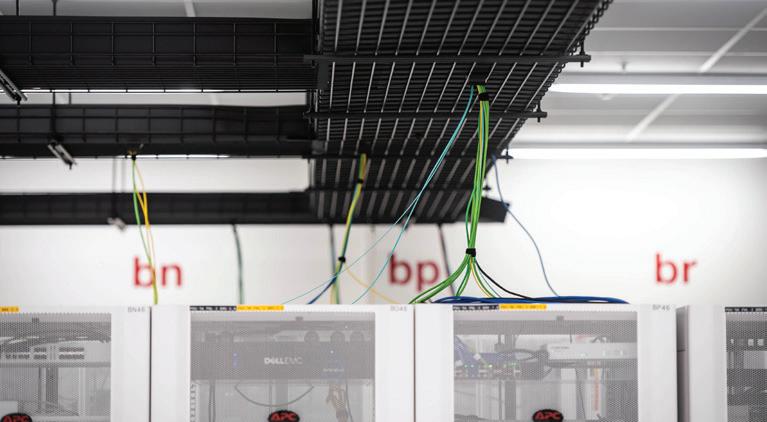
1. Within each server room at Data Holdings, every server cabinet can be located through a grid system. This allows clients to access their assets easily while also allowing Data Center staff to quickly identify where an issue or security threat is taking place.
2. Thousands of feet of optical fiber eventually leave the Data Holdings building to connect its customers to the rest of the world.
3. Each cabinet houses servers dedicated to a different customer. Data Holdings serves companies and organizations across the globe.
4. One of several server rooms at Data Holdings.
5. It’s critical that a data center never loses power. To have several fail safes in place, Data Holdings has two backup generators on site.
BIZTIMES MILWAUKEE: What did you learn from the last three years?
DONOHUE: The pandemic challenged us to be flexible. It caused us to contract the business substantially and then ramp back up quickly. What I learned from that is that we need the best people on our team who believe in what we do and are ready for anything.
BIZTIMES: How is your company stronger?
DONOHUE: We have experienced tremendous growth over the past 24 months, and this has encouraged us to have a can-do-attitude to solve issues and meet our customer’s needs.
BIZTIMES: What is your favorite success story?
DONOHUE: We pride ourselves on going above and beyond to execute. We had a project that had a very demanding schedule with a completion date that was set in stone, and we were asked to provide our architectural millwork for the project. Due to material delays, we were at risk of not making the date, but our team did not give up. They worked together to charter a 747 to fly our work to Florida to be installed in time to meet the date. This is one of many examples that showcase our staff going above and beyond to execute for our clients.
BIZTIMES: Where do you see your company in 5 years?
DONOHUE: We are growing. We plan to double in size over the next few years by entering new markets and expanding the services we provide. To do so, we are recruiting talent in all areas and providing our team opportunities for career growth.
BIZTIMES: What do you see as your most important responsibility to your employees?
DONOHUE: Providing opportunities. Whether it is an opportunity to grow in your career, or grow in knowledge, our job as leaders is to foster that and create an environment that supports opportunities for our team.
BIZTIMES: What do you see as your most important responsibility to your customers?
DONOHUE: Of course, we need to provide them with quality products on time while staying in constant communication, but we also need to stay ahead of industry trends. Continuing to provide innovative solutions and design expertise, is the most important. There is often distance between our customers vision and reality, and it’s our job to bridge that distance for them.
BIZTIMES: What is your corporate philosophy?
DONOHUE: Our core values are understanding the value of reputation, having passion for the business, creating value for our customers and going above and beyond to execute. These values drive us.

BIZTIMES: What sets you apart?
DONOHUE: Our passion. At our core, we are craftsman that make wood art and we help our customers achieve the look and feel of the spaces they desire with our millwork. We strive to inspire awe!

6520 W. Becher Place • West Allis, WI 53219 414-449-2888 • Glennrieder.com


Continued from page 20
A particularly exciting component of the Mount Pleasant project is the involvement of local vendors who are all needed to build the campus, he said. Vendors who make products like electrical and switch gears are all critical to the construction process. Brooks is also hopeful that Microsoft’s expanded presence in the region will help retain technical talent, a challenge that companies like Data Holdings have been struggling to address.
He said it has been “very disappointing” to see well-trained technical workers leave Wisconsin to work on the coasts for giants like Microsoft.
Among the biggest concerns regarding data centers is the sheer amount of energy needed to power them and the possibility of draining resources from an already burdened energy grid.
By 2030, data center power consumption in the U.S. will be double its 2022 level of 35 gigawatts, according to a report from commercial property consultancy Newmark. One gigawatt is equal to 1 billion watts. Compare that to the average lightbulb, which uses about 20 watts of electricity when turned on.
In addition to electricity, data centers need mass amounts of water to cool servers.
Microsoft consumed 6.4 million cubic meters –equal to 6.4 billion liters – of water in 2022, primarily for its cloud data centers, according to its annual sustainability report. The report also says the company aims to be “water positive” by 2030, meaning it would replenish more water than it uses.





Milwaukee-based WEC Energy Group, the parent company of We Energies, has been working closely with Microsoft to prepare for the Mount Pleasant data center’s energy needs. We Energies is aware of Microsoft’s energy plans and goals for at least the next decade, according to Dan Krueger, executive vice president of planning at WEC Energy Group.
Part of what attracted Microsoft to Wisconsin was WEC Energy’s “aggressive” carbon reduction goals, Krueger explained. The utility company aims to reduce carbon dioxide output by 80% – from what it was using in 2005 –within the next six years.
“Like with any customer, if you give us enough time and runway, we’ll make sure we have enough power to meet your needs,” Krueger said.
Microsoft’s energy usage has increased substantially within the last year. In fiscal year 2023, the company reported using 24,007,868 megawatt hours of power, up from 18,644,872 megawatt hours
in 2022. The bulk of the energy the company used last year, 23,567,502 megawatt hours, came from renewable electricity, according to Microsoft’s most recent sustainability report.
By next year, Microsoft plans to shift to a supply of 100% renewable energy. By 2030, the company aims to be carbon negative, which means it will remove more carbon dioxide from the atmosphere than it emits. Once Microsoft becomes carbon negative, the company says it will continue removing from the atmosphere all carbon it has emitted since its founding in 1975. The company plans to do this by 2050.
WEC Energy and Microsoft are currently working to determine the rate the company would pay for its energy usage in Mount Pleasant. We Energies expects to bring final tariff proposals to the state Public Service Commission for approval this summer. The utility company is expecting load growth of between 4% and 5% by 2028, thanks in part to Microsoft’s entry into the region.
“We think, starting in the latter part of this decade, our load growth between Microsoft and a lot of other people coming in here, is probably going to see 5% growth,” said Krueger.
We Energies’ peak demand is 5,000 megawatts (5 million kilowatts or 5 billion watts). Combined with Green Bay-based Wisconsin Public Services’ peak demand in northeastern and north central Wisconsin, that total can jump to a high of 8,000 megawatts.
The peak is the most energy being used at any given time. Adding up the different levels underneath the peak is called the load, or all the megawatt hours that are used at any given interval of time, with the cap being 8,000 megawatts.
Increased demand for energy, thanks to Microsoft, could raise concerns of increased energy rates, but Krueger doesn’t expect Microsoft’s energy usage to have an impact on rates for other customers or on how accessible power is throughout the region.
“I have never encountered a customer, ever, more committed to making sure their presence has positive impact,” said Krueger of Microsoft. “They don’t wish for anyone to pay anything due to their presence.”
It’s still unclear what kind of additional infrastructure support might be needed as more phases of the Mount Pleasant data center are completed. We Energies will be closely watching to see if the data center spurs additional development that could further increase the demand for energy, what Krueger refers to as a “shimmer effect.”
“If we observe an escalating level of demand and load because we suspect more people are engaging servers for AI, then we’ll begin to react,” said Krueger.
BIZTIMES MILWAUKEE: What does innovation mean at IEWC?
VEUM: Innovation at IEWC isn’t just about developing new products or services; it’s about how we approach our work, solve problems, and continually improve processes. Innovation can happen everywhere – at every desk, on every forklift, and at every spooling machine. It’s about thinking differently and being creative. To do that, you need to foster an environment where everyone feels encouraged to be creative in their roles, failure is reframed as learning, and we all continuously find better ways to do things.
BIZTIMES: How does innovation play a role in IEWC’s partnerships with customers and suppliers?
VEUM: Our vision is to accelerate and simplify our customers’ and suppliers’ businesses. Innovation in partnerships is about being problem solvers, not just product sellers. We focus on understanding and addressing our customers’ and suppliers’ needs – helping them distribute data and power more effectively. By being good problem-solvers, we build trust and longterm relationships. I don’t view financial results as the goal, they are the result of being a good partner. Financial results will follow if we solve their problems.
BIZTIMES: What is your most important responsibility to your employees?
VEUM: My most important responsibility is to preserve our great culture and continue to attract and retain talented people. Our employee ownership model means that we are not just responsible for their livelihoods but also for their retirement, which adds a layer of responsibility to ensure the company’s long-term success. Most of our employees’ retirement money is tied to IEWC’s success. In many cases, we’re creating generational wealth by just working here. So, maintaining a great culture based on our values is crucial.
BIZTIMES: How does IEWC’s ownership structure influence its long-term strategy?
VEUM: Our employee ownership structure allows us to think long-term rather than just focusing on quarterly results. This perspective helps us make decisions that will benefit the company and its employees in the long run. Our board supports this approach, placing an emphasis on preserving and enhancing the company’s value for current and future employees. This structure allows us to invest in the future, even during economic downturns, ensuring sustainable growth and stability. We prioritize longterm benefit over short-term gains, always asking if a decision will make us a better company over the long term.
BIZTIMES: Where do you see IEWC in one year versus five years?

areas, even in the face of short-term economic headwinds. In five years, we envision a more diversified company with a strong presence in key markets and new product areas, achieved through both organic growth and strategic acquisitions. This diversification will allow us to serve a broader range of markets and customers, positioning us as a comprehensive solutions provider in our industry.
VEUM: Within the year, we’ll have ramped up our capabilities and expanded our facilities to meet the demands of key markets like data centers, 5G, power distribution, and industrial automation. We’re adding staff and increasing production capacity to handle the expected growth in these 5001 Towne

Continued from page 22
Asked what impact the Mount Pleasant data center might have on the community, Ryan Harkins, senior director of state affairs and public policy at Microsoft, pointed to the company’s 14-year partnership with the City of West Des Moines, Iowa, as a comparable example.
West Des Moines is home to an Azure super computer that Microsoft built in 2012. Its users include San Francisco-based AI research company OpenAI.
Microsoft is currently planning a sixth data center in West Des Moines on about 102 acres of land. Altogether, the company owns approximately 1,200 acres of land in the city and has made $6 billion worth of investments.
West Des Moines Mayor Russ Trimble – who happens to be a Milwaukee native – took public office around the same time Microsoft expressed interest in West Des Moines. Trimble has served as mayor since November 2021, and before that, he served on the city’s common council for 15 years.
“We had a long courtship, if you will,” Trimble said of Microsoft. “We were competing against other places in Iowa as well as other places around the nation.”
Learning Microsoft was considering West Des Moines as a data center site was “literally a game changer,” he said. Not only would the city get to drastically expand its tax base, but it would also get hundreds of jobs. Microsoft is currently the largest taxpayer in West Des Moines.

Most of Microsoft’s data centers in West Des Moines have been built out in six phases, with each phase including construction of a new building. Each phase, or building, of each data center project has a taxable valuation of approximately $250 million, according to Trimble.
“(These projects) opened up thousands of acres for development in other parts of the city that otherwise, the city taxpayers would have had to pay for. I’m not sure how we would have been able to do that,” he said.
West Des Moines’ data centers have such a high taxable valuation that the debt service levies the city has applied for have allowed for smaller school districts to be able to remodel or build entirely new
school buildings, Trimble said.
Along with an expanded tax base, West Des Moines’ data centers have created 400 new jobs so far. Construction work on each new data center has been continuous, providing the community with hundreds of additional jobs.
“These data centers have just gone on and on,” said Trimble. “For other projects in town, it’s difficult for people to find electricians and plumbers.”
He explained that skilled laborers, often with backgrounds in computer science and technology, are also needed to keep the buildings up and running. Having Microsoft in West Des Moines has helped attract the outside talent needed to keep up with each data center’s operations.
“I think having (Microsoft) here, it’s helped to diversify our economy and provide high-quality jobs in the tech industry,” said Trimble. “It says to the young people, ‘We are a progressive city with great jobs; come live in the city of West Des Moines.’”
Driven largely by development of artificial intelligence tools and programs, the ongoing boom in data center construction is having a positive impact on several prominent Wisconsin companies.
In June, Johnson Controls, which has its opera-
tional headquarters in Glendale, created an entirely new business unit geared towards data centers.
Called the Data Center Solutions Business, the segment is focused on offering the company’s data center solutions to customers across the globe. In fiscal year 2023, Johnson Controls sold $2 billion worth of products to data centers. In just the first half of 2024, the company’s orders for data center products have surpassed the orders booked for all of 2023.
Johnson Controls has been focused on creating technology that supports air-cooled and water-cooled chillers, while investing in research and development teams that can test and demonstrate the equipment.
“Johnson Controls plays an important role in serving the rapidly growing data center market,” said George Oliver, chairmand and chief executive officer, during the company’s most recent earning’s call. “We provide cooling needs for the top hyperscale and co-location data center customers. The demand for data centers is accelerating globally with the next generation of data centers projected to be designed for more than one gigawatt of power consumption.”
Racine-based Modine, a manufacturer of thermal management and ventilation solutions, is also
BIZTIMES MILWAUKEE: What is Jet OUT?
CRIVELLO: Jet OUT is the closest thing to owning a private jet without managing your own aircraft. Our co-ownership program is the evolution of legacy fractional ownership. We like to say that it is less fractional, more ownership.
BIZTIMES: What is your corporate philosophy?
CRIVELLO: Our philosophy is that there is an underserved middle market of private aviation consumers, some of whom may not even be private aviation consumers today. We believe this middle market is largely untapped. It’s untapped by the legacy fractional operators, who incorporate features like guaranteed access into their programs, which make them unaffordable for the middle market. It’s also untapped by the small mom-and-pop operators, who are unable to provide a level of service and reliability that is adequate for discerning clients.
BIZTIMES: How does your company foster innovation?
CRIVELLO: At Jet OUT, we foster innovation by being a student of history. We’ve spent an extraordinary amount of time learning about past successes and failures in the industry, and truthfully, we’ve learned more from the failures than from the successes. When we designed our program, we started with a blank sheet of paper. This allowed us to develop something truly unique, with a value proposition that is not available elsewhere in the marketplace.
BIZTIMES: What opportunities do you see on the horizon for your industry?
CRIVELLO: One opportunity is the huge number of first-time private aviation consumers who came into the industry for the first time during the pandemic. And they love private aviation. But many are reckoning with what whole aircraft ownership really looks like, with complexities abounding on a multitude of issues, such as hiring and training pilots. Or they are tired of paying full price for aircraft charter and have become savvy enough to know that there are better options. We have seen an influx of demand from these new aviation consumers.
BIZTIMES: What do you see as your most important responsibility to your employees and customers?
CRIVELLO: We put our employees first. We believe our first job is to provide a fantastic work environment to our employees, in no small part because a happy employee can make a happy customer, and a happy employee provides a higher level of service to our clients. The really unique thing about Jet OUT is that, for our pilots in particular, we’re able to provide a level of work-life balance that is exceptional, and almost unprecedented in our industry. The work life of a professional pilot can be demanding. Our local-national

operating model allows our airplanes to return to base on an almost daily basis, which means that our pilots can be at home with their families. It is a fundamental shift from the typical flying career.

Continued from page 24
seeing a boost in business thanks to data centers.
For fiscal year 2024, Modine recorded $2.4 billion in net sales, up 5% from the prior year, driven largely by its data center business, according to a May securities filing.
“We delivered another year of record sales and adjusted EBITDA, led by our data center business, with revenues increasing 69% from the prior year,” said Neil Brinker, president and CEO of Modine.



The company, citing a strong backlog for its data center products, is working to add additional data center manufacturing capacity in the U.S., Canada and the United Kingdom to meet customer demand.
Town of Genesee-based Generac, a manufacturer of generators and energy technology solutions, is another local manufacturer looking to tap into the growing data center market. With an aging power grid the company argues is not prepared to handle future energy needs, Generac sees an opportunity to grow its natural gas generator line to potentially serve smaller-sized data centers. There could also be an opportunity for Generac to win more business from grid operators looking to add energy storage options to support increasing power demand.
“It’s really a supply-demand imbalance that’s going to continue to grow,” said Aaron Jagdfeld, CEO of Generac, during the company’s quarter one earnings call. “On the supply side, we’re dealing with replacing traditional 24/7 thermal assets like coal and gas with intermittent assets like wind and solar. On the demand side, we’re racing to electrify everything, and we’re adding all of this additional load profile from data centers. It’s just not a great setup for power quality in the years ahead.”
Leaders at TitletownTech and UWM say Microsoft’s education-focused initiatives will help shine a brighter light on the innovation and entrepreneurship taking place in the state.
Microsoft’s AI Co-Innovation Lab, which is being built within UWM’s Connected Systems Institute, will give businesses a space to build, develop, prototype and test their AI-centered solutions.
“This could become a destination for (entrepreneurs) to come in and incubate their ideas,” said Joe Hamann, executive director at UWM’s Connected Systems Institute.
Microsoft has six existing Co-Innovation Labs around the world, in Redmond, Washington; San Francisco, California; Munich, Germany; Shanghai, China; Kobe, Japan; and Montevideo, Uruguay. Its newest lab in Milwaukee will be the first dedicated to the manufacturing industry – and the first located on a university campus.
With plans to host 60-plus unique industry visits each year, the lab will help businesses with everything from early-stage testing and design evaluation that can be done in a single day, to more focused programs that could last between three to six weeks. This will be Microsoft’s first Co-Innovation Lab dedicated to the manufacturing industry.
“We’re not just using technology for technology’s sake,” said Hamann. “We’re using it to address known business problems.”
Microsoft’s plan for the new AI Co-Innovation Lab also builds on an existing partnership the organization has with the Green Bay Packers and TitletownTech, which will open its first Milwaukee branch within the AI Co-Innovation Lab space.
The venture capital firm will have two people working in the AI Co-Innovation Lab, serving as an extension of the team in Green Bay. Microsoft will dedicate three full-time and two part-time employees to the space.
“If you’re an early-stage entrepreneur, you’re going to want to be at the center of gravity,” said Craig Dickman, managing director at TitletownTech. “I think that’s really been created by this unique partnership.”
Through the coming years of investment and upskilling efforts focused on AI, Microsoft aims to create a “data center economy” in southeastern Wisconsin. That data center economy will not only train the workers needed to keep the Mount Pleasant data center running, but also elevate the region’s profile as a tech hub.
“This project is about using the power of AI to fuel the future of manufacturing companies, jobs and skills across the state of Wisconsin,” said Smith. “That is what we’re building together.” ■
BIZTIMES MILWAUKEE: What did you learn in the past 3 years? How is your company stronger?
QUINN: We’ve learned that anything is achievable with the right team in place. We are fortunate to have some of the industry’s finest leaders—from our dedicated field personnel to our visionary leadership team. Empowering our team with the freedom and resources to execute projects according to our standards, known as the ‘Lee way,’ has consistently demonstrated our capability to tackle and accomplish anything we set out to do.
BIZTIMES: How does Lee foster innovation?
QUINN: By nurturing a culture that values experimentation and embraces lessons from both successes and failures, while also investing in emerging technologies, the company empowers its team to innovate and implement solutions that enhance efficiency and excellence in the construction industry. Fostering innovation involves cultivating an environment that supports creativity through leadership encouragement and cross-functional collaboration.
BIZTIMES: What do you see as your most important responsibility to your employees?
QUINN: Our biggest responsibility to our employees is creating a supportive environment where they feel safe, respected, and empowered. This includes ensuring their physical well-being, providing fair compensation, fostering open communication, offering opportunities for growth and development, and recognizing their contributions. By prioritizing these aspects, we aim to cultivate a motivated and engaged workforce that thrives personally and professionally.
BIZTIMES: Does Lee have any new products or services to announce?
QUINN: We are thrilled to announce the launch of our Fire Protection Division, making us a true full- service MEPF contractor. This division will specialize in state-of-the-art fire suppression systems and cuttingedge solutions tailored to meet the unique needs of our clients. With a commitment to innovation and quality, our expert team brings extensive experience in designing and implementing fire protection systems that comply with the latest industry standards and regulations.
BIZTIMES: What is your corporate philosophy and what sets Lee apart?
QUINN: Our corporate philosophy is to deliver the best possible value to our customers, we prioritize a safe work environment, stand behind our products with dedicated service, and maintain an unwavering commitment to fulfilling our promises. Our employees are our greatest asset, and we provide them with a top-tier work environment. We manage our clients’ resources as prudently as our own, ensuring sustainable growth, continual improvement, and ongoing innovation in all facets of our operations.

BIZTIMES MILWAUKEE: What opportunities or challenges do you see on the horizon for Lee?
QUINN: The industry is facing significant labor challenges due to a shortage of skilled workers. At our company, we are dedicated to establishing a bestin-class work environment that not only emphasizes productivity but also cultivates a fun and engaging atmosphere for our team. We understand that a supportive and enjoyable workplace is crucial for attracting skilled professionals and enhancing employee satisfaction and retention. Through these initiatives, we aim to address labor shortages effectively while upholding our high standards of service and performance in the industry.

U.S. ECONOMIC GROWTH slowed significantly during the first half of the year, but inflation has remained a bit too high for the Federal Reserve’s liking. For that reason, the Fed has held off on making much-anticipated interest rate cuts.
Driven upward largely by government stimulus during the COVID-19 pandemic and supply chain disruptions, inflation peaked at 9.1% in 2022. In an attempt to fight inflation, the Fed raised its benchmark interest rate 11 times, from March 2022 to July 2023, to 5.3%.
The Fed’s efforts have helped curb monthly year-over-year inflation rates to below 4% for the past year. In June, the Consumer Price Index rose 3%, year-over-year, according to the U.S. Bureau of Labor Statistics, a major improvement from 2022, but still higher than the Fed’s 2% target.
Higher interest rates of course mean higher borrowing costs, and as economic activity has cooled, many American business leaders have been hoping to see the Fed lower rates. But rates have held steady for the past year as the Fed waits for inflation to slow further.
Federal Reserve chair Jerome Powell said recently that holding interest rates high for too long could jeopardize economic growth. But he also said the Fed still wants to bring inflation down to 2%.
U.S. GDP rose 4.9% during the third quarter of 2023, and then that growth rate slowed to 3.4% during the fourth quarter and 1.4% during the first quarter of 2024. The Federal Reserve Bank of Atlanta projects 1.5% GDP growth for the second quarter.
The U.S. labor market remains healthy but has softened a bit. The unemployment rate is at 4.1%, up from 3.6% a year ago. Maintaining low unemployment is the Fed’s other primary goal.
In the meantime, the economy is of course a critical issue for the presidential election in November and will remain a hot topic.
To gain more insight about the direction of the U.S. economy for the second half of the year and beyond, BizTimes Milwaukee editor Andrew Weiland interviewed Brian Jacobsen, chief economist for Brookfield-based Annex Wealth Management.
BizTimes: What’s your overall take on how the U.S. economy has performed during the first half of the year?
Jacobsen: “We’ve seen a slowdown in growth, but not a rapid one. Consumer spending has slowed to a more sustainable pace. This may be

the first year since COVID when excess savings have been spent and people are no longer trying to make up for lost time and experiences during COVID. There was a lot of catchup spending and hiring over the last few years, distorting the econom ic numbers relative to long-term trends. Business investment spending is still very chal lenged. Unless it’s data centers, defense or motor vehicles, investment spending has been really low. High interest rates are hurting a lot of people and businesses, but spending by the biggest companies and the wealthiest households has propped up the aggregate numbers, masking the pain.”
Inflation has slowed significantly from its peak in 2022, but many Americans are still concerned about it and remember how much things used to cost. How do you feel about the current level of inflation in the U.S. economy and what do you expect for the rest of the year?
“Lower inflation does not mean prices will decline, it just means prices will stop rising so quickly. That’s a massive disconnect between the way policymakers think about the world and the way real people think about the world. The average pace of inflation from 1995 through 2020 was 1.8%. That meant that price increases were background noise. Suddenly, price increases are at the front of people’s minds. Inflation is likely to slow to something closer to 2% by the end of this year, but that doesn’t mean the prices will suddenly revert back to where they were four years ago. Time is a type of exposure therapy where after you see the price of bread around the same level for a while you start to accept that’s just the way things are supposed to be. It’s when you see a sudden jump in the price that you question what’s going on. Give it another year and people will just accept that the current level of prices is the new normal.”
The Fed raised interest rates several times to combat inflation but has held rates steady since July of 2023. When do you think the Fed will finally lower interest rates?
“It’s more a question of willingness than ability to cut. They’ll be able to cut come September, but they’ve made so many missteps along the way they’re like a deer stuck in the headlights. The Fed was too slow to start hiking. Prior to hiking
they bragged about how a little inflation would be a welcome problem since they know how to fix that problem. Life has proven them wrong on that. Then they said inflation would be transitory and they really messed up by saying transitory meant six months instead of something more realistic like 18 months. Then after they hiked, they said there would be pain, but they misjudged how many people and businesses locked in low rates and how insensitive to interest rates a lot of spending is. All of these missteps have them terrified of trying to say anything about the future. By September, we should have enough data so they can have the confidence to start cutting rates.”
What effect are the current interest rates, the highest level in 22 years, having on the U.S. economy? Have we adjusted to these rates or are they still a significant drag on economic growth?
“Household and business debt loads are lower than they have been in a long time, it’s just the government that has a massive debt problem. It’s made it somewhat easier to deal with high interest rates. There are certainly individuals and specific businesses that are struggling under the burden of higher interest rates, but for the private sector as a whole, people and businesses are managing things well. The 2008 through 2021 period was the unusual period where rates were so low. Now we’re going back to a more ‘normal’ period. We will probably see mortgage rates gradually come down over the next two years, but my guess is that eventually 5% will be the new 3% on home loans and 3% will be the new 0% on savings accounts.”
This of course is a presidential election year. What impact if any do you think that is having on the economy?
“None. There’s a lot of talk about presidential
election cycles, but most of that is based on very specific years or events that shouldn’t be generalized to every presidential election year. The election is important because it will affect policies in the future, but it is hard to point to a lot of evidence that it is currently affecting the economy. It shows up in the consumer sentiment numbers, but sentiment isn’t the same thing as spending. Every time a Democrat is in the White House Republicans have low confidence and every time a Republican is in the White House Democrats have low confidence. Consumer attitudes are very politically driven, but their spending isn’t. The biggest effect right now is around planning for what happens if the 2017 Tax Cuts and Jobs Act expires at the end of 2025 as scheduled or if only some provisions are extended. That mostly affects business planning and especially estate planning.”
Are you seeing any shifts in the labor market, or will it continue to favor job seekers?
“The headline jobs growth numbers mask what has been happening to specific industries and people. So, whether the labor market will favor job seekers or not depends on which jobs. It’s a mixed bag with many employers slowing hiring or even stopping hiring. They aren’t nec-
essarily laying people off, but they’re not replacing people who leave.”
How does consumer activity look to you right now? Can consumers continue to power the U.S. economy forward or are there cracks in that foundation?
Consumer spending has slowed. The pent-up demand for trips and other experiences is fading. Excess savings from stimulus checks is spent. Consumers are trading down or reprioritizing how they spend their paychecks. Lower income households tend to have higher debt burdens and the cost of that debt is rising. Upper income households can now earn more on their savings. It’s really a two-track economy where some are doing fine and others are having to pinch pennies.
What do you think U.S. GDP will be for the remainder of the year?
“In 2023, GDP grew 3.1% in inflation-adjusted terms. It might be closer to 2% in 2024. It’s off to a bumpy start with first quarter GDP growth coming in at a 1.4% annualized pace. The second quarter might come in at about 2.2% annualized. Consumer spending only grew at 1.5% annualized in the first quarter and the second quarter
isn’t looking much better. Investment spending by businesses might have to pick up to make up the difference to get to 2% for the year. The cost of borrowing to finance those investments is as high as it’s been in a while, so the Fed cutting rates at a gradual pace seems like a pre-condition to getting to 2% growth.”
Do you see a recession on the horizon or are we sticking the soft landing?
“I always thought the soft-landing analogy was a bad one. The Fed talked about the economy like it was piloting a plane. The Fed is powerful, but it doesn’t have a lot of control. Is it creating the conditions necessary for business owners to deliver value to customers and for households to make prudent decisions? The Fed isn’t the captain of a ship. Many businesses experienced their own mini recessions over the last couple of years. Many households did, too. Did we get a broad-based decline in economic activity to count as a recession? No, but that doesn’t matter to individuals. Will we continue to see struggles? Yes. Will we continue to see successes? Yes. We probably won’t see a recession this year or next, but a lot can change depending on policy actions from the Fed and the federal government. Stay tuned.” ■




cautious about actually jumping ship.”
BY ARTHUR THOMAS, staff writer
THE AVERAGE hourly wage in Wisconsin was $33.48 in June. A year earlier, it was $30.93. The year-over-year increase of 8.2% was the second largest jump of any state in the country, according to data from the U.S. Bureau of Labor Statistics.
It wasn’t just a one-month occurrence either. Average the increases for the first half of the year and Wisconsin ranks first; the state ranks second when averaging the past three months.
“There’s still just the undercurrent of we don’t have enough folks and the way to get them is money still matters,” said Jim Morgan, vice president of business development and workforce strategies at Waukesha-based employer association MRA.
By the numbers, the job market is still tight. Wisconsin’s unemployment rate was 2.9% in June. It’s been around historic lows, ranging between 2.7% and 3.4%, since late 2021. The state’s total labor force in June was around 3.14 million people, up just 0.7% from where it was prior to the pandemic.
At the same time, the job and labor market in Wisconsin has cooled some since the Great Resignation period in 2021 and 2022.
The number of people quitting their jobs each month in Wisconsin reached as high as 91,000 in April 2022. This past April, there were 75,000 quits. Job openings have fallen, too, from a high of 268,000 in November 2022 to 172,000 as of April, the most recent data available.
Lori Malett, president of Milwaukee-based Hatch Staffing Services, said wage growth has tempered. A few years ago, employers were regularly offering double digit wage increases to entice candidates to change jobs, but now that figure is more likely around 6.5% to 8%.
She did say employers have trended toward giving larger increases to employees staying in their role, partially due to inflation and increases in the cost of living. If those increases were around 2.5% or 3% in the past, now they are coming in closer to 5.5%, Mallet said.
Even with strong wage gains on average for Wisconsin, Mallet said there is a mismatch between what employers are offering and what candidates want.
“So many job seekers or candidates in the market, they’re still thinking in their mind they should be getting those double digit increases to make a move,” Mallet said.
To counteract that mismatch, Mallet said Hatch is often talking with candidates early in the process
about their understanding of the market and expectations for a wage increase.
“We have it at that initial phone screen. We’re not even at the interview phase,” Mallet said. “And then we’re already starting to say, ‘OK, you know what? That’s not the market we’re in and if moving jobs right now is ultimately just to get a huge increase in salary, this is not going to be a good fit for you because we know our clients aren’t going to budge.’”
In 2022 and early 2023, Hatch’s clients had so much demand they were willing to go to great lengths to find new employees.
“Well, demand is fairly light right now and most employers can get by a little bit longer without than what they could a year ago,” Mallet said.
Ryan Festerling, chief executive officer of Brookfield-based QPS Employment Group, echoed the sentiment that wage growth had tapered off. He said management and human resource teams were at “code red” to keep hiring as the economy emerged from the pandemic.
“Now that they’ve had some time to breathe, they know that if they continue to create a great culture, they don’t have to keep throwing money at it.”
Economic uncertainty is also translating to the candidate side as well.
“The average candidate is asking more questions about the stability of the organization, their ability to sustain a downward trend,” Festerling said, noting candidates are looking for other jobs when they are unsatisfied in their role, “but they are being very
Wisconsin’s wage gains aren’t quite as strong when looking at weekly wages, where the average in June was $1,111.54, up 8.2% from a year earlier and the seventh largest increase in the country. The average increase for the year is 6.9%, good enough for third in the country.
However, wage gains in the state have not been evenly distributed by industry or across geography.
For the second quarter, four metro areas – led by Eau Claire at 18% – outpaced the average hourly wage increase statewide of 7.8%. Sheboygan, Oshkosh-Neenah and Appleton were the others.
The state’s two largest metro areas, Milwaukee and Madison, saw average increases of 2.1% and 1.3%, respectively, with Racine and Green Bay essentially flat.
By industry, only the private education and health sector, which averaged a 16.1% year-overyear increase, is outpacing the overall private sector.
The financial activities sector is just behind the state average at 7.3% and leisure and hospitality averaged a 6.7% increase. Manufacturing increased 5.1% on average and construction was up 4.2%.
Within manufacturing, however, there is divergence in wage trends across workers. For production workers in Wisconsin, the average increase in hourly wages for the past three months is 4.4%, suggesting non-production workers have seen increases much larger than the industry average.
Compounding matters for production workers, their average weekly hours have decreased yearover-year, dipping as low as 35.3 in January. For the second quarter, production workers averaged 38.6 hours per week, down from 39.6 a year ago, 40.2 in 2022 and 41.9 in 2021.
Slower hourly wage growth and declining hours have added up to a year-over-year decrease in average weekly wages for production workers in the first four months of the year. May saw an increase of 1.7% and June was up 6.2%. The average increase in weekly wages for the second quarter was 1.9%. n
BIZTIMES MILWAUKEE: What is Seeds of Health?
WEBER: Founded in 1983, Seeds of Health is a nonprofit organization that operates a system of five public schools (K4-12), authorized through charter and partnership agreements. After more than 30 years with the organization in a variety of roles, I became Seeds of Health’s CEO on July 1, 2024.
BIZTIMES: What is your corporate philosophy? What sets it apart?
WEBER: Seeds of Health schools are small and relationship-based – and always will be. In small schools, students make deep connections and develop authentic relationships, which are central to their academic success and mental wellbeing. We know our kids so well and really understand their needs as students and as people. In addition to rigorous instruction, we can offer them precisely the experiences and support they require to flourish. We have alumni sending their children to Seeds schools, and they remember us as a safe space where they felt loved and cared for, even after years have passed. That’s a testament to our small-school philosophy.
BIZTIMES: What is your favorite success story?
WEBER: Youth mental health is at a crisis point nationwide. Seeds of Health recognized that early on. Addressing our students’ mental wellbeing was a priority well before COVID brought the issue to the headlines. We understood our kids didn’t have equitable access to the mental health resources they needed, so in 2018, I led Seeds of Health in building a comprehensive system of mental health supports – including onsite therapy for students and training for teachers. Six years later, we’re succeeding in proactively supporting students’ mental health through a variety of continually evolving programs and initiatives.
BIZTIMES: What do you see as your most important responsibility to your employees?
WEBER: One of the greatest challenges for schools across the country is the teacher pipeline. Hiring and retaining the best teachers is absolutely critical to our educational mission. We highly value our teachers as professionals and provide them the support they need – especially in an urban setting –to be successful. We prioritize teacher wellbeing and self-care and offer a family-focused, flexible work environment. Our facilities are safe, modern, and comfortable. We provide teachers resources, including supplies for their classrooms and significant professional development and coaching. We nurture a culture of appreciation and believe in “growing our own.” I’m so proud of the longevity we’ve experienced at Seeds.
BIZTIMES: Where do you see your company in one year? In five years?
WEBER: One of Seeds’ greatest strengths is flexibility. Education is changing, and the needs of students in urban environments in particular are evolving. It’s our responsibility to adapt with these changes and prepare students to meet rapidly evolving workforce demands. For nearly 40 years, we’ve done

just that. And more often than not, we’ve been on the cutting edge. In the near future, guided by our track-record of innovation, we’re completing renovations of Tenor Journal Square Campus’ North Building, offering more hands-on programs in growth areas such as Biomedical Sciences and Digital Electronics, and adapting instructional practices to even better align with student learning styles.

BIZTIMES MILWAUKEE: How has your industry changed?
VANDERLOO: The integration of technology has been the most transformative change in our industry. The era of paper and pencil for tax returns and financial statements is long gone, replaced by sophisticated software and digital tools that provide clients with more comprehensive information than ever before. Additionally, Milwaukee has seen substantial growth since 1974, with new and thriving sectors in technology, life sciences, and scientific research. These changes present opportunities that were unimaginable when we first started.
BIZTIMES: What challenges has SVA faced over the years?
VANDERLOO: Ensuring continuity in the business while transitioning to new leadership as our founders and senior members retired has been a challenge at times. We developed systems to ensure smooth transitions without disrupting business operations. Another ongoing challenge is balancing the needs of our existing clients while expanding our services to attract new ones. We strive to meet all our clients’ needs while continuously diversifying our offerings to position SVA for success.
BIZTIMES: What is your corporate philosophy?
VANDERLOO: At SVA, our philosophy is embodied in our promise to “Serve People Better.” We aim to help our clients achieve their business and financial goals, believing that their success is our success. This philosophy also extends to our employees, who are the backbone of our company. The long tenure and expertise of our staff have played a huge part in our success. Our 31 Fundamentals, which emphasize teamwork and proactive problemsolving, play a significant role in steering us toward excellence.
BIZTIMES: Are there new services SVA offers?
VANDERLOO: We’ve long worked with clients on analyzing data and how to use those insights to make informed decisions. Our newly branded Data Analytics and Visualization practice transforms data into a strategic asset that drives growth, efficiency, and informed decision-making, and turns complex data into actionable insights. Our service is designed to break down data silos, enhance forecasting capabilities, and provide comprehensive views of financial performance. We offer tailored solutions that meet the unique needs of each business so they can capitalize on opportunities and drive growth effectively.
BIZTIMES: What do you see as future growth opportunities for SVA?
VANDERLOO: While we will continue to maintain our core offerings, including tax returns and financial statements, we are also prepared to adapt and expand our services to meet emerging client needs. This includes gaining expertise in new fields. The future holds numerous opportunities for growth in sectors we might not yet foresee, similar to how technology and bioscience were not on our radar in 1974. We look forward to exploring these new and exciting possibilities.


BIZTIMES MILWAUKEE: What is the key for growth and prosperity in all your companies?
LINDENBERG: I always want my managers and I to listen to the wants and needs of our customers, employees, and vendors and try to satisfy those wants and needs to the best of our ability. We consistently strive for constant improvement in all aspects of the business.
BIZTIMES: What do you see as your most important responsibility to your customers at Union House Restaurant?
LINDENBERG: Our mission and passion is to provide an unforgettable dining experience every time you walk through our doors.
BIZTIMES: What do you see as your most important responsibility to your employees at Union House Restaurant?
LINDENBERG: I believe it’s important to develop good relationships with my employees by way of open communication, through which I can understand and support their professional goals.
BIZTIMES: What is in store for the future of The Union House Restaurant?
LINDENBERG: Union House has grown in sales, employee hiring, products, and services every year since it’s opening. We will continue to explore opportunities for growth where it makes sense for our employees, customers, and vendors.
Due to customer’s demands, we have opened a catering arm of the business, and we are looking for another building in Genesee Depot to expand and handle our growth. The future of Union House looks great.
BIZTIMES: What advice can you give to other companies?
LINDENBERG: Customer service in the industry has declined significantly since the coronavirus pandemic. Owners and management should constantly strive to evolve and refine their customer service processes and make improvements. After all, the customers are why we’re able to do what we do in the first place. Without customers we don’t exist.




WELCOME TO BIZTIMES MEDIA’S BUSINESS CARES SERIES ON DIVERSITY IN BUSINESS. Diverse workplaces and work teams are more innovative, creative and better for the bottom line. We thank the 17 companies and organizations listed below for sponsoring this important section. Their investment reflects the engagement and intention these organizations place on utilizing all of our region’s talent to grow their business and our economy. Their support also funds awareness efforts for the next month via print, digital and e-newsletter platforms. We hope you’ll support them as they join us in working toward a stronger Milwaukee and southeastern Wisconsin region for people from all backgrounds.











“If you choose to work with us, we’ll take the time to get to know your business and your needs. That’s because we believe in helping small businesses change their community in a big way.”
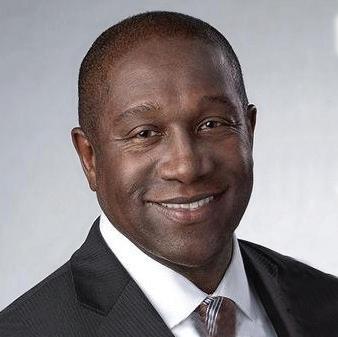
Tracy Meeks VP, Community Lending Executive
Proudly serving Wisconsin tracy.meeks@oldnational.com 414-615-1032
What is the Empowerment Small Business Loan Program?
Old National Bank has established this program to provide access to capital for minority- and women-owned small businesses that may not normally qualify for credit under traditional underwriting guidelines.
Why is this program so important?
We strengthen all our communities when we provide access to capital for traditionally underserved businesses. This level of empowerment changes everything—there becomes the opportunity for more growth right here in Greater Milwaukee. That’s something we value highly. This program is one way we’re helping local communities thrive in Wisconsin.
What does the lending program look like?
Our program allows eligible businesses to borrow up to $5 million1 under expanded credit guidelines, including a lower minimum credit score2 and modified collateral requirements. We have an in-house, dedicated credit team that reviews the applications, since this is a special program for local Milwaukee-area businesses.
There are three loan types that are available: Working Capital Lines of Credit, OwnerOccupied Real Estate, and Equipment Finance Term Loans.3 We offer these options, in part, because they are the typical loans small businesses need to succeed.
Which businesses are eligible?
While we have this program in several cities across our footprint, locally, the business must be within the greater Milwaukee region. To create the greatest impact, we give preference to those operating within a majority-minority or low-to-moderate income census tract.
Qualifying businesses must have revenue less than $25 million and be more than 50% owned by minorities and/or women. For those interested in full program details, please contact me—there may be additional restrictions or qualifications for your specific situation. Right now, I’m sharing a high-level overview.
We take a consultative approach. If you choose to work with us, we’ll take the time to get to know your business and your needs. That’s because we believe in helping small businesses change their community in a big way.
Plus, with the Empowerment Small Business Loan Program, we have a dedicated, in-house credit team. Our bankers are experienced and knowledgeable, so we’ll be able to guide you through the program, from application to closing. Ultimately, at Old National, we believe relationships and results matter.
Sponsored by Old National Bank.
1All loans subject to credit approval. If the security interest is property, property insurance will be required. Minimum loan amount for this program is $25,000. 2Loan Sponsor/Guarantor must be a U.S. citizen. 3Maximum loan to value (LTV) amounts will vary based on collateral type. Gap financing may be available through outside program partnerships. ©2024 Old National Bank | Member FDIC | 431464-0724-031

‘It’s hard to be what you can’t see’ ACRE Program has been diversifying Milwaukee’s real estate industry for 20 years
BY HUNTER TURPIN,
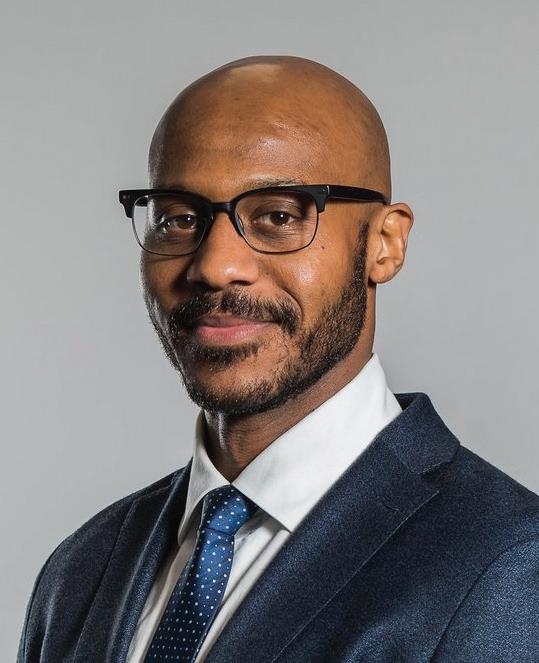
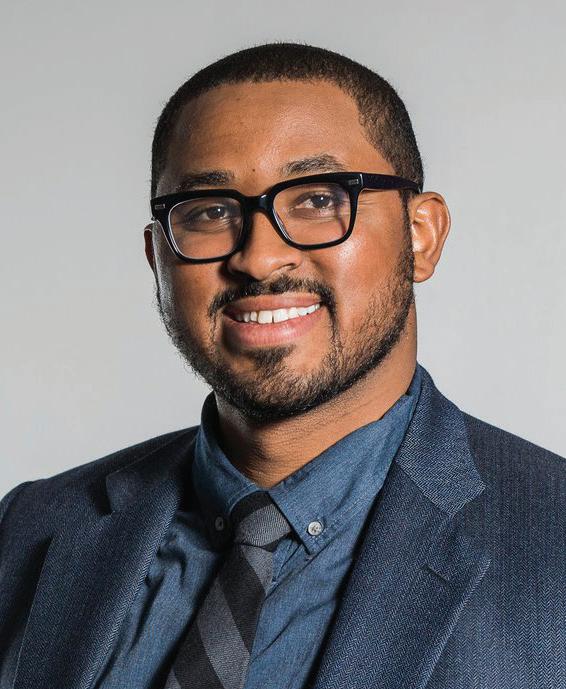
because of the level of segregation, that means that a lot of our ACRE alums grew up in disinvested neighborhoods and invest in them in their professional lives.”
staff writer
THE PROPERTY at 3116 N. Martin Luther King Jr. Drive in Milwaukee has been waiting for a developer for more than 20 years. Now, it has four.
A development team is proposing a four-story building with 67 apartment units, a mix of affordable and market rate, and commercial space on the first floor for local businesses – a project type that is becoming increasingly common in Milwaukee’s Harambee neighborhood.
The development is being proposed by a team of four local developers – Martin Luther King Economic Development Corp., led by Nicole Robbins; KG Development, led by Anthony Kazee; One5Olive, led by David Griggs and Greg Davis; and EA Development, led by Elaine Familia – all of whom are graduates of the Associates in Commercial Real Estate Program, better known as ACRE.
They are among more than 300 people in the Milwaukee area that have come out of ACRE and are transforming Milwaukee’s real estate industry. This year marks 20 years since the program was founded at Marquette University, and its mission has remained the same: diversify Milwaukee’s commercial real estate industry.
While Marquette remains the lead education partner of ACRE, these days the program is a partnership between Marquette, Milwaukee School of Engineering and UW-Milwaukee and is administered by LISC Milwaukee. On a yearly basis, the program admits a small group of adults of color and trains them on the basics of real estate development, investment and management.
“The goal is to give people a lot more tools and understanding of the real estate space – typically at an introductory level but enough to be dangerous – and to give them networks they otherwise
wouldn’t have,” said Andy Hunt, Veith director of the Center for Real Estate. “For the first time in their real estate professional lives, for a lot of people, they’re surrounded by others that look like them in an industry that is not at all diverse. That ends up being the differentiator.”
After two decades, the program has helped produce a network of people of color in real estate, which has allowed for partnerships between emerging developers, like the one at 3116 N. MLK Drive. Some early graduates that have founded their own companies – such as Kevin Newell, who founded Royal Capital Group – have hired other ACRE graduates or brought them on as interns.
“For a city of Milwaukee’s size to have this many minority developers, there’s something to be said about that,” said David Griggs, co-founder of One5Olive. “It’s hard to be what you can’t see.”
While ACRE has produced some well-known names in the real estate development world, Hunt estimates that only about 10% to 15% of the program’s graduates become developers. Many graduates go on to work in banking, appraisal or institutional firms like Northwestern Mutual, or go into public sector work like Lafayette Crump, the city of Milwaukee’s commissioner of city development. About half of the program’s graduates use the program to expand their knowledge and skillset but are working in another area.
Beyond helping to create a more diverse pool of real estate professionals in Milwaukee, the program has played a part in changing what types of projects are built in the metro Milwaukee area, and where they are built.
“It is human nature to go and build in and invest in where you grew up,” Hunt said. “In Milwaukee,
For instance, MLKEDC has completed six projects in the King Drive area, most of which include affordable housing and space for local businesses or community organizations. Likewise, KG Development is under construction on an affordable apartment building on King Drive and Royal Capital recently completed the first phase of the more than $120 million ThriveOn project – also located on King Drive – which includes affordable housing, office space and community space.
“With everyone from ACRE who is developing in these areas that other people don’t see as attractive to develop, it helps to fill gaps,” said Nicole Robbins, executive director of MLKEDC. “It also makes it more attractive for established developers who might not have a minority background or mission help those populations too, or partner with emerging developers.”
“It’s really important to have people doing work in the community that look like you and that understand what that work means for the community and without ACRE, I wonder if that would be possible in a city like Milwaukee,” said Davis, co-founder of One5Olive.
While ACRE is one of the earliest Milwaukee programs in real estate focused on diversity, other groups have also entered the space. NAIOP, a commercial real estate development association, has launched a summer program for high school students from underrepresented backgrounds to explore real estate, and the Commercial Association of Realtors Wisconsin has started a foundation to help provide scholarship money for underrepresented students, among other initiatives in the public, private and nonprofit sectors, according to Hunt.
“All of these things are creating a larger ecosystem where we can actually tackle these things in big ways,” Hunt said. “There’s always more work to be done, but it’s creating a heck of a lot more people of color in the industry.” ■





BizTimes Milwaukee is proud to present its inaugural showcase of Notable Women in Sports, recognizing accomplished professionals who are leading in the big leagues of local and national sports and making a difference both on and off the field. The individuals on the following pages were nominated by their peers and highlight the talent in the region.




METHODOLOGY: The honorees did not pay to be included. Their profiles were drawn from nomination materials. This list features only individuals for whom nominations were submitted and accepted after review by our editorial team. To qualify for the list, nominees must work in southeastern Wisconsin, must serve in a significant role in their sport and/or at their organization and have made measurable impact in their area of expertise.

















FROEDERT
Anna Strehlow is a physical therapist at Wauwatosa-based Froedert Hospital as well as a professional triathlete.
Her first triathlon was in 2018 at Steelhead 70.3, where she won her age group. By 2021, she was the first overall female at USAT Nationals - Milwaukee, 70.3 Blue Ridge, 70.3 Door County, Ironman Wisconsin and the USAT Long Course Nationals. In 2022, she was the first overall female at Ironman Lake Placid and went on to be third female overall and second in her age group at the Ironman World Championships in Kona, Hawaii.
“Anna thrives in setting goals and achieving them,” said Heather Haviland, who’s worked with Strehlow for the past seven years as a professional triathlon coach. “As Anna grew in her hobby of triathlon, she did not want to give up her love of helping others in her physical therapy career.”
Strehlow volunteers as a representative for the local chapter of Girls On The Run and as a physical therapist at the Milwaukee County Zoo.
“She is guided by a strong faith and family. She believes in giving back to the community,” said Angela Sprau, CEO and owner of Mission Focused Success.































































































MELISSA ZIELINSKI EXECUTIVE DIRECTOR WISCONSIN YOUTH SOCCER ASSOCIATION
As the executive director of the Wisconsin Youth Soccer Association, Melissa Zielinski has been a driving force behind youth soccer in Wisconsin since 2011, according to association colleagues.
“Through innovative programming, she has increased youth soccer participation, particularly in underserved communities, including urban and rural populations, female inclusion, disability soccer and grassroots players,” said Kenneth Ward, president of the WYSA.
“Melissa provides leadership through the Wisconsin Women’s Advisory Soccer Council (WWSAC), Wisconsin Soccer Hall of Fame and the U.S. Consortium of State Associations. In a maledominated sport, Melissa is recognized as an innovator, with her opinions actively sought and valued at state, regional, and national levels,” Ward added.
Zielinski secured an Innovate to Grow grant from U.S. Soccer, facilitating the return of more than 1,000 referees to the game by offering free registration and uniforms. Her leadership and contributions have been recognized beyond Wisconsin, earning her appointments to the U.S. Youth Soccer National Championships Task Force and the U.S. Soccer Membership Advisory Council.
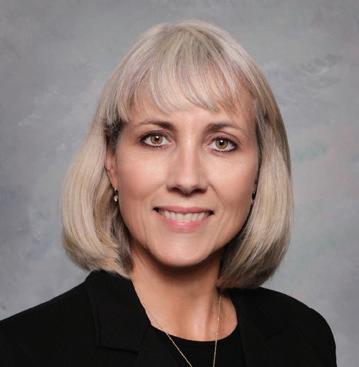
CAROLE
PROFESSOR
Dr. Carole Vetter, professor of orthopaedic surgery at the Wauwatosa-based Medical College of Wisconsin, began working as an athletic trainer while in college at the University of Wisconsin-Madison.
She ultimately entered the field of orthopaedic surgery and subspecialized as a sports medicine surgeon. Dr. Vetter joined the Medical College in 1999 and has served as director of the residency program. Vetter was promoted to full professor in 2014 and serves as the vice chair of education in the orthopaedic department.
“She has inspired and mentored countless students to pursue a career in medicine and has played a vital role in the Perry Initiative, a pipeline program that encourages females to enter the orthopaedic field,” said Dr. David King, Medical College chair of orthopaedic surgery.
Vetter has served some of Milwaukee’s professional sports teams, including as head team physician for the Milwaukee Wave from 2006 to 2014. She currently serves as the lead team physician for the Milwaukee Bucks, “a groundbreaking accomplishment, as she is the only female to lead the medical team of an NBA franchise,” said King.

On behalf of the WYSA staff and board, we are thrilled to celebrate Melissa, a trailblazer in youth soccer and a beacon of leadership and innovation in Wisconsin and beyond.




Congratulations, Melissa, on your remarkable achievements and continued success!

KELLNER
AGE GROUP SWIMMING COACH
WALTER SCHROEDER AQUATIC CENTER
Tracy Kellner has been a volunteer swimming coach at the Walter Schroeder Aquatic Center in Brown Deer since the late 1990s. During her time with the Schroeder YMCA Swim Team she has guided children ages 8 to 18 and has led adult swimmers to national championship meets.
In addition, Kellner has served as the entry chairperson for competitions at the Walter Schroeder Aquatic Center that have hosted up to 1,000 youth athletes from around the country.
Kellner grew up in Wisconsin and earned a swimming scholarship to the University of Iowa where she was a multiple NCAA AllAmerica team selection.
Kellner finished second in Pontevedra, Spain, at the 2023 World Triathlon Age-Group Championships. She has raced to podium finishes at USA Triathlon’s Age-Group Nationals in Milwaukee and across the country, and she was world champion in 2015 at the World Triathlon Age-Group Championship in Chicago.
“Tracy also has coached for the Ozaukee Youth Hockey Association – the Ozaukee Ice Dogs, where her daughter was a standout,” said David Anderson, director of the Schroeder Center.




BIZTIMES MILWAUKEE 2024 FEMALE ATHLETIC LEADER NOMINEE





SCHROEDER



“Congrats and very well-deserved. Your Schroeder family loves cheering you on!”


KAREEDA CHONES AGUAM
SENIOR VICE PRESIDENT, PARTNER STRATEGY
In her 25th season with the Bucks, Kareeda Chones Aguam, senior vice president of partner strategy and management, is responsible for the management and retention of a significant piece of the Bucks’ revenue through local, national and global corporate partnership deals.
Chones Aguam leads a team responsible for managing more than 75 marketing partnerships and multimillion-dollar revenue streams for the Bucks and Fiserv Forum. Under her leadership, the Bucks’ partnership revenue has quadrupled.
“Kareeda has consistently worked as an impactful leader in her ability to perform and maximize her job outputs at a high level,” said Matt Pazaras, chief business development and strategy officer for the Bucks.
Chones Aguam currently serves on the board of directors for Froedtert Hospital as well as Marquette University’s Women’s Leadership Council. She previously served on the boards of Penfield’s Children’s Center, Hunger Task Force of Wisconsin, the African American Chamber of Commerce’s Women in Business Committee, Employ Milwaukee and the Women’s Fund of Greater Milwaukee.
KELLY KAUFFMAN
CHIEF HUMAN CAPITAL OFFICER
MILWAUKEE BUCKS
In the past 10 years with the Milwaukee Bucks and Fiserv Forum, Kelly Kauffman, chief human capital officer, has made the human resources function an integral part of the business – both in the office and on the court, colleagues say.
“Kelly has created a robust succession planning and internal training and development program that ensures the organization is identifying, retaining and motivating its top talent at all levels,” said Kate Reed, communications coordinator for the Bucks. “Kelly and her team also created an employee wellness program that prioritizes health, wellness, diversity and inclusion for all employees.”
Kauffman currently serves as a board member of Make-A-Wish Wisconsin and on the Leadership Counsel for the Marquette Mentors Program, where she just completed her sixth year. She also serves as an executive mentor for the Bucks’ internal emerging leaders program and as the executive sponsor for the Milwaukee Bucks Diversity Leadership Counsel (Bucks United).
Her professional recognition includes being named a Top 100 HR Tech Influencer by “Human Resources Executive Magazine” in June 2020.

SUMATHI THIYAGARAJAN
SENIOR VICE PRESIDENT, ANALYTICS AND BUSINESS OPERATIONS
MILWAUKEE
BUCKS
Sumathi Thiyagarajan, senior vice president of analytics and business operations for the Milwaukee Bucks, has made a big impact in a short time, colleagues say.
“In her short tenure, Sumathi has helped redefine how the Milwaukee Bucks and Fiserv Forum use data and analytics to positively impact revenue, enhance the fan experience and create sponsorship opportunities,” said Dustin Godsey, Bucks chief sales and marketing officer.
Seeing an opportunity to capture data directly from the fans to better understand their experience and implement operational changes, Thiyagarajan led the Bucks in conducting post-game and post-event surveys and engaging with the newly launched Fan Council (a cohort of 1,200 Bucks fans) to gain a deeper understanding of the team’s fans, according to Godsey.
Thiyagarajan also participates in mentoring and communitybased programs for students, both locally and internationally. She created the Marquette & Bucks Fellowship Program, a one-year Bucks fellowship for students in Marquette University’s Urban Scholar Program. She also led the launch of an annual Analytics Hackathon contest, sponsored by Modine Manufacturing Co., that allows college students to solve real-world data challenges.



MEGAN JERABEK SHAREHOLDER AND CHAIR, SPORTS LAW SECTION
Megan Jerabek, shareholder and chair of the sports law section at Milwaukee-based von Briesen & Roper s.c., serves as personal general counsel for many current and former professional and college athletes and coaches and is a frequent speaker on legal topics applicable to athletes and coaches, including name, image and likeness.
After serving high-net worth clients from a variety of industries, Jerabek recognized the unique business and personal legal needs of athletes and coaches, according to Karen Brunow, chief marketing officer at von Briesen.
“Her goal with the sports law section was to build a team of attorneys who assist athletes with legal needs in a way that fits within their demanding schedules and ensures coordination with other advisors – so they can focus on their sport,” said Brunow.
Jerabek’s team is comprised of 13 attorneys with expertise in a range of legal specialties and certificates in sports law from Marquette University Law School’s National Sports Law Institute. Jerabek is also co-chair of von Briesen’s trusts and estates section and a member of The Sports Lawyers Association.
KATARI KEY ATHLETIC DIRECTOR
ALVERNO COLLEGE
As athletic director at Alverno College in Milwaukee, Katari Key is a staunch advocate for women in sports, according to colleague Heidi AndersonIsaacson, Alverno’s dean of student development and success.
“She fearlessly leads a team of coaches and administrators dedicated to advancing equity in higher education through athletics. Katari boldly shows up for Alverno’s student athletes every day by supporting them on the field and in their academics,” Anderson-Isaacson said.
Since joining Alverno in 2020, Key has worked to diversify the staff within the athletics program and support the institution’s efforts to embrace diversity, equity and inclusion. She mentors and provides opportunities for current students who are considering professional careers in sports.
Key is an active member of We Black We Golf, an organization that uses the game of golf to build community in the city of Milwaukee. She is also active in Social X MKE, another organization that creates a connective platform for diverse professionals to thrive in the Milwaukee area. In addition, she hosted 200 students on Alverno’s campus to celebrate and be recognized on National Girls & Women in Sports Day.

PHYLLIS MCDONALD
PAST PRESIDENT
MIDWEST WOMEN’S SAILING CONFERENCE
Phyllis McDonald has been part of the boating industry for more than 40 years and served as president of the Milwaukeebased Midwest Women’s Sailing Conference from 2016 to 2020.
The nonprofit organization aims to “empower women of all skill levels in the sport of sailing through education and networking,” according to its website. Its annual conference, held annually in Milwaukee, is the only conference of its kind for women sailors in the Midwest – the next nearest conferences are on the West or East coasts, said Teresa Coronado, director of outreach and development for the Milwaukee Community Sailing Center.
A longtime resident of Milwaukee, McDonald also helped lead the charge in developing the Milwaukee Bay Women’s Sailing Organization, holding leadership positions and serving as a mentor.
“The MBWSO promotes women in sailing and creates a spirit of good fellowship, both of which McDonald continues to do,” said Coronado. “Her mentees have gone on to buy and build their own boats, sail in the Race to Alaska and sail in local, national and international sailing races.”
AMANDA BRAUN DIRECTOR OF ATHLETICS
UW-MILWAUKEE
Amanda Braun is the first female to hold the position of director of athletics at the University of WisconsinMilwaukee.
“Amanda has created a culture of a singular purpose – providing student-athletes the best collegiate athletics experience, allowing them to excel academically and to compete for championships,” said Phyllis King, vice provost at UWMilwaukee.
Braun was named the NCAA Division I Nike Executive of the Year by Women Leaders in College Sports in 2023, and she was named to the board of directors and council position of the Horizon League in 2021. She became the first woman to serve as chair of the council since the league redesigned its governance structure in 2017. She currently serves on the Division I Women’s Basketball Committee, helping select women’s NCAA Tournament teams. Braun also was named Under Armour AD of the Year in 2020.
“A true collaborator and teammate, Amanda leads with persistence, positivity and keeping in mind the big picture that while few student-athletes will move on to play professionally, they will move into a profession and career,” said Fred Tabak, founder of Tabak Law LLC.

JOHNSON HEAD COACH OF WOMEN’S VOLLEYBALL
UW-MILWAUKEE
Susie Johnson, head coach for women’s volleyball at the University of WisconsinMilwaukee, has guided studentathletes at UWM for more than 27 years, including 10 years as an assistant and associate head coach.
Since taking over as head coach in 2007, Johnson has led UWMilwaukee to 285 wins, six regular season titles, four leaguetournament titles and four NCAA appearances. She has compiled a 511-284 record in 27 seasons – including a 250-74 home record.
“She has long proven her coaching and leadership skills for all student-athletes involved,” said James Ocker, a teacher for the Clinton Community School District. “Her records speak volumes of her commitment to the student-athletes and area organizations. Her impressive record … secures her as a highly skilled, competitive spirit who values success through hard work and determination.”
Johnson’s players have earned all-league honors 68 times under her leadership. Her players have earned AVCA All-America honors 10 times and AVCA All-Region honors 22 times.
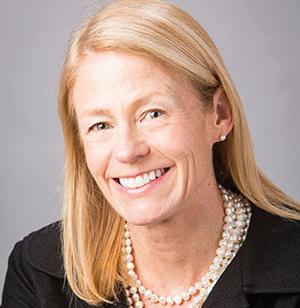
BARBARA MEYER PROFESSOR AND LABORATORY DIRECTOR
UW-MILWAUKEE
As a professor of athletic training and sports psychology and the director of the laboratory for sport psychology and performance excellence at the University of Wisconsin-Milwaukee, Barbara Meyer is making an impact at and beyond the university, according to colleagues.
Meyer is a researcher and practitioner in sport and performance psychology with an emphasis on elite athletes, teams and sport organizations. Her focus is on the interdisciplinary aspects of recovery, applied team science and intersections of talent identification and development.
“Dr. Meyer is a sport and performance psychology professional whose expertise is utilized by the UW-Milwaukee Athletic Department, along with other collegiate, professional and Olympic athletes, teams and sport organizations,” said Kathy Litzau, senior associate athletic director at UW-Milwaukee.
Meyer serves occupational and tactical athletes, along with corporate clients.
“Dr. Meyer has made an impact on individuals and teams locally, nationally and internationally. She is a well-respected professor who has assisted in educating many who have gone on to successful careers,” Litzau said.

ATHLETE SUCCESS COORDINATOR
BRYANT & STRATTON COLLEGE
Caitlyn Coffey, athlete success coordinator at Bryant & Stratton College in Milwaukee, has been serving student-athletes for the past six years.
“Having played basketball and volleyball her entire life, Caitlyn has a complete understanding of what is involved to achieve in a sport and the classroom,” said Carole Barnum, vice president at Barnum Travel. “Caitlyn takes great satisfaction in the success of her student-athletes, by their growth in the community as well as on the court/field.”
Coffey earned a bachelor’s degree in public relations and advertising from DePaul University while playing Division I volleyball.
“She had to maintain a certain level grade point as a studentathlete. This experience is now shared with her students,” Barnum said.
In addition to her day-to-day work at Bryant & Stratton, Coffey is the head coach for the girl’s 18 Black team at Milwaukee Sting volleyball club and is the assistant varsity volleyball coach at Divine Savior Holy Angels High School, the 2023 WIAA Division 1 state champions.

PROPRIETOR AND JOURNALIST
TWENTY-FIFTH HOUR LLC
IN-GAME STADIUM HOST
GREEN BAY PACKERS AND MILWAUKEE ADMIRALS
Déysha Smith-Jenkins is an entrepreneur and an in-game host for the Green Bay Packers and Milwaukee Admirals.
The Milwaukee native launched her media company, The TwentyFifth Hour LLC, a few years ago to help brands and organizations tell their stories through multimedia. As a freelance journalist and media consultant, Smith-Jenkins creates content through blog posts, editorials, video scripts and social media, according to Angela Adams, interim president and CEO of African American Leadership Alliance Milwaukee.
“Déysha blends her passion and talents in sports and multimedia to fulfill her aspirations, while leaving a lasting impact on the greater Milwaukee community,” said Adams.
When she’s not on the job, Smith-Jenkins serves as the assistant coach for the girls’ varsity basketball team at her alma mater, Dominican High School in Whitefish Bay. She’s also an active member of Alpha Kappa Alpha Sorority where she volunteers on various community service projects across the city.

Caitlyn Coffey Senior Athletic Advisor




KERI CAROLLO
HEAD WOMEN’S BASKETBALL COACH, SENIOR WOMAN ADMINISTRATOR AND ASSISTANT AD FOR COMPLIANCE
UW-WHITEWATER
As head women’s basketball coach at the University of Wisconsin-Whitewater for more than two decades, Keri Carollo has mentored at least a dozen former UW-Whitewater women’s basketball studentathletes who have continued their careers in sports.
They include Tiffany Morton, who was recently named head coach at Division I West Alabama after serving as assistant coach at the University of Wisconsin.
Carollo’s former graduate assistant coach, Erin McKinney, has worked in high-major and professional basketball since her departure from the UW-Whitewater staff. McKinney has worked for the WNBA’s Seattle Storm and Indiana University women’s basketball, and currently serves as a basketball operations assistant for the NBA’s Memphis Grizzlies.
Carollo’s lead assistant coach, Kirsten Hammer, was recently hired as head women’s basketball coach at Millikin University.
Carollo, who also serves as senior woman administrator and assistant athletic director for compliance, was a member of the NCAA Division III Women’s Basketball National Committee from 2013 to 2018, including two years as committee chairperson.

















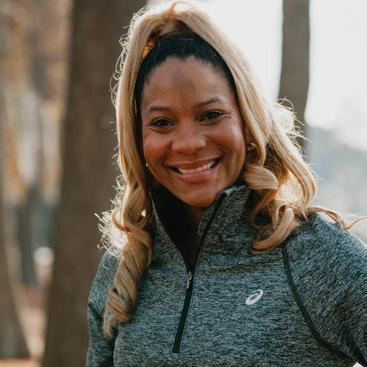
MKE | FEAR
TENIA SMITH DIRECTOR OF HEALTH AND WELLNESS AND LEAD CAPTAIN SOCIAL
During the day, Tenia Smith is the director of community partnerships at Greater Holy Temple Christian Academy. After school, she is director of health and wellness for Social X MKE, a diversity, equity and inclusion consulting group. She is also the lead captain of Social X MKE’s FEAR (Forget Everything And Run) program.
FEAR focuses on diversity, prioritizes runner safety and works to bridge the fitness gap by introducing running as a method of being active, while building relationships. Smith was the track and cross-country coach at Rufus King High School for 11 years.
“Tenia’s dedication to children and the community is truly inspiring. Through her work, she has empowered countless young athletes, providing them with mentorship and opportunities to excel. Her unwavering commitment to her passion has not only made a local impact but has also garnered global attention,” said Teej Boone, program manager at Sherman Phoenix. “Tenia’s authenticity and dedication to staying true to herself have inspired many, both within and beyond our community.”

BRENDA BEST
MILWAUKEE BREWERS
As senior director of human resources and diversity, equity and inclusion for the Milwaukee Brewers, Brenda Best has fostered “a living and breathing culture of belonging” across the franchise.
Best joined the Brewers in 2014 as an HR recruiter. During her tenure, she has developed and implemented an employee resource group program, implemented the KultureCity program for Brewers fans with sensory challenges, and increased opportunities to attract and retain Latino and other diverse employee and fan groups, according to Francesca Mayca Wegner, president and chief possibilities officer at HPGM, a Latino leadership organization.
In March 2024, Best was voted as one of the Brewers’ Most Inspiring Women. She also volunteers for community organizations, including HPGM and The Women’s Center. In 2023, Best was named an Inclusive Influencer by the Women’s Fund of Greater Milwaukee for her leadership. In 2024, Best was appointed vice chair of the board for HPGM.
“Over the last year, she shared significant expertise in the development of refreshed culture essentials – mission, vision, values – that will reflect HPGM’s evolution over the last 23 years,” Wegner said.

CHELLEE SIEWERT
OWNER AND PRESIDENT CAPTURE SPORTS AND ENTERTAINMENT
Since founding Waukeshabased Capture Sports and Entertainment in 2011, Chellee Siewert has used her sports marketing and nonprofit experience to support players, coaches and teams across all sports.
“She notably helped the JJ Watt Foundation raise millions through sold-out celebrity softball games – the most recent game occurred this May in Sugar Land, Texas,” said Katie Kozak, communications director for Capture Sports and Entertainment. “She helps not only NFL athletes but Olympians, NBA stars – and more – build their brands and use their platforms to create a legacy that will live beyond the game.”
The company has helped raise more than $30 million since 2011 for its clients’ nonprofit organizations. Capture Sports works with nearly 20 high-profile athletes as well as clients in the entertainment sector.
Siewert currently co-hosts a podcast, “Athletes Doing Good,” in which athletes talk about the importance of giving back and the causes that matter most to them. The podcast has had nearly 100 guests.






















Learn how to remain competitive by harnessing AI, machine learning, automation, 3D printing and more. Enhance efficiency, support your workforce, and strengthen your bottom line by attending the Next Generation Manufacturing Summit.


12:30 PM – Registration, Exhibitor Booths, Networking 1:00-2:00 PM – Concurrent Seminars 2:00-2:30 PM – Networking 2:30-5:00 PM – Main Program, Concurrent Seminars 5:00-6:30 PM – Networking Reception
• Thomas Carney, President, Royal Basket Trucks, Inc. (1)
• Rob Ewing, President, Wenthe-Davidson Engineering Co. (2)
• Todd Zakreski, President, HUSCO Automotive (3)

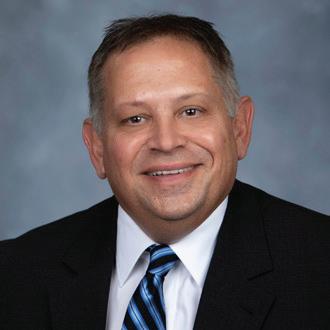









with the right structures and systems in place, mistakes in your marketing function can certainly be significantly minimized.
THE MISSPELLING of a URL in a PPC campaign. A brochure printed on a $99 printer sloppily folded and distributed to meeting attendees. A line card with low-resolution, grainy supplier logos. Broken website links (404 Page Not Found).
Oh, the agony. It happens. It’s painful. We all make mistakes, and these are the top five sources of mistakes in marketing: Negligence (sloppiness, apathy and forgetfulness): The more common include outside distractions, cutting corners to meet unrealistic deadlines and unfortunate life events that consume our minds.
Lack of experience (little knowledge of best practices, industry standards and norms): We’ve all been here and have paid our proverbial dues.
Lack of skills (not understanding proper grammar, poor eye for design, minimal knowledge of technology): This is typical when people are placed in or even expected to fill roles they are not yet ready to take on.
Incompetent trainer or minimal training (passing on bad habits, lack of clarity): Unfortunately, too many companies don’t prioritize training due to time and cost. But, as we all know, it takes more time and costs more to fix mistakes – even the small ones.
By no fault (poor communication, no process, no sets of standards): People don’t know what they don’t know.
Mistakes are not 100% avoidable. However,
THE MARKETING PROJECT BRIEF
This is a crucial document that serves multiple purposes, one of which is acting as a quality management tool within marketing departments. It ensures all details of projects are covered to provide project clarity and ensure nothing falls through the cracks. With a robust and thorough marketing brief, your projects will stay on task and on budget.
Project management tools are cloud-based systems designed to help marketing teams plan, manage and execute their projects efficiently and effectively. From overseeing the launch of new products to managing marketing campaigns and projects, PMTs ensure the marketing function runs smoothly, with no potholes, bumps, roadblocks or hiccups. Although PMTs have been around for quite a few years, many people still rely on email to manage their projects. The fact is that email was never designed or intended to be a marketing PMT. The worst shortcoming is that it takes enormous amounts of time to hunt down emails containing critical information, and even when you get the information, it’s impossible to verify that it is the latest information.
As tempting as it may be, relying solely on Grammarly.com or other alien intelligence text proofing and editing tools can be disastrous. In my experience, these tools do not always make correct suggestions, primarily because AI does not yet understand context. My recommendation is to use a reputable proofreading service like bulletproofonline.com. Also keep in mind that proofing isn’t just for copy – it’s also for so many different components of a project.
Every company needs a brand standards manual. A brand standards manual, also known as brand guidelines, style guide or brand book, is a comprehensive document specifying how an organization’s brand will be communicated across various mediums.
How many people have usernames and passwords to your website, social media accounts, email server and software/productivity accounts? And how many have administrative access? And my final question: how many are ex-employees, employees from former marketing agencies, consultants and so on? The more people with access, the more vulnerable your company is to irreversible damage and nefarious activity.
What is your most urgent need? Where is the greatest weakness in your marketing function? Start there. Then, strongly consider launching a quality initiative in your marketing department and replicating it within other areas of your organization. Once you’re on your way, you’ll start to notice immediate improvements not only in quality but also in collaboration, teamwork and efficiency.















Scott Seroka, the president of Brookfieldbased Seroka Industrial Branding, is an entrepreneur, consultant, trainer, and mentor. He can be reached at (414) 628-4547.





The stronger people are financially, the stronger we are as a community. We live by this credit union principle at Summit Credit Union, offering free, nationally recognized financial education to Summit members and non-members including your employees.
Invest in your team, at no cost. Through our complimentary Financial Wellness for Employees by Summit program, we invite employers to partner with us to help make sure everyone is as good with their own money as they would be with anyone else’s. Help employees be happier and healthier.
A wellness survey showed 92% of employees are stressed about their finances.* Financial Wellness for Employees by Summit helps people
face their financial realities with confidence. And that pays off for both the employer and the employee, who is happier, healthier and more productive, at work and overall!
Lead the way in employee benefits with this easy, custom program. We offer online, on-demand education tailored to each individual and, based on your company’s needs, we may include on-site education events to address your employees’ overall areas of interest. That flexibility to deliver top-notch financial education to your employees at home or in the workplace at no cost is empowering.
And empowerment is what financial wellness is all about.


» Short-term debt
» Other immediate obligations
DAVE WAGE was a panelist at the Biz Times M&A Forum in March. The former CEO of Formrite shared his thoughts and experiences about the recent sale of his business.
As I recall it, Dave’s overall selling experience seemed positive – until the topic of the working capital adjustments came up, at which point Dave got a little quieter. He shifted in his chair, and the broad smile he’d been flashing shrank into one of those “I could have/should have known better” smiles.
In my experience buying and selling my own companies, I’ve had that uncomfortable smile too. Because, like most entrepreneurs and business owners, I didn’t fully understand what a working capital adjustment is or was and that’s never a great place to be when you’re dealing with such an important – and potentially costly – component of the overall take home value of your business.
Let’s start with the basics.
In simple terms, working capital is the difference between your current assets and current liabilities. It’s the cash available for day-to-day operations of your business. Think of it as your business’s short-term health indicator.
CURRENT ASSETS ARE ITEMS LIKE:
» Cash and cash equivalents
» Accounts receivable
» Inventory
CURRENT LIABILITIES ARE ITEMS LIKE:
» Accounts payable
Working capital fuels your business. You inventory cash when you get paid for your product or service, and you burn cash when you pay your employees, suppliers and others. Usually, you maintain an inventory of cash that significantly exceeds your burn rate because things happen. Customers don’t pay on time, things break unexpectedly, stuff like that. Without excess working capital, the business can find itself in an uncomfortable cash squeeze.
When you decide to sell your business, the buyer will scrutinize your working capital like a detective on a crime scene. They want to ensure the business can sustain itself post-acquisition without additional cash squeezes or infusions. The buyer attempts to mitigate this risk by insisting on a working capital adjustment, which can lead to a minefield of disagreements.
Why? Because sometimes we hear what we want to hear.
For example, the buyer tells the seller that they will buy the company for X on a cash-free/debt-free basis subject to a working capital adjustment that will happen, for example, three months after the sale. When the buyer says these words, they mean that “the business will not need a post-close cash infusion.”
The seller hears the buyer say that they are paying X for the company and from that X amount, the seller must pay off the business debt BUT gets to keep all of the excess cash, meaning the difference between current assets and current liabilities. The seller hears “all the cash left over will be mine.”
SAME WORDS
Although this is a frequent issue, it’s also unnecessary and avoidable. When planning to sell your business, it’s crucial to get yourself and your business prepared long before you accept an offer. You need to get educated about what to expect and get help from experts to make sure you know
what’s coming and how to prepare for it.
When it comes to working capital, put on your buyer’s lens. Realize their motivations aren’t to screw you, but to make sure that your business will perform as expected, right out of the gate. With that perspective, begin looking at ways to decrease the working capital cash cushion your business needs to operate efficiently.
» Set a working capital expectation for the business
» Collect your receivables faster
» Match your payable days to your receivable days
» Write off uncollectable receivables now
» Remove excess, unneeded cash from the business
Working capital might not be the most glamorous part of running a business, but it’s one of the most important. It’s like the engine oil in your car – you don’t see it working, but without it, you’re not going anywhere. So, start educating yourself about working capital and its implications on your business sale now. Being prepared will not only make the process smoother, but also ensure you get the maximum value for your business.


Mike Malatesta, founder of Advanced Waste Services, is The Dream Exit expert, host of the How’d it Happen podcast, and author of “Owner Shift: How Getting Selfish Got Me Unstuck.” He can be reached at thedreamexit@gmail.com
BROOKFIELD CONFERENCE CENTER
7:30-8:00 AM – Networking & Breakfast
8:00-10:00 AM – Welcome & Program
10:20-12:00 PM – Breakout Sessions
Attend BizTimes Media’s annual Women in Business Symposium and leave with actionable insights to apply in your own life and career. The program will begin with the presentation of the 2024 Woman Executive of the Year award to Peggy Troy, president and CEO of Children’s Wisconsin. Troy started working for Children’s as a pediatric nurse in 1975 and was named president and CEO in 2009. Under her leadership the organization has grown substantially and now has more than 50 locations throughout the state.
Keynote presenter Jenny Just will share her lessons learned on her journey from Brookfield, Wisconsin, to co-founding PEAK6 in 1997 and later launching Poker Power in 2020. PEAK6 started as a proprietary options trading firm and has grown into a multibillion-dollar financial services firm. Started with Just’s daughter Juliette, Poker Power teaches women poker, and by extension, strategic thinking, capital allocation and decisionmaking skills.
After the keynote, attendees will hear from a panel of business leaders from across southeastern Wisconsin and attend breakout sessions on topics like mental health, entrepreneurship, personal finance, technology and common workplace issues. The morning’s schedule also includes dedicated time to network and the celebration of the 2024 Woman Executive of the Year.
Woman Executive of the Year:
Peggy Troy, President & CEO, Children’s Wisconsin
Keynote Conversation:
» Jenny Just, Co-Founder & Managing Partner, PEAK6 Investments; Co-Founder, Poker Power (1)
Panel Discussion:
» Gaurie Rodman, Vice President of Real Estate Strategy and Development, Direct Supply (2)
» Melissa Allen, President, Maures Development Group (3)
» Candace Spears, Founder & CEO, Floor23 Digital (4)
» Lyssa Olker, Design Principal, HGA (5)
Moderator: Portia Young, Director of Corporate Public Relations, Sargento (6)




Breakout Sessions:
» Mind, Body, Spirit: Simple Strategies for Making Life Better and Brighter
» Making Work Work: Bridging Generations on the Job


» Meet the Founders: Stories from Women Entrepreneurs
» Breaking the Silence Surrounding Mental Illness
» Women and Wealth



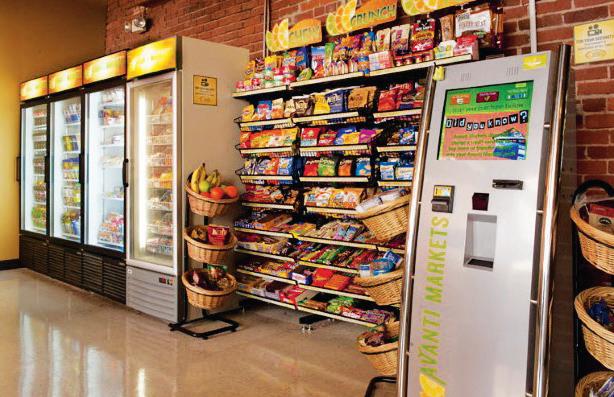





















Acuity Insurance has been named to the 2024 Ward’s 50 list of topperforming property-casualty companies, putting the company in the top 2 percent of insurers. Acuity has earned a spot on the Ward’s 50 every year since 2000, making the company one of just 3 insurers, and the only regional carrier, to be named to the list for the past quarter century.
“We recognize Acuity for outstanding financial results in the areas of safety, consistency, and

Potawatomi Ventures Names Michael Barrett as Chief Information Officer
Potawatomi Ventures named Michael Barrett as Chief Information Officer. With 20 years of experience in enabling business strategy through technology, Barrett joins the executive team, and provides leadership, strategy and direction for company-wide IT customer support and technology infrastructure for the company’s IT operations and its subsidiaries. He’s accountable for technology infrastructure, information security and overall technology support for enterprise resource planning and network operations. Previously, he was CTO for River Run Managed Services, and was Sr. Dir. of digital products at Northwestern Mutual.

performance over a five-year period,” said Jeff Rieder, partner and head of Ward Group, the leading provider of benchmarking and best practices studies for insurance companies.
Ward Group analyzes the performance of nearly 3,000 property-casualty insurers and identifies companies that pass financial stability requirements and measure their ability to grow while maintaining strong capital positions and underwriting results.


Waukesha State Bank Hires Commercial Banker
Waukesha State Bank has hired Christopher Poulos as vice president - commercial banking officer. In his new role, Christopher will be responsible for prospecting, developing and managing commercial loan portfolios.

Michael R. Sherer has been promoted to Shareholder at von Briesen & Roper, s.c.
Michael focuses his practice on employment law counseling and employment litigation. He has significant experience with wage and hour claims, employment discrimination, Title I of the ADA, wage garnishments, restrictive covenants and other employment.

Wisconsin Bank & Trust welcomes Scott Krajcir Scott Krajcir has joined Wisconsin Bank & Trust, a division of HTLF Bank, serving as a Senior Vice President, Commercial Banking. Scott has over 25 years of experience in commercial banking that has encompassed a wide range of areas including middle-market, equipment finance, community banking, commercial real estate, and correspondent banking. Scott’s consultative approach focuses on architecting deals that create value for his clients. Wisconsin Bank & Trust provides several products and services to fulfill the financial needs of businesses and individuals. HTLF Bank is Member FDIC and an Equal Housing Lender.


Michael Ufer Joins Kahler Slater as Principal and Health Science Practice Leader
Kahler Slater is pleased to announce Michael Ufer, AIA, LEED AP has joined as Principal and Academic Health Science Practice Leader for our national higher education market.

S.J. Janis Company Promotes Kelly Ament to General Manager
We are pleased to announce the promotion of Kelly Ament to General Manager of the S.J. Janis Company, an Elm Grove full-service design/build residential remodeling company serving southeastern Wisconsin since 1951.

Centers for Independence BOD Selects New CEO Leif Elsmo Leif Elsmo’s distinguished career as Executive Director, Community & External Affairs, at UChicago Medicine (UCM) was marked by his leadership in developing UCM’s Urban Health Initiative into a nationally recognized model of health equity. Through a strong commitment to Diversity, Equity, Accessibility, and Inclusion (DEAI), and experience in public policy, community networking and engagement, and strategic planning, Elsmo will focus on building upon the mission and vision of creating a more equitable environment inclusive of diverse people, ideas, and fields of science to lead CFI into the future.

Robin Baker
Appointed as President and CEO of St. Coletta of Wisconsin
St. Coletta of Wisconsin appoints Robin Baker as President & CEO. Formerly serving as EVP, Baker is the first laywoman to lead the Franciscan organization in its 120year history. Founded in 1904, St. Coletta cares for individuals with disabilities.

von Briesen & Roper, s.c. Welcomes Reid Hazelton to its Business Practice Group
Reid focuses his practice on mergers and acquisitions, business and corporate issues and Corporate Transparency Act compliance. Prior to his legal career, Reid worked in the aerospace and automotive industries and co-founded a branded luxury goods manufacturing company.
Congratulations to the 2024 Future 50 award winners! We are thrilled to recognize these companies, the fastestgrowing privately owned businesses in southeastern Wisconsin. They have demonstrated remarkable achievements, exhibiting substantial revenue and employment growth over the past three years. Hear from the Fast 5—the 5 fastest growing companies in the area—about the challenges and opportunities they faced along the way.
We invite you to join us in celebrating their remarkable accomplishments at the awards luncheon on September 20.
A.B. Data, Ltd.
American Construction Services, Inc.
Aras Promotions
Ark Staffing & CRNA Together
Basic Metals, Inc.
Benz Metal Products, Inc.
Best Version Media
Blast Cleaning Technologies, Inc.
Briohn Building Corporation
Campbell Construction JC, Inc.
Craft Beverage Warehouse LLC
Custom Painted Vehicles, Inc.
Empower Electric
E-Plan Exam
Evans Transportation
F Street
GigaFlight Connectivity Inc.
Glenn Rieder, LLC
Great Lakes Industrial
Inpro Corporation
James Imaging Systems
KDV Label, LLC
Koru Health LLC
Lakeland Supply, Inc.
Lauber Business Partners, Inc.
Learning Exchange
Lee Mechanical
Magellan Promotions
MicroSynergies
MilwaukeeWarehouse
MKE Iron Erectors, Inc.
Moore Construction Services
Munson, Inc.
New Resources Consulting
Newport Network Solutions, Inc.
Optimum Crush, Inc.
Pattyn North America
Ready Rebound, Inc.
River Run
RJ Schinner
Royal Basket Trucks, Inc.
SETGO Partners
SharkCrates
Stratus Industries LLC
TOTAL Mechanical
ValorTech
VJS Construction Services
Vyron
Wixon, Inc.
Wolter, Inc.

Presenting Sponsor:
WAUKESHA YMCA PLANS $30
MILLION FITNESS CENTER AT WCTC
The YMCA of Greater Waukesha County will build a new fitness center at Waukesha County Technical College’s campus, in Pewaukee, replacing the downtown Waukesha YMCA at 320 E. Broadway.
The new facility will serve WCTC students, faculty and staff and residents of Waukesha County and surrounding areas, according to a YMCA news release. WCTC and YMCA will partner to develop the facility.
The YMCA will launch a fundraising campaign seeking $30 million to complete the project. Fundraising and planning may take two to three year before
construction begins, according to the news release.
The downtown Waukesha YMCA, built in 1954, will close when the new facility at WCTC opens. The current Waukesha facility “is well beyond its lifespan with aged infrastructure, accessibility barriers and operational inefficiencies,” according to the news release.
The YMCA of Greater Waukesha County has also experienced a “growing demand for services” that prompted it “to look elsewhere for expansion.”
— Samantha Dietel, staff writer
The Wisconsin Nonprofit Summit will take place Aug. 1-2 at the Brookfield Conference Center, 325 S. Moorland Road, Brookfield.
Community Warehouse will host its 2024 benefit event, “Hope Happens Here,” on Aug. 15, from 5 to 8:30 p.m. at the Sharon Lynne Wilson Center for the Arts, 3270 Mitchell Park Drive, Brookfield.
Beckum Stapleton Little League Baseball will host its annual fundraising gala, “Honoring Our Past, Embracing Our Present, Reaching for Our Future,” on Aug. 16, at 5 p.m. at Saint Kate - The Arts Hotel, 139 E. Kilbourn Ave., Milwaukee.
Revitalize Milwaukee will host its Block Build MKE on Aug. 16 and 17 in the city’s Amani neighborhood. Extensive home repairs and critical updates will be made on up to 30 homes in less than 48 hours.
Cousins Subs and the Milwaukee Bucks raised $20,650 for Hunger Task Force during this year’s Block Out Hunger campaign. | The Westbury Bank Charitable Foundation donated undisclosed amounts to Chix 4 A Cause, Friends of West Bend Parks, Neighborhood House of Milwaukee, Friends of Slinger Parks, Oconomowoc Rotary Foundation, Milwaukee Symphony Orchestra’s St. Marcus Educational Program, Casa Guadalupe, Volunteer Center of Washington County and Lakeshore Community Health Care. | The Bridge Project has distributed the first round of unconditional cash payments to low-income, pregnant individuals in Milwaukee as part of the city’s first program of its kind, funded by the Zilber Family Foundation. The first cohort of participants received $1,875, including a one-time prenatal stipend of $1,125 and the first monthly program payment of $750.

139 E. North St., Waukesha, WI 53188
(262) 968-2321 | familypromisewaukeshawi.org
Facebook: facebook.com/FamilyPromiseWaukesha
Instagram: @family.promise.waukesha
LinkedIn: linkedin.com/company/familypromiseofwaukeshacounty
Twitter: @FP_Waukesha
Year founded: Incorporated 2012, opened doors to serve families in 2014
Mission statement: To help low-income families and families experiencing homelessness achieve sustainable independence through a community-based response.
Primary focus: To serve families at risk of homelessness or who are experiencing homelessness. We do so by providing shelter to families with children under 18 and financial assistance to families at risk of experiencing homelessness.
Our Homelessness Prevention Program provides rent, mortgage, utility and car repair assistance to families in Waukesha County. In 2023, we served 75 households, which consisted of 96 adults and 159 children; 98% of those families remain housed.
Our Apartment Shelter Program is a non-congregate program that utilizes single-family apartments to provide shelter to families. We currently have five apartment units that each house one family at a time for up to 90 days.
We are in the process of starting a new program, called Shelter Diversion, which aims to eliminate street homelessness for families in Waukesha County.
Key donors: We have a variety of funding sources. Most funds are received from individuals, private grants, congregations, businesses, events and community groups. All support for families is appreciated, valued and needed.
Executive leadership: Joe Nettesheim, executive director; Courtney Rutkowski, director of family services
Board of directors:
» Lynn Marsh, chairperson
» Ed Butte, vice chairperson
» Tim Smits, treasurer
» Coleen Valley, secretary
» At-large members: Claire Bessette, Mike Hallquist, Lesley Kountz, Jibril Odogba, Denise O’Halloran, Jamie Zussman
What board roles is the organization looking to fill? We are looking for individuals to serve on the board of trustees, fund development, program and finance committees.
Ways the business community can help: Partners can sponsor our weekly meal, which includes making and serving a meal for the five families in shelter. There could also be an opportunity for childcare during evening seminars.

Number of employees: 7 full time, 1 part time

Key fundraising events: Annual golf outing – July 22, Oconomowoc Golf Club 10th anniversary celebration – fall 2024 (date TBA)







Publication Date: August 19 Issue
Highlight one of your organization’s she-roes by sharing her leadership story and communicate your company perspectives and successes in this uniquely impactful advertising section.
Space Reservation: July 31, 2024
Publication Date: September 9 Issue
Space Reservation: August 21


Publication Date: October 21 Issue
Space Reservation: October 2




Publication Date: September 23 Issue
Space Reservation: September 4
Publication Date: November 11 Issue
Space Reservation: October 23
VOLUME 30, NUMBER 6 | JULY 29, 2024
126 N. Jefferson St., Suite 403, Milwaukee, WI 53202-6120
PHONE: 414-277-8181 FAX: 414-277-8191
WEBSITE: www.biztimes.com
CIRCULATION: 414-336-7100 | circulation@biztimes.com













This 1988 photo shows the initial stages of construction for Northwestern Mutual’s North Office Building at the company’s downtown Milwaukee headquarters campus. The 18-story building was originally completed in 1990. In early 2023, the company announced a $500 million plan to renovate the building, matching its exterior to the Northwestern Mutual Tower nearby and upgrading interior amenities. Work on the renovation project started in October 2023.
— Photo courtesy of Northwestern Mutual. To submit your company’s historic photos, visit biztimes.com/glance
VISIT MILWAUKEE said the Republican National Convention would have a $200 million economic impact on the Milwaukee area. Whether that’s true or not, it’s clear the RNC made a significant economic impact. But not everyone reaped the benefits.
Hotels were jam-packed charging higher-than-normal rates. Extra flights were scheduled at Mitchell International Airport. Florists, dry cleaners, caters, event companies and numerous other businesses were involved in pulling off the event which organizers said attracted 50,000 attendees.
But it was a different story for the Milwaukee restaurant scene. Establishments within the hard security zone around Fiserv Forum were busy. Some others nearby also did well. But many throughout the downtown area and nearby neighborhoods reported a significant decline in business during the week of the RNC as many of their regulars stayed away to avoid the craziness of the week and most convention-goers didn’t
stray far from their hotels or Fiserv Forum.
Many convention-goers were kept busy during the week with organized activities, including smaller ancillary events around the city. That provided an opportunity for area event venues as RNC-related events were held at the Bradley Symphony Center, the Mitchell Park Domes, Discovery World, the Harley-Davidson Museum, Lakefront Brewery and many others. But some venues were left out of the action, most notably the Pabst Theater and Riverside Theater.
The economic impact of the RNC was spread beyond the downtown area. Many convention attendees stayed at hotels well outside of Milwaukee, including some as far away as Madison. So, they probably ate and engaged in other activities in those areas.
Visit Milwaukee president and CEO Peggy Williams-Smith said a study will be done to review the economic impact of the RNC. That and other analysis will provide a picture of the event’s true immediate impact.
But more important is the long-term impact of hosting the RNC. The event brought thousands of people to Milwaukee who had never been here before – at the best time of the year in Wisconsin. That presented a huge opportunity for Mil-
ADVERTISING: 414-336-7112 | advertising@biztimes.com
EDITORIAL: 414-336-7120 | andrew.weiland@biztimes.com
REPRINTS: 414-336-7100 | reprints@biztimes.com
PUBLISHER / OWNER
Dan Meyer dan.meyer@biztimes.com
DIRECTOR OF OPERATIONS
Mary Ernst mary.ernst@biztimes.com
COMMUNITY
ENGAGEMENT / OWNER
Kate Meyer kate.meyer@biztimes.com
EDITORIAL
EDITOR
Andrew Weiland andrew.weiland@biztimes.com
MANAGING EDITOR
Arthur Thomas arthur.thomas@biztimes.com
ASSOCIATE EDITOR
Maredithe Meyer maredithe.meyer@biztimes.com
REPORTER
Samantha Dietel samantha.dietel@biztimes.com
REPORTER Ashley Smart ashley.smart@biztimes.com
REPORTER Hunter Turpin hunter.turpin@biztimes.com
SALES & MARKETING
DIRECTOR OF SALES
Linda Crawford
linda.crawford@biztimes.com
SENIOR ACCOUNT EXECUTIVE
Christie Ubl christie.ubl@biztimes.com
ACCOUNT EXECUTIVE
Robin Briese robin.briese@biztimes.com
ACCOUNT EXECUTIVE
Paddy Kieckhefer
paddy.kieckhefer@biztimes.com
ACCOUNT EXECUTIVE
Christy Peterson christy.peterson@biztimes.com
SALES ADMIN
Shannon Whiting shannon.whiting@biztimes.com
ADMINISTRATION
ADMINISTRATIVE
COORDINATOR
Sue Herzog sue.herzog@biztimes.com
AUDIENCE DEVELOPMENT
ASSOCIATE/CIRCULATION
Derik Sneide
derik.sneide@biztimes.com
PRODUCTION & DESIGN
SENIOR GRAPHIC DESIGNER
Alex Schneider alex.schneider@biztimes.com
Independent & Locally Owned
— Founded 1995 —
waukee, and many of the RNC attendees said they were impressed with and enjoyed their time in the city. Hopefully, when they go home, they share those sentiments with family and friends.
The 15,000 media members covering the RNC were focused on the politics of the event, but also showed the world that Milwaukee is an attractive place. B-roll shots of the city on national television were priceless advertising opportunities for Milwaukee.
With a newly-expanded convention center Milwaukee is positioned to host more major events and the RNC showed that logistically the city can pull it off.
Despite the headaches endured from a massive security area that locked down half of downtown for the RNC, the event was well worth it for the long-term branding and event attraction opportunities for Milwaukee. ■

ANDREW WEILAND EDITOR
/ 414-336-7120 / andrew.weiland@biztimes.com / @AndrewWeiland






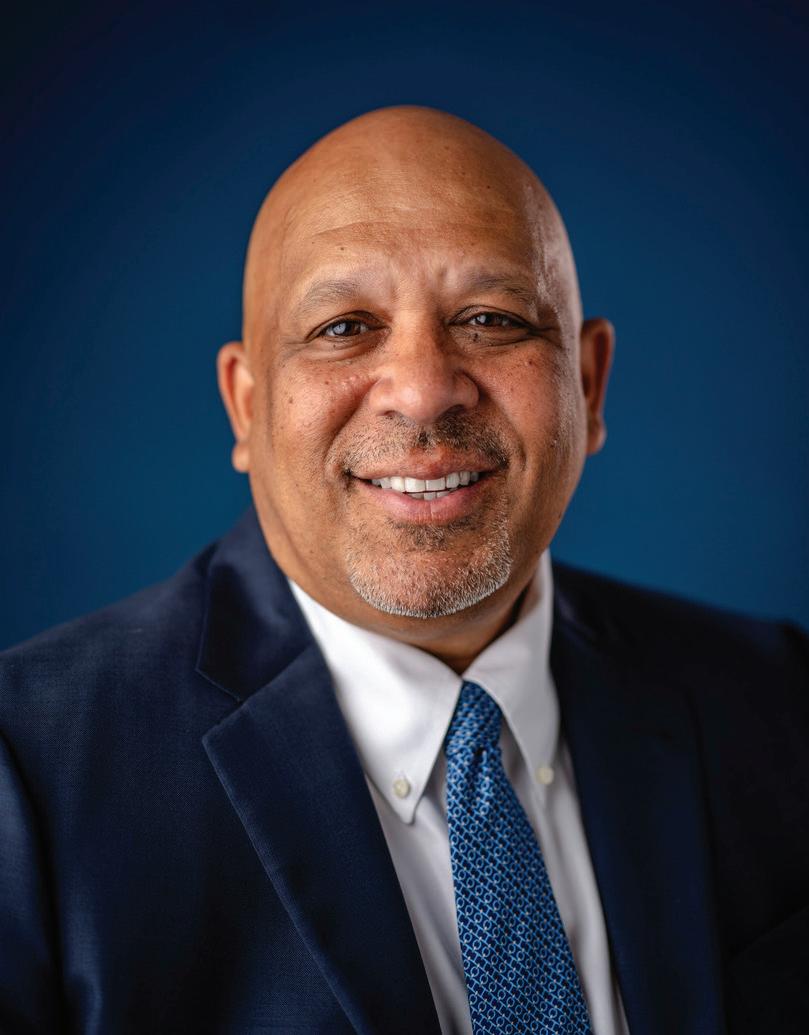









Acting president and provost, Marquette University
KIMO AH YUN was named acting president of Marquette University in June under tragic circumstances: Michael Lovell, who had led the institution for the past decade, died at the age of 57 following a three-year battle with sarcoma. Ah Yun, who joined Marquette in 2016 as dean of the Diederich College of Communication, was named provost in 2019. He’s now tasked with balancing both leadership roles while guiding Marquette through a time of grief. But it’s also a time of growth for the university, with three major infrastructure projects underway: the remodeled nursing school building, the Lemonis Center for Student Success and the reimagined Wellness + Helfaer Recreation facility. BizTimes associate editor Maredithe Meyer recently sat down with Ah Yun to discuss the year ahead. The following has been edited for length and clarity. Find the full conversation at biztimes.com/kimo-ah-yun
“I was fortunate to become Mike Lovell’s friend over the years that we worked together, and when you think about the grieving process, it’s not linear. We have our good days, and we have our bad days, and I’m fortunate to walk part of that journey with his wife, Amy Lovell, who is a good friend of mine and my wife. As you think about where we are as a university and the role that all of our leaders on campus need to play, including me, is that we have a campus community that is suffering a great loss. The leaders are just finding ways to wrap up our faculty and our staff, and we’ll think about how we attend to our students, who have not been on campus since President Lovell passed, and really just think
about the best ways that we can care for everyone. That’s one of the things Marquette is really good at is, during times of crises and when we have challenges, we pull together. We support one another, and we help everyone get through things.”
“I would say the piece that is additional is (thinking about) how are we engaging even more so with our alumni? How are we engaging with the community? How are we working with other boards? The president really is an extra visionary in the external arm of the university, while the provost is really the internal arm of the university. So at least for now, I’m really focusing on a lot of the presidential duties. I’ve been doing the provost jobs for six years. One of the nice things is I’ve been around the cycle six times, and so I understand what’s coming, when it’s coming and who I can lean on to be able to help me to get through those things.
“In terms of decisions and moving forward, obviously a lot of that stuff ultimately ends up rolling up to the acting president. But there’s no one person who looks at it and makes all the decisions. Information comes from a lot of different sources.”
“We went through this process a decade ago when president Lovell was hired, and that’s the responsibility of the board of trustees. They have two responsibilities: fiduciary responsibilities and selecting and overseeing the president of the university. So, I anticipate that they will announce the process that they will go through in the near future. …
“My only job right now is to be the best acting president I could be for Marquette University. And that’s what I’m focused on. I’m focused on how do I help the university stabilize? How do I help to care for people? How do I continue to move us forward so we can best achieve our Catholic Jesuit mission? That’s what I’m doing today.” ■