



























































































































































































































By Ashley Smart, staff writer
BY THE NUMBERS
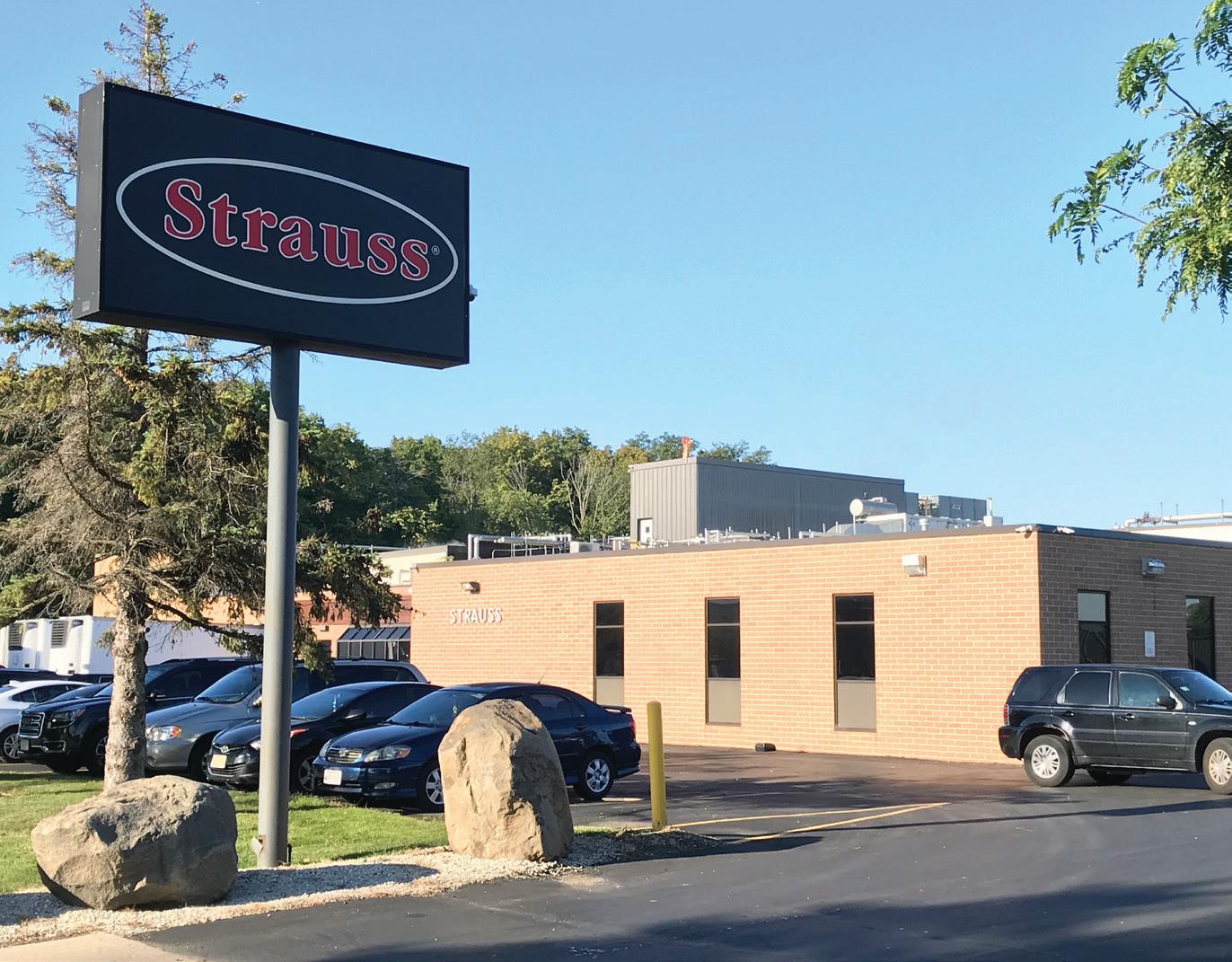
Meat processing company Strauss Brands plans to close its Franklin plant, relocating work to a facility in Mundelein, Illinois.
The company, a provider of grass-fed beef products, recently submitted a notice to state and local officials indicating it would lay off 70 workers at the Franklin plant starting Aug. 5. The affected employees are represented by the United Food and Commercial Workers Union, Local 1473.
Strauss Brands also laid off 127 workers last October after the company discontinued veal and lamb production at the Franklin plant. The company ultimately sold its veal and lamb business to Catelli Brothers Family of Foods, a U.S. subsidiary of Canada-based Preval AG.
technology and food safety.”
“Along with the Eddy Foods partnership, this move represents a necessary step in growing our grass-fed beef product line,” said Dave Wiggins, chief executive officer of Strauss Brands. “The decision to relocate production to Ruprecht was made after a meticulous evaluation of various options, with a paramount focus on ensuring continued quality and seamless customer service.”

At the time of the October announcement, the company said it was partnering with Texas-based Eddy Foods to expand its beef product offerings to include value-added, ready-to-eat products.


Now, the company says it’s moving production of its beef product line to the Mundelein facility of Ruprecht, a division of Kilcoy Global Foods.
In a press release, Strauss described the Ruprecht processing facility as state-of-the-art and said it “continues to be upgraded with the latest advancements in
Even before the layoffs in October, Strauss’ presence in Franklin has been on a roller coaster in recent years. The company bought land for an expansion off Loomis Road in 2019 before making plans for a facility in the Century City Business Park on Milwaukee’s northwest side.
The Milwaukee project faced opposition from neighbors and was ultimately dropped.
By early 2020, Strauss was once again planning to expand at the Loomis Road site but ran into neighbor opposition again. Franklin officials denied approvals for the project before reversing course after local business leaders expressed concern at the decision. Residents filed a lawsuit in early 2022, forcing a public hearing on the plan, at which point the company dropped its plans.
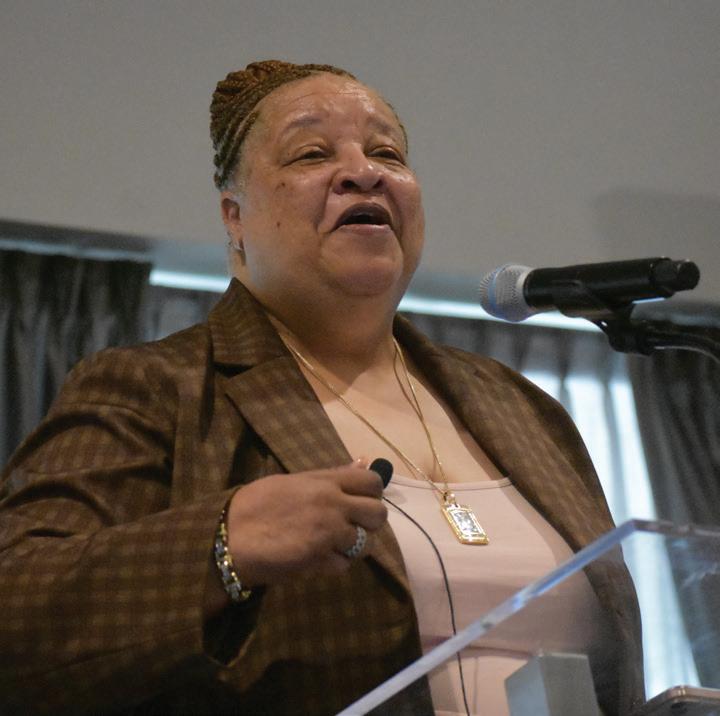
Milwaukee native Valerie Daniels-Carter, president and chief executive officer of V&J Holding Companies, the largest woman-owned restaurant franchise organization in the U.S., recently accepted the “Seize the Day” award at the 2024 Wisconsin Entrepreneurs’ Conference. Daniels-Carter capped off the two-day event, held at the Italian Community Center in Milwaukee, by sharing some of the personal mottos she’s followed over her more than 40-year career.
“You have to be able to define what you need, where you are going and how you’re going to get there. Life itself will deal you a lot of curve balls, but you have to know how to maneuver, and you have to understand when to shift paradigms.”
“My challenge to you is to always focus on where success is going, not where it has been. Because if it’s been there, someone else has accomplished it. Then it’s just a stabilizer. You’re trying to shift and change the paradigm.”
“Never stop recreating yourself because excellence is not defined by one word. It’s defined by a repetitive action that seeks after desire and seeks after goals in a collective way to ensure an outcome and end result.”
“Sometimes your greatest failures will deliver your greatest promise. If I was to tell you my life has been a bed of roses, I wouldn’t be telling you the truth. Determination, being a person of integrity, being dependable and creative, shifted my paradigm.”
“Belief is the strongest element that we possess.”
“I was one of the youngest entrepreneurs to ever open a Burger King in the state of Wisconsin and in the Midwest. It wasn’t because I had all the money I wanted. It wasn’t because I had all the access I needed. I had determination and favor. When you have determination and favor, you can drive your own destiny.”



“The abundance of opportunities available. It may come as a surprise to some, but our region has a lot to offer Wisconsin’s tech industry. The continued growth of the greater Milwaukee area, along with the significant expansion we’ve seen along the I-94 corridor, brings a plethora of opportunities – including in the tech industry.”
“When I was first entering the IT field, it was challenging to find other women to learn from in IT leadership roles. In my role as a mentor and leader of Women in Technology, an internal Uline group, I worked with area high schools and colleges to help get women interested in technology-related careers. My recommendation to women looking to enter IT is to search far and wide for a mentor.”
“Every job has its challenges, but I like to see them as opportunities – it’s all about the approach. Managing a department with over 450 employees, it’s crucial for us all to be aligned to ensure seamless operations across Uline’s 13 locations in North America.”
“My personal career goal is not just to grow on my own path, but also to support those growing beside me and foster the development of future leaders. I believe I am only succeeding if my colleagues next to me are



































succeeding.”
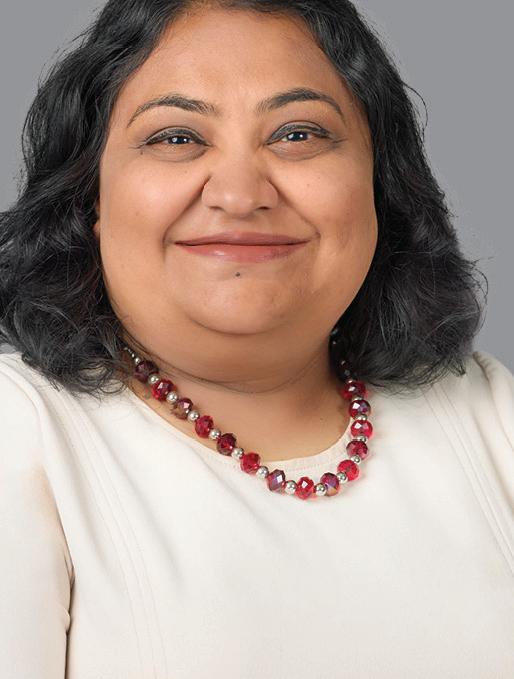
Director of application development
Uline
AGE: 45
HOMETOWN: Jamnagar, Gujarat, India
EDUCATION: Bachelor’s in engineering, computer science from The Maharaja Sayajirao University of Baroda; master’s in computer science from The University of Akron; MBA from Lake Forest Graduate School of Management
PREVIOUSLY: Senior software development manager at Uline





























Senior strategic advisor, TitletownTech

Former Wisconsin Congressman Mike Gallagher is the newly named senior strategic advisor at Green Bay-based TitletownTech, a venture capital firm formed in 2019 through a partnership between the Green Bay Packers and Microsoft. TitletownTech is an early-stage VC firm that invests in entrepreneurs solving problems in industries core to Wisconsin and the Midwest. In his new role, Gallagher leverages his expertise in technology and security to back companies in the region. Here are a few pieces of technology that Gallagher relies on during his day-to-day work.

“I’ve developed only one life hack: waking up early to write for an hour before the day puts me on defense. Freedom shuts off internet access for a pre-set period of time (a modern-day Ulysses contract), thereby helping me get my most important work done right away.”

“This is not that exciting, I get it, but AirPods allow me to make calls while walking outside or to secretly listen to Packers podcasts while I do chores. I can do business while running or changing diapers ... a massive efficiency gain.”

“In order to kick an addiction to buying new books that would stack up and stress me out if left unread, a few years back I vowed only to use library books. Then I discovered Libby, which sends free library books to my Kindle. Though lately I haven’t had much time for reading, at least I’m not buying books, and I can easily load up on reading material for travel without being weighed down.”
Look closely at the side of one of the many former warehouse buildings in Milwaukee’s Historic Third Ward and you might spot the remnants of what was once a hand-painted advertisement. Last year, these so-called ghost signs captured the fascination of Mike Roe, executive creative director at Milwaukee-based advertising agency Hoffman York, who would look at one day after day on his way in and out of the firm’s Third Ward office. He would try hard to imagine what the sign looked like in its heyday: “I was just getting nowhere, it was frustrating. And that’s when I thought it would be really interesting … if we could find out what those ghost signs used to look like and recreate them with augmented reality,” said Roe. It was from his curiosity that the Augmented History mobile experience was born, giving users a “window to the past” through their smart device.

Research: Roe scoured the archives at the Milwaukee County Historical Society, Milwaukee Public Library and Wisconsin Historical Society for vintage photographs of the Third Ward, dating back to the early 1900s. It often required looking closely at the background of an image to catch a glimpse of a nowfaded ghost sign in its original form.
1
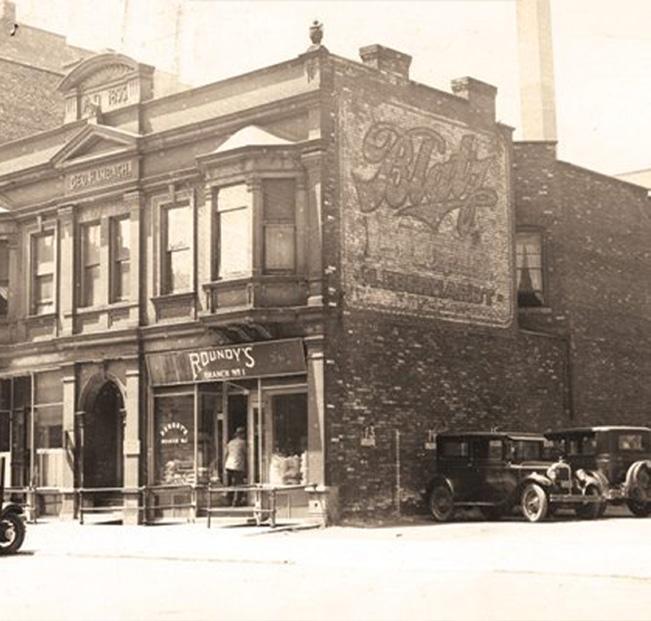
Launch: Hoffman York partnered with the Historic Third Ward Association to publicly launch its Augmented History project in May as a walking tour, featuring 14 ghost signs on nine different buildings in the Third Ward.
2
Recreate: Referencing hundreds of historic images, Hoffman York designers worked to recreate the art by hand or using computer software. They went through several iterations of design tweaks, such as distorting the typeface and texture grafting, to make the digitally rendered signage look more realistic and less like a simulation.

4
5

Add: The team created 3D historical markers that appear to sit on the sidewalk in front of each ghost sign, so when a user holds up their smart device, they’re “not only seeing what the sign used to look like, (they) can actually read a little bit about the back story of that sign,” said Roe.
3
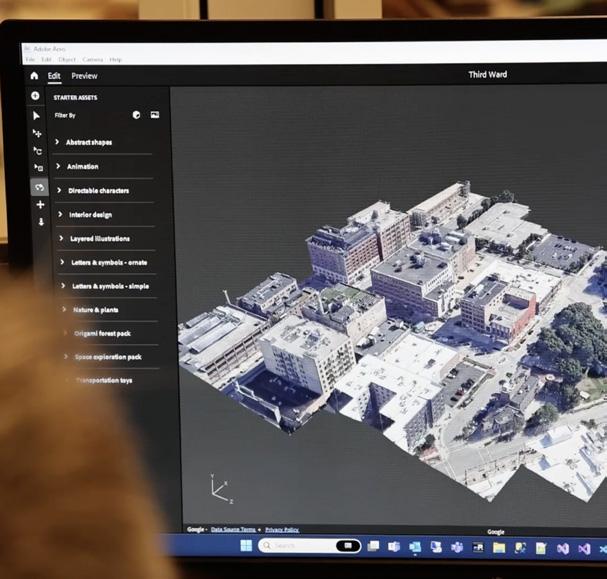
Build: It turned out that the buildings were too large for traditional augmented reality. Hoffman York senior software developer Rich Laiacona worked out a solution in Adobe Aero, using inputs from Google Earth to create a 3D map of the Third Ward and then using geolocation data to anchor the recreated ghost signs to their respective buildings.




This Q&A is an extended profile from Wisconsin 275, a special publication from BizTimes Media highlighting the most influential business leaders in the state. Visit: biztimes.com/wisconsin275 for more.
Education:
Bachelor’s, University of Wisconsin-Green Bay; MBA, University of Wisconsin-Oshkosh
What was your first job and what did you learn from it?
“My first job was in retail – as an ice cream scooper – at 14. I learned to work with a wide range of people and the value of showing up on time.”
What piece of advice has had the most significant impact on your career?
“When I graduated, I had someone tell me, ‘Never work for someone you don’t respect.’ It’s amazing how much I’ve thought about that advice over the years, and it led me to work for many people I have great respect for and from whom I learned much.”
If you could have dinner with any two business leaders, who would you choose and why?
“Elon Musk and Peter Thiel. They are both incredible entrepreneurs and creators in their own right, have history together as partners – sometimes uneasy partners – as they brought PayPal.com to market and each has had significant creative impact post-PayPal. What also intrigues me is that they appear, in many ways, to be polar opposites in every way except one: they are great entrepreneurs.”
What are some of your favorite destinations or places to visit?
“Key West, Florida, and several places across Alaska. Obviously, for very different reasons.”
What is one book you think everyone should read and why?
“’The Innovators,’ by Walter Isaacson. As someone who grew up as the digital age emerged – and whose first computer was a Tandy TRS-80 – the exploration of the people behind

Managing director, TitletownTech GREEN BAY
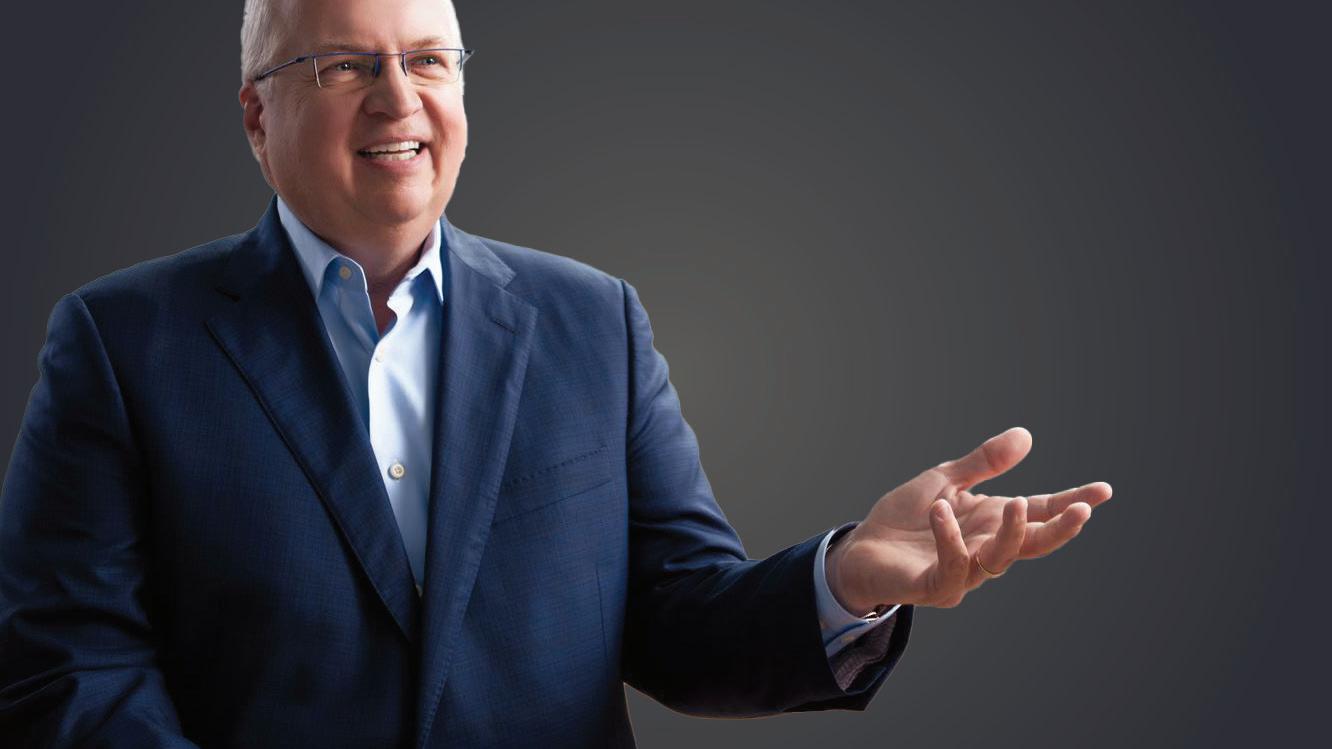

Craig Dickman leads TitletownTech, an innovation fund formed out of a partnership between the Green Bay Packers and Microsoft that builds and funds early-stage high-growth startups. Prior to becoming managing director of TitletownTech, Dickman was chief executive of De Pere-based Paper Transport Inc. and Green Bay-based Breakthrough Fuel, which he founded in 2004, and served as vice president at Green Bay-based Schneider National. He also co-founded the De Pere-based venture capital and accelerator firm N.E.W. Venture Foundry in 2015. Dickman is chairman and owner of the Wisconsin Timber Rattlers, an owner of the Fond du Lac Dock Spiders and a director on the Green Bay Packers board.
the creation of the computer, internet and digital revolution was fascinating.”
What’s your hobby or passion?
“Baseball. I played it when I was young, coached it as my kids were growing up and love visiting ballparks around the country. It led me to acquire two baseball teams: the Wisconsin Timber Rattlers, the class High-A affiliate of the Milwaukee Brewers, and the Fond du Lac Dock Spiders. My passion has evolved from a love of the game to sports as a business.”
What is your favorite Wisconsin restaurant and what do you order there?
“Jake’s Pizza in Green Bay. It’s a single-location, familyowned business that I first found when I was going to college and where I took my wife on our first date. The pizza is always great, and the beer is always cold.”
What would people be surprised to learn about you?
“I spent about three years working as a contractor in the space industry and was able to watch a rocket launch live on a lunar mission, see the first images coming down in real time from the first Mars rover, Sojourner, and see the first images of the asteroid Mathilde while a spacecraft flew by the asteroid.”
What was your first car? How long did you drive it for?
“A burgundy 1974 Camaro with a black interior. I kept it for as long as I could afford the maintenance bills, which was, unfortunately, shorter than I wished.”
What’s the toughest business challenge you’ve had to overcome?
“Disrupting an industry that didn’t want to be disrupted. I had learned about intense competition, but I never really conceptualized how different it is to face intense opposition. I had to learn this new concept in real time and then determine how to manage in an unfamiliar environment. I
also learned not to fight the distractors but rather to stay focused on the value we were creating.”
What is one thing you would change about Wisconsin to make it even better?
“Make it easier for new arrivals to feel at home. Sometimes our greatest strength is our greatest weakness. We are family- and friend-oriented, but that can make it hard for newcomers to break in and feel they belong.”
As you enter your office, what would you choose to be your walk-up or theme song and why?
“‘Growing Older But Not Up,’ by Jimmy Buffett. First, Jimmy Buffett is my favorite artist, and the song begins with baseball and reminds me to think young.”
Is there a nonprofit cause that has special meaning to you?
“My family and I have been active in supporting innovation in education and have helped build and design six studios in educational settings: one while I was still at Breakthrough, a ‘Breakthrough Studio’ at UW-Green Bay, four ‘Solutionist Studios’ in each elementary school and one ‘Solutionist Studio’ in the middle school in our hometown school district. The studios are designed to be places to use creativity and technology to solve problems.”
What is the biggest risk you have ever taken?
“While jumping out of an airplane is a close second, choosing to be a partner, president and CEO of a company, Paper Transport Inc., on September 18, 2001. There was so much uncertainty in the world right after 9/11, and it felt like so much was out of our control. It was a difficult time to make a major professional change, but it was 100% worth it!”
What has you most excited about the future?
“The power of creative minds and technology to solve the world’s biggest problems.”

MAUREEN POST was introduced to “Throughline” one Friday years ago while listening to WUWM 89.7 FM in the car.
“I love a long-format interview, and this podcast is the long-format exploration of the issues, policies and players that influence how we see and interact in our world,” says Post.
Each week, hosts Rund Abdelfatah and Ramtin Arablouei take a deep dive into the origins of a recent headline or newsy topic to answer the question, “How did we get here?” Recent episodes have
explored the rules of war, Nelson Mandela’s controversial legacy in South African politics, and the idealization of motherhood in American society.
“The storytelling, bolstered by a slew of expert academics and historians, is complimented by sound production that sonically places you in the middle as they break down the complexities of history into intriguing tales of understanding,” Post says. “I can’t say enough good things about this podcast if you want to widen your lens.” ■





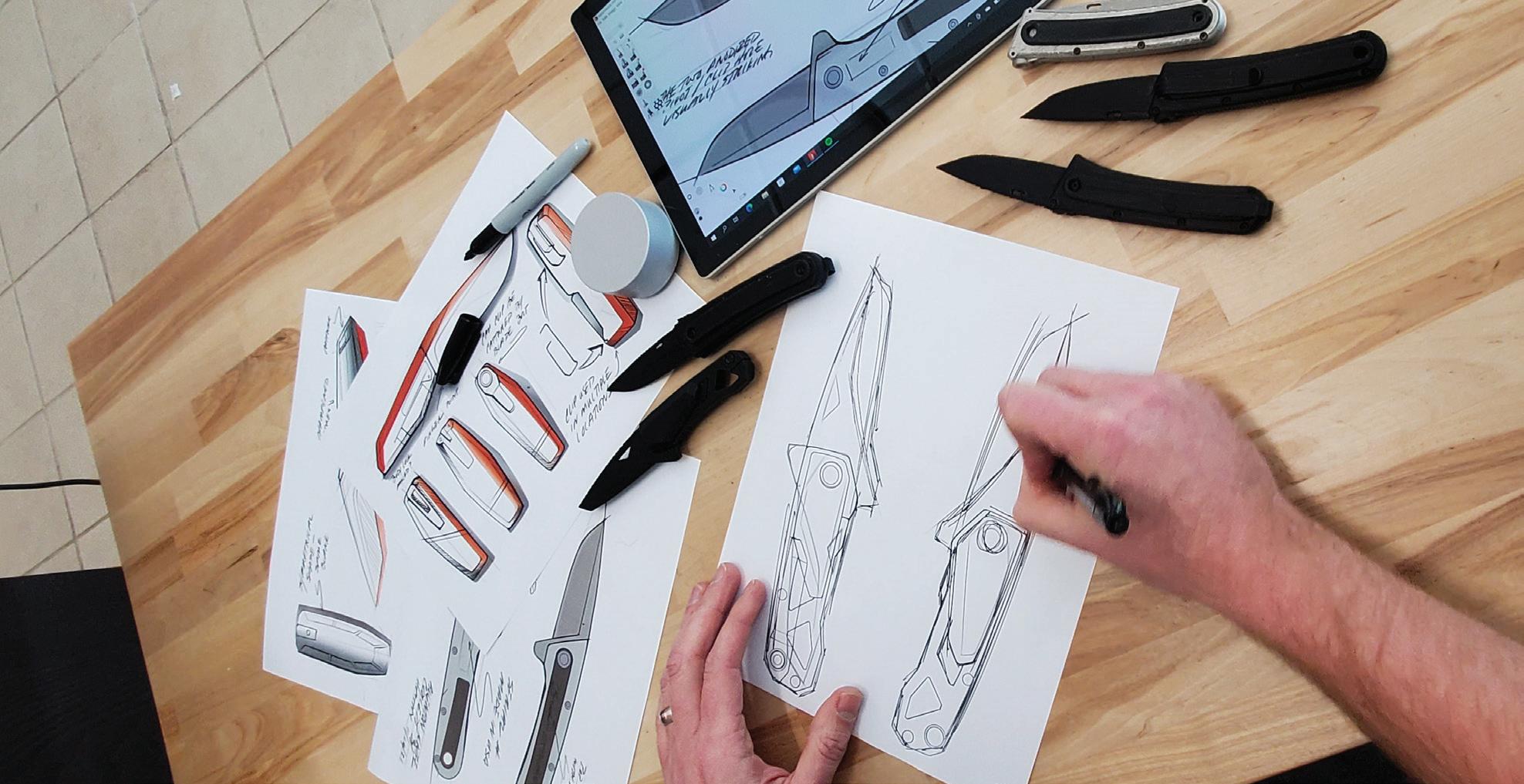
BROOKS STEVENS has seen its fair share of changes in recent years.
Four years ago, Michael Hopkins and his business partner acquired the product development business. Two years ago, the company moved from Allenton to Menomonee Falls, and this summer, the company is beginning work on a new space that will see it move into the city of Milwaukee.
Beyond physical location, Hopkins and his team have also worked to reset the company’s business. The idea is to move away from a “rent-an-engineer” model in which clients are simply outsourcing work they don’t have capacity for toward an outcome-focused approach that provides value for customers.
“We found it to be, one, it’s personally rewarding, the work we do is a lot more engaging, but also the impact we’re having for our clients is much more significant,” said Hopkins, now president and chief executive officer of the company started in 1934 by Clifford Brooks Stevens.
That 90-year history includes design work that shaped many parts of modern life, from cars to boats, outboard motors to lawnmowers, and consumer packaging to home appliances. Stevens died in 1995. His son Kipp continued to run the business until it was acquired in 2007 by Ingenium Product Development.
Hopkins joined the company in 2018 as director of product development. His background includes 16 years at Harley-Davidson Motor Company, launching his own product development firm and working for a number of startups.
Today, the company has 16 employees. Adding in contractors, the team can flex up to 20 or 25 people depending on the workload and specific expertise needed.
While Brooks Stevens’ former location offered a nice middle point between clients in the Milwaukee area and those in the Fond du Lac area, it came with a challenge.
“Really hard to get people to,” Hopkins said. “Once they were
In the relatively recent history, the model for companies like Brook Stevens had shifted toward the firms offering an outsourcing service for companies looking to innovate.
The model Hopkins and his team have been working toward is one that is more focused on innovation as a service.
A client may know their market and may know they need a new offering, but they may be having trouble nailing down the details.
The opportunity for Brooks Stevens is to offer a broader focus than just coming up with new ideas, but instead designing with the whole business model in mind.
By Arthur Thomas, staff writer
there, they’re like, ‘Wow, this place is awesome,’ but it’s 40 minutes from anywhere close.”
So, two years ago, the company made the decision to be more public facing and more inviting, moving to an existing space in Menomonee Falls that could serve not just as a design studio but also as a galley for its work and event space to bring the design community together.
The move to Menomonee Falls helped Hopkins and his team test and validate their ideas for the business. Now, they plan to move to an 11,000-square-foot building on the far northwest side of Milwaukee at 5400 N. 118th Court, formerly occupied by Milwaukee Pain Treatment Center. The move will return Brooks Stevens to the city it was founded in 90 years ago.
“It’s really exciting to be back in Milwaukee and we’re executing on the things we’ve learned the last couple years so that we can restore where Brooks was decades ago,” Hopkins said.
“There’s a lot of information about design on the internet and there’s prescribed steps, but what those really don’t tell you is the experience of making the right decisions at the right time,” said Ryan Hahn, industrial designer at Brooks Stevens. “I think that’s where a lot of people get into iteration loops where they don’t have a hierarchy of understanding what is needed for the product to be successful.”
“It’s not paint-by-numbers where you just do something really, really well following that process,” Hopkins added. “Did you design this to be the right business model from the beginning, even before you’ve designed it? Was success ever possible in this?”
Hopkins said not accounting for the business model can be a big tripping point in product development.
“Sometimes people are just innovating for creativity’s sake, but they haven’t made that full connection that it still has to be a profitable business. It still has to align with what your business objectives are, and is it going to meet your criteria of success?” he said.
“Sometimes just doing the project well doesn’t get you to that business success,” Hopkins added. “You can have a really, really well designed and engineered
product that just never sells.”
Taking that holistic approach to new product development is the goal at Brooks Stevens. Then as products mature or have demonstrated traction in the marketplace, the company is able to hand work back and allow clients to take over.
Hopkins said the company has benefited by not trying to be a one-stop shop for clients and instead recognizing it is part of something bigger the client is trying to achieve.
“You might have the skills internally in the client or maybe neither of us can do it and we have to go find this expert to help us out,” Hopkins said. “We found that was a huge advantage once we got over the idea of, we don’t necessarily always have to be the one that does it all. It was like all of a sudden, the value we’re able to add to clients was a lot higher value.”
Every project is unique, but Hopkins said one of the areas clients frequently come to the firm with is “the fuzzy front end of ideation.”
“They have some idea of what the future product might be and so they’re usually coming to us to help find the limits of that and explore it a bit deeper,” he said.
Early in the process is also where the Brooks Stevens team has found a use for artificial intelligence tools, Hahn said, noting AI isn’t replacing brainstorming work, but it does help creatively come up with new ideas.
“Creativity is just the connection of ideas and the more connections you have, the more creative you can be and the more breadth of ideas you can have,” Hahn added.
Hopkins pointed out that new
technologies are always emerging. For example, when 3D printing emerged, many said companies like Brooks Stevens would no longer need to make models.
“Although we do a lot of 3D printing, we also do a lot of model-making still. They each have their value as unique tools and we see AI as falling into that in some component,” Hopkins said.
A key part of new product development is feedback from users, customers, experts and those in the industry. Hahn said getting quality feedback and insight requires a mixture of a good process and intuition. On a current project, he said the team is conducting interviews with people across the customer’s industry. That generates data points, but the key is going beyond the words the interview subjects use.
“We’re also very hyper-focused on the hidden meaning behind
We invite your company to reserve your place on the front lines of progress by placing your logo on the front cover of BizTimes Media for only $850.
Your support of the cover will go towards a full month of exposure for workplace diversity coverage in print, online and enews.
62% of men, 89% of African Americans, 80% of Asians, and 70% of Latinos ranked workforce diversity as important in their job search.

Call 414-336-7112 or go online to biztimes.com/diversity to sign up and submit your logo.
what they’re saying and using that intuition to understand the real problems they’re having,” he said.
Mathias Gran, executive director of Brooks Stevens, said part of the early research on the project involved watching users of the product on YouTube.
“None of the interviews have talked about a key factor that shows up in every single video and so we’re watching videos, and we’re seeing a pain point that no one is naming,” he said.
Hopkins said it’s also important to follow a good process, noting when the company first began work on this project, it seemed there was an obvious solution and the team could jump ahead to its design work.
“We’re like, ‘Whoa, we’ve got to slow down,’” Hopkins said. “We’ve got to validate this because you can get too far too fast.”


Congratulations to our 2024 laureates and award winners. Thanks to our sponsors and attendees.

Alan Yeung
Chairman and CEO
Ingantec Corp.
10361 W. Innovation Drive, Wauwatosa
Employees: 5
ingantec.com
FORMER FOXCONN EXECUTIVE ALAN YEUNG has moved on to his newest entrepreneurial endeavor as the new chief executive officer of Wauwatosa-based Ingantec Corp., an electronics manufacturer that makes technology for microLED displays. In May, the startup closed a $2 million seed round to accelerate the commercialization of its nitride-based compound semiconductors for optoelectronics used in AR/VR, smartwatches, phones, computers, cars and TVs. The funding round, led by Milwaukee-based private equity firm Lubar & Co., drew interest and participation from prominent local business leaders including Jon Hammes, chairman and CEO of Hammes Healthcare, and Ted Kellner, former chairman and CEO of Fiduciary Management Inc. BizTimes reporter Ashley Smart spoke with Yeung about what attracted him to Ingantec and why he thinks the company’s microLED technology is being developed at the perfect time.
What have you been doing professionally since working for Foxconn?
“Soon after the pandemic, it became very clear that Foxconn and the state of Wisconsin was coming to a conclusion and that the project would be scaled down. Therefore, I thought my role would not be as big as before. I decided to pursue something else. UWMadison’s dean for the College of Engineering, who I had served on the college’s industry advisory board with, wanted to strengthen the entrepreneurship at the university. They wanted to create more startups and more company successes, so I signed up for that (in April 2022).”
What problem is Ingantec trying to solve?
“For several years, thin film transistor liquid crystal displays (TFT LCDs), which was actually the technology Foxconn was going to bring to Wisconsin, had been the mainstream technology. About seven to 10 years ago, it was supplanted by what we call organic LED, and then by microLED, which is the next generation of liquid crystal displays. What you see now with TVs, iPhones, MacBooks, etc. is that organic LED is not that stable. It actually has very slow response times, and the contrast is not very good. The brightness is not very good. There are a lot of drawbacks. MicroLEDs solve a lot of the problems that organic LEDs and TFT LCDs cannot. They can offer high brightness and contrast as well as low energy consumption. You would probably see the first application of products using microLEDs in smartwatches or VR glasses.”
How did you first hear about Ingantec?
“The two founders (Shubhra Pasayat and Chirag Gupta) came to UW-Madison as assistant professors. They wanted to start a new company. They received their PhDs from UC Santa Barbara in California but left because they didn’t have any support. Later on, they invited me to join forces with them. Even though I was working at UW-Madison as an employee, I could still advise them on the board level. Later, when the company became more and more viable, I had to choose between working as an employee for UW-Madison or becoming a civilian again. It was late 2023 when I actually left UW as an employee.”
What intrigued you about the company’s vision?
“I could see the marketplace was looking for a solution that scholars and scientists might actually have the answer to. We started building up the business case and talking to supporters and advisors (in late 2022). I think we got a lot of validation, and the company was incorporated in October 2022.”
How far away is Ingantec from commercializing its innovation?
“There are certain milestones we want to reach in the next six to 12 months. One of them is to demonstrate viability and how compelling our technology would be in a prototype or a proof-of-concept situation. When that happens, I think we can create value for our shareholders and stakeholders. That is one milestone. Another one is building up our capabilities and our people. Being able to recruit engineers, scientists, maybe even members of an advisory board, contractors, consultants, advisors… On the other hand, we need to build up the physical infrastructure, starting with an office. We were at the UW Innovation Accelerator for a while but now we are moving on to the Innovation Park in Wauwatosa. They have resources, they have labs and they have other spaces that could be used in the future. We would not rule that out.”
What impact could Ingantec’s work have on our tech ecosystem?
“We may have an innovation that has been compelling enough to not only create a product but to create a company and maybe even launch an industry. That’s very exciting. If you think about big names like Google or Facebook, these names are not only large companies but large industries changing the world. At Ingantec, we’re working on a small piece of a component within a microLED, but this is the most compelling and needed piece within the microLED. You use it to solve this big, big problem that is challenging for everybody. You can really create a lot of value and create a lot of momentum for a tech hub ecosystem.”
11:00-1:30 PM

“
We may have an innovation that has been compelling enough to not only create a product but to create a company and maybe even launch an industry.
What are your thoughts on Microsoft’s recent investments in the state? Could the company help create a tech hub?
“However happy or disappointed people were about the project, Foxconn invested over a billion dollars (in Mount Pleasant) and brought a lot of worldwide attention to the state of Wisconsin – so has the federal government with the widening of the I-94 corridor. There’s a lot of partnership and co-investment. Now, I think Governor Evers and his administration and (Microsoft) are collaborating very well. The best thing to happen is to have Foxconn and Microsoft in Wisconsin. I think many of us, including myself, take pride in that. There’s a great amount of excitement going on in Mount Pleasant and if there’s an opportunity down the road, we’d love to be able to find a way to get back down there and build our operations and scale up sites.”
Partner:

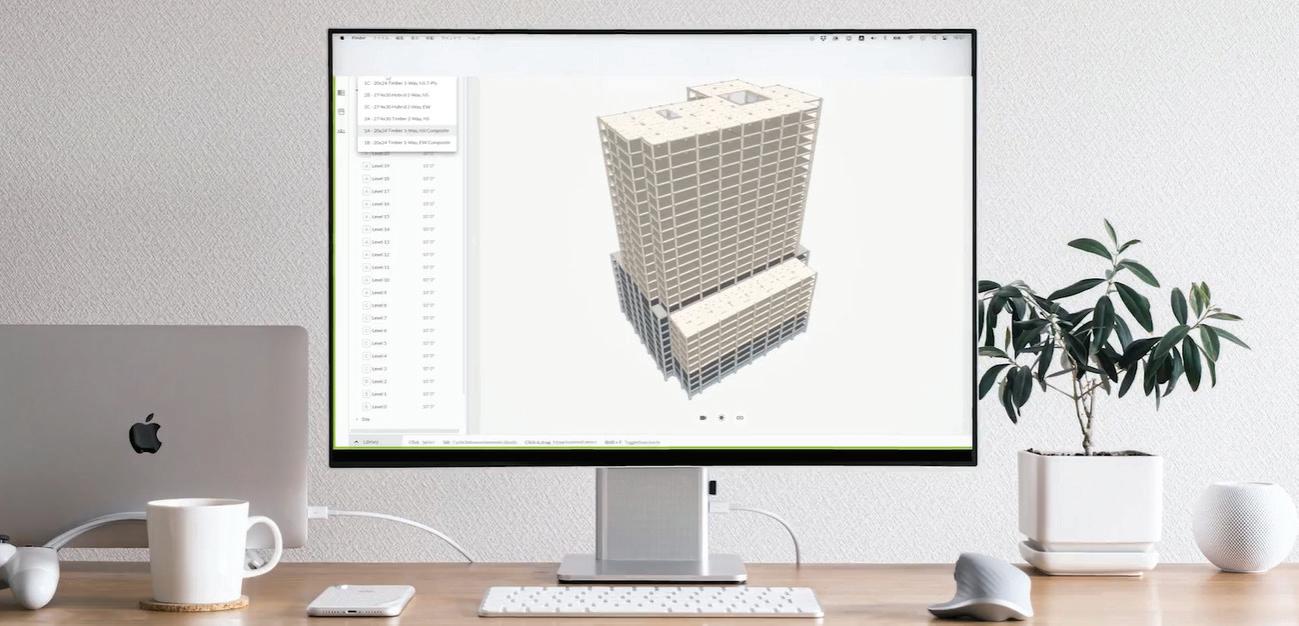

SEEING an opportunity to combine cutting-edge technology, the precision of mass timber construction and experience with urban development, Milwaukee real estate executive Tim Gokhman is taking local mass timber innovation and expertise to the national stage.
In March, Gokhman, managing director of Milwaukee-based development firm New Land Enterprises, launched a new venture, called Timber + Partners, a real estate development company that Gokhman sees as an opportunity to deploy New Land’s model of mass timber development nationwide.
Timber + Partners pairs software and hardware to make constructing mass timber buildings easier.
New Land Enterprises is the firm behind the 284-foot-tall mass timber apartment tower Ascent in downtown Milwaukee. Opened in 2022, Ascent is the tallest mass timber and concrete hybrid building in the world. Mass timber is a more environmentally friendly way of building and can be more cost and time efficient.
Using the expertise gained from the Ascent project, the goal is to use the building as a prototype for more like it across the country.
“Timber + Partners’ sole mission is to create a new generation of buildings and do it in a way that even most teams across the country that are building with mass timber are still not,” Gokhman said.
“Because the prototype is based on a successful project, it offers a high level of precision in the development process,” is how the firm’s website explains it. “By iterating on a proven design, the amount of time and money spent on sizing and pricing a project in a new market is a small fraction of the typical predevelopment costs.”
The company plans to do this by using a proven set of combinations for things like columns, beams, spans and connections,

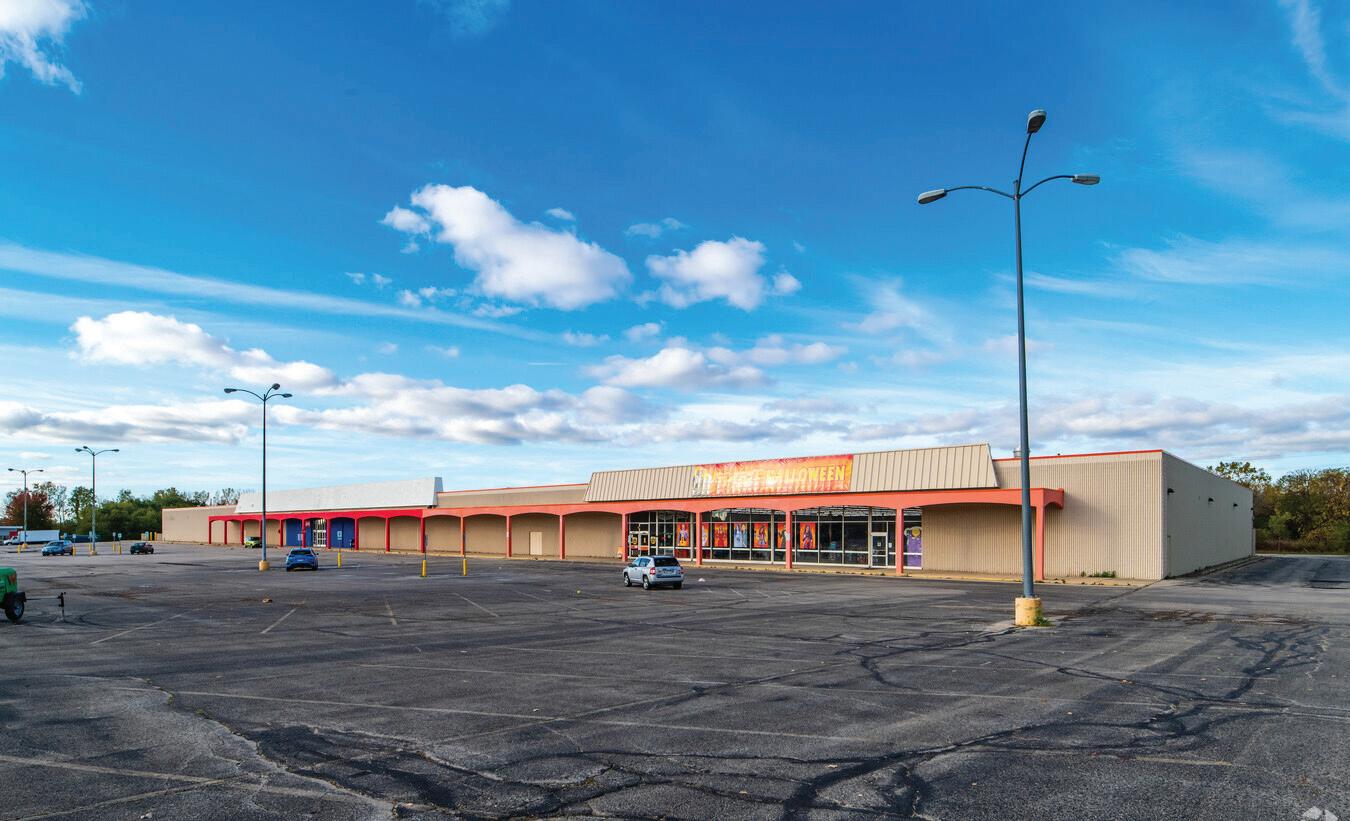
Once the home of Milwaukee County’s last Kmart store, the building at 6045 S. Packard Ave. in Cudahy has been vacant since the store closed in 2019. That is, except during the fall each year when the space is temporarily used by Spirit Halloween.
With 116,000 square feet of building space and 657 parking spaces on its 6.4 acres, the property is currently for sale for $3.2 million, with an assessed value of $2.5 million.
The property is being marketed by Mid-America Real Estate. Marketing materials show the possibility of using the existing parking lot for up to four commercial outlots for smaller retailers. The property will go to auction this July, according to marketing materials.
The current owner is an affiliate of Illinois-based Transformco Properties, which did not respond to request for comment. The company owns other former Kmart store properties throughout the state.


which can be outfitted for buildings in different markets on different sites.
It’s kind of like IKEA furniture, Gokhman says.
“If you look at the way IKEA produces, IKEA has way more products than it does components because you can take those components and combine them in different ways to create different products,” he said.
This in and of itself is not a new concept – other companies have explored this idea in real estate development before, Gokhman acknowledges – but many of these companies have put the idea of componentization ahead of real estate fundamentals, he said.
“So, all of the sudden, the idea of a repeatable, efficient box takes over and people forget about unit mix, parking ratios, economics and resident preference,” Gokhman said.
What makes Timber + Partners unique, according to Gokhman, is its ability to keep real estate fundamentals front of mind because it’s born out of New Land Enterprises, which has been doing urban infill development for 30 years.
As a company primarily focused on urban development, Timber + Partners is also challenging the notion that building a repetitive product in urban areas is impossible because each site is different.
“It is true that most urban sites have some sort of variability, driven by the size of land, local codes, but that doesn’t mean that you can’t build from a combination of components that are known,” Gokhman said.
What’s unique about this moment in time compared to even a few years ago, is that there is now digital software that enables developers to design much faster and much more precisely than before, according to Gokhman.
“And it’s not a marginal improvement, it’s quantum leaps,” he added.
Mass timber development is best done through a digital design-oriented mindset in part because timber can be cut with a laser to near-perfect dimensions. For instance, for Ascent, all of New Land’s components were one-sixteenth of an inch apart, which is a level of precision concrete can’t achieve, he said.
“You have to make a lot of adjustments in the field (when working with concrete) which costs time and money,” Gokhman said.
The marriage of hardware and software is what allows mass timber and Timber + Partners’ model to thrive, and when combined with real estate fundamentals, building becomes quicker, cheaper and more successful – all of which is important in getting development projects over the finish line, he said.
“If you ask general contractors what percentage of the cost is rework, meaning what percentage of the cost is fixing problems, I’m guessing that number is going to be anywhere from 15% to 30%,” Gokhman said. “That’s a big number, and if you could lower construction costs even by 10%, that’s a meaningful impact.”

HUNTER TURPIN Reporter



Milwaukee-based Three Leaf Partners and Kenosha-based Land Quest plan to redevelop the Maplecrest Country Club in Somers into more than 700 housing units targeted at a diverse range of renters and owners.
The proposal was approved by the village in late May.
Located about 2.5 miles north of the Kenosha Regional Airport, the plan is for the 162-acre site to be redeveloped with 443 apartment units in 13 different buildings. Those apartments would range from studios to three-bedroom units.
Known as the Maples at Somers, the project will be built in phases, starting with seven of the apartment buildings. Future phases will include 46 for-sale duplexes and 230 single-family homes. The single-family home component will be built by Land Quest.
LOCATION: 9401 18th St., Somers
DEVELOPERS: Three Leaf Partners and Land Quest SIZE: 719 units
Linda Crawford today! Phone: 414.336.7112


































































































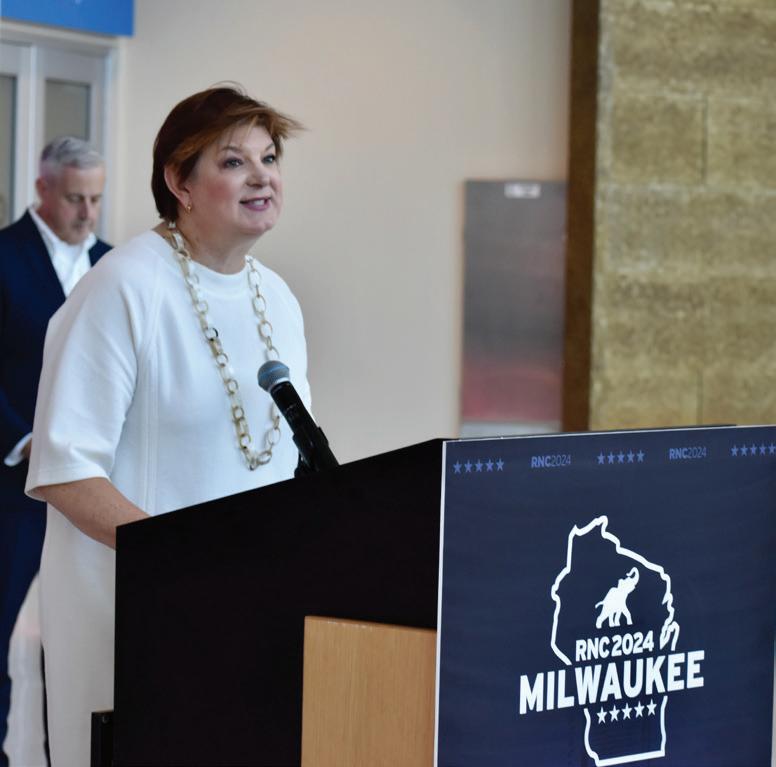
The 2024 Republican National Convention is almost here. Taking place July 15-18 in downtown Milwaukee, the RNC will be one of the largest and highest-profile events the city has ever hosted at a time when the state of American politics seems more divided than ever – and the eyes of the world are watching. Politics aside, local leaders who helped lure the RNC here – including Mayor Cavalier Johnson – have touted the event as a huge boost for the city’s economy and notoriety. And over the past two years, RNC organizers have emphasized their efforts to channel convention-related business to Milwaukee- and Wisconsin-based companies. This special section previews some of the business-related, non-political aspects of the convention – and what to expect during its four-day run – and profiles some of the local businesses that are capitalizing on the occasion. Also included is an analysis by BizTimes editor Andrew Weiland examining the high stakes of such a high-profile event for the city of Milwaukee.









The RNC will draw an estimated 50,000 people, including: 4,691 delegates and alternates (41 delegates representing Wisconsin), approximately 15,000 members of the media from across the country and overseas, and more than 4,000 volunteers to help with operations, transportation, wayfinding and greeting guests at airports and hotels.
Organizers have contracted 107 hotels within a 75-mile radius of Milwaukee’s city center – as far as downtown Madison to the west and Kohler to the north – for delegates, state parties, media and affiliated groups.
The City of Milwaukee, through a formal request for proposals, has sought 4,000 dormitory rooms at area colleges and universities to house thousands of outside law enforcement officers.
The event will have an estimated $200 million economic impact on the Milwaukee area, including direct, indirect and induced spending.
Roughly 400 buses, shuttles and golf carts are needed to transport guests in and out of the city and around the convention complex.
The nonprofit, nonpartisan MKE 2024 Host Committee raised $68 million to cover production-related costs including facility rentals, build-out of the convention complex, transportation, parking lot rentals and volunteer accommodations.





United Airlines and American Airlines will add additional flights to Milwaukee Mitchell International Airport – and use larger aircraft – to accommodate the rush of travelers flying in for the RNC. Boosted by RNC traffic, the airport expects to service 1.7 million travelers this summer, up from roughly 1.6 million last summer, according to monthly passenger data. On peak arrival days leading up to the convention, United will add eight nonstop roundtrip flights from Washington Dulles, two from Washington National and two from Denver, and American will add a nonstop roundtrip flight from LaGuardia. United will upgrade from regional jets to full-size mainline aircraft for some flights between Milwaukee and Newark and from Chicago. American will also use larger aircraft for its existing Milwaukee to Washington D.C. service.
The RNC’s designation as a National Special Security Event puts the U.S. Secret Service in charge of planning, coordinating and implementing its security operations. Over the past year, the Secret Service has worked with the Milwaukee Police Department and 15 other city agencies – as well as federal agencies like the FBI, FEMA and the EPA – to create a comprehensive security plan for the convention, including traffic management, business and community impact and maritime security. The plan’s most visible – and impactful – measure is the multi-layer secure perimeter surrounding the convention complex, which includes Fiserv Forum, the Panther Arena and the Baird Center as the main venues. There will be an outer “soft” perimeter, where vehicles and pedestrians can come and go but may encounter street closures, law enforcement and checkpoints, and a higher security “hard” perimeter closer to the convention’s main venues, where credentials are required to enter and weapons are prohibited.
This “general impact map,” released in February, shows the RNC’s tentative security footprint. As of press time, the Secret Service had not yet unveiled the finalized security perimeter. The agency has been in contact with residents and business owners within the outlined area to develop a plan that both prioritizes safety and “minimizes impact to the community as much as possible,” said Secret Service director Kimberly Cheatle.
Each day of the RNC before the start of official sessions, delegates and other visitors will enjoy a taste of Wisconsin, at Convention Fest. The daytime street festival, to be held outside the Baird Center, will feature live entertainment and more than 100 local vendors selling food, drinks, handmade goods and 2024 RNC collectibles, such as challenge coins, buttons and pins. For participating businesses, the festival is an opportunity to showcase their work and get in front of thousands of new customers. Admission is free for all ticketed RNC guests.
“
Our delegates love to eat, our delegates also love to shop, and they love to shop local. … It’s not unusual for people to bring an extra suitcase or duffle bag to fill up with things they purchase at Convention Fest. I always bring an extra bag to bring things home for my Republican friends.”
– Anne Hathaway, chairwoman of the RNC committee on arrangements
BY HUNTER TURPIN, staff writer
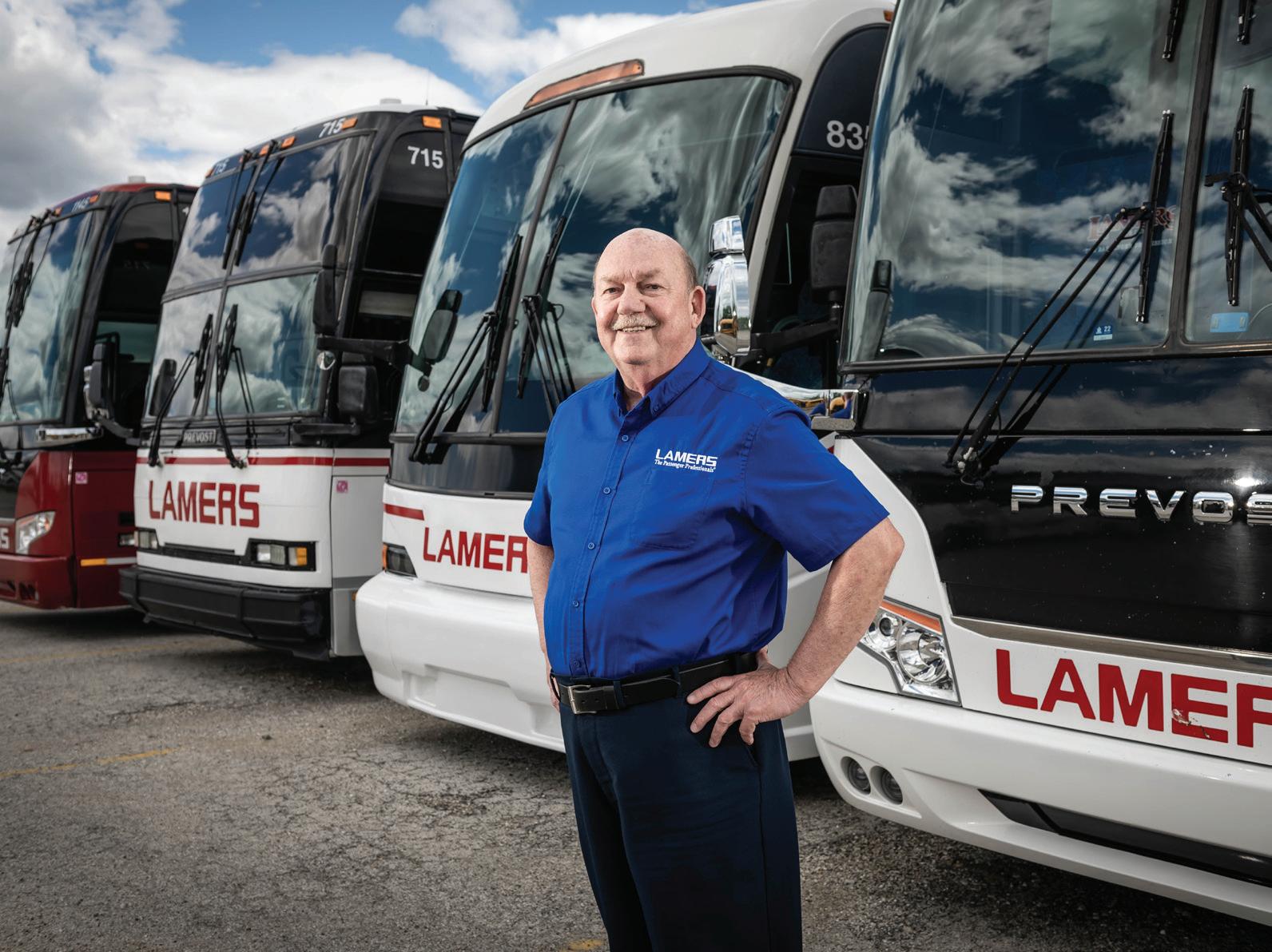
The 2024 Republican National Convention will be one of the largest events in Milwaukee’s history, and Dean Brown is ready.
Brown is the general manager of Milwaukee-based Lamers Bus Lines, which will be one of several local companies responsible for ensuring that transportation of the RNC’s estimated 50,000 guests goes smoothly. Planning for the RNC’s complicated transportation logistics started more than a year ago, Brown said, and has included everything from getting the company’s 120 buses in tiptop shape to applying for security credentials for the company’s entire staff.
“I’ve been sitting at this desk for 39 years,” Brown said. “I’ve been here for a long time, and these are the things I live for. The big, high-profile events are my expertise.”
Organizers say that it will require roughly 400 buses, shuttles and golf carts to pull off the RNC, and about one-third of those will be supplied by local vendors, including Lamers, Oak Creek-based Go Riteway Transportation Group and Oak Creekbased KB Excursions.
Lamers estimates around 35 of its coaches will be in use for the RNC, while Go Riteway is setting aside 45 coaches.
In addition to coaches, Go Riteway is budgeting to use several of its vans, SUVs and sedans for
smaller groups and one-off trips, according to Brad Wallace, Go Riteway’s director of sales and marketing. The company is even bringing in a few coaches from its subsidiaries in Indiana and Michigan.
While a bulk of Go Riteway’s RNC-related business is contracted directly by the RNC’s transportation broker, Maryland-based Transportation Management Services, the company has also set aside some of its vehicles for groups that need transportation outside of the convention’s afternoon and evening hours. For security purposes, most vehicles travelling into the highly secured RNC venue complex – which includes Fiserv Forum as the primary venue, along with the Baird Center and UW-Milwaukee Panther Arena – will be parked there during non-convention hours.
“There are some delegations that want to go to Lake Geneva or the Harley-Davidson Museum … and they’ve contacted us directly,” Wallace said. “That was really an outgrowth of the RNC vendor show last year where we established contact with some of these delegations.”
Although both Go Riteway and Lamers have dedicated a significant chunk of their commercial fleets to the RNC, both said they will still be working with other clients this July.
For instance, Lamers’ buses will be circulating throughout the region for the National Eucharistic
Congress, which will draw an estimated 80,000 visitors to Indianapolis the same week as the RNC in Milwaukee. Lamers will also have several buses running between northern Illinois and northern Wisconsin for summer camps during those weeks.
“That’s the business that’s there year after year, so even when a group comes in that’s highly important and you want to do everything in the world to get them, you still have to keep your regular customers in mind,” Brown said.
“There’s definitely a lot more business this July than normal, the RNC is a one-time event, so we definitely wanted to make sure that we get our unfair share of what’s available,” Wallace said.
Between regular summer business and the additional business provided by the RNC, Lamers and Go Riteway are anticipating they will be at full capacity during the RNC, plus a few days on each end, with very few – if any – vehicles parked on lots.
As specific transportation assignments aren’t typically given until closer to the convention date for security reasons, both companies are getting everything they can done ahead of time.
“You don’t want to have breakdowns, you don’t want to have issues with any group, but when you have a high-profile group, you’re on the main stage and you want to have your best foot forward,” Brown said.
Further, as driver shortages plague the group transportation industry nationally, Lamers and Go Riteway are beefing up their part-time staff during July.
“Everybody’s been notified, no days off, things of that sort,” Brown said. “There’s a very serious driver shortage in this country, so it makes the larger events harder to handle than what they were even a few short years ago.”
In an industry that’s still recovering from the pandemic, Brown and Wallace agree the RNC is a welcome boost. While an initial slowdown in the travel industry held the group transportation industry back in the immediate aftermath of the pandemic, staffing-related challenges have made a full recovery difficult.
“The RNC is going to be a shot in the arm for the industry without a doubt,” Brown said.
However, being at capacity isn’t rare for many of southeastern Wisconsin’s bus companies. Wallace said Go Riteway has been at capacity already this year, but Brown said business for Lamers is slower than pre-pandemic, making the RNC an opportunity to woo new customers.
“Many of the people on our buses or in our SUVs have never been to Milwaukee before, so we’re focused on making sure all of our groups are greeted with our ‘Wisconsin nice’ and come back either for leisure or corporate travel,” Wallace said. “When Milwaukee looks attractive for future visitors, that’s going to benefit us in corporate travel, group travel, leisure trips, so we’re looking at this as a four-day commercial for Milwaukee.”
From barn parties to podcasting
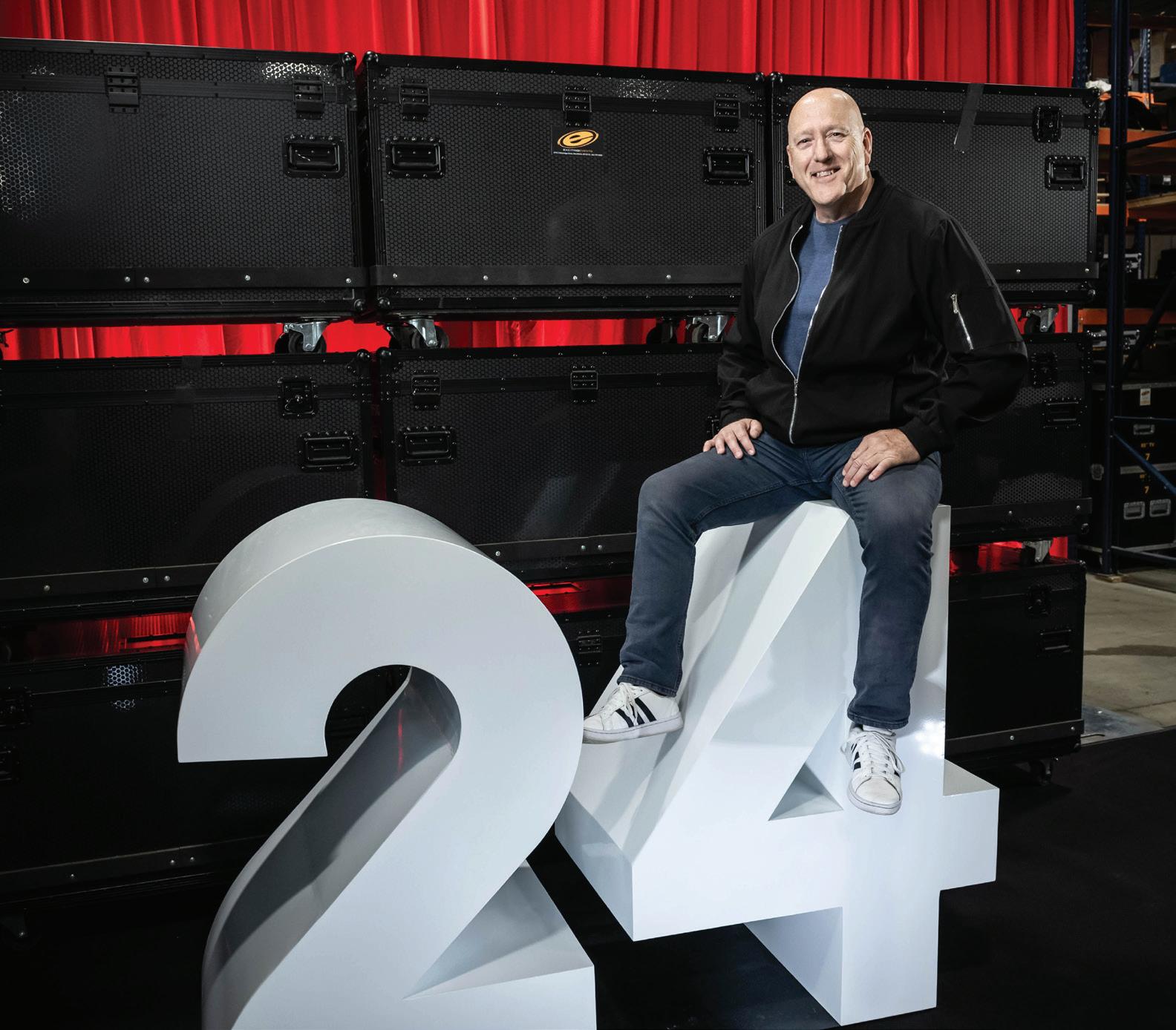
Berlin-based Exciting Events to produce array of events for RNC groups
BY CARA SPOTO, staff writer
If you’ve ever been to a Bucks game and seen a handmade gatling gun send a sausage rocketing towards the stands, then you are familiar with the work of Exciting Events.
While the aptly named “Bratzooka” is the creation of Exciting Events subsidiary FX in Motion, the parent company is known for no less dizzying production skills.
In addition to creating fanatically fun gear for sports teams, the New Berlin-based event production company puts on dozens of events across the state and country on an annual basis, including a bevy of galas and seven different national ballroom dance competitions.
This July – in addition to handling its typical seven to eight events per week – the business is in the running to put on around a dozen events related to the 2024 Republican National Convention, which is expected to draw more than 50,000 delegates, media professionals and politicos to Milwaukee.
As of press time, Exciting Events has signed on to produce a fundraising fair at Malchine Farms in Waterford for Washington D.C.-based political strategy and fundraising firm WinCo Fundraising LLC and has been contracted to create a custom podcasting and radio broadcasting booth for iHeart Radio at UW-Milwaukee Panther Arena, where much of the 15,000 members of the media covering the RNC will be stationed.
For the farm fair, the company will be doing traditional decor, audio/video production, lighting, custom graphics and a stage set.
Spanning 60 feet long and 20 feet deep, the iHeart Radio booth will feature several designated podcasting/radio broadcasting areas: one three-person desk in the center for iHeart-branded content and two spaces on either side for affiliated radio stations, said Todd Scheel, president, chief executive officer and founder of Exciting Events.
“So, at some point there could be five podcasts all going on at the same time in this one booth,” said Scheel.
Exciting Events is also in talks with The Washington Post to turn DOC’s Smokehouse, located at 754 Vel R. Phillips Ave., into its operating hub for the convention.
“We’re putting graphics on every window in this space and building a custom stage set where sponsors’ logos can be pulled on and off, depending upon what podcasts they’re doing,” Scheel said.
“The cool thing about that is the owner of the bar was like ‘just do whatever you want.’ He’s allowing us to come in and take all his branding off the windows and put up the other branding. So, we’re taking care of him – doing a couple of things for him on the side – and he’s taking care of us. And at that point there, when you got people willing to do that, it’s like, ‘Yep, we’re taking that job all day long.’”
Scheel said he and his staff will be busy with plenty of RNC-related events, but not so many that the company is forced to give less attention to events for its longtime clients.
“We’re being really selective and the reason being is there’s so much opportunity and limited time and labor,” he said. “And we are busy with other regular clients, too. Things aren’t shutting down in Milwaukee, other stuff’s happening.”
Around the time of the RNC, Exciting Events is putting on a national ballroom dance competition in Las Vegas.
“That’s a client we’ve had for eight years,” said Scheel.
He said the firm had originally wanted to nail down two major contracts for the RNC, but that didn’t work out. In the end, Scheel realized that given the resources one or two larger events can eat up, it’s more advantageous to do three medium-size events instead.
The firm was also careful not to bid on work too far inside the RNC’s preliminary security zone, which would mean real headaches for covering any last-minute needs or snafus.
“There’s a ton of business to be had,” he said. “I’m more than happy with what we have, and we’re definitely going to have a full plate, but we’re making sure we’re not overpromising. We would rather deliver a great product and be happy with what we did than overpromise and be caught by security lines and not be able to produce it.”
With that in mind, Scheel and his 40 employees aren’t leaving anything to chance. In fact, the company is overstaffing for the week of the RNC.
“We call it all hands on deck. There are weekends where I’m working, my wife’s working, friends are working, employees’ friends are working,” Scheel said. “I need to overstaff … Everybody knows what it’s going to take to pull it off.”
And fortunately, the companies Exciting Events is looking to work with understand that a major political convention presents a unique situation, he said.
Typically, the event planning process requires “spending a lot of time with the client to figure out what their wants are, and it takes a while to get to the end result,” said Scheel. But for RNC-related events, there’s a much shorter timeline, so the team has had to be more forthright, asking about expectations and budget right off the bat.
“And we’ll tell you if we even want to quote the thing,” he said. “It gets to the bottom line fast.”
Overall, Scheel is happy about the way the company’s RNC business is shaping up.
“It’s going to be a busy seven to 10 days, but nothing is stacked directly on top of each other,” he said. “It’s actually been an absolute blast.”

BY MAREDITHE MEYER, staff writer
While the 2024 RNC brings the promise – and hype – of big money for the local economy, the nature of a major political convention also presents a unique set of planning and operational challenges for some businesses looking to cash in.
It’s been a bit of a waiting game for West Allis-based caterer Brazen Standard Hospitality, which so far – as of press time – has six large-scale events under contract for the week of the convention, in addition to some parties the weekend leading up to it. But only less than a month out from the July 15-18 event, the company still has another six events stuck in the proposal phase, according to chief executive officer and owner Dan Nowak.
The hope is to get those pending contracts locked in soon because, based on Brazen Standard’s current book of RNC business, the catering company has capacity for another six to 10 large-scale events and/or several small-scale events of less than 100 people.
Brazen Standard, which is the umbrella company for Tall Guy and a Grill, The Crafted Tavern and The Dessert Cart, could get its wish as it expects an influx of last-minute business to come its way in these final weeks leading up to the RNC. That timeline aligns with general sentiment and forewarning Nowak received from some Cleveland business owners about the experience hosting the 2016 RNC: “Be prepared to get inundated with requests
four to six weeks out.”
Nowak noted there’s been a lot of feet dragging and “tire kicking” by some of the out-of-town groups, such as state delegations and media outlets, in finalizing event bookings – not only with his company, but also with other caterers and venue operators he’s talked to recently.
For example, Brazen Standard will send out a proposal, the potential client will initially respond with something to the effect of, ‘This looks great, we’ll get back to you,’ and then the caterer won’t hear from the group for weeks.
That’s how things have played out with one potential client – a major news network – who is in talks with Brazen Standard for a large-scale event at a venue near Fiserv Forum’s public plaza. Nowak, who declined to disclose the name of the network or the venue, is confident his business will land that booking, but “until they actually sign our contract, we’re going through all the motions of being ready for it.” That includes obtaining the appropriate clearance to enter the secure perimeter where the venue is located.
Prepping for a slate of RNC events – both contracted and pending – also means wrangling a team of 25-30 full-time and 70-80 part-time employees. Nowak said staff were scheduled for RNC week well in advance, based on the maximum number of events Brazen Standard could theoret-
ically handle in a given day. And management has stayed in constant communication with the team as bookings have come in.
“We’ve got everything charted out behind the scenes because that’s just the nature of what we do in the event industry,” Nowak said. “We’re constantly scheduling staff out a month or two ahead of time because we have to, because we’re doing like six to eight, nine weddings in a weekend, and that’s a lot of trucks, it’s a lot of food, it’s a lot staff that’s moving to and from everywhere.”
Not all of Brazen Standard’s RNC bookings have come in so last minute. The caterer was booked months ago by some local banks and law firms that are convening groups of politicians, elected officials and other dignitaries – mainly for evening cocktail receptions – the week of the convention.
Of course, any business is better than no business, and Nowak is pleased with the RNC-related bookings Brazen Standard has procured so far. Plus, it’s an opportunity to increase brand awareness with local venues as well as local party guests who might be in the market for an event caterer.
However, for a mid-sized metro like Milwaukee, there’s a trade-off for hosting an event like the RNC – one that, for all intents and purposes, is large enough to take over much of the city for a week in the middle of summer. The tradeoff is all the other events, like weddings and corporate picnics, that would have otherwise been booked around that time.
“I think wedding business is probably about a third of what it normally is for us, just because people just weren’t booking downtown,” said Nowak. “All the venues were setting aside their space for the RNC and people naturally, when they were planning their weddings and events, probably stayed away from those two weekends.”
It should come as no surprise that nightly rates for the few hotel rooms still available in the metro Milwaukee area during the week of the RNC are up to six times more expensive than a normal summer week. However, operators of short-term rentals, such as Airbnb, as well as boutique hotels in the area are wondering whether they’ll see the same kind of financial windfall as many of the larger hotel properties in the region.
That’s according to Daniel Cruz, co-founder of Milwaukee-based washbnb, which provides linen and laundry services for short-term rental owners, property managers and Airbnb hosts. Based on recent conversations with local washbnb clients, Cruz said there’s a “fair amount of disappointment” about lower-than-expected levels of bookings for RNC week.
“I think many people are sort of worried that they’re just not even going to have the standard type of week that they would have in July without the RNC coming,” said Cruz.
He’s seen this scenario play out before with other highly anticipated large-scale events in different cities. A homeowner thinks they’re going to “get rich quick” by vacating their property and renting it out for tens of thousands of dollars.
“But generally, that just isn’t the case,” said Cruz. “It’s the experienced operators and the people that are well connected with this convention that seem to be the beneficiaries as opposed to the neighborhood businesses and the local businesses that I’m seeing.”
Cruz has a unique perspective not only as the operator of a business who services short-term rentals, but also as the owner of a rental property himself. His three-story luxury duplex in Milwaukee’s Walker’s Point neighborhood sleeps up to 16 people between its two separate units – ideal for large groups, such as bachelorettes and wedding parties. Cruz has also rented it
BY ANDREW WEILAND, editor
The 2024 Republican National Convention will be one of the biggest events in Milwaukee’s history and probably the most high-profile event that the city has ever hosted.
The same things were said about the 2020 Democratic National Convention until the COVID-19 pandemic turned it into a virtual event. Joe Biden didn’t even come to Milwaukee to accept his party’s nomination.
The 2024 RNC gives Milwaukee a do-over, providing the city another chance to shine on the biggest of political stages. While the public’s main focus will be on convention activity, the nation and the world will also see that it’s happening here. About 15,000 members of the local, regional, national and international media are expected to
cover the RNC, which will expose Milwaukee to a massive global audience.
That represents a huge opportunity for Milwaukee. But it’s also a big challenge, and a major risk.
The most obvious benefit to Milwaukee for hosting the RNC is that thousands of people will come here and spend money at hotels and restaurants. Visit Milwaukee says the expected economic impact of the RNC on the Milwaukee area, including direct, indirect and induced spending, is $200 million. Such economic impact estimates are always dubious, but it’s certainly fair to say that the RNC’s economic impact will indeed be significant. The RNC estimates that 50,000 attendees will be in Milwaukee on peak convention days, including
out to groups in town for Northwestern Mutual’s annual conference, which takes place this year July 20-23.
Before the 2020 Democratic National Convention was scaled back to an all-virtual event, the property was contracted by a major media company that had planned to host special events and evening gatherings in the upper-level common space, while sleeping some of its staff in the lower-level bedrooms.
Cruz hoped to land a similar booking for the week of the RNC, but the property – as of press time – remains available. It’s currently listed on Airbnb for $5,000 a night, which is up from a usual mid-July rate of $2,000 a night. He initially tried to rent it out privately, through outreach to RNC organizers and state delegations, but to no avail.
The weekends before and after the convention are also still open.
“If I don’t book those, it would actually be the first weekend dates since 2016 that would not be booked at this place,” said Cruz.
He said fewer weddings booked on those two weekends – due to the RNC – is probably a huge contributor. Wedding-related groups generate about 60% of bookings at the property.
“Not having that business around just for that week or stretch of weeks impacts everybody else that has to play in the space of hosting, hospitality,” said Cruz. “If we’re not necessarily connected to the convention, then other business is harder to come by.”
Still, he remains hopeful the property will get booked; it might just mean lowering the price to its normal rate.
delegates, family members of delegates, corporate sponsors and members of interest groups.
Besides hotels and restaurants, there are many businesses from other less obvious industries that will benefit from the RNC. We have profiled some of them in this special section.
It’s highly unusual for a city and metro area the size of Milwaukee to host a national political convention. Milwaukee is only the 40th largest metro area in the nation, according to the U.S. Census Bureau. The three previous RNC sites were Charlotte, Cleveland and Tampa. Those are not huge metros like New York or Chicago, but they are all larger than metro Milwaukee.
Therein lies the challenge for Milwaukee. Can a metro area of our size pull off a massive event like
the RNC? Will the city’s hotel inventory, ancillary event venues, restaurant scene and transportation infrastructure be sufficient to make the RNC a success logistically? Milwaukee is used to hosting big events like Summerfest, the Wisconsin State Fair and the Harley-Davidson Homecoming Festival. But a national political convention is different. It brings an incredible number of high-profile people and a massive security requirement. Most of the western half of downtown will be within a tightly controlled security area.
If the logistics don’t go well during the RNC, Milwaukee could end up embarrassed looking out of its league.
However, if the event does go smoothly, the RNC could be a springboard for Milwaukee to grow its tourism and hospitality industry. While Wisconsin is often thought of as the frozen tundra, it’s usually wonderful during the summer. If the weather cooperates, thousands of people, including journalists from all over the nation and the world, will get an impression of Milwaukee that will be shared exponentially with others. It’s a tremendous opportunity for Milwaukee to raise its brand image.
Many outside of Milwaukee became familiar with Fiserv Forum, the main venue for the RNC, and its surrounding Deer District during the 2021
NBA Finals. A national television audience saw massive crowds in downtown Milwaukee celebrating the Bucks championship. Milwaukee looked like a pretty fun place to be.
Now, downtown’s newest jewel is the Baird Center, with a recently completed $456 million expansion. The RNC is the perfect opportunity to show off the city’s new and improved convention center and help attract more conventions to Milwaukee. While not considered a top convention destination, Milwaukee’s central location and affordability relative to other big cities give it some key advantages that – combined with a larger, upgraded convention center – could make it extremely competitive with other cities trying to host big events.
But will all the visitors coming to the RNC really like it here? Will Milwaukee make a strong impression on them, or will the city get bad reviews? In particular, what will the media say about the city? Some here haven’t forgotten the 2002 Major League Baseball All-Star game in Milwaukee, a debacle that ended in a tie game and with Sports Illustrated reporter Tom Verducci bashing the city, writing “Keep the (All-Star) game out of Milwaukee… Milwaukee might be equipped to host porcelain bathroom fixture conventions, but an All-Star Game? Forget it.”
Milwaukee has changed a lot since 2002 and in many ways is far more cosmopolitan. Hopefully it makes a stronger impression on the media covering the 2024 RNC and on all who attend.
But the RNC isn’t a game. It’s a high-profile political event being held at an extremely politically charged time. Donald Trump is one of the most controversial figures in the history of American politics. He elicits strong passions from his biggest supporters and from his harshest critics. Both will have a big presence in Milwaukee during the RNC.
Hopefully the protests are peaceful and any interactions between protestors and Trump-supporters are civil. Some business owners have raised concerns about having a free speech zone for protestors at Pere Marquette Park. At the same time, the city has banned people from bringing dozens of items into the RNC security zone, but firearms will be allowed because state law prevents the city from banning them.
Allowing people to exercise their First Amendment rights while still maintaining order must be a top priority to make the RNC in Milwaukee a success.
Let’s hope things go smoothly, protests remain peaceful, the weather cooperates and Milwaukee shines in the spotlight of the RNC. ■

CEO Q&A
July 29 Issue


Feature your industry leader and share their insights and perspectives. Use this space to talk about your company’s latest news, innovations and successes.
Spacereservation:July10

HOW SHE LEADS
August 19 Issue
Highlight one of your organization’s she-roes by sharing her leadership story and communicate your company perspectives and successes in this uniquely impactful advertising section.
Space reservation: July 31



WEALTH MANAGEMENT Q&A
September 9 Issue
Share your expertise and best practices with our high-net worth readers in this special section designed to drive your success and solidify their bottom line today and in the future.
Space reservation: August 21

In a rapidly changing world, global financial perspective and capabilities aren’t very useful without personal attention and service focused on your needs. Baird’s financial professionals on three continents work together across geographic boundaries and market sectors to make the most important investment connections of all. Yours.
PRIVATE WEALTH
ASSET
INVESTMENT
PRIVATE EQUITY rwbaird.com


BY ASHLEY SMART, staff writer
WITH HOW QUICKLY artificial intelligence companies are updating their tools and reinventing themselves, it can be hard for businesses to keep up with the latest trends. In the past year, ChatGPT has moved on to its latest iteration with GPT-4o, Google came out with its large language model, called Gemini, and Microsoft unveiled its Copilot tool, touted as an “everyday” AI companion.
Tech giants aren’t the only companies constantly reinventing their AI tools and approach to using the technology. In Wisconsin, several smaller companies have discovered their own niche within the AI market. Here are ways some local companies are currently using AI.
In March, Brookfield-based global talent acquisition company Cielo unveiled a generative AI tool, called CLO.ai, which can be used to speed up and improve the hiring process.
Using large language models and relevant data sets, including job ads and resumes, CLO.ai analyzes themes and gaps to move swiftly through the hiring process. The tool and prompts are designed with input from Cielo’s equality, diversity and inclusion experts. It syncs to an organization’s tone of voice, matches DEI guidelines and other hiring policies while protecting a candidate’s private information.
“We’ve seen GenAI revolutionize how we engage with talent, allowing us to create personalized experiences at scale,” said Rick Rosario, vice president of client services at Cielo. “This creates a more intuitive, tailored user experience and enables employers to identify top talent faster, accelerate time to fill and reduce costs. This is a safe and secure ChatGPT just for talent strategy.”
Madison-based tech startup Fetch Rewards, known for its consumer rewards app, received a patent in April for its BrandChoice Tech tool. The digital advertising technology uses artificial intelligence and machine learning, along with consumer purchase data and predictive models, to automate campaign testing and optimization.
The technology aims to improve “the performance of advertising campaigns by matching the right ads with the right audiences at the right time, ensuring marketing dollars are spent wisely,” the company said in a news release.
“There’s enormous potential for applications of AI and ML in the advertising technology industry,” said Wade Bruce, chief technology officer at Fetch. “Fetch is leading the charge, with solutions that transform how brands connect with their audiences and unleash new levels of efficiency in advertising.”
Milwaukee-based consulting services firm 7Rivers has created an AI “agent,” dubbed Marcos, which helps the business create sales pitches and dossiers on prospective clients.
Using the name and likeness of a fishing guide he met on a trip to Argentina, 7Rivers founder and CEO Paul Stillmank compiled six pictures of the real-life Marcos to create the AI agent. Then, using a series of interviews with his Argentinian acquaintances, Stillmank was able to create a realistic English-speaking voice with an Argentinian accent.
Marcos pulls information from all of 7Rivers’ existing files and databases as well as the internet’s public domain, allowing existing dossiers to

be updated with any pertinent news or events.
“Marcos does sales research and sales account training – preparedness,” said Stillmank. “Marcos builds sales call plans and creates proposals. He generates MPS files that you can listen to on your way to a sales call. That’s how everyone needs to be thinking about marketing automation.”
Users can speak to Marcos as if he were a real human. The AI tool has been trained by the 7Rivers team over the past eight months. New versions of Marcos can also be adapted for use within a client’s business.
AI AVATARS IN HOLLYWOOD, HEALTH CARE
Milwaukee-based tech startup CodeBaby, which creates digital avatars for use in various industries, has integrated several large language models into its technology, including ChatGPT, Gemini and Amazon’s Bedrock.
CodeBaby is working with multiple medical and nursing schools in the U.S. and abroad to build AI tutors, which will be used to help students study for exams. The avatars can record information about how a student is learning, or if there are certain subject areas in which they lack understanding. The next step for CodeBaby would be to bring its technology into a hospital setting.
“We’re working with some of the same schools to put together avatars that reflect certain patient diseases or conditions,” said Norrie Daroga, CEO of CodeBaby. “Students are able to interview that avatar.”
An unexpected field using CodeBaby’s avatars is the entertainment industry. Through a partnership with California-based Proto Hologram, CodeBaby is helping create holographic look-a-likes of celebrities. The avatars are used for events like concerts and meet-and-greets.
“We also do different-looking, space-type robotic characters that clients might want for TV shows,” said Daroga. ■

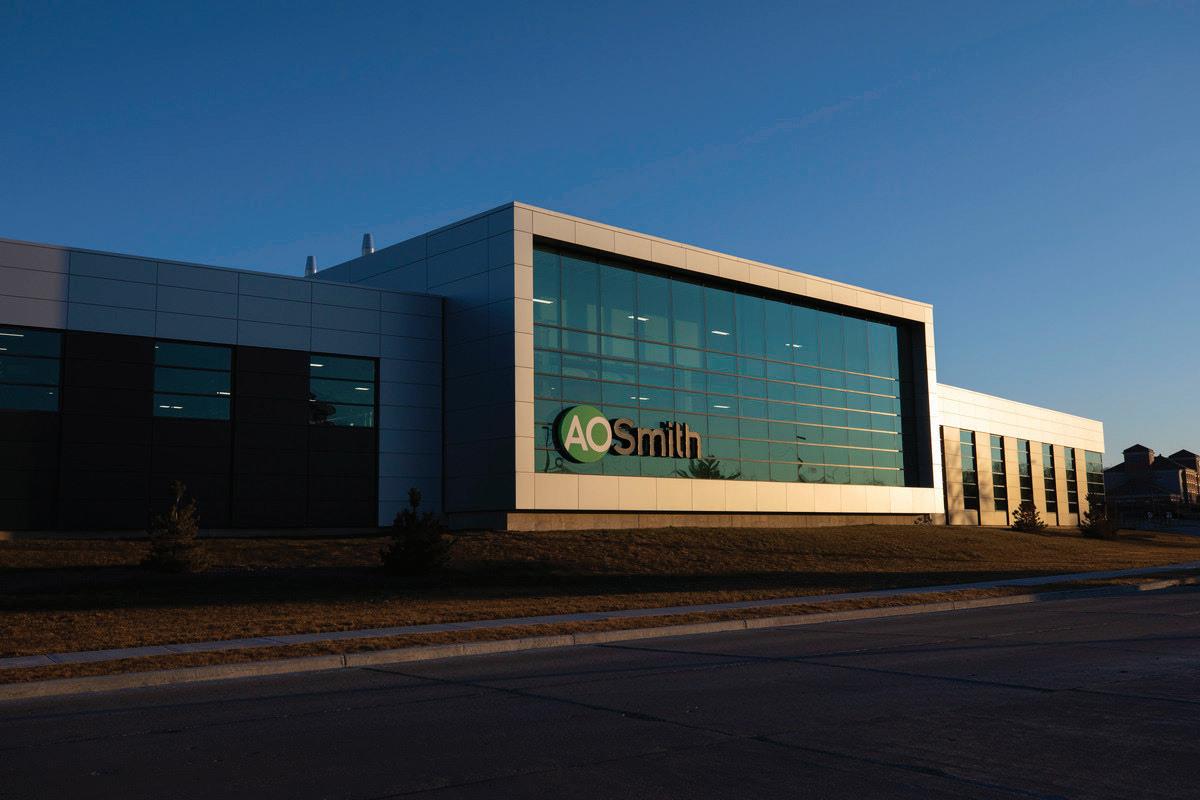

Innovation means different things to different organizations, but at A. O. Smith, it has been the common thread that has allowed us to thrive as a company for 150 years.
What began as a small Milwaukee-based machine shop in 1874 has evolved into a leading global water technology company committed to improving the lives of our customers by ensuring access to clean, safe, hot water.

In the late 1800s, business was good for a man skilled in metalwork, and our founder Charles Jeremiah Smith grew to become a major supplier of metal components for manufacturers of baby carriages and bicycles. Charles’ sons later joined the business and during the automotive revolution, grew it to become the leading supplier of steel car frames in the U.S.
In 1921, A. O. Smith invented the “Mechanical Marvel,” the world’s first fully automated automobile frame assembly plant, capable of making 10,000 frames per day. By the mid-1930s, A. O. Smith engineers perfected the process of fusing glass to steel, leading to a series of new, glass-lined products including beer kegs, brewing tanks and eventually, residential water heaters.
In the decades that followed, the business continued to grow at breakneck speed, adding new locations and entering new industries. In each case, it brought along the A. O. Smith values: doing business with honesty and
integrity in a workplace environment of mutual respect and dignity.
In 2011, A. O. Smith sold its electric motor business and embarked on a strategy to become a leading global water technology company. This vision for the future grew through acquisitions of commercial and residential water heater and boiler manufacturers and water treatment experts.
When it comes to water heating and water treatment, A. O. Smith strives to stay in tune with trends, the needs of the customer and the broader market.
The company focuses heavily on innovation and solving problems in a new way. As energy efficiency demands and water quality challenges continue to evolve, A. O. Smith will work to provide solutions.
It’s who A. O. Smith is as a company – taking our engineering minds and solving problems in a better way, in a way that can be scaled and drives cost efficiency, so our products have broader adoption in the marketplace. Our tagline is A. O. Smith: Innovation has a name, and that’s what drives us.
With a focus on new product development, technology upgrades, strategic acquisitions and partnerships, A. O. Smith will continue to have a presence wherever water flows. n
BY ARTHUR THOMAS, staff writer
RESEARCH AND DEVELOPMENT work at universities plays a critical role in Wisconsin’s economy. Researchers can bring dollars to the state that might have otherwise gone elsewhere. Their work can advance foundational understanding in key areas or they can partner with businesses to drive innovation. In some cases, researchers may be able to parlay their work into a business of their own, potentially benefiting the university through licensing and creating jobs in the process.
Data from the National Science Foundation offers insight into how much universities spend on R&D, where money comes from and where it’s spent. BizTimes compiled data on the University of Wisconsin-Madison and four southeastern Wisconsin institutions with available data – the University of Wisconsin-Milwaukee, the Medical College of Wisconsin, Marquette University and Milwaukee School of Engineering – to get a better picture of the R&D work being done in the state.
The data generally represents 2022 figures, the most recent figures available.
A decade ago, UW-Madison ranked third in the country for research and development spending. However, the university slipped to eighth by 2018 and has maintained that ranking over the past five years. UW spent $1.52 billion on R&D in 2022. UW-Milwaukee was as high as 161st in 2010 but has slipped outside the top 200 with $57 million in 2022. The Medical College of Wisconsin was 92nd a decade ago before slipping outside the top 100. MCW has climbed back to 91st as of 2022 with $322 million in spending. Marquette has climbed from 285th in 2010 to reach 230th as of 2022 with $41 million spent. MSOE ranked 387th in 2012 with $4.6 million in spending but has since fallen to 474th with $3.5 million as of 2022.
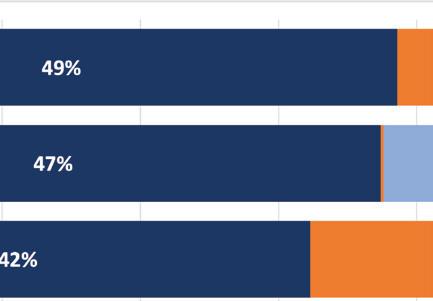
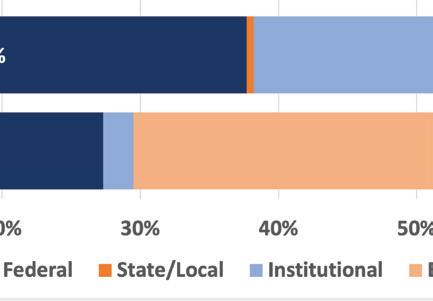
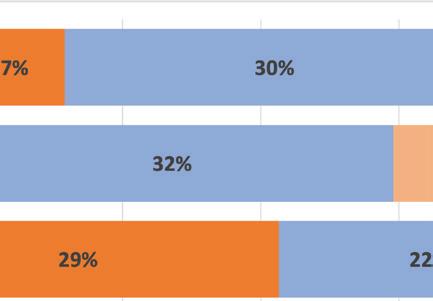
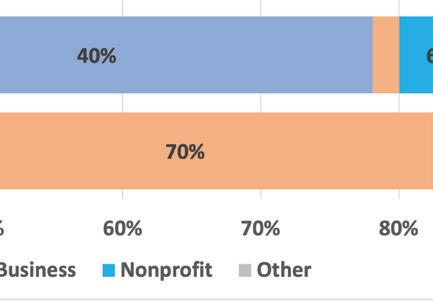
Federal funds generally make up a plurality of the research dollars at the five universities, although MSOE is an outlier with 70% of its funding coming from business. UWM also stands out with 29% of its funds coming from state and local government, while Marquette has a higher level of funding coming from institutional sources at 40%.
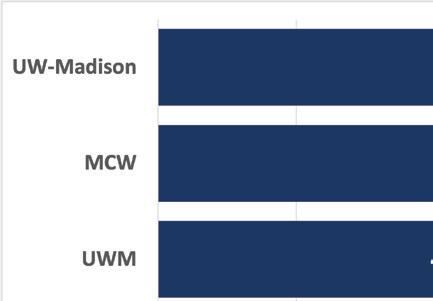
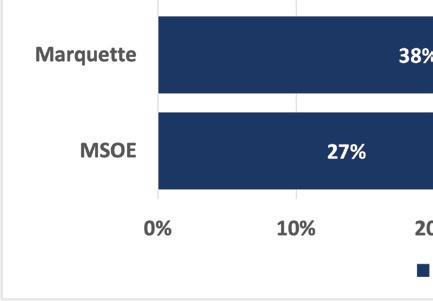
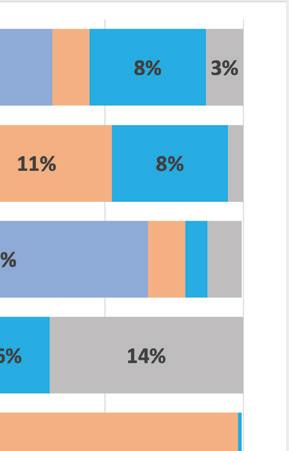
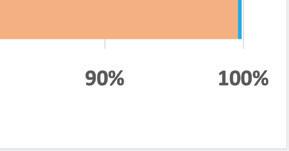
Most of the spending goes towards salaries and benefits followed by other direct costs like materials. A portion also goes to indirect costs like administrative overhead that cannot be charged to a specific research project or contract.
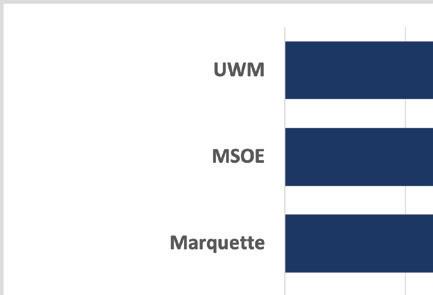
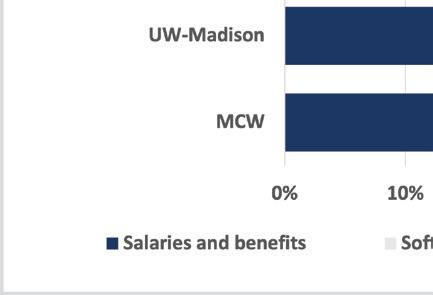
The universities also vary in the type of research they are doing. Basic research is generally done to acquire new knowledge without a particular application or use in mind. Applied research is done to meet a specific, recognized need. Experimental development is research “directed toward the production of useful materials, devises, systems or methods,” according to the National Center for Science and Engineering Statistics. It includes development of prototypes and processes.
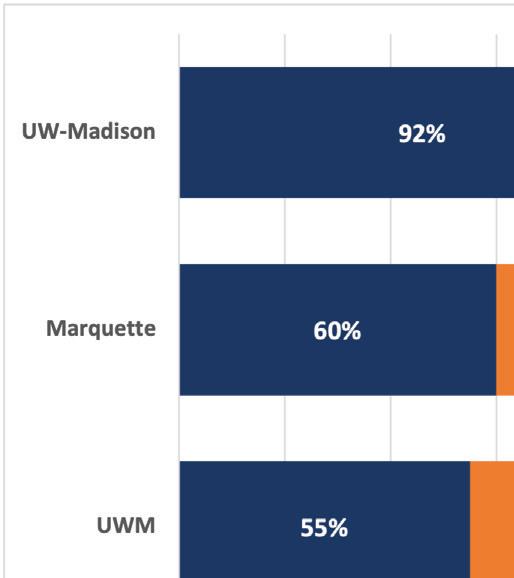
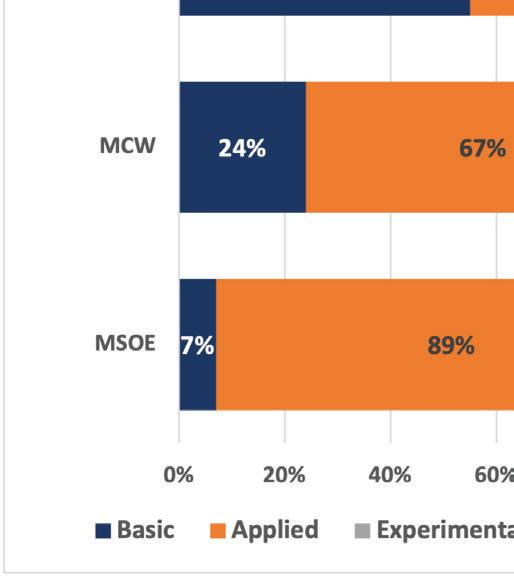
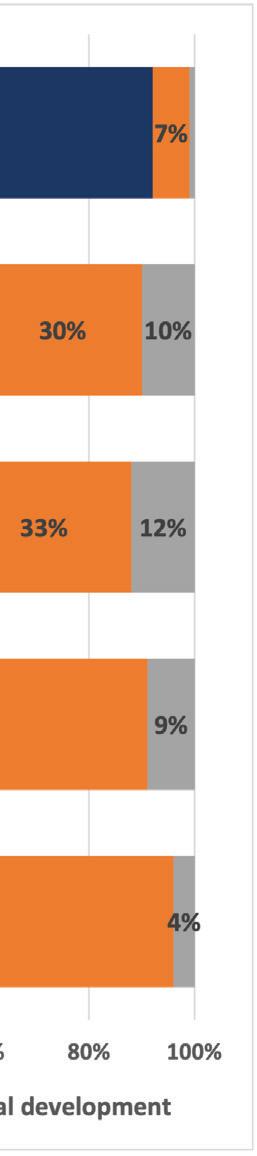
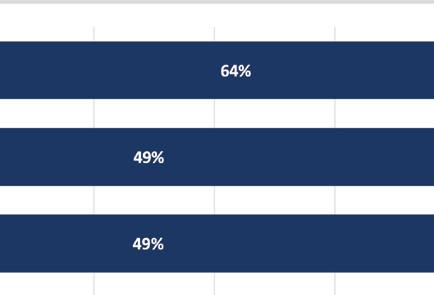
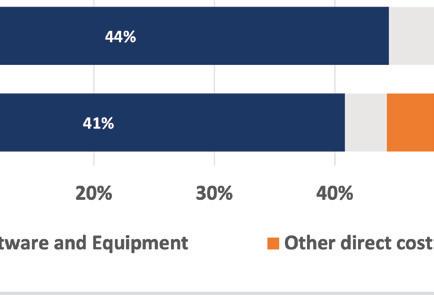
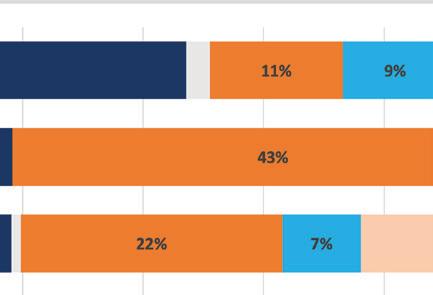
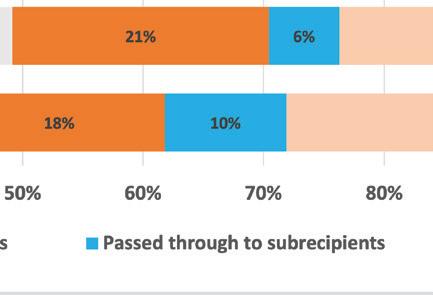
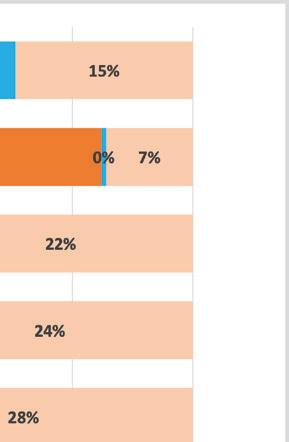
WHICH FIELDS OF STUDY RECEIVE THE MOST MONEY?
Across all five universities, life sciences fields get the most money, except for MSOE where engineering tops the list.
HOW MANY PEOPLE ARE INVOLVED WITH R&D AT EACH UNIVERSITY?
There are thousands of people involved in R&D across the five universities, including more than 14,500 at UW-Madison. However, when measured based on full-time equivalent roles, the figures are smaller with 2,470 at UW-Madison, 1,212 at MCW, 981 at UWM, 392 at Marquette and 38 at MSOE. Below is a breakdown of those of FTE roles by the percentage considered researchers, technicians and support staff. ■




















Leveraging technology for operational excellence
12:30 PM – Registration, Exhibitor Booths, Networking 1:00-2:00 PM – Concurrent Seminars 2:00-2:30 PM – Networking 2:30-5:00 PM – Main Program, Concurrent Seminars 5:00-6:30 PM – Networking Reception
Learn how to remain competitive by harnessing AI, machine learning, automation, 3D printing and more. Enhance efficiency, support your workforce, and strengthen your bottom line by attending the Next Generation Manufacturing Summit.


















































































Wisconsin companies are leading the nation in innovative research, products, solutions and services. Startups, entrepreneurs, and longstanding historic corporations that call Wisconsin home are thriving thanks to a commitment to innovative thinking. Meet the companies who are a part of the innovation culture: those fostering business growth, those daring us to dream bigger, reach farther, and work harder for the betterment of Wisconsin’s future.
CG Schmidt page 29 Inpro page 30
Northwestern Mutual Data Science Institute page 31
YOU GET OUR PRINT MAGAZINE, BUT ARE STILL MISSING OUT...
UPGRADE YOUR SUBSCRIPTION TODAY!
A BizTimes paid digital and print subscription provides unlimited access to all subscriber-only content on BizTimes.com and also includes discounts to BizTimes events.







In 1920, Charles G. Schmidt laid the foundation for a family-owned construction company known today as CG Schmidt. Four generations later, brothers President Eric Schmidt and Chief Executive Officer Rick Schmidt lead us on the continued charge towards innovation and growth.
We’re expanding as we follow our clients around the country. Our new Arizona office provides another home base to help clients pioneer their businesses in new locations, and as we grow our company, we grow our knowledge. We invest heavily in AI preconstruction management technologies, which makes us a more cost-effective builder. We also reduce construction time and minimize material waste with prefabrication (manufacturing building components in our yard before transporting them to jobsites).
Innovation isn’t always geographical or technological, sometimes it means focusing on safety at every stage of construction. We know investing time and resources into creating safe jobsites attracts the best field workers and subcontractors, while returning everyone home safely to their families.
Innovation can also mean improving the environments and communities we work in as CG Schmidt employees
volunteer over 6,500 hours annually, and 10 percent of net operating income is donated back to communities we serve. To care for our employees, CG Schmidt was the first contractor in Wisconsin to become WELL Building certified for the health and well-being of employees and visitors at both the Madison and Milwaukee offices.
Just as we aim to innovate for the clients we serve, we aim to create change in the construction industry and take pride in training the innovators of tomorrow. Our apprenticeship program makes up roughly 25 percent of our workforce, and we teach Charles Schmidt’s values of innovation, caring, integrity, no surprises, accountability, and excellence.
After 100 years of strengthening communities through construction, we continue to create innovative spaces where children prosper, families unite and grow, lives are changed through medicine, seniors are aging comfortably, businesses thrive, people gather to worship, and more.
Let’s start a conversation about your project. Reach out to Meg McKenna at meg.mckenna@cgschmidt.com or 414-758-5572.
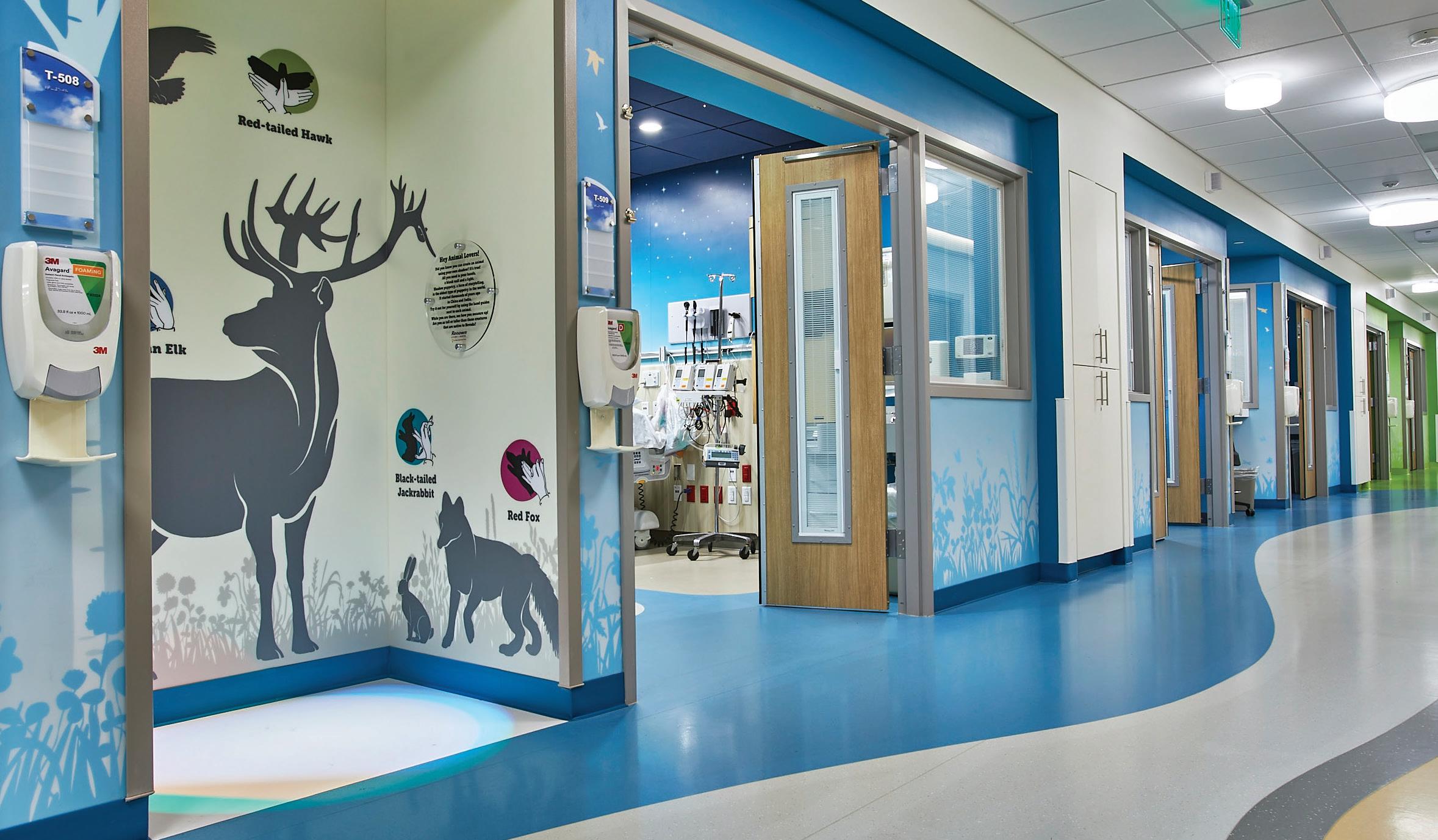
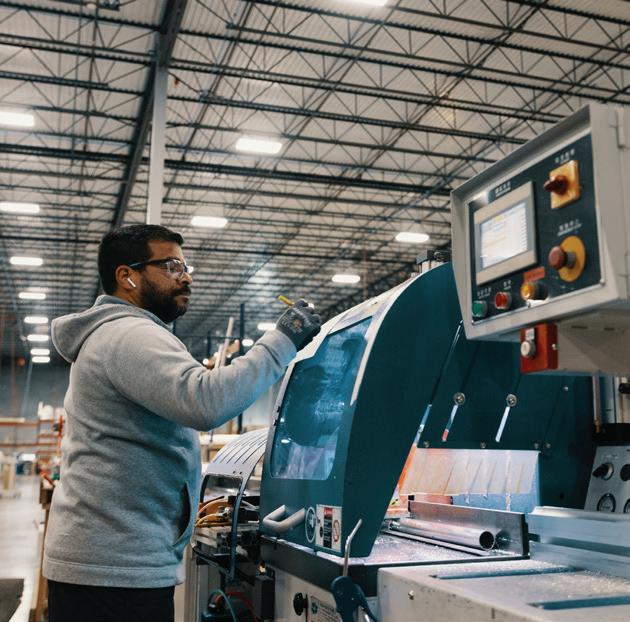
Here at Inpro, we are focused on making a difference… for our customers, in our community and for each other. This is what drives us to be innovative. Our mission is to protect buildings and the people who use them, and we take pride in every innovation we bring to the market.
Each new product release is designed to meet the evolving needs of not only our customers, but also the clients they are providing value to. Our most recent product release, the LED Lighted Handrail, provides a brand-new option for lighting in patient rooms. It provides enhanced comfort and safety, but also allows the patient more control of their environment. The product is also designed to make it easy for our customer to integrate into the building.
Innovating from within
We are always striving for excellence and continuous improvement within the organization. From a digital transformation and integrating new software for efficiency to expanding our operations with a larger distribution center, we live innovation.
Inpro was one of the first companies in the state to become a Fitwel certified company for our focus on occupant wellness and health-affecting aspects of our built environment.
With over three decades of employing Wisconsin residents, our roots are deeply embedded in the local community. In 2023, 54 percent of new hires were Wisconsin-based, showcasing our ongoing investment in local talent. Our employees logged 634 volunteer hours that same year, participating in a wide range of community service activities. From sponsoring local events to organizing drives for food, coats, toys, and school supplies, we strive to make a positive impact.
In addition to the community, we strive to make a difference for the environment. We are on track to become Net Zero Waste by 2025 and 70 percent of our products contain recycled content; plus, we have a take-back program that allows our customers to return product they bought from Inpro that would otherwise have ended up in a landfill.
Looking ahead
At Inpro, we are committed to driving progress in the industry and making a lasting difference in the communities we serve.
Join us on this journey of innovation and community service, and experience the Inpro difference for yourself. Together, we can build a better, more sustainable future.



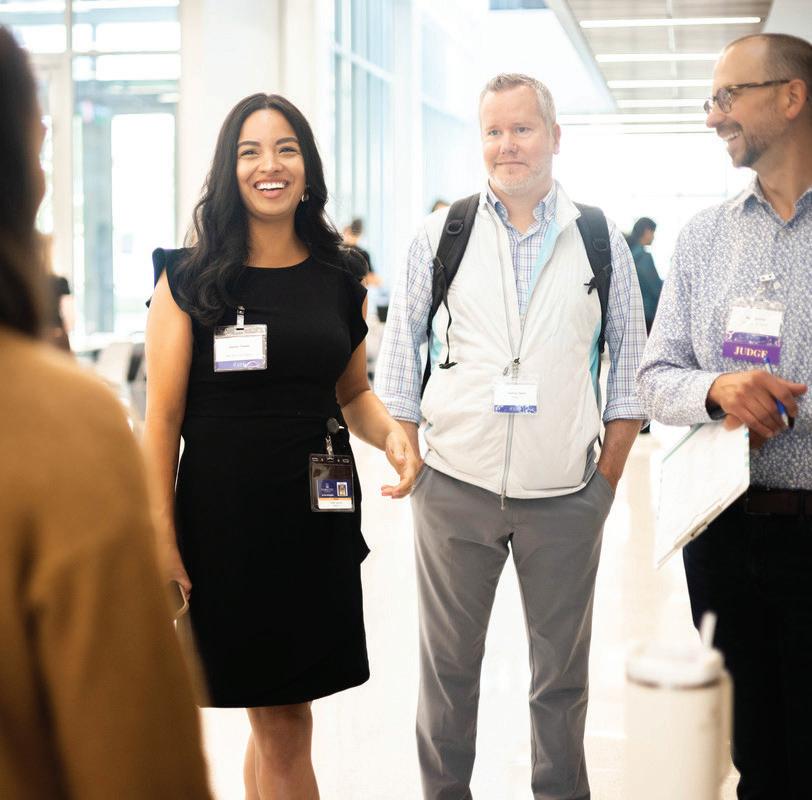
In 2018, three influential local organizations, Northwestern Mutual, Marquette University, and the University of Wisconsin-Milwaukee, united to form the Northwestern Mutual Data Science Institute (NMDSI) with a shared focus on the ever-evolving and dynamic domains of data science and AI.
Today, the NMDSI remains committed to advancing research innovation, creating education pathways, and driving community impact; our mission holds greater relevancy than ever before.
As organizations, we all recognize and contribute to Southeastern Wisconsin’s trajectory as a national hub for technology. With nearly $75 million in investments committed to date, the NMDSI continues to push the boundaries for what is possible. The institute also provides funding for an endowed professorship at each university, research projects/grants, student scholarships, new faculty recruitment, development of expanded curriculum, new degree programs, K-12 STEM and pre-college programming including internships and certificates.
we developed a new Center of Excellence (COE) initiative through which we announced three innovative programs and engagement opportunities for our university partners.
As a result, we awarded $500,000 in research dollars as part of the Paving ROADS Seed Fund Program, $100,000 on behalf of the Pioneer Curricula Program, and $175,000 for the NMDSI Student Research Scholars Program. Moreover, the NMDSI also organizes numerous events that have attracted thousands of attendees since our inception. This is only the beginning of what is possible when industry collaborates with academia.
nmdsi@northwesternmutual.com
nmdsi.org
Fostering increased collaboration and generating innovative project ideation across the institute and our community partners, our NMDSI affiliated faculty have garnered more than $17 million in grants to date. Last fall, as part of our five-year renewed investment,
I am extremely proud of how far we have come over the past six years and I am even more excited about our future. We will soon be rolling out our NMDSI Industry Affiliate Program, an opportunity to add additional partners who share in the mission of the NMDSI. In addition to our ongoing monthly speaker series, we have various upcoming engagement opportunities through the end of the year, including a Faculty AI Summit in partnership with the Higher Education Regional Alliance and a national conference focused on the ethics of AI.
Visit nmdsi.org to stay up to date on all our news/events, sign up for our newsletter, and follow us on LinkedIn.
ByJonathanStark,Ed.D.,ExecutiveDirector,NMDSI
BizTimes Milwaukee is proud to present its inaugural showcase of Notable Women in Technology, recognizing accomplished professionals who are working to keep southeastern Wisconsin on the cutting edge of technology. The individuals on the following pages were nominated by their peers and highlight the talent in the region.



METHODOLOGY: The honorees did not pay to be included. Their profiles were drawn from nomination materials. This list features only individuals for whom nominations were submitted and accepted after review by our editorial team. To qualify for the list, nominees must be based in southeastern Wisconsin, must serve in a significant role at their organization and have made measurable impact in their area of expertise.

KHOSLA PRESIDENT AND CEO MARS SOLUTIONS GROUP
Rashi Khosla founded Waukesha-based technical staffing services firm MARS Solutions Group in 2006.
Under her leadership, the company has earned several accolades, including a spot on the Inc. 5000 list and a BizTimes Media Future 50 award. Most recently, Khosla has been named Marketplace Wisconsin’s 2023 CEO of The Year and a 2024 Titan 100.
MARS Solutions Group is a certified woman-owned, minorityowned and disability-owned business enterprise. In September 2020, Khosla and her team launched the MARS Returnship Program to help women with career gaps return to the workforce through reskilling and upskilling. Khosla serves on the board for Milwaukee Tech Hub and Ronald McDonald House Charities and is a member of Tempo Wisconsin and the Women Business Collaborative advisory council. She and MARS Solutions Group are also partners with i.c.stars Milwaukee, an organization that provides technological growth opportunities for underserved communities.



ANGELA JOHNSON CISO
As chief information security officer at Children’s Wisconsin, Angela Johnson leads strategic efforts to improve security and implement new technology across the system.
Johnson is “truly a silent hero each day at Children’s,” said Tina Chang, chief executive officer of Brookfield-based information systems consulting firm SysLogic. “This role requires Angela to work across the entire organization – from physicians to parking lot facility managers – to protect Children’s digital assets and network and its people and patients.”
Johnson joined Children’s in 2017. She has 12 years of experience in information systems and security, including five years as director of information security at Baird.
“Cybersecurity is certainly growing as a major concern to society, and the strategies and techniques to protect organizations are ever-changing in complexity,” said Chang. “Angela navigates this complex world with an exceptional lens on risk management, governance, prioritization, readiness and training for Children’s – no easy task.”
PAIGE WOOD DIGITAL BRAND MANAGER IMAGE MANAGEMENT
Paige Wood, digital brand manager for Racinebased Image Management, is dedicated to fostering innovation and empowering businesses through digital solutions, according to company owner Claire Weslaski.
“Her work at Image Management, where she’s been a driving force for more than 10 years, centers on two key areas - AI advocacy and education and digital strategies,” Weslaski said.
In April, Wood sat on a panel with two professors speaking to 50 Carthage College marketing seniors through the TechPrize progam.
“This showcased her commitment to bridging the gap between academia and industry,” said Weslaski. “Paige’s pro-AI stance positions her as a thought leader who embraces the future of technology. By introducing students to the potential of AI in the workforce, she equips them with the knowledge to thrive in the evolving tech landscape.”
Wood’s professional expertise includes developing digital marketing campaigns and web designs.
“This translates to a significant impact for the hundreds of clients she assists each year. By streamlining their online presence and leveraging technology, she empowers businesses to compete effectively in the digital age,” said Weslaski.

Liz Kohler is founder and chief executive officer of Milwaukee-based Nexion Solutions, the maker of a wearable device designed to protect people – primarily women – who are in harmful situations or work in spaces of potential violence.
The mission of the company is to prevent the escalation of violence and recurring revictimization by harnessing the power of safety systems (security, law enforcement and government) and enabling a better-informed emergency response based on individual crisis events, according to Lisa Proeber, owner of Milwaukee-based The Middle Six.
“Liz started (Nexion Solutions) after losing her sister to domestic violence and taking a professional seat in victim services in the district attorney’s office in Milwaukee. There she realized violence was much more pervasive than she originally thought –and the helplessness she felt at the lack of options to protect the women and children she met with resulted in the founding of the company,” Proeber said.
Last year, Kohler partnered with Sojourner Family Peace Center and the Milwaukee County District Attorney’s Office for the first implementation of a pilot program using the new technology.
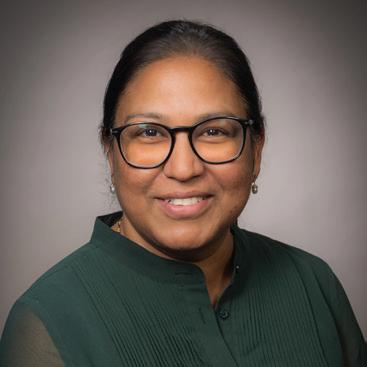
RAJANI MADETI DIRECTOR OF ENTERPRISE INFORMATION SYSTEMS
MILWAUKEE
AREA TECHNICAL COLLEGE
Colleagues say Rajani Madeti enjoys solving problems – the bigger, the better.
Madeti, who has served as director of enterprise information systems at Milwaukee Area Technical College since August 2022, is an information technology professional with more than 20 years of experience. She has a knack for identifying underlying problems and implementing technology-based solutions that enable the college to operate more efficiently, said David Rowe, chief information officer at MATC.
“Rajani fosters a greater sense of excellence and a continuous improvement mindset through her endeavors as a leader and strategic technology partner,” Rowe said.
Madeti recently led an initiative that alleviated bottlenecks and eliminated delays that were impacting MATC’s student registration process. She also led her team and departmental stakeholders through the analysis and planning efforts to modernize the college’s enterprise resource planning system and accompanying digital transformation objectives.
In addition, Madeti is fluent in several programming languages and databases and has experience supporting enterprise resource planning applications.
CHARLOTTE
BUSINESS ANALYST AND PROJECT MANAGER MILWAUKEE AREA TECHNICAL COLLEGE
Creating a new online presence that’s nice to look at, easy to use and meets the needs of thousands of students and employees takes a special kind of leader. Colleagues at MATC say Charlotte Larkin is that person.
Larkin, a business analyst and project manager in MATC’s information technology department, is managing the implementation of a new digital platform, called myMATC, that replaces the college’s current intranet website.
The new platform is scheduled to launch July 1.
“It’s a complex project that requires extensive technical insight, content management and people skills,” said David Rowe, chief information officer at MATC. “When completed, the new site will provide a greater, more dynamic and intuitive user experience to access essential information and online services for all of our students, staff and faculty.”
Larkin also has developed and improved numerous administrative MATC systems. She led an interdepartmental team that implemented technology optimization across multiple platforms to improve processes supporting the college’s recruitment and admissions departments, according to Rowe.

LENA DELAET DIRECTOR OF SALES AND SUMMERFEST TECH MILWAUKEE WORLD FESTIVAL INC.
Lena DeLaet is spearheading the continued development of Summerfest Tech, which launched in 2018 to convene business leaders and innovators and highlight Wisconsin as a tech hub.
“Lena is a tireless advocate for growing Milwaukee and tech, working to elevate Milwaukee’s tech scene. She is ‘all hands on deck,’ from sponsorships to programming and hospitality,” said Kevin Canady, vice president of sales and business development at Milwaukee World Festival, the operator of Summerfest and Summerfest Tech.
In 2023, Summerfest Tech, which is free and accessible virtually, had a 50% increase in attendance over 2022, with attendees from 31 states and 16 countries.
Under DeLaet’s leadership, Summerfest Tech sponsorships have grown 438%, registration by 1,367%, and attendees by 2,007%.
Plus, dozens of startups have benefited from the event’s annual pitch competition, collectively receiving more than $200,000 of funding for their businesses, according to Canady.
DeLaet also led Summerfest Tech initiatives at SXSW in Austin, Texas, the NFL Draft in Detroit and the NBA All-Star Game in Indianapolis.

Larkin Business Analyst, Project Manager
Madeti Director, Enterprise Information Systems

PMO MANAGER, VICE PRESIDENT
BANK FIVE NINE
Kathy Ganswindt, lead project management office manager and vice president at Oconomowoc-based Bank Five Nine, has been the go-to leader for larger projects, according to Timothy Schneider, president and chief executive officer at Bank Five Nine.
“She was instrumental in guiding the project management over multiple years on our transition to a new mobile banking product recently,” Schneider said.
The two-and-a-half-year process was finalized in March of 2024 largely thanks to Ganswindt’s “patient and meticulous guidance,” Schneider added.
Ganswindt, who’s been with Bank Five Nine (formerly known as First Bank Financial Centre) for three decades, received the company’s Excellence in Mentorship award as part of its annual President’s Awards.
“BFN is proud to have Kathy as a strong leader at the bank,” Schneider said. “Kathy is a tremendous asset to Bank Five Nine and we would not have seen growth and success without her contributions.”
JOHNSON
Fernanda Reikdal Lima, director of IT operations global manufacturing at Glendale-based Johnson Controls, oversees IT operations for more than 100 manufacturing and engineering sites worldwide.
She has 23 years of experience in IT, starting from a new manufacturing site in Brazil and advancing to various leadership roles, such as IT manager for Brazil, IT director for Latin America, and IT director for global products, managing a global team of IT professionals.
In these roles, she has led IT initiatives such as ERP implementations, data center migrations, cloud transformations and cybersecurity enhancements. She also leads the UNIDOS business resource group and mentors other women in technology. She organizes events and activities to promote cultural awareness, professional development and networking opportunities for the BRG members and the wider organization.
In addition to her professional commitments, Lima initiated a program to provide weekend food assistance to underprivileged children at Milwaukee’s United Community Center and volunteers at Bruce-Guadalupe Community School during their career day to talk about cybersecurity and her role at Johnson Controls.

LAURIE PANELLA CHIEF INFORMATION OFFICER
MARQUETTE UNIVERSITY
Laurie Panella, chief information officer, leads the information technology services department at Marquette University in Milwaukee.
The department is responsible for developing and implementing the university’s technology strategy and leading the IT services that support academic and administrative computing, including classroom and instructional technology, administrative systems, application development, network infrastructure, cybersecurity, data analytics, support services and telecommunications.
“Laurie has been instrumental in evolving both the culture and perception of her department from a back-end office function to a strategic partner of the university,” said Joel Pogodzinski, executive vice president and chief operating officer at Marquette. Panella joined Marquette in 2019. She was instrumental in helping the university temporarily move its classes online in the wake of the COVID-19 pandemic.
“Under her leadership, Marquette’s IT services has brought added sophistication and rigor to the university’s cybersecurity infrastructure amid an era of increased risk,” said Pogodzinski. “As Laurie often puts it, ‘If you build a five-story building, the cybercriminals are building a six-story ladder.’”




ABBY KURSEL PARTNER
GENER8TOR
Abby Kursel, partner at gener8tor, joined the company in 2013 as its first employee and rose to the position of partner in 2019.
As one of seven partners, Kursel oversees a company of 120-plus full-time employees across 46 cities, 22 states and three countries.
“Abby is a lighthouse,” said Troy Vosseller, co-founder of gener8tor. “The Milwaukee/Wisconsin/United States entrepreneurial community would not be what it is without her contributions.”
Kursel – with fellow partner Maggie Brickerman – helped create gener8tor’s gBETA accelerator program for startups with local roots. They have gone on to lead gener8tor’s nationally ranked investment accelerator.
“Under (their) leadership, gener8tor’s 1,400-plus startup alumni have gone on to cumulatively raise more than $2 billion in followon venture capital and employ more than 11,000 people,” said Vosseller. “Notable Milwaukee gener8tor alumni include Fiveable, The Way Out, GenoPalate and Bright Cellars.”

MAGGIE BRICKERMAN PARTNER
GENER8TOR
Maggie Brickerman joined gener8tor in 2014 as the company’s second employee. She is now one of seven partners at gener8tor, which has 120-plus full-time employees across 46 cities, 22 states and three countries.
Prior to gener8tor, Brickerman spent 10 years working in Wisconsin politics.
Brickerman is an entrepreneur and a leader, according to Troy Vosseller, co-founder of gener8tor.
“The Milwaukee/Wisconsin/United States entrepreneurial community would not be what it is without the contributions of Maggie,” said Vosseller.
Bickerman – with fellow partner Abby Kursel – helped create gener8tor’s gBETA accelerator program for startups with local roots. They have gone on to lead gener8tor’s nationally ranked investment accelerator.
“Under (their) leadership, gener8tor’s 1,400-plus startup alumni have gone on to cumulatively raise more than $2 billion in followon venture capital and employ more than 11,000 people,” said Vosseller. “Notable Milwaukee gener8tor alumni include Fiveable, The Way Out, GenoPalate and Bright Cellars.”



Keep up with BizTimes’ 2024 roundup of the leaders making a difference throughout southeast Wisconsin.
At companies across southeast Wisconsin, notable executives are running businesses, navigating company restructurings, serving on boards, running marketing departments, and investing in growth throughout the region. The notable individuals profiled in these categories are nominated by their peers at work and in the community.




















Celebrating those professionals who help Milwaukee businesses tell their stories.
Nomination Deadline: July 12, 2024
Issue Date: August 19, 2024
Look for these Notable nominations in 2024!
Notable Women in Wealth Management
Nomination deadline: August 2, 2024 | Issue date: September 9, 2024
Notable Women in Manufacturing
Nomination deadline: August 30, 2024 | Issue date: October 7, 2024
Notable Veterans Executives
Nomination deadline: October 4, 2024 | Issue date: November 11, 2024
Notable Health Care Leaders
Nomination deadline: November 1, 2024 | Issue date: December 9, 2024








IN RECENT YEARS, two interconnected trends have reshaped workplace dynamics, influencing both organizational culture and productivity: quiet quitting and resenteeism. While quiet quitting became a well-known concept after going viral in 2021, resenteeism is still relatively unfamiliar to many. Although both trends represent forms of employee disengagement, they manifest in different ways.
Quiet quitting involves employees withdrawing their extra efforts and only doing what their job requires, without openly expressing their discontent. This form of silent disengagement can fly under the radar, as these employees might still meet their basic job requirements but cease to engage more deeply with the organization’s goals and culture.
Resenteeism, by contrast, occurs when employees continue to stay in their roles despite feeling undervalued, disengaged and dissatisfied. Unlike quiet quitting, resenteeism involves a vocal and visible form of dissatisfaction. This could lead to a toxic work atmosphere, in which open frustration and negativity not only decrease individual productivity but also impact team morale and the broader organizational culture.
Addressing resenteeism is challenging as it requires a proactive approach to understand and alleviate the causes of obvious dissatisfaction. Senior

leaders play a crucial role in addressing and reducing resenteeism. Here are seven strategies leaders can adopt to combat resenteeism:
Leaders should encourage regular feedback through formal channels, such as surveys and reviews, as well as informal interactions. Ensuring that employees feel comfortable sharing their concerns – and their voices are heard – can prevent the feelings of isolation and dissatisfaction that contribute to resenteeism.
Offering professional development opportunities such as training programs, workshops or continuing education can reinvigorate an employee’s passion for their role and align their personal goals with those of the organization.
Regular acknowledgment of employees’ hard work can significantly boost morale. Recognition can come in various forms, like public acknowledgment in meetings, performance bonuses or additional responsibilities that show trust in emerging leaders’ capabilities.
Leaders should encourage a healthy work-life balance by implementing flexible working hours, remote work options or mental health days. These initiatives show employees that their well-being is a priority, which can increase loyalty and job satisfaction.
By demonstrating commitment to open communication, continuous learning, and employee well-being, leaders can inspire their teams to adopt these values, thus creating a more engaged and motivated workforce.
Identify employees who may be at risk of re-
senteeism through regular check-ins. Personalized interventions, like one-on-one coaching sessions, can address specific complaints and help re-align employee goals with organizational objectives.
Equipping managers with the right tools to lead effectively – such as training in how to coach and develop employees – is crucial. Managers who are prepared to address their team’s needs can prevent the onset of resenteeism.
Resenteeism is a complex issue that requires a proactive and multifaceted approach from leadership. By understanding the root causes of employee dissatisfaction and implementing the strategies outlined above, leaders can transform a potentially toxic work environment into a thriving one.
Let’s champion a culture in which every employee feels valued, heard, and inspired to excel. Together, we can make resenteeism a thing of the past and pave the way for a dynamic future when organizational goals are achieved with enthusiasm and commitment. This proactive shift will not only enhance individual job satisfaction but also propel our companies forward, therefore building a legacy of growth and success. ■





Derek Deprey is a facilitator and coach for Milwaukee-based Living As a Leader. He can be reached at
ddeprey@livingasaleader.com.


























Get started now, it’s a process, not an event
SUCCESSION is the biggest challenge family businesses face. Studies estimate that 70%-80% of all family enterprises don’t make it from one generation to the next. The subject of succession triggers emotional issues and family dynamics, which can cloud judgment and postpone decision making. When this happens, the results can be catastrophic… for both the business and the family.
The circumstances which work against a smooth transition are described below in The Seven Deadly Sins of Succession Planning. Which of them are you committing?
1. FAILURE TO PLAN FOR SUCCESSION
Without a succession plan, owners are operating in a world of wishful thinking. Things will work out… somehow. Here’s the problem: uncertainty over future leadership will eventually threaten business continuity and jeopardize relationships. It’s ironic, but the attempt to keep all options open limits choices down the road. If owners abruptly disengage, the transition to the next generation becomes unplanned and unmanaged, sending shock waves through the company.
2. FAILURE TO OBJECTIFY THE SELECTION PROCESS
Choosing a successor based on sex, birth order, seniority or loyalty is problematic. So is choosing a son or daughter who is a carbon copy of the owner. Businesses have life cycles. It may be hard for
a successful owner to appreciate that different systems, processes and management skills may be required to sustain growth and profitability in the years to come. Successor selection criteria should be largely based on the kind of leadership the business will need to meet future strategic and operational challenges.
3. FAILURE TO CHOOSE A SUCCESSOR
Family businesses are equal opportunity employers… often to a fault. When choosing one child over another is perceived as favoritism, owners can become paralyzed. The corrosive impact of sibling rivalry can also contribute to indecisiveness. Letting the next generation work it out is asking for trouble. Sharing presidential authority can lead to bickering, organizational confusion, and indecision.
4. FAILURE TO PREPARE THE SUCCESSOR CANDIDATE(S)
Family business owners are notoriously inattentive to executive development. Family credentials are usually all it takes to get into the business. Roles and responsibilities may be ill defined, and performance accountability limited. Successor development consists of making sure the candidate is exposed to everything and responsible for nothing. Finally, there is a belief that everything the successor needs to know can be learned inside the company.
5. FAILURE TO DELEGATE
The succession process tests the owner’s confidence in his offspring from the moment they join the firm. Competency concerns are magnified by established family relationship patterns and the owner’s desire to maintain control. When this occurs, successors are deprived of the chance to learn by making mistakes. Ultimately, the successor’s training must include the opportunity to make decisions he or she would as president. This can be extremely threatening when the successor proposes taking the business in a new direction.
6. FAILURE TO LET GO
Business owners are caught between conflict-
ing passions: the desire to control the legacy and the desire to perpetuate the business beyond their tenure. This dilemma contributes to procrastination and even paralysis. Owners must come to grips with the prospect of retirement and the certainty of mortality. For some, no longer working is the same as no longer breathing.
Succession is jeopardized when owners fail to plan their retirement. The boss needs someplace to go and something compelling to do. With financial security at stake, it is a challenge to remain involved in the business without undermining the successor.
7. FAILURE TO ADDRESS OWNERSHIP SUCCESSION
When ownership succession is neglected, the “sins of the father” can be visited upon his descendants for generations. The desire to treat all children equally invites the development of family coalitions and dissension between insiders and outsiders. If the successor is to be more than the titular head of the business, the issue of voting control must be addressed.
To avoid the family dream becoming a family nightmare, begin succession planning now. Succession is a process, not an event. ■



Paul Woerpel, president of Transformation Consulting Group, is a strategic business development consultant with more than 30 years of experience and more than 150 clients. He can be reached at paul@strategic-agility.com.
AUGUST 21, 2024
BROOKFIELD CONFERENCE CENTER
7:30-8:00 AM – Networking & Breakfast 8:00-10:00 AM – Welcome & Program 10:20-12:00 PM – Breakout Sessions
Attend BizTimes Media’s annual Women in Business Symposium and leave with actionable insights to apply in your own life and career. Keynote presenter Jenny Just will start the program with lessons learned on her journey from Brookfield, Wisconsin, to co-founding PEAK6 in 1997 and later launching Poker Power in 2020. PEAK6 started as a proprietary options trading firm and has grown into a multibillion-dollar financial services firm. Started with Just’s daughter Juliette, Poker Power teaches women poker, and by extension, strategic thinking, capital allocation and decision-making skills.
After the keynote, attendees will hear from a panel of business leaders from across southeastern Wisconsin and attend breakout sessions on topics like mental health, entrepreneurship, personal finance, technology and common workplace issues. The morning’s schedule also includes dedicated time to network and the celebration of the 2024 Woman Executive of the Year.
Keynote:
» Jenny Just, Co-Founder & Managing Partner, PEAK6 Investments; Co-Founder, Poker Power
Panel Discussion:
» Gaurie Rodman, Vice President of Real Estate Strategy and Development, Direct Supply (1)
» Melissa Allen, President, Maures Development Group (2)
» Candace Spears, Founder & CEO, Floor23 Digital (3)
» Lyssa Olker, Design Principal, HGA (4)




Breakout Sessions:
» Mind, Body, Spirit: Simple Strategies for Making Life Better and Brighter
» Making Work Work: Bridging Generations on the Job
» Meet the Founders: Stories from Women Entrepreneurs
» Breaking the Silence Surrounding Mental Illness
» Women and Wealth






you can be more open to ideas and perspectives from others.
2. UNCOVER THE ROOT CAUSE OF THE ISSUE
IN TODAY’S FAST-PACED work environment, groupthink poses a significant threat to thoughtful decision making.
Groupthink, characterized by the suppression of diverse viewpoints in favor of unanimity, can stifle innovation and creativity. When groupthink takes over, teams often reach consensus without critical reasoning or evaluating the consequences or alternatives, resulting in suboptimal decisions and outcomes. To counter this, leaders must cultivate inclusive leadership skills during meetings, fostering an environment of open dialogue that values and embraces diverse perspectives, experiences, backgrounds and expertise. This approach ensures more robust discussions, thoughtful decisions and better outcomes.
APPLY AN INCLUSIVE LENS TO DECISION-MAKING
To approach decision-making with an inclusive lens that embraces diverse ideas and minimizes groupthink, consider these six best practices:
1. ACKNOWLEDGE
Everyone views the world through the lens of their own life experiences, which can significantly influence their actions and decisions. Recognizing these limitations is crucial. Before engaging in a discussion, take a moment to reflect on your personal beliefs, presumptions and preconceived opinions as well as any experience and knowledge gaps. During discussions, challenge yourself to listen empathetically to others before presenting your points. This self-awareness helps in identifying blind spots so
Often, the issues at hand are not what they initially appear to be. To address the real underlying concerns rather than assumed ones, engage in exercises like the “5 Whys” technique. This method involves asking “why” five times in succession to drill down to the root cause of a problem. By understanding the fundamental issues, teams can develop more effective and sustainable solutions.
3. DEFINE CRITERIA FOR SUCCESS UP FRONT
Setting success criteria at the outset ensures that the decision-making process is transparent and objective. Establishing clear criteria helps prevent the rules from being adapted along the way to unintentionally favor a preferred idea or approach. These criteria should align with the company’s values, business objectives and strategic goals to ensure that the outcomes reflect what is in the best interest of the organization, rather than personal beliefs or preferences.
4. CONSIDER WHO ELSE SHOULD BE CONSULTED
Decisions are often more robust when informed by a broad and diverse range of inputs. Before finalizing a decision, pause to consult with at least one new person or alternative information source. This practice ensures that different perspectives are considered, which can reveal insights and solutions that might otherwise be overlooked.
5. SEEK TO UNDERSTAND WHEN YOU DON’T AGREE
Disagreements can be a source of valuable learning if approached with the right mindset. Too often, we are conditioned to believe that there is only one right way – our way. However, accepting that no one has a monopoly on the truth can reduce resistance when beliefs are challenged. Embracing a “both/ and” mindset, as opposed to a binary “either/or” approach, allows for more nuanced and inclusive decision-making. This mindset helps teams recognize that multiple perspectives can coexist and contrib-
ute to a more comprehensive understanding of the issue at hand.
6. CONSIDER WHAT CAN GO RIGHT
Human nature tends to focus on what can go wrong, which can lead to inaction. To counter this negative bias, make a list of what can go right in addition to what can go wrong with a decision. This balanced approach helps teams realistically evaluate the potential outcomes and often reveals that the reality lies somewhere in between the extremes.
THE POSITIVE IMPACT OF INCLUSIVE DECISION-MAKING
Groupthink can significantly hinder an organization’s ability to make thoughtful and effective decisions. By adopting these inclusive leadership practices in meetings, leaders can foster a culture of open dialogue and diverse perspectives. This not only minimizes the risks associated with groupthink, but also boosts engagement and collaboration, which enhance the overall quality of decisions and outcomes.


Beth Ridley is a leadership expert, workplace culture consultant and speaker. She combines more than 25 years of global leadership and management consulting experience with expertise in diversity and inclusion and positive psychology to help organizations transform their workplace culture. She can be reached at beth@ridleyconsulting.com.




Innovation is the key for businesses to create a competitive advantage, according to a PNC Insights article that demonstrates how to make innovation a priority.
Rather than thinking of innovation in terms of a singular product or technology adoption that will
solve all of your problems, keep the door to innovation open in the areas of your business that could benefit most from it. These commonly include:
» Revenue: Pay attention to how other companies are charging for their services and ask your customers for feedback on how they prefer to make payments or pay for their services and update accordingly.
» Products: Pay attention to opportunities for exciting ways to surprise your customers with new products or services when it makes sense to do so.
» Business model: Don’t be afraid to throw out the book completely if it doesn’t make sense or serve you anymore.
Advice from your staff and stakeholders can help guide you in the right direction, but feedback from your customers is equally as essential. Offer incentives for customers who leave input. It
can also be helpful to reach out to people who are no longer your customers to find out why they stopped using your business.
Pay attention to what other people in your field – or those who are known for their innovative approach to business – are doing.
Rather than just expecting your employees to come to you with innovative ideas, actively seek them out. This could mean allowing employees to devote a percentage of their workday to researching the areas of innovation that interest them most, or creating a reward system that celebrates successfully implemented innovative ideas.
Innovation can come from unexpected places. Business leaders need to stay on top of current trends, but also forecast into the future and consider any issues that might be solved through a little innovative thinking.

Hotel, Entertainment, Dining & Meeting Directory

This annual directory is a must-have opportunity for hotels and standalone venues to showcase their facilities and amenities to the metro Milwaukee business audience. This advertising section is included in the summer Corporate Event Planning special report, published just in time for 2024 holiday event season and 2025 corporate event planning.
Go to biztimes.com/submitvenue to add your listing TODAY!!
Listings due August 2, 2024.
Or contact Linda Crawford at advertise@biztimes.com or 414-336-7112




BizTimes Media has teamed up with Baxter Research Center, an independent third-party research firm backed by more than 30 years of experience, to provide you with valuable information about your advertising.
Baxter Research Center performs ad studies to help increase the effectiveness of print ads through independent ad effectiveness data, reader comments, and qualified leads.























First American Bank Welcomes Bryan Lisowski
First American Bank is pleased to announce the hiring of Bryan Lisowski, Senior Vice PresidentCommercial Banking. Based out of the downtown Milwaukee Office, he brings over 18 years of middle market commercial banking experience providing advisory to privately held companies including ownership transition/acquisition, working capital or fixed asset financing and treasury management. Bryan is currently an active member of ACG, MBBI, CFMA and has completed the United Way Project LEAD program for nonprofit board leadership.

Wenthe-Davidson Engineering Co
Appoints Rob Ewing as President
Wenthe-Davidson Engineering Co announces the promotion of Rob Ewing to President. Rob joined WentheDavidson in 2021. With an MBA from Cardinal Stritch University and over 30 years of manufacturing experience, Rob brings a wealth of knowledge to his new role. “Rob is an excellent fit to carry on our 83 years of tradition and culture,” said CEO and Board Chairman Frederick M. Anderson. “I am confident that Rob will lead us to achieve even more in the next 83 years.” Located in New Berlin, Wenthe-Davidson is a custom metal fabricator that has been employee-owned since 1984.

Muraski Named President of CornerStone One of Brookfield
John Muraski has been named President of CornerStone One, a Brookfieldbased company specializing in commercial plumbing, commercial HVAC, earthwork and site utilities servicing Southeastern Wisconsin.
Muraski takes over as President, replacing founder Steve Adkins, who will remain with the company as Principal, focusing on longterm vision and company strategy. Jason Pampuch, as Partner, will continue his leadership role within the interior plumbing division.
Learn more at CstoneOne. com, connect with us on Linked In, follow us on Facebook.

North Shore Bank Names New Vice President and District Manager
North Shore Bank has announced Dee Patel has been promoted to Vice President and District Manager for the bank’s East Region, which includes offices in Milwaukee and Ozaukee counties. Patel joined the bank in 2020 as an area manager.

von Briesen & Roper, s.c. welcomes Steven Beckham to the Team
Steve joins the Litigation & Risk Management Group focusing his practice on commercial and business litigation, insurance coverage and liability defense. He is a member of the State Bar of Wisconsin and the Milwaukee Bar Association.

2024 Lender of the Year for Racine County Economic Development Corporation
RCEDC is a private, nonprofit organization that provides existing and new Racine County businesses with the supplemental services needed to create or maintain their economic vitality in our community. Each year the RCEDC’s Board recognizes one lender as the “Lender of the Year.” This award is awarded to the lender that RCEDC worked with on the most loans and highest loan amounts in the prior year. This year the RCEDC was happy to recognize Barb Bakshis of Greenwoods State Bank, stating, “Barb has been a true partner to her businesses, and her community, as well as RCEDC.”


Citizens Bank Adds To Lending Team
With Jason Schiller, AVP - Mortgage Sales Manager
Jason Schiller has joined Citizens Bank, Mukwonago as AVP – Mortgage Sales Manager. With a Bachelor’s in Business Communication from UW Steven’s Point, Schiller brings over 20 years of mortgage lending experience to Citizens Bank.
von Briesen & Roper, s.c. welcomes Shareholder Kristen Nelson to its Milwaukee office.
As a member of the Health Law and Government Enforcement and Internal Investigations Sections, she focuses her practice on professional license defense including health care licensure, Medicare/Medicaid fraud, government investigations and enforcement actions and professional liability.
Kristin Taormina, Project Development Engineer, joins Mead & Hunt’s EPC Team
Bringing more than 20 years of environmental engineering experience with specialization in wastewater solutions, Kristin develops treatment systems solutions that leverage anaerobic, aerobic, pretreatment, and tertiary treatment to produce high-quality effluent. From feasibility studies to EPC implementation, she assists facilities in determining what is needed to meet permit regulations, hit sustainability targets, address production growth, and update aging infrastructure. Driving growth for Mead & Hunt’s wastewater solutions, Kristin is based in Mead & Hunt’s West Allis office.

Attorney Andrew Flood Joins Gimbel, Reilly, Guering & Brown LLP Criminal Team
The Milwaukee, Wisconsin based trial and litigation law firm of Gimbel, Reilly, Guerin & Brown LLP (GRGB) is pleased to announce the addition of Attorney Andrew Flood to the firm’s criminal defense team.
von Briesen & Roper, s.c. Welcomes Reid Hazelton to its Business Practice Group
Reid focuses his practice on mergers and acquisitions, business and corporate issues and Corporate Transparency Act compliance. Prior to his legal career, Reid worked in the aerospace and automotive industries and co-founded a branded luxury goods manufacturing company.
MILWAUKEE CHILDREN’S CHOIR, WISCONSIN CONSERVATORY OF MUSIC MERGING
The Wisconsin Conservatory of Music and Milwaukee Children’s Choir are joining forces.
The organizations recently announced that their respective boards of directors had voted unanimously to pursue a merger.
Founded in 1899, WCM is the largest and oldest community music school in the state with more than 100 teaching artists. A music education and performance nonprofit organization serving children and youth from the ages of 4 to 18 in the greater Milwaukee area, MCC was founded in 1994.
“This merger will build and
enhance the excellence in music education that both organizations are known for,” said Eric Tillich, president and chief executive officer of WCM.
As a part of WCM, MCC will remain dedicated to serving underserved neighborhoods and fostering inclusivity in the arts, the release said.
“We are grateful to WCM for clearing a path to the continued programming and mission that generations of MCC families have known and loved,” said Austyn Alt, MCC board president.
—Cara Spoto, staff writer


Radio Milwaukee will hold its annual Summer Social fundraising event on Tuesday, June 25, from 5 to 8 p.m. at its Walker’s Point studios, 220 E. Pittsburgh Ave., Milwaukee. General admission is $25 for first-time attendees and $50 for returning guests.
The MPS Foundation will host its inaugural golf outing, Fore MKE’s Future, on Wednesday, June 26, at Brown Deer Golf Course, 7625 N. Range Line Road, Milwaukee.
Cactus+ will host a fundraising concert featuring the band Bully on Wednesday, July 10, at 7 p.m. at the Cactus Club, 2496 S. Wentworth Ave., Milwaukee. Tickets are $100 and will benefit accessibility efforts at the art and music performance space.
Christian Yelich and the Yelich family will hold the second annual Home Plate Charity Concert on Thursday, July 25, at 6 p.m. at the Pabst Theater, 144 E. Wells St., Milwaukee. Tickets range from $75 to $150. Proceeds will benefit Visit Milwaukee and veterans charity Team RWB.
The U.S. Bank Foundation distributed $600,000 in Opportunity Fund grants to three nonprofits serving Milwaukee: Acts Housing, LISC Milwaukee and Wisconsin Women’s Business Initiative Corp. | The Milwaukee Press Club Endowment issued a $5,000 grant to the University of Wisconsin-Milwaukee for the creation of an immersion journalism class. | The Women and Girls Fund of Waukesha County awarded $236,000 to 17 area nonprofit organizations to support programs that promote the health, well-being, education and empowerment of women and girls. | Kohl’s has donated $100,000 to the National Park Foundation to fund its ParkVentures program. | The Arthur Vining Davis Foundation has donated $150,000 to Marquette University to develop curriculum designed to teach civic reasoning and discourse skills to first-year undergraduates.

803 W. Wells St. - Central Library Building Milwaukee, WI 53233 414-286-3039 | ablenow.org
Facebook: facebook.com/ablenow.org/
Year founded: 1965
Mission statement: To provide alternative ways for people with print disabilities to read.
Primary focus: ABLE believes that print should be accessible to everyone, including people who are blind, visually impaired or print disabled. With the assistance of highly skilled volunteers, we transcribe print materials for children and adults into high-quality braille, audio and tactile formats to enhance literacy, dignity, productivity and independence.
Number of employees: 11
» Robert Watson, treasurer, Wipfli LLP
» Members: Guadalupe Creapeau, Sarah Heesen, XinJu Hippe, Stephanie Holt, Ann Johnston, Kathy Kerrigan, Elliott King, Dawn Koceja, Dale Kuehn, ex-officio - Zarina Mohd Shah, Jennifer Wenzel
Is the organization actively seeking board members for the upcoming term? Yes
What roles is it looking to fill?
Legal, human resources, board development, fund development

Key donors: ABLE is funded by foundations, corporations, civic groups and individuals that share our vision that everyone should have access to the printed word.
Executive leadership: Cheryl Orgas, executive director
Board of directors:
» Michelle Gran, president, Marquette University
» Erica Reib, vice president, O’Neil, Cannon, Hollman, DeJong & Laing S.C.
» Brian Mason, secretary, Northwestern Mutual
Ways the business community can help: Event sponsorship, donations and corporate giving.
Key fundraising events: Annual Volunteer Awards Luncheon & Benefit – Oct. 24, 2024




July 25, 2024
2:30 – 6:00pm
2:30 PM Registration & Networking
3:00-4:30 PM Awards Program
4:30-6:00 PM Networking Reception
Italian Community Center
Join BizTimes Media in recognizing the region’s top nonprofits and corporate citizens at the eleventh annual 2024 Nonprofit Excellence Awards. These nonprofits and corporate citizens go above and beyond to create a lasting impact in the lives of those they serve and have truly made a difference in our community. You will be inspired by thoughtprovoking and heartfelt acceptance speeches from influential figures who have dedicated their lives to social change and community development. The excitement doesn’t end with the awards ceremony; it continues with an exclusive networking and cocktail reception. We invite you to stay and mingle with the finalists, honorees, and fellow community leaders in an atmosphere of camaraderie and celebration.
Corporate Citizenship Awards
Lifetime Achievement
Donald and Donna Baumgartner
Corporate Citizen of the Year
Generac
• Hydrite Chemical Co.
• Kohl’s
WaterStone Bank
Corporate Volunteer of the Year
John Kissinger, GRAEF
• Robert Landwehr
Max Stephenson, Gimbel, Reilly, Guerin & Brown LLP
• Judie Taylor, DUECO
In-Kind Supporter
• MGIC
• Source TEN
Next Generation Leadership
• Nadiyah Johnson, Jet Constellations
Anthony Mlachnik, NorthRock Partners
• Monica Nichol, The Lighthouse Group at Morgan Stanley
Tim Patterson, Foley & Lardner LLP
Nonprofit Collaboration of the Year
SPONSOR:
Down Syndrome Association of Wisconsin, Wisconsin Economic Development Corp., Department of Workforce Development, Islands of Brilliance, Disability:IN Wisconsin, Engauge Workforce Solutions, Friendship Circle and MATC
• Goodwill Greater Milwaukee & Chicago and United Way of Greater Milwaukee & Waukesha County
St. Francis Children’s Center, Penfield Children’s Center and Curative Care Network
WRTP|BIG STEP, Milwaukee Building Trades Council, MPS, Southwest Milwaukee Trades Consortium and Employ Milwaukee Nonprofit Executive of the Year
• Chad Bauman, Milwaukee Repertory Theater Andi Elliott, Community Advocates
• Rob Henken, Wisconsin Policy Forum
Sherrie Tussler, Hunger Task Force
Nonprofit Organization of the Year (Large)
• Christian Family Solutions Counseling Care & Services Milwaukee Ballet
• Ronald McDonald House Charities Eastern Wisconsin Nonprofit Organization of the Year (Small)
• All Hands Boatworks HPGM
• Journey21
Keep Greater Milwaukee Beautiful Social Enterprise
• Food For Health
Martin Luther King Economic Development Corp.



VOLUME 30, NUMBER 5 JUNE 24, 2024
126 N. Jefferson St., Suite 403, Milwaukee, WI 53202-6120
PHONE: 414-277-8181 FAX: 414-277-8191
WEBSITE: www.biztimes.com
CIRCULATION: 414-336-7100 | circulation@biztimes.com

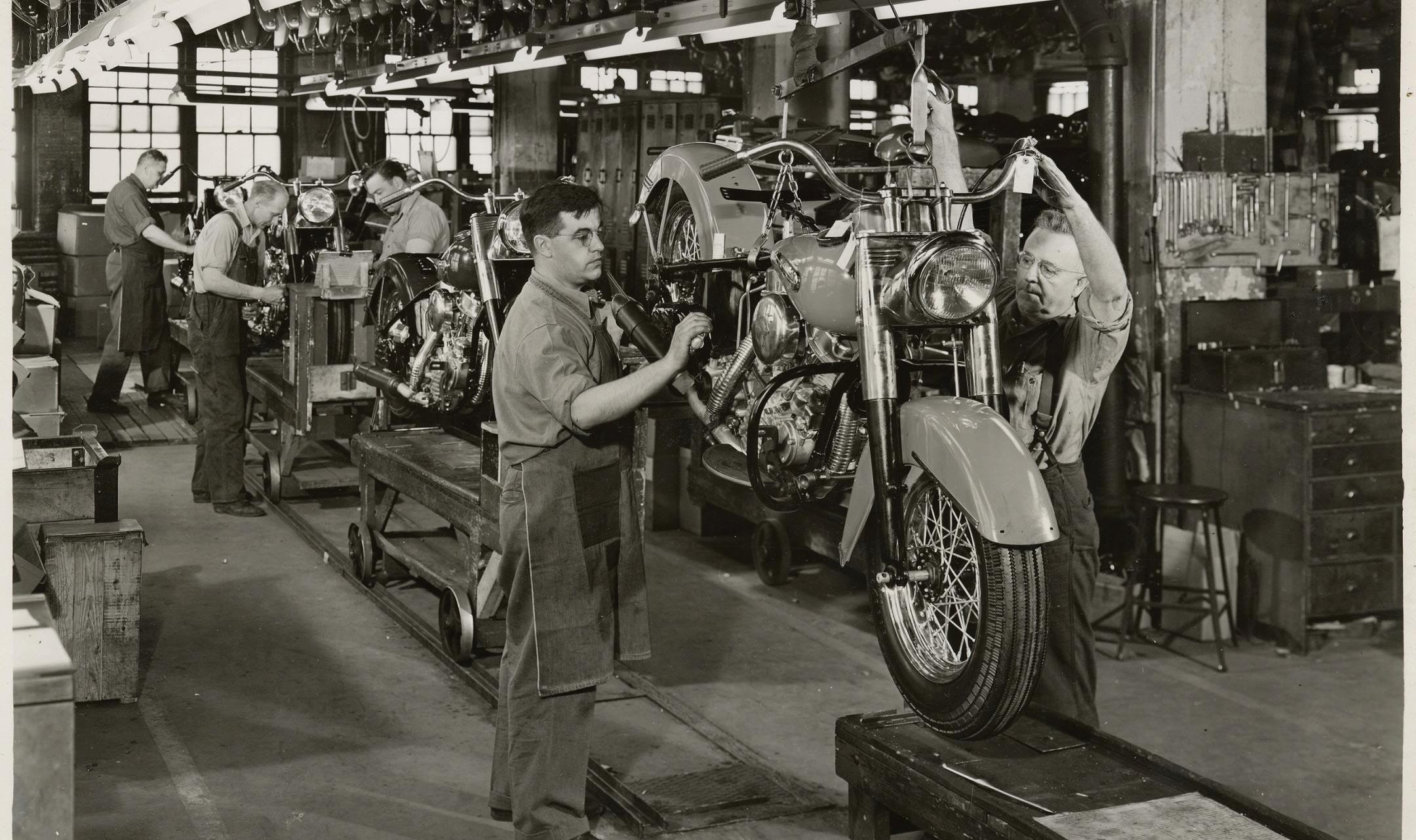


This photo from May 4, 1949, shows one of the first Harley-Davidson Hydra-Glide motorcycles coming off the assembly line at the Harley-Davidson factory. Prominent industrial designer Brooks Stevens helped HarleyDavidson design the motorcycle, one of the most iconic models in the company’s history. Harley-Davidson and Brooks Stevens collaborated on more than 200 projects over the years. This photo is part of the HarleyDavidson Museum’s newest exhibit, “Creating a Legend: Art & Engineering at Harley-Davidson.” The exhibit opened in May.
— Photo courtesy of the Harley-Davidson Museum. To submit your company’s historic photos, visit biztimes.com/glance
A LOT OF EYEBROWS were raised when the Metropolitan Milwaukee Association of Commerce and the Greater Milwaukee Committee, groups whose boards are filled with many of the region’s top business leaders, opposed the $252 million Milwaukee Public Schools referendum this spring.
The MMAC and GMC typically don’t take a stand on public school referendums and are supportive of education in Milwaukee. But the MPS referendum called for a large property tax increase ($2.16 per $1,000 of valuation) and the MMAC and GMC said MPS provided no clear plan indicating how the tax increase would lead to better performance in educating students.
“This referendum is being brought forward less than five years after passage of an $87 million revenue limit increase without a clear plan on how to improve educational outcomes, even as academic performance continues to be at or
near the bottom of all major city school districts. We cannot continue to perpetuate the same strategies and expect different outcomes,” MMAC president Dale Kooyenga said in a letter to MMAC members urging opposition to the referendum.
Supporters of the referendum said it was necessary to prevent massive budget cuts and said the school district had been hamstrung by state-imposed property tax caps and state funding that has not kept pace with inflation.
Voters narrowly approved the MPS referendum in early April. But then in late May, less than two months after the vote, a bombshell dropped with reports that state officials were threatening to suspend funding to MPS because the district had failed to provide financial reports to the state. Some of the reports were more than eight months late.
How could this happen, especially if MPS is so desperate for funding?
The public outcry and media firestorm in response has been severe. MPS superintendent Keith Posley resigned, as did the district’s CFO. The MPS comptroller was fired. It’s clear that MPS leadership has been incompetent, and its finance department understaffed.
ADVERTISING: 414-336-7112 | advertising@biztimes.com
EDITORIAL: 414-336-7120 | andrew.weiland@biztimes.com
REPRINTS: 414-336-7100 | reprints@biztimes.com
PUBLISHER / OWNER
Dan Meyer dan.meyer@biztimes.com
DIRECTOR OF OPERATIONS
Mary Ernst mary.ernst@biztimes.com
COMMUNITY
ENGAGEMENT / OWNER
Kate Meyer kate.meyer@biztimes.com
EDITORIAL
EDITOR
Andrew Weiland andrew.weiland@biztimes.com
MANAGING EDITOR
Arthur Thomas arthur.thomas@biztimes.com
ASSOCIATE EDITOR
Maredithe Meyer maredithe.meyer@biztimes.com
REPORTER
Ashley Smart ashley.smart@biztimes.com
REPORTER
Cara Spoto cara.spoto@biztimes.com
REPORTER
Hunter Turpin hunter.turpin@biztimes.com
SALES & MARKETING
DIRECTOR OF SALES
Linda Crawford linda.crawford@biztimes.com
SENIOR ACCOUNT EXECUTIVE
Christie Ubl christie.ubl@biztimes.com
ACCOUNT EXECUTIVE
Robin Briese
robin.briese@biztimes.com
ACCOUNT EXECUTIVE
Paddy Kieckhefer
paddy.kieckhefer@biztimes.com
ACCOUNT EXECUTIVE
Christy Peterson christy.peterson@biztimes.com
SALES ADMIN
Shannon Whiting shannon.whiting@biztimes.com
ADMINISTRATION
ADMINISTRATIVE COORDINATOR
Sue Herzog sue.herzog@biztimes.com
AUDIENCE DEVELOPMENT
ASSOCIATE/CIRCULATION
Derik Sneide derik.sneide@biztimes.com
PRODUCTION & DESIGN
SENIOR GRAPHIC DESIGNER
Alex Schneider alex.schneider@biztimes.com
Independent & Locally Owned
— Founded 1995 —
And it’s outrageous that the district’s inability to get financial reports submitted to the state wasn’t made public until after the referendum. No chance it would have passed if voters had that information. It will likely be many years before voters approve another tax increase for MPS.
Despite the growth of charter and voucher schools in Milwaukee, MPS remains an important part of the city’s education landscape. About half of Milwaukee schoolchildren attend MPS schools.
For the sake of those kids, their families and the entire community – including the business community – MPS needs to do much better.
And rather than get frustrated about this scandal, business leaders need to remain engaged with Milwaukee education issues, supporting and demanding quality schools. ■
ANDREW WEILAND
EDITOR
/ 414-336-7120 / andrew.weiland@biztimes.com / @AndrewWeiland



CFO and managing director | associate Venture Investors Health Fund
ECONOMIC DEVELOPMENT CORP.’S newly launched public-private venture capital program, known as the Wisconsin Investment Fund, has enlisted a handful of venture capital firms to infuse an initial $100 million into Wisconsin’s startup ecosystem, with a focus on the biohealth sector. Among the selected fund managers is Venture Investors Health Fund, which received $12 million of the state’s $50 million pool to match and then invest in new startups and entrepreneurs across the state. Based in Madison and Milwaukee, Venture Investors primarily targets early-stage health care startups and innovations, particularly those developed in Midwest universities, including UW-Madison and the Medical College of Wisconsin. BizTimes associate editor Maredithe Meyer recently caught up with the firm’s chief financial officer David Arnstein and associate Jenni Le to talk about the significance of this new public-private investment effort and the future of health care innovation in Wisconsin.
Arnstein: “For Venture Investors, we looked at this capital as we’ve been investing in Wisconsin for 40 years, so this program for us was the perfect fit. It’s what we do, it’s what we’re focused on and what we’re
good at. …
“For us, there’s no shortage of talent in Wisconsin, and we’ve always felt that way. And we think being here is an opportunity to see proprietary deal flow, but there always has been a shortage of capital. So, this capital into the market really allows us to make larger investments and fund them to the important milestones to create value.”
Le: “I think the state recognizes that we’re at this really special moment, an inflection point in health care. When you combine that with Wisconsin being designated last year by the Economic Development Administration as a regional biohealth hub – and we could potentially get tens of millions of dollars flowing into the state … that’s just going to add fuel to the special fire starting to grow in the state. If you combine that with investment opportunity from us, we can provide capital to these early-stage companies and it kind of just feeds off of one another.
“The hope – not just for Wisconsin but for Venture Investors – is that these companies are going to create a lot of jobs and a lot of wealth in the area, and then we’re going to be able to ultimately return money to our investors. You’re also building the talent pipeline and that could lead into creating even more startups.”
Arnstein: “We believe that right now is a great time to be investing in health care. If you look at AI technology, computing power, precision, look at the demand for innovation in health care, the aging population. So all these things, the time is right. And we’re going to see exponential growth in medical technology in the next 10 to 15 years. Every time you look at a cycle – you look back and say, ‘I can’t believe what occurred looking back 20 years’ – well, look out 15 years from now, we expect a hugely different landscape in health care.” ■