How to Start a Business Accountability Group with Digital Tools
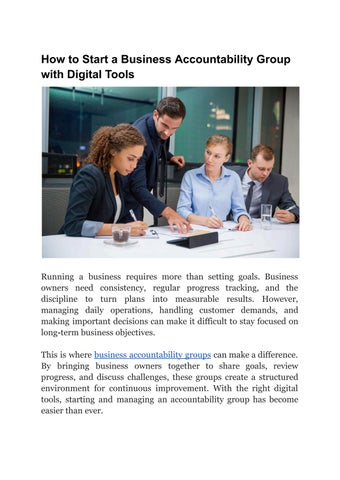
Running a business requires more than setting goals. Business owners need consistency, regular progress tracking, and the discipline to turn plans into measurable results. However, managing daily operations, handling customer demands, and making important decisions can make it difficult to stay focused on long-term business objectives. This is where business accountability groups can make a difference. By bringing business owners together to share goals, review progress, and discuss challenges, these groups create a structured environment for continuous improvement. With the right digital tools, starting and managing an accountability group has become easier than ever.
What Is a Business Accountability Group? A business accountability group is a small group of business owners, entrepreneurs, or professionals who meet regularly to discuss their objectives, measure progress, and hold one another accountable for agreed actions. Unlike informal networking groups, accountability groups focus on results. Members establish specific goals, report on their progress, identify obstacles, and commit to completing tasks before the next meeting. For small business owners, this approach can improve focus, strengthen decision-making, and encourage consistent progress towards business growth.
Why Use Digital Tools for Business Accountability? Digital tools make it easier for members to collaborate, organise meetings, share updates, and monitor progress, even when they operate from different locations. Some key benefits include: ● Better goal tracking: Keep business objectives, deadlines, and action items organised in one place. ● Consistent communication: Share progress updates and challenges without waiting for the next meeting. ● Improved collaboration: Allow members to exchange ideas, resources, and practical advice. ● Greater transparency: Make responsibilities and commitments visible to group members.
● Flexible participation: Enable business owners to participate remotely and manage accountability around their schedules. The goal is not to use as many tools as possible. It is to create a simple system that helps members remain focused and responsible for their commitments. 7 Steps to Start a Business Accountability Group Using Digital Tools 1. Define the Purpose of Your Group Start by deciding what your accountability group aims to achieve. Some groups focus on increasing revenue, while others concentrate on improving productivity, developing leadership skills, managing cash flow, or achieving sustainable business growth. A clearly defined purpose helps attract members with similar goals and expectations. For example, a group of small business owners might focus on improving profitability, strengthening marketing activities, and establishing better financial management practices over a three-month period. Set clear expectations about participation, confidentiality, meeting frequency, and the type of support members should provide. 2. Select the Right Members The effectiveness of an accountability group depends on the commitment and contribution of its members. Start with a manageable group of around four to eight business owners. Look for people who are willing to share their progress honestly, listen to others, offer constructive feedback, and follow through on their commitments.
Members do not necessarily need to operate in the same industry. In fact, people with different professional backgrounds can bring valuable perspectives to business challenges. However, they should share a similar commitment to personal development, business improvement, and consistent action. 3. Choose Digital Tools That Support Collaboration Select tools based on your group’s requirements, budget, and technical comfort level. You can begin with free or low-cost options and add more advanced features as needed.
Useful digital tools include: ● Video meetings: Zoom or Google Meet can support weekly or fortnightly accountability sessions. ● Task management: Trello, Asana, or similar platforms can help members assign tasks, set deadlines, and monitor progress. ● Communication: Slack, Microsoft Teams, or WhatsApp can provide a dedicated space for updates and discussions. ● Goal tracking: Google Sheets or shared spreadsheets can help members record targets, milestones, and results. ● Scheduling: Google Calendar can organise recurring meetings and send reminders. ● Choose a small set of tools that work well together. Too many platforms can create unnecessary administration and reduce participation.
4. Establish Clear Goals and Measurable Targets Once your group is formed, encourage each member to establish specific, measurable, achievable, relevant, and time-bound (SMART) goals. Instead of setting a broad objective such as “grow my business,” define a measurable target with a deadline. For example: ● Increase qualified sales enquiries by 15% over the next three months. ● Review business expenses and identify opportunities to reduce unnecessary costs within 30 days. ● Complete a monthly cash flow forecast before the beginning of each month. ● Establish a consistent weekly marketing schedule and monitor the results. Record each goal in a shared digital tracker. Members should also identify the actions required, the expected completion date, and the measurements they will use to assess success. 5. Create a Regular Accountability Meeting Structure Consistency is essential. Schedule weekly or fortnightly meetings and follow a repeatable agenda to keep discussions productive. A 45-minute meeting could follow this structure: ● First 5 minutes: Review previous commitments. ● Next 10 minutes: Share progress and completed tasks. ● Next 15 minutes: Discuss obstacles and seek feedback. ● Next 10 minutes: Set new priorities and action steps. ● Final 5 minutes: Confirm commitments and deadlines.
Use a video conferencing platform for the meeting and a shared task tracker to record agreed actions. Every member should leave the session knowing what needs to be done, when it needs to be completed, and how progress will be measured. 6. Track Progress and Review Results Digitally An accountability group becomes more valuable when members can see whether their actions are producing meaningful results. Use a shared dashboard or spreadsheet to record each member’s goals, progress, outstanding tasks, and completed milestones. Review progress regularly and discuss why certain actions worked or failed. If a target is repeatedly missed, identify the underlying cause rather than simply setting another deadline. For business owners, this review can also include practical indicators such as revenue trends, operating expenses, cash flow, customer enquiries, and profitability. Sensitive financial information should remain private unless a member explicitly chooses to share it. Use appropriate access permissions and avoid storing confidential client or business data in a general group workspace. 7. Evaluate and Improve the Group After the first four to six weeks, review how the group is performing. Ask members whether the meetings are useful, whether the digital tools are easy to use, and whether the group is helping them make consistent progress.
Consider adjusting the meeting frequency, changing the reporting format, or introducing focused sessions on subjects such as business planning, financial management, marketing, or leadership. The best accountability groups evolve with their members’ needs while maintaining a clear focus on action and results. Common Mistakes to Avoid Even well-organised accountability groups can lose momentum without clear expectations and consistent participation. Watch out for these common mistakes: Using too many digital tools: Multiple platforms can create confusion. Keep communication, scheduling, and goal tracking as simple as possible. Setting vague goals: Goals without measurable outcomes make it difficult to assess progress. Agree on specific targets and deadlines. Skipping progress reviews: Without regular check-ins, members may lose focus. Maintain a consistent meeting schedule. Turning meetings into general discussions: Networking is useful, but accountability sessions should prioritise commitments, results, and practical solutions. Ignoring confidentiality: Members may discuss sensitive business challenges. Establish clear privacy expectations and use secure platforms with appropriate access controls. Focusing only on failures: Accountability should encourage responsibility and learning, not blame. Recognise achievements and use setbacks to identify better approaches.
How Business Advisory Support Can Strengthen Accountability Digital tools help business owners organise their goals, but technology alone cannot replace sound business judgement, constructive feedback, and strategic direction. Business advisory support can help owners identify priorities, interpret financial performance, develop realistic plans, and make better-informed decisions. Combining regular accountability meetings with professional guidance can help business owners move beyond setting goals to implementing practical improvements. For example, an owner struggling with cash flow may need more than reminders to complete tasks. They may benefit from reviewing payment cycles, forecasting upcoming expenses, monitoring margins, and developing a more effective financial plan. This is where a structured accountability process and appropriate business advice can work together. Final Thoughts Starting a business accountability group does not require an expensive platform or a complicated system. Begin with committed members, clear objectives, a regular meeting schedule, and a few digital tools that make tracking progress straightforward. As the group develops, use measurable goals, honest discussions, and consistent reviews to keep everyone moving forward. Most importantly, ensure that accountability leads to practical action rather than simply creating more meetings and reports. If you are looking for a more structured way to stay focused on your business objectives, explore Bizdom’s Accountability Focus Groups. The right accountability structure can help you gain clarity,
strengthen your commitment, and take more purposeful steps towards your business goals.