Address: Royal Palm Suites, 2/3 Curban Street Underwood, QLD 4119
Ph: (07) 3189 6535
E-mail: admin@jdmediacorp.com.au
Australian Indian Times is a monthly newspaper published in English. No material, including advertisements designed by Australian Indian Times, may be reproduced in part or who without the written consent of the manager. Opinions carried in Australian Indian Times are those of the writers and not necessarily endorsed by Australian Indian Times. Australian Indian Times will not be held liable for any advertising / editorial contentAdvertisers supply / approve content therefore should any content be deemed inappropriate it is the advertisers / correspondents responsibility. While every effort has been made to capture the true likeness to colour printing is an art and therefore we cannot guarantee an exact matching of product to image. Refund / Credit is not given as a result of the previous mentioned. All corresondence should be addressed to: Australian Indian Times - 2/3 Curban Street Underwood, QLD 4119. Ph: (07) 3189 6535, Email: admin@jdmediacorp.com.au
From the Editor:
If you would like us to publish your letters, feedback, comments on any of our stories or suggest ideas columns or features, please send your submissions to:
From the Publisher
The Living Flame of Girmit: A Legacy Beyond the Horizon
HISTORY is often written in ink, but for the descendants of the Girmitiyas, it is written in sweat, salt water, and an unbreakable spirit. As we observe Girmit Remembrance Day, we are called not only to look back at the arduous journeys across the Kala Pani (black waters) but to look forward at the vibrant community that has blossomed from those initial seeds of hardship. In Brisbane, this flame of remembrance is kept alive with vigor by the Deo Family Charitable Foundation, whose dedication ensures that the story of the indentured labourers remains a cornerstone of our local cultural fabric.
THE GIRMIT HERITAGE: FROM STRUGGLE TO STRENGTH
Between 1879 and 1916, thousands of Indians were recruited under the "indenture system", a term the labourers themselves transformed into Girmit, a phonetic evolution of the word "agreement." These men and women were transported to Fiji, Mauritius, South Africa, and the Caribbean to work on sugar plantations under conditions that were often little better than the slavery the system had replaced.
The Girmitiyas carried with them more than just meagre belongings; they carried their faith, their languages, and a resilience that refused to be extinguished. They turned their isolation into a sanctuary of community. Today, the Indo-Fijian diaspora in Australia and specifically here in Queensland stands as a testament to that endurance. We are a community built on the foundation of those who toiled under a relentless sun so that their children might one day stand in the shade of success.
The Deo Family Charitable Foundation: Guardians of the Narrative
In the heart of Brisbane, the Deo Family Charitable Foundation has become a vital bridge between the past and the present. Their focus on Girmit Remembrance Day is not merely about an annual ceremony; it is about the preservation of identity. For many younger Indo-Fijians born in Australia, the stories of the plantations can feel like distant echoes. The Foundation works tirelessly to amplify those echoes into a clear, proud voice.
Through their charitable initiatives, the Foundation emphasizes that "remembrance" is an active verb. It involves educating the wider Australian public about the significant contributions the Girmit descendants have made to the social and economic landscape of the nation. By honouring the Deo family’s commitment to service, we see a modern reflection of the ancient Vedic values of Seva (selfless service) and Vasudhaiva Kutumbakam (the world is one family).
BRISBANE: A HUB OF VEDIC CULTURE
Australian identity. It is a culture that prioritizes community leadership, education, and ethical living and values that were the lifeblood of the original labourers as they built their lives in Fiji and eventually migrated further to the shores of Queensland.
LEADERSHIP AND RECOGNITION
The journey of the Girmit people is also a journey of political and social recognition. It is heartening to see our community leaders and government representatives, Members of Parliament, Mayor and Senators acknowledging this history. The voices of those who advocate for multiculturalism and the recognition of our unique history provide the political framework that allows our cultural celebrations to thrive.
When leaders speak of the Indo-Fijian contribution, they are acknowledging a group that has consistently prioritized peace, hard work, and civic duty. The Deo Family Charitable Foundation exemplifies this by fostering a sense of belonging for all, ensuring that the hardships of the past are channelled into the philanthropy of the present.
Remembrance Day, the challenge passes to the youth. The story of the Girmitiyas is a masterclass in adaptability. They arrived in new lands with nothing and built everything. In a modern world that often feels fractured, the Girmit legacy offers a blueprint for unity.
We must continue to support the work of foundations that prioritize our history. We must visit our cultural centres, engage with our elders, and ensure that the songs and stories of the Girmit era are not lost to the digital noise of the 21st century.
The Deo Family Charitable Foundation reminds us that while we are proud Australians, our roots run deep into the soil of history. By remembering the "agreement" made by our ancestors, we make a new agreement with ourselves: to live with the same courage, to serve our community with the same fervour, and to never let the flame of our heritage flicker out.
Lest we forget the journey; let us celebrate the destination.
Australian Indian Times 2/3 Curban Street Underwood, QLD 4119 or E-mail: admin@jdmediacorp.com.au
The significance of holding these commemorations in Brisbane cannot be overstated.
When we gather to remember the Girmitiyas, we are also celebrating the integration of our culture into the
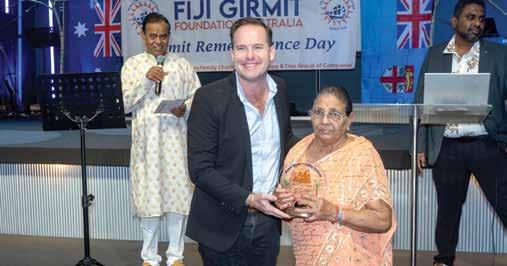
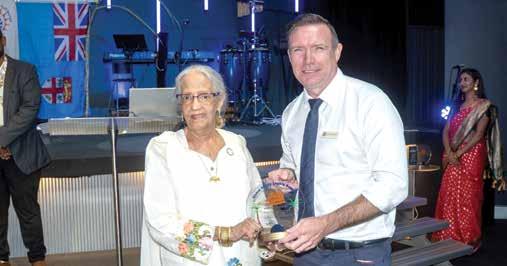
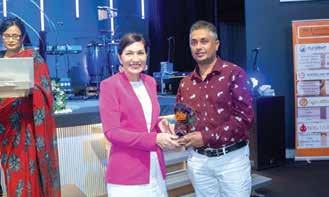
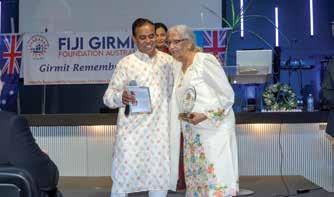
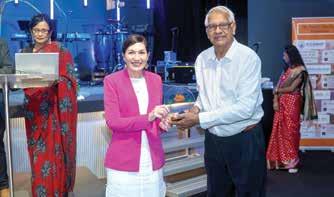
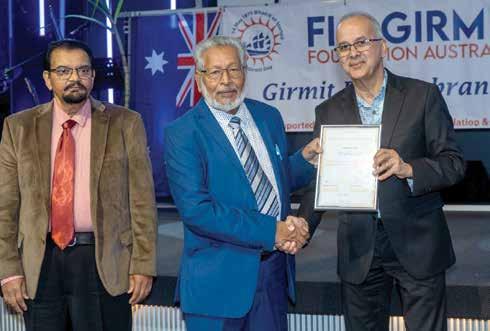
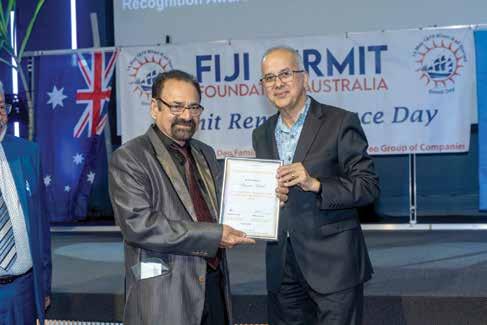
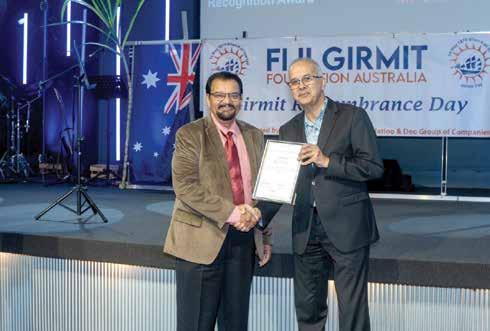
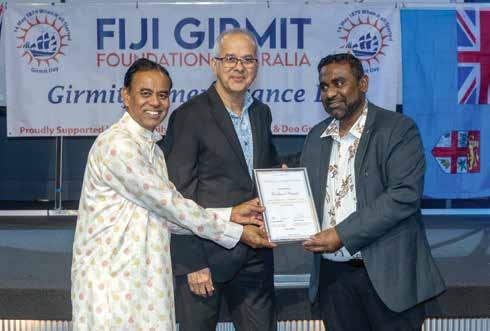
Another initiative by Deo Family Charitable Foundation is Girmit Legacy Awards. These awards serve as recognition of our elders who have contributed to our diaspora here in Australia and in Fiji.
THE PATH FORWARD: A CALL TO THE NEXT GENERATION
As the sun sets on another Girmit
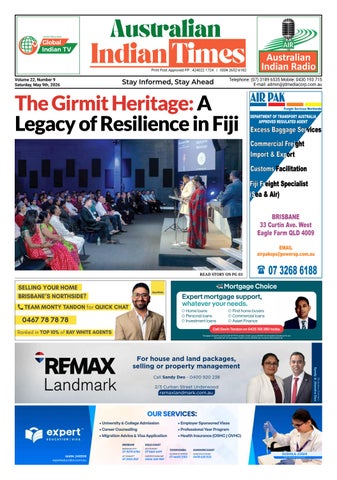
The Girmit Heritage: A Legacy of Resilience in Fiji
THE word Girmit is a linguistic corruption of the English word "agreement." Between 1879 and 1916, approximately 60,000 Indians were transported to Fiji under this system of indentured labour. This era, known as the Girmit years, fundamentally reshaped the demographic, cultural, and political landscape of the South Pacific, leaving behind a legacy defined by profound suffering and an even more profound triumph of the human spirit.
THE ORIGINS OF THE SYSTEM
Following the abolition of slavery in the British Empire in 1833, colonial plantation economies faced a massive labour shortage. The British solution was the Indentured Labour System. In Fiji, the first Governor, Sir Arthur Gordon, sought to develop a sugar industry without disrupting the traditional Fijian way of life or exploiting the indigenous population. His solution was to import labour from India.
Recruitment primarily took place in the United Provinces (modern-day Uttar Pradesh) and Bihar, and later in Southern India. Recruiters, known as arkatis, often used deceptive tactics. Many villagers were promised high wages and "light work" in a land just a few days' journey away. In reality, Fiji or Fiji-deep as it was often called and was thousands of miles across the "Kala Pani" (Black Waters), a crossing that many believed would strip them of their caste and purity.
THE CROSSING: THE KALA PANI
The journey to Fiji was the first of many traumas. Packed into ships like the Leonidas (the first to arrive in 1879), the labourers were stripped of their social identities. On these vessels, caste hierarchies began to dissolve out of necessity. High-caste Brahmins and Dalits ate, slept, and lived side-by-side.
This forced proximity birthed a new bond: Jahajibhai (Brotherhood of
the Ship). These relationships often became stronger than blood ties, providing a crucial support network for the hardships that awaited them in the cane fields. LIFE ON THE PLANTATION: NARAK (HELL)
Upon arrival, the Girmityas (those under agreement) were assigned to various plantations, mostly run by the Colonial Sugar Refining Company (CSR). The conditions were so brutal that the labourers frequently referred to the plantations as Narak, the Hindi word for hell.
1. THE LIVING CONDITIONS
Laborers lived in "coolie lines" a long, narrow wooden barracks divided into small, windowless rooms. A single room often housed three
single men or one family. Privacy was non-existent, and sanitation was poor, leading to the rapid spread of diseases like dysentery and hookworm.
2. THE TASK SYSTEM
The workday was governed by the "task." A task was a set amount of labour like hoeing, weeding, or cutting cane and that a worker had to complete to earn their daily wage. If the task was deemed incomplete or unsatisfactory by the sirdars (overseers), the labourer was not paid, yet they could still be prosecuted for "refusal to work."
3. SOCIAL AND DOMESTIC STRUGGLE
One of the greatest tragedies of the Girmit era was the disparity in the sex ratio. The
British government mandated that only 40 women be recruited for every 100 men. This imbalance led to immense social tension, domestic violence, and a high suicide rate among men. Women, meanwhile, faced double exploitation: they worked the same gruelling tasks as men but were also subject to sexual harassment and abuse by overseers.
CULTURAL EVOLUTION: THE BIRTH OF FIJI HINDI
Despite the systematic attempt to strip them of their dignity, the Girmityas held tenaciously to their culture. In the coolie lines at night, away from the eyes of the overseers, they gathered to sing bhajans (hymns), recite the Ramayana, and celebrate festivals like Holi and Diwali.
all indentured contracts had expired.
Given the choice to return to India or stay in Fiji as free settlers, the majority chose to stay. They moved out of the barracks and leased small plots of land to grow their own cane or rice. They built their own schools and temples, prioritizing education as the primary vehicle for the upward mobility of their children.
THE POLITICAL LEGACY
The Girmit era created a permanent Indo-Fijian population that eventually became nearly half of the nation's total population. This demographic shift laid the groundwork for the complex political history of Fiji. The struggle for "Common Roll" voting and equal rights became the hallmark of Indo-Fijian politics throughout the 20th century.
The memory of Girmit remains a sensitive and powerful touchstone. It is a story of being "uprooted and transplanted." While the initial years were defined by colonial exploitation, the long-term result was the creation of a vibrant, hardworking community that has contributed immensely to Fiji’s economy, particularly through the sugar industry, commerce, and the professions.
A HERITAGE OF STRENGTH
Because the recruits came from various regions, speaking Awadhi, Bhojpuri, Magahi, and Tamil, a new language emerged to bridge the gap. Fiji Hindi became the lingua franca of the plantations. It was a simplified, robust dialect that incorporated English and Fijian loanwords, serving as a linguistic testament to the adaptation and survival of the Girmityas.
THE END OF GIRMIT AND
THE RISE OF A NEW CLASS
The indentured labour system was eventually abolished in 1916, influenced by the rising Indian nationalist movement led by figures like Mahatma Gandhi and C.F. Andrews, who visited Fiji and reported on the "shameful" conditions of the women. By 1920,
Today, the Girmityas are honoured not as victims, but as the architects of modern Fiji. In May 2023, the Fiji government officially declared Girmit Day a national public holiday, ensuring that the sacrifices of those who crossed the Kala Pani are never forgotten.
The legacy of Girmit is found in the spicy aroma of Fiji-style curries, the unique cadence of Fiji Hindi, and the resilience of a people who turned a "hellish" agreement into a permanent home. It is a reminder that even under the most oppressive systems, culture and community can flourish, provided there is a shared will to survive.
"They came in chains, but they left a legacy of gold." A common Fijian proverb reflecting on the Girmit generation.
FIJI GIRMIT FOUNDATION AUSTRALIA
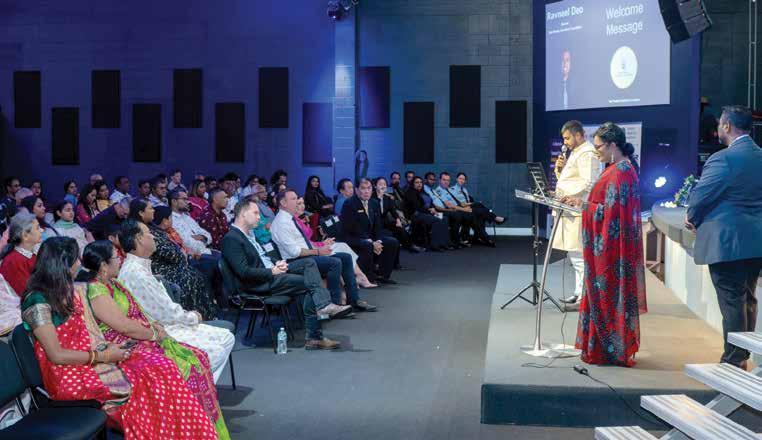
Message from the Host - Deo Family Charitable Foundation
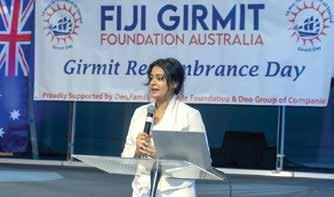
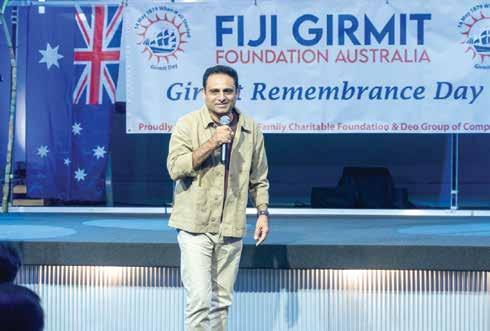
Namaste, Ramram, Namaskaram, Salam Walekum, Bula and hello to all, Today, we gather to honour and remember the sacrifices and hardships of our ancestors, the Girmitiyas, who paved the way for our better lives. Girmit Remembrance Day serves as a reminder of their resilience and courage.
Fiji Girmit, also known as the Indian indenture system, refers to the recruitment of Indian labourers to work on sugar plantations in Fiji during the colonial era. From 1879 to 1916, around 60,000 Indians were brought to Fiji as indentured labourers, primarily from the Indian states of Bihar and Uttar Pradesh.
The term "Girmit" is derived from the word "agreement," as Indian labourers were required to sign a contract, known as the Girmit before they could be brought to Fiji. The Girmit system was similar to slavery in many ways, as labourers were forced to work long hours in harsh conditions with minimal pay. They were also subject to physical abuse and often had their rights violated.
Despite these challenges, the Indian community in Fiji managed to maintain their culture and traditions, including their religion, language, and cuisine. They also formed close-knit communities and developed their own social structures and institutions.
The Deo Family Charitable Foundation, a non-profit charitable organisation, hosts two significant events annually in Brisbane: Girmit Remembrance Day and Fiji Day Celebrations. These events unite people in our diaspora and promote cultural and artistic activities that help us connect with our roots. The foundation believes culture and arts are essential to a healthy and vibrant society. Therefore, one of its primary objectives is to support cultural activities that help maintain our heritage and promote community development initiatives.
Through these initiatives, the Deo Family Charitable Foundation aims to make a positive difference in the lives of people in Queensland, empowering individuals and communities to achieve their full potential and lead fulfilling lives.
To contact the Deo Family Charitable Foundation, you can email namastejitendra@gmail.com or call 07 3273 3029.
You can also make a donation to support their work by depositing funds into the DEO FAMILY CHARITABLE FOUNDATION LTD account at ANZ BANKING GROUP (BSB 014 286, ACCOUNT NO 3232 46 849).
The foundation is registered as a charity with the Australian Charities and Not-for-profits Commission (ACNC).
Please visit the websites - www.deofamilycharitablefoundation.org and www.fijigirmitfoundationaustralia.org
Message from the Judges - Chairperson Parma Nand
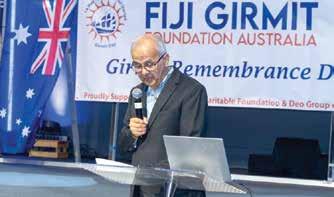
It gives me immense pride and heartfelt gratitude to pen this message for the annual presentation of the Global Girmit Legacy Awards, held as part of the Fiji Girmit Remembrance Day. This initiative, a noble incentive of the Deo Family Charitable Foundation, honours a deeply rooted history—the Girmit legacy—of strength, sacrifice, and service.
The Fiji Girmit era marks a pivotal chapter in our shared history, when Indian indentured laborers were brought by the British to toil in the sugarcane fields of Fiji. From those early days of hardship emerged a resilient community that contributed significantly to the development of Fiji and later, Australia. This award serves as a beacon of that legacy, recognizing individuals who, now in their 80s, have dedicated a lifetime to serving others both in Fiji and in their adopted homelands around the world, and in our case in Brisbane, Queensland, Australia.
The selection process for this year’s recipients has once again been a rigorous and thoughtful undertaking. I commend and thank the Judging Panel for their diligence, impartiality, and commitment in reviewing the nominations. Their work has ensured that the individuals chosen represent a true cross-section of our diverse community—each one a living testament to leadership, humility, and enduring public and community service.
As a new initiative, the Judging Panel is pleased to announce the compilation of an annual Global Girmit Legacy Awardees booklet—integrating honouree profiles from previous and future years—into an expanded print and digital edition that will be archived in historical libraries globally, ensuring a lasting record of service and legacy.
We extend our deepest appreciation to the Deo Family Charitable Foundation, whose continued support and vision have made this legacy award not only possible but sustainable. Their commitment to honouring our elders and preserving the Girmit heritage stands as a powerful example of how foundations can shape memory, recognition, and respect within our communities.
This year, as we gather to celebrate Global Girmit Legacy Award and recognize the contributions of these exemplary individuals, let us remember that the true measure of a community lies in how it honours its past and uplifts its torchbearers. May the legacy of the Fiji Girmitiyas and those who followed in their footsteps continue to inspire generations to come.
With warm regards,
Parma Nand JP (Qual), Chairperson Judges Panel, Marriage Celebrant, Member AFCC
FIJI GIRMIT FOUNDATION AUSTRALIA
Panel of Judges
Parma Nand J.P. (Qual.) & Chairperson
Retired Queensland Government Public Servant with more than 27 years of service.
Former Federal Government Environmental; Consultant on Environmental Matters For Norfolk Island.
Commonwealth Registered Marriage Celebrant Since 2003.
Registered Civil Partnership Notary –Queensland.
Qualified Radio Broadcaster.
Shahban Ali J.P (Qual.)
Retired Primary and Secondary School Teacher
Former President Islamic Society of Queensland
Founding Member – Humanitarian Aid & Relief Fund
Inc. – A Charity
Patron – South East Queensland Islamic Association
Robert Raj Raaz
Former Deputy Mayor and Town Councillor of Nausori, and past President of the local Chamber of Commerce.
Held key leadership and event roles for the Islamic Society of Queensland and Southeast QLD Islamic Association.
Active member of the Humanitarian Aid & Relief Fund and former President of the Nausori Apex Club.
Pt. Suresh Chandra Sharma J.P. (Qual.)
Serves as a Hindu Priest providing guidance on religious rituals.
Highly active in cultural and humanitarian organizations, including Sanatan Dharam Queensland and local Ramayan Mandalis.
A retired pharmacist with over 12 years of experience in Fiji and Queensland who now operates his own driving school.
Vanita Kumar (Director DFCFAdministration)
Conducted extensive research into the Indenture period in Fiji, focusing specifically on the history and arrival of over 60,000 Girmitiyas.
Established the Girmit.org website in 2006, creating a vital online resource and archive for Indian-Fijian ancestral history.
A dedicated contracts specialist currently working full-time within the Waste and Resources Recovery sector for local government.
FIJI GIRMIT FOUNDATION AUSTRALIA 2026 RECIPIENTS
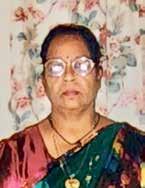
Mrs Deomati Raj
Mrs. Deomati Raj, is a quintessential first-generation matriarchal legacy builder within the Fiji-Indian diaspora. Embodying core Girmitiya values of hard work, faith, and sacrifice, she has dedicated her life to community betterment. Mrs. Raj has been instrumental in promoting spiritual growth through her active participation in Ramayan and Mandali groups. Beyond her religious devotion, she provided vital support to newly arrived migrant families, offering accommodation and guidance to ensure their successful settlement. Through her selfless service and commitment to preserving traditional customs, Mrs. Raj remains an essential, steadfast pillar of the Indo-Fijian community in Australia.
Mrs Ramkali Singh
Born in 1943 with ancestral roots in Rajasthan, Mrs. Ram Kali Singh is a distinguished elder whose life bridges academic excellence and spiritual leadership. A trailblazer for her generation, she earned a BSc/BEd from Madras University and served as a dedicated educator and Head of Science in Fiji. Since migrating to Australia, Mrs. Singh has remained a vital cultural anchor. Ordained as a Panditha in 1992, she provides essential spiritual guidance through the Arya Samaj. Her diverse service as a Justice of the Peace and Marriage Celebrant further exemplifies her lifelong commitment to scholarship, leadership, and communal unity.
Mrs Gyan Wati Prasad
Born in 1939 with roots in Uttar Pradesh, Mrs. Gyan Wati Prasad carries a distinguished family legacy of community service. Since migrating to Brisbane in 1982, she has been a vital anchor for the Fiji-Indian diaspora. Mrs. Prasad famously opened her home to homesick students, offering traditional meals and guidance, while her trusted Family Day Care supported working migrant families. A pioneer in Brisbane’s early Ramayan gatherings, she worked quietly behind the scenes to preserve faith and culture. Her life of humble leadership, selfless devotion, and cultural preservation makes her a truly deserving recipient of this legacy honor.
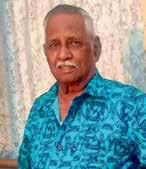
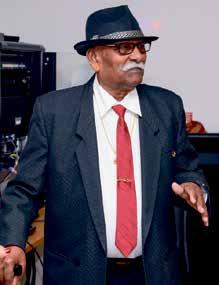
Mr Samsher Ali
Born in 1945 and a descendant of a Leonidas Girmitiya ancestor, Mr. Samsher Ali exemplifies the spirit of perseverance and enterprise. A skilled builder and supervisor, he contributed to major landmarks in Fiji, including Lautoka Hospital, before successfully establishing his own business in Brisbane. Mr. Ali’s community impact is profound; as a founder of the Darra Mosque and its Treasurer for 21 years, he provided the integrity and leadership necessary to establish a spiritual home for many. Through his work as a radio announcer on Radio Brisvaani, he further strengthened cultural ties, leaving an enduring legacy of service and dedication.
FIJI GIRMIT FOUNDATION AUSTRALIA 2026 RECIPIENTS
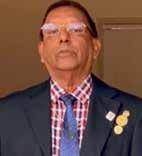
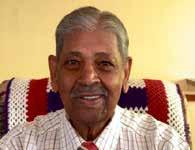
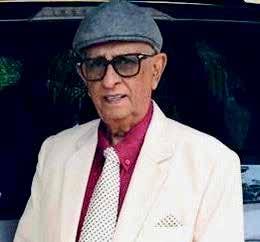
Mr Kamal Basha
Born in 1939 and descending from Girmitiya ancestors who arrived in the late 1890s, Mr. Kamal Basha is a distinguished leader defined by professional excellence and regional influence. A visionary in workforce development, he held senior leadership roles in Fiji, shaping national training policies and vocational education that empowered generations. His expertise extended across the Pacific, where he spearheaded strategic initiatives to improve regional opportunities. Beyond his career, Mr. Basha is widely recognized for his integrity and mentorship in community governance. His life serves as a premier example of global leadership and sustained service to the Fiji-Indian legacy.
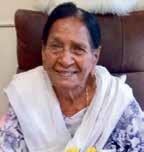
Mrs Fawzia Zullah
Born in Suva in 1945, Mrs. Fawzia Zullah shares a historic connection to the very first Girmitiya arrivals as a descendant of a Leonidas passenger. Her life is a testament to humanitarian leadership, having served as President of the Lions Club of Suva and volunteering extensively for welfare institutions and aged care homes. Professionally, Mrs. Zullah held a senior management role with the World Health Organization (WHO), driving healthcare improvements across Fiji and the Pacific. In Australia, she continued her service by fostering social connections through the Brisbane Ladies Group, embodying a lifelong commitment to community health, culture, and compassion.
FIJI GIRMIT FOUNDATION AUSTRALIA 2025 RECIPIENTS
Mr Amraiya Naidu
Mr. Amraiya Naidu is a retired educator, administrator, and distinguished diplomat from Labasa. After earning a BSc from Andhra University in 1965, he began his teaching career in 1966, eventually serving as Principal at several prominent schools, including Ratu Kadavulevu School, where he achieved exceptional academic results. He rose through the ranks of the Ministry of Education to become Permanent Secretary from 1993 to 1999. Mr. Naidu then served as Fiji’s Ambassador to the UN and High Commissioner to Canada and Australia. In 2017, he was awarded the Companion of the Order of Fiji for his outstanding service to the nation.
Mrs. Kamla Govind (Kamla Arun) has made significant contributions to communities in Fiji, New Zealand, and Australia, particularly in aged care and early childhood education. With 34 years in Fiji’s government service, including 24 years at Labasa Hospital and 10 years managing Old Peoples Homes in Labasa and Samabula, she has improved care systems, prevented elder abuse, and promoted residents' wellbeing. Certified in aged care, childcare, and workplace safety, Mrs Govind has taught in New Zealand and Australia, and volunteered in youth education and women's empowerment initiatives. She is a member of Ekta Women’s Group and the Senior Citizens Association and has shown dedication, compassion, and
Mr Ram Sumer
Mr Bir Sahai
Mr. Bir Sahai has made outstanding contributions to communities in Fiji and Queensland through education and volunteer service. Beginning as a teacher in 1967, he introduced innovative teaching methods and promoted cultural engagement in Fijian schools. In Brisbane, he supported students as a Relief Teacher for 18 years and taught Hindi to non-Indian adults. As Patron and former President of the Indian Senior Citizens Association, he has led inclusive cultural events, supported senior welfare, and advocated for public amenities. Despite personal challenges, Mr Sahai’s humility, leadership, and lifelong commitment to service have significantly enriched and empowered his community.
Mr. Jaleel Shah has made meaningful contributions to communities in Ba and Nadi by supporting vulnerable families with food packs twice a year, helping ease their financial burden. His assistance has enabled recipients to repair their homes and feed their families for over two weeks. Demonstrating generosity and initiative, he donated landscaping equipment to Maigania Mosque cemetery to support its upkeep. His practical approach— providing resources to empower others—reflects his commitment to community welfare. Mr. Shah’s consistent support, compassion, and hands-on involvement exemplify the impact one individual can have through voluntary service and thoughtful contributions.
Mr. Ram Sumer, a dedicated educator and community volunteer, began his career in Fiji after studying at Shri Vivekananda High School. He worked as a night shift fuel clerk and later joined Sangam SKM College in Nadi, where he introduced economics and served as viceprincipal. After migrating to New Zealand in 1987, he worked as a relief teacher and also managed a café. In 1992, he moved to Queensland, where he continued teaching and worked in various jobs, including for Yellow Cabs. A life member of the Hindu Mandir Association and ISCA, Ram received the 2022 Moreton Volunteer Award and ran yoga classes for nearly a decade.
Mr Salik Ram Sharma
Mr. Salik Ram Sharma is a dedicated supporter of Sanatan Dharam, actively promoting Hindu culture and values in both Fiji and Queensland. In Fiji, he served with the Nakasi Ramayan Mandali and supported the Christopher Orphanage Home. After moving to Queensland, he contributed to the Hindu Society of Queensland through cooking, construction, and community support. He generously extended his home to host cultural celebrations, ensuring traditions continued. He has also provided childminding services for families in need and consistently encourages the younger generation to embrace and uphold Hindu rituals. His life reflects unwavering commitment to preserving Sanatan Dharam and community values.
Mr Jaleel Shah
FIJI GIRMIT FOUNDATION AUSTRALIA 2025 RECIPIENTS
Mr Shiu Raj
Mr. Shiu Raj began his career in Medical Services in Fiji and has been an avid sports enthusiast. A skilled golfer, he has won numerous medals and trophies, and also played soccer as a striker, participating in veterans' soccer events in Fiji, Australia, and New Zealand. He has shown immense support for religious organizations, contributing both financially and socially. As a dynamic sportsman and a proud Girmitiya descendant, Shiu Raj has made significant contributions to his community, combining his passion for sports with his dedication to supporting cultural and religious initiatives.
FIJI GIRMIT FOUNDATION AUSTRALIA 2025 RECIPIENTS
Mr Surendra Prasad OAM
Mr. Surendra Prasad OAM has devoted his life to community service in both Fiji and Australia. In Fiji, he held key roles including Deputy Mayor of Lami and President of Lions Suva North. After migrating to Australia in 1987, he continued his leadership by founding Queensland’s first Hindu temple and the Federation of Indian Communities of Queensland (FICQ). Under his FICQ presidency, membership grew sixfold, and $116,000 was raised for 2011 flood victims. He organised Brisbane’s first open-air Diwali Festival and has hosted Seniors Multicultural Dinners for over 20 years. For his service, he has received numerous prestigious awards, including the OAM.
Mrs
Raj Kumari worked in the CWM hospital for 25 years. She spent 5 years in general nursing and another 20 as the sister in charge of the Eye Department, famously being known as Sister Raj in Fiji. To achieve her ambition to be a nurse and help people, she had to leave her home in Nausori and go to the Western side of Fiji to study. During her years studying, she was part of the girls guide. She went to the villages of Fiji and assisted in looking after the elderly. She showered them and cleaned their wounds, with the limited resources they had. As a nurse she helped people not only those on mainland Fiji but also those on the outer islands.
Mrs Kushla Sahai
Mr Lekh Ram Sukh
Mr. Lekh Ram Sukh has dedicated many years of service to the Queensland Indian Diaspora. A Justice of Peace and Marriage Celebrant, he served as President of the Hindu Society of Queensland for over 15 years and as Vice President of Sanatan Dharam for 3 years. For more than 30 years, he was the parcharak at Shree Saraswati Ramayan Mandali. Passionate about music and the Hindi language, He led numerous community events. A committed blood donor, Lekh Ram’s humanitarian efforts extend far beyond his official roles, making him a champion of service and community welfare.
FIJI GIRMIT FOUNDATION AUSTRALIA 2024 RECIPIENTS
Mr Shahban Ali J.P.(Qual)
Mr. Shabhan Ali had a distinguished career as Vice Principal at Lautoka Muslim College and Votualevu College from 1972 to 1987. He also served as secretary in community-run schools in Fiji. In Queensland, Shabhan was a founding member of the Islamic Society of Queensland, motivating people to be responsible citizens. He is the Patron of the South East Qld Islamic Association and President of the Humanitarian Aid and Relief Fund, supporting the underprivileged. A Justice of Peace, he has also served as a former Judge for the Global Girmit Awards, an initiative of the Deo Family Charitable Foundation.
Mr Rup Narain
Rup Narain, hailing from humble beginnings, dedicated himself to advancing rural communities. Serving as an advisory councilor from 1972 to 1998 in Fiji, he tackled community issues and advocated for vital infrastructure like a bridge for village access. Recognized for his service, he received the BEM medal from the Queen in 1991 and a medal from the Fiji Government for his educational and social leadership. As a Head Master, he uplifted various schools, including rural ones. He volunteered on multiple boards, including the hospital and drainage boards, demonstrating compassion and dedication without seeking personal gain, leaving a lasting impact on the communities he served.
Kushla Sahai's teaching journey began in Fiji in 1965, where she infused culture and language education through festivals and cultural events. Beyond teaching, she engaged in community activities, mentoring girls as a Girls Guides leader and managing a netball team in Raki Raki District. Upon moving to Brisbane, she became a teacher aide at Logan Reserve State School, introducing Indian culture and fundraising. Over a decade, she taught Hindi at Rochedale High School, while serving as Ekta Women’s Group president for 15 years. Despite challenges as a migrant, she seamlessly integrated Indian language into the Australian environment, juggling a fulltime job, raising three children, and fulfilling family duties.
Mr Sadhu Prasad
Sadhu Prasad, born in Korotari Labasa in 1937, began his career as a licensed teacher in 1954 before joining the family business in 1955. He established Nabouwalu Supermarket in Vanua Levu in 1960. A key figure in soccer, he served in various capacities in the Labasa Soccer Association from 1960 to 1984, earning the title "Father of Soccer" in the north. He contributed significantly to Fiji Football Association, organising the Girmit tournament in 1979. In Labasa Jaycee’s organisation, he served as president for 15 years and initiated various community projects. Migrating to Brisbane in 2000, he remained active in community organisation's, earning recognition for his voluntary service, including a Paul Harris Fellow Award in 2007. He is also a life member of the Fiji Senior Citizens Association.
Raj Kumari Pratap
FIJI GIRMIT FOUNDATION AUSTRALIA 2024 RECIPIENTS
Mr Krishna Datt Mishra
Krishna Datt Mishra is a retired Superintendent of Police. He migrated to Melbourne in early 1990’s. He worked for AMP as an insurance representative where he gained immense success and respect within our communities. During retirement he was the President of Shree Sanatan Dharam Sabha of Victoria for a few years, however continued as a valuable board member serving the community. He relocated to Brisbane in 2004 and has been as active member within the Indian Seniors. Age is just a number when it comes to Krishna’s hobbies especially enjoying staying active and updated with sports globally since he was the Manager for Ba Soccer Club in Ba, Fiji in the 70’s.
Mr Karan Singh
Karan Singh, a Fiji School of Medicine graduate, served as Chief Pharmacist at Colonial War Memorial Hospital (CWM) in Suva from 1981. Prior to this, he worked at various hospitals in Fiji. Upon migrating to Australia in 1988, he contributed to Royal Prince Alfred Hospital, Sydney, and later Queensland Health in Brisbane until retirement. Notably, during Fiji's 1st coup, he provided essential medical support, being on call day and night, marked with a Red Cross sign. Despite family concerns, he prioritised patient care, symbolised by his bluearmband and ambulance journeys, demonstrating dedication to public health and humanitarian service.
Mr Sangeet M. Chand
Sangeet boasts 51 years of medical service, including 30 at PA Hospital, 20 in Fiji, and 1 in New Zealand. Amidst the pandemic at 68, he continued working, demonstrating exceptional dedication beyond retirement age. Passionate about his Girmit ancestry, he organised numerous Girmit events and the first Girmit soccer in QLD, revitalising the Fiji Indian community post-coup. He co-founded the Brisbane BA Sports and Social Club, served as vice president, and helped establish the QLD Fiji Football Association. Sangeet's cultural contributions extend to Hindu and Sanatan associations, charity work, pastoral care, and advocacy for cultural leave, making him worthy of national recognition.
Mr Rajendra Prasad
Rajendra Prasad, a dedicated school manager, enhanced learning environments at Korovuto Primary and High school in Fiji. His efforts in infrastructure development improved transportation, easing access to schools, hospitals, and towns. Establishing a postal agency in Nacovi facilitated communication for local residents. In Brisbane, he pioneered the Indian Senior Citizen Association and supported the Ekta Women’s Group. As president, he prioritised social, emotional, and mental health support for Indian seniors, fostering connections through local bowls clubs. Amid challenges including legal intricacies and health issues, he navigated language barriers, demonstrating resilience in his commitment to community service and welfare.
Ahmad Hussain, along with his brothers, established Tebara Meat Company in Fiji before migrating to Australia in 1986. He played a significant role in the establishment and leadership of mosques in both countries. Serving as a police officer in Fiji for five years, he later became the first president of Darra Islamic Society Mosque in Brisbane, a position he held for a decade. During his tenure, he acquired a new site for the mosque in Oxley. Beyond presidency, he remained actively engaged in fostering community spirit, promoting dialogue among religious groups, and nurturing a welcoming environment at the mosque, epitomizing his dedication to spiritual and social welfare.
Dr Raghwa Sharma
Associate Professor Raghwa Sharma, based in Sydney, is a chief Gynaecological Pathologist at Westmead Hospital, specializing in Cytopathology, Sarcoma, and Melanoma diagnostics. With over 15 years of experience, he supervises registrars and has served as acting Director for over 3 years. He's a vital member of the Research Advisory Committee for ANZGOG and chairs the RCPA Pathology Outreach Educational Committee. Dr. Sharma is instrumental in postgraduate pathology training in South Pacific Island countries and serves as an examiner for FRANZCR. Beyond medicine, he delves into holistic studies, including Vedic, Hindu, and yogic knowledge, advocating for integrative medicine and sharing spiritual insights.
Mrs Ram Dulari
Ram Dulari was born in 1921 in Vuniyasi, Nadi, to Girmitiya parents who settled as cane farmers after completing indentured labour at CSR Company's Lautoka sugar mill. She grew up in a large family and attended Andrews Government School for five years. She was married at 15 to a suitable husband named Ram Dulare, who was the son of another Girmitiya couple. They had a happy marriage and moved to Australia in 1983. Her husband passed away in 2010, just short of his 91st birthday, after celebrating their 75th wedding anniversary. Ram Dulari is grateful for the excellent health care provided to the elderly people by the Australian Government. She is author of two books "Meri Kahani" in 1995 and "101 year journey" in 2021. Her children, grandchildren, and greatgrandchildren now reside in different parts of the world.
Mr Bach Raj
Bach Raj was born in 1930. His father's grandparents were from Nepal, and his father was a farmer with three children. Recalling back, his father and grandparents were some of the first to Fiji coming across on the 1st or 2nd boat and spending their time in Vitandra, Labasa, Fiji. Bach Raj got married in 1946 and worked at Burns Phillips (B.P.) South Seas Limited from 1949. Working under many roles, he was promoted to Foreman in 1970 and then Service Supervisor until his retirement in 1985. B.P. recognised his work ethics and honesty with an all expense trip in 1975 to New Zealand which spurred him to migrate to Australia with his wife in 1992 and had eight children. He has served in many religious and community organisations.
Mr Ahmad Hussain
FIJI GIRMIT FOUNDATION AUSTRALIA 2023 RECIPIENTS
Mr Shiu Shankar
Shiu Shankar was born in 1932 in Navua, and he grew up in Suva. Despite facing financial challenges and having to work from a young age, he has actively participated in community service. While in Fiji, he volunteered with charitable organisations and helped with cultural events and celebrations to promote the Fiji Indian heritage. After migrating to Brisbane, he continued serving his community by being an active member of the Fiji Indian Community, participating in cultural events, and volunteering with Fiji Senior Citizens Association. His dedication and generosity have inspired many others to make a positive difference in the lives of those around them.
Mr Ram Harak Maharaj
Ram Harak Maharaj was born in Fiji in 1934 to Ram Dutt Maharaj. His grandfather, Jagessar Maharaj, had come to Fiji from India in the early 1900s as an Indentured labourer. Ram Harak left school at the age of 12 to help his father on their sugarcane farm. He worked part-time as a carpenter and was taught by his father-in-law. Ram Harak went to New Zealand four times from 1960 to 1964 to earn money by clearing bushland. He received recognition for the second-highest yield of rice production and pioneered a drainage system in his rice fields, which impressed the Fiji Agriculture Department. From 1969 to 1995, he farmed rice and vegetables and tended to cows and horses before migrating to Australia. At the age of 89, Ram Harak still sells his produce at the Sunday market near Woodridge train station in Australia, along with his eldest son, Davendra Maharaj, and customers come from all over to buy his fresh produce.
2023
Mrs Chandra Wati Ram
Born 30 July 1937. Chandra Wati Ram was a health worker in Muaniweni and Advisory Councillor for Muaniweni, Baulevu and Viria for 15 years, in the years 1979 to 1994. She built a Kindergarten and Police post in Muaniweni with the help of the general public and a public fundraiser when a government grant was denied in 1979 but was later supported by the government when added the health centre to her project. Her contribution towards the culture and heritage of the Fiji-Indian Diaspora has been paramount in keeping the culture alive in Brisbane. Her religious activities and cultural activities have bridged the connection to younger generations. Chandra Wati Ram and her husband Jai Ram, have been living in Brisbane, Australia, since 1994 and have been a member of Joyti Women’s Club since 1999.
Mr Siusanmugam Rao
From Solovi, Nadi now living in Ipswich Queensland, aged 85 with wife, Radhamani Rao (82 years) as a second generation Girmitiya of sugarcane and rice farms. In 1960’s-70’s he was the secretary of Mulomulo Primary School and President of Solovi TIV Sangam expanding their presence through temples and activities. He worked with Late Honourable Jai Ram Reddy on many occasions. His contribution in supporting the Fiji-Indian people in the Fijian political landscape is notably profound. He is a regular contributor on Radio Brisvaani and inspires the audience with his knowledgeable wisdom on the value of human life. He has three sons & daughter-in-laws, one daughter & son-in-law, eight grandchildren & partners and four great grandchildren.
Mr Abdul Jalal
Mrs Subhadra Mishra
Subhadra Mishra was born in 1933 at her grandmother's house in Nadi. She completed her primary education in 1946 but could not attend high school due to the death of her father Pt. Mata Prasad Mishra. She did a year of provisioning (teaching) before being called up to join the nursing school. But she couldn't join the course because there was a proposal for her marriage. In January 1955 she married Rudra Datt Mishra who went on to become a famous Police Officer in the Royal Fiji Police Force. She recorded a number of Lok Geet in Fiji with South Pacific Recording and Procera Music Shop. She currently resides in Sunnybank Hill and enjoys a productive life style at the age of 90.
2023
Mr Rahim Zullah
Rahim Zullah, born in Suva, Fiji, started his music career at age 9 and is now a well-known musician in Brisbane. He has performed at numerous fundraising events for the Indian community in Fiji and Brisbane and has become a household name in Fiji through his singing on Radio Fiji, including Lok Geet. He has performed in various countries and was invited by Habitat International Centre for 7 years to perform in India. He established the Urdu teaching academy and "SA RE GA MA" School of Music in Brisbane. He won a gold medal representing Fiji in tennis at the First South Pacific Games in 1963 and was the first Honorary Consul of the Republic of Pakistan in Fiji.
2023
Abdul Jalal was born in Lautoka, Fiji in 1934 and became an orphan at the age of seven. He moved between Suva and Nadi and received his education at Nausori Muslim School and Andrews Government School. He worked as a carpenter and eventually became a director and shareholder of Caines Janiff Limited in Suva. He also served on various public boards and was elected president of Rotary International, Suva Chapter. In 1988, he migrated to Australia and became involved in the Holland Park Islamic Society, where he was elected president. He also played a key role in the construction of a new mosque in Oxley and is currently involved in a building committee for the construction of 12 selfcontained apartments.
Mr Cee Hanuman Raj
Started singing bhajans, Ramayan and Qawali from 1962 onwards. Recorded popular ghazals and light songs with Radio Fiji such as Man Teerchi, Rangde Rangde Re Rang Ranguwa. Recorded a number of bhajans with South Pacific Recording and Procera Music Shop. As of late completed eight bhajans with a professional Indian orchestra in India with Surbi Multytrack Sound Digital Studio. Composed and sang Faag as part of Indian Independence Day. Mechanical works by profession and did community work helping to build the Sangam Temple and Justice of Peace (Qualified). Pioneer member for Sangam Association, Vice President of Gayatri Bhawan and pioneer member & ex-patron of Sanatan Dharam.
2023
FIJI GIRMIT FOUNDATION AUSTRALIA 2023 RECIPIENTS
Mrs Prabha Mishra
Prabha Mishra was born in Fiji in 1942, and despite her parents not believing in educating girls, she became a teacher at a kindergarten. She married Krishna Datt Mishra in 1960 and had three daughters. In 1964, she joined Burns Philip and later joined Motibhais at Nadi International Airport. Prabha was the first to introduce Chanel and Gucci perfumes to Fiji. She was also a model at Denarau Island, Nadi. In 1981, she became a radio presenter of a women's programme called Baheno Ka Karikram at Radio Fiji, where she empowered women towards social independence and academic qualifications. She also performed as a singer and did many charity shows. Prabha moved to Wellington, Melbourne, and finally, Brisbane, where she continued her radio shows and concluded as a radio presenter in 2022.
THE COMMITTEE OF FIJI GIRMIT FOUNDATION AUSTRALIA AND THE DIRECTORS OF DEO FAMILY CHARITABLE FOUNDATION CONGRATULATE ALL RECIPIENTS OF THE GLOBAL GIRMIT LEGACY AWARDS. MAY YOU CONTINUE TO SHINE AND INSPIRE PEOPLE.
Deo Family Charitable Foundation
The Strength of Our Agreement: Why We Must Honor the Girmit Legacy
Jitendra Deo Chief Executive Officer JD Group Australia
IN the quiet moments of reflection, I often think back to the stories whispered by our elders, stories of a vast, churning ocean, of the unknown horizons of Fiji, and of a word that would come to define an entire people: Girmit. It was a phonetic corruption of the word "Agreement," but for the 60,000 souls who made that journey between 1879 and 1916, it was much more than a legal contract. It was a testament to survival, a blueprint for resilience, and the birth of a global diaspora that now calls Australia home.
As an entrepreneur and a media professional, my life is often measured in headlines, broadcasts,
and bottom lines. But as a descendant of those indentured labourers, my true compass is set by the legacy they left behind. This is why, through the Deo Family Charitable Foundation, we place such a fierce, passionate focus on Girmit Remembrance Day. For us, this is not just a date on the calendar; it is the heartbeat of our community identity.
FROM THE PLANTATION TO THE BOARDROOM
The history of the Girmitiyas is one of unimaginable hardship. Our ancestors were recruited to toil on sugar plantations under conditions that were often brutal and inhumane. They were separated from their motherland, stripped of their comforts, and pushed to the brink of their physical and mental endurance. Yet, they did something miraculous: they didn’t just survive; they thrived.
They kept their culture alive in the rhythmic chanting of the Ramayan, the shared meals of the plantation lines, and the deep-seated belief that education and hard
work were the keys to a better life for their children. That same spirit of "making a way out of no way" is what fuels my entrepreneurial journey today. Every time we launch a new media initiative or expand our charitable reach, I am standing on the shoulders of those who possessed nothing but their will to succeed.
THE POWER OF THE DIASPORA
One of my primary visions for the JD Media Corp is encompassing the Australian Indian Times, Australian Indian Radio, and Australian Global Indian TV is to serve as a digital and cultural glue.
The Indo-Fijian diaspora is unique; we are a people who have been twice-migrated, carrying the heritage of India and the history of Fiji into the modern landscape of Australia.
In a world that is becoming increasingly fragmented, the need to keep our diaspora together is more urgent than ever. We must be the narrators of our own story. If we do not tell the tale of the Leonidas, the first ship to arrive in Levuka on May 14, 1879 then who will? If we do not celebrate the contributions of our community to the Queensland economy
and social fabric, our history risks becoming a footnote.
WHY REMEMBRANCE MATTERS
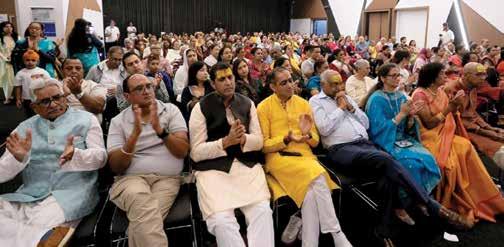
Through the Deo Family Charitable Foundation, we host Girmit Remembrance Day in Brisbane to ensure that the flame of memory never flickers out. This event is a bridge. It connects the elderly, who still carry the oral histories of their parents, with the youth, who are navigating life as proud Australians. We celebrate this day with passion because our ancestors’ sacrifice bought us our current freedom. We don’t just
mourn the struggle; we celebrate the resilience. We honour the fact that despite the attempt to break their spirits, the Girmitiyas preserved our cultural values, our languages, and our sense of Seva (selfless service).
A VISION FOR THE FUTURE
My message to the diaspora is simple: Our history is our strength. As we gather in Brisbane to mark this solemn yet empowering occasion, let us recommit to supporting one another. Let us use our platforms, whether in business, media, or community leadership to uplift the next generation.
When we stand together on Girmit Remembrance Day, we are telling the world that the "Agreement" our ancestors signed wasn't just a contract with a colonial power, it was an unbreakable pact with the future.
We are that future. And as long as the Deo Family Charitable Foundation and our media voices remain strong, the story of the Girmitiyas will continue to inspire, unite, and lead us forward.
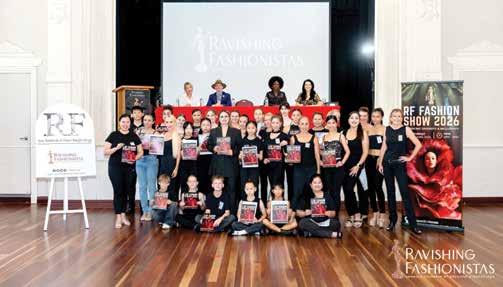
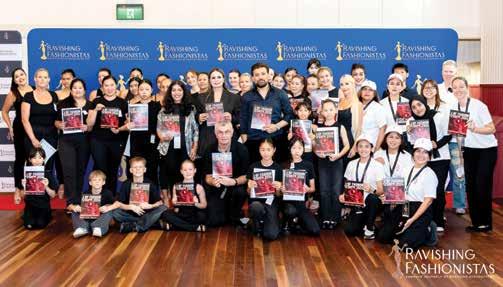
RF Fashion Show 2026: The Journey Continues – From Rehearsal to Runway
AS the excitement builds, the RF Fashion Show 2026 journey is unfolding into something truly extraordinary. With the highly anticipated show set to take place on 6th June at the stunning Hanworth House, the vision of Ravishing Fashionistas is now coming to life in powerful and inspiring ways.
What began as a celebration of inclusivity, creativity, and individuality is now evolving into a full-scale fashion experience — one that brings together diverse voices, stories, and talents on a single runway.
MODEL REHEARSALS
– THE BEGINNING OF TRANSFORMATION
We are proud to share that our first official model rehearsal has been successfully completed, marking a major milestone in this year’s journey.
This moment was more than just practice — it was where confidence met discipline. Models stepped into the space with anticipation and left with a deeper understanding of presence, movement, and energy.
From tentative first steps to more assured strides, the transformation has already begun. Each model is not only learning how to walk the runway, but how to own it.
PROMO SHOOT –
BRINGING THE VISION TO LIFE
Following the rehearsal, the official promo shoot captured the essence of RF Fashion Show 2026.
With carefully curated
styling, bold creative direction, and a strong sense of identity, the shoot reflected everything RF stands for — diversity, empowerment, and fearless self-expression.
These visuals are now shaping the narrative of the show, offering audiences a first glimpse into the energy, beauty, and impact that awaits on the runway.
THE COUNTDOWN BEGINS
Behind the scenes, preparations are moving at full pace. Designers, models, and the production team are working together to create a show that goes beyond fashion — one that tells real stories and celebrates individuality in all its forms.
JOIN US – BE PART OF THE EXPERIENCE
RF Fashion Show 2026 is not just an event — it is a celebration of culture, confidence, and community.
Date: 6th June 2026
Location: Hanworth House
We warmly invite you to be part of this unforgettable experience.
Tickets are now available — secure your spot and witness the magic unfold.
At Ravishing Fashionistas, the runway is more than a stage. It is a platform where every story matters, every identity is celebrated, and every individual shines. The journey is in motion.
And something truly remarkable is on its way.
Honouring Mothers, Strengthening Minds, and Building Community Together
BY XAVIER HERNANDEZ
WISHING everyone a very Happy Mother’s Day. This month, we celebrate not only mothers, but also grandmothers, aunties, carers, and all those who have embraced the role of a mother through love, sacrifice, and unwavering support. My own mother, a single parent, arrived in Australia unable to speak English. Through determination, resilience, and kindness, she provided for our family and taught me the importance of helping others, doing what is right, and viewing challenges as opportunities while embracing our faith.
I would also like to acknowledge remarkable women including Sandy Deo, Usha Chandra, Khue Oan Do, Mandeep, my grandmother, and the many women across our community who quietly go above and beyond each day, sharing kindness, compassion, and strength.
May is also Mental Health Awareness Month, an important reminder that mental health matters for women, men, and young people alike. In recent reader surveys, one message came through clearly: there is a strong desire for greater conversations around mental health, particularly within culturally and linguistically diverse communities.
Recently, I had the privilege of sitting down with Cr Nathan St Ledger, Councillor for Division 4, City of Logan which includes Bannockburn, Belivah, Buccan, Cedar Creek, Kairabah, Waterford, Windaroo, Wolffdene, Yarrabilba, Tamborine, parts of Bethania, and Logan Village. We discussed his journey, his passion for the Logan community, and his unwavering commitment to mental health advocacy.
Mental health is a topic that I care deeply about, particularly when it comes to young people. Like many families, I know individuals who have struggled with self-harm and suicidal thoughts. These conversations are not always easy, but they are necessary, and they can save lives. If you are able to support Cr St Ledger and his team in their important work, I encourage you to reach out.
This is an issue that matters greatly to our readers. Many have asked me to cover mental health, especially as young people navigate
the growing challenges of social media and artificial intelligence. Please enjoy my interview with Councillor Nathan St Ledger, who is helping break down barriers in this space. He spoke openly and honestly in the hope of helping others. Over the coming months, I will be sharing more from this important conversation.
Xavier: Would you mind introducing yourself to our readers?
Cr Nathan St Ledger: My name is Nathan St Ledger, and I’m an Ambassador and Director of, “A Chance for Change” (ACFC), a mental health and suicide prevention charity supporting men and the wider community.
Xavier: Are you able to tell readers more about mental health?
Cr Nathan St Ledger: I think the key thing with mental health is understanding that everybody has mental health—whether it is good, bad, or somewhere in between. I’m fortunate enough to teach Mental Health First Aid, and one of the biggest lessons is that mental health does not discriminate. It doesn’t matter who you are, your race, your background, or the colour of your skin. Everyone can be affected. For me, it is about spreading awareness, making sure people know what resources and support are available, and reminding people that it is okay to struggle and okay to reach out for help.
Xavier: Would you like to tell our readers a little more about ACFC and how they can support you, your team, and the community?
Cr Nathan St Ledger: Absolutely. A Chance for Change (ACFC) is a mental health and suicide prevention charity that was established in 2015. One of my best mates, Ivan, founded it, and I came on board about nine months later. At the time, I was running youth programs, and we wanted to strengthen the mental health component of that work. We invited Evan to get involved, and the partnership grew from there. I have always loved what A Chance for Change stands for. It was created by mates, for mates, to look out for one another. That is really what we are all about. We lose seven men every day to suicide in this country, which is far too many. Suicide is also the leading cause of death for males under
25. That is something we must work together to change.
Xavier: What advice can you give Australian Indian Times readers?
Cr Nathan St Ledger: Honestly, it is the same challenge facing young people everywhere. The world is changing very quickly. We live in a world of instant gratification, where everyone wants everything immediately, and where people compare themselves to others far too often.
If I could offer one piece of advice, it would be this: surround yourself with good people, build simple daily healthy habits, and understand that being yourself is more than enough. That realisation alone can be incredibly powerful.
Xavier: Are you able to share your views about social media?
Cr Nathan St Ledger: One of the biggest traps with social media is that it is not very social at all. In many ways, it is the complete opposite. If you look at how people comment and interact online, many would never speak that way to someone face-to-face.
You are always better off having a conversation rather than a confrontation. Genuine human connection is incredibly important for good mental health. Put the phone down sometimes, spend
time with people in person, and have real conversations.
Most importantly, find something you are passionate about and get involved. Whether it is Pokémon, football, boxing, music, or anything else, there is a community out there for you. Discover your passion and chase it wholeheartedly.
Mental health affects every family and every community. Seeking support is a sign of strength, and by having open conversations, we help break down barriers and build a more compassionate society.
End of interview.
Over the coming months, I look forward to sharing more from my conversations with Cr. St Ledger and highlighting the important work he continues to do alongside many dedicated members of our community.
From 18 to 24 May, Australia celebrates National Volunteer Week, recognising the extraordinary contributions of volunteers across the country. Volunteering has been a part of my life for as long as I can remember. It has allowed me to work alongside inspiring community leaders, raise awareness about important issues, and connect with people from all walks of life.
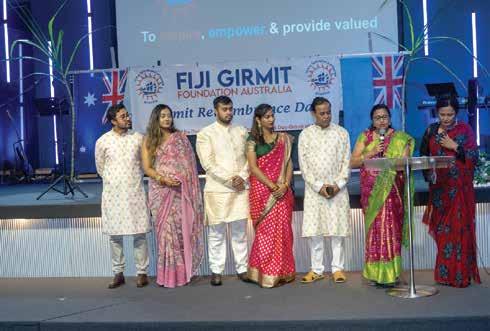
I was honoured
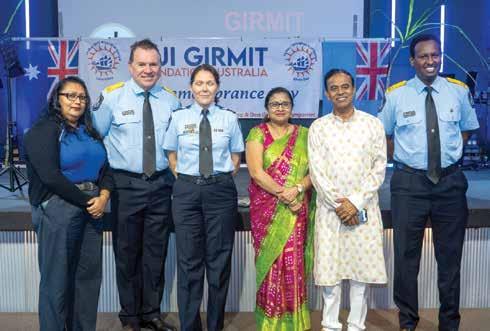
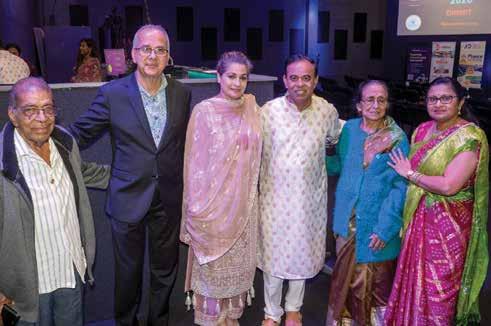
recently to volunteer at the Girmit Day celebrations in Hillcrest, an event that beautifully honoured history, culture, and community. Another highlight was volunteering at the Lions Club of Inala BBQ at Oxley Bunnings. I have grown up with the club members, and I am proud to call both them and the community we serve family. A special thank you to the Deo family for their ongoing support. Giving our youth, our community, and so many others a voice is truly remarkable.
Volunteering offers countless benefits, from improving mental wellbeing to building lifelong friendships and supporting those in need. At the same time, it is important to remember that while serving others is deeply rewarding, we must also care for ourselves. You cannot pour from an empty cup.
On 20 May, we recognise World Bee Day, highlighting the vital
role bees play in our environment and food production. Many readers may not know that I am also a proud beekeeper. I am passionate about supporting our environment, promoting good health, and sharing honey with those who often need it for medicinal purposes. Unfortunately, the spread of the Varroa mite is posing a serious threat to bee populations and hives across Australia. Raising awareness and supporting our local beekeepers has never been more important. Our bees may be small, but their contribution to our world is enormous. As always, thank you for your continued support. Together, through kindness, service, and understanding, we can continue building stronger, safer, and more connected communities. Please do not hesitate to reach out if there is anything I can assist with or if you have a story to share.
4th May – Labour Day in Queensland
LABOUR Day is a celebration for the hard work of people in Queensland and honouring those in the past for their efforts to promote fair working arrangements. Whilst we celebrate the hard work done by all we should also make sure we take care of our health and ensure we take steps to ensure our ongoing good health.
Sometimes things can happen that we were not expecting, and therefore we need to either take precautions or seek care to protect ourselves and our loved ones.
One way we can protect our health is to be vaccinated against infections that we may encounter including:
• Hepatitis A – especially if we are travelling to countries where there is an increased risk of infection.
• Hepatitis B –can be prevented with vaccination. Many people in Australia, particularly those born overseas or living with a person living with hepatitis B can get vaccinated under the National Immunisation
Program at no cost for the vaccine if they have a Medicare Card and have not been vaccinated or can show immunity against the hepatitis B virus. If you do not know if you have immunity or have not been checked for hepatitis B infection, ask your doctor for a simple blood test to check. Ask your doctor about hepatitis B or see our resource at www. eccq.com.au/hepatitisresources
• Hepatitis C – whilst there is no vaccination available, there is a readily available cure – talk to your doctor or other health practitioner.
Screening and testing for the above conditions can be undertaken by your local doctor. Many conditions including those discussed here do not have obvious signs or symptoms. Living with hepatitis B or C will not generally affect your ability to continue your usual work – but if you develop complications such as liver fibrosis/ cirrhosis or liver cancer these may affect your ability to work or threating your life.
By all people taking
time to check their health and to protect themselves from these conditions we can reduce the chance of passing them onto others; complications like liver cirrhosis and liver cancer associated with these infections; generally, improve our health and potentially that of our loved ones; and reduce any interruptions to your work life.
Taking a moment to check your health will help ensure you can keep working.
For more information, please visit our webpage at www.eccq.com.au/bbv Or contact our friendly Love Health Program team:
Email: health@eccq. com.au
Phone: (07) 3844 9166
If you are in Cairns,
Hepatitis, HIV/AIDS and Sexual Health Program Ethnic Communities Council of Queensland (ECCQ)
A Fresh Perspective on Health and Fitness: Chair Exercise with Renata at PCYC Logan
WE often talk at length about our health, but when it comes time to actually do something about it, we tend to put it off. Caught in the lazy cycle of "I'll do it today, I'll do it tomorrow," our fitness journey never quite manages to begin. However, once we make a firm commitment, improving our wellbeing is not as difficult as it seems.
When it comes to getting fit, many people share the misconception that they need to join an intimidating gym, pay for an expensive membership, or lift heavy weights. The truth is quite the opposite! You do not need to be a gym member or participate in any sort of competition to get healthy.
Supported by the Logan City Council, PCYC Logan (on the corner of Compton Road and Kingston Road, Slacks Creek) has brought a wonderful alternative to the community: Chair Exercise. Best of all, this community hall session costs a minimal fee of just $5!
Renata: A Passionate and Smiling Inspiration
The heart and soul of this class is the instructor, Renata. She is incredibly cheerful, lively, and full of positive energy. Renata teaches with immense passion, warmth, and a beautiful smile. Her
positive nature creates an environment where everyone genuinely looks forward to exercising.
People often mistakenly believe that 'chair yoga' or 'chair exercise' is nothing more than sitting down and doing a few stretches.
In Renata's class, this couldn't be further from the truth! It is a comprehensive, all-inone workout that includes a little bit of cardio, strength, flexibility, rhythm, balance, and bending.
Renata’s core motto perfectly sums up the class:
"Fit for your everyday activities." It is designed to give you the practical strength and mobility needed to navigate your daily life with ease.
Safe and Beneficial for Everyone
This class is completely safe for all participants. Whether you are recovering from an injury and looking to heal, aiming to improve your general fitness, or simply intimidated by the traditional gym environment, this is a welcoming and secure place for you.
Age is Just a Number: The Story of 95-Year-Old John
If you ever feel that age is a barrier to fitness, look no further than one of Renata's regular students,
John. At 95 years old, John has been consistently participating in this chair exercise class for the past three years. Thanks to his dedication to regular movement, he maintains an impressive level of flexibility and continuous improvement.
John offers a powerful message to us all: "We must take care of our own health; it is in our own hands." He is a true inspiration and a wonderful example for the entire community.
So, let us cast aside our laziness and take responsibility for our wellbeing. Head down to PCYC Logan in Slacks Creek and become part of this fantastic class. We send our absolute best wishes to Renata for the passion she brings to keeping our community fit, and we hope to see many more people joining her to build healthier, happier lives!
Class Details at a Glance:
• Where: PCYC Logan (Corner of Compton Rd and Kingston Rd, Slacks Creek)
• Cost: $5 per lesson
• Instructor: Renata
• Focus: Cardio, strength, flexibility, rhythm, and balance—all from the safety of a chair! Article By Madhu Khanna.
At times, a rental property may sit listed longer than expected. While vacancy rates remain low, this does not necessarily mean all properties are being rented quickly.
Why, is not always clear, but for properties struggling to attract the right tenants, there may be some simple and easily adjusted factors that can be identified in a quick review of key property elements:
Digital first impressions: Tenants are actively seeking rentals, which means their first port of call is often online. If your property is poorly presented digitally, it may not get much more than a passing glance. High quality, recent photos which reflect the current
condition of the home are essential.
Availability for inspections: Most tenants prefer to inspect a property prior to applying. For this reason, good photos can generate interest, however limited inspection times may be a barrier, particularly for those working full time. Being able to offer reasonable and flexible inspection times can help attract more prospective tenants.
Highlight the best features: Don’t be shy about highlighting what makes your property stand out. What makes it a great place to live? Is it within a popular school catchment area, close by to public transport, or does it offer features
such as a pool, secure yard, ample storage or parking, or even energy saving inclusions? These may just be what your tenant is looking for outside of location, so be sure to showcase these where possible.
Inclusion: Are extras such as yard or pool maintenance included? Perhaps water usage is covered to a certain usage. Time- and costsaving features can be highly appealing for tenants, so if it is something you offer be sure to communicate the benefits early in the listing.
Price: How does the property compare to similar properties locally? Look at what has recently been leased
TENANTS ARE ACTIVELY SEEKING RENTALS, WHICH MEANS THEIR FIRST PORT OF CALL IS OFTEN ONLINE. IF YOUR PROPERTY IS POORLY PRESENTED DIGITALLY, IT MAY NOT GET MUCH MORE THAN A PASSING GLANCE. HIGH QUALITY, RECENT PHOTOS WHICH REFLECT THE CURRENT CONDITION OF THE HOME ARE ESSENTIAL.
– not just advertised. If your pricing is out of sync with comparable properties, it may be
beneficial to recognise where some adjustment could be made. From time to time, it is important to review how your property is performing in the current market. Your property manager is here to help support you in achieving the best possible
outcome. Securing reliable, long-term tenants can occasionally take time, but you can be confident that your property manager is working to ensure your investment performs at its best.
Credit:
Capital Gain Tax – You Could be Paying More….
WE live in a world where wealth is considered bad. And that means it must be taxed to the hilt, and the heads of the wealthy must be displayed on a spike.
There is just one problem. It has been tried and tested. And it does not work. Think India post-independence. No progress in 50 years then the markets were opened and now India is the 5th largest country in the world by GDP. Okay a billion people help but even so.
China tried it and it did not work until it realised that putting everyone on a farm or the factory floor was not the way to go. These countries needed business leaders and investors to make the country wealthy, but these business leaders needed an incentive which was wealth and profits and low taxes. In other words, they concentrated not on fairness, but growth. Everyone benefited somehow.
I have not met a single Indian in India who thinks this is a bad idea because many have moved from empty stomachs to a full belly of food. Some have moved from shanty towns to an actual home too.
The UK is in the mist of trying this socialist nonsense too. In some cases, if you earn £100,000 ($200,000 AU) and yes, I agree that is a lot, but the effective rate of taxes could be 62%. That’s nut. Bonkers too.
There’s more.
There have been some swinging tax rises on the wealthy in the UK from additional employee costs, investment taxes to inheritance tax.
The result?
The country is in a mess. And that makes me unhappy because I grew up there. The wealthy are leaving the UK in droves. Employee talent is leaving too, mostly to lower tax countries. In 2025 some 16,500 people with wealth more than $2M left the UK. In 2026 it is expected to be larger, much larger. When you consider that the top 10% pay about 55% of all UK income tax that is a bit of a problem.
So, the new proposals relating to capital gains and property by our federal government is a typical socialist move that will not help wealth building or our country. Yes, they will wrap it up as some kind of socialist agenda, so it looks as if they are helping the poor,
The ones who want wealthy heads on a spike live in the western world where they have been taught that everything must be fair and equal. There is no such thing. Life is not fair. There may be a bit of jealously involved too. Problem is they have no idea what it means for them or the country if the wealthy are battered.
but they’re not. It is going to make matters worse because greedy investors are not the issue. House building and immigration is.
And remember the top 10% of Australian earners contribute about 50% of all income taxes. If you batter them and they leave or stop investing that is a stupid proposal. You don’t gut the goose that lays the golden egg.
But let’s talk about the proposals.
The Australian government are looking at significant reforms to Capital Gains Tax ahead of the Federal Budget. They are wrapping this up as targeting housing affordability (makes all the socialists happy) and finished it with a big bow on top by telling everyone that landlords are evil.
They are looking at:
• Reduction of Discount Rate: Proposals
include slashing the discount from 50% down to 33% or 25%.
• Targeted Housing Reform: One major option involves restricting or removing the discount specifically for existing residential property while maintaining or increasing it for newly built homes to incentivise housing supply.
• Grandfathering Provisions: To manage political sensitivity, the government may "grandfather" existing investments, meaning properties purchased before the start date would retain the current 50% discount.
This will keep the baby boomers happy, and the hope is they don’t give Labor a bloody nose at the next election like they did a few elections back.
Chances of success that the reforms will lower house prices – 0% in my opinion.
Why? Property developers want to build homes. They can’t because we have crazy planning rules that make it almost impossible to build because we want to conserve the planet and the Koala.
This all sounds wonderful and jolly but without planning reform there is no chance there is going to be a sudden increase in housing supply. And remember if we continue with
the insane amount of immigration, they need to live somewhere.
Demand and supply determine house prices, not tax policy. We have more people, but housebuilding is not keeping up. This is the equivalent of trying to repair a leaking dam with a bandage. It will not work.
This explains why Brisbane’s housing market is hot and Melbourne is cool. The tax situation is the same in both states so why is it different? It’s different because everyone wants to live in Brisbane and many want to leave Melbourne. Tax policy has no effect.
And for those that want to preserve the Koala?
It get it, I really do, but if you want to save the Koala you have to pay more for your house. You must decide if you want a Koala or a house. If you chose the Koala don’t batter the person who decides to pay more for a house than you because they can and you can’t. Sorry.
This could be the start of a slippery slope for us which the UK is currently in. It is in a position that more taxes on the wealthy are generating less tax income (because they are leaving or because they are not trying anymore) and it started by trying to fix the housing supply by battering landlords first with more taxes and then with more red tape
and regulation. Sound familiar?
Then the UK hit business owners with more employee regulation and taxes. The result? Investors stopped investing, job hiring has fallen but demand for housing remained the same so house prices did not fall.
In Australia we must decide if want overall wealth for our country. That means some will be richer and some will be poorer. The wealthy provide a large share of taxes. It’s not perfect. It is not the best system. But what I do know is that from experience if you make people poorer, they do not like it. And they will do almost anything they can to ensure it does not happen, even if it is to detriment to the country. It would make sense for our political masters to know this and make policies that work for us individually and the country. In other words, concentrate on growth, not taxes. And everything else is just crap. What should you do? Well, without knowing what the rules are, there is not a lot you can do. Wait and see what the Federal Budget says and then get some professional advice. But someone, somewhere will be paying more taxes for owning investment properties.
Hitesh Mohanlal
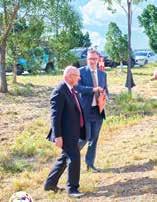
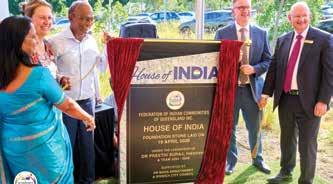
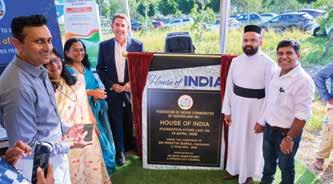
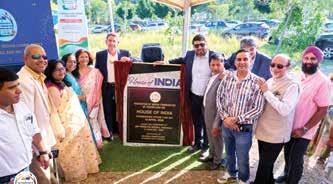
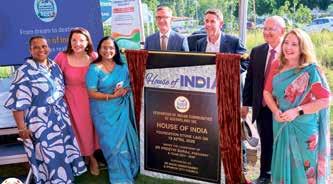
FICQ Lays Foundation Stone for “House of India” Hub in Greater Springfield
AUGUSTINE HEIGHTS, QLD – 19 April 2026
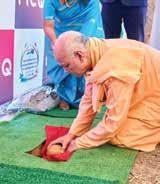
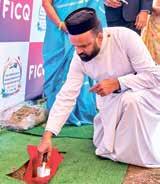
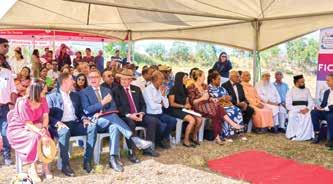
– The Federation of Indian Communities of Queensland (FICQ) proudly marked a historic milestone with the foundation stone laying ceremony of the “House of India” Community and Cultural Centre at Augustine Heights in Greater Springfield.
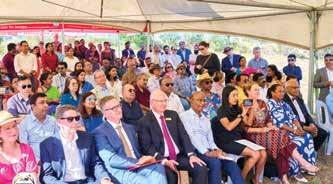
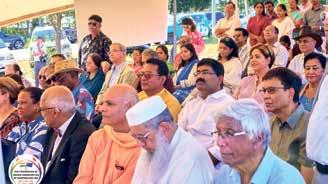
The ceremony brought together community leaders, elected representatives, faith leaders, and members of the wider multicultural community to celebrate the official launch of this landmark project.
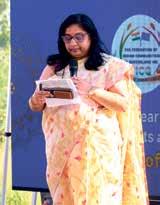
The event commenced with a formal welcome and Acknowledgement of Country, followed by an address from FICQ President, Dr Preethi Suraj, who outlined the vision and journey behind the House of India project—a long-awaited multicultural hub that will serve as a centre for connection, celebration, learning, and community cohesion. She stated “Today marks a proud and historic moment for our community. The House of India is not just a building—it is a symbol of identity, unity, and belonging. It will be a place where generations come together to celebrate culture, build connections, and strengthen the multicultural fabric of Queensland.”
A special highlight of the ceremony was the multifaith blessings, where faith leaders offered prayers and sacred soil blessings, symbolising unity, peace, and shared prosperity across cultures and communities.
Distinguished guests included federal, state, and local government representatives who shared messages of support and recognition of the project’s significance. Federal representatives in attendance included the Hon. Julian Hill MP and the Hon. Shayne Neumann MP. They were joined by state member the Hon. Hermann Vorster MP, and opposition leaders the Hon. Cameron Dick MP and the Hon. Charis
Mullen MP, Ms Margie Nightingale MP alongside Ipswich Mayor Teresa Harding, Councillor Pye Augustine, and other dignitaries.
Also in attendance were Maha Sinnathamby, Founder of Springfield City Group, whose visionary leadership and generous support—including the provision of land—have been instrumental in bringing this project to life, along with respected community leader and Indian Consulate representative Mr Sushil Kumar Goel.
During the ceremony, Julian Hill MP highlighted the Australian Government’s commitment to multicultural infrastructure, noting the $5.5 million funding support secured for the project. He acknowledged the instrumental role of Shayne Neumann MP in championing this significant investment in community development.
The ceremony also featured the official unveiling of the foundation stone, symbolising the beginning of construction and the realisation of a longheld vision for the Indian Australian community in Queensland.
A VISION FOR COMMUNITY AND CULTURAL CONNECTION
The House of India will serve as a vibrant multicultural hub— bringing together arts, culture, education, and community services under one roof. It is envisioned as a space that not only celebrates Indian heritage but also fosters intercultural dialogue and inclusion across Queensland’s diverse communities.
The event concluded with a vote of thanks by Mrs Parul Mehta, Treasurer of FICQ, followed by community networking and media interactions.
FICQ expressed its deep gratitude to all levels of government, community partners, and volunteers who have supported the project journey.
SOUL consciousness is a spiritual perspective that encourages individuals to understand themselves as more than physical beings. Rather than identifying solely with the body, social roles, or material possessions, this view emphasizes the self as a soul characterized by peace, love, purity, and inner stability. This article explores the meaning of soul consciousness, its contrast with body consciousness, the role of meditation in cultivating spiritual awareness, and the practical effects of this shift on personal wellbeing and relationships. It also considers the challenges involved in sustaining soul consciousness in daily life and outlines practical methods for integrating this awareness into one’s routine. By examining soul consciousness as both a philosophical and lived experience, the discussion highlights its potential to promote inner harmony, emotional balance, and compassionate social interaction.
Questions of identity have occupied philosophical and spiritual traditions for centuries. Human beings often define themselves through visible and external markers such as the body, occupation, status, possessions, and social roles. Yet many spiritual teachings suggest that this outward identity does not fully capture the essence of who we are. Within this framework, soul consciousness offers a deeper understanding of the self by proposing that human beings are fundamentally souls inhabiting physical bodies.
This perspective has significant implications. It changes how individuals understand their thoughts, emotions, relationships, and purpose in life. When identity is rooted only in the body, life often becomes dominated by comparison, insecurity, attachment, and ego. In contrast, when identity is grounded in the soul, a person may experience greater peace, clarity, and emotional resilience. Soul consciousness therefore represents not only a spiritual idea but also a practical orientation toward living.
THE MEANING OF SOUL CONSCIOUSNESS
Soul consciousness begins with the recognition that the true self is not the physical body but the inner spiritual being. In spiritual philosophy, the soul is often understood as the source of awareness, thought, feeling, and character. It is associated with the original qualities of peace, love, purity, wisdom, and bliss. To live in soul consciousness
Soul Consciousness
means to remain aware of this spiritual identity and to express these qualities in thought and action.
This view stands in contrast to body consciousness, in which a person identifies primarily with appearance, possessions, labels, and worldly roles. Body consciousness often gives rise to negative emotional states such as anger, greed, fear, jealousy, and pride. These states emerge because the individual seeks worth and fulfillment through external conditions, which are unstable by nature. Soul consciousness, by contrast, directs attention inward and encourages a sense of completeness that is not dependent on external approval or material success.
FROM BODY CONSCIOUSNESS TO SOUL CONSCIOUSNESS
The movement from body consciousness to soul consciousness is rarely sudden. It is usually a gradual process shaped by self-reflection, discipline, and spiritual practice. Most people spend much of their lives identifying with what they do, what they own, and how they are perceived by others. As a result, reactions are often shaped by habit, desire, and ego-based thinking.
The shift toward soul consciousness begins when an individual starts questioning this limited identity. Through repeated reflection, one begins to observe thoughts and actions more carefully. This observation creates a distance between the self and its conditioned patterns. Over time, a person may become less reactive, less attached to praise or criticism, and more rooted in inner values.
This transformation is not merely conceptual. It requires continuous practice. It involves replacing learned habits of body-based identification with a renewed awareness of
the self as a spiritual being. In this sense, soul consciousness is both an awakening and a discipline.
THE ROLE OF MEDITATION
Meditation plays a central role in developing soul consciousness. It provides the mental space necessary to withdraw attention from external distractions and reconnect with the inner self. Among the methods associated with this process, Raja yoga meditation is especially significant. This practice encourages the individual to visualize the self as a point of spiritual light and to cultivate a conscious connection with the Supreme Soul, understood as the ultimate source of peace, wisdom, and purity.
Through meditation, the practitioner gradually weakens identification with the body and strengthens awareness of spiritual identity. This repeated internal focus helps cleanse the mind of negative impressions and habitual responses. It also supports emotional regulation by creating a stable inner centre from which thoughts and actions can emerge more consciously.
Meditation, in this context, is not an escape from life. Rather, it is a method for engaging with life more clearly. It enables individuals to act with greater calmness, dignity, and compassion even amid everyday pressures.
EFFECTS ON PERSONAL WELL-BEING
One of the most immediate benefits of soul consciousness is inner peace. When people identify themselves as souls rather than bodies, they are less disturbed by temporary situations, external judgment, or material fluctuations. Their sense of worth no longer depends entirely on circumstances. This creates emotional
steadiness and helps reduce anxiety, frustration, and insecurity.
Soul consciousness can also improve emotional health. Body consciousness often intensifies emotional turbulence because it is tied to desire, control, and expectation. Soul consciousness encourages detachment in a positive sense, not indifference, but freedom from overdependence on outcomes. This leads to greater clarity of mind and a more balanced emotional life.
In addition, the practice of soul consciousness can deepen one’s sense of purpose. Life is no longer viewed only as a pursuit of achievement or acquisition. Instead, it becomes a journey of self-realization, moral growth, and spiritual contribution.
EFFECTS ON RELATIONSHIPS AND SOCIETY
The practice of soul consciousness extends beyond personal transformation. It also influences how people relate to others. When individuals see others primarily through bodily categories such as gender, status, race, age, or profession, relationships may become shaped by judgment, comparison, and conflict. Soul consciousness reduces the dominance of these external distinctions by emphasizing a shared spiritual identity.
This perspective encourages respect, empathy, and compassion. It becomes easier to respond to others with patience when one sees them as souls carrying their own experiences, struggles, and inner worth. Such a view can strengthen families, communities, and workplaces by promoting understanding rather than division.
On a broader level, soul consciousness supports the idea of universal
traditions as sanskars. These impressions shape behaviour and emotional responses and may pull the individual back into body consciousness. Reactions such as anger, possessiveness, or ego often arise automatically because they have been reinforced over time. External influences also present challenges. Modern life often promotes competition, speed, comparison, and material success. These pressures make it easy to forget one’s spiritual identity. As a result, maintaining soul consciousness requires deliberate effort and consistency.
human connectedness. It challenges narrow identification and encourages a more inclusive outlook. In this way, it has the potential to contribute to social harmony and ethical living.
PRACTICAL WAYS TO CULTIVATE SOUL CONSCIOUSNESS
Although soul consciousness is a profound spiritual state, it can be developed through simple daily practices. The first and most important is regular meditation, especially at the beginning and end of the day. These moments help establish and reinforce awareness of the self as a soul.
Self-reflection is also essential. Individuals can ask themselves whether their reactions are arising from ego, attachment, or fear, or from peace, dignity, and understanding. This kind of honest internal observation gradually changes one’s mental habits.
Positive affirmations can further support the process. Statements such as “I am a peaceful soul” or “I am a being of light and love” help redirect identity toward the spiritual self. Spiritual study also plays a valuable role by deepening understanding and strengthening conviction.
Finally, soul consciousness must be practiced in action. It is revealed not only in meditation but also in how one speaks, responds, forgives, and serves. Everyday interactions provide the true test of whether spiritual awareness is becoming part of one’s character.
CHALLENGES IN SUSTAINING SOUL CONSCIOUSNESS
Despite its benefits, soul consciousness can be difficult to maintain. One major challenge is the influence of deeply rooted impressions, often referred to in spiritual
Supportive environments can help. Spiritual communities, uplifting reading, reflective silence, and regular meditation all strengthen the inner resolve needed to sustain this awareness. Equally important is selfcompassion. Progress on the spiritual path is gradual, and setbacks should be approached with patience rather than self-criticism.
CONCLUSION
Soul consciousness offers a meaningful framework for understanding identity, well-being, and human relationships. By shifting awareness from the body to the soul, individuals may experience greater peace, emotional balance, and clarity of purpose. This transformation is not purely theoretical. It becomes real through meditation, reflection, disciplined practice, and conscious action.
As a way of life, soul consciousness encourages people to move beyond egodriven patterns and to express their original qualities of love, purity, and wisdom. It supports healthier relationships and contributes to a more compassionate social world. While the journey requires persistence, its value lies in the gradual awakening of the self to its deeper nature. In this sense, soul consciousness is both a personal path and a universal invitation. It calls individuals to rediscover who they are beneath appearances and to live from that truth with greater awareness and integrity.
Brahma Kumaris Shailer Park provide free Raja Yoga Meditation, Positive Thinking and Anger Management Courses. Please contact us on 0414685144 or shailerpark@ au.brahmakumaris.org for further information. https://brahmakumaris. org.au and find out the events happening close to your location. Om Shanthi.
THE Learn2Grow community came together for an engaging online session with April Chrzanowski, Director of the Secretariat of the Queensland Sentencing Advisory Council. With a rare blend of expertise across law, criminology, mathematics and public policy, April brought deep insight into how open data and analytics shape real-world decision-making in government.
Drawing on her experience across the legal profession, academia and Queensland Government, April
highlighted the critical role of evidence-based approaches in justice policy. She demonstrated how data informs sentencing trends, supports evaluation, and strengthens transparency and public trust.
This session saw a 66% increase in attendance, reflecting the growing enthusiasm within our community for data literacy, analytics and applied learning. Many attendees were early-career researchers, job changers or job seekers seeking to strengthen their Power BI and
AI-driven analysis skills. April generously answered a wide range of participant questions, including:
• how to improve data analysis capability over time
• where to find trustworthy, high-quality datasets
• how to assess data reliability and limitations
• how data analysis supports better decisions and helps communicate those decisions clearly to stakeholders
Her practical guidance elevated the group’s confidence in using data to inform real-world
problems, especially for those building new skills or transitioning into data-focused roles.
At Basava Samiti Asia Pacific, through the Learn2Grow Program, we remain committed to creating platforms that Engage, Educate, Empower and Enlighten. Events like this strengthen our shared commitment to continuous learning and community-driven professional growth.
We look forward to welcoming you to future sessions as we continue to build a supportive, skills-focused learning community.
A monkey that has climbed a tree, It leaps and bounds among the boughs: How can I trust this feverish mind ?
How can I, thus, approve of it ?
For, every time I try to go
To my Father, Lord Kūḍala Saṅgama, It bars my way !
Translated by: L M A Menezes, S M Angadi
Harmony Week Celebration Unites Brisbane Communities Through Art
BRISBANE, 21 March 2026 — A vibrant celebration of cultural diversity and community connection took place in Brisbane as the 2026 WAMCI Harmony Week Celebration and the opening of the "Australia—Taiwan: Art in Harmony"— Exhibition brought together people from a wide range of cultural backgrounds.
Hosted by World Arts & Multi-Culture Inc. (WAMCI) at the Queensland Taiwan Centre, the event highlighted the core values of Harmony Week —respect, inclusion, and belonging — through the universal language of art.
The exhibition features a diverse group of artists, including Australian First Nations artist Aunty Peggy Tidyman and Taiwanese artists Lu Wan-Ching, Chen Ya-Ping, Tsai ShuChen and Chen ChiuYen, alongside Brisbanebased artists of diverse cultural backgrounds such as Yumiko Kigoshi (Japan), Dr Renata Buziak (Poland), and Andrea Moser (Germany). Their works reflect a rich tapestry of cultural identity, heritage, and shared human experience.
WAMCI President Susan Yang emphasised the role of art in building connections across communities. "Art allows
us to connect beyond language and cultural differences. It fosters understanding and brings people together," she said.
A highlight of the program was the keynote address by Ms Yiu WenMei, Chairperson of the Tainan Art Museum, who shared valuable insights into the global art landscape and the evolving role of art in connecting cultures.
The celebration was attended by a broad cross-section of the community, including government representatives, multicultural leaders, and members of various cultural organisations "reflecting Brisbane's diversity and strong community spirit.
In addition to the formal proceedings, guests enjoyed artistled tours, artwork presentations, and a live portrait sketch session, creating opportunities for meaningful engagement between artists and the public.
The organisers also expressed their sincere appreciation to their valued sponsors and supporters, including the Brisbane Lord Mayor's Community Fund, Councillor Steven Huang, the Overseas Community Affairs Council (Taiwan), and Members of Parliament James Martin MP, Leanne Enoch MP,
Peter Russo MP and Margie Nightingale MP. Appreciation was also extended to Liming Group, Taiwan Business
Bank (Brisbane Branch), and Mega ICBC Bank (Brisbane) for their generous sponsorship support.
is now open to the public, inviting visitors from all backgrounds to experience how art can connect cultures and strengthen community bonds.
The "Australia— Taiwan: Art in Harmony" exhibition
AUSTRALIA, Brisbane:
In a proud and inspiring moment for the Indian diaspora in Queensland, Mr. Anish John has been officially appointed as Honorary Justice in Australia as Justice of the Peace in Queensland. The appointment was conferred by Her Excellency Jeannette Young, representing His Majesty King Charles III, recognising Mr. John’s longstanding commitment to community service and leadership.
A resident of Australia for over 15 years, Mr. John has established himself as a respected leader within Australia’s multicultural landscape. He currently serves as the Chief Executive Officer of Windsor Health, where he has played a key role in delivering communityfocused healthcare and support services.
Mr. John’s appointment as a JP reflects his deep and sustained involvement in community development, cultural engagement, and service-oriented leadership. Over the years, he has held several significant positions across multicultural and
Anish John Appointed Honorary Justice in Queensland In Every Bite, A Story: Nurturing Indian Identity Through Food
By Rinchaal Patel, Mindset and Relationship
THERE’S a moment many Indian mothers living abroad will quietly recognise.
You are in the kitchen, the crackle of mustard seeds dancing in hot oil, curry leaves releasing their earthy fragrance into the air. The kitchen feels alive-warm, familiar, grounding.
Your child walks in, opens the fridge, scans past everything you have just made and says, “Can I have pasta?” And just like that, something in you sinks. Not because of the pasta. But because of what it feels like you’re losing.
THE MOMENT THAT
faith-based organisations. His contributions include serving as Secretary of the Mernda & Doreen Multicultural Association, Secretary of the Mernda Diwali Celebrations, President of the Laurimar Multicultural Association, and Secretary of the Mar Thoma Church in Melbourne. Through these roles, he has been instrumental in promoting inclusivity, cultural harmony, and community cohesion.
Widely respected for his integrity, humility, and dedication, Mr. John has consistently demonstrated a strong commitment to uplifting diverse communities and fostering meaningful connections among people from different cultural backgrounds.
Community leaders have warmly welcomed the recognition, describing it as a well-deserved honour and a testament to his years of selfless service. They noted that his appointment brings pride not only to his family but also to the broader Indian and multicultural communities across Australia.
Mr. John is supported by his wife, Mrs. Teena John, and together they are blessed with three children— Emma, Charlotte, and Alexander—who remain a constant source of inspiration and strength in his journey.
As a Justice of the Peace, Mr. John will now serve the public in an official capacity by witnessing statutory declarations and affidavits, certifying copies of documents, and performing other authorised legal functions. His new role will further strengthen grassroots-level public service and accessibility to essential legal processes within the community.
This achievement stands as a shining example of how dedication to community service and cultural engagement can lead to meaningful recognition and opportunities to serve society at a higher level.
—Biju Joseph Phone: 0401 972 923
Northern Gold Coast Multicultural Association
STAYS WITH YOU
A mother I worked with recently shared this with me. She mentioned her struggles with her son as he refused to take paranthas in his lunchbox and only wanting sandwiches. When she gently asked why, he shrugged and said, “It’s just easier to eat what everyone else eats.” There was no anger in his voice. Just a quiet desire to fit in. And in that moment, she didn’t just feel rejected. She felt something deeper, like a small thread connecting her child to her world had loosened.
THE QUIET FEAR
BENEATH IT ALL
In my work with Indian families here in Australia, this is more common than we admit. It’s not really about food. It’s about identity, belonging. The fear that what matters to us may not matter to them. And so we try harder. Cook more. Explain more. Sometimes even push more. But here’s what I’ve learned: Children don’t disconnect from culture overnight. They drift
when it feels distant, unfamiliar, or forced.
A WORLD FULL OF CHOICES… AND ONE THAT STILL MATTERS
Our children are growing up in a world overflowing with options. School lunches that look nothing like ours. Weekend meals shaped by café culture. Indian food available everywherefrom restaurants to ready-made packets. They are exposed to variety in a way we never were.
And while that’s a beautiful thing, it also means this: What is occasional becomes novelty. What is consistent becomes identity. Restaurant meals may excite them. Store-bought food may comfort them. But home-cooked foodmade regularly, without occasion-is what quietly shapes them.
WHAT HOME-COOKED FOOD REALLY HOLDS
When you cook at home, you’re not just feeding your child. You’re passing something through your hands. The instinct of your mother. The rhythm of
your upbringing. The unspoken care that says, “I made this for you.”
It’s in the way spices are layered without measuring. In the way you adjust taste without thinking. In the way food is offered-not just served. That depth doesn’t come from convenience. It comes from connection.
THE KITCHEN ISN’T ABOUT PERFECTIONIT’S ABOUT PRESENCE
It’s easy to feel like you have to do it “right.” Perfect recipes. Traditional meals. Consistency without fail. But what children remember isn’t perfection. It’s presence. Let them stand beside you. Let them stir, spill, taste, and question. Let them make something that looks nothing like what it’s supposed to be and still celebrate it. Because in those moments, something far more important than cooking is happening. They are being included. And inclusion builds belonging. When They Pull Away There will be phases when they resist. They will prefer something
else. They will compare and question. This is where many parents feel the urge to tighten control. But here’s the shift that matters:
Children don’t reject culture. They reject the pressure attached to it.
The more we insist, the more they distance. The more we stay calm, consistent, and open, the more space they have to return.
BETWEEN TWO WORLDS
At school, your child is learning how to fit in. They may feel different. They may choose what feels easier. They may slowly adapt to their surroundings.
And then they come home. To the smell of something cooking. To flavours that don’t need explanation. To a space where they don’t have to adjust themselves. That’s what your food becomes. Not just nourishment. But grounding. A quiet message: You belong here too.
THE MOMENT IT COMES BACK
And then, often when
you least expect it, something shifts. They take an extra serving. They linger at the table. They ask, casually, “How did you make this?” And years later, maybe when they’re living on their own, you’ll get the message:
“Hey… what’s that recipe again?” And in that moment, you realise, nothing was lost. It was simply taking root in its own time.
More Than Just Food
In a world where Indian food is easily available everywhere, it’s easy to assume culture will remain. But culture doesn’t live in availability. It lives in repetition. In shared moments. In the quiet consistency of what we offer, day after day. Because in every bite, of something you’ve made, in your way, there is a story. And one day, your child won’t just remember the taste. They’ll remember the feeling of coming home to it.
And that feeling, that sense of being held, known, and rooted, is what they will carry forward as their culture.
Coach, YOLO Academy
BHAGAVAD GITA
CHAPTER 16
Daivasur-SampadVibhag Yog – The Yog of the Distinction between the Divine and Devilish Endowments
SHREE BHAGAVAN
KRISHNA SAID:
1. Fearlessness, purity of being, perseverance in the yog of knowledge, charity, self-restraint, sacrifice, study of sacred texts or introspection, austerity and uprightness;
2. Nonviolence, truth, absence of anger, relinquishment, serenity, aversion to fault-finding, compassion to living beings, freedom from covetousness, gentleness, modesty and absence of fickleness;
3. Vigour, forgiveness, fortitude, cleanliness, freedom from malice and excessive pride; O Bharat Arjun, these are the endowments of those who are born with a divine nature.
4. Pompousness, arrogance, vanity, anger, harshness and ignorance are the traits of those born with devilish nature, O Parth Arjun.
5. It is thought that the divine endowments lead to deliverance and the devilish to bondage. O Pandav Arjun, do not grieve. You are born with divine endowments.
6. There are two types of created being in this world, the divine and the devilish. The divine has been explained at length. Now hear from me O Parth Arjun, about the devilish.
7. The devilish people do not know about the method of engagement in action nor about the way of withdrawal from it. Neither cleanliness, nor proper conduct nor truth is found in them.
8. They declare that the world is unreal, without a basis and without a God, not created in regular causal sequence. How else? But by the union of sexes caused by desire and nothing else.
9. Holding this view, these people of lost souls, weak intelligence, and vile and cruel action come into existence as enemies bent on the destruction of the world.
10. Taking refuge in insatiable desires, filled with hypocrisy, pride and arrogance, and holding false notions due to their delusion, they act with unclean intentions.
11. Clinging to immeasurable worries that would only end with their death, and firmly convinced that the gratification of desires is the highest goal;
12. Bound by a hundred snares of hope, given over to lust and anger, they seek
Bhagavad Gita Chapters 16 & 17
to amass wealth by unjust means for gratification of their desires.
13. This has been acquired by me today. I shall attain this wish. It is mine and this wealth also shall be mine.
14. This enemy has been slain by me and others too I shall slay. I am the lord; I am the enjoyer. I am successful, mighty and happy.
15. I am wealthy and high-born. Who else is equal to me? I shall perform a sacrifice. I shall give charity and I shall rejoice. Thus, they are deluded by ignorance.
16. Confused by numerous thoughts, enveloped in a net of delusion, and addicted to the gratification of desires, they fall down into a filthy hell.
17. Self-conceited, stubborn, filled with pride and arrogance of wealth, they perform sacrifices only in name with ostentation and without regard to rules.
18. Given to egotism, force, pride, desire and anger, these malicious people despise me in their own as well as in others’ bodies.
19. I constantly hurl these cruel haters, the worst of human beings, into demonic wombs in the vicious cycle of rebirth.
20. Fallen into the demonical wombs in birth after birth, these deluded beings do not attain me, O Kaunteya Arjun. From there they sink further down to lower state.
21. Desire, anger and greed are the three gates leading to this hell. They are destructive to the self and hence one should abandon these three.
of their essential nature. Humans are made of their faith. What their faith is, that verily they are.
4. The sattvik people worship the gods and the rajasi ones venerate yakshas and demons. The tamasi people worship ghosts and other hordes of nature spirits.
5. Those who are filled with deceit and arrogance, and impelled by the force of desire and passion, perform atrocious austerities, which are not prescribed by the scriptures.
6. They mindlessly torture a host of elements within their body and also me residing in the body. Know these to be demoniac in their resolve.
7. Even the food which is dear to all is of three kinds. So are the sacrifices, austerities and gifts. Hear now the distinction between them.
O Kaunteya Arjun, those who are released from these three gates to darkness and do what is the best for their self, attain the supreme goal.
23. The one who acts under the impulse of desire, casting aside the injunction of the scripture, does not attain accomplishment, nor happiness nor the supreme goal.
24. Therefore, let the scripture be your authority for determining what is to be done and what is not to be done. Knowing the prescribed scriptural injunction, you should perform your prescribed duty here in this world.
Thus ends the sixteenth chapter, entitled DaivasurSampad-Vibhag Yog – The Yog of the Distinction between the Divine and Devilish Endowments containing the discourse between Shree Krishna and Arjun in the Upanishad called the Bhagavad Gita, the science of Brahm, the scripture of Yog.
Bhagavad Gita Chapter 17 Shraddha-Tray-Vibhag Yog – The Yog of the Distinction of the Three Kinds of Faith
Arjun said:
1. O Krishna, what is the position of those who forsake the injunctions of scriptures but perform sacrifices with faith? Is it sattva, rajas, or tamas?
Shree Bhagavan Krishna said:
2. The faith of embodied beings is of three kinds, known as sattviki, rajasi and tamasi, all born of their inherent nature. Now hear about them.
3. O Bharat Arjun, faith of all humans takes the form
austerity practiced with the utmost faith by steadfast people without any expectation of reward is regarded as sattvik.
18. Austerity which is practiced with arrogance in order to gain honour, respect and reverence is declared to be rajasi in this world. It is unstable and transient.
19. Austerity which is practiced with foolish obsession by means of selftorture or with the aim of causing injury to others is declared to be tamasi.
20. The gift which is given as a matter of duty to a worthy person who has not performed a prior favour, and at the proper place and time, is held to be sattvik.
21. The gift which is given grudgingly with the aim of receiving a favour in return or with the expectation of future gain, is remembered as rajasi.
8. The foods that promote life, virtue, strength, health, happiness and satiety, and which are juicy, smooth, nourishing and agreeable are dear to the sattvik people.
9. The foods that are bitter, sour, salty, excessively hot, pungent, harsh and burning are desired by the rajasi people. Such foods cause pain, grief and disease.
10. The foods, which are stale, tasteless, putrid and left over, rejected and not fit for offering in sacrifice, are dear to the tamasi people.
11. The sacrifice, which is performed according to the prescribed procedure by those who do not desire any reward from it and believe it to be their duty, is sattvik.
12. But the sacrifice that is performed with an expectation of reward or for the purpose of ostentation, O Baharat-shrestha Arjun, know that to be rajasi.
13. The sacrifice which is not in conformity with the prescribed procedure, in which food is not distributed, sacred hymns are not chanted, fees to presiding priests are not paid and which is devoid of faith, is regarded as tamasi.
14. Worship of the gods, the twice-born, teachers and the wise; cleanliness, uprightness, continence and non-violence, these are called austerities of the body.
15. The utterance of words that do not cause distress, which is truthful, pleasant and beneficial, and practice in the recitation of sacred texts, these are called austerities of speech.
16. Peace of mind, gentleness, silence, selfrestraint, purity of being, these are called austerities of the mind.
17. This threefold
22. The gift which is given at the wrong place and time, to an unworthy person without paying respect or with contempt is declared to be tamasi.
23. “Om Tat Sat” this is considered to be the threefold designation of Brahm. By this the Brahmins, the Veds and the sacrifices were ordained in ancient times.
24. Therefore, the exponents of Brahm always start the acts of sacrifice, gift and austerity by uttering the syllable ‘Om’ in the beginning as prescribed in the scriptures.
25. Those who desire liberation, perform various kinds of sacrifice, austerity and acts of giving without desiring fruits of their action with the utterance of syllable ‘Tat’.
26. The term ‘Sat’ is employed in the sense of reality and goodness. O Parth Arjun, the word ‘Sat’ is also used for praiseworthy action.
27. Steadfastness in sacrifice, austerity and giving charity is also called ‘Sat’, and actions relating to these are likewise proclaimed as ‘Sat’.
28. Whatever oblation is offered, whatever austerity is performed, whatever rite is observed, O Parth Arjun, without faith, is called ‘Asat’. It counts for nothing in the hereafter or here in this world.
Thus ends the seventeenth chapter, entitled ShraddhaTray-Vibhag Yog – The Yog of the Distinction of the Three Kinds of Faith containing the discourse between Shree Krishna and Arjun in the Upanishad called the Bhagavad Gita, the science of Brahm, the scripture of Yog. —Awadhesh Sharma www.hinduguru.com.au
22.
Australia–Taiwan Relations Forum 2026 Highlights Shared Responsibility for Indo-Pacific Security and Stability
THE Australia–Taiwan Relations Forum 2026, hosted by the Australia Taiwan Culture Foundation Ltd. (ATCF), was held on 17 April at the Queensland Parliament House. Under the theme “Shared Responsibility: Security, Resilience, and Regional Stability — Perspectives from Australia and Taiwan,” the forum brought together leaders from government, academia, and industry to engage in in-depth discussions on the evolving Indo-Pacific landscape and Australia–Taiwan cooperation. The event was met with strong interest and active participation.
The forum took place against the backdrop of the Australian Government’s announcement of a record AUD 425 billion defence investment over the next decade, aimed at responding to an increasingly complex regional security environment and potential threats from neighbouring hostile actors. This development underscored the urgency and relevance of the forum’s discussions, with participants recognising that safeguarding regional stability is a shared responsibility among democratic partners.
The event opened with welcome remarks by Ms Phyllis Lo, President of ATCF, followed by a recorded message from The Hon Jon Krause MP, Deputy Speaker of the Queensland Parliament, expressing strong support for the forum. In his opening address, DirectorGeneral William Fan of the Taipei Economic and Cultural Office in Brisbane emphasised the shared democratic values between Australia and Taiwan and their joint responsibility for regional stability. He called for greater international inclusion of Taiwan, urging support for its participation in the World Health Organization (WHO), and highlighted the critical link between peace in the Taiwan Strait and global supply chain security. He also noted Taiwan’s leading position in the global semiconductor industry and the potential for its accession to the Comprehensive and Progressive Agreement for Trans-Pacific Partnership (CPTPP) to strengthen economic resilience across the IndoPacific.
The keynote address was delivered by Major General (Ret’d) Michael Ryan AM, who provided a strategic assessment of the evolving Indo-Pacific security environment. Drawing on his concept of “Confronting
THE EVENT OPENED WITH WELCOME REMARKS BY MS PHYLLIS LO, PRESIDENT OF ATCF, FOLLOWED BY A RECORDED MESSAGE FROM THE HON JON KRAUSE MP, DEPUTY SPEAKER OF THE QUEENSLAND PARLIAMENT, EXPRESSING STRONG SUPPORT FOR THE FORUM.
Complacency,” he warned that prolonged periods of relative stability can lead to underestimation of risk and delayed preparedness. He emphasised the importance of proactive risk recognition, adaptive capability development, and closer cooperation among like-minded partners to enhance regional resilience.
The forum’s panel discussion was moderated by Professor Caitlin Byrne AM FAIIA, Pro Vice Chancellor (Business) at Griffith University. Panellists included Michael Ryan, The Hon Shayne Neumann MP, Chair of the Joint Standing Committee on Foreign Affairs, Defence and Trade, and Mr Warwick Penrose, CEO of EPE Group. The discussion addressed a range of issues including regional security architecture, supply chain resilience, democratic cooperation, and the future trajectory of Australia–Taiwan relations.
The forum attracted strong participation from diplomats and consular representatives, elected officials from federal, state, and local governments, think tank experts, academics, multicultural community representatives, and Taiwanese community leaders from Brisbane and Sydney. The Q&A session was highly engaged, with participants actively contributing questions and perspectives. Discussions extended to Taiwan’s participation in the WHO and its bid to join the CPTPP. Due to time constraints, the session concluded despite continued interest, reflecting the high level of engagement. The forum was convened and facilitated throughout by Mr Edward Lin, CEO of ATCF.
ATCF will continue to advance high-level dialogue platforms to deepen Australia–Taiwan cooperation across security, economic, and cultural domains, contributing to peace and stability in the IndoPacific region.
In the Beginning…
TIMELESS Truth that Transforms All Generations
In the beginning God created the heavens and the earth. — Genesis 1:1
Then God said, ‘Let Us make mankind in Our image, in Our likeness… — Genesis 1:26
There are questions every human heart carries—no matter the nation, language, or belief system: Where did we come from?
Why are we here?
Why do we long for love, justice, and meaning?
Why does brokenness exist in a world that feels designed for beauty?
Across cultures—whether in the sacred rhythms of many traditions, the disciplined devotion found in many religions, or the philosophical reflections of many worldviews—humanity has always searched for answers to these questions.
The book of Genesis begins not with an argument, but with a declaration:
In the beginning God…
Before religion, before culture, before philosophy— there was God.
THE FOUNDATION OF ALL REALITY
Genesis does not attempt to prove God; it reveals Him.
It tells us that the universe is not an accident, not a random collision of forces, but the result of intelligent, purposeful creation. Light, time, seasons, land, life—all come into existence through the word of the Creator.
This truth resonates deeply with the human experience.
Why do we recognize order in nature?
Why do we depend on seasons for life?
Why do we instinctively understand rhythm—day and night, work and rest?
Jesus said “Arise and Shine…”
Because we are not outsiders to creation—we are participants in a design.
Genesis reveals that time itself—days, seasons, cycles—is not merely functional. It is intentional.
The seven-day rhythm, observed across the world today, is not a human invention. It is rooted in the very pattern of creation. Even those who do not acknowledge God still live within His design— working, resting, planning, celebrating.
Humanity may forget the Source, but it cannot escape the structure He established.
THE DIGNITY OF BEING HUMAN
Among all creation, one moment stands above all:
“Let Us make mankind in Our image…”
This is the defining truth of human identity.
We are not merely advanced biological beings.
We are not accidents of evolution.
We are not defined only by caste, status, wealth, or achievement.
We are made in the image of God.
This explains something profound:
• Why every human life carries value
• Why injustice disturbs us deeply
• Why love, compassion, and sacrifice feel right
• Why we long for purpose beyond survival
Across cultures, people speak of the divine within, the soul, the inner light. Genesis clarifies this longing: it is not that we are gods— but that we are created to reflect God.
We are designed for relationship—with Him and with one another.
THE ORIGIN OF RELATIONSHIP AND MARRIAGE
Genesis presents the first human relationship—not as a contract, but as a covenant.
“A man shall leave his father and mother and be united to his wife, and they shall become one flesh.”
This pattern echoes across civilizations.
Whether in traditional Hindu weddings with sacred fire, or in Islamic nikah ceremonies built on commitment and responsibility, or in other cultural practices—marriage is universally seen as sacred.
Why?
Because it is not merely cultural—it is created with a covenant.
The idea of lifelong union, family, generational blessing—all flow from this original design.
Even where traditions differ, the essence remains the same:
• Faithfulness
• Commitment
• Unity
• Continuity of life
Genesis reveals that these are not human inventions— they are reflections of the Creator’s intent.
WORK, PURPOSE, AND PROSPERITY
Before there was brokenness, there was work.
“The Lord God took the man and put him in the garden to work it and take care of it.”
Work is not a curse—it is a calling.
Human beings are designed to:
• Create
• Build
• Cultivate
• Manage
This explains why fulfillment is often found not in comfort, but in purposeful effort.
Across cultures, diligence, discipline, and stewardship are honored. Whether in farming, business, craftsmanship, or leadership—these reflect a deeper truth:
BACK TO FIJI
WHEN my wife and I returned to hot, humid Fiji for two weeks in March to visit friends in Nadi and Lautoka I was invited to join them in some of the activities that they were doing.
The first invitation was to a Life Runners group which meets at 7am every Saturday morning to walk through Lautoka, Fijis second largest city. The purpose of Life Runners group is to try to encourage women not to abort their unwanted baby. However, if a woman wants a safe abortion this is legal in Fiji. When I asked why we started so early I was told” to avoid the heat” and as I was sweating quite heavily just getting to the
walk I understood what they meant. Then even though we had a slow one hour walk through humid Lautoka I was soon sweating even more . It is a concern that statistics show that in Fiji in 2023 there were 858 unwanted teenage pregnancies. This is an issue close to my own heart as my own mother, a single woman, found herself with an unwanted pregnancy and had not wanted to keep me after I was born. Wonderfully she changed her mind and kept me rather than have me adopted. At Life Runners walk were six men of all ages and one woman who also brought her dog along to give it some exercise.
We are created to participate in God’s ongoing work.
Even principles like sowing and reaping—so familiar in agricultural societies and spiritual teachings—find their origin here.
Seedtime and harvest are not just farming realities. They are life principles:
• What we plant, we reap
• What we invest, grows
• What we neglect, declines
These truths are universal because they are embedded in creation itself.
THE BROKENNESS WE ALL RECOGNIZE
Yet, Genesis does not ignore reality.
It speaks honestly about something every human heart knows—something is not right.
The first humans chose independence over trust.
Desire over obedience.
Self over relationship with God.
And in that moment, everything changed.
• Shame replaced innocence
• Fear replaced peace
• Conflict replaced harmony
This explains why:
• Relationships break
• Pride divides
• Greed corrupts
• Suffering exists
Across cultures, different explanations are given— karma, imbalance, sin, injustice. But Genesis identifies the root:
Separation from the Creator.
This is not just a historical event—it is a human condition.
THE FIRST SIGN OF REDEMPTION
But Genesis does not end with failure.
In the midst of brokenness, something remarkable happens.
God provides a covering.
This is the first glimpse of a deeper truth: restoration requires
committed Christian, then went to a Bible College to study and is now a pastor at church
sacrifice.
Throughout history, many cultures have practiced offerings, rituals, and sacrifices—seeking forgiveness, cleansing, or reconciliation.
Genesis reveals where this instinct comes from.
It is not merely tradition— it is a reflection of a deeper need: the need to be restored to the Creator.
A GOD WHO PURSUES HUMANITY
As Genesis unfolds, we see a consistent pattern:
Humanity moves away from God— but God moves toward humanity.
He calls Abraham—not for one nation, but for all nations.
“Through you all peoples on earth will be blessed.”
This is crucial. The Creator is not limited to one culture, language, or region.
He is the God of all people.
Every nation carries fragments of truth, glimpses of light, echoes of the original design. But Genesis reveals the Source behind those fragments.
ONE STORY, ONE HUMANITY
Genesis also explains the diversity of humanity.
Different languages, cultures, and nations are not accidents—they are part of human history shaped by both unity and division.
Yet beneath all diversity lies a deeper unity:
We all share the same origin.
We all carry the same dignity.
We all face the same brokenness.
We all long for the same restoration.
THE INVITATION HIDDEN IN THE BEGINNING
Genesis is not just about the past—it is about every person today.
It gently confronts us with
a question: Are we living connected to the Source… or only enjoying the benefits of His creation?
We enjoy:
• The beauty of sunrise
• The rhythm of life
• The blessing of relationships
• The satisfaction of work
• The hope of tomorrow But do we know the One who made it all?
Genesis invites us not into a religion—but into a relationship.
A relationship with the Creator who:
• Designed us
• Knows us
• Pursues us
• Desires to restore us
A SUNRISE FOR EVERY GENERATION
The message of Genesis is timeless because it speaks to what never changes: Human nature.
Human longing.
Human need. It reminds us that truth is not created by culture—it is revealed by the Creator. And like the sunrise that appears each morning— faithful, consistent, lifegiving—this truth continues to shine across generations. No matter where we come from, what we believe, or how far we feel from God— there is always an invitation: To return. To rediscover. To reconnect.
FINAL REFLECTION
In the beginning, God created.
And in that beginning, He also began a story— a story of love, purpose, and redemption.
A story that includes you. A story that is still unfolding. And a story that invites every human heart— from every culture and every nation— to find its true beginning… in Him.
Read my story:
#FindingYourSunrise, Available through all leading online stores.
Many people smiled and encouraged us as we walked so they obviously had no problem with the message of Life Runners
As I walked, I spoke with a man called Soko who is now the Pastor of a church. He had an interesting story of how when he was married, and even though there were three children, he neglected his family by drinking and partying. His wife was involved in a Church, and had Church members praying that he would change his bad behaviour.
Seven years later he came to his senses, started being a responsible husband and father and then attended his wife’s church. He became a
The other invitation I received from a friend to attend the first Men’s group meeting ever held in his Lautoka Church. The discussion the six men who attended was about challenges Fijian men face personally, in their workplace, Church and community. It was most concerning and interesting that the men said that Fijian culture did not encourage men to express their needs to each other or their wives as they had been brought up to be independent, strong and unemotional. However, emotions, such as anger and joy were only to be freely expressed when watching Drua the national rugby team play any visiting teams. One surprising major
challenge mentioned was the need to get time to get proper rest to renew their lives as everyone had a very busy life with work, family and Church.
So, as we had a good night of honest, open enjoyable conversations everyone wanted to meet again as soon as they could.
Other visits my wife and I made were to two wives, one a Norwegian, with no children and the other a Korean, with four young adult children, both whose husbands had died in 2025 because of ill health.
In Fiji a diet for many men and women that is high in carbohydrates, oil sugar and salt means that deaths by heart disease respiratory conditions, cancers and diabetes are the number one killer.
Hearing these women say
“Once we were wives but now, we are now widows trying to rebuild our lives,” was both terribly sad but also inspiring. However. as both are Christiane women, they did find much comfort and hope in the Christian belief that their husbands were now at rest with Christ and that they would meet them again in the next life.
So, when leaving Fiji, we were deeply impressed by the courage of these women who, in spite their terrible loss, were determined to make their lives meaningful by helping others in need, therefore making Fiji a better country, Which is also a great challenge for us who also have to overcome our own personal sorrows if we are to help others overcome their sorrows and give them hope.
—Peter Lane Rai
Don’t Be A Calamity
SADHGURU: Generally, we think of management only in terms of economic situations, not life as a whole. But fundamentally, life is management. The quality of your life depends on how well you manage your body, mind and emotion, your situations, your life in general and the world. If you look at how many moments of happiness you experienced every day when you were five years of age, and how many moments you experience today, is that number moving up or down? For most people, it goes down with age. That means you are a bad manager. Because, after all, everything you do in your life is in pursuit of happiness. You educate yourself, you pursue careers, you build families or you run after your ambitions, you do so many things because you believe fulfilling those things will bring you happiness. After doing all that, if happiness is going down instead of multiplying, that means you are a bad manager of yourself.
If anyone who does not know how to manage his own body, mind, emotions and
energies is managing situations around him, he is only managing them by accident not by intent. When you manage situations by accident, you are a potential calamity.
Anxiety becomes a natural part of your life. Fundamentally, management means we want to decide the course of our destiny. You want to have a certain kind of situation, both inward and outward. Today, in the process of managing
a situation, we are destroying human beings. This kind of management is no good. After all, the basic intent of every management is human wellbeing. If management is for human wellbeing, it is not only about producing something or making profit. People should rise to their full potential, not just in terms of work, but as human beings. If people work together, they should be able to rise to
the peak of their love, peace and compassion within themselves.
If this kind of management has to happen, where you and the people around you rise to their peak, then you have to spend a certain amount of time in focusing on your inner management. If this does not happen, you will only manage situations by accident.
Ranked amongst the fifty most influential people in India,
Sadhguru is a Yogi, mystic, visionary and a New York Times bestselling author. Sadhguru has been conferred the Padma Vibhushan by the Government of India in 2017, the highest annual civilian award, accorded for exceptional and distinguished service. He is also the founder of the world’s largest people’s movement, Conscious Planet– Save Soil, which has touched over 4 billion people.
THE QUALITY OF YOUR LIFE DEPENDS ON HOW WELL YOU MANAGE YOUR BODY, MIND AND EMOTION, YOUR SITUATIONS, YOUR LIFE IN GENERAL AND THE WORLD. IF YOU LOOK AT HOW MANY MOMENTS OF HAPPINESS YOU EXPERIENCED EVERY DAY WHEN YOU WERE FIVE YEARS OF AGE, AND HOW MANY MOMENTS YOU EXPERIENCE TODAY, IS THAT NUMBER MOVING UP OR DOWN? FOR MOST PEOPLE, IT GOES DOWN WITH AGE. THAT MEANS YOU ARE A BAD MANAGER. BECAUSE, AFTER ALL, EVERYTHING YOU DO IN YOUR LIFE IS IN PURSUIT OF HAPPINESS.
FINDING PEACE IN A BUSY WORLD
Pastor
Suresh Dass Joseph josephdass@optusnet.com.au
DEAR reader, it is with much joy that we bring you the word of God. In today’s fastpaced world, it’s easy to feel overwhelmed. Between work, family responsibilities, and constant distractions, many people are searching for peace—but often in the wrong places.
The Bible gently reminds us where true peace is found. In John 14:27, Jesus says:
“Peace I leave with you; my peace I give you. I do not give to you as the world gives. Do not let your hearts be troubled and do not be afraid.”
This verse highlights an important truth: the peace Jesus offers is different from what the world provides. It is not dependent on circumstances, success,
or comfort. Instead, it is a deep, steady calm that comes from trusting God.
Another powerful reminder is found in Philippians 4:6-7: “Do not be anxious about anything, but in every situation, by prayer and petition, with thanksgiving, present your requests to God. And the peace of God… will guard your hearts and your minds in Christ Jesus.”
This passage teaches us a practical step: bring our worries to God in prayer. Rather than carrying stress alone, we are invited to hand it over to Him.
HERE ARE 3 LESSONS WE CAN LEARN ABOUT TRUE PEACE.
1. TRUE PEACE DOESN’T COME FROM A PERFECT LIFE, BUT FROM TRUSTING GOD IN IMPERFECT SITUATIONS.
This is beautifully illustrated in the story of Jesus Calms the Storm (Mark 4:35–41). While the disciples panicked in the middle of a violent storm, Jesus was asleep in the boat. Even in chaos, He was at peace. When they woke Him, He calmed the storm with a word.
The storm didn’t disappear because the
DO NOT BE ANXIOUS ABOUT ANYTHING, BUT IN EVERY SITUATION, BY PRAYER AND PETITION, WITH THANKSGIVING, PRESENT YOUR REQUESTS TO GOD. AND THE PEACE OF GOD… WILL GUARD YOUR HEARTS AND YOUR MINDS IN CHRIST JESUS.
disciples were in control— it calmed because Jesus was present. Likewise, our peace comes not from controlling life, but from trusting the One who does.
2. PRAYER IS NOT JUST A RITUAL—IT’S A POWERFUL WAY TO RELEASE ANXIETY. This is clearly seen in the life of Hannah (1 Samuel 1:9–18). Hannah was deeply distressed because she could not have children. Instead of bottling up her pain, she poured out her heart to God in prayer. After praying, Scripture notes that “her face was no
longer downcast.”
Her situation didn’t immediately change— but her heart did. Prayer shifted her burden onto God, bringing emotional relief and renewed hope.
3. GRATITUDE SHIFTS OUR FOCUS FROM WHAT WE LACK TO WHAT GOD HAS ALREADY PROVIDED. This is powerfully demonstrated in the story of the Feeding of the 5000 (Matthew 14:13–21). Faced with a huge crowd and very little food, Jesus didn’t focus on scarcity. Instead, He gave thanks for the small amount available—and
THIS IS BEAUTIFULLY ILLUSTRATED IN THE STORY OF JESUS CALMS THE STORM (MARK 4:35–41). WHILE THE DISCIPLES PANICKED IN THE MIDDLE OF A VIOLENT STORM, JESUS WAS ASLEEP IN THE BOAT. EVEN IN CHAOS, HE WAS AT PEACE. WHEN THEY WOKE HIM, HE CALMED THE STORM WITH A WORD.
God multiplied it to feed thousands. Gratitude precedes provision. When we thank God for what we have, it changes our perspective and opens the door for God to work in ways we may not expect. Finally, these stories remind us that God meets us in real-life situations— storms, sorrow, and scarcity. Through trust, prayer, and gratitude, we experience His peace more deeply, right where we are. Peace isn’t something we have to chase—it’s something we can receive.
God bless you.
Ps Suresh Dass Joseph
Why Our Food Choices Matter More Than Ever
IT has been rightly said that we are what we eat, because the kind of food that we eat has a direct impact on how we think and therefore it's crucial to what we become finally. Recent studies made by modern medical science have suggested that the human body is not naturally designed to digest and assimilate non-vegetarian food. That is why today most of the medical practitioners recommend a healthy vegetarian diet to their patients who are suffering from lifestyle disorders. Along with scientific studies, individual research made all over the world have also clearly pointed out that when an animal is killed for meat, it experiences fear, anxiety and pain. Its hormonal secretions are then passed on to its consumers. Such a diet is therefore unhealthy both for the body and the mind. In many religions also, non-vegetarian diet is strictly forbidden not just because it causes pain and suffering to other living creatures but also because it is the source of vicious thoughts and attitudes to its consumers. In other words, non-vegetarian food is a gateway to nonvegetarian lifestyle, a way
of living where vices dwell comfortably. One must understand that human cruelty towards animals is nothing but a way of inviting cruelty on to self. Also, the current trend of mass consumption of flesh by human beings highlights the way we look at other living beings and our desire to subjugate them. It also represents our desire to tame nature to our will and to exploit it for our gains, thereby suggesting a belief system
that justifies violence in the name of need and necessity.
It is so ironic that the largely meat-eating developed countries of the world have stringent laws when it comes to treating a pet and it is ensured that if the pet is hurt, the owner can even be imprisoned. However, in these very countries, millions of animals are killed every day for food and yet no one goes to jail. Isn’t it surprising that so many
animal lovers continue to be non-vegetarians because they are unable to connect with the cruelty that goes behind, in the making of such food. Even more surprising was a weird recommendation to find humane methods of animal slaughter made by some so-called animal sympathizers. But the contention here is what can be more inhuman than nourishing an animal to kill it one day. It is a breach of
morality by all standards. What is more cruel than subjecting generations of animals to a life of stifling captivity that only leads them to a merciless end? And what is more cruel than killing animals in front of each other. While one is bleeding to death, the other watches in horror and waits for its turn. It is a great pity that even sympathetic humans are left with such little kindness that all they can think of is designing a
better way to kill. It's high time that all of us should ask ourselves a question: why does our conscience need a rational argument, sanctioned by a research institute in the west, to realize that killing other living creatures is a form of cruelty? Why do we need facts and figures to understand that cruelty can never be a bringer of any form of healthbe it mind, body or the environment & bring peace and harmony in the world. Can’t we realize that a heart that heaves no sigh at the sight of violence cannot be a source of compassion for other fellow men. So how do we expect people who do not nurture the feeling of kindness for other living beings to nurture feelings of brotherhood and forgiveness for their own community. Aren’t we just walking on one path while seeking another's destination? Just give it a thought and then decide whether to Kill or Heal. Learn to live above self when life is precious to all. Let there be the right to live for all & not just Human Right, then only world peace will descend.
By Rajyogi Brahma Kumar Nikunj Ji
SMSF Property Lending in Australia: What to Know Before You Apply
BY ROSHIKA CHAND -HEIRS & LEGACY CO
MANY Australians work hard for decades, contribute to Super throughout their working lives, and trust it will quietly build in the background.
At some point, many begin asking deeper questions:
Could my Super be working differently?
Do I have more options than I realise?
Is property something my Super may be able to invest in?
For some individuals, a Self-Managed Super Fund (SMSF) may offer a more hands-on approach to managing retirement savings. Depending on personal circumstances, an SMSF can invest in a range of assets, including property, subject to superannuation laws, fund rules and lender requirements.
Where borrowing is involved, the process is often more specialised than a standard home loan, which is why understanding the basics early can be valuable.
WHAT IS AN SMSF?
An SMSF is a private super fund managed by its trustees and regulated by the Australian Taxation Office.
Put simply, it means members take a more active role in managing their super.
That responsibility can include:
• maintaining compliance obligations
• keeping records
• ensuring the fund is run for retirement purposes
• following an investment strategy
• working with accountants, advisers and other professionals where needed
For some, that level of control is appealing. For others, a traditional super fund may remain more suitable.
CAN AN SMSF BORROW TO BUY PROPERTY?
In some circumstances, yes.
An SMSF may be able to borrow to purchase an investment property through a structure commonly known as a Limited Recourse Borrowing Arrangement (LRBA).
This area is more specialised than regular
lending, and lender policies can vary significantly. Not every lender offers SMSF loans, and requirements may differ depending on the borrower profile, property type and fund structure.
Is There a Minimum Balance Required?
There is no fixed ATO minimum balance required to establish an SMSF. Generally, most lenders require balances of $150,000 plus. However, practical considerations often include:
• the fund balance
• accounting and audit costs
• legal setup costs
• loan costs (if borrowing)
• available cash buffers
• long-term plans for the fund
Some professionals may suggest higher balances depending on individual circumstances. This is best discussed
with qualified advisers.
Four Important Facts About SMSF Property Lending
1. Not All Lenders
Assess the Same Way SMSF lending is a niche space. Deposit requirements, servicing methods and acceptable security properties can differ from lender to lender.
2. Property Rules Apply
There are restrictions around how SMSFowned property can be used. For example, residential property is generally subject to rules involving members and related parties.
Professional legal and accounting guidance is important here.
3. Costs Extend Beyond the Property Price
Alongside normal purchase costs, SMSF borrowing may also involve:
• legal documentation
• trust setup costs
• lender fees
• accounting and audit fees
• ongoing administration expenses
4. The Right Property Is Only One Part of the Picture
Cash flow inside the fund, contribution strategy, rental income, vacancy risk and longterm goals can all be relevant.
Some borrowers explore properties
with stronger income potential, such as dualincome dwellings on one title, subject to lender policy and legal suitability.
It highlights an important point: the property itself is only one part of the broader decision.
Why Some Clients Use a Mortgage Broker
A mortgage broker can help navigate the lending side of the process and save time comparing lender options.
This may include:
• identifying lenders active in SMSF lending
• explaining policy in clear language
• outlining likely documentation requirements
• coordinating with accountants or solicitors
• comparing available loan options
• guiding the process from enquiry through to settlement
With over 10 years of banking experience at the Big 4, including working closely with lending policy and credit processes, I support clients with clarity, care and a step-by-step approach.
I believe lending should feel informed, structured and personal not confusing or transactional.
Before You Proceed
Many people choose to speak with relevant professionals about:
• whether an SMSF suits their circumstances
• tax implications
• trustee responsibilities
• retirement planning considerations
• estate planning
• risks and borrowing costs
FINAL WORD
SMSF property lending can offer opportunities for some borrowers, but it also comes with responsibilities and complexity.
Understanding the rules, costs and lending requirements early can help you ask better questions and make informed decisions.
This article contains general information only and does not consider your objectives, financial situation or needs. It is not financial, tax, legal or credit advice. You should seek independent professional advice before making decisions regarding superannuation or property purchases.
If you would like to understand the lending process or explore available SMSF loan pathways, contact Roshika at Heirs & Legacy Co. English and Hindi spoken. www.heirsandlegacyco. com.au
Book an appointment or call to chat further. Structure Lending. Build Wealth. Design Legacy.
FASCA BNE Promotes Cultural Exchange at Lunar New Year Celebration
TO celebrate the Lunar New Year, the FASCA BNE Chapter actively participated in the “Lunar New Year Rooftop Party and Fireworks Show” held on the evening of 28 February 2026 at Sunnybank Plaza in Brisbane’s southside. The event brought together nearly a thousand community members from diverse cultural backgrounds to welcome the Year of the Horse in a vibrant and festive atmosphere.
Distinguished guests included Director Hsu Chun-Yung(Jone Hsu) of the Queensland Taiwan Centre, advisors Ms. Yang ShuChu(Susan Yang) and Mr. Lin Chi-Ping(Edward Lin), along with approximately 50 FASCA members and their families, who joined the celebration alongside the broader community.
The origami workshop under the guidance of advisors, students demonstrated and assisted visitors in creating origami figures representing the twelve zodiac animals.
Through engaging, handson activities, participants of all ages and cultural backgrounds experienced the beauty of traditional origami art while learning about the symbolic meanings of the zodiac in Taiwanese culture, representing good fortune and blessings. The booth attracted a steady stream of visitors and lively interaction throughout the evening.
In addition to leading the workshop, FASCA members visited other cultural stalls and engaged with diverse community groups, reflecting a spirit of multicultural inclusion and exchange.
During the event, Director Hsu commended the students for confidently promoting culture on the front line and for actively connecting with the community. He encouraged them to continue sharing their enthusiasm and to help more people appreciate the richness and diversity of Taiwanese culture.
The evening featured a
wide range of attractions, including Asian food and cultural stalls, traditional lion and dragon dance performances, family-friendly interactive games, and prize giveaways. A highlight of the night was the spectacular rooftop drone and fireworks show, where drones formed traditional zodiac patterns in the sky—perfectly complementing FASCA’s cultural theme and drawing admiration from attendees. Through this Lunar New Year celebration, FASCA youth not only strengthened their teamwork skills but also deepened their engagement with the local community. Their efforts helped more Australians gain a deeper understanding of the cultural significance of the Lunar New Year.
Looking ahead, FASCA BNE will continue its mission to promote Taiwanese culture and foster international cultural exchange, ushering in a new year filled with hope and vitality.
SAVING tax probably won’t let you retire early, might buy you a slightly fancier coffee, and it won’t make you a millionaire. Still, none of that matters because — let’s be honest — we all hate paying it. So, grab your latte and let’s make tax mildly entertaining.
You are going to need that coffee this month because it is a whopper month for taxes!
LOGBOOKS!
Yes I know you hate them. And you know that if you have to write one up there will be much unpleasentness.
Many will try to get around the rules and think they will be clever. Then an audit comes along and they think they will be clever and ‘recreate one’. This is going to be about as successful as trying to operate on a heart whilst being tickled.
Thats because you forgot you passed a toll point and the ATO now have evidence that you lied which means the whole logbook is invalid. And that means you must now be punished severely.
So here is a reminder for those that use the fuel of Satan (petrol or diesel). You can keep the same logbook for your car for five years, but if circumstances change (you travel more or less than you did before) you need a new one.
If you have 2 cars then you need to keep a logbook for each car and make sure they cover the same period.
Or ….. give up the fuel of Satan and go electric as the rules are much easier. Cheaper too.
Coffee Update – May 2026
OF COURSE IT’S A HOBBY….
Many may not think they are running a business from their hobby or 'side hustle' activities. But if you start to earn money from doing these activities regularly, the chances are you may be carrying on a business without realising it. You may even tell me you are not making a profit.
Don’t matter.
Generally, carrying on a business involves ongoing and repeated activities with the intention of making a profit.
If you sell some smelly socks on Facebook Marketplace you should be OK. Selling 15 pairs of smelly socks on Facebook Marketplace every month probably means there is a global market for smelly socks and the ATO want their share.
HYBRID VEHICLES AND FBT CHANGES
Employers (that includes your business if you benefit) that provide plug-in hybrid electric vehicles ('PHEVs') to employees (or associates) for personal use need to know the following: There is a new short cut method when it comes to home-charging expenses. To use the shortcut home-charging rate, employers and other individual taxpayers must meet the ‘’relevant eligibility’’ (whatever that means) requirements (or they can still choose to calculate the actual electricity costs instead of using this optional method).
In other words the short cut method is not short cut and complex so ask your accountant for
help.
There’s more.
Since 1 April 2025, PHEVs are not considered a zero or low emissions vehicle under FBT law and no longer qualify as exempt. This is bonkers because the Governement told you to buy them to avoid taxes and then they changed their mind.
Employers that provide PHEVs to their employees for private use, or that have PHEVs that are available for private use, may now have FBT obligations for the 2025/26 FBT year. The scumbags…..
TAXABLE PAYMENTS
ANNUAL REPORT
LODGMENT REMINDER
Businesses that pay contractors for 'Taxable payments reporting system services' may need to lodge a 'Taxable payments annual report' ('TPAR') by 28 August each year.
This includes businesses paying contractors in the building and construction, cleaning and IT industries (among others).
The ATO will apply penalties to businesses that have not lodged
their TPAR from 2025 or previous years, and/ or that have been issued three reminder letters about their overdue TPAR.
Businesses that do not need to lodge a TPAR can submit a 'non-lodgment advice ('NLA') form'.
Businesses that no longer pay contractors can also use this form to let the ATO know that they will not need to lodge a TPAR in the future.
In other words you have to fill in a form to tell the ATO you do not need to fill in forms. This can only happen with the ATO.
AND THE BIG ONE …. Payday Super will start from 1 July 2026 and if you pay employees (including yourself) it may be the biggest pain in the bottom since haemorrhoids was identified as a medical condition.
And you have no choice ….
Employers must pay superannuation guarantee (SG) contributions at the same time they pay their salary and wages, rather than quarterly. So if you pay weekly, you must pay Super for your
employees weekly. If you pay fortnightly you pay Super fortnightly – you get the idea. And as with all things relating to the ATO there are some rules:
• 7-Day Deadline: Contributions must generally reach the employee's super fund within 7 business days of payday to avoid penalties. There are some curve outs – see below.
• New Earnings Base: Super will be calculated as 12% of Qualifying Earnings (QE), a new term that includes ordinary time earnings, salary sacrifice contributions, and other payments. Yes, I know what you are thinking –you have no idea what these terms mean so ask your accountant for help.
• Reporting: Employers must report both QE and total super liability for each employee through Single Touch Payroll (STP) every pay cycle. Hopefully your payroll system will be able to deal with this part! And a reminder if you are using the ATO Clearing House it is closing - permanently. On the 30 June 2026. And that means if you want to download reports you need to do it before 30 June 2026. And we cannot have ATO rules without any penalties so here goes…..
• Superannuation Guarantee Charge (SGC): If a contribution is missed or late, an updated SGC applies. It includes the unpaid super, interest compounding daily at the general interest charge rate, and an administrative uplift of up to 60%.
Immigration Is Not an Open-Door Policy
“Remember, remember always, that all of us… are descended from immigrants and revolutionists,” declared former US President Franklin D. Roosevelt in a 1938 radio address. Roosevelt’s allusion to the fact that no population can be considered original in a pure sense, alongside his reference to “revolutionists”, highlights how deeply society is forged by movement and resistance to authority. Yet while modern history attests to the profound significance of migration, it fails to adjudicate the question of whether immigration should be construed as a fundamental human right or as a privilege contingent on state sovereignty. A fundamental misconception of international law is present at the crux of this debate.
The Universal Declaration of Human Rights, under Article 13(2), affirms the right of individuals “to leave any country” and to return to their own, yet it fails to establish a
corresponding right to enter another state. The omission of this corresponding right represents the effort of the United Nations to maintain the capability of nations to regulate their own borders.
To be clear, while freedom of movement is recognised in principle, it is not, and should not, be absolute. That is, immigration cannot and should not be categorised as an inherent or putative right of entry. This distinction is encapsulated in Australia, where migration is treated as a policy mechanism. As reported by the Australian Bureau of Statistics, net overseas migration reached approximately 305,600 in the year to June 2025, with more than 31% of the population now born overseas as of 2024. In this context, immigration manifests as a defining marker of national policy, a marker that demands regulation with consideration of social outcomes, cohesion and the core exigencies of sovereign authority.
Having established this background, it becomes clear that regulating immigration is a fundamental expression of national sovereignty. All modern nations are structured on the premise that they retain their sovereign authority to determine their own membership, including the discretion to regulate entry, residence and longterm settlement within their territorial jurisdiction. Absent such discretion, governments would struggle to fulfil their primary obligations to existing citizens, particularly in relation to distributive responsibilities such as housing allocation and the provision of public services such as healthcare, education and transport. While all governments will face pressure, whether it be from their population or from international influence, to create an environment conducive to immigration, all governments must also demonstrate that they will exercise control over these
types of external and internal pressures. While such determinations are politically contentious, the notion of allowing immigration to take place in an unregulated manner, is, at the very least, impractical, and at the very best, completely contrary to democratic principles.
Angus Taylor, MP, leader of the Liberal Party of Australia and leader of the Opposition, has recently put forward new proposals regarding immigration. These proposals were publicly announced in April 2026 as part of a broader Coalition policy direction, marking a distinctive shift toward a far more restrictive, ‘valuesbased’ migration system. Under this proposal, visa applicants will be assessed on their compatibility with the fundamental values of Australia such as democracy, the rule of law and individual freedom, rather than solely on their skills or humanitarian concerns. The proposal has added additional security
• Tax Deductibility: Unlike the current rules, the SGC itself will be taxdeductible from 1 July 2026, though specific penalties and interest after assessment may not be.
CURVE OUTS TO THE 7-DAY RULE
• New Employees: Employers have up to 20 business days from the first payday to ensure the first contribution is received by the fund.
• Fund Changes: Existing employees switching funds also trigger a 20-businessday window for the first payment to the new fund.
• Out-of-Cycle Payments: Super on bonuses or commissions can sometimes be paid on the next regular payday. Disclaimer (Because Lawyers Make Us): This has been your lengthy dose of ATO and taxes bureaucratic drama and financial soap opera. Look, we’ve done our best to make this info helpful, accurate, and only mildly boring. But don’t go quitting your business, selling your house, or launching a crypto empire based solely on what you’ve read here. This is general advice – not a personalised financial horoscope. If you’re thinking of acting on any of it, please chat to a real-life professional (preferably one who’s qualified, not just good at Monopoly or one that sits in the pub). Professionals can help make sure the advice actually fits your situation and doesn’t end in a surprise ATO love letter.
—Hitesh Mohanlal
screening requirements, including heightened scrutiny of applicants’ social media activity for indications of extremism or hostility toward Australian institutions. It ultimately advocates for more stringent asylum processing and reducing the total number of visas issued for migration, justified by mounting pressures on housing and infrastructure. Taylor’s approach reflects a long overdue correction to the current immigration policy with respect to the established view that a nation without firm control over its borders effectively forfeits a key element of its sovereignty. Immigration is not, and has never been, an unrestricted right of any person. It is a privilege granted at the discretion of the Australian government, and it should be recognised as such by aspiring immigrants without hesitation. Any system that fails to impose clear standards for entry risks undermining the social cohesion of its own
state and hinders the ability of the governing body to prioritise the necessities of its own citizens.
Ultimately, while migration has shaped societies throughout human history, it has never transpired in the absence of the maintenance of clearly demarcated territorial boundaries. To elucidate immigration as an unqualified and universal right is to misconceive the functional imperatives intrinsic to the modern state. Therefore, sovereignty, by its very nature, is rendered meaningless where a state loses the authority to determine the entry of peoples into its land. Of course, entry must strike the right balance between the legitimate interests of national self-determination and border control, and the humanitarian obligations owed to those seeking refuge, opportunity or family reunification.
Sameer N. Patel is a Year 10 student in Melbourne
Divine Shiv Katha by Divya Jyoti Jagrati Sansthan Enlightens Devotees in Sunnybank
DIVYA Jyoti Jagrati Sansthan (DJJS), under the divine grace of Divya Guru Shri Ashutosh Maharaj Ji (Founder & Head, DJJS), organized Bhagwan Shiv Katha from 21st to 25th February 2026 in Sunnybank, Queensland, Australia. This five-day sacred Katha witnessed the presence of devotees and seekers from across the region, who gathered to seek the blessings of Lord Shiva and immerse themselves in the divine knowledge of the holy scriptures.
Melodious devotional bhajans presented by the disciples of Gurudev filled the Katha venue
with waves of devotion, creating a spiritual ambience that inspired listeners to absorb the profound teachings of the discourse.
The Katha was
eloquently and soulfully narrated by Dr. Sarveshwar Ji (disciple of Divya Guru Shri Ashutosh Maharaj Ji). He beautifully presented the divine stories from the Shiv Mahapuran. Through Sanskrit shlokas, scriptural references, and engaging anecdotes, he unveiled the deeper spiritual meanings embedded in the life and symbols of Lord Shiva. In his discourses, he connected the teachings of ancient scriptures with the realities of modern life, highlighting their timeless relevance.
Presenting profound truths in a simple and graceful manner, Dr.
Sarveshwar Ji explained the essence of devotion, self-realization, and inner transformation. He emphasized the importance of inner
purification through bhakti and meditation. Explaining the symbolic significance of Lord Shiva’s form, he stated that Mahadev’s meditative
posture represents inner stillness, while the third eye signifies awakened spiritual consciousness that destroys ignorance and illusion.
MAY 2026
ARIES ( 21ST MARCH TO 20TH APRIL )
This month unfolds with a steady, grounded energy, particularly in love and finances. Venus encourages you to seek meaningful connections rooted in shared values. Singles desire depth, while couples may discuss future plans and commitments. Financially, Mercury supports careful evaluation of your savings and investments, helping you build a solid foundation. Professionally, Saturn highlights the importance of consistency, reminding you that steady effort pays off. In studies, attention to detail aids progress, but health should not be overlooked, stay hydrated and rest adequately to sustain momentum. As the month progresses, Mars energizes your love life, sparking adventure and spontaneity. Singles might feel drawn to someone vibrant and independent, while couples benefit from breaking routines and exploring new experiences together. Financially, you’re inspired to grow your income, with Mercury aiding in research and smart decision-making. At work, adaptability becomes crucial, as the North Node stirs unexpected changes. In academics, routine strengthens skills and enhances focus. Healthwise, rising energy levels are a plus, but structure is needed to avoid burnout from impulsive habits. In the latter half, Venus turns your attention toward emotional healing. Singles may reflect on past patterns, gaining insight into what they truly want, while couples navigate emotional depth with honesty. Financial caution is wise, with South Node energy highlighting the need for long-term planning. Saturn’s steadying hand ensures career efforts remain on track, especially when focusing on systems and reliability. By month’s end, Mars intensifies emotions, while Venus enhances your magnetism and charm. Professionally, Jupiter brings fresh ideas, yet Saturn advises maintaining boundaries. Health and emotional well-being are linked now, listen to your body, especially regarding digestion and skin.
This month begins with an uplifting energy in your love life, courtesy of Venus. If you are in a relationship, spontaneous moments and fun activities will help you reconnect and enjoy each other’s company without overthinking. If you are single, the charm of Mercury enhances your appeal, making flirting and attracting admirers feel effortless. Financially, Saturn encourages a careful review of your spending, giving you an opportunity to optimize your budget or refine your savings plan. Mars drives your career ambitions, especially if you are taking initiative. Mentally, Jupiter boosts your discipline, making it a great time to organize and focus on studies. Health-wise, the South Node reminds you to pace yourself, balancing routine and rest to maintain your energy levels. As the month progresses, emotional honesty becomes essential in your relationships. Mercury encourages open communication, helping you address unspoken concerns with your partner, strengthening your bond. For singles, the North Node guides you toward clarity over confusion in your love life. Financially, Saturn helps you focus on long-term stability, urging you to revisit your budget and savings plan. In your career, Venus enhances collaboration, making teamwork essential. Focus on small details in both finances and projects, and trust your process in studies. Your well-being requires balance between quiet time for inner peace, and movement to boost energy. Later in the month, Venus continues to influence your heart, bringing healing to relationships. If single, you will be drawn to emotionally grounded individuals. Saturn’s influence helps you reflect and reorganize your finances. Career-wise, thoughtful planning and intuitive decisions bring success. Embrace collaboration, as Mercury and Mars support progress.
( 23RD SEPTEMBER TO 22ND OCTOBER )
This month begins with deep emotional clarity, guided by the Moon. Couples feel ready to talk honestly about their future, strengthening their bond. Singles may sense a meaningful new connection emerging. Mercury clears up confusion around money, helping you plan better and make smart financial decisions. Avoid emotional spending and focus on building a strong financial base. Gradually, Venus brings calm and emotional intelligence to your work. Small disruptions might occur, but your steady, listening approach helps smooth things out. Studies require patience now, break down complex topics and ask for help when needed. Physically, rest and gentle self-care like warm baths and nature time will recharge you. The middle of the month starts with Venus restoring balance in love. Couples should assess if effort is shared equally and work on compromise. Singles might feel torn between independence and opening up, trust your feelings and take it slow. Mercury encourages reviewing your budget and making small, steady financial adjustments. Mars energizes your career focus with clear goals. Business owners may revisit paused ideas, and integrity will earn respect. Studies go well as mental clarity supports curiosity. Your energy feels refreshed, so balance activity with rest. The South Node supports steady growth and harmony. Towards the end, the Moon’s calming energy renews intimacy in relationships. Singles feel hopeful, seeking sincerity. Financially, practical steps like reviewing debts and savings build a solid foundation. Mars shifts focus to long-term career planning with mentor meetings. Progress may be slow but steady. Study calmly and use group sessions for support. Health benefits from calming routines and gentle exercise.
( 22ND DECEMBER TO 20TH JANUARY )
The month opens with a grounded emotional atmosphere, thanks to the influence of the Moon and Saturn. In relationships, honest conversations and long-term planning take center stage, reinforcing stability and mutual support. Singles seek sincere, lasting connections over fleeting excitement. You are drawn to emotional clarity and practical bonds that stand the test of time. By mid-month, Mercury and Jupiter bring clarity and improvement in financial matters. Confirmations around payments, loans, or approvals may ease earlier uncertainty. Still, careful budgeting is essential especially around domestic or recurring expenses. Avoid impulsive borrowing or spending; building financial buffers now will support future stability. Saturn and Mars continue to guide professional matters, prompting reassessment and gradual progress. Opportunities to lead or mentor may arise, and your steady presence will inspire trust. This is a time to prioritize long-term vision over quick results. As the month progresses, Venus encourages emotional vulnerability in love. For couples, gentle honesty deepens intimacy. Singles may reconnect with someone familiar or meet someone unexpectedly grounding. Let connections unfold at a natural pace. Financially, Mercury continues to sharpen focus—ideal for renegotiating contracts or reviewing subscriptions. Avoid overcommitting to new investments, especially in education or technology. Toward the end of the month, Saturn, Mars, and the Sun highlight discipline in health, learning, and work. Structured routines whether in study, physical well-being, or career—offer quiet but lasting progress. Gentle self-care, hydration, and nature time restore your energy. Across all areas, this month emphasizes consistency, emotional maturity, and realistic planning as the keys to meaningful, sustainable growth.
TAURUS ( 21ST APRIL TO 21ST MAY )
This is a month of steady progress and grounded energy. Venus shines a light on your love life, enhancing your confidence and bringing warmth to your relationships. Whether in a committed partnership or navigating the single life, this is a great time to open up emotionally and connect on a deeper level. If you are in a relationship, small, thoughtful gestures will strengthen your bond, while singles may feel drawn to someone who shares similar values. Speak from the heart and allow connections to grow naturally. In your finances, Mercury encourages a practical and intuitive approach. New opportunities to grow your money may arise, but be cautious. Avoid overspending and focus on investments that align with your long-term goals and well-being. You are becoming more confident in managing your finances, learning to respect your money and make mindful choices. Saturn's influence supports you in work and career matters, helping you stay grounded and focused. You may feel more confident to ask for additional responsibility or even a raise. If you are selfemployed, your reputation continues to grow, attracting more clients. Keep your goals clear, and success will follow. In education, Mercury helps you gain clarity and confidence, especially with challenging subjects. Stick to your study routine and don’t hesitate to seek help if needed. Health-wise, Saturn urges you to maintain balance. Focus on self-care, and incorporate gentle exercise routines like yoga or walking to stay energized. A steady approach to fitness and well-being will help you feel strong and balanced throughout the month.
This month starts with exciting energy in your love life. Couples are encouraged to break routine and try something new together, while singles may find romance by staying open and curious. Venus brings warmth and spontaneity, reminding you to enjoy the surprises that come your way. Around mid-month, Mercury highlights your finances. Be alert for unexpected expenses and focus on careful budgeting. Clear talks about shared money are important, and avoiding impulse spending helps keep things stable. The Sun boosts your confidence and teamwork, making it a great time for new projects or partnerships. Use diplomacy to resolve old issues, and let curiosity guide you into learning something new. Saturn reminds you to care for your body and emotions, rest, hydration, and balance are key. As the month continues, emotional honesty becomes more important. Venus encourages open, calm conversations that build deeper understanding in relationships. Singles should trust their intuition when exploring new connections. Mercury helps with organizing your finances and spotting smart ways to earn extra, while warning against risky choices. At work, flexibility and patience support leadership, and working with others leads to progress. The North Node urges calm, restful habits to recharge your energy. In the second half of the month, love becomes more grounded. Couples enjoy peace in shared routines, and singles attract others through calm and sincerity. Mercury advises patience with money and a review of long-term goals. The Sun supports focused learning and smart planning at work. Creative outlets and nourishing routines ease stress, encouraged by the North Node. Toward month’s end, deeper reflection in love helps heal past doubts. Honest talks and emotional maturity strengthen bonds. Financially, practical thinking brings stability. At work, progress grows through strong communication and calm leadership.
The month begins with grounding energy as the Moon aligns with Saturn, encouraging emotional clarity and stability. Relationships deepen through sincerity and shared values. Whether partnered or single, you are drawn to lasting, meaningful bonds. The North Node supports slow and authentic emotional growth. On the financial front, Mercury retrograde squaring Jupiter warns against unclear agreements or overspending. Focus on reviewing budgets and delaying big decisions. Mars strengthens professional ambition, you are ready to lead, but South Node influence asks you to release outdated work habits. Mid-month, emotions intensify as the Moon connects with Pluto. Deep feelings surface in relationships, calling for honest, compassionate conversations. Singles may feel drawn to magnetic, short-lived attractions, so tread carefully. Venus trine Saturn favors financial planning as steady, informed moves now create long-term security. Mercury may stir miscommunication at work, clarity and patience are crucial. Entrepreneurs benefit from refining their strategies. As the month progresses, a lighter tone emerges. Venus and Jupiter bring harmony in love and finances. Relationships flow more easily and financial momentum builds with smart planning. South Node continues to highlight leadership and intuitive career moves, especially if you've been preparing for change. Mars powers mental focus, ideal for exams, revisions, and completing major projects. Toward month’s end, reflective energy returns as the Moon promotes emotional alignment. Relationships grow through honest future talk, while Saturn demands caution in finances and career decisions. Mercury sparks thoughtful communication, and mentors may guide your path. Physically, restore balance with rest and steady routines. This month ends with deeper self-awareness, supported by practical steps and emotional growth.
AQUARIUS ( 21ST JANUARY TO 18TH FEBRUARY )
The month opens with a calming emotional rhythm, guided by the Moon and Venus. Whether single or committed, love becomes more grounded and intentional. Heartfelt conversations and quiet moments help couples reconnect, while singles are encouraged to reflect on past patterns with the South Node’s wisdom. Emotional clarity leads to more authentic choices in love and friendships. By mid-month, Mercury brings a sharp focus to your finances. Strategic planning and clear thinking help resolve pending money matters. Mars fuels productive collaborations at work—your energy and persistence gain recognition, potentially leading to increased income. However, avoid overspending to prove your worth. Instead, focus on long-term value. Jupiter supports precise negotiations and contract reviews—success lies in details and patience. The North Node motivates steady growth through learning and discipline, especially in work and study routines. In the latter half of the month, Venus sparks new beginnings in love. Singles might encounter meaningful connections through surprising places, while couples find renewed excitement through creativity and shared play. Emotional depth pairs beautifully with lighthearted fun, creating balanced romantic energy. Mercury helps tie up financial and mental loose ends—ideal for revisiting budgets or planning travel and education. Jupiter amplifies leadership potential at work, where innovation and teamwork thrive. As the month ends, Mars and the Sun energize your body and mind. Prioritize physical wellness with varied workouts, rest, and good nutrition. Emotional fulfillment grows when you pace yourself, stay mentally open, and nurture real connections.
GEMINI ( 22ND MAY TO 21ST JUNE )
This month offers a blend of emotional growth, practical thinking, and renewed energy, all anchored by supportive planetary movements. In love, Venus and the Moon spotlight emotional honesty and gentle connection. If you are in a relationship, meaningful conversations help clear misunderstandings and build future plans together. Singles may attract someone through shared interests or unexpected messages, let romance unfold naturally without rushing. Old emotional patterns might resurface, but with awareness and calm, you can break free from what no longer serves you. Financially, the influence of Saturn and Mars urges disciplined choices. This is a great time to reassess your spending, adopt smarter habits, and explore tools or apps to track progress. Delayed payments or unexpected support may arrive, offering a welcome relief. Focus on small, consistent actions, cutting excess and boosting savings for long-term results. In your career, Mercury enhances communication, creativity, and collaboration. You’re likely to be recognized for your ideas and leadership, especially in team settings. Steady, organized work leads to lasting success. Entrepreneurs should consider refining strategies and focusing on valuedriven results. If you are job hunting or waiting on updates, clarity may arrive by month’s end. Students benefit from clear focus and structured study routines. Breaking tasks into manageable parts and avoiding comparisons with others will lead to better outcomes. Health-wise, this is a month for balance. The Sun’s energy uplifts you, especially through light movement and joyful routines like walking or yoga. Listen to your body’s needs, rest when needed, nourish yourself well, and prioritize calm. Emotionally and physically, steady progress and mindful choices bring deep, lasting rewards.
VIRGO ( 23RD AUGUST TO 22ND SEPTEMBER )
The month begins with the Moon encouraging emotional self-reflection and gentle honesty in your relationships. Whether you are in a partnership or exploring new connections, now is the time to reassess your needs and boundaries. Couples grow closer through heartfelt discussions, while singles gain clarity by tuning into what truly matters. Emotional self-respect lays the foundation for meaningful love. Mid-month, Mercury and Venus heighten clarity and focus in both finances and communication. Budget reviews, organizing paperwork, and strengthening financial literacy come naturally. Saturn offers practical insight, helping you manage shared expenses with transparency and foresight. Opportunities for freelance work or minor bonuses may arise, evaluate them carefully to support long-term goals rather than short-term gratification. Professionally, Jupiter and Mercury enhance your ability to lead and adapt. You are efficient and articulate in meetings, presentations, or collaborations. Avoid burnout by refining your schedule and cutting unnecessary commitments. In academics, your mental stamina improves, making it easier to absorb complex material and work through delays. Teaching or explaining topics can further reinforce your knowledge. Throughout the latter half of the month, emotional warmth from Venus and the Moon strengthens personal bonds and encourages deeper intimacy. Thoughtful gestures and shared planning bring security in love. Meanwhile, Mars provides a boost of motivation to pursue career or study goals. Focused communication helps you push forward with clarity. As the month closes, the South Node promotes quiet transformation. Calm, consistent self-care restores your energy and emotional grounding.
This month begins with a wave of emotional depth, guided by the Moon's introspective energy. In relationships, this encourages calm, honest conversations that clear lingering tension. Partners who stay present and communicate with compassion can reach new levels of understanding. For singles, love may arise in relaxed settings. Venus helps you prioritize emotional safety over surface sparks, leading to more meaningful connections. Financially, Saturn emphasizes shared resources and collaborative money matters. Open, respectful discussions around finances are vital, especially in joint ventures. Don’t overcommit to others’ goals—keep your own security in focus. Midmonth, Saturn’s steady energy helps you reassess earning strategies and manage debt or overspending more wisely. Jupiter may bring unexpected financial progress, but reinvest carefully and stay grounded in long-term plans. Mars brings momentum in your career throughout the month, pushing you to take bold but thoughtful leadership steps. Use this energy to challenge outdated systems, advance projects, or impress in key meetings. Be mindful of tension—lead with focus, not force. Mercury sharpens mental clarity, especially in academic or skill-based work. This is an ideal time to finalize plans, refine schedules, and seek mentorship that aligns with your growth goals. In health, the Sun and Moon work together to remind you of balance. New wellness routines bring strength, but pacing is essential. Overexertion could lead to burnout, so listen to your body, stay hydrated, and prioritize emotional rest. As the month ends, you will feel more centered—emotionally, professionally, and physically—ready to continue building on a foundation of clarity, care, and confidence.
PISCES ( 19TH FEBRUARY TO 20TH MARCH )
The month opens with emotional growth as the South Node highlights old relationship patterns. In love, differing needs around closeness may stir discomfort, but with calm listening, deeper understanding follows. Singles may meet someone unexpected who challenges old ideals —stay open, not reactive. Venus and the Moon offer grounding, nurturing emotional security. Long-term couples deepen their bond, while singles are drawn to emotionally available, spiritually aligned partners. Financially, Mars sharpens instincts, revealing slow-building income potential. Early in the month, Mercury urges you to avoid emotional spending and instead organize financial plans. Mid-month may bring a small but meaningful financial boost. Trust your path over external advice, especially as the North Node tests your financial independence. Career-wise, clear communication is essential especially to resolve misunderstandings. Job seekers may attract niche roles. Recognition grows later in the month as opportunities arise from influential contacts. Evaluate offers wisely and stay grounded. Jupiter and Venus bring clarity in love by the third week. Emotional honesty helps release outdated bonds while reigniting passion in strong relationships. Financially, Saturn supports realistic planning—avoid shortcuts and focus on stability. Professionally, Mars and Mercury energize tasks and favor launching projects or refining strategies. As the month ends, Venus and the Moon bring emotional balance. Shared goals, travel, or quiet connection support couples. Mercury brings financial clarity, making it a good time for budgeting. Mentally, creativity thrives in collaborative learning and structured routines. Physically, Mars boosts stamina while the Moon promotes calm— mix activity with rest. Grounding practices, whole foods, and mindfulness will keep your energy steady and your heart clear.
LIBRA
CAPRICORN
LEO ( 23RD JULY TO 22ND AUGUST )
SAGITTARIUS ( 23RD NOVEMBER TO 21ST DECEMBER )
CANCER ( 22ND JUNE TO 22ND JULY )
SCORPIO ( 23RD OCTOBER TO 22ND NOVEMBER )
Momentum and Attraction
By Shrii Shrii Anandamurti
WHEREVER there is movement or progress, there is either momentum (saḿveda) or attraction or both. When people advance that which propels them from behind is known as momentum, and that which pulls them from in front is known as attraction. Momentum and attraction can be physical, psychic, and also spiritual. For instance, if I push something from behind, that object moves forward. Again, if I forcibly pull it from the front, it also moves forward. This is called mundane or physical momentum or physical attraction.
Similarly, we can propel or attract an object forward through psychic force. Even if the body is pushed, the mind may not move. Often the body wants to work but the mind is too weak. Conversely, sometimes the mind wants to work but the body is physically tired; yet the mind goads the body into action by sheer force of habit. Thus momentum and attraction function equally in the physical, psychic and spiritual worlds.
There are various types of movement in the world, and behind all of them these forces of attraction and momentum are operating. Physical momentum or physical attraction, however, is, extremely short-lived, especially if it is not supported by psychic or spiritual force. The momentum and attraction of the psychic realm is comparatively long-lasting, and the momentum and attraction of the spiritual realm is everlasting.
When people’s actions are supported by their physical energy and actional faculty but not by their spiritual energy, they become easily tired in the process of work. But when they plunge into activity with cent percent of their energy and move forward with a clear plan of action, fixing a high ideal before them, all their actions become successful, and their lives are fulfilled. This is called devotion.
There cannot be devotion in every physical action because the existence of devotion is dependent on the Absolute Entity, Parama Puruśa. When people are engaged in intellectual activities, their work is bound to be temporary; likewise, when they perform action simply for the sake of action, this too is only temporary. But when there is both knowledge and action, and both are fused
into one, the result is devotion. Devotion itself has an attraction which is permanent in effect, and this is called inspiration.
The goal of human life is to realize the Absolute Entity, without which human actions can never be permanent. When human beings seek to do something lasting, or build something new, or promote human welfare, or establish something valuable to society, they must establish themselves in spiritual life. Without devotion, without inspiration, they cannot achieve anything.
Spiritual inspiration and devotion arise in the human mind through sádhaná or selfless service. Many people may think, “How is it possible for devotion to arise without following the path of knowledge or action?” The arousal of devotion is but the reaction of one’s previous actions. Perhaps at some time in their previous lives people cultivated knowledge (jiṋána) and selfless service (karma), and as a result they have attained devotion without practising jiṋána and karma sádhaná in this life.
Many people cherish the idea that bhakti, devotion, has nothing to do with jiṋána and karma, but this sort of thinking is totally defective. Devotion is never divorced from knowledge or action; rather, it is a synthesis of the two, it is their consummation. People may think they can achieve the Supreme Goal of life by practising práńáyáma in a closed room for twenty-four hours – they will certainly fail, for in them there is inertness, there is a lack of dynamism. Someone who continues the ritualistic incantation of mantras twenty-four hours a day cannot attain Iśta, the Supreme Goal. Conversely, those who exclusively
perform actions cannot attain the Goal either; they will simply become like machines – they will become slaves to action. A machine is certainly dynamic and works extremely hard, but can that machine acquire knowledge and devotion?
Knowledge and devotion are just like the Gauṋgá and the Yamuna:(1) only when these two converge is the fulfilment of life attained. Thus those in whom devotion has awakened will have to engage themselves in suitable action. In life one can never escape from the need for action. If they do not understand which action is beneficial for them, they should consult others; but they will have to work continuously. Since devotion has awakened in them and they have been endowed with spiritual inspiration, they are sure to attain success in whatever action they undertake. Plunge into action and you will find that you will be able to do anything and everything. Never think that you cannot do a certain work; just commit yourself to doing that work and you will see that you will certainly be able to do it. When you start working for the welfare of society, society can never remain backward; it is bound to progress, and through the advancement of society you will also achieve success in your life.
The momentum or attraction of the psychic realm is much more powerful than that of the physical world, and the momentum or attraction of the spiritual world is still more powerful. When people hesitate and doubt whether they can accomplish something, and if they start to work in that hesitant frame of mind, they can never accomplish that task. But if they plunge into action
conscience dictates that the action to be performed is benevolent, you should realize that if the discriminating intellect behind your conscience is convincing you of the righteousness of your action, then that intellect will also surely provide you with the requisite courage to translate that idea into action. Thus when you are convinced that a certain action is good, then you should have no hesitation in your mind whatsoever. Such hesitation will be absolutely useless.
mundane activities while placing our minds at the feet of Parama Puruśa. You must accept Him as the ultimate Goal of your lives, and then move on. If impediments arise in your movement towards the Goal, they must be removed from the path; and those circumstances which are beneficial to your progress must be encouraged. In this way you will individually progress, and that individual progress will also advance the collective life.
thinking of their goal with courage, imbued with spiritual inspiration, they are sure to be crowned with success. No action is greater than the human capacity to perform it. Of all the manifold entities in this expressed world, human beings are the most powerful.
We determine the standard of human beings depending upon the degree of success or failure, or purity or impurity of their actions. If the actions of human beings are successful and pure, we call those people great. Thus before starting any work, wise people should think whether the action is righteous or not. If it is they should throw themselves into action then and there. They are destined to be victorious. When people decide to act they generally do not bother to think whether their action is righteous or not; rather they merely think whether or not they can achieve success. The more they think this, the more a fear grips their mind that they will fail, and ultimately they will never achieve success, whether the task is righteous or unrighteous. They should rather think whether or not the action is righteous.
Whenever performing any action, you must analyse to what extent the action about to be undertaken will ensure physical, psychic, spiritual, social and economic progress, and you must also consider whether your action will truly bring welfare to the world. When you are certain that your actions are truly benevolent, you must immediately throw yourselves into those actions. The inspiration behind your righteous intellect comes from Parama Puruśa, and thus it is He who will provide you with the requisite strength to accomplish the task. When your
Atmánaḿ rathinaḿ viddhi shariiraḿ rathameva tu Buddhiḿ tu sárathiḿ viddhi inanah pragrahameva ca.
If the human body is compared to a chariot, then the passenger is the Atma, unit consciousness, the intellect is the charioteer, and the mind is the reins. When the intellect determines that a particular action is supported by conscience, then the intellect is sure to receive all kinds of assistance from Parama Paruśa. Thus I have said, and I repeat: never be hesitant or afraid to perform any righteous deed. The human body and mind which are just like machines, have to be fully utilized. If the machine is good but is left idle, it becomes rusty; likewise, if people are endowed with keen intellect, profound wisdom and enormous physical vigour, but do not utilize these assets, then their degradation is inevitable. But if people who have no remarkable intelligence, physical energy or financial resources but are endowed with an awakened conscience, plunge into action, they are sure to be victorious. They will become great in all respects, and others will be forced to accept their greatness. Only after achieving great deeds in society will they leave this world, and their advent will have been successful in all respects.
In this way it becomes easy to perform righteous deeds. What is important is to move towards Parama Puruśa, the only permanent Entity, along with one’s knowledge and action, which we collectively call devotion. Without the inspiration of devotion, nothing lasting can be achieved. Thus conscientious people, whatever actions they may perform, must not deviate from the Supreme Goal in life. Ours is a subjective approach with objective adjustment: our main purpose is to continue with our
Only a life thus inspired is the true life. Others may have human bodies, but the minds residing in those bodies are not truly human. You boys and girls have come onto this earth as human beings with human bodies and minds – you should never forget this. Humanity is the criterion of judgment for truth in this universe. When human beings are established in the false glamour of humanity, then truth stands victorious. So in the practical world, the greatest entities are human beings – they are the highest expressions of Parama Puruśa, the Supreme Consciousness. Only they have the capacity to understand the significance of the numerous forms, colours, smells, etc., in which Parama Puruśa is constantly metamorphosing His creation. The poet Chandidas sang,
Shuńaha
[Look, O human beings, humanity is the highest truth – There is nothing above it.]
“Humanity is the highest truth.” Whenever you perform any action, your humanity should never be devalued; whenever you undertake any action you should think whether or not it is truly human, whether or not it is truly righteous. The moment your judgement convinces you that this action is righteous, you should not waste a single moment; you should forthwith jump into action, and victory will be yours.
1971 DMC
Footnotes (1) The Ganga and Yamuna are traditionally considered holy rivers in India. –Trans.
Published in:
Ananda Marga Ideology and Way of Life in a Nutshell Part 11 [a compilation]
Subháśita Saḿgraha Part 10 [unpublished in English]
<KERALA based Roman Catholic family invites proposals for their 37 year old daughter, Master of Dental Surgery (MDS) working as Assistant Professor at a prominent dental college in Kerala. Seeking a Christian groom from a good family. All Christian denominations welcome. Contact: 0466 931 966, Email: rajeevrajangeorge@ gmail.com
<SRI LANKA born family residing in Brisbane seeking for a person for our slightly disabled daughter of 31 years old. She is independent in daily living and travelling. Have a permeant job and capable of driving. Friendly and a nice looking. Looking for an English-speaking partner who has a slight disability and below 40 years old. Any ethnicity is accepted. Looking for a kind person who can have a good marriage life. Interested family or person can contact using below contacts or please reply with details. palipane@tpg.com.au
Mobile - 0431 207 021
<SEEKING BRIDE for an Australian Qualified
Engineer working with a reputable organisation in the public sector. Born and educated in Melbourne. PhD in engineering. 29 yrs 5’8’’ Sikh Jat. Independent person raised with humility and upright values. Likes honesty, dependability and have a good sense of humour. Liberal values. Respects others with dignity, kindness, and empathy. If you wish to know more, please contact parents kspooni@hotmail. com; M +61433338403 We would consider ALL compatible match Australia or Overseas.
<Fiji born Indian family residing in Sydney Australia. Seeking for a Hindu girl, age between 38 to 43. Interested family or person can contact us! Only genuine inquiries nalishdas@gmail.com or siwankathy@yahoo.com.au
<Indian Girl Sought for 44-Year-Old Son in the USA, We are looking for an Indian girl for my 44-year-old son, who is single and living in the USA. Contact prod@ indiantimes.com.au
<Have a 22 year girls from. Very good and simple family in Navua.
<Fiji Boy mid 20s ,looking
for Aussie girl, similar age group for a serious relationship . Humble boy .Humble girl preferred. We don't want any financial gains etc.We want to help to make someone's life.
<Australian citizen boy. 30 yr old .Looking for girl similar age group. Girl from Humble Family preferred.
<Hi m 31 years old Indian single boy. looking for girl for marriage in nadi....if any of the girls or family members are interested please inbox me
<Hi we are looking for a girl for a 39 year old single boy. Australian citizen, good secured job. Never married before. Born and raised in Fiji . Living in Sydney Australia
<Fiji Boy mid 20s ,looking for Aussie girl, similar age group for a serious relationship. Humble boy. Humble girl preferred. We don't want any financial gains etc.We want to help to make someone's life.
<31yrs single boy never married based in suva Fiji, down to earth person, separated from families, knows cooking n house chores, Truck driver by
profession, looking for similar aged women to get settled with, looking for someone who believes in love and marriage n who doesn't have the word divorce in her life dictionary.
<Looking for bride, Details about boy: DOB: Sep-1999 (25 years) POB: Suva, Fiji. Religion: Sanatan Hindu Vargh: KshatriyaBrahmin. Gotra: Bhardwaj Kashyap. Diet: Flexible - veg (including onion, garlic) & non-veg, Education: Bachelor of Commerce (Honours) Professional Accounting & Economics, CPA Australia. Occupation: External Financial Auditor in Sydney (previously Auditor/ Accountant at Big4 Accounting Firm). Work: NSW Government. Height: 6'2". Body type: Slim. Complexion: Medium-Wheatish skin tone/ fair complexion . Open-minded, modern yet sanskaari. Family-oriented, business mindset. Family Details: Only son (child) of family. Own business (for 3 generations) in Suva, Fiji. Requirements: Age: 22-25 years. Religion: Sanatan Hindu/ Gujarati/ Marwadi. Open-minded modern & sansakaari. Location: Sydney & Auckland (preferred), open to consider Brisbane and Melbourne and other locations in New Zealand. Diet: Flexible. Family-oriented. Interested persons may contact me for photograph and more details.
ü For verification purposes, please include your home address, email address and telephone numbers, including a daytime telephone number.
ü JD Media may read or share image of your story in Australian Indian radio and Global Indian TV.
ü This is a free service provided as an act of goodwill by JD Media Corporation.
HOUSE FOR RENT
< Chennai -NUNGAMBAKKA Ready to Occupy New 3BHK Flat in 1999 Sqft Vastu, Lift, 2CCP, CCTV, VDP, SMS+61451191270
BIRTHDAYS/ ANNIVERSARYS
telephone numbers, including a daytime telephone number.
ü JD Media may read or share image of your story in Australian Indian radio and Global Indian TV.
ü This is a free service provided as an act of goodwill by JD Media Corporation.
MEMORIAL
ü For verification purposes, please include your home address, email address and telephone numbers, including a daytime telephone number.
ü JD Media may read or share image of your story in Australian Indian radio and Global Indian TV.
ü This is a free service provided as an act of goodwill by JD Media Corporation.
EMPLOYMENT
<Join JD Realty Group as a Licensed Real Estate Agent! Are you an experienced Licensed Real Estate Agent looking for a dynamic team to grow with? JD Realty Group invites you to join our expanding team. With a preference for 2-3 years of experience, this commissionbased role offers substantial potential, supported by a large clientele database and numerous lead opportunities. Please email your resume to sandy@jdrealtygroup.com.au to apply.
<Join JD Realty Group as a Licensed Mortgage Broker! Are you a Licensed Mortgage Broker seeking an opportunity to thrive? JD Realty Group is seeking motivated professionals to join our team. Successful applicants will enjoy access to office space and essential data, enabling them to capitalize on our extensive resources. This commissionbased role offers substantial earning potential.To apply, please send your resume to sandy@jdrealtygroup.com.au.
<Join JD Media Corporation as a Radio Jockey (RJ)! Are you passionate about becoming an RJ? Look no further! JD Media Corporation is offering exciting opportunities for enthusiastic individuals to undergo training and host their own shows on Australian Indian Radio. This is a voluntary position aimed at those eager to explore the world of radio broadcasting. To apply, please send your resume to jd@jdmediacorp. com.au.
ü For verification purposes, please include your home address, email address and
To apply, please send your resume to jd@jdmediacorp. com.au.
<Join JD Media Corporation as a TV Reporter! Are you passionate about becoming a TV personality? Look no further! JD Media Corporation is offering exciting opportunities for enthusiastic individuals to undergo training and contribute to Global Indian Television. This voluntary position is perfect for those eager to explore the world of media. To apply, please send your resume to jd@ jdmediacorp.com.au.
<JD Electrical is looking for Subcontractors to install Solar and Storage Battery in Brisbane Toowoomba and Sunshine Coast. The applicants must have relevant licenses and insurances. Please apply via email jd@ jdlectrical.com.au
<JD Electrical is looking for Subcontractors to carry out electrical works in Brisbane metro area. The applicants must have relevant licenses and insurances. Please apply via email jd@jdlectrical.com.au
<JD Electrical is looking for Subcontractors to carry out Air Conditioning in Brisbane metro area. The applicants must have relevant licenses and insurances. Please apply via email jd@jdlectrical.com. au
ü For verification purposes, please include your home address, email address and telephone numbers, including a daytime telephone number.
ü JD Media may read or share image of your story in Australian Indian radio and Global Indian TV.
PUROHIT SERVICES
<PANDIT Dr. G A Tularam offers all 16 Vedic Sanskaar, Sanskrit Prayers, Hawans for weddings, death rites, new homes, anniversaries, birthdays, and more. For professional religious services, call 0468 366 797 or E: a.tularam28@gmail.com Book Your FREE Classified Birthdays and Anniversaries, Matrimonial, Employment, In Memory, Notice and Events etc. for our community.
<Join JD Media Corporation as a correspondent. Are you passionate about becoming writer/journalist? Look no further! JD Media Corporation is offering exciting opportunities for enthusiastic individuals to undergo training and contribute to Brisbane Indian Times. This is a voluntary position aimed at those eager to explore the world of Journalism
ü This is a free service provided as an act of goodwill by JD Media Corporation.
Australian Indian Times - Distribution Centres
Name Address Name Address
NEW SOUTH WALES
Bansi Supermarket Unit 1/148 Walters Rd,Blacktown, 2148
Bigsmart Suite 1/56 Restwell St, Bankstown, 2200
Casula Indian Mart Shop10,633 Hume Highway, Casula, 2170
Indian Hprermarket 128 Frances St, Lidcombe, 2141
Koseli Megamart Unit 5/42-44 Queen St, Cambelltown, 2560
Little India Supermarket 1/29 Amax Avenue, Girraween, 2145
Milan Bazaar 69 Boomerang Pl, Seven Hills, 2147
Om Namah 65 Graftonn St, Coffs Harbour, 2450
Radhe WholeSale & Retail 8/12 Station St E, Harris Park, 2150
Townsville Indian Groceries 3/244 Ross River Rd, Townsville City, 4814
Tulsi Spice and Indian Restaurant Shop 8A/200 Grand Ave, Forest Lake, 4078
Vedanta Centre of Brisbane 96 Vedanta Dr, Springfield Lakes, 4300
SOUTH AUSTRALIA
Indian Traders 345 Anzac Hwy, Plympton, 5038
VICTORIA
Divya Indian Groceries 102 Coleman Rd, Boronia, 3155
Indiagate Spices And Groceries Unit 14C/ 560-590 High St, Epping, 3076
WESTERN AUSTRALIA
Quality Indian Groceries 1/1337 Albany Hwy, Cannington, 6107
Mohanlal starrer Drishyam 3 teaser
out: Georgekutty returns with fear,
secrets, and a chilling new twist ahead of May 2026 release
THE makers of Drishyam 3 have finally unveiled its much-anticipated teaser, offering a gripping first look into the next chapter of one of Indian cinema’s most celebrated crime thriller franchises. Headlined by Mohanlal, the film is expected to release on May 21, 2026, coinciding with the superstar’s birthday.
Raja Shivaji, The Devil Wears
Prada 2 witness CRAZY demand; exhibitors open 1 am and 2 am shows to handle the rush
The teaser also offers glimpses of key returning characters, including Meena as Rani, Ansiba Haasan as Anju George, Esther Anil as Anumol
The teaser opens by revisiting pivotal moments from Drishyam and Drishyam 2, instantly drawing viewers back into Georgekutty’s layered world. It then transitions into a more introspective and tense tone, with Georgekutty confessing his deepest fears and emotions inside a church. While he reiterates his unwavering determination to protect his family, there is a palpable sense of dread as he admits to feeling constantly watched, suggesting that the past may not be as buried as it once seemed.
Rashmika
Their brief appearances hint at the emotional and psychological weight the family continues to carry as the story progresses. Earlier, Mohanlal had built anticipation by announcing the teaser
Mandanna says
launch on social media, confirming its arrival on April 29 at 5 PM IST, along with the film’s global release date. The reveal has since sparked excitement among fans, who have been eagerly awaiting updates on the third installment.
“Things are getting super bloody” on Mysaa sets; actress teases intense new avatar
RASHMIKA Mandanna has offered fans a fresh glimpse into her upcoming film Mysaa, hinting at what could be one of her more physically demanding roles to date. The actress shared a striking visual from the sets on Instagram, accompanied by a caption that quickly caught attention online.
Posting from the shoot, Rashmika wrote, “Things are getting super bloody on sets of #Mysaa !!” The update immediately sparked reactions from fans, with many speculating that the film may feature a darker and actiondriven narrative. While the makers have largely kept plot details under wraps, Rashmika’s latest post suggests that Mysaa could present the actress in a more intense space than some of her recent mainstream releases. The image, combined with her caption, points toward a gritty backdrop and a character dealing with high-stakes conflict.
Industry chatter around the project has also focused on the actress’s reported preparation for the role. According to ongoing buzz, Rashmika has been undergoing martial arts training as part of her
preparation for the film. If confirmed, the training would indicate that the role involves physically challenging sequences and hand-to-hand combat moments.
Over the years, Rashmika Mandanna has built a filmography spanning romance, comedy, drama and large-scale commercial entertainers across multiple industries. With Mysaa, she appears to be exploring another side of her screen persona by stepping into a tougher and more action-oriented character.
The project is also
being viewed as an interesting addition to her current career phase, where she has been balancing commercial titles with roles that offer distinct character arcs. While an official trailer or detailed synopsis is yet to be unveiled, her recent social media tease has already increased curiosity around the film.
Apart from Mysaa, Rashmika has a busy slate of upcoming releases. She is attached to projects such as Cocktail, Pushpa 3, Ranabaali, among others. The line-up suggests a mix of genres ranging from mainstream
entertainers to more intense character-driven films.
At present, no release date for Mysaa has been announced. However, with production updates now emerging and Rashmika sharing behind-the-scenes moments, audiences are expected to get more details in the coming months.
For now, her latest post has successfully created intrigue, with many waiting to see how Mysaa shapes up and what new side of Rashmika Mandanna it may reveal on screen.
RAJA Shivaji and The Devil Wears Prada 2 have been released today to a massive response. The Devil Wears Prada 2 had paid previews yesterday and were sold out in many theatres in urban cities, especially the ones frequented by elite. Both films have a great word of mouth and hence, a huge weekend total is expected from both of them. As it happens with such films, cinemas have already decided to play post-midnight shows on Saturday, May 2 and Sunday, May 3. On May 2, The Devil Wears Prada 2 will have a 1:20 am show at Mumbai’s PVR Oberoi Mall while 1:10 am at PVR C&B Square. There’ll be a show at 1:40 am at PVR Lido and a show at 1:20 am at PVR Le Reve. The latter will also play the show at the same time on Sunday. Meanwhile, PVR Infiniti Malad will screen The Devil Wears Prada 2 on May 3 at 1:25 am. More cinemas in Mumbai and other mega cities are expected to follow suit.
As for Raja Shivaji, the popular chain MovieMax has taken the initiative.
A show at 12:55 am show will be played
at MovieMax Sion. In MovieMax Mira Road, one will get a chance to see the historical drama at 12:55 am, while in Nagpur, one can catch the film at 1:15 am. MovieMax Kalyan will play Raja Shivaji at 12:15 am and 1:15 am, while MovieMax Kanjurmarg will play at 2:15 am, not just on Saturday but also on Sunday. Miraj’s Dombivali has decided to go for a 2:20 am show, looking at the response. All these shows are of Raja Shivaji’s Marathi version. Just like The Devil Wears Prada 2, the post-midnight shows of this film will also increase in several centres of Maharashtra. An exhibition source explained, “There’s crazy demand for these two films. However, as there are too many releases, these films are facing capacity issues. Hence, exhibitors have decided to play shows after 12:00 am since the demand is there.”
Meanwhile, the Malayalam film Patriot has taken a smashing start while Michael and Bhooth Bangla continue to perform well. In short, it’s going to be a bountiful weekend for the industry.
Web Series Review: GLORY works due to its blend of boxing, family drama and mystery, along with massy moments
(Anu), and Asha Sharath as Geetha Prabhakar.
Why Choose JD Electrical?
We’ve helped countless Brisbane families dramatically reduce their power bills with high-quality solar and battery installations backed by solid warranties and expert advice
✅ Trusted local expertise
✅ Licensed & experienced team
✅ Transparent pricing and no pushy sales
✅ Ongoing support, not just installation
We offer free, no-obligation assessments just honest advice to help you make the best choice for your home