Australian Indian Times is a monthly newspaper published in English. No material, including advertisements designed by Australian Indian Times, may be reproduced in part or who without the written consent of the manager. Opinions carried in Australian Indian Times are those of the writers and not necessarily endorsed by Australian Indian Times. Australian Indian Times will not be held liable for any advertising / editorial contentAdvertisers supply / approve content therefore should any content be deemed inappropriate it is the advertisers / correspondents responsibility. While every effort has been made to capture the true likeness to colour printing is an art and therefore we cannot guarantee an exact matching of product to image. Refund / Credit is not given as a result of the previous mentioned.
All corresondence should be addressed to: Australian Indian Times - 2/3 Curban Street Underwood, QLD 4119. Ph: (07) 3189 6535, Email: admin@jdmediacorp.com.au
From the Editor:
If you would like us to publish your letters, feedback, comments on any of our stories or suggest ideas columns or features, please send your submissions to:
Australian Indian Times 2/3 Curban Street Underwood, QLD 4119 or E-mail: admin@jdmediacorp.com.au
THERE are defining moments in the story of any community when numbers cease to be mere statistics and instead transform into a collective calling. The official confirmation that people born in India now represent Australia’s largest overseas-born demographic is nearing the historic one-million mark and is precisely such a milestone.
From vibrant suburban hubs in Sydney, Melbourne, and Brisbane to regional townships across Queensland, New South Wales, and Western Australia, Indian Australians are no longer just participating in Australia’s growth; we are actively shaping its future. Yet, with size comes responsibility. As our presence expands across every sphere of civic, economic, and cultural life, the central question facing our diaspora today is simple: How do we convert demographic scale into meaningful, lasting leadership?
1.
LEADING WITH MATURITY AMID NATIONAL DEBATES
As Australia navigates complex social challenges, most notably around housing affordability, infrastructure capacity, and population planning, migration policy has once again drifted into the centre of political rhetoric. During such moments, it is tempting for migrant communities to either adopt a defensive posture or remain silent observers.
Neither approach serves our long-term interests. As community leaders and advocacy bodies like the Australian Human Rights Commission have emphasized, we must engage constructively in national conversations. Indian Australians are essential to the very fabric of Australia’s infrastructure and public services. We are the doctors and nurses staffing regional health wards, the engineers building transport networks, the software architects powering digital transformation, and the skilled trade professionals actively building new homes.
When national policy debates arise, our duty as a diaspora is to highlight these realities clearly, advocate firmly
against scapegoating, and stand as champions for rational, long-term policy over political expediency.
2. LEVERAGING ECONOMIC BILATERALISM
The economic foundation under our feet has never been stronger. With the full implementation of the AustraliaIndia Economic Cooperation and Trade Agreement (ECTA)—delivering 100% tariff-free market access on Indian goods exported to Australia—a generation of unprecedented business opportunity has opened before us.
Our diaspora sits at the nexus of this economic corridor. Whether through importing specialty goods, expanding technology partnerships, or driving innovation across logistics and green energy, Indian Australian entrepreneurs possess the cultural fluency and commercial networks required to lead. By building competitive, highvalue enterprises, we do not only build individual wealth; we create local jobs, enhance Australia’s sovereign resilience, and solidify the bilateral bond between two great democracies.
3. CIVIC CONTRIBUTION, SAFETY, AND OUR YOUTH
Economic success, however, is incomplete without deep community investment. True integration requires us to take ownership of local civic concerns that directly affect our families and neighbours.
Recent grassroots initiatives led by our temples, gurdwaras, and cultural associations—such as hosting state parliamentarians to consult on youth safety, civic integration, and targeted water safety awareness campaigns demonstrate the immense power of faith and culture in action. When our institutions step up to address public health, aquatic safety for new arrivals, and youth mentorship, we build safer neighbourhoods for all Australians.
Furthermore, we must encourage our younger generation which is the vibrant
second-generation Indian Australians to step confidently into public life. We need our youth not only in medicine, law, and technology, but also in local councils, state parliaments, public policy institutes, and mainstream media newsrooms.
4. UNITY IN DIVERSITY: AS GOD IS ONE, WE RESPECT ALL
The Indian diaspora is not a monolith. We are a rich mosaic of languages, regions, traditions, and faiths. Our unity does not require uniformity; it rests upon mutual respect, shared values, and a commitment to the common good.
At Australian Indian Times, our founding guiding principle remains as relevant today as it was over two decades ago: "As God is One, we respect all Religions." Whether celebrating Diwali, Eid, Vaisakhi, or Christmas, our strength lies in our capacity to celebrate diversity while standing united on issues of shared community welfare.
THE ROAD AHEAD
As we look toward the future and from upcoming national census milestones to the ongoing negotiations for the Comprehensive Economic Cooperation Agreement (CECA), the horizon for the Indian diaspora in Australia is bright.
Let us move forward with confidence, civic responsibility, and mutual support. By nurturing our heritage while embracing our Australian identity, we ensure that our legacy is defined not merely by how many we are, but by how much good we do for the nation we now call home.
FROM EARTH TO ORBIT: HOW AUSTRALIA IS POWERING INDIA’S HISTORIC SPACE AMBITIONS
WHEN Prime Minister
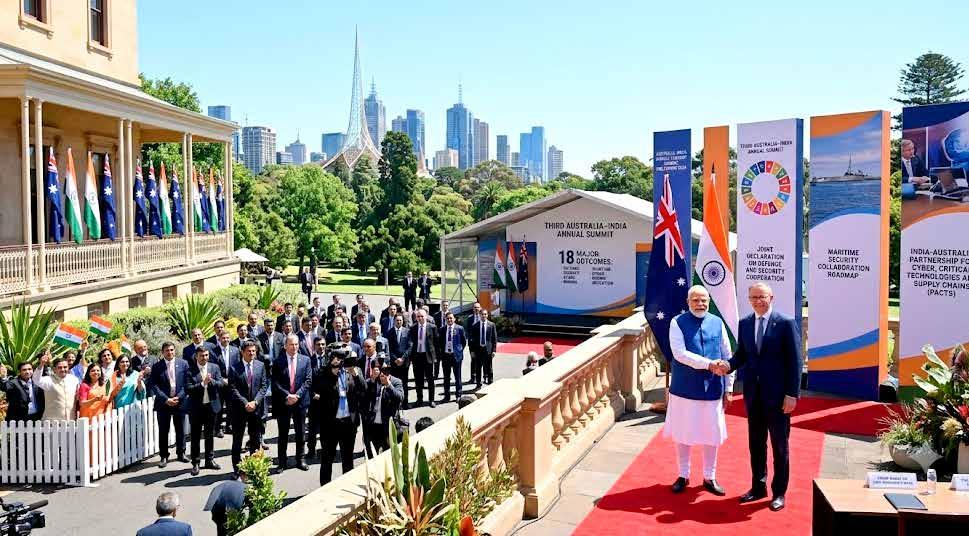
Narendra Modi met with Australian Prime Minister Anthony Albanese in Melbourne for the 3rd Australia–India Annual Summit, the scope of the bilateral relationship formally transcended terrestrial boundaries. Amid discussions on critical minerals, defence pacts, and clean energy transitions, a historic announcement captured the imagination of nearly one million Indian Australians: Australia’s official commissioning of a mission-critical space tracking terminal on the Cocos (Keeling) Islands to support India’s landmark Gaganyaan human spaceflight program.
The partnership marks a profound shift in how Canberra and New Delhi collaborate. No longer confined to traditional trade or diplomatic dialog, the "Living Bridge", the vast Indian diaspora in Australia, is now watching both nations join hands to reach Low Earth Orbit.
THE MELBOURNE
SUMMIT: A STRATEGIC LEAP FORWARD
The 3rd Annual Summit served as a testament to the maturation of the Australia–India Comprehensive Strategic Partnership. High on the agenda was securing supply chains and advancing green transition technologies.
Prime Ministers Modi and Albanese celebrated the finalization of crucial administrative arrangements enabling Australian uranium exports to India under International Atomic Energy Agency (IAEA) safeguards, fuelling India’s growing civil nuclear energy network.
Yet, while energy security established a firm foundation, it was the joint announcement from the Australian Space Agency (ASA) and the Indian Space Research Organisation (ISRO) that stole the spotlight.
"The Leaders welcomed Australia’s continued support for India’s Gaganyaan Human Space Flight Program, including the commissioning of a temporary space tracking terminal on the Cocos (Keeling) Islands, and expressed hope to further deepen collaboration between ISRO and the Australian Space Agency."-Joint Leader's Statement, 3rd Australia–
India Annual Summit.
COCOS ISLANDS: AUSTRALIA’S GATEWAY TO INDIA’S SPACE HORIZON Gaganyaan is Sanskrit for "Sky Craft" and is designed to send a crew of three astronauts into Low Earth Orbit for a three-day mission before returning them safely to Earth. A successful launch will render India only the fourth nation in history, after Russia, the United States, and China to achieve indigenous human spaceflight capability.
Achieving this milestone, however, requires precise telemetry, tracking, and command coverage across every second of ascent and orbital insertion. That is where Australia’s geographical advantage proves indispensable.
Situated strategically in the Indian Ocean, the newly commissioned tracking infrastructure on the Cocos (Keeling) Islands fills a vital blind spot during early launch trajectories originating from India’s Satish Dhawan Space Centre in Sriharikota. Coordinated by the Australian Space Agency alongside Australian defence and aerospace firm Nova Systems, these specialized telemetry terminals
will provide continuous tracking for all four planned Gaganyaan test and crewed missions.
Furthermore, under formal agreements signed between ISRO and the ASA, Australia stands ready in the event of an abort manoeuvre. Should any uncrewed or crewed test flight require an emergency launch abort, the crew module is designated to land safely in Australian maritime search and rescue zones in the Southern Ocean, supported directly by Australian authorities.
A TRUSTED PARTNER IN SPACE
The significance of this technical backing has resonated strongly across both governments and space industries. Head of the Australian Space Agency, Enrico Palermo, highlighted that Australia’s role in Gaganyaan demonstrates the sheer depth of bilateral trust.
"India is one of Australia’s most important economic and strategic partners," noted Assistant Minister for Science, Technology, and the Digital Economy, Dr. Andrew Charlton, following the summit. "This collaboration highlights Australia’s role as a trusted partner in space and reaffirms our commitment to advancing science,
innovation, and international cooperation across the global space sector."
The cooperation doesn't end with tracking telemetry. Australian satellite payloads are slated for launch aboard Indian launch vehicles, establishing a reciprocal commercial pipeline between space startups in Adelaide, Bengaluru, Sydney, and Hyderabad.
WHAT IT MEANS FOR THE INDIAN DIASPORA
For the Indian community in Australia—now approaching nearly one million residents—this orbital milestone carries profound resonance. For decades, the story of the diaspora was defined by skilled migration in healthcare, information technology, accounting, and hospitality. Today, the Australia India story is expanding into quantum computing, defence engineering, and space science.
THE DIASPORA IMPACT AT A GLANCE
High-Tech Talent Pathways: Joint STEM research fellowships between ISRO and Australian universities.
Industry Synergy: Bilateral commercial space contracts linking Australian hardware with Indian launches.
Community Pride: A
THE 3RD ANNUAL SUMMIT SERVED AS A TESTAMENT TO THE MATURATION OF THE AUSTRALIA–INDIA COMPREHENSIVE STRATEGIC PARTNERSHIP. HIGH ON THE AGENDA WAS SECURING SUPPLY CHAINS AND ADVANCING GREEN TRANSITION TECHNOLOGIES. PRIME MINISTERS MODI AND ALBANESE CELEBRATED THE FINALIZATION OF CRUCIAL ADMINISTRATIVE ARRANGEMENTS ENABLING AUSTRALIAN URANIUM EXPORTS TO INDIA UNDER INTERNATIONAL ATOMIC ENERGY AGENCY (IAEA) SAFEGUARDS, FUELLING INDIA’S GROWING CIVIL NUCLEAR ENERGY NETWORK.
tangible symbol of two democratic anchors securing the Indo-Pacific.
Young Indian Australian students enrolled in STEM courses across universities in Melbourne, Sydney, Brisbane, and Perth are entering an era where working on an ISRO–ASA joint project is no
longer a distant dream, but a clear career pathway. The alignment between Australia’s spatial technology ecosystem and India’s cost-effective, highoutput space program offers unprecedented opportunities for crossborder innovation.
BEYOND THE SKY: AN UNSHAKABLE INDOPACIFIC ANCHOR
The space agreement must also be viewed through the broader strategic lens of the IndoPacific. Both Australia and India view open, secure, and technology-driven international commons, whether maritime or extra-atmospheric, as vital to regional security.
As PM Modi departed Melbourne, the message left behind was clear: the friendship between Australia and India is no longer limited to cricket, curry, and commonwealth trade ties. It is a modern, high-tech alliance bound by shared democratic values, mutual security interests, and now, a shared journey into the stars.
When the first Indian astronauts ignite their engines aboard Gaganyaan, a crucial part of their trajectory will be safeguarded from a quiet Australian island in the Indian Ocean, a fitting symbol of two nations rising together.
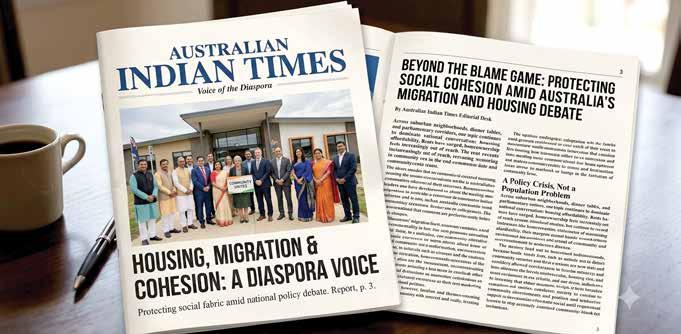
Beyond the Blame Game: Protecting Social Cohesion Amid Australia’s Migration and Housing Debate
ACROSS suburban neighbourhoods, dinner tables, and parliamentary corridors, one topic continues to dominate national conversation: housing affordability. Rents have surged, homeownership feels increasingly out of reach for younger generations, and infrastructure from public transport to regional healthcare systems faces persistent strain. However, alongside genuine economic anxieties, a concerning trend has taken hold in public discourse: the recurring tendency to turn complex policy failures into an oversimplified scapegoating of migration.
For the Australian Indian community, now standing as the nation’s largest overseas-born demographic and this shift in tone carries profound implications. As political leaders debate immigration caps and headline writers search for easy answers,
multicultural advocates, community leaders, and civil rights bodies are issuing a clear warning: politicized migration rhetoric poses a direct threat to Australia’s social cohesion.
A POLICY CRISIS, NOT A POPULATION PROBLEM
Housing experts,
economists, and welfare organizations have repeatedly emphasized that Australia’s current housing crisis is decades in the making. Factors such as investor tax incentives, planning and zoning bottlenecks, chronic undersupply of social and affordable housing, and shifts in average household sizes
have driven rent and property price inflation.
Yet, when political debates heat up, complex structural factors are frequently reduced to a single headcount argument. Australian Human Rights Commission (AHRC) President Hugh de Kretser recently
cautioned against treating migrant communities as convenience targets or economic threats during periods of social stress. De Kretser warned that weaponizing migration in political commentary risks weaponizing social division, leaving visible minority groups vulnerable to casual
racism and systemic prejudice.
Multicultural peak bodies, including the Federation of Ethnic Communities’ Councils of Australia (FECCA) and Multicultural Australia, have echoed these concerns. They point out that attributing systemic infrastructure deficits to recent arrivals conveniently distracts from long-term planning failures while actively undermining the sense of belonging felt by hundreds of thousands of new Australians.
THE REALITY OF THE INDIAN DIASPORA
The framing of migrants as "surplus actors" ignoring economic and social contribution misses the reality of modern Australia. Indian Australians are integral to the nation's essential services, regional development, and economic growth. CONTD. ON PG 5
Opening the Floodgates: How 100% Tariff-Free Access Under ECTA is Transforming Diaspora Trade
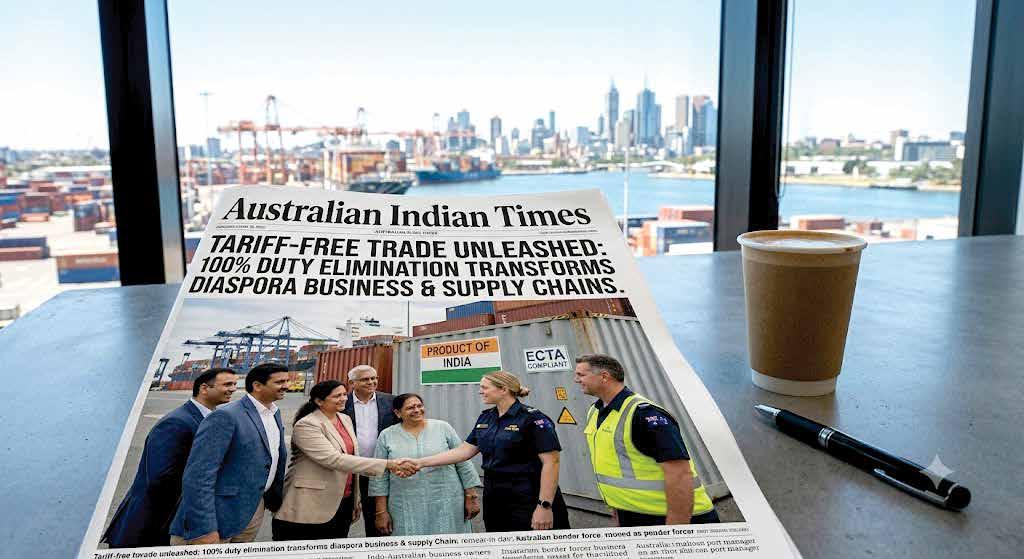
A historic economic milestone has unfolded across Australia’s commercial landscape. Following the complete phased rollout of the Australia-India Economic Cooperation and Trade Agreement (ECTA), 100% of Indian goods entering Australia now enjoy completely duty-free market access. This landmark achievement has not only eliminated custom barriers across all Australian tariff lines for Indian products but has also ignited an unprecedented surge in diaspora-led bilateral businesses, trade partnerships, and crossborder services.
A NEW ERA FOR INDIAN EXPORTS
Since ECTA first entered into force, trade momentum between the two nations has steadily accelerated. However, the total removal of tariffs across all product categories marks a pivotal shift for exporters, smallto-medium enterprises (MSMEs), and Australian importers alike.
With zero-duty access fully realized, key labour-intensive and manufacturing sectors are experiencing remarkable expansion:
• Textiles, Apparel, and Leather: Lower landed costs in Australia have made high-quality Indian garments and leather goods significantly more competitive against traditional sourcing markets.
• Gems and Jewellery: Benefiting from reduced margins, jewellery exports have surged, delivering stronger volumes for retail and wholesale business owners across major Australian cities.
• Pharmaceuticals and Chemicals: Streamlined regulatory pathways alongside duty elimination have facilitated robust supply-chain linkages for healthcare and manufacturing inputs.
• Agri-Food and Organic Produce: From specialty spices and marine products to coffee, fresh agricultural shipments are growing rapidly, bolstered by recent Mutual Recognition Arrangements that simplify compliance.
THE INDIAN DIASPORA: A STRATEGIC ECONOMIC BRIDGE
At the heart of this trade boom is Australia’s thriving Indian diaspora. Acting as a living bridge between both economies, Indian Australian
entrepreneurs and corporate leaders are uniquely positioned to translate trade policy into real-world commercial success.
In cities like Sydney, Melbourne, Brisbane, and Perth, diasporaowned logistics firms, import-export agencies, and distributors are expanding rapidly. Leveraging deep local market knowledge in Australia alongside established supply networks in India, these businesses are driving supply chain resilience and creating hundreds of local jobs.
"The total elimination of tariffs gives diaspora entrepreneurs the competitive leverage they need to scale," notes commercial trade experts. "It transforms small import ventures
into major competitive players across Australian retail and industrial supply chains."
SERVICES AND KNOWLEDGE MOBILITY SCALING UP
While merchandise trade headline numbers reflect physical goods, ECTA’s framework has delivered equal momentum to the services sector. Enhanced mobility frameworks—including guaranteed post-study work rights for STEM graduates and working holiday arrangements— have created a fluid talent corridor.
Australian technology firms, consultancy agencies, and financial institutions are increasingly collaborating with Indian service hubs. Bilateral ventures in IT services,
fintech, renewable energy engineering, and ed tech are expanding rapidly, reinforcing that the trade partnership extends far beyond physical commodities.
THE PATH TOWARD CECA
As business leaders celebrate these dutyfree milestones, negotiators are using the momentum generated by ECTA to advance the Comprehensive Economic Cooperation Agreement (CECA). Designed to deepen commitments in digital trade, government procurement, and bilateral investment, CECA promises to cement the AustraliaIndia corridor as one of the Indo-Pacific’s most dynamic economic engines.
AT THE HEART OF THIS TRADE BOOM IS AUSTRALIA’S THRIVING INDIAN DIASPORA. ACTING AS A LIVING BRIDGE BETWEEN BOTH ECONOMIES, INDIAN AUSTRALIAN ENTREPRENEURS AND CORPORATE LEADERS ARE UNIQUELY POSITIONED TO TRANSLATE TRADE POLICY INTO REAL-WORLD COMMERCIAL SUCCESS.
For Indian Australians, the economic updates are clear: zero tariffs have created zero boundaries for economic collaboration.
Beyond the Blame Game: Protecting Social Cohesion Amid Australia’s Migration and Housing Debate
CONTD. FROM PG 4
• Filling Critical Workforce Gaps: From doctors, nurses, and agedcare workers in regional hospitals to software engineers, construction managers, and transport operators, skilled Indian migrants actively keep critical infrastructure running.
• Building Supply: Ironically, addressing Australia’s acute housing shortage requires a larger skilled workforce including trades, engineering, and project management talent, much of which is bolstered through migration pathways.
• Civic and Cultural Richness: Beyond economic metrics, the Indian diaspora contributes vibrant cultural institutions, grassroots volunteer networks, and civic leadership that strengthen social fabric across metropolitan and regional centres. When public commentary casually frames migration purely as a burden on resources, it erodes the dignity of communities who are actively building Australia’s future. The Call for Action and Accountable Leadership Protecting social
cohesion cannot be treated as a passive exercise; it demands proactive leadership and institutional courage. Diaspora leaders across Australia are calling for concrete measures to ensure debates remain grounded in policy reality rather than identity politics:
1. Responsible Political Discourse: Political figures across all parties must resist short-term rhetoric that pits Australian-born citizens against new migrants. Long-term population planning must focus on genuine supply solutions,
regional infrastructure investment, and intergovernmental coordination.
2. Strengthening Anti-Discrimination Protections: Legal frameworks and anti-discrimination mechanisms must be continuously modernized to address online vilification, workplace bias, and racial harassment.
3. Media Responsibility: News organizations have an obligation to report on demographic and housing data accurately, avoiding sensationalist headlines that fuel anti-
migrant sentiment.
4. Active Community Engagement: Community organizations, temples, gurdwaras, and cultural associations are encouraging younger diaspora members to participate actively in civic discourse, local government, and public advocacy to ensure their voices shape national policy.
PRESERVING AUSTRALIA’S MULTICULTURAL SUCCESS
Australia’s identity as a modern, successful multicultural democracy
is not an accident, it is the result of deliberate policy, mutual respect, and shared effort. Housing and infrastructure challenges are real and urgent, but blaming the very people who help build, staff, and sustain the nation will not lay a single brick or construct a single hospital bed. As the Indian diaspora continues to grow and put down deep roots across Australia, standing up against divisive rhetoric is not just about defending migrant rights but it is about preserving the trust, fairness, and mutual respect that underpins Australian society.
August Reflections: Independence, Mental Health & Community Spirit
BY XAVIER HERNANDEZ
HAPPY Indian Independence Day to one and all.
August is a very special time for many. However, history also reminds us that it is a time to reflect on the many lives that were lost in the lead-up to India's independence. This month, I really enjoyed reading about the history that makes this day so significant. In particular I found this website fascinating: Indian IndependenceThe National Archives ( www.nationalarchives. gov.uk/education/ resources/indianindependence/). I have grown up feeling loved and accepted as part of the local Queensland Indian community. That is why I would like to extend my heartfelt thanks to everyone who has welcomed my family and me into your events, forums, and homes. Thank you also for continually welcoming the wider Australian community to experience the traditions, culture, and everything that makes the Indian diaspora so special.
There are some fantastic events coming up this month, so make sure you read through to the end.
In my previous column, I shared part three of my interview with Cr Nathan St Ledger, Councillor for Division 4 at the City of Logan. Thank you to everyone who has told me they look forward each month to reading the next instalment of the interview. Your kind words are greatly appreciated. I hope you enjoy part four below.
Part Four
Interview with Cr. St Ledger
Interviewer: Xavier Hernandez
Xavier:
The online profile shows a strong reliance on frontline industries such as construction, retail, healthcare, and social services. How do work patterns and job security affect mental health outcomes in the community?
Cr. St Ledger:
One statistic that really stands out is that if you're a construction worker, you're six times more likely to die by suicide than you are from a workplace accident. That's a very alarming figure.
This is one of the main reasons why, as a charity, we place a strong focus on the construction and trade industries,
as they are among the highest-risk sectors. However, I believe every organisation—not just those in construction or the trades—needs to have a genuine commitment to supporting mental health. That statistic alone should ring alarm bells for all workplaces and encourage them to make employee wellbeing a priority.
Xavier:
You often speak about turning challenges into purpose. What are some obstacles you have faced personally that continue to motivate you to help others?
Cr. St Ledger: As I mentioned earlier, I've had my own battles with depression and anxiety. Knowing that there is light at the end of the tunnel is a message I want others to hear. There is always help available. It's important to remember that little things matter. Small steps and small improvements, when repeated consistently each day, can make a significant difference. You don't go to bed feeling perfectly fine and wake up with depression or anxiety overnight—it develops over time. In the same way, the journey toward feeling better also takes time. It's those daily, positive steps that keep me motivated and remind me why supporting others is so important.
Xavier:
Mental health support doesn't always look the same for everyone. How do you ensure that your advocacy reaches young people from a variety of diverse cultural and social backgrounds?
Cr. St Ledger:
You're exactly right— there is no one-sizefits-all approach to mental health. Whether it's through medical professionals or simply having conversations like we do during our advocacy work, it all comes down to building relationships. My advice is to always be yourself. If you're genuine, honest, and authentic, people will connect with you. Not everyone will relate to the same person, and that's okay, because different people connect in different ways. We're fortunate as a charity to have ambassadors from many different cultures and walks of life, and every single one of them has their own story. There's real power in sharing those lived experiences.
You don't have to be the right person for everyone, because there will always be someone whose story resonates with another person. Being respectful, honest, and true to yourself is the key to making a meaningful impact.
End of Interview
I look forward to sharing more from my conversations with Cr Nathan St Ledger in future editions as we continue raising awareness about mental health and highlight the people making a positive difference in our communities.
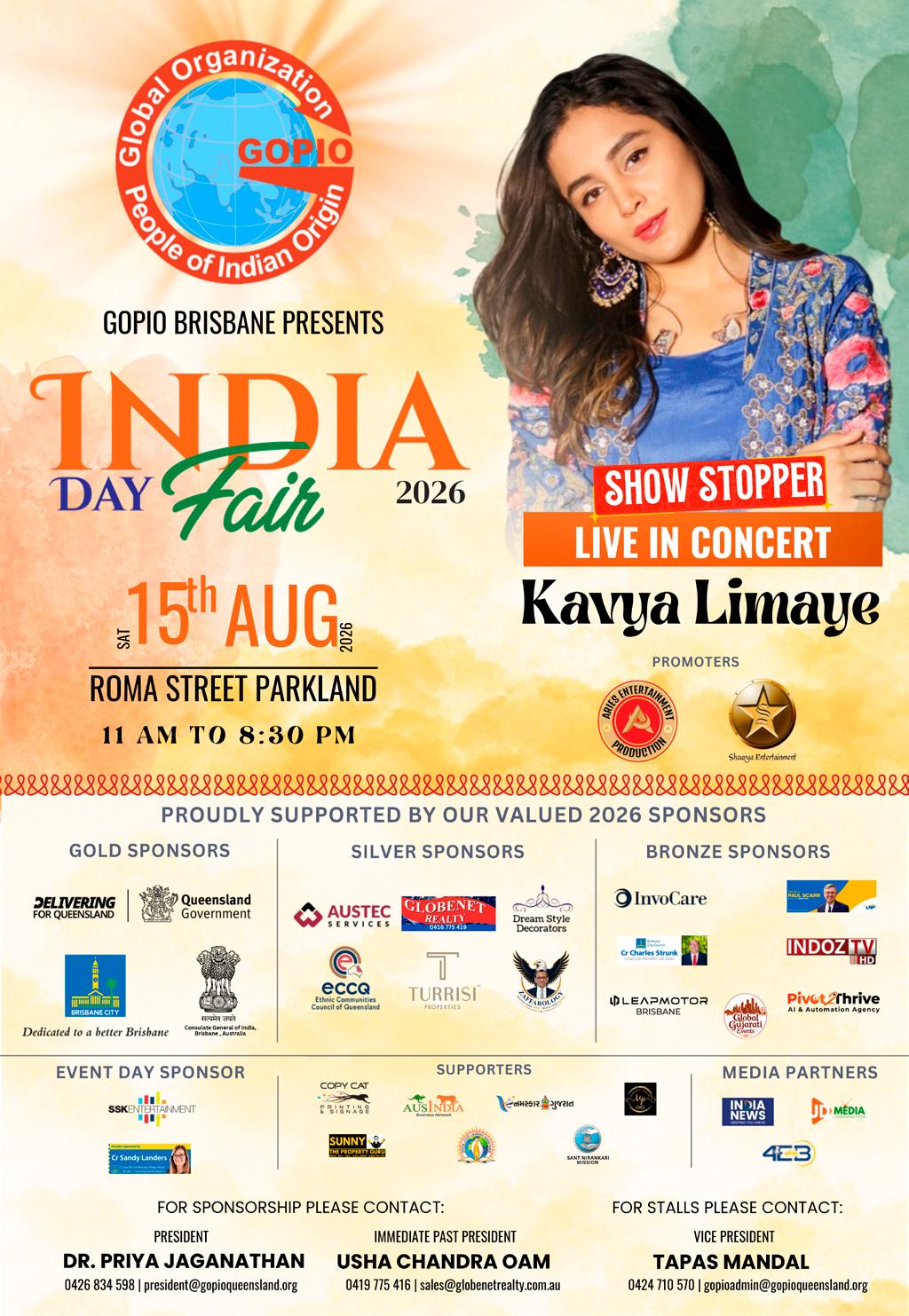
One event I am particularly looking forward to is the iconic India Day Fair 2026, proudly presented by GOPIO Queensland. The event will be held on Saturday, 15 August, at Roma Street Parkland and promises a fantastic celebration of India's Independence Day through culture, food, music, dance, entertainment, and community spirit. I was delighted to attend the
official poster launch, and this year I will be volunteering at the GOPIO Queensland stall throughout the day. If you are attending, please come over and say hello.
Another wonderful community celebration, the India Independence Day Picnic, is being hosted by AIMQ Inc. on Saturday, 22 August 2026, from 1:00 pm to 5:00 pm at Tygum Park, Waterford West. It promises to be another fantastic opportunity for families and friends to come together and celebrate our rich culture and heritage.
Celebrating our community is something I truly value. That is why it was such an honour to welcome the Consul General and Consul of El Salvador to the Blue Fin Fishing Club. I was also honoured that JD Deo and his wife, Sandy Deo, were able to join me and so many others on this special occasion. It is wonderful to see so many leaders come together to discuss helping our community.
Many years ago, Vikas Sinha, former President
of GOPIO Brisbane, shared words that have always stayed with me: "It's love that makes you family, not blood. Just like an adopted child, you love them equally." His words continue to inspire me, alongside the wisdom of many other great community leaders and philosophers.
If you would like to hear Vikas speak, he will be presenting at the upcoming Property Market and Federal Budget Update at the Matu Community Hub Centre, 6:00 pm, 35 Tamarin Street, Marsden.
And of course, finally, some local for readers who enjoy my coverage of local affairs, the Australian Government has not indicated that an extension to the fuel excise is on the cards, despite the crucial Strait of Hormuz remaining blocked. Channel 7 reported today (27 July 2026) that the Fuel Excise is set to end, with petrol prices expected to rise.
Aussie drivers need to start thinking about budgeting more as there may be a steep increase
at the bowser as the fuel excise comes to an end next week. It will be important to see what the Federal Government does to support residents who are already struggling with the rising cost of living and higher household bills during the colder months.
The excise, which reduced petrol prices by 16 cents per litre, is due to lapse, potentially increasing fuel prices to around $2.00 per litre. If you or someone you know is doing it tough, don't hesitate to reach out to your local community groups or churches. Most importantly, take a moment to check in on your neighbours to see if they need a helping hand. A simple act of kindness can make a world of difference.
I will continue to keep readers updated as the situation develops.
As always, if you have any topics, you would like me to write about please don’t hesitate to contact the team at Australian Indian Times or reach out to me when I’m out and about in the community.
Hepatitis B and working in healthcare in Australia
WE are often asked, can people work in healthcare as healthcare workers (HCWs) if they are living with hepatitis B in Australia? Healthcare workers include registered health practitioners (doctors, nurse etc), allied health professionals (physiotherapists, dietitians etc) and support staff – including personal care assistants, Aged Care workers, NDIS workers etc.
The answer is yes but there are some special requirements that need to be in place and are the responsibility of the health care worker and the employer. The Australian Centre for Disease Control has the Communicable Diseases Network (CDNA) National Guidelines including the ‘Australian National Guideline for the Management of healthcare workers living with blood borne viruses and healthcare workers who perform exposure prone procedures at risk of exposure to blood borne viruses’ which provides clear information on this topic.
The main recommendations include:
• Testing for blood borne viruses (including hepatitis B, hepatitis C and
HIV) is encouraged for all HCWs to protect theirs and the health of and safety of their patients
• For those performing exposure prone procedures (EPPs) the recommendation is testing (at a minimum) once every 3 years.
• Access to confidential testing, support, treatment and counselling is the right of all HCWs.
• Vaccination against hepatitis B should be undertaken by all HCWs including student HCWs before they start their studies, clinical placements or employment and be tested for immunity following vaccination. Alternatively, have a demonstrated immunity on recent blood tests from a past infection.
WHAT ARE YOUR RESPONSIBILITIES IF YOU ARE LIVING WITH HEPATITIS B?
• You must have ongoing appropriate medical care, adhering to the recommended frequency of monitoring (usually 6 monthly).
• You must have your viral load checked at requested timeframes and it should not be above 200 IU/mL
• Always maintain appropriate infection control measures per the
‘Australian Guidelines for the Prevention and Control of Infection in Healthcare’ www. safetyandquality.gov.au
• All HCWs if required, should know their responsibility to report their BBV status under local legislation and/or policies.
WHAT IF YOU ARE PERFORMING EXPOSURE PRONE PROCEDURES (EPPS)?
• An EPP is defined as a procedure where the HCW may have an increased risk of injury – where their blood may infect a patient’s blood. These include where
the person’s hands/ fingertips are not always visible (even when wearing gloves), and can encounter sharp bone, teeth, instruments, needle tips etc.
• Your viral load must remain below 200 IU/ mL, and you undertake 6 monthly testing to monitor your viral load if on treatment. If not on treatment testing is required every 3 months as a minimum.
• If you have a potential exposure to a patient/another worker, you may be required to provide your records of health monitoring to a designated person in the
workplace for further assessment and public health action if required.
WHAT IS NOT CONSIDERED AN EPP?
• Insertion of intravenous access, giving injections, inserting catheters, stitching wounds etc, internal exams that do not involve sharp instruments or tissue, or general care of patients/clients.
WHAT SHOULD YOU EXPECT FROM YOUR EMPLOYER IF YOU ARE LIVING WITH HEPATITIS B?
• Your health condition (just like any other) remains private and confidential.
• You are protected under the AntiDiscrimination Act 1991 (Qld) (Queensland Human Rights Commission) including the ‘Anti-Discrimination Law in Queensland’ if you feel you have been discriminated against you can report to them for support and advice.
• Your employer has a duty of care to all employees regardless of hepatitis B status to protect the rights of HCWs to provide equal opportunity to both clients and staff.
FURTHER INFORMATION IS AVAILABLE AT: Anti-discrimination law in Queensland | QHRC | Queensland Human Rights Commission www. qhrc.qld.gov.au
B Positive: Hepatitis B Guide for Primary Care | ASHM Health www.ashm. org.au
National Guidelines the Management of Healthcare Workers Living with Blood Borne Viruses and Healthcare Workers who Perform Exposure Prone Procedures at Risk of Exposure to Blood Borne Viruses www.cdc.gov.au
Guideline Australian Guidelines for the Prevention and Control of Infection in Healthcare (2019) www. safetyandquality.gov.au
Hepatitis, HIV/AIDS and Sexual Health Program Ethnic Communities Council of Queensland (ECCQ)
OPPOSITION PARTIES
V GOVERNMENT-IN-WAITING
THE pursuit of accountability of the executive ought to be immortal. Governments are routinely ensnared in the gossamer web of enabling mechanisms: media, parliamentary committees, courts and elections, each designed to bridle or test executive power.
We the people instinctively recognise one mechanism above all others: the opposition. We watch opposition parties finger-wag ministers in parliament, interrogate government decisions, expose failures and challenge the exercise of executive power. Indeed, so accustomed have we become to this epicaricacy that we often regard accountability as their primary, if not sole, purpose. So long as there exists some form of opposition capable of questioning the executive, we are inclined to believe that democracy’s safeguards remain intact.
Yet, in doing so, many have come to define opposition too narrowly—as a critic of government. In the demonstrative words of then federal Deputy Leader of the Opposition, Edward O’Brien, in a 23 January 2026 interview, Australians “want to see a strong and effective opposition”.
What we do not always recognise, much less demand, is the quality that gives opposition its greatest constitutional significance: that it must be a credible alternative government. The opposition is not merely a vehicle of resistance; it is the governmentin-waiting. Its ability to hold the executive to account derives not only from its capacity to criticise and take epicaricacious pleasure, but from its capacity to replace. While every opposition party is a critic of the government, not all have the basic credentials to serve as a government-in-waiting. The distinction is deeply consequential.
Let us ruminate, apolitically, over the 17day Liberal and National coalition split in January 2026. It was reported merely as a ‘marriage breaking down’ and ‘onagain off-again affair’. While these and other trivialising epithets may amuse some and occasion rejoicing within the government,
the words of the then Nationals leader that “we will sit by ourselves” pierces the heart of democracy. A fractured Coalition cannot claim the role of governmentin-waiting—a precondition of democratic government itself. Every government, whatever its political persuasion, must be counterbalanced by an effective opposition and there must always exist a viable alternative government. Otherwise, however rigorous the scrutiny it faces, the government of the day is assured of victory at the next election. Electoral guarantees are antithetical to representative democracy and constitutional government. This is not an advocacy for the fall of the current or any particular government, nor for the ascension of the current or any particular opposition. Those are political questions for the voter. Rather, there is a manifestly apolitical need for the constitutional ecosystem to not become compromised in order that those political questions can be properly answered by the electorate.
Every governing party in a democracy should ensure the maintenance of a strong pluralist party system wherein there is at least one viable alternative government. Otherwise, the polity is reduced to a one-party or dominant party state. Must representative democracy and constitutional government take note of such a matter? Why should we make such stir of it?
If the government of the day knows there is no viable alternative, electoral defeat ceases to be a realistic sanction. At that point, incentives to govern responsibly weaken, policy discipline deteriorates and arrogance characterises and cauterises executive power.
A discussion of the 2014 Indian election becomes relevant. The then Gujarat Chief Minister Narendra Modi first campaigned on the ominous banner of “Congressfree India”, a slogan directed at the then ruling centre-left Indian National Congress. The electorate delivered Modi’s Bharatiya Janata Party a landslide. The BJP secured 282 of the Lok Sabha’s 543 seats, while the INC suffered a historic humiliation, losing 162 seats to be reduced to a meagre 44. Thence begun a radical centralisation of power in Modi’s hands.
There was, of course, nothing constitutionally untoward about that result. It reflected the democratic will of the electorate. But democracy does not conclude once the votes are counted. It begins anew the following morning. A government may govern because it has won, but it remains accountable because a credible opposition survives to scrutinise, challenge and, if necessary, replace it. Where the opposition lies shattered, that constitutional equilibrium hangs almost weightless.
The 2024 Indian election was widely portrayed as the moment India’s
beleaguered democracy stepped back from the precipice. As the April election results trickled in, pollsters and political commentators alike were left confounded. Modi, for the first time in ten years, failed to secure an outright majority, while the opposition reasserted itself as a genuine electoral contender with 99 seats, although still too distant to threaten the Modi Government as a replacement government.
The concern is not simply that one party wins elections. Dominant parties do win elections legitimately. The concern arises when the opposition becomes so weakened that voters are effectively choosing between a governing party and fragmented alternatives rather than between a governing party and a credible government-in-waiting.
What, then, are the constitutional credentials of a government-in-waiting? What entitles voters to regard an opposition as a genuine alternative government? For not every opposition is capable of governing, just as not every government is capable of governing responsibly.
From the voter’s perspective, five characteristics ought to be indispensable.
First, it must present a credible executive capable of assuming office immediately— not in 3 or 6 months. That means presenting a shadow cabinet of sufficient calibre, experience, emotional and intellectual
governing parties, remains a significant political force. But after its electoral defeat in 2022 and subsequent internal struggles, it is some distance away from presenting itself as an immediate government-in-waiting.
A political opposition does not become a viable alternative merely because it has held office in the past— the first and fourth characteristic above. It must demonstrate that voters could reasonably entrust it with governing the country tomorrow— the fifth characteristic.
maturity and judgement to immediately assume the responsibilities of executive office.
Second, it must possess the institutional structure, discipline and resources necessary to govern a modern state.
Third, it must articulate coherent, persuasive and realistic policy alternatives. Elections must never ask voters to merely reject an incumbent. Rather, it should be a genuine choice between competing visions for the nation.
Fourth, it must demonstrate an understanding of the machinery of government and the capacity to translate political promises into effective administration.
Fifth, it must command the confidence of the electorate that, if entrusted with power, it can exercise that power responsibly and competently.
Australia provides a compelling and contemporary example. Australia has, by any conventional measure, an imperfect but tolerably robust democracy. It has regular elections, an independent judiciary, a free press and barely workable but questionable constitutional limits on government power. Yet one of the uncomfortable features of Australian politics today is that the country does not currently have a clearly viable alternative government.
The Liberal Party, traditionally one of Australia’s two major
Recent polling nominates minor parties, particularly One Nation, as filling this vacuum. One Nation has existed since 1997 but has never formed a federal or state government. Its experience in executive government is extremely limited. Unlike Australia’s major governing parties, it has not developed the institutional machinery, ministerial experience, policy depth or governing record that Australians have traditionally expected of a government-inwaiting. This does not disqualify One Nation, but it does mean that it carries a heavier burden in demonstrating that it has the five essential characteristics required to move from political opposition to a government-in-waiting, ultimately leading to national government.
A healthy democracy requires more than a government that can be challenged; it requires an alternative that can credibly replace it. The most important role of a strong parliamentary non-government party may be this: it gives voters a genuine choice when they decide the present course is no longer acceptable. The strength of a democracy is measured by how confidently it can offer the people a different government when they demand one.
Governments and its opposition are the two feet that enable democracy to walk. Executive power is the most potent power that can be placed in— or seized by—human hands. It must be under constant threat.
Nilay B. Patel is a lawyer based in Melbourne
Beyond the Numbers: From Demographic Scale to Civic Courage in Multicultural Australia
Jitendra Deo Chief Executive Officer
AUSTRALIA’S demographic storytelling reached a historical inflection point when official Australian Bureau of Statistics (ABS) data confirmed that people born in India have surpassed those born in England as the nation's largest overseas-born population. Approaching one million resident individuals, the Indian diaspora is no longer a peripheral success story, we are now a cornerstone of Australia’s contemporary socioeconomic identity.
Yet, as community advocates, our primary task is not merely to
celebrate statistical growth or high-profile diplomatic summits. It is to ask: How do we translate our unprecedented demographic presence into meaningful civic leadership, social protection, and systemic belonging?
1. DISMANTLING THE "MODEL MINORITY" TRAP AMID NATIONAL DEBATES
For decades, the Indian community in Australia has been celebrated through a narrow lens: high rates of higher education, strong workforce participation, entrepreneurial ambition, and law-abiding integration. While these achievements are real, this "model minority" framing creates a dangerous blind spot when political pressures mount.
Amid national anxieties over housing affordability, cost-of-living stresses, and infrastructure bottlenecks, public rhetoric around immigration has visibly hardened. As community advocates and bodies like the Australian Human Rights Commission have pointed out, complex
policy bottlenecks are too frequently simplified into anti-migrant commentary.
When multi-milliondollar government grants for multicultural cultural precincts or local community initiatives spark online backlash, or when public discourse casually frames skilled migrants as "burdens" on public assets rather than the very professionals building and staffing them, we see the limits of relying solely on economic metrics.
2. MOVING FROM ECONOMIC CONTRIBUTION TO POLICY REPRESENTATION
To protect our community’s well-being and safeguard Australia's social cohesion, Indian Australians must move beyond being viewed merely as economic contributors.
1. Active Civic Engagement: We need qualified diaspora members contesting local council seats, serving on statutory boards, engaging in public policy think-tanks, and entering
parliamentary corridors.
2. Coalition Building: Our advocacy must extend outward. Building solid "bridging capital" with First Nations communities, long-standing AngloCeltic groups, and other multicultural organizations ensures that we fight discrimination collectively rather than in isolation.
3. Addressing Internal Diversity: Our diaspora is vibrant, layered, and multifaceted. Effective advocacy requires acknowledging internal diversity across language, faith, age, arrival pathways, and gender, so that international students, regional workers, and new arrivals receive the same structural support as established professionals.
3.
PRACTICAL STEPS FOR COMMUNITY ACTION
Advocacy is not an academic exercise; it demands practical steps at the suburban and institutional level:
• Demystifying Policy for the Grassroots: Community organizations, gurdwaras, temples, and cultural associations must dedicate resources to civic literacy by helping members understand how local planning, school boards, and state consultative committees operate.
• Proactive Public Media Presence: Rather than reacting only when vilification occurs, our business and community leaders must consistently present factual data on how diaspora-led enterprises, healthcare workers, and construction talent actively resolve Australian infrastructure bottlenecks. Our media is taking the path towards this important element.
A SHARED FUTURE BUILT ON COURAGE
Australia’s strength lies in its democratic capacity to adapt, evolve, and embrace change. As the largest overseasborn cohort in Australia today, the Indian diaspora has a profound stake in ensuring that Australia remains a fair, inclusive, and cohesive nation.
Our message to broader Australia must be clear: we are not guests passing through, nor are we simple economic units to be instrumentally measured during boom times and scapegoated during downturns. We are parents, neighbours, taxpayers, caregivers, and builders of Australia’s future.
By stepping into public life with courage, clarity, and unity, we ensure that our legacy in Australia is defined not just by how many we are, but by the strength of the society we help build.
• Supporting Youth Mentorship: We must actively mentor young Indian Australians to pursue careers in journalism, civil law, public administration, and social advocacy, equipping them with the tools to shape national narratives.
JD Group Australia
Faith in Action: Cultural Precincts and Parliamentarians Partner on Community Safety and Civic Engagement
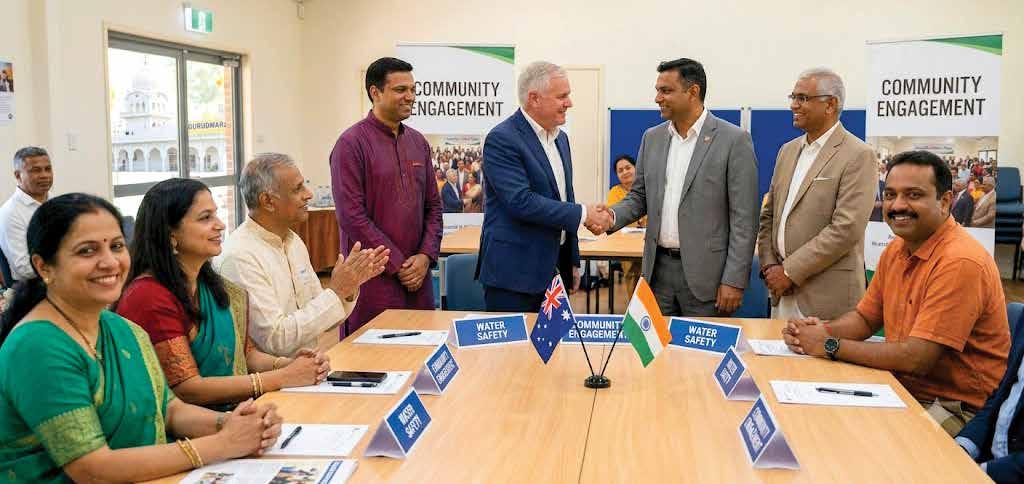
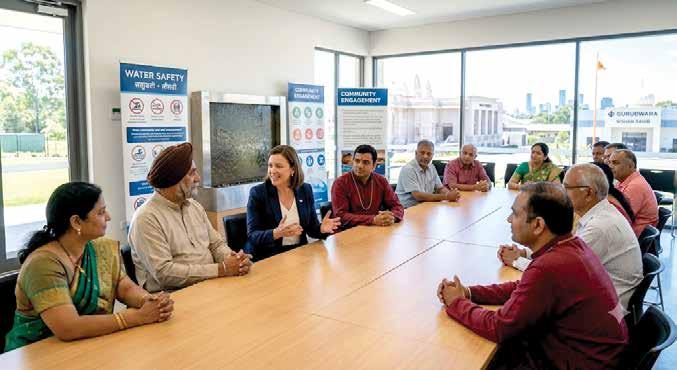
IN a powerful demonstration of grassroots civic participation, major spiritual and cultural centres across Victoria and Queensland are stepping forward as vital hubs for policy dialogue and community wellbeing. Organizations such as BAPS Swaminarayan Sanstha and prominent local Gurudwaras have recently hosted state parliamentary representatives to address pressing social challenges, including regional community
safety, targeted water safety initiatives, and active multicultural engagement.
These collaborative engagements mark a deliberate shift in how multicultural organizations interact with state governance and moving beyond ceremonial gatherings to foster actionable policy partnerships.
TARGETED INITIATIVES: WATER SAFETY AND PUBLIC EDUCATION
A central focus of
these consultations has been water safety where a critical issue as demographic data reveals that newly arrived migrants and international students face disproportionately higher risks of accidental drowning in Australian waterways and coastal regions.
During roundtable discussions at major temples and gurdwaras, state MPs alongside representatives from peak bodies like Royal Life Saving Australia met with community elders and youth
advocates to address the gap.
KEY OUTCOMES FROM THESE DISCUSSIONS INCLUDE:
• Multilingual Safety Campaigns: Development of culturally tailored water safety literature and digital campaigns in Hindi, Punjabi, and Gujarati for distribution at temple festivals and community sports days.
• Community-Led Swimming Pathways: Partnerships between local aquatic centres and
cultural trusts to provide subsidized learn-toswim and beach safety awareness programs specifically designed for migrant families.
• Inland Waterway Awareness: Dedicated outreach educating families on the unseen hazards of inland rivers and unpatrolled regional swimming spots ahead of peak holiday seasons.
STRENGTHENING CIVIC LINKS AND PRECINCT SAFETY
Beyond water safety, meetings between faith leaders and lawmakers focused on broader community safety and youth mentorship programs. Parliamentarians acknowledged the role played by spiritual centres as frontline support networks providing food relief, counselling, and social connection.
A MODEL FOR SHARED GOVERNANCE
Speaking on the significance of these visits, visiting state members highlighted that engaging directly within faith precincts allows government policy to reflect real, onthe-ground needs.
"Our places of worship are far more than spiritual centres— they are the heartbeats of our neighbourhoods," shared one attending representative. "When we partner directly with community trusts and volunteer networks, we build safer, more resilient, and deeply connected communities."
As Victoria and Queensland continue to grow in cultural diversity, these ongoing engagements demonstrate the tangible impact of faith-based institutions stepping up into civic leadership roles. By turning sacred spaces into places of practical action, the diaspora continues to strengthen the broader social fabric of Australia.
Representatives commended the Indian diaspora’s proactive approach to community policing dialogues, youth leadership forums, and anti-discrimination advocacy. In turn, temple and gurudwara leaders emphasized the need for continued state investment in precinct security infrastructure, emergency management integration, and mental health support services tailored to culturally diverse populations.
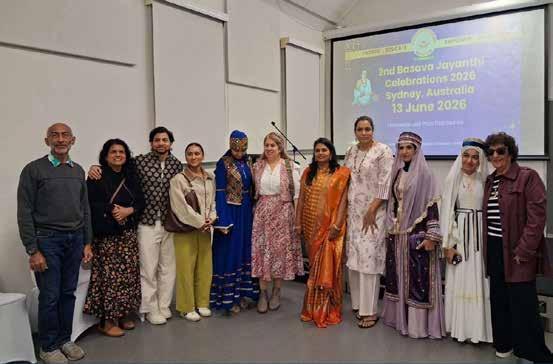
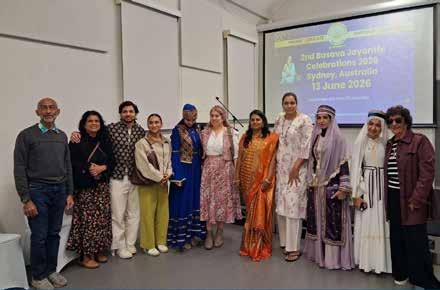
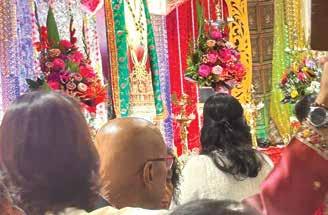
2025 Basava Jayanthi Celebrations Coopers Plains, Brisbane, Australia
Members of the Indian diaspora , Iran, Myanmar, community Australians
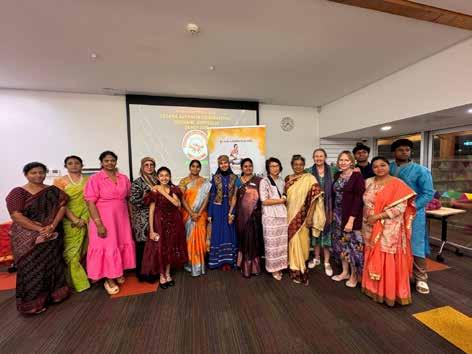
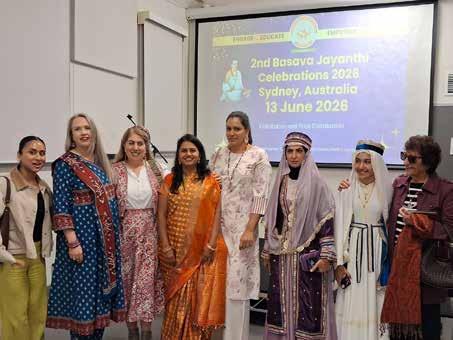
2026 Basava Jayanthi Celebrations Moorooka , Brisbane, Australia
, Sh thi
2026 Basava Jayanthi Celebrations Moorooka , Brisbane, Australia
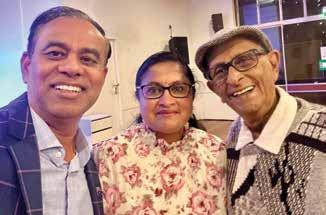
Left to Right , Srilankan community (mom, dad and son), Gujarathi descendant (Roshini), from Iran - Noora , Mozhgan, Girija Karekal , Polly, Shahrzad, Mohoura , Jerusalem (aged 90 years) celebrating Basava jayanth with community Australians
Beyond the Numbers: From Demographic Scale to Civic Courage in Multicultural Australia
BEFORE we began the interview, Dionne and I spent time simply talking. As with every conversation we've shared, there was an undeniable sense of substance, purpose and synergy. We spoke about business, faith, slowing down, family, and the desire to create something that genuinely leaves the world better than we found it.
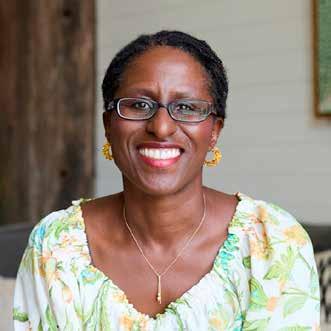
Dionne Payn is the Founder of Women 4 Homes, host of the Financially Empowered Women podcast and CEO of High Impact Property Investments. Yet beyond the titles is a woman driven by a deep belief that financial empowerment can change lives. What struck me most wasn't simply her passion for property. It was her heart for people. Her mission extends far beyond bricks and mortar. It's about restoring dignity, creating opportunity and ensuring more women have the knowledge, confidence and community to build a secure future.
As our conversation unfolded, it became clear that Women 4 Homes isn't simply about investing in affordable housing. It's about creating a community where women realise they don't have to do life alone. It's about hope. Here's what Dionne shared.
Every movement begins with a story. Can you take us back to the moment you realised Women 4 Homes needed to exist? What did you witness that made this mission impossible to ignore, and why has it become so deeply personal to you?
It all began at a marketing and branding retreat. Throughout the weekend I kept pulling
DIONNE PAYN IS THE FOUNDER OF WOMEN 4 HOMES, HOST OF THE FINANCIALLY EMPOWERED WOMEN PODCAST AND CEO OF HIGH IMPACT PROPERTY INVESTMENTS. YET BEYOND THE TITLES IS A WOMAN DRIVEN BY A DEEP BELIEF THAT FINANCIAL EMPOWERMENT CAN CHANGE LIVES.
cards that said things like, "What you resist, persists." At the same time, women were approaching me saying, "We love what you're doing. How can we get involved?"
At the time, I was raising capital for property developers with minimum investments of $50,000. I knew many of these women simply didn't have that kind of money, so I found myself thinking, "Wouldn't it be wonderful if everyday women could invest in affordable housing too?"
On the final day, during a tea ceremony, everything became clear. I looked up and saw the clouds parting to reveal a beautiful blue sky. In that moment, I realised the blue sky represented my mind, while the clouds were my doubts drifting away. That's when Women 4 Homes dropped into my heart.
Around the same time, I couldn't ignore another reality. I knew women sleeping in cars. I'd worked alongside charities supporting women experiencing housing insecurity, and after the Northern Rivers foods I saw thousands of women searching for safe housing.
The more I understood the impact of the gender pay gap, caring responsibilities,
divorce and lower superannuation balances, the more I realised this wasn't about poor decisions. Many women simply hadn't been shown how the system worked.
That's when I knew education had to become just as important as investment.
You've met and supported many women through this journey. Is there one story that has stayed with you, where you witnessed someone's life change and thought, "This is exactly why we have to keep going"?
There are so many, but one woman immediately comes to mind.
She was in her 50s and had rented her entire life. She told me, "I never thought I'd buy anything. I just want to be part of this. I want to be on the property ladder."
When I explained how we could make that possible, she became emotional. For the first time she realised she could have her name on the title of a home. She'd never believed that would be possible.
Another moment that stays with me happened at one of our retreats. A woman arrived feeling guarded and uncertain. Over the course of the weekend, it was like watching a flower slowly unfold. She left with confidence, connection and a community around her.
That's what reminds me this movement has never just been about property.
Women 4 Homes feels like more than a housing initiative. It
feels like a movement where women are investing in women. How intentional are you about creating not just homes, but a community built on dignity, connection and belonging?
It has always been intentional.
Women 4 Homes isn't simply about investing in affordable housing. It's about creating a community where women realise they don't have to do life alone.
When we're isolated, it's easy to believe we're powerless. But when women come together with a shared purpose, something extraordinary happens. We share ideas, ask questions others hadn't considered and build confidence together.
At the same time, I launched the Financially Empowered Women podcast because I realised I couldn't be the expert in everything. I wanted to bring together some of Australia's leading voices so women could hear from people who genuinely understood finance, investing and wealth creation.
Today, the podcast sits alongside Women 4 Homes as a resource to educate, inspire and empower.
Our vision is simple but ambitious: to inspire one million women to invest $5,000 into affordable housing by 2030 while becoming financially empowered along the way.
That sense of belonging is just as important as the homes themselves.
Older women are
TODAY, THE PODCAST SITS ALONGSIDE WOMEN 4 HOMES AS A RESOURCE TO EDUCATE, INSPIRE AND EMPOWER. OUR VISION IS SIMPLE BUT AMBITIOUS: TO INSPIRE ONE MILLION WOMEN TO INVEST $5,000 INTO AFFORDABLE HOUSING BY 2030 WHILE BECOMING FINANCIALLY EMPOWERED ALONG THE WAY. THAT SENSE OF BELONGING IS JUST AS IMPORTANT AS THE HOMES THEMSELVES.
one of the fastestgrowing groups at risk of homelessness in Australia. Why do you believe this issue hasn't received the attention it deserves, and what conversation do you hope Women 4 Homes will start across the country?
When people think of homelessness, they often picture someone sleeping on the street.
What they don't see are professional women sleeping in cars, living in tents or couch surfing while still going to work every day. They're doing everything they can to hold their lives together, which makes their homelessness almost invisible.
I also think we've forgotten how much wisdom older women carry. In many cultures, older women were honoured as the elders of the community. Today, too many are
simply trying to survive. If we can provide safety, security and dignity, they can once again share their wisdom and contribute to society. That's the conversation I'd love Australia to start having.
Imagine it's the day the first six women walk through the front door of their new home. What do you think that moment will feel like, not only for them, but for you?
I hope they walk into something beautiful, affordable and dignified. Too often affordable housing is functional, but it doesn't feel like home. I want these women to walk through the front door knowing they are worthy of beauty, comfort and security.
For me, it will simply be a reminder that this movement was always built from love.
Finally, is there a quote, philosophy or piece of advice that you live by, and how has it shaped both your life and your mission with Women 4 Homes?
One quote has stayed with me for years: "Don't fight the existing system. Build a new one that makes the old one obsolete." — Buckminster Fuller That's exactly what Women 4 Homes is about.
We're not spending our energy fighting what's broken. We're building something better, where women can become financially empowered, invest with purpose and create lasting change together.
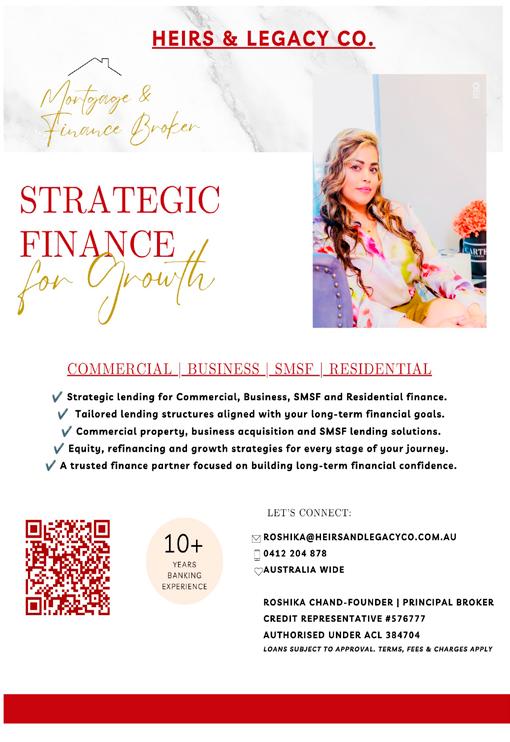
Article by Roshika. Chand
WHILE some locations may experience consistent demand for short-term and holiday accommodation, not all markets maintain year-round demand. As Australians continue to face cost-of-living pressures, holidaying may simply not be as accessible as in previous years. This can pose challenges for property owners including longer vacancy periods than anticipated.
For property owners currently achieving strong returns through short-term accommodation, there
may come a time to reassess whether this remains the most effective long-term strategy. Landlords should consider the advantages and disadvantages of both holiday leasing and private rental models. For those seeking greater consistency in occupancy and income, transitioning to private rental may be an option worth exploring. While short-term and holiday accommodation can generate strong seasonal returns, fluctuations in demand may result in income
being less predictable than steady returns associated with longterm rentals.
Long-term tenants are generally more likely to identify and report maintenance issues, helping ensure the property remains in good condition. As such, the property’s condition and ongoing upkeep are especially important. Before transitioning away from holiday accommodation to a long-term rental, landlords should ensure any repairs or maintenance issues are addressed.
If changing the property’s primary use, it is essential to review insurance coverage to ensure it remains appropriate. Landlords should also seek advice from their accountant or financial adviser to understand any tax implications and how the change may affect their personal circumstances. With vacancy rates remaining low across many markets, demand for long-term rentals continues to be strong and may provide greater year-round stability. Transitioning from self-
management or shortterm accommodation management to a specialised property management team can help ensure a smooth
Federal Budget Reshapes Australia’s Property Market: What It Means
THE recent Federal Budget delivered what industry experts are calling the most significant shake-up to property-related tax policy in a generation. Rather than a quickfix cash splash, the focus is a structural, long-term overhaul aimed at tackling housing affordability and changing where investment money flows.
1. THE BIG POLICY CHANGES
The government's package hinges on two major tax reforms set to take effect on 1 July 2027:
• Negative Gearing
Restricted: For established residential properties bought after Budget night, investors will no longer be able to offset rental losses directly against their wage income. Instead, those losses will be "quarantined" to be offset only against future rental income or capital gains. Crucially, new builds are exempt— investors can still negatively gear new properties to encourage more construction.
• Capital Gains Tax (CGT) Overhaul: The blanket 50% CGT discount for individuals and trusts is being replaced. Under the new rules, taxable capital gains will adjust
for Homebuyers, Renters & Investors
for inflation (cost base indexation), but will face a minimum 30% tax rate on the real profit.
• Grandfathering: If you already own an investment property, your current negative gearing and CGT arrangements are locked in, meaning you won't be hit retrospectively.
2. HOW THIS AFFECTS EVERYDAY AUSTRALIANS
The immediate and medium-term impacts vary depending on where you sit in the market:
FIRST-HOME BUYERS
• The Upside: The ultimate goal of these changes is to level
the playing field. By removing tax advantages on existing properties, the government expects to reduce fierce investor competition for established apartments, townhouses, and entrylevel homes. Treasury modelling suggests this could help an extra 75,000 Australians buy a home over the next decade.
• The Reality: Don't expect prices to plummet overnight. Major banks like CBA and Westpac note that the impact will be gradual, forecasting that house price growth will simply moderate stalling relatively flat through 2026 and eventually tracking a
few percentage points lower than it otherwise would have.
RENTER HOUSEHOLDS
• Rental Market Pressures: This is the biggest area of concern for everyday renters. Because "mum and dad" investors provide the vast majority of rental housing in Australia, a drop-off in investor confidence could initially tighten rental supply.
• Yields and Cost: Major bank economists predict a gradual firming of average rental yields as the market "equalises" the tax changes, which likely means a combination of lower property prices
THE ULTIMATE GOAL OF THESE CHANGES IS TO LEVEL THE PLAYING FIELD. BY REMOVING TAX ADVANTAGES ON EXISTING PROPERTIES, THE GOVERNMENT EXPECTS TO REDUCE FIERCE INVESTOR COMPETITION FOR ESTABLISHED APARTMENTS, TOWNHOUSES, AND ENTRY-LEVEL HOMES. TREASURY MODELLING SUGGESTS THIS COULD HELP AN EXTRA 75,000 AUSTRALIANS BUY A HOME OVER THE NEXT DECADE.
and slightly firmer rent inflation in the transition period.
"MUM AND DAD" INVESTORS
• A Shift in Strategy: Everyday investors looking to build wealth through an established property will face tougher cash-flow dynamics without immediate tax deductions against their salaries.
• The "LockIn" Effect: Because
existing properties are grandfathered, current landlords have a massive incentive to hold onto their portfolios rather than sell. If they sell and try to buy another established property later, they lose their old tax perks.
THE CONSTRUCTION & BUILDING SECTOR
• Infrastructure Boost: To ensure supply keeps up, the Budget included a $2 billion Local Infrastructure Fund to fast-track "lastmile" infrastructure (roads, services, connections) needed to get land ready for building.
• Push to New Builds: With tax incentives specifically preserved for new constructions, investor activity is expected to swing heavily toward buying off-the-plan, new builds, and supporting build-to-rent projects.
Summary Takeaway: The housing market is transitioning from an investor-led boom into a more selective, regulated phase. While first-home buyers may face slightly less competition from investors for existing houses over the next few years, renters will want to keep a close eye on availability and local pricing as the market adjusts to the new tax environment.
FOR ALL YOUR PROPERTY NEEDS
Brisbane’s Olympic Transformation: A Rare Investor Window Opens
is positioning itself at the forefront of Brisbane’s pre-Olympic boom.
STRATEGIC LOCATIONS, PROVEN
The current portfolio includes three flagship developments: Carlonthepark and the dual-tower Lifehub in the high-demand suburb of Woolloongabba—the epicenter of the future Olympic precinct—and The View in Mount Gravatt East.
Each project has been subjected to a rigorous feasibility study, ensuring that the developments not only meet the immediate housing needs of a growing population but also offer long-term capital appreciation. Under the leadership of Development Director Adwin Awadh, a seasoned entrepreneur, Zeon Developments has structured these opportunities to provide an excellent rate of return
INVESTMENT STRUCTURE AND Zeon Developments offers a highly secure investment model designed for transparency and growth. Investors buy directly into the land title, ensuring the land itself serves
KEY INVESTMENT HIGHLIGHTS:
Key Investment Highlights:
Investor name is
$660,000 buy-in. Sandy Deo on 0400 920 238 Australian : Developer : Minimum projected profit of $400,000 to : 2-Bedroom, 2-Bathroom, : Current sales are : 24-month project
• Woolloongabba project is (supported) by the Queensland
This opportunity is open to:
* Self-Managed Super Funds
A LIMITED OPPORTUNITY
The exclusivity of this investment is underscored by its scarcity. Zeon Developments has confirmed that there are currently only 4 of the 10 exclusive investor spots remaining. For those looking to secure a foothold in Brisbane’s most anticipated growth cycle, this represents a unique chance to align with established, high-value projects. To facilitate a seamless entry, a $1,000 deposit for an Expression of Interest (EOI) is required, and dedicated brokers are available to assist with finance approval within 24–48 hours.
For more information, contact Adwin Awadh at Zeon Developments 0415 557 430 visit zeonliving.com.au.
Building Bridges Through Conversation
The Human Thread with Sabrina Iqbal Khan Exploring humanity, storytelling, and the social issues impacting our communities.
OUR communities are wonderfully diverse. Within the broader Indian diaspora alone, we find people whose heritage spans India, Fiji, South Africa, Malaysia, Singapore, East Africa, the Caribbean and beyond. We speak different languages, practise different traditions and carry unique family histories. Yet despite these differences, there is far more that unites us than divides us.
Cross-cultural dialogue begins with something remarkably simple: listening. Not listening to respond, persuade or debate, but listening to understand. When we become genuinely curious about another person's story, we begin to replace assumptions with understanding and
stereotypes with respect. In today's increasingly connected world, it is easy to live alongside one another without truly knowing one another. Communities can become separated by language, religion, regional identities or generations, even while sharing common values of family, service and resilience. Meaningful dialogue helps bridge
those divides by creating opportunities for people to learn from one another rather than about one another.
Throughout my own work in human rights, film-making and dialogue, I have seen the remarkable ability of conversation to transform relationships. Often, the greatest breakthroughs do not come from winning
an argument but from creating a space where people feel heard, respected and valued. Genuine dialogue does not require us to agree on everything. It simply asks us to recognise the humanity in one another.
Our younger generations also have an important role to play. Many are growing up with multiple cultural identities, balancing
family traditions with contemporary Australian life. They are uniquely positioned to become bridge-builders between generations and across cultures. By encouraging respectful conversations within our homes, schools, workplaces and community organisations, we strengthen not only our relationships but the future of our communities.
Cross-cultural dialogue is not about erasing our differences. Rather, it is about learning to appreciate them while recognising our shared humanity. Every conversation held with respect becomes an investment in stronger communities, greater understanding and lasting social harmony.
The strongest communities are not those without problems, but those willing to face them together.
ABOUT THE WRITER: Sabrina Iqbal Khan is an international award-
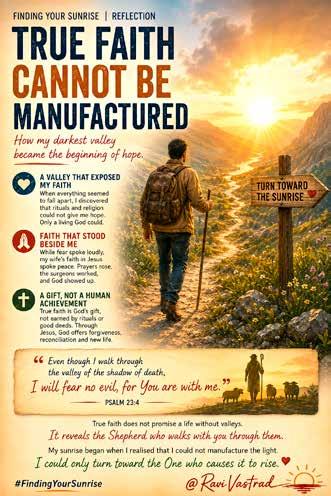
TRUE FAITH CANNOT BE MANUFACTURED
CAN FAITH BE MANUFACTURED?
Human beings can create convincing substitutes. We can inherit beliefs, repeat sacred words, perform rituals, defend traditions and even persuade ourselves that certainty is faith. History shows that every community— including religious communities—can turn belief into identity, power or performance. But a faith we manufacture often fails at the very moment we need it most. True faith is different. It is not denial, superstition or confidence in our own goodness. It is a living trust awakened by God—a gift that gives hope when our strength, explanations and control have reached their end.
WHEN THE VALLEY EXPOSED MY FAITH
I discovered this difference not in a classroom or a place of worship, but in a hospital crisis. I had migrated to Australia carrying dreams of opportunity and a better future. Then, while my wife Merlyn was twenty-eight weeks pregnant with our first child, she was admitted to Royal North Shore Hospital with a severe spinal condition. She needed emergency surgery. The doctors
Jesus said “Arise and Shine…”
warned us that we could lose the baby, the mother, or both. Suddenly, every achievement and plan became powerless. I asked the questions that had followed me from childhood: What did I do to deserve this? Is this my karma? Who can help me now? The rituals and traditions I knew had shaped my culture, but in that hour they could not carry my soul. They gave me no assurance of forgiveness, no personal presence and no reason to believe that the future could be different. Where hope was almost zero, fear multiplied.
THE FAITH STANDING BESIDE ME
Merlyn was facing the greater physical danger, yet she possessed a peace I did not understand. Her faith in Jesus was not loud or dramatic. It was calm, personal and alive. She asked family, friends and the church to pray for her and our unborn child. I struggled to understand how words spoken by a few people on earth could reach an invisible God. Yet I could see what those prayers produced in her: not an escape from reality, but courage within it. While fear told me that death would have the final word, her faith insisted
that there was still Someone to whom we could appeal.
People prayed while the surgeons worked. The operation succeeded. Merlyn and our unborn child were safe. I did not become a theologian overnight, and I could not explain everything that happened. But a question had entered my heart: What if God is not a distant force to manage, but a living Person who hears?
A GIFT, NOT A HUMAN ACHIEVEMENT
Years have passed since that journey through what Psalm 23 calls “the valley of the shadow of death.” I have continued to learn that true faith cannot be fabricated by human effort or forced by an institution. False faith can be borrowed, performed or used to win arguments. True faith humbles us. It does not begin with “I am better than you,” but with “God, I need mercy.”
The Bible says that all people have sinned and fallen short of God’s standard (Romans 3:23). That truth places the religious and the irreligious, the moral and the broken, on the same ground. None of us reconnects with God through perfect rituals, moral achievement or religious identity.
Scripture presents salvation by grace through faith as “the gift of God,” not the reward of human effort (Ephesians 2:8–9). God did not leave us to climb out of the valley by
ourselves. He came near. Through Jesus Christ— Yeshu—God opened the way for forgiveness, reconciliation and new life. The cross is not a ladder of human achievement; it is the bridge God provided.
A GENTLE QUESTION FOR EVERY SEEKER
You may be of any faith or atheist, uncertain, or simply tired of religion. I am not asking you to exchange one label for another. I am inviting you to examine the
winning filmmaker, producer and actress, a barrister to the High Court of Fiji and admitted to the Supreme Court of Victoria, 2007. She is a recipient of a Fijian Medal of Honour for community service, domestic violence awareness and poverty alleviation, and the winner of the 2025 New South Wales Human Rights Medal. Her first film, Seema, received recognition in the United States of America, where a national day was declared in honour of the film. Sabrina has also published in the field of cross-cultural dialogue, including developing a dialogue theory recognised by the American Center for Dialogue. With heritage connected to North West India, Bengal, Afghanistan and the wider Girmit diaspora experience, she writes on humanity, human rights, storytelling, and the social justice issues impacting our communities.
foundation beneath your hope.
What remains when health, success and control disappear? Is your faith a living trust, or only something inherited from family and culture?
Does your understanding of God draw you toward truth, mercy and reconciliation—or keep you trapped in fear?
Have you ever asked the Creator, with humility and honesty, to reveal Himself?
Seeking truth does not
dishonour your culture. It honours the deep hunger within every human heart. God promises, “You will seek me and find me when you seek me with all your heart” (Jeremiah 29:13).
My own search began with questions, not certainty.
THE BEGINNING OF SUNRISE
Perhaps your first prayer can be simple: “Creator God, I do not want borrowed or manufactured faith. If You are real, help me to know You. Lead me from fear to truth. Show me who Jesus truly is.”
If you are walking through your own dark valley, you do not need to pretend that you are strong. Begin with humility. Bring God your questions, your fear and your wounded hope. True faith did not remove every valley from my life; it revealed the Shepherd who walks with me through it.
My sunrise began when I realised that I could not manufacture the light. I could only turn toward the One who causes it to rise. You can read my full story in debut book: FINDING YOUR SUNRISE available online and through all major distributors online. My hope is you will step into your sunrise and experince an overflowing joy and peace that a true faith brings. God bless.
Write your feedback: navig8grace@gmail.com
Five Tips for Giving Money to Family
MANY think giving money to their children or family are advantages – It’s not. In fact, they are a massive burden that can lead to anger and regret.
This is because over the next 20 years some AU$3.4 trillion will get passed down from one generation to another. The young keep telling me that life is hard and that they have no chance of buying a house.
That, in many cases is crap. But at the same time there may be some truth in it.
To those that tell me they will not buy a home I usually tell them that they won’t have to. Most will be given the family home and yes in many cases the family home will have to be shared with other siblings, but I would give my left and my right arm to be in their position when I was their age. But it is not ideal – our children want to have a home now.
Now that may mean the young have to wait until the reaper has come and taken their parents away but inheriting a debt free home in your 40’s or 50’s is not a bad thing. Most people today aged 40 to 50 would love a debt free home. I was speaking to a doctor aged 71 the other day and he still has a debt on his home of $710K.
But there is no doubt –whatever we do not use (or give away while we are alive) we will leave it behind for others in our family to enjoy. And my experience is that this wonderful, beautiful gesture may become the pathway to hell.
And that is because if it is not done correctly the chances are your hard-earned cash and investments are going to get blown away.
Over the last 18 months or so I have been having a lot of discussions about how money should be passed about. I have been involved in many estate plans, and many do not realise how big their estate will be. Recently I had clients who thought they were worth less than $600,000 and thought an estate plan was not necessary for their ‘meagre’ wealth. By the time I finished with calculations which included life insurance and super we were sitting with an estate value of more than $4m.
Here is what I do know. If you have worked hard for your
dough you are going to be pretty pissed off if it is not used wisely. These are hours spent running a business or working overtime to pay your mortgage. You did not buy the Ferrari or do the 30-day cruise, but I can bet your bottom dollar your kids probably will because they can afford it. With your money. And when you find out you are going to be properly cross about that.
Here I what you should do if you want to give your money away.
IT’S ABOUT YOU, NOT THEM
Parents usually will do anything to help their kids out. Often at the expense of damaging themselves because if you overdo it (give more than you should) and need it back all kinds of excuses come out, and you never get to see your own dough. And I do not care how you try to convince me that your kids are good and decent. When it comes to money there are no guarantees because even if your kids are the best in the world if they divorce, go bankrupt or worse die, it will be almost impossible to get it back. Trust me this is depressing and sad stuff.
And so many of my earlier discussions are about how much you need to keep for yourself if you want to give money during your lifetime.
In other words, worry about yourself not your kids. Kids feel they have an automatic right to your money. They don’t. It’s your money. The only person who has a right to it is you.
Once you make a gift, there is no guarantee of getting it back if you need it. You might trust your children to look after you, but their death, divorce or bankruptcy would take the funds that you gave them out of their hands. All rather gloomy stuff.
HAVE THE DISCUSSION
Whether it’s a discussion about your Estate plan (Wills) of gifts/ loan during your lifetime have the discussion. Talk to your family, especially your kids.
The last thing they need are surprises. If you want to give more or less to one child/ family member, explain to them the reasons. They may not be happy about it but at least they expect it and they can ask questions whilst you are still alive.
My experience is that when they find out they have received less and it is unexpected, they try looking for answers and usually none are available because you are no longer around to explain. This then creates anger and everyone ends up in court hating each other. Which leads me to ……..
…..Try to be Equal
I have found that if you do treat children unequally it causes the largest and most bitter disputes between them.
Many think that means all kids get the same. It does not. What it means is that the distribution is seen as being correct or fair.
I was recently involved in an estate
plan when one child living overseas was not to receive a significant cash payment which her 3 other siblings would receive. This was based on advice I had given because the child living overseas had received significant financial help whilst my client was alive whereas the other 3 children had not.
This was clearly put in the will, and the 4 children were all told about it. All 4 agreed that it was fair. In this case the chances of dispute significantly fall but without the explanation or discussion? Who knows where it would have ended up.
LOAN OR GIFT?
If you provide funds to your children during your lifetime, is it a loan or a gift? I personally always favour loans because a loan is repayable. A gift never is. But it can cause issues in themselves.
A loan means that in the event of divorce, death and sometimes bankruptcy of your child these funds can be repaid to you should you wish.
The problem? It needs to be documented and for reasons that evade me, parents don’t like getting their children to sign things. Emotion take president over logic.
But if you do go down the emotion route, don’t complain when you lose it.
If you do decide a loan is the way to go it could be interest free and repayable on demand, but I would always include a small repayment - it could be as low as $100 a year
your child. It’s not ideal. NEVER RUSH INTO GIVING GIFTS/ LOANS OR AN ESTATE PLAN
Why?
Because the biggest screwups I have come across is because there was a rush to do something.
Time allows you to think about what is right. If you have a family discretionary trust or a company this complicates matters. Add in superannuation, life cover etc and suddenly there a lot to think about. And then there are tax bills. Whatever you do the last thing you want is to allow the ATO to get their grubby hands on your money.
THE LATEST BUDGET HAS PUT A SPANNER IN THE WORKS (BECAUSE THE AUSTRALIAN GOVERNMENT THINKS THAT IF YOU THINK ABOUT PASSING YOUR WEALTH TO YOUR KIDS YOU ARE EVIL) BUT TRUSTS ARE STILL A GREAT WAY TO PROTECT YOUR ASSETS. YOUR AIM IS TO PROTECT YOUR WEALTH, NOT NECESSARILY TO SAVE TAXES.
and make sure it is received/ paid.
Why? Well because a loan repayable on demand lapses after 6 years if no demand or repayment is made which converts it to …… a gift. And if there is a repayment no-one can argue it was not a loan.
This can be particularly useful if you have a married child and you have provided financial assistance to them to say pay a deposit on a home. If they later divorce and you have no documentation the chances, are you will have give approximately 50% to your child’s ex, and I have never met an ex in law that is happy with that.
Problems? Well banks don’t like parents giving loans for a deposit on a home – they want it as a gift. And if you yourself get into financial difficulty then suddenly creditors could ask for the money back from
Many of my clients have multiple trusts and multiple companies. The more complex your structures and investment vehicles the more time you need to think.
USE TRUSTS My preference when undertaking estate plans is to put the estate in trust at death. This can provide protection from divorce, bankruptcy and ensures maximum tax advantages. If drafted properly it can also ensure your bloodline benefits from the capital.
The latest budget has put a spanner in the works (because the Australian Government thinks that if you think about passing your wealth to your kids you are evil) but trusts are still a great way to protect your assets. Your aim is to protect your wealth, not necessarily to save taxes.
It will also stop a 19-year-old kid from buying a Ferrari or the 30-day cruise and ensure the capital is protected and invested for your child’s future. They can buy the Farrari when they are more responsible.
If you want to give a gift during your lifetime with the expectation that they invest it rather than buy a Ferrari, then family trusts are a good way to control funds but new tax rules have put a spanner in the works so take advice.
When it comes to giving your money away remember a few things. Its is your money and only you have the right to it and decide who gets what. And whenever you do give it away make sure it is protected and cannot be abused. But unless you talk about it and plan it that won’t happen.
The Future is Expensive—Our Youth Deserve to Be Ready
WHAT if young people learned to budget before algebra? To read a payslip before signing their first contract? To save, invest and make informed decisions before facing rising living costs on their own?
These questions inspired Project Piggybank—a global, youth-led initiative showing that money conversations shouldn’t wait until adulthood.
Founded by Brisbane high school student Gauri Varma, the project has a clear mission: make financial education accessible, engaging and understandable for every young person, regardless of background.
As inflation rises, housing becomes less affordable and financial stress grows, understanding money is no longer optional— it’s essential. Yet many students leave school able to solve equations but unable to budget, understand taxes or build savings habits.
Project Piggybank aims to change that.
Unlike traditional programs, it is run by young people, for young
people. Its workshops, resources and social media content break down complex ideas into practical, relatable conversations.
Run by youth, for youth, Project Piggybank believes “We don’t just want young people to understand money— we want them to feel confident talking about it,” says Gauri. “It shouldn’t depend on your postcode, your parents’
income or whether your school teaches it.”
What makes Project Piggybank different is its approach. Rather than speaking at young people, it speaks with them. Its workshops and resources are designed in a language today’s generation understands— making conversations around money less intimidating and more empowering. Whether
it is understanding the difference between needs and wants, building healthy financial habits or learning the fundamentals of saving and investing, the initiative meets young people where they are.
Project Piggybank's impact is already measurable. The initiative has built a community of more than 1,000 young people online and has delivered workshops reaching students across Australia, India, the United States, the United Arab Emirates and Indonesia. Its sessions have engaged about 100 participants in a single international workshop and have provided financial literacy education to underprivileged and disengaged youth through community organisations like Wesley Mission and Career employment Australia. Beyond attendance numbers, its impact can be seen in the conversations it creates—young people asking questions about budgeting, savings, careers and financial
wellbeing that they may never have felt confident enough to ask before.
Today’s generation is growing up in an economic landscape unlike any before. Inflation continues to increase the cost of everyday essentials, housing prices are rising, and financial pressures are beginning earlier in life. The young people of today will inherit a future that demands greater financial confidence than ever before.
Financial stress is a leading cause of anxiety among young people. Rising costs, student debt and job uncertainty affect not just finances, but mental wellbeing. Money worries follow students into classrooms, workplaces and homes.
Life is becoming more expensive. Today’s young people face challenges previous generations did not experience at
the same scale, from housing affordability to competitive job markets.
While it won’t solve every economic issue, financial education equips young people to navigate them.
What began as a single student’s idea has evolved into a global movement with a powerful message: financial literacy can transform lives.
This is about far more than money—it’s about building confidence, expanding opportunities and equipping young people with the tools they need to shape their own futures. When uncertainty is replaced with knowledge, new possibilities emerge. With initiatives like Project Piggybank leading the way, the next generation won’t just be prepared—they’ll be empowered to move forward with clarity, resilience and hope.
Because this isn’t just about dollars and cents— it’s about opportunity, independence and giving the next generation the tools to thrive.
Check Out Their Instagram @proj_piggybank
What Is the Right Age to Begin Meditation?
MEDITATION ACROSS EVERY STAGE OF LIFE: A RAJA YOGA PERSPECTIVE
Meditation is often regarded as a practice for adults seeking peace from the pressures of modern life. Others believe it is more suitable for older people who have completed their worldly responsibilities. However, an important question remains: Is there really a "right age" to begin meditation?
From the perspective of Raja yoga Meditation, meditation is not limited by age. Rather, it is a timeless spiritual practice that benefits every individual according to their stage of life. Whether one is a child, a teenager, an adult, or an elder, meditation nurtures inner peace, strengthens emotional resilience, and awakens spiritual awareness.
The true question is not "How old should I be?" but "Am I ready to discover my true self?"
MEDITATION BEGINS WITH UNDERSTANDING THE SELF
Raja yoga meditation starts with a simple yet profound realisation: I am a soul, not merely a physical body. The soul is an eternal point of light, naturally filled with peace, love, purity, wisdom, and happiness. These qualities are not acquired from the outside; they are the soul's original nature. Over time, however, life's experiences, challenges, and accumulated impressions - known as sanskaras - can cover these original qualities.
Meditation helps remove this inner burden by reconnecting us with our original spiritual identity. It also enables the soul to establish a loving relationship with the Supreme Soul (God), the eternal source of peace, wisdom, and spiritual power. Through regular meditation, individuals begin to experience greater clarity of thought, emotional balance, and a deeper sense of purpose.
CHILDHOOD: BUILDING STRONG SPIRITUAL FOUNDATIONS
Childhood is perhaps one of the most suitable times to introduce meditation. Children naturally possess qualities such as innocence, simplicity, honesty, and openness. Their minds are less burdened by stress, prejudice, or deeply rooted habits. Because of this natural purity, they often respond positively to simple meditation practices.
Teaching children to spend a few minutes each day in silence helps them:
Develop concentration and attention, improve emotional stability, build self-confidence, learn kindness and compassion, manage anxiety and fear and sleep more peacefully. Rather than teaching complicated philosophies, Raja yoga introduces children to the simple understanding that they are peaceful souls with beautiful inner qualities. These early experiences often become lifelong spiritual assets.
TEENAGE YEARS: FINDING STABILITY DURING CHANGE
Adolescence is one of life's most transformative periods. Young people experience rapid physical growth, emotional changes, academic pressure, peer influence, and questions about identity and purpose. This stage can often become stressful and confusing. Meditation provides teenagers with an inner anchor. Regular practice helps them:
Handle examination stress, develop emotional intelligence, improve decision-making, build positive self-esteem, reduce anger and anxiety, resist negative influences and strengthen relationships with family and friends.
Raja yoga teaches teenagers that their value does not depend on external achievements alone. Instead, true confidence comes from recognizing one's spiritual identity. This awareness allows young people to face life's challenges with maturity and balance.
ADULTHOOD: CREATING BALANCE IN A BUSY LIFE
Adult life often brings numerous responsibilities. Career demands, financial commitments, raising children, caring for parents, maintaining relationships, and achieving personal goals can leave little time
for inner reflection. As responsibilities increase, mental clutter also grows. Many adults experience: Stress, Anxiety, burnout, emotional exhaustion, relationship conflicts and lack of life balance.
Meditation acts as a daily "mental reset." Instead of escaping life's responsibilities, meditation strengthens our ability to manage them wisely. Raja yoga helps adults: Reduce mental stress, improve concentration, make clearer decisions, increase patience, strengthen family relationships, heal emotional wounds, develop positive thinking and maintain inner stability during difficult situations.
Scientific research increasingly supports these benefits, showing that regular meditation contributes to improved mental well-being, lower stress levels, and better emotional regulation.
From a spiritual perspective, meditation also transforms old sanskaras - deeply ingrained patterns of thinking and behavior - into more elevated qualities such as forgiveness, compassion, and contentment.
LATER LIFE: A JOURNEY OF REFLECTION AND INNER FULFILMENT
As people enter later adulthood, priorities often begin to change. Professional responsibilities reduce, children become independent, and individuals naturally spend more time reflecting upon their life's journey. For many, this stage raises important spiritual questions: What is the purpose of my life? Have I lived meaningfully? What happens after death? How can I experience lasting peace?
Meditation provides comforting answers- not through belief alone,
MEDITATION ACTS AS A DAILY "MENTAL RESET." INSTEAD OF ESCAPING LIFE'S RESPONSIBILITIES, MEDITATION STRENGTHENS OUR ABILITY TO MANAGE THEM WISELY. RAJA YOGA HELPS ADULTS: REDUCE MENTAL STRESS, IMPROVE CONCENTRATION, MAKE CLEARER DECISIONS, INCREASE PATIENCE, STRENGTHEN FAMILY RELATIONSHIPS, HEAL EMOTIONAL WOUNDS, DEVELOP POSITIVE THINKING AND MAINTAIN INNER STABILITY DURING DIFFICULT SITUATIONS.
but through personal spiritual experience. Raja yoga teaches that the soul is eternal. The physical body changes, but the soul continues its journey carrying its accumulated impressions. This understanding helps reduce the fear of ageing and death while creating acceptance, gratitude, and inner peace. Many elderly practitioners describe meditation as their greatest companion during this stage of life because it nurtures hope, dignity, and spiritual fulfilment.
IS IT EVER TOO LATE TO START?
One of the most encouraging aspects of meditation is that it is never too early and never too late to begin. Some people begin as children. Others discover meditation during
those unable to attend in person, many centres also offer online learning opportunities.
DEVELOPING A DAILY PRACTICE
university. Many begin in middle age after facing life's challenges. Others start after retirement. Every beginning is valuable. Every moment spent reconnecting with the self contributes to greater peace and spiritual growth. Meditation welcomes everyone.
THE TIMELESS NATURE OF RAJA YOGA MEDITATION
Unlike many activities that depend upon physical strength or age, meditation is a practice of consciousness. Its benefits evolve throughout life. Children learn values, teenagers gain emotional strength, adults discover balance, older people experience wisdom and contentment. At every stage, meditation strengthens the soul by reconnecting it with its original qualities and with the Supreme Soul. This makes meditation not simply a relaxation technique but a lifelong journey of selftransformation.
BEGINNING THE RAJA YOGA JOURNEY
Learning Raja yoga meditation is simple and accessible. The Brahma Kumaris offer free introductory Rajyoga Meditation courses through their centres worldwide, including Australia, India, the United Kingdom, and many other countries.
The introductory course generally covers: Understanding the soul, Understanding the Supreme Soul, The relationship between God and the soul, The cycle of time and the world drama, Spiritual laws governing life, The Human World Tree, Practical Raja yoga meditation techniques. The course is usually conducted over seven sessions, either individually or in small groups, allowing participants to ask questions and learn at their own pace. For
Meditation becomes most beneficial when practised consistently. A simple daily routine may include Morning Meditation - Begin the day by connecting with the Supreme Soul and creating peaceful, positive thoughts. Spiritual Study - Spend a few minutes reading spiritual wisdom that uplifts the mind and strengthens positive thinking. Mindful Living - Throughout the day, pause occasionally to remember your true identity as a peaceful soul while performing daily activities. Evening Reflection - Before sleeping, review the day's experiences with gratitude, learn from mistakes without guilt, and mentally offer all concerns to God before resting peacefully. Even 10 to 20 minutes of sincere meditation each day can gradually transform one's outlook on life.
CONCLUSION: MEDITATION IS FOR EVERY AGE
The right age to begin meditation is today. Whether you are introducing meditation to a young child, encouraging a teenager, managing the responsibilities of adulthood, or seeking deeper meaning in later life, meditation offers lifelong benefits. Raja yoga reminds us that while the body passes through different ages, the soul remains eternal. By reconnecting with our original qualities of peace, love, purity, and happiness, we learn to live with greater purpose, resilience, and joy. Meditation is not reserved for a particular age group - it is a universal practice that accompanies the soul throughout its eternal journey. As we nurture the soul through regular meditation, we not only transform ourselves but also contribute to creating a more peaceful family, community, and world. The best age to begin meditation is the moment we awaken to our true spiritual identity.
Brahma Kumaris Shailer Park provide free Raja Yoga Meditation, Positive Thinking and Anger Management Courses. Please contact us on 0414685144 or shailerpark@ au.brahmakumaris.org for further information. https://brahmakumaris. org.au and find out the events happening close to your location.
Brisbane’s Olympic Transformation: A Rare Investor Window Opens
AS Brisbane gears up for the global spotlight of the 2032 Olympic Games, the city’s property market is undergoing a seismic shift. With infrastructure projects accelerating and demand for premium residential spaces skyrocketing, savvy investors are looking toward high-growth corridors like Woolloongabba and Mount Gravatt.
Zeon Developments, a key player in the city’s urban evolution, has officially opened a limited window for private investors to participate in their latest portfolio of luxury residential projects. With four major developments currently underway, each valued at $100 million, the firm is positioning itself at the forefront of Brisbane’s pre-Olympic boom.
STRATEGIC LOCATIONS, PROVEN RETURNS
The current portfolio includes three flagship developments: Carlonthepark and the dual-tower Lifehub in the high-demand suburb of Woolloongabba—the epicenter of the future Olympic precinct—and The View in Mount Gravatt East.
Each project has been subjected to a rigorous feasibility study, ensuring that the developments not only meet the immediate housing needs of a growing population but also offer long-term capital appreciation. Under the leadership of Development Director Adwin Awadh, a seasoned entrepreneur, Zeon Developments has structured these opportunities to provide an excellent rate of return for early-stage partners.
INVESTMENT STRUCTURE AND SECURITY
Zeon Developments offers a highly secure investment model designed for transparency and growth. Investors buy directly into the land title, ensuring the land itself serves as their security.
KEY INVESTMENT HIGHLIGHTS:
Key Investment Highlights:
• Direct Security: Investor name is placed on the land title.
• Entry Point: $660,000 buy-in. Contact Sandy Deo on 0400 920 238 for exclusive offer for Australian Indian Times readers.
• Guaranteed Exit: Developer buyback at $1,000,000.
• Profit Potential: Minimum projected profit of $400,000 to $600,000.
• Asset: 2-Bedroom, 2-Bathroom, 1-CarPark unit.
• Market Value: Current sales are trending at $1.2 million.
• Timeline: 24-month project horizon.
• Woolloongabba project is (supported) by the Queensland Governments Fund.
WHO CAN INVEST
This opportunity is open to:
* Equity Investors
* Cash Investors
* Self-Managed Super Funds (SMSF)
A LIMITED OPPORTUNITY
The exclusivity of this investment is underscored by its scarcity. Zeon
Developments has confirmed that there are currently only 4 of the 10 exclusive investor spots remaining. For those looking to secure a foothold in Brisbane’s most anticipated growth cycle, this represents
a unique chance to align with established, high-value projects. To facilitate a seamless entry, a $1,000 deposit for an Expression of Interest (EOI) is required, and dedicated brokers are available to assist with
finance approval within 24–48 hours.
For more information, contact Adwin Awadh at Zeon Developments 0415 557 430 visit zeonliving.com.au.
Mums United Sewa Project Inc: Changing Lives Through Kindness and Compassion
WHAT began as a simple act of kindness during the COVID-19 pandemic has grown into one of Brisbane's quietly impactful community initiatives.
Founded during the pandemic, Mums United Sewa Project Inc (MUSP Inc) was established to support international students who suddenly found themselves without work, income or access to government assistance. During this challenging period, the organisation distributed more than $5,000 worth of groceries, ensuring hundreds of students had food on their tables when they needed it most.
As the pandemic eased, MUSP Inc recognised another growing need within our community— the increasing number of people experiencing homelessness and financial hardship. Today, the organisation is a fully self-funded charity dedicated to serving Brisbane's most vulnerable residents through monthly outreach programs in the CBD.
To date, MUSP Inc has distributed more than 5,000 grocery bags
and 5,000 hot meals, providing practical support and hope to people doing it tough. Each grocery bag is thoughtfully packed with nutritious, ready-toeat essentials including long-life milk, tuna, baked beans, spaghetti, noodles, fruit cups and other pantry staples, offering meals on the go for people without access to cooking facilities.
Beyond food relief, MUSP Inc also provides dental hygiene packs, winter blankets, toiletries and emergency hot meals during natural disasters, ensuring those most in need receive comfort, dignity and care. The organisation's commitment to the community extends beyond homelessness. MUSP Inc has supported individuals and
families experiencing domestic and family violence by connecting them with legal assistance, emergency accommodation, financial support, family services and mental health resources. Every person is treated with compassion, respect and confidentiality, reflecting the organisation's belief that everyone deserves hope and the opportunity
to rebuild their lives.
One of MUSP Inc's proudest achievements is its growing Youth Group. Young volunteers collect donations, pack grocery bags and participate in outreach, learning the importance of kindness, empathy and service. More than simply volunteering, these young people are developing into compassionate leaders who understand
the value of giving back and strengthening their communities.
At the heart of MUSP Inc is the principle of "Sewa"—selfless service to others. Every grocery bag packed, every hot meal shared and every conversation held is an opportunity to restore dignity, create connection and remind someone they are not alone.
As Queensland continues to face a growing homelessness and cost-of-living crisis, the need for community support has never been greater. MUSP Inc believes that lasting change begins with ordinary people coming together to show extraordinary kindness.
As a fully self-funded organisation, MUSP Inc relies on the generosity of individuals, businesses and community partners. Financial sponsorships, food donations, essential supplies and volunteers all help ensure the organisation can continue its vital work. Together, we can build stronger communities where compassion replaces judgement, hope overcomes hardship, and no one is left behind.
SAVING tax probably won’t make you rich. But none of that matters because there is one thing that unites Australians (and Indians) more than cricket, complaining about the weather and arguing over property prices: We Just Hate Paying the Damn Thing.
Tax laws have changed again.
Apparently, Parliament decided you, as a business owner, weren't stressed enough, so they've kindly given us another batch of rules to keep accountants employed and business owners out of pocket.
So, grab your coffee (still sadly not deductible unless you're buying it for the office) and let's dive into what changed this month.
THE GOVERNMENT'S TAX REFORM PACKAGE HAS ARRIVED
THE CHANGES OR PASSING OF LEGISLATION:
• Replacing the CGT discount with cost base indexation and a 30% minimum tax from 1 July 2027 passed in the Senate.
• Increasing the small business turnover threshold for the 50% Active Asset Reduction from $2 million to $10 million help small business when they eventually sell. This was basically a bribe because of the anger that was generated after the budget
• Limiting negative gearing on residential property to new dwellings from 1 July 2027 (subject to transitional rules) also passed the Senate
• Introducing the Working Australians Tax Offset from 1 July 2027 and a $1,000 standard work-related expense deduction from 1 July 2026 also passed
The Government has officially passed several tax changes that were announced in the budget and then added a few more just to keep everything exciting for us accountants. These changes will affect individuals, investors and business owners and it is going to keep you and us busy.
the Senate. AND BECAUSE IT WAS NOT CONFUSING ENOUGH GOVERNMENT IS ALSO MADE CHANGES TO:
• A targeted CGT discount for innovative start-ups allowing the 50% discount for innovate businesses (whatever they are).
• Preventing SMSFs using future LRBAs to buy residential property. They had to do this otherwise the Greens would not allow the budget to pass.
• Exempting testamentary discretionary trusts from the proposed minimum trust tax. It was a bit hard for the Government to claim that dead parents of minor kids were tax dodgers.
Nothing is ever simple in tax. If it was, accountants would have to find a real hobby.
NEW CAR LIMITS FROM 1 JULY 2026
For the 2027 financial year:
• Maximum depreciation value: $69,883
• Maximum GST credit: $6,353
• Luxury Car Tax thresholds:
- $91,661 for fuelefficient vehicles
- $80,809 for all others Buying the latest luxury SUV may impress the neighbours…but the ATO is never impressed unless it results in money going to their coffers.
SMALL BUSINESS: FOUR THINGS YOU SHOULDN'T IGNORE
1. Payday Super has started from 1 July 2026. Super must reach the employee's fund within 7 business days and be reported through STP.
2. The $20,000 instant asset write-off remains available for
eligible businesses with turnover under $10 million to 30 June 2026 and beyond (it is now permanently in place).
3. GIC and SIC are no longer tax deductible from the 2025–26 income year (scumbags).
4. Plug-in hybrid vehicles are no longer FBT exempt from the 2026 FBT year.
Because the ATO definitely won't ignore these changes.
THE ATO MIGHT BE HOLDING YOUR SUPER
The ATO may be holding forgotten super from inactive accounts, unpaid employer super that couldn't be allocated, or Government super contributions.
You can check if your Super is being held too by looking at your myGov, ATO Online Services or the ATO App.
Having more than one Super account is costing you thousands in fees you do not need to pay. Trust me, the banks don’t need it.
Just think of it as one of the few times logging into myGov might actually make you richer.
DENTAL
CLINIC LEARNS AN EXPENSIVE LESSON ABOUT CONTRACTORS
The Administrative Review Tribunal found an oral health therapist was an employee for
super purposes, despite being treated as a contractor. The lesson? Simply calling someone a contractor doesn't make it true. There are many tests and the ATO will look to see what is actually happening. Rules relating to contractors and employees are complex. If you are considering classifying anyone as a contractor talk to us first before the Super Guarantee Charge asks for you to pay the equivalent of a ransom.
FINAL THOUGHT OR COFFEE SIP (BECAUSE LAWYERS MAKE US)
This is general information only and shouldn't replace personalised advice. Before making any major tax decisions—or explaining your position to the ATO—give us a call first. It's usually cheaper. Please don't:
• sell your house;
• restructure your business;
• start a cryptocurrency empire;
• or tell the ATO that "the coffee blog said it was fine."
If you're considering taking action, speak to a qualified professional first (preferably not your mate Dave, who once watched three YouTube videos on tax).
Prepared by Hitesh Mohanlal
A Journey to the Nordic Nations
IN June 2026, my wife Sudha and I visited the Nordic Nations including Finland, Sweden, Norway and Denmark. The later three are also known as Scandinavia. Previously, Finland was a part of Sweden. It became a part of the Russian Empire in 1809 and then an independent nation in 1917.
Scandinavia was home to the Vikings, who were fierce seafarers, traders and explorers that influenced vast territories starting around the eighth century.
The Arctic Circle, an imaginary line of earth latitude, passes through northern Finland, Sweden and Norway. North of this line, one can experience the Midnight Sun in the summer and the Polar Night in the winter.
FINLAND
We travelled from Brisbane via Singapore to Helsinki, the capital of Finland. Finland is bordered by Sweden, Norway, and Russia. It has a population of approximately 5.7 million people. Finland is a member country of the European Union and uses Euro as its official currency.
Swedish and Finnish are the official languages of Finland. Finland’s constitution guarantees both languages equal status in government, public services and education.
Helsinki was founded in 1550 by the Swedish king Gustav Vasa. It occupies a peninsula and surrounding islands in the Baltic Sea. It has a population of about 685,000 residents. It was made Finland’s capital in 1812 by the Russian Emperor Alexander I. Under the Russian empire, Finland was allowed extensive autonomy and was able to retain its Lutheran religion and Swedish as the official language.
During the reign of Alexander II, the population began agitating for the Finnish language to be recognised as a joint official language with Swedish, which was achieved in 1866. On 6 December 1917, Finland declared its independence from Russia and adopted a republican constitution in 1919.
A number of tourist attractions are located in Helsinki. They include the Helsinki Cathedral, Suomenlinna fortress, Upenski Cathedral, Kampin Kappeli, Oodi library, Market Square and numerous museums and public buildings.
Helsinki Cathedral is the Finnish Evangelical Lutheran church located in the centre of Helsinki at the senate square. It was built from 1830 to 1852 as a tribute to Emperor Nicholas I of Russia. It is
a distinctive landmark in the Helsinki cityscape, with its tall green dome surrounded by four smaller domes.
Suomenlinna is a sea fortress, which was built on a group of islands belonging to the district of Helsinki. Covering an area of 210 hectares and consisting of 200 buildings and 6 km of defensive walls, the fortress stretches over six separate islands. The purpose of the fortress was originally to defend the Kingdom of Sweden against the Russian Empire and to serve as a fortified army base, complete with a dry dock. Sandbanks, barracks and various other buildings were added during the 19thcentury Russian period. The defensive system was adapted to match the requirements of a modern fortress and developed in the 19th century using contemporary fortification equipment.
Now, the buildings have been renovated to serve as apartments as well as workspaces, to house private and public services, and for cultural purposes. It is included in the UNESCO list of World Heritage Sites as a unique example of the military architecture of its era. Regular ferry service runs between the market squares on the mainland to the fortress.
Upenski Cathedral is the main monument of the Orthodox Church of Finland. It is located on a hill overlooking the city. It was built in 1868 and is the largest Eastern Orthodox church in Western Europe.
Kampin Kappeli is a small chapel within a shopping complex. Everyone is welcome to enter it and sit in silence. Oodi library is well-known for its special design. It provides dedicated spaces for reading, research and other activities. It overlooks the Parliament house, a glassy concert house and other imposing buildings in the area. Market square is located on the sea shore with numerous shops for souvenirs and food. In a nearby park, free musical and dance entertainment programs are held.
SWEDEN
From Helsinki we flew to Stockholm in Sweden. Sweden is bordered by Norway to the west and north, and Finland to the northeast. The country is separated from Denmark in the southwest by the Skagerrak, Kattegat, and Öresund straits. The Oresund bridge, a combined railway and motorway bridge, connects Malmo in Sweden with Copenhagen in Denmark. Sweden comprises thousands of coastal islands and inland lakes, along with vast boreal forests and glaciated mountains.
The current population
of Sweden is estimated to be 10.7 million. Ethnic Swedes make up around 80% of the population. The indigenous Sami people who mostly live in the northern parts of the country account for about 20,000. Approximately 20% of the population is foreign born representing diverse racial and ethnic groups.
A unified Swedish state was established during the late 10th century. From 1397 to1523 it was a part of the Kalmar Union that included Sweden, Denmark and Norway. Sweden under King Gustavus Adolphus joined the Thirty Years' War in 1630 to protect its Baltic territories from the advancing Catholic Holy Roman Empire. The king also desired to establish Sweden as a dominant northern European superpower. Sweden remained a formidable European power until its defeat in the war with Russia in 1809.
Modern Sweden is a highly developed nation. It is renowned for its social welfare model that provides universal healthcare and tertiary education. It routinely ranks among the top countries globally in quality of life, gender equality, and innovation metrics. Its currency is the Swedish krona (SEK).
Stockholm is the capital of Sweden. The population of Stockholm is approximately 2.49 million people in the greater metropolitan area, with nearly 1 million residents living directly within the city limits. As Sweden's economic and cultural hub, it is the largest urban area amongst the Nordic countries.
It encompasses 14 islands connected by more than 50 bridges on an extensive Baltic Sea archipelago. It seamlessly blends a well-preserved medieval history, most notably evident by the
Scandinavian Peninsula with Sweden and Finland. Norway’s coastline is renowned for its fiords, which are sea inlets between steep cliffs. Norway is also home to many mountains. Some of the peaks are so steep that no human has ever tried to climb them.
Mainland Norway shares land boundaries to the east with three countries: Sweden, Finland and Russia. The rest of the country is flanked by extensive coastlines facing the North Sea, the Norwegian Sea, the Barents Sea, and the Skagerrak strait. In addition to the mainland on the Scandinavian Peninsula, Norway also owns the Svalbard island chain and three islands in the Antarctic.
cobblestone streets of the Old Town Gamlastan, with cutting edge fashion, design and modern high-rise buildings and shopping complexes.
Gamlastan is home to the Royal Palace, Storkyrkan cathedral and the Noble Museum. Parliament House and other public buildings are either located within it or its vicinity. Ferries and sightseeing boats shuttle passengers between the islands.
The Royal Palace is the official residence of the King. Most of the monarchy's official receptions are held at this site. It is a combination of royal residence, workplace and cultural-historical monument, and is open all year round to visitors. The palace has more than 600 rooms divided between eleven floors with a state apartment facing the city and smaller living rooms facing the inner courtyard.
In addition to the Royal Apartments, there are three museums steeped in regal history and the Treasury with the regalia. The palace also houses the Royal Chapel. The Changing of the Guard Ceremony and the Royal Gift Shop are particularly popular with visitors. Djurgarden’s Funfare, which is accessible by ferry from near the palace and the Naval Museum Vasamuseet are other major attractions.
In Stockholm we met my class mate from university days in Moscow. He along with his family members welcomed us with open hearts, organised a home gathering in our honour and accompanied us to many sites of interest in Stockholm. Meeting him and his loving family was a highlight of the Stockholm trip.
NORWAY
From Stockholm, we flew to Oslo in Norway. Norway is a narrow country in northern Europe. It shares the
involved in the design and planning of the park, although unfortunately he died six years before its completion in 1949.
The Royal Palace in Oslo was built in the first half of the 19th century as the Norwegian residence of the French-born Charles XIV, who reigned as king of Norway and Sweden. The palace is the official residence of the current Norwegian monarch. It is surrounded by a large well-maintained park.
The new Opera House has a grand design with large walking and viewing spaces on its roof, which offer a complete view of the city. Akershus Fortress is the historical fort covering a sizeable area along the seashore.
DENMARK
In 872, Harald Fairhair was the first ruler to unite most of Norway. Denmark and Sweden invaded Norway during the rule of Harald Fairhair’s descendant. Denmark ruled Norway for the next century. In 1319, control of Norway was passed to Sweden. In 1397 Denmark, Norway, and Sweden were united as the Union of Kalmar by Queen Margrethe. Sweden broke away from the Union in 1523, and Denmark ruled Norway until 1814. During part of the 19th century, Norway returned to Swedish control. Norway became an independent country in 1905. The current population of Norway is 5.67 million. Its national currency is the Norwegian krone (NOK).
Oslo is its capital and sits on the country’s southern coast at the head of the Oslofiord. The population of Oslo municipality is approximately 724,000 people. When factoring in the contiguous urban area and surrounding suburbs, the greater Oslo region's population exceeds 1.5 million residents.
Oslo is known for its green spaces, notable building and museums that include Vigeland Park, Royal Palace, Akershus Fortress, Parliament, City Hall, Opera House, Munch Museum, Maritime Museum and the Viking Ship Museum containing Viking ships from the 9th century.
Vigeland Park is the largest sculpture park by a single artist in the world, with more than 200 carvings in bronze, granite and cast iron produced by the Norwegian sculptor Gustav Vigeland. His realistic work represents the cycle of human life and all its emotions.
It is located within Frogner Park, the largest public park in Oslo. Frogner Park also has an open-air pool, a cafe and restaurant, plus the largest playground in Norway and the biggest collection of roses in the country, with 14,000 plants of 150 species. Vigeland was
We flew from Norway to Copenhagen in Denmark. Denmark comprises the Jutland Peninsula and an archipelago of over 400 islands. It shares its mainland land border with Germany to the south, and in the Arctic, it shares a land border with Canada on Hans Island. It is surrounded by the Baltic and North seas, with maritime borders touching Sweden, Norway, Poland and the United Kingdom. It has a population of 5.8 million and its currency is the Danish krone (DKK). Copenhagen is its capital with a population of approximately 672,000 people. The broader metropolitan area is home to about 1.4 million residents.
Major tourist attractions such as royal palaces, Nyhvan harbour, Tivoli amusement park and the Little Mermaid statue are located in Copenhagen. The Little Mermaid is based on the fairy tale of the same name written by Danish author Hans Christian Andersen. In addition, the library building known as black diamond, Opera House, Freetown Christiana, churches and museums attract numerous tourists. In all these countries’ capitals, the major tourist attractions are close to the city centre. Among many options, many people prefer “Hop-on, Hop-off” buses that allow stops at and pick-ups from any site along the route. These countries are among the wealthiest in the world measured by per capita GDP, with Norway sitting at the top of the Nordic ranking. Knowledge of local languages is always desirable but one can manage with English in all these countries. Our conversations with many locals at the places we visited suggested that the populations are stable and feel cared for by their governments. We returned home via Dubai to Brisbane.
Brisbane’s Olympic Transformation: A Rare Investor Window Opens
AS Brisbane gears up for the global spotlight of the 2032 Olympic Games, the city’s property market is undergoing a seismic shift. With infrastructure projects accelerating and demand for premium residential spaces skyrocketing, savvy investors are looking toward high-growth corridors like Woolloongabba and Mount Gravatt.
Zeon Developments, a key player in the city’s urban evolution, has officially opened a limited window for private investors to participate in their latest portfolio of luxury residential projects. With four major developments currently underway, each valued at $100 million, the firm is positioning itself at the forefront of Brisbane’s pre-Olympic boom.
STRATEGIC LOCATIONS, PROVEN RETURNS
The current portfolio includes three flagship developments: Carlonthepark and the dual-tower Lifehub in the high-demand suburb of Woolloongabba—the epicenter of the future Olympic precinct—and The View in Mount Gravatt East.
Each project has been subjected to a rigorous feasibility study, ensuring that the developments not only meet the immediate housing needs of a growing population but also offer long-term capital appreciation. Under the leadership of Development Director Adwin Awadh, a seasoned entrepreneur, Zeon Developments has structured these opportunities to provide an excellent rate of return for early-stage partners.
INVESTMENT STRUCTURE AND SECURITY
Zeon Developments offers a highly secure investment model designed for transparency and growth. Investors buy directly into the land title, ensuring the land itself serves as their security.
KEY INVESTMENT HIGHLIGHTS:
Key Investment Highlights:
• Direct Security: Investor name is placed on the land title.
• Entry Point: $660,000 buy-in. Contact Sandy Deo on 0400 920 238 for exclusive offer for Australian Indian Times readers.
• Guaranteed Exit: Developer buyback at $1,000,000.
• Profit Potential: Minimum projected profit of $400,000 to $600,000.
• Asset: 2-Bedroom, 2-Bathroom, 1-CarPark unit.
• Market Value: Current sales are trending at $1.2 million.
• Timeline: 24-month project horizon.
• Woolloongabba project is (supported) by the Queensland Governments Fund.
WHO CAN INVEST
This opportunity is open to:
* Equity Investors
* Cash Investors
* Self-Managed Super Funds (SMSF)
A LIMITED OPPORTUNITY
The exclusivity of this investment is underscored by its scarcity. Zeon
Developments has confirmed that there are currently only 4 of the 10 exclusive investor spots remaining. For those looking to secure a foothold in Brisbane’s most anticipated growth cycle, this represents
a unique chance to align with established, high-value projects. To facilitate a seamless entry, a $1,000 deposit for an Expression of Interest (EOI) is required, and dedicated brokers are available to assist with
finance approval within 24–48 hours.
For more information, contact Adwin Awadh at Zeon Developments 0415 557 430 visit zeonliving.com.au.
Procrastinate The Right Things
BY RAJYOGI BRAHMA KUMAR NIKUNJ JI
MANY a times, it so happens that we plan something for a certain date but due to some unforeseen circumstances and factors, we are unable to implement it, as a result of which we have to postpone our programme to some other date. This kind of postponement is quite natural for most of us and it is not due to lethargy, lack of zeal or lack of care on our part. No! It is the sea-change in the situation that makes a forceful demand on us to alter and postpone our charted activity so much so that we are unable to withstand its forceful thrust and to push it aside so as to make a headway. There may, however, be other kinds of cases of postponement that clearly reflect our wavering mind, our shaky stand, our weak commitment, the frailty of our conviction or the failure of our courage. This would be considered a flaw in our nature, waxing and waning of our will, lack of the strength of our spirit to put a
plan into action under trying circumstances, difficult situations and tricky and hard conditions when we are besieged by surmountable troubles and tribulations. If we can overcome the hardships imposed by these circumstances, it would be fit and wise to maintain a high level of courage and to try our very best to take our plans to their culmination into high success.
Many people form a habit of not applying
their mind seriously to problems and programmes. Such people easily get confused and they are perplexed even when there is a slight change in the situation or there is a very small difficulty. They always depend on or wait for others, or, if they take decisions, they do not stick to them. They make slow or slovenly efforts and are so lax that they cannot maintain a consistent level of enthusiasm and efficiency in their
life. They sleep over matters when actually they should be alert and active. Their conscience does not pull them up if they are neglectful and slack. Some even think that God, Nature or good luck would do it for them. They become so thick skinned that they do not even mind if others point out to this bad and harmful habit of theirs nor do they feel any twitches of their conscience. This type of postponing is a criminal waste of one's
precious life-time and societal resources. It is in fact a sin against one's own self and against others as this prevents a person from attaining any high goal in life and deprives him of many achievements. It is not a small error or personality-trait but it is something which may cause many problems. However, in contrast to this, there is also a good form of postponing. If one has a habit of postponing, one should better transform it into this kind. Then postponing becomes of much advantage as one can use this to put off certain bad indulgences or activities. For example, a person who is a chain smoker, when he gets an urge to light up a cigarette, he can use this habit of postponing in a positive manner and say to himself: "Not now." After an hour or the next day, when the same thought to smoke comes up, he should postpone it again by saying to himself: "Not now" or” not today but afterwards.” In this way, he should go on postponing for
his own good. It has been observed by psychologists that if a person postpones his anger even for an hour, the tempo of his anger comes down very fast. Similarly, by postponing again and again the act of drinking alcohol, one develops the power of self-control and is, finally, able to give up that bad habit forever. This kind of postponement, therefore, becomes salubrious. So, if we want our moral growth or spiritual development, we should adopt the formulae of postponing what is bad and doing, without delay, that which is good, for, if we postpone what is good then it is likely that our mind may change or our enthusiasm may become less. We will thus be deprived of the fortune of doing good acts if we postpone them. It would, therefore, be fit and proper to put our good thoughts into action at the earliest. So, the slogan for the good should be ‘Now' and the slogan for the bad should be 'Later' or 'Never'.
Drop All Conclusions about God
SADHGURU: When it comes to God, you have been told to believe; nobody told you to explore Divinity. Without being touched by an experience, believing something is not going to transform you. Suppose from the day you were born, if I kept telling you my little finger is God, if I show you my little finger, divine emotions will come within you. If I teach you that my little finger is the Devil, if I show you my little finger, terror will arise within you. This is the nature of your mind.
Whatever you make out of the mind is of no true significance. As a device, yes, but in the ultimate sense it does not mean anything, because it may take one shape today and another shape tomorrow; the mind is fluid, you can make anything out of it. How it is shaped simply depends on how it is influenced. If you look deeply, what you call “your mind” is something you have borrowed from thousands of people around you. Your mind is just your background –
depending on the kind of family you come from, your education and religion, the country or society you belong to and the world you are living in.
The intellect is just a survival tool, a limited aspect of your life. Survival is essential, but not fulfilling. If you
want to go into deeper dimensions of life, first you need the necessary instruments. Right now you experience life with just the sense organs – by seeing, hearing, touching, tasting, and smelling. With these, you cannot know anything beyond the physical. You cannot measure the
depth of the ocean with a foot scale. That is what is happening with people. They are approaching the deeper dimensions of life without the necessary instruments. So they jump to wrong conclusions.
People are eager to jump to conclusions
because without a conclusion, they have no substance of their own. What you call as “myself,” that person or that personality is just a bundle of conclusions that you have made about life. But whatever conclusion you have made, you are bound to be wrong because
life does not fit into any conclusions that you make. The moment you make a conclusion, you have stopped your growth; you have stopped and destroyed the possibilities of life.
A spiritual process does not mean jumping into another set of conclusions. When you dare to exist here without any conclusions, willing to look all the time, willing to exist here as just a small particle of this existence, then you will know the limitlessness of the existence.
Ranked amongst the fifty most influential people in India, Sadhguru is a Yogi, mystic, visionary and a New York Times bestselling author. Sadhguru has been conferred the Padma Vibhushan by the Government of India in 2017, the highest annual civilian award, accorded for exceptional and distinguished service. He is also the founder of the world’s largest people’s movement, Conscious Planet– Save Soil, which has touched over 4 billion people.
Who, What, Where, When...
Guru Poornima Celeberations Brisbane
Ananda Marga Universal Relief Team- Food Distribution
Ustad Rahat Ali Khan Show in Brisbane
LATASHA Show Brisbane
Bhartiya Samaj Multi Cultural Expo
Poonita Agarwal recieving the Youth Leadership Award from Hon Milton Dick MP at Bhartiya Samaj awards.
THE makers of NAMIT MALHOTRA'S RAMAYANA: PART 1
have unveiled the film’s highly anticipated official trailer, captivating fans and audiences worldwide. The trailer was released in the early hours of July 30, 2026, across five Indian languages, including Hindi, Kannada, Telugu, Tamil, and Malayalam.
ABOUT NAMIT
MALHOTRA’S RAMAYANA
From visionary producer and filmmaker Namit Malhotra comes RAMAYANA: PART 1, a sweeping, two-part cinematic event inspired by one of the world’s most enduring epics.
Since the beginning of time, the Trinity Gods have ruled the three worlds: Brahma, the god who creates; Vishnu, the god who protects; and Shiva, the god who transforms. As the realms of heaven and earth edge toward chaos, Vishnu descends to earth in human form to restore balance. This time, Vishnu is reborn as RAMA (Ranbir Kapoor), a human prince destined to restore balance. Opposing him is the formidable, learned, undefeatable, and immortal demon king RAVANA (Yash), blessed by the Trinity themselves and driven by pride and a vengeance powerful enough to shatter the cosmos.
Unaware of his true purpose as the only opponent destined to stand against Ravana in a fateful cosmic design, Rama is the embodiment of Dharma (duty above all) and the most loved crown prince of Ayodhya, the greatest human dynasty of the time. Rama tries to build a life of quiet honour with his beloved wife Sita (Sai Pallavi) and loyal brother Lakshmana (Ravie Dubey), and those closest to him, until a twist of fate drives him into exile and toward an inevitable clash with Ravana, a reckoning so cataclysmic that it will decide the destiny of gods and mortals.
Namit Malhotra’s Ramayana brings together stalwarts including acclaimed filmmaker Nitesh Tiwari, whose storytelling has resonated with audiences around the world. His films have set boxoffice benchmarks in markets like China with Dangal, while remaining deeply
rooted in Indian emotion and culture.
He is joined by an extraordinary ensemble spanning generations of Indian cinema. Arun Govil, whose landmark television portrayal of Lord Rama captivated audiences across India and around the world and remains etched in the hearts of generations of Indians, now returns to Namit Malhotra’s Ramayana as King Dasharath, father of Rama; the legendary Shobana as Kaikesi; Ajinkya Deo as Sage Vishwamitra; Kunal Kapoor as Lord Indra; Rakul Preet Singh as Surpanakha; and Ravie Dubey as Lakshmana.
Leading this extraordinary ensemble are Superstar Ranbir Kapoor, portraying Lord Rama, a beloved and worshipped figure who has served as an enduring moral compass for generations
across India and beyond; Sai Pallavi as Maa Sita, bringing grace, strength and compassion to one of the most revered women in history; and pan-India superstar Rocking Star Yash, portraying the mighty and indestructible Ravana, one of the greatest and most formidable antagonists ever known. Yashalso co-produces Ramayana through his production company Monster Mind Creations.
Adapted by awardwinning screenwriter
Shridhar Raghavan, Ramayana brings together an extraordinary constellation of Indian and international talent in cinema’s most ambitious East-West creative collaborations.
Production design reimagines ancient India at an unprecedented scale, led by Ravi Bansal and Ramsey Avery, while action is helmed by Hollywood’s leading stunt directors Terry Notary and Guy Norris. Namit Malhotra's Ramayana features an original score by Oscar®-winning
its message continues to guide millions through the triumph of light over darkness and righteousness over evil. Very few stories continue to shape everyday life thousands of years after they were first told. The Ramayana does.
Having spent much of my life working across the global film industry, I have always believed that India's greatest stories deserve to be experienced on the world's biggest stage. Today, we finally have the artists, the technology, the craftsmanship and the collective ambition to present this extraordinary cultural legacy to audiences everywhere with the authenticity, scale and cinematic excellence it deserves.
This film marks the beginning of a journey to celebrate India's cultural richness with the world. India has always lived this story. It is now our privilege to share it on a global stage."
NITESH TIWARI, DIRECTOR OF NAMIT MALHOTRA’S
RAMAYANA, SAID:
"Few stories have shaped our understanding of duty, courage, sacrifice and humanity as profoundly as the Ramayana. Its scale is immense, but its values remain deeply personal and timeless. The story is already universal. My responsibility has been to approach it with complete honesty, authenticity and reverence.
legends Hans Zimmer and A.R. Rahman.
This remarkable ensemble reflects producer Namit Malhotra's vision of uniting some of India’s finest artistic talent with globally acclaimed filmmakers, artists, technicians, and craftspeople. Together, they form an exceptional creative force, presenting one of humanity's oldest and most enduring stories with a scale, authenticity, and cinematic ambition never attempted before.
NAMIT MALHOTRA, PRODUCER AND CREATIVE ARCHITECT OF RAMAYANA, SAID:
“The Ramayana is one of our greatest epics. It is woven into how we live, celebrate and pass our values from one generation to the next.
Every year, the Indian festivals Dussehra and Diwali remind us that
Every creative decision we have made, from the writing and performances to the production design, music, visual effects and every frame on screen, has been guided by a single thought: to honour this extraordinary legacy with the dignity and respect it deserves while presenting it through the finest cinematic craftsmanship possible.
It has been the privilege of a lifetime to work alongside some of the world's finest artists, technicians and storytellers to bring this vision to life. I hope audiences everywhere experience the spectacle of Ramayana, along with the emotion, humanity and timeless spirit that have allowed it to endure for thousands of years.”
Credit DNEG
Under auspices of VISHV HINDI PARISHAD )Australia(
AUGUST 2026
ARIES ( 21ST MARCH TO 20TH APRIL )
This month begins with a compelling blend of passion and intention in love due to the impact of Venus and Mercury. Singles may be drawn to someone who excites both intellectually and emotionally. For couples, mutual goals and future planning take center stage, strengthening long-term bonds. Financially, you may encounter pressure or delays, but Saturn encourages a necessary review of limiting money habits. Professionally, this is a powerful time for developing new skills, while in education, your perspective broadens. Health-wise, your body asks for rest and gentle care, nourish it accordingly. As the month unfolds, Mercury brings spark and playfulness to your love life. Financially, you are entering a more stable phase, with the South Node encouraging you to tidy up loose ends. Mars fuels career momentum hence expect quick shifts or last-minute chances that push you forward. In academics or projects, persistence pays off, especially when bolstered by teamwork. Physically, energy rebounds, use it wisely. In the latter half, Venus invites deeper emotional reflection. Mars drives ambition, making it a great time to reassess your financial value and take action toward income growth. Professionally, something or someone from the past could return with new potential. Jupiter supports academic breakthroughs, particularly through mentorship or leadership roles. By month’s end, Mars stokes intense passion. Singles may be drawn to a magnetic connection but stay grounded before diving in. For couples, emotional flare-ups may surface, so avoid power struggles. Financial clarity sets in, prompting reevaluations. Venus brings a surge of creativity to your professional sphere. In studies, problem-solving excels. Physically, stay consistent and balance movement with rest to support lasting wellness.
This month begins with emotional depth, urging you to approach relationships with care and honesty. The Moon stirs sensitive feelings, and misunderstandings may arise in relationships. Patience, empathy, and open communication are essential for resolving tension and strengthening your bond. For singles, reflections on past relationships offer insights that guide future choices and emotional healing. Financially, Saturn supports long-term planning, making it an ideal time to refine or start a savings or investment plan. Professionally, growth opportunities emerge from the groundwork you have laid. Trust your instincts, seek feedback, and stay aligned with your bigger vision. Academically, you are entering a productive phase, with a sharp focus on absorbing complex ideas. This phase demands rest and reflection, prioritizing emotional resilience and physical vitality. Around the mid of this month, Venus brings stability to your love life. Relationships deepen through shared goals, and singles may be drawn to someone emotionally steady. Saturn encourages financial discipline, so take time to reassess your budget and address debts. Professionally, focus on refining plans, staying patient, and paying attention to details. North Node energy emphasizes clear communication, so avoid hasty decisions. Academically, your curiosity deepens, and midweek may bring creative breakthroughs. Prioritize emotional calm and gentle movement for mental clarity. During the latter part of month, the North Node helps nurture relationships, urging emotional growth and deeper connections. Mercury highlights finances, encouraging structured planning, and Mars motivates you to explore ways to increase your income. Professionally, new opportunities arise, and Saturn advises sound decision-making. Around the end of this month, love feels light-hearted and spontaneous, with simple moments bringing joy. Financially, review your budget and set clear goals.
LIBRA ( 23RD SEPTEMBER TO 22ND OCTOBER )
This month begins under the emotional influence of the Moon and the South Node, encouraging open communication and reflection in relationships. If you are in committed relation, unspoken feelings may surface and kind, honest conversations will strengthen your bond. Singles might feel torn between connection and emotional boundaries; trust your instincts. Mercury brings mental clarity around finances, making this a good time to reassess subscriptions, contracts, and spending habits. Resist impulsive purchases and stay strategic. As Venus brightens your love life mid-month, harmony returns to relationships. Couples will enjoy joyful, simple moments together, while singles attract meaningful connections rooted in honesty and shared values. The North Node shifts focus toward financial opportunities, new income streams or work options may arise but require careful evaluation and clear communication, especially regarding shared finances. Later in the month, Mars energizes your career and study areas. Your ambition grows, and ideas gain traction, especially when presented confidently. Steady progress is rewarded as Saturn supports long-term planning and discipline, particularly in financial matters. Adjust your budget thoughtfully, build structure, and avoid rushed decisions. Throughout the month, the Moon encourages emotional steadiness, while Mercury sharpens your focus on priorities. Balance physical activity and rest, embracing gentle self-care and mindful routines. This approach will renew your strength, helping you move into the coming weeks with clarity, confidence, and emotional balance.
( 22ND DECEMBER TO 20TH JANUARY )
The month opens under the calming guidance of the Moon and Venus, inviting emotional recalibration and authenticity in relationships. If you are partnered, allow space and steady presence rather than rushing to resolve every emotional fluctuation—this deepens trust. Singles are more discerning now, filtering out surface-level interest in favor of slow, soulful connections. Romantic energy later in the month becomes lighter and more joyful, especially with someone already in your social or professional circle. Financially, Mercury and Jupiter influence your outlook, highlighting the importance of structure and patience. Delays or unclear transactions may crop up early on, but this is a chance to reorganize systems, cut unnecessary expenses, or renegotiate commitments that feel one-sided. Unexpected income ideas may arise through casual conversations or collaboration. Saturn plays a strong role in your career this month, pushing you to refine, consolidate, and lead with quiet confidence. You may be called to mentor, review systems, or solidify partnerships. Clear, patient communication brings the best results—especially in negotiations or team dynamics. Entrepreneurs benefit from recalibrating marketing, strategy, and offerings to align more deeply with audience needs. Academically, the North Node supports introspective but purposeful momentum. Rather than rushing ahead, this is a time for focus, review, and skill-building. Set goals that connect with your deeper values. Whether you are preparing for exams, shifting focus, or reviving a learning habit, consistency will pay off. Health-wise, the South Node reminds you to manage emotional stress through grounding practices. Avoid burnout by balancing productivity with rest.
TAURUS ( 21ST APRIL TO 21ST MAY )
This month brings a focus on emotional connections, steady financial progress, and personal growth. Venus helps deepen your relationships, whether you are in a committed partnership or meeting someone new. If you are in a relationship, open communication will strengthen your bond, while single might meet someone aligned with your long-term goals. Take things slow, as Venus encourages patience when it comes to love and emotional intimacy. Financially, your steady, practical approach continues to pay off. If you’ve been careful with your spending and saving, you will begin to see the results. Jupiter brings good luck, opening up unexpected opportunities to increase your income. However, with Saturn’s guidance, make sure to stay disciplined and avoid unnecessary expenses. This month is great for reviewing your financial plans, ensuring you are building a solid foundation for the future. In your career, Mars gives you the energy and determination to push forward. You may begin to see real progress, whether it’s a new project, positive feedback, or small achievements. Don’t shy away from taking thoughtful risks that could push you closer to your goals. For those in business, it’s a good time to refine your long-term plans. Mentally, you are sharp, especially when it comes to learning and focus. Mercury’s influence helps you stay organized, making it a great time to tackle complex subjects. Health-wise, finding balance is crucial. Prioritize your physical and mental well-being through steady habits, gentle exercise, and proper rest to maintain overall wellness.
This month begins with a bright and lively energy in your love life. The Sun boosts your charm, making you more social and attractive. Whether you are single or in a relationship, your warmth draws people in, creating fun and joyful connections. The North Node encourages deeper emotional honesty. When you are true to yourself, playful moments can grow into something more meaningful. Venus urges careful spending and smart financial choices. A small chance to earn extra money may come up, but it requires thoughtful planning. At work, Mars rewards your past efforts. You are encouraged to take the lead, share your ideas, and work well with others to build momentum. By mid-month, the South Node brings emotional reflection. You may feel the need to have honest talks or let go of old patterns in love. Mercury clears your mind, helping you focus on what matters most in both relationships and money. Financial surprises could challenge you, but Mars reminds you to stay steady. Work might slow down, but Jupiter promises longterm rewards if you stay patient, review your plans, and build strong connections. In the second half, Mars gives you energy and motivation. It’s a great time to share bold ideas or take initiative at work. The North Node helps you use recent lessons to plan for future success. Emotionally, balance being confident with being mindful. At month’s end, Venus softens your emotions, bringing kindness and calm to your relationships. Saturn asks for patience in your career, but steady effort brings lasting success. Balanced routines and quiet reflection help you end the month feeling strong, peaceful, and centered.
The month opens with a focus on emotional truth and maturity as Venus harmonizes with Saturn, inviting meaningful connection. In relationships, honesty strengthens bonds. Whether committed or single, patience leads to emotional depth. South Node energy may bring someone sincere into your life, reflecting emotional growth rather than past drama. Financially, Jupiter in your income sector could offer extra income or bonuses. However, Mercury reminds you to handle joint finances cautiously, focus on budgeting and avoid impulsive spending. Mid-month, Mars energizes your career zone, bringing fast-moving developments. Offers, contracts, or challenges may arise suddenly, act with clarity, not haste. Business owners may find this a powerful time to secure funding or close a deal. Mercury and Mars also support mental agility and leadership in your work. Academic and wellness pursuits benefit from focused energy and outdoor activity. The Sun and Venus support emotional strength and peaceful partnerships, while Jupiter sparks big-picture thinking in studies or long-term planning. As the month progresses, Moon and South Node guide deep emotional reflection. Unspoken tensions in relationships surface for healing. Singles gain clarity through solitude and self-inquiry. Financially, Mercury and Saturn prompt sober planning, prioritize essentials and avoid risky commitments. Professionally, the North Node encourages you to cut draining efforts and realign your focus for productivity. By month’s end, Venus, Saturn, and the Sun support heartfelt conversations, thoughtful partnerships, and balanced collaboration. Financial choices improve through strategy and restraint. Academically, your focus sharpens, and wellness thrives with restorative habits. This month ends with a steady blend of emotional growth, financial clarity, and confident forward motion in both love and work.
AQUARIUS ( 21ST JANUARY TO 18TH FEBRUARY )
This month begins with a soft emotional energy as Venus enhances sensitivity in love. Singles may feel drawn to emotionally honest connections rather than surfacelevel charm. In the early days, heartfelt conversations and shared understanding define relationships. Meanwhile, Mercury brings mental clarity, helping you make smart financial choices. You may be drawn to review savings or organize joint expenses. A surprise income offers relief, but impulsive spending should be avoided. By mid-month, the South Node stirs emotional reflection. Vulnerable moments may arise, but these bring personal growth if embraced. In love, balance becomes essential. Let go of draining connections and focus on those aligned with your values. Couples may discuss autonomy and shared space. Professionally, creativity and practicality blend well. The North Node supports teamwork and thoughtful planning. Honest communication clears up any confusion in both career and shared financial matters. In the latter half of the month, Venus and Mercury invite playfulness and warmth in relationships. Singles could meet someone during creative or social events. Couples thrive through shared joy. Financially, a new approach may begin yielding results—perhaps through a talent or passion project. Still, caution is advised with spending. Academic progress improves through structure, while physical well-being benefits from renewed routines and better sleep. As the month closes, energy becomes more grounded. Venus shifts focus to long-term love and commitment. Singles seek substance; couples revisit shared goals. Unexpected expenses may arise, but Mercury helps navigate them with calm and clarity. Career-wise, networking and diplomacy open new doors. End the month by reinforcing balance—emotionally, physically, and financially for steady, lasting growth.
GEMINI ( 22ND MAY TO 21ST JUNE )
This month brings a period of meaningful emotional and mental growth, guided by the influence of Mercury, Venus, the Sun, and Saturn. Mercury will enhance communication, making this a great time for heartfelt conversations, especially in relationships. Whether you are in a relationship or single, emotional honesty will help deepen connections. If you are single, someone with shared values may catch your attention, stay open but trust your instincts. Relationships are marked by vulnerability and trust, with Mercury and Venus encouraging honest, open dialogue. Financially, the focus is on practical decisions. With Venus offering steady support and Mercury urging clarity, it's an ideal time to cut back on unnecessary spending and reassess your long-term financial goals. Saturn's influence encourages long-term planning, especially regarding savings. While small temptations may arise, especially midweek, taking a step back and reviewing your goals will guide your decisions. At work, Mercury sharpens your focus, making it an excellent time to finish pending tasks and organize your schedule. You may receive recognition for your subtle contributions, and your natural leadership abilities could shine. Job seekers and business owners will benefit from a focus on service quality and effective communication. For students, reviewing past lessons and consulting mentors will help solidify knowledge. Focused study sessions and a structured approach will bring success. Health-wise, you may experience fluctuating energy levels. Prioritize listening to your body and focus on light movement, rest, and small, consistent wellness habits. The South Node’s influence demands steady progress through calm choices, helping you build toward long-term growth and stability.
VIRGO ( 23RD AUGUST TO 22ND SEPTEMBER )
The month opens with a wave of mental clarity and grounded action, thanks to a supportive connection between Mercury and the Moon. You will feel more organized and capable, making it a great time to sort out tasks, initiate planning, or streamline work processes. Communication flows more easily, ideal for discussing goals, handling logistics, or setting new intentions. By midmonth, Venus and Mars infuse your days with emotional warmth and creative spark. Love and friendship take on a playful, sincere tone. Relationships deepen through affection and shared experiences, while singles may feel a pull toward meaningful new connections. Financial themes also emerge, unexpected offers or decisions may appear, and it’s important to act with both heart and reason. As the month progresses, the South Node draws your attention inward. You may revisit emotional habits or long-held beliefs that no longer serve you. This reflection brings a chance for emotional cleansing and greater self-awareness. Allow yourself space for healing, especially in relationships or areas where you’ve felt stuck. Fortunately, the North Node offers motivation for personal growth. You are encouraged to move forward with intention, especially in career and wellness. Saturn’s steady influence in the final week supports practical achievement, whether it’s leading a project, refining your routines, or committing to focused study. Progress may be quiet but is deeply rooted. As the month closes, a blend of self-discipline, emotional intelligence, and gentle care helps you stay centered. Balanced effort and reflection pave the way for long-term stability, clearer purpose, and renewed connection— with yourself and others.
SAGITTARIUS ( 23RD NOVEMBER TO 21ST DECEMBER )
This month begins with emotional reflection as Venus joins the Moon, revealing deep relationship patterns. If you are in a relationship, honest talks around trust and emotional support can bring closeness. Singles may feel drawn to familiar places or people from the past. Financially, Mercury and Saturn urge practical steps—clearing debts, canceling wasteful expenses, and planning smarter. A quiet project or side hustle could show potential with steady effort. Mid-month, Mars energizes finances. This is a bold but strategic time—ask for that raise or promote your ideas with confidence, but let logic lead. Mercury clears mental fog, helping you make smart career and contract decisions. Academically, surprises may arise, but your sharp thinking helps you adapt quickly. Creative and business efforts receive well-earned recognition now. In the latter half of the month, the South Node invites rest. Your body and mind may crave stillness. Slow your pace, let go of digital clutter, and refocus on what truly matters. Health improves when you listen to your body’s quiet signals. Emotionally, you will find peace in simplicity. As the month closes, the Moon again aligns with the South Node, signaling a period of deep emotional renewal. Relationships deepen through quiet support, not grand gestures. Venus brings financial awareness—now is the time to invest in what truly supports your future. Mercury boosts focus for finishing tasks, and even subtle career chances may lead to lasting gains. Whether in love, work, or well-being, this month rewards patience, clarity, and slow, steady effort.
PISCES ( 19TH FEBRUARY TO 20TH MARCH )
The month opens with Venus bringing emotional harmony, perfect for healing and reconnecting in love. Couples grow closer through shared memories and meaningful presence, while singles may revisit old feelings, but real connection now depends on genuine compatibility. Mars and Saturn strengthen emotional authority—clarity around commitment and self-worth brings transformation in relationships. Singles are drawn to consistency over charm, and inner peace becomes the foundation of love. Financially, Saturn calls for smart structure and long-term planning. You are encouraged to reassess goals with fresh perspective. Venus supports teamwork in shared money matters— communicate clearly in joint budgets or contracts. Avoid impulsive spending; instead, track expenses and automate payments to foster stability. By midmonth, Mercury and Jupiter illuminate practical breakthroughs, opening doors to financial improvement through negotiation or creative adjustments. Career momentum grows steadily. Mars fuels leadership and resilience, especially in managing team dynamics and business operations. If you are self-employed, review pricing, contracts, and brand direction. Midmonth challenges may test your patience, but calm communication and preparation will guide you through. Mercury supports consolidation in learning and professional planning—set structured goals, teach others, and refine your methods. The Moon and North Node inspire emotional depth in learning. Physically, Jupiter boosts steady energy. Balance cardio with restorative activities like yoga or walking. Eat nourishing foods, hydrate well, and limit screen time before sleep. Venus supports grounding through nature, selfcare rituals, and rest. By month’s end, you will feel emotionally clear, mentally focused, and physically recharged.
CAPRICORN
LEO ( 23RD JULY TO 22ND AUGUST )
CANCER ( 22ND JUNE TO 22ND JULY )
SCORPIO ( 23RD OCTOBER TO 22ND NOVEMBER )
We May Not Die for the Nation, But We Can Certainly Live for It
Is patriotism only about dying for the country at the border? Or can every Indian serve the nation through everyday life?
EVERY year, as August arrives, the atmosphere of India changes. The Tricolour begins to fly proudly in streets, schools echo with the national anthem, children hold the Indian flag in their hands, and the memories of the freedom struggle come alive in the eyes of the elderly.
August is not just another month on the calendar. It is the month of India's pride, selfrespect, freedom and the sacrifices of countless men and women who made it possible for us to breathe freely in an independent nation.
This is the month in which, after nearly two hundred years of British rule, India finally broke the chains of slavery and saw the dawn of freedom. But independence was not a gift handed to us. Behind it lies the sacrifice of countless young people, the pain of thousands of families and the struggle of millions of Indians.
Many mothers lost their sons. The vermilion of countless women was wiped away when their husbands gave their lives for the nation. Many sisters were left waiting for brothers who would never return to receive their Rakhi. Countless freedom fighters accepted the gallows with a smile, while thousands endured imprisonment and torture so that future generations could live with their heads held high in a free India.
Today, we are free. But does becoming free mean that our responsibility is over? Is patriotism limited to hoisting the Tricolour on 15 August and 26 January, sharing patriotic messages on social media and singing the national anthem?
Perhaps not.
Around Independence Day, many young Indians often feel: “I wish we could also stand at the border, fight the enemy and sacrifice our lives for the nation.”
This feeling is pure, powerful and inspiring. Giving one's life for the nation is undoubtedly the highest sacrifice. But not everyone is destined to fight a war at the border. Not everyone gets a battlefield, but everyone gets a place where they can perform their duty.
This is where we need to understand the true meaning of serving the nation.
Dying for the country may be the greatest
sacrifice, but living honestly for the country is also a form of great discipline and sacrifice.
A soldier at the border faces enemy bullets. An ordinary citizen must fight against selfishness, greed, corruption, laziness and irresponsibility.
The country does not need only soldiers who carry weapons. It also needs citizens who respect their parents, work honestly, refuse to take bribes, do not adulterate food, plant trees, save water, follow traffic rules, respect relationships and treat their everyday responsibilities as a duty towards the nation.
Because a nation does not become great only because of its borders.
A nation becomes great because of the character of its people.
THE FIRST SCHOOL OF NATIONAL SERVICE IS THE FAMILY
The first lesson of patriotism begins at home.
A person who cannot respect his or her parents cannot remain truly committed to society and the nation for long. The family is where values are born. Those values later shape the character of society and, ultimately, the nation.
The growing number of old-age homes is a serious concern. Parents who sacrificed their own present to build a better future for their children are increasingly being forced to face loneliness and neglect in the final years of their lives.
If every young person considers caring for elderly parents not a burden but a duty and a privilege, families will become stronger and society will become more compassionate.
The experience of the elderly is a valuable treasure for the younger generation. When
families break apart, it is not just one home that suffers; the foundation of society also becomes weaker.
Soldiers protect the geographical borders of the country. Citizens can protect nature and secure the future of generations yet to come.
Rivers are shrinking, groundwater levels are falling, forests are being destroyed and pollution is becoming a serious threat to life.
At such a time, saving water, collecting rainwater, planting trees and caring for those trees are not merely environmental activities. They are our responsibility towards future generations.
Planting a tree only for a photograph is not enough. Protecting it until it grows into a strong tree is equally important. Saving every drop of water, avoiding unnecessary use of electricity and using natural resources wisely are also forms of national service.
If we protect nature, we can reduce water shortages, maintain environmental balance and provide future generations with a safer life. If we continue to remain careless, droughts, floods, pollution and water scarcity may make the future much more difficult.
FOLLOWING TRAFFIC RULES IS ALSO PATRIOTISM
Following traffic rules is not merely a way to avoid a fine. It can save the happiness of an entire family. Driving at high speed,
not wearing a helmet or seat belt, driving under the influence of alcohol and using a mobile phone while driving are not small mistakes. Such carelessness can take away a son, father, brother or life partner from a family.
When we follow traffic rules, we do not protect only our own lives. We also protect the lives of other people travelling on the same road.
Sometimes, becoming a responsible citizen simply means remembering our responsibility before demanding our rights.
FOOD ADULTERATION: POISONING OUR OWN PEOPLE
An enemy may attack from across the border, but a person who adulterates food poisons his own fellow citizens.
Adulterating milk, using fake ingredients in ghee, adding harmful colours to spices or using poor-quality material in sweets is not merely business fraud. It is a crime against humanity.
A person who adulterates food for profit is playing with the health and lives of children, elderly people and patients.
The impact of food adulteration does not stop with one individual. It damages the health of families, increases medical expenses and destroys trust in society.
A businessperson who works honestly does not merely sell a product. He or she earns trust.
And there is no greater business achievement than trust.
HEALTHCARE: A SERVICE TO HUMANITY BEFORE IT BECOMES A BUSINESS
Healthcare is one of the most respected areas of society. People place their lives and the lives of their loved ones in the hands of doctors and medical professionals. Therefore, honesty in this field is not merely a good quality. It is a moral responsibility.
Unnecessary expensive tests, unnecessary medicines, commission-based treatment and taking financial advantage of a patient's helplessness go against the very spirit of medical service.
An honest doctor earns the blessings of thousands of families. But one decision driven by greed can cause a
family pain that lasts a lifetime.
Healthcare must never lose its human purpose. Saving lives and serving humanity must remain at the heart of the medical profession.
EDUCATION IS NOT A BUSINESS; IT IS NATION-BUILDING
Education shapes the future of a nation.
If education becomes limited to obtaining a degree and getting a job, while character-building is forgotten, national progress will remain incomplete.
If a teacher teaches only for a salary and a student studies only for marks, the true purpose of education is lost.
Education should not only teach us how to become successful. It should also teach us how to remain good human beings after achieving success.
Degrees do not build nations. Character does.
An educated but dishonest person may not be as useful to society as an honest, responsible and compassionate citizen.
Knowledge, discipline, ethics, scientific thinking and a sense of responsibility towards the country must all be part of education.
CLEANLINESS IS NOT ONLY THE GOVERNMENT'S RESPONSIBILITY
It is easy to throw garbage on the road and then blame the government.
But a responsible citizen must also ask: What am I doing?
Cleanliness is not the responsibility of only the government or sanitation workers. Every citizen must take care of the cleanliness of their home, street, neighbourhood and surroundings.
If we keep our own homes clean but throw waste on the road, we are not practising cleanliness. We are simply shifting our responsibility to someone else.
When citizens take the initiative themselves, society begins to change. Small habits can create great transformations.
THE RIGHT TO PROTEST COMES WITH RESPONSIBILITY
In a democracy, every citizen has the right to express an opinion and protest peacefully. Peaceful protest can be a strength of democracy.
But violence, arson and destruction of public property in the name of protest can never be justified.
The buses, trains, roads and government buildings that are damaged do not belong to any politician personally. They are built with taxpayers' money. When they are destroyed, the common people ultimately suffer.
A peaceful movement can effectively communicate a message to the government. It can strengthen democracy and earn public support. Violent protests, however, cause economic loss, damage public property and harm the image of the country.
The Constitution gives us rights. Using those rights responsibly is our civic duty.
CONSTANT CONFLICT WEAKENS SOCIETY FROM WITHIN
Today, small arguments often turn into serious crimes. A minor disagreement on the road can sometimes lead to violence. Neighbours stop speaking to each other for years. Families break apart over property and small disputes.
Was this the dream of the independent India for which our ancestors sacrificed their lives?
Not every conflict needs to be solved through strength or aggression. Sometimes, stepping back is not weakness; it is wisdom.
Learning to forgive, communicate and remain patient can solve many disputes.
A society in which people fight over every small matter instead of trying to understand one another gradually becomes weak from within.
RESPECT FOR RELATIONSHIPS IS A SIGN OF A CIVILIZED SOCIETY
A nation is not built only by institutions. It is also built by families. That is why protecting the dignity of relationships and families is a social responsibility.
Today, many incidents involving betrayal, violence and broken relationships are reported in the name of love, marriage and personal freedom.
Being married and still betraying one's partner, deceiving a life partner or even killing one's own CONTD. ON PG 32
MATRIMONIAL
<KERALA based Roman Catholic family invites proposals for their 37 year old daughter, Master of Dental Surgery (MDS) working as Assistant Professor at a prominent dental college in Kerala. Seeking a Christian groom from a good family. All Christian denominations welcome. Contact: 0466 931 966, Email: rajeevrajangeorge@ gmail.com
<SRI LANKA born family residing in Brisbane seeking for a person for our slightly disabled daughter of 31 years old. She is independent in daily living and travelling. Have a permeant job and capable of driving. Friendly and a nice looking. Looking for an English-speaking partner who has a slight disability and below 40 years old. Any ethnicity is accepted. Looking for a kind person who can have a good marriage life. Interested family or person can contact using below contacts or please reply with details. palipane@tpg.com.au Mobile - 0431 207 021
ü For verification purposes,
please include your home address, email address and telephone numbers, including a daytime telephone number.
ü JD Media may read or share image of your story in Australian Indian radio and Global Indian TV.
ü This is a free service provided as an act of goodwill by JD Media Corporation.
HOUSE FOR RENT
< Chennai -NUNGAMBAKKA Ready to Occupy New 3BHK Flat in 1999 Sqft Vastu, Lift, 2CCP, CCTV, VDP, SMS+61451191270
BIRTHDAYS/ ANNIVERSARYS
ü For verification purposes, please include your home address, email address and telephone numbers, including a daytime telephone number.
ü JD Media may read or share image of your story in Australian Indian radio and Global Indian TV.
ü This is a free service
Book Your FREE Classified
Birthdays and Anniversaries, Matrimonial, Employment, In Memory, Notice and Events etc. for our community.
provided as an act of goodwill by JD Media Corporation.
MEMORIAL
ü For verification purposes, please include your home address, email address and telephone numbers, including a daytime telephone number.
ü JD Media may read or share image of your story in Australian Indian radio and Global Indian TV.
ü This is a free service provided as an act of goodwill by JD Media Corporation.
EMPLOYMENT
<Join JD Realty Group as a Licensed Real Estate Agent! Are you an experienced Licensed Real Estate Agent looking for a dynamic team to grow with? JD Realty Group invites you to join our expanding team. With a preference for 2-3 years of experience, this commissionbased role offers substantial potential, supported by a large clientele database and numerous lead opportunities. Please email your resume to sandy@jdrealtygroup.com.au to apply.
<Join JD Realty Group as a Licensed Mortgage
Broker! Are you a Licensed Mortgage Broker seeking an opportunity to thrive? JD Realty Group is seeking motivated professionals to join our team. Successful applicants will enjoy access to office space and essential data, enabling them to capitalize on our extensive resources. This commissionbased role offers substantial earning potential.To apply, please send your resume to sandy@jdrealtygroup.com.au.
<Join JD Media Corporation as a Radio Jockey (RJ)! Are you passionate about becoming an RJ? Look no further! JD Media Corporation is offering exciting opportunities for enthusiastic individuals to undergo training and host their own shows on Australian Indian Radio. This is a voluntary position aimed at those eager to explore the world of radio broadcasting. To apply, please send your resume to jd@jdmediacorp. com.au.
<Join JD Media Corporation as a correspondent. Are you passionate about becoming writer/journalist?
Look no further! JD Media Corporation is offering exciting opportunities for enthusiastic individuals to undergo training and contribute to Brisbane Indian Times. This is a voluntary position aimed at those eager to explore the world of Journalism To apply, please send your resume to jd@jdmediacorp. com.au.
<Join JD Media Corporation as a TV Reporter! Are you passionate about becoming a TV personality? Look no further! JD Media Corporation is offering exciting opportunities for enthusiastic individuals to undergo training and contribute to Global Indian Television. This voluntary position is perfect for those eager to explore the world of media. To apply, please send your resume to jd@ jdmediacorp.com.au.
<JD Electrical is looking for Subcontractors to install Solar and Storage Battery in Brisbane Toowoomba and Sunshine Coast. The applicants must have relevant licenses and insurances.
Please apply via email jd@ jdlectrical.com.au
<JD Electrical is looking for Subcontractors to carry out electrical works in Brisbane metro area. The applicants must have relevant licenses and insurances. Please apply via email jd@jdlectrical.com.au
<JD Electrical is looking for Subcontractors to carry out Air Conditioning in Brisbane metro area. The applicants must have relevant licenses and insurances. Please apply via email jd@jdlectrical.com. au
ü For verification purposes, please include your home address, email address and telephone numbers, including a daytime telephone number. ü This is a free service provided as an act of goodwill by JD Media Corporation.
PUROHIT SERVICES
<PANDIT Dr. G A Tularam offers all 16 Vedic Sanskaar, Sanskrit Prayers, Hawans for weddings, death rites, new homes, anniversaries, birthdays, and more. For professional religious services, call 0468 366 797 or E: a.tularam28@gmail.com
We May Not Die for the Nation, But We Can Certainly Live for It
CONTD. FROM PG 31
husband or wife is not merely a personal crime. It deeply affects children, families and society.
True love does not run away from responsibility. It respects relationships, stands beside a person during difficult times and does not seek happiness by destroying another person's life.
Where there is betrayal and violence in the name of love, there is no true love—only selfishness and moral decline.
INDIANS LIVING
ABROAD: INDIA'S
INFORMAL
AMBASSADORS
Living far away from India does not mean becoming distant from India. Millions of Indians living in different countries may be geographically far from their motherland, but India's image travels with them through their behavior, values and actions.
In the country where an Indian lives, people often form an impression not only of that individual
but also of India and Indian society. Therefore, every Indian living abroad should remember that they are, in many ways, an informal ambassador of India.
Their hard work, honesty, discipline, patriotism and respect for Indian culture can bring pride to the nation. On the other hand, an irresponsible, unethical or unlawful act can affect the image of India and millions of Indians. Keeping one's language, culture, traditions and civilizational values alive is not a sign of narrow thinking. It is a sign of respect for one's roots.
Celebrating Indian festivals abroad, connecting the next generation with Indian values and bringing honour to India through one's actions are also forms of national service. No matter how far you live from India, India always travels with you through your identity. Live in such a way that the world respects India when it sees you. Never do anything that makes your motherland and millions
HONESTY IS THE GREATEST FORM OF PATRIOTISM
If a shopkeeper gives the correct weight, an official refuses a bribe, an employee performs his duties sincerely, a businessperson pays taxes honestly, a student passes an examination through hard work and a citizen uses the right to vote responsibly, no one can stop India from becoming a developed and great nation.
A country is not run only by Parliament, the government or the armed forces.
A country is built by the character of millions of its citizens.
Every honest action contributes to nationbuilding.
When an employee does his work sincerely, a teacher teaches with dedication, a farmer grows food through hard work, a doctor treats patients with a spirit of service and a citizen fulfils his responsibilities, India becomes stronger.
A MESSAGE TO THE
YOUTH
The country does not need only soldiers standing at the borders.
It needs honest teachers, honest doctors, honest engineers, honest journalists, honest farmers, honest businesspeople and honest judges.
But above all, the country needs honest citizens.
Young people must understand that nationbuilding does not happen through speeches alone. It happens through the small decisions we make every day.
When a young person chooses honesty over corruption, respects parents, protects nature and understands responsibility towards society, that person is truly serving the nation.
When every citizen begins to see duty as a national responsibility, India will become not only a powerful nation but also one of the most inspiring nations in the world.
LIVING FOR THE NATION IS ALSO A GREAT SACRIFICE
Freedom is not only a celebration of rights. It is also a reminder of duties.
The brave men and women who sacrificed their lives did not want us merely to place flowers before their photographs every year. They wanted us to build an India where honesty is respected, families remain centers of values, education builds character, healthcare remains a service to humanity, business is based on trust, nature is protected and society moves forward with love, discipline and responsibility.
If today we respect our parents, save water, plant trees, follow traffic rules, refuse food adulteration, remain honest in our professions, make cleanliness a habit, use our democratic rights responsibly, respect relationships and try every day to become better citizens that will be our true tribute to the martyrs.
This August, let us not only hoist the Tricolor outside our homes. Let us also raise the flag of patriotism within ourselves—the flag of
duty, honesty and service. Not everyone is destined to die as a martyr at the border. But every Indian has the opportunity to make the country great through his or her actions.
So, this Independence Day, let us make a promise to ourselves: If we never get the opportunity to die for the country, that is all right. But as long as we live, we will live for India through every day, every action and every decision. Because true patriotism is not seen only on the battlefield. It is seen in every responsible moment of life.
We may not die for the nation, but we can certainly live for it.
And perhaps, in independent India, this is one of the greatest responsibilities of every citizen.
THE subject of todayʼs discourse is “The Poles Shift their Respective Positions.” Cardinal human principles are almost unchangeable. I say almost unchangeable because they always maintain a [[tangential,]] tactual relationship with the Cosmological Order and so the cardinal human principles or cardinal points of [[humanity]] do not undergo any change or physical metamorphosis. But this is not the case with the physical [[world]]. In the realm of physicality, in the arena of physical emanations, such a change may take place, and in the past took place several times in the history of this Planet Earth, and also in the history of so many other planets, stars, satellites, nebulae, etc. In the physical sphere change is the order of existence. In the psychic sphere, there is change in the collective structure, but because that change maintains a link with the Cosmological Order, with Cosmic conation, it is not so prominent as that of the physical sphere.
Take the case of our poles: the poles may shift their positions. In the past, such a shifting took place several times – in the annals of this planet and also in
the history of so many other planets. As a result of this shifting, as a result of this change, people say that the satellite moved in [and/or] out of this earth when its outer crust, that is, its lithospherical order, was not so solid as it is now. And some are of the opinion that as a result of this [[– the coming out of a moon from]] the earthʼs lithospherical body – the Pacific Ocean was created. [[As per]] old astronomy and also astrology, Mars also came out of this earth. But it did not move around the earth as its satellite. It started moving around the sun and became a planet. And that is why a name for Mars is Kuja [[in Sanskrit]]. Kuja. Shani rája Kuja mantrii ["Saturn is a king, Mars is a minister"]. Ku means "earth". [[Ja]] means "born out of" (born out of ku). So in the physical sphere such a change took place in the past and will take place in the future.
The poles shift their positions. Now as a result of this shifting, in the past so many times, the time taken by the earth in moving around itself varied, and the time taken by the earth in the moving around the sun – that is, its year – also changed. Day
and night [[jointly]] were not of twenty-four hours, and the year was not of 365/366 days. As a result of this change in polar positions, the seasonal order also changed, and its relationship with [[months]] varied so many times. And the order of our calendar, the system of our calendar, had to be changed in the past. If the poles change their
movement of humanity, movement of each and every living being – is from matter to consciousness, is from extrovert to introvert. So the thought-waves of human beings will be more of a spiritual nature than they are at present. That is, humans in that developed condition will be more spiritual-minded than they are at present.
positions, the time taken by the earth [to move] around itself will certainly be either lessened or increased. And similarly the time taken by the earth in moving around the sun will either increase or decrease. [[And perhaps you have marked nowadays,]] sometimes we see that the seasonal order is not maintaining proper adjustment with the months: this shows that the shifting is taking place fast. Now as result of this change, not only will the adjustment between the months and the seasons be lost, but the environmental order and also the ecological order of the earth will be disrupted. And as a result of this disruption, there must be physical and biological changes in the structures of all living bodies, all living creatures, including plants. The plants of the Tertiary Age could not be found in the Cretarian [Cretaceous] Age. The [unintelligible word] plants and also animals of the Cretarian Age could not be found in later ages, the Pliocene, Miocene, Oligocene, Mesozoic and Caenozoic Ages, because they also –their existence, their births and deaths also – depend on [[environmental order and also ecological adjustment,]] ecological balance. And as a result of the change in position of the poles, some people say that in the eastern hemisphere, the north pole is moving from north to south and in the western hemisphere, the south pole moves from south to north. And it cannot be assured that their relative distance will remain unchanged. So we should be prepared for the future; we should be prepared for the resultant of [[this change or]] these changes in polar positions, in environmental order, and also in ecological structure.
As a result of this change, the magnetic structure of this earth, [[and as a result of that of other planets and satellites]] of the solar system also, will undergo a certain remarkable metamorphosis. And if the magnetic order is disrupted, then [[certainly there will be certain]] remarkable changes [unintelligible word] remarkable metamorphoses in the electromagnetic vibrations of this earth and also of the entire solar system. [As a result of] this type of [[change in the electromagnetic vibrations]], human thought-waves will certainly be affected.
Our progress in the arena of science depends much on our progress, our knowledge of electromagnetic waves, electromagnetic emanations. So our progress both in the field of humanities and in that of science will suffer much, or rather may be assailed much, as a result of this change. We should be prepared, [[we should be ready]], for such a change, and that change may take place in the very near future.
You know, human existence is not only an existence of physicality, an existence in physical structure. It is a [mesh] of vibrations of so many wavelengths. So if the physical waves change, if the climatic conditions undergo a certain gigantic metamorphosis, certainly the emanations and perceptions of nerve-cells and nerve-fibres will be changed, will be disrupted. It may be for the good, it may be for the bad, but change is a must. In case of such a change in the physical order and also in the physico-psychic order, change is sure to take place [as well] in the realm of spirituality. [[As we know,]] the movement – that is, the
The Cosmic Entity, the Supreme Cognitive Faculty, never stops His emanations in the physical, metaphysical, supraphysical and spiritual strata. And in the case of the microcosm, if the change is neurological as a result of physical change, then certainly [[if the nervecells and [unintelligible word] nerve-fibres behave in some way other than they do at present, then the thought-waves of the Great, thought-waves of the Supreme Cognitive Faculty, are sure to undergo [[some change,]] some transmutation, when they pass through unit human structures. And it is expected that under such circumstances, the progress of human beings in the realm of introvert will be more accelerated than [their progress] at present. And if the poles on a particular small planet, like the earth, shift their respective positions, it may be beneficial to human beings [[or it may not be beneficial to human beings]], but it is sure that the thoughtwaves of the Supreme will do their own duty under changed circumstances. Here, humans will be more meditative and will accept Parama Puruśa, the Cosmic Cognitive Faculty, as their object of ideation in a better way and in a more scientific [[style]]. One must not think that anything is fixed or stationary in this universe. Everybody moves – certainly the poles move – and they have already started their function of shifting their respective positions. And you see, as a result of such a change, and if the change takes place very fast, then there may come another ice-age here on this earth. And the pre-condition and postcondition of the ice-age may have a big gap – that is, the pre-age and the postage will have a long gap between them. But we have much expectation and hope from human intellect; and we hope, if a catastrophe comes, human intellect will be able to overcome such a catastrophe [[or]] arrange for shifting the population to some other planet having suitable environmental conditions and a better ecological order. Let humanity rise, and let this development of humanity be more and more spiritually-oriented! 31 May 1986, Calcutta
Brisbane’s Olympic Transformation: A Rare Investor Window Opens
AS Brisbane gears up for the global spotlight of the 2032 Olympic Games, the city’s property market is undergoing a seismic shift. With infrastructure projects accelerating and demand for premium residential spaces skyrocketing, savvy investors are looking toward high-growth corridors like Woolloongabba and Mount Gravatt.
Zeon Developments, a key player in the city’s urban evolution, has officially opened a limited window for private investors to participate in their latest portfolio of luxury residential projects. With four major developments currently underway, each valued at $100 million, the firm is positioning itself at the forefront of Brisbane’s pre-Olympic boom.
STRATEGIC LOCATIONS, PROVEN RETURNS
The current portfolio includes three flagship developments: Carlonthepark and the dual-tower Lifehub in the high-demand suburb of Woolloongabba—the epicenter of the future Olympic precinct—and The View in Mount Gravatt East.
Each project has been subjected to a rigorous feasibility study, ensuring that the developments not only meet the immediate housing needs of a growing population but also offer long-term capital appreciation. Under the leadership of Development Director Adwin Awadh, a seasoned entrepreneur, Zeon Developments has structured these opportunities to provide an excellent rate of return for early-stage partners.
INVESTMENT STRUCTURE AND SECURITY
Zeon Developments offers a highly secure investment model designed for transparency and growth. Investors buy directly into the land title, ensuring the land itself serves as their security.
KEY INVESTMENT HIGHLIGHTS:
Key Investment Highlights:
• Direct Security: Investor name is placed on the land title.
• Entry Point: $660,000 buy-in. Contact Sandy Deo on 0400 920 238 for exclusive offer for Australian Indian Times readers.
• Guaranteed Exit: Developer buyback at $1,000,000.
• Profit Potential: Minimum projected profit of $400,000 to $600,000.
• Asset: 2-Bedroom, 2-Bathroom, 1-CarPark unit.
• Market Value: Current sales are trending at $1.2 million.
• Timeline: 24-month project horizon.
• Woolloongabba project is (supported) by the Queensland Governments Fund.
WHO CAN INVEST
This opportunity is open to:
* Equity Investors
* Cash Investors
* Self-Managed Super Funds (SMSF)
A LIMITED OPPORTUNITY
The exclusivity of this investment is underscored by its scarcity. Zeon
Developments has confirmed that there are currently only 4 of the 10 exclusive investor spots remaining. For those looking to secure a foothold in Brisbane’s most anticipated growth cycle, this represents
a unique chance to align with established, high-value projects. To facilitate a seamless entry, a $1,000 deposit for an Expression of Interest (EOI) is required, and dedicated brokers are available to assist with
finance approval within 24–48 hours.
For more information, contact Adwin Awadh at Zeon Developments 0415 557 430 visit zeonliving.com.au.
A Tournament That United a Community and Set a New National Benchmark
TFG Australian International Masters 2026 (AIM 2026) will be remembered as far more than a football tournament. It was a celebration of friendship, community, culture and the enduring spirit of Masters football, bringing together players, families and supporters from across Australia and overseas in what has become the largest Masters football tournament ever staged in the country.
From a simple vision to an historic achievement, AIM 2026 has established a new benchmark for excellence and has laid the foundation for an even brighter future.
FROM VISION TO REALITY
The journey began in October 2025 when the Queensland Fiji Football Association (QFFA), under the leadership of President Jitendra Prasad, set out to revive and expand the former Queensland International Masters (QIM) tournament.
What started as an ambitious idea soon evolved into the Australian International Masters (AIM) 2026—a national event designed to unite Masters footballers of all backgrounds while showcasing the strength and growth of the game across Australia.
President Jitendra Prasad said the vision was always about much more than football.
“Our objective was to create a tournament that brought communities together, celebrated lifelong participation in football and provided a
platform where friendships, culture and sportsmanship could flourish. Seeing that vision become reality has been immensely rewarding.”
Recognising the scale of the project, Mr Prasad approached respected football administrator Imroz Mohammed, who had played a significant role in the success of the QIM 2024 tournament.
Mr Mohammed accepted the role of Tournament Chairman, assembling an experienced and committed team to work alongside QFFA officials.
With strong leadership, shared purpose and unwavering commitment, the foundations of AIM 2026 were firmly established.
MONTHS OF PLANNING
The first Executive Committee meeting was held on 26 November 2025, marking the beginning of months of detailed planning and preparation.
Committee members dedicated countless volunteer hours to every aspect of the tournament, including venue negotiations, sponsorship, tournament branding, logistics, marketing, media promotion and stakeholder engagement.
One of the committee’s greatest achievements was securing the prestigious Olympic FC Stadium, providing competitors and spectators with a professional venue worthy of a tournament of national significance.
Chairman Imroz Mohammed said the success of AIM 2026 reflected the dedication of
an extraordinary team.
“This tournament was built on teamwork, trust and countless hours of volunteer effort. Every committee member, volunteer and supporter played an important role in delivering an event that exceeded expectations. The outcome belongs to everyone who believed in the vision.”
RECORD PARTICIPATION
Official invitations were distributed on 19 January 2026 to approximately 85 teams throughout Australia and internationally.
Interest was overwhelming, with more than 45 teams initially expressing their intention to participate across five divisions:
• Over 35s
• Over 40s
• Over 45s
• Over 50s
• Over 55s (introduced for the first time)
Following months of planning, confirmations and logistical coordination,
31 teams officially entered the tournament.
This remarkable achievement established AIM 2026 as Australia’s largest Masters football tournament, setting a new benchmark for future competitions.
A CELEBRATION OF FOOTBALL
The official launch, pool draw and managers’ meetings generated enormous excitement leading into the tournament.
When competition commenced on 2 July 2026, players, supporters, families and volunteers gathered to celebrate football in an atmosphere defined by respect, friendship and community spirit.
Adding further prestige to the occasion was the appearance of Fijian football legend Roy Krishna, whose presence inspired players and delighted supporters throughout the tournament.
President Prasad
acknowledged the tremendous support received from sponsors, partners and volunteers.
“No event of this magnitude succeeds without people willing to give their time, resources and encouragement. We are deeply grateful to our naming rights sponsor, Total Focus Group (TFG), our volunteers, officials, community partners and every team that travelled to be part of this historic event.”
EXCEPTIONAL LEADERSHIP
Throughout the tournament, Tournament Chairman Imroz Mohammed provided outstanding leadership, ensuring the event was delivered professionally and efficiently.
The Queensland Fiji Football Association Executive also played an integral role, working tirelessly behind the scenes to coordinate every aspect of the competition while creating a welcoming experience for all participants and visitors.
TOURNAMENT BY THE NUMBERS
Participation
• 31 Teams
• Five Competition Divisions
• International Representation
• Largest Masters Football Tournament ever conducted in Australia
TOURNAMENT ADMINISTRATION
• One official protest lodged
• Three formal inquiries received
• All matters resolved professionally, fairly and efficiently
CHAMPIONS CROWNED
The tournament produced outstanding football across every division, with deserving champions emerging:
• Over 55s: Melbourne
• Over 50s: Brisbane Viti Masters
• Over 45s: NZ Nasinu
• Over 40s: QLD Labasa
• Over 35s: Fiji Nasinu
COMMUNITY RESPONSE
The success of AIM 2026 extended well beyond the football field.
Post-tournament feedback indicated approximately 95 per cent participant satisfaction, with particular praise for:
• Tournament organisation
• Venue quality
• Competition structure
• Hospitality
• Food and beverage services
• Community
engagement
The overwhelmingly positive response reinforced the committee’s commitment to delivering a first-class experience for every player, official and supporter.
BUILDING A LASTING LEGACY
While trophies were proudly lifted and champions celebrated, the true success of AIM 2026 was measured by something even greater.
It was seen in lifelong friendships renewed, new relationships formed, families reunited, volunteers working tirelessly behind the scenes and communities coming together through their shared love of football.
Chairman Imroz Mohammed reflected on what the tournament ultimately represented.
“Football has an incredible ability to unite people regardless of where they come from. AIM 2026 demonstrated that when communities work together with a common purpose, extraordinary things can be achieved. This tournament has created a legacy that future generations can continue to build upon.”
President Jitendra Prasad believes AIM 2026 has established a platform for continued growth.
“This is only the beginning. Our vision is to see the Australian International Masters continue to grow into one of the premier Masters football tournaments in the region, while remaining true to the values of respect, inclusiveness and community that made this year’s event so special.”
As the curtain closes on an unforgettable tournament, the Queensland Fiji Football Association extends its sincere appreciation to every executive member, volunteer, sponsor, player, referee, supporter, family member and community partner whose commitment made AIM 2026 an outstanding success.
Together they achieved far more than organising a football tournament— they strengthened communities, celebrated culture, inspired future generations and created memories that will last a lifetime.
“Success is measured not only by the trophies won, but by the friendships created, the communities united and the legacy we leave for those who follow.”
Vinaka Vakalevu. Moce.
Amitabh Bachchan brings ‘Sochna
Padega’ to life in New Kaun Banega Crorepati 18
SONY Entertainment Television has released two fresh promos for Kaun Banega Crorepati Season 18, featuring host Amitabh Bachchan, who takes the season's theme, 'Sochna Padega', beyond the quiz show and into everyday situations. The light-hearted promos highlight how the phrase has become a mindset, hinting that this season will demand thoughtful reasoning rather than simply recalling facts.
The first promo opens with Amitabh Bachchan visiting a café, where he looks through the menu and asks the waiter, "Bhaisahab, aapke yahan Indian achha milta hai ya Chinese?" Instead of replying straight away, the waiter pauses before saying, "Sir, aap hi ki baat se yaad aaya... sochna
promos; watch
padega." Entertained by the response, Amitabh Bachchan remarks, "Ohh... Smart guy hai. Are suniye bhaisahab, Chinese chhod kar sab kuch le aana idhar," choosing the Indian dishes instead. The humorous interaction reflects how the season's catchphrase has naturally become part of everyday conversations.
The second promo features Amitabh Bachchan watering the plants on his balcony while jokingly speaking to them. He asks, "Hello, Jhaad ji, itni khaatirdaari ke baad bhi aap mein phool khilega ki nahin?" Before the plants can "respond," he playfully adds, "Ab yeh mat kahiyega humse ki sochna padega..." and
DC trailer out: Lokesh Kanagaraj’s acting debut to release on August 7; Dharma Productions to distribute film in North India
then comments, "Lagta hai baat phail chuki hai. Achha hai bahut." He goes on to explain the concept behind the upcoming season, saying, "Kyunki is baar sirf jawab yaad rakhna hi kaafi nahin hoga. Sahi jawab ke liye sochna padega." The light-hearted exchange reinforces the message that contestants will need to think carefully before arriving at the correct answer.
With these latest promos, Kaun Banega Crorepati Season 18 offers a glimpse of its refreshed format through relatable, everyday moments. The campaign underlines that this season, having the answer won't be enough—participants will also need to pause, analyse, and think before locking in their choice.
Mahesh Babu backed Rao Bahadur premieres in Hindi on Netflix after audience demand
PRESENTED by
Mahesh Babu and Namrata Shirodkar’s GMB Entertainment, Rao Bahadur, directed by Venkatesh Maha and starring Satya Dev, has made its Hindi debut on Netflix. Jointly produced by A+S Movies and SriChakraas Entertainments, the psychological thriller is now available to stream in five languages— Hindi, Telugu, Tamil, Malayalam, and Kannada—following its
July 3, 2026, Rao Bahadur received a positive response from critics, audiences, and members of the film industry. While the film initially released only in South Indian languages, many Hindispeaking viewers had been waiting for a dubbed version. Responding to that demand, the makers have now brought the film to a wider audience through its Netflix release.
SUN Pictures has released the trailer of DC, a Tamil romantic action thriller headlined by Lokesh Kanagaraj in his acting debut, alongside Wamiqa Gabbi. Produced by Sun Pictures, the film is set to release in cinemas on August 7, 2026, and will be distributed across the Hindi speaking markets in North India by Dharma Productions.
Directed by Arun Matheswaran, whose previous work includes Rocky, Saani Kaayidham and Captain Miller, DC places a love story within a gangster narrative. Where the teaser offered an early look at the film’s setting, the trailer expands on this with additional visuals and action sequences.
Lokesh Kanagaraj, previously known for directing films including Coolie, Maanagaram, Kaithi, Master, Vikram and Leo, takes on the role of Devadas, a man
with a violent past who is pursued by the law. Wamiqa Gabbi plays Chandra, whose path becomes entangled with his as the story unfolds. The soundtrack, composed by Anirudh Ravichander, includes an expansive set of 15 tracks spanning the film. Sanjana Krishnamoorthy also features in the film, playing the role of Parvathi.
DC has an additional screenplay by Arun Ranjan, with dialogues by Arun Matheswaran and Franklin Jacob. Cinematography is by Mukesh G, and editing is handled by G. K. Prasanna.
Sun Pictures has previously produced films including Jailer, Beast, Annaatthe and Sarkar. DC releases in theatres on August 7, 2026, with Dharma Productions distributing the film across the Hindi speaking markets in North India.
Marvel unveils Ghost Rider, CONFIRMS Black Panther 3 and shares new Avengers: Doomsday updates at SDCC
MARVEL Studios
packed Hall H at San Diego Comic-Con 2026 with a series of major announcements, offering new updates on Avengers: Doomsday, unveiling a new Ghost Rider film starring Ryan Gosling, and confirming key details about Black Panther 3.
The presentation was led by Marvel Studios President Kevin Feige, who was joined by filmmakers and cast members from several upcoming projects.
RYAN GOSLING TO LEAD MARVEL'S GHOST RIDER
One of the biggest announcements from the event was the confirmation of a new Ghost Rider film. Ryan Gosling will headline
the project, with Shawn Levy attached as director. Jonathan Tropper is writing the screenplay. The film is currently in development and is
scheduled to release in theatres in 2028.
NEW BLACK PANTHER REVEALED
Marvel also shared an
update on Black Panther
3. Director Ryan Coogler took the stage alongside Letitia Wright and Winston Duke to confirm that the film will arrive in theatres on December 15, 2028.
During the presentation, Coogler introduced actor David Jonsson as the new Black Panther, marking a major casting announcement for the franchise.
FRESH LOOK AT AVENGERS: DOOMSDAY
The Hall H event also featured a dedicated panel for Avengers: Doomsday, with directors Anthony and Joe Russo joining Kevin Feige alongside several members of the film's ensemble cast.
Robert Downey Jr., Chris Evans, Pedro Pascal, Paul Rudd, Anthony Mackie, Simu Liu, James Marsden, Letitia Wright, David Harbour, Lewis Pullman, Kelsey Grammer, Danny Ramirez, Winston Duke, Hannah John-Kamen, Rebecca Romijn and Tenoch Huerta Mejia were among those in attendance. Hayley Atwell also confirmed that she will reprise her role as Peggy Carter.
Fans attending the panel were given Doctor Doom masks and cloaks before being invited by Robert Downey Jr. to wear them during the presentation. Marvel also screened exclusive footage from the upcoming film for the audience.
Avengers: Doomsday
is directed by Anthony and Joe Russo and is set to release in theatres on December 18, 2026.
UPDATE ON SPIDERMAN: BRAND NEW DAY
The showcase also included a brief appearance by Jon Bernthal, who discussed returning as Frank Castle, also known as The Punisher, in Spider-Man: Brand New Day. The audience was treated to an early preview of the film, which is scheduled to release in theatres on July 30, 2026. Marvel's Hall H presentation concluded with a slate of updates that offered fans a closer look at the studio's upcoming theatrical releases over the next few years.
theatrical run across South Indian languages. Released in cinemas on
Australian Indian Times - Distribution Centres
Name Address Name Address
NEW SOUTH WALES
Bansi Supermarket Unit 1/148 Walters Rd,Blacktown, 2148
Bigsmart Suite 1/56 Restwell St, Bankstown, 2200
Casula Indian Mart Shop10,633 Hume Highway, Casula, 2170
Indian Hprermarket 128 Frances St, Lidcombe, 2141
Koseli Megamart Unit 5/42-44 Queen St, Cambelltown, 2560
Little India Supermarket 1/29 Amax Avenue, Girraween, 2145
Milan Bazaar 69 Boomerang Pl, Seven Hills, 2147
Om Namah 65 Graftonn St, Coffs Harbour, 2450
Radhe WholeSale & Retail 8/12 Station St E, Harris Park, 2150
Townsville Indian Groceries 3/244 Ross River Rd, Townsville City, 4814
Tulsi Spice and Indian Restaurant Shop 8A/200 Grand Ave, Forest Lake, 4078
Vedanta Centre of Brisbane 96 Vedanta Dr, Springfield Lakes, 4300
SOUTH AUSTRALIA
Indian Traders 345 Anzac Hwy, Plympton, 5038
VICTORIA
Divya Indian Groceries 102 Coleman Rd, Boronia, 3155
Indiagate Spices And Groceries Unit 14C/ 560-590 High St, Epping, 3076
WESTERN AUSTRALIA
Quality Indian Groceries 1/1337 Albany Hwy, Cannington, 6107
Why Choose JD Electrical?
We’ve helped countless Brisbane families dramatically reduce their power bills with high-quality solar and battery installations backed by solid warranties and expert advice.
✅ Trusted local expertise
✅ Licensed & experienced team
✅ Transparent pricing and no pushy sales
✅ Ongoing support, not just installation
We offer free, no-obligation assessments just honest advice to help you make the best choice for your home Book your free assessment today Discount ends September 30 – appointment spots filling fast into August!
Installation from for 27.96kW Battery
$5499
Store your free daytime solar power for evening Cut your electricity bills by up to 90% Keep the lights on during blackouts Lock in energy savings for years to come