Bird's Eye View


Spring into defending nature this spring
The fight for nature has never been more urgent. And yet, we are witnessing a systematic weakening of the very safeguards meant to protect our natural heritage. New planning laws – Bill 143 (Development Planning Amendment) and Bill 144 (curtailing rights of appeal) – risk diluting environmental checks and community voice in favour of unrestrained development. At the same time, protections for iconic wild places such as Dwejra are being drafted in ways that could paradoxically undermine their conservation intent unless strengthened to truly safeguard biodiversity. Meanwhile, clauses within the Conservation of Wild Birds Regulations continue to allow hunting and trapping derogations that challenge science-based conservation principles.
Every citizen has both the right and the responsibility to act. Public consultations are not formalities but democratic tools. I urge everyone to make use of these opportunities to read, to question, and to submit objections where necessary. Silence only accelerates erosion. Participation strengthens protection.
Never before has it been more urgent to raise our voices and demand that nature be safeguarded rather than sidelined. Nature rarely features in political manifestos, yet it sustains every one of us. I urge you to help place nature firmly on the national agenda – from today until the next general election, whenever that may be – because our collective future depends on it.
Punishment
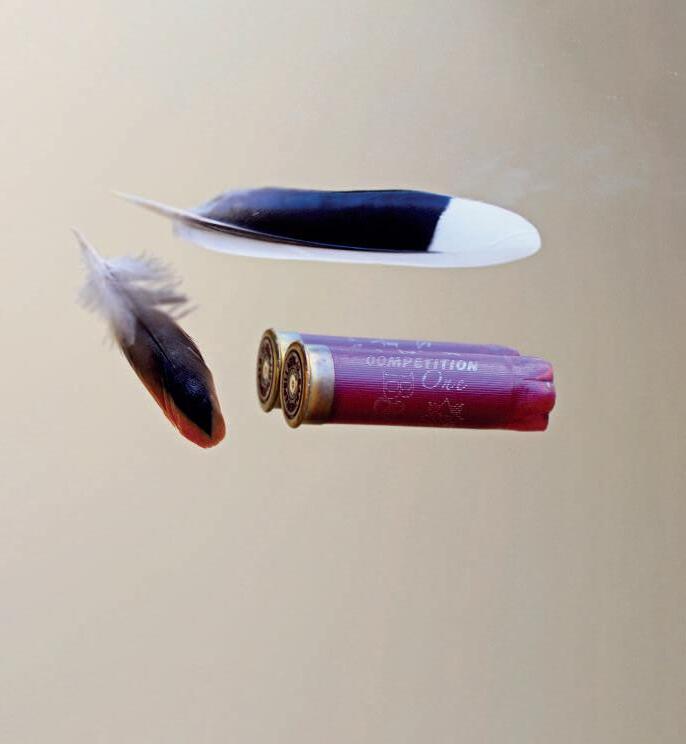
The culprits in this list were brought to justice after being observed and reported by BirdLife Malta.

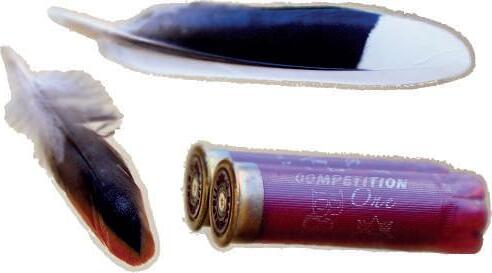
CRIME: Being in possession of protected Tree Pipits in Ħal Luqa (December 2024)
PUNISHMENT: Man fined €500 + suspension of bird possession licence for 2yrs.
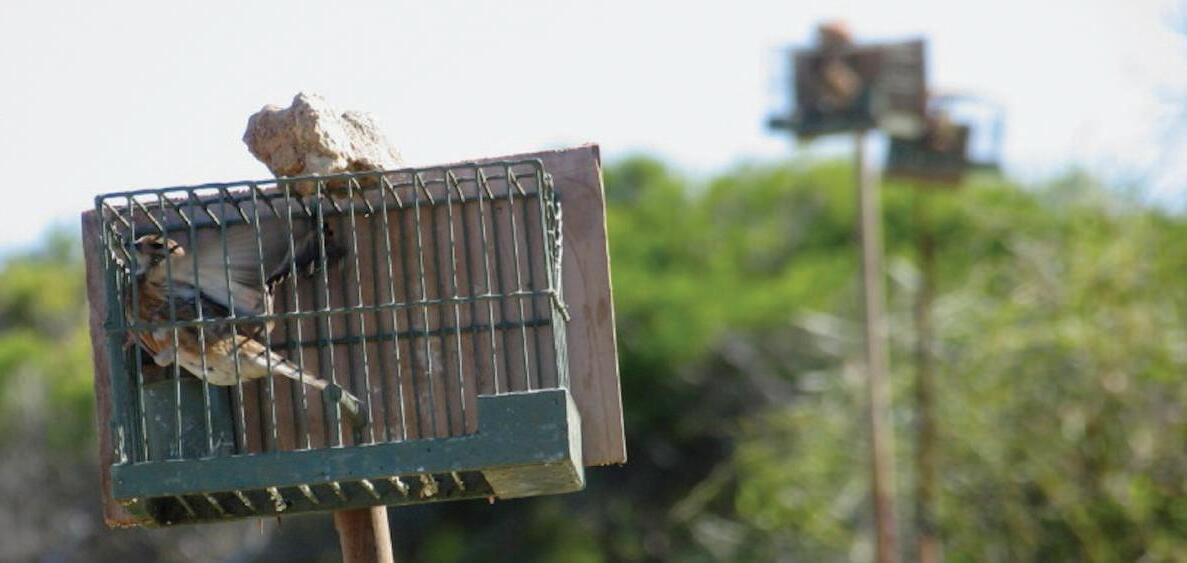
CRIME: Finch trapping on unregistered site in Mellieħa (November 2023).
PUNISHMENT: Trapper fined €1200 + suspension of bird trapping licence for 3yrs
CRIME: Hunting within boundaries of Għadira Nature Reserve (April 2024).
PUNISHMENT: Hunter given 1yr prison sentence suspended for 2yrs + suspension of hunting licence for life.
CRIME: Wader trapping at night in St Thomas Bay, Marsaskala (December 2024).
PUNISHMENT: Trapper fined €1000 + suspension of bird trapping licence for 2yrs
CRIME: Shooting protected Eurasian Collared-dove within 200m of residential area in Marsaskala (April 2024).
PUNISHMENT: Hunter fined €1400 + suspension of hunting licence for 2yrs.
CRIME: Being in possession of freshly killed protected Wood Sandpiper (Annex 1 species), Golden Oriole, Hoopoe and Tree Pipit, and operating cage trap for European Turtle-dove and Eurasian Collared-dove in Marsaskala (April 2024).
PUNISHMENT: Hunter fined €6000 + suspension of hunting licence for life.
Editorial Board Antonia Micallef (Editor), Victor Falzon (Naturalist & Field Teacher), João Gabriel Candeias (Multimedia Communication Assistant), Nadia Sodano (Communications Assistant), Sofia Meskhidze (Events & Outreach Assistant), Giada Lampitelli (Education Officer) BirdLife Malta Council Darryl Grima (President), Joanna Tabone (Vice-President), Norman Chetcuti (Treasurer), Denise Casolani (Council Secretary), James Aquilina, Eurydike Kovacs, Alessandra Loria, Paul Portelli, Kathleen Psaila Galea, Raphael Soler (members). Senior Management Team Mark Sultana (CEO), Nicholas Barbara (Head of Conservation), Mark Gauci (Head of Land Management), Antonia Micallef (Public Engagement Executive), Gabriella Seguna Galea (Finance Manager), Manuel Mallia (Salina Park Manager), Manya Russo (LIFE PanPuffinus! Project Manager), Janet Borg (Office Coordinator).
Design João Gabriel Candeias
Printed at Poultons on sustainably sourced paper
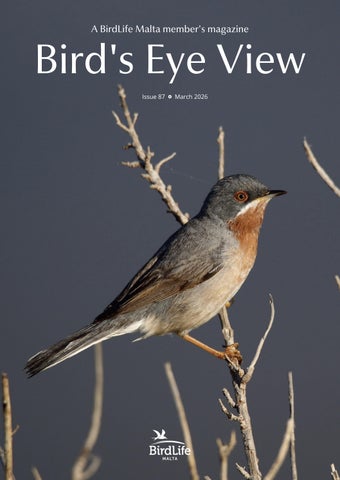
Front cover photo Subalpine Warbler by Mario V. Gauci Reg. Vol. Org. VO/0052 © 2025 BirdLife Malta. All rights reserved.
Contact BirdLife Malta
mailing address: 57/28 Abate Rigord Street, Ta’ Xbiex XBX 1120, Malta tel: +356 21347645 • email: info@birdlifemalta.org • website: www.birdlifemalta.org
Mark Sultana BirdLife Malta CEO
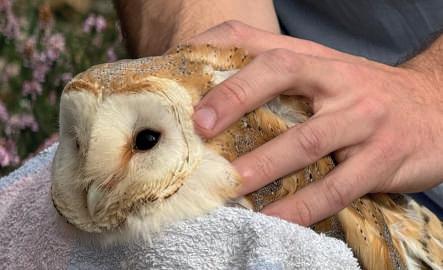
The third Barn-owl linked to an FKNK reintroduction project has been found shot in Malta. The injured bird (with a closed ring inscribed BORP 10.0 24 014) was found inDwejraon 7 February (close season) with a broken leg and shotgun injuries, as confirmed by a vet. Despite the FKNK's much hyped €80,000 reintroduction stunt, barn-owls remain locally extinct. Without stronger enforcement, restoring breeding populations will remain impossible.
New trapping licences to reopen
BirdLifeMalta has condemned the Government’s decision to reopen applications for new bird trapping licences. This decision makes a mockery of Malta’s legally-binding commitment to phase out trapping when it joined the EU in 2004. The European Court of Justice has already ruled twice (in 2018 and 2024) against Malta’s trapping systems. BirdLifeMalta warned that issuing new licences will increase trapping activity and trapping sites across the countryside. Conservationistsalso raised concerns about weak enforcement and risks to protected habitats. BirdLife Malta urges the Government to withdraw the decision andcomply withEU law.
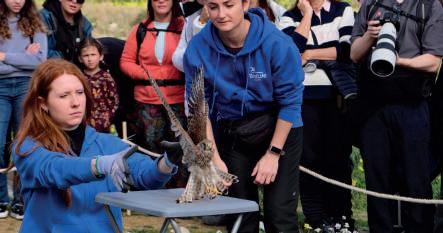
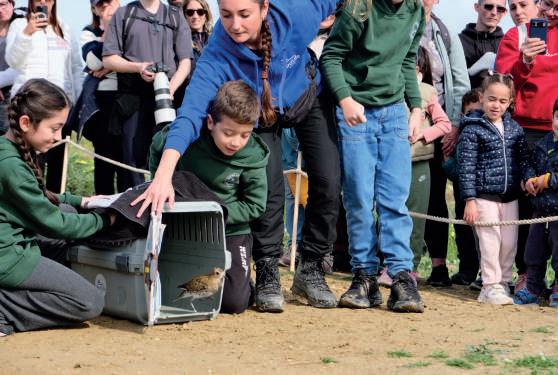
BirdLifeMalta celebrated the public holiday on 10 February by releasing 14 rehabilitated birds at Foresta 2000. The birds included Common Kestrels, a Dottorel, Golden Plovers and Song Thrushes. All had been rescued after illegal shooting or use as live decoys. Each bird received veterinary care, specialised feeding, monitoring and flight conditioning before release. They were ringed before returning to the wild. The rehab work was supported by Malta Environment Foundation, NABU Bundesverband, volunteers and members.
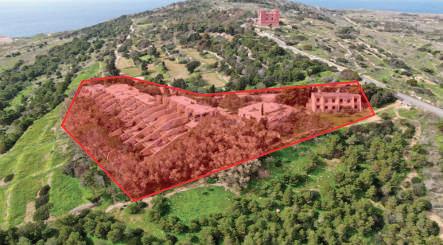
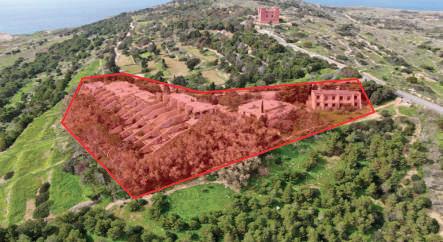
Hotel plan at Foresta 2000
A planning application proposes rebuilding the abandoned Festavalhotel near the Red Tower inMellieħa. The site lies within a protected Natura 2000 area and Bird Sanctuary. It also includes Foresta 2000, a Mediterranean reforestation project begun and co-managed by BirdLife Malta since 2003. Environmental organisations warn the project will degrade wildlife habitats and diminish the value of outdoor education spaces used by many students. The proposal also conflicts with the Natura 2000 Management Plan and the North WestLocal Plan. More than 400 public objections have been sent, and BirdLifeMalta has formally objected to the development.
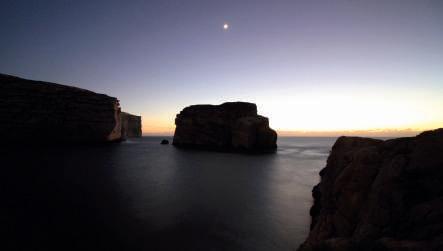
Light pollution looms over Dwejra
BirdLifeMalta joined other environmental organisations in responding to the proposed Dwejra Protection and Management Regulations. While the initiative supposedly aims to safeguard this Natura 2000 site, several provisions raise serious concerns.A crucial measure for protecting breeding colonies of Scopoli’s and Yelkouan shearwaters is strict control of artificial lighting, and yet the draft regulations plan to allow artificial lighting from sunset to midnight. When seabirds return to their cliff nests shortly after sunset to incubate eggs and feed chicks, they rely on darkness. Artificial lighting disrupts this behaviour and reduces breeding success, which is why BirdLife Malta is calling for a full ban on lights from sunset to sunrise.
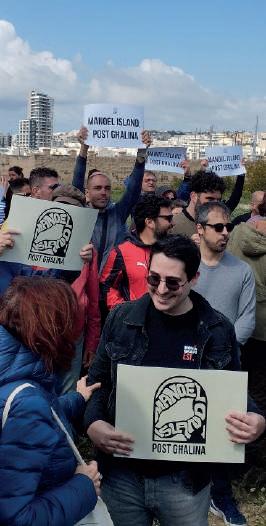
The Prime Minister has announced that an agreement has been reached with the MIDI consortium to terminate the concession for Manoel Island and Fort Tigné. The sites are expected to return to public ownership. The announcement follows months of public calls to transform Manoel Island into a large public green space. BirdLife Malta supported the campaign, Manoel Island Post Għalina, from its early stages. More than 50 organisations joined thousands of citizens advocating for a carfree national park. The outcome reflects the strong public demand to safeguard Manoel Island for people and nature.
Rehabbed bird release at Foresta
Third Barn-owl shot
Manoel Island back to the people!
Nadia Sodano
Benjamin
Metzger
Times of Malta
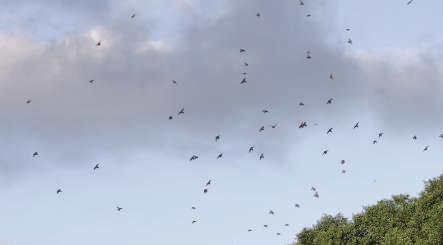
29,000 starlings...
BirdLifeMalta volunteers carried out the first nationwide count of Common Starling winter roosts.The survey took place shortly before Christmas across Malta and Gozo.More than 29,000 birds were recorded at 15 evening roost sites.The largest roost gathered at the Junior College (Msida), withnearly 19,000birds counted.Other roost counts were made inBurmarrad, Rabat, Żurrieq, SanVinċenz, Mellieħa, Xlendi and Victoria. Most roosts were in areas with large ficus trees. Starlings gather to sleep in large numbers for safety.
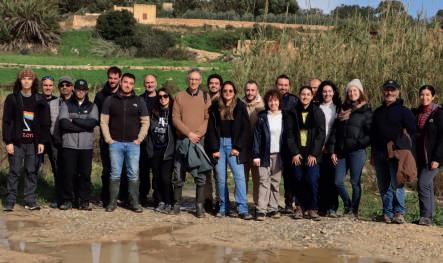
Nature restoration training course
In January,BirdLifeMalta organised a four-day training course on nature restoration.Government agencies and environmental organisationsparticipatedin the sessions. Experts presented international standards for restoring damaged ecosystems. The initiative supports preparation for the EU Nature Restoration Law. Malta must submit its national restoration plan by September 2026. Participants discussed challenges including overdevelopment and climate change.The training aimed to help authoritiesidentifypriority areas and strengthen collaboration on restoration work.
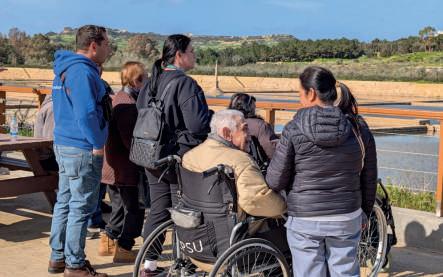
ROOTED
marks first year
ROOTED project has completed its first year promoting connections between people and nature.Partners recently met for a mid-term review to discuss progress andfuture plans. Work continues on a Hiking Handbook featuring routes accessible to different abilities.In Malta,BirdLife Malta and CareMalta installed live wildlife webcams in retirement homes. The initiative brings nature directly to residents who cannot easily access outdoor spaces. On 18 February, residents from Government care homes and day centres enjoyed meditation, crafts and birdwatching at Salina Nature Reserve. The project shows that engagement with naturecanbenefit people of all ages.

...and 16,000 wagtails!
BirdLifeMalta volunteers recorded 16,326 White Wagtails during the annual winter roost count.The survey covered three main locations across Malta.The largest group was recorded in Valletta, where 13,686 birds roosted in mature ficus trees. Other counts took place in Mosta andBuġibba. This long-running citizen science project monitors how birds use urban habitats. BirdLife Malta urges the protection of roost tree and recommends no pruning from October to March to prevent disturbance.
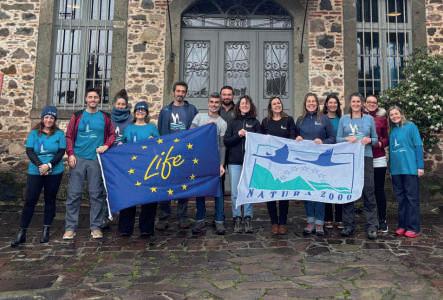
held its
Greece. Project partners attended together with EU monitoring teams and representatives from the European Commission. The meeting reviewed financial and technical results achieved during the project. Team members also met local fishers who participated in mitigation trials. Fishers helped test measures to reduce accidental seabird bycatch. The project strengthened cooperation between scientists and fishing communities across the Mediterranean. It also demonstrated practical solutions to protect seabirds at sea.
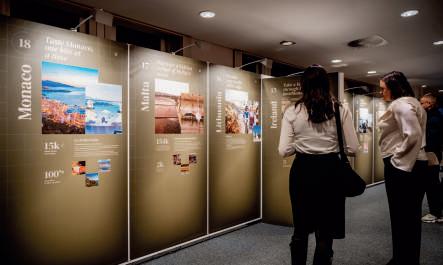
BirdLifeMalta’s work at Salina Nature Reserve featured at an exhibition at the European Parliament in Brussels. The exhibition was organised by the European Travel Commission and co-hosted by MEPs Daniel Attard (Malta) and Nikolina Brnjac (Croatia). Salina was selected as one of 35 best practices for European tourism initiatives. It was the only initiative representing Malta. The project restored historic saltpans while creating habitat for wildlife.Itdemonstrateshow conservation and tourism can support each other. The initiative promotes regenerative tourism by restoring ecosystems and protecting native species.

Call for suspension of works during appeals
Environmental organisations, including BirdLife Malta, are calling for a legal change to suspend construction while planning appeals are ongoing. The appeal follows a Court ruling revoking the permit for the 10storey Halland Hotel inSwieqi, after it ruled that the Planning Authority had favoured the developer over policy. By the time the permit was revoked,however, the hotel had beenlargely built.
Ġustizzjagħal Artna campaigners say residents are often denied justice when construction continues during appeals.
Blooming Schools wins award
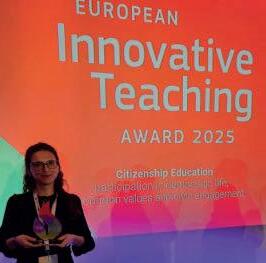
BirdLifeMalta has won the European Innovative Teaching Award 2025 in School Education for its Erasmus+ project Blooming Schools. The award was presented at an event in Brussels celebrating outstanding education initiatives across Europe.Blooming Schools brings biodiversity into schools by creating wildlife-friendly gardens and promoting handson learning. Students take part in practical conservation activities and learn how to become active environmental citizens. The project was delivered with partners from Malta, Portugal,Greeceand Romania. These include Friends of the Earth Malta and ĦadDingli Secondary school. The award highlights the value of collaboration and nature-based learning in schools.
The LIFEPanPuffinus! team
final monitoring visit in Lesvos,
LIFEPanPuffinus! concludes
Salina showcased in Brussels
João Candeias
BirdLife Malta
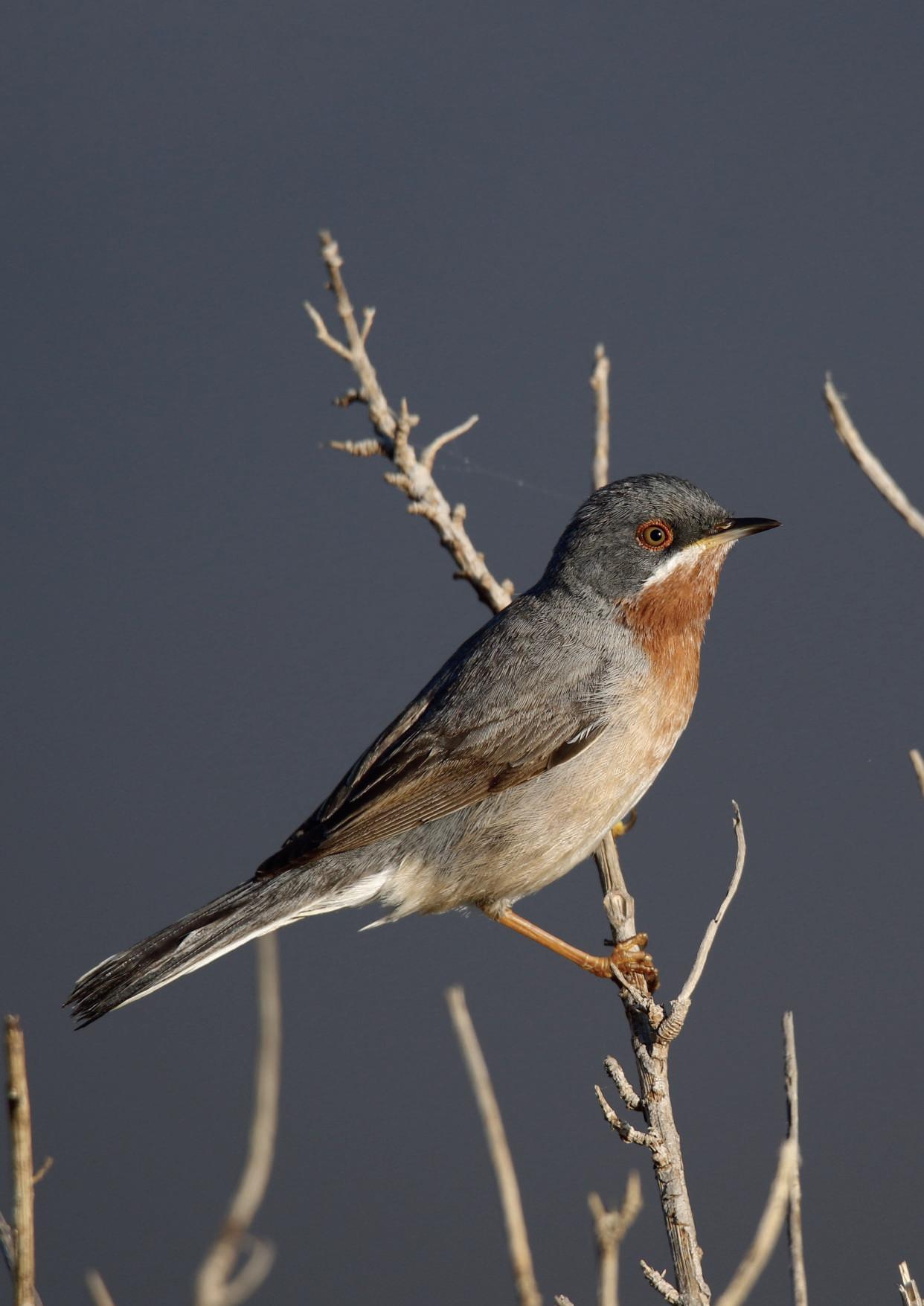
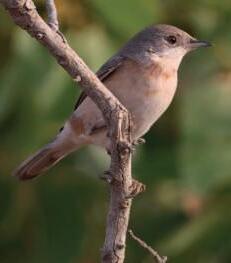
Subalpine Warbler
by Charles Coleiro Bird ringer and Simar Nature Reserve Warden
The Subalpine Warbler is a frequent migrant to Malta, using the islands as a vital stopover during its journeys but is often overlooked because of its discreet habits. It typically keeps hidden in low-lying bushes, particularly in sparsely vegetated garrigue habitats, such as at Majjistral Park and Kemmuna in spring. In autumn, it can also be encountered in dense, evergreen shrubland and small trees in maquis habitats such as at Buskett.
Distribution and habitat
The species breeds exclusively in the Mediterranean region. The largest populations are in Spain, Italy, France and Greece, with smaller populations in the Balkans, Portugal, western Turkey and north-west Africa. It breeds in various habitats but prefers dry slopes and sunny hillsides. It may occur in maquis or scrubby ravines, but prefers low garrigue with small shrubs and low heath scrub. It also occurs in open woodland, particularly Holm Oak, and in thick hedgerows with oak and bramble. It inhabits zones from sea-level up to 1100 m in Greece and up to 2000 m in Morocco. All populations winter in the Sahel region of Africa mainly along the southern edge of the Sahara, from Mauritania to Sudan.
Identification
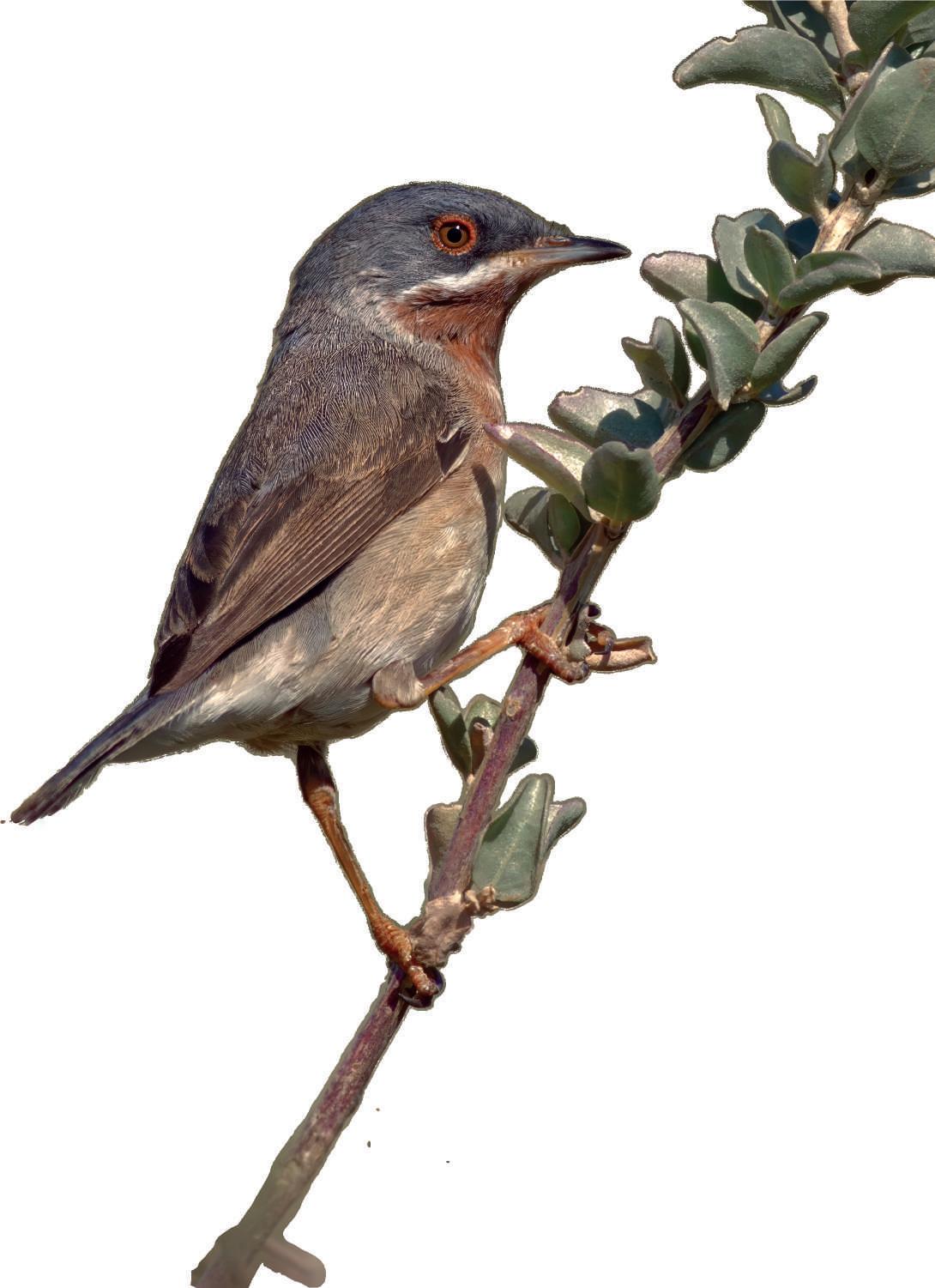
The Subalpine Warbler is small, elegant and slim, with a short bill. Males have bluegrey upperparts and dark pinkish-chestnut underparts, with a distinct white moustachial stripe. Females are grey-brown above and buff-white below. Eye-ring and orbital ring are brick-red, and legs brownishpink. Juveniles are similar to females but browner above, buff-white below and initially with a greyish yellow-brown iris. The call is a hard ‘tec’, usually given in series. The song is lively and clear, with harsh rattling sounds and short, high squeaky notes.
Diet and breeding
Subalpine Warblers are primarily insectivores, feeding on adult and larval insects such as beetles, caterpillars and aphids. In autumn, they also consume fruits and berries. Foraging mainly involves searching through dense foliage, including olive and oak trees. Nesting takes place from early April to late June, usually in low bushes or occasionally in small trees. The nest is a deep, well-built cup of grass stems and leaves, often incorporating cobwebs in the outer layers. Clutch size is usually 3–5 eggs, whitish and finely speckled. Incubation lasts 11–12 days and both parents incubate and feed the young.
Recent splits
Recent taxonomic revisions have split the Subalpine Warbler into three distinct species: Western Subalpine Warbler (breeds in NW Africa, Iberia and S. France), Eastern Subalpine Warbler (Italy, Balkans, Greece and Turkey), and Moltoni's Warbler (Balearics, Corsica, Sardinia and N. Italy). Key identification differences are most evident in males. Western birds are darker grey-blue with brighter orange-red throats, while eastern birds show a more restricted brownish-red throat. Moltoni’s Warbler has a paler, more pinkish-red throat.

Maltese name Bufula Passajra
Scientific name Curruca cantillans
Length 12cm
Conservation status (IUCN Red List) Least Concern
Local status Migrant
Call hard tec often given in series
Behaviour Discreet, keeps in low-lying bushes
Habitat Low shrubs in garrigue and maquis
Nicholas Galea
By Victor Falzon Naturalist and field teacher

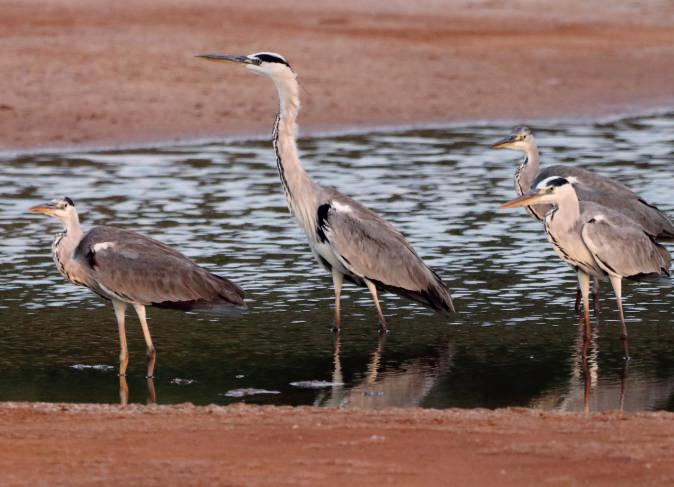
Grey Heron (Russett Griż)
Ardea cinerea
People in mainland Europe who live near lakes or rivers will likely have grey herons for neighbours. Big, lanky birds who hunch for hours ankle deep in water, watching for potential snacks in the form of frog, fish or prawn – indeed anything up to medium size with a pulse – which to stab with their formidable beak. Herons are generally tolerated, because many people have long accepted the need to share the planet with other animals, a concept still largely alien to many Maltese. Malta is too small, dry and noisy for grey herons to live here, but we still get these broad-winged, slow-flying birds as they migrate across the Mediterranean. A good place to spot grey herons is our wetland reserves, not least Għadira, where the shallow lake provides these tired travellers with rich foraging grounds and relative safe shelter.
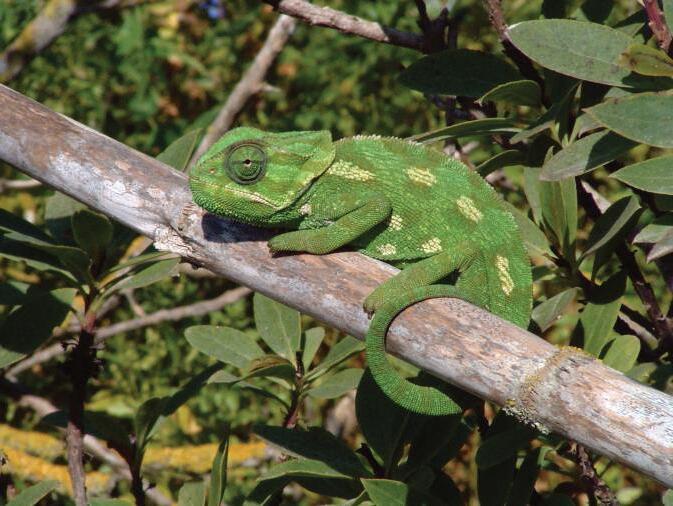
Mediterranean Chameleon (Kamaleonti)
Chamaeleo chamaeleon
We all recognise the familiar chameleon, and we all know about its famous colour-changing party trick. In Malta we have just one species: the Mediterranean chameleon, and it isn’t even native, having been introduced from North Africa in the 19th century. Despite their arboreal nature, chameleons have adapted well to our largely treeless landscape and are today widespread on all three main islands. They are animals of hot climates, so they don't occur much further north than our latitudes – no wonder visitors to Għadira from northern Europe get so excited when they spot one here. Like all other reptiles, chameleons are protected in Malta and may not be disturbed or kept in captivity. Oh, and they don’t explode, scream, implode, inflate, turn white or drop dead on contact with red. What actually happens is… a big fat nothing!
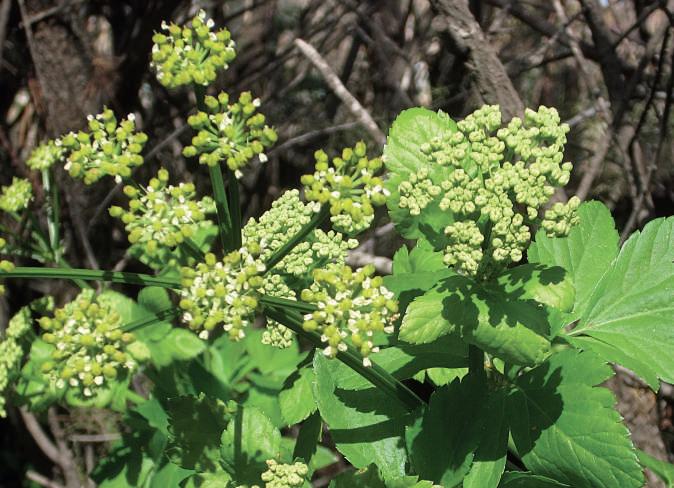
Alexanders (Karfus
il-Ħmir) Smyrnium olusatrum
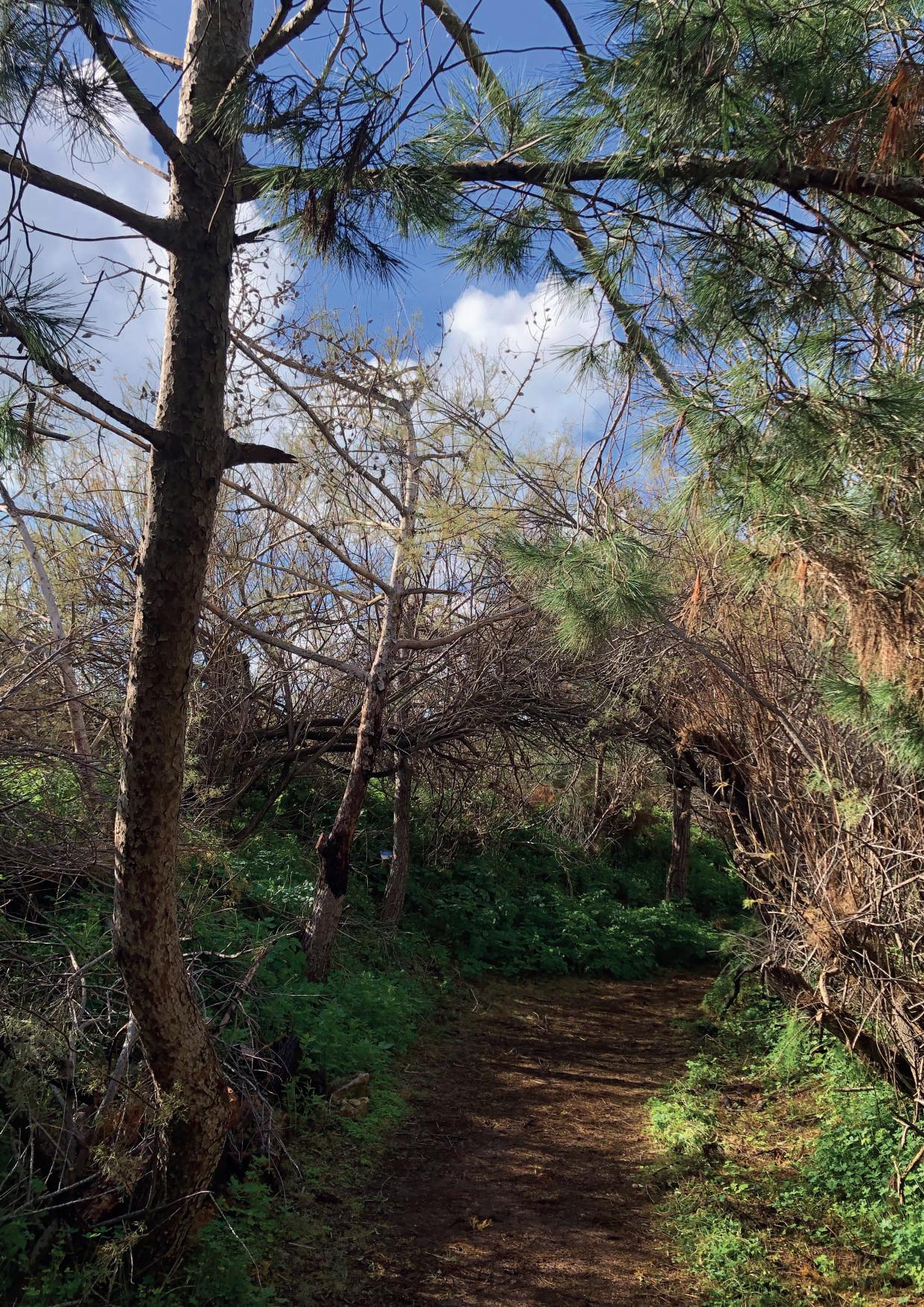
Every season has its flowers, but for sheer variety of species spring wins hands down. One plant that flowers early in the season is the alexanders. It’s a member of the carrot family, with flowers borne in typical umbrella-shaped bunches. Its flowers are not very showy, being a rather greenish yellow, though insects love them well enough. Its leaves, however, strike us as familiar and the reason is because they look rather like parsley leaves, hence the Maltese name. The plant is neither rare nor too particular about its habitat, growing just as happily on a pile of construction debris as in a lush valley – and the footpath at Għadira has lovely stands of it at this time of year. Its wild and widespread status all too often earns the alexanders the fatal ħaxix ħażin label, fit only for a dousing of herbicide! Never at our nature reserves, obviously.

Spring in the city
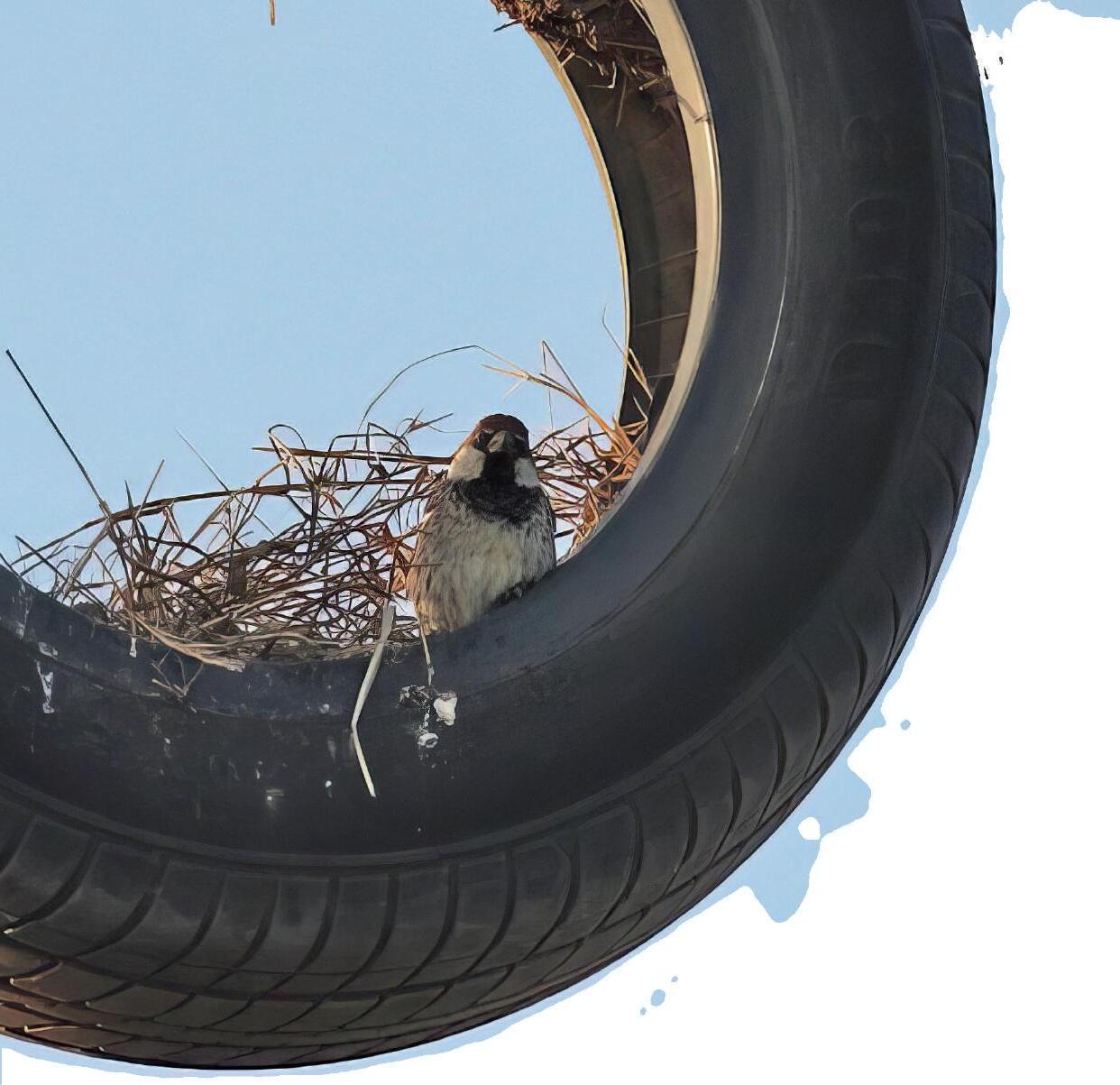
The communal winter roosts that filled Malta’s towns with movement and sound have largely fallen silent. The thousands of Spanish Sparrows, Common Starlings and White Wagtails that recently crowded large Ficus trees have now dispersed. With the arrival of spring, migration and breeding transform the rhythm of urban birdlife, shifting activity from spectacle to secrecy as nests are built and territories defended.
From winter roosts to spring nests
Most Common Starlings and White Wagtails wintering in Malta have now migrated to continental Europe to establish territories and to breed. The Spanish Sparrows live here yearround, but now disperse throughout towns and nearby rural areas as they begin their own nesting season. If you still see sparrows gathering at roosting sites, you will likely notice that most are males. By day they attend to family duties at the nest, but continue to roost communally at night while females stay home incubating eggs.
The urban residents
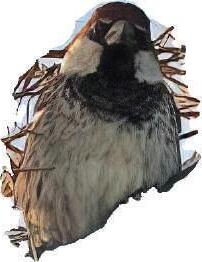
The Spanish Sparrow is one of around 10 true urban breeding birds in Malta, and certainly the most conspicuous. Highly adaptable, it uses any suitable cavity: from telegraph poles and ventilators to cracks in walls and spaces behind telephone or internet boxes; it also builds large, scruffy nests in trees. Cavities are tightly packed with nesting material, leaving a small chamber for the eggs.
The Eurasian Tree Sparrow is also found in urban areas but typically nests on the outskirts of rural towns as it needs natural or agricultural land for foraging. Tree sparrows are smaller than
“Spring replaces spectacle with secrecy: urban birds shift from noisy winter gatherings to hidden nests in the heart of our towns.”
Spanish Sparrows, so they can squeeze into narrower nest cavities that exclude their bulkier and more aggressive cousins. Purpose-built nest boxes can further support Tree Sparrows. Both sparrow species begin breeding early, often from March.
The Eurasian Collared-dove may start even earlier, indeed in favourable weather conditions can nest almost year-round. Its prolific nature has allowed it to expand rapidly, and from a rare visitor became a widespread urban breeder in a relatively short period. Collared-doves build small, inconspicuous nests in a variety of trees.
The Blue Rock-thrush, Malta’s national bird, has also expanded into towns. Once confined to cliffs, it now uses tall buildings as substitutes, with males singing from rooftops and tower cranes. Pairs often retain territories for years, though nest sites may shift as buildings are renovated or demolished. Rooftop gardens, vacant plots and urban green spaces are essential feeding areas, providing caterpillars, geckos, lizards and skinks.
Ray Galea
by Nicholas Galea Head of BirdLife Malta bird ringing scheme

How you can help urban birds this spring
Create safe nesting spaces
Install species-specific nest boxes and avoid sealing building cavities during the breeding season. Encourage the use of swift bricks in new developments.
Keep gardens alive with insects
Retain natural vegetation, reduce paving and avoid pesticides. Most chicks depend on insects for survival.
Provide fresh water
Place shallow water in shaded areas and refresh daily, especially during warm weather.
Feed responsibly
Avoid bread and excessive feeding in spring. Natural diets are crucial for healthy chick development, and unclean feeders spread disease.
Give wildlife space
Even small gardens, balconies or rooftop planting can support breeding birds.
The Sardinian Warbler remains a familiar urban resident, its chattering calls a common bird sound in Malta. However, it may be declining in towns as green spaces disappear. Traditional back gardens – once forming continuous habitat within residential blocks – are increasingly replaced by apartment complexes and paved areas, reducing space for wildlife.
Summer guests
Several migratory breeders can also be considered urban, although none are common. Observing any of these species breeding near your home remains a privilege.
The Barn Swallow, once a very rare breeder in Malta, is increasing, particularly in Gozo where several villages boast several breeding pairs; a few pairs also nest in Malta. In early spring, swallows look for old buildings, where they attach their cup-shaped mud nests to beams or walls. Constructed from mud pellets mixed with saliva, these nests may host up to three broods of four chicks each. By late summer, swallows gather in flocks in valley reedbeds before migrating to tropical Africa.
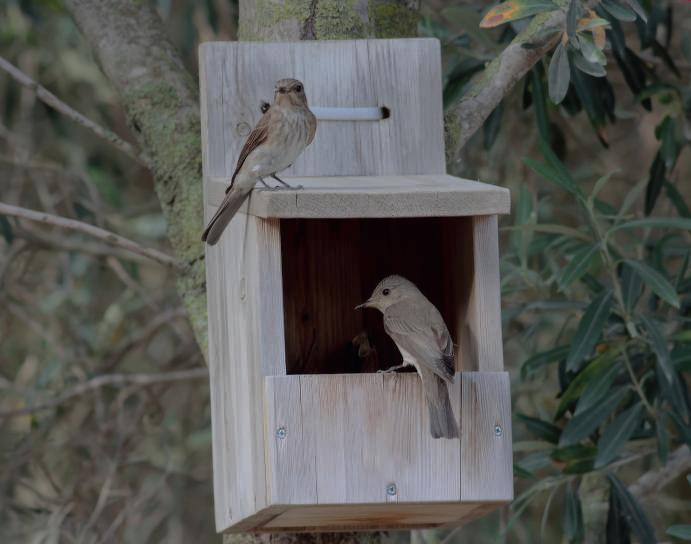
The Northern House Martin, a close relative to the Barn Swallow, was until recently limited to isolated pairs. A small colony discovered at the Playmobil factory in Ħal Far grew from one or two pairs, to eight, until Spanish Sparrows destroyed their nests. To give House Martins a fighting chance, artificial nest cups (ANCs) with narrower entrances were installed. As a result, the colony increased to 18 breeding pairs by 2025. Further expansion is planned with more ANCs in the pipeline. Swifts are often confused with swallows and martins due to similar appearance, but they are unrelated. Like swallows and martins, the Common Swift returns in spring from tropical Africa, but unlike them it nests in cavities and cracks in buildings. Colonies exist at Mellieħa (parish church), Gżira, Sliema and San Ġiljan, where older buildings with slit-shaped ventilators provide suitable nesting spaces. Unfortunately, modern construction often lacks suitable cavities, leading to population declines. The integration of special “swift bricks” into new buildings – already standard in parts of Europe – can provide a solution. The rarer Pallid Swift has a small urban colony at Mater Dei Hospital, with other colonies in sea caves. Another migrant, the Spotted Flycatcher depends on trees (particularly Italian Cypress and Aleppo Pine) so it favours large gardens and parks such as Howard Gardens (Rabat), Kennedy Grove, Ta’ Qali National Park, Addolorata Cemetery, Hastings Garden (Valletta), and even some schools; the total population is estimated at around 50 pairs. Geolocator studies have shown individuals migrating as far as Botswana and Angola and returning to the same tree or garden in Malta. Nests, often decorated with lichens for camouflage, are built in trees or man-made structures, and nest boxes are readily used where provided.
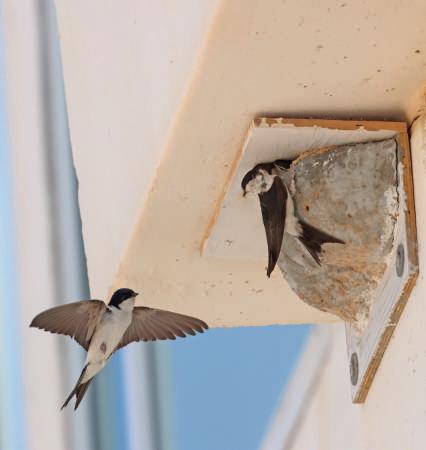

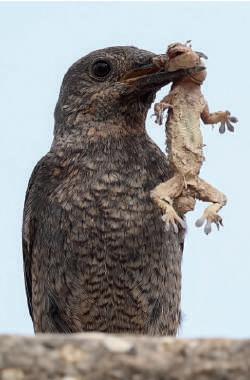
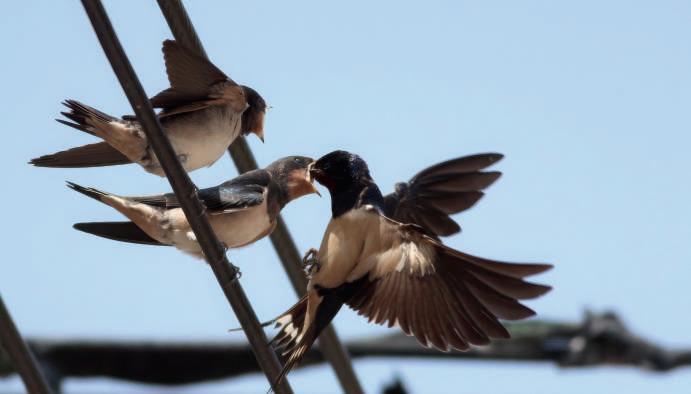
This article is brought to you in collaboration with APS Bank which is funding the project Għasafar Ġirien (Neighbourhood birds).
Ray Galea
Ray Galea
Nicholas Galea
Ian Balzan
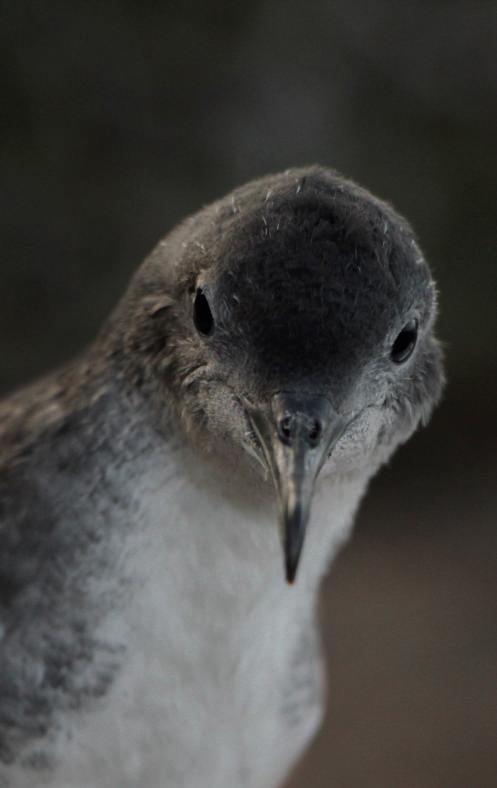
Built for the open sea
The Yelkouan Shearwater is uniquely adapted to life at sea. Outside the breeding season it spends several months feeding on small fish and marine invertebrates across the Mediterranean, with the Black Sea among its principal wintering areas. It returns to land only to breed, laying a single egg each year in hidden burrows or rocky crevices along inaccessible cliffs.
This slow reproductive cycle makes the species especially vulnerable. With only one chick raised per pair annually, any additional mortality – whether at sea or on land – can rapidly affect population stability.
Across its range, the species faces two principal threats:
● Accidental capture in fishing gear (bycatch)
● Predation by invasive mammals, particularly rats, at breeding colonies
Because shearwaters are strongly influenced by marine conditions, scientists consider them “sentinels of the sea”. Changes in their survival, breeding success or distribution can indicate wider environmental pressures, including shifts in fish stocks, marine pollution and climate-driven ecosystem change. Safeguarding them therefore contributes directly to the wider health of Mediterranean biodiversity.
A
transboundary effort across the
Medit.
Launched in 2020, LIFE PanPuffinus! brought together partners from Malta, Greece, Spain, France and Portugal. Alongside BirdLife Malta, the consortium included:
● Aquatic Resources Malta
● Hellenic Ornithological Society
● Natural Environment & Climate Change Agency
● Sociedad Española de Ornitología
● Ligue pour la Protection des Oiseaux
● Sociedade Portuguesa para o Estudo das Aves
Safeguarding Malta’s seabirds
Over five years, coordinated action led by BirdLife Malta under the EU-funded LIFE PanPuffinus! project has tackled the most urgent threats facing the Yelkouan Shearwater in Maltese waters and across the Mediterranean: from fisheries bycatch at sea to invasive predators at breeding colonies on land.
Throughout the Mediterranean, remote coastal cliffs come alive at night with the haunting calls of shearwaters. Among them is the Yelkouan Shearwater (Puffinus yelkouan) Garnija in Maltese: a species endemic to the Mediterranean whose future is closely tied to the health of the marine and terrestrial environment surrounding Malta and neighbouring regions. Over the past five years, a major conservation initiative led by BirdLife Malta has worked to address the most urgent threats facing the Yelkouan Shearwater and its close relative, the Balearic Shearwater (Puffinus mauretanicus), Garnija Balearika in Maltese.
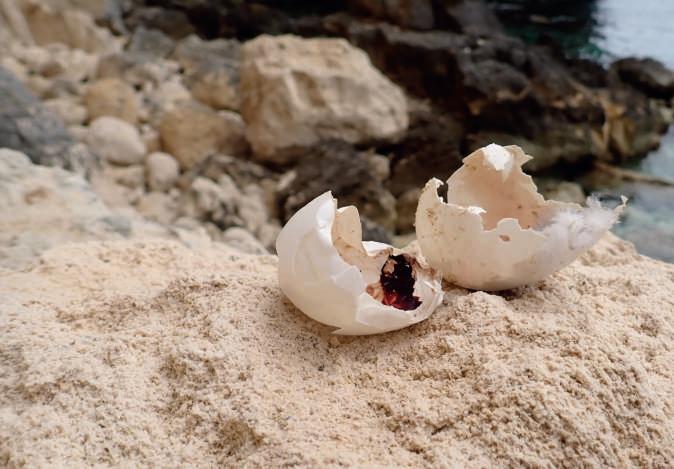
“With only one egg laid per year, even small increases in mortality can have population-level consequences.”
Together, these organisations coordinated research, conservation action and public engagement across a vast geographic area, covering the entire breeding range of the Balearic Shearwater and a substantial portion of the Yelkouan Shearwater’s distribution.
This cross-border collaboration reflects the ecological reality of seabirds: they do not recognise national boundaries. Effective conservation must therefore operate across the species’ full distribution.

by Manya Russo LIFE PanPuffinus! Project Manager
Francesca Visalli
Aron Tanti
Tackling bycatch through collaboration
Accidental capture in fishing gear remains one of the most serious threats to Mediterranean shearwaters. A recent synthesis of European data confirmed that seabird bycatch continues to occur across multiple fisheries in the region.
To better understand and quantify this threat, the project worked directly with fishers and collected data through questionnaires, self-reporting logbooks and onboard observations. These efforts documented seabird bycatch incidents, providing one of the most comprehensive datasets assembled for the region.
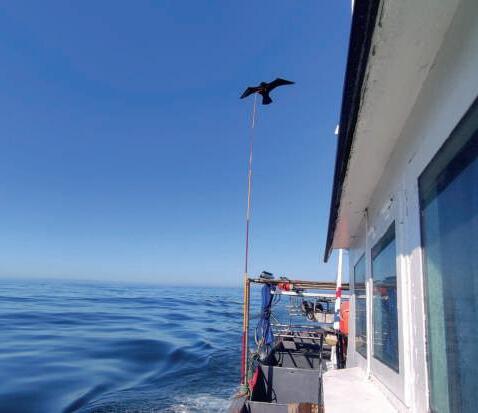
This collaboration enabled scientists and fishers to test practical mitigation measures designed to reduce seabird interactions with fishing gear. A mitigation measure involves modifying fishing gear or practices to lower bycatch risk. Because fisheries vary in gear type, target species and spatial overlap with seabirds, solutions were tailored according to each fleet.
Measures tested included:
● Bird-scaring devices such as the "scarybird"
● Contrast panels to increase gear visibility
● Specialised lines fitted with ribbons or buoys to deter seabirds during gear setting
Trials across multiple fleets demonstrated that simple, low-cost adaptations can lower bycatch risk when implemented correctly and adopted widely.
In parallel, risk maps were developed by overlaying seabird tracking data, at-sea survey results and fisheries information. These spatial analyses identified interaction hotspots, enabling targeted mitigation and laying the groundwork for scaling up measures at national and regional levels.
Protecting colonies on land
Although shearwaters spend most of their lives at sea, their long-term survival ultimately depends on secure nesting sites on land.
Invasive alien species, particularly rats, pose a severe threat to breeding colonies by preying on eggs and chicks. Given that each pair produces only one egg per season, even low levels of predation can significantly affect colony viability. In the past, Yelkouan Shearwater colonies in Malta experienced very low reproductive success where rats were present. Seasonal rodent control programmes greatly improved breeding success, while colonies without control remained low.
LIFE PanPuffinus! prioritised predator control and biosecurity measures to reduce this threat. In Malta, systematic rodent management was implemented across key colonies, helping maintain stable breeding success over the project’s duration –a strong indicator that sustained management supports colony resilience.
A dedicated Response Hub was also established to ensure that equipment, expertise and protocols are readily available in the event of a new invasive species incursion. Rapid response capacity is critical on islands, where early intervention can prevent long-term ecological damage.
Biosecurity protocols, monitoring systems and data management tools developed through the project now provide a framework for continued colony protection.
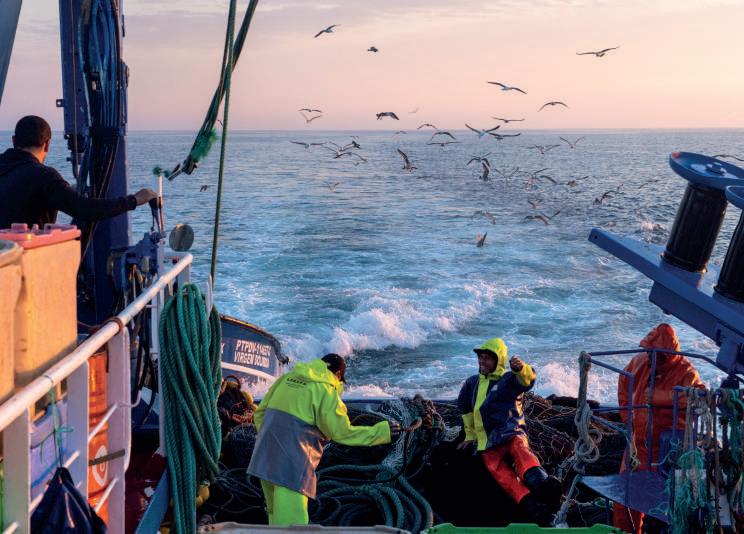
“Effective bycatch reduction depends on practical solutions developed together with fishers.”
Engaging communities and raising awareness
Scientific evidence alone is not sufficient to secure conservation outcomes. Long-term success depends on trust, cooperation and shared responsibility.
Throughout the project, outreach activities engaged schools, local communities and local governments. Through media campaigns, educational programmes, workshops and public events, the project raised awareness of the ecological importance of shearwaters and the practical steps needed to reduce threats.
Engagement with fishing communities was particularly important. By strengthening relationships and promoting shared stewardship of marine resources, the project improved reporting of seabird interactions and encouraged voluntary uptake of mitigation measures.
This collaborative approach increases the likelihood that conservation actions remain practical, locally supported and sustainable beyond the project’s formal lifetime.
Looking beyond the project
Although the five-year implementation phase has formally concluded, conservation efforts continue through the After-LIFE phase.
Future actions aim to maintain and expand seabird bycatch monitoring across both target and non-target fishing fleets, improve reporting systems and promote broader adoption of effective mitigation measures. Continued evaluation of long-term effectiveness will be essential to ensure measures deliver sustained reductions in mortality.
On land, biosecurity actions will focus on maintaining invasive species databases, sustaining rodent control where necessary, monitoring eradicated sites, training stakeholders and continuing regular breeding colony monitoring.
Dissemination of project materials to fishers, schools, and the wider public will help maintain awareness, while ongoing engagement with national and regional policymakers will support integration of project results into fisheries and biodiversity management frameworks.
The central lesson of seabird conservation is clear: meaningful recovery can only occur with sustained effort. Ongoing collaboration, consistent funding, evidence-based policy and continued community engagement remain essential to securing the future of the Yelkouan Shearwater in Maltese waters and beyond.
Key achievements after five years
Over its five-year duration, LIFE PanPuffinus! delivered measurable progress on multiple fronts:
● Strengthened biosecurity systems at breeding colonies
● Expanded invasive predator management
● Built long-lasting partnerships between conservationists, scientists, authorities and fishers
● Tested mitigation measures on vessels using gear with known seabird interactions
● Established rapid-response mechanisms
● Provided training materials to improve bycatch reporting
Importantly, the project established a Mediterranean-wide network of cooperation that will continue to support seabird conservation across borders.
Luís Ferreira
Our Down Under!
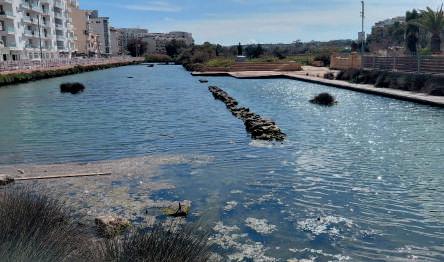
MFrom historical fortifications to shallow reefs and saltpans, this south-eastern locality supports migratory waders, seabirds and wetland species along the Central Mediterranean flyway.
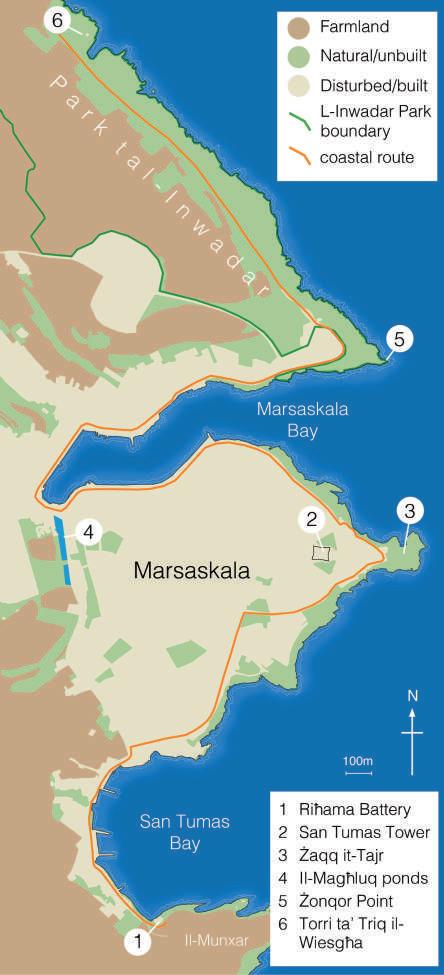
arsaskala is located on the south-eastern coast of Malta. It is renowned for sea and leisure, but the village goes beyond that. Historically, it has been surrounded by buildings and sites dating to different eras. Its shores also play an important role in the migration of waterbirds, particularly around Żaqq it-Tajr, nowadays better known as "Il-Ġerma".
History and habitat
As you start the walk from St Thomas Bay, you may notice Riħama Redoubt. Built between 1714 and 1716, it was used during the French invasion but was immediately outflanked by French forces. Today, the battery is in a derelict state, as the cliffs supporting the embrasures have gradually been eroded by sea currents.
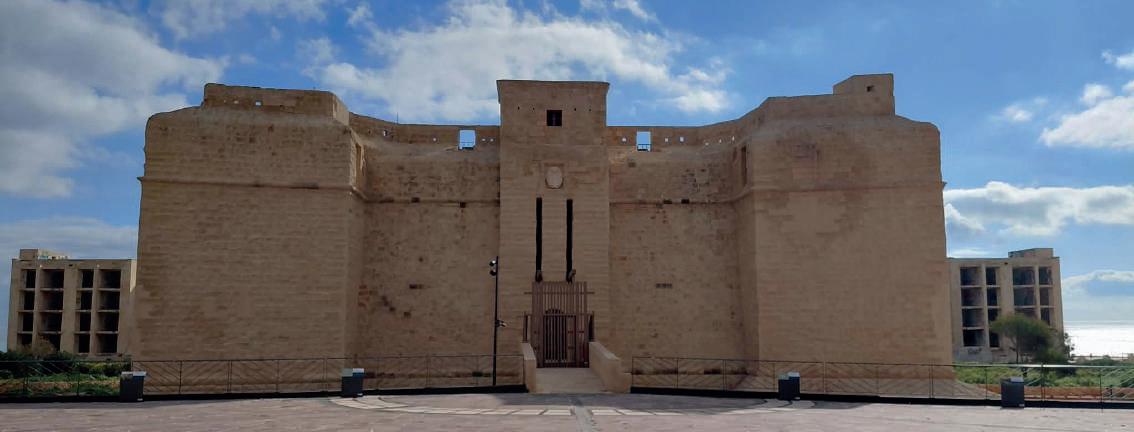
Continuing towards the main coast of Marsaskala, you will come across Torri San Tumas, a large tower that once stood in isolation. Built in 1617 following the 1614 Ottoman landing, it formed part of Malta’s coastal defence system after fierce resistance from southern villages, especially Żejtun.
New breeding activity
Exiting St Thomas Bay and heading towards Marsaskala, recent breeding bird activity can be observed. In recent years, the village of Wied il-Għajn has witnessed its first breeding Barn Swallows in summer. Two pairs have built their nest at the emergency exit of a main apartment block. While it is advisable to remain distant from the nest, the swallows can easily be observed perching on electricity wires nearby.
The reef of Żaqq it-Tajr
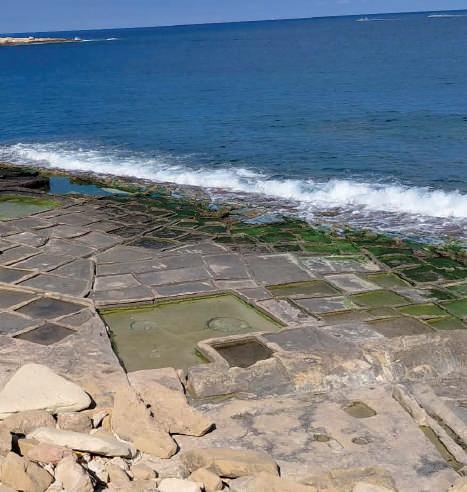
Walking towards the shoreline near the former Jerma Palace Hotel, a path leads directly to the reef. The low-lying rocks attract swimmers between mid-July and September, and traces of historic salt production remain visible.
Żaqq it-Tajr is characterised by shallow limestone rock extending seawards. At the far end of the reef, two large pools form natural feeding grounds for waders in summer. These birds are attracted by the abundance of marine life along the reef edge, including crustaceans, molluscs and aquatic worms. Normally, the first summer migrants arrive by mid-July.
“Urban areas can provide unexpected nesting opportunities when suitable structures and food sources are available.”
Photos and text by James Aquilina BirdLife Malta council member
Torri San Tumas
Il-Magħluq ta' Marsaskala
The salt pans at Żaqq it-Tajr
What to see along the reef
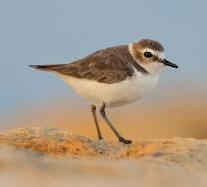
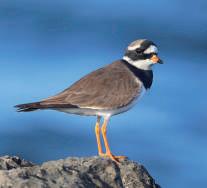
In the last decade, records have shown that the reef is a prime site locally for Kentish Plovers. Each year they make short stopovers before continuing towards Africa, with records extending into mid-December. In summer they usually appear singly or in small groups.
In August 2018, a colour-ringed Kentish Plover observed here had originally been ringed in Ukraine three years earlier.
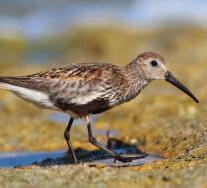
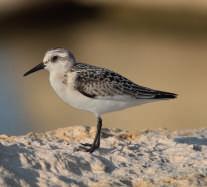
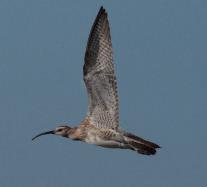
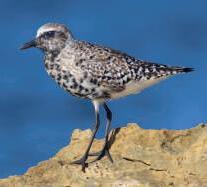
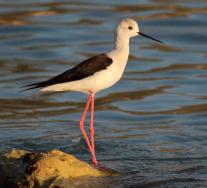
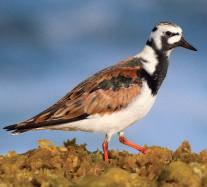
Other regularly recorded species include Common Ringed Plover, Dunlin, Common Sandpiper, Little Stint, Wood Sandpiper (occasional), Green Sandpiper (occassional to the reef and shy), and Ruddy Turnstone (mainly during autumn and spring migration). Birdwatchers may also encounter Sanderling in mid-summer. These long-distance migrants breed in Arctic tundra regions. During spring migration, Grey Plover may occasionally be recorded, while the Whimbrel is occasionally sighted on the reef, mainly distinguished by its long, curved bill in July or August.
Offshore activity and seabirds
Fish farms operating offshore attract seabirds, some of which are considered scarce locally. In summer, observers may record Caspian Tern with its prominent red-orange bill. Late August can bring large feeding flocks of Black Terns to fish farms. In winter, migrating ducks may be seen flying south offshore, although usually at a considerable distance. The use of binoculars is advisable.
Saltpans of Marsaskala port
To the left of the reef lies a network of saltpans along Marsaskala port. Historically important for food preservation, these pans are flooded in winter but between May and August, the water inside them evaporates leaving salt for harvesting.
While scanning the pans, you may observe Common Sandpiper or White Wagtail feeding on marine worms.
Il-Magħluq ta’ Marsaskala
Continuing towards the centre of Marsaskala, you will reach IlMagħluq ta’ Marsaskala, a coastal wetland situated between rural and urban areas. Despite its constrained setting, it remains important for wintering and migratory birds.
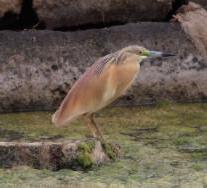
Black-necked Grebes typically appear from early September. During spring migration, Squacco Herons, Common Snipes and Black-winged Stilts have been recorded, particularly during adverse weather.
The marshland also supports one of the largest populations of Mediterranean Killifish, Bużaqq in Maltese.
Żonqor Point
“Shallow coastal reefs function as essential refuelling stations for migratory waders crossing the Mediterranean.”
Leaving the main square and heading towards Żonqor Point, you will encounter another important wader site characterised by small coastal saltpans. Salt continues to be harvested here during summer.
Commonly observed species include Dunlin, Common Ringed Plover, Yellow-legged Gull and, particularly juveniles, Audouin’s Gull. Grey Plover and Sanderling are recorded occasionally.
In autumn, mixed flocks of Grey Herons and Purple Herons may be seen flying inland in V-formation.
In windy conditions, especially when winds blow from the south-east, extra caution is advised near the shoreline.
Torri ta’ Triq il-Wiesgħa and Inwadar
Continuing eastwards, you will enter the Park tal-Inwadar. Garrigue vegetation dominates parts of the landscape, and in spring the Zitting Cisticola is often heard defending its territory with its characteristic call.
The imposing Torri ta' Triq il-Wiesgħa overlooks the area. Built in 1659, it was the ninth of thirteen coastal towers built by Grandmaster De Redin – a reminder that this coastline is shaped by both natural processes and centuries of human history.
Marsaskala’s walkable coastline demonstrates how reefs, saltpans and wetlands can sustain migratory birds. These habitats function as stepping stones within a wider ecological network linking Europe and Africa, and show the conservation value of Malta’s coastal landscapes.
Map by Victor Falzon
Black-winged Stilt
Sanderling
Kentish Plover
Common Ringed Plover
Whimbrel
Dunlin
Ruddy Turnstone
Grey Plover
Squacco Heron








Micallef
Mark Gauci
Marcel Tellus
Silvia Viviani
Nature's Allies
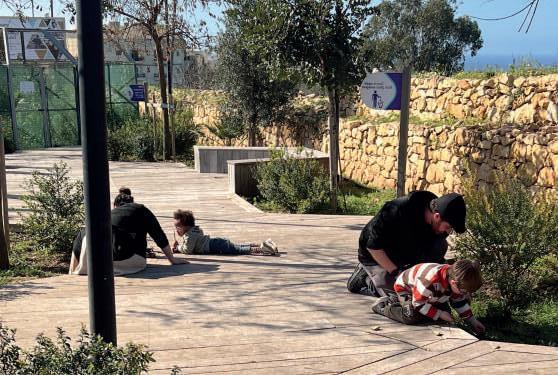
A Second Chance to Fly

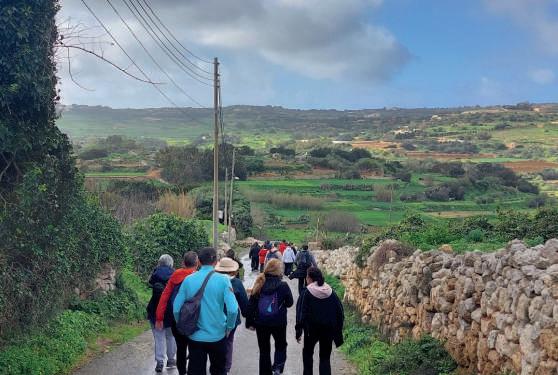

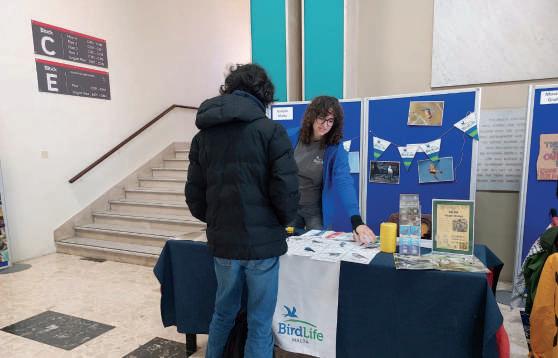

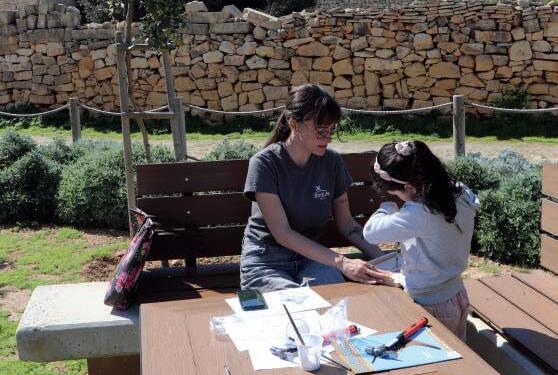


UPCOMING EVENTS
Wings & Rings
Date: 12 April 2026
Location: Għadira Nature Reserve
Join us for a public bird ringing session at Għadira Nature Reserve! You will have the chance to observe licenced professionals do their work and see the beautiful migratory birds up close.
Dark Sky Week
Date: 13 – 20 April 2026
Location: Miġral-Ferħa
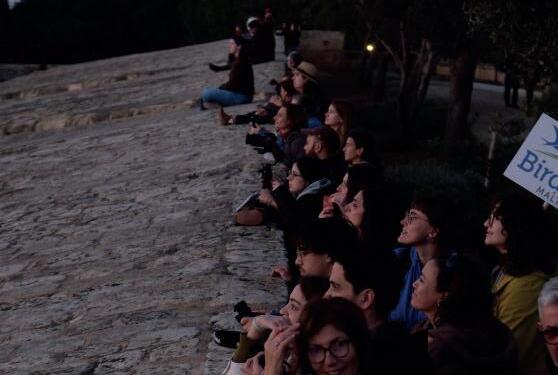
Join us for a special event with the Astronomical Society of Malta, celebrating dark skies and seabirds during International Dark Sky Week 2026. We will listen to shearwaters calling from the cliffs whileobservingstars and distant galaxies above the Mediterranean.
Songs of Spring
Date: 18 – 19 April
Location: Għadira and Simar Nature Reserves
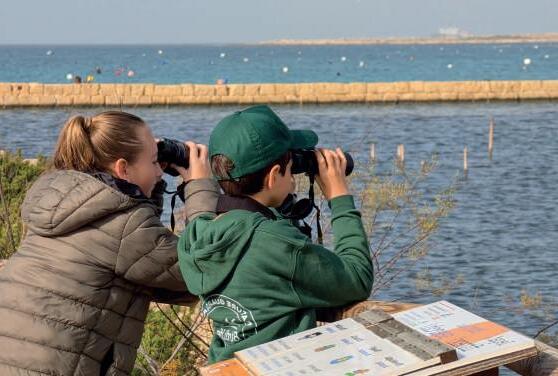
A calm, fun, and educational experience suitable for all ages, dedicated entirely to bird songs. Choose the reserve closest to you or visit both - take your time and explore at your own pace.
Science in the Citadel
Date: 26 April 2026
Location: Citadel, Victoria, Gozo
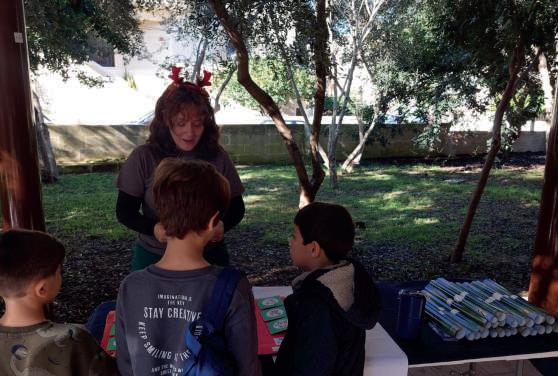
Save the date for annual Science in the Citadel science festival! We’ll set up a stand where you can engage in exciting activities, try some crafts, learn about wildlife conservation or simply have a chat with us.
Comino Walk with EAC
Date: 26 April 2026
Location: Comino
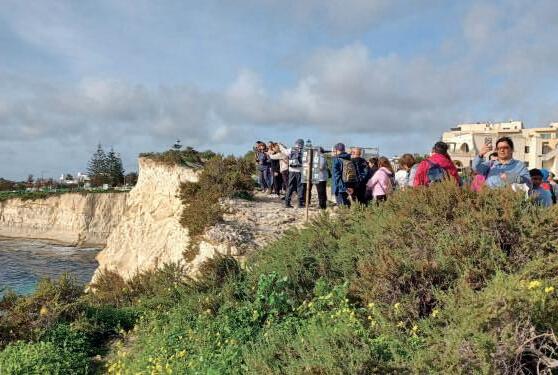
Don’t miss this chance to come with us on a guided walk around the beautiful island of Comino, which is especially beautiful and green in spring!
Nadia Sodano
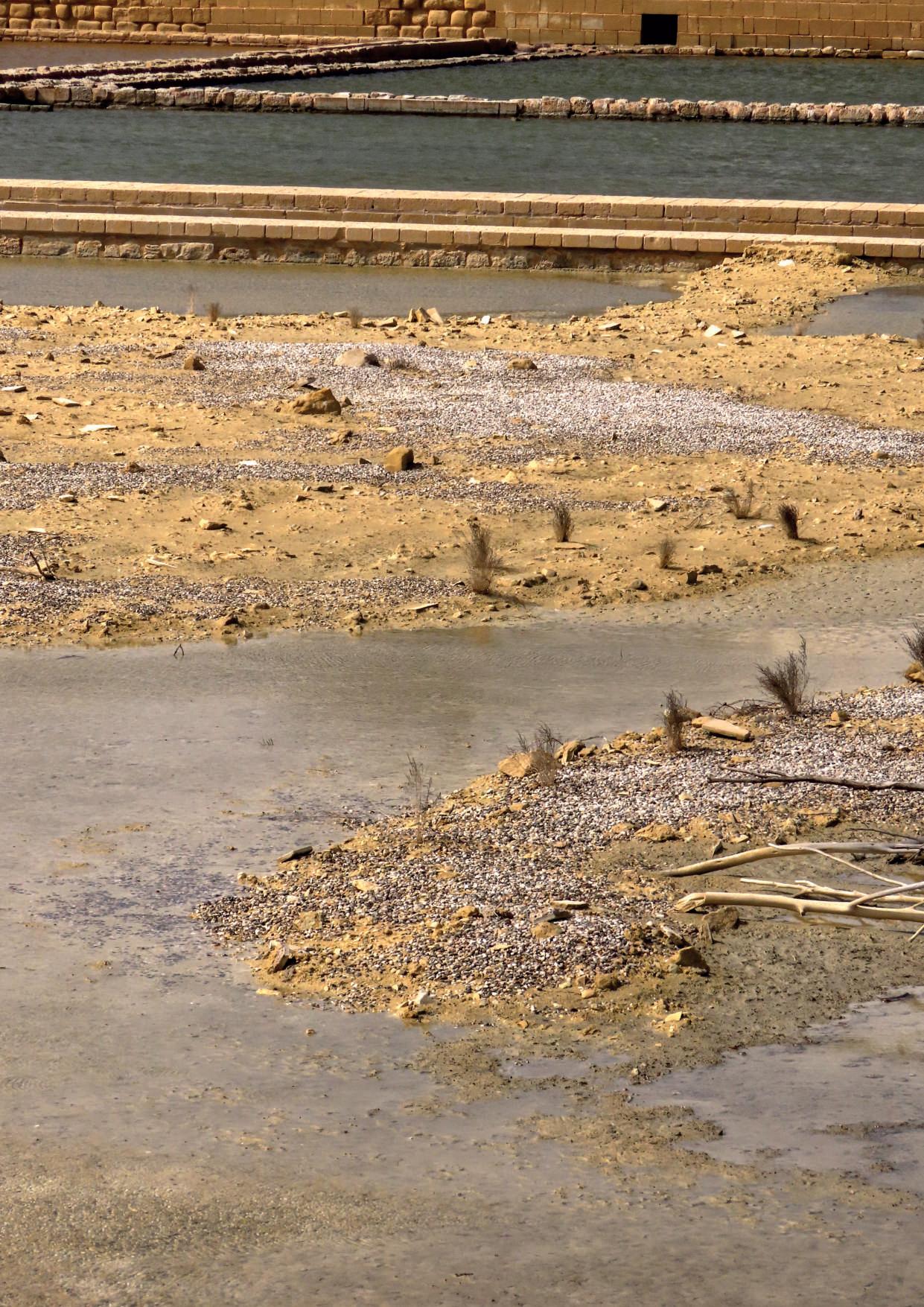
Pebble beach for the plovers
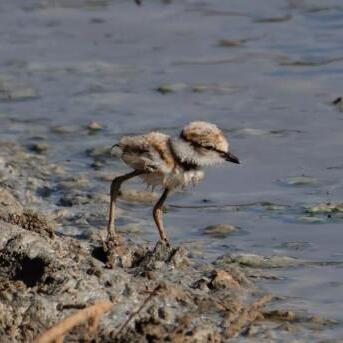
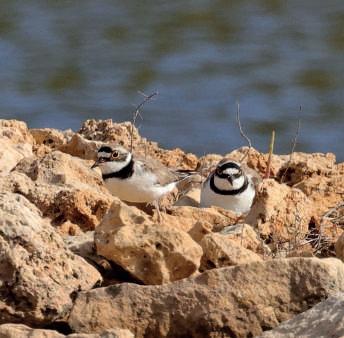
BirdLife Malta’s habitat restoration work across its nature reserves continues to expand. Recent habitat creation at Salina Nature Reserve is establishing a second breeding site for the Little Ringed Plover. Building on the success at Għadira Nature Reserve, where these waders have nested annually since 1995, our land management team is developing vital shingle and pebble habitats in parts of the old saltpans. By replicating Għadira’s successful shingle island model, we aim to provide the undisturbed nesting grounds the Monakella requires – last year, one pair nested successfully at Salina, fledging three chicks. This project strengthens our mission to secure a future for biodiversity at our wetlands.