
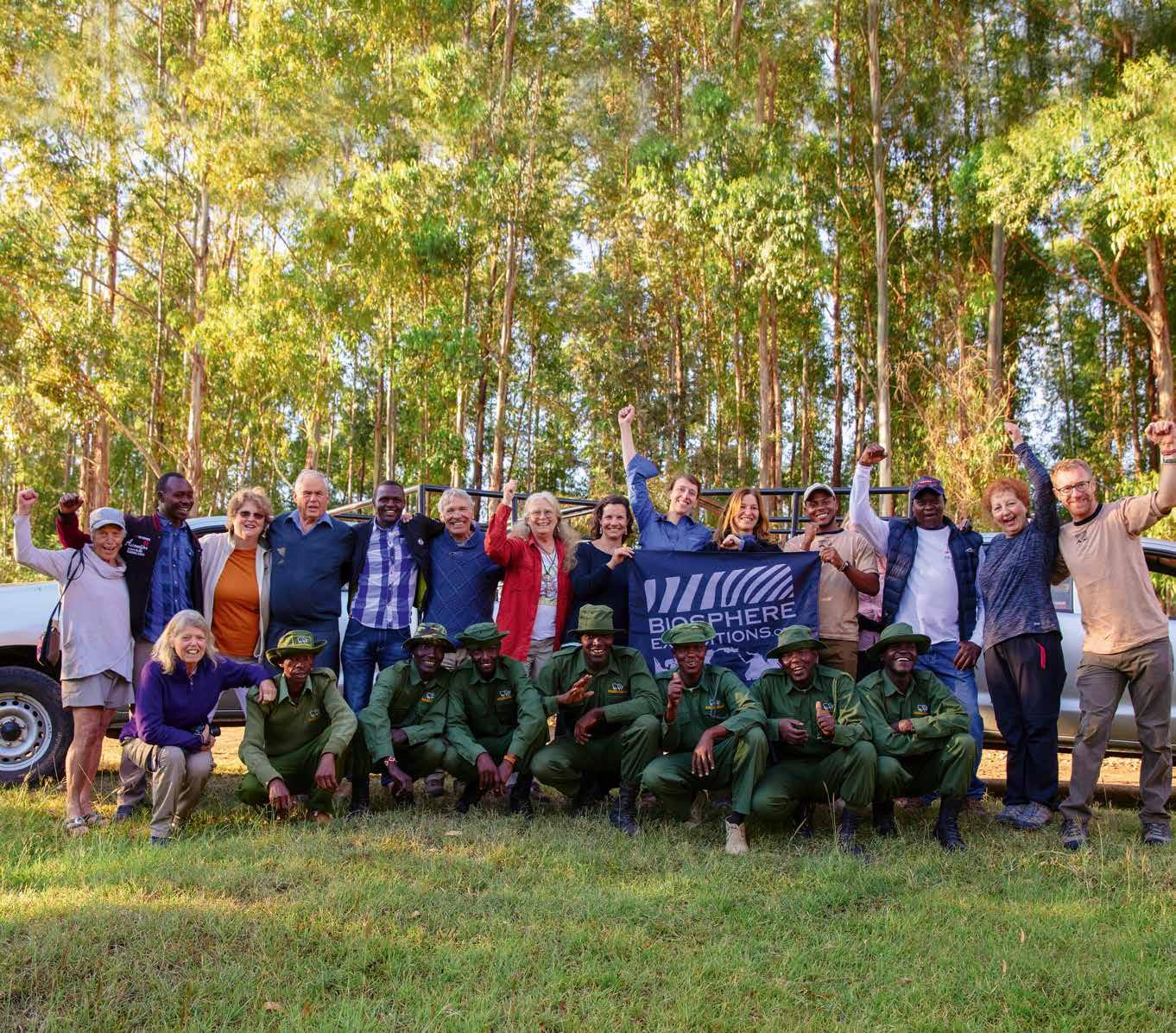
THE HUMAN FACTOR
■ SCIENTISTS ■ LOCAL PEOPLE ■ BACKOFFICE VOLUNTEERS
■ LONG STORIES ■ SHORT STORIES & MORE
ABOUT US
ŰBER UNS A PROPOS
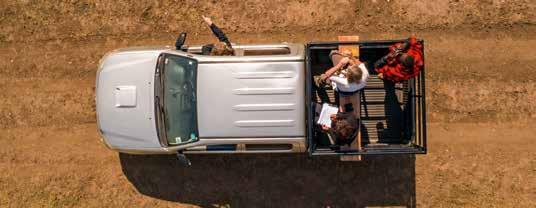
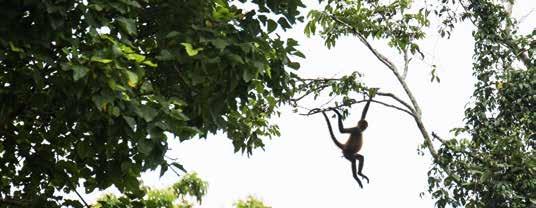
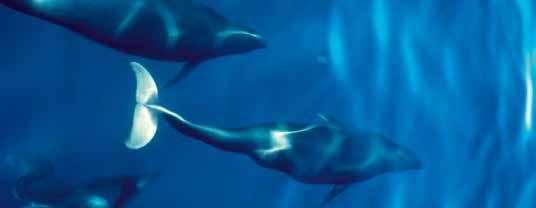
Citizen science | ethical adventures | wildlife conservation
Our planet is in crisis, with nature under attack like never before. We believe everyone has the power to change this. We are mindful of nature and empower people through citizen science and hands-on wildlife conservation. We are a non-profit, visionary, award-winning and ethical conservation organisation. We are a member of the IUCN and the UN's Environment Programme. Working hand-in-hand with local biologists and communities, we champion change and protect nature. And we succeed - the creation of protected areas on four continents is just one example.
Come and join us! Make your holiday time count as a wildlife volunteer and share in our vision of a healthier planet. Whatever your age or background, make your voice heard and spend a week or more on a wildlife conservation expedition with us. Travel with us to remote and beautiful places, learn new skills, meet like-minded people from around the world and experience conservation in action. Together - for nature, not profit - let's act like our world depends on it. Because it does.
Bürgerwissenschaft | nachhaltiges Reisen | ethische Abenteuer | Artenschutz
Unser Planet steckt in der Krise - noch nie stand die Natur so unter Druck. Wir glauben daran, dass es in der Macht jedes einzelnen liegt, das zu ändern. Wir achten auf die Natur und befähigen Menschen sie zu schützen - durch Bürgerwissenchaft und angewandten Naturschutz. Wir sind eine gemeinnützige, visionäre und nach ethischen Standards handelnde Naturschutzorganisation. Wir sind Mitglied der IUCN und des UN-Umweltprogramms. Wir arbeiten Hand in Hand mit Menschen und Biologen vor Ort in unseren Projektgebieten, setzen uns für einen Wandel ein und schützen unser aller Natur. Und unser Konzept ist erfolgreich – die Einrichtung von Schutzgebieten auf vier Kontinenten ist nur ein Beispiel.
Helfen Sie mit und gestalten Sie Ihre Urlaubszeit besonders wertvoll. Teilen Sie unsere Vision eines intakteren Planeten und verschaffen Sie Ihrer Stimme Gehör als Teilnehmer an unseren Natur- und Artenschutzexpeditionen. Erfahren Sie - für eine Woche oder auch länger - Neues an wunderschönen, entlegenen Orten, erwerben Sie neue Fähigkeiten, treffen Sie Gleichgesinnte aus der ganzen Welt und erleben Sie Natuschutz hautnah. Lassen Sie uns gemeinsam so handeln, als hinge das Wohl des Planeten von uns ab - denn genau das tut es.
Actions participatives | voyage durable | aventure éthique | protection des espèces
Notre planète est en crise – jamais encore la nature n’a autant été en danger. Chacun a le pouvoir de changer les choses. Nous en avons conscience, et c’est pour cela que nous donnons les moyens nécessaires aux hommes de la préserver, au travers d’actions participatives et scientifiques, sur le terrain. Nous sommes une organisation à but non lucratif, visionnaire, plusieurs fois récompensée, éthique et durable, qui vise à promouvoir la protection de la nature. Nous sommes également membres de l’IUCN (Union internationale pour la conservation de la nature) et du programme des Nations Unies pour l'environnement. Nous travaillons main dans la main avec les communautés et les biologistes locaux. Nous incitons au changement et protégeons la nature. Nos efforts sont couronnés de succès : la création d’espaces protégés sur l’ensemble des quatre continents est juste un exemple de tout ce que nous avons réussi à accomplir.
Rejoignez-nous et donnez de votre temps. Partagez notre vision d’une planète préservée. Quel que soit votre âge ou vos compétences, faites compter votre voix et participez à une mission pour la préservation de la nature pendant une semaine ou plus. Partez avec nous vers des endroits magnifiques et reculés. Développez vos connaissances et rencontrez des personnes du monde entier, qui ont la même volonté que vous. Participez concrètement à la préservation de la nature. Ensemble, agissons pour le bien de notre planète car notre futur en dépend.
Where Conservation Becomes Personal
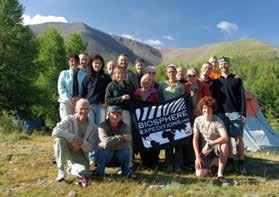
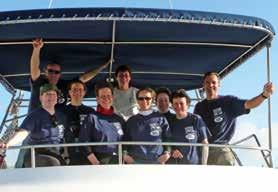
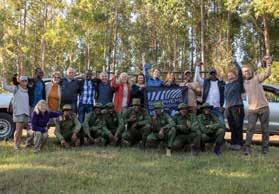
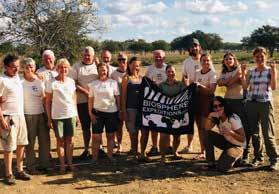
There is often a moment on a Biosphere Expeditions project when wildlife conservation stops being an idea and becomes something personal. It might happen while finding a track of a snow leopard or a wolf, or while sharing stories around a field campfire, or realising that the data you are collecting will genuinely help protect a species or habitat. For many participants, that moment stays with them long after they return home.
Our citizen scientists come from all walks of life. Some arrive with scientific experience, many do not. Our professional scientists, expedition leaders, interns or placements often have some expedition and science experience already. What unites them all is curiosity and a desire to contribute to something meaningful. On expedition, days are shaped by nature rather than routine — by tides, weather, animal movements and teamwork. The work can be demanding, but it is purposeful, and that shared purpose quickly turns strangers into a close-knit community.
People often speak of how transformative the experience feels. Confidence grows as new skills are learned. Perspectives shift as conservation challenges become tangible and human. Friendships form easily in remote places, strengthened by shared effort and unforgettable moments.
WELCOME
These are not stories of saving the planet single-handedly. They are stories of participation, of people stepping into conservation and discovering how deeply it can shape their lives. Biosphere Expeditions is about science and data, but it is also about people. Their experiences remind us that meaningful conservation is built not only on research, but on connection, collaboration and the willingness to get involved.
What better thing to do then, than to dedicate an annual magazine to the human beings, and their stories, that make Biosphere Expeditions what it is today. This is for you – all of you out there who have contributed since 1999.
Thank you – you deserve this.
Dr. Matthias Hammer Founder & Executive Director
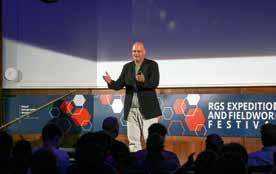
Matthias Hammer RGS Explore 2024 © Spike Reid
SCIENTISTS
Our scientists are one of the pillars of Biosphere Expeditions. Without them and their research and conservation work, there would be no expeditions. Here is a comprehensive overview of those we have worked with in the past or continue to run expeditions with. Thank you all for what you do for the planet and our citizen scientists.
“In the expedition area there is a lack of data on biodiversity. No work has been done since Soviet times, so biodiversity surveys are urgently needed in order to help the Zangazur Biosphere complex administration with their conservation work. So I hope many people will join us and help us as citizen scientists with doing the surveys."
Lusine Aghajanyan, NABU Armenia
“Every year we need people who are interested in volunteering with animals to help us with our field work such as mapping bear dens, finding bear day beds and scats. The more citizen scientists we have to do this, the better we can protect the brown bears in Sweden, so we would be very happy if you could come and support us with our research and conservation work here in Sweden."
Andrea Friebe, Scandinavian Brown Bear Project and local scientist Sweden
"One of the things we are trying to do at Enonkishu Conservancy in the Maasai Mara is to get to a point where livestock and wildlife can coexist through using planned grazing. We want to prove that this model can work. For this we need the Biosphere Expeditions citizen scientists to collect data to show how wildlife can thrive next to sustainable livestock grazing. Please come and join us.
We look forward to having you!"
Rebekah Karimi, local scientist, Kenya
"Our exciting collaboration with Biosphere Expeditions will expand our primary goal of desert conservation, through active research and conservation volunteer work by expedition participants. Observations and data collected by the participants will enhance our understanding of the desert environment and help us achieve our ultimate goal of ensuring rare desert species survival in the wild."
Stephen Bell, Conservation Officer, Dubai Desert Conservation Reserve, UAE
“Poaching is a very serious problem for sea turtles around the world and Costa Rica is no exception. Through direct conservation actions such as relocating nests into a safe hatchery and assisting turtles to nest and hatchlings to make it to the sea, we have been able to reduce losses from almost 100% a few years ago to around 60% today. This is a great success, which would not have been possible without conservation volunteer help. Their assistance is essential for highly labour-intensive tasks such as patrolling the beach every night, collecting eggs and taking them to the hatchery, where nests have to be dug and guarded around the clock. Once the hatchlings emerge, they need to be weighed and measured and guided back into the ocean. Since we are only two permanent staff at the research station, there is no way we could manage all this by ourselves, so I am very grateful for having committed volunteers helping me with direct conservation actions as well as research as citizen scientists. I invite everyone to join me at Pacuare to experience turtle conservation in action on this beautiful stretch of the Caribbean coastline of Costa Rica.” Magali Marion, local scientist, Costa Rica.
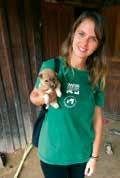
“Asian elephants are endangered and in a steep population decline due to poaching and habitat degradation, as well as fragmentation leading to human-elephant conflict. Captive elephants are often kept in inadequate conditions and little research has been done on wild animals living in dense forests. Support from Biosphere Expeditions with volunteering with animals to carry out research on natural elephant behaviour is therefore crucial and will benefit both captive and wild elephant populations.”
Kerri McCrea, local scientist, Thailand
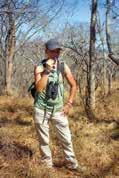
“Very little research work has been done at Vwaza Marsh Reserve and it's great to have citizen scientists helping us to collect baseline data to improve conservation and management to this hidden gem in Africa.”
Amanda Harwood, Lilongwe Weildlife Trust, Malawi
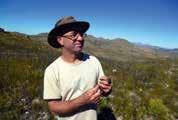
“Here in South Africa, the Cape leopard, caracal and wildcat survive in the mountains of the Western Cape despite centuries of hunting and persecution. Due to the inaccessibility of its preferred habitat, the Cape leopard is little studied, as are caracal and wildcat. There are also few studies quantifying mammal abundance in this region, and none that explore the competition for prey resources amongst this set of carnivores. As part of our biodiversity monitoring in this relatively uninhabited part of the world we make extensive use of citizen scientists, who live with us, check our camera traps, assist in various research activities, such as trapping and tracking and reporting interesting wildlife encounters. I would like to invite you to join me at my home of Blue Hills Nature Reserve to help me in my quest to understand the prey dynamics of our most beautiful and elusive wildlife – the carnivores of the Cape Floral Kingdom.”
Dr. Alan Lee, Blue Hills Nature Reserve, South Africa
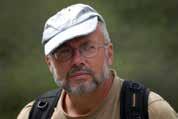
“It has always been our dream to conduct this kind of large-scale study. But so far we have had neither the money, nor the people to do it. Biosphere Expeditions has changed all that and enabled us to realise many of our ambitions. The data gathered, combined with the weight of Biosphere Expeditions' international reputation, will be vital in our efforts of protecting the area and its wildlife such as the elusive snow leopard.”
Volodymyr Tytar, Schmalhausen Institute of Zoology, Ukraine and local scientist, Tien Shan & Altai
“Research teams from Biosphere Expeditions will enable cetacean research in the Azores to increase in scope and quality, thus increasing our knowledge of the whales and dolphins that are resident or passing through. This information will enable us to get a clearer picture of the migration patterns and behaviour of the animals and thus assess the threats they face from the modern world. We can confidently say that without Biosphere Expeditions, this research could not take place.”
Lisa Steiner, Whale Watch Azores
"The collaboration between Biosphere Expeditions and the work of Reef Check in the Maldives is invaluable. In the past the Marine Conservation Society has taken part in ad hoc surveys with liveaboards, but this collaboration with Biosphere Expeditions has very significantly widened our understanding about the health of Maldivian reefs. We look forward to further successful surveys next year with our Maldives partners."
Dr. Jean-Luc Solandt, Marine Conservation Society & Reef Check co-ordinator Maldives
SCIENTISTS
"The work of Biosphere Expeditions on the Musandam coral reefs has had a great impact in the region regarding the collection of scientific data and the creation of a marine protected area in a remote and little touched area of the sea. In addition there has also been a great increase in environmental awareness about this important underwater habitat - both locally through the creation of scholarships and educational programmes and influencing decision-makers, as well as internationally through the involvement of conservation volunteers from all over the world. Biosphere Expeditions unite in an exemplary way in all their projects two important subjects - science and awareness."
Rita Bento, marine biologist, Emirates Diving Association, UAE
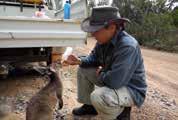
“Biosphere’s involvement in the Western Australian marsupial project will expand very important work that the Department of Environment and Conservation are undertaking to conserve threatened species in the south west of Western Australia. The involvement of citizen scientist volunteering with animals will allow us to survey marsupials on a much larger scale than would normally be possible and will significantly contribute to our understanding of the distribution and conservation status of these animals in the Walpole Wilderness.”
Karlene Bain, Department of Environment & Conservation, Western Australia
"Reef Check Malaysia has been conducting coral reef surveys around the country since 2007. However, we have always found it difficult to survey islands that are not inhabited and distant. We lack manpower and funding to survey such areas and hence there were gaps in our data. Working with Biosphere Expeditions helps fill in these gaps. The research vessel will allow us to survey the smaller islands off Tioman and the volunteers will provide the added manpower we require. This is vital for scientists and managers that are working hard to protect coral reefs in our country."
Alvin Chelliah, Reef Check Malaysia
"For me as a lone scientist, it is not possible to check and cover the whole territory of the Vel'ká Fatra and Mala Fatra National Parks during the wolf and lynx mating season. But
with the people from Biosphere Expeditions, who always enjoy the wilderness of these parks and are keen to help, it will be much easier to cover the area and collect important research and conservation information about lynxes, wolves and wildcats. Thank you very much!”
Tomas Hulik, Protection of Carpathian Wilderness, Slovakia
"We are always looking for help to do as much research as we can in order to increase our knowledge of our natural resources and how to manage them sustainably. Working with Biosphere Expeditions gives us a great opportunity to do this on our coral reefs. On top of that there is intense cultural exchange leading to greater cross-cultural understanding, so there are multiple benefits for the archipelago of Cayos Cochinos."
Adonis Cubas & Italo Bonilla, Cayos Cochinos Marine Natural Monument, Honduras
"The Sumatran tiger is listed as Critically Endangered in the IUCN's Red list. This means it is one step from extinction in the wild. Since 2005, WWF Indonesia has worked to monitor and protect them. We face many challenges in their conservation, most of all habitat fragmentation and destruction through human activities. Biosphere Expeditions' support in Rimbang Baling Wildlife Sanctuary, a globally important Tiger Conservation Landscape (TCL), is much needed and appreciated. As tigers are so secretive, we need help to monitor them in the wild through transect and camera trapping surveys. Such surveys need a lot of resources in terms of manpower and equipment. By having WWF Indonesia, Biosphere Expeditions and the local community work together, those resources become available and local people benefit from living alongside tigers. This is the key to successful tiger conservation against all the odds."
Febri Anggriawan Widodo, Tiger and elephant research and monitoring coordinator, WWF Indonesia
"Almost every sea turtle monitoring programme around the world relies on volunteers to walk the many miles on nesting beaches at night with researchers gathering valuable scientific data. We welcome Biosphere Expeditions and the support they can bring to our flatback sea turtle monitoring program here in Western Australia. This type of research is all about education, active involvement and understanding that sea turtle species can move through the waters of many countries from feeding to mating to nesting areas such as this one."
Glenn McFarlane, Marine Species Manager, Eco Beach programme, Australia
"As the only long standing research organisation collecting data on both cetaceans and basking sharks in west Scottish waters, this project is vital to the effective management of these populations. Support from Biosphere Expeditions is fundamental to the delivery of the project; we rely on conservation volunteers to help us with our data collection. Only long-term studies can provide the information necessary for effective management and conservation of the marine environment. Without the help and assistance of volunteers the long-term monitoring of marine mammals in these waters would simply not be possible."
Olivia Harries, Hebridean Whale and Dolphin Trust, Scotland
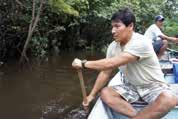
"Biosphere Expeditions provides a unique and valuable opportunity to monitor different taxa of wildlife including primates, birds and our endangered species of felines such as jaguar, puma, ocelot and margay through transect census, camera traps deployment and more, all of this at the Tahuayo River basin, one of the richest areas in the Amazon in terms of diversity of species. I'm very excited about this collaboration as it will enable me to perform many research and conservation activities, which would be impossible without the help from Biosphere Expeditions and its teams of volunteers."
Alfredo Dosantos Santillán, Tahuayo River Amazon Research Center, Peru
“For elusive animal species such as the wolf, we as scientists often have to rely on indirect signs of presence. Collecting these is time- and labour-intensive. Working with Biosphere Expeditions on wolves empowers me to collect lots of data across a wide spatial range. From this, we can glean a clearer picture of the wolf's situation in the state, which is the basis for good, fact-based management.”
Charlotte Steinberg, local scientist, Germany
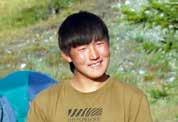
“With citizen science we can achieve what would otherwise be impossible: Annual expeditions over decades to the remote places where the snow leopard lives, in my country and elsewhere. The research and conservation output made possible through the work and funding that these dedicated volunteers provide is significant and thank everyone who helps on so many levels to bring this about.”
Emil Dzoldoshbekov, Kyrgyz Ala-Too University, Tien Shan (Kyrgyzstan)

"Our annual expeditions have given us an invaluable long-term dataset for monitoring the biodiversity of Vwaza Marsh Wildlife Reserve. Without these citizen science expeditions, we wouldn't have insights into how elephant and hippo populations are changing, as well as the overall species presence in the reserve. We have recorded several rare mammals over the years that had very few records in this protected area, which is very exciting."
Dr. Leandra Stracquadanio
Lilongwe Wildlife Trust and local scientist Malawi
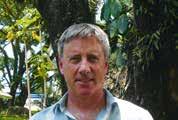
“Long-term datasets are extremely important to monitor the status and change in ecosystems such as coral reefs. This is why the Reef Check data collected by citizen scientists during Biosphere Expeditions in the Maldives over the last fifteen years are so important. They are used to track the status of individual coral reefs in a number of atolls to show both degradation and recovery in the face of the multiple stressors affecting the ecosystem.”
Dr. Simon Harding, marine conservation biologist and scientist for the Maldives
LOCAL PEOPLE
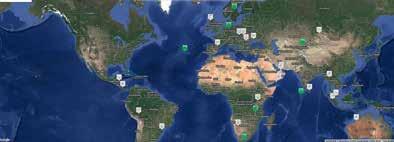
We involve local people at all levels: As our scientists (see previous pages), as part of our placement programme for early career local conservationists or simply people passionate about wildlife and conservation, as base camp coordinators, rangers, cooks, helpers, or simply as people. Here are some of their stories.
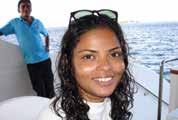
"In 2014, when I was working in Male’, was the recipient of a local placement to join the Biosphere Expeditions coral reef research project in the Maldives. It was the first time was introduced to coral reef monitoring. The Reef Check methodology, which the expedition uses, is a great way to understand some of the indicators of reef health in a fun and simple way. I began to see the reef in a completely new way and the following year, was invited to join the expedition again to achieve Reef Check trainer level, which enabled me to train other people in the survey methodology. The knowledge and experience I gained through these placements was a great foundation for my career in marine conservation. Today, as the chairperson of the local NGO Maldives Resilient Reefs, as well as the Maldives Programme Manager for the Blue Marine Foundation and the recipient of the prestigious Rehendi Award, I lead surveys and expeditions to monitor our changing reefs together with my team, international researchers and local citizen scientists. Thank you Biosphere Expeditions for getting me started on this path."
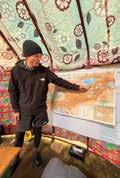
"My name is Emil Respaevich Sanzarakov and I live in the village of Kurai in the Republic of Altai. I am a student at school and help my father look after sheep, goats and cows. Instead of hanging around in the village with my friends during the summer holidays, I now work for Biosphere Expeditions, helping with the running of base camp and guiding in the mountains. The work helps me to see and learn about my country as I do not normally have the opportunity to travel and see places. I enjoy meeting people from other countries and improving my English. The money I earn is important for me to help support my family and also to feel independent. When I leave school, hope to go to university; also hope to continue working with Biosphere during the holidays."
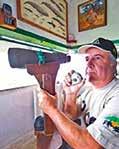
"My uncle used to work as a look-out for the whaling industry, spotting whales for the whalers and he taught me how to spot them. With whaling now banned around the Azores, I can do this job of spotting whales for Biosphere Expeditions and its research teams. It's a great way to use my skills, keeping them alive for future generations and helping the whales."
Cedros, Faial Island, Azores
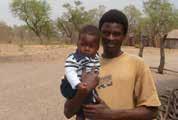
“I work at the Hanyini Research Station in the East Caprivi. My job is to run the station so that research assistants from Biosphere Expeditions can concentrate on research work that helps to protect the livestock in our communities and to manage predators. This is my first job and I am very grateful as there is little work in our area. I am also very grateful for the work that the research assistants are doing. Since their arrival I haven’t lost any cattle to lions and hyaenas. My cattle are very important to me and for my family. Thank you for your support.”
Simon Naha, Caprivi delta, Namibia.
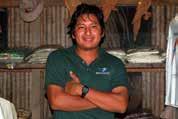
"My name is Aldo Ramirez Mejia. I am 21 years old and from the local community at Lake Sandoval. While I finish my studies in Puerto Maldonado, I work with the Tambopata Macaw Project studying macaws and claylicks, which is supported by Biosphere Expeditions. Traditionally, my family has fished, farmed and hunted, but thanks to Biosphere Expeditions and its ecotourism and conservation opportunities, have been able to dedicate my time to my interest with the local wildlife with which grew up, rather than hunting it. Thank you very much."
Aldo Ramirez Mejia, Lake Sandoval community, Peru.
Shaha Hashim, Maldives
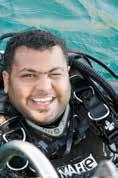
"I really learnt a lot from taking part in the Musandam coral reef expedition as part of a the Biosphere Expeditions placement. Even though am a Divemaster, discovered a lot of new things about Musandam and its marine life. This has helped me a lot in my professional development and I would love to be part of a nature volunteering expedition again."
Badher Al Shehi, Musandam, Oman
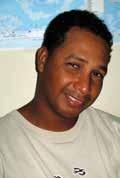
"I was born and raised in Cayo Cochino Menor. The island I once played on as a boy, I now work to protect as a boat captain for the Honduran Coral Reef Foundation. know these waters like the back of my hand and enjoy sharing our marine treasures with the team members from Biosphere Expeditions. I am a certified rescue diver, in large part inspired by watching the teams work here. I am proud of my country and these islands and feel very lucky that researchers from Biosphere Expeditions are helping to conduct research that helps in the conservation of the area. Thank you!"
Alex Solis, Cayos Cochinos Islands, Honduras.
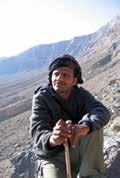
"My work on Arabian leopard conservation began with the Oman Office for Conservation of the Environment in 2002 and since 2006 I have been assisting Biosphere Expeditions in survey work on the Arabian leopard and prey species in Oman. Through my work with Biosphere Expeditions, I have had the chance to meet people from different cultures from all over the world and I also gained invaluable information & experience on how to conduct conservation research by working with experienced scientists from Biosphere Expeditions. Through the Office for Conservation I am now studying for a conservation degree in the UK, something always dreamed of. When I finish my studies I look forward to continuing my work with the conservation of the Arabian leopard.”
Hadi al Hikmani, Dhofar, Oman.
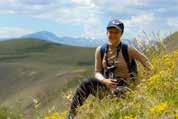
"My name is Alexandra Grigorieva; I'm 19 years old and I study biology in Novosibirsk State University. I was lucky to participate in a research expedition to the Altai mountains, organized by Biosphere Expeditions. Their conservation volunteer expedition was a great experience for me and gave me many impressions. For example, it was great to meet new people, especially from different countries. Getting the scholarship also gave me confidence in myself - that was really important for me, I now feel like can achieve a lot. I also had a great experience communicating in English and after the expedition I also started to learn German as there were quite a lot of German-speakers on the expedition too. also liked the way the research was conducted a lot - hiking all day, recording animals and their signs - it's so different from living in a city. I am very thankful to Biosphere Expeditions for providing me with such an opportunity."
Alexandra Grigorieva, Novosibirsk, Russia.
Emil Respaevich Sanzarakov, Kurai village, Republic of Altai.
Miguel Vargas,
BACKOFFICE VOLUNTEERS
Backoffice volunteers share one thing: They all believe in what Biosphere Expeditions does to such an extent that they volunteer their spare time to help out in various ways based on their skills and what we advertise is needed. Thank you so much for your support.
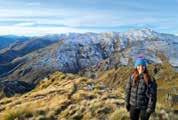
I am Sophie Carty from Aotearoa, New Zealand.
I work in conservation communications and engagement, and volunteer with Biosphere Expeditions by helping write and shape articles, blogs, ads and content that share both the science and the human stories alongside it. I enjoy helping make conservation work clear, relatable and engaging, and supporting projects that connect people with meaningful, hands-on conservation in the field.
I am Gemma Hunneyball, biologist and full-time mother, helping out from home in Australia with reviewing expedition reports in my spare time.
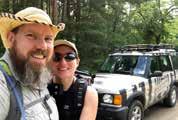
We’re Graham Makepeace-Warne and Dr Kate Silverthorne, a couple living in the Isle of Man.
We first joined Biosphere Expeditions on the inaugural Germany Wolf expedition in 2017 and were so impressed with the Biosphere Expeditions ethos that we wanted to give something back. Graham is CEO of Manx Wildlife Trust and a board member for both UNESCO Biosphere Isle of Man (the world’s first whole-nation Biosphere Reserve) and Visit Isle of Man where I promote the benefits of eco-tourism to the local economy. With a background in marketing, I have been supporting Biosphere Expeditions with video editing and book design/layout. Kate is a freelance medical writer and ex-research scientist; I use my professional background to review the scientific reports from each expedition, to give them that extra polish. We love keeping up to date with the great work the teams are doing, as well as being able to contribute our skills to something we are passionate about.
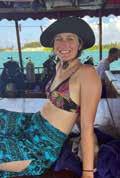
My name is Savannah Schilling, and I joined the Maldives Expedition after learning about Biosphere Expeditions through Reef Check.
I have a professional background in software engineering and scientific research, and I was drawn to the philosophy and strong sense of community behind Biosphere Expeditions. I now volunteer behind the scenes, managing and optimising Google Ad Grants campaigns to increase visibility, attract supporters and amplify the impact of Biosphere Expeditions’ conservation work worldwide.
I am Neil Goodall and have been joining Biosphere Expeditions' adventures since 2011, enjoying many memorable experiences in the natural world across five continents.
Recently, as a retired Chartered Accountant, I helped to prepare annual accounts for Biosphere Expeditions in the UK. This involved a few days' work, gaining director approval for the accounts and their submission to the relevant corporate registration and taxation authorities. I also enjoy sharing my experiences with people who have not been on an expedition before.
My name is Alan Hoffberg and I first joined Biosphere Expeditions in 2003 on an expedition to the Peru Amazon.
Now residing in Florida and a retired multi-skilled businessperson by trade, I have helped Biosphere Expeditions ever since in North America by contributing my time and skills in multiple ways. For example, I obtained the United States government 501(c)(3) non-profit/ charitable status for the organisation and, wearing my trained accountant hat, maintain the accounting records and financial reporting for the North America operations. I have also done several interviews with the North American press when they wanted to talk to a former expedition team member.
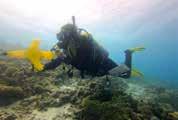
My name is Sanne Wesselman and have joined several Biosphere Expeditions over the years, volunteering on wildlife conservation projects in different parts of the world.
I have a professional background in marketing, web design and SEO, and run the travel website SpendLifeTraveling.com, where I have shared first-hand accounts of my experiences volunteering with Biosphere Expeditions. After seeing the impact of Biosphere’s work now support the organisation by helping with SEO and marketing, ensuring that more people can discover and understand the importance of ethical wildlife conservation volunteering.
My name is Jan Biekehoer from Germany and my day job is with German VOX TV producing wildlife-related shows as an executive producer in the natural history unit.
I came across Biosphere Expeditions as part of my job and then went on filming their expeditions in Namibia and Oman. I was so impressed with Biosphere’s approach and philosophy that volunteered my skills in movie production and PR and I am now happily helping them out in just that. It’s a great way for me to stay connected with wildlife-related issues in the field and put my skills to good use for a good cause.
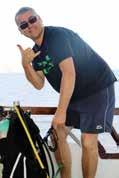
I am Ken Atkinson Australian by birth, but now living in Dubai.
I joined Biosphere Expeditions' Musandam coral reef dive project and then simply offered my services as a PADI Instructor and dive centre owner in Dubai to train up Biosphere Expeditions staff to become Divemasters for free. The rest is history, as they say ;)
SHORT STORIES
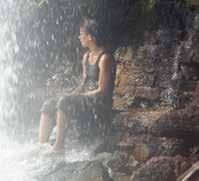
It was 2006 when I signed up for my Biosphere Expeditions trip – to the Peruvian Amazon. A six-hour-boatride away from the closest little town, separated from the noisy inhabitants of the jungle only by a mosquito-net, I felt – amazingly – just as at home as in a crowded big city. Or rather: even more. I was fascinated by the rainforest and felt as if all my senses suddenly came to life. felt ALIVE. Mosquitoes, poisonous snakes and spiders, scorpions, jaguars hiding in the dark heat – yes, please! Can I get some more?
My first jungle-encounter was followed by more trips to rainforests all around the world – to Peru again, then Ecuador, Madagascar, Costa Rica, Borneo, Australia, Bolivia. Sometimes I did volunteer work, other times I took photos of the amazing inhabitants of the forests. Exploring remote, primary rainforests became a sort of passion, and it led me to deeper questions too. How does time spent in nature, in wilderness, affect us psychologically? How can these nature volunteering experiences be transferred
to our everyday lives? I turned to books on eco-psychology, attended workshops in deep ecology and wrote my master degree thesis with this question in mind (the title was: Facilitating Wilderness Solo Experiences for Greater Self-Awareness, Self-Actualization, Creativity and a Sense of Life-Direction)
My deepening interest led me to a one-year course in Experiential Education and Outdoor Training with a specialisation in Adventure- and Wilderness Therapy, and last year, with my trainer colleagues we organised a two-week summer camp for kids in state care. It was one of the most challenging – and most rewarding – experiences of my life. It was amazing to see the changes in these boys during the time we spent in the forest – how they became more self-confident as they faced the challenges provided by nature, and how they became more open as we sat around the evening fire and told stories under the stars-filled sky. I hope I can take many more people – young and adult –to wild places and let them experience their life-changing effects. Just as my first Biosphere Expeditions journey changed my life too. ■
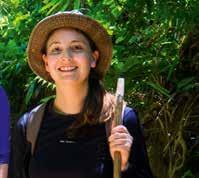
I joined Biosphere Expeditions in Sumatra, Indonesia, in 2015 when I was 17. I always knew I wanted to work in conservation but was struggling to find a place to get experience under the age of 18 other than zoos. Whilst that is great experience I had done it before and knew it wasn’t exactly where I wanted to be – I wanted to see the work being done on the ‘frontlines’ of conservation! Biosphere Expeditions were the only place could find that had no age limit on conservation volunteers, and I liked their serious, scientific approach to the projects, as I was keen to take my first steps into the field.
As I write this, I am 20 and on an internship with a conservation NGO in Thailand during a sandwich year on my university course – BSc Wildlife Conservation. Without Biosphere Expeditions offering me that first step into independent travel and grassroots conservation, would still have studied Wildlife Conservation at university, but doubt I would have had the confidence to travel alone as
extensively as I have, and I would certainly not have had enough conservation experience on my CV to gain an internship that usually goes to Masters or PhD students!
Sumatra is a beautiful place, and the Indonesian people so welcoming and friendly – the nature volunteering experiences I had there at 17 have largely shaped my world outlook as an adult. I made friends there that I am still in contact with to this day, and memories that I will never forget: swimming in the river with a monitor lizard (entirely by accident, on both our parts!), delicious food, friendly locals and pushing myself to achieve things I never thought I was capable of.
I owe a huge part of my current success and drive to Biosphere Expeditions and I hope one day to return to the people who gave me my first taste of real, in-the-field conservation. I would definitely recommend them to anyone who is looking to see what conservation work is really like, who wants to contribute to saving our beautiful planet, or to anyone who doesn’t believe in themselves –once you have completed this, there is nothing you can’t do. Thank you Biosphere! ■
Pete Eggleston, UK
I joined Biosphere Expeditions in Oman to survey for the Arabian Leopard. At the time I was working in banking but had a passion for the environment, and in particular wildlife conservation. The chief scientist was Tessa McGregor, and the expedition leader was Dom Hall. We also had a local ranger called Hadi, who was great fun and very knowledgeable. It was one of the best experiences of my life. Dom led the group fantastically and Tessa was a complete inspiration. Her enthusiasm and dedication inspired the whole team.
I have now left banking, I am due to complete an MSc in Biodiversity Conservation and Management with the University of London and I have started volunteering with my local Wildlife Trust.
Rasha Skybey, Australia
I have, throughout my entire life always been a huge animal lover. However, my love was only ever really expressed through regular donations to animal charities or involving myself in the animal law movement in Australia. I decided that wanted to do something different to help our non-human friends and called Biosphere Expeditions for further information on saving Arabian Leopards in Oman.
I joined up without really contemplating the idea of living for two weeks without flush toilets, running water, electricity, internet, mobile phone AND hair-dryer!!! This wouldn’t have been a problem for those who have camped before, but please note that had never been camping. I actually hated the outdoors, and would do anything to avoid going outside. I refused to exercise and refused to leave the house without blow-drying and styling my hair, wearing high heels and pretty dresses.
What did I get myself into? I remember how I felt in Abu Dhabi Airport before boarding the plane to Muscat. I thought I was going to faint because I was so nervous and anxious at the decision I had made to completely step outside my comfort zone.
Thankfully I did make it to Oman safely and had the best 12 days of my entire life. Admittedly, the first two days were a bit of a struggle. My body, which never really walked a distance greater than 10 metres (the distance between the front door of my house and my car) found the hours of walking painful. After two full days I was climbing rocky mountains with little difficulty.
My dissertation is related to conserving the water vole, one of the UK's most threatened mammals.
Before my conservation volunteer expedition I had no practical experience of conservation. A change in career was therefore, to some extent, a pipe dream as had no idea if it was what really wanted to do. My time in Oman completely changed that view. I loved every minute of the expedition, including the surveying. The expedition persuaded me that this is what wanted to do and gave me the confidence to leave the banking salary, perks and security behind. I haven't regretted it yet! ■
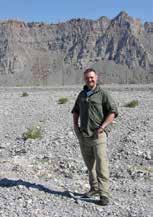
met the most amazing people who know I will be friends with for life and ate meals that would put Jamie Oliver to shame. I continue to reminisce our nightly ritual of sitting by the fire sharing our daily stories and telling jokes and conducting basic Arabic lessons. My fondest memory would have to be the morning observation at a nearby waterhole. The 6 am start was a struggle but as the sun rose, the waterhole came alive with sounds I would never hear in Sydney. The sound of so many insects, birds and mammals gave me goose bumps. sat still for hours just listening and watching for the slightest movement. Then finally, I saw it – a beautiful black cat-like creature. Thankfully I had my video camera and began filming. I took the footage back to base camp where Tessa, our scientist stated that I may have stumbled on a new species! She may have been pulling my leg, it may just simply be a lost domestic cat that ended up in the waterhole. Regardless, it was still a surreal experience.
By the final week, going without a good hot shower, mobile or internet didn’t bother me in the slightest. In fact, it was almost a relief to be free from it all.
So I am back home now and absolutely miserable and considering a career change...perhaps a wildlife photographer? The experience was the best thing I have ever done in my life and I have already joined up for my next Biosphere expedition...see you in Caprivi!! ■
Laura Balazs, Hungary
Caitlin Moore, UK (sometimes!)
I'd like to send you some thoughts about my time after having participated in the Honduras coral reef expedition.
Those two weeks led me to more conservation diving. I also made a new friend for life - I'm still in contact with my dive buddy and we have been diving since. Biology,...... learning more about reefs and doing something for their conservation - I even wrote an article for a German magazine. I am also thinking much more about how to spend my holidays with the environment in mind. In short, Biosphere Expeditions gave me more awareness about our natural environment and motivated me to learn more about sea life. I really enjoyed my expedition, good memories, the natural way of life on the island, the good team spirit and atmosphere and motivated team members, expedition leader and scientists. What an interesting and life-changing experience! Thank you. ■
Liz Shaw, UK
I joined the Peru expedition back when I was a zoology student at Bristol University. Ever since I can remember I dreamed of one day visiting the rainforest, so this expedition literally was a dream come true! I remember having to pinch myself as we travelled by boat to our camp on the first day, just to convince myself I really was there!
During the two weeks of my nature volunteering expedition we surveyed parrots and macaws at a small 'clay lick', where the birds come in the early morning to eat the soil, and we also performed large mammal surveys in the forest. Every day in the rainforest is different, and you never know what you're going to see. It was an amazing experience - from showering underneath a waterfall, to hearing the loud calls of howler monkeys ring out over the forest, to nearly being charged by a herd of peccaries (wild pigs)! And of course not to mention the colourful and noisy spectacle of over a hundred parrots and macaws coming down to feed every day.
After finishing my degree, my conservation volunteering experience inspired me to do more travelling, and also provided useful experience that helped me gain voluntary placements studying monkeys and bats in Mexico, and performing biodiversity surveys in Tanzania. It was Peru that had really captured my heart, though, and later I was lucky enough to spend six months working as a naturalist back out in the rainforest - my dream job! Two years later my experiences came full circle, and I found myself back at the clay licks again, collecting data on parrots and macaws for my MSc in Animal Behaviour.
I did the Namibia expedition and had an amazing time....as I think all members of the group did. But since I'm a doctor and we had two leopards to deal with on the same day, had a unique experience volunteering with animals: I was able to assist the vet in tranquilizing, monitoring, and collecting samples from the cats. How many doctors can say they've taken a rectal temperature or drawn blood on a 140-lb wild leopard? Not exactly what I trained for during med school or residency, but what a thrill! ■
Now, eight years on from my first nature volunteering expedition, I'm working as a researcher and writer for a charity who are at the heart of the wildlife media industry, and love every minute of it. My expedition with Biosphere Expeditions all those years ago really started everything off, giving me both the inspiration and the experience needed to get into the wonderful and exciting world of wildlife conservation. ■
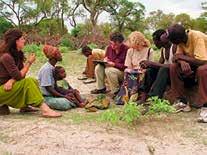
Barry Hardy, Ireland
I joined the Biosphere expedition in Namibia to help the local scientists with their work of gathering information on the local wildlife and environment. One of the aspects of the project was to work with local farmers in order to mitigate the human-predator conflict. Most of the them are small subsistence farmers, i.e. they have a few cattle and goats, plant a small number of crops and use fishing, plants and wildlife from the local bush to generate a basic living.
We spent time travelling around the villages doing interviews with the local people to see what their experiences and relationships with predators were. Involvement of the community is critical to the success of the project in the longer term. For example, if the local people can benefit from future tourism and have better income and healthcare, they will be motivated to support the park and protect the valuable wildlife. It is their country and they need to be empowered and rewarded in protecting and benefitting from it.
Showing interest in the local culture and traditions was also valuable in making a connection with the local people. One afternoon our car broke down and we spent the afternoon waiting for a rescue. Meanwhile we were joined by the nearby villagers to play cards: we showed them our game and they showed us theirs. As evening approached they sang several of their local songs and we in return showed them a four hand Irish reel, which they found somewhat strange but fun to try with us! Such interactions brought home to me a better combined appreciation of the land and people in the region including its special beauty and how reaching out to interact with the local community was both a rewarding experience and critical for future conservation and responsible development success. ■
Robin Burns, Australia
My memories of Altai are more like a series of slides than a moving image. The overwhelming sense I have is the privilege to have visited this distant, isolated and exquisitely beautiful part of our planet. Wildflowers, wildflowers everywhere! Such a colourful profusion have never ever seen before, and somewhat guiltily dropping out of the scat-search, lay prone amongst them beside a small stream, just trying to memorise the experience.
remember meetings with local people - erecting a yurt for us for cosy evening gatherings, leading us into the mountains, and offering hospitality as we 'dropped in' to ask them about their experiences with snow leopards. There was lots of laughter and conviviality at the end of a tough day. A golden sun setting across the steppe and touching the distant mountains with soft sunset colours..... ■
Dave Maisey, UK
My interest in the Altai was started by a university lecturer. I had never heard of the place or knew anything about it, but was intrigued when he told us about his experiences. After university I was keen to go and experience 'real' wilderness and still remembered the stories and pictures of that lecturer. So after saving money for a year joined the Altai snow leopard expedition. In my humble experience standing on the tops of those mountain ridges and looking out over 'nothing' - no roads, no people, no sound just steppe - is a feeling that will stay with me forever. Also don't think I have ever been so proud as when I spotted ibex with my binoculars! Since this nature volunteering expedition I have been to Iceland to work with scientists investigating glacial outburst floods and this summer I will be in Argentina helping projects in small communities. The Altai expeditions left me with a continuing desire to go to remote places and experience life with just the basics! ■
Andreas Odey, Germany
Peggy Hansen, USA
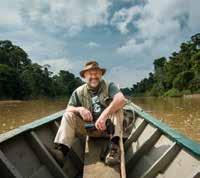
I am a photographer and have joined Biosphere in Altai, Brazil and Namibia. Some time before my first expedition to Altai had a wonderful dream. I was flying almost like an eagle above the most beautiful landscape I had ever seen. Lovely green slopes with a lots of colourful flowers, crystal clear rivers and behind the hills were high mountains with snow. I never forgot this dream. Later discovered Biosphere Expeditions in the BBC Wildlife magazine and went on their website. And there it was, the landscape of my dream as part of the Altai expedition. At this time I
was searching for new experiences in life. I wanted to give something back to nature not only "take" photos. So joining Biosphere seemed to be the right thing to do.
My nature voluntering expedition in Altai was very special and successful. found the landscape of my dream and made new friends who I still keep in contact with. I think my life is richer now and I want to do more expeditions with Biosphere. For me, it's almost like life before and after Biosphere. My next expedition will most likely be Peru because the Brazil expedition strengthened my feelings for the rainforest. I want to see more of it, more birds, more spiders and snakes perhaps. ■
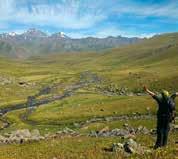
I was on the Tien Shan snow leopard expedition. Today, after a year later, still have fond memories of my time there and I am still in touch with some of my fellow expeditioners.
I wanted you to know that I am going to study zoology at university, hoping to set myself on the path. I wanted to let you know that my experience of volunteering
with animals with you has played an integral part in my decisions of what want to do in life. It will be hard work to get to where I want to be, which will probably also be in the middle of nowhere studying something.
I hope we cross paths again at some point in time, you never know what can happen. Good luck on any further expeditions! ■
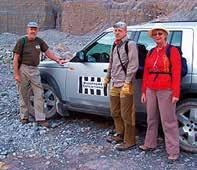
My wife Jill and went on the Musandam leopard expedition. By coincidence had worked in Khasab in 1980 as an engineer blasting roads to allow the 20th century to come in. At this time Oman was a closed country and Khasab a tiny fishing village surrounding an oasis and situated in the far north of the country overlooking the Persian Gulf. While I was there I volunteered to help the government conservation department to record as much of the wildlife and birds saw because it was such a remote area. Sadly, in late 1980 a freshly shot leopard was brought in. Such a beautiful beast and one out of a total so small that nobody really knew how many there were left.
25 years later while trawling through the net I typed in Musandam leopard and the Biosphere site came up. could not believe they were actually running an animal volunteering expedition to try to find out if the leopard had become extinct since nobody had seen any for some
time. Thus my wife and signed up for the first slot and joined the expedition in Dubai.
Despite both being over 60 we found the form of the conservation volunteering expedition such that everyone could work at their own pace and this suited us. We managed to climb the jebels and trawl the wadis for signs that this endangered animal might still be around. In the middle of the second week we were actually lucky enough to find the unmistakable paw prints of at least two leopards. The species was still around! As well as the rare leopard prints we also saw lots of signs of caracal, foxes and hedgehogs all of which were recorded.
Living in tents was an experience but driving the wonderful Land Rovers more than made up for this. It took me back to my time driving around in my Toyota Landcruiser. To me it was pure nostalgia to see Khasab 25 years on and now a modern town with street lights and hotels, tarmac roads and flower beds. For my wife Jill it was a chance of an adventure and an opportunity to help on a very worthy project. ■
Lynn Kimmel, USA
My experience with Biosphere Expeditions in Namibia was the event that confirmed my pursuit of a graduate degree in Conservation Biology focusing on African wildlife. It was so exciting to be given every opportunity for active engagement in all aspects of a real wildlife project. The scientists were so willing to answer my many questions – and I asked a lot! They were open about the challenges and rewards of a conservation project. From our many discussions, gained great insight into the necessary and important collaboration between biological and social scientists.
While all the volunteers came from totally different backgrounds, it was amazing to see a wonderful group of individuals pulling together using all our talents and skills! Oh, and relaxing by the fire, listening to the wonderful African night sounds, and sharing our experiences, was a great way to wrap up the day! Thank you Biosphere Expeditions, keep up the good work! ■
Yryskeldi Emilbek uulu, Kyrgyzstan
Biosphere Expeditions offered a placement for me on the Tien Shan snow leopard expedition after the application submission and an interview. I worked at a local nonprofit in the Kyrgyz Republic and have been interested in environment and wildlife habitat since childhood, as I lived near the mountains and felt the importance of ecosystem conservation. Work in the non-profit sector was a great experience in order to raise awareness about ecological problems and also develop personal skills, though the work did not include direct field experience. So my colleague recommended that apply to the Biosphere Expeditions placement programme. Happily, I was admitted, and the two weeks of the expedition were mind- and life-changing.
But first, I woke up the day we were supposed to leave towards the expedition base with a thought of quitting and not going. But I did pluck up the courage to quit my comfort zone and I did go.
The nature in the mountains was breathtaking: all beautiful pictures that I used to download to my computer for a desktop picture now became a reality and stood in front of me. The mountains were big and made myself and my
problems feel small. Everything was magnificent. lived and enjoyed the moment.
The participants were amazing. Never have ever felt myself so connected and blessed with endless conversations that also improved my knowledge of English and communication skills. Most importantly, developed my skills as a researcher. The expedition taught me to observe important research objects, such as footprints and scat, to use research tools such as maps, compass, GPS, binoculars, datasheets, etc.
As I think back to that morning of almost not going on the nature volunteering expedition, realise that if had indeed quit, would now have a completely different life path. Now, as I write this, I study at one of the best institutions in the USA, pursuing an undergaduate degree that includes sustainability and environmental studies. My time on the expedition not only helped me to gain this place, but also contributed to me getting more interested in promoting sustainable life in communities. Mind- and life-changing indeed! Thank you so much Biosphere Expeditions! ■
Savannah Lehnert, USA
My first exposure to conservation biology was with Biosphere Expeditions as a high school student. I participated in a nature volunteering expedition to the Madre de Dios region of Peru. That trip sparked my passion for field biology and sent me on a career trajectory dedicated to conservation. Because of this passion, I pursued graduate school and recently received a Masters Degree in Environmental Science and Policy, working as a field team leader on the Toucans, Parrots,
and Wildlife in Costa Rica's Forests expeditions. I trained rotating groups of volunteers in bird identification as well as field data collection. Based on these experiences, highly value the contribution that citizen scientists can make to peer reviewed, conservation research and I look forward to developing my career as a conservation scientist. ■
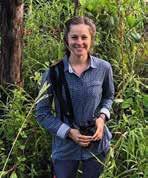
Helge Eek, Norway
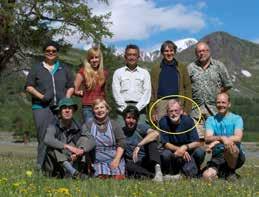
Patrick & Jill Walker, UK (left and right on picture)
Daniel Biancalana, UK
LONG STORIES
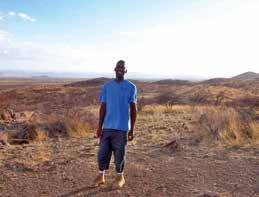
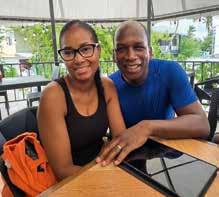
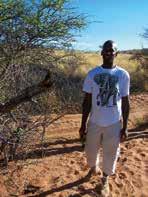
‘Being on expedition was incredible, a real revelation, that gave my life path an unexpected turn.’
Pascal Tchengang from Paris, France, loves travelling and being in touch with nature. In fact, this is how he discovered Biosphere Expeditions way back in 2002 and then went on an expedition to study big cats in Namibia in 2003, returning there in 2005 as staff. Today Pascal helps out part-time in Biosphere Expeditions’ French office near Paris.
Pascal’s first engagement with Biosphere Expeditions was in 2002, when he was researching options for holidays with a purpose in nature. ‘My favourite thing -then and now – when I travel is being in touch with nature’, Pascal reminisces, ‘there are certain places you can discover and visit on your own or with your family, but there are others where you really need to be accompanied by specialists’. This is how he came across Biosphere Expeditions all those years ago and has ‘never looked back’, he says with a broad smile.
‘You see, I love animals and wildlife in general. Back then I had a burning desire to go to Africa and see wildlife up close. Of course, there are national parks that you can visit on your own or with your family by renting a vehicle, but what I wanted was to get as close as possible to the large mammals. So, while searching the web, I discovered Biosphere Expeditions. Browsing through their website, was fascinated by the programmes offered on each expedition. So signed up and took part in my first expedition to Namibia in 2003’, Pascal recalls. ‘It was incredible, a real revelation.
It was the first time had ever come into close contact with large mammals. In Namibia, I had the chance to get up close to cheetahs and leopards, because we were accompanied by a scientist who was studying them there. In fact, during that first expedition, I enjoyed both the opportunity to encounter the animals and being part of a group that was genuinely curious and eager to learn’.
On the expedition Pascal met some senior Biosphere Expeditions staff and asked whether he could help out with the office in France. He could – and started assisting with enquiries and attending events, becoming a spokesperson for Biosphere Expeditions.
Two years later, Pascal was back in Namibia as staff, this time with Peggy, ‘the person I share my life with today’, Pascal says with his eyes lighting up, ‘this trip was her first of its kind, a real revelation’.
‘So, yes, if you are looking for a trip where you won’t encounter trivialities, and especially if you want to make yourself useful, then really recommend Biosphere Expeditions’ Pascal says, adding with a laugh ‘and I don’t just say this because I am biased, but because I genuinely believe it’. For advice, over 20 years after his first expedition, Pascal is the representative in France, so please feel free to reach out. ‘I will be happy to provide you with as much information as I can’. ■
‘Seeing the world with different eyes’
‘I wanted to have an impact on protecting nature,’ says Angelika Krimmel from Germany, reflecting on what drew her to her first expedition with Biosphere Expeditions.
That first experience was in 2016, studying whales and dolphins in the Azores. It wasn’t long before Angelika found herself coming back again and again – to Slovakia in 2017 to monitor lynx, bear and wolf; to Kyrgyzstan in 2019 and 2024 for snow leopard research; and to Kenya in 2023 for African biodiversity conservation.
Whales, paw prints and camera traps
Each project offered something unforgettable. “After a week with the whales, you think nothing can top the first sight of one. But then a curious sperm whale swam alongside our boat, jumped three times and looked straight into our eyes. That look went directly to my heart.”
In Slovakia, Angelika remembers the awe – and slight fear – of discovering a huge bear paw print in the snow.
‘It had slipped trying to climb a slope and the claw marks were massive. Later, seeing a lynx on a camera trap was a thrill – my first time working with that technology.’
Predators at night
Kenya brought a more visceral connection to nature.
‘One night, just as was falling asleep, I heard an animal screaming – it was being hunted. The next morning, we checked our camera traps and saw a female lion eating a wild boar. It was so close to our tents.’
What makes conservation work
Through these experiences, Angelika has come to appreciate the many layers of conservation work, including efforts of local people, scientists and fieldwork. ‘Don’t forget the local people’, she says. ‘The scientists must be really professional.’ She’s also learned how remote fieldwork can bring together very different personalities. ‘Being with people I would not have met otherwise, in remote situations, that’s part of the challenge and the growth.’
More than conservation – culture too
On her two Kyrgyzstan expeditions, the local community
was a highlight both times. In 2019, the team was invited to watch Kok Boru — a traditional horseback game involving a goat carcass. ‘At the end, the meat was cooked and shared. Some of us were honoured with the goat’s eyes – I refused’, Angelika remembers with a smile.
In 2024, shepherds from nearby areas organised friendly ‘Olympic Games’ with the team, including tugof-war and musical chairs. ‘We laughed so much, and they all won! The dinner afterward was delicious.’
Angelika also recalls meeting Emilbek, a Kyrgyz scientist. ‘He’s highly educated, knows history and nature, and has a great sense of black humour – especially about the communist past.’
The challenges are worth it for the impact you make In Kyrgyzstan’s high altitudes, daily surveys were physically demanding, “but we had a job to do’, Angelika insists, ‘so we made it work’.
When asked what stands out the most, Angelika doesn’t hesitate: ‘Unforgettable nature, great teamwork, and the satisfaction that I contributed.’
Looking back, Angelika’s expeditions have not just changed where she travels, but how she experiences the world. ‘I don’t like cities any more’, she laughs. ‘My holiday destinations have completely changed.’ What changed most, though, was her way of seeing. ‘I loved nature before, but not as intensively as now. My understanding of how everything is connected has deepened so much.’
She still keeps in touch with a fellow participants, and when asked what her dream expedition would be? ‘Somewhere truly remote with a different culture –something along the lines of Kyrgyzstan.’
Her message for anyone considering becoming a citizen scientist with Biosphere Expeditions? ‘This experience is so overwhelming. You need to do this.’ ■
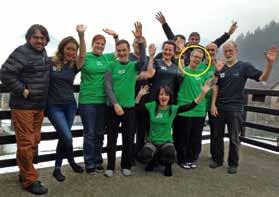
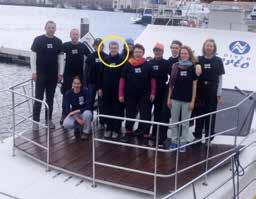
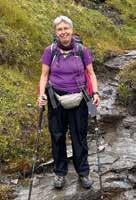
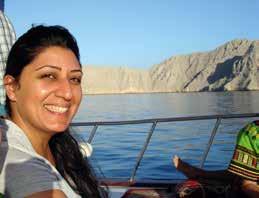
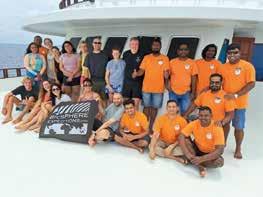
‘My family thought, OK, this must be a phase, she’ll grow out of it –but diving was the thing that stuck.’
Becoming a marine conservation scientist is hard. For women in traditional societies, it’s almost impossible. Yet once she began diving, Jenan Al Asfoor was determined to break free from the confines of gender and her corporate job alike. It wasn’t easy, but now Jenan runs her own marine conservation consultancy, training the next generation to protect the coral reefs of her native Oman. Looking back now, Jenan credits Biosphere Expeditions as the turning point that transformed her passion into a lifelong purpose.
From a young age, Jenan was not deterred from defying social norms for women. She excelled in school, went to university and then took a corporate job in marketing at the Environment Society of Oman, an NGO in her native country. Diving was her hobby. ‘I was just doing it [diving] for fun, until I got the chance of a placement on a Biosphere Expeditions diving project in my country.’
Jenan had had other placement opportunities, ‘but the Biosphere Expeditions one stuck out. was so happy to be on expedition with them. It truly changed my whole life, what I’m passionate about, and what I’m capable of doing. After my placement in Oman, went to the Maldives to expand my marine knowledge. To find a network of people, from all around the world, from very different fields, but always sharing the passion for doing something for the environment – it makes you change how you see people.’ She became more enthralled with the underwater world and the running of expeditions.
Part of the expedition to the Maldives includes getting certified by Reef Check (a reef conservation NGO that partners with Biosphere Expeditions), meaning citizen scientist divers are then qualified to conduct underwater surveys anywhere in the world. Soon, Jenan found herself re-evaluating her career and her way of living. Working alongside Biosphere Expeditions’ founder and executive Dr. Matthias Hammer and team scientist Dr. Jean-Luc Solandt changed how she saw diving too.. ‘These two opened my eyes that there was more to diving than to have fun. They then helped me to get Reef
Check Oman off the ground, I started a science diploma and then went on to start a consultancy in marine conservation.’
In 2017 Biosphere Expeditions’ involvement around the Musandam Peninsula of Oman concluded with the declaration of two protected areas in the region. Jenan was the perfect steward to protect these achievements. She quit her corporate job and devoted herself full-time to diving and reef conservation, launching community-based reef conservation efforts, becoming Oman’s first Omani Reef Check Trainer, and to top it all off, starting Reef Check Oman, an offshoot of the NGO that originally qualified her as a survey diver, as well as her own consultancy. All this was not easy either. ‘My friends and family were surprised,’ she recalls. ‘Diving as a woman in Oman is unusual – it’s not seen as a field for females. People don’t see diving as something with a career related to it. People think it’s not a job, that there’s nothing there to learn, so quitting my job was really challenging, as it was not acceptable to my family. Finding encouragement was hard.’
‘Without the encouragement of the people I met on the expeditions, I wouldn’t have made it,’ says Jenan. ‘When you don’t get support in your regular life, you need it elsewhere – that’s why Biosphere Expeditions had such a big impact.’
Proving almost everyone wrong, she is now an experienced diver and trains others – including delegates from the Omani government, who are learning how to protect the country’s precious corals. ‘I want to share all the beautiful, life-changing experiences had being part of Biosphere Expeditions. I want to demonstrate the impact of knowledge sharing and community engagement.’ Working with Biosphere Expeditions meant Jenan learned ‘to face challenges on a daily basis. You don’t need to be a scientist to make a difference; even as citizens there’s so much we can do.’ ■
‘You could just feel that no-one wanted to leave ...’
Tired of feeling passive, and yearning to get closer to nature, Martyn Roberts swapped safari holidays for expeditions – and learned as much about himself as he did about wildlife.
Martyn Roberts never forgot his first safari in South Africa – it left him wanting more. He loved the thrill of being close to wildlife — but as he put it, ‘I wanted to get hands-on. wanted to make a difference, to do something more demanding that allowed me to express these beliefs, ideas and interests.’ Those hopes lingered until 2002, when a chance encounter led him to Biosphere Expeditions and a life-changing trip to Namibia.
At the time, Martyn had just come out of his first marriage and was ready for something new, something bold. His earlier safari was too short, too passive. So when he discovered Biosphere Expeditions and heard about an upcoming two-week project in Namibia, he took a leap of faith. ‘I wouldn’t call it the hard sell,’ Martyn says as he recalls his first conversation with Matthias, the expedition leader, ‘but he insisted that I join. It was an encounter with the unknown.’
For Martyn — who had always travelled with friends, family or a partner — heading off by himself to find the meeting point in Windhoek felt like a huge step. ‘Yes, it was the first time I’d travelled on my own,” he remembered. ‘I wasn’t overly worried, but I was apprehensive. What would it involve? It was a leap into the unknown.’
What he found in Namibia wasn’t at all what he’d expected. ‘The country itself ... just how wild and desolate it was,’ he marvels. ‘So much bigger than I expected. The cheetah was the species we worked with – I was a bit surprised how well it all ran!’ He still laughs about his first meeting with another big beast: Matthias, in a Windhoek café, when Martyn realised his expedition leader was nothing like the ‘old man with a big beard’ he’d imagined.
Gruelling hours, hard physical work and pushing comfort zones: Martyn discovered much more than animals alone. He and his team had to maintain vehicles, drive out into remote areas, check camera traps, and spend hours in hides. ‘Everyone was silent when Matthias asked who wanted to drive,’ Martyn says. ‘I stuck my hand up and said, ‘I’ll give it a go,’ driving people I’d never met, hours out of town, in a foreign country, at times when you’re tired can be challenging. But you do it.’
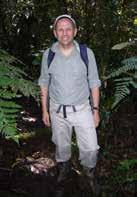
That first two-week expedition changed the course of Martyn’s life. He kept returning: Altai, Sumatra, Brazil, drawn back again and again. ‘As each expedition happened, you could sense a change,’ he explains. ‘I thought, ‘I like this. This is good. We’re giving a lot and getting a lot.’ And you could feel no one wanted to leave.’ Simply deciding to go – and accepting responsibility for getting himself to the rendezvous point, no matter how remote – was a challenge in its own right. But he relished it. ‘It’s the first test to see if you’re independent and can take responsibility.’
Of all the expeditions he’s been on, Sumatra in 2015 stands out as a defining moment. Heat, humidity, dense jungles, the exhaustion of wading through waterlogged terrain – it tested him like nothing else. ‘We had base camps with WWF, rats in the night, someone set up a camera so we got rat TV every morning,’ he chuckles. ‘But the expedition work was seriously challenging. approached the expedition leader talking about quitting – I was in my late 50s and finding it tough. A couple of days I didn’t go out because it was too hard, and felt I was holding the group back. But I got back in the end!’
It’s a point of pride that he persevered. ‘Even with Wellington boots, boggy ground, up and down, thigh-deep in water ... it was unpleasant. But I managed,’ he says. ‘It’s addictive. Can’t get there from here? You can, you can, because you’re part of a team.’
Returning home after each of these experiences has been its own kind of challenge. ‘It’s a bit like the post-holiday blues,’ Martyn admits. He’d come back buzzing with stories: Muddy boots, extraordinary wildlife encounters— but maintaining his passion at home wasn’t easy. Still, that energy proved infectious for friends who saw just how transformative the expeditions had been for him.
In time, Martyn also realised that his once ‘rose-tinted view’ of wildlife charities had grown more nuanced. “Before expeditions, I supported charities like WWF. You think everything runs smoothly. But then when you do it yourself, helping professionals, you realise how difficult it is, how many challenges you face — it’s not as easy as you might think,’ he muses. The fieldwork – hauling camera traps, trekking through punishing environ-
ments, collecting data – deepened his respect for conservationists. ‘I do it two weeks a year, and it’s made me realise money isn’t everything. Commitment, courage, consistency: that’s critical,’ he says.
Martyn’s convictions haven’t dimmed; they’ve evolved. His adventures have taken him across continents, from desert scrubs to humid jungles, always in search of something more meaningful than a fleeting holiday. Each expedition tested him in a new way. Each time, he rose to the challenge. Now, he can’t imagine who he’d be without those experiences – or the confidence they’ve given him. ‘For some people, this might be a one-off. But I realised I relish it,’ he says, bright-eyed with the memory. ‘It’s rare in life. You give a lot, but you get a lot back, and that changes you.’ ■
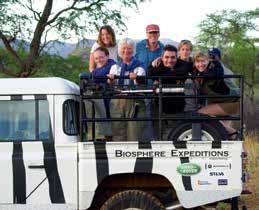
‘Staying for two months on the expedition allowed me to get really immersed. It was an incredible place and the landscapes were so different.’
Eve Hills is a PhD student at the University of Brighton currently working on leopard prey and habitat preferences in the Meru Conservation Area, Kenya. Big cats have always fascinated Eve – ever since coming on expedition with Biosphere Expeditions. So, what was so significant about this first experience?
‘I went to Africa for the first time in as a young child and instantly fell in love with the continent and wanted to come back,’ Eve Hills recounts. ‘I had a passion for big cats from a young age and did everything in my power to include them in any school projects.’ Five years later, she came across Biosphere Expeditions, ‘via one of the first expeditions to Poland to research wolves. In those days, Matthias (Dr. Matthias Hammer, Biosphere Expeditions’ founder and executive director) ran most of the show, so was able to talk to him about my dreams of wanting to do something with big cats. In the end, was sick and could not make the wolf project. Then, in 2002, a cheetah project came up in Namibia and I was really excited. saved all my money and wanted to do the whole thing, which lasted two months.’
Eve immediately fell in love with the entire experience. Staying for two months gave her a unique perspective.
‘I think this allowed me to immerse myself completely. It was an incredible place and the landscapes were so different. I just loved sharing my environment with big cats, knowing they were there. I don’t really need to see them. One of the most special things for me was when we tracked leopard prints and it was just incredible following in the animal’s footsteps. I remember collecting all the sand from one of its paw prints. It was really amazing. I loved feeling part of something. ’
After Eve came home, as with so many people, life got busy and she was ‘side-tracked by a job that had nothing to do with conservation.’ She also had to contend with a partner who thought she ‘should get a real job.’ However, she never forgot about those beautiful moments on expedition and did whatever she could at university to include big cats in her projects. She continued pursuing this passion into her master’s degree when she, ‘linked up with some cheetah conservation organisations based in Kenya and intended to do a cat project.’
So now Eve is a PhD student studying leopards. As for the future of her relationship with Biosphere Expeditions, she says, ‘I’m hoping to get involved with another project and I’m keeping my eye out for any leopardrelated projects. ■
‘Do it! Choose with care, but just do it’
Peter Pilbeam from the UK is a long-time supporter of Biosphere Expeditions. He took part in every single expedition to the Altai mountains that Biosphere Expeditions ran from 2003 to 2012. ‘And then it just snowballed’, he remembers. Here’s his story.
‘Initially was intrigued by the slogan ‘Where on earth is the Altai?’ and my interest in snow leopards’, Peter recalls ,‘and I liked my first expedition so much that I just kept coming back’.
Back home in the UK, Peter has now given lots of talks on snow leopard. He is also active as a mammal surveyor and teaches small mammal ID courses regularly. He has also become a reserve warden in his home-county of Cambridgeshire.
‘I expected to learn something on the expeditions, but never expected it to have such a profound impact on me!’ says Peter. To anyone out there thinking about going on an expedition, would say do it! Choose with care, but just do it!’, he adds with a laugh. ■
‘In the years after the Altai expeditions, went to Kyrgyzstan to continue with snow leopard expeditions, then to Slovakia and Germany to study wolves, Sumatra to work on tigers, and Scotland and the Azores for cetaceans.’ All in all Peter has been on 17 expeditions since Biosphere Expeditions started in 1999, which makes him one of the most experienced expeditioners of the NGO.
‘All these expeditions have taught me how to travel independently, how to camp in the wild, and a good dose of self-reliance’, reflects Peter, ‘and once on the expeditions, I really appreciated all the great and varied experiences, some very hot and humid like Sumatra, some cold and snowy like the Altai and Kyrgyzstan, some wet and with rough seas, such as Scotland and the Azores.’
‘And I always take lots of memories home with me’, says Peter, ‘some of the most abiding ones are trekking over mountains through snow and across scree slopes in the Altai, tracking wolves in snow and mud in Slovakia, and watching and recording whales – those beautiful creatures of the sea – around the Azores archipelago’.
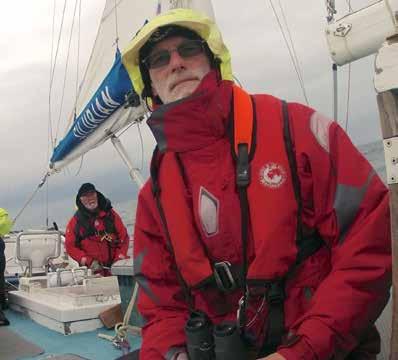
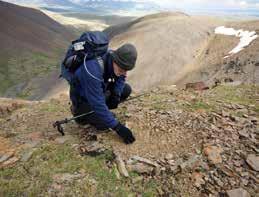
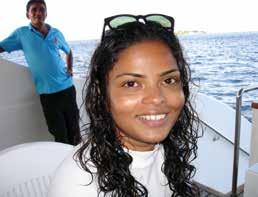
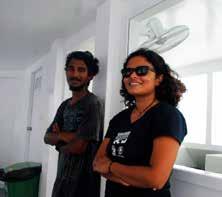
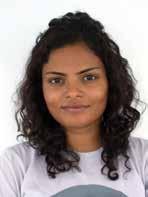
'I’ll never forget the first time I saw coral reefs - their sheer beauty was overwhelming. Now, I want to see a Maldives with strong collaboration between national and local governments, as well as civil society in conservation projects.'
Shaha Hashim is a pioneer in the conservation movement in the Maldives. Her passion started at a young age when she “was lucky enough to be selected for the school snorkelling club where I witnessed the vibrant beauty of the corals before the 1998 bleaching event devastated over 90% of them.”
Many corals have grown back since and Shaha never lost her dedication to them. In 2014 Shaha joined Biosphere Expeditions, an international non-profit citizen science organisation, which supercharged her conservation career.
“I’ll never forget the first time I saw coral reefs – their sheer beauty was overwhelming. Now, I want to see a Maldives with strong collaboration between national and local governments, as well as civil society in conservation projects.”
Although the Maldives are an ocean nation, many locals do not have the time or money to experience the beauty of the reefs. The ocean is largely seen as a workspace and it is often too expensive for local people to enjoy recreationally. It was similar for Shaha: “I only saw the ocean once or twice a year on family picnics at the beach and never saw what was like under the water”, she recalls.
After school and its snorkelling club, Shaha began working for the UN Development Programme and went diving on her weekends. She knew her family would not approve of what she was doing, so she “simply didn’t tell them.” In the Muslim culture of the Maldives, women are by and large regarded as home-makers, looking after their husbands and kids. Working in the ocean is unfeminine. But Shaha did not care. The ocean’s pull and the desire to make the world a better place was too strong. She defied norms and pursued her dream instead. She spent enough time travelling for work that no one would ever suspect a thing.
“I felt an urge to work in conservation when I started talking to fishermen.”
Shaha first encountered Biosphere Expeditions in 2014 when she actively began looking for conservation opportunities. She was just googling things and found their placement programme. It was a no-brainer. This was her stepping stone – she wanted to get more involved with conservation, but there were limited opportunities in the Maldives. The Maldives became a tourist destination in the 1970s, at the expense of the uniquely wonderful marine life. However, this also brought international scientists, including those of Biosphere Expeditions, who were invested in protecting coral reefs.
Not only was Biosphere Expeditions instrumental in how Shaha saw the world, it also made her more curious and led her to the next step in her scientific surveys. Through the partnership with Reef Check, Biosphere Expeditions “gives you a broad understanding of whale shakes, invertebrates and fish in a simple way that you can then build on,” remembers Shaha.
When asked about her experience with Biosphere Expeditions in particular, Shaha says, “going on that expedition was the first time I spent a week in a confined environment with a dozen citizen scientists from all over the world, trained in reef survey work and then took part in surveys, all using the Reef Check methodology. I was shy in nature, wasn’t confident in my knowledge and thought others would know lots more than me, but I soon realised others were the same and I felt confident with them pretty quickly.” And it wasn’t just her fellow volunteers with whom she got on with. “The liveaboard crew and the Biosphere Expeditions scientist and expedition leader were all super supportive .”
“People can be reassured that they will receive a good experience, which they can get the best out of.”
After Shaha’s first experience with Biosphere Expeditions, she wanted to do more. She “started going to the ocean more often. Tried to go swimming or snorkelling every day before work by moving down south. This
also meant there were fewer tourists.” Ever since then, Shaha has worked in conservation, won awards and has become highly acclaimed in the Maldives.
“Conservation often feels like an uphill battle,” and tourism and capitalism make it harder. Since the 2000s, land reclamation has spread across the country and it has intensified. Huge lagoons are being reclaimed for tourism. More money is being spent on building more infrastructure.
Shaha Hashim’s experience on the expedition set her on a trajectory that would see her become the Chairperson of Maldives Resilient Reefs and manager for the Blue Marine Foundation.
“We have proven that conservation can be successful if done correctly. Now we have established small models; we just need help to upscale this on a national level.”
The most important takeaway when it comes to conservation? “Some people feel like the issue is too big to change, but if every person adjusts their lives in a small way with consistency, persistence and visibility, think we as humankind have the power to change things for the better. We have done it before.” ■
‘Being woken up by elephants browsing trees just a metre away from where I was sleeping has to be a highlight of my life.’
Sven Strohschein from Hamburg, Germany, has made some great memories with Biosphere Expeditions, going with them twice to research whales and dolphins around the Azores archipelago, to study Amazon biodiversity in Peru, African wildlife in Namibia and the Arabian leopard in Oman. After these expeditions, he also joined the ‘Friends of Biosphere.’ ‘It was and is a great experience to be part of Biosphere Expeditions’, he sums up.
For Sven, who has been in the shipping industry since 1981, going on an expedition was something completely new for him: ‘I found Biosphere Expeditions through an article in a magazine. I was curious to get more experience and knowledge about wildlife conservation and looking after our natural environment.’ So Sven took the plunge into what was to become a formative experience.
‘I can still remember sitting at the campfire under the stars during the Namibia expedition and hearing the lions roar. also remember jumping into the Atlantic Ocean, trying to catch a glimpse of the whales after they went under the waves, and watching the sunrise at our research station on the Amazon.’
Perhaps his most abiding memories were ‘being woken up by elephants browsing trees just a metre away from where was sleeping, witnessing a lion hunt in the middle of the night and talking to local people face-to-face’.
When asked about what he’s learnt, Sven thinks that a lot more needs to be done to help the natural world recover and also that everyone can help, not only scientists.
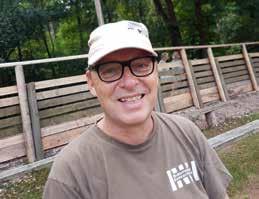
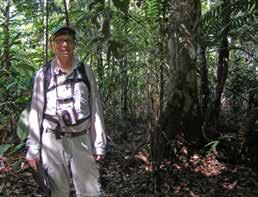
Looking back, Sven reminisces that “Each time I joined a Biosphere Expeditions team in the field, it was definitely a unique experience. I am happy and proud to also support Biosphere Expeditions through the Friends and by helping with media enquiries in Germany and talking to those who are thinking of coming on an expedition.’ ■
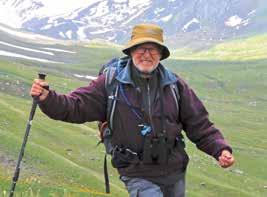
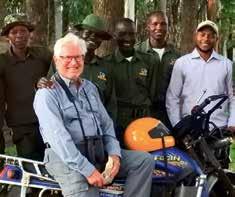
‘When I come back from expedition I always feel richer and profoundly privileged for having been to places and done things that I used to believe only existed in Attenborough world.'
Peter Thoem a retiree from Canada, has participated in six expeditions so far. ‘I have time in my life, the health and the resources – so why not’ is his go-getter attitude in all this. This is why he started with expeditions and what he experienced on them.
Since 2018 Peter has tracked snow leopards in the Tien Shan mountains of Kyrgyzstan, studied biodiversity in Kenya’s Masai Mara, Arabian oryx in the Dubai Desert Conservation Reserve and whales & dolphins on the Azores archipelago.
‘Back in the day, when was thinking about joining my first expedition to the Tien Shan mountains to study snow leopards it was the opportunity to get into a really wild area. I could see that few westerners would ever get to see or experience the Tien Shan mountains and that the expedition might yield exciting results’, recounts Peter, ‘it was simply too good an opportunity to miss.’
And since then? ‘Tien Shan was just so thrilling’, says Peter, ‘and then the year after – in 2019 – there was the chance to do something equally useful in places as fascinating as the Dubai Desert Conservation Reserve and Kenya’s Masai Mara. It deeply interested me’. So off he went to the Dubai Desert Conservation Reserve first and then a few months later to Africa for back-to-back expeditions in 2019 and 2020, just before the Covid pandemic brought everything to a standstill for a couple of years.
When asked about lessons learnt on expedition, Peter’s answers are swift and precise, showing his enthusiasm. He believes that with good planning, an open mind, health and resources, you can do it, because ‘it’s a fascinating world out there’. And further that even if ‘our western comforts make us think that everywhere else is scary, it’s not. Yes, some places can be risky, even dangerous, but not everywhere else.’
When asked to summarise his experiences, Peter takes some time to think, smiling to himself and then says: ‘Sometimes it’s rigorous – we have work to do and protocols to follow, we have to understand what’s expected. We have to coalesce as a team and appreciate each other’s strengths and not-so-strengths. Then we have to find ways to work with the less committed – some are day-dreamers, others are bloggers who don’t always contribute much.’ But it always works out in the end: ‘We come from all corners of the world, some of us have even met before, because we’re committed to the Biosphere Expeditions ethic. And when return, I always feel richer and profoundly privileged for having been to places and done things that I used to believe only existed in an Attenborough world.’
Peter’s most abiding memories include standing on the slope of a remote valley in Kyrgyzstan with a clear blue sky. ‘It’s just warm enough to unzip my jacket. I’m surrounded by yellow expanses of spring flowers, there’s rushing meltwater cascading off snow-draped mountains around me and I had to pinch myself. Is THIS really me? Am I really here?”
Or there is the time when Peter was on his middleof-the-night-shift keeping watch over a waterhole in Kenya’s Masai Mara. There are elephants around and hippos lie in the waterhole, but it’s quiet except for the odd grunt, splash or snuffle. Then from across the valley comes a strange upside-down bark, like indrawn breath “EEeeeeYiP”. What’s that, Peter asks the ranger. ‘Hyaena’, the ranger replies and Peter’s spine tingles.
And most recently, in 2024, on the expedition boat off Faial, one of the islands of the Azores archipelago: ‘The sea is lively and we have to hold on white-knuckle tight’, remembers Peter, ‘we’re all doing our tasks as assigned when a blue whale is sighted. We slow down and carefully approach – again everyone does as instructed – gathering data: time, water temperature, sea-state;
taking photos, watching, counting and more. And then we’re spell-bound. There in front of us, all but immersed, visible yet almost invisible is the world’s largest mammal. It blows a couple of times, then dives to depths that take it out of the realm of human comprehension.’
A blue whale: a spell-binding animal for Peter With all those experiences, what impact have the expeditions had on Peter’s daily life, away from expeditions? Again, Peter does not hesitate: ‘I’m seen and known for having just come back from another exotic place. Where are you going next, people ask. I have a greater understanding and appreciation of the value of citizen science’. An appreciation that has contributed to a structured longterm project on bird populations close to Peter’s home (now in its 10th year).
And what about Peter’s connection to nature? Has this changed through the expedition experiences he’s made?
‘My connection with nature has always been strong’, Peter responds, ‘and I feel that I have a reasonable understanding of how the balance of nature all weaves together. The expeditions give me the chance to see some of those interactions and interrelationships’. And Peter adds an example of this: ‘With Alan, our expedition scientist in Kenya, we watched a small group of impala ingesting mineral-rich soils. Alan was ecstatic, it was, he said, the first known-to-science example of geophagy (animals eating soil, usually for its mineral content) by impalas. My photos made it a publishable observation‘.
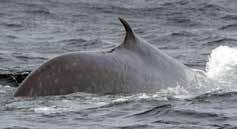
‘You're right on the frontlines of conservation –and you see life differently.’
As biologists, Gary and Sandra Hogben have always been fascinated by the natural world. But when seeking a way to get stuck into some fieldwork, they began going on expeditions together. From tiptoeing past sleeping elephants to learning how to use the village water pump, it’s been an even richer journey than they’d imagined.
Gary and Sandra never imagined they’d end up stranded on a dirt road in Malawi, miles from anywhere, bus broken down, no immediate way of moving. But that’s exactly where they found themselves. Rather than the struggle, however, they remember the laughter and camaraderie that came from taking responsibility for their own fate. ‘You’re really pushing yourself,’ Sandra says. ‘You learn your limits.’
Their story starts back in 2013, when the couple undertook their first expedition to Namibia. It proved a turning point in how they saw themselves—and their holidays. Both are biologists by training, but as Sandra notes, ‘It’s microbiology, not macro, so we wanted a broader perspective. Something that let us get back to what we used to do: proper fieldwork.’ A classic game drive wasn’t enough; they wanted hands-on involvement, real interaction with wildlife, and a sense they were contributing to something bigger.
The interview ends with the question of what Peter would tell others who are thinking about joining their first expedition. Peter laughs and just says: ‘If it appeals to you, then set aside your fears and just go do it’. ■
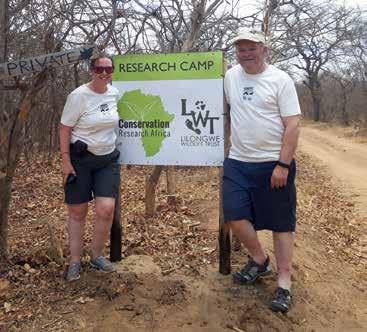
So they signed up for a Biosphere Expeditions project in Namibia, discovering that expedition life is intense in ways they never anticipated. ‘I felt anxious about what I’d signed up for,’ Gary admits, recalling the dossier’s instructions on braving remote desert roads and uncertain conditions. But from the start, that same uncertainty became an addictive challenge. ‘I love to travel, but because of the climate crisis, I felt guilty,’ he says. ‘This wasn’t just a holiday though — it had a purpose, a way to give something back.’
Over time, they ventured further: Malawi, Arabia, Costa Rica, Thailand — each place tested them physically and emotionally. They’ve dodged tsetse flies, tiptoed past elephants at night, and faced torrential storms checking on hatcheries every fifteen minutes. Yet for all the trials & tribulations, both speak with a sense of wonder. ‘You come back feeling that you’ve overcome a challenge,’ Sandra says. ‘And very glad to have done so.’
Meeting local communities helped them see their own routines in a new light. In Malawi, they learned to pump water from a village source, twenty liters at a time, or no shower. Back home, they realised their perspective
had changed. ‘You see it a bit differently,’ Sandra reflects. ‘It shows you what’s possible.’ Gary now chairs a clean-water advisory group, inspired by the stark realities he encountered. ‘You’re right on the frontlines of conservation,’ he explains, ‘seeing the difference you’re making.’
Perhaps the biggest surprise has been the friendships they’ve forged. ‘We’ve stayed in touch with people from our first expedition,’ Sandra says. ‘Helen from Australia visited us in the UK, and Georg from Germany — likeminded folks who keep coming back for more.’
‘If someone asks whether they should do it, I always say: ‘Go for it. You won’t regret it,’’ Gary says. ‘I used to think being stuck between hippos and elephants was something you’d watch on TV. Now it’s part of our reality.’ And for both Gary and Sandra, that reality is far more compelling — and life-changing — than any other kind of holiday could ever be. ■
‘Out in nature life is simple. It helps you remember who you are and what you need to be happy and fulfilled.'
When she stepped foot on Arabian soil back in 2006, Malika Fettak had no idea how influential and lifechanging it would become. Starting as a citizen scientist with Biosphere Expeditions, she landed a job with them only a year later and jumped at the first chance of becoming an expedition leader, besides from supporting the organisation with marketing & communications. She took on the responsibility for teams made up of citizen and professional scientists, staff and local helpers; mastering team leadership with people from different cultures and all walks of life and helping people achieve their dreams. Here, Malika tells her own story:
‘Back in the early 2000s I was looking for a different way to explore the world. As a woman wanting to travel alone, it is difficult knowing who to trust. Stuck in an office job, I was searching for a worthwhile holiday to do something more adventurous. And Biosphere Expeditions sounded perfect: you’re in a group, you’re safe, and you get to do unique things out in nature that you can’t do on your own: not as tourists, but as a team on a mission, working together in conservation. You are pushed beyond your comfort zone: you don’t know what people you’ll be with, what the work will be like and if you are physically fit enough. On my first expedition, my English was not as good as it is now and I was worried that I would not fully understand my team mates, the expedition leader or the scientists. Luckily, since team members come from all over the world, the English was very accessible and I had no problems. instantly fell in love with
the simplicity of expedition life. Before the expedition, I remember worrying about how I would cope with not having a shower for two weeks! But once you set off into the wild thoughts like this dissipate. You learn to trust your own abilities and resilience.’
‘Out in nature, you actually need less to be happy and fulfilled. If you’re warm, dry, fed and have a place to sleep, that’s enough. And it calms your mind. You don’t have to worry about material luxuries, because in nature, on a fundamental level, it’s not important. A lot of people are overwhelmed in their lives with constant streams of information through phones that don’t actually have anything to do with their day-to-day life. Out in nature, especially away from phone coverage, things become simple. It’s not complicated out in the wild.’
‘After my first experience in OmanI I felt even more trapped in my office at work and began seriously thinking about a career change. I was dreaming about working in nature conservation and using my skills for a good cause. Matthias, Biosphere Expeditions' founder and an expedition leader himself, and I had become well acquainted on my second expedition to the Altai mountains in Russia; opening the floodgates to a new field of work. He just said: ‘Why don’t you work for us?’ This was in 2007, eight years after Biosphere Expeditions was founded. I kind of created my own job by writing an essay about what I could contribute to the organisation. Having a degree in marketing and communications, I had quite a few ideas, so I began working full-time.’
‘Only a few weeks later I was offered the chance to lead my first expedition in Spain. It was a huge challenge at first, especially training and leading a team in a foreign language, but getting prepared with Outdoor First Aid and other expedition leader training was also extremely fun. It took quite some courage to literally jump out of my comfort zone and trusting that I will be able to handle whatever I come up against. I learned a lot – not only about leadership and team dynamics, but also about myself. Once I started leading expeditions, that was it – I knew I’d found my place by travelling the world and exploring the wild together with local people, weathering the elements whilst safely leading teams: I had everything that I've been missing in contemporary city life.’
‘Starting as a citizen scientist, I loved the shift in perspective I got with being an expedition leader. Not only was I suddenly responsible for all those people on the expedition – their safety, the overall organisation, logistics, equipment, paperwork, communications, ... you name it.
I learned how to make random people from all over the world become amazing teams within a couple of days. Time and time again I also found myself in unimaginable situations and learned that there is ALWAYS a way out. I felt a huge sense of accomplishment taking people out there, encouraging people to leave their comfort zones and helping people to overcome their self-limiting beliefs – not in theory, but in reality.
In more recent years, I took a step further in my career again and qualified as a Systemic Coach & Trainer in order to set up my own business and inspire and support personal development of people and empower teams outside expedition life. However, I still enjoy leading expeditions on a freelance basis and training future leaders in particular, because it simply is part of my calling. Looking at the work Biosphere Expeditions does from yet another perspective again has allowed me to truly understand the multilayer impact Biosphere Expeditions' projects have on many people's lives.'
'Looking back at my career with Biosphere Expeditions, feel privileged. Two decades of leading expeditions, exploring fascinating wild places, learning from scientists all over the world and fully understanding core principles of ecosystems in both nature and human society have enhanced my life. Innumberable exceptional challenges and lessons learned along the way are my life experience treasure no money can buy.’
'Two fundamental lessons I've incorporated in all aspects of life are that life is simple and you can manage and get out of any difficult situation by accepting facts and focussing on solutions, not problems. Reconnecting with nature helped me find nothing but great human potential underneath unnecessary layers of doubt, fear and worry – in myself and in others. So just dare go for it – from my experience expedition adventures hold great potential to change your life too.’ ■
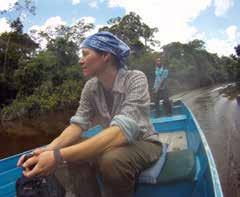
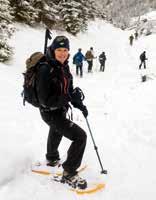
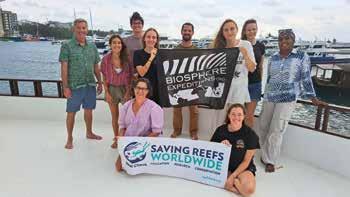
‘Diving while writing on a slate makes you feel like an avid researcher –like you are contributing to something beyond yourself’
For Loulou Ojjeh Biosphere Expeditions played a pivotal role in her journey towards becoming an ecologist when she joined its Maldives expedition in 2025.
Despite having completed only 20 dives and questioning whether she was truly ready, Loulou quickly realised that she was far from being an anomaly. ‘Many participants shared similar doubts’, Loulou recalls finding out.
‘Being based somewhere far from home encouraged me to make the best out of life and take everything in with energy and enthusiasm’
‘I spent higher education focusing on life sciences and always felt connected to nature on a personal and intellectual level’, Loulou says.
However, she had never been on an expedition before, but as soon as she discovered Biosphere Expeditions, she knew it was right for her. Not only did it offer a research-focused, Reef Check-certified expedition, but it also provided an ‘immersive experience: meeting new people, immersing yourself in a different culture, gaining real volunteering and research experience’.
Training to be a coral reef volunteer
The expedition began with two days of intensive training, in the water and in the classroom. Loulou and her fellow conservation volunteers learned to identify indicator species – fish, invertebrates and substrates – and were tested on their knowledge before being allowed to collect real data.
For Loulou, a visual learner, this process was particularly rewarding. ‘I loved visually distinguishing between species and learning their unique traits. It really resonated with me’, she recalls.
Then came the coral reef survey dives
‘Diving in coral reefs is already exciting’, Loulou explains, ‘but to contribute to monitoring them by recording observations was incredible. Being underwater really transformed my connection to nature from an intellectual level into something physical’.
One of the defining features of Biosphere Expeditions is its ethical approach to marine conservation and research. The organisation makes no promises of sightings and treats the ocean and its inhabitants with respect, allowing wildlife to behave naturally without disturbance.
The work the citizen scientists do during the expedition can be demanding but it is balanced by the supportive environment on board. Loulou agrees: ‘Many conversations with amazing people really had a big impact on me’.
‘Diving while writing on a slate makes you feel like an avid researcher and that you are contributing to something beyond yourself. Truly unforgettable’, Loulou reminisces with a smile.
On one dive, Loulou and her buddy carried out a fish identification survey on a particularly healthy, biodiverse reef – where a turtle swam calmly along the transect line, seemingly unbothered by their presence. On another, she encountered an octopus, an experience she describes simply as ‘ineffable’.
To be part of this expedition, participants need at least a PADI Open Water qualification. Loulou especially appreciated the supportive environment, as well as the balance between work and leisure.
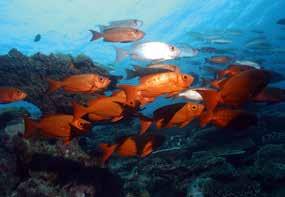
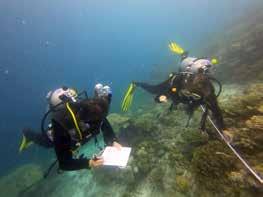
‘I really love how we had a balance of survey dives and ‘pointless’ (as Biosphere Expeditions calls them) dives. This gave us a duality of diving experiences where in some we would be focused and at work and others where we would just be swimming around soaking in all the beauty’, Loulou says.
Above water – the impact of the expedition team experience
Above the surface, the connections were just as meaningful. ’Living and working closely with others from around the world deepened my sense of perspective –not only about conservation, but about life itself’, says Loulou.
Each expedition in the Maldives consists of up to 15 volunteer citizen scientists, an expedition leader and a professional scientist, who come from all over the world. On top of that, there’s the crew and local placements who tend to have a diverse background as well. Together this creates an inspiring multi-cultural environment, which often sparks the meaningful conversations and connections that Loulou mentions.
During the 2025 expedition, Loulou, along with her fellow citizen scientists, surveyed 11 reefs: Some sites showed stable or improving coral cover, especially on ocean-fed outer reefs, while inner lagoon sites, more exposed to warming and stress, continued to struggle.
These data collected by Biosphere Expeditions volunteers feed into planning for marine protected areas and help guide management decisions focused on safeguarding reef ecosystems and charismatic species such as whale sharks.
What the future holds
The expedition did more than just reinforce Loulou’s passion for marine ecology; it reshaped her future ambitions. She is now particularly interested in joining the Azores expedition, eager to continue contributing to marine conservation efforts.
‘There is nothing better than doing this work in a foreign country’, she says. ‘You learn so much beyond conservation alone’.
She urges anyone considering a Biosphere Expeditions adventure to take the leap.
‘Just jump the plank and do it no matter your fears and doubts. can guarantee that you will end up surprising yourself and having one of the most enriching experiences in your life’.
She adds, ‘The expedition made me confirm to myself that I need to spend more time working abroad and my friends and family recognised that too’.
Her final reflection captures the lasting impact of the experience: ‘During daily life, humans have the tendency to get caught up in little things. If we really took a step back and realised just how much impact we have on the grander things (i.e how we can adjust our lifestyle for the planet, the fact that we share the planet with so many other creatures that have evolved fascinating traits over millions of years as a response to changing climates/conditions), I believe we would be much happier and would find more meaning. At least this is how I felt coming back from the expedition. There is a huge world beyond. We just have to stop and look’. ■

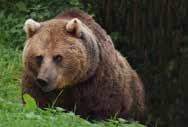
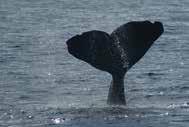
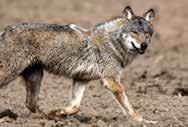
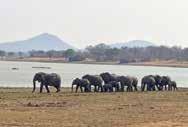
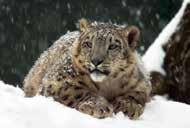
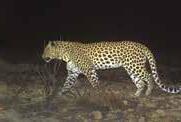
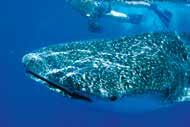
SOUTH AFRICA
AZORES
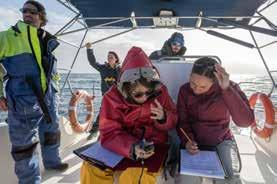
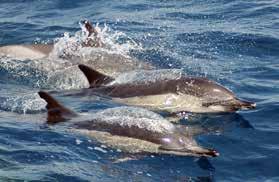
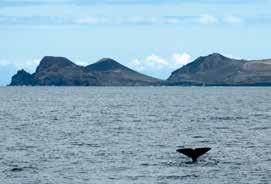
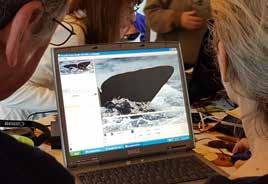
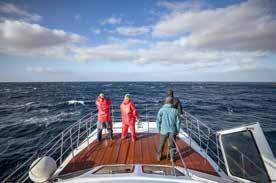
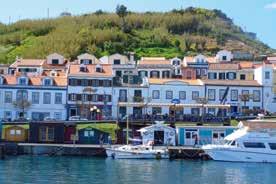
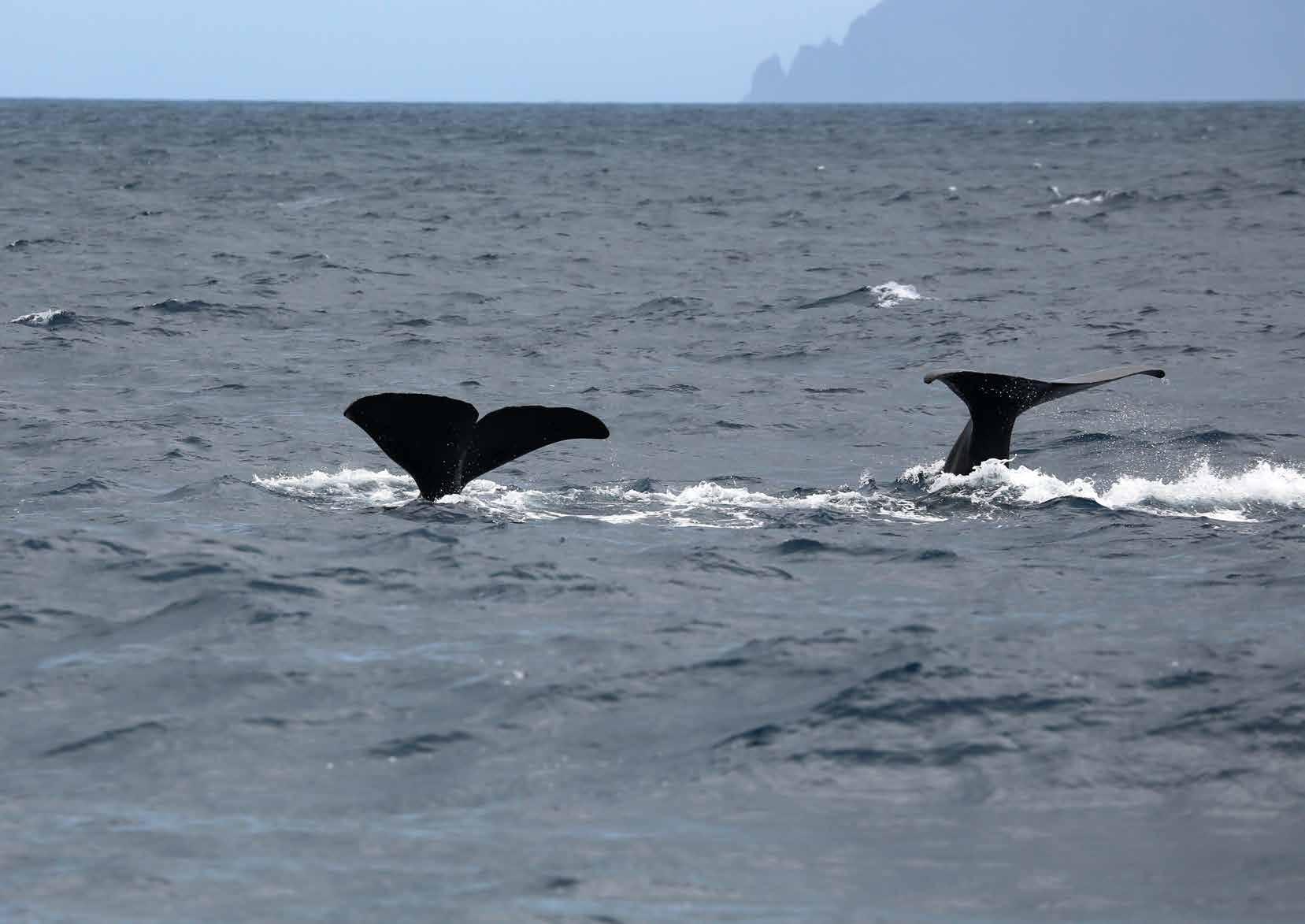
AZORES - Portugal
Fascinating creatures of the deep: Studying whales, dolphins and turtles around the Azores archipelago in the Atlantic Ocean
This turtle, dolphin & whale conservation volunteer expedition to the Azores (Portugal) will take you to the remote and spectacular Azores Archipelago in the middle of the Atlantic Ocean to study whales, dolphins and loggerhead turtles.
You will photograph sperm, blue, fin, Sei, humpback and minke whales, as well as bottlenose and Risso’s dolphins you come across and record them for local and international monitoring databases. You will also listen to whale and dolphin vocalisations. If sea conditions allow, you may also capture loggerhead turtles in the open ocean using nets and then measure, tag and release them as part of an international tagging programme. All this in an effort to elucidate the animals’ life histories and migration patterns across the oceans and assist with the formulation of effective conservation and management strategies. You will spend the day on a modern catamaran research vessel out at sea and your evenings and nights at a comfortable seaside guesthouse in the town of Horta on Faial Island.
Expedition contribution Duration Time of year Meeting point
€2590 10 days Mar/Apr 2026 Horta, Faial Island
More info and exact dates www.biosphere-expeditions.org/azores
GERMANY
GERMANY
Love / hate relationships: Monitoring the return of the wolf to the German state of Lower Saxony
This wolf conservation volunteer expedition to Germany (Europe) will take you to the beautiful lowlands of Lower Saxony, a federal state in northern Germany, to help monitor and protect the returning wolf population. Working in small teams mainly around the famously picturesque Lüneburger Heide (Lüneburg Heath) and the Wendland, you will record signs of wolf presence such as tracks and scats, as well as survey prey species such as deer and wild boar. Scat samples will be used to study wolf diet and for genetic analysis. The expedition base is a historic and remote manor house hotel with all modern amenities, right on the edge of the Lüneburg Heath.
Expedition contribution Duration Time of year Meeting point
€2490 7 days July 2026 Bremen
More info and exact dates www.biosphere-expeditions.org/germany
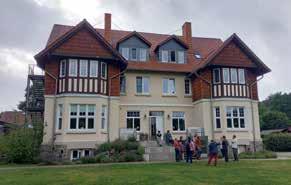
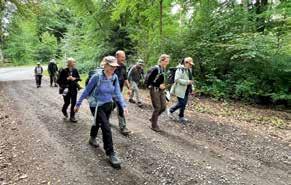
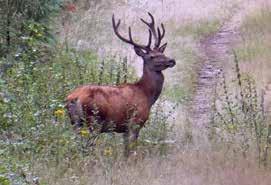
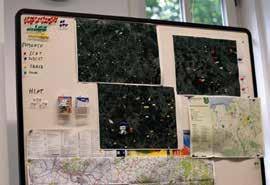
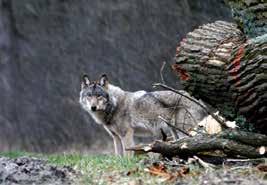
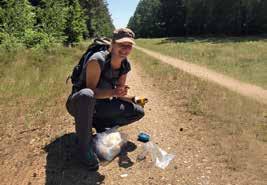
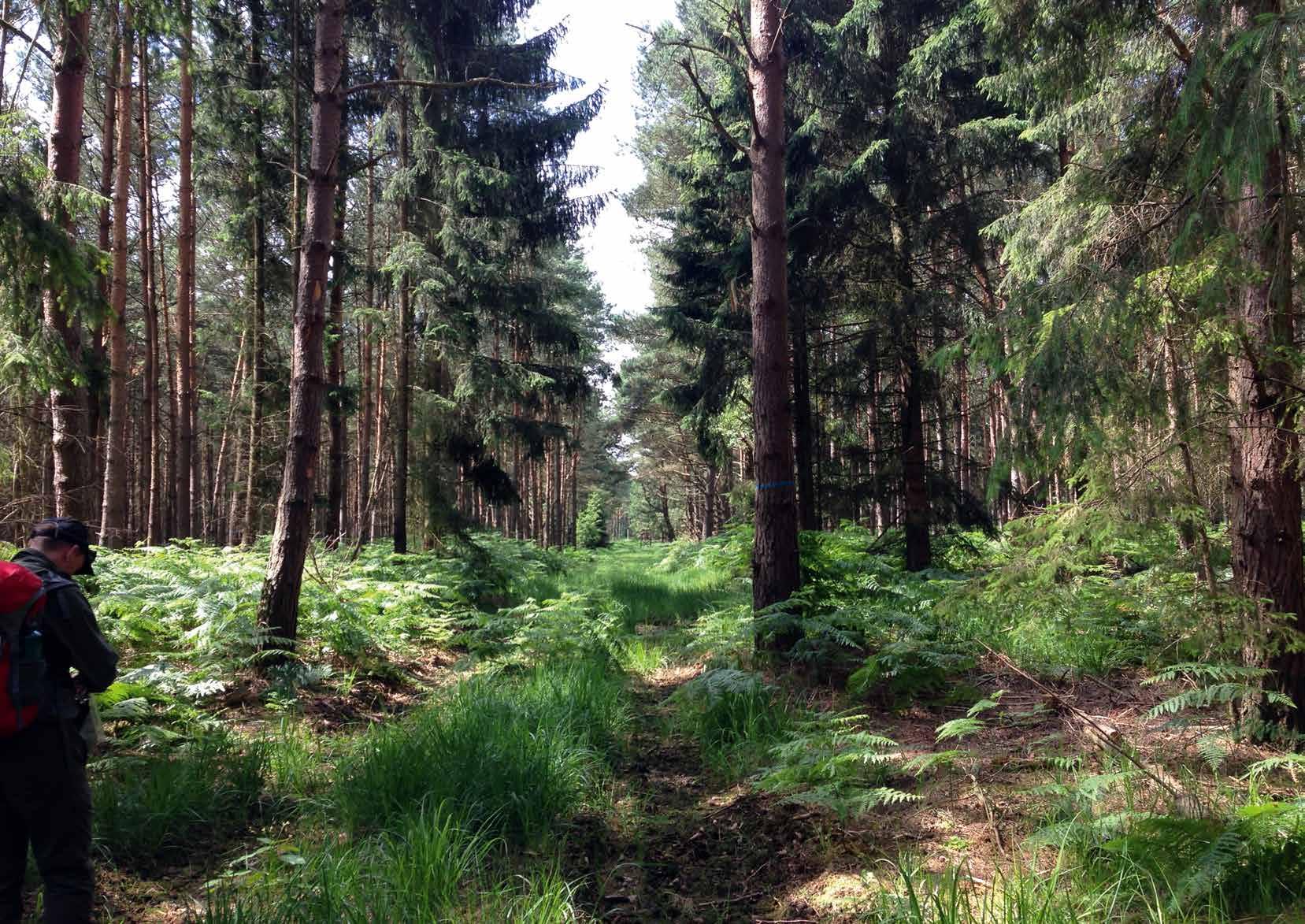
© Theo Grüntjens
MALAWI
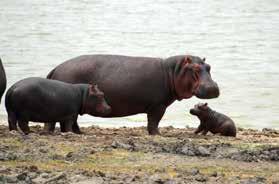
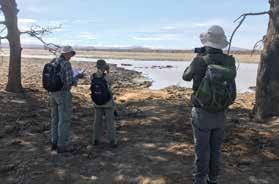
MALAWI
From elephants to cats to butterflies: Monitoring biodiversity of Vwaza Marsh Wildlife Reserve, Malawi, Africa
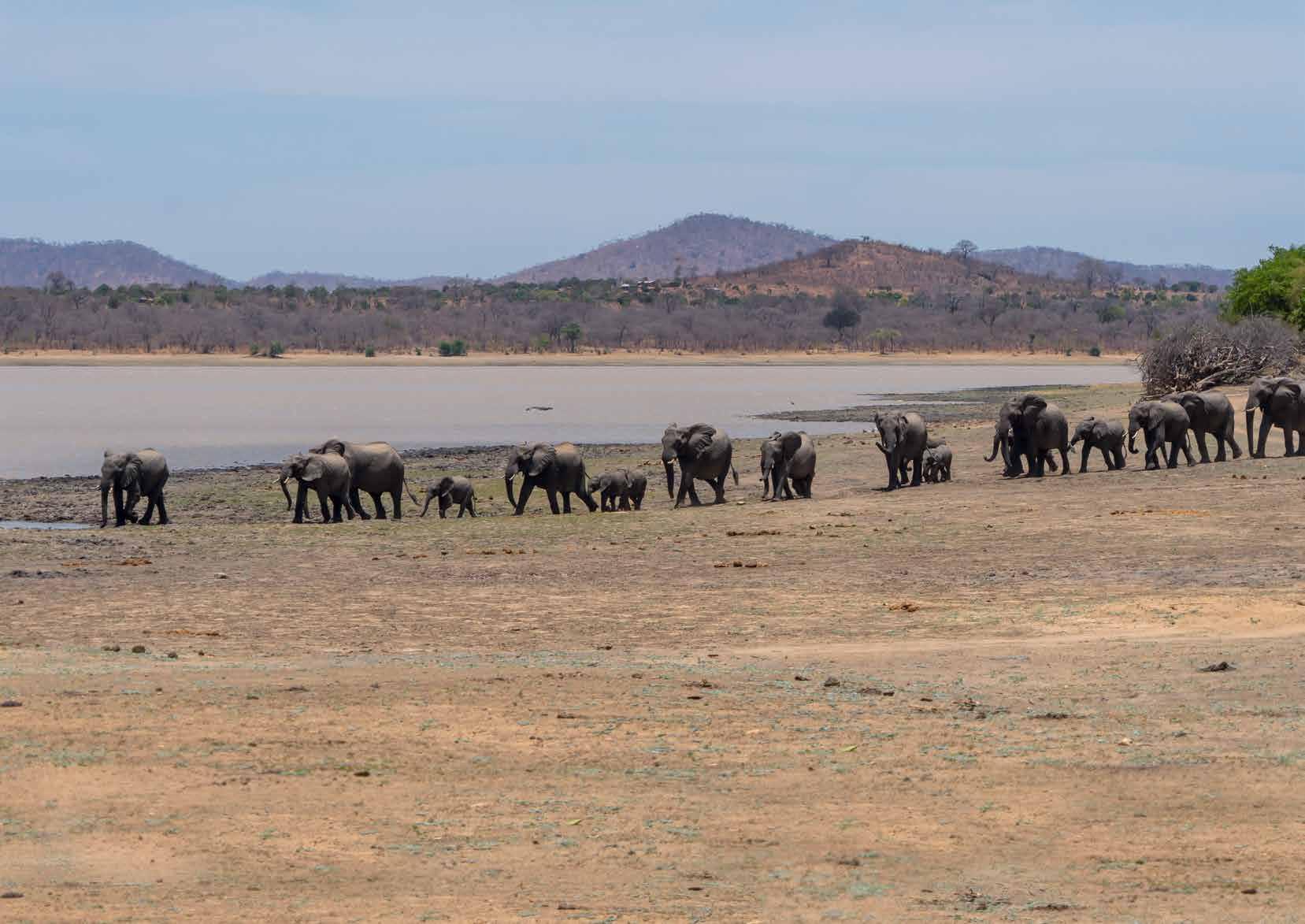

This lion, leopard, elephant and African biodiversity conservation volunteer expedition to Malawi (Africa) will take you to the little known, but species-rich and quintessentially African Vwaza Marsh Wildlife Reserve in Malawi. Species in the expedition's monitoring programme include four of the Big Five (elephant, buffalo, leopard and lion), as well as hippo, primates and antelopes. You will be working as part of an international team, based at a rustic but comfortable field camp. You will be covering ground in off-road vehicles and on foot, and conducting research activities such as live and camera trapping, target species searches, transect and species identification work, as well as data entry. All this in an effort to help local scientists assess the nature and patterns of biodiversity in Vwaza Marsh Wildlife Reserve and to inform biodiversity monitoring and management in order to protect this relatively untouched part of Africa for future generations.
Expedition contribution Duration Time of year Meeting point
€2990 13 days Sep/Oct 2026 Lilongwe
More info and exact dates www.biosphere-expeditions.org/malawi in cooperation with
MALDIVES
Little and large: Surveying and safeguarding coral reefs & whale sharks in the Maldives –Marine biology volunteering Maldives
This SCUBA diving expedition to the Maldives will take you to the beautiful 26 coral atolls that make up the Republic of Maldives. Based on a very luxurious and modern liveaboard yacht, you will help with surveying and studying the expansive reefs that make up the 1192 Maldivian coral islands, including photographing whale sharks for a photo identification project, if animals are encountered. All this because the Maldives government identified a need for further research and monitoring work as far back as 1997. Biosphere Expeditions is addressing this need with your help and will train you as a Reef Check EcoDiver. With this qualification you will then gather important reef and whale shark data and you will also be eligible to apply for PADI or NAUI Reef Check Speciality Course certification after this coral reef volunteer expedition.
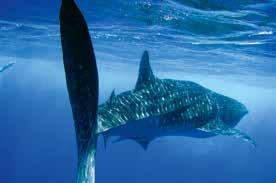
More info and exact dates www.biosphere-expeditions.org/maldives
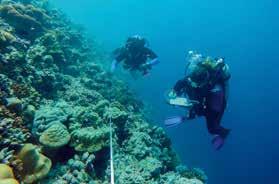
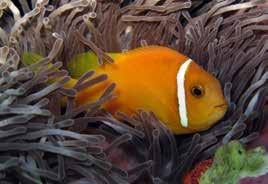
MALDIVES

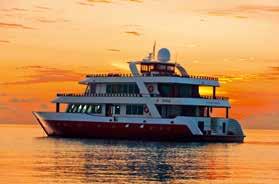
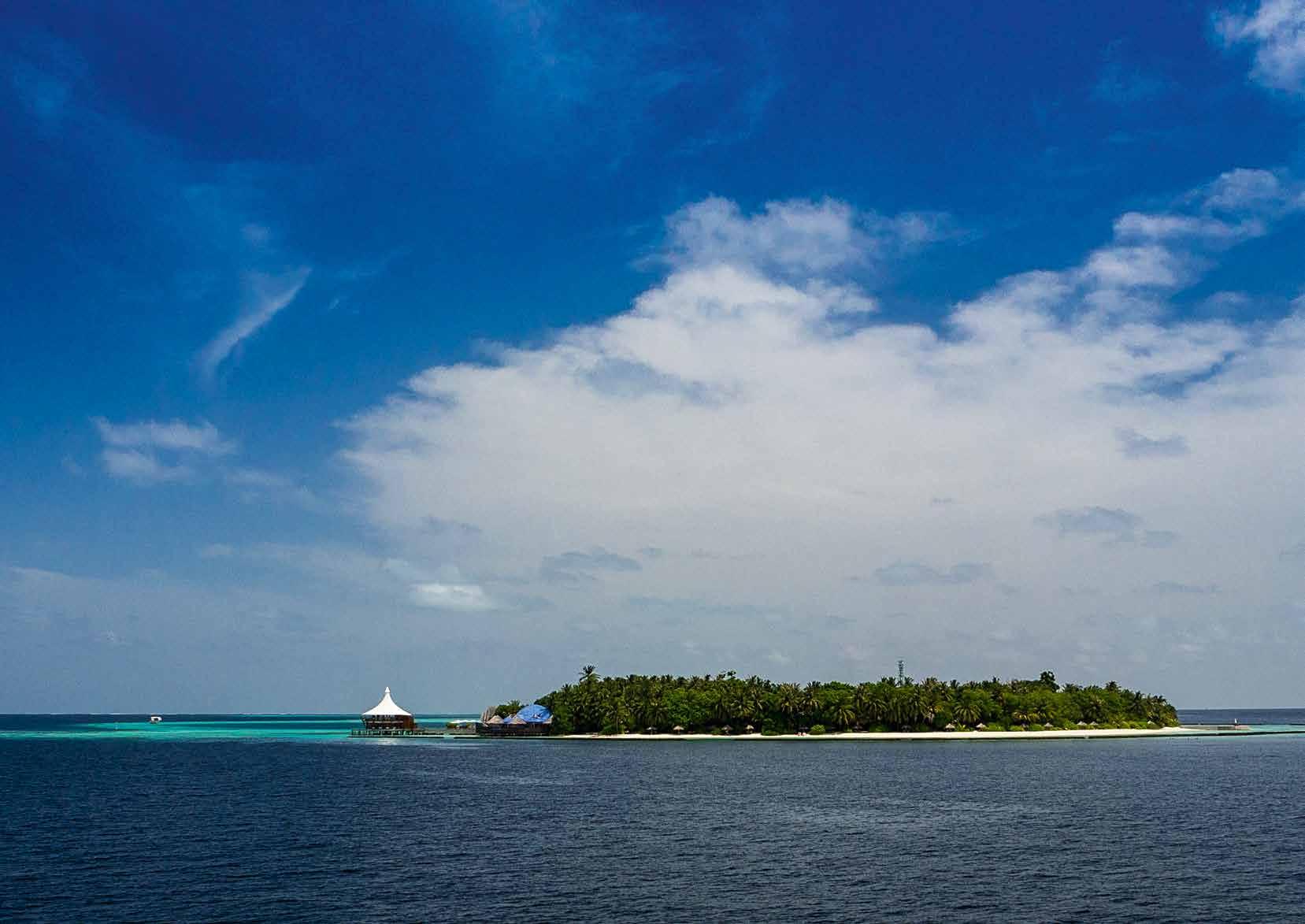
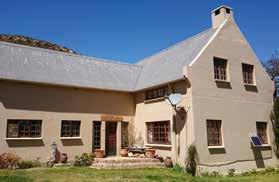
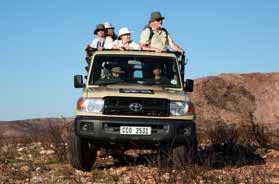
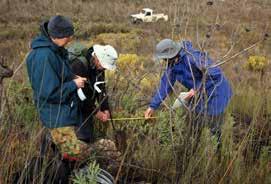
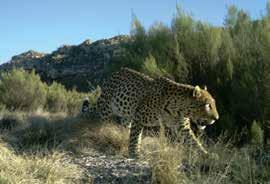
SOUTH AFRICA
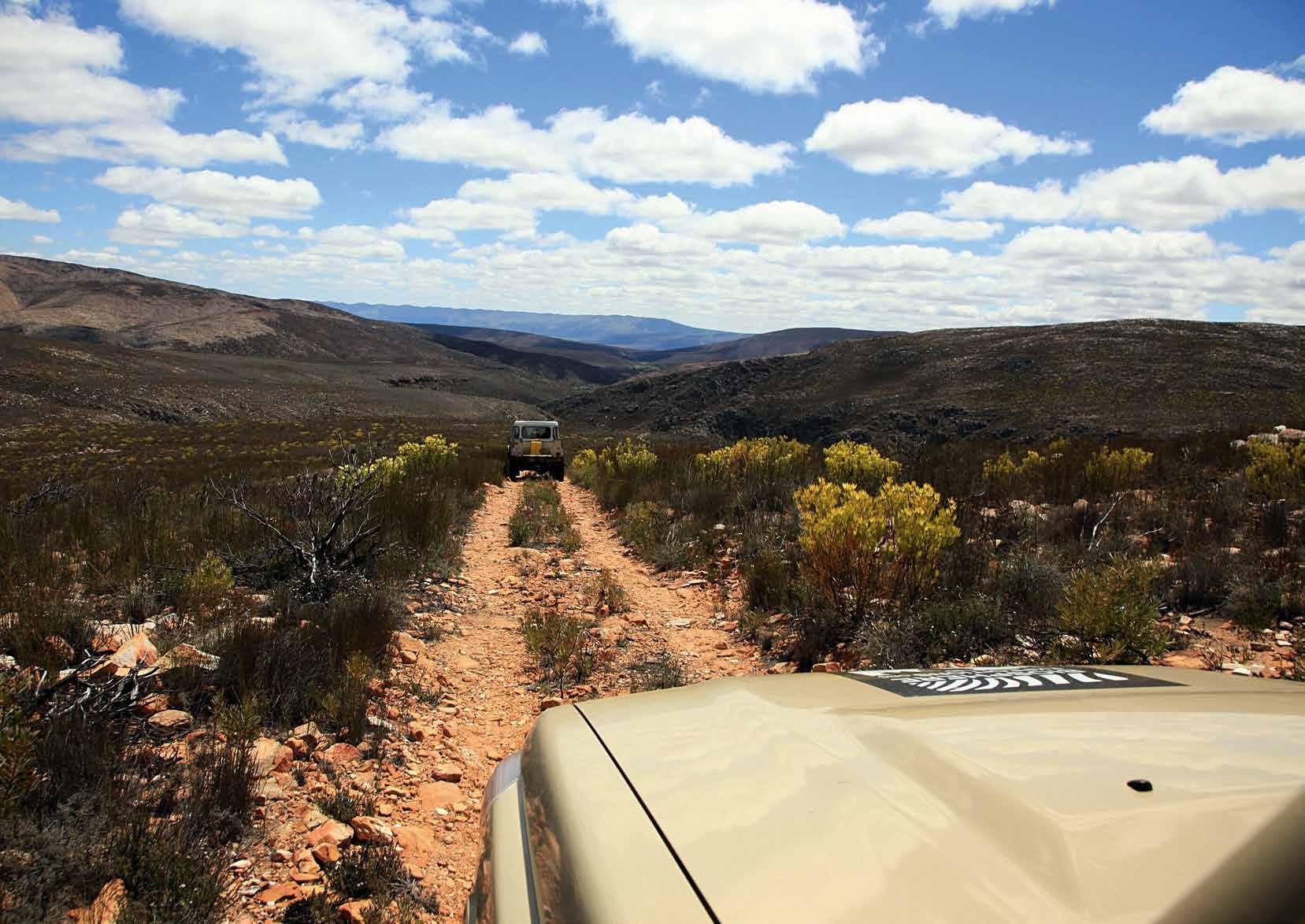
SOUTH AFRICA
Much more than just leopards: Surveying Biodiversity in the Cape Floral Kingdom of the fynbos mountains of South Africa
This expedition will take you to South Africa’s beautiful Cape Floral Kingdom (fynbos), a UNESCO World Heritage Site and the world’s only biome contained within one country, to document the biodiversity of the western Baviaanskloof wilderness area, with a particular focus on threatened and elusive Endangered mammals such as the riverine rabbit and Cape leopard, as well as birds and other fauna recorded through Coordinated Avifaunal Roadcount (CAR) transects. Based in a remote mountainous part of the Western Cape on a comfortable working farmstead with all modern amenities, you will first learn some bush skills and then conduct car and foot surveys. You will also set camera traps and document riverine rabbit presence, including habitat assessments, nocturnal spotlighting, camera trapping and incidental observations during field activities. You will also help with recording prey and mesopredator communities, including antelope, lagomorphs, rodents, jackal, caracal and other mammals relevant to ecosystem functioning and conservation management. All this in an effort to gain a more accurate understanding of wildlife distribution and trends, identify potential areas of concern for threatened species, and strengthen evidence-based conservation management within the region. Expedition contribution Duration
€2890 13 days Oct/Nov 2026 George
More info and exact dates www.biosphere-expeditions.org/southafrica
SWEDEN
SWEDEN
Beautiful Brown bears: Studying bears in the quintessentially Scandinavian woodlands of Dalarna Province

This bear conservation volunteer expedition to Sweden (Europe) will take you to the picturesque and quintessentially Scandinavian countryside of Dalarna province to help study and protect the local brown bear population. Working in small teams, in flat or gently rolling hill terrain of heath, forests and wetlands, you will find and document bear winter dens and summer day beds when the bears are away (you will be able to tell this from their GPS position or collar signals). Detailed knowledge about dens and denning behaviour is important, because it helps to avoid human-bear conflict and provides important population, reproductive and other ecological information that is critical for successful bear conservation.
Expedition contribution Duration Time of year Meeting point € 2590 10 days May/Jun 2026 Mora
More info and exact dates www.biosphere-expeditions.org/sweden in cooperation with
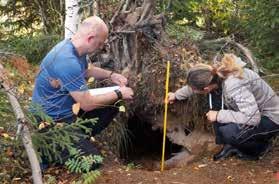
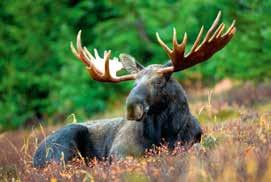
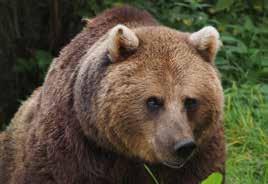
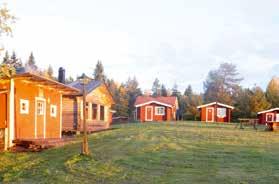
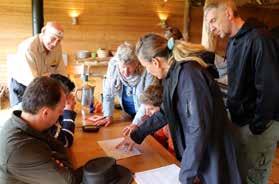
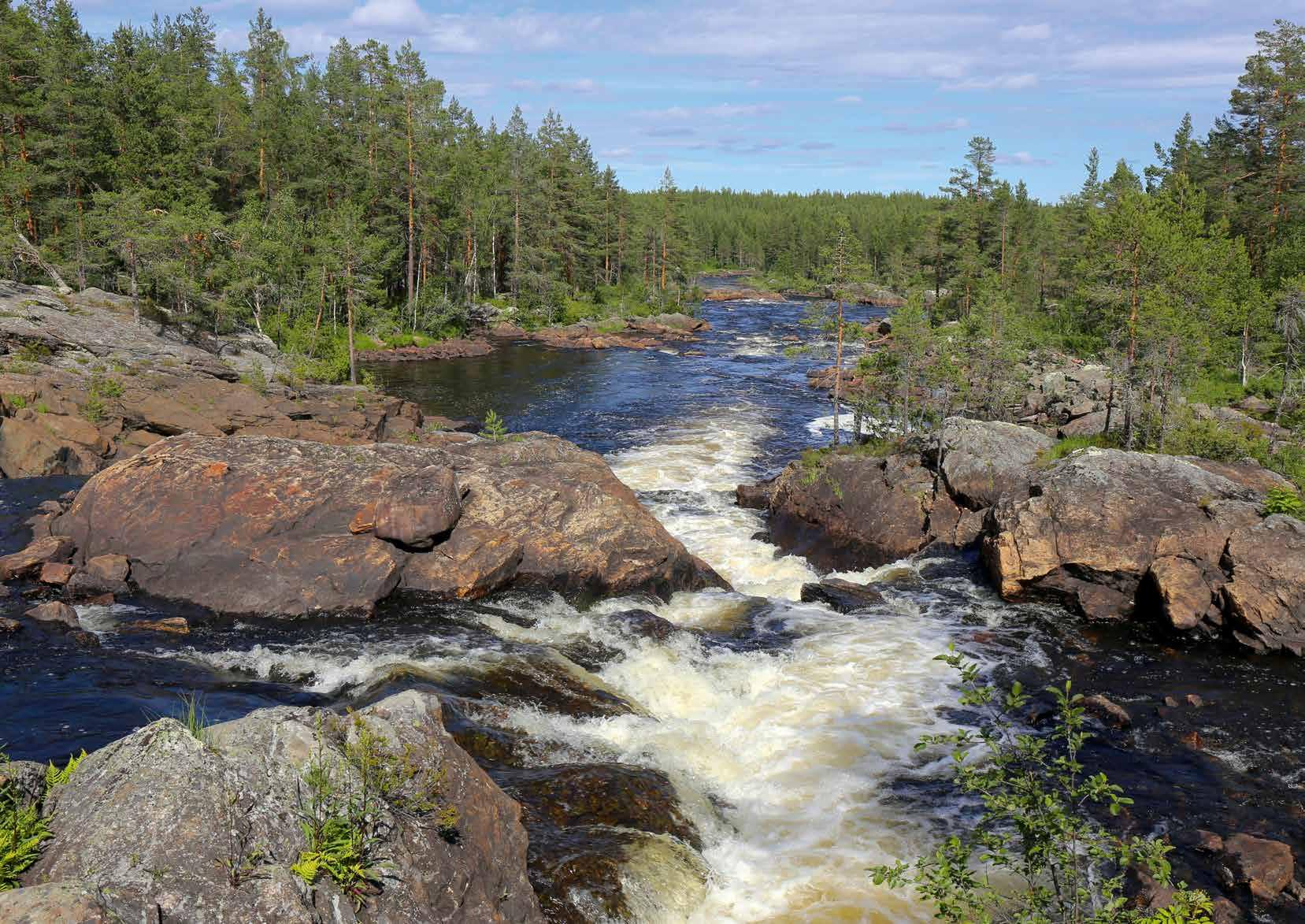
TIEN SHAN
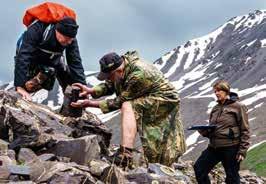
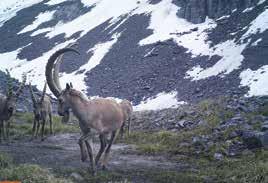
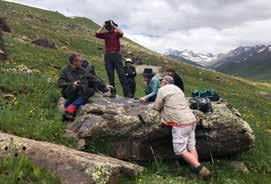
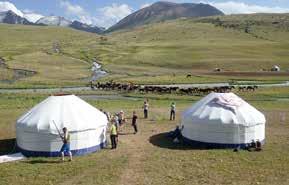
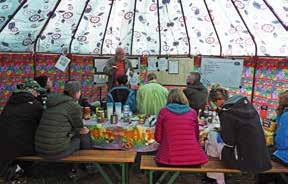
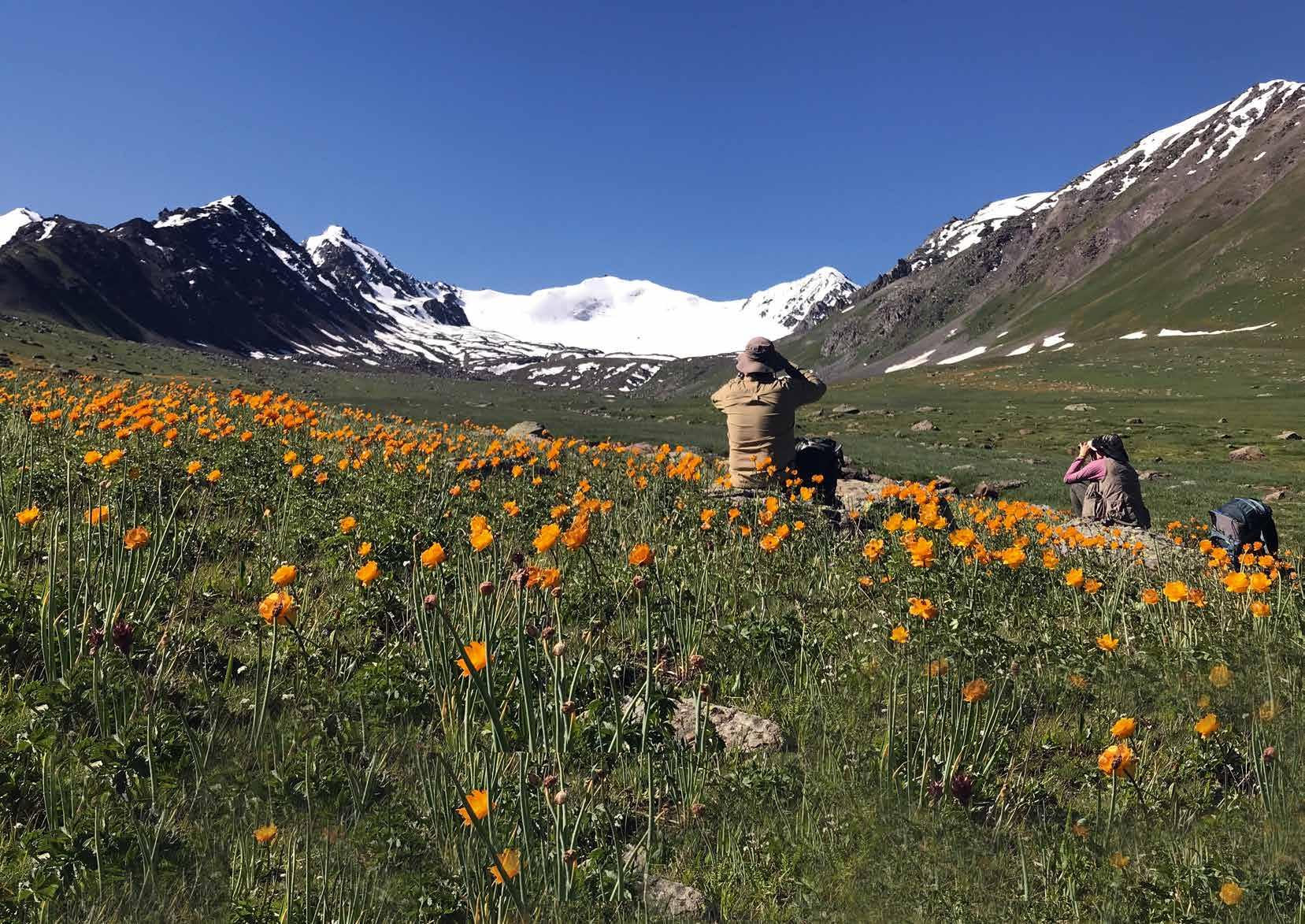
TIEN SHAN - Kyrgyzstan
Mountain ghosts: Protecting snow leopards and other animals of the Tien Shan mountains of Kyrgyzstan
This snow leopard conservation volunteer expedition to the Tien Shan mountains of Kyrgyzstan will take you to remote, spectacular and beautiful mountains to survey snow leopards, as well as their prey animals such as the argali mountain sheep, the Central Asian ibex, marmots and others. You will be working as part of a small international team from a mobile tented base camp set at various locations and altitudes of around 2000 m (where altitude sickness is not an issue). You will be covering ground in the expedition vehicles and on foot, looking for tracks, kills, scats and the animals themselves, and setting camera traps.
True expedition-style base camp conditions, testing but satisfying mountain surveying, off-road driving and the breathtaking high mountains make this a challenging, but very rewarding expedition.
Expedition contribution Duration Time of year Meeting point
€2990 13 days Jun-Aug 2026 Bishkek
More info and exact dates www.biosphere-expeditions.org/tienshan
1
Our planet is in an undeniable, human-induced crisis, heading towards the wall at high speed.
Here are our top 5 tips of what you - as an individual and a global citizen and inhabitant of this planet - can do right now to help ensure our children and grandchilden can still inherit a liveable planet.
More details and links with background information about this is at www.biosphere-expeditions.org/5tips
Stop flying
Flying is very energy-intensive, dependent on fossil fuels and bad news for the planet. Because aircraft emissions are released high in the atmosphere, where they trigger chemical reactions and atmospheric effects, they heat the planet more than any other industry. At the same time, generous subsidies mean that passengers do not see the true environmental costs of their air travel. To make matters worse, emissions from aviation are growing faster than any other mode of transport. If unmitigated, aviation emissions are expected to double or triple by 2050 and in doing so consume up to one-quarter of the global carbon budget under a 1.5°C scenario. And carbon offsetting is just a fig leaf. All this means that you should stop flying or reduce flying to an absolute minimum. For example, we recommend that you choose an expedition that you can reach by car or train instead of one you have to fly to. All our staff only fly if absolutely necessary.
2 3 4 5
Stop eating meat

Raising meat for human consumption requires 160 times more land and causes 11 times more greenhouse gas emissions when compared to crops like wheat, rice or potatoes. Shifting to a plant-based diet will reduce global land use, free up land to restore depleted ecosystems, and successfully feed the world population. For example, on a vegan diet, the UK could feed 220 million people. In addition, a meatless diet also boasts improved overall health and reduces grocery bills. And this is even before we consider animal welfare issues and the ethics of rearing and killing animals for their meat. Like giving up smoking, this is a no-brainer and there really is no reason to continue eating meat (not even the enduring protein myth). This is why all our expeditions are vegetarian. So switch to a vegetarian or vegan diet now, then buy locally produced plant-based food and you are on a very significant winner for the planet.
Come off the fashion bandwagonbuy no more than three new items of clothing per year
The environmental impact of the fashion industry is huge, but not well known. It is responsible for 8-10% of humanity’s carbon emissions – more than all international flights and maritime shipping combined. It uses some 93 billion cubic metres of water annually – enough to meet the needs of five million people – contributing significantly to water scarcity in some regions. And it produces around 20% of industrial waste water pollution worldwide. Do not feed that monster any longer and come off the fashion bandwagon, especially fast fashion.

Get rid of your car
Cars have a significant footprint - from very environmentally costly production to burning fossil fuels with harmful emissions that drive climate change and contribute to poor air quality, to standing around 95% of the time, clogging up our cities, to difficult recycling and filling up landfills. If you live in a city with car share options, then switch to this. If you live rurally, use your existing car until end of life, use ride share or car pool options, and travel on public transport whenever you can. Biosphere Expeditions has gone down the car free route: we no longer own any cars and now use car share, car hire or existing vehicles of staff, partners or participants whenever we can.
Get informed & join the fight
Make yourself aware of and recognise the dire situation the planet and humankind is in. The NASA and Monbiot sites are a good starting point, as are our 2022 and 2023 annual magazines. But do not despair, channel your frustration into activism instead! Tell your politicians and leaders what you think and ask them to do more of the things you care about. Be aware, though, that this might not work as neoliberalism and corporations have captured our democratic processes and institutions.
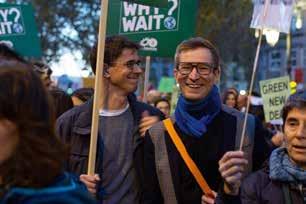
Given the situation we are in, it has been argued that only rebellion will prevent ecological collapse, and we tend to agree. So consider joining revolutionary organisations based on activism and civil disobendience (such as Eradicating Ecocide, Client Earth, Extinction Rebellion and Fridays for Future), because facts about our ecological crisis are incontrovertible and sitting on our hands is simply no longer good enough. We need 3.5% of the population to reshape society and we have a duty to act to save our planet from sliding into destruction, if we want to be able to look our grandchildren in the eye!
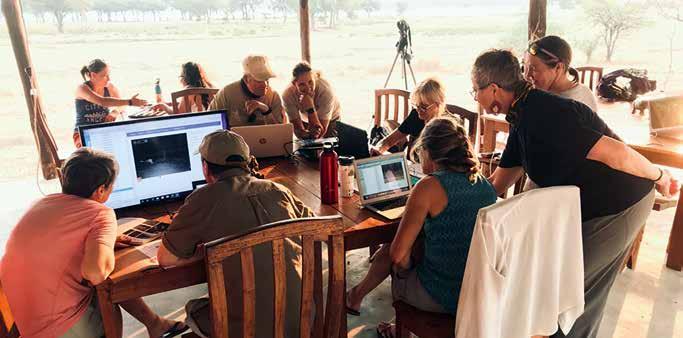
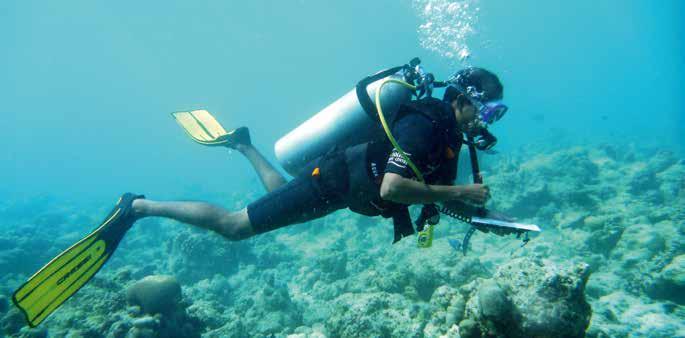
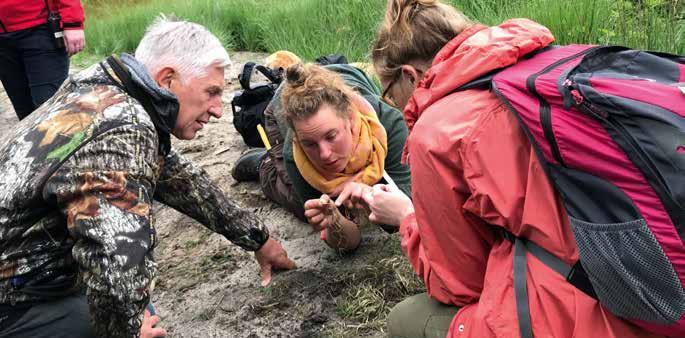

Perhaps you are reading this on expedition and feel inspired to change your habits in a positive way. Perhaps you are reading this at home and want to support Biosphere Expeditions in additional ways. Whatever your motivation, here are some tips on what you can do for the planet, for yourself and for Biosphere Expeditions.
BE (radically) GREEN
1
The undeniable crisis our planet is in demands more action and activism. It demands a radical rethink of how we run our lives, societies and the way we treat our planet. Our Top 5 Tips list the top actions each of us can take: stop eating meat, get rid of your car, stop flying (to expeditions and instead select a more local one), come off the fashion bandwagon and become an activist! Our 20 tips on how to be (radically) green go from the light green of what we should all do as a bare minimum, to the dark green rejection of neoliberalism and the fallacy of endless growth, to joining the revolution that is gathering pace as we speak. Because sitting on our hands is simply not an option any more. We have a duty to act if we want to be able to look our grandchildren in the eye.
SPREAD THE WORD www.biosphere-expeditions.org/domore#words
2
Help us to help wildlife and people across the world by spreading the word. Word of mouth is by far the best way to get people excited. Talk to your family, friends, and colleagues about your experience and encourage them to join in too.
Social media
Share your experience, comments, pictures and videos on your social media and ours. This really does help to spread the word about us and our conservation work.
Testimonials
Independent reviews are very important for us, not just for those thinking about joining an expedition, but also for our staff, scientists and partners who draw great motivation and encouragement from them. So we would be very grateful if you could write a review on our Facebook review page and/or on GreatNonProfits.
Hold events & talks
Host an event for us in your neck of the woods, or give a presentation. Examples include holding a drinks reception in a local pub, a dinner party at your home, a talk/presentation at your local wildlife or conservation society,
DO MORE
The full text with explanations, background, references and links is also on www.biosphere-expeditions.org/domore
a get-together at your professional organisation or club, or anything else you can think of. We can send you support materials such as presentations, as well as postcards and brochures that you can hand out at your event. In addition, a staff member of Biosphere Expeditions may be able to attend with enough prior notice.
Work with your local media
Local newspapers and radio stations are always looking for new stories, and they are very likely to want to hear about your experiences. Biosphere Expeditions has an extensive storage of high resolution photos and broadcast quality HD films, so please contact us if you need pictures or film clips to illustrate your story or if you would like help with your press release or media work.
Blogs
Are you a blogger? If so, why not create a blog about Biosphere Expeditions and/or your expedition experience and link it through to us. This will also help to get the word out there. If you do create a blog, make sure you let us know about it, so we can link back to you.
Picture & video sharing sites
Videos and pictures work really well in getting people's attention. If you are putting your expedition pictures or videos on a sharing site such as Instagram or YouTube, then please also make sure you link through to us or tag your pictures to Biosphere Expeditions as this will also help to spread the word.
Video diaries
We would like to build up a library of expedition team members' personal video diaries. There are no limits to your creativity other than we ask that your final cut is no longer than 6 minutes.
CONTRIBUTE YOUR TIME & SKILLS www.biosphere-expeditions.org/ domore#skills
3
We always need people with skills who can help us out. Examples are skills in the outdoors, accounting, graphic design, IT, social media, research, etc.

JOIN THE FRIENDS OF BIOSPHERE EXPEDITIONS
www.biosphere-expeditions.org/friends
The Friends of Biosphere Expeditions are people who feel passionate about providing continuous support to our critical wildlife conservation and research projects across the globe. By joining the Friends you can play a vital part in making a real difference to the survival of our planet’s endangered species.
If you can't take part in a full-blown expedition yet, or if you have already been with us and would like to stay involved, or if you would simply like to be part of what we are doing, then become a Friend of Biosphere Expeditions today!
Help us to support critical wildlife conservation and research projects across the globe from a monthly membership fee starting at €10 | £10 | US$12 | AU$15. Depending on your country of residence, your membership fee may be tax-deductible (for example membership fees to our US 501(c)(3) charity, or our German e.V. charity, where we can issue tax-deductible receipts).
To join the Friends, just send us an e-mail. We will then sort out the rest together.
Membership benefits
Friends membership benefits include expedition and events discounts, the Biosphere Expeditions Magazine, first notification and preference for last-minute expedition places, news and updates on how your membership fee is making a difference to our conservation work in the field and much more.
Where does my membership fee go?
Wondering where your money will go? We guarantee that 100% will go into supporting conservation. We can do this because we are a small, flexible organisation with no steel and glass headquarters to maintain or bureaucratic dinosaurs to feed. Whenever we make a significant expenditure on one of our conservation projects from the Friends’ funds, we will let you know in a clear and transparent way. For example, we may spend some of the fund to enable scientists from different projects to present the findings of their Biospheresupported projects at international conservation conferences, or we may spend some of the fund on printing education materials for local people, or on training up a local conservationist under the guidance of our project scientists, or creating placements on our expeditions for local students and people. DONATE
www.biosphere-expeditions.org/domore#donate
Our work on the ground of course continues after you have left. If you would like to donate to a particular expedition or Biosphere Expeditions as a whole, then please get in touch. We can then discuss how and what tax benefits you may receive.
Depending on your country of residence, your membership fee or donation may be tax-deductible (for example membership fees or donations to our US 501(c) (3) charity, or our German e.V. charity, where we can issue tax-deductible receipts or German "Spendenbescheinigungen"). We also have a page on employer match-giving and personal taxation which you may want to check.
In-kind donations
You may have laptops, GPSs, video cameras, binoculars or other items to give away, which we or our partners can use. If so, please let us know and we will either use them ourselves on our wildlife conservation projects or pass them on to our local partners.
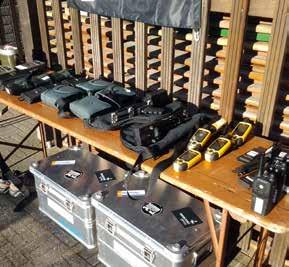

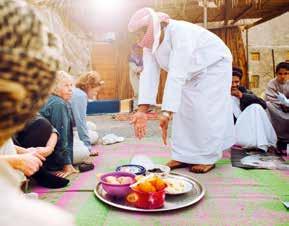
RAISE FUNDS
www.biosphere-expeditions.org/ match-giving#fundraising
Involve your company
6
Does your company publish a company magazine? If so, the editor would probably be very interested to hear from you as they are always keen to cover interesting features relating to their members of staff.
Many employers, particularly in the USA and Canada, but also elsewhere, will match-fund charitable contributions made by their employees, retirees and employees’ spouses. In Biosphere Expeditions' case this means that your employer may match-fund your expedition contribution payments and other donations you make to Biosphere Expeditions. Some employers also provide matching funds to support employee volunteer hours.
Some companies also have grants for non-profit organisations such as Biosphere Expeditions, so why not talk to relevant people in your company? You may have a Corporate Responsibility Manager, or an Environmental Manager or a Communications or Sustainability Manager who may be able to help you.
Direct fundraising
Support critical wildlife conservation and vital research by raising funds for Biosphere Expeditions. There are many ways to do this. Why not organise an event, or take part in a sporting endeavour? It’s fun, a great way to meet people and to do something different to challenge yourself. By raising funds you can make a longlasting contribution to our wildlife conservation work worldwide.

JOIN AN ETHICAL CITIZEN SCIENCE PROJECT
Locally
7
Volunteer at your local nature park or reserve and help support organisations that look after our wild places. Many organisations will train volunteers to undertake physical work such as scrub removal or tree planting, as well as organising surveys of different species, so go along to your local nature organisations and see if you can take part in some invasive plant removal or a butterfly survey, or help count frogs, birds or a myriad of other species.
Abroad
Combining conservation with your holiday is a growing trend. Combining some time away from work or domestic chores with a great outdoors experience is good for our mental health as well as the environment. NGOs such as Blue Ventures, Operation Wallacea and Biosphere
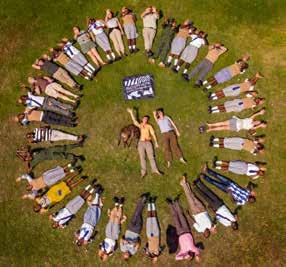
Expeditions organise trips to many places around the world in support of working in remote and challenging places so that you can work alongside them and help them out in the field. Remember not to fly, if at all possible, or, if you have to, make your flight really count!
USE OUR AFFILIATES NETWORK www.biosphere-expeditions.org/affiliates
8
You can also support Biosphere Expeditions through the affiliates network. Whatever the affiliate and our arrangement with them, commissions and perks gained from you using their services will always be ploughed back into our research and conservation work and to benefit our local partners wherever possible. n
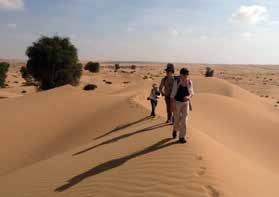
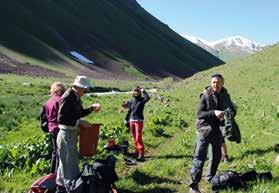
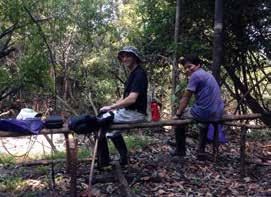
ABOUT US
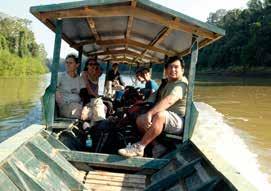
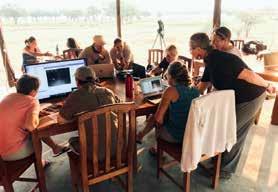
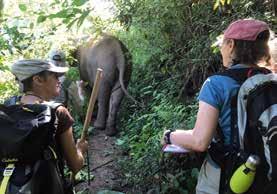
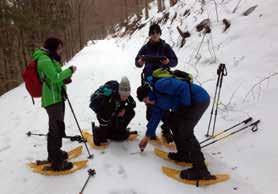
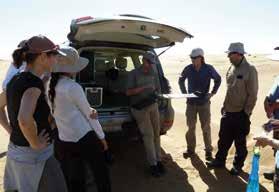
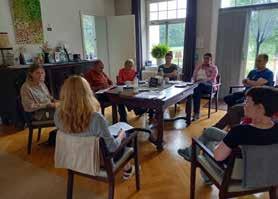
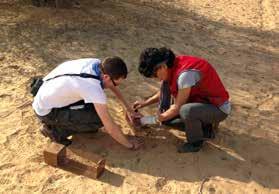
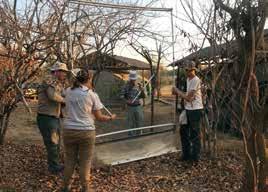
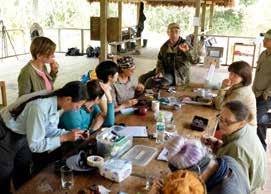
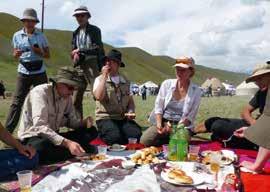
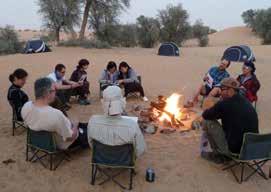
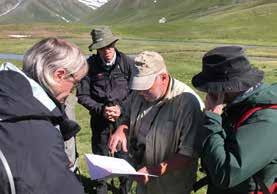
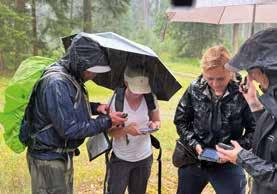
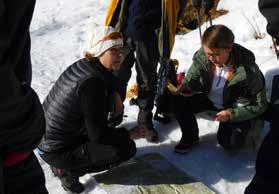
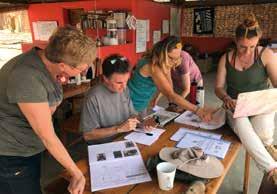
Officially accredited member of Biosphere Expeditions is an international non-profit conservation organisation registered in Australia, England, France, Germany, Ireland and the USA.

– UN Environment Programme
– International Union for the Conservation of Nature
– European Citizen Science Association
CONTACT US
www.biosphere-expeditions.org www.biosphere-expeditions.org/offices
Australia
✎ australia@biosphere-expeditions.org
France
✎ france@biosphere-expeditions.org
Germany
✎ deutschland@biosphere-expeditions.org
Ireland
✎ ireland@biosphere-expeditions.org
North America
✎ northamerica@biosphere-expeditions.org
UK
✎ uk@biosphere-expeditions.org