THOMAS J. WATSON COLLEGE OF ENGINEERING AND APPLIED

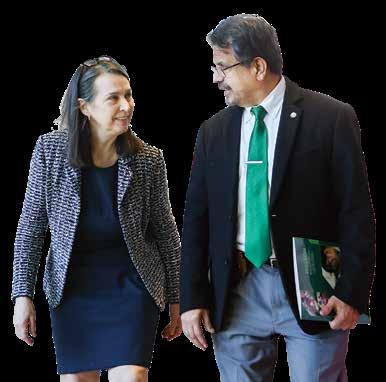
Dean Atul Kelkar has welcomed President Anne D’Alleva to campus and admires her ideas about Binghamton University’s future.

As I close out my second year as Watson College dean, it’s gratifying to see how much has been accomplished while also being excited about what comes next.
Building on Watson’s legacy of 40-plus years (as well as Binghamton University’s eight remarkable decades), we are focused on many new initiatives while still providing a “Public Ivy” education for the next generation of engineers and computer scientists. We have an outstanding partner in President Anne D’Alleva, who came to Binghamton last fall and shows a clear vision for how the University can grow as a world-class institution.
An exciting development this spring will elevate Binghamton’s profile: The New York Center for AI Responsibility and Research, the first independent artificial intelligence research center at a U.S. public university, has been established with a $30 million commitment from Tom Secunda ’76, MA ’79, co-founder of Bloomberg L.P., and a $25 million capital investment from Gov. Kathy Hochul and the New York State Legislature.
The new center will expand current research that advances AI for the
public good in all disciplines, and Watson will be at the forefront.
Two generous gifts will establish endowed professorships starting this fall. The positions funded by Geraldine MacDonald ’68, MS ’73, LittD ’17, and Subhachandra Chandra, MS ’95, and Nandita Chandra will give faculty more resources to conduct research and succeed at the beginning of their academic careers. The new Cheryl and John Mirabito Family Faculty Scholar Endowment will similarly support innovation and educational excellence for the School of Systems Science and Industrial Engineering. Watson also is expanding our online graduate programs. This fall, students can get a master’s degree in computer science or information systems from anywhere — learning from the same outstanding faculty, but at their own pace and with plenty of opportunities to connect with instructors and fellow students. The CS and IS programs join our long-standing online degrees in healthcare systems engineering, industrial and systems engineering, and systems science. Earlier this year, U.S. News & World Report ranked our online graduate engineering programs #33 in the nation.
In this year’s Watson Review, we show how faculty take cutting-edge discoveries to market through startup companies. We meet undergraduates who contribute to innovative research and graduate students who built a new system to help police investigate crimes more effectively.
We talk to Kuang-Ching “KC” Wang, our new Professor of Empire Innovation and director of the School of Computing, about helping to shape the internet over the past 25 years and defining what comes next.
We also highlight two outstanding alumni: Rocco Passionino ’91, who has created digital special effects for dozens of television shows and films; and Melissa Mendoza-Seale, PhD ’22, whose career as a biomedical consultant still allows time for the lab work she loves.
As always, we are very grateful for your support and welcome your feedback. Please stay connected, stop for a visit, and never hesitate to get in touch!
Thank you!
Atul Kelkar Dean, Thomas J. Watson College of Engineering and Applied Science
THOMAS J. WATSON
COLLEGE OF ENGINEERING AND APPLIED SCIENCE
DEAN
Atul Kelkar
SENIOR ASSOCIATE DEAN FOR ACADEMIC AFFAIRS AND ADMINISTRATION
Peter J. Partell, MA ’97, PhD ’99
ASSOCIATE DEAN FOR RESEARCH, CORPORATE ENGAGEMENT, AND ENTREPRENEURSHIP
Kartik Gopalan
ASSOCIATE DEAN FOR GRADUATE STUDIES
Dmitry Ponomarev, PhD ’03
SENIOR ASSISTANT DEAN FOR FINANCE AND HUMAN RESOURCES
Lisa Gallagher ’89, MBA ’92
SENIOR ASSISTANT DEAN FOR STRATEGY AND EXTERNAL AFFAIRS
Elizabeth Kradjian
ASSISTANT DEAN OF ACADEMIC AFFAIRS
Deborah Howell
ASSISTANT DEAN FOR RESEARCH
Katarzyna Mazur
WATSON ANNUAL REPORT
EDITOR
Chris Kocher
ART DIRECTOR
Burt Myers
PHOTOGRAPHER
Jonathan Cohen
VICE PRESIDENT FOR COMMUNICATIONS AND MARKETING
Greg Delviscio
SENIOR DIRECTOR OF CREATIVE SERVICES
Gerald Hovancik Jr.
COPY EDITORS
Natalie Blando-George Eric Coker
Ethan Knox ’20

Volume 17 Spring 2026
2 From idea to startup Research innovations inspire business aspirations
6 Digital wizard Rocco Passionino ’91 has created digital effects for dozens of films and television shows
10 The connector Meet Kuang-Ching “KC” Wang, the new director of the School of Computing
14 Champions of AI innovation
22
Tech pioneer gives back Geraldine MacDonald ’68, MS ’73, LittD ’17, establishes endowed professorship in computer science
24 Detective work
Students help police create new software to better manage crime investigations
29 Investment in the future
Cheryl and John Mirabito Family Faculty Scholar Endowment to aid School of SSIE
30
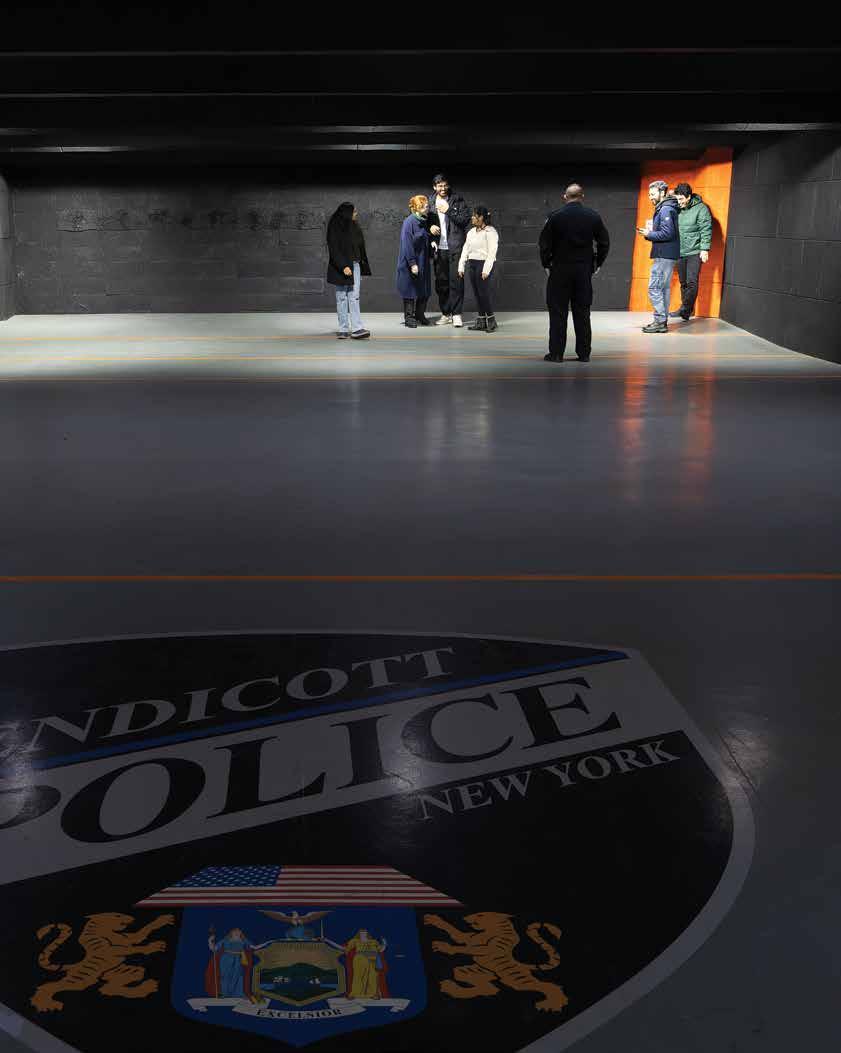
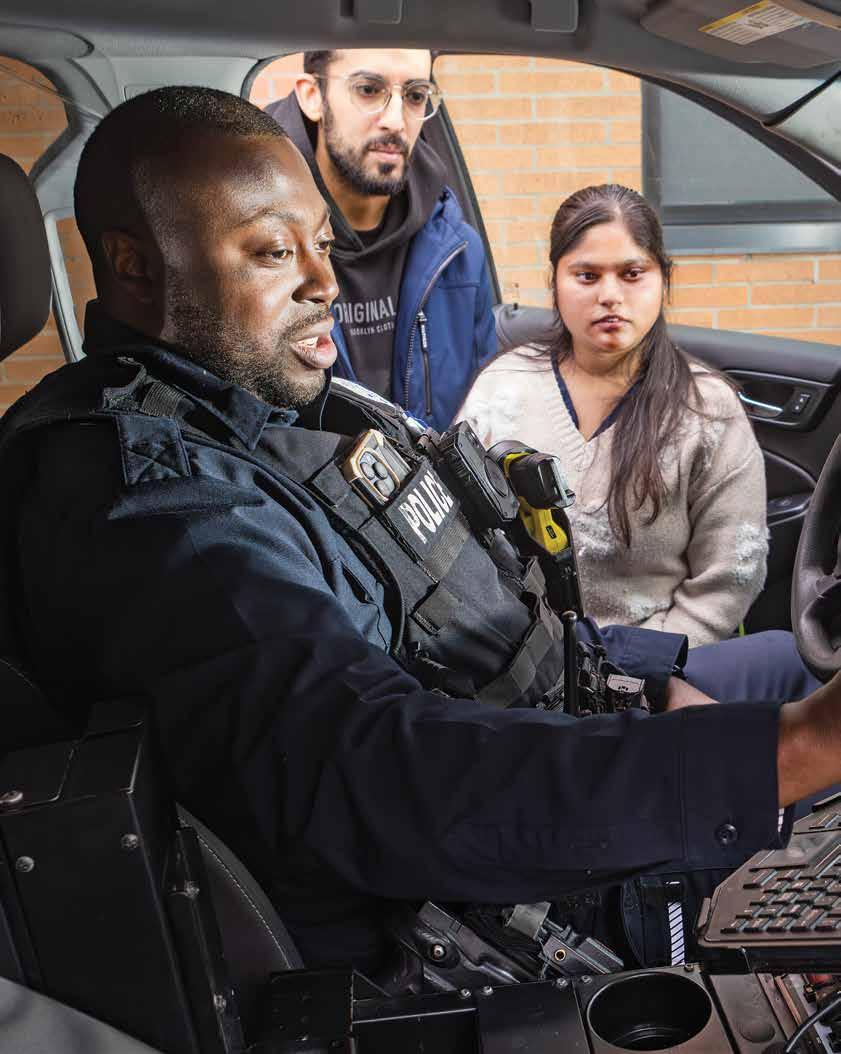
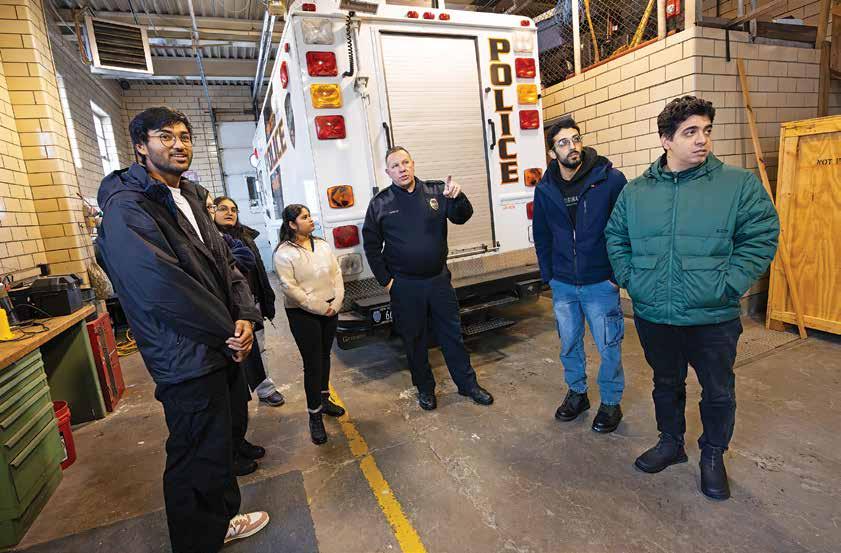
Watson College students get a look around the Endicott Police Department shooting range during a tour last fall. ON THE COVER
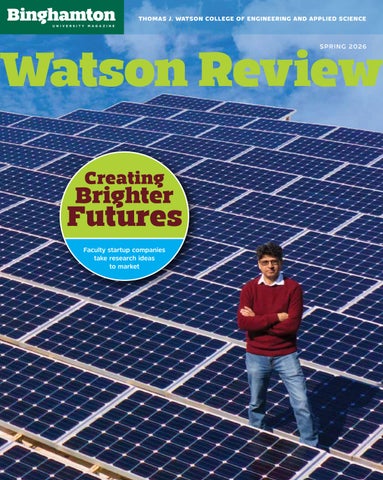
Professor Tara Dhakal, a faculty member in the Department of Electrical and Computer Engineering and the director of the Center for Autonomous Solar Power (CASP), stands among the solar panels on the roof of the Engineering and Science Building at the Innovative Technologies Complex. His research has inspired him to start a company to design and produce better solar panels.
Subhachandra, MS ’95, and Nandita Chandra support research with endowed professorship
16 Undergrads shape the future
Many Watson students help faculty with real-world research
Making medical devices safer
Melissa Mendoza-Seale, PhD ’22, leverages her biomedical degree as a technical consultant
By Katie Liu
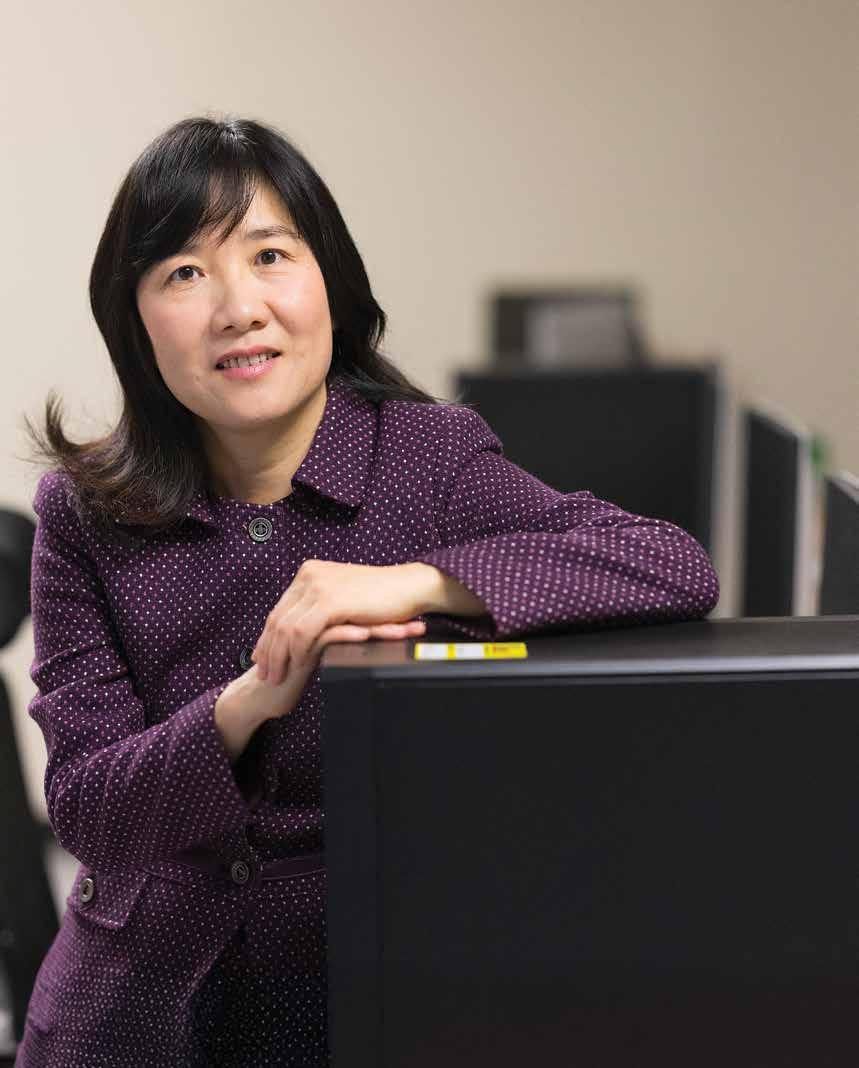
Before becoming a professor, Nancy Guo worked as a doctoral student with NASA. Her job was to predict which parts of NASA’s robust satellite system were most likely to fail, so engineers could fix problems before they began.
Anticipating failures proved troublesome. Combing through every single line of the millions of lines of code would take years to finish. Devising AI models that would do just
that — pinpoint which components were most likely to fail in deployment — was the basis of her project.
The same principles eventually became the foundation of Guo’s next venture: a startup company with software targeting cancer cells rather than glitches in code.
“This is perfectly aligned with cancer metastasis or patient treatment response,” Guo says, “because you don’t know how they’re going to respond. You don’t know which tumor will metastasize, so we have to use available data to predict that.”
Guo, now a Professor of Empire Innovation at Watson College’s School of Computing, is one of several faculty members who juggle academics with enterprise. She’s seen projects through each stage of their lifecycle: inception, middle age, then conclusions.
“There is an end to every project. Eventually, when it’s mature, that’s the time you have to think about a different direction, because there is nothing more to research from an academic point of view,” Guo says. “That is the phase when entrepreneurship should kick in.”
Guo founded her company, SOSTOS, in 2020 following a grant from the National Institutes of Health. Now staffed by former students, SOSTOS continues Guo’s longtime dream to better understand human bodies through computational science. It targets lung and breast cancer, screening patient data and medical records to help doctors determine better treatment possibilities beyond current options.
“You don’t always have access to resources or manpower to analyze all the data,” she says. “Those are the critical gaps we want to fill.”
Startups are the accumulation of years’ worth of work, but they can also offer glimpses into promising shifts in the field. That, at least, is what Associate Professor Scott Schiffres from the
Department of Mechanical Engineering sees with his company, ChipAdd. Schiffres is now on leave from the University, backed by funding and mentorship through the highly competitive Activate Fellowship, to pursue his technology full throttle. His work improves the cooling capabilities of microchips by 3D-printing structures directly onto the devices, rather than using bulky heat sinks.
This comes in time for the AI boom: AI chips are consuming as much power as an electric cooktop, over an area the size of a credit card, while racks the size of a closet are consuming as much energy as 500 American households. Data centers can use as much energy as major cities.
“Liquid cooling used to have lots of resistance from industry experts, but now it is well-established. What we’re doing is the next step,” Schiffres says. “That might seem a little bit crazy now, but we have conviction that it’s going to be very important for the market in the future.”
But while building a company from nothing is already tough, balancing that with the rigors of academia is tougher. For Professor Tara Dhakal, a faculty member in the Department of Electrical and Computer Engineering and director of the Center for Autonomous Solar Power (CASP), seeing the bigger picture helps him shoulder the task.
“The most rewarding part is knowing that you are doing something that can have a huge impact. The research doesn’t just disappear. When you conduct research, you train students, they earn their PhDs or master’s degrees, and they go to work and serve society,” Dhakal says. “The impact is always there. But when something developed in your lab evolves into a product that can also serve society, that is an incredibly fulfilling feeling.”
Dhakal founded his company, Pinwheel Solar, in 2022. It specializes in flexible solar cells that can be placed on practically any surface. Compared to your average solar panels on the roof, these cells are far lighter and can be easily transported anywhere. This technology uses the mineral perovskite and can be manufactured in miles at a time, a process that only requires 100 degrees Celsius to produce, while silicon cells conventionally require more than 1,000 degrees.
These innovations aim to improve some aspects of our lives, from our health to homes. Pitching them to investors, however, can be wildly different from writing them on paper.
“In academia, you want to share everything and talk about the research,” Schiffres says. “With startups, your know-how and technical data are your value when you talk to others, so you’ve got to be a little different with how you communicate.”
“ The impact is always there. But when something developed in your lab evolves into a product that can also serve society, that is an incredibly fulfilling feeling.”
— Tara Dhakal

Pitching is only the beginning. Startup leaders must navigate tricky patent laws and raise enough funds to stay afloat.
But while taking the leap into entrepreneurship might feel bruising, it isn’t impossible.
“There’s a learning curve, but there’s help, too,” Dhakal says.
For Guo, help came not only from accelerator and governmental programs like the National Science Foundation’s I-Corps, but also from her students. Her former pupils have landed jobs in the pharmaceutical industry or achieved tenure at other universities. But Guo sees startups as another logical, albeit unique, opportunity for students who have already spent much of their academic careers training to conduct research.
“It used to be that everyone wanted to go to Google, Microsoft, or Meta. Now, they have to think about other options,” she says. “And then there is this option for students: Why don’t you continue developing your own products?”
Just as it took a little convincing for Guo to start a company, persuading her students to follow her also took some work. Beyond landing the science and funding, the challenge of talent recruitment taught Guo valuable lessons in the spirit of trying.
“The first questions are, ‘What is the solution? Can I do it? How can we do this?’ instead of, ‘Can I find
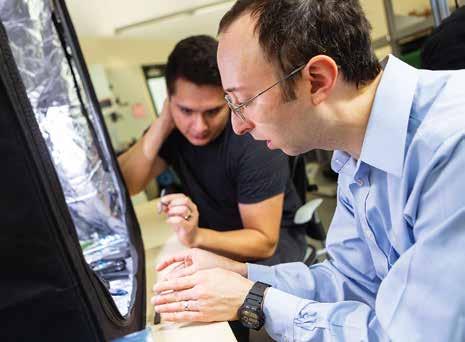
someone else to do this?’” she says.
While Schiffres’ entrepreneurial journey has sharpened his skills in evaluating the economic impact of his technology and communicating with different audiences, he sees it as a two-way street.
“I also think it’s going to help me teach in the future, too, because I have all these experiences of dealing with real engineering, manufacturing, and business challenges — connections that I can bring to the future,” he says.
For those interested in starting their own ventures, Guo says leaving the lab is the most important part. Once in the field, however, it can be hard to get the lab out of your head. Dhakal’s biggest challenge in the entrepreneurial world wasn’t dealing with lawyers or picky venture capitalists, but managing his time while mentoring doctoral students, running CASP, and leading his own company.
Last year, he shut down his computer and attended a meditation camp to clear the noise. He did not
speak for 10 days, awakening each morning to the crash of a gong, then straining his back while meditating in silence. He met many people with whom he’d compare his progress, wondering how they could sit so straight without hurting like he was.
At the end of the camp, the man he’d spent more than a week meditating beside told him he was impressed by Dhakal’s discipline the whole time, too. It reminded him of an early lesson he learned from starting a company: What matters is not the perfect result or success but enjoying the journey — whether that’s 10 days of backaches and silence or four years and counting running Pinwheel Solar.
“In the early stage, it is tougher — but at the same time, it’s exciting. You need to be excited about it. But now I’m a little bit more experienced,” Dhakal says. “Let me try what I can do without worrying too much about the end result. If you keep thinking about whether you’ll be successful, it can become stressful. Just give your best and honest effort, and take it as a fun ride. See where it goes.”
Binghamton University’s Technology Transfer Office (TTO) guides faculty and students to commercialize their ideas from lab to market.
It helps with protecting and monetizing intellectual property while supporting commercialization and entrepreneurship, in addition to connecting innovators to various networks, from SUNY to state. Anyone can consult its staff about appropriate next steps and accessing resources, funding, or potential collaborators.
Since 2014, Binghamton faculty have formed 15 startup companies.
The entrepreneurial ecosystem is cluttered with options, TTO Director Jitendra “JJ” Jain says, but his staff helps researchers untangle and navigate that — whether addressing financial challenges for early-stage technologies or parsing through legalities.
“The TTO acts as a resource for faculty to connect to the correct resources and then bridge those contacts to get faculty to the right place at the right time,” Jain says.
Many grant agencies now place greater emphasis on the societal benefits of funded work, with entrepreneurship as one path to demonstrate the impact of their innovations. It’s not the only possible route that academics can take, though.
“A lot of early scholarly work ends up being the foundation of innovation on which things years or decades from now are built,” says Senior Program Manager Kathryn Cherny.
“I would encourage faculty to expand how they might define impact and be open to alternative opportunities to scale and sustain their projects.”
Passionino ’91
By Chris Kocher
When you sit down to watch the latest films and television shows, you may not stop to think how essential visual effects are to what you see onscreen.
Sure, it’s obvious that the popular new science fiction or fantasy tales require thousands of hours from artists to bring those worlds to life — but nearly every production these days requires some kind of digital magic, from romantic comedies and historical epics to documentaries and reality TV.
For more than 30 years, Rocco Passionino ’91 has been one of the behind-the-scenes wizards blending the real and the unreal into seamless storytelling.

As a digital artist and visual effects supervisor, he’s worked on films such as The Fifth Element, Titanic, The Day After Tomorrow, The Twilight Saga: Breaking Dawn – Part 2, and Avengers: Age of Ultron. His television credits include Buffy the Vampire Slayer, Angel, Dollhouse, Castle, The Good Place, Future Man, The Boys, For All Mankind, and Poker Face. In 2003, he and his team won an Emmy Award for their work on the cult sci-fi show Firefly
“It’s pretty amazing to see my IMDb page,” he says. “I look at it every once in a while and think, ‘Wow, I can’t believe I worked on so many different shows!’ When I crossed the 100-project mark, I thought, ‘That’s insane!’”
Growing up in Vestal, New York, Passionino became interested in programming during high school, and his parents bought him a Commodore 64 personal computer. He later upgraded to an IBM — “I was very proud of that for the longest time,” he admits.
He recalls going to the theater to see 1985’s Young Sherlock Holmes, the first full-length film to feature a completely computer-generated character. He sat in amazement as a menacing knight made of stained glass jumped out of a church window and chased a priest into the streets.

The scene planted a seed that would later germinate into a career: “I realized I could take computer programming and do amazing visuals on the big screen.”
Passionino earned an associate degree at SUNY Broome Community College, then transferred into Binghamton University as a computer science major. He loved the two digital graphics courses at Watson, so a professor suggested he attend SIGGRAPH, a conference of industry professionals
and academics organized by the Association for Computing Machinery (ACM).
He was hooked.
After graduation, Passionino got a job at Lockheed Martin’s graphics lab programming simulations, but a friend at director James Cameron’s company, Digital Domain, offered the chance to move to Los Angeles and work for the fledgling firm. Jump-started by 1993’s Jurassic Park and a dozen other big-budget films, digital effects had become Hollywood’s hot new industry.
Passionino’s first mandate was to do simulation programming for a water sequence in a Godzilla movie — except that didn’t work out quite as planned.
“When I was hired, little did I know how Hollywood actually works. Just because something is greenlit doesn’t mean it’s going to get made,” he says.
“I came out to California, we started doing simulations on it, and two or three weeks after I was there, they shut down the movie. I thought, ‘What’s going to happen to my career?’”
For a while, Passionino did “grunt work,” backing up important files and building Digital Domain’s software infrastructure. He also learned how to use one of the animation packages that leaned heavier into the coding aspect than the artistic side of animation. To show off his skills, he created a short clip featuring one of the Budweiser frogs with a tongue stuck to the Apollo 13 rocket launch, which landed him a role as a technical assistant on the 1995 Ron Howard film.
From there, he worked as a digital artist on several key sequences for 1997’s The Fifth Element, including scenes where the hero (played by Bruce Willis) navigated through a futuristic city jammed with flying cars and other vehicles. For Titanic that same year, he populated the deck of the ship with digital doubles of background actors and digital stunt
characters, making sure computer-generated images integrated smoothly with the practical actor footage. And in 1998, he was an effects animator for director Roland Emmerich’s Godzilla — five years after the previous project had been canceled.

In 1999, Passionino started to supervise digital effects on films such as Swordfish, Spy Kids, Little Nicky, and Rollerball. Then a colleague suggested he could bring his cinematic skills to elevate television production, and he signed on to 2002’s Firefly — a Western-style space opera about a quirky band of interplanetary mercenaries. The two-hour pilot episode won him an Emmy for Outstanding Special Visual Effects for a Series.
“We were the upstarts who were trying to make everything look so beautiful and photorealistic,” he says. “It was so nice when we went to the ceremony and won — we were totally blown away by it.”
The FOX network canceled Firefly after just 14 episodes, but it led to work on other shows from creator Joss Whedon, including Buffy the Vampire Slayer, Angel, and Dollhouse, as well as dozens of other TV projects. Despite its short run, Firefly continues to have a strong following nearly 25 years later: “It’s amazing how much it resonated with viewers, and how it created a fan base above and beyond what everyone expected.”

Passionino has worked at his current company, Zoic Studios, since 2002 — a longevity that’s rare in the entertainment business. As a visual effects supervisor, he oversees digital artists who create a scene from ideas and scripts to storyboards, and from previsualization to full renderings.
“Sometimes the writers will say, ‘We’re just expecting you to make something cool!’” he says with a laugh. “When I look back on a lot of those scripts from Angel and Firefly, it was like, ‘OK, these people fighty-fight and then visual effects does a really cool thing,’ and that’s literally what the script says. You’re thinking, ‘What am I supposed to do with that?’ It’s a nice puzzle to solve, because you can actually feel like you’re being creative. You’re helping them along with the process, versus just executing whatever their visuals are.”
A VFX supervisor also bridges the gap between the artists and the production side: “A lot of the job is protecting the artists, because producers and directors tend to be a little more critical of the work and a little more harsh presenting notes on things. You need to make sure that everybody’s happy. Is the director happy? Are the artists happy? Is everybody doing what they’re supposed to be doing?”
In recent years, Passionino and his team have tackled everything from over-the-top surreal comedy on The Good Place to Mars-based action sequences on For All Mankind to the huge digital crowd scenes in Daisy Jones & The Six, but sometimes the more mundane details need a little digital help. For instance, a scene is supposed to take place on a sunny day but clouds covered the sky during filming, or a background detail


that’s too modern needs to be erased from a historical drama.
“We’re working on several shows right now that had no visual effects planned whatsoever, and they ended up needing multimillion-dollar visual effects as a result of problems they just didn’t anticipate when they were shooting,” he says. “They didn’t even know that something would be an issue, and all of a sudden, it becomes an issue.”
Keeping up with multiple projects isn’t always easy, but one important lesson from his Watson years drives Passionino forward: “The ability to hunker down and complete tasks is one of the major things that I learned at Binghamton. I’ve discovered that not everyone has that same work ethic. I’m very grateful that the University gave me that skill set to keep up with this fast-paced industry.”
Keep an eye out for Rocco Passionino’s work on a new thriller series for Apple TV called Lucky; the Legally Blonde prequel series Elle on Prime Video; Netflix’s reboot of Little House on the Prairie; Apple TV’s new mystery series Widow’s Bay; the documentary #SKYKING (premiering at SXSW this spring); and the feature film Backrooms, which expands on the YouTube series of the same name.
He also supervised visual effects on the pilot episode for the Buffy the Vampire Slayer sequel New Sunnydale — 25 years after working on the original. Sadly, Hulu decided not to pick up the series.
By Chris Kocher
hen Kuang-Ching
“KC” Wang started as an assistant professor at Clemson University, he asked a mentor how to succeed in the field of computer networking.
“If you stop thinking about networking as connecting computers, you will start to find the right track,” the longtime professor told him. “Networking is about connecting people and connecting things that people care about. Find your people, then find the things you can connect to make them better.”
Decades later, the advice still rings true, and it’s served as Wang’s guiding principle throughout his research career, which includes transformative applications in artificial intelligence, healthcare, cyber-physical systems, and cybersecurity.
Wang — who joined Watson College last fall as a Professor of Empire Innovation and the director of the School of Computing — comes to Binghamton University with an impressive résumé of accomplishments. At Clemson, he held various leadership roles and directed more than $100 million in sponsored research, including leading multi-university teams on landmark National Science Foundation initiatives such

as FABRIC (a U.S.-wide testbed for the next generation of the internet) and CloudLab (a similar effort focused on cloud computing).
A native of Taiwan, Wang earned his bachelor’s and master's degrees in electrical engineering at the National Taiwan University in Taipei. While there, he learned about building systems to help people with spinal cord injuries, using neural networks to mimic the brain impulses that would exercise muscles in paralyzed limbs.
“That two-year project was my first attempt to connect my engineering knowledge to a real-world problem,” he says. “Healthcare has been my passion from early on.”
Because he spent a few years in the U.S. as a child, Wang set his sights on returning for his doctorate and landed at the University of Wisconsin — Madison in the late 1990s. He pivoted from his original plan to study biomedical engineering when a professor he hoped to work with decided to retire. Instead, he joined a different professor who needed students for a project for the Defense Advanced Research Projects Agency (DARPA).
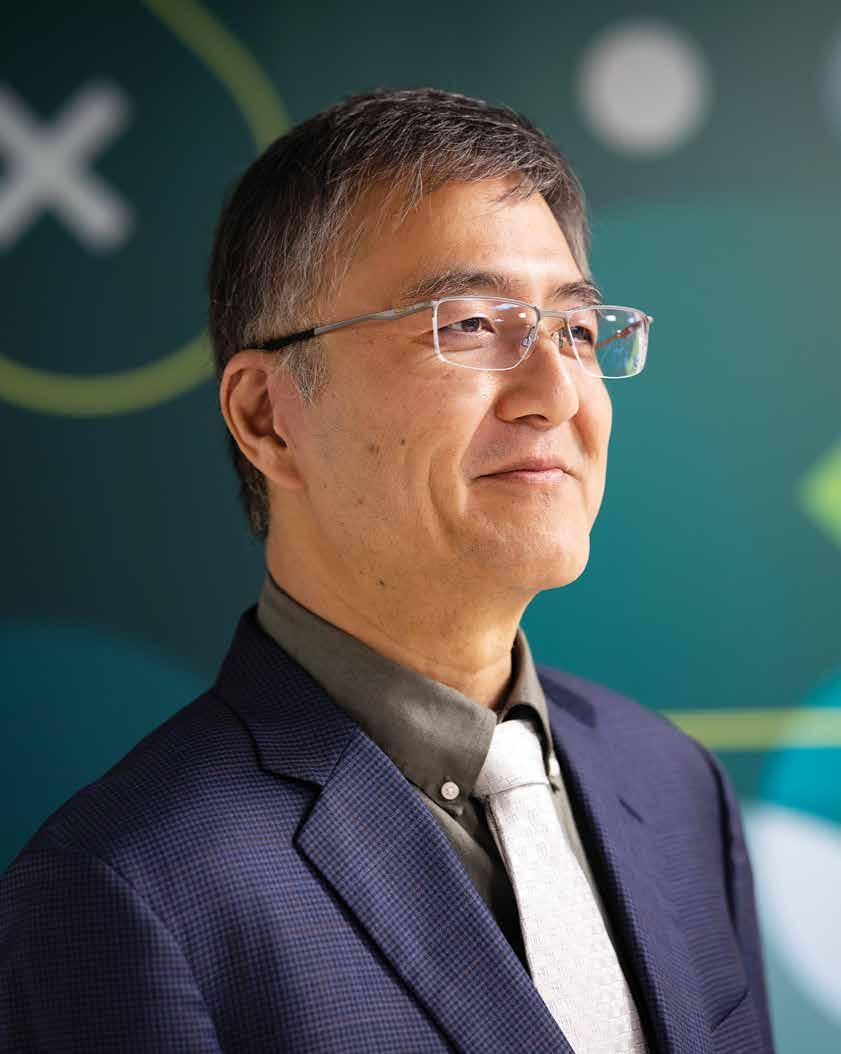
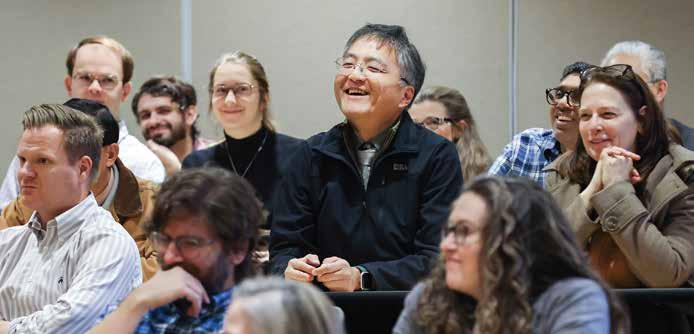
Professor of Empire Innovation and School of Computing Director
Kuang-Ching “KC”
Wang met with new Binghamton University
President Anne D’Alleva last fall alongside other Watson College faculty and staff.

The goal was to build the world's first largescale sensor network — something that is an everyday part of our lives today but was a groundbreaking idea at the time. The U.S. Army wanted a battlefield-monitoring system that could give real-time positions for tanks, helicopters, troop carriers, and other vehicles.
The UW-Madison team included five faculty members from different disciplines, with more than 10 other universities and a dozen companies as partners. Wang became the first student on the project and de facto leader for 10 other graduate students with skills ranging from radio transmission to networking and data processing.
“It was super exciting,” he says. “Every three months, we did a check-in with DARPA. We went to the California desert for live demonstrations of different parts of the system for generals and other Pentagon officials. In the third year, we brought the whole solution out for a final test — and everything worked! That research became the basis for my PhD dissertation.”
When he arrived at Clemson, Wang found he was the only researcher with experience in networking with applications, and he soon got involved in many projects across the university. Because BMW has a major manufacturing plant in Spartanburg, South Carolina, he worked for a while on intelligent highway systems, with his students trying to figure out if a Wi-Fi signal held steady while strapped into cars going 140 mph around a racetrack.
As the internet rapidly expanded to accommodate Google, YouTube, and social media, the
insatiable demands for bandwidth had some leading researchers worried that the whole system could crash. The NSF developed the Global Environment for Network Innovations (GENI, pronounced “genie”) to test possible solutions on a smaller, interconnected group of university campuses.
“NSF leaders foresaw how the Internet of Things and cell phones would emerge as big drivers of online traffic, but they needed someone who understood how to bridge the gap between core networking research areas and wireless applications,” Wang says. “My research sits right at that intersection.”
He convinced Clemson to be an early adopter for GENI and pursued many projects using it, so when the next generation of networking needed to be developed a decade later, he was in the room — specifically, a sandwich shop in Washington, D.C. — when he and a few colleagues sketched out an even more ambitious plan on a napkin.
“We brainstormed some bullet points, and we started to see the shape of it,” he says. “The new network should connect a wide swath of critical research areas that the NSF supports, which means high-performance computing, distributed networking security, cybersecurity, AI, and so much more.”
They did some old-school networking — which included lots of phone calls — to break down silos among computer science disciplines and to recruit more collaborators. Those backof-a-napkin ideas evolved into NSF FABRIC, a $20 million federal project that connects 29 sites around the U.S., with additional sites in Europe, Asia, and South America for
experimentation in forward-thinking topics like cybersecurity, distributed computing, storage, virtual reality, 5G, and machine learning, as well as other science applications. Meanwhile, Wang leads a similar effort, CloudLab, that connects almost 1,000 machines across the U.S.
The key to success, he says, is understanding what people need instead of insisting on one-size-fits-all solutions: “It's really fun to build systems, but you don't keep building them for the same problems. You use the same concepts, perhaps the same techniques, but try to solve different problems.”
When Watson College sought a new director for the School of Computing last year, Dean Atul Kelkar called Wang — a former colleague at Clemson — and encouraged him to apply.
“Having witnessed firsthand KC’s depth of experience, scholarly excellence, and distinguished record as a researcher during our time together at Clemson, I knew his addition to Watson would be transformative,” Kelkar says. “His leadership will be instrumental in elevating the School of Computing and positioning Watson at the forefront of trustworthy AI and its real-world applications. We look forward with great excitement to the remarkable accomplishments the School of Computing will achieve under his direction.”
After 21 years in South Carolina, Wang took the leap and moved north. He’s excited about the possibilities that Binghamton offers, especially the newly established New York Center for AI Responsibility and Research (see sidebar). He will also return to his roots in healthcare with research funding from the National Institutes of Health focused on a better understanding of muscle pain — how it happens and whether doctors can predict the healing process, like X-rays do for bones.
“I feel this is an amazing time when Binghamton — especially the School of Computing — is ready to launch,” he says. “When they were looking for a director for the school, they made it clear they didn’t want a typical director. They wanted someone who is in the trenches working on big research projects, and someone who understands how we build teams to bring faculty together. That's what we need here at Binghamton.”
One of Professor KC Wang’s mandates at Watson College is to lead efforts on trustworthy computing — and in 2026, that includes both cybersecurity and artificial intelligence. It’s been only a few years since ChatGPT and similar generative AI systems leaped to the forefront, with tech companies and other industries integrating them into our lives with varying degrees of success.
So what can AI do for us?
“Any existing technology and workflow — any process that exists — AI can learn about it and automate or optimize
it for you. An AI chatbot can be connected to a wealth of information and gives you an answer for anything you ask, and the answers are pretty good, most of the time.”
And what shouldn’t AI do?
“AI has limits, but it doesn’t always warn you clearly. It tries its best to fill gaps, but it can make mistakes. AI should not be allowed to make decisions beyond a carefully designed and validated space. It’s learning like a kid. Too many people are racing to create new applications and ignoring the need for guardrails.”
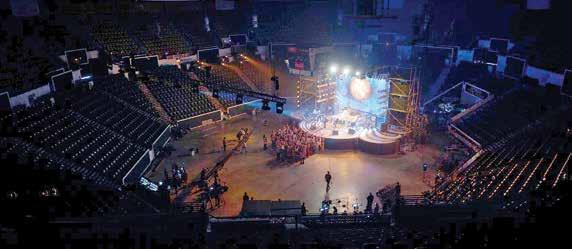
Arecord-setting $55 million commitment from a Binghamton University alumnus and New York state will establish the New York Center for AI Responsibility and Research, the first-ever independent artificial intelligence research center at a U.S. public university.

The center will be part of the Empire AI project, an initiative to establish New York as a leader in responsible AI research and development, and will be supported by a $30 million commitment from Tom Secunda ’76, MA ’79, co-founder and vice chairman of Bloomberg L.P. This will be coupled with a $25 million capital investment from Gov. Kathy Hochul and the New York State Legislature.
Binghamton is one of the first members of the Empire AI Consortium using Empire Alpha, the supercomputer housed at the State University of New York at Buffalo until the full-scale Empire AI computing infrastructure is completed.
Faculty researchers and their students at Binghamton are working on 10 approved projects to advance AI for the public good in New York.
New
In just a few short years, artificial intelligence — especially generative AI like ChatGPT and similar chatbots — have moved to the forefront of technology, business, and everyday culture.
The newly established Subhachandra and Nandita Chandra Endowed Professorship in Watson College will support an associate professor or professor in any discipline whose research uses AI in innovative ways.
“Challenges always create new opportunities,” says Subhachandra Chandra, MS ’95. “It’s not just using AI within the tech sector, however — it’s also about how we apply AI to everything else. How do we best use AI for medicine, environmental sciences, manufacturing, or anything else that you can think of? We can use the power of AI to improve things across the world in many areas.”
The Chandras have funded a graduate student scholarship and other programs at Binghamton for more than 20 years, including the Watson College Scholars Program.
“Endowed professorships are a powerful way to support and retain faculty who are doing novel and valuable work, and I am incredibly grateful to the Chandras for their gift on behalf of Watson College,” says President Anne D’Alleva.
“In addition to the tangible benefits for our faculty and students, the endowed professorship also pays tribute to the broad successes of alumni like Subhachandra Chandra. Watson College has nurtured the development of many brilliant engineers, and I’m glad that an endowed professorship will inspire others to follow in the footsteps of those who came before them — in science, in leadership, and in philanthropy.”
Watson College Dean Atul Kelkar adds: “We are deeply grateful for this professorship, which strengthens Watson College and honors the donor’s vision for innovation,” he says. “It empowers us to support the transformative fields of tomorrow, ensuring that our research remains at the cutting edge of global technological progress for decades to come.”
By Chris Kocher
“Challenges always create new opportunities."
— Subhachandra Chandra
“With this professorship, Binghamton’s use of AI will amplify and accelerate the impact our work can have in the world,” Vice President for Advancement David K. Whitmore says. “The Chandra family’s generosity enables us to lead the way in AI advancements and breakthroughs, and we couldn’t be more thankful for their support.”
Chandra was born in India and came to Binghamton for his master’s degree in computer science as part of Distinguished Professor Kanad Ghose’s research group. He is grateful for graduate assistantships provided by the University for making it possible.
“Watson and Binghamton did a fantastic job of setting me up for success,” he says. “It gave me an opportunity to come to the United States and to learn about the latest in computing that was not available in India. Looking back, the University was a critical stepping-stone to future success elsewhere.”
After graduating from Binghamton, he earned his PhD in computer science at the University of Michigan in 2000, and he started his professional career in the San Francisco Bay area building software systems and platforms at small startups.
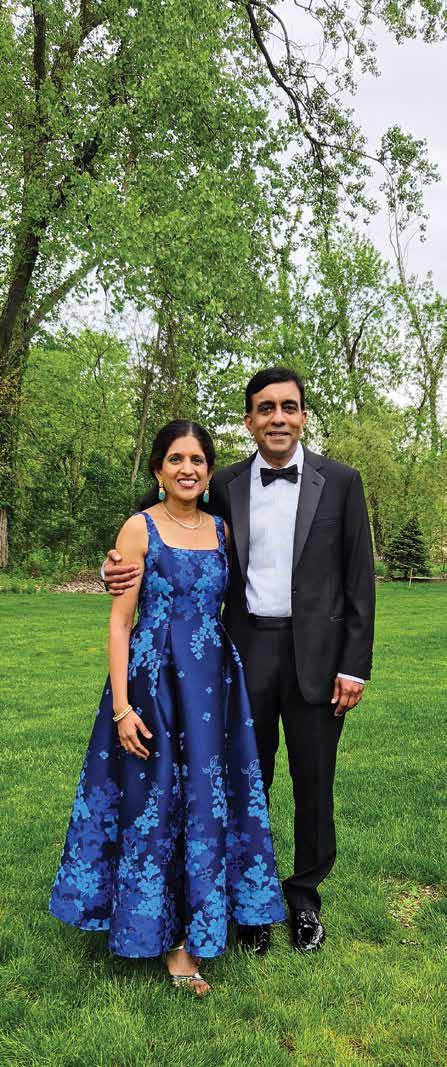
He is currently the co-founder and chief technology officer at Aria Networks, a startup trying to build a better networking infrastructure to meet the demands of rapid AI adoption.
Chandra believes that universities and industry should have a mutually beneficial relationship, so that research from academia supports breakthroughs in the private sector, and companies can partner with faculty to provide funding and guidance.
“In the corporate sector, we build startups in Silicon Valley, but a lot of it is based on fundamental research that comes out of universities,” he says. “That research drives the rest of our technology ecosystem across the United States, and that’s how we can keep ahead of the rest of the world. Funding research through professorships and other ways feels like a good investment.”
The Subhachandra and Nandita Chandra Endowed Professorship is an important tool to strengthen Binghamton University’s ability to recruit exceptional faculty and advance innovation in a rapidly evolving digital world.
Among other purposes, the endowment can help to fund travel, equipment, online resources, publication expenses, stipends for student assistants, and matching funds on grant applications.
“Nandita and I are always interested in academia, since both of us are PhDs and our own advisors in our PhD programs had named professorships. So we came into it saying that this is important,” Chandra says. “We also know that when you recruit professors, funding is always a bit of a challenge. It takes some time to get grants and other funding.”
He also likes how Watson encourages interdisciplinary collaborations, which will be critical to optimizing AI in a safe and ethical way: “The college recently organized clusters that group together research into similar topic areas, so they’re thinking about things in a way that goes beyond separate departments and schools.”
Subhachandra, MS ’95, and Nandita Chandra offer other financial help to Watson College, including:
■ Watson College Scholars Program
■ Chandra Family Scholarship
■ Binghamton Fund for Watson College
Students work with faculty to drive innovation with hands-on research
By Emma Young ’26
At Watson College, undergraduate students are advancing research with real-world impact. Working with faculty mentors, students contribute original ideas, develop technical skills, and gain hands-on experience through collaborative projects and research. The projects highlighted here demonstrate the range of innovation taking place across Watson and the numerous opportunities that Binghamton University has to offer.
As AI-generated images and videos become increasingly realistic, verifying the authenticity of digital media has become a challenge.
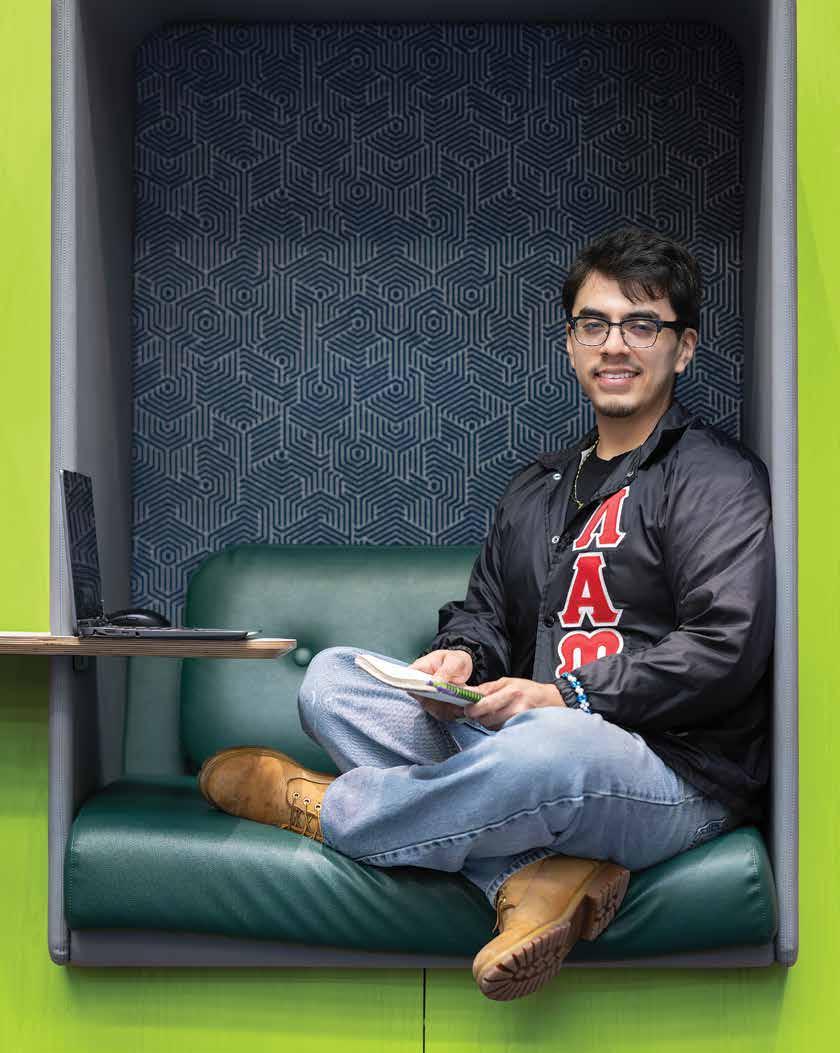
“Our project aims to create a mobile app that can detect whether an image is AI-generated or altered using AI editing tools. Eventually, we want to verify audio and video as well.” — Mark Cortez
“Our project aims to create a mobile app that can detect whether an image is AI-generated or altered using AI editing tools,” Cortez says. “Eventually, we want to verify audio and video as well.”
Cortez, who transferred to Watson from Mohawk Valley Community College in 2024 and is now pursuing a 4+1 master’s degree focused on cybersecurity, plays a hands-on role in building and testing the system. His work includes automating the creation of synthetic image datasets used to train and evaluate detection models.
“One of the biggest hurdles is cost,” Cortez says. “Some of the AI models we need to generate training data are expensive per token, which forces you to be very intentional about efficiency and optimization.”
Cortez believes the importance of this work is clear. He often scrolls through social media and encounters AI-generated content within seconds. Some examples are fun and harmless, but more realistic deepfakes can be used for fraud, misinformation, and extortion.
“My hope is for the app to be a working prototype that is robust, accounting for varying image generators, to confidently classify static images, audio, and video elements,” Cortez says.
Manar Mabrouk ’26 knows she doesn’t want to be a doctor, but she hopes to contribute to the medical field by discovering and building new technology.
Supported by the EXCEED Inclusive Innovation Internship, Mark Cortez ’26, an electrical engineering major, is collaborating with Professor Yu Chen on CerVaLens, a research project that integrates topological frequency analysis with lightweight entropy-based methods to identify AI-generated and manipulated images.
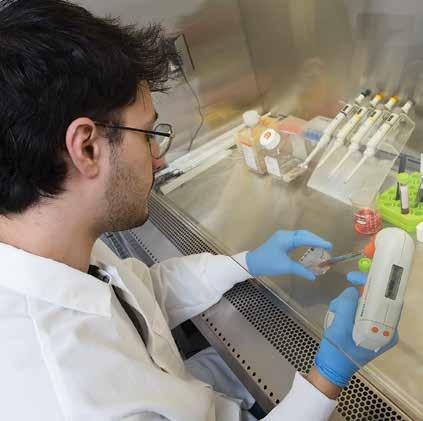
As a biomedical engineering student at Watson, she pursued that goal as vice president of the Biomedical Engineering Society and through hands-on research in Professor Gretchen Mahler’s lab.
Mabrouk studied the heart’s aortic valve, which regulates blood flow. As people age, calcium deposits can
build up in and around the valve, impairing movement and circulation. Current treatment often requires invasive heart surgery, which is risky for older patients.
Mabrouk and her team developed an in-vitro model to mimic both healthy and diseased conditions, hoping to understand how heart tissue changes over time and develop new treatments.
She learned that research is never linear — it requires trial and error that can prolong the process.
“It’s definitely the evolving learning ideology that is really cool,” she says. “You never get bored in the lab. There’s always something that pops up, whether it be an issue with your experiment or a contamination issue. There’s always something that you have to troubleshoot, and it keeps life interesting while teaching me new skills.”
Mabrouk’s research was supported by the Collegiate Science and Technology Entry Program (CSTEP), a program that helps students from different backgrounds succeed in STEM fields through academic enrichment and research experience.
“ If the work I am doing, even in some minor way, could positively impact patient care in the future, I feel really proud knowing that I was a part of something larger than me." — Deen Kaakour
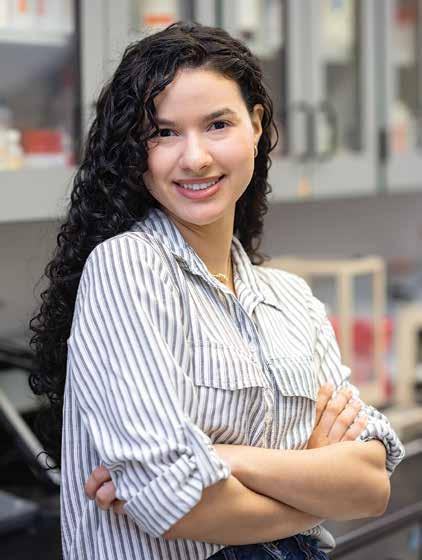

While at Watson, she also attended the national Biomedical Engineering Society conference, which was a transformative experience: “It was fun to be in a space with so many smart and talented individuals doing phenomenal research.”
After Binghamton, Mabrouk plans to attend Boston University to pursue a master’s in biomedical engineering to work in research and development.
Triple-negative breast cancer (TNBC) is one of the most aggressive forms of breast cancer and remains especially difficult to treat because of its resistance to hormone-based therapies.
Deen Kaakour ’26, a biomedical engineering major, studied this disease in Associate Professor Fake “Frank” Lu’s lab, where his research focused on a lesser-known phenomenon observed in TNBC tumors: ossification, or the formation of bone-like deposits.
“I find this work meaningful because of the impact it could have on the
future of oncology,” Kaakour says. “Breast cancer is a terrible disease, and I know people in my life personally who have been affected by it.”
Kaakour studied how and why ossification occurs by growing cancer cells under specialized conditions and observing how they changed using advanced imaging technology. The latest tool in Lu’s lab is stimulated Raman scattering microscopy, which analyzes how cells reflect light on a quantum scale to identify anomalies.
“This type of microscopy has not yet been applied to this model in any research, so it provides new insights into cellular changes in real time,” he says.
After observing positive results in two-dimensional cell cultures, Kaakour plans to expand the project to three-dimensional organoids that include additional cell types found in real tumors. His long-term goal is to explore whether inducing controlled cell differentiation could reduce tumor aggressiveness and lessen dependence on chemotherapy.
“If the work I am doing, even in
some minor way, could positively impact patient care in the future, I feel really proud knowing that I was a part of something larger than me,” Kaakour says.
Understanding how molecules behave during chemical reactions is central to fields ranging from drug development to materials science.
In the School of Computing, undergraduate researcher Obadiah “Obie” Smolenski — a triple-major in computer science, physics, and mathematics — is helping advance this work by applying machine learning to molecular discovery.
Working with Associate Professor Kenneth Chiu, Smolenski contributes to a project that uses machine learning to model quantum chemistry at a scale that would be impractical using traditional methods.
“Our goal is to scale up the current state-of-the-art models to use them to simulate chemical reactions at a realistic and useful scale,” he says.
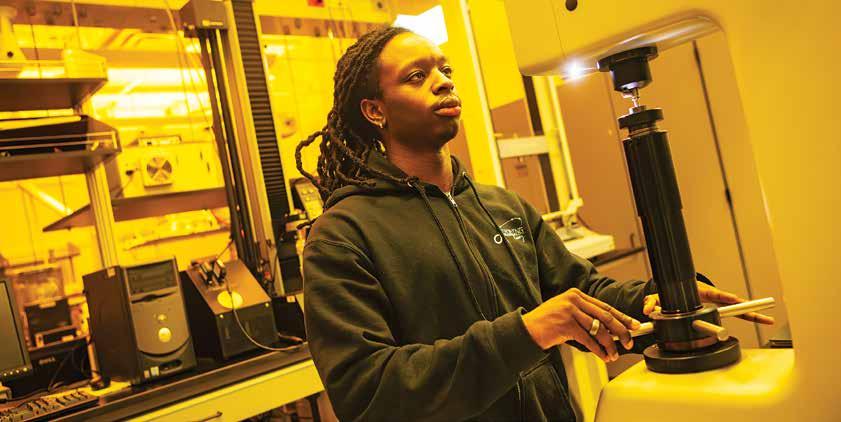
Conventional quantum chemistry calculations can take days to evaluate a single molecule, limiting how many compounds can be tested. Machine learning, however, dramatically accelerates that process.
“With machine learning, this can be sped up from several days to less than a second per molecule,” Smolenski says, allowing researchers to test far more molecules for desirable drug-like properties.
In the long term, this approach could improve the efficiency and quality of drug development.
“This could lead to the discovery of drug treatments with any number of useful properties, such as being easier to make in the lab or having fewer side effects,” he says.
The project is part of a broader collaboration between Binghamton University and Lawrence Livermore National Laboratory in California, and the team’s findings were published at NeurIPS, a leading computer science conference. In December, Smolenski also presented the work at a major
conference in San Diego, an opportunity that underscored the real-world relevance of the research.
“It was very rewarding,” he says. “I’m proud of all the work that I put into seeing it through.”
Modern electronics rely on microscopic components being securely bonded together, making reliability a critical concern in semiconductor manufacturing.
Malcolm John, a mechanical engineering student, is working with Professor Junghyun Cho on advanced semiconductor packaging research, with a focus on evaluating the mechanical strength of hybrid bonding.
“Bond strength is important in hybrid bonding because it determines whether stacked chips can stay together through everyday use without cracking or separating,” John says.
John’s research examines how factors such as contamination, surface
preparation, and material behavior affect bond strength. He focuses on mechanical testing and failure analysis to understand how and where bonds fail, information that can help engineers improve manufacturing processes and device durability.
To support this work, John designed custom fixtures for a double cantilever beam test, commonly used to evaluate bond strength.
“At the time of me joining the research group, we didn’t have fixtures to run these types of tests,” John says. “The fixtures I designed allow us to run this specific type of test using a universal testing machine that the group already owns.”
The fixtures were designed using Autodesk Inventor and manufactured through the Watson Fabrication Lab, allowing the research group to perform tests using existing equipment. At the same time, John says the experience has strengthened his understanding of core engineering concepts before encountering them in class.
“ It’s nice to have an opportunity where you’re doing something meaningful. Working with pregnant women is just so special."
— Loren Cuomo
“Being exposed to topics like bonding, surface preparation, and material behavior in a real research setting helped me understand them more deeply once they appeared in lectures,” he says.
Getting proper medical treatment is essential during pregnancy and after the baby is born — but maternity care in a rural region can face extra challenges.
A senior capstone project at the School of Systems Science and Industrial Engineering wants to improve the patient experience and close the gap between the help that mothers need and what they actually receive.
Partnering with United Health Services’ Chenango Memorial Hospital, the students surveyed doctors, staff, and patients about three key areas: communication clarity and consistency across care teams; coordination and
continuity across prenatal, delivery, and postpartum care; and patient education and hospital discharge preparedness.
“We found a communication barrier between patients and their providers, which can be a problem even outside of pregnancy care,” says Loren Cuomo ’26. “Sometimes doctors can be in a rush — they have very busy schedules.”
The Albany native felt drawn to industrial and systems engineering during Watson’s Engineering Design Division program, which gives first-year students a taste of the disciplines that the college offers: “I liked how it’s a mix of business and engineering. You can do so much with it. Also, I’ve always liked figuring out the process of things and how to make something better.”
For the hospital project, Cuomo and her teammates — Anna Jiang ’26, Isaac Joseph ’26, Jonathan Lazo ’26, and Prithvi Noronha ’26 — worked on a solution with Assistant Professors Kimberly Harry and Safa ElKefi and UHS Coordinator of Strategic
Initiatives and Performance Improvement Keana Schrag.
Because issues like new public transportation options are outside of the students’ ability to fix, they built a detailed website to address patients’ other concerns. It includes contact information, a trimester-by-trimester pregnancy guide, tips on postpartum care, and a community section where mothers can post questions and connect with one another.
Although the students have graduated (and Cuomo starts working at Regeneron Pharmaceuticals’ warehouse operation this summer), they handed over their data and website to UHS, and the hospital plans to integrate them into its maternity program.
“It’s nice to have an opportunity where you’re doing something meaningful,” Cuomo says. “Working with pregnant women is just so special. You have to be careful — they’re trusting you with their healthcare processes.”
establishes endowed professorship in computer science
FBy Chris Kocher
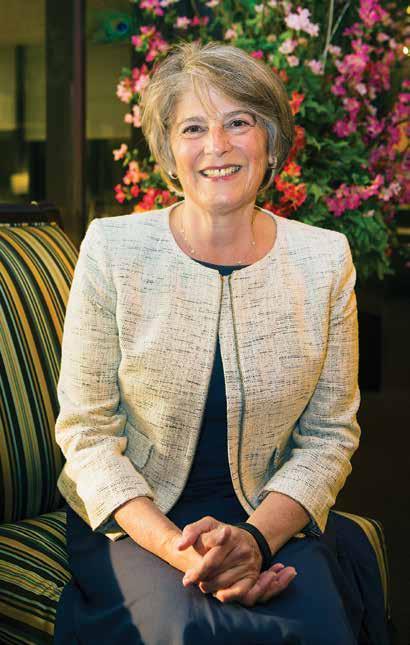
or more than 40 years, Geraldine MacDonald ’68, MS ’73, LittD ’17, has funded projects, scholarships, professional development, and student activities around campus.
The latest gift from the internet pioneer and Binghamton University Foundation board member establishes an endowed professorship at Watson College, strengthening the college’s ability to recruit exceptional faculty and advance innovation in a rapidly evolving digital world.
The Geraldine Knoll MacDonald Endowed Professorship in Computer Science, which will support a tenure-track assistant professor at the School of Computing, is just the latest way for her to say thanks for the education that set her on the path to success.
From 1995 to 2005, MacDonald served as a senior vice president at America Online, overseeing the construction and expansion of AOL’s access networks through narrowband and broadband technologies.
Before that, she led the development of Binghamton University’s computing infrastructure, rising to the role of associate vice president. She steered the transition from mainframe computers to minicomputers, workstations, and personal computers.
“Going to Binghamton opened so many doors for me,” MacDonald says. “I support the University now because it’s still changing the lives of many people, and because it’s a much bigger university than when I attended, there’s more space for young people to come and explore and learn the way I did.”
President Anne D’Alleva praises MacDonald as a longtime champion for Binghamton.
“The generosity and the lasting influence of our alumni continues to amaze me,” she says. “I thank Geraldine MacDonald for her long-standing support of the University and her vision for the future of Binghamton. In addition to boosting the career of an early-career faculty member, this professorship will also cement Geraldine’s legacy as an innovator in technology and inspire students and faculty for many years to come.”

Watson College Dean Atul Kelkar adds: “We are profoundly grateful to Gerry MacDonald for her support of our computer science faculty. In a field as dynamic as computing, the ability to recruit and retain world-class scholars is paramount. This endowed professorship further cements Watson College’s reputation as a hub for technological excellence.”
“We are deeply grateful for Gerry’s visionary leadership and longstanding commitment to Binghamton,” Vice President for Advancement David K. Whitmore says. “Her involvement, generosity, and unwavering support make a world of difference.”
As a first-generation American growing up in New York City, MacDonald and her brother and sister learned early about their parents’ expectations for their futures.
“There was no doubt in their mind that all three of us were going to college,” she says. “We didn’t even question it — the path to success was predicated on getting the best possible education.”
When MacDonald graduated from high school at 16, she chose Binghamton over the City University of New York (and its free tuition) because she wanted to get the full college experience — leaving NYC, meeting people from other places, and living on her own.
After earning her bachelor’s degree in psychology, MacDonald moved back to NYC and considered becoming a teacher before seeing a “help wanted” ad for an insurance company hiring for computer work. A logic class she took at Binghamton unexpectedly gave her the background she needed.
“I fulfilled the philosophy requirement with the logic class, but I didn’t realize that I was learning the fundamentals of how computers work,” she says. “When you go to college, you take a lot of courses and you never know what doors are going to open for you.”
MacDonald returned to Binghamton University to help integrate rapidly evolving computer technology into classroom learning and research. She also furthered her own education, which helped her stand out from the pack when AOL recruited her in the mid-1990s.
“My master’s degree in computer science — advanced technology at the time — changed the world for me,” she says. “It took me a couple of years, but having that degree meant everything. I never would have risen to the levels that I rose to in industry without that additional educational experience.”
Over the past four decades, MacDonald has supported many campus activities, from the Art Museum and business internships to scholarships and the Binghamton University Rover Team.
“Some people say, ‘Well, you could write all this in your will and leave it for after you’re not here,’” she says. “It’s much more fun to give the money when you’re alive, so you can interact with the people who actually benefit.”
Geraldine MacDonald offers other financial help across campus, including:
■ Jack Knoll Scholarship in Computer Science and Engineering
She sees the endowed professorship as the latest way to boost her alma mater by helping to fund travel, equipment, online resources, publication expenses, stipends for student assistants, and matching funds on grant applications.
■ Geraldine MacDonald Fund for Watson College Student Groups and Clubs
■ Dory Knoll Student Curator Internship for the University Art Museum
■ Knoll-MacDonald Business Startup Internship Fund
■ Geraldine and Erin MacDonald Fund for the Support of the Society of Women Engineers
“Watson really changed everything for me, and it’s still doing that for people,” MacDonald says. “Students come to Watson, they’re not quite sure what they want to do, they get a fantastic degree, and it sets them up to work almost anywhere.”
By Chris Kocher
hen major crimes are committed, solving them can be complicated and exhausting for police investigators, especially when the clock is ticking. Murders, kidnappings, and missing-persons cases all require detectives to move quickly before the trail goes cold. Even lesser crimes require organization and precision when gathering information and identifying suspects.
Larger law enforcement organizations like the FBI and state police use their own proprietary software to track evidence and tips from the public, but smaller police departments can’t always afford it. Compatibility with current information technology and the unique requirements of networking with government systems can also complicate things.
That’s where industrial and systems engineers can offer their expertise to find a solution that works within the limitations.
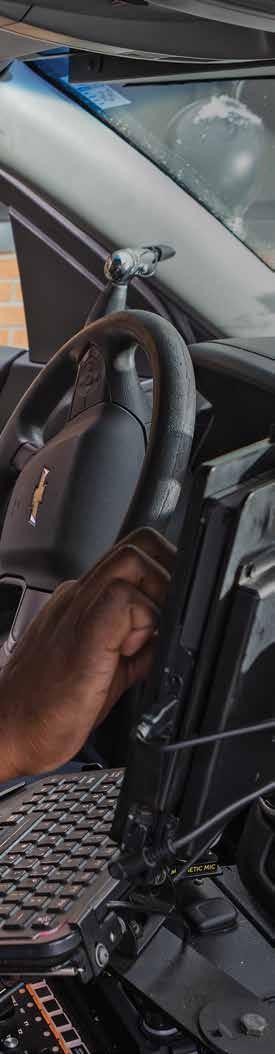
In 2023, the Endicott Police Department — just over the Susquehanna River from the Binghamton University campus — reached out to Watson College for help. Chief Patrick Garey used software he calls a “lead-desk” during his 27-year career with the New York State Police, and he understood how it could streamline the investigative process.
When he heard about the Strategic Partnership for Industrial Resurgence (SPIR) program, which generally works with small and midsize businesses to solve real-world problems, he submitted a proposal — even though he had doubts.
“I thought it had almost zero chance to be what I envisioned it to be,” he admits. “Police
work has so many different silos of information. Every new piece of software or every new process that you bring in, you’re trying to integrate it into these other silos, because it’s so difficult to bring everything under one umbrella.”
SPIR assigned the project to Professor Sangwon Yoon and graduate student Shreya Agarwal, MS ’26, from the School of Systems Science and Industrial Engineering. During their initial meetings, Garey tried to take them through how his detectives conducted a criminal investigation using a patchwork of legal pads, index cards, Post-it notes, and Microsoft Excel spreadsheets.
Even Garey wasn’t sure if he was explaining everything well — as with any job, some tasks seem like second nature. For their second or third meeting, though, Agarwal and Yoon
brought a process diagram that organized everything they’d discussed and more.
“I looked at this flowchart and said, ‘Holy cow, they captured all of this — exactly what we’re looking for!’” he says. “Then every meeting after that was 10 times better than the meeting before, because they gained that inside understanding of the things that were difficult for us to explain.”
Agarwal began to appreciate how managing information across multiple cases and leads requires considerable time and effort as investigations grow in complexity.
“Automation can streamline information management and reduce the amount of manual documentation that investigators are required to do, enabling them to focus on the process and resolve cases more efficiently,” she says.
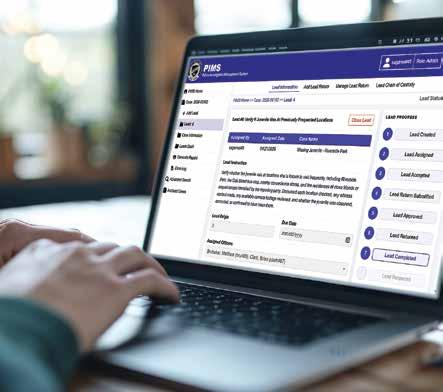
What followed was the hard work of designing the new software, dubbed the Police Investigation Management System — or PIMS for short. The Watson team created a piece of it, then Garey offered suggestions for the next iteration. It took four semesters to chip away at the wish list until they included as many features as possible.
“Very early in the process, we knew we were on to something really good,” Garey says. “As guilty as I felt about it, every time I thought of one more little tweak that would make it that much better, I would hit Shreya up, and it would be done in a matter of days.”
With PIMS, a detective supervisor can assign leads to investigators and officers who are already in the field as easily as sending an email or smartphone notification. No one needs to return to a command post to receive
detectives to understand what police needed and why.
“When the overall structure was in place, we took each modular aspect of the software and tried to optimize it further,” he says. “How can we make the notification system better? How can we make the visuals better? How can we make the final report more readable? We started from a very basic version and built on top of it, little by little.”
Throughout development, Agarwal and Ghali rigorously tested PIMS with Garey, his detectives, and students from the Watson Institute for Systems Excellence (WISE) to resolve software bugs and other issues. In November, they invited University Police as well as departments from across Broome County to a demonstration showing what the system offers.
the next task. This feature saves valuable time during those critical first 48 to 72 hours of an investigation.
Also, when a case moves into the prosecution phase, investigators can export their findings into a PDF file for prosecutors and defense attorneys. If everything is diligently tracked
throughout the process, the wellorganized document can reduce the kinds of errors that jeopardize a case.
SSIE PhD student MohammedKhalil Ghali, MS ’24, who joined the PIMS project as a collaborator, loved the process as he, Agarwal, and Yoon worked with the chief and his
Having people with varying levels of tech skills try out PIMS and provide feedback yielded better results, Agarwal says: “The detectives are the ultimate users, so it’s important that they go through the workflow. They know all the cases outside the norm that we might not even think about. Having a range of different abilities definitely helped to make this project better.”
“ I looked at this flowchart and said, ‘Holy cow, they captured all of this — exactly what we’re looking for!' Then every meeting after that was 10 times better than the meeting before, because they gained that inside understanding of the things that were difficult for us to explain.”
— Chief Patrick Garey

Before Agarwal earned her master’s degree this spring, she led the final installation of PIMS on the Endicott Police Department’s government cloud system. Yoon hopes to explore opportunities to market the software to other law-enforcement agencies, too.
“This project is a great example of how industrial and systems engineers can contribute to the public good,” he says. “It also shows the skills and collaborative spirit we instill in our students at Watson College. I’m very proud of Shreya, Khalil, and the students from SSIE and WISE who supported numerous PIMS system tests and mock drills.”
Garey believes that PIMS — which he has discussed with colleagues in the New York State Association of Chiefs of Police — could save hundreds of hours when pursuing major cases. And now that Yoon and Agarwal are familiar
with how criminal investigations are conducted, he likes to joke that he’s going to hire them as detectives.
“The team is fantastic,” he says.
“They’ve become like family to me — I really look forward to seeing them every time I do, and I enjoy hanging out with them as much as anything.”
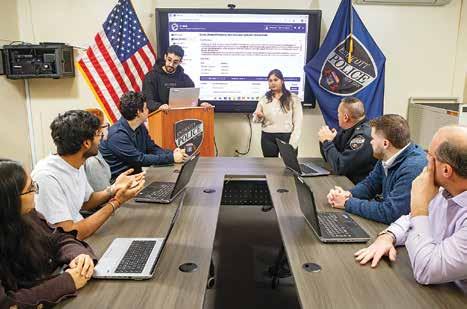
student Mohammed-Khalil
Investigation Management
Desai, Sarah Escotto, and Abdelrahman
and Jacob Harding and Chief Patrick
Since 1994, New York state has helped fund the Strategic Partnership for Industrial Resurgence (SPIR) at four State University of New York (SUNY) engineering programs — Binghamton, Buffalo, Albany, and Stony Brook — to seek solutions to thorny technological problems.
Watson College’s SPIR program assists small and midsize businesses through projects that bring together students, faculty, and industry personnel. In addition to problemsolving services, SPIR assists entrepreneurs in developing their concepts into demonstrations or prototypes for attracting venture capital or licensing agreements.
SPIR has helped to create or retain about 2,500 jobs in the Binghamton region, generating $90 million a year. Hundreds of students have also benefited from applying their skills to real-world problems.
and Shreya
and
While the Watson team developed the Police Investigation Management System (PIMS) project with the Endicott Police Department rather than an industrial partner, the benefits were obvious when Police Chief Patrick Garey submitted the proposal.
“For decades, SPIR has helped hundreds of industries in our region with their unique technical challenges,” says Michael Testani, MS ’02, Watson College’s senior director of outreach and engagement who oversees the SPIR program. “We have done a similar job with the PIMS project, saving the police force hundreds of hours each year by digitizing their case-management processes.
“It was exciting to see this vision come to fruition, and a thrill to support the Endicott Police Department. Ultimately, law enforcement will be able to build stronger cases in far less time, which will make our community a much safer place to live.”
As a business leader in the Binghamton region, John Mirabito knows a good investment when he sees one.
That’s why he and his wife, Cheryl, are investing in Binghamton University and Watson College with the new Cheryl and John Mirabito Family Faculty Scholar Endowment.
The financial gift will provide a faculty member at the School of Systems Science and Industrial Engineering with extra funding for research assistants, publications, conference participation, and other teaching and outreach initiatives.
For more than 10 years, Mirabito — former chairman of Mirabito Holdings Inc. — has been a member of the
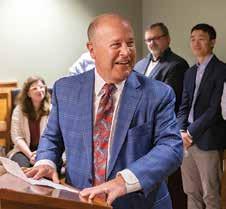
Watson College Advisory Board, which offers feedback from an industrial perspective and makes connections to enhance educational opportunities. Watson students and faculty sometimes offer presentations about what they are working on, and he’s found their projects “very impressive.”
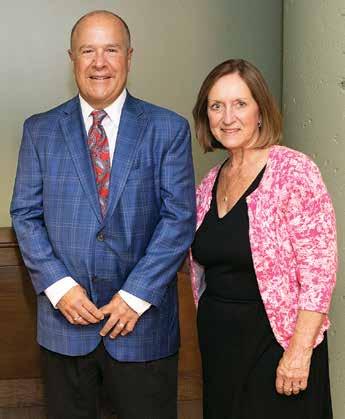
“When you have a named position, it attracts a higher level of talent,” he says. “You want to bring their research to campus and develop it, and they can add to what’s already going on. Who knows what can happen? The sky’s the limit.”
Watson College Dean Atul Kelkar approached the Mirabitos about the idea of an endowment soon after arriving at Binghamton in 2024.
“The Mirabito family’s extraordinary support elevates what we can accomplish at Watson College,” he says. “By investing in our faculty, John and Cheryl are directly investing in the future of our students and the impact of our research. Their generosity creates a legacy that will inspire our academic community for years to come.”
In 2023, the Mirabitos made a gift to benefit the Watson College Scholars Program. In recognition of their generosity, a boardroom in the Engineering Building was named the Krishnaswami “Hari” Srihari Executive Boardroom in honor of Watson’s former dean.
“My wife and I are very proud to support the University, and especially Watson College,” Mirabito says. “We want to help with the continued success and growth, and we think this endowment is another way we can do that. I’m sure there are other people out there who could and would do the same thing, maybe at a larger scale, and hopefully this plants a little seed so they start thinking about it.”
— CHRIS KOCHER













































Melissa Mendoza-Seale, PhD ’22, loves the hands-on work she can do in a biomedical engineering lab. So when she graduated from Watson College, she applied primarily to jobs in research.
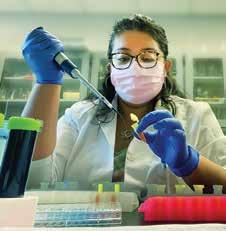
Her career path took her on a different route, though. Today, as a technical consultant, she blends scientific research with expert client support and she still gets some lab time, too.
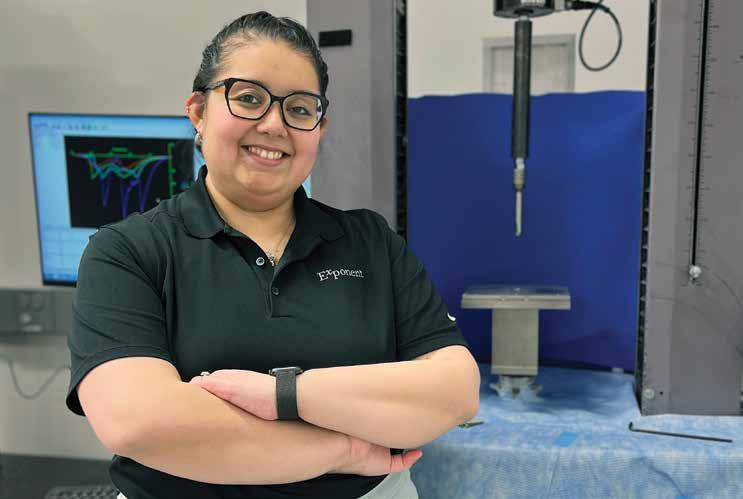
After receiving her degree from Watson College, Mendoza-Seale worked her way up to senior associate at Exponent, a technical consulting firm that specializes in engineering and science. In her role, she supports medical device and pharmaceutical manufacturers as they navigate Food and Drug Administration (FDA) regulations, performs failure analysis














Consultant Melissa Mendoza-Seale, PhD ’22, balances clients’ needs with life in the lab














of products, and conducts testing according to ASTM standards and International Organization for Standardization guidelines.
By Christina Forte ’27

















To put it simply, she’s making sure medical devices are up to par.



While this wasn’t always her plan, she learned that a consulting path would give her the opportunity to branch out from her specific field. In contrast to her graduate school experience where she focused on independent research, Exponent gave her the chance to contribute to scientific and engineering topics outside of her niche without having to completely give up lab work.
“We not only provide consulting services and review the landscape of the field for our clients, but we also conduct a lot of the testing and investigations ourselves,” Mendoza-Seale says.
“That’s what really intrigued me about Exponent. When I started applying for full-time positions and going through the long interview process, that was something that made me happy, that I didn’t have to stop doing hands-on work.”





















Mendoza-Seale started her academic journey at the Rochester Institute of Technology with a bachelor’s degree in biomedical engineering. During her undergraduate and graduate studies, she gained practical experience through co-ops and internships at Johnson & Johnson, Renal Research Institute, and the FDA.
Looking back, she considers her time at Binghamton as “fruitful, but difficult.” Her research focused on developing a calcific aortic valve disease model under Professor Gretchen Mahler, interim chair for the Department of Biomedical Engineering, to understand how the condition develops over time. Mendoza-Seale carried out her work through the University’s Clifford D. Clark Fellowship and a pre-doctoral fellowship with the American Heart Association. However, her transition from






academia to technical consulting required a shift in thinking. In grad school, she could set her own research schedule. As a consultant, the key is being efficient while providing great service to clients.
“It was a little bit of a challenge at first to switch the mindset from defining your own timeline and goals to being on the client’s deadlines and understanding the business model of it all,” Mendoza-Seale says.
She also highlights the importance of soft skills. Her job isn’t just about knowing the most about something — it’s being able to communicate ideas clearly and concisely. At Exponent, she uses her technical background alongside the communication skills picked up from her time at Watson.
“I was fortunate enough to attend many, many conferences while I was there,” Mendoza-Seale says. “And what


























I loved is that I not only attended academic-driven conferences but also science communication and minority conferences where the focus wasn’t just biomedical engineering — it was many other disciplines. It encouraged me to explain my research in a way that was easy for other audiences to understand.”
As a word of advice to students, she emphasizes communication as a vital part of pursuing a STEM career.
“It was immensely helpful for me as a person and as an engineer in my field to be able to explain my work to different audiences,” she says.
“Unfortunately, financial hurdles are a hindrance, but I always encourage students to try and attend as many conferences in their field, or even outside their field, to expand their network and to be able to communicate their work effectively.”
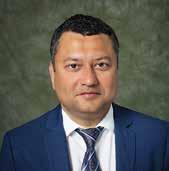
Professor Indranil Bhattacharya, the new chair of the Department of Electrical and Computer Engineering, joined Watson College last fall from Tennessee Tech University. He brings more than two decades of academic experience, multidisciplinary research leadership, and a commitment to both student success and faculty development.
Bhattacharya’s research includes lithium-ion and sodium-ion batteries, dynamic wireless charging of electric vehicles, power electronics, and semiconductors. Over the past seven years, he secured research funding from the National Science Foundation, the U.S. Department of Energy, Oak Ridge National Laboratory, and the Tennessee Valley Authority.
He has also received awards for both teaching and mentorship, including Tennessee Tech’s highest faculty honor, the Centennial Scholar Mentor Award, and the University-Wide Outstanding Faculty Award for Teaching. His experience building industry-academic partnerships to address real-world challenges includes Volkswagen USA, Nissan, and the TVA.
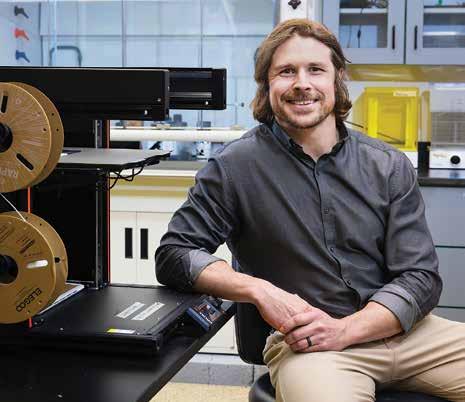
Assistant Professor Robert Wagner (Mechanical Engineering) received a $569,573 National Science Foundation CAREER Award to fund his materials research into polymers over the next five years.
He hopes to close the gap between what’s going on molecularly and what researchers can observe, incorporating machine learning with experimental validation to analyze the behavior of polymer chains.
The CAREER Award is the NSF’s most prestigious honor, given to early-career faculty with the potential to be pioneering leaders in research and education.
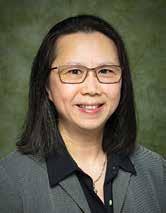
Sarah Lam, a faculty member at the School of Systems Science and Industrial Engineering since 1999, was elevated this spring to SUNY distinguished teaching professor.
To earn the rank, faculty must demonstrate teaching mastery, consistently demonstrated over multiple years at the undergraduate, graduate, or professional levels.
Lam serves as the SSIE graduate director and the assistant director for systems analysis and modeling for the Watson Institute for Systems Excellence. She received a SUNY Chancellor’s Award for Excellence in Teaching in 2012.
The 2025 State University of New York Chancellor Awards for Excellence (which recognize consistently superior professional achievement) included:
SUNY Chancellor’s Award for Excellence in Faculty Service
Dmitry Ponomarev (Computing)
Award for Excellence in Professional Service
Vincent Brady, MS ’03 (Engineering Laboratories)
Horizon Award for Faculty Research and Scholarship
Yuan Wan (BME)
Watson College had four Binghamton University award winners in 2025:
Lois B. DeFleur Faculty Prize for Academic Achievement
Luis Rocha (SSIE)
University Award for Excellence in International Education
Sangwon Yoon (SSIE)
Binghamton University Council/ Foundation Award
Peter Partell (Dean's Office)
Kaiming Ye (BME)
Professional Staff Senate Distinguished Service Award
Lisa Gallagher (Dean's Office)
Graduate Student Excellence Awards for research
Prabhu Bharathan (ME)
Mahmood Chahari (ME)
Yang “Lexi” Gao (ECE)
Mohsen Hatami (ECE)
Yulin Liu (SSIE)
Shyam Patel (MSE)
Mohammad Najeh Samara (SSIE)
Akbar Solhtalab (ME)
Graduate Student Excellence Award for service and outreach
Eunji Hong (BME)
Binghamton University Alumni Association BOLD (Bearcats of the Last Decade) 10 Under 10 Awards
Clare Biging ’16 (BME)
Jacob Kumpon ’22 (ME)
The 2025–26 Watson College Recognition Awards were announced at a faculty and staff luncheon in April:
Outstanding Research Achievement Award
Yu Chen (ECE)
Early-Stage Distinguished Research Award
Yincheng Jin (Computing)
Distinguished Educator Award Fake “Frank" Lu (BME)
Outstanding Faculty Service Award
Vladimir Nikulin MS ’97, PhD ’02 (ECE)
Outstanding Commitment to Inclusive Excellence Award
Christopher Greene, MS ’98, PhD ’01 (SSIE)
Distinguished Alumni Award
Mohammad Yunus, MS ’00
Yanchu Xu, PhD ’94
Outstanding Staff Service Award
Christine Place-Sweet (Computing Group)
Rachel Crisman (ECE)
Tara Zajack (ME)
Watson College Award for Excellence in New Research Funding
Vincent Brady, MS ’03 (Engineering Laboratories)
Benson Chan (S3IP)
Mohammad Khasawneh (SSIE)
Seungbae Park (ECE)
Mark Poliks (SSIE)
Bahgat Sammakia (ME)
Watson College Award for Outstanding Impact in Sponsored Research
Kanad Ghose (Computing)
Mohammad Khasawneh (SSIE)
Seungbae Park (ECE)
Mark Poliks (SSIE)
Bahgat Sammakia (ME)
Scott Schiffres (ME)
Sangwon Yoon (SSIE)
The Watson College family mourned the loss of five colleagues in 2025.
Founding Dean Lyle Feisel laid the groundwork from 1983 to 2001. Feisel guided the creation and restructuring of graduate and undergraduate programs, and he oversaw Watson’s first Accreditation Board for Engineering and Technology (ABET) process.

Professor Emeritus James F. Geer ’62 was an educator, scholar, and mentor whose career in mathematics and applied science shaped the systems science program. He collaborated with GE, IBM, NASA, and others.
SUNY Distinguished Professor Kaiming Ye chaired the Biomedical Engineering Department from 2013–25. A pioneer in biomanufacturing, his bioprinting and tissue biofabrication research had support from the National Science Foundation, the National Institutes of Health, and industrial partners.

Professor N. Eva Wu researched robust control, fault detection, power system protection, and smart grids during her 38-year career in the Department of Electrical and Computer Engineering. In addition to NSF, NIH, and NASA proj ects, Wu inspired generations of students.


In her five decades at Binghamton University, Bonnie Cornick served from the Dean’s Office to the Fabrication Lab. An ever-friendly presence, she strongly supported the Civil Service Employees Association (CSEA) and the United University Professionals (UUP).
1 9 46 – 2026
LABS AND TEACHING SPACES at Binghamton University and Watson College have evolved over the past eight decades, going from analog to digital and consistently integrating the latest technologies. The mission has remained the same: Find the best solutions to persistent problems and make the world a better, safer place.