Binghamton University's Human Development - 2025 Annual Report
Message from the Chair
Greetings from the Department of Human Development in the College of Community Affairs at Binghamton University. We are at a pivotal moment, with developments that will shape our future and enhance our mission.
Our department is known for rigorous and relevant undergraduate and graduate education, designed by faculty committed to teaching and scholarship. Our faculty are accomplished scholars whose research advances social justice locally, nationally, and globally. We engage with equity and social justice issues to better understand complex human conditions and promote positive human development in our rapidly changing world.
The University has recognized our faculty for their achievements, bestowing Chancellor’s awards for Excellence in Teaching, Scholarship and Creative Activities, and Adjunct Teaching, and the Provost’s Award for Excellence in Undergraduate Research Mentoring. The Fleishman Center for Career Development has honored our faculty as Career Champions for outstanding career-oriented mentoring of undergraduate students.
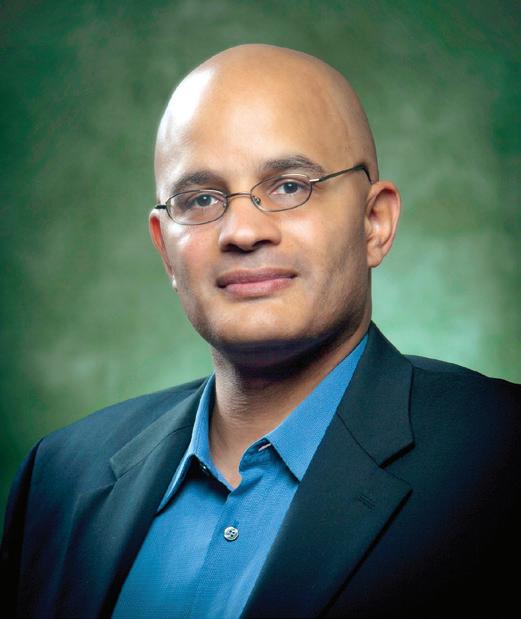
Leo Wilton Acting Chair
A key element of our success is the integration of High Impact Practices (HIP) throughout our curriculum. By focusing on these strategies, we enhance student engagement and foster deeper learning. Recent data shows that 99.7% of our human development graduates have had at least one HIP experience. More than a third (37.5%) had additional research or creative activity experience, while another 29% had a communityengaged learning experience.
We are excited to announce that we will be moving from the University Downtown Center to the main campus in early August 2026. This transition will strengthen our connection to the wider University community while maintaining our active role in the Binghamton community. To celebrate, we invite all students, faculty, staff, and community partners to join us for a welcome back event at the start of the fall semester. Mark your calendars and stay tuned for event details. We look forward to seeing you there!
binghamton.edu/human-development 607-777-2841
@BU.MSHR
@hdevbinghamton
Restorative Histories — Broome Project
Associate Professor Laura Warren Hill partnered with Associate Professor of History Mallory Szymanski of Alfred University and Ted Forsyth, a sociology PhD student at Syracuse University, to found the Upstate New York Policing Research Consortium (UNY-PRC), a collaborative organization to document and confront the enduring legacies of policing and incarceration across the region.
With support from the Binghamton University Digital and Data Studies Seed Grant, the consortium built a digital archive to share research materials with the public. The archive combines hard-toaccess public records obtained through the Freedom of Information Act (FOIA) and Freedom of Information Law (FOIL) requests with materials shared by system-impacted individuals and community organizations. An expansion came through funding from the Ross Foundation to establish Restorative Histories – Broome, a project developed with Justice and Unity for the Southern Tier. Together with Broome County residents, the initiative gathers and preserves stories, artwork, legal documents, and correspondence that might otherwise remain unseen.
Student interns from Binghamton University are involved in drafting FOIA/FOIL requests to obtain materials from state agencies, navigating the appeal process when those requests are
denied, and converting both state-generated records and community-shared materials into open, citable sources accessible to scholars, community activists, and the public.
The UNY-PRC digital archive is more than a database. It is a regional project that preserves community voices, advances public understanding of policing and incarceration, strengthens collaborative networks across Upstate New York, and provides students with professional skills and practical experience working in a social justice movement. For alumni invested in the future of ethical scholarship and restorative justice, the project offers a powerful example of how universities can partner with communities to reshape the public record and, in doing so, reshape the story itself.
Innovative programming
Interdisciplinary and relevant: Immigration studies minor
The department’s interdisciplinary minor in immigration studies examines how citizenship is defined and experienced at global, societal, institutional, community, and individual levels. This topical program focuses on how contemporary
understandings of citizenship shape policies and everyday practices, and how these impact immigrants, refugees, and displaced individuals.
The minor uses a social justice and rights-based approach to examine citizenship, immigration, emigration, and immigrant lives in transnational, national, and local contexts. It
emphasizes how discourse on belonging, justice, and displacement intersect across global, national, and local settings.
Over the last seven years, 40 students have graduated from the program. The majority of these students come from within the department (40 percent), followed by political science (continued on next page)
First-generation scholar DeLaney Painter makes her mark
Since transferring from SUNY Broome Community College, DeLaney Painter has excelled academically and shown strong research initiative. Painter adapted quickly to her new environment, joining major research projects and maintaining a 4.0 GPA in the human development program. Painter has contributed to projects with the Upstate New York Policing Research Consortium (UNY-PRC), demonstrating
strong research skills and a commitment to ethical, community-engaged scholarship. Painter is also establishing a strong scholarly record. Her paper, “Raised Under Watch: How Media, Policy, and Surveillance Extend the Reach of Mass Incarceration through Child Welfare Practice,” will be published this spring in Binghamton University’s Undergraduate Research Journal. She has also presented at academic conferences, where peer review affirmed the quality of her work and her engagement with the wider scholarly community.
As a first-generation college student from a working-class background, Painter brings a perspective rooted in respect for the knowledge and experiences of the communities she studies. She works to make research a collaborative effort shaped by those communities and to share her findings in ways that have an impact beyond the University.
Painter’s academic success, research, and dedication to scholarship exemplify the best of what Binghamton stands for.
(continued from previous page)
(20 percent), and philosophy, politics, and law (10 percent).
Students from other disciplines, including sociology, anthropology, psychology, and economics, are also represented.
Exploring an online pathway for the MSHR program
The Master’s of Science in Human Rights (MSHR) equips students to engage in the multi-
layered contexts of human rights practice and conduct interdisciplinary applied research and evaluation in community settings. As the first professional degree of its kind in the State University of New York system, the MSHR serves as a national and international model.
This program prepares students for academic, community, and policy careers focused on critical social issues. The
curriculum emphasizes human rights theory and community engagement. It also provides practical skills in organizing, social innovation, applied research, and program evaluation.
An exclusively online component of this program is currently in development. This will enable the program to offer the same curriculum, degree requirements, and learning outcomes to students worldwide.
Lecture series highlights emerging issues
The Lubna Chaudhry Human Rights Lecture Series honors its namesake, an associate professor of human development who passed away after a brief illness in 2020.
Since 2021, the Department of Human Development has hosted the lecture series to engage both the University community and the public. The series supports the department’s Master of Science in Human Rights program by addressing critical issues often overlooked in mainstream human rights scholarship and practice.
Each year, it focuses on a theme that reflects current and emerging challenges in the field. Previous themes have emphasized grassroots movements, socio-economic and citizenship rights, and transnational justice. The 2025–26 series continued this tradition with the theme “Development at a Crossroads.”
The series has featured speakers from politics, law, journalism, and activism. Notable guests include Chilean congresswoman Camila
Rojas, who discussed mass movements in Chile; Colombian lawyer and human rights activist Francisco Ramirez, who presented his team’s legal campaign against transnational corporations; labor journalist Alex Press; Pulitzer Prize-winning journalist Farah Stockman, recognized for her book American Made: What Happens to People When Work Disappears (2021); and immigrants’ rights organizer Harsha Walia. These events have consistently attracted engaged audiences and have been recognized for fostering substantive dialogue on urgent human rights issues.
Community-engaged scholarship empowers students and parents
Associate Professors Denise Yull and Marguerite Wilson work together to better understand and impact the experiences of students and families of color in the Binghamton City School District by addressing racial and class-based injustices, promoting equity, and advancing restorative justice. Their research centers on listening to and learning from students and parents of color, highlighting their experiences and challenges within school systems.
This community-engaged scholarship has
shaped educational policy in the Greater Binghamton area. Collaboration among parents, researchers, and community stakeholders prompted the school district to adopt a restorative practice program, replacing punitive zero-tolerance discipline. The model includes community-building activities, such as talk circles, to improve communication during conflicts and provide preventive interventions. This research-based approach has strengthened partnerships among families, community members, school personnel, and researchers.