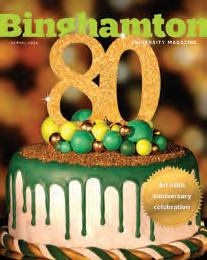
In honor of 80 years: 80 things to love about Binghamton University.
4
The People
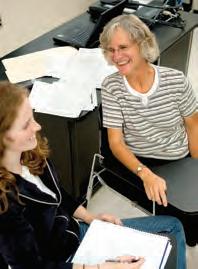
• The faculty: Bryan Acton and Emily Zale on being professors.
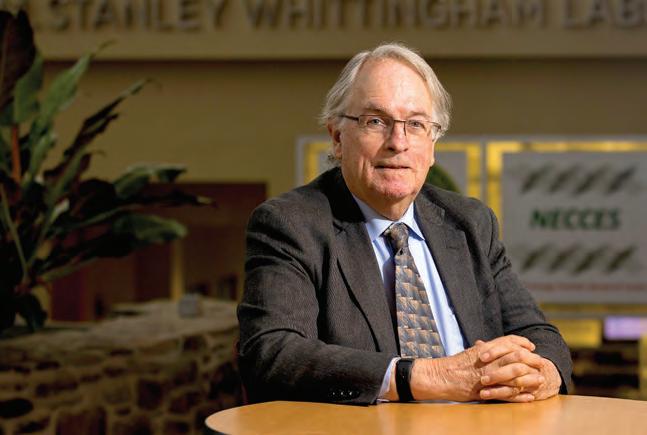
• The Nobel Laureate: Catching up with M. Stanley Whittingham.
12
The Places
• The Nature Preserve: A site for education and relaxation.
• University Art Museum: Four elements that make it special.
20
The History
• WHRW: Campus radio station celebrates 60 years on the air.
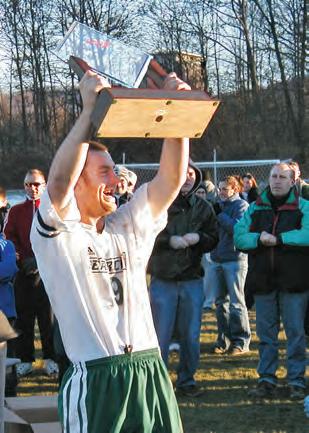
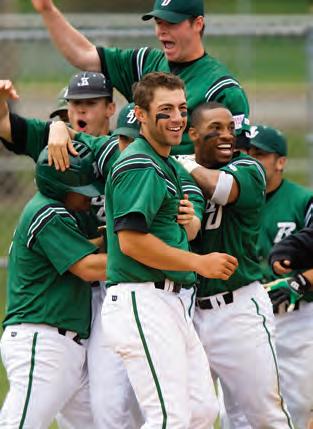
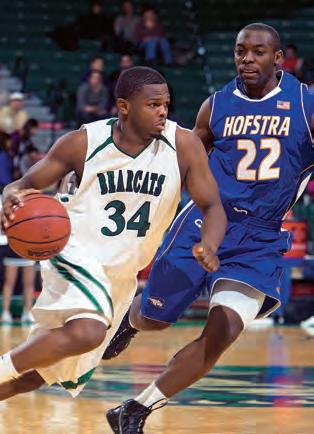
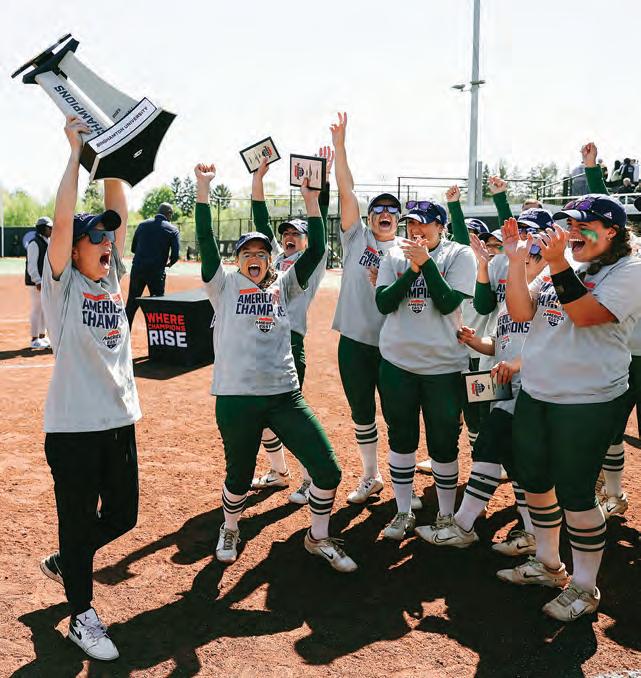
• Division I sports: Who are the top teams of the past quarter-century?
28
The Cornerstones
• Campus tours: Meet a senior tour guide.
• The future: What’s next for Binghamton University?
MORE
38 / Connect: A master of TV props; Q&A with a space systems operator; Class Notes; new book releases; Book Talk
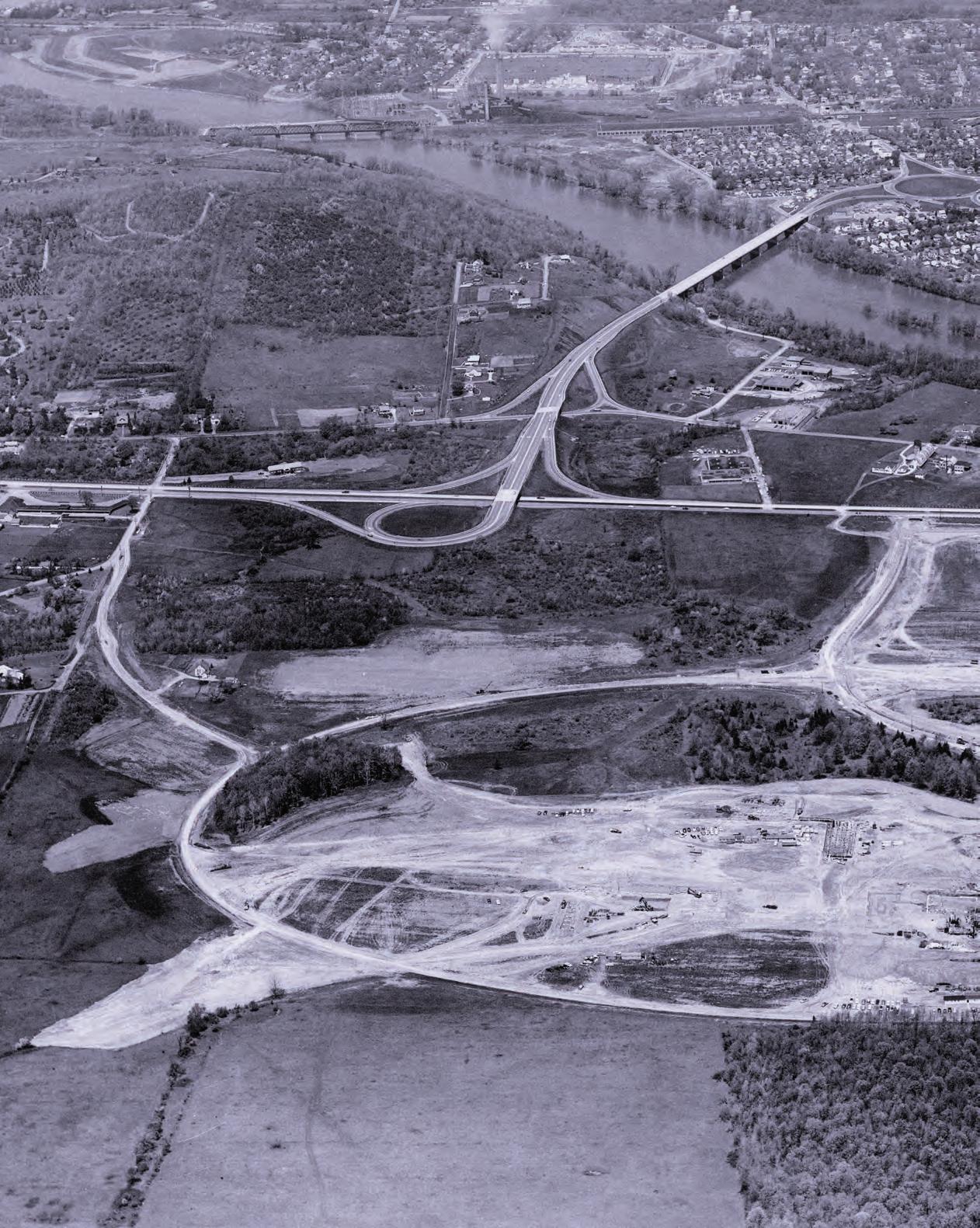
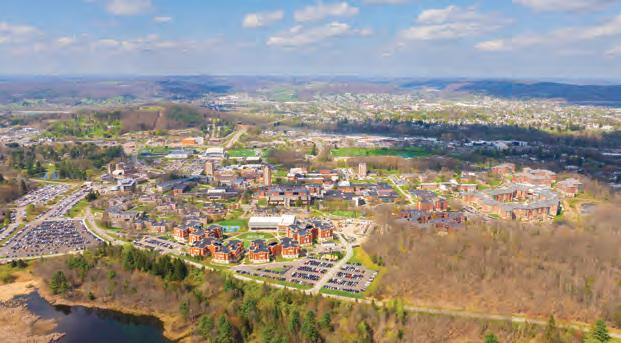
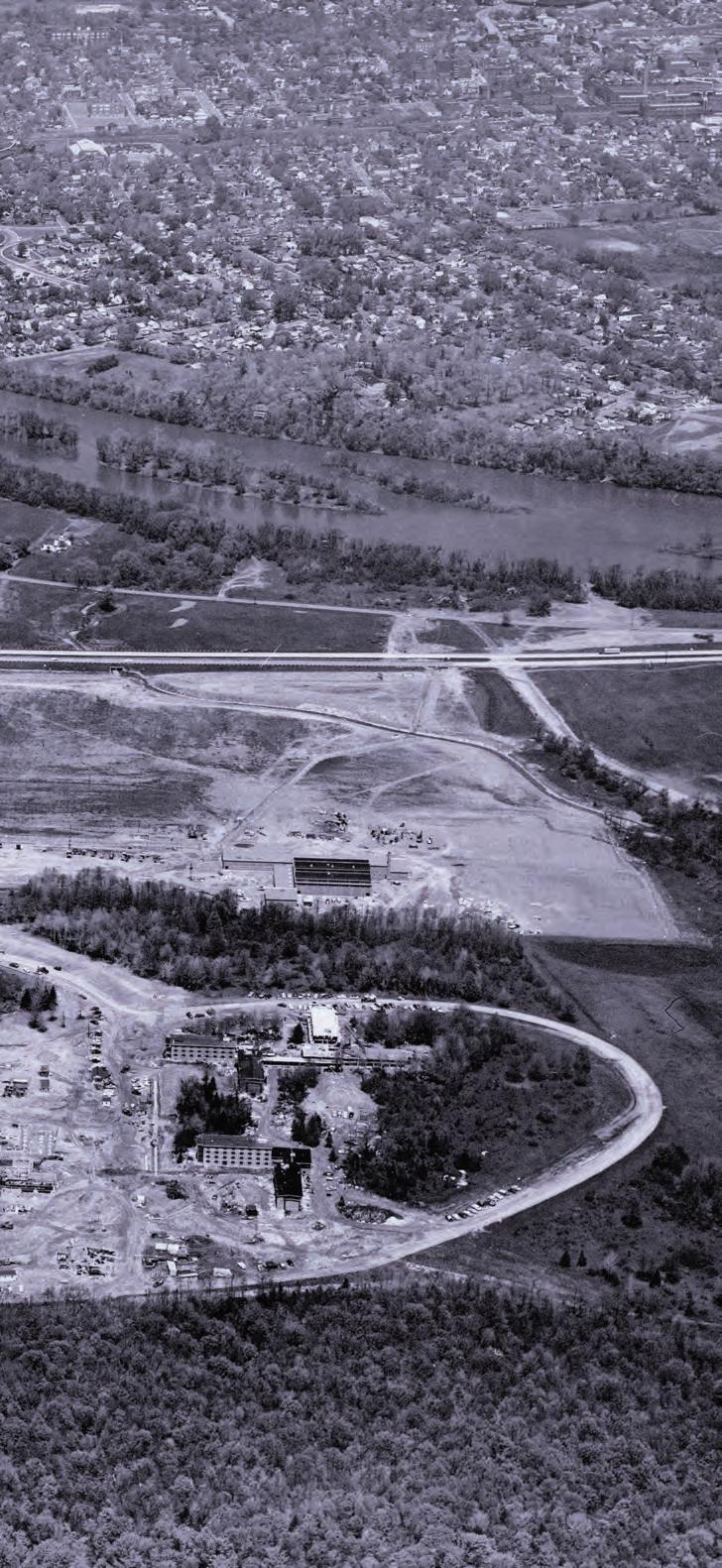
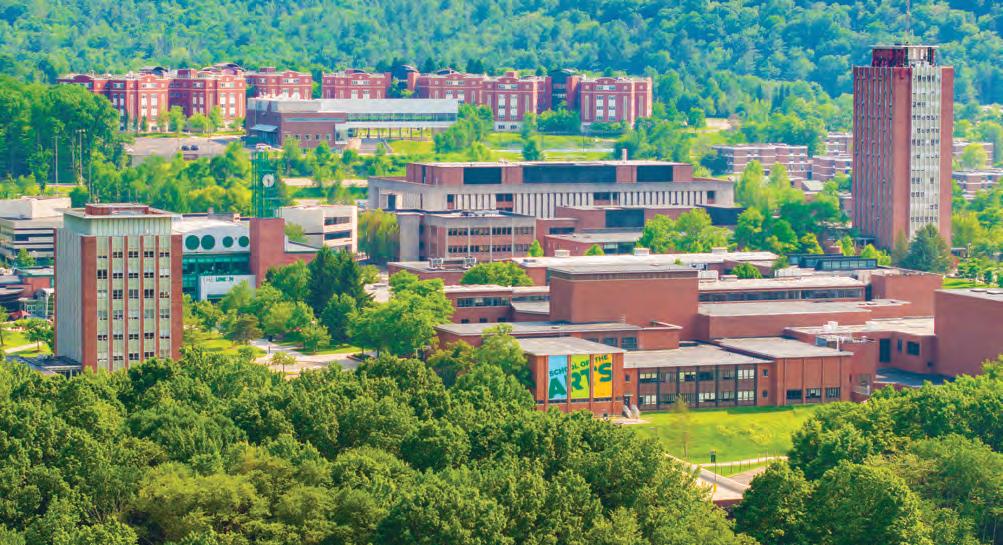
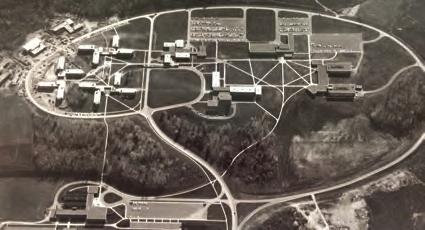
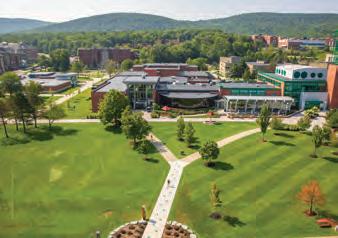
A 1958 aerial view of Harpur College’s Vestal campus along Route 434. The outline of the campus would later be named “The Brain.” The East Gym, which hosted the 1959 Harpur College Commencement, is seen at center right. At left is the Vestal campus in 2026.
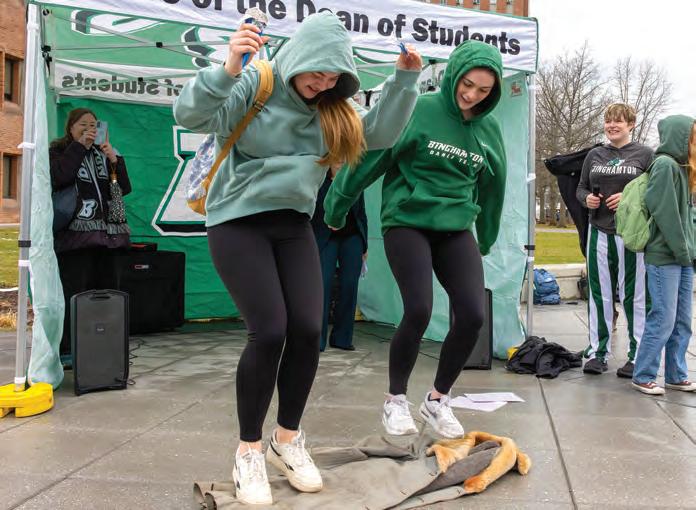
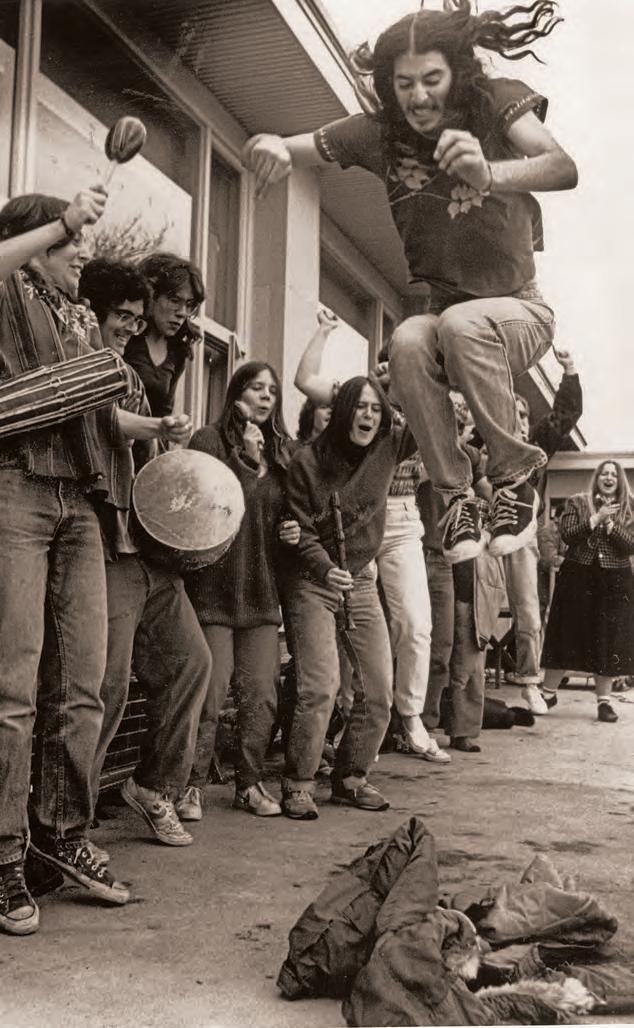
In March, I had the opportunity to take part in my first “Stepping on the Coat” celebration, one of Binghamton’s great traditions. Disgusted by an April snowstorm in the 1960s, Larry Kressel ’66 threw his coat to the ground and stomped on it to inspire the arrival of sunshine and warmer temperatures. We did much the same this year on a drizzly, gray afternoon, combined with a Green Day Friday event that generated school spirit and helped us say goodbye to winter.
Binghamton University is relatively unique in public higher education in that its history stretches back only eight decades, meaning we don’t have centuries of established customs like our private counterparts.
What we do have is a tremendous legacy of academic excellence and an outstanding community of students, faculty, staff, and alumni who care deeply about one another’s success. A significant part of the University’s next strategic plan will focus on creating new avenues for people to express their Binghamton pride. One way we do that is by stomping on the coat each year, a symbol of our excitement for all the great things soon to come.
Sincerely,
EDITORIAL
UNIVERSITY MAGAZINE EDITOR
Eric Coker
ALUMNI EDITOR
Steve Seepersaud
DESIGN AND PRODUCTION
Angelo Garufi, Burt Myers, David Skyrca ’85
UNIVERSITY PHOTOGRAPHER
Jonathan Cohen
COPY EDITORS
John Brhel, Ethan Knox ’20, Chris Kocher, Steve Seepersaud, Emma Young ’26
VICE PRESIDENT FOR UNIVERSITY COMMUNICATIONS AND MARKETING
Greg Delviscio
SENIOR DIRECTOR OF CREATIVE SERVICES
Gerald Hovancik Jr.
EXECUTIVE DIRECTOR OF ALUMNI ENGAGEMENT
Matthew Winston Jr.
HOW TO CONTACT US
LETTERS, NEWS, AND STORY IDEAS
Telephone: 607-777-6441
Email: magazine@binghamton.edu
CHANGE OF ADDRESS Office of Alumni Engagement PO Box 6000
Binghamton, NY 13902-6000
Email: alumni@binghamton.edu
CLASS NOTES
Submit them by visiting bconnectalumni.binghamton.edu
Cover photo by Jonathan Cohen; art direction by David Skyrca; cake produced by Pastry Chef Paul Kellems of Sodexo.
things to love
ABOUT BINGHAMTON UNIVERSITY
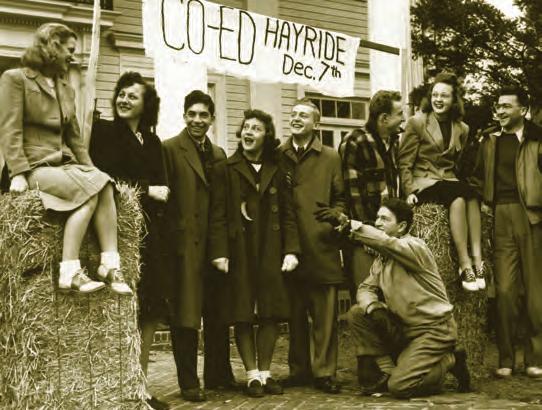
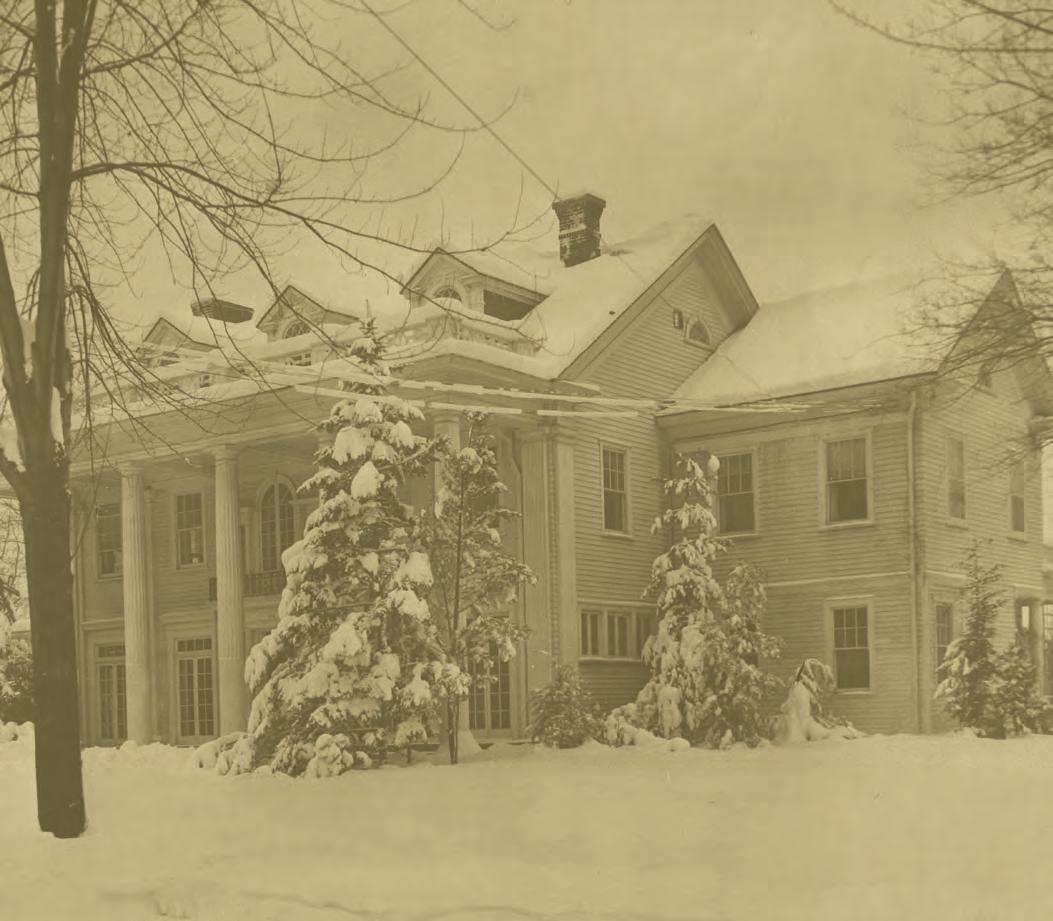
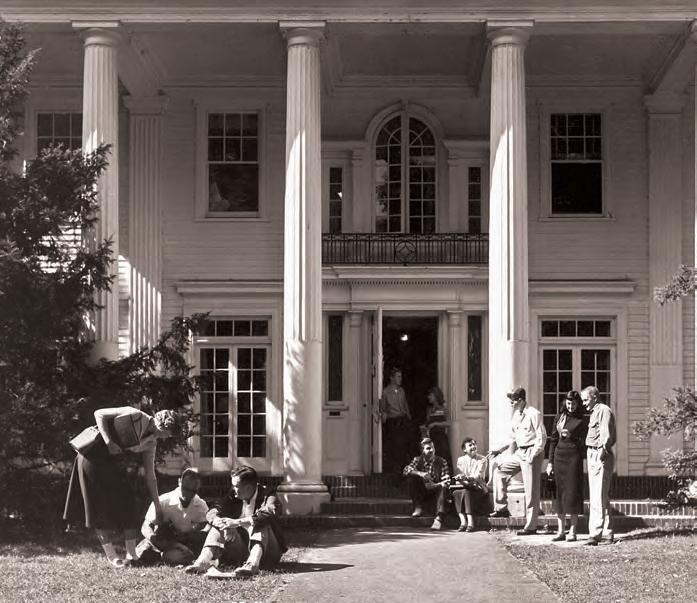
On June 6, 1946, Triple Cities College of Syracuse University launched with a reception at the Arlington Hotel in downtown Binghamton. Classes began that September in modest facilities in nearby Endicott. By 1950, the school had joined the State University of New York, becoming Harpur College.
The institution has seen many changes in the 80 years since its original opening. It started with founding President Glenn G. Bartle’s vision of a college, modeled on Swarthmore College, that taught the liberal arts to returning World War II veterans. Harpur College would move from Endicott to a plot of farmland in Vestal by the early 1960s; launch graduate programs; become SUNY Binghamton and then Binghamton
By Eric Coker
University; create schools for engineering, management, and pharmacy, among others; and advance to Division I athletics.
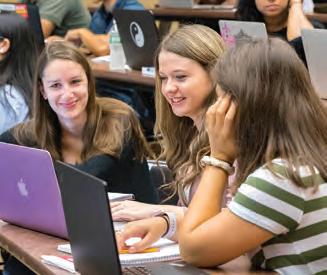
Today, the university that started with 876 students in Endicott classes is growing and thriving as a “Public Ivy” with nearly 19,000 students, more than 160,000 alumni, and a $1.79 billion yearly economic impact on New York state.
In honor of 80 years of excellence, Binghamton University Magazine presents “80 Things to Love About Binghamton University.” The following pages will highlight (in no particular ranking) the people, places, history, and cornerstones that make the University so special.
Happy birthday to you, Binghamton!
Photos from Binghamton University archives, Libraries Special Collections, and by University Photographer Jonathan Cohen
THE STUDENTS
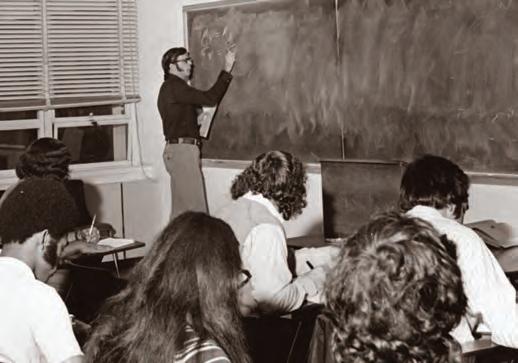
Triple Cities College started in 1946 with 876 students. By the time Harpur College moved to the Vestal campus in 1961, enrollment increased to 1,229. Graduate studies were also launched that year, and by fall 1970, SUNY Binghamton had 1,500 graduate students joining 4,500 undergraduates. The total number of students climbed to 11,966 when the Binghamton University name was adopted in 1992. Today, Binghamton has more than 18,600 students from across the United States. Among those students are more than 2,300 international scholars from 100-plus countries.
THE PEOPLE
An A-Z Q&A
2 THE FACULTY
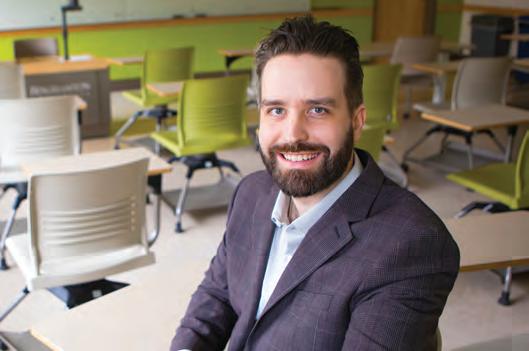
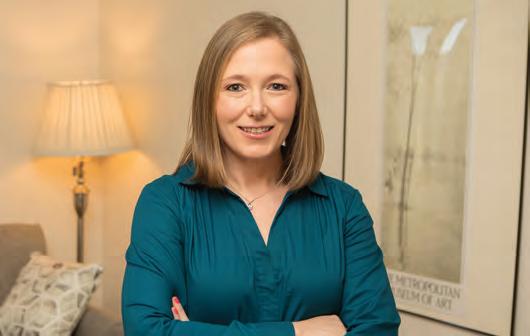
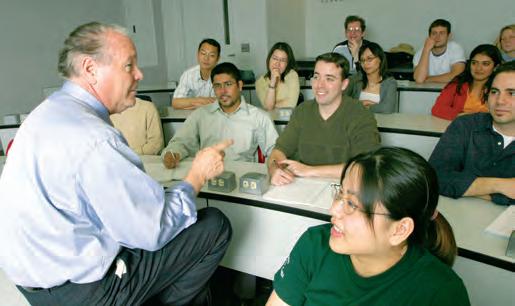
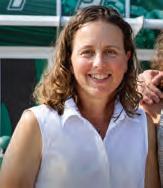
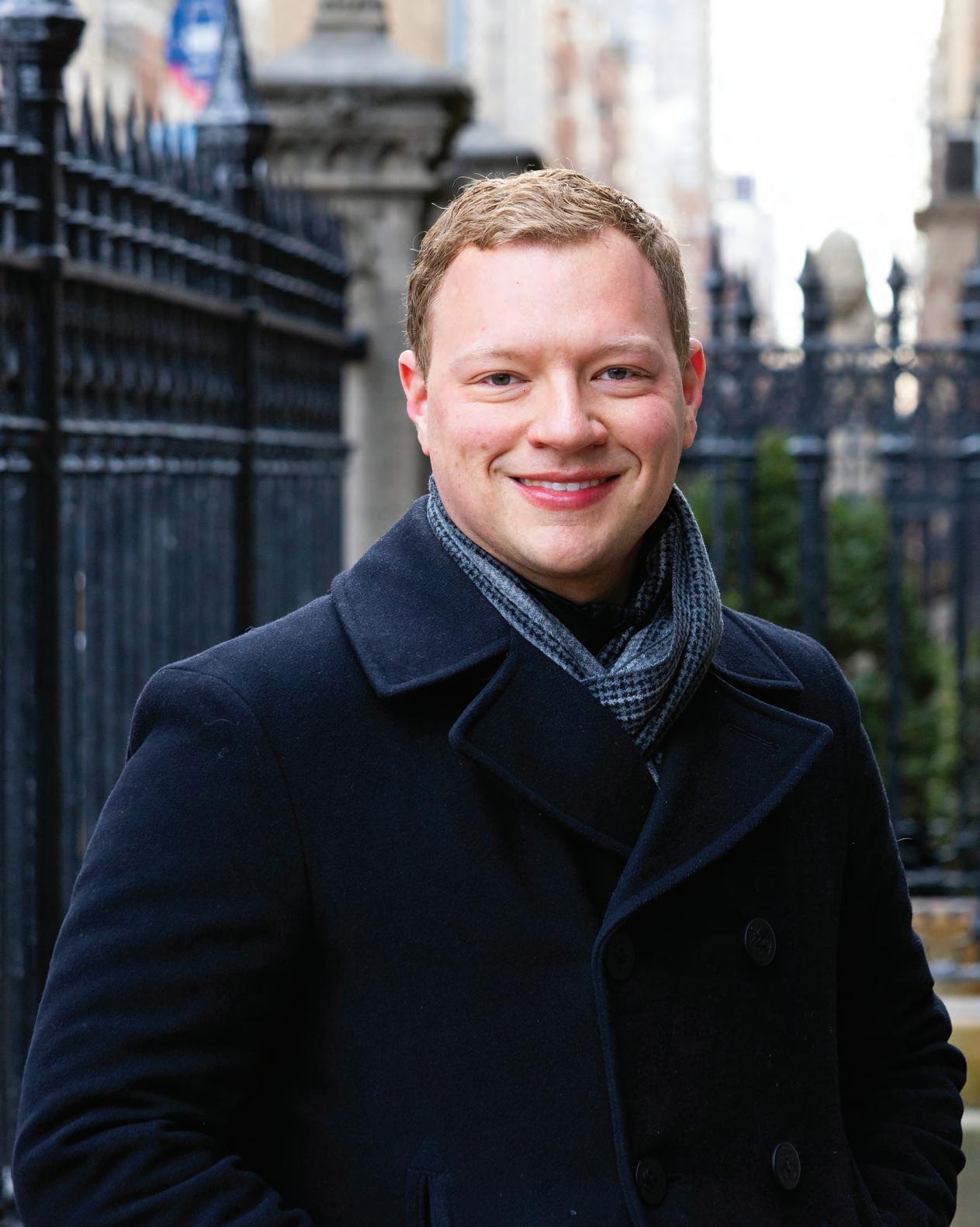
Binghamton University has more than 1,200 faculty members in programs ranging from accounting and Africana studies to sustainable communities and systems science. Two of those faculty members are Bryan Acton, assistant professor of organizational behavior and leadership in the School of Management, and Emily Zale, assistant professor of psychology who specializes in health psychology and behavioral medicine. Zale has taught at Binghamton for eight years, while this is Acton’s fourth year at the University.
Q: What is your favorite thing about being a faculty member here?
ACTON: The range of experiences. In a given week I might teach an MBA class with students who are already working full-time, then meet with PhD students about research ideas, then collaborate with other faculty on a paper or grant. Getting to do all of that in one place is why I call it my dream job.
ZALE: My favorite thing is the opportunity to
constantly learn new things. Whether it is an insight from a student in my undergraduate seminar, a research talk from a colleague, or a project led by a graduate student, I love being challenged to think and grow in new ways.
Q: Favorite class or classes you’ve taught here? Why?
ZALE: At the undergraduate level, my staple courses are PSYC 360 (Psychotherapy: Models & Methods) and a PSYC 473 seminar called
Health Psychology. One of my favorite things about PSYC 360 is having the opportunity to demystify and destigmatize psychotherapy. One of my favorite things about PSYC 473 is the opportunity I get to know students well through small-group discussions.
ACTON: My team leadership class at the MBA level. I get to teach concepts grounded in theory and research, but also do a lot of hands-on activities focused on skills like communication that students can apply in their jobs the next day.
Q: How would you describe Binghamton students?
ACTON: Intellectually curious. The students who are really successful here are the ones who never stop asking questions about the world around them — and I see that in so many students at Binghamton.
ZALE: Binghamton students are insightful, engaged, creative leaders. Seeing how our students engage with complex challenges makes me confident that they can take on anything and change our world for the better.
Emily Zale
Bryan Acton
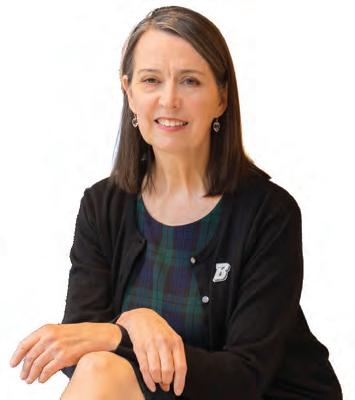
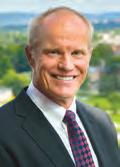
THE PRESIDENT — Anne D’Alleva
Whether meeting with faculty, staff, students, alumni, and community leaders on a listening tour; taking the first steps toward a new strategic plan; or simply cheering on Bearcat student-athletes at home or in Syracuse and Albany, Anne D’Alleva has
already made an impact in her more than six months as Binghamton University president. There’s no mystery to what she is doing: “From Anne’s Desk” is a weekly blog on the University’s website that highlights news and updates from the previous week.
THE PRESIDENTS — The Early Years
4 5
THE PRESIDENTS — The Modern Era
Glenn G. Bartle (1946–65)
The first dean of Triple Cities College and the founding president of Harpur College, Glenn Bartle oversaw Harpur’s integration into the State University of New York system, the establishment of a liberalarts-based general-education curriculum, and a campus move from Endicott to Vestal. Bartle’s leadership helped SUNY identify Harpur as one of four university centers that would eventually offer doctoral degrees. Bartle, whose name graces the campus library, died in 1977.
G. Bruce Dearing (1965–71)
The second president led SUNY Binghamton through a tumultuous period in the U.S. While student protests took place on and off campus, Binghamton embarked on a period of growth in its enrollment and academic schools: The number of students tripled during Bruce Dearing’s tenure, and the schools of nursing (Decker), management, and advanced technology (now Watson) were established. Dearing died in 1985.
Clifford D. Clark (1975–90)
The fourth president expanded SUNY Binghamton’s graduate education and strengthened the professional schools and research centers. Clifford Clark was also a leader in campus diversity, helping to develop the Educational Opportunity Program (EOP) and Office of Services for Students with Disabilities (SSD). The Clifford D. Clark Fellowships, established in 1990, are offered to prospective graduate students who contribute to the diversity of the student body. Clark died in 2014.
Lois B. DeFleur (1991–2010)
The first female president at Binghamton, Lois DeFleur transformed the University in numerous ways. She oversaw the establishment of the College of Community and Public Affairs, along with new graduate programs; prioritized campus internationalization; expanded the size and number of facilities on the Vestal campus; led the transition of intercollegiate athletics from Division III to Division I; and steered Binghamton’s first-ever comprehensive-gifts campaign (raising $50 million).
C. Peter Magrath (2010–11, 1972–74)
The only president to serve twice, Peter Magrath strengthened campus-community relations in his first tenure before departing to lead the University of Minnesota. In his second tenure, Magrath established international partnerships in academics and research, while also developing ties with SUNY Upstate Medical University. Magrath, who retired in 2011, was Binghamton’s youngest (38) and oldest (78) president.
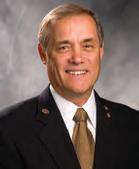
Harvey G. Stenger (2012–25)
Harvey Stenger’s vision and direction enabled the University to show growth in areas such as student enrollment, research expenditures, sustainability, construction projects, and fundraising. His Road Map to Premier strategic plans (first launched in 2013) incorporated input from all walks of campus life — project highlights include the creation of the School of Pharmacy and Pharmaceutical Sciences; an expanded Decker College; and additional strategic faculty hiring.
The alumni
The alumni donors and gift-givers
Led by campaign chair Howard Unger ’82, EXCELERATE:
Moving at the Speed of Binghamton — the University’s third comprehensive-gifts campaign — soared past its fundraising goal in spring 2024. Thanks to the generosity of more than 35,000 donors — many of whom were alumni — the campaign raised more than $260 million. By comparison, the first campaign (Believe in Binghamton) raised $50 million over six years before ending in 2002, while the second campaign (Bold.Brilliant.Binghamton) raised $101 million over seven years before its conclusion in 2012.
The alumni in the spotlight
Several Binghamton graduates have helped Binghamton’s reputation and name recognition through their work in politics, business, and entertainment. Among them: Tony Kornheiser ’70 and Sunny Hostin ’90 are seen daily on Pardon the Interruption and The View, respectively. Stephanie Courtney ’92 is one of the country’s leading ad figures as Flo from Progressive; Billy Baldwin ’85 is as synonymous with Binghamton as he is with acting; fellow actor Paul Reiser ’77 of Mad About You fame was featured Stranger Things; Hakeem Jeffries ’92, Eugene Vindman ’97, and John Mannion ’90 are all members of the U.S. Congress; Justin Garcia ’07, MS ’09, PhD ’12, leads the world-renowned Kinsey Institute; and Tom Secunda ’76, MA ’79, is co-founder and vice chairman of Bloomberg L.P.
The alumni Olympians
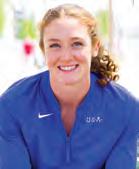
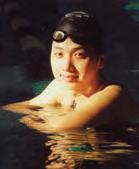
Emily Mackay ’21 put Binghamton on the global stage in 2024 when she advanced to the semifinals of the 1,500 meters at the Paris Olympics. But she wasn’t the first Binghamton grad to claim the “Olympian” title. John Moreau ’77 competed in fencing in the 1984 and 1988 Summer Games; Chris Coleman ’89, MBA ’93, was a bobsledder in the 1992 and 1994 Winter Olympics; and swimmers Yun Qu ’05 and Hui-Jue Cai ’05 competed for China in the 1996 games before becoming Bearcats.
The
alumni supporters
Binghamton alumni now stand at more than 160,000 strong! They are from every state and in more than 100 countries. Alumni are able to enhance the University not only through being in the spotlight or through philanthropic contributions, but also by being involved and staying connected. Alumni volunteer, serve as mentors, take part in global days of service, lead alumni chapters around the country, and return each fall for Homecoming.
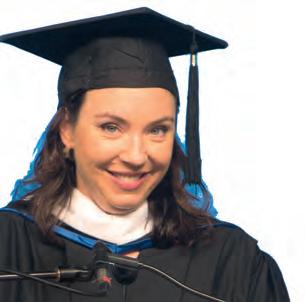
Courtney
Mackay Moreau Cai
Kornheiser
11 THE DEANS AND THE COACHES
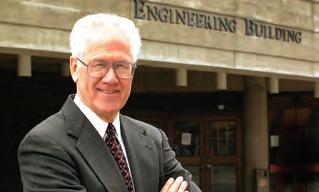
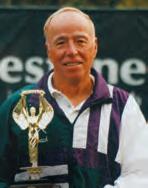
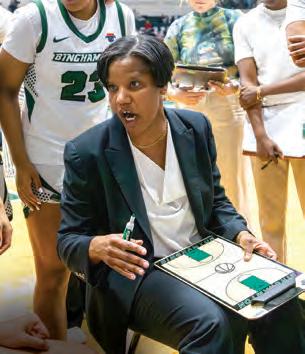
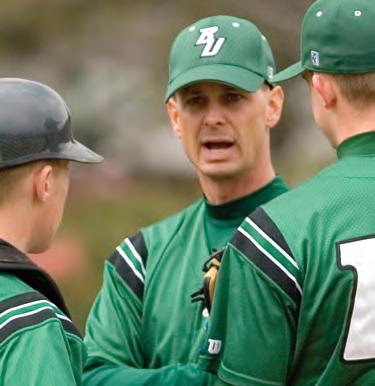
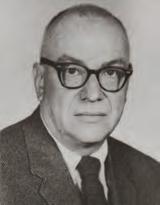
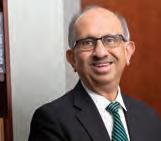
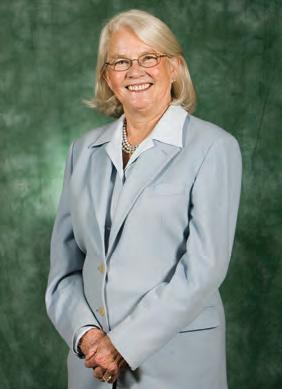
From founding school deans such as Lyle Feisel (Watson) and Patricia Ingraham (CCPA) to S. Stewart Gordon (first dean of Harpur and longtime vice president of academic affairs), Binghamton administrators have helped set the vision for the University’s future. Athletics coaches such as Tim Schum (soccer), Curt Coutts (tennis), Tim Sinicki (baseball), and Annette Acuff (cross country) have mentored and molded student-athletes in and out of the classroom.
THE GROUNDSKEEPERS AND THE CLEANERS
Whether it’s the clear roads and salted walkways on a snowy winter morning, the green grass glistening in the fall, or flowers blooming in the spring, the campus’ outdoors areas are maintained and kept to a high standard of beauty by Facilities Management’s grounds department. Meanwhile, the custodial team is sprucing up the buildings on the Vestal, Binghamton, and Johnson City campuses.
BY THE NUMBERS
30 Groundskeepers
315 Custodial workers
6.3 Miles of roads
23 Miles of walkways
38.5 Acres of parking lots
106 Buildings
Feisel
Acuff Coutts Sinicki
Ingraham
Mary Grimes Hari Srihari
Gordon
THE NOBEL LAUREATE 12
Catching up with M. Stanley Whittingham
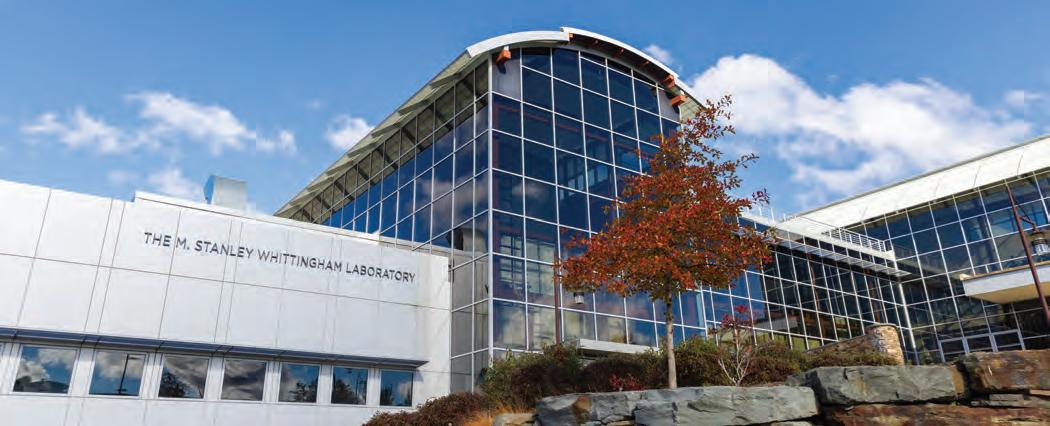
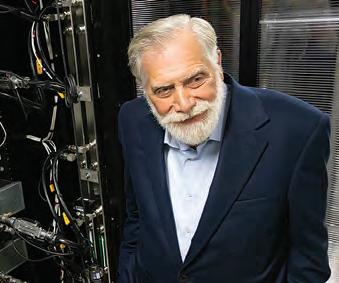
M. Stanley Whittingham, who joined Binghamton’s faculty in 1988, received the Nobel Prize in Chemistry in 2019 for his research leading to the development of the lithium-ion battery. Whittingham, now 84, remains a fixture on campus, leading Binghamton University’s battery initiatives. Binghamton University Magazine spoke with Whittingham, who was dubbed a Knight Bachelor by Princess Anne in 2025.
Q: Where have you been able to speak or visit since receiving the Nobel Prize?
A: I traveled a lot last year and the plan is to travel much less this year!
At the Lindau Nobel Laureate Meeting in Germany last summer, there were probably 15 to 20 Nobel laureates, about 400 graduate students, and a few undergraduate students. There are some lectures, walks with groups of students, a boat ride. The students are so excited, and we got to meet a lot of other Nobel laureates. That’s fun. You get to see the other sides of some of these people.
I went back to England in December to give the first John Goodenough Lecture at St. Catherine’s College in Oxford. Culturally,
a lot has changed compared with America. I walked three-plus miles every day. The downtown is basi cally no traffic except buses.
Q: What’s the most important message or advice you share when you speak to students?
Q: What do you see as your legacy at Binghamton?
A: Besides the Nobel, I started the efforts in materials science. Later on, the center we started was named an Energy Frontier Research Center by the Department of Energy, and that was one of the first big nationally funded efforts on campus. In a sense, that got us on the map for the battery research.
Q: Are there breakthroughs in terms of the battery industry that you’re excited about?
A: The chance of getting rid of the toxic materials, including PFAS. … I also hope to have a manufacturing presence in this country. It looks like it’s getting harder and harder, not easier. What I’m happy about, I started at Exxon. They started the battery business. They’re now back in it again. They’re drilling for lithium; they’re making carbon for the anodes. We need big companies to lead or to invest.
A: Do something that excites you and don’t follow the gang, as it were.
Q: Are there celebrities who have especially impressed you in your travels?
A: I met Princess Anne at Windsor Castle. She talked for about five minutes, holding the whole ceremony up. Arnold Schwarzenegger impressed me. In Los Angeles, he gave a 40-minute talk with no notes, completely literate.
Q: Where do you keep your Nobel medal?
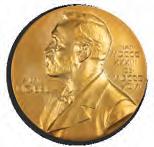
A: There’s a replica in the president’s office. The original is in the bank safe, and I have another copy somewhere, but I can’t find it.
Q: How long do you want to keep teaching and innovating at Binghamton?
A: I recently was in Monterey, California. There was a blue sky, 70 degrees, beautiful ocean. I think we’re going to be looking at spending more time somewhere warmer in January and February, but I’m not sure they’ll let me retire. — Rachel Coker
13
THE PIONEERS
Binghamton University’s growth and success would not be possible without the contributions of early-years dignitaries such as:
Kenneth Lindsay, a veteran “Monuments Man” from World War II, founded and led the Department of Art and Art History, and started its permanent collection.
Edgar Couper, a prominent Binghamton businessman, helped bring Triple Cities College into the SUNY system.
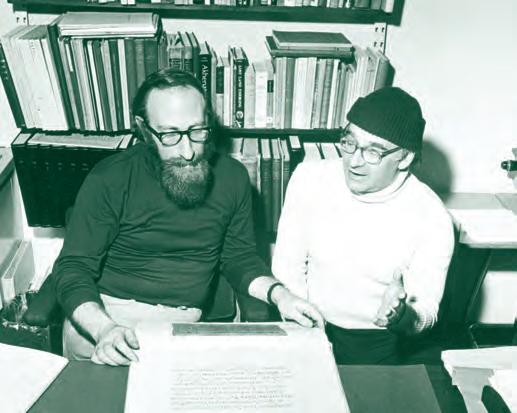
Ken Jacobs, who died in October 2025, was a prominent experimental filmmaker who co-founded the SUNY system’s first Cinema Department with Larry Gottheim.
14
THE STAFF MEMBERS
The work of Binghamton’s nearly 2,000 staff members does not go unnoticed. A Peer Recognition of Outstanding Professional Service (PROPS) Award is handed out each month to a recipient selected by the previous month’s winner. SUNY honors a staff member annually with its Excellence in Professional Service award. And more than four dozen were named 2025 University “career champions” for influencing students’ professional and personal growth.
Aldo Bernardo, who taught from 1949–87, founded the Center for Medieval and Renaissance Studies (CEMERS) and was an early advocate of study abroad.
15
UNIVERSITY POLICE
The New York State University Police at Binghamton, led by Chief Matthew Rossie, is a fully accredited law enforcement agency consisting of a team of 51 officers, investigators, security specialists, and others. The University Police does more than provide around-the-clock campus safety: Officers work with students, faculty, and staff to conduct safety and educational programs ranging from impaireddriving awareness to self-defense.
THE PLACES
16
EAST GYM
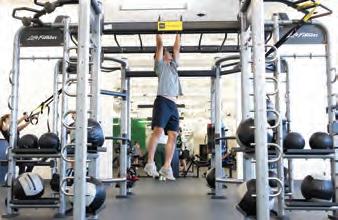
The “granddaddy” of Binghamton University buildings was the first to be built and open on the Vestal campus in September 1958. The gymnasium, which President Glenn G. Bartle pushed for as an early construction priority, served as a home base for Harpur College sporting events, cultural activities, concerts, and graduation ceremonies. Over the following decades, the facility became synonymous with campus recreation, with programs ranging from aquatics to FitSpace to club sports. The East Gym will get an early 70th birthday gift later this year when a 75,000-square-foot expansion project is completed.
17
WEST GYM
The longtime home for Colonials basketball is today used by sports such as wrestling and volleyball, as well as the offices for the Division of Health and Wellness Studies. The gym also features the Patricia A. Saunders Aquatic Center, home to the men’s and women’s swimming and diving teams, and the Visions Federal Credit Union Center for Student-Athlete Excellence.
18 The Events Center
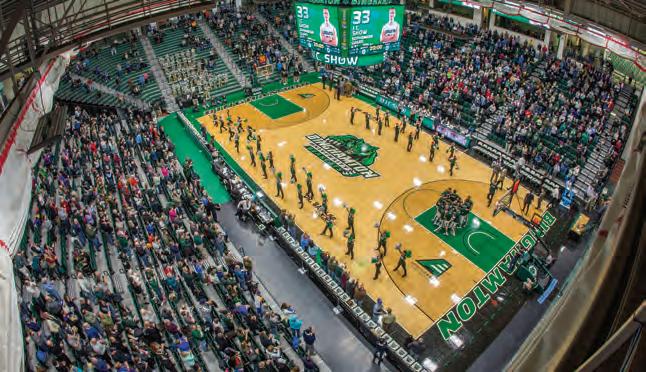
Binghamton University’s move to Division I athletics earned a checkmark in the win column when the Events Center opened in 2004 next to the West Gym. The 156,000-square-foot complex hosts Bearcats basketball games and other sporting events, Commencement ceremonies, concerts, and job fairs for students. It has also aided the community in times of need, such as during the floods of 2006 and 2011, and as a COVID-19 testing site in 2020. The Events Center is now the centerpiece of impressive state-of-the-art athletics facilities that include the Bearcats baseball and softball complexes, the Lane – Starke Tennis Center, and the Track and Field Stadium.
THE PLACES [ ]
19 20
Bartle Library/ Library Tower
The library building opened in 1960 and was officially renamed and dedicated to the University’s first president in 1978. When it opened, the library offered 80,000 print volumes.
Today, the Libraries (which include the Science Library and the University Downtown Center Library) have 3.2 million print and journal volumes.
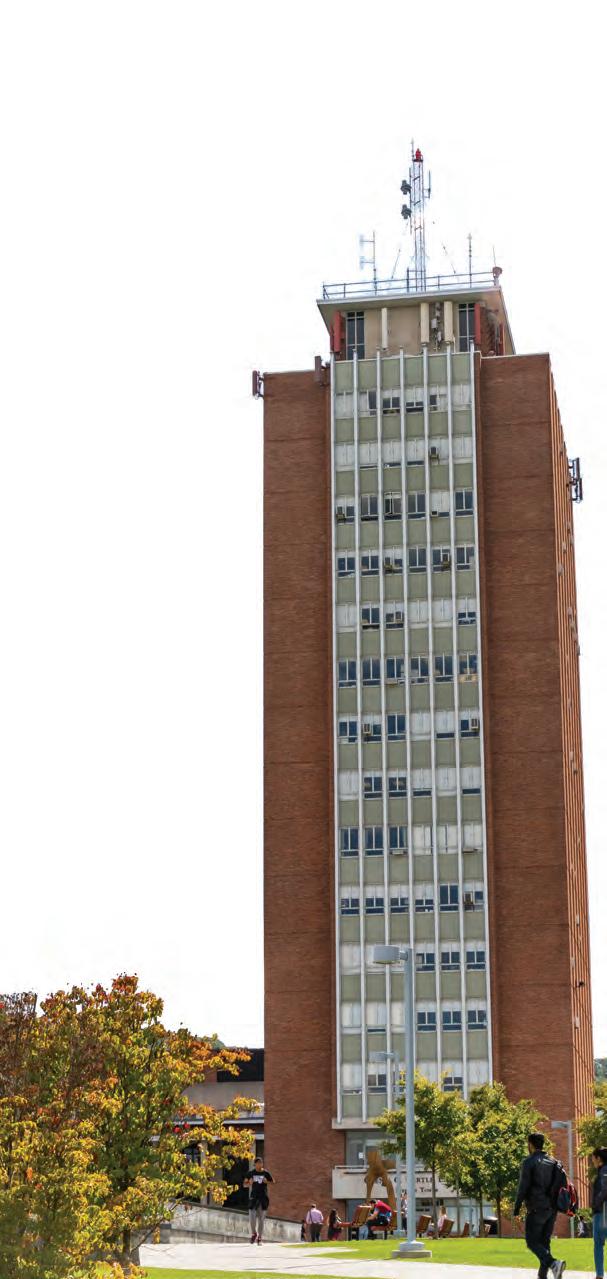
The 15-story Library Tower (right) opened in 1966 and is the University’s tallest building. The tower houses academic departments and faculty offices, and is used as an outdoors projection site for cinema projects and light shows. The tower serves as a beacon to the Greater Binghamton area with its signature crown of green light, visible from miles away.
RESIDENTIAL COMMUNITIES
Residential life has come a long way at Binghamton since the days of James, Lincoln, and Madison in Endicott. The familiar housing names arrived in Vestal in the late 1950s and early 1960s: Rafuse, Digman, O’Connor, Whitney, Champlain, Endicott, and Chenango. Today, there are six communities and colleges helping students connect and learn formally and informally: College-in-the-Woods, Dickinson, Hinman, Mountainview, Newing, and the Apartments. Binghamton’s newest residence hall — Grace Hall — is scheduled for completion in summer 2027.
21
SCHOOL OF THE ARTS
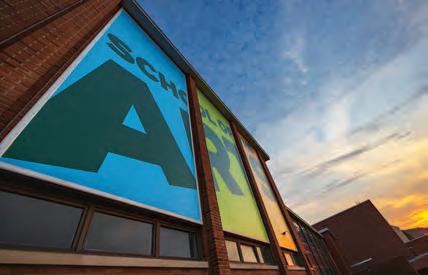
There’s no missing the banner on the side of the Fine Arts Building promoting the new school that merges the cinema, music, theatre, art and design, and art history programs. The school showcases its students each May with a Festival of the Arts.
Natural beauty
Nature Preserve has been a source of education and recreation for decades
By Katelyn Pothakul ’26
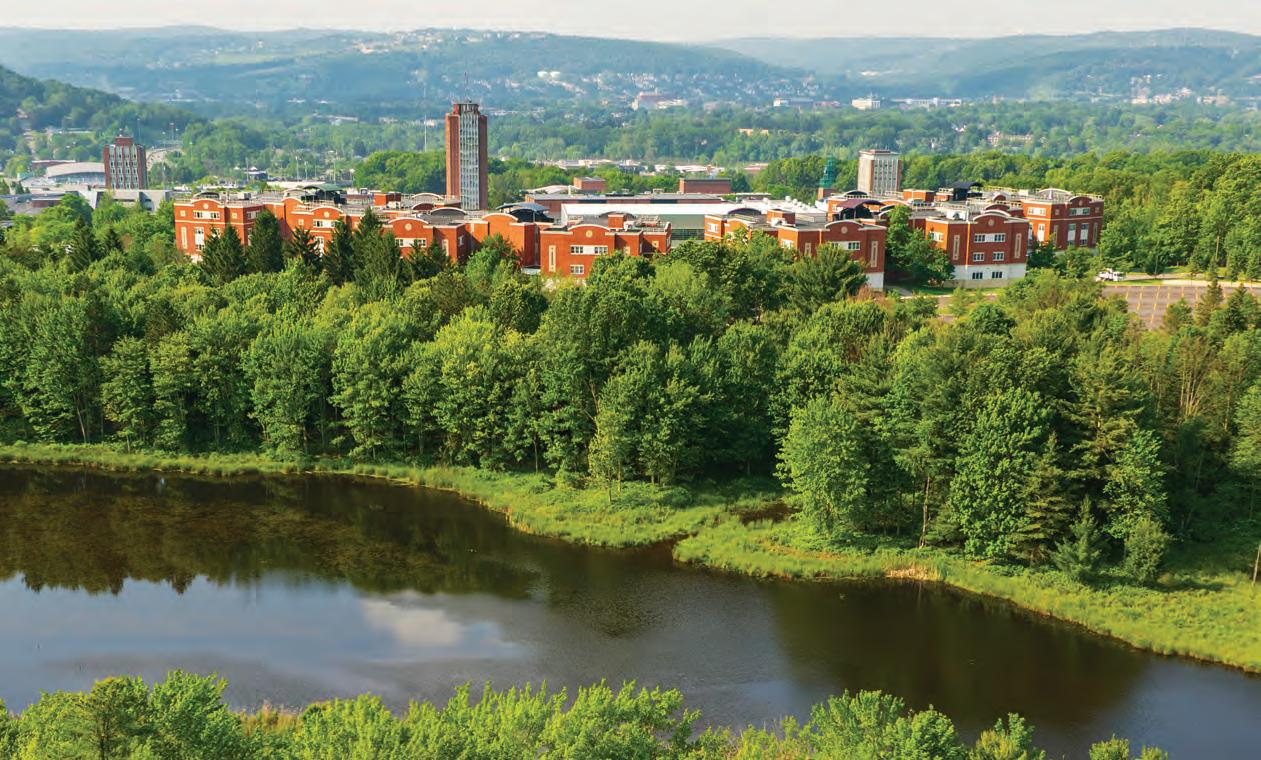
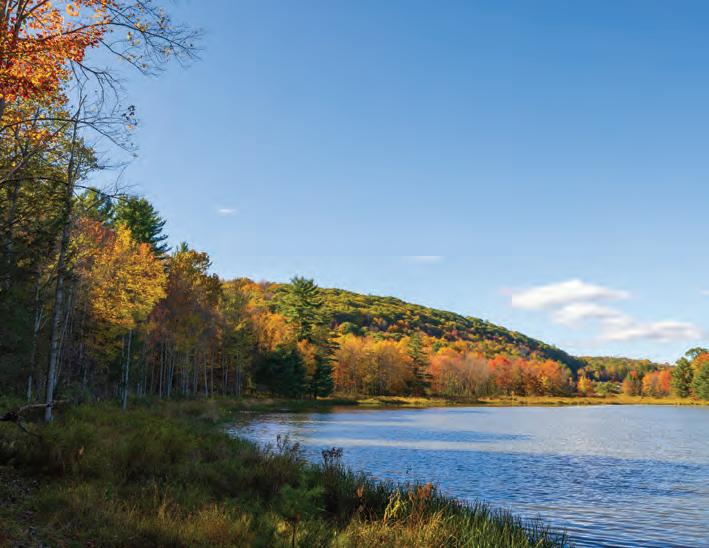
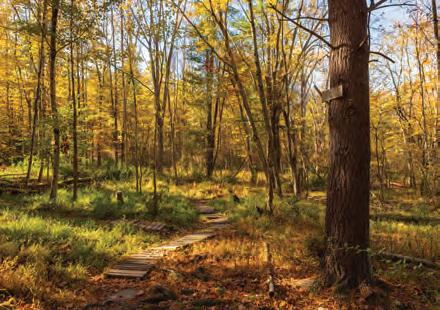
Deep within Binghamton University’s campus is one of the richest biomes in the Southern Tier, home to an evolving and diverse ecosystem of flora and fauna, all condensed within 190 acres. With new- and old-growth forests, marshy wetlands, and shrubbed meadows, the Nature Preserve (located in the upper south side of the campus) has largely remained untouched since its designation in the late 1960s. From amphibians like salamanders and frogs to mammals like beavers and deer, visitors have the rare opportunity to observe a broad range of species across the animal kingdom. An orchestra of noises — the vibrating buzz of insects to the gentle rush of streams — greets all who set foot on the site.
For Dylan Horvath, MS ’03, the University’s steward of natural areas, the Nature Preserve is much more than a career. Before assuming the first-of-its-kind caretaker position in 2006, Horvath’s research took him to remote landscapes across the country, studying wolverines, bats, and birds in states such as Montana, Idaho, and North and South Carolina. But there was something special about the Nature Preserve that drew Horvath back to Binghamton, and it has kept him here for over two decades.
“I’d been out West and I thought I would stay there,” says Horvath, who was first exposed to the Nature Preserve as a graduate student studying biology. “I thought I’d fall in love with it. All the animals that I saw were like a safari — you see wolves and bears and moose and all sorts of things out there. But out of all the places I’ve been, the Nature Preserve has been a place where I see the most animals. I see a lot of diversity.”
THE PLACES
Students have been the heart of the Nature Preserve since its inception. In 1969, it was the pressure of student activism that encouraged then-University President Bruce Dearing to designate these natural wetlands — originally intended to be bulldozed to create recreational fields — as off-limits to development. To this day, it’s students who volunteer their time and energy to the upkeep of the Nature Preserve for generations to come. Open to anyone with an interest in the outdoors, the Friends of the Nature Preserve program invites students and others to take an active role in management, maintenance, and education — drawing participation from people as far as Pennsylvania.
“I try to involve students in everything I do,” says Horvath, who notes that the Nature Preserve serves as a “core” to a surrounding natural area of nearly an additional 285 acres. “That’s the physical maintenance, all the educational outreach. From what I can do timewise, that’s mostly limited to tours, nature walks, educational walks, but I try to bring students into all of it.”
Julian Shepherd, a Bartle professor of biological sciences, first arrived at the University in the 1970s. He has witnessed how the space has grown into what it is today.
“You might think, ‘Oh, Nature Preserve: What you do is you let nature take care of itself,’” says Shepherd, who worked to shape and expand the Nature Preserve alongside the late Richard Andrus (who established the University’s environmental studies program). “But it does need help, especially when there's a lot of people visiting it. You want to give tours and you want to make sure the trails are in good shape — and Dylan does a lot of that.”
For educators like Horvath and Shepherd, the Nature Preserve has long served as an accessible, living laboratory, to observe, identify, and collect specimens like birds, bugs, and butterflies. Students are conveniently able to embark on field trips without having to leave campus, going far beyond the four walls of the classroom — an immersive learning experience that occasionally opens them up to careers in wildlife biology and conservation.
“A lot of universities have a natural area somewhere, but it's often five miles or more away,” Shepherd says. “I've given classes within an hour, and we’ve run up to the Nature Preserve to do something and gotten back in time for students’ next courses. It’s great to have it on campus.”
Now, rather than construction, climate change is the greatest challenge to the Nature Preserve. A particularly wet period starting in 2017 led to increased precipitation and accelerated erosion — washing decades of soil away over the course of just five years. Other threats include invasive pathogens and pests that quickly spread across the forests, potentially leading to their decimation if left unaddressed.
“I morbidly joke that once the final tree has its disease, that might be when I quit,” Horvath says. “But I'll keep going, no matter what. Students keep me going. They keep my emotions positive.”
“I've given classes within an hour, and we've run up to the Nature Preserve to do something and gotten back in time for students' next courses. It's great to have it on campus."
— Julian Shepherd
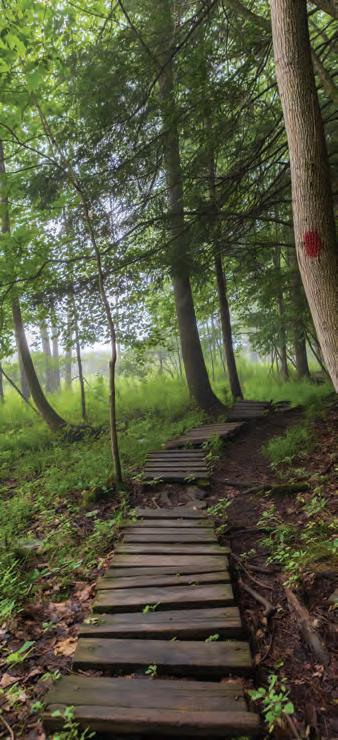
Despite the challenges, the Nature Preserve has remained a valuable resource for Binghamton students, faculty, staff, and the greater community. Even with miles of trails (which include the wooden footbridge in Pond Trail) and most of the athletics cross-country course winding throughout, Horvath emphasizes that the Nature Preserve can offer much more than recreation — with sights and sounds that cannot be experienced anywhere else.
“It’s a big deal that students are going into nature and hopefully appreciating it, possibly seeing animals,” he says. “It helps your mental health to be out there. So many students go out there to get away from things a little bit and have some peace in the preserve. If it was a park, you wouldn't have that.”
Innovative Technologies Complex
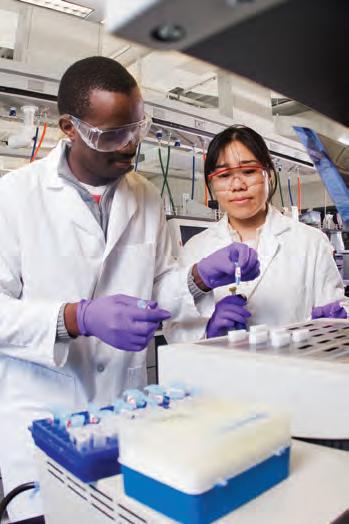
Looking for the University’s first building built from the ground up for research? Then you’ll be headed to the Innovative Technologies Complex. This is where Nobel laureate M. Stanley Whittingham has office and laboratory space. It’s also home to Binghamton’s anechoic chamber, one of the quietest places on Earth, where researchers have developed tiny microphones inspired by an even tinier fly.
Oh, and several multimillion-dollar pieces of advanced equipment, including a fancy X-ray microscope that can let you peer inside an electronic device without cracking it open.
Walk down the hall and you’ll see scientific posters, graduate students hard at work, and maybe a 3D printer spitting out something interesting.
24
The ITC, just across Murray Hill Road from the main campus, has grown over 20 years to include four buildings designed to spur innovation at Binghamton. The Biotechnology Building opened in 2006, followed by the Engineering and Science Building in 2011, the Center of Excellence building in 2014, and the Smart Energy Research and Development Facility in 2017.
UNIVERSITY DOWNTOWN CENTER
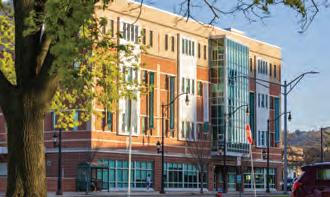
The 74,000-square-foot center at the confluence of the Susquehanna and Chenango rivers brought academics and student life to downtown Binghamton when the College of Community and Public Affairs arrived there in 2007. The building was forced to close for nearly a year in 2011–12 after flooding left 17 inches of water in the basement.
25 HEALTH SCIENCES CAMPUS
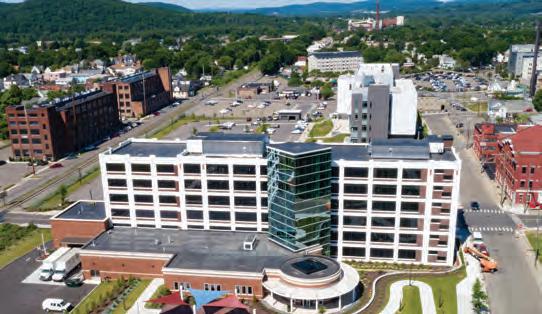
The University’s footprint expanded into Johnson City when the Decker College moved into the Health Sciences Building in 2020. The facility, constructed in 1916 as the Endicott Johnson Shoe Corp. Pioneer Annex, is just one part of the Johnson City campus, which also includes the University's School of Pharmacy and Pharmaceutical Sciences, the Pharmaceutical Research and Development Center, and the Ford Family Wellness Center for Seniors.
26 University Art Museum
Located at the center of campus in the Fine Arts Building, the Binghamton University Art Museum is a dynamic public space. It hosts frequent original exhibitions and related programs, including musical performances, gallery talks, workshops, and pop-up activities. Since its founding in 1967, the museum’s permanent collection has grown to more than 5,000 objects, which range from classical antiquity to today. A vibrant studentintern program provides undergraduate students opportunities to work in all areas, from community outreach and social media to collections management. They also curate their own exhibitions based on objects in the permanent collection. Central to the museum’s mission is collaboration: Whether with chemists, musicians, or historians, it often includes objects borrowed from other premier collections.
Kenneth C. Lindsay Study Room
Established in honor of Kenneth C. Lindsay, a “Monuments Man” from World War II and founder of the Art Department and University art gallery, the study room provides space for temporary installations, seminars, and other opportunities to examine original works of art.
Ed Wilson
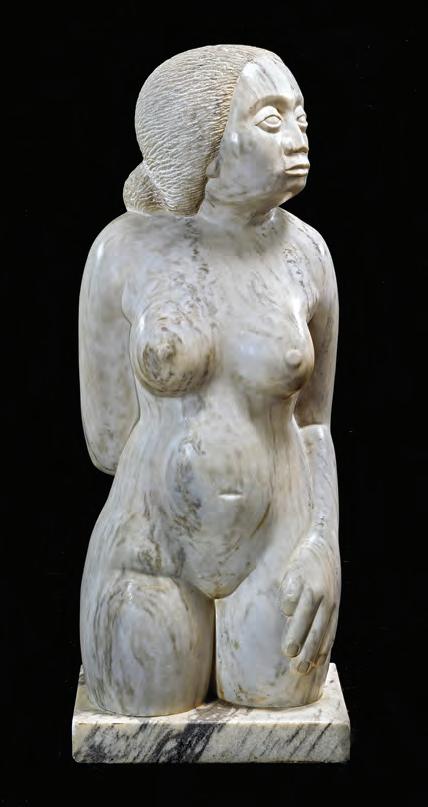
Ed Wilson (1925–96), longtime member of the studio faculty at Binghamton University, was an innovative sculptor whose practice evolved from figures carved from stone and wood to large-scale public artworks, which were often sited in educational institutions.
Henry Moore
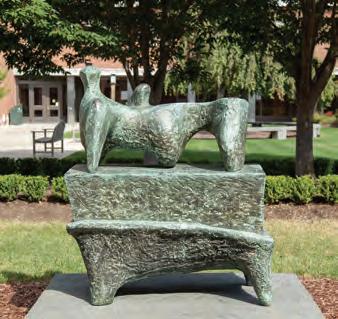
Exhibitions change each semester, whereas the bronze Reclining Figure on Pedestal by Henry Moore sits outside year-round, prominently positioned in the Memorial Courtyard.
Nuvolone
This 17th-century painting was cut into six pieces, then later reassembled. Its story remains elusive, but its former owner fled Vienna to escape the Nazis in 1938. He may have nearly destroyed it in order to save it.
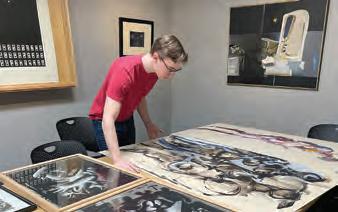
Collections intern Jason Anglum ’24 reviews artwork from the permanent collection.
Carlo Francesco Nuvolone (Italian, 1609–62), “St. Benedict Writing His Rule," mid-17th century. Oil on canvas, 44½ x 55 in. Gift of Norbert Eisenstein (1982.3)
Ed Wilson (American, 1925–96), Cybele, 1954. Georgian marble, h: 33½ in. Museum purchase from the artist (1966.180)
Henry Moore (British, 1889–1986), Reclining Figure on Pedestal, 1959–60. Bronze, h: 51¼ in. Museum purchase (1968.113). Reproduced by permission of The Henry Moore Foundation.
27 MEMORIAL COURTYARD
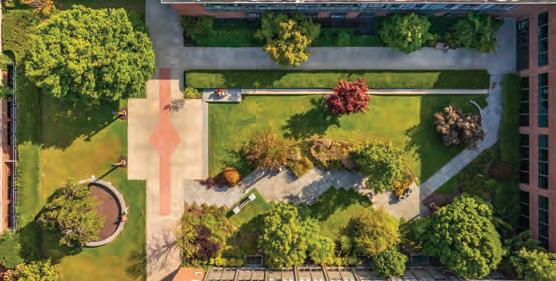
Located in the outside center of the Fine Arts Building, the courtyard has long been a place where campus-community members can find solace and relaxation. Besides flowers and benches, the courtyard includes a memorial for the 15 alumni who died on Sept. 11, 2001; memorial trees and plaques; and the Henry Moore sculpture: Reclining Figure on Pedestal.
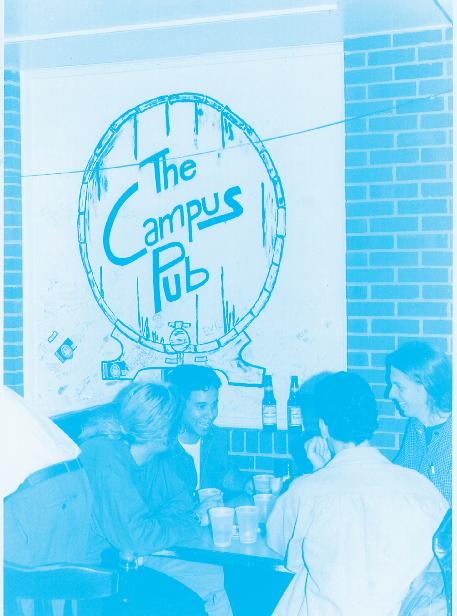
The Campus Pub. The Undergrounds. Slipped Disc Records. WHRW. The bookstore. The Mandela Room. Renting videos. Package pickups. Bowling. Billiards. The MarketPlace. Late Nite. The Fleishman Center. Built in 1960, the Union became bigger and better in 2002 with its University Union West wing.
29
PEACE QUAD
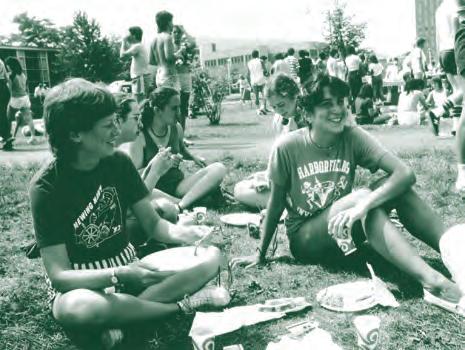
The green space between the University Union and the Couper Administration Building has been a hub for student activity for decades. The fall University Fest has been held on the quad for nearly 35 years. Students also gather there on nice days for games, relaxation, club meetings, and even to get a graduation photo taken at the berm. The historical site also features a plaque with Harpur College’s longtime motto: “From breadth through depth to perspective.”
THE BRAIN
How appropriate! The Vestal campus is designed in the shape of a brain, with most academic buildings “inside the brain” and walkways and most student housing on the outside. “It was well-thoughtout when it started,” campus architect Bill Hall told Binghamton University Magazine in 2024. “I think as we move forward, we’ve paid attention to what the history was, what was here — and built on it rather than changing it.”
Why Endicott? An educational extension program had been held in Endicott (mostly at Union-Endicott High School) since 1932. Triple Cities College was started on the basis of that program, along with Thomas J. Watson’s donation of the Lincoln Avenue building that became Colonial Hall. Why Harpur? Triple Cities College was ready for a new identity when it joined the SUNY system in 1950. The new names were narrowed to three choices: Chenango College, Whitney College, and Harpur College. The last, named for an 18th-century educator and early settler of nearby Harpursville in Broome County, was chosen.
32
THE HISTORY
THE ENDICOTT ROOTS: Triple Cities College and Harpur College
THE MOVE TO VESTAL
In May 1952, SUNY trustees announced that Harpur College’s permanent home would be located on 387 acres of former farmland in Vestal, between downtown Binghamton and downtown Endicott, on what is now the Vestal Parkway. The campus opened in late 1958.
■ Thomas J. Watson offered to donate IBM land on Robinson Hill Road in the Town of Union as the site of the new campus. Trustees were reluctant to approve the land’s suitability, and Watson withdrew the offer in April 1952.
■ President Glenn G. Bartle canceled classes on a spring 1952 afternoon so members of the Endicott campus could visit the Vestal site.
■ New York Gov. Thomas E. Dewey attended and spoke at groundbreaking ceremonies on Oct. 6, 1954. It is believed that Dewey decided the gymnasium would be built first, so passing motorists could see it from the road.
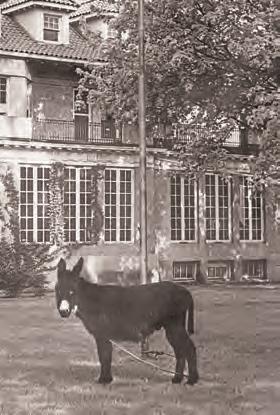
Here is the only known photograph of Harpur College’s first mascot! In the mid-1950s, the burro was chosen by students over the American Eagle and the Great Dane (you’re welcome, UAlbany), so the senior class bought Harpo and gifted him to the college. But Harpo’s bad temper did not endear him to the campus community, and he was removed for safety reasons.
ELEANOR ROOSEVELT SPEAKS ON CAMPUS
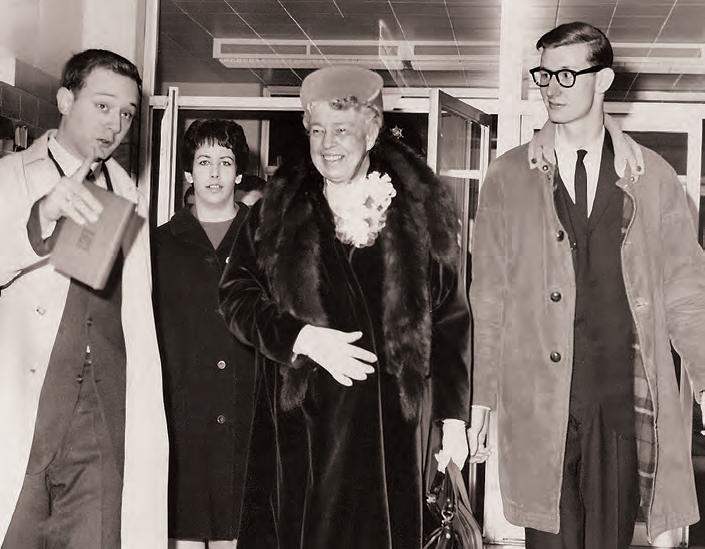
■ One of the highest-profile visits in the early years of Harpur College, former First Lady Eleanor Roosevelt discussed state politics, President Kennedy, and the United Nations during a January 1962 appearance. The talk drew an audience of nearly 1,000 to what is now the Fine Arts Building. With Roosevelt are Ronald Bayer ’64, Lesley Krauss ’64, and Robert Poczik ’64.
TRIMESTER SCHEDULE
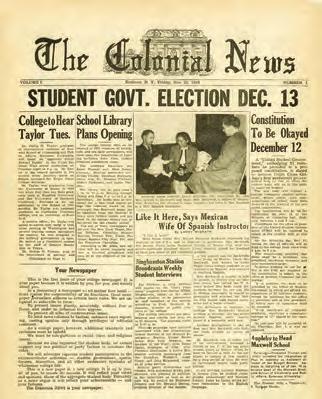
Called “The Great Experiment” by The Colonial News, Harpur College unveiled a trimester plan in the fall 1963 that also incorporated a four-course schedule instead of the usual five. Although the schedule only lasted until 1967, it showed that the college was willing to innovate. In 1971, SUNY Binghamton switched to an “ABC-no credit” grading system. Like the trimester, the new grading system received low marks from students, faculty, and administrators, and grading reverted to the traditional “ABCDF” by 1976.
THE COLONIAL NEWS/PIPE DREAM
The inaugural issue of The Colonial News was published on Nov. 22, 1946. In 1970, the newspaper changed its name to Pipe Dream, which can be read online and in print.
SOCIAL AWARENESS
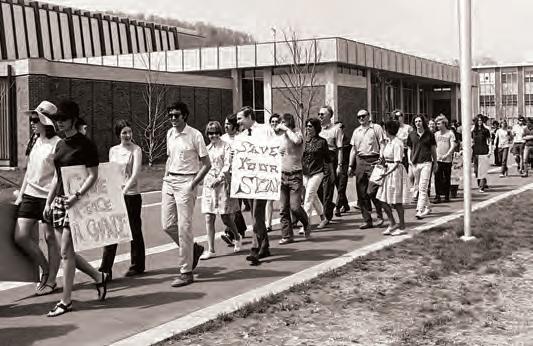
Tackling controversial issues has long defined Binghamton students, particularly in the 1960s and early 1970s. In the early 1960s, students spoke out against nuclear testing and for civil rights. By 1966, the campus community was holding vigils and protests over the Vietnam War. In 1970, then-President Bruce Dearing led an anti-war march to the Binghamton City Courthouse, and classes were suspended after the Kent State shootings. In later years, students brought issues such as racism and women’s rights to the forefront.
A long-lasting hit
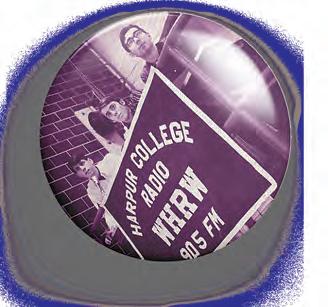
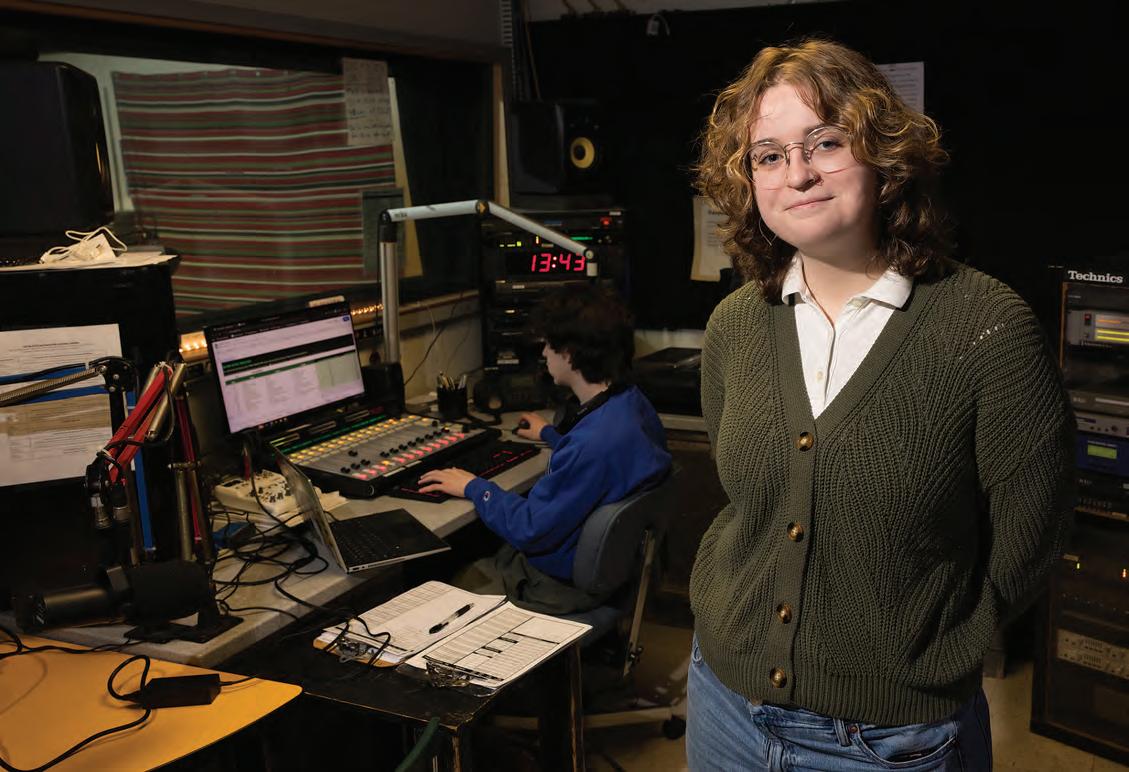
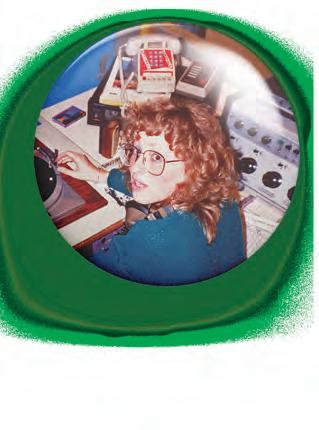
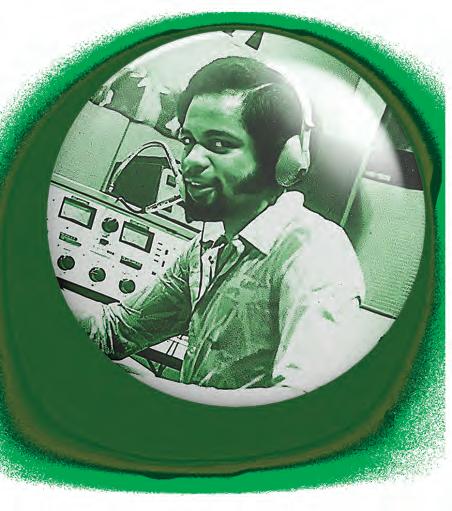
Radio station marks 60 years as soundtrack of the campus community
By Chris Kocher
In this modern era where music is just another type of “content” — millions of hours of it available at our fingertips, commodified and ready to be piped into our brains at any moment through sleek earbuds, oversized hipster headphones, or good old-fashioned speakers — you may wonder: What draws Gen Z students to college radio?
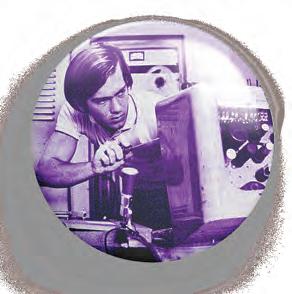
The truth is, the appeal of the airwaves hasn’t changed that much since Binghamton University’s own WHRW sparked to life 60 years ago, transmitting a meager 10 watts of free-format programming at 90.5 FM. Even in 2026, life at the left of the dial offers opportunities for community, camaraderie, and creativity like no other on campus.
“The intention has always been the same, to be some sort of alternative media,” says Mari McLaughlin ’26, the station’s 2025–26 general manager. “When college radio was starting to get popular, it was about going against the grain. Now, it’s going against consumerism, and to make sure that the human touch stays in art. Young people want to create
their own culture and space, and WHRW is a good avenue to do that.”
Today, a 2,000-watt transmitter atop the Glenn G. Bartle Library Tower broadcasts 24 hours a day throughout Broome County, and the rest of the world can dial up the eclectic mix of music and public affairs programming online.
“Radio culture bridges the gap between people,” McLaughlin says. “It’s not even necessarily about music. It’s about wanting to connect, not only with the people around you but also to the people listening to the station, who you’re talking to in this very direct way.”
‘I got adopted’
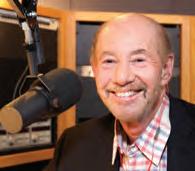
Although students run WHRW and put fellow students first in all decision-making, the station is perhaps unique among campus groups for also including a sizable cadre of community members. Longtime DJs like Uncle Pete (punk and garage rock), Ferdinand Montalvo (Latin jazz), Scotty K (disco and R&B), King Bee (blues), and Doc Sonic (alternative rock and pop) share their tunes with listeners alongside their younger colleagues.
“ Young people want to create their own culture and space, and WHRW is a good avenue to do that.”
—Mari McLaughlin
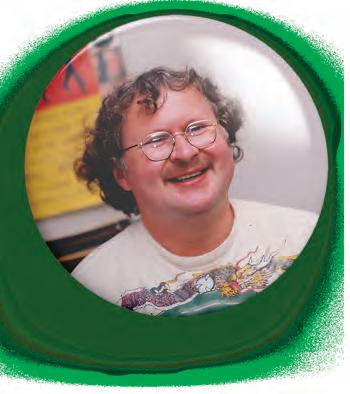
WHRW’s longest-serving DJ is Ron Drumm, who got involved as a junior while taking classes during the summer of 1971. Two dormmates saw his record collection and how he invited random people into his room to hear the latest albums, so they convinced him to get on the air with them — and he fell in love with it.
“When the fall came, everybody at WHRW came back, and I got adopted,” he says. “They didn’t have anybody who was the official record librarian, so I said, ‘Hey, I can do that.’ I just picked up that position because nobody else wanted to do it.”
Drumm had to drop out a semester short of earning his bachelor’s degree (“I basically ran out of money,” he confesses), but he kept up his ties to the University. He worked with Facilities Management for more than 50 years — and he continued to manage WHRW’s impressive record library. In the early 2000s, he even
donated about 5,000 albums to the station as he trimmed down his own vinyl collection.
Through his curation and mentorship, Drumm has introduced thousands of students to music they wouldn’t have heard otherwise. He still creates monthly music mixes that he burns to CDs and mails out to station alumni.
“I was a shy guy in high school, and I never had many relationships or a lot of close friends,” he says. “WHRW helped me to become more comfortable with myself, and it gave me a reason to share things I thought were worth sharing with other people.”
‘I really learned a lot’
WHRW’s official first broadcast was at 7:30 p.m. Feb. 4, 1966 — but 60th anniversary celebrations will happen as part of this year’s Homecoming from Oct. 2–4. McLaughlin is graduating in May,
but will stay in Binghamton to help plan the festivities with the Alumni Association, along with station alums Eric Lobenfeld ’71 and Gail Wein ’82.
Lobenfeld grew up in the 1960s loving the music of the British Invasion and listening to legendary New York City DJ Murray the K, even meeting up with him to share British releases that weren’t officially out in the U.S. yet. At WHRW, he continued playing those U.K. favorites on a show he called Radio London.
The station evolved quickly in those first few years, from transmitting a lot of “beautiful music” (easy-listening instrumental versions of popular tunes) just 40 hours a week to becoming an affiliate of National Public Radio and Pacifica Radio with a full schedule of classical, jazz, and rock shows. News programming featured student reporters who covered the political and social upheavals of the late ’60s and early ’70s.
“I really learned a lot at the station,” says Lobenfeld, who became general manager in his senior year. “Not so much about music, because I was always involved with music, but being in an organization leading people, trying to manage budgets, all that kind of stuff, which was helpful to me in my career.”
After graduation, Lobenfeld moved back to New York City and got a job as a radio producer — but he didn’t like it and ended up going to law school, becoming a partner in several international law firms handling high-profile copyright cases.
Other WHRW alums stayed in broadcasting, though, including Wein. She’s worked as a radio host and producer for NPR and a classical music critic for The Washington Post. Wein is now the president of NYC-based Classical Music Communications, which provides marketing services for artists and projects.
While at Binghamton, Wein served as the station’s classical director, and she loved exploring the record library: “I gained an appreciation for contemporary classical music and all sorts of music that I wouldn’t know otherwise. Now I work with living composers, so those experiences carried over for decades.”
Like all WHRW alums — no matter their ultimate profession or vocation after Binghamton — Wein believes any time on the air was special.
“Just being in that station set me on fire all the time, and I never stopped thinking about it,” she says. “When I graduated and I needed a job in the real world, I kept thinking, ‘I need to be in radio, I need to be in radio.’”
A Homecoming celebration
■ WHRW will celebrate its 60th anniversary with a weekend of memories, music, storytelling, and pure radio spirit during Homecoming on Oct. 2–4. Expect studio throwbacks, live broadcasts and special performances, panel conversations with past and present DJs, social gatherings, late-night reminiscing, and more.
For more details and information, go to binghamton.edu/advancement/events/homecoming or reach out to the Office of Alumni Engagement at alumni@binghamton.edu.
BECOMING SUNY BINGHAMTON
In 1965, the state designated the campus as the State University of New York at Binghamton. A commitment to graduate curriculum and expanded research opportunities enabled New York to name Harpur one of its four SUNY university centers. The SUNY Binghamton name would be in place until 1992, when it became Binghamton University. Harpur College still remains as the University’s liberal-arts (and largest) college.
The Grateful Dead
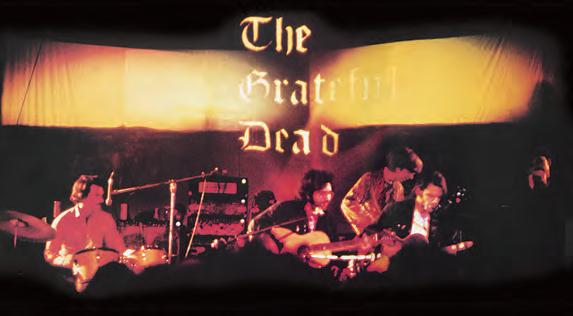
The legendary jam band’s May 1970 West Gym concert was a defining cultural moment for the institution. The concert, which was held during Spring Weekend and featured New Riders of the Purple Sage opening, became one of the most memorable shows in the Dead’s long career. The next 55 years saw acts such as Crosby, Stills, Nash and Young, James Taylor, Santana, Elvis Costello, REM, Bob Dylan, Green Day, Tony Bennett, Diana Ross, Drake, and Post Malone perform at the West Gym, the Events Center, and the Anderson Center for the Performing Arts.
DECKER, SOM, WATSON, CCPA, AND PHARMACY
Binghamton broadened its range of undergraduate and graduate programs with the establishments of the Decker College of Nursing and Health Sciences (1969); the School of Management (1970); the Thomas J. Watson College of Engineering and Applied Science (1983); the College of Community and Public Affairs (2006); and the School of Pharmacy and Pharmaceutical Sciences (2017). Today, students from these schools and college make up about 44% of Binghamton’s student population.
The jump to Division I sports
John Hartrick, senior associate director of athletics-communications, is the longest-tenured member of the Athletics Division. Hartrick started at Binghamton in 1991 — and witnessed and wrote about the University’s move to Division I athletics in 2001. Here are Hartrick’s Top 5 Bearcats teams of the DI era:
1. 2009–10 MEN’S TENNIS
■ 25–2 overall record (only regular season loss was 4–3 to No. 56 Columbia)
■ Set a school record with 20 straight wins
■ America East Conference champions
■ Became first America East program to earn a point at NCAAs (4–1 loss to No. 24 Georgia Tech)
2. 2003 MEN’S SOCCER
■ 12–3–7 overall record
■ Captured program’s first America East tournament title with a shootout win at home
■ Won NCAA tournament game with 1–0 road upset at No. 13 Farleigh Dickinson
■ Nation’s top defense with seven goals allowed and 15 shutouts
3. 2009 BASEBALL
■ Won America East regular season and tournament titles
■ Set school record with 30 wins and set NCAA record by improving win total for sixth straight year
■ America East tournament championship was won at 3 a.m. at Union-Endicott High School
■ Team then won its first-ever NCAA tournament game (11–6 over No. 30 George Mason) at East Carolina Regional
4. 2008–09 MEN’S BASKETBALL
■ Produced record-setting 23–9 season (13–3 in America East) that ended with a nationally televised NCAA tournament game vs. Duke on CBS in front of 20,000 in Greensboro, North Carolina
■ Won first-ever America East regular season and tournament titles — both clinched in front of standing-room-only Events Center crowds
■ Ran off 11 straight wins — third-longest streak in country that season
■ Won program’s first conference title in 63 years
■ Captured both America East regular season and tournament titles for the first time
■ Earned an NCAA No. 3 seed instead of the customary No. 4 seed for America East champion
■ First America East team to sweep all four major awards (coach, player, pitcher, and rookie of year)
43
PRESIDENT OBAMA VISITS
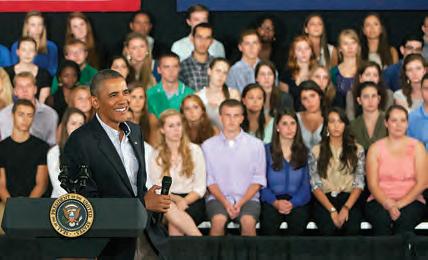
Barack Obama became the first sitting president to speak at Binghamton University when he addressed a packed audience in the Mandela Room on Aug. 23, 2013. While his talk was about “Making College More Affordable,” Obama made some Binghamton-specific remarks:
■ “I’ve been told that it’s very important for me to get a spiedie while I’m here. So, we’re going to pick one up and try it on the road.”
■ “I’m excited because of the great work that SUNY campuses like Binghamton are doing to keep costs down for hardworking students like so many of you.”
BingUNews
Binghamton University’s official news site replaced the weekly online Inside in April 2017 with updated daily stories and videos ranging from research to student life. In 2025, BingUNews content drew 1.2 million page views.
THE ROAD MAP
Launched in 2013, the strategic-planning Road Map to Premier projects provided an outline for the University’s next decade. Guided by thenPresident Harvey Stenger and then-Provost Donald Nieman, the Road Map work stressed collaboration and led to initiatives that will continue to impact the University for years to come.
Binghamton University logo evolution
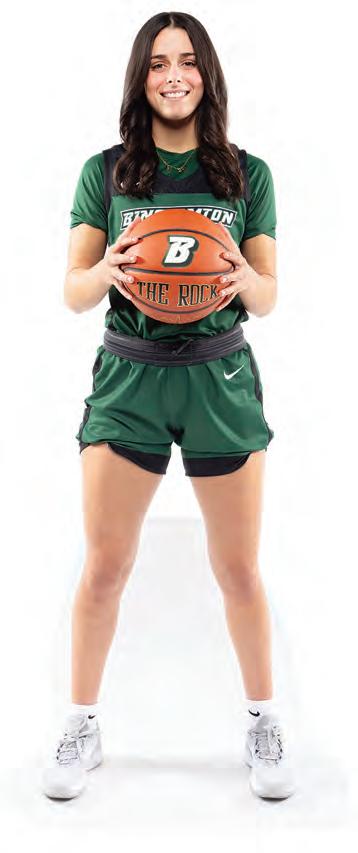
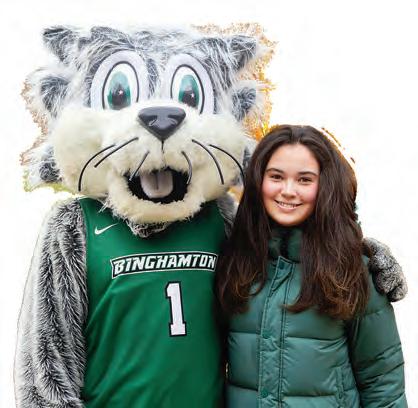
The Colonials became the Bearcats when Binghamton entered Division I athletics in 2001. Baxter was named during basketball’s Midnight Madness that year following a student vote. A two-time winner of SUNY’s Mascot Madness competition, Baxter can often be seen at athletics events and campus celebrations. A Bearcat of many talents, Baxter played drums and performed with the Kick Line during a recent women’s basketball game.
Educational Opportunity Program
The Educational Opportunity Program (EOP), which provides opportunity and access to higher education for economically disadvantaged students, has been a part of the University since 1968. EOP also offers a mandatory, academic-development and campus-orientation summer session for first-year students: The Binghamton Enrichment Program.
SERVICES FOR STUDENTS WITH DISABILITIES
Respect. Inclusion. Equitable access. The Services for Students with Disabilities (SSD) office has worked with students, faculty and staff members, and others to ensure accommodations and support since its establishment on campus in 1975. In that year, 20 students were registered with the office (led for nearly 40 years by Jean Fairbairn). Fifty years later, more than 2,500 are connected.
McNair Scholars Program
Part of the Federal TRIO Programs, The Ronald E. McNair Postbaccalaureate Achievement Program prepares underrepresented and financially challenged students for graduate and doctoral studies. Scholars get access to research opportunities, mentoring, and graduate school application preparation and visits.
THE CLOCK TOWER
The “face” of campus since 2002, the 34,000-pound Clock Tower overlooks The Peace Quad and The Spine. The time is always right for bringing the campus community together outside the University Union.
COMMENCEMENT 53
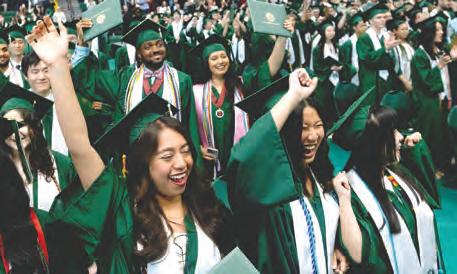
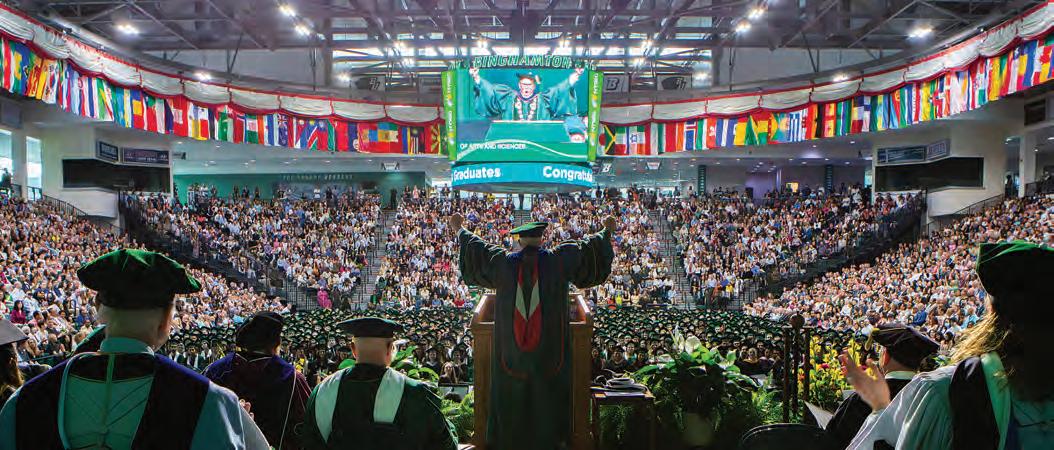
Binghamton’s first graduation ceremonies at the Vestal campus took place in the East Gym. Today, graduates and their families gather at the Events Center, where schools hold their ceremonies over the course of three days in May. Every graduate gets to shake the president’s hand while walking across the stage before officially becoming an alum.
Move-in Days
It’s more than a couple of days of welcoming new and returning students to campus. It’s not just those students saying farewell to family and hello to new friends. Move-in days have become a well-oiled partnership between Residential Life, Campus Facilities, University Police, Parking Services, student and staff volunteers, and others to make the process as stress-free as possible.
THE UNIVERSITY MEDAL
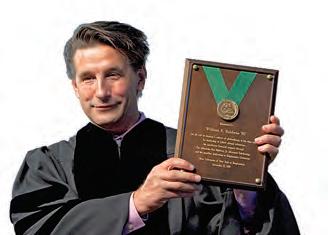
Established in 1991 by President Lois B. DeFleur, the University Medal is the highest honor bestowed by Binghamton University. The medal is sometimes conferred at Commencement to honor achievement and excellence related to Binghamton. Recent honorees have ranged from cherished English Professor Al Vos to actor Billy Baldwin ’85.
Alyssa Lam ’26 decided she wanted to become a tour guide as a Binghamton University sophomore after she found making connections and getting involved easier than expected.
56 CAMPUS TOURS
Q&A with a tour guide
Q: What surprises or impresses prospective students and their parents?
“ Binghamton has such a warm environment that everyone feels like one big family.”
“I wanted to share that experience with other students and families who might also be nervous about starting college and moving away,” says Lam, a biology major from New Hyde Park, New York. “I wanted to show people how wonderful and welcoming Binghamton is, get them excited, and showcase how much possibility there is once you come here.”
Lam eventually became a senior tour guide, giving many students and parents their first in-depth look at campus. Lam was one of 95 tour guides in spring 2026, helping to lead a team of nearly 100 student ambassadors, three dozen digital ambassadors, and 18 others at the call center and reception area.
Q: What buildings or sites do you most enjoy showing and discussing on tours?
Lam: I love the Union Undergrounds because no matter what time or day, there are always students there either hanging out or doing work and it’s a nice way to showcase Binghamton’s friendly campus dynamic. … I love showcasing the Engineering Building and the innovation that occurs there. The facilities are amazing, and I believe that [visitors] being able to see students working on their projects is impactful.
Lam: They are always pleasantly surprised by our residential communities. They enjoy touring our model dorm rooms and are impressed by how spacious, communal, and furnished they are. There are also many smaller Binghamton facts that catch their attention. Whether it be our student-run volunteer ambulance service, our free concerts, or our Starbucks food truck, they love hearing about the little services and events that make Binghamton stand out. I’ve even heard a parent tell their daughter that they had to come here, simply because we had an Einstein Bros. Bagels on campus. It goes to show how there are so many little things about the school that people find important!
Q: What are three words you’ve used to describe Binghamton University?
Lam: The main word I’ve used would be home, as this school has been my home away from home. Binghamton has such a warm environment that everyone feels like one big family. I always tell my tour groups that no matter what you come here for, you can find your people and where you belong. I’ve also used the words balanced and fun. This school has amazing resources to study and educate yourself, but there is no shortage of campus activities that will have you laughing. My favorites? Watching my friends get thrown off mechanical bulls during Late Nite events, or stargazing with friends in the Nature Preserve.
HARPUR’S FERRY
Four fast facts about Binghamton University’s student-run volunteer ambulance service:
■ Students needing medical attention at the 1970 Grateful Dead concert was a factor in Sal Caruana ’73, Adam Bernstein ’73, and Jon-Marc Weston ’73 starting the service in 1973.
■ The first Harpur’s Ferry vehicle was a hearse purchased for $125. The service’s fleet now includes three state-certified ambulances, three flycars (non-transport, emergencyresponse vehicles), and three special-response vehicles.
■ Harpur’s Ferry is now led by a student chief, two assistant student chiefs, two student captains, and two student lieutenants.
■ Ten to 15 new members are able to join Harpur’s Ferry each semester.
LIGHTS … CAMERA … THE REWRITE
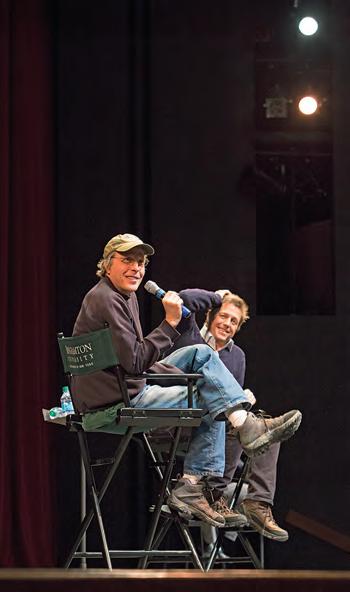
Directed by Marc Lawrence ’81 and starring Hugh Grant, Marisa Tomei, and J.K. Simmons, The Rewrite (2014) is the only major Hollywood film set at Binghamton University. OK, it wasn’t all filmed on campus, but scenes were shot at Recreation Park and the Spiedie and Rib Pit in Binghamton. Lawrence and Grant even came to campus for a film premiere and a Q&A event at a jampacked Anderson Center.
Remembering ARTS GREATS
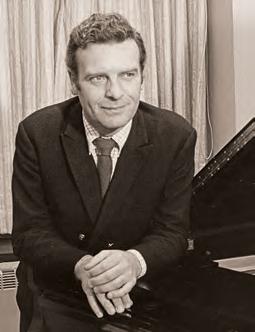
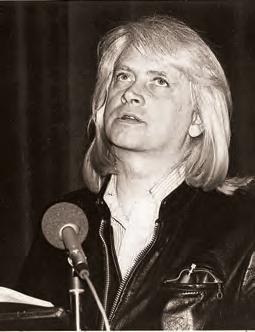
Two giants that Binghamton lost too soon: Jean Casadesus was an internationally renowned classical pianist who was an artist-in-residence at SUNY Binghamton from 1965–72 before his death in a car accident. John Gardner was an award-winning author (he wrote Grendel in 1971) who taught at the University and helped establish the creativewriting program before his 1982 death in a motorcycle accident. A recital hall in the Fine Arts Building is named for Casadesus, and a book prize was named for Gardner.
OFF CAMPUS COLLEGE TRANSPORT
Another student-run service, OCCT has enabled students and faculty members to get to a campus that has expanded into Binghamton over the past 25 years. Besides shuttle service around campus, OCCT’s “blue buses” provide rides to the University Downtown Center, University Plaza, and Oakdale Commons in Johnson City.
THE ALMA MATERS
The “Harpur Alma Mater” was written in 1950 by J. Alex Gilfillan, a founding faculty member, head, and initially the sole member of the Music Department. His song urges the community of the young liberal arts school to “hail thee Harpur alma mater” as “the hills re-echo thy name.” The same heights would later serve as the foundation of Binghamton University’s official alma mater: “In the Rolling Hills of Binghamton” (written by David Engel ’86).
Gardner
Casadesus
Stepping on THE COAT
We all know that spring takes a long time to start in Binghamton. The “stepping on the coat” is the University’s signal that winter has (finally) ended. The tradition is believed to have started in 1962 when Larry Kressel ’66 stopped the snow by taking his coat off and jumping on it.
HOMECOMING
From building tours and TIER Talks to Hall of Fame inductions to soccer-game tailgates, Homecoming Weekend is an opportunity for alumni to reminisce with old friends and discover what’s new on campus. This year’s celebration (Oct. 2–4) will highlight the University’s 80th birthday! For current students, Family Weekend will take place Sept. 18–20.
PEGASUS AND THE OBJECT
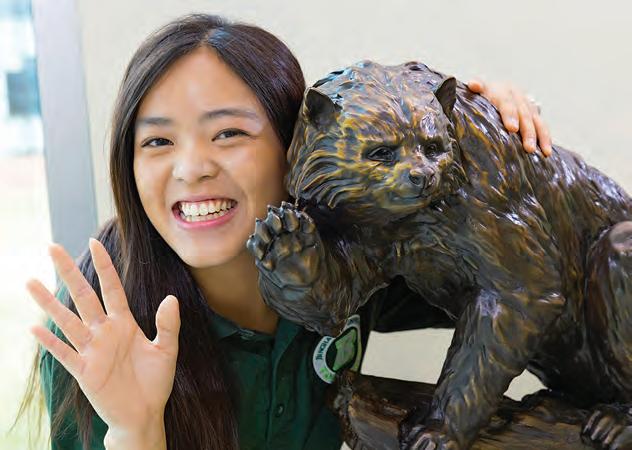
The Pegasus statue has stood in front of the Bartle Library since it was given to the University as a gift from the Class of 1985. A Pegasus sculpture by Nathaniel Kaz was one of Harpur College’s initial “big-display” pieces: It was unveiled in 1960 on what is now the Fine Arts Building. The Object, meanwhile, designed and built by Don Walford ’67, has been an integral part of the Dickinson Community for nearly 60 years.
A CAPPELLA
Who better to belt out the Binghamton and Harpur alma maters than one of the University’s a cappella groups? The Binghamton Crosbys and The Harpur Harpeggios have been singing since 1983, while The Binghamtonics followed in 1987. Our 10 different a cappella groups have even gathered in Central Park for summer concerts!
UNIVERSITY FEST
The fall University Fest has served as the unofficial kickoff to the semester, with plenty of music, food, rides, and tabling on the Peace Quad. The student-organization fair has taken place for more than 33 years. At the other end of the academic year is Spring Fling, held on The Spine between the University Union and Bartle Library.
THEATRE PRODUCTIONS
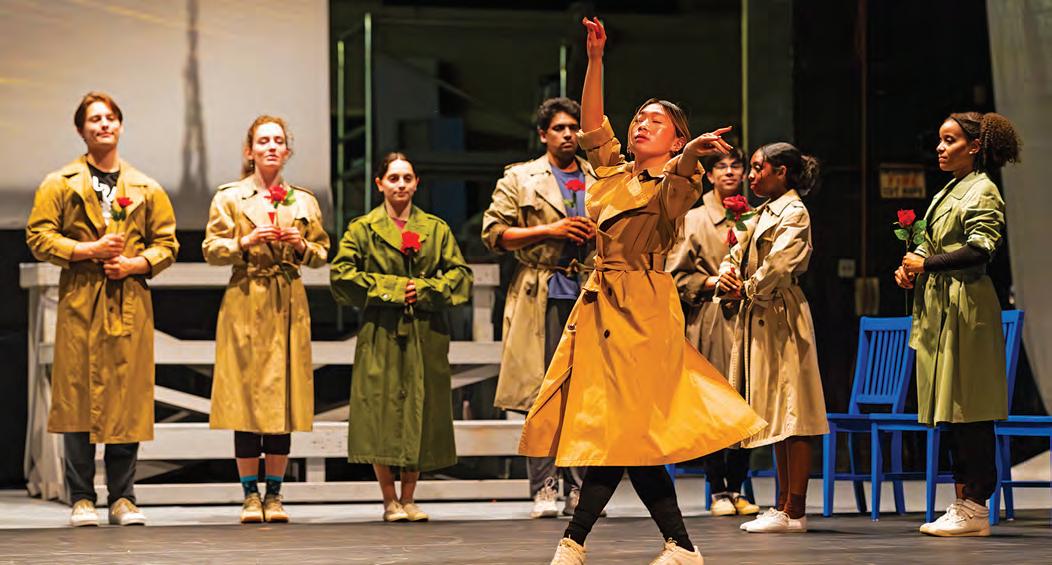
Mainstage and studio season productions take place each semester, providing the campus community an early look at the performance skills of theatre and non-theatre majors alike. The theatre program’s graduates include TV and Broadway great Ruben Santiago-Hudson ’78; his son Trey ’18 (now seen in Shrinking); King of Queens star Victor Williams ’92; and singer Ingrid Michaelson ’01.
INTRAMURAL SPORTS
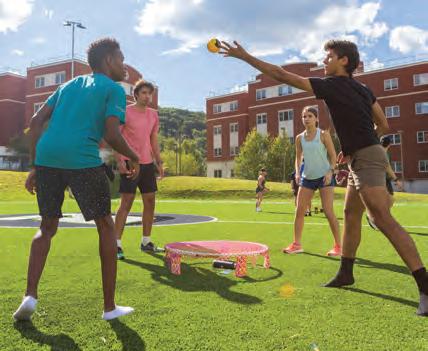
From old favorites such as soccer and volleyball to newer sports like pickleball and flag football, it’s easy to become a “student-athlete” at Binghamton. Sure, maybe not Division I caliber, but add in fitness such as aquatics, hiking, bowling, and bicycling, and there is something for everyone.
GREEK LIFE
More than 50 fraternities and sororities exemplify the five core values at the heart of Greek life: unity, respect, scholarship, service, and leadership. The groups receive campus support from the Office of Fraternity and Sorority Life.
CLUBS AND ACTIVITIES
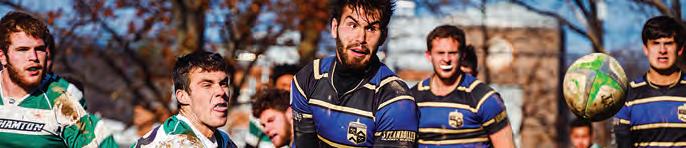
Clubs and recreation have been a part of campus life since Triple Cities College, where students would gather at the Endicott Johnson rec center next to TCC. At Binghamton, club sports such as hockey and rugby have received national awards and accolades, as have competitive groups such as speech/debate and mock trial. Binghamton University now offers more than 450 clubs and organizations with subjects ranging from video games and photography to Taylor Swift and bees.
UNIVERSITY SCHOLARS PROGRAM
The Binghamton University Scholars Program is a four-year honors program for students of exceptional merit. If you think getting into Binghamton is difficult, try the Scholars Program. Entry is invite-only. Scholars represent the top 2% of incoming undergraduates at the University: Only 110–130 applicants are enrolled in the program each year. Other options for new students include the First-year Research Immersion Program and the Source Project.
LYCEUM
While the top first-year students are beginning their commitment to academic excellence in the Scholars Program, local retirees are continuing their learning in the Lyceum program. The program, which began in 1988, offers 120 classes on a variety of topics over a three-semester period. A quarter of the program’s attendees are Binghamton alumni.
ENTREPRENEURSHIP
The 21st century has seen Binghamton University make gains in developing startup companies. At the forefront is the Koffman Southern Tier Incubator, located in downtown Binghamton. The Koffman now supports 65 member companies, with 46 companies having graduated from its programs since its launch in 2017. These member companies have also generated $817 million in economic impact, and created 200 jobs in 2025.
PART OF THE SUNY TEAM
One of the four State University of New York university centers, Binghamton has emphasized the call of the SUNY charter since Triple Cities College joined the SUNY system on Sept. 1, 1950: Providing New Yorkers with opportunity and access to education. “Binghamton reflects the best values of the SUNY system,” Chancellor John King Jr. said during a visit to campus in 2023.
LAKE RELAXATION
Lake Lieberman, the pond behind Newing and Dickinson communities, was a longtime hangout spot for students. But many let it all hang out at Lake Empire, 40 miles to the northwest in Spencer. A product of the short-lived 1960s trimester system, the 200-acre site was used for boating, camping, fishing, and (reportedly nude) swimming before being sold.
RELIGION
The Binghamton University Interfaith Council epitomizes the importance of religious and spiritual needs on and off campus. Council members represent groups such as Newman House, Chabad of Binghamton, the Islamic Organization of the Southern Tier, Hillel, the Unitarian Universalist Congregation of Binghamton, Trinity A.M.E. Zion Church, Bahá’ís of Binghamton, and the Binghamton Chinese Christian Church.
Reaching R1
Binghamton University was first named an “R1” school in 2018–19, a sign of the campus’ strong research portfolio. The designation by the Carnegie Classification of Institutions of Higher Education indicates that Binghamton spends more than $50 million on research and development annually and awards at least 70 research doctorates each year. The current R1 list includes 187 schools, putting Binghamton in company with elite institutions such as Harvard and Princeton. 71 74 72 75 73 76
PRIDE AND RANKINGS
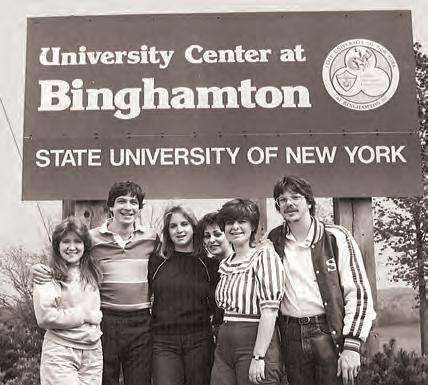
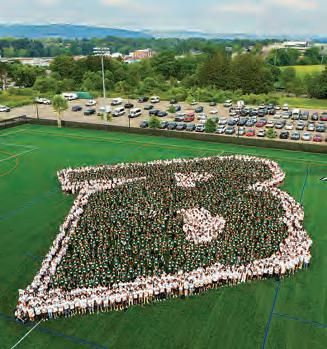
Incoming students forming a “B” logo for a move-in photo. Staff members wearing apparel on Green Day Fridays. Alumni serving as mentors and sharing stories and lessons with the Fleishman Career Center. The campus community can take pride in a “Public Ivy” that Forbes recently ranked as the top SUNY school, a Top 25 public college, and the 68th best college nationally.
79 78
CAMPUS DINING
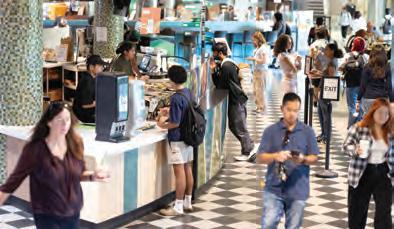
The second half of 2026 will see some changes to the campus-life dining experience. A renovation to The Chenango Room at the center of the Vestal campus will bring a Panera Bread to the building. It is scheduled to open in the fall. The University will also get a new dining partner — Chartwells Higher Education — beginning in June.
80
A future built on
By Eric Coker
For the past 80 years, the institution known variously as Triple Cities College, Harpur College, SUNY Binghamton, and Binghamton University has been driven by a core mission: giving talented students and faculty the opportunities and resources they need to make the world a better place.
“Our commitment is to continue to grow and amplify that mission into
the next 80 years,” Binghamton University President Anne D’Alleva says.
D’Alleva knows that the Binghamton University of 2026 is unrecognizable to many alumni, with its new buildings, expansion into the city of Binghamton and Johnson City, and additional students and faculty. But it is growth that’s guided by what D’Alleva calls “The Binghamton Bond.”
“It is the spirit that unites all of us — the big, broad Binghamton
community — in the work we do to advance learning, teaching, research, service, and the commitment to making our world better,” she says.
“As a newcomer to this community, I’ve felt The Binghamton Bond: How much everyone in this community cares about one another. How collaborative we are in our work, and how Binghamton and its people make a difference. … It is the magic element that has guided this university
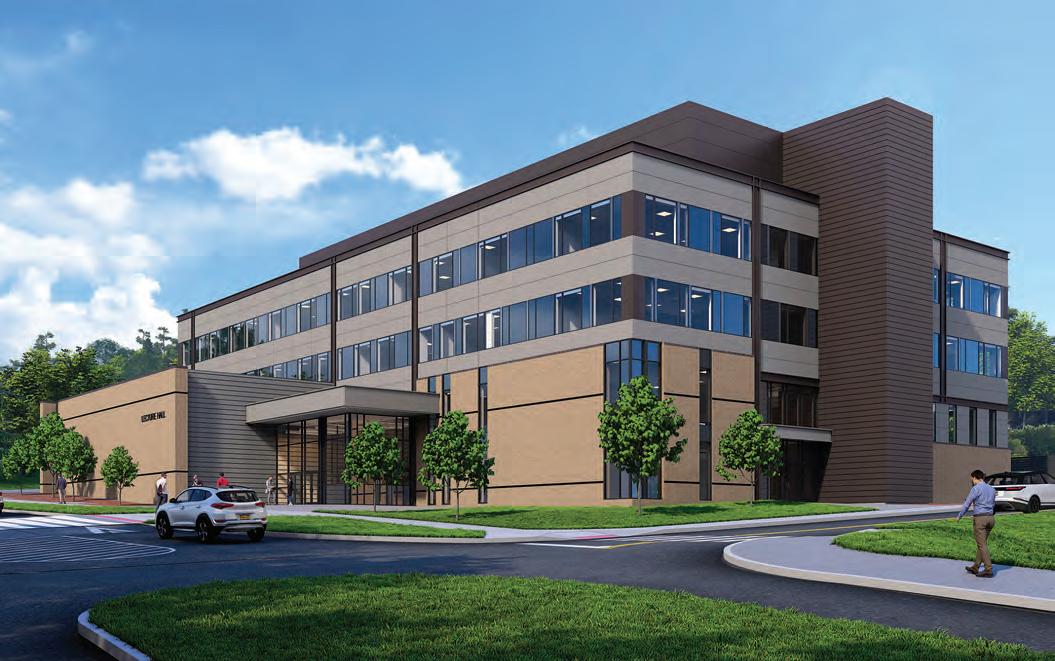
A rendering of University Hall, a new lecture hall scheduled to open next year.
‘The Binghamton Bond’
AI Center, new lecture hall coming in 2027
through 80 years of progress and success.”
A five-year strategic plan for areas such as teaching and learning, research and scholarship, community engagement, and economic development is scheduled to be implemented by the fall. In the meantime, here are some short-term priorities as Binghamton continues to grow into one of the nation’s top public universities.
New York Center for AI Responsibility and Research
A gift from Tom Secunda ’76, MA ’79, co-founder of Bloomberg L.P., and capital investment from New York state will enable Binghamton to create the New York Center for AI Responsibility and Research. It will be the first independent artificial-intelligence research center at a public university.
The center will be used by New York’s leading institutions to promote responsible research and development, create jobs, and unlock AI opportunities across the state.
“Binghamton has already done tremendous work in AI, thanks to our faculty in the Watson College of Engineering and Applied Science,” D’Alleva says. “This University will lead the nation and the world in ensuring that AI serves for the benefit of all.”
Research expansion
The AI Center will serve to meet Gov. Kathy Hochul’s goal of doubling SUNY’s research expenditures. Binghamton University recorded its best year in 2024–25, totaling $87.3 million — a 28% increase from the previous year.
“Binghamton has made tremendous strides in research and scholarship,” D’Alleva says. “It’s also clear that our faculty, students, and staff are eager and ready to do more.
“We need to continue to work with industry partners to maximize the potential for tech transfer, entrepreneurship, and economic development. And we need not only additional faculty and staff, but also more graduate students to assist in these efforts.”
More dedicated space for research is also needed, says D’Alleva, who is advocating for a new research building on campus.
Physical space
While a new research facility is a longer-term project, two new buildings are slated to open in the next 18 months. University Hall (a new lecture hall and classroom building located next to Academic A) will open in the fall of 2027, adding 1,900 new seats. A 362-bed residential hall — Grace Hall — will open in summer 2027 and sit between the CIW and Mountainview communities. A 75,000-square-foot addition to the
East Gym will be unveiled this fall. The Chenango Room, Events Center, and Science 3 will also see renovations.
Graduate education
The quality of education that Binghamton graduate students receive is not in question, D’Alleva says.
“It’s excellent,” she says. “However, the graduate student experience holistically needs to improve before we can grow the graduate student population.”
Areas such as housing for international graduate students and career development are among the issues that will be addressed.
Rebranding
The University is partnering with a national leader in higher-education marketing — SimpsonScarborough on a project to “sharpen our brand” and reach prospective students and higher-ed peers without losing key identity symbols, such as the “B” logo and Pantone 342.
“Everyone in New York knows about Binghamton,” D’Alleva says. “But we need to refine and share our story widely.”
During her Listening to Lead Tour, D’Alleva asked attendees for one word they would use to describe the University. The most common words included community, caring, supportive, excellence, innovative, welcoming, and home.
“This is how this community sees itself,” D’Alleva says. “This is a community of people who truly, genuinely care about one another and are proud of the environment they’ve cultivated.”
Secunda
Connect
PROP MASTER’S WORK IS FEATURED ON
CBS, HBO
In show business, delays are costly. The property master helps keep the production on schedule and therefore on budget. This is what Richard Lieberman ’14 does for FBI on CBS and The Gilded Age on HBO.
“I’m in charge of anything the actors interact with on set,” Lieberman says. “I come in every day and make sure we have all the props we need. I deal with actors and directors and make sure they’re happy with what they have. If something needs to be fixed, I fix it. The job is mostly problem solving.”
When Lieberman arrived at Binghamton, he was interested in advertising because it combined art and business. As a sculpture student, Lieberman knew he didn’t want to become a full-time artist. He got involved with the Cinema Department, art directed for shows on BTV, and did production design for a few short films.
“When I graduated, I thought, ‘let me try film for a bit’ and one thing led to another. The reason I’m where I am
today is because of my sculpture degree. I can make things from scratch. I’ve had to sculpt props. I worked on Halston and had to sculpt clay models of the perfume bottle designs Elsa Peretti sculpted on the show.”
Lieberman’s credits also include Oppenheimer, Mr. and Mrs. Smith, and Homeland. In addition to putting his art skills to work, he appreciates working with great people and when the shows have unique details.
“When Oppenheimer came to New York and New Jersey, I worked with Robert Downey Jr.,” Lieberman says. “It was an amazing experience, being immersed in a passion project where everyone had to be on their ‘A-game.’ On Gilded Age, we have such an amazing culture. All the various sets, working in Newport mansions, people in elaborate ball gowns, the waltzes . . places and props you don’t get to see in your everyday life.” — STEVE SEEPERSAUD
1967
Roy Gordon ’67 shares that on Aug. 31, 2025, the soccer field at the University of Mary Washington was renamed Roy Gordon Field in his honor.
Steven Kellman ’67 edited The Complete Poems by Wendy Barker (Louisiana State University Press, 2025), in tribute to his late wife. The literary publisher Restless Books renamed its annual manuscript competition the Steven Kellman Prize for Immigrant Literature.
1970
Shari Lawrence Pfleeger ’70, LHD ’00, published Simple Machines (Politics and Prose, 2025), her second collection of poetry in collaboration with photographer Jannett Klinke.
1973
Charles Brewer ’73 received the 2025 Noah Greenberg Award from the American Musicological Society.
1974
Robert Guzikowski ’74 wrote Unwordly (Uncollected Press, 2024), a book about his experience of aphasia and disability that resulted from viral encephalitis 30 years ago.
1975
Andrew Siskind ’75 wrote On the Edge: An Everyday Doctor’s Adventures in Disaster Medicine (independently published, 2025), a book about his adventures during trips treating patients at sites of earthquakes, typhoons, hurricanes, and more.
1977
Kathleen Small ’77 published her fifth book, Letters from Shadow Oaks (Carousel Acres Publishing, 2025), a novel about three generations of women connected by a love of art.
Jayne Van Bramer ’77 is president and CEO of Sweetser, a statewide nonprofit in Maine that provides mental and behavioral health services to thousands of children, adults, and families each year.
1979
Glenn Fiedelholtz, MAT ’79, wrote Operation Taiwan: Project Quantum (independently published, 2025), a geopolitical cyber-thriller that envisions a confrontation between the United States, China, and allied powers over Taiwan’s sovereignty.
TV EXECUTIVE HAS ASSEMBLED HIT SHOWS
Figure it out” has been a common thread through the career of Donna Rosenstein ’77
“ A lot of people think anyone can do [this work]. You’re creating an onscreen family that viewers are going to live with.”
On her first day of working for the person who cast Rocky and Rambo, Rosenstein’s new boss told her: “I gotta go. You figure it out.”
Rosenstein did just that. For nearly 10 years, she oversaw casting for all domestic and international shows by Amazon Studios. Among other shows, she worked on The Marvelous Mrs. Maisel and The Boys. Prior to Amazon, Rosenstein had her own casting company, where she cast long-running shows like Ghost Whisperer and Castle Before that, she ran casting at ABC, working on iconic programs such as NYPD Blue and Twin Peaks.
“What I’m most proud of in my career is creating,”
Rosenstein says. “Wherever I went, I would be casting a show, and I felt very much a part of the creative team.
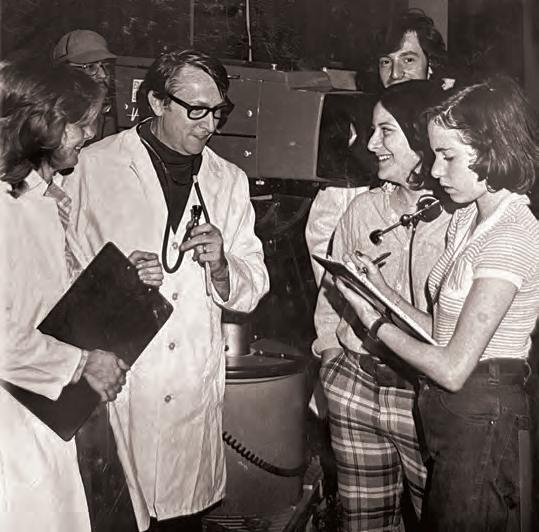
The abilities to create and to figure things out were also central to her Binghamton experience. The University didn’t (and still doesn’t) have a media major, so Rosenstein created her own putting together a program with courses in mass communications, political science, business, and theatre, along with an internship at WBNG-TV, Binghamton’s CBS affiliate.
“One day, I was in the basement of Hinman. Why I was there, I don’t know. I stumbled upon audiovisual equipment — cameras and monitors — and I was like, ‘what is this?’”
That discovery became the foundation of WSUB-TV, a TV station Rosenstein and others brought to the small
Dina Towbin ’79, CEO of Dina Towbin & Associates LLC, a New York-based marketing consulting firm, gave a webinar at the Koffman Southern Tier Incubator on “How to Write Successful Proposals for Government Grants and Contracts” to help entrepreneurs and to give back to Binghamton University.
1980
Marshall Silverberg ’80 retired after more than 40 years of working for the U.S. government. This included stints as a staff assistant to a U.S. congressman, program analyst with NOAA, law clerk to a federal judge, assistant general counsel for the CIA, and, for 36 years, as an assistant U.S. attorney for Hawaii.
1981
Erela Katz Rappaport ’81 wrote Breathe Easy, Sleep Deep: Unmasking the Hidden Sleep Thief Wrecking Your Health and How Your Dentist Can Help (independently published, 2025), a book for anyone who wants to understand sleep and sleep apnea, and how effective treatment can restore healthy sleep and protect brain function.
1982
Amy Lorowitz ’82 published her debut novel, Summer Husband (She Writes Press, 2026), which looks at what happens at a sleepaway camp when the campers aren’t watching.
FOR DECADES
screen. Never mind that it could only be viewed at The Union; it was a space to create. Rosenstein worked on a satire-improv soap opera (The Flame of Life) and a person-on-the-street interview show (What’s Happening?).
Like many other aspiring media professionals, Rosenstein got airtime at campus radio station WHRW. Her show didn’t have her preferred music style or time slot, but it was a start.
“My first show was the day we changed the clocks,” Rosenstein says. “I lost track of time, and I remember running like a maniac through the rain to get to the station. I had a late-night jazz show. I was not an expert in the field, but it was the only available slot, so I DJ’ed!
“Binghamton was such a great experience for me. And, as I reflect on my career, I think what I was meant to do was create opportunities for other people, and I feel proud of that.” — STEVE SEEPERSAUD
1983
Susan Perrin Geenty ’83 joined Halloran Sage as a partner and an experienced family law attorney.
1984
Aaron Mair ’84, LHD ’18, the first African-American board president of the national Sierra Club, received the 2025 Paul Schaefer Wilderness Award from the nonprofit advocate Adirondack Wild: Friends of the Forest Preserve. After 15 years of working for environmental justice at the grassroots level with the Sierra Club’s Atlantic Chapter, Mair became the national club’s president. His professional papers have been accepted by the Library of Congress.
Donna Rosenstein as a student (front right, with clipboard).
1985
Sara Stolberg Berkowicz ’85 published her first book, True Value: What Financial Advisors* Should Know About Business Valuation (independently published, 2025), which shows financial planners why they should learn about strategic uses of business valuation to retain clients and build trust.
Gregory Corsico ’85 was named a Knight of the French National Order of Merit in December. He has championed French biomedical research in the U.S., particularly through the Pasteur Foundation, while forging strong and lasting scientific partnerships between the two countries’ scientific communities.
1986
Lee Upton, PhD ’86, published Tabitha, Get Up, one of seven semifinalists for the 2026 Thurber Prize for American Humor. The winner will be announced this spring at Thurber House in Columbus, Ohio, the restored home of humorist, cartoonist, author, playwright, and journalist James Thurber.
1987
John Fracchia ’87, MBA ’90, Ross Herman ’85, and Michael Paes ’87, three-quarters of the band Loose Change, released their first album of original music. The three met at Binghamton, where they played in Side Effects. More at loosechangemusic.com.
Brian Hackett ’87 published his debut novel, Leaving Naples (Solstice Publishing, 2025), a story about a U.S. Navy officer whose dream of living in Italy unravels after his wife gets involved in a local crime ring.
Kevin Lauri ’87 marked his 30th anniversary at the national employment law firm Jackson Lewis P.C. He joined the firm in 1995 and has served as firm chair since 2019.
1988/
1990
Michael Friedberg ’88 and his wife, Rhonda Ravitz-Friedberg ’90, celebrated their 33rd wedding anniversary. They met the first day of her freshman year (his junior) and were introduced by Mitchell Horowitz ’87, who is their brother-in-law. The couple’s oldest son and nephew are also Binghamton alumni.
1989
Gen. Bradford J. Gering ’89 assumed the duties of assistant commandant of the U.S. Marine Corps in October. He served in the operating forces supporting Operations Southern Watch, Iraqi Freedom I, and Iraqi Freedom 05-07, among others.
1991
Kimberley (Sharpe) Hrivnak ’91, MA ’93, received the highest honor from the Pennsylvania Library Association — the Distinguished Service Award — recognizing her service to libraries of the commonwealth and to the association. She
is chief operating officer for the Allegheny County Library Association in Pittsburgh.
1992
Camille Clare ’92 is the first Black woman president of the American College of Obstetricians and Gynecologists. She most recently served as chair and tenured professor at the Department of Obstetrics and Gynecology of Downstate Health Sciences University College of Medicine.
1994
Lori (Rogoff) Rhodes ’94 co-wrote Equitable School Scheduling (Corwin Press, 2024), a practical and thoughtful guide that demonstrates how school and district scheduling teams can become architects of equity.
1997
Felipe Ayala Jr. ’97 was one of 21 influential Latino men honored last fall by the Spanish language newspaper El Diario at its 2025 EL Awards ceremony. Ayala is an academic adviser at Bronx Community College and CEO of The Village NY, an organization he founded to help students continue their post-secondary education.
Alumna teaches real-world language skills
Marisol Marcin, PhD ’16, has a love for languages. As a global studies and romance languages lecturer at Binghamton, she’s building cross-cultural connections and inspiring educators across the state. A native of Colombia, Marcin earned an undergraduate degree there and later became a high school teacher in Sidney, New York.
“I learned classroom teaching is not complete unless students have the opportunity to use language in real and meaningful ways,” Marcin says.
She was subsequently invited to teach in Binghamton’s Romance Languages and Literatures Department while completing her doctorate in translation studies. A common thread across her teaching in Spanish and global studies is that students converse with native Spanish speakers. For example, her Hispanic culture students talk over Zoom or WhatsApp with peers in Ecuador.
“By the end of the semester, the students lose their fear of communicating. They will make simple grammar mistakes when speaking, but they know that’s normal, and it’s not as important as getting their stories and ideas across.”
Marcin received a 2025 Pillar of the Community Award from the University’s Latin American and Caribbean Studies program for organizing the LOCO Festival, which celebrates the University’s diversity, raises awareness about human rights and vulnerable populations, and encourages activism in those areas. She started the Lenguas Club, which teams teachers with counterparts abroad to provide a cohesive curriculum based on oral communication and cultural learning.
“I love teaching because of what I see the students come away with. Some of them start out incredibly shy and think they can’t survive the class. But, at the end, they enjoy talking to so many people.” — STEVE SEEPERSAUD
Q&A WITH A SPACE SYSTEMS OPERATOR
Alex Blumenthal ’22 is a space systems operator at Infinity, working on the Space Development Agency’s Proliferated Warfighter Space Architecture constellation of satellites.
LOOKING FOR A NEW JOB?
Consider what Andy Willner ’92 shared at a recent Binghamton Learning Network webinar. (The webinar series has alumni offering advice on a wide variety of topics. Check out past programs at alumlc.org/binghamton.)
Q: Tell us about the work you do.
A: I monitor telemetry and send commands from the ground when needed. I maintain a high-level understanding of the space vehicles to execute the procedures and observe the health of the constellation. I also work with the satellite vendor to resolve issues which can’t be alleviated through normal procedures, thus requiring someone with a deeper understanding of specific subsystems.
Q: What has your career path been since graduating from Binghamton University?
A: I pursued my master’s in space studies at the University of North Dakota (UND). I specialized in space operations and working on the Rendezvous & Operations for Autonomous Docking and Servicing (ROADS) mission. I was a graduate research assistant working under my professor. We established the Space Operations Group (SOG) in 2022, focusing on satellite operations, mission concept development, and high-altitude ballooning. I worked on various technical projects before taking on a management role as new students joined. I led SOG for over a year after graduating in 2024 until I accepted my current role.
Q: How was Binghamton influential to your career?
A: The First-year Research Immersion (FRI) program was influential because of the hands-on research experience it provided. Co-founding the AeroBing rocketry team in 2019 was my first leadership opportunity in an aerospace-specific setting. Courses in chemistry, physics, cinema, and other departments showed me how to see things from different perspectives and in great detail.
Q: What do you find most rewarding about your work?
A: As an operator, I get to learn about many different pieces, then see the entire system come together on-console. The most exciting and rewarding part of any satellite project is when you watch the launch live and establish first contact. Receiving first contact with the satellites from the UND ROADS ground station was the culmination of three years of hard work. — STEVE SEEPERSAUD
FIVE TIPS FOR A BETTER RÉSUMÉ 2022
1
1998
Glenn Erick Miller, MA ’98, wrote Goon (Peasantry Press, 2025), a young-adult novel about a foster child who causes a devastating accident and is sentenced to an experimental juvenile detention center in rural Florida, where he wrestles with abandonment, a Category 3 hurricane, and his own guilt.
1999
Steven Fulop ’99, mayor of Jersey City, New Jersey, is president and chief executive officer of the Partnership for New York City, a nonprofit organization of 300 preeminent corporate, investment, and entrepreneurial firms working to advance the city’s standing as a global center of economic opportunity, upward mobility, and innovation. Since he took office in 2013, Jersey City has made significant investments in its police and fire departments, parks, and the arts and culture sector.
Review job postings for key words that show up repeatedly, then make sure those words are on your résumé.
2000
Eric Bonsall ’00 joined Arnall Golden Gregory LLP as a partner in the firm’s real-estate practice and a member of the healthcare real-estate industry team.
Paul Paradiso ’00 completed his MBA at the Massachusetts College of Liberal Arts (MCLA), where he was a commencement speaker for the Class of 2025. Paradiso is vice president of IT infrastructure at Tenerity.
2002
Oscar Rodriguez ’02 joined Citibank as a director of product management for the futures and derivatives clearing business.
2005
Libby Cudmore ’05 signed with Ruadán Books for a novel and a short-story collection. The works will continue her award-winning Wade & Jacks series.
IN MEMORIAM
2011
John Smelcer, PhD ’11, published The Beast in the Dark (Epicenter Press, 2025), his 65th book. It is a novel based on oral history from his Alaskan tribe.
2012
Hillel Sussman ’12 was promoted to partner at Tannenbaum Helpern. He is a member of the firm’s construction and design practice.
2017
Jordan Johnson ’17 was accepted into a Master of Science program at the Czech University of Life Sciences.
2019
Jillian Satur ’19 married Connor Perrault ’19 in September 2025. They met as sophomore neighbors in Marcy Hall and started dating the following year.
Thomas McCartan ’75 died Dec. 11, 2025, in Bentonville, Arkansas, at the age of 81. He retired from Walmart Headquarters and spent the ensuing years spending time with his family. He is survived by his wife of 55 years, Judith; two sons; a daughter; and many relatives and friends.
2
Use a style appropriate to your desired position (e.g., formal for business, creative for an artistic role).
3
Describe what you did, not what you were responsible for.
4
Highlight projects and experiences that will give you a compelling story to share at an interview.
5
If you have work experience before 2006, you may want to leave it off.
NEW BOOK RELEASES
SECOND CHANCE HIRING: AN ECONOMIC AND ETHICAL NECESSITY
Mitch Pearlstein ’70 Bloomsbury Academic, 2025
The American prison system holds more than a million people each year. Upon their release from incarceration, they are routinely barred from employment. Addressing both policy and socio-cultural realities, Pearlstein’s book makes the case — both economically and ethically — for hiring formerly imprisoned individuals, affording them a chance for re-integration into the workforce and society, as well.
BULLIED TO BESTIES: A DAUGHTER’S JOURNEY TO FORGIVENESS
Gayle Kirschenbaum ’75 Heliotrope Books LLC, 2025
If you’re determined to heal, the deepest wounds can be mended with truth, compassion, and the passage of time. Take it from Kirschenbaum, who penned her true story of motherdaughter reconciliation. It wasn’t an easy road at all. As a young person, the author was the target of her mother’s constant cruelty. The abuse didn’t stop after Kirschenbaum left home at age 16. The wounds endured — until she dug into her mother’s past, found family secrets, and reframed Mom as a wounded child.
THE FIRST MEETING DIFFERENTIATOR
Lee B. Salz ’92
HarperCollins, 2025
Today’s buyer has higher expectations. One-sided sales interrogations that only serve the seller just aren’t going to cut it. If a potential client agrees to meet, they want a consultation experience that makes them wiser. That’s the transformation Salz wants to make through his latest book. Salz — a renowned sales-management strategist and prolific author — reveals the strategy and framework for transforming initial meetings into impactful and client-centric consultations that set you apart from your peers and prime the pump for you to make more sales.
THE MOON MOVED IN
Sue Soltis, MA ’99 Chronicle Books LLC, 2025
Soltis tells an educational and heartwarming story about the Moon moving into a vacant house, filling all rooms with light, and befriending Stella, who lives next door. With the Moon taking a break from its normal orbit, the world is out of sorts; tides stop and the Earth has a new wobble. Stella becomes concerned, but the Moon is happy staying put. Can she persuade the Moon that the Earth needs the Moon more than she does? Will she be OK with her new friend going away?
AFTER TRANSFORMATION: A LYRICAL HISTORY OF CHRISTIAN LATE ANTIQUITY
Maia Kotrosits ’00 Duke University Press, 2025
Kotrosits offers a lyrical history of Christian late antiquity as it lives on in, and with, the present. Looking at the tremendous change that occurred between the second and fourth centuries, Kotrosits discusses the effects of Christian imperialism. She captures human struggles with time and change, showing how the mundane and intimate details of our lives can themselves be conduits of historical knowing. Above all, After Transformation is about the ironies of how history is written against the reality of how that history is actually lived.
SETTLING CONFLICT IN RURAL NEW YORK SCHOOLS
Casey Thomas Jakubowski, MA ’04 Bloomsbury, 2026
From New England colonists’ efforts to educate their children to the debates over mask mandates during the COVID-19 pandemic, education has historically been a major source of conflict among Americans. Schools in rural portions of New York state have unique challenges, which Jakubowski examines through specific case studies. This book expands research on the history of late-20th century educational reform, particularly outside the urban areas that tend to receive the bulk of researchers’ attention.
THE QUARTER QUEEN
Kayla Hardy, PhD ’20
Random House, 2026
Hardy, a mythology expert, author, and screenwriter of Louisiana Creole descent, chose a historical fantasy story for her debut novel. It’s set in 1843 New Orleans, where the reigning Voodoo queen is Marie Laveau, feared by both enemies and followers. Her daughter, Ree, is everything her cutthroat and principled mother is not — spoiled, entitled, and rebellious. Ree’s world is turned upside down when she finds Marie comatose in the bayou. As her mother fights for her life, Ree races to uncover Marie’s secrets in search of a cure, gradually uncovering a web of alliances, dangers, and deception.
OPIUM SLAVERY
Jonathan S. Jones, PhD ’20 University of North Carolina Press, 2025
This book is based on Jones’ dissertation in Binghamton’s History Department. Opium and morphine were essential to wartime medicine during the Civil War. Afterward, ailing soldiers became addicted to opiates, or “enslaved,” as 19th-century Americans phrased it. Veterans, along with their families and communities, struggled to cope with the health and social consequences of addiction. As remains the case today, sadly, addiction was branded as a matter of moral weakness, unmanliness, or even mental illness.
GRADUATE’S BOOK EXAMINES MEN AND AGING
Lenard Kaye ’72 co-authored A Man’s Guide to Healthy Aging, second ed. (Johns Hopkins University Press, 2025), a book presenting a positive outlook on aging, viewing it as an opportunity for continued growth, vitality, and personal agency.
Binghamton Magazine: What negative narratives surround men and aging?
Lenard Kaye: Too often, aging men are typecast as past their prime, and are even guilty of seeing themselves according to the conventional image of the sedentary, frail, and dependent older adult. This negative imagery of the aging male also includes the overused characterization of the ill-tempered, stubborn, and cantankerous curmudgeon.
BM: Men struggle to maintain friendships. How can they build their circles?
BM: What messages should men focus on instead?
LK: Growing numbers of men are taking pride in their age and are optimistic of the increasing measure of life that still awaits them. They want — and are well advised — to remain productive and active, making the most of their later years. Rather than winding down, older men are pursuing encore careers, checking items off their bucket lists, and avoiding what they never want to do again. Older men are growing more comfortable with themselves, focusing on what makes them happy and healthy.
LK: Men’s social circles are likely to shrink when they retire because many of their friendships were workforce-based. Maintaining and establishing new same-gender friendships will require personal initiative and considerable time and effort, because men do not tend to pursue such relationships as naturally as women. It likely means getting involved in activities and places where they are most likely to meet other men who share common interests.
BM: Other than men who are 50-plus, who else should read this book?
LK: While this book is primarily meant for mature and aging men, it is a valuable resource in helping women better support the men in their lives. Anyone who wants to understand how aging inevitably changes our bodies, how we can best make retirement decisions, maintain a robust social support network, and maximize our physical, mental, and emotional health later in life will benefit from this book. — STEVE SEEPERSAUD
First-time undergraduate research opportunities, thanks to you
DONORS MAKE IT POSSIBLE
Miracle Emenike ’28 is one of the lucky ones. As a sophomore integrative neuroscience major, she’s embarking on a research project for the first time as part of the Binghamton University Projects for New Undergraduate Researchers program, an opportunity that provided her with a Binghamton Fund-supported stipend.
Student demand is high for the experience: 102 undergraduate students are participating in 63 faculty-led projects this spring.
Gifts to the Binghamton Fund make learning opportunities possible for more students, lower barriers to access, and help Binghamton stand out for its transformative undergraduate research experiences that unlock student potential.
Thanks to the support, Miracle is developing skills in data collection and critical thinking, and seeing firsthand how research questions are approached and studied in a laboratory setting. Her research focuses on assessing how stroke affects brain function and health over time, especially in the context of high blood pressure. She’s on her way to achieving her dream of becoming a pediatrician — and Binghamton and its donors are helping her get there.
binghamton.edu
HOMECOMING 2026 WILL BE ONE FOR THE AGES! Come back to campus and celebrate your personal milestones during a festive weekend that will include a celebration of the University’s 80th birthday, as well as anniversaries for The Colonial News/Pipe Dream (80), WHRW (60), Multicultural Resource Center (25), College of Community and Public Affairs (20), and Q Center (10).
Registration will open this summer. In the meantime, save the date and invite your friends to join you. More at homecoming.binghamton.edu