Key figures Management report 2025 at the Bikuben Foundation
Our distributions by number Our work in 2025 Our background Board of directors, executive management, and secretariat
General information about us
Foundation
Bikuben Foundation
Thoravej 29
2400 Copenhagen
CVR no. 40 44 45 21
Accounting period: 1 January - 31 December
Domicile: Copenhagen
Board of directors
Maria Rørbye Rønn, chairman
Dorrit Vanglo, vice-chairman
Mads Roke Clausen
Marie Nipper
Sheela Maini Søgaard Christiansen
Anja Bach Eriksson
Executive management Auditor
Søren Kaare-Andersen
Sine Egede Eskesen
PricewaterhouseCoopers
Statsautoriseret Revisionspartnerselskab
Strandvejen 44
2900 Hellerup
Group overview
Parent foundation
Bikuben Foundation
Copenhagen, Denmark
Nom. DKK 573.236.000
CVR-no. 40 44 45 21
Consolidated subsidiaries
Enkotec A/S
Skanderborg, Denmark
Nom. DKK 5.250.000
CVR-no. 15 51 57 91
Enkotec Inc.
Cleveland, USA
Nom. USD 500.000
Reg. No. 34-1619734
Høbbet A/S
Faaborg- Midtfyn, Denmark
Nom. DKK 8.670.000
CVR-no. 34 73 82 46
Food TV29 ApS
Copenhagen, Denmark
Nom. DKK 40.000
CVR-no. 45 11 53 80
Black Box TV29 ApS
Copenhagen, Denmark
Nom. DKK 40.000
CVR.no. 45 11 54 53
BIFI A/S
Copenhagen, Denmark
Nom. DKK 1.400.000
CVR-no. 38 50 97 48
Core Bolig IV
Investorkommanditaktieselskab nr. 6
Copenhagen, Denmark
Nom. DKK 56.200.000
CVR-no. 36 41 13 41
Key figures
Reference is made to definitions in the section on accounting principles.
With a powerful imagination,we are creating a better society together– for now and in the future.
2025 at the Bikuben Foundation
Denmark is a well-functioning nation of which we are proud.
Nevertheless, there are problems in our society that are so complicated and intransigent that they seem impossible to solve within the systems we are familiar with. This calls for changes to the systems. We must work together with others to alter the conditions that produce a problem instead of focusing on its symptoms. We must go to the problem’s root.
That is what we at the Bikuben Foundation have done in the year 2025: we work to solve some of the most complex problems in society. Together with others, we have engaged in missions, initiated actions, and tested new solutions. Much of our work originates from Thoravej 29, which we occupied at the start of 2025 with 200 people from 36 organizations. We are working here with a committed community to create positive changes in society.
In our work to create change, we attempt to become better at incorporating the future for the benefit of the generations that succeed us. We train our own abilities and the abilities of others to imagine social change – especially in connection with Soon – our laboratory for possible futures, which we started in 2025 with 21 partners. Here, we provide space and tools to create future scenarios, thereby giving the future a central space in the development of the present.
Our distributions by number
In 2025, we distributed a total of DKK 151.8 million to our various missions and what we call the fundaments for change, which are efforts that help us and others make change possible.
The DKK 151.8 million is divided between DKK 146 million for general grants and DKK 5.8 million for internal distributions for our mission to create a transformation into wild nature.
See all our grants here (in Danish).
Over the year, there has been a chargeback of previous years’ distributions in the amount of DKK 7.4 million. Consequently, in 2025, we had a net distribution of DKK 138.6 million.
By the end of the year, we established a distribution framework of DKK 225 million for 2026, which is at the same level as 2025.
Our work in 2025
We never work alone but collaborate with others. It takes a team effort to solve difficult, intransigent challenges in society. Through our various missions, we work to create better conditions for young people on the edge, to give art a central place in society, and to secure more biodiversity in our nature.
In our collaborative missions, we set a clear, common direction in our work for societal change, which can only become reality when we set common goals and work together with others who are not like us.
We have developed our missions in 2025. Some missions we have worked on for a long time such as the mission to alleviate homelessness among young people and helping young people without a job or education. Other missions are in development along with much other strategic work. We are in constant motion. In this way, we may work and move where we can be the most relevant for our society.
We learn along the way from our work in missions and the way we function as a foundation and collaborative partner. Learning is crucial for us. It is never the same as a result. It is more like an engine that keeps us evolving.
Mission: Stop homelessness among young people
We insist on putting an end to homelessness among young people. No young people in Denmark should live unhoused. This requires more than a roof over one’s head. Many of these young people have a harder time getting an education or a job. Some are struggling with diagnoses. Some are intimate with criminality. We have worked on the mission for over 10 years to ensure a better connection between housing and social work. And we continue to do so.
Case: Hjem til Alle alliancen (’Home for Everyone’ Alliance)
In 2016, we initiated the Hjem til Alle alliancen (‘Home for Everyone’ Alliance), which unites over 20 partners with a common ambition to stop homelessness. These partners work together in a continuing effort
to improve the structural frameworks for ending homelessness. Hjem til Alle alliancen has helped ensure a new reform for the unhoused in 2023 by which the effort against homelessness was reoriented to provide holistic support to unhoused people.
In 2025, yet another problem was cleared out of the way. The government presented a new political agreement that ensured coverage for all people – not only those who reside at care homes or shelters. This is another important step.
One of the major priorities now is to ensure a better framework for affordable housing. Together with its partners, Hjem til Alle alliancen continues to work to forge political support for more long-term solutions that can increase the ability to pay and create a framework for affordable housing.
With the Hjem til Alle alliancen (’Home for Everyone’ Alliance), we continue to work to realize historic progress in homelessness reform in 2023, so we can put an end to homelessness among young people.
Read more here
Mission: A positive transition from out-ofhome care to adulthood
We are working to ensure a good transition into adult life for young people in care – an adult life with a job, education, housing, and community. We are collaborating with municipalities, NGOs, and interest groups – and the young people themselves. We are working to ensure that young people on the edge are in a stronger position as they enter adulthood. Therefore, we are especially concerned with how placement in an institution may also provide new opportunities for young people. Read more here.
Mission:
Job and education for all young people
43,000 young people are today without education or a job. We want to break the trend of young people who cannot obtain either workplaces or admission to an education. We do this by creating clearer, more navigable pathways for young people. Many of these pathways are invisible today, but we are working to rethink and rebuild them – partly by promoting more inclusive frameworks in education and workplaces. Read more here
Case: En Vej til Alle (A Path for Everyone)
In 2021, we helped found En Vej til Alle (A Path for Everyone), which is today a coalition for change, gathering around 40 key players from the business world, civil society, and the public sector to create paths to jobs and education for all young people, regardless of background or circumstances.
A central part of the way En Vej til Alle works is to place the voices of
young people at the center. This happened, inter alia, at the first annual meeting of En Vej til Alle. Young people attended with chairs they had produced themselves in a workshop facilitated by Soon - the laboratory for possible futures. The chairs represent stories about young people’s encounters with the system’s efforts and programs – about being overlooked, misunderstood, or misplaced in inappropriate frameworks. But the chairs also provided specific proposals for how an encounter with the system might look if we dared to listen to those who have experienced the system first-hand.
In the spring of 2026, the chairs will travel with En Vej til Alle out to Danish municipalities. The chairs will serve as an icebreaker for conversations that allow the voices of young people to participate clearly in the effort to create paths to jobs and education for everyone.
En Vej til Alle is thriving in its own right, and director Anna Mollerup is working to create an independent organization in 2026, whereby En Vej til Alle will become more self-sufficient.
Case: Natur til et godt liv – Laboratoriet (Nature for a good life – Laboratory)
In Natur til et godt liv – Laboratoriet (Nature for a Good Life – Laboratory), we take young people out into nature and provide them tools with which they may better tackle life. Every year, we invite more than 400 young people on the edge to the woods of the Svanninge Bjerge, where they find new perspectives on their future in our wild nature.
For us, nature and well-being are closely connected. This was an emphasis at our annual conference on nature-integrated social work in which several hundred people in the nature-social field met together under the treetops.
We have gained several partners. This year, we have entered into a new partnership agreement with Ikast-Brande Municipality, and our collaboration with Faaborg-Midtfyn and Slagelse Municipalities has expanded. What began as efforts in a specialized social area and in youth schools has now spread to departments on employment, culture and leisure time, social welfare, children and young people – and even IT departments.
Five municipalities and an NGO are participating in the Natur til et godt liv – Laboratoriet, and we are looking forward to even more.
Mission: Transformation into wild nature
In Denmark, only 1.6% of our nature is strictly protected. At the same time, over 2,500 species are threatened with extinction. They are losing their habitats because, over the generations, we have shaped the landscape for farming and industrial production. We want to curb this development.
We are working for a transformation of the landscape in which species are once again given space and 30% of Denmark’s environment is protected. A transformation into wild nature in which all Danes may experience nature up close.
Read more here.
Case: More bird species and bats in Svanninge Bjerge
We want to help curb the biodiversity crisis in our 615-hectare nature area in Svanninge Bjerge, where we are experimenting with creating more wild nature and sharing our experiences, so more people may be inspired to act.
In a census of birds, we have seen a positive development in Svanninge Bjerge. For the first time, we have recorded a breeding white-tail eagle, and there has been progress for redbacked thornbills and the rare green woodpecker. The green woodpecker is a clear sign that our administration of nature creates a more varied and natural forest area.
There is also new findings related to bats. We have now recorded nine different species – seven with permanent connection in Svanninge Bjerge. This is more than in previous years. By comparison, we recorded six species in 2017-18. Among the new species is the fringed bat, which is threatened in Denmark. It is now observed so often that we may say with certainty that there is an established population in the area.
When a species under pressure finds its way to settle here, it confirms one thing for us: When we give nature space for development, it responds, and more species arrive.
Case: Common direction in new network of green foundations
We want to help improve the quality of our decisions and actions to ensure that Denmark can live up to its obligations to protect 30% of nature in the future. We are working together in new ways and sharing our experiences with central political actors, civil servants, and decision-makers when the forest act is to be revised and the new biodiversity law formulated.
In 2025, we helped gather the 14 largest nature foundations in Denmark. We believe that we stand stronger and are moving closer to the goal of a greener Denmark when we work together. Over the year, we have been testing our conception of the nature of the future in Soon – the laboratory for possible futures, and we have presented an analysis of the needs of civil society, landowners, and nature administrators. These 14 foundations have now gathered into three working groups. We lead one of them, investigating how, with help from art, we can help change people’s view on nature.
For us to curb the biodiversity crisis, wild nature must become a popular cause. Even though recognition of nature has been growing in recent years, there is still a large proportion of the population that is not familiar with the topic. It is important that we maintain a sustained and increasing focus as a society on protected wild nature to preserve our ecosystems. In other words, we need a new vision on nature. We believe that art can help with this.
Mission: Art as a force for societal change
We support efforts in which artists and art institutions help create a better society in collaboration with completely different fields and sectors. Art can help meet challenges – in social welfare, nature, and other arenas not merely reserved to art.
Read more here.
Case: Podninger (Grafting) –recipient of the Vision Exhibition Award
The Podninger (Grafting) project has received the Vision 2025 Exhibition Award. Behind the project are an artist, a researcher, a curator, and a film director who, together, create a new exhibition format that takes its starting point in Denmark’s first art forest, Underskoven (The Undergrowth) on the island of Ærø. They create art in an interplay with its green surroundings that, in an extension of the green triad, we shall see more of in the coming years.
Specifically, the 16-hectare art forest will be the base for Podninger until 2029. There will be four forest workshops where local citizens, artists, professionals, journalists, and politicians together will investigate our relationship with forests and landscape, all while a new forest grows. Finally, this will culminate in a charter for forests that is to be provided to decision-makers.
Our ideas about the forest set a direction for the way we create new forests. Underskoven (The Undergrowth) is a concrete, wild artistic proposal for how we may think and create forests in new ways.
Read about Podninger here.
Mission: Better conditions for independent art
A healthy democracy is characterized by a free art scene. Art can make us pause, stir our minds set our hearts alight, and give us new perspectives on the world and the future.
We support this by helping to create the right conditions, spaces, and frameworks for art to evolve freely.
Read more here.
Case: Space and resources for artistic development
Thoravej 29 is a space for independent art, where we support Art Hub Copenhagen and Laboratorium for Scenekunst (the Laboratory for Stage Arts) in their work with artists and their artistic development.
Over a hundred visual and performance artists have been a part of the programs in 2025 – in the new black box and the new studio for the performance arts as well as in Art Hub Copenhagen’s 19 workshops, studios, and ateliers.
2025 has been an important year of development. Many of our partners from the field of art have tested, developed, and adapted their programs in connection with moving into Thoravej 29.
Art Hub Copenhagen was initiated by us in the Bikuben Foundation in 2018. It created an innovative framework for artists and a sustainable artistic environment.
Laboratorium for scenekunst on Thoravej 29 is a partnership between HAUT, Udviklingsplatformen for Scenekunst, Sort/Hvid, Toaster (Husets Teater & Den Frie Udstillingsbygning) and fix+foxy.
Fundaments for change
At the same time our eyes are tur ned toward our missions, we are also working with other types of work that, in a broader sense, pave the way for possible changes. These include efforts in which we invest to develop fundaments that make us and others better capable of creating new solutions to persisting complex societal challenges. When we invest in a fundament for change, we believe that it is the best method for succeeding in our missions.
thinking and to bolster cooperation, the community could unfold at scale. We opened the building with ’29 Days at Thoravej 29’, where more than 2,500 guests and 74 events demonstrated the power of the community as an open, experimental, and relevant meeting place for societal change.
In the next section, you may read more about how we work with this type of effort.
Case: Thoravej 29
No one can solve society’s persistent and complex challenges alone. The ambition for Thoravej 29 is to create a community for change in which we may create positive changes in society. A meeting place where we dissolve disciplinary silos and find new paths together. Where we push each other and society forward.
During the year, we have noted how the building buzzes with life, transformative energy, and cross-pollination. For example, we saw this when four member organizations and 27 external players aided the Municipality of Copenhagen in formulating their climate strategy for 2025 along with citizens. When Art Hub Copenhagen and our restaurant Langar invited the neighborhood to communal dinners, art shows, and lectures on the power of mushrooms. And when neuroscientist Pireeni Sundaralingam taught the whole community how we may hack the brain for wanting change. We are building a fundament by providing opportunities for new collaborations to arise, new perspectives to grow, and new encounters between people to take place at Thoravej 29.
Read more here.
Case:
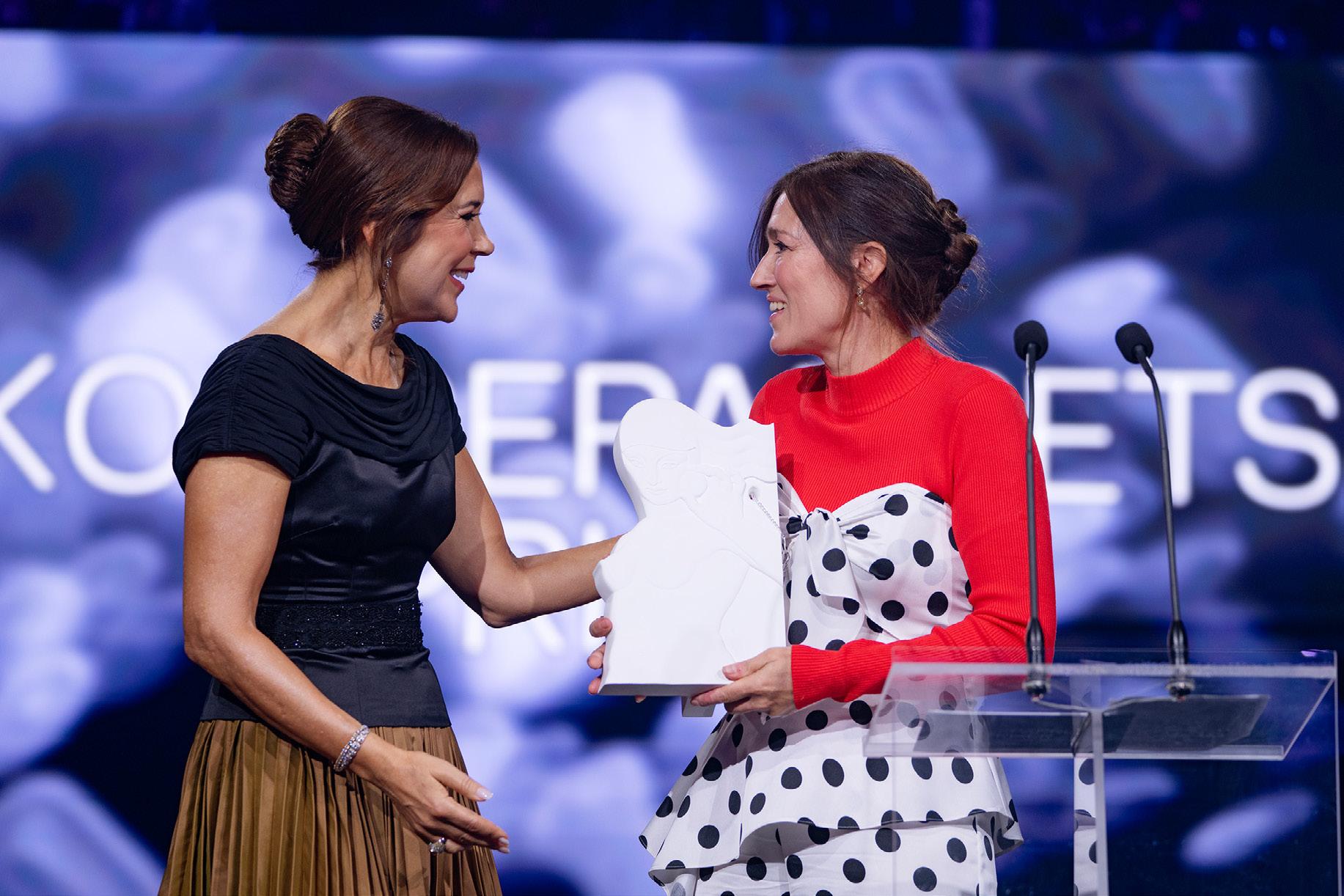
Kongeparrets Priser (The Royal Couple’s Award)
Kongeparrets Priser (The Royal Couple’s Award) is for those who gather us to create movement in society. With the awards, we bring initiatives into the light and strengthen them, so their work may have even greater impact.
The awards originate from Kronprinsparrets Priser, which were originally given as a wedding gift by us to the then-Crown Prince Couple back in 2004. In 2025, we awarded Kongeparrets Priser for the first time along with the Danish Royal Cort and DR (Danish Radio). The prizes stand on the shoulders of Kronprinsparrets Priser (the Crown Prince Couple’s Award) and reward social work as well as art and culture. To Kongeparrets Priser (The Royal Couple’s Award), we have added a community award, which places focus on the communities that bring us together.
Each prize receives DKK 500,000 as well as a development programme tailored to strengthening their work, disseminating knowledge, and creating ways for new collaborations. In this way, we are building a fundament for change by giving the prize recipients the best conditions to continue to make a difference and reach a broad population.
The Award recipients for 2025
Film director and script writer Christina Rosendahl is the recipient of the Culture Award for her artistic courage and new forms of collaboration, which have left an imprint far beyond the world of film.
The non-profit organization Code of Care is the recipient of the Social Award for their work in creating bridges between municipalities and the business world by working to employ people with special needs.
Grønne Nabofællesskaber (Green Neighborhood Communities) is the recipient of the Community Award for gathering thousands of people in local communities to create a greener future and stronger social relationships.
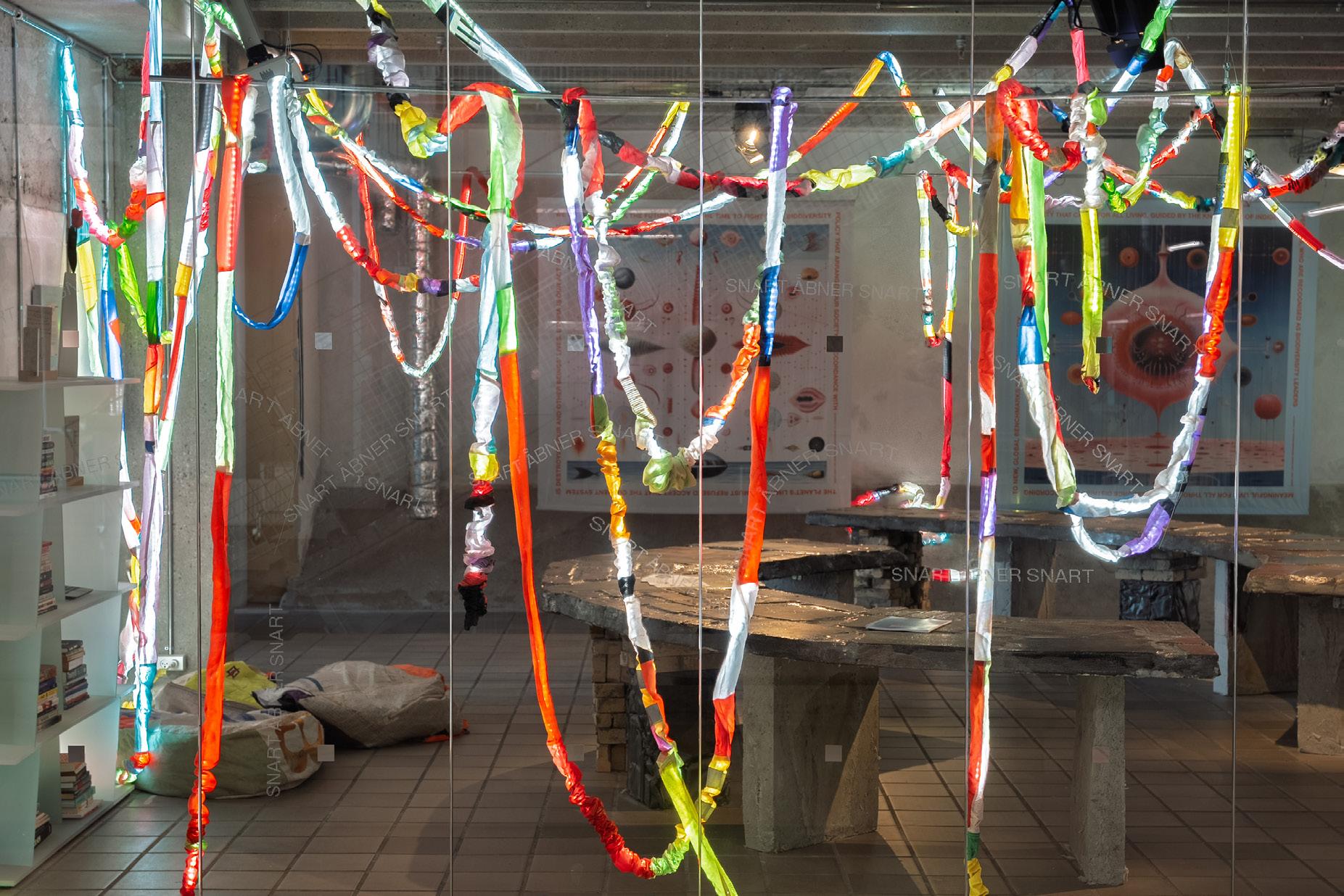
Case: Soon – a laboratory for possible futures
If we can imagine a better future, we can work together to create it. But studies show that only every tenth of Dane believes that society will be better in 10 years. Therefore, from the start, the Soon laboratory has been created to increase our imaginative ability and, thus, open more possible futures in which we would like to live. Soon.
With Soon, we have created a practical laboratory that shows and investigates how one specifically works with the future as a tool for making better decisions in the present. It is a training room in which we construct skills for the future, evoke new images of the future, and train for the long term. The initiative is to fertilize opportunities for creating thoroughgoing societal change with solutions that aim beyond the typical election period or five-year strategy.
Since its opening in March, more than 100 organizations have participated in sessions at Snart – including the Thoravej 29 community, municipalities, ministries, interest organizations, NFOs, schools, and private businesses. Three of the biggest profiles in the field of futures research, Rob Hopkins, Pheobe Tickell, and Sohail Inayatullah, have also visited Snart. So, too, did a team of 17 selected Futures Fellows, who are now fully trained, and we see the first signs that the approach from Soon can begin to breed action out in reality.
We are embarking on two more years with the Soon laboratory, where the focus is on ensuring action after a visit to Soon. The clear goal is that it is not the sessions in the laboratory themselves that make the biggest impression but, rather, the radical actions, decisions and changes for which a visit to Soon paves the way. We are studying the way to leave a clear before and after.
Our background
Our historical roots go back to the savings bank movement. It started in 1857, when the independent institution Sparekassen Bikuben was established as a reaction to a need for more welfare for a growing working class in Copenhagen. Today, we still work from the basic ideas that created the savings bank in its time: It is about being engaged in society and thinking innovatively.
As the years went by, consolidations, mergers, and takeovers with other financial institutions took place, which changed Sparekassen Bikuben’s circumstancesand ownership. Smaller non-profit foundations sprouted up and were later consolidated with other similar foundations. In 2010, the BG Foundation merged with the Bikuben Foundation of 1989 and became what we are now: the Bikuben Foundation. Our capital derives from the ownership share in Sparekassen Bikuben and subsequently BG Bank.
Our purpose
• We engage in financial transactions through investments in shares or other equity interests and convertible bonds in commercial enterprises of every kind.
• We provide grants, loans, or promote in other ways the operation of Danish crafts and small industrial enterprises and thereby help establish new businesses within crafts and small industry and contribute to development projects within such enterprises.
• We work to benefit non-profit and charitable purposes pursuant to the discretion of the board of directors, including goals that would have been natural for Bikuben to support, given its history and nature.
Read more about our foundation here.
Board of directors, executive management, and secretariat
Board of directors
Our board is a team with broad knowledge and relevant skills that supplement each other in the fields of management, investment, business operations, and knowledge about some of the missions with which we are working. In addition, it is a team that, with skills for future thinking have the courage to think innovatively, can challenge the status quo and contribute, challenge, and put into perspective our strategic direction and our development as a curious and relevant actor in society.
The board consists of six members: Chairman of the Board Maria Rørbye Rønn, vice-chairman Dorrit Vanglo and board members Marie Nipper, Mads Roke Clausen, Sheela Maini Søgaard, and Anja Bach Eriksson. In 2025, the board held four board meetings, a strategy seminar, and a workshop on thinking for the future and the future board of Snart – a laboratory for possible futures.
In 2025, we said goodbye to Chairperson Niels Smedegaard after his maximal 12 years on the board. Maria Rørbye Rønn was then selected by the board as its new chairman, while Dorrit Vanglo was chosen as vice-chairman. Louise Gade later decided to resign from the board due to prioritization of resources and, after a thorough recruiting process with impartial, external counselling, we were able to welcome Anja Bach Eriksson.
Board members receive for their ongoing work on the board a fixed
basic compensation of DKK 200,000 annually. The chairman received three times the basic compensation and the vice-chairman two times the basic compensation. No board member receives extra compensation beyond that. Read more about the board’s work here.
Good foundation management
We follow all recommendations for good foundation management. We do so with respect to §60 of the Danish Commercial Foundations Act and because we generally place great weight on propriety and transparency. The recommendations on good foundation management were updated at the end of 2024 and became effective with the financial year of 2025. Read how we comply with the recommendations here.
In 2025, we prepared a policy and procedure, derived from the new recommendations, for transactions with related companies. You may read about it here
Later in this annual report, you may read about our material transactions with related businesses.
Executive management
The executive management consists of the Chief Executive Office Søren Kaare-Andersen and Chief Visionary Officer Sine Egede Eskesen. In 2025, Søren Kaare-Andersen received remuneration in the amount of DKK 2,920,852 including retirement benefits and Sine Egede Eskesen remuneration in the amount of DKK 1,738,684 including retirement benefits.
Secretariat
In 2025, we had on average 38 full-time employees in our secretariat. The secretariat possesses a high degree of professional knowledge about the missions we are working for. In addition, we have professional skills in building alliances, working with innovative thinking, management, facilitation, project management, finances, compliance, public affairs, and communication.
Board of directors 2025 (in Danish)
FORMAND
MARIA RØRBYE RØNN
Født den 25. januar 1964.
Indtrådt i bestyrelsen den 18. april 2023. Genvalgt i 2025 og kan herefter genvælges fire gange. Er på valg i 2027.
Anses medlemmet for uafhængigt? Ja. Besiddelser i datter virksomheder og/ eller associerede virksomheder: Ingen.
Særlige kompetencer
Taktisk og strategisk ledelse i krydsfeltet mellem offentlig/marked/privat, strategiudvikling, ledelse af digital og kulturel transformation, samfundsindsigt, medier og kultur, finansiel styring, stærke personlige relationer og netværk, samt kommunikation.
Øvrige bestyrelsesposter og andre tillidshverv
Det Kongelige Akademi, Arkitektur, Design og Konservering (bestyrelsesleder), Børns Vilkår (bestyrelsesleder), Amedia (bestyrelsesmedlem), FrederiksbergFonden (bestyrelsesmedlem) Praksis Arkitekter (bestyrelsesmedlem).
BESTYRELSESMEDLEM
MARIE NIPPER
Født den 29. juli 1979.
Indtrådt i bestyrelsen den 5. april 2018. Genvalgt i 2024 og kan herefter genvælges to gange. Er på valg i 2026.
Anses medlemmet for uafhængigt? Ja. Besiddelser i datter virksomheder og/ eller associerede virksomheder: Ingen.
Særlige kompetencer
Ledelse i kulturinstitutioner, nationalt og internationalt kulturelt netværk, samtidskunst og nytænkning på kunstområdet, strategiudvikling.
Øvrige bestyrelsesposter og andre tillidshverv Tivoli A/S (bestyrelsesmedlem), Wonderful Copenhagen (bestyrelsesmedlem), Kistefos Museet (bestyrelsesmedlem).
NÆSTFORMAND
DORRIT VANGLO
Født den 25. oktober 1956. Indtrådt i bestyrelsen den 1. maj 2019. Genvalgt i 2025 og kan herefter ikke genvælges.
Anses medlemmet for uafhængigt? Ja. Besiddelser i datter virksomheder og/ eller associerede virksomheder: Ingen.
Særlige kompetencer
Ledelse, strategi, kapitalforvaltning og risikostyring, corporate governance og god fondsledelse. Bestyrelseserfaring fra børsnoteret og unoterede selskaber, ejerledede, fondsejede og offentligt ejede virksomheder.
Øvrige bestyrelsesposter og andre tillidshverv Hedeselskabet (næstformand og formand for Risiko- og Revisionsudvalget), Danmarks Eksport- og Investeringsfond - EIFO (næstformand og medlem af Revisionsudvalget), EKF Danmarks Eksportkredit (næstformand).
BESTYRELSESMEDLEM
SHEELA MAINI SØGAARD
Født den 9. februar 1976.
Indtrådt i bestyrelsen den 18. april 2023. Genvalgt i 2025 og kan herefter genvælges fire gange. Er på valg i 2027.
Anses medlemmet for uafhængigt? Ja. Besiddelser i datter virksomheder og/ eller associerede virksomheder: Ingen.
Særlige kompetencer
International virksomhedsdrift og ledelse, strategiudvikling, finansiel styring, internationalt perspektiv, særligt indblik i kunst og kultur. Bestyrelseserfaring fra danske virksomheder og kulturinstitution.
Øvrige bestyrelsesposter og andre tillidshverv Dinesen Floors, (bestyrelsesformand), Area9 Lyceum, (bestyrelsesmedlem).
BESTYRELSESMEDLEM
MADS ROKE CLAUSEN
Født den 2. juni 1968.
Indtrådt i bestyrelsen den 5. april 2018. Genvalgt i 2024 og kan herefter genvælges to gange. Er på valg i 2026.
Anses medlemmet for uafhængigt? Ja. Besiddelser i datter virksomheder og/ eller associerede virksomheder: Ingen.
Særlige kompetencer Strategiudvikling og forandringsledelse, viden om sociale investeringer, indblik i den frivillige sociale sektor, internationalt netværk vedr. social finance og impact.
Øvrige bestyrelsesposter og andre tillidshverv Den Sociale Investeringsfond (medlem af det rådgivende udvalg).
BESTYRELSESMEDLEM
ANJA BACH ERIKSSON
Født den 7. november 1974.
Indtrådt i bestyrelsen den 18. marts 2025. Valgt i 2025 og kan herefter genvælges fem gange. Er på valg i 2027.
Anses medlemmet for uafhængigt? Ja. Besiddelser i datter virksomheder og/ eller associerede virksomheder: Ingen.
Særlige kompetencer
Kapital forvaltning og virksomhedshandler, samt drifts- og ledelseserfaring herunder strategisk udvikling, salg, finans og forandringsledelse. Anja har bestyrelseserfaring fra internationale og danske selskaber.
Øvrige bestyrelsesposter og andre tillidshverv M.J. Eriksson Holding A/S (bestyrelsesformand) HusCompagniet A/S (næstformand), Veo Technologies ApS (bestyrelsesmedlem), LM l Pihl A/S (bestyrelsesmedlem), M. J. Eriksson A/S (bestyrelsesmedlem).
Executive management 2025 (in Danish)
ADM. DIREKTØR
SØREN KAARE-ANDERSEN
Søren har det overordnede ansvar for Bikubenfonden –herunder fondens investeringer inkl. Enkotec A/S.
TILLIDSHVERV
BIFI (bestyrelsesformand)
Høbbet A/S (bestyrelsesformand)
Bikuben Foundation New York inc. (bestyrelsesformand)
Roskilde Kulturservice A/S (bestyrelsesformand)
Hjem til Alle alliancen (bestyrelsesmedlem)
Pensionskassen for Jordbrugsakademikere & Dyrlæger (bestyrelsesmedlem og formand for revisions- og risikoudvalget)
Pensionskassen Arkitekter & Designere (formand for revisions- og risikoudvalget)
Enkotec A/S (næstformand)
KAB – Københavns Almene Boligselskab (bestyrelsesmedlem)
Økonomiudvalget i KAB (formand)
NunaFonden (bestyrelsesmedlem)
Black Box (bestyrelsesformand)
Food TV29 (bestyrelsesformand)
ØVRIGE
Nasdaq Københavns Rådgivende Udvalg (formand for det rådgivende udvalg) Akademi for nyt lederskab (Advisory Board)
UDVIKLINGSDIREKTØR
SINE EGEDE ESKESEN
Sine er overordnet ansvarlig for udvikling af Bikubenfondens filantropiske strategier, metoder og kompetencer på tværs af vores missioner.
TILLIDSHVERV
Mind Your Own Business (bestyrelsesmedlem)
BIFI A/S (bestyrelsesmedlem)
Høbbet A/S (bestyrelsesmedlem)
Foreningen Thoravej 29 (næstforperson)
INVI - Institut for vilde problemer (bestyrelsesmedlem)
Barndom uden Vold (bestyrelsesmedlem)
Black Box (bestyrelsesmedlem)
Food TV29 (bestyrelsesmedlem)
ØVRIGE
Akademiet for Social Innovation
Sustainability
We are committed to acting as responsibly and expediently as possible when it comes to the environment, climate, social affairs, and corporate governance. For us, sustainability is a principle that must be part of everything we do: Sustainability is part of our decision when we work to create more wild nature in Svanninge Bjerge, when we choose our suppliers for Thoravej 29, when we invest, and when we establish solar power facilities at our dorms. And, most fundamentally, when we work to create positive societal change.
For the first time, we have prepared a sustainability report in which we gather all our work with sustainability with the intention of creating transparency about our work and its results. The report contains our first carbon footprint which includes our direct and indirect emissions from our own operations – from cattle farming, forest management, and building operations. With a climate account in hand, we now have an overview of our CO₂ emissions and, thus, an informed starting point for reducing our imprint in the future. Sustainability and sustainability reporting is an area in which there
have been changes in recent years. We know we are not perfect, but we continue to learn, seek out knowledge, push for change, and try to contribute to a responsible development in society.
From now on we focus on how we can help grant recipients in their work with sustainability. The goal is to create value for society but also to make it easier for grant recipients and collaborative partners to find their way around ESG.
Read our entire sustainability report here
Assets
We own several assets and subsidiaries. We use some of our assets as investment, so we have means to distribute to the missions we are working with. Other assets we have primarily to support our purpose and work with missions. This is the case, for example, with Thoravej 29 and Svanninge Bjerge.
You may read more about all our assets here.
Here, we have emphasized some of our assets for which the year 2025 has been notable.
BIKUBEN FOUNDATION’S ASSETS
ENKOTEC A/S
SVANNINGE BJERGE CORE BOLIG
OPERATIONAL BUILDINGS AT SVANNINGE BJERGE
OTHER INVESTMENTS
ACADEMIC GUEST HOUSE
Enkotec A/S
Enkotec A/S helps generate the financial surplus that goes to our work to solve complex problems in society.
Enkotec A/S is the world’s leading supplier of machines to produce nails for the construction industry. For more than 40 years, Enkotec A/S has developed and refined machines that mass-produce specialized nails for the construction industry all over the world. Since taking over ownership in 2006, we have insisted that production remain in Denmark. There are more than 1000 of the firm’s nail-production machines in over 50 countries around the world. In addition to its headquarters in Skanderborg, the firm has its own office in the US and two agent offices.
Enkotec A/S entered 2025 with the expectation of growing activity on the market. But chaos surrounding tariffs in the US has contributed to uncertainty about future sales for Enkotec’s customers in the important American market. Customers have been reticent to invest in new machines. Therefore, Enkotec’s machine sales in 2025 ended at 40% of what was expected at the beginning of the year. The same tariffs have meant lost market shares on the American market. Despite progress in sales in other markets, the American actions have meant that aftersales of Enkotec’s products in 2025 are also below expectation.
Since there is no immediate prospect of change in the situation around the American tariffs, Enkotec expects aftersales in 2026 at the same level as 2025. Sales of machines, however, are expected to rise in 2026 in relation to 2025.
In Enkotec A/S, there is a focus on production with the least possible consumption of resources – for example, with respect to waste of materials, consumption of electricity, eco-friendly purchases, and that all suppliers live up to Enkotec’s Supplier Code of Conduct, which is compliant with the UN’s Supplier Code of Conduct.
Read about Enkotec here.
Dorms
Our three student housing in Odense, Aalborg, and Copenhagen offer students a home and a community during their studies.
We focus on running the dorms sustainably, working with the environmental aspects by utilizing green energy from wind turbines and our own solar facilities. But social sustainability is also prominent at the dorms. 10% of our dorm spaces in Copenhagen and Odense are reserved for young people in vulnerable positions. Beyond housing, we help these young people in the dorm community. With us, they get more than a bed to sleep in. They get an everyday routine in which they are seen, heard, and assisted along the way.
Investments
Long-term, responsible investments
We invest to create returns for our work with solving complex social challenges. We do this by focusing on responsibility and future generations.
We invest in over 1000 companies, exclusively through external investment managers whom we select with care. The investments are in listed and unlisted stocks and bonds, property, and industry, as well as in private equity funds and private debt funds. The bulk of our investments take place in the Nordic countries, northern Europe, and the US. Other OECD countries, Emerging Markets, Brazil, India, China, and Asia constitute only a smaller part of our investments.
Our investment strategy is longterm. Central to the strategy is sound risk and liquidity management that makes possible an optimization of returns, so we have the most possible means for our work with missions. The long-term approach ensures a more stable development in our expected returns, and it provides a nice interplay with our distributions, which often also stretch over several years. We utilize a long-term focus in taking liquidity risks and volatility risks in order to achieve a higher return in relation to more risk-free investments. We do this because our distribution strategy does not require sudden and unexpected distributions but more stable distributions over time.
Across the group, we have invested in 30 foundations, covering private equity funds, property, and private debt funds. At the end of the year, we have a level of 13% of our investment assets placed in listed securities and 87% placed in unlisted securities.
See an overview of our capital managers here.
ESG policy for investments
Even in the investment area, we are focused on sustainability. We follow our ESG policy for investments, which helps to set a more sustainable direction for our investments. The ESG policy describes our work with active ownership, exclusion criteria, missiondirected investments, ESG considerations, and action options when investments are unsatisfactory.
The policy takes its starting point in the international standards for responsible business conduct from the OECD Guidelines for Multinational Enterprises and the UN Guiding Principles on Human Rights and Business. In addition, the Bikuben Foundation supports the UN Global Compact’s 10 principles for responsible business conduct for human rights, labor rights, the environment, and anticorruption.
Read our ESG policy for investments here.
Sustainability analysis of the year’s investments
We are working purposefully to increase sustainability in our investments. Every quarter, we receive a sustainability review of all our investments by the independent investment advisor Curo Capital. Annually, we provide a sustainability analysis openly for everyone to read about our investments and how they influence climate, people, and society. The analysis gives us an ability to look critically at our investments and assure ourselves that we are not investing in areas and companies we do not want and conflict with our investment policy. We publish the analysis because we would like to progress and improve and help influence others to move in a more sustainable direction.
We recognize that, in many contexts, we are a small investor. Therefore, we know that we cannot move mountains. However, we will continue to try to push for change. We ask questions and enter dialogue when there are investments that the analysis flags. With this approach,
Financial development 2025
etc.
which also goes under the name active ownership, we believe that we often achieve the greatest possible influence. This quarterly monitoring of our investments makes it possible for us to exercise active ownership more quickly and may help our financial managers to raise their requirements for ESG on a running basis.
The sustainability analysis for 2025 shows that our investment portfolio continued to develop in a positive direction. In particular, investments in the oil and gas industry have again been reduced further.
Read our sustainability analysis of investments from 2025 here.
Financial development
Our financial development is a result of the investments and strategies we have used over a number of years. Returns in 2025, therefore, are not borne by investments we have undertaken in this year alone but, to a high degree, by the investment decisions we have undertaken over the last many years.
In this financial year, there is an additional DKK 15 million in returns regarding a difference in estimated returns for 2024.
See the changes in financial development from 20212024 here.
Financial development
Although the investment year 2025 has had fluctuating returns within various return classes, we have provided satisfactory positive returns for 2025 in our overall portfolio. Our financial development ended at DKK 111 million, corresponding to a return of 6.4%.
Our parent foundation’s net result was DKK 64.1 million in contrast to DKK 182.7 million the year before. Of this result, DKK 146 million was granted for foundation purposes as opposed to DKK 149.6 million the year before. Operating profits for the parent foundation in 2025 were DKK -45.9 million as opposed to DKK -44.9 million in 2024.
The Bikuben Foundation had, as of 31 December 2025, a balance of DKK 2,350 million as opposed to DKK 2,291.3 million the year before. Own capital made up DKK 1,729.4 million as opposed to DKK 1,804.5 million the year before. Of the parent foundation’s assets, DKK 1,679.8 million are financial fixed assets and DKK 348.1 million are material fixed assets. The financial fixed assets are the basis for the foundation’s future earning power.
Enkotec A/S had, as of 31 December 2025, a balance of DKK 110.5 million and own capital in the amount of DKK 51.7 million. The result of 2025 was DKK 4.4 million as opposed to DKK 26.4 million in 2024.
Høbbet A/S had, as of 31 December 2025, a balance of DKK 307.4 million as opposed to DKK 292.8 million the year before and own capital in the amount of DKK 187.8 million as opposed to DKK 118.2 million the
year before. The result for 2025 was DKK 0.5 million as opposed to DKK –6.1 million in 2024.
BIFI A/S had, as of 31 December 2025, a balance of DKK 754.5 million as opposed to DKK 769.5 million the year before, and own capital in the amount of DKK 701.6 million as opposed to DKK 717.6 million the year before. The result for 2025 was DKK 34.0 million as opposed to DKK 120.9 million in 2024.
The year’s results and follow-up on last year’s expected development
The results realized this year are lower than the expectations provided in the annual report for 2024. This is due to lower returns on our private equity portfolio and a fall in the dollar exchange rate. In addition, Enkotec A/S has had a difficult year due to developments with American tariffs. We consider the year’s result as satisfactory.
In 2026, we expect a result in the order of DKK 100150 million. The year’s result is liable to some uncertainty as a consequence of how the financial markets develop.
Uncertainty as to recognition and measurement
Our investments in other equity interests consist of unlisted equity interests that are primarily structured as private equity funds. These are measured by the latest known fair market value. The latest known fair market value may be from the end of the third quarter. If that is the case, then our external advisor has made an estimation of the change in value in the fourth quarter, which is included in the valuation of the investment.
Subsequent events
We may state that, at the start of 2026, we sold Core Bolig. Otherwise, there are no subsequent events that have any material influence on accounting.
Management statement
The board of directors and executive management have reviewed and approved the annual report for the financial year 1 January - 31 December 2025 for the Bikuben Foundation
The annual report has been prepared in accordance with the Danish Financial Statements Act
The annual accounts and consolidated accounts provide in our opinion a true and fair view of the assets, liabilities, and financial position of the Foundation and the Group as of 31 December 2025 and of the result of the activities of the Foundation and the Group and the Group’s cash flow for 2025
The management report contains in our opinion a true and fair account of the circumstances to which the report relates.
Copenhagen, 19 March 2026
Executive management
Søren Kaare-Andersen Chief Executive Officer
Sine Egede Eskesen Chief Visionary Officer
Board of directors
Maria Rørbye Rønn chairman
Marie Nipper
Dorrit Vanglo vice-chairman
Sheela Maini Søgaard Christiansen
Mads Roke Clausen
Anja Bach Eriksson
The independent auditor’s audit report
To the board of directors of the Bikuben Foundation and the Foundation’s supervisory authority
Conclusion
It is our opinion that the consolidated accounts and the annual accounts provide a true and fair view of the assets, liabilities, and financial position of the Group and the Foundation as of 31 December 2025 and of the result of the activities of the Group and the Foundation and the Group’s cash flow for the financial year 1 January - 31 December 2025 in compliance with the Danish Financial Statements Act
We have audited the consolidated accounts and the annual accounts for the Bikuben Foundation for the financial year 1 January - 31 December 2025, which includes the profit and loss account, balance sheet, equity statement, and notes, including accounting principles applied for the Group and the Foundation as well as the statement of cash flow for the Group (”the Accounts”).
Basis for conclusion
We have undertaken our audit in compliance with international standards for audits and the additional requirements applicable in Denmark. Our responsibilities according to these standards and requirements are described in more detail in the audit report section “Auditor’s responsibility for audit of accounts.” We are independent of the foundation in compliance with the International Ethics Standards Board for Accountants’ international guidelines for auditors’ ethical conduct (IESBA Code) and the additional ethical requirements that are applicable in Denmark just as we have fulfilled our other ethical obligations in respect of these requirements and the IESBA Code. In our opinion, the audit evidence obtained is sufficient and appropriate to provide a basis for our conclusion.
Statement on management report
The executive management is responsible for the management report.
Our conclusion about the accounts does not include the management report, and we express no form of conclusion with certainty about the management report
As part of our audit of the accounts, it is our responsibility to read the management report and, in that connection, consider whether the management report is materially inconsistent with the accounts or our knowledge achieved by the audit or in another way seems to contain material misinformation
In addition, our responsibility is to consider whether the management report contains the required information with respect to the Danish Financial Statements Act.
Based on the work carried out, it is our opinion that the management report is in compliance with the consolidated accounts and the annual accounts and has been prepared in compliance with the requirements of the Danish Financial Statements Act. We have found no material misinformation in the management report.
The independent auditor’s audit report
Management’s responsibility for accounts
Management has responsibility for the preparation of a consolidated account and an annual account that give a true and fair view in compliance with the Danish Financial Statements Act. Management also has the responsibility for internal supervision that management considers necessary to prepare an account without material misinformation regardless of whether it is due to fraud or mistake.
With the preparation of the account, management is responsible for assessing the Group’s and the Foundation’s ability to continue operations: to inform about any conditions touching on continued operations where relevant; to prepare the account on the basis of accounting principles for continued operations unless management either has the intent to liquidate the group or foundation, intends to discontinue operations, or has no other realistic alternative than to do this
Auditor’s responsibility for audit of accounts
Our goal is to achieve a high degree of certainty about whether the accounts are without material misinformation regardless of whether it is due to fraud or mistake and to submit an auditor’s statement with a conclusion. A high degree of certainty is a high level of certainty but is not a guarantee that an audit that is carried out in compliance with international standards on audits and the additional requirements that are applicable in Denmark will always uncover material misinformation. Misinformation may arise as a consequence of fraud or mistake and may be considered material if it may reasonably be expected that they individually or together may influence the financial decisions that users make based on the accounts.
As a part of an audit that is conducted in compliance with international standards on audits and the additional requirements that are applicable in Denmark, we undertake professional assessments and maintain professional skepticism during the audit. For example:
• We identify and assess the risk of material misinformation in the accounts regardless of whether it is due to fraud or mistake, form and carry out audit procedures as a reaction to these risks and obtain audit evidence sufficient and suitable to form a basis for our conclusion. The risk of not discovering material misinformation caused by fraud is higher than material misinformation caused by mistake, since fraud may involve conspiracies, forgeries, conscious omissions, deception, or disregarding internal supervision.
• We obtain an understanding of the internal supervision with relevance to the audit in order to be able to form audit procedures that are appropriate in accordance with the circumstances but not in order to be able to express a conclusion about the effectiveness of the foundation’s internal supervision.
• We take a position on whether the accounting principles that are used by management are appropriate and whether the accounting estimates and associated information that management has prepared are reasonable.
The independent auditor’s audit report
• We opine whether management’s preparation of the accounts on the basis of accounting principles for continued operations is appropriate and whether, on the basis for the audit evidence obtained, there is material uncertainty connected with events or conditions that may create significant doubt about the group’s or the foundation’s ability to continue operations. If we conclude that there is material uncertainty, we must in our audit report call attention to information about it in the accounts or, if such information is not sufficient, modify our conclusion. Our conclusions are based on audit evidence that is obtained up to the date for our audit report. Future events or conditions, however, may result in the group or the foundation no longer being able to continue operations.
• We take a position on the overall presentation, structure, and content of the accounts, including note information and whether the accounts reflect the underlying transactions and events in such a way that a true and fair view of them is provided
• We plan and carry out the group audit in order to obtain sufficient and suitable audit evidence respecting the financial information for the enterprises or business units in the group as a basis for forming a conclusion about the group accounts and the annual accounts We are responsible for managing, inspecting and reviewing the audit work carried out for use in the group audit. We are solely responsible for our audit conclusion.
Furthermore, we communicate with the top management about, among other things, the planned extent and temporal placement of the audit and significant audit observations, including any significant deficiencies in internal supervision that we identify during the audit.
Copenhagen, 19 March 2026
PricewaterhouseCoopers
Chartered accounting partnership
CVR-no.33771231
Anders Stig Lauritsen chartered accountant mne32800
Claus Christensen chartered accountant mne33687
Profit and loss account 1 January - 31 December
Balance sheet 31 December
Liabilities
Balance sheet 31 December
Statement of changes in equity
Statement of owner’s equity
Statement of cash flow 1 January - 31 December
Notes to annual accounts
Søren Kaare-Andersen, adm. director
Sine Egede Eskesen, director
Niels Smedegaard, former chairman*
Thomas Hofman-Bang, former vice-chair
Maria Rørbye Rønn, chairman
Dorrit Vanglo, vice-chair
Louise Gade
Marie Nipper
Mads Roke Clausen
Sheela Maini Søgaard
Anja Bach Eriksson
Søren Kaare-Andersen**
* Niels Smedegaard stepped down as chairperson on 18 March 2025
** Søren Kaare-Andersen receives board remuneration for the subsidiary Enkotec A/S.
The remuneration above is also applicable for the whole group
3 Financial income
5
7
Notes to annual accounts
9
Other tangible fixed assets
Notes to annual accounts
Notes to annual accounts
Investments in associate enterprises are specified in this way:
Notes to annual accounts
Unpaid investment commitments to private equity funds constitute as of 31 December 2025 DKK 775 4 million (2024: DKK 811 9 million). Other securities and investments consist of investments in private equity funds (fair value hierarchy level 3). For this type of investment, fair value is not measured against observations of an active market but on the basis of information about fair value from private equity funds
With new investments in private equity funds, the company receives information about the funds’ general principles for assessment, and these are accepted at the same time that the Group decides to invest in a private-equity fund.
The fair value of the Group's investments in private equity funds is based on the latest quarterly and annual reports received, with adjustments for cash calls and distributions in the period between the date of the latest report received and the balance sheet date.
The value of the unlisted investments is made up of the sum of the fair values of the underlying portfolio companies in which the portfolio fund has invested and the value of other net assets in the portfolio fund. The valuation of a portfolio company in a private equity fund is based on the portfolio company's industry, market position, and earning power, and includes, for example: (a) peer group multiples, i.e., the market value of comparable listed companies, (b) transaction multiples in recently completed M&A transactions involving comparable companies, (c) value indications from potential buyers of the portfolio company, (d) market value, if the portfolio company is listed, and/or (e) expected future proceeds if an agreement has been reached to sell the portfolio company However, the Group does not have information on the specific methods and assumptions that the managers of the unlisted portfolio funds use to determine the fair value of the individual portfolio companies. The assessment of the reported fair value includes, among other things, available information on relevant market conditions as well as companyspecific and general information obtained through the ongoing dialogue with the portfolio funds.
Notes to annual accounts
Notes to annual accounts
Provisions for deferred tax
21 Provisions
Enkotec A/S provides a guarantee on certain products and is obliged thereby to repair or replace goods that are not satisfactory. Other provisions in the amount of DKK 2,147 thousand have been recognized as of 31 December 2025 (2024: DKK 1,200 thousand) for expected warranty claims based on past experience regarding the level of repairs and returns. There is inherent uncertainty connected to this estimate
22 Long-term liabilities
Installments due within 1 year are included in short-term debt liabilities. Other liabilities are recognized under long-term debt liabilities
Debt liabilities are due in the order below:
Notes to annual accounts
Notes to annual accounts
Agreements have been entered into for derivative financial instruments in the form of forward exchange transactions. The fair value of derivative financial instruments on the balance sheet date amounts to:
The forward exchange transactions have been entered into to hedge future new sales in USD. This is done to minimize risks and to ensure that the greatest possible security is achieved for the company's sales. The forward currency transactions have a maturity of 0-4 months.
24 Indebted appropriations
25 Prepayments
Notes to annual accounts
27 Cash flow statement – change in working
28 Contingent assets
The Group has a contingent asset, "Promissory Notes", issued by the Bikubenfoundation New York, Inc. These "Promissory Notes" are issued in USD and will only flow to the Bikuben Foundation in connection with a possible sale of the assets in Bikubenfoundation New York Inc.
Value of Promissory Notes issued on 3 November 2017 is as of 31 December 2025 TDKK 121,837 (2024: TDKK 136,992)
29 Contingent liabilities
Mortgage debt is secured by mortgages in grounds and buildings with a carrying amount of TDKK 272,498 (2024: TDKK 275,686).
The Bikuben Foundation has provided a surety bond to the affiliated companies Høbbet A/S and Enkotec A/S' bank connections and Realkredit Danmark with a total outstanding debt as of 31 December 2025 of TDKK 14,439 (2024: TDKK 15,015)
The Foundation has an unrecognized deferred tax liability, which amounts to TDKK 33,245 (2024: TDKK 72,063).
The tax liability relates to tax provisions for future distributions. The Foundation expects to offset this tax liability through future distributions, and therefore the deferred liability is not recognized
There are no additional collateral or contingent liabilities as of 31 December 2025, beyond the investment commitment mentioned in note 13
Notes to annual accounts
30 Related parties
Related parties
Mads Roke Clausen
Marie Nipper
Dorrit Vanglo
Sheela Maini Søgaard Christiansen
Bodil Maria Rønn
Anja Bach Eriksson
Niels Smedegaard
Louise Gade
BIFI A/S
Høbbet A/S
Black Box TV29 ApS
Food TV29 ApS
Enkotec A/S
Core Bolig IV Investorkommanditaktieselskab nr. 6
Foreningen Hjem til Alle
Transactions with related parties
The board’s overall remuneration is disclosed in note 1.
Basis
Board member
Board member
Board member
Board member
Board member
Board member
Former board member
Former board member
Subsidiary
Subsidiary
Subsidiary
Subsidiary
Subsidiary
Subsidiary
Management by Bikuben Foundation
As of 31 December 2025, the Bikuben Foundation has a receivable from Høbbet A/S of TDKK 385, a receivable from Enkotec A/S of TDKK 21,576, and a receivable from BIFI A/S of TDKK 56,732. In addition, the Bikuben Foundation has a debt to Food TV29 ApS of TDKK 701 as of 31 December 2025. Interest is paid on outstanding amounts at market terms
The Foundation has transactions with subsidiaries The transactions primarily consist of accounting services, invoiced salaries, etc., provided by the Foundation to the subsidiaries
Notes to annual accounts
Related party transactions
During the financial year, the Foundation has distributed appropriations to related enterprises in the total amount of TDKK 22,083. The grant recipients are specified below
DR – Kongeparrets priser
Arken
INVI
Fonden Roskilde Festival
Thoravej 29
(Relation: Board member)
(Relation: Board member)
(Relation: Management)
(Relation: Management)
(Relation: Management)
During the financial year, the Foundation has undertaken purchases from related enterprises in the total amount of TDKK 4,362.
The related companies are specified below
Dalgas A/S
Thoravej 29
(Relation: Board member)
(Relation: Management)
During the financial year, the Foundation has undertaken sales to related enterprises in the total amount of TDKK 2,572.
The related companies are specified below.
Dalgas A/S
(Relation: Board member)
31. Accounting principles applied
Basis of preparation
The Annual Accounts for the Bikuben Foundation for 2025 were prepared in compliance with the provisions of the Danish Financial Statements Act for enterprises in reporting class C (medium-size)
As a result of the foundation activity, adjustments have been made to the presentation of the income statement, the balance sheet, and the presentation of specific notes, with a view to meeting the requirement for a true and fair view, cf. ÅRL § 23. The adjustments have no influence on the Foundation’s result, assets and liabilities, or financial position
The accounting principles applied are unchanged in relation to last year
Group accounts and annual accounts for 2025 are provided in Danish crowns
Adaptation of comparison figures
Minor reclassifications in the comparison figures have been made in the annual report. The reclassifications have no effect on the year’s result or own capital.
Recognition and measurement
Revenue is recognized in the income statement as it is earned. In addition, value adjustments of financial assets and obligations, which are measured at fair value or amortized costs are recognized. Furthermore, all expenses incurred to achieve the year’s earnings, including depreciation and amortization are recognized in the income statement
Assets are recognized in the balance sheet when it is probable that future financial advantages will flow to the foundation, and the value of the asset may be measured reliably.
Liabilities are recognized in the balance sheet when it is probable that future financial advantages will flow out of the foundation, and the liabilities may be measured reliably.
Assets and liabilities are initially measured at cost. Subsequently, assets and liabilities are measured as described for each individual accounting item below.
With respect to recognition and measurement, consideration is taken for predictable losses and risks that arise before the annual report is provided and that confirm or invalidate conditions that existed on the balance sheet date.
Consolidation policies
The group accounts include the parent foundation Bikuben Foundation and enterprises in which the parent foundation directly or indirectly possesses the majority of voting rights or in which the parent foundation through stock possession or in another way has controlling influence. Enterprises in which the Group possesses between 20% and 50% of the voting rights and exercises considerable but not controlling influence are deemed associated enterprises
During consolidation, items of a similar character are combined. Group income and expenses, shareholdings, dividends and outstanding accounts, as well as realized and unrealized internal gains and losses on transactions between the consolidated companies are eliminated.
The parent foundation’s investments in the consolidated subsidiaries are offset against the parent company's share of the subsidiaries' accounting net asset value calculated at the time the Group relationship was established
Minority interests
Minority interests constitute a share of the Group’s total own capital The year’s result is divided in the profit allocation into the part attributable to the minority interests and the part attributable to the parent foundation's capital owners
Foreign currency translation
Danish crowns are the presentation currency. All other currencies are deemed foreign currencies.
Transactions in foreign currency are translated into the exchange rate on the day of the transaction. Exchange rate differences that arise between the exchange rate on the transaction date and the exchange rate on the payment date are recognized in the income statement as a financial item.
Receivables, debt, and other monetary items in foreign currencies that are not settled on the balance sheet date are translated at the exchange rate on the balance sheet date. The difference between the exchange rate on the balance sheet date and the exchange rate on the transaction date is recognized in the income statement as a financial item
Accounting hedges
Changes in the fair value of financial instruments that are classified as and meet the criteria for hedging the fair value of a recognized asset or a recognized liability are recognized in the income statement together with the changes in the fair value of the hedged asset or liability that are attributable to the risk that is hedged
Change in fair value of financial instruments that are classified as and meet the conditions for hedging of expected future transactions are recognized in own capital under the fair value reserve insofar as the effective portion of the hedge is concerned The ineffective portion is recognized in the income statement. If the hedged transaction results in an asset or a liability, the amount deferred under own capital is transferred from own capital and recognized in the cost of the asset or liability, respectively. If the hedged transaction results in income or expense, the amount that is deferred under own capital is transferred from own capital to the income statement in the period in which the hedged transaction is recognized. The amount is recognized in the same item as the hedged transaction.
Changes in the fair value of financial instruments that are classified as and meet the criteria for hedging net investments in independent foreign subsidiaries are recognized directly in own capital insofar as the effective portion of the hedge is concerned, while the ineffective portion is recognized in the income statement
Income statement
Gross income
Gross income is calculated with reference to the Danish Financial Statements Act § 32 as a summary of net revenue, other operating income, costs of raw materials and consumables, and other external costs.
Net turnover
Net revenue is recognized in the sale of goods when the benefits and risks related to the goods sold have been transferred to the buyer, net revenue may be measured reliably, and it is probable that the economic benefits from the sale will flow to the Group
Rental income is recognized on a straight-line basis in the rental period
Lease income, etc., is accrued over the period to which the income relates
Net revenue is recognized excluding VAT, fees, and discounts in connection with the sale and is measured at the fair value of the determined consideration.
Costs of raw goods and consumables
Costs of raw materials and consumables include the consumption of raw materials and consumables used to achieve the company's net revenue
Other external expenses
Other external expenses include costs for offices, maintenance, administration and office teams, etc.
Personnel costs
Personnel costs include wages and salaries, including vacation pay and pensions, as well as other costs for social security, etc., for the company's employees
Depreciation and amortization
Depreciation and amortization include the year’s depreciation and amortization of intangible and tangible fixed assets.
Result of investments in affiliated and associated enterprises
In the income statement, the proportionate share of the profit for the year is recognized under the items “Income from investments in affiliated enterprises” and “Income from investments in associated enterprises”
Financial items
Financial income and costs are recognized in the income statement with the amounts relating to the financial year. The item also includes the fair value adjustments of ”Other securities and investments” and “Securities”
Tax on the year’s result
Tax on the year's result consists of the year's current tax and the change in deferred tax and is recognized in the income statement with the part attributable to the year's profit, and directly in own capital with the part attributable to entries directly in own capital
Balance sheet
Intangible fixed assets
Acquired licenses consist of software, which are measured at cost less accumulated depreciation and impairment losses or at the recoverable amount, if lower. The depreciation period is set at 8 years
Tangible fixed assets
Tangible fixed assets are measured at cost less accumulated depreciation and impairment losses
Increases in the revalued value of owner-occupied properties are recognized in revaluation reserves under own capital. Decreases in value are recognized in the income statement, unless they are reversals of previously made revaluations.
Cost includes the acquisition price and costs directly attributable to the acquisition until the time the asset is ready for use
The depreciation basis, which is calculated as cost price reduced by any residual value, is distributed on a straight-line basis over the expected useful life of the assets, which constitutes:
Grounds and buildings 5-50 years
Production plants and machinery 5-8 years
Other plants, operating equipment, and inventory 3-7 years
Grounds and buildings are depreciated from the date of completion on a straight-line basis over the period stated above, reduced by any residual value
Depreciation periods and residual value are reassessed annually
Biologicalassets
Biological assets are measured upon acquisition at cost including the acquisition price and purchase costs.
After initial recognition, biological assets are measured at fair value on the balance sheet date. The fair value is calculated based on the latest quoted selling price
Fair value is the price at which an asset could be traded between knowledgeable, willing parties at arm's length on the balance sheet date. Determining fair value entails material accounting estimates
Impairment of fixed assets
The carrying amount of tangible fixed assets is reviewed annually to determine whether there is any indication of impairment beyond that expressed by depreciation
If this is the case, the impairment charge will be made at the lower recoverable amount
Investments in subsidiaries and associated enterprises
Investments in subsidiaries and associated enterprises are recognized and measured using the equity method. The balance sheet includes the items “Investments in subsidiaries” and “Investments in associated enterprises” for the proportionate ownership interest in the companies’ accounting equity value, calculated based on the fair value of the identifiable net assets at the time of acquisition, less or plus unrealized intra-Group profits or losses and plus the residual value of any surplus values and goodwill calculated at the time of acquisition of the companies.
The total net revaluation of investments in subsidiaries and associated enterprises is transferred via the
allocation of profits to the “Reserve for net revaluation according to the equity method” under own capital. The reserve is reduced by dividend distributions to the parent company and adjusted by other own capital movements in the subsidiaries and associated enterprises
Receivables
Receivables are measured in the balance sheet at amortized cost or a lower net realizable value, which here corresponds to nominal value less impairment losses.
Other securities and investments
Other securities and investments, recognized under fixed assets, include unlisted private equity funds, which are measured at estimated fair value on the balance sheet date. The fair value is calculated based on statements received from private equity funds, which recognize underlying investments at fair value
Inventory
Inventories are measured at cost, calculated according to the FIFO method, or net realizable value, whichever is lower.
The net realizable value of inventories is calculated as the amount that is expected to be realized through sale in the ordinary course of business, less sales costs
The net realizable value is calculated taking into account marketability, obsolescence, and development in expected sales price Cost price for merchandise as well as raw materials and consumables includes purchase price plus landed costs
Provisions
Provisions are recognized when the Group has a legal or constructive liability as a result of an event occurring no later than the balance sheet date, and it is probable that an outflow of economic benefits will be required to settle the liability
Deferred tax assets and liabilities
For subsidiaries
Deferred tax is measured using the balance sheet liability method on temporary differences between the carrying amount and tax value of assets and liabilities, calculated on the basis of the planned use of the asset or settlement of the liability, respectively
Deferred tax assets are measured at the value at which the asset is expected to be realized, either by offsetting against tax on future earnings or by offsetting against deferred tax liabilities within the same legal tax entity
For the parent foundation
Tax legislation allows tax deductions for provisions for later distribution. This means that the foundation may reduce any taxable positive income to zero by recognizing a tax provision for later distribution in the calculation of taxable income. The tax provision for later distribution is not recognized in the accounts, which is why a deferred tax liability may arise thereon. The deferred tax liability is not recognized in the annual report, as it is not considered likely that it will be subject to taxation as a result of the foundation’s intention to continue to distribute all earned funds in accordance with the foundation’s purpose. Such distributions are deductible from the foundation’s taxable income and will therefore result in the foundation not being liable for tax.
Deferred tax assets and liabilities
Current tax receivables and liabilities are recognized in the balance sheet as the amount that may be calculated on the basis of the year’s expected taxable income adjusted for tax on previous years' taxable income. Tax receivables and liabilities are presented netted to the extent that there is a legal right to set off, and the items are expected to be settled net or simultaneously
Prepayments
Prepayments recognized under assets include costs incurred that relate to subsequent financial years. Prepayments are measured at cost
Securities
Securities recognized under current assets include listed bonds and shares that are measured at fair value on the balance sheet date. The fair value is calculated based on the latest quoted selling price
Paid appropriations
Distributions that are approved on the balance sheet date and announced to the recipient in accordance with the foundation's purpose are deducted from own capital via the allocation of profits
Indebted appropriations
Distributions that, in accordance with the foundation’s purpose, have been approved on the balance sheet date and announced to the recipient, but which have not been paid on the balance sheet date, are removed through the allocation of profits and are recognized as a debt obligation
Distribution framework
At the board meeting at which the annual accounts are approved, the board decides on a framework amount that is expected to be distributed until the next annual accounts are approved. This amount is transferred from the free reserves to the distribution framework. As the distributions are announced to the recipient, the amounts are paid out or transferred to debt related to distributions.
Prepayments received from customers
Prepayments received from customers include amounts received from customers prior to the time of delivery of the agreed goods or completion of the agreed service
Prepayments
Prepayments recorded as liabilities consist of payments received relating to income in subsequent financial years
Financial liabilities
Loans, such as mortgage loans and loans from credit institutions, are recognized at the time of the loan as the proceeds received less transaction and borrowing costs incurred. In subsequent periods, the loans are measured at amortized cost, so that the difference between the proceeds and the nominal value is recognized in the income statement as an interest expense over the term of the loan Other debt obligations are measured at amortized cost, which in all material respects corresponds to nominal value
Cash flow statement
The cash flow statement shows the Group's cash flow for the year divided into operating, investment, and financing activities, the year's change in cash and cash equivalents, and the Group's cash and cash equivalents at the beginning and end of the year
Cash flow from operating activities
Cash flow from operating activities is calculated as profit for the year adjusted for changes in working capital and non-cash profit and loss items such as depreciation, amortization and impairment losses, and provisions. Working capital includes current assets less short-term liabilities, excluding items included in cash and cash equivalents.
Cash flow from investment activities
Cash flow from investment activities includes cash flow from the purchase and sale of intangible, tangible, and financial fixed assets
Cash flow from financing activities
Cash flow from financing activities includes cash flow from raising and repaying long-term debt liabilities as well as disbursements of appropriations
Cash and cash equivalents
Cash and cash equivalents include liquid holdings and short-term securities with negligible price risk
The cash flow statement cannot be derived solely from the published accounting materials
Key figures
Explanation of key figures
Appropriations of own capital
Appropriations of year’s result
Return on equity
Equity to debt ratio
Year’s appropriations x 100 / Own capital at year’s end
Year’s appropriations x 100 / Ordinary result after tax
Ordinary result after tax x 100 / Average own capital
Own capital at year’s end x 100 / Total assets at year’s end