How miners can avoid costly resource ‘classification debt’


BY ALISHA HIYATE
Sometimes a discovery is so big, it takes generations to discover, define and develop — in order to become a mining district that produces metals for future generations.
Over the past two decades, the Lundin Group technical team has found a cluster of giant copper-gold deposits in the Andes –the region that produces 40% of the world’s copper. Their Vicuña district deposits include Filo Corp.’s (TSX: FIL) Filo del Sol and Lundin Mining’s (TSX: LUN) Josemaria in San Juan province, Argentina; and NGEx Minerals’ (TSX: NGEX) 69%-owned Los Helados in Chile’s Region III, plus its Lunahuasi discovery in San Juan.
And this year, the younger generation led by brothers Jack and Adam Lundin made a deal with the world’s biggest miner, BHP (NYSE: BHP; LSE: BHP; ASX: BHP) that’s likely to catapult base metals producer Lundin into the copper big leagues. That’s why The Northern Miner has named Jack, the company’s president and CEO, and Adam, Lundin’s chair, our Persons of the Year for 2024.
“This has the potential to become one of the world’s biggest copper, gold, silver mines ever to be developed and operated.”
JACK LUNDIN, PRESIDENT AND CEO, LUNDIN MINING
The transaction gives the $11-billiion market cap Lundin an equal seat at the table to develop Vicuña’s deposits on the Argentina side, Josemaria and Filo del Sol.
“This has the potential to become one of the world’s biggest copper, gold, silver mines ever to be developed and operated,” Jack told The Northern Miner in October.
But it also offers the Lundin brothers an opportunity to build

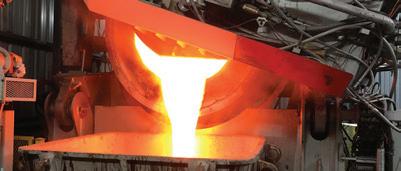
DST is engaged in the development and commercialization of environment-friendly technologies for the treatment of materials in the mining industry. Through the development of patented, proprietary processes, the CLEVR and GlassLock processes, DST extracts precious and base metals from mineralized material, concentrates and tailings, while stabilizing contaminants such as arsenic, which could not otherwise be extracted or stabilized with conventional processes because of metallurgical issues or environmental considerations.


on the family legacy started in early 1960s by their grandfather, Adolf, and their father Lukas, who first brought the group into Argentina in 1989.
“This is a vision that started a long time ago that we’re carrying forward, but it also is at a scale that we, or my dad or grandfather never could have imagined it to become,” the CEO said.
The deal includes the $4.1-billion takeover of Lundin Group, Filo Mining, and a US$690-million payment by BHP to Lundin for half of Josemaria. Filo shareholders voted in favour of the deal in late September and it received approval in an Ontario court in October.
Family mission
The Vicuña story started in the late 1990s. Lundin geologists staked
claims in the remote, high-altitude region, targeting an unexplored gap between two well-established mineral belts in the Andes — Maricunga to the north and El Indio to the south.
For 34-year-old Jack and 37-yearold Adam, not even in their teens at the time, the development of the immense district has become something of a family mission.
“As we were growing up and hearing about the exploration that was going on in the district, it was always something very exciting for us to be able to kind of be a part of,” Jack said.
The Vicuña exploration team, including Wojtek Wodzicki, Bob Carmichael, Diego Charchaflie, Patricio Jones, Martin Rode, and Alfredo Vitaller, received the Prospectors & Developers
Association of Canada 2024 Thayer Lindsley award for their discoveries over the past 20 years.
Now the Lundin brothers are using their complementary skill sets to take the district, which stretches about 35 km along the Chile-Argentina border, to the next level — production.
Jack holds a mineral resource engineering master’s degree and has worked on project builds, including Lundin Gold’s (TSX: LUG; US-OTC: LUGDF) Fruta del Norte, and is the technical, detail-oriented sibling.
Adam, who worked in investment banking for eight years before entering the family business in 2017, keeps an eye on the big picture and new opportunities.
“He has a very strong business acumen, something that I think he took from our father and our grandfather to keep our entrepreneurial spirit alive,” Jack said of his brother.
He also brings an intimate knowledge of the Vicuña district, having served as president and CEO of both Filo Corp. and Josemaria
Lundins 42 >


















Sandvik is the leading partner in mine electrification. Our constantly expanding range of electric equipment produces zero diesel emissions and reduces ventilation and cooling needs in your mine. Our BEV loaders and trucks are designed from the ground up entirely around their battery system and electric driveline. The patented self-swapping battery system enables the industry’s fastest and easiest pit stop.
Go Electric. Go Sandvik.









Turkey and China have signed a memorandum of understanding (MOU) to advance cooperation in all areas of mining, with a particular focus on critical minerals such as rare earth elements.
China currently dominates the world’s supply of rare earths, accounting for about 70% of global production and as much as 90% of refined output.
The announcement was made on Oct. 16 at an international mining conference held in Tianjin, China, where Alparslan Bayraktar, Turkey’s minister of energy and natural resources, met with his Chinese counterpart Wang Guanghua to complete the MOU signing.
“Critical minerals, which are indispensable for high-tech products, have become important raw materials that shape the policies of countries. Investing in critical minerals and rare earth elements plays an important role in our energy transformation vision,” Bayraktar said.
“In this context, we aim to establish an industrial facility that will purify 570,000 tonnes of rare earth elements annually in order to bring the world’s second largest rare earth element reserve, which we discovered in Eskişehir, to our economy.”
The agreement follows an earlier MOU focused on cooperation in energy transformation signed during a visit by Bayraktar in May. The Turkish government had hoped that the rare earth mining agreement could encourage Chinese companies including BYD, the world’s biggest maker of electric cars, to consider producing batteries following a recent deal to make EVs in the country, Bloomberg reported.
BY MINING.COM STAFF
BHP faces up to US$47 billion in damages over the 2015 Mariana Dam disaster in Brazil, believed to be the country’s worst environmental incident, as a lawsuit against the miner kicked off on Oct. 21 in London’s High Court.
The trial, expected to last up to 12 weeks, will determine whether BHP is legally responsible for the Fundão tailings dam collapse in Minas Gerais. The failure caused a flood that claimed 19 lives, destroyed villages and severely polluted water sources for local communities. The dam was owned by Samarco, a joint venture between BHP and Brazilian mining giant Vale.
The case has been winding its way through the English judicial system for six years, with various judges holding conflicting opinions on whether the case can proceed. In 2022, appeal judges cleared the path for a full trial.
The plaintiffs in the case include more than 600,000 Brazilian citizens, 46 municipalities and 2,000 businesses, all challenging BHP’s role in the disaster. Lawyers from U.K.-based firm Pogust Goodhead, which is representing the victims, argued that BHP has been trying to evade responsibility.
The world’s largest mining company is disputing liability, arguing that the London lawsuit duplicates legal proceedings and reparation programs in Brazil, and should be dismissed. It also claims that nearly US$8 billion has already been paid to those affected through the Renova Foundation, with around US$1.7 billion going to claimants in the English case.
BHP’s lawyers stated in court that no law imposes a duty of safety on the parent company of a non-controlling shareholder or the other parent company in the same group. They also argued the miner did not breach any safety duty or cause the collapse.
BHP also called parts of the lawsuit “implausible or exaggerated.”
BY MINING.COM STAFF
Ottawa has earmarked up to $13.8 million through the Critical Minerals Infrastructure Fund for five developments in northwestern Ontario.
The funding, pending due diligence, is for four companies, three focused on lithium and one on copper, natural resources
minister Jonathan Wilkinson said Oct. 7.
Green Technology Metals is to receive $5.5 million to upgrade 56 km of existing roads and replace three bridges to support the development of its Seymour lithium project near Armstrong, about 250 km north of Thunder Bay.
Rock Tech Lithium is expected to net $1.4 million to upgrade and extend a 10-km access road north of Nipigon that would enable the transportation of lithium from its Georgia Lake project site.
Frontier Lithium would receive $6.1 million to advance Indigenous engagement and engineering for a 56-km all-season road and electricity infrastructure for the Pakeagama (PAK) lithium project in northwestern Ontario.
And Generation Mining will get $771,100 to undertake engineering and design work for a 5-km access road, as well as feasibility studies for additional road and rail links to support the movement of copper concentrates to smelters and refiners from its Marathon project, 300 km east of Thunder Bay.
The financing is part of the fund’s $1.5 billion pot to support clean energy and electrification projects, announced about a year ago. It exists alongside the $3.8-billion federal critical minerals strategy unveiled in 2022.
BY MINING.COM STAFF
GLOBAL MINING NEWS • SINCE 1915 www.northernminer.com
PRESIDENT THE NORTHERN MINER GROUP: Anthony Vaccaro, CFA, MBA avaccaro@northernminer.com
EDITOR-IN-CHIEF: Alisha Hiyate ahiyate@northernminer.com
MANAGING EDITOR: Colin McClelland cmcclelland@northernminer.com
WESTERN EDITOR: Henry Lazenby hlazenby@northernminer.com
COPY EDITOR AND PRODUCTION EDITOR: Blair McBride bmcbride@northernminer.com
PODCAST HOST: Adrian Pocobelli apocobelli@northernminer.com
ADVERTISING: Robert Hertzman (416) 898-6654 rhertzman@northernminer.com
Michael Winter (416) 510-6772 mwinter@northernminer.com
SUBSCRIPTION SALES/ APPOINTMENT NOTICES/ CAREER ADS George Agelopoulos (416) 510-5104 (Toll free) 1-888-502-3456, ext. 43702 gagelopoulos@northernminer.com
PRODUCTION MANAGER: Jessica Jubb (416) 510-5213 jjubb@northernminer.com
CIRCULATION/CUSTOMER SERVICE: (416) 510-6789 | 1-888-502-3456 northernminer2@northernminer.com
REPUBLISHING: (416) 510-6768 jmonteiro@northernminergroup.com
ADDRESS: Toronto Head Office
69 Yonge St, Toronto, ON M5E 1K3 (416) 510-6789 tnm@northernminer.com
SUBSCRIPTION RATES: Canada:
C$130.00 one year;
5% G.S.T. to CDN orders.
7% P.S.T. to BC orders
13% H.S.T. to ON, NL orders
14% H.S.T. to PEI orders
15% H.S.T. to NB, NS orders
U.S.A.: C$172.00 one year Foreign: C$222.00 one year GST Registration # 809744071RT001 (ISSN 0029-3164)
CANADA POST: Return undeliverable Canadian addresses to Circulation Dept.
c/o

BY ALISHA HIYATE
“Stable but underwhelming growth” is what the International Monetary Fund has projected in its World Economic Outlook, released in late October.
With wars in Ukraine and on two Israeli borders plus a nail-biting U.S. election only days away, things could be worse.
While the IMF’s latest forecast doesn’t call for gangbuster global growth, it does note that central banks are largely succeeding in orchestrating a comedown in inflation — while not choking off growth completely.
The latest forecast even bumped up its projection for U.S. GDP growth to 2.8% (from 2.6%) and its 2025 estimate to 2.2% (from 2%).
Metals-hungry China’s expected to grow 4.8% this year – down from a previous expectation of 5%. Its forecast for next year is lower – a worrisome 4.5%.
Canada, you ask? Growth this year is projected at just 1.3%. Next year looks brighter at 2.4%.
Central banks have cut interest rates, with the U.S. delivering a 50-basis-point cut in September – its first in four years. The supply shocks from the pandemic that made everything more expensive are continuing to fade, helping to further ease inflation.
But inflation is not back to “normal.”
The IMF forecasts global headline inflation will fall from last year’s annual average of 6.7% to 5.8% this year and 4.3% next year, with advanced economies leading the way. Canada in September was already at 1.6% from 3.9% last year.
However, after two years of fearing a hard landing or recession, some still warn we could be in for the ominously named “no landing” scenario. That would see robust growth coupled with stubbornly high inflation. Golden scenario
In our current middling scenario — averting disaster but not quite out of the woods — gold has outperformed. At press time, gold had risen about 32% for the year, with silver chalking up a 44% price increase. In comparison, the S&P 500 has only gained 23% this year, with the Nasdaq, home to the high-flying Magnificent Seven tech stocks such as Apple and Nvidia, recording a 26% rise.
(Bitcoin, a competitor to gold as another alternative to government-issued currency, has increased by 64% year-to-date.)
Notably, the rise in gold coincides with a pull-back in Chinese demand. Gold demand in China fell 11% over the first three quarters of this year to 742 tons, according to BMO Capital Markets, with Western buyers picking up the slack.
Central banks’ share of gold holdings is now at 10%, up from 3% a decade ago, Bank of America analysts said in an October report. That could increase further as they seek to diversify their currency reserves.
BofA forecasts the gold price will reach US$3,000 per oz. in next year’s second quarter, before easing to US$2,500 per oz. by the end of the year. Long suffering gold stocks are starting to gain some traction in the market — with intermediate and junior gold producers outpacing the metal and seeing median gains of 58-60%, according to Canaccord Genuity.
For senior producers and royalty companies, the gains have been more modest at 39% and 25%, respectively.
While the runs seem impressive, net asset value to price ratios suggest gold stocks are still cheap. Canaccord notes that with senior gold producers trading at 0.71x NAV – below the group’s 0.81x average and just above the low end of their 0.65-1.0x range – they still have more room to gain.
US Election
Uncertainty around the U.S. election, slated for Nov. 5, has been one of many factors buoying the price of the yellow metal. At press time on Oct. 28, polls continued to show a too-close-to-call race between Democratic candidate and current Vice-President Kamala Harris, and Republican leader and former president Donald Trump.
Regardless of your views on regulation, taxes and tariffs, immigration, abortion, democracy itself, and any number of other issues that separate the candidates, gold’s not likely to drop under either.
The U.S. national debt as measured by its share of the economy is projected to reach a new record high in just three years’ time, according to the Committee for a Responsible Federal Budget, a Washington-based, non-partisan think tank.
It estimates Harris’s plans would increase the debt by US$3.5 trillion through 2035, with Trump adding even more – US$7.5 trillion.
The trend is not limited to the U.S. On the contrary, in an Oct. 16 report, the Bank of America notes that leaders of advanced economies around the world plan to spend freely, with implications for gold.
It’s a big deal, BofA analysts wrote, because budgets will see further pressure as countries will need to spend more on tackling climate changeand demographic challenges like older populations, and most likely on defence as well.
“The IMF estimates this new spending could amount to 7-8% of GDP annually on average for the global economy by 2030,” the bank wrote.
“Ultimately, something has to give: if markets become reluctant to absorb all the debt and volatility increases, gold may become the asset of choice.” TNM
Spotting the start of the next commodity boom

BY JAMES COOPER
It’s important to understand that the boom phase of a commodity cycle doesn’t kick off overnight.
While there have been some green shoots — record gold prices, and copper (briefly) spiking into new all-time highs in 2024, we’re still not in what I’d consider ‘boom conditions.’ That applies especially to junior mining stocks, many of which still trade close to all-time lows.
So, how does China’s recent stimulus, which was announced in September and included rate cuts and lower reserve ratios for banks, fit in with our overall outlook on the emerging commodity cycle?
While important, numerous factors must be in play to help stage stronger prices in the commodity market. One metric that can help us understand our position in the overall commodity cycle is to look at spending on exploration and new mine development.
Not surprisingly, capex tends to rise alongside higher commodity prices. As much as it would make sense to develop projects during a downturn when capital is cheap and labour is easy to access, this rarely happens in the mining industry.
Higher prices are the catalysts that spark growth ambitions for the miners, so capex investment follows the boom-and-bust commodity price cycle.
Today, investment remains subdued.
Mining capex in Australia rose to an 18-year high in 2011, while exploration spending climbed more gradually. Both then fell to lows in 2016. While activity in the sector remains muted, investment activity has been trending higher since the cyclical low eight years ago.
Conditions aren’t yet bullish, but they are strengthening.
To understand what investment in new development can tell us about our position in this commodity cycle, we need to revisit how these cycles operate.
Underinvestment in new supply offers a floor for commodity prices that holds firm because of limited supply. The most recent ‘underinvestment phase,’ which we’re still in, started in 2016. This phase followed a period of hyperbolic over-investment that peaked in 2011/2012.
Since the lows of 2016, the sector has been recovering. But until meaningful demand returns, the cycle will be stuck in limbo, somewhere between bullish and bearish.
That gives mixed messages, offering no clear direction for investors.
But the key point is this: The stage is set. Underinvestment over the last decade has offered a floor (structural support) for commodity prices.
Copper:
Mineral prices tend to ebb and flow throughout the upward leg of a cycle. As one metal hits a major high, others could be hitting lows.
But in terms of specific commodities, as long as the long-term trend remains, there’s no need to pay too much attention to shortterm pressures. Here, we can use copper as an example.
Red metal prices have been trending higher over the last five years, and that’s despite numerous setbacks to global growth over that time.
Copper, a commodity with its fortunes pegged to global growth, has climbed an impossible wall of worry.
China stimulus
Markets have a short memory and tend to overreact to economic developments.
Recall that in August, authorities in China revised GDP growth below their long-term target of 5% per annum.
That drove a wave of panic across markets, especially those tied to commodities.
To make matters worse, steel producers in China responded with production cuts.
As a major buyer of Australia’s most important export, iron ore prices dived below the key support level of $US100 per tonne.
By September, several of Australia’s largest mining firms had hit multi-year lows as any thoughts of a looming commodity supercycle vanished.
If you bought into that panic, you would likely have sold out close to a major low. But as I explained at the time, the key metric to watch was still intact: China’s imports of raw materials.
That’s a data point that’s difficult for Chinese authorities to manipulate.
Despite deep pessimism over August and September and a wave of selling in commodity markets, imports of key commodities like iron ore remained robust.
In fact, the latest data has confirmed iron ore imports jumping 6.7% in this year’s first half compared to the same period in 2023. That’s according to the Chinese Steel Association (CISA).
So, what happens next? From here on, it’s pure speculation on what could happen next in the resource market.
Dr. Copper continues to trend higher. Capex and exploration spending are also building.
The market is ripe for higher prices, and China’s latest move should give you every reason to be optimistic.
It aligns precisely with the progression of a typical commodity cycle: a period of underinvestment, consolidation, rising optimism, and then boom!
The inevitable turning of the cycle is underway.
And right on cue, the U.S. Federal Reserve has initiated rate cuts.
This will send more liquidity into markets and stimulate the U.S. economy while weakening the U.S. dollar.
Each of these offers bullish tailwinds for commodities. TNM
James Cooper is a geologist based in Australia who runs the commodities investment service Diggers and Drillers. You can also follow him on X @JCooperGeo.
By Blair McBride
The United States was the world's leading producer of uranium until the 1980s. Though today other countries such as Kazakhstan, Namibia and Canada top the rankings of producers, the rise in uranium oxide spot prices since last January and demand for zero-emissions energy have helped bump production in the U.S. in the first two quarters of 2024. The Northern Miner looks at how spot prices have correlated with production since 2000, and how the price uptick might point towards higher production in the coming years.
BY NORTHERN MINER STAFF
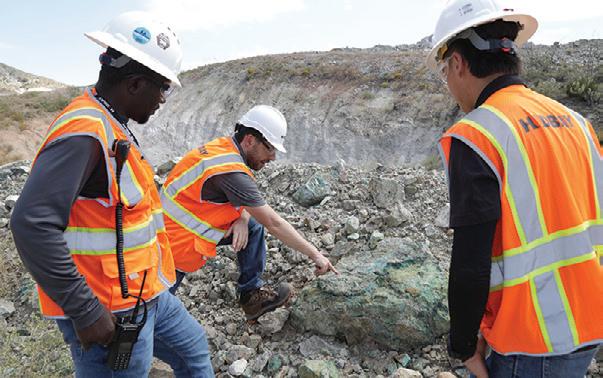
As Hudbay Minerals (TSX: HBM; NYSE: HBM) advances its Copper World open pit project in Arizona, the company is positioning itself as a major U.S. critical minerals supplier for the renewable energy transition.
The US$1.3-billion Copper World project holds seven deposits and is expected to produce 85,000 tonnes of copper per year over a 20-year mine life, with significant potential for mine life expansion in the second phase of operations, according to a prefeasibility study released last year.
Hudbay is working to complete a feasibility study for Copper World next year, with a construction decision to follow in 2026.
The “Made-in-America” copper cathode produced at Copper World would be sold to domestic U.S. customers and would make Copper World the third largest cathode producer in the country.
“As the world moves towards a renewable energy future, copper plays a critical role of the green revolution,” said Hudbay president and CEO Peter Kukielski. “At Hudbay, we’re committed to contributing to a low-carbon future, and our vision for sustainable, responsible mining spans all our operations.”
Kukielski noted he is optimistic about copper prices and demand.
“Hudbay’s expanded copper production, mainly through Copper World, will help meet soaring global demand for copper while simultaneously supporting U.S.
independence and reducing environmental impact,” he said.
What sets Hudbay apart from other companies telling a similar story is its strategic position with a solid operating base of three longlife producing mines in tier-one jurisdictions and a robust project pipeline in the Americas, Kukielski said. “Our portfolio generates the highest increase in net asset value with rising copper prices amongst our peers as a result of our unique copper growth pipeline.”
Copper World, located in the Santa Rita Mountains 45 km southeast of Tucson, is a skarn and porphyry hosted deposit associated with Laramide-age intrusions in the Arizona Copper Belt. The project is well located, with nearby infrastructure that includes major transportation corridors and power lines.
With reserves of 385 million tonnes grading 0.54% copper, it is
the highest-grade copper deposit in the Americas at the prefeasibility or feasibility stage, Kukielski said. Gold and silver byproducts will fortify Copper World’s economics.
Not just about EVs
“The transition to green energy, including wind and solar power, requires substantial amounts of copper,” Kukielski said.
“We’re also seeing increased demand in infrastructure development, manufacturing and from the significant use of copper in artificial intelligence data centres. It’s not just about electric vehicles, but an entire ecosystem of technologies and infrastructure needed for a sustainable future.”
All Hudbay assets are located in tier-one jurisdictions in the Americas with strong rule of law aligned with high sustainability standards, he said.
“Our current design for Copper
World contemplates the production of on-site copper cathode, which will reduce energy consumption and downstream GHG emissions by eliminating overseas shipping, smelting and refining,” Kukielski said, noting Copper World is expected to increase Hudbay’s consolidated copper production by more than 50% from current levels.
The company, which has recently commissioned several pieces of electric equipment at its Copper Mountain mine in B.C. and its Snow Lake operations in Manitoba, is also exploring the potential use of autonomous or electric haul trucks in the operations at Copper World.
Arizona is one of the most favourable jurisdictions for mining in the U.S., with a strong history of mineral extraction, a highly skilled workforce, and a well-established regulatory framework, said Javier Del Rio, Hudbay’s U.S. business unit senior vice-president.
The company expects Copper World will create 400 direct jobs once the mine is operational, and up to 3,000 more indirect jobs in supporting industries.
Del Rio said Hudbay has received positive feedback from local government, unions and many local residents about those benefits.
“That said, we remain committed to ongoing, open dialogue with all stakeholders,” he added.
Hudbay has been completing significant test work on concentrate leach technology over the past several years, a technology used in its Manitoba operations for 25 years on zinc concentrate.
“Given Copper World will produce
copper concentrate, the test work was an important step in our engineering work and has yielded positive results,” Del Rio said.
Copper World is subject to Arizona’s state permitting process, which includes the requirement that mines meet the state’s water quality standards, Del Rio said.
“Our goal for Copper World is to be a net-neutral water user by recharging 100% of the water we pump from the aquifer during production.”
In August, Hudbay received the Aquifer Protection Permit from the Arizona Department of Environmental Quality. The miner is on track to obtain the Air Quality Permit by the end of 2024, the final key state-level permit for the project.
Based on current timelines, Hudbay could sanction the development of Copper World in 2026.
Kukielski noted the company’s taken steps to strengthen its balance sheet and reduce its net debt position.
“Our current financing strategy will allow us to prudently fund the development of Copper World, and will set up the foundation for a long-life, low-cost operation that will generate significant value for our shareholders and the local community,” he said.
The preceding Joint Venture Article is PROMOTED CONTENT sponsored by Hudbay Minerals and produced in co-operation with The Northern Miner. Visit: www.hudbayminerals.com for more information.
BY ROBERT MASON
FINANCING | Investment criteria go beyond traditional environmental focus
he conversation around environmental, social, and governance (ESG) considerations in mining has grown increasingly sophisticated over the last decade, giving rise to an evolving set of requirements that companies must meet in order to secure funding.
In the past, projects were primarily evaluated on their financial viability and resource potential. Now, many investors require a comprehensive ESG strategy before they will even entertain the prospect of funding a venture. This trend is particularly evident among royalty companies and pure equity funds. These entities, which typically fund late-stage exploration and development projects, are now incorporating strict ESG standards into their investment criteria.
And whereas ESG concerns were
once often seen as secondary considerations to be addressed when the major financial and technical hurdles had been cleared, their importance has risen. A growing number of boards will not even contemplate investing in a project that doesn’t meet ESG criteria from the outset, particularly in the high-risk pre-production phase, where accessing capital is often the make-or-break factor
Companies that prioritize ESG compliance early on in their project lifecycle stand a much better chance of securing the capital they need to bring their projects to fruition.
for junior mining companies.
The criteria used by investors to evaluate projects have changed, too. Once heavily focused on environmental stewardship, they are now broader in scope and include social and governance matters that are just as critical as ecological impact.
The growing emphasis on ESG metrics, not just from traditional sustainability advocates but from
COMMODITIES | Analysts forecast US$10,265 per tonne average
BY MINING.COM STAFF
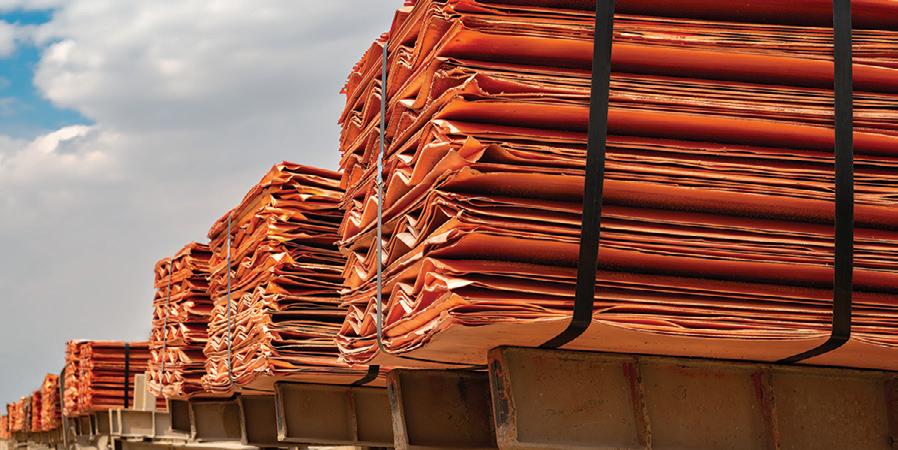
Copper prices are poised to reach an all-time high in the fourth quarter of 2024, with Fastmarkets analysts projecting an average of US$10,265 per tonne (US$4.66 per pound). This bullish forecast is driven by a combination of favorable macroeconomic conditions and tighter market fundamentals.
The red metal traded for US$9,480 per tonne (US$4.30 per lb.) before press time, up 12% from its position at the start of year, but down from around US$9,979 per tonne in May.
Key factors contributing to the surge include further expected rate cuts by the U.S. Federal Reserve and a substantial stimulus package from China.
China’s stimulus, announced in September, will inject 3.9 trillion yuan (US$560 billion) into the economy, equivalent to more than 3% of its GDP.
China saw a modest recovery in its physical market in August 2024, with the premium for grade A copper cathodes in Shanghai ticking upwards. This rebound is largely attributed to improved import conditions following a decline in London Metal Exchange (LME) prices. However, price volatility continues to present challenges, according to Fastmarkets.
In addition to macroeconomic factors, seasonal trends and speculative positioning are expected to boost copper prices in the fourth quarter.
Historically, the period has been the strongest for copper, and smelter production cuts alongside rising demand from China’s physical market are expected to tighten supply.
Long-term price forecast
The copper market’s long-term outlook remains bullish, particularly driven by the rising demand for copper in the global energy transition, according to Fastmarkets.
By 2025, the grade A copper cathode premium in Rotterdam is projected to increase by 25% due to tighter supply and recovering demand in Europe. However, Europe’s overall copper market remains weak, with Germany — the region’s largest consumer — facing sluggish demand from the manufacturing, automotive, and construction sectors.
In the United States, optimism persists for long-term copper demand, fuelled by anticipated supply imbalances and the increasing need for copper in green energy projects.
Fastmarkets also expects copper demand to grow at a compound annual growth rate (CAGR) of 2.6% through 2034.
Within the energy transition sectors, demand is expected to grow at a more robust 10.7% CAGR, driven by electric vehicles (14.3%), solar power (5.6%), and wind power (9.3%). Traditional industries are projected to see more modest growth at 1.4%.
the very entities financing mining projects, represents a sea change in how capital is allocated. What is becoming clear is that companies looking to secure funding must now meet more stringent standards, not only demonstrating responsible environmental practices, but also showing tangible benefits for local communities. It is forcing mining companies, especially the juniors, to place a greater emphasis on ESG compliance as a core part of their business strategy rather than make it an afterthought. Let us take a closer look at the ESG evolution and how industry players can meet new requirements.
Environmental stewardship has long been the cornerstone of ESG in the mining sector. From water management and air quality to biodiversity protection and tailings disposal, investors have demanded that companies demonstrate their ability to minimize ecological disruption.
But today it’s not just about meeting baseline environmental regulations; investors want to see a proactive approach to environmental management. Projects are increasingly required to integrate best-in-class environmental practices, ranging from the use of cleaner technologies to minimize greenhouse gas emissions to adopting strategies that mitigate longterm ecological impacts.
Investors are particularly keen on projects that also push the boundaries of innovation. For example, projects that incorporate renewable energy sources into their operations or use advanced waste management technologies to reduce their environmental footprint are seen more favourably.
A company’s ability to showcase a clear plan for environmental risk management can significantly enhance its attractiveness to investors. Moreover, the rise of green financing instruments, such as green bonds, has further incentivized mining companies to align with environmental objectives to secure more competitive funding.
While environmental issues remain a central concern, investors are increasingly weighing social factors just as heavily. This shift is partly a response to growing awareness of the impact mining projects can have on local communities. Investors now want to see clear benefits for the regions where these projects operate, particularly in developing countries where mining often represents a major economic activity.
Community engagement is no longer an optional part of a mining project’s ESG plan—it is a requirement. Investors expect mining companies to actively involve local communities in decision-making processes and ensure that these communities share in the economic benefits of the project. This may include local hiring practices, training programs, infrastructure development, or initiatives that contribute to long-term economic stability in the region.
Furthermore, social factors now extend beyond community relations. Investors are increasingly
looking at how projects address broader societal concerns such as the protection of human rights, workplace safety, and diversity in hiring. Companies that can demonstrate a strong social governance framework, including fair labour practices and equitable treatment of local stakeholders, are much more likely to attract funding.
Governance, the third pillar of ESG, has also taken on new importance in the investment process. Investors want to see strong corporate governance frameworks that ensure transparency, accountability, and ethical business practices in place, particularly in the mining industry, where the complex nature of global operations can make companies more vulnerable to corruption, legal disputes, and reputational risks.
Today’s investors are scrutinizing how mining companies govern themselves. They are looking at the composition of their boards, executive compensation structures, risk management policies, how companies address issues such as tax transparency, anti-bribery measures, and regulatory compliance. Companies that fail to maintain robust governance practices risk not only losing investor confidence, but also facing legal and financial penalties that can severely undermine their long-term viability.
For exploration and development companies, particularly juniors operating in the high-risk pre-production phase, the message from investors is clear: ESG compliance is no longer optional. There is no onesize-fits-all approach to meeting these standards, as different projects will face different ESG challenges based on their location, scale, and scope. However, what is evident is that companies that prioritize ESG compliance early on in their project lifecycle stand a much better chance of securing the capital they need to bring their projects to fruition, everything else being equal.
Exploration and development companies must take a proactive stance on ESG, integrating it into every aspect of their operations. This means not only adhering to environmental regulations, but also fostering meaningful relationships with local communities and ensuring strong governance practices are in place. Those that fail to do so may find themselves shut out from critical funding opportunities in an increasingly competitive and ESG-focused marketplace.
As the ESG landscape continues to evolve, mining companies will need to stay agile, adapting to new standards and investor expectations. For those that rise to the challenge, the rewards — both in terms of securing capital and maintaining a positive reputation — will be well worth the effort.
TNM
Robert Mason, founder and principal of Mason Law, has been providing strategic legal counsel in the areas of Mining and Corporate Finance for more than 20 years and he assists clients with ESG matters.
Physical Precious Metal Offtake
Metals Financing Including Debt, Equity and Royalties / Streams
Project Finance Advisory
Supply and Risk Management
BY COLIN MCCLELLAND
Rio Tinto (NYSE: RIO; LSE: RIO; ASX: RIO) faces a crucial test in Serbia as leaders of a small town prepare to vote on whether to allow Europe’s largest lithium project, the US$2.4-billion capex Jadar.
The council of Loznica, population around 20,000 about 100 km west of Belgrade, is deciding whether to amend its official plan to allow the 2.5-sq.-km development. The hard-rock lithium project has sparked massive protests while see-sawing between official support and rejection for years.
Slated to start in 2028, it would produce 58,000 tonnes a year of battery-grade lithium carbonate, about 17% of European demand and enough for one million electric vehicles. The mine might last 40 years. Rio, the world’s second largest miner by stock market value, and the government faced mass rallies again in October, swollen by an unlikely combination of causes.
“Rio Tinto is the hottest issue in the country right now,” Vuk Vuksanovic, an associate at the London School of Economics’ Ideas foreign policy think tank, said by email on Oct. 18.
“The anti-lithium protests and environmentalism are the only things that at least temporarily unite left and right in Serbia. The left perceives it as a resistance against the arbitrary and illiberal governance of the incumbent coalition. The right

perceives it as a struggle against Western dominance.”
Court ruling
Loznica council hadn’t set a date for its vote near press time, but local Balkan Insights media said last month on X it was imminent.
In August, Serbia’s Constitutional Court sided with Rio in overturning a 2022 government deci-

On December 18, 2023, Myra Falls Mine Ltd. (“MFM”) sought and obtained an initial order (the “Initial Order”) from the Supreme Court of British Columbia under the Companies’ Creditors Arrangement Act R.S.C. 1985, c. C-36, as amended. Pursuant to the Initial Order FTI Consulting Canada Inc. was appointed monitor (the “Monitor”) of MFM.
Pursuant to an order made on August 2, 2024, (the “Tender Process Order”), MFM, in consultation with the Monitor, is seeking offers to purchase MFM’s right, title and interest in various mining equipment and inventory (the “Assets”) located at the Myra Falls Mine in Strathcona Provincial Park, approximately 90 kilometers southwest of Campbell River, British Columbia.
Interested parties may request access to an electronic data room including photographs of the Assets. Offers must be submitted in the prescribed Form of Offer and are subject to the Additional Terms and Conditions of Sale attached as Schedule “A” to the Tender Process Letter.
Copies of the Invitation for Offers, Form of Offer, Tender Process Letter, Tender Process Order and all related materials can be obtained from the website of the Monitor at: http://cfcanada. fticonsulting.com/myrafalls/equipmentSale.htm
Those interested in obtaining further information should contact the Monitor at:
FTI Consulting Canada Inc.
1450-701 W. Georgia St.
PO Box 10089
Vancouver BC V7Y 1B6
Attention: Tessa Chiricosta
Email: Tessa.Chiricosta@fticonsulting.com
“Even the left, civic, pro-EU segments of Serbian society are getting increasingly cynical that the West and Europe are willing to engage the incumbent government and tolerate its domestic transgressions for the sake of lithium exploitation, weakening the EU and the U.S.’s prestige in the country even further.”
VUK VUKSANOVIC ASSOCIATE, LONDON SCHOOL OF ECONOMICS’ IDEAS THINK TANK
sion to block the project. Pundits note Serbian President Aleksandar Vučić might have cancelled the project’s permit in January 2022 in a ploy to win re-election that April.
But analysts view Vučić as pro-mining. He said in June he would revive the project, then signed a partnership with the European Union (it’s not a member) in July to supply critical minerals. His administration defeated an opposition-led motion on Oct. 10 to ban lithium exploration.
Vučić’s critics say he’s tightened control over media and rewarded supporters with government jobs. Whether he would allow a local council-level vote to derail the Jadar Valley project remains to be seen. But miners have at times benefited from authoritarian governments’ willingness to push through projects.
And Rio is no stranger to dif-
ficult ventures. It’s advancing the Simandou high-grade iron ore deposit in Guinea where it’s helping build a 600-km rail line and port. It’s considered Africa’s largest mining and related infrastructure project. In Arizona, the company is facing opposition to its majority-owned Resolution copper project from the Apache Stronghold coalition of tribes.
Big M&A
Rio has little experience in lithium, with most of its production in iron ore, aluminum and copper. However, last month it announced the US$6.7-billion acquisition of Arcadium Lithium (ASX: LTM; NYSE: ALTM) to become the third-largest lithium miner. It’s also been developing the Rincon lithium brine project in Argentina. It expects first lithium from a pilot plant, and a feasibility study and final investment decision on the wider project this quarter.
At Jadar, Rio plans to apply in December for a permit allowing geotechnical work while prepping an environmental impact assessment that could take two years to complete. In third-quarter production results in October, Rio repeated comments about the project:
“We continue to believe that the Jadar project has the potential to be a world-class lithium-borates asset that could act as a catalyst for the development of other industries and thousands of jobs for current and future generations in Serbia.”
In September, Rio CEO Jakob Stausholm flew to Serbia to participate in public information meetings that were broadcast on television. He was combatting what the company and Serbia’s mining and energy ministry have called disinformation campaigns. Media have reported the spread of online conspiracy theories, such as that the project will trigger sulphuric acid rain, pollute drinking water or even secretly mine uranium. Even so, Stausholm said locals have pertinent concerns about air quality and soil contamination that
he and the company are working to allay. Rio seeks “to encourage an open, fact-based dialogue” in legally mandated public consultations, it said in mid-October.
Environmental opposition
The project, which began after Rio geologists discovered the hard rock deposit in 2004, has fostered strong opposition throughout its history, said Teresa Kramarz, assistant professor at the University of Toronto’s School of the Environment. Some studies after exploration showed elevated boron, arsenic, and lithium in nearby rivers, she said.
“These protests and environmental costs highlight the need for wider conversations about tradeoffs,” Kramarz said by email.
“The idea that there’s only one way to decarbonize, and people will inevitably accept transfers of risk from one population to another or trade one type of risk for another is not going to work — particularly for those who experience disproportionate disadvantages and inequitable outcomes.”
Some analysts cited by The Wall St. Journal in October say the current opposition since the project’s revival is remarkable for its intensity. The U.S. State Department has said the disinformation resembles Russian campaigns, like those to discourage shale-gas drilling to maintain Russian energy dominance in Europe. Others said it’s an attempt to dissuade Belgrade’s drift to the West and potential EU membership.
Cyncial left Vuksanovic disagreed, while still noting the impact on the West.
“The Russians are not behind it, but they take pleasure in the fact that the nationalist element of this protest is getting stronger,” he told The Northern Miner
“Moreover, even the left, civic, pro-EU segments of Serbian society are getting increasingly cynical that the West and Europe are willing to engage the incumbent government and tolerate its domestic transgressions for the sake of lithium exploitation, weakening the EU and the U.S.’s prestige in the country even further.”
Mikhail Korostikov, a visiting fellow at the Belgrade Centre for Security Policy, said vast numbers of Serbians oppose the project because they don’t believe the government is capable of enforcing environmental regulations. Even if they could, the rules aren’t strong enough, Korostikov said in a September report for the centre.
He suggested importing EU environmental structure to oversee the project and trying to create as many jobs linked to the mine as possible in areas of procurement and mineral processing. Defeating the opposition requires making the project’s benefits more significant than any environmental consequences, he said.
“This will require serious courage and strategic vision on the part of all those involved in the political process, but it is essential,” Korostikov said. “There may not be another opportunity like this to integrate into the new economy and gain a bargaining leverage with the EU in the coming decades.” TNM
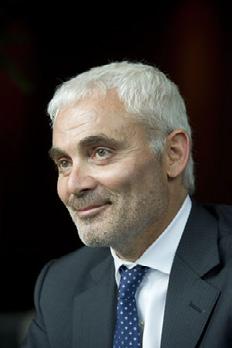
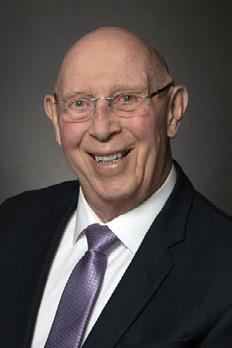

BY HENRY LAZENBY
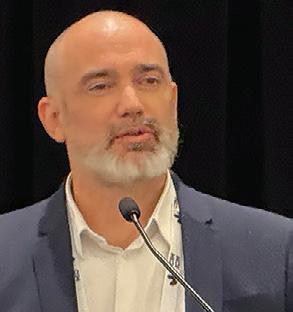
Over the past decade, resource misclassification has saddled the mining industry with a costly problem. It’s one Guy Desharnais, Osisko Gold Royalties’ (TSX: OR; NYSE: OR) vice-president for project evaluation, calls “classification debt.”
Explorers and developers often overstate the certainty of mineral resource classifications based on inadequate data, Desharnais said at an event in Vancouver on Oct. 16. The practice has in some instances led to unexpected analyst downgrades, soaring costs and debt, and the derailment of promising assets.
“That classification debt, unfortunately, needs to get paid,” he told about 430 conference participants from 21 countries at CIM’s first Mineral Resources & Mineral Reserves conference. “The CEO may be walking around with a 3-millionoz. resource estimate, but they haven’t earned that classification with sufficient drilling. When the debt comes due, it’s often through painful reclassifications and revisions.”
Decade of missteps
Several recent projects have demonstrated the high cost of classification debt.
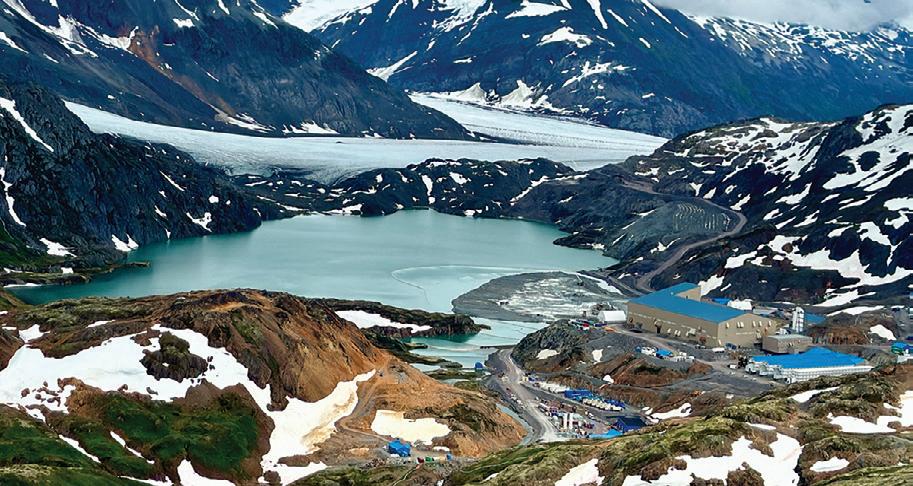
Rubicon Resources’ catastrophic 91% downgrade in resource estimates in 2015 is a glaring example. After it began production at the F2 gold deposit on its Phoenix property in Ontario’s Red Lake district, the company found the deposit to be uneconomic, and shuttered the operation. It had not completed a feasibility study for the high-grade project.
The size of the downgrade blind-
sided investors and stakeholders, and the company had to undergo a restructuring to survive. Evolution Mining (ASX: EVN) bought the company (Rebranded as Battle North Gold and its project as Bateman) in 2021 for $343 million.
In 2018, Pretium Resources promoted the Brucejack gold project in northwestern British Columbia’s Golden Triangle, now owned by Newmont (NYSE: NEM, TSX: NGT, ASX: NEM, PNGX: NEM), as a high-grade gold deposit. Yet, the asset disappointed when gold production grades fell far below expectations. The nuggety nature of the gold, with Brucejack’s steeply dipping quartz veins and erratic grade distribution, made it difficult to consistently meet production targets, forcing the company to push tonnage through the mill to compensate for lower-than-expected grades, Desharnais said.
Resource overestimation at Aurora (2018), Rainy River (2019), and Gold Bar (2020) hurt Guyana
deposit geometry without tighter drilling, leading to costly misjudgments.
tively. They had to downgrade estimates mid-operation. This triggered mine plan revisions, soaring costs, production delays, and financial strain.
Grade versus geometric risk
Desharnais identified two types of risk that contribute to resource misclassification: grade risk and geometric risk.
Grade risk reflects patchiness in ore quality, while geometric risk involves uncertainty about the size and shape of mineralized domains within the deposit.
Conditional simulations help assess grade risk, Desharnais said, but tools to quantify geometric risk are lacking.
Companies often overestimate
“Sparse drilling gives us a simpler picture than reality,” he explained, adding that only closely spaced drilling can reveal the true complexity of orebodies.
Best practices
Mathieu Doucette, a senior geologist at ArcelorMittal (NYSE: MT), discussed the difficulty of classifying resources at Canada’s largest iron mine, Mont-Wright in Quebec, which has been producing continuously since 1974. Outdated data can affect current resource estimates, he said. He illustrated how mixing in fresh drill holes helps manage geological risk as part of a dynamic model essential to avoid misclassification.
“The first thing [a QP] will do is akin to lighting a torch,” he said.





“But everything on the edges is dark, and you can’t really see it. Drill holes are our ability to try and get some information, but sparse data hides the full picture.”
David Machuca-Mory, a principal consultant at SRK Consulting, said fixed models are risky. Deposits can be more unpredictable than they seem. Adaptive methods help ensure estimates reflect reality, reducing the chance of costly surprises.
“Even with dense drilling, some areas remain highly uncertain,” Machuca-Mory said. “Confidence intervals are large, and relying solely on drill spacing doesn’t always guarantee accurate classification.”
Human psychology
Desharnais said that misclassification is not just a technical problem; human psychology plays a significant role.
Anchoring bias makes companies stick with initial estimates despite new data. Authority bias pressures geologists and consultants to confirm favourable results to please management or investors.
“The consulting firm wants the next contract,” Desharnais said. “The CEO has family and friends invested and needs good news. These biases create a system where classification debt builds up across projects, only to be paid through painful revisions later.”
Desharnais argued for more conservative resource models and said benchmarking against operating mines would help set realistic expectations. He suggested that technical reports include histograms that show the distance between drill holes and classified resources, he added.
“It forces the QP or CP to look at what they’ve done and ask: Does this make sense?” he said. “Transparent reporting would help prevent overly aggressive classifications, ensuring companies earn their resource classifications with sufficient data.”
Such measures may slow development, but they could also reduce the prevalence of misclassified resources in the industry. Desharnais urged geologists to scrutinize each block of material above the cut-off grade.
“Over-promising today only delays the inevitable correction tomorrow,” he said. TNM
HONOURS | Globe-trotting geologist reflects on travels, close calls, and tough markets
BY COLIN MCCLELLAND
Ross Beaty flipped the laptop around and pointed its camera to the sea.
“That’s a whale-watching boat,” the veteran mining entrepreneur said from Bowen Island near Vancouver, in a late October interview. “There’s been a whole whack of humpback whales here yesterday and today.”
Beaty sounded excited, and why not? He’s got a history of drawing out big things from the deep.
Since 2017 as chairman, he’s built Equinox Gold (TSX: EQX; NYSE-AM: EQX) into a nearly 1-million-oz. annual producer with a $3.5-billion market value. Its latest mine, Greenstone in Ontario, poured first gold in May and is ramping up to 400,000-oz. a year capacity.
That’s decades after Beaty sold one of his first companies, the similarly named Equinox Resources. Hecla Mining (NYSE: HL) bought it in 1994 for $107 million. He immediately poured that into developing Pan American Silver (TSX: PAAS; NASDAQ: PAAS), which become the world’s second-largest silver producer by stock market
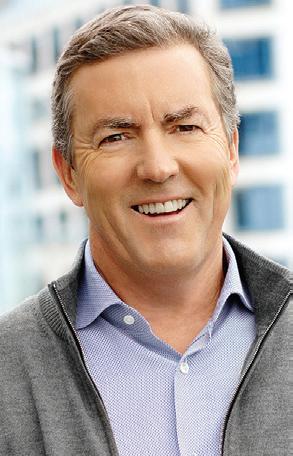
value, at $11.3 billion. He stepped down as chairman in 2021.
Along the way there’s been his Lumina group of companies and asset sales to majors including First Quantum Minerals (TSX: FM) and Franco-Nevada (TSX: FNV; NYSE: FNV). In 2008, he formed geothermal energy company Magma Energy, eventually bought by Innergex Renewable Energy in
BY HENRY LAZENBY
Amparo Cornejo, chief sustainability officer at Teck Resources (TSX: TECK.A, TECK.B; NYSE: TECK), has been named The Northern Miner’s first Operator of the Year. The honour, which will be awarded at the International Metals Symposium in London Dec. 1-2, is co-presented by professional services firm EY. Cornejo, who first joined Teck in 2014 as director of social responsibility and corporate affairs, and was vice-president, South America for a year before being named CSO in September, has helped guide the company’s global strategy for sustainability. And she ensured that Teck’s Quebrada Blanca Phase 2 (QB2) copper operation in Chile –a key project for the miner that produced first concentrate in March last year — was developed using a sustainable mining model.
QB2 will add 300,000 tonnes of copper annually to global markets while conserving water resources in Chile’s Atacama Desert. As QB2 construction ramped up from 2019, Cornejo oversaw building the desalination plant, laying water pipelines, and digging a port during the height of the COVID-19 pandemic. Her proactive agreements with 22 Indigenous groups helped ensure zero social stoppages during the pandemic, keeping construc-
“(Travel made) me realize just how big the world is and how interesting it is, and how many people are out there who have different views and not necessarily my own.”
2018 for US$1.1 billion. And there’s been a persistent shower of awards.
Trophies
They include the Association of Mineral Exploration of British Columbia’s Colin Spence Award in 2007 for excellence in global mineral exploration; the B.C. Mining Association’s Mining Person of 2008, the Prospectors and Develop-
ers Association of Canada’s Viola MacMillan Award in 2010 for leadership in management and financing; The Northern Miner’s Mining Person of 2011, the Canadian Institute of Mining’s Past President Memorial Medal, the Order of Canada in 2017, and he was inducted into the Canadian Mining Hall of Fame in 2018.
Now he’s getting The Northern Miner’s Lifetime Achievement Award, to be presented in London, England on Dec. 2. He’ll be just back from touring Equinox’s seven other mines: Aurizona, Fazenda, Santa Luz and RDM in Brazil, Castle Mountain and Mesquite in California and Los Filos in Mexico. That followed a bicycle trip around Italy in October and a bike relay from B.C. to formally open Greenstone in late August.
Travel for business or pleasure has always been one of Beaty’s loves. It’s also exposed him to various gruelling challenges that derailed some plans.
During a B.Sc. in geology in B.C. he trekked across South America and South Africa. He followed a master’s at the Royal School of Mines in London with backpacking across Africa and the Middle East to Japan.
“You’re young and carefree, took lots of risks, traveled hard, you know, the cheap way,” Beaty said. “I fell in love with Argentina on that trip. And then, when I started working there, my love relationship quickly turned to pure hate.”
It was 1999, Beaty was trying to develop a silver mine and encountered tough unions, high taxes and inflation and a populist government making things more expensive with currency controls. The problems persist today for President Javier Milei, elected last December.
“It just made it obvious to me it was one of the most difficult places of all of Latin America to work,” Beaty said. “The current president, he’s a breath of fresh air in that sense and I hope he succeeds in taming the beast that is these unrealistic expectations that Argentines have. I hope he does. It’s a tough nut to crack.”
The pressure was more overt in Russia after Putin came to power in 1999. Thugs eventually seized the one-third-built Siberian silver mine Beaty had been developing for four years.
“It just didn’t dawn on me that
HONOURS | CSO recognized for leading QB2 sustainability charge
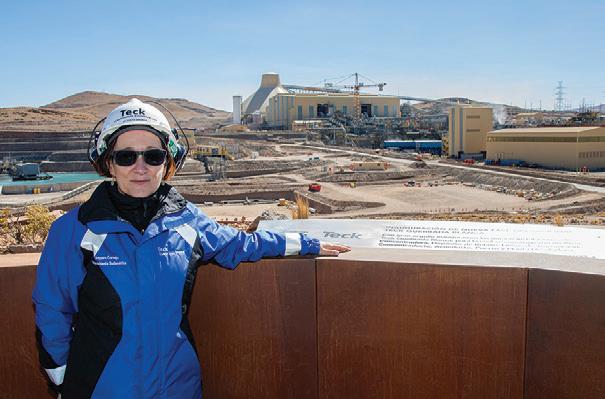
Amparo Cornejo at Teck’s Quebrada Blanca mine in Chile. TECK RESOURCES
tion of the project — last pegged at US$8.6-US$8.8 billion – on track.
Cornejo implemented governance and standards in areas such as community and Indigenous affairs, environment, and permitting and set a high bar for operational excellence not just at QB2, which has an initial mine life of 27 years, but across Teck’s operations. Every Teck decision now has sustainability ingrained, Cornejo says.
“I’m motivated by the power of sustainability to transform mining,” Cornejo told The Northern Miner in an email exchange. “It’s not just about risk management, it’s about legitimizing our industry and ensuring we leave a positive legacy.”
Cornejo, who’s based in Santiago, and earned a political science degree at Pontificia Universidad Católica de Chile, notes that sustainability is a strategic imperative – not just a concept.
“At Teck, we saw early on that sustainable practices aren’t just the right thing to do. They’re critical for long-term business viability.”
Cornejo was this year also named as Executive of the Year in Chile by EY and El Mercurio
Nature positive Cornejo sees sustainability as both a challenge and an opportunity for the industry.
“Today, the biggest risks in mining aren’t technical — they’re envi-
ronmental and social,” she said. “Future leaders need to balance operational goals with a deep commitment to environmental responsibility.”
As Teck pushes towards becoming ‘nature positive’ by 2030, Cornejo remains the face of policy progress. Teck’s ‘nature positive’ vision aims to help ecosystems in which it operates flourish while securing the company’s long-term viability.
“Sustainability is about leaving a legacy,” Cornejo said. “It’s about ensuring that our industry contributes positively to society and the environment.”
Mentor or mentee?
Nearly 30% of QB2’s workforce is female, a figure well above industry standards, thanks to Teck’s emphasis on diversity and inclusion.
Under Cornejo’s guidance, Teck launched the Originarias program with UN Women, which has helped over 3,000 Indigenous women in northern Chile gain professional skills while preserving their cultural heritage.
Throughout Cornejo’s career, she’s worked with many mentors, shaping her approach to leadership and sustainability. Rather than being influenced by one mentor, it’s been a combination of experiences and people that have left a lasting impact.
In her current role as the ambas-
sador for the International Day of Women in Mining, held on June 15, she leads a network trying to make a difference.
“What makes this experience special is that I often find myself questioning whether I’m a mentor or a mentee,” she said. “In truth, I feel like both, and that reflects my belief that leadership is about constant learning.”
Impact beyond Teck
Beyond QB2, Cornejo shapes sustainability initiatives across Latin America.
As Teck’s senior liaison for government and community affairs in the region, she works to align corporate goals with local concerns, a balancing act that she handles through open communication and a commitment to responsible mining.
“Governments and communities recognize Teck as a positive influence in the region,” she says, citing its conservation efforts as a critical element of trust-building. Her leadership extends to her active involvement in industry organizations such as the National Mining Society (SONAMI) and with Chile’s Mining Council. Cornejo believes these platforms are critical for promoting sustainable regional mining practices.
“These organizations will be key drivers in raising the bar for sustainability in mining,” she says. TNM
AWARDS | Boyd, Giustra, MacLean and Sheahan to
be honoured in January 2025
Sean Boyd (b. 1958)
Sean Boyd is an exemplary figure in the mining industry, having dedicated his career to transforming Agnico Eagle Mines from a modest, single-mine operation into one of Canada’s largest public corporations and among the most successful mining companies in the world.
Under Boyd’s stewardship, Agnico Eagle grew its market cap from $400 mil lion to over $55 billion. It also expanded its operations beyond Quebec into Nunavut, Finland, Mexico and Australia, making it a multinational corporation with 11 mines. His commitment to operational excellence, exploration, and socially responsible mining has set Agnico Eagle apart as not just a mining company but a respected partner to the communities it serves.
The Canadian Mining Hall of Fame will welcome four new members at a gala dinner and induction ceremony on Jan. 9, 2025, at the Metro Toronto Convention Centre. The Northern Miner is a proud co-founding member organization of the Canadian Mining Hall of Fame, along with the Canadian Institute of Mining, Metallurgy and Petroleum, The Mining Association of Canada, and The Prospectors and Developers Association of Canada. Details about the event, along with tables and tickets available for purchase, can be found at: www.mininghalloffame.ca
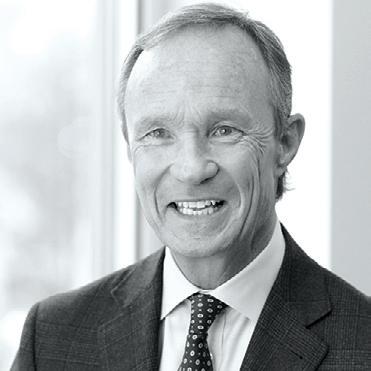
Born in 1958 in Ottawa, Sean earned his bachelor of commerce from the University of Toronto in 1981 and his CPA designation in 1985. His career with Agnico Eagle spans four decades, during which time he held key leadership positions that significantly shaped the company’s trajectory. From becoming chief financial officer in 1990 to serving as CEO from 1998 to 2022, and later moving to the roles of executive chair and board chair, Boyd’s vision and leadership have been instrumental in the company’s growth and success.
His success is rooted in his deep commitment to doing the right thing for employees, communities and business partners. His ability to balance business success with social responsibility has earned the company a reputation as a sought-after partner, and a respected employer where every contribution is valued.
Boyd’s dedication to mining is matched by his commitment to the communities in which Agnico Eagle operates. He ensured that mining could have a positive, lasting impact — from supporting the Inuit in Nunavut to contributing $1 million to the Historic Cobalt Legacy Fund in 2015, preserving Canada’s mining heritage. During the COVID-19 pandemic, Boyd went
“Boyd’s success is rooted in his deep commitment to doing the right thing for employees, communities and business partners. His ability to balance business success with social responsibility has earned Agnico a reputation as a soughtafter partner, and a respected employer.”
even further by paying 75% of salaries for employees who could not work, in addition to launching the Good Deed Brigade that empowers employees to engage in local social projects. A strong advocate for mentorship and leadership development, Boyd established the Dr. Leanne Baker Scholarship and Development Program in 2023, which supports women advancing into leadership positions in the mining industry.
His contributions have been recognized through numerous accolades, including The Northern Miner’s Mining Person of the Year in 2007 and 2017, and Harvard Business Review’s List of Best-Performing CEOs in the World in 2010, 2016 and 2017. Boyd’s legacy is one of vision, hard work, and a deep belief in the power of people.
Donald Roderick MacLean (1937-2024)
Donald Roderick MacLean’s life and career reflect an exceptional blend of engineering expertise, safety advocacy, and innovative entrepreneurship. The sole focus of MacLean’s 60-year career was to enhance the safety of underground mining worldwide. Born in Winnipeg, Man., in 1937, MacLean spent his formative years in small mining towns in Quebec where his father Don ‘Ducky’ MacLean managed local mines. He was immersed in the industry
from a young age.
Armed with a pre-engineering degree from Acadia University and a Mining Engineering degree from McGill University, MacLean gained valuable hands-on experience working underground. In 1958, a visit to mines in Europe and Scandinavia ignited his enduring interest in underground mining safety. During his career underground as a shift boss at International Nickel (Inco), near Sudbury, Ont., he witnessed the move from
Frank Giustra is a visionary entrepreneur, financier and philanthropist whose career has left an indelible mark on the global mining industry. He was instrumental in the formation and growth of Wheaton River Minerals, orchestrating its merger with Goldcorp to create one of the largest mining companies in the world. This is just one achievement that highlights Giustra’s talent for building and developing major mining corporations.
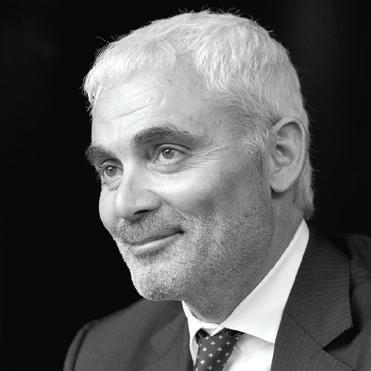
Born in Sudbury, Ont., in 1957 to an immigrant miner father, Giustra started his career as a stockbroker at Merrill Lynch. By age 33 he had become president of Yorkton Securities, and by 36 was chair and CEO.
In 2001, he became chair of Endeavour Financial, a leading natural resource focused investment bank. Giustra demonstrated a long history of leadership and innovation, having founded Endeavour Mining and Silver Wheaton (now Wheaton Precious Metals), a streaming pioneer. The company would go on to form UrAsia Energy in 2005, which was later acquired by SXR Uranium for $3.4 billion.
Giustra served as chair of Leagold Mining from 2016 to 2019, which merged with Equinox Gold to form a significant gold-producing company operating in the Americas. Giustra’s commitment to innovation led to the creation of Nations Royalty, Canada’s largest majority Indigenousowned public company. His other recent ventures include West Red Lake Gold Mines and NexGold Mining.
In 1996, Giustra left the brokerage business and built Lionsgate Entertainment — one of the world’s largest independent film companies. Though no longer involved with Lionsgate, he remains in the movie business and was recently an executive producer of Blade Runner 2049.
Philanthropy is a central part of Giustra’s legacy. In 1997, he established The Giustra Foundation, which supports initiatives focused on women and children, education and refugee resettlement. He is also
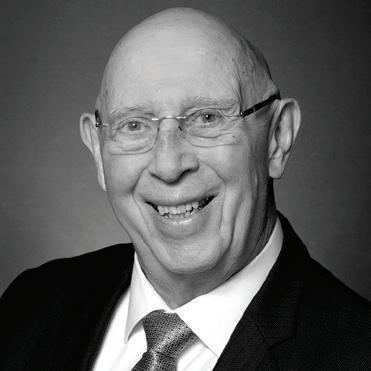
“Giustra was instrumental in the formation and growth of Wheaton River Minerals, orchestrating its merger with Goldcorp to create one of the world’s largest mining companies. This is just one achievement that highlights his talent for building and developing major mining corporations.”
a founding partner of the Global Refugee Sponsorship Initiative, and has been co-chair of the International Crisis Group, an organization dedicated to conflict prevention, since 2020. In 2007, he co-launched Acceso, an organization that supports smallholder farmers and fights poverty through entrepreneurial solutions in Colombia, El Salvador, Haiti and Guatemala. Currently president and CEO of the Fiore Group, Giustra has received several honours and awards for his contributions and achievements, including the Order of Canada and the Order of British Columbia. His career in mining finance and corporate development is characterized by a series of groundbreaking achievements that have shaped the industry and made a positive global impact through both business and philanthropy.
rail-based to mobile equipment mining.
In 1973, after a stint in equipment sales at Ingersoll Rand and managing operations for JMG Engineering, he founded MacLean Engineering. From humble beginnings in an apple orchard barn in Thornbury, Ont., MacLean Engineering has grown into a global leader in mobile equipment for underground mining, with over 1,000 employees across six countries. MacLean and his company have been responsible for
2.0
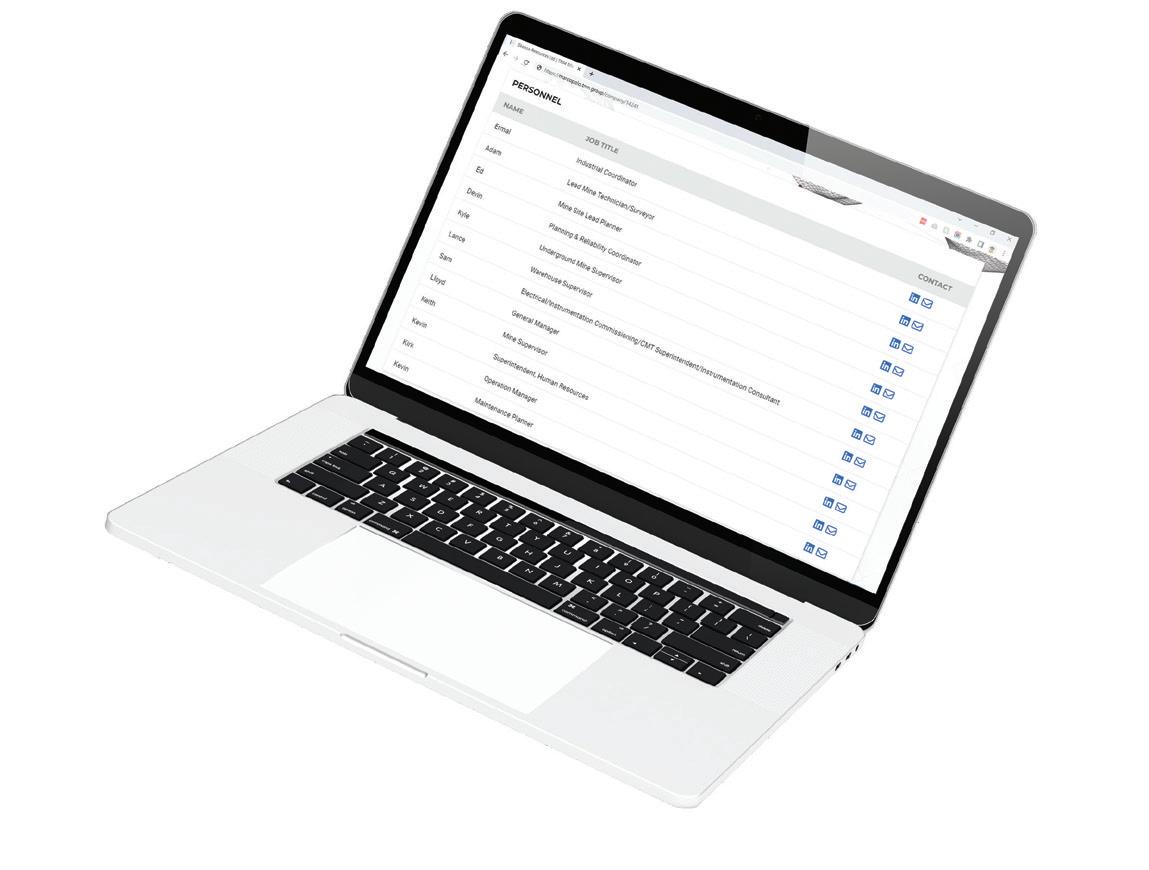
TNM Marco Polo’s integrated chatbot lets you quickly and easily search more than 2,600 global mining companies and 13,900+ properties by just asking a question.
Search more than 13,900 global mining properties for the right contact and connect with them directly through a single click.
Learn more at marcopolo.tnm.global

“MacLean’s life and career reflect an exceptional blend of engineering expertise, safety advocacy, and innovative entrepreneurship. The sole focus of his 60-year career was to enhance the safety of underground mining worldwide.”
the development of many innovative products, including the rubber-tire Long Tom pneumatic drill, various models of the Blockholer, the widely respected MacLean Scissor Bolter, and more recently the 100plus MacLean EV Series of battery electrified production support mining vehicles.
Following MacLean’s passing this year, his legacy of innovation and safety continues under the leadership of his son Kevin and Kevin’s children, who now play key roles in the company. MacLean Engineering celebrated its 50th anniversary in 2023, and his influence remains central to its mission and continues to guide its future.
MacLean’s impact on the industry earned him induction into the International Mining Technology Hall of Fame (2014), the SAMSSA Hall of Fame (2016), and the CIM Mining Safety Leadership Medal (2023). His vision and dedication to safety have left an enduring mark on mining worldwide.
Patricia Ann Sheahan is a pioneering geologist and distinguished industry leader. Her tireless dedication and expertise have left an indelible mark on the minerals industry. For nearly 60 years, Sheahan published her renowned monthly newslet ters through Sheahan Literature Service, which became an exclusive and essential resource to the mining industry. The content started with gold and base metals and expanded to the emerging diamond industry in the 1990s.

Sheahan’s ability to distill complex information into an accessible format made the newsletters an indispensable source of geoscientific data that helped to greatly enhance the research efficiency of her clients around the world.
Sheahan was born in Ottawa in 1938. She received a bachelor of arts in geology from Carleton University in 1959. Her professional career started at Selco Exploration Corp. where she served as office geologist. By 1962, Sheahan went on to excel in a consultancy career offering her services to Selco and other industry players.
In 1978, Sheahan founded Konsult International from which she operated the Sheahan Literature Service. The newsletter she began in 1963 continued until her retirement in 2022. They were a cornerstone resource for over 400 clients globally,
“For nearly 60 years, Sheahan published her renowned monthly newsletters through Sheahan Literature Service, which became an exclusive and essential resource to the mining industry. Her ability to distill complex information into an accessible format made the newsletters an indispensable source of geoscientific data that helped to greatly enhance the research efficiency of her clients around the world.”
including major and junior miners, academics and consultants.
Sheahan’s influence extended beyond her business acumen in her volunteer work with professional associations, such as the Engineers’ Club of Ontario, Ontario Business Club, the Geological Association of Canada, Mineralogical Association of Canada, Society of Economic Geologists, and the Prospectors & Developers Association of Canada. Notably, she served as chair of PDAC’s Diamond Technical Sessions for 30 years, providing a platform for cutting-edge discussions on the diamond industry.
As one of the pioneering women in the minerals industry, Sheahan broke barriers and paved the way for future generations. Her leadership roles, including serving as a director of at least seven junior mining companies and her involvement in various professional organizations, have been a source of inspiration and a model of excellence.
Sheahan’s contributions have garnered her numerous honours, including the PDAC Distinguished Service Award and the Queen Elizabeth II Diamond Jubilee Medal. As an honorary professor at the University of British Columbia, and a Fellow of the Society of Economic Geologists, she has inspired generations of geoscientists.
Sheahan’s influence on the industry is both profound and enduring, serving as an inspiration to those who follow in her footsteps. TNM
> Beaty from P11
I might be shot,” he told The Northern Miner in 2022. “I kept going back to Russia and fighting them and fighting them. I eventually realized enough was enough.”
Coups, wars
Then there was the time he was drilling in Liberia with Equinox Resources in 1985. The African nation fell into civil war, forcing Beaty to flee. Other tough stops on the globe included Bolivia and Haiti. A coup in the Caribbean nation prompted Ottawa to pull out Canadian companies just as Beaty’s project secured a licence.
“After the travel, what it did make me realize is just how big the world is and how interesting it is, and how many people are out there
who have different views and not necessarily my own,” Beaty said on the Bowen Island shore. “I’d say it’s a very good thing for any entrepreneur to do, to travel a lot and to experience different realities.”
Taking his geology services global, plus a law degree that sharpened his communication skills, contributed to a self-realization that raised funding. It eventually led to Equinox Resources’ Rosebud find in Nevada that attracted Hecla.
“I found I was a good salesman,” he said. “I could sell, not just properties that had prospects, I could also sell stock. I could tell good stories and part people with their money and then, luckily, we actually made a couple of discoveries.”
Today’s market In the 1970s, it cost Beaty just
Arkansas faces a battle over the amount of royalty to pay landowners as ExxonMobil, Albemarle and Standard Lithium develop projects in the state.
As press time approached, the Arkansas Oil and Gas Commission was to meet Nov. 4 to hear an application filed by those companies and others to potentially set the royalty rate. They have proposed a 1.82% royalty, while landowners were seeking 12.5%, according to BMO Capital Markets mining analyst Greg Jones.
The landowners’ proposal is “a level that would strain project cash flows based on our modelling,” Jones said in a note on Oct. 24. “We assume a 2.5% royalty in our base case, within the range of royalties applied in other jurisdictions. We anticipate the commission will take a balanced approach to support development of Arkansas’s lithium industry.”
The United States Geological Survey and the Arkansas government said Oct. 21 they’d found enough lithium in brine – 5 million tonnes to 19 million tonnes – in the Smackover Formation within the state to supply global demand. The formation stretches from Texas to Florida, suggesting there could be even more lithium.
Standard and partner Equinor are developing their South West Arkansas project in the same geologic structure. The U.S. Department of Energy said on Sept. 20 it’s considering funding the project with as much as US$225 million, one of the largest ever federal grants for critical minerals.
$30,000 to list a company on the stock market including other fees. He said he’s not sure even his salesmanship could compensate today in a marketplace where juniors struggle to raise money.
“I was a creature of my times,” he said. “That amount is inconceivable today. Even with the value of money going down, there’s so many more rules. The Vancouver Stock exchange supported small companies and there were a lot of, they called them penny dreadfuls. It was contaminated with lots of crappy companies, lots of scams, but guys like me could actually get going. I don’t honestly know how I’d do in a market like today.”
Central to Beaty’s success has been a value investor’s accrual of inexpensive properties when commodity prices are low, reaping
rewards when in turn the prices for silver and copper and now gold have shot up.
“You have to make things happen,” he said. “We had built a stable of assets and a mine in Peru, and just as we were about to go bankrupt in Peru in 2002, we had just done a desperation financing with the help of Bill Gates and some of our directors. And lo and behold, a couple months later, the silver price took off, and we haven’t looked back since.”
Land stewardship
Back on Bowen Island, with whales in the distance and tales of whopping deposits in the past, Beaty reflected. Collecting rocks as a child, being tutored by a neighbourhood geology professor, working outdoors for a lifetime and seeing
It’s part of the Biden administration’s push to source domestically more of the critical minerals needed for the energy transition. But the lithium industry faces significant challenges as the metal’s price has crashed over the past two years.
BY TNM STAFF
Barrick Gold’s negotiations with Mali’s military government appear to have stumbled after both sides issued claims Oct. 24 about a preliminary agreement.
The West African country’s junta, which has been in power since a 2021 coup, said Oct. 8 that Barrick owed it US$500 million in back taxes and dividends from its Loulo-Gounkoto mines. It briefly arrested four Barrick employees for “financial crimes,” then repeated the claims in local media that Barrick had failed to live up to the end-of-September deal.
Toronto-based Barrick paid the government US$85 million in early October as per the negotiation framework and continues to engage with officials to sign a memorandum of agreement, it said in a release.
“Barrick denies the allegations made by the Malian Ministry of Mines and the Finance Ministry that it had not honoured its commitments made under an agreement designed to achieve a more equitable distribution of mineral resource exploitation,” the company said.
Barrick said the memorandum would include an increase in the state’s share of the economic benefits generated by the Loulo-Gounkoto complex. It accounted for roughly 10% or 405,000 oz. of Barrick’s 2023 production. The company holds
the world have all helped form his keen environmental interests.
Now he’s chair of the B.C. Parks Foundation with the goal of adding 10 million hectares to protected areas by 2030.
“I’ve always had this sort of a dual, you could almost say schizophrenic personality of digging up the earth and then trying to protect it,” he said.
“I like the mining industry. We need minerals. It’s part of everyday society. It’s not something that’s going to disappear, and it’s been a very rewarding career for me.
“On the other hand, I’ve always been interested in the environment, in trying to protect species, that has become more important in my life now that I have the capital to support a lot of people who are doing good things.” TNM
80% of the complex, the government has 20%.
Mali issued a new mining code last year allowing for increased royalties and up to 35% state ownership of projects. The leaders have been pressing for more financial concessions from Western gold producers such as B2Gold with its Fekola mine, Allied Gold’s Sadiola and Resolute Mining’s Syama.
BY TNM STAFF
Anglo-Australian BHP earned the industry’s number one spot on Forbes’ list of the world’s best employers this year.
The largest miner by stock market value placed 90 out of 850 companies, the publication reported Oct. 8. Firms needed at least 1,000 employees and to operate in at least two of the six continental regions: Africa, Asia, Europe, Latin America and the Caribbean, North America and Oceania.
Other miners were: Anglo American at 251; Newmont at 474; Vale at 502; Agnico Eagle Mines at 649; Glencore at 675; AngloGold Ashanti at 789; and Teck Resources at 797. Poland’s KGHM was 823.
The top five companies on the eighth annual list were Microsoft, Alphabet, Samsung Electronics, Adobe and BMW Group.
Forbes teamed up with market research firm Statista and surveyed more than 300,000 employees working for multinationals in more than 50 countries. Respondents were asked whether they would recommend their company to family or friends, and to rate it based on such criteria as salary, talent development and remote work options.
MINING.COM STAFF

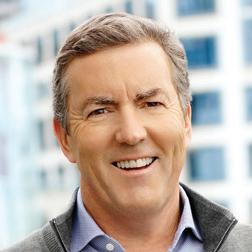

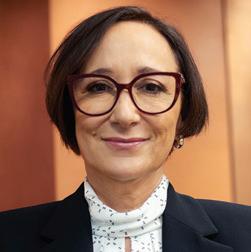
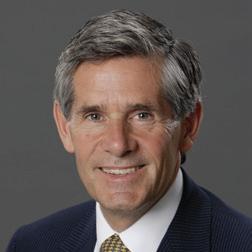
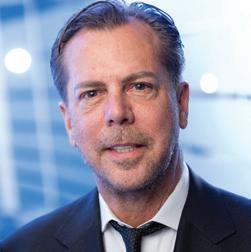
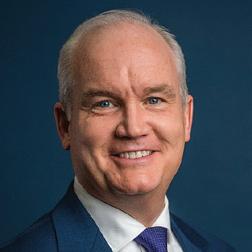
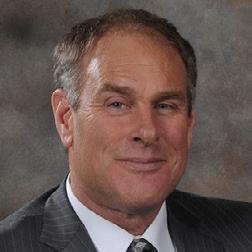

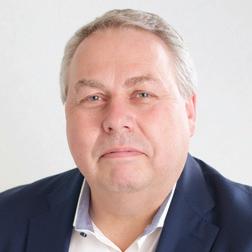
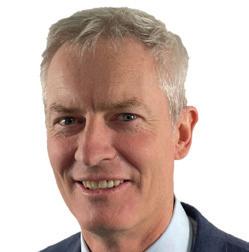

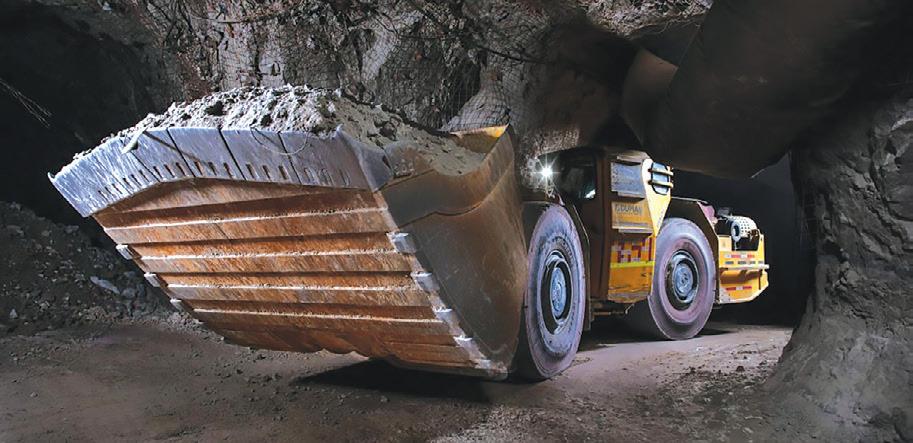
BY CECILIA JAMASMIE, MINING.COM
Coeur Mining (NYSE: CDE) has reached an agreement to acquire Canadian precious metals producer SilverCrest Metals (TSX: SIL; NYSE: SILV) in an all-share deal valued at US$1.7 billion.
The addition of SilverCrest’s Las Chispas mine in Mexico, one of the world’s lowest-cost, highest-grade silver operations, is expected to make Coeur a leading global silver miner with 21 million oz. of the metal and 432,000 oz. of gold a year, Coeur said on Oct. 4.
The merged company will own five mines in North America, with three of them considered top silver producers — Rochester, in Nevada; Palmarejo in Mexico’s Chihuahua; and Las Chispas in Sonora state.
Las Chispas, which began production in late 2022, has shown strong operational performance, Coeur’s president and CEO, Mitchell J. Krebs, told investors on a conference call on Oct. 4. The executive said that in 2023, the mine’s first full-year of operations, it produced
over 10.2 million silver-equivalent oz. at a cash cost of US$7.73 per ounce.
Shares mixed SilverCrest shares rose nearly 10% on Oct. 4 to $10.81 apiece in Toronto, and set a new 52-week high of $16.46 before press time. It has a market cap of $2.3 billion and the stock traded as low as $6.59 in the past year.
Coeur’s shares have soared 122% year-to-date as gold prices have risen to record highs and traded for US$7.10 each at press time. The company has a market capitalization of US$2.8 billion. Their 52-week range has been US$2.00 to US$7.72.
Coeur’s proposed acquisition price of $11.34 per share represents an 18% premium over the 20-day volume-weighted average prices of both companies as of closing on Oct. 3. It also implies a 22% premium to SilverCrest’s closing price on the NYSE American that same day.
After the merger, Coeur shareholders will own 63% of the combined company, while SilverCrest shareholders will control 37%.
Both companies’ boards have unanimously endorsed the deal, urging their shareholders to vote in favour. The agreement includes break fees of up to US$100 million if the transaction doesn’t proceed.
The transaction also still requires approval from regulatory authorities, including Mexican antitrust approval. The companies plan to close the deal in early 2025.
Silver prices have climbed 41% this year, hitting a 12-year high before press time of US$33.70 per ounce. The white metal, essential in industries such as solar panels and electronics, has become one of the year’s best-performing major commodities and also sparked a race among miners to secure reserves.
In September, First Majestic Silver (TSX: AG) agreed to acquire Mexico-focused Gatos Silver (NYSE: GATO) for US$970 million, marking a major consolidation in the silver mining sector.
The silver market experienced a 15% supply deficit last year and between 2020 and 2024, is expected to face a cumulative deficit of 1.1 billion ounces. TNM
GOLD | Production to start in 2027
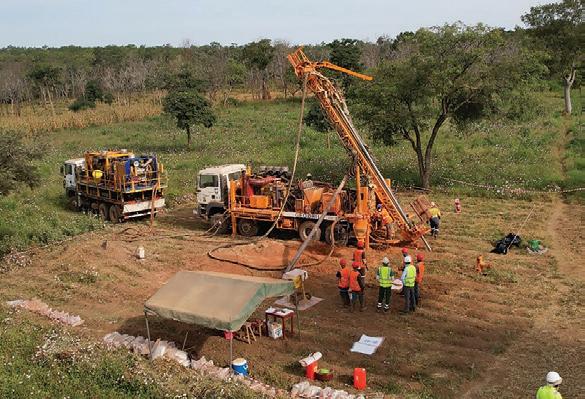
BY CECILIA JAMASMIE, MINING.COM
Montage Gold (TSXV: MAU; US-OTC: MAUTF) has secured a financing package worth US$825 million to fund the construction of its flagship Koné project in Côte d’Ivoire. The funding is comprised of streaming agreements and loans from Wheaton Precious Metals (TSX: WPN; NYSE: WPN; LSE: WPN) and strategic shareholder Zijin Mining.
“With the financing milestone now achieved, we look forward to soon launching the construction of our Koné project, which is set to become West Africa’s next sizable, long-life, low production-cost gold mine, and poised to unlock value for all stakeholders,” Montage CEO Martino De Ciccio said in a release on Oct. 23.
Wheaton will pay US$625 million in cash to acquire 19.5% of payable gold production from the Koné mine, up to 400,000 ounces. Wheaton will then reduce the amount of gold to be purchased to 10.8% until another 130,000
oz. has been delivered, then 5.4% for the mine’s life. The sum will be paid in four equal instalments during construction.
Additionally, the company is providing Montage a US$75-million secured debt facility for project costs.
Chinese miner Zijin is providing Montage with US$125 million in funding, made up of a US$50-million loan facility with a nine-year tenure and a US$75-million fully redeemable subordinated gold stream.
The financing increases Montage’s available liquidity to around US$968 million, including US$143 million in cash reserves.
The Koné mine is expected to produce 300,000 oz. of gold annually in the first eight years, with production starting in early 2027. The estimated mine life of Koné has been pegged at 16 years. Montage shares gained 11.7% on the news on Oct. 24, reaching $2.51 apiece before press time for a market capitalization of $865.2 million. The stock has traded in a 52-week range of 55¢ to $2.58. TNM
NEVADA | US$625M JV replaces US$330M funding from automaker
BY BLAIR MCBRIDE
Shares in Lithium Americas (TSX: LAC; NYSE: LAC) jumped by 20.2% on Oct. 16 after it announced a new, US$625-million joint-venture agreement with General Motors for its Thacker Pass project in northern Nevada.
Under the deal that the developer calls the largest ever by a U.S. original equipment manufacturer in a lithium project, GM is to acquire a 38% stake in Thacker Pass for US$625 million in cash and letters of credit. The JV deal replaces the US$330 million in second tranche equity investment from GM announced in January 2023. At the time, GM made an initial US$320-million investment for a 9.99% stake in Lithium Americas. The deal also includes US$430 million of direct funding to the JV to build the project’s first stage, expected to cost US$2.9 billion.
“Our relationship with GM has been significantly strengthened with this joint venture as we continue to pursue a mutual goal to develop a robust domestic lithium supply chain by advancing the development of Thacker Pass,” Jonathan Evans, Lithium Americas president and CEO said in a release. “We will be working closely with GM to advance towards the final investment decision, which we are targeting by the end of the year.”
In March, Lithium Americas landed a conditional commitment from the U.S. Department of Energy (DOE) for a US$2.3-billion loan that would fund the majority of the Thacker Pass build.
Low lithium prices have recently delayed many other lithium projects. Battery-grade lithium hydroxide prices dropped to US$9,475 just before press time, from US$22,275 a year ago and around US$85,000 per tonne in late 2022, according to The Wall St. Journal
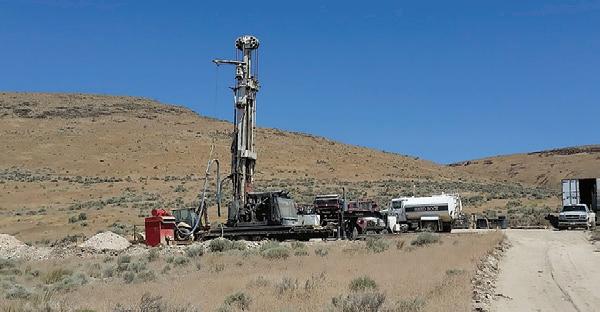
Shares in Lithium Americas traded for $5.09 apiece before press time, valuing the company at $1.1 billion. Its shares traded in a 52-week range of $2.87 to $10.75. Manager with 62% stake For its 62% ownership of Thacker Pass, Lithium Americas will contribute US$387 million to the JV and act as project manager. Of the total,
US$211 million is to be paid when the JV closes and the rest when a final investment decision is made.
GM is to extend its existing offtake agreement with Lithium Americas for up to 100% of production volumes from Thacker Pass’s first stage to 20 years to support the expected maturity of the DOE loan. After the JV deal closes, GM will also make another 20-year
offtake deal for up to 38% of stage two production volumes, retaining its right of first offer on the remaining stage two volumes.
Before Lithium Americas takes its first draw of the US$2.3-billion loan, expected in the middle of next year, it must fund about US$195 million towards reserve accounts linked to the loan, such as for construction contingency, ramp up and sustaining capital.
Design 40% done
Meanwhile, at Thacker Pass, located in Humboldt County, the company has completed about 40% of the project’s engineering design, and site preparation for major earthworks is complete. Excavation of the process plant area is about half-finished and preparations for concrete placement are underway. The mine could potentially produce enough lithium to power 1 million EVs annually, the company says. TNM
M&A | New Canadian gold developer would hold 6M oz in resources
BY MINING.COM STAFF
NexGold Mining (TSXV: NEXG; US-OTC: NXGCF) and Signal Gold (TSX: SGNL; US-OTC: SGNLF) have agreed to merge and create a new Canadian gold developer with a combined resource base of 6 million ounces.
The all-stock transaction would bring two near-term development projects together and eliminate the single-asset risks incurred by each, the companies said in a release on Oct. 10. NexGold, which was known as Treasury Metals until July, holds the Goliath project in Ontario. Signal has the Goldboro project in Nova Scotia. Both companies have environmental approvals in place, and are anticipating final permits in 2025.
Combined, the projects cover a property package of more than 600 sq. km, with an established gold resource of 4.7 million measured and indicated oz. and 1.3 million inferred ounces.
Goliath consists of an openpit and underground gold mine, along with associated milling infrastructure including a tailings storage facility, located 20 km east of
Dryden, Ont. A February 2023 prefeasibility study outlined a nineyear mine life producing an average of 109,000 oz. a year. Its after-tax net present value (NPV) is estimated at $625 million (discounted at 5%), with a 41.1% internal rate of return (IRR).
The Goldboro project is a proposed open pit mine with a life of about 11 years and projected annual production of 100,000 oz., according to a 2022 feasibility study. The project has an after-tax NPV (at a 5% discount rate) of $328 million and an IRR of 25.5%, for a payback period of 2.9 years.
200,000+ oz
NexGold president Morgan Lekstrom said the deal “will be a transformative transaction” that combines two near-term buildable projects in Canada on a potential path to a production profile of over 200,000 oz. per year.
“This reflects the execution of NexGold’s strategy of targeting high-value gold projects with potential production of over 100,000 ounces and a capital expenditure of under $400 million,” he said in a release.
Signal CEO Kevin Bullock added that “the transaction brings together
two cornerstone Canadian gold projects and presents an exciting opportunity to create a leading gold development company in Canada during a time of increasing gold prices.”
Bullock will assume the role of CEO of the combined company, building on his previous experience leading Volta Resources, which was sold to B2Gold (TSX: BTO; NYSE-AM: BTG) in 2013, as well as Kirkland Lake Gold and Iamgold (TSX: IMG; NYSE: IAG).
The deal will see NexGold issue 0.1244 of a common share to acquire each of Signal’s shares. Upon completion, existing NexGold and Signal shareholders will own roughly 71% and 29% of the combined company, respectively.
To complete the transaction, the companies have arranged for financings totalling $5 million and $6.5 million, respectively. The management teams of NexGold and Frank Giustra, a significant shareholder, are expected to participate in the financing.
Signal Gold shares rose 5.9% to 9¢ following the merger announcement, settling at 8¢ before press time for a market capitalization of $21.6 million. NexGold traded flat at 77¢ with a market capitalization of $58.6 million. TNM
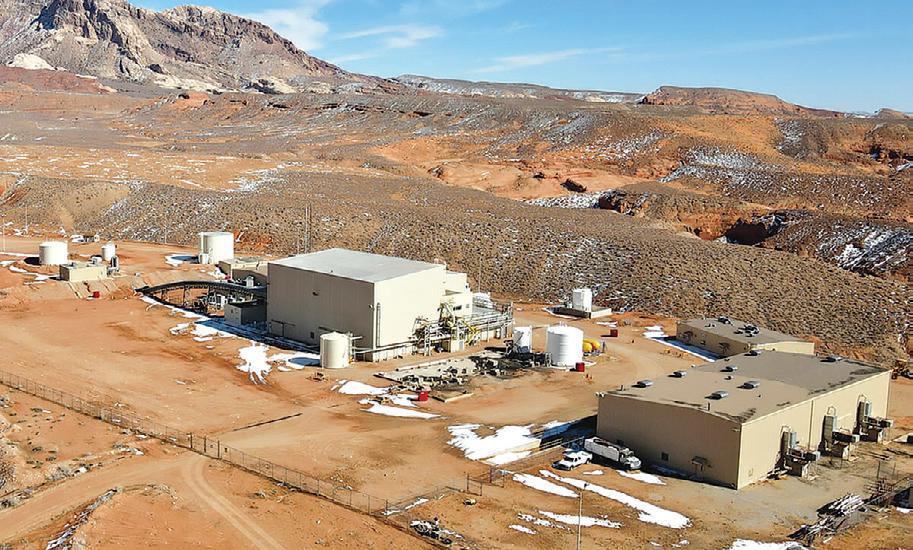
BY COLIN MCCLELLAND
Canadian uranium developer IsoEnergy (TSXV: ISO; US-OTC: ISENF) is buying Anfield Energy (TSXV: AEC; USOTC: ANLDF) in an all-stock deal valued at $126.8 million to acquire its Shootaring Canyon conventional mill in Utah, one of only three in the United States.
The deal values Anfield shares at 10.3¢ apiece, a 32% premium to Anfield’s closing price on Sept. 30, IsoEnergy said in a release the next day. The deal gives IsoEnergy 84% and Anfield 16% of the company.
IsoEnergy also gains several conventional uranium and vanadium projects in Utah, Colorado, New
Mexico and Arizona. Shootaring is rare in the U.S. for being a licensed, permitted and built conventional uranium mill.
It will help the company “substantially” expand output potential as it advances the past-producing and permitted Tony M and Daneros projects near Shootaring in Utah.
The company aims to become one of the country’s largest uranium producers as nuclear power gains traction to fight climate change.
“Today’s acquisition of Anfield strengthens both our resource base and near-term production potential,” CEO Philip Williams said.
“The combined uranium mineral endowment will rank as one of the largest in the U.S., supported by a 100% owned processing facil-
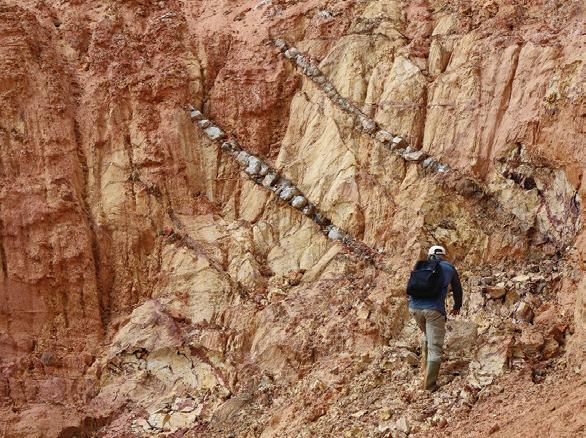
BY BLAIR MCBRIDE
Founders Metals (TSXV: FDR; US-OTC: FDMIF) has drawn a $12.1 million investment from B2Gold (TSX: BTO; NYSE: BTG), bringing to $32.1 million the total raised in the Surinamefocused gold explorer in early October. Founders shares gained 4.7% on the news.
Under the investment, B2Gold is to buy 4.4 million shares at $2.75 each, giving the company a 9.9% stake in Founders as well as rights on technical assistance for its Antino project, the companies announced on Oct. 11.
“We look forward to drawing on B2Gold’s experience in exploring for, and developing, world-class mining assets in similar geological environments,” Colin Padget, Founders’ president and CEO, said
in a release. “This broader financing package leaves Founders well positioned to ramp up exploration at Antino, fully funding our planned 2025 exploration budget and the near-term addition of a fourth diamond drill.”
The investments will be used to fund the Antino project in southeastern Suriname, where this year Founders has targeted 30,000 metres of drilling that have confirmed the strength of various targets. Founders expects to release an initial resource next year.
Clive Johnson, B2Gold CEO and president, said the deal is in line with the company’s strategy of investing early in discoveries with tier one potential. B2Gold is developing the Goose project in Nunavut, and has mines in Mali, the Philippines and Namibia.
ity, multiple fully permitted mines ready for rapid restart, and a strong pipeline of longer-term development projects.”
Shares move
Shares in IsoEnergy fell nearly 6% on Oct. 1 in Toronto to $3.14 apiece, before recovering to $3.65 closer to press time, valuing the company at $652.4 million. They’ve traded in a 52-week range of $2.37 to $4.40. Anfield stock rose about 30% to 11¢ for a market capitalization of $112.2 million. Their range has been 5.5¢ to 14¢.
The company has applied to increase Shootaring’s throughput to 1,000 tonnes a day from 750
BY HENRY LAZENBY
Greenheart Gold (TSXV: GHRT) shares gained 10.5% in mid-October after it said it had closed a $36-million, upsized private placement to fund exploration at its projects in the Guiana Shield.
The company was spun out from G Mining Ventures’ (TSX: GMIN; US-OTC: GMINF) $875-million acquisition of Reunion Gold in July for its Oko West development project. It started trading on Sept. 5. Greenheart is focused on regional assets outside of Oko West in the Guiana Shield. These include the Abuya and Majorodam projects in Guyana and Suriname, respectively.
The 50¢ per share financing closed on Oct. 18 and was underwritten by Canaccord Genuity and Paradigm Capital. It was originally announced at $25 million on Sept. 25.
Greenheart shares rose to a high of 95¢ after the financing closed, having touched a low of 45¢ since it started trading. It has a market
capitalization of $70 million.
CEO Justin van der Toorn said in a September release that the company had signed a non-binding deal to start due diligence to buy G Mining’s 95-sq.-km IGAB gold project in Suriname. IGAB is 30 km south of Newmont’s (NYSE: NEM, TSX: NGT, ASX: NEM, PNGX: NEM) Merian mine, which hosts nearly 4 million oz. gold in reserves and another 1.5 million oz. in resources.
The early-stage prospect has already produced high-grade gold from artisanal mining, with rocks yielding bonanza 94.2 grams gold per tonne samples.
The goal is to get and maintain a pipeline of up to five or six early-stage exploration projects in Guyana and Suriname “in the near future,” Van der Toorn said in a Sept. 25 release.
Grassroots prospects Greenheart will also conduct work at its Abuya project in Guyana. Located near Zijin’s Aurora gold mine, Abuya has shown early promise. Initial mapping is complete, and soil sample results are expected soon. TNM
BC | Costs up 7% to $790M
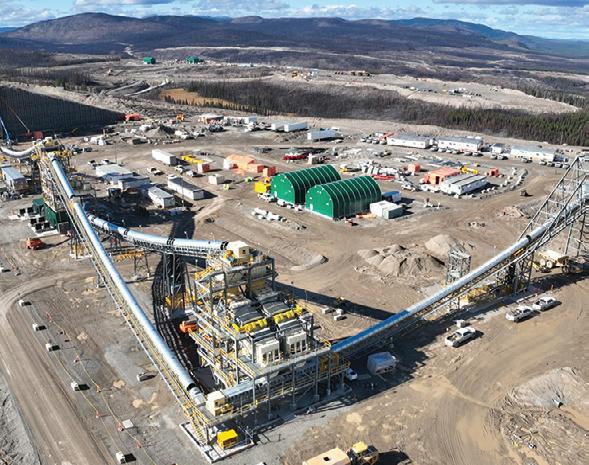
BY MINING.COM STAFF
Artemis Gold (TSXV: ARTG) says its Blackwater gold mine in central British Columbia is on track for its first pour late this year, despite construction delays.
The mine was 95% complete, as of an Oct. 10 update from the company. Artemis also finished the 135-km, 225-kV transmission line connecting Blackwater to B.C.’s power grid.
The company said it expects the tailings storage facility to be completed by the end of October, in advance of the plant’s commissioning. The initial mining fleet has also been commissioned, and pre-stripping of the mine, as well as the construction of haul roads, are advanced, with first ore expected in November.
However, Artemis also noted that initial spending until first gold pour has risen by about 7% — from $730-$750 million to $780-$800 million — due to construction delays.
Blackwater experienced two wildfire events during the past 18 months that halted construction at the site for about six weeks, Artemis said. Costs also rose as management invested to accelerate the construction schedule to
offset the delays.
The company has entered an agreement with National Bank of Canada for standby funding of up to $65 million. This funding is in addition to the company’s existing loan facility of $360 million, as well as a $40-million cost overrun facility it drew down in early October.
“The additional standby funding provided by one of the company’s existing relationship lenders provides us the financial flexibility to absorb the financial impact of these events, while managing project schedule targeting first gold pour in late Q4 2024 and ramp-up of operations beyond,” Artemis CEO Steven Dean said.
Artemis shares traded at $14.73 apiece before press time in Toronto, near the top of its 52-week range of $4.98 to $15.50. It has a market capitalization of $3.3 billion.
Blackwater, located 160 km southwest of Prince George, is expected to become the province’s first new gold mine since Brucejack started producing in 2017.
It’s slated to produce 500,000 oz. of gold equivalent in each of its first 10 years, generating annual free cash flow of about $500 million at an all-in sustaining cost of US$712 per ounce. Expansion plans are also underway to extend the life of mine to 23 years. TNM
ONTARIO | PFS under way
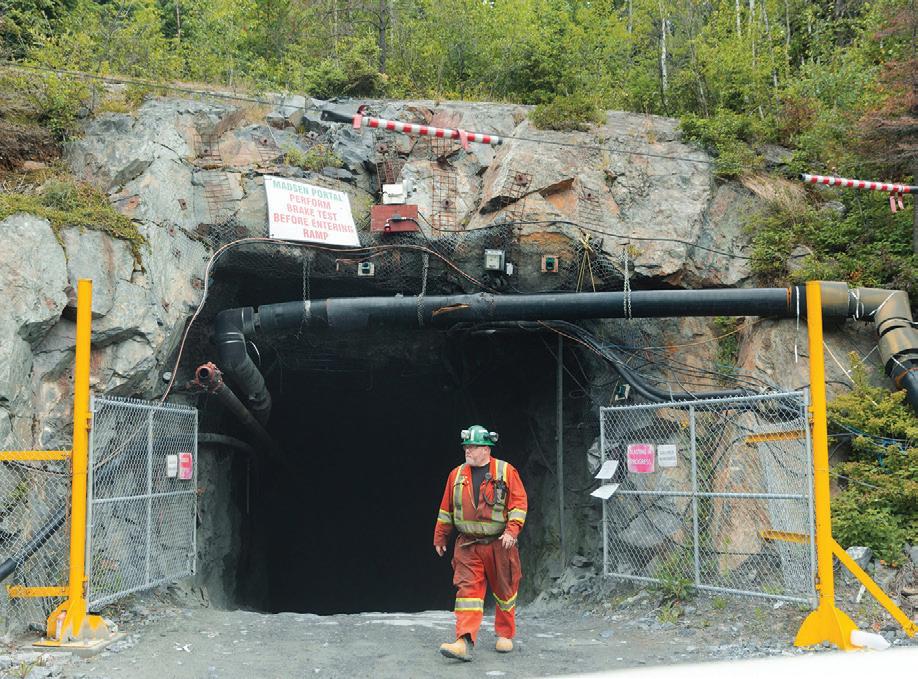
BY MINING.COM STAFF
West Red Lake Gold Mines (TSXV: WRLG) raised about $76.7 million in late October to help fund the proposed restart of its Madsen mine in Ontario, which it says remains on track for production in 2025.
With this funding, along with existing cash on hand, West Red Lake said it is well positioned to complete its prefeasibility study for the Madsen mine, as well as other tests and capital programs underway at the site.
“This finance package provides the capital anticipated to restart the Madsen mine, according to our detailed internal mine plan,” CEO Shane Williams said in a release, adding that the company will work closely with its partners to develop a finance package that addresses the balance of the capital required for Madsen.
The funding comprises a $48-mil-
“This finance package provides the capital anticipated to restart the Madsen mine, according to our detailed internal mine plan.”
SHANE WILLIAMS, CEO, WEST RED LAKE GOLD MINES
lion loan facility with Nebari Natural Resources Credit Fund II and a $28.7-million, bought-deal financing facilitated by Raymond James for the sale of over 41.6 million units priced at 69¢ each. The bought deal was increased to just over $28.7 million from $20 million originally. West Red Lake shares traded for 68¢ apiece before press time in Toronto, for a market capitalization
of $184.8 million. Its shares traded in a 52-week range of 47¢ to $1.04.
The Madsen mine was briefly restarted in 2021 by then owner Pure Gold, but was shut down a year later due to high costs and inconsistent production. Before that, the historic mine produced 2.5 million oz. of gold at an average grade of 9.7 grams per tonne between 1938 and 1999.
West Red Lake took over the project in June 2023 and has since completed 40,000 metres of definition drilling alongside significant mine engineering and multiple capital projects and studies to support a prefeasibility study, which is targeted for release within a month. Following the study and closing of the financing package, the company intends to make a formal restart decision, followed by mill restart and commissioning. It recently began test mining that will run into the first quarter of next year, when the mine will transition to production mining. TNM
GOLD | BC mine halted in September
BY MINING.COM STAFF
Ascot Resources (TSX: AOT; US-OTC: AOTVF) plans to raise at least $40 million to get its Premier gold project in British Columbia’s Golden Triangle back on track after shutting it down just months into its first gold pour, it said on Oct. 22. Shares gained 30.9%.
The company achieved first pour at Premier in April and had initially expected to declare commercial production at the historical mine during this year’s third quarter.
However, it couldn’t feed the mill and missed production tar-
gets. As a result, it put the project on care and maintenance until further development is completed. That’s estimated to take three to six months.
The financing will consist of a new US$11.3 million loan with the company’s main creditors and a minimum $25 million private placement of shares priced at 16¢ that can rise to $42 million.
The funding package will enable the company to restart production by next June and advance the Premier Northern Lights (PNL) and Big Missouri (BM) deposits, CEO Derek White said in a release. The project lies 25 km from Stewart, near the south end of the Alaskan
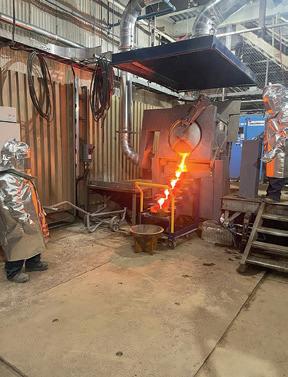
panhandle.
“While the timeframe and funding required to undertake this work has been challenging for the company, recent actions were required to ensure sustainable feed for profitable mill operations,” White said.
Stock surges
Shares in Ascot gained further to 27¢ apiece before press time, valuing the company at $187.9 million. In September, the stock plummeted to its lowest level in over five years, at 14¢ apiece, after Ascot said PNL and BM hadn’t been advancing on schedule.
At the time, the company had $15 million in cash, which was
enough to ensure the suspension of operations for the winter season. But additional funding was required to complete the necessary mine development work and restart operations.
The project holds total probable reserves of 3.6 million tonnes grading 5.45 grams gold per tonne and 19.1 grams silver, containing 637,000 oz. of gold and 2.2 million oz. of silver.
The Premier mine was once the largest gold mine in North America until fire destroyed its surface buildings. Before its closure in 1952, it had produced over 2 million oz. of gold and 45 million oz. of silver. TNM
BY MINING.COM STAFF
GoviEx Uranium (TSXV: GXU; US-OTC: GVXXF) reported positive metallurgical results from test work at its Muntanga project in Zambia. A feasibility study on the project is due out before year-end.
The Muntanga project has become GoviEx’s main focus after mining permits for its Madaouela project in Niger were revoked in July.
The results showed a significant increase in uranium recovery rates compared to those outlined in the 2023 technical report. In particular, the main deposits, Muntanga and Dibbwi East, which account for 80% of the measured and indicated resources, achieved recoveries of 90% or higher.
“With high uranium recoveries of 90% or better for the Muntanga and Dibbwi East deposits and overall low acid consumption, the data provides further confidence in the project’s processing design, helping to refine key assumptions and parameters for the upcoming feasibility study,” GoviEx CEO Daniel Major said in a release.
GoviEx shares traded for 8¢ before press time in Toronto, valuing the company at about $69 million. Its shares have traded in a 52-week range of 4¢ to 22¢, after it reached a new low in August following the company’s setback in Niger.
Confidence for feasibility
The new results at Muntanga help demonstrate the efficiency of its heap leach process and validate the work completed by the previous project owners, GoviEx said. The tests were carried out at Mintek,
South Africa, involving six-metre sulphuric acid column leaching for each of the six mineralization zones across the Muntanga project, based on new material from the 2023 diamond drilling program. The test work was more extensive than previous work, which was predominantly limited to two-metre leach columns.
The Dibbwi East deposit was discovered after the previous column test work was completed in 2013, GoviEx noted. Drilling conducted between 2021 and 2023 increased the total resource of Dibbwi East by 60% in contained tonnes. That expanded the deposit and extended it into primary mineralization, in addition to the secondary (oxidized) mineralization that had been the focus of earlier test work.
The Muntanga property encompasses three mining licences plus three exploration licences, with a total combined area of 1,226 sq. km.
Focus on Zambia GoviEx acquired two of the mining licences comprising the Muntanga, Dibbwi and Dibbwi East deposits from Denison Mines (TSX: DML; NYSE: DNN) in 2016, and a year later secured the mining licence covering the Njame (north and south) and Gwabi deposits from African Energy Resources.
Across the five deposits, located over a 65-km strike length, there are an estimated 42.6 million measured and indicated tonnes grading 359 parts per million (ppm) uranium oxide (U3O8), containing 33.7 million lb. of U3O8, and 15 million inferred tonnes at 330 ppm U3O8, containing 10.9 million lb. of U3O8 TNM
BY COLIN MCCLELLAND
Collective Mining (TSX: CNL; NYSE: CNL) says it’s discovered a new high-grade gold zone about 1 km deep at the Guayabales project in Colombia that can increase its resource.
The find, called the Ramp zone, lies in the Apollo system of the project in the country’s central Caldas department. Drill hole APC99-D5 is the first intercept into a major new high-grade gold system at depth that can be classified as a partially reduced intrusion related gold-silver-copper system, the company said on Oct. 23.
The hole cut 57.7 metres grading 7.83 grams gold per tonne, 33 grams silver, 0.09% copper and 0.12% zinc from 811.3 metres depth, Collective said in a release. The hole included 18.9 metres at 19.39 grams gold, 83 grams silver, 0.21% copper and 0.16% zinc.
“Right at the end of the hole we entered a fantastic zone,” David Reading, special advisor to Collective, said in a new video. “It’s clearly a new high-grade discovery.”
Higher up in the same hole, the assay showed 517.4 metres grading 1.84 grams gold, 10 grams silver, 0.03% copper an 0.06% zinc from 351.6 metres depth, the company said. That included 31.3 metres at 3.24 grams gold, 16 grams silver, 0.05% copper and 0.04% zinc.
The closest hole to the highgrade intercept is about 480 metres away, suggesting there is room for lateral expansion, BMO Capital Markets mining analyst Andrew Mikitchook wrote in a note to clients this morning.
“We expect the market to react positively to this intercept as we look forward to more deep drill holes at Apollo to confirm the scale and grade of this new discovery,” he said.
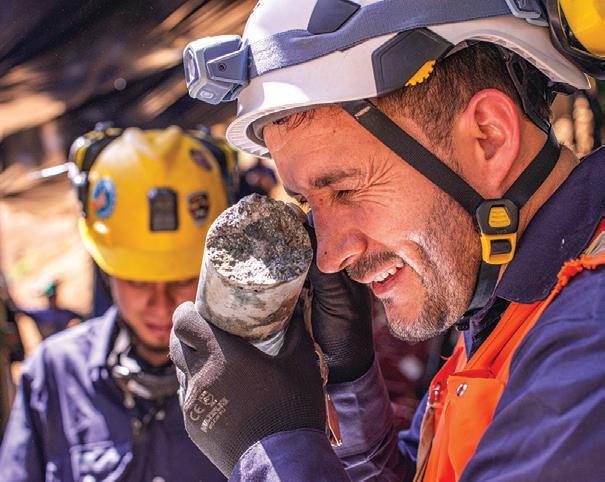
The new discovery, named “Ramp Zone,” is close in elevation (1,150 metres) to a planned underground haulage tunnel, Mikitchook added.
“This access tunnel connects Apollo and other targets (Plutus, Trap and Tower) to mining-related infrastructure in a potential development scenario. Although it is too early for any engineering plans, accessing high-grade portions of the orebody earlier should improve the economics of the project.”
Collective shares traded for $5.06 apiece before press time in Toronto, valuing the company at $333.5 million. Its shares traded in a 52-week range of $3.02 and $5.50.
Gold district
Guayabales and Aris Mining’s (TSX: ARIS; NYSE: ARMN) neighbouring Marmato mine are part of a precious metal district of 10 operating mines in Colombia’s Middle Cauca mineral belt. Toronto-based Collective, founded by the same
team that developed and sold Continental Gold for $1.4 billion, posted drill results in August joining the Apollo and Olympus deposits. The project delivered the top gold assay in The Northern Miner’s weekly Drill Down several times this year.
“The fact that Apollo is now transitioning into a bulk zone of highgrade gold mineralization at depth is extremely exciting and will no doubt add materially to the mineral resource endowment of Apollo,” executive chairman Ari Sussman said. “The Apollo system, which outcrops at surface, now boasts a vertical dimension of approximately 1,150 metres with further expansion dead-ahead.”
Collective also reported strong results this year at Guayabales’ Trap area, 3.5 km northeast of Apollo. It has five rigs, two each at Trap and Apollo and another at the X target, for a 40,000-metre drill program this year. The company began the project in September 2021 and has not published a resource yet. TNM
BY BLAIR MCBRIDE
Drilling at Trigon Metals’ (TSXV: TM; US-OTC: PNTZF) Kombat copper-silver mine in north-central Namibia has hit new, high-grade mineralization close to past producing areas, the company reported on Oct. 8. Its shares gained 3.4%.
Highlight holes include KWO217, which cut 5 metres grading 11.21% copper and 117.89 grams silver per tonne; KWO-218 that cut 8 metres at 2.55% copper and 18.65 grams silver; and KWO-221 which cut 9 metres grading 3.93% copper and 56.13 grams silver.
Those holes, part of a 3,500metre resource upgrade program, were drilled from 105 metres depth on level 3 in Shaft 1, to the northeast and southwest of their closest historical intercepts, Trigon said.
“Even with 45 years of mining history at Kombat, the deposit continues to surprise us with new high-grade ore — even adjacent to old developments,” Trigon CEO
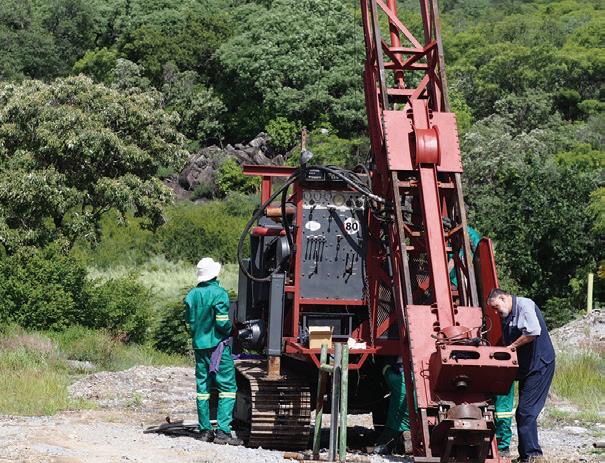
and executive chairman Jed Richardson said in a release. “There is tremendous value in this mine yet to be realized in our market capitalization.”
Trigon restarted production at Kombat in 2022. The 15-year-life mine is expected to produce 12.1 million to 13.4 million lb. of copper next year grading 1.95% to 2.3%.
“Even with 45 years of mining history at Kombat, the deposit continues to surprise us with new high-grade ore — even adjacent to old developments.”
JED RICHARDSON,
CEO, TRIGON METALS
Trigon shares traded for 94¢ apiece before press time in Toronto, valuing the company at $41 million. Its shares traded in a 52-week range of 61¢ to $1.28
Red metal hotspot
The price of copper has declined from a high point in September, and was trading for US$4.23 per lb. around press time. The Kombat operation, one of a handful of copper mines in Namibia, was historically among the top producers of the critical mineral in the southern African country, producing
12.5 million tonnes of ore grading 2.62% copper, 1.55% lead, and 18 grams silver per tonne between 1962 and 2008.
Kombat hosts 2.4 million probable tonnes grading 2.4% copper and 17.4 grams silver for 58,704 tonnes copper and 41,726 kg silver in open pit, underground and stockpiled resources, according to a February update. Kombat is located about 360 km north of the capital Windhoek, and just south of Dundee Precious Metals’ (TSX: DPM) Tsumeb polymetallic smelter. TNM
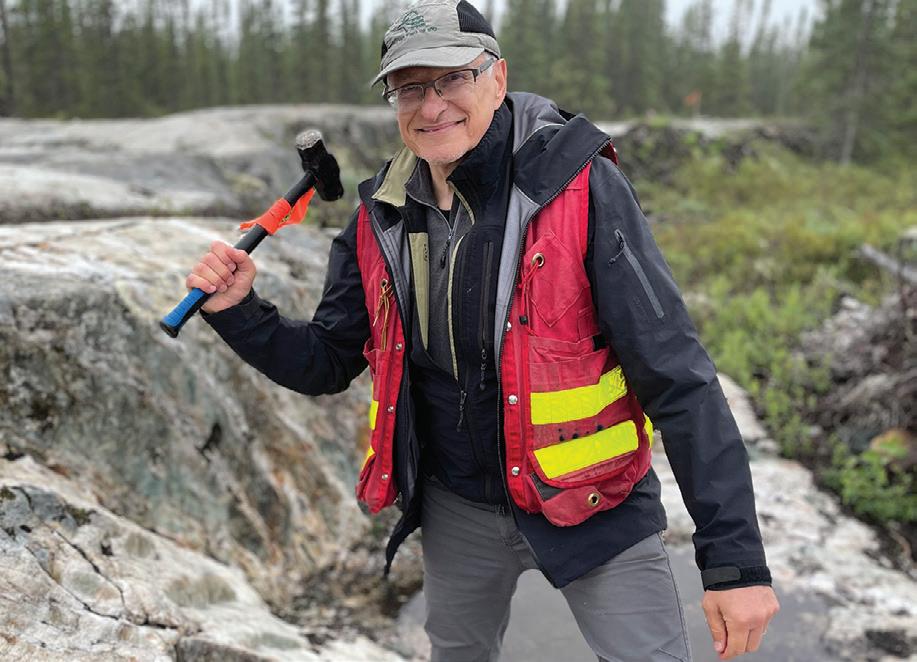
BY HENRY LAZENBY
The Perseus nickel discovery that Azimut Exploration (TSXV: AZM; US-OTC: AZMTF) announced in late September at its Kukamas property in Quebec ranks among the top finds of CEO Jean-Marc Lulin’s 35-year career, he says.
Named the Perseus zone, the deposit has high-grade nickel at surface, along with copper and platinum group elements (PGE). Channel sampling returned 2.98% nickel, 0.32% copper, and 2.25 grams platinum-group metals per tonne over 8 metres. Surface grab samples reached up to 9.35% nickel.
“This is one of the best nickel discoveries ever made in James Bay,” the geologist told The Northern Miner in a telephone interview. “It stands out from anything I’ve been part of before.”
Lulin says Azimut’s data-driven AZtechMine system uncovered the target. Azimut’s private data
analytics platform uses advanced algorithms to identify priority targets from vast, public datasets.
Azimut’s next steps at Kukamas are to complete geophysical surveys, expand prospecting, and prepare for an initial drilling program to delineate the Perseus zone.
Major partnership
Poland’s KGHM International has an earn-in option on Kukamas, signed in 2022. Even at that early stage, the miner was interested in the project’s copper-gold and nickelcopper-cobalt-PGE potential. Prospecting had returned strong geochemical signals and historical samples graded up to 10.63 grams gold and 20.7% copper.
The deal allows KGHM to earn a 50% stake by investing $5 million over four years, while Azimut remains the operator. It can reach 70% by delivering a preliminary economic assessment and spending another $4.2 million.
“KGHM has serious mining
expertise. They’re fully engaged in the project,” Lulin said. “This is no recycled story. It’s a real surface discovery, with high-grade nickel sitting right out in the open.”
Azimut also holds the Elmer property in Quebec. The Patwon gold zone holds 5 million indicated tonnes at 1.93 grams gold per tonne for 311,200 oz. of metal, and 8.2 million inferred tonnes at 1.9 grams gold for 513,000 ounces.
And the company continues to explore for lithium in Quebec’s James Bay Lowlands. Azimut’s prospecting and drill work at the Galinée deposit shows it is a likely extension of Winsome Resources’ (ASX: WR1) Adina deposit. The project has returned strong metallurgical sampling results, with lithium recoveries reaching 86% using dense media separation and magnetic separation.
Azimut shares traded for 67¢ apiece before press time, valuing the company at $58.2 million. Its shares traded in a 52-week range of 43¢ to $1.03. TNM
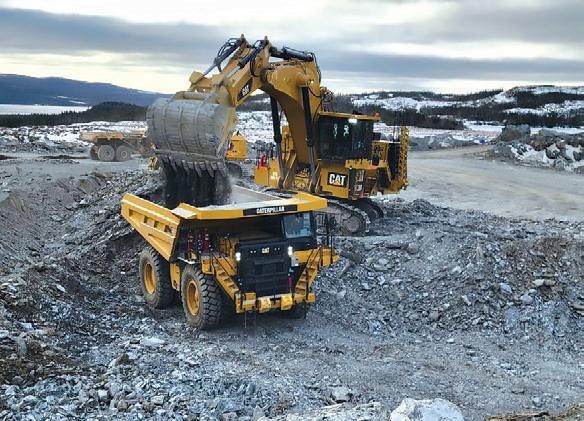
BY HENRY LAZENBY
Calibre Mining (TSX: CXB; US-OTC: CXBMF) has raised the capital cost estimate for its Valentine gold project in Newfoundland by 14% to $744 million, but says the project remains on track for first gold production by June.
Just under a third of the $91-million rise was driven by higher-than-expected costs for cement and other materials.
“With 81% of construction complete, Valentine is advancing well,” CEO Darren Hall told an Oct. 18 conference call. “We remain fully funded and confident in delivering first gold next year.”
The company holds $300 million in cash and credit to complete the build.
The Valentine project, which Calibre acquired through a takeover of Marathon Gold last year, is expected to produce 195,000 oz. annually for 12 years, according to a 2022 feasibility study.
Issues in Nicaragua and Nevada led Calibre to reduce its gold production forecast for this year by 18% to a midpoint of 235,000 ounces.
COPPER-GOLD | North Island study due in early 2025
Northisle Copper and Gold (TSXV: NCX) shares gained 14.6% on Oct. 10 after the company posted a resource update for its project near Port Hardy, B.C., to support a new preliminary economic assessment (PEA) it expects to publish early next year.
The North Island project resource now totals 906 million indicated tonnes grading 0.16% copper, 0.24 gram gold per tonne and 75 parts per million (ppm) molybdenum, for contained metal of 6.3 billion lb. copper equivalent, plus an additional 214 million inferred tonnes grading 0.12% copper, 0.22 gram gold and 52 ppm molybdenum for 1.3 billion lb. copper equivalent.
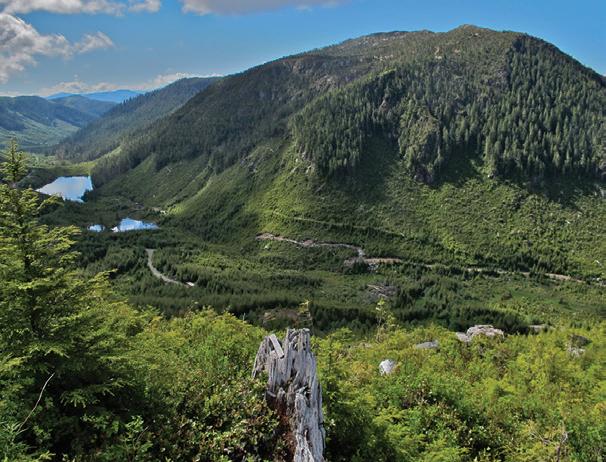
“The project now boasts over 3 billion lb. of copper and nearly 7 million oz. of gold in indicated resources, making it one of the largest copper and gold porphyries in Canada not currently owned by a major,” Northisle CEO Sam Lee said in a release.
The update integrates exploration at the Hushamu, Red Dog and Northwest Expo deposits over the past four years. The results will form the basis of a new PEA that contemplates lower initial capital intensity leading to a potentially larger project and longer mine life, Lee said.
The previous PEA in 2021 only included Red Dog and Hushamu, and outlined a 22-year life with average annual production of 177 million lb. of copper equivalent
“Valentine is advancing well. We remain fully funded and confident in delivering first gold next year.”
DARREN HALL, CEO, Calibre Mining
A May pit wall slide at the Limon Norte mine in Nicaragua disrupted output. This was made worse by unexpected depletion from historical artisanal mining at the new Volcan pit. In Nevada, lower ore stacking at the Pan mine also reduced production.
“This setback is on us. Management dropped the ball by not following the plan,” Hall said of the Nicaragua operations. He added that the company has now made personnel changes and expects better performance in the December quarter.
Company shares traded for $2.60 apiece before press time, valuing Calibre at about $2 billion. The stock has dropped 12% from its 12-month high of $2.90 but remains 118% higher year over year. TNM
over the first six years, including 112 million lb. of copper, 112,000 oz. of gold and 2.7 million lb. of molybdenum.
The PEA also outlined a $1.1 billion after-tax net present value (at 8% discount), a 19% after-tax internal rate of return, and a payback period of 3.9 years. Its capex is estimated at $1.4 billion using existing infrastructure from historical mining, as North Island is situated adjacent and northwest of BHP’s (NYSE: BHP; LSE: BHP; ASX: BHP) now closed Island copper mine.
Shares of Northisle Copper and Gold surged to 47¢ apiece following the resource update, before settling to 47¢ at press time in Toronto. The company has a market capitalization of $115.6 million. TNM
BY FRIK ELS AND CECILIA JAMASMIE, MINING.COM
Rio Tinto (ASX: RIO; LSE: RIO; NYSE: RIO) plans to acquire Arcadium Lithium (ASX: LTM; NYSE: ALTM) in an all-cash deal valued at US$6.7 billion, the Anglo-Australian giant confirmed on Oct. 9.
The acquisition would position Rio Tinto as one of the world’s largest lithium miners, behind only North Carolina-based Albemarle (NYSE: ALB) and Chile’s SQM (NYSE: SQM). It gives Rio lithium mines in Argentina and Australia, as well as processing facilities in the United States, United Kingdom, China and Japan. Its customer base would include major automakers Tesla, BMW and General Motors.
The bid for the Philadelphiabased battery metal producer comes at US$5.85 per share, a 90% premium to its US$3.08 per share closing price in New York on Oct. 4. The transaction is expected to close in mid-2025.
Arcadium, created in January from the merger of U.S.-based Livent and Australia’s Allkem, has current production capacity of about 75,000 tonnes a year of lithium carbonate equivalent (LCE), BMO Capital Markets said in a note on Oct. 9. Arcadium plans to reach around 170,000 tonnes LCE by 2028/29, which could complement Rio’s proposed 50,000 tonne LCE a year Rincon project in Argentina, the analyst said. He cautioned on the deal premium.
M&A | Deal could make Rio world’s third top lithium miner
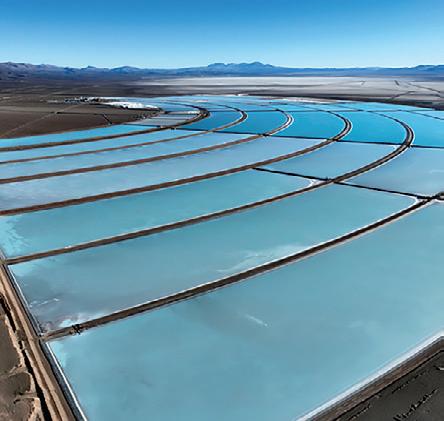
“Rio Tinto’s acquisition of Arcadium gets the company a producing foothold in lithium at a price that it can easily afford,” BMO mining analyst Alexander Pearce said. “However, our initial take suggests a premium multiple paid, unless Rio Tinto can demonstrate meaningful synergies and/or expectations of significantly higher future lithium prices.”
Shares in Rio Tinto traded for US$65.75 apiece in New York at press time, valuing the company at US$110.7 billion. Arcadium stock traded at US$5.53 for a market value approaching US$6 billion.
Price crash
Lithium for electric vehicle (EV) batteries has crashed over the past two years as Chinese oversupply gathered pace and formerly strong
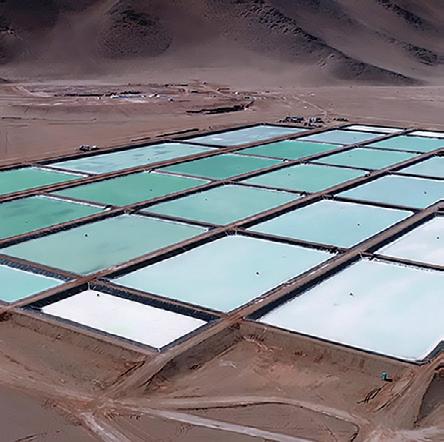
EV consumer demand eased. Lithium carbonate was at US$10,300 a tonne before press time, down from US$22,950 a tonne a year ago, according to the Wall St. Journal Numerous lithium developers and miners have suspended projects.
That presented Rio with an opportunity to buy, CEO Jakob Stausholm said in an emailed statement to Bloomberg. It places Arcadium’s lithium beside Rio’s aluminum and copper output to supply the global energy transition away from fossil fuels, Stausholm said.
“This is a counter-cyclical expansion aligned with our disciplined capital allocation framework, increasing our exposure to a highgrowth, attractive market at the right point in the cycle,” Stausholm said in a press release. “We will bring our scale, development capa-
URANIUM | Major to also assume control of ERA
BY CECILIA JAMASMIE, MINING.COM
Rio Tinto (ASX: RIO; LSE: RIO; NYSE: RIO) is to carry out the A$2.2 billion ($2 billion) rehabilitation of the closed Ranger uranium mine in Australia’s Northern Territory, a government body has ruled.
The Takeovers Panel’s decision ends a long-running dispute over whether Rio Tinto and its majority owned uranium producer Energy Resources of Australia (ASX: ERA) would assume the site restoration’s costs.
It also clears the way for Rio to assume full control of the uranium producer via the company’s capital raising, announced in August.
“ERA now intends to proceed with the [A$880 million] entitlement offer as soon as possible,” the company said.
ERA halted activities at Ranger in 2021, after 40 years of operations. The initial goal was to finish the site cleanup by 2026. Rehabilitation costs for the site have surged to A$2.2 billion and ERA warned in August it would run out of money by December. It said at the time it
would launch a capital raising, with Rio as the most likely shares buyer.
Minority shareholders overruled
Willy Packer’s Packer and Co and Richard Magides’ Zentree, who collectively own around 12% of ERA, filed an objection with the Takeovers Panel, saying the move would unfairly allow Rio to increase its stake in the project from 86.3% to 99.2%, clearing the way for the mining giant to buy out ERA.
The Takeovers Panel upheld on Oct. 15 its previous decision to reject the objections from the two minority ERA shareholders.
ERA still seeks to have its mining permit for Jabiluka, a vast uranium deposit surrounded by Kakadu National Park, restored. The licence, which has been under the same company’s control since 1991, expired in August.
Contentious mining permit
The Australian government, led by Prime Minister Anthony Albanese, has pledged that Jabiluka will “never be mined” and instead will be integrated into the adjacent
Kakadu National Park.
ERA filed the petition to have the mining licence back, despite Rio Tinto’s stating that it had no plans to develop the mine site and that it was pleased to see the traditional owners’ wishes respected.
The Mirarr people have long been opposed to mining activities in the region, organizing protests in the late 1990s and early 2000s. Rio Tinto has backed the traditional owners’ position in recent years as it works to repair its ties with Indigenous groups after destroying sacred rock shelters at Juukan Gorge in Western Australia in 2020 for an iron ore mine expansion.
Australia hosts almost one-third of the world’s identified uranium reserves, yet its mining is permitted in only two of its eight states and territories — South Australia and the Northern Territory.
The country’s only operating uranium mines are BHP’s (ASX: BHP; NYSE: BHP) Olympic Dam, which generates uranium as a secondary product of its copper mining activities and Boss Energy’s (ASX: BOE) Honeywell mine. Together, they account for around 9% of the global reported production. TNM
bilities and financial strength to realize the full potential of its tierone portfolio.”
BMO’s Pearce questioned the deal’s short-term economics during depressed markets for the battery metal.
“At spot prices, Arcadium generates limited earnings before interest tax, depreciation and amortization and is free-cash flow negative near-term,” he said. “Rio Tinto could bring operational/technical improvements/synergies which may improve this, although difficult to quantify at this stage.”
Arcadium CEO Paul Graves noted the market environment in his prepared comments.
“This is a compelling cash offer that reflects a full and fair long-term value for our business and de-risks our shareholders’ exposure to the
execution of our development portfolio and market volatility,” Graves said. “This transaction will give us the opportunity to accelerate and expand our strategy.”
Over the past six years, Rio has been expanding its footprint in the battery market. In 2018, it reportedly attempted to buy a US$5-billion stake in Chile’s SQM, the world’s second largest lithium producer. In April 2021, the world’s second largest miner kicked off lithium production from waste rock at a demonstration plant located at a borates mine it controls in California. Rio took another key step into the lithium market the next year, completing the acquisition of the Rincon project. It has reserves of almost 2 million tonnes of contained LCE, enough for a 40-year mine life.
Vulcan Energy (ASX: VUL), which is arranging debt financing for a lithium project straddling the Franco-German border, views Rio’s acquisition as favourable for the broader lithium market. It shines a spotlight on a brine mining process called adsorption-type direct lithium extraction (A-DLE), Vulcan founder and executive chair Francis Wedin said in an emailed statement to The Northern Miner’s sister publication Mining.com. It’s been used by Arcadium since 1996 next door to Rio’s Rincon.
“Focusing on A-DLE is a further indication of how the third wave of lithium’s growth is developing,” Wedin said. TNM
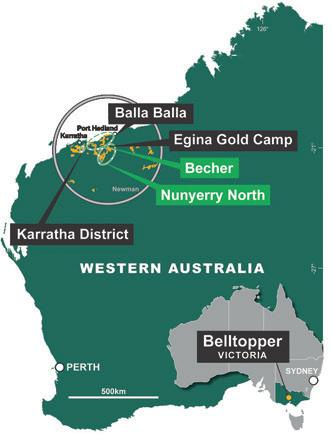
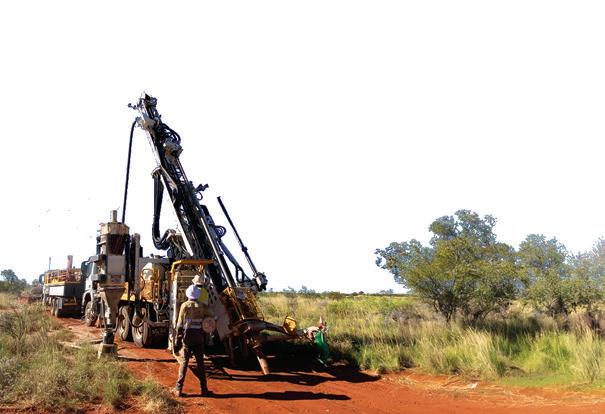
| BLM green light could unleash US$1.2B in funding
BY HENRY LAZENBY
The United States’ Bureau of Land Management (BLM) on Oct. 24 approved Ioneer’s (ASX: INR) Rhyolite Ridge lithium-boron project in southwest Nevada, opening the door for closing almost US$1.2 billion in funding.
Ioneer can now access a US$700 million loan from the U.S. Department of Energy (DOE) and a US$490-million equity investment from Sibanye Stillwater (JSE: SSW; NYSE: SBSW) for Rhyolite Ridge, which has an estimated mine life of 22 years. The Sydney-based company aims to finalize its financing agreements for the US$785-million project before year-end. However, legal battles, regulatory adjustments, and political uncertainty remain obstacles, CEO Bernard Rowe said in a Oct. 24 webcast.
“Legal challenges are almost inevitable,” he told investors, referring to lawsuits that environmental groups are expected to file over the mine’s impact on Tiehm’s buckwheat, an endangered plant found only at the project site, located about 362 km north of Las Vegas.
The plant’s presence forced Ioneer to redesign parts of the mine, creating buffer zones and a greenhouse program. Rowe remains confident that regulatory efforts will hold up under scrutiny.
“We are well-prepared, and we’ve built a solid scientific case around our environmental work,” he said.
Following six years in permitting, Rhyolite Ridge is the first lithium mine approved under the Biden administration, one of whose key priorities is to secure domestic sources of critical minerals. The project also marks the first new lithium production in the U.S. in over 60 years and the first boron mine in over a century, Rowe said. The operation will produce lithium carbon
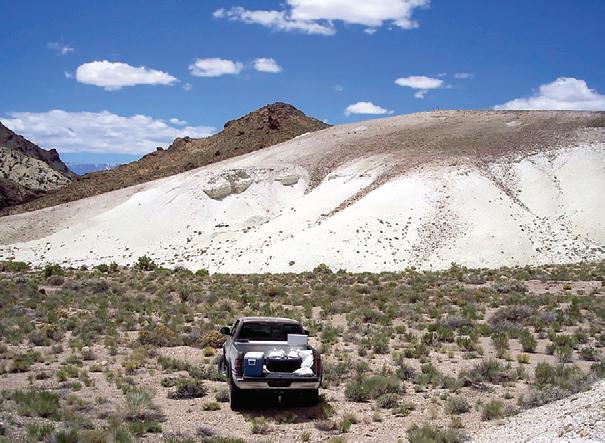
Rhyolite
apiece before press time in Sydney, , a fresh 12-month high for the company, giving it a market capitalization of A$711.8 million. Shares come off a period low at A10.5¢.
With the U.S. federal election approaching on Nov. 4, investors pressed management for their take on the potentially shifting political landscape. Still, Rowe dismissed the idea that a new administration could derail the project.
“There is strong bipartisan support for developing critical minerals in the U.S.,” he said. “We’ve worked with both Republican and Democratic administrations, and the project has broad backing at the state and federal levels.”
Once operational, the mine will rival Albemarle (NYSE: ALB) and Lithium Americas (TSX: LAC; NYSE: LAC) as a top domestic producer. Albemarle operates the only active domestic lithium mine in Silver Peak, Nev., and Lithium Americas is developing the Thacker Pass project, like Rhyolite Ridge another lithium clay site in Nevada.
plan, reserve estimates, and project economics. Rowe stressed the importance of staying on schedule to avoid setbacks.
“Permitting was the biggest hurdle, but we’re on track to close financing in the next few weeks.”
BMO Capital Markets mining analyst Raj Ray noted liquidity risks for Sibanye-Stillwater. It is set to invest US$490 million in five equal tranches over 12 months.
Sibanye has net debt of about US$1 billion. It faces rising costs at Rhyolite Ridge and potential legal issues from a dispute with Londonbased private equity firm Appian Capital, which could further strain liquidity. In early October, Appian won a U.K. court ruling holding Sibanye liable for terminating a US$1.2-billion deal to acquire two Brazilian mines. The damages have

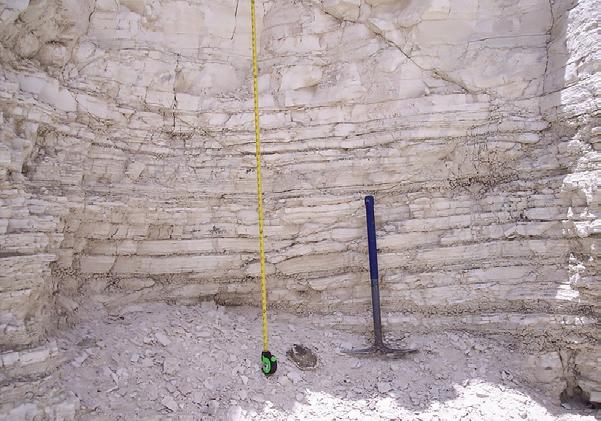
not yet been determined.
“The 2020 DFS capex estimate of US$785 million is stale (we currently model capex of US$1.1 billion) and capex escalation beyond this sum is likely,” Ray said on Oct. 25 in a note to clients. “However, between the DOE conditional loan and Sibanye’s investment, the project could potentially be fully funded.”
Boron kicker
Construction, scheduled to start early next year, will take about 30 months, putting the project on course for production in 2028. Rhyolite Ridge is expected to produce 22,000 tonnes of lithium carbonate a year. That’s enough to power 370,000 electric vehicles. It will also produce 170,000 tonnes of boric acid, according to the
company.
The boron contributes 30% to 40% of the mine’s revenue, providing a buffer against lithium market volatility. Boric acid prices have been stable for decades, Rowe said.
An April 2020 feasibility study pegged the after-tax net present value (8% discount) at US$1.3 billion and the internal rate of return at 20.8%.
Ioneer expects the project to generate US$125 million in annual wages, create 500 construction jobs, and employ 350 workers during operations. Though environmental groups remain opposed, Rowe noted the importance of the permitting milestone.
“We’ve been at this for eight years, and reaching this point’s a tremendous feeling,” Rowe said. “Now it’s time to move forward.” TNM
BY CECILIA JAMASMIE, MINING.COM
attery metals junior Patriot (ASX: PAT) plans to add copper to its portfolio through an agreement with Array Metals and Natural Resources, allowing it to earn an 80% interest in the Katwaro project in west-central
This diversification move complements Patriot’s North American lithium exploration work, despite a temporary setback at its Gorman project in northwestern Ontario, due to land access issues. Gorman Frontier ’s (TSXV: FL; US-OTC:
“While negotiations to drill at Gorman continue, the board has decided to expand our project portfolio into other jurisdictions,” executive chair Hugh Warner said in a release on Oct. 10. “The company believes that the Katwaro copper project will complement our lithium assets and provide jurisdictional diversity, with respect to native title/sovereign risk and alternative weather windows for exploration.”
Lithium prices remain low, but Rio Tinto’s (NYSE: RIO; LSE: RIO;
ASX: RIO) bid in early October to buy Arcadium Lithium (NYSE: ALTM; ASX: LTM) has renewed interest in lithium stocks.
Year-long option deal
Patriot will pay Array Metals
$25,000 for an exclusive 12-month option period. If the option is exercised, a special purpose vehicle (SPV) will be established, with the project transferred to it after a $250,000 payment to Array Metals.
Over the following 48 months, Patriot Lithium will fund exploration and feasibility studies as part of the agreement.
Located near Mumbwa, the Katwaro copper project spans 4 sq. km and includes a historical open-pit mine with copper-bearing meta-sediments.
Zambia, Africa’s second-largest copper producer, has the ambitious goal of more than quadrupling the country’s output to 3 million tonnes by 2031. This would require bringing into production multiple exploration projects the government is currently identifying.
Authorities announced plans in October to keep majority stakes in “promising” mining permits through an SPV, as part of an ongo-
ing mapping exercise in the country.
The mine minister, Paul Kabuswe, initially unveiled the SPV in late-August, saying it would control at least 30% of all critical minerals production from future mines.
BMO global commodities analyst Colin Hamilton said the minister has since been quoted in interviews saying the figure might be 45%.
“It now appears that the scope of this SPV has increased such that it can take a majority stake in promising mining licences at its own discretion. The endless changes to Zambia’s mining regulations represent a significant risk to the country’s original aim of quadrupling the country’s copper output,” he wrote.
Subsidiaries of First Quantum Minerals (TSX: FM) and Barrick Gold (TSX: ABX; NYSE: GOLD) are responsible for the majority of Zambia’s copper production, accounting for nearly two-thirds of the total output in 2023.
Patriot Lithium shares traded for A4¢ piece before press time, valuing the company at A$5.2 million. Its shares traded in a 52-week range of A3¢ to A23¢. TNM

Capital raisings
ETF assets
Drill results
Warrants & shorts
Market data
Global gold funds data 34 Mining events
*Data may not be comprehensive and is provided on a best-efforts basis as of press time. Investors are responsible for their own due diligence. 33 Market news
Delivering fit-for-purpose solutions across the entire project life cycle
Delivering fit-for-purpose solutions across the entire project life cycle
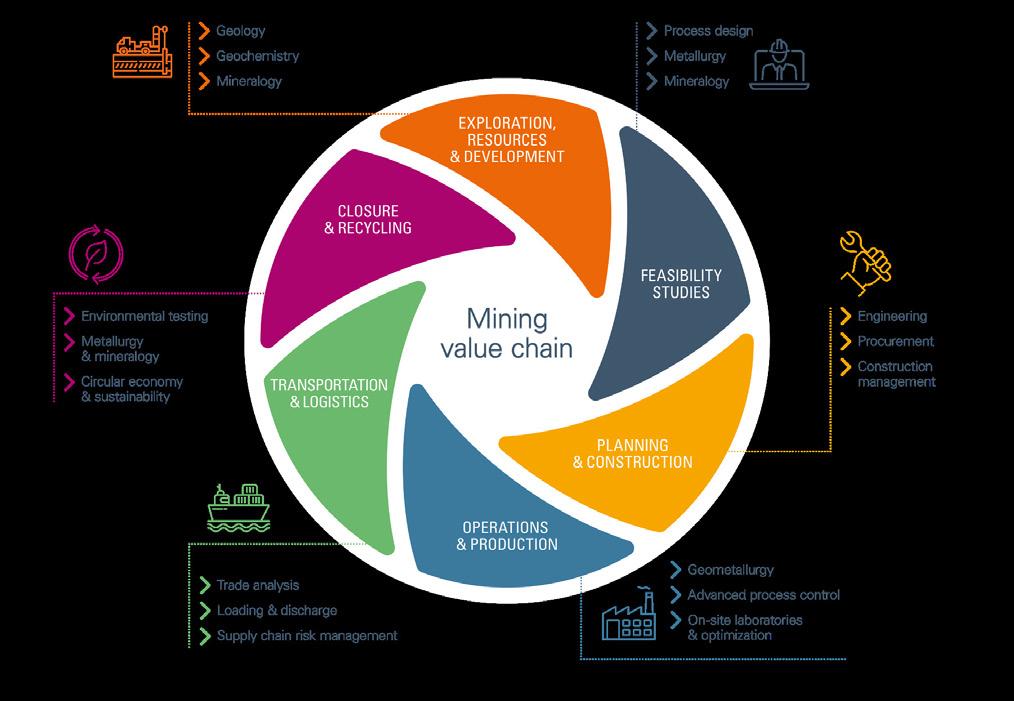
Our fit-for-purpose solutions encompass the skills of qualified geologists, geostaticians, analytical chemists, mineralogists, metallurgists, process engineers and mining engineers and inspectors brought together to provide accurate and timely mineral and process evaluation services across the entire project life cycle.
Our fit-for-purpose solutions encompass the skills of qualified geologists, geostaticians, analytical chemists, mineralogists, metallurgists, process engineers and mining engineers and inspectors brought together to provide accurate and timely mineral and process evaluation services across the entire project life cycle.
WWW.SGS.COM/NATURALRESOURCES NAM.NATURALRESOURCES@SGS.COM Delivering
Our fit-for-purpose solutions encompass the skills of qualified geologists, geostaticians, analytical chemists, mineralogists, metallurgists, process engineers and mining engineers and inspectors brought together to provide accurate and timely mineral and process evaluation services across the entire project life cycle.
Our fit-for-purpose solutions encompass the skills of qualified geologists, geostaticians, analytical chemists, mineralogists, metallurgists, process engineers and mining engineers and inspectors brought together to provide accurate and timely mineral and process evaluation services across the entire project life cycle.
WWW.SGS.COM/NATURALRESOURCES NAM.NATURALRESOURCES@SGS.COM
WWW.SGS.COM/NATURALRESOURCES NAM.NATURALRESOURCES@SGS.COM
WWW.SGS.COM/NATURALRESOURCES NAM.NATURALRESOURCES@SGS.COM

1
Note:
$6,000
$5,000
$4,000
$3,000
$2,000
$1,000
$0
PearTree is a Canadian Securities Dealer and Investment Fund Manager advancing over (CAD) $500 million annually for resource exploration and mine development in a uniquely Canadian structure which results in as much as $2.00 of capital deployed for every $1.00 invested by global institutions and family offices.
Watch our video in English, Français, Deutsch, and Español on our website.
Expanding the universe of exploration capital.
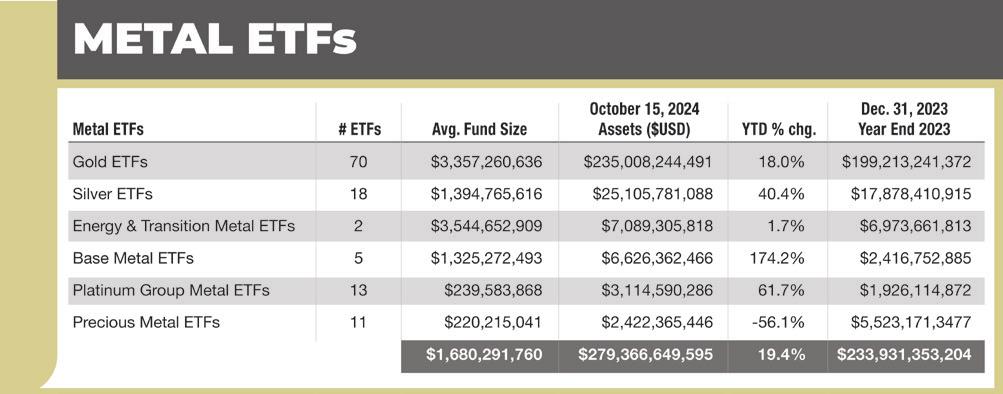
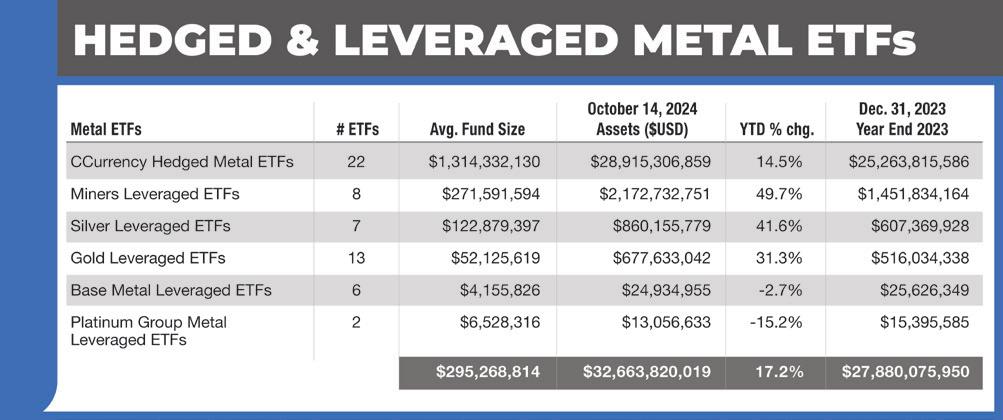
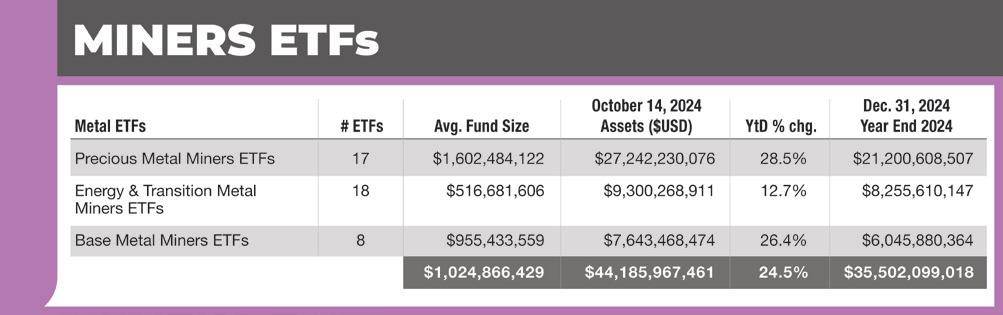
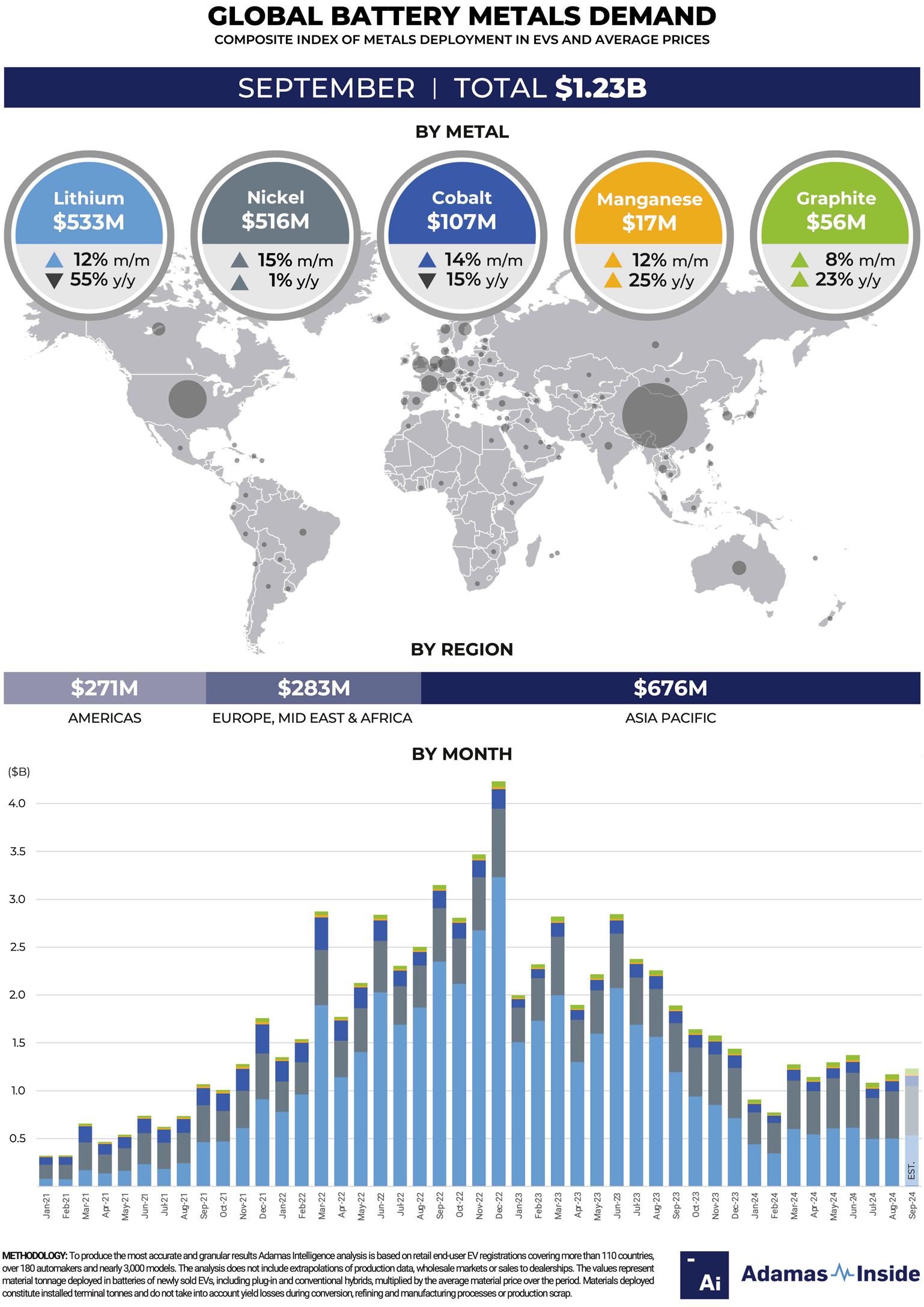
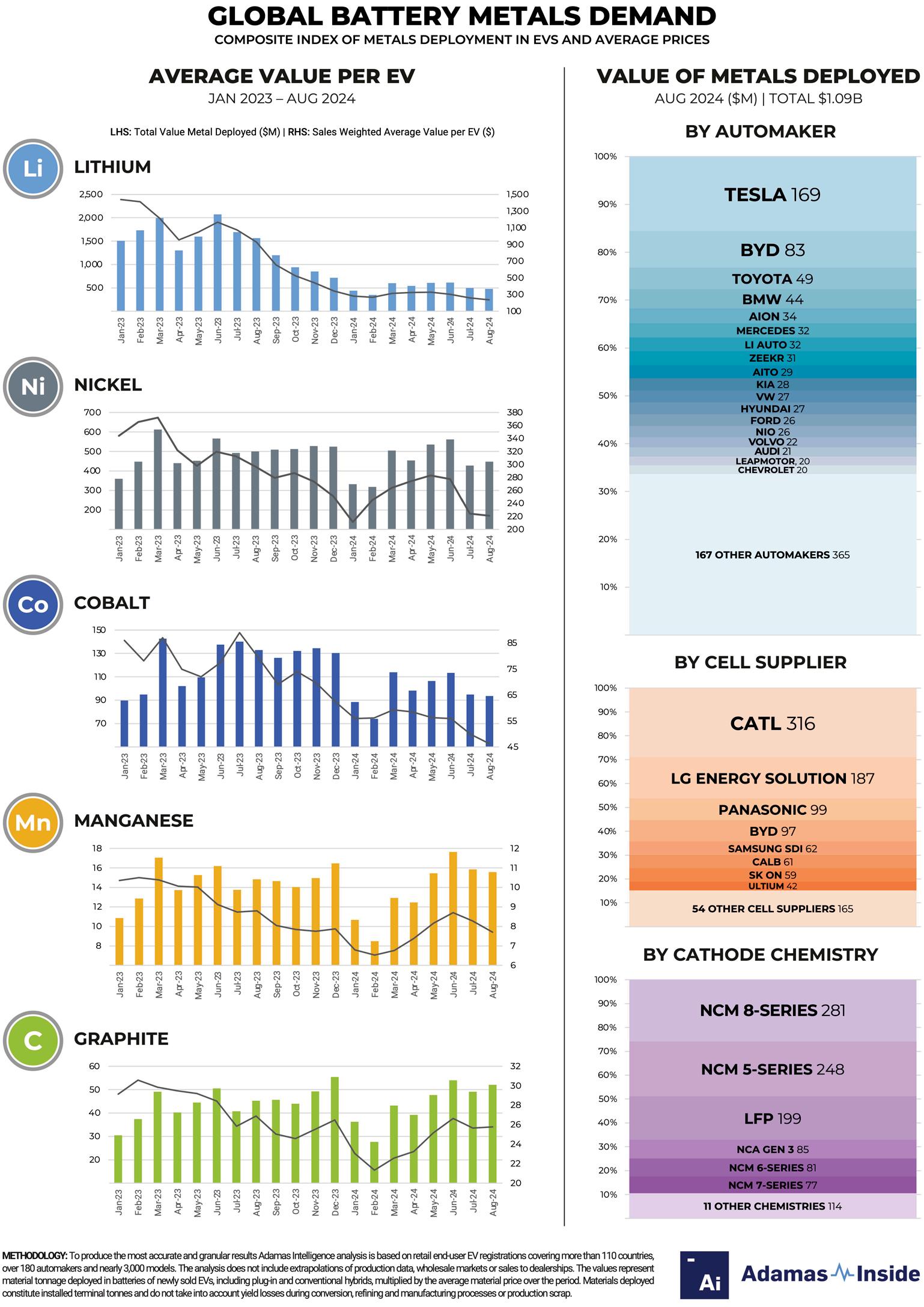
Our TNM Drill Down features the top 10 gold, copper and silver assays of the past month. Drill holes are ranked by grade x width.
September 16, 2024 — October 15, 2024
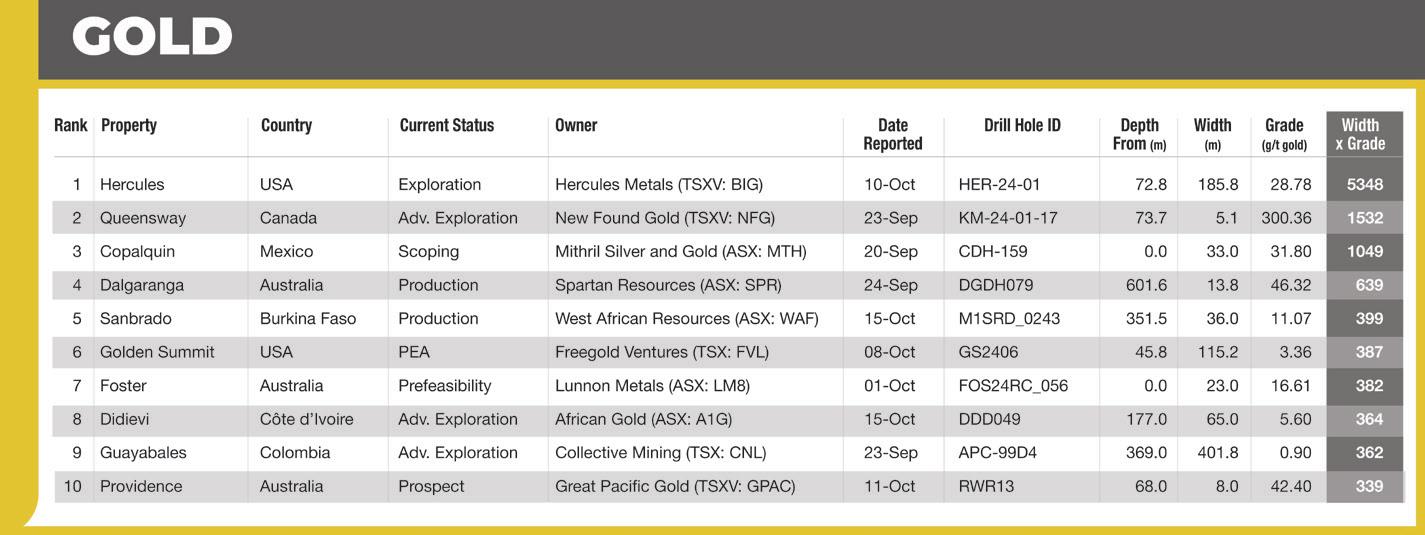
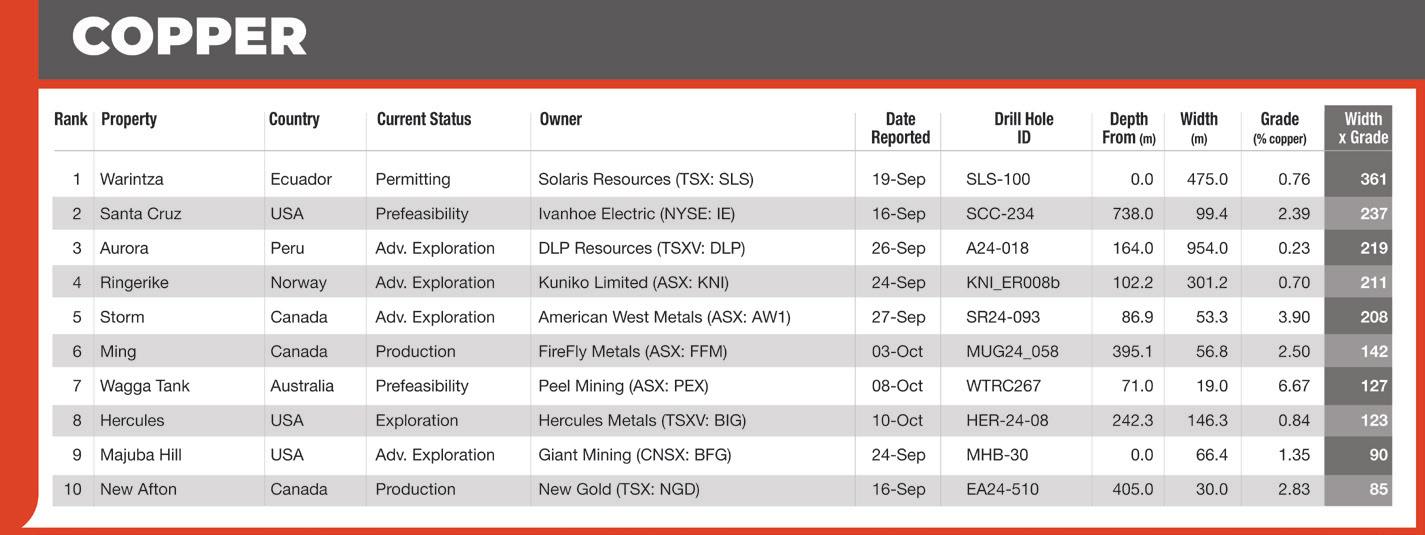
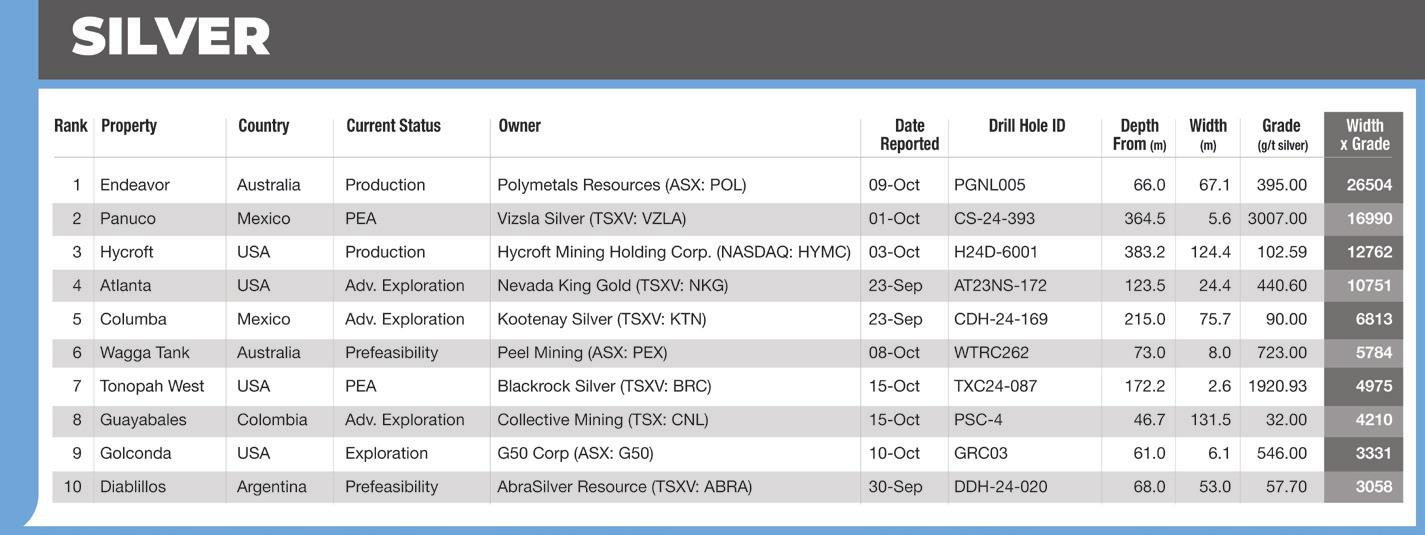
Name Symbol Subsciption Terms Expiry Date
Aris Gold Corporation ARIS.WT One Warrant to purchase one Common 07-29-2025 Share of the Issuer at $2.75 until expiry.
Name
Giga Metals Corporation GIGA.WT.A One warrant to purchase one common 02-08-2025 share at $0.45 per share.
LithiumBank Resources LBNK.WT One warrant to purchase one common 02-16-2025 Corp. share at $2.00 per share.
Total Helium Ltd. TOH.WT.A One warrant to purchase one common 05-01-2025 share at $0.75 per share.
Caldas Gold Corp. CGC.WT One warrant to purchase one common 07-29-2025 share at $2.75 per share.
Rock Tech Lithium Inc. RCK.WT One warrant to purchase one common 08-19-2025 share at $4.50 per share.
Lion One Metals Limited LIO.WT One warrant to purchase one common 11-11-2025 share at $1.25 per share.
Vizsla Royalties Corp. VROY.WT One warrant to purchase one common 12-31-2025 share at $0.50 per share.
Silver Mountain AGMR.WT.A One warrant to purchase one common 02-09-2026 Resources Inc. share at $0.45 per share.
Osisko Development ODV.WT.B One warrant to purchase one common 03-02-2026 Corp. share at $8.55 per share.
Denarius Silver Corp. DSLV.WT One warrant to purchase one common 03-17-2026 share at $0.80 per share.
West Red Lake Gold WRLG.WT One warrant to purchase one common 05-16-2026 Mines Ltd share at $1.00 per share.
Aris
expiry
Aurania Resources Ltd. ARU.WT.B One warrant to purchase one common 10-21-2026 share at $2.20 per share.
Freeman Gold Corp FMAN.WT.U One warrant to purchase one common 11-29-2026 share at US$0.65 per share.
Mogotes Metals Inc MOG.WT One warrant to purchase one common 01-31-2027 share at $0.30 per share.
Osisko Development ODV.WT.A One warrant to purchase one common 03-02-2027 Corp. share at $14.75 per share.
Integra Resources Corp. ITR.WT One warrant to purchase one common 03-13-2027 share at $1.20 per share.
Elevation Gold Mining ELVT.WT.A One warrant to purchase one common 03-24-2027 Corporation share at $0.70 per share.
Osisko Development ODV.WT.U One warrant to purchase one common 05-27-2027 Corp. share at US$10.70 per share.
Robex Resources Inc RBX.WT One warrant to purchase one common 06-27-2027 share at $2.55 per share.
Silver Mountain AGMR.WT.B One warrant to purchase one common 04-24-2028
Resources Inc. share at $0.135 per share.
Bear Creek Mining BCM.WT One warrant to purchase one common 10-05-2028 Corporation share at $0.42 per share.
West Red Lake WRLG.WT.A One warrant to purchase one common 03-19-2029
Gold Mines Ltd share at $0.95 per share.
Short positions outstanding as of Oct 15, 2024 (with changes from Sep 30, 2024)
positions
Aluminum: US$1.20/lb.
Cobalt: US$10.89/lb.
Gold: US$2,719.25/oz.
Iron Ore 62% Fe CFR China-S: US$99.25
Nickel: US$7.27/lb.
Silver: US$33.15 per oz.
Zinc: US$1.47 per lb.
COMMODITY PRICES | Prices current October 25, 2024
Coal: Central Appalachia, 12,500 Btu, 1.2 S02-R,W: US$74.15
Copper: US$4.27/lb.
Iridium: US$4,650/tr oz.
Lead: US$0.92/lb.
Rhodium: US$4,725 per oz.
Tin: US$14.16/lb.
Coal: Powder River Basin, 8,800 Btu, 0.8 S02-R, W: US$14.15
Copper: CME Group Futures November 2024: US$4.34/lb.;
December 2024: US$4.37/lb.
Lithium carbonate: US$10,300/tonne
Ruthenium: US$485 per oz.
Uranium: U 3O 8, Trading Economics: US$81.05 per lb.
October 21-25, 2024
Lithium Americas, Ascot Resources among week’s top gainers
By Henry Lazenby
Stock markets traded mainly in the red for the week ending Oct. 25 as investors digested the first wave of third-quarter earnings reports and Canada’s jumbo 0.5% interest rate cut on Oct. 23.
The Dow Jones Industrial Average fell by 1,161.51 points or about 2.7% to 42,114.4 points, and the S&P 500 lost 56.5 points or about 1% to 5,808.12. In Canada, the S&P/TSX Index fell by 358.9 points or 1.5% to 24,463.7, while the S&P/TSX Venture Composite Index fell 1.8 points or 0.3% to 619.9.
The S&P/TSX Global Mining Index fell 3.4 points or about 2.6% to 130.4, and the S&P/TSX Global Gold Index fell 16.3 points or 4% to 391.06. Gold added US$18.95 per oz. or 0.7% to US$2,721.45 per ounce. The S&P/TSX Global Base
Metals Index fell by 2.64 points or about 1.2% to 212.14.
On the NYSE mainboard, the week’s biggest percentage gainer was Lithium Americas. It closed 17.2% higher at US$3.68 after revamping a US$625-million joint venture with General Motors for its Thacker Pass project in northern Nevada.
In Toronto, Ascot Resources’ $40-million financing to restart its Premier gold project in B.C. next year after a failed restart this year, pushed the stock up 37.8% to 26¢ per share.
On the S&P/TSX Venture Exchange, Li-FT Power was the biggest value gainer, closing 60¢ higher at $3.88, following a recent resource update for its Yellowknife lithium project.
n November
November 6-7
Mining Investment North America — Toronto
VENUE: DoubleTree by Hilton Toronto Downtown
MORE INFORMATION: www. mininginvestmentnorthamerica.com
November 6-7
Commodities Asia Summit — Singapore
VENUE: The Westin Singapore
MORE INFORMATION: commoditiesasia.live.ft.com
November 10-13
Tailings and Mine Waste Conference 2024 — Colorado
VENUE: TBA
MORE INFORMATION: www.thetailingsnetwork. com/tailings-conferences/tailingsminewaste2024
November 12-13
The Decarbonized Mine Summit — Toronto
VENUE: Marriott Downtown
MORE INFORMATION: toronto.energyandmines.com
November 14-15
121 Mining Investment — London, U.K.
VENUE: TBA
MORE INFORMATION: www.weare121.com/events/# November 17-20
Yukon Geoscience Forum and Trade Show — Whitehorse
VENUE: Kwanlin Dun Cultural Centre
MORE INFORMATION: www.yukonminers.org/ geoscience/
November 25-26
Peru Rocks, the Awakening of a Giant — Lima, Peru
VENUE: Country Club Lima Hotel
MORE INFORMATION: www.chilexploregroup.cl/ PERU_ROCKS/
November 25-26
Asia Gold Conference — Singapore
VENUE: Marriott Tang Plaza Hotel
MORE INFORMATION: www.asiagoldconference.com
November 26-27
10 Mining Show — Dubai, United Arab Emirates
VENUE: Festival Arena
MORE INFORMATION: terrapinn.com/exhibition/ mining-show/
November 26-28
Yellowknife Geoscience Forum — Yellowknife, NWT
VENUE: Chateau Nova Conference Centre
MORE INFORMATION: event.fourwaves.com/ ygf2024/pages
n December
December 1-2
International Metals Symposium — London, U.K.
VENUE: ETC Venues
MORE INFORMATION: events.northernminer.com/ international-metals-symposium-2024/
December 2-3
Mining Critical Minerals India Conference and Expo — New Delhi
Venue: TBA
MORE INFORMATION: www.criticalmineralsindia.com
December 3-5
Mines and Money — London, U.K.
VENUE: TBA
MORE INFORMATION: www.minesandmoney.com/ london/index
December 5-6
Mining and Critical Minerals Investment — London, U.K.
VENUE: Doubletree by Hilton London
MORE INFORMATION: www. mininginvestmentlondon.com
December 11-14
International Trade Fair for Construction Machinery, Building Material Machines, Mining Machines and Construction Vehicles — Delhi, India
VENUE: India Expo Centre
MORE INFORMATION: www.bcindia.com/en/tradefair/current-information/
December 12-13
Mining Tech 2024 — Ankara, Turkey
VENUE: Hacettepe University Beytepe Tunçalp Özgen Congress and Culture Center
MORE INFORMATION: www. maden-tek.com
December 16-17
Mining World Congress — London, U.K.
VENUE: Kensington Conference and Events Centre
MORE INFORMATION: www.miningconferences.org
n January
January 14-16
TD Annual Global Mining Conference
VENUE: TBA
MORE INFORMATION: www.northisle.ca/events/tdannual-global-mining-conference/
n February
February 3-6
Mining Indaba — Cape Town, South Africa
VENUE: Cape Town International Convention Centre
MORE INFORMATION: miningindaba.com/home
February 12-13
Mining & Critical Minerals Korea Conference and Exhibition — Seoul
VENUE: TBA
MORE INFORMATION: www.criticalmineralskorea. com
February 23-26
Global Metals, Mining & Critical Minerals Conference — Hollywood, Fl.
VENUE: TBA
MORE INFORMATION: capitalmarkets.bmo.com/en/ industries/global-metals-mining/
February 24-25
Critical Minerals and Energy Investment — Brisbane, Australia
VENUE: TBA
MORE INFORMATION: www. criticalmineralresources.com
n March
March 2-5
PDAC 2025 — Toronto
VENUE: Metro Toronto Convention Centre
MORE INFORMATION: www.pdac.ca/convention
n May
May 4-7
CIM Convention — Montreal
VENUE: TBA
MORE INFORMATION: convention.cim.org
May 12-13
Mining & Critical Minerals Middle East Conference and Exhibition — Dubai
VENUE: TBA
MORE INFORMATION: www.miningcriticalminerals. com
May 21-22
Mining Investment Asia — Singapore
VENUE: Marriott Tang Plaza Hotel
MORE INFORMATION: www.mininginvestmentasia. com
n June
June 11-12
Mining & Critical Minerals Investment Latin America — São Paulo, Brazil
VENUE: TBA
MORE INFORMATION: www.

mine
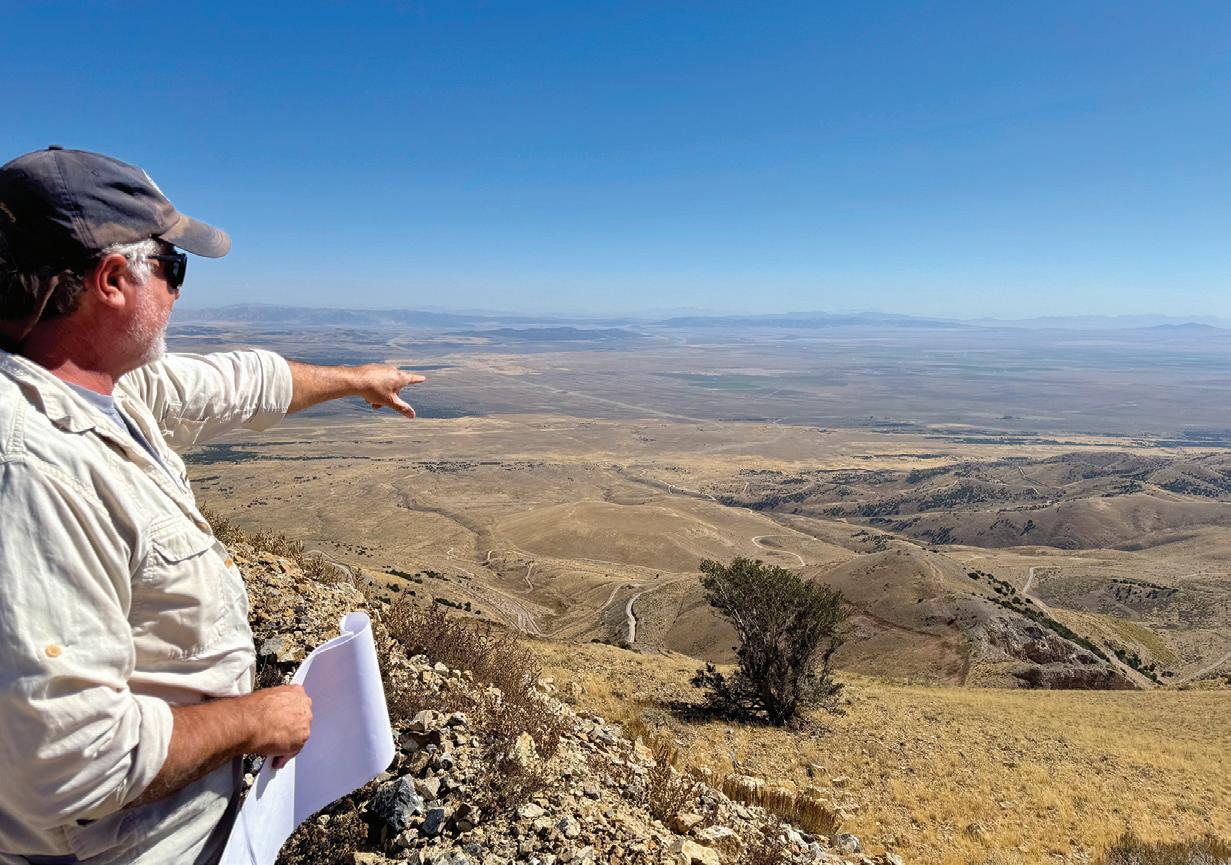
BY HENRY LAZENBY SALT LAKE CITY, UTAH
Liberty Gold’s (TSX: LGD) vice-president of exploration, Peter Shabestari, skillfully navigates steep turns around sheer rock faces at the company’s Black Pine Mountain gold project in Idaho before bringing the vehicle to a sudden stop.
“You feel that tingling on your neck?” he asks. “That’s what it feels like when you’re on top of a million ounces.”
Shabestari, who’s touring visitors around the site in late September, is talking about the Rangefront Zone, one of Liberty’s most recent oxide gold discoveries on the brownfields site, and a key part of a prefeasibility study released on Oct. 10.
Discovered in 2021, Rangefront hosts widespread, low-grade mineralization interspersed with highgrade shoots. Drilling at Rangefront, along with continued expansion and development at the Discovery Zone, has quickly grown the resource at Black Pine.
“We drilled a million ounces in just 14 months, and we’re only scratching the surface,” Shabestari said. According to the prefeasibility (the company skipped the usual preliminary economic assessment stage), Black Pine will produce 2.2 million oz. of gold over 17 years, at an average all-in sustaining cost of US$1,380. Initial capital costs are pegged at US$327 million.
The heap-leach mine plan front loads the deposit’s higher-grade ore, boosting early cash flows and achieving payback in 3.3 years at
“THE GRADES AND THE CONTINUITY OF MINERALIZATION (HERE) GIVE US THE CONFIDENCE TO PUSH FORWARD QUICKLY.”
PETER SHABESTARI VP EXPLORATION, LIBERTY GOLD
a base case gold price of US$2,000 per ounce. That could be shortened to 1.5 years and US$2,600 per oz. gold, close to the US$2,670.50 per oz. price before press time, amid recent record highs.
The study forecasts Black Pine’s after-tax net present value (NPV), using a 5% discount rate, at US$552 million, and its internal rate of return of return (IRR) at 32% at the base price assumption. At spot, the NPV jumps to US$1.3 billion and the IRR doubles to 62%.
The past producing project churned out over 435,000 oz. of gold between 1992 and 1997.
Strategic investment
Liberty’s strategy to mine highgrade ore for early cash flow follows an industry trend where companies fast-track projects to capitalize on higher metal prices. With projected peak production of 231,000 oz., Black Pine stands to become one of the larger mines in Idaho.
“We knew there was something special here,” Shabestari said as the tour wound across the site. “The grades and the continuity of mineralization give us the confidence to push forward quickly.”
The simple mine plan and rela-
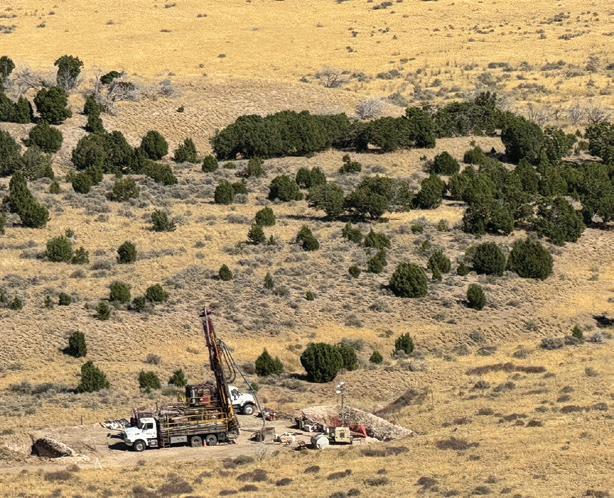
tively low capex at Black Pine could make it a takeover target, analysts say, particularly as gold prices continue to hover around record highs.
Drawing comparisons to the US$242 million Orla Mining (TSX: OLA; NYSE: ORLA) — Gold Standard Ventures transaction of 2022, 3L Capital mining cofounder Mark Souvenir said the valuation multiples suggest the potential for a share price increase of up to 333% if the gold price stays strong.
“We believe a strategic investment by a producer or M&A is a near-term outcome,” Souvenir said in a note to clients on Oct. 11. “Finding a large-scale open-pit oxide project in one of the best mining jurisdictions globally is rare.”
Liberty shares traded at 34¢
Top left: Liberty Gold vice-president of exploration, Peter Shabestari, points towards the Rangefront South deposit at the Black Pine Mountain project.
Top
Left: Entrance to the Black Pine project. HENRY LAZENBY
apiece at press time giving it a market capitalization of $128.2 million. Shares are up about 44% over the past 12 months, having touched 23¢ and 43¢.
Study details
As part of the prefeasibility, Liberty released the first reserve estimate for Black Pine, outlining 299.4 million probable tonnes at 0.32 gram gold per tonne for 3.1 million oz. of metal.
Liberty also released an updated resource statement showing 402.6 million indicated tonnes at 0.32 gram gold for 4.16 million ounces.
The inferred resource holds 97.7 million tonnes at 0.23 gram gold for 712,000 ounces.
The mining plan for the Black Pine Project involves moving an estimated 70 million tonnes of ore over the life of the mine to a centralized heap leach facility.
The heap leach pad is planned to have an initial capacity of 16 mil-
lion tonnes, potentially expanding to 24 million tonnes per year.
Community support
Located only about three hours north of Salt Lake City, Black Pine is supported by well-established infrastructure, including all-season roads, full cell service coverage and nearby power access.
During the site visit, Liberty’s community relations coordinator, Elizabeth Campbell, noted local communities are generally supportive of the project and the prospect of well-paying jobs a mine would create.
Liberty has worked closely with local farmers, securing water rights through mutually beneficial agreements that ensure the project won’t negatively impact the region’s water supply.
Campbell also highlighted the company’s efforts to reduce the mine’s impact on the community, including plans for a central parking area and bussing workers to the site to reduce traffic through the local towns.
These measures help de-risk the project, Shabestari said.
“We’re confident in the project’s permitability,” he said. “We’ve established positive working relationships with regulatory authorities, and the comprehensive baseline studies already in place to support our applications under the National Environmental Policy Act.”
While visiting the depleted CD and Tallman pits, Shabestari described the Black Pine geology as “a complex series of stacked thrusts and structurally controlled gold deposits,” noting how the interaction of structures and stratigraphy has created a rich but puzzling environment for exploration.
About 60% of the 47-sq.-km project area remains untested, Shabestari said. The site offers chances to expand the resource and further optimize the project before the feasibility study.
Infill and step-out drilling at Rangefront, the M-Zone and the important Discovery Zone aim to expand the resource and convert inferred material into the measured and indicated categories.
For this year, the program includes roughly 19,000 metres of drilling across these zones, focusing on further exploration and resource definition. The program targets seven high-priority areas, where new discoveries could impact the feasibility mine plan.
Shabestari also pointed out the potential of reprocessing the historic heap. “The old heap still holds gold, and we’re assessing how to further process it,” he said.
As Liberty prepares to submit its ‘mine plan of operations’ late this year, the team is advancing baseline studies and technical work to reduce project risks. Shabestari expects a feasibility study to follow next year, and a construction decision thereafter.
“We’ve only just begun to tap into Black Pine’s potential,” Shabestari said. “Every drill hole is another step closer to unlocking something even bigger.” TNM
BY HENRY LAZENBY
U.S.GoldMining (NASDAQ: USGO) shares jumped more than 36% on Oct. 7 to a new 12-month high at US$14.10 after the company doubled the resource at its Whistler gold-silver-copper project in Alaska.
The Anchorage-based company reported an indicated resource of 294.5 million tonnes grading 0.4 gram gold per tonne, 2 grams silver, and 0.16% copper for 3.9 million oz. gold, 19 million oz. silver and 1 billion lb. of copper metal. Whistler also holds 198 million inferred tonnes at 0.7 gram gold, 1.81 grams silver and 0.07% copper for 3.3 million oz. gold, 11.5 million oz. silver and 317 million lb. copper.
The resource builds on a 2022 estimate compiled by GoldMining, which spun out U.S. GoldMining last year to advance Whistler.
It completed its initial public offering in April 2023, netting US$20 million.
Its 2023 drilling program underpinned confidence in the resource update, highlighting more shallow mineralization, CEO Tim Smith said.
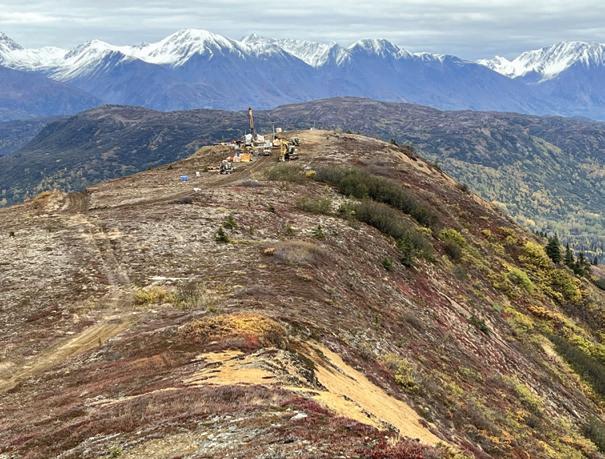
“We look forward to receiving additional results from the 2024 drill hole assays which we believe will continue to support the project’s potential to host a longlife, high-quality gold-copper-silver mine in one of the most favourable mining jurisdictions in the United States,” Smith said in a news release. The updated resource includes three porphyry deposits: Whistler,
Raintree, and Island Mountain that occupy only 1% of the company’s total land holdings. The company is systematically exploring 12 additional targets within the so-called ‘Whistler Orbit’ area, close to the current resources.
The resource estimate incorporates results from drilling last year, including hole WH23-03, which returned 547 metres grading 1.06
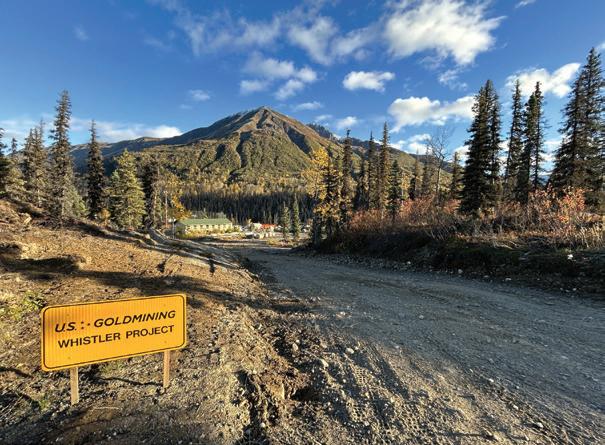
The company believes the Whistler deposit’s high-grade
opportunities for
grams per tonne gold-equivalent.
The 2024 drilling program, which has finished, added 4,006 metres of drilling in six holes, further confirming the continuity and potential of the high-grade core at the Whistler deposit. The resource was constrained using below trailing three-year average prices for gold (US$1,850 per oz.), copper (US$4 per lb.), and
silver ($23 per oz.).
The company believes the deposit’s high-grade centre offers opportunities for a low strip-ratio, and a high-grade starter pit, which could enhance early cash flow.
U.S. GoldMining had a market capitalization of US$123.5 million at press time, with shares trading at US$9.96 each. TNM
BY BLAIR MCBRIDE
Infill drilling at Nova Minerals’
(ASX: NVA; NASDAQ: NVA) RPM project in south-central Alaska has confirmed the continuity of near-surface high-grade gold mineralization as the company works towards a prefeasibility study for next year.
Highlight hole RPMRC-24005 cut 43 metres grading 4.4 grams gold per tonne from 2 metres depth. The intercept included 23 metres of 7.3 grams gold, which in turn contained 13 metres at 10.7 grams; plus 2 metres at 39.2 grams gold.
Hole RPMRC-24006 returned 21 metres grading 3.5 grams gold from 2 metres, including 19 metres at 3.9 grams gold from 3 metres and 6 metres at 7.1 grams gold from 5 metres.
“These results speak for themselves and we believe will add considerable value to the upcoming resource update and ultimately the prefeasibility study which will be focused on RPM as a scale-able low capex/high margin project with future expansion plans achieved through cashflow as soon as possible,” Christopher Gerteisen, Nova CEO, said in a release on Oct. 9. “With further 2024 drill results to follow in short order, these results, along with the 2023 drilling will be included in the upcoming resource update.”
The 21-hole reverse-circulation drill program began in July and was aimed at infilling near-surface inferred resources in RPM North’s
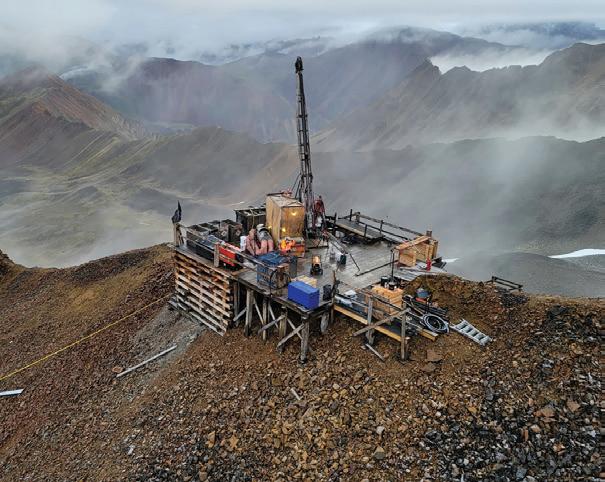
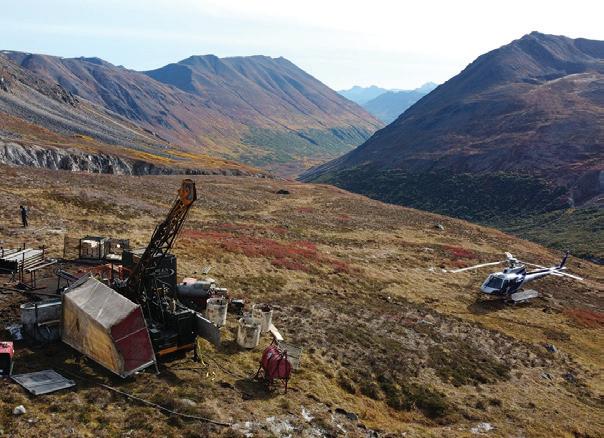
“THESE RESULTS SPEAK FOR THEMSELVES AND WE BELIEVE WILL ADD CONSIDERABLE VALUE TO THE UPCOMING RESOURCE UPDATE AND ULTIMATELY THE PREFEASIBILITY STUDY. ”
CHRISTOPHER GERTEISEN CEO, NOVA
MINERALS
high-grade core. The program also targeted extending drilling south of RPM North to test a possible link with the RPM Valley zone about 150 metres to the southwest.
The latest holes pierced areas above the measured and indicated core at RPM North, located inside the RPM target and on the north end of Nova’s wider Estelle flagship project, about 150 km northwest of Anchorage. Estelle sits on the Tintina Gold belt, a highly prospective province for the yellow metal that hosts Barrick Gold’s (TSX: ABX; NYSE: GOLD) Donlin Creek project and Kinross Gold’s (TSX: K; NYSE: KGC) Fort Knox mine.
RPM North hosts a pit-constrained resource of 4.4 million measured and indicated tonnes grading 2.4 grams gold for 330,000 oz., and 23 million inferred tonnes at 0.6 gram gold for 450,000 oz., according to an update in April.
Shares in Melbourne-based Nova gained 9% to A18¢ apiece on
the news. Shares traded at A20¢ each before press time, valuing the company at A$53 million. The stock has traded in a 52-week range of A13¢ to A43¢.
Gold prices remain at historic highs and rose above US$2,700 per oz. before press time.
Estelle also holds potential for critical minerals such as antimony, a byproduct of gold production that is important for national defence, clean energy and technology applications. Nova collected 500 soil and 225 rock samples collected in a surface exploration program this year. Assays are pending.
Samples of stibnite, the main ore source for antimony, were also collected from the Stibium and Styx prospects at Estelle last year. Highlights from grab sampling last year included 12.7 grams gold, 2.1% stibnite, and 1,600 grams silver; and 1.5 grams gold and 60.5% stibnite from Stibium. At Styx, highlight samples were 1.2 grams gold and 19% stibnite, and 0.9 grams gold and 21.7% stibnite. The United States has no domestic production of the mineral and China controls almost half of antimony’s global mined output. On Sept. 15, the East Asian country started restricting antimony exports.
Perpetua Resources (TSX: PPTA; NASDAQ: PPTA) is targeting the U.S.’s only known domestic source of antimony at its Stibnite project in Idaho, which hosts 148 million lb. of the metal.
ARIZONA | Environmental standards at is sue at Rio Tinto, BHP-owned project
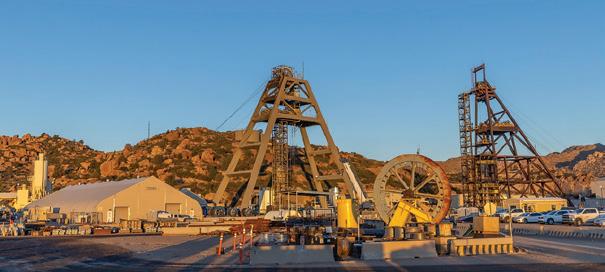
BY
The San Carlos Apache Tribe is taking its longstanding fight against Resolution Copper to the U.S. Supreme Court after the Arizona state court in June ruled in favour of the project, a joint venture between mining giants Rio Tinto (NYSE: RIO; LSE: RIO; ASX: RIO) and BHP (NYSE: BHP; LSE: BHP; ASX: BHP).
In late September, the Tribe asked the U.S. Supreme Court to review the Arizona Supreme Court decision to allow Resolution to discharge copper and other contaminants into Queen Creek. The project sits on the federally owned Oak Flat Campground, a place some Apache consider sacred. It is located about 110 km east of Phoenix.
The argument centres on whether Resolution’s plan to build what would be one of the largest copper mines in the world constitutes a “new source of pollution” under the Clean Water Act, or an existing source.
‘New’ vs ‘existing’ pollution
A “new source” determination would impose the most stringent Clean Water Act regulations on the proposed mine, while an “existing source” determination would allow Resolution to discharge copper-contaminated water into Queen Creek without meeting the Clean Water Act standards.
The Arizona Department of Environmental Quality (ADEQ) had previously treated Resolution as an “existing source,” and this was later affirmed by the Maricopa County Superior Court. The Apache Tribe subsequently fought and won its case with the Arizona Court of Appeals in 2022.
However, the Arizona Supreme Court decision this summer sided with ADEQ, giving Resolution a major win in its quest to mine about 40 billion lb. of copper at the site. The ruling, according to the court, was based on Resolution’s plans to reuse a small number of tunnels and mineshafts that Magma Copper built for a defunct mine that was exhausted in 1996.
‘Absurd’ ruling
In its statement, the Apache Tribe said the Arizona Supreme Court made “an egregious error” when it ruled that Resolution Copper could avoid meeting the most rigorous Clean Water Act regulations.
“It’s absurd to consider Resolution an existing source when most of Resolution’s mining operations have yet to be built and the copper lode is a mile underground and has
never been mined,” Terry Rambler, the Tribe’s chairman, said.
“The Arizona Supreme Court twisted itself in knots to pretend Resolution’s mostly unbuilt mining operations somehow already exist,” he added.
Meanwhile, in a separate petition, non-profit group Apache Stronghold is also asking the U.S. Supreme Court to prevent the transfer of Oak Flat to Resolution, arguing that the Religious Freedom Restoration Act protects their right to worship at the sacred site.
Resolution has faced numerous setbacks for years due to fierce opposition by the Apache Tribe. Once built, it would supply more than a quarter of America’s copper demand for decades.
Rio Tinto CEO Jakob Stausholm recently said in a Bloomberg interview that the company is targeting first production by the end of this decade. The company owns a 55% stake in the underground development project, with an expected 40-year mine life. TNM
BY MINING.COM STAFF
Americas Gold and Silver (TSX: USA; NYSE-AM: USAS) has agreed to buy out its 40% joint-venture partner — an affiliate of Canadian mining investor Eric Sprott — in its producing Galena silver-lead-zinc complex in Idaho.
Americas Gold and Silver stock rallied 22% or 9.5¢ on the news to 53¢. The company had a $156.8-million market cap at press time.
In return for the interest, Americas Gold will issue 170 million common shares to Sprott and pay US$10 million cash. It will also issue 10 million shares for 40¢ apiece for a total of $4 million to certain vendors involved in the transaction.
Americas Gold acquired Galena in 2014, and five years later entered the joint venture with the Sprott entity.
The precious metals miner has also arranged a private placement at the same issue price to raise gross proceeds of $40 million, and is in talks for further debt financing to improve its balance sheet as it looks to optimize and expand the Galena complex.
Following the transactions, existing shareholders will own roughly 53% of the company and Sprott will own 22%. The financing participants will own 19%, while management and directors will own the remaining 6%.
As part of the acquisition, the company will also appoint former Karora Resources executive Paul
Andre Huet as chairman and CEO to lead the next phase of its growth.
Enhanced silver leverage
The Galena complex is located in Idaho’s Silver Valley, a district famous for producing silver, lead, zinc and copper from well-known operations such as the Bunker Hill, Sunshine and Lucky Friday mines.
The company’s claim holdings cover nearly 90 sq. km and it hosts three active shafts and two process facilities is producing silver-lead concentrates.
Galena is currently undergoing a recapitalization plan designed to modernize its infrastructure, acquire new mining equipment and develop additional stopes for better operational flexibility.
A consolidated ownership of Galena, says Americas Gold, would provide for a focused vision centred around optimizing and expanding the operation with existing infrastructure. The complex is expected to be a long-term cornerstone asset supported by a robust reserve and resource base,
excess mill capacity, and opportunity to grow through future exploration.
Galena represents one of the largest underground silver mines in North America, having produced over 240 million oz. of the precious metal for more than half a century. It reached peak production in the early 2000s, producing more than 5 million oz. of silver per year.
Americas Gold’s other main asset, Cosalá in Mexico, consists of the San Rafael mine, which is currently in full production, and the EC120 deposit, which has an estimated probable reserve of 2.9 million tonnes with a grade of 157 grams silver per tonne containing 14.5 million ounces.
The company expects production, operating margins and nearterm growth potential at Cosalá to steadily increase.
Silver has rallied nearly 30% this year, and Americas Gold expects the metal to generate roughly 80% of its revenue starting in the second half of 2025. TNM
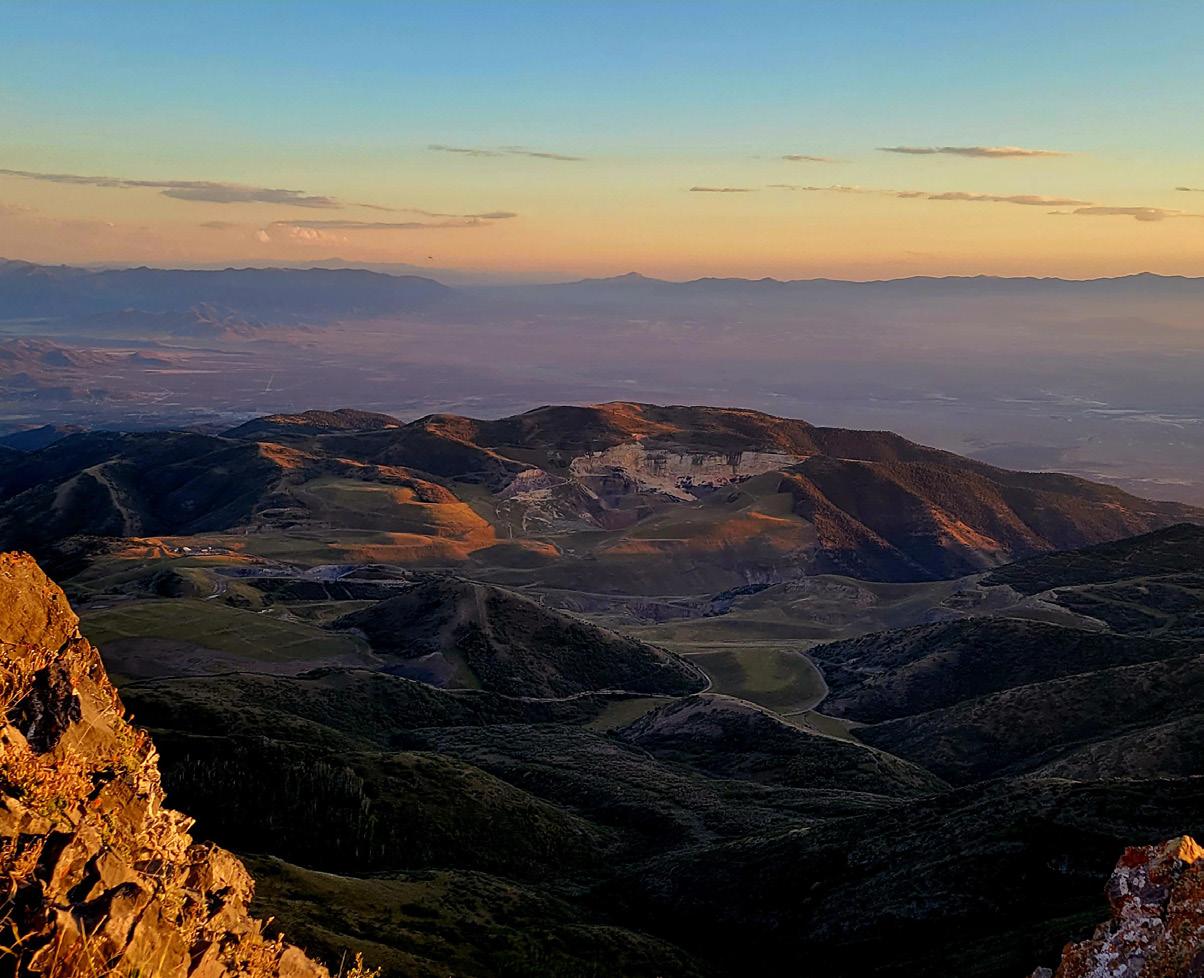
BY NORTHERN MINER STAFF
The United States has a long mining and exploration history and is rich in base and precious metals as well as new energy metals and uranium. Here are seven companies with significant mines and development projects to watch.
American Pacific Mining (CSE: USGD; US-OTC: USGDF) has been releasing results from its past-producing Madison copper-gold project in Montana throughout September, and in August wrapped up a 6,036-metre drill program at its other key asset, the Palmer copper-zinc volcanogenic massive sulphide (VMS) project in southeastern Alaska.
Initial infill and extension drilling this summer at Madison demonstrated that significant grades continue beyond previously mined out areas. Highlights included 12.3 metres of 10.36 grams gold and 0.88% copper from 115 metres downhole in hole APMMAD24-06; 2.9 metres of 3.17 grams gold and 2.41% copper from 145 metres in APMMAD24-08; and 8.1 metres of 3.66% copper starting from 187.2 metres in APMMAD24-09.
The company also recently accessed the upper levels of the mine and collected four samples from the ribs of the old workings. Sample highlights released at the end of September included 45.5% copper and 2.17 grams gold per tonne and 31% copper and 8.4 grams gold.
At Palmer, the company drilled
6,036 metres across 19 holes this year. The program, funded under a joint venture with Dowa Metals & Mining, the owner of Japan’s largest zinc smelter, focused on building upon the results of the 2023 campaign.
The final batch of 2023 assay results, released in January, included the four most significant copper intercepts ever drilled at Palmer. These included 43.8 metres of 6.54% copper, 3.15% zinc, 0.42 gram gold and 27.97 grams silver (8.22% copper-equivalent) from 170 metres downhole in hole CMR23-172.
A preliminary economic assessment (PEA) for Palmer, released in 2019 outlined a project with a US$266-million post-tax net present value (at 7% discount rate) over an 11-year life. Capital costs were pegged at US$278 million, with a 21% post-tax internal rate of return and a 3.3-year payback period. Lifeof-mine production is forecast at about 1 billion lb. of zinc, 196 million lb. of copper, 18 million oz. of silver and 91,000 oz. of gold.
American Pacific Mining has a market cap of about $33 million.
At the end of August, Hudbay Minerals (TSX: HBM; NYSE: HBM) received its Aquifer Protection permit for the Copper World project in southern Arizona, bringing the proposed open pit mine one step closer to production.
The permitting process for the first stage is expected to re quire only state and local permits and management continues to work on securing the Air Quality Permit, the last key state-level permit required, Hudbay says.
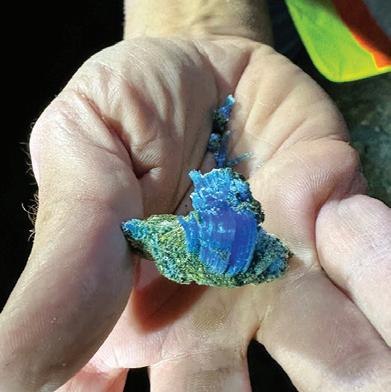
Copper World, one of the highest-grade open pit copper projects in the Americas, is expected to produce 85,000 tonnes of copper a year over an initial mine life
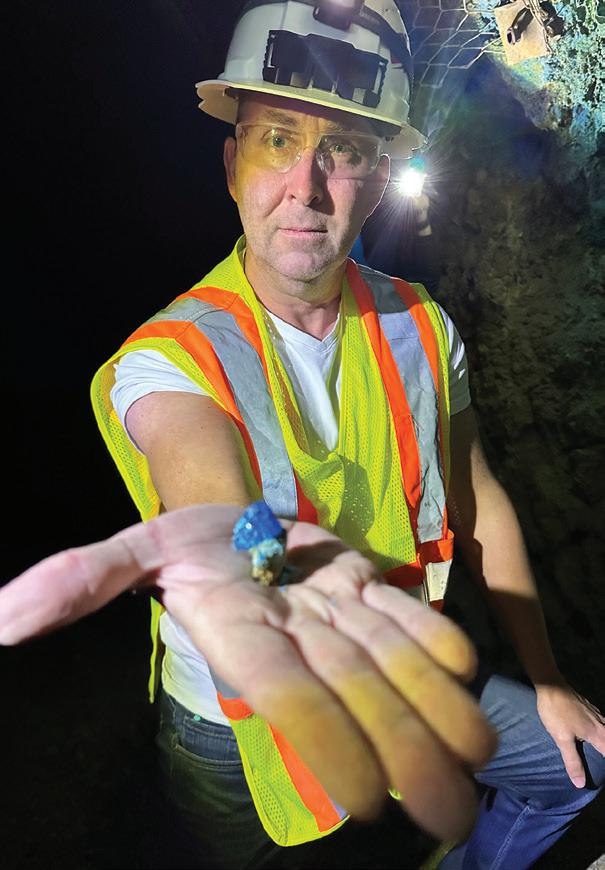
Hudbay received a favourable ruling last year from the U.S. Court of Appeals for the Ninth Circuit Court that reversed the U.S. Fish and Wildlife Service’s designation of the Copper World area as a critical habitat for jaguars. Hudbay said at the time that the ruling won’t impact the state permitting process for Stage 1 but is expected to simplify federal permitting for the second stage.
Copper World, formerly referred to as Rosemont, is about 45 km southeast of Tucson in Pima County.
Hudbay Minerals has a market cap of about $5 billion.
Lion Copper and Gold (TSXV: LEO; US-OTC: LCGMF) released assays in September from exploration drilling at its Yerington and MacArthur deposits, part of the company’s Yerington copper project in Nevada, 81 km southeast of Reno.
of 20 years at average cash costs and all-in sustaining costs of US$1.47 and US$1.81 per lb. copper, respectively.
A prefeasibility study last year on the first stage outlined an after-tax net present value (at an 8%
discount rate) of US$1.1 billion, with a 19% internal rate of return at a copper price of US$3.75 per pound. Capital costs were pegged at US$1.3 billion with a payback of just under six years.
Copper World has 1.2 billion measured and indicated tonnes grading 0.42% copper for 5 million lb. of in-situ copper
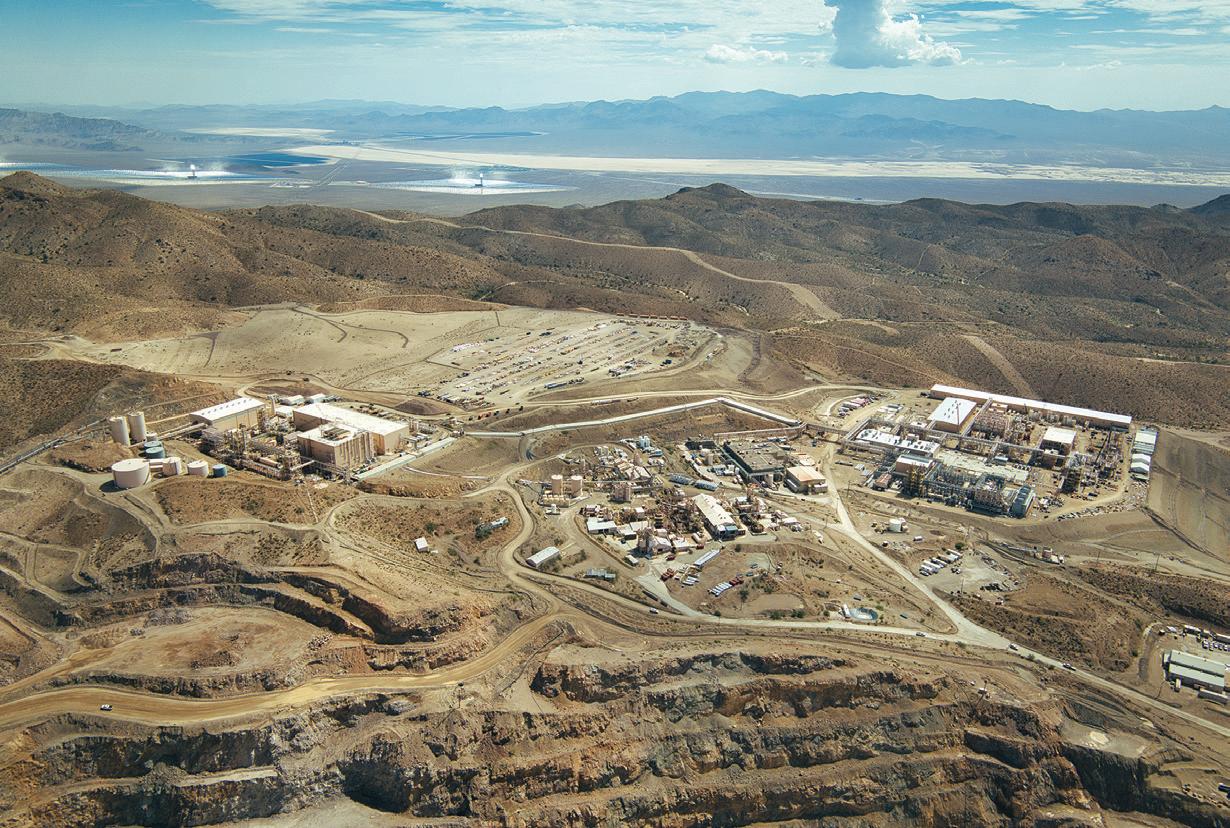
Drill highlights from Yerington included a 128-metre interval starting from surface of 0.12% total copper in drillhole YM-047, including a 16-metre total copper intercept of 0.36%. Total copper refers to total copper grade sent to the mill for metallurgical recovery by flotation. Drill hole YM-047A returned 1,371 metres of 0.2% total copper starting from 194 metres downhole. At MacArthur, assays included a 9-metre intercept of 0.21% total copper in hole QM-336 starting from 31 metres, and 43 metres of 0.22% total copper starting from 53 metres in hole QM340.
Rio Tinto’s (ASX: RIO; LSE: RIO; NYSE: RIO) Nuton division has an option to earn up to 65% of the Yerington project from Lion Copper and Gold.
A 2023 PEA envisioned an open pit and heap-leach operation using Nuton technologies to recover cathode copper from primary sulphide materials, which would eliminate the need for a concentrator, tailings impoundment and smelter operations.
The study outlined a 12-year mine life at Yerington and MacArthur producing an average of 117 million lb. copper a year or a total of 1.4 billion lb. of the metal at average operating costs of US$2.20 per lb. of payable copper. At a US$3.85 per lb. copper price, the post-tax net present value (at a 7% discount rate) came to US$356 million and the internal rate of return to 17.4%. Capital costs were pegged at US$413 million with an after-tax payback period of five years.
Lion Copper and Gold has a market cap of roughly $27 million.
This summer, California rare earths producer MP Materials (NYSE: MP) signed an US$11-million supply contract with the U.S. Department of Defense for rare earths neodymium and praseodymium (NdPr) oxide, the primary ingredient in permanent magnets. It also completed an agreement with an unnamed global carmaker for a “significant volume” commitment, the company reported in August.
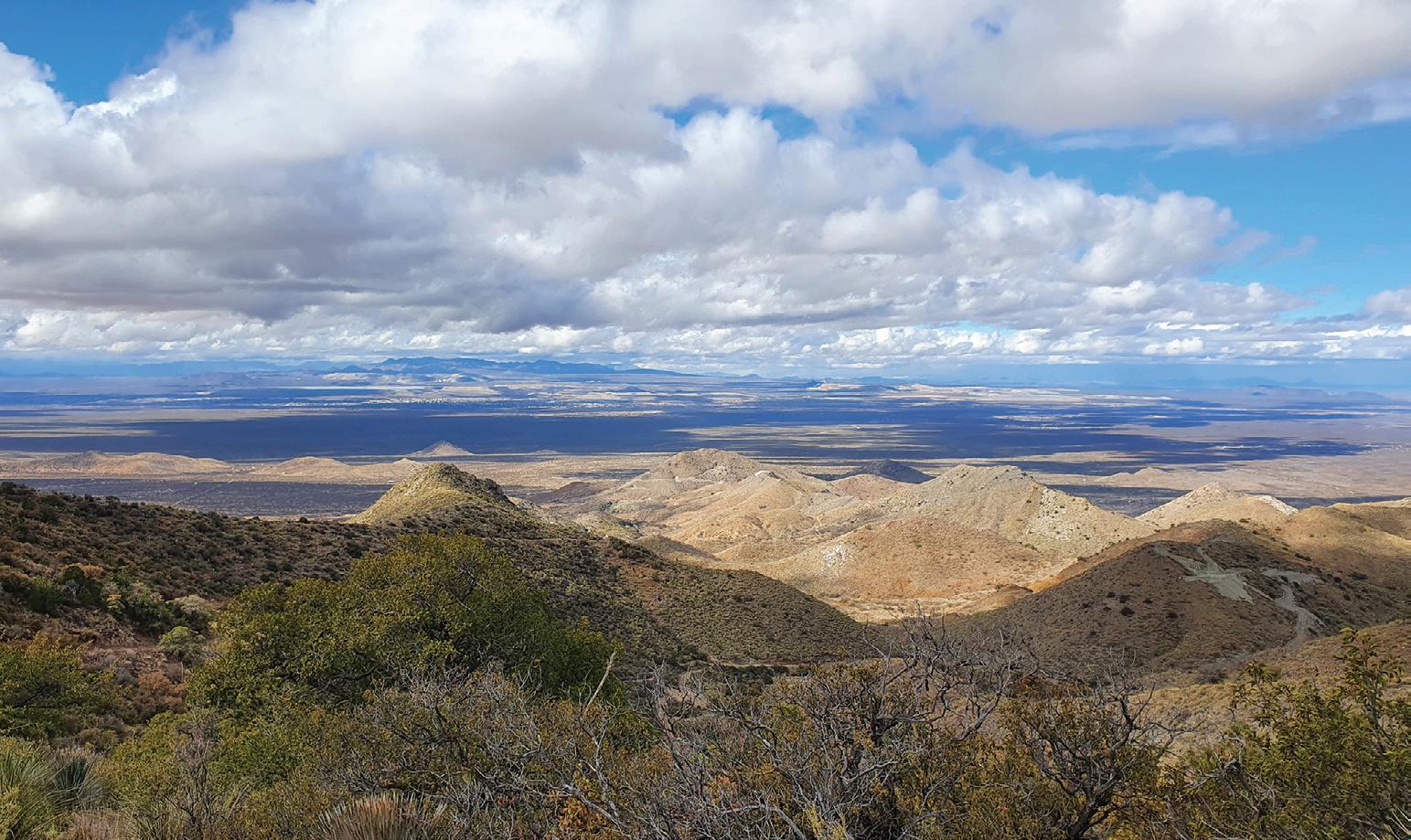
MP’s Mountain Pass mine, among only two producing rare earths mines in the Americas, hosts one of the world’s richest deposits of rare earth elements. In each of the last three calendar years, production of rare earth oxides in concentrate from the mill has exceeded 41,000 tonnes and over the next four years the company plans to increase that to 60,000 tonnes annually. About 15% of the rare earth oxides contained in its concentrate is NdPr.
Last year, MP Materials re-commissioned the processing facilities at Mountain Pass and began producing separated and refined rare earth products from the concentrate. The facility produces rare
earth products including NdPr oxide, lanthanum, cerium, and heavy rare earth concentrate.
Mountain Pass, on the south flank of California’s Clark Mountain Range, about 85 km southwest of Las Vegas, Nev., produced 272 tonnes NdPr oxide in the three months ended June 30, more than double first quarter production of 131 tonnes, the company says.
In January, the U.S. government granted the company a US$58.5-million advanced energy project tax credit to help it build a fully integrated rare earth magnet manufacturing facility in Fort Worth, Texas. Construction began in April 2022.
The company plans to produce
neodymium-iron-boron (NdFeB) magnets by late 2025. The NdPr oxide produced at Mountain Pass will be reduced to NdPr metal and then converted to NdFeB alloy and finished magnets. The magnets are found in electric motors and generators that power hybrid and electric vehicles, robots, wind turbines, drones, electronics, and critical defence systems. MP Materials has a market cap of about US$2.9 billion.
In late September, Strathmore Plus Uranium (TSXV: SUU; USOTC: SUUFF) started drilling its
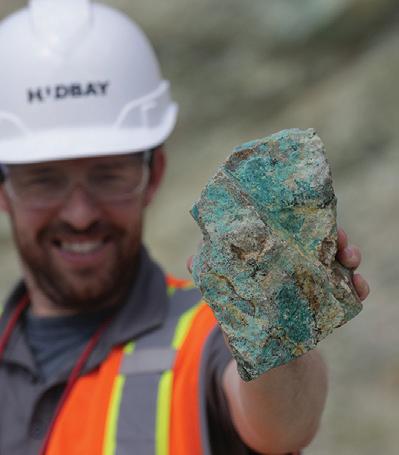
Beaver Rim project next to Cameco’s (TSX: CCO; NYSE: CCJ) fully permitted Gas Hills in-situ recovery project in central Wyoming. Strathmore is permitted to drill 3,048 metres and plans to confirm historic results and extend mineralization into unexplored areas. The company recently doubled the size of the project by staking to 22.2 sq. km.
The Beaver Rim claim group lies to the south of Cameco’s Peach deposit. American Nuclear explored it in the 1970s, Cameco between 1990 and early 2000, and Strathmore Minerals in 2012. Uranium was encountered at depths of 213-305 metres, and contained in stacked, Wyoming-type roll front deposits
within arkosic-rich sandstones of the Eocene-age Wind River Formation.
Strathmore has two other permitted uranium projects — Agate and Night Owl. Like Beaver Rim, Agate contains mineralization typical of Wyoming-type roll front deposits, while Night Owl is a former producing surface mine that was in production in the early 1960s.
Agate mineralization, in Wyoming’s Shirley Basin, is shallow, from 5 to 46 metres deep. Much
Below: A drill rig in the Singatse Mountains in Nevada. LION COPPER AND GOLD
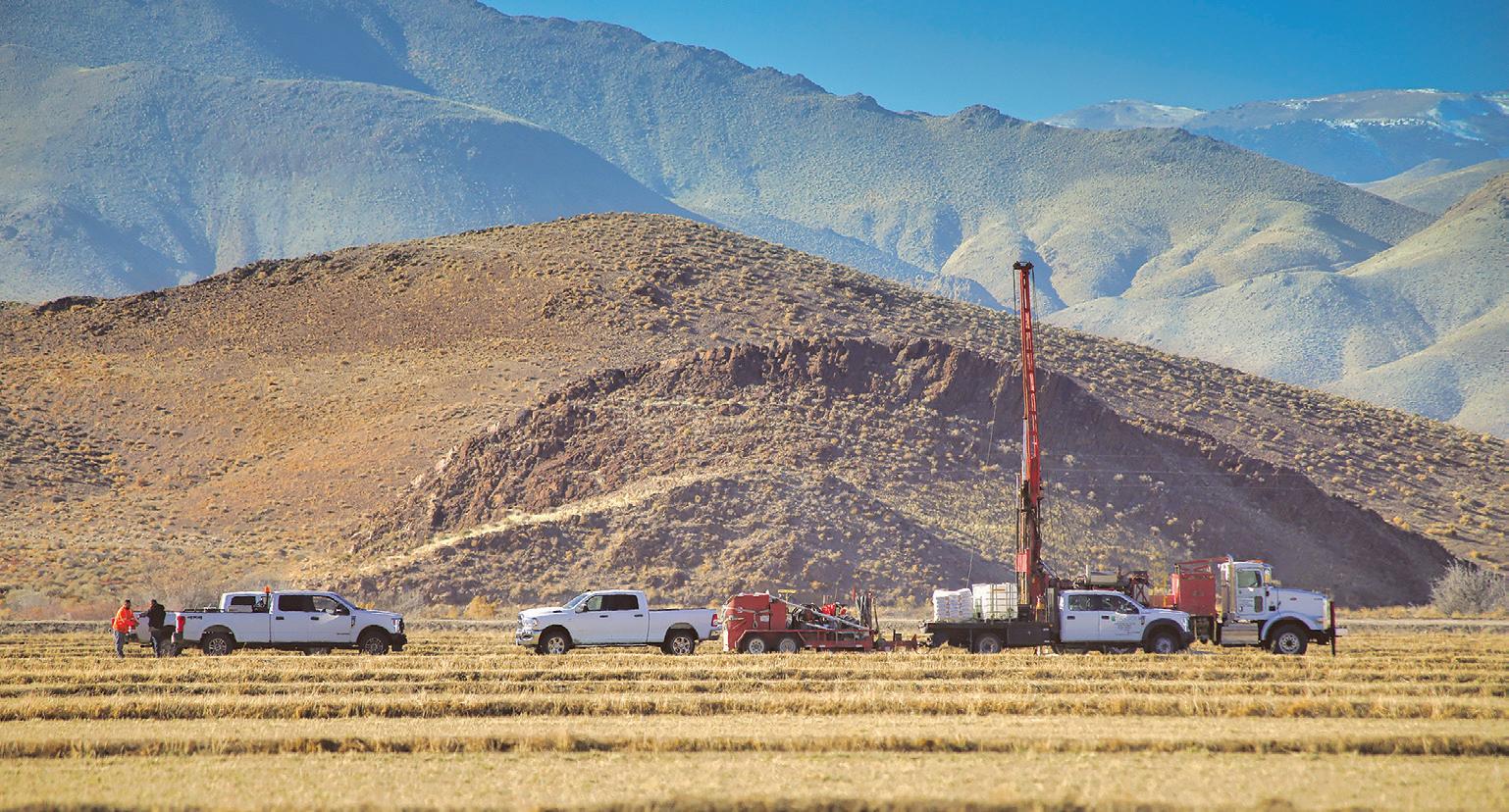
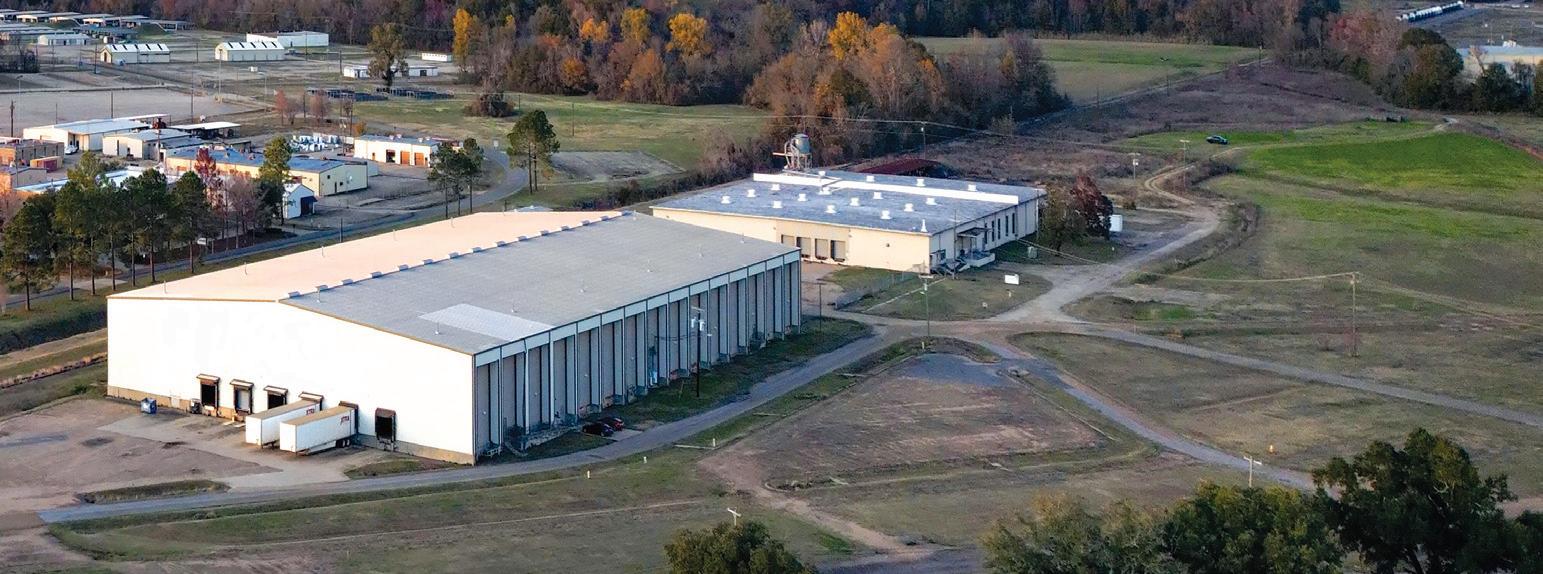
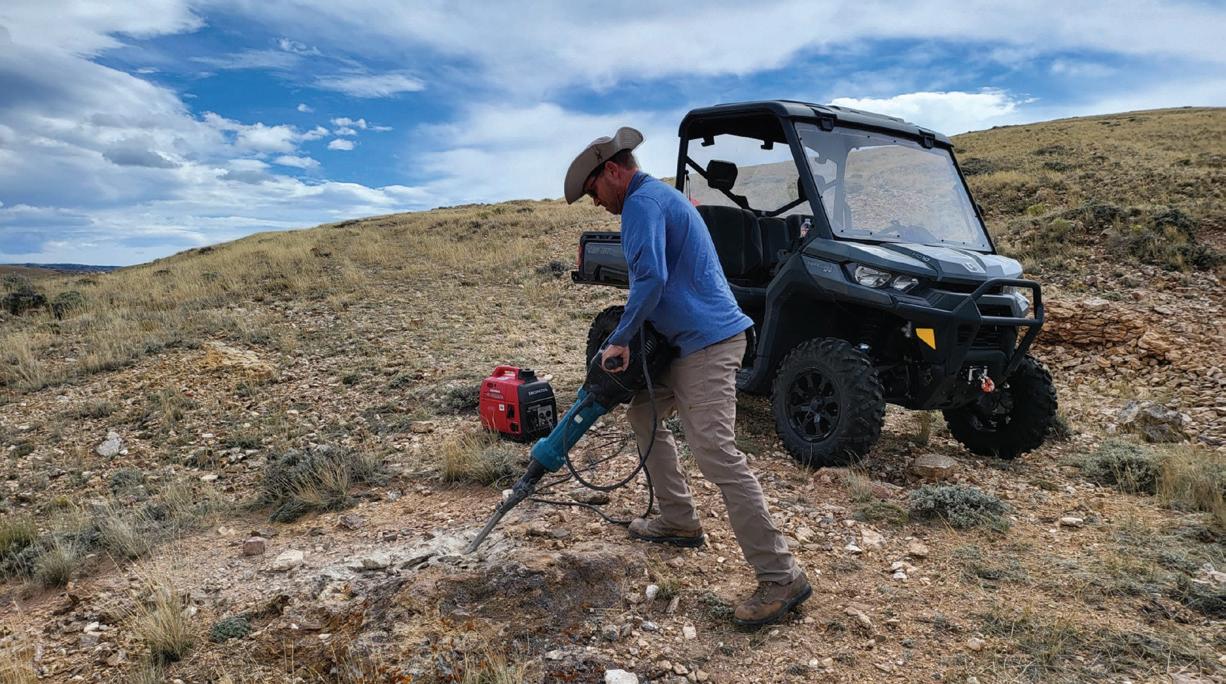
TSXV: SUU OTCQB: SUUFF
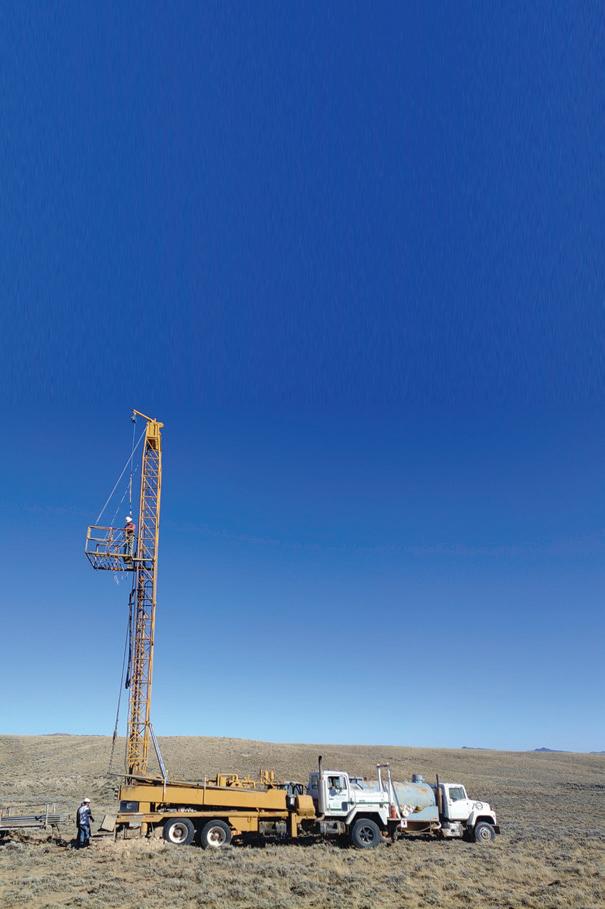
Strathmore has three permitted uranium projects in Wyoming: Agate, Beaver Rim, and Night Owl. The Agate and Beaver Rim properties contain uranium mineralization in typical Wyoming-type roll front deposits based on historical and recent drilling data. The Night Owl property is a former producing surface mine that was in production in the early 1960s.
> Snapshot from P39 of the mineralization is below the water table, making it amenable to in-situ recovery.
Night Owl, also in the Shirley Basin, produced 84 tonnes at a grade of 0.24% U308. It was mined at or near surface in the late 1950s and 1960s. Production ceased due to low uranium prices of about US$7 per lb. and Strathmore says Night Owl has not been properly explored using modern exploration techniques.
Strathmore Plus Uranium has a market cap of about $13 million.
n Ucore Rare Metals
Ucore Rare Metals (TSXV: UCU; US-OTC: UURAF) is focused on its patent-pending rare earth separation technology RapidSX and is fine-tuning the refining flowsheet at a commercialization and demonstration plant in Kingston, Ont.
The company has produced heavy and light rare earth chlorides from various feedstocks, including monazite, bastnaesite, ionic clays and xenotime sources. It also has developed a batch-level process area to produce kilogram quantities of rare earth oxides from the generated rare earth chlorides.
The company plans to use the technology to set up a heavy and light rare earth oxide processing facility in Alexandra, La. Ucore signed a multi-decade lease on a brownfield facility for the site at a former Air Force base in January.
In September, Ucore signed a
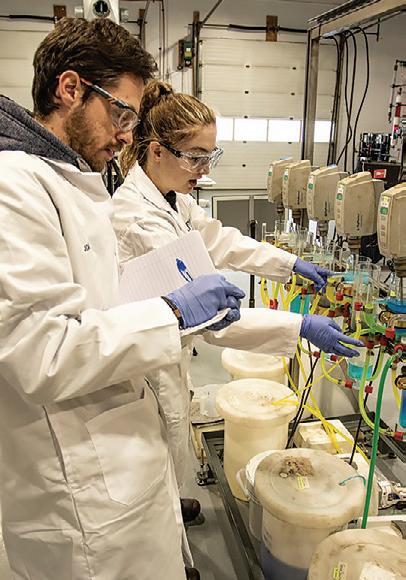
memorandum of understanding with Australia’s ABx Group (ASX: ABX). The two companies will work towards an offtake agreement under which ABx will supply Ucore with a mixed rare earth carbonate from its ionic adsorption clay rare earth resource in Tasmania. Ucore hopes to obtain the first right of refusal to 50% of ABx’s production over five years. The companies also will explore a Ucore investment in ABx’s project.
Ucore also recently signed an MOU with Meteoric Resources (ASX: MEI). The Perth-based company will supply 3,000 tonnes of total rare earth oxides (TREO) a year to Ucore from its Caldeira rare earth ionic clay project in Brazil’s Minas Gerais state.
The key rare earths that Ucore plans to process at the Louisiana complex once in production will be praseodymium, neodymium, terbium and dysprosium. The SMC will be designed to process up to six different sources of feedstock from mines in the Western hemisphere.
In addition to the Louisiana complex, the company has longer term plans to develop its Bokan Mountain heavy REE project on Prince of Wales Island in southeastern Alaska.
Ucore Rare Metals has a market cap of about $37.7 million.
n Western Alaska Minerals
Western Alaska Minerals’ (TSXV: WAM) Illinois Creek project in the state’s west hosts a past-producing
oxide gold-silver deposit and a carbonate replacement style deposit (CRD) called Waterpump Creek hosted by the Illinois Creek dolomite sequence.
An initial resource estimate in February for Waterpump Creek outlined 2.4 million inferred tonnes grading 279 grams silver, 9.84% lead and 11.25% zinc, (977 grams silver-equivalent or 26.32% zinc equivalent) for 75 million silver-equivalent oz. or 1.4 billion lb. zinc-equivalent.
In June, the company kicked off a drill program to find more highgrade sulphide mineralization along a six-to-eight km trend between Waterpump Creek and the historic Illinois Creek mine.
The objective was to tie the individual zones of the CRD system together, starting with two targets: the LH zone to the southwest of Waterpump Creek and Warm Springs to the east of the historic gold-silver mine.
At Warm Springs, the company intersected silver-zinc-lead replacement style mineralization with a 1.2-metre intercept of 687 grams silver, 33.64% lead and 0.1% zinc starting from 213 metres downhole, including 3.2 metres of 88.5 grams silver, 2.4% lead and 4% zinc in drillhole IC24-0005. Assays from the program are pending.
Mineralization at Waterpump Creek has similar geological characteristics to other CRD systems, including the Santa Eulalia and Naica deposits in Mexico, the Taylor-Sunnyside deposit in Arizona and the Tintic deposit in Utah, the company says.
Western Alaska Minerals has a market cap of about $28 million. TNM


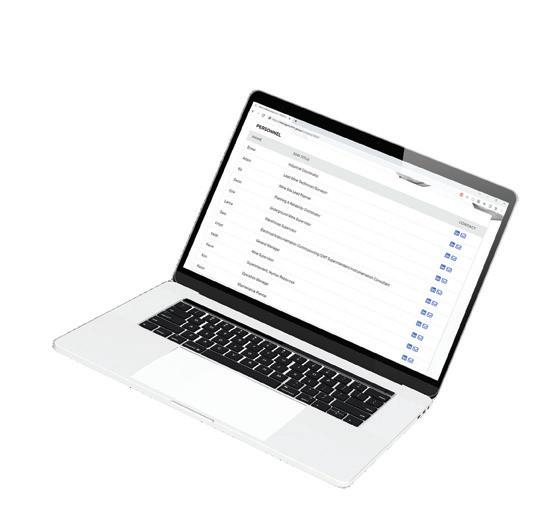

> Lundins from P1
Resources (part of Lundin Mining since 2022).
Big deal
Lundin currently produces just under 400,000 tonnes of copper per year from six mines. Josemaria alone would churn out over 130,000 tonnes of copper, nearly 225,000 oz. of gold and 1 million oz. of silver a year over a 19-year mine life, based on a 2020 feasibility study.
Filo del Sol could add 66,000 tonnes of copper, 168,000 oz. of gold and 9.3 million oz. silver over a 13-year life, according to a 2023 prefeasibility.
So why bring BHP into the mix when Josemaria is already owned by Lundin Mining, and Filo by a Lundin Group company?
Well, scale for one thing.
“It’s impossible today to be able to buy into a producing top-tier asset like Escondida or Collahuasi, Adam said.” The way we have to do that is to develop one, and now we’re doing it with BHP.”
BHP’s financial resources, technical know-how, and similar focus on sustainability should speed development of the district. That’s a big plus as the market reckons with a looming demand rise coupled with too little investment in new supply.
“What the industry lacks is that investment into the long-term, large-scale projects like Josemaria and Filo. We want to make sure that we can do that and add production in the near term,” Jack said.
Developing Filo and Josemaria together also gives a clear line of sight to production for Lundin and Filo shareholders, he said. Existing infrastructure at Lundin’s 70%held Caserones mine in Chile, is also expected to speed development and lower costs.
Lundin has long been searching for a development partner for Josemaria. Canaccord Genuity analysts recently estimated it will cost US$6.2 billion to develop — twice the amount outlined in a 2020 feasibility. So having a partner
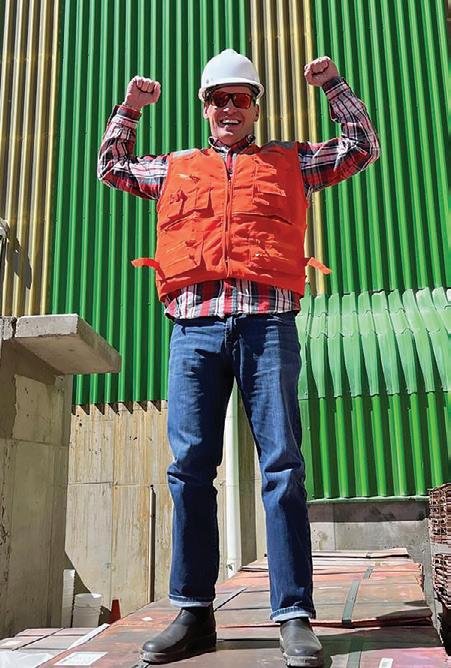
with BHP’s heft will be both practical and transformational.
BHP, meanwhile, has been on a copper kick as it projects demand for the key energy transition metal to grow by roughly 70% by 2050.
BHP swallowed up copper miner Oz Minerals for US$6.4 billion in 2023, and earlier this year launched a failed US$49-billion bid for Anglo American (LSE: AAL).
BHP entered the Vicuña district in 2022 when it invested $100 million in Filo.
Its arrival gave the two companies a chance to get to know one another, from the management teams down through operations, Jack said. They soon saw the benefits of combining the projects and working together, he added.
The partners expect to release a preliminary plan outlining staged development of the projects in next year’s first half. Production will likely begin with Josemaria, possi-
tonnes per day, allowing IsoEnergy to triple output to 3 million lb. U3O8 (uranium oxide or yellowcake) from 1 million lb. U3O8. IsoEnergy has toll-milling agreements with Energy Fuels’ (TSX: EFR; NYSE: UUUU) White Mesa mill in Utah for processing flexibility.
The deal more than doubles IsoEnergy’s resources for a total of 17 million measured and indicated lb. and 10.6 million inferred lb. to rank it among the largest in the U.S., the company said. The asset consolidation in Utah and Colorado offers cost savings in transportation and administration, it said.
The deal comes exactly a year after IsoEnergy took over Consolidated Uranium in an all-stock deal including the Tony M and Daneros projects. Tony M is 6 km from Shootaring. IsoEnergy also holds Hurricane, the world’s highest grade indicated uranium resource, in Saskatchewan’s Athabasca Basin, and has projects in Quebec, Nunavaut and Australia.
The deal also came just weeks before IsoEnergy formed a 60%40% joint venture with Purepoint Uranium (TSXV: PTU) to explore and develop uranium properties in the Athabasca Basin.
IsoEnergy plans to use Shootar-
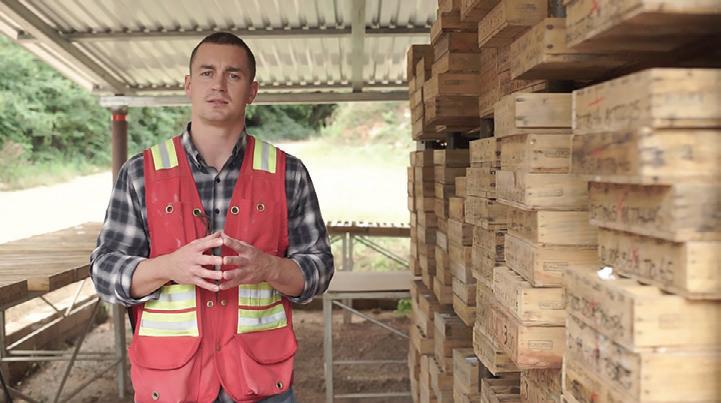
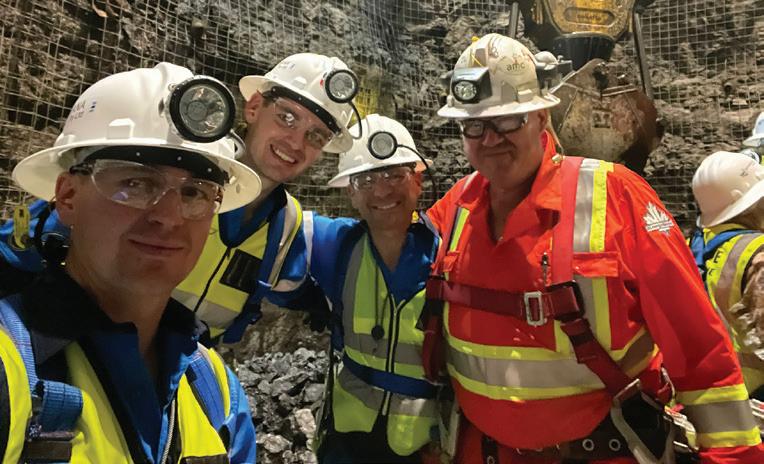
bly supplemented by some oxide production from Filo. The deeper Filo sulphides from the Aurora zone, discovered in 2021, would provide the bulk of full-scale production in a later stage.
Argentina risk New President Javier Milei’s RIGI bill to stimulate foreign investment, which was introduced last December and passed into law just three weeks before the BHPLundin-Filo tie-up was announced, was another push to seal the deal. The country, rich in copper, gold and lithium, has long struggled
with inflation and suffered two debt crises in the past 20 years.
Under the RIGI program, projects in select sectors that cost at least US$200 million could see their income tax reduced to 25% from 35%, a pledge of tax stability for 30 years, and other tax, customs and exchange benefits.
“That’s something that’s been needed in Argentina to get confidence for investments like ours and definitely something that was a key trigger point for BHP to make a significant investment,” Jack said.
That said, the Lundins have always had a knack for gauging
political risk and timing – having had big successes in Argentina with International Musto and Argentina Gold in the 1990s.
It seems to be a lesson well learned by Adam and Jack, who feel the need to do right by their family legacy started by their grandfather, and continued by their father, who passed away in 2022 at age 64.
“With the business, I feel like I owe it to the generations before us to make it better,” Adam said. “They spent so much time with us and were such great role models. We owe it to them to take it one level further.” TNM
ing to process ore from Anfield’s Velvet-Wood and Slick Rock projects. The two projects together have 811 million measured and indicated tonnes grading 0.29% U3O8 for 4.6 million lb. yellowcake, according to an April 2023 resource.
The Anfield acquisition gives IsoEnergy larger scale for access to capital and even more M&A, CEO Williams said.
“IsoEnergy is committed to becoming a globally significant, multi-asset uranium producer in the world’s top uranium mining jurisdictions,” he said. “With the global shift towards nuclear power, we believe the outlook for uranium has never been stronger. TNM
“The rigorous exploration efforts undertaken by Founders’ technical and management team have clearly highlighted the district-scale potential of the Antino gold project,” he said.
The B2Gold investment adds to the $20-million private placement from a syndicate of underwriters led by BMO Capital Markets, announced on Oct. 10. The funders are to buy nearly 6.3 million shares of Founders for $2.40 each.
Founders’ shares had risen to $3.73 apiece at press time, valuing the company at $275.6 million. Its shares have traded in a 52-week
range of 82¢ to $3.40.
The investments follow the appointment of Chris Taylor as an independent director to Founders’ board, announced on Oct. 1. Taylor, who was the founder, president and CEO of Great Bear Resources, led its district-scale gold discovery in the Red Lake region of northern Ontario and eventual $1.8-billion buyout by Kinross Gold (TSX: K; NYSE: KGC).
The 238-sq.-km Antino sits on the Guiana Shield, just across the Lawa River from French Guiana. It is the South American country’s most advanced project on a property that’s produced 500,000 oz. of artisanal gold historically. TNM
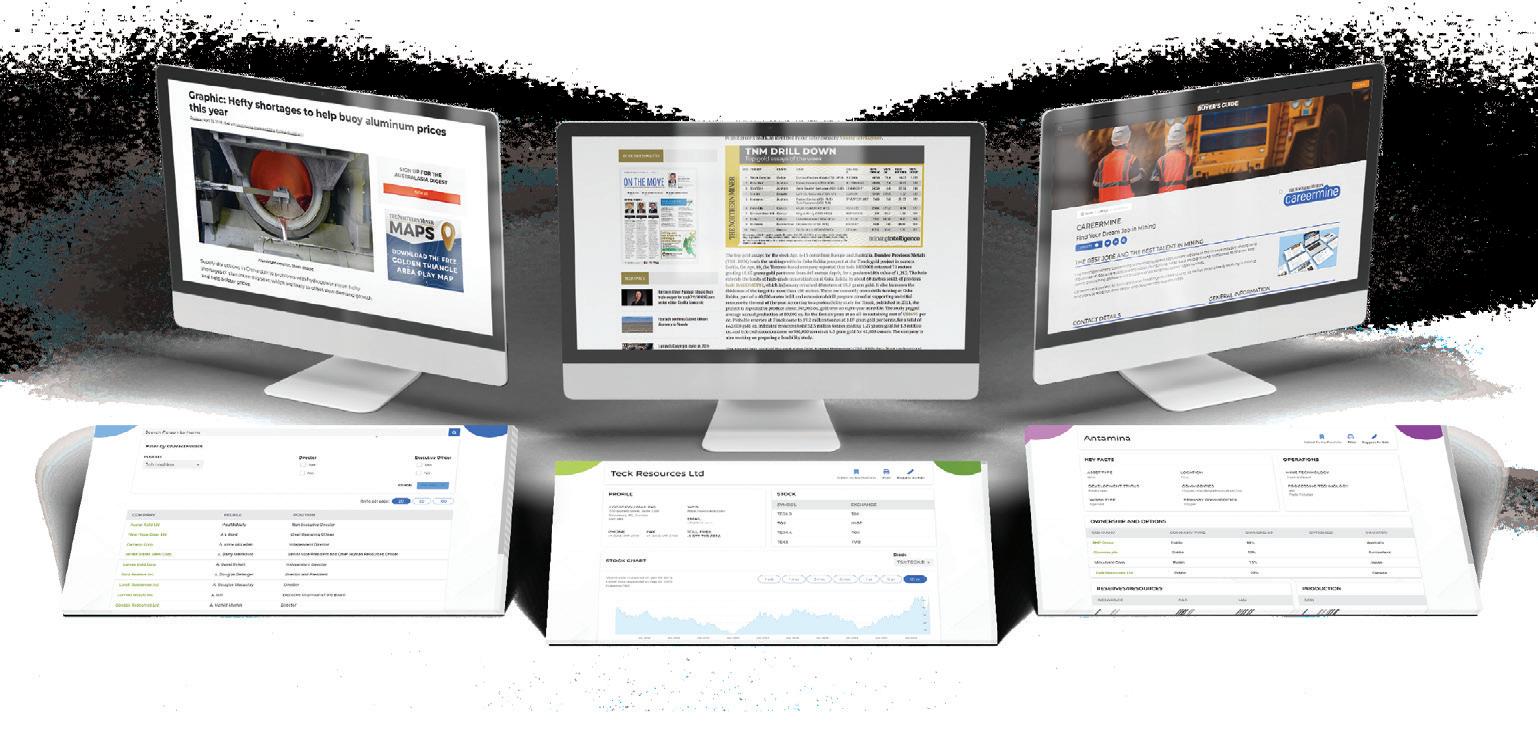


Sleipner E Series dollies bring the wheeled advantage your mining operation has been looking for. More working hours, longer undercarriage life, and fewer on-site repairs – the Sleipner E Series dollies will elevate your operation with higher productivity and sustainability.
Reduce equipment travel time up to 85% and increase excavator productivity by up to 12-20%.
Save on excavator undercarriage maintenance by up to 50%.
Reduce life cycle costs by up to 10–18% with fewer spare parts for maintenance and lower fuel consumption.