LOOKAHEAD 2026

BHP says Jansen lessons key to cost control
POTASH | Americas head explains $1.7B budget overrun
BY FRÉDÉRIC TOMESCO
BHP (NYSE, LSE, ASX: BHP)
wants to use lessons from its maiden foray into potash production to ensure that a subsequent expansion of the facility is completed at or under budget.
The world’s biggest miner in July disclosed a $1.7-billion (C$2.38-billion) cost overrun in the development of its Jansen potash mine in Saskatchewan as it pushed first production back by six months to mid2027.
The project’s first stage – known as Jansen 1 – is now expected to cost as much as $7.4 billion, up from a previous target of $5.7 billion. Capital expenditures for a second stage, whose entry into service was delayed by two years to 2031, are still pegged at $4.9 billion, though the amount is under review.
Located about 140 km east of Saskatoon, Jansen is crucial to BHP’s ambitions of building a significant footprint in potash – a new commodity for the mining behemoth. The investment, the largest in Saskatchewan’s history, is part of an effort by BHP to shift its portfolio away from steelmaking materials and towards what executives call “future-facing commodities” such as copper and potash. About 65% of BHP’s capital will be invested in these sectors over the medium term, the company said this year.
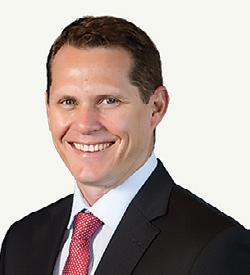
“We’ve had a lot of learnings from Jansen 1 in terms of what drove those cost pressures,” Brandon Craig, BHP’s president for the Americas, told The Northern Miner by phone. “We want to take all of that and apply what we understand about Jansen 1 to Jansen 2.”
Modules
Greater use of modular construction will be key to BHP’s efficiency ambitions for the project’s second stage, Craig said by phone in November. He likens the process to building a structure with Lego blocks, adding that BHP’s assembly facility in Edmonton will play a key role.
“The more you can push into the module, the less work you have to do on the site itself,” he said. “If you can pre-fit out in a factory a very large amount of the project build and transport it to the site, where you use very large cranes to erect that module, all you have to do is bolt it on site. The less you pre-fit out, the more labour hours you have to consume on the site itself.”
BHP is aiming to disclose an updated capital estimate for Jansen’s second stage by June 30, the executive said. While a two-year
“We want to take [what we learned] and apply what we understand about Jansen 1 to Jansen 2.”
BRANDON CRAIG PRESIDENT FOR THE AMERICAS, BHP
postponement will probably result in higher costs, some savings could still materialize, he stressed.
“We want to do the work first to make sure we have a degree of confidence in the accuracy,” he said. “The team is working quite hard at understanding how we can really improve the productivity. Whether
that’s sufficient to offset the inflationary effects, we will see.”
Major producer
Stage 1 of Jansen is almost threequarters complete, while Stage 2 is 13% done, BHP said Oct. 21. Once fully ramped up, Jansen will become one of the world’s largest potash mines, producing about 8.5 million tonnes of the fertilizer annually – equivalent to about 10% of global supply.
Crews reached a key milestone in August with the installation of a new 50-metre-tall steel headframe –the equivalent of a 16-storey building. Most of the steel was made in Canada before being shipped to the mine site.
With major steel construction almost done, focus will now

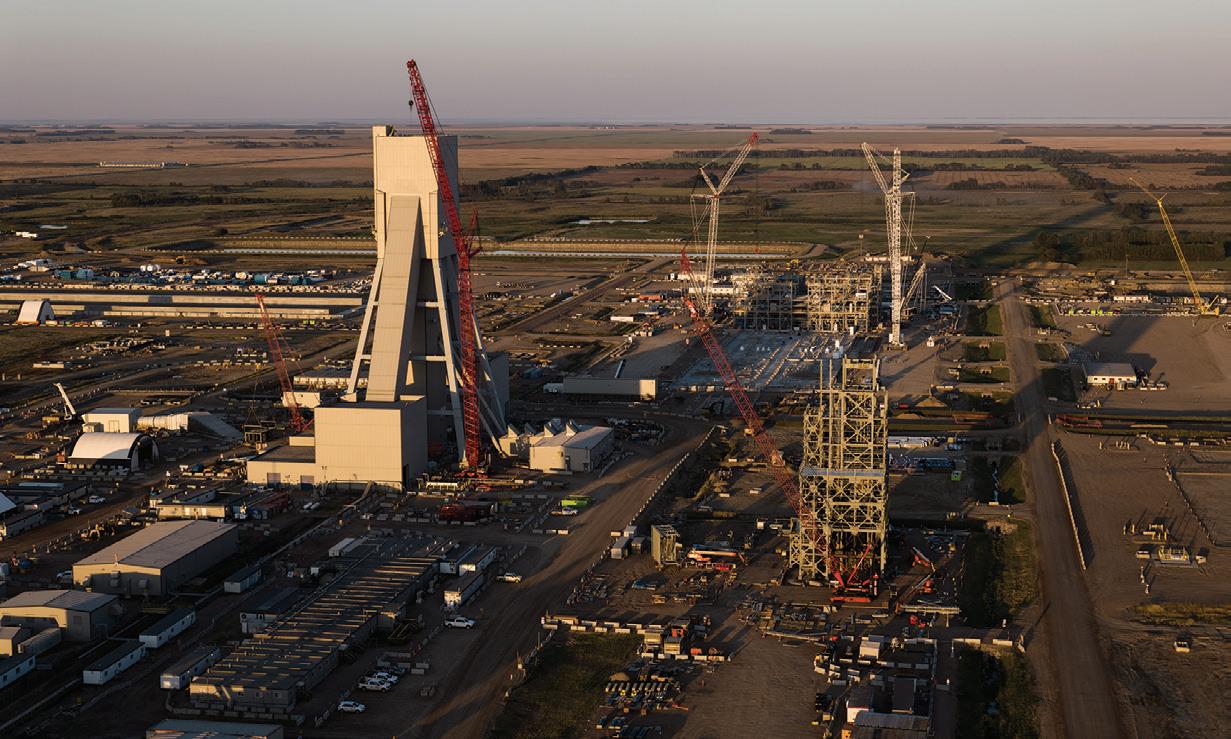
BHP’s Jansen potash project in east-central Saskatchewan. BHP
Toro® LH518iB Battery-electric loader

This state-of-the-art BEV loader is designed specifically for underground mining operations. Equipped with an optimal battery chemistry, the fastest battery swap on the market and a high-power electric driveline, this loader is your gateway to sustainable mining.
Toro® LH518iB Safer. Stronger. Smarter.
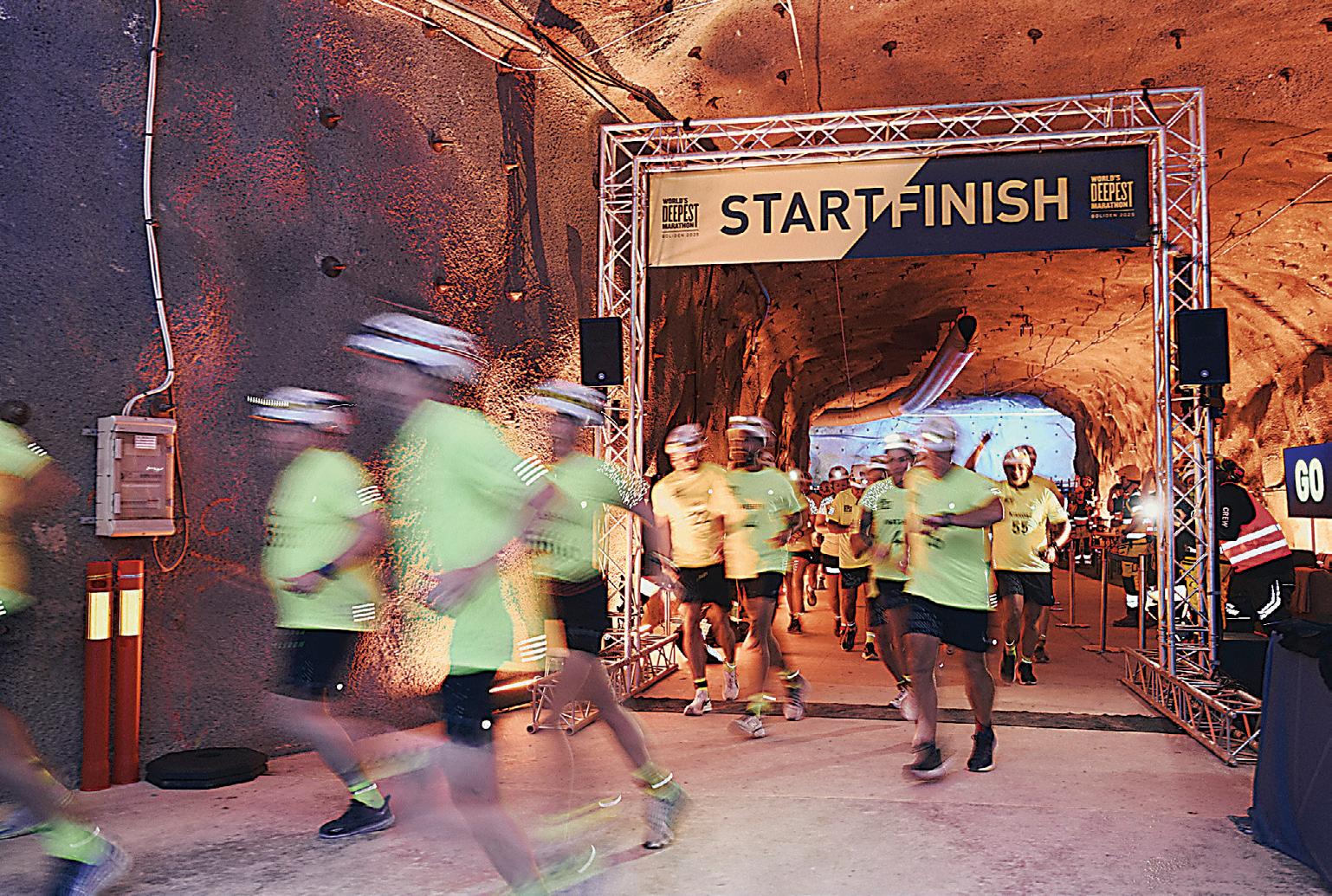
Runners start the World’s Deepest Marathon 1.1 km underground in Boliden’s Garpenberg zinc mine in Sweden in October. See story on p. 10.
CREDIT: SAM MCELWEE/BECOMING X
n Glencore smelter
Glencore and Quebec denied a Reuters report citing unnamed sources that the company was planning to shut down its Horne smelter in the province – Canada’s largest copper-metal producing plant – due to steep environmental upgrades and operational costs.
Horne, in the city of Rouyn-Noranda, processes concentrates to make copper anodes. Another Glencore facility, the Canadian Copper Refinery (CCR) in Montreal East, turns them into cathodes.
“Glencore is not currently considering the closure of the Horne Smelter or the CCR refinery,” a company spokesperson told Reuters Nov. 4.
Smelters globally are facing significant “financial, regulatory and operational pressure,” and Glencore’s smelters in Canada are not exempt from this, the spokesperson added. “The Horne smelter is not about to close its doors,” a spokesperson for Quebec Premier François Legault told The Canadian Press. While no production figures have been published for Horne and CCR, industry sources cited by Reuters have pegged their annual output at more than 300,000 tonnes. Much of the copper metal production goes to the United States, a net importer.
On whether the Reuters sources were trying to prod government levels to fund the smelter, veteran mining investor John Ing told The Northern Miner: “Why are we subsidizing battery plants with public money, when we should be building up processing capacity. Public money finances exploration, building mines – why not processing?”
n Tailings failings
One-third of mines around the world operated by two dozen leading companies don’t fully meet industry standards for tailings management, a new report found.
The findings are contained in a report produced by the London-based International Council on Mining and Metals, which analyzed 836 facilities to see whether they complied with the Global Industry Standard on Tailings Management.
The council and United Nations agencies established the standard in 2020 to encourage miners on tailings performance after a dam burst a year earlier on Vale’s Feijão iron ore operation, killing 270 people downstream in the world’s worst mining disaster in recent decades.
While a newfound focus on critical minerals in Western countries is helping the industry’s image, tailings disasters contributed greatly to anti-mining sentiment in recent decades and remain a cornerstone of environmental complaints.
A review by The Northern Miner of disclosures from the council’s 26 members found many majors – such as China’s MMG, Glencore, BHP, French uranium miner Orano and Anglo American – still have several mines that don’t meet the standard.
n Barrick reviews
Barrick Mining has begun a review of operations to curtail unplanned downtime and improve worker safety as the Canadian miner shifts its focus to North America.
Toronto-based Barrick is to report on the work in February, interim CEO Mark Hill said Nov. 10. Barrick wants
to better plan maintenance and eliminate “unexpected surprises” such as a recent roaster failure at the Carlin complex in Nevada, which caused the company to lose seven days of production at the end of the third quarter, he said.
Hill, who replaced Mark Bristow in late September following the longtime CEO’s surprise departure, gave no update on a replacement, deflected a question on the fate of the de facto nationalized Loulo-Gounkoto mine in Mali and said new investment would target Fourmile in Nevada.
Barrick is investigating how two workers died at its underground mines in the most recent quarter – one at Goldrush in Nevada, and another one at Bulyanhulu in Tanzania.
n China ‘REE-lents’
China agreed to suspend a planned expansion of export controls on rare earth elements (REE) for a year after U.S. President Donald Trump struck a broad trade deal with Chinese counterpart Xi Jinping.
Trump agreed to lower tariffs on Chinese goods from 57% to 47%, Reuters reported. In exchange, Beijing will “work diligently” with the U.S. to stop fentanyl shipments and buy U.S. agricultural products such as sorghum and soybeans. China, which puts out most global rare earth production, set export restrictions in April then expanded them in October. China then lifted a nearly year-long ban on exports of gallium, germanium and antimony to the U.S., but said it would still restrict all mineral exports for military applications. The bans were imposed in retaliation for U.S. export controls on high-bandwidth memory chips into China towards the end of the Biden administration.
BY NORTHERN MINER STAFF
GLOBAL MINING NEWS • SINCE 1915 www.northernminer.com

PRESIDENT THE NORTHERN MINER GROUP: Anthony Vaccaro, CFA, MBA avaccaro@northernminer.com
EDITOR-IN-CHIEF: Colin McClelland cmcclelland@northernminer.com
COPY EDITOR AND PRODUCTION EDITOR: Blair McBride bmcbride@northernminer.com
SENIOR STAFF WRITER: Frédéric Tomesco ftomesco@northernminer.com
WESTERN EDITOR: Henry Lazenby hlazenby@northernminer.com
PODCAST HOST: Adrian Pocobelli apocobelli@northernminer.com
ADVERTISING: Robert Hertzman (416) 898-6654 rhertzman@northernminer.com
Kathleen Plamondon (514) 917-5284 kplamondon@northernminer.com
Michael Winter (416) 510-6772 mwinter@northernminer.com
SUBSCRIPTION SALES/ APPOINTMENT NOTICES/ CAREER ADS
George Agelopoulos (416) 510-5104 (Toll free) 1-888-502-3456, ext. 43702 gagelopoulos@northernminer.com
PRODUCTION MANAGER: Jessica Jubb (416) 510-5213 jjubb@northernminer.com
CIRCULATION/CUSTOMER SERVICE: (416) 510-6789 | 1-888-502-3456 northernminer2@northernminer.com
REPUBLISHING: (416) 510-6768 jmonteiro@northernminergroup.com
ADDRESS: Toronto Head Office
69 Yonge St, Toronto, ON M5E 1K3 (416) 510-6789 tnm@northernminer.com
SUBSCRIPTION RATES: Canada:
C$130.00 one year; 5% G.S.T. to CDN orders.
U.S.A.:
opinion
EDITORIAL
Banner year

BY COLIN McCLELLAND
If it hasn’t been clear since “critical minerals” entered the popular lexicon in 2022, it sure is now: We’re living in one of the greatest periods to be part of mining. Find me a politician anywhere, even on some Pacific atoll, who isn’t talking about mining and metals, and I’ll show you someone zoned out.
Even remote island nations want energy-transition metals mined if they help keep rising seas at bay.
Countries and miners alike are racing to secure supply of copper, nickel, lithium and uranium. Canada’s industry, for example, is under pressure to step up in mining or risk losing ground to other jurisdictions. The West is hell-bent on reducing its reliance on China.
Rare earths became a rallying cry in 2025 as the Asian giant first weaponized the 17 elements, then appeared to come to somewhat of a truce with the U.S. The Trump administration took an equity stake in the rare earths producer MP Materials before steering it towards a deal with Saudi Arabia. The U.S. also invested for 5% of Lithium Americas, making government stakes in miners a new norm from a deal-making White House.
Carney just passed a federal budget through Parliament that gives more money to mining than, well, ever. Pierre Gratton of the Mining Association of Canada can’t believe it. (See page 34.) The prime minister is following through on promises to move large mining and infrastructure projects to fast-tracking.
However, there is criticism this could be just another layer for projects to endure, and they still must be determined to be in “the national interest” before speedier measures take effect.
Trade, security
Trump and Carney are casting the new boosterism in terms of trade and national security. Hardly a day goes by without the Donald or his administration making a critical minerals deal with some nation or other: Saudi Arabia, Australia, Japan, Ukraine, Malaysia, Thailand, Kazakhstan.
Even when Trump flies off on a whim against conventional economic theory, mining seems to win. His global tariff policies made gold the biggest metals story this year – and likely since the late ’70s, when roaring inflation and oil price shocks rattled the world.
The spot price of gold has risen 56% this year, setting record highs over $4,000 an ounce. It’s second only to when gold surged more than 250% from 1978 to 1980 as investors fled to anything that looked solid.
One of our top-read stories this year online was out of the Beaver Creek conference in Colorado, where Frank Giustra talked about how investors want physical gold – not gold on paper. Another was on the potential IPO for an obscure gold producer from Uzbekistan, the stateowned Navoi, which is actually the fourth-largest gold producer in the world. Investors are still hungry for gold, and forecasters say it could hit $5,000 an oz. next year. (See page 35.)
Copper
Copper was also in the spotlight this year with America’s 50% tariffs on imports triggering record prices for the red metal in July. They subsided after details emerged the duties were for products, not raw material. But the plumbing and wiring metal, a proxy indicator for the economy, looks good for next year.
Chile’s Codelco, the world’s largest copper producer, has lifted its 2026 premiums on top of the London Metal Exchange price to record levels, signalling tight availability of refined copper. And China Daily, the state-owned English-language newspaper, reports the government is exploring options to support the country’s ailing property sector.
Nuclear energy is booming again. See page 42 for a comparison with the Cold War in another part of our archive series this year looking back from the Miner’s 110th anniversary.
Artificial intelligence had another big year, helping support stock market gains. It also offers advances in exploration to co-ordinate reams of data, and likewise efficiencies in processing. AI also means more demand for copper wiring, semiconductors sparkling with rare earths, and uranium to feed the proposed small modular reactors to power the new data centres required.
Research
We’ve begun to use AI in stories for the Miner. It’s most useful as a research tool. It can be trained, but, like a child, needs a watchful eye on it all the time, lest it make up quotes or garble figures. On the whole, it’s a plus for our team, helping transcribe interviews and dig into reports.
We’re doing more with less as we cover the globe from the head office in Toronto while taking advantage of Northern Miner Group staff or stringers in Vancouver, Montreal, Nova Scotia, Europe and Australia. Videos and podcasts are expanding as well as our social media reach.
As we wrap up another year, some of you may be reading this in London where we’re staging our most successful International Metals Symposium yet, with several hundred delegates and presentations by Rick Rule, Rob McEwen and Mark Cutifani, among others.
We’re riding high after a great year for mining with strong momentum heading into 2026.
Merry Christmas and Happy New Year! TNM
COMMENTARY
Awakening the Argentine giant

BY JAMES COOPER
What place holds the highest probability for a new world-class discovery?
As an Australia-based geologist and investor, I tend to look in my own backyard first, which is the home bias effect. But the thing is, thanks to decades of a supportive mining environment, well-trained staff, and advanced exploration methods, the prospect of discovering another giant deposit in Australia is fading.
Don’t get me wrong, there could still be potential in remote outback locations, like the Tanami.
But compared to places like West Africa, where high-grade gold can still be found close to surface, Australia’s giant discovery potential is diminishing.
Then there’s Canada. Like Australia, Canada has been heavily explored thanks to its supportive governance and skilled labour force. It has also lost its discovery potential.
But like Australia, there are still some remote frontiers – especially in the far north – that hold discovery potential.
But if you want to stack the odds firmly in your favour and pick a place with the highest potential for a major discovery, look no further than Argentina!
Land of the giants Argentina sits as one of the best places for explorers and their shareholders. And there are a few reasons why that’s the case.
To understand the potential here, you must look at its neighbour, Chile and what it has achieved in its mining industry over the last several decades.
Chile is the world’s largest copper-producing nation. That’s enabled it to remain one of the wealthiest nations in South America. Its economy feeds off its vast copper exports, thanks to discoveries made 30, sometimes 50 years ago. It holds mega-copper projects that have left a legacy of long-term production.
But across the border, Argentina’s copper output has gone from modest to virtually nil. So, is there less copper in Argentina or is something else happening here?
The critical thing to realize here is that the same geological system hosting giant porphyry copper-gold deposits in Chile crosses into Argentina. South America’s ‘porphyry copper belt’ straddles the border between Argentina and Chile.
Yet only one country has realized this potential over the last several decades.
Here’s the opportunity
A lack of copper mining in Argentina has nothing to do with geology and all to do with politics.
Mega-mining projects take up to 20 years to develop and remain in production for decades. These mines leave a legacy for the mining companies that own them and for the host country. It’s why political stability is essential for developing giant copper mines.
And that’s the key element that’s been missing in Argentina. Thanks to decades of hostile business conditions and economic chaos, the miners haven’t ventured into Argentina. And that’s why the country holds a vast untapped wilderness of geological potential.
Geology ignores borders The key point is that the same geological setting that hosts giant copper porphyry deposits in Chile also exists in Argentina. And that’s why for geologists, Argentina represents Chile, perhaps 50 or 60 years ago, when discoveries were far larger and higher grade. So, why should investors start taking notice? In case you’re not familiar, Argentina has been experiencing a tidal wave of reform since its new president, Javier Milei, swept into power in 2023. Milei implemented a series of austerity measures, including slashing energy and transportation subsidies, laying off tens of thousands of government workers, freezing public infrastructure projects and imposing wage and pension freezes below inflation. While it has been controversial, inflation has plummeted since Milei took office. Bonds have also rallied while Argentina’s country-risk index, a measure of the risk of default, is at its lowest point in five years.
Milei also secured a political victory in late October, extending his ability to push reforms and encourage investment. And clearly, he’s moving the dial on the country’s mining investment.
Late last year, the world’s biggest miner, BHP, announced a multi-billion-dollar takeover deal for Filo Mining, a stock I recommended to my readership group back in 2023. Meanwhile, Glencore is weighing two significant copper developments in the country that would require about $13.5 billion in investments. Barrick, Lundin Mining, and Rio Tinto are other big names starting to build a presence in the country.
For geologists, Argentina is the Chile of 50 years ago.
Open for business
So, what happens when modern exploration techniques are used on ground that’s barely been explored. Major discoveries happen. And that’s what’s happening in Argentina. TNM
James Cooper is a geologist based in Australia who runs the commodities investment service Diggers and Drillers. You can also follow him on X @JCooperGeo.
Discoveries, ore sorting could lift Spanish Mountain
BY NORTHERN MINER STAFF
Spanish Mountain Gold (TSXV: SPA; US‑OTC: SPAUF) is betting recent in pit, near surface high grade discoveries of 1 gram gold per tonne and higher, coupled with ore sorting can raise mill head grades, scale output and front‑load cash flow at its namesake project in British Columbia’s Cariboo district.
The company has launched particle and bulk sorting programs while a 9 10,000 metre drill campaign, with over 60% of drilling completed and pending assays, seeks to better define higher‑grade areas inside a proposed main pit shell. Spanish Mountain has already released the targeted higher grade results cut in the new Orca Fault discovery area with the program’s first four holes in press releases on Nov. 3 and 17.
Eleven more holes in this area have been drilled pending assays.
The site sits about 555 km north of Vancouver, near the community of Likely, with year‑round access. It’s in the same district where Osisko Development (TSXV: ODV; NYSE: ODV) is advancing the $890 million capex Cariboo gold project to construction and Artemis Gold (TSXV: ARTG) recently achieved commercial production at its Blackwater mine.
“We are extremely encouraged with the progress of our two pronged strategy to improve head grade to the proposed mill,” President and CEO Peter Mah said.
“Firstly, our recent drill programs have demonstrated huge potential to discover new, continuous in pit high grade,” Mah said. “Secondly, preconcentrating mineralization essentially moves more gold through the process plant, which together, these two initiatives could dramatically uplift processed grades, gold production and overall project economics.”
Project advantages
Investors who prioritize early cash generation and smaller footprints may find ore sorting especially important, as it removes waste before the mill and could have an even greater impact if infill drilling continues to link higher grade structures in the near surface mine plan.
If the Orca Fault area infill drilling keeps mapping contiguous higher‑grade corridors inside the pit, the combined effect could improve the first decade of operations, according to Mah, where value is most sensitive. The pending trove of drill assays and the results from ore sorting are to show whether the company can improve the project’s math as it works towards making a development decision by 2027.
Head grade
Spanish Mountain is running two complementary test work streams.
ABH Engineering is leading a particle‑scale program following past amenability work that indicated the deposit responds to X‑ray transmission sorting –tested to lift mill feed grades and gold produced.
In parallel, OrePortal is conducting a bulk sorting desktop study that examines ore heterogeneity and sensor options such as XRF and prompt gamma
neutron activation analysis for shovel or belt applications at the front end.
“The logic is simple,” Mah said, “reject dilution and low‑grade material early, send a richer feed to the plant and tail fewer tonnes.”
Overall, the work will estimate capital and operating costs and model the impact on project value relative to the current study, the executive said. Both streams target next‑stage engineering decisions as the company advances towards a feasibility study. It is currently in the request for proposal competitive bidding process and is expected to be awarded in the first quarter of next year.
Infrastructure supports the approach. A proposed 230‑kV/~60‑MW grid interconnection is in the second stage of BC Hydro’s system‑impact process. Sorting that trims haulage, reduces energy and tailings volumes would stack on these advantages.
Connecting the dots
The first two drill holes delivered broad, near‑surface intervals: 112 metres grading 0.77 gram gold per tonne starting at 84 metres in hole 25‑DH‑1292, including 35.8 metres of 1.18 grams gold. Drill hole 25‑DH‑1293 returned 102 metres grading 0.64 gram gold from 94 metres, including 20.25 metres at 1.28 grams gold.
“ The logic is simple: reject dilution and low‑grade material early, send a richer feed to the plant and tail fewer tonnes.”
CEO
The results confirmed continuity beyond 25 metres between closely spaced holes and reinforced a preferred drilling orientation (about 120° azimuth) to properly intersect vein sets, Mah said.
Split tubes
The wider land package still teases upside. That includes a 0.75‑metre interval at 719.26 grams gold per tonne in the K Zone which was contained in a broader mineralized interval of 139 metres at 4.18 grams gold per tonne within 200 metres of surface and previously classified as waste.
This hole, the new Phoenix deposit and most of the 2025 drilling have not been included in the current resource estimate and economic study. It’s a reminder of the system’s ability to locally concentrate metal even within previously proposed mining limits. It supports growth and scalable production, begging the question of how high can the bar be raised, according to Mah.
PEA baseline
Spanish Mountain’s July preliminary economic assessment – prepared by a consortium led by Ausenco – re‑envisions the project at larger scale than the 2021 pre‑feasibility, extending mine life to 24.5 years and raising throughput to 26,000 tonnes per day.
It projects 3 million oz. of
payable gold over the mine life, with 203,000 oz. averaged in the first five years, 122,000 oz. annually over the life, and a waste‑to‑resource strip ratio of 2:1. The all in sustaining cost is estimated at US$1,338 per oz. and US$1,024 in the first five years. Recoveries average 89%.
The PEA envisions an open‑pit mine processing 26,000 tonnes per day with a base‑case after‑tax net present value (at a 5% discount rate) of $1 billion (US$710,000), an internal rate of return (IRR) of 18% and initial capital of $1.25 billion, using a gold price of US$2,450 an ounce.
At a spot gold price of US$3,900 an oz., the NPV and IRR improve to $3.2 billion and 41% with a payback of 1.7 years. This excludes the potential upsides of higher grades, ore sorting and Phoenix mentioned earlier. The flowsheet is conventional –grinding, gravity, flotation and carbon‑in‑leach – and features a move to filtered dry‑stack tailings and integrated water management.
The environmental design is a notable pivot, according to Mah. The plan adopts filtered dry‑stack tailings and a small, lined cell for any potentially acid‑generating fraction. It will also reuse all of process water with capture, treatment and discharge to provincial standards – aimed at reducing mine‑impacted runoff
and avoiding discharges near nearby parkland.
The Main deposit hosts 292.1 million measured and indicated tonnes grading 0.44 gram gold per tonne for 4.16 million oz. of contained metal. The inaugural Phoenix estimate adds 25.4 million inferred tonnes grading 0.44 gram for 357,000 oz. However, Phoenix isn’t in the current economics, setting up a clear avenue for future inclusion as drill confidence improves and ore sorting is tested.
“Importantly, besides adding high grade mineralization, the study identified pre‑concentration among one of the most promising levers to enhance value at the next stage,” Mah stressed.
Catalysts
Management’s near‑term plan is to complete the ongoing drilling, finish the sorting workstreams and refresh the PEA to include sorting and higher‑grade domains before starting a feasibility study.
Mah points to “PEA upside” scenarios – specifically sensor‑based sorting to uplift mill head grade and possible inclusion of the Orca Fault area and Phoenix once resource confidence is higher – alongside a program of engineering and power‑line work. The company says it is advancing toward feasibility studies with a build decision targeted for 2027.
Engagement with First Nations and communities – which shaped the tailings and water plan –continues alongside baseline work, Mah said.
“We have the ounces, the jurisdiction and the infrastructure,” the CEO said. “Now it’s about proving we can build a mine the Cariboo can be proud of.”
The preceding Joint Venture Article is PROMOTED CONTENT sponsored by Spanish Mountain Gold and produced in co-operation with The Northern Miner. Visit: https://spanishmountaingold.com for more information.
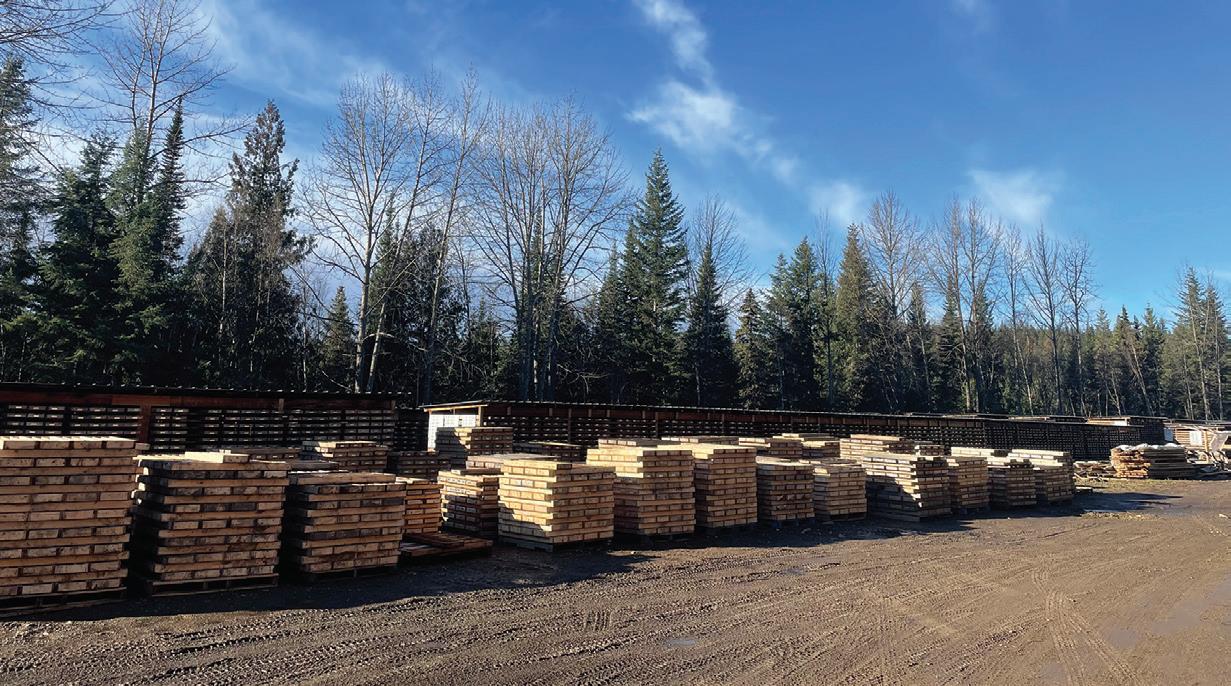
Above: Trays of drill core at Spanish Mountain’s namesake project in B.C.’s Cariboo region. SPANISH MOUNTAIN GOLD
— PETER MAH , PRESIDENT AND
SPANISH MOUNTAIN GOLD
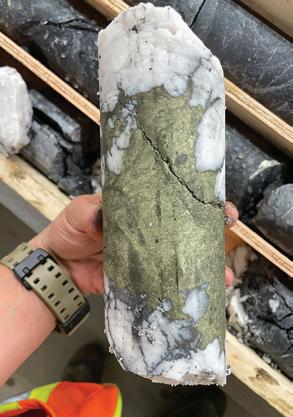
A gold-bearing chalcopyrite-galenarich vein that occurs close to the Orca Fault. SPANISH MOUNTAIN GOLD
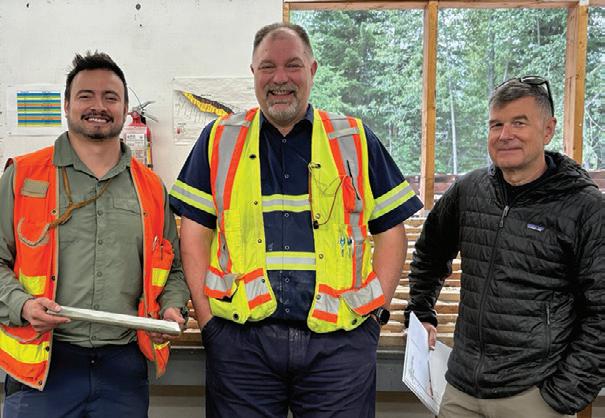
In the Spanish Mountain core shack is (L-R) Director of Exploration Julian Manco, Senior Technical Advisor Jason Dunning, and board member Garnet Dawson. SPANISH MOUNTAIN GOLD
PRODUCTION MILESTONES TO WATCH IN 2026
By Blair McBride
As 2025 comes to a close, The Northern Miner looks ahead to 12 projects across North America on track to reach mining milestones in 2026. From precious and critical metals mines across the vastness of Canada to uranium mines further south in the U.S., the milestones cover the start of production, commercial production, production restarts and ramp ups to nameplate capacity.


ARTEMIS GOLD
BLACKWATER PHASE 1A | BRITISH COLUMBIA, CANADA
Plant expansion to 8 million tonnes per year by Q4 2026.
B2GOLD

GOOSE MINE | NUNAVUT, CANADA
Ramp up to nameplate capacity of 250,000 oz. of gold in early to mid-2026.

SASKATCHEWAN, CANADA
Commercial production scheduled for mid-2026.


COEUR MINING/ NEW GOLD
NEW AFTON C-ZONE
BRITISH COLUMBIA, CANADA
Ramping up to nameplate capacity of more than 14,500 tonnes per day by 2026.

BUNKER HILL MINING
BUNKER HILL
Restart targeted for first half of 2026.
RIO TINTO
KENNECOTT NORTH RIM SKARN | UTAH, USA
Production start expected in Q1 2026.

AGNICO EAGLE MINES
ODYSSEY / EAST GOULDIE | QUÉBEC, CANADA
Initial production from East Gouldie in second half of 2026.

WEST RED LAKE GOLD MINES
MADSEN MINE (RESTART) | ONTARIO, CANADA
Commercial production targeted for early 2026.



Northern
UR-ENERGY
SHIRLEY BASIN | WYOMING, USA
First uranium production in early 2026.

ALAMOS GOLD
ISLAND GOLD PHASE 3+ | ONTARIO, CANADA

Expansion completion enabling nameplate capacity of 2,400 tonnes per day in second half of 2026.

ENCORE ENERGY / BOSS ENERGY JV
ALTA MESA | TEXAS, USA
Nameplate capacity is expected to be reached in early 2026, with 1.5 million lb. of uranium oxide per year.
Alafriz
GOLD SILVER COPPER ZINC URANIUM
Mic’d Up JV Q&A
Terronera in production as Endeavour aims at ‘30 by 30’
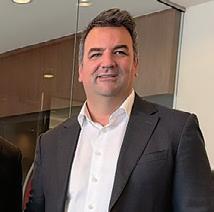
BY HENRY LAZENBY
ENAME: Dan Dickson
TITLE: CEO
COMPANY: Endeavour Silver
ndeavour Silver (TSX: EDR; NYSE: EXK) has started commercial production at Terronera in Jalisco, Mexico, a step CEO Dan Dickson says anchors its “30 by 30” plan – 30 million silver-equivalent oz. a year by 2030. Terronera’s wide, shallow vein and strong gold by-product credits are central to the plan. The orebody is slated to produce 4 million oz. silver and 38,000 oz. gold a year over a decade. Dickson expects Terronera to deliver about $100$200 million (C$140-C$280 million) in annual free cash flow at current prices.
What comes next is scale. Endeavour is also advancing Pitarrilla in Durango, targeting a feasibility study by midnext year, to help bridge to the 30-million-oz. goal. In April, Endeavour added its first Peru operation with the Kolpa polymetallic mine with about 5 million silver-equivalent oz. a year (about 40% silver).
As part of our new Mic’d Up series, The Northern Miner’s Western Editor, Henry Lazenby, sat down with Dickson at the company’s Vancouver head office to unpack the growth story.
Henry Lazenby: You’ve been operating in Mexico for about 20 years and just declared commercial production at Terronera, the latest mine you’ve built. What, if anything, did you change at Endeavour to make sure this build worked from day one?
Dan Dickson: Our capabilities for operating mines haven’t fundamentally changed, but over the last couple of years we brought more engineering and construction expertise in-house to deliver Terronera. Geologically and operationally, Terronera is similar to Guanaceví and Bolañitos – underground epithermal vein systems. The values that made us successful in Mexico – especially earning and maintaining social licence in the small towns where we operate –are the same values we brought to Terronera.
That helped us get through a long permitting arc, from early work in 2013 to declaring commercial production in 2025. The formula remains: deliver the plan and work together to keep moving the company forward.
HL: If a new hire shadowed you for a week, what might surprise them about your management style?
DD: First, they’d probably be underwhelmed by the glamour. I spend a lot of time on the phone with different groups. What might surprise them is how much I focus on working with people, not having people work for me. We’re all pulling on the same rope. I
“Over the next 12 months, priority one is Terronera: consistently hitting tonnes, grades and recoveries. After that, make sure the cost profile aligns
with expectations — recognizing
we’ve
all gone through an inflationary period since
2021 —
sharesholders
so
Terronera
expect.”
— DAN DICKSON , CEO, ENDEAVOUR SILVER
delivers the cash flow we and
try to roll up my sleeves like the person beside me.
As a management team we treat each other with respect. That extends to safety – our program is called “Te cuido” (“I care for you”), meaning you look out for the person next to you so everyone works safely and gets home safely. If you care for the person who reports to you, they’ll care for the person beside them; it waterfalls through the organization.
HL: Endeavour says it’s “silver‑first.” Where does that show up in planning, marketing and social engagement?
DD: It shows up first in what we choose to own. Our mandate is to be a senior silver producer, and about 60% of our revenue today comes from silver. When we look at exploration or acquisitions, we want silver to be the predominant metal in the revenue mix.
Once you have the mine and the resource, the planning and concentrate sales aren’t so different from a gold or copper company – there are scale differences and plant nuances –but the strategy starts with silver.
HL: Can you give an example of how this silver‑first thinking influences decisions?
DD: The primary-silver space is small. There are a handful of senior silver producers globally and fewer midsized names; most silver comes as a by-product from gold or base-metals mines. Shareholders buy Endeavour
because they want silver exposure. If someone thinks silver is going lower, it doesn’t make sense to invest in a silver company. So when we evaluate projects, we prioritize those where silver leads the revenue line – that’s how Terronera and Guanaceví/ Bolañitos fit, and it’s how we weigh new opportunities.
HL: You recently acquired an operating asset outside Mexico. Tell us more about Kolpa.
DD: In May we acquired Minera Kolpa in Peru – our first operating asset outside of Mexico, though we’ve long held properties in Nevada and Chile. The previous owners grew it from roughly 600 t/d to around 2,000 t/d. For us, Kolpa contributes around 5 million silver-equivalent ounces per year, with a metals mix that’s about 40% silver and the balance lead, zinc and copper by-products. Primary silver mines are rare; Peru is one of the world’s top jurisdictions for silver, so Kolpa made sense as the next step and a platform for more growth there.
HL: Place Terronera in context. How does it change the portfolio?
DD: Terronera is a game-changer. When we sanctioned construction in April 2023, we expected it to double our production and halve our cost profile. The deposit averages roughly 5.5 metres in thickness across a defined 10-year reserve life; we expect to be there 15–25 years with ongoing exploration. It’s rich in silver and gold.
At today’s prices, the gold covers operating and sustaining costs plus exploration, so the silver is effectively free on a cash-flow basis. Depending on the year, Terronera can generate about $100–$200 million in free cash flow. It takes us from two mature, higher-cost assets we purchased inexpensively and turned around, to a lower-cost, longer-life producer with growth ahead.
HL: You also have another big lever – Pitarrilla. How does that bolt onto the story?
DD: Pitarrilla (acquired from SSR Mining, which found it in 2002) is one of the world’s largest undeveloped silver deposits. Many people remember the 2012 feasibility study on a large open pit, but there was also a 2009 study on an underground operation. We’re advancing the underground case. We already hold permits for an underground mine and a plant, and we’re working on permits for the tailings facility. Our plan is to deliver a feasibility study by mid-2026 and then be in a position to make a construction decision. With today’s prices it’s easy to see the case, but we’ll remain disciplined and follow the study and permitting.
HL: What will it take to achieve “30 by 30”?
DD: It’s the combination: Terronera ramping up through higher-grade stopes; steady contributions from Guanaceví
and Bolañitos; Kolpa running at scale; and Pitarrilla coming in later in the decade if studies and permits land as planned. That path supports our ambition of 30 million silver-equivalent ounces by 2030.
HL: Where do you want the company to be in the next 12 months to five years?
DD: Over the next 12 months, priority one is Terronera: consistently hitting tonnes, grades and recoveries. After that, make sure the cost profile aligns with expectations – recognizing we’ve all gone through an inflationary period since 2021 – so Terronera delivers the cash flow we and shareholders expect.
Then it’s about what’s behind Terronera. If Terronera is doing what it should, the next focus is Pitarrilla – keeping studies, development and permitting on track so we can move to a construction decision after the feasibility work targeted for mid-2026. That sets us up for the 30-by-30 goal.
HL: That was Dan Dickson, the CEO of Endeavour Silver. Thank you for having me.
DD: Thanks for coming in.
The preceding Joint Venture Article is PROMOTED CONTENT sponsored by Endeavour Silver and produced in co-operation with The Northern Miner. Visit: www.edrsilver.com for more information.
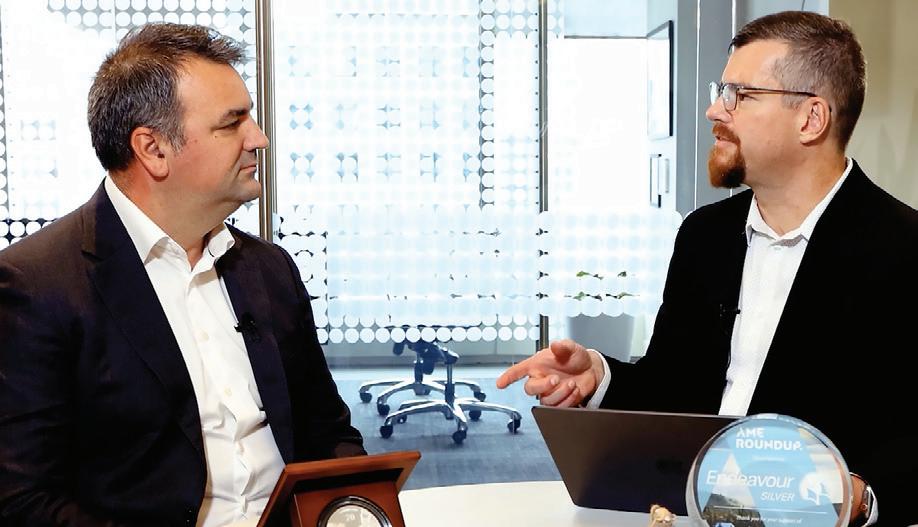
Endeavour Silver CEO Dan Dickson, left, speaks with The Northern Miner’s Western Editor Henry Lazenby. THE NORTHERN MINER
sitevisit
Revival Gold shows ‘exploration sizzle’
IDAHO | Firm targets 160,000 oz. a year from two assets
BY HENRY LAZENBY BOISE, Idaho
An underground discov-
ery hunt in central Idaho
could shuffle Revival Gold’s
(TSXV: RVG; US-OTC: RVLGF) development queue, CEO Hugh Agro said last month on a site visit.
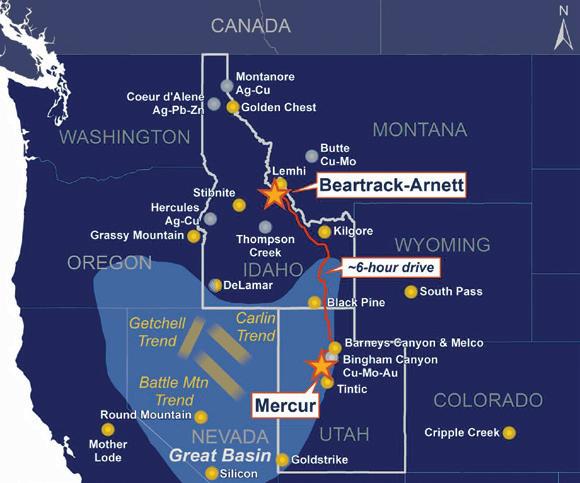
The underground potential at Beartrack-Arnett in Idaho is shaping up as a possible third project in Revival Gold’s portfolio after the open-pit heap-leach restart at Mercur in Utah and the initial aboveground stage at Beartrack-Arnett.
“If we can demonstrate continuity of those higher-grade shoots at depth, that could change the order of operations at Beartrack-Arnett,” CEO Hugh Agro told The Northern Miner during a blustery Fall day at the project.
Mercur is to be developed first with the open pit at Beartrack-Arnett second. But Revival has started a 3,900-metre drilling program at Beartrack-Arnett, just west of Salmon and about 300 km northeast of Boise via US-93 over the Sawtooth Range. The plan is to step out holes south to the covered Sharkey target and return to deep holes at Joss. Prior intercepts here outlined broad zones of multi-gram gold. A fourth
rig has been moved to this site.
The move sparks “exploration sizzle” to complement the company’s dual-track heap-leach development work, Paradigm Capital mining analyst Don Blyth flagged in a note Oct. 29.
Tier one
The combined platform gives investors a pathway to production of roughly 160,000 oz. a year from two U.S. assets in a tier one jurisdiction. Majors and mid-tiers are taking note, CEO Agro said.
Revival Gold has become a timely U.S. gold developer to watch as money returns to the sector with bullion near record high prices. Australia-based private equity firm EMR Capital with 12% of Revival and Dundee Sustainable Technologies (CSE: DST) holding 6% show the miner’s backing. Agro said the market has “turned 180 degrees” for U.S. gold developers.
At 66¢ apiece in Toronto near press time, shares in Revival have more than doubled this year, like most gold companies benefiting from the yellow metal’s rise. It has a market capitalization of $180 million (US$128 million).
The enhanced exploration focus comes as Idaho’s regulatory tide

Novel Metallurgical Processes for the Mining Industry


https://dundeetechnologies.com/home info@dundeetechnologies.com
is turning. Perpetua Resources’ (Nasdaq, TSX: PPTA) Stibnite mine just started construction. It’s the first large gold project in the state to do so in decades. Meanwhile, Integra Resources’ (TSXV: ITR; NYSE-A: ITRG) DeLamar project is moving ahead with its environmental review. Investors are keeping a close eye on Idaho, Agro said.
Hidden core?
Revival bets that an orogenic system hosting 4.6 million oz. across 5 km of strike to depths of roughly 750 metres hides a deeper, higher-margin core. The resource base gives a district-scale feel. Beartrack-Arnett hosts 86.2 million tonnes at 0.87 gram gold per tonne for 2.4 million oz. gold in the measured and indicated categories and another 50.7 million inferred tonnes at 1.34 grams gold for 2.2 million ounces, according to a 2023 prefeasibility study.
Key risks remain. Targets south of Joss are blind under Tertiary cover, and geophysics images a post-mineral fault, not ore. The task is to hit narrow sulphide shoots in a braided shear and prove continuity at mineable widths. Deep holes are costly and winter slows drilling; a 2022 wildfire already forced an early halt. Metallurgy for arsenopyrite-rich sulphides, though encouraging, still needs pilot work, permits and offtaker buy-in.
Mercur – a brownfields Carlinstyle past-producer just southwest of Salt Lake City – could be restarted by 2029, according to Velocity Trade Capital analyst Paul O’Brien. It would average roughly 95,000 oz. a year at all-in sustaining costs
of about $1,400 per oz. over 10 years, based on Revival’s March preliminary economic assessment. The company still trades below peer averages on financial ratios concerning its resources, O’Brien said, suggesting the market is undervaluing Revival.
Geology counts
The Beartrack-Arnett heap-leach phase is a modest start to what Revival hopes will be a much bigger prize. In the core shed, Chief Geologist Dan Pace examined an assay from Joss. It displayed yellow-jacket quartzites and quartz-arsenopyrite vein swarms.
“The first objective is the structure,” Pace said. “Hit it, follow it, then find the shoots.”
The high-grade pulses often appeared as brittle overprints on a ductile mylonitic fabric. He described it as classic orogenic architecture. It’s a braided shear corridor along the Panther Creek structure. Mineralization shifts from the east to the west side of the main fault as it moves north through the historic South, Mason-Dixon and North pits.
That thesis is why the Sharkey holes matter; under the Leesburg Basin conglomerates, the team says the structural corridor may continue another 5-6 km south. Much of the higher-grade, underground-amenable material sits at Joss and Sharkey is the covered extension Revival has been waiting to test.
Metallurgy
Meanwhile, Revival shared positive results from Dundee Sustainable in August. They tested the GlassLock process to sequester arsenic
on a Joss flotation concentrate. This concentrate had about 50 grams gold per tonne but also contained high levels of the toxic mineral arsenopyrite. After GlassLock, the concentrate ran 66.1 grams gold with arsenic cut to 0.19% – a 99% reduction – with no measurable loss of gold and the arsenic held safely in glass.
Agro pitched the outcome as a potential pathway to a direct-tosmelter product from a second-stage underground operation, should drilling firm up scale. Dundee Sustainable boss Jonathan Goodman called his firm’s role “one of the key attractions” in taking a stake in Revival earlier this year.
Infrastructure-rich
From the old adsorption-desorption recovery plant – still standing and serviceable with minor upgrades – one can trace the story in infrastructure. A 69-kV line drops off the ridge; lined leach pads and solution ponds terrace the valley floor; a modern water-treatment building and substation sit beside a spacious core facility former operator Yamana Gold built in 2013.
In the 1990s, pre-Yamana-takeover Meridian Gold produced about 600,000 oz. from heap-leach oxides. Tossing in historical placer take, roughly 1 million oz. have come out of these gulches. The pads are now reclaimed, grassed and popular with elk. The reclamation job was unusually tidy for an operation of this vintage, Agro noted.
The 2023 prefeasibility study scoped an initial heap-leach restart at about 65,300 oz. per year over eight years for $109 million in initial capital expenditures and it did not include an underground component.
Pace says Joss, conceptually, could support around 1.5 million oz. at five to six grams per tonne if the fault-bend and cross-structure model continues to map and drill as expected. It’s a target he stresses will require much more drilling.
“Walk before we run,” Agro said. “But if we hit, we’re ready to sprint.” TNM
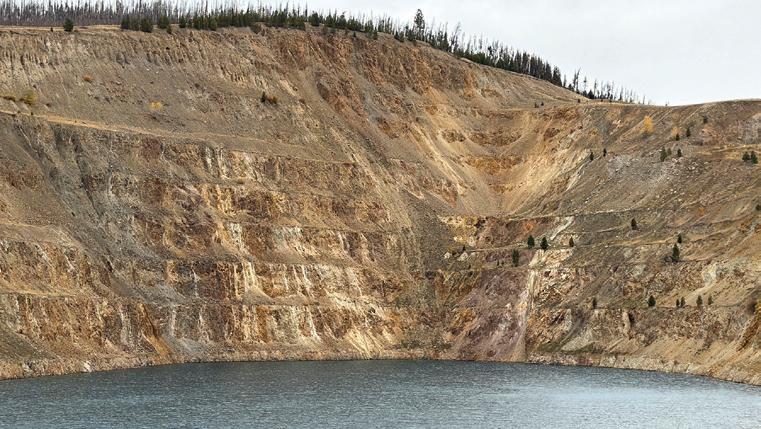
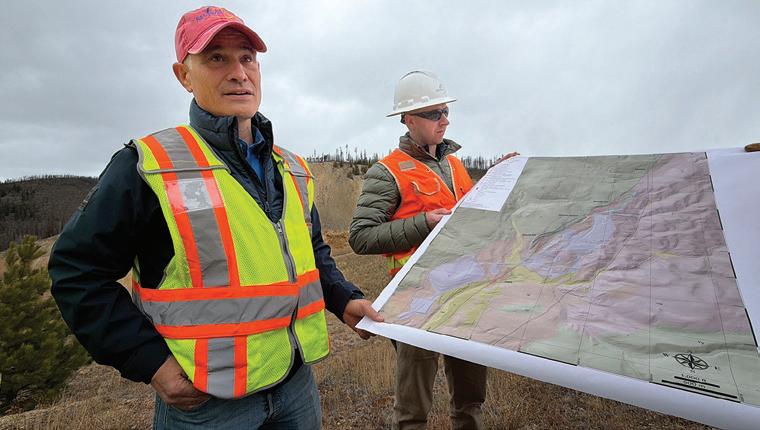
Above left: Mineralization shifts from the east to the west side of the main fault as it moves north through the historic South, Mason-Dixon and North pits.
Above right: Revival Gold CEO Hugh Agro at the Beartrack-Arnette North pit with one of the staff geologists.
HENRY LAZENBY
Map of Revival Gold’s flagship Mercur project in Utah and Beartrack-Arnette, in Idaho. REVIVAL GOLD
indepth
Sahel faces widening security threats, analysts say
GEOPOLITICS | West Africa coastal
states could be next
BY COLIN MCCLELLAND
Despite military governments across West Africa, the region’s security situation is worsening as insurgents flush with kidnapping ransoms and illegal mining profits threaten fuel supplies and road networks, according to an expert with 18 years of experience in the region.
While miners and diplomats used to be able to authoritatively state the Islamic war was isolated in the Sahel’s north, far away from their operations, that’s no longer the case, says Liam Morrissey, CEO of MS Risk. He advises a slew of majors, explorers, contractors, investors and insurers across Africa and other global hotspots.
Dubai reportedly paid $50 million in October for the release of two United Arab Emiratis – held by Jama’at Nusrat al-Islam wal-Muslimin (Group for the Support of Islam and Muslims), commonly referred to by its acronym JNIM. They were kidnapped in southern Mali, apparently trying to buy artisanal or illegally mined gold.
“This is supercharging al Qaeda or JNIM because they are used to having kidnap cases run for three to five years and finish for a ransom of between $2 million and $6 million,” Morrissey, who’s worked on more than 800 hostage releases, said by phone from the U.K. where he’s based.
“Now, all of a sudden, in a space of six weeks, they appear to have got $50 million and that’s a lot of bribes, that buys a lot of ammunition and equipment. It sparks copycat attacks. We’re going to risk having bandits and ordinary criminals going out to target expats to try to upsell them.”
Not targeting majors
Even so, the insurgents are not directly targeting majors operating in the region. They couldn’t run a large mine, don’t want to disturb large employers and are more interested in carving out territory from governments where they can operate smuggling routes, Morrissey says. They want to control hundreds of millions of dollars in illegal mining from the region’s circa 3 million people drawn to the activity by record gold prices.
Rebels even apologized after an attack this year on one gold miner’s convoy because they thought it was a Mali government operation, according to company and other security sources who spoke on condition of anonymity.
Producers such as Endeavour Mining (LSE, TSX: EDV; US-OTC: EDVMF), B2Gold (TSX: BTO; NYSE-A: BTG), West African Resources (ASX: WAF; US-OTC: WFRSF), Orezone Gold (TSXV: ORE) and Iamgold (TSX: IMG; NYSE: IAG) are drawn to the region in search of higher grades and lower labour costs than conventional jurisdictions such as Canada and Australia.
But over the past decade security expenses have ballooned as coups installed juntas in Burkina Faso, Mali and Niger – among the world’s poorest countries despite their mineral wealth. They asserted indepen-

dence by kicking out troops from the UN and colonial ruler France, and struggled to counter Islamic extremists penetrating from the north.
Alliance
The trio abandoned the Economic Community of West African States to avoid pro-democracy sanctions, formed the Alliance of Sahel States and turned to Russian mercenaries for support. The shift from the West has opened opportunities for JNIM to expand along coastal states such as Ghana, Togo, Benin and Ivory Coast which could be a significant development for 2026, according to Morrissey and the Sydney-based Institute for Economics and Peace.
“They’re all in serious risk right now,” said Morrissey, who served as a Lt. Col. in the Canadian and British armies. “How we’ll know is when we see terrorist attacks in those countries. It might start small and be assassinations or kidnappings inside the borders, but the worstcase scenario will be a shopping centre attack or a hotel attack in the capital cities.”
[Insurgents] want to control hundreds of millions of dollars in illegal mining from the region’s 3 million people drawn to the activity by record gold prices.
in its 2025 Global Terrorism Index issued in March.
The country hosts Endeavour’s Houndé and Mana gold mines, Iamgold’s Essakane, Orezone’s Bomboré, and West African Resources’ Sanbrado.
Uranium
Niger recorded the largest increase in terrorism deaths globally last year, nearly doubling to 930, reversing previous improvements from 2022 when it had the second-largest improvement, according to the terrorism index.
The landlocked country, the world’s seventh largest uranium producer, has attracted Global Atomic (TSX: GLO; US-OTC: GLATF) advancing the high-grade Dasa project and GoviEx Uranium (TSXV: GXU; US-OTC: GVXXF) with its Madaouela project.

“Niger highlights how fragile progress in reducing terrorism deaths can be,” the institute said, noting it could mean improvements in Burkina Faso are “transitory”.
While insurgents have established their strongest regional presence in Burkina Faso after a better supported military in Mali pushed out terrorists, the institute reports one positive trend.
“Although Burkina Faso remains the most affected country, both deaths and attacks declined, falling by 21% and 57% respectively, however the country is still responsible for a fifth of all terrorism deaths globally,” the institute says
Morrissey says. The fuel crisis triggered school closings and strained food supplies which instilled widespread fear.
“They’re blowing up the first bowser and they’re filming that and they’re putting it on social media, and then they’re hijacking the rest,” the analyst said. “That’s gas for them, and with the excess that they don’t need, they’re selling that into the black market and so you’ve got profiteering.”
And like drug dealers, they’re cutting the contraband with other liquid, probably water, so in extreme cases 600 litres of fuel becomes 1,000 litres of something that can’t be trusted and most likely can’t be used without draining, separating and filtering.
“To be fair to the government, they are running operations to try to bring fuel in securely, and I think they have brought in a few hundred


“The Sahel remains the global epicentre of terrorism, accounting for over half of all terrorism-related deaths in 2024 with the number of countries affected increasing,” according to the index.
Fuel crisis
Insurgents in Mali have declared a renewed economic war this year on the capital, Bamako, increasing attacks on fuel supplies trucked in from neighbouring Côte d’Ivoire and Senegal so that diesel on the black market can sell for $7 a litre,
tankers successfully,” Morrissey says. “But the propaganda war is being lost. And so there’s a public fever around this.”
Mali has reached new mining code agreements with Allied Gold (TSX: AAUC), B2Gold and Resolute Mining (ASX: RSG). But the junta seized the Loulo-Gounkoto complex from Barrick Mining (TSX: ABX; NYSE: B) after the miner insisted its long-standing conventions remained binding and filed for arbitration at the World Bank’s International Centre for Settlement of Investment Disputes.
China
Other issues to consider concern China’s growing presence in the region, the analyst says. The Asian giant’s quest for minerals across the region is still small compared with the number of Canadian and Australian companies, but it can be a commercial threat.
Following weeks of increasingly fraught talks with the Malian government over a new mining code and tax settlements, Leo Lithium sold its 40% stake in the Goulamina lithium project to Ganfeng Lithium in May 2024 for about $343 million. Leo had spent years and tens of millions of dollars helping advance the project from study stage into construction.
Whatever the project, a good relationship with locals is paramount for success, and security.
“The local inhabitants do not often distinguish between foreigners,” Morrissey said. “It means if one company creates local tensions then this will impact others who are unrelated and who appear at a later time. It can mean having a security peril that is far more potent than is first realized, and demands strong community engagement to identify and mitigate responsibly.”
Sahel P40 >
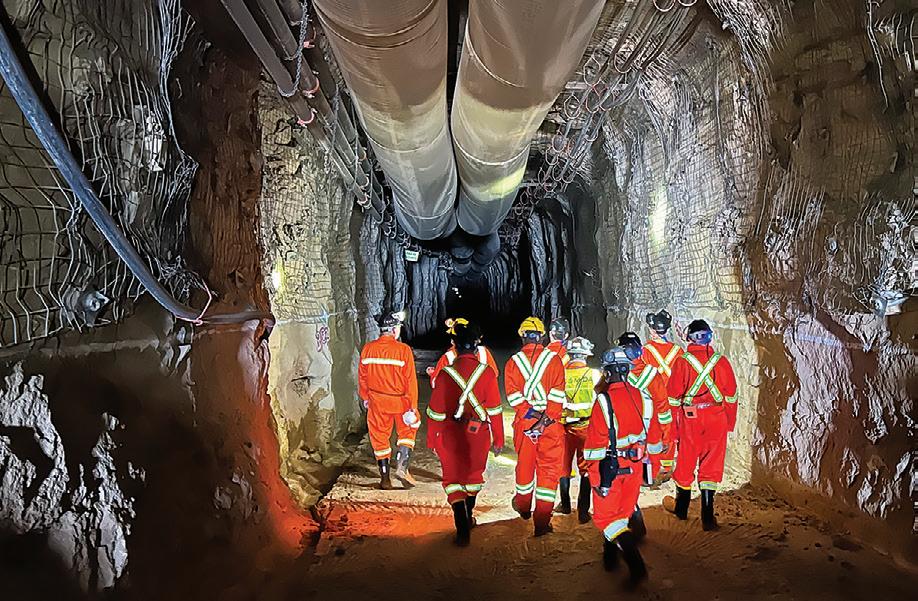
Inside Global Atomic’s Dasa uranium project in Niger. GLOBAL ATOMIC
Liam Morrissey, CEO , MS Risk
indepth
Deepest marathon on Earth tests runners and miners
SWEDEN | Diverse group aims to set World Record
BY BLAIR MCBRIDE
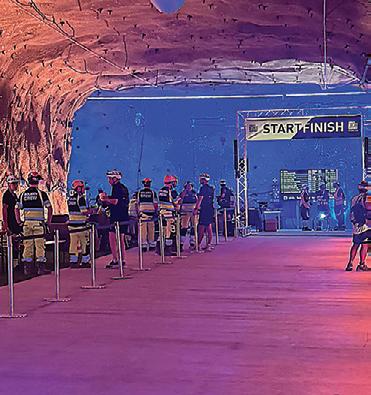
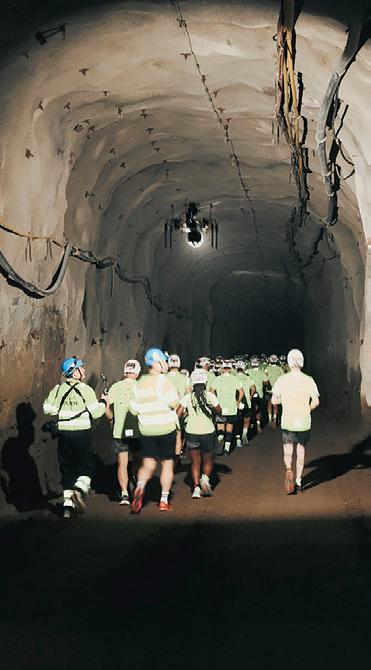
It was hot, damp and utterly dark, the kind of darkness that swallows sound. A line of headlamps bobbed through the tunnels of Boliden’s Garpenberg zinc mine more than a kilometre underground, the air thick with humidity and the faint tang of diesel and dust.
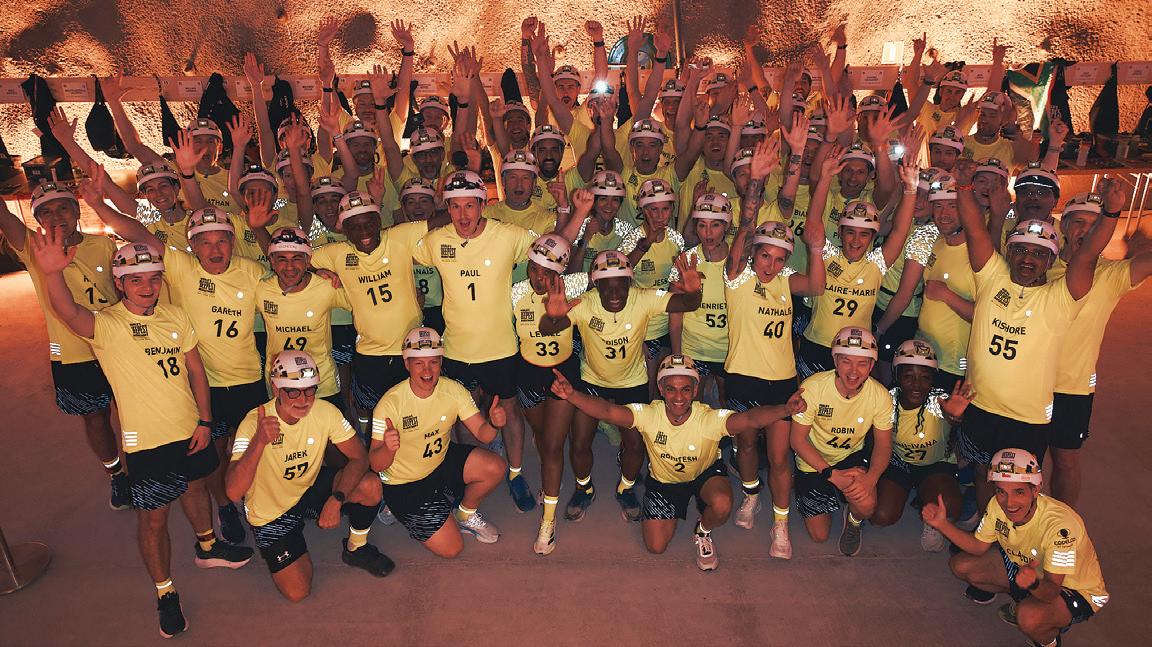
This wasn’t a shift change but the start of the World’s Deepest Marathon on Oct. 25, when 55 runners from 18 countries traced a 2-km stretch of tunnel back and forth to reach the full 42 km. The racers, including some of the most senior executives in the mining industry, Boliden staff, part-time runners and seasoned ultra-marathoners, competed down in the tunnels of Boliden’s zinc mine, 180 km northwest of Stockholm.
“You’d run to the end and then you’d turn around and come back and we did that 11 times,” Henrietta Newman, a consultant with the World Gold Council told The Northern Miner in a video interview from London in late October. “There was music at the start and finish point. [And] other than our head [lamps], it was complete darkness.”
Organized by education company BecomingX, the International Council on Mining and Metals (ICMM) and Boliden, the event is poised to set Guinness World Records for the deepest marathon and the deepest underground marathon distance run, pending final verification.
The run was also aimed at raising more than $1 million for the BecomingX Foundation to support disadvantaged students in Africa, and for dog welfare initiatives through U.K.-based Wild at Heart Foundation.
From tunnel to tunnel Newman, who has run in several half-marathons and a full marathon in London in 2021, began training for the underground race about eight weeks before it by increasing her weekly distances. It helped that she could do some practice runs in tunnels while on holiday in Spain, where several roads inside tunnels go through the Sierra Madre mountains.
Her running coach also joined her for an “informal marathon” through the Combe Down Tunnel near Bath, U.K., one of the country’s longest non-ventilated tunnels.
“Every year there’s a race where people have to run it 200 times, and it’s something like 1.2 km [long],” she said. “It’s an extreme challenge that people do, but that was quite good preparation actually running in that tunnel.”
Go down and run
Once at the Garpenberg site, the runners were taken by elevator down to 1,120 metres
Fifty-five runners from 18 countries, including Henrietta Newman from the U.K. (right) ran in the underground marathon more than 1 km deep in Boliden’s Garpenberg zinc mine in Sweden. SAM MCELWEE/ BECOMING X AND HENRIETTA NEWMAN

below sea level and then driven by truck to the race area.
“And that’s probably the craziest thing because it was a working mine,” Newman said. “You could see these giant trucks full of stuff, and then there we are just in our fourby-four, kind of weaving into the mine.”
For safety reasons, some items of personal protective equipment were mandatory for all runners, including helmets.
“I was a bit worried about wearing a hard hat…But I almost didn’t even notice it,” Newman said. “They’re super light climbing ones. One person had to run with a Go Pro on their helmet for the actual world record, to authenticate how far we’d run.”
Boots weren’t needed. The organizers graded the floor of the tunnel and removed large rocks, so it was more like a smooth gravel road and participants could wear running shoes.
Humid but supported
Temperature-wise, it was humid, and Newman estimates it was 24C, but she got used to it. Organizers said the air in the mine contains 30% more oxygen than in the atmosphere.
“When you were going up [the incline]
Lundin laces up
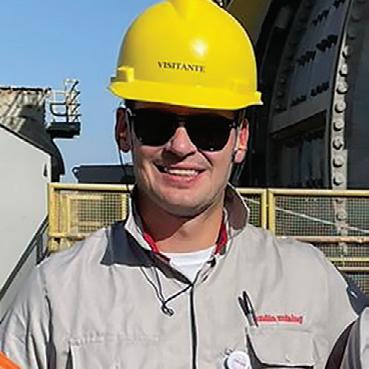
Among the mining executives who joined the event was Lundin Mining (TSX: LUN) CEO Jack Lundin.
“It was actually my first marathon, and potentially my last marathon,” he told Northern Miner podcast host Adrian Pocobelli.
there was no movement of air, but coming down you’d get these occasional puffs and it was so nice. That was perhaps oxygenated air,” Newman said.
Refreshment stations at each end of the tunnel kept marathoners hydrated, and the support staff were diligent with logistics, including helping runners whose headlamps malfunctioned.
No easy feat
With the run itself, Newman stayed in the “middle of the pack” for most of it and the 12-metre wide tunnel provided more than enough space for people to pass each other.
But the stuffy and dark conditions took their toll on some runners, even the top finisher, whom Newman said finished 50 minutes slower than his personal best for a marathon.
While Newman said, laughing, that she wouldn’t do the race again, she does recommend it as a way to bond with people through a unique experience.
“There were people from different walks of life,” Newman said. “There were two young runners, and one of them…it was her first marathon, and I ran with her for a little bit. It was tough for her. She did it. And at the end, three South African runners who were super runners, they all went and did the lap with her, and it was just such a nice moment.” TNM
Even though the mining veteran is a marathon rookie, he had few concerns about the air quality, temperature and logistics of the event.
“With Boliden and the ICMM that were putting it on and Becoming X…We were in good hands. The operating standard for Boliden is top notch as well. It was more just about like, ‘Okay, we got to run a marathon 1.1 kilometres below sea level, 1.3 kilometres below surface, in the dark, with a headlamp on. How do I mentally prepare for this environment that I’m going to be in?”
Lundin, who at around age 35 is one of the industry’s youngest leaders, was initially invited to join the marathon by Boliden CEO Mikael Staffas in February. But “I respectfully declined,” he said.
ICMM CEO Rohitesh “Ro” Dhawan then approached Lundin, saying it would be really good if he could join it. Lundin noted that one of ICMM and Boliden’s goals in organizing the event was to show that mining today is much more modern than most people realize, such that running a marathon inside one is possible and safe.
“I just said, ‘Fine, let’s go for it.’ It sounds like something that I’m crazy enough to try anyway,” Lundin said. “I was just worried about the training because it takes a lot of time to prepare the body for a marathon. But we made it happen.”
The humid conditions during the race meant that Lundin, like all runners, had to make sure he was fuelling properly and drinking enough water and electrolytes, which was hard to manage, he said.
“[We] got through that and overall I was really pleased that I came out without any injuries, and was still smiling at the end of it. That made it all worth it.”
Reflecting on whether the marathon experience has changed his perception of underground mining, Lundin suggested he might feel differently once the blisters on his feet have cleared up and he’s more recovered.
“It was unique for sure,” he said. “I’m happy to be contributing to something that can show the world that mining is much different today than it was 100 years ago, and it continues to get better.”
indepth
Election thrusts right-winger to runoff
CHILE | Kast expected to beat leftist Jara
BY TOM AZZOPARDI
Astrong showing by pro-business candidates in Chilean elections Nov. 16 bodes well for the resurgence of mining investment in the world’s largest copper producer.
Although conservative hardliner José Antonio Kast took just less than 24% of the vote, almost three percentage points behind leftist former labour minister Jeannette Jara, he is expected to win a Dec. 14 runoff by a landslide, picking up votes from rival candidates, according to the latest polls.
“If you just add up the votes for the right, Kast has a very significant base of support for the second round,” Hernán Campos, a political scientist at the Diego Portales University in Santiago, said the day after the ballot.
Kast has campaigned on attracting more investment by slashing corporate tax rates, regulation and public spending, while reintroducing guarantees for foreign investors to shield them from future tax and regulatory changes. He has promised an emergency administration to deploy troops against rising crime and illegal immigration, which voters say are their most important issues.
Right-wing parties, including Kast’s Republicanos, also performed well in elections to Congress which would make it easier for Kast to push through his reform program.
Mandatory vote
The ballot is notable as the first where voting is compulsory. It comes after six years of political uncertainty as majors BHP (NYSE, LSE, ASX: BHP), Freeport-McMoRan (NYSE: FCX) and Teck Resources (TSX: TECK.A,TSX: TECK.B; NYSE: TECK) plan to invest billions of dollars. Copper and gold prices are near record levels and demand for lithium is expected to surge.
“Today we’re a land of opportunities in mining,” said Mirco Hilgers, a mining partner at Baker McKenzie’s law offices in Santiago.
Kast’s challenge is now to unite enough votes from rival campaigns to win this month’s runoff. Centre-right veteran Evelyn Matthei and nationalist libertarian Johannes Kaiser quickly endorsed him. Each received around 13% of the votes counted, putting Kast very close to the 50% mark. But the main prize will be the backing of Franco Parisi, a maverick populist who surprised pollsters to finish third with almost 20% of the vote.
“These [voters] are people who are not ideologically defined but are concerned about law and order and the economy, and Kast resonates best with these demands,” Campos noted.
On the campaign trail, Kast has downplayed his conservative views on social values issues like abortion and same-sex marriage which turned off some voters four years ago in a runoff against Boric.
Jara
Polls suggest that Jara, current president Gabriel Boric’s successor on the ballot since winning the left’s primary last June, is likely to

“These [voters] are concerned about law and order and the economy, and Kast resonates best with these demands.”
HERNAN CAMPOS POLITICAL SCIENTIST, DIEGO PORTALES UNIVERSITY
struggle in the second round. Campaigning on raising the minimum wage and stronger labour laws, she has been unable to distance herself from the current government and attract votes beyond its core supporters.
“Jara failed to get 30% as many expected and she was the only significant leftwinger running so she has not got much room to grow in December,” Campos said.
Boric, who cannot seek immediate re-election, won a surprise landslide four years ago. As Chile’s most leftwing leader in half a century, the former student organizer had promised to tear up the constitution, dismantle the private pension system, ramp up taxes on mining and the very rich and “bury neoliberalism.”
However, his ambitious plans have been stymied by a lack of congressional support and changing public sentiment.
Less than a year later, voters overwhelmingly rejected a constitution which would have weakened property rights and beefed up environmental protection. Lawmakers blocked a major tax hike while a punitive mining royalty was significantly watered down.
As voters’ concern turned to more bread-and-butter issues such as crime, jobs and the cost of living, Boric’s administration has strived to prove its credentials with investors. It slashed red tape in Chile’s labyrinthine permitting system and signed new trade deals with the European Union, United Arab Emirates and the Trans-Pacific Partnership.
“We’re finally sobering up after the party,” said Maria Paz Pulgar, mining partner at Santiago law firm Guerrero, of Chile’s volte-face.
Investment
The completion of major projects such as Teck’s Quebrada Blanca and Gold Fields’ (NYSE, JSX: GFI) Salares Norte and the approval of a $3-billion expansion of Anglo American’s (LSE: AAL) Los Bronces mine showed that, despite recent instability, Chile is a destina-
nationalization, has proved a boon. State partnerships with Rio Tinto (NYSE, LSE, ASX: RIO) and SQM (NYSE: SQM) are set to unlock investments which could double production of the mineral within a decade. Although questioned during the election campaign, China’s recent approval of the Codelco-SQM tie-up means that “it is a done deal,” Pulgar said.
Projects
A Kast win Dec. 14 should be good news for a slew of new mining projects advancing towards construction.
Claims fees
Another reform promises to boost mineral exploration which has waned over the last decade. In 2021, to finance a new universal pension, Boric’s predecessor boosted claims fees.
tion where mining is still welcome.
“The current government has really changed the rhetoric around permitting,” said Hayden Locke, CEO of Marimaca Copper (TSX: MARI, ASX: MC2), which obtained an environmental licence in November for its namesake $587-million capex project.
As conditions have stabilized, investment has poured in. BHP plans to invest up to $14 billion to bolster production at Escondida, the world’s biggest copper mine, and reopen its shuttered Cerro Colorado mine while Freeport-McMoRan is eyeing an $8-billion expansion of its El Abra joint venture with state copper firm Codelco.
“Now they’ve run out of money, they realize the importance of mining,” said Manuel Viera, president of Chile’s Chamber of Mines.
Even Boric’s National Lithium Strategy, once feared as a veiled
After obtaining an environmental licence in November, Marimaca Copper is aiming to start construction of its project in northern Chile by the end of next year. The solvent extraction-electrowinning operation could be producing 50,000 tonnes of copper cathode annually by the end of the decade.
Shareholders, including Greenstone Resources, Assore and Mitsubishi, are raring to go. “It’s very rare in my career, but financing is not my biggest concern,” Marimaca’s Locke said.
Hot Chili (ASX: HCH) is another company aiming to reach production by 2030. Exploiting three deposits in the Atacama Desert, its Costa Fuego would produce 100,000 tonnes of copper mostly as concentrate for export.
“We see the new government providing a tailwind for the mining industry,” Hot Chili Executive Vice-President Jose Ignacio Silva said.
The move has shaken up Chile’s sleepy market in mining property under which mining companies and individuals could sit on huge areas for decades for minimal fees and no work requirements. Firms like BHP, Codelco and SQM managed portfolios the size of small countries, cutting off much of Chile from newcomers keen to explore.
With fees now set to quadruple every four years unless companies can show efforts to develop the claim, many landholders are selling off giant packages of the Atacama Desert and the Andes Mountains, sparking an unprecedented fire sale in mineral property.
“I’ve been in this industry 20 years and never seen anything like it,” Baker McKenzie’s Hilgers said. “Chile’s becoming attractive again for mineral exploration.”
Not everyone is pleased. Small mining companies say the exponential rise in fees amounts to expropriation of assets which are key to their future development. Some have taken legal action to block the move, Marco Zavala of law firm Guerrero said.
The issue could become a major test of the next president’s willingness to stand up to vested interests in order to realize Chile’s mineral potential. TNM

José Antonio Kast. WIKIMEDIA COMMONS VIA MEDIABANCO AGENCIA
projectupdates
Prairie builds DLE plant
LITHIUM | Plant to be largest in North America
BY MINING.COM STAFF
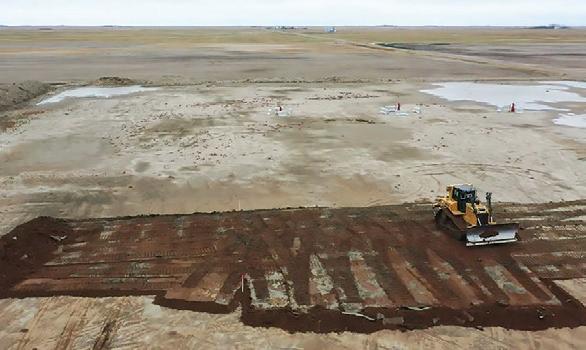
Australia’s Prairie Lithium (ASX: PL9) has kicked off construction in Saskatchewan of what it says will be the largest direct lithium extraction (DLE) facility in North America.
Prairie’s plant would have a total of four commercial-scale DLE columns, with an anticipated arrival date in April, the company said Nov. 4. The successful testing of one commercial-scale column in Arkansas over the past 18 months, combined with the high-quality brine from its lithium project, supports confidence in the technology’s performance and scalability, Prairie said.
“The construction on our lithium extraction facility at Pad #1 is a strong step forward on our critical path to production,” Prairie Lithium managing director Paul Lloyd said in the release. “The groundwork we are laying now will host what we believe will be the largest known direct lithium extraction facility in North America.”
Lithium brine Prairie is among the few lithium brine developers in Canada to bring their projects to an advanced stage, including E3 Lithium
(TSXV: ETL; US-OTC: EEMMF), Volt Lithium (TSXV: VLT) and LithiumBank Resources (TSXV: LBNK; US-OTC: LBNKF) in neighbouring Alberta.
For now, a Standard Lithium (TSXV: SLI) plant in Arkansas is believed to be the biggest DLE facility in North America. In March 2024, the Canadian company successfully installed and commissioned the Li-Pro lithium selective sorption commercial-scale unit supplied by Koch Technology Solutions (now Aquatech).
Pad #1 build Prairie’s Pad #1 foundation is expected to be completed in early 2026 with building construction to follow. The application to connect the wells and plant at Pad #1 to grid power has also been submitted to SaskPower.
Prairie plans to use conventional oil and gas drilling and completion methods to access lithium-rich brine from aquifers about 2.3 km underground.
The property comprises over 1,396 sq. km of subsurface permits in the Duperow Formation. It contains an estimated 4.6 million tonnes of lithium carbonate-equivalent in measured and indicated resources. TNM
Rio halts Jadar
LITHIUM | Serbian permit woes
Rio Tinto (NYSE, LSE, ASX: RIO) plans to pause its development of the long-delayed Jadar lithium project in Serbia to cut costs and shift focus elsewhere, Bloomberg reported on Nov. 13.
The Anglo-Australian miner intends to place the nearly $3-billion lithium project into care and maintenance after the government approvals process produced little progress, Bloomberg said. It cited an internal memo that it later confirmed with a company spokesperson.
Rio Tinto didn’t immediately respond to a Northern Miner Group request for comment.
The move essentially ends Rio’s two-decade-long quest to tap into one of the world’s largest lithium resources. Rio had estimated that Jadar could produce 58,000 tonnes of refined battery-grade lithium carbonate per year, as soon as 2027. It’s considered a main EU project to develop battery metals and expected to meet a chunk of its lithium demand.
Uncertainty
Since its initial discovery in 2004, the Jadar project has faced numerous regulatory setbacks, political uncertainty and opposition. Rio’s licence was taken away in January 2022 over environmental concerns, and despite regaining it two and a half years later, permits barely moved.
In June, the Rio Tinto raised its cost estimates for Jadar to $2.95 billion from $2.4 billion. It reflectscosts to meet “European Union environmental and human rights standards,” Jadar’s managing director said then
The Jadar halt is the latest cost-cutting move under new CEO Simon Trott, who has pledged to simplify operations.
Shares in Rio Tinto traded for A$132.59 apiece in Sydney before press time, valuing the company at A$48.9 billion (US$31.8 billion). TNM
Smackover sets high grade for brine
LITHIUM | Franklin combines mining with oil and gas know-how
BY HENRY LAZENBY
Smackover Lithium, a joint venture between Standard Lithium (TSXV, NYSE-A: SLI) and Norway state oil company Equinor (NYSE: EQNR), says it has North America’s highest lithium-in-brine grades in the first inferred resource for the Franklin project in northeast Texas.
The project has 0.61 cubic km of brine averaging 668 milligrams per litre lithium for 2.16 million tonnes lithium carbonate-equivalent, according to a Nov. 5 release. It also includes 15.4 million tonnes of potash (as potassium chloride) –newly added to the U.S. Geological Survey’s draft critical minerals list – and 2.64 million tonnes of bromide, the company said.
“This initial project definition marks a key step toward the ultimate goal of reaching production of over 100,000 tonnes per year of lithium chemicals in Texas through multiple phases,” Standard Lithium, which operates the 55:45% JV, said in the release.
The resource for a project combining mining with oil and gas know-how comes as other similar partnerships plumb reservoirs in the huge Smackover, a limestone formation stretching from Texas through Louisiana, southern Arkansas, Mississippi, Alabama and into the Florida Panhandle. ExxonMobil (NYSE: XOM) has discussed initial output as early as 2027, while Albemarle (NYSE: ALB) and Standard Lithium have also expanded positions in Arkansas.
Standard Lithium shares rose 2.2% to C$4.64 in Toronto on Nov. 5 and another 11% to C$5.16 near press time. The shares have more than doubled this year for a market
Two additional East Texas projects could, if developed, roughly triple the JV’s portfolio in the state.
capitalization of about C$1.23 billion ($880 million).
Next steps
Work at Franklin now turns to appraisal drilling, re-entering three shut-in wells and refining models of the Upper and Middle Smackover aquifers to support a preliminary feasibility study.
Key risks include financing amid lithium-price volatility, scaling DLE to a reliable commercial production, power access, and harmonizing royalties and leases across multiple owners. The company also needs offtakers for lithium and its potash and bromide co-products will also be a hurdle to markets.
Smackover rising Franklin, about 400 km northeast of Austin near Mount Vernon, spans roughly 323.8 sq. km (80,000 acres), with more than 186 sq. km leased to support the resource. The project also hosts a previously measured 806 mg per litre brine at the Pine Forest-1 well.
Two additional East Texas projects being advanced could, if developed, roughly triple the JV’s portfolio in the state. Royalty and lease terms in Texas differ from Arkansas and will be a key input to project economics.
While the U.S. Geological Survey and Arkansas officials last year outlined multi-million-tonne lithium potential in Smackover brines, the battery metal fell 8% year-on-year through mid-October before firming into November.
Fastmarkets assessed China battery-grade lithium carbonate at ¥72,500–73,000 per tonne (just over $10,100) on Oct. 10, a yearlow. The price climbed to $11,475 per tonne near press time, according to the Wall Street Journal. It’s still far below the November 2022 peak at around $88,500 per tonne.
DLE tech
Smackover developments plan to use direct lithium extraction (DLE), which pumps brine to the surface, captures and purifies lithium, and re-injects the leftover brine. DLE can shorten production cycles from months to hours compared with conventional evaporation ponds, and reduce land footprint, though unit costs may be higher.
Standard Lithium plans to leverage operating data from its El Dorado, Ark., demonstration plant and learnings from the South West Arkansas project.
Others leaning on DLE include Occidental Petroleum (NYSE: OXY) and Berkshire Hathaway Energy, which are trialling geothermal-brine lithium at California’s Salton Sea. E3 Lithium (TSXV: ETL) is advancing DLE on Alberta brines, and SQM (NYSE: SQM) has reported high recovery rates in Chilean trials.
On the funding front, the U.S. Department of Energy has indicated it is considering investment of up to $225 million for Standard Lithium’s South West Arkansas project. TNM
Maritime pours first gold
NEWFOUNDLAND | $292M takeover closes
BY BLAIR MCBRIDE
Maritime Resources poured first gold at its Hammerdown project in northwest Newfoundland in November, the first time the mine has produced yellow metal since 2004. Shares gained.
The pour comes from stockpiled material at Hammerdown and was processed at Maritime’s nearby Pine Cove mill. It caps off a year of construction and commissioning work at the mine, located near the town of Baie Verte.
“Bringing the Pine Cove mill back into operation after two years of care and maintenance, completing all project permitting and seeing the first gold poured from Hammerdown is the result of a tremendous effort by our team and the support of our shareholders, local communities and the province,” Maritime President and CEO Garett Macdonald said in a Nov. 12 release.
M&A momentum
The milestone came just a day before New Found Gold (TSXV: NFG; NYSE-A: NFGC) announced
that its $292 million (US$212 million) deal to acquire Maritime had closed. The deal, announced in September, is expected to create a multi-asset gold producer in central Newfoundland. It combines New Found’s Queensway project, due to start production in 2027, with Hammerdown.
“In less than a year, New Found Gold has transformed from an early-stage exploration company to an emerging Canadian gold producer with camp-scale exploration potential,” New Found CEO Keith Boyle said in a release on Nov. 13.
“Today we see two high-quality assets, the Queensway gold project and the Hammerdown gold project, located in a tier one jurisdiction with strong synergies, come together at a time of highly favourable gold prices.”
The two projects, 180 km apart, are set to benefit from shared infrastructure including Maritime’s Pine Cove mill and the Nugget Pond hydrometallurgical plant. Maritime’s shares were being delisted from the TSX Venture Exchange as the Miner went to press.
New Found Gold shares gained
6.3% on Nov. 12 to $3.02 apiece and were at $3.07 before press time in Toronto for a market capitalization of $1.04 billion. The stock has traded in a 52-week range of $1.34 to $3.95.
Past producing site Gold was last produced at Hammerdown by Richmont Mines from an underground mine from 2000 to 2004, averaging 15.7 grams gold per tonne and churning out 143,000 ounces. Construction of Hammerdown, including development of the open pit mine is well advanced, Maritime said.
The ramp-up to full production at is planned for early next year. Hammerdown could produce 50,000 oz. annually at an all-in sustaining cost of US$912 per oz., according to a 2022 feasibility study. Proven and probable reserves stand at 1.9 million tonnes grading 4.46 grams gold for 272,000 contained ounces. The feasibility study gave Hammerdown an after-tax net present value of $251 million at a 5% discount rate using a base-case gold price of US$2,500 per ounce. TNM
Foundation works on Pad #1 at the project in Saskatchewan. PRAIRIE LITHIUM
projectupdates
Ontario fast-tracks Frontier Lithium’s PAK
LITHIUM | Mitsubishi backs project
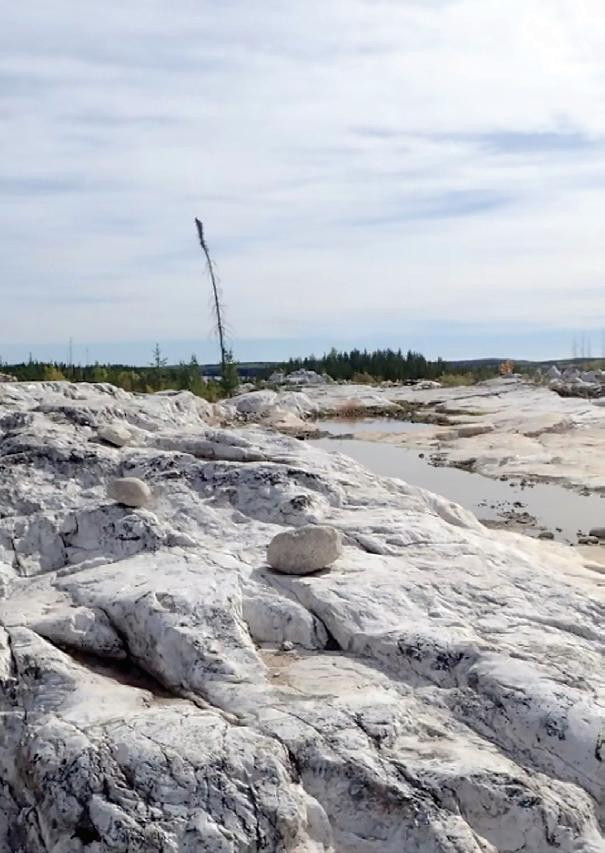
The high-grade, large-scale hard rock lithium project would produce 200,000 tonnes of spodumene concentrate annually over a 31-year mine life and generate pre-tax earnings of $285 million a year.
Drills expand Banyan’s high-grade zones
YUKON | AurMac holds third-largest gold resource
BY BLAIR MCBRIDE
November drill results at Banyan Gold’s (TSX-V: BYN; US-OTC: BYAGF) Airstrip target, part of its main AurMac project in the Yukon, returned strong mineralization and extend high-grade areas.
Highlight hole AX-25-708 cut 17.6 metres grading 3.66 grams gold per tonne from 24 metres depth, including 9.3 metres at 6.8 grams gold and one very highgrade interval of 1.6 metres grading 35.98 grams gold, Banyan said on Nov. 13.
“These results continue to highlight the greater than 1 gram per tonne gold near-surface mineralized domains in AurMac,” Banyan CEO Tara Christie said in a release.
Potential resource booster
Duncan Mackay, vice president of exploration, said that the AX-25708 intersections highlight the potential to add more ounces to Airstrip and improve the resource.
“The high-grade core of Airstrip associated with the felsic dyke contact now extends over 500 metres along strike and nearly 300 meters down dip,” he said.
Busy results season
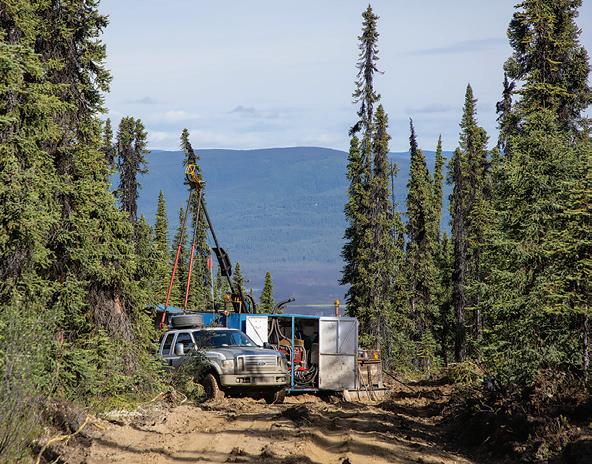
Hole AX-25-714 cut 18.4 metres at 1.12 grams gold from 14.2 metres depth, including 6.7 metres grading 2.12 grams gold.
AurMac, located 270 km northeast of Dawson City, hosts 112.5 million indicated tonnes grading 0.63 gram gold for 2.27 million oz.; and 280.6 million inferred tonnes at 0.6 gram gold for 5.45 million contained ounces.
455,000 gold oz.
BY COLIN MCCLELLAND
Frontier Lithium’s (TSXV: FL; US-OTC: LITOF) $943-million (US$671 million) capex PAK project is Ontario’s first entry in a program to approve mines in two years.
Provincial Energy and Mines Minister Stephen Lecce announced the One Project, One Process (1P1P) program Oct. 17, vowing to cut permitting time for advanced projects in half. Under Premier Doug Ford, the province has
joined a chorus of Western governments – including the Trump Administration – in slashing red tape and promoting critical minerals to challenge Chinese control of the industry.
“Clarity and predictability in permitting are key to unlocking investment, accelerating project timelines and delivering on Canada’s critical minerals strategy,” Frontier President and CEO Trevor Walker said in an Oct. 29 release
The Airstrip results add to a productive fall for Banyan, which in late October released a resource update for its Hyland project that keeps the company’s portfolio in third place in Yukon by total contained gold ounces. The update added 5% to Banyan’s total contained gold of 8.1 million ounces. AurMac also comprises the Powerline target.
Other noteworthy results from Airstrip include hole AX-25-703, which returned 11.4 metres grading 2.04 grams gold from 25.2 metres depth, including 5.6 metres at 3.6 grams gold, and a high-grade portion of 1.2 metres grading 7.98 grams gold.
Sitka finds new high-grade zone
YUKON | Additional deposits possible
BY FRÉDÉRIC TOMESCO
Sitka Gold (TSX-V: SIG; US-OTC: SITKF) said drilling in a new section of its RC property in the Yukon yielded several instances of near-surface highgrade gold.
Hole DDRCCC-25-113 in the deposit’s Contact zone cut 119 metres of 1.01 grams gold per tonne from 15 metres downhole, Sitka said Nov. 13. This included 10.7 metres grading 4.1 grams gold from 24 metres depth.
“Initial results from Sitka’s first pass of diamond drilling at the Contact zone are very encouraging, demonstrating the strong gold values present within this higher-grade gold zone,” CEO Cor Coe said in a statement.
Based on the latest drill results, “we can add the Contact zone to our growing list of targets that demonstrate the potential to host additional
multi-million-ounce gold deposits within the Clear Creek Intrusive Complex,” he said.
Productive year
The latest results extend a productive exploration year for Sitka, following its first high-grade hole in June. Crews have completed about 32,000 metres of diamond drilling at RC this year, and assays are still pending for several holes – including some from the adjacent Pukelman target area, where numerous instances of visible gold were observed in the drill core, the company said.
Sitka shares jumped 8.7% to $1.13 in Toronto on the day of the announcement before easing to $1.02 near press time, giving the company a market value of $381 million. The stock has traded between 25¢ and $1.36 in the past year.
Mineralization in the Contact-
Pukelman zone remains open in all directions, Sitka said. Drilling so far has confirmed a mineralized footprint of about 900 metres by 650 metres, down to a depth of about 430 metres.
Assays pending
Assays are also pending for another 46 diamond drill holes that have been completed across the Rhosgobel, Blackjack, Saddle, Eiger, Bear Paw and MayQu targets.
Located in the Tombstone gold belt, about 100 km east of Dawson City, RC is part of a 431-sq.-km land package owned by Sitka. It can be reached via a secondary gravel road from the Klondike Highway, which is usable year-round.
Exploration on the property so far has mainly focused on identifying an intrusion-related gold system.
The Hyland update outlines 11.3 million indicated tonnes grading 0.93 gram gold and 7.27 grams silver for 337,000 contained gold ounces and 2.63 million oz. silver. There are also 3.9 million inferred tonnes at 0.95 gram gold and 6.94 grams silver for 118,000 oz. gold and 860,000 oz. silver. Hyland is about 450 km southeast of Whitehorse.
“The updated, pit-constrained mineral resource demonstrates the potential of the Hyland project as a gold and silver project,” Christie said in a release. “With additional work, there is potential to delineate additional mineral resources in the main zone, as well as define new resources in other portions of the property.”
Third in Yukon
The update puts Banyan’s total contained resource behind Western Copper and Gold’s (TSX, NYSE: WRN) Casino and Snowline Gold’s (TSXV: SGD; US-OTC: SNWGF) Valley among Yukon projects.
Hyland’s resource sits in a single near-surface deposit made up of the Main, Camp, Cuz and Montrose Ridge zones that form a gold mineralized trend over 11 km. Its gold mineralization is hosted inside a Precambrian, interbedded phyllite and quartzite sequence of the Selwyn Basin that hosts many other gold occurrences in Yukon, Banyan said.
18,505 metres drilled
The resource update was based on data from 18,505 metres of drilling across 86 holes and 7,598 metres across 39 trenches.
Hyland is accessible by float plane or via winter road about 74 km northeast of the town of Watson Lake.
Banyan shares were flat at 84¢ apiece before press time in Toronto, valuing the company at $347.7 million. The stock has traded in a 12-month range of 17¢ to 92¢. TNM


A drill rig at Banyan’s AurMac project in Yukon. BANYAN GOLD
The PAK deposit area, in northwestern Ontario. FRONTIER LITHIUM
donedeals
Coeur Mining buys New Gold for $7B
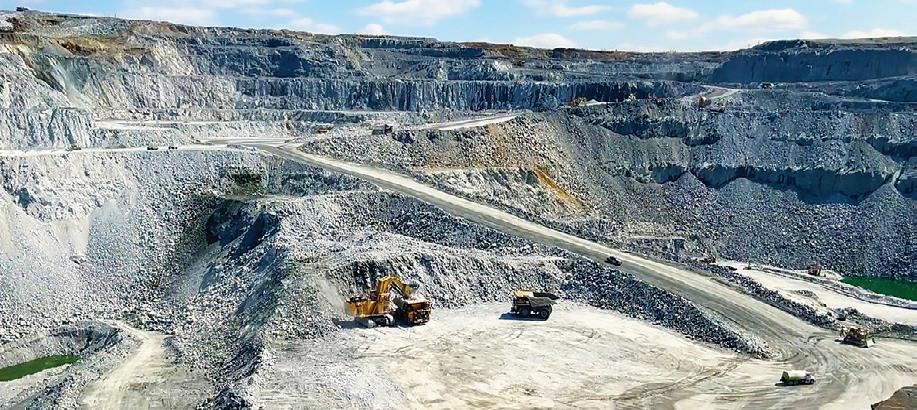
BY CECILIA JAMASMIE
Coeur Mining (NYSE: CDE) is acquiring Canada’s New Gold (TSX: NGD) in an all-stock deal valued at about $7 billion, creating a new North American mining heavyweight amid record gold prices and renewed investor enthusiasm for precious metals.
Chicago-based Coeur, which operates mines in the U.S. and Mexico, will combine with New Gold’s two Canadian gold-producing sites to form a company valued at roughly $20 billion. The merged miner will produce an estimated 900,000 oz. of gold and 20 million oz. of silver next year.
The deal strengthens Coeur’s balance sheet and cash flow, giving it greater strategic flexibility, the company said on Nov. 3. New Gold’s assets are expected to lower Coeur’s production costs and boost margins.
“With the addition of New Gold’s two Canadian operations to our five current operat-
Coeur will combine with New Gold... to form a company valued at roughly $20 billion. The miner will produce an estimated 900,000 oz. of gold and 20 million oz. of silver next year.
ing mines we expect to generate approximately $3 billion of earnings before interest, taxes, depreciation and amortization (EBITDA) and approximately $2 billion of free cash flow in 2026 at significantly lower overall costs and higher margins,” Coeur’s Chairman, President and CEO Mitchell J. Krebs said.
“Just two years ago, Coeur’s fullyear EBITDA was $142 million and free cash flow was negative $297 million,” Krebs said. “This transaction accelerates our transformation
into a larger, more resilient, lowercost company.”
Operational synergies
New Gold President and CEO Patrick Godin said the merger will deliver value to shareholders through operational synergies and growth potential.
“It rapidly unlocks the K-Zone at New Afton and enhances exploration at Rainy River, while diversifying our asset base with five high-quality precious metal operations,” Godin said.
Investors will receive 0.4959 Coeur share for each New Gold share, a roughly 16% premium. Coeur will maintain New Gold’s Toronto office and seek a Canadian listing.
The merger comes amid a record-setting rally in gold, which climbed above $4,000 an oz. this year and which the sector expects to surpass the $5,000 mark in the next 12 months. Shares of both Coeur and New Gold have tripled in 2025. TNM
Gold Fields invests in Founders
BY FRÉDÉRIC TOMESCO
Gold Fields (NYSE, JSE: GFI) paid about $50 million (US$36 million) to become the biggest shareholder in Founders Metals (TSXV: FDR; US-OTC: FDMIF), which is developing the Antino gold project in Suriname.
Johannesburg-based Gold Fields acquired about 12 million Founders common shares – good for a 12% stake – at $4.15 apiece, the Vancouver-based company said. The deal, which was announced Nov. 3, closed a week later, Founders said.
This is the second significant Canadian mining investment in as many years by Gold Fields, one of the world’s largest miners. It spent $2.2-billion last year to buy Toronto-based Osisko Mining to become the sole owner of the Windfall project and the surrounding exploration district in Quebec.
“Combining Founders’ position as the largest and most advanced gold explorer in Suriname with the technical capabilities of a company having decades of experience developing world-class gold deposits positions us to rapidly advance work at Antino,” Founders Metals CEO Colin Padget said in a statement. “This partnership further underscores Suriname’s potential as an emerging gold jurisdiction globally.”
The company said it intends to use the funds to expand its land holdings around Antino and advance regional-scale exploration across multiple targets it described as high-grade.
Investor rights pact
The companies also reached an investor rights agreement giving Gold Fields the right to appoint one nominee to the Founders board if its stake reaches or exceeds 12.5%. Gold Fields will also receive top-up rights, financing participation rights and technical committee representation rights.
News of the investment comes as Founders completes a 60,000-metre drilling program at Antino, where it has made five discoveries in the past 18 months.
Located 275 km south of the Suriname capital, Paramaribo, Antino sits across the Lawa River from French Guiana. The property has produced 500,000 oz. of artisanal gold historically, Founders says. The project also sits on the Guiana Shield, which extends to neighbouring South American countries and hosts Newmont’s (TSX: NGT) Merian and Zijin Mining’s Rosebel gold mines.
Key holders
Toronto-based B2Gold (TSX: BTO; NYSE-A: BTG) owns about 6% of Founders, having invested about $12 million in the company a year ago. Key institutional holders include New York-based fund BlackRock and Toronto’s Dynamic Funds.
Founders shares rose 3% to $3.75 in Toronto on the day of the deal announcement, and gained another 18% to $4.43 by press time, giving the company a market value of $452 million. The stock has traded between $2.53 and $6.25 in the past 12 months. TNM
Sibanye pays Appian $215M
COURT | Settles $1B deal exit
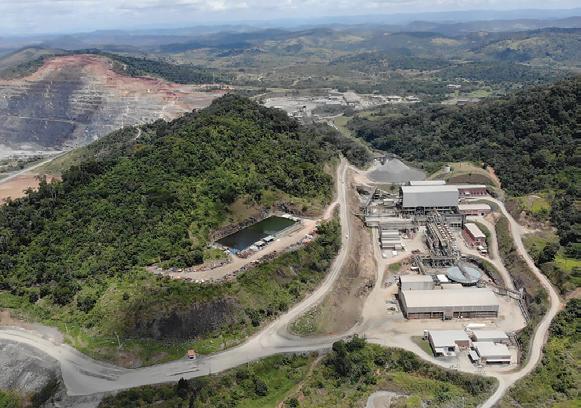
BY MINING.COM STAFF
Sibanye-Stillwater (JSE: SSW, NYSE: SBSW) has agreed to pay $215 million (C$301 million) to settle its dispute with Appian Capital Advisory over its cancelled purchase of two of the firm’s Brazilian assets. The settlement comes just before a trial to determine damages was due to begin. In late 2024, a U.K. court determined that Sibanye had unlawfully abandoned the $1-billion October 2021 deal and was liable to compensate the seller. The South African miner said earlier this year that Appian could have recovered more than $720 million from a judgment.
BMO Capital Markets views the settlement as a slight “positive” for Sibanye. “They are able to comfortably pay this settlement out of current treasury, but it also removes any overhang for Sibanye-Stillwater, allowing them to focus on consistent operational delivery and growth,” the bank wrote in a note on Nov. 10.
Shares in Sibanye-Stillwater closed 7.1% higher that day in Johannesburg at 48.96 rand apiece, before easing to 47.50 rand before press time, for a market capitalization of 134 billion rand ($7.8 billion).
‘Best interests’
“The settlement of this protracted legal dispute is in the best interests” of the company, Sibanye CEO Richard Stewart said on behalf of the board and management in a release.
Sibanye abruptly walked away from the deal to acquire Atlantic Nickel and Mineração Vale Verde from Appian just three months later, citing a dislocation in a pit wall at Atlantic Nickel’s Santa Rita mine.
Appian did not accept the withdrawal. In February 2022, it took legal action against Sibanye in the High Court of London seeking
The Appian transaction is not the only major battery metals deal that Sibanye has U-turned on. This year, it scrapped its investment in the Rhyolite Ridge lithium-boron project in Nevada.
damages in excess of $1.2 billion, which comprises the $1 billion cash consideration of the deal and $218 million in estimated royalties.
“This positive outcome allows us to close this matter on appropriate terms and focus our full attention on managing our funds and driving continued growth across our portfolio,” Appian founder and CEO Michael Scherb said.
Battery metals
In attempting to buy the Appian assets, Sibanye was looking to diversify its mining portfolio by increasing its exposure to battery metals, on top of its gold and platinum group mines in South Africa and the U.S. The company also has a lithium project in Finland and owns a nickel plant in France.
The Santa Rita mine has been one of the largest open-pit nickel sulphide mines but is nearing depletion and will transition to underground. Mineração Vale Verde’s Serrote copper mine in Alagoas, eastern Brazil, is expected to produce about 20,000 copper-equivalent tonnes annually over 14 years.
The Appian transaction is not the only major battery metals deal that Sibanye has U-turned on. Earlier this year, the miner scrapped its planned investment in the Rhyolite Ridge lithium-boron project in Nevada, also announced in 2021, citing a weak market environment. TNM
New Gold’s Rainy River mine in northern Ontario. NEW GOLD
The Santa Rita mine in Bahia state of northern Brazil. APPIAN CAPITAL
Fresnillo buys Probe Gold
EXPANSION | $780M deal
BY CECILIA JAMASMIE
Mexican precious metals miner Fresnillo (LSE: FRES) is acquiring Canada’s Probe Gold (TSX: PRB) for $780 million (US$556 million) in cash, marking the company’s first entry into Canada.
Fresnillo will pay $3.65 per share, a 39% premium to Probe Gold’s closing price before the announcement and 24% above its 30-day average as of Oct. 30. The deal gives Fresnillo access to Probe’s 10 million oz. of gold reserves, including 8 million oz. at the Novador project in Quebec’s Val-d’Or mining camp.
The acquisition also includes the early-stage Detour Gold Quebec property, which Fresnillo said could benefit from its technical expertise and exploration experience.
London-listed shares in Fresnillo, the world’s largest silver producer and one of Mexico’s biggest gold miners, fell by less than 1% to £22.28 on Oct. 31 before climbing to £22.60 near press time. The stock has surged more than 240% this year, buoyed by a 78% rise in silver prices this year to $51.45 per ounce.
Focus on Mexico
The acquisition aligns with the company’s strategy of pursuing disciplined, value-driven mergers and acquisitions, while focusing on early-stage precious metals projects that complement its core operations, Fresnillo CEO Octavio Alvídrez said.
Probe’s assets would “meaningfully” strengthen Fresnillo’s project pipeline, with Mexico remaining central to its growth strategy, he added.
Probe Gold CEO David Palmer said in a separate statement that after nearly a decade of development, it was time to hand over Novador to a more experienced operator capable of advancing it through permitting and construction. The project is expected to produce more than 200,000 oz. of gold annually for over a decade.
Fresnillo said it plans to continue developing Novador following the deal’s completion. The company currently operates eight mines and holds exploration projects in Peru and Chile.
All directors and officers of Probe, along with Eldorado Gold (TSX: ELD; NYSE: EGO), which collectively own about 12% of the company, have agreed to support the transaction. TNM
Anglo-Teck snags
REGULATION | Deal breakers?
BY CDN MINING JRNL
The federal government is pressuring Anglo American (LSE: AAL) to become legally Canadian on top of moving its headquarters to Vancouver as it scrutinizes the British miner’s $50-billion (C$69-billion) bid for Teck Resources (TSX: TECK.A, TECK.B; NYSE: TECK), The Globe and Mail reported, citing two people familiar with discussions.
Anglo American has offered some concessions to secure federal approval, such as relocating key leadership to a new global office in Vancouver and adopting the name Anglo Teck.
But Ottawa wants the further legal step, called redomiciling, and a primary stock listing in Toronto, the sources told The Globe in mid-November. That would mean falling under Canadian rules for taxes, mergers and acquisitions, and financial reporting. The paper didn’t identify the people because they weren’t authorized to speak publicly on the matter.
Anglo CEO Duncan Wanblad told the paper in September when the deal was announced that the company wouldn’t redomicile nor move its stock listing.
Industry Minister Mélanie Joly said then that Anglo’s promises on the headquarters and staff in Vancouver weren’t enough.
Economic benefits
Joly is in charge of assessing the economic benefits for Canada and potential national security implications of Anglo’s all-stock deal for Vancouver-based Teck. The
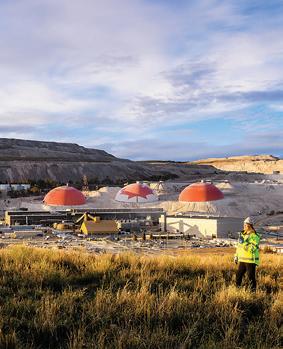
government must contend with the legacy of foreign takeovers of major Canadian mining companies in the past 20 years as Prime Minister Mark Carney seeks to burnish the country’s critical minerals credentials versus industry dominant China.
Brazil’s Vale (NYSE: VALE) bought Inco in 2006, AngloAustralian Rio Tinto (NYSE, LSE, ASX: RIO) acquired Alcan the next year and Glencore (LSE: GLEN) of Switzerland took over Falconbridge in 2013.
Franco-Nevada (TSX, NYSE: FNV) co-founder Pierre Lassonde has spoken against the Anglo-Teck deal as another loss for Canada.
Ottawa’s review of the AngloTeck deal is likely to extend into 2026. Shareholders from both companies will vote Dec. 9 on the proposal, with Teck needing approval from at least two-thirds of votes cast. TNM
$6B state-backed funds seek projects
INVESTMENT | Near-term producers sought

BY STAFF WRITER
Two new mining funds backed by Washington, Abu Dhabi and the World Bank have been formed to finance critical mineral projects as the West tries to cut its reliance on China.
Orion Resource Partners on Oct. 23 said it is teaming with the U.S. International Development Finance Corp. (DFC) and Abu Dhabi’s ADQ on the Orion Critical Mineral Consortium, starting with $1.8 billion (C$2.5 billion) and aiming to grow to as much as $5 billion.
Two days earlier, the World Bank’s International Finance Corp. (IFC) said it would anchor a $1-billion fund managed by Appian Capital Advisory to invest across emerging markets.
“This is a step toward closing the funding gap across the critical minerals supply chain and supporting U.S. growth,” Orion founder and CEO Oskar Lewnowski said in an Oct. 23 release.
“Partnering with companies like Appian will bring more private capital to places that need it most,” IFC managing director Makhtar Diop said in an Oct. 21 statement.
The twin moves add momentum to efforts to rebuild allied supply chains for copper, nickel, cobalt and rare earths central to defence and the energy transition,
where Beijing holds sway. They also extend a broader shift toward public–private financing vehicles that can move faster than traditional development aid.
Production-focused
Orion said the consortium would focus on existing or near-term producers rather than early-stage exploration. The DFC, created in 2019, is to co-fund the vehicle alongside Orion and ADQ and engage “mission-aligned” partners seeking secure supplies.
In parallel, IFC said its $100-million initial commitment will be raised through IFC Asset Management, with Appian targeting equity, credit and royalty investments across Africa and Latin America.
The fund’s first deal is in Brazil, where Appian-owned Atlantic Nickel is shifting the Santa Rita operation in Bahia from open pit to underground. As the mine transitions, output is expected to reach about 30,000 tonnes of nickel equivalent a year with more than three decades of life, Appian has said.
Billions for mines
For Orion, the consortium deepens an existing partnership with ADQ after striking a $1.2-billion venture earlier this year. The New York-based mining financier manages about $8 billion.
London-based Appian manages about $5 billion and says it has brought a dozen mines into production since 2016 alongside IFC on several deals.
By prioritizing advanced assets and shared standards, the new funds seek to quicken impact, but risks remain. Projects must still contend with permitting timelines, ESG expectations, governance risks in emerging markets and commodity price swings.
Since Trump returned to the White House, Washington has pursued mineral pacts with allies and backed domestic links in key value chains. In November, the U.S. signed an agreement with Australia to boost access to rare earths and other materials and is negotiating a similar deal with the Democratic Republic of Congo, the top cobalt supplier and a major copper source.
The Department of Defense partnered with MP Materials (NYSE: MP) this summer to advance a U.S. rare earth magnet chain. TNM
MP Materials scores Saudi rare earth JV
MIDDLE EAST | Plant in kingdom proposed
BY MINING.COM STAFF
MP Materials (NYSE: MP) has teamed up with the U.S. Department of Defense to form a joint venture in Saudi Arabia with Maaden, the kingdom’s main mining company, to build a rare earth refinery. Shares of the company rose.
Once built, the plant will process rare earth feedstock sourced from the kingdom and other global regions and produce separated light and heavy rare earth oxides, the partners said. The refined prod-
ucts will support U.S. and Saudi manufacturing and defence sectors and be marketed to allied nations.
Under the deal, the MP and the defence department joint venture, will hold a combined 49% stake, with Maaden retaining no less than 51%. The defence department will provide full financing for the U.S. contribution, while MP will contribute its technical expertise in rare earth separation and refining.
The company said it is also in discussions to support or collaborate on magnet manufacturing in Saudi Arabia.
‘Pivotal step’
The partnership represents “a pivotal step toward rebalancing the global rare earth supply chain and aligns with U.S. economic and national security interests,” MP Materials said on Nov. 19.
“We are honoured that the U.S. government asked MP to partner on a project of this magnitude and importance for America and its allies,” MP Materials founder and CEO James Litinsky said in a release. “The formation of the joint
The World Bank’s International Finance Corp. is to
Teck’s Highland Valley copper mine, located about 50 km southwest of Kamloops, B.C. TECK RESOURCES
TNMawards
Serial wealth creator Lassonde still having fun
LIFETIME ACHIEVEMENT | Veteran enjoys investing in mines, people
BY FRÉDÉRIC TOMESCO
Franco-Nevada (TSX, NYSE: FNV) co-founder Pierre Lassonde hasn’t let retirement from the C-suite dim his love for the yellow metal.
Think $4,000 gold is high? Lassonde, the former Newmont (NYSE: NEM, TSX: NGT) president, has news for you. He predicts the yellow metal will hit $17,250 an oz. within three years.
“People are buying gold because they want to have something else than the U.S. dollar,” Lassonde told The Northern Miner in an interview. “All the major developed countries have a budget deficit problem and none of them want to address it.”
If anyone can speak about gold with authority, it’s Lassonde. More than five decades into his storied career, the Quebec-born analyst, entrepreneur, financier and philanthropist – a 2013 inductee into the Canadian Mining Hall of Fame –can now add another laurel to his collection. He is this year’s recipient of The Northern Miner’s Lifetime Achievement award.
Gold’s lure for investors lies in its finite supply, Lassonde says. Only 216,265 tonnes of gold have been mined throughout history, World Gold Council data show. And while demand – including from central banks – keeps increasing, gold miners are struggling to lift output as ore grades decline and new deposits are deeper than ever before.
“If you take just 1% of the money that’s in other asset classes and you move it into gold, gold is going to go way up,” he argues. “Gold is a small asset class. Every year there are only 3,600 tonnes produced and a third goes into central bank coffers. It’s not a whole lot.”
Store of value
In the eyes of some investors, gold is also starting to rival the U.S. dollar as a store of value. The U.S. currency made up 58% of disclosed global official foreign reserves in 2024, down from a peak of 72% of reserves in 2001, U.S. Federal Reserve Board data show.
“Gold is being remonetized within the architecture of global reserves,” Lassonde says. “Whether it’s central banks, family offices or sovereign wealth funds, they are all hedging their investment bets against an increasingly politicized and fragmented world. On top of that, there are cyclical factors such as a lowering of interest rates” that fuel appetite for gold, he says.
Lassonde’s love story with mining almost never took off. As a teenager, he says, he had his heart set on a career in construction.
“I didn’t think about mining. It didn’t even cross my mind,” he says. “My interest was to go into construction. I worked for an architect for a couple of summers. I also worked in construction because one of my friends’ father owned a construction business. My thought was I was going to do an MBA, work for a construction company, learn the ropes and start my own company.” Bechtel
After obtaining his bachelor’s degree in engineering at Montreal’s Ecole Polytechnique, he left for the United
For 10 years we had no competition because nobody thought you would build a business based on royalties.
PIERRE LASSONDE, CO-FOUNDER, FRANCO-NEVADA
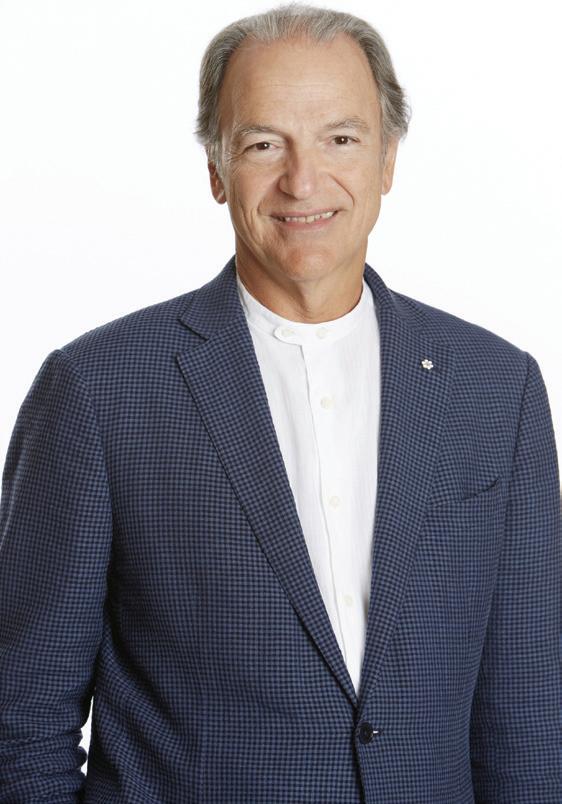
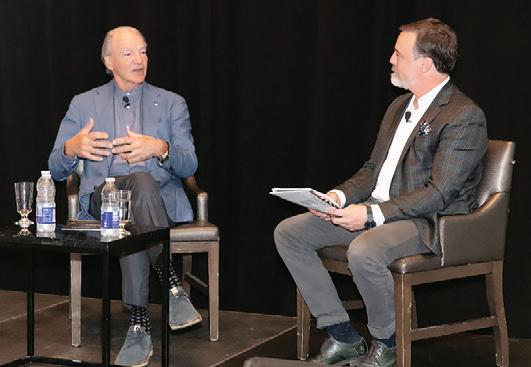
States to do a master’s in business administration at the University of Utah. Upon graduation, he got hired by engineering giant Bechtel in their mining and metals department. Six months in, the company sent him on a job in Arizona building the Pinto Valley mine.
“When I got there, I met a geologist and we started speculating on junior mining stocks,” he says. “I made five times my money on the first stock I bought over a threemonth period. That’s where I got the bug. I thought I was God’s gift to finance! Of course, the second time I lost all my money.”
After a few years with Bechtel, he moved to Toronto to work for mining and metals distribution company Rio Algom in its corporate planning department. There, he met Keith Winckworth, a South African who worked as the assistant to the president and soon took him under his wing.
“I grew up fast because I had a great mentor,” Lassonde recalls. Winkworth “was a big rotund guy who was nearing the end of the career. We called him Winky. At lunchtime he would teach me about the industry. Every time he would go on a mine visit, he would take me with him.”
Analyst
While still at Rio Algom, Lassonde was approached by a recruiter to work for Toronto-based investment firm Beutel Goodman as a junior mining analyst. He took the plunge.
Founder Ned Goodman “was never there, and they wanted recommendations on mining stocks,” Lassonde said. “Here were four self-made millionaires and I fig-
ured some of it would stick. I met Seymour and the rest is history.”
“Seymour,” of course, is Seymour Schulich – the Canadian executive would later become Lassonde’s business partner and Franco’s co-founder.
With Lassonde in the fold, Beutel Goodman started a gold fund and put the new hire in charge of stock selections. After producing sizeable returns, he was named president of the firm’s gold division.
“Barrick was a big winner. I got close to Barrick very early on and I understood what was going on there,” he says. “I realized early on that you only need one or two ‘ten-baggers’ to pay for some of your mistakes. You only need one Franco Nevada or one Orla. Franco has been a thousand-bagger. It’s paid for all the mistakes, and then some.”
Lassonde and Schulich started Franco in 1982 with a mere $2 million of capital.
“The reality is that we raised the money so that we could go skiing in Nevada, play poker and deduct it against taxes,” Lassonde says with a laugh. “I was writing the annual report at the end of the first year, and all I had to say to the shareholders was that we were losing their money. We participated in a few drilling programs of other companies, and they all went bust. Neither of us are geologists and we didn’t know what we were doing. We knew we had to find a better way to do business.”
That way, it turned out, revolved around a concept popularized by the oil and gas industry: royalties.
It was Schulich, a former Shell Oil employee, who found Franco’s maiden investment – spotting an
ness based on royalties. There was a huge first mover advantage. We were buying properties that were not in production for one-year cash flow. Some we paid three to six times annual cash flow. Today, anything in production is worth 12 to 14 times cash flow. There is so much competition. If you’re a startup company today, it’s a hard life.”
When Newmont acquired Franco in 2002 as part of a threeway merger with Australia’s Normandy Mining, Lassonde became the post-merger president of what was then and still is the world’s largest gold producer. Five years later, he led a group of investors that acquired a royalty portfolio back from Newmont and spun it off into a revived, publicly traded Franco.
“A new president came in and after one year, called me to say he wanted to sell Franco Nevada. I said: ‘I’ll buy it back.’ I raised $1.2 billion in four days. We were fortunate because there was starting to be a lot of interest in gold at that point. Gold bottomed out in 2001 at $250 an oz., and every year after that there was a steady increase. By 2007, gold was around $750 and it went up to $1,200 before having a bit of trouble with the financial crisis.”
advertisement for a royalty for sale in the Reno Gazette over breakfast one day. Operated by a company called Western States Minerals, the small heap-leach mine was on the Carlin Trend, next to a Newmont property.
After setting up a meeting with the royalty’s owner in Salt Lake City and starting negotiations, Lassonde realized the purchase would far exceed his modest budget.
“He had a bank loan for $2 million and he had 90 days to repay or they would put him in bankruptcy,” Lassonde says. “Nothing less than $2 million would solve his problem.”
Eventually, a deal was struck. Lassonde giggles when he recalls breaking the news to Schulich.
“I told him there was good and bad news. The good news was, we had bought our first royalty and we were going to make five times our money. The bad news was that we had no money left in the bank. He went berserk. After about five minutes, I asked him: ‘Are you done? I’m going to close the deal.’ It took him a while for him to forgive me.”
It didn’t hurt that Franco’s first asset would later be developed by Barrick into the flagship Goldstrike mine.
“Goldstrike has already paid out over $1 billion in royalties, and there’s probably another $500 million coming,” Lassonde says.
That wouldn’t be Franco’s last success. In the 20 years between Franco’s foundation and its 2002 acquisition by Newmont, the company posted a 36% annualized rate of return.
“It probably took Seymour and me five years to understand how powerful the business model was,” Lassonde says. “The more we identified royalties, the more people gave us a call. For 10 years, we had no competition because nobody thought you would build a busi-
Besides his storied business career, Lassonde has gained prominence as a generous philanthropist in Canadian mining education, research and institutional capacity. He has endowed mining chairs and study programs, including the University of Utah’s entrepreneurship institute, supported scholarships and led fundraising campaigns for institutions such as the Musée national des beaux-arts du Québec, which he chairs.
He remains as passionate as ever about mining.
One of the business projects closest to his heart these days is Fuerte Metals (TSX-V: FMT), a Canadian junior that recently acquired Newmont’s Coffee project in the Yukon with Lassonde’s backing. Fuerte reminds him of an early-stage Orla Mining (TSX: OLA), he says.
“It’s a fantastic project in the Yukon,” Lassonde says. “It has 5 million oz. of resource and 2 million oz. of reserves, and it has tons of optionality. I think it could do very well. Fuerte is Orla 2.0. It’s the same sheet music.”
As he approaches his 79th birthday, Lassonde insists he’s still having fun.
“I get my kick out of creating wealth,” he says. “It’s like a shot in the arm. Creating wealth is the most awesome thing and I’m pretty good at it.”
He takes pride in pointing out that Franco, which started with $2 million in the bank, now has a market value of about $36 billion.
“Think of the money that it’s made for pension funds and people,” he says. “Yes, I’ve made money but I’ve made a lot more for Canadians and others. I’ve got more than enough for whatever time I’ve got left and I love giving it away. Almost every day I get letters of thanks, whether it’s from artists or students, and it fills me with joy. That’s what we’re here for: Leave a better world at the end.”
Pierre Lassonde, left, and Northern Miner Group President Anthony Vaccaro speak at the Mining Legends Speaker Series in 2022. ERIK ROTTER
TNMawards
B2Gold’s Johnson channels global experience
PERSON OF THE YEAR | From Nunavut to Namibia, Mali, Philippines
BY COLIN MCCLELLAND
B2Gold (TSX: BTO; NYSE-A: BTG) is set to wrap up the year after pivoting seamlessly from starting Canada’s newest gold mine in the Arctic to complex negotiations in strife-torn Africa.
The combination, tapping CEO Clive Johnson’s formative experience in Russia on both counts — building in extreme climates and operating in a challenging state — is a key reason he is Northern Miner Group’s Person of the Year for 2025.
The recognition arrives as B2Gold re-establishes its reputation for meeting guidance, delivers a major northern project on schedule and prepares for renewed growth in multiple jurisdictions. Commercial production at the Goose mine in Nunavut was declared in early October, only months after first gold in June. At the same time, B2Gold spent much of the year working through a sensitive permitting process in Mali under a new mining code.
“In terms of highlights for the year, of course getting the Goose Mine up and running is a big one,” Johnson said by phone from Vancouver in November. “We also made a lot of progress in Mali in what has been a challenging situation there.”
Targets
Goose, reached by a long supply chain with limited seasonal access, required a steady ramp-up and close attention to commissioning.
B2Gold expects the plant to reach its targeted 4,000-tonne-per-day throughput before year-end and forecasts average production of about 300,000 oz. annually during its first several years.
“When you ramp up a new mine, you always need to work through challenges,” Johnson said. “There’s getting the mining rate where it should be, making sure you’re accessing the grades you expected, and dialing in the new mill.”
Several of the construction leads who built Goose were part of Johnson’s early career at Bema Gold, when he helped develop mines in remote regions of Russia.
“Between Bema and B2Gold, that team has built around eight mines around the world,” he said. “I appreciate the personal recognition, but I definitely feel that whenever we get an individual award, it really needs to reflect the whole team and how we accomplish things together.”
New rules
Mali, meanwhile, remained B2Gold’s most closely watched jurisdiction. The country has faced shifting security dynamics and a revised mining code that affects new deposits. The Fekola mine itself continues to operate under the 2012 rules until 2040, but it’s seeking approval to truck ore from satellite zones into the Fekola mill. The regional zones to the north must be converted to a licence under the 2023 regime.
Johnson said operations in the country’s southwest have remained stable. “We’ve had no interruption in our supply chain for fuel,” he said. “We continue to operate as we
“If you’re going to work in different parts of the world, I think the most important thing is how you treat people. Leave a country and a mine in better shape than you found it, and make sure the communities around your operations genuinely benefit.”
CLIVE JOHNSON, CEO, B2GOLD
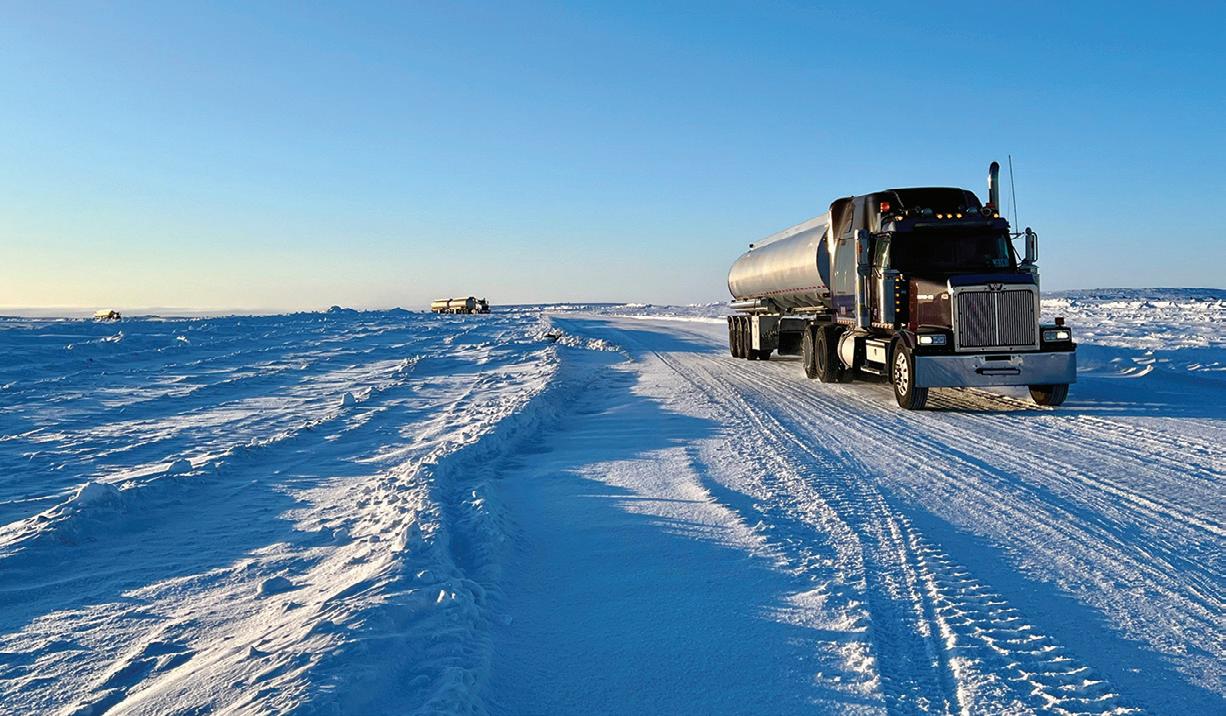
always have, and that continues to work well.”
He was critical of what he called exaggerated reporting on the broader security climate. “There was an article a few weeks ago suggesting that al-Qaeda was about to take over the country…I think that’s irresponsible; it’s simply not the case.”
The company sees the Fekola Regional permit as an important short-term catalyst. The satellite ore would be trucked to the existing mill, making the economics attractive even under the new mining code. “Everything is lining up to get that permit,” Johnson said. “We’re comfortable we’ll have it by the end of the year.”
Fekola produced 367,049 oz. in the nine months to Sept. 30 versus 392,946 oz. for all of 2024 and has maintained full-year 2025 consolidated guidance of 515,000 to 550,000 oz. for the operation. The forecast includes 485,000 to 510,000 oz. from open-pit mining and 30,000 to 40,000 oz. from the developing underground mine, which is now permitted.
Illegal mining
Mali’s artisanal gold sector continued to expand during the year, driven by high prices and sprawling illegal operations in some regions. Johnson said the government has begun addressing it.
“It’s large-scale operations, mostly backed by Chinese money. Environmentally, it’s terrible,” he said. “The Malian government is very aware of it and has recently been moving to seize equipment, arrest people and push back.”
While Mali drew much of the outside attention, B2Gold also advanced exploration in Namibia. The company made a new discovery at Antelope, part of the Otjikoto operation. Antelope might produce about 65,000 oz. annually over five years as an underground
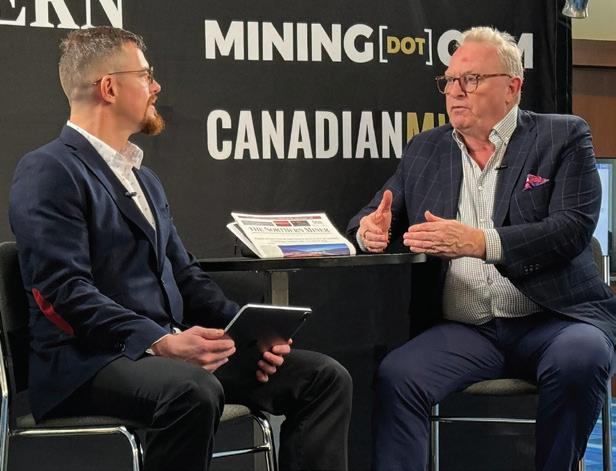
feed, according to a preliminary economic assessment released in February.
Antelope’s Springbok zone hosts 1.75 million inferred tonnes grading 6.91 grams gold per tonne for about 390,000 oz. contained metal, according to the company’s initial resource in June 2024.
Difficult 2024
The combined progress at Goose, Mali and Namibia made 2025 what Johnson described as a “turnaround year” after a difficult 2024. “Our production was lower than anticipated, and it was the first time since B2Gold was founded in 2007 that we had to re-guide our production numbers,” he said of last year’s challenges. “This year, we’re back to meeting the guidance we’ve set.”
The gold price provided an unusually strong backdrop but did not alter the company’s planning assumptions. Johnson said B2Gold avoids basing strategy on spot peaks.
“We try to keep a conservative view on the gold price,” he said. “Running your business on the assumption that the commodity you sell is guaranteed to be worth more in future – that’s not a sound business plan.”
He contrasted the current market with the period when Bema was building mines at $300 an oz. gold. “There weren’t many mines being built at that point in the cycle,” he said.
On growth, B2Gold continues to balance internal development with selective engagement in the junior sector. The company’s history includes friendly takeovers such as Central Sun and CGA Mining, but Johnson said the model remains disciplined.
“In every deal we’ve done of that sort, it’s been a friendly takeover of a junior, where we can offer a premium, and then bring our strengths to bear – both in construction and operations, and in financing.”
Snowline Gold
More recently B2Gold has opted for strategic equity positions rather than outright acquisitions. Its 9.9% stake in Snowline Gold is the most prominent example. Johnson calls Snowline’s Valley discovery in the Yukon “absolutely a world-class discovery,” adding: “I have no doubt it’s going to be developed. I’d say it’s too big not to be developed.”
He noted that his own early career began in the territory. “I spent some of my earliest days in
the early 1980s as a young claimstaker up in the Yukon,” he said.
The broader environment for northern development is also shifting. Goose comes online as Ottawa scales up investment in northern infrastructure and mining, particularly in Nunavut. Johnson said the change is visible on the ground.
“There’s now a genuine sense of optimism,” he said. “They realize they can maintain their cultural history while still being involved in modern economic activity.”
Despite returning to Canada with Goose, B2Gold intends to remain internationally focused by assessing opportunities in regions such as Kazakhstan. Much of his work, he says, depends on understanding political contexts and long-term patterns.
“I’m definitely a bit of a news junkie,” he said. “I do a lot of reading – current affairs, politics and history.”
Philippines
The company’s Masbate in the Philippines produced 64,043 oz. in the third quarter, with mill feed grade at 0.88 gram and throughput of 2.17 million tonnes. Johnson said the site’s consistent performance, with the mine out-performing expectations in the first nine months of 2025 at 198,807 oz., demonstrates discipline across the portfolio.
“We’ve always been driven more by geology than geography,” Johnson said. “Because of our international experience, we really can look almost anywhere in the world.”
More than 98% of B2Gold’s global workforce are nationals of the countries where it operates.
Throughout the interview, Johnson emphasized the operational philosophy he considers essential in any jurisdiction.
“If you’re going to work in different parts of the world, the most important thing is how you treat people,” he said. “Leave a country and a mine in better shape than you found it, and make sure the communities around your operations genuinely benefit.”
Above: A fuel truck convoy on a winter ice road to the Goose project in Nunavut in April 2024. B2GOLD
Clive Johnson, right, speaks with TNM’s Henry Lazenby. THE NORTHERN MINER
TNMawards
Iamgold’s Lemelin thanks mentor for Africa option
OPERATOR | Plans Côté expansion, new Essakane deal
BY COLIN MCCLELLAND
Bruno Lemelin recalls his first boss at Iamgold (TSX: IMG; NYSE: IAG) more than a decade ago encouraging him to join the Essakane mine team in Burkina Faso just as regional politics began to unravel.
It wasn’t the first operations opportunity for Lemelin, who had worked previously for Xstrata and Falconbridge, but it was his debut managing a mining department of 800 people producing 400,000 oz. of gold a year in a remote area and he was glad to have a mentor like Gilles Ferlatte.
“He was like my brother, he helped me to develop my skills in operations and it was a great experience,” Lemelin said by phone in November. “It’s a massive operation, and in West Africa, so there was a lot of things to think about and plan.”
In hindsight, it seems there was something there about jumping from the frying pan into the fire that forged Lemelin’s mettle to become the company’s chief operating officer in 2023. He oversaw Iamgold build and hit commercial production at its main Côté mine, destined to be one of Canada’s biggest. It has earned him the Northern Miner Group’s Operator of the Year Award sponsored by professional services firm EY.
“I feel very humble yet very grateful about this recognition,” Lemelin said. “It’s awesome. I won’t hide it. It’s more like a team effort, because we’ve been working very hard over the past few years to make it happen, the successful construction and ramp up of Côté.”
On target
The mine delivered a company-leading 106,000 oz. during the third-quarter as Iamgold remains on track to achieve its full-year forecast of 735,000 to 820,000 oz. including two other operations, Westwood in Quebec, and Essakane. The African mine contributed 92,000 oz. while Westwood added 23,000 ounces.
Quarterly revenue reached nearly $707 million (C$992 million) from sales of 203,000 oz. at an average realized gold price of $3,492 per ounce. Year-to-date revenue totalled $1.76 billion. All-in sustaining costs averaged $1,956 per oz., placing the company at the upper end of its cost guidance.
Cost control is Lemelin’s top priority for the new year.
“While we’re working on expansion options at Côté, we want to make sure that steady state is coupled also with cost management and cost efficiency,” he said. “We enjoy the high gold price environment, but we want to protect our margin, and we want to make sure that we are disciplined and rigorous.”
Côté mine
The open-pit mine, located 125 km southwest of Timmins, Ont., made its first gold pour in April of 2024 after the project began for Iamgold with its 2012 takeover of Trelawney Mining. Japan’s Sumitomo Metal Mining bought a 30% share in 2017 and construction was approved in 2020. Capital costs over the years totalled nearly $3 billion.
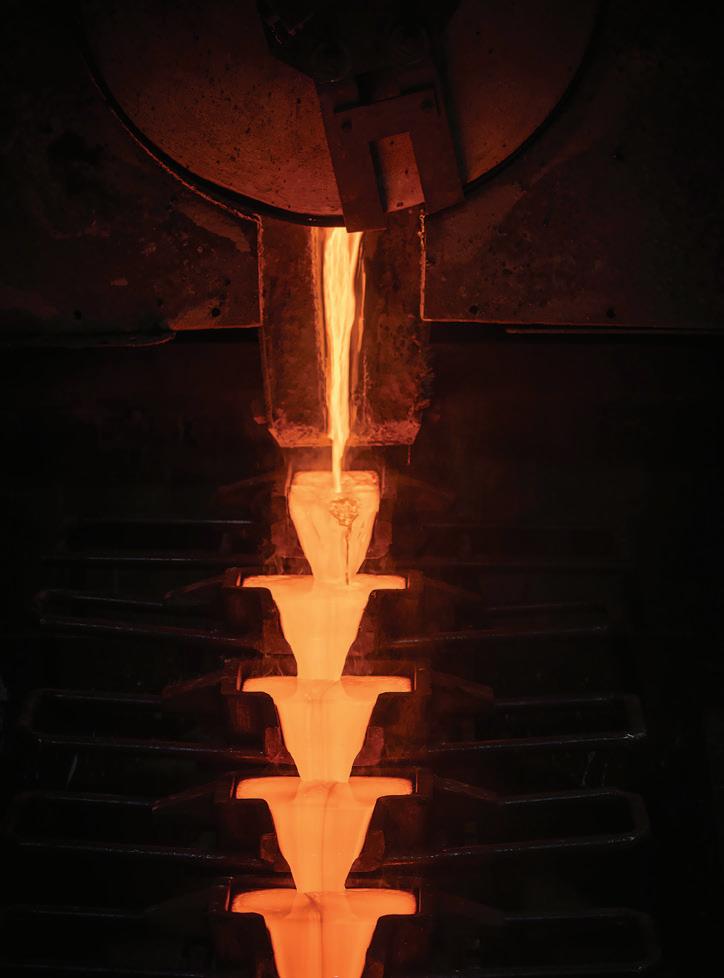
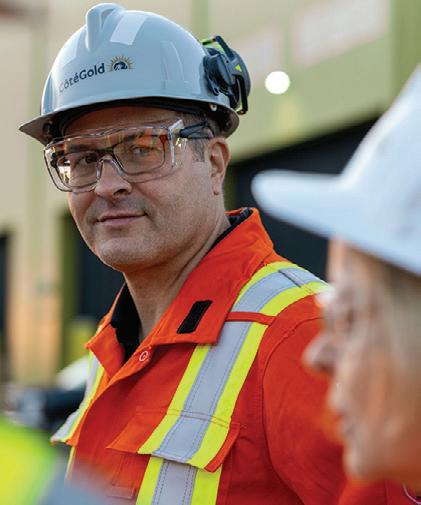
“We enjoy the high price gold environment, but we want to protect our margin, and we want to make sure that we are disciplined and rigorous.”
BRUNO LEMELIN, CHIEF OPERATING OFFICER, IAMGOLD

The processing plant operates at its capacity of 36,000 tonnes per day, drawing from Côté’s proven and probable reserves of 233 million tonnes grading 0.96 gram gold per tonne for 7.17 million oz. gold over an 18-year mine life.
Iamgold aims to make Côté one of Canada’s largest gold producers, averaging 365,000 oz. annually. During its first six years of operations, gold output could reach as high as 495,000 ounces.
Lemelin recalls getting all the
moving parts aligned for each milestone, like from construction to pre-commissioning, commissioning, ramp up and commercial production to steady state output. There were interfaces to smooth between the crushing facilities, the grindings, the wet process and the refinery.
“When you build a project, you look at each area, they all make sense. But you need to make sure that at the end the music sounds good. It’s like an orchestra. You
near or underneath the existing mine, so Gosselin is just spitting distance, close enough that now we believe that we have a super-pit concept,” he said. “We’re going to finalize this technical report to see, hey, do we have, like 30 years or 40 years? And what should be the cadence [throughput] at which you operate?”
Gosselin’s drilling results have confirmed extensions of the deposit, indicating its potential to be similar in size to Côté. Gosselin hosts 161.3 million indicated tonnes grading 0.85 gram gold for 4.4 million oz. of contained gold, according to a February 2024 resource. It has 123.9 million inferred tonnes at 0.75 gram for 3 million oz. of the yellow metal.
Lease renewal
At Essakane, the new year brings more drilling to expand the mine as it heads towards lease renewal in 2028, with a probable technical report due a year earlier, Lemelin said.
“We’re seeing good potential we have within the current existing area, like within the fence, we have been exploring quite aggressively, and we have projects right now, additional phases,” he said. “With the gold price environment right now supporting those phases, we’re going to be looking to extend the life of mine.”
However, the expansion will fall under the newer mining code established in 2024. It increases the Burkina Faso government’s stake in projects to 15% from 10% with an option to go as high as 30% while also calling for a certain amount of local processing and suppliers and limits on past tax exemptions. It means a busy time ahead with lots of discussions with officials from the junta and communities, the COO said.
want to make sure that all the musicians are playing well. And you need to make some adjustment over time. Like, to make sure that things are fully flowing beautifully without any false notes. So, yes, massive challenges, but it’s very rewarding when it works, the music sounds really good.”
Professor
Lemelin’s academic approach has a background. He has a doctorate in mineral economics after he completed degrees in engineering and finance at Laval University in Quebec City.
“Eventually I wanted to be a professor in mineral economics,” he said. “But fate has decided otherwise, as I was at that time working for Falconbridge which became Xstrata, and there was a lot of action before the 2008 crash and I got offered the job of engineering superintendent and never looked back after that, I stayed in the business.”
The combination of school and work experience bodes well for the planned expansion at Côté with the adjacent Gosselin deposit, due for a resource update and prefeasibility study by the end of 2026. The company drilled 55 km of holes this year as it looks to increase throughput from 13 million tonnes a year to options of 15 million, 18 million and 20 million tonnes, Lemelin said.
“The best way to find a mine is
Nelligan
Back in Quebec, Iamgold in October agreed to buy Northern Superior Resources (TSXV: SUP; US-OTC: NSUPF) for $267.4 million in cash and stock as well as Mines D’Or Orbec (TSX-V: BLUE) for $12.3 million. The deals nearly triple Iamgold’s footprint in the Chibougamau region 700 km by road north of Montreal as it considers developing a processing hub on the Nelligan property fed by multiple mining areas.
“It’s a very promising, very prospective area, and it’s good when you build an asset like Côté, it’s so transformative, but there’s always ‘OK, but what’s next?’ And we’re very fortunate to have Nelligan in our drawing board pipeline.”
Lemelin, who is based in Toronto with two teenage sons on basketball teams and adept at modern technologies, wants to attract youth to the industry. He plans to integrate transformative advances like artificial intelligence – perhaps in a new playful version of a mentor like he had with Gilles Ferlatte – and sees the autonomous vehicles at Côté as a first step.
“For young people who like to play video games like Fortnite and everything, you literally have the whole fleet within your control in the control room,” he said. “It’s super fun.” TNM
Left: A gold pour at the Côté mine.
Below: Bruno Lemelin.
IAMGOLD
A haul truck at the Côté mine, northeastern Ontario. IAMGOLD
eye on australia
Forrest doesn’t believe the hype
CRIT-MINS |
‘Nothing rare about rare earths’
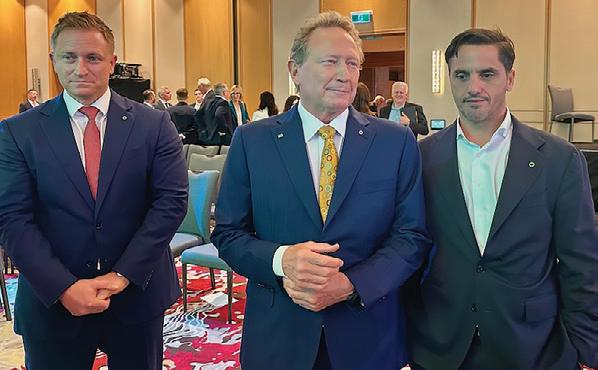
BY KRISTIE BATTEN
Fortescue (ASX: FMG)
founder and executive chairman Andrew Forrest says he’s advancing critical minerals projects despite not understanding the “fuss” surrounding the strategic metals.
Speaking at Fortescue’s annual general meeting in Perth Oct. 31, Forrest said the company remained committed to its critical minerals projects. But he questioned the hype following a deal signed that month by U.S. President Donald Trump and Australian Prime Minister Anthony Albanese.
“It was good. Knock yourselves out. I mean, I don’t see anything that rare about critical minerals,” Forrest told reporters following the meeting. “You’ve got declining strategic commodity prices everywhere. I don’t see the fuss, but anyway, other people do so it’s good for the business. We’ve got plenty of critical minerals, which we’re happy to get out of the ground.”
Brazil option
Despite downplaying the sector, Forrest said Fortescue, Australia’s third-largest iron ore producer behind BHP (NYSE, LSE, ASX: BHP) and Rio Tinto (NYSE, LSE, ASX: RIO), was exploring for rare earths in Brazil. Gus Pichot, CEO of the company’s growth and energy unit, has discovered “buckets” of material, Forrest said.
“There’s nothing rare about rare earths. [Pichot’s] got a small ocean of it,” he said. “I’d like to see it developed and cranking across to Louisiana.”
His comments coincided with Fortescue’s subsidiary Wyloo Metals and its joint venture partner Hastings Technology Metals (ASX: HAS) signing a non-binding agreement with Ucore Rare Metals (TSXV: UCU). They are to explore a long-term offtake agreement for concentrate from the Yangibana project in Western Australia and hydrometallurgical processing options in Louisiana.
Failure key
Forrest reaffirmed Fortescue’s commitment to achieving real zero emissions by 2030, defending the company’s investment in decarbonization.
“This $6.2-billion investment we took back in 2022 will pay dividends. I give you my assurance,”
Forrest told the meeting. “Honestly, it just put steel into the spine of the 20,000 people who work at Fortescue getting constantly criticized. Decarbonization is not a straight line. It demands creativity, experimentation and relentless innovation. We’ve literally had to invent our way through.”
Fortescue has walked away from some of its green hydrogen projects amid weak economics, but Forrest said trying and failing was the “fast track to success”.
“We specialized into hydrogen, believing it would get really big –it hasn’t yet,” Forrest said. “What is enormous is replacing fossil fuel-generated energy with renewables, firmed by the breakthrough we’ve all seen in batteries. That is a crossover point in history, and that’s beginning to happen.”
Forrest conceded there had been job losses in its green energy division but said Fortescue was creating jobs elsewhere.
“I don’t know the net number, but we’re swinging harder and harder into R&D. That is where the value is,” he said. “We’d see if we could compete on manufacturing. We couldn’t, but we can definitely compete on R&D.”
Trump, oilers criticized Forrest also took aim at big oil companies and Trump, accusing them of dividing the world on climate change.
“You’ve got a president of the United States who declared that climate change is the greatest con job in history, straight in the face of massive investment by some of the smartest people I will ever meet,” he said.
“We’ve got these two stories unfolding, one of progress, one of retraction. One side is racing to deploy renewables at record speed. The other is changing to a view of a romanticized past that never even existed as their own economics fall away.”
His comments followed rival Hancock Prospecting’s annual results on Oct 30, when CEO Garry Korte warned that Australia could not afford the cost of reaching net zero.
Forrest dismissed the claim.
“All I can say is that we’re seeing economic growth. We’re seeing investment,” he said. “So, trying to pedal yourself back to a utopian history which never existed anyway is not a way to grow an economy.” TNM
MinRes lands $765M JV
LITHIUM | Korea’s Posco gets 30% stake
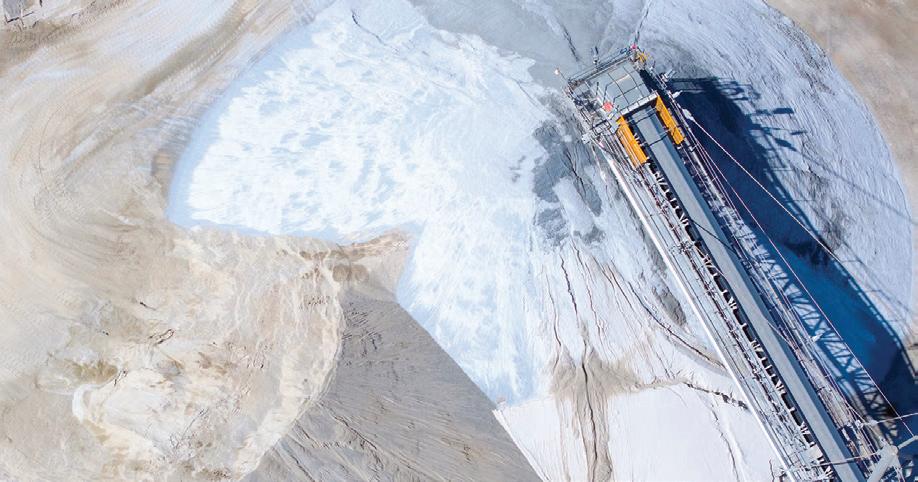
BY BLAIR MCBRIDE
MinRes (ASX: MIN) shares shot to a new yearly high after it announced a partnership with Posco Holdings that will give the South Korean industrial giant a 30% interest in a lithium joint venture for US$765 million (A$1.55 billion).
MinRes is to retain a 70% interest in the JV, which encompasses its producing Wodgina and Mt Marion mines in Western Australia. The deal values MinRes’ existing stakes in those mines at about US$3.9 billion.
The agreement marks the first investment by a major Korean firm into Australian lithium, MinRes Chair Malcolm Bundey said in a release on Nov. 11.
“It signals the growing global demand for tier 1 hard rock lithium assets and the confidence international partners have in Australia’s ability to meet that demand,” Bundey said. “By supporting the development of new global con-
version capacity, this partnership will play an important role in diversifying the global lithium supply chain and strengthen bilateral ties between Australia and Korea in critical minerals.”
Manufacturer deals
Despite lithium prices remaining in a two-year slump, the MinRes-Posco JV is part of a wider trend over the last few years of downstream industiral manufacturers seeking access to critical mineral supplies.
Last December, Volkswagen signed a deal worth US$69-million for a 9.9% stake in PMET Resources’ (TSX: PMET; ASX: PMT; US-OTC: PMETF) and 100,000 tonnes of spodumene concentrate from its Shaakichiuwaanaan lithium project in northern Quebec once it starts production.
In October last year, Lithium Americas (TSX, NYSE: LAC) inked a US$625-million JV agreement with General Motors for a 38% stake in its Thacker Pass project in northern Nevada.
MinRes shares rose 10% to A$51.23 apiece in Sydney after the deal’s announcement, before easing down to A$50.01 before press time, for a market capitalization of A$10.02 billion.
Debt repayment
The JV deal is expected to close in the first half of 2026. MinRes plans to use the proceeds to repay external debt, boost its balance sheet and prepare the company for future growth, it said.
Posco’s receipt of spodumene would be commensurate with its 30% stake, though MinRes didn’t specify the exact amount.
Perth-based MinRes will continue as operator of its Western Australia mines. Its existing agreements with JV partners Albemarle (NYSE: ALB) at Wodgina and China’s Ganfeng Lithium at Mt Marion are separate from the new JV with Posco.
The miner also holds with Posco the Onslow Iron JV in Western Australia. TNM
Pilbara CEO warns Aus losing edge to Brazil
BY KRISTIE BATTEN
Australia’s Pilbara Minerals (ASX: PLS) has found operating in Brazil to be easier than at home, just months after completing a A$560 million ($363 million) acquisition to establish a foothold in South America.
Speaking at the WA Mining Club in Perth on Nov. 6, CEO Dale Henderson said the Brazilian mining state of Minas Gerais was similar to Western Australia, but the company had so far found it swifter to get things done in Brazil.
“We would join the chorus of many others who say it’s got more difficult [in Australia],” Henderson said. “This state, and Australia at large, has been leading the world in resources, but we can lose that mantle.”
He warned that while Australia’s lithium sector had grown, it was falling behind in relative terms. “Others are growing faster. We’re regressing relative to the rest,” Henderson said. “If we don’t have a successful upstream, we certainly can’t have successful downstream – one leads to the other.”
Henderson called on the Australian government to sharpen its focus on competitiveness, starting with shared infrastructure and energy.
He cited the Lumsden Point port development in WA as an example of smart government investment, saying similar initiatives were needed.
“That’s a no-brainer. Then after that, it is power infrastructure. Those would be really the two key areas.”
Costs were a major concern. Henderson said power at the Salinas site was expected to cost A4–5c per kilowatt hour, compared to A10–20c/kWh in the Pilbara.
“[Australia] should have low-cost power. We’ve got the space. We’ve got the solar, wind – you name it,” he said. “That’s a key place for government to play – to leverage the incredible strengths we’ve got to bring that cost of power down.”
Henderson also addressed the state of the lithium market, noting the price of spodumene had climbed above $900 per tonne last month, up from around $600 per tonne in July. He said the company believes the rally was sustainable.
“Our view remains that there’s a structural deficit to emerge, ultimately, given the strong growth, the strong growth drivers and the absence of supply chain investment,” he said. “The big question everyone is wrestling with is when?”
Pilbara has weathered dramatic price swings before, from lows of $400 per tonne in 2019 to selling spot cargoes for over $8,000 per tonne in 2022. Henderson said that volatility was par for the course in a young market lacking robust price discovery.
“It explains some of the outsized responses you can get from news or gossip, but ultimately, that will get remedied as the industry grows.” TNM
MinRes operates two producing lithium mines in Western Australia. MINRES
Fortescue CEO Dino Otranto, left, executive chairman Andrew Forrest and CEO of growth and energy, Gus Pichot. KRISTIE BATTEN
Golden Triangle Dreams: From Buck to Billions
BRITISH
COLUMBIA | French-Canadian finds freedom in the mountains
BY NORTHERN MINER STAFF
In the far northwest of British Columbia lies a place few Canadians can name, but where billions of dollars’ worth of gold, silver and copper still lie buried beneath glacier-topped mountains and untamed forest. This is the Golden Triangle. Once the wild frontier of stampedes, now the epicentre of a modern mineral revival.
But before the helicopters, drills, and billion-dollar valuations, there was a single man – an irrepressible, wayward Quebecois named Alexander “Buck” Choquette –who stumbled into its riches and reshaped its destiny.
A boy against the grain Long before he was “Buck,” Alexander Choquette was just another boy born into tradition. In the seigneurial village life of early 19th-century Quebec, his path was set from birth: Jesuit schooling, life close to the church, and a marriage chosen by his elders. Certainty was the currency of his family. But Alexandre had no use for certainty.
At ten he was skipping mass to fish. By fifteen, he’d had enough. One morning, he packed a heavy lunch, walked out of his family’s world, and never looked back.
Geologists identified a region stretching between the towns of Stewart, Telegraph Creek, and the Alaskan Panhandle, which became known as the Golden Triangle.
His first stops were small towns. He chopped firewood, delivered packages, and worked odd jobs for board. He slept under trees, in barns, or with farm families who asked few questions. In Montreal, he worked for an apothecary but hated being indoors. Restless, he headed west again.
In Winnipeg, then still known as Fort Garry, he flirted with the fur trade. But he wasn’t after beaver pelts. He wanted freedom. News travelled slow, but it travelled: gold had been discovered in California.
Into the Wild West
By 1849, California was boiling with gold fever. Choquette joined a wagon train of tough men heading west from Missouri, wearing buckskin, which earned him a new name from fellow travellers: Buck.
California was both paradise and hell. Gold dust poured from creekbeds –and so did greed. Buck made enough to get by, but never finished first. Always a day late to the richest strikes, always moving. When not panning, he fought off claim jumpers, racism, and the cold hostility of Anglo Saxons who saw him as another foreigner.
Still, he endured. When the crowds moved on, Buck moved north.
He followed the veins of gold through northern California and southern Oregon – Shasta, Yreka, the Trinity River, Josephine Creek – living like a hawk, surviving off the land, chasing stories. By 1857 he’d made his way into British territory and joined the early rush on the Fraser River.
But again, the best claims were gone.
What he heard next would change everything: there was a vast,
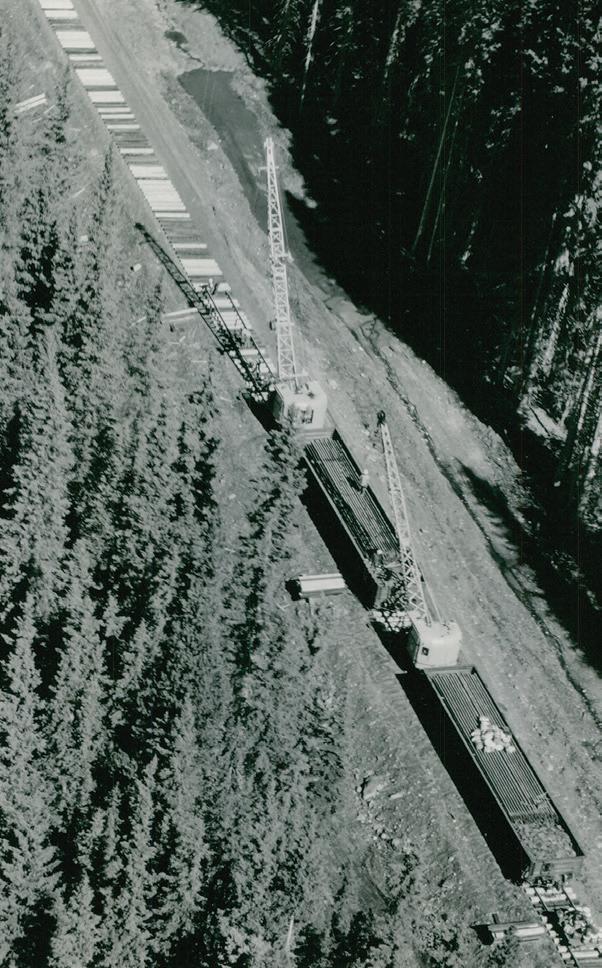
untapped river far to the north. No real roads. No maps. Just stories and possibilities. The Stikine.
Golden era
In 1859, Buck reached Victoria, looking to pass up the coast. He found it not with colonists, but with the Tahltan Nation, a group of Tlingit people heading home by canoe. They offered him a place among them. He took it without hesitation.
The journey up the Inside Passage stretched 1,300 kilometers. Narrow fjords, frigid rain, tides, sea lions, and killer whales. For weeks, they paddled north, deep into Tlingit territory. Buck earned their trust. He hunted with them, ate what they ate, and learned their language.
When they landed at the delta of the Stikine, everything changed again.
Buck met Chief Shakes, the respected leader of the powerful Stikine Tlingit. And he met Georgiana, Shakes’ daughter. She was smart, youthful and unafraid of the strange French-Canadian who had arrived with her people. They married that same year.
With Georgiana at his side, Buck pressed deeper into the wilderness. They travelled upriver through country no white man had dared cross. At one point, Buck stood before a glacier, awestruck. It calved thunderously into the water before him, pure white and ghostblue. He called it Ice Mountain. The name stuck.

saw 200% returns. For a time, it was considered one of the world’s richest gold-silver mines.
Later, the Snip Mine, first discovered in 1964, would yield nearly a million ounces of gold. Then came Eskay Creek, where drill holes pierced through to a motherlode so rich it redefined Canadian mining: 49 grams of gold per tonne, 2,406 grams of silver. Production soared. Share prices exploded. But as quickly as fortunes rose, the mines closed.
By the late 1990s, gold prices had collapsed. Gold hovered under $300 per ounce. Labour and logistics in the remote Triangle were too costly. Despite the quality of the deposits, the region’s mines shut down and exploration faded.
But the gold was still there. Waiting. Modern technology was about to wake it up.
The Triangle takes shape In the Fall of 1861, by Telegraph Creek, Buck stopped to pan in a spot that looked no different than the dozens he had passed. What glinted in his pan wasn’t pyrite. This time it was gold. Real. Heavy. Plentiful.
Soon others gathered and word spread. By Spring, hundreds were on their way. The first rush to the Stikine had begun.
The area came to be known as Buck’s Bar, marking the first real gold strike in what would eventually become known as the Golden Triangle. It sparked the Stikine Stampede of 1862, then the Cassiar Gold Rush a decade later. Prospectors poured in. Fortunes were made and lost.
Buck stayed, guided newcomers, raised a family with Georgiana and cemented his place in the lore of the North.
Though few recognized it at the time, Buck’s strike near the Stikine had cracked open the door to one of the world’s most mineral-rich regions. Over time, geologists would identify a triangle-shaped region stretching between the towns of Stewart, Telegraph Creek, and the Alaskan Panhandle. It became known as the Golden Triangle.
For decades after Buck’s discovery, other prospectors trickled into the region. Each wave seeking what he had found.
In 1918, Premier Gold Mine started operations and dazzled early investors. The mine’s backers
Awakening the giant Today, the Golden Triangle is roaring back to life.
Three things changed everything: higher gold prices, new infrastructure, and smarter exploration. Road networks once impossible are now punched deep into the terrain. Drones and 3D mapping have replaced guesswork. Helicopters and power grids reach where they never could before.
Massive new finds have reignited the rush, with over 150 mines operating here since the late 19th century.
By 2020, the Triangle accounted for nearly half of all exploration spending in B.C. By 2024, it had grown to over 63%. Today, it also it accounts for around three-quarters of Canada’s known copper reserves.
Yet, as of 2017, only 0.0006% of the Triangle had actually been mined.
At the Valley of the Kings deposit, Pretium Resources tapped into another high-grade vein. At Seabridge’s KSM project, billions of dollars in copper and gold await development.
At Newmont and Imperial Metals’ Red Chris gold-copper mine production is already adding hundreds of millions to B.C.’s economy.
Another leader of the region’s revival, and spending C$713 million to re-open by 2027 one of the world’s former highest-grade gold mines, is Skeena Gold & Silver.
Recent government investment in the region is “a pivotal moment for our critical minerals industry,” CEO Randy Reichert has said.
The Vancouverbased Skeena is pushing hard for production at Eskay Creek as it’s now fully focused on construction.
The provincial government announced in June this year its commitment to “seize the potential in the northwest.” Premier David Eby said his government aims to align industry, First Nations and conservation interests.
B.C.’s Critical Minerals Minister, Jagrup Brar, noted the plan aims to align provincial and federal reviews. He mentioned the goal is “one project, one review.” Brar also said the government wants to pursue trade agreements that focus on B.C.’s minerals and metals.
Silver shine
Focused on the region’s silver potential, Dolly Varden Silver is exploring its Kitsault Valley’s Wolf deposit. The high-grade primary silver deposit is unusual in the silver mining world, according to the company, since the metal is typically produced as a by-product.
The company also encountered exceptional gold grades at its Homestake deposit.
For Goliath Resources, almost every hole of the 100,000 metres drilled at the Surebet discovery has returned gold, CEO Roger Rosmus said in a recent interview. The company started drilling another 38,000 metres in May.
What would Buck think of it all?
Modern explorers catching a helicopter in Terrace and buzzing the mountain ridges, the drill cores, the billion-dollar valuations? Likely, he’d shake his head, shoulder his pack and head upstream.
He didn’t chase gold for the money. He chased it for freedom. The possibility. The thrill of being the first.
But thanks to him, others followed. And they still do.
The Tahltan, his adopted people, now play a central role in development, ensuring that the land is respected and that the benefits flow to the communities who live there.
The wilderness remains brutal and beautiful. Ice Mountain still looms, unchanged since the day Buck first stood speechless before it. The rivers still cut through canyons where eagles fly and salmon run.
But beneath it all lies the gleam that first called Buck Choquette north. It’s still there, waiting.
And the next great discovery might be just one pan away.
NOTE: This article is part of The Great Canadian Treasure Hunt. Typos aren’t clues… or are they?
A snap from Western Premier Gold Mine in the 1970s.
THE NORTHERN MINER
Track laying on B.C Railway’s 676-km extension to Dease Lake in the early 1970s. Gondola cars in the foreground contain rail and other track materials. THE NORTHERN MINER

Welcome to AME Roundup 2026
On behalf of the AME Roundup Organizing Committee, we are excited to welcome you to AME Roundup 2026 –Minerals for a Changing World. This premier conference will be returning to the Vancouver Convention Centre East from January 26 to 29, 2026.
AME Roundup is a global mineral exploration conference that brings together more than 6,000 participants from over 40 countries including: geoscientists, prospectors, financiers, investors, suppliers, governments, Indigenous partners and more.
You can look forward to a dynamic lineup of high-calibre speakers, short courses, keynotes, and networking events. In the vibrant Exhibit Hall, explore the latest breakthroughs in the Core Shack, Prospectors’ Tent, and Project Generators’ Hub all the while engaging with top partners, suppliers, colleagues and emerging talent.
CO-CHAIRS,

We look forward to seeing you at AME Roundup 2026, where deals are made, talent is discovered, and trends are set!
MINERALS FOR A CHANGING WORLD
Minerals are the foundation of our future — and it all starts with exploration. AME Roundup 2026 presents Minerals for a Changing World, highlighting how today’s search, discovery, and development efforts secure the resources our society needs tomorrow.
Over four days of dynamic sessions and discovery stories, you will experience:
• Timely discussions on regulatory challenges and opportunities, bringing together industry, government, and Indigenous leaders to stay globally competitive;
• A national platform to showcase success stories and strengthen relationships between Indigenous communities and mineral explorers;
• Cutting-edge geoscience and innovative mineral exploration techniques that showcase the future of mineral exploration.
Whether you’re looking to gain visibility, attract talent, forge strategic partnerships, or simply be inspired, join us at AME Roundup 2026.
ABOUT AME
AME is the lead association for the mineral exploration and development industry based in British Columbia. Established in 1912, AME represents, advocates and promotes the interests of more than 6,000 members who are engaged in mineral exploration and development in BC and globally. AME encourages a safe, economically strong and environmentally responsible industry by providing clear initiatives, policies, events and tools to support its membership in delivering responsible projects that advance reconciliation and provide benefit to all British Columbians.
GENERAL INFORMATION
LOCATION | Vancouver Convention Centre East | 999 Canada Pl, Vancouver, BC
DATES | January 26 – 29, 2026
REGISTRATION & CONFERENCE INFORMATION | roundup.amebc.ca
ENQUIRIES | For registration questions, contact AME Roundup Registration at 604-630-3921 or email roundup@amebc.ca

Minerals for a Changing World
January 26 - 29, 2026
Vancouver Convention Centre East
Registration Now Open roundup.amebc.ca
Albert Chong President, AC GeoAdvisory Ltd. Britt Bluemel, Director of Industry Partnerships, Arca
AME ROUNDUP ORGANIZING COMMITTEE


THANK YOU TO THE INCREDIBLE SPONSORS WHO SUPPORT AME INITIATIVES AND EVENTS.
The Association for Mineral Exploration sincerely thanks the sponsors of AME Roundup 2026 (as confirmed at the time of printing) for their support.
BanyanGold






PATRON
PLATINUM GOLD
AME Roundup 2026 Minerals for a Changing World
Attend AME Roundup 2026 and play your part in highlighting how today’s search, discovery, and development efforts secure the resources our society needs tomorrow.
Seizing the Moment
Successful Canadian mineral exploration and development are essential to prosperity, geopolitical strength and providing the minerals that the world needs.
AME Roundup’s Opening Ceremony and GovernmentIndustry Forum celebrate the people that search for, discover and develop the minerals that our world needs, and bring together government and industry to confirm a commitment to grasp the opportunity to demonstrate Canada’s role as a global minerals leader.
The signature Regional Overview session provides the first big picture reviews of 2025 mineral exploration and mining in British Columbia, Yukon and Alaska, while Commodities and Financial Markets talks highlight Canada’s role as a global hub for mineral exploration and mining finance.
Project Updates
The Critical and Base Metals session highlights successful companies and projects and shares the mineral exploration methods and tools they are using to guide their work.
The Precious Metals session supports and inspires mineral explorers on their journey from search to discovery to development by highlighting industry and academic leaders and the progress their projects are making.
ESG Leadership
Environmental, Social and Governance (ESG) sessions highlight Canada as a leading jurisdiction in developing and implementing the ESG programs that are essential to mineral project development. Hear from ESG leaders as they share and discuss the innovations and practices that lead to project success.
Unique to AME Roundup, The Gathering Place has become a well-established forum to hear perspectives from Indigenous leaders and industry experts about the evolving and important role mineral exploration and mining play in reconciliation in Canada.
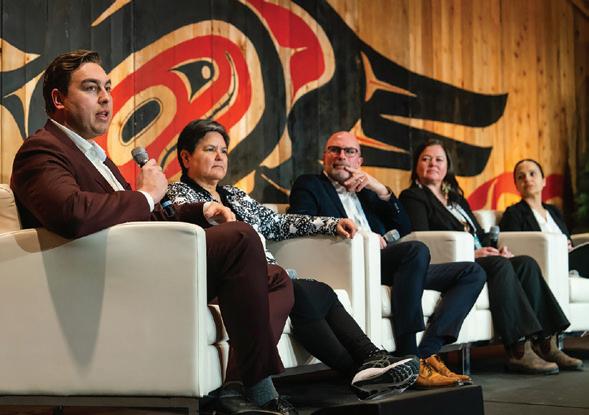

Technical Innovation
New for AME Roundup 2026, a focused Geophysics Session shows how a new generation of geophysics data, techniques, and innovations that demonstrate the role of geophysics in the future of successful mineral exploration.
Advances in Geoscience: Successful geoscience is at the core of successful mineral exploration and discovery. The Advances in Geoscience technical session showcases geoscience initiatives that are developing and delivering new ideas and understanding of the Cordillera and its mineral potential.
Critical and Base Metals: The path to the batteries, defence technologies and clean energy that the world demands starts with the successful search for and discovery of critical and base metals. This session highlights successful companies and projects and shares the mineral exploration methods and tools they are using to guide their work.

The Exhibit Hall
The Exhibit Hall is the heart and soul of AME Roundup and will feature the Core Shack, Prospectors’ Tent, Project Generators’ Hub and Poster Display.
AME Awards Gala
Celebration of Excellence
Wednesday, January 28 | 6 PM – 10 PM
Every year, AME presents awards to celebrate remarkable achievements and contributions of individuals and teams in the mineral exploration and development industry.
The AME Awards Gala: Celebration of Excellence will take place at the Vancouver Convention Centre West, hosted by Indigenous Relations Strategist Lana Eagle.


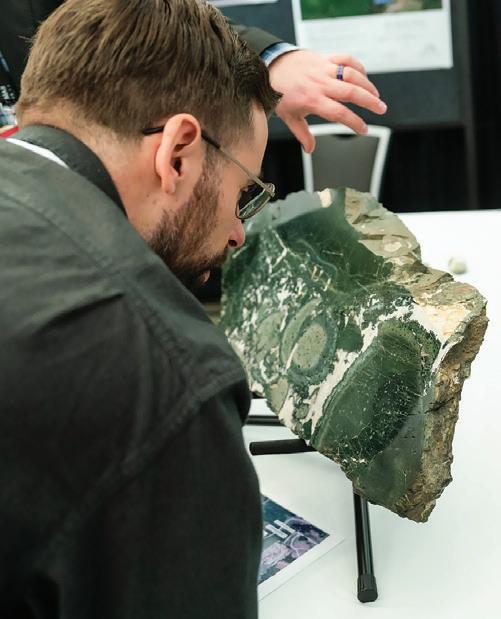
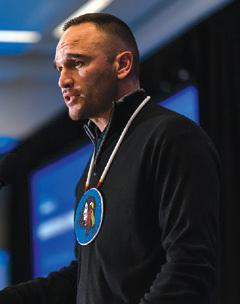
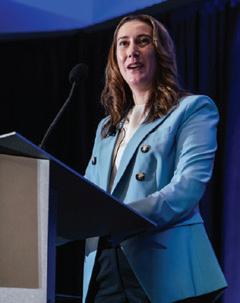


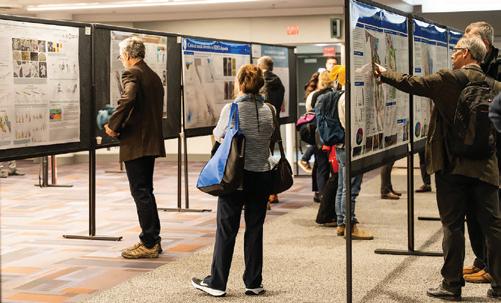


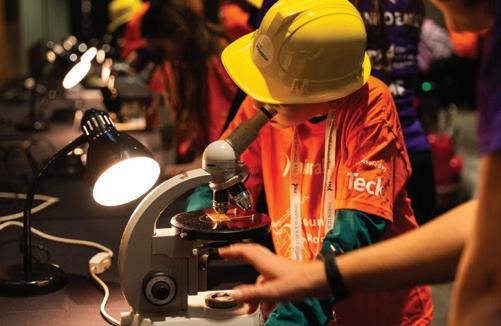
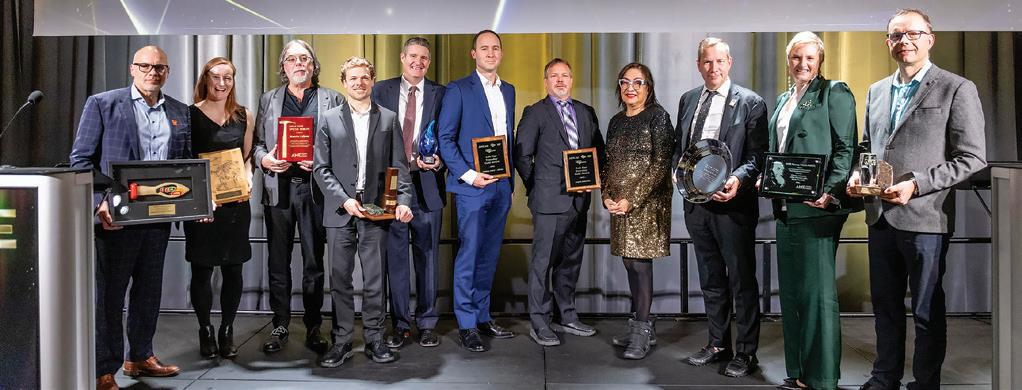
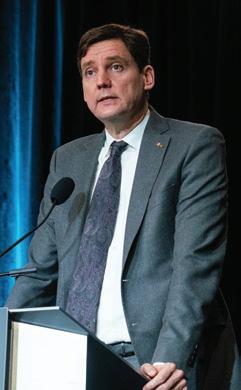
mining, metals & markets

Drill Results
30 EV Metals
Warrants + Shorts
*Data may not be comprehensive and is provided on a best-efforts basis as of press time. Investors are responsible for their own due diligence.
Delivering fit-for-purpose solutions across the entire project life cycle
Delivering fit-for-purpose solutions across the entire project life cycle
Delivering fit-for-purpose solutions across the entire project life cycle
Market Data
Delivering fit-for-purpose solutions across the entire project life cycle
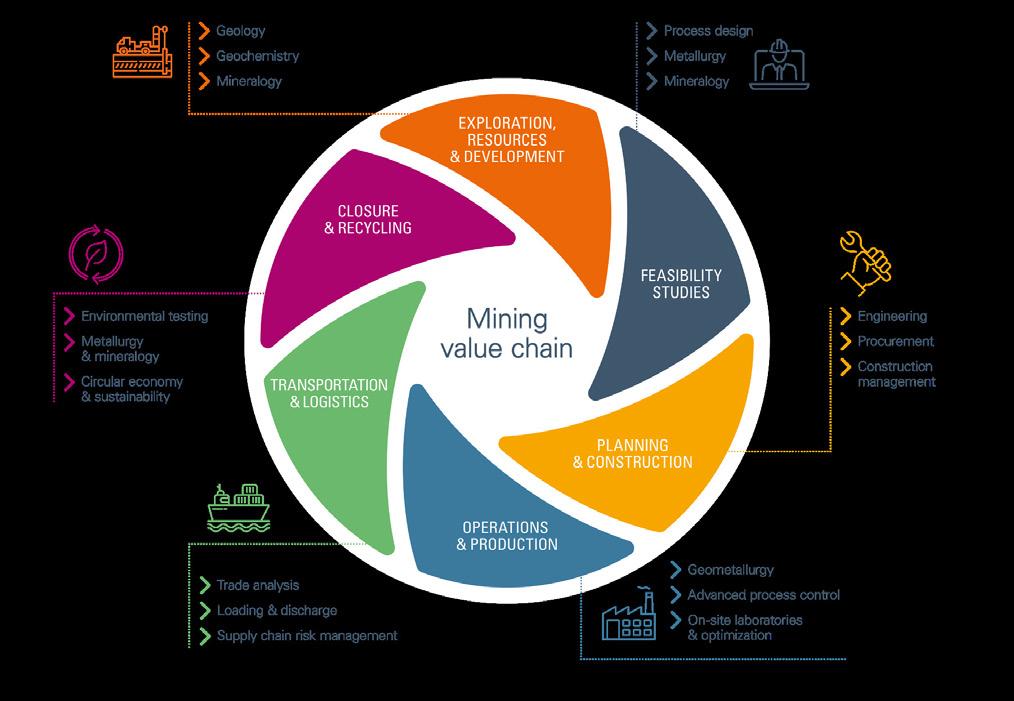
Our fit-for-purpose solutions encompass the skills of qualified geologists, geostaticians, analytical chemists, mineralogists, metallurgists, process engineers and mining engineers and inspectors brought together to provide accurate and timely mineral and process evaluation services across the entire project life cycle.
Our fit-for-purpose solutions encompass the skills of qualified geologists, geostaticians, analytical chemists, mineralogists, metallurgists, process engineers and mining engineers and inspectors brought together to provide accurate and timely mineral and process evaluation services across the entire project life cycle.
Our fit-for-purpose solutions encompass the skills of qualified geologists, geostaticians, analytical chemists, mineralogists, metallurgists, process engineers and mining engineers and inspectors brought together to provide accurate and timely mineral and process evaluation services across the entire project life cycle.
Our fit-for-purpose solutions encompass the skills of qualified geologists, geostaticians, analytical chemists, mineralogists, metallurgists, process engineers and mining engineers and inspectors brought together to provide accurate and timely mineral and process evaluation services across the entire project life cycle.
WWW.SGS.COM/NATURALRESOURCES NAM.NATURALRESOURCES@SGS.COM
WWW.SGS.COM/NATURALRESOURCES NAM.NATURALRESOURCES@SGS.COM
WWW.SGS.COM/NATURALRESOURCES NAM.NATURALRESOURCES@SGS.COM
WWW.SGS.COM/NATURALRESOURCES NAM.NATURALRESOURCES@SGS.COM

Week of November 10-14, 2025
Miners lift
Investors weigh U.S. shutdown end, softer Q4 outlook
By Henry Lazenby
Stocks were mixed for the week ending Nov. 14 as investors weighed the end of the 43-day U.S. government shutdown and a softer growth outlook, with technology lagging in the U.S. and Canada amid rotation towards cyclical stocks.
The Dow Jones Industrial Average gained 367.43 points or about 0.8% to 46,863.05 points, and the S&P 500 gained 5.3 points or about 0.08% to 6,734.11. In Canada, the S&P/TSX Index gained 252.67 points or 1.4% to 30,326.5, while the S&P/TSX Venture Composite Index fell 5.4 points or 0.6% to 879.9.
The S&P/TSX Global Mining Index gained 5.6 points or about 3% to 188.7, and the S&P/TSX Global Gold Index gained 43.5 points or 6.2% to 742.59. Gold added $86.40 per oz. or 2.2% to $4,079.10 per ounce. The S&P/TSX Global Base Metals Index added 0.7
point or about 0.3% to 246.8, with copper gaining 39¢ at $4.96 per pound.
On the NYSE mainboard, the week’s biggest percentage gainer was Nexa Resources. It closed 19% higher at $6.25 after posting more than $100 million in net profit for the three months ended Sept. 30.
In Toronto, Northcliff Resources more than doubled to 40¢ (up 116%) after its Sisson tungsten-molybdenum project in New Brunswick was referred to Ottawa’s Major Projects Office. It opens the door to regulatory and financial assistance.
On the S&P/TSX Venture Exchange, Artemis Gold was the biggest value gainer, closing $1.14 higher at $35.59 after reporting mining and milling operations at Blackwater, in British Columbia, performed above design capacity in the first full operating quarter after declaring commercial production in May.
8
9
n December
December 1
Resourcing Tomorrow Government Roundtable — London
VENUE: London Stock Exchange
MORE INFORMATION: www.resourcingtomorrow.com/ government-roundtable
December 1
Critical Mineral Association (UK) 5th Annual Conference — London
VENUE: Royal College of Medicine
MORE INFORMATION: www.resourcingtomorrow.com/ events/critical-minerals-association-uk-5th-annualconference
December 1
MINEX Eurasia 2025 — London
VENUE: Simmons & Simmons
MORE INFORMATION: www.resourcingtomorrow.com/ events/minex-eurasia-2025
December 2-4
Resourcing Tomorrow — London
VENUE: Business Design Centre
MORE INFORMATION: resourcingtomorrow.com
December 10-11
Mining & Critical Minerals Latin America Conference and Exhibition – São Paulo, Brazil
VENUE: Double Tree by Hilton São Paulo Itaim
MORE INFORMATION: www.mininglatinamerica.com
2026
n January
January 2-4
Resourcing Tomorrow — London
VENUE: Business Design Centre
MORE INFORMATION: resourcingtomorrow.com
miningevents
January 8
Canadian Mining Hall of Fame gala 2026 — Toronto
VENUE: Metro Toronto Convention Centre
MORE INFORMATION: mininghalloffame.ca
January 13-15
Future Minerals Forum – Riyadh, Saudi Arabia
VENUE: King Abdulaziz International Conference Center
MORE INFORMATION: futuremineralsforum.com
January 25-26
Vancouver Resource Investment Conference –Vancouver
VENUE: Vancouver Convention Centre
MORE INFORMATION: cambridgehouse.com/ vancouver-resource-investment-conference
January 26-29
AME Roundup 2026 – Vancouver
VENUE: Vancouver Convention Centre, East Building
MORE INFORMATION: roundup.amebc.ca
n February
February 9-12
Mining Indaba 2026 – Cape Town, South Africa
VENUE: Cape Town International Convention Center
MORE INFORMATION: miningindaba.com/home
February 22-25
MINEXCHANGE 2026 – Salt Lake City, Utah
VENUE: Salt Palace Convention Center
MORE INFORMATION: smeannualconference.org
n March
March 1-4
Prospectors and Developers Association of Canada Conference – Toronto
VENUE: Metro Toronto Convention Centre
MORE INFORMATION: pdac.ca/convention-2026/
March 8-10
Mines and Money – Miami, Fla.
VENUE: James L. Knight Center
MORE INFORMATION: minesandmoney.com
March 18–19
Swiss Mining Institute – Zurich, Switzerland
VENUE: The Dolder Grand MORE INFORMATION: www.swissmininginstitute.ch
n April
April 14-15
Ontario Prospectors Association Symposium –Thunder Bay, Ont.
VENUE: TBA MORE INFORMATION: www.ontarioprospectors.com
April 15–16
Swiss Mining Institute – Panama City, Panama
VENUE: TBA MORE INFORMATION: www.swissmininginstitute.ch
April 21-22
International Mining Geology Conference 2026 –Brisbane, Australia
VENUE: Brisbane Convention and Exhibition Centre
MORE INFORMATION: ausimm.com/conferences-andevents/mining-geology/
n May
May 3-6
CIM CONNECT 2026 - Vancouver
VENUE: Vancouver Convention Centre
MORE INFORMATION: cimconnect.ca
May 25-27
Mining Transformed – Sudbury, Ont.
VENUE: Norcat
MORE INFORMATION: miningtransformed.norcat.org
drillresults
TNM DRILL DOWN: TOP ASSAYS OF THE MONTH
Our TNM Drill Down features the top 10 gold, copper and silver assays of the past month. Drill holes are ranked by grade x width.
October 16, 2025 to November 15, 2025
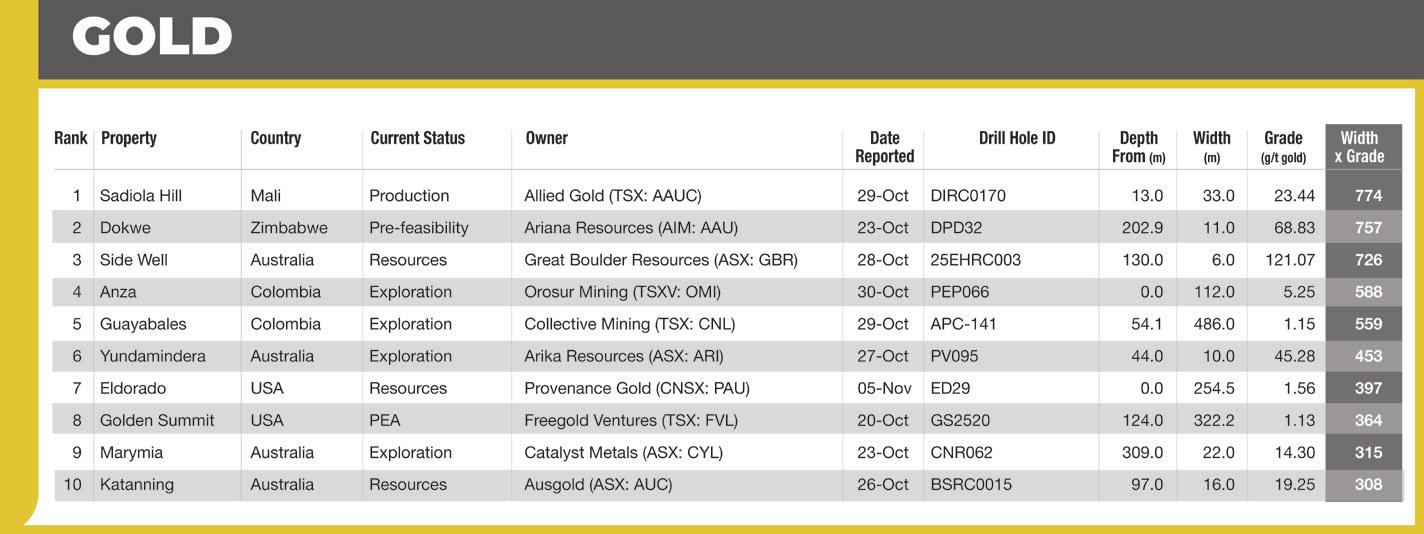
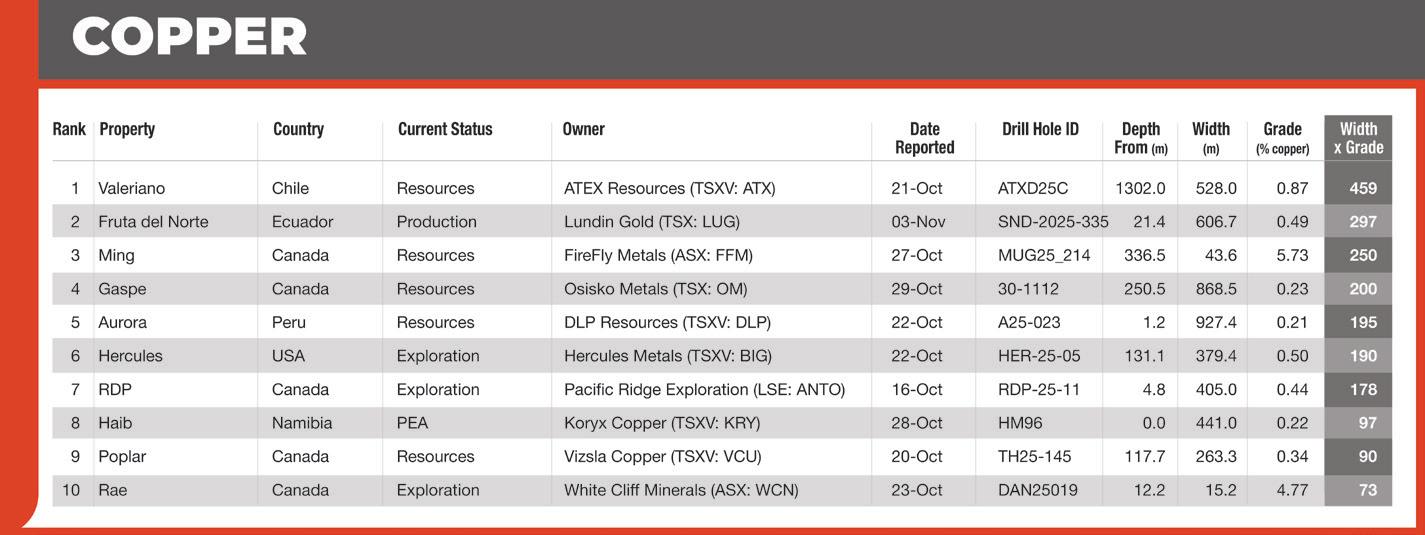
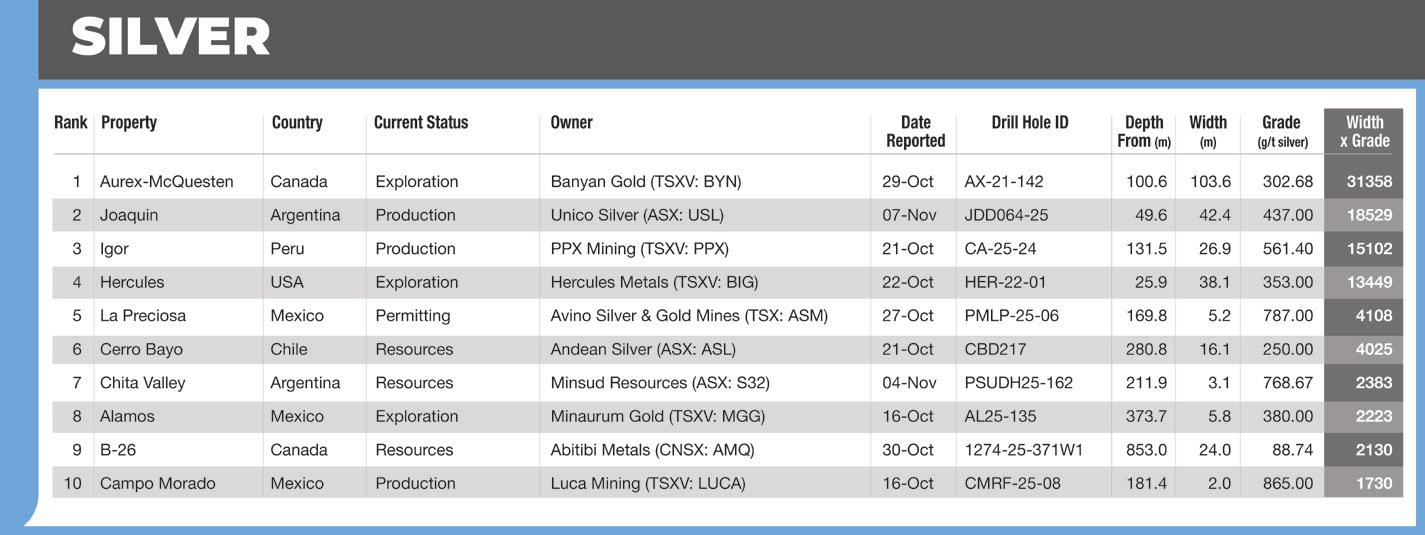
evmetals
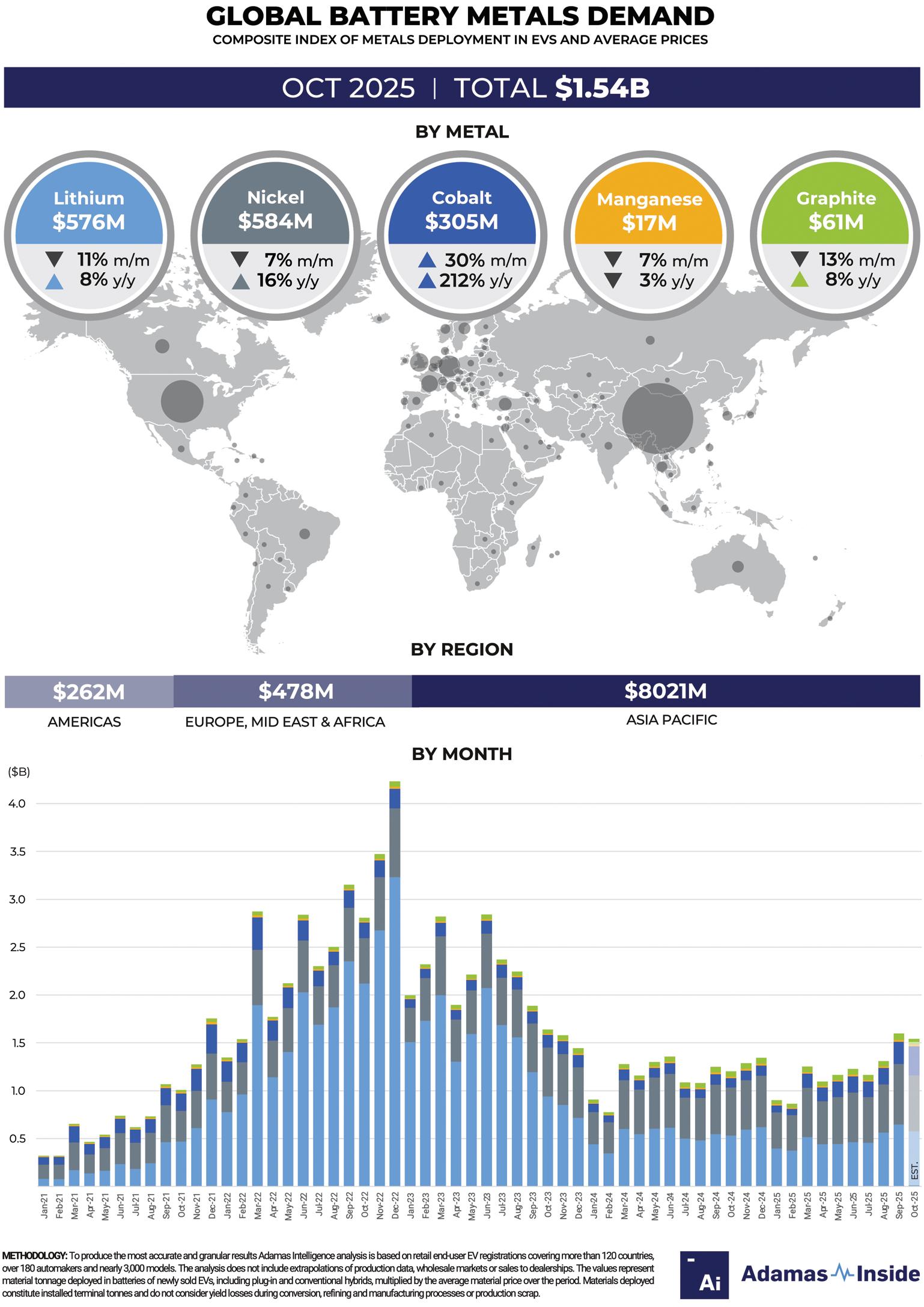
evmetals
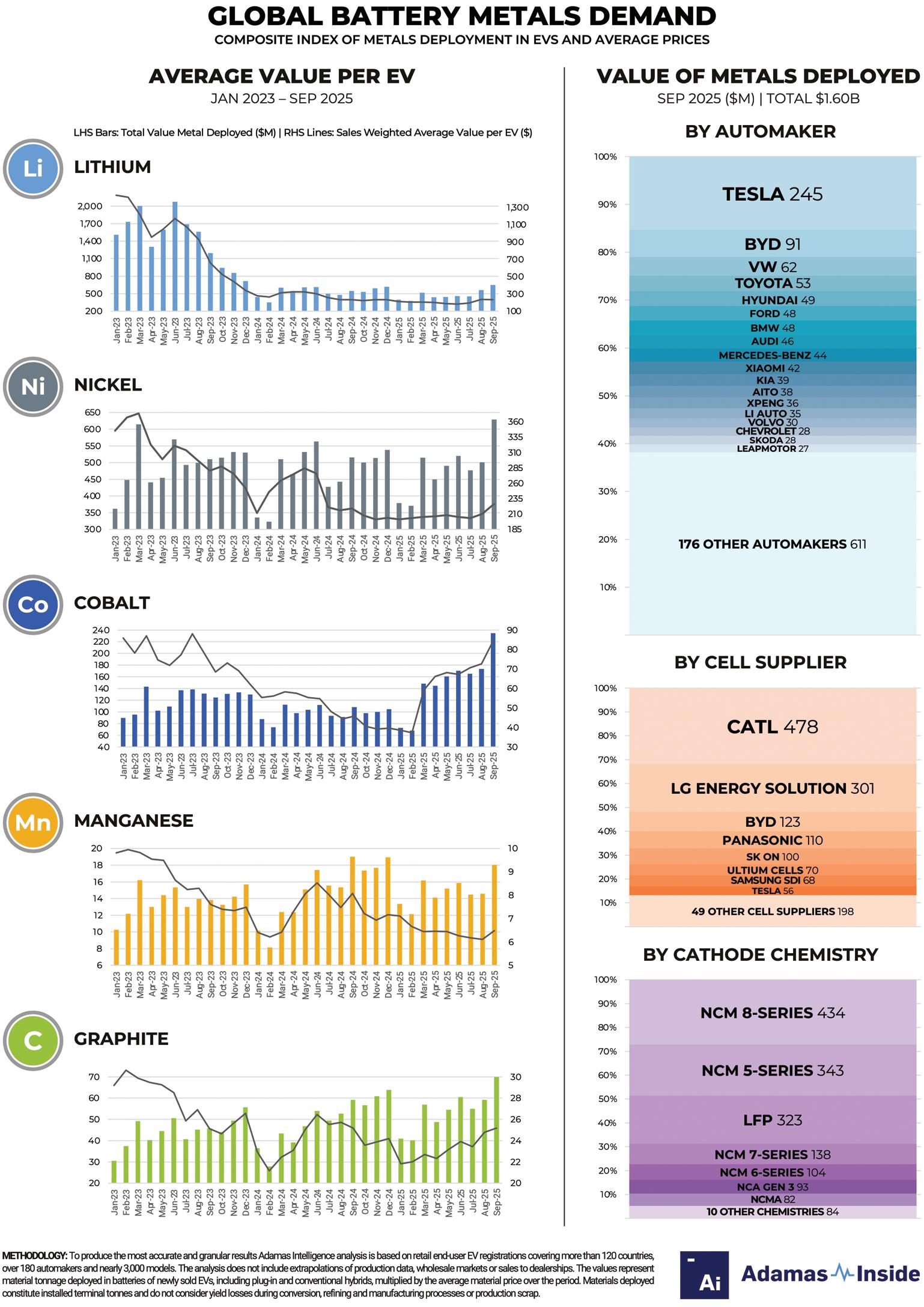
warrants&shorts
TSX WARRANTS
Name Symbol Subsciption Terms Expiry
Talisker Resources Ltd. SK.WT One Warrant to purchase one common 5-05-2028 share of the Issuer at $0.75 until expiry
Vizsla Royalties Corp. VROY.WT One warrant to purchase one common 12-31-2025 share at $0.50 per share.
Silver Mountain AGMR.WT.A One warrant to purchase one common 02-09-2026 Resources Inc. share at $0.45 per share.
Osisko Development ODV.WT.B One warrant to purchase one common 03-02-2026 Corp. share at $8.55 per share.
Denarius Silver Corp. DSLV.WT One warrant to purchase one common 03-17-2026 share at $0.80 per share.
West Red Lake Gold WRLG.WT One warrant to purchase one common 05-16-2026 Mines Ltd. share at $1.00 per share.
Aurania Resources Ltd. ARU.WT.B One warrant to purchase one common 10-21-2026 share at $2.20 per share.
Tuktu Resources Ltd. TUK.WT One warrant to purchase one common 11-23-2026 share at $0.13 per share.
Freeman Gold Corp FMAN.WT.U One warrant to purchase one common 11-29-2026 share at US$0.65 per share.
Palisades Goldcorp Ltd. PALI.WT One warrant to purchase 0.060538 12-06-2026 common share at $0.50 per share.
Mogotes Metals Inc MOG.WT One warrant to purchase one common 01-31-2027 share at $0.30 per share.
Osisko Development ODV.WT.A One warrant to purchase one common 03-02-2027 Corp. share at $14.75 per share.
Integra Resources Corp. ITR.WT One warrant to purchase one common 03-13-2027 share at $1.20 per share.
Name Symbol Subsciption Terms
Elevation Gold Mining ELVT.WT.A One warrant to purchase one common 03-24-2027 Corp. share at $0.70 per share.
Osisko Development ODV.WT.U One warrant to purchase one common 05-27-2027 Corp. share at US$10.70 per share.
Robex Resources Inc RBX.WT One warrant to purchase one common 06-27-2027 share at $2.55 per share.
Graphite One Inc GPH.WT One warrant to purchase one common 08-22-2027 share at $1.10 per share.
West Red Lake Gold WRLG.WT.B One warrant to purchase one common 10-24-2027 Mines Ltd. share at $0.90 per share.
Lion One Metals Ltd. LIO.WT.A One warrant to purchase one common 02-14-2028 share at $0.41 per share.
West Red Lake Gold WRLG.WT.C One warrant to purchase one common 02-25-2028 Mines Ltd. share at $0.90 per share.
Silver Mountain AGMR.WT.B One warrant to purchase one common 04-24-2028 Resources Inc. share at $0.135 per share.
Bear Creek Mining Corp. BCM.WT One warrant to purchase one common 10-05-2028 share at $0.42 per share.
West Red Lake Gold WRLG.WT.A One warrant to purchase one common 03-19-2029 Mines Ltd. share at $0.95 per share.
Osisko Development ODV.WT.V One warrant to purchase one common 10-01-2029 Corp. share at US$3.00 per share.
Short
GOLD PRICE (US$ PER OZ.) SILVER PRICE (US$ PER OZ.)
$4,
marketdata
Commodity Prices 12-Month Trend
$4,184.58 US$/oz. (+$1586.29 vs. YA)
$51.53 US$/oz. (+$20.81 vs. YA)
COPPER PRICE (US$ PER LB.)
NICKEL PRICE (US$ PER LB.)
Aluminum: US$1.2504/lb.
Cobalt: US$21.605/lb.
Gold: US$4,065.50/oz.
Iron Ore 62% Fe CFR China-S: US$104.31
Nickel: US$6.5913/lb.
Silver: US$50.65 per oz.
Zinc: US$1.355 per lb.
COMMODITY PRICES | Prices current as of November 18, 2025
Coal: Central Appalachia, 12,500 Btu, 1.2 S02-R,W: US$80.00 Coal: Powder River Basin,
Copper:
Iridium: US$4,443.47/tr oz. March 2026: US$5.03/lb.
Lead: US$1.013/lb.
Rhodium: US$7,900/tr. oz.
Tin: US$16.74/lb.
$4.95 US$/Lb. (+$0.83 vs. YA)
$6.73 US$/Lb. (-$0.47 vs. YA)
Lithium carbonate: US$10,927.87/tonne
Ruthenium: US$910 per oz.
Uranium: U3O8, Trading Economics: US$77 per lb.
LOOKAHEAD 2026 specialfocus
Can Canada really fast-track mining projects?
REGULATION | Experts assess new Major Projects Office
BY TRISH SAYWELL
If Canadians were unfamiliar with the Ring of Fire before Game One of the World Series between the Toronto Blue Jays and the Los Angeles Dodgers, they were well-versed by the end of Game Seven, thanks to Ontario Premier Doug Ford’s relentless television campaign.
“Canada faces economic uncertainty, we have a plan to secure our future, and it starts in the Ring of Fire,” the government-sponsored ad declared during every commercial break.
The Ring of Fire is one of the most valuable untapped mineral regions in the world, the narrator boasted, with vast quantities of critical metals. But the remote area 540 km northeast of Thunder Bay is accessible only by plane. Plans to build all-season roads have been discussed for years and are winding through provincial and federal environmental assessments steered by local Indigenous communities.
Now, just as Prime Minister Mark Carney referred a second tranche of projects to the federal Major Projects Office for fast track consideration, [See sidebar] at least one policy expert is calling the hyped Ring of Fire a “failure”.
“They were talking about the Ring of Fire 30 years ago and talk about a road started 10 years ago,” says Jay Khosla, executive director of economic and energy policy at the Public Policy Forum in Ottawa. “What are they doing about it? Where is the provincial and federal government lining up with mining companies to make it happen?”
Shorter-term
While the Ring of Fire represents long-term potential, there are smaller projects that are ready to be built today. One of them is Generation Mining’s (TSX: GENM) Marathon copper-palladium project in northwestern Ontario, which is projected to produce 2.16 million oz. palladium, 532 million lb. copper, 488,000 oz. platinum, 160,000 oz. gold, and 3.05 million oz. silver over 13 years.
The project benefits from robust infrastructure, established partnerships with First Nations, and strong support from both federal and provincial governments.
“Our strategic metal project represents an immediate opportunity for the province and Indigenous communities and would serve as an example for the development of larger projects like the Ring of Fire,” CEO Jamie Levy says.
But it took three years for the government to approve Marathon’s Environmental Impact Assessment and another three years for the junior to secure its final construction permit in May.
“It was pretty painful,” Levy says of the process. “There are so many permits you need to get and often you needed to get one before you could apply for the next one. The lengthy permitting processes significantly delay the development and production of the critical metals essential for the energy transition.”
Major Projects Office
In August, Carney launched the Major Projects Office to simplify and accelerate federal decision making for projects essential to Canada’s economic growth. The office aims to transform the regulatory process to ensure that projects of national interest are reviewed within two years, from start to finish.
Pierre Gratton, President and CEO of the Mining Association of Canada, is enthusiastic that the government is sending a posi-
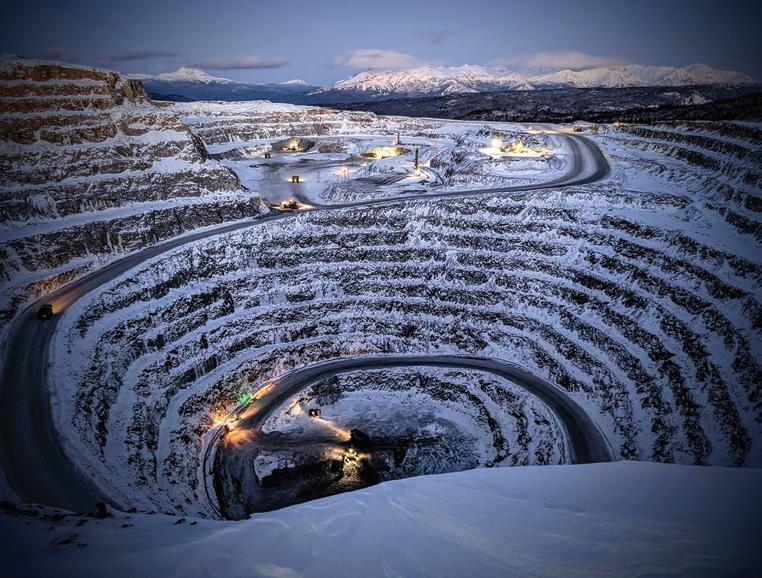
tive signal with the Major Projects Office. The edict about getting things done in two years means government departments are feeling the pressure, he says.
Still, Gratton doesn’t anticipate the Major Projects Office initiative will have much of an impact on his membership.
“They are looking for projects that are already blessed by First Nations, and if you know mining, that usually comes towards the end or after an Environmental Impact Assessment. So, we don’t actually think that that model is going to be all that relevant for us.”
At the end of the day, mining companies will continue to do federal and provincial level assessments, meet Fisheries Act authorizations, and Transportation Canada requirements, and all of the other approvals required to get a project to the finish line, he says.
“What our focus continues to be is let’s make the existing Acts more efficient.”
The Major Projects Office declined an interview request. In September, Prime Minister Carney announced the first series of projects being referred to the MPO for consideration, which included two copper mines: Foran Mining’s (TSX: FOM; US-OTC: FMCXF) McIlvenna Bay copper mine project in Saskatchewan and the Red Chris copper and gold mine expansion in B.C. Red Chris is owned by Newmont (NYSE: NEM; TSX: NGT) and Imperial Metals (TSX: III).
Clear timelines
Pierre Lassonde, a founder of Franco-Nevada (TSX, NYSE: FNV) and a former president of Newmont, argues that what companies really need are assured timelines.
“Capex and time are the two most value-destructive things in the mining industry. If the time keeps going up and the capex keeps going up, you kill any project,” the Canadian Mining Hall of Fame member says.
“Mr. Carney has not addressed the key issue, which is the permitting timeline,” he says. “They say they’re going to cut through the time but the easiest way to cut through it is to change the regulations and put in place a timeline where, yes, you do everything you need to do, consult with First Nations, but you don’t need five years to do it. Otherwise, the projects migrate elsewhere.”
is about kicking mining into high gear. The blueprint promises a $2-billion sovereign fund that will make equity investments, offer loan guarantees and negotiate offtake agreements for critical minerals projects. It also earmarks hundreds of millions in additional spending for the mining industry.
Highlights include a new investment vehicle called the First and Last Mile Fund focused on getting near-term critical minerals into production, which will be run by NRCAN, and the expansion of eligibility for the Critical Mineral Exploration Tax Credit to include 12 new minerals necessary for defence, semiconductors, energy and clean technologies. The credit works in tandem with Canada’s flow-through share structure, which channels funds from high-net-worth investors to junior miners.
“I have never seen a budget like this that had so much for mining,” says MAC’s Gratton. “Budgets have been supportive the last few years, but this blows them out of the water.”
Fast-track processing
If Canada wants to have a critical minerals industry, however, it must build sufficient downstream processing capabilities, Lassonde argues.
“When I look at the government unveiling billions and billions of dollars for the industry for producing critical minerals that’s all well and good,” he says. “But if you don’t process them here you’re missing out on 90% of the value added. In all the declarations I’ve read there is no mention at all of processing facilities.”
Jon Wojnicki, partner and co-leader at management consultants EY Parthenon, suggests that in the short- to medium-term, Can-
New Major Projects
By Colin McClelland
Canadian Prime Minister Mark Carney confirmed the second batch of projects to the country’s Major Projects Office in a November announcement.
They include Northcliff Resources’ (TSX: NCF; US-OTC: NCFFF) tungsten proposal in New Brunswick, Nouveau Monde Graphite (NYSE: NMG; TSX.V: NOU) in Quebec and Canada Nickel (TSXV: CNC: US-OTC: CNIKF) in Ontario, Carney said in British Columbia.
“Each of these projects that we are referring to the MPO today is transformational, and their impacts will be amplified by being part of bigger national strategies to boost Canada’s competitiveness,” Carney said. “The world wants Canada as a reliable supplier of critical minerals to build a more sustainable global economy.”
The federal government formed the MPO in August to speed nation-building ventures through permits. In September, Carney referred the first series of projects to the office, part of a wider push to develop critical mineral supply chains outside of Chinese and Russian control.
Canada Nickel
Crawford is said to hold the world’s second-largest nickel reserves and resources. It would cost US$3.5 billion over two stages, according to a feasibility study from October 2023.
Over a 41-year life, the mine would produce 3.5 billion lb. of nickel, 52.9 million lb. of cobalt, 490,000 oz. of palladium and platinum, 58 million tonnes of iron, and 6.2 million lb. of chromium. Northcliff Resources holds the Sisson tungsten-molybdenum project, which has estimated capital costs of $579 million for an open-pit mine, concentrator and on-site ammonium paratungstate plant, according to a 2013 feasibility study. The project already has major federal and provincial approvals. New Zealand’s Todd Corp., based in Wellington, is Northcliff’s controlling shareholder with about a 12% interest.
Nouveau Monde is advancing the Matawinie mine and Bécancour battery material plant, both within 150 km of Montreal. The open pit mine is expected to produce 103,000 tonnes of graphite a year over 25 years, the company has said. Federal and provincial funds each granted $25 million to the roughly $1.2-billion capex project a year ago.
Carney was in Terrace, B.C. for the announcement because it’s part of the Ksi Lisims LNG project added to the list. It proposes a new gas pipeline, electricity transmission line and floating LNG export plant. It would be Canada’s second-largest with the capacity to export 12 million tonnes of LNG per year to new markets in Asia, the PM said.
It joins a proposed hydroelectric plant in Iqaluit on the list. The Nukkiksautiit Hydro project aims to save $1.9 billion in diesel costs over 50 years for the Nunavut capital. Ottawa granted the project $6 million earlier this year.
The Red Chris copper and gold mine in northwestern British Columbia. NEWMONT
Canada Nickel’s Crawford project. CANADA NICKEL
Some analysts see $5,000 spot gold price
FORECAST | Geopolitics, falling interest rates to fuel yellow metal
BY COLIN MCCLELLAND
Gold prices are poised to reach new heights in 2026 with leading forecasters projecting levels between $4,400 and $5,300 per oz. as investors double down on hard assets amid geopolitical turmoil, looser monetary policy and surging central bank demand.
JPMorgan sees gold topping $5,055 in the final quarter of 2026, while Goldman Sachs forecasts the same target supported by an average annual price of $4,275. Morgan Stanley projects gold at $4,400 by year-end. The forecasts reflect a rare consensus among Wall Street analysts, who cite macroeconomic instability and record central bank buying as the key pillars of a secular bull market.
The structural forces driving gold are far from exhausted, Sprott Asset Management argues in its November 2025 Precious Metals Report. It describes how investors are exiting assets like bonds denominated in dollars and stocks vulnerable to currency devaluations towards precious metals and cryptocurrencies.
“Gold and silver reached new alltime highs in October, reflecting a broadening debasement trade as investors rotate toward hard assets to preserve purchasing power and hedge systemic and geopolitical risks,” it said. The firm adds that major economies are entering a period of “fiscal dominance, in which fiscal priorities shape monetary policy,” prompting more allocations to tangible stores of value.
Breakout
The precious metal’s breakout began in earnest in late 2025, as gold surged past the $4,000 threshold and briefly hit $4,381 per oz. in October, a record high. That month also marked gold’s firstever monthly close above $4,000. That run capped a year in which the metal gained 58% by mid-November and outperformed virtually every major asset class.
Driving the rally are expectations that the U.S. Federal Reserve will continue cutting interest rates in 2026. The U.S. central bank cut interest rates twice by 25 basis points in 2025. The second cut on Oct. 29 lowered the federal funds rate to 3.75%–4%, the lowest in three years. The Fed next meets Dec. 9 with the outlook uncertain.
Falling real yields and a weaker dollar have historically correlated with stronger gold prices. Morgan Stanley notes that since the 1990s, gold has averaged a 6% gain in the 60 days following the start of Fed easing cycles.
“Investors are watching gold not just as a hedge against inflation, but as a barometer for everything from central bank policy to geopolitical risk,” Amy Gower, a commodity strategist at the firm, said in an Oct. 22 note.
Central banks
JPMorgan and Goldman Sachs attribute their bullish forecasts in part to sustained central bank accumulation. JPMorgan projects global central bank and investor demand averaging 566 tonnes per quarter through 2026. Goldman expects central banks to purchase roughly 760 tonnes annually in 2025 and 2026, well above his-

torical norms.
The World Gold Council reports that 95% of central banks anticipate global reserves will continue rising, with 43% planning to increase their own gold holdings in the next year.
Sprott highlights the pivotal role of official-sector demand in shaping the current cycle. Since 2013, central banks have bought 8,200 tonnes
of gold, dwarfing exchange traded fund inflows over the same period.
“Over the long term, central banks are the primary anchor of gold’s secular price trend,” the firm says. The trajectory accelerated after Russia’s 2022 reserve freeze, which spurred many emerging-market banks to diversify away from U.S. dollar assets.
“Investors are watching gold... as a barometer for everything from central bank policy to geopolitlical risk.”
AMY GOWER
COMMODITY STRATEGIST, MORGAN STANLEY
“The persistent official-sector bid effectively creates a central bank gold put,” – a backstop created by steady government buying that cushions price declines, much like a financial put option limits downside risk, Sprott suggested. A put gives the buyer the right to sell a stock at a specified price by a certain date.
Over 55 Years of Experience
This structural backdrop helps to limit drawdowns and reinforce the long-term bullish backdrop. It echoes previous bull markets but with more entrenched fiscal imbalances. Sprott’s Paul Wong observes that gold’s advance is “not speculative,” but driven by deep-seated concerns about debt, deficits and fiat currency reliability.
“The forces driving deficits and currency debasement are structural rather than cyclical,” Wong writes. “The current trend is likely to persist.”
World Bank
Even the World Bank, typically conservative, forecasts an average gold price of $3,575 an oz. in 2026, up from $3,410 in 2025. Its October Commodity Outlook states: “Extraordinarily high central bank
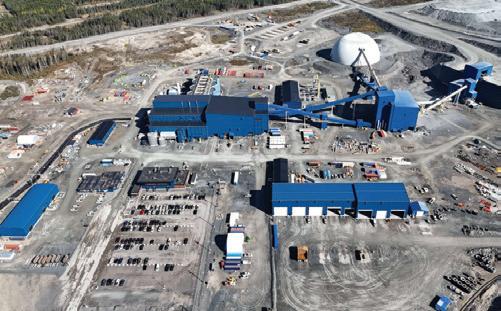
Construction Albert leverages its expertise in the mining sector through a specialized team of seasoned professionals who have completed major projects in Northern Quebec, Ontario, and Nunavut.
Strengths and Advantages
• Expertise tailored to the complex challenges of the mining sector
• Commitment to safety and sustainability
• Strong involvement of First Nations, Inuit, and Métis members
Areas of Expertise
• Water treatment buildings
• Core storage facilities
• Truck shops
• Mill
• Crushers
• All other buildings related to mining sites
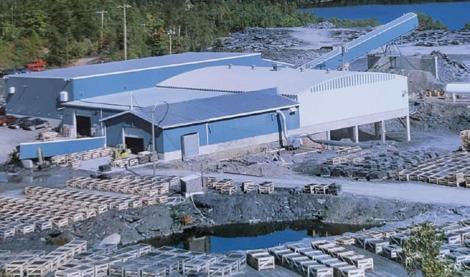
• Modular mining camps
• Domes
• Bases for solar panels
• Foundations for wind turbines
Submissions Contact:
SPOTLIGHT: Projects to watch in 2026
BY NORTHERN MINER STAFF
Continuing price volatility in critical minerals and rare earths, executive shakeups and legal feuds over land claims have some major advanced-stage projects facing uncertainty heading into the new year. Canada’s proposed $2-billion sovereign fund for critical minerals and expanded exploration tax credits may have some eyeing new opportunities, while the United States seems ready to span the West to support some ventures. Here are eight projects to watch:
n Kabanga
Lifezone Metals (NYSE: LZM) has marked major milestones this year, releasing a feasibility study for its Tanzanian project Kabanga in July and consolidating ownership from former partner BHP (NYSE, LSE, ASX: BHP).
Located in northwest Tanzania between Rwanda and Burundi, Kabanga is one of the world’s largest nickel, copper and cobalt projects. It hosts proven and probable reserves of 52.2 million tonnes grading 1.98% nickel, 0.27% copper and 0.15% cobalt, according to a feasibility study released in July.
Lifezone agreed that month to pay BHP $83 million (C$117 million) for 17% of Kabanga, taking its ownership to 84% of the project, with the Tanzanian government holding the remainder.
In August, Lifezone secured a $60-million bridge loan from Taurus Mining to carry the company through to a final investment decision expected next year. Kabanga has attracted over $400 million in investment to date.
The company obtained a licence this year for its Kahama refinery. It allows for in-country production of battery materials using Lifezone’s patented Hydromet technology that could reduce the need for metallurgical smelting.
Over an 18-year mine life, the underground project could produce 902,000 tonnes of nickel, 134,000 tonnes of copper and 69,000 tonnes of cobalt in intermediate product, according to the July study.
Kabanga has a post-tax NPV (at an 8% discount rate) of $1.58 billion, an internal rate of return (IRR) of 23% and a payback period of 4.5 years, according to the study. Total life of mine capital spending would be $2.49 billion, including $942 million in pre-production plus contingency, capitalized operational expenditures, growth capital, sustaining and closure costs.
Life-of-mine revenue from sales would be $14.1 billion, net of realization costs, with after-tax free cash flow of $4.6 billion based on metal prices of $8.49 per lb. nickel, $4.30 per lb. copper, and $18.31 per lb. cobalt.
“We are well-positioned as we progress the project financing and commence early-stage development,” chief financial officer Ingo
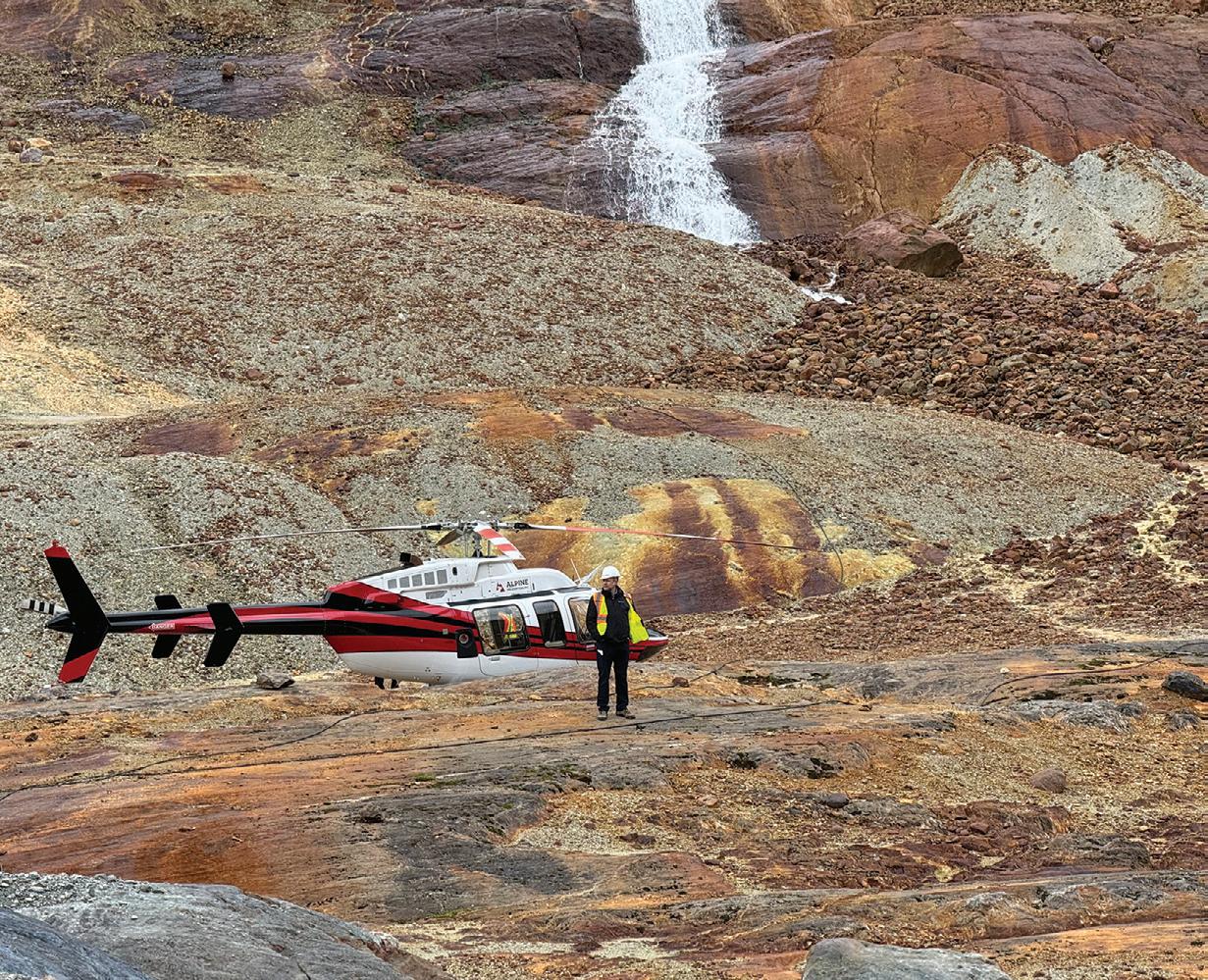
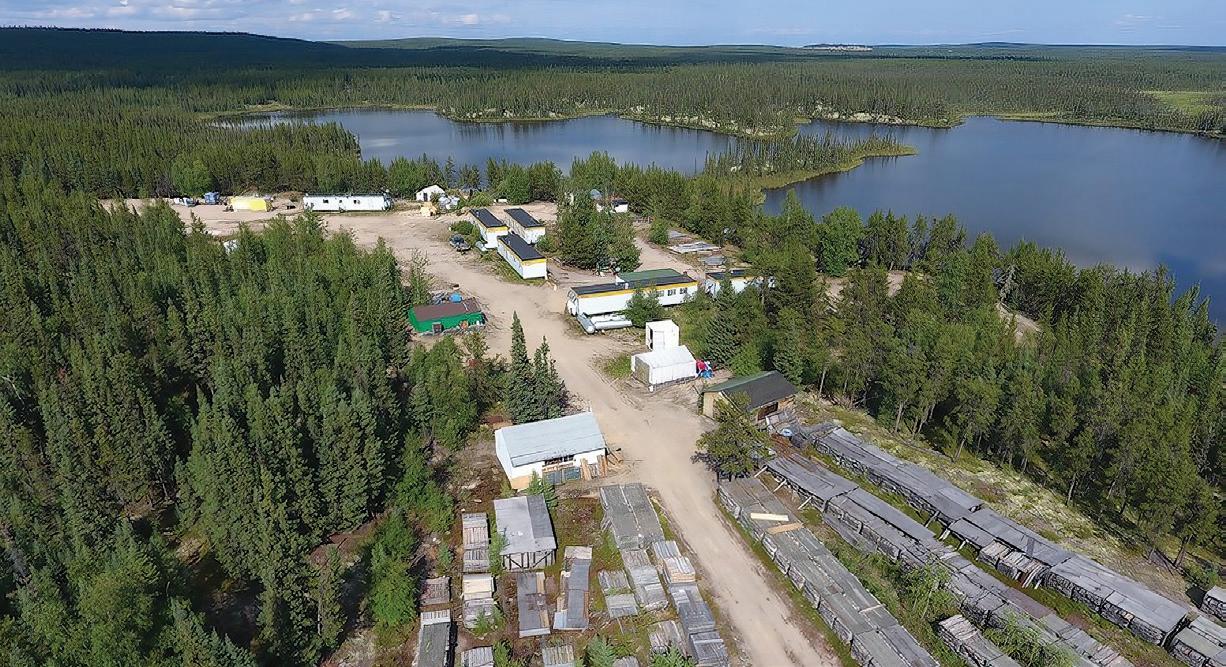
Hofmaier said in August. “We remain steadfast in our mission to drive long-term value creation.” Lifezone Metals has a market capitalization of $286 million.
n KSM
Seabridge Gold (TSX: SEA; NYSE: SA) is facing new roadblocks for its Kerr-Sulphurets-Mitchell (KSM) project, one of Canada’s largest gold-copper ventures, located near the Alaskan Panhandle in British Columbia.
In October, Seabridge was hit with its third legal challenge from
Tudor Gold (CVE: TUD) which sued the B.C. government over permitting Seabridge to tunnel through its mineral resources. Seabridge has proposed two 23-km tunnels to connect either end of its KSM property, which Tudor claims would run through its own property.
This spring, B.C. ruled the project “substantially started” to remove any expiry from KSM’s Environmental Assessment Certificate, with court challenges heard in late September. No ruling had been made as press time neared.
The company aims to announce a joint-venture partner by year’s
end and $20 million from an unnamed strategic investor. It’s funding geotechnical programs as the project advances towards a feasibility study. Seabridge envisions a 33-year mine life for KSM with underground and open pit output that would cost $6.4 billion to build, according to a 2022 prefeasibility study.
With a pre-production period of four years, KSM may produce 1 million oz. of gold, 178 million lb. of copper, and 3 million oz. of silver annually.
The ore would be shipped to Pacific Rim smelters in Stewart, 65
km away. The town is 185 km by air north of Prince Rupert on the coast. Across all zones, KSM’s reserves are 2.3 billion proven and probable tonnes grading 0.64 gram gold per tonne, 0.14% copper, 2.2 grams silver, and 76 parts per million molybdenum, according to the 2022 prefeasibility study. Contained metal is marked at 47.3 million oz. gold, 7.3 billion lb. copper, 160 million oz. silver and 385 million lb. molybdenum.
Seabridge’s 2022 preliminary economic assessment (PEA) focused on the opportunity to develop the copper-rich Kerr and Iron Cap deposits
Seabridge Gold’s Kerr-Sulphurets-Mitchell (KSM) project in northwestern British Columbia. HENRY LAZENBY
Camp infrastructure at Denison Mines’ Wheeler River uranium project in northern Saskatchewan. DENISON MINES
through block caving. Initial capital costs were pegged at US$14.3 billion, with additional sustaining capital and closure costs over the life of mine. The study also showed a posttax NPV (at a 5% discount rate) of US$5.8 billion with an IRR of about 19%.
Seabridge Gold has a market capitalization of C$3.21 billion.
n Nechalacho
Vital Metals’ (ASX: VML; US-OTC: VTFMXF) Nechalacho rare earths and niobium project in the Northwest Territories faces some challenges ahead of a prefeasibility study due in early 2026.
In early October, the Yellowknives Dene First Nation raised concerns over lack of consultation prior to U.S. government investment. In September, the Nechalacho camp was devastated by a wildfire that tore through empty cabins but spared some critical equipment.
Nechalacho is one of Canada’s more advanced rare earths projects. The company plans to use a novel method to treat raw material: solely by ore sorting. In January, the company updated the resource for the Tardiff deposit, adding 56% to its tonnage and including niobium.
The project is envisioned as a hard rock open pit mine producing neodymium (Nd), praseodymium (Pr), terbium and dysprosium. Over an 11-year mine life, Vital anticipates an average output of 56,000 tonnes of concentrate per year grading 26.4% total rare earth oxide (TREO) and 3.3% niobium pentoxide.
Tardiff hosts 192.7 million tonnes at 1.3% TREO, containing 2.5 million tonnes TREO, includ ing more than 636,000 tonnes NdPr, plus a 578,000-tonne nio bium (Nb₂O₅) resource, according to the January update.
Vital Metals forecasts a post-tax NPV of $445 million (C$628 mil lion) at an 8% discount rate and a 26% IRR. Capital costs for Tardiff are estimated at $291 million, with operating costs pinned at $24 per tonne mined, with payback within four years.
Post-tax free cash flow is esti mated at $445 million based on per kilogram rare earth prices of $90 Pr₆O₁₁, $90 Nd₂O₃, $1,322 Tb₄O₇, and $338 Dy₂O₃, a break-even price of $33.68 NdPR, and assumes nio bium isn’t payable.
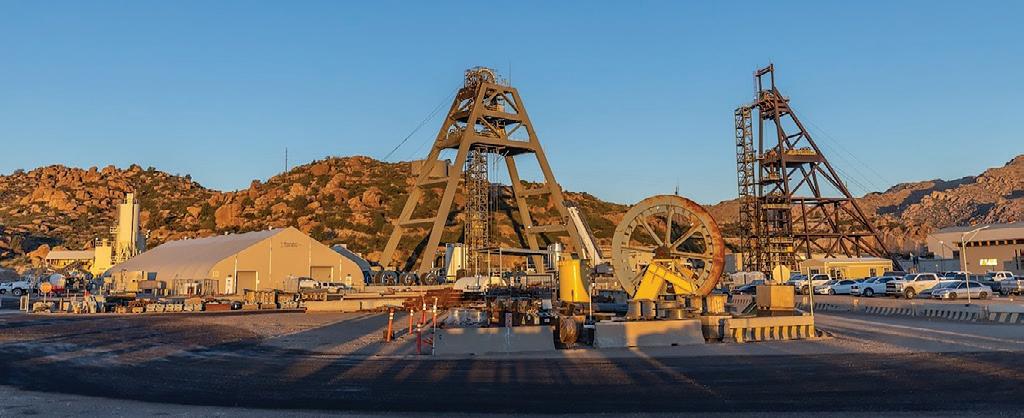
pean Union’s Critical Raw Materials Act.
Located 135 km north of Alice Springs, the Nolans Bore deposit hosts rare earths, phosphate, uranium and thorium and is expected to produce about 4% of the world’s NdPr. Nolans hosts phosphate minerals apatite and monazite and the silicate mineral allanite.
Over a 38-year mine life, Nolans could produce 4,440 tonnes of NdPr oxide annually, according
to a 2019 feasibility study. It’s also aiming for 144,000 tonnes annually of fertilizer-grade phosphoric acid at its extraction plant.
A resource from 2017 shows Nolans hosting 29.5 million proven and probable tonnes grading 2.9% TREO, 13% phosphate (P₂O₅), with 26.4% of the rare earths as NdPr. The site has 56 million measured, indicated and inferred tonnes grading 2.6% TREO, 11% phosphate, and 26.4% NdPr distribution,
according to the resource.
The project has a post-tax NPV at an 8% discount rate of US$1.7 billion and an IRR of 17%, with net capital costs pegged at US$1.2 billion. Operating costs would be about A$43.70 per kg NdPr and A$28.6 per kg NdPr net of the phosphoric acid by-product credit. It assumes a base case price for NdPr of US$133 per kg over the mine life.
Average annual revenue would

OF DRILLING 135 YEARS INNOVATION

The company is a founding member of the Canadian Rare Earth Supply Chain Consortium.
Vital Metals has a market capitalization of C$36.2 million.
n Nolans
Arafura Rare Earths (ASX: ARU) is seeking further investment in its Nolans NdPr rare earths project in Australia’s Northern Territory. As the country’s first ore-to-oxide rare earths operation, Nolans consists of a mine and a processing plant 8.5 km to the south.
In August, Arafura received A$100 million (C$91.5 million) from Export Finance Australia, bringing public funding for Nolans to more than A$1 billion. The country’s National Reconstruction Fund committed A$200 million in January after previous investment of A$840 million. International loans tally about US$1 billion.
The company has also sought up to €100 million (C$163 million) from the German Raw Materials Fund, leveraging the G7 Critical Minerals Action Plan, the Mineral Security Partnership, and the Euro-

be $610 million from rare earths and $79 million from phosphoric acid sales. After-tax free cash flow would be $10.2 billion based on metal prices of US$133 per kilogram NdPr oxide over life-of-mine and US$104 per kilogram NdPr oxide during the off-take period.
Arafura Rare Earths has a market capitalization of A$736 million (C$672 million).
For over 135 years, Boart Longyear has led the global drilling industry operating on every continent in some of the world’s most challenging environments.
Our teams deliver consistent results across surface and underground coring, sonic, production, reverse circulation, water services, and directional drilling.
Through innovation and the latest technology, we make drilling safer, more reliable, efficient, and cost-effective for our clients.
With over 15 million hours LTI free, we continue to prove that operational excellence and safety performance go hand in hand.



> Spotlight from P37
n Reko Diq
Barrick Mining (TSX: ABX; NYSE: B) continues to pursue financing for the $5.5-billion capital cost first stage of the Reko Diq copper and gold project in Pakistan amid uncertainty over the company’s future.
Since the resignation of CEO Mark Bristow in September, Chief Operating Officer Mark Hill also has been serving as interim president and CEO. The company has sold some gold assets and is embroiled in a legal case at the World Bank over Mali’s seizure of the Loulo-Gounkoto mine.
Barrick is looking to close as much as $3 billion in financing for Reko Diq next year and start engineering and infrastructure building. The project secured $700 million in June from several international banks and state lenders including the United States, Canada, Germany, Sweden and Finland. The goal is a 50/50 debt-equity structure, Bristow told The Northern Miner in an interview in September.
Reko Diq is half-owned by Barrick and the rest split between the governments of Pakistan and its Balochistan province. On a 100%basis, the project hosts 3.93 billion measured and indicated tonnes grading 0.43% copper and 0.25 gram gold per tonne for 17 million tonnes contained copper and 29 million oz. gold, according to a technical report released in February. The project has 1.38 billion inferred tonnes at 0.3% copper and 0.2 gram gold for 4.5 million tonnes copper and 7.8 million oz. gold.
Proven and probable reserves total 3.01 billion tonnes grading 0.48% copper and 0.28 gram gold per tonne for 15 million tonnes of contained copper and 26 million oz. of gold, supporting an initial mine life of about 37 years.
Production is expected to start by the end of 2028. Barrick forecasts a post-tax NPV of $13 billion (at an 8% discount rate) with an IRR of 21% and a payback period of just over six years, according to the update. Free cash flow is pinned at $70.2 billion over the 37-year life of mine, assuming long-term prices of copper at $4.03 per lb. and gold at $2,045 per ounce.
A second-stage expansion is forecast to cost $3.5 billion, while sustaining capital spread across the mine life would be $3.8 billion.
Annual output is expected to average between 200,000 and 300,000 tonnes of copper once steady-state production is reached.
While Barrick hasn’t disclosed an official gold production forecast for Reko Diq, the 2024 feasibility study’s reserve data allow for a reasonable estimate of 250,000 oz. to 400,000 oz. per year. That’s based on average annual throughput of 73 million tonnes and typical gold recoveries of 35% to 65% for porphyry copper-gold systems.
Operation costs are $57.5 billion over the mine’s life, with stage one assuming an operating cost of $25.43 per tonne to reach an annual ore production of 45 million tonnes, and stage two assuming a cost of $18.58 per tonne to reach a production of 90 million tonnes per year.
Barrick Mining has a market capitalization of C$78.4 billion.
n Resolution Copper Arizona project Resolution Copper, a 55-45% joint venture by Rio Tinto (NYSE, LSE, ASX: RIO) and
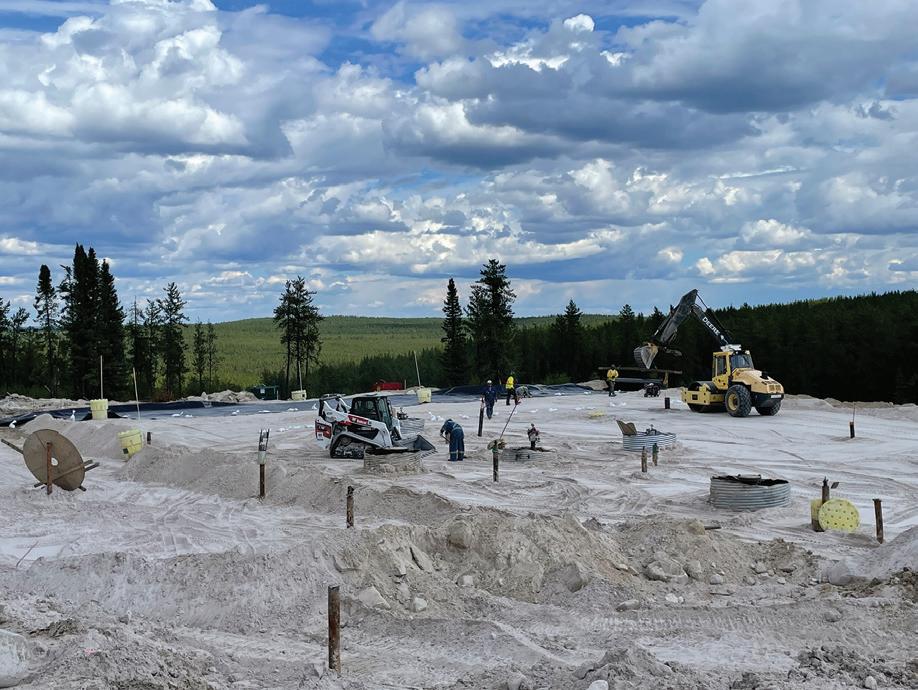
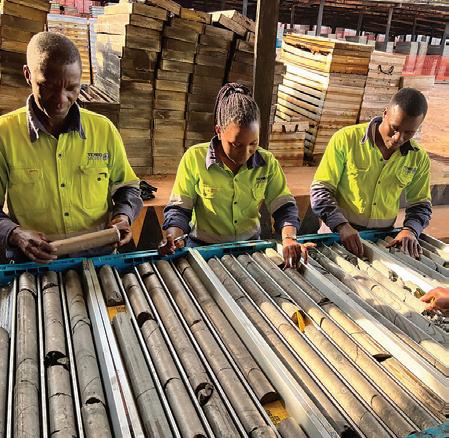
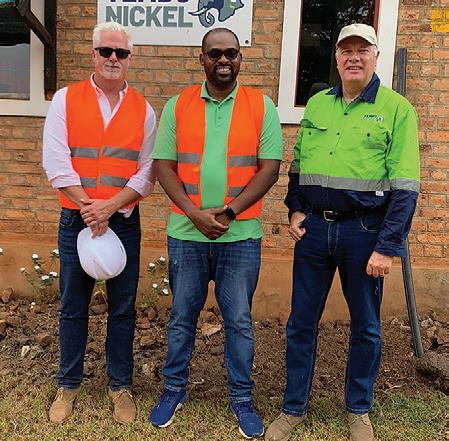
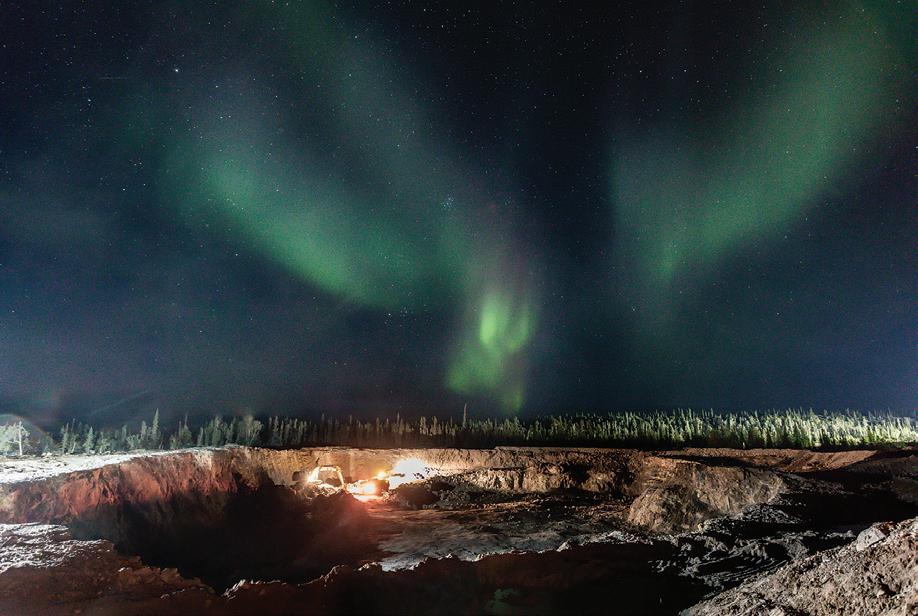
BHP (NYSE, LSE, ASX: BHP), awaits a U.S. federal court decision on a land claim exchange that would allow it to move forward with studies.
The site for the underground project includes the historic Magma Copper mine, Arizona’s deepest. Land disputes have been ongoing for around two decades, with the Apache community opposing attempts by successive U.S. governments to transfer land rights to Rio Tinto—a process halted by the Biden administration and resuscitated again under Trump.
In early November, crews had completed the deepening and rehabilitation of No. 9 shaft, enabling the next stage of underground development while permitting and litigation continue.
In August, opponents obtained an appeals court injunction to pause the project’s development at a site where Apaches have held sacred ceremonies for generations. A federal court required both sides to submit their cases by Oct. 14. The court hadn’t announced an oral-argument date by press time.
In May, the U.S. Supreme Court
70%, annual output would average around 300,000 tonnes of copper once the operation reaches full production, which is expected to begin in the mid-2030s.
The project is one of 34 the Trump administration named to the FAST-41 process, a federal designation that is designed to accelerate decisions on permit applications. Several items remain before construction. The U.S. Forest Service must issue a record of decision, the federal green-light required before the land exchange and most downstream permits can advance.
The project then needs state permits, notably Arizona’s Aquifer Protection Permit and air permits for specific facilities. Ongoing engineering and environmental management plans for water, tailings, subsidence, closure and financial assurance that feed into state and federal approvals must be completed.
In widely publicized meetings with Rio Tinto and BHP this August, Trump called opposition to Resolution “anti-American.”
The joint venture then stated: “We are confident the court will ultimately affirm the district court’s well-reasoned orders explaining in detail why the congressionally directed land exchange satisfies all applicable legal requirements.”
Rio Tinto has a market capitalization of £66 billion (C$122 billion). BHP has a market capitalization of A$216 billion (C$198 billion).
n Rook I
Canadian uranium developer NexGen Energy (TSX, NYSE: NXE) is in the final stage of approval for its Rook I project in Saskatchewan with federal licence hearings underway.
Rook is Canada’s largest development-stage uranium project, focused on the Arrow deposit in the Athabasca Basin uranium hotspot, where NexGen holds 1,900 sq. kilometres. The project is within Treaty 8 land, the traditional territories of the Dene, Cree and Métis peoples. Public licence hearings with the Canadian Nuclear Safety Commission were slated for Nov. 19 as press time approached and for Feb. 9 to 13, 2026, to determine whether Rook gets the green light. The commission approved the project’s environmental impact statement this past January.
NexGen has signed off-take agreements with undisclosed American utilities to provide 10 million lb. of uranium over about five years. Receiving approval for site development from the Saskatchewan Ministry of Environment in June, NexGen is advancing with planned gravel airstrip development and an expanded workers’ camp.
had rejected to hear an appeal by opponents.
Designed as a block cave project, Resolution could reach just over 2 km underground and is expected to become North America’s largest copper mine and supply up to a quarter of all U.S. copper demand. The project is expected to produce about 18 million tonnes of copper over a 60-year mine life. The deposit contains roughly 1.8 billion indicated and inferred tonnes grading 1.5% copper for 27 million tonnes of contained metal. With recoveries estimated at 65% to
Rook I is expected to produce 27-29 million lb. of U3O8 annually over the first five years of its nearly 11-year life, according to a feasibility study released in August 2024. Last year, NexGen updated capital costs to $2.2 billion (US$1.58 billion) from $1.3 billion in 2021 due to inflation and improved engineering.
Using a long-term uranium price of US$95 per lb., Rook is expected to generate an average annual aftertax free cash flow of $1.93 billion in its first five years, according to the study. The project has an after-tax net present value of $6.3 billion at an 8% discount rate, and a payback period of about 12 months.
The Arrow deposit has a probable reserve of 4.6 million tonnes grading an average 2.4% uranium oxide (U3O8) for 240 million lb.
The Phoenix feasibility field test site at Denison’s Wheeler River project in Saskatchewan. DENISON MINES
Left: Examining cores at Lifezone’s Kabanga project in Tanzania. Right: Lifezone CEO Chris Showalter, Tembo Nickel CEO Benedict Busunzu and Lifezone Chair Keith Liddell at the site. LIFEZONE METALS
Bulk sample mining at Vital’s Nechalacho site under the aurora borealis in the Northwest Territories. VITAL METALS
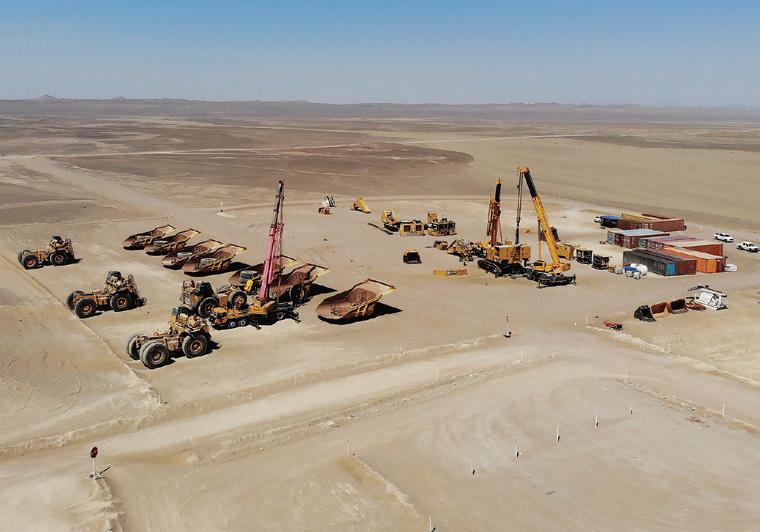
U3O8, according to the feasibility study. Arrow hosts 3.8 million measured and indicated tonnes grading an average 3.1% U3O8 for 256.7 million lb. U3O8
NexGen Energy has a market capitalization of C$7.43 billion.
n Wheeler River
Denison Mines (TSX: DML; NYSE-A: DNN) has been moving ahead on permitting for its Wheeler River uranium project in the Athabasca Basin of Saskatchewan with an eye on breaking ground in 2026.
A public hearing with the Canadian Nuclear Safety Commission was held on Oct. 8, and another is scheduled between Dec. 8 and 12.
“We are optimistic that we will receive a decision from the commission in early 2026,” Denison President and CEO David Cates said last month in third-quarter results.
The company issued US$345 million in convertible notes in August and raised $75 million through stock sales in October, allowing it to report total cash, investments and uranium holdings of nearly C$720 million.
In November, the Peter Ballantyne Cree Nation challenged Saskatchewan’s environmental approval given in July, saying it wasn’t properly consulted. Deni-
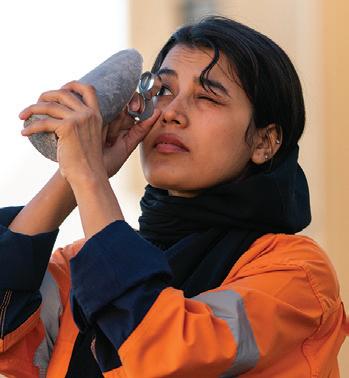
son says the Indigenous group has been reviewing the proposed mine for the past three years.
The project is designed to include in-situ recovery (ISR) of uranium at the Phoenix deposit and a yellowcake processing plant with production slated for 2028.
ISR involves the extraction of minerals directly from an orebody through boreholes or wells. The process pumps a leaching solution underground to dissolve the target mineral, then back to the surface for processing.
Proposed as the first commercial ISR uranium mine in the Athabasca Basin, the Wheeler River project plans to target uranium in a sub-arctic sandstone environment, in an ISR wellfield slated to have over 250 injection and recovery wells. Detailed design engineering was 85% complete by November, the company said.
Over a 10-year mine life, Phoe-
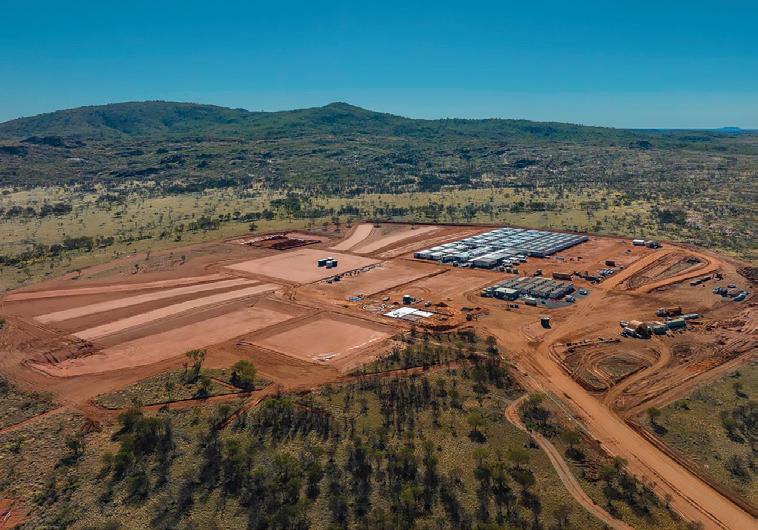
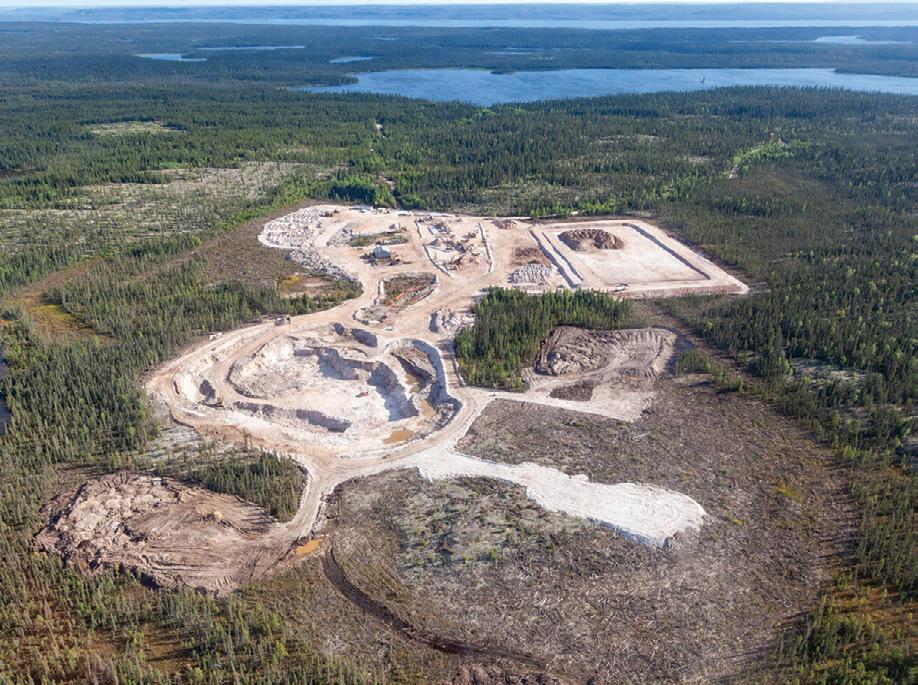
nix could produce an average of 8.4 million lb. uranium oxide (U3O8) annually in the first five years.
Phoenix has a post-tax net present value of $1.16 billion, an internal rate of return of 90% and a payback period of 11 months at capital
> Canada from P34
ada might do well to provide loans, incentives and permit pathways to getting some of the past-producing processing, metallurgical and smelting facilities up and running again.
“There are lots of closed processing plants across Canada—more than we know,” Wojnicki says. “We can fast-track these companies to restart these facilities with some environmental stopgaps.”
Price floors
Building domestic supply chains for critical minerals can also be accelerated by establishing floor prices for selling product to strategic-use cases, Wojnicki argues. He points to the U.S. Department of Defense’s 10-year deal with rare earths producer MP Materials (NYSE: MP) in July, which sets a price floor of US$110 per kg for neodymium-praseodymium and a 10-year offtake agreement. The company will use the long-term commitments to build its second magnet manufacturing facility to serve defence and commercial customers.
“One of the reasons why past-producing countries of critical minerals like Canada are no longer producing at the same level is that a non-capitalist system—China—has been manipulating prices,” he says. “One of the things we could do is take the price manipulation off the table by providing a reasonable floor price.”
Flow-through shares
In addition, development stage projects owned by Canadian companies outside the country should be eligible for flow-through share financings to help them get to a bankable feasibility study, Wojnicki says. This would also benefit Canada’s world-class mining services industry.
Flow-through shares could even be extended to funding starter mines and demonstration plants, he adds.
“Especially if it’s a novel technology or not well known, you could extend flowthrough share financings for all the studies that go into a bankable feasibility study –from bulk sample mining to demonstration plants.” TNM
costs of C$420 million, according to a 2023 feasibility study.
The project hosts proven reserves of 6,300 tonnes grading 24.5% U3O8 for 3.4 million lb. of U3O8, and probable reserves of 212,700 tonnes at 11.4% U3O8 for 53.3 mil-
purchases are a special feature of the current phase.”
Though the bank expects a plateau beyond 2026, it warns that any geopolitical shock could push prices well beyond its baseline scenario.
While the wider outlook skews bullish, risks remain. Gold’s rapid ascent has left it technically overbought at times. Morgan Stanley flagged a 6% one-day plunge in October as a sign of temporary excess. Buying an asset near its all-time high carries the risk of a significant correction.
“A reversal and digestion is healthy for gold and doesn’t change our multi-year structural bullish view,” Goldman Sachs said after the correction.
Waning demand?
Others worry about demand destruction if prices remain elevated. “As the price of gold climbs higher, central banks will need to purchase less of it to achieve their reserve targets,” Morgan Stanley cautioned.
lion lb. U3O8
Wheeler River also comprises the adjacent Gryphon project, which is intended as a conventional underground mine.
Denison Mines has a market capitalization of C$3.24 billion. TNM
Investing heavily in a non-yielding asset like gold means forgoing potential growth opportunities in other markets, such as the strong performance seen in some tech stocks. A continued strong performance in the broader stock market could lure investors away from gold.
Nevertheless, few expect a sustained downturn. Sprott concludes that gold remains in the early innings of a longer cycle: “It is difficult to see how the current gold rally ends beyond a short-term overbought correction. The debasement trade is still in the early stages of a longer structural cycle.”
With gold forecast to average over $4,000 in 2026 and possibly climb toward $5,300, analysts agree that systemic risk, fiscal expansion, and a softening dollar provide a sturdy foundation for continued strength.
As central banks lead the way, investors are increasingly following suit, transforming gold from a tactical hedge into a strategic
Arafura Rare Earths’ Nolans project in Western Australia. ARAFURA RARE EARTHS
Reko Diq in Pakistan. BARRICK MINING
Core viewing at Reko Diq. BARRICK MINING
An aerial view of Vital Metals’ Nechalacho rare earths project. VITAL METALS
shift to enclosing the structures so that employees can work through the winter by installing electrical cabling and equipment such as pumps and motors.
“You have to wire up the more process-related technologies within these structures. That’s going to be the work of the next calendar year,” Craig said. “Next year we will have fitted out the building with all the electrical equipment and mechanical equipment necessary to process the potash. Then, the six months after that we will be commissioning everything so that we can get first production in mid-2027. All of that is tracking pretty well.”
Escondida
Despite its massive size, Jansen isn’t alone at the top of Craig’s priority list. His focus is also on Chile’s giant Escondida copper mine, which BHP operates and co-owns with Rio Tinto (NYSE, LSE, ASX: RIO).
A multi-billion-dollar expansion, which will include new infrastructure, is winding its way through the environmental approval process.
“We have a growth program for Escondida. We have to build new infrastructure, a new concentrator,” Craig said. “Escondida is going through a grade decline and an increasing hardness profile of the ore. It’s the world’s largest mine and probably the world’s best resource.”
With BHP having said last year it plans to invest between $7.3 billion and $9.8 billion in new projects at Escondida starting in 2028, its main goal is “getting that investment maximized in terms of the economic value add that it can bring to BHP and our JV partners, but also what it represents to ensure continued copper production, which we know is essential,” Craig added.
In nearby Argentina, where BHP is looking to advance the Filo del Sol and Josemaria projects as part of the Vicuña joint venture with Canada’s Lundin Mining (TSX: LUN), Craig said he was heartened to see President Javier Milei’s landslide victory in the Oct. 26 midterm elections.
UNEARTH
Milei’s performance “has given us renewed confidence in Argentina,” Craig said. “As we drill out Vicuña, we continue to upgrade the quality of the resource. We are very happy with what’s in the ground, which is fundamental. We are working very hard to get to the point where we have completed the technical studies, which we should see in the first quarter of next calendar year. Once we have completed those technical studies, we should have a very good appreciation of when and how to invest.”
Resolution
Further north, BHP is still hoping to advance the Resolution copper mine in Arizona – which has stalled for more than a decade amid opposition from Indigenous groups –sometime next year. BHP has a 45% stake in the project, while Rio Tinto controls 55%.
Resolution is “a world-class ore body in a very good jurisdiction,”
Craig said. “We have been fighting the legal battle for 13 years. We know the administration is very supportive of that project, but we need to finish solving the legal challenges. We hope we will be able to do that during the course of the coming months.”
Arizona could also see BHP reopen four long-closed copper mines – acquired in the 1996 purchase of Magma Copper – following policy changes introduced by President Donald Trump.
The White House’s sense of urgency to secure mineral supplies and reduce reliance on China is a welcome support for the industry, BHP CEO Mike Henry has said. .
Technological advances in areas such as copper leaching mean that “what was uneconomic in 2004 is potentially not uneconomic today,”
Craig said. “We are doing the work now to understand what is prospective there versus what is not, and we have a bit more work to do.
The point is, Arizona still is a copper mining district. We have some interests there and of course we are going to run the ruler over what those look like.” TNM
Leaders leave
And political uncertainty can ultimately lead to regime change – at companies. Resolute CEO Terry Holohan departed after he was basically held hostage in Bamako for $160 million a year ago while the company’s market cap plunged by more than a third.
Authorities seized Barrick’s bullion and eventually its Loulo-Gounkoto mine, forcing the company to issue a $1-billion writedown of assets after a multi-year dispute over Mali’s mining code and some $440 million in taxes. It didn’t help CEO Mark Bristow’s position as the company missed profit targets and its share price performance trailed peers. He resigned in September.
Unrest can have more direct consequences. Progress Minerals Vice-President of Exploration Kirk Woodman was kidnapped and murdered in January 2019 in northern Burkina Faso. Progress merged with an Orca Gold (TSX: ORG)–owned company to form Montage Gold (TSX: MAU; US-OTC: MAUTF) eight months later.
In November 2019, gunmen attacked a convoy of five buses carrying workers to SEMAFO’s (Société d’Exploration Minière en Afrique de l’Ouest) Boungou gold mine in Burkina Faso, killing at least 37 people and injuring more than 60. The following July, Endeavour Mining completed a C$1-billion all-stock acquisition of SEMAFO.
“When companies have a security mishap where there’s fatalities, it’s very hard to survive as a business in the way that you knew,” Morrissey said. “Companies have to adjust their posture and be prepared to change and adapt to the security situation, they need to understand it’s a war zone.”
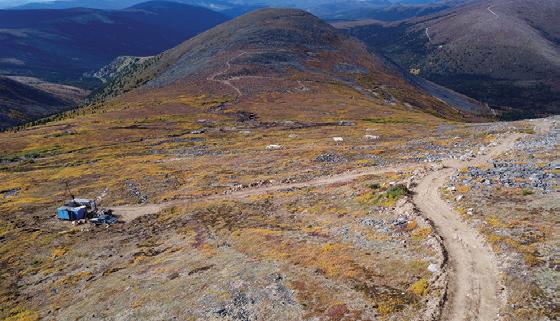
Two deposits
Other drill results released Nov. 13 include those from hole DDRCCC-25-111, which cut 20 metres grading 0.54 gram gold from 295 metres down. A third hole, DDRCCC-25-112, intersected 11 metres grading 1.06 grams gold from a depth of 182 metres, Sitka said.
RC now has pit-constrained mineral resources in two zones: the Blackjack and Eiger gold
deposits.
Blackjack holds about 40 million indicated tonnes grading 1.01 grams gold for contained metal of 1.29 million oz. gold, and 34.6 million inferred tonnes grading 0.94 gram gold for contained metal of 1.04 million ounces.
As for Eiger, it holds about 27.4 million inferred tonnes grading 0.5 gram gold for contained metal of 440,000 ounces. TNM
Public-private
venture also underscores MP Materials’ role as an American national champion, and it demonstrates how our fully integrated platform can project U.S. industrial capability abroad.”
Sole US producer
The company is currently the only fully integrated producer of rare earth materials in the U.S., with operations centred around its Mountain Pass mine and processing facility in California and a magnet production site in Texas.
The joint venture announcement comes a day after Saudi Crown Prince Mohammed bin Salman pledged to invest $1 trillion in the U.S., further deepening the commercial ties between the two nations.
Shares of MP Materials jumped by 8.6% to $63.55 apiece in New York as press time approached, taking the Las Vegas-based miner’s market capitalization to $11.3 billion. Company shares have multiplied 3.5 times over the past year.
announcing PAK’s selection. “We are hoping to achieve final investment decision in 2027 and lithium production in 2030-2031,” Walker said by email via a spokesperson.
Frontier is working with Japanese conglomerate Mitsubishi to develop PAK, which is located more than 1,400 km northwest of Toronto, near the Manitoba-Ontario border. The high-grade, largescale hard rock lithium project would produce 200,000 tonnes of spodumene concentrate annually over a 31-year mine life and generate pre-tax earnings of $285 million a year, according to a feasibility study issued in May. Frontier has pegged an after-tax internal rate of return of 18%.
Frontier shares shot up 13% to 76¢ apiece in Toronto on Oct. 30 before easing to 74¢ near press time, valuing the company at about $171 million. The stock has ranged between 38¢ and 83¢ in the past year.
Conversion plant
Frontier is planning a lithium conversion plant in Thunder Bay linked to PAK and faces several challenges typical of large, integrated battery-materials ventures. The remote project location requires new infrastructure such as road upgrades and power transmission, while permitting and Indigenous consultation remain critical steps despite the new fast-tracking.
The company must also manage the technical complexity of combining mining and downstream lithium conversion, high upfront capital costs and market volatility as lithium prices have weakened.
The project is in the traditional territory of people guided by Anishinninew law, Deer Lake, Keewaywin, North Spirit Lake and Sandy Lake First Nations. PAK could generate up to $1.5 billion in gross domestic product, $124 million in tax revenues and create more than 2,000 full-time jobs during construction alone, according to the province.
Ontario’s 1P1P framework creates a centralized permitting and authorization model that aims give investors and developers the confidence to build mines and create jobs across northern Ontario, Lecce said in October. Part of the time savings can come from collaborations across ministries, he said.
Funding
The Saudi JV builds on the multi-billion-dollar public-private partnership that MP and the defence department announced in July to bolster America’s rare earth supply chain and reduce its reliance on China. The Asian giant dominates the market with a 60% share of mine supply and almost all of the processing capacity.
Under that partnership, MP plans to invest as much as $1 billion to significantly expand the U.S. rare earth refining and magnet manufacturing capacity in the coming years. Among the key investments are the development of a second magnet manufacturing facility in the U.S. and an expansion of its heavy rare earth separation capabilities at Mountain Pass.
Prior to the partnership, MP had already signed a memorandum of understanding with Saudi Arabia to develop a rare earths supply chain in the kingdom, from mining to magnet production. That agreement was signed during the U.S.-Saudi Investment Forum
PAK has been on the provincial and federal support radar for a while. During the Prospectors and Developers Association of Canada conference in March, the federal government said it would fund up to $120 million with potential matching funds from Ontario.
A year ago, Ottawa approved $6.1 million from the Critical Minerals Infrastructure Fund for infrastructure pre-construction including environmental studies, an all-season access road and a power-transmission link to PAK.
Mitsubishi last year agreed to invest an initial $25 million for a 7.5% stake in a Frontier subsidiary with an option to increase it to 25% after the feasibility study.
The 280-sq.-km project has a net present value of $932 million using a discount rate of 8%, according to the feasibility study. PAK hosts proven and probable reserves of 31.1 million tonnes at 1.51% lithium oxide across three spodumene-bearing deposits, PAK, Spark and Bolt. The initial inferred resource at the Bolt deposit outlines 5.5 million tonnes at 1.23% lithium oxide, the study shows. TNM
Sitka Gold’s RC project in Yukon. SITKA GOLD
> Sitka from P13



BLAST FROM THE PAST

Athabaska Winning Major Role In Free World’s Atomic Era
BIG URANIUM OPERATION ASSURED FOR ELDORADO AT BEAVERLODGE
Rush Initial 500 Ton Mill Unit—See Possibility of 2,000 Tons Daily— Sinking 5-Compartment Production Shaft on Fay—Three Other Mines— Multi-million Dollar Construction program
Canada will soon have a second and important uranium producer. Eldorado Mining and refining (1944) Ltd., Prospecting crown-owned corporation, has scored with a real winner at Beaverlodge lake, The Northern Miner can state, following a visit to the property in the Lake Athabaska area of North-western Saskatchewan.
Backed by strong ore resources, the company is embarking on a multi-million dollar construction program designed to get the property into production as quickly as possible. This is tentatively set for early 1953, at an initial rate of 500 tons daily. Both mine and mill layout are being designed for expansion well beyond this. The crushing plant will handle 2,000 tons daily.
Mill feed could be drawn from four separate sources. The Ace mine, on which most work has been done, is all that the name implies.
Through diamond drilling of the nearby Fay zone indicates that an even bigger mine will be developed here. A new five-compartment production shaft is going down on Fay, to an initial depth of 1,150 ft.
The actual metallurgical process to be used in the big mill has not yet been definitely decided upon, but it will employ leaching. The nature of the ore assures a high recovery.
A bulk sampling plant is being installed immediately, to gain more information on the ore bodies. This could either be used in conjunction with the mill, or for the treatment of custom ores.
The tempo of surface drilling is being reduced, though two drill rigs are still employed. To date, over 300,000 ft. of core has been pulled, in addition to 30,000 ft. underground. Years of exploration will be required before the potential of the known strong ore structures is revealed.
The whole layout will be streamlined, assuring an efficient operation. The plant will be comparable with the best in the north country. By the time production is attained, expenditures on this project will have reached $8 1/2 million.
“We expect to operate the property at a profit under the present price schedule,” said President W. J.. Bennett at the time the mill was announced. He was treading on safe ground, The Northern Miner gathers. Total expenditures should be returned very quickly.
The entire cost of the Beaverlodge project is being financed from company revenue.
The big Beaverlodge operation is literally ushering a new era of uranium mining in this country. Before many years, it will represent a mighty arm of the Dominion’s expanding mining industry.
While security regulations do not permit the divulging of either ore reserve tonnages or grade figures, these are obviously
PRODUCER
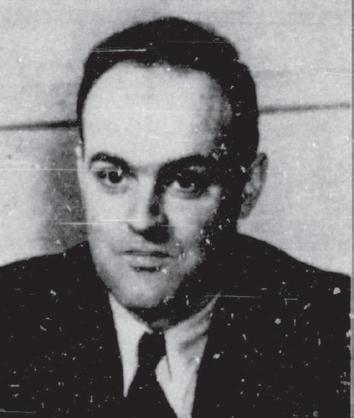
Another atomic age
The Northern Miner’s 1951 coverage of Eldorado’s expansion at Beaverlodge captured a country at the centre of a new atomic age. Demand for uranium was accelerating under the United States Atomic Energy Commission’s early Cold War stockpiling program, which guaranteed prices and triggered a continent-wide exploration rush.
Canada, through Eldorado Mining and Refining and emerging private producers at Elliot Lake, became one of the Free World’s indispensable suppliers. Long-term contracts signed between 1951 and 1956 underpinned townsites and mills and haulage systems were built at record speed, while the U.S. government sought security of supply for both weapons and reactor fuel.
It was a period marked by quick permitting, direct state procurement and certainty: miners would produce, and governments would buy.
Seven decades later, nuclear power is again at the centre of an energy-security buildout, but for different reasons. This time the driver is soaring demand for carbon-free baseload electricity and the explosive growth of data centres needed for artificial-intelligence computing.
The United States Energy Department says most of its future lending capacity will go to nuclear power, including $1 billion announced Nov. 19 to restart Three Mile Island, notorious in nuclear power’s past. Energy Secretary Chris Wright says nuclear will be “by far the biggest use” of federal financing.
Washington has also launched a strategic partnership with Westinghouse Electric – co-owned by Cameco and Brookfield Asset Management – with a vision for at least $80 billion in reactor construction.
While the U.S. has built only three commercial reactors this century, utilities, tech companies and policymakers are aligning behind restarts, uprates and new builds as the country attempts to meet electricity demand rising faster than at any time since the post-war era. Ontario is spending billions to refurbish its fleet and is trying out small modular reactors.
The overall result is a new, policy-driven nuclear cycle that echoes the urgency of the 1950s, even if the motivations have shifted from weapons to watts.
—COLIN MCCLELLAND
substantial. The very scope of the operation bears this out. What is known as the “Beaverlodge Operation” will rank with the country’s big tonnage mines, with grade (i.e. dollar value) far exceeding that of any gold mine.
A heavy underground development program is under way. Concurrently, surface construction work is being carried on at a fast clip. Orders for the mill equipment will be placed this fall.
Besides the feverish activity at the property, an immediate outgrowth is the construction of a large near-by airstrip, now nearing completion. The allied Northern Transportation Co. has started construction of a large warehouse and dock at Black bay, on the north side of Lake Athabaska. Extensive fuel oil storage facilities are being installed here. Also under construction is a 12-mile all weather highway from Black bay to the property.
Eldorado’s holdings in the Athabaska area are extensive, totaling 238 claims. Of the four mines that have been developed or indicated, two appear to be of the big mine category. These are the Ace and the Fay. Both are located on what is known as the St. Louis fault. Smaller but nevertheless important are the Eagle and Martin mines, where work has temporarily discontinued.
Fay Mine Biggest Center of mining activity will shortly swing to the Fay, where the mill will be located and cleared. This five-compartment vertical opening will be carried non-stop to
(Continued on Page Two)
MORE URANIUM MINES IN ATHABASKA AREA
Exploration Expenditures Paying Off—15 Drills at Work—See Good Profits
Indications are that several brand new uranium producers will result from the intensive exploration and development work now under way over a wide area on the north side of Lake Athabaska. These are in addition to the big Crown controlled Eldorado operation.
In excess of one million dollars is being spent on exploration by the independent companies. Fifteen diamond drills are working at the immediate area,The Northern Miner found on a visit, with at least another three machines reported working
at Charlebois Lake, 150 miles to the east.
There is little doubt but that a major new mining camp is in the making, with the area destined to become the uranium center of Canada.
Though there have been disappointments, skeptics of this young but sure-togrow branch of the mining industry will soon be shown that uranium mining can be very profitable. Tonnage implications are already impressive, with grade generally far exceeding that of the gold mines. There are
(Continued on Page Three)
PROMISING SHOWINGS AT AMAX ATHABASCA
Visible Pitchblende in Two Structures—Three Drills Busy—Underground Plans
Surface work at Amax Athabasca Uranium Mines has uncovered two showings of unusual promise. Both are in strong structures. High radioactivity and visible pitchblende suggest real mine making possibilities, The Northern Miner feels, following a visit to the property located several miles northwest of Beaverlodge Lake in the Lake Athabaska uranium area.
Three diamond drills are presently at work. This intensive drilling program will
be continued throughout the winter. By fall, it is hoped to be able to plan an underground investigation of at least one of the deposits. There are a number shaping up.
The company’s extensive holdings straddle what is known as the Black Bay fault, one of the strong ore-control structures of the area. This fault zone is now returning good ore indications several miles to the
(Continued on Page Fourteen)
URANIUM
W. J. BENNETT who as president of Eldorato Mining & refining is responsible for the country’s uranium production. Mr. Bennett came into the mining business via a wartime stint as special assistant to Munitions and Supply Minister C.D. Howe. His organizational talent has been put to good account in directing the extensive expansion of Eldorado operations which has taken place in recent years.


HISTORY
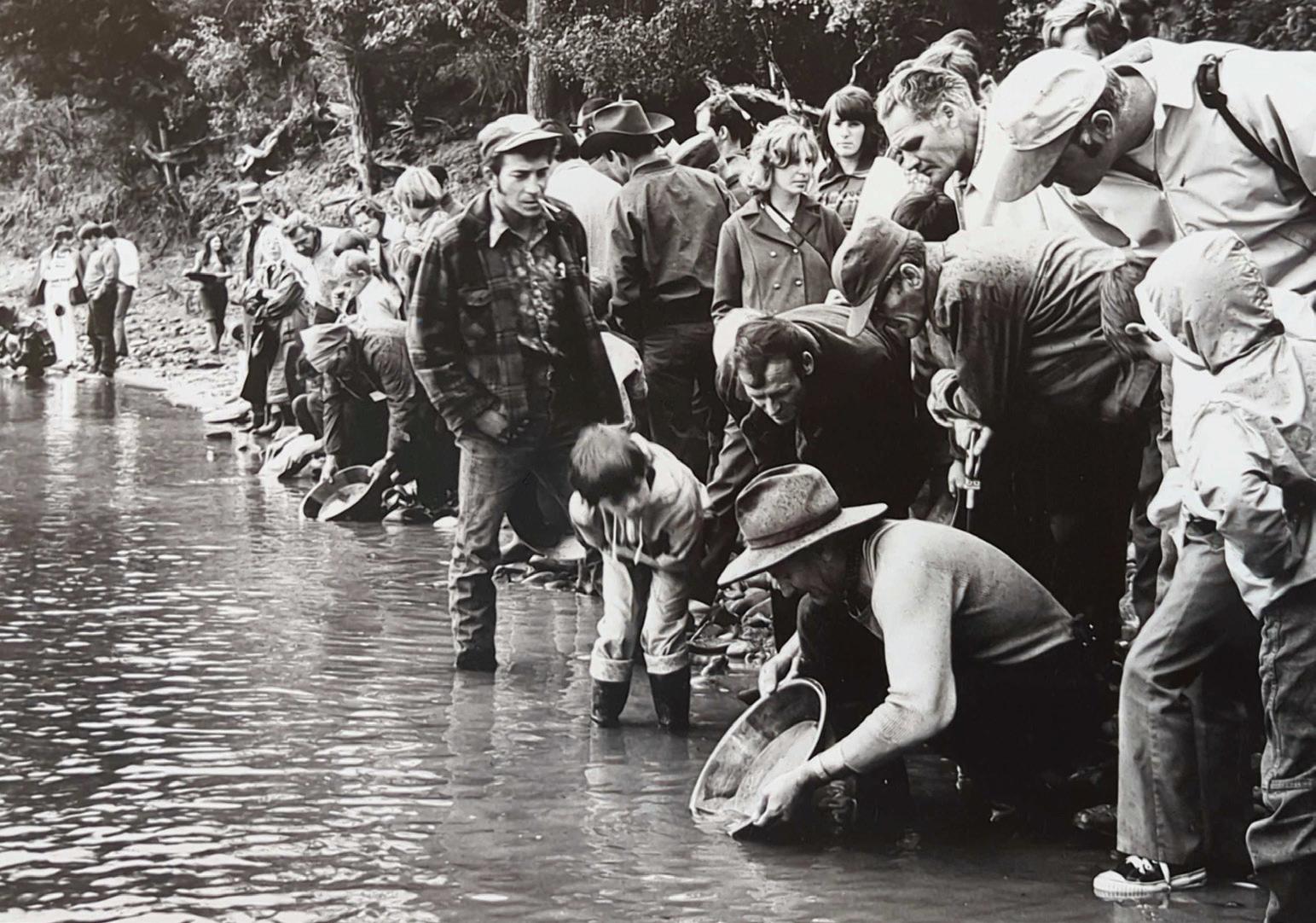

110 YEARS OF MINING. 110 YEARS OF CANADA’S STORY.
For over a century, The Northern Miner has been more than a newspaper— it’s been the chronicle of Canada’s growth, resilience, and resourcefulness. From frontier boomtowns to worldclass mining hubs, we’ve told the stories that built a nation.


Thank you for being part of our history. Here’s to the next 110 years.





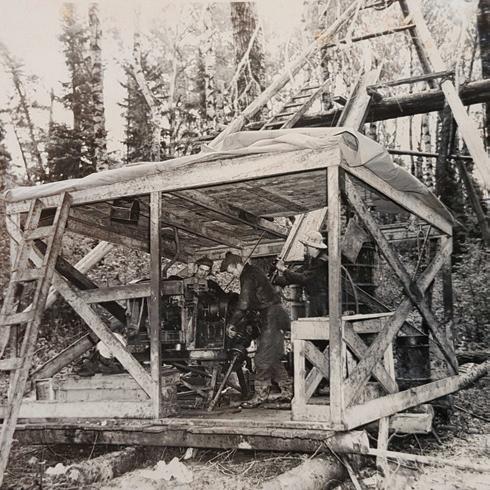

The Northern Miner – The Story of Mining in Canada Since 1915.
www.northernminer.com