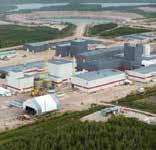
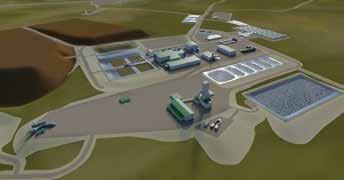
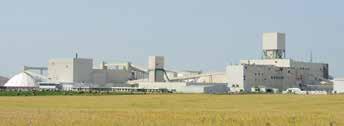
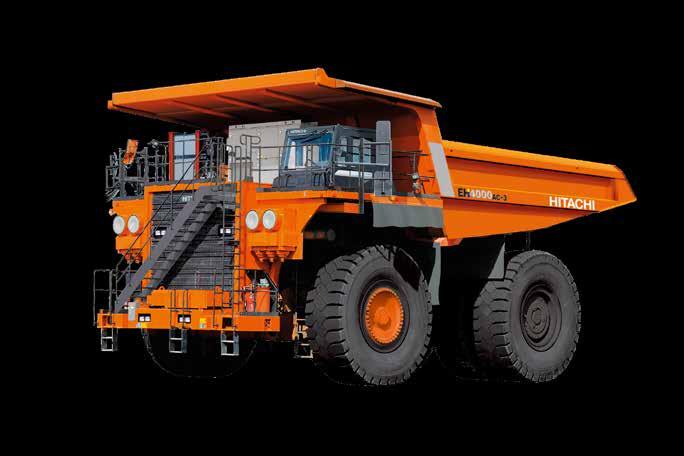
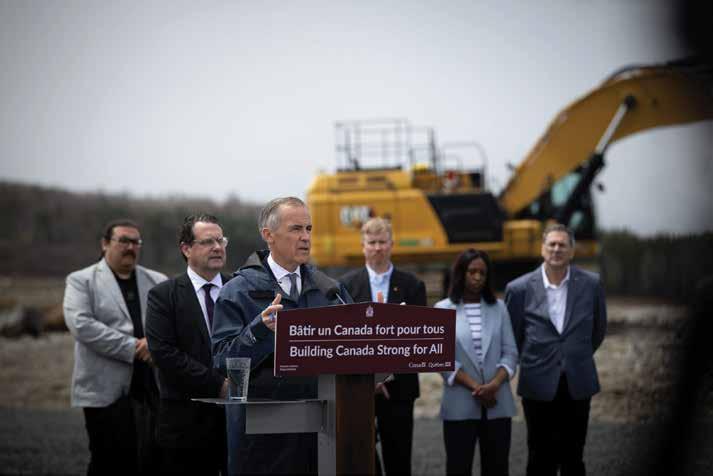
> Uranium, lithium and potash drive the province’s next growth cycle
SURFACE MINING
> Automation, electrification and precision blasting reshape productivity
B.C. MINING MONTH
> Investment, permitting and project approvals gain momentum
CRITICAL MINERALS
Why Canada’s resource advantage depends on infrastructure, processing and supply chains
FEATURES
MINING IN SASKATCHEWAN
08 Super Saskatchewan: The need for critical minerals spurs uranium, lithium development.
22 Saskatchewan potash: The buried treasure that fed the world.
43 Mining education innovation in Saskatchewan.
TAILINGS
AND MINE WASTE MANAGEMENT
12 Second lives: Turning Canada’s mining legacies into critical mineral and energy assets.
31 Toxicity: Why the details matter.
CRITICAL MINERALS
14 The case for a Canadian strategic minerals stockpile.
26 The overlooked criticals: Why rare earth elements, lithium and graphite matter more than ever.
45 Why Canada’s critical minerals strategy must start with enabling infrastructure.
BRITISH COLUMBIA’S MINING MONTH 2026
16 Mining investment creating jobs, building British Columbia’s economy.
29 Rudi Fronk on KSM, Iskut and the future of mine development in B.C.
SURFACE MINING, DRILLING AND BLASTING
18 Beyond the blast: How mines are optimizing rock before it moves.
20 Precision over volume: Surface mining’s new productivity imperative.
33 Dyno Nobel targets safer, cleaner surface mining.
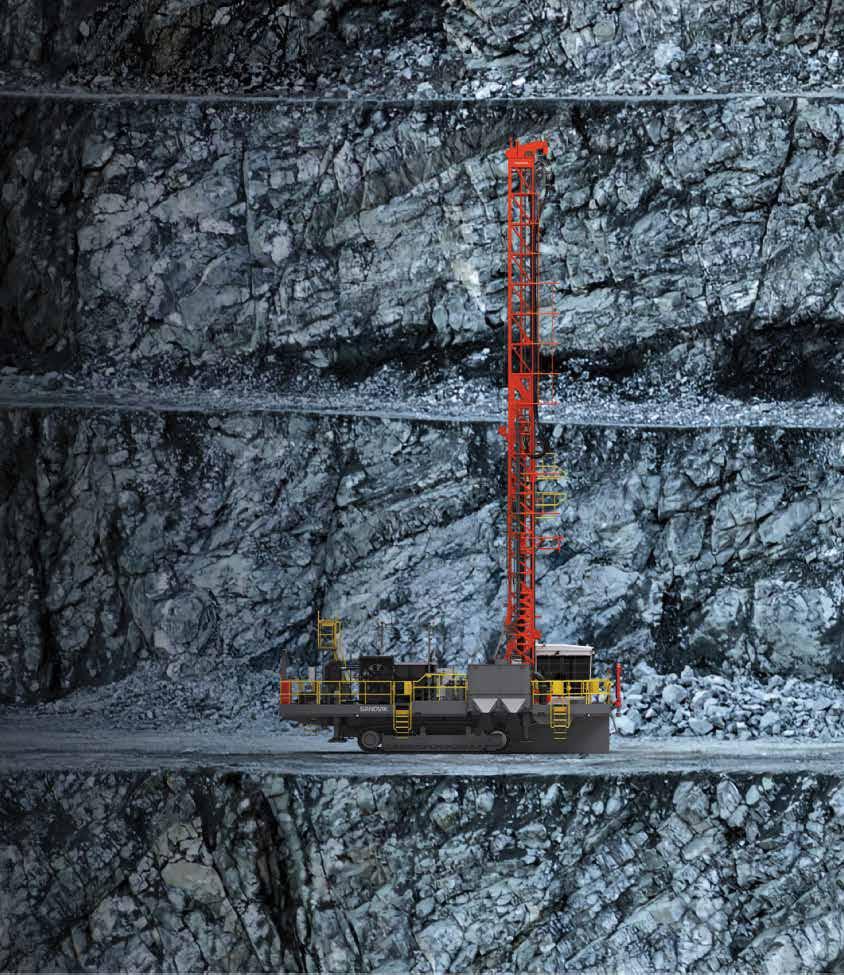
44 Electrified and automated drilling is reshaping surface mining.
AUTOMATION
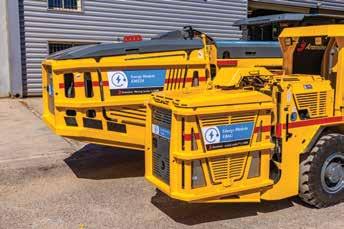
35 Battery electric and automation technologies shaping the future of underground mining.
DEEP SEA MINING
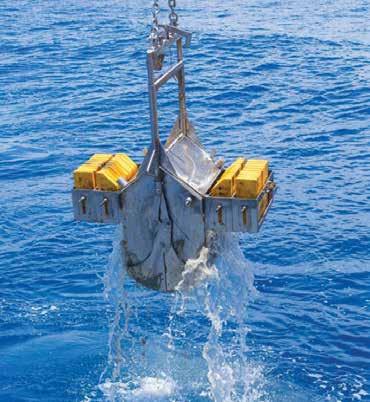
37 Deep sea minerals positioned as supplemental source amid supply constraints.
LOAD AND HAUL
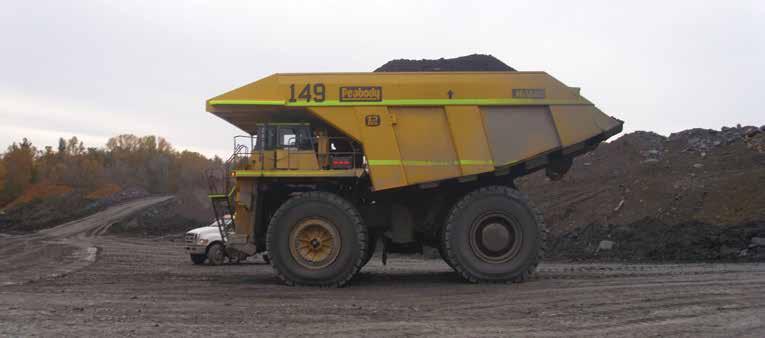
39 Customization is key: Tailormade haul truck solutions play a crucial part in sustainability.
HISTORY OF MINING
41 Asbestos and the quiet revolution.
DEPARTMENTS
04 EDITORIAL | Lost in red tape: Canada’s chronic regulatory delay disorder.
06 FAST NEWS | Updates from across the mining ecosystem.
13 MIN(E)D YOUR BUSINESS | Canada’s strategic shift: What the mining industry needs to know about Canada’s new Sovereign Wealth Fund and Defence Industrial Strategy.
17 LAW AND REGULATIONS | Are your mining operations automated? Navigating Canada’s evolving regulatory landscape.
Tamer Elbokl, PhD
CLost in red tape: Canada’s chronic regulatory delay disorder
anada possesses many of the minerals the world needs to power electrification, artificial intelligence, defence technologies and the energy transition. Prime Minister Mark Carney has repeatedly argued that Canada is an energy and resource superpower, blessed with vast reserves of critical minerals and other natural resources that are increasingly sought after by global markets. He has also pledged to accelerate hundreds of billions of dollars in investment in mining, energy, infrastructure and other nation-building projects.
Unfortunately, the challenge is that Canada’s resource wealth has too often been matched by an inability to bring projects into production in a timely manner.
Recognizing the problem, both federal and provincial governments have launched a series of initiatives aimed at reducing regulatory delays. Ottawa created the Major Projects Office (MPO) in 2025 to coordinate reviews of projects deemed to be in the national interest, while promising a “one project, one review” approach and a maximum two-year federal approval timeline for designated projects. The federal government has also introduced the Building Canada Act, identified critical minerals and mining projects for accelerated review, expanded Indigenous consultation funding and proposed reforms to streamline federal assessment processes. Additionally, the mining industry can benefit from new financing mechanisms such as Canada’s Sovereign Wealth Fund and Defence Industrial Strategy.
Provincial governments have also moved to improve competitiveness. Ontario has promoted critical mineral development through its Critical Minerals Strategy and investments in the Ring of Fire region, while British Columbia has sought to streamline permitting through its Critical Minerals Strategy and Mining Framework. Quebec continues to support mining investment through Plan Québec and strategic investments in battery materials and critical mineral supply chains.
These efforts are definitely welcome. Yet, they are also an acknowledgement that Canada’s permitting and regulatory system has become a competitive disadvantage.
Many of the projects now being fast-tracked have already spent years — and in some cases more than a decade — navigating environmental assessments, permitting requirements and overlapping federal and provincial reviews. The new measures may help move projects across the finish line, but they are largely corrective rather than transformative. They address delays that have already occurred rather than preventing the next generation of projects from becoming trapped in the same regulatory maze.
In a global race for critical minerals, capital is mobile and timelines matter. Countries such as Australia and the U.S. are moving aggressively to secure supply chains and attract investment. Canada still has world-class mineral deposits, strong environmental standards and a skilled workforce. The question is whether it can match those advantages with a regulatory system capable of delivering projects before market opportunities disappear.
This issue examines how the mining industry is responding to a growing demand for critical minerals through innovation, infrastructure development and policy reform. Features highlight Saskatchewan’s leadership in uranium, lithium and potash, British Columbia’s mining growth, and Canada’s efforts to strengthen critical mineral supply chains. The edition also explores advances in automation, electrification, drilling, blasting and haulage technologies aimed at improving productivity, safety and sustainability of surface mining. Additional stories focus on tailings reprocessing, mine waste management, regulatory developments, Indigenous partnerships and the role of scientific accuracy in environmental discussions, alongside executive interviews and historical perspectives on Canadian mining.
President, The Northern Miner Group Anthony Vaccaro
Established 1882 Canadian Mining Journal provides articles and information of practical use to those who work in the technical, administrative and supervisory aspects of exploration, mining and processing in the Canadian mineral exploration and mining industry. Canadian Mining Journal (ISSN 0008-4492) is published nine times a year by The Northern Miner Group. TNM is located at 69 Yonge St., Ste. 200, Toronto, ON M5E 1K3. Phone (416) 510-6891.
Legal deposit: National Library, Ottawa. Printed in Canada. All rights reserved. The contents of this magazine are protected by copyright and may be used only for your personal non-commercial purposes. All other rights are reserved and commercial use is prohibited. To make use of any of this material you must first obtain the permission of the owner of the copyright. For further information please contact Robert Seagraves at 416-510-6891.
Subscriptions – Canada: $51.95 per year; $81.50 for two years. USA: US$64.95 per year. Foreign: US$77.95 per year. Single copies: Canada $10; USA and foreign: US$10. Canadian subscribers must add HST and Provincial tax where necessary. HST registration # 809744071RT001.
From time to time we make our subscription list available to select companies and organizations whose product or service may interest you. If you do not wish your contact information to be made available, please contact us via one of the following methods: Phone: 1-888-502-3456 ext 3; E-mail: amein@northernminergroup.com
Mail to: Allison Mein, 69 Yonge St., Ste. 200, Toronto, ON M5E 1K3 We acknowledge the financial support of the Government of Canada.
FAST NEWS
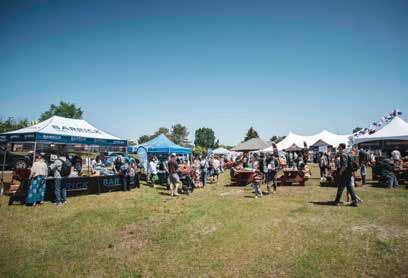
• Mining Day digs into Thunder Bay’s Future
Thunder Bay’s annual celebration of the region’s mining sector returned June 13, 2026. Led by the Northwestern Ontario Prospectors Association and supported by Women in Mining (NWO), the event has grown into a major community showcase, drawing hundreds each year. Previous years’ events saw families wandering between rocks displays and drill simulators, with children queuing for metal detector demonstrations and role-playing the discovery of precious underground metals. The interactive exhibits are back this year, with more opportunities for attendees to meet with industry professionals and learn about how mining supports local jobs, innovation and Thunder Bay’s economic development. Mary Louise Hill, a co-chair of the Mining Day organizing committee, said the event is meant in part to celebrate the joy of mining. “Those of us who work in the sector love our jobs and the lives we have,” she told the Canadian Mining Journal.
Mining Day is also about preparing the public for what comes next. Northwestern Ontario’s landscape is shifting as demand for critical minerals grows and Canada works to develop a strong domestic supply chain for battery metals. Recent exploration activity in the Ring of Fire has also positioned Thunder Bay as a key outpost for northern development. In the past few years, several companies — including Wyloo Metals and, more recently Epiroc — have opened hubs in the city. Their moves indicate that mining around Thunder Bay will continue to be a pillar of its local economy for the foreseeable future. “We want the public to know that mining is an important industry both for the economy and to provide materials for our everyday lives,” Hill added. “Public support for mining is essential and we want communities who will host mines in the future to come down to Marina Park to ask us any questions they might have about mining and mineral exploration.” For its organizers, the goal of Mining Day is simple: bring people together, spark curiosity and help visitors picture the future taking shape beyond the shoreline at Marina Park — or rather, under the ground beneath them.
• Ontario, U.K. sign critical-minerals pact
Ontario has signed a statement of intent with the U.K. to strengthen its critical-minerals supply chain, a move the province says underscores its push to lead the sector.
Ontario’s minister of mines said the deal strengthens supply chains and reduces reliance on “unstable and adversarial foreign regimes.” The province framed it as a response to China’s dominance in key minerals. Industry leaders in both regions welcomed the partnership, noting Ontario’s strong geology and mining expertise. Ontario now ranks second globally for mining attractiveness, reinforcing its ambitions.
• Strange Lake anchors Schneider-Torngat partnership
Schneider Electric and Torngat Metals signed a non-binding memorandum of understanding (MOU) to explore an industrial partnership aimed at building a domestic rare earth supply chain.
The agreement focuses son developing Torngat’s Strange Lake project in Nunavik, Que., which is expected to supply key materials used in renewable energy and digital infrastructure. Executives from both companies said the deal supports a fully integrated, sustainable approach. The MOU was signed in Paris during G7-related critical-minerals meetings.
• Hanwha stacks MOUs in Canada
• Construction under way on G7’s largest graphite project
Prime Minister Mark Carney said Nouveau Monde Graphite (NMG) can begin building Phase-2 of its Matawinie Mine north of Montreal, positioning Canada to supply more battery-grade materials as global demand increases. Upon completion, the project will be the largest graphite mine in the G7, producing up to 106,000 tonnes annually, generating more than 1,000 jobs and drawing over $2 billion in investment. Carney said the mine will strengthen supply chains and strengthen Canada’s economic independence. The approval follows NMG’s release of US$96.5 million from escrow and rapid federal review.
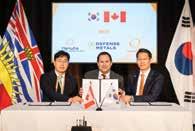
Hanwha Ocean has signed several memorandums of understanding (MOUs) as it works to strengthen its bid for Canada’s multi-billion dollar submarine program, including a new agreement with Defense Metals.
The companies agreed to explore a supply deal for rare earth materials from the Wicheeda project in B.C., with Hanwha also considering an investment in Defense Metals. Defense Metals said the arrangement supports a domestic supply chain for advanced manufacturing.
Hanwha has recently signed other Canadian partnerships, including MOUs with the Automotive Parts Manufacturers’ Association and Algoma Steel. The non-binding agreements position Hanwha to secure Canadian critical minerals as Ottawa advances naval fleet modernization.
• QIMC supports Bill 17 at National Assembly
Bill 17 — legislation to create a regulatory framework for natural hydrogen — drew testimony from Québec Innovative Materials Corporation (QIMC) at the National Assembly.
QIMC backed the bill, calling it an important step for hydrogen development. Liberal MNAs pressed the company on whether drilling could compete with local farmers’ need for water and highlighted what they viewed as gaps in environmental safeguarding. QIMC thanked both the government and opposition members for their questions. The company holds a 5,000 metre drilling permit in Abitibi-Témiscamingue and says it can begin work once the regulatory framework is in place.
• All government levels back $306M Tenaris expansion
Tenaris is moving ahead with a $306 million expansion of its Sault Ste. Marie industrial centre, a project backed by federal and Ontario funding to strengthen Canada’s steel supply chain. The company says the plan will increase production capacity, widen offerings and modernize equipment.
Martin Castro, the president of Tenaris in Canada, said the expansion will support “Canadian energy sovereignty” by expanding domestic OCTG and line pipes. Ottawa supported the project through its Strategic Response fund, while Ontario contributed via Invest Ontario.
• TELUS recovers 4,600 tonnes of copper
TELUS says its Alberta fibre build will advance environmental goals by retiring and recycling legacy copper. The company has already recovered 4,600 tonnes of copper, material it says can feed back into Canada’s supply chain.
TELUS says its copper-retirement program has cut 9,300 tonnes of emissions by reducing the need for new mining. The $14-billion build includes 45 new wireless towers and upgrades at more than 400 sites.
SUPER Saskatchewan
The need for critical minerals spurs uranium, lithium development
URANIUM
Wheeler River: Denison Mines (90%)
Long known for its success in the uranium sector, Denison Mines is currently working on the Wheeler River project near the southeast border of the Athabasca Basin. This flagship undertaking has two viable deposits — Phoenix and Gryphon. Together they are said to have the largest and highest-grade resources in northern Saskatchewan. They contain over 70 million lb U3O8, at estimated grade of 19.14% U3O8
Denison made a final investment decision for in situ recovery (ISR) at Phoenix in March 2026 with a two-year construction period. Commercial production is expected in mid-2028. This is a $700 million investment (on a 100% basis) that includes $100 million for proof-of-concept work that began al-
most a decade ago. The preproduction capital expenditures (CapEx) is pegged at $420 million.
Phoenix is the first new uranium mine in Canada to win federal approval for construction in over 20 years and the first to adopt ISR in the Athabasca Basin. After taxes, and on a 100% basis, the base case NVP8% is $1.57 billion, and the IRR is 73%.
A uranium price of between US$68.90 and US$78.36 per pound was used, at which point the project should pay for itself in about 12 months.
The Wheeler River mine life will be about 10 years, built on proven and probable reserves of 219,000 tonnes averaging 11.7% U3O8 and containing 56.7 million lb. In the first five years, 41.9 million lb. of U3O8 will be recovered, and during the last five years, 14.8 million lb. will be mined. The ASIC will be $244.92 per lb. or US$18.41.
The ISR plan is predicated on only proven and potential reserves. The Phoenix deposit has measured and indicated resources of 216 million tonnes averaging 8.3% U3O8 containing 70.5 million lb., plus an inferred resource of 5,600 tonnes grading 2.6% U3O8 containing 300,000 pounds.
The uranium-bearing solution will be processed at a new plant to be built at the Wheeler River site. The plant is designed to treat solution containing 22.6 g/L and is expected to reach a 96.5% recovery rate. Production is expected to begin in mid2028.
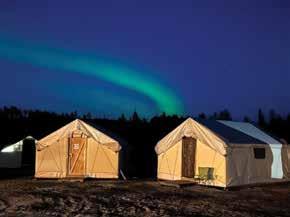
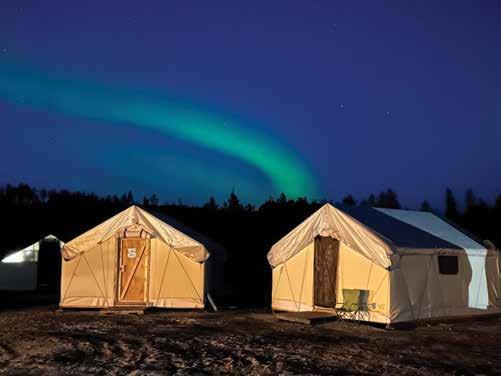
The Aurora Borealis lights up the sky above the Larocque East uranium project in Saskatchewan. CREDIT: ISOENERGY
The environmental, economic and political realities of our times make the need for domestic sources of critical minerals more important than ever. The move away from fossil-based fuels has brought two of them — uranium and lithium — to the forefront in Saskatchewan.
Denison’s basement-hosted Gryphon deposit will be mined underground. This project has an estimated mine life of six years, during which time it will produce an average of 7.6 million lb. U3O8 annually (on a 100% basis). The probable reserve is 1.3 million tonnes grading 1.7% U3O8. Denison plans to set aside $737.4 million for the initial CapEx and create a mine with an AISC of $34.50 per lb. (US$25.47 per lb.) Yellowcake will be recovered at the nearby 22.5%-owned McClean Lake mill.
Rook 1: NexGen Energy (100%)
NexGen Energy is the latest company to receive federal approval for a uranium mine, and the company is in financing talks so that construction can begin as early as this summer on its Arrow deposit. The deposit is part of the Rook I project located on the southwest rim of the Athabasca Basin, not far from Patterson Lake.
The 2021 feasibility study outlined an underground mine for the Arrow vein type deposit, which is suitable for two shafts and longhole stoping. Nexen also plans to build a new processing system that includes ore sorting, grinding, leaching, liquid-solid separation, and yellowcake drying, calcining and packaging. A paste fill plant is also planned so that all tailings can be stored underground. Mine life will be 11 years.
The deposit contains 3.8 million tonnes of ore grading 3.10% U3O8 containing 256.7 million lb. in the measured and indicated
categories. Proven and probable reserves were estimated at 4.6 million tonnes at 2.37% U3O8 containing 239.6 million pounds. The inferred resource is 4.4 million tonnes at 0.83% U3O8 containing 809.7 million lb. of metal.
NexGen has been hit with nearly 70% higher costs since the completion of the feasibility study, according to The Northern Miner. By August 2024, the capital cost had risen to $2.2 billion using a long-term uranium price of US$95 per pound. The after-tax NPV8% fell to US$6.3 billion and the IRR retreated to 45%.
To offset rising costs at Arrow, the company maintains a rigorous and successful exploration program at the nearby Patterson Corridor East (PCE) discovery, which is 3.5 km from the Arrow deposit. The company reported high grades in May, including 13.0 metres at 5.2% U3O8, 10 metres at 3.95% U3O8, and 6.0 metres at 2.4% U3O8, which confirm a high-grade subdomain.
A new high-grade subdomain 850 metres below surface was also confirmed. Drilling returned 4.5 metres at 4.8% U3O8, including 0.5 metre at 33.3% U3O8
“The opening up of a new high-grade subdomain emphasizes significant growth potential remains at PCE. With the structural supply deficit in the market widening, and the impacts of the industry-wide underinvestment in the uranium supply chain for a generation, the urgency of finding and bringing online new, reliable uranium supply has never been greater,” NexGen founder and CEO Leigh Curyer said at the time the results were announced.
Patterson Lake South: Paladin Energy (100%)
Arguably, the brightest prospect in the Athabasca Basin is the Patterson Lake South (PLS) project on the southwest rim of the basin. The discovery was made in 2012 by Fission Uranium.
Exploration outlined the shallow, high-grade Triple R deposit. With investments by Canadian and foreign firms, Fission brought the project to the feasibility stage and targeted production for 2029.
Then in 2024, Australian-based Paladin Energy floated a $1.1-billion, all-share takeover offer for Fission Uranium and its PLS project. The deal was approved by the end of the year.
PLS is a shallow, high-grade deposit with significant poten-
Examining core at the PLS project on the southwest rim of the Athabasca Basin.
Core storage at the Dorado uranium property where the Nova zone was discovered last year.
tial for expansion. The company is in the permitting stage, the front-end engineering and design are being completed, and engagement with Indigenous partners is ongoing. Paladin may make a construction decision as early as 2027 with first uranium production in 2031.
A 1,000-t/d open pit mine is planned, using 30-tonne trucks and load-hauldumpers. The deposit sits in the basement rock, so ground freezing is planned. A matching processing plant
and ancillary infrastructure will also be built at the site. The plant will accept a feed grade of 1.41% U3O8 and operate at a recovery grade of 97.0%.
The initial capital cost of the PLS mine and mill is estimated to be US$1.16 billion, plus an additional sustaining capital cost of US$325 million.
The 2023 feasibility study gave the Triple R deposit an NPV8% of US$1.2 billion and the IRR at 27.2% after taxes using a uranium price of US$90 per pound. Payback will occur after 2.4 years. The AISC is US$15.2 per pound.
The Triple R deposit has a probable reserve of 3.0 million tonnes, grading 1.41% U3O8 and containing 93.7 million lb. of metal. There is an indicated portion of 2.7 million tonnes grading 1.94% U3O8 containing 114.9 million lb., and an inferred portion of 635 million tonnes at 1.10% U3O8 containing 15.4 million pounds. The ore also contains a small amount of recoverable gold.
The total life of the mine will be 10 years. Production will be 90.9 million lb. U3O8 or 9.1 million lb. annually.
Dorado: Purepoint Uranium (50%)
Purepoint Uranium is one of the most active juniors in the Athabasca Basin with six wholly owned projects and six
Moving Projects Forward
From studies to execution
We help mining and industrial clients move projects forward with the agility of a focused team and the experience of a trusted project partner.
joint ventures with Cameco, Orano and IsoEnergy.
Purepoint and IsoEnergy have created a flagship, 50:50 joint venture at the Dorado project, located near IsoEnergy’s Hurricane deposit.
The Dorado project includes the former Turnor Lake, Geiger, Edge, and Full Moon properties, a land position covering more than 980 Km². The first major success was the discovery of the Nova uranium discovery. Hole PG25 07A returned grades of 8.3% U3O8 over 0.4 metre within a 2.1-metre length averaging 1.6% U3O8
Purepoint began its 2026 drill program in January to follow up on the Nova discovery. The 10-hole, 4,300 winter program has returned a peak of 73,100 counts per second (cps) average over 1.8 metres. More importantly, it traced the strike length for at least a kilometre, and the structure is open in all directions.
Drilling will continue in July and August at Dorado to test priority targets with seven holes totaling about 3,150 metres. The unconformity depths are typically between 30 and 300 metres.
A MobileMT program of advanced 3D modelling has been completed by Expert Geophysics across three other Purepoint properties — Celeste East, Russell South and Tabbernor. The use of this technology will allow the planning of the upcoming drill programs with more confidence in the basement electromagnetic features. Purepoint owns 32.9% of IsoEnergy.
Larocque East: IsoEnergy (100%)
IsoEnergy has a portfolio of highly prospective exploration projects in the eastern Athabasca Basin. The company is advancing its Larocque East property, which is home to the Hurricane deposit.
Hurricane hosts 63.8 million indicated tonnes grading 34.5% U3O8. That is believed to be the highest published grade for indicated resources anywhere in the world. The indicated portion contains 48.6 million lb. of U3O8. There is also a lower grade inferred resource of 54.3 million tonnes at 2.2% U3O8 containing 2.7 million pounds.
Strong radioactivity intersected
along the Hurricane South trend confirms the continuity and expansion potential for Hurricane.
The deposit, only 325 metres below surface, is located 35 km northwest of Orano’s McClean Lake mine and mill, where ore could potentially be processed.
LITHIUM
Lithium production, too, may soon join the ranks of uranium and potash that have given Saskatchewan mines global prominence.
Prairie: Prairie Lithium (100%)
With all necessary permits in hand, the first lithium producer in Saskatchewan is likely to be Prairie Lithium. In Canada, the company is focused on the southeast corner of the province west of Estevan, where there is accessible infrastructure thanks to years of oil production.
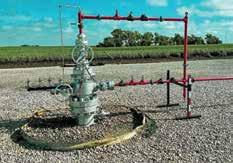
So far, Prairie Lithium has chosen three pad locations, the first of which is permitted. The first phase will go into production using a commercial-scale direct lithium extraction (DLE) unit producing 150 t/y lithium carbide equivalent (LCE).
The technology involves drilling production wells into the Duperow Formation. A processing plant on the surface will pre-treat lithium-enriched brine to raise the lithium content. Disposal wells will inject the lithium-depleted brine into a separate underground formation.
Prairie Lithium wants to start production quickly, and by producing an intermediate product, the company reduces both costs and operational complexity. DLE is also more efficient, sustainable and environmentally responsible than traditional evaporation ponds, says the company.
Indicated resources of 4.6 million tonnes LCE grading 98 mg/L
have been established to underpin the start of production.
The concentrated brine will be upgraded to battery grade lithium carbonate at a South Korean refinery with which Prairie Lithium has a 10-year offtake agreement in place for 150 t/y LCE.
A non-binding offtake agreement has also been signed for a North American refinery with a capacity of 6,000 t/y LCE.
Three wells have been drilled to service pad #1, two have been drilled at pad #2, and one at pad #3. The goal is to build the project on a pad-by-pad basis, eventually numbering as many as 10 pads. The first production from pad #1 is expected by the end of this year.
Prairie Lithium is headquartered in West Perth, Western Australia. It is also working on an early stage, similar project in New Mexico.
Aurora: EMP Metals (100%)
EMP Metals is also focused on southeastern Saskatchewan near Viewfield, notably the Aurora project in the Duperow Formation. Test wells drilled at the Viewfield project outlined an estimated indicated resource of 931,038 tonnes LCE with an average concentration of 141 mg/L, and an inferred resource of 488,493 tonnes LCE averaging 107 mg/L. A test hole at Mansur has an inferred resource of 628,786 tonnes at 116 mg/L.
Aurora will roll out in three phases. Phase 1, the demonstration plant, will operate this year and next at a continuous flow rate of 10 m3/day. The objectives are to validate the engineering, optimize process flows, and produce high-purity lithium chemicals.
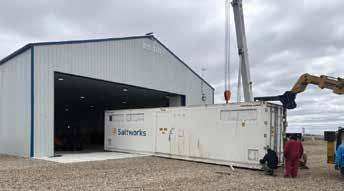
In May, EMP received the first seven truckloads of equipment for the demonstration plant from Saltworks Technologies.
The second phase will boost production to commercial levels by enlarging on the techniques of the demo plant. After financing is secured, construction could begin next year and take 24 months.
From 2029 onward, EMP anticipates a full basin rollout planned in multiples of 1,500 t/y spokes feeding into 6,000 t/y hubs. The company plans to use a scalable, repeatable leveraging modular skid technology.
The lithium brine here requires drilling to only about 1,800 metres and has higher grades, 125 mg/L to 259 mg/L, than Leduc, EMP noted. Plus, it is remarkably clean — no hydrogen sulfide or residual oil and low contaminants.
The way forward
Saskatchewan is going to be one of the world’s premier uranium producers well into the future, as new projects are developed. But it will also be a significant domestic source of lithium, which is increasingly necessary as electric vehicles and for the storage of renewable energy.
Marilyn Scales is a freelance mining writer.
The first truckloads of equipment for EMP’s Aurora demonstration plant arrived from Saltworks in May. CREDIT: EMP METALS
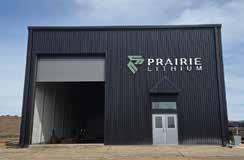
Prairie Lithium’s DLE facility is likely to be the fist lithium producer in Saskatchewan.
CREDIT: PRAIRIE LITHIUM
By Martin Ignasiak,
Second lives:
Turning Canada’s mining legacies into critical mineral and energy assets
Canada’s mining past is immense and tangible, encompassing thousands of hectares of tailings and waste rock alongside extensive infrastructure that once served bustling operations. Long treated as environmental liabilities, these sites are being reconsidered as strategic assets. Surging critical minerals demand, evolving provincial mine-closure and mineral-recovery regimes, and rapid clean energy innovation are creating pathways for value-extraction from waste and repurposing former mines for energy generation and storage. The upshot is clear and significant: through careful legal navigation and strong partnerships, many sites can evolve from cost-creators to value-generators.
Policy winds have shifted in Canada and abroad. Ontario has modernized its Mining Act, introducing a dedicated recovery-of-minerals regime and updated closure-planning architecture. This framework provides efficiencies through strengthened qualified-person certifications and phased financial assurance, among other revisions aimed at reducing timelines and challenges of mine closure. Paired with provincial critical mineral strategies, these changes signal openness to circular mining approaches that recover strategic elements from residues. Internationally, the E.U.’s Critical Raw Materials Act elevates mobilization of secondary raw materials, while the U.S. has launched a “Good Samaritan Remediation” pilot to facilitate cleanup and incidental reprocessing at abandoned mine sites.
Canada has not adopted a federal liability shield, but the policy direction is evident: unlock recovery while managing risk. The legal architecture for second-life projects is clear but demanding. Federally, the Fisheries Act and Metal and Diamond Mining Effluent Regulations impose strict water-quality rules for discharging into fish-bearing waters from both new extraction and tailings reprocessing projects. Provincially, modern closure-planning regimes enable operators to amend plans to rehandle tailings, retain safe infrastructure for new industrial or energy uses, and stage financial assurance to match construction and risk profiles. Success under these frameworks hinges on integrating metallurgy, water management, and permitting from the outset, with performance monitoring throughout second-use lifespans. Indigenous partnership is central to durable project design. Beyond the duty to consult, evolving practice standards emphasize early engagement, shared oversight of environmental monitoring, benefit agreements reflecting local priorities, and, increasingly, equity participation. Second-life projects are particularly well-suited to this model where they reduce long-term environmental risks while creating local employment in remediation, operations, and monitoring.
Investment initiatives have followed the tailwinds of these regulatory shifts. Emissions Reduction Alberta’s Tailings Technology Challenge invested in creative solutions for managing environ-
mental risks in the oil sands, demonstrating how external investment can redefine risk-profiles, motivate innovation, and encourage community and research institution partnerships.
Existing projects illustrate the possibilities. In Kimberley, B.C., the Sun mine project transformed closed mine lands into a solar facility, proving that reclaimed mining areas can host productive renewable generation. In Devon, Alberta, CVW Royalties deployed hydrocarbon recovery technologies to reprocess froth treatment tailings, accomplishing progressive remediation and critical mineral recapture. In Springhill, N.S., a mine water geothermal system provides heating from flooded coal workings, transforming legacy liabilities into a community energy solution. In Goderich, Ont., Hydrostor developed emission-free compressed-air energy storage in a deserted solution mine salt cavern to supply long-term grid flexibility. In Sorel-Tracy, Que., Rio Tinto produces scandium from waste streams at its titanium processing complex, achieving recovery of critical minerals at commercial scale without new pits. Abroad, Australia’s Kidston project converts open pits into pumped-storage hydro facilities, offering an energy-storage template for Canadian pit lakes.
Mine-waste reprocessing may move from promise to practice where three elements align. First, proponents need robust metallurgical pathways with bankable recoveries and secure offtake. Second, amended closure plans must reflect new work, risks, and end-states, with qualified-person certifications, clear performance criteria, and appropriate financial assurance. Third, water and tailings management must be engineered for compliance, recognizing that water quality can worsen before improving as materials are disturbed. Projects that credibly reduce long-term contamination, improve site geochemistry, and leave lands in comparable or better condition are most promising.
Energy reuse will scale with disciplined site selection and clear risk allocation. Each form of energy generation and storage demands rigorous assessments alongside post-closure determinations to maintain specific infrastructure. Insurance, bonding, and O&M responsibilities should be aligned with residual environmental duties. Ownership or access arrangements must reflect surface, subsurface, and mineral rights.
Canada’s mining legacies will always require stewardship but may also host new generations of mineral supply and clean energy. The prize is a portfolio of projects that shrink liabilities, strengthen Indigenous partnerships, and advance domestic energy diversity. The path is demanding, but open — and increasingly well-mapped.
Martin Ignasiak, KC is a partner and head of Energy Regulatory Practice at Bennett Jones in Calgary. Gatlin Smeijers is a partner at Bennett Jones in Toronto.
By Carla Potter
CANADA’S STRATEGIC SHIFT:
What the mining industry needs to know about Canada’s new Sovereign Wealth Fund and Defence Industrial Strategy
Two recent federal initiatives, the launch of the Canada Strong Fund, Canada’s first national sovereign wealth fund, and the federal government’s Defence Industrial Strategy, together signal a material shift in how mining projects may be financed, prioritized and regulated going forward. These initiatives reflect an increasingly strategic view of critical minerals as national assets, not just commodities, with implications across capital markets, project development, supply chains and governance. What do mining companies and industry participants need to know about these developments and how they intersect?
Canada Strong Fund: Sovereign capital for projects of national interest
The Canada Strong Fund was announced on April 27, 2026, as Canada’s first sovereign wealth fund, with an initial endowment of $25 billion to be invested over three years, and a mandate to invest in major projects of national interest in partnership with the private sector. The federal government has identified critical minerals as a priority sector for early investment.
Unlike grants or tax incentives, this fund is intended to operate as a long-term investment vehicle, with the ability to recycle returns into future projects. It will be situated within an ecosystem of federal financing and other support tools, like the Canada Infrastructure Bank, Export Development Canada, Canada Growth Fund, Business Development Bank of Canada, Canada Indigenous Loan Guarantee Corporation and other government programs, and the work of the Major Projects Office (MPO) in streamlining processes for priority projects under the Building Canada Act.
For mining companies, meaningful equity participation by the federal government is now a real possibility, particularly for large, capital-intensive critical minerals projects. Federal participation may increasingly take the form of equity investment or partnerships, not just loans, grants and tax incentives.
By sitting alongside existing federal finance tools and other supports, the fund enables more efficient, stackable government capital, allowing projects to align equity investment, debt, and regulatory support within a coherent financing pathway.
For issuers, the fund will function more like a strategic/financial sponsor than a subsidy provider, which will be helpful for de-risking projects, providing project credibility, closing funding gaps and accelerating timelines. Companies should be prepared to demonstrate disciplined capital allocation, a credible pathway from equity investment to project-level financing and have a solid basis for why the project can support long-term institutional capital. Project narratives should be aligned to the fund’s stated priorities (e.g., mining/critical minerals, infrastructure adjacency, advanced manufacturing linkages) and should articulate strategic rationale in plain terms (jobs, resilience, supply chains, trade diversification).
While further details of the fund will be published in the coming months, mining companies should anticipate and be prepared to address enhanced diligence expectations (including relating to Indigenous engagement, permitting status, procurement/supply chain, and execution capability), increased scrutiny on how projects align with broader policy objectives and potential sensitivities around foreign ownership, and should consider and stresstest potential implications of public capital against long-term strategic objectives. Having projects “fund ready” will be critical as capital allocations from the fund start to be considered.
Defence Industrial Strategy: Critical minerals as a security priority
In Feb. 2026, the Government of Canada also announced the launch of a sweeping Defence Industrial Strategy, aimed at strengthening Canada’s defence industrial base, securing critical supply chains, and ensuring long-term military and economic resilience.
Among the five pillars of the strategy, securing supply chains for critical minerals features prominently. The government has indicated it will bring forward plans to expand the production, processing, stockpiling, and procurement of defence-critical minerals, while supporting coordinated action with allies through initiatives such as the G7 Critical Minerals Production Alliance and NATO-led efforts. With Canada producing 10 of the 12 NATO-identified defence-critical raw materials, there is significant opportunity for mining companies and industry participants that can align their capabilities to support delivery of the Strategy.
For mining companies, the strategy explicitly elevates critical minerals from commercial inputs to national security assets, tying mining, processing, and supply reliability directly to defence readiness and allied commitments. Projects producing defence-relevant minerals will be assessed on both economics and strategic importance. Companies should expect execution readiness to matter now more than ever. Defence alignment does not favour speculative projects. Companies that can demonstrate advanced permitting, credible development timelines, scalable production, and strong governance will be far better positioned to benefit from defence-linked demand and capital.
The strategy reinforces a clear policy preference for Canadian-based production and processing, or integration with trusted allied supply chains. Projects dependent on non-allied refining or jurisdictions of concern face increasing commercial and policy risk. Projects that demonstrate credible paths from mine to processing to end-use, particularly in Canada or allied jurisdictions, are more likely to align with federal priorities and attract preferential policy support and procurement attention.
Together, the fund and strategy mark a redefinition of particularly critical minerals mining, as strategic industrial and security infrastructure. For mining companies, the opportunity is significant, but so is the need for careful planning. Companies that proactively align project strategy, governance and capital planning with these initiatives will be better positioned to access capital and de-risk projects.
Carla Potter is a partner in the Banking & Specialty Finance Group at Cassels. Jennifer Wasylyk serves as deputy managing partner at Cassels and is a member of the firm’s Mining, Banking & Specialty Finance and ESG Groups.
By Steve Gravel
THE CASE FOR A CANADIAN STRATEGIC MINERALS STOCKPILE
When one thinks about the foundational inputs successful modern economies possess, minerals are near top of mind. Having a reliable and diverse supply of minerals is the economic equivalent of being born on third base, and these advantages have allowed countries like Canada to prosper for some time.
We are confronted with a set of new realities wherein global supply chain disruptions and the pace of decarbonization makes it imperative for Canada’s future prosperity to get the critical minerals opportunity right. Lately, the promise of what has been called a “generational opportunity” feels like its slipping between our collective fingers as market volatility and competition for critical minerals like lithium, graphite, and rare earth elements (REEs) are not creating ideal environments for investment in firms meant to be extracting these elements. All of the enthusiasm from just two years ago feels unrealized thus far as powerhouses like China continue to extend their lead in the market. So, what do we do about it? One approach that is gaining traction is strategic mineral stockpiling. Throughout history, a variety of nomenclatures have been used to describe mineral commodities in view of how important they are to our economy. In WWII, the term “war minerals” was used to describe the necessary materials needed for wartime munitions manufacturing. In the Cold War period, “strategic” materials were those essential for military operations, while “critical” materials were those that were indispensable for maintaining the broader civilian economy during a crisis. More recently, we have experienced a revival of sorts as the term “critical minerals” has been used to refer to a ring-fenced grouping of minerals integral for technologies used in decarbonization. Now, minerals are being defined as “strategic” if
they are vital for a country’s military, national security, and heavy industry, yet its supply is vulnerable to disruption. What ultimately makes a mineral “strategic” is not simply its price or scarcity, but the role it plays in enabling systems that a country cannot function without, particularly under conditions of disruption. Strategic minerals are those that include national importance and supply risk. They are essential inputs to defence capabilities, energy systems, and industrial production, yet their supply chains are vulnerable owing to geopolitical concentration, long development timelines, or limited processing capacity. In this sense, strategic value is defined less by geology or geography and more by consequences like what happens if access is lost or delayed.
Being blessed with an abundance of these minerals, however, does not equate secure access. Canada may have significant mineral endowment, but bringing them into production takes years, and refining and processing capacity is often located offshore. Vulnerability, in this case, does not emerge when the minerals are not there, but when they cannot be mobilized quickly enough in sufficient quantity to respond to demand. This gap between what is in the ground and what is available when it is needed lies at the heart of the next strategic minerals discussion and explains why stockpiling, sovereign wealth funds, and long term planning are becoming central policy considerations.
Strategic mineral stockpiles generally fall along a spectrum of ownership, management, and market intervention models, each designed to balance security of supply with cost and efficiency. At one end are government owned reserves, wherein a state-run agency purchases, owns, and manages physical inventories to ensure immediate access to materials during national emergencies, particularly for defence and critical infrastructure.
Another approach relies on industry held or decentralized
mandates, where governments require private companies to maintain minimum inventories beyond normal commercial stocks, shifting the storage burden to industry while still enhancing national supply. This model is typically enforced through regulation and uses a mix of penalties and financial incentives rather than direct government ownership of stock.
Combining elements of each are hybrid systems in which governments own the material but contract industry to store and manage inventories using existing infrastructure. More collaborative public private partnership models go further by sharing investment and risk, with both governments and
potential to reduce the risk of producing critical minerals while also providing some insulation from volatile commodities markets. Following a similar model, it was recently announced that the Canada Growth Fund, a federal government-backed $15 billion investment vehicle, is investing approximately $25 million in Rio Tinto’s Sorel-Tracy, Que., facility to expand scandium oxide production to nine tonnes per year. As North America’s sole supplier, this project aims to strengthen regional supply chains for critical minerals used in aerospace and energy.
Building on these targeted co-investment approaches, a sovereign wealth fund strengthens resilience in the sector by systemati-
Mining investment creating jobs, building British Columbia’s economy
Mining Month is an important opportunity to highlight the growth of British Columbia’s mining and exploration sector and the many people who make it a strong contributor to our economy.
The work our government is undertaking is strengthening our position as one of the best places in the world to invest in, creating jobs and building sustainable mining projects the right way.
We are accomplishing this by working with First Nations, communities, workers and industry, because lasting success must be built on respect, collaboration and shared benefits.
Mining in B.C. is about far more than what comes out of the ground. For many, a steady paycheck in the mining sector means building a good life or providing careers for young people wanting to work in a dynamic industry close to home.
Today, more than 40,000 people work directly in B.C.’s mining sector, earning an average annual salary of $130,000 in careers ranging from heavy equipment operators to engineers, health and safety specialists and skilled trades. These are good family-supporting jobs that also support local businesses, such as restaurants, shops and trucking companies. In short, these jobs support and strengthen whole communities.
Mining in B.C. is earning global attention. In 2025, B.C. saw nearly $751 million in mineral-exploration spending, a historic high according to a recent EY report, alongside projected mineral production value of more than $16 billion, a 36% annual increase.
Investment in mineral-resource development has grown from approximately $2 billion in 2017 to more than $5 billion in 2024.
Over the past year, permits were approved for six major mining projects, this is a pace that we have never seen before in B.C., and that no other jurisdiction can match. Mining
projects such as Eskay Creek, Highland Valley Copper, Copper Mountain and Mount Milligan are attracting investment, creating jobs and strengthening regional economies, with 187 companies active in 301 projects provincewide.
Global demand is rising for the metals and minerals needed for cleaner energy, new technology and modern infrastructure, and B.C. has an important role to play. We are Canada’s largest producer of copper and the country’s only producer of molybdenum. The work underway ensures that B.C. is here to support that global demand, and the people of B.C. will see those benefits, through direct and indirect jobs, direct community benefits and through increased provincial revenue that we can invest in our future.
Workers need certainty, communities need projects moving ahead, and companies need clear, predictable processes. This year, B.C. introduced fixed timelines for mineral exploration permits, a first in Canada, with applications processed in as little as 40 days while maintaining environmental protections and First Nations consultation. Budget 2026 includes $3 million to support permitting improvements, including hiring new staff to strengthen capacity. We are building on the success of major mine application review timeline reductions of 35%.
During Mining Month, I want to sincerely thank workers on mine sites, contractors, First Nations leaders, local businesses and industry leaders. Because of your hard work and dedication, British Columbia is among the top mining jurisdictions in the world.
Hon. Jagrup Brar is British Columbia’s Minister of Mining and Critical Minerals.
Connect with the Province of B.C. at news.gov.bc.ca/connect
Hon. Jagrup Brar, British Columbia’s Minister of Mining and Critical Minerals
Centerra Gold’s Mount Milligan mine in B.C. CREDIT: CENTERRA GOLD
ARE YOUR MINING OPERATIONS AUTOMATED?
Navigating Canada’s evolving regulatory landscape
The deployment of autonomous systems in the Canadian mining sector reflects the industry’s continued evolution from technological developments. While such systems (including automated trucks) can offer improvements in efficiency and productivity, the introduction of this technology requires navigation of a developing regulatory framework that varies across provincial jurisdictions. Understanding evolving regulatory and compliance requirements is essential for mining companies seeking to implement automated technology.
Automation and emerging regulatory considerations
The mining industry in Canada has started to embrace automation as a productivity enabler, recognizing it as a factor in improving the efficiency and sustainability of certain mining methods (Global Mining Guidelines Group, Guideline for the Implementation of Autonomous Systems in Mining, 2024). While recent estimates indicate that less than 3% of mobile mining equipment is currently autonomous, we can expect this proportion to increase, and numerous original equipment manufacturers are now offering automated solutions in the mining sector, including mining trucks, haul loaders and drills (CS Group/Mining Sector, Position Paper: Evolution of the mining sector through autonomous systems, 2025).
One of the key benefits of autonomous systems is the reduction of extensive human presence in hazardous operational areas while increasing production efficiencies. Ensuring the safety of these systems, however, remains a paramount concern for both mining operators and government regulators, as there is the potential for evolving risks, including cybersecurity and data privacy concerns, system configuration and reliability issues, and new categories of human-machine interactions.
Consequently, existing regulatory regimes, including occupational health and safety requirements targeting manually operated equipment, may be inconsistent with the functionality of autonomous operations. Regulations that refer to drivers, for example, may not directly apply to autonomous vehicles where the traditional role of a driver is replaced by an automated control system. Because these regulations were not originally drafted with autonomous equipment in mind, additional regulatory considerations may need to be considered and applied.
British Columbia’s regulatory framework
British Columbia has developed an autonomous mining regulatory regime through its Health, Safety and Reclamation Code for Mines in British Columbia. Section 6.18.3 of the code requires mining operations to submit an Autonomous Mining Project Management Plan (AMPMP) to the chief inspector of mines appointed by the Minister of Mining and Critical Minerals, prior to using autonomous or semi-autonomous tracked or rubber-tired mobile equipment. The code also requires safe work procedures for access to autonomous operating areas, clearing and restarting operations and switching equipment between autonomous and manual modes. Persons who enter commands into an autonomous system must do so in a manner that ensures safe operation
and that the system can maintain full control of the equipment.
Each AMPMP is required to be prepared by a qualified professional and must contain detailed elements including a comprehensive risk assessment, health and safety plans, project milestones, system functionality descriptions, commissioning plans, maintenance and inspection protocols, training programs and emergency response procedures. The office of the chief inspector leads the AMPMP review process, designating a project manager supported by an advisory committee of ministry specialists who assess each application for accuracy, relevance and adherence to code requirements. Material changes to operational use, such as adding new autonomous technologies, changing system builders or transitioning from segregated to co-mingled operations, require an updated AMPMP submission.
The B.C. Guideline for Safe Mobile Autonomous Mining, prepared by the Emerging Technology and Automation sub-committee, provides further guidance on the AMPMP submission process. The guideline also references international standards that may apply to autonomous systems, including ISO 17757 for autonomous and semi-autonomous machine system safety and ISO 12100 for machinery risk assessment and risk reduction, which companies may wish to consider when designing their autonomous systems.
While B.C. currently has the most developed regulatory regime overseeing automated mining technology, other provinces in Canada, including Alberta and Ontario are following suit. Companies seeking to implement automated mining technology in Alberta are subject to approval by the provincial director of the Occupational Health and Safety Code. Ontario’s approach to automated technology in the mining sector does not currently feature a standalone autonomous regulatory code or set of guidelines. Instead, Ontario’s framework applies through the province’s Occupational Health and Safety Act, with autonomous systems captured by general duties and recently modernized provisions. Consequently, companies involved in the mining sector in Ontario should engage proactively with the Ministry of Labour, Immigration, Training and Skills Development to clarify how existing requirements may apply to their autonomous operations and anticipate any forthcoming regulatory developments.
Takeaways
Companies involved in mineral exploration and development in Canada should recognize that existing regulatory frameworks may not fully address their plans for autonomous systems, and early engagement with government bodies will be essential to understand regulatory requirements and to help identify potential gaps in compliance. As autonomous mining technology continues to advance, Canadian regulators may begin to modernize frameworks to ensure that worker safety and environmental compliance are protected.
Robin Longe is a partner in Dentons Canada’s Corporate group and national co-leader of the Mining group. Maria Pacheco is an associate in Dentons Canada’s Corporate group. Justine SeeFernandez is an articling student in Dentons’ Vancouver office.
The authors would like to thank Greg McNab and Dan Collins for their contributions to this article.
Beyond the blast: Beyond the blast:
How mines are optimizing rock before it moves
Mining companies are starting to rethink drilling and blasting. Instead of treating them as isolated tasks at the front end of mining, operations are increasingly connecting them to the broader mining cycle, from loading and hauling to crushing, milling and ore recovery. The goal is no longer just to move rock, but to break rock more effectively to improve every stage that follows.
Across the industry, mines are using more real-time drilling data, automated equipment and blast modelling tools to improve fragmentation, reduce energy use and make the entire mining process run more efficiently. Simply put, mines are trying to break rock more consistently, so the material flows more smoothly through the rest of the operation. That shift comes as operations face growing pressure to improve productivity, lower operating costs, optimize energy consumption and improve safety.
For decades, drilling and blasting were treated as separate operational stages. Drill crews focused on accuracy and productivity, blasting teams focused on rock movement and fragmentation while plant operators concentrated on crusher and mill performance. Now, mining companies are increasingly realizing those systems are directly connected.
“Since Covid, there has been an overall move to have the ability to make better blast design decisions based on downstream performance,” said Norm Patterson, technical solutions manager at Orica Canada.
At the centre of the shift is fragmentation, which refers to the size of rock after a blast. If the rock is too coarse, oversized material can slow loading, create crusher bottlenecks and increase energy use. If the material is fine, mines can face recovery and handling issues. Poor fragmentation can affect nearly every stage of mining.
“The downstream costs can be very significant across the board, affecting mine productivity and power consumption in the crushing and milling processes,” Patterson said.
Kapil Kumar, surface automation product manager at Epiroc said mining operations are increasingly adopting highly automated and autonomous drilling systems to improve consistency, accuracy and safety.
“Mining has evolved significantly from manual processes to automated, data-driven operations,” Kumar added.
Modern automated drilling systems can drill holes more precisely and consistently than manual operations, helping mines place explosives more accurately and improve blasting results. According to Kumar, even small drilling errors can create significant downstream impacts. “Poor hole accuracy can harm fragmentation, explosive performance and require redrilling affecting productivity and plant performance,” Kumar explained.
While labour shortages are contributing to automation adoption in some regions, Kumar says safety remains automation’s primary driver.
Automation allows operators to work remotely while reducing direct exposure to unstable ground, dust, vibration
and other hazardous conditions. Remote and autonomous systems are also helping mines scale operations more consistently across multiple drill rigs, shifts and sites while reducing operational variability.
As mines become larger and more data-driven, companies are increasingly viewing automation not simply as a safety tool, but as a way to improve reliability, consistency and longterm productivity across the entire mining cycle.
“When a mine operation shifts from manual to automated drilling, it sees key changes such as improved safety, increased productivity and greater reliance on data for decision-making,” Kumar said.
Operators and superintendents often notice immediate improvements after automated systems are implemented. Drilling becomes more consistent from shift to shift while supervisors gain access to real-time operational data showing rig performance, downtime and drilling progress. “That helps them make quicker and smarter decisions,” Kumar said.
As mines collect more operational data, drilling information is increasingly being used outside the drilling stage itself. It feeds into blast design, helping optimize explosives loading and improving accuracy.
Historically, drilling, blasting, loading and processing systems were often operated independently. Today, companies are working toward more integrated workflows where operational data can move more seamlessly between departments.
“Value creation is increasingly driven by system integration. Connecting different parts of the mining cycle from drilling to hauling creates efficiencies,” Kumar said.
Patterson said one of the biggest changes over the past decade has been the widespread adoption of electronic blasting systems. Those systems allow blasting engineers to more precisely control the timing between explosions which directly affects how rock breaks and moves after a blast.
Despite major technological improvements, Patterson said mines still lose value through poorly optimized blast timing and inconsistent execution. “Even an overpowered blast can underperform with poor timing selection,” he added.
One Orica-led project demonstrated how significant those downstream impacts can become. The project focused on creating smaller rock fragments to improve ore recovery without increasing dilution, or the amount of waste rock mixed with the ore. Before the redesign, the mine’s blast timing had been set up primarily to limit rock movement and reduce dilution. While that helped control ore movement, it also created poor digging conditions, floor issues and excessive oversized rock.
Using Orica’s calibrated fragmentation modelling tool, engineers redesigned the delay timing and adjusted the amount of crushed rock placed at the top of each drill hole to better control the blast.
“The increase in fines (smaller rock fragments) was immediately visible in the blasted rock pile,” Patterson said. “Forward movement of the blast improved up to 300% in some trials without affecting ore dilution, improving overall dig rates,” he explained.
Operators also noticed smoother material flow and less oversized rock moving through downstream systems. “The customer feedback was that the effect on the crusher was significant with the majority of the muck flowing through without additional crushing required,” Patterson said.
According to Patterson, the project ultimately delivered tens of millions of dollars in annual downstream benefits through improved fragmentation, lower energy use and improved ore recovery.
Still, both Patterson and Kumar emphasized that technology alone is not enough.
“It is not an either-or discussion,” Patterson said. “Strong drill and blast outcomes come from the right mix of skilled people and purpose-built technology,” he concluded.
Artificial intelligence (AI) is also beginning to enter the discussion, but mining remains in the early stages of AI adoption. For now, many mining companies are still focused on integrating the systems they already have. While the fully optimized mine may still be years away many of the building blocks already exist today. Mining companies are increasingly realizing that improving crusher and mill performance often starts much earlier in the mining cycle. It begins at the drill hole.
Salima Virani is a freelance mining writer.
By Kabelo Leeka
Precision over volume:
Surface mining’s new productivity imperative
Surface mining has rarely been simple, but today’s operators are navigating a convergence of pressures that are fundamentally reshaping performance. Above inflation cost escalation, increasingly complex orebodies as pits deepen, and persistent labour shortages in remote mining regions are straining both margins and predictability. Canadian miners are confronting these realities at a time when expectations for capital discipline, safety performance, and reliable output have never been higher.
Industry leaders increasingly acknowledge that productivity challenges are no longer cyclical. They are structural. Industry surveys consistently point to operational complexity as a primary threat to profitability and for surface miners; the implication is clear: improving output alone is not enough. Productivity gains must be precise, sustainable, and intentionally embedded into how the business plans, operates, and adapts.
From targets to tradeoffs: Reframing productivity through better planning
Missed production and profitability guidance has become increasingly common across the sector. In many cases, the root cause is not a lack of effort in the pit, but a disconnect between strategic plans and operational realities. Annual plans are often built on static assumptions, while mine sites must respond daily to equipment availability, weather events, labour variability, and shifting market conditions.
The result is a reactive operating model where cost reduc-
tion measures are introduced late and applied bluntly (typically through headcount reductions, deferred maintenance, or curtailed discretionary spending). While these actions may provide short term relief, they frequently undermine longer term performance.
Scenario based planning offers a more resilient alternative. By explicitly testing downside and upside conditions (e.g., price movements, labour disruptions, or equipment constraints) leaders can agree proactively on organizational response. Embedding scenario thinking into integrated business planning helps surface miners move faster and with greater confidence when conditions change, protecting margin rather than eroding it through misaligned interventions.
Standardized work matters but people decide whether it sticks
Mining will always involve inherent variability, but human driven variability often amplifies losses across the value chain. This explains why two surface mines with similar orebodies, fleets, and operating philosophies can deliver materially different outcomes. Over the past decade, many operators have invested heavily in management operating systems aimed at standardizing work.
Yet, sustaining these systems remains a challenge. Too often, they are perceived as administrative overlays rather than practical tools that help operators succeed on shift. When frontline teams lack visibility into performance drivers, workarounds emerge, variability creeps back into operations, and improvement stalls.
An aerial view of a gold surface mine. CREDIT: ADOBE STOCK
Digital tools that connect the dots with impact
Advances in digital technology have already delivered meaningful productivity gains. Autonomous drilling and haulage systems are increasingly common across large surface mines, particularly in remote regions where access to skilled labour is limited. Advanced process control has also reduced variability and improved recoveries in processing operations.
However, many such gains remain localized. The next frontier for surface mining productivity lies in integration: using data across geology, planning, operations, maintenance, and processing to support real time, end to end decision making. As organizations develop these capabilities, many are also recognizing a practical gap between ambition and execution. Leaders may have access to vast amounts of data yet still struggle to translate it quickly into clear priorities.
This is where diagnostic and scenario based tools are increasingly being used to bridge this gap, helping teams move from data to insight without relying on lengthy, one off studies. One such example is MineDx, a rapid operations diagnostic designed to help surface mining teams identify key performance drivers, test operational scenarios, and prioritize improvement initiatives based on site specific realities. But tools of this nature are not a substitute for experienced judgment or strong operating discipline. Rather, they provide a structured, repeatable way to focus leadership attention on the areas that matter most. When embedded into broader planning processes or integrated operations centres, these tools can support timelier, fact based conversations across technical, operational, and commercial teams.
Journey to being the best surface miner
The journey to surface mining excellence demands a balanced view: delivering today’s production commitments while building the resilience required to perform through volatility. Improved productivity is rarely the result of a single initiative. Instead, it emerges when organizations align strategic intent with operational reality, engage their workforce in continuous improvement, and embed standard processes that stand up under pressure.
Leading operators are demonstrating that predictability and performance are unlocked not through isolated improvements, but through integrated systems that connect planning, execution, and learning across the value chain. As surface mines become deeper, more complex, and more capital intensive, this integration is no longer optional.
Digital technology will continue to play a critical role in this journey, accelerating insight, reducing variability, and enabling faster decision making. Yet, technology alone will not deliver results. The surface miners who succeed will be those who invest just as deliberately in their operating models, their data foundations, and most importantly their people. Precision, applied consistently and pragmatically, is what will separate the best operators from the rest.
Kabelo Leeka is a senior manager in EY Canada’s Metals & Mining practice and the firm’s Operational Excellence lead.
Saskatchewan potash: The buried treasure that fed the world
Long before Saskatchewan became synonymous with endless wheat fields, another treasure lay hidden deep beneath the prairie soil. It was a mineral bounty so enormous it would eventually help feed billions of people around the world. But for decades, nobody knew it was there.
The discovery of potash in Saskatchewan was not marked by a lone prospector or a dramatic cry of “Eureka!” Instead, it arrived almost by accident, buried nearly 1 km underground beneath flat farmland.
What followed would transform Saskatchewan into one of the most important mining regions on Earth. Today, the province produces about one-third of the world’s potash supply, anchoring a global fertilizer industry essential to modern agriculture and food security.
And yet the story of Saskatchewan potash remains one of Canada’s great hidden treasure tales: a saga of accidental discovery, engineering triumphs, prairie boomtowns and a mineral so valuable it became known as “pink gold.”
A sea beneath the prairie
The story begins more than 350 million years ago, when Saskatchewan sat beneath a vast inland sea.
As ancient waters evaporated under a hot Devonian sun, layers of salt and potassium-rich minerals accumulated on the sea floor. Over millions of years, those deposits were buried beneath sedimentary rock, entombing one of the world’s richest evaporite basins beneath the future Canadian Prairies. For centuries, nobody suspected the treasure below.
Settlers who arrived on the prairies in the late 19th century saw only fertile farmland and endless sky. Wheat became king, and Saskatchewan grew into one of the world’s great grain-producing regions. But farming steadily depleted nutrients from the soil, especially potassium, one of the three essential elements needed for plant growth.
Potash, rich in potassium, would eventually become indispensable to modern agriculture. It strengthens roots, improves drought resistance and boosts crop yields. Without it, feeding the modern world would be nearly impossible. Ironically, Saskatchewan farmers were unknowingly growing crops atop the very mineral they needed most.
The accidental discovery
The breakthrough came not from mining, but from oil exploration. In 1943, drillers searching for petroleum near Radville in southern Saskatchewan encountered thick layers of potassium-rich salts deep underground. Similar discoveries followed across the province as oil companies drilled exploratory holes into the prairie basin. At first, few grasped the scale of what had been found. But provincial geologists soon realized Saskatche-
wan possessed one of the largest potash deposits on Earth.
Among the key figures was geologist F.H. Edmunds, whose mapping helped establish the enormous economic potential of the deposits. The discoveries attracted global attention. International mining firms rushed to stake claims beneath Saskatchewan farmland. The challenge was immense. The potash lay more than 1,000 metres below surface in some places, beneath water-bearing rock that threatened catastrophic flooding. Many experts doubted the mines could even be built.
Sinking the shafts
The race to develop Saskatchewan potash in the 1950s and 1960s became one of the most ambitious industrial undertakings in Canadian history. American, European and Canadian companies descended on the province. Towns like Esterhazy, Lanigan and Rocanville morphed into bustling mining centres. The journey towards becoming a global potash powerhouse was not easy, however. Early mine construction proved nightmarishly difficult. Water repeatedly flooded shafts before crews could reach the orebody. Millions of dollars vanished into failed projects.
The most infamous disaster struck near Saskatoon in early 1987, when the Patience Lake mine was closed owing to uncontrollable flooding. Engineers battled desperately to save it before it reopened about two years later using a revolutionary solution-mining technique.
Yet, Saskatchewan miners and engineers refused to quit. A breakthrough came through artificial ground-freezing technology. Crews drilled rings of pipes into the earth and circulated super-chilled brine to freeze water-bearing rock solid before sinking shafts through it. The engineering feats astonished the mining world as they were among the most technically difficult mines ever attempted, and they were being built beneath wheat fields.
Boomtowns on the prairie
Life was breathed into prairie communities as the mines expanded. As a result, Esterhazy became one of the world’s potash capitals. Rocanville and Lanigan boomed with miners, engineers and immigrant labourers arriving from across Canada and Europe as the mines offered wages rarely seen in rural Canada.
New gigantic headframes rose above the prairie skyline like steel cathedrals. Rail lines carried millions of tonnes of potash to ports on the West Coast and Thunder Bay for shipment around the globe.
Inside the earth, miners worked in surreal conditions unlike any other Canadian mine. Instead of jagged rock veins, potash miners carved vast rooms through pink and white salt beds that glowed under artificial light. Guests and visitors often remarked the mines resembled underground cities. All across the subterranean network, massive machines bore tunnels through the salt, sending a steady stream of pink ore to the surface. National and international markets took notice as this sudden surge of wealth transformed Saskatchewan’s economy.
Pink gold and global power
By the 1970s, Saskatchewan had become the undisputed giant of global potash production. The province’s mines supplied
farmers from Brazil to India to China. Potash exports became a pillar of the Canadian economy, generating billions in revenue and helping finance schools, hospitals and infrastructure across Saskatchewan.
Premier Allan Blakeney’s government established the Potash Corporation of Saskatchewan as a Crown corporation in 1975, partly nationalizing the industry to ensure greater provincial control over the resource.
Few commodities tied Saskatchewan so directly to the world economy. The industry endured wild cycles of boom and bust. Mines opened, closed, merged and modernized. In 2010, Ottawa blocked a massive takeover bid for PotashCorp by global mining giant BHP, arguing the company was too strategically important to Canada. It was a reminder that Saskatchewan potash was no ordinary commodity.
Feeding the future
Today, Saskatchewan remains the beating heart of the global potash industry. Modern operations run by Nutrien, the world’s top potash producer, and Mosaic produce tens of millions of tonnes annually. At Esterhazy, miners now operate some of the largest and most technologically advanced underground potash mines on Earth.
The importance of potash has only grown in the 21st century.
As the global population climbs toward 10 billion people, demand for fertilizer continues rising. Farmers must grow more food on less land under increasingly difficult climate conditions. Potash remains essential to improving crop yields and preserving soil health.
Geopolitics have also elevated Saskatchewan’s importance. Belarus and Russia, two other major potash producers, have faced sanctions and supply disruptions in recent years, increasing global reliance on stable Canadian production. Some analysts now describe potash as critical not only to agriculture, but to global security itself.
The prairie treasure endures
Unlike many mining boomtowns that faded after their ore ran out, Saskatchewan’s potash communities continue to thrive because the resource is so immense. Some estimates suggest the province possesses enough potash reserves for hundreds of years of production.
The mines have become woven into prairie identity. Generations of families have worked underground. Giant white tailings piles rise beside prairie highways like artificial mountains, unmistakable landmarks of the hidden treasure below.
And yet, for all its economic might, potash still lacks the romance of gold rushes or diamond strikes. There were no stampedes over mountain passes or prospectors clutching nuggets beside frozen creeks. Instead, Saskatchewan’s greatest treasure was found beneath wheat fields by drillers searching for something else entirely.
But in its own way, the story is every bit as extraordinary. For deep beneath the quiet prairie lies a mineral bounty that helps feed the planet, proving that Canada’s greatest treasures are not always the easiest to see.
Quality services for every stage of your mining project
From dedicated potash and uranium analytical laboratories to pilot-scale lithium processing facilities to our under-construction Rare Earth Processing Facility, the Saskatchewan Research Council (SRC) is helping shape the future of mining in Saskatchewan and beyond.
• Geoanalytical testing and automated mineralogy
• Environmental analytical testing for water, soil, vegetation and biota
• Automated clay analysis
• Closure planning
• Remediation solutions
• Plant performance diagnostics and optimization
• Air quality monitoring
• Sensor-based sorting amenability
• Energy assessments, including renewables
• Minerals processing testwork and piloting
Us src.sk.ca/mining workwithus@src.sk.ca
Nutrien’s Cory potash mine in Saskatchewan. CREDIT: NUTRIEN
Your Hitachi mining equipment is built to move mountains and power your operation’s success.
Protecting that investment starts with quality parts that are engineered with the same precision as the machines they support.
Hitachi Genuine Parts are designed and manufactured to perform in the demanding conditions of today’s mine sites, helping your equipment deliver the reliability and performance you’ve come to expect from Hitachi mining equipment.
From critical components to routine maintenance items, Hitachi Genuine Parts provide the durability and precision fit needed to maximize uptime and extend equipment life while minimizing the total cost of ownership.
Backed by a robust parts distribution network and expert dealer support, we’re committed to helping keep your fleet operating at its full potential day after day.
Protect your investment today and find a dealer near you for Hitachi Genuine Parts.
By David
The overlooked criticals:
Why rare earth elements, lithium and graphite matter more than ever
Nouveau Monde Graphite (NMG) has been given the green light to begin construction on Phase-2 of the Matawinie Mine, 120 km north of Montreal, announced Prime Minister Mark Carney.
Three critical minerals give a whole new meaning to the term “critical:” Rare earth elements (REEs), lithium, and graphite. How can these possibly compete for our attention when so much ink is spilled on the critical minerals nickel and copper? In fact, everything from electric vehicle (EV) batteries to nuclear reactors, semiconductors, aerospace and defence systems, even steel, might not exist at all but for this admittedly small but vital sector in the critical minerals industry. We decided to discover why.
The global picture on rare earth elements (REEs)
Not nearly as rare as REEs, our knowledge about how vital they are to our economies could stand expansion. REEs are vital enough, in fact, for the U.S. president to press last year for a roll back of China’s plans curb exports on five additional REEs to seven announced earlier in April 2025 in response to U.S. tariffs and limits on semiconductors.
Instead of rolling back, Trump got a one-year delay on expansion of export controls for REEs. “This came rather inconveniently,” said the Council on Foreign Relations (CFR) in the midst of his administration’s “rapid expenditure of advanced weapons systems in the Middle East and Ukraine,” and the REEs making up those systems.
CFR senior fellow Heidi E. Crebo-Rediker added to our understanding, “Replenishing missile systems, precision-guided munitions, interceptors, and advanced electronics now depends on even greater access to materials processed or produced almost
Once fully operational in 2027, SRC’s Rare Earth Processing Facility (the two buildings pictured in foreground) will include monazite processing, separation of REEs and metal smelting capabilities, making it North America’s first fully integrated, commercial REE processing facility. CREDIT: SRC
entirely within China’s critical minerals ecosystem.”
Unfortunately for Trump, he was still no closer to drawing on that much needed source of RREs during his two-day summit last May with Chinese president Xi Jinping.
Why is a fuller understanding of REEs important closer to home?
Not because Canada is anywhere near to meeting the global appetite for REEs that China is embarked on, says Mike Crabtree, president and CEO of the Saskatchewan Research Council (SRC).
CREDIT: DANIEL PEREIRA / OFFICE OF THE PRIME MINISTER OF CANADA.
“Somebody said to me the other day that the REEs supply chain from extraction through processing through OEM utilization to route everything from wind turbines to mobile phones to EV motors is broken, and I responded that it is not broken; it does not exist,” Crabtree said.
Crabtree hopes to change that through construction in Saskatoon of a first-of-its-kind, fully integrated REEs processing facility designed to lay the foundation for a North American REEs’ supply chain. Solely a commercial demonstration facility, admitted Crabtree, and added, “by the end of 2027, we will be fully ramped up to produce 400 to 600 tonnes of neodymium-praseodymium (NdPr) metal essential to EV motors and wind turbine generators.”
“This will rely in turn upon about 40 tonnes of the heavier REEs dysprosium and terbium (Dy and Tb oxides),” Crabtree added, to maintain strength at high temperatures and thermal stability respectively.
“That is to be incredibly significant quantities in terms of the outside China supply. And so that perhaps answers why a small plant like ours is having a big impact and leverage,” he explained.
Last December, the SRC announced the signing of contracts with REalloys (REA) which will purchase most of the annual production of NdPr metal and Dy and Tb oxides from the facility. REA manufactures high-performance magnets essential for U.S. defence and advanced technology industries.
REEs alone will not be enough
Of all the critical minerals highlighted by the Canadian government for future development, none has taken centre stage more than lithium. Along with most western economies, Canada has seen enormous potential for EVs as a replacement for our reliance on fossil fuels — and for lithium, a crucial component in battery technologies alongside that much-vaunted growth of EV adoption.
“REEs and lithium will be the most important commodities Canada is going to produce in the coming decades,” said Scott Monteith, CEO of Avalon Advanced Materials in Thunder Bay. “Much more important than all the regular suspects, such as copper and nickel,” Monteith added.
Moneith was hired three years ago to guide the initial production capacity of 20,000 t/y of lithium hydroxide for LG Energy Solutions (LGES). It accounts for more than 20% of the global electric vehicle battery market and has supplied automotive companies including Tesla, General Motors and Volkswagen.
Under a 2022 MOU, Avalon had committed to the construction of a hydroxide processing refinery in Thunder Bay, supported by lithium concentrator production at the site of its Separation Rapids petalite-lithium deposit 70 km north of Kenora, Ont.
However, a quick update with Monteith in April revealed its supply of lithium hydroxide has been delayed until 2029 when it is hoped the Thunder Bay lithium refinery will become operational. Meantime, the company has shifted its focus to another lithium asset, Lake Superior Lithium on a 1.6-Km2 heavy industrial brown field site on the north shore of Lake Superior.
“It is got everything you need,” said Monteith. “A deep-water facility to load and unload cargo ships, three rail links, all the utilities. It is on the TransCanada Highway with access to housing and labour.”
In 2024, Arcadium Lithium was forced to delay critical min-
ing and extraction projects because of the capital constraints in a challenging market. Not a problem for Rio Tinto which fanned its robust balance sheet in front of Arcadium shareholders (and a cash payment of $5.85 per share) following a more than 80% crash in lithium spot prices because of the Chinese oversupply of lithium and slower EV adoption.
Rio Tinto’s US$6.7-billion all-cash acquisition of Arcadium Lithium resulted in the company’s delisting from the NYSE and ASX.
More significant than closure of that acquisition in March 2025 was Rio Tinto’s acquisition through that deal of a 50% stake in Nemaska Lithium, which comprises the lithium hydroxide plant in Bécancour, Que. and the Whabouchi spodumene mine in the Eeyou Istchee James Bay region of Quebec.
The mine and concentrator at the Whabouchi complex in Northern Quebec are driven by the primary hard-rock source for a lithium-rich pyroxene mineral and crucial to a succcesful spodumene mine. Rio Tinto’s stake subsequently increased to 53.9%, with the Government of Quebec holding the remaining 46.1% through through Investissement Québec.
A potential hitch?
Lithium hydroxide is, of course, a key ingredient in EV batteries. Yet, slower-than-expected growth in EV demand and a sharp downturn in lithium prices helped reshape the sector, culminating in Rio Tinto’s acquisition of Arcadium Lithium in 2025. The deal reflected broader uncertainty that had weighed on EV and battery-material markets throughout 2024. It was driven by a precipitous drop in the price of lithium carbonate and resulted in a dampening of investment in lithium development. Nor was any of this aided this year when Trump gave a hard thumbs down to EV production in favour of an oil and gas industry dependent on traditional combustion engine driven vehicles.
For these reasons, EV adoption — is it a permanent fact of life real or ephemeral? — continues to be a question for those whose job it is to supply lithium hydroxide and lithium carbonate so vital to EV batteries. The answer from Barbara Fochtman, managing director of Rio Tinto Lithium: it is not all about EV battery manufacture.
“While EVs remain the primary driver of lithium demand growth globally, we are also seeing increasing demand from battery energy storage systems, driven by the expansion of AI data centres and the need for greater energy grid resilience,” Focht-
Rio Tinto’s Nemaska lithium hydroxide plant in Bécancour, Que. CREDIT: RIO TINTO
CRITICAL MINERALS
man explained.
“Lithium hydroxide and lithium carbonate are two examples of product optionality within Rio Tinto’s portfolio from Argentina to Canada both for our strategic OEM customers and those in energy storage,” Fochtman added.
Graphite feeling the pinch
Graphite producers have been equally critical of China’s enormous industrial subsidization and the dumping of products to keep world prices artificially low. One company that has insulated itself over the years is junior miner Northern Graphite, through carefully sized properties and nimble operations, notably at Lac-des-Îles, Que.
Quebec and Ottawa also jumped into the fray by investing $50 million in Nouveau Monde Graphite to support the Matawinnie surface mine and a battery material plant in Bécancour. It was envisioned as the largest fully integrated natural graphite facility in North America.
This was hardly going to ensure an adequate supply of reasonably priced material essential to the production of rechargeable battery anodes, EV fuel cells and brake linings. Vianode CEO Burkhard Straube said, “It was time to address the pinch point in the global supply chain of graphite.”
Accordingly, last November, he announced plans to invest $3.2 billion in North America’s first synthetic anode graphite plant
in St. Thomas, Ont. Located on 0.56 km2 in Yarmouth Yards, St. Thomas’s 6-km2 industrial park, the Vianode facility will work alongside the PowerCo battery plant now well into construction.
Very much like its synthetic anode graphite plant at home in Norway, the Ontario plant will, according to Vianode Canada managing director Emanuele Tricca, help offset the current deficit in graphite production for miners and synthetic producers alike. He also agrees with Fochtman about an increasing trend towards both electrification of transportation and energy storage.
“In North America, based on different projections, we are looking at about one million tonnes of graphite for lithium-ion batteries in both EV and ES applications by about 2030/2035. As of today, all the regional project announcements in Canada and the U.S. will require about 150,000 tonnes of projected capacity, obtained locally for these graphite applications,” Tricca added
“So, obviously there is a huge gap in general between 150,000 tonnes of graphite and one million tonnes of both natural and synthetic graphite. These sectors of graphic production are complementary; neither excludes the other but work alongside one another,” Tricca stressed.
Three critical minerals vital to national security
All three critical minerals — REEs, lithium and graphite — have been designated by Natural Resources Canada as priorities under the Defence Production Act. Once again, the largest threat to national security it said is posed by China.
Meeting China head on became more than aspirational last October when 25 federal initiatives included the Nouveau Monde Graphite’s Matawinie mine near Montreal and the Vianode synthetic graphite plant In St. Thomas, Ont.
But conditional approval was also given for up to $36 million in federal money to help scale up processing of two REEs at a Ucore Rare Metals facility in Kingston, Ont.: Samarium is used to make heat-resistant magnets in nuclear reactors, and gadolinium is a component of both nuclear reactors and MRIs.
Production at the Vianode synthetic graphite plant. CREDIT: VIANODE
WY25 HDS Belt Scale
Scale
Rudi Fronk on KSM, Iskut and the future of mine development in B.C.
Seabridge Gold continues to advance a portfolio of large, high-potential gold and gold-copper projects in Canada, including the flagship KSM project in B.C. and recent encouraging exploration results at the Iskut property. The KSM project in northwestern B.C. is one of the world’s largest undeveloped gold-copper projects by reserves and resources. According to the company, an updated preliminary feasibility study outlined proven and probable reserves of 47.3 million oz. gold and 7.3 billion lb. copper over a 33-year mine life, while the broader project hosts multiple large deposits across the district-scale property. KSM has completed a joint harmonized environmental assessment process and secured substantially started designation, extending its environmental approvals for the life of the project.
CMJ: SEABRIDGE RECENTLY REPORTED WHAT IT DESCRIBED AS A SIGNIFICANT NEW GOLD-COPPER PORPHYRY SYSTEM DISCOVERED AT THE ISKUT PROJECT IN NORTHWEST B.C. COULD YOU DESCRIBE WHAT THIS DISCOVERY MEANS FOR SEABRIDGE’S EXPLORATION STRATEGY — AND HOW IT COMPLEMENTS YOUR WORK ON LARGER PROJECTS LIKE KSM?
RF: One of our guiding principles from day one is to build optionality and leverage the gold price by simply growing ounces of gold in the ground faster than shares outstanding. We have delivered on that for many years, though most of the success has come from KSM.
In 2016, we acquired the Iskut property with the view that it could be another KSM — a big gold-copper porphyry system — and now we have tagged our first big deposit there called Snip North The discovery reinforces Seabridge’s long-standing approach of adding value through exploration and resource growth while maintaining exposure to rising gold and copper prices. The company has consistently emphasized large-scale systems capable of supporting long-life mining operations, particularly in B.C.’s prolific Golden Triangle region.
Recent developments have continued to advance Seabridge’s broader project pipeline. In April, the province of British Columbia named KSM a priority project, while the company also reported a maiden resource estimate for the Snip North discovery at its Iskut property, now renamed the Bronson Corridor project. The initial estimate outlined more than nine million oz. inferred gold alongside significant copper and silver resources, reinforcing Seabridge’s focus on district-scale exploration growth in the Golden Triangle. The company has also continued advancing permitting work tied to the Mitchell Treaty Tunnels, a major infrastructure component of the KSM development plan.
During PDAC 2026, we sat down with Rudi Fronk (RF), chairman and CEO of Seabridge Gold, to discuss the company’s exploration progress, project strategy and outlook for mining development in Canada.
CMJ: HOW DOES THIS NEW SYSTEM FIT INTO YOUR LONGER-TERM VISION FOR RESOURCE EXPANSION AND DISTRICT-SCALE POTENTIAL?
RF: It is going to be a big deposit when we announce the initial resource. If you look at the dimensions of it right now, it is over two kilometres long, 500 to 600 metres width and with also verticality of about 500 to 600 metres. So, it is a big deposit.
When you look at KSM, we have five unique deposits at KSM, four of which are two billion tonnes or higher. This discovery at Snip North could be another two-billion-tonne deposit. The property could emerge as another major district-scale system within the company’s broader portfolio.
Rudi Fronk, chairman and CEO of Seabridge Gold, at KSM Project. CREDIT: SEABRIDGE GOLD
KSM is one of the world’s largest undeveloped gold projects by resources. CREDIT: SEABRIDGE GOLD
CEO INTERVIEWS: MINING IN BRITISH COLUMBIA
CMJ: SEABRIDGE HAS A STRONG PORTFOLIO OF ASSETS, INCLUDING KSM AND OTHER PROJECTS THAT HOST LARGE GOLD AND COPPER RESOURCES. HOW ARE YOU BALANCING EXPLORATION AND RESOURCE EXPANSION WITH EFFORTS TO UNLOCK VALUE FOR SHAREHOLDERS — WHETHER THROUGH SPINOUTS, PARTNERSHIPS OR DEVELOPMENT PROGRESS?
RF: Shareholder value is everything to us. We focused on that right from day one. If you look at our track record over the past 25 years, our share price has significantly outperformed the gold price and other gold equities by a margin of 10 to one. So, we have delivered on the concept of optionality leverage. KSM remains central to that strategy because of its scale and longterm development potential.
Today, KSM is the world’s largest undeveloped gold project as measured by reserves and resources. It is the third-largest undeveloped copper project in the world.
Our company’s value creation strategy has extended beyond exploration success alone. Seabridge has also focused heavily on advancing KSM through environmental review and early-stage infrastructure work designed to de-risk the project for potential development partners. That has led to a lot of value in the marketplace, not just through exploration and quantifying resources and reserves, but also taking the project successfully through the environmental assessment process with certificates in hand, starting early site construction activities at the project including roads, bridges and fish compensation areas, tying into the power grid.
The company has also completed a series of early works initiatives that ultimately led to a major regulatory milestone: we achieved our substantially started designation in July of 2024, which means that the approvals we now have — environmental approvals — are now good for the life of the project.”
CMJ: HAS THE CHANGING ECONOMIC ENVIRONMENT FOR GOLD AND CRITICAL MINERALS INFLUENCED YOUR STRATEGIC PRIORITIES?
RF: It helped. KSM is beyond our capabilities to build. Now, the company’s priority is to secure a major mining partner capable of financing and constructing a project of KSM’s scale. It is a project that will be producing metal for perhaps 100 years. However, the number of companies capable of developing a project the size of KSM remains limited. It is going to be a more than $6-billion build to put into production.
However, stronger metal prices have significantly improved the environment for potential partnerships and project financing. Two or three years ago when we started the formal joint-venture process, these big companies were not generating a lot of cash flow, and they were not looking at big project opportunities that would cost a lot of capital to build.
Now with gold close to $5,000 and copper about $6 per pound, these companies are now generating tremendous cash flows and for the first time in more than a decade, they can look at big projects again to advance and bring into their own portfolio. Thus, Higher metal prices, combined with years of technical and permitting work at KSM, have substantially reduced project risk in the eyes of potential partners.
CMJ: BRITISH COLUMBIA REMAINS A MAJOR MINING JURISDICTION WITH ACTIVE PROJECTS AND EXPLORATION BUT ALSO EVOLVING PERMITTING AND ENVIRONMENTAL EXPECTATIONS. FROM YOUR PERSPECTIVE, WHAT ARE THE BIGGEST OPPORTUNITIES — AND CHALLENGES — FOR ADVANCING LARGE-SCALE MINING PROJECTS LIKE KSM IN B.C.’S REGULATORY AND COMMUNITY LANDSCAPE?
RF: Permitting is hard, make no mistake about it. The involvement with Indigenous groups in the permitting process also creates challenges. KSM required the company to navigate both provincial and federal environmental review processes, which included overlapping requirements. Provincial and federal governments must look at streamlining and harmonizing the environmental assessment process.
I also would like to emphasize the complexity of Indigenous consultation and the importance of clearer guidelines around engagement expectations. We have done that very diligently for the past 17 years now, meeting with First Nations, answering their questions and making design changes.
After we got our substantially started designation in 2024, there was a challenge brought forward by one Indigenous group, the Skii km Lax Ha Nation, basically claiming that we did not properly consult and engage with them during that review process. The company applied the same consultation approach across multiple Indigenous communities involved in the KSM review process: the Nisga’a Nation, the Tahltan Nation and the Gitxsan Nation, all of which endorsed the application. Having some guidelines on what constitutes adequate consultation and engagement would be helpful.
CMJ: ARE THERE PARTICULAR POLICY AREAS YOU BELIEVE COULD HELP ACCELERATE RESPONSIBLE DEVELOPMENT ON PROJECTS WITH LONG LEAD TIMES? RF: It takes a long time. We started the environmental assessment process in 2008. We got our environmental approvals in 2014. It took over six years to get that.
Lengthy timelines continue well beyond environmental approvals, particularly when projects enter the permitting phase to get operating and construction permits. There are examples of projects that have the environmental assessment certificate and then they sit for years and years because the permitting — the other permits you need — are not moving forward. Ultimately, stronger coordination and accountability mechanisms within the permitting system could help reduce delays.
A permitting czar or some lead agency to make sure that regulators were meeting their timelines to grant permits would be helpful because time is also money.
Federal involvement remains important, but a harmonized review structure would likely provide the best outcome for developers navigating large-scale projects.
Watch the full interview at https://youtu.be/rE-gYmDKcgQ?si=5_BBgESKEhC0TnJ3
By
Toxicity: Why the details matter
What have you done today that did not involve a mineral? Part 9
A recent media headline example: “Arctic warming is turning Alaska’s rivers red with toxic runoff.” New York Times, December 16, 2025.
Headlines like the one above illustrate how the word “toxic” is increasingly used without the scientific detail needed to understand what risk, if any, is present. While misuse of the term is common, there are many cases where contamination does pose genuine ecological or human health risks, which is why it is important to use the term carefully and accurately. Journalists, media outlets, environmental groups, and politicians often use the words “toxic” and “toxicity” to attract attention through headlines and sound bites. These terms are powerful, emotive, and often polarizing. Unfortunately, they are frequently used without sufficient technical context. Toxicity is not just a descriptor, but a condition that must be demonstrated with data.
This raises some basic questions. Do reporters and commentators have a working understanding of geology and geochemistry? Is there an effort to review the underlying data before publication? Is there background checking, or an acknowledgement that there are often two sides to a technical story? And how much does political framing influence how scientific information is presented?
The Canadian Council of Ministers of the Environment (CCME) provides guidelines for determining toxicity. These guidelines make it clear that a substance is not toxic by simply existing in the environment but becomes toxic when the concentration and conditions of exposure are high enough to cause harm, emphasizing that toxicity is a matter of degree rather than simple presence. The definition applies most directly to physical toxicity, such as venoms, drugs, gases, and industrial chemicals, where dose, exposure, and pathway determine effect.
The term has also migrated into broader, figurative use to describe harmful social or behavioural conditions, including toxic workplaces and toxic relationships, as well as into popular culture. While these extended meanings may be useful metaphorically, they blur the precision required in scientific and environmental discussions. In geochemistry and environmental assessment, toxicity is determined by exposure, receptor sensitivity, and environmental conditions. Without these qualifiers, the term loses its technical value and becomes a catchall descriptor rather than a measurable condition.
The phrase “toxic chemicals” is therefore often a misnomer. All elements and compounds listed in the periodic table can be harmful at sufficiently high concentrations. Whether a substance is toxic depends not only on its presence, but also on its chemical form and whether it is biologically accessible and biologically available. Media reporting rarely makes these distinctions.
This article focuses on geological and geochemical processes that affect our daily lives, within the theme: What have you done today that did not involve a mineral?
Metal and non-metal leaching are naturally occurring processes that influence surface water, groundwater, soils, and sediments. The environmental impact of these processes depends on the type and concentration of trace elements within the host material, such as the mineral assemblage. Under certain conditions, elevated concentrations of specific elements may adversely affect a receiving environment. Under other conditions, those same elements may pose little or no risk.
A metal is only toxic to its environment if it is present in a form and concentration that is bioavailable at the time of exposure. Bioaccessibility refers to the fraction of an element that can be dissolved and potentially absorbed, while bioavailability refers to the portion that is absorbed and capable of causing biological effects. Bioaccessibility is usually greater than or equal to bioavailability, because not all dissolved material is
Bruce Downing, Donna Beneteau, and Laura A. Smith
Sampling quality is as important as analytical accuracy and precision. A researcher takes water sample for analysis. CREDIT: KOSMOS111/ADOBE STOCK
TAILINGS AND MINE WASTE MANAGEMENT
absorbed by an organism. An element or compound labelled as toxic is not necessarily one that is absorbed by an organism.
The terms minor elements and trace elements are often used interchangeably. Trace elements frequently occur at concentrations near or below analytical detection limits. Their distribution within minerals is established at the time of mineral formation but can change over geologic time owing to variations in temperature, pressure, and alteration by hydrothermal fluids. These processes are site-specific and vary with local geological conditions.
Background concentrations are critical because they establish the local geochemical thresholds against which changes can be evaluated. Many government technical guidelines for concentration limits are generalized rather than site specific. While useful as screening tools, such guidelines can overestimate risk when they rely on total concentration rather than the bioavailable fraction. It is also important to recognize that even when individual substances are below established toxicity thresholds, combined thresholds and cumulative effects may still pose risks. Additionally, advances in analytical methods continue to lower detection limits, which can adjust measured background concentrations and therefore influence the guidelines used to assess potential toxicity.
Trace element prediction is well-established using standard analytical methods, if sampling and analysis are carried out under robust quality assurance and quality control protocols. Sampling quality is as important as analytical accuracy and precision. Inadequate or inconsistent sampling can lead to questionable data, misleading interpretation, and flawed conclusions.
A field example
During Beneteau’s time working at a mine in Ontario in the mid1990s, the team was required to demonstrate compliance with acute lethality effluent tests using rainbow trout. The test protocol was straightforward. Ten rainbow trout weighing less than 2.5 g were placed in a pail of discharge water, and survival was assessed after 96 hours. If more than five fish died, the water was considered toxic. What was less straightforward was that different approved testing protocols produced very different results using the same water. Using the test specified by Ontario for site effluent discharge at the time, the results sometimes failed, as more than five fish died during the test period. Under the federal test method (the specific protocol in use at the time is unclear, but it is currently described in Report EPS 1/RM/13), the fish survived, highlighting a clear discrepancy between methods. Beneteau recalls that the federal test required multiple pails of water, whereas the provincial test used only one, and that one of the tests also required aeration.
This presents an obvious question. Was the water itself toxic, or was the test method influencing the outcome? For example, aeration can alter water chemistry by changing oxidation state, metal speciation, and gas exchange. These factors can affect bioavailability and stress aquatic organisms in ways that may not represent actual receiving water conditions.
The lesson here is not that toxicity testing is invalid. Rather, it is that toxicity claims must be interpreted in context. Test design, exposure conditions, and bioavailability matter. Without
that context, the word “toxic” can be misleading, even when the result is technically defensible under a specific protocol. All environmental tests should be conducted in replicate over a defined period, rather than relying on a single observation.
As another lesson, Beneteau learned how much effort a mining company will put into protecting the environment. Mine employees care about the environment where they live and work. In the end, neighbouring mining companies collaborated and a pipeline was constructed to the neighbouring mill. This reduced the fresh water supply requirements for the other mine, and the water received additional treatment before discharge.
Geological perspective
On a historical note, Earth has been subject to several periods of intense natural events that could be considered toxic, including anoxic oceans, sulfurous and oxygen depleted atmospheres, volcanic eruptions, tectonic collisions, and meteoric impacts, some of which are associated with the five mass extinctions.
The resilience of Earth, past, present, and future, reflects its ability to adjust to these ever-evolving conditions, transitioning between what may be considered nontoxic and toxic states over time.
Final thoughts
When toxicity claims do not withstand technical scrutiny, the issue does not disappear. Instead, it often shifts from a regulatory discussion into one framed around rights, perceptions, or public pressure. This raises important questions. Would a media article withstand review by professional regulatory bodies? Would it pass scrutiny comparable to that applied under NI 43-101? Has the author consulted qualified professionals, and has the scientific content been reviewed and approved?
In regulated industries such as mining, professionals are licensed, accountable, and bound by codes of ethics. Technical reports require qualified persons. Media reporting rarely meets these standards, yet the terminology used can have real regulatory, financial, and social consequences.
In practice, assessing a toxicity claim requires asking specific questions. What risk is being asserted? Which parameters are involved? What concentration limits apply, and how were they selected? Were alternative methods or site-specific conditions considered? These are technical questions, not rhetorical ones.
The issue therefore becomes not simply whether toxicity is technically justified, but whether conclusions were imposed without adequate justification. When technical language becomes a barrier rather than a tool, readers are left to draw their own interpretations.
Toxicity should be demonstrated, not declared. The words “toxic” and “toxicity” are too often used selectively for headline impact rather than scientific clarity.
The responsibility to address this does not lie solely with reporters. It also rests with geologists, geochemists, mineral processors, and other resource professionals to educate, explain, and respond.
Bruce Downing is a geoscientist based in Langley, B.C. Donna Beneteau is an associate professor in geological engineering at the University of Saskatchewan. Laura A. Smith is an assistant professor of geological engineering at the University of Saskatchewan.
Dyno Nobel targets safer, cleaner surface mining
As mining companies push for greater productivity while facing growing pressure to reduce emissions and improve efficiency, blasting technology is evolving rapidly. In this Q&A, Pierre Labelle, general manager of sales and commercial operations for Canada at Dyno Nobel, discusses how electrification, precision blasting, digitalization and drill-to-mill optimization are reshaping surface mining operations. He also outlines how the company’s sharpened focus on explosives and mining services is helping miners improve safety, fragmentation performance and overall operational efficiency.
Q: DYNO NOBEL RECENTLY INTRODUCED A MINEREADY ELECTRIC MOBILE PROCESSING UNIT (MPU) FOR EXPLOSIVES DELIVERY — HOW DO YOU SEE ELECTRIFICATION TRANSFORMING LARGE-SCALE SURFACE MINING OPERATIONS IN TERMS OF COST, PRODUCTIVITY AND EMISSIONS REDUCTION?
A: The DYNOBULK Electric MPU supports workplace health and safety by reducing noise and diesel-related fumes for workers on the bench. It is designed to improve the bench environment while supporting customer goals for operational efficiency and greenhouse gas emissions reduction.
The MPU is configured with a 390 kWh lithium polymer battery powering a 410 HP electric motor, with a range of up to 300 km on a single charge. The battery can be fully recharged in approximately 45 minutes using a fast-charging station, helping reduce downtime during daily operations.
Built-in safety systems, including automatic shutdown, thermal management and containment measures, are designed to support operator safety and environmental protection. The vehicle is designed for demanding mining conditions and built to meet applicable industry standards for safe and reliable operation.
Q: WITH ADVANCEMENTS LIKE DIFFERENTIAL ENERGY AND PRECISION BLASTING, HOW IS DYNO NOBEL HELPING SURFACE MINES REDUCE ORE DILUTION AND IMPROVE FRAGMENTATION OUTCOMES AT SCALE?
With precise electronic initiation systems, customers can design blasts with the right energy in the right place at the right time.
A: Precision blasting starts with placing the right energy in the right part of the borehole. Dyno Nobel’s DIFFERENTIAL ENERGY technology gives mining operations greater control over energy placement using a single bulk product, supported by blast design, field execution and performance measurement.
The energy profile of each borehole can be adjusted while the hole is being loaded by varying product density, which directly affects delivered energy. For example, a hole can be loaded at higher density near the toe where stronger breakage is required, at lower density through a softer seam and at lower density near the collar where control is important. When paired with precise electronic initiation systems, customers can design blasts with the right energy in the right place, released at the right time.
What matters most is not simply the ability to vary energy, but the ability to design the right profile, load it accurately in the field, and validate the outcome through measured performance.
Differential Energy Truck: Differential energy gives mining operations greater control over energy placement using a single bulk product.
Q: AS SURFACE MINING FACES INCREASING ESG PRESSURE, HOW DO YOU BALANCE THE DEMAND FOR LOWER ENVIRONMENTAL IMPACT WITH THE NEED TO MAINTAIN HIGH PRODUCTIVITY AND THROUGHPUT IN BLASTING OPERATIONS?
A: Dyno Nobel’s TITAN XL 1000 bulk emulsion technology is designed to improve the environmental performance of bulk explosives without losing sight of productivity. When paired with precise delivery systems and appropriate blast design, TITAN XL 1000 can help significantly reduce post-blast NOx fumes. The technology can also help reduce nitrate leaching risk when applied under appropriate site conditions.
This helps customers support regulatory compliance while maintaining the blast performance needed to meet production targets
Pierre Labelle, general manager, sales and commercial operations, Canada, Dyno Nobel.
SURFACE MINING: DRILLING AND BLASTING
On the productivity side, higher-delivery-rate MPUs and precise loading methods help improve bench efficiency. DynoLogix control systems and Delta E² (ΔE²) Preload software improve on-bench efficiency by automating loading and helping ensure the blast design is executed as intended. This includes complex loading plans with multiple density segments per hole through DIFFERENTIAL ENERGY, allowing energy placement to match geology and blast objectives. Productivity also starts in the design stage, where our ΔE² methodology uses smart-drill data to help determine the required energy profile before the MPU reaches the bench.
This process connects with the DynoLogix control system to support accurate, efficient loading and help customers turn the blast plan into repeatable field execution.
Q: FOLLOWING YOUR DIVESTMENT OF FERTILIZER ASSETS TO FOCUS ON EXPLOSIVES, HOW DOES THIS SHARPEN DYNO NOBEL’S VALUE PROPOSITION FOR MAJOR SURFACE MINING CLIENTS.
A: Dyno Nobel’s focus on becoming a pure-play explosives company is grounded in our long history in blasting and explosives innovation. Our ambition is to work closely with customers to deliver practical technology solutions to their operating challenges and support their growth across geographies. This sharper focus enables us to invest more directly in the products, digital tools, delivery systems and technical services that
help customers improve safety, productivity, environmental performance and total cost.
Q: HOW IS DYNO NOBEL INTEGRATING DIGITAL TOOLS AND “DRILL-TO-MILL” STRATEGIES TO OPTIMIZE THE ENTIRE SURFACE MINING VALUE CHAIN — FROM BLAST DESIGN THROUGH COMMINUTION?
A: Dyno Nobel’s Drill-to-Mill methodology starts with understanding the operation’s bottlenecks, then using tools such as Nobel Fire to design blast patterns that support improved throughput. When combined with our products, delivery systems, field data capture, monitoring and dashboards, we can help quantify the value delivered over time. The value comes from connecting each part of the mining process, from blast design and execution through loading, hauling, crushing and milling, then measuring the impact.
A recent copper mine Drill-to-Mill project delivered an estimated $20 million in annual added value, including a 17% increase in ore processed per hour and a 10% reduction in SAG mill energy consumption. Our DynoConsult engineering team plays a key role in designing, implementing and measuring these optimization programs.
By Tamer Elbokl,
AMarc Melkonian, co-president of Aramine and head of the equipment division
Battery electric and automation technologies shaping the future of underground mining
Battery electric and automation technologies shaping the future of underground mining
ramine continues to advance underground mining equipment designed for narrow-vein operations, with a growing focus on battery electric machinery and automation. The Canadian Mining Journal had a conversation with Marc Melkonian (MM), co-president of Aramine and head of the equipment division, to discuss the company’s battery electric strategy, operator adoption, automation partnerships and the future of underground mining equipment.
CMJ: ARAMINE HAS BEEN ADVANCING BATTERY-POWERED UNDERGROUND LOADERS WITH QUICK-SWAP BATTERY SYSTEMS. HOW ARE THESE MACHINES CHANGING EQUIPMENT SELECTION IN UNDERGROUND AND NARROW-VEIN MINING, AND WHAT IS DRIVING CUSTOMER ADOPTION?
MM: It is related to the technologies that Aramine engineers have chosen. The technology is to use LFP (lithium iron phosphate) batteries, which are the safest in the market today. It is a paradox because it is the opposite of what other manufacturers are offering. We are offering low-speed charging. The reason is that underground, the less we change people’s habits and the organization of the mine, the more chance we have to succeed.
We use a true hot-swap system. Some people call it hot swap
because that they can dismantle the battery. In our case, there is nothing to dismantle. It is an easily removable energy module and can be charged on any electrical plug. Adoption is really related to the fact that there is no need to change anything in the mine organization.
CMJ: ARE OPERATORS PRIMARILY MOTIVATED BY EMISSIONS-REDUCTION TARGETS, VENTILATION COST SAVINGS, PRODUCTIVITY GAINS OR A COMBINATION OF ALL THREE?
MM: At first, operators were not concerned by those factors, even though they are very important.
Operators are generally conservative in our industry, and they are often worried about change. However, they very quickly realize the effect of operating a battery electric machine compared with diesel equipment. Diesel still has a long life in our industry, but battery electric machines quickly gain operator satisfaction once people begin working with them.
CMJ: AUTOMATION AND REMOTE-OPERATION CAPABILITIES ARE BECOMING MORE COMMON IN UNDERGROUND EQUIPMENT. HOW IS ARAMINE APPROACHING AUTOMATION, AND WHAT IMPROVEMENTS ARE YOU SEEING IN SAFETY, RECOVERY AND OPERATIONAL FLEXIBILITY?
MM: Automation is essential to the future of underground mining. As Europe looks to reopen mines and strengthen raw-mate-
L140B and L440B battery electric loaders.
CREDIT: ARAMINE
PhD
AUTOMATION
The future of battery electric equipment lies in designing robust machines that can evolve alongside advances in battery technology.
rial independence, new operations will increasingly rely on automated equipment rather than large underground workforces.
Automation is not only about the equipment manufacturer, but it also depends on the country and mining operation where the technology is deployed. As a global company, we work with regional partners to meet those specific requirements.
Today, our main automation partners are Hexagon in the Americas, where an Aramine machine is operating at the NORCAT laboratory in Canada; RCT, part of Epiroc, in Australia, where an L350D loader has been successfully converted and additional units are planned; and Sensmore in Germany, where one of our battery electric loaders has been transformed into a fully automated machine. These partnerships are helping us advance automation technology while adapting solutions to the needs of individual mining operations.
CMJ: DO YOU SEE AUTOMATION BECOMING STANDARD ACROSS UNDERGROUND FLEETS, OR WILL IT REMAIN SITE-SPECIFIC DEPENDING ON GEOLOGY, MINE DESIGN AND MINE AGE?
MM: Automation, particularly underground, is becoming standard. Underground mining is a challenging environment. As an underground mining equipment manufacturer, we take great pride in serving an industry that supplies the raw materials that form the foundation of the global economy.
At the same time, there is still work to be done in terms of safety, working conditions and environmental responsibility. Our role is to build machines that will remain relevant and usable in the future. Without automation, that will not be possible.
Automation is becoming a necessity not an option and is closely linked to improving safety, enhancing working conditions and ensuring that underground mining can continue to meet society’s growing demand for raw materials while addressing environmental and operational challenges.
CMJ: HOW DOES ARAMINE BALANCE INNOVATION IN BATTERY ELECTRIC EQUIPMENT WITH LIFE-CYCLE CONSIDERATIONS LIKE MAINTENANCE, REMANUFACTURING AND TOTAL COST OF OWNERSHIP?
MM: Competitiveness is a key factor. As a French company, we benefit from efficient logistics, with access to ports that have enabled us to ship equipment worldwide for more than 50 years. We also leverage strong engineering expertise and competitive manufacturing capabilities across Europe, including chassis production in Central Europe.
Battery sourcing remains dependent on the Chinese market, but costs continue to decline, making battery electric loaders increasingly competitive. Even when battery prices were much higher, we demonstrated significant total cost of ownership advantages over diesel equipment, with ownership costs reduced by approximately three times.
Our battery electric machines were designed from the ground up rather than adapted from diesel models. By eliminating components such as diesel engines, fuel systems and transmissions, they significantly reduce maintenance requirements and costs.
The machines are also highly modular. The energy module, which contains the battery, electronics and chargers, can be upgraded as technology evolves. For example, battery loaders delivered in 2017 were upgraded last year with new software and battery technology, improving energy efficiency and increasing battery capacity within the same machine dimensions.
Watch a full video of the interview at https://youtu.be/GMsyZutyjS4?si=_wG07AMgUfQMXF3v
Energy modules powering Aramine’s L140B and L440B battery-electric loaders.
Rising demand for critical minerals is being driven by structural changes in the global energy system, including electrification, decarbonization and expansion of digital infrastructure. These trends are increasing reliance on minerals such as copper, cobalt, nickel, manganese, graphite and rare earth elements (REEs). At the same time, terrestrial supply sources are facing declining ore grades, environmental and social constraints and supply concentration risks.
Seabed mineral resources, particularly polymetallic nodules located in the Clarion Clipperton Zone (CCZ) in the Pacific Ocean and other regions such as the Cook Islands, are being evaluated as a potential supplementary source of supply. These nodules contain multiple critical minerals within a single ore body and have been studied for decades.
Recently, Canadian Mining Journal spoke with James Deckelman, CEO of Deep Sea Minerals Corp., regarding the role of deep sea minerals, project development strategies, cost structures, regulatory frameworks and sector outlook.
Q: COULD DEEP SEA MINERALS BECOME AN IMPORTANT PART OF SOLVING THE GLOBAL SUPPLY CHALLENGE?
A: Deep sea minerals represent a potential component of the overall solution. Multiple industry participants are active in this space, including companies with exploration acreage in the CCZ, where seabed mineral resources have been studied for several decades.
The global energy system is undergoing a structural transition from reliance on fossil fuels — including coal, oil and gas — toward systems that depend on critical minerals, including copper, cobalt, nickel, manganese, graphite and REEs.
Deep Sea Minerals Corp. is in the process of applying for exploration licenses in the CCZ and other Pacific regions, including the Cook Islands. Planned activities include exploration, potential test mining and possible transi-
Deep sea minerals positioned as supplemental source amid supply constraints
Q&A with James Deckelman, CEO, Deep Sea Minerals Corp.
tion to commercial recovery.
Demand for these materials is increasing significantly. Estimates from the International Energy Agency (IEA) indicate that the market value of critical minerals could increase by approximately 30% to 40% by 2030 and continue growing toward 2040.
Critical minerals are required for energy systems. Wind energy systems require copper and cobalt. Solar systems require copper, cobalt and manganese. These materials are present in polymetallic nodules, which concentrate multiple metals within a single seabed orebody.
Terrestrial sources are facing multiple constraints. Ore grades are declining. Environmental and social opposition to land-based mining is increasing. Production levels for certain minerals, including copper, are stable or declining in key producing regions such as North America and South America. A recent assessment indicates that approximately 293 new terrestrial mines would be required by 2030 to meet projected demand for battery minerals alone. This is not considered practical. As a result, terrestrial sources are unlikely to meet projected demand independently. Deep sea minerals are expected to become an increasingly important supplementary source.
Q: WHAT ARE YOUR CONCERNS REGARDING OPERATING COSTS AND WHAT ARE THE KEY TECHNOLOGICAL CHALLENGES?
A: Operating expenditures (OpEx) are expected to be high and comparable to deepwater oil and gas developments. Capital expenditures (CapEx), particularly at the processing stage, are also significant.
Estimated cost ranges include tens of millions of dollars for exploration, hundreds of millions of dollars for production development and billions of dollars for processing infrastructure. Despite these cost levels, full-cycle project economics may be compelling. Economic studies conducted by industry participants, including pre-feasibility assessments, indicate strong financial metrics, including high net present value (NPV), internal rate of return (IRR) and EBITDA (earnings before interest,
James Deckelman, CEO of Deep Sea Minerals Corp.
Collected polymetallic nodules from the seafloor are aggregated and lifted to the surface. CREDIT: DEEP
CEO INTERVIEW
taxes, depreciation, and amortization) margins.
The risk profile differs from oil and gas. Polymetallic nodules are located on the seabed surface, are unattached, visible, and inert. Resource quantification can be conducted with a high degree of accuracy, and recovery efficiency may approach 100%. In contrast, oil and gas reservoirs are located kilometers below the seabed and require remote imaging, which introduces higher levels of uncertainty during exploration and development.
Technological development is focused on the following areas:
1. Harvesting systems: Advancements are being made in seabed collection technologies. These systems are being developed to improve efficiency and reduce environmental impact.
2. Environmental management: Key concerns include sediment plume generation and its potential impact on benthic organisms and marine habitats. Technology developers are working to manage and mitigate these effects.
3. Processing technologies: While processing methods exist for individual metals, optimized processing systems specifically designed for polymetallic nodules are still under development. Industry participants, including technology developers and operators, are advancing these areas, with some pilot processing initiatives underway.
Q: WHAT ARE YOUR VIEWS ON REGULATORY DEVELOPMENTS AND BYPASSING THE INTERNATIONAL SEABED AUTHORITY (ISA)?
A: The ISA has historically managed seabed resources in international waters outside of exclusive economic zones (EEZs). Its role has included resource management, environmental protection, promotion of scientific research and ensuring equitable access. The ISA has performed this role effectively over several decades. However, regulatory progress related to commercial exploitation has been slow.
Recent developments include the presentation of revised draft regulations on resource exploitation by the ISA Secretary General at a council meeting in Kingston, Jamaica. These draft regulations aim to establish a framework for responsible and sustainable resource development. This represents a step toward enabling commercial activity while maintaining environmental and governance standards.
In parallel, alternative regulatory mechanisms are emerging. In the U.S., the National Oceanic and Atmospheric Administration (NOAA) is considering frameworks that would allow combined exploration licenses and commercial recovery permits. These would apply to international waters outside EEZs. Under current ISA regulations, provisions for commercial recovery have been limited. The NOAA framework would enable both exploration and exploitation under a consolidated permitting system.
Deep Sea Minerals Corp. is pursuing exploration licenses under this alternative mechanism, including applications for areas within the CCZ. These developments are shaping the regulatory landscape and may accelerate project advancement.
Initial treatment of the collected nodules includes using standard rotary kiln to calcine the nodules, removing impurities, followed by treatment in an electrical arc furnace to form an alloy.
CREDIT: DEEP SEA MINERALS
Q: HOW DO YOU SEE THE SECTOR PROGRESSING OVER THE NEXT FIVE TO 10 YEARS?
A: The sector is advancing rapidly across multiple dimensions. First, demand for critical minerals is increasing because of the energy transition requirements, defence sector needs, clean technology development and growth in artificial intelligence (AI) and cloud computing. Additionally, Terrestrial supply is constrained by declining ore grades, supply disruptions, export controls and geographic concentration of production. Production of key minerals such as cobalt and copper is concentrated in specific regions, creating supply chain vulnerabilities, particularly for the U.S. Moreover, government policy support is increasing. In the U.S., an executive order issued in April 2025 designated critical minerals as a national security priority. Seabed harvesting technologies are also advancing, with increased focus on environmental performance. Processing technologies are evolving, although further development is required. Several initiatives are underway, including strategic stockpiling of critical minerals (e.g., Project Vault, valued at approximately $12 billion) and strategic partnerships between countries (e.g., U.S. and Cook Islands). Finally, market conditions are changing significantly. We mentioned he IEA estimates for critical mineral market value earlier. Investment levels are also increasing. Estimates suggest that approximately $3 trillion could be invested in sectors related to AI, data centers and cloud infrastructure over the next five years. These sectors require large volumes of critical minerals for electrical infrastructure (copper) and battery systems (cobalt, nickel and manganese). Capital is flowing into the sector from governments, institutions, exchange-traded funds (ETFs) and other investment vehicles focused on critical minerals. These factors are expected to continue driving sector growth.
Q: WHAT MILESTONES WOULD INDICATE THAT DEEP SEA MINING HAS BECOME A VIABLE PART OF THE GLOBAL MINING INDUSTRY?
A: Key indicators of sector viability include the following:
1. Regulatory clarity: Establishment of clear frameworks for exploration and commercial recovery, including implementation of ISA regulations and alternative permitting systems.
2. Technology validation: Demonstration of reliable, efficient, and environmentally responsible seabed harvesting systems.
3. Processing capability: Development of scalable, optimized processing technologies for polymetallic nodules.
4. Commercial deployment: Progression from exploration to test mining and commercial-scale operations.
5. Capital deployment: Continued investment from governments, institutions, and private sector participants.
6. Strategic integration: Integration of seabed minerals into global supply chains for energy, defence and technology sectors.
Watch a video of the interview at https://youtu.be/0mjLYdAUHLI?si=9rd--pcl-IAphcxm
Customization is key:
Tailormade haul truck solutions play a crucial part in sustainability
Sustainability. It is not just a buzzword; it is an important consideration for the long-term health of communities, industries and the planet. In mining, equipment choices directly influence operational sustainability, yet one key aspect often flies under the radar: haul truck body components.
Standard haul truck bodies may get material from point A to point B, but they rarely haul at peak capacity, leading to more trips back and forth, more fuel consumed and a less sustainable hauling operation. These hauling inefficiencies combined with where the steel was sourced, the type of material used and excess steel in the body design hinder an operation’s ability to reach its environmental goals. Choosing to opt for custom-engineered truck bodies and water tanks for either new or existing haul trucks can help an operation not only be more efficient, but also more environmentally sound.
More productivity, less emissions
While standard haul truck bodies offer multipurpose, utilitarian benefits, they frequently fall short when it comes to meeting the specific demands of mining operations. A customized truck body, engineered to match the unique characteristics of the material being hauled, the truck’s rated weight and the operation’s goals, can dramatically improve hauling performance. These tailored designs optimize load distribution, reduce spillage and enhance durability, resulting in fewer trips, lower fuel consumption and extended equipment life. For operations looking to increase their hauling efficiency and sustainability, a custom body is not just a luxury; it is a strategic investment.
• Enhanced efficiency
An engineered-to-order body design considers each mine’s unique specifications, from material being hauled to make and model of truck to create a body that maximizes payload. By planning for material density and weight, these bodies allow producers to haul the truck’s full rated capacity and carry the greatest amount of material possible with each pass — and each gallon of fuel. After optimizing the truck’s payload, simply retaining material in the haul truck body has a considerable impact on haul-
ing efficiency and sustainability. Reducing material spillage eliminates the need to constantly deploy support equipment to clear haul roads, reducing fuel emissions and contributing to a more environmentally sound hauling process. Cleaner haul roads also preserve truck tires, minimizing the need for replacements and helping to conserve the resources that go into new tires. Custom bodies are designed to minimize spillage by optimizing the body dimensions and considering site-specific characteristics of the mine. Operations can choose to add a tailgate and sideboards to their standard truck body to reduce spillage but typically opt for a custom body to maximize the hauling efficiency and sustainability benefits.
Considering the entire operation in the body design also ensures the proper dimensions to pair with the site-specific loading equipment, providing a larger loading target to more evenly distribute the material.
• Longer lasting
By facilitating a balanced load distribution — one third of the weight on the two front tires and two thirds on the four rear tires — custom body designs extend the life of tires and other key haul truck components as compared to standard body designs. Standard body designs naturally force the bulk of the material toward the front of the body, often resulting in around 40% or more weight on the front tires. This added pressure on the tires, suspension and chassis requires more frequent replacement and the use of more resources for these new spare components.
Durability is a crucial sustainability metric, and it starts with material selection. Some custom bodies are constructed with ultra-high-strength steel with a nominal Brinell hardness of 450 to 500 that features lower points of carbon than most other steels, providing strength and hardness without being brittle in cold-weather climates. By utilizing 500 Brinell steel, a body can be up to 12% lighter with the same strength as if built by 450 Brinell steel. Sure, a fully custom solution that is engineered with the best-quality steel will have a steeper upfront cost. But rather than focusing solely on upfront costs, think about the total cost of ownership. Consider the case of
Custom haul truck bodies allow producers to haul the truck’s full rated capacity by planning for material density and weight. CREDIT: PHILIPPI-HAGENBUCH
SURFACE MINING: LOAD AND HAUL
an operation that invested in custom bodies for a West Virginia coal mine. These bodies were installed in 2009, and to this day, still operate at two different coal mines in the U.S. This example speaks of the longevity gained by investing in a tailormade, durably built haul truck body.
In 2009, customengineered truck bodies were installed for a West Virginia coal mine in the U.S. To this day, they are still operating.
CREDIT: PHILIPPI-HAGENBUCH
The point of durability extends beyond bodies to other custom equipment, like tailgates. Tailgates are often utilized by mining operations that haul liquid tailings as they help contain the liquid while moving. A custom tailgate with high-quality steel can last beyond the haul truck’s lifetime. Some generic tailgates come with a smaller price tag but also the downsides associated with that lesser cost. They are made with milder steel instead of high-strength and will only last a couple years before needing to be fully replaced, making them an unsustainable option in the long term.
• Reduced carryback
Carryback is another factor that impacts hauling and fuel efficiency, especially when moving stickier materials such as clay, dirt, mud and fly ash. On every trip, more material builds up in the truck body and is carried back and forth, decreasing volumetric capacity by about 1% each round. If a haul truck is running all day, that number balloons, sometimes up to 50%, meaning more trips needed, more fuel consumed and a less sustainable operation.
To address this, operations can turn to a couple different custom-engineered options. Tailormade bodies reduce material carryback through strategically placed hydrophobic steel liners, along with a high-abrasion liner in the rear third of the floor. This provides high durability when working with abrasive materials and ensures as much material as possible leaves the body during dumping. Another option, a load ejector system, addresses the specific areas of the body where material tends to build up. As the body is in the dump position, load ejector plates slide down and out of the body to eject sticky material. This leaves behind an empty truck bed with its full capacity for the next load.
• Upgraded water tanks
The same points about operational efficiency and reducing emissions can be applied to water tanks. Standard water tanks often underutilize a truck’s rated capacity by 20%, requiring additional trips and fuel to haul the same volume. A tailormade water tank allows operations to safely haul water at full capacity, lessening the number of trips needed to effectively control dust on haul roads and stockpiles. Add to that capacity advantage the more focused and durable design implemented in
custom water tanks and the benefit is a lifespan of four to five times that of a standard water tank.
In several cases, a purpose-built water tank has operated in various parts of the Americas for over 20 years. One water tank was originally installed about 18 years ago in the U.S. From there, it worked in Canada and eventually Brazil. In its many years of operation, there has been only one parts order for the tank — a new water pump. The structure remains corrosion and rust free.
Sustainable from the start
A tailormade water tank allows operations to safely haul water at full capacity, reducing the number of trips needed.
Operations will quickly notice the gains in hauling productivity and fuel efficiency of custom equipment, and the environmentally friendly contributions begin long before installation in the early design phases. While custom-engineered solutions incorporate a purpose-built design that applies only the required amount of steel for each product, standard OEM truck bodies, owing to their general-purpose design, often incorporate excess steel.
As environmental regulations tighten and sustainability goals increase, greener material choices are entering the market. Some manufacturers have started offering fossil-free and zero-emission steel as an option for haul truck body upgrades. Zero-emission steel reduces the carbon impact before the haul truck hits the road and offers the same benefits in terms of toughness and fit for equipment. While this option currently carries a higher upfront cost, prices are expected to drop as technology advances.
With advances in steel technology, utilizing harder grades of steel reduce environmental impacts, enabling manufacturers to use less steel to build stronger yet lighter and more resource-efficient equipment that lasts longer. The reduction in product weight decreases freight expense of the truck bodies and water tanks to the mine site.
Reach your goals
Sustainability is a continuous journey, and it is never too late to optimize a hauling operation. New solutions do not have to be for a new haul truck. Custom-engineered upgrades can be retrofitted to any make and model of off-highway haul truck in an existing fleet. Every haul truck presents an opportunity to move the sustainability journey forward. From reducing fuel consumption and carryback to maximizing payload, these changes compound into measurable progress.
Josh Swank is Philippi-Hagenbuch’s chief growth officer.
By John Sandlos
TASBESTOS
he province of Quebec has a long and tangled history of asbestos mining. In the 1880s, the opening of two large asbestos mines — Thetford Mines, located south of Quebec City, and the second was the massive open pit Jeffrey Mine, located in the Eastern Townships adjacent to the mining town of Asbestos (recently renamed Val-des-Sources) — positioned Quebec as the undisputed leader in Canadian asbestos production. At this early stage, industry used asbestos to manufacture textiles, book covers, insulation, and eventually brakes for automobiles.
It was the fire-proof properties of asbestos, however, combined with the building boom in housing after WWII, that led to extremely high demand for the fibrous mineral. In 1918, an American company specializing in construction material, Johns-Manville, became a major player in the Quebec asbestos industry when it purchased the Jeffrey Mine. The fact that an American company controlled a major producer of what was then thought of as “white gold” added weight to the arguments of nationalist, francophone Quebecers who dreamed of becoming “maître chez nous” with respect to resource development. As future separatist premier René Lévesque wrote in a 1960 edition of the influential Cité libre magazine, “our forests, our paper, our iron, our titanium, our asbestos, our gold, our copper, our silver, our zinc, our sulfur and the greatest part of our hydro-electric developments belong to Anglo-American businesses.”
Amid such critiques of Quebec’s apparent status as a resource colony, influential members of Quebec’s intelligentsia began to regard a strike at the Jeffrey Mine in 1949 as a key precursor to the province’s “Quiet Revolution.” Although the
true beginning of the Quebec’s Quiet Revolution dates to the election of Jean Lesage’s Liberal party in 1960, which ushered in a period of transformative secularization and modernization, for some it was the asbestos strike that first signaled a rejection of Maurice Duplessis’ long-ruling and (according to his critics) backward looking Union Nationale government. Pierre Trudeau, writing in a collection of essays he published in 1956, declared that “the drama at Asbestos was a violent announcement that a new era had begun,” and “this strike is a turning point in the entire religious, political, social and economic history of the Province of Quebec.” For Trudeau, one of the key demands of the Asbestos strikers — formal recognition of the Confédération des travailleurs catholiques du Canada (CTCC) as the workers’ bargaining agent — was a clear challenge to the authoritarian, anti-union stance of the provincial government and a foreign company. Lévesque was more circumspect, writing in the same Cité libre article that, “in all sectors that have been exploited the longest (gold, asbestos, forests), we still do not exist, just as we did not before. By ripping out its heart and pulling like a ball-and-chain the ferocious hostility of its own government, labour has finally managed to secure salaries less inferior than those that used to be offered by the Americans and Ontarians. In the town of Asbestos, for example. That’s it.” Trudeau, however, saw something more profound in the strike than incremental salary gains: confirmation that Quebec could build a modern industrial economy for the benefit of its citizens and not just the bottom line of foreign companies. But was the strike really a battle over the political and eco-
nomic future of Quebec? In her book, A Town Called Asbestos, historian Jessica van Horssen has argued that Trudeau’s invocation of the strike as a “turning point” in Quebec’s history ignored the workers’ focus on improving their own specific working conditions and wages. In addition to the demand for union recognition, the CTCC bargained for a raise (from 85 cents to one dollar per hour), job security, additional paid holidays, and input on who was promoted at the mine. One crucial priority for the CTCC was better dust suppression to prevent asbestosis, a deadly scarring of the lungs from asbestos fibers causing shortness of breath and slow death among its victims.
The workers at the Jeffrey Mine were aware of the threat asbestos fibers posed to their health. In Jan. 1949, Burton LeDoux, a reporter at Le Devoir, published a report suggesting that Johns-Manville knew about the risk to workers, but had done nothing to improve air quality in the mine. As van Horssen argues, workers at Jeffrey Mine saw the fight for their health (and ultimately their lives) as much more important than accelerating the social and economic transformation of Quebec.
Given the issues at stake, perhaps it is no surprise that the strike was heated. After the workers walked off the job after the evening shift of February 13th, the mood for the first few days was light and celebratory, with picketers allowing workers to cross the line to maintain pit dewatering pumps. On February 18th, the company printed an ad in the local paper labelling the union’s demands as unreasonable, diminishing hope for a quick settlement. Two days later, Duplessis sent in the provincial police, a provocation for the striking workers, who saw it as an invasion of outsiders in a close-knit town, and well understood Duplessis’ long history of using the police to suppress organized labour. The strike became violent by mid-March, when workers responded to the company’s decision to use replacement workers by blowing up part of the rail line into town. Faced with threats of eviction from company-owned housing, the strikers set up barricades on the main roads into town on May 5th, prompting a standoff with police.
The next day, the police decided to crack down on the strike, raiding a church where support strikers from Thetford Mines were sleeping and conducting beatings and mass arrests.
The strikers held on until June 30th, but the company managed to thwart most of the workers’ demands. An arbitration board awarded a 10 cent per hour raise and four extra paid holidays, but offered nothing on job security, promotions, or the abatement of asbestos dust in the working environment. The arbitration board accepted Johns-Manville’s claim that workers were safe from the dust so long as they were subject to frequent medical exams. Those who showed signs of lung distress could be removed from dusty workplaces so their lungs could heal over time, an approach that relied more on wishful thinking than scientific evidence. Over time, the company emphasized the use of respirators over air quality improvements, though workers found them uncomfortable and they often became clogged.
The body of evidence documenting asbestos risks mounted in the 1960s, including widespread scientific evidence that asbestos caused a form of lung cancer, mesothelioma, that could become acute decades after exposure. As medical lawsuits against Johns-Manville began to mount in the U.S., the company filed for bankruptcy protection in 1982, sold the Jeffrey Mine a year later, and eventually set up a trust fund to compensate thousands of workers exposed at mines and manufacturing facilities throughout North America. Pierre Trudeau’s attempt to snatch a victory for Quebec from the jaws of the strikers’ defeat ignored the fact that the province’s asbestos miners still faced danger from toxic dust decades after they walked off the job.
John Sandlos is a professor in the Department of History at Memorial University of Newfoundland. His new book, The Price of Gold: Mining, Pollution and Resistance in Yellowknife — coauthored with Arn Keeling and published by McGill-Queen’s University Press — was recently shortlisted for the Canadian Historical Association’s prize for best English-language scholarly book in Canadian history.
The abandoned Jeffrey Asbestos Mine, Val-des-Sources, Que. CREDIT: SARAH/ADOBE STOCK
By Donna Beneteau, Lesley McGilp, and
Mining education innovation in Saskatchewan
Aglance at a map shows Saskatchewan as almost perfectly rectangular. Its approach to mining education is anything but.
Across Saskatchewan, educators, industry and organizations are collaborating in ways that challenge traditional structures. In Feb. 2026, the University of Saskatchewan (USask) Canadian Mining Games team placed second nationally, reflecting a province-wide effort to align education with modern mining realities. This connectivity is recent. After the USask mining engineering program was cancelled in the 1970s, technological change and industry misalignment created gaps in local training.
A major turning point came in 2012 with the creation of the International Minerals Innovation Institute (IMII), a member-based consortium driving technological, educational and sustainability-focused innovations for the mineral sector. IMII and the USask College of Engineering collaborated to create a new model for mining engineering education, leveraging a $1.6 million investment from IMII. Rather than reintroducing a traditional mining engineering program, Saskatchewan added mining options within geological, mechanical and chemical engineering.
Students complete five specialized electives to earn a recognized mining option while maintaining broad career flexibility. The geological engineering (GEOE) program illustrates this model, with a strong emphasis on rock mechanics, groundwater and geotechnical engineering. Electives in mining fundamentals, ventilation, drill and blast and mine design provide direct industry relevance. The outcomes are impressive. More than 100 students have completed the mining option, and a sample of 25 graduates showed that 80% stayed in Saskatchewan and 92% worked in mining or related fields. Over 1,500 course enrollments have been recorded, including those who did not complete the full option. Applied education has advanced in parallel. Saskatchewan Polytechnic has offered a Mining Engineering Technology diploma since 2012, now delivered in a cooperative format.
IMII has funded additional programs through regional colleges, including introductory mining courses and electrician training. IMII has also supported training innovation through industrial safety training, expanded power engineering and virtual reality simulations. Digital skills training for Indigenous learners has reached over 120 participants, with a 75% career placement rate. In 2024, Morris Interactive, Mosaic and Cowessess First Nation received the CIM Indigenous Award for this project. IMII has also supported over $750,000 in post-secondary scholarships, with applications open until June 30, 2026, and is launching the IMII School of Mining in June 2026, a three-day program covering the full mining cycle from exploration to closure.
Thinking beyond the b x:
Beyond post-secondary education, Saskatchewan is strengthening the pipeline into mining careers. The Saskatchewan Mining Association (SMA) plays a key role by engaging K–12 educators through its Minerals Connected program, offering free curriculum-aligned resources and professional development opportunities. A flagship initiative, the Teachers’ GeoVenture Program, provides a seven-day immersive experience with site visits to mines, processing facilities, and resource centres. Often an educator’s first exposure to modern mining, it supports classroom integration while highlighting technology, safety, environmental performance and diverse career pathways. Additional Minerals Connected support includes in-person and virtual workshops, classroom resources (e.g., SMA Potash Kit and Rocks and Minerals Kit) and career guidance tools supporting lesson planning and classroom integration. SMA also facilitates hands-on student activities, such as Minerals and Products (MAP) events in partnership with regional industry education councils. In 2025, Minerals Connected reached over 1,700 teachers and 14,600 students across Saskatchewan.
Community, inclusion and professional networks are critical to sustaining the workforce. Volunteers with Women in Mining and Women in Nuclear Saskatchewan (WIM/WiN-SK) support outreach and professional development. Programs such as WIMNspiration introduce students to mining careers, while mentorship initiatives support retention. Both began as IMII-funded pilots. Their annual Mine Your Potential conference attracts hundreds of participants, and scholarships help reduce barriers. Similarly, the CIM Saskatoon Branch fosters connections through monthly dinner meetings attracting 100 to 200 participants, bringing together industry professionals, students and educators. Since 2007, the branch has awarded more than $450,000 in scholarships. Saskatoon also regularly hosts the CIM MEMO conference, strengthening its role as a hub for knowledge exchange.
Together, these initiatives show that mining education in Saskatchewan has evolved into a coordinated system spanning schools, post-secondary institutions, industry and professional networks. In a sector shaped by cycles, technological change and increasing complexity, education must be equally dynamic. By emphasizing collaboration, practical experience and continuous learning, the province is preparing a workforce that is technically capable, adaptable and connected, forming an innovative, integrated model other jurisdictions may follow.
Donna Beneteau is an associate professor of geological engineering at the University of Saskatchewan. Lesley McGilp is the executive director of the International Minerals Innovation Institute (IMII). Pam Schwann is the president of the Saskatchewan Mining Association.
Pam Schwann
SURFACE MINING: DRILLING AND BLASTING
ELECTRIFIED AND AUTOMATED DRILLING IS RESHAPING SURFACE MINING
Automation, digitalization and electrification are reshaping how mines plan, execute and optimize drilling activities, while advances in equipment design continue to improve performance and efficiency.
Sandvik has been introducing new technologies aimed at enhancing drill productivity, reducing operating costs and supporting the industry’s sustainability goals. We recently discussed the latest innovations in surface drilling with Nellaiappan Subbiah, product line manager, equipment, and Anu Niittynen, product line manager, digitalization, from Sandvik’s Rotary Drilling Division.
Q: SANDVIK RECENTLY HIGHLIGHTED ITS AWARD-WINNING ALPHA 340 DRILLING SYSTEM AND BROADER ADVANCES IN ROCK DRILLING TECHNOLOGY. HOW DO SANDVIK’S DRILLING SYSTEMS IMPROVE PENETRATION RATES, BIT LIFE AND OVERALL PRODUCTIVITY IN SURFACE MINING?
A: For single-pass drilling applications, Sandvik’s unique Traveling Centralizer — exclusive to our rotary drill range — enables operators to apply maximum weight on bit with confidence. The result is straighter, more accurate holes while protecting drill pipes from damage, significantly extending consumable life. This directly reduces operating costs in surface mining. Powered by Sandvik’s robust chain feed system across all models, the Traveling Centralizer delivers a distinct and unmatched value advantage in drilling performance and efficiency. Driving smarter performance in rotary drilling, we continuously refine our onboard AutoDrill algorithm using extensive real-world data — from rotation and feed to flushing dynamics. This intelligent optimization maximizes penetration rates, extends bit life, and boosts overall production to meet diverse application demands. With application-specific recipes precisely tuned, the system minimizes operator input, delivering seamless, autonomous drilling performance and consistent results every time.
Q: WHAT LEVEL OF AUTONOMY IS NOW IN DEMAND IN ROTARY DRILLING FLEETS, AND HOW IS SANDVIK INTEGRATING DIGITAL TOOLS AND AUTOMATION INTO DAY-TO-DAY DRILL OPERATIONS?
A: Sandvik is responding to the mining industry’s growing demand for higher levels of automation in rotary drilling fleets. Today, customers typically expect at least semi-autonomous functionality, including automated drill navigation, hole positioning, machine leveling and real-time performance monitoring. In more advanced operations, the expectation is moving toward highly autonomous or near fully autonomous drilling, where the operator’s role shifts primarily to supervision and optimization rather than manual control.
Sandvik integrates digital tools and automation directly into its drill rigs and daily operations through advanced machine control systems, onboard sensors and cloud-based data platforms. These technologies enable real-time optimization of drilling parameters, predictive maintenance and improved fleet utilization. The result is more consistent drilling quality, higher productivity and reduced downtime.
In day-to-day operations, connectivity and data-driven work-
flows are becoming central. Drilling data is shared across systems to support better decision-making, improve blast outcomes and enhance overall efficiency. At the same time, automation features are designed to improve safety by reducing operator exposure to hazardous environments and minimizing variability between shifts.
Q: HOW DO YOU SEE ELECTRIFICATION INFLUENCING THE FUTURE DESIGN OF ROTARY DRILLS IN TERMS OF ENERGY EFFICIENCY, EMISSIONS REDUCTION AND MINE-SITE OPERATING COSTS?
A: Switching to electric removes several standard diesel components, such as filters, cooling packages, exhaust systems and fuel tanks — all of which involve considerable maintenance. This results in a prolonged lifespan for drilling equipment. Moreover, while a diesel engine converts only about 30% to 35% of chemical energy into mechanical energy, a high-voltage electric motor achieves an efficiency of 90% to 95%.
Along with the energy efficiency, the direct carbon emission is significantly reduced with electric drills. Companies that switch to electric power — thereby reducing carbon dioxide emissions — often benefit from receiving electricity at a subsidized rate compared with diesel fuel. This makes the shift more cost-effective
The electric-powered drills should reduce the total cost of ownership (TCO) markedly compared with diesel-powered drills. TCO refers to the full cost of purchasing, operating and maintaining equipment over its lifetime, including energy, maintenance and replacement expenses. Estimated savings can be up to 15% based on the energy cost, parts and maintenance costs, considering the overall life span of the drill.
Q: WHAT ARE THE BIGGEST DRILLING CHALLENGES FACING MINE OPERATORS TODAY, AND WHERE CAN SMARTER DRILLING TECHNOLOGY DELIVER THE GREATEST GAINS OVER THE NEXT FIVE YEARS?
A: Drilling in mining is currently challenged by increasingly variable geological conditions, labour shortages and growing pressure to improve utilization while reducing downtime. In many operations, large volumes of drilling data are collected but not fully used in real time, which limits optimization. In addition, equipment wear, consumable costs and unexpected breakdowns continue to reduce overall productivity.
Over the next five years, the biggest gains will come from smarter and more automated drilling systems. Real-time sensor data combined with adaptive drilling parameters will allow rigs to continuously adjust to changing rock conditions, improving penetration rates and reducing tool wear. Predictive maintenance will also play a key role by identifying failures before they happen, minimizing unplanned downtime. Finally, the biggest step-change potential lies in optimizing the entire drill–blast–crush chain as a connected system, rather than individual stages, unlocking significant improvements in cost efficiency and throughput.
Sandvik’s unique Traveling Centralizer.
CREDIT: SANDVIK’S ROTARY DRILLING DIVISION
By Cody Ryckman and Scott Trusler
Why Canada’s critical minerals strategy must start with enabling infrastructure
Canada’s mineral wealth has always been a strategic asset. With global demand rising for materials like copper, nickel, lithium, graphite, and rare earth elements (REEs), Canada is well-positioned to play a central role in the mining industry and the reshaping of global supply chains. But as the conversation around critical minerals evolves, it is becoming increasingly clear that the real differentiator will not be only what is on the ground, but it will also be how we build the systems that support sustainable, reliable production.
Recent years have brought a surge of interest in critical minerals, driven by the global push toward electrification, sustainability goals, and national security. Yet despite this momentum, the investment climate has become more complicated. Prices for some battery metals have faltered because of shifting policy and free market manipulation. Exploration activity has been slow to rebound from decades-long lows. And many projects have struggled to move forward into construction. The reasons are varied and complex. But one factor stands out: the lack of foundational and trade-enabling infrastructure that attracts investment and allows projects to scale with confidence.
Looking to the North
In many parts of Canada, particularly North of 60, the infrastructure needed to support mining development remains limited or non-existent. Lack of all-season roads, long distances to grid connections, and permitting uncertainty all contribute to higher costs and longer timelines to construct and operate mines. While many projects have recently been referred to the Major Projects Office (MPO), such as the Iqaluit Nukkiksautiit Hydro Project and Arctic Economic and Security Corridor, barriers remain. These barriers do not just affect individual projects — they shape the entire investment landscape.
Recognizing this, the federal government has started taking meaningful steps. The Critical Minerals Infrastructure Fund (CMIF) is already supporting dozens of energy and transportation projects across the country. More recently, the First and Last Mile Fund were introduced to address the specific infrastructure gaps that often determine whether a project can move from concept to construction. These programs are designed to
reduce risk, improve predictability, and enable Canada’s mineral potential to be translated into real-world outcomes.
Nowhere is this more important than in the Canadian Arctic. The region is home to a diverse wealth of the country’s grassroots, advanced exploration, and shovel-ready projects. But it also faces some of its most significant infrastructure challenges. In March 2026, the federal government announced a $35-billion commitment to Arctic defence and northern development. This investment includes support for key projects like the Mackenzie Valley Highway, the Taltson Hydro Expansion, and the Grays Bay Road and Port — a timely economic bonus for the region as the Northwest Territories braces for diamond mine closures. While these initiatives will strengthen Canadian sovereignty, they are also about creating the conditions for long-term economic development in regions that have historically been underserved. What is emerging is a more integrated approach to infrastructure planning — one that sees roads, ports, and power infrastructure as ”connective tissue” that can serve multiple purposes. When designed with intention, these systems can support both national defence and resource development, while also delivering lasting benefits to local communities.
Forming strong partnerships with Indigenous communities and local stakeholders
But infrastructure is only one part of the equation. Canada’s ability to lead in critical minerals will also depend on how we engage with Indigenous partners, build trust, and develop projects
Arctic cottongrass, Nunavut.
Nunavut’s Baffin Island. CREDIT: STANTEC
CRITICAL MINERALS
that align with community priorities and creates lasting value.
Across the country, Indigenous governments and organizations are playing a more active role in shaping the future of resource development. Projects that are developed in partnership with Indigenous communities tend to move more smoothly through regulatory processes, attract stronger investor support, and deliver more durable outcomes. The CMIF’s Indigenous Grants program is intended to further support in this area by providing Indigenous groups with the resources necessary to actively engage on, participate in, and benefit from critical minerals development. The grant program will support governance initiatives, knowledge gathering and sharing, and early engagement activities, which may potentially lead to meaningful equity participation, supporting Indigenous ownership in major projects like Selkirk First Nation ownership in the Minto Mine.
In the Territories, for example, co-management frameworks rooted in modern treaties are providing a model for how development can proceed in a way that respects Indigenous rights, reflects local values, and establishes the foundation for generational wealth creation. The Grays Bay Road and Port project, being developed through an Inuit-owned partnership, illustrates how infrastructure can be designed and delivered in a way that serves both national and regional interests.
Navigating the global environment
At the same time, Canada is working to strengthen its position in global supply chains. As a rule-of-law jurisdiction with transparent regulation and strong environmental and social oversight, Canada offers predictability. That matters to investors and downstream buyers. That credibility is reinforced by the Mining Association of Canada’s “Towards Sustainable Mining” program, a made-in-Canada standard requiring site-level measurement, public reporting, and independent verification. The framework is now adopted in other leading mining jurisdictions like Australia. Together, these foundations have helped Canada mobilize allied capital, including more than $12.1 billion committed through the G7 Critical Minerals Production Alliance, reinforcing its role as a stable, responsible supplier. Still, there is work to do. Processing capacity remains limited in Canada. And permitting timelines, while improving, con-
tinue to be a source of uncertainty. The federal government’s two-year permitting target, introduced through the MPO, is a step in the right direction. But timelines alone will not solve the problem. Mines require a mix of federal and provincial authorizations to proceed to construction, and progress will depend on how well those processes align. Encouragingly, provinces are moving in parallel. For example, Ontario’s “One Project, One Process” framework is designed to coordinate provincial approvals, reduce duplication, and provide clearer pathways for advanced exploration and mine development.
For operators and developers, this means thinking differently about how projects are sequenced and structured. Infrastructure planning should begin well before permits are in place, with early engagement of utilities, regulators, and funding programs. Processing and market access should be treated as core components of project economics, not as downstream considerations. And Indigenous partnership should be embedded from the outset — not only because it is the right thing to do but also because it is essential to building the trust and certainty that investors and communities expect.
Canada can be a global leader in the critical minerals industry
The federal government has made it clear that critical minerals are a national priority. Through investments in infrastructure, permitting reform, and international partnerships, Canada is laying the groundwork for a more resilient and competitive domestic mining sector. But the success of this strategy will depend on how effectively we connect the dots: between policy and project delivery, between infrastructure and investment, and between economic development and community benefits. Canada has “the goods” and the opportunity to be a leader in producing the critical minerals that the world needs. However, leadership will require unity amongst stakeholders and Indigenous communities, accountability to action, and a willingness to do the hard work of building systems to ramp up responsible critical mineral production in the best interest of all Canadians.
Cody Ryckman is innovation & technology lead and Scott Trusler is vice-president and mining sector lead at Stantec.
SCAN FOR DETAILS
Compact design. Maximum power.
The new DR411i combines exceptional productivity with innovative iSeries technology.
With Sandvik’s new DR411i, you’ll reap the benefits from a compact drill that’s powerful, precise and productive. Paired with the innovative, data-driven technology the iSeries is known for, it’s as intelligent as it is capable. Making anyone adding it to their operation look pretty smart. Discover how the new DR411i drill from Sandvik can increase your productivity, visit rocktechnology.sandvik