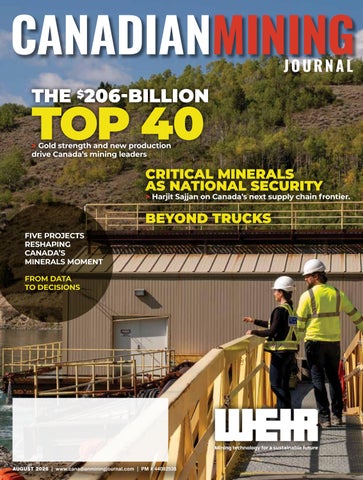
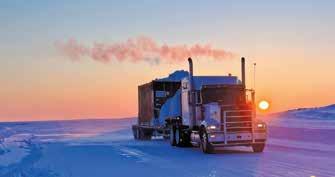
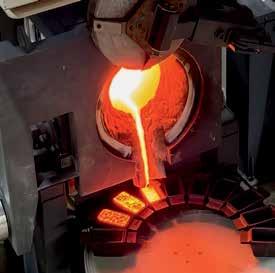
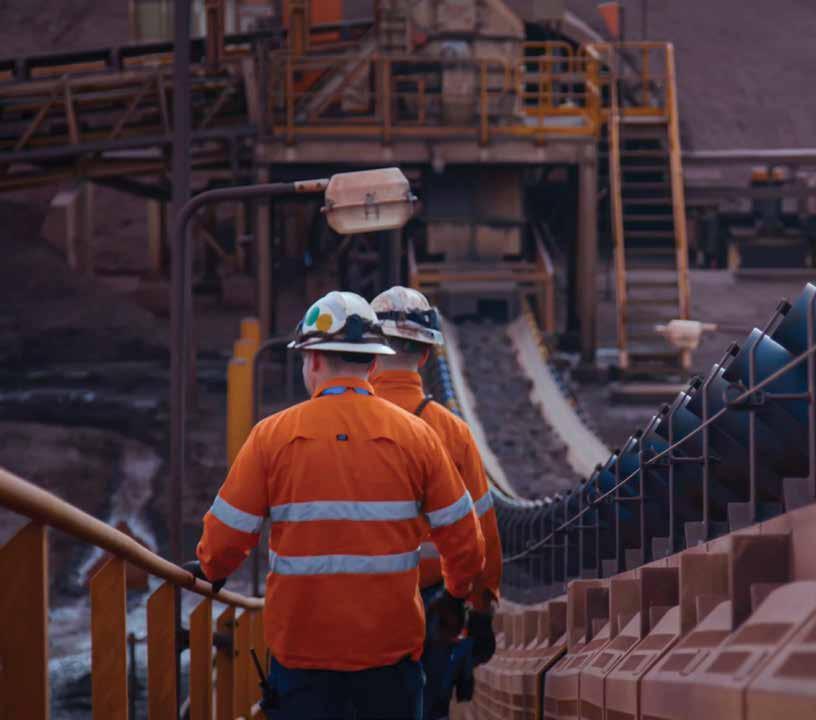
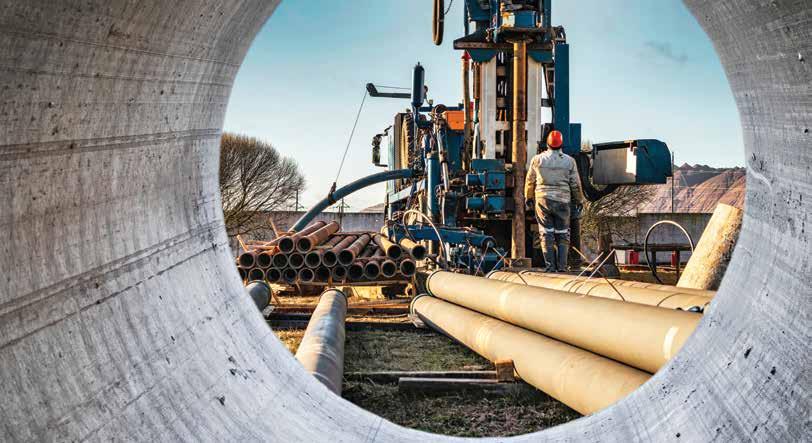
> Gold strength and new production drive Canada’s mining leaders
CRITICAL MINERALS AS NATIONAL SECURITY
> Harjit Sajjan on Canada’s next supply chain frontier.
BEYOND TRUCKS
FIVE PROJECTS RESHAPING CANADA’S MINERALS MOMENT FROM DATA TO DECISIONS
IMPROVING THE PROCESS
Invest in the Best for Peace of Mind
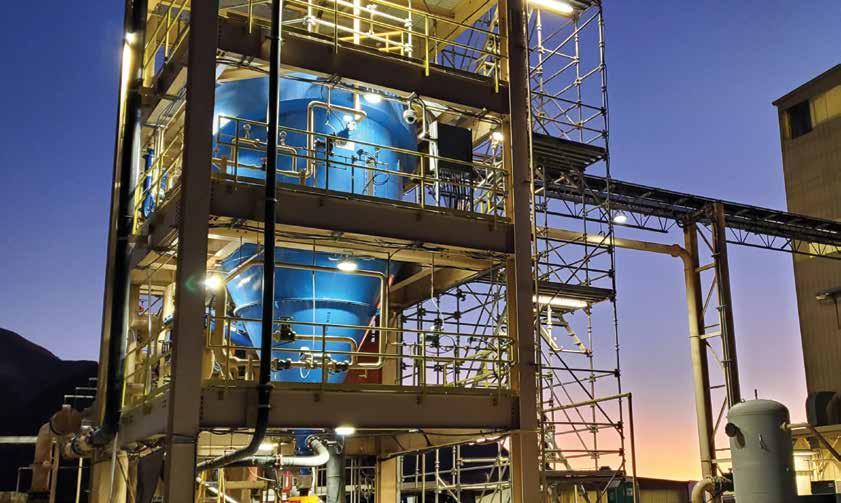
Eriez’ technologies are changing the way mineral processing plants are designed. Our mission is to make processing minerals more efficient and less impactful on the environment.
Eriez. Always the Right Choice. The patented HydroFloat® Coarse Particle Flotation (CPF) technology is proven to increase mill throughput and net metal production while reducing energy consumption and increasing water recovery.
FEATURES
TOP DEVELOPMENT PROJECTS IN CANADA
10 Canada’s minerals moment: Five projects reshaping the nation’s mining landscape.
TOP 40 CANADIAN MINERS
15 TOP 40 REVENUES TOP $206 BILLION: Gold, margins and new production reshaped the 2025 Top 40.
MINING ECONOMICS
28 Debt for minerals swaps: Turning public debt into public value.
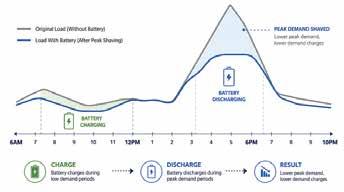
41 Smoothing the peaks: How large-scale BESS is redefining mine energy economics.
LOAD AND HAUL, CONVEYORS, SCREENS AND STRAINERS
32 Beyond trucks: Why mines are rethinking haulage.
40 Developing a sustainable carbon capture solution for heavy industry.
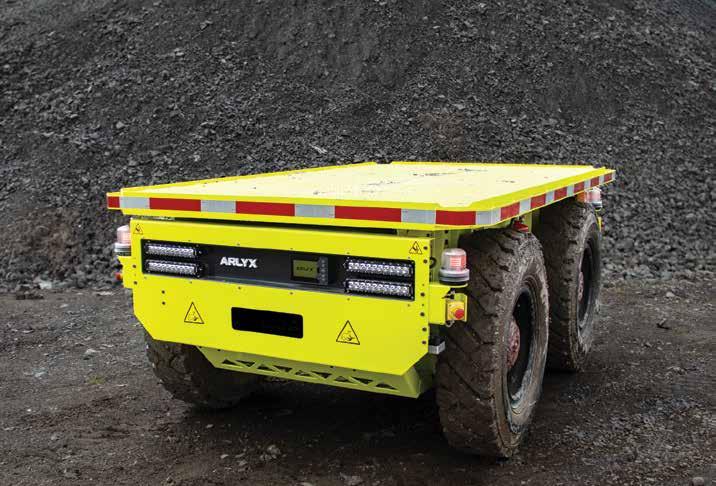
43 The perks of going small: Why ARLYX shrunk the miner.
DEPARTMENTS
4 EDITORIAL | Golden lift: Top 40 revenues surge past $206 billion.
6 FAST NEWS | Updates from across the mining ecosystem.
8 CORRECTION
12 MIN(E)D YOUR BUSINESS | Barrick’s buyback is a sign of maturity, not financial engineering.
Tamer Elbokl, PhD
CGOLDEN LIFT: Top 40 revenues surge past $206 billion
anada’s Top 40 mining and metals companies continued to demonstrate the sector’s resilience in 2025, with gold remaining the dominant force shaping revenue, profitability and movement within the rankings. For the complete data and analysis, read the full Top 40 article on pages 15 to 27 of the August 2026 edition.
Elevated gold prices, production growth and acquisitions supported major producers while creating opportunities for emerging and mid-tier companies. Royalty and streaming companies also demonstrated the strength of their capital-light business models, delivering some of the highest margins among the Top 40.
The 2025 Top 40 generated $206 billion in combined revenue and $49.46 billion in net income. Gold was the primary output for 23 companies, accounting for $117.52 billion, or 57% of revenue. Thirty-four companies were profitable, reflecting broad earnings strength despite pressure among several producers.
Operational performance remained uneven. New production, expanded operations and stronger commodity prices lifted several companies, while asset disruptions, restructuring costs, impairments and jurisdictional challenges weighed on others. These pressures produced sharp differences in profitability, even among companies with similar revenue levels (again, see the full article).
Notably, the proposed $18.5-billion merger of Equinox Gold and Orla Mining is expected to reshape next year’s Top 40. If completed as planned, the combined company would become Canada’s second-largest gold producer, with six operating mines and annual production of more than 1.1 million oz. The transaction should move Equinox significantly higher in the revenue ranking, while Orla would disappear as a separate entry, potentially opening a place for another company near the Top 40 cutoff.
The rankings also reflected an increasingly competitive middle and lower tier, where new entrants and growing producers moved quickly through the list. Overall, the results show that revenue alone does not determine lasting strength. Margins, operational execution, commodity exposure, acquisitions and disciplined expansion remain equally important measures of performance.
Next up, our September 2026 edition will showcase standout gold projects led by Canadian miners and examine how their expanding global reach is securing the reserves needed to shape tomorrow’s gold supply, with feature reports on maintenance, processing and repair. Editorial submissions may be sent to the Editor-in-Chief by Aug. 7, 2026.
President, The Northern Miner Group Anthony Vaccaro
Established 1882
Canadian Mining Journal provides articles and information of practical use to those who work in the technical, administrative and supervisory aspects of exploration, mining and processing in the Canadian mineral exploration and mining industry. Canadian Mining Journal (ISSN 0008-4492) is published nine times a year by The Northern Miner Group. TNM is located at 69 Yonge St., Ste. 200, Toronto, ON M5E 1K3. Phone (416) 510-6891.
Legal deposit: National Library, Ottawa. Printed in Canada. All rights reserved. The contents of this magazine are protected by copyright and may be used only for your personal non-commercial purposes. All other rights are reserved and commercial use is prohibited. To make use of any of this material you must first obtain the permission of the owner of the copyright. For further information please contact Robert Seagraves at 416-510-6891.
Subscriptions – Canada: $51.95 per year; $81.50 for two years. USA: US$64.95 per year. Foreign: US$77.95 per year. Single copies: Canada $10; USA and foreign: US$10. Canadian subscribers must add HST and Provincial tax where necessary. HST registration # 809744071RT001.
From time to time we make our subscription list available to select companies and organizations whose product or service may interest you. If you do not wish your contact information to be made available, please contact us via one of the following methods: Phone: 1-888-502-3456 ext 3; E-mail: amein@northernminergroup.com
Mail to: Allison Mein, 69 Yonge St., Ste. 200, Toronto, ON M5E 1K3 We acknowledge the financial support of the Government of Canada.
“ACCURATE
Mine Reader.
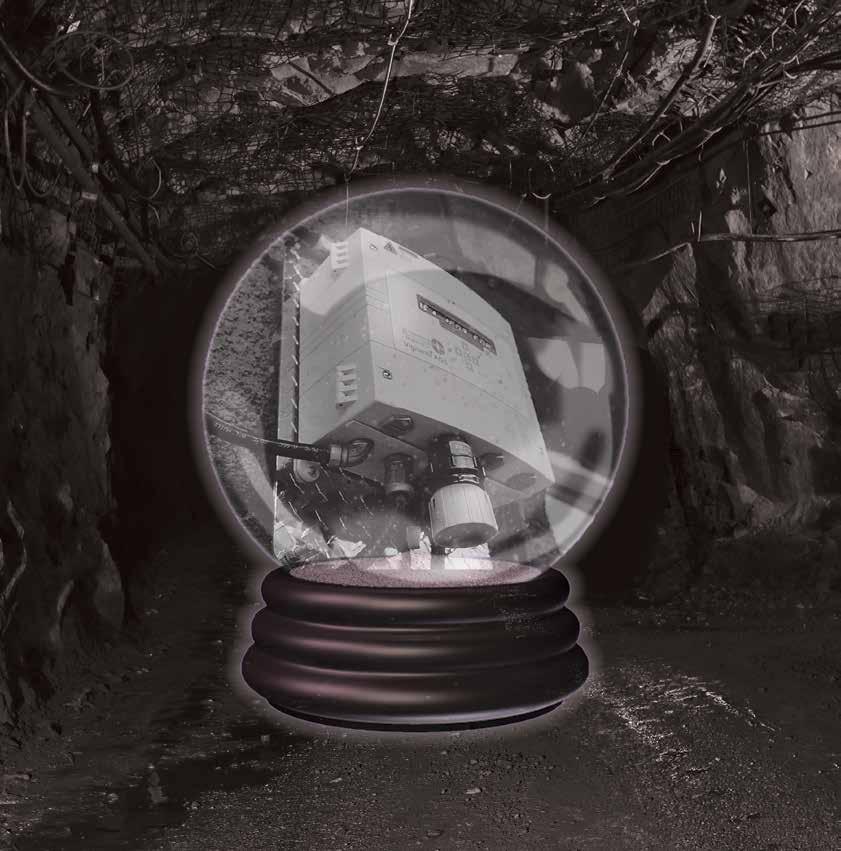
Predict ventilation equipment maintenance requirements for uninterrupted operation.
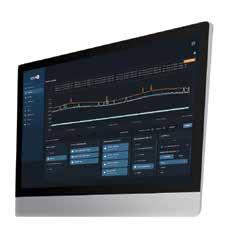
Duetto Analytics™
Duetto Analytics™ is an intelligent diagnostics and analytics platform, built to unify your IIoT data into one actionable interface. Operating securely within your process control network, Duetto delivers real-time visibility, advanced trending, and predictive maintenance tools – giving operations teams greater control and fewer surprises.
FAST
• Britannia Mine Museum to build new education centre
• John Brooks wins business excellence award
Britannia Mine Museum will build a new education centre after a $3-million donation from Wheaton Precious Metals, doubling its classroom space and expanding programs for students and the public. The Caterpillar 793 haul truck donated by Finning Canada is already installed on-site as part of the upgrade.
Wheaton CEO Hytham Hodaly said investing in education is essential to developing future mining talent. Board chair Leonie Tomlinson added the centre will help meet rising demand and preserve B.C.’s mining heritage. The project will support University of British Columbia students, with field trips already reaching 11,000 students a year.
• Eavor lands $8M Alberta grant
Eavor Technologies received $8 million from Alberta to advance its geothermal Eavor-Loop system, which circulates fluid underground to deliver lowemission heat and off-grid power for remote mining sites.
The funding supports Eavor-Jules, an $83-million initiative aimed at increasing the technology’s operating depth and temperature range through engineering, modelling and prototype testing. CEO Matt Toews said the work could unlock scalable geothermal energy in new regions. The grant comes through Emission Reduction Alberta’s (ERA) drilling technology challenge, which is providing $37 million for 10 projects in areas such as automation, AI-driven energy management and geothermal innovation.
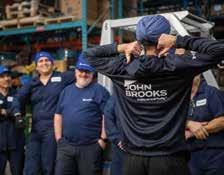
John Brooks, a Mississauga fluid-handling technology company, has been named a recipient of the 2026 Canadian Business Excellence Award from Excellence Canada following a review of its leadership, performance and workplace culture. CEO Cory Minkhorst said the honour reflects the team’s approach and nearly century-long commitment to supporting customers and partners.
Excellence Canada CEO Sean Slater said the firm’s focus on improvement, innovation and engagement strengthens Canada’s business community. The award will be presented Sept. 23, 2026, at the Eglinton Grand in Toronto.
• General Fusion hits Nasdaq after Spring Valley deal
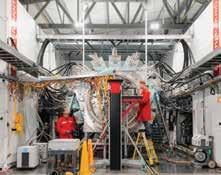
General Fusion Group has gone public after completing its merger with Spring Valley Acquisition.
The Vancouver company enters the market with about US$150 million to advance its magnetized target fusion technology through key milestones by 2028. It says the approach could support climate goals, energy security and growing AI-driven power demand. Shares began trading on Nasdaq under GFUZ and GFUZW on July 13, 2026.
• Komatsu marks 40 years in Chattanooga
Komatsu celebrated four decades of manufacturing at its Chattanooga plant on July 10, 2026, unveiling its 60,000th excavator — a customized PC490LC-11 built for contractor D.H. Griffin. The event showcased machines produced at the facility since its 1985 opening.
CEO Rod Bull praised the plant’s long-standing commitment to quality, innovation and continuous improvement, noting that Chattanooga’s legacy comes from generations of dedicated employees. The operation, Komatsu’s first U.S. manufacturing site, now builds excavators, haul trucks and forestry equipment while supporting regional supply chains. The company has also launched apprenticeship programs with Chattanooga State Community College.
CREDIT: GENERAL FUSION
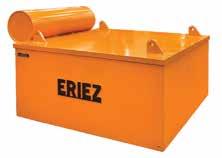
Invest in the Best Tramp Metal Protection
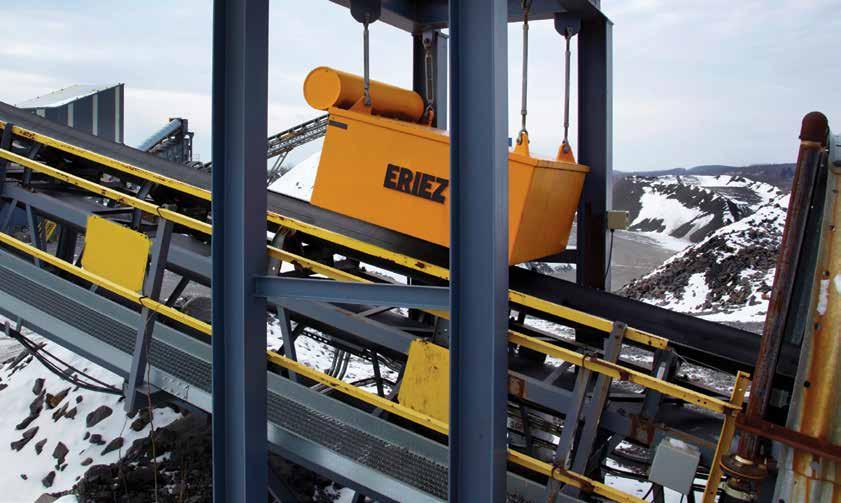
With more than 80 years of magnetic experience behind them, Eriez Suspended Electromagnets offer peace of mind, knowing your processes are protected against tramp metal. Eriez. Always the Right Choice.
Protect your downstream crushers, mills, and pulverizers from damage caused by stray digger teeth, tools, and other dangerous metal.
• Kristi Noem joins B.C. copper junior in advisory role
Kristi Noem, the current Special Envoy to the Shield of the Americas and former US Secretary of Homeland Security, has joined Vancouverbased NovaRed Mining as a strategic advisor. The junior explorer, which holds two early-stage copper projects in British Columbia, says Noem will help guide its critical-minerals acquisition strategy using its AI-driven platform. NovaRed cites her experience in economic development, infrastructure, energy and national security.
Noem previously served as South Dakota governor and represented the state in Congress. Her Homeland Security tenure ended after 13 months amid leadership controversies, including her handling of the immigration crackdown in Minneapolis.
NovaRed shares rose 2.7% following the announcement, valuing the company at $73.6 million. Its Wilmac and Lamont Ridge properties have returned average copper grades of 0.64%, with highs of 1.67%.
• Canada Nickel, RWEST strike deal
Canada Nickel and RWE Supply & Trading (RWEST) have signed an MOU to explore a strategic partnership to advance low-carbon steel in North America and Europe.
The companies will develop a sales strategy for semifinished steel and alloys, with RWEST supporting Canada Nickel’s Carbon Border Adjustment Mechanism (CBAM) compliance for its Net Zero Metals subsidiary.
CEO Mark Selby said rising EU carbon costs and volatile energy prices are boosting demand for stable, low-carbon supply. RWEST’s Marc Milligan said the deal aligns with the firm’s long-term strategy, noting low-carbon steel’s role in wind expansion and nickel’s importance for EU battery storage.
• Milestone first customer visits Tenaris service centre
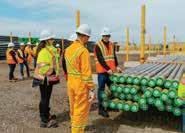
Petronas Canada has become the first customer to visit Tenaris’s new Fort St. John Service Centre, a milestone for the Calgary-based steel pipe supplier. The centre was built to support companies operating in the Montney formation, a 130,000-square-kilometre siltstone and shale play across Alberta and B.C.
Pablo Toy, Tenaris’s commercial vice-president in Canada, said the Fort St. John investment was driven by customer needs and strengthens the company’s ability to provide efficient, reliable supply.
• Correction
In the print version of the article “Super Saskatchewan: The need for critical minerals spurs uranium, lithium development,” published in the June/July 2026 issue of Canadian Mining Journal, it was incorrectly stated that Purepoint Uranium Group owns 32.9% of IsoEnergy. IsoEnergy owns approximately 13% of Purepoint. Purepoint does not hold any interest in IsoEnergy. Purepoint and IsoEnergy share 50% interests in the Dorado, Aurora and Celeste projects, with Purepoint as operator.
The print version of the same article also incorrectly described the planned mine at PLS as an open pit operation. The project is planned as an underground mining operation, and approvals to construct and operate are being sought on that basis.
The full text e-version of the article has been updated.
CREDIT: TENARIS
Saskatchewan A Global Leader in Critical Minerals
Rich and diverse resources. Competitive incentives.
Trusted geoscience data.
Saskatchewan is one of the world’s top destinations for mining investment.
To learn more, visit:
Canada’s minerals moment:
Five projects reshaping the nation’s mining landscape
Canada’s mining sector is experiencing a period of unprecedented momentum. Over the past year, mining companies have made substantial commitments to expand operations across the country, driven by the recognition that Canadian minerals are essential to clean energy, modern infrastructure and global food security. A selection of projects now advancing through feasibility, construction, commissioning and regulatory review, many of which have been referred to Canada’s Major Projects Office, represent some of the most significant recent developments in the sector. What distinguishes these undertakings is not merely their scale but their shared emphasis on low-emission operations, Indigenous partnerships and the strategic positioning of Canada as a reliable supplier of the minerals upon which the modern economy depends.
BHP’s Jansen potash project, currently under construction in Saskatchewan, is expected to begin Stage 1 production by mid-2027. Once operational, it is anticipated to become one of the world’s largest potash mines — a mineral essential to global food security through its use in fertilizer production. Notably, the Jansen project aims to consume 60% less fresh water than the average potash mine in the province, setting a new benchmark for resource efficiency in the sector. Stage 2 of the project, scheduled to start production a few years after Stage 1, is expected to double production. Saskatchewan is also home to the McIlvenna Bay Foran copper mine project, which completed wet commissioning of its processing plant in June 2026. Production from this mine will position Canada as a leading global supplier of copper and zinc, minerals critical to clean energy infrastructure and advanced manufacturing. The mine is also poised to be one of the lowest-emission operations of its kind, as it is powered by two hydroelectric dams. This demonstrates that domestic mineral development can simultaneously advance economic competitiveness and environmental responsibility.
Moving east, in Quebec, Nouveau Monde Graphite’s Matawinie mine reached a significant milestone on May 19, 2026, when Prime Minister Mark Carney announced construction commencement alongside a seven-year offtake agreement with the Government of Canada for 30,000 tonnes of graphite concentrate per year. Graphite is indispensable to energy storage systems essential to electrification initiatives and to various defence applications — both initiatives that the Canadian government has signalled an intention to pursue at pace. Also powered by hydroelectricity, the Matawinie project aims to eventually deploy a zero-emission fleet at the mine site, a further indication of the sector’s commitment to decarbonization.
Another project advancing through the regulatory process is Canada Nickel’s Crawford project in Ontario. Representing the world’s second-largest nickel reserve, the Crawford project is expected to operate for more than 40 years and to produce carbon emissions approximately 90% lower than the industry average, with poten-
tial for an ultimate net-negative carbon footprint. The project is expected to attract approximately $5 billion in investment. Impact assessment began in March 2026, construction is expected to begin by the end of 2026, and the project has been designated to advance under Ontario’s one project one process (1P1P) framework.
Rounding out these developments, in New Brunswick is Northcliff Resources’ Sisson mine. This project targets tungsten and molybdenum production for use locally and globally. Production of tungsten is needed within Canada. Domestic production ceased in October 2015 when the Cantung mine stopped operations. Tungsten is used in a variety of items in the defence industry, and molybdenum increases the quality of steel and super-alloys. This project, which is in a pre-construction phase, is seeing an interest by the government because of the critical nature of these resources.
Together, these projects represent thousands of jobs and the conclusion of numerous impact benefit agreements. These partnerships encompass collaboration on culture, environmental stewardship, training, employment, business opportunities, including participation in mineral development — and financial benefits. The emphasis on sustainable development across all five projects is equally noteworthy. Hydroelectric power, low-emission operations, and conservation initiatives demonstrate that critical mineral extraction can align with responsible environmental stewardship, challenging the outdated assumption that resource development and sustainability are mutually exclusive.
The pace and scope of construction, the need for reliable power supply, the complexity of regulatory coordination and the volume of contracts and agreements associated with these projects also give rise to a need for a considered approach to dispute prevention and resolution. As these developments advance from planning and construction into full operation, proactive strategies for managing commercial and regulatory risk will be essential to maintaining momentum and protecting the significant investments at stake.
Rachel Howie is the co-leader of Dentons Canada’s Litigation and Dispute Resolution group and the national Alternative Dispute Resolution and Arbitration groups. The author thanks Ella Brown, Dentons summer student, for her contributions to this article.
The BHP Jansen potash project site. CREDIT: BHP
Barrick’s buyback is a sign of maturity, not financial engineering
Barrick Gold’s May 2026 authorization of a US$3 billion share repurchase program has revived a familiar debate about corporate buybacks. Critics often treat repurchases as little more than financial engineering: a way to support the share price, improve per-share metrics, and reward executives without strengthening the underlying business. In some industries, and under some circumstances, that criticism is justified. Yet, Barrick’s announcement should be viewed in a different context. It appears to reflect a broader transformation in the resource sector toward greater capital discipline and shareholder accountability.
The timing is significant. Barrick announced the authorization while emphasizing strong free cash flow, healthy liquidity, and confidence in its long-term outlook. More importantly, the decision signals management’s belief that returning capital to shareholders is an appropriate use of funds at this stage of the company’s development. Whether that judgment proves correct will depend on valuation, commodity prices, and future capital requirements. Still, the rationale is consistent with a capital allocation philosophy that has become increasingly common across the resource sector.
The central question is not whether buybacks are inherently good or bad. It is whether they are undertaken by companies with strong balance sheets, sound operations, and realistic capital needs. In Barrick’s case, management has indicated that the authorization is supported by the company’s cash generation and financial position rather than by increased leverage. That distinction matters because shareholder returns create value only when they complement, rather than displace, investment in the underlying business.
This is especially true in mining, where poor capital allocation decisions can take years to reveal their consequences. A badly timed acquisition, an overbudget project, or an overly optimistic view of commodity prices can impair value long before the market fully prices in the damage. For that reason, returning capital can itself be evidence of restraint. A company that resists spending simply because cash is available may be demonstrating a healthier corporate culture than one that treats constant expansion as a strategy in itself. In cyclical sectors, the willingness not to spend can be just as important as the willingness to invest. Discipline is not passivity. It is the ability to distinguish between growth that creates value and growth that merely enlarges the corporate footprint.
There are many examples of what can happen when that balance is lost. Boeing remains one of the most frequently cited cautionary cases. Over many years, the company devoted very large sums to repurchasing shares while management increasingly emphasized shareholder distributions and financial performance metrics. Critics later argued that this focus reflected a broader cultural shift away from engineering priorities and operational excellence. The lesson is not that buybacks caused Boeing’s subsequent problems. Rather, it is that capital returns can become problematic when they are pursued without ade-
quate attention to long-term operational resilience.
Other examples reinforce the point. General Electric evolved from an industrial icon into a highly financialized conglomerate before encountering severe balance sheet stress. Sears Holdings became synonymous with financial restructuring that failed to preserve competitiveness. Several major U.S. airlines also returned large amounts of capital to shareholders in the years before seeking extraordinary liquidity support during the COVID-19 crisis. These examples do not show that buybacks are inherently harmful. They show that shareholder distributions cannot compensate for weak fundamentals or inadequate preparation for future risk. A repurchase program is not a substitute for reinvestment, and it is certainly not a substitute for strategic clarity. If management teams use buybacks to avoid harder questions about productivity, cost discipline, asset quality, or longterm competitiveness, skepticism is warranted.
Barrick does not presently appear to fit that pattern. If anything, the company’s decision reflects lessons learned during the collapse of the commodity supercycle between 2013 and 2015. During the boom years, many mining and energy companies pursued expensive acquisitions, approved projects at inflated costs, and prioritized production growth over returns on capital. When commodity prices weakened, shareholders paid the price through asset write-downs, dividend reductions, and distressed asset sales. Investors responded by demanding a different model. Companies were expected to strengthen balance sheets, improve capital discipline, and focus on generating sustainable free cash flow. Many of the sector’s largest firms adapted. BHP, Rio Tinto, Teck Resources, and Canadian Natural Resources increasingly emphasized shareholder returns, debt reduction, and prudent capital management. Investors generally rewarded that shift because it suggested management teams had absorbed the lessons of the previous cycle. Just as importantly, boards and executives began to recognize that credibility in cyclical industries is built not during downturns, but in how companies behave when conditions are favourable. Anyone can promise restraint in a weak market. The real test is whether management remains disciplined when high prices make almost every expansion plan appear attractive.
That shift also changed the language of credibility in the sector. For years, management teams were often rewarded for promising bigger pipelines, higher output, and ambitious expansions. Today, investors are more inclined to reward predictability, return on invested capital, and evidence that boards will not chase scale for its own sake. In that environment, a repurchase program can serve as a statement that management sees discipline, not sheer growth, as the measure of success.
That is why Barrick’s buyback deserves cautious support. Resource companies do not create value simply by producing more ounces of gold or more tonnes of copper. They create value by generating returns that exceed their cost of capital. If manage-
Barrick’s Reko Diq copper-gold mine in Pakistan.
CREDIT: BARRICK GOLD
SCAN FOR DETAILS
The
MIN(E)D YOUR BUSINESS
ment reasonably believes its shares are undervalued and possesses excess capital after funding operations, maintaining financial flexibility, and supporting future growth opportunities, repurchasing stock can be a sensible use of capital. It can also send a broader signal to the market that management is prepared to treat capital as scarce, even when cash generation is strong. For an industry with a long history
6-24_CanadianMinJrnl_InsertV1.pdf 1 6/18/26 10:31 AM
That does not mean investors should celebrate every buyback announcement. Timing matters. Companies that repurchase shares near commodity peaks can destroy value if earnings subsequently decline. Large authorizations can also reflect a shortage of attractive investment opportunities rather than genuine undervaluation. Investors should therefore focus less on the headline size of a buyback
uation, and execution. They should also pay attention to whether repurchases are being conducted opportunistically over time or presented primarily as a symbolic gesture. The quality of a buyback lies not only in its authorization but in the judgment behind its execution.
The resource sector appears more disciplined today than it was two decades ago. Many companies now employ flexible capital-return frameworks that combine dividends with opportunistic buybacks. These structures allow management to increase shareholder returns during strong markets while preserving financial flexibility during downturns. Such an approach is particularly important in cyclical industries where commodity prices can shift dramatically in short periods.
From a Canadian corporate governance perspective, Barrick’s directors remain responsible for ensuring that any repurchase program serves the long-term interests of the corporation. Boards are expected to weigh shareholder returns against operational requirements, strategic objectives, and financial stability. Those safeguards matter precisely because capital allocation decisions can have profound consequences for corporate performance.
family of primary belt cleaners effectively discharge material from the belt while minimizing the carryback that can lead to conveyor system damage. Our patented blade-to-belt technology, application-specific urethane blades, and rugged mainframes ensure superior cleaning performance throughout the blade’s service life. Easy to maintain and quick to service, these robust cleaners reduce fugitive material issues and protect associated belt components from premature wear — keeping your operation running smoothly, safely, and more productively.
Barrick’s US$3-billion authorization represents a measured expression of the capital discipline investors have long demanded from the resource sector. Past cycles saw mining companies destroy significant value by pursuing acquisitions and production growth without adequate attention to returns on capital. The industry’s shift toward more disciplined capital allocation has been one of its most meaningful structural changes. If Barrick can match shareholder returns with operational consistency, balance-sheet resilience, and thoughtful reinvestment, this buyback will appear less like financial engineering and more like a sign that the sector is internalizing the lessons of prior cycles.
Carlos da Costa, PhD, is an adjunct finance professor at the University of British Columbia and an experienced financial professional with expertise in valuations and modelling, derivatives, structured finance, commodities, risk management, structured products, and financial analytics.
TOP 40 REVENUES TOP $206 BILLION
GOLD, MARGINS AND NEW PRODUCTION RESHAPED
THE 2025 TOP 40
THE CRITERIA FOR CHOOSING THE TOP 40
To be eligible for CMJ’s Top 40 Canadian miners list, companies must meet two of the following three criteria:
1. Be domiciled in Canada.
2. Trade on a Canadian stock exchange.
3. Have a significant share of an operating mine or advanced development in Canada.
We have put extra effort into checking the eligibility of all the miners on the current list. However, we remain open to the suggestions of our readers.
The 2025 ranking of the Top 40 Canadian mining and metals companies by total revenue shows a sector that expanded sharply, became more profitable and leaned even more heavily toward precious metals.
The Top 40 generated $206.15 billion in combined 2025 revenue. Among the 38 companies with comparable 2024 revenue figures in the Table 1 (two companies out of the Top 40 had their projects still in development stage in 2024), revenue rose from $158.89 billion in 2024 to $204.33 billion in 2025, a gain of 28.6%. That growth was not evenly distributed. It was driven by the largest gold producers, several fast-rising mid-tier names, royalty and streaming companies and new or newly scaled production entering the list.
The market set the stage. The World Gold Council said the LBMA PM gold price set 53 new all-time highs in 2025, as the annual average gold price reached US$3,431 per ounce, up 44% year over year. That pricing environment helped explain why gold producers dominated the ranking by both revenue and profitability.
The 2025 Top 40 shows a stronger, more profitable and more precious-metals-weighted sector. Revenue rose sharply, gold remained the clear driver of both scale and profitability, and new production, acquisitions and high-margin mid-tier growth reshaped the middle and lower parts of the ranking. The year was not only about higher revenue, but it was also about quality of revenue.
KEY HIGHLIGHTS AND MOST NOTABLE DYNAMICS: FAREWLL NEWMONT Nutrien retained the #1 position, with $37.58 billion in reve-
Nutrien’s Allan potash mine in Saskatchewan.
CANADA’S TOP 40
nue. The company accounted for 18.2% of total Top 40 revenue on its own. Its leadership keeps potash at the top of the ranking, even though gold was the dominant commodity across the wider list. Nutrien’s 2025 results were supported by higher fertilizer net selling prices, record upstream fertilizer sales volumes and stronger retail earnings, while potash adjusted earnings before interest, taxes, depreciation and amortization (EBITDA) rose to $3.15 billion because of higher net selling prices and record sales volumes.
Newmont held the #2 spot with $30.89 billion in revenue and led all companies in net income, at $9.90 billion. The company’s 2025 results pointed to full-year production of 5.9 million attributable gold ounces, including 5.7 million oz. from its core portfolio, and an average realized gold price of US$3,498 per ounce for the year. Unfortunately, Newmont is expected to fall off the list next year because it no longer appears to meet two of CMJ’s three eligibility criteria: as of the end of 2025, it is not domiciled in Canada and has announced a voluntary delisting from the TSX. It also completed the sale of its remaining Canadian operations, including Musselwhite, Éléonore and Porcupine, removing the Canadian operating-mine exposure that supported its prior inclusion.
Barrick Mining stayed at #3, with $23.56 billion in revenue and $6.98 billion in net income. Barrick’s reported 2025 revenue was up 31% from 2024, while operating cash flow increased by 71%.
Agnico Eagle Mines climbed to #4, with $16.64 billion in revenue and $6.24 billion in net income. Agnico said it achieved its 2025 production guidance and produced 3.45 million oz. of payable gold.
Together, Nutrien, Newmont and Barrick generated $92.03 billion, or 45% of total Top 40 revenue. The top five generated $119.43 billion, or 58%. The top 10 generated $151.18 billion, or 73%. This underscores how concentrated the Canadian mining revenue ranking remains, even in a year when mid-tier companies posted some of the strongest growth rates.
GOLD REMAINED THE CENTRE OF GRAVITY
Gold remained the clearest driver in the 2025 Top 40 ranking. It was listed as the primary output for 23 of the Top 40 companies, generating $117.52 billion, or 57% of total Top 40 revenue. If the two gold royalty and streaming companies — Wheaton Precious Metals and Franco-Nevada — were added, gold-linked revenue would rise by another $5.78 billion, bringing the total to $123.30 billion, or 60% of the total.
The strength was not limited to the largest producers. Gold names also dominated the strongest margin performers. Table 1 shows K92 Mining with a 71% gross margin, G Mining Ventures with 69%, Lundin Gold with 65%, Wesdome Gold Mines with 60%, Agnico Eagle Mines with 56% and Alamos Gold with 53%.
That is one of the clearest themes in
the 2025 ranking: gold did not just lift revenue; it lifted margins and net income. The strongest gold companies turned higher prices into cash, earnings and rank movement.
THE BIGGEST CLIMBERS
The most dramatic rank movement came from companies that added scale, benefited from stronger precious metal prices or entered the Top 40 through new production.
Orla Mining was the biggest climber, rising from #41 in 2024 to #27 in 2025, a gain of 14 spots. Its revenue increased from $471.19 million to $1.48 billion, a gain of 214%. Orla’s 2025 transformation was supported by the Musselwhite acquisition, which the company described as a pivotal step in its evolution into a geographically diversified, multi-asset intermediate gold producer.
Franco-Nevada and Allied Gold each climbed eight spots. Franco-Nevada moved from #25 to #17, with revenue rising 69% to $2.55 billion. Allied Gold moved from #30 to #22, with revenue rising 86% to $1.86 billion, although it remained loss-making, with a net loss of $72 million.
First Majestic Silver climbed seven spots, from #33 to #26, with revenue rising 129% to $1.76 billion. It also posted the strongest gross profit growth in the ranking, at 452%.
Wheaton Precious Metals, China Gold International Resources and Wesdome Gold Mines each climbed six spots. Wheaton’s move was especially notable because it combined scale with margin strength: $3.24 billion in revenue, $2.06 billion in net income and a 72% gross margin.
B2Gold was another notable climber in the ranking, moving up three spots to #10 from #13 in the previous year’s ranking. The gain reflects its stronger relative revenue performance and places the gold producer among the top 10 Canadian miners by total revenue.
NEW NAMES IN THE TOP 40
Table 1 shows four companies entering the 2025 Top 40 with no 2024 rank: Artemis Gold, Discovery Silver, G Mining Ventures and Endeavour Silver.
Gross margin is gross profit divided by revenue, expressed as a percentage. Gross profit growth measures the change in gross profit from the prior year, expressed as a percentage.
Artemis Gold entered at #33, with $914 million in revenue, $349 million in net income and a 73% gross margin, the second-highest gross margin in the table. Discovery Silver entered at #34, with $913 million in revenue and $149 million in net income. G Mining Ventures entered at #36, with $812 million in revenue and $402 million in net income. It had the strongest calculated revenue growth among companies with 2024 revenue in the table, rising 308% from $199 million. Endeavour Silver entered at #40, with $644 million in revenue, but a net loss of $166 million.
MARGINS AND PROFITABILITY: MARGIN STRENGTH
SEPARATES THE LEADERS FROM THE REST
The gross margin and profitability data add another layer to the Top 40 ranking, showing not only who generated the most revenue, but also who converted that revenue most effectively into gross profit and net income.
On a revenue-weighted basis, the Top 40 generated an implied $85.46 billion in gross profit, equal to a 41.5% weighted gross margin. The median gross margin was 45.4%. The strongest gross margins were led by royalty and streaming and high-margin gold names: Franco-Nevada at 74%, Artemis Gold at 73%, Wheaton Precious Metals at 72%, K92 Mining at 71%, G Mining Ventures at 69% and Lundin Gold at 65%. At the lower end, Asante Gold posted a negative gross margin of –15%, while Endeavour Silver posted 11%, Taseko Mines 21%, Teck Resources 21% and Capstone Copper 23%.
Profitability was broad, but not universal. Of the Top 40 companies, 34 were profitable and six were not. Combined net income was $49.46 billion. The largest contributors were Newmont at $9.90 billion, Barrick Mining at $6.98 billion, Agnico Eagle Mines at $6.24 billion, Kinross Gold at $3.34 billion and Nutrien at $3.17 billion. The loss-making companies were First Quantum Minerals, Equinox Gold, Allied Gold, As-
ante Gold, Taseko Mines and Endeavour Silver.
Gross profit growth also showed where momentum was strongest. First Majestic Silver led by a wide margin, with growth of 452%. G Mining Ventures followed at 371%, while China Gold International Resources ranked third at 280%. Five companies posted gross profit growth above 200%: First Majestic, G Mining Ventures, China Gold International Resources, Equinox Gold and Aris Mining.
The lower end remained positive. First Quantum Minerals had the lowest reported gross profit growth at 10%, followed by Nutrien at 15%.
OTHER KEY COMMODITIES
Copper accounted for six companies — First Quantum Minerals, Lundin Mining, Capstone Copper, Ero Copper, Imperial Metals and Taseko Mines — with combined revenue of $18.31 billion, or 8.9% of the Top 40 total revenue. The group remained strategically important but financially mixed, with First Quantum and Taseko posting losses.
Silver also had a stronger presence. Pan American Silver ranked #9, with $5.06 billion in revenue and $1.37 billion in net income. First Majestic Silver ranked #26, Discovery Sil ver entered at #34, and Endeavour Silver entered at #40.
Cameco was the only uranium-primary company in the Top 40. It ranked #12, with $3.48 billion in revenue, $589.79 million in net income.
COPPER SCALE AND GOLD CONSOLIDATION DEFINE 2025 M&A
Among 2025 transactions tied directly to companies in the 2025 Top 40 ranking, two deals stand out for reshaping the competitive landscape. The largest was the proposed Anglo American–Teck Resources merger, a US$53-billion copper and critical minerals transaction that would create one of the world’s largest copper producers and put Vancouver at the centre of a global mining heavyweight. For Teck, ranked fifth in the Top 40, the deal would mark a defining shift from Canadian diversified miner to core pillar of a much larger copper-focused platform.
In gold, Equinox Gold’s roughly US$2-billion acquisition of Calibre Mining was the most consequential consolidation move involving a Top 40 company. The combination created a larger Americas-focused producer with production approaching one million oz. and a portfolio spanning Canada, the U.S., Nicaragua and Brazil. Together, the deals underline
Solid Assets. Strong Returns. Sustainable Growth.
Alamos Gold, a leading Canadian-based gold producer, is targeting to achieve one million oz of annual gold production in the long term. This success stems from developing quality assets that fuel our growth while achieving strong free cash flow generation at our low-cost, long-life operations.
2. NET PROFIT MARGIN RATIO (NET INCOME/TOTAL REVENUE).
NET PROFIT MARGIN RATIO ANALYSIS: TABLE 2
Table 2 highlights a sector with strong earnings power at the top, but clear pressure among weaker-margin and loss-making companies. It shows a profitable but sharply divided Top 40, with 34 companies reporting positive net profit margin ratio and six posting losses. Together, the Top 40 companies generated an implied combined net profit margin of about 24%.
Wheaton Precious Metals led the ranking by net profit margin, at 64%, followed by Franco-Nevada at 61%. They were the only companies above 60%, setting them apart from the rest of the field. G Mining Ventures ranked third at 50%, followed closely by Alamos Gold at 49% and K92 Mining at 45%.
The table also shows that revenue scale did not always translate into the highest margins. Newmont, ranked second
3.
by revenue, had the highest net income in the table at $9.90 billion, but its margin was 32%. Barrick Mining posted $6.98 billion in net income on a 30% margin, while Agnico Eagle Mines recorded $6.24 billion on a stronger 37% margin.
At the lower end, six companies had negative net profit margins: First Quantum Minerals, Equinox Gold, Allied Gold, Taseko Mines, Endeavour Silver and Asante Gold. Asante Gold had the weakest margin at –69%, followed by Endeavour Silver at –26%.
NET INCOME CHANGE: TABLE 3
Table 3 shows earnings rebound across the 2025 Top 40, with several companies moving sharply from losses or low 2024 earnings into stronger profitability. Artemis Gold posted the largest net income change, up 1,211%, followed by G Mining Ventures at 891% and Discovery Silver at 814%. Pan American Silver, Lundin Mining, China Gold International Resources, Hudbay Minerals and Centerra Gold also posted gains above 600%. Among the majors, Agnico Eagle Mines, Barrick Mining, Newmont and Nutrien delivered strong increases.
However, the table also shows pressure, with First Quantum, Asante, Endeavour Silver, Taseko and Equinox posting negative changes.
A RESPONSIBLE INTERNATIONAL GOLD PRODUCER
B2Gold is a responsible international gold producer headquartered in Vancouver, Canada. Founded in 2007, today, B2Gold has operating gold mines in Canada, Mali, Namibia and the Philippines, and numerous development and exploration projects in various countries.
REVENUE GROWTH RATE LEADERS: TABLE 4
Revenue growth was widespread, but the sharpest percentage gains came from companies moving off smaller 2024 bases, while the major producers delivered the largest dollar increases.
Table 4 shows broad revenue growth across the Top 40, with 37 of the 38 companies with comparable 2024 figures posting revenue increases. Only Fortuna Mining recorded a decline,
with revenue down 9% to $1.32 billion.
G Mining Ventures led the table with revenue growth of 308%, rising to $812 million from $199 million. Orla Mining followed with growth of 214%, reaching $1.48 billion.
First Majestic Silver ranked third at 129%, while Endeavour Silver grew 117%.
The table also shows strength beyond the fastest-growing
smaller names. Allied Gold, Aris Mining, Wheaton Precious Metals, IAMGOLD, China Gold International Resources and K92 Mining all posted growth above 70%.
Among the larger companies, the absolute gains were significant. Barrick Mining increased revenue by about $5.86 billion, Agnico Eagle Mines by about $5.29 billion, and Newmont by about $5.29 billion.
RUNNERS-UP SHOW A DEEPER FIELD BENEATH THE TOP 40: TABLE 5
The 2025 runners-ups ranking in Table 5 points to a tighter, more competitive group just below the Top 40, with five companies clustered between $626 million and $526 million in revenue.
Together, Galiano Gold, Ivanhoe Mines, Silvercorp Metals, Triple Flag Precious Metals and Orezone Gold generated $2.92 billion in 2025 revenue, up from $1.42 billion in 2024, representing growth of about 105% across the group.
The narrow spread is one of the clearest dynamics. Only $100 million separated #41 Galiano Gold from #45 Orezone Gold. The top three were even closer: Galiano at $626 mil lion, Ivanhoe at $617 million and Silvercorp at $612 million. That $14-million gap between #41 and #43 shows how small changes in revenue can reshape the lower end of the Top 40
and the runners-up list.
Overall, the runners-up list reflects both opportunity and pressure. Revenue growth was broad, precious metals dominated and profitability was mixed. Modest shifts in revenue, margins or earnings could change next year’s ranking.
OILSANDS:
TABLE 6
The 2025 oilsands ranking by revenue (Table 6) shows a concentrated and profitable sector, with eight companies generating $203.44 billion in revenue and $26.83 billion in net income. Cenovus Energy led by revenue at $49.71 billion, narrowly ahead of Suncor Energy at $48.93 billion. Imperial Oil ranked third
at $45.18 billion, followed by Canadian Natural Resources at $38.78 billion. Together, the top four accounted for 90% of total revenue.
Profitability told a different story. Canadian Natural ranked fourth by revenue but led the group in net income, with $10.82
• We recognize that revenues are an imperfect way of looking at companies, as they discount the value of near-term expansions and development projects. Since the cut-off for our Top 40 can be close, we have also included a runners-up table to highlight other Canadian companies that are
generating strong revenues.
Please see also the criteria for our Top 40 eligibility, which is unchanged from past years.
Differences in reported revenue figures between this year and last are attributable to different exchange rates used to convert
billion. Suncor had the strongest gross margin at 39%, while Tourmaline Oil had the weakest at 6%. Gross profit growth was mostly negative, with only ARC Resources and Whitecap Resources posting gains. The table points to a sector still highly profitable but facing pressure on gross profit performance.
U.S. dollar figures for each year and to some companies having restated prior years’ revenue. Financial results are also impacted by commodity prices and exchange rates. All figures in the tables are expressed in millions of Canadian dollars.
• If needed, we use the Bank of Canada’s
average exchange rate when converting U.S. to Canadian dollars: for 2025, the average was US$1.00 for $1.3978.
• The main data set was sourced from FactSet screening by Ali Ravaghi. It was subsequently refined, reviewed and analyzed by the author to the best of his knowledge.
By
Debt for minerals swaps: Turning public debt into public value
What have you done today that did not involve a mineral? Part 10
Political considerations are increasingly taking precedence over economic priorities, with a growing emphasis on control and influence that often comes at the expense of long-term economic resilience. For example, major mineral projects in Canada often face extended timelines, where regulatory complexity and evolving political priorities delay development well beyond normal investment timelines. Against this backdrop, one financial innovation that has gained traction in recent decades is the debt-for-nature swap. These arrangements offer a triple win for creditors, debtors and the environment, and numerous transactions have demonstrated their effectiveness. For example, Ecuador restructured more than US$1 billion of debt in 2023 in exchange for long-term funding commitments for marine conservation in the Galapagos Islands. Yet, a parallel opportunity has gone largely unexplored.
Urban populations are often disconnected from resource extraction, particularly in northern regions of Canada. The opening or closure of a mine can feel remote, even though modern life depends fundamentally on minerals. Hospitals, schools and most forms of infrastructure are built on them. As we have asked before, what have you done today that did not involve a mineral? This disconnect remains a significant communications challenge for the mining sector, which continues to face questions about public credibility, while communities focus on economic opportunity, quality jobs and whether their regions have a sustainable future. At the same time, governments face a growing and unavoidable issue in public debt. Whether paid today or deferred to future generations, the burden is substantial and raises concerns about long-term economic stability.
Mining companies already contribute to communities through taxes, sponsorships, partnerships and investments in public facilities, ranging from community infrastructure to cultural, educational and local development initiatives. However, these con-
tributions are typically discretionary and often viewed as part of corporate social responsibility or community engagement. While these efforts are important, they are not typically integrated into a broader financial framework that addresses public debt and long-term infrastructure needs. A complementary financial framework is proposed to address both challenges. Debt for Minerals Swaps, or D4MS, would evaluate and structure agreements based on three criteria: debt volume, discount achieved and tangible human, social and environmental outcomes. By linking debt relief to visible public benefits, well-designed swaps can create funding streams for economic development while also contributing to the reduction of broader public debt burdens. These benefits may include investments in infrastructure, health care, education and community resilience, all areas increasingly strained by rising debt obligations.
As health care costs rise and fiscal pressures intensify, governments are being squeezed between servicing debt and investing in the future. While no single solution will resolve this tension, D4MS offers a mechanism to address both challenges simultaneously. A D4MS transaction involves a conditional reduction of government debt in exchange for a resource company committing to invest in domestic mineral exploration, development and production. A distinguishing aspect of this approach is the potential integration of legal personhood for mineral deposits (published in this publication in the August 2025 issue, page 55), whereby the deposit itself becomes a legal entity that provides a form of surety within the transaction. Land designated for development could be classified as a “mineral park,” a defined project area that includes access and supporting infrastructure and, in some cases, may be structured to provide long-term, secure tenure for the operator. The aim would be to create a clear and integrated framework that aligns resource development with associated infrastructure
Bruce Downing, Donna Beneteau, and Carlos da Costa
The open pit Canadian Malartic mine in Quebec.
JONAS/ADOBE
and public benefit outcomes. Within this framework, D4MS agreements would be tied to specific public assets such as hospitals, schools, bridges, water treatment facilities or Indigenous-led projects. This direct linkage ensures that the benefits are visible and meaningful to the public, helping to strengthen support for resource development.
To align incentives and reduce risk, permitting timelines would need to be more predictable. If approvals are delayed, financial penalties could apply, or the company could receive ownership interest in the associated public asset. In return, companies would assume borrowing costs for the facility, potentially offset by negotiated tax adjustments. These commitments could also strengthen access to bankable financing for mining projects. Additional features might include tax credit treatment, eligibility as charitable contributions and requirements to use domestically produced minerals in associated infrastructure projects. The framework could potentially align with broader national interest and/or security initiatives such as large-scale project funding or sovereign-level investment strategies.
Indigenous participation would be essential. First Nations should be able to participate where mineral resources fall within their traditional territories or where infrastructure projects align with their community priorities. This includes opportunities for co-ownership and shared management of both resource and infrastructure assets. Risk must be clearly defined. If a government fails to meet its obligations, the company may receive compensation or partial ownership in the facility. If a company defaults, the government retains the asset, and no repayment is required. Once facility debt is repaid, ownership and management could transition into a joint arrangement with shared responsibilities.
Creditors may also play a role by selling debt at a discount to participating companies, while banks and institutional investors could support the structure through blended or philanthropic capital.
The primary barrier to implementing a D4MS model is time. Complex negotiations between governments, companies and other stakeholders can delay agreements, often beyond favourable market
conditions. In rapidly changing sectors such as critical minerals, the window of opportunity can close before deals are finalized. Debt for Minerals Swaps represent an evolution in both financial and resource policy. By aligning fiscal responsibility with tangible public outcomes, this framework offers a path to reduce public debt, enable responsible resource development and deliver visible economic and social benefits. At its core is a simple reality that modern society depends on minerals, yet our financial systems have not
fully reflected this dependence.
A financial framework for Debt-ForMinerals-Swap will be presented in the September edition of the Canadian Mining Journal.
Bruce Downing is a geoscientist based in Langley, B.C. Donna Beneteau is an associate professor in geological engineering at the University of Saskatchewan (USask). Carlos da Costa, PhD, is an adjunct professor of finance at the University of British Columbia (UBC) and a seasoned financial professional.
WEIR ACCELERATING THE PATH TO SMART, EFFICIENT AND SUSTAINABLE MINING
Weir is a global leader in mining technology for a sustainable future. We recognise that our planet’s future depends on the transition to renewable energy, and that transition can only happen with the metals and minerals our mining customers deliver.
Supporting the energy transition is at the core of our purpose. Our integrated technology solutions play a critical role in supporting our customers in the efficient and sustainable extraction of the resources that make that transition possible. With all-of-mine capabilities – from extraction, through the mill and comminution circuits, to tailings solutions, and a digital ecosystem that uses AI and machine learning to optimise entire circuits and processes – Weir is uniquely positioned to help miners produce more valuable metal, while reducing their environmental impact.
As a global market leader, Weir has a proven track record of success and partnership, serving mines worldwide and driving the industry forward. We understand that each mine presents unique challenges, and our tailored solutions are designed to meet these diverse needs.
Weir’s signature brands, including WARMAN®, ESCO®, ENDURON®, GEHO®, CAVEX®, LINATEX®, MOTION METRICSTM and NEXT intelligent solutions stand for excellence in innovation, reliability and performance in mining technology solutions.
Our deep customer insights, world-class engineering, materials science expertise, and intelligent automation drive our commitment to developing transformational solutions. Our technology
advances safe mining practices, protecting our employees and customers. We are pioneering the use of digital innovations that enhance operational efficiency, safety, and environmental sustainability.
Energy efficiency is a priority - our solutions are designed to minimise energy consumption in mining operations. We help mines improve their efficiency and sustainability by moving more of the rock they want and less of the rock they don’t.
We also enable responsible water use, helping our customers manage this vital resource wisely and sustainably. Weir’s mining technology solutions are designed to create less waste, supporting our customers in meeting their commitments to their communities and the environment.
The need for step change technologies within mining is compelling – the world needs more metal to get to net zero, but the mining industry needs to extract that in a more sustainable and efficient way. By shaping the future of mining technology, Weir is contributing to a sustainable planet. Our innovative end-to-end mining solutions help our customers move
less rock, use less energy, use water wisely, and create less waste, accelerating the path to smart, efficient, and sustainable mining.
Enabling more sustainable mining is what we’re delivering today and for the future through our purpose, sustainability strategy, people, technologies and ways of working. But we know that we can’t get to net zero alone. It’s a team game and we can’t wait. Action and investment are needed now, to scale up and clean up to meet global commitments and the social licence to operate. Getting it right at pace is a winwin for everyone – our industry, our communities and the world at large. And we’re delighted to be part of the conversation as catalysts for change.
By Salima
Beyond trucks:
Why mines are rethinking haulage
For generations, giant diesel haul trucks have been the backbone of open-pit mining. Today, deeper pits, longer hauls, rising costs and mounting pressure to cut emissions are prompting mine planners to ask a deceptively simple question: Is there a better way to move rock?
Every day, some of the world’s largest haul trucks climb winding ramps from the bottom of open pits, carrying hundreds of tonnes of ore and waste rock to the surface. For decades, these trucks have offered something mines value greatly: flexibility. A truck can be seamlessly redirected as the pit changes and added to a fleet as production grows.
But that flexibility comes at a steep cost. As pits deepen and haul distances grow, trucks spend more time travelling and less time moving material. More vehicles are required to maintain production, which sequentially drives up fuel, tire and maintenance costs. As a result, mining companies are strategically re-evaluating their dependency on traditional trucks to reduce the longest and most expensive hauls and to design systems tailored perfectly to their specific mines. “Choosing trucks versus conveyors is not just an equipment decision,” said Anoush
Ebrahimi, principal mining engineer at SRK Consulting in Vancouver. “It directly influences pit shape, slopes, access and the long-term mine plan.”
MORE THAN EQUIPMENT: How haulage shapes the mine
Moving rock influences almost every aspect of an open-pit operation, from the geometry of the pit itself to its long-term economics, emissions and productivity.
Truck haulage requires wide ramps with manageable gradients that loaded vehicles can climb safely. These ramps consume valuable space inside the pit, dictating wall angles, the volume of waste that must be removed and infrastructure placement. As a pit becomes deeper, cycle times, including loading, travelling, queuing, dumping and returning empty, increase.
“Longer hauls increase cycle time, reduce truck productivity and drive up fleet size, fuel, tires and maintenance,” Ebrahimi explained.
Conveyors fundamentally alter this equation by moving material continuously. Instead of relying entirely on long spiral
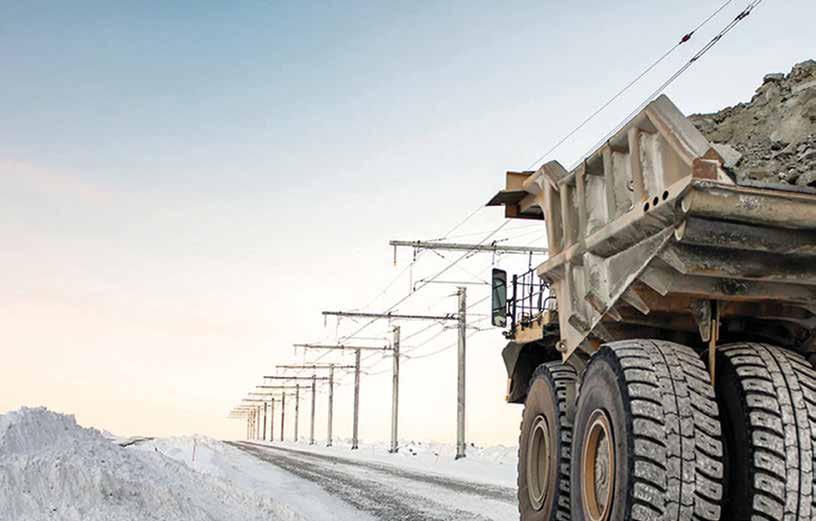
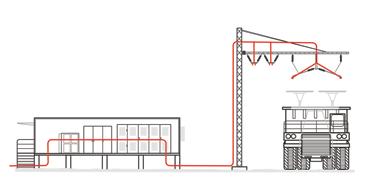
A haul truck operates beneath an electric trolley line, drawing power from overhead wires during the most energy-intensive portions of the haul. Trolley assist can reduce diesel consumption and emissions while allowing loaded trucks to travel faster uphill. CREDIT: BOLIDEN/ABB
ABB’s eMine Trolley System supplies electric power to haul trucks through a rectifier substation, overhead catenary lines and a truck-mounted pantograph. The truck can operate normally away from the trolley line, then connect to external power for demanding uphill hauls. CREDIT: ABB
ramps, engineers can design dedicated conveyor corridors or steeper conveyor routes. While conveyors support high, steady throughput once built, Ebrahimi notes they are less adaptable than trucks when orebodies, schedules or market conditions shift. This trade-off between flexibility and efficiency sits at the very heart of the modern haulage decision.
The three pillars of modern haulage
The conversation is no longer simply trucks versus conveyors. Mine planners now have a diverse range of technological solutions that can be deployed independently or integrated together:
• Battery-electric vehicles (BEVs): BEVs replace traditional diesel engines with rechargeable batteries. They are particularly attractive for underground operations, where eliminating diesel exhaust drastically improves the working en-
RICHWOOD
The earlier a mine tests its haulage options, the more opportunity engineers have to physically shape the pit around the most efficient system.
vironment and reduces the need for extensive ventilation and cooling. However, Ryan Lafreniere, a mining engineer with Hatch, notes that battery power has logistical limits for massive trucks carrying heavy loads up long, steep ramps, as batteries add weight and introduce operational complexity.
• Trolley assist: Under this system, trucks operate normally away from the trolley line and then connect to overhead electrical wires for the energy-intensive uphill portion of the haul. Electric power allows loaded trucks to climb faster while slashing diesel use. ABB reports that its eMine Trolley system can reduce diesel consumption by up to 90% on electrified sections.
• In-pit crushing and conveying (IPCC): Instead of a truck carrying every load out of the pit, a fixed, semi-mobile or mobile crusher reduces the rock to a size suitable for a conveyor. At Vale’s S11D iron ore complex in Brazil, excavators feed mobile crushers connected to a 68-km network of conveyors. According to FLS calculations, this largely truckless system reduces energy consumption by 67%, carbon dioxide equivalent emissions by 73% and mining costs by at least 15% compared to a similar truck-and-shovel operation.
The rise of hybrid haulage systems
For many modern mines, the most realistic approach is not a complete switch from one system to another but rather a hybrid model.
A mine might deploy trucks near the mining face, then route material through an in-pit crusher and conveyor for the long lift to the surface. Another might retain its truck fleet but install trolley lines on the steepest ramps.
“The deeper and more long-lived the pit, the stronger the case becomes for conveyor-based or hybrid solutions,” said Ebrahimi, provided the project can support the necessary capital cost, complexity and physical layout. Geometry is a critical factor; conveyors are highly practical in elongated pits but difficult to implement in strongly conical ones.
Power sourcing is equally crucial. Electrifying a fleet does not automatically render a mine low-carbon; the emissions benefit heavily depends on how the local grid generates its power. Furthermore, while trucks allow a mine to begin operating with less upfront fixed infrastructure, IPCC and trolley systems require massive initial investments that only pay off via lower operating costs over a long lifespan.
STRATEGIC INTEGRATION:
Planning before pouring concrete
The most costly mistake a mining company can make is treating haulage as an isolated equipment purchase decided late in project development.
Companies are increasingly evaluating emissions and power availability at the scoping or preliminary economic assessment stages. Trade-off studies must look beyond the sticker price of equipment, examining the cost per tonne moved, fleet productivity, construction risk, ramp-up time and the subsequent effects on pit design.
Metso’s IPCC planning approach, for example, begins with a trade-off assessment at the scoping stage and integrates into detailed execution planning at feasibility. The earlier a mine tests its haulage options, the more opportunity engineers have to physically shape the pit around the most efficient system.
CONCLUSION:
Finding the perfect combination
Haul trucks are not disappearing from open-pit mining; their unmatched flexibility remains vital, especially close to the mining face. However, the legacy assumption that every single tonne of rock must travel from the pit bottom to the surface in a diesel-guzzling truck is being actively dismantled.
“Every mine is unique,” said Lafreniere, emphasizing that the best choice relies entirely on the deposit, depth, production rate, climate and a company’s tolerance for risk. The future of haulage will be built from combinations: a truck handling the short distance to a crusher, a conveyor dominating the long climb and a trolley line powering the steepest ramps. The question is no longer if there is one definitive way to move rock but rather which combination works best for each individual mine.
Salima Virani is a freelance mining writer.
By Simon Barnes
Technology providing modernized asset management
We get it; it has been around a long time. The benefits of Enterprise Asset Management (EAM) have long been understood: improved asset lifetime, reduced unplanned downtime, efficiency savings on maintenance and coordination on HSE and regulatory compliance. But do all operations actually see these benefits come to fruition, especially in those industries, like mining, that contend with harsh, remote environments and increased regulatory pressures. Add to that, the ever-increasing emergence of new technology outstripping the speed at which industries can adopt, leaving businesses reeling from competitive pressures to be the best, to be efficient and to do more with less.
In the early years of EAM, the base standard was to cover work management, procurement and inventory and asset maintenance. The focus was on planned versus corrective maintenance, reducing cost and increasing asset list through efficiencies of knowing where the work was to be done, sending the right resources (once!), capturing the data and improving asset data quality. The challenges were seen to include significant investment cost in upfront purchase of technology and software license costs, but also resistance to change in the workforce through a fear of the unknown and that “computers are taking our jobs” mentality.
In today’s business world, those challenges are being met and swept away. EAM providers now offer software-as-a-service (SaaS) that delivers solutions at a low initial cost that includes hardware, software and deployment costs at an as-you-use rate that is Opex rather than Capex. Today’s workforce is now more likely to want to use the technology at work that they already use in their home lives.
Mobile working
There have been some successes, the benefits of mobile working solutions provide businesses with much more efficient methods of delivering work to technicians in the field, in data collection and asset data quality. In the U.S. and Canada, it is estimated that 95% of businesses utilize some form of mobile working technol-
ogy. In oil and gas, this drops to 85% and remote monitoring falls to 80% of businesses reporting to have adopted or a plan to adopt technology. In the mining industry, the figures are lower, 60% of surveyed mine sites utilize technology such as mobile devices, smartphones, tablets and wearable devices. Of these, 61% report direct increases in productivity and operational efficiency and 50% report major improvement in worker satisfaction.
Some of this reduced uptake is attributed to a lack of investment, where the perceived cost investment costs will not provide the returns in efficiency savings that have been projected. This is as much to do with the harsh environmental working conditions rather than a lack of desire to adopt. The example here is the adoption of mobile working technology in a relatively clean working environment of an inventory warehouse or the mechanical utility room of an office building even with PPE, the uptake is significantly higher. When the workers must operate outside in sub-zero temperatures, and their “desk” is the dash of their truck, we see a significantly reduced rate of uptake. The perceived efficiencies are lost because to operate the mobile solution, the workers must return to their trucks, strip off layers of PPE, refocus before logging and then entering the formation that they require.
This is where the artificial intelligence (AI) technologies that are now available to solution providers step in. Thought-leading organizations are developing tools that will read a delivery docket and upload this information to the EAM, or the workers will be able to provide the necessary work order data by simply speaking it and letting the technology do the rest.
Regulatory
Increased regulatory requirements, including safe working, permitting, incident reporting, management of change and regulatory reporting have typically seen low adoption rates within EAM systems. Often, businesses will manage these through disconnected, third-party systems leading to increased license costs
and challenges when connected for reporting. EAM systems such as Maximo Application Suite (MAS), through its Manage application, have provided modules for many years to cover these requirements. However, there was a significantly increased investment cost as the licensing module required additional industry solutions (oil and gas or HSE) to be implemented.
This additional license cost has all but evaporated with new models, such as App Points, that are based on actual concurrent usage rather than the up-front “at-seat” license model.
HSE module experts have seen significant number of clients wishing to extend their EAM footprint to implement the benefits of integrated HSE Incident Reporting and Management of (Engineering) Change (MOC). This then leads to the adoption of further mobile working providing users with the ability to report incidents, hazards or unsafe working rapidly and operations to effectively and efficiently respond, and just as importantly, record the response and follow up actions.
Smart technologies
A lot of the technologies that are seeing rapid uptake do not impact the field workers of today directly. These technologies operate, as they should, behind the scenes.
Remote sensors, devices attached to assets to record both operational conditions, alerts and run time usage, are now significantly cheaper and more deployable in a variety of ways. Traditionally,
mining and oil and gas always had eyes on their critical production assets. Technology benefits are limited to electronic operator logbooks and enhanced shift handover processes and other such software improvements. However, for non-critical assets, the ability to attach sensors to record and provide data feeds has seen improved uptake. This data allows for meter and condition based preventive maintenance rather than the old calendar frequency methodology. Cloud technologies are now allowing organizations to reduce costs by 30% to 40%. True SaaS models (combining infrastructure and license costs) allow organizations to benefit from having a monthly cost rather than significant upfront investment cost. The use of globally available cloud infrastructure such as AWS and Google means that these environments can use the benefits of scale and move the burden of maintaining secure, always available systems away from the end-user businesses to the SaaS provider.
AI (artificial intelligence technology)
We can talk a lot about AI and the power of Large Language Models (LLMs). There are misperceptions about what AI is and how it will affect industries such as mining and oil and gas. The following are a few things to consider:
1. AI is not a world of sci-fi and robots carrying out repairs and maintenance on assets, those robots having a cheery disposition and being able to make advanced judgment calls on what and how to maintain, repair or replace failed assets. That, for the short and medium term, remains within the control of the trained, respected and talented engineers, technicians and trades that have done so for many years.
2. Predictive analytics is another topic. This is where the vast amounts of data that is available to Large Language Models will allow AI Tools to search for improvements and efficiencies in current and future maintenance models. These predictive maintenance models already exist and have been honed and improved already. Is there really a lot of savings to be made?
3. Where AI tools can be (and are being) harnessed is with tech solutions that will make it simpler to gather and input data into our systems. Traditionally, systems required data to input in a very formal manner, screens on desktops and mobile devices, laid out a form that must be filled out in a particular manner, data had to be typed, and it has to be accurate. And although the simplicity of these forms and methods has been improved over the years, it still requires that the worker must enter that data. AI technologies can go one step further; they can capture images and the spoken word and interpret that information before sending on to the EAM system to process. Thus, taking a scan or speaking words into a device to capture the necessary data with no need to return to the truck, and no need to remove PPE. The data and the original recording (in case of a need to review later) are all collated, processed and updated seamlessly into the system with less keyboard-time and more wrench-time.
Simon Barnes is a Senior Consultant at Naviam, a leading IBM Maximo partner that helps organizations make better decisions through connected asset data and operational intelligence.
WY25 HDS Belt Scale WP50 Belt Scale Processor
WY-15 Conveyor Belt Scale
HARJIT SAJJAN:
Why critical minerals are Canada’s next national
security frontier
Critical minerals have become essential not only for the global energy transition but also for national security and defence. As countries work to secure reliable domestic supply chains, mining, manufacturing and defence are becoming increasingly interconnected. Canada’s abundant mineral resources position the country to play a larger role in supplying materials needed for advanced technologies, but building resilient supply chains will require investment, collaboration and long-term planning.
Juno Industries was founded with the goal of helping Canada address some of its most pressing defence and technology challenges through innovation. The company aims to become a trusted partner capable of developing solutions that strengthen Canada’s industrial and security capabilities while supporting national sovereignty.
CRITICAL MINERALS HAVE ALWAYS MATTERED
CMJ: AS CANADA’S FORMER MINISTER OF NATIONAL DEFENCE, YOU HAVE SEEN FIRSTHAND HOW STRATEGIC VULNERABILITIES CAN AFFECT NATIONAL SECURITY. HOW DO YOU VIEW THE RELATIONSHIP BETWEEN CRITICAL MINERALS AND DEFENCE READINESS, PARTICULARLY AS COUNTRIES RACE TO SECURE SUPPLIES OF MINERALS ESSENTIAL FOR BATTERIES, ELECTRONICS, AUTONOMOUS SYSTEMS AND ADVANCED MILITARY TECHNOLOGIES?
Harjit Sajjan answered, “Critical minerals have always been essential to national security,” although he believes their importance has only recently become part of the broader public conversation.
During an interview with Canadian Mining Journal, Hon. Harjit Sajjan, former minister of national defence and co-founder and executive chairman of Juno Industries, discussed the growing importance of critical minerals to defence, Canada’s need to strengthen domestic supply chains and the role governments and industry must play in ensuring the country remains both resource-secure and defence-ready.
“I mean, it is something that has not been discussed in the past as much before,” Sajjan said. “I think in recent times, this discussion has not only come more into the public sphere, but governments are paying more attention because the international rules-based order of allowing global trade in critical minerals has obviously eroded.”
He explained that changing geopolitical conditions have reinforced the direct connection between critical minerals and military preparedness.
“It is absolutely essential where the pathway between criti-
Hon. Harjit Sajjan
CRITICAL
MINERALS AND SUPPLY CHAINS
cal minerals and defence readiness takes place,” he said. “This has always been there, but I would just say it has now become highlighted much more significantly.”
For Sajjan, the issue is not that critical minerals have suddenly become strategically important; rather, governments are now recognizing a reality that has existed for decades. Modern defence systems increasingly depend on secure supplies of minerals used in electronics, batteries, communications equipment and advanced technologies, making supply chain resilience an integral part of national security planning.
LESSONS FROM GEOPOLITICAL TENSIONS
CMJ: MANY OF THE TECHNOLOGIES SHAPING MODERN DEFENCE — FROM DRONES AND AUTONOMOUS SYSTEMS TO COMMUNICATIONS AND SURVEILLANCE PLATFORMS — DEPEND ON SECURE ACCESS TO CRITICAL MINERALS. WHAT LESSONS SHOULD CANADA DRAW FROM RECENT GEOPOLITICAL TENSIONS WHEN IT COMES TO DEVELOPING DOMESTIC CRITICAL MINERAL SUPPLY CHAINS?
Sajjan said recent geopolitical developments have forced Canada and many other countries to reconsider the resilience of their supply chains.
“The current tensions that we see around the world are making many nations, especially here in Canada, take a look at what supply chains we need to have that are integral to Canada,” he said. “We cannot be put into a situation where our national security is threatened because we do not have access to certain minerals or certain equipment to allow us to refine our minerals.”
He acknowledged that the international environment has changed significantly.
“Sadly, the world has moved in a very different direction than we had hoped,” Sajjan said. “The current tensions are forcing us to look at what supply chains we need to have within our own borders.”
While strengthening domestic capabilities is essential, he added that international partnerships will remain an important part of Canada’s long-term strategy.
“If we do need to go outside, we must be making sure that we have arrangements and trade deals with trusted partners,” he said. “The reverse side of that is also for other nations to take a look at Canada as a kind of reliable partner as well.”
Sajjan believes Canada’s reputation as a dependable trading partner could become an important competitive advantage as countries seek secure, trusted sources of critical minerals and refined products.
BUILDING CANADA’S COMPLETE SUPPLY CHAIN
CMJ: CANADA HAS SIGNIFICANT RESERVES OF NICKEL, COBALT, RARE EARTH ELEMENTS AND OTHER CRITICAL MINERALS, YET MUCH OF THE DOWNSTREAM PROCESSING AND MANUFACTURING CAPACITY REMAINS CONCENTRATED ELSEWHERE. FROM A NATIONAL SECURITY PERSPECTIVE, HOW IMPORTANT IS IT FOR CANADA AND ITS ALLIES TO BUILD MORE INTEGRATED DOMESTIC SUPPLY CHAINS?
Sajjan said, “Canada is a natural resource power. But I think mistakes in the past looked at the way the world was, and we thought it was going in a different direction, that some of the refining could be done with other partners.”
Events in recent years have demonstrated that relying heavily on offshore processing creates strategic vulnerabilities, he said.
“Sadly, that has shown that this is not going to work. We cannot just send our minerals — especially our critical minerals — in raw form to be processed somewhere else for us to then try to repurchase them after they are refined.”
Instead, Sajjan argued Canada should invest across the entire value chain.
“We need to invest in more technology on how to refine critical minerals. We need to create far greater capacity,” he said. “I think what Canada needs is to look at discovery, extraction and the processing of critical minerals inside the country.”
Building that capacity will require substantial investment, he acknowledged, but he believes the long-term benefits justify the effort.
For Sajjan, strengthening Canada’s critical mineral supply chain is about far more than supporting mining. It is about creating an integrated system that spans discovery, extraction, refining and advanced manufacturing while reinforcing Canada’s economic resilience and national security.
A NEEDS-BASED INNOVATION COMPANY
CMJ: JUNO INDUSTRIES HAS POSITIONED ITSELF AT THE INTERSECTION OF DEFENCE TECHNOLOGY AND CANADIAN SOVEREIGNTY. CAN YOU EXPLAIN THE COMPANY’S MISSION AND LONG-TERM VISION, AND HOW THAT MISSION ALIGNS WITH STRENGTHENING CANADA’S INDUSTRIAL, TECHNOLOGICAL AND SECURITY CAPABILITIES?
Sajjan said Juno Industries was created with a different philosophy than many traditional technology companies.
Rather than developing products first and then searching for customers, he said the company’s objective is to work alongside Canada in solving complex national challenges.
“What we want Juno Industries to be — and the reason it was founded — is we want to be a partner in Canada to solve Canada’s difficult challenges as we look at future threats to the country and how we solve some of these threats, whether it is developing new technologies or new ways of operating,” he said.
Sajjan described the company’s long-term vision as becoming an innovation-driven organization capable of responding to evolving national priorities rather than focusing on a single technology or product.
“So, being a reliable industry partner to the country in solving its challenges. We look at becoming a needs-based company, an innovation company that hires amazing talent that can solve many problems.”
He hopes Juno Industries will become a go-to organization for governments when new challenges arise.
“When there is a challenge that needs to be solved and a solution is needed, we want the military or the nation to be able to say, ‘Let’s talk to Juno Industries because they might have a solution for these problems.’”
“Even though we recently started, we have already had some good success down this path.”
His comments reflect a broader vision that places innovation at the centre of Canada’s long-term security strategy, with industry playing a larger role in anticipating future defence requirements rather than simply responding to existing procurement needs.
GOVERNMENTS AND INDUSTRY MUST WORK TOGETHER
CMJ: LOOKING AHEAD, DO YOU SEE CRITICAL MINERALS BECOMING AS STRATEGICALLY IMPORTANT TO NA-
TIONAL SECURITY IN THE 21ST CENTURY AS OIL WAS IN THE 20TH CENTURY? WHAT ROLE SHOULD GOVERNMENTS, MINING COMPANIES AND TECHNOLOGY FIRMS PLAY IN ENSURING CANADA REMAINS BOTH RESOURCE-SECURE AND DEFENCE-READY?
Sajjan said, “Critical minerals obviously play an extremely important role when it comes to microchips and so many different things that are needed for building our military industrial base. It is vital right now that we invest in our entire supply chain. If we do not, some of the technology that we need to build — especially if we wanted to increase the scale of it — we will not have the necessary tools to be able to do so. We are already seeing significant impacts of this, whether it is the chips that are way more expensive now to build, so the prices are going up.”
“We need these critical minerals to build some of the new technologies that are coming online. If you look at the supply chain, whether it is chips or batteries, there are so many things that we need to focus on. But this is one area that governments cannot do it alone either. As you know, in the mining sector, critical minerals are just a small component to certain companies. I can understand the challenge that it is going to have for larger companies saying, ‘Why should we look at a small little market like this when most of the work is done in other areas?’”
“But I would submit that companies, especially large companies, do need to step up and look at playing an important role because of the strategic importance for their countries. Governments need to put more emphasis on investment, but we also need to look at partnering on technology investment. As you probably have seen, certain countries can flood the market and bring the price down significantly, which does not make it viable for a company to be in this market. There is going to have to be support from government to put some caps or ceilings — a kind of baseline price — so that a company knows if it invests in critical mineral refining, there will be a guaranteed price that makes it economically viable.”
“This is going to take a significant government-private partnership, but I believe that not only can it happen, but it is also absolutely necessary that we get this done if we want to achieve true sovereignty within our own nation.”
Watch the full interview at https://youtu.be/pLLNq6lloXc?si=FprqKcHnMxKw4Yu4
Developing a sustainable carbon capture solution for heavy industry
Expanding anorthosite product lines through carbon capture
innovation
AnorTech has announced a joint research project with the National Research Council of Canada (NRC) to develop alumina-based catalysts for efficient CO2 capture. In this interview, AnorTeck’s CEO, Jim Cambon, shares why this partnership is an important step for AnorTech and how it could contribute to industrial decarbonization in future.
Q: JIM, WHY IS THIS RESEARCH AND DEVELOPMENT PROJECT SIGNIFICANT FOR ANORTECH?
A: This catalyst project is an opportunity to work directly with the Canadian government to explore the potential development of a low-cost solution to carbon capture. Our business model involves working with leading industry and government partners where possible to advance our anorthosite product lines, and this collaboration clearly supports our model.
AnorTech’s vision is to be the leader in the development of sustainable and innovative products made from anorthosite, and this collaboration is aligned with that vision. By advancing several applications toward commercialization, we aim to strengthen the strategic position of the company.
Q: HOW DID THE PARTNERSHIP BETWEEN ANORTECH AND ONE OF CANADA’S LEADING RESEARCH ORGANIZATIONS COME ABOUT?
A: Over the past year, AnorTech has provided the NRC with several alumina samples made using our proprietary process from our Gronne Bjerg anorthosite deposit. These samples were produced to varying specifications for the NRC’s program aimed at developing catalysts that capture CO₂ and convert it to methane through hydrogenation. The success of our alumina in this program led to this next stage of collaboration. Building on its previous work with our alumina, the NRC invited us to participate in a new project that fits perfectly with our goals and allows us to share in the intellectual property developed through the process, which is important for creating shareholder value.
AnorTech already owns a proprietary process for producing sustainable smelter-grade alumina from anorthosite and continues to expand the range of products enabled by its flowsheet, including high-purity alumina and low-to-zero CO₂ refractory cement products.
Q: THE RESEARCH PROJECT HAS POTENTIAL APPLICATIONS IN OIL AND GAS, CEMENT, AND OTHER HEAVY INDUSTRIES. WHY IS THE PARTNERSHIP FOCUSING ON THESE SECTORS?
A: Post-combustion carbon capture from exhaust gases in heavy industries like oil and gas and cement is currently expensive and typically relies on chemical solvents. A simpler and more sustainable solution could provide meaningful benefits for these industries. The ability to use sustainable, zero-waste alumina is a significant added benefit.
Q: WHAT OPPORTUNITIES COULD THIS PROJECT CREATE FOR ANORTECH?
A: By increasing the number of applications under development, we continue to add value to our shareholders and reduce the risk of our business model. Success in this project could open new opportunities in the carbon capture market and further demonstrate the versatility of our alumina. Anorthosite is a unique mineral and has the potential to make sustainable products. We are still in the early stages of determining what new products we can produce with it.
Q: HOW IMPORTANT ARE PARTNERSHIPS LIKE THIS FOR DEVELOPING NEW APPLICATIONS AND ACCELERATING COMMERCIALIZATION?
A: We believe very strongly in the importance of developing partnerships for both R&D and in commercializing our applications. Not only do partnerships help share the costs of product development, but more importantly, they bring together expertise and brainpower, stimulating innovation that can be more difficult to achieve when products are developed in isolation. We hope to provide regular updates on this as data becomes available from the project.
AnorTeck’s CEO, Jim Cambon
AnorTech’s Gronne Bjerg anorthosite project near Nuuk, Greenland, provides the source material for the company’s sustainable alumina, which supports its catalyst research. CREDIT: ANORTECH
Smoothing the peaks:
How large-scale BESS is redefining mine energy economics
The modern mining operation is caught in a structural tightrope walk. On one hand, operators face deep foundational mandates to reduce carbon footprints and align with aggressive ESG metrics. On the other hand, the physical realities of extraction, processing, and crushing demand immense, unyielding, and frequently volatile amounts of electrical power.
Whether drawing power from an overburdened provincial grid or operating on an isolated island microgrid reliant on heavy fuel oil, mines are highly sensitive to power delivery structures. As electrification sweeps across mine sites — from hauling fleets to ventilation systems — the strain on energy infrastructure is compounding.
Historically, mining operations managed these power spikes by over-specifying local generating capacity or absorbing massive Global Adjustment and demand charges. However, that option is becoming increasingly difficult with the exponential growing energy demand across industries.
Today, the rapid maturation of large-scale battery energy storage systems (BESS) coupled with advanced, real-time energy management systems (EMS) introduces a highly sophisticated technical alternative. By integrating utility-scale stationary storage, mines can shift from passive energy consumers to active grid participants, optimizing the three core pillars of modern industrial energy management: peak shaving, load shifting, and demand response.
1. Peak shaving and flattening the demand curve
Mining is inherently a business of transient, heavy loads. The starting of massive sag mills, the simultaneous activation of deep-well hoisting mechanisms, or the sudden ramp-up of crushing circuits cause momentary but extreme spikes in power demand.
For grid-tied mines across Canada — particularly in jurisdictions like Ontario with stringent peak-demand pricing or Alberta and B.C. with high demand-charge thresholds — these transient peaks dictate utility billing for months or even years. For remote mines, these spikes require keeping secondary and tertiary diesel gensets spinning on hot standby, consuming fuel and generating emissions purely to handle a brief surge.
Large-scale BESS provides a buffer against this volatility. Controlled by an EMS running low-latency monitoring loops, the system tracks real-time power draw down to the millisecond, understanding exactly when to supply energy to support on-side demand. When mill operations push total consumption past a predetermined financial or physical threshold, the BESS instantly discharges behind-the-meter energy. It effectively “shaves” the peak.
Peak shaving: Battery reduces peak demand by discharging during high load periods.
By satisfying the brief, intense surges with stored battery energy rather than drawing from the utility or starting an idle generator, the mine drops its peak demand profile. The financial return is direct and substantial, immediately reducing the fixed demand penalties that inflate industrial utility bills.
2. Load shifting to capitalize on the clock
Electricity pricing is fundamentally cyclical. Under time-ofuse (TOU) tariffs or volatile wholesale market dynamics, the cost of a kilowatt-hour can fluctuate dramatically over a 24hour window. Compounding this is the variable nature of co-located renewable assets; solar arrays and wind turbines produce energy based on atmospheric conditions, which may not line up with a mine’s milling schedule.
Load shifting utilizes the scalable capacity of a BESS to decouple the “generation” of electricity from its “consumption.”
During off-peak hours — typically overnight when grid demand is low and electricity is cheap, or during midday periods of intense solar abundance — the EMS directs power into the storage array. When the grid enters peak pricing windows or when renewable generation dips, the battery system takes over the site’s base load or auxiliary operations.
For a mine, this means energy-intensive processes like tailing pumps or secondary processing can effectively run on inexpensive, stored power, maximizing the internal rate of return on renewable assets and shielding the bottom line from volatile daily energy markets.
3. Demand response: Generating revenue from versatility
Beyond internal cost mitigation, large-scale energy storage transforms a mine asset into a valuable grid stabilizing tool. Provincial system operators constantly struggle to maintain grid equilibrium amidst extreme weather events and an increasingly decentralized energy mix. To combat this, they of-
ESG AND ECONOMICS OF MINING
fer lucrative financial incentives through demand response (DR) programs, paying large industrial users to shed load on short notice.
Historically, participating in DR meant halting production — a non-starter for operations where hourly downtime is measured in hundreds of thousands of dollars.
A commercial BESS completely alters this equation. When a provincial grid operator triggers a DR event, the intelligent EMS reacts autonomously. Instead of shutting down operations, the mine seamlessly transitions a significant portion of its grid draw to the battery array. The utility sees a major drop in grid demand, the mine receives substantial capacity payments from the system operator, and the mill continues to grind uninterrupted.
Engineered for the harshest environments
Advocating for large-scale energy storage within the mining sector requires acknowledging the rugged parameters of the job site. Industrial BESS architecture has advanced well beyond standard commercial enclosures. Modern units deploy precision liquid-cooling systems and advanced thermal management capable of keeping cell temperature differentials tight (often within 5°C), ensuring stable, repeatable performance whether operating in sub-zero northern winters or high-tem-
perature summer environments.
Furthermore, integrating multi-protocol communication structures (such as Modbus-TCP, IEC104, and MQTT) allows these systems to mesh seamlessly into pre-existing mine SCADA infrastructures. Safety protocols have similarly matured, featuring multi-tiered sensor arrays, explosion prevention mechanisms, and localized fire suppression built directly into modular, scalable enclosures.
Battery storage system’s solidifying role in mining
Energy is becoming a concerningly dynamic variable that needs to be managed and optimized. As the Canadian mining landscape navigates the complexities of electrification and carbon accounting, relying solely on traditional power infrastructure introduces an unnecessary layer of financial exposure.
Large-scale battery energy storage systems offer the precise operational flexibility that modern mines require. By smoothing out peak demand, shifting loads to optimal financial windows, and monetizing grid interaction via demand response, a robust BESS deployment converts energy infrastructure from a major operational expense into a strategic, resilient advantage.
Tony Moore is the director of commercial sales at Polaron Energy.
The perks of going small: Why ARLYX shrunk the miner
By David Cassels
Decades ago, Michael Simard’s grandfather suffered injuries and watched colleagues die in Canadian mines. Although health and safety standards have improved since then, Simard says major risks remain rooted not in paperwork or compliance binders, but in physics.
ARYLX, the company he founded, builds compact autonomous electric vehicles for underground operations. It designs the machines, the software and the cloud systems that run them. The goal is simple: make the miner smaller.
So, why go small? Simard says there are several benefits, ranging from battery-charge times to ventilation logistics, but his company’s key priority is safety. “You can add the biggest brakes you want to a large vehicle, at the end of the day, it is impossible to stop in less than one metre with a big haulage truck,” he explained. In other words: it is a physics problem. Bigger vehicles need more space to stop. In hazardous environments with limited visibility, this can pose a real danger for workers alongside these machines. In conditions where a haulage truck takes 10 metres to stop moving, Simard says ARLYX’s vehicles need as little as 0.3 metre. That can make a huge difference.
Simard sat down with Canadian Mining Journal to discuss his company, its technology and the current needs of autonomous health and safety in mining operations.
CMJ: WHAT IS YOUR PERSONAL BACKGROUND? HOW DID YOU GET INVOLVED IN MINING?
MS: My dream was to work in the Canadarm2 control centre at the Canadian Space Agency — the robotics arm of Canada space. I managed to do it. I worked in the control room, but I needed more space for creation and imagination, so I decided to build my own company to do autonomous vehicles. All my family is in the mining sector. My grandfather lost many friends and had many injuries in mines. It is funny because I am from Chibougamau, in northern Quebec, I decided to leave Chibougamau to find a more fulfilling career in technology in Quebec City and Montreal, but now, I am returning to that sort of region, Timmins, Sudbury, a full-circle moment.
CMJ: ARE THERE ANY OVERLAPPING SKILLS IN SPACE ROBOTICS AND MINING?
MS: In space, you need to manage cold and hot temperatures, and in mining, it is the same. In Nunavut, you can have –40ºC, but deep underground, you can have more than 50ºC. So, you need to manage the temperature.
ARLYX vehicle: The autonomous chassis.
CREDIT: ARLYX
TECHNOLOGY/HEALTH AND SAFETY
CMJ: HOW WOULD YOU DESCRIBE THE WORK THAT YOU DO AND THE TECHNOLOGY BEHIND IT?
MS: We are a Canadian manufacturer of autonomous electric vehicles for the mining industry. We design and build vehicles, software, cloud computing, safety, everything. The goal is to offer the mining industry a new kind of vehicle — a smaller vehicle — for transportation. Our philosophy is to have more vehicles, but smaller vehicles.
CMJ: WHAT PROBLEMS IS YOUR TECHNOLOGY TRYING TO SOLVE?
MS: I am not a mining guy. I am not from the mining industry. I am a robotics engineer by trade. But I have spoken to many mining operators. I have been underground many times in Australia. And all my family is from the mining sector. I think the biggest problem in the mining sector is human resources. Mines have less people — it is becoming more difficult to hire and more difficult to keep employees inside companies. With less human resources, they need to have the same throughput productivity, so the only way to do that is to increase the vehicle size for haulage trucks. But when you have autonomy, why do you need big trucks? If you have 20 ARLYX vehicles instead of four or five haulage trucks, you will have the same throughput at the end of the day.
CMJ: WHAT ARE THE BENEFITS OF SMALLER VEHICLES?
MS: There are so many benefits to smaller vehicles. They are safer. They can brake much faster than a big truck. They can also be electric without the battery swap mechanism. With smaller vehicles, you can afford to leave one vehicle to charge
when you have many vehicles. Electric vehicles need less ventilation. And the tunnels can be smaller.
That is our vision, but it is also why the big OEMs are not doing it, because there is less money with smaller vehicles. The big companies sell steel, and that is how they make money.
CMJ: WHAT ADJUSTMENTS MUST BE MADE TO INCREASE THROUGHPUT OF SMALLER VEHICLES?
MS: We try to optimize the downtimes in the mines. Two times a day, when there is blasting occurring underground, we take advantage of that by removing all the consumables and materials. When the shift starts again, there are less vehicles in the mine — less traffic — so, the big haulage trucks can move the ore more freely to the surface. More ore; more profits.
CMJ: CAN YOU SPEAK ABOUT THE HEALTH AND SAFETY COMPONENTS OF SMALLER VEHICLES?
MS: Two of our core values are safety and intuitivity, and they are correlated. The problem, like I said earlier, is that the trucks are getting bigger. There is progress in safety underground with protection and detection systems, but at the end of the day, the physics are flawed. You have a vehicle that is heavy going downward, and it is impossible to stop it in a way that is entirely safe. It is why ARLYX made a smaller utility vehicle. We are asked every day to build a bigger, more powerful vehicle, but safety is our first objective.
You also need a smaller vehicle to see around. If you have a bigger truck, it is impossible to see around the vehicle with cameras.
I am very confident that we will have a vehicle that can collaborate with other people underground. Right now, there is no autonomous vehicle that can work with other human-drivers or pedestrians.
CMJ: WHAT IS THE FUTURE OF ARLYX?
MS: ARLYX’s business model was designed around the zero-entry concept. I believe we are the missing piece for zero-entry. The end goal is to have a mine full of ARLYX. Because the platform is modular, you can put vehicles that transport ore, explosives or a firefighting module; a dust prevention module. It is like an ant farm: many small vehicles are more powerful than a few big ones.
CMJ: WHAT ARE THE ROADBLOCKS TO GETTING THERE?
MS: The mining industry needs to be more open to innovation. I do not want to be too critical, but I know many people in innovative startups, and they are struggling to get attention from the industry. We want to help the mining sector, we have good solutions and we work hard — give us a chance.
David Cassels is the daily news editor at the Canadian Mining Journal.
Michael Simard (right), the founder and CEO of ARLYX. CREDIT: ARLYX
By Tamer Elbokl,
Building trust, creating value:
Gold Fields CEO Mike Fraser on Windfall’s next chapter
Gold Fields is moving closer to a final investment decision on the Windfall gold project in Quebec following the signing of a landmark impact benefit agreement (IBA) with the Cree First Nation of Waswanipi, the Cree Nation Government and the Grand Council of the Crees. The agreement marks a major milestone for one of Canada’s largest gold projects currently under development and reflects more than a decade of engagement with Indigenous partners.
We spoke with Mike Fraser (MF), CEO of Gold Fields, about his leadership philosophy, the strategic importance of Windfall, the significance of the agreement and what governments can do to improve Canada’s competitiveness as a destination for mining investment.
Q: BEFORE WE DISCUSS WINDFALL AND THE RECENT DEVELOPMENTS SURROUNDING THE PROJECT, CAN YOU TELL US ABOUT YOUR CAREER JOURNEY AND WHAT LED YOU TO BECOME CEO OF GOLD FIELDS? HOW HAVE YOUR EXPERIENCES SHAPED YOUR LEADERSHIP APPROACH AND VISION FOR THE COMPANY?
MF: I have been very privileged over the past 25 years in this industry to work with many great leaders and great teams. The most important lesson I have learned is that, when mining is done well, it can have a positive impact on society.
My leadership approach is based on the belief that sustainable performance can only be achieved through relationships
built on trust and mutual accountability. That applies to every relationship we have, whether with our host communities, employees, investors or governments.
At Gold Fields, we are focused on creating a high-quality, reliable and trusted gold producer that can deliver sustainable performance over time. The only way to achieve that is through deep relationships built on trust, responsibility and accountability.
Q: THE WINDFALL PROJECT HAS NOW SECURED AN IBA WITH THE CREE FIRST NATION OF WASWANIPI, THE CREE NATION GOVERNMENT AND THE GRAND COUNCIL OF THE CREES. WHAT DOES THIS AGREEMENT MEAN FOR THE PROJECT’S DEVELOPMENT TIMELINE? WHAT KEY MILESTONES SHOULD INVESTORS AND LOCAL COMMUNITIES WATCH FOR NEXT?
MF: We are extremely excited about the signing of the agreement. This is a critical first step in moving the project toward approval and represents an important milestone that reflects the strength of the partnerships we have developed over many years.
For us, this demonstrates that large-scale mining projects can be developed through dialogue and engagement with all stakeholders, particularly host communities, while governments and industry work together to enable investment in major projects.
The agreement creates a framework through which shared benefits can be delivered to host communities, governments and providers of capital.
The next key steps include approval of the final environmen-
Mike Fraser, CEO of Gold Fields
A drone view of the Windfall gold project in Quebec. CREDIT: GOLD FIELDS
CEO INTERVIEW AND INDIGENOUS RELATIONS
tal review process and a comprehensive review of the project by the Gold Fields board. We are hopeful that the project can reach a final investment decision before the end of the summer.
We are ready to mobilize and are very keen to move into the construction phase. The signing of this IBA is a critical first step because it demonstrates alignment with our host community.
Q: WINDFALL IS ONE OF THE LARGEST GOLD PROJECTS CURRENTLY UNDER DEVELOPMENT IN CANADA. FROM GOLD FIELDS’ PERSPECTIVE, WHAT MAKES THE PROJECT STRATEGICALLY IMPORTANT WITHIN THE COMPANY’S GLOBAL PORTFOLIO, AND HOW DO YOU SEE IT CONTRIBUTING TO FUTURE PRODUCTION GROWTH?
MF: As a global gold mining company, Gold Fields has long sought the opportunity to establish a significant presence in Canada, and particularly Quebec, which is recognized worldwide as a stable mining jurisdiction with strong capabilities, skilled people and excellent geological potential. The opportunity to acquire the Windfall project and advance it toward development has therefore been a significant opportunity for our organization. What we like about the project is that it aligns with many of the key attributes we look for when evaluating our portfolio.
First, it comes with an extensive and highly prospective land package. Second, it is in a jurisdiction with stable and predictable policy frameworks. Third, it provides access to a skilled and experienced workforce.
In addition, Windfall gives us a platform for future growth in Canada. From a strategic standpoint, it checks many of the boxes that are important as we continue to evolve and strengthen our portfolio.
Q: THE AGREEMENT REFLECTS YEARS OF COLLABORATION WITH CREE LEADERSHIP AND COMMUNITIES. WHAT LESSONS HAS GOLD FIELDS LEARNED THROUGH THIS PROCESS, AND HOW DO YOU SEE THE RELATIONSHIP BETWEEN MINING COMPANIES AND INDIGENOUS COMMUNITIES EVOLVING ACROSS CANADA AND GLOBALLY?
MF: One of the most important points to recognize is that this agreement is the result of more than 10 years of dialogue and collaboration with the Cree Nation. Reaching this stage required us to build a deep level of trust and engagement. It meant listening carefully and, at times, modifying our approach to ensure that community feedback was incorporated into the project. The agreement also establishes concrete benefits for the Cree Nation through employment opportunities, training initiatives, business opportunities and environmental monitoring programs designed to minimize the impact of mining activities.
In our view, this creates a model for how collaboration should work. It demonstrates how shared benefits can be created for all stakeholders involved in the development of mining projects. The industry has evolved significantly. If we want society to realize the benefits that mining can deliver, then communities, governments, investors and industry must work together to unlock value responsibly. The agreement demon-
strates what is possible when relationships are built around the principle of shared value.
Q: QUEBEC IS WIDELY REGARDED AS ONE OF THE WORLD’S PREMIER MINING JURISDICTIONS. YET DEVELOPERS CONTINUE TO FACE PERMITTING, INFRASTRUCTURE AND COST CHALLENGES. WHAT MORE CAN GOVERNMENTS DO TO ENSURE CANADA REMAINS COMPETITIVE IN ATTRACTING INVESTMENT
FOR MAJOR PROJECTS SUCH AS WINDFALL?
MF: Quebec consistently ranks among the world’s most attractive mining jurisdictions, and one of the key reasons is the stability and predictability of its mining policies. For investors, that stability is extremely important.
At the same time, mining operates in cyclical commodity markets, and there is a significant opportunity to improve the efficiency of permitting processes and reduce the time required to move projects toward investment decisions.
When studies and permitting processes take too long, circumstances can change before a project reaches the development stage. In some cases, projects are never built because the environment in which they were originally evaluated has changed.
There is an opportunity to bring together all stakeholders — governments, host communities, investors and industry — to find ways of accelerating project development while maintaining rigorous standards. Supporting infrastructure is another important consideration. In some cases, the infrastructure required to support development is not yet in place.
If processes can be simplified and streamlined without cutting corners, Canada’s attractiveness as a mining destination could improve even further.
From our perspective, that is one of the greatest opportunities available today. As we think about the future development of projects such as Windfall, simplifying and smoothing those processes would create meaningful benefits for all participants.
As the company advances Windfall toward a final investment decision, the project demonstrates the value of long-term engagement, trust-based relationships and collaboration among industry, governments and Indigenous communities. With IBA now in place and key approvals still ahead, Gold Fields is positioning Windfall as a cornerstone asset in its Canadian growth strategy and a potential model for responsible mine development.
This article is based exclusively on the interview transcript. Watch a video of the full interview at https://youtu.be/b7-ZYIpM7z4
Myriad Uranium is advancing the Copper Mountain project in Wyoming; a historic uranium district once explored through programs led by Union Pacific and Bendix Field Engineering for the U.S. Atomic Energy Commission.
The company is combining historical datasets with modern drilling, geophysics and geological modelling, as it works toward a maiden mineral resource.
An updated NI 43-101 technical report marks a key step. It gives the company a framework for future drilling. With uranium demand tied to energy security, nuclear power growth and the rising electricity needs of data centres, Copper Mountain is drawing renewed attention as a potential domestic source of uranium supply.
Canadian Mining Journal spoke with Thomas Lamb (TL), CEO of Myriad Uranium, about the report, the Bendix dataset, the upcoming drilling and the role Copper Mountain could play in the U.S. uranium market.
CMJ: BEFORE DISCUSSING COPPER MOUNTAIN, CAN YOU TELL US ABOUT YOUR BACKGROUND AND HOW YOU BECAME CEO OF MYRIAD URANIUM?
TL: I began my career about 25 years ago as an M&A lawyer before moving into mining as an entrepreneur. In 2005, a business partner and I founded Gold Group, which we took public in 2010.
I later became involved in a project generator in East Africa. One of the companies that came out of that work was M2 Cobalt, which was sold to Jervois. I stayed on as an executive with Jervois.
Thomas Lamb, CEO of Myriad Uranium
A few years later, I was approached to become CEO of Myriad Uranium. At the time, the company was focused on Niger, which made sense because of my experience in Africa and my ability to speak French. Six months later, however, a military coup forced us to leave Niger.
That led us to Wyoming, where we acquired Copper Mountain. We have now earned up to a 75% interest in the project. Myriad has also added the Red Basin project in New Mexico. We have grown the company from about a $3-million market capitalization to roughly $50 million, and we are working toward an uplisting to either the New York Stock Exchange or NASDAQ.
CMJ: WHAT ARE THE MOST IMPORTANT CONCLUSIONS FROM THE UPDATED NI 43-101 TECHNICAL REPORT?
TL: Almost all the historic exploration data at Copper Mountain was generated during the 1970s, when Union Pacific Railway and Southern California Edison partnered to advance what was intended to become a large conventional uranium mine. They drilled about 2,000 boreholes and invested approximately $125 million in today’s dollars before the project became fragmented through multiple ownerships.
Our team is the first to consolidate ownership across the district. The updated NI 43-101 technical report brings together the historical information with our own recent work for the first time in more than four decades.
The report integrates the historic drilling database, new geological information, the high-resolution airborne geophysical survey completed in Dec. 2025 and the U.S. Department of Energy’s 1982 Bendix Report, which assessed Copper Mountain’s uranium endowment at up to 655 million lb. That historical endowment estimate is not an NI 43-101 mineral resource, but it remains an extremely valuable technical reference.
By integrating this information into one technical framework, the report provides a clear path toward defining a maiden mineral resource and guides the next stages of exploration.
CMJ: HOW VALUABLE IS THE BENDIX DATASET, AND WHAT DOES MODERN REINTERPRETATION ADD?
TL: Copper Mountain is a unique project because it was one of only a handful of uranium properties in the U.S. that the Department of Energy considered strategically important during the early 1980s.
Bendix Engineering carried out a comprehensive study using the historic exploration data and published its findings in 1982. That report assessed a uranium endowment of up to 655 million lb. and generated an enormous amount of technical information. We now possess much of that original material, including microfiche records, and have been able to combine it with our own results.
The biggest advantage comes from applying modern technology to that historical database. In Dec. 2025, we completed a high-resolution airborne geophysical survey that provided several important new insights. One of the most significant discoveries was a major north-south structural corridor that now appears to control mineralization. That interpretation is new and fundamental to how we plan exploration.
The geophysics also revealed that almost all the new radiometric anomalies occur east of that structural corridor, while virtually all known historical resources and principal pros-
The Copper Mountain uranium project site. CREDIT: MYRIAD URANIUM
CEO INTERVIEW
pects are located to the west. That opens a new exploration corridor that previous operators were never able to investigate properly. The Bendix work had already suggested there was potential farther east, but there was not enough information available to test that concept. By combining the historic data with modern geophysics, we now have a much clearer understanding of where future discoveries may be made.
Our phase I drilling strengthened that interpretation. We completed 34 drill holes and made several important observations, including favourable radioactive disequilibrium. Laboratory assays returned uranium grades generally 20% to 60% higher than the historical grades, while mineralized intervals were also longer than previously recognized because of that disequilibrium.
CMJ: WHAT IS THE NEXT PHASE OF DRILLING DESIGNED TO DEMONSTRATE?
TL: We have divided the phase II program into three stages. The first stage, scheduled to begin in June 2026, focuses on verifying the historic database and confirming mineralization.
Copper Mountain contains seven known deposits, six of which formed part of the conventional mine plan developed in 1979. Our first objective is to confirm the historic mineralization by drilling two to four holes at each of five deposits that have never been tested using modern drilling techniques.
We want to validate the historic grades while improving our understanding of the geology and structural controls. Based on phase I, we also hope to demonstrate that the historic grades were understated because of radioactive disequilibrium.
The first stage will also include drilling at the Lucky Cliff prospect, immediately north of the historic mining area. Historic work identified an 85-foot interval grading 1,200 ppm equivalent uranium there. Given what we have learned elsewhere on the property, we are eager to see how those historic results compare with modern assays.
The second stage will test new high-priority exploration targets within the historic mining district and farther east, where the airborne survey identified numerous radiometric anomalies.
The third stage will focus on resource delineation and infill drilling, as we work toward a maiden mineral resource estimate.
CMJ: HOW DID THE AIRBORNE SURVEY EXPAND THE TARGET AREAS?
TL: The airborne survey was completed in Dec. 2025 using a helicopter flying approximately 30 metres above the ground. We covered 192 sq. km with 100-metre line spacing, producing data of exceptionally high quality.
The survey fundamentally changed our understanding of Copper Mountain. Previously, most attention had focused on the approximately 27-million-lb. historical resource contained within a relatively small central cluster of deposits. The new geophysics suggests the project’s potential extends well beyond that area.
The first major finding was the north-south structural corridor that now appears to control uranium mineralization throughout the district. The second was that most newly identified radiometric anomalies occur east of that structure, whereas virtually all historic resources, prospects and signif-
icant mineral occurrences lie to the west.
That creates a new exploration corridor with the potential to significantly expand the scale of the project. Those discoveries have reframed Copper Mountain from a project centred on known historical resources to one with district-scale exploration potential.
CMJ: MYRIAD RECENTLY ANNOUNCED THE SALE OF THE RED BASIN PROJECT TO SUBATOMIC. WHY IS THAT IMPORTANT?
TL: We acquired the Red Basin project in New Mexico in early 2025 for approximately $525,000, split roughly equally between cash and shares. We have now sold a 90% interest in the project to Subatomic while retaining a 10% economic interest. We have also entered into a strategic alliance agreement with Subatomic, allowing us to work together on additional uranium opportunities.
Technology investors are becoming increasingly involved in uranium. I believe they see opportunities to modernize the industry, including parts of the fuel cycle that rely on technologies dating back decades.
CMJ: HOW DO YOU SEE THE DOMESTIC URANIUM MARKET EVOLVING, AND WHERE COULD COPPER MOUNTAIN FIT?
TL: The U.S. currently consumes about 50 million lb. of uranium annually while producing less than one million pounds. That imbalance has highlighted the importance of developing secure domestic sources of supply.
Government and industry recognize the need to increase domestic uranium production for strategic and energy security reasons. The growth of artificial intelligence, hyperscale data centres and other energy-intensive technologies is further strengthening demand for reliable long-term uranium supply.
Copper Mountain is well-positioned within that environment. Wyoming remains the leading uranium-producing state in the U.S. and is one of the country’s most supportive mining jurisdictions. The project also benefits from its proximity to existing processing infrastructure, including the Sweetwater mill, and from our strategic alliance with Subatomic.
Watch the two-part video of the interview at https://youtu.be/QJ1zTYlOUHY?si=udNTiYzMpnF3UmJW https://youtu.be/_Z8w8JLmZ2E?si=j805hPbJ22-aQrui
Map of the Copper Mountain uranium project. CREDIT: MYRIAD URANIUM
Why close enough is not good enough when it comes to fluid compliance
If you manage maintenance on an active mine site, you are rarely dealing with a single machine or a single manufacturer. More likely, you are responsible for fluid compliance across a mixed fleet: haul trucks, loaders, drills, dozers and a range of support equipment, each carrying its own OEM fluid specifications, each running under different load and thermal conditions and all expected to stay operational in some of the most demanding environments in the industry.
Managing that complexity is hard enough on a well-resourced site. On a remote operation where supply chain lead times are measured in days and a component failure can halt production for extended periods, your margin for error is narrow. When OEM requirements across machines seem to overlap or differ, the instinct is often to rationalize a single product across multiple applications and hope the gaps do not matter. That approach carries real consequences.
Start with the specifications, not the fluid
The most common mistake in mixed-fleet management is working backward from product availability rather than forward from OEM requirements. When you build your fluid program around what is easiest to procure, or what covers the most applications with the fewest SKUs, you are starting from the wrong place.
The right starting point is a lubrication chart: a working document that maps every machine type in your fleet to its OEM-required fluid by system, capturing viscosity grade, OEM approval or performance requirement, and, where applicable, ISO cleanliness codes for contamination-sensitive systems like hydraulics. Think of it as the single source of truth that every technician on the site can reference before selecting product from bulk storage, connecting transfer equipment or pulling from a tote.
This chart is not a one-time build. OEMs update fluid requirements as equipment evolves, and those updates do not always come with direct notification. Building a periodic review and updating the chart every time a new machine enters your fleet is a simple habit that prevents quiet compliance gaps from opening.
Where consolidation is legitimate and where it is not
If you are managing a mixed fleet, you reasonably want to minimize the number of fluid products in circulation. Fewer SKUs mean simpler procurement, lower storage overhead and less risk of a technician grabbing the wrong product. That logic is sound, up to a point.
When a single fluid genuinely satisfies the OEM requirements of multiple machines or systems, consolidation makes sense. This happens more often than people expect, and a qualified lubricant supplier can help document where consolidation is defensible and where a separate product is required to stay aligned with OEM expectations.
Where it breaks down is when a product gets used across applications because it is close enough rather than because it ac-
tually meets each specification. Close enough in a haul truck transmission, where a failure pulls a primary production asset off the line, is a very different calculation from a light support vehicle where the consequences of downtime are far more manageable. Viscosity requirements, additive chemistry, oxidation stability, shear stability, frictional performance and anti-wear protection can all vary by application. A product that underperforms in a specific system can increase the risk of accelerated wear in components such as bearings, gears, pumps, valves and hydraulic systems, often long before that wear surfaces as a failure event.
The practical test is simple: Can you document that this product meets the OEM’s stated requirements for this specific system? If the answer requires interpretation or a best guess, get a technical review before you make the call.
Site conditions are part of the compliance picture
The spec sheet gets you to the starting line. What happens after that depends on where and how the machine is actually running.
Cold weather is a good example. A fluid may meet the required operating-temperature viscosity grade but still needs to be evaluated for low-temperature flow, pumpability and startup protection in the conditions where the machine operates. If you check the spec and stop there, you may be missing a real protection gap.
The same principle applies to contamination. A correctly specified fluid that enters the machine already contaminated because it picked up particulate matter during storage or transfer, may not meet the ISO cleanliness level the OEM requires. That makes basics such as sealed storage, dedicated transfer equipment, proper filtration, clean containers and clear labeling part of the compliance program — not just housekeeping. On a dusty mine site, where lubricant moves through multiple transfer points before it reaches the equipment, that risk is present on every service event you run.
The spec sheet tells you what the ISO cleanliness level needs to be. Site conditions tell you what you need to do to make sure it stays that way.
When to escalate before it becomes a problem
Not every fluid compliance question has a clear answer in service documentation, and the cost of guessing wrong is high. The following situations warrant bringing in a technical advisor before you make a call:
Tractor at a mine site. CREDIT: CHEVRON
TECHNOLOGY AND MAINTENANCE
• A new machine enters the fleet with OEM requirements that conflict with your current fluid program: Do not assume the existing product is close enough. Get a formal validation before that machine goes into service.
• An OEM updates its fluid specifications, and your current product may no longer qualify: These updates do not always come with direct notifications. Periodic reviews of service documentation are the only reliable way to catch them.
• A machine is operating significantly outside its normal duty cycle: Extended shifts, higher ambient temperatures or unusual load profiles can push a fluid past its design limits even when it was the right choice under standard conditions. Warranty exposure is another practical reason to escalate rather than improvise. When a failure occurs and the fluid history is ambiguous or the product used was not formally approved for that application, the warranty discussion can become more difficult. Documentation of OEM-compliant fluid use from the time a machine enters service is straightforward protection that costs almost nothing to maintain.
Practical steps for remote site management
Remote and extreme-weather sites add a layer of logistics complexity that changes how you need to structure your compliance program. When a product runs out and the next delivery is days away, the pressure to substitute with whatever is available is real. The following disciplines reduce that risk before it becomes a crisis:
RIGHT MIX
• Maintain safety stocks of critical fluids: Focus on products used in your highest-priority machines and highest-consequence systems. That buffer is what keeps a supply disruption from turning into a compliance gap.
• Establish pre-approved substitution protocols with a technical advisor: Agree on acceptable alternatives in advance before a shortage creates pressure to improvise. Decisions made under urgency do not always hold up under scrutiny.
• Make fluid compliance part of technician onboarding: Which product goes where, and why, is institutional knowledge that walks out the door with turnover. A documented lubrication chart, accessible to everyone working on the fleet, keeps that knowledge in the program regardless of who is on site.
The discipline behind the details
OEM compliance across a mixed fleet is not paperwork. Every specification a manufacturer publishes reflects real engineering decisions about what the machine needs to run reliably under the conditions it was designed for. When you treat those specifications as the foundation of every fluid decision, rather than a starting point for negotiation, you build a program that protects asset life, supports warranty coverage and reduces the unplanned failures that are hardest to absorb when you are running a remote operation and the nearest repair support is a long way away.
Max Cundiff is industrial sector manager at Chevron.
Mining engineers and plant managers oversee a wide range of environmental compliance responsibilities, including the management of slurries, ore processing streams and the water used for separation, cooling, dust suppression and washdowns. Advanced filtration is also critical for treating water strained from pits, sumps, wash bays, stormwater collection points, milling, beneficiation and chemical leaching processes. As a result, dependable automatic scraper strainers play an important role in maintaining uptime while supporting broader water management and compliance goals.
Today, automatic scraper strainers are among the closest solutions to a true “set-and-forget” system, effectively removing both large and fine suspended solids from mine water, process water, cooling tower water, liquids and slurries.
The basic design represents one of the most efficient and cost-effective industrial self-cleaning strainers available. The motorized unit is engineered for minimal maintenance and operator involvement and can remove solids as small as 75 microns. These strainers allow for continuous, uninterrupted flow, including during blowdown cycles.
Design refinements can improve overall effectiveness and operational results of scraper strainers for mining applications.
Cleaning is performed by a spring-loaded blade and brush system controlled by a fully automatic control unit. The two blades and two brushes rotate at 8 rpm, for a total of 32 passes per minute. The scraper brushes penetrate the wedge-wire slots to dislodge stubborn particulates and adhered solids.
This design enables the scraper strainers to resist clogging and fouling even in mining applications with large debris and high solids concentrations. It also ensures a complete cleaning and is very effective against organic matter biofouling.
However, incorporating minor customizations or application-specific modifications can further optimize the automatic scraper strainer’s performance and suitability for a given mining application, according to Robert Presser, president of Acme Engineering Products, a North American manufacturer of industrial self-cleaning strainers.
Presser recommends the following design refinements that
can improve overall effectiveness and operational results of scraper strainers for mining and mineral processing applications.
Choose the screen best suited to the application
Scraper strainers are available in various screen constructions, each engineered to address different process requirements and operating conditions.
Reverse formed wedge wire screens are the most common screen type used owing to their strength, durability and resistance to deformation resulting from high differential pressures. The smooth continuous slot profile minimizes particle wedging and facilitates the use of automated brush cleaning systems.
For processes that require finer filtration, multilayer sintered metal mesh screens are a good option. These screens consist of multiple layers of woven wire mesh bonded together to form a rigid, porous structure.
Fine particulates should often be removed before water is routed to downstream treatment, reuse, discharge polishing, spray nozzles, heat exchangers or instrumentation. Otherwise, suspended solids can interfere with later treatment stages, clog or erode sensitive components and reduce overall system reliability.
Perforated screens with circular holes are optimal in applications handling stringy or fibrous materials like those commonly found in some mine dewatering, washdown and stormwater collection points. The round-hole geometry reduces the tendency of fibers to lodge in the openings, promoting easier self-cleaning and more reliable operation. As a result, these screens help maintain stable flow conditions and reduce the risk of blinding in fiber-laden process streams.
Affordable solutions for more effective solids removal
Scraper strainers allow the solids to accumulate at the bottom of the vessel, where the blowdown valve will open periodically to clear them out. Blowdown occurs only at the end of the intermittent scraping cycle when a valve is opened for a few seconds to remove solids from the collector area. Liquid loss is minimal, accounting for less than 1% of the total system flow.
If additional pressure is required to clean the screen, however, an inexpensive trash pump can be added to the blowdown line to assist in removing the solids, debris and sediment that collect in the strainer sump.
Alternatively, the sump can be replaced by a cylinder bracketed by two gate valves that open and close as needed to remove the solids waste.
“When you are ready to empty the cylinder, you close the top gate valve momentarily and open the bottom one by de-
With the right modifications, automatic self-cleaning scraper strainers can be adapted to handle more demanding mining and mineral processing water/wastewater streams and deliver greater long-term value
TECHNOLOGY: STRAINERS
pressing a button to dump the accumulated solids into a receptacle like a dump truck or a conveyor bucket so there is no manual handling required,” says Presser.
Add
a macerator to break up large solids
For applications with high solids loading that are prone to clogging, a macerator can be installed upstream of the automated scraper strainer. This solution accommodates heavy solids loading while ensuring uninterrupted flow and dependable, clog-free performance.
“The design effectively delivers a one-two punch, with the macerator breaking down large solids into smaller fragments and the automated scraper strainer efficiently filtering out the debris along with the tiny particles,” explains Presser.
The combination of these two established technologies is already being applied to some of the toughest, dirtiest straining applications including wastewater debris, power plant boiler water slag, asphalt transloading and meat processing waste streams.
Specify fiber-reinforced plastic (FRP) construction
When the chemical properties and temperature of the process fluid raise concerns about material compatibility, automated scraper strainers are available in other materials such as Monel, D2205, SD2507 and even fiber-reinforced plastic (FRP). The internal mechanism and wetted components can be manufactured from super duplex or similar high-performance steels.
Given the wide range of fluids encountered in mining applications, selected materials must resist pH variation, dissolved metals, chlorides, sulfates, abrasiveness and operating temperatures, while also meeting pressure and flow requirements.
Although standard carbon steel construction is adequate for typical use, corrosive environments such as those involving seawater, erosive slurries or aggressive chemicals can quickly corrode conventional equipment. This can lead to potential issues in safety, quality and compliance as well as production downtime, requiring premature strainer component replacement.
For these reasons, duplex or super duplex stainless-steel construction is used to resist corrosion, but at considerable cost.
However, a much more cost-effective option is to utilize fiber-reinforced plastic (FRP) strainers that are specifically designed to be resistant to corrosive environments at a fraction of the cost.
Presser points out that FRP can be used for external strainer construction, including for pressure vessel applications up to 300 psi. The internal mechanism is still manufactured with super duplex or similar steels. With this approach, mining operations can reduce costs by approximately 50% or more while maintaining required performance standards.
Easy field conversion between backwash and scraper
Most manufacturers of automatic filtration systems commit to either backwash or scraper-style cleaning mechanisms, resulting in equipment that is optimized for only one mode of operation. This often leaves end users with limited flexibility if process conditions change or if the original filtration technology proves to be less effective than anticipated.
According to Presser, Acme Engineering distinguishes itself by offering automatic filtration equipment that can be readily converted in the field between backwash and scraper operation, without requiring a complete system replacement.
For applications with high solids loading, and when used with a macerator, automated scraper strainers can efficiently filter out debris along with tiny particles.
CREDIT: ACME STRAINERS
Although Acme’s core design philosophy is centered on scraper-based filtration, its filter housings are engineered from the outset to support both scraper and backwash cleaning assemblies. This design allows the internal cleaning mechanism to be changed using modular components, rather than replacing the entire filter body or piping connections. As a result, operators can transition from one cleaning method to the other with minimal downtime.
This flexibility provides a significant advantage for facilities where operating conditions change over time. It also reduces the risk associated with specifying the wrong filtration technology during the design phase.
Simplifying backwash strainer upgrades
Although many mining operations would prefer to upgrade their backwash strainers, some are reluctant because of the perception that installation will require extensive and costly piping modifications. These concerns can be addressed by installing custom-engineered pressure vessels and filtration housings manufactured to integrate with existing piping configurations.
“Filtration units can be designed to drop directly into the existing system, which reduces installation labor and minimizes downtime,” says Presser. In many cases, the new filter can be installed during a scheduled maintenance window.
For mining and mineral processors, automatic scraper strainers can offer a far more stable answer to solids separation in applications where conventional screens struggle with heavy loading, changing flow conditions or persistent fouling. Continuous self-cleaning reduces the need for manual intervention, helping plants avoid unnecessary downtime and maintenance.
Jeff Elliott is a technical writer, based in Torrance, California. He has researched and written about industrial technologies and issues for the past 20 years.
Separation anxiety: Vibratory screening of bulk materials
The quarrying and mining industries rely on screen vibration for various purposes, but they often encounter similar problems. If the screening rack is properly engineered to accommodate the weight, volume, and type of motion, then the support structure will rarely require maintenance. However, vibration is commonly created by a vibratory motor with moving parts that continually combat resisting forces, as well as the harsh industrial environment of bulk handling, which inevitably reduces the equipment life (Fig. 1).
The need for vibratory screening requires operators to ensure the periodic replacement of vibrators is factored into the cost of operation. Increased speeds, high g-forces of acceleration, and power-intensive applications can cause extreme heat and wear on internal components, primarily the windings and bearings.
Punishing processing conditions such as high ambient temperatures, dusty environments, excessive material, and severe weather can also expose this equipment to damage. Even with a sturdy vibrator motor design, the constant motion and high heat can gradually wear down the bearings and winding insulation over time.
The period between potential breakdowns depends on several factors. Some of the most important include the operating environment, centrifugal force requirements, the condition of
CREDIT: MARTIN ENGINEERING
incoming power, lubrication type and intervals, and the vibrator’s design and build quality. This article will explore vibratory screening applications, how they affect material separation, and how a well-designed vibrator can improve efficiency and reduce operating costs.
Volumes and vibratory screening
Since the early 20th century, the demand for mineral resources has steadily grown, forcing bulk handlers and material recyclers to continually increase production volumes. When it comes to screening, this can impact the quality and accuracy of the separation process. Simply increasing the volume or speed of throughput might require the material to undergo several passes to achieve proper separation (Fig. 2).
Operators need to consider the following factors in vibratory screening applications:
• Efficiency: The volume of the material stream determines the amount on the screen, which can influence how well it is separated.
• Material: The speed, volume and desired output of screening are dependent on the properties and angle of repose of the application.
• Angle of repose: The angle of repose is how the material spreads naturally across the surface. The loading method and type of vibratory motion assist in even distribution across the screen.
• Screen design: First, the screen must be able to withstand additional weight. Then, whether dewatering or separating, the grid pattern, permeability and type of vibratory motion need to promote the application’s separation.
• Effective slope: The angle of applied vibration determines the speed at which the material moves down the screen. Gravity, amplitude and frequency are factors in the screen’s effectiveness.
• Vibratory amplitude and frequency: Increasing either the amplitude or the frequency will increase the volume of material moving through the system.
• Vibratory motion: There are two general vibratory motions, linear (back-and-forth or up-and-down), and elliptical (rotational).
Failure mechanisms in screen vibration
Although the main topic is vibration, it is not the only failure mechanism in the screening process. According to a comprehensive literature review, “Causes of Failures in Vibrating Screens: A Literature Review,” the definition of failure mechanisms encompasses all factors that can cause or influence structural or component failures. In essence, it refers to any non-conformity that infiltrates the vibrating screen assembly, leading to future issues.
Figure 1.Screen vibrators are wear parts, so ergonomic access is important for workplace safety. CREDIT: MARTIN ENGINEERING
Figure 2. The steady increase in demand requires managers of older screen systems to increase production beyond the original specs.
TECHNOLOGY: SCREENS
When a screening rack goes out of service, it can significantly impact production. Simply adjusting the volume of material fed to the remaining units decreases efficiency, negatively affects the quality of separation, and accelerates wear and tear, which raises the likelihood of additional breakdowns. This downtime increases labour costs, increases exposure to safety risk and elevates the cost of operation.
The study classified failure mechanisms into the following five distinct categories:
1. Design deficiency: Inadequate engineered design either in the screen structure or the vibrator (Fig. 3).
2. Manufacturing and assembly process deficiency: Post-installation structural adjustments are common and can change the centre of gravity or increase the machine’s weight, which reduces efficiency.
3. Operational deficiency: Increasing volumes that exceed the recommended limits or the miscalibration of vibrators that put an undue strain on units are common operational deficiencies.
4. Inadequate maintenance: Neglecting to monitor pads and springs on screening structures, not following lubrication procedures, and not addressing rust promptly are common and costly failure mechanisms.
5. Wear and deterioration: These factors are unavoidable, but proper installation and maintenance of quality equipment can extend the system’s lifespan.
Vibratory amplitude and frequency
Amplitude refers to the magnitude or intensity of the vibration, indicating how far an object moves from its resting position. On the other hand, frequency indicates how many cycles of vibration occur per unit of time (measured in Hertz). Higher frequency can increase volume but has the potential to increase screen wear and stress on the frame if force outputs are not considered.
The vibrator’s force can be adjusted and must at least match the combined weight of the isolated rack and the load volume. When the machine is new, the vibrators are typically set to the force output that provides the best performance. Balance throughput volume with reliability. It is important to consider wear and maintenance when changing the vibrators’ force output.
Vibrator motion and placement
In most horizontal screening applications, two vibrators on a rack work in tandem by counterrotating to produce a linear motion. This motion generates a line of force that intersects with the machine’s centre of gravity. The placement and angle of the vibrators influence how the motion occurs. With the correct slope and amplitude calculated, gravity will assist the material down the screen.
Linear side-to-side motion is effective for sectors such as mining and recycling, as it allows material to spread across the screen. Mounting vibrators on the sides of the rack causes larger materials to shift and roll to each side, enabling the heavier ends to face downward. In bulk handling, the rolling and colliding loosen aggregate and assist particles through the grate.
Linear up-and-down motion is highly effective for sand biofiltration and particulate dewatering. With vibrators mounted on rails above the material flow, the internal weights lift and drop a specialized screen made of durable fine mesh. This motion causes the separation of particulates from the screen. With each cycle, air is introduced between the particulates, and water is forced out, allowing only moisture and particles microns in size to pass through. (Fig. 4).
Elliptical rotational motion is prominent in agriculture for the threshing process, but also in recycling and bulk processing. Set in front of or behind the screen, the action causes the material to move forward, then back, using the screen as a tool to not only separate, but also, in the case of grains, remove the husk from seed. This “cheese grater” effect also helps remove loose dirt from quarried rock and fines from mined raw material.
Electric and hydraulic screen vibrators
The weight and volume of the bulk handling environment require a powerful vibrator to do the job effectively. While electric screen vibrators are common, hydraulic vibrators are more
Figure 3. A well-designed screening system is extensively tested in many applications to find deficiencies. CREDIT:
Figure 4. Hydraulic vibrators set on a sand dewatering screening system delivering linear motion.
CREDIT: MARTIN ENGINEERING
Figure 5. Proper way to adjust vibratory eccentric weights.
CREDIT: MARTIN ENGINEERING
applicable for portable screen applications where no electricity is available. The movement of a hydraulic screen vibrator is driven by a hydraulic pump that delivers pressurized fluid to the motor. The motor then converts the fluid power into rotational motion, which is transferred to eccentric weights. Eccentric weight is a rotating mass that is offset from the centre of rotation, creating an unbalanced force (Fig. 5).
Industrial electric vibrators for material screening should use inverter-duty rated and Class H insulated windings to prevent overheating in continuous-duty environments. Martin Engineering’s screen vibrators produce up to 16,500 lbs (7,483 kg) of centrifugal force. The adjustable eccentric weights tailor performance for 3- or 4-panel screens, featuring low-maintenance, greaseable and long-lasting cylindrical roller bearings. The high-strength cast aluminum cases are IP66 rated for dust and water protection with available explosion-proof models that bear the cETL, ATEX, and IECEx marks for use in hazardous locations.
An example of a hydraulic screen vibrator is the Martin Hydraulic Screen Vibrator, which provides up to 8,300 lbs (3,855 kg) of centrifugal force for efficient material separation. The IP66 enclosure ensures a dry and grit-free internal environment
and uses the same mounting bolt patterns as electric vibrators. Both units are highly effective in punishing industrial constant-duty environments. The low-maintenance components ensure long-lasting performance and peace of mind, backed by an industry-leading 3-year warranty.
Conclusion
As we have demonstrated, proper vibration is essential, but it is also a wear part, so high-quality, durable equipment is vital to prevent excessive downtime. Along with a solid guarantee, the equipment manufacturer or representative should be responsive and able to provide a replacement quickly.
A well-constructed system, along with proper calibration and placement of vibrators for the application, is essential for efficient and optimized screen separation. To further extend the equipment’s life, these systems should be easy to maintain and accessible, ensuring both workplace safety and lower operational costs.
Susie O. Bartoli is an experienced business development and marketing specialist at Martin Engineering USA, where she plays a key role in driving strategic growth initiatives.
FROM DATA TO DECISIONS:
How SmartFlow enables the digital mine
Modern Canadian mine operators are surrounded by data. Environmental sensors, vehicle telemetry, personnel tracking, electrical infrastructure, safety systems and production equipment all generate valuable operational information every day. But data alone does not create a smarter mine.
The real challenge is turning fragmented information into actionable intelligence that helps mine operators make faster, safer and more informed decisions. This is where SmartFlow plays a critical role.
SmartFlow acts as the operational intelligence layer that connects Becker’s communications, tracking, environmental, safety, and control systems into one real-time view of the mine. Instead of leaving data trapped in separate systems, SmartFlow helps bring that information together so operators can better understand what is happening underground, where it is happening and what action needs to be taken. For mines moving toward digitalization, automation and real-time visibility, this integrated approach is essential.
A digital mine requires a resilient communications backbone. Becker’s SMARTCOM solutions support the reliable movement of voice, video and operational data across demanding underground environments. Through radiating cable, repeater systems, Wi-Fi, mesh and LTE-ready architectures, mines can build the connectivity foundation required to support modern applications such as personnel tracking, environmental monitoring, fleet visibility, remote diagnostics and automation. When this communications infrastructure is paired with SmartFlow, operational data becomes more than a series of isolated readings. It becomes a real-time decision-making tool.
For example, environmental data from SMARTSENSE can help mines monitor gases and atmospheric conditions at critical points underground. When connected into a broader intelligence platform, this information can support ventilation decisions, safety alerts and operational response planning.
Personnel and asset tracking can provide visibility into where people and equipment are located throughout the mine. This supports improved mustering, emergency response, workflow planning and reduced exposure to high-risk areas.
Fleet and proximity detection systems, including PDS4.0 and SMARTDETECT, can contribute valuable safety and movement data. When integrated into a centralized operational view, this information helps operators better understand traffic patterns,
risk zones, equipment interactions and potential hazards.
Automation and control systems such as MINCOS and PROMOS can further strengthen the digital mine by connecting PLCs, drives, sensors and field devices through a unified control backbone. This creates the foundation for centralized monitoring, faster troubleshooting, and more consistent control of critical infrastructure.
The value of SmartFlow is not only in collecting this information. Its value is in helping mines interpret it.
A SmartFlow-enabled environment allows technical services teams, operations leaders and safety personnel to move from reactive decision-making to proactive management. Instead of waiting for manual reports, delayed inspections or isolated alarms, teams can see operational conditions in real time and respond with greater confidence. This has a direct impact across several areas of underground mining.
Ventilation optimization: Ventilation is one of the most significant operating costs in an underground mine. By connecting personnel location, vehicle movement and environmental conditions, SmartFlow can support ventilation-on-demand strategies that help mines better match airflow to real operational needs.
The result is improved safety, stronger visibility into air quality and potential energy savings by reducing unnecessary ventilation in inactive zones.
Personnel and asset visibility: Knowing where people and equipment are located is critical for safe and efficient mine operations. Through RFID tagging, fixed readers, mobile gateways and wearable devices, mines can improve visibility across underground work areas. This supports automated check-in and check-out, emergency mustering, man-down alerts and better coordination of work crews and mobile equipment.
Equipment monitoring and control: Modern mines rely on complex networks of equipment, drives, sensors and control systems. By integrating these systems through a common operational view, SmartFlow helps operators identify issues faster and reduce manual fault-finding.
SmartFlow control centre computers. CREDIT:
Reducing hidden electrical risks in mining operations
Practical considerations for grounding and braking systems
Mining operations subject electrical infrastructure to extreme punishment. Subterranean moisture, abrasive mineral dust and relentless mechanical vibration degrade equipment continuously. Electrical failures in these settings cause severe safety hazards and trigger catastrophic production halts. Protecting this critical infrastructure requires flawless system design and rigorous component specification.
Engineers must focus heavily on the specific components responsible for managing excess energy and fault currents. Neutral grounding systems and dynamic braking resistors form the primary defence layer for expensive mine machinery. These passive safety devices sit quietly in the background during normal operations. They activate only during dynamic shifts or critical fault conditions to absorb massive amounts of destructive energy. Understanding how to properly specify and maintain these systems ensures total operational reliability and protects personnel from severe electrical hazards.
The mechanics of ground faults in mining environments
Ground faults represent the most frequent electrical anomaly in heavy industrial settings. An active mine features miles of trailing cables powering mobile substations, massive draglines and continuous miners. Insulation degradation happens rapidly owing to constant physical wear, rockfalls and water ingress. When insulation fails on an unprotected, solid-grounded system, massive destructive currents flow directly through the equipment casing to the earth
This uncontrolled flow of energy generates extreme thermal and magnetic stress. The resulting fault current destroys motor windings, melts expensive switchgear and creates severe arc flash hazards for any nearby personnel. Uncontrolled ground faults completely vaporize copper conductors and ignite surrounding combustible materials.
To mitigate this destructive force, engineers implement resistance grounding networks. Placing a specifically rated resistor between the system neutral point and the earth ground limits the fault current to a safe, highly predictable level. This controlled approach protects the physical infrastructure from thermal damage and provides protective relays with enough time to isolate the faulted circuit safely.
Implementing high and low resistance grounding strategies
Mining engineers typically deploy two distinct grounding strategies based on the voltage and operational requirements of the specific circuit. High resistance grounding restricts the fault current to a very low threshold, typically under 10 amps. This extreme limitation allows the electrical system to continue operating safely even with an active single-phase ground fault. Maintenance personnel gain valuable time to locate and isolate the issue system-
atically without halting production on a critical processing line. Low resistance grounding manages higher voltage distribution networks and medium-voltage motor circuits. This configuration permits a larger, controlled current flow, often ranging from 100 to 400 amps. This specific current level is designed to trigger protective relays immediately. The relays sense the fault and trip the upstream circuit breaker instantly. This rapid isolation prevents extensive damage to the high-voltage distribution infrastructure and clears the hazardous condition from the mine grid. Both strategies rely entirely on the mechanical and thermal integrity of the neutral grounding resistor.
Specifying robust grounding hardware for harsh conditions
Specifying a neutral grounding resistor requires a deep understanding of the environmental stressors present in mining operations. Standard commercial components degrade quickly when exposed to corrosive atmospheres, airborne mineral dust and continuous mechanical vibration. Without proper enclosure design and material selection, these conditions can lead to insulation breakdown and dangerous electrical flashovers during a fault event.
Engineering teams typically evaluate grounding hardware based on thermal capacity, mechanical durability and environmental protection ratings. Specialized manufacturers design resistor systems specifically for heavy industrial applications, where equipment must withstand repeated thermal cycling and structural stress. In these environments, reinforced resistor elements and sealed enclosures help maintain electrical integrity under fault conditions.
The focus, often defined during the discovery phase of a project, should remain on performance under worst-case scenarios. During a ground fault, the resistor must absorb and dissipate energy without structural deformation or loss of resistance value. Selecting hardware that is engineered for high heat loads, vibration resistance and contamination control ensures the grounding system performs reliably when it is needed most.
The physics of dynamic braking in heavy haulage
Mining operations move millions of tonnes of raw material using massive electric motors. Downhill overland conveyors, deep shaft hoists and electric haul trucks generate enormous amounts of kinetic energy during deceleration. Variable frequency drives control these massive motors efficiently during standard forward operation. During deceleration or downhill braking, the mechanical load overhauls the motor. The motor then acts as a generator, pumping massive amounts of electrical power back into the drive’s direct current bus.
The drive system must dissipate this regenerative energy safely to prevent damaging overvoltage conditions from destroying the
TECHNOLOGY
sensitive power electronics. Dynamic braking resistors absorb this excess electrical energy and convert it entirely into ambient heat. This rapid thermal conversion protects the drive electronics and allows the heavy machinery to stop precisely and safely under massive loads. The braking resistor acts as the ultimate mechanical fail-safe, ensuring multi-tonne hoists and fully loaded conveyors maintain perfect speed control on steep gradients.
Critical variables in braking resistor selection
Selecting the correct braking resistor demands precise thermal and mechanical calculations from the engineering team. A common engineering oversight involves severely underestimating the duty cycle of the application. Conveyors operating on long, steep declines require continuous energy dissipation for extended durations. Specifying a resistor rated only for intermittent duty causes rapid overheating and catastrophic element meltdown. Engineers must calculate the peak power required to stop the load, the continuous power rating for sustained braking, and the exact ohmic value required by the variable frequency drive. The physical installation space also dictates the cooling requirements. Underground electrical rooms suffer from highly restricted airflow, compounding the thermal management challenge. Designers must implement forced-air cooling fans or specify significantly oversized natural convection units to handle the environmental heat load. Furthermore, the mechanical design of the resistor bank must withstand the constant vibrations transmitted by the heavy machinery it protects. Utilizing thick grid-style elements with robust ceramic insulators prevents mechanical fatigue and electrical shorting over years of continuous operation.
Maintenance and lifecycle monitoring protocols
Even the most robust electrical components require proactive monitoring. Grounding and braking systems possess a passive operational nature, meaning they only heat up during specific events. This intermittent usage easily masks developing issues from the maintenance team. Teams must implement routine testing proto-
Continued from page 56
This can support improved uptime, faster diagnostics and better visibility into the status of critical infrastructure.
Remote operations and safety protocols: Remote systems such as SMARTBLAST can support safer operating procedures by allowing specific activities to be managed from protected areas, refuge stations or surface control environments where appropriate. When connected through reliable underground communications, remote operating workflows can help reduce personnel exposure and improve procedural control.
Conveyor monitoring and production protection: Conveyor systems are critical to production, and failures can create costly downtime. Belt rip detection systems can provide early warning of conveyor damage, helping mines respond quickly before minor issues become major production interruptions.
cols and use maintenance management software to verify the electrical and physical integrity of the resistor banks. Inspecting for element oxidation, checking insulator cleanliness and verifying the torque on all terminal connections prevent unexpected failures. Implementing modern continuous monitoring relays adds a critical layer of visibility to these passive systems. Digital relays constantly measure the resistor’s continuity, leakage current and thermal state. Integrating these smart sensors directly into the mine’s central control system provides operators with real-time alerts. For teams that need a more tailored way to collect inspection data, monitor equipment status and manage maintenance actions, SolveIt mobile consultants can help turn field data into structured operational workflows. Catching a loose connection or a compromised insulator early prevents a minor degradation from escalating into a complete system failure during a critical braking event.
Conclusion
Operational reliability in the mining sector depends entirely on managing extreme physical and electrical forces. Uncontrolled ground faults and massive regenerative kinetic energy possess the capacity to destroy millions of dollars of infrastructure instantly. Implementing robust neutral grounding systems and precisely specified dynamic braking resistors neutralizes these hidden threats completely. Engineering teams protect their personnel and secure their daily production targets by demanding premium, heavy-duty components tailored exactly to the harsh realities of the mine.
MegaResistors specializes in the design, manufacturing and application of power resistors.
When integrated into a wider operational platform, conveyor alerts can be viewed alongside other mine data, giving teams a more complete picture of site conditions.
Building the foundation for the digital mine: The digital mine is not built by adding more standalone systems. It is built by connecting critical systems into a unified operational view. By integrating communications, tracking, environmental monitoring, safety systems, automation and equipment data, SmartFlow helps mine operators move beyond basic data collection. It enables a more connected, responsive and intelligent underground operation.
For Canadian mines facing rising safety expectations, energy cost pressures, labour constraints and increasing demand for productivity, this level of operational intelligence is becoming essential.
SmartFlow helps transform underground infrastructure into actionable intelligence — giving mines the visibility they need to operate safer, smarter and more efficiently.
Underground mine shaft with rail tracks and overhead lighting. CREDIT: PEXELS IMAGE/MEGARESISTORS.
Built on legacy. Driven by the future.
Introducing Sandvik DD423i and DD423iE. The next generation of development drilling is here.