A guide to care and independent living
Leaving hospital
What’s next?
continuing healthcare NHS
Who’s eligible?

SOCIAL CARE tips
Healthcare services
Choosing the right one






Who’s eligible?
Healthcare services
Choosing the right one
For anyone who struggles to leave their home without support, at-home health services can be a lifeline.
This is something that Derek Brown, who cares for his wife Margaret, knows only too well.
Specsavers is committed to ensuring that everyone has access to essential eye-health and hearing care – but also understands that it’s not always easy for people like Margaret, who suffers from Alzheimer’s disease, to attend in-store appointments.
That’s why, for the past ten years, Specsavers Home Visits has provided comprehensive NHS-funded eye tests to anyone who’s unable to visit a store unaccompanied. It’s also started to provide free at-home hearing services in selected locations in the UK.
Derek called on the Specsavers Home Visits service when Margaret needed a routine eye test and it was too challenging to get to a store. He was blown away by the expert care that was delivered during the visit and the difference the new glasses made to his wife.
Although Margaret wasn’t able to respond to the questions of the optician and their assistant, during the visit, they adapted their approach so they could prescribe the reading glasses that have expanded her world.
“If I was to say I was amazed, that would be an understatement,” says Derek. “What was so significant for me as a full-time carer was that the Specsavers experts were punctual, quiet-speaking and patient, reassuring Margaret with everything they did. The level of care expressed towards her was incredible.”
Derek, from Northallerton in North Yorkshire, has been the primary carer for Margaret, since her diagnosis with
Why Choose Specsavers Home Visits?
• Convenience: Our experts come directly to you.
• Personalised Care: Visits are tailored to the individual’s needs, with specialist equipment to ensure comfort and accuracy.
• Peace of Mind: Your loved one will receive the same kind of highquality care as they would expect in-store.
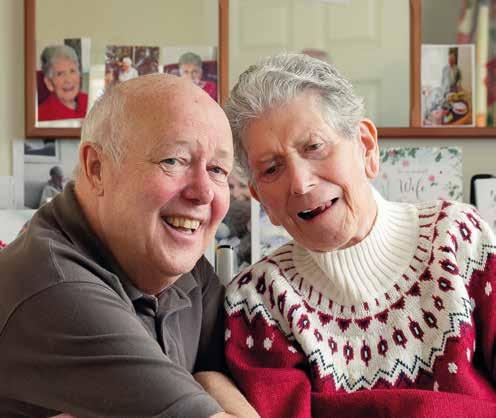
Alzheimer’s in early 2018. After she spent four weeks in hospital in 2022, Margaret’s condition deteriorated, and she has since been confined to a hospital bed in the couple’s living room, and a hoist to access a wheelchair. With multiple other health challenges, caring for Margaret is complex – but after 25 years of love and marriage Derek has risen to the challenge. As well as taking care of her everyday needs, he’s been able to improve her quality of life thanks to Specsavers at-home service.
Following her at-home eye test, the optician suggested Margaret tried some reading glasses to help her enjoy looking at family photos.
Derek was unsure how she would adapt to wearing glasses but seeing her smile while looking at old family pictures told him everything he needed to know.
“If anyone is in any doubt about inviting Specsavers into their home, all I can say is: simply try it,” Derek says. “You won’t regret it for a second.”
Derek now fights for better support and recognition for carers nationwide, and has launched a website (www.dementiaguidance.co.uk) dedicated to helping carers like him across the UK. He’s keen to ensure they have all the information they need – including the option of getting a comprehensive at-home eye test from Specsavers.

For those eligible, our mobile experts will provide a comprehensive NHSfunded eye test from the comfort of your own home, with all the same care and thoroughness as you would receive in-store. Specsavers has now also started to roll out free at-home hearing services across the UK. To find out what locations this service is available in visit our website.
Our eye care and hearing services are tailored to each person and their needs. They are designed to provide eye care and hearing services that are as individual as they are and can be adapted to meet their changing circumstances and comfort levels.

To see if you or your loved one are eligible, call 0800 0890144 or visit specsavers.co.uk/home-visits

Cambridgeshire and Peterborough NHS Foundation Trust (CPFT) provides mental health, community, learning disability, substance misuse and social care services across Cambridgeshire and Peterborough.
Every year, one in four of us will experience a mental health illness. The experience will be different for each of us, as will the type of support we need. But what mental health services are there? And how do they fit in with other health and public services?
CPFT sees about 40,000 patients a year and employs more than 4,000 staff. We provide services from more than 90 sites across the county – our biggest bases are at Fulbourn in Cambridge and The Cavell Centre in Peterborough.
CPFT’s services include:
• Children’s mental health
Depression and anxiety are two of the most common mental health illnesses and this can be treated in primary care (your GP).
• Adult mental health services
• Older people’s and adult community services
• Forensic and specialist mental health services
• Primary care and liaison psychiatry services
• Substance misuse services
• Specialist learning disability services
• Learning disability services
Our core purpose is to provide excellent community and mental health services to people of all ages across Cambridgeshire and Peterborough and beyond this geographical boundary. We also provide some specialist services on a regional and national basis.
How do you get help if you or a loved one is struggling with a mental health illness?
The help and support you receive will depend on what illness you have. Depression and anxiety are two of the most common mental health illnesses and this can be treated in primary care (your GP). If your illness is more severe, your GP may refer you on to one of CPFT’s mental health services.
If you are suffering from anxiety or depression and feel you need help, you can contact NHS Cambridgeshire and Peterborough Talking Therapies. This service allows patients to refer themselves (or your GP can refer you) and put you in direct contact with mental health professionals. Treatments include individual therapy, guided self-help, group sessions including training in Mindfulness, a range of psychotherapy courses and online options. Anyone registered with a GP in the Cambridgeshire and Peterborough area can access the Talking Therapies Service by completing an online form that can be found on the Trust’s website www.cpft.nhs.uk. They will be then be contacted by someone from the Trust and talked through the options available to them.
Alternatively, the service can be contacted by calling 0300 300 0055. The lines are open from 9am to 5pm, Monday to Friday, excluding Bank Holidays.

What to do in a mental health crisis?
You might be in crisis if:
• You are thinking of hurting yourself or suicide seems the only option
• Someone you know has made threats to hurt you or someone else.
• You are experiencing extreme distress that seems overwhelming.
If you believe you or a person you care for is in a mental health crisis and is in immediate need of help, there are several different avenues you can take.
If you believe you or a person you care for is in a mental health crisis and is in immediate need of help, there are several different avenues you can take.
If you are already receiving support from mental health services, the first point of contact should be your care co-ordinator. Your care plan will contain information on how to contact them. If they are not available, ask to speak to the clinician on duty.
If you are in crisis and need immediate help, then please contact The First Response Service (FRS). This is a service which puts your mental health first. It provides 24-hour access, seven days a week, 365 days a year, to mental health care, advice and support. If you are experiencing something that makes you feel unsafe, distressed or worried about your mental health you can now contact the FRS by dialling 111 and selecting option 2. The phone will be answered by a trained mental
health professional who will be able to listen to your concerns and help you get the support you need. With your permission, they can also access your medical records to better meet your needs and to avoid you repeatedly having to tell us your situation. They can offer advice over the phone, put you in contact with our crisis services or even refer you to a Sanctuary - safe places run by mental health charity, Mind in Cambridgeshire. The Sanctuaries offer short-term practical and emotional support between 6pm and 1am, seven days a week.
CPFT out-of-hours service is a phoneline available for CPFT’s service users who are experiencing a crisis in their mental health. The service is also available for carers who are concerned about the mental health of a service user. The out-of-hours telephone number is 0808 808 2121. This is available 7pm-11pm, 365 days a year.
If you are feeling unwell and need a telephone health assessment, please call the NHS 111 service free of charge from any phone by dialling 111.
If you are not able to obtain the support you need through the methods above, you can call 999 or go to your nearest A&E department. They will be able to assess your needs and contact mental health services to arrange an assessment or hospitalisation if necessary.

It is important to take care of yourself – both physically and mentally. Below are some tips to help you.
• Keep active and get regular exercise – this helps you sleep, concentrate, look and feel better. Regular exercise is good for your mind and body.
• Deal with practical problems when they arise –this prevents them from being overwhelming and unmanageable.
• Build and maintain friendships – friends and family give us support and comfort.
• Care for and help others – this helps us to feel good about ourselves.
• Recognise the signs of poor mental health and ask for help – ignoring problems only makes them worse. None of us are superhuman. If things get too much, family, friends or health professionals can offer help.
• Do something you’re good at – enjoying yourself can help you fight stress and boost your self-esteem.
• Eat and drink healthily – our brains and bodies need a mix of nutrients to stay healthy. A good, balanced diet is good for your physical and mental health. Drinking too much alcohol is not a good way to manage difficult feelings – once the drink wears off you’ll feel worse.
If you would like more information or support with a mental health issue, here are some useful contacts:
• NHS Cambridgeshire and Peterborough Talking Therapies: 0300 300 0055
• Lifeline out-of-hours number for mental health service users: 0808 808 2121. This is available 7pm-11pm, 365 days a year.
• CPFT website: www.cpft.nhs.uk
A good, balanced diet is good for your physical and mental health.
• Talk about your feelings – this helps us digest and process what’s going on so that we can begin to find solutions. Bottling up worries just makes things worse.
• Accept who you are – this is an important part of valuing and taking care of yourself.
• Take time to relax and unwind – this helps our resilience and helps us to get a good night’s sleep.
• NHS 111 service: Dial 111 if you urgently need medical help or advice but it’s not a lifethreatening situation.
• Samaritans: Call 116 123
• Mind infoline: 0300 123 3393 (weekdays 9am - 6pm)
• Saneline: 0845 767 8000 (everyday 6pm - 11pm)
• Childline: 0800 1111

The Care Quality Commission is here to make sure health and adult social care services including hospitals, home and residential care as well as GPs in England provide people with safe, effective, high-quality care. We publish independent inspection reports and ratings about services – information you can use when you’re choosing care for yourself, or a loved one.
You can use our website to search for services you might be interested in by geographical area, or by specialism. For example, a care home that might offer specialist care for someone who has dementia.
We also welcome your feedback on the care you have received – good or bad. We use this information to help inform our inspections and can alert authorities including local social services, if there are safeguarding concerns about care being provided.
You can visit our website at www.cqc.org.uk to find our inspection reports, or share an experience of care. You can also call us to share an experience of care on 03000 61 61 61.
Here are some tips to help you choose your care.
1 The Care Quality Commission (CQC) registers all care homes and home care agencies. You can find out which ones support specific groups of people, such as people with a learning disability or those living with dementia.
2 CQC’s Chief Inspector for Adult Social Care, always uses ‘The Mum Test’: is a care home safe, caring, effective, responsive to people’s needs and well-led? In other words, is it good enough for my Mum (or anyone else I love and care for)?
Look for care homes and home care agencies where the staff involve people who use services and their families and carers, and treat individuals with compassion, kindness, dignity and respect
Whether you are being cared for in your own home or in a residential setting, the staff looking after you need to be skilled, kind and supportive They should also be capable and confident in dealing with your particular needs. You should always feel that their support is helping you to live the life you want to.
5 A care home will be a home for you or your loved one. Residents should be treated as individuals with their likes and dislikes taken into account. Think about whether a home is close enough to family, friends, and community facilities
Look at how well-led and managed a home is. What does it have in place to ensure that it delivers high quality care? Does it promote
If you or a loved one needs help with day-today care, you can contact your local council’s social services department. They will ‘make an assessment of your needs’ and depending on circumstances, may be able to help you access financial help. For more advice visit Age UK’s website www.ageuk.org.uk/home-and-care.
Your local social services department should be able to provide details of approved agencies.
Safeguarding adults who receive social care is everybody’s business. If you are concerned about the safety of a loved one receiving care, contact the service provider in the first instance. You can also contact social services at your local council. If you feel a crime has been committed, contact the police. You can share your safeguarding concerns with us on our website or contact our National Customer Services on 03000 616161.
Cambridgeshire
The wide range of health and social care services available to help people can sometimes be hard to navigate - partly because these are provided by lots of different NHS Trusts and organisations, depending on the type of help that people need, such as health, social care and housing.
Most people’s first point of contact with the NHS is when they either visit their GP or have to go to hospital if they become very unwell.
These provide care in people’s homes and focus on keeping them out of hospital, or supporting them to return home when they are leaving hospital, but need extra support.
However, in many ways, the ‘glue’ that holds these services together are the integrated community services provided by Cambridgeshire and Peterborough NHS Foundation Trust (CPFT). These provide care in people’s homes and focus on keeping them out of hospital, or supporting them to return home when they are leaving hospital, but need extra support.
CPFT brings together community and mental health services for adults and older people in Cambridgeshire and Peterborough. These are organised into 14 neighbourhood teams which are designed to improve joined-up working between primary care, community staff and mental health.
This way of working makes it easier to keep people safe and well in their homes by joining up community resources for over 65 year olds and adults with longterm conditions requiring community services (does not include mental health services for people aged 18-64 years old).
They work closely with GPs, primary care, social care and the third and independent sector to provide joined-up, responsive, expert care and treatment. They operate 365 days a year. Most referrals into these services come from GPs, hospitals and other health professionals.
The multi-disciplinary teams include:
• integrated care workers
• mental health nurses
• district nurses
• occupational therapists
• physiotherapists
• multi-disciplinary team (MDT) co-ordinators.
The Trust also provides a number of specialist services that support the neighbourhood teams with expert assessment, treatment and advice. These include:
• Diabetes
• Respiratory
• Tuberculosis (TB)
• Heart Failure
• Cardiac rehabilitation
• Parkinson’s disease
• Multiple sclerosis
• CFS / ME
• Epilepsy
• Tissue viability
• Continence
• Dietetics
• Podiatry
• Neuro rehabilitation
• Speech and language therapy
• JET and out of hours (OOH) services.

During the time we are providing support we will work with you to decide on what care or support you might continue to need.
During the time we are providing support we will work with you to decide on what care or support you might continue to need. We can help you, your family and carers, find this care or support. For example, you might choose a referral to social care if you will need longer-term care. You might also choose to have a referral to our community therapy team if you require a longer period of rehabilitation. Sometimes, for whatever reason, intermediate care does not meet all your health and care needs and you might need a hospital stay, hopefully for a short period of time.
The Patient Advice and Liaison Service (PALS) provides service users, their carers and families with help, information and support to resolve concerns quickly and efficiently.
PALS achieves this by liaising with staff and managers, other PALS services and health-related organisations. We provide information about the Trust’s services and
other health-related issues and we act as a gateway to independent advice and advocacy support from local and national sources, including Independent Complaints Advocacy Services.
Your feedback is really important to us, and we also like to hear when our services are good. If you would like to compliment any of our staff please contact PALS and we will pass on your comments.
Details about PALS information and complaints leaflets in languages including Bengali, Lithuanian, Mandarin, Polish, Russian, Urdu, Portuguese and Slovakian, are available below. If you need information in a language not listed, please contact us.
For more information contact:
Telephone: 01223 219 444 (Office hours Monday to Friday)
Freephone: 0800 376 0775 (Office hours Monday to Friday) Confidential email: palsandcomplaints@cpft.nhs.uk
Postal address: PALS, Cambridgeshire and Peterborough NHS Foundation Trust, Elizabeth House, Fulbourn Hospital, Cambridge, CB21 5EF
When you are assessed for intermediate care, our staff will draw up a structured, individual care plan which will be agreed with you.
What is intermediate care?
Intermediate care is a multi-disciplinary service that helps people to be as independent as possible. It provides support and rehabilitation to those at risk of hospital admission or who have been in hospital. It aims to ensure people transfer from hospital to the community in a timely way and to prevent unnecessary admissions to hospitals and residential care. Intermediate care can also provide a stepping stone to independent living. When you are assessed for intermediate care, our staff will draw up a structured, individual care plan which will be agreed with you.
Why might I need it?
You can be offered intermediate care if we think it might be unsafe for you to return home without support. You might require this service because of your current level of mobility or you might need more time to rehabilitate and gain confidence.
What kind of support can I receive?
If you are staying in hospital and require additional support after you leave, you will be assessed by our staff. We want to make sure you can stay safe and well. Support can include specialist equipment, an individual rehabilitation programme and assistance with personal care.
Who can refer me to intermediate care?
Our referrals usually come from hospital staff. They can also come from GPs, social care, district nurses and other community service staff.
What are the different parts of intermediate care?
1. Community rehabilitation – for people who do not need to go into hospital, or who are now well enough to leave it, but require some rehabilitation to enable them to maximise their independence. This is

a short-term service, for a maximum of four weeks. During this time, we will regularly review your progress so we can amend your care plan to meet your needs. We aim to support you to get back to your maximum level of independence.
2. Inpatient rehabilitation Units – for people who need 24 hour support and rehabilitation in a bedded unit, who need more care and rehabilitation that can be offered to support a safe discharge home.
3. Interim care home beds – for people who are not able to return home immediately. Local care homes can provide care for a short period of time. We aim to support you so you can return home as quickly and safely as possible.
4. End of life care – for people who have a lifelimiting condition and choose to remain at home rather than stay in hospital.
More information about CPFT
Web: www.cpft.nhs.uk Twitter: @CPFT_NHS Facebook: cpftnhs/ YouTube: CPFTvideo LinkedIn: CPFT

Hinchingbrooke Hospital is part of the North West Anglia NHS Foundation Trust, which also runs Peterborough City and Stamford Hospitals. All our hospitals provide hospital care for patients who require emergency, medical or surgical services.
Hospitals are the right place to be when you are in need of specific surgical or medical treatment. However, when your treatment is completed, it is important your stay is not delayed for the following reasons:
• Staying in hospital increases your risk of infection, your muscles wasting and could result in loss of independence
• Some people find it harder to return home the longer they stay in hospital due to loss of confidence and worry about being able to manage
• Beds are always needed for people who are very unwell and who may be waiting in the Emergency Department for a bed on a ward to become available
For all the reasons above, our teams will start to plan your discharge from our hospital as soon as you are medically fit and ready to leave hospital. The considerations made in planning your discharge include:
• Making sure that your carer is given any information, help or advice that may be needed to aid your recovery.
Our staff will work with you, your relatives or your carer, to discuss your discharge with you. It is helpful if we can discuss any concerns you may have at the earliest opportunity. For example, you might be worried about your safety at home, or managing your personal care or domestic arrangements. You may have concerns about your ability to move around at home and need equipment to make this easier.
By talking about this sooner, we can ensure you will have everything you need in place as soon as you are ready to leave hospital.
Our staff will work with you, your relatives or your carer, to discuss your discharge with you.
• Assessing what your needs might be when you are ready to leave hospital
• Talking to relevant colleagues who can help in meeting any additional needs you have (such as social workers, occupational therapists, physiotherapists or district nurses)
• Making arrangements for any equipment or services which need to be in place when you are medically fit to leave hospital
You will be given a predicted date for your discharge, based upon when it is expected your treatment will be completed. All those involved in your care will be aware of this date and will be working towards it with you. Having this date will help us ensure all necessary arrangements for your discharge from hospital are made in time for you being ready to leave.
Such arrangements may include:
• Having suitable clothing ready to leave hospital, such as sturdy shoes and a coat
• Having the key to your property available for you
• Making sure there is adequate heating in your home
We understand that any hospital stay can be stressful, which is why we support you and your relatives/ carer as much as we can during your hospital stay.
• Making sure there is support in place if you need it from your family members or carer
• Ensuring you have transport home. Patients will be expected to arrange their own transport when leaving hospital. Relatives, friends or carers coming to collect you are welcome to meet you on the ward, or a nurse can escort you to our main reception area to await your lift home.
A supply of your current medication will be ordered from the hospital pharmacy and delivered to you in time for you leaving hospital.
If you have any questions or concerns about your medication, please ask to speak to the pharmacist who works on your ward, or to a member of the nursing team.
We understand that any hospital stay can be stressful, which is why we support you and your relatives/carer as much as we can during your hospital stay.
For most patients, being discharged from hospital back to their home is straightforward. Some may need information or advice or may need support from social care or the local council. Some people

have ongoing health, care and support needs which require a more detailed assessment. Staff from health and social care will work together to plan and deliver services that support people after their hospital discharge. Sometimes it is necessary to move to an interim care setting while awaiting a home care package or a care home of your choice. It is not possible to stay in hospital until such arrangements are made. The hospital discharge team will arrange any interim care destination for you.
If you, or your family or carer, have any questions or worries – or if you don’t understand what is happening at any stage of your hospital stay, please speak to your nurse, doctor or ward manager. They will be happy to discuss any aspects of your care to ensure that you are fully prepared for discharge.
After your discharge, if you have any concerns about your condition, please contact your GP Surgery in the first instance. If you have any concerns about your medication, please speak to your local pharmacist.
Some people with long-term complex health needs qualify for free social care arranged and funded solely by the NHS. This is known as NHS continuing healthcare.
Where can NHS continuing healthcare be provided?
NHS continuing healthcare can be provided in a variety of settings outside hospital, such as in your own home or in a care home.
Am I eligible for NHS continuing healthcare?
NHS continuing healthcare is for adults. Children and young people may receive a “continuing care package” if they have needs arising from disability, accident or illness that cannot be met by existing universal or specialist services alone.
Find out more about the children and young people’s continuing care national framework on GOV.UK
You should be fully involved in the assessment process and kept informed, and have your views about your needs and support taken into account. Carers and family members should also be consulted where appropriate.
A decision about eligibility for a full assessment for NHS continuing healthcare should usually be made within 28 days of an initial assessment or request for a full assessment.
If you are not eligible for NHS continuing healthcare, you can be referred to your local council who can discuss with you whether you may be eligible for support from them.
If you still have some health needs then the NHS may pay for part of the package of support. This is sometimes known as a “joint package” of care.
Your eligibility for NHS continuing healthcare depends on your assessed needs, and not on any particular diagnosis or condition.
To be eligible for NHS continuing healthcare, you must be assessed by a team of healthcare professionals (a multidisciplinary team). The team will look at all your care needs and relate them to:
• what help you need
• how complex your needs are
• how intense your needs can be
• how unpredictable they are, including any risks to your health if the right care is not provided at the right time
Your eligibility for NHS continuing healthcare depends on your assessed needs, and not on any particular diagnosis or condition. If your needs change then your eligibility for NHS continuing healthcare may change.

The process involved in NHS continuing healthcare assessments can be complex. An organisation called Beacon gives free independent advice on NHS continuing healthcare.
Visit the Beacon website or call the free helpline on 0345 548 0300.

Integrated care boards, known as ICBs (the NHS organisations that commission local health services), must assess you for NHS continuing healthcare if it seems that you may need it.
Integrated care boards, known as ICBs (the NHS organisations that commission local health services), must assess you for NHS continuing healthcare if it seems that you may need it.
For most people, there’s an initial checklist assessment, which is used to decide if you need a full assessment. However, if you need care urgently – for example, if you’re terminally ill – your assessment may be fast-tracked.
For most people, there’s an initial checklist assessment, which is used to decide if you need a full assessment. However, if you need care urgently – for example, if you’re terminally ill – your assessment may be fast-tracked.
Being referred for a full assessment does not necessarily mean you’ll be eligible for NHS continuing healthcare. The purpose of the checklist is to enable anyone who might be eligible to have the opportunity for a full assessment.
Being referred for a full assessment does not necessarily mean you’ll be eligible for NHS continuing healthcare. The purpose of the checklist is to enable anyone who might be eligible to have the opportunity for a full assessment.
The professional(s) completing the checklist should record in writing the reasons for their decision, and sign and date it. You should be given a copy of the completed checklist.
The professional(s) completing the checklist should record in writing the reasons for their decision, and sign and date it. You should be given a copy of the completed checklist.
For most people, there’s an initial checklist assessment, which is used to decide if you need a full assessment.
For most people, there’s an initial checklist assessment, which is used to decide if you need a full assessment.
The initial checklist assessment can be completed by a nurse, doctor, other healthcare professional or social worker. You should be told that you’re being assessed, and what the assessment involves.
The initial checklist assessment can be completed by a nurse, doctor, other healthcare professional or social worker. You should be told that you’re being assessed, and what the assessment involves.
Depending on the outcome of the checklist, you’ll either be told that you do not meet the criteria for a full assessment of NHS continuing healthcare and are therefore not eligible, or you’ll be referred for a full assessment of eligibility.
Depending on the outcome of the checklist, you’ll either be told that you do not meet the criteria for a full assessment of NHS continuing healthcare and are therefore not eligible, or you’ll be referred for a full assessment of eligibility.
You can download a blank copy of the NHS continuing healthcare checklist from GOV.UK
You can download a blank copy of the NHS continuing healthcare checklist from GOV.UK
Full assessments for NHS continuing healthcare are undertaken by a multidisciplinary team (MDT) made up of a minimum of 2 professionals from different healthcare professions. The MDT should usually include both health and social care professionals who are already involved in your care.
Full assessments for NHS continuing healthcare are undertaken by a multidisciplinary team (MDT) made up of a minimum of 2 professionals from different healthcare professions. The MDT should usually include both health and social care professionals who are already involved in your care.
You should be informed who is co-ordinating the NHS continuing healthcare assessment.
You should be informed who is co-ordinating the NHS continuing healthcare assessment.

The team’s assessment will consider your needs under the following headings:
• breathing
• nutrition (food and drink)
• continence
• skin (including wounds and ulcers)
• mobility
• communication
• psychological and emotional needs
• cognition (understanding)
• behaviour
• drug therapies and medicine
If you’re eligible for NHS continuing healthcare, the next stage is to arrange a care and support package that meets your assessed needs.
• altered states of consciousness
• other significant care needs
These needs are given a weighting marked “priority”, “severe”, “high”, “moderate”, “low” or “no needs”.
If you have at least 1 priority need, or severe needs in at least 2 areas, you can usually expect to be eligible for NHS continuing healthcare.
You may also be eligible if you have a severe need in 1 area plus a number of other needs, or a number of high or moderate needs, depending on their nature, intensity, complexity or unpredictability.
In all cases, the overall need, and interactions between needs, will be taken into account, together with evidence from risk assessments, in deciding whether NHS continuing healthcare should be provided.
The assessment should take into account your views and the views of any carers you have. You should be given a copy of the decision documents, along with clear reasons for the decision.
You can download a blank copy of the NHS continuing healthcare decision support tool from GOV.UK
If your health is deteriorating quickly and you’re nearing the end of your life, you should be considered for the NHS continuing healthcare fast-track pathway, so that an appropriate care and support package can be put in place as soon as possible – usually within 48 hours.
If you’re eligible for NHS continuing healthcare, the next stage is to arrange a care and support package that meets your assessed needs.
Depending on your situation, different options could be suitable, including support in your own home and the option of a personal health budget.
If it’s agreed that a care home is the best option for you, there could be more than 1 local care home that’s suitable.
Your ICB should work collaboratively with you and consider your views when agreeing your care and support package and the setting where it will be provided. However, they can also take other factors into account, such as the cost and value for money of different options.
If your needs have changed, the review will also consider whether you’re still eligible for NHS continuing healthcare.
If you’re eligible for NHS continuing healthcare, your needs and support package will normally be reviewed within 3 months and thereafter at least annually. This review will consider whether your existing care and support package meets your assessed needs. If your needs have changed, the review will also consider whether you’re still eligible for NHS continuing healthcare.
ICBs will normally make a decision about eligibility for NHS continuing healthcare within 28 days of getting a completed checklist or request for a full assessment, unless there are circumstances beyond its control.
If the ICB decides you’re eligible, but takes longer than 28 days to decide this and the delay is unjustifiable,
they should refund any care costs from the 29th day until the date of their decision.
If you’re not eligible for NHS continuing healthcare, but you’re assessed as requiring nursing care in a care home (in other words, a care home that’s registered to provide nursing care) you’ll be eligible for NHS-funded nursing care.
This means that the NHS will pay a contribution towards the cost of your registered nursing care. NHS-funded nursing care is available irrespective of who is funding the rest of the care home fees.
Find out more about NHS continuing healthcare from NHS England.
Q I have a local authority support package that works well. I’m now eligible for NHS continuing healthcare – will my support package change?
If you’re concerned about changes to your care package because of a move to NHS continuing healthcare, your ICB should talk to you about ways that it can give you as much choice and control as possible. This could include the use of a personal health budget, with 1 option being a “direct payment for healthcare”.
Q
Can I refuse an assessment for NHS continuing healthcare? If I refuse, will I be able to get services from my local authority?
Consent is not needed for completion of assessments (CHC Checklists, Decision Support Tools (inclusive of FNC by default) and Fast Track), or collation and sharing of information with:
• Care Teams
• Health and Social Care Staff
But consent is needed to share personal information collected for, and as part of, assessments (Checklist, Decision Support Tool (inclusive of FNC by default) and Fast Track) with third parties, such as family, friends or representatives, at the beginning of the process.
There is a legal limit to the types of services that a Local Authority can provide. If you have any concerns about being assessed for NHS continuing healthcare, the ICB should explore your reasons for this, and try to address your concerns.
If someone lacks the mental capacity to consent to sharing of information with third parties (other than Care Teams or Health and Social Care Staff), the principles of the Mental Capacity Act will apply and a best interests decision may be needed.
Q
My relative is in a care home and has become eligible for NHS continuing healthcare. The ICB says the fees charged by this care home are more than they would usually pay, and has proposed a move to a different care home. I think a move will have a negative effect on my relative. What can we do?
If there’s evidence that a move is likely to have a detrimental effect on your relative’s health or wellbeing, discuss this with the ICB. It will take your concerns into account when considering the most appropriate arrangements.
If the ICB decides to arrange an alternative placement, they should provide a reasonable choice of homes.
Q Is it possible to pay top-up fees for NHS continuing healthcare?
No, it is not possible to top up NHS continuing healthcare packages, like you can with local authority care packages.
The only way that NHS continuing healthcare packages can be topped up privately is if you pay for additional private services on top of the services you’re assessed as needing from the NHS. These private services should be provided by different staff and preferably in a different setting.
If you’re older or disabled, there are ways to make it easier for you to use public transport or to drive.
You can get help:
• using public transport
• getting discounts on public transport
• from the NHS with travel costs
• finding community transport schemes
• using taxis
If you have mobility problems and you need a car to get around, you may be able to get help with costs and parking by:
• discounted or free road tax
If you’re using public transport, it’s worth contacting the transport operator before you travel to make sure they’re able to provide the help you need.
• a Blue Badge parking permit
• leasing a vehicle through the Motability scheme
You can also find out about walking aids, wheelchairs and mobility scooters.
All public transport has to be “accessible” so disabled passengers can use it. Public transport also has to accept guide dogs or assistance dogs.
If you’re using public transport, it’s worth contacting the transport operator before you travel to make sure they’re able to provide the help you need.
Buses and trains usually have priority seating for older people and people with disabilities. They also usually have space and wide doors for wheelchairs. Some buses, trains and trams are fitted with ramps.
London transport (trains, buses and river boats) is being upgraded to improve step-free access, to help with wheelchair access and avoiding stairs on Transport for London.
Staff at underground stations are also trained to help people move around the underground system – for example, by helping you use lifts instead of escalators and steps, and calling ahead to arrange for help at your destination.
Older people and people with disabilities can usually travel free on local buses anywhere in England between 9.30am and 11pm Monday to Friday, and at any time during the weekend and on bank holidays.
Some local councils offer free travel for longer, and some allow a companion to travel with you for free.
Find your local council on GOV.UK.
Apply for an older person’s bus pass on GOV.UK or apply for a disabled person’s bus pass on GOV.UK.
If you often travel by train, it’s probably worth checking the Disabled Persons Railcard website to see if you are eligible for a disabled persons railcard. This gives you, and a companion travelling with you, a third off the price of rail tickets.
Children aged 5 to 15 with disabilities are also eligible for a disabled persons railcard. This lets an adult travel with them for a third of the cost of most adult fares, while the child pays the normal child fare.

If you pay to travel to a hospital or other NHS setting for NHS-funded treatment or tests, you may be able to claim a refund of reasonable travel costs.
These schemes provide transport to and from hospitals, GP surgeries, dentists, opticians and chiropodists and podiatrists.
Many areas offer a free “Dial-a-Ride” service, which gives you door-to-door transport if you can’t use normal buses.
You need to register for some schemes and you may have to pay. Carers may be able to travel with you for an extra charge.
You may also be able to get a reduction in your road tax, or not have to pay it at all.
Find out more on GOV.UK about financial help if you’re disabled, such as vehicle tax exemption and vehicle tax reduction.
You may be able to get a Blue Badge parking permit for your car.
This lets you park in disabled parking bays.
With a Blue Badge, you can:
• park for free within certain times
• park on single and double yellow lines
• stay longer in on-street time-limited parking bays
Blue Badge schemes are run by local councils. Most councils will let you apply for or renew a Blue Badge on GOV.UK.
Blue Badge holders can apply for a 100% Blue Badge discount for the London Congestion Charge, on the Transport for London website.

The Motability Scheme lets you use your mobility allowance to lease a car, powered wheelchair or scooter. You can also pay extra for a more expensive vehicle.
You need to receive 1 of the allowances used on the scheme and have at least 12 months left on your award.
Many areas offer a free “Dial-a-Ride” service, which gives you doorto-door transport if you can’t use normal buses.
Check with your local council’s social services team whether there is a community transport scheme in your area.
Taxi and private hire companies can provide wheelchair-accessible vehicles if you ask for one when you book.
Some councils give free taxi vouchers to people who find it difficult to use public transport.
If you have mobility problems and you need a car to get around, you may be able to get help with costs and parking.
The allowances used include:
• the higher rate mobility component of Disability Living Allowance (DLA) for adults on GOV.UK
• the enhanced rate of the mobility component of Personal Independence Payment (PIP) on GOV.UK
• the War Pension Scheme: Mobility Supplement (WPMS) on GOV.UK
• the enhanced rate mobility component of Armed Forces Independence Payment (AFIP), which you can claim on GOV.UK if you were injured while serving in the armed forces

We help older people live healthier, happier and more independent lives. We offer practical support and opportunities to make social connections to reduce feelings of isolation and loneliness.
By talking with you to identify what you need, we can provide 'wrap around' support, giving you options and solutions to meet your individual circumstances. To find out how we can help you call us on 0300 666 9860 or email infoandadvice@ageukcap.org.uk
In summary our services are as follows: Information and Advice:
• FREE, confidential assistance on a variety of matters including; maximising income, benefits, consumer, transport, leisure, disability, health and social care, community care and housing. Cambridgeshire Handyperson Service (not available in Peterborough)
• Grab rail installation and keysafe fitting.
• Facilitate hospital discharge (e.g bed/ furniture moves).
• General DIY (i.e. shelf fitting, general carpentry and plumbing)
Community Wardens in certain areas (contact us for details):
• Shopping & prescription delivery
• Daily welfare contact calls and visits
• Preparing light lunch / hot drinks
• Managing mail and making phone calls on your behalf
• Doing small jobs/running errands.
Hospital Discharge and Admission
Avoidance Service
• Home preparation to support discharge (e.g. furniture moves, keysafe and grab rail installation)
• Home welfare visits
Day Services and Friendship Clubs
• Opportunities to socialise, take part in games and activities.
• Tea or coffee is offered and a hot meal is provided at most of the clubs.
Sharing Time and Telephone Befriending
• Contact from a volunteer by telephone or home visit, offering friendship to reduce feelings of isolation and loneliness.
Get Involved
Please help us to continue providing high quality services to people in later life:
• Make a donation
• Fundraise
• Leave a legacy
• Volunteer Email us at: donate@ageukcap.org.uk
NB – Fees apply to some services. Services are not available in all geographical areas.



As part of the Voluntary Sector Alliance (VSA), we support people leaving hospital and we can support those at home to prevent an admission or readmission.
We offer an assessment in your own home to identify personal needs.
Our wraparound, holistic service supports the regaining or retaining of independence.
The VSA supports anyone over the age of 18, but we focus our support to those over the age of 60. Our services are provided county wide and are free of charge.

What Can We Help With?
• Furniture and Bed moves
• Key safe fitting prior/upon discharge
• Grab rail fitting
• Support to settle home on day of discharge and for up to 6 weeks
• Essential food shops
• Essential medical needs/prescription collections
• Urgent welfare visits or welfare phone calls
• Support to identify and navigate to longer term services needed
For more information
Tel: 01354 691896
Email: HDsupport@ageukcap.org.uk

How will your legacy make a difference for the local community?
Your legacy will enable us to help more local older people, supporting them in times of need and during loneliness.
Please ensure your donation is made to our local charity Age UK Cambridgeshire and Peterborough.
For further information on how you can help us please contact:
0300 666 9860 donate@ageukcap.org.uk










A fully insured home help service available to all
• Cleaning, tidying • Companionship • Shopping, errands
• Household jobs • Laundry, bed making • Meal preparation
All our friendly helpers are DBS and reference checked The same home helper each time
If you or your loved ones need support, please do not hesitate to reach out to us.
Covering Huntingdon, St Neots, St Ives & surrounding villages
Please contact Caroline or Peter on 01480 271603 / 07440 307488 Email: huntingdonshire@extra-help.co.uk www.extra-help.co.uk
We also welcome contact from caring individuals who may wish to join our friendly team of helpers
Every possible care has been taken to ensure that the information given in this publication is correct at the time of going to print. Whilst the publisher would be grateful to learn of any errors, it cannot accept any liability over and above the cost of the advertisement for loss there by caused. No reproduction by any method whatsoever of any part of this publication is permitted without prior written consent of the copyright owners.
Octagon Design & Marketing Ltd.
Rossington Hall, Great North Road, Doncaster, South Yorkshire, DN11 0HR. Telephone: 01302 714528
Options Cambridgeshire is published by Octagon Design and Marketing Ltd with editorial contributions from Cambridgeshire and Peterborough NHS Foundation Trust, North West Anglia NHS Foundation Trust, the CQC, Age UK, Alzheimer’s Society and the NHS. The editorial contributors have not vetted the advertisers in this publication and accepts no liability for work done or goods supplied by any advertiser. Nor do the editorial contributors endorse any of the products or services.

The Care Quality Commission is here to make sure health and adult social care services including hospitals, home and residential care as well as GPs in England provide people with safe, effective, high-quality care. We publish independent inspection reports and ratings about services – information you can use when you’re choosing care for yourself, or a loved one.
You can use our website to search for services you might be interested in by geographical area, or by specialism. For example, a care home that might offer specialist care for someone who has dementia. We also welcome your feedback on the care you have received – good or bad. We use this information to help inform our inspections and can alert authorities including local social services, if there are safeguarding concerns about care being provided.
You can visit our website at www.cqc.org.uk to find our inspection reports, or share an experience of care. You can also call us to share an experience of care on 03000 61 61 61. Here are some tips to help you choose your care.
1 If you are new to an area you can find details of local GP services such as doctors’ practices, out-of-hours services and walkin centres in our online directory of care services www.cqc.org.uk/content/doctorsgps
2 You can search any of these services by the name of the service, a place name or your postcode at www.cqc.org.uk
3
After an inspection, CQC publishes its findings in a report on its website. You can use these reports to check and compare services in your area
There are already over 1,000 reports about GP practices published on the CQC website.
5 CQC launched its new-style inspection reports for GPs – looking at the five key areas SAFE, EFFECTIVE, CARING, RESPONSIVE and WELLLED – you can use the reports to compare local GPs and choose services.
You can also use these new style inspection reports to find out more about local services and choose the one that is best for your needs. 6
CQC rates all GPs to help people make choices about where they get treatment. This will be on a four-point scale:
CQC will also look at how specific population groups are treated and give a rating. For instance how well they serve: Mothers, children and young people, vulnerable older people (over 75s) and people with long-term conditions People will be able to choose a GP service that rates highly on the areas that matter to them.
We welcome your feedback (good and bad) on the services you, or a loved one, receives from your GP. You can share information with us online at http://www.cqc.org.uk/share-yourexperience-finder or call us on 03000 61 61 61.
03000 616161 • Web: www.cqc.org.uk


Alzheimer’s Society wants everyone affected by dementia to know that whoever you are, whatever you are going through, you can turn to them for support, help and advice.
Dementia Connect, from Alzheimer’s Society, is a personalised support service for anyone with dementia, their carers, families and friends.
We understand that dementia affects everyone differently. So whether you, a loved one, a friend or neighbour needs dementia support, we’re here for you.
We’ll connect you to a whole range of dementia support, by phone, online and face to face. Our highlytrained dementia advisers can help people come to terms with their diagnosis and navigate the complicated maze of health and social care services.
It’s free, easy to access, and offers you the support you need. Whether it’s advice on legal documents, help understanding dementia or someone to talk to when things get tough, we’re here to help.
We can keep in touch with you to make sure you keep getting the support you need. And because we know it’s never easy to tell your story, you’ll only ever need to tell it to us once.
Our dementia advisers are available to talk to on the phone seven days a week. They will listen and give you the support and advice you need, including connecting you to help in your local area and online. We can offer you the option of regular calls so we can keep in touch, to find out how you are and help when things change.

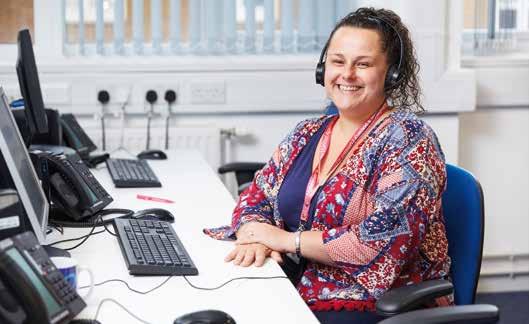
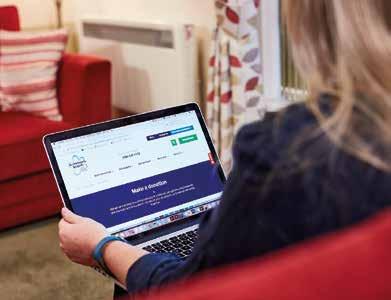
Dementia Connect online support is available round the clock through our website. Answer a few simple questions about yourself, or someone you know, to get personalised, relevant information and advice. From guides on dementia to advice on making your home dementia friendly, get the information about the things that matter to you.
‘The Dementia Adviser was lovely and full of information. Without Alzheimer’s Society and the Dementia Adviser we’d have nothing. She is a major networker and knows everything and everyone local. I feel in charge and empowered.’ Katherine, living with dementia
If you need further support, you can request a call from our dementia advisers, who should be in touch with you within a week. Our online support includes Talking Point, our online community where you can connect with others in a similar situation, and our Dementia Directory where you can search for local services.
Where possible, our local dementia support workers can meet you in person to offer further support, advice and information. They will also connect you to other face to face services in your area, including local support groups.
Notes: Dementia Connect phone and online support is available wherever you live. As the service is new, some parts of the service may not be available in your area just yet.
Support line opening hours*
Monday – Wednesday: 9:00am – 8:00pm
Thursday – Friday: 9:00am – 5.00pm Saturday – Sunday: 10:00am – 4:00pm
*Calls charged at standard local rate.


1) Fundraising and events
From Memory Walk and Cupcake Day to challenging yourself in marathons and treks. There’s plenty of ways you can get involved to help raise money. Search ‘get involved’ on alzheimers.org.uk
2) Donate
Our dementia support services are made possible thanks to generous donations from the public. However, you don’t have to join an event or seek sponsorship to do this. Simply head to alzheimers.org.uk and donate what you can to unite against dementia.
3) Become a campaigner
At Alzheimer’s Society, we work to amplify the voices of people affected by dementia, to create a world where they get the support and care they deserve. We can’t do this alone. Whether you have dementia, you have a personal connection to dementia or you want to stand with those who do. Together we can make a difference, register to become a campaigner at alzheimers.org.uk
“Dementia can and does affect so many families, including mine.
“My father was diagnosed with vascular dementia and Alzheimer’s disease in the summer of 2012. He passed away in September 2018.

“I wanted to do something to help raise awareness of the condition and tackle the stigma associated, so I reached out to Alzheimer’s Society to see if I could help. It gives me an enormous sense of pride being an Ambassador for Alzheimer’s Society and I feel like I’m making a difference.
“I have also personally enjoyed taking part in fundraising activities like Cupcake Day and Memory Walk, as there is a real sense of togetherness for a good cause.
“For anyone wanting to know how they can help, I’d say get involved. Whatever you can give, be that your time, voice or money, you’ll know you’ve made a difference to the lives of people affected by dementia.”
Meera Syal, actor and Alzheimer’s Society Ambassador
If you are affected by dementia in and would like information and support, contact us:
T: 0333 150 3456
W: alzheimers.org.uk/dementiaconnect
E: dementia.connect@alzheimers.org.uk