May 2014
The Royal Liverpool and Broadgreen University Hospitals
insight
NHS Trust
www.rlbuht.nhs.uk
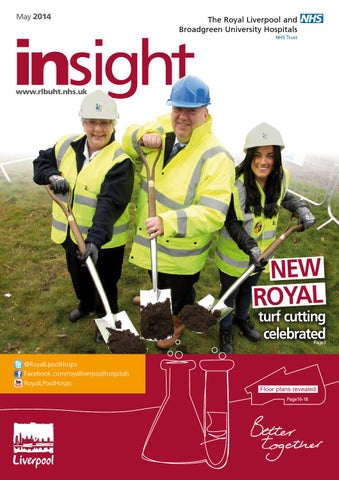
New Royal
turf cutting celebrated Page3
@RoyalLpoolHosps Facebook.com/royalliverpoolhospitals RoyalLPoolHosps
Floor plans revealed Page16-18
2
Exceptional patient experience
How are we performing? We, along with all other NHS Trusts, continuously monitor our progress against a series of targets that are set both nationally and locally. This allows us to monitor the delivery of
our key corporate objectives of patient experience and quality of care, patient safety, productivity, people and financial health. Below is an overview summary of some of our key performance indicators.
Overview to March 2014 (except where stated)
Inpatient Survey 2013 – Results The latest national inpatient survey was carried out in June and August 2013. The results show that: n 84% of patients felt they were treated with dignity and respect. n 84% said they trusted the nurses caring for them – above the national average n8 7% said they trusted the doctors treating them – above the national average The survey also showed a number of areas where we need to improve. 72% of patients said their overall experience was either excellent or very good and this is something we feel we can improve on. The survey also found only 43% felt they could share worries or concerns with staff. We have looked at these results and have already put in place plans to improve some of the areas we’ve not performed as well as we would like. These plans include: n Improving our patient’s mealtime experience n Reviewing why patients don’t feel they can talk to staff about worries and fears n Continue to review how we can improve noise at night for patients and investigate new ways of working to ensure maximum rest is available. To view the full report visit www.cqc.org.uk.
Patient Experience and Quality All Cancers: 31-day wait Diagnosis to first treatment All Cancers: 31-day Surgery wait for second or Anti cancer drug treatments subsequent treatment All Cancers: 62-day wait Urgent GP referral to treatment for first treatment Screening service referral Referral to treatment Admitted waiting times Non-admitted Incomplete Cancer: two week waits Urgent suspected cancer referrals Breast symptomatic (not suspected cancer) Accident & Emergency % patients waited over 4 hours Patient Surveys To increase by 5% the number of patients who rate their experience as good or excellent Patient Safety MRSA and Clostridium Difficile Clostridium Difficile MRSA Venous Thromboembolism (VTE) Venous Thromboembolism (VTE) Assessments Mortality Hospital Standardised Mortality Ratio (HSMR) Risk adjusted mortality - all diagnoses Falls 30% reduction in falls by year end Pressure ulcers Grade 2 or above pressure ulcers rate Grade 3 or above pressure ulcers rate Productivity Productivity indicators Daycase Rate Average Length of Spell (Elective) Average Length of Spell (Non Elective) New to Follow Up Ratio Did Not Attend Rates People Sickness absence (July) Sickness absence rate (in month) Finance Financial Performance Financial Risk Rating
Employee of the Month Our monthly award scheme recognises dedicated members of staff who have gone the extra mile to help patients during their stay or visit to our hospitals.
The latest winners presented with their certificate are: If you would like to nominate someone for this award, please contact the Quality Department on extension 2293.
January: Tracy Wishman, ward clerk, 4A
February: Janice Blackburn, finance department
3
Developing a sustainable health system
New Royal turf cutting celebrated by the people of Liverpool Liverpool’s figureheads turned out to celebrate the turf cutting of the new Royal Liverpool University Hospital, joined by patients and staff from the hospital and developers Carillion.
Chrissie said: “The time has passed like the blink of an eye! I remember all the people that I have worked with in pharmacy over the years and am honoured to represent them at this prestigious occasion.”
The official turf cutting was carried out by Liverpool Mayor, Joe Anderson, alongside Chrissie Hyland, who has worked at the hospital for over 40 years and Vicky Horsley a former patient at the Royal and Alder Hey.
Vicky Horsley, a nurse at Alder Hey, had aplastic anaemia, a rare condition where the bone marrow fails to produce healthy blood cells. Vicky has helped raise around £20,000 for R Charity. One of R Charity’s aims is to raise money to provide a more teenage friendly environment for the teenage and young adult cancer unit in the new Royal.
Mayor of Liverpool Joe Anderson said: “This is a major milestone for healthcare in the city. The new building will be a stunning landmark for Liverpool and be a place where our residents receive the very best standards of care and treatment. The construction itself is providing a huge boost for the economy, and we are working hard with the Trust to maximise employment opportunities for local people.” Chrissie started her career in the NHS at the former Royal Liverpool Infirmary, before moving to the current Royal, when it opened in 1978 and will work in the new Royal when that opens in 2017.
Vicky said: “It was an honour to have been asked to come along today to such a big historic event. I think the new Royal will be fantastic for Liverpool, especially having the Clatterbridge Cancer Centre and Liverpool Health Campus close by. The plans and the new rooms look like hotel rooms. It will be much nicer for the patients.”
The turf cutting was attended by various local dignitaries and long term supporters of the new Royal including the Lord Mayor of Liverpool, Liverpool Riverside MP Louise Ellman Walton MP Steve Rotheram and several local councillors. Lord Mayor of Liverpool, councillor Gary Millar said: “It’s a great day to see the start of what is going to be a huge project for Liverpool’s health and wellbeing, economy, jobs, infrastructure, research, development and care. This city is going places. People are investing time, money and professionalism into research and development. Liverpool will be the health centre of the UK.” MP for Liverpool Riverside, Louise Ellman said: “This is a very exciting day that has been long in anticipation. This project will create many local jobs and we now look forward to when the new Royal opens in 2017 with top class facilities for the excellent staff to work in.” Aidan Kehoe, chief executive said: “This monumental occasion is a great opportunity to thank everyone who has helped to get the new Royal where it is today, particularly Liverpool City Council and local MPs. This event not only marks the start of the new Royal, but also the beginnings of the Liverpool Health Campus that will give us the opportunity to truly transform healthcare for the people of Liverpool.”
Bird’s eye view of the new Royal construction Progress on the new Royal is being captured on camera in these stunning aerial photos made by a remote control flying camera. The remote control ‘octocopter’ is being used by contractor Carillion to take monthly images around the site for the duration of the build. Provided by Liverpool firm IronBird, the radio controlled device can reach heights of up to 400ft and has been taking high definition shots of the site, which has already been dramatically transformed since work began in February.
The ‘octocopter’ in action
January 2014 – before
March – 2014 – A month
construction started
into construction
4
Developing a world-class workforce
Staff
engagement The Trust has built on existing staff engagement work and implemented a new model ‘Going Local – Six Steps to the Stars’ where divisions and corporate teams are empowered to implement their own ideas and solutions to improving services for patients and their families and for themselves. Great ideas from these sessions include: n I mproved team working and local expectations of each other. nN ew ways of working in the storage and retrieval of case notes. n S treamlined processes between sterile services and the Dental Hospital leading to a faster turnaround. This year, we are using the ‘big conversation’ listening events, to address key issues and learning for the Trust e.g. learning from Operation ‘Fresh Start’, reporting culture for incidents errors and near misses, and within teams to address local cultures and behaviours. Staff are kept up to date on staff engagement progress with items at Team Brief and local briefings in their own workplace on issues which matter to them. Articles are included in Insight and our staff awards event recognises those staff who have made a difference to patient care and services and impacted on the working lives of staff. We will improve on the spread of reward and recognition for staff this year through divisional led local celebrations of achievement, and through our new ‘Share & Learn’ quarterly celebration events. Spread and adoption of listening to staff and supporting them to take action on their ideas is critical to success as we move towards our new hospital. Transforming our services also requires us to transform how we recruit, appraise, and develop our staff, together with how we utilise their skills and talents to create the fit for purpose workforce our patients and their families need, and our staff deserve as a valued and motivated member of their team.
Last year’s employee of
Last year’s team of the year Liverpool
the year Tracey Caddick
Vascular and Endovascular Service
Do you make a difference? The Make a Difference Awards will celebrate the contribution that employees, as individuals and teams, have made to the service over the last year. The prestigious event will be held on Friday 11 July at the BT Convention Centre and will be hosted by BBC Radio Merseyside’s Roger Phillips. The evening will also include dinner and entertainment. The awards categories are as follows: nD ivisional Star Awards in surgery, medicine, corporate and core clinical and support services. These awards will recognise teams that have demonstrated improvements in working practices that have, or will, benefit patient care and services, and/or improve the working lives of staff. nD irector’s Star Award – The Chairman’s Award and The Chief Executive’s Award. These awards will be nominated and voted by the Trust Board and will recognise a team or individual who has made a difference during the year to include one or more of the following criteria: - e xceptional quality above and beyond what is expected - e nthusiasm and commitment to our Trust and its values -p roject or initiative with clear benefits to patients and/or staff health and wellbeing - l istening and engaging with staff and patients on what matters to them
nT he People’s Choice Awards – The Patient Choice Award and The Star Staff Award. These awards will be nominated by the public and staff and will recognise a member of staff or team using the same criteria as the Director’s awards. n Employee of the year award. All employees of the month will be invited and the overall winner will be announced by a panel on the night. nT ransformation to 2018 Award. The key criteria for this award are creativity and vision, an inspirational initiative which will significantly transform services for patients and their families towards our new hospital. nH ighly Commended Star Award. This is an opportunity to recognise those shortlisted who were ‘pipped at the post’. The winner will be announced on the night. nS tar of the Night Award. The winners from each category will be considered by the panel, and the overall winner will be announced on the night. To win this award, the entry must be exceptional in every way delivery of patient care and/or services, and have a significant impact on quality through, e.g. patient care, leadership, team working, listening and engaging with patients and staff, innovation, efficiencies, new ways of working.
- improving quality whilst making efficiencies
The event is open to all staff, to reserve your ticket to the awards ceremony on 11 July please express your interest by visiting the following web page: http://www. makeadifferenceawards.co.uk/rsvp
- c reating a learning culture through exceptional research, teaching, education and learning
For further information on the awards please contact Sarah Collis on 01706 828855 or email sarah@makeadifferenceawards.co.uk
- exceptional leadership and inspiration
5
Exceptional patient experience
Operation Fresh Start In February, we implemented an intensive eight day programme across our hospitals to try new ways of working and changing old practices to help improve patient flow through the hospital and improve patient experience. The programme also helped to identify new ways of working ahead of moving into the new Royal. Operation Fresh Start involved: n More senior doctors in the hospital seven days a week n Patients being reviewed by a consultant by 12 noon, seven days a week n Ward rounds focusing on the ‘sick and the quick’ first – doctors reviewing the most poorly patients, then the patients most likely to be discharged, then the rest n Tasks like ordering take home medication or diagnostic tests being done in real time and not when the ward round finishes n Ward liaison officers – non-clinical staff working with the wards to help resolve issues and challenge accepted practice Simon Constable, interim director of operations said: “Operation Fresh Start was a great example of what we can all achieve when we all come together to put patient’s first and develop new ways of working for the benefit of our patients.” ‘This programme was clinically led by doctors, nurses and other front-line staff. It was a concerted effort by all to do things differently and identify where we can improve or what we need to do more of.
All teams were asked to do their ‘five a day’ –five things they did differently throughout that eight days. These included: n More therapy staff (such as physiotherapists) working with the Emergency Department to help patients to go home faster n More timely access to scans and tests, with longer opening hours in the Imaging Department n Phlebotomists working on wards from 7.30am n Pharmacists working longer hours, seven days a week n Giving patients a ‘welcome’ card so they know what their next treatment or test will be and when it will be done, the name of their consultant and the nurse in charge of the ward n Our community partners also supported us by providing seven day social worker cover and external partners making decisions on referrals within two hours The programme was an overwhelming success in improving patient flow and identifying better ways of working. Simon says: “Doing things in real time made a real difference. Despite operating at full capacity all week, we improved patient flow by three or four hours and we met the four hour Emergency Department target on each of the eight days. The majority of inpatients had a senior review each day, there was an increase in orders for medication to take out (TTOs) and significantly shorter waits for diagnostic tests and the number of samples reaching
Longer opening hours in Imaging, one of the team’s ‘five a day’
the laboratories before 9am doubled. Another key finding from Operation Fresh Start was that our current bed capacity is not right for our current levels of demand. Simon said: “We are identifying additional beds to relieve some of the pressures. Plans are in place to put extra beds in the system over the coming weeks, staffing permitting, at a time of year when we would ordinarily expect to close escalation beds. Such escalation areas will also be absorbed into our current establishment. Additional bed capacity is only part of a temporary solution and must not stop us doing the really important pathway redesign work that is necessary to reduce length of stay and improve the quality of our care. We are very much involved in designing future plans for the NHS in the city and beyond.” The five key areas of focus following Operation Fresh Start: 1. Embedding the SAFER bundle 2. W e need to look at our bed capacity and what is the appropriate bed base for our current work 3. I mprove access to computers and IT systems on the wards 4. E arlier ward rounds, daily senior review of patients, appropriate management and medical cover 5. R eview the imaging provision (an additional CT scanner has been purchased), pharmacy opening hours, phlebotomy cover, portering and therapy cover
6
Improving the quality of life for our patients
Learning from incidents Every week between 100 and 200 clinical incidents are reported by our staff covering a variety of areas, so that we can understand why they have occurred and learn how to reduce the chance of them happening again.
Infection Control Update For the last financial year we failed to meet our infection control targets for MRSA and C.diff. Our MRSA target was zero and we had eight cases. Our C.diff target was 35 and we had 51 cases. This will mean we face heavy financial penalties, but far more importantly it means that 59 patients had infections we could have prevented. Hand hygiene is the single most important measure in preventing infection. The Infection Prevention and Control team together with chief nurse Lisa Grant and medical director Dr Peter Williams helped launch the annual celebration of the World Health Organisation (WHO) SAVE LIVES: Clean Your Hands campaign. This event focuses on the importance of improving patient safety and care by practising better hand hygiene. Events included: n Awareness display in the staff dining room including interactive Wi-Fi game and quiz n Awareness sessions for junior doctors and consultants
For some incidents it is mandatory that we report them such as falls, venous thromboembolism and pressure ulcers. Some incidents are serious and result in harm to patients. Others which are equally important are near misses, in other words harm did not occur but could have occurred and it is important that we know about these so they can be avoided in the future. Since January every clinical incident reported in the Trust is reviewed by a group of senior medical and nursing staff. Leading this group is medical director Dr Peter Williams: “If you report an incident on our Datix system it will be seen and will be acted on, so keep on reporting! We value the time and effort taken by staff to report incidents, including near misses.
“We need to become a learning organisation which means we have to change and improve the way we deliver care. Learning from incidents protects patients from harm. “We also understand how important it is to feedback to those who have reported incidents. Usually this will be via the line manager but sometimes the incident will be so important, or we will have observed similar incidents occurring in more than one area, that we will email all staff to alert them to these risks. If you are worried about lack of feedback following reporting of an incident please feel free to email me.” Over the last three months members of staff have reported about the following that we have alerted all staff about: n Errors in the prescription and administration of insulin. This is the most common drug error in the organisation and can cause severe harm. Thankfully we have not observed harm following these incidents but it is clear that insulin prescribing and
administration requires meticulous attention which can be improved. n Prescription of Oxygen. Oxygen needs to be recognised as a drug. Too much can be as dangerous as too little. We need to improve how we prescribe oxygen right across the Trust. n A failure to review medical outliers. It is important that every patient is seen regularly. We have tried hard to improve our processes to ensure that this does happen. Your incident reporting has alerted us to the fact that we must improve further. Then there are other incidents that don’t cause direct patient harm but it is important that we are aware of. This might include concerns about staffing levels, delays in admitting patients in the emergency department or incidents that affect relatives and carers such as a delay in issuing death certificates.
learning from incidents protects patients from harm
n Using volunteers to raise awareness with patients and visitors n The launch of “talking signs” on wards prompting staff to wash their hands n Staff were reminded of the five moments for hand hygiene Lisa Grant, chief nurse
Colin Hont, deputy Dr Peter Williams, chief nurse medical director
Below are the members of staff who n Dr Peter Williams, medical director n Lisa Grant, chief nurse n Colin Hont, deputy chief nurse n Helen Ballinger, risk and governance manager n Mr Paul Carter, patient safety lead n Arron Banks, resuscitation officer n Paul Skipper, medicines management lead
look at your incidents each week: n Sue Sadiq, assistant chief nurse n Phil Forrester, major trauma and patient safety lead n Hilary Stennings, divisional general manager, medicine n Eileen Marks, divisional medical director, clinical support services n Simon Constable, interim director of operations
For latest updates look out for the Patient Safety and Experience Bulletin emailed every Thursday.
7
Improving the quality of life for our patients
Tracheostomy and Laryngectomy The critical care team have developed some updated safety information regarding Tracheostomy and Laryngectomy. It is essential that patients with either a tracheostomy or a laryngectomy are correctly identified as the emergency management of these patients can differ. Some of the main reasons patients may have a tracheostomy are: n T o assure a patent airway (for example to bypass an obstruction such as a tumour) n P rotection of the lungs from potential threats (when a patient cannot protect their own airway such as in cases of reduced GCS) nR emoval of secretions (when a patient has a poor cough for example) The use of head of bed signs to identify whether the patient has a tracheostomy or
laryngectomy is of vital importance and an important part of patient care. An easy way to remember the needs of a patient with a tracheostomy or larygngectomy is the “Neck Stoma Six”
T- Tracheostomy or laryngectomy ? R – Referral made on ICE A – Airway device? Cuffed/
uncuffed/fenestrated/nonfenestrated lary tube
C – Care – suction, inner cannula care, dressing clean and secure
H – Humidification/oxygen if required. Nebulisers, well hydrated
E – Equipment, algorithm and bed sign at bed side, pathway available
There is now a tracheostomy urgent equipment store in the equipment pool room on the lower ground floor. This store includes trachy tubes, dressings, inner cannula, cleaners and the emergency algorithms and head of bed signs. Two wards have been allocated as “cohort wards”. This is 8X for surgical patients and 6X/Y for medical patients. If you require immediate assistance with a patient, please call the nurse practitioners. In an airway emergency, please call 2222. We are also running regular tracheostomy study days which include first responder skills, suctioning workshops and general tracheostomy care which you can attend. The next dates for 2014 are; n 8 July n 11 August n 6 October Please inform your manager of your interest and ask them to email Dawn Lacey regarding a place.
Dementia support services Our dementia service helps support patients and carers in the Trust, allowing us to deliver the highest quality care possible. We provide a number of different initiatives to staff, patients and their carers to help care for dementia sufferers in our hospitals. We provide a dementia screening service to all patients over the age of 75. Spotting signs of dementia early means we can offer assistance to carers at an early stage and point them in the right direction to other services helping to support and assist dementia patients and their carers. We have adopted the national ‘This is Me’ scheme, which helps to provide the best care possible for dementia patients by recording their needs, likes, dislikes and preferences on admission and helps staff to know their patient. This is me packs should be provided to patients with dementia on admission to hospital. We also have a number of supporting materials to help staff treat patients with dementia in the best possible manner. These include a dementia care patient information pack providing advice for patients and carers to help with the care of people with dementia. We also have case
note stickers, questionnaires for carers and ward board magnets. We provide three levels of staff training bronze, silver and gold - to help staff treat dementia patients in the best possible way. We also hold regular memory cafés for patients suffering from dementia. Over a
cup of tea and cake, dementia sufferers can take part in memory-themed activities, with trained dementia staff on-hand to provide advice, support and answer questions. For more information about any of the above please contact Shaun Lever on bleep 5111 or email shaun.lever@rlbuht.nhs.uk.
8
Improving the quality of life for our patients
Our experts co-host national HIV conference The British HIV Association (BHIVA) and British Association for Sexual Health and HIV (BASHH) held their conference at the BT Convention centre, with over 1000 delegates attending. Co-hosted by Alastair Miller, consultant physician in infectious diseases and Mark Lawton, consultant in sexual health and HIV, the conference saw researchers present a number of papers on sexual health issues. Speakers also talked about local topics in sexual health, such as the rise in older people attending a genitourinary medicine (GUM) clinic in Liverpool; how Liverpool hospitals care for pregnant women with HIV and how Liverpool GPs feel about routine HIV testing in primary care. Mark Lawton said: “With more than 1000 delegates presenting and sharing the latest information on sexual health, HIV treatment and care, we hope this conference proved inspiring and informative and will help push forward the research agenda into this crucial area of medicine.”
Conference on rare blood disorders The life-threatening blood disorders TTP and aHUS were put in the spotlight at a regional education event organised by The Roald Dahl Centre. The team from the North West’s Regional TTP Centre at the Royal hosted the event at the Marriott hotel in Liverpool to raise awareness across medical specialties about the conditions. They were joined by guest speakers including leading experts in these conditions and patients and relatives who had lost loved ones Event organiser Dr Tina Dutt said: “The meeting was to raise the profile of the emergency conditions across a wide variety of specialties to facilitate earlier diagnosis and access to treatment.” Dr Ray Raj, consultant in emergency medicine, spoke of ways in which they could improve detection and diagnosis and Dr Gary Masterson, critical care, discussed accessibility to therapies such as Rituximab for more severe cases of TTP. The event was attended by representatives from interventional radiology, NHS Blood and Transplant service, ward nursing staff, renal and nephrology. Feedback has been hugely positive and triggered a number of initiatives already to drive further improvement of care of patients with these rare conditions.
Chief executive Aidan Kehoe, Professor Cheng-Hock Toh, Danita Olujohungbe, Olivia Olujohungbe, Andy Houghton, Mark Walters, Professor Elizabeth Anionwu CBE, Dr Tina Dutt
Liverpool and England footballer opens sickle cell service Former Liverpool FC footballer Mark Walters launched the adult service for patients and carers with sickle cell disease and thalassaemia at the Roald Dahl Centre at the Royal.
from Alder Hey in December.
A plaque was unveiled dedicating the transition service from child to adult care to Dr Ade Olujohungbe, a renowned haematologist who was instrumental in setting up the paediatric sickle cell service at Alder Hey. He had sickle cell disease and died last year, just a week short of his 50th birthday.
Ex-Liverpool star Mark Walters – whose close friend had sickle cell disease - was joined by Professor Elizabeth Anionwu CBE, the first ever sickle cell and Thalassaemia counsellor in Britain, a Patron of the Sickle Cell Society and a member of the NHS Sickle and Thalassaemia Screening Programme Implementation group.
The adult service is run by Professor Cheng-Hock Toh, Dr Tina Dutt and Dr Vanessa Martlew, with a clinical nurse specialist in sickle cell disease and thalassaemia, Andy Houghton, providing additional psychological support for patients.
Dr Olujohungbe’s widow Danita and daughter Olivia also attended and spoke movingly of their pride that the service had been dedicated to him.
Aaron said: “It’s nice to come somewhere and feel comfortable, with similar surroundings. The staff are really nice.”
There are around 35 people currently receiving care as outpatients. With around 90 patients currently treated at Alder Hey, many will be treated at the Royal after they turn 18, so the transition service is a vital part of making that change as comfortable and seamless as possible. Dr Dutt said: “We have created a warm and personal environment for the patients moving to us from Alder Hey so that they remain positive about their health and we can support them in living their lives to the full. It feels fitting to dedicate this part of the service to Ade who, despite sickle cell, was such a dynamic and exuberant individual.” One sickle cell disease patient who has benefited from the service is 22-year-old Aaron Sibanda, whose care was transferred
Dr Ade Olujohungbe, who devoted his life to combating the disease before succumbing to it himself last year
9
Exceptional patient experience
Chief exec dishes out dinners for National Nutrition and Hydration Week! Chief executive Aidan Kehoe put on a pinnie and delivered hot meals to patients to celebrate National Nutrition and Hydration Week, which ran from 17-28 March.
Support group organised for glaucoma sufferers
Aidan Kehoe, chief executive helping to serve food to a patient
Their first meeting, organised by the Royal Liverpool University Hospital’s St. Paul’s Eye Unit in partnership with the International Glaucoma Association, took place on 26 March in the Anglican Cathedral and more meetings will be arranged in the near future. The support group allows for patients to talk to Royal consultants as well as other patients about their thoughts, concerns and experiences.
Aidan visited patients on wards 2X and 2Y, delivering their afternoon meals and talking to patients and staff about our food we serve at the hospitals. National Nutrition and Hydration Week celebrates and raises awareness of the benefits of good nutrition and hydration in hospitals and other healthcare environments across the UK.
Mrs Anshoo Choudary, consultant ophthalmologist at the Royal said: “This is an excellent opportunity for glaucoma sufferers to better understand their disease in a relaxed and laid back environment.
The week saw a number of other events take place including a global tea afternoon, which was attended by staff and patients and an awareness event, where people could sample some of the hot and cold meals we serve to patients daily. Aidan said: “It’s really important that we serve good quality food to our patients. A good meal can make a person’s time in our hospitals a much better experience. Being able to serve patients and hear their views on the food was really beneficial for me.”
Glaucoma patients are being given the opportunity to talk to Royal consultants and other sufferers about their thoughts, experiences and concerns at the Liverpool Glaucoma Patient Support Group.
If you would like to know more about the Glaucoma support group or find out information about future meetings, you can call 0151 706 3873 or email lindy. gee@rlbuht.nhs.uk The event is free to attend, however anyone interested must register by calling 0151 706 3873 or alternatively by emailing lindy.gee@rlbuht.nhs.uk. Catering staff at the global tea afternoon
Wards at the Royal recognised for support of older people Two wards at the Royal are among just five in the whole country to become the first to receive a quality mark hailing the support given to older patients. Wards 2X and 2Y have been recognised with the Elder Friendly Quality Mark, run by the Royal College of Psychiatrists and developed with the Royal College of Physicians, Royal College of Nursing and British Geriatrics Society. It encourages hospital wards to improve the quality of care for older people and uses patient feedback to recognise good care. The national initiative was set up in response to reports, such as the Francis Inquiry Report, which highlighted the need for improvements in the quality of care among wards. To achieve the Quality Mark wards were assessed for areas of achievement and
what could be improved. They also had to demonstrate continued focus on improving care for older people. Information was collected from patients, carers and visitors, ward staff and members of the multi-disciplinary team, the ward manager, a lead consultant working on the ward, hospital governors and the senior managers. Patients over 65 were asked for feedback, including their experiences of comfort, food and drink, support from staff, getting help when needed, and privacy and dignity. They were also asked if they would be happy if a friend or family member was cared for on the ward. Dr John Tsang, consultant on ward for Elder Friendly Quality Mark said: “We started working on this in 2012 and are all delighted that our work
has enabled us to be among the very first to achieve this quality mark. The positive patient feedback we had encouraged us to strive to do even better and we are continually working to improve our services.” Paula McCallam, ward manager said: “Staff attended study sessions, observed care on each other’s wards, handed out patient and staff questionnaires and had visits from hospital governors. This enabled us to carry on to the next stage. Gaining this quality mark is a great achievement for all the staff on the ward.” The award is for three years with an interim review. Wards joining the quality ward mark scheme commit to continuous focus on improving essential care based on feedback from patients.
10
Developing a world-class workforce
Stonewall top ten performer This year we came 7th in the Stonewall HEI and are published in the list of top performers. The national Health Equality Index showcases Britain’s top 10 healthcare organisations for meeting the needs of lesbian, gay, bisexual and transgender (LGBT) patients, visitors and communities based on an assessment of policy and practice, staff training, engagement and communication, health promotion, data collection, and workplace equality.
orientation data collection to allow us to review and analyse performance outcomes on the grounds of sexual orientation. We aim to have over 95% completed equality data for all new patients Andrea Smith, equality and diversity
manager said: We are delighted to be ranked as a top performer in the Stonewall Health Equality index for a second year. This shows our commitment to inclusive, welcoming services that meet the needs of lesbian, gay and bisexual patients, carers and families.
Our work that was commended by Stonewall included asking all new patients for their sexual orientation and producing new patient information leaflets on equality monitoring, training staff on LGBT issues, displaying LGBT friendly posters and developing services specifically for LGBT patients e.g. sexual health clinics for gay men. This year we will continue LGBT awareness training and work on improving sexual
Expect Respect Whoever you are whatever your background expect to be treated with dignity and respect, we will not tolerate bullying, harassment, discrimination or abuse in any from and will take action of this occurs. If you are a patient and you experience this, please tell a member of staff who should contact security and report this on datix. You can also report this to Crimestoppers anonymously on 0800 555 111.
Stonewall Health Equality Index
Stonewall Workplace Equality (WEI) results The successes in the health quality index was mirrored in the national workplace equality index, where we improved our ranking by 68 places to 119th out of 369 entries. Stonewall commended the Equality and Diversity policy, strategy and action plans, range of equality and diversity training and sexual orientation data collection and monitoring. Lesbian, gay, bisexual and transgender (LGBT) staff were asked to complete an anonymous staff survey, highlights are: 100% of LGBT staff said that their line manager supports them as a member of staff 91% said that the culture is inclusive of LGBT staff 94% said senior management are supportive of LGBT staff 91% said that they would feel confident disclosing their sexual orientation on a monitoring form Some areas have room for improvement. Only 35% of LGB staff think that there are visible LGBT role models in the trust and only 35% think that their straight colleagues are aware of LGBT issues. This year we aim to identify and promote visible LGBT role models, LGBT staff
can contact Andrea Smith, equality and diversity manager on ext 2944 if they are interested in getting involved in our role model scheme. We also want to increase disclosure of LGBT status for workforce monitoring purposes, staff can update their equal opps data using self-service on ESR. We will continue to build staff knowledge of LGB issues through offering LGBT awareness training. Are you disabled or do you have a health condition or impairment that is affecting your ability to do your day to day work? If the answer is yes speak to your line manager as you may need a reasonable adjustment to be put in place to support you. Reasonable adjustments are tailored to each individuals circumstances and can range from making simple changes to work patterns, tweaking the duties that you undertake to providing specialist equipment, training your team to understand your condition to employing a support worker. We are committed to supporting disabled staff in the workplace. The reasonable adjustments policy can be accessed on the HR policy website.
11
Developing a world-class workforce
Globetrotters learn from our nuclear medicine experts Experts in nuclear medicine at the Royal have shared their extensive knowledge of the latest diagnostic and therapy techniques with visitors from Africa and Asia. Dr Enkhtuya Byambajav, 50, director of the nuclear medicine department in Mongolian capital Ulan Bator’s Central Hospital, recently came to the end of a two-month fellowship training internship shadowing staff in the department.
She said: “I’ve really enjoyed being here. In Mongolia, there’s only one nuclear medicine centre and they are getting a gamma camera with CT this year. I’ve learnt about a lot of medical advances while I’ve been at the Royal. Everything here is high quality and very beneficial.” The visitors, who are always supervised when with patients, credit consultant in nuclear medicine Professor Sobhan
Vinjamuri and his team for helping them during their time at the Royal. Monica Amutenya, 25, who works a radiographer at Oshakati State Hospital in Namibia, will be at the Royal until November. She said: “In conjunction with my government, the International Atomic Energy Agency (IAEA) sent me here for an honorary degree. The Royal is big and diverse – you get everything here. I will pass on skills to colleagues. “The Royal make sure you settle in well and get your own apartment. They really take care of international visitors. I couldn’t have asked to be anywhere better. The people are so friendly, and the staff show how to do everything step-by-step.”
Monica Amutenya, Enkhtuya Byambajav, professor Sobhan Vinjamuri and radiographer Michela Natale in the Royal Liverpool University Hospital’s nuclear medicine department.
“Dr Chris Mayes, senior radiographer and training supervisor in the Department of Nuclear Medicine said: “One of the best things about working in nuclear medicine at the Royal is meeting the visitors we get from all over the world who come to learn what we are doing here. While we ourselves try to pick up and implement the best and newest techniques from the rest of Europe, we are also keen to share our own experience with others.”
Health informatics cadets The UK’s new National Skills Academy for Health Apprenticeship Training Agency (www.nsahealth. org) is working in partnership with Skills for Health Academy North West to support the delivery of the first ever Health Informatics Cadet Apprenticeship.
The new ‘Health Informatics’ course has been developed as a direct result of demand from the sector, with employers and decision-makers within the business division of some of the North West’s leading trusts highlighting a real need for new and young ‘talent’ entering the workforce. The cadets are placed in the information management departments of NHS organisations across Cheshire and Merseyside for four days of the week with one day in college. Samantha Hodge, a health informatics
cadet apprentice working at the Royal says, “When I was doing my A-levels at college, I was unsure about what I wanted to do but knew that university wasn’t for me. After proactively searching on community college websites I found the NSA Health Informatics Course and was intrigued by the prospect of working within such a large organisation. “I was attracted to the fact that an apprenticeship allowed me to earn, learn and have practical experience in the workplace. “Healthcare is an industry where there is usually good employment and at the end of your apprenticeship you have a set of highly sought-after skills. Working and learning in a supportive and encouraging environment has also been a real bonus.”
The Skills for Health Academy offer a range of Non Clinical Cadet Apprenticeships which offer placements in the NHS
Samantha Hodge hard at work in the Health Informatics team open to 16 to 18 year olds, including Business Administration, Finance and Health Informatics. You can download an application form from www. skillsacademyforhealth.org.uk or call Brigid Marray-Kilgallen on 0151 482 5678.
12
Developing a world-class workforce
NHS worker awarded for services in World War two Viv Brookes from the Liverpool branch of the Fellowship has been awarded for her work in the Women’s Royal Naval Service during the war. Viv was a in the Women’s Royal Naval Service from the age of 18 and worked as a plotter of Atlantic Convoys and Shipping. She and her colleagues were based in the Liver buildings in Liverpool and their responsibility for these ships began when they entered the Western Approaches. Viv was one of six veterans of the Battle of the Atlantic nominated for the judges special award and invited to attend the award ceremony in December 2013. Included in the trip to London was a reception at No. 10 Downing Street attended by the Prime Minister. The Champagne reception in the evening prior to the award ceremony was attended by HRH Prince Charles and the Duchess of Cornwall, both of whom spoke to Viv. Viv said; “I was very proud and honoured to have been invited to attend the ceremony and to be in the company of so many brave members of the forces both past and present.”
Unsung heroes –
Palliative care volunteers The Specialist Palliative Care Team has trained a team of 12 volunteers to support patients in the last hours and days of life by providing a presence at the bedside, holding their hand, gently talking to them and assuring that they are not alone in their final hours. The project was initially piloted across six wards and now, following the positive evaluation of the service from bereaved relatives, staff and volunteers, it has been extended across the Royal and available to patients in all wards (except emergency department, and ITU). The service currently runs from Monday to Friday, 9am to 4pm and is available at the weekends through direct liaison with the palliative care team on bleep number 4191.
Viv with her award during the ceremony
Do you have patients on your ward who are in their last hours or days of life but have few visitors and spend long periods of time alone? Or patients who have families that are unable to visit all the time but worry or feel guilty that their loved one is alone? The Palliative Care Volunteers may be able to help
Trust contract with Capita ends In February we announced a number of changes to our Payroll and have ended our contract with payroll supplier Capita. We have been in a contract with Capita for the delivery of transactional HR and payroll services since January 2012 as part of a collaboration with other local trusts.
Viv outside No. 10
If you are interested in this valuable service and require further information, or you have a patient who you feel would benefit from a Care of the Dying Volunteer, please call Alison Germain, acting Volunteer coordinator, Specialist Palliative Care Team on 0151 706 3727 or 2274.
Over the past couple of years, we have really focused on listening and engaging with our staff, including numerous listening events, surveys and Q&A sessions. We received lots of feedback that said you wanted to take more responsibility over
your own recruitment processes. Because of this and because of the complexity of some of our terms and conditions, we have decided that we will be ending our contract with Capita, with agreement from Capita. Our payroll services are now delivered by St Helens and Knowsley Teaching Hospitals NHS Trust and recruitment services will move back in-house from June. Capita will continue to support this, whilst the in-house service is created and dedicated recruitment officers will be allocated to divisions and located within the Royal.
13
Developing a world-class workforce
It’s Time to Talk – It’s Time to Change Did you know that one in four of us will have a mental health problem in any year? Our mental health affects the way we think and feel about ourselves and others, and how we deal with life.
for line managers and staff including:
We are looking to improve the mental health of those who work in our organisation and as part of this are supporting the “Time to Change” initiative. More information about this initiative is available on www.time-to-change.org.uk.
n Mental Health at work training
We are looking for action in three areas: nM ake it easier to talk about these issues in work n Ensure that staff are aware of what help is available and encourage all staff to support their colleagues. n Improving training opportunities to improve the understanding of these issues throughout the Trust. To improve the support we can provide we are developing a full programme of training
n Stress training for line managers n Self-Care at work training nM anaging your own personal stress training For details on any of these sessions contact Mark Caffery, health and wellbeing manager on ext 2811.
Ten tips for better mental health: 1. Avoid working in a silo – Be mindful of others’ pressures 2. How are you? – Take time to ask others how they are 3. Look out for changes – If someone is not quite themselves 4. One to ones’ – Include mental wellbeing in catch-ups 5. Be informed – Look into mental health awareness training
NHS Games
Sporty staff members are limbering up for the fourth annual North West NHS Games.
Led this year by the Royal’s lean practitioner Alex McCrudden, the Games will take place at Kirkby Sports College on Sunday 6 July. The day of sports attracts around 1,000 competitors representing 24 trusts from across the region. Athletic members of staff will compete in a variety of sports including football, netball, badminton, table tennis and rounders. Before the big day, on 22 June a golf tournament will be held at Houghwood Golf Club in St Helens where 12 teams of four will battle it out on the fairways with
6. Take your breaks – a change of scene and fresh air 7. Don’t bottle things up – Ask for help if you need it 8. Celebrate achievement – Don’t just focus on what you haven’t done 9. Work-life balance - make time for nonwork activities and meeting friends 10. In-house support – Know what support is there to improve your wellbeing.
Members of our sports team joined by Liverpool FC’s Jamie Carragher
tee off between 1.30pm and 3.30pm. A week later, on Sunday 29 June, a 5K race will take place in Princes Park, Liverpool from 10am. Entry is free to staff in participating NHS Trusts. A 5k will also take place in Worsley Woods, Parrin Lane, Salford from 9am. Alex McCrudden said: “This is the first year we have has led on the games and we hope to lead the pack on 6 July too. The NHS North West Games is a great way to get into sport or to prove your prowess on the court, pitch or on the greens! We still have a few places left so get in touch if you fancy a challenge.”
One of our winning table tennis team
At last year’s event, we won the table tennis competition, finished runners up in rounders and were third in the badminton contest. The Trust also boasts the reigning champion of the 5k after fielding a team of 70 among the 134 who ran. For more information and to register for any of the Liverpool events, contact Alex McCrudden on ext 5354 or email Alexandra.Mccrudden@rlbuht.nhs.uk Deadline for registrations is Friday 13 June 2014. To register for the Manchester 5K contact: Suzanne.mcdonald@srft.nhs.uk for an application form.
14 Developing a world-class workforce
International festival for business: public event In partnership with Liverpool Health Partners, we are organising a free public event between 10am and 4pm on June 27, at the World Museum near Lime Street Station. It is a great opportunity to promote screening programmes and public health messages (smoking, healthy eating, alcohol) to the public in a fun and interactive way, with a health marketplace. There will also be other activities and events. Does your team want to take part? Do you have an interactive display? Fun ideas about getting the public interested in their own health? Then get in touch with the communications team on ext 5584/5489 or communications@ rlbuht.nhs.uk by 6 June.
IT service desk is brought in-house An in-house IT service desk aims to provide a much quicker and more reliable service to staff across the Trust A new service desk has gone live to help staff resolve any IT issues quickly and easily, before they can impact on patient care. Our dedicated service desk means that resources are no longer pooled with other organisations. Instead a team of agents who are familiar with all of our latest tools and systems will be on hand to resolve any IT issues. Carl Walker, IT operations manager, says: “Users can now phone in with the confidence that they will be supported, which hasn’t always been the case with the previous service supplier. “Our users need a strong service desk with dedicated agents who have knowledge of the new technologies and products as they are implemented.” The fact that agents are physically co-located with other IT functions will help improve the service provided. “Agents
have more IT knowledge and better access to system specialists,” says Carl. “Faults are fixed quickly because staff know how to get to the people who can fix them. Changes made at the back end can be immediately reflected in the service. There is no trickle down of knowledge and as a result, there is less time taken to inform the service desk of any updates.” The service desk now reliably acts as the hub for all IT functions, with agents providing a single interface between healthcare professionals and different parts of the IT department. People phoning the service desk will no longer be passed around and users have already expressed surprise at how quickly their calls are answered. Other tools have also been implemented alongside the new service desk to save clinicians even more time. These include a web form for automatic account creation, which allows users to set up accounts overnight. This replaces an inefficient system where paper forms were previously faxed by departments,
resulting in handwriting legibility problems and three to four day delays to set up new members of staff. Calls to the service desk for forgotten passwords will also be cut by a new single sign-on capability, which securely remembers a user’s password. In addition, a password reset function which prompts users with questions is also being introduced. “A user will no longer be dependent on a call or somebody getting back to them for the password to be reset,” adds Carl. “They can do that themselves. Obviously that is a benefit for patients because clinicians will no longer need to spend time searching for someone to log them into the system. That wait time would have had a knock on effect.” Annette Haft, IT business planning and development manager says the new service will also deliver better value for money for the Trust. “This will be a more responsive service,” she says. “We can now deliver a more cost effective service that is far better for the end user.”
15
Developing a world-class workforce
Consent 4 Consent – get involved! A new clinical trials database is available for people to sign up to if they are interested in taking part in research in our hospitals. Consent 4 Consent is a new database that makes it easier for people to get involved in clinical trials with us. The database, developed by our Research, Development and Innovation department, informs people of clinical trials taking place in our hospitals that they may be eligible to take part in. signing up does NOT mean you are agreeing to take part in trials, but that you are interested in hearing about what studies you may be able to take part in. We have over 400 clinical trials running in the hospital at any one time in 40 different departments, so there are always opportunities for people to help improve the future of healthcare and as research grows in Liverpool, with the development of the new Health Campus planned for the near future, the need for more volunteers will increase.
Dr Richard Fitzgerald, director of the Royal’s Clinical Research Unit, said: “Trials not only help patients currently treated by us, but could potentially change the way our patients, and thousands of others receive care in the future. “Taking part in trials could also potentially benefit the lives of people taking part in trials, improving their own healthcare and finding treatments that could directly benefit themselves.” If you would like to know more about Consent 4 Consent and clinical trials taking place within our hospitals, contact the Research, Development and Innovation team on 0151 706 4860 or email C4C@rlbuht.nhs.uk.
Can you help us prevent asthma attacks? The FAST (Four-fold Asthma Study) trial is a national trial supported by Asthma UK and funded by the National Institute of Health. It has also been approved by an ethics committee. The trial aims to show whether a larger increase in inhaled steroids for 7-14 days prevents an attack. Previously people with asthma were advised to double their dose of inhaled steroids at the first sign of a cold or if their asthma symptoms get worse. We now know this does not work but there is data to suggest a larger increase in inhaled steroid can prevent an asthma attack. You can take part in FAST if you have asthma, you take an inhaled steroid (for example Clenil, Symbicort, Seretide) and you have needed at least one course of steroid (prednisolone) tablets in the last year. You will be shown how to use a personal action plan aimed at preventing an asthma attack. You will be asked to complete two short questionnaires and will be shown how to use a peak flow meter. You will remain on your own asthma medication throughout the study. There will be three visits over 12 months and there are no blood samples or other tests needed. If you are interested in taking part, please contact the study team on 0151 259 5886. You will be sent a detailed information sheet and you will be given plenty of time to discuss the study and ask questions.
16
Developing a sustainable health system
The new Royal floor plan
The latest floor plans for the new Royal have now been revealed and you can now see where the located. More detailed plans are available on the staff intranet.
Level 0 Ambulatory and Diagnostic Level - 1 Ambulatory
Level 2 Intervention and Critical Care
Level 5 Inpatients
Level 3 Plant and Distribution
Level 6 Inpatients
17
Developing a sustainable health system
ns revealed!
e clinical departments and wards will be
Level 1 Emergency Diagnostic and Treatment
Level 4 Inpatients and Diagnostics
Level 7 Inpatients.
Level 8 Inpatients
Level 10 Staff Amenities
These plans are correct at the time of publication but could change before the new Royal opens in 2017.
Level 9 Staff Amenities
Level 11 Plant
Developing a sustainable health system
19
NHS Sustainability day
Chris Wardle being presented with his bike voucher by Sandra McGreavy, project manager On 27 March, we took part in the NHS sustainability day and held an exhibition in the main reception area at the Royal. The exhibition stands demonstrated innovative technologies, health and wellbeing as well as showing how the new Royal and current hospitals are providing greater sustainability and saving money for the tax payer. The new Royal will be significantly more energy efficient, with a range of new measures that will help reduce its energy bill by £1million, which can be reinvested into patient care.
As part of the event there was also a sustainability quiz and some of our staff members won some excellent prizes. Chris Wardle from communications, won a £500 bike voucher, donated by Vinci Construction. Since winning the voucher, he has bought a new bike and now cycles to work - both a carbon and a health and wellbeing success. Second prize was won by Claire Johnson from main reception who received an eco-
kettle, donated by ERS Medical. Laurie Stocks-Moore from communications, won a selection of eco-plugs, provided by Energy Projects Plus and Kirsty Lucas from St Paul’s, won a folding watering can, donated by United Utilities. The event was a great success and was well attended. Our Trust chairman and sustainability champion, Judith Greensmith, and our chief executive, Aidan Kehoe, took the opportunity to speak to all stakeholders taking part in the event.
Journey to 2018 Our exciting plans to revolutionise healthcare in Liverpool were mapped out at a launch for our Journey to 2018. The opening of the new Royal and a new Clatterbridge Cancer Centre, as well as the development of the Liverpool Health Campus will mark the culmination of many years hard work. Chief executive Aidan Kehoe spoke of a bright future for healthcare in Liverpool. He said: “The high levels of deprivation and ill health in Liverpool mean we have got something to go at. We have a wealth of life sciences assets we can make much more of. We want to establish Liverpool as international class in terms of clinical services.” Professor Martin Lombard, clinical director of gastroenterology, showed that Liverpool has higher rates of standardised death rates as well as higher levels of unemployment than much of the country. He said health and wealth are mutually beneficial and that the jobs created by the BioCampus would improve the city’s health.
He added: “Health needs to contribute to wealth in order to improve health. Health employs 5-7% of people in work in Merseyside. That could be driven up to 10% with the BioCampus.” Yvonne from Clatterbridge Cancer Centre explained why a £118m new cancer centre will be built next to the new Royal, to open in Autumn 2018. She said 70% of their current patients live north of the River Mersey. Yvonne added: “There will be opportunities for collaboration between Clatterbridge Cancer Centre, the Royal Liverpool and Broadgreen University Hospitals Trust and the University of Liverpool to transform cancer pathways. This is a once in a generation opportunity to make a difference to improve our life chances. Simon Constable, the Trust’s interim director of operations, spoke about the lessons learned from Operation Fresh Start. He said: “We improved patient flow by three to four hours and operated at full capacity all week. Doing things in real time made a real
difference. A massive impact doesn’t cost an awful lot and is relatively easy to do.” New Royal project director Helen Jackson said working practices must be adapted for the new space. She said: “2018 is a five-year programme. It isn’t just about the hospital, even though the hospital opening is a very significant milestone. There’s a lot to achieve in order to fit into the hospital with current planning assumptions, let alone with the way things are going to change.” Stella Clayton, deputy director of human resources emphasised the importance of treating staff with compassion and respect. She said: “It is important to learn from the things that go well as well as the things that don’t go well. “We need to make every effort to make our staff feel inspired and learn from excellent role models around them. Staff need to feel part of what they’re doing now and not just waiting for a new building.”
20
Fundraising
Cash for Kids Radio City broadcast live from the Royal on 16 May to support a Superhero Day raising £44,170 on the day, for a new Teenage and Young Adult Cancer Unit at the new Royal.
Star of TV show ‘Splash!’ Danielle O’Hara, who donated her winnings from ‘Celebrity Big Brother’ and ‘The Weakest Link’ to the Linda McCartney Centre, is supported the campaign. She visited some of our young cancer patients in April and recorded a message which was broadcast on Radio City in the weeks before the main event. A huge thank you to all the fundraisers, staff and volunteers who donned their capes, baked cakes, took the 10,000 step challenge and donated to this worthy cause. Most importantly, the patients themselves were given the opportunity to share their stories and talk about their hopes for the new Royal. One of them, Sean Young, 19, from West Derby, was 18 when he was diagnosed with Hodgkin’s Lymphoma last year. He underwent 12 doses of chemotherapy every two weeks until 25 November in 7Y. He spoke of how he would force himself to fall asleep to pass the time while receiving chemotherapy because there was not enough to stimulate young people. The new TYA Unit will feature all single occupancy rooms for privacy, communal areas for when patients, family and friends want to gather together, TVs, games consoles, a pool table and space for parents to stay with their child in their room. A huge thank you to all the fundraisers, staff and volunteers who donned their capes, baked cakes, took the 10,000 step challenge and donated to this worthy cause.
Chelsea receives a complimentary makeover from Johnny Paris, of Artdeco in Debenham’s, as mum Jan looks on
Chelsea, you shall go to the ball! A leukaemia patient who dropped three dress sizes during a 16-month stay in hospital feared she would miss the chance to celebrate her 21st birthday in style at a glittering ball because she could no longer fit into any suitable clothes. But Chelsea Morley’s wish was granted when Shop Direct in Speke offered her choice of dress, shoes and a clutch bag – telling her money was no object. Hospital staff raised the cost of tickets for Chelsea and 17-year-old sister Sammy and Debenham’s Liverpool One gave her a makeover. Chelsea, from Tuebrook, was diagnosed with acute myeloid leukaemia on Christmas Eve 2012, aged 19, and had to quit a job she had just started as manager of Pizza Hut opposite the Royal. She spent nearly every night since at the hospital before being discharged in April. Following chemotherapy, Chelsea had a bone marrow transplant last August but suffered a stroke shortly after. Given 48 hours to live, she pulled through but was unable to speak, and received rehabilitation at Broadgreen. She regained her speech and mobility, but now has patchy hair growth and no eyebrows or
lashes as a result of treatment. Chelsea also has graft-versushost disease, in which the transplanted bone marrow immune cells attack her own cells, resulting in uncomfortable itching and skin peeling. In March, the Royal Liverpool Haematology Support Group held their 10th anniversary ball for patients and their families at the Marriott Hotel in Liverpool city centre. But Chelsea had no plans to go, confiding in the Royal’s haematology counsellor Linda Boyne that none of her dresses fitted after her weight plummeted from a size 22 to 14. Hospital staff resolved to help and after a few calls, Shop Direct and Debenham’s came forward to save the day. Wearing her dream dress and a real hair wig, Chelsea was ready to dazzle at the ball. Taking place just a fortnight before her 21st birthday on 2 April, she took along sister Sammy to help her celebrate. She said: “I’m really grateful to everyone who helped make this happen. “I thought I would never be able to go to the ball but it’s a great way to celebrate my 21st birthday. I want to thank all the staff on wards 10Z and 7Y – they looked after me really well over the past 16 months.”
21
Other Trust news and updates
Security Matters Hate Crime – what it is and what you can do. There have been a small number of incidents recently where patients or staff have been subject to racial abuse. Incidents such as these can be defined as hate crime. A hate crime or incident is any incident that may or may not be a criminal offence which is perceived by the victim or any other person as being motivated by prejudice or hate. The prejudice or hate can be based on a number of factors including; n Disability (including learning disabilities) n Race/ ethnicity n Religion or belief (including no belief) n Sexual orientation n Gender identity.
Hate crime can take many forms including; n Verbal abuse or insults, offensive leaflets and posters, abusive gestures, dumping of rubbish outside homes or through letterboxes and bullying in the school or workplace n Threat of attack-including offensive letters, abusive obscene telephone calls and offensive comments on social networking sites n Physical attack-such as physical assault, damage to property, offensive graffiti, neighbour disputes and arson n So called ‘mate crime’ could also come under Hate Crime. ‘Mate crime’ is when somebody befriends a vulnerable person to take advantage of that vulnerability. The lack of reporting is a major issue in relation to all hate crimes. Research shows that there are higher levels of hate crime taking place than are currently reported.
How to report hate crime If you have witnessed or experienced hate crime you can report it in a number of ways: n Call security in an emergency on x 2233 (RLH) or 6345 (BGH) n For practical advice and support call your Local Security Management Specialist, Ian Wright on 0151 706 3999 n Ensure you complete an incident report (Datix) n Call Crimestoppers anonymously on 0800 555 111 If you feel uncomfortable contacting any of the above agencies, please speak with a trusted community member who could help you make the report.
Staff car parking update From 1 May new arrangements for staff car parking at the Royal will come into operation and this will mean a number of changes for staff who park at the Royal.
Saturday, 7am to 8pm; and Sunday, 9am to 8pm. The area is manned with CCTV in operation. Fees are £60 per month.
On-site car parking
There are 3 separate parking areas located off Kempston St at Burgess St, Craven and Finch Place. This road runs parallel to London Road, behind TJ Hughes. All are surface parking and are clearly identified as contractor parking spaces. They are managed by the City Council and are patrolled regularly by their officers. Parking is available at all times. Fees are £60 per month.
From 1 May the only means of parking on the hospital site will be with an activated ID badge. Would all staff who have had their permit application approved for on-site parking ensure that their ID badge is providing this access. Any staff who previously had access will have this automatically updated. From this time it will no longer be possible to access with the swipe card, which will become redundant. If you do not currently hold a permit and your application has been approved then you will need to get your ID badge activated by visiting the office near to M clinic where you will also be able to collect your windscreen permit. Staff who have successfully applied for parking will have the following charges from 1 June, for on-site £32.50 and for Q Park £79.50 per month. These charges can be reduced by opting in to the salary sacrifice scheme.
Off-site car parking If your application has been unsuccessful and you still need to drive to work then you may apply through the Trust to park at one of the below off-site locations. Please note fees listed below are set by the external parking provider and will come into effect from 1 June.
Mount Pleasant This is located less than one mile from the hospital near to the city centre. It is a secure multi storey car park operated by the City Council and is open Monday to
Kempston Street area
Q Park This multi-storey car park is across the road from the front entrance of the hospital. It is available at all times from Monday to Friday. Fees are £83.35 per month.
Low Hill This is located 5 minutes walk away from the Royal. It is barrier controlled surface parking. A guard will be present throughout operating hours. Spaces are marked out for the specific use of hospital staff. Parking will be available from 6.30am to 7.30pm Monday to Friday. Fees are £32.50.
Kensington Fields Community Association This is located less than 5 minutes walk away from the hospital, across Low Hill adjacent to Local Solutions. This will be managed by regular patrols by KFCA staff and the area will be covered by CCTV. Parking will be available from 6.30am to 7.30pm. Please note this site will not be available until 1 June. Fees are £35 per month.
22
Exceptional patient experience
Cyclist thanks life-saving major trauma team A cyclist has thanked the major trauma teams at the Royal and the Walton Centre who helped save his life after he was hit by a car, leaving him with a potentially fatal brain injury. 51 year old, Richard Avery was hit by a car whilst cycling on the Wirral, in July 2012. The collision sent Richard flying 30 metres through the air, and he suffered a bleed on the brain along with a fractured skull, facial fractures, some broken ribs, a broken collarbone and a collapsed lung. Richard was brought straight to the Royal by ambulance, where the major trauma team of around ten highly trained specialists were ready and waiting to look after him. Dr Ray Raj, consultant in emergency medicine, who was leading the team said: “Richard was seen immediately on arrival as with major trauma cases, especially those involving brain injuries, speed is essential. “We had been pre-alerted by the paramedics beforehand that Richard had been knocked off his bike and was found face down beside the road. We were told that he was conscious but agitated and
vomiting – which are signs of a potential brain injury. “Our major trauma team, comprising of emergency department doctors, anaesthetists, general surgeons, orthopaedic surgeons and nursing staff, were all in the emergency department waiting for Richard to arrive. Our laboratories and radiology colleagues were also on stand-by.” Shortly after arrival, after a complete assessment, Richard was ‘intubated’ and put on a ventilator. The team then arranged appropriate investigations and an ultrasound scan was done to check for internal injuries that may have required immediate surgery. Richard was then given a whole body CT scan in the emergency department – which is a procedure that major trauma patients at the Royal undergo so that injuries are not missed.
Centre, who were able to view the scans carried out at the Royal electronically via a shared IT system. The two teams agreed that Richard should be transferred to the Walton Centre immediately, where he then underwent emergency brain surgery. “We work extremely well with our colleagues within the hospital, but also both at the Walton Centre and the Ambulance service to provide seamless, high quality care and minimise any delays in transferring patients,” said Dr Raj. “After we had stabilised Richard and found the bleed on his brain, an ambulance
was ready and waiting to take Richard to the Walton Centre, where their neurosurgeons were ready and waiting for him in theatre.” Richard says; “I am deeply grateful to everyone who played a part in keeping me alive and getting me back on my feet again. It feels like I have survived against the odds, but what I have learnt from the teams who have cared for me, is that all parts of the major trauma care system worked as planned. Everything happened in the right place at the right time and I feel hugely privileged to be alive and able to get back on my bike.”
Richard and wife Alison together with Dr Ray Raj and other members of the major trauma team at the Royal
This scan revealed that Richard had suffered an injury on his brain, but thankfully there were no other serious injuries that required immediate intervention. The team at the Royal contacted the neurosurgeons at the Walton
Thank you to our staff Many of our patients and their relatives provide feedback on our services, either by writing to us, commenting on Facebook or Twitter or reviewing our services on NHS Choices. Almost all of the feedback we get is positive and here’s a selection of some of these comments from the last few months. The Dental Hospital
Broadgreen Hospital
The Royal
After thirteen years of putting off going to the dentist, I finally put aside my worries and made an appointment. I was referred to the Dental Hospital and was told I would need to have 14 teeth removed. I was put at ease and the care was absolutely fantastic, I can honestly say that it was a very good experience. I can’t recommend the Liverpool Dental Hospital enough and I would like to say a massive thank you to everyone involved in my care, you were all brilliant.
I went for a double hip replacement at Broadgreen Hospital on 21 March. The operation was extremely complex because of a prior medical condition. However, I am delighted to say that at the beginning of my recuperation, I already feel better than I have done in the past year. The nursing staff were incredibly competent, kind and cheerful as were the hosts who brought our food and drinks. My husband and son, along with family and friends, were treated with utmost courtesy. I cannot thank the nursing and auxiliary staff enough, they were superb. The cleanliness of the hospital was also exemplary and in truth, we cannot find fault. A massive thank you to everyone, you were all wonderful.
My mother was recently admitted to A&E where she was diagnosed with pancreatitis. She was in a very poor state but was looked after by the doctors and nurses in A&E who showed compassion and skill. She was then moved onto ward 5B where she spent three weeks. In those three weeks, at least one member of her family were with her at all times and saw how hard the doctors and nurses worked. They showed great empathy and compassion for our mother in the last weeks of her life. I would also like to thank the palliative care team who were fantastic and a rock to us in our sad time. I can honestly say that everyone we came into contact with at the Royal hospital was fantastic and I have nothing but praise for the hard working staff - thank you.
Every possible care has been taken to ensure that the information given in this publication is accurate. Whilst the publisher would be grateful to learn of any errors, it cannot accept any liability over and above the cost of the advertisement for loss there by caused. No reproduction by any method whatsoever of any part of this publication is permitted without written consent of the copyright owners. Octagon Design & Marketing Ltd. Š2014. Britannic Chambers, 8a Carlton Road, Worksop, Notts. S80 1PH Tel: 01909 478822
Royal Liverpool and Broadgreen University Hospitals NHS Trust, has not vetted the advertisers in this publication and accepts no liability for work done or goods supplied by any advertiser. Nor does Royal Liverpool and Broadgreen University Hospitals NHS Trust endorse any of the products or services.
Designed & Published by Octagon Design & Marketing Ltd, Britannic Chambers, 8a Carlton Road, Worksop, Notts. S80 1PH Tel: 01909 478822