THE YELLOW PAGES THE YELLOW PAGES
BASIS Independent Fremont Journalism Club
EXPLORING BLACK TRAILBLAZERS: MADAM C.J. WALKER
EXPLORING MADAM
By Julee Jiang
Every February, the United States comes together to celebrate Black History Month—a time dedicated to recognizing and celebrating Black history and the contributions African Americans have made to the intricate tapestry of the country. One such Black trailblazer is Madam C.J. Walker. Walker, who is recognized today as the first Black woman self-made millionaire in America, amassed her fortune through her busi -

ness, Madam C.J. Walker Manufacturing Company, a homemade line of cosmetics and hair products for Black women. Born Sarah Breedlove on December 23, 1867, Walker was the first child born free in her family after President Abraham Lincoln issued the Emancipation Proclamation. She experienced tragedy in her early life, with the death of both her parents leaving her orphaned at seven years old. At the age of 10, she moved

BLACK HISTORY MONTH: LOOKING BACK ON ITS ROOTS BLACK MONTH: LOOKING BACK ITS ROOTS
By Olivia Ma
Black History Month emerges not merely as a date on our calendars but as a profound celebration that weaves the fabric of African-American history into the broader American narrative. This observance has evolved from humble beginnings to a national month of recognition, honoring the indomitable spirit and invaluable contributions of African-Americans. The transition from a week to a month-long celebration mirrors the growing acknowledgment and respect for this essential part of our nation’s story. Let’s explore the roots of this important celebration and the impact it holds.
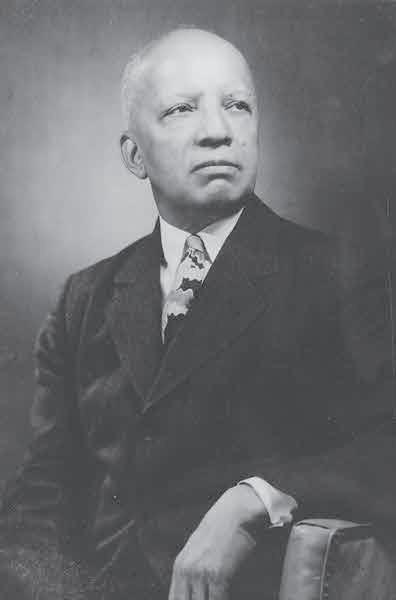
At the heart of Black History Month is Carter G. Woodson, a figure whose life story is as inspiring as the history he
sought to celebrate. Born to parents who were freed from slavery, Woodson’s journey to becoming a Harvard-educated historian is a testament to resilience and perseverance. In the early 20th century, Woodson confronted a significant omission in the American education system: the absence of Black history and achievements from the curriculum. This oversight was not just a gap in education; it was a void that diminished the presence and contributions of an entire race in the nation’s collective memory.
Driven by the conviction that knowledge of one’s history is foundational to a people’s dignity and identity, Woodson set out to rectify this omission. His efforts culminated in the creation of Black History Week in 1926, a precursor to today’s Black History Month. Woodson




to Mississippi to live with her older sister, Louvenia, and her brother-in-law, Jesse Powell. Due to a lack of formal education, Walker began working as a domestic servant. She married Moses McWilliams at the age of 14, with whom she had a daughter named A’Lelia, to escape abuse from her brother-in-law. Moses then passed away when Walker was only 20, leaving her widowed with their child. Walker eventually remarried twice and became known as Madam C.J. Walker during her last remarriage. Walker began her entrepreneurial journey due to her scalp ailments and hair loss. She sought to address these struggles and learned about hair care from her brothers, who were barbers. Her newfound knowledge about hair care, combined with her experience of selling hair-care products for Annie Malone, led her to develop her own hair-care business. Walker marketed her homemade products to Black women, winning over many clients with this personal approach. Her “Walker System,” which involved scalp preparation, lotions, and iron combs, quickly boomed in popularity among African-American women. In 1910, she established the Madam
strategically selected the second week of February for this observance, aligning it with the birthdays of Abraham Lincoln and Frederick Douglass, two figures already celebrated within the Black community at the time. This choice was not only symbolic but strategic, leveraging existing celebrations to foster a wider recognition of Black history.
FROM A WEEK TO A MONTH
Woodson envisioned an even broader platform for this important work. He advocated to expand the week of celebration to a full month and for the integration of African-American history into the curriculum throughout the year.
The shift from a week to a month was a gradual process, reflecting both the growing awareness of the Black community’s contributions and the broader social movements seeking justice and equality. By the 1960s, amidst the Civil Rights and Black Power movements, the call to extend the celebration gained momentum, leading to the official recognition of Black History Month in 1976. This expansion was not merely about allocating more time to the celebration; it was a recognition of the complexity, depth, and richness of African American history, necessitating more than a week’s attention.
PRESIDENTIAL RECOGNITION AND THE NATIONAL CONCIOUSNESS
The significance of Black History Month has been underscored by consistent recognition from U.S. presidents, starting with Gerald R. Ford in 1976. Each presidential proclamation has not only honored the tradition but also reaffirmed the importance of understanding and appreciating the full scope of American history, which is incomplete without the stories, struggles, and successes of Black Americans. This national acknowledgment serves as a reminder of the ongoing journey toward equality and the vital role that understanding our shared history plays in this process.
Today, Black History Month stands as a powerful testament to the journey of Black Americans. It is a time for reflection, education, and celebration of
C.J. Walker Manufacturing Company in Indianapolis, Indiana. Walker’s company also offered training programs for women who were interested in entering the beauty industry, expanding beyond what the typical business provided at that time.
Walker was also deeply committed to activism and philanthropy. She donated much of her wealth to organizations such as the Industrial School for Black Girls, where she used her influence to support many charitable causes linked to education and civil rights. For example, during World War I, “she was a leader in the Circle For Black War Relief and advocated for the establishment of a training camp for black army officers” (Wikipedia). She also joined the National Association for the Advancement of Colored People (NAACP) New York chapter’s executive committee and participated in the Silent Protest parade, a public demonstration that drew more than 8,000 African Americans to protest a riot in East Saint Louis (Wikipedia). Today, Walker’s legacy is still felt worldwide. She overcame all the obstacles in her life and rose to become one of the wealthiest African-American women of her time. Her contributions to business and philanthropy continue to inspire many, and her legacy lives on through properties like Villa Lewaro and the Madame Walker Theatre Center.
THE ENDURING LEGACY OF BLACK HISTORY MONTH
the contributions that Black Americans have made to every sphere of American life. By delving into the origins of Black History Month, we are reminded of the importance of not just history, but our actions today in shaping our identity and guiding our future. Black History Month not only honors those who have paved the way, but also those who have been hurt and sidelined in the process of fighting against racism.
As we reflect on the significance of Black History Month and the strides made toward recognizing the profound contributions of African Americans to the fabric of American society, it is imperative to acknowledge that the journey toward racial equality is far from complete. Today, racism in America remains a pervasive and systemic issue that continues to affect the lives of millions. Although it is important to recognize the progress that America has made in fighting racial discrimination, it is also crucial to acknowledge that the shadows of inequality, discrimination, and injustice still loom large in various aspects of daily life, from education and employment to the criminal justice system and beyond.
VOL. 3, NO. 6 FEBRUARY 29, 2024
mental floss
HOW IT STARTED
namigreenville e-wv
ARMS VS. LEGS VS.
By Sheil Mody, Pranesh Saran, and Vincent Yang
A LEG UP
Picture, if you will, a hypothetical in which one must make the solemn choice of bidding farewell to either their lower or upper limbs—without consideration, one might make the hasty and impetuous decision to rid themselves of their legs, believing that they are more expendable than their arms, whose value lies in the ability to hold and manipulate tools and objects. However, such a choice would be misguided; it is clear that the legs stand as the stalwart pillars that support the poise and purpose of the human anatomy.
The essence of human mobility, the very foundation upon which we are able to traverse the world, lies in our intricate lower limbs. Without legs, the simple task of getting out of bed becomes a challenge one must overcome every day. The lack of legs limits individuals from various forms of motility, such as walking, running, and driving; thus, they are compelled to rely on wheelchairs or prosthetics to move about, which are serviceable but not yet capable of replicating the full functionality of the human leg. On the other hand, while arms are certainly convenient due to the dexterity they provide, they are not irreplaceable like legs are. The mouth and the feet can, to a certain degree, replace the function of the arms in manipulating surroundings. Thus, the leg is the better of the two limb types, as their function is more integral to optimal human function.
Le gs are also indispensable in the maintenance of the body’s balance and equilibrium. The lower body contains the appendages that bear the full brunt of the body’s weight. Thus, they are also responsible for providing the majority of the body’s strength. To be deprived of one’s legs is to be deprived of the strength stored within them, enervating the individual and offsetting their stability. In addition, one can replace the arms with nifty prosthetics that can come with a multitude of attachable gizmos and gadgets, like screwdrivers, pistons, and utensils. As stated by Jacob Noh (VCS, 11), “One can view losing their arms as an opportunity to obtain some stylish scissor-hands rather than a detriment.”
Thus, it is clear that between arms and legs, losing one’s arms is the preferable outcome.
HELPING HAND(S)
It may seem at first that these unassuming upper limbs are quaint, serving only a common purpose, with their dazzling opposable thumbs, firm grip, and versatility in combat. But, do not think lowly of such an appendage; its vital role in lending skill to dexterous minds is its silent claim to fame, the part it plays in the rise and fall of entire nations, empires, and factions. Think about your daily routine. You wake up, using your hands to propel yourself off a giant cushion designed specifically for the slumber of your hu -
SENIOR STAFF WRITERS
SENIOR STAFF WRITERS ON SENIOR YEAR AT BIF
By Esha Bansiya, Christopher Chen, and Alicia Peng

BASIS Independent Fremont is an unusual school. In a typical high school, senior year would be jam-packed with filling out college applications, keeping up with the fast-paced Advanced Placement courses, leading school clubs, and studying tirelessly for eight midterms and finals. But at BASIS, seniors have it a little different—a little easier.
BASIS is notorious for making students take a multitude of difficult AP courses early on in their high school career, with many students having taken around ten APs by the end of junior year. Contrary to “normal schools,” the course load dramatically decreases in senior year, as seniors are only required to take 5 courses—4 capstone courses and a college counseling course—and no APs. Courses such as Linear Algebra and Cosmology act as an introduction to their collegiate counterparts and often have less coursework than a regular, full-year class. The capstone and college counseling courses are each only two trimesters long. In the third trimester, BASIS encourages seniors to engage in a Senior Project, where they spend their time off campus, working on a personal project in the real world under internal/external advisers.
In the first half of the school year, instead of having stacks of homework every night, seniors at BASIS have one main focus—college applications. Students have the opportunity to focus their time on perfecting personal statements, editing supplemental essays, and applying to as many schools as they can. For many, this opportunity to cover all bases and ensure their college acceptance feels like a blessing. However, the grind to apply to more and more schools leads to eventual burnout that leaves seniors longing for the more relaxed third trimester.
The BASIS course progression seems to be perfectly adapted for those applying to college—frontloading difficult, high-credit coursework in the first three years of high school, easing off courseloads at the beginning of senior year to let students focus on college applica -
man body. You use the restroom, pick up your toothbrush, and turn on the faucet, all with your small but nimble digits. You shower, don your school attire, and collect your school things in your school bag, all with those deft fingers. You work, you eat, and you play—all of these activities include the usage of the hands.
But the hands are not alone in performing this extremely crucial task. Their success is entirely reliant on the support of your arms, forearms, and upper arms, both conjoined at the elbow and attached to your shoulder and your wrist. All these flexible, moving parts enable you to creatively approach tasks, all with one versatile extremity! For example, they enable your entire arm to sweep a wide angle and allow you to twist your arms as the situation necessitates.
Increasingly, the ways we interact with the world are designed for our hands. We text, we type, we swipe, we tap, we call, we hug, we shake hands, we build, we design—all of these ideas originate in the mind, but they are effectively and easily brought to fruition with the use of the hands.
Plus, in the unfortunate event that people lose the function of their legs, or need to amputate their lower limbs, they can equip prosthetics that mimic its function, allowing them to be able to walk and run to some degree. However, hands are such accurate appendages that trying to recreate them artificially has been a challenge up until now, and most prosthetics designed to replace the hand or arm are usually hooks of some sort that are a meager
fraction of the unique ability of the metacarpophalangeal joints. In short, although legs cannot be fully replaced, it is easier to restore their function than trying to restore hand function, which may require extensive hand surgery. So, in short, your hands are extremely helpful, even if your hands may give you a leg up.

tions, and letting students lay back and explore the real world once college applications are over. However, there exists a debate on whether BASIS students should have six months of absolutely zero in-class instruction, where their critical thinking skills and work ethic may decline, before taking the huge academic leap into college.
OUR TAKE:
Us BASIS students have never really had time off before. Every ski spring break was spent studying for APs. Summers are filled with pre-college programs or internships, because you have to have to do something to buff up your college application, right?
Now that college applications are finally in, there are no more expectations—no more fancy words to add to a resume. It’s the first actual vacation we have. We are clawing for the end of our continuous work. Every day is a day closer to being done.
BASIS has ruined our perception of what a break should mean. A break is something to get away from your workload, but for us BASIS students, breaks are oftentimes laborious, composed of time spent catching up on backlogged assignments, studying for upcoming tests, and completing projects.
We have worked tremendously hard to reach this final, more relaxed last year of high school, and we’re finally getting a glimpse of what having time off is like. Senioritis is hitting hard. But what can you expect when we have been waiting four years for it all to end?
We know that taking an extended leave has some possibly questionable implications for students’ futures in college and beyond. Taking such a long absence from in-class instruction the year before college may lead us to be less prepared to take on college-level coursework.
We also realize that in the next few decades of our lives, there will be no sixmonth break to look forward to. After four years of college, most seniors will be moving forward to professions that limit them to a few vacation days per year, and until we turn 65 and hopefully retire, we will be in a constant cycle of work and stress, much like our high school years. Yet, perhaps this reality gives us all the more reason to enjoy this last trimester of the school year, an extended rest that we may never get to experience again.
COLLAPSE OF THE INDONESIAN TOURISM INDUSTRY?
COLLAPSE OF THE INDONESIAN TOURISM INDUSTRY?
By Angela Cao

Indonesia’s tourism industry has seen significant growth over the past few decades; it has the largest economy in Southeast Asia. For years, the flourishing of their tourism industry has led to growth in various other economic sectors. Known for its illustrious beaches, magnificent temples, and beautiful volcanoes, it comes as no surprise that Indonesia is one of the most visited countries in the world. It has become quite a hotspot for tourists and has been put on the bucket lists of many more. However, the Indonesian government has recently announced that it will increase taxes on the entertainment industry from 10-35% to 45-75%. Many fear that this decision could mark the potential downfall of Indonesian tourism. Throughout 2020 and 2021, the COVID-19 pandemic caused
tens of thousands of people to lose their jobs, with local businesses taking an especially big hit. This tax hike could mean that the post-COVID recovery many were hoping for will never happen. While some government officials initially said that by raising tax rates, the Indonesian government hoped to attract more high-spending tourists, these statements have since been rescinded after local businesses filed lawsuits. Despite the reconsideration, many business owners are still frustrated. Sofie Sulaiman, a spa therapist, recently spoke to Al Jazeera, expressing her worries about sustaining her business. She stated that it would be impossible to make a profit under the new tax regime, as her business would have to cover the cost of the tax hike rather than passing it onto customers. Increasing tax rates up to more than fifty percent has put severe stress on business owners, as they fear that they will quickly lose customers and that they will need to pay the fee by themselves. Concerns are also arising about the possible spike in illegal activities.
Economists feel that the Indonesian government’s intentions will have the opposite effect; rather than generating more revenue, Indonesia’s tourism will face an impending doom. Nearby countries like Thailand have decreased taxes on alcohol, spas, and bars to increase tourism. With tourists migrating to other nearby countries with similar geographies, economists worry that this tax hike will be the downfall of Indonesian tourism.

2
FEBRUARY 29, 2024 pixabay
indonesiatravel
indonesiatravel
whas11
WHAT’S GOING ON WITH GEN ALPHA? WHAT’S GOING ON WITH GEN ALPHA?
By Katherine He and Ailsa Wu

We’re all familiar with the contrast between different generations, from Boomers to Millennials to Gen Z, with invisible lines separating age groups by not only time but also knowledge and experience. For most of our lives, Gen Z has been accustomed to being the youngest generation with the most knowledge and taste on modern trends, fashion, pop culture, and much more. However, the growing generation of kids born after 2010, known as Generation Alpha, has now become old enough to use social media and has started to develop an interesting online presence.
SEPHORA TEN-YEAR OLDS
This newest generation has many quirks, including a rising phenomenon widely dubbed online as the “Sephora ten-year olds.” If you’ve been on the Internet, you probably know what this phenomenon is referring to: videos of pre-teen girls showing off their skincare routines, making multi-step “get ready with me” TikToks using expensive skincare and makeup products, and shopping in the well-known beauty retail store Sephora (hence the name of this trend). Many of these girls are seen buying and using products such as toners or bronzing drops from brands such as Drunk Elephant or Glow Recipe that typically contain Vitamin A, known for its retinol composition and ability to combat wrinkles and enlarged pores. Kids in Sephora stores are often seen browsing the aisles with hundreds of dollars worth of products in their arms, and one can only assume this lifestyle is sponsored by their par -
ents. Such videos, mostly circulating on platforms such as TikTok and Instagram, have garnered shocked reactions from older generations, including Gen Z. Many have responded with genuine expressions of concern for the use of such harsh products on pediatric skin and the irresponsibility of the parents who support this, while others have taken to mocking the situation through parody videos. One TikTok user shares their concern in a comment, saying, “Kids shouldn’t have to worry about makeup and skincare. They can be interested, but it’s sad to see a kid’s best day [being] at sephora rather than playing with their friends, going to an amusement park, etc.” So, where are these kids learning about these skincare brands and products? Many of us may remember our youth differently, our ten-year-old lives being characterized by children’s cartoons and toys, instead of influencers sharing the latest skincare products. The truth is that Gen Alpha is being exposed to much more online content due to the ubiquity of technology in our lives. Many kids are being raised by screens instead of their parents, leading them to be more easily influenced by what they see online.
SKIBIDI TOILET
Besides skincare gurus, another population of Gen Alpha kids is influenced by Internet memes and unusual videos on social media. Most kids in this age of technology have access to numerous sites and forms of social media with just one device. Partnered with unlimited WiFi access, a child can go down a serious rabbit hole of Internet mad -
RAM MANDIR INAUGURATION IN AYODHYA RAM INAUGURATION AYODHYA
By Shubh Bachkethi

On 22 January, 2024, the Ram Mandir was consecrated in Ayodhya, India, by Narendra Modi, the Prime Minister of India. Ayodhya is the birthplace of the deity Ram, which is why the temple is being built. As of February 2024, the temple is still under construction and it is expected to be completed by the end of the year.
The land upon which the temple is being constructed has a controversial history spanning centuries. Before the Mughal invasion, North India was home to numerous Hindu and Sikh temples, including a Ram temple in Ayodhya. However, in 1528, the Mughal emperor Babur ordered the temple to be demolished and replaced with the Babri Masjid, a mosque.
During this time, Hindu and Sikh worship on the site was prohibited. The mosque remained there until 1992, when
a mob of Hindu demonstrators destroyed the structure. In retaliation, Hindu temples were burned and destroyed in the Muslim-majority countries of Pakistan and Bangladesh, only exacerbating the tensions between Hindus and Muslims. Muslim witnesses of the demolition bear emotional scars. Even 30 years later, they remember the atrocities committed that horrible night.
To bring justice to both parties, in 2003, the Allahabad High Court ordered a government-issued excavation by the Archaeological Society of India (ASI). The group found Hindu sandstone carvings and pillars, as well as a Shivalinga (a Hindu symbol) on the site. Additionally, archaeologists found that the mosque did not have its own foundation, providing evidence of a temple that was present
ness in one sitting. A particular video series, Skibidi Toilet, has circulated through multiple trends on social media due to its absurdity and popularity with the younger audience. Essentially, the Skibidi Toilet is an odd toilet character containing a man’s head situated in the toilet bowl. In relation to the Skibidi Toilet, a parody of the song “Ecstasy” by artist SUICIDAL-IDOL includes references to several popular slang terms including “skibidi,” “Fanum tax,” and “rizzler.” This song quickly blew up on its release, even becoming famous among older generations. This entire trend with the toilet character and song marks the start of Gen Alpha’s growing influence on older generations.
POLL
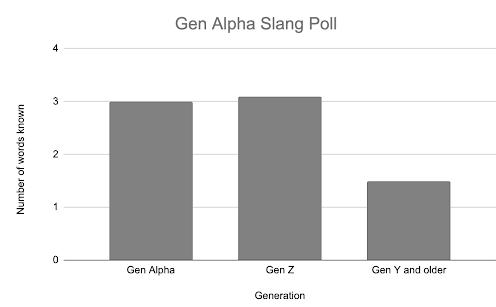
In addition, we wanted to know if BASIS students and teachers were up to date with popular Gen Alpha trends and terms. We compiled some vocabulary that the Internet classifies as “Gen Alpha slang” — “Skibidi Toilet”, “Rizzler”, “Fanum Tax”, and “Gyatt” — and tested the knowledge of our student and teacher body. We polled students in both Gen Alpha and Gen Z, as well as teachers and staff. Our results were pretty shocking: Gen Z students ap -
pear to know more Gen Alpha slang than Gen Alpha students themselves! The most commonly known word (even amongst teachers) was “rizzler,” while the most commonly missed word was “Fanum tax.”
CONCLUSION
From all of our research and data, what do we classify this phenomenon as? Is it just a generational pattern of kids having odd humor, similar to the Skibidi Toilet jokes? We believe that the root cause of all these issues, occurrences, whatever you may call these past events, are all due to children having unlimited access to the Internet. If parents wish to stop their child from being overly influenced by social media, the most effective course of action is to limit screen time and encourage outdoor playtime! Besides the limitations to be made, we can strive to educate kids on fact-checking information they receive online, or even push for social media companies to have a kids-friendly version, such as YouTubes’ YouTube Kids. All in all, incidents like these only spark controversy, as some people view them as no big deal, while others advocate for drastic measures to be taken.
before. The Supreme Court of India carefully evaluated the evidence, and in 2019, ordered two things: the establishment of a trust that would be used to build a Hindu temple on the land and the allocation of an alternate five acres of land to the Sunni Waqf Board for the construction of a mosque. The Sunni Waqf Board accept -
ed the land offer.
The land of Ayodhya plays a significant role in the history of India. It is my wish for the peaceful resolution of the Ayodhya dispute one day, with both sides satisfied and with everyone living in harmony for the rest of their lives.

3 VOL. 3, NO. 6
trainor
cnn
encyclopedia brittanica
THE FUKUSHIMA NUCLEAR DISASTER: WHAT HAS THE GOVERNMENT BEEN DOING?
THE DISASTER: BEEN
By Nick Lin
On March 11th, 2011, Fukushima, loca ted in the northeastern part of Honshu, the largest island in Japan, was struck by a devastating earthquake and tsunami. In the area affected, a particular nuclear power plant triggered explosions that knocked out the entire power supply, halting the reactors’ cooling systems. Due to the extreme temperatures nuclear fission can produce, authorities had to use water to cool the reactors down, but this process can take decades to complete, and the used water cannot be released back into the wild due to its radioactivity. Throughout the years, the storage of this contaminated water has led to many problems, with neighboring countries and environmental organizations raising concerns about releasing the contaminated water.
But first, we must understand how this issue started. On March 11th, a magni -
tude nine earthquake hit Japan, causing significant shaking at the Fukushima Daiichi Nuclear Power Plant. A huge tsunami triggered by the shaking completely flooded the nuclear power plant, cutting off electricity and, therefore, the cooling system. Here is where the problem began. Even after the nuclear fission stops, the heat continues to rise. The fission products formed by decayed uranium continue to decay, producing a significant amount of decay heat. If this heat is left unchecked, it could potentially lead to a meltdown, which would release tons of radioactive material into the environment and trigger massive explosions.
To prevent this from happening, TEPCO (Tokyo Electric Power Company) had to cool the reactors. While they were doing this task, all three active power plants exploded, but luckily, the reactors were not substantially damaged. Then, the company and the government started injecting seawater and boric acid into the reactors in an attempt to cool them
THE ICJ RULES ON THE ISRAEL-PALESTINE CONFLICT RULES
By Krish Mangrolia
When the International Court of Justice (ICJ) determined they would rule on the application regarding the Israel-Palestine conflict, Israel asserted that the ICJ would dismiss the application. However, in the court’s ruling on January 26, 2024, the court rejected Israel’s request to throw out the case, and there was almost no contention in the overall ruling. Additionally, despite the UN’s justice court having no binding power to enforce its rulings, this specific determination and what was ordered tips the balance in the geopolitical scale of the war between the two parties. What many consider a response to the October 7, 2023 attacks on Israel by Hamas and the single deadliest day for Jews since the Holocaust has led to allegations of genocide and an inquiry into Israel’s actions by the ICJ. As numerous sources describe, the Hamas attack may have been used as “justification” for Israeli actions. An AP News article states that nearly 85% of the 2.3 million citizens of Gaza have been forced out of their homes due to violent and pervasive Israeli attacks. Despite calls to end what has been characterized as genocide, lobbying to governments from the city level to the national level, national protest methods, and more, there haven’t been many steps taken to cease these actions. The United Nations, despite not directly classifying the actions as genocide, has clearly warned and advised Israel to refrain from violating the ‘Genocide Convention.’
First, some crucial clarifications must be made to truly understand the cause and severity of Israeli attacks, which many people, including South Africa’s government, have deemed as genocide.
On October 7, 2023, Hamas, deemed a terrorist organization by many nations, launched an attack on Israel, in response to long-standing conflicts with Israel. It was also the deadliest day for Jews since the Holocaust. Hamas slaughtered over 1200 people, many of whom were Israeli civilians, and brutally raped and mutilated girls and women. Hamas, as a group, is not the same as the countless Palestineans that have been killed and displaced. Concerns have grown about Israel’s actions following Hamas’ attacks, as some think the nation used terrorism as a justification for what has been considered genocide (as aforementioned). Many condemn Israel for these actions because of the scope of the individuals afflicted, which includes almost every Palestinian in Gaza. As of February 1, 2024, Israeli forces have killed around 27,000 people in Gaza. Additionally, it must be stated that the Israeli government is behind the actions attributed to the nation of Israel. The Israeli government, which has often been simplified in many articles and this article as Israel, is not the same as the nation or the people of Israel, over 200,000 of whom have also been internally displaced following the terrorist attacks.
To determine the severity of the ruling, it’s important to analyze what spe -
cifically was ordered and what wasn’t. Included in the ICJ’s provisional measures was an order: “‘[The Israeli government must] take effective measures to prevent the destruction and ensure the preservation of evidence related to allegations of’ genocidal acts against Palestineans in the Gaza Strip.” There were six provisions included in the ruling, the three most important of which stated that Israel must: refrain from acts listed under the Genocide Convention of 1948, prevent and punish acts that may incite genocide, and take immediate effective measures to provide humanitarian aid to those in Gaza. Additionally, the ICJ did all in its power to effectuate these changes, despite its lack of authoritative power — the ruling mandated Israel to preserve evidence of inciting acts of genocide and submit a report of these alterations to the Court.
Despite recognizing the threat to Palestinian civilians and the scope of the Israeli offensive, there is still more to the ruling, with certain sections in favor of the Israeli government. Notably, the ruling hasn’t determined that Israel has violated the acts under the Genocide Convention, which is what the UN would use to make such a determination. No nation has ever been proven to commit the acts listed in the convention. One of the crucial actions that hasn’t been taken is economic sanctions, likely similar to those on Russia after the country violated the ICJ’s order to halt the Russo-Ukrainian War. However, an NBC article states that the U.S. (Israel’s closest ally) would attempt to veto sanctions the UN would attempt to impose. Additionally, many Palestinians hoped for another ceasefire among the provisions in the ruling, which wasn’t included. (Note: the blame for a lack of a ceasefire could be placed on both parties, as on December 25, 2023, Hamas and the Palestinean Islamic Jihad — another designated terrorist group by many nations — rejected a ceasefire deal proposed between Egypt and Israel.) This note may be the difference between thousands more living in their homeland, being displaced, and dying in the war. It may also symbolize a slight variety of perspectives from different nations. Lastly, the ruling includes a key provision ordering the “immediate and unconditional release” of the 134 Israeli hostages still held captive by Hamas — with over 30 confirmed to be dead. What the ruling explicitly states and doesn’t state, when combined, comprises an accurate representation of the global condemnation of the Israeli attack on Palestinian citizens and the urgency required to stop the loss of life on both sides. The ruling served a multitude of roles in favor of the Palestinian side — preventing acts that may cause the loss of life of Palestinian citizens. First, it acted as a severe blow to Israel’s international standing. As an NBC article states, the simple potential of the association of Israel with genocide in the conflict can devastate the nation’s international reputation for years, and potentially decades, to come. This can drastically affect
down. This plan might have worked, but the wastewater generated by this procedure needed storage space.
Authorities soon realized that the storage space would run out and that they would inevitably have to release the water into the ocean. To postpone that date, they came up with a smart idea. One of the main problems the company faced was that oftentimes, the groundwater under the reactors mixed with the water used to treat the facility, increasing the amount of wastewater that needed to be stored and treated. That is why authorities built an “Ice Wall” in 2014, which is a cluster of pipes stuck in the ground and surrounded by frozen soil, stopping the groundwater from flowing under the reactors.
However, the authority’s main goal was simply to decommission the nuclear power plant. This process would have been much easier if the area wasn’t contaminated with fuel debris. This debris consists of mainly melted radioactive pipes made of highly radioactive uranium oxide. Authorities planned to remove some fuel debris as a test in 2019,
but this plan was postponed indefinitely due to technical difficulties. In order to perform a procedure as complicated as this one, more advanced technology and safety must be prepared for the people going inside. In the meantime, the fuel debris isn’t going anywhere.
More recently, in 2020, Japan estimated that the storage capacities would be full by 2022. They have since then been trying to process the radioactive water to remove as much radioactive material as possible. Throughout 2023, they have been checking with international organizations to make sure that their wastewater is safe to dump into the ocean. Despite these precautionary measures, many countries and environmental groups still believe that the wastewater should not be dumped due to environmental cowwwwwwwwncerns. Nevertheless, Japanese officials commenced the dumping process in August 2023, disregarding these global concerns. No one knows how much this decision will impact the environment, but let this be proof of the destructive force Mother Nature holds.

the nation’s economy, especially foreign trade and investment. The article adds that those who have supported the nation in its military expansion will be tied into this association, listing the example of the US under President Biden. Additionally, the ruling issued an ultimatum to Israel to cease its actions. While these actions mentioned haven’t been classified as genocide, the court’s urging of Israel to cease these acts or be categorized under the Genocide Convention provides such pressure. Ceasefire talks and hostage release negotiations have been underway for months now, with Hamas & Islamic Jihad rejecting an agreement first in December and the Israeli government rejecting one in February. Despite the judgment being not binding, meaning the UN cannot force Israel to act, the UN’s Security Council can determine measures to enact on Israel. With the power and backing of the majority of nations worldwide, the threat of these measures may force the Israeli government’s hand. The scope of the UN’s jurisdiction in this conflict may also play a role in the ICJ’s orders, both from the January 26 ruling and in potential future hearings.
On the other hand, “Hamas cannot be called before the International Court of Justice, nor can any government of Gaza, nor even Palestine, which is not a fully sovereign state and has only observer status at the United Nations,” which could have massive implications for the actions taken by Hamas, states an article by The Atlantic. The article goes on to say that Hamas “has publicly espoused genocide against Israelis for decades.” In contrast, Israel continues to deny any allegations of genocide. This allows Hamas to commit acts with genocidal intent, as the UN cannot hold them accountable like other internationally recognized states.
Despite the landmark ruling for the Palestinian side, citizens still voiced their frustration at a certain aspect of the ICJ’s decision. A source from AP News, among numerous others, emphasizes the court’s restraint from ordering a ceasefire between the two parties in the ruling. The AP News article stated that this specific decision was “met with relief,” as Israeli officials feared for the ceasefire order. Palestinian citizens hoped for another ceasefire and were angered by its restraint, contending that a ceasefire could have saved thousands of lives that would otherwise be lost. In contrast, an
Atlantic Council article describes this “headlining” restraint as important, as it shows how the ruling focused on preventing a potential genocide and not on making an “unenforceable” order. In this sense, this ‘non-order’ divided opinions into two sides: condemning the court for restraint on ceasing the fatal war and highlighting the ICJ’s decision to focus on the possibility of genocide. The future of this decision and future Israeli acts relies on two things: the follow-up meetings by the ICJ on this issue and the Israeli report scheduled for a month after the ruling. The ICJ has scheduled at least one follow-up meeting on January 31, and multiple sources state that the court’s comprehensive ruling will likely take years of deliberating. The single most important meeting has already occurred, but specific classifications such as whether Israel’s acts are officially recognized as a genocide have yet to be determined. Additionally, the Israeli report (if even submitted) will be a major determining factor as to whether the Israeli government will take this ruling into account. Israel can decide to take three courses of action: halt their aggression towards Palestinian civilians, slightly slow or not change this aggression, or not submit a report outright. The second and third scenarios will almost guarantee international action from the UN and other organizations, particularly in the form of economic sanctions and other measures. The ruling — with key support from states that haven’t been vocal about Palestinian support, such as EU states — places the ball in Israel’s court, albeit with significant pressure on how Israel plays it. However, Israel’s path may be inferred from Prime Minister Netanyahu’s immediate response to the ICJ’s rulings and provisions, which were captured in an NBC article written on the day of the ruling. The article states that Netanyahu flat-out rejected the ICJ’s decision, deeming it “false” and “outrageous”, in a move interestingly similar to the ICJ rejecting Israel’s application to drop the case. Regardless, the recent ICJ ruling, initially attempting to classify Israel’s acts as genocide or not, has offered as close to a global command as it gets, ordering Israel to cease alleged acts of genocide and terror on Palestineans, and (as some UN experts state) “offers the first concrete hope to protect civilians in Gaza.”
4
FEBRUARY 29, 2024
the intercept
WHY DOES FEBRUARY HAVE 28 DAYS?
WHY DOES FEBRUARY HAVE 28 DAYS?
By Abheek Batra

As the month of February ensues, oftentimes people wonder about this peculiar month: Why does it have twenty-eight days compared to other months with thirty or thirty-one? And like most historical things, the cause is the Romans.
When Romulus founded Rome and became king, there was an overwhelming amount of festivals, holidays, and important occasions to keep track of, which eventually resulted in the invention of the then-lunar calendar. The calendar had ten months (without January or February), each consisting of thirty to thirty-one days. Winter was disregarded because they were all too busy trying to survive in the cold. This oversight directly led to Rome’s second king, Numa Pompilius, experimenting with a new solution.
Back in ancient Rome, even numbers were considered to be bad luck, which caused Numa to remove a few days from each even-numbered month in the then three hundred-four day calendar year, resulting in two hundred and ninety-eight days. He also wanted to cover the twelve lunar cycles, which consisted of three hundred and fifty-four days, rounded up to three hundred and fif-
ty-five. As a result, he added two new months: one with twenty-nine days (January) and one with twenty-eight days (February). Twenty-eight is an even number, but since “Februm’’ is Latin for spiritual purification, the Romans let it slide.
However, this calendar was still ten days behind the seasonal year. So, Numa decided to add a leap month every other year between the transition of February and March, leading to every four years averaging three hundred sixty-six and a quarter days. Unfortunately, these leap months were eventually exploited by politicians, who manipulated them to extend their terms or short-live others’
Six centuries later, Julius Caesar came to power and decided to fix this entire mess. Having spent a lot of time in Egypt, Caesar recognized the need to switch to a solar calendar, flushing the idea of a lunar calendar down the drain. He added ten days to different months and introduced a leap day every four years to synchronize with the season year. Notably, he inserted the leap day after February twenty-third, aiming to compensate for lost time.Caesar’s reforms also led him to name a month after himself (July), a practice followed by his successor, Augustus Caesar, who decided to do the same thing (August).
 By Vera Lin

You may notice you’ve been passing by so many students in beige hoodies these past couple of weeks. The cobalt-blue text on their backs is difficult to miss. It reads “2024 BIF DECA.”
DECA, officially referred to as Distributive Education Clubs of America, is a non-profit organization run by students at the international level. The distinctive emblem of the organization, featuring a quadrangle with arched sides, represents the precision and uniqueness of its students, and the rich and bold shades of blue in the logo reflect DECA’s commitment to achievability and responsibility. Founded in 1946, DECA offers high school students various educational and leadership development activities in the field of business, namely ones that align with the National Curriculum Standards in the career clusters of marketing, business management and administration, finance, and hospitality and tourism. With over 250,000 members and 3,900 chapters around the globe, DECA has undoubtedly brought academic rigor and professional responsibility to students at a younger age, letting them experience what it’s like to be a true business professional.
DECA’s educational program is one that brings the classroom to life through competition, an effective strategy that drives students to excel. Students put their knowledge into action at conferences, where they readily apply what they know to solutions and compete with other local chapters around their school. One can choose from a broad range of categories — role-plays and case studies,
online simulations, and prepared events — with a variety of competitive events in each of the four career clusters. Many events expect a ten to twenty-page written project, which consists of conducting a research study as well as preparing an extensive 15-minute presentation which changes every year, making it a requirement for students to begin early in the school year. For instance, Business Operations Research Events “challenge members to design and conduct research to present findings and a strategic plan on a topic” (DECA Inc.). If one prefers to think on their feet, role-plays and case studies give you anywhere from 10 to 30 minutes to synthesize a unique solution to a case study or make a creative pitch. DECA truly offers an extensive list of events that allows one to choose and showcase their abilities to thrive in the business world.
The BIF DECA chapter, which is now one of the largest clubs in the school, was first established in 2022 by Shirley Fan and Alicia Peng. Under the mentorship of Mr. Ong and Mr. Magee, our chapter set out to tackle the 2024 NorCal District Career Development Conference in January. With 31 participating members, our chapter came home with record-breaking placements for BIF DECA — 20 Top 10 finalists and 6 glass winners (Top 3 Overall)! If you’re interested in what the BIF DECA chapter is up to, check out their actively updated bulletin board next to Room 124.
The impact of DECA extends beyond academic achievements. It instills a strong work ethic and equips students with skills necessary for their future careers.
RUSSIAN FIGURE SKATER FACES BAN AMID OLYMPIC DOPING SCANDAL FIGURE FACES OLYMPIC DOPING
By Emma Ma
On January 29th, 2024, teenage Russian figure skating phenomenon Kamila Valieva received a four-year ban from competitive events, starting retroactively in 2021, when a sample she provided was found to be positive for doping. The test result was announced at the 2022 Beijing Winter Olympics, right when Valieva was expected to win in the Women’s Figure Skating event, shocking fans and athletes all across the world.
In an official statement, Switzerland’s Court of Arbitration for Sport (CAS) declared Valieva guilty of an anti-doping rule violation stemming from her positive test revealed in the Olympics. The results of the test were unveiled after the figure skating team event, where Valieva had led the Russian Olympic Committee (ROC) to victory ahead of the US in second and Japan in third. The ban has been retroactively effective since the sample was collected, meaning it will end in time for the upcoming Winter Olympics in 2026. Valieva has been stripped of all of her awards, titles, etc. procured after her positive doping sample was collected.
Numerous athletes have resorted to and been caught using a variety of substances aimed to enhance their performance, as part of a practice known as doping. Doping is considered cheating and is prohibited by many international sports organizations, including the International Olympic Committee. Valieva was only 15 when she tested for trimetazidine, a heart medication that boosts endurance. Russia was already on thin ice due to a ban issued by the World Anti-Doping Agency in 2019 over non-compliant doping. It banned Russia from all international competitions, including the Olympics, for four years. One year later, following an appeal, the CAS changed the ban to two years. Until the ban ended on December 16, 2022, Russian athletes

were not able to compete under their country’s name, flag, and national anthem. Instead, they competed as neutral athletes, which meant they do not represent a specific country.
In December of 2022, the Russian Anti-Doping Agency (RUSADA) defended Valieva, asserting that she couldn’t be held accountable due to her status as a minor. Furthermore, Valieva admitted to accidentally ingesting the drug, which had been prescribed to her grandfather. She was not immediately ejected from the Olympics, and no further news emerged until almost two years later, when a decision was ultimately reached on January 29th.
The verdict was welcomed by many, including the World Anti-Doping Agency and Olympic committees around the world. The WAS stated, “The doping of children is unforgiv -
able. Doctors, coaches or other support personnel who are found to have provided performance-enhancing substances to minors should face the full force of the World Anti-Doping Code.’’ This code refers to the valid set of anti-doping rules applicable to all sports and its violation by the adults associated with Valieva. Sarah Hirshland, the CEO of the US Olympic and Paralympic Committee (USOPC), said that the decision is a “significant win not only for Team USA athletes but also for athletes worldwide who practice fair play and advocate for clean sport.” Likewise, the Canadian Olympic Committee (COC) “applauds” the ruling, stating that it enforced “the importance of rigorous anti-doping measures in sport.” Both Team USA and Canada have waited two years to finally receive the medals they rightfully deserved long ago.
However, Russia rejected the CAS ruling, firmly believing that their skaters are still “Olympic champions in the team competition.” Dmitry Peskov, Vladimir Putin’s press secretary, angrily said, “Of course, we don’t agree with this. From my point of view, of course, it’s politicized.” Kamila Valieva’s four-year ban from competitive events following her positive doping test during the 2022 Beijing Winter Olympics has left a lasting impact on the world of figure skating. The global response to the ruling is largely characterized by support from anti-doping organizations and Olympic committees who emphasize the importance of strict anti-doping regulations. This incident serves as a reminder of the continuous efforts needed to uphold the integrity of sports.
5 VOL. 3, NO. 6
AT DECA EXPERIENCE
AT
EXPERIENCE THE DIFFERENCE
THE DIFFERENCE
be smart
spectrum news
THE RETURN OF THE SAT
By Tycho Young
Standardized tests have long been criticized by liberals as racially and economically biased.
When COVID-19 moved students online, it allowed colleges to reimagine the systems that they use for admissions. It was challenging for students to take these standardized tests, and as a result, many schools became what is known as “test-optional,” where they did not require students to submit a standardized test score. Colleges originally claimed that this change was temporary and that standardized test requirements would resume after the pandemic. However, since the end of the pandemic, few colleges have reinstated their requirements. In fact, some colleges like the UCs have completely stopped accepting standardized testing scores.
Some say that standardized tests hurt diversity because of the racial and economic lines between the average test scores of ethnic and wealth groups. So, while this decision intended to promote diversity and social mobility, the removal of standardized tests may have been detrimental to the excellence of our na -


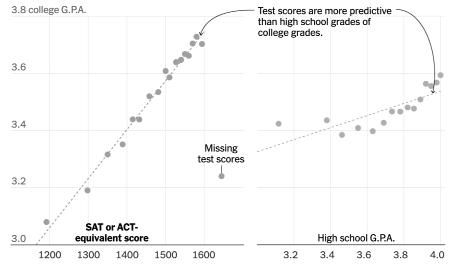
tion’s top educational institutions. New evidence strongly links standardized test scores with college GPA. As it turns out, the SAT is a far better predictor of a student’s success in higher education as opposed to high school grades.
off of straight A’s, and it becomes a guessing game of who will perform the best at a top-tier college. But how does the SAT help with this guessing game? Well, standardized tests provide a level playing field where everyone must answer the same questions, unaffected by teachers or grading systems. In other words, the test is standardized.
SOME NEW EVIDENCE THE RACIAL AND ECONOMIC DIVIDES
New evidence strongly links standardized test scores with college GPA. As it turns out, the SAT is a far better predictor of a student’s success in higher education as opposed to high school grades. And this evidence makes sense— high schools across the nation have vastly different grading systems, standards, and curricula, and a student’s grades can even vary from teacher to teacher within a high school. This variation means straight A’s at one school may mean something completely different than straight A’s at another school.
Grade inflation has also been a major factor in recent years, with high school students increasingly receiving higher grades. Too many students are receiving straight A’s, making it hard to tell them apart. This variability and low distribution makes it incredibly difficult for admissions officers to only judge students
WHAT’S GOING ON WITH TAYLOR SWIFT AND FOX NEWS?
By Thanisha Thambidurai
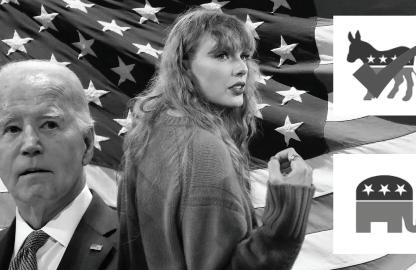
As the presidential election approaches and political campaigns commence around the country, one unexpected fact has become abundantly clear: Fox News is obsessed with Taylor Swift. While the infamous pop star has not made any political moves nor publicly spoken even a word about the 2024 presidential election, the thought of her doing so is enough to set the news station on edge. Swift endorsed Joe Biden in the 2020 election, prompting reporters to believe she will do the same this year. As one of the most well-known conservative news stations, Fox News has suggested Swift’s relationship with American football player Travis Kelce is a scheme by Democrats or the NFL, designed to encourage people to vote for Biden and increase Super Bowl ratings. On February 11, 2024, the Kansas City Chiefs won the 2024 Super Bowl, but so far, there is no clear correlation between their win and the upcoming presidential election.
So, when exactly did the bad blood between Swift and Fox News develop?
Although the current conflict between Fox News and Swift did not arise in 2020, one of the root causes of the issue could be traced back that far. In October 2020, Swift revealed in an interview with V Magazine that she would be voting for Joe Biden and Kamala Harris because she agreed with Biden’s goals for the country, which encompass supporting people of all races, giving women a right to
choose what happens to their bodies, and acknowledging the rights of the LGBTQIA+ community. In the previous election, Swift’s Instagram post on September 19, 2020, encouraged people to cast their votes, leading to 35,000 new registrations on Vote.org that day (Source: The Dallas Morning News). Since then, her popularity has only increased with the current Eras tour, Midnights, and 1989 (Taylor’s Version). A Morning Consult poll of adults from March 2023 showed that 45% of Swifties (the name given to Swift’s following) were millennials aged 27 to 42, 11% were Generation Z, and the remainder were split similarly between Baby Boomers and Generation X. The evidence shows that Swift already has a large fanbase in the millennial generation, and her popularity amongst Generation Z has also increased in the last year. Following her latest tour and successful albums, Swift might gain more political influence on younger voters, specifically the ones aged 18 to 26.
The amount of people being influenced by Swift in regards to voting brings us back to what was worrying Fox News so much. Swift supporting Biden or the Democratic Party in 2024 could have a much greater effect than it did four years ago, a factor that would be problematic for the right-leaning news station. Jeanine Pirro, a former judge and current cohost on The Five (a show where five Fox News personalities discuss modern issues), directed a statement toward Swift: “Don’t get involved in politics! We don’t want to see you there!” (Source: The New York Times). This statement only highlights how
We must acknowledge the alleged pitfalls of the SAT. The SAT is prone to economic and racial differences, and there are significant gaps in the average scores of different racial and economic groups. According to David Leonhardt, a journalist at The New York Times, “Upper income students do better on average than lower income students. White and Asian students do better on average than Black and Latino students. And this is probably the main point that the critics of the test make.”
Critics of the test say the SAT is affected by other factors, such as test prep. The reasoning is that more affluent students can afford test prep classes and take the SAT multiple times. But when we look at the evidence, this may not be the case.
Leonhardt points out another important standardized test— the NAEP. The
worried Fox News is about Swift’s potential involvement in the 2024 election and what it could mean for them in the future. Fox’s worry gave rise to some of their strangest, albeit creative, theories in recent elections. And now, the biggest issue between Swift and Fox News is the conspiracy theories sprouted by MAGA (Make America Great Again) enthusiasts over the last few months. As reports of Swift supposedly preparing to endorse Biden this year release, MAGA supporters have taken it upon themselves to act on this news. One of the major beliefs is that Swift’s and Kelce’s relationship, which began in September 2023, is staged and designed to increase interest in the 2024 Super Bowl. Another corresponding theory is that the Super Bowl is rigged to make the Chiefs victorious. Together, these assumptions culminate into one final “unholy plot” centered on an endorsement for Biden, or so the MAGA advocates, Republicans, and Fox reporters believe. Jesse Watters, the host of his TV show aired unsurprisingly by Fox News, even suggested that Swift was part of a psychological operation by the United States Department of Defense to dispatch select information to the public and influence them to vote for Biden in the upcoming election. Former Republican presidential candidate Vivek Ramaswamy jumped aboard the train to share what he thinks is happening with the government and Swift. On platform X (formerly Twitter), Ramaswamy posted that he “wonder[s] who’s going to win the Super Bowl” and “if there’s a major presidential endorsement coming from an artificially culturally propped-up couple this fall.” The Department of Defense Deputy Press Secretary, Sabrina Singh denied all accusations both times (Source: Forbes).
NAEP is a standardized test for middle, elementary, and high schools nationwide, commonly known as “The Nation’s Report Card.” The key difference between the NAEP and the SAT is that the NAEP isn’t intended to inform students of their capabilities but instead inform school districts of their overall performance. The NAEP does not impact any individual student, so there is no test prep or studying for the NAEP. And yet, the same racial and economic divides exist among elementary and middle school students. Test prep has very little impact on students taking the test, and that factor isn’t where affluent students receive their boost.
If affluent students don’t perform better on the SAT because of test prep, are the tests just inherently biased? While some liberals would like to think so, this likely isn’t the case. The reality is that racism and socio-economic inequalities exist in America, and they can’t be ignored. The SAT and other standardized tests are merely showing a result of these inequalities that are deeply rooted in our society, and these same inequalities make other factors like extracurriculars even more inequitable. In the fight against these inequalities, the choice to remove the SAT is a choice to look the other way; it is a testament to our ignorance, and an admittance of our failure.
However, not all tensions between the superstar and Fox News have been strictly political. Despite the specific issue of the viral AI-generated nudes of Swift not having any visible impact on the presidential election, two television hosts decided to comment on the matter on Fox News. On the January 29th segment of The Jesse Watters Primetime, Watters invited comedian Ben Bankas, and the discussion between them quickly became controversial. Initially, the two men were chatting about the nature of Swift’s latest relationship with Kelce before Bankas quickly turned the conversation. He decided to comment on the AI-generated nude pictures of Swift that have been circulating online, even going so far as to say “Well, I mean we all saw the over-sexualized AI photos that went viral of Taylor Swift” and saying that all he could think was “deflategate” (Source: Meidas Touch). The issue of artificial intelligence and deepfake technology is one of the major ones that must be tackled in this year’s election; others include abortion rights, immigration, and foreign policy. Watters and Bankas’ conversation is just another unnecessary attack on the artist by Fox News.
The truth is that nothing can actually be done about the situation beyond waiting to see what happens as the presidential debates kick off. Different news stations will continue to preach the propaganda of the party they support. Throughout the entire mess between Fox News and Swift, it can be believed as of now that all the conspiracy theories and discussions on live TV were simply baseless allegations ingeniously crafted by one political party trying to hoist itself above the other, the telltale signs of yet another tense election.
6
THE
FEBRUARY 29, 2024
euronews
the new york times
SALTY CHOPSTICKS
By Sarah Wu
Excess sodium can harm the human body, so why not use electricity instead?
A pair of chopsticks developed in a collaboration between Meiji University in Japan and the food and beverage company Kirin revolutionizes the way in which we taste food. These might just be the key to reducing your sodium intake while achieving that same salty flavor. These innovative chopsticks are said to trick your brain into making food taste saltier than it actually is. The device works by using an electrical simulation waveform achieved via cathodal and anodal simulation. This waveform induces an electric current that transports sodium ions from the food to your mouth, creating the illusion of a saltier flavor. Kirin says that the electricity used in the chopsticks is weak and poses no harm to the human body. In order to use them, a device with a computer is attached to the chopsticks and the consumer, with specific features allowing the consumer to control the degree of saltiness of their food. The device has been said to improve the saltiness of food by up to 1.5 times and it works on both table salt and MSG. Other research labs around the world have created similar products, including a bowl, and plans for a fork and spoon with similar technology are said to be in the making.
However, there are concerns that hinder the viability of this new technology. In order for the current to flow through the chopsticks, the person’s tongue must come into contact with two electrodes to complete the circuit. This mechanism poses a problem for certain foods because when eating some foods the tongue may not be able to be in full contact with that food, and it remains to be seen how scientists will tackle this issue. Additionally, the effects of the altered perception of taste only last for a few seconds.
An opportunity for improvements in health, this device could have an unprecedented impact. Individuals whose diets contain a large amount of sodium are threatened by the possibility of health issues, such as hypertension and chronic kidney disease. Removing the blandness from a healthier lifestyle could not only solve this problem but also encourage people to prioritize their health. The impact has been acknowledged by Japan’s Ministry of Health, Labor and Welfare. With the average Japanese adult consuming around 10 grams of salt per day, double the average recommended by the World Health Organization, it becomes imperative to find a solution for this issue. Although this technology is still new and not widely researched, its potential to improve people’s lives is undeniable. The chopsticks are set to be commercialized for consumers this year, and it might just allow for more freedom in consuming different foods.

WERE THE GOLDEN GLOBES REALLY GOLDEN? THE GOLDEN REALLY GOLDEN?
On January 7, the highly anticipated 81st annual Golden Globe Awards was held at the Beverly Hilton Hotel in Los Angeles. The event is held every January during the film award season, typically from November to February. These award ceremonies have taken place for decades, with the first-ever award ceremony occurring 80 years ago on January 20, 1944, at the 20th Century Fox Studios. The awards are intended to recognize the American and international films and television that were released that calendar year! There are multiple award categories, such as Best Supporting Actor, Best TV Series, and Best Director, just to name a few. These awards provide new opportunities to actors, directors, scriptwriters, and more for their work in the movies. These awards are voted on by three hundred journalists from all over the world, a number significantly less than many other awards shows, like the Emmys and Oscars. Many celebrities were in attendance, causing viewers to anticipate their choice of raiments and interactions with each other.
Weeks before the actual date of the Golden Globes, stand-up comedian and actor Jo Koy was announced to be the host of the popular awards show. Despite being a comedian, however, his jokes at the 2024 Golden Globes fell flat and received little to no laughter from the audience. Among the audience were many big names and stars such as Greta Gerwig, Margot Robbie, Taylor Swift, Cillian Murphy, and Robert Downey Jr.. Koy kicked off his hosting monologue with a joke about the hit movie Oppenheimer. “I just got one complaint: needed another hour,” Koy jokingly stated. “I just felt like it needed some more backstory. My New Year’s resolution for 2024 is to finish Oppen -
BABABABALENCIAGA TO たまにFENDI
By Josh Peter
S.H.O, also known as “SHO STIME”, is a 38 year old Japanese artist/producer and fashion designer. His professional music career began after a grave skiing incident (he was on the Japanese national team), as he croons in his 2019 track “ハ ハハハ (Hustler).” Following his 2019 track “BABABABALENCIAGA,” which was first provided to Youtube by WORLDSTARHIPHOP, S.H.O quickly garnered a significant following. Currently an Instagram exclusive, “ ハハ ハ FENDI” features an epizeuxis, a form of repetition in which a word is repeated immediately for emphasis, with 10 consecutive “FENDI!”s appearing in quick succession over a period of 10 seconds. The musical composition features S.H.O’s signature lyrical scheme — a catchy chorus rapped in English, with the other verses in his native tongue, Japanese. A deep
baritone coupled with a variable delivery style containing abrupt changes in register and speed leaves the listener on the edge of their seats, eager for more. “ ハハハ FENDI”’s music video gives the audience a peek into S.H.O’s glamorous lifestyle. The artist himself is seen dancing while decked out in designer clothing — Balenciaga’s Rhino Boots, stylish baggy black pants, a huge gleaming chain, and the namesake of the release, Fendi’s Blouson windbreaker jacket. To top it off, his crown of choice for the video is a ‘S’ branded balaklava, a drop from his recently released merch collection. The aesthetic backdrop features one of his multiple lustrous automobiles; this time, it’s a gold-wrapped Mercedes Benz, reminiscent of his hit song “Gold Benz.” However, it is recorded on the common roads, displaying S.H.O’s humble nature as a ‘man of the people.’

heimer in 2025.” The camera then panned to lukewarm reactions from actors in the movie such as Cillian Murphy and Robert Downey Jr., who seemed uninterested in the joke.
After a couple more quips, the monologue from Koy soon heated up as he took a jab at perhaps the event’s most renowned artist: Taylor Swift. “The big difference between the Golden Globes and the NFL? On the Golden Globes, we have fewer camera shots of Taylor Swift,” Koy said, referring to the multiple television shots of Swift supporting her NFL boyfriend, Travis Kelce, at Kansas City Chiefs football games. Swift was seen sipping on her drink in an unamused fashion after the delivery of the joke.
The most controversial joke that evening involved a comparison between two popular movies that aired in the summer of 2023: Oppenheimer and Barbie. The Barbenheimer craze among filmgoers made comparisons between the two movies unavoidable. Koy made a comparison between the two movies that missed the purpose of Barbie, critics and fans say. “Oppenheimer is based on a 721-page Pulitzer Prize-winning book about the Manhattan Project, and Barbie is on a plastic doll with [makes a joke about doll’s appearance],” Koy said. “The key moment in Barbie is when she goes from perfect beauty to bad breath, cellulite, and flat feet. Or what casting directors call… character actors!” Again, after the joke, the camera panned to a shot of the disappointed faces of the Barbie cast and director. The Barbie movie, according to its director and associates, aimed to showcase the deeper aspects of women beyond their looks or qualities, which was completely missed in Koy’s joke.
In defense of his badly-received jokes, Koy remarked later that evening that he only had around 10 days to fully draft a “funny” monologue that would capture
the audience’s attention. “It’s a tough room. It was a hard job, I’m not going to lie…I’d be lying if [I said] it doesn’t hurt. I hit a moment there where I was like, ‘Ah.’ Hosting is just a tough gig,” he told Variety, a popular magazine. Unlike the usual crowds that welcome Koy with uncontrollable laughter and positive reactions, the Golden Globes audience was a wake-up call for him. The hosting monologue for the 2024 Golden Globes was a disaster, to say the least, but the flopped jokes weren’t the only drama occurring that evening.
Of even greater interest than the actual awards was the celebrity drama, notably Kylie Jenner and Timothée Chalamet’s comeback. A trending video of the Golden Globes revealed what seemed to be Selena Gomez and Taylor Swift gossiping about Chalamet and Jenner. Many avid viewers believe that Selena was de scribing an incident with the couple to Swift and her tablemate Keleigh Sperry. As this centered online discourse soon after the Globes, many self-proclaimed lip-read -
ers rushed to decipher what the three had been discussing. According to a post from X (formerly known as Twitter), Gomez was recounting asking for a picture with Chalamet, to which Jenner said no. However, she eventually shut down all speculation when, in response to an Instagram post by Enews titled “Was Selena Gomez gossiping About Kylie Jenner and Timothée Chalamet at the Golden Globes?”, she confirmed that she was not gossiping about the two, adding that it was “not anyone’s business” what she had been disclosing to Swift and Sperry. Later on, a source close to Gomez also confirmed that she “never even saw or spoke to [Timothée and Kylie].”
While many viewers were left disappointed after the results of the awards ceremony, the Globes certainly did not fail to create online buzz and stir up celebrity drama. With the prestige of the event and the anticipation that comes with it, the awards serve as recognition in the film industry!

7 VOL. 3, NO. 6
the guardian
By Aarna Kamath, Pooja Kanthala, and Selena Peng
the
sabukaru
gold knight
GREEN DAY’S “SAVIORS” - A MUSICAL MASTERPIECE
By Sachit Parekh
On January 14, 2024, the legendary punk rock trio Green Day released their fourteenth studio album, titled “Saviors”. The 15-track album was first teased in October 2023 with the release of their first single, titled “The American Dream is Killing Me.” Subsequent singles in chronological order are “Look Ma, No Brains!”, “Dilemma”, “One Eyed B***ard”, and “Bobby Sox”.
Expectations for the band to deliver were high, especially since the previous release, “Father of All…,” was not well-received by fans and critics alike. With the 30th anniversary of their breakthrough album “Dookie” and the 20th anniversary of their Grammy-winning album “American Idiot,” expectations for “Saviors” were raised even higher.
As quoted from Green Day’s Instagram page, “Saviors” is an invitation into Green Day’s brain, their collective spirit as a band, and an understanding of friendship, culture and legacy of the last 30 plus years…It’s raw and emotional. Funny and disturbing. It’s a laugh at the pain, weep in the happiness kind of record.” Though their second single was ironically titled “Look Ma, No Brains!,” “Saviors” is an album that combines the nostalgia for the past with the present day, with songs touching on a variety of topics, including substance abuse, mental health, and the current political state. It is a wonderful balance between fun (“Look Ma, No Brains!” and “Corvette Summer”), love (“Bobby Sox” and “Suzie Chapstick”), politics (“Strange Days are Here to Stay” and “Living in the ‘20s”), and heavy topics (“Dilemma” and “Goodnight Adeline”).
(Album Cover. Taken from Spotify)
Upon the release of “Saviors”, the album entered the Billboard 200 at number four, and Green Day hit second on the Billboard Artist 100 chart. “Saviors”
topped the UK charts upon its release and hit number one on many other Billboard charts. Fans and critics alike received the album well, and many fans were excited for a “return to form”—especially following the experimental “Father of All…” in 2020.
Here are some of my favorite songs from the album.
DILEMMA: 10/10
Billie Joe Armstrong, the lead singer and guitarist of the band, wrote this song as a way to talk about his struggles with alcohol addiction and his journey of recovery. The drop-D guitar tuning used in this song, something that has not been seen since “Whatsername” from 2004’s American Idiot, combined with Billie’s harsh and raspy vocals and meaningful lyrics, have turned this song into a fan-favorite. For example, the chorus lyric “I don’t wanna be a dead man walking” shows how Billie does not want to helplessly lose his livelihood for the sake of alcohol.
FANCY SAUCE: 10/10
This song serves as the album closer and talks about how “we all die young someday”—as we continue living life, the stresses of life will eventually extinguish our spirits and motivation. The slow nature of the song better helps with the tiredness expressed in the song, addressing not not only life, but also the state of the world around us. One lyric, saying “Watch the evening news ‘cause it’s my favorite cartoon,” talks about the state of media in the present day, which is full of laughable, nonsensical ideas.
THE AMERICAN DREAM IS KILLING ME: 8/10
FEBRUARY ISSUE CROSSWORD PUZZLE




This song starts “Saviors” off with a bang. The song itself starts off with the chorus, which is fairly uncommon, and is accompanied by one of the band’s catchiest guitar riffs, in my opinion. The song is a probe into Green Day’s views of the American way of life, citing the unattainability of the “American Dream” with the current state of the housing crisis and unemployment. It also includes a nod to social media (“TikTok and Taxes,” a lyric of the song, is a play on the phrase “Death and Taxes”). Overall, this first single of the album certainly raised many eyebrows and helped ignite the hype for the release of Saviors.
SUZIE CHAPSTICK: 10/10
Sometimes regarded by fans as the second coming of “Whatsername,” this song is about a former girlfriend that the narrator wants to see again after years of not being in contact. Despite knowing the reunion will never happen, the narrator grapples with a sense of longing and attempts to find solace by recalling past memories.This soothing yet sad ballad takes inspiration from some of Green Day’s best works, such as the aforementioned “Whatsername.”
LIVING IN THE ‘20S: 8/10
Serving as an angry reminder of the state of America today, this first-wave punk-inspired song calls out the out-ofcontrol nature of firearms, robots, the media, and more. The song starts off with the very clear and jarring lyric “Another shooting in a supermarket,” referencing how “gun control” has gone so out of control to the point where we as an American society have been desensitized to mass shootings and gun violence. The song’s ambiguous use of the word ‘20s also hints at the stark similarities between the 1920s and the 2020s—financial deregulation,
materialism, the income gap, immigration concerns, and more. Hopefully 2029 isn’t like 1929…
OVERALL RATING: 8.5/10
This album served as a wonderful return to form by the band, causing many fans to reinvigorate their love for Green Day and attracting many more new fans.”Saviors”is a rock music smorgasbord, encompassing many subgenres of rock music in general. The audio mixing on the album was stellar, with a perfect balance of guitar, drums, and especially bass. However, I feel that it was not on the same level as “American Idiot”, “Revolution Radio”, and “Nimrod”.
Similar to how Generation X had “Dookie” and Millennials had “American Idiot”, “Saviors” serves as an anthem for Generation Z, highlighting various issues that the generation faces today and what the future has in store for them. In conclusion, I would certainly recommend this album to anyone who likes music and likes a healthy balance between emotional rollercoasters; fun, carefree tunes; and a distaste for the ‘20s.

ACROSS DOWN
4. Abbreviation for the National Association for the Advancement of Colored People
5. Abraham Lincoln issued the ________________________ in 1863 to free enslaved people
6. ______________ came up with the idea of the celebration that would later become known as Black History Month
7. How long Black History Month originally was
8. Black History Week originally took place on the ______ week of February
STAFF MEMBERS:
Editors-in-Chief: Christopher Chen, Julee Jiang, and Olivia Ma
Editors: Esha Bansiya, Vera Lin, Sheil Mody, Alicia Peng, Anjali Prabhu, Alan Xiao, and Vincent Yang
Staff Writers: Aarna Kamath, Abheek Batra, Ailsa Wu, Angela Cao, Ayush Swarnakar, Emma Ma, Josh Peter, Katherine He, Kevin Weng, Krish Mangrolia, Pooja Kanthala, Pranesh Saran, Sachit Parekh, Sarah Wu, Selena Peng, Sheil Mody, Shirley Fan, Shreya Sadhwani, Shubh Bachkethi, Thanisha Thambidurai, Tycho Young, Vera Lin, Vincent Yang, Zuoyi Nick Lin
Graphic Design: Katherine He, Julee Jiang, and Olivia Ma
1. President ___________ officially recognized Black History Month in 1976
2. A public demonstration that drew more than 8,000 African Americans to protest a riot in East Saint Louis
3. Madam C.J. Walker, who as the first self-made Black woman millionaire in America, is a ___________
7. Walker’s method, known as the ____________, helped improve scalp and hair conditions

Thank you for reading the sixth issue of the third volume of The Yellow Pages! We hope you enjoyed reading the issue as much as we enjoyed the process of creating it! If you have any comments, suggestions, questions, or notice any mistakes in our newspaper, please contact bifyellowpages@gmail.com . We will include corrections for our errors and typos in the following issue.
8 February 29, 2024
spotify
