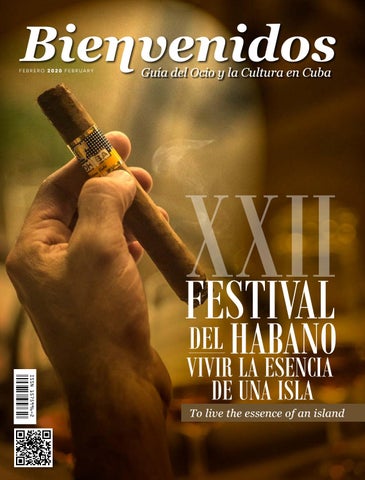
FEBRERO 2020 FEBRUARY
GuÃa del Ocio y la Cultura en Cuba
XXII FESTIVAL DEL HABANO
VIVIR LA ESENCIA DE UNA ISLA
To live the essence of an island
summary
SUMARIO Publicación mensual de distribución gratuita. DIRECCIÓN Maria del Carmen Madariaga JEFE DE REDACCIÓN Aitana Martínez
4
6
EDITORIAL
5
CUBA. INFORMACIÓN GENERAL CUBA, GENERAL INFORMATION
REPORTAJE
CORRECCIÓN María de los Ángeles Santana COLABORADORES Amalia Marín Marilar Ruiz Aitor Falcón Ana Elsa Cuevas Mónica Domínguez FOTOGRAFÍA Ariel Cecilio Lemus DISEÑO GRÁFICO Dennis Pérez RESPONSABLE DE MARKETING Y PUBLICIDAD Itziar Herrera EDITORIAL: INTELLIGENT SOLUTIONS CONSULTING S.L. Depósito Legal B-40261/99 ISSN 1575-9962 CORRESPONSALÍA EN CUBA corresponsaliacuba@ bienvenidoscuba.es Visite nuestro sitio web: www.bienvenidoscuba.es
XXII FESTIVAL DEL HABANO TO LIVE THE ESSENCE OF AN ISLAND
12
REPORTAJE
18
MARIDAJE DE EXCELENCIA PARA UN HABANO PREMIUM
FORTALEZA SAN CARLOS DE LA CABAÑA A PLACE TO CELEBRATE GREAT EVENTS IN CUBA
AN EXCELLENT COMPLEMENT FOR A PREMIUM HABANO
30
CALIDOSCOPIO
PARA ANA CAIRO, CON AMOR
34
Y SU TEATRO DE AUTÉNTICA CUBANÍA
GUÍA DEL OCIO Y LA CULTURA
AND HIS AUTHENTIC CUBAN THEATER
40
THE VALLEY OF VIÑALES «WHERE NATURE CAPTIVATES THE HEART»
GALERÍA DE BIENVENIDOS
EN MARZO LLEGA LA FIESTA DEL TAMBOR THE DRUM FESTIVAL IS COMING UP THIS MARCH
50
GALERÍA DE BIENVENIDOS
RECORRIENDO EL CAIMÁN
VALLE DE VIÑALES «DONDE LA NATURALEZA PROPONE»
38
CALIDOSCOPIO
EUGENIO HERNÁNDEZ ESPINOSA
FOR ANA CAIRO, WITH LOVE
44
24
REPORTAJE
GUÍA DEL OCIO Y LA CULTURA
FILH 2020 GUAYASAMÍN HAVANA'S HOUSE
V FESTIVAL DE LA SALSA EN CUBA «A BAILAR EN CASA DEL TROMPO»
BIENVENIDOS RECOMIENDA/SUGGEST
TO DANCE LIKE A SPINNING TOP
52
INFORMACIÓN AL TURISTA TOURISTS VISITING CUBA ESSENTIALS
54
DIRECTORIO DIRECTORY
editorial
FEBRERO2020FEBRUARY
Una vez más, Bienvenidos llega a sus manos, en su empeño por auxiliarlo a seleccionar mejor sus paseos y visitas en Cuba, con sugerencias que contemplan las opciones de sol, playa y naturaleza, así como el amplio catálogo de eventos culturales y turísticos. El más masivo de estos eventos es la Feria Internacional del Libro, que tomará la Fortaleza de San Carlos de la Cabaña entre los días 6 y 16 de este mes. En su edición XXIX, tendrá como país invitado de honor a VietNam y estará dedicada a los intelectuales cubanos Ana Cairo Ballester y Eugenio Hernández Espinosa. Nuestra revista le ofrecerá pormenores sobre la obra de ambas personalidades. De gran interés resultará para usted, si es aficionado a bailar, el Festival de la Salsa que tendrá lugar en La Habana desde el día 25 y hasta el 1ro. de marzo. En él actuarán las principales orquestas cubanas de música popular bailable y, por primea vez en la isla, el cantante puertorriqueño Víctor Manuelle. También anunciaremos la Fiesta del Tambor, que en varias locaciones de la capital ofrecerá conciertos, talleres, clases magistrales y espectáculos donde la percusión será la protagonista. Le propondremos, igualmente, conocer la majestuosidad del pinareño Valle de Viñales y sus peculiares escenarios: la Cueva del Indio, el Mural de la Prehistoria y el Mirador de Los Jazmines. Podrá hallar aquí información sobre el Festival del Habano en su XXII edición que del 24 al 28 reunirá en La Habana a un grupo numeroso de amantes del mejor tabaco del mundo. Asimismo, le comentaremos acerca de varios sitios acogedores de la empresa Palmares que prometen, además de un servicio personalizado, la posibilidad de disfrutar un buen Habano. Bienvenidos quiere ser parte de su viaje a Cuba y le invita a enriquecer su historia de vida con esta nueva experiencia.
Once again, Bienvenidos gets into your hands in an effort to help you choose the best options for your trip to Cuba, with amazing suggestions including sun, beach and nature, as well as the wide catalog of cultural and tourist events. The most massive of these events is the International Book Fair that will take place at the Fortress of San Carlos de la Cabaña from February 6 to 16. This 29th edition Viet Nam will be the guest country, and the giant event is also dedicated to Cuban intellectuals Ana Cairo and Eugenio Hernandez Espinosa; our magazine offers details about the life and work of both personalities. If you’re fond of dancing, give a try to the Salsa Festival that will take place in Havana from February 25 to the first day of March, where the most important Cuban orchestras will perform, and, for the first time on the island, Puerto Rican singer Victor Manuelle is giving a live concert. There is also the Drum Festival, a party that also includes concerts, dance courses, important lectures and colorful shows in several locations of the capital, where percussion will be the protagonist. We also invite you to discover the majestic Valley of Viñales and its peculiar scenarios: the Cueva del Indio, the Mural of Prehistory, and the Mirador de Los Jazmines. Also, we provide information about the XXII Edition of the Habano Festival. From February 24 to 28, lovers of the best tobacco in the world will gather in Havana to celebrate and share experiences. There is also a very revealing article about all the cozy places where you can enjoy a good Habano. Palmares has all these wonderful options at your disposal. Bienvenidos wants to be part of your trip to Cuba, and so we invite you to meet the very best of our island.
4
Bienvenidos F E B R E R O 2 0 2 0 F E B R U A R Y
Bandera | Flag
Cuba
what you should know about the island
INFORMACIÓN GENERAL
Geografía: Ubicada a la entrada del golfo de México, el archipiélago cubano está formado por la isla de Cuba, la Isla de la Juventud y aproximadamente 4,195 cayos e islotes. Cerca de 140 km la separan las Bahamas; 77 km Haití; 180 km de Florida; 210 km Cancún y 146 km de Jamaica. La silueta de Cuba, alargada y estrecha, alcanza los 120 km de longitud y entre 32 y 145 km de ancho. En total el territorio abarca 110.922 km, lo que la distingue como la mayor de las Antillas y por su ubicación geográfica la llaman también la llave del Golfo.
Geography: Located in the Caribbean Sea, the Cuban archipelago includes the Island of Cuba, the Island of Youth – Isla de la Juventud – and approximately some 4,195 keys and islets. Its nearest neighbors are: the Bahamas, 140 Km (to the north), Haiti; 77 Km (to the east); Florida, US, 180 Km (to the north); Cancun, Mexico, 210 Km (to the west) and Jamaica, 146 Km (to the southeast). Cuba’s elongated shape – 120 Km long and 32-145 Km wide -, encompasses a 110,922 Km territory, the largest of the Antilles and also known as the ”Key to the Gulf” due to its location at the entrance of the Gulf of Mexico. Mean annual temperature: 25 degrees Celsius (77 degrees Fahrenheit)
Temperatura promedio anual: 25º Celsius (77 º Fahrenheit). La Habana Artemisa
Mayabeque Matanzas
Pinar del Río
Villa Clara
Cienfuegos Isla de la Juventud
Sancti Spíritus
Las Tunas
Productos de exportación: Azúcar crudo y refino, óxido de níquel, pescado y mariscos, tabaco, rones y alcoholes, cítricos. Tasa de Alfabetización: 95%. Habitantes por médico: 183. Esperanza de vida: 77 años. Red de carreteras: 46.000 km Aeropuertos internacionales: 11 Impuesto de aeropuerto: 25 CUC Forma de Gobierno: Parlamentario. Moneda: Aunque el peso cubano es la moneda nacional (CUP), para pagar todos los servicios turísticos del país
Provinces: The Republic of Cuba has 15 provinces: Pinar del Río, Artemisa, La Habana, (previously Ciudad de La Habana), Mayabeque, Matanzas, Cienfuegos, Villa Clara, Sancti Spíritus, Ciego de Ávila, Camagüey, Las Tunas, Holguín, Granma, Santiago de Cuba and Guantánamo; it also has a Special Municipality: Isla de la Juventud. Main exports: Sugar (raw and refined), nickel oxide, fish and seafood, rums, alcohols and citrus fruits.
Ciego de Ávila Camagüey
División político-administrativa: La República de Cuba está dividida en 15 provincias y un Municipio Especial, la Isla de la Juventud. Las provincias son Pinar del Río, Artemisa, La Habana, (previamente Ciudad de La Habana), Mayabeque, Matanzas, Cienfuegos, Villa Clara, Sancti Spíritus, Ciego de Ávila, Camagüey, Las Tunas, Holguín, Granma, Santiago de Cuba y Guantánamo.
Nombre Oficial | Official Name República de Cuba Republic of Cuba Capital | Official Name La Habana (3 millones de habitantes 3 million inhabitants) Población | Population 11,1 millones (70% urbana) 11,1 million (70% urban) Idioma oficial | Official language Español Spanish Área | Area 110.922 km²
Granma
Holguín
Santiago de Cuba
Guantánamo
se emplea el peso convertible (CUC) de forma preferente; el cual circula en las siguientes denominaciones de billetes: 1, 3, 5, 10, 20,50 y 100 y monedas de 5, 10, 25, 50 centavos y 1 CUC . El peso cubano tiene 100 centavos. Circula billetes de 1, 3, 5, 10, 20, 100, 200, 500,1000 pesos y monedas por valor de 1,3, y 5 pesos. Existen monedas de 1, 2,5 y 20 centavos. El euro circula en algunos polos turísticos como Varadero, Holguín y Jardines de Rey. Días festivos: 1 de Enero Día de la Liberación 1 Mayo, Día del Trabajo 25, 26 y 27 de Julio, Aniversario del Asalto al Cuartel Moncada 10 de Octubre, Aniversario del Inicio de la Guerra de Independencia 25 de Diciembre, Día de Navidad 31 de Diciembre
Literacy: 95%. Inhabitants per doctor: 183. Life Expectancy: 77 years. Highways’ network: 46.000 km International airports: 11 Government: Parliamentary. Currency: the Cuban peso (CUP) is the national currency, even though the convertible peso (CUC) is preferably used to pay for tourism services in the country, it comes in the following bill denominations: 1, 3, 5, 10, 20, 50 and 100 bills and also in coins of 5, 10, 25, 50 and one CUC. The Cuban peso equals 100 Cuban cents and comes in the following bill denominations of 1, 3, 5, 10, 20, 100, 200, 500 and 500; also in 1, 3 and 5 pesos’ coins and 1, 5 and 20 cents. Euro is accepted in some destinations as Varadero, Holguin and Jardines del Rey. Holidays: January 1st – Liberation Day May 1st, Workers’ Day July 25, 26 and 27, Anniversary of the Moncada Fortress assault in 1956. October 10, Anniversary of the beginning of the War of Independence December 25, Christmas Day December 31, New Year´s Eve Guía del Ocio y la Cultura en Cuba
5
XXII FESTIVAL reportaje
DEL HABANO
«VIVIR LA ESENCIA DE UNA ISLA » Conocer Cuba es una experiencia de las que se guardan para toda la vida. La autenticidad de su gente, su riqueza cultural y su apego a las tradiciones conectan al visitante con una dimensión de lo exótico; porque, como se dice en buen criollo: “el cubano no se parece a nadie”. Esa singularidad tiene sus expresiones en el cultivo de lo que nos identifica. Quizás por eso el son, la rumba y nuestro carácter extrovertido se conocen en todo el mundo. Pero, al hablar de sello y distinción en esta isla caribeña, es obligatoria la referencia al Festival del Habano, vitrina indiscutible de la cubanía.
En su edición XXII, el Festival del Habano se fideliza, entre expertos y simpatizantes, como el evento de Puros Premium más famoso del mundo. Del 24 al 28 de febrero de 2020, los días se consumen como la hoja de un buen puro, lo que provoca una sensación de parejo deleite. No hay tiempo para aburrirse. Diversas actividades ocupan la agenda y el lenguaje se mueve de la vega al humidor, del glamur a la pose coloquial, de la puja al degusto refinado. Todo en complicidad matrimonial con un abanico de sabores que refuerzan el deleite de los fumadores.
Textos / Texts: Bienvenidos Fotos / Photos: Cortesía Habanos S.A
6
Bienvenidos F E B R E R O 2 0 2 0 F E B R U A R Y
XXII
To live the essence of an island
HABANO FESTIVAL
Getting to know Cuba is an experience for a lifetime. The authenticity of its people, its cultural legacy and wonderful traditions connect the visitor with an exotic dimension. Just as the saying goes: “Cubans are different from everyone”, and that’s definitely true. That singularity lies in the preservation of what identifies them. Maybe that’s why the son, the rumba and their friendly nature are so popular among foreign visitors. But, when talking about the best stuff that this Caribbean island has to offer, everyone instantly thinks of the Habano Festival, an event that keeps gaining fans all over the world. This XXII edition, the Habano Festival conquers once again, among experts and supporters, the title of “most famous Premium Cigar event in the world”. From February 24 to 28, 2020, the days are consumed as the leaves of a good cigar, which causes a feeling of permanent pleasure. There is no time to get bored. Multiple activities occupy the agenda as we move from the farm to the humidor, from glamour to colloquial life, from the mundane to the refined. There’s a certain beauty to it; a range of flavors that reinforce the delight of smokers.
Guía del Ocio y la Cultura en Cuba
7
reportaje
Habanos S.A., se erige como celoso guardián de los saberes y albacea del tacto para la hoja dispuesta. La tierra vueltabajera sirve el alto estándar de su capa y abre los brazos para acoger al visitante. La exclusividad se pone de moda en las jornadas del festival. Visitas a las plantaciones de tabaco, la posibilidad de coquetear con los espacios donde se hace la magia de convertir la rama en símbolo de distinción y refinamiento, seminarios, conferencias y sesiones prácticas harán la luz para los entusiastas;
en tanto la Alianza de Habanos con bodegas Denominación De Origen Protegida (D.O.P) y la tercera edición del Concurso Habanos World Challenge no serán secundarios en el programa.
el amor de la mano que sembró la semilla y la fuerza originaria de la hoja anchándose en el tallo. Así también se vuelve grande el deseo de mantener la tradición de la hechura a mano.
Con medio siglo de abanicarse en la poltrona del Caribe, La Habana aromatiza con el humo de sus marcas más selectas. Más de 150 países atestiguan la calidad de nuestra oferta. Los cinco continentes reconocen el extra que distingue el producto. Ante la cercanía del mechero, el puro que se enciende consume también
Asimismo, habrá espacio en este XXII Festival del Habano para recibir a la marca Bolívar, soplar 30 velitas por la red de franquicias La Casa del Habano y celebrar el aniversario 85 de los gustados Montecristos. Romeo y Julieta, una de las marcas más reconocidas del portafolio nacional, también festeja sus 145 años. Más de 200 años de Habanos S.A. rubrican la experticia que hace de sus productos mucho más que una ligada de capa, tripa y capote. Cohiba, Partagás, Montecristo, Romeo y Julieta, Hoyo de Monterrey y H. Upmann, entre otras Denominaciones de Origen Protegida, son más que Habanos. Encierran distinción y clase, atributos que encuentran en el festival la pasarela idónea para afianzarse en el gusto de los entendidos. No falta en esta plaza el sabor de la isla. Las especias culturales que complementan la degustación del puro con la música de las más reconocidas agrupaciones del patio, un buen ron, un aromático café o un intercambio casual de un criollo que, espontáneo y dicharachero, nos da la bienvenida al evento de Puros Premium más famoso del mundo. Lo hace sin grandes ceremonias y sonríe dichoso, tras una bocanada de humo.
8
Bienvenidos F E B R E R O 2 0 2 0 F E B R U A R Y
XXII Festival del Habano... Vivir la esencia de una isla
Habanos S.A. stands out as the protective guardian of knowledge; the expert who can find the perfect leaves just by touching them. Every year, the wet soils of Vueltabajo give all visitors the very best tobacco crops in the world. Exclusivity becomes fashionable in the days of the festival. Tours to the tobacco plantations, the possibility of flirting with the spaces where the magic is done (to turn the leaves into a symbol of distinction and refinement), seminars, conferences and practical sessions will be there for all enthusiasts. The Alianza de Habanos, the wineries of the Protected Designation of Origin (D.O.P) and the third edition of the Habanos World Challenge Contest will be included as well in the program.
Recently turned 500 years old, Havana aromatizes with the smoke of its most select brands. More than 150 countries attest to the quality of its offer. The five continents recognize the high quality that distinguishes the product. When the lighter gets close, the cigar that is lit also consumes the love of the hand that sowed the seed and the original force of the leaf widening in the stem. In this way, the desire to keep the tradition of the handmade cigars is kept alive. Also, there will be a spot in this XXII Habano Festival to pay tribute to the Bolivar brand, to blow 30 candles for the anniversary of La Casa del Habano and to celebrate the 85th anniversary of Montecristo. Romeo and Julieta, one of the most recognized brands in the national portfolio, also celebrates its 145th birthday.
For 200 years, Habanos S.A. has been selling a product that is so much more than the formula: “wrapper, filler and a binderâ€?. Cohiba, Partagas, Montecristo, Romeo y Julieta, Hoyo de Monterrey and H. Upmann, among other Protected Designation of Origin (D.O.P), are more than Habanos. They contain distinction and class, attributes that the connoisseurs are pleased to praise. During the event, many will taste amazing cigars while enjoying the most recognized music bands of the country, good rum and aromatic coffee. Undoubtedly, this is the most famous and elegant Premium Cigar festival on Earth. Cuba brings it to you without great ceremonies. The island just smiles happily, after a puff of smoke. GuĂa del Ocio y la Cultura en Cuba
9
reportaje
MARIDAJE DE EXCELENCIA PARA UN
HABANO PREMIUM Textos / Texts: Bienvenidos Fotos / Photos: CortesÃa Palmares S.A - Habanos S.A
12
Bienvenidos F E B R E R O 2 0 2 0 F E B R U A R Y
An excellent complement for a Premium Habano Cada persona tiene su ceremonia particular para el disfrute de un buen Habano. Algunos valoran la intimidad y el goce cómplice del fumador en la contemplación de la ceniza que avanza pareja. Otros encuentran la máxima realización al encenderlo junto a amigos para ambientar una charla. La tarde, la mañana o la noche pueden ser escogidas para ese momento devenido suceso. Depende de los gustos de cada individuo, de su manera de apreciar y su experiencia. Lo cierto es que en el matrimonio de los Habanos con otros productos de excelencia hay una comprensión distinta de los sabores, un despertar del gusto que nos descubre sensaciones interesantes. La empresa extrahotelera cubana Palmares es consciente de esta magia. Por eso, en sus distintas instalaciones, el maridaje adquiere protagonismo y se promueve, no solo la fusión del puro con los espirituosos, licores o productos gastronómicos; sino que la esencia misma de los espacios, diseñados para el confort de neófitos y expertos, propicia la atmósfera adecuada para extraer, de las combinaciones, la más amplia gama de sabores y aromas. Palmares conoce la experiencia del deleite y promocionan en sus establecimientos esta aventura, porque el proceso puede ser tan gratificante como el descubrimiento. La estratégica alianza con los expertos coloca a instalaciones emblemáticas, como El Floridita y La Bodeguita de Medio, entre los sitios ideales para degustar el mejor tabaco del mundo, en la combinación de complementos que realzan sus valores.
Each person has their own ceremony when it comes to enjoy a good Habano. Some value the intimacy and the smoker’s mysterious enjoyment in the contemplation of the ashes. Others find the maximum realization by lighting it up with friends to create the perfect background for a talk. The afternoon, the morning or the night may be chosen for that special moment. It depends on the tastes of each individual, their way of appreciating and their experience. The truth is that in the combination of Habanos with other products of excellence there is a different understanding of flavors, an awakening of taste that reveals interesting sensations to all of us. The Cuban extra-hotelier company Palmares is aware of this magic. Therefore, in its different facilities, this combination acquires prominence and they encourage the fusion of the cigar with rum, liquor or gastronomic products. Also, the essence of the spaces, designed for the comfort of neophytes and experts, provides the right atmosphere to extract, from the combinations, the widest range of flavors and smells. Palmares knows the experience of delight and promotes this adventure in their establishments, because the process can be as rewarding as the discovery. The strategic alliance with the experts places emblematic facilities, such as El Floridita and La Bodeguita de Medio, among the most idyllic places to taste the best tobacco in the world, in a combination of complements that enhance their values. Having a menu that includes Habanos is part of their intention to satisfy the clients, and it’s also a way to give them access the wide range of sensations caused by the island. Our showcases for the sale of handmade cigars treasure the most exquisite products of the market. Guía del Ocio y la Cultura en Cuba
13
reportaje
Disponer de una carta de Habanos descubre la intención de que el cliente quede satisfecho y acceda a la amplia gama de sensaciones que provoca la isla. Nuestras vitrinas para la venta de puros artesanales atesoran lo más selecto del mercado. Más allá de la experiencia del cliente, de la consistencia de su orden a la mesa o del tiempo de que dispone para su deleite, Palmares incita la preferencia y propone nupcias que sorprenden a los atrevidos, porque es innegable la predisposición del cuerpo a la degustación en la bohemia intimidad de espacios como el centro nocturno Gato Tuerto o al calor del cabaret bajo las constelaciones de Tropicana, un paradigma del hedonismo nacional. Se trata de aprovechar al máximo un producto como el Habano al enriquecerlo con una bebida que lo complemente y de propiciar el lugar idóneo para degustar y extender el abanico de posibilidades a nuestros visitantes, porque Cuba es más que sol y playa: es también distinción y glamour, riqueza cultural y exquisitez, romance y aventura. El maridaje clásico de los Habanos amplía su concepto tradicional y las potencialidades se vuelven ilimitadas. Cada una abre horizontes nuevos a quien lo prueba. Elegante e intenso, medio o de gran fortaleza, las combinaciones nos cuentan una historia que, a su vez, se asimila según la memoria gustativa del fumador. Por ese motivo, Palmares reverencia la fusión y favorece el goce. Se erige como plaza a la que acuden los que saben para encontrar, en el Habano y su compañía, la cumbre del genuino sabor de lo cubano. Visitar los enclaves de Palmares es extraer de la visita a Cuba el máximo provecho. Es recorrer, en tiempo limitado, la tradición de una cultura rica que viene de la tierra bendita del Caribe. Nuestra filosofía es sugerir, crear fidelidad en el cliente. Los resultados se evidencian en los conocedores del tabaco. Los entusiastas de la fumada glamurosa regresan siempre a nuestros espacios diseminados por toda la isla, esos que buscan nuestra complicidad para el deleite porque saben que Palmares marida con Habano. 14
Bienvenidos F E B R E R O 2 0 2 0 F E B R U A R Y
Maridaje de excelencia para un Habano premiun
Beyond the customer experience, the consistency of your order or the time you have for enjoy these delicacies, Palmares encourages preference and suggests combinations that surprise even the boldest, because the body’s predisposition to tasting is undeniable in the bohemian intimacy of spaces such as the Gato Tuerto nightclub or the heat of the cabaret under the constellations of Tropicana, a paradigm of national hedonism. It is about making the most of a product like the Habano, enriching it with a drink that complements it and promoting the ideal place to taste and extend the range of possibilities to our visitors, because Cuba is more than sun
and beach: it is also distinction and glamour, cultural richness and exquisiteness, romance and adventure. The classic combinations of the Habanos expand their traditional concept and the potentialities become unlimited. Each opens new horizons for those who try it. Elegant and intense, medium or of great strength, the combinations tell us a story that, in turn, is assimilated according to the gustatory memory of the smoker. For that reason, Palmares pays tribute to the fusion and has a special treatment for you. It stands as a role model to those who know to find, in Habano, the peak of the genuine taste of Cuba.
Visiting the places that Palmares has to offer is to get the most out of the visit to Cuba. It is to navigate, in a limited time, the tradition of an affluent culture that comes from the blessed land of the Caribbean. Our philosophy is to suggest, to create customer loyalty. The results are evident in tobacco connoisseurs. Glamorous smoking enthusiasts always return to our spaces, which are all scattered throughout the island. Those who seek true delight know that Palmares always has the best offer.
GuĂa del Ocio y la Cultura en Cuba
15
reportaje
FORTALEZA SAN CARLOS DE LA CABAÑA LUGAR DE GRANDES EVENTOS EN CUBA
Construida en el siglo XVIII para defender La Habana de futuros ataques, la Fortaleza de San Carlos de la Cabaña es la más grande edificación militar erigida en América por los españoles. Baluartes, fosos, caminos techados, cuarteles, almacenes y hasta una capilla conforman esta pequeña ciudad amurallada. La Cabaña, como abreviadamente se le conoce, comenzó a construirse en 1763, luego de la toma de La Habana por los ingleses y, en 1774, pasó a formar parte del sistema defensivo de la urbe. Su nombre rinde honor al rey español Carlos III y su diseño constituye un ejemplo de la arquitectura militar de la época. Forma parte del primer Patrimonio Mundial, reconocido en Cuba por la Unesco en 1982 y comparte terrenos con el magnífico Castillo de los Tres Reyes del Morro, uno de los símbolos de La Habana. La visita a este lugar de la Ciudad Maravilla invita a recorrer y disfrutar la historia. Además de su
sorprendente diseño y su encanto de lugar misterioso y elocuente, en La Cabaña ocurre, cada noche, una de las tradiciones más atractivas de Cuba: la Ceremonia del Cañonazo de las 9. Este ritual, realizado a la usanza del siglo XVIII, rememora el aviso para el cierre de la bahía −limitada por una gruesa cadena de bronce, que se extendía desde El Morro hasta el Castillo de La Punta, impidiendo el paso de navíos− y el cierre de las puertas de la muralla de La Habana −antes ciudad intramuros−. Cada noche, como transportados en el tiempo, una columna de jóvenes “soldados de la Corona española” marcha sobre los antiguos adoquines de La Cabaña solicitando la atención de los presentes. El grupo está compuesto por un oficial, un tamborilero, un portaestandarte, varios artilleros y un farolero que canta la historia del cañonazo. El espectáculo merece ser disfrutado. Su exhibición y estallido final, dan un comienzo vibrante a las noches habaneras.
Textos / Texts: Bienvenidos Fotos / Photos: Archivo
18
Bienvenidos F E B R E R O 2 0 2 0 F E B R U A R Y
The Fortress of
San Carlos de la Cabaña A place to celebrate great events in Cuba The Fortress of San Carlos de la Cabaña was built in the 18th century to defend Havana from future attacks; it’s the largest military building erected in America by the Spanish people. Bulwarks, moats, roofed roads, barracks, warehouses and even a chapel make up this small walled city. La Cabaña, as it is briefly known, began to be built in 1763, right after the assault led by English invaders and, in 1774, it became part of the defensive system of the city. Its name honors the Spanish king Carlos III and its design constitutes an example of the military architecture of the time. It is part of the first World Heritage, recognized in Cuba by UNESCO in 1982 and shares a portion of land with the magnificent Castillo de los Tres Reyes del Morro, one of the symbols of Havana. A visit to this place, one of the greatest of the Wonder City, is an invitation to explore and to enjoy history. In addition to its surprising design and its mysterious and eloquent aura, in La Cabaña, one of the most attractive traditions of Cuba occurs every night: the Cannon Shot Ceremony at 9:00 pm. This ritual, carried out in the style of the 18th century, symbolizes the exact moment when the bay was to be closed. The great expansion of water was limited by a thick bronze chain, which extended from El Morro to the Castle of La Punta, preventing the passage of ships, and the closing of the doors of the wall of Havana, a town that was once secluded within walls. Every night the tradition is reenacted, and it’s like going back in time. A column of young “soldiers of the Spanish Crown” marches on the old cobblestones of La Cabaña, requesting the attention of the audience. The group is composed of an officer, a drummer, a flag holder, several artillerymen and a lantern man who sings the history of the cannon shot. The show deserves to be enjoyed. Its exhibition and final explosion give a vibrant start to Havana nights.
Guía del Ocio y la Cultura en Cuba
19
reportaje
Conocer más de La Cabaña
20
La Fortaleza de San Carlos de la Cabaña, se encuentra en la costa este del puerto capitalino. A ella se puede acceder por carretera, a través del túnel que cruza la bahía, o por mar, mediante una lancha hasta el poblado de Casablanca. Desde allí, luego de visitar la hermosa escultura del Cristo de La Habana, el caminante puede llegar andando hasta la célebre edificación.
armas, de más de 245 piezas de artillería, muchas de las cuales aún permanecen en el lugar.
Recién construido, el fuerte sirvió de cuartel a los soldados ibéricos. Según los historiadores, su potencial militar era bastante poderoso. Se cuenta que el recinto disponía, entre cañones y otras
Desde que sus puertas fueron abiertas a cubanos y visitantes, La Cabaña ha sido también sede de importantes eventos
Bienvenidos F E B R E R O 2 0 2 0 F E B R U A R Y
En la actualidad alberga el Museo de Armas, con una importante colección de armas antiguas, orientales, europeas y medievales; el de la Comandancia del Che y un muestrario monográfico que relata, mediante imágenes y piezas históricas, la auténtica memoria de la fortaleza.
como la Bienal de Artes Plásticas de La Habana, la Feria Internacional del Libro y la Feria Internacional de Turismo −FITCuba−. Todos estos encuentros multitudinarios han tenido siempre un excelente desarrollo debido a lo apropiado de sus espacios para tales actividades y el buen funcionamiento de las instalaciones del lugar. La Cabaña cuenta con varios restaurantes, donde la comida es un verdadero gusto; puestos de artesanías que garantizan el recuerdo de la visita y, para cerrar con cinta dorada, unas panorámicas habaneras que muestran la maravilla de esta urbe centenaria y hermosa.
Fortaleza San Carlos de la Cabaña
Learn more about La Cabaña The Fortress of San Carlos de la Cabaña is located on the east coast of the capital’s port. It can be accessed by road, through the tunnel that crosses the bay, or by sea, using a boat to get to the town of Casablanca. From there, after visiting the beautiful sculpture of the Christ of Havana, the traveler can walk to the famous building.
It currently houses the Weapons Museum, with an important collection of ancient, Eastern, European and medieval weapons; some even belonged to the guerrillas that fought under Ernesto Che Guevara’s command, and there is also a monographic exhibition that recounts, through images and historical pieces, the authentic memory of the fortress.
Newly built, the fort served as a base for the Iberian soldiers, according to historians, its military potential was quite powerful. It is said that the giant fortress harbored, among cannons and other weapons, more than 245 pieces of artillery, many of which still remain in place.
Since it opened the doors to all Cubans and visitors, La Cabaña also held important events such as the Havana Biennial of Plastic Arts, the International Book Fair and the International Tourism Fair “FITCuba”. All
these mass meetings have always had an excellent development due to the suitability of the Fortress’ spaces and the proper functioning of the facilities of the place. La Cabaña has several restaurants, where food is a real treat; handicraft stalls that guarantee the memory of the visit and, of course, Havana’s panoramic views that show the wonder of this centenary and beautiful city.
Guía del Ocio y la Cultura en Cuba
21
GRAN CARIBE, LA HABANA Y LO MEMORABLE EN UN ANIVERSARIO Tres razones sostienen un pacto de Gran Caribe con la capital cubana. Estos motivos se condensan, primeramente, en la complicidad espacial que ubica importantes instalaciones del Grupo Hotelero en La Habana, las cuales facilitan a todos los que elijan el destino cubano la dicha de disfrutar de un entorno considerado Ciudad Maravilla. A esta condición se suma un segundo fundamento, resultante de la responsabilidad patrimonial: la ciudad y el grupo hotelero son audaces conservadores de la herencia cultural en la Isla. Herencia cultural asentada en la tercera razón irrelegable en el pacto entre Gran Caribe con la capital, pues ambos celebran aniversarios cerrados (sin debates etarios, este 2019 La Habana festeja su 500 aniversario y Gran Caribe, 25 años). 22
Bienvenidos F E B R E R O 2 0 2 0 F E B R U A R Y
En la principal ciudad cubana Gran Caribe cuenta con importantes y reconocidos hoteles. Este reconocimiento avalado por la fortaleza histórica y patrimonial que se mencionaba como segundo eslabón cardinal en la relación entre la compañía turística y la capital. El Hotel Nacional de Cuba, El Inglaterra y el Habana Riviera, por ejemplo, han sido bautizados con la condición de Monumento Nacional, categoría que se convierte en plus para la experimentación de una memorable estancia en Cuba. Al valor de la construcción en sí se suman grandes atributos con carácter histórico como la batería de Santa Clara, justamente en el Hotel Nacional (proclamada por la UNESCO Patrimonio de la Humanidad); el gigantesco mural de cerámica creado por la artista Amelia Peláez, que decora parte de la fachada del Hotel Habana Libre; y el
Hipocampo, famosa escultura de Florencio Gelabert que distingue al Hotel Riviera. Estas obras se incluyen dentro de un inventario de 800 piezas. A los valores culturales que facilitan interactuar emotivamente con la capital se puede agregar la facilidad de disfrutar de una Habana próxima al mar, con Hoteles al pie de una fascinate línea de playa al este; una Habana céntrica, con espacios en la zona conocida como el Vedado; y una Habana antigua, en el corazón de la inicial urbe colonial. Lo memorable de gozar de una Habana centenaria se une el placer de compartirlo con Gran Caribe: un grupo hotelero que también celebra el feeling de lo auténtico y especial de crecer en la mayor de las islas de las Antillas.
Gran Caribe, Havana and the Memorable on an anniversary Three causes justify a Gran Caribe pact with the Cuban capital. These reasons are condensed, firstly, in the space complicity that places important facilities of the Hotel Group in Havana, which make it easier for all those who choose the Cuban destination to enjoy an environment known as “Wonder City”. To this situation is added a second incentive, resulting from the responsibility on legacy: the city and the hotel group are bold guardians of the cultural heritage on the Island. And this cultural heritage is based on the third ineludible reason for the pact between Gran Caribe and the capital: both are about to celebrate important anniversaries (without age debates, this 2019 Havana celebrates its 500th anniversary and Gran Caribe is turning 25).
Gran Caribe has remarkable hotels located in the main Cuban city. Their fame comes from the historical heritage that was mentioned as the second strongest link in the relationship between the tourist company and the capital. The National Hotel of Cuba, El Inglaterra and Habana Riviera, for example, have been baptized with the status of “National Monuments”, a category that becomes a bonus for the experimentation of a memorable stay in Cuba.
famous sculpture by Florencio Gelabert that distinguishes the Riviera Hotel. These treasures are included in an inventory of 800 pieces.
These architectural structures have historical and artistic features as well, such as the Santa Clara battery, located in the National Hotel (proclaimed Patrimony of the Humanity by UNESCO); the gigantic ceramic mural created by the artist Amelia Pelaez, which decorates the façade of the Habana Libre Hotel; and the “Hipocampo”,
The memorable thing about enjoying a centenary Havana is combined with the pleasure of sharing it with Gran Caribe: a hotel group that also celebrates the feeling of the authentic and special secrets of growing up in the largest of the islands of the Antilles.
To the cultural values that facilitate interacting emotionally with the capital you can add the ease of enjoying a Havana near the sea, with Hotels right next to fascinating eastern beaches; a central Havana, with spaces in the area known as Vedado; and an ancient Havana, in the heart of the initial colonial city.
Guía del Ocio y la Cultura en Cuba
23
recorriendo el caimán
VALLE DE
VI«DONDE ÑALES LA NATURALEZA PROPONE» Texto / Texts Bienvenidos Fotos / Photos Bienvenidos - Publicitur
24
Bienvenidos F E B R E R O 2 0 2 0 F E B R U A R Y
Ubicado en la más occidental de las provincias cubanas −Pinar del Río− y con un panorama que rinde de gusto a quienes lo admiran, el Valle de Viñales es una espectacular ofrenda de la naturaleza. Pródiga en tonalidades de verdes, la extensa área que ocupa, constituye una zona ecológica reconocida a nivel mundial por sus sorprendentes paisajes, su riqueza de flora y fauna y por ser poseedora de los mayores sistemas cavernarios de Cuba y las Antillas. Por todo ello, fue declarada Paisaje Cultural por la UNESCO, en 1999, condición que la ubica entre las más interesantes del Patrimonio Mundial. Observar el lugar con detenimiento, provoca una sensación de equilibrio. Entre sus evidentes encantos, sobresalen sus mogotes, alturas de cimas aplanadas que, a veces, superan los 400 metros. Muchos de ellos, atravesados por ríos subterráneos, a través de los cuales se pueden realizar disfrutables recorridos. Entre las cavernas del valle, se destacan la Cueva del Indio, surcada por el río San Vicente; la de José Miguel, y cerca de allí, la Gran Caverna de Santo Tomás. Según investigadores, en algunas de estas galerías se han encontrado interesantes ejemplares de vertebrados fósiles, así como el mayor residual, en Cuba y las Antillas, de primates no homínidos extintos. El espectáculo paisajístico se enriquece con las sorprendentes vegas de tabaco que añaden un peculiar atractivo al valle. Y es que esta zona, considerada entre las productoras del mejor tabaco del mundo, es pródiga en este tipo de sembrados. También el arte rupestre tiene su espacio en grutas donde se han hallado remanentes aborígenes y de cimarrones. Y vale destacar que, en el valle, a tono con sus valores y riquezas, se halla la Escuela de la Sociedad Espeleológica de Cuba. Otro aprovechable recurso de la región son las aguas mineromedicinales del balneario San Vicente, recomendable para la salud y una alta calidad de vida.
The Valley of Viñales «Where nature captivates the heart» Located in the westernmost Cuban province (Pinar del Rio), the Valley of Viñales is a spectacular gift from nature, for it has heavenly landscapes that give pleasure to the visitors who admire them. One can’t help falling in love with its shades of greens. The extensive area it occupies constitutes an ecological zone recognized worldwide for its amazing preservation and exotic wildlife. It’s also one of the largest cave systems of Cuba and the West Indies. Therefore, it was declared Cultural Landscape by UNESCO in 1999, a condition that places it among the most interesting World Heritage places on Earth. To travel every corner of the place, very carefully, causes a sense of balance and inner harmony. Among its treasures, the mogotes stand out, that are heights of flattened peaks which sometimes exceed 400 meters. Many of them are crossed by underground rivers, through which you can make enjoyable tours. Among the caverns of the valley, the Cueva del Indio is probably the greatest, crossed by the San Vicente River; there’s also the cavern of Jose Miguel, and nearby, the Gran Caverna of Santo Tomas. According to many influential papers, in some of these intricate galleries the scientists have found interesting specimens of fossil vertebrates, as well as the largest residual, in Cuba and the Antilles, of extinct non-hominid primates. The landscape is enriched by the surprising tobacco farms that add a peculiar attraction to the valley. Curiously, this area, that produces one of the best tobaccos in the world, is always full of these types of crops. Rock art was also discovered in the same caves where aboriginal remnants have been found. And it should be noted, also, that the School of the Speleological Society of Cuba was established in the valley. Another useful resource of the region is the mineral-medicinal waters of San Vicente, recommended for health and a high quality of life. Guía del Ocio y la Cultura en Cuba
25
recorriendo el caimán
Viñales de cerca Agradable y acogedor, el poblado de Viñales, cuenta con una permanente afluencia de visitantes. En su arquitectura se combinan elementos coloniales y neoclásicos, entre los que se destacan las columnas, los techos de color rojo y los vitrales. La mayoría de sus construcciones datan de finales de 1800 y principios de 1900. Para conocer mejor el lugar, nada como compartir con los lugareños y escuchar sus historias; recorrer el poblado y antes de seguir camino, deleitarse con un puro Habano, recién torcido en la zona. Todas estas experiencias se convertirán en un excelente recuerdo. Entre las posibilidades de traslado, el visitante puede elegir andar a caballo, en bicicleta, en auto o, simplemente, hacer uso del transporte local, conocido como guarandinga.
26
Lugares interesantes y opciones hay muchas: el Rancho San Vicente; un paseo en bote por el río subterráneo de la Cueva del Indio; cabalgar por el valle admirando su naturaleza; hacerse un selfie junto al Mural de la Prehistoria; escalar un mogote; practicar canopy o senderismo; visitar una plantación de tabaco o degustar un rico café cubano en la casa de algún campesino. Y como término, una sugerencia para disfrutar de la más abarcadora y cautivante vista del Valle de Viñales; el lugar donde el visitante queda sorprendido con tanta belleza acumulada: la terraza del hotel Los Jazmines, un mirador excepcional. Desde allí no escapa un solo detalle, sin lugar a dudas, este sitio propicia la imagen más perfecta y elocuente de que el Valle de Viñales es un fragmento de paraíso, un obsequio de la naturaleza cubana.
Bienvenidos F E B R E R O 2 0 2 0 F E B R U A R Y
Valle de Viñales «donde Las primeras la naturaleza Villaspropone» Cubanas
A close view of Viñales Pleasant and welcoming, the town of Viñales has a permanent influx of visitors. In its architecture, colonial and neoclassical elements are combined, among which are the columns, the red roofs and the stained glass. Most of its buildings date from the late 1800s and early 1900s. If you want to know the place better, there’s nothing like sharing some time with the locals and listening to their stories; then you should walk around the town and before continuing on, grab a freshly crooked Habano. All these experiences will become an excellent memory. The visitor can choose to ride a horse, to go by bicycle, by car or, if you have plenty of time, try using the local transport known as guarandinga. There are many interesting places and options: the Rancho San Vicente; a boat trip on the underground river of Cueva del Indio; a horse ride through the valley admiring its nature; a selfie next to the Prehistory Mural; to climb a mogote; to go canoeing or hiking; to visit a tobacco plantation or to taste a delicious Cuban coffee at a farmer’s house. And finally, we have a special suggestion if you want to enjoy the most captivating view of the Valley of Viñales; a place where the visitor is surprised with endless beauty: the terrace of the Los Jazmines Hotel, an exceptional viewpoint. You can’t miss a single detail, without a doubt, this site propitiates the most perfect and eloquent image. The Valley of Viñales is a fragment of paradise, a gift of Cuban nature.
Guía del Ocio y la Cultura en Cuba
27
DESCUBRE EN TU PRÓXIMO VIAJE / TO YOUR NEXT TRIP
LasTerrazas
PINAR DEL RÍO NATURALEZA • GASTRONOMÍA • SENDERISMO • CANOPY
calidoscopio
PARA
ANA
CAIRO CON AMOR
1
Pedro Pablo Rodríguez 20 de agosto de 2019 Fotos/Photos: Archivo
1 He ampliado aquí notablemente una veintena de líneas que entregué en abril de este año, antes de un impostergable viaje al extranjero, para que fueran leídas en el Aula Magna de la Universidad de La Habana en un acto de homenaje a Ana Cairo Ballester. I have notably expanded here a couple of lines that I delivered in April of this year, before an urgent trip abroad, to be read in the Main Hall of the University of Havana during a tribute ceremony to Ana Cairo Ballester.
30
Bienvenidos F E B R E R O 2 0 2 0 F E B R U A R Y
El 3 de abril del pasado año falleció en La Habana, su ciudad natal, Ana Cairo Ballester, una de las personalidades más significativas del mundo de las humanidades en Cuba. Doctora en Ciencias Filológicas y Premio Nacional de Ciencias Sociales y Humanidades, había nacido en esta capital el 10 de noviembre de 1949, por lo que parte de su crianza ocurrió en la sociedad prerrevolucionaria, en la que seguramente graduarse en la universidad resultaba algo improbable para su familia. Supo aprovechar las oportunidades que le abrió el gran cambio social iniciado en 1959 para estudiar con ahínco y entregar sus saberes y su talento a su país, a su gente; lo mismo en el aula, que en sus escritos, que en los más diversos foros. La recuerdo desde que era estudiante de Letras en la Universidad de La Habana, y cómo conversamos alguna vez en el vestíbulo del edificio Dihigo −a un costado del antiguo castillo del
Príncipe−, compartido entonces por las Escuelas de Historia y de Letras. Muy joven, ya graduada, comenzó a impartir clases de Literatura Universal y ahí empezó en rigor nuestra amistad, pues trabajamos juntos con los estudiantes de los cursos para trabajadores −en horas de la noche− y los regulares diurnos de la Escuela de Periodismo en la Universidad de La Habana. A los alumnos les demoraba admitir con tranquilidad a aquella profesora de tan pocos años que les hacía leer las grandes obras, no solo por su importancia literaria sino también por la cantidad de páginas. Con sabiduría profesoral, y no sin cierta malicia diría yo, Ana preguntaba a libro abierto cosas inimaginables en los exámenes al uso de esa materia: episodios específicos de aquellos textos ficcionales, actitudes de los personajes, problemas humanos que se desprendían de los episodios y caracteres. Quien aprendiera de memoria una síntesis de la pieza en
cuestión y varias frases comunes evaluativas tomadas de algún manual, seguramente quedaba desaprobado por no leer la obra completa o por pasar la vista por encima de sus páginas sin ir a sus honduras. En verdad, Ana enseñaba a leer y a pensar. Son tantos los momentos y asuntos que desde entonces nos unieron, que no puedo relatarlos todos. Entre los que de manera obligatoria debo mencionar están, en primer lugar, los relativos a la investigadora, cuya labor conocí en uno de los grupos de investigación de la Facultad de Humanidades de la Universidad de La Habana. Me sorprendió y me entusiasmó su enorme voluntad de ir a las fuentes, de trabajar con documentos, publicaciones y testimoniantes. Por ella conocí a José Z. Tallet y a Enrique de la Osa, a quienes me unió una profunda amistad hasta sus respectivas muertes.
For Ana Cairo, with love On April 3 of last year passed away in Havana, her hometown, Ana Cairo Ballester, one of the most significant personalities in the world of humanities in Cuba. She had a PhD in Philological Sciences and won the National Prize for Social Sciences and Humanities, she was born in this capital on November 10, 1949, and so her early years took place in the prerevolutionary society, a time when surely graduating from the university was somewhat unlikely to her family. She knew how to take advantage of the opportunities that the great social change initiated in 1959 opened for her, to study hard and deliver her knowledge and talent to her country, to her people; the same was for the classroom, for her writings, as in the most diverse forums. I remember her since I was a Philology student at the University of Havana, and how we once talked in the lobby of the Dihigo building
-on one side of the former Castillo del Príncipe-, a place that was shared by the Schools of History and Literature. At a very young age, right after she graduated, she began teaching Universal Literature classes and that is where our friendship began, because we worked together with the students of the courses for workers -in the evening hours- and with those of the morning session, of the School of Journalism in the University of Havana. It took a little while for some kids to calmly accept that teacher, so young, that made them read the great pieces, not only for their literary importance but also for the number of pages. With professional wisdom, and not without some malice, I would say, Ana used to ask, with an open book in hand, unimaginable things in her quizzes: specific episodes of those fictional texts, attitudes of the characters, human problems that were associated to the episodes and characters.
Anyone who memorized a synthesis of the piece in question and several common evaluative phrases taken from a manual was surely doomed to fail for not reading the complete book or for having looked over its pages without searching into its depths. Truthfully, Ana taught us how to read and think. There are so many moments and experiences that have brought us together since then, that I can’t tell them all. Among those that I must mention are, in the first place, those related to the researcher, whose work I discovered in one of the research groups of the Faculty of Humanities of the University of Havana. I was surprised and excited by her enormous willingness to go to the sources, to work with documents, publications and testimonials. Thanks to her I met Jose Z. Tallet and Enrique de la Osa; we shared had a beautiful friendship until their respective deaths.
Guía del Ocio y la Cultura en Cuba
31
calidoscopio
Nuestra amistad se fue haciendo desde entonces y creció en viajes por Cuba y el extranjero, en el laboreo de jurados, en los cursos martianos de su Facultad, en los tribunales de maestrías y doctorados, en los consejos científicos, en la colaboración de ambos con diversas instituciones culturales. Pero nos unió, sobre todo, el trabajo intenso y sin tregua en la investigación, la búsqueda de nuestras raíces, de nuestra identidad como pueblo. Su trabajo comenzó a sonar entre los estudiosos de los temas cubanos con su libro acerca del Grupo Minorista −aquellos jóvenes intelectuales de los años 20 del siglo pasado, que se destacaron tanto desde entonces en la vida política, social y literaria cubana−, cuyas trayectorias siguió sin cesar, al punto que me acostumbré, como tantos otros, a enviarle consultantes nacionales y extranjeros que querían saber de los 20 y los 30, como decimos acá. Mi recomendación, en ese y en cualquier otro caso, siempre decía al interesado: “Esa compañera ha leído todos los libros, todos los periódicos, todas las revistas, todos los demás documentos y ha entrevistado a todos los participantes que han llegado vivos hasta hoy”.
a su pueblo, no solo con libros sino también a través de las revistas académicas, de la prensa escrita y de la televisión. Creó y mantuvo hasta su deceso la conducción de Contrapunteos, espacio semanal por Habana Radio de la Academia de la Historia de Cuba, de la cual era miembro de número.
el orgullo patriótico y el sentido de identidad de cubanos de todas partes. Rechazó el oportunismo, la mentira, la irresponsabilidad, el sectarismo. Fue investigadora y ser humano original. No copió a nadie, no aceptó acríticamente; mas reconoció y agradeció sus fuentes.
Varias revistas recibieron sus opiniones por formar ella parte de sus consejos editoriales: Temas, Universidad de La Habana, Debates Americanos y Revista de la Biblioteca Nacional José Martí. Esta última institución la acogió día tras día, hasta con sus alumnos del seminario martiano, al punto que puede decirse que Ana formaba parte de su personal.
En mi biblioteca están sus libros dedicados por ella. Hace pocos días encontré, dentro de una revista en la hemeroteca de la Biblioteca Nacional, un modelo de solicitud de un ejemplar firmado por ella. Lo guardo en mi papelería como recuerdo de su letra grande y redonda, la de una escritora que no utilizó la máquina mecánica ni la computadora. Esta mujer de los siglos XX y XXI se quedó en el XIX por el manuscrito. Desde que supe de su fallecimiento, inesperado para mí, tantos episodios compartidos con ella me han estado viniendo a la mente, que no caben en estos recuerdos apresurados. En archivos y bibliotecas compartimos búsquedas de informaciones y fichas que intercambiamos, al igual que discutimos y disfrutamos lecturas y criterios. Planeamos proyectos diversos, logramos varios juntos y soñamos muchos más. Vivimos intensamente nuestra época, nos apoyamos en los momentos difíciles. No cedimos en los principios y nos entregamos a pelear, construir y mejorar la Cuba actual.
Cuba, su cultura, su intelectualidad, sus luchas sociales, esa fue la dedicación de Ana Cairo Ballester en sus numerosos escritos, en sus clases, en sus conferencias, en sus ponencias, en mil y un eventos dentro y fuera de la Isla. Hay temas en que sus entregas son insoslayables: José Martí, Alejo Carpentier, Fernando Ortiz, la generación del 30 toda, José María Heredia, la historia republicana de la Universidad de La Habana. Hay libros suyos que deben ser fuentes informativas obligadas para el estudioso de los asuntos cubanos desde cualquier disciplina: El movimiento de veteranos y patriotas; El Grupo Minorista; su coautoría de la Historia de La Universidad de La Habana; La Revolución del treinta en la narrativa y el testimonio cubano; Bembé para cimarrones y José Martí y la novela de la cultura cubana. No pueden olvidarse sus valiosísimas compilaciones de estudios, en que su criterio de selección siempre buscó entregar lo desconocido, lo aportador, lo imprescindible: los siete tomos de Letras, Cultura en Cuba; las colecciones Máximo Gómez: cien años, Mella: cien años; Antonio Guiteras: cien años; Eduardo Chibás: Imaginarios. Hoy se edita una compilación sobre Fidel Castro que recoge numerosas informaciones de prensa, recuerdos publicados e inéditos de las más variadas personas, documentos atinentes al líder que, sin duda, ayudarán a comprender cuanto él fue un hombre de su tiempo que no cejó en abrir espacio al futuro. Incansable, Ana Cairo dio su conocimiento 32
Bienvenidos F E B R E R O 2 0 2 0 F E B R U A R Y
Profesora de múltiples asignaturas, continuó la obra comenzada por Roberto Fernández Retamar con el seminario martiano a los estudiantes del año final de Letras en la universidad habanera. Su trabajo y su pasión por la colina universitaria no le impidieron colaborar siempre con diversas instituciones culturales como el Centro de Estudios Martianos, la Casa de las Américas y cualquiera que le solicitara su contribución para nobles fines. A veces su firmeza de juicio podía parecer intransigente; sin embargo, escuchaba y aceptaba el criterio ajeno cuando le parecía acertado y la convencía. Fue persona leal a sus principios y honrados fines sin temor a posibles represalias injustas. No tuvo reparos en acudir a cualquiera que tuviese algo que aportarle. Fue cuidadosa en sus textos de no olvidar a nadie en el tema que estaba tratando. Fue de una honestidad personal e intelectual a toda prueba. Identificada plenamente con la Revolución, su entrega al estudio y al trabajo contribuyó a levantar
Admiro su tesón, sus caminatas desde y hacia su casa cuando no había guaguas en aquel inicio de los años 90 del siglo pasado, sus largas jornadas en la Biblioteca Nacional, su atención a los alumnos, su seriedad intelectual, su honestidad política, su incansable quehacer, su dedicación al ejercicio materno, su culto a la amistad. Mi querida Ana, cairota, egipcíaca, mulatísima, como yo te decía, te agradezco tu cariño y amistad, toda tu inmensa obra intelectual y humana, ajena a la vanidad, al oropel y a la mentira. Colega, amiga, hermana te quiero mucho y te llevo en mi corazón.
Para Ana Cairo, con amor
others when it seemed right and convinced her. She was a loyal person to her principles and honest ends without fear of possible unfair reprisals.
Our friendship was made since then and it grew up in trips around Cuba and abroad, in the work of juries, in the courses about Marti at the University, in the academic tribunals to evaluate masters and PhDs, in the scientific councils and while we were collaborating with multiple cultural institutions. But we were united, above all, by the intense and relentless research work: the pursuit of our roots, of our identity as a people. Her work began to gain popularity among Cuban scholars thanks to her book about the Grupo Minorista, -those young intellectuals of the 20s who meant so much since then in Cuban political, social and literary life-, whose trajectories she chased incessantly, to the point that I got used, like so many others, to send her national and foreign consultants who wanted to know about the 20s and 30s, as we say here. My recommendation, in that and in any other case, was to tell the interested person: “That professor has read all the books, all the newspapers, all the magazines, all the other documents and has interviewed all the participants who have remained alive until today”. Cuba, its culture, its intellectuality, its social fights, that was the dedication of Ana Cairo Ballester in her numerous writings, in her classes, in her lectures, in her speeches, in thousands of events inside and outside the Island. There are certain topics that were recurrent in her work: Jose Marti, Alejo Carpentier, Fernando Ortiz, the generation of the 30’s, Jose Maria Heredia, the republican history of the University of Havana. Some of her books must be mandatory sources of information for the study of Cuban in any discipline: El movimiento de veteranos y patriotas (The movement of veterans and patriots); El Grupo Minorista (The Minorista Group); her participation in the Historia de La Universidad de La Habana (History of the University of Havana); La Revolución del treinta en la narrativa y el testimonio cubano (The Revolution of 1930 in Cuban Narrative and Testimony); Bembé para cimarrones (Bembé for Maroons) and José Martí y la novela de la cultura cubana (José Martí and the novel of Cuban culture). We cannot forget her valuable compilations of studies, where her selection criteria always sought to deliver the unknown, the contribution, the essential: the seven volumes of Letras, Cultura en Cuba (Letters, Culture in Cuba); the collections Máximo Gómez: cien años (Maximo Gomez: a hundred years), Mella: cien años (Mella: a hundred years); Antonio Guiteras: cien años (Antonio Guiteras: a hundred years); Eduardo Chibás: Imaginarios (Eduardo Chibas: Collective worldview). Today a compilation about Fidel Castro is being published, which gathers a copious amount of press information,
published and unpublished memories of many people, documents pertaining to the leader that, without a doubt, will help to understand how much he was a man of his time who did not cease to open space to the future Tireless, Ana Cairo gave her knowledge to her people, not only with books but also through academic journals, written press and television. She created and maintained until her death the leading role in Contrapunteos (Counterpoints), a weekly spot by Havana Radio of the Academy of the History of Cuba, of which she was a member. Several magazines received her opinions because she was a valuable part of the editorial boards: Temas (Topics), Universidad de La Habana (University of Havana), Debates Americanos (American Debates) and the Revista de la Biblioteca Nacional José Martí (Magazine of the Jose Marti National Library). This last institution welcomed her day after day, even with her students of the course about Marti, to the point that it can be said that Ana was part of the staff. She taught multiple subjects and continued the work started by Roberto Fernandez Retamar with the course about Marti for the students of the final year of Literature at the University of Havana. Her work and her passion for the university did not prevent her from always collaborating with several cultural institutions such as the Centro de Estudios Martianos (Center for Studies on Marti), the Casa de las Américas (House of the Americas) and with anyone who requested her contribution for noble purposes. Sometimes her unwavering judgments might seem stubborn; however, she listened and accepted the criteria of
She had no qualms about going to anyone who had something to contribute. She was careful in her texts not to forget anyone on the subject she was dealing with. Her personal and intellectual honesty was foolproof. She was fully identified with the Revolution, her dedication to study and work contributed to elevate the patriotic pride and sense of identity of Cubans everywhere. She rejected opportunism, lies, irresponsibility and sectarianism. She was a researcher and a creative human being. She did not copy anyone, she did not accept uncritically; but she also acknowledged and thanked her sources. In my library there are her books signed by her. A few days ago I found, inside the pages of a magazine in the newspaper storeroom of the National Library, an application form signed by her. I keep it in my files as a reminder of her large, round calligraphy, that of a writer who did not use the mechanical machine or the computer. This woman of the twentieth and twenty-first centuries remained in the nineteenth because of her habit of writing by hand. Since I was told about her death, which was unexpected to me, so many episodes we shared together have been coming to mind, that do not fit into these hurried memories. In archives and libraries we shared the same topics of research and we exchanged files as well; we also discussed and enjoyed readings and debates. We planned diverse projects, we achieved several of these together and we dreamed about many more. We lived our time intensely, we relied on each other in difficult times. We didn’t surrender our ideals and we dedicated ourselves to build, to improve and to fight for the contemporary Cuba. I admire her determination, her walks to and from her house when there were no buses at the beginning of the 90s of the last century, her long days at the National Library, her attention to the students, her intellectual seriousness, his political honesty, his tireless vocation, her dedication to maternal exercise, her cult of friendship. My dear Ana, cairota, Egyptian, mulatísima, as I used to call you, I thank you for your love and friendship, for all your immense intellectual and human work, far from vanity, tinsel and lies. Colleague, friend, sister, I love you so much and I keep you in my heart.
Guía del Ocio y la Cultura en Cuba
33
calidoscopio
EUGENIO HERNÁNDEZ ESPINOSA
Y SU TEATRO DE AUTÉNTICA CUBANÍA Eugenio Hernandez Espinosa and his authentic Cuban theater Texto /Text Bienvenidos Fotos/Photos Archivo
La XXIX Feria Internacional del Libro de La Habana rendirá homenaje a Eugenio Hernández Espinosa, Premio Nacional de Teatro del año 2005, uno de los más importantes dramaturgos cubanos contemporáneos.
The XXIX International Book Fair in Havana will pay tribute to Eugenio Hernandez Espinosa, winner of the National Theater Award of the year 2005, one of the most important contemporary Cuban playwrights.
El multipremiado teatrista, que inició su carrera artística en 1956, abrazó desde muy joven el camino de la escritura teatral inspirado en las leyendas de las tradiciones afrocubanas: uno de los temas perennes en sus obras, en comunión con las indagaciones en la cultura popular.
The multi-award-winning theater artist, who began his artistic career in 1956, embraced from a young age the vocation of theatrical writing inspired by the legends of Afro-Cuban traditions: one of the perennial topics of his works, which also include deep and meaningful reflections about popular culture.
Leopoldo Eugenio Hernández Espinosa [Cerro, La Habana, 15 de noviembre de 1936] es actor, escritor, guionista cinematográfico, director artístico y general de la Compañía Teatro Caribeño. Posee una extensa literatura dramática que comprende 20 piezas entre las que sobresalen Calixta Comité [1969], Obba y Changó [1980], Odebí el cazador [1982], Emelina Cundiamor [1987], Las lamentaciones de Obba Yurú [2006] y Cheo Malanga [2009]. Su obra La Simona le aseguró el premio de teatro en el Concurso Casa de las Américas en 1977.
Leopoldo Eugenio Hernandez Espinosa [Cerro, Havana, November 15, 1936] is an actor, playwright, screenwriter and artistic director of the Teatro Caribeño Company. He has an extensive dramatic portfolio comprising 20 pieces, among them: which Calixta Comité [1969], Obba y Changó [1980], Odebí el cazador [1982], Emelina Cundiamor [1987], Obba Yurú [2006] and Cheo Malanga [2009]. His work La Simona won the theater prize at the Casa de las Americas Contest in 1977.
Uno de los valores intrínsecos de la producción dramatúrgica de este creador es que plasma, en cada una de sus composiciones, una mirada liberada de estereotipos y prejuicios. Invita a tomar una postura profundamente destinada a crear un reflejo fiel de la realidad, sus complejidades sociales y personajes humanos, con una evidente intención filosófica. Su teatro es auténticamente cubano y caribeño. La herencia africana presente en la isla es legitimada en sus obras a través de la recreación de la mitología yoruba y la magia de sus fábulas y dioses. El catálogo dramático de Hernández Espinosa se ha subido reiteradamente a las tablas, tanto en Cuba como en España, Canadá, Martinica, Guadalupe, Estados Unidos, Argentina, Venezuela, México y Francia con gran aceptación del público y la crítica especializada. 34
Bienvenidos F E B R E R O 2 0 2 0 F E B R U A R Y
One of the intrinsic values of the dramaturgical production of this creator is that he captures, in each of his compositions, a perspective that is free of stereotypes and prejudices. He invites the audience to assume a position deeply destined to create a faithful reflection of reality, its social complexities and human characters, with an obvious philosophical intention. His theater plays are authentically Cuban and Caribbean. The African heritage of the island is legitimized in its works through the recreation of Yoruba mythology and the magic of its fables and gods. The dramatic catalog of Hernandez Espinosa has been repeatedly performed on stage, both in Cuba and in Spain, Canada, Martinique, Guadeloupe, United States, Argentina, Venezuela, Mexico and France and both the audience and the specialized critics have fell in love with it.
Su obra, además, es la más recogida por el cine en la isla, pues dos de sus más significativas piezas −María Antonia [1964] y Mi socio Manolo [1971]− se incluyen en la filmografía cubana. La primera, clásico indiscutible del teatro nacional, se convirtió en una película con igual título en 1990, dirigido por Sergio Girald. La segunda fue adaptada por el cineasta Julio García Espinosa para crear el largometraje La inútil muerte de mi socio Manolo en 1989.
His work, in addition, has a positive representation in the cinema on the island, as two of his most significant pieces (María Antonia [1964] and Mi socio Manolo [1971]) are included in Cuban films. The first one, an undisputed classic of the national theater, became a film with the same title in 1990, directed by Sergio Girald. The latter was adapted by the filmmaker Julio Garcia Espinosa to create the feature film La inútil muerte de mi socio Manolo in 1989.
Por otra parte, colaboró en 1982 con el director Manuel Octavio Gómez en el guion de Patakín, a partir de su inédita Changó Valdés. Junto a Rigoberto López, reconocido realizador desaparecido el pasado año, escribió los guiones originales de Roble de olor [2003] y El Mayor, dirigido por López, que aún se encuentra en proceso de realización.
On the other hand, he collaborated in 1982 with the director Manuel Octavio Gomez in the script of Patakín, an adaptation of his unpublished Changó Valdés. Together with Rigoberto Lopez, a renowned producer who disappeared last year, he wrote the original scripts of Roble de olor [2003] and El Mayor, directed by Lopez, which is still in the phase of production.
Digna de elogio, de igual, es su labor docente: es profesor de actuación y dirección en el Instituto Superior de Arte, y ha impartido talleres de guion y conferencias sobre dramaturgia para teatro y cine en la Escuela Internacional de Cine y Televisión de San Antonio de los Baños, también en centros educativos de otras latitudes y ha desarrollado valiosos seminarios sobre los rituales y la teatralidad.
Worthy of praise, likewise, is his teaching work: he is an acting and directing professor at the Higher Institute of Art, and has given speeches and dramaturgy lectures for theater and cinema students at the San Antonio de los Baños International School of Film and Television, also in educational centers in other latitudes and he has taught valuable subjects on rituals and theatricality.
En el contexto de la cita literaria internacional que tributa a su destacada trayectoria profesional, será presentado para su comercialización La pupila negra. Teatro y terruño en Eugenio Hernández Espinosa, monográfico de la autoría de Alberto Curbelo, que obtuviera el Premio Razón de Ser de la Fundación Alejo Carpentier en el año 2005 y Mención en el Premio Uneac de Testimonio en 2011.
In the context of the international literary event that pays tribute to his outstanding professional career, La pupila negra. Teatro y terruño en Eugenio Hernández Espinosa will be on sale, a monograph written by Alberto Curbelo, who won the Razón de Ser de la Fundación Alejo Carpentier Award in 2005 and an Honorable Mention in the UNEAC Testimony Award in 2011.
A sus 83 años, Eugenio Hernández Espinosa, este artista emérito, maestro imprescindible del teatro cubano, recibe con su modestia de siempre este justo reconocimiento a su trascendente producción dramática, de la que son sellos indisolubles la pureza y la autenticidad de los símbolos de la cubanía.
At 83, Eugenio Hernandez Espinosa, this extraordinary artist, an essential teacher of Cuban theater, humbly received this fair recognition of his transcendent dramatic production, where the purity and authenticity of the Cuban symbols are ever-present elements.
Guía del Ocio y la Cultura en Cuba
35
galerÃa de Bienvenidos
EN MARZO LLEGA
LA FIESTA DEL TAMBOR IS COMING UP THIS MARCH Textos/Texts: Bienvenidos Fotos/Photos: Archivo
38
Bienvenidos F E B R E R O 2 0 2 0 F E B R U A R Y
La XIX edición del Concurso y Festival Internacional Fiesta del Tambor Guillermo Barreto in memoriam se efectuará desde el 23 y hasta el 29 de marzo próximo en diversos espacios de La Habana. Bajo el lema «África madre de todos los ritmos», estará dedicada a ese gran continente por sus aportes a la música universal y, en especial, a la percusión. Este popular encuentro fue fundado en el año 2001 por el reconocido baterista cubano Giraldo Piloto y convoca anualmente a bailadores e instrumentistas para celebrar juntos el importante papel de la percusión en la música caribeña. En esta oportunidad rendirá póstumo reconocimiento a Guillermo Barreto [La Habana, 1929-1991], notable percusionista considerado uno de los más grandes de la historia de la música cubana.
La Fiesta del Tambor es una plataforma promocional de gran valor para exponer el alto nivel que poseen los intérpretes del patio en la amplia gama de instrumentos de percusión, así como del virtuosismo de los jóvenes instrumentistas de las escuelas cubanas de arte. Los asistentes al evento tendrán la oportunidad de disfrutar las actuaciones de los más importantes conjuntos musicales y danzarios del país y de los invitados foráneos en los espectáculos que se sucederán cada noche. Uno de los atractivos esenciales de la Fiesta del Tambor son los certámenes de percusión y de baile de casino y rumba, que son abiertos a todos los interesados nacionales y extranjeros sin límites de edad ni requerimientos profesionales o académicos. Estas competiciones tienen como propósito rescatar la tradición de la percusión cubana –caracterizada por los sonidos africanos– y mantener la practica del casino y la rumba como genuinos bailes populares nacionales.
The XIX Edition of the Guillermo Barreto in memoriam International Drum Festival will take place from March 23 to 29 in several places of Havana. Inspired by the motto “Africa, mother of all rhythms”, the event will be dedicated to that great continent for its contributions to universal music and, especially, to percussion.
The Drum Festival is a promotional platform of great value that highlights the talent of national percussionists, as well as the virtuosity of the young performers of the Cuban art schools.
This popular festival was founded in 2001 by the renowned Cuban drummer Giraldo Piloto and it annually summons dancers and performers to celebrate together the important role of percussion in Caribbean music. On this occasion the event will pay tribute to Guillermo Barreto [Havana, 1929-1991], a notable percussionist considered one of the greatest in the history of Cuban music.
The attendees of the event will have the opportunity to enjoy the performances of the most important musical and dance ensembles of the country. Many foreign performers will be playing too in the shows that will happen every night. One of the essential attractions of the Drum Festival are the percussion and dance competitions of casino and rumba, which are open to all national and foreign participants without age limits or professional or academic requirements. These amazing competitions are intended to rescue the tradition of Cuban percussion, typified by African sounds, and to maintain the practice of casino and rumba as genuine national folk dances.
Guía del Ocio y la Cultura en Cuba
39
galería de Bienvenidos
Los instrumentos que se evalúan en la competencia son: timbales o pailas, bongoes, drums o batería, congas o tumbadoras y tambores batá. El programa, además, diverso e intenso, incluye clases magistrales de percusión y danza –que también pueden ser personalizadas a grupos o individuales– y visitas a sitios de interés cultural, entre otras actividades. Las sedes de estas acciones serán el Teatro Karl Marx y su parqueo, el Salón Rosado de La Tropical, la Plaza Vieja del Centro Histórico de La Habana, la Casa de la Música de Plaza 31 y 2, los hoteles Memories Miramar y Palco, el Centro Cultural El Sauce y el Teatro América, entre otras.
40
Bienvenidos F E B R E R O 2 0 2 0 F E B R U A R Y
En todos los espacios mencionados, los espectáculos se multiplicarán y constituirán verdaderas fiestas con el tambor como protagonista de las más diversas fusiones y tendencias sonoras contemporáneas y tradicionales. Entonces se apreciará en toda su magnitud la gran destreza de los músicos y los bailadores. Las parejas o concursantes internacionales interesados pueden contactar al comité organizador del evento a través de los correos electrónicos piloto@cubarte.cult. cu y promoevento@palco.cu, o ampliar la información en el sitio web www. fiestadeltamborpopular.com.
Al cierre de esta edición, se conoció que el Instituto Latino de la Música –ILM–, con sede en México, otorgó el mérito de Festival Internacional de Excelencia a la Fiesta del Tambor, el reconocimiento será entregado en el contexto de la XIX edición de la misma. De igual forma se anunció que Giraldo Piloto y Daniel Martín Subiaut, presidente del ILM, acordaron establecer una alianza que permita un mayor alcance de este encuentro a nivel mundial. Así también se propondrán trazar una estrategia de colaboración para celebrar juntos –en el próximo 2021– los veinte años de creada la Fiesta del Tambor y el centenario del Instituto Latino de la Música, fundado el 21 de febrero de 1921.
En marzo llega la Fiesta del Tambor
The instruments that are evaluated in the competition are: timbales or pailas, bongos, drums, congas or tumbadoras and bata drums. The festival program is diverse and intense, and includes master classes in percussion and dance (which can also be customized to groups or individuals) and tours to places of cultural interest, among other activities. The event will take place in multiple places: the Karl Marx Theater and its parking lot, the Salón Rosado de La Tropical, the Old Square of the Historic Center of Havana, the Casa de la Música de Plaza 31 y 2, the Memories Miramar and Palco Hotels, the El Sauce Cultural Center and the América Theater, among others.
These shows will constitute real parties with the drum as the protagonist of the most diverse contemporary and traditional sound styles. Then the great skill of musicians and dancers will be appreciated in all their magnitude. International dance couples or single contestants can contact the event organizing committee via emailspiloto@cubarte.cult.cu and promoevento@palco.cu, and to get more information please check the website: www. fiestadeltamborpopular.com.
Likewise, it was announced that Giraldo Piloto and Daniel Martin Subiaut, president of the ILM, agreed to establish an alliance that allows the expansion of this festival worldwide. Consequently, the new generations must forge a collaborative strategy to celebrate together, next 2021, the twenty years of the creation of the Drum Festival and the 100th anniversary of the Latin Institute of Music, founded on February 21, 1921.
This January, it was known that the Latin Institute of Music –ILM–, based in Mexico, granted the merit of the International Festival of Excellence to the Drum Festival, the recognition will be officially announced in the context of this 19th edition. Guía del Ocio y la Cultura en Cuba
41
VDE LA SALSA FESTIVAL guía del ocio y la cultura
EN CUBA « A BAILAR EN LA CASA DEL TROMPO » Textos/Texts: Bienvenidos Fotos/Photos: Archivo
FOTO NATHANAEL MERGUI
44
Bienvenidos F E B R E R O 2 0 2 0 F E B R U A R Y
El V Festival de la Salsa tendrá como escenario el Paseo Marítimo de Primera y 70, de La Habana, desde el 25 de febrero hasta el 1ro de marzo. Y será clausurado por el cantante y compositor boricua Víctor Manuelle. El programa de esta edición −que se inicia en el Gran Teatro de La Habana Alicia Alonso, con un espectáculo-cena inaugural, amenizado por El Septeto Habanero− ofrece como plato fuerte la actuación de varias agrupaciones musicales en cada jornada nocturna, hasta las dos de la madrugada. A la par se realizarán talleres de baile, visitas a la Escuela Nacional de Arte y a la casa del maestro sonero Adalberto Álvarez, entre otras propuestas.
Del patio han confirmado su asistencia Maykel Blanco y su Salsa Mayor, Los Van Van, Adalberto Álvarez y su Son, José Luis Cortés y NG La Banda, Alain Pérez, Alexander Abreu y Havana D'Primera, Manolito Simonet y su Trabuco, Eliades Ochoa, Tania Pantoja, Lazarito Valdés y Bamboleo, Haila Mompié, Paulito y su Élite, orquestas todas de gran poder de convocatoria para los bailadores cubanos y foráneos, gracias a su probado valor internacional. Desde su primera entrega este ha sido un evento abarcador y heterogéneo, en tanto convergen en el mismo estos conjuntos −ya consagrados y emblemáticos del universo musical cubano− y otros más jóvenes que han recogido con respeto y virtuosismo la herencia sonera de la isla.
V
Salsa Festival in Cuba
« To dance like a spinning top »
The V Salsa Festival will take place at the Paseo Marítimo de Primera y 70, in Havana, from February 25 to March 1, and it will be closed by the Puerto Rican singer and songwriter: Victor Manuelle. The program of this edition begins at the Alicia Alonso Grand Theater of Havana with an inaugural dinner-show in the company of El Septeto Habanero, including also the performance of several musical bands every night until two o’clock in the morning. Dance lessons, tours to the National School of Art and the house of the sonero teacher Adalberto Alvarez, among other fun activities, will take place. Many national musicians have confirmed their attendance: Maykel Blanco y su Salsa Mayor, Los Van Van, Adalberto Alvarez y su Son, Jose Luis Cortes y NG La Banda, Alain Perez, Alexander Abreu y Havana D’Primera, Manolito Simonet y su Trabuco, Eliades Ochoa, Tania Pantoja, Lazarito Valdes y Bamboleo, Haila Mompie, Paulito y su Elite. These are all famous orchestras that are loved and praised by Cuban and foreign dancers, thanks to their verified talent. Guía del Ocio y la Cultura en Cuba
45
galería del ocio y la cultura
De esta suerte, también el público podrá danzar con las propuestas de El Niño y la Verdad, Papucho y su Manana Club, El Hijo de Teresa y la Llegada, El Noro y Primera Clase y Juan Guillermo JG, entre otros. El programa previsto anuncia, además, cada día de cinco de la tarde a nueve de la noche, espectáculos de comparsas, agrupaciones y reconocidos Djs como Javier Dj Miramar, de Cuba; Massino Roger, de Italia; Jack El Calvo, de Francia; Ozz Remix, de Estados Unidos y Nelly, de Alemania. Y cada noche, al cierre, se realizarán los esperados After party. El Festival de la Salsa, según su creador y presidente, el músico y compositor Maykel Blanco, pone en alto la música bailable. Esta manifestación se le regala a los bailadores, durante seis intensos días, a través de alternativas artísticas y de entretenimiento que presentan la mixtura de ritmos que constituyen esa sonoridad conocida como salsa, caracterizada por la diversidad creativa. Otros propósitos del encuentro son, fomentar en la juventud el gusto y el conocimiento de los valores de la música popular bailable −elemento indispensable de la identidad nacional−, así como posicionar a las orquestas cubanas cultoras del género en el circuito internacional de la salsa. Esta fiesta, creada en el año 2016, fue un sueño del maestro Juan Formell [La Habana, 19422014], vehemente defensor de los elementos genuinos de la música cubana y, en especial, de la salsa y el son. El 1ro de marzo, Víctor Manuelle el Sonero de la Juventud, cerrará el evento con su primer concierto en Cuba. De esta manera, bailarán los presentes al ritmo de sus canciones, sobre todo del tema «Que suenen los tambores», de la autoría del compositor cubano Osmany Espinosa. El Festival de la Salsa lo espera en La Habana para hacerlo vibrar al compás de este género que durante años ha cautivado a los más disímiles públicos en el mundo y cuyas raíces están en la música cubana.
46
Bienvenidos F E B R E R O 2 0 2 0 F E B R U A R Y
V Festival de la Salsa en Cuba... A bailar en la casa del trompo
Since its first edition, the festival has been an inclusive and heterogeneous event, because it includes many emblematic performers of the Cuban musical universe, but it also gives an opportunity to the younger generations that have embraced the artistic heritage of the island with respect and virtuosity. In this way, the audience can also dance to the sound of ensembles such as El Niño y la Verdad, Papucho y su Manana Club, El Hijo de Teresa y la Llegada, El Noro y Primera Clase and Juan Guillermo JG, among others. The program will also bring every day, from five to nine p.m., shows involving comparsas, bands and recognized DJs such as Javier DJ Miramar, from Cuba; Massino
Roger, from Italy; Jack El Calvo, from France; Ozz Remix, from the United States and Nelly, from Germany. And every night, right when the shows are over, the expected “After parties” will be held.
This party, created in 2016, was a dream of the famous Juan Formell [Havana, 19422014], vehement defender of the genuine elements of Cuban music and, especially, salsa and son.
The Salsa Festival, according to its creator and president, the musician and composer Maykel Blanco, pays tribute to dance music. For six intense days, many artistic and entertainment alternatives are offered to the salsa lovers, in order to glorify that beautiful sonority, which is basically a result of years of creative diversity.
At the beginning of March, Victor Manuelle “el Sonero de la Juventud” will close the event with his first concert in Cuba. In this way, all attendees will dance to the rhythm of his catchy songs, especially “Que suenen los tambores”, by Cuban composer Osmany Espinosa.
The event also aims to promote in the young ones the taste and knowledge of the values of popular dance music as an “indispensable element of national identity”, as well as to position the Cuban orchestras in the international salsa circuit.
The Salsa Festival is waiting for you, so don’t miss the opportunity to enjoy and discover this genre, born in Cuba, that has captivated the most dissimilar audiences in the world four countless generations.
Guía del Ocio y la Cultura en Cuba
47
recomienda/suggests
2 Hierro Una de las puestas en escena del grupo Argos Teatro más elogiadas por el público y la crítica celebrará sus funciones los viernes y los sábados a las 8:30 p.m. y domingos a las 5:00 p.m. El guión y la dirección de esta pieza pertenecen al dramaturgo Carlos Celdrán.
1
Feria Internacional del Libro El más masivo de los eventos culturales cubanos se estará celebrando del 6 al 16 de febrero en la Fortaleza San Carlos de la Cabaña y en otras muchas locaciones de la capital.
International Book Fair The most massive of Cuban cultural events will be held from February 6 to 16 in the Fortress of San Carlos de la Cabaña and in many other locations in the capital.
3
Lumière Cuba La compañía Lizt Alfonso Dance Cuba estrenará en el Teatro Martí esta obra que mezcla bailes populares cubanos, afrocubanos, ballet, flamenco y danza contemporánea. Todo ello al ritmo de la música interpretada en vivo por la Orquesta Failde.
50
Hierro One of the productions of Argos Teatro that was highly praised by the audience and critics will take place on Fridays and Saturdays at 8:30 p.m. and Sundays at 5:00 p.m. Carlos Celdran, a renowned playwright, wrote and directed this fantastic piece.
Bienvenidos F E B R E R O 2 0 2 0 F E B R U A R Y
Lumière Cuba The Lizt Alfonso Dance Cuba Company will premiere in the Marti Theater this production that mixes ballet and flamenco with popular Cuban, AfroCuban, and contemporary dances; to the rhythm of the music performed live by the Failde Orchestra.
6 4
Exposición colectiva «Ilustreichon Nao» Doce reconocidos creadores jóvenes cubanos que tienen establecida la ilustración como medio expresivo, recrean la temática del sueño en esta muestra que se exhibe en el Centro de Desarrollo de las Artes Visuales de la Plaza Vieja de La Habana.
«Ilustreichon Nao» a collective exhibition Twelve recognized young Cuban creators, who have established illustration as an expressive channel, recreate the topic of “dreams” in this exhibition located at the Centro de Desarrollo de las Artes Visuales of the Old Square of Havana.
El Valle de Viñales Este sitio impactante por su belleza natural y sus escenarios paradisiacos – como la Cueva del Indio, el Mural de la Prehistoria y el Mirador de Los Jazmines– es Monumento Nacional y Patrimonio de la Humanidad en la categoría de Paisaje Cultural, desde 1999. The Viñales Valley This impressive place, full of natural beauty and heavenly spots such as the Cave of the Indian, the Mural of Prehistory and the Mirador de Los Jazmines became a National Monument and World Heritage Site in the category of Cultural Landscape since 1999.
5
V Festival de la Salsa El evento tendrá como escenario el Paseo Marítimo de Primera y 70 en La Habana. Se celebrará del 25 de febrero al 1ro de marzo, con las presentaciones de las más populares orquestas bailables cubanas y la actuación especial del boricua Víctor Manuelle. V Salsa Festival The event will be held at the Paseo Marítimo de Primera y 70 in Havana. It will take place from February 25 to March 1, and includes performances of the most popular Cuban dance orchestras and the special appearance of Puerto Rican singer Victor Manuelle.
Guía del Ocio y la Cultura en Cuba
51
información al turista
En las instalaciones turísticas cubanas y otras unidades de servicio, los precios están fijados en pesos cubanos convertibles (CUC). Se aceptan las tarjetas de crédito siempre que NO sean emitidas por bancos estadounidenses ni sus sucursales en otros países. El visitante a nuestro país debe poseer un pasaporte vigente y la correspondiente visa o Tarjeta de Turista. Se exceptúan los países con los que Cuba mantiene convenios de libre visado. Las Tarjetas de Turista pueden solicitarse antes las representaciones consulares cubanas. También en las agencias de viajes y líneas aéreas. Al llegar a la aduana, se entiende por turista aquella persona no residente permanentemente en el país, independientemente de su nacionalidad, que entre al mismo por razones de placer, negocio, salud, deporte, por un periodo mayor de 24 horas y menor de 6 meses. Los turistas podrán importar sus efectos personales, los que entran al país como una admisión temporal; libres del pago de derecho de aduanas y deben ser reexportados a su salida. NO TRAIGA CONSIGO O EN EL EQUIPAJE QUE LE ACOMPAÑA: Droga y estupefacientes. Sustancias psicotrópicas o alucinógenos Sustancias precursoras Explosivos Hemoderivados Literatura, artículos y objetos obscenos o pornográficos o que atenten contra los intereses generales de la nación.
52
Bienvenidos F E B R E R O 2 0 2 0 F E B R U A R Y
EL TURISTA PUEDE EXPORTAR: Hasta veinte (20) unidades de tabaco torcido sueltos, sin necesidad de presentar ningún documento. Hasta cincuenta ( 50) unidades de tabaco torcido, con la condición que estén contenidos en el envases originales, cerrado, sellado y con el holograma oficial establecido, exigencias sin las cuales no se autoriza la exportación. Cantidad en exceso de cincuenta (50) unidades de tabaco torcido, las cuales no pueden exceder el valor de los 5,000.00 CUC, deben presentar la factura de venta oficial expedida por la red de tiendas autorizadas a comercializar tabacos torcidos cubanos, correspondiente a todo el tabaco torcido que intenten extraer y que necesariamente tiene que estar contenidos en envases originales, cerrados y sellados y con el holograma oficial establecido. Las cantidades de tabaco torcido en exceso de las cincuentas (50) unidades que no sea declarado por el viajero y cualquier cantidad que exceda lo declarado, o que habiéndose declarado no se acredite su adquisición lícita mediante la factura de venta oficial o los envases no posean los atributos y demás exigencias que lo identifican como tabaco torcido cubano, dará lugar al decomiso. De igual forma podrá llevar hasta 3 botellas de licor y 200 cigarrillos, Souvenirs o recuerdos de su estancia en el país.
In Cuban tourism facilities, including hotels and others of the kind, prices are set in Cuban convertible pesos (CUC) and all credit cards are acceptable unless those issued by U.S. banks or their branches abroad. Visitors entering the Island must have a valid updated passport as well as a visa or tourist card, except for nationals of countries holding visa exemptions treaties with Cuba. Tourism cards are issued by Cuban consular offices as well as travel agencies and airlines As far as Cuban Customs, a tourist is understood as a non-permanent resident in the country, regardless of his nationality, entering the country for leisure, business and health or sports purposes for more than 24 hours and less than six months. Tourists may import their personal belongings as a temporary admission duty free, to be reexported on leaving the country.
DO NOT BRING WITH YOU OR AS ACCOMPANYING BAGGAGE: Drugs or narcotics Psychotropic or hallucinogen substances Precursors Explosives Blood products Obscene or pornographic literature, articles and objects or those considered as pernicious to the interests of the nation TOURISTS MAY EXPORT: Up to (20) units of twisted tobacco (cigars or snuffed) without proof of purchase and up to fifty (50) units of twisted tobacco as long as packed in their original containers, closed, sealed and exhibiting the official established hologram, otherwise said export is forbidden. For any amount exceeding fifty (50) units of twisted tobacco and not exceeding 5,000 cuc, tourists must provide official sales invoice issued by any of the stores authorized to market Cuban twisted tobacco, corresponding to all the tobacco to be exported and packed in their original containers, closed, sealed and exhibiting the official established hologram. Amounts of twisted tobacco in excess of fifty (50) units not declared by the traveler or any other amount exceeding the one declared, or that even being declared for that matter, either its acquisition is not duly credited by an official sales invoice or packing containers do not meet the identification requirements of Cuban twisted tobacco, will be seized by Custom authorities.
tourist visiting Cuba essentials BILLETES DE CUC / CUC BANKNOTES
El Banco Central de Cuba informa la emisión de una nueva serie de billetes de pesos convertibles. Esta serie comprende todas las denominaciones (1, 3, 5, 10, 20, 50 y 100) e incorpora nuevas características que le confieren mayor seguridad. The Central Bank of Cuba informs issuance of a new series of convertible pesos bank notes. The series includes all denominations (1, 3, 5, 10, 20, 50 and 100 bills) incorporating new features to guarantee a higher security. HILO DE SEGURIDAD / SECURITY THEAD Visible a trasluz, con texto PATRIA O MUERTE-VENCEREMOS Visible against the light with the text PATRIA O MUERTEVENCEREMOS MARCA DE AGUA / WATERMARK Visible a la luz con la denominación del billete y la imagen de José Martí. Visible against the light with The bank note denomination in
numbers and the image of José Martí. IMPRESIÓN A RELIEVE / RELIEF IMAGE Los elementos principales del anverso presentan relieve al tacto. The principal elements on the obverse of the banknote, printed by intaglio process, are touch sensitive.
Similarly, tourists may export up to three (3) liquor bottles and two hundred (200) cigarettes, souvenirs or mementos of their stay in the country.
Guía del Ocio y la Cultura en Cuba
53
directorio DIRECTORY transporte TAXIS Cubataxi Tel: (53) 7855 5555 Sta Ana. Nuevo Vedado, Plaza de la Revolución. Fenix S. A. Tel: (53) 7866 6666 Compostela No. 254 Habana Vieja. Coco taxis Tel: (53) 7878 2444 y 7873 1411 Ayestarán No. 103. Cerro OFICINAS DE RENTA DE AUTOS BOYEROS Aeropuerto Internacional José Martí Terminal No. 2 Tel: (53) 7649 5155 Ave. Van Troy y Final. Aeropuerto Internacional José Martí Terminal No. 3 Tel: (53) 7649 5130 Ave. Van Troy e/ Final y Carretera Aeropuerto. PLAYA Hotel Comodoro Tel: (53) 7204 1706 3ra y 84, Miramar. Hotel Copacana Tel: (53) 7204 0621 1ra. No. 4404 e/ 44 y 46, Miramar. Hotel Meliá Habana Tel: (53) 7204 3236 3ra e/ 76 y 80, Miramar. Dos Gardenia Tel: (53) 7204 3635 Ave. 7ma. esq. 26, Miramar. Memories Montehabana Tel: (53) 72144132 Calle 70 y 5ta B, Miramar. Four Points by Sheraton Tel: (53) 7214 1470 Calle 5ta A y 78, Miramar. Punto 47 Tel: (53) 7207 9055 Calle 47 e/ 36 y 41, Kohly. 54
Hotel El Bosque Tel: (53) 7204 3429 Ave. 49-C esq. a 28, Kohly. Hotel Kohly Tel: (53) 7204 3429 Ave. 49 esq. a 36 A, Kohly. Hotel H10 Habana Panorama Tel: (53) 7204 1699 1ra esq. a 7ma, Miramar. Hotel Memories Miramar Tel: (53) 72046453 5ta Ave. e/ 70 y 72, Miramar. PLAZA DE LA REVOLUCIÓN Oficina Capri Tel: (53 7) 7836 9797 Calle 21, e/ N y O, Vedado. Edificio FOCSA Tel: (53) 78309288 Calle L e/ 17 y19, Vedado. Hotel Tryp Habana Libre Tel: (53) 78384954 Calle L e/ 23 y 25, Vedado. 1ra. y B Tel: (53) 7833 0387 1ra esq. a B, Vedado. HABANA VIEJA Hotel Inglaterra Tel: (53 7) 7866 6218 Prado y San Rafael. Terminal de Cruceros Tel: (53) 7866 0284 Ave. del Puerto. Hotel Sevilla Tel: (53) 7863 2271 Prado e/ Trocadero y Ánimas, Habana Vieja. Hotel Saratoga Tel: (53) 7864 7715 Prado esq. a Dragones. AUSA Tel: (53) 7866 n9316 Desamparados No. 166 e/ Habana y Compostela.
Bienvenidos F E B R E R O 2 0 2 0 F E B R U A R Y
OMNIBUS INTERPROVINCIALES Terminal Vía Azul Tel: (53) 7881 4131, 7881 1108 y 7881 5657 Ave 26 y Ave. Zoológico, Plaza de la Revolución. Terminal Ómnibus Nacionales Tel: (53) 7870 9641 Ave. Boyeros y 19 de mayo. Plaza de la Revolución. HABANA BUSTOUR RUTAS Y PARADAS T1. Alameda de Paula Plaza de la Revolución José Martí (ruta principal) Distancia: 23 Kilómetros viaje en redondo. Paradas: • Castillo de la Real Fuerza • Hotel Sevilla • Parque Central • Hotel Presidente • Plaza de la Revolución • Museo Napoleónico y Universidad de La Habana • Hotel Habana Libre • Casa de las Américas y Ministerio de Relaciones Exteriores • Prado y San Lázaro • Capitolio Nacional Restaurante Floridita • Bar Cabaña • Edificio de la Marina • Alameda de Paula.
GASOLINERAS Tangana Malecón y 13, Vedado L y 17 L y 17, Vedado 17 y 12 12 esq. a 17, Vedado Riviera Paseo y Malecón, Vedado Ayestarán Ayestarán y Ave. de Rancho Boyeros, Cerro El Túnel Calle 2 y Ave. 31, Miramar 31 y 18 Ave. 31 y 18, Playa Santa Catalina Santa Catalina y Vento, Cerro T2. Marina Hemingway Plaza de la Revolución José Martí (ruta secundaria) Distancia: 40 kilómetros viaje en redondo. Paradas: • Restaurante La Ferminia • Centro Comercial Náutico • Restaurante La Cecilia • Miramar Trade Center • Acuarium Nacional • 1ra y 28 Maqueta de La Habana • 1ra y 18 Restaurante Don Cangrejo • Clínica Internacional Cira García • Calle 23 y Ave 47 oeste del puente sobre el Río Almendares • Cementerio de Colón • Plaza de la Revolución En el retorno a la Marina Hemingway se realizan las mismas paradas.
líneas aéreas Aerocaribbean, S.A. Calle 23 No. 64, Vedado. Plaza de la Revolución. Tel: (53) 7879 7524 Aeroflot Ave. 5ta. y 76. Edificio Barcelona. Miramar Trade Center. Playa. Tel: (53) 7204 3200 Aeropostal Hotel Habana Libre Tryp L y 23 Vedado. Plaza de la Revolución Tel: (53) 7833 3296 Aerotaxi Calle 27 No. 102 e/ M y N, Vedado. Plaza de la Revolución Tel: (53) 7836 4064 Air Europa Ave. 5ta. y 78, Edificio Santiago. Miramar Trade Center. Playa. Tel: (53) 7204 6904 Air France Calle 23 No. 64 esq. a Infanta, Vedado. Plaza de la Revolución. Tel: (53) 7833 2642
agencias de viajes Air Jamaica Hotel Habana Libre Tryp. Plaza de la Revolución. Tel: (53) 7833 2447 Fax: (53) 766 2449 L y 23 Vedado. ALM, Compañía Antillana de Aviación Calle 23 esq. a E, Vedado. Plaza de la Revolución. Tel: (53) 7833 3729 Avianca Sam Hotel Nacional de Cuba, Mezzanine. Plaza de la Revolución. Tel: (53) 7833 4700 Copa Airlines Calle 23 No. 64, interior, Vedado. Plaza de la Revolución. Tel:(53) 7204 1111 Grupo TACAl L y 23 Vedado. Hotel Habana Libre Tryp. Plaza de la Revolución. Tel: (53) 7833 2447 Mexicana de Aviación Calle 23 No. 64, Vedado. Plaza de la Revolución. Tel: (53) 7833 3532
CUBANACÁN Casa Matriz Ave 17A No. 71. e/ 174 y 190 Tel: (53) 7208 9920 Buró de Turismo Hotel Tropicoco Ave. Banderas y Las Terrazas. Mar Azul, Playas del Este Tel: (53) 7796 0253 Sucursal Eventos e Incentivos Ave 17A No. 73. e/ 174 y 190, Playa Tel: (53) 7204 4757 Sucursal de Ventas Internacional Calle 68 e/ 5ta y 5ta A. Playa Tel: (53) 7206 9590 Cubanacán Viajes Sucursal Habana Calle 68 No 503 e/ 5ta y 5ta A. La Habana. Teléfono(s) (53 7) 2041658 Sucursal Varadero Calle 24 y Playa. Tel: (53) 4566 7061 CUBATUR Casa Matríz Calle 15 No. 410 e/ F y G. Plaza de la Revolución. Tel: (53) 7835 2902 / 7835 3790 Cubatur La Habana Opcionales Calle 23 esq. a L, Vedado Tel: (53 7833 3569 / 7834 4135
T3. Parque Central - Playa de Santa María del Mar (ruta secundaria por las playas del Este de la Habana) Distancia: 65 kilómetros viaje redondo. Paradas: • Salida del Túnel hacia Playas del Este • Hospital Naval • Villa Panamericana
• Alamar • Villa Bacuranao • Taramar, frente a la Marina Tarará • Villa Mégano • Hotel Tropicoco • Hotel Blau Arenal En el retorno al Parque Central se realizan las mismas paradas.
106 PNR
Policia Nacional Revolucionaria
GAVIOTA Oficina Central Ave 47 No.2833 e/ 28 y 34, Rpto. Kohly, Playa Tel: (53) 7204 7526 / 7207 9481 Gaviota Tours La Habana Ave 49 No. 3620 e/ 36 y 36ª, Rpto Kohly. Tel: (53) 7206 9545 / 7204 7683, Ext. 103 y 108
104 URGENCIA MÉDICA
HAVANATUR Casa Matríz Calle 3ra, esquina a 74. Miramar. Tel: (53) 7201 9752 Celimar Ave. Paseo No. 606, e/ 25 y 27, Vedado. Tel: (53) 7836 3100 Multidestinos Calle 3ra esq. a 74, Miramar. Tel: (53) 7204 7417 Havanatur Tour & Travel Calle 3ra., esquina a 74, Miramar. Tel: (53) 7204 7417 Havanatur Tour & Travel La Habana Opcionales Calle Paseo # 606 e/ 25 y 27, Vedado Tel: (53) 7836 3100 Havanatur Viajes Express Calle 6 No.117 e/ 1ra y 3ra, Miramar, Playa Tel: (53) 72049057 / 7204 1974-75 / 7204 9057 ext. 128 PARADISO Oficina Central Calle 23 e/ P, Vedado. Tel: (53) 7836 5380 Sucursal La Habana Calle 19 No. 560 esq. a C, Vedado. Tel: (53) 7832 9538 y 39 OTRAS AGENCIAS DE VIAJES SAN CRISTÓBAL Calle Oficios 110 e/ Lamparilla y Amargura. Habana Vieja. Tel: (53) 7861 9171 SOL Y SON LOS VIAJES Calle 23 No 64 esq. P. Vedado Tel: (53) 7833 0294 AMISTUR Calle Paseo No. 406 e/ 17. Vedado. Tel: (53) 7833 2374 CUBAMAR Calle 3ra e/ 12 y Malecón, Vedado, Plaza de la Revolución Tel: (53) 7830 1220 Guía del Ocio y la Cultura en Cuba
55
CAJEROS AUTOMATICOS CENTRO HABANA Aguila esq. a Dragones San Rafael esq. a Industria Belascoaín esq. a Zanja Belascoaín e/ San José y San Rafael Galiano esq. a San José Infanta e/ Valle y San José Centro Comercial Carlos III Neptuno e/ Rayos y Manrique HABANA VIEJA Amargura esq. a Mercedes Obispo e/ Aguiar y Cuba Obispo e/ Aguacate y Villegas O’ Reilly esq. a Compostela Prado e/ Ánimas y Virtudes San Pedro y Luz, Belén Empedrado esq. a Aguiar Puntos de conexión WIFI Centro Habana Parque Galiano y San Rafael Parque Trillo Malecón. zona Hotel Deauville Malecón. Exterior Restaurante Castro Poll Parque Infanta y Salud Parque Karl Marx Boulevard de San Rafael Parque Ángeles y Estrella Habana Vieja Plaza Cristo Playa Centro Multiservicios Miramar Parque Coyula Parque 13 y 76 Balneario Universitario Recinto Ferial Pabexpo Palacio de las Convenciones Teatro Karl Marx Laboratorio KCHO Parque Flores Parque Genética Parque Juan Manuel Márquez Parque Náutico Parque Rincón Martiano Parque Lázaro Cárdenas Kolhy 56
PLAZA DE LA REVOLUCIÓN Almendares esq. Desagüe Ave 26 esq. a 51 17 e/ M y N, FOCSA Ave 23 e/ M. Sánchez y 6 Ave 23 esq. a J Ave 23 e/ P y Malecón La Rampa Línea esq. a M Loma y Tulipán Marino e/ Conill y Santa Ana Tulipán e/ Marino y Estancia Universidad No. 64, e/ G y J, Parqueo Hospital Calixto García
PLAYA 5ta y 2 Kasalta 5ta e/188 y 214 Club Habana 5ta esq. 112 Ave 84 y 3ra Hotel Comodoro 3ra y 78 Miramar Trade Center 3ra y 78 Oficina Central BPA Ave 17, No. 8215, entre 82 y 84 CIMEX 1ra No. 40, e/ O y 2 Ave 23, esq. 3ra A, Jaimanitas Centro Comercial La Puntilla, 3ra y Final, Centro Comercial la Copa Ave 42 esq. a 1ra Hotel LTI Panorama 70 y 1ra SEPSA Ave 9, esq. a 26 Centro Comercial 5ta y 42 Náutico y 1ra, Circulo Social José Ramón Rodríguez Ave 42 esq. a 31
CASAS DE CAMBIO (CADECA) PLAZA DE LA REVOLUCIÓN Línea e/ Paseo y A Edificio FOCSA, 17 y M Coppelia, 23 y L CENTRO HABANA Belascoain e/ Zanja y Salud Neptuno e/ Consulado e Industria HABANA VIEJA Obispo e/ Aguiar y cuba Obrapía esq. a Compostela CERRO San Julio esq. San Anselmo PLAYA Centro Comercial 5ta y 42 5ta A y 42, Miramar
Parque Jaimanitas Parque Japonés Plaza de la Revolución La Rampa Parque Línea y L Parque Wilfredo Lam La Piragua El Castillito Centro Tecnológico Hola Ola Malecón (Paseo, Ave Presidentes, Calle 23, Exterior Centro Hispano Americano, Zona Abadía) Parque Línea y H
Bienvenidos F E B R E R O 2 0 2 0 F E B R U A R Y
Cuba), a continuación el prefijo correspondiente a la localidad y finalmente el número deseado.
Parque Abel Santa María Parque Clandestinidad Casa de Las Américas TELEFONIA PÚBLICA Llamadas al extranjero Si usted desea realizar una llamada al extranjero debe marcar el 119 (Salida de Cuba), seguidamente el prefijo del país y finalmente el número deseado. Llamar a Cuba Para realizar una llamada a Cuba, usted debe marcar el número de salida del país, seguidamente el 53 (Código de entrada a
Llamadas a Provincias Si usted ha llegado a Cuba y tiene la necesidad de comunicarse con alguna provincia del país, deberá macar el 0 y seguidamente el código de la localidad a la que llama y finalmente el numero deseado. Prefijos Telefónicos Pinar del Rio: 48 La Habana: 7 Artemisa: 47 Mayabeque: 47 Matanzas: 45 Cienfuegos: 43 Villa Clara: 42 Sancti Spíritus: 41 Ciego de Ávila: 33
LA HABANA 5TA Y 16 5ta Ave. y Calle 16. Playa Telf.: (+53) 7214 4737 HOTEL MELIÁ HABANA Avenida 3ra e/ 76 y 80. Playa Telf.: (+53) 7204 8500 HOTEL MELIÁ COHIBA 1ra y 3ra. Vedado Telf.: (+53) 7833 3636 HOTEL NACIONAL Calle 21 y O. Vedado Telf.: (+53) 7836 3564
HOLGUÍN HOTEL VILLA TUREY GUARDALAVACA Zona Residencial, Playa Guardalavaca. Holguín Telf.: (+53) 2443 0431
FÁBRICA PARTAGÁS Calle Industria No.520 Habana Vieja Telf.: (+53) 7862 3772
VARADERO
HOTEL PALCO Calle 11 y 146, Cubanacan. Playa Telf.: (+53) 7204 7235
1RA y 39 Calle 39 y 1ra Ave. Telf.: (+53) 4561 4719
CLUB HABANA 5ta Ave. y 188 a 192. Playa Telf.: (+53) 7204 5700 HOSTAL CONDE VILLANUEVA Calle Mercaderes Esq. Amargura. Habana Vieja Telf.: (+53) 7801 2293 HOTEL HABANA LIBRE L e/ 23 y 25, Vedado Telf.: (+53) 7834 6111
1RA Y 63 1ra Ave y calle 63. Telf.: (+53) 4566 7843
GALERÍA COMERCIAL LAS AMÉRICAS Centro de Convenciones Plaza América, Autopista Oeste Km 6, Varadero Telf.: (+53) 4566 8181
CIEGO DE ÁVILA
CIENFUEGOS
LA ESTRELLA Pueblo La Estrella, Cayo Santa María. Cayería Norte, Ciego de Ávila Telf.: (+53) 4235 0135
Avenida 54, e/33 y 35. Cienfuegos Telf.: (+53) 4355 2144
CAYO COCO Hotel Blau Colonial, Cayo Coco. Ciego de Ávila Telf.: (+53) 3330 1321
SANTIAGO DE CUBA
CAYO GUILLERMO Hotel Meliá Cayo Guillermo. Ciego de Ávila Telf.: (+53) 3330 1632
MELIÁ SANTIAGO DE CUBA Hotel Meliá Santiago. Calle M e/4ta y Av. de las Américas. Santiago de Cuba. Telf.: (+53) 2264 7168
museos MUSEUMS
Casa Museo Ernest Hemingway
Memorial José Martí
Museo Nacional de Bellas Artes
Museo del Tabaco
GABINETE DE ARQUEOLOGÍA
MUSEO DE LA REVOLUCIÓN
calle Tacón # 12 entre O’Reilly y Empedrado, Habana Vieja Teléf.: (53) 7 8614469
Avda Bélgica, La Habana Teléf.: (53) 7 8601524
MUSEO DE LA DANZA calle Línea y G, El Vedado, La Habana
MUSEO NUMISMÁTICO calle Obispo entre Habana y Aguiar, Habana Vieja Teléf.: (53) 7 8615811
MUSEO DEL TABACO
MUSEO DEL RON HAVANA CLUB Avda. del Puerto 262, esq. Sol, Habana vieja, La Habana. Teléf.: 53 (7) 861 8051 / 862 4108 Plaza de la Revolucion, La Habana
MUSEO NACIONAL DE ARTES DECORATIVAS
MUSEO NACIONAL DE BELLAS ARTES
Calle 17, no 502 | e/ D y E, Vedado, La Habana
CASA MUSEO ERNEST HEMINGWAY Finca Vigía, San Francisco de Paula, La Habana
58
Bienvenidos F E B R E R O 2 0 2 0 F E B R U A R Y
Avda. Paseo y Avda. Independencia, Plaza de La Revolución
MUSEO DEL AUTOMÓVIL Calle Oficios Nº 12, La Habana Teléf: (53) 7 8639942
MUSEO NAPOLEÓNICO
calle Mercaderes Nº 120, Habana Vieja Teléf.: (53) 7 8615795
La Habana Teléf: (53) 7 8632657
MEMORIAL JOSÉ MARTÍ
Museo del Automóvil
teatro, espectáculos, música T H E AT E R S , S H O W S , M U S I C
GRAN TEATRO DE LA HABANA ALICIA ALONSO calle Prado # 458 entre San Rafael y San José, Habana Vieja Teléf.: (53) 7 861 3076
Gran Teatro de La Habana
HAVANA CAFÉ Hotel Melia Cohiba, Ave. Paseo 1ra y 3ra - Vedado, La Habana.
TEATRO NACIONAL DE CUBA Paseo y 39, Plaza de la Revolución Teléf: (53) 7 878 5590
Bares y Clubs
TEATRO KARL MARX Avda 1era. y 10, Miramar, Playa. Teléf: (53) 7 2091991
Avda 23 entre N y O, Vedado, La Habana Teléf.: (53) 7 662402
Centro Comercial Galerías Paseo 3era. Planta Avda. Paseo y 3, Vedado, La Habana
EL GATO TUERTO
CAFÉ O’REILLY
Calle O nº 14, entre l 17 y 19, Vedado, La Habana Teléf: (537) 838 2696
CAFÉ PARÍS
TEATRO HUBERT DE BLANCK Calzada No. 657, entre A y B, Vedado, La Habana Teléf: (53) 7 830 1011
LA ZORRA Y EL CUERVO
JAZZ CAFÉ
Calle O’Reilly 203, esquina Calle San Ignacio | la Habana Vieja, La Habana calle Obispo esquina San Ignacio La Habana Vieja, La Habana,
Cabaret Tropicana
CASA DE LA MÚSICA DE MIRAMAR Avda.. 20 Nº 3308 esquina 35, Miramar, La Habana Teléf.: (53) 7 204-0447 / (53) 7 202-6147
CASA DE LA MÚSICA HABANA calle Galiano entre Concordia y Neptuno
PIANO BAR TUN TUN Avda. 35 esquina 20, Miramar, Playa, La Habana Teléf.: (53) 7204-0447 / (53) 7202-6147
Cabarets
CAFÉ CANTANTE MI HABANA
CABARET TROPICANA
BUENA VISTA SOCIAL CLUB
Dirección:72 A, Playa, La Habana Teléfono: (53) 7 2671717
calle Zulueta 660 entre Apodaca y Gloria, La Habana
Avda. Paseo y 39 Teatro Nacional, Plaza de la Revolución, La Habana Teléf.: (53) 7878-4275
CABARET PARISIEN
SLOPPY JOE’S
Calle 21 y O Hotel Nacional, Vedado, La Habana
calle Animas y Agramonte, Habana Vieja, La Habana
DELIRIO HABANERO Avda. Paseo y 39 Teatro Nacional, Plaza de la Revolución, La Habana
Guía del Ocio y la Cultura en Cuba
59
19 JORNADA NACIONAL DE DERECHO DE CONTRATO 30 al 31 de enero 12 CONGRESO INTERNACIONAL DE EDUCACIÓN SUPERIOR UNIVERSIDAD 2020 10 al 15 de febrero XXII FESTIVAL DEL HABANO 2020 24 al 28 de febrero ANTHROPOS 2020 9 al 13 de marzo ENCUENTRO INTERNACIONAL DE ABOGADOS LABORISTAS 10 al 12 de marzo CONVENCIÓN INTERNACIONAL DE INFORMÁTICA 16 al 20 de marzo XIX FIESTA DEL TAMBOR 23 al 29 de marzo CIENCIAS PENALES 24 al 27 de marzo ONCOLOGÍA HABANA 2020 24 al 27 de marzo XI CONGRESO DE LA UJC 1 al 4 de abril SIMPOSIO INTERNACIONAL. TRABAJO Y SEGURIDAD SOCIAL 7 al 9 de abril CONVENCIÓN INTERNACIONAL DE CIENCIA, TECNOLOGÍA E INNOVACIÓN 13 al 17 de abril CONFERENCIA CIENTÍFICA DE LA CONSTRUCCIÓN 20 al 24 de abril XI CONGRESO INTERNACIONAL DE DIDÁCTICAS DE LA CIENCIA 27 al 30 de abril XII CONGRESO DE CIRUGÍA CUBAITALIA 27 de abril
CONVENCIÓN AGROFORESTAL 2020 4 al 8 de mayo
REUNIÓN NACIONAL ANEC 7 al 9 de octubre
EVENTO INTERNACIONAL DE LA ANEC 18 al 22 de mayo
CONGRESO LATINOAMERICANO DE MEDICINA LEGAL. CUBA FORENSE 2020 12 al 16 de octubre
FRATEROS 2020 11 al 14 de mayo de 2020 CONFERENCIA INTERNACIONAL DE CIENCIA Y TECNOLOGÍA DE LOS ALIMENTOS (CICTA 2020) 18 al 22 de mayo JUSTICIA Y DERECHO 2020 27 al 29 de mayo XIII ENCUENTRO DE AGROECOLOGÍA / AGRICULTURA ORGÁNICA Y SOSTENIBLE 25 al 27 de mayo II CONGRESO INTERNACIONAL DE CIENCIA Y EDUCACIÓN 8 al 12 de junio CONGRESO DE CIENCIAS APLICADAS A LA MEDICINA DEL DEPORTE, CIENMEDE 2020 15 al 19 de junio CONGRESO AMECA 22 al 26 de junio METROLOGÍA 2020 30 de junio al 3 de julio XII CONGRESO INTERNACIONAL DE GESTIÓN EMPRESARIAL EN LA ADMINISTRACIÓN PÚBLICA, GESEMAP 30 de junio al 3 de julio CUBAINDUSTRIA 2020 6 al 10 de julio III CONGRESO NACIONAL DE MEDICINA FAMILIAR 13 al 17 de julio PSICOHABANA 2020 21 al 25 de septiembre
PSICOSALUD 2020 19 al 23 de octubre GERONTOGER 2020 X CONGRESO CUBANO DE GERONTOLOGÍA Y GERIATRÍA III ENCUENTRO INTERNACIONAL DE PERSONAS MAYORES IV ENCUENTRO INTERNACIONAL DE ENFERMERÍA GERIÁTRICA I ENCUENTRO DE GRADUADOS EXTRANJEROS E GERONTOLOGÍA Y GERIATRÍA “Por una Cuba amigable con las personas mayores” 26-30 de octubre ENCUENTRO CENTROAMÉRICANO Y DEL CARIBE DE CALIDAD EN LA ENSEÑANZA Y LA PRÁCTICA DE LA ENDOSCOPÍA DIGESTIVA 3 al 4 de noviembre EVENTO INTERNACIONAL DE LA ANEC 9 al 13 de noviembre CONGRESO DE CIRUGÍA DE MÍNIMO ACCESO 9 al 13 de noviembre ABOGACÍA 2020 16 al 20 de noviembre ESTOMATOLOGÍA 2020 23 al 27 de noviembre 20 CONVENCIÓN INTERNACIONAL DE INGENIERÍA Y ARQUITECTURA 30 de noviembre al 4 de diciembre VII CONGRESO INTERNACIONAL DE INVESTIGACIÓN, DESARROLLO E INNOVACIÓN TECNOLÓGICA EN LA INDUSTRIA FARMACÉUTICA (IDIFARMA 2020) 7 al 11 de diciembre