ENERO 2022 JANUARY
Guía del Ocio y la Cultura en Cuba
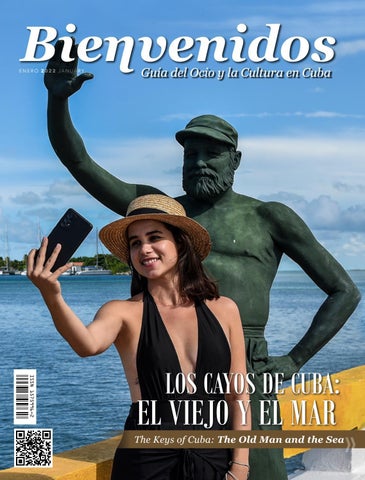
LOS CAYOS DE CUBA:
EL VIEJO Y EL MAR
The Keys of Cuba: The Old Man and the Sea
»
summary
Publicación mensual de distribución gratuita. DIRECCIÓN Maria del Carmen Madariaga JEFE DE REDACCIÓN Aitana Martínez CORRECCIÓN María de los Ángeles Santana COLABORADORES Amalia Marín Marilar Ruiz Aitor Falcón Laura Menéndez David Seguí FOTOGRAFÍA Ariel Cecilio Lemus DISEÑO GRÁFICO Dennis Pérez RESPONSABLE DE MARKETING Y PUBLICIDAD Itziar Herrera EDITORIAL: INTELLIGENT SOLUTIONS CONSULTING S.L. Depósito Legal B-40261/99 ISSN 1575-9962 CORRESPONSALÍA EN CUBA corresponsaliacuba@ bienvenidoscuba.es Visite nuestro sitio web: www.bienvenidoscuba.es
SUMARIO 4
6
EDITORIAL
5
CUBA. INFORMACIÓN GENERAL CUBA, GENERAL INFORMATION
REPORTAJE
CAYOS DE CUBA:
EL VIEJO Y EL MAR
THE KEYS OF CUBA: THE OLD MAN AND THE SEA
12
CUARTA CUMBRE IBEROAMERICANA DE TURISMO ACCESIBLE FOURTH IBERO-AMERICAN SUMMIT ON ACCESSIBLE TOURISM
28
REPORTAJE
DE LA CAÑA DE AZÚCAR AL EMBUTIDO FROM SUGAR CANE TO COLD CUTS
44
22
REPORTAJE
18
30TH HAVANA'S INTERNATIONAL BOOK FAIR
PASEO «MANIFIESTO» BY KCHO
«MANIFIESTO», AN ARTISTIC STANCE
38
CUBA EN LA SALUD
RECORRIENDO EL CAIMÁN
CIEGO DE ÁVILA LE ESPERA ENTRE HISTORIA Y MODERNIDAD
MORE THAN ONE MILLION CUBAN CHILDREN ARE ALREADY IMMUNIZED
CIEGO DE ÁVILA AWAITS YOU BETWEEN HISTORY AND MODERNITY
50
GUÍA DEL OCIO Y LA CULTURA
PASEO «MANIFIESTO» POR KCHO
«MANIFIESTO» UNA POSTURA ARTÍSTICA
MÁS DE UN MILLÓN DE NIÑOS CUBANOS ESTÁN YA INMUNIZADOS
46
54
REPORTAJE
30ª FERIA INTERNACIONAL DEL LIBRO DE LA HABANA 30
CUBA EN LA SALUD
GUÍA DEL OCIO Y LA CULTURA
GUÍA DEL OCIO Y LA CULTURA
EXPOSICIÓN ALICIA ALONSO Y RUDOLF NURÉYEV: TESTIMONIO DE UN SUCESO ÚNICO ALICIA ALONSO AND RUDOLF NUREYEV EXHIBITION: TESTIMONY OF A UNIQUE EVENT
INFORMACIÓN AL TURISTA TOURISTS VISITING CUBA ESSENTIALS
56
DIRECTORIO DIRECTORY
JAZZ PLAZA 2022 LO ESPERA EN LA HABANA Y SANTIAGO DE CUBA AWAITS YOU IN HAVANA AND SANTIAGO
editorial
ENERO2021JANUARY
Comienza el año 2022 y Bienvenidos te invita, una vez más, a recorrer Cuba. En esta ocasión llegamos a Ciego de Ávila, ciudad llena de historia y cultura, desde donde podrás llegar a algunos de los cayos más hermosos de la isla: Cayo Guillermo y Cayo Coco. Fueron estos remansos paradisíacos los que enamoraron e inspiraron al Premio Nobel de literatura Ernest Hemingway. A estos cayos inigualables te acerca también Bienvenidos en esta edición.
The year 2022 begins and Bienvenidos invites you, once again, to travel around Cuba. This time we reach Ciego de Ávila, a city full of history and culture, from where you can visit some of the most beautiful keys of the island: Cayo Guillermo and Cayo Coco. It was these paradisiacal backwaters that inspired and enchanted the Nobel Prize winner Ernest Hemingway. Bienvenidos also brings you closer to these unique keys in this edition.
La IV Cumbre Iberoamericana de Turismo Accesible se celebró en el mes de diciembre en el Hotel Nacional de Cuba con la rúbrica de la Declaración de La Habana por un Turismo Accesible en América Latina y el Caribe.
The IV Ibero-American Summit on Accessible Tourism was held in December at the Hotel Nacional de Cuba with the signing of the Havana Declaration for Accessible Tourism in Latin America and the Caribbean.
En medio de arte comienza el nuevo año y lo hace de la mano de la XIV Bienal de La Habana. En esta ocasión, el renombrado artista cubano Kcho presenta su exposición «Manifiesto», un reencuentro con la temática que se ha convertido en parte fundamental de su obra: el barco y su simbolismo en un país rodeado por el agua. Del lente de Óscar Pipkin llega la exposición Alicia Alonso y Rudolf Nuréyev, en la Casa de la Obra Pía de la Habana Vieja. La mirada única e irrepetible del artista nos muestra la magia de dos de los más reconocidos bailarines del siglo pasado, en lo que fue el único momento en el que compartieron escenario. Sin duda, una exposición que no debes perderte.
The new year begins in the midst of art and it does so with the XIV Havana Biennial. On this occasion, renowned Cuban artist Kcho presents his exhibition "Manifiesto", a reencounter with the topic that has become a fundamental part of his work: the boat and its symbolism in a country surrounded by water.
Y el mes de enero cierra con broche de oro gracias al Festival Internacional Jazz Plaza 2022. Con las sedes principales en La Habana y Santiago de Cuba, la famosa fiesta del jazz acogerá a algunos de los más reconocidos artistas del género a nivel nacional e internacional y es, sin duda, un festival que no querrás perderte.
And January closes with a flourish thanks to the Jazz Plaza 2022 International Festival. With the main venues in Havana and Santiago de Cuba, the famous jazz festival will gather some of the most renowned artists of the genre at national and international level and is, without a doubt, a festival you won't want to miss.
From the lens of Oscar Pipkin comes the exhibition Alicia Alonso and Rudolf Nuréyev, at the Casa de la Obra Pía in Old Havana. The artist's unique and unrepeatable gaze shows us the magic of two of the most renowned dancers of the last century, in what was the only time they shared the stage. Undoubtedly, an exhibition not to be missed.
Bandera | Flag
Cuba
what you should know about the island
INFORMACIÓN GENERAL
Geografía: Ubicada a la entrada del golfo de México, el archipiélago cubano está formado por la isla de Cuba, la Isla de la Juventud y aproximadamente 4,195 cayos e islotes. Cerca de 140 km la separan las Bahamas; 77 km Haití; 180 km de Florida; 210 km Cancún y 146 km de Jamaica. La silueta de Cuba, alargada y estrecha, alcanza los 120 km de longitud y entre 32 y 145 km de ancho. En total el territorio abarca 110.922 km, lo que la distingue como la mayor de las Antillas y por su ubicación geográfica la llaman también la llave del Golfo.
Geography: Located in the Caribbean Sea, the Cuban archipelago includes the Island of Cuba, the Island of Youth – Isla de la Juventud – and approximately some 4,195 keys and islets. Its nearest neighbors are: the Bahamas, 140 Km (to the north), Haiti; 77 Km (to the east); Florida, US, 180 Km (to the north); Cancun, Mexico, 210 Km (to the west) and Jamaica, 146 Km (to the southeast). Cuba’s elongated shape – 120 Km long and 32-145 Km wide -, encompasses a 110,922 Km territory, the largest of the Antilles and also known as the ”Key to the Gulf” due to its location at the entrance of the Gulf of Mexico. Mean annual temperature: 25 degrees Celsius (77 degrees Fahrenheit)
Temperatura promedio anual: 25º Celsius (77 º Fahrenheit). La Habana Artemisa
Mayabeque Matanzas
Pinar del Río
Villa Clara
Cienfuegos Isla de la Juventud
Sancti Spíritus
Las Tunas
Productos de exportación: Azúcar crudo y refino, óxido de níquel, pescado y mariscos, tabaco, rones y alcoholes, cítricos. Tasa de Alfabetización: 95%. Habitantes por médico: 183. Esperanza de vida: 77 años. Red de carreteras: 46.000 km Aeropuertos internacionales: 11 Forma de Gobierno: Parlamentario. Moneda: El peso cubano es la moneda nacional (CUP). El peso cubano tiene 100 centavos. Circula billetes de 1, 3, 5, 10, 20, 100, 200, 500,1000
Provinces: The Republic of Cuba has 15 provinces: Pinar del Río, Artemisa, La Habana, (previously Ciudad de La Habana), Mayabeque, Matanzas, Cienfuegos, Villa Clara, Sancti Spíritus, Ciego de Ávila, Camagüey, Las Tunas, Holguín, Granma, Santiago de Cuba and Guantánamo; it also has a Special Municipality: Isla de la Juventud. Main exports: Sugar (raw and refined), nickel oxide, fish and seafood, rums, alcohols and citrus fruits.
Ciego de Ávila Camagüey
División político-administrativa: La República de Cuba está dividida en 15 provincias y un Municipio Especial, la Isla de la Juventud. Las provincias son Pinar del Río, Artemisa, La Habana, (previamente Ciudad de La Habana), Mayabeque, Matanzas, Cienfuegos, Villa Clara, Sancti Spíritus, Ciego de Ávila, Camagüey, Las Tunas, Holguín, Granma, Santiago de Cuba y Guantánamo.
Nombre Oficial | Official Name República de Cuba Republic of Cuba Capital | Official Name La Habana (3 millones de habitantes 3 million inhabitants) Población | Population 11,1 millones (70% urbana) 11,1 million (70% urban) Idioma oficial | Official language Español Spanish Área | Area 110.922 km²
Granma
Holguín
Santiago de Cuba
Guantánamo
pesos y monedas por valor de 1,3, y 5 pesos. Existen monedas de 1, 2, 5 y 20 centavos. El euro circula en algunos polos turísticos como Varadero, Holguín y Jardines de Rey. Días festivos: 1 de Enero Día de la Liberación 1 Mayo, Día del Trabajo 25, 26 y 27 de Julio, Aniversario del Asalto al Cuartel Moncada 10 de Octubre, Aniversario del Inicio de la Guerra de Independencia 25 de Diciembre, Día de Navidad 31 de Diciembre
Literacy: 95%. Inhabitants per doctor: 183. Life Expectancy: 77 years. Highways’ network: 46.000 km International airports: 11 Government: Parliamentary. Currency: the Cuban peso (CUP) is the national currency, even though the convertible peso (CUC) is preferably used to pay for tourism services in the country, it comes in the following bill denominations: 1, 3, 5, 10, 20, 50 and 100 bills and also in coins of 5, 10, 25, 50 and one CUC. The Cuban peso equals 100 Cuban cents and comes in the following bill denominations of 1, 3, 5, 10, 20, 100, 200, 500 and 500; also in 1, 3 and 5 pesos’ coins and 1, 5 and 20 cents. Euro is accepted in some destinations as Varadero, Holguin and Jardines del Rey. Holidays: January 1st – Liberation Day May 1st, Workers’ Day July 25, 26 and 27, Anniversary of the Moncada Fortress assault in 1956. October 10, Anniversary of the beginning of the War of Independence December 25, Christmas Day December 31, New Year´s Eve Guía del Ocio y la Cultura en Cuba
5
reportaje
LOS CAYOS DE CUBA:
EL VIEJO Y EL MAR Textos y fotos/Texts and photos: Bienvenidos
6
The Keys of Cuba:
Cuando Ernest Hemingway relataba en Adiós a las armas sus avatares durante la Primera Guerra Mundial a través de Frederick Henry, poco podría imaginar que varias décadas después tendría de nuevo un “enemigo” similar, que no iría a cazar submarinos en su yate y mucho menos que navegaría en los cayos del Norte de la provincia de Ciego de Ávila en Cuba. Fue esa zona una de las preferidas por el Premio Nobel de Literatura para salir en sus largas sesiones de pesca en altamar y, según cuenta la historiografía, llegada la Segunda Guerra Mundial, también perseguir submarinos nazis que merodeaban la zona en busca de cargueros solitarios -presas fáciles de sus embestidas- se convirtió en uno de sus hobbies.
The Old Man and the Sea When Ernest Hemingway recounted in A Farewell to Arms his vicissitudes during World War I through Frederick Henry, little could he imagine that several decades later he would again have a similar "enemy", that he would go submarine hunting on his yacht and much less that he would sail in the northern keys of the province of Ciego de Ávila in Cuba. That area was one of the favorite ones of the Literature Nobel Prize winner to go out on his long fishing trips at sea and, according to historiography, when the Second World War started, chasing Nazi submarines that prowled the area in search of lone freighters -easy prey for their attacks- became one of his hobbies.
7
reportaje
Las Islas del Golfo «Es maravilloso –describió- despertar por las mañanas y navegar con el sol detrás, avanzar por el canal con el ojo alerta y dirigirse a la línea de cayos verdes», dejaba plasmado el también ganador del Premio Pulitzer en su novela Islas del Golfo, un texto surgido por su fascinación con los cayos situados en la región Jardines del Rey. Este grupo de cayos de la zona centrooriental del archipiélago cubano adquiere su nombre durante la colonización española cuando Diego Velázquez, en uno
8
Bienvenidos E N E R O 2 0 2 2 J A N U A R Y
de sus viajes, los divisó por vez primera. Tan impresionado quedó el conquistador ante la exuberante vegetación y sus hermosas playas que decidió otorgarles el título de Jardines del Rey, en honor a Fernando el Católico, regente de España por aquel entonces. Entre las formaciones geográficas más representativas por su extensión y condiciones de hábitat para la flora y fauna aparecen Cayo Coco, Santa María, Guillermo y Romano, muchos de ellos unidos a la isla grande de Cuba por un sistema de carreteras, lo que facilita el acceso a los visitantes.
Una extensa red de hoteles, así como aeropuertos, marinas y pequeñas poblaciones construidas con fines turísticos hacen de esta una de las regiones con mayor aceptación por parte de nacionales y extranjeros, quienes pueden disfrutar de un sitio ideal para el descanso, mezclando la realidad y los sueños, mientras descubren un Caribe plagado de leyendas e historia.
Los cayos de Cuba «El viejo y el mar»
The Gulf Islands "It's wonderful," he described, "to wake up in the morning and sail with the sun behind you, to move through the channel with an alert eye and head for the line of green cays," the Pulitzer Prize winner wrote in his novel Gulf Islands, a text born out of his fascination with the cays located in the Jardines del Rey region. This group of keys in the centraleastern part of the Cuban archipelago got its name during the Spanish colonization when Diego Velázquez, on one of his trips, spotted them for the first time. The conquistador was so impressed by the exuberant vegetation and beautiful beaches that he decided to give them the title of Jardines del Rey (King's Gardens), in honor of Ferdinand the Catholic, ruler of Spain at that time. Among the most representative geographic formations for their extension and habitat conditions for flora and fauna are the keys of Coco, Santa María, Guillermo and Romano, many of them linked to the big island of Cuba by a road system, which facilitates access to visitors. An extensive network of hotels, as well as airports, marinas and small towns built for touristic purposes make this one of the regions with the greatest acceptance by nationals and foreigners, who can enjoy an ideal place to rest, mixing reality and dreams, while discovering a Caribbean full of legends and history.
Guía del Ocio y la Cultura en Cuba
9
reportaje
El viejo y el mar Fueron Media Luna y Cayo Guillermo dos de los espacios que más cautivaron a Hemingway, quien los describió en sus relatos como sitios paradisíacos, llenos de especies de reptiles, anfibios y abundante variedad de peces. Se dice que muchos de estos cayuelos eran frecuentados por corsarios y piratas en busca de abastecimientos o descanso y no son pocas las historias que hablan de tesoros sumergidos en sus aguas. Con una extensión de solo 13,7 hectáreas y una altitud máxima de tres metros sobre el nivel del mar, Cayo Media Luna -situado frente a Cayo Guillermo- tiene entre sus principales atractivos un museo marino, resultado de los muchos naufragios sucedidos en la zona producto de la barrera coralina que la rodea, una de las más grandes y hermosas de la región del Caribe.
10
Bienvenidos E N E R O 2 0 2 2 J A N U A R Y
«Sabía que había un barco hundido en el extremo occidental del cayo, pero con la marea alta solo se veía un bulto marrón rojizo…Había un barco y una playa arenosa en el interior del cayo, pero no vería la playa hasta que le diera la vuelta al barco hundido». Así nos sitúa Hemingway en esta pequeña porción de tierra ubicada entre la inmensidad azul, a la que se puede acceder hoy día mediante excursiones en catamaranes para disfrutar de sesiones de buceo y pasadías en playas paradisiacas.
«Es un escollo coralino que apenas sale del agua», resumía el autor de El viejo y mar, considerado por muchos el segundo descubridor de esta espléndida zona norte de Cuba, refiriéndose a Cayo Guillermo, por su llanura visible desde el horizonte.
Cayo Guillermo es imponente al visitante cuando se llega desde tierra o mar. Con trece kilómetros cuadrados sobresale por su vegetación natural y una flora y fauna que conviven a la perfección con una planta hotelera que aparece registrada entre las más importantes del país.
El legado de Ernest Hemingway es palpable a cada paso del viajero en su visita a esta zona. Atracciones temáticas, esculturas e historias de las peripecias del intrépido aventurero norteamericano serán parte de una experiencia que reverencia al amante del daiquirí cubano, quien alguna vez sentenció: «En Guillermo. Allí estaría yo».
Dentro de seis kilómetros de playas de ensueño resalta en el entorno Playa Pilar, nombrada así por el yate con el cual Hemingway cruzara estas aguas y que con quince metros sobre el nivel del mar es la duna de arena más alta del Caribe y uno de los más bellos balnearios del mundo.
Los cayos de Cuba «El viejo y el mar»
The Old Man and the Sea Media Luna and Key Guillermo were two of the places that most captivated Hemingway, who described them in his stories as paradisiacal sites, full of reptile species, amphibians and an abundant variety of fish. It is said that many of these keys were frequented by corsairs and pirates in search of supplies or rest and many stories speak of treasures submerged in its waters. With an extension of only 13.7 hectares and a maximum altitude of three meters above sea level, Cayo Media Luna - located in front of Cayo Guillermo - has among its main attractions a marine museum, the result of the many shipwrecks that have occurred in the area caused by the coral reef that surrounds it, one of the largest and most beautiful in the Caribbean region.
"I knew there was a sunken ship at the western end of the key, but at high tide only a reddish-brown lump was visible... There was a ship and a sandy beach in the interior of the key, but I would not see the beach until I turned the sunken ship around." This is how Hemingway places us in this small piece of land located among the blue immensity, which today can be accessed by catamaran excursions to enjoy diving sessions and walks on paradisiacal beaches. Cayo Guillermo is imposing to the visitor when arriving from land or sea. With thirteen square kilometers, it stands out for its natural vegetation and flora and fauna that coexist perfectly with a hotel complex that is considered one of the most important in the country.
"It is a coral reef that barely comes out of the water", summarized the author of The Old Man and the Sea, considered by many the second discoverer of this splendid northern area of Cuba, referring to Cayo Guillermo, because of its plain visible from the horizon. Within six kilometers of dream beaches, Playa Pilar stands out, named after the yacht with which Hemingway crossed these waters and which, at 15 meters above sea level, is the highest dune in the Caribbean and one of the most beautiful beach resorts in the world. Ernest Hemingway's legacy is tangible at every step of the traveler's visit to this area. Themed attractions, sculptures and stories of the adventures of the intrepid American explorer will be part of an experience that reveres the lover of the Cuban daiquiri, who once said: "In Guillermo. That's where I would be". Guía del Ocio y la Cultura en Cuba
11
reportaje
IV CUMBRE IBEROAMERICANA DE TURISMO ACCESIBLE
ALIANZAS ROBUSTAS « Y COMPROMISOS » La Cuarta Cumbre Iberoamericana de Turismo Accesible se desarrolló en el Hotel Nacional de Cuba, entre los días 15 y 17 del mes de diciembre pasado, y en su contexto fue rubricada la Declaración de La Habana. Este cónclave, coordinado por la Red Iberoamericana de Turismo Accesible, tuvo como propósito formalizar alianzas robustas para garantizar la accesibilidad de los diferentes destinos turísticos. En la sesión primera, el secretario general de la Organización Mundial del Turismo, señor Zurab Pololikashvili, mediante una videoconferencia, entregó el siguiente mensaje:
«Quisiera aprovechar esta oportunidad para felicitar especialmente a Cuba por sus esfuerzos en el desarrollo de su sector turístico y su compromiso con la accesibilidad universal». Juan Carlos García Granda, ministro de Turismo de la isla caribeña, aseguró en la ocasión que hacer del país un destino turístico accesible no es solamente respetar y hacer valer los derechos de las personas con discapacidad, sino que se trata de «diseñar un turismo para todos, mejorar la calidad de la experiencia turística cubana, sencillamente, apostar por un turismo accesible es incrementar nuestra competitividad y sostenibilidad».
«Fourth Ibero-American Summit on Accessible Tourism: robust alliances and commitments» The Fourth Ibero-American Summit on Accessible Tourism was held at the Hotel Nacional de Cuba, from December 15th to 17th, and the Declaration of Havana was signed as a result. The purpose of this event, coordinated by the Ibero-American Network of Accessible Tourism, was to formalize strong alliances in order to guarantee the accessibility of the different tourist destinations. In the first session, the General Secretary of the World Tourism Organization, Mr. Zurab Pololikashvili, through a videoconference, delivered the following message:
"I would like to take this opportunity to especially congratulate Cuba for its efforts in developing its tourism sector and its commitment to universal accessibility." Juan Carlos García Granda, Minister of Tourism of the Caribbean island, said on this event that making the country an accessible tourist destination is not only about respecting and enforcing the rights of people with disabilities, but also about "designing a tourism for all, improving the quality of the Cuban tourist experience, simply, committing to accessible tourism is to increase our competitiveness and sustainability".
Textos y fotos / Texts and photos: Bienvenidos Guía del Ocio y la Cultura en Cuba
13
reportaje
Por su parte, Diego González, presidente de la Red Iberoamericana de Turismo Accesible, reconoció que la isla tiene «un proyecto de país para lograr que el turismo accesible sea una realidad. Cuba queda registrada como un destino especial para nosotros». Las sesiones de trabajo de este foro contemplaron paneles, conferencias magistrales e intercambio de experiencias entre los participantes virtuales y presenciales, que apreciaron los saberes contenidos en 30 ponencias de representantes de 14 países, referidas a temas como la accesibilidad en patrimonio, tecnología y naturaleza; los destinos inteligentes y el transporte accesible. El primer ministro de la República de Cuba, Manuel Marrero Cruz, en su intervención en la clausura del evento, advirtió que la mayor de las Antillas nunca ha puesto distinción entre sus visitantes, consecuentemente con su vocación de anular todas las inequidades y expresó que la Cumbre compromete al país a un empeño conciente para favorecer un turismo con igualdad de oportunidades para todas las personas. Por su parte, el titular de Turismo de la isla caribeña, Juan Carlos García Granda, ponderó los resultados del evento para el logro de un turismo accesible y ratificó que la meta superior continua siendo la calidad. «La accesibilidad y la inclusión forman parte inseparable de la calidad, entonces, evolucionar completamente hacia ello no es una opción, es una necesidad», aseveró el alto funcionario.
La Declaración de La Habana por un Turismo Accesible América LatinaCaribe La Declaración de La Habana recoge todos los principios esenciales que debe contemplar el turismo accesible. Entre ellos: «El disfrute del ocio y el tiempo libre, dentro de los cuales el turismo está incluido, es un derecho humano fundamental». El documento está respaldado por las Redes de Turismo Accesible de Ecuador, Colombia, Costa Rica y Uruguay y por los Ministerios de Turismo de Cuba, Argentina, Ecuador, Bolivia, Guatemala y Nicaragua.
14
Bienvenidos E N E R O 2 0 2 2 J A N U A R Y
Cuarta Cumbre Iberoamericana de Turismo Accesible: alianzas robustas y compromisos
For his part, Diego González, president of the Ibero-American Network of Accessible Tourism, acknowledged that the island has "a nation- project to make accessible tourism a reality. Cuba is listed as a special destination for us". The working sessions of this forum included panels, keynote lectures and exchange of experiences among virtual and on-site participants, who appreciated the knowledge contained in 30 lectures by representatives from 14 countries, on topics such as accessibility in heritage, technology and nature; smart destinations and accessible transportation. The Prime Minister of the Republic of Cuba, Manuel Marrero Cruz, in his speech at the closing of the event, warned that the largest of the Antilles has never made a distinction among its visitors, in line with its vocation to eliminate all inequalities and expressed that the Summit commits the country to a conscious effort to promote tourism with equal opportunities for all people. For his part, the Caribbean island's Minister of Tourism, Juan Carlos García Granda, praised the results of the event for the achievement of accessible tourism and ratified that the top goal continues to be quality. "Accessibility and inclusion are an inseparable part of quality, so evolving completely towards it is not an option, it is a necessity," said the high-ranking official. The Havana Declaration for Accessible Tourism Latin America and the Caribbean The Havana Declaration includes all the essential principles that accessible tourism should contemplate. Among them: "The enjoyment of leisure and free time, including tourism, is a fundamental human right". The document is endorsed by the Accessible Tourism Networks of Ecuador, Colombia, Costa Rica and Uruguay and by the Ministries of Tourism of Cuba, Argentina, Ecuador, Bolivia, Guatemala and Nicaragua.
15
reportaje
El Hotel Nacional de Cuba: Uno de los más accesibles de América Latina El Hotel Nacional de Cuba fue distinguido en la sesión de cierre por su labor constante en el perfeccionamiento de sus espacios, el compromiso del personal con la calidad del servicio y «por el pronto cambio de estándar a accesible, en solo dos años», afirmó el presidente de la Red Iberoamericana de Turismo Accesible, y agregó que en la actualidad este hotel «es uno de los más accesibles de América Latina y un ejemplo de accesibilidad universal».
16
Durante la etapa pandémica, la instalación realizó un proceso de remodelación, reparación y colocación de equipamiento y accesorios requeridos por los turistas con cualquier tipo de discapacidad. Algunas de las habitaciones cuentan ya con teléfonos accesibles, perchas abatibles, sillas de baño y barras de apoyo. Para las personas con discapacidad auditiva se han situado despertadores con vibrador, dispositivos visuales, con timbres y alarmas de incendio de luces, para poder visualizar así las diferentes informaciones. Uno de los equipos que garantizan un verdadero divertimento para las personas con discapacidad motora es el elevador de piscina.
A esto se suman los esfuerzos por lograr que los trabajadores incorporen recursos para la atención a las personas con discapacidad y otras expresiones de diversidad humana; interioricen una cultura inclusiva, de respeto hacia los derechos de los clientes, y faciliten el acceso a todas las opciones, culturales, artísticas, recreativas y gastronómicas que ofrece el hotel insignia de Cuba. El Hotel Nacional acaba de arribar al aniversario 91 de su fundación, reconociendo el carácter diverso de la sociedad y el derecho de las personas con discapacidad a disfrutar de un turismo accesible, responsable socialmente, sustentable e inclusivo.
Cuarta Cumbre Iberoamericana de Turismo Accesible: alianzas robustas y compromisos
The Hotel Nacional de Cuba: One of the most accessible hotels in Latin America The Hotel Nacional de Cuba was distinguished at the closing session for its constant work in improving its spaces, the staff's commitment to quality service and "for the prompt change from standard to accessible, in just two years," said the president of the Ibero-American Network of Accessible Tourism, adding that today this hotel "is one of the most accessible in Latin America and an example of universal accessibility." During the pandemic period, the facility underwent a process of remodeling, repair and installation of equipment and accessories required by tourists with any type of disability. Some of the rooms now have accessible telephones, folding hangers, bath chairs and grab bars. For the hearing impaired, there are vibrating alarm clocks, visual devices with buzzers and light fire alarms, so that they can visualize the different information. One of the equipment that guarantees real leisure for people with motor disabilities is the pool lift. In addition to this, efforts have been made to ensure that workers incorporate resources for the care of people with disabilities and other expressions of human diversity; internalize an inclusive culture of respect for the rights of customers, and
facilitate access to all cultural, artistic, recreational and gastronomic options offered by Cuba's flagship hotel. The Hotel Nacional has just reached the 91st anniversary of its founding, recognizing the diverse nature of society and the right of people with disabilities to enjoy accessible, socially responsible, sustainable and inclusive tourism.
Participants and organizers agree on the urgent need to establish coalitions among all actors involved in the tourism value chain, with the noble goal of making inclusive, responsible and socially sustainable tourism a reality in all spheres.
Guía del Ocio y la Cultura en Cuba
17
reportaje
30ª FERIA INTERNACIONAL DEL LIBRO DE LA HABANA
LA GRAN FIESTA DE LA LITERATURA Y LAS ARTES Textos/Texts: Bienvenidos Fotos/Photos: Archivos
18
La 30ª Feria Internacional del Libro de La Habana, FILH 2022, se efectuará del 10 al 20 del venidero mes de febrero, bajo el lema «Leer es crecer», y tendrá como sedes principales el Parque Histórico Militar San Carlos de La Cabaña y el Centro Histórico de la capital cubana.
30th Havana's International Book Fair: The great festival of literature and the arts
Como invitado de honor, los Estados Unidos Mexicanos, nación con la que se inició en la edición de 1998 la costumbre de dedicar el evento a un país en especial. También se conmemorarán los centenarios de natalicio, de los poetas Carilda Oliver Labra (Matanzas, 1922 - 2018) y Jesús Orta Ruiz, el Indio Naborí (La Habana, 1922 - 2005). A la par, el acontecimiento editorial más significativo y masivo de Cuba rendirá homenaje a los 140 años de la publicación del poemario Ismaelillo, de José Martí, y de Cecilia Valdés o La Loma del Ángel, de Cirilo Villaverde, considerada la primera novela cubana. La gran fiesta internacional de la literatura y las artes llega a La Habana después de un extenso período pandémico, para alegrar la vida de citadinos y visitantes foráneos, muchos de los cuales planifican sus vacaciones en la isla, en el periodo del evento, con el propósito de disfrutar las múltiples opciones literarias y artísticas que anuncia la prestigiosa FILH. Un poco de historia En Cuba, la primera experiencia de una feria del libro data de 1937 cuando se celebró en La Punta, el Malecón y el Paseo del Prado con la presencia de las más reconocidas librerías habaneras de la época. Acciones cercanas en concepto tuvieron lugar en 1949 y 1950.
The 30th Havana´s International Book Fair, FILH 2022, will be held from February 10th to 20th under the slogan "To Read is to Grow", and will have as its main venues the San Carlos de La Cabaña Historic Military Park and the Historic Center of the Cuban capital. As guest of honor, the United States of Mexico, the nation with which the tradition of dedicating the event to a special country began in the 1998 edition; the centenary of poets Carilda Oliver Labra (Matanzas, 1922 - 2018) and Jesús Orta Ruiz, el Indio Naborí, (Havana, 1922 - 2005) will also be commemorated. At the same time, Cuba's most significant and massive publishing event will pay tribute to the 140th anniversary of the publication of José Martí's Ismaelillo and of Cecilia Valdés or La Loma del Ángel, by Cirilo Villaverde, considered the first Cuban novel. Following a long pandemic period, the great international festival of literature and the arts arrives in Havana to delight the hearts of locals and foreign visitors, many of whom are planning their vacations on the island during the period of the event, in order to enjoy the numerous literary and artistic events announced by the prestigious FILH. A little bit of history In Cuba, the first book fair dates back to 1937, when it was held in the esplanade of La Punta, the Malecon and the Paseo del Prado with the presence of the most renowned Havana bookstores of the time. Actions similar in concept took place in 1949 and 1950. Guía del Ocio y la Cultura en Cuba
19
reportaje
La Campaña de Alfabetización
The Cuban Literacy Campaign
La Campaña de Alfabetización, llevada a cabo en el año 1961, propició bajar el índice de analfabetismo a 3,9 por ciento, con lo cual Cuba se colocó entre las naciones más avanzadas del mundo en este orden, cuando el 22 de diciembre de 1961 se proclamó Territorio Libre de Analfabetismo.
The Cuban Literacy Campaign carried out in 1961 brought the illiteracy rate down to 3.9 percent, which placed the nation among the most advanced in the world in this area, when on December 22nd, 1961, it was proclaimed an Illiteracy Free Territory.
Sólida es la trascendencia del hecho que sentó los pilares, junto a la fundación de la Imprenta Nacional, del desarrollo educacional y cultural de la población, ofreciendo a los ciudadanos la posibilidad de leer y abrirse a los saberes universales. Feria del Libro en Revolución En este contexto, las personas ampliaron sus intereses literarios y, a la vez, se desarrolló la industria editorial cubana, elementos que favorecieron que en 1982, se realizara la primera Feria Internacional del Libro de La Habana, que tuvo como plaza el Palacio de Bellas Artes, con la participación de algunos países latinoamericanos como observadores, y estuvo dedicada a José Martí, Nicolás Guillén y Jorge Dimitrov.
20
Bienvenidos E N E R O 2 0 2 2 J A N U A R Y
The significance of this achievement, together with the founding of the National Printing Office, is solid, since it laid the foundations for the educational and cultural development of the population, offering citizens the opportunity to read and open themselves to universal knowledges. The Book Fair in times of the Revolution In this context, people broadened their literary interests, and at the same time, the Cuban publishing industry developed, elements that favored the celebration of the first Havana's International Book Fair in 1982, which took place at the Palace of Fine Arts, with the participation of some Latin American countries as observers, and was dedicated to José Martí, Nicolás Guillén and Jorge Dimitrov.
30ª Feria Internacional del Libro de La Habana: La gran fiesta de la literatura y las artes
Espacio de intercambio y divertimento La Feria Internacional del Libro es un espacio idóneo para el intercambio con los autores de varios continentes.El programa teórico concibe presentaciones de libros, coloquios, mesas redondas, conferencias, paneles, debates, lecturas de poemas y premiaciones, a los que tienen acceso los profesionales de la literatura pero que está abierto al público, que experimenta un acercamiento especial a poetas, narradores, ensayistas y pensadores, hacedores de los textos de su preferencia. Los niños son un público relevante en estas citas literarias, ya que «arrastran» a sus padres hacia las diferentes locaciones donde se efectúan las ferias en todas las provincias del país, desde el año 2002, y hacia el pabellón infantil «Tesoro de Papel», que en La Cabaña los acoge con una variada y didáctica programación artística y de participación.
De esta suerte, esta, la más grande de las ferias culturales de la isla, se convierte cada año en un lugar de esparcimiento sano para todas las familias cubanas, que comparten sus intereses literarios, y que recibe a los turistas extranjeros con válidas alternativas editoriales de autores de todos los continentes. Esta festividad de la cultura cubana es vasta, además, en su programación artística y contempla conciertos, puestas de teatro, exposiciones de las artes visuales, y muestras de cine desarrollados por el talento creador nacional, pero , ya se ha hecho habitual que el país invitado de honor traiga a la cita una delegación de artistas de las diferentes manifestaciones con lo cual se suma a esta fusión perfecta que recibe al visitante con la promesa de pasar unos días entre libros, artes y goce cultural.
A place for exchange and amusement The International Book Fair is an ideal space where authors from various continents can exchange ideas; the theorical program includes book presentations, colloquiums, round tables, conferences, panels, debates, poetry readings and awards, to which literary professionals have access, but which are also open to the public, who experience a special contact with poets, narrators, essayists and intellectuals, authors of the texts of their choice. Children are a relevant public in these events, since they "drag" their parents to the different locations where the fairs are held in all the provinces of the country, since 2002, but most importantly to the children's pavilion "Tesoro de Papel", located in La Cabaña, which welcomes them with a diverse and didactic artistic and participative program. Thus, this, the largest of the island's cultural fairs, becomes every year a place of healthy recreation for all Cuban families who share their literary interests, and welcomes foreign tourists with solid editorial alternatives of authors from all continents. This festival of Cuban culture is also ample in its artistic programming and includes concerts, theater performances, visual arts exhibits and film screenings developed by the national creative talent, but it has become usual for the country guest of honor to bring to the event a delegation of artists from the different manifestations, adding to this perfect fusion that welcomes visitors with the promise of spending a few days among books, arts and cultural enjoyment. Guía del Ocio y la Cultura en Cuba
21
22
reportaje
«MANIFIESTO» UNA POSTURA ARTÍSTICA
En el marco de la XIV edición de la Bienal de La Habana, fue inaugurada recientemente en Quinta Avenida «Manifiesto», exposición del conocido artista cubano Aléxis Leyva Machado (Kcho). La transgresión del tiempo y el espacio es un cuestionamiento de tratamiento continuo en el arte contemporáneo. Sobre este y otros temas se intercambiaron criterios el 11 de diciembre, durante el recorrido que dio el propio artista a la prensa y al público ocasional.
An artistic stance Within the framework of the 14th edition of the Havana Biennial, "Manifiesto", an exhibition by well-known Cuban artist Aléxis Leyva Machado (Kcho), was recently inaugurated at Quinta Avenida. The transgression of time and space is a questioning of continuous treatment in contemporary art. During a tour given by the artist himself to the press and the occasional public, criteria were exchanged on this and other topics on December 11th.
Por/By: Akzana López Hernández Fotos/Photos: Bienvenidos
Guía del Ocio y la Cultura en Cuba
23
reportaje
24
Bienvenidos E N E R O 2 0 2 2 J A N U A R Y
«Manifiesto», una postura artística
«Manifiesto» es una extensión de pensamiento en la que Kcho reafirma su manera de hacer y de crear. Regresa a sus formas obsesivas, una y otra vez, a su predilección por los cambios, las variaciones y transformaciones dinámicas de un objeto, de su objeto de culto: el barco. Es una idea constante en su trabajo, que le genera interrogantes y posibles respuestas. No importa el medio, la técnica, el material, la manifestación, incluso la temática que trabaje, todo lo ligado o lo esencialmente relacionado a este objeto puede verse representado en sus obras. El contexto que lo rodeó desde su infancia, los hechos imborrables de una Cuba de los 80 y los 90, solidificaron en su obra ese sentido de libertad, viaje, superación. «Mi mayor obra está en todas partes, está en todo lo que hago. He entendido después de 30 años de trabajo como artista y cada día defiendo más la idea de que el arte es la energía de cambio más importante de la humanidad». Las 10 esculturas situadas a lo largo de Quinta Avenida, popular arteria de la ciudad habanera, integran un recorrido distinto entre estructuras herrumbrosas que cuentan historias y develan conceptos y aún, trascendiendo sus deconstrucciones artísticas, replican en su rusticidad material las señales y los avatares de la vida. Son piezas imponentes desde su gran formato, se muestran orgullosas de su forma, color y extensión. "Manifesto" is an extension of thought in which Kcho reaffirms his way of making and creating. He returns to his obsessive forms, again and again, to his predilection for changes, variations and dynamic transformations of an object, of his cult object: the boat. It is a constant idea in his work, which generates questions and possible answers. No matter the medium, the technique, the material, the manifestation, even the theme he works on, everything linked or essentially related to this object can be seen represented in his works. The context that surrounded him since his childhood, the indelible facts of a Cuba of the 80s and 90s, solidified in his work that sense of freedom, journey, overcoming. "My greatest work is everywhere, it is in everything I do. I have understood after 30 years of work as an artist and every day I defend more and more the idea that art is the most important energy of change in humanity." The 10 sculptures located along Quinta Avenida, a popular artery of Havana, integrate a different journey among rusty structures that tell stories and unveil concepts and even, transcending their artistic deconstructions, replicate in their material rusticity the signs and vicissitudes of life. These are imposing pieces due to their large format, proud of their shape, color and extension. 25
reportaje
«Importante es el uso de los materiales con los que trabajo en esta exposición porque es la forma de catalizar determinadas ideas para el tiempo. A diferencia de mi pieza “Archipiélago en mi pensamiento”, expuesta actualmente en el MNBA, hecha con restos de mi vida y mi trabajo y pensada para que el deterioro sea parte de su historia, en las obras que integran Manifiesto, la permanencia y la fortaleza son parte de su historia. Una manifestación clara desde un principio, pero con un material que no va a perecer en el tiempo». "Quemando las naves", una de las obras en cuestión, integra en el conjunto escultórico seis barcas en forma de fogata, una simplicidad estructural que resguarda memorias, remembranzas de un refugio, una casa, a la vez que se vuelve leña de un fuego subjetivo que cubre y abrasa. Una analogía que refiere la desintegración de prejuicios, miedos, frustraciones y constructos sociales, a través de la purificación del fuego. Una resurrección de las convenciones artísticas, quemando desde los inicios, para que, de la destrucción, nazca una nueva vida, una nueva idea. «Cada acción de mi vida y de mi trabajo es una quema masiva de naves». Así expresara el propio Kcho durante el recorrido. "Important is the use of the materials I work with in this exhibition because it is the way to catalyze certain ideas of time. Unlike my piece "Archipiélago en mi pensamiento", currently exhibited at the National Museum of Fine Arts, made with remnants of my life and my work and designed so that its deterioration is a part of its history, in the works that make up Manifiesto, permanence and strength are part of its history. A clear manifestation from the beginning, but with a material that will not perish in time." "Quemando las naves" (Burning the Ships), one of the works in question, integrates into the sculptural group six boats in the shape of a bonfire, a structural simplicity that shelters memories, remembrances of a shelter, a house, at the same time that it becomes firewood of a subjective fire that covers and scorches. An analogy that refers to the disintegration of prejudices, fears, frustrations and social constructs, through the purification of fire. A resurrection of artistic conventions, burning from the beginnings, so that, from the destruction, a new life, a new idea is born. "Every action of my life and my work is a massive burning of ships". So expressed Kcho himself during the tour. 26
Bienvenidos E N E R O 2 0 2 2 J A N U A R Y
«Manifiesto», una postura artística
“El salto” recuerda a un puente, un túnel, así, desde la mirada incisiva del espectador puede variar en su morfología. Su estructura estilizada, como si también de un pez en pleno salto se tratara, vuelve a las metáforas de la mutación, a la fusión entre objeto y animal. «Manifiesto», sin dudas, es una integración armónica en el espacio urbano, una intervención manifiesta, donde presencias corpóreas distanciadas intencionadamente dan, al transeúnte, al observador selectivo, al caminante perdido, espacios de pensamiento para crear sus propias historias y fabulaciones con respecto a lo que ven, a lo que perciben. “El pensador”, “El rescate”, “En su nombre”, son otras de las obras que resguardan ahora el histórico paseo de 5ta avenida y las cuales trascenderán, desde su complexión material y subjetiva los límites del tiempo y el espacio. "El salto" (The Jump) reminds of a bridge, a tunnel, thus, from the incisive gaze of the viewer can vary in its morphology. Its stylized structure, as if it were also a fish in full jump, returns to the metaphors of mutation, to the fusion between object and animal. "Manifiesto", without a doubt, is a harmonious integration in the urban space, a clear intervention, where corporeal presences intentionally distanced give the passerby, the selective observer, the lost wanderer, spaces of thought to create their own stories and fantasies about what they see, what they perceive. "El pensador" (The Thinker), "El rescate" (The Rescue), "En su nombre" (In His Name), are other of the works that now guard the historic 5th avenue and which will transcend, from their material and subjective complexion, the limits of time and space. Guía del Ocio y la Cultura en Cuba
27
28
reportaje
DE LA CAÑA DE AZÚCAR AL EMBUTIDO Para Aster Bruselas Álvarez la producción de alimentos ha ocupado más de la mitad de su vida. A sus cuarenta años, esta mujer en su rol de Jefa de brigada se empeña en equilibrar calidad y fiabilidad en los productos que salen del Centro de Elaboración de La Lisa pertenecientes a TECNOAZÚCAR. Desde su puesta en marcha, en octubre del pasado año, y luego de un proceso de modernización, esta entidad ha logrado una estabilidad en sus servicios, además de una diversificación en las líneas productivas. Con dos renglones bien marcados, el Centro de Elaboración La Lisa perteneciente a la UEB de TECNOAZÚCAR, en La Habana, logra una de las prioridades trazadas por la política económica del país: la sostenibilidad alimentaria.
From sugar cane to cold cuts For Aster Bruselas Álvarez, food production has been more than half of her life. At forty years of age, this woman, in her role as team manager, strives to balance quality and reliability in the products that come out of the La Lisa Processing Center belonging to TECNOAZÚCAR. Since its start-up, in October last year, and after a modernization process, this entity has achieved stability in its services, in addition to a diversification in the product lines. With two well-defined lines, the La Lisa Processing Center belonging to the UEB of TECNOAZÚCAR, in Havana, achieves one of the priorities set by the country's economic policy: food sustainability.
Textos y fotos/Texts and photos: Bienvenidos
29
reportaje
Diversificación en TECNOAZÚCAR Desde su creación en 1982, TECNOAZÚCAR ha modificado y sumado nuevos retos a su quehacer empresarial. Perteneciente al Grupo Empresarial AZCUBA, con el decursar del tiempo no solo la producción y comercialización de los derivados de la caña de azúcar le competen, sino que asumen la producción de alimentos a partir de la masa animal, sus derivados, así como otros sectores. Con un total de 11 trabajadores, la planta muestra que alta calidad, precios competitivos y demanda constante de sus alimentos son posibles aún en periodos complejos. A decir de Aster Bruselas, la demanda de los rubros por ellos creados son la máxima expresión de que algo se está haciendo bien. Altos estándares de higiene, sanidad y control de calidad caracterizan a un colectivo que día a día traza nuevas metas para que sus resultados no solo sean demandados, sino que compitan en otros mercados con marcas ya establecidas. Un total de 5 ofertas, identificados con la marca Tres Golpes, salen de sus procesos: croquetas, hamburguesas y mortadelas destinados a la alimentación de los trabajadores de AZCUBA, mientras que el jamón, chorizo y picadillo son destinados a la venta en tiendas en MLC (Moneda Libremente Convertible). Todas estas producciones tienen como base alimenticia la carne de cerdo y bovina. 30
Bienvenidos E N E R O 2 0 2 2 J A N U A R Y
De la caña de azúcar al embutido
Diversification at TECNOAZÚCAR Since its creation in 1982, TECNOAZÚCAR has modified and added new challenges to its business activities. Belonging to the AZCUBA Business Group, over the years it has not only dedicated itself to the production and commercialization of sugar cane derivatives, but has also taken on the production of food from animal mass and its derivatives, as well as other sectors. With a total of 11 workers, the plant shows that high quality, competitive prices and constant demand for its products are possible even in complex periods. According to Aster Bruselas, the demand for their products is the maximum expression that something is being done right. High standards of hygiene, sanitation and quality control characterize a collective that every day sets new goals to ensure that their results are not only in demand, but also that they compete in other markets with already established brands. A total of 5 offerings, identified with the Tres Golpes brand, come out of their production plant: croquettes, hamburgers and mortadellas destined to the meals of AZCUBA's workers, while ham, pork sausage and minced meat are intended for sale in stores in MLC ( Freely Convertible Currency). All these products are based on pork and beef.
Guía del Ocio y la Cultura en Cuba
31
reportaje
La misión Todos sus productos no solo gozan de alta aceptación, sino que son fruto también de la producción de masa ganadera por parte de AZCUBA. A partir de convenios con cooperativas y elaboraciones propias, se logra una estabilidad en la entrega de materias primas, sin afectar el suministro estatal y privado de alimentos a la población, tan importante en los tiempos que corren. La diversificación de sus renglones trae mayores retos, pues lograr un equilibrio entre ambas líneas productivas ha sido tal vez una de las estrategias más complejas de llevar a cabo, expresó Pedro Martínez López, director de Desarrollo e Inversiones, al referirse con orgullo a la satisfacción de los trabajadores de AZCUBA al degustar sus ofertas. La búsqueda de nuevos mercados y formas de autogestión impulsó a la creación de una línea encaminada a las tiendas en MLC, logrando atraer divisas necesarias para sostener las producciones de su objetivo esencial: una alimentación con calidad para los trabajadores. «El compromiso y el sentido de pertenencia con nuestro trabajo es parte fundamental de los logros alcanzados», refirió la también Máster en Ingeniería Alimentaria al referirse a la estabilidad en la plantilla laboral, muestra palpable del excelente clima de profesionalismo que por allí se vive.
The Mission All its products not only enjoy high acceptance, but are also the result of the production of livestock mass by AZCUBA. Through agreements with cooperatives and its elaborations, stability in the delivery of raw materials is achieved, without affecting the state and private food supply to the population, essential in these times. The diversification of its lines brings greater challenges, since achieving a balance between both product lines has been perhaps one of the most complex strategies to carry out, said Pedro Martínez López, Director of Development and Investments, when referring with pride to the satisfaction of AZCUBA's workers when tasting its products. The search for new markets and forms of self-management led to the creation of a line aimed at stores in MLC, managing to attract the foreign currency necessary to sustain the production of its essential objective: quality food for the employees. "The commitment and the sense of belonging to our work is a fundamental part of our achievements", said the also Master in Food Engineering when referring to the stability of the workforce, a palpable sign of the excellent working environment of professionalism that exists there.
32
Bienvenidos E N E R O 2 0 2 2 J A N U A R Y
De la caña de azúcar al embutido
Un salto como país En este Centro no se deja de pensar en el mañana, es por ello que ya se trazan nuevas metas, de cara a incrementar volúmenes y diversificar líneas de elaboración. Ahumados, nuevos embutidos y carne de cerdo porcionada, lista para la comercialización, aparecen entre las propuestas más tentativas. Uno de los mayores retos que afrontan, al decir de Bruselas Álvarez, es llegar a comercializar en un futuro sus productos con terceros, fuera de lo que es el sector azucarero. Esta medida tendría un alto impacto social y un alto valor en cuanto a los ingresos obtenidos. Ello estaría condicionado por la cantidad de materia prima disponible, acápite que golpea fuertemente a todo el país. La búsqueda de rentabilizar las materias primas, crear productos de mayor calidad y explorar nuevos retos no les causan susto a las mujeres y hombres de este Centro pues se saben capaces y no importa el tamaño de la encomienda si se piensa en grande. A leap forward as a country The Center is always thinking about the future, which is why new goals are already being set to increase volumes and diversify production lines. Smoked meats, new sausages and portioned pork, ready for commercialization, are among the most tentative proposals. One of the greatest challenges they face, according to Bruselas Álvarez, is to commercialize their products with third parties in the future, outside the sugar sector. This step would have a high social impact and a high value in terms of the income obtained. This would be conditioned by the amount of raw material available, a factor that strongly affects the whole country. The search to make raw materials profitable, create higher quality products and explore new challenges does not scare the women and men of this Center because they know they are capable and the size of the task does not matter if they think big.
Guía del Ocio y la Cultura en Cuba
33
CUBA EN LA SALUD Textos/Texts: Bienvenidos Fotos/Photos: Bienvenidos
CUBA ENTRE LOS PRIMEROS ESCAÑOS DEL MUNDO EN CUANTO A INMUNIZACIÓN MASIVA CONTRA LA COVID-19
Cuba se halla entre los primeros escaños en el mundo en cuanto a la inmunización de su población contra la COVID-19, pues la vacunación ha llegado a más del 84 por ciento de los cubanos, quienes han recibido el esquema completo con inmunógenos nacionales. Esta información se ha dado a conocer en el sitio web de referencia global Our Worlds in Data, perteneciente a la Universidad de Oxford, que ha tenido en cuenta la vacunación tanto parcial como completa. En la isla más de 10 millones de ciudadanos han recibido una dosis de vacunas nacionales y la cifra de los que han completado el esquema supera los 9 402 992.
Cuba among the world's leaders in mass immunization against COVID-19 Cuba is among the first countries in the world in terms of immunization of its population against COVID-19, since vaccination has reached more than 84 % of Cubans, who have received the complete scheme with national immunogens. This information has been released by the global reference website Our Worlds in Data, belonging to the University of Oxford, which has taken into account both partial and complete vaccination. On the island more than 10 million citizens have received a dose of national vaccines and the number of those who have completed the scheme exceeds 9,402,992.
36
Bienvenidos E N E R O 2 0 2 2 J A N U A R Y
cuba en la salud
MÁS DE UN MILLÓN DE NIÑOS CUBANOS ESTÁN YA INMUNIZADOS CONTRA LA COVID-19 Cuba es el único país del mundo que ha logrado inmunizar de forma masiva a niños mayores de dos años de edad con vacunas desarrolladas y producidas por instituciones científicas nacionales. El número de cubanos entre dos y 18 años que han recibido el esquema completo de vacunación es superior al 1 631 000 y, además, ya está aprobado el autorizo para uso en emergencia de la vacuna cubana Soberana Plus, con el propósito de administrarla a la población pediátrica convaleciente de COVID-19, lo que favorecerá la protección contra una posible reinfección e incrementará el por ciento de inmunización en el país.
More than one million Cuban children are already immunized against COVID-19 Cuba is the only country in the world that has managed to massively immunize children over two years of age with vaccines developed and produced by national scientific institutions.
NEUROEPO: EN ESTUDIO PRODUCTO CUBANO PARA TRATAMIENTO DEL ALZHEIMER Los resultados que ha arrojado el ensayo clínico del fármaco NeuroEPO con pacientes aquejados de la enfermedad de Alzheimer leve/moderada son alentadores. El NeuroEPO es desarrollado por el Centro de Inmunología Molecular, en colaboración con otras instituciones de BioCubaFarma, y su ensayo clínico II-III, con administración intranasal, demostró que el tratamiento por
The number of Cubans between two and 18 years of age who have received the complete vaccination scheme is over 1,631,000 and, in addition, the Cuban Soberana Plus vaccine has already been approved for emergency use, with the
purpose of being administered to the pediatric population convalescing from COVID-19, which will favor protection against possible reinfection and will increase the immunization rate in the country.
NeuroEPO: Alzheimer's disease treatment product under study in Cuba 48 semanas fue seguro, bien tolerado sin eventos adversos serios y una parte considerable de los pacientes mostró una reducción en la progresión del deterioro cognitivo y también mejoraron las variables secundarias. Se está evaluando su posible aplicación para el tratamiento de otras enfermedades neurodegenerativas, así como las secuelas de la COVID-19.
The results of the clinical trial of the drug NeuroEPO with patients suffering from mild/ moderate Alzheimer's disease are encouraging. NeuroEPO is developed by the Center of Molecular Immunology, in collaboration with other BioCubaFarma institutions, and its clinical trial II-III, with intranasal administration, showed that the treatment during 48 weeks
was safe, well tolerated without serious adverse events and a considerable part of the patients showed a reduction in the progression of cognitive deterioration and also improved the secondary variables. Its potential application for the treatment of other neurodegenerative diseases, as well as the sequelae of COVID-19, is being evaluated. Guía del Ocio y la Cultura en Cuba
37
recorriendo el caimán
CIEGO DE ÁVILA LE ESPERA ENTRE HISTORIA Y MODERNIDAD Textos y fotos/Texts and photos: Bienvenidos
«
Ciego de Ávila es una ciudad neoclásica que seduce a los viajeros con su diseño arquitectónico ecléctico y sus edificaciones de alto valor histórico que mantienen una vigorosa vida cultural, marcada por sus más arraigadas tradiciones populares. Además de estos atractivos culturales, desde esta urbe se llega a dos de los sitios más paradisiacos que ostenta la isla de Cuba: Cayo Coco y Cayo Guillermo, dotados de un gran encanto natural y una paz que el visitante siempre agradece. Fundada en 1840, Ciego de Ávila antiguamente era territorio de Camagüey y ahora es la cabecera de la provincia homónima. Es conocida como la Ciudad de los portales, por la variedad de los tantos pórticos corridos que la adornan, junto a sus columnas neoclásicas y las tejas criollas. La ciudad es moderna pero conserva muchos rasgos de la arquitectura colonial.
Ciego de Ávila awaits you between history and modernity Ciego de Ávila is a neoclassical city that seduces travelers with its eclectic architectural design and buildings of high historic value that maintain a vigorous cultural life, marked by its deep-rooted popular traditions. In addition to these cultural attractions, two of Cuba's most paradisiacal sites can be reached from this city: Cayo Coco and Cayo Guillermo, both blessed with a great natural charm and a peace that visitors are always grateful for. Founded in 1840, Ciego de Ávila was formerly a territory of Camagüey and is now the capital city of the province of the same name. It is known as the City of portals, due to the variety of the many porticoes that adorn it, along with its neoclassical columns and local tiles. The city is modern but retains many features of colonial architecture.
39
recorriendo el caimán
Entre las construcciones más significativas de esta etapa se encuentra el Museo Provincial de Historia Coronel Simón Reyes, que exhibe colecciones artísticas relacionadas con la huella africana en la isla, así como objetos coloniales que muestran la historia de las luchas independentistas en Cuba. Al centro de la urbe se encuentra el parque José Martí, construido en 1877 como plaza Alfonso XII, con una glorieta en el centro donde la orquesta sinfónica municipal tocaba todos los domingos. En el año 1925 se colocó ahí un busto del Héroe Nacional cubano que hoy recibe el homenaje de ciudadanos y visitantes. Exponente del período republicano es el Museo de Artes Decorativas, la construcción más distinguida y elegante de la arquitectura avileña. El colosal inmueble se construyó en la esquina cero de Ciego de Ávila en el período de mayor auge constructivo que vivió la ciudad, entre 1928 y 1930. Cuenta con cinco salas que atesoran colecciones de artes decorativas con piezas originales de épocas vetustas, divididas en las secciones cerámica, cristales, artes plásticas, muebles, metales, piedras preciosas, grabaciones musicales y relojería. En estos conjuntos, el visitante podrá encontrar porcelana de Sevres e inglesa, cerámica de Talavera, muebles con estilo renacimiento español y Luis XVI, una cubertería de más de 300 piezas, entre otros tesoros auténticos.
40
Bienvenidos E N E R O 2 0 2 2 J A N U A R Y
Among the main constructions of this period is the Coronel Simón Reyes Provincial Museum of History, which exhibits artistic collections related to the African footprint on the island, as well as colonial objects that show the history of the independence efforts in Cuba. In the center of the city is the José Martí Park, built in 1877 as Alfonso XII Square, with a gazebo in the center where the municipal symphony orchestra played every Sunday. In 1925, a bust of the Cuban National Hero was placed there, which today receives the homage of citizens and visitors. An exponent of the republican period is the Museum of Decorative Arts, the most distinguished and elegant construction of the architecture of the city. The colossal building was built on the first corner of Ciego de Ávila in the period of the city's greatest construction boom, between 1928 and 1930. It features five halls that treasure collections of decorative arts with original pieces from the past, divided into ceramic, glass, plastic arts, furniture, metals, precious stones, musical recordings and watchmaking sections. In these collections, the visitor will find Sevres and English porcelain, Talavera ceramics, Spanish Renaissance and Louis XVI style furniture, a cutlery set of more than 300 pieces, among other authentic treasures.
Ciego de Ávila le espera entre historia y modernidad
El Teatro Principal es la edificación más relevante del eclecticismo en Ciego de Ávila y está considerado una de las joyas de la arquitectura del centro histórico de esa ciudad. Su construcción concluyó en 1927 y figura entre los mejores coliseos de Cuba por su excelente acústica. Uno de los más llamativos edificios de esta central urbe es la Catedral San Eugenio de la Palma, Iglesia Católica que data de 1952. Muy moderna y también con una arquitectura ecléctica, tiene en su entrada la escultura de San Eugenio de la Palma, santo patrón de la ciudad, venerado desde hace más de 300 años cada 15 de noviembre. El boulevard de Ciego de Ávila, inaugurado en diciembre de 2008, es un moderno paseo adornado por grandes jardines, galerías, bancos y pérgolas. En él, sus hacedores supieron conjugar lo moderno y lo antiguo, intención que fue recompensada al conquistar el primer lugar del Salón Provincial de Arquitectura, por sus valores estéticos, urbanísticos y funcionales y por cumplir con los parámetros de un paseo peatonal. The Main Theater is the most relevant building of eclecticism in Ciego de Ávila and is considered one of the architectural jewels of the historic center of the city. Its construction was completed in 1927 and it is among the best coliseums in Cuba due to its excellent acoustics. One of the most striking buildings in this central city is the San Eugenio de la Palma Cathedral, a Catholic Church dating from 1952. Very modern and also with an eclectic architecture, it has at its entrance the sculpture of San Eugenio de la Palma, patron saint of the city, revered for more than 300 years every November 15th. The boulevard of Ciego de Ávila, inaugurated in December 2008, is a modern promenade adorned with large gardens, galleries, benches and pergolas. In it, its designers knew how to combine the modern and the old, an intention that was rewarded by winning the first prize at the Provincial Architecture Salon, for its aesthetic, urban and functional values and for complying with the parameters of a pedestrian promenade. Guía del Ocio y la Cultura en Cuba
41
recorriendo el caimán
Enclavado a lo largo de la calle Independencia, es sitio preferido por visitantes locales y foráneos, que en él encuentran una discoteca, restaurantes, cafeterías, salas de videos-juegos, Taller de Artesanía y Salón de Exposición y Venta. Es, además, escenario de importantes acontecimientos culturales locales como la Feria Internacional del Libro. Los habitantes de esta hermosa ciudad poseen un afán manifiesto por conservar sus tradiciones populares. Ejemplo fehaciente es el Carnaval de las flores que, durante más de un siglo, se ha celebrado cada año en el mes de mayo. En esta festividad intervienen las diferentes manifestaciones artísticas y ocupa un lugar principal la música campesina, la melodía del órgano oriental y el popular desfile de carrozas y comparsas, cuyo desempeño al final del evento es premiado. Un evento más joven, pero que ha logrado un lugar importante en la predilección de los avileños y viajeros, es el Festival Piña Colada que se desarrolla cada mes de abril con la presentación de agrupaciones de música popular bailable, proyecciones cinematográficas, pasacalles de grupos de teatro y danza y constituye una gran fiesta para los pobladores y los turistas que disfrutan de una fusión del arte contemporáneo con el legado cultural de las tradiciones populares de esta ciudad central. 42
Bienvenidos E N E R O 2 0 2 2 J A N U A R Y
Ciego de Ávila le espera entre historia y modernidad
Situated along Independencia Street, it is a preferred site for local and foreign visitors, who can find a nightclub, restaurants, cafés, arcades, a craft workshop and an exhibition and salesroom. It is also the stage for important local cultural events such as the International Book Fair. The residents of this beautiful city have a manifest eagerness to preserve their popular traditions. A clear example of this is the Carnival of Flowers, which has been held every year in May for more than a century. In this festivity, the different artistic manifestations take part and occupy a main place the Cuban country music, the melody of the oriental organ and the popular parade of carriages and comparsas, whose performance at the end of the event is prized. A younger event, but one that has earned an important place in the predilection of locals and travelers, is the Piña Colada Festival that takes place every April with the presentation of popular dance music groups, film screenings, street theater and dance groups and is a great party for locals and tourists who enjoy a fusion of contemporary art with the cultural legacy of the popular traditions of this central city.
Guía del Ocio y la Cultura en Cuba
43
DESCUBRE EN TU PRÓXIMO VIAJE / TO YOUR NEXT TRIP
Ciego Ávila DE
HISTORIA Y MODERNIDAD
galería de Bienvenidos Fotos/Photos: Bienvenidos
«
»
PASEO MANIFIESTO POR KCHO Paseo Manifiesto by Kcho Texto/Texts: Akzana López Hernández
1. Rescate (Rescue)
A
ire y mar, avión y barcos, una sinergia interesante entre símbolos que contemplan un mensaje de dolor y libertad. La migración es hoy uno de los problemas más grandes a nivel mundial. Esta pieza, estacionada en 5ta y 110, recoge el espíritu de cientos de personas que se han visto afectadas por ello. Air and sea, airplane and boats, an interesting synergy between symbols that contemplate a message of pain and freedom. Migration is today one of the biggest issues in the world. This piece located at 5th and 110th, gathers the spirit of hundreds of people who have been affected by it.
2. El Pensador (The Thinker)
D
esde la versión de Rodin, esta actual, emplazada en 5ta y 92, representa un pensador hecho a la cubana, perdido completamente en sus pensamientos. Una figura humanoide construida a través de embarcaciones de diferentes dimensiones, apoyada en una estructura similar al Malecón habanero. From Rodin's version, this contemporary one, located at 5th and 92nd, represents a Cubanstyle thinker, completely lost in his thoughts. A humanoid figure built through boats of different dimensions, supported by a structure similar to Havana's Malecon.
46
3. El Salto (The Leap)
L
a metamorfosis del objeto se acrecienta con esta pieza. El artista experimenta tres veces con la misma obra, exponiendo diferentes versiones de ella por todo el paseo. La ubicada en 5ta y 86 recrea un puente, un túnel o cualquier otra derivación que el espectador pueda imaginar. The metamorphosis of the object escalates with this piece. The artist experiments three times with the same work, exhibiting different versions of it throughout the promenade. The one located at 5th and 86th recreates a bridge, a tunnel or any other derivation that the viewer can imagine.
4. Quemando las naves
E
5. En su nombre
(Burning the ships)
E
n 5ta y 74 orgullosas se yerguen 6 barcas que unidas por la proa, crean un eje central en el cual se coloca un remo como punto de intersección. Desde una cabaña hasta una fogata, Kcho vuelve a de-construir la forma convencional para contextualizar otra estructura, igual de artística, igual de significativa.
(In his name)
l culto como determinación, la religión, uno de los motores más grandes de la humanidad, es un tema sobre el que reflexiona el creador con la pieza situada en 5ta y 46. Coloca en ambiente de coexistencia pacífica cuatro barcas que simbolizan la fe católica, la judía, la islámica y al ateísmo. La concordia, la aceptación desde el respeto al otro, se convierte en el mensaje universal.
At 5th and 74 proudly stand 6 boats that united by the bow, creating a central axis in which an oar is placed as a point of intersection. From a hut to a bonfire, Kcho once again deconstructs the conventional form to contextualize another structure, just as artistic, just as meaningful.
Worship as determination, religion, one of the greatest drivers of humanity, is a theme on which the creator reflects with the piece located at 5th and 46th. He places in an environment of peaceful coexistence four boats that symbolize the Catholic faith, the Jewish, the Islamic and atheism. The concord, the acceptance based on respect for the other, becomes the universal message.
6. La nueva puerta (The new gate)
E
sta pieza, instalada en 5ta y 4, es la que da inicio o cierre al recorrido, dependiendo la percepción del observador. Vuelven a la creación remos, barcas y una enorme propela que asemeja la estructura a un monumento clásico, como si de un arco del triunfo se tratara, en sentido de apertura y gloria.
This piece, installed at 5th and 4th, is the one that begins or closes the tour, depending on the perception of the observer. Return to the creation oars, boats and a huge propeller that resembles the structure of a classical monument, as if it were a triumphal arch, in the sense of openness and glory. Guía del Ocio y la Cultura en Cuba
47
guía del ocio y la cultura
EXPOSICIÓN
ALICIA ALONSO Y RUDOLF NURÉYEV TESTIMONIO DE UN SUCESO ÚNICO Textos y fotos/Texts and photos: Bienvenidos
Una significativa exposición fotográfica, bajo el título Alicia Alonso y Rudolf Nuréyev, del fotógrafo argentino radicado en Mallorca, Óscar Pipkin, se encuentra abierta al visitante en el Museo Casa de la Obra Pía, en La Habana Vieja. La exposición es una acción más que se suma a la sentida celebración por el 101 aniversario del natalicio de la extraordinaria bailarina, directora y coreógrafa. El carácter notable de esta muestra se debe a que Pipkin logró recoger con el lente de su Nikon imágenes hasta el momento inéditas. Fue la única ocasión en que Alicia Alonso y Rudolf Nuréyev (URSS, 1938-Francia, 1993), trascendentales bailarines, entre los más importantes del siglo XX, bailaron juntos. Esta presentación histórica tuvo como escenario el Centro Cultural la Misericordia de Palma de Mallorca, el 31 de julio de 1990, en el contexto del Primer Festival de Música y Danza de Palma de Mallorca. Los reconocidos como leyendas y mitos de la danza universal marcaron con sus improntas la obra «Poema del amor y el mar», una coreografía del acreditado Alberto Méndez que asumió la música del director y compositor romántico francés Ernest Chausson (Francia, 1855-1899) y Pipkin asistió a esta función como corresponsal de la agencia española de noticias EFE.
Alicia Alonso and Rudolf Nuréyev Exhibition: Testimony of a Unique Event
An important photographic exhibition entitled Alicia Alonso and Rudolf Nuréyev, by Majorcabased Argentine photographer Oscar Pipkin, is open to visitors at the Museo Casa de la Obra Pía in Old Havana. The expo is another event that adds to the heartfelt celebration of the 101st anniversary of the birth of the extraordinary dancer, director and choreographer. The remarkable character of this exhibition is a result of Pipkin being able to capture images with the lens of his Nikon camera that had never been seen before. It was the only occasion on which Alicia Alonso and Rudolf Nuréyev (USSR, 1938-France, 1993), transcendental dancers, among the most important of the 20th century, danced together. This historical presentation took place at the Misericordia Cultural Center of Palma de Mallorca, on July 31st, 1990, in the context of the First Festival of Music and Dance of Palma de Mallorca. The recognized legends and myths of universal dance marked the work "Poema del amor y el mar" (Poem of Love and the Sea), a choreography by the renowned Alberto Méndez featuring the music of the French romantic conductor and composer Ernest Chausson (France, 1855-1899). Pipkin attended this performance as a correspondent of the Spanish news agency EFE.
Guía del Ocio y la Cultura en Cuba
49
guía de la cultura y el ocio
En la memorable puesta en escena también participó un grupo de solistas del Ballet Nacional de Cuba, herederos de la magia de la prima ballerina assolutta. El conjunto fotográfico está conformado por más de treinta instantáneas que reproducen muchos de los momentos culminantes de la pieza danzaria que cautivaron a Óscar Pipkin, amante también de la fotografía de naturaleza como lo demuestra su más reciente exposición «Pareidolias de Tramontana», una colección de fotografías de olivos de Mallorca, exhibida en la hermosa isla. El reconocido fotógrafo ha visitado Cuba en varias ocasiones, donde sostiene relaciones de trabajo y amistad. De estas visitas nació su libro de fotografías restauradas De Andratx a Batabanó, que reúne imágenes de la vida cotidiana de los andritxoles que a principios del siglo XX emigraron de esa ciudad mallorquín a Batabanó, Cuba, en busca de oportunidades. La muestra Alicia Alonso y Rudolf Nuréyev ha sido organizada por el Consejo Nacional de Patrimonio Cultural, el Museo Nacional de la Danza y la Oficina del Historiador de la Ciudad, con la colaboración de la Oficina Cultural de la Embajada de España en Cuba. Podrá ser visitada en el Museo Casa de la Obra Pía del Centro Histórico habanero, hasta el 30 de enero, para beneplácito de los amantes de la danza y de la inmortal bailarina. Nikon. Para la función fue dispuesto un escenario en el patio central, donde se colocaron butacas para algo más de dos mil personas que abarrotaron todas las capacidades. 50
Bienvenidos E N E R O 2 0 2 2 J A N U A R Y
Exposición Alicia Alonso y Rudolf Nuréyev: Testimonio de un suceso único
The memorable staging also featured a group of soloists from the National Ballet of Cuba, heirs to the magic of the prima ballerina assolutta. The photographic collection is composed of more than thirty images that reproduce many of the highlights of the dance piece that captivated Oscar Pipkin, also a lover of nature photography as evidenced by his most recent exhibition "Pareidolias de Tramontana", a collection of photographs of olive trees in Mallorca, exhibited on the beautiful island. The renowned photographer has visited Cuba on several occasions, where he maintains working relationships and friendships. From these visits his book of restored photographs De Andratx a Batabanó was born, which gathers images of the daily life of the Andritxoles who at the beginning of the 20th century emigrated from that Majorcan town to Batabanó, Cuba, in search of opportunities. The exhibition Alicia Alonso and Rudolf Nureyev has been organized by the National Council of Cultural Heritage, the National Museum of Dance and the Office of the Historian of the City, with the collaboration of the Cultural Office of the Spanish Embassy in Cuba. It can be visited at the Museo Casa de la Obra Pía in Havana's Historic Center until January 30th, to the delight of dance lovers and the immortal dancer. Nikon. For the show, a stage was set up in the central courtyard, where seats were provided for a little more than two thousand people who filled the entire capacity. Guía del Ocio y la Cultura en Cuba
51
JAZZ guía del ocio y la cultura
PLAZA LO ESPERA EN LA HABANA Y SANTIAGO DE CUBA
2022 Textos/Texts: Bienvenidos Fotos/Photos: Archivos
52
Las ciudades de La Habana y Santiago de Cuba acogerán, con la hospitalidad habitual, a aquellos viajeros que decidan comenzar el año a ritmo del Festival Internacional Jazz Plaza 2022, que se celebrará entre los días 18 y 23 del mes de enero. Ya recorre las redes sociales la imagen del popular evento, obra del ingenio del artista de la plástica Eduardo Roca, el admirado Choco, Premio Nacional de Artes plásticas, que regaló su pieza "Trompeta china" para engrandecer la visualidad de la fiesta de este género musical que acompaña al creador en sus inspiraciones. El Jazz Plaza cada año demuestra un gran poder de convocatoria, pues responden a la invitación los más importantes nombres del género a nivel mundial y las más prestigiosas formaciones jazzísticas cubanas. A la par, el encuentro deviene plataforma de lanzamiento a los nuevos talentos de la isla y el resto del mundo. A favor de este encuentro internacional está la apertura de las fronteras cubanas desde el pasado mes de noviembre, por lo que podrá desarrollarse, tal y como está previsto, el Festival en su modalidad híbrida, con acciones presenciales en ambas ciudades sedes. Además, aprovechará el camino virtual marcado por la edición anterior que fue un rotundo éxito, pues las plataformas digitales trasmitieron el programa teórico y las presentaciones artísticas que llegaron a 96 países. Las locaciones La Casa de la Cultura de Plaza, en el Vedado habanero, donde nació el Festival Jazz Plaza el 14 de febrero de 1980, dedicado al Día de los Enamorados, recibirá a representantes del género, foráneos y del patio, hecho que se repetirá en el teatro Karl Marx, las salas Avellaneda y Covarrubias del Teatro Nacional, el Teatro América, la Fábrica de Arte Cubano, el Pabellón Cuba y los jardines del Teatro Mella, en la capital. Santiago de Cuba, declarada este año Ciudad Creativa en la Música por la Organización de las Naciones Unidas para la Educación, la Ciencia y la Cultura, UNESCO, acogerá también acciones del programa del evento en la Sala Dolores, el Iris Jazz y el Patio de la filial de la Unión de Escritores y Artistas de Cuba en esa provincia.
Jazz Plaza 2022 awaits you in Havana and Santiago de Cuba The cities of Havana and Santiago de Cuba will welcome, with their usual hospitality, those travelers who decide to start the year to the rhythm of the Jazz Plaza 2022 International Festival, to be held between January 18th and 23rd. The image of the popular event is already making the rounds in social media, the work of the ingenuity of the plastic artist Eduardo Roca, the admired Choco, National Prize for Plastic Arts, who gave his piece "Trompeta china" (Chinese trumpet) to enhance the visual impact of the celebration of this musical genre that accompanies the creator in his inspirations. Every year, Jazz Plaza proves to be a great attraction, since the most important names of the genre worldwide and the most prestigious Cuban jazz groups respond to the invitation. At the same time, the event becomes a launching pad for new talents from the island and the rest of the world. The opening of Cuban borders since last November favors this international gathering, which will allow the Festival to take place, as planned, in its hybrid modality, with on-site activities in both host cities. In addition, it will take advantage of the virtual path marked by the previous edition, which was a resounding success, as digital platforms broadcast the theoretical program and artistic presentations reaching 96 countries. The locations The Casa de la Cultura de Plaza, in el Vedado, Havana, where the Jazz Plaza Festival was born on February 14th, 1980 dedicated to Valentine's Day, will receive representatives of the genre, both foreigners and locals, as well as the Karl Marx Theater, the Avellaneda and Covarrubias halls of the National Theater, the America Theater, the Fábrica de Arte Cubano, the Pabellón Cuba and the gardens of the Mella Theater, in the capital city. Santiago de Cuba, declared this year Creative City of Music by the United Nations Educational, Scientific and Cultural Organization (UNESCO), will also host activities of the event's program at the Dolores Hall, the Iris Jazz and the Patio of the branch of the Union of Writers and Artists of Cuba in that province. 53
guía de la cultura y el ocio
Coloquio Internacional de Jazz Leonardo Acosta in Memoriam Una de las fortalezas de la cita musical es el desarrollo del Coloquio Internacional de Jazz Leonardo Acosta in Memoriam, un espacio para el pensamiento y el intercambio entre musicólogos, musicógrafos, especialistas, críticos, investigadores y consagrados y noveles músicos, tanto visitantes como cubanos. Este es un momento en el que se evoca el pasado y sus glorias; se analiza el presente y sus características y se sueña con un futuro mejor para este género musical que tiene seguidores en todo el planeta. Forman parte del Coloquio tanto conferencias, como clases magistrales y talleres impartidos por experimentados maestros del jazz y de sus instrumentos más característicos.
54
Bienvenidos E N E R O 2 0 2 2 J A N U A R Y
International Jazz Colloquium Leonardo Acosta in Memoriam One of the strengths of this musical event is the development of the Leonardo Acosta in Memoriam International Jazz Colloquium, a space for thought and exchange among musicologists, musicographers, specialists, critics, researchers and established and new musicians, both visitors and Cubans. This is a moment to evoke the past and its glories; to analyze the present and its characteristics and to dream of a better future for this musical genre that has followers all over the planet. The Colloquium includes lectures, master classes and workshops given by experienced masters of jazz and its most characteristic instruments.
Jazz Plaza 2022 lo espera en La Habana y Santiago de Cuba
El apoyo de la Unesco El Jazz Plaza 2022 contará, por primera vez, con apoyo de la Oficina Regional de Cultura para América Latina y el Caribe de la UNESCO, mediante el Programa Transcultura, financiado por la Unión Europea. Alejandro Gumá, encargado en Transcultura de Hermanamientos e Intercambios Culturales, ha declarado en más de una ocasión que «La idea es montarnos sobre eventos ya existentes, como este o la Bienal de La Habana, y crear pequeños talleres paralelos que faciliten el intercambio entre artistas de varios países. Queremos conectar a Cuba con la creación en la región del Caribe y, a su vez, facilitar la inserción de ellos en el mercado europeo, que a veces no los tiene como prioridad». El Comité Organizador del Festival Jazz Plaza 2022 ha declarado a la prensa que, según la situación epidemiológica que prime en Cuba durante el período del evento, se aplicarán estrictos protocolos de bioseguridad contra la COVID-19 en los lugares que acojan acciones presenciales. Por tanto, si usted piensa venir este año a Cuba, no lo dude y venga entre el 18 y 23 de este mes. Si está ya aquí, sea entonces parte del Festival Jazz Plaza y de su ambiente sonoro matizado por la unión entre lo africano y lo europeo, lo rítmico y lo melódico y por la improvisación, esa característica esencial del más universal de los géneros musicales. Unesco's support For the first time, Jazz Plaza 2022 will have the support of UNESCO's Regional Office for Culture in Latin America and the Caribbean, through the Transcultura Program, financed by the European Union. Alejandro Gumá, in charge of Partnerships and Cultural Exchanges at Transcultura, has stated on more than one occasion that "The idea is to build on existing events, such as this one or the Havana Biennial, and create small parallel workshops to facilitate exchanges between artists from various countries. We want to connect Cuba with the creation in the Caribbean region and, in turn, facilitate their insertion in the European market, which sometimes does not have them as a priority". The Organizing Committee of the Jazz Plaza 2022 Festival has told the press that, depending on the epidemiological situation prevailing in Cuba during the period of the event, strict biosecurity protocols against COVID-19 will be applied in the venues hosting live events. So, if you are planning to come to Cuba this year, do not hesitate and come between the 18th and 23rd of this month. If you are already here, then be part of the Jazz Plaza Festival and its sonorous atmosphere tinged by the union between the African and the European, the rhythmic and the melodic and by improvisation, that essential characteristic of the most universal of musical genres.
55
información al turista
En las instalaciones turísticas cubanas y otras unidades de servicio, los precios están fijados en pesos cubanos convertibles (CUC). Se aceptan las tarjetas de crédito siempre que NO sean emitidas por bancos estadounidenses ni sus sucursales en otros países. El visitante a nuestro país debe poseer un pasaporte vigente y la correspondiente visa o Tarjeta de Turista. Se exceptúan los países con los que Cuba mantiene convenios de libre visado. Las Tarjetas de Turista pueden solicitarse antes las representaciones consulares cubanas. También en las agencias de viajes y líneas aéreas. Al llegar a la aduana, se entiende por turista aquella persona no residente permanentemente en el país, independientemente de su nacionalidad, que entre al mismo por razones de placer, negocio, salud, deporte, por un periodo mayor de 24 horas y menor de 6 meses. Los turistas podrán importar sus efectos personales, los que entran al país como una admisión temporal; libres del pago de derecho de aduanas y deben ser reexportados a su salida. NO TRAIGA CONSIGO O EN EL EQUIPAJE QUE LE ACOMPAÑA: Droga y estupefacientes. Sustancias psicotrópicas o alucinógenos Sustancias precursoras Explosivos Hemoderivados Literatura, artículos y objetos obscenos o pornográficos o que atenten contra los intereses generales de la nación.
56
Bienvenidos E N E R O 2 0 2 2 J A N U A R Y
EL TURISTA PUEDE EXPORTAR: Hasta veinte (20) unidades de tabaco torcido sueltos, sin necesidad de presentar ningún documento. Hasta cincuenta ( 50) unidades de tabaco torcido, con la condición que estén contenidos en el envases originales, cerrado, sellado y con el holograma oficial establecido, exigencias sin las cuales no se autoriza la exportación. Cantidad en exceso de cincuenta (50) unidades de tabaco torcido, las cuales no pueden exceder el valor de los 5,000.00 CUC, deben presentar la factura de venta oficial expedida por la red de tiendas autorizadas a comercializar tabacos torcidos cubanos, correspondiente a todo el tabaco torcido que intenten extraer y que necesariamente tiene que estar contenidos en envases originales, cerrados y sellados y con el holograma oficial establecido. Las cantidades de tabaco torcido en exceso de las cincuentas (50) unidades que no sea declarado por el viajero y cualquier cantidad que exceda lo declarado, o que habiéndose declarado no se acredite su adquisición lícita mediante la factura de venta oficial o los envases no posean los atributos y demás exigencias que lo identifican como tabaco torcido cubano, dará lugar al decomiso. De igual forma podrá llevar hasta 3 botellas de licor y 200 cigarrillos, Souvenirs o recuerdos de su estancia en el país.
In Cuban tourism facilities, including hotels and others of the kind, prices are set in Cuban convertible pesos (CUC) and all credit cards are acceptable unless those issued by U.S. banks or their branches abroad. Visitors entering the Island must have a valid updated passport as well as a visa or tourist card, except for nationals of countries holding visa exemptions treaties with Cuba. Tourism cards are issued by Cuban consular offices as well as travel agencies and airlines As far as Cuban Customs, a tourist is understood as a non-permanent resident in the country, regardless of his nationality, entering the country for leisure, business and health or sports purposes for more than 24 hours and less than six months. Tourists may import their personal belongings as a temporary admission duty free, to be reexported on leaving the country.
DO NOT BRING WITH YOU OR AS ACCOMPANYING BAGGAGE: Drugs or narcotics Psychotropic or hallucinogen substances Precursors Explosives Blood products Obscene or pornographic literature, articles and objects or those considered as pernicious to the interests of the nation TOURISTS MAY EXPORT: Up to (20) units of twisted tobacco (cigars or snuffed) without proof of purchase and up to fifty (50) units of twisted tobacco as long as packed in their original containers, closed, sealed and exhibiting the official established hologram, otherwise said export is forbidden. For any amount exceeding fifty (50) units of twisted tobacco and not exceeding 5,000 cuc, tourists must provide official sales invoice issued by any of the stores authorized to market Cuban twisted tobacco, corresponding to all the tobacco to be exported and packed in their original containers, closed, sealed and exhibiting the official established hologram. Amounts of twisted tobacco in excess of fifty (50) units not declared by the traveler or any other amount exceeding the one declared, or that even being declared for that matter, either its acquisition is not duly credited by an official sales invoice or packing containers do not meet the identification requirements of Cuban twisted tobacco, will be seized by Custom authorities. Similarly, tourists may export up to three (3) liquor bottles and two hundred (200) cigarettes, souvenirs or mementos of their stay in the country.
Guía del Ocio y la Cultura en Cuba
57
directorio DIRECTORY transporte TAXIS Cubataxi Tel: (53) 7855 5555 Sta Ana. Nuevo Vedado, Plaza de la Revolución. Fenix S. A. Tel: (53) 7866 6666 Compostela No. 254 Habana Vieja. Coco taxis Tel: (53) 7878 2444 y 7873 1411 Ayestarán No. 103. Cerro OFICINAS DE RENTA DE AUTOS BOYEROS Aeropuerto Internacional José Martí Terminal No. 2 Tel: (53) 7649 5155 Ave. Van Troy y Final. Aeropuerto Internacional José Martí Terminal No. 3 Tel: (53) 7649 5130 Ave. Van Troy e/ Final y Carretera Aeropuerto. PLAYA Hotel Comodoro Tel: (53) 7204 1706 3ra y 84, Miramar. Hotel Copacana Tel: (53) 7204 0621 1ra. No. 4404 e/ 44 y 46, Miramar. Hotel Meliá Habana Tel: (53) 7204 3236 3ra e/ 76 y 80, Miramar. Dos Gardenia Tel: (53) 7204 3635 Ave. 7ma. esq. 26, Miramar. Memories Montehabana Tel: (53) 72144132 Calle 70 y 5ta B, Miramar. Four Points by Sheraton Tel: (53) 7214 1470 Calle 5ta A y 78, Miramar. Punto 47 Tel: (53) 7207 9055 Calle 47 e/ 36 y 41, Kohly. 58
Hotel El Bosque Tel: (53) 7204 3429 Ave. 49-C esq. a 28, Kohly. Hotel Kohly Tel: (53) 7204 3429 Ave. 49 esq. a 36 A, Kohly. Hotel H10 Habana Panorama Tel: (53) 7204 1699 1ra esq. a 7ma, Miramar. Hotel Memories Miramar Tel: (53) 72046453 5ta Ave. e/ 70 y 72, Miramar. PLAZA DE LA REVOLUCIÓN Oficina Capri Tel: (53 7) 7836 9797 Calle 21, e/ N y O, Vedado. Edificio FOCSA Tel: (53) 78309288 Calle L e/ 17 y19, Vedado. Hotel Tryp Habana Libre Tel: (53) 78384954 Calle L e/ 23 y 25, Vedado. 1ra. y B Tel: (53) 7833 0387 1ra esq. a B, Vedado. HABANA VIEJA Hotel Inglaterra Tel: (53 7) 7866 6218 Prado y San Rafael. Terminal de Cruceros Tel: (53) 7866 0284 Ave. del Puerto. Hotel Sevilla Tel: (53) 7863 2271 Prado e/ Trocadero y Ánimas, Habana Vieja. Hotel Saratoga Tel: (53) 7864 7715 Prado esq. a Dragones. AUSA Tel: (53) 7866 n9316 Desamparados No. 166 e/ Habana y Compostela.
Bienvenidos E N E R O 2 0 2 2 J A N U A R Y
OMNIBUS INTERPROVINCIALES Terminal Vía Azul Tel: (53) 7881 4131, 7881 1108 y 7881 5657 Ave 26 y Ave. Zoológico, Plaza de la Revolución. Terminal Ómnibus Nacionales Tel: (53) 7870 9641 Ave. Boyeros y 19 de mayo. Plaza de la Revolución. HABANA BUSTOUR RUTAS Y PARADAS T1. Alameda de Paula Plaza de la Revolución José Martí (ruta principal) Distancia: 23 Kilómetros viaje en redondo. Paradas: • Castillo de la Real Fuerza • Hotel Sevilla • Parque Central • Hotel Presidente • Plaza de la Revolución • Museo Napoleónico y Universidad de La Habana • Hotel Habana Libre • Casa de las Américas y Ministerio de Relaciones Exteriores • Prado y San Lázaro • Capitolio Nacional Restaurante Floridita • Bar Cabaña • Edificio de la Marina • Alameda de Paula.
GASOLINERAS Tangana Malecón y 13, Vedado L y 17 L y 17, Vedado 17 y 12 12 esq. a 17, Vedado Riviera Paseo y Malecón, Vedado Ayestarán Ayestarán y Ave. de Rancho Boyeros, Cerro El Túnel Calle 2 y Ave. 31, Miramar 31 y 18 Ave. 31 y 18, Playa Santa Catalina Santa Catalina y Vento, Cerro T2. Marina Hemingway Plaza de la Revolución José Martí (ruta secundaria) Distancia: 40 kilómetros viaje en redondo. Paradas: • Restaurante La Ferminia • Centro Comercial Náutico • Restaurante La Cecilia • Miramar Trade Center • Acuarium Nacional • 1ra y 28 Maqueta de La Habana • 1ra y 18 Restaurante Don Cangrejo • Clínica Internacional Cira García • Calle 23 y Ave 47 oeste del puente sobre el Río Almendares • Cementerio de Colón • Plaza de la Revolución En el retorno a la Marina Hemingway se realizan las mismas paradas.
líneas aéreas Aerocaribbean, S.A. Calle 23 No. 64, Vedado. Plaza de la Revolución. Tel: (53) 7879 7524 Aeroflot Ave. 5ta. y 76. Edificio Barcelona. Miramar Trade Center. Playa. Tel: (53) 7204 3200 Aeropostal Hotel Habana Libre Tryp L y 23 Vedado. Plaza de la Revolución Tel: (53) 7833 3296 Aerotaxi Calle 27 No. 102 e/ M y N, Vedado. Plaza de la Revolución Tel: (53) 7836 4064 Air Europa Ave. 5ta. y 78, Edificio Santiago. Miramar Trade Center. Playa. Tel: (53) 7204 6904 Air France Calle 23 No. 64 esq. a Infanta, Vedado. Plaza de la Revolución. Tel: (53) 7833 2642
agencias de viajes Air Jamaica Hotel Habana Libre Tryp. Plaza de la Revolución. Tel: (53) 7833 2447 Fax: (53) 766 2449 L y 23 Vedado. ALM, Compañía Antillana de Aviación Calle 23 esq. a E, Vedado. Plaza de la Revolución. Tel: (53) 7833 3729 Avianca Sam Hotel Nacional de Cuba, Mezzanine. Plaza de la Revolución. Tel: (53) 7833 4700 Copa Airlines Calle 23 No. 64, interior, Vedado. Plaza de la Revolución. Tel:(53) 7204 1111 Grupo TACAl L y 23 Vedado. Hotel Habana Libre Tryp. Plaza de la Revolución. Tel: (53) 7833 2447 Mexicana de Aviación Calle 23 No. 64, Vedado. Plaza de la Revolución. Tel: (53) 7833 3532
CUBANACÁN Casa Matriz Ave 17A No. 71. e/ 174 y 190 Tel: (53) 7208 9920 Buró de Turismo Hotel Tropicoco Ave. Banderas y Las Terrazas. Mar Azul, Playas del Este Tel: (53) 7796 0253 Sucursal Eventos e Incentivos Ave 17A No. 73. e/ 174 y 190, Playa Tel: (53) 7204 4757 Sucursal de Ventas Internacional Calle 68 e/ 5ta y 5ta A. Playa Tel: (53) 7206 9590 Cubanacán Viajes Sucursal Habana Calle 68 No 503 e/ 5ta y 5ta A. La Habana. Teléfono(s) (53 7) 2041658 Sucursal Varadero Calle 24 y Playa. Tel: (53) 4566 7061 CUBATUR Casa Matríz Calle 15 No. 410 e/ F y G. Plaza de la Revolución. Tel: (53) 7835 2902 / 7835 3790 Cubatur La Habana Opcionales Calle 23 esq. a L, Vedado Tel: (53 7833 3569 / 7834 4135
T3. Parque Central - Playa de Santa María del Mar (ruta secundaria por las playas del Este de la Habana) Distancia: 65 kilómetros viaje redondo. Paradas: • Salida del Túnel hacia Playas del Este • Hospital Naval • Villa Panamericana
• Alamar • Villa Bacuranao • Taramar, frente a la Marina Tarará • Villa Mégano • Hotel Tropicoco • Hotel Blau Arenal En el retorno al Parque Central se realizan las mismas paradas.
106 PNR
Policia Nacional Revolucionaria
GAVIOTA Oficina Central Ave 47 No.2833 e/ 28 y 34, Rpto. Kohly, Playa Tel: (53) 7204 7526 / 7207 9481 Gaviota Tours La Habana Ave 49 No. 3620 e/ 36 y 36ª, Rpto Kohly. Tel: (53) 7206 9545 / 7204 7683, Ext. 103 y 108
104 URGENCIA MÉDICA
HAVANATUR Casa Matríz Calle 3ra, esquina a 74. Miramar. Tel: (53) 7201 9752 Celimar Ave. Paseo No. 606, e/ 25 y 27, Vedado. Tel: (53) 7836 3100 Multidestinos Calle 3ra esq. a 74, Miramar. Tel: (53) 7204 7417 Havanatur Tour & Travel Calle 3ra., esquina a 74, Miramar. Tel: (53) 7204 7417 Havanatur Tour & Travel La Habana Opcionales Calle Paseo # 606 e/ 25 y 27, Vedado Tel: (53) 7836 3100 Havanatur Viajes Express Calle 6 No.117 e/ 1ra y 3ra, Miramar, Playa Tel: (53) 72049057 / 7204 1974-75 / 7204 9057 ext. 128 PARADISO Oficina Central Calle 23 e/ P, Vedado. Tel: (53) 7836 5380 Sucursal La Habana Calle 19 No. 560 esq. a C, Vedado. Tel: (53) 7832 9538 y 39 OTRAS AGENCIAS DE VIAJES SAN CRISTÓBAL Calle Oficios 110 e/ Lamparilla y Amargura. Habana Vieja. Tel: (53) 7861 9171 SOL Y SON LOS VIAJES Calle 23 No 64 esq. P. Vedado Tel: (53) 7833 0294 AMISTUR Calle Paseo No. 406 e/ 17. Vedado. Tel: (53) 7833 2374 CUBAMAR Calle 3ra e/ 12 y Malecón, Vedado, Plaza de la Revolución Tel: (53) 7830 1220 Guía del Ocio y la Cultura en Cuba
59
CAJEROS AUTOMATICOS CENTRO HABANA Aguila esq. a Dragones San Rafael esq. a Industria Belascoaín esq. a Zanja Belascoaín e/ San José y San Rafael Galiano esq. a San José Infanta e/ Valle y San José Centro Comercial Carlos III Neptuno e/ Rayos y Manrique HABANA VIEJA Amargura esq. a Mercedes Obispo e/ Aguiar y Cuba Obispo e/ Aguacate y Villegas O’ Reilly esq. a Compostela Prado e/ Ánimas y Virtudes San Pedro y Luz, Belén Empedrado esq. a Aguiar Puntos de conexión WIFI Centro Habana Parque Galiano y San Rafael Parque Trillo Malecón. zona Hotel Deauville Malecón. Exterior Restaurante Castro Poll Parque Infanta y Salud Parque Karl Marx Boulevard de San Rafael Parque Ángeles y Estrella Habana Vieja Plaza Cristo Playa Centro Multiservicios Miramar Parque Coyula Parque 13 y 76 Balneario Universitario Recinto Ferial Pabexpo Palacio de las Convenciones Teatro Karl Marx Laboratorio KCHO Parque Flores Parque Genética Parque Juan Manuel Márquez Parque Náutico Parque Rincón Martiano Parque Lázaro Cárdenas Kolhy 60
PLAZA DE LA REVOLUCIÓN Almendares esq. Desagüe Ave 26 esq. a 51 17 e/ M y N, FOCSA Ave 23 e/ M. Sánchez y 6 Ave 23 esq. a J Ave 23 e/ P y Malecón La Rampa Línea esq. a M Loma y Tulipán Marino e/ Conill y Santa Ana Tulipán e/ Marino y Estancia Universidad No. 64, e/ G y J, Parqueo Hospital Calixto García
PLAYA 5ta y 2 Kasalta 5ta e/188 y 214 Club Habana 5ta esq. 112 Ave 84 y 3ra Hotel Comodoro 3ra y 78 Miramar Trade Center 3ra y 78 Oficina Central BPA Ave 17, No. 8215, entre 82 y 84 CIMEX 1ra No. 40, e/ O y 2 Ave 23, esq. 3ra A, Jaimanitas Centro Comercial La Puntilla, 3ra y Final, Centro Comercial la Copa Ave 42 esq. a 1ra Hotel LTI Panorama 70 y 1ra SEPSA Ave 9, esq. a 26 Centro Comercial 5ta y 42 Náutico y 1ra, Circulo Social José Ramón Rodríguez Ave 42 esq. a 31
CASAS DE CAMBIO (CADECA) PLAZA DE LA REVOLUCIÓN Línea e/ Paseo y A Edificio FOCSA, 17 y M Coppelia, 23 y L CENTRO HABANA Belascoain e/ Zanja y Salud Neptuno e/ Consulado e Industria HABANA VIEJA Obispo e/ Aguiar y cuba Obrapía esq. a Compostela CERRO San Julio esq. San Anselmo PLAYA Centro Comercial 5ta y 42 5ta A y 42, Miramar
Parque Jaimanitas Parque Japonés Plaza de la Revolución La Rampa Parque Línea y L Parque Wilfredo Lam La Piragua El Castillito Centro Tecnológico Hola Ola Malecón (Paseo, Ave Presidentes, Calle 23, Exterior Centro Hispano Americano, Zona Abadía) Parque Línea y H
Bienvenidos E N E R O 2 0 2 2 J A N U A R Y
Cuba), a continuación el prefijo correspondiente a la localidad y finalmente el número deseado.
Parque Abel Santa María Parque Clandestinidad Casa de Las Américas TELEFONIA PÚBLICA Llamadas al extranjero Si usted desea realizar una llamada al extranjero debe marcar el 119 (Salida de Cuba), seguidamente el prefijo del país y finalmente el número deseado. Llamar a Cuba Para realizar una llamada a Cuba, usted debe marcar el número de salida del país, seguidamente el 53 (Código de entrada a
Llamadas a Provincias Si usted ha llegado a Cuba y tiene la necesidad de comunicarse con alguna provincia del país, deberá macar el 0 y seguidamente el código de la localidad a la que llama y finalmente el numero deseado. Prefijos Telefónicos Pinar del Rio: 48 La Habana: 7 Artemisa: 47 Mayabeque: 47 Matanzas: 45 Cienfuegos: 43 Villa Clara: 42 Sancti Spíritus: 41 Ciego de Ávila: 33
LA HABANA 5TA Y 16 5ta Ave. y Calle 16. Playa Telf.: (+53) 7214 4737 HOTEL MELIÁ HABANA Avenida 3ra e/ 76 y 80. Playa Telf.: (+53) 7204 8500 HOTEL MELIÁ COHIBA 1ra y 3ra. Vedado Telf.: (+53) 7833 3636 HOTEL NACIONAL Calle 21 y O. Vedado Telf.: (+53) 7836 3564
HOLGUÍN HOTEL VILLA TUREY GUARDALAVACA Zona Residencial, Playa Guardalavaca. Holguín Telf.: (+53) 2443 0431
FÁBRICA PARTAGÁS Calle Industria No.520 Habana Vieja Telf.: (+53) 7862 3772
VARADERO
HOTEL PALCO Calle 11 y 146, Cubanacan. Playa Telf.: (+53) 7204 7235
1RA y 39 Calle 39 y 1ra Ave. Telf.: (+53) 4561 4719
CLUB HABANA 5ta Ave. y 188 a 192. Playa Telf.: (+53) 7204 5700 HOSTAL CONDE VILLANUEVA Calle Mercaderes Esq. Amargura. Habana Vieja Telf.: (+53) 7801 2293 HOTEL HABANA LIBRE L e/ 23 y 25, Vedado Telf.: (+53) 7834 6111
1RA Y 63 1ra Ave y calle 63. Telf.: (+53) 4566 7843
GALERÍA COMERCIAL LAS AMÉRICAS Centro de Convenciones Plaza América, Autopista Oeste Km 6, Varadero Telf.: (+53) 4566 8181
CIEGO DE ÁVILA
CIENFUEGOS
LA ESTRELLA Pueblo La Estrella, Cayo Santa María. Cayería Norte, Ciego de Ávila Telf.: (+53) 4235 0135
Avenida 54, e/33 y 35. Cienfuegos Telf.: (+53) 4355 2144
CAYO COCO Hotel Blau Colonial, Cayo Coco. Ciego de Ávila Telf.: (+53) 3330 1321
SANTIAGO DE CUBA
CAYO GUILLERMO Hotel Meliá Cayo Guillermo. Ciego de Ávila Telf.: (+53) 3330 1632
MELIÁ SANTIAGO DE CUBA Hotel Meliá Santiago. Calle M e/4ta y Av. de las Américas. Santiago de Cuba. Telf.: (+53) 2264 7168
museos MUSEUMS
Casa Museo Ernest Hemingway
Memorial José Martí
Museo Nacional de Bellas Artes
Museo del Tabaco
GABINETE DE ARQUEOLOGÍA
MUSEO DE LA REVOLUCIÓN
calle Tacón # 12 entre O’Reilly y Empedrado, Habana Vieja Teléf.: (53) 7 8614469
Avda Bélgica, La Habana Teléf.: (53) 7 8601524
MUSEO DE LA DANZA calle Línea y G, El Vedado, La Habana
MUSEO NUMISMÁTICO calle Obispo entre Habana y Aguiar, Habana Vieja Teléf.: (53) 7 8615811
MUSEO DEL TABACO
MUSEO DEL RON HAVANA CLUB Avda. del Puerto 262, esq. Sol, Habana vieja, La Habana. Teléf.: 53 (7) 861 8051 / 862 4108 Plaza de la Revolucion, La Habana
MUSEO NACIONAL DE ARTES DECORATIVAS
MUSEO NACIONAL DE BELLAS ARTES
Calle 17, no 502 | e/ D y E, Vedado, La Habana
CASA MUSEO ERNEST HEMINGWAY Finca Vigía, San Francisco de Paula, La Habana
62
Bienvenidos E N E R O 2 0 2 2 J A N U A R Y
Avda. Paseo y Avda. Independencia, Plaza de La Revolución
MUSEO DEL AUTOMÓVIL Calle Oficios Nº 12, La Habana Teléf: (53) 7 8639942
MUSEO NAPOLEÓNICO
calle Mercaderes Nº 120, Habana Vieja Teléf.: (53) 7 8615795
La Habana Teléf: (53) 7 8632657
MEMORIAL JOSÉ MARTÍ
Museo del Automóvil
teatro, espectáculos, música T H E AT E R S , S H O W S , M U S I C
GRAN TEATRO DE LA HABANA ALICIA ALONSO calle Prado # 458 entre San Rafael y San José, Habana Vieja Teléf.: (53) 7 861 3076
Gran Teatro de La Habana
HAVANA CAFÉ Hotel Melia Cohiba, Ave. Paseo 1ra y 3ra - Vedado, La Habana.
TEATRO NACIONAL DE CUBA Paseo y 39, Plaza de la Revolución Teléf: (53) 7 878 5590
Bares y Clubs
TEATRO KARL MARX Avda 1era. y 10, Miramar, Playa. Teléf: (53) 7 2091991
Avda 23 entre N y O, Vedado, La Habana Teléf.: (53) 7 662402
Centro Comercial Galerías Paseo 3era. Planta Avda. Paseo y 3, Vedado, La Habana
EL GATO TUERTO
CAFÉ O’REILLY
Calle O nº 14, entre l 17 y 19, Vedado, La Habana Teléf: (537) 838 2696
CAFÉ PARÍS
TEATRO HUBERT DE BLANCK Calzada No. 657, entre A y B, Vedado, La Habana Teléf: (53) 7 830 1011
LA ZORRA Y EL CUERVO
JAZZ CAFÉ
Calle O’Reilly 203, esquina Calle San Ignacio | la Habana Vieja, La Habana calle Obispo esquina San Ignacio La Habana Vieja, La Habana,
Cabaret Tropicana
CASA DE LA MÚSICA DE MIRAMAR Avda.. 20 Nº 3308 esquina 35, Miramar, La Habana Teléf.: (53) 7 204-0447 / (53) 7 202-6147
CASA DE LA MÚSICA HABANA calle Galiano entre Concordia y Neptuno
PIANO BAR TUN TUN Avda. 35 esquina 20, Miramar, Playa, La Habana Teléf.: (53) 7204-0447 / (53) 7202-6147
Cabarets
CAFÉ CANTANTE MI HABANA
CABARET TROPICANA
BUENA VISTA SOCIAL CLUB
Dirección:72 A, Playa, La Habana Teléfono: (53) 7 2671717
calle Zulueta 660 entre Apodaca y Gloria, La Habana
Avda. Paseo y 39 Teatro Nacional, Plaza de la Revolución, La Habana Teléf.: (53) 7878-4275
CABARET PARISIEN
SLOPPY JOE’S
Calle 21 y O Hotel Nacional, Vedado, La Habana
calle Animas y Agramonte, Habana Vieja, La Habana
DELIRIO HABANERO Avda. Paseo y 39 Teatro Nacional, Plaza de la Revolución, La Habana
Guía del Ocio y la Cultura en Cuba
63