“How beautiful are the feet of those who bring good news!”
— Romans 10:15b (NIV)
About the photos:
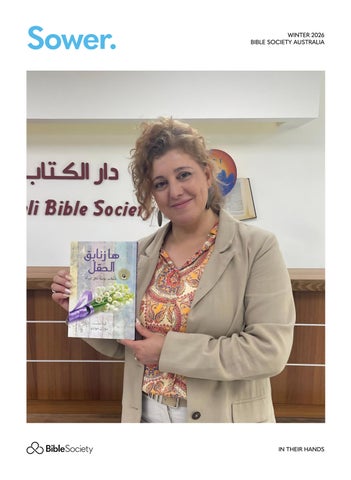
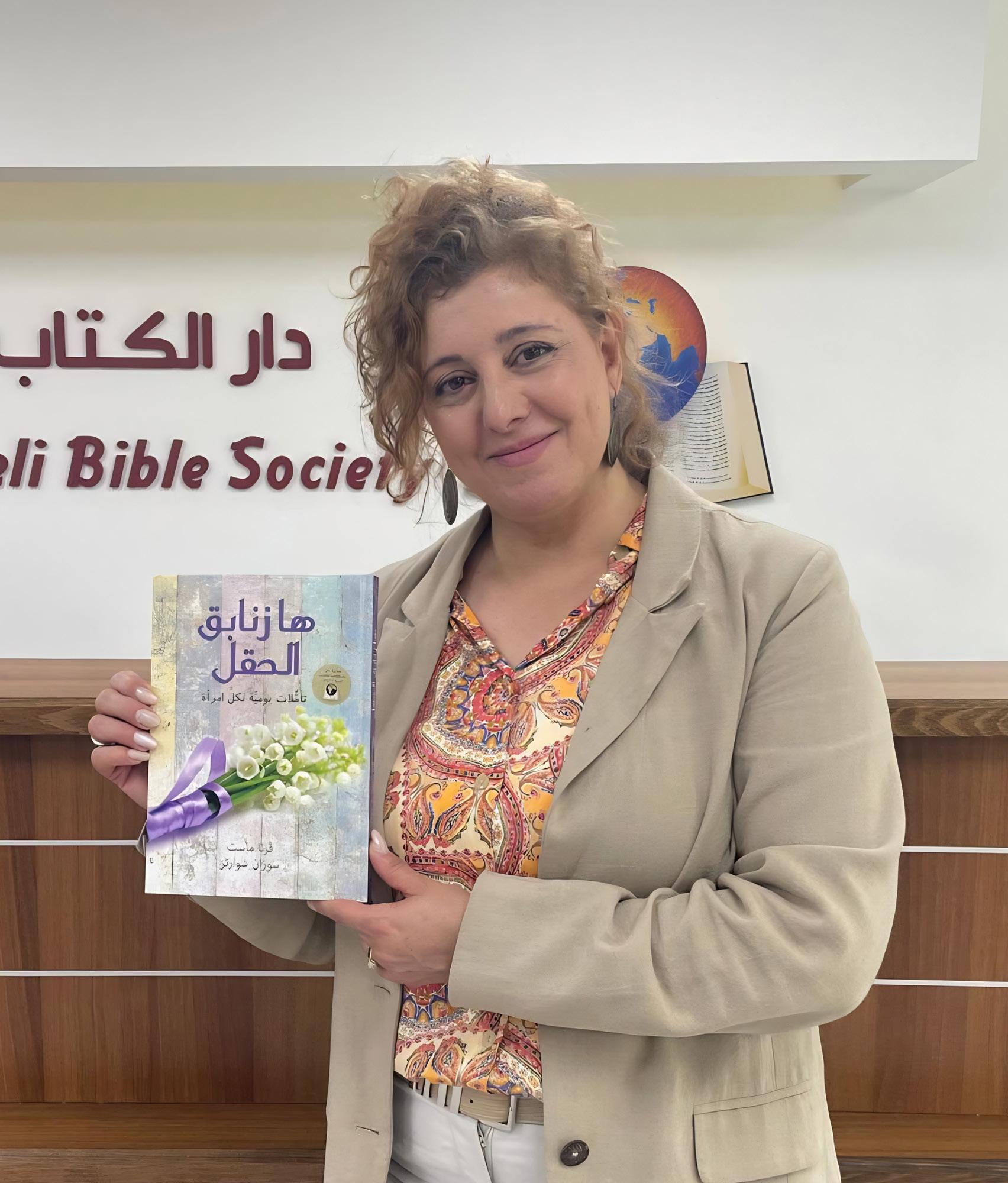
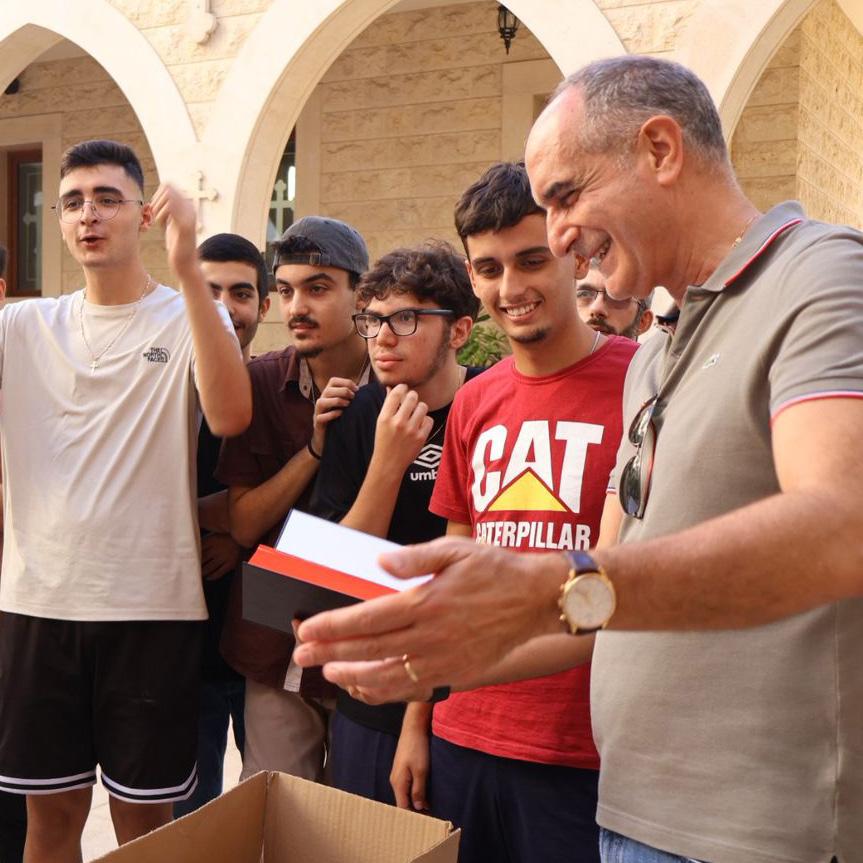
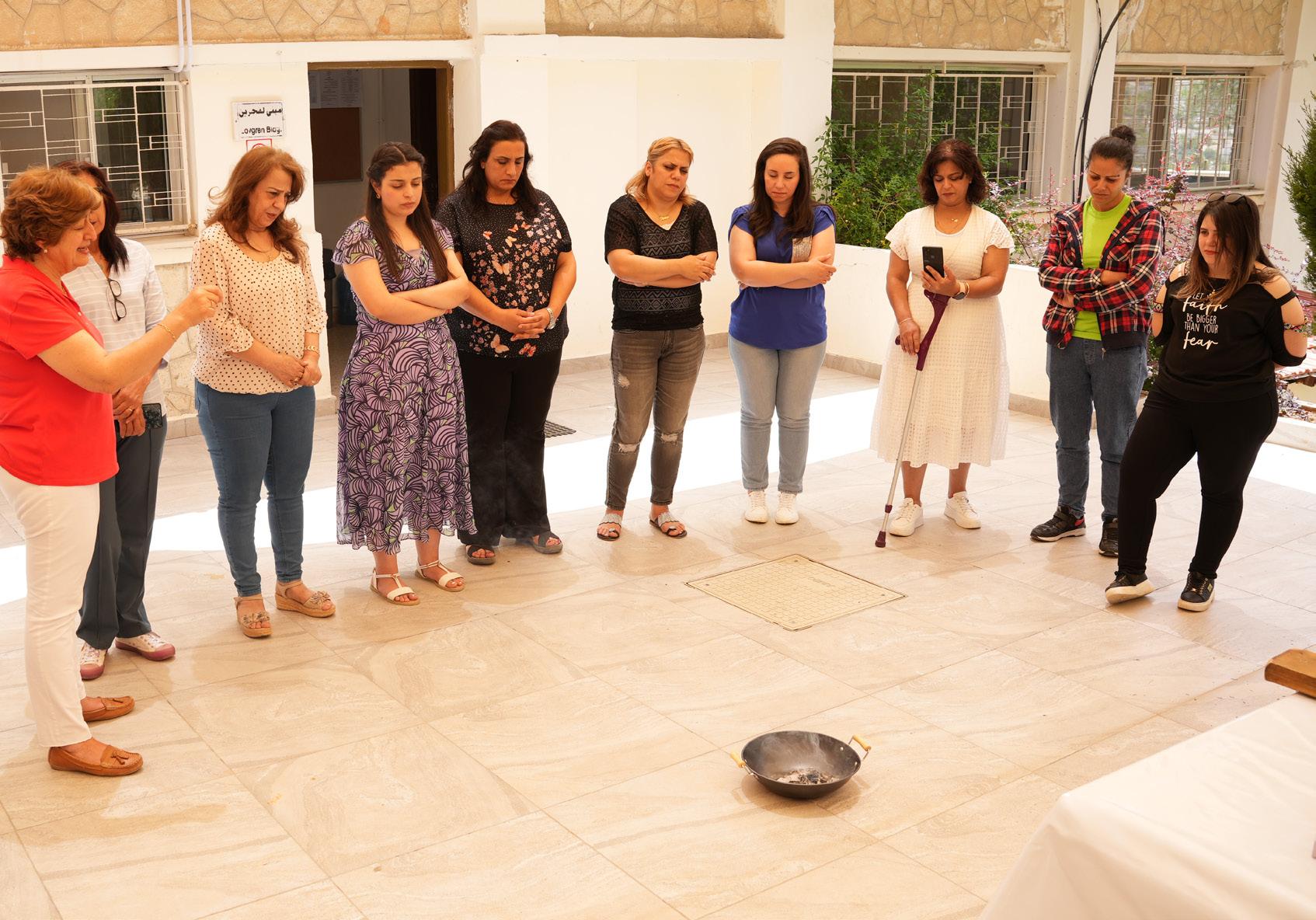
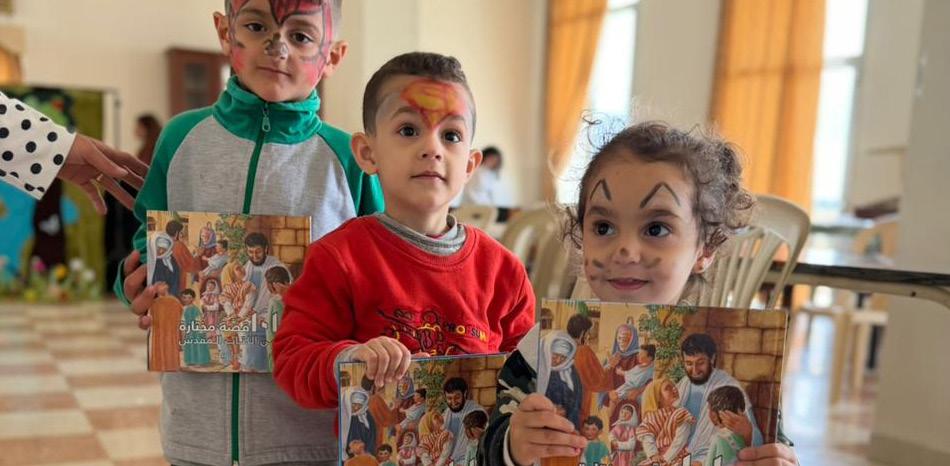
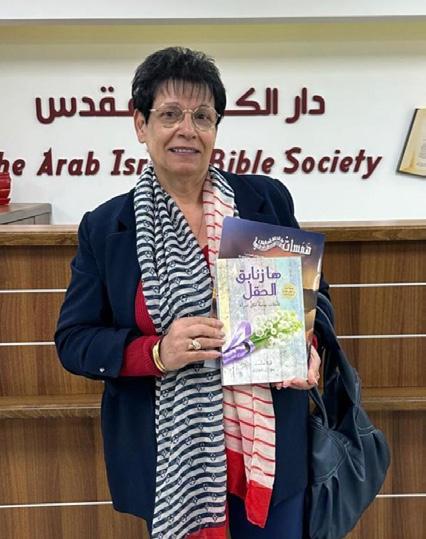
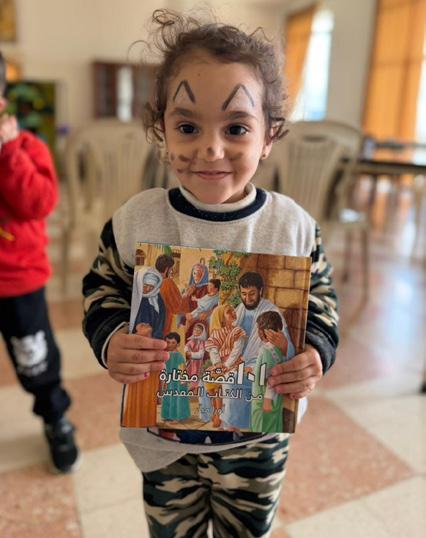
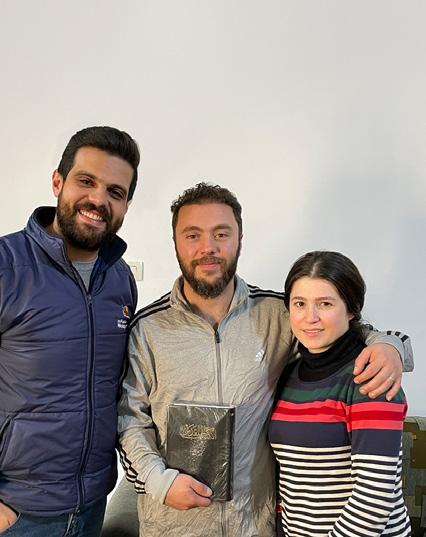
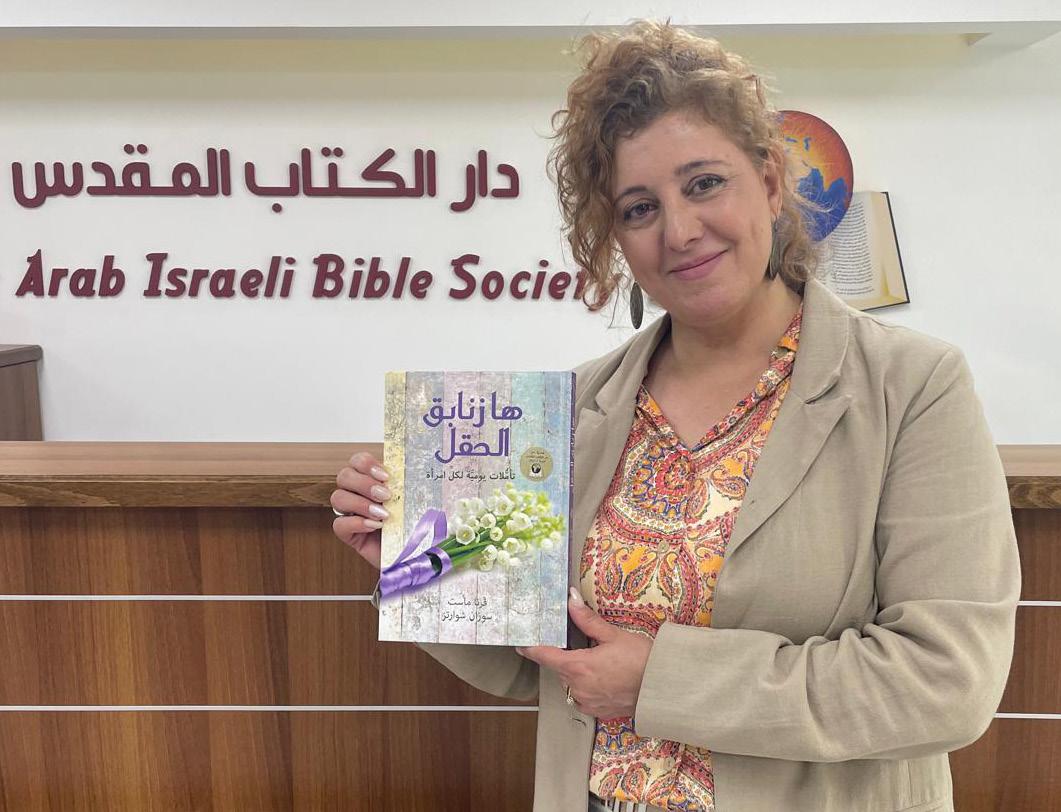
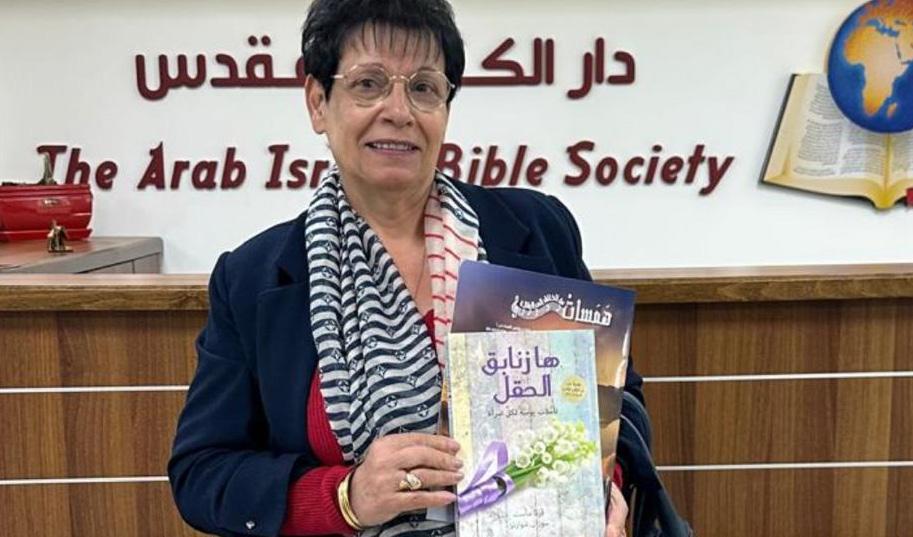
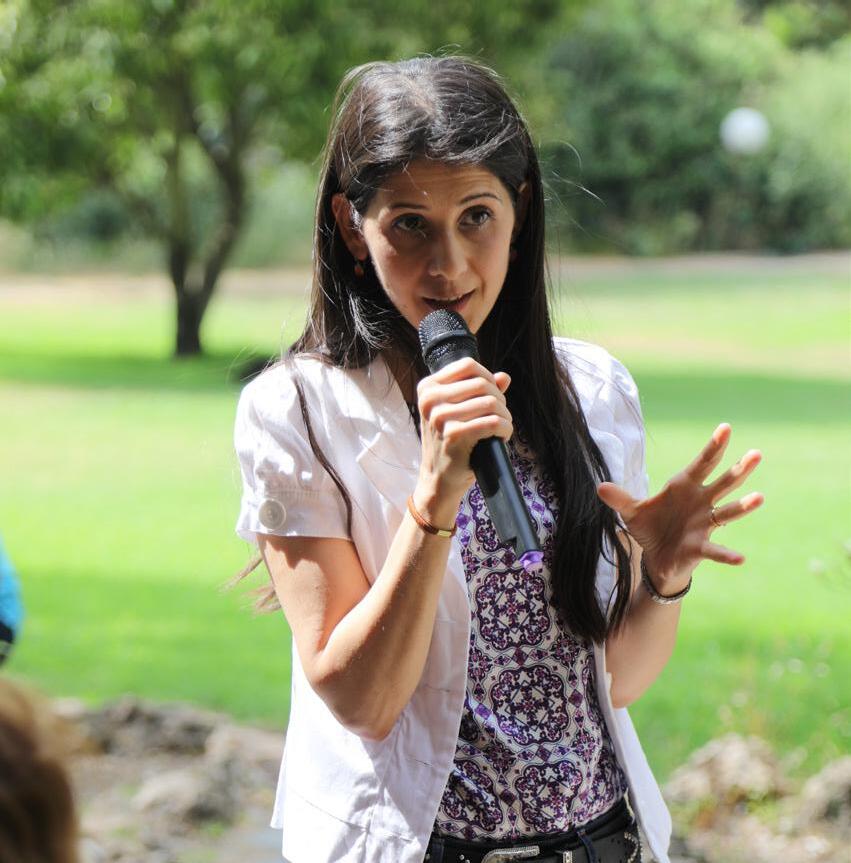
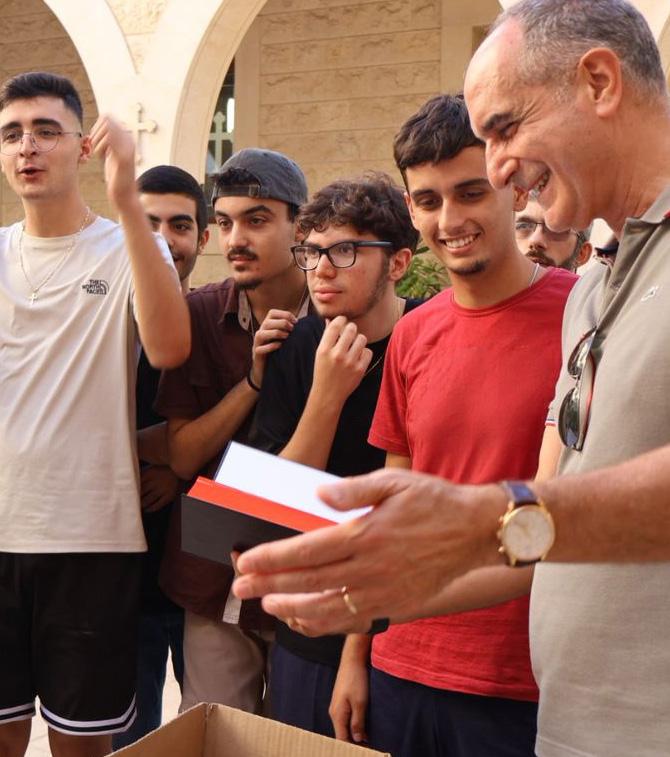
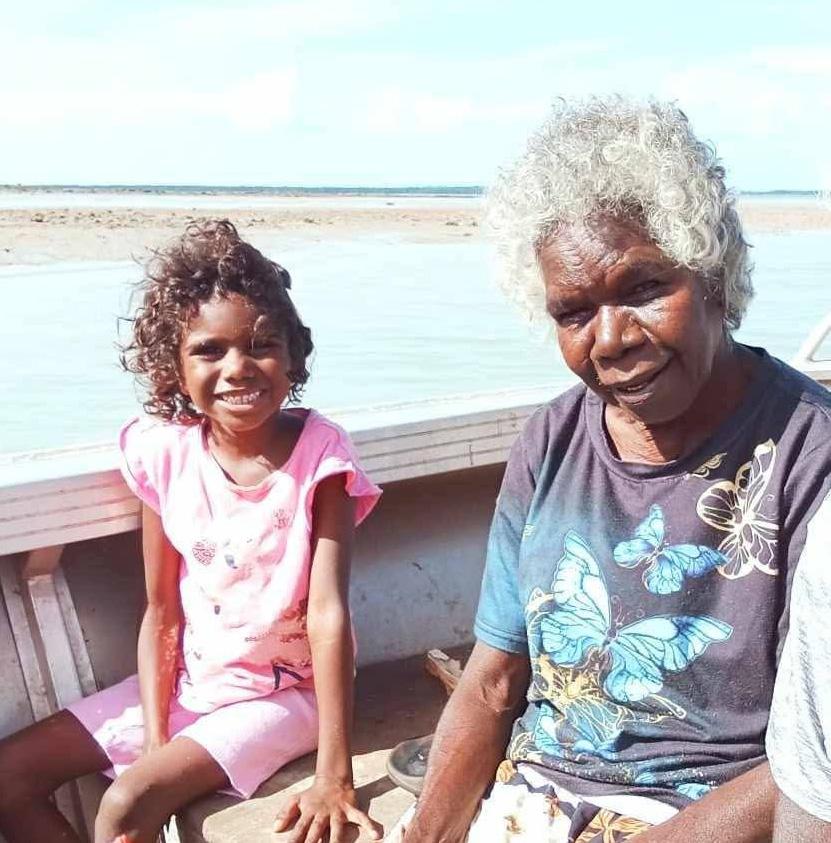
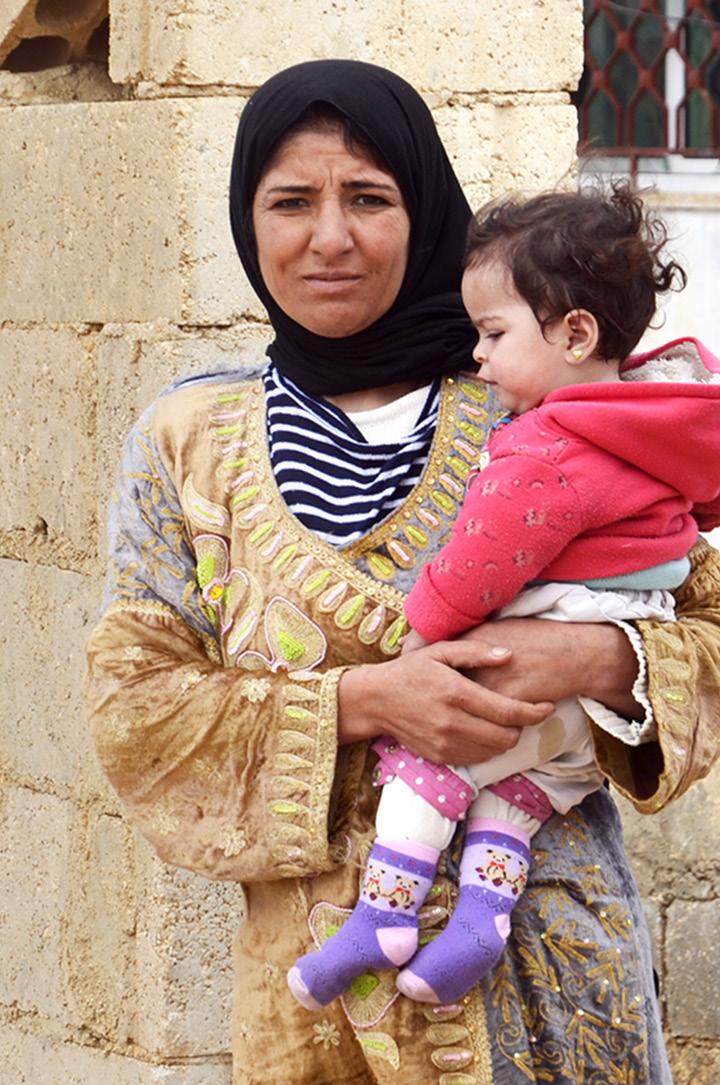
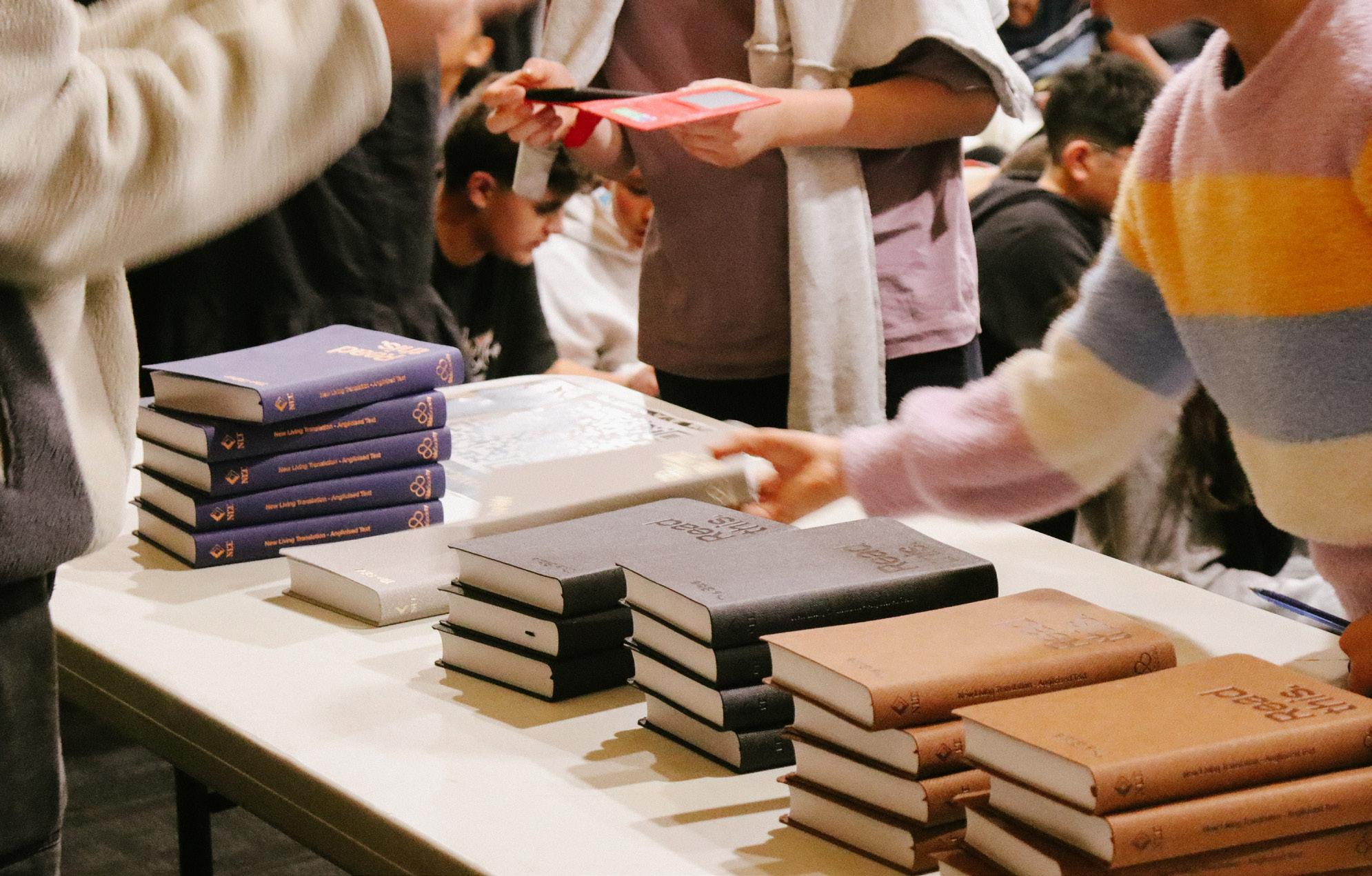
The photo above is of Mike from the Bible Society of Lebanon distributing Bibles to the youth. The woman in the cover photo is a trauma healing group participant with the Arab Israeli Bible Society. Please see pages 5 and 11 for more of their stories.
Sower – Winter Edition 2026
Published by Bible Society Australia
GPO Box 4161
Sydney NSW 2001
biblesociety.org.au
1300 BIBLES (1300 242 537)
ISSN: 1839-7425
Welcome.
I am so humbled by the stories in this edition of Sower. Whenever I hear from our faithful Bible Society partners in the Middle East — Dina in Israel, Haya in Jordan and Mike in Lebanon — I am just in awe of them, their bravery and commitment to serving our God and making the Bible available.
You’ll read in this edition of Sower how, when faced with destruction and the uncertainty of fighting, the Bible brings true hope in Israel, Jordan and Lebanon. We can see so clearly that when people are in war torn areas where destruction and loss of life is all around them, the one thing they can cling onto is the hope of the Bible. It’s their refuge. It’s their stronghold. It’s what they depend on. It’s the one thing that doesn’t change.
Dina and Haya speak so clearly about how important it is for their people to have God’s Word in their hands. Trauma is real, I will never understand the trauma of war and the darkness that it brings on the countries and individuals. But we can be part of bringing the light and hope of the Bible, so people who are traumatised can know God’s love and give them hope. True, eternal hope.
Our support is so important to our brothers and sisters who are putting their lives on the line to make the Bible available to those who are hurting and struggling. Dina says, “I would not be able to do it without you ...
You are vital partners in bringing healing and comfort ... in bringing Scripture to the people’s lives ... I need you, you need me. We need each other because this is how the kingdom of God works.”
You’ll also read in this edition of Sower the joy of people in Milingimbi, when Jessie visited and read in their Friday night fellowship John 1 in their father tongue, Gupapuyngu. What a joy to hear about how the certificate of Bible Translation at Nungalinya College is changing lives through giving translators like Jessie the skills they need to put God’s Word into their own languages. I pray you are as encouraged as I am by this story.
“And how can anyone preach unless they are sent? As it is written: ‘How beautiful are the feet of those who bring good news!’” (Romans 10:15, NIV). Together, let us work to bring the good news of Jesus to those who need it most.
Chris Melville CEO, Bible Society Australia
Without the Word of God, True Healing Doesn’t Happen
STORY ONE
Fear shapes daily life across the Middle East. Working with the Bible Society in Jordan, Haya sees its impact everywhere.
“I see a lot of people living in very deep fear,” Haya says. “When the sirens go off a lot of people go into panic mode and they have panic attacks. A lot of people are losing sleep. People don’t feel like they are protected or safe.”
The fear reaches across the region. “There is a fear of not knowing what is going to happen to your family ... there’s a wave of fear of what is coming.” In that uncertainty, Haya says, “Living without the Word of God can take you to a very dark place of fear, of overwhelming emotions.”
“I believe that without the Word of God, people will live a life of darkness,” she says. “They will not find hope. They will not find healing. And they will not find a shelter.”
Haya has seen the real change the Bible brings. “The Word of God is what gives you hope, and a sense of comfort, relief, knowing that there’s someone who is taking care of you, someone who is holding you through this trauma.” With the Bible in their hands, “people will find strength. They will find healing even
in the midst of such terrible times. And they will find light in the darkness. And this will give them the power to keep going and to look for a future, and to hope for a better future.”
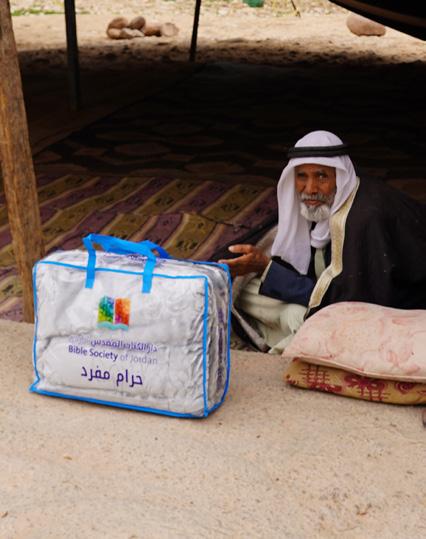
The Bible Society of Jordan team and their partner churches provide practical aid alongside Bibles to refugees and underprivileged people. “A food package, it will help them,” Haya observes. “But the Word of God, it’s new every day ... bringing us hope, strengthening the weakness, encouraging us to keep going.”
The same practice shapes the Bible Society of Jordan’s Bible-based trauma healing work. “It is the Word that heals,” Haya explains. “You walk the journey with people, and you love them and you help them in their healing journey ... But without the healing Word of God ... true healing doesn’t happen. The Word of God is lighting these dark times.”
In Israel, as General Secretary of the Arab Israeli Bible Society (AIBS), Dina describes a similar reality. “Physically and emotionally, all people are tired,” she says. “We live in a war zone context, all the time.” Sirens punctuate daily life. “Every time there is siren, we just pray.” →
There is a daily struggle against fear. “When fear hits people, some people are not able to deal with it. They will become paralysed.” Yet alongside that fear, Dina speaks of spiritual resilience. “Our souls are doing well; spiritually we are encouraged. We are leaning daily on the Lord for his strength, practicing faith under fire.”
God’s Word is the foundation of their endurance. “Scripture is a grace from God to us,” she says. “Our hope is rooted in Scripture. The Scripture can offer comfort, hope and guidance to people in this situation.”
In all that the AIBS do, they focus on God’s Word, because, as Dina says, “The Bible is the
greatest peace manual that has ever existed, because it is a living Word.” Dina sees this especially in the current crises. “Many people at this time are reading Psalms, because it’s talking about pain ... they feel like God is talking to them.” That is what shapes the AIBS’s work. “Because of that, we ... try to do projects that really help people to feel the Spirit of God is talking to them.”
Dina knows she can’t do this herself. “This is the work of the Holy Spirit,” she says. “But I’m a channel ... How can I bless my people during this dark time?”
To paint a picture, Dina says, “What I have in my hands, even if it’s one candle, it doesn’t
“The Bibles we give out bring a lot of joy ... even just receiving a colourful book in a gloomy atmosphere is, by itself, a breath of hope.”
matter ... when you are in a dark room and you light a candle, even a small light, it will shine, and the dark will flee.”
“This is what we want to do,” Dina says.
In Lebanon, leading the Bible Society there, Mike describes a population still absorbing repeated escalations. “We have not yet taken a breath or recovered,” he says. Sonic booms over Beirut have left many shaken. “Many of our staff ... didn’t sleep all night.” Young people, he says, are “not coping well with all of this, this disruption, and this level of anxiety and not knowing what the future holds.”
Displacement has intensified the need.
“Overnight ... whole communities ... have been uprooted from their homes.” In response, the Bible Society of Lebanon continues Biblebased literacy, the ‘Reconcile!’ Program in refugee camps, and has escalated their trauma healing work for adults and children.
“Around the clock, wherever we’re invited, we’re ready to go and be there, just changing the whole mood of the children, giving them some hope ... The Bibles we give out bring a lot of joy ... even just receiving a colourful book in a gloomy atmosphere is, by itself, a breath of hope.”
Mike is most concerned about what happens for the children when the Bible Society →
“But through the Word of God, they’re able to experience the promises that God has given all his children, and all of humanity.”
classes are over for the day. “They have to go back to reality. They’re going to a place where they’ve been displaced with their family ... and many are still in tents. Not everybody has found a proper shelter.”
Trauma, Mike says, is widespread. “Most of our young people are wounded or traumatised.” That is why the work has accelerated. “We’re trying to race time by helping them, providing God’s Word, making them feel comfortable in their very ugly settings in the refugee camp, just to reduce the possible trauma impact that these situations are having on them.”
Mike and the Bible Society of Lebanon team are deeply concerned about the long-term mental health of their young people. “Where can we help in reducing these wounds in their lives?”
“Without the Word of God, many of our children will be growing up without hope,” Mike says. “But through the Word of God, they’re able to experience the promises that God has given all his children, and all of humanity.”
Across the Middle East, our Bible Society partners have told us that in times of fear, Scripture becomes a comfort and conveys hope and a true shelter. In trauma, God’s Word brings healing. As Dina said, in darkness, even a small light is enough.
If you would like to support our partners in the Middle East in continuing this mission, visit biblesociety.org.au/sow.
Every $120 can help the Arab Israeli Bible Society distribute Bible‑engagement resources to families who desperately need God’s Word.
Every $1,000 can contribute to the cost of printing trauma healing resources for the Bible Society of Jordan’s healing groups.
Every $55 can help provide a refugee family in Jordan with essential food and hygiene items during times of acute hardship.
Every $250 can help the Bible Society of Lebanon provide Bible-based drama presentations and Bible storybook resources to children living in refugee camps.
Living the Bible in War, Crisis and Pain
STORY TWO
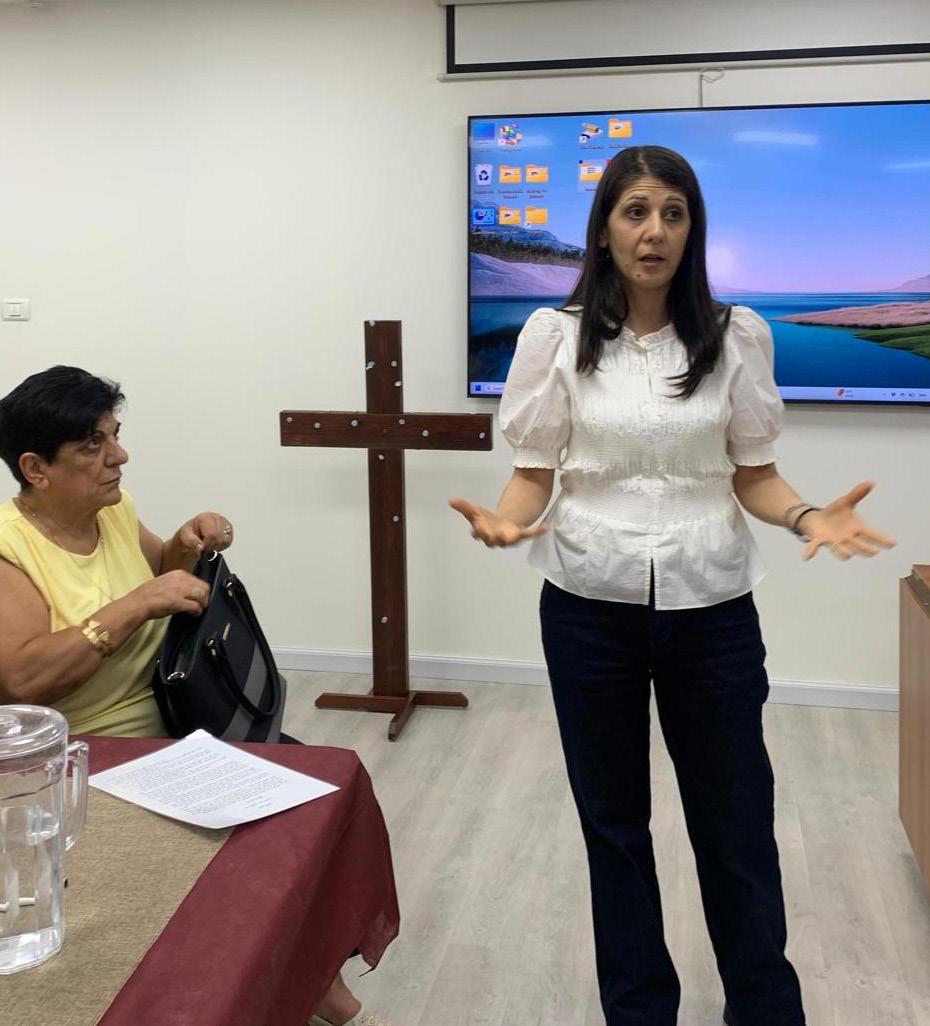
Dina from Arab Israeli Bible Society speaking to women.
Dina, General Secretary of the Arab Israeli Bible Society (AIBS), still doesn’t know why it came about, but here she is. Sitting with a group of women in the AIBS centre in Galilee. Chairs grouped together. Gathered around God’s Word.
In this place, at this time, with these people. They have the Bible open in their hands, and they are reading together. Reading about women of the Bible: Hagar, Hannah, Naomi, Ruth, the bleeding woman, Mary the mother of Jesus, and others.
The women all know Christ already and read the Bible. Dina asks questions. She listens. She offers Scripture. As they study together, God’s Word becomes more than words on a page, or words in their ears. In the group, Scripture brings them comfort.
“They can handle war and pain because their eyes are opened to not only hear, but to live out their faith,” says Dina. “Conflict and crisis challenge your heart to live your faith out, and trust God more; as a result, faith grows.”
This is what Dina sees as she sits, gathered with these women. “Their relationship with God is growing, and they are practicing faith, not only listening to the Word of God. They are practising, living it out and obeying it because of war and crisis and pain. That is what Scripture does.”
The missile siren sounds. Again. Fear enters Dina’s heart, and she struggles, fighting the fear. She hears the Word of God saying, ‘perfect love casts out fear.’ She wants to live this Scripture. “In order to handle the stress, I need to have alternatives. To have my mental health.”
When Dina hears, “perfect love casts out fear,” she feels empowered, she feels hope; it challenges her to live her faith. “I say ‘no’ to fear, and I pray Psalm 91, to sit in the shelter of the shadow of the Almighty God ... He is my refuge and my fortress, my God, in whom I trust.” Dina feeds herself with Scripture.
“This is what we want to do,” she says, referring to the work of the Arab Israeli Bible Society amidst the war and upheaval. “We want to nourish people and feed them with Scripture. We tell them ... ‘feed your spirit with the Word of God, because that will give you courage. What will happen? The Spirit of God will give you peace, inner peace’. We want to help people not to lose their inner peace. Even if there is chaos outside.”
Dina calls to mind Jesus teaching his people about peace, ‘In this world you will have trouble. But take heart! I have overcome the world.’ Dina and her team want to give people an alternative to the fear and chaos they hear around them, “and empower them through Scripture.” Because, she says, “The Bible is the greatest peace manual that has ever existed.” →
Ranya* surrendered her concerns to God at an AIBS trauma healing conference, as she heard God’s Word say, “Cast all your anxiety on him because he cares for you.”
In that moment she surrendered everything to God: her thoughts, her feelings, her troubles, even her sins. It was then that she found a new, resilient peace, anchored in Romans 8:39, “Neither height nor depth, nor anything else in all creation, will be able to separate us from the love of God that is in Christ Jesus our Lord.”
Mariam* refuses to let the shadows of war extinguish her light.
Women gather around the Bible in her home, too, to meet Jesus. Just as Mariam did 22 years ago. “For many years, I have been reading the Word of God. This teaching from AIBS is deepening my knowledge and fuelling my practice.”
As they meet, Mariam experiences more than just words on a page. The meeting is a safe space for discussion, questions and honesty. She receives, “the strength, comfort and calmness I need to navigate life’s challenges.”
Every day is different, explains Dina. “You don’t know what will happen. There will be some days I need more grace. Scripture is a grace from God to us. It’s a gift.”
“We want to nourish people and feed them with Scripture.”
Dina and those with her are living through a season that robs them of sleep and security. They wake several times a night to shelter as sirens sound. Gathering for church or visiting relatives have become limited luxuries. “Physically and emotionally, we are tired.” They are on alert, fight or flight, all the time.
Yet, Dina says, even in the trenches, “We are leaning daily on the Lord for his strength, practicing faith under fire. We are forced to have faith and believe that God will protect us.”
Dina takes a moment to reflect on those who are reading her words, in this moment. “You are partners with us,” she says confidently. “I would not be able to do it without you ... You
are partners in bringing healing and comfort. You are partners in bringing Scripture to the people’s lives. So, I am not doing it alone. We are one body and because we are one body, your partnership is very valuable. I need you, you need me. We need each other because this is how the kingdom of God works.”
If you would like to support Dina and the Arab Israeli Bible Society’s mission to bring God’s Word, our greatest peace manual, at the forefront of people’s hearts, visit biblesociety.org.au/sow
*Names changed for privacy reasons.
Those Are Not Your Words; They Are God’s Words
When Jessie Murrargirrargi walked into Friday night fellowship in Milingimbi, an island off the north coast of Central Arnhem Land in the Northern Territory, she carried her Bible and the translation work she had been developing through the Certificate II Bible Translation course at Nungalinya College, from which she had recently graduated. She had no idea she was about to be asked to preach.
Still grieving the sudden loss of two close family members that week, Jessie felt completely
unprepared. But when she stood and read her freshly drafted Gupapuyngu translation of John 1, something remarkable happened.
The room fell silent.
Listeners were stunned. “Those are not your words — they are God’s words,” they told her. “It is not a human speaking. We can feel God speaking to us through those words. It is so powerful.”
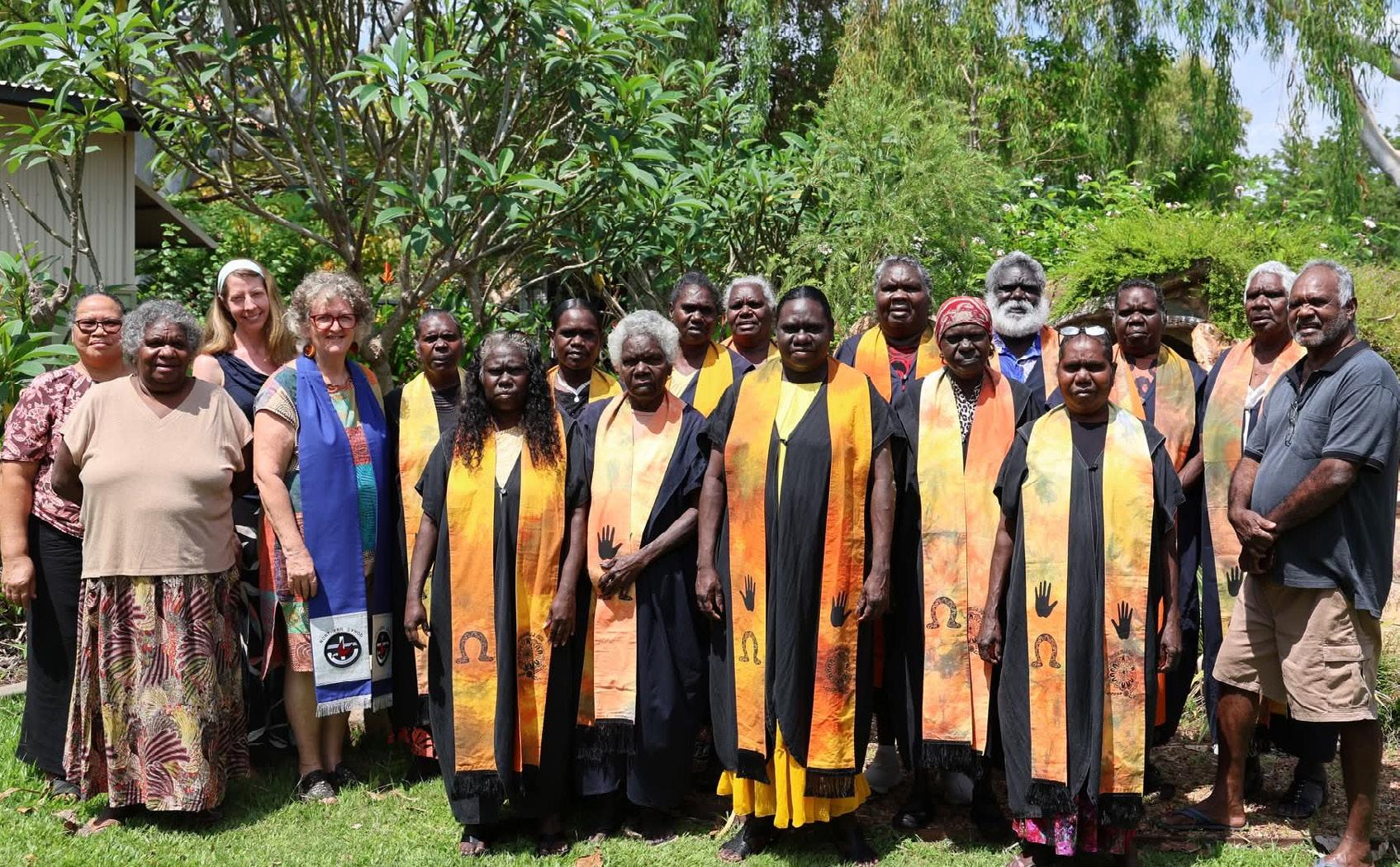
Jessie, front row and second from the left, at her Certificate II Bible Translation graduation at Nungalinya College.
Jessie, who taught primary school for 40 years before retiring, had worked carefully on her translation and read it slowly to ensure clarity. What she shared that evening was Scripture in her own language, Gupapuyngu, a language spoken by several hundred and understood by thousands more across Arnhem Land.
While many from Jessie’s community can read Djambarrpuyngu, it is not their own language. Hearing God’s Word in Gupapuyngu reached their hearts in a way nothing else could. It is the language of the Gaykamangu clan, Jessie’s clan, her father’s language.
David Crawford, a former teacher at Nungalinya College in the Bible Translation course, explains why Jessie’s Gupapuyngu translation had such an impact. “A Yolngu person’s official language is always their father’s,” he says. “So Scripture in Father Tongue Language is huge in Yolngu culture.” Although Djambarrpuyngu is widely used, and has a New Testament translated, many people whose father’s language is not Djambarrpuyngu refuse to use it and instead turn to English.
The morning after the fellowship, Jessie called David, still uplifted by what had happened. She reminisced about her teenage years, remembering how she would run with her sister to church after school for choir practice with missionary educator Beulah Lowe. David added that Jessie often speaks of Beulah.
This memory is deeply significant. In the 1950s, Beulah Lowe was sent to North-East Arnhem
Land by the Methodist Overseas Mission, where she learned Gupapuyngu and worked alongside Yolngu educators to guide children in learning “in and through their own language.” Beulah played a foundational role in early Gupapuyngu literacy and Scripture engagement, including translating the Gospel of Mark, which became a primary text for the community.
For Jessie, who grew up in that environment, Beulah’s influence was part of the soil in which her own love for the Word — and her later calling as a translator — took root. As Jessie stood before her community and read John 1 in Gupapuyngu, her life had been shaped by elders, teachers and language champions, and finally, the Certificate II in Bible Translation at Nungalinya College.
Today, Jessie is part of a Gupapuyngu translation team working on a new translation of the New Testament, with a shared hope of publishing the Gospel of Mark again for a new generation.
Jessie’s story shows why Bible translation training is so urgently needed. Across Australia, more than 120 Indigenous languages are still spoken, yet only one has a complete Bible. Bible Society Australia’s partnership with Nungalinya College helps equip emerging translators like Jessie to bring God’s Word to their communities in the language that speaks to their hearts.
To support this work and learn more, visit biblesociety.org.au/sow
Pray With Us
Please pray with us at Bible Society Australia and for our Bible Society partners in the Middle East as they carry on the mission to serve the vulnerable and place God’s Word into their hands.
Arab Israeli Bible Society
Please pray for Dina and the Arab Israeli Bible Society (AIBS), as they continue to serve their community faithfully amid ongoing conflict, exhaustion and uncertainty. Pray for physical protection during missile alerts and sleepless nights, and for deep spiritual strength as fear and fatigue press in after years of crisis. May God sustain the ministry of AIBS in maintaining a trusted and faithful source of spiritual support in their community. Pray that the Bible would continue to be engaged by their community, nourishing people’s faith, bringing comfort, peace and hope.
Bible Society of Jordan
Please pray for Haya and the Bible Society of Jordan, as they partner with churches to support and minister to families living in deep fear and uncertainty. Pray for those who have lost sleep, peace and hope, anxious about the safety of loved ones and the future they cannot control. Pray for wisdom as they seek to impact many lives through their trauma healing groups, and for new opportunities to arise despite cancelled plans due to the outbreak of conflict. Pray that every Bible distributed would anchor hearts in God’s promises, restore hope, bring God’s peace, and help individuals and families be reassured that they are seen, loved and not alone.
Bible Society Australia
Please pray for Bible Society Australia’s mission to translate Scripture into the heart languages of Australia’s First Nations peoples. Give thanks for Jessie and other Indigenous translators being trained through Nungalinya College, and for moments when God’s Word is heard afresh in heart languages. Pray for wisdom, endurance and unity for translation teams, and that Scriptures drafted would speak with clarity, dignity and power. Pray that these translations would bring healing, strengthen faith, preserve language and culture, and help many people say with confidence, “We can feel God speaking to us.”
Bible Society of Lebanon
Please pray for Mike and the Bible Society of Lebanon, particularly for their work with displaced children living in refugee camps and temporary shelters. Pray for children carrying trauma, disruption and loss, trying to learn and grow in unstable and crowded conditions. Pray for guidance and protection over Bible Society Lebanon as they share Bible stories through the ‘Reconcile!’ drama program, and that the message of forgiveness, peace and love would take deep root in young hearts.
You can help place God’s Word into the hands of someone who needs it most, bringing peace, hope, and transformation. Your tax‑deductible gift by June 30 will help meet the urgent needs of people affected by conflict and in need of hope. Make a tax deductible donation today at biblesociety.org.au/sow. Or call 1300 BIBLES (1300 242 537).
Healing The Wounds of Trauma: Bible Society’s Trauma Healing Program
Bible Society Australia (BSA) supports numerous Bible Societies around the world that run a trauma healing program. Often, they do this in partnership with their local church communities and like-minded organisations. Many of these programs draw on the work of the American Bible Society’s Trauma Healing Institute, established more than 20 years ago.
The Trauma Healing Institute offers a wide range of resources for children, teens and adults, and special audiences like incarcerated
people, refugees, and survivors of natural disasters. These resources help guide Bible Societies in running trauma healing groups and training facilitators to lead healing groups in-person or online. “We use a Bible-based approach to help people recover from painful experiences and reconnect with God, others, and themselves. Our program combines the wisdom of Scripture, proven mental health practices, and the power of community.” — Trauma Healing Institute
In July-Dec 2025, 104 people participated in healing groups in Jordan, 188 in Vanuatu, 59 in Slovenia (with 20,000 radio and podcast listeners accessing their Healing Word content) and 1,698 teenagers in Kenya through the ARISE healing teens’ wounds of trauma program.
Countries BSA supports that run healing groups:
Slovenia
The Bible Society of Slovenia offers training for healing group facilitators and runs healing groups for people experiencing trauma. There are six new healing groups starting in 2026 and 4 continuing from 2025. They are currently expanding their trauma healing for teenagers in partnership with youth organisations, as well as expanding a trauma healing audio series in 2026.
Israel
The Arab Israeli Bible Society’s mission is to serve the Arab Christian community in Israel through various Bible engagement activities, including trauma healing groups. They partner with churches, parachurch organisations, local schools and hospitals, providing Bibles and Scripture resources. They run events and conferences for families, Bible summer camps, and healing groups to ensure that God’s Word is being engaged with to heal the hurting and the broken, especially in this time of crisis and war.
Vanuatu
The Bible Society of the South Pacific’s trauma healing program supports families, especially women who have experienced domestic violence and carry this trauma. Their program involves healing groups, Scripture resources, legal-rights awareness, and working with trusted church and community networks in the hope that families will experience healing and transformation, grounded in God’s Word.
Kenya
Due to rising levels of trauma in Kenya, increasing cases linked to HIV and AIDS, teenage pregnancies, sexual violence, depression and suicide, the Bible Society of Kenya (BSK) partners with churches and schools to run ARISE, a practical, Bible-based trauma healing program for teens. BSK equips teachers and peer counsellors to offer safe places where young people can share their stories and begin healing. Parents are also supported through awareness sessions that build understanding and strengthen family relationships.
Jordan
The Bible Society of Jordan’s Balasan Center is dedicated to serving the church across Jordan in the fields of trauma healing, counseling and family ministry which began with running trauma healing using Healing the Wounds of Trauma, a resource guide by the Trauma Healing Institute. The Bible Society of Jordan trains, encourages and supports churches to host healing groups for their congregations and communities, offering safe spaces for people to process their grief in light of Scripture.
To learn more, visit Our Work’s page at biblesociety.org.au/our-work
Opening God’s Word through Braille literacy in Mongolia
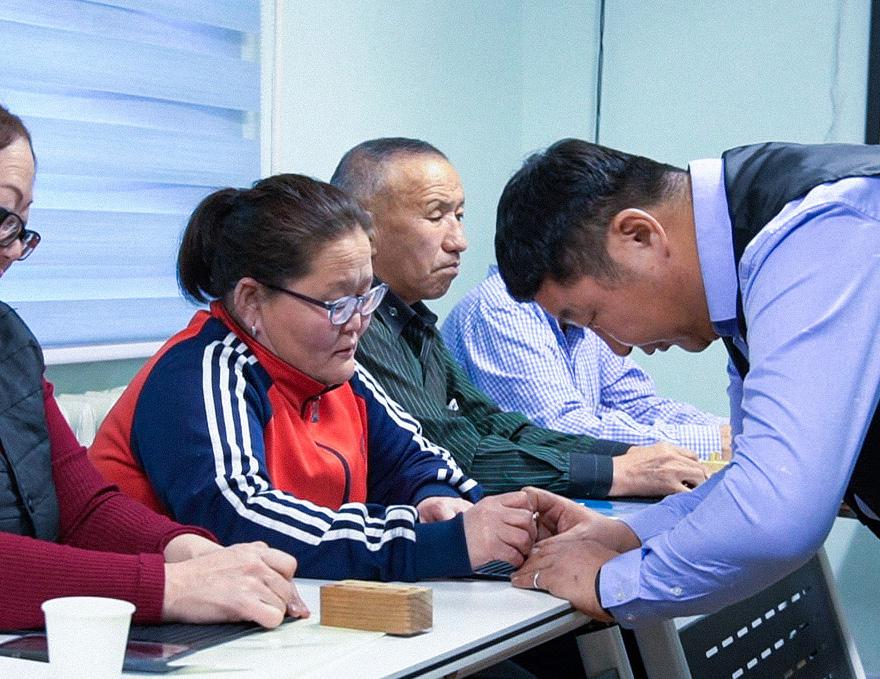
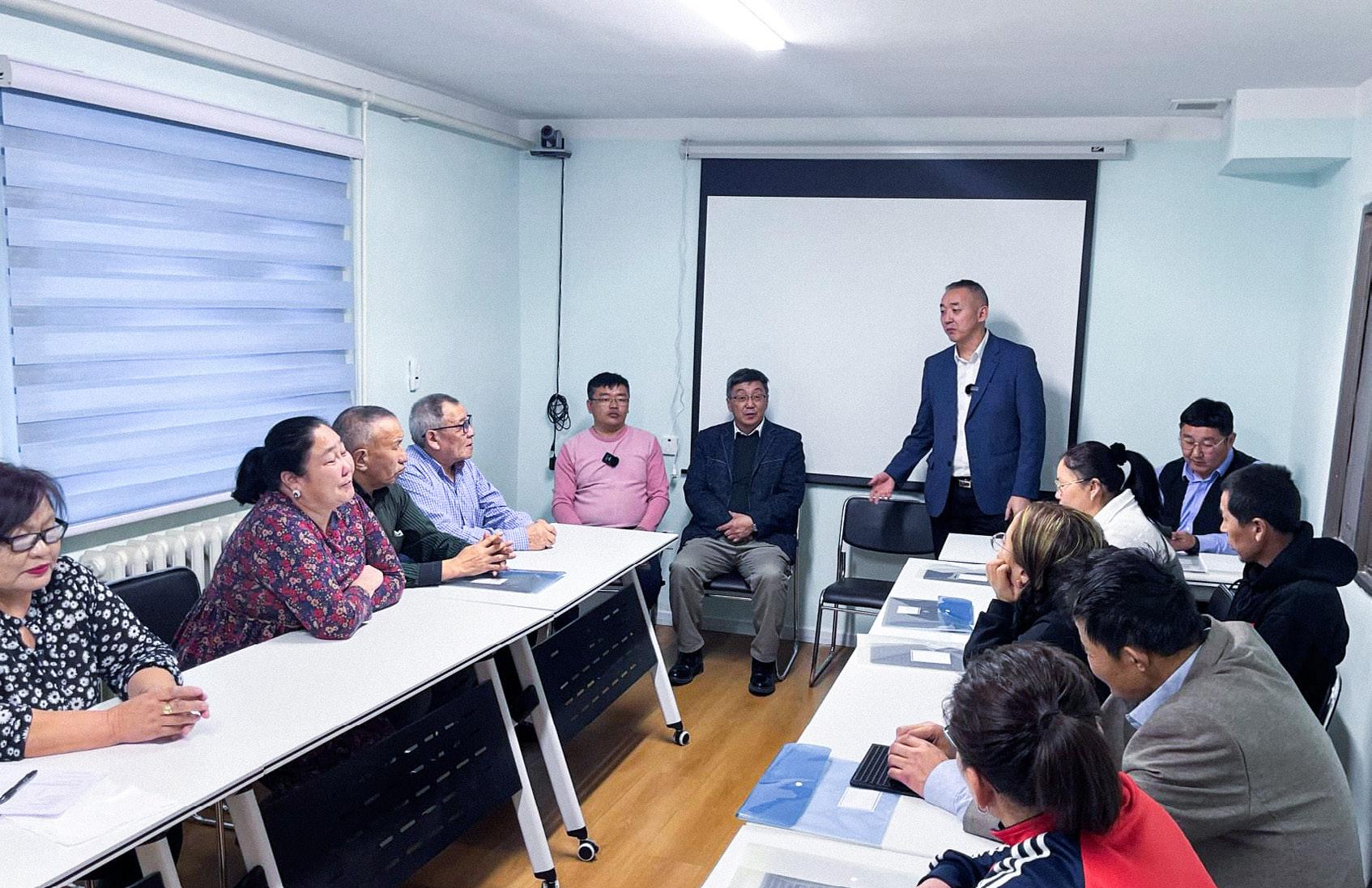
Bible Society Australia is partnering with the Mongolian Union Bible Society to empower people with visual disabilities through a Biblebased Braille literacy program. For the first time, many participants are learning to read and write independently, opening doors to education, community life, and access to God’s Word.
In 2025, the Braille Literacy program reached 76 learners across five provinces in Mongolia. Most participants completed Level 1 and Level 2 Braille courses, and some progressed so quickly they were able to skip level 2 entirely. An additional 160 community members also received introductory Braille training, helping to build understanding, inclusion, and local support.
In early 2026, 32 more participants from three provinces completed Level 1 literacy training, bringing the total number of people with visual disabilities reached to 109. Graduates can now recognise letters and numbers, and read simple words, an essential first step toward confidence and independence.
This work is especially vital in Mongolia, where only around 15 per cent of people with visual disabilities are Braille literate and many live isolated lives. Thanks to your faithful support, this project is restoring dignity, opening Scripture, and creating new opportunities for learning.
To read more, visit biblesociety.org.au/blog
Supporting Prison Ministry with Bibles in South Africa
South Africa
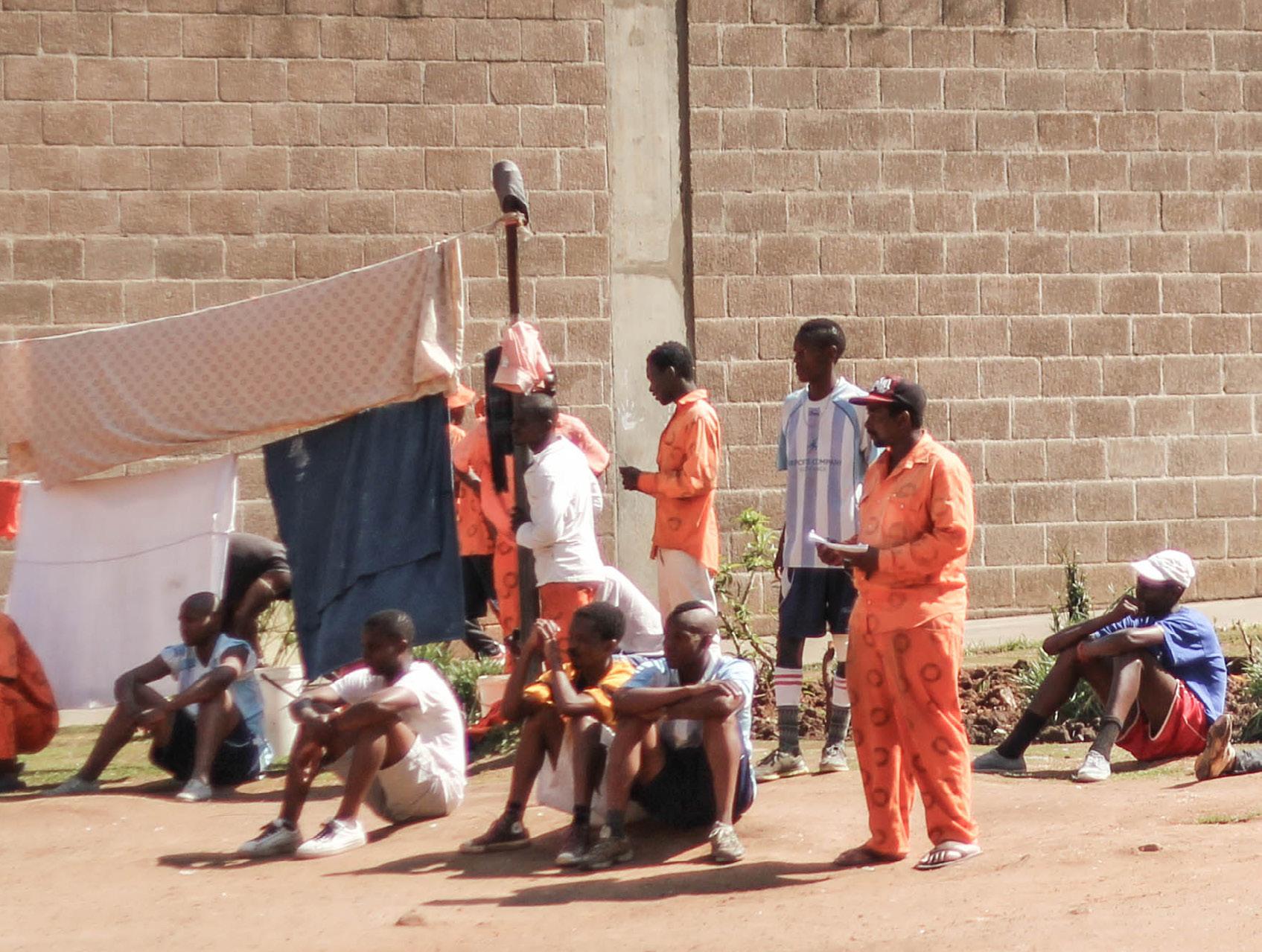
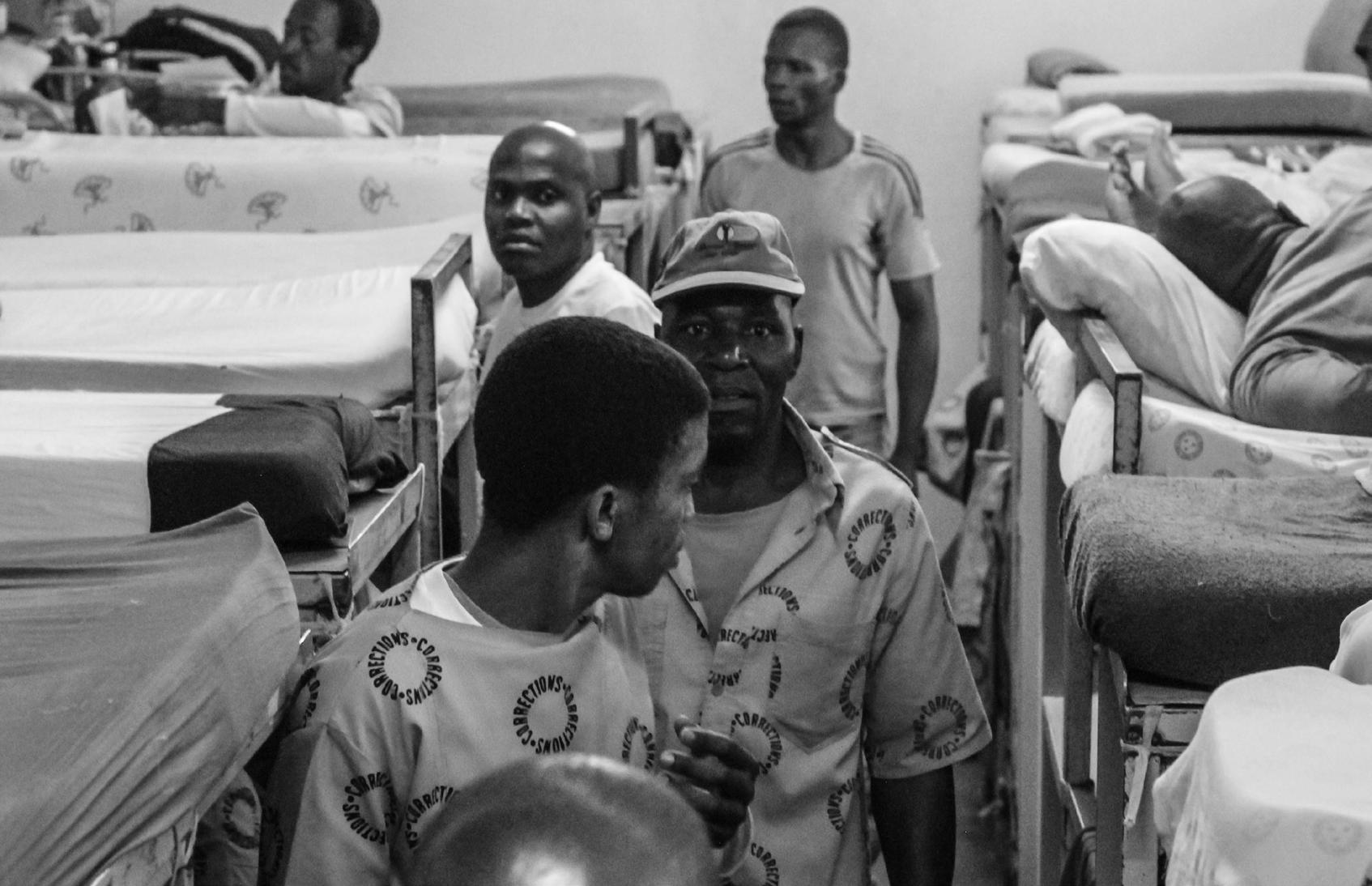
Bible Society Australia is honoured to partner with World Hope Ministries in South Africa, supporting their prison ministry with Bibles and Scripture resources. As part of their Spiritual Care Program, World Hope Ministries offers a Biblical Discipleship Course to prison inmates, giving them the chance to encounter Jesus and the hope found in God’s Word. World Hope Ministries currently has 10 facilitators who go into different prisons in South Africa visiting inmates and leading the Biblical Discipleship Course.
In 2025, 4,748 inmates enrolled and completed the Discipleship Course, and 2,317 Bibles were distributed to inmates who have completed the course and requested a Bible.
One of these inmates is Peter* who shares his transformation: “Everything changed for the better. I was blind but now I see. Thanks to God [and] Biblical Discipleship. Also a big thank you to [my facilitator] for being fully giving to us even if it is raining, she always make time to come to us ... to teach us the Word of God. My life is better now even if I am in prison.”
And with his Bible and the donors of Bible Society Australia who made it possible for Peter to own a Bible, he says: “I am thankful ... It is not just a Bible, it is my mentor, a book I am going to read every day of my life. May God also bless you too for thinking about us.”
*Name has been changed to protect their privacy.
To read more, visit biblesociety.org.au/blog
The Power of Easter is Sacrifice
Max Jeganathan
During Holy Week, CPX Senior Fellow Max Jeganathan was interviewed by Ben McEachen, reflecting on Easter as the most beautiful expression of power the world has ever seen. This excerpt is adapted from their conversation on Hope 103.2 radio.
Ben: What do you think power has to do with Easter?
Max: Power is often talked about in very negative terms. And it’s something that, deep down, we all know humankind can make a mess of a lot of the time. So, when we look at our problems – even now at the war abroad,
interest rates, and unemployment going up at home – all the trouble we get ourselves into is usually through a misuse of power. But then we always seem to turn to power to try and get us out of it as well.
Easter is the most beautiful, audacious, and game-changing example of how power can work.
Power at its core is simply about what you can do – the capacity to do something. But very rarely do we see that power played out through sacrifice. That’s where Easter really comes alive. It’s the core of this incredible message
CENTRE FOR PUBLIC CHRISTIANITY
that power, at its most beautiful, can actually be about sacrifice, not wielding influence for selfserving purposes.
Ben: I don’t know if many people stop to think about Easter in terms of power, let alone beautiful power.
Max: Yes, that is a counter-cultural way to look at power, but I think that’s the whole point, right? Easter turned not just the world on its head, but all our ideals and first principles on their heads too.
There’s this old Spider-Man line, “with great power comes great responsibility,” but followers of Jesus – or anyone literate in the Bible – will know that’s actually a direct lift from the words of Jesus, who said, “To whom much is given, much will be expected.”
There’s this beautiful Christian ideal that says we all have power on some level. We all have the capacity to do something. We can use that for our own self-serving purposes, or we can use it for the good of others.
At the heart of the Christian message is a God who steps into the world as a person and uses power to give of himself, to pour out himself for us. And that’s what Easter is. The cross of Jesus Christ is the most beautiful use of power that you could possibly imagine.
Ben: Why would God do that? Why would God use power in that way?
Max: There’s a difference between goodness and greatness, and sacrifice is kind of the marker of that difference.
That gets to the core of what you’re asking. Because the Easter message really begins with this dilemma that God has – he wants relationship with us. He wants loving relationship with people, and he wants people to have loving relationship with one another, but our moral brokenness, our misuse of power, our misunderstanding and overestimations of ourselves make that impossible in the purest way that God wants it.
So he kind of “short circuits” that by actually stepping into the world and giving of himself through sacrifice. He offsets our moral brokenness with his moral perfection.
And that’s what Christians are talking about when they talk about Jesus coming and dying for our sin. It’s about God reconciling us back to him. He’s making a way for us to come back into relationship with him. That’s the gospel message. It’s the difference between greatness and goodness. Jesus came out of the goodness that he had in his heart to bring us back to him.
If you declare with your mouth, ‘Jesus is Lord,’ and believe in your heart that God raised him from the dead, you will be saved. (Romans 10:9 NIV)
‘I don’t know if I can believe…’
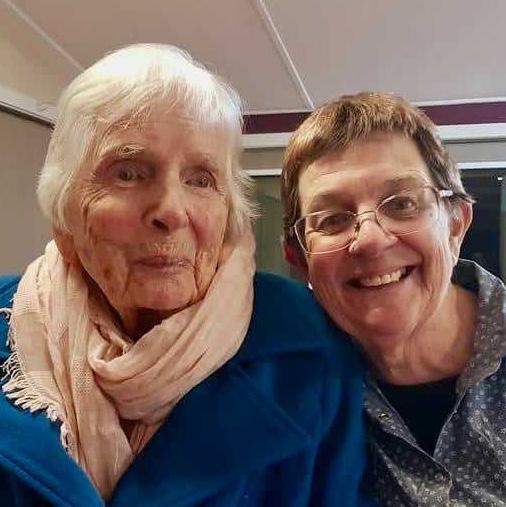
Margaret’s story | Coming to Jesus at age 98
Compiled by Naomi Reed.
“My mother (Margaret) was born in 1920 and died in 2020, six weeks off turning 100. She had a Christian upbringing, but she was in her twenties in World War 2, and all her friends went off to war. Not many of them came back. She decided God wasn’t worth knowing. She became a secular humanist – she believed in the goodness of man, and she saw science as having the answers.
It continued her whole life, until she was 98. I became a Christian at age 17 and I talked to her about Jesus but after a while, she told me to back off, and I did. I said I wouldn’t mention my faith again until she had questions. Life went on for us both. Twenty years later, in 1992, my brother died suddenly of a mysterious illness.
It was devastating. He was only 34 and for the first time, my mother had questions. Why are we here? What happens afterward? Why did he die? My father said it was the worst day of his life.
But again, life went on. Fourteen years later, my father died, aged 92. Mum was 86 by then and she found it very hard. She moved into a retirement village in Sydney which wasn’t too bad at first. She still had her poetry groups and her Shakespeare groups outside of the village. But then one day, aged 95, she had a breakdown. She suddenly came to the end of herself. She wanted to die. She became aggressive to the staff, and they had to give her tranquillisers.
Afterwards, I told my siblings I wanted to bring her out to Coonabarabran, where my husband and I lived. She thrived there, in a retirement village and I would visit her every day. On the weekends, we’d take her to family events, including church.
It was the first time she’d been to church as an adult. She knew some of the old hymns and she seemed to be enjoying it. One day, two years later, at 98, she said to me, “How do I become a member?”
I explained to her that we don’t do membership at our church. We just attend and we belong. But then my husband said, “I don’t think she’s talking about membership. She’s looking for a relationship with Christ.”
For the next few weeks, I read Romans 10:9 with her, “If you declare with your mouth, ‘Jesus is Lord,’ and believe in your heart that God raised him from the dead, you will be saved.”
By then, mum could only concentrate for 5 minutes at a time, so it took us weeks to read that verse and understand it. We read a few words each day and she had questions. She didn’t know if she could believe. Finally, I said that Jesus asks us to come to him like little children. Before that, mum had said she felt like a child, so I said, “You don’t have to understand everything. You can come to Jesus like a child. It’s a heart thing.”
She said, “Oh, yes!” And she did. She believed in Jesus for the first time. She was 98. Soon after that, she asked me if she could do a public declaration of her faith at church. She did. She
went up the front of church, in her wheelchair and shared. Everybody sang, ‘Blessed Assurance, Jesus is mine.’ Then a group of people gathered around her and laid hands on her to pray for her.
She died just under two years later. But she was different in that time. She sang hymns and prayed. She enjoyed being a child of God. The staff loved her. On the day she died, she seemed distressed, so my husband recited Psalm 121 to her, and she calmed down. I held her hand and I said Jesus will take you home. She died at peace.
In looking back, it amazes me. We never pushed her to faith. In 50 years, we always respected each other’s beliefs. But in the end, she came to Jesus herself. God answered my prayers. I was so excited! I started praying for her when I was 17. It took all that time (49 years) till she was ready. It’s amazing!”
Margaret’s story is part of the Faith Stories series, compiled by Naomi Reed.
To read more Faith Stories, visit biblesociety.org.au/faith-stories
Daily Bible
Finding Refuge in the Lord
We are Opening The Bible with Sarah Condie, a Co-Director of the Mental Health & Pastoral Care Institute with her husband Keith. The Institute is a program of Anglican Deaconess Ministries (ADM), a ministry that inspires and empowers Christian women to bring the love of Jesus to a hurting world through education, compassionate ministries, community and public gospel witness. This series of devotions focuses on Psalm 34.
Day 1
… blessed is the one who takes refuge in him. — Psalm 34:8b (NIV)
There are many word pictures in the Bible that help us understand what a refuge looks like — under the wings of an eagle; being held safe in loving arms; comforted like a child at a mother’s breast, so tender and secure. These are the places we want to flee to and find when we face a situation that is scary and overwhelming. A refuge is a place offering physical safety and spiritual security.
As we read this psalm and meditate on its truths we will be reminded, again and again, that God is not distant. In Jesus, our God drew near and entered our world filled with fears and troubles. He is with us.
Lord, you are my rock, my fortress and my deliverer; in whom I take refuge. You are my shield and the horn of my salvation, my stronghold. You take hold of my right hand, let me hear you say, “Do not be afraid; I am with you, I will help you.” Please use your word to imprint this truth into my mind, my soul and my heart. In the strong name of Jesus. Amen.
Day 2
I sought the Lord … — Psalm 34:4a (NIV)
In this Psalm, David tells us he was afraid. His life was under threat from a powerful man (1 Samuel 21:12). He ended up hiding in a cave. In that moment of fear and dread, David cried out, ‘I need your help!’ And David’s God, our God, heard him (Psalm 34:6) and answered him (v. 4).
We all need our Lord’s help when we’re afraid. And in that moment of fear, it’s so easy to forget that he is near, and to lose our words. When we cry out those arrow prayers, we can be confident that our God both hears, and answers. Why? Because he cares so much for us. He does not promise to remove us from the circumstances that elicit our fear, but he has promised that he will never leave us nor forsake us. In Christ, he has stepped down and offers us the refuge we desperately need.
You are my refuge and my fortress, my God, in whom I trust. Thank you that I can seek you, cry out to you. Thank you that you hear my feeble cries, and you answer them. Today I ask, please, ‘Keep me safe, my God, for in you I take refuge.’ (Psalm 16:1). In the name of Jesus. Amen.
Day 3
… he delivered me from all my fears.
— Psalm 34:4b (NIV)
Psalm 34 paints a picture of an active, everpresent God who responds to our cries, and gently, tenderly, and lovingly demonstrates that he is willing to step in. He doesn’t say, ‘I’m available later today or next week’; his response is immediate. As the God who delivers, saves, and rescues, he draws close (v. 18) and offers protection (v. 20).
What is our deepest need? To be delivered from our great enemies: sin, death and the evil one. So, the God who intervened on David’s behalf also mounts a rescue mission on our behalf. (See John 3:16).
David’s words are a foretaste of our reality. Through belief in Jesus, God offers us deliverance and salvation. In him we find our true refuge — a place of safety and security that transcends the hardships, fears, and griefs of our present experience and guarantees a life of eternal blessing in his presence.
Thank you that you are my rock, my redeemer, my refuge. Thank you for delivering, saving and rescuing me through your Son, Jesus. Thank you that you continue to reach out and step in when I need help, today, and in fact, every day. In the name of Christ. Amen.
Day 4
I will extol the LORD at all times; his praise will always be on my lips. I will glory in the LORD; let the afflicted hear and rejoice.
— Psalm 34:1-2 (NIV)
David begins this psalm with joy, offering personal, heartfelt praise to his great God. It’s easy to do this during ‘mountain top’ experiences, when life is gloriously wonderful. But David’s recent experience involved fearing for his life and hiding in a cave. David knew that that cave offered no ultimate protection, so he sought refuge in the Lord and found deliverance and a true safe haven.
John Bunyan, an English puritan preacher and writer once said, ‘I have often seen that the afflicted are always the best sort of Christians’. Why? Because troubles can drive us to God, to depend upon him and find refuge in him. And to learn that even in the darkest of times, it’s still possible to look up and notice the good and beautiful blessings that flow from the Lord’s hand. When you taste the goodness of the Lord, you want to thank and praise him.
I will exalt you, my God and King; I will praise your name for ever and ever. Every day I will praise you and extol your name for ever and ever. Amen.
Scripture for Australia’s Deaf Community
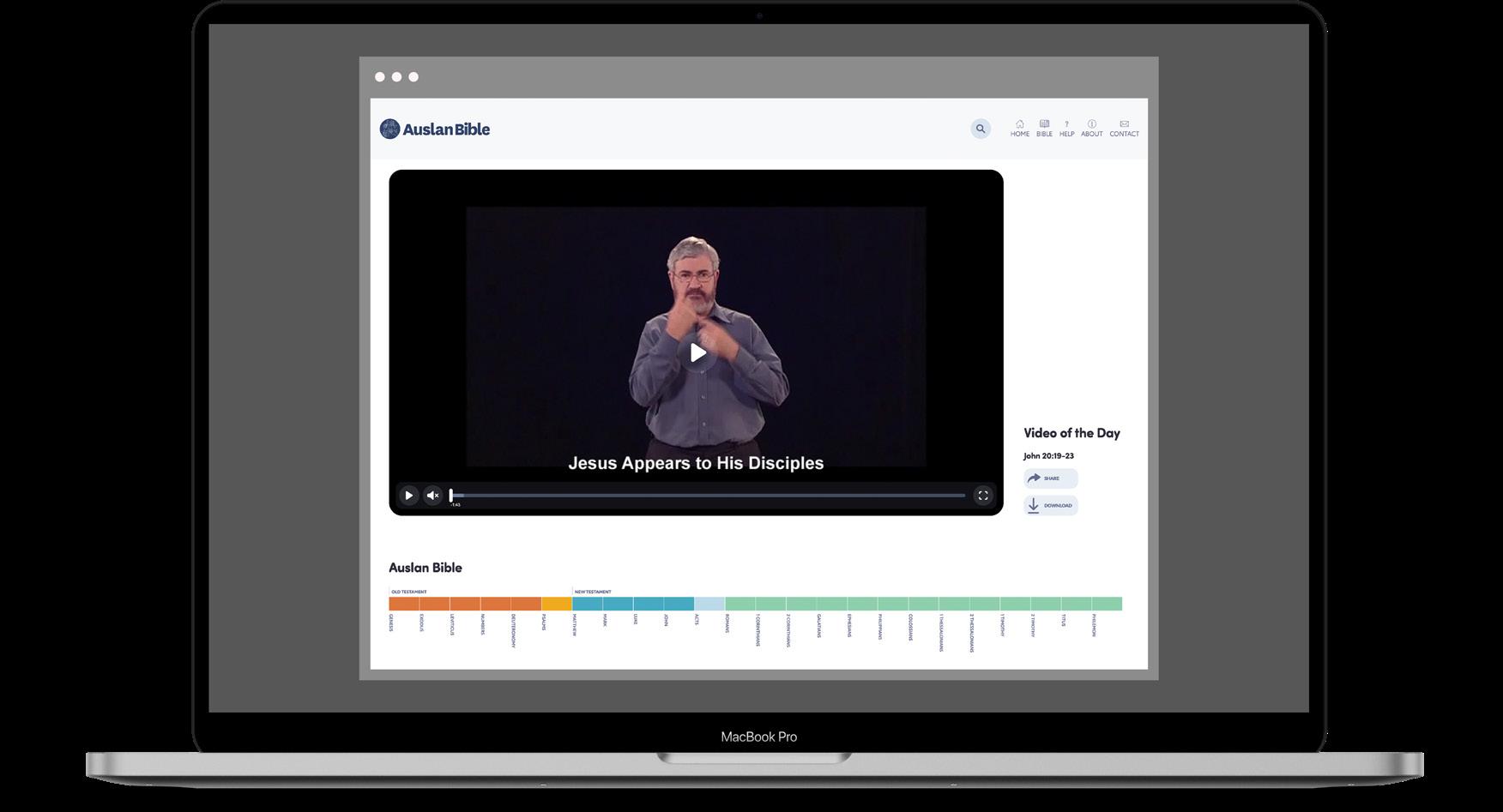
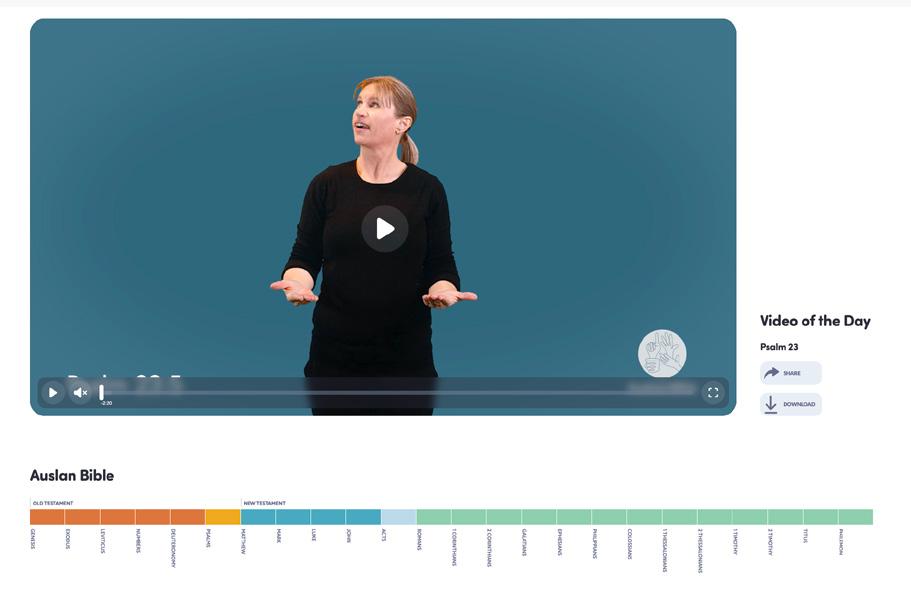
Auslan Bible is a free resource for churches, small groups, and homes, making Scripture available in Australian Sign Language (Auslan).
By using the Auslan Bible, Deaf Australians and Auslan users can see and understand God’s Word in their language.
Explore Scripture in Auslan today at https://auslan.bible
Billercode: 389148
Please refer to the attached flysheet for your BPAY Reference Number, or call 1300 242 537 for assistance
Please return this Donation Form to Bible Society, Reply Paid 88900, Sydney, NSW 2001 (No stamp needed). You can also donate online at www.biblesociety.org.au/sow or by phone on 1300 BIBLES (1300 242 537) In the event that this appeal is over subscribed, we will use any additional funds to assist similar Bible Society projects. *Receipts for tax-deductible donations of $2 or more will be issued by the trustee for Bible Society Foundation. ABN 41 725 839 724 If donating by Credit Card, please fill in remaining fields in this section:
Support CPX Today
In times like these, there is a real need for Christian voices in public life that are thoughtful, credible, and gracious.
CPX exists because generous supporters get behind this work to ensure that compelling Christian engagement remains public and available where it is needed most.
We invite you to partner with us in that mission.
Volunteers are central to Bible Society Australia’s mission.
By praying, sharing impact stories and encouraging support, you help your church and Christian community be part of providing Bible access to people in Australia and around the world.
Whether it is a short moment in a service or a conversation with a small group, we will support you with the resources, stories and training you need. There is no set commitment. Serve in a way that suits your season.
To explore volunteering, contact: volunteers@biblesociety.org.au