www.vascularnews.com
■ SEPTEMBER 2026 | Issue 111
4 C-TRACT
Data herald “new era” for postthrombotic syndrome following deep vein thrombosis
12 Innovation Cross-disciplinary team in Houston, USA, tackles endograft explantation
16 Profile
ANAHITA DUA PAD pioneer talks precision medicine and political advocacy
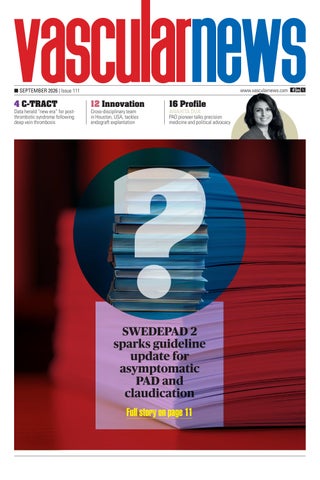
SWEDEPAD 2 sparks guideline update for asymptomatic PAD and claudication Full story on page 11
2
News
contents
EDITOR’S LETTER
3 News Conference circuit 4 Conference circuit 7 From the journals 9 Beyond the vessel 11 In-Depth Cover story 12 Interview: Maham Rahimi 16 Profile: Anahita Dua 22 Comment
Peter Schneider, Thomas Zeller, Jos van den Berg, Yann Gouëffic and Sabine Steiner
24 Bart Dolmatch 24 Launch Pad: Adam Talbot 27 Rachael Forsythe 29 Market Watch
Clinical and product updates
30 Industry updates 30 Conference calendar
www.vascularnews.com
■ SEPTEMBER 2026 | Issue 111
4 C-TRACT
Data herald “new era” for postthrombotic syndrome following deep vein thrombosis
12 Innovation Cross-disciplinary team in Houston, USA, tackles endograft explantation
16 Profile
ANAHITA DUA PAD pioneer talks precision medicine and political advocacy
SWEDEPAD 2 sparks guideline update for asymptomatic PAD and claudication Full story on page 11
Cover credit: Images by Adobe Stock Creative, concept and photomontage by Terry Hawes
Paclitaxel-coated devices are back in the spotlight WELCOME TO THE SEPTEMBER EDITION OF Vascular News. The cover story of this issue reignites a long-running debate thrust back into the spotlight with publication of the final results from the SWEDEPAD trial: are paclitaxel-coated devices safe and effective for the average peripheral arterial disease (PAD) patient? This debate began at the end of 2018 with a controversial meta-analysis of summarised studies demonstrating potential harm with paclitaxel-coated devices starting at two years post-treatment and extending through five years of follow-up. Plentiful resources went into better understanding if this signal was truly a causal relationship, whether it could be replicated once loss-to-follow-up issues were addressed in the pivotal trials, and who were most vulnerable to this exposure if these devices proved to be toxic. In the end, after over four years of investigation, including an interim analysis from the SWEDEPAD trial in the New
England Journal of Medicine suggesting no harm and a neutral updated patient-level meta-analysis, this controversy was retired in 2023 and paclitaxel-coated devices were exonerated. Clinicians have gone back to routine practice and newer paclitaxel-coated devices have been approved in various markets. However, 2025 found itself entrenched in a renewed paclitaxel-coated devices debate that has also spawned existential issues for our field: should one arm of a single trial, which looked solely at efficacy at one year and was not designed to look at long-term survival, overturn all this work? Should leaders of a trial also lead guideline updates? Should the full spectrum of data be considered in making sweeping guideline changes? And how should guideline updates be handled—one trial at a time? The SWEDEPAD final results seem to be pushing this debate. Despite numerous randomised trials extending through five years demonstrating improved patency, reduction in interventions and improvement in quality-of-life measure with paclitaxel-coated devices, SWEDEPAD alone seemed to be enough data to downgrade the use of paclitaxel-coated devices for routine vascular patients in an out-of-cycle, brief update of the European Society for Vascular Surgery (ESVS) guidelines authored by the lead of the SWEDEPAD trial. Furthermore, despite a transient separation in survival curves between two to five years of follow-up favouring uncoated devices, no mortality signal was seen at maximum follow-up between paclitaxel-coated devices and non-coated devices among those with claudication, and no signal at all was seen in the chronic limb-threatening ischaemia (CLTI) cohort. Yet this same guideline downgraded the safety of paclitaxel-coated devices, taking an alternative stance from the vast majority of global societies, regulators and guidelines. We encourage readers to closely examine the science, immerse themselves in our cover story from the lead author of the SWEDEPAD trial and ESVS guideline update, as well as consider the response to this by an international group of leading vascular specialists. At the end of the day, the most important person is the patient, and we hope these countering viewpoints can allow clinicians to determine what provides their practice with the most optimal, safe and effective treatment for their patient.
ERIC SECEMSKY is director of vascular intervention and an interventional cardiologist at Beth Israel Deaconess Medical Center and an associate professor of medicine at Harvard Medical School (Boston, USA).
EU editorial board: Ian Loftus, Rob Morgan, Stephen Black and Nicholas Inston US editorial board: Ross Milner, Erin Murphy, Eric Secemsky and Bart Dolmatch Publisher: Stephen Greenhalgh | Editor: Jocelyn Hudson Jocelyn@bibamedical.com Editorial contribution: Bryan Kay, Jamie Bell, Will Date and Éva Malpass Design: Terry Hawes | Advertising: Nathalie Fortin Nathalie@bibamedical.com and Camille Lumetta camille@bibamedical.com Subscriptions: subscriptions@bibamedical.com
Scan the QR code to subscribe
Published by: BIBA Medical Ltd BIBA Medical, 526 Fulham Road, Fulham, London, SW6 5NR, United Kingdom Tel: +44 (0) 20 7736 8788 Printed by: Buxton Press. Reprint requests and all correspondence regarding the newspaper should be addressed to the editor at the United Kingdom address. © BIBA Medical Ltd, 2026. All rights reserved. VascularNews
September 2026 | Issue 111
linkedin.com/company/Vascular-news
@VascularNews
If you have comments on this issue or suggestions for upcoming editions write to jocelyn@ bibamedical.com
News
www.vascularnews.com
CONFERENCE CIRCUIT
Abdominal aortic aneurysm surveillance in the elderly “may be unnecessary”
Complete adherence to guideline-directed care associated with decreased serious limb complications at two years
Richard Shi at VAM
New research shows that patients with peripheral arterial disease (PAD) who adhere to preoperative guideline-directed care, including documentation of severe lifestyle limitation, exercise therapy, and optimal medical therapy, are more likely to remain free from major adverse limb events (MALE) for up to two years after intervention.
“O
ur study was designed to establish the evidence of a comprehensive multidisciplinary approach before considering surgical intervention,” said Richard Shi, vascular surgery resident at the Medical University of South Carolina (MUSC; Charleston, USA), who presented the findings at the Society for Vascular Surgery’s (SVS) Vascular Annual Meeting (VAM; 10–13 June, Boston, USA). Researchers evaluated whether adherence to guideline-directed care before surgical intervention is associated with improved long-term limb outcomes. Adherence was evaluated across three components: 1) documentation of severe lifestyle-limiting symptoms, 2) adherence to optimal medical therapy (OMT), including single antiplatelet therapy, lipid-lowering therapy, and smoking cessation, and 3) completion of exercise therapy. The study enrolled 258 patients, all of whom underwent surgery. The researchers compared post-procedural outcomes based on the degree of adherence to
guideline-directed care. Among the study population, 12.8% demonstrated non-adherence to guideline-directed care, 73.3% demonstrated partial adherence (OMT only), and 12.8% demonstrated complete adherence. At two years, MALE occurred in 23.3% of patients primarily due to reinterventions. Kaplan-Meier analysis demonstrated that patients with non-adherence had a MALE-free survival rate of 66.6%, compared with 76.7% among partially adherent patients and 87.9% (p<0.01) among patients with complete adherence to guideline-directed care. “This study highlights the important role vascular surgeons and interventionalists have in ensuring that patients meet the full continuum of preoperative guideline-directed care before offering surgery,” said senior author Adam Tanious, associate professor at MUSC. “These findings reinforce the importance of surgical appropriateness in claudicants and emphasise the need for established guidelines and pathways to direct care for this patient population.”
“Safe and effective”: Five-year data on micromesh carotid stent revealed AT VAM 2026, GIANBATTISTA PARLani (S Maria Misericordia Hospital, Perugia, Italy) delivered perioperative and fiveyear outcomes of carotid artery stenting with a MicroNet mesh stent (CGuard; InspireMD) with embolic protection. The large prospective multicentre experience involved a total of 965 consecutive patients who underwent 1,075 carotid artery stenting (CAS) procedures. A prospective evaluation was conducted on all patients undergoing CAS with
PUBLISHED BY
BIBAMedical
3
the CGuard stent across five vascular surgery departments from January 2015 to October 2025. In total, 965 consecutive patients—66% of whom were male and with an average age of 75.3 years—underwent 1,075 CAS procedures. Parlani concluded that CGuard “appears as an effective and safe device for the treatment of carotid artery stenosis with acceptable low perioperative neurologic events, durable patency rate and protection from stroke”.
“These findings reinforce the importance of surgical appropriateness in claudicants”
100% of the cohort that followed an exercise and anticoagulation regimen remained PTS-free
SOWMYA MANGIPUDI, A VASCULAR surgery integrated resident physician at the University of California San Francisco (San Francisco, USA) delivered a presentation at VAM 2026 on optimising abdominal aortic aneurysm (AAA) surveillance in the elderly. The focus was knowing ‘when to stop’, as per the title of her presentation. Mangipudi and colleagues utilised multicentre, integrated health system aneurysm registry data from 2007–2024 to identify subgroups with a low likelihood of AAA progression to intervention diameter relative to death based on several key factors. The presenter concludes that, depending on patients’ age, sex, smoking status, comorbidities, and starting AAA size, initiating AAA surveillance “may be unnecessary”. Mangipudi, presenting on behalf of senior author Elizabeth Lancaster (Permanente Medical Group, San Francisco, USA), continued that data in the team’s manuscript can be used for shared decision-making between patients and providers.
Aerobic exercise plus anticoagulation linked to total freedom from post-thrombotic syndrome in DVT patients NEW RESEARCH CONDUCTED AT the VA Maryland Health Care System in collaboration with University of Maryland School of Medicine (both Baltimore, USA) finds that 100% of deep vein thrombosis (DVT) patients who combined regular aerobic exercise with anticoagulation remained free of post-thrombotic syndrome (PTS). The findings were presented at VAM 2026. Supported by a US$1 million five-year VA Merit Grant, EFFORT-2 is a randomised controlled trial (RCT) that compares the effectiveness of standard anticoagulation versus anticoagulation combined with aerobic exercise in preventing PTS in lower-extremity DVT patients at one year. The study enrolled 102 patients and found that 12.5% of participants who took anticoagulation alone developed moderate or severe PTS (Villalta score ≥10), while 100% of the cohort that followed an exercise and anticoagulation regimen remained PTS-free (p=0.027). Patients who exercised showed milder symptoms on average than those on the standard anticoagulation treatment (exercise group: 2.11±2.06 standard deviation [SD] vs. anticoagulation group: 3.83±4.37 SD).
Issue 111 | September 2026
4
News
CONFERENCE CIRCUIT
C-TRACT trial results herald “new era” for postthrombotic syndrome following DVT “THESE PATIENTS HAVE SUFFERED IN silence because few physicians are aware of this complication or know how to effectively treat it,” said Suresh Vedantham (WashU Medicine Mallinckrodt Institute of Radiology in St Louis, USA), principal investigator of C-TRACT, presenting results of the National Institutes of Health (NIH)-sponsored trial for the first time at the Society of Interventional Radiology (SIR) annual scientific meeting (11–15 April, Toronto, USA). Findings were simultaneously published in the New England Journal of Medicine (NEJM). Vedantham reported significantly greater improvement in post-thrombotic syndrome (PTS) severity following deep vein thrombosis (DVT) when treated with endovascular therapy (iliacvein stent placement and enhanced antithrombotic therapy) plus standard PTS care compared with standard PTS care alone. C-TRACT enrolled 225 patients with moderate to severe PTS at 29 institutions and was led by researchers from multiple specialties. The trial found that patients in the stent treatment arm showed significantly greater improvement in their PTS severity than the control arm patients, and that this resulted in noted improvement in their self-reported quality of life through six months. Initially, 93% patients were classified as having “severe”, assessed using Venous Clinical Severity Score (VCSS) at six months, whereas only 40% of patients in the stent treatment arm had severe disease. Through six months, bleeding was more common in the endovascular-therapy group than in the no-endovascular-therapy group. During an SIR roundtable, Vedantham commented: “This study suggests that even severe PTS is, in fact, a treatable condition in many patients,” said Vedantham. “The findings of this study confirm the results found in smaller randomised trials that were performed in other countries, and really, the unprecedented rigour and size associated with this large NIH-sponsored study support the application of the findings to
Suresh Vedantham
“I believe we have provided new hope for patients that have this condition” real-world clinical practice. “We think that good patient selection and post-stenting management are going to optimise patient benefit, enable us to select the right patients and minimise bleeding from the anti-clotting medications,” Vedantham continued. “Thinking about the impact of this study going forward, I believe we have provided new hope for patients that have this condition in the sense that now we have a treatment that has been proven to be effective. “C-TRACT shows that patients with moderate-to-severe PTS and large vein blockage could benefit greatly from endovascular stent treatment, so patients should consult with an interventional radiologist for proper evaluation and management,” said Vedantham. He stated that these results “usher in a new era” in which patient symptoms and quality of life reports are “no longer ignored”.
Raising awareness of pelvic venous disease in women “IT’S NOT A RARE PROBLEM, BUT A rarely diagnosed problem.” That was the word from John White (Advocate Lutheran General Hospital, Chicago, USA), who along with American Venous Forum colleague Arjun Jayaraj (RANE Center for Venous and Lymphatic Diseases, Jackson, USA) is leading a charge to raise awareness of pelvic venous disease in women. Earlier this year, the pair were co-directors of the AVF Pelvic Venous Disorders Summit (27–28 June, Chicago, USA), which set out to highlight this “major yet under-recognised cause of chronic pelvic pain among millions of women in the USA alone. Despite advances in treatment, White says, aware-
September 2026 | Issue 111
ness among women “that there are treatments to be had” remains low. “The challenge is to let everyone know,” he adds. Part of that is reach-out to mainstream media targeted at women, but also the summit itself. “Among the healthcare providers, we need to all be on the same page to make sure we are approaching these women [via] a logical, scientifically established method and treating them appropriately and following them to guarantee that what we are doing is of benefit to these women.” The symposium discussed the various aspects of pelvic venous disease, allowing venous specialists to “begin to lay the basis to get these women diagnosed and treated appropriately”.
Do women with small AAA need early EVAR? CX hears WARRIORS trial update “WOMEN WITH AORTIC ANEURYSMS ARE more likely to die than men with aortic aneurysms.” This was the salient opening line of Colin Bicknell’s (Imperial College London, London, UK) presentation on the WARRIORS trial at the 2026 Charing Cross (CX) Symposium (21–23 April, London, UK). The presenter noted that the trial—designed to assess early endovascular aneurysm repair (EVAR) in women—has received funding for several countries. He specified that over £8 million has been raised so far with more than 20 countries involved. Bicknell ended his presentation with a nod to the foundational work of the late Janet Powell prior to her passing last year. “Janet Powell is the one that we’re all here for in this WARRIORS trial. She was the one that got together with all of these countries and negotiated.”
UK Biobank study identifies absence of genetic risk for chronic venous disease progression PROGRESSION IN CHRONIC VENOUS DISEase (CVD) may be determined by behavioural, environmental or clinical factors rather than genetic ones, according to research presented by Jessica Bowie (Imperial College London, London, UK) at this year’s European Venous Forum (EVF; 25–27 June, Versailles, France). “Access to biobank datasets allows us to explore the genetics of chronic venous disease in ways that haven’t been possible before,” Bowie tells this newspaper. “By stratifying patients by CEAP [Clinical, Etiological, Jessica Bowie Anatomical, and Pathophysiological] stage, we were able to uncover new genetic loci associated with varicose veins and highlight the fact that progression to C4 and C6 disease may be due to epigenetic and environmental factors instead of inherited genetic risk.”
One-year aXess data unlock “new category of vascular access” “TWELVE-MONTH RESULTS OF THE AXESS [EU pivotal trial] show that the graft is safe to implant, supports early and effective dialysis use, and is associated with lower reintervention and infection rates when compared to ePTFE [expanded polytetrafluoroethylene] benchmarks.” So said Augusto Ministro (Lisbon, Portugal), presenting podium-first data on the aXess restorative vascular access conduit (Xeltis)—tested in 120 patients at 22 sites across nine European countries—at CX 2026. In his closing remarks, Ministro stated that, “at 12 months, the graft appears to become a tissue-like pulsatile conduit, suggesting that we have here a new category of vascular access”. See page 24 for comment.
Fortify Your Fistula
Extravascular Support
Scan to Learn More
US: VasQ is intended for use as an external support for upper extremity arteriovenous fistulas created for vascular access by means of vascular surgery. EU/UK: The VasQ device is intended for use as subcutaneous arteriovenous conduit support for vascular access. Prior to use, please reference the Instructions for Use for more information on indications, contraindications, warnings, precautions and adverse events available at https://laminatemedical.com/eIFU
©2026 Laminate Medical, Inc. All rights reserved
YOUR COMPREHENSIVE CALCIFIED PAD SOLUTION Four Shockworthy Ways to Crack Peripheral Calcium
Our portfolio of peripheral catheters provides a complete solution for cracking calcium from iliacs to ankle, with proven safety and effectiveness of Shockwave IVL.
LARGE AND IN CHARGE ATK
Designed to modify calcium in large vessels like the iliacs
VERSATILE PERFORMANCE ATK
A trusted tool for tackling calcified fem-pop lesions
EXTEND YOUR REACH BTK
BTK workhorse catheter capable of cracking long lesions
MOVING CALCIUM MODIFICATION FORWARD
Cracks calcium to enable further treatment
Prior to use, please reference the Instructions for Use for the information on indications, contraindications, warnings, precautions, and adverse events. www.shockwavemedical.com/IFU Please contact your local Shockwave representative for specific country availability. ©2026 Shockwave Medical Inc. All rights reserved. SPL 76816 Rev. C.
News
www.vascularnews.com
Bypass yields better outcomes at lower cost in BEST-CLI substudy
FROM THE JOURNALS GLP-1 medications found to reduce deaths, amputations and hospitalisations in PAD and type 2 diabetes patients
Aravinda Nanjundappa
GLP-1 receptor agonist (GLP-1 RA) medications can reduce the number of deaths, amputations and hospitalisations among patients with peripheral arterial disease (PAD) and type 2 diabetes, according to new, independent research published in the Journal of the American Heart Association (JAHA). “BECAUSE GLP-1 RAS SHOW SIGNIFICANT benefits, especially for high-risk patients with severe circulation problems in their legs, clinicians should consider prescribing GLP-1s because [PAD] has limited treatment options,” said study author and interventional cardiologist Aravinda Nanjundappa (Cleveland Clinic, Cleveland, USA). “Our findings indicate these medications may improve long-term health for people with PAD, in addition to managing blood sugar and weight loss.” In this study, researchers reviewed the health records for more than 2,000 adults with PAD and type 2 diabetes to explore the potential benefits of GLP-1 RA medications. They found that the positive impact of GLP-1 RAs on overall health surpassed that of metformin, the most widely prescribed medication for people with type 2 diabetes, in most categories. Compared with people taking metformin, among those taking GLP-1 RAs, the analysis found a 26% reduction in all causes of death; a 13% reduction in hospitalisations; up to a 48% reduction in amputations; and about 36% reduction in the need for revascularisation. However, the rate of heart attack, stroke and serious kidney events were similar between both groups. Researchers noted that the link between GLP1RAs and medical benefits was strongest among participants with severe PAD, including chronic
limb-threatening ischaemia (CLTI) and those with a body mass index of 30 or higher, which is considered obesity. “Obesity and PAD, including chronic limb-threatening ischaemia, are linked to increased inflammation, poor blood vessel function, insulin resistance, oxidative stress and faster hardening of the arteries,” said study co-author Akiva Rosenzveig, a cardiology fellow at the Cleveland Clinic. “These results indicate GLP-1 RAs can help reduce inflammation, improve blood vessel function and manage blood sugar levels.” According to the authors, the study’s strengths include its analysis of a large group of people and examination of both death rates and issues related to limbs. However, the authors note that the study was limited in that it could not prove cause and effect and that electronic health records may have diagnostic coding errors that would impact the results of the analysis.
“These results indicate GLP-1 RAs can help reduce inflammation, improve blood vessel function and manage blood sugar levels”
New paper highlights “convergence” of evidence in support of topical oxygen therapy A NEW MULTIDISCIPLINARY PAPER INVOLving vascular surgeons Anahita Dua (Massachusetts General Hospital, Boston, USA) and Naseer Ahmad (Manchester Vascular Centre, Manchester, UK) highlights a “convergence” of evidence pointing to improved healing durability and substantial reductions in both hospitalisation and amputation in patients with diabetic foot ulcers (DFUs) and venous leg ulcers (VLUs) who undergo
PUBLISHED BY
BIBAMedical
7
multimodality intermittent topical oxygen therapy. The review, led by Matthew Garoufalis (Western University of Health Sciences, Pomona, USA) and published in the Journal of Clinical Medicine, looked variously at randomised controlled trials (RCTs), long-term venous ulcer studies, and realworld comparative effectiveness analyses that examined the therapy known as TWO2 therapy (AOTI).
A NEW ECONOMIC EVALUATION USING data from 1,434 patients included in BEST-CLI found that bypass was associated with fewer major reinterventions and amputations, greater life-years and quality-adjusted life-years (QALYs) gained, and lower costs compared with endovascular surgery. The study, authored by Zafar Zafari (University of Maryland Institute for Health Computing, Bethesda, USA) and colleagues, was recently published online in JAMA Network Open. In the team’s base-case analysis over five years, the mean per-person direct medical costs were US$118,559 for bypass and US$125,535 for endovascular; the mean survival per person was 3.84 years and 3.78 years for bypass and endovascular, respectively; and the mean QALYs per person were 2.53 for bypass and 2.48 for endovascular. Probabilistic analyses revealed there was a 93% chance bypass was more cost-effective than endovascular surgery.
Off-the-shelf multibranched and physician-modified endografts demonstrate “acceptable” midterm outcomes in meta-analysis PUBLISHED IN THE JOURNAL OF VASCUlar Surgery (JVS), a new study has concluded that both off-the-shelf multibranched devices (OTSDs) and physician-modified endografts (PMEGs) remain “viable” strategies for endovascular repair of complex and thoracoabdominal aortic aneurysms. Authors Kenneth Han (Keck Medical Center of the University of Southern California, Los Angeles, USA) and colleagues included 18 studies comprising 994 patients in their review.
ESVS publishes new guidance on vascular ✓ graft and endograft infection management PROVIDING A “COMPREHENSIVE AND fully updated revision” of recommendations published in 2020, the European Society for Vascular Surgery (ESVS) has released 2026 clinical practice guidelines for the care of patients with vascular graft or endograft infection (VGEI). These were published in the European Journal of Vascular and Endovascular Surgery (EJVES). Authors Anne Lejay (University Hospitals Strasbourg, Strasbourg, France) and colleagues highlight that the overall strength of the evidence in the field “remains weak”, noting that all recommendations except two are Level C evidence. “Accordingly,” they write, “robust prospective studies using a standard format for reporting data on VGEI are required to strengthen the evidence for VGEI management”.
Issue 111 | September 2026
IF PLAN A
DOESN’T WORK MOVE TO PLAN
• BeBack with 2.9 F or 4.0 F for retrograde, antegrade and crossover approach
• Needle out of the tip in adjustable length and direction
www.bentley.global
• The effective low profile catheter for support, crossing and re-entry
News
www.vascularnews.com
Researchers probe causes of vascular surgery trainee attrition
BEYOND THE VESSEL
US societies call for greater protection against radiation in cath labs Six leading US healthcare societies—including the Society for Vascular Surgery (SVS)—have jointly endorsed an expert consensus statement, calling for cath lab professionals to have greater protection from preventable radiation exposure and orthopaedic injuries associated with their jobs. THE STATEMENT CALLS FOR HOSPItals, manufacturers, regulators, and professional societies to immediately adopt enhanced radiation protection technologies, modernise radiation safety standards, and strengthen monitoring and reporting practices to better protect the healthcare teams working in fluoroscopy laboratories. Given the availability of safer technologies, the authors say broader implementation of enhanced radiation protection devices (ERPDs) is both an ethical responsibility and a necessary evolution of ALARA—As Low As Reasonably Achievable—the longstanding radiation safety standard that exposures should be kept “as low as reasonably achievable.” “For decades, we accepted occupational radiation exposure and the physical burden of heavy protective equipment as unavoidable realities of working in a fluoroscopy laboratory,” said David G Rizik (HonorHealth Research Institute, Scottsdale, USA), chair of the writing group.
“That is no longer acceptable. Technologies available today can greatly reduce radiation exposure while also addressing the orthopaedic injuries associated with traditional lead protection. The question is no longer whether these solutions exist. It is whether we are willing to make protecting healthcare workers the priority it deserves. This consensus makes clear that the time for implementation is now.” ERPDs reduce radiation exposure through engineering controls rather than relying primarily on personal protective equipment. The consensus statement cites evidence that ERPDs can reduce operator and staff radiation exposure by up to 99%. The consensus statement is endorsed by the Society for Cardiovascular Angiography and Interventions (SCAI), the American College of Cardiology (ACC), the American Society of Echocardiography (ASE), the Heart Rhythm Society (HRS), the Society of Interventional Radiology (SIR), and the SVS.
Maria Sbytova – stock.adobe.com
“If you have an elegant solution to a problem, stick with it,” vascular surgeon-innovator says THE BRAINS BEHIND AN ENDOGraft explant innovation has encouraged her younger colleagues with innovative ideas not to be discouraged in the face of inevitable challenges, because “if you really believe in it, if you have an elegant solution to a problem, we are the frontline people taking care of patients, and we know the best the problems that are out there, and we know the best how to solve
PUBLISHED BY
BIBAMedical
9
them”. The XplantR (Hjärta Care) recently gained US Food and Drug Administration (FDA) approval and is the brainchild of vascular surgeon Kellie R Brown (Medical College of Wisconsin, Milwaukee, USA), alongside Brian Thorson (Hjärta Care, Wauwatosa, USA), a former device rep with whom Brown has worked over the years. See vascularnews.com for the full video interview.
“Technologies available today can greatly reduce radiation exposure while also addressing the orthopaedic injuries associated with traditional lead protection”
THE CAUSES AND INCIDENCE OF trainee attrition amongst integrated vascular surgery programmes were in the spotlight during a plenary session at this year’s Society for Vascular Surgery (SVS) Vascular Annual Meeting (VAM; 10–13 June, Boston, USA). Among several concluding points, integrated vascular surgery resident Sarah Lauve (Louisiana State University School of Medicine, New Orleans, USA) highlighted that attrition in integrated residencies is not associated with gender or citizenship and is highest in vascular residencies during the third year of training. The presenter, who outlined the findings on behalf of senior author Dawn Coleman (Duke University, Durham, USA) and senior author discussant Malachi Sheahan III (Louisiana State University School of Medicine), noted that further studies are needed to understand causes of attrition in the specialty. See vascularnews.com for an extended video interview with Sheahan on vascular trainee wellbeing and attrition.
“A distinct series of unique hazards”: Researchers address vascular challenges of deep space travel “AS HUMANITY EMBARKS ON MISSion class explorations to establish a renewed presence on the Moon and encounters the advanced and complex challenges of Mars and beyond, long-duration space flight presents a distinct series of unique hazards,” write Dora Babocs, Todd Rasmussen and Matthew Mark Melin, researchers at the Mayo Clinic (Rochester, USA), in a recent editorial. After outlining the “broad range” of vascular complications that may occur during long-duration space flight—from microgravity-induced venous stasis to blunt trauma-caused aortic dissection— the authors consider the potential role that vascular surgery might play in the management of such events when evacuation to Earth is not an option. The authors pose the question of whether vascular techniques can be “streamlined to such an extent where they are both simplified and advanced, perhaps even incorporating an automation component using next-generation AI and robotics”. They write that “such advances can potentially facilitate the training of a broader spectrum of physician and non-physician crew members, optimising ‘just in time’ medical response capabilities within the unique setting of space exploration”. The editorial was published in the European Journal of Vascular and Endovascular Surgery (EJVES).
Issue 111 | September 2026
10 years of clinical evidence in all uses & long-term follow-up
Empowering DCB technology Minimum drug loss during navigation
Fast and high drug transfer Long retention time
Luminor - Paclitaxel eluting PTA balloon dilatation catheter
In-Depth 11
www.vascularnews.com
COVER STORY SWEDEPAD 2 sparks guideline update for asymptomatic PAD and intermittent claudication The European Society for Vascular Surgery (ESVS) has incorporated new evidence, predominantly from SWEDEPAD 2, into updated recommendations on the management of asymptomatic peripheral arterial disease (PAD) and intermittent claudication. WRITING IN THE JUNE ISSUE OF THE EUROpean Journal of Vascular and Endovascular Surgery (EJVES), SWEDEPAD investigator Joakim Nordanstig (University of Gothenburg, Gothenburg, Sweden) and colleagues recommend clinicians “should carefully balance the limited short-term procedural benefits of paclitaxel-coated devices against the lack of proven quality-of-life improvement and the persisting uncertainty regarding long-term mortality risk”. The publication has been met with some opposition. In a comment article for Vascular News (see page 22), Peter Schneider (University of California, San Francisco (San Francisco, USA), Thomas Zeller (University Heart-Center Freiburg, Bad Krozingen, Germany) and colleagues take issue with the update, describing it as “such an abrupt change of course from the previous recommendations and from worldwide practice, that further consideration is warranted”. Nordanstig and colleagues, writing in their EJVES paper on behalf of the ESVS PAD guidelines writing committee and the ESVS guidelines steering committee, specify that SWEDEPAD 2 reported no improvement in quality of life or in reduced reintervention at 12 months following use of paclitaxel devices compared with uncoated devices. Importantly, the trial also indicated a potential excess in the long-term all-cause mortality rate, which echoed safety concerns raised in a 2018 meta-analysis and subsequent pooled analyses. Additionally, the authors note that recently published long-term efficacy and safety data from some additional pivotal drug-coated balloon trials were also considered. However, these reported “no or marginal clinical benefits”. “The update consistently emphasises supervised exercise therapy and best medical therapies as first-line treatment,” the authors write, summarising a key takeaway from the EJVES paper. They add that endovascular revascularisation is recommended only for “persistent lifestyle-limiting symptoms despite conservative therapy”.
PUBLISHED BY
BIBAMedical
Furthermore, the authors advise that paclitaxel-coated devices “may be considered only for selected cases with restenosis following transparent discussion of uncertain long-term safety and, at best, modest symptomatic benefit”. Speaking to Vascular News following publication of the guideline update, Nordanstig summarises the main messages from the new document. “First and foremost,” he says, “I hope that the updated guideline will reinforce the message that lower-limb revascularisation should be reserved for carefully selected patients with severely lifestyle-limiting claudication, following a comprehensive trial of non-invasive therapies, including best medical therapy and supervised exercise.” Nordanstig goes on to highlight “considerable evidence of overtreatment of patients with claudication with invasive interventions,” which, he notes, “may not necessarily serve patients’ best interests in the longer term”. In addition, the SWEDEPAD investigator stresses that the effectiveness of paclitaxel-coated devices “may have been overstated in the past”, and that “the most contemporary, unbiased evidence does not support their routine use in patients with claudication”. “This is important both from the perspective of ensuring the most efficient use of healthcare resources and because the long-term safety of these devices remains uncertain,” he continues. Indeed, the quest for evidence continues, with Nordanstig underlining “substantial knowledge gaps” that remain regarding the overall management of patients with asymptomatic PAD and intermittent claudication. Nordanstig details that the ESVS guideline
update focuses on a relatively narrow aspect of PAD management, namely the use of paclitaxel-coated devices during infrainguinal revascularisation. “Even within this specific area,” he explains, “there is, as one example, a lack of appropriately designed and conducted trials evaluating the effectiveness of drug-coated devices for the treatment of vein graft stenosis in currently asymptomatic patients with PAD who develop ultrasound-detected restenosis following femoropopliteal or femorodistal bypass surgery.” Regarding the management of claudication, meanwhile, Nordanstig states that further trials evaluating limus-coated devices are “clearly needed”. He points to SirPAD—published earlier this year in the New England Journal of Medicine (NEJM)— as “an important step forward” in this regard, while underlining a limitation of this trial in its inclusion of a mixed population of patients with either claudication or chronic limb-threatening ischaemia (CLTI). On the timing of the new recommendations, Nordanstig and colleagues write in their EJVES paper that ESVS focused guideline updates are issued to convey important data that emerge between the publication of full guidelines. Speaking to this newspaper, Nordanstig remarks: “Developing a clinical practice guideline is a substantial undertaking for the committees involved, and it is therefore understandable that comprehensive guidelines cannot be updated at frequent intervals.” Against this background, he comments that the ESVS guideline development process “is both appropriate and highly valuable”. “In retrospect,” Nordanstig opines, “I believe that the statements regarding paclitaxel-coated devices in the 2024 ESVS clinical practice guidelines on the management of asymptomatic PAD and intermittent claudication represented as accurately and honestly as possible the evidence available to us at that time.” He goes on to highlight “an important lesson,” however. This is that “evidence generated from pivotal trials with strict inclusion and exclusion criteria, often conducted primarily for regulatory purposes and device registration and approval, may not necessarily be directly transferable to broader, less-selected populations of patients with PAD encountered in routine clinical practice.” He describes this as “an important consideration that we should bear in mind when evaluating other novel technologies as they enter the market”. In their comment, Schneider, Zeller and colleagues have challenged the process by which the guideline update emerged. “In order for guidelines to continue to play a prominent role in the management of vascular disease the process should be transparent, and the result should make some practical sense based upon all available data. In the recent and abrupt ESVS guideline change on claudication, much important and high-quality information is ignored, while a single study with somewhat limited applicability has assumed an outsized role to support the update,” the authors write. See page 22 for the full comment article.
“I hope that the updated guideline will reinforce the message that lowerlimb revascularisation should be reserved for carefully selected patients with severely lifestyle-limiting claudication”
Issue 111 | September 2026
In-Depth
INTERVIEW
“A different way of innovating”: Crossdisciplinary team tackles endograft removal A team of researchers are combining expertise in vascular surgery and engineering to develop a novel device for endograft explantation. Leading the project is Maham Rahimi, a vascular surgeon at Houston Methodist Hospital (Houston, USA), who speaks to Vascular News about the clinical challenge at hand, what separates the device from current options, and the importance of cross-disciplinary collaboration for effective innovation.
RAHIMI BEGINS BY HIGHLIGHTING a clinical challenge he routinely encounters in practice as the “driving force” behind the development of the device. “EVAR has transformed the treatment of abdominal aortic aneurysm,” he says. “It has benefitted millions of people worldwide since the early 1990s.” However, Rahimi stresses, improved patient longevity has brought with it a new set of issues. “Endografts don’t grow or adapt as patients age,” Rahimi explains. “Over time, some patients require complete graft removal, and that’s where the challenge begins.” Rahimi describes endograft explantation as “one of the most technically demanding operations in vascular surgery”. Surgeons often rely on instruments that were never designed for this purpose, making procedures more challenging and increasing the risk of injury to the native aorta. One commonly described technique for endograft explantation involves modifying a large syringe by cutting it to facilitate graft removal. Because this and other instruments were not specifically designed for explantation, they may have sharp or traumatic edges that can injure the native aortic wall or adjacent vessels. Issues arising from such damage can be “catastrophic”, Rahimi says, pointing to aortic dissection, renal injury, and significant bleeding as noted complications. The device Rahimi hopes might address some of these issues—dubbed EndoEx—is a novel technology designed to support safer, more controlled removal of failed endografts during complex endovascular aneurysm repair (EVAR) explant procedures. The EndoEx is designed to provide surgeons with a “more controlled, atraumatic way to remove an endograft during EVAR,” Rahimi explains. The concept is based on safely engaging the graft while protecting the native aortic wall during explantation. “Rather than relying on conventional instruments that were never intended for this purpose, EndoEx was designed specifically for challenging endograft explanta-
September 2026 | Issue 111
tion,” he notes. The device uses specific geometry and features designed to limit the mechanical damage associated with vessel trauma and improve ease of use. Early testing To date, EndoEx has progressed through benchtop, ex vivo animal tissue and cadaveric testing, with findings recently presented at the Society for Clinical Vascular Surgery (SCVS) annual meeting (28 March–1 April, San Diego, USA) and published in the Journal of Vascular Surgery (JVS). In a short communication published in JVS in December 2025, Rahimi and colleagues conclude that EndoEx “significantly reduces mechanical damage” in experimental, ex vivo animal tissue, and preliminary human cadaveric models. “This reduction in damage may confer a reduction in aortic wall injury during graft explantation, potentially leading to a safer and more effective solution that may substantially decrease morbidity and mortality in complex explant procedures of endovascular abdominal aortic aneurysm repair devices,” the authors write. Central to the development of EndoEx is a partnership with a team of physician-engineering students from Texas A&M University’s Engineering Medicine (EnMed) programme (Houston, USA). Rahimi, who is director of student research at EnMed, presented the clinical problem of endograft explantation to the students as a design challenge. They developed multiple concepts, which were systematically evaluated and refined through iterative prototyping and testing. Once the team had an optimised prototype, this is when benchtop testing followed by cadaveric validation to evaluate the device’s performance in realistic anatomy began. “It was a true translational process unfolding in front of my eyes,” Rahimi recalls, “from a clinical observation to engineering design, to prototype development, and finally to pre-clinical
“The challenges and complications we encounter in the operating room aren’t just unfortunate events. They are opportunities to learn, improve, and innovate”
testing.” Rahimi states that the students at EnMed—who all have engineering degrees and are now studying medicine—bring a unique perspective to vascular surgery innovation. “They have an engineering mindset that they draw on to solve problems,” he says. “It’s a perfect combination for us, the hub that we have here in Houston. I understand the clinical problem and the unmet clinical need, while the students bring strong engineering skills and a fresh understanding of emerging technologies. Although I also have a PhD in biomedical engineering, innovation benefits enormously from bringing together people with different perspectives and expertise. That combination of clinical insight, engineering, and young minds is what helps translate an unmet need into a meaningful design.” Next steps While EndoEx remains in preclinical development, Rahimi stresses that the technology is “continually evolving”. On next steps, he shares that the team plans to refine the device, expand preclinical testing, and work closely with regulatory and industry partners to move the technology toward clinical testing. “Ultimately,” he says, “our goal is to make this available to vascular surgeons so we can improve the safety and reproducibility of endograft explantation.” Looking further ahead, Rahimi believes that advances in device design may eventually make less invasive or even endovascular approaches to graft explantation possible, potentially reducing the morbidity associated with open explantation. And ultimately, he is hopeful the field might even develop beyond device use. “I believe that there will be a day that we can diagnose vascular graft infection early enough that perhaps explantation is not required,” he posits, pointing to future developments in early detection of infection. But central to the whole project, Rahimi reiterates, is the cross-disciplinary approach to innovation. “It’s an example of a different way of innovating,” he states. “We have started with a real problem in the operating room, brought physicians and engineers together in Houston and followed a structured process of design: prototyping, testing, and refining. I believe that’s how the next generation of surgical innovation should happen.” “The challenges and complications we encounter in the operating room aren’t just unfortunate events. They are opportunities to learn, improve, and innovate,” Rahimi says in his closing remarks. “I hope this encourages surgeons to look at every clinical challenge as an opportunity to innovate. Some of the best ideas don’t come from the laboratory, they come from the operating room. When we combine clinical insight with engineering experMaham tise, we can develop practical Rahimi solutions that make surgery safer and improve patients’ lives.”
credit: Houston Methodist
12
More Control. More Comfort. No Compromises.
A self-expanding nitinol stent on a rapid exchange delivery catheter, designed for flexibility, conformability and accurate placement1
www.terumo-europe.com 1.Data on file. Not all products are available for sale in all countries. This information is provided only in respect to markets where these products are approved or cleared. Please contact your Terumo local sales representative for more information. Refer to Instructions for Use for contraindications, warnings, precautions and additional information. All brand names are trademarks or registered trademarks owned by TERUMO CORPORATION, its affiliates, or unrelated third parties. IS1288GB0626ITIII
Read it your way www.vascularnews.com
■ SEPTEMBER 2026 | Issue 111
4 C-TRACT
Data herald “new era” for postthrombotic syndrome following deep vein thrombosis
12 Innovation Cross-disciplinary team in Houston, USA, tackles endograft explantation
16 Profile
ANAHITA DUA PAD pioneer talks precision medicine and political advocacy
SWEDEPAD 2 sparks guideline update for asymptomatic PAD and claudication Full story on page 11
We want to ensure you still receive your copy of Vascular News the way that works best for you. To reconfirm your subscription, scan the QR code. You can also let us know if you would like to change the way you read it by opting to receive a digital instead of a printed version or by moving from digital to print
Scan here
15
www.vascularnews.com
This advertorial is sponsored by Gore
Meta-analysis reinforces value of covered stents in aortoiliac occlusive disease A recently released meta-analysis supports previous findings that covered balloonexpandable stent grafts offer clinical utility in maintaining long-term patency and freedom from target lesion revascularisation (TLR) in aortoiliac occlusive disease (AIOD). Following the publication of this observational paper, lead author Michele Piazza (University of Padua, Padua, Italy) speaks to Vascular News about the results, which particularly favour the Viabahn VBX balloon-expandable endoprosthesis (VBX stent graft; Gore). THE PURPOSE OF THE GORE-SPONSORED study, published earlier this year in the Journal of Vascular and Interventional Radiology (JVIR), was to analyse the safety and effectiveness of covered balloon-expandable stent grafts for the treatment of AIOD using data published between 2000 and 2024.1 Piazza and colleagues conducted a PubMed systematic literature review search to expand a previous review of studies from the period 2000– 2019. The present analysis additionally included papers shared in the subsequent five years. Piazza tells Vascular News that the methodology of the paper is one of its key strengths. “We applied a really straight methodology to evaluate the outcomes of the literature with the PRISMA [Preferred reporting items for systematic reviews and meta-analyses] method,” he shares. Of 252 records identified in the literature, 25 studies across 29 publications met eligibility criteria, resulting in 1,983 patients being included in the meta-analysis. Piazza explains that it was the researchers’ intention to include only “high-quality papers” in their study. “We excluded case reports or short reports,” he says, noting that for a study to be incorporated into the analysis it had to include at least five patients with AIOD treated with covered balloon-expandable stents. In the analysis, covered balloon-expandable stents show durable long-term outcomes for AIOD, with pooled stent graft patency rates of 91%, 85%, 81%, 79% and 80% at 12, 24, 36, 48 and 60 months, respectively. Rates of freedom from TLR were 94%, 91%, 87%, 84% and 85%, respectively. By device, the researchers highlight that estimates of primary patency at 12 months trended higher for the VBX stent graft than for the Advanta V12/iCast stent graft (Getinge) and the BeGraft stent graft (Bentley). Furthermore, a meta-regression analysis demonstrated that the VBX stent graft had higher primary patency and higher freedom from TLR than the Advanta V12/iCast stent graft across multiple timepoints. “The findings of this updated systematic review and meta-analysis, although observational and not confirmatory, add to the body of evidence supporting the clinical utility of covered balloon-expandable stents in managing AIOD,” the authors write in their JVIR paper.
PUBLISHED BY
BIBAMedical
“One of the most studied stents in the literature” Homing in on the details of the paper, Piazza underlines the particular durability of the VBX stent graft in AIOD. “The most important thing that comes up from this paper is the long-term durability in terms of patency,” he says. “So, even up to five years, we have excellent results. [The VBX stent graft] has excellent patency outcomes at three and five years. I think this is the main point.” Piazza adds that the researchers looked at outcomes stratified by TASC classification, with
Michele Piazza
“The most important thing that comes up from this paper is the long-term durability in terms of patency” the data demonstrating the VBX stent graft’s utility in challenging lesions. “What we have seen is that in TASC C and D, that’s the most important part where VBX stent graft were used, in more complex cases, they performed very well.” More broadly, Piazza highlights the wealth of data now available for this device in AIOD. “The
VBX stent graft for obstructive disease is one of the most studied stents in the literature,” he says, putting this down to two key factors: “one, it has innovative technology behind it, and two, the combination of conformability and radial force make it excellent in cases of calcifications.” Limitations and future research While expressing confidence in the results achieved, Piazza highlights certain limitations of the present study, as well as the need for continued research to ensure the best outcomes for patients. “The main limitation is that, in the extensive literature review we performed, there are no randomised controlled trials,” Piazza notes, highlighting that the vast majority of studies involving both the VBX stent graft and other covered balloon-expandable stents are retro-
“In the future it would be interesting to see what the outcomes are based on anatomical position” spective and observational in nature. “That’s normal in this field when we look at technology in arterial obstructive disease, because there is a huge variability in anatomical characteristics of the patients and it’s difficult to do randomised trials,” he remarks, underlining one of the key challenges associated with collecting data in this space. In JVIR, the authors explain that this limitation “introduced greater variability across studies, differences in patient characteristics, follow-up durations, and outcome definitions”. Despite this, Piazza and colleagues reiterate in JVIR that the study “demonstrates that covered balloon-expandable stents are safe and effective when treating AIOD”. Looking ahead, Piazza and colleagues note in JVIR that their findings, “warrant further headto-head comparative studies”. The authors continue: “This meta-analysis highlights targeted areas of future studies to focus on optimising patient selection and understanding the long-term stent graft-specific performance, which is needed to further this area of research.” Piazza adds that another aspect of future research might focus on the results of covered balloon-expandable results in different physiology. “In the future it would be interesting to see what the outcomes are based on anatomical position,” he says. Referring to the current paper, Piazza shares that the team “didn’t go through differences like stenting of the common iliac or the external iliac or greater calcifications as circumferential or partial”. As a result, he highlights the fact that there are “several additional anatomical aspects that may be evaluated in the future that probably will be the focus of our future works in this field.” References 1. Piazza M, Iqbal K, Imhoff RJ, et al. Systematic literature review and meta-analysis of covered balloon-expandable stents for aortoiliac occlusive disease. J Vasc Interv Radiol. 2026;37:107969. https://doi.org/10.1016/j.jvir.2025.107969
Issue 111 | September 2026
16
In-Depth
PROFILE
Anahita Dua With interests ranging from precision medicine for peripheral arterial disease (PAD) to surgical outreach and political advocacy, Anahita Dua (Boston, USA) sees the boundaries of vascular surgery extend well beyond the operating room. Here, she speaks to Vascular News about her multifaceted and wide-ranging career in the specialty so far.
Why did you choose to pursue a career in medicine and subsequently specialise in vascular surgery? I come from a family of doctors and so I was lucky to have been exposed to the honour and pleasure of taking care of patients from a very young age. There was a real privilege in having that exposure and feeling like what my parents were doing was really impacting people. Growing up, I was open to exploring various career options—law, engineering, business—and I even have a business degree, but nothing ever reached the level of excitement that I felt about medicine. Something that came very close was space, but the engineering, the physics of it all, just didn’t appeal to me the way biology did. In terms of vascular specifically, I saw during my training at the University of Aberdeen that, in vascular surgery, no two procedures are the same. It is the one specialty where every single day I am doing something very different and I have to snap in and out of what I’m thinking in order to be able to do the best for the patient at any given time. It’s very high stakes and I enjoy that. Who were your career mentors and what was the best advice that they gave you? I think that hundreds of people have mentored me in different ways over the course of my career so far; however, there are some names I must mention. During my training, a gastroenterologist named Emad El-Omar was one of the first people to really believe that I was able to do something in research and do
September 2026 | Issue 111
something in medicine. He, in conjunction with John Weigelt, who was a trauma surgeon at the Medical College of Wisconsin, launched my career into surgery. John Holcomb, a trauma surgeon, and Charles Fox, a vascular surgeon, were also important mentors in the early stages of my career, as well as vascular surgeons Kellie Brown and Cheong Jun Lee. When I went into vascular surgery, Jason Lee and Ron Dalman at Stanford were particularly influential. I must also mention Frank Veith and Enrico Ascher. While I’ve never operated with either one, both have demonstrated to me what it is to be a truly merit-based vascular surgeon. They represent the perfect combination of innovation and respect for history. The same goes for Roger Greenhalgh, who unfortunately I never met. Simultaneously, several mentors have helped me to run my life in such a way that I have been able to pursue not only vascular surgery but various other endeavours, whether that has been running a political action committee that helps put doctors in office, co-founding a company that makes an aortic stent, or having a family. You are involved in several areas of research, including on precision medicine for PAD. How did this work originate? It all started back when I wanted to be a trauma surgeon. I went to do my postdoctoral research fellowship under John Holcomb, who at the time was doing research on something called thromboelastography, or TEG. This is basically a way to get a very quick idea of what your clotting mechanisms are during trauma
surgery. What is interesting in vascular, though, is that patients are dying not from bleeding, but from clotting. At this point, I wondered whether we could use the same precision technology to look at clotting profile. When I came to Harvard, I got a grant from the National Institutes of Health (NIH) to explore this further. For every single human being on the planet, if they’re bleeding out, there is a ‘normal’ that they live at in terms of their clotting profile that needs to be maintained. We already know what that normal is; we all have the same level of platelets that should be functioning to be normal. Therefore, if a patient’s platelets are not at that level, then all the treating physician needs to do is get them to that normal. The problem in vascular is that a patient is already ‘abnormal’ in this respect because when they are clotting, they need drugs to combat this, but just the right amount. That’s what we didn’t know—what that right amount is. That’s where my research came in, to properly identify that magic number. The research revealed that 30% platelet inhibition is the magic number, where you don’t bleed and you don’t clot. Now I had a target to work towards with the drugs. You have been working towards transforming care for people experiencing homelessness. Can you go into a bit of detail about this work? We know that there are a lot of vascular patients who experience homelessness. We also know that, as a specialty, we have an inability to take care of vascular patients in one place at one time. A patient needs an ultrasound, then they need to come back and get their medications taken care of, then they might need a procedure, or wound care. My thinking behind the initiative was that people who can barely make one appointment for a variety of reasons are not going to be able to make 10 appointments. I then came up with the idea that we bring all these elements of vascular care together in Mass General, in one place, in order to be able to treat vascular patients experiencing homelessness. I got the funding for it and we brought together every single element of vascular surgery and organised transportation for people who have been identified by primary care doctors in the community. We do the clinic once every three months on a Saturday and just treat anyone and everyone who needs care. What do you think is the most important research frontier in vascular surgery at the moment? I think a major medical advance that needs examining further in the vascular world is GLP-1s. We know that there are good effects and bad effects of these drugs, and the details remain to be seen, but their impact on vascular patients
Fact file CURRENT ROLES (SELECTED) Vascular surgeon, Massachusetts General Hospital (Boston, USA) Associate professor, Harvard Medical School (Boston, USA)
EDUCATION (SELECTED) Medicine (MBChB), University of Aberdeen School of Medicine and Dentistry (Aberdeen, UK) Healthcare, Business Administration (MBA), Western Governors University (Salt Lake City, USA)
POSTDOCTORAL TRAINING Intern, Aberdeen Royal Infirmary (Aberdeen, UK) Resident, Medical College of Wisconsin (Milwaukee, USA) Postdoctoral research fellow, University of TexasHouston (Houston, USA) Vascular surgery fellow, Stanford Hospital and Clinics (Stanford, USA)
In-Depth 17
Peter James Field / Agency Rush
www.vascularnews.com
could be revolutionary. What are the biggest challenges currently facing vascular surgery and what do you think can be done to address these? On a micro level, it’s the fact that vascular surgery is the specialty that is going to be needed most in the future, and not enough people are going to be doing it. However, I think buried in that is the actual greatest thing that is affecting vascular surgery, which is the political landscape. Advances in innovation are fundamental to some of the things that we do, but if reimbursement doesn’t keep up, we can’t advance as a specialty. I think the solution is that we need to be involved higher up. Not higher up from a leadership perspective, but higher up in the chain so that we can get to these patients earlier. The crisis is the ecosystem, and we need to insert ourselves into it more to achieve the outcomes that we want within
PUBLISHED BY
BIBAMedical
“The crisis is the ecosystem, and we need to insert ourselves into it more to achieve the outcomes we want within the system” the system. What are your hobbies and interests outside of medicine? A lot of the things I do outside of practising medicine all still relate to the field. I enjoy growing the aortic stent company I co-founded and being invovled in the political side of things. If I’m not working and I get a call about a rupture, I want to be there, I want to do it. I know it’s a little cliché, but it’s totally true. This is what I love. Outside of vascular surgery and all the
projects I’m involved in related to that though, I do a lot of animal rescue. I take care of animals that are sick that need a place to be for hospice care. What advice would you give to someone looking to pursue a career in vascular surgery? You don’t know what’s going to trigger your passion for something. I spent a lot of time with vascular patients and vascular surgeons and felt a sense that these were my people and ultimately the tribe that I wanted to be a part of. Vascular surgeons take care of the most vulnerable in society; these are elderly people, sometimes discarded by society. They might only have another year to live, but should anyone have to live 365 days with intense pain in their foot? No, and if I can do something to help, that gives me a real sense of purpose. Therefore, my advice would be: try vascular, try other things as well, expose yourself to different tribes, and you will know what’s right for you.
Issue 111 | September 2026
Europe, meet
Ranger Radial Designed to deliver from any access site!
Now available with shaft lengths up to 200 cm. Scan to discover more CAUTION: The law restricts these devices to sale by or on the order of a physician. Indications, contraindications, warnings, and instructions for use can be found in the product labelling supplied with each device or at www.IFU-BSCI.com. Products shown for INFORMATION purposes only and may not be approved or for sale in certain countries. This material not intended for use in France. 2026 Copyright © Boston Scientific Corporation or its affiliates. All rights reserved. PI-2557905 AA 0344
19
www.vascularnews.com
This advertorial is sponsored by Boston Scientific
New 200cm monorail Ranger DCB expands radial access possibilities for lower-limb PAD interventions Against the backdrop of recent European availability of the 200cm monorail Ranger drug-coated and Sterling percutaneous transluminal angioplasty (PTA) balloons, Christian Erbel (University Hospital Heidelberg, Heidelberg, Germany) speaks to Vascular News about his clinical experience using these devices for the treatment of lower-limb peripheral arterial disease (PAD) via a radial approach. Erbel highlights how the Ranger DCB in particular has expanded procedural boundaries for this patientfavoured access technique. BUILT ON BOSTON SCIENTIFIC’S STERLing 0.018” balloon platform with a low entry profile, the Ranger drug-coated balloon (DCB) is designed for efficient drug transfer to the target lesion. The data, according to Erbel, are “excellent”, making reference to the strength of the supporting evidence in the RANGER-SFA, RANGER II SFA and COMPARE randomised controlled trials. In addition, the monorail platform—a feature noted to be unique to the Ranger—has several benefits. For physicians already familiar with coronary workflows, the monorail platform offers a familiar and simplified user experience while reducing the need for longer guidewires. What’s more, the availability of a 200cm monorail Ranger DCB provides physicians with a unique rapid-exchange option for extending radial access to lowerlimb PAD interventions. For Erbel, a radial approach has become central to his endovascular practice. He and colleagues at University Hospital Heidelberg adopted this access type two years ago, having previously used a femoral approach. He shares a positive review of the switch, citing a far-reaching impact. “I think radial access is really an advantage for the interventionalists and for the patient, as well as for the hospital,” he comments. Informing Erbel and colleagues’ switch in practice to a radial approach was the strength of the supporting evidence. “I saw all the randomised controlled trials out there showing that you have significantly reduced bleeding complication risk and even a reduction of cardiac death and hospital stay,” he says.1–3 In addition, Erbel refers to several benefits he and his team have seen using radial access that go beyond these clinical outcomes. “Something that is becoming increasingly important, especially in Germany, is immediate ambulation,” Erbel notes, highlighting systemic nursing care shortages in the country. He points out that the use of radial access enables earlier ambulation, thereby reducing the need for nurs-
PUBLISHED BY
BIBAMedical
ing. Erbel notes that reduced hospital stay and, by extension, reduced costs are other advantages of a radial approach. Instead of needing a hospital bed for an extended period of time, “the patients go to our cardiology lounge,” Erbel explains, “and then after one, or one and a half hours, they go home”. Erbel underlines further patient-specific benefits. “It’s not only safer,” he says, “it’s also more comfortable for the patient because they can use the toilet by themselves, and there’s no compression bandage on the femoral access point. There’s no strict bed rest.” Recalling how the Heidelberg team’s use of radial access has developed over the past t wo years, Erbel shares that they first adopted this approach for subclavian Ranger drugcoated balloon interventions. “The subclavian artery is nearby, you’re passing by it, so if there’s a stenosis, it’s easy to go for the radial access,” he says.
“We got this in our department and did the first cases, and now we are trying to expand to go further down to the popliteal artery” Subsequently, the team made the move to use radial access for renal procedures. “We went to the renal artery because these interventions are frequently performed here in our department,” Erbel notes. After seeing good results, Erbel recalls that the team expanded their indications for radial access to include mesenteric, iliac, and common femoral artery (CFA) interventions as well. Boston Scientific, Erbel notes, has been instru-
mental in allowing this expansion of radial access indications. “In the last couple of years,” he shares, “I have talked to several companies to say that we need additional material, we need longer-length devices so that we are able to go down to the superficial femoral artery [SFA],” noting that SFA, popliteal and below-the-knee interventions make up the majority of interventional practice. Erbel explains that Boston has responded to physician feedback and released a longer-length Ranger DCB and Sterling PTA balloon to address previous procedural limitations with radial access for the European market. “We got this in our department and did the first cases, and now we are trying to expand to go further down to the popliteal artery,” he says. “We are performing even more complicated interventions via radial access.” Distal SFA stenosis case Homing in on a specific example demonstrating his use of Ranger via radial access, Erbel recalls a distal SFA stenosis case. “We started with stenosis just to see how the material performed, to examine its handling via radial access,” he begins. “With a long sheath, which is very important, you have good pushability and you can even go to the CFA or nearby. It’s then easy to get the wire through the SFA down to the lesion and below it.” The next step, he details, was to test how the longer-length balloons would perform. “It is quite easy because Ranger DCBs don’t use the over-the-wire concept, they have this rapid exchange feature, like we use in the coronary department,” he says. “This is important for us because we don’t need longer wires. We can just keep the same wires and then use the rapid exchange to get through the femoral artery, dilatate this and then perform a drug-coated balloon dilatation to complete our intervention. This makes it possible to go further down via radial access.” Looking ahead, Erbel comments that he sees this longer-length Ranger as the “next step” that will help interventionalists to expand their radial access indications. “The handling is very easy with the rapid exchange,” he reiterates. “The cardiologists, sure, are used to it, and even for the radiologists or for the vascular surgeons, it’s easy to learn and it’s much easier to handle than over the wire. And I think with the drug coating on the Ranger, we are used to it. This element doesn’t change if you have rapid exchange or over the wire.” “And so,” Erbel says, summarising his thoughts, “we have a good company with a good drug-coated balloon, a good monorail balloon to perform superficial femoral artery interventions.” References 1. Jolly SS, et al. Radial versus femoral access for coronary angiography or intervention and the impact on major bleeding and ischemic events: a systematic review and meta-analysis of randomized trials. Am Heart J. 2009;157:132–40. 2. Valgimigli M, et al. Radial versus femoral access and bivalirudin versus unfractionated heparin in invasively managed patients with acute coronary syndrome (MATRIX): final 1-year results of a multicentre, randomised controlled trial. Lancet. 2015;385:2465–76. 3. Romagnoli E, et al. Radial versus femoral randomized investigation in ST-segment elevation acute coronary syndrome. J Am Coll Cardiol. 2012;60:2481–9.
Issue 111 | September 2026
20
This advertorial is sponsored by Boston Scientific
“Impressive” meta-analysis results at two years for Eluvia drug-eluting stent
least 15cm in length. “I think this is a crucial point,” she comments. “This is quite a unique finding,” Steiner continues, “because we know that longer lesions in general have slightly worse outcomes, or at least more events during the follow-up period. So, I think that it’s very reassuring that also in longer lesions, Eluvia really worked very well.” Steiner notes that mortality rates for short lesions were stable across all stent types, but Based on several years of clinical experience and extensive published data, more variable for long lesions. More generally, including a recent meta-analysis of proportions, Sabine Steiner (Medical University she remarks that the mortality signal that has Vienna, Vienna, Austria) shares her insights on the role of the Eluvia drug-eluting been associated with drug-eluting therapies “is stent (DES; Boston Scientific) in peripheral arterial disease (PAD) treatment. not very realistic”. She explains: “I believe this is largely driven by chance and the relatively small LAUNCHED IN EUROPE IN 2016 AND THE Superior primary patency and TLR sample sizes. Moreover, the observed signal USA two years later following successful results Some of the latest data on the Eluvia DES can be does not suggest a true excess risk, but rather an from the IMPERIAL randomised controlled trial drawn from a recent meta-analysis, the results of early imbalance of events, as the survival curves (RCT), the Eluvia DES is designed to provide which were presented by Andrew Holden (Auck- converge over time. So, I personally don’t have sustained drug release and efficient drug trans- land City Hospital and University of Auckland, concerns regarding mortality associated with fer with the aim of overcoming the challenge of Auckland, New Zealand) at the any drug-eluting therapy.” restenosis in the superficial femoral artery (SFA).1 2025 Charing Cross (CX) SympoSummarising her key take-home Steiner’s clinical experience with the Eluvia sium (23–25 April, London, UK) and messages from the meta-analysis, DES dates back several years. At this time, she recently published in the Journal of and making particular reference and colleagues conducted the BEST-SFA RCT, in Comparative Clinical Effectiveness.3,4 to the relevance of the follow-up which Eluvia was used as a comparator. “What The study is a systematic review period, Steiner shares: “In these we observed in this analysis, and in our own clin- and meta-analysis of proportions first two years, when neointimal ical experience, was that the stent performed including Eluvia as one of several hyperplasia and vascular response very well, effectively inhibiting the need for rein- comparators to bare metal stents, to injury are most pronounced, we tervention.” Steiner recalls. Two-year results of with outcomes assessed at 12 and see better results with the Eluvia C this study were published in 2024 in JACC: Cardi- 24 months. stent compared to all other stent M ovascular Interventions.2 In this analysis, the Eluvia DES types.” Sabine Steiner On the specifics of Eluvia’s design, Steiner demonstrated greater primary “From a longer-term perspective, Y remarks that the availability of a 15cm-length patency and freedom from target-lesion revas- disease progression is to be expected,” Steiner CM stent is a “major advantage”, noting that it allows cularisation (TLR) outcomes at both time- acknowledges, looking ahead, “However, this coverage of numerous lesions while maintaining points compared to all other stent types, with likely reflects the natural history of peripheral MY excellent outcomes and durable patency rates. no difference in mortality rates. Specifically, arterial disease.” Within the present follow-up CY What’s more, Steiner’s confidence in the based on data from 3,063 patients across 17 stud- period, however, she still considers the results CMY “impressive”. Steiner does recognise a limitation in that there K was “very inconsistent reporting of outcomes” across the over 140 trials included in the analysis. In addition, she notes that a relatively low percentage of studies included information on core lab-adjudicated outcomes. “This underscores the heterogeneity in reporting standards across studies,” she comments, “which is a clear concern. Improving the consistency, quality, and standardisation of outcome reporting should be a priority for future trials.” Overall, Steiner remarks that the Eluvia DES is a stent that is user-friendly, with favourable deliverability and precise placement characterVasQ Primary patency % pooled rates at 12 months istics. She highlights its availability in a convenient 15cm length and reports consistently good device is boosted by medical society backing. ies, primary patency with Eluvia was 87% at 12 primary patency and target lesion revascularisa“Drug-eluting therapies are clearly recom- months; at 24 months, the corresponding figure tion rates through two years, including in longer mended by guidelines for femoropopliteal was 77.9% (2,065 patients, nine studies). The rate lesions. disease, for example from the European Soci- of TLR was 7.3% at 12 months (2,892 patients, 14 ety of Cardiology,” she notes. “And we know in studies) and 14.2% at 24 months (1,864 patients, References: 1. Gray WA, Keirse K, Soga Y, et al. A polymer-coated, paclitaxelgeneral that there’s a benefit of drug elution with eight studies). eluting stent (Eluvia) versus a polymer-free, paclitaxelcoated stent (Zilver PTX) for endovascular femoropopliteal respect to patency and reinterventions.” Steiner, who is a co-author of the meta-analintervention (IMPERIAL): a randomised, non-inferiority trial. As a result, in cases where Steiner sees the ysis, shares her take on the findings. “We see The Lancet. 2018;392(10157);1541–1551. need for stenting after vessel preparation and consistent results with respect to very good data 2. Wittig T, Schmidt A, Fuβ T, et al. Randomized trial comparing predilatation, Eluvia is her first choice. Caveatfor primary patency and TLR rates over one and a stent-avoiding with a stent-preferred strategy in complex femoropopliteal lesions. JACC: Cardiovascular Interventions. ing this by noting an overarching aim to avoid two years,” she notes. 2024;17(9):1134–1144. stenting in the SFA where possible, especially in 3. Holden, A. Performance of stenting in femoropopliteal disease: claudicants, Steiner does highlight a “substan- Unique findings in longer lesions systematic literature review and meta-analysis of proportions. Presented at Charing Cross 2025. tial” proportion of patients will need stenting. Going into more detail, Steiner notes a “strik Gouëffic Y, Bosworth Smith A, Distler F, et al. Performance of “In many standard cases where stenting is neces- ing” finding from the meta-analysis in that Eluvia 4. stenting in femoropopliteal disease: a systematic literature sary, Eluvia DES is my preferred option,” she shows a consistent benefit in both short and long review and meta-analysis of proportions. Journal of Comparative Clinical Effectiveness. 2026;15(4). says. lesions, with the latter referring to those of at
September 2026 | Issue 111
Advancing the
VASCULAR & ENDOVASCULAR Global Community
C
M
Y
CM
SAVE THE DATE
MY
CY
CMY
K
6–8 APRIL 2027 O LY M P I A , LO N D O N
CXSYMPOSIUM.COM
22
Comment
How should the new claudication guideline be interpreted?
Peter Schneider Thomas Zeller Peter Schneider (San Francisco, USA) and Thomas Zeller (Bad Krozingen, Germany), alongside co-authors Jos van den Berg (Lugano, Switzerland), Yann Gouëffic (Paris, France) and Sabine Steiner (Vienna, Austria), reflect on the new European Society for Vascular Surgery (ESVS) guideline for asymptomatic peripheral arterial disease (PAD) and intermittent claudication (see page 11). CLINICAL PRACTICE GUIDELINES play an important role in the management of vascular disease and the trust that vascular specialists place in guidelines is predicated on the assumption of development in a thoughtful and evidencebased manner. The recent ESVS guideline update on the management of claudication indicates that, “For patients with intermittent claudication undergoing endovascular femoropopliteal intervention, the routine adjunctive use of paclitaxel-coated balloons or paclitaxel-eluting stents is not recommended owing to the lack of demonstrated quality-of-life (QoL) benefit and concerns regarding potential long-term mortality risk”.1 The new guide-
line in femoropopliteal treatment is such an abrupt change of course from the previous recommendations and from worldwide practice, that further consideration is warranted.2 Claudication is a common problem that causes disability presenting with a wide range of severity. Exercise and lifestyle changes should be instituted and medical management optimised. There is broad agreement on these principles of management, and this is reflected in the current guidelines. Some patients are severely affected to the point of being considered for intervention. The recent update on claudication management is atypical of previous efforts from the standpoint of the evidence used to support the guideline and the manner in which the new guideline was derived. The new evidence for this update is based primarily upon the SWEDEPAD 2 trial.3 Usual practice in many (if not most) countries is the routine use of paclitaxel-coated devices in the endovascular management of femoropopliteal disease when treating claudication. This approach is based upon more than 20 years of worldwide clinical experience and dozens of positive studies—includ-
“In order for guidelines to continue to play a prominent role in the management of vascular disease, the process should be transparent”
September 2026 | Issue 111
ing randomised controlled trials (RCTs), real-world evidence, and meta-analyses— demonstrating the benefit of drug delivery in femoropopliteal revascularisation. SWEDEPAD 2 was a valiant, sizeable and valuable effort at better understanding PAD. However, it was a single trial in a single country positioned as the primary source of information to support a major guideline change. Standard of care could be different in Sweden than in other countries and may have limited generalisability. Like all clinical trials, there were pragmatic limitations. The trial was enrolled over nine years and included only a small percentage of those being treated. There was a high percentage of 40.4% of Rutherford 1 and 2 patients treated. There was no standardisation of devices used, protocol for use, vessel preparation, or follow-up imaging. The authors present paclitaxel-coated devices as if a class effect exists but it is well recognised that not all devices are the same. Many paclitaxel-coated devices used in SWEDEPAD 2 are associated with poorer outcomes in RCTs or may lack proof of efficacy. Follow-up was performed in the style of a registry. Primary patency and clinically driven target-lesion revascularisation (CD-TLR) were not assessed and there was no imaging collected or core labs. Target-vessel revascularisation (TVR) was assessed but without imaging; it is not known if reinterventions were at the target lesion or at the inflow or outflow segments. The primary endpoint was based upon QoL assessment. As more than 40% were Rutherford class 1–2 and had less severe symptoms, it may never have been possible to demonstrate a significant improvement in QoL in these patients. Although QoL is important, it is assessed using a survey that is subjective and open to the bias of the treating team and the person administering the survey. There was no training or standardisation of how the QoL assessment was administered. Is there another major RCT in the vascular space with QoL as a primary endpoint, especially as the primary source of evidence to drive a guideline change? One might consider use of QoL as a primary endpoint to be experimental on its own. The guideline raises concerns about a potential long-term mortality risk associated with paclitaxel-coated devices. However, pooled analyses of randomised clinical trials have produced conflicting conclusions regarding mortality after use of these devices in the lower extremities.4,5 Assessment of mortality risk in earlier trials has been complicated by factors such as crossover, loss to follow-up, and lesion-length differences, issues that do not appear to have been adequately addressed in SWEDEPAD 2. Furthermore, the credibility of a mortality signal observed only at five years, but not at one, two, three, four, six, seven, eight, or nine years, is questionable. SWEDEPAD 1, which included more patients with fiveyear follow-up, also showed no increase in mortality.6 Large national databases provide a more robust assessment of longterm safety. A nationwide study based on
23
www.vascularnews.com
“The credibility of a mortality signal observed only at five years, but not at one, two, three, four, six, seven, eight, or nine years, is questionable” 10 years of medico-administrative data from 259,137 adults found no association between paclitaxel-coated devices and mortality.7 Finally, no plausible biological mechanism, dose-response relationship, or consistent temporal association has been demonstrated. While continued surveillance and scientific debate remain warranted, the current evidence does not support stronger conclusions. Societal guidelines such as these produced by the ESVS typically involve a guidelines writing committee with any recommendations graded on strength (class) and level of evidence. While guidelines are often updated to include new trial data, they are typically based on all data available. For these guidelines, the committee focused their review only on RCTs published between November 2022 and November 2025 with the major focus being on SWEDEPAD 2. This ignores high-quality RCTs that have consistently shown that paclitaxel-coated devices are associated with superior patency and lower reintervention rates compared
to non-coated technologies when treating claudicants with femoropopliteal disease. Using the ESVS grading system, these findings would be graded as Class 1 (evidence that the treatment is beneficial and effective) or at least Class IIa (weight of evidence favours usefulness). The level of evidence is clearly Level A (data derived from multiple RCTs or meta-analyses of RCTs). Quality of the data must inform guideline recommendations rather than be ignored. In order for guidelines to continue to play a prominent role in the management of vascular disease, the process should be transparent, and the result should make some practical sense based upon all available data. In the recent and abrupt ESVS guideline change on claudication, much important and high-quality information is ignored, while a single study with somewhat limited applicability has assumed an outsized role to support the update. References: 1. Nordanstig J, et al. Editor’s choice – Focused update on paclitaxel coated technologies, from the 2024 European Society for Vascular Surgery (ESVS) guidelines on the management of asymptomatic peripheral arterial disease and intermittent claudication. Eur J Vasc Endovasc Surg. 2026 Jun;71(6):923–927. 2. Nordanstig J, et al. Editor’s choice – European Society for Vascular Surgery (ESVS) 2024 clinical practice guidelines on the management of asymptomatic lower limb peripheral arterial disease and intermittent claudication. Eur J Vasc Endovasc Surg. 2024 Jan;67(1):9-96. 3. Nordanstig J, et al. Paclitaxel-coated versus uncoated devices for infrainguinal endovascular revascularisation in patients with intermittent claudication (SWEDEPAD 2): a
multicentre, participant-masked, registry-based, randomised controlled trial. Lancet. 2025 Sep 13;406(10508):1115–1127. 4. Parikh SA, et al. Mortality in randomised controlled trials using paclitaxel-coated devices for femoropopliteal interventional procedures: an updated patient-level meta-analysis. Lancet. 2023 Nov 18;402(10415):1848–1856. 5. Katsanos K, et al. Editor’s choice – Dynamic risk of death following application of paclitaxelcoated devices in the femoropopliteal artery: a contemporary meta-analysis of randomised controlled trials. Eur J Vasc Endovasc Surg. 2026 Jun;71(6):928–941. 6. Falkenberg M, et al. Paclitaxel-coated versus uncoated devices for infrainguinal endovascular revascularisation in chronic limb-threatening ischaemia (SWEDEPAD 1): a multicentre, participant-masked, registry-based, randomised controlled trial. Lancet. 2025 Sep 13;406(10508):1103–1114. 7. Wargny M, et al. Mortality in a nationwide practice-based cohort receiving paclitaxel-coated devices for lower limb peripheral artery disease. JACC. 2024 Mar;83(13):1207–1221.
PETER SCHNEIDER is a professor of vascular surgery at the University of California, San Francisco (San Francisco, USA); THOMAS ZELLER is head of the Angiology Department at University Heart-Center Freiburg (Bad Krozingen, Germany); JOS VAN DEN BERG is an interventional radiologist at Clinica Luganese Moncucco (Lugano, Switzerland); YANN GOUËFFIC is a professor of vascular surgery at Hôpital Paris St Joseph (Paris, France); and SABINE STEINER is head of angiology at the Medical University of Vienna (Vienna, Austria). Author disclosures can be found in the online version of this article.
This advertorial is sponsored by BD
BD collaboration brings immersive vascular case observation to Europe BD recently joined forces with healthcare training and awareness technology company Immertec and distribution partner STA/G to propel the March 2026 European launch of the Revello™ Vascular Covered Stent (BD). Together, the organisations have supported the first cases in Europe using Immertec’s immersive platform, in collaboration with Michael Lichtenberg (Arnsberg Clinic, Arnsberg, Germany).
“THIS COLLABORATION SHOWS HOW BD is combining device innovation with digital solutions. Alongside the launch of the Revello Vascular Covered Stent, we are expanding how we support physicians in complex vascular procedures,” said Kerri Colman, senior peripheral arterial disease (PAD) marketing manager at BD for Europe, the Middle East and Africa (EMEA). The milestone represents a step forward in how clinical expertise can be delivered, enabling real-time remote collaboration during live procedures. Physicians can access expert input instantly, regardless of location, supporting procedural confidence and decision-making in complex cases. Todd Lippman, director of global sales and business development at Immertec, commented: “A medical device launch only matters when it reaches the physicians who will use it. By opening Dr Lichtenberg’s first Revello Vascular Covered Stent iliac cases to
colleagues across Europe, BD and STA/G are showing how immersive case observation extends the reach of the operating room, supports physician education at the moment of adoption, and scales expertise well beyond the room where the procedure takes place.” Arne Stachmann and Bastian Görgens, of STA/G and Vascupedia, also weighed in on the collaboration: “In our view, this is a milestone for clinical training and education in Europe. This partnership helps bring immersive support directly to
L-R: Arne Stachmann, Hazem Alomar, Michael Lichtenberg and Bastian Görgens
physicians, where it can add real value.” From a clinical and educational perspective, real-time remote interaction provides an additional layer of confidence, particularly in complex interventions. Lichtenberg, who is chief medical officer and director of the Angiology Department and Vascular Center at the Arnsberg Clinic, also remarked that remote collaboration during live cases “adds real value”. He specified that the technology “provides immediate access to expertise and supports decision-making in complex procedures”. According to Ken Brown, senior market development manager for peripheral intervention at BD, “the real power of this approach is how immersive support connects education directly to clinical practice”. He continued: “It allows us to move beyond traditional training models and better understand how capability development and real-time support influence adoption in complex cases.” The collaboration reflects BD’s broader focus on combining technologies such as the Revello Vascular Covered Stent with digital innovation to support physicians and improve patient outcomes. As healthcare systems continue to evolve, immersive platforms are expected to play an increasing role across training, proctoring, and real-time clinical support.
BD, the BD Logo, and Revello are trademarks of Becton, Dickinson and Company or its affiliates. All other trademarks are the property of their respective owners. © 2026 BD. All Rights Reserved. BD-181086
PUBLISHED BY
BIBAMedical
Issue 111 | September 2026
24
Comment
European aXess data: A step forward in an evolving field Bart Dolmatch Considering the impact of the latest data on a biosynthetic graft for haemodialysis, Bart Dolmatch (Palo Alto, USA) is optimistic but keen to see more evidence.
LAUNCH PAD
THE AXESS EU PIVOTAL TRIAL IS A FIVEyear, single-arm European study where a novel, absorbable biopolymeric graft, reinforced with nitinol wires, was used to create haemodialysis arteriovenous grafts (AVGs) in 120 end-stage renal disease (ESRD) patients. Augusto Ministro reported 12-month results at the 2026 Charing Cross (CX) Symposium (see page 4) and posited that Xeltis’ aXess AVG may constitute a new category of AV access for haemodialysis. In the USA, UK, and Europe, most ESRD patients use an arteriovenous fistula (AVF) for haemodialysis rather than an AVG.1 In general, a well-functioning AVF is more durable than an AVG, requires fewer maintenance procedures, and has a lower rate of infection. A recently published meta-analysis of AVFs and AVGs included 63 studies comprising 357,333 patients (226,078 AVF; 131,255 AVG). At one year, AVFs were associated with higher primary, primary-assisted, and secondary patency rates, and lower overall complications and mortality compared to AVGs.2 Roetker et al studied 60,329 patients newly using an AVF and 17,763 patients using an AVG.3 AVG users, compared to AVF users, had a higher cumulative incidence of loss of primary-unassisted patency (87% vs. 69%), loss of primary-assisted patency (69% vs. 25%), and
Defining operative independence in vascular training
Adam Talbot Launch Pad columnist Adam Talbot (Manchester, UK) puts forward his case for adopting a more nuanced definition of operative independence during vascular training. OPERATIVE INDEPENDENCE IS AN IMPORtant marker of progression through surgical training. The UK surgical curriculum reflects this through supervision levels, progressing from direct to indirect supervision and ultimately to
loss of secondary patency (22% vs. 10%) over three years. While there are now different types of AVGs, including the aXess graft, so far, no AVG has come close to the durability of a well-functioning AVF. But not all newly created AVFs develop adequately for successful haemodialysis, and some patients may not even have suitable anatomy for creation of an AVF. In these situations, an AVG may be the next best solution. How do results with the aXess AVG compare to AVGs created with expanded polytetrafluoroethylene (ePTFE) conduit, the dominant graft material used for 50 years? The 12-month aXess AVG primary, primary-assisted, and cumulative patency rates of 34%, 49% and 79% in 120 implants are not much different from results of a meta-analysis of 3,381 ePTFE AVGs reporting 12-month primary, primary-assisted, and secondary patency rates of 41%, 46%, and 70%, respectively.4 Can an aXess AVG offer something better than ePTFE AVGs? Perhaps, if fewer maintenance procedures are needed to keep an aXess AVG functional and infections are less frequent, as reported by Ministro. Is the aXess AVG the first entry into a new category of haemodialysis access? A predicate biopolymeric AVG, Humacyte’s acellular tissue-engineered vessel (ATEV) conduit was cleared by the US Food and Drug Administration (FDA) for AVG creation in 2024. And there are other biologic grafts that have been used to create haemodialysis AVGs.5 While novel in many ways, the aXess graft adds to the non-ePTFE graft options. There is signal that the aXess graft offers some advantages. Unlike AVFs, aXess AVGs reliably develop for cannulation and can be cannulated as early as 14 days. Compared to ePTFE AVGs, the reported intervention and infection rates were substantially lower. When compared to the ATEV, the aXess graft does not require refrigeration for shipping and storage and may be stable for longer than 18 months. While the early aXess EU clinical data represent a step forward in the quest to create a biosynthetic and stable AVG conduit, this story continues to evolve as we await more data from the ongoing
aXess EU and US investigational device exemption (IDE) clinical trials.
being trusted to act at the level expected of a day-one consultant. For senior vascular trainees, demonstrating increasing independence in the operating theatre is an important part of that progression. The physical presence of the trainer provides one visible marker. Operating with a consultant scrubbed alongside the trainee is different from operating while they remain unscrubbed, and later while they are outside theatre but immediately available. However, physical distance from the trainer provides only a partial account of operative independence. An endovascular aneur ysm repair (EVAR) may, for example, be performed almost entirely by a trainee. Access is obtained, the main body deployed, the contralateral gate cannulated and the procedure completed without the trainer scrubbing. Yet the computed tomography (CT) may have been reviewed together beforehand, with the consultant contributing to device selection, landing zones and operative strategy. In another case, the trainee may have independently reviewed the imaging, planned and led the procedure, but require the trainer to scrub
because of difficult access or an unexpected technical problem. The latter may involve greater ownership of the procedure despite requiring more direct assistance in theatre.
References 1. United States Renal Data System. 2025 USRDS Annual Data Report: Epidemiology of kidney disease in the United States. National Institutes of Health, National Institute of Diabetes and Digestive and Kidney Diseases, Bethesda, MD, 2025. Figure 4.6. 2. Yang C, et al. Comparative outcomes of arteriovenous fistulas and grafts in haemodialysis: meta-analysis with subgroup analysis by fistula type and transposition status. BJS Open. 2026; 10(2): zraf165. 3. Roetker NS, et al. Hemodialysis access type and access patency loss: an observational cohort study. Kidney Medicine. 2023; 5(1):100567. 4. Halbert RJ, et al. Patency of ePTFE arteriovenous graft placements in hemodialysis patients: systematic literature review and meta-analysis. Kidney360. 2020 Oct 15;1(12):1437– 1446. 5. Berardinelli L. Grafts and graft materials as vascular substitutes for haemodialysis access construction. European Journal of Vascular and Endovascular Surgery. 2006; 32, 203–211.
BART DOLMATCH is an interventional radiologist at The Palo Alto Medical Foundation in Palo Alto, USA. The author declared no relevant disclosures.
■S tudy snapshot • The aXess EU pivotal trial enrolled 120 patients at 22 sites across nine European countries • The trial enrolled a real‑world patient population, in which most (69%) of the patients had previously used a central venous catheter (CVC) and had a failed fistula • Findings demonstrated strong durability outcomes, including 79% secondary patency and a very low patency-related reintervention rate of 1.3 per patient year • Compared with alternative access options using published benchmark data, patencyrelated reinterventions were 60% lower than AVGs and 30% lower than AVFs • At one year, the access-related infection rate was 3%, vs. 22% for CVCs and 9% for AVGs
Similiar numbers, different operative experiences Operative numbers remain an important component of vascular training and provide evidence of exposure and experience. However, two trainees with similar logbook numbers may have had very different operative experiences. This becomes increasingly relevant later in training, when the proportion of an operation completed becomes less informative. A familiar procedure in favourable anatomy may require almost no input, while the next patient undergoing the same operation may present substantially greater technical difficulty. This is particularly relevant to endovascular training. A trainee may perform almost every technical component of an intervention while the planning and important intraoperative decisions remain
“Appropriate escalation is part of safe independent practice, and the same principle should apply during training”
Continued on page 27
September 2026 | Issue 111
33820A
The Complete
PE Platform Lightning Flash 2.0 ™
Select + Catheter ™
ELEMENT Vascular Access System
™
Proven by Level 1 Evidence
a
CAVT is the only mechanical thrombectomy system with Level 1 evidence compared to the Standard of Care, anticoagulation alone ™
TM
STORM-PE RCT
For the complete Penumbra IFU Summary Statements and more, scan QR code or visit: peninc.info/storm-rct
a. STORM-PE demonstrated superiority to anticoagulation utilising Lightning Flash 1.0 and 2.0. Efficacy was predefined as the difference between treatment arms in change of RV/LV ratio from baseline to 48 hrs. 1/47 patients utilised Element ™ and 22/47 patients utilised Select +. The clinical results presented herein are for informational purposes only, and may not be predictive for all patients. Renderings for illustrative purposes only. Individual results may vary depending on patient-specific attributes and other factors. Product availability varies by country. Prior to use, please refer to the Instructions for Use (IFU) for complete product indications, contraindications, warnings, precautions, potential adverse events, and detailed instructions for use. Please contact your local Penumbra representative for more information. Copyright ©2026 Penumbra, Inc. All rights reserved. The Penumbra P logos, CAVT, STORM-PE logo, Lightning Flash, Select +, and ELEMENT are registered trademarks or trademarks of Penumbra, Inc. in the USA and other countries. 33820, Rev. A 01/26 OUS
33820A_STORM-PE_TheCompletePlatform_Ad_OUS_12Jan26.indd 2
6/26/26 7:02 AM
The Vascular World Is Coming Together In New York
In November 2026 . . .
3
rd
And You’re Invited!
Tuesday, November 17 - Saturday, November 21, 2026
Register Now! www.VEITHsymposium.org This activity has been approved for AMA PRA Category 1 Credits.TM LOCATION: New York Hilton - Midtown 1335 Avenue of the Americas (between 53rd and 54th Streets)
Sponsored by
Para la información en Español, visita por favor: www.VEITHsymposium.org/Español View the entire 2025 VEITHsymposium ON DEMAND: www.veithondemand.com
Comment 27
www.vascularnews.com
Continued from page 24 trainer-led. Conversely, another trainee may independently review the imaging, plan and lead the procedure, but require assistance with one particularly challenging technical component. This creates an interesting difficulty when that experience is translated into a procedure-based assessment (PBA). PBAs incorporate supervision levels, and the trainee who completes every technical component without assistance may appear on paper to have demonstrated greater independence. The trainee who took greater responsibility for planning and decision-making, but required help at a difficult point in the procedure, may receive a lower supervision level. The assessment may therefore not always reflect the full extent of the trainee’s involvement in the case. This becomes increasingly important towards the end of training, when progression is less about completing individual technical
components and more about taking responsibility for the procedure as a whole. Operative planning, recognising difficulty, adapting the strategy and seeking assistance appropriately are all relevant to safe independent practice. Appropriate escalation as part of safe, independent practice There is also a danger in treating the need for assistance as incompatible with independence. Consultant vascular surgeons routinely discuss difficult cases, seek another opinion or ask a colleague to assist. Appropriate escalation is part of safe independent practice, and the same principle should apply during training. Does a senior trainee need to demonstrate independence by completing every operation without consultant involvement? The same trainee may perform one procedure with the trainer outside theatre and require direct assistance during the next. Both can be consistent with an appropriate level of competence depending on the complexity
of the case. Operative numbers provide evidence of experience, while competency-based assessment allows trainers to judge performance and the level of supervision required. Perhaps independence should not be interpreted solely as the absence of consultant involvement, which it often is. For the senior vascular trainee, operative independence is about taking increasing responsibility for an operation while recognising when the complexity of a particular case requires additional experience or expertise. That judgement is not a limitation of independence; it is an important part of becoming an independent surgeon.
ADAM TALBOT is a specialty trainee in vascular surgery based in Manchester, UK, and education representative for the Rouleaux Club—the vascular trainees’ association for Great Britain and Ireland. Talbot writes the regular Launch Pad trainee column for Vascular News.
Out of my lane: putting PAD in the picture
Rachael Forsythe Rachael Forsythe (Edinburgh, UK) provides an update from the Circulation Foundation—the UK’s only national charity dedicated to vascular disease. SITTING IN THE SWELTERING HEAT on a cross-London panic dash at six in the morning and it felt like I’d lost the plot a little. I’d certainly lost sight of my lane a long time before then. During two days in May, at the start of the UK’s first heatwave of the year, the Circulation Foundation shot our short film, titled ‘Peripheral artery disease: not just a walk in the park’. Until the moment I saw the very first clips—three patients with peripheral arterial disease (PAD) talking candidly about the impact of the condition on their lives—I wondered whether I’d wasted countless hours of my own time, and other people’s money, on a great big, pointless passion project. It was a hot and hectic few days of journeying across the city many times in many directions: meeting and greeting the film crew, organising taxis and lunches and coffees and making sure the patients got from their homes to the park and back, all in oppressive 35-degree heat. None of this looked anything like my day job. But there were also quiet conversations with the patients before the cameras rolled, getting to know them in a hurry and developing a rapport before filming began. It was an unusual privilege to be welcomed into their homes, to be taken around their family photos and mementos, to be shown the domestic side of their lives that I would normally not encounter.
PUBLISHED BY
BIBAMedical
More than once I thought to myself that I’d strayed so far outside my area of expertise that it had become almost comical. But, for all the unfamiliarity, the territory was familiar—patients whose lives and livelihoods had been ravaged by PAD, late diagnosis, symptoms mistaken for old age and the sad story of a patient whose leg could not be saved. These were familiar stories. This is the bread and butter of our specialty: facing the frustrations of years of under-recognition and under-resourcing for a disease that affects one in five people over the age of 60. My preparatory meetings with the creative directors became as much part of the story as they were a practical part of making the film. They, two talented, well-educated film producers in their early 30s with extensive media experience, had (wait for it) never even heard of PAD. They were genuinely aghast at the sobering reality of the disease and its far-reaching consequences, and even more moved by the stories of the patients themselves on filming day. And perhaps their unfamiliarity with PAD was instructive; if two bright, curious professional communicators had never heard of this common disease, we had inadvertently demonstrated the problem we were trying to address. We spend our working lives surrounded by PAD but, to many others, it is invisible.
And then I watched them do something that I could not. Despite being completely subject matter-naïve at the start of the process, and with only a modest bit of guidance from me, they pieced together a beautifully shot five-minute film weaving the stories of three patients together in a moving narrative. They understood what would resonate with an audience unfamiliar with PAD and let the patients tell the story. We hope that it will bring something that clinicians and statistics often fail to do alone: to bring PAD awareness to the fore using the voices of people living with it. We are hugely grateful to the patients who welcomed us into their homes and lives to share their stories, to the film and production crew for their brilliant talent and to our industry sponsors, whose support will allow us to screen the film in the House of Commons in September, immediately after a debate dedicated to vascular disease. It will give us a high-profile opportunity to take the patient voice to an audience with power to make a difference. And I am quietly grateful for the opportunity to stray so far away from the operating theatre that I almost forgot the way back, but not quite. Watch this space for the final cut.
RACHAEL FORSYTHE is a consultant vascular surgeon in Edinburgh, UK, and chair of the Circulation Foundation. Issue 111 | September 2026
Market Watch 29
www.vascularnews.com
Clinical Updates Shape Memory Medical completes enrolment in AAA‑SHAPE pivotal trial
Shape Memory Medical recently announced that it has completed enrolment in the AAA‑SHAPE pivotal trial. This is a prospective, multicentre, randomised, open‑label controlled study evaluating the safety and effectiveness of the Impede‑FX RapidFill device when used alongside endovascular aneurysm repair (EVAR) to improve abdominal aortic aneurysm (AAA) sac behaviour. AAA-SHAPE randomised 180
Impede-FX RapidFill
patients at 48 centres across the USA, Europe, and New Zealand in a 2:1 ratio to receive either EVAR plus sac management with Impede-FX RapidFill or standard EVAR alone. Participants will be followed for five years. Primary endpoints include 30-day freedom from major adverse events, aneurysm rupture, perforation, and conversion to open repair, as well as the proportion of patients achieving ≥10% aneurysm sac volume reduction without AAA-related intervention through one year. The final participant was enrolled at Mayo Clinic in Rochester, USA, where Randall DeMartino is the principal investigator. “AAA-SHAPE addresses an important question in EVAR: whether managing the aneurysm sac at the time of EVAR can improve sac regression,” said Marc Schermerhorn (Beth Israel Deaconess Medical Center, Boston, USA), global principal investigator for AAA-SHAPE. The investigational Impede‑FX RapidFill device incorporates Shape Memory Medical’s novel shape memory polymer technology. Delivered through a catheter, the device expands when exposed to blood and creates a radiolucent, porous scaffold designed to fill the space around an EVAR stent graft. In AAA-SHAPE, it is intended to promote clot formation within the aneurysm sac and support sac shrinkage over time.
First patient enrolled in study of Reflow Medical’s retrievable scaffold system
Reflow Medical has announced that the Medical University of Graz (Graz, Austria) has enrolled the first patient in the DEEPER CHALLENGE clinical trial. The investigator-initiated, single-centre, single-arm, prospective study, supported by a grant, investigates early vessel recoil following below-the-knee treatment using the Spur peripheral retrievable scaffold system in combination with a commercially available drug-coated balloon (DCB).
PUBLISHED BY
BIBAMedical
Product Updates The study plans to enrol up to 40 patients with chronic limb-threatening ischaemia (CLTI) across two cohorts: patients with diabetes and patients with end-stage renal disease (ESRD) receiving haemodialysis for at least six months, with women comprising no less than 50% of each cohort. The aim is to elucidate the mechanical response of vessels immediately following treatment in patient populations that often experience complex lesion morphology and higher rates of restenosis. The primary endpoint is early vessel recoil, assessed by angiography within 15 minutes after treatment. Secondary endpoints include major adverse limb events, mortality, and reintervention outcomes through 12 months, and haemodynamic outcomes through 30 days. “This study is an important step in understanding early vessel recoil in challenging below-the-knee interventions,” said Katharina Kurzmann-Gütl, principal investigator at the Medical University of Graz. “By focusing on selective patient cohorts and ensuring balanced female representation, this research aims to generate data that more accurately reflects the clinical realities of treating complex peripheral artery disease.”
J&J begins enrolment in pivotal studies evaluating carotid IVL platform
Johnson & Johnson (J&J) has announced the initiation of its SKYWARD investigational device exemption (IDE) clinical programme evaluating the novel Shockwave SkyRunner carotid intravascular lithotripsy (IVL) system for the treatment of calcified carotid arteries prior to stenting. The first patient was treated by Nicolas Mouawad (McLaren Bay Region Hospital, Bay City, USA). “Calcium in the carotid artery is a major clinical challenge given the risks and complexity it introduces, and today, many patients have limited treatment options, especially those who are too high risk for carotid endarterectomy,” said Mouawad. “The SkyRunner carotid IVL system offers a purpose-built and fundamentally different way to prepare the artery for stenting, and enrolling the first patient in the SKYWARD clinical study programme is a major step in evaluating how this technology could advance meaningful treatment options for these challenging patients.” The programme consists of two prospective, multicentre, single‑arm IDE studies—transcarotid and transfemoral—designed to assess the safety and effectiveness of the SkyRunner in patients with symptomatic or asymptomatic carotid artery disease who are at high risk for complications from carotid endarterectomy (CEA). The study programme will evaluate the SkyRunner when used prior to stenting with commercially available transcarotid or transfemoral stent systems.
US FDA grants FastWave Medical investigational device exemption for Artero peripheral IVL trial
reported one serious injury and no deaths associated with this issue. The company sent all affected customers a letter recommending the following FastWave Medical has received US actions: immediately stop further use Food and Drug Administration (FDA) or distribution, and segregate affected approval of its investigational device ex- product; return product to Boston Sciemption (IDE) application, which clears entific; notify relevant personnel in your the company to begin a US pivotal trial facility who use these devices; and, if of its Artero electric intravascular any systems have been forwarded lithotripsy (IVL) system for to another facility, contact that the treatment of peripheral facility and provide them arterial disease (PAD). with the firm’s notice. The SPARC trial will “The FDA is currently reenrol up to 125 patients viewing information about across 30 investigational this potentially high-risk desites and will evaluate the vice issue and will keep the safety and effectiveness of public informed as significant FastWave Medical new information becomes Artero in treating calcified IVL system peripheral lesions. The study available,” the regulator also will be led by co-principal notes in its Early Alert. investigators Sahil Parikh (Columbia University Irving Medical Center, New Sentante launches digital York, USA) and Venita Chandra (Stanballoon inflation device for ford Health Care, Stanford, USA). endovascular procedures According to FastWave Medical, Sentante has unveiled a new preciArtero delivers circumferential sonic sion-controlled digital indeflator— pressure waves at 4Hz, up to four times dubbed ‘Inflante’—that is designed to the speed of legacy IVL devices, modernise balloon inflation, improvthrough a one-click, hands-free system. ing clinical control and procedural Its rupture-resistant design and low consistency in the process. As a digital crossing profile are designed to shorten subsystem, Inflante contributes pressure procedure times and deliver predictable profiles, inflation timing and procedural performance, even in complex disease. state to the multimodal data layer that “I’m extremely proud of the resilthe broader Sentante robotic platform iency our employees and partners records, according to the company. have shown to reach this milestone, This new system is intended to which brings FastWave another step replace the traditional, manual indeflacloser to US FDA clearance,” said Scott tor—a widely deployed balloon inflation Nelson, chief executive officer (CEO) tool used in procedures like angioplasof FastWave Medical. “I also want to ties and stent deployments—with a credit the US FDA and its review team digitally controlled interface offering for being very responsive and keeping repeatability and real-time feedback. our submission moving forward. We A press release details that this launch designed Artero to be fast, easy-to-use, marks a key step in Sentante’s strategy and highly deliverable, and we’re excitto digitise the cath lab, complementing ed to partner with leading physicians on its robotic platform and signifying this IDE trial.” advancement toward a fully integrated, data-driven workflow. Boston Scientific recalls “Precision in pressure control is specific lots of Enroute fundamental,” said Tomas Baltrunas, transcarotid systems Sentante’s co-founder and chief medical As per an Early Alert from the US officer. “Digitising this process improves Food and Drug Administration (FDA), control today while enabling better Boston Scientific has issued a letter to learning and outcomes over time.” affected customers recommending that Sentante goes on to note that, certain percutaneous catheters should despite its centrality to a number of be removed from where they are used endovascular procedures, balloon or sold. Affected devices include the inflation remains an analogue, manual company’s Enroute transcarotid neuroprocess with “limited precision and no protection system (NPS) and Enroute structured data capture”. transcarotid NPS Plus. With this in mind, Inflante introduces Boston Scientific has stated that it is digital pressure control with high-resinitiating the removal of specific lots of olution adjustment; real-time feedback these systems due to reports of arterial and monitoring; and integrated data sheath tip separation or partial tip capture—pressure profiles, inflation separation during use. The US FDA alert timing and procedural state—feeddetails that tip separation may require ing the multimodal substrate that endovascular or surgical retrieval of Sentante’s broader Physical artificial the retained tip, with embolism, stroke, intelligence (AI) roadmap consumes. transient ischaemic attack, restenosis, Additionally, by reducing manual or thrombosis, being among potential variability, the system aims to improve associated complications. outcomes while lowering clinician As of 9 July, Boston Scientific has cognitive load.
Issue 111 | September 2026
30
Market Watch Industry Updates
Jupiter Endovascular appoints Catalin Toma as chief medical officer
Jupiter Endovascular has announced the appointment of interventional cardiologist Catalin Toma as chief medical officer. The company has detailed that Toma brings extensive clinical and research experience across the structural heart and interventional landscape to his new role. He serves concomitantly as director of Interventional Cardiology for the UPMC Heart and Vascular Institute in Pittsburgh, USA, is an associate professor of medicine at the University Catalin of Pittsburgh School of Med- Toma icine and leads the chronic total occlusion programme at UPMC Presbyterian Hospital. He has served as co-principal investigator for a clinical study of the company’s Vertex thrombectomy system for pulmonary embolism (PE), as well as for many other high-profile clinical trials in the interventional space, including leading PE systems and transcatheter heart valves. He has published extensively and holds several invention patents. “Jupiter Endovascular is addressing a longstanding challenge in cardiovascular intervention, which is balancing the competing needs of flexibility and stability in your catheters without creating cardiac distress in unstable patients,” said Toma. “I have seen the capabilities of the company’s TFX technology in the Vertex system that enables one catheter to change its state from flexible to fixed, and back again, firsthand in the SPIRARE II trial and am very encouraged about its potential to enable us to do more than we can today with current commercial technologies. I’m also energised by the company’s vision to look beyond clot removal to the restoration of patient haemodynamics and right-heart recovery with the intent to improve long-term prospects for PE patients.”
Administration (FDA) 510(k) clearance and US commercialisation of VxWave, its robotic tomographic ultrasound platform, designed to improve access to standardised vascular imaging. Vexev’s total funding to date exceeds US$19 million. VxWave combines robotics, artificial intelligence (AI) and ultrasound imaging to automate vascular ultrasound acquisition. The platform is being developed for upper-limb imaging, with dialysis vascular access as its initial application, where patients require frequent vascular monitoring and healthcare providers face increasing demand for efficient, standardised imaging. The announcement follows successful results in a multicentre clinical study with US Renal Care, one of the nation’s largest dialysis providers, showing early clinical validation of VxWave in routine dialysis clinic workflows. During the multicentre study, the VxWave demonstrated a 94% scanning success rate for autonomous vascular imaging by non-specialist clinical staff, with the potential ability to standardise vascular imaging designed to improve consistency and potentially decreasing time to diagnosis and treatment. Beyond dialysis vascular access, Vexev intends to expand its autonomous imaging platform into additional vascular disease applications like cardiovascular and peripheral arterial disease, while building the clinical evidence needed to support future AI-enabled decisions. “Having worked closely with Vexev for several years, I have seen the development of its impressive robot- and
Vexev secures funding to advance US commercialisation of VxWave Australian medical robotics company Vexev has announced it has raised US$6 million in new funding to accelerate the path to US Food and Drug
The Vexev and US Renal Care teams celebrating the completion of enrolment in the CANSCAN trial in 2025
AI-based techniques for vascular imaging,” said Anupam Agarwal (Marnix E Heersink School of Medicine at the University of Alabama at Birmingham, Birmingham, USA) and past president of the American Society of Nephrology (ASN). “The company’s initial focus on dialysis vascular access addresses an important challenge for patients and providers, and I believe this technology has the potential to bring meaningful innovation to dialysis patients with vascular access challenges.”
Vesalio appoints Greg Cook as chief commercial officer
Vesalio has announced the appointment of Greg Cook as chief commercial officer (CCO). The company has stated that Cook will be responsible for leading Vesalio’s commercial strategy, market development, sales, marketing, and commercial operations. A recent press release from the company describes how Cook will play a key role in supporting Vesalio’s commercial expansion as the company continues advancing its thrombectomy platform across neurovascular, coronary, and peripheral vascular markets. With more than 20 years of medical device experience, Cook most recently served as senior vice president of sales at Philips Image Guided Therapy Devices, where he led US commercialisation of the VeriSight intracardiac echocardiography platform. He previously led Philips’ cardiac lead management sales organisation. “Greg brings the commercial leadership, market development expertise, and physician relationships that align with Vesalio’s strategic priorities,” said Steve Rybka, chief executive officer of Vesalio. “His experience building commercial organisations and introducing innovative technologies to treat vascular disease will be a valuable asset as we expand our thrombectomy platform, which uniquely addresses the full range of challenges in clot capture and removal.” “I am excited to join Vesalio and work alongside a talented team committed to advancing thrombectomy management,” said Cook. “Vesalio’s commitment to clinical innovation and physician partnership creates a strong foundation for continued growth, and I look forward to expanding access
to technologies that improve patient outcomes.”
Access Vascular and Medline enter multi-year agreement to launch cobranded nextgeneration vascular access catheters
Access Vascular Inc (AVI) and Medline have announced a multi-year agreement to accelerate the rollout of AVI’s next-generation catheters, HydroMID and HydroPICC, which recently received an anti-thrombogenic indication from the US Food and Drug Administration (FDA). Millions of peripherally inserted central catheter (PICC) and midline catheters are placed annually in acute care settings, a press release notes, supporting a market of over US$600 million. However, the category continues to be anchored in established polyurethane-based catheter technologies, with limited recent innovation. The companies share that AVI’s HydroMID and HydroPICC catheters feature a proprietary hydrogel material with anti-thrombogenic properties to help address catheter-related complications such as thrombosis and occlusion—potential sources of morbidity, readmissions, and cost for health systems. Addressing these challenges positions AVI and Medline to meet a currently underserved need for providers. Co-branded, co-developed products are expected to be available through Medline starting in late 2026, integrated into fully assembled, customisable procedure kits delivered to health systems nationwide. By combining AVI’s proprietary biomaterial technology with Medline’s kitting and supply chain capabilities, the agreement helps deliver a “streamlined, procedure-ready solution designed to help improve efficiency, support consistency in care and strengthen supply resiliency”, the press release reads. “Reducing infection risk and improving catheter performance in vascular access has been a priority in our practice for years. Innovations that address those challenges—particularly without relying on chemical additives— are worth paying attention to,” said Matthew Ostroff (St Joseph’s Health, Paterson, USA).
Conference calendar 5–9 September Cardiovascular and Interventional Radiological Society of Europe (CIRSE) annual congress Copenhagen, Denmark cirsecongress.cirse.org
24–26 September Vascular Access Society of Britain & Ireland (VASBI) annual scientific meeting Liverpool, UK vasbi.org.uk/annual-scientificmeeting-2026
6–9 October European Society for Vascular Surgery (ESVS) 40th annual meeting Belgrade, Sebia esvs.org/event/esvs-40thannual-meeting
10 September Interdisciplinary Aortic Dissection Symposium (IADS) London, UK aorticdissectionsymposium.com
3–7 October The VEINS and VIVA Las Vegas, USA viva-foundation.org
14–16 October SITE (International Symposium on Endovascular Therapeutics) Santiago Santiago de Compostela, Spain sitesymposium.com/
September 2026 | Issue 111
12–14 November Venous Symposium Europe Athens, Greece venoussymposiumeurope.com 17–21 November VEITHsymposium New York, USA veithsymposium.org
25–27 November The Vascular Societies’ annual scientific meeting Liverpool, UK vascularsociety.org.uk/ events/98/vascular-society-asm 3–5 December Paris Vascular Insights (PVI) Course Paris, France paris-vascular-insights.com
Introducing
GORE® EXCLUDER®
Thoracoabdominal Branch Endoprosthesis (TAMBE)
PURPOSE
BUILT
to manage complexity At every stage of the procedure, TAMBE delivers. The complete system features rigorously tested components and the least aortic coverage among off-the-shelf BEVAR devices.1
TAMBE showed strong safety and effectiveness results through 1 year in a pivotal study
99%
Technical success2,3
98%
Freedom from paraplegia (30 days)3
94%
Freedom from target vessel instability (1 year)4
See all that TAMBE can do at goremedical.com/en-emea/products/tambe
References 1. Bertoglio L, Grandi A, Carta N, et al. Comparison of anatomic feasibility of three different multibranched off-the-shelf stent-grafts designed for thoracoabdominal aortic aneurysms. J Vasc Surg. 2021;74(5):1472-1482.e4. doi:10.1016/j.jvs.2021.04.066. 2. W. L. Gore & Associates. GORE® EXCLUDER® Thoracoabdominal Branch Endoprosthesis Instructions for Use. W. L. Gore & Associates; 2023. MD193085. 3. Farber MA, Matsumura JS, Han S, et al. Early outcomes from the pivotal trial of a four-branch off-the shelf solution to treat complex abdominal and type IV thoracoabdominal aortic aneurysms. J Vasc Surg. 2024;80(5):1326-1335.e4. doi:10.1016/j.jvs.2024.05.020. 4. Farber, Mark A. et al. 1-year Results from the Pivotal Trial of a 4-Branch Thoracoabdominal Branch Endoprosthesis. J Vasc Surg, 2025;82(3):740-749.e2. doi: 10.1016/j.jvs.2025.05.016. Refer to Instructions for Use at eifu.goremedical.com for a complete description of all applicable indications, warnings, precautions and contraindications for the markets where this product is available. Products listed may not be available in all markets. © 2026 Gore Medical GmbH. All rights reserved. All trademarks referenced are trademarks of either a member of the Gore group of affiliated companies or their respective owners. “Together, improving life” mark and design are trademarks of a Gore company. 26AR6001-EN01 MARCH 2026 MAT-0003-1 W. L. Gore & Associates, Inc. | goremedical.com
TREO®’s Sac Regression Results are a Reflection of its Design
Repair. Remodel. Results. 54%
99.1%
0%
Sac Regression at 2 years 1
Absence of Type I Endoleak at 2 years 1
Type III & IV Endoleak at 2 years 1
63/116
112/113
(0/113)
Discover more terumoaortic.com/treo LinkedIn
VuMedi
X
1. TREO US IFU
View IFU at eifu.terumoaortic.com for more information on use, indications, contraindications and warnings/precautions. PM-09057
Product availability subject to local regulatory approval. For distributor information, visit terumoaortic.com/contact
Bolton Medical Inc 799 International Parkway Sunrise, Florida 33325, USA