Cardiovascular News - Issue 74 - September 2024 (US)
4 Global Cardiovasular Awards 2025 launch announcement
Trialists call for rethink over use of MACE as a primary endpoint in cardiovascular trials
8 3D-printed blood vessels A future option for CABG procedures?
12 Profile Rasha Al-Lamee
Recurrence
Impact
Risk
Severity
Three noted cardiovascular trialists have called for a reappraisal of major adverse cardiovascular events (MACE) as a primary endpoint in cardiovascular clinical trials in a viewpoint published in the European Heart Journal, favouring those with greater emphasis on patient-centred outcomes such as quality of life.
After more than three decades since MACE was first used as an outcome for measuring the safety and efficacy of interventions in cardiovascular medicine, Mario Gaudino (Weill Cornell Medicine, New York, USA), Eugene Braunwald (Harvard Medical School, Boston, USA) and Gregg W Stone (Icahn School of Medicine at Mount Sinai, New York, USA) state that its continued use “warrants re-evaluation”.
In their paper, published in late July, the trio note that the use of MACE—typically defined as the composite of non-fatal stroke, non-fatal myocardial infarction (MI) and cardiovascular death—was adopted to enable innovative treatment approaches to be evaluated for early safety and efficacy in relatively small trials, given the vast number of patients needed to effectively power trials to assess improved survival alone.
Subsequent to its first use in the early 1990s, a composite MACE endpoint was widely adopted in cardiology trials, Gaudino, Braunwald—who was among the original proponents of MACE—and Stone write, but from the outset, it was never envisioned that “MACE would become the standard on which regulatory and clinical decisions were based”.
According to the authors, MACE has a number of limitations, including that different events such as MI, stroke or death have varying degrees of severity and causes; definitions of individual components can differ across trials, making comparisons difficult; that combining multiple outcomes can obscure the effects of individual components; and, that some components may not be as clinically relevant to patients.
The authors go on to suggest several alternatives to MACE as a primary endpoint, including the use of a hierarchical composite endpoint that prioritises the most critical events, an approach that is being adopted in the REvascularization CHoices Among under-Represented Groups Evaluation (RECHARGE) trial, in which Gaudino and Stone are both investigators.
RECHARGE is enrolling 1,200 patients in multiple sites
Timing
across the USA and Canada to compare coronary artery bypass graft (CABG) surgery and percutaneous coronary intervention (PCI), focusing on female and minority populations. The trial is being funded through US$29.9 million from the PatientCentered Outcomes Research Institute (PCORI), a US nonprofit body that funds research focused on “outcomes that matter to patients”, according to its website.
The trial’s primary outcome measure is a combination of death and overall quality of life, assessed using 12-item shortform surveys, designed for capturing the overall quality of life, at one, three, six, 12, 18, 24 and 36 months.
“RECHARGE will not only generate important data in patient groups that have been poorly represented in prior revascularisation trials, but also introduces a potentially transformative pathway for assessing the totality of the risks and benefits after cardiovascular interventions in an endpoint
Many physicians— and patients—have become increasingly frustrated with the traditional MACE endpoint. Because of its numerous limitations MACE does not inform the outcomes that are meaningful for patients after PCI versus CABG.”
TAVI
The latest data on new device technology
Investigators find small reduction in disabling stroke from embolic protection device use
ANALYSIS OF DATA FROM THE TVT registry, looking at the impact of cerebral embolic protection devices on disabling stroke after transcatheter aortic valve implantation (TAVI), demonstrates a “small, borderline significant” reduction in in-hospital disabling stroke, with patients with prior stroke the most likely to benefit from the use of embolic protection devices.
Neel Butala (University of Colorado, Aurora, USA) presented these conclusions during a latebreaking clinical trials and science session at New York Valves (5–7 June, New York, USA), following what was described as the largest analysis to date of outcomes following the use of cerebral embolic protection following TAVI. Findings of the study were also published in Circulation: Cardiovascular Interventions Cerebral embolic protection devices are intended to mitigate the risk of stroke during TAVI by capturing and removing debris dislodged during the procedure before it reaches the brain, though their benefit remains unproven.
The largest trial so far to investigate the use of a cerebral embolic protection device, the PROTECTED TAVR trial, which assessed Boston Scientific’s Sentinel device, found no significant effect on the incidence of periprocedural stroke, but a difference in rates of disabling stroke which favoured the use of cerebral embolic protection.
Using the Society of Thoracic Surgeons (STS) and American College of Cardiology (ACC)established TVT registry, which monitors patient safety and real-world outcomes related to transcatheter valve replacement and repair procedures performed
Continued on page 2
NY VALVES
Investigators find small reduction in disabling stroke from embolic protection device use
Continued from page 3
throughout the USA, Butala and colleagues set out to examine the association between embolic protection device use and a proxy for disabling stroke among transfemoral TAVI patients between 2018 and mid-2023.
Of note, the research showed a steady growth in embolic protection device usage throughout the duration of the study followed by a decline and plateau coinciding with the release of the PROTECTED TAVR trial results. In mid-2023, embolic protection devices were used in 34% of hospitals and 12% of patients, with marked variation between centres, Butala reported.
protection device use was greater among those with prior stroke than those without (interaction p<0.05 for IV and PW).
NEWS IN BRIEF
THE LATEST STORIES FROM THE CARDIOVASCULAR WORLD
n AI IN THE CATH LAB:
The primary outcome employed by the investigators was in-hospital disabling stroke— defined as stroke associated with either in-hospital death or discharge to a non-home location.
The investigators evaluated the association between embolic protection device use and disabling stroke using instrumental variable (IV) analysis with site-level preference for embolic protection device use as the instrument—a quasiexperimental approach that can support causal inference. In addition, they performed a propensity-score based comparison using overlap weighting as a secondary analysis.
Within their analysis, Butala and colleagues identified 53,389 patients who received an embolic protection device over the duration of the study, representing 12.9% of the total 414,649 transfemoral TAVI patients treated during that time.
The researchers reported an unadjusted rate of inhospital disabling stroke of 0.7% among those who received an embolic protection device and 0.9% in those who did not.
Further to this, embolic protection device use was associated with a reduction in disabling stroke in both IV analysis and propensity-weighted (PW) analysis but was not associated with a reduction in non-disabling stroke. In sub-group analyses, the benefit of using an embolic
“Our prespecified primary analysis using an instrumental variable approach demonstrated a small, borderline significant reduction in in-hospital disabling stroke that is likely to be causal in nature,” Butala told the New York Valves audience, noting that this corresponds to a 13% relative risk reduction and 0.12% absolute risk difference.
Similar findings were found in the secondary (propensity-weighted) analysis, Butala commented, noting that this equates to a 21% relative risk reduction and a 0.19% absolute risk difference.
“These findings are congruent with those from the PROTECTED-TAVR trial and suggest that the reduction in disabling stroke from embolic protection device use is real but the effect size may be relatively small in all-comer patients,” Butala said.
Speaking to Cardiovascular News, Butala highlighted the greater magnitude of effect in patients with prior stroke as being a key finding in the research. “This is the first time anyone has found a subgroup that is more likely to benefit from embolic protection device use. This can guide selective use of embolic protection devices in clinical practice as well as future clinical trials for newer devices by identifying a population that might be more likely to show an effect.”
A trial involving more than 7,000 patients is ongoing in the UK—BHF PROTECT-TAVI—which is randomising patients 1:1 to TAVI with or without the Sentinel device, and investigators hope that this will provide definitive evidence as to whether embolic protection should be considered as an important adjunct to TAVI.
Editor-in-chief: Simon Redwood | Publisher: Stephen Greenhalgh
Content director: Urmila Kerslake | Global commercial director: Sean Langer
Senior editor: Will Date will@bibamedical.com | Editorial contribution: Jamie Bell, Jocelyn Hudson
Could heart teams call upon ChatGPT, Google Bard, or other large language models to help them decide upon treatment strategies for patients with coronary artery or structural heart disease? This was the central question of research conducted by Edward Itelman (Petah Tikva, Israel) and colleagues. Their findings throw up some important talking points about the potential uses of these technologies as tools in the decision-making process and point to limitations in current-generation systems.
For more on this story go to page 4.
n LEFT-HANDED SURGERY:
The 2024 European Association of CardioThoracic Surgeons (EACTS) meeting (9–12 October, Lisbon, Portugal) will be the first to feature training and simulation activities geared towards left-handed cardiac surgeons. Eric E Vinck (Bogota, Colombia), a left-handed surgeon, discusses his experience of training and practicing in a world that is predominantly set up to accomodate right handers.
For more on this story go to page 9.
n MEDTECH INISGHTS:
The global vice president and general manger of Boston Scientific's Watchman system, Angelo De Rosa, speaks to Cardiovascular News about the full programme of clinical trials that are slated for the Watchman left atrial appendage closure (LAAC) device. A large investment in clinical studies is a part of the company's strategy to increase the uptake of the Watchman system as a way of reducing stroke risk in patients with non-valvular atrial fibrillation (AF).
For more on this story go to page 18.
Scan the QR code to subscribe
If you have comments on this issue or suggestions for upcoming editions write to will@bibamedical.com
Neel Butala presents his data at New York Valves
NOTION-2
oneyear results prompt questions over TAVI in young, low-risk patients with bicuspid aortic valves
Analysis of one-year results from the NOTION-2 trial, in which investigators compared transcatheter aortic valve implantation (TAVI) to surgical aortic valve replacement (SAVR) in younger, low-risk patients, point towards less favourable outcomes after TAVI in patients with bicuspid aortic stenosis.
Key results of the trial were presented as late-breaking research by Ole De Backer (Rigshospitalet, Copenhagen, Denmark) at EuroPCR 2024 (14–17 May, Paris, France). De Backer described the trial as the first to randomise younger, low-risk patients with either tricuspid or bicuspid aortic stenosis to a transcatheter or surgical approach.
Though he cautioned that the findings warrant validation in larger randomised studies and that further follow-up out to five and eventually 10 years will shed further light on the initial results of the trial, De Backer commented that the findings may have implications for the treatment of younger patients with aortic stenosis and bicuspid valve anatomy.
The study, which took place in Northern Europe, randomised 370 patients aged 75 years or younger to compare the clinical outcomes obtained with TAVI versus surgery at 12 months.
“There are already current TAVI versus SAVR low risk trials, but in all of these trials typically older patients are included and bicuspid aortic valve stenosis has always been excluded,” De Backer told journalists at a press conference where he previewed the results of the trial.
Participants in NOTION-2 were between 60 and 75 years of age, with 187 randomised to the trial’s
Trialists call for rethink over use of MACE as a primary endpoint in cardiovascular trials
that is most meaningful to patients and overcomes the limitations of the traditional MACE endpoint,” Gaudino, Braunwald and Stone write of the trial in their European Heart Journal paper.
“Many physicians—and patients— have become increasingly frustrated with the traditional MACE endpoint,” Stone tells Cardiovascular News
“Because of its numerous limitations MACE does not inform the outcomes that are meaningful for patients after PCI versus CABG. Particularly, as we describe in this perspective, the discrete
TAVI arm, and 183 to the surgery arm. In the TAVI arm, 72.7% of patients received a self-expanding device. Investigators studied a composite primary endpoint of death, stroke or rehospitalisation related to procedural, valve or heart failure.
Death, stroke or rehospitalisation occurred in 10.2% of patients in the TAVI arm, versus 7.1% in the surgical arm, with an absolute risk difference of 3.1%, which fell below the trial’s prespecified non-inferiority margin of 5%, although De Backer noted the upper limit 95% confidence interval (CI) surpassed this prespecified margin.
On the incidence of the co-primary endpoint of
We believe that this may impact future randomised controlled trial designs comparing both therapies, especially in this bicuspid cohort.”
death or disabling stroke, De Backer noted that this was extremely low in both arms, totalling 3.2% in the TAVI arm versus 1.6% in the surgical arm, resulting in an absolute risk difference of 1.6%.
Significantly, De Backer reported that the investigators performed separate subanalyses in the tricuspid patients, who made up 74% of the overall patient cohort, and the bicuspid patients, who
non-fatal components of the MACE endpoint often have a fleeting, if any, impact on a patient’s life.
represented closer to 26% of patients. De Backer said that though this was “largely underpowered, it gives us a nice indication of where these results go to”.
De Backer described the results in the analysis of tricuspid patients as showing clinical equipoise for TAVI versus surgery, with a percentage point risk difference of 0.4 between the two therapies for death, stroke or rehospitalisation. However, in bicuspid patients, the risk difference for this same measure stood at 10.4 percentage points favouring surgery, with the risk difference for stroke equating to 6.1 percentage points in favour of SAVR.
“We have to be modest of course—this is still a rather limited study population overall—but still we believe that this may impact future randomised controlled trial designs comparing both therapies, especially in this bicuspid cohort,” De Backer said, summing up his view of the findings. “Eventually, it may have impact on the guidelines, but this study is underpowered for that. For sure, it may impact what we may do if we have to treat younger, bicuspid patients with TAVI.”
De Backer elaborated further on this point when asked during the press conference what his recommendation would be at present for the choice of therapy in younger patients with a tricuspid or bicuspid valve.
“I want to repeat that we have to be humble about the data,” he said. “It should be an encouragement for further studies in this field in these really young patients. The signal we see is that, especially in tricuspid aortic stenosis patients, the clinical outcomes are equally good with TAVI or surgery; this is with a follow-up of one year. The choice for TAVI or surgery could, or should, depend more on the overall lifetime management options for these patients. Anyway, it could be time to consider both therapies in this patient population with an age of 60–75 years, as long as the patients have a
For patients with bicuspid valve anatomy, De Backer commented that the NOTION-2 results point toward a need for clinicians to be more selective in which bicuspid patients to offer TAVI and to consider the use of cerebral embolic protection when proceeding with TAVI in young bicuspid patients.
hospitalisation; bleeding or vascular complications, etc.
“Patients want to live longer and live better, and the patient-centred outcome that we are testing in RECHARGE is designed to reflect the overall risks and benefits of revascularisation as it affects the patient’s life, time-averaged over five years to comprehensively reflect the entire journey of each patient.”
“For example, a small MI defined only by a biomarker elevation may not be prognostic important, neither shortening life expectancy nor impairing quality of life. Most repeat revascularisations are four-hour outpatient procedures that many patients don’t even recall. The traditional MACE endpoint favours the early occurrence of often minor events; does not overcome ascertainment or indication bias; ignores recurrent events; and does not account for many outcomes that are equally or more important as those included, such as new onset atrial fibrillation requiring oral anticoagulation; progressive kidney disease; heart failure; other causes of
MACE has been an important endpoint that has allowed for the evolution of therapies into the modern era, Adrian Banning (Oxford University Hospitals, Oxford, UK) tells Cardiovascular News, but trialists should recognise the importance of other outcomes that have relevance to wider society when planning their studies, he says.
“These so-called ‘softer’ endpoints
include triaging the actual impact various cardiovascular events have on patients’ lives and the measurement of our interventions upon a patient’s quality of life,” Banning comments.
“Whilst some of these parameters can be harder to measure and grade we should recognise both their real value to patients, and also the potential impact for the use of smartphone and remote sensor-based technology. Moving some of the measurements of our treatment effects into the patients’ home will be an exciting advance for cardiovascular medicine and will also open new pivotal insights into comparative costeffectiveness analyses.”
“I agree with the authors and their specific suggestions,” adds Deepak Bhatt (Mount Sinai Health System, Mount Sinai, USA). “I think this would make endpoints more clinically relevant and patient oriented. It might also help in some cases to decease trial sample sizes and associated costs.”
Inset: Ole De Backer presents at PCR 2024
Mario Gaudino Gregg W Stone
AI models have potential in heart team decision-making, but beware blindspots
Large language models such as ChatGPT and Google Bard could assist heart teams in decision-making, but physicians should be aware of current limitations of the technology.
This is the conclusion of a preliminary proof-of-concept trial that sought to examine whether three artificial intelligence (AI) algorithms—ChatGPT v3.5, ChatGPT v4.0 and Google Bard—to see whether they could accurately classify patients into surgical or interventional procedures. Google Bard has since been replaced by a later product, Gemini, whilst newer models of ChatGPT are also available.
Findings of the study have been published in a research letter in JACC: Cardiovascular Interventions, with authors Edward Itelman (Rabin Medical Center, Petah Tikva, Israel) and colleagues writing that the introduction of generative AI as an assistant in the decision-making process for whether patients are more suited to a percutaneous or surgical procedure “offers a novel paradigm that harmonises vast data points and clinical expertise to enhance the precision and personalisation of care”.
To test this theory, Itelman and colleagues fed 40 cases written by
expert interventional cardiologists in both coronary and structural interventions into each of the AI models, instructing them to consider themselves “as part of a multidisciplinary discussion about the best strategy for this specific patient”. Questions were constructed according to current European Society of Cardiology (ESC) guidelines, in order to have characteristics that will sway the decision clearly to one approach or the other, with variables including age, surgical risk, the feasibility of the transfemoral approach and concomitant valvular or coronary disease.
Of the cases selected, 20 involved coronary disease, with 10 leaning towards percutaneous coronary intervention (PCI), whilst of the 20 structural cases, 10 leaned toward transcatheter aortic valve intervention (TAVI).
Itelman et al report that in the structural cases, both ChatGPT models accurately decided between TAVI and surgical aortic valve replacement (SAVR) in 100% of cases, whilst Google Bard correctly assigned therapy
Global Cardiovascular Awards return in 2025
Entries have opened for the second edition of the Global Cardiovascular Awards, celebrating innovation and excellence in the field of cardiovascular healthcare.
RETURNING ON 13 MARCH 2025, THE SECOND ever Global Cardiovascular Awards will feature 21 award categories recognising achievements in cardiovascular patient care, research and innovation, with 11 categories added or expanded for 2025.
The awards are free to enter, and cover categories that encompass industry innovation, clinical research, healthcare communication and delivery. Full criteria and entry requirements for each category, as well as partnership opportunities, can be found on the Global Cardiovascular Awards website (see QR code). The entry window is open until 16 October.
Cardiovascular News hosted the first edition of the Global Cardiovascular Awards in 2024. Across 13 categories, awards were presented to some of the individuals, industry leaders and non-profit organisations who are helping to shape the future of cardiovascular care. Each award category was adjudicated by an expert judging panel assembled by Cardiovascular News, and the winners were announced during a ceremony at London’s Grand Sheraton Hotel.
Edward Itelman
in 70% of cases, 90% of the TAVI-leaning cases and 50% of the SAVRleaning cases. In the coronary cases, ChatGPT v3.5 and Google Bard both achieved 70% accuracy, whilst ChatGPT v4.0 achieved 100% accuracy.
The models were then asked to explain their decision-making process, with Itelman et al acknowledging that “parts of the explanation were very logical and up to date with current medical guidelines”. But, in some instances they provided relatively outdated references to justify decisions, despite newer evidence being available.
“The use of an outdated reference is expected to be improved with newer models acquiring better citing
Technology will advance, but we believe the path forward should involve tech companies, medical establishments, and regulators working together.”
In the inaugural event, Alain Cribier (University of Rouen, Rouen, France), was posthumously recognised for his role in advancing the field of transcatheter aortic valve implantation (TAVI), and Rasha Al-Lamee (Imperial College London and Imperial College Healthcare NHS Trust, London, UK) received the Future Leader award for her impactful research on the treatment of angina with coronary stenting through the ORBITA and ORBITA-2 trials. Bruno Scheller (University of Saarland, Saarland, Germany), who has led the way in research of the use of drug-coated balloons (DCBs), was recognised for his years of work in this area, picking up the Clinical Research Excellence Award.
For more details and entry criteria, scan the QR code.
capabilities and access to more recent knowledge,” the study’s authors note. They also found that different models appeared to exhibit different biases. Google Bard, for example, tended to mistakenly classify patients to percutaneous intervention, and when asked to explain, cited young age, low surgical risk and bicuspid valve as factors favouring TAVI. ChatCPT v3.5, meanwhile, tended to do the opposite, and most of the mistakes were incorrectly misclassified as labelling chest deformations as a feature favouring surgery.
Users were also unaware of the source of information the models were using, Itelman and colleagues note, pointing out that ESC and American Heart Association (AHA) can differ significantly on certain parameters.
“We believe these tools can potentially serve an assisting role in the decision-making process of our clinical practice,” the authors write, noting however, that they are currently in no position to replace human physicians, but highlighting that clinicians should be aware of their capabilities and limitations as patients may turn to them for a second opinion when facing different therapeutic options.
“AI tools already have a vast use in almost every medical profession, and with proper regulation and supervision, large language models might be able to assist human physicians in a wide range of activities in cardiovascular medicine,” they conclude.
Global Cardiovascular Awards 2025 categories
● Innovation in Interventional Cardiology – Coronary
● Innovation in Interventional Cardiology – Structural Heart
● Innovation in Cardiac Surgery
● Innovation in Electrophysiology, Pacing and Rhythm Management
● Innovation in Patient and Operator Safety
● Innovation in Cardiac Imaging
● Best Cardiovascular Product Launch
● Best New Startup
● Digital Innovation Award
● Contribution to Equity and Diversity in Cardiovascular Care
● Lifetime Contribution to Cardiovascular Care – Clinical
● Lifetime Contribution to Cardiovascular Care – Industry
● Future Leader Award
● Heart Team of the Year
● CEO of the Year
● Industry Rising Star – Small to Medium Enterprise
● Industry Rising Star – Medium to Large Enterprise
● Best Prevention Campaign
● Best Education Campaign
● Collaboration of the Year
● Contribution to Sustainability
siemens-healthineers.com/esc
Innovating personalized care along the patient journey
In cardiovascular care, early detection, accurate diagnosis, and individual therapy planning are key to personalized care delivery that will positively impact the quality of life for your patients. Our connected cardiovascular solutions give you access to all patient data regardless of format, so you can focus on each patient and deliver the care they need. Innovations in imaging empower you
to successfully scan and diagnose a wider range of patients, expanding access to care. And excellent signal quality and reliable measurements help improve diagnostic confidence. We are committed to partnering with you and providing holistic state-ofthe-art cardiovascular care solutions that allow you to innovate personalized care along the entire patient pathway.
Open repair of dissected infrarenal aortic aneurysm
Dittmar Böckler, Heidelberg, Germany
EDITED CASE
BEVAR with an inner-branch design
Mark Farber, Chapel Hill, United States
EDITED CASE
TEVAR after debranching by axillary-axillary bypass
Kazuo Shimamura, Osaka, Japan
PRESENTATION
Best practice: Risk strati cation of TAAA patients
Tara Mastracci, London, United Kingdom
“There’s no meeting like it”: Stage is set for CX Aortic Live 2024
A meeting centred on live case transmissions from across the world, CX Aortic Live 2024 (7–8 October, Vienna, Austria) will showcase the latest cardiac, vascular and endovascular aortic advances for a global, multidisciplinary audience.
Designed to bring together all those who manage the aorta, CX Aortic Live aims to build an aortic community to focus on the best treatment techniques and technologies. Specialists from various backgrounds are invited to participate in this one-of-a-kind event, which course co-director Tilo Kölbel (Hamburg, Germany) describes as “the only meeting that has a balanced focus on open and endovascular procedures, and a balanced audience from the cardiac and vascular communities”.
“It’s a global meeting,” Kölbel—who is professor of vascular surgery at the University of Hamburg and vascular surgeon at the University Heart Center Hamburg—tells Vascular News. Indeed, the programme was designed by an executive board whose members hail from across Europe and the USA and features live and edited cases from centres as far reaching as China and Japan.
Kölbel is joined by Aung Oo, professor of cardiovascular surgery at St Bartholomew’s Hospital and clinical lead for aortovascular surgery at Barts Health Centre in London, UK, at the helm of this year’s meeting. The pair will lead two days of predominantly live case transmissions, with edited cases and podium presentations also featuring.
being that the focus of the meeting is on techniques and technologies—referencing similarities with the Techniques & Technologies sessions at the annual Charing Cross (CX) Symposium—over evidence and data.
Kölbel points out that the programme is structured around live cases to such an extent that he advises attendees to stay in the auditorium for whole sessions, instead of dropping in and out, for maximum educational value. The programme does not give specific times because the timings of the edited cases and presentations must adapt to the needs of the live cases. “The focus may change when something happens in the OR [operating room],” he says.
The edited cases on the programme have been included to complement the live cases that form the foundations of the meeting. For example, Kölbel notes that three different frozen elephant trunk live cases from “world-leading” centres— Hamburg, Munich and Bologna—will be “augmented” by edited cases from China, Japan and Korea.
Kölbel shares that the programme will cover all four main areas of the aorta: ascending, thoracoabdominal, arch and infrarenal. On some of the programme highlights, he stresses that this is a “year of firsts” as a result of Aortic Live—now under the CX umbrella—having not taken place for the past four years, leaving “lots of updates” to cover.
“We will show a Ross procedure for the first time, by a paediatric surgeon, Professor Michael Hübler from Hamburg,” Kölbel details, adding that a hybrid thoracoabdominal repair with a Terumo ThoracoFlo prosthesis will be another first, having never been shown as a live case before. Finally, there will be an edited case on robotic surgery, which has not been a part of an Aortic Live meeting until now.
Coming back to one of the cornerstones of CX Aortic Live, Kölbel stresses that “there’s no meeting like it”. He explains that its focus on global, multidisciplinary education makes it stand out not only in its uniqueness but in the fact that this is becoming increasingly important as the cardiac and vascular communities “grow together” and there being “more overlapping case volume between the specialties compared to five or 10 years ago”.
Biopolymer surgical mitral valve sees favourable results at 30 days
THIRTY-DAY RESULTS FROM the Indian clinical study of the Tria (Foldax) surgical mitral valve in patients with symptomatic moderateto-severe mitral valve stenosis have demonstrated low rates of mortality and thromboembolism. Isaac George (Columbia University, New York, USA) presented findings of the study during a late-breaking trial session at New York Valves 2024 (5–7 June, New York, USA).
Tria has been developed specifically for the mitral anatomy and features a proprietary polymer and calcification resistant design, avoiding the need for lifelong anticoagulant use.
The Indian TRIA surgical mitral valve study is a prospective multicentre trial, commencing in March 2023, enrolling 67 patients with moderate to severe mitral valve stenosis and/or regurgitation across eight sites in India.
George’s presentation included the clinical and echocardiographic outcomes at 30 days for symptomatic patients, and outcomes will be assessed at 90 days, six months and annually through five years for safety, haemodynamic performance, and durability, he detailed.
Outlining the results, George reported that the rate of all-cause mortality was 1.4%, which was not valve related, adding that there were no instances of valve reintervention or explant. One patient experienced ischaemic stroke and was discharged at 13 days postoperatively and one patient had a bleeding event. Investigators did not witness any incidence of haemolysis, or valve dysfunction.
“In patients with symptomatic moderate to severe mitral valve stenosis and/or regurgitation, the Tria surgical mitral valve follow-up demonstrated a low mortality and a low thromboembolic rate,” George said. “Valve function was stable by echocardiography and qualitative echo review shows excellent f low dynamics.”
“What’s important is that half of the time and the content is live cases,” Kölbel explains, with half of the remaining programme being dedicated to edited cases. “Three quarters of the time is moving images,” he summarises, with the result
“It becomes really important that we speak with each other, because those worlds are developing otherwise independently and, in the interest of our patients, we need to make sure that indications and standards are applied in a similar fashion in both worlds.”
The data will be submitted for approval to the Drugs Controller General of India (DCGI) for approval in India later this year, George noted, and will also serve as the basis for a US Food and Drug Administration (FDA) clinical trial.
CX AORTIC LIVE 2024
New research highlights sex disparity in treatment of CABG patients
Women over the age of 65 who require coronary artery bypass graft (CABG) surgery are more likely than men to receive care at low quality hospitals—where they also die in greater numbers following the procedure, new research has shown.
THE RESEARCH, AUTHORED BY Catherine Wagner and Andrew Ibrahim (University of Michigan, Ann Arbor, USA) and published in JAMA Network Open, covered nearly 450,000 Medicare beneficiaries who underwent CABG between late 2015 and early 2020.
Compared to men, women were 1.26 times more likely to be treated at low quality hospitals, meaning facilities with the highest 30-day mortality rates. At these centres, women died in 7% of overall cases while men died nearly 5% of the time. The sex disparity in mortality doubled from high quality to low quality hospitals.
“Nationwide, women are both more likely to die after heart bypass surgery and more likely to undergo surgery at low quality hospitals,” said Wagner, the first author of the study, an integrated thoracic surgery resident at University of Michigan Health.
In the study, women more commonly
had unplanned admissions ahead of CABG and had a higher burden of comorbid conditions than men. The results echo prior findings that female patients with coronary artery disease are referred later for surgery.
professor of surgery at U-M Medical School and co-director of the Michigan Medicine Center for Healthcare Outcomes and Policy.
“In addition to improving the process of referral for female patients to high quality centres, prior work has found that surgeon-patient gender concordance could lead to improved outcomes for female patients. So, policies that aim to increase gender diversity in cardiothoracic surgery—a field that is more than 90% male— could also help to narrow this disparity.”
The late presentation to the hospital, researchers suggest, may be due to understudied biological differences between male and female patients. Additionally, higher quality hospitals that take on a greater volume of CABG cases each year have demonstrated better surgical outcomes for moderate to high-risk cases.
“Altogether, there is likely a combination of both patient risk and quality of care provided at each hospital that leads to the differences we are seeing by sex for these surgical procedures,” said Ibrahim, the associate
A national study published in March 2023 found that the mortality rate for female patients undergoing CABG increased from 2011 to 2020.
One call to action published in JAMA Surgery said the findings “should be regarded as an exploding flare in the sky for all clinicians who care for women”.
Despite recent improvements in outcomes for patients undergoing heart bypass surgery, Wagner says, there is a gap in outcomes for women that remains.
“Our study shows that improvement in care at low quality hospitals and equitable referral of women to high quality hospitals may narrow these long-standing gaps in care,” she said.
3D-printed blood vessels could be used in bypass procedures, researchers claim
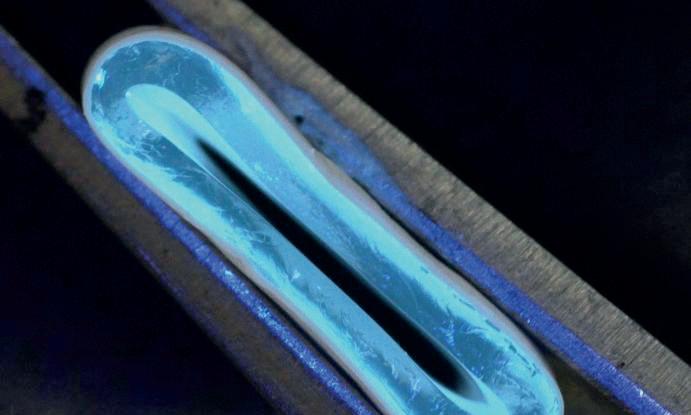
Researchers have detailed how a hybrid technique involving extrusion printing and a process known as electrospinning could produce artificial blood vessels that mimic the properties of human veins, with the potential for use in bypass procedures.
WRITING IN ADVANCED MATERIALS
Technologies, the researchers from the University of Edinburgh and Heriot-Watt University (both Edinburgh, UK) detail the two-stage process which uses a rotating spindle integrated into a 3D printer to print tubular grafts made from a water-based gel, known as gelatin-methacryloyl (gelMA), which is commonly used for drug delivery and tissue engineering applications.The graft is reinforced using the ‘electrospinning’ process, which uses a high voltage current to draw out thin nanofibers, coating the artificial blood vessel in biodegradable polyester molecules that resemble the extracellular matrix of native tissues.
The development of synthetic vessels could limit scarring, pain and the risk of infection associated with the removal of veins during a bypass procedure the researchers suggest, with testing having shown that the resulting artificial vessels are as strong as natural blood vessels. The 3D graft can be made in thicknesses from 1–40 mm in diameter for a range of applications, and its flexibility means that it could easily be integrated into the human body, the team says.
“Our hybrid technique opens up new and exciting possibilities for the fabrication of tubular constructs in tissue engineering,” comments Faraz Fazal (University of Edinburgh, Edinburgh, UK), the lead author of the study.
The next stage of the study involves researching the use of the vessels in animals, in collaboration with the University of Edinburgh’s Roslin Institute, followed by trials in humans.
“The results from our research address a long-standing challenge in the field of vascular tissue engineering—to produce a conduit that has similar biomechanical properties to that of human veins,” comments Norbert Radasci (University of Edinburgh, Edinburgh, UK), the principal investigator in the study. “With continued support and collaboration, the vision of improved treatment options for patients with cardiovascular disease could become a reality.”
DACAB-FE: Ticagrelor DAPT shows benefit at five years postCABG
TREATMENT WITH
ticagrelor dual antiplatelet therapy (DAPT) for one year after coronary artery bypass graft (CABG) surgery reduces the risk of major adverse cardiovascular events at five years compared with aspirin or ticagrelor monotherapy.
These are the findings of the DACAB-Follow-up Extension (FE) trial, published in the British Medical Journal (BMJ) by Qiang Zhao (Shanghai Jiao Tong University School of Medicine, Shanghai, China). DACAB is a multicentre, randomised openlabel trial comparing the three approaches after CABG surgery in 500 patients at six sites in China.
Initial results at one year showed that vein graft patency was significantly higher in patients randomised to DAPT compared to patients receiving aspirin monotherapy, and numerically higher compared with patients receiving ticagrelor monotherapy.
Investigators extended the follow-up out to five years with the aim of investigating the effect of the three different antiplatelet strategies in the long-term.
Follow-up at five years for major adverse cardiovascular events (MACE) was completed for 477 (95.4%) of 500 patients; with results showing 148 patients had MACE, including 39 in the dual antiplatelet therapy group, 54 in the ticagrelor monotherapy group, and 55 in the aspirin monotherapy group, Zhao and colleagues report.
The study investigators go on to add that risk of MACE at five years was significantly lower with DAPT versus aspirin monotherapy (22.6% vs. 29.9%) and versus ticagrelor monotherapy (22.6% vs. 32.9%).
“The DACAB-FE study provides evidence of a significant fiveyear clinical benefit of one year of ticagrelor dual antiplatelet therapy after coronary artery bypass grafting compared with aspirin monotherapy or ticagrelor monotherapy,” the investigators conclude.
Catherine Wagner
3D printed blood vessel
Research aims to understand training needs for left-handed cardiac surgeons
For the estimated one in 10 left handers in the general population many day-to-day activities require subtle adjustments that often go unnoticed to the overwhelming majority who are naturally right-handed.
“As a left-handed person, I have seen a lot of challenges since I was a kid,” Eric E Vinck, a cardiac surgeon at Colsubsidio and Country Clinic (Bogota, Colombia) and PhD student at Maastricht University (Maastricht, The Netherlands) tells Cardiovascular News
Vinck says that simple tasks such as writing in a notebook or playing a musical instrument are made more difficult by the fact that left-handers must often use equipment designed for right-handed use. In cardiac surgery, as well as many other medical disciplines, these challenges can be even more pronounced with most surgical equipment and techniques optimised for right handers.
“During my general surgery residency, I adapted to using my right hand, but I didn’t like it very much and it just did not feel right because in your brain you know your left hand is your dominant hand,” he explains, relaying his experience of having to make this adjustment during his training. “When I got into cardiac surgery, which requires a lot of finer movements with higher precision, I said ‘no, I can't keep on using my right hand, I have to start using my left hand’.”
After facing what he describes as lack of resources and support for left-handed cardiac surgery residents, Vinck has embarked on a research project intended to shed light on the training and educational needs of left-handed trainees, and to fill the current void for learning materials dedicated to this group.
To begin the project, Vinck and colleagues have surveyed left-handed cardiac surgeons and residents to understand the extent to which they are required to adapt in their daily practice, access to left-handed surgical equipment, and to gauge desire for dedicated courses in minimally invasive cardiac surgery for left handers.
Preliminary results of the survey of 74 individuals, shared with Cardiovascular News, indicate that close to 95% lack access to left-handed surgical instruments, whilst 78% had no mentorship or guidance from a lefthanded cardiac surgeon during training. Almost one in five, 18%, said that they predominantly use their right hand due to pressure from faculty.
instruments, and improving stitching techniques, as well as basic skills like sternotomy and cannulation, all geared to a left hander’s point of view. Peyman Sardari Nia (Maastricht University Medical Centre, Maastricht, The Netherlands) also leads a session in the endoscopic dry lab.
“Surgery will always be very individual and have a lot of variability, you will never expect the same technique to be applied the same way, but with the simulation training and the skills lab for residents at EACTS we are going to gather ideas and technical information together to help develop some kind of guide for lefthanded cardiac surgeons to start following that will perhaps make it easier for them going through the training process,” Vinck says how these sessions will offer practical learning, also feed into future outputs for his research.
“If you look at the cardiac anatomy, the valves face upwards to the right. For a surgeon it is actually easier if you are left handed because of the ergonomics and the geometry of your hand, it is easier for your left hand to face all of the valves in order to place sutures,” says Vinck, pointing out that there is a potential advantage to being a left hander in the operating room that may not be fully realised due to current practices.
The next stage of the project will see dedicated training and simulation activities taking place at the upcoming annual meeting of the European Association of Cardio-Thoracic Surgeons (EACTS; 9–12 October, Lisbon, Portugal), with a learning lab led by Roman Gottardi (Mediclin Heart Institute Lahr/Baden, Lahr, Germany) offering attendees the fundamental techniques of coronary artery bypass grafting and aortic valve replacement, direction in the use of
Texas Heart Institute performs first-in-human implantation of BiVACOR total artificial heart
Texas Heart Institute and BiVACOR have announced the successful first-in-human implantation of the BiVACOR total artificial heart as part of the US Food and Drug Administration (FDA) early feasibility study (EFS).
BIVACOR’S TOTAL ARTIFICIAL
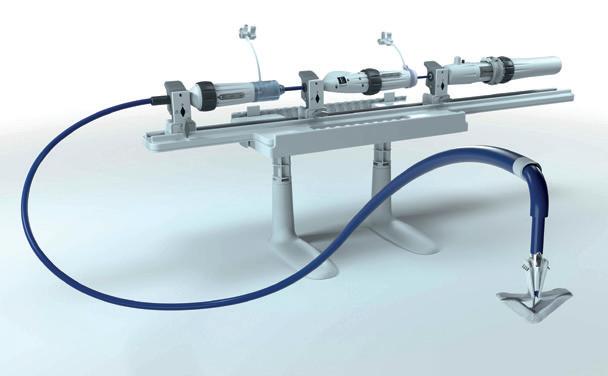
heart is a titanium biventricular rotary blood pump with a single moving part that utilises a magnetically levitated rotor that pumps the blood and replaces both ventricles of a failing heart.
The first-in-human clinical study aims to evaluate the safety and performance of the device as a bridgeto-transplant solution for patients with severe biventricular heart failure or
univentricular heart failure in which left ventricular assist device support is not recommended.
Following this first implantation completed at Baylor St Luke’s Medical Center (Houston, USA), four additional patients are to be enrolled in the study.
“The Texas Heart Institute is enthused about the groundbreaking first implantation of BiVACOR’s total artificial heart. With heart failure
“We are going to evaluate left-handed simulation training, look at variations in movements, depths of sutures, weaknesses and strengths of left handers. We are going to prove that being left handed is not a disadvantage, it is actually beneficial.”
For a surgeon it is actually easier if you are left handed because of the ergonomics and the geometry of your hand, it is easier for your left hand to face all of the valves in order to place sutures”
remaining a leading cause of mortality globally, the BiVACOR total artificial heart offers a beacon of hope for countless patients awaiting a heart transplant,” says Joseph Rogers, president and chief executive officer of the Texas Heart Institute and national principal investigator on the research.
“We are proud to be at the forefront of this medical breakthrough, working alongside the dedicated teams at BiVACOR, Baylor College of Medicine, and Baylor St Luke’s Medical Center to transform the future of heart failure therapy for this vulnerable population.”
Eight days following the total artificial heart implant, a donor heart became available and was transplanted into the patient, removing the device and meeting a goal of the EFS to evaluate the performance of the system. The company says that the first successful implantation of the device highlights its potential as a technology to address challenges in cardiac care, including long transplantation waiting lists.
“The patient continues to do well through their recovery, demonstrating the potential impact of the BiVACOR total artificial heart on the future of heart failure treatment,” says Rogers.
BiVACOR total artificial heart attached to mock circulation loop for pump hydraulics performance testing
Diabetic PCI patients have a higher risk of stent failure without glycaemic control
An observational study of patients with type 2 diabetes treated for coronary artery disease with second-generation drug-eluting stents (DESs) has found a significant association between poor glycaemic control and a higher risk of stent failure driven by in-stent restenosis.
IRENE SANTOS-PARDO
(Karolinska Institutet, Stockholm, Sweden) and colleagues studied over 52,000 patients with type 2 diabetes undergoing percutaneous coronary intervention (PCI) in Sweden between 2010 to 2020 and report that patients with poor glycaemic control had a 1.3-fold higher risk of stent failure. The findings of the study are detailed in a paper published in the Journal of the American College of Cardiology (JACC).
“Individuals with diabetes have a two-fold higher risk of developing coronary artery disease and an increased mortality rate following the onset of clinically manifest coronary artery disease compared with individuals without diabetes,” Santos-Pardo and colleagues write in the introduction to their study.
Few studies, they note, have probed the impact of glycaemic control—the
maintenance of blood glucose levels to prevent both hypoglycaemia and hyperglycaemia—on the prognosis of patients undergoing revascularisation with PCI.
Using data from seven Swedish registries, the researchers sought to assess whether glycaemic control, measured as mean glycated haemoglobin—HbA1c—is associated with the risk of stent failure following PCI. Patients were stratified by glycaemic control, with HbA1c 6.1% to 7% (43–53mmol/mol) within one year prior and up to six months post-PCI, and studied for primary endpoints including the incidence of in-stent restenosis or stent thrombosis, and secondary endpoints included myocardial infarction (MI) and allcause death.
Santos-Pardo and colleagues write that the risk of stent failure “increased gradually alongside poor glycaemic
BIOADAPTOR RCT: Coronary bioadaptor system shows sustained reduction in TLF at two years
Two-year results from the BIOADAPTOR randomised controlled trial (RCT), comparing the DynamX coronary bioadaptor system (Elixir Medical) to Resolute Onyx (Medtronic) drug-eluting stent (DES), have demonstrated a significant reduction in clinical outcomes investigators have reported.
FINDINGS FROM THE TRIAL, WHICH took place across 34 centres in Japan, Europe, and New Zealand, were presented at EuroPCR 2024 (14–17 May, Paris, France) by Shigeru Saito (Shonan Kamakura General Hospital in Kamakura, Japan).
Saito reported a 65% reduction in the target lesion failure (TLF) rate of DynamX compared to DES (1.9% versus 5.5%; p=0.046), driven by low adverse events across all components of the composite endpoint with DynamX compared to DES. The two-year results also demonstrated a 68% reduction in target vessel failure (TVF) rate (1.9% versus 6.0%; p=0.029) in DynamX compared to DES.
The DynamX bioadaptor is designed to return the diseased vessel to a more normal condition, through
control, independent of several clinical and procedural characteristics as well as previously identified risk factors”. The increased risk of stent failure with was high in patients with an HbA1c level of <7% (53mmol/ mol) was driven mainly by in-stent restenosis, the investigators found.
“In our study, we observed a significant J-shaped association between glycaemic control and the risk of death,” the study’s authors write. “The shape of the association was mirrored for the secondary endpoint MI, but did not reach statistical significance. These findings highlight the strong link between vascular complications and mortality with glycaemic exposure, which may not always follow a linear relationship.”
Furthermore, the researchers write that poor glycaemic control also confers a higher risk of non-target vessel revascularisation, indicating that glycaemic control is relevant not only with regard to the stented vessels but also in the progression of atherosclerosis in the native coronary arteries.
three phases. After implantation, the locked phase establishes the maximum flow lumen and restores blood flow to treat symptoms of coronary artery disease. The second phase occurs after the device is encapsulated with tissue and the absorbable polymer coating is resorbed. The third phase is then intended to provide the vessel adaptive dynamic support by the separated helical strands, restoring the vessel viability and haemodynamic modulation by returning pulsatility, compliance, adaptive blood flow volume, and plaque stabilisation and regression.
1.3-fold higher risk of stent failure for patients with poor glycaemic control
“These two-year results from the BIOADAPTOR RCT trial are very exciting—unlike anything we’ve ever seen before—and represent a new treatment category for patients living with coronary artery disease,” Saito said. “The TLF rate curve separation validates how the bioadaptor’s unique design and mechanism of action restores the vessel viability,
The TLF rate curve separation validates how the bioadaptor’s unique design and mechanism of action restores the vessel viability, including the LAD vessel”
including the LAD [left anterior descending] vessel.
DynamXexpanded in vessel
“It does this by restoring haemodynamic modulation validating the previously demonstrated superior imaging outcomes at one year. These data show that bioadaptor offers sustained, very low event rates across all major endpoints, making it a superior option compared to DES.” In different lesions subsets, investigators reported a 78% reduction (1.9% vs.8.7%; p=0.028) in TLF rate in LAD artery lesions treated with DynamX bioadaptor versus treatment with DES, whilst the small vessel (<2.75mm) TLF rate was 0% vs. 3.5% in DynamX versus DES, respectively, and 0% vs. 2.3% in DynamX versus DES for long lesions (>23mm).
“The 78% magnitude of reduction in clinical events in LAD lesions is particularly important, as the artery provides 50% of a heart muscle’s blood supply and undergoes significant hemodynamic movement during every cardiac cycle. Restoring its function is clearly of significant benefit,” commented Saito.
Subsequent to the presentation of the BIOADAPTOR results at EuroPCR, Elixir Medical announced that DynamX has been granted breakthrough device designation by the US Food and Drug Administration (FDA).
The breakthrough designation is for an indication to improve coronary luminal diameter, restore haemodynamic modulation, and reduce plaque progression in patients with symptomatic ischaemic heart disease due to discrete de novo native coronary artery lesions.
RASHA AL-LAMEE
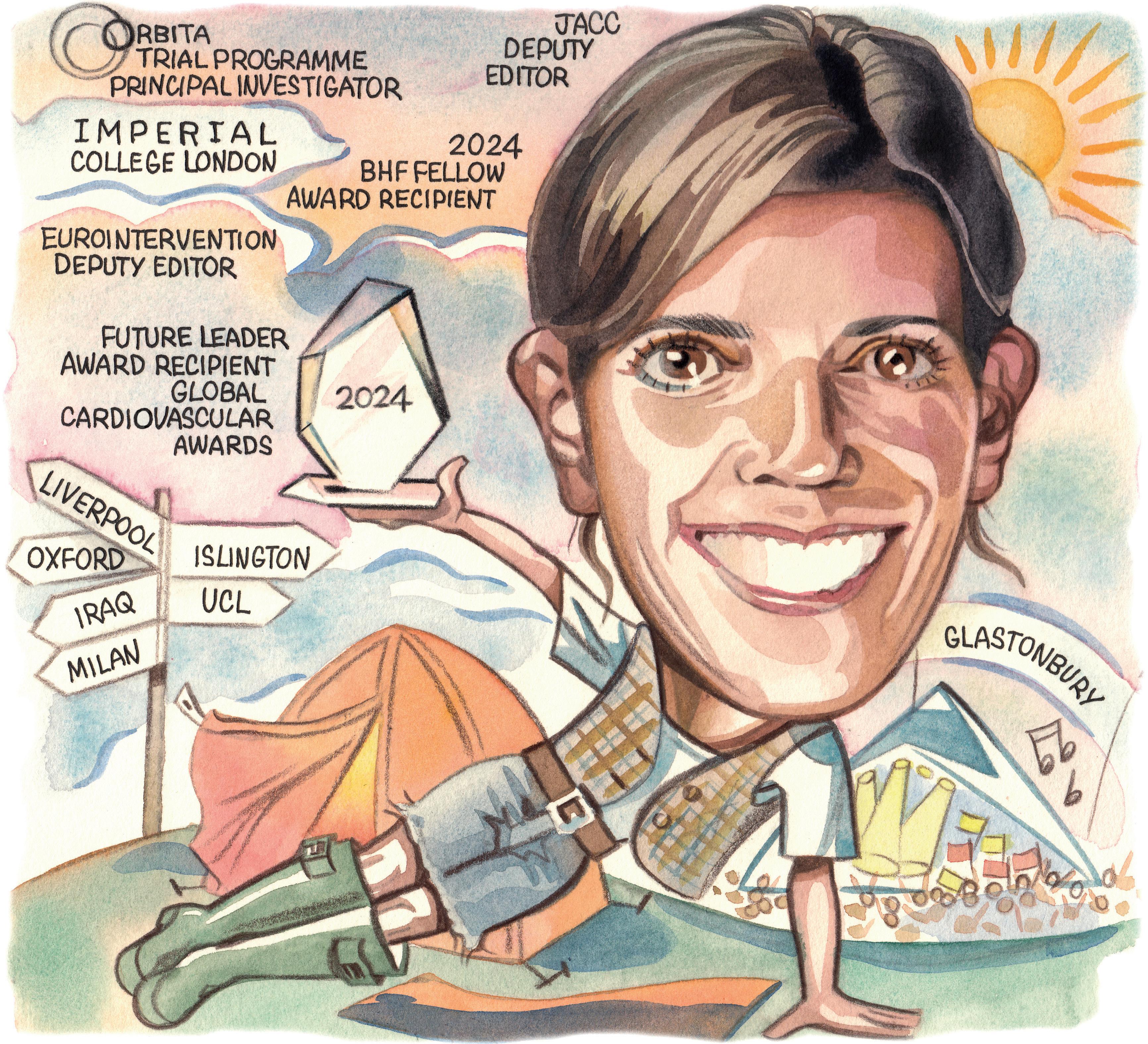
Best known for her work as the principal investigator in the ORBITA trial—a placebocontrolled trial showing that stenting did not improve exercise tolerance or chest pain any more than a sham procedure—Rasha Al-Lamee (Imperial College London, London, UK) talks to Cardiovascular News about the history of the trial and how it has influenced a series of subsequent studies in the treatment of stable coronary artery disease.
Why did you start a career in medicine and what drew you to interventional cardiology?
I come from an Arabic family where your main options are medicine or engineering! I was encouraged to think about medicine as I was good at science, but I was actually quite reluctant to jump into it at first. At school I did basic work experience in multiple things that were not medically oriented, until I finally went and did some shadowing in a hospital and, in that moment, I realised that this was the career I wanted, despite having tried desperately hard to avoid it.
I like talking to people and I am very comfortable with organised chaos. There are so many different opportunities in medicine and every day looks different. You can’t predict how a day will end and that is why I still enjoy it.
Cardiology was the first placement I did as a clinical student in my fourth year at medical school, and I immediately saw that this specialty offers the opportunity to fix people. I toyed with various interventional specialities, but I knew that I wanted to do something very acute so interventional cardiology was the best fit for me.
Who have been the biggest influences on your career?
I have been really lucky to have lots of different mentors at different times. I did a fellowship in Milan with Antonio Colombo and learned a lot about complex angioplasty. My PhD supervisors were Justin Davies and Darrel Francis who taught me a lot about clinical trials and academia. There are a lot of people I rely on for mentorship; Nick Curzen, David Newby, Roxana Mehran and Manesh Patel are just some of the clinical trialists and academics I have to thank for wise words and advice over the years.
What has been the biggest change to the field of interventional cardiology in the time that you have been practising?
When I first started, the only way you could learn about a clinical trial was to be interested and engaged in finding a publication or reading the entire contents of journals like the New England Journal of Medicine or The Lancet Now the output of research is delivered all day long in bite-sized pieces.
Interventional cardiology has always been a very evidence-based specialty and that has always been a key part of what has driven me to it. Now we are probably one of the leading medical specialties in the application of research, using it to guide our practice and in being quick to adopt or abandon technologies based on the evidence. In my mind, we talk about research in our daily practice far more
than many other medical specialties. We have quite a deeply ingrained partnership with industry, that helps to make our specialty faster moving due to more financial investment.
What I am most excited about is that teams that weren’t traditionally academic are now engaging in research. The application of evidence and use of new information has become much more inclusive and it is easy for everyone to have knowledge of what is new and how it might change our practice.
What is the background of the ORBITA trial?
Towards the end of my training as a fellow in cardiology I started thinking about doing a PhD and what the question could be. One day I was in the cath lab having just done an angioplasty for a patient with stable angina, with Darrel Francis supervising the case. I felt that we had achieved a nice result, but Darrel asked, “How do you know it is going to make them feel better?”. That started us thinking about how we answer the question and led to the design of ORBITA.
The main challenge was to get any form of funding. Grant funders and industry thought it was either not an important question, something that was impossible to do, or perhaps they didn’t have personal interest in funding it. We managed to get internal funding from the Imperial Biomedical Research Centre to fund ORBITA.
Then it was about trying to get sites who were up for recruiting into the trial. From the five original sites, all of the principal investigators were people I had trained with or somehow knew and they were all up for doing something really innovative.
The next challenge was to get an ethics committee to agree to a placebo-controlled trial, and they were brave and prepared for the challenge, because they thought, “Why has this not been done before?”. They helped in shaping the patient information literature and the GP literature so that the reasons for taking part and the potential risks were clear.
After that we had to convince patients to be a part of the trial. We recruited almost 60% of the patients we approached, and I was involved in the recruitment of every one. It was a lot of work, and it took four years to do.
The results of ORBITA initially provoked a great deal of controversy and debate— what lessons did you learn from having been at the centre of this?
By nature, I am a person who likes to be liked, and this was the first time I had really been in the limelight. With some of the most eminent people in the field being negative about the result, it was hard to take. There were many points at which I thought I should give up, but
FACT FILE
CURRENT APPOINTMENTS
Cardiology consultant, Imperial College Healthcare NHS Trust
Clinical reader, National Heart and Lung Institute, Imperial College London
Deputy director, Imperial College London School of Medicine
Co-director of Cardiovascular theme of National Institute for Health and Care Research (NIHR)
Imperial Biomedical Research Centre
Cardiovascular speciality lead, NIHR Clinical Research Network (CRN) North West London
British Heart Foundation
Intermediate Research Fellow
Deputy editor, EuroIntervention
Deputy editor, Journal of the American College of Cardiology (JACC)
EDUCATION AND TRAINING
MA (Hons)
Physiological Sciences and Preclinical Medicine, St Hugh's College, Oxford University, Oxford, UK
PhD, Imperial College London, London, UK
MBBS (Lond), Royal Free and University College London Medical School, London, UK
Fellowship training, Hammersmith Hospital, London, UK
San Raffaele Hospital, Milan, Italy
the moment I decided not to was in January 2018. We hosted a presentation evening for all the patients enrolled in the trial where I presented the results. During my presentation, one of the patients asked for the microphone, and he shouted out, “Next time you present your results, take us with you!”. That was enough to make me realise that I owed it to the patients to continue to disseminate the results. One important thing I have learned is that your academic output doesn’t sit in a silo, there can be a real impact of what you do. I am very proud of the impact that ORBITA had and because it delivered a result that was unexpected it has triggered far more research about stable coronary artery disease than it would have done had it delivered the more predicted result.
In that period I think I was very apologetic of ORBITA; now I don’t see any reason to apologise. We learned a lot from ORBITA, and it is the reason we have been able to do more research that tries to answer more questions.
What is coming next from the ORBITA programme?
I think I imagined that ORBITA would be one trial and done. But, in the world of stable coronary artery disease and angina there is a lot to think about, and this is where my group is focused for now. We have learned that angina is complex and its relationship with ischaemia is not as straightforward as we thought. Some of that might explain why, even with good revascularisation, we don’t get the perfect symptom results that we might expect.
I have built a great team of researchers who I am very proud of. My group are now quite focused on the story around residual angina and most recently we studied the complex population with refractory angina in the ORBITA-COSMIC trial.
The next studies you will hear about are ORBITA-FIRE and ORBITA-MOON which are studying the invasive physiological threshold for angina, and if it is possible that different lesions in different vessels contribute to symptoms in different ways. There are also a lot more data coming out from ORBITA-2 and ORBITA-COSMIC, trying to look at the predictors of response in those trials. And of course, we are beginning to plan ORBITA-3 so watch that space.
More broadly I am interested in the application of placebo control in interventional trials, so I am working with lots of groups to think about how we can apply that ORBITA placebo-control methodology and our patient reporting outcomes ORBITA-app, not just to interventional cardiology but to the wider medical world.
Has ORBITA demonstrated the value of placebo-controlled trials in interventional cardiology?
I hope so and I think this is a much more powerful and impactful legacy than the actual trial results. Some of the ORBITA methodology has been used to describe how you ideally apply placebo control within
a trial. I really hope that it will be used to demonstrate that, even when we think a therapy works and it has been around for a long time, if you retest it using rigorous scientific methodology you might get a different result. There are so many places where I think we need to think about this and where I believe we are performing procedures without enough evidence.
Importantly, we must be prepared to conduct these trials up front with new technologies whose main aim is the improvement of subjective endpoints such as symptoms or quality of life.
You were recently an author of a paper on the role of intuitiveness in medical decision-making, can you explain this concept?
Another legacy of ORBITA is how we interpret trial results. Fundamentally, I think we often work backwards from the result. We read the headline and, if it confirms our preconceived belief of how something works, we do not scratch beneath the surface of
the abstract. If the result is not one we like, we look much more deeply and search for limitations within the trial, so that we can find an excuse for the unexpected result.
We started to think about why we do that. Sometimes it is just because we have a very dogmatic approach to our understanding of the mechanism of action. If it makes total sense, we are happy to accept less scientific rigour in the data.
Are there any recent trials that have caught your attention?
DanGer Shock really spoke to that story of trying to get to the end of a very difficult trial and the challenges around that process. The investigators are really to be commended for completing the trial and getting the result out there.
I have also been very impressed with how the investigators have been very balanced about how they present their results and consider its potential impact on clinical practice. They have not run away with the results and have tried very hard to discuss
“We talk about research in our daily practice far more than many other medical specialties.”
which population it might apply to so that we don’t extrapolate the data too far.
What does your life outside of medicine look like?
I’m a proud mum of a 13-year-old who is sports obsessed, so my husband and I spend a lot of time dropping him to various sports practices and matches. One of the things that I have really taken to over the last few years is lots of regular exercise because it is time to myself, and I try to dedicate some time to that every day. Beyond that I have a fantastic family and lots of close friends who are very important to me. I wouldn’t say that I have time for hobbies per se, but I really value the time I get to spend with them. Every year my husband and I go to Glastonbury. We have been married for 18 years and he is a massive support to me. Once a year we like to go and sit in a field in Somerset and forget about work. For someone like me whose job is really intense, it is about as far away from interventional cardiology as you can get.
REGISTER TODAY!
The Global Forum for Interventional Cardiology
Last chance for best available rates is September 10.
Fellows! Take advantage of FREE registration for all CRF® meetings!
OCTOBER 27–30, 2024
WALTER E. WASHINGTON
CONVENTION CENTER
WASHINGTON, DC
CRF.org/TCT2024
#TCT2024
Structural Heart Interventions
Trial data offer further insight on TAVI in patients with small aortic annuli
New data on the transcatheter treatment of patients with small aortic annuli continue to emerge, with results of analyses from two major trials released this summer.
Early this year, headline results from the SMART trial, which compared the supra-annular self-expanding Evolut (Medtronic) family of transcatheter aortic valve implantation (TAVI) valves, and the balloon-expandable Sapien 3 (Edwards Lifesciences) valves, found that the use of the supra-annular valve resulted in similar clinical outcomes and superior valve performance at one year compared with the balloon-expandable valve.
At the recent EuroPCR (13–17 May, Paris, France) meeting, Roxana Mehran (Mount Sinai Hospital, New York, USA) told delegates that the trial’s results could have a bearing on device choice when weighing up TAVI in female patients. Mehran presented outcomes from a sub-analysis focused on the 637 female patients enrolled in the trial who made up 87% of the trial’s overall population during a late-breaking trial session on day one of the EuroPCR congress.
Headline 12-month results of the trial, shared to wide interest at the American College of Cardiology (ACC) 2024 scientific session (6–8 April, Atlanta, USA), showed that there was no significant difference in the primary clinical endpoint between groups in terms of a composite of death, disabling stroke or rehospitalisation for heart failure. The Evolut system showed a 32.2 percentage point advantage in the self-expanding platform in terms of bioprosthetic valve dysfunction.
Mehran’s presentation at EuroPCR zeroed in on the 307 female patients who underwent TAVI using Evolut, and the 313 who received Sapien, also looking at findings out to 12 months. Mehran reported that the clinical composite outcome of death, disabling stroke or heart failure rehospitalisations through 12 months was similar between the two groups, with an absolute difference of 2.3% in favour of the Evolut platform.
Turning to bioprosthetic valve dysfunction, an endpoint powered for superiority, Mehran described the difference as “dramatic”, with a 33.4% difference in favour of the Evolut platform.
For haemodynamic measures, including effective orifice area and mean gradient through 12 months, Mehran reported that these both favoured Evolut, whilst aortic regurgitation, observed as moderate or mild-to-moderate, was noted in 12.3% of patients treated with Evolut and 18.8% treated with Sapien.
“Ladies and gentlemen, SMART is a historic trial, [it is] the only randomised clinical trial enrolling 90% women with aortic stenosis and a small annulus,” Mehran said, acknowledging that such trials in a largely female population are long overdue.
Summing up the key findings of the trial as relating to female patients, she commented: “Through one year, the clinical composite outcomes of death, disabling stroke or heart failure rehospitalisation are similar amongst women with
aortic stenosis and a small annulus randomised to Sapien or Evolut.
“But, compared to the balloon-expandable Sapien valve, the Evolut self-expanding valve was associated with significantly less bioprosthetic valve dysfunction, less prosthesis patient mismatch, less total aortic regurgitation and [greater improvement in] quality of life in women with aortic stenosis and a small annulus.”
Discussing the findings following her presentation, Thomas Modine (CHU de Bordeaux, Bordeaux, France) asked Mehran if, in light of the SMART trial, all women undergoing TAVI should be treated using self-expanding devices.
“It’s a really good question,” she responded. “At this timepoint, from what I have seen and what we have shown, absolutely, a woman with a small annulus, I think we have definitive answers.”
Pressed on this, Mehran said it is important to weigh up pathobiological differences in how aortic stenosis affects the sexes, including the presence of calcification and remodelling.
“The truth is, what we have here is definitive evidence that perhaps a supra-annular valve that gives you a larger effective orifice area and better haemodynamics may lead—and there is no difference in the clinical outcomes at all at the moment— but this may lead to a better outcome and perhaps it would be a better platform for women,” Mehran speculated.
Though the SMART trial looks to have given Evolut the edge in the small aortic annulus population, results of an analysis of data from the PARTNER trials in patients with a small annulus were shared during a late-breaking trial session at New York Valves 2024 (5–7 June, New York, USA), and suggest that the Sapien 3 platform still has benefit in these patients. The results through five-year follow-up of more than 1,300 low and intermediate risk patients receiving the Sapien 3 valve showed that there were excellent clinical outcomes and valve durability irrespective of the patient’s annulus size or sex.
As part of the latest analysis, contemporary patient data with long-term follow up from the PARTNER 3 randomised controlled trial and PARTNER 2 S3i trial were examined to determine if higher 30-day mean gradients and rates of prothesis-patient mismatch (PPM) translated to poorer longterm outcomes of death, disabling stroke or heart failure related hospitalisation.
The analysis revealed no association between clinical outcomes or valve durability and severe PPM or higher mean gradients (>20 mmHg.) Overall, this cohort of patients had extremely low rates of reintervention and high survival out to five years.
“This important dataset highlights the risk of relying on a singular haemodynamic parameter such as mean gradient as a surrogate for valve dysfunction,” said Rebecca Hahn (Columbia University Irving Medical Center, New York, USA), speaking for the PARTNER trial investigators.
“When selecting the best treatment option, we must evaluate measures that matter to patients such as death, disabling stroke, quality of life and reintervention. This five-year follow up of low and intermediate risk patients demonstrated no association of a mean gradient greater than 20mmHg or prosthesis-patient mismatch with these key outcomes for the Edwards Sapien 3 platform. These are important findings for clinicians in determining the best treatment for patients.”
SMART is a historic trial, [it is] the only randomised clinical trial enrolling 90% women with aortic stenosis and a small annulus”
TAVI device with intermediate sizing shown to be non-inferior to contemporary platforms in LANDMARK trial
EARLY OUTCOMES FOLLOWING of a novel balloon-expandable transcatheter aortic valve implantation (TAVI) device, compared in a randomised trial against two commercially available valves, were shared for the first time at EuroPCR 2024 (13–17 May, Paris, France).
Results of the LANDMARK multicentre trial comparing the MyVal (Meril) TAVI valve against the Edwards Lifesciences Sapien, Sapien XT or Sapien 3 valves, or the-Corevalve, Evolut-R or Evolut Pro valves from Medtronic, in 768 patients with severe aortic stenosis, were presented by Patrick Serruys (National University of Ireland, Galway, Ireland).
MyVal is available in a wider range of prosthesis sizes than the comparator valves, Serruys detailed, with “intermediate” valve sizing making it possible for physicians to avoid overor under-sizing the prosthesis based on patient anatomy. As many as 48.1% of the valves used in the LANDMARK trial used the intermediate sizing.
Results of the study showed that the Myval device was non-inferior to the contemporary devices for the primary composite endpoint of death, stroke, major bleeding, acute kidney injury, major vascular complications, moderate or severe valve regurgitation, and the need for new permanent pacemaker implantation (24.7% vs. 27%).
Secondary endpoints including technical success at exit from procedure room, device success at 30 days and early safety at 30 days were comparable in both the groups.
“Myval THV [transcatheter heart valve] series are novel next-gen THV devices; non-inferior to the Sapien and Evolut THV series,” Serruys was quoted as saying in a press release issued by Meril following the presentation of the results. “Myval THV series have a unique size matrix incorporating conventional, intermediate and extra-large diameters with increasing diameter steps of 1.5mm that match and fit precisely the multi slice computed tomography (CT) scan-defined aortic annulus area of each individual patient, as a result, provides a superior effective orifice area on echocardiography, which may impact on durability and long-term clinical outcomes.”
Roxana Mehran
Leaflet splitting device may offer efficient option for avoiding coronary obstruction during valve-in-valve procedures
Insights from the investigational device exemption (IDE) pivotal study of the Shortcut (Pi-Cardia) leaflet modification system have been shared for the first time at EuroPCR 2024 (14–17 May, Paris, France).
“TAVI [TRANSCATHETER AORTIC VALVE implantation] is the preferred treatment for patients with failed bioprosthetic valves—valve-in-valve— but the risk for coronary obstruction is a significant concern and it is associated with a high-risk of mortality of around 50%,” explained Danny Dvir (Sha’are Zedek, Jerusalem, Israel), an investigator in the study, describing the current need for leaflet modification techniques and technologies to facilitate coronary access after TAVI. With a projected increase in valve-in-valve
procedures, the incidence of coronary obstruction and challenging coronary access after TAVI is expected to rise, Dvir commented. An existing technique that has been developed to avoid coronary obstruction is BASILICA, a transcatheter electrosurgical procedure whereby catheters and guidewires are used to traverse and lacerate the aortic leaflet in front of the threatened coronary artery to preserve perfusion. Dvir told Cardiovascular News that typically a BASILICA may take between one and two hours to perform, and is a challenging procedure to learn and teach.
The ShortCut device is designed to simplify the leaflet splitting process and can be delivered transfemorally using a left ventricular wire. When the device is delivered to the target area at the base of the leaflet, a small blade is advanced into the leaflet which, once manually pulled through, creates a split.
The IDE study of the device, which was awarded US Food and Drug Administration (FDA) breakthrough designation in January 2024, enrolled 60 patients undergoing valve-in-valve procedures, in whom ShortCut was used as a preceding step to TAVI implantation. The primary safety endpoint was procedure-related mortality or stroke within seven days of hospital stay, and the primary effectiveness endpoint was per-patient leaflet splitting success.
Dvir reported a 0% rate of mortality within 30 days of the Shortcut procedure, and 5% within 90 days.
Six-month TANDEM I results “promising” for Duo tricuspid coaptation system
Six-month results from the TANDEM I first-in-human clinical trial, investigating the CroíValve Duo system for the percutaneous treatment of tricuspid regurgitation (TR), were presented at New York Valves 2024 (5–7 June, New York, USA).
THE DUO SYSTEM IS A NOVEL transcatheter coaptation valve that works in tandem with the native tricuspid valve to restore valve function, using an anchor system which leaves the right heart and native valve apparatus untouched.
Wojciech Wojakowski (Medical University of Silesia, Katowice, Poland) presented the results of the prospective, non-randomised, multicentre study designed to evaluate the safety and performance of the Duo system in patients with severe symptomatic TR. The study reported on 10 patients, showing sustained, positive outcomes.
Following 30-day outcomes presented last year, the six-month results demonstrated significant TR reduction by an independent core lab assessment, with TR reduced to moderate or less in over 85% of patients, even with massive or torrential TR at baseline.
Patients also experienced markedly improved functional and quality of life outcomes, with a significant increase in both Kansas City Cardiomyopathy
Questionnaire (KCCQ) score and six-minute walk test (6MWT) over baseline. The trial reported 100% survival at six months.
No incidences of arrhythmia or conduction disorder requiring permanent pacing were reported, demonstrating the advantages of avoiding right heart contact. The data show stable long-term device positioning and function, supporting natural reverse remodelling. Average device time was 43 minutes.
“The six-month results with the Duo system are highly promising, not only for its clinical safety and efficacy, but also for the procedure’s simplicity and the technology’s broad applicability,” stated Wojakowski. “This system offers new hope for patients suffering from severe TR, providing a versatile and predictable treatment option that simplifies the procedural and imaging experience for operators.”
The Duo system is delivered percutaneously and is secured using a novel anchor system which leaves the right heart and native valve apparatus untouched.
There was a 1.7% stroke rate within 90 days. The primary efficacy endpoint was met, with successful leaflet splitting achieved in all patients. There were three cases of post-TAVI coronary obstruction that required intervention, Dvir reported, but no procedural mortality. “The use of Shortcut facilitated straightforward access with optimal stenting without bioprotection,” he reported.
Leaflet splitting was achieved efficiently, with a single attempt in all cases despite being performed by first-time users, and a median of only two cases per site.
“Really this was the beginning of the learning curve at all sites, but the procedure time was only 27 minutes for [a] single split, including TEE [transoesophageal echocardiography] verification of the split, so these are short procedures,” Dvir commented of the efficiency of the procedure. “It seems that Shortcut addresses an unmet need and will be important for the lifetime management of patients requiring multiple valve interventions.”
Pi-Cardia has also announced the commencement of the ShortCut Continued Access Study in the USA, and enrolment is currently underway. This expansion of the clinical program aims to gather additional insights into the patient population involved.
The first two cases were performed by physicians at Los Robles Hospital and Medical Center (Thousand Oaks, USA) as part of the study in late July. These involved patients with challenging anatomy with failed Trifecta (Abbott) and Magna Ease (Edwards Lifesciences) valves at risk of coronary obstructions. Both were treated successfully with a dual leaflet split using ShortCut, enabling a safe TAVI procedure.
First data emerge for 8Fr Rheniumframed TAVI valve
INITIAL EXPERIENCE WITH the Siegel (Mirus) 8Fr transcatheter aortic valve implantation (TAVI) device have been shared at New York Valves (5–7 June, New York, USA).
Pradeep Yadav (Piedmont Heart Institute, Atlanta, USA) presented the initial data for the device, which features a Rhenium alloy frame, a material more commonly used in spinal implants and unique for transcatheter heart valves.
Five sequential patients with severe, symptomatic aortic stenosis (were treated at the Instituto Nacional Del Torax in Santiago, Chile. Three patients had bicuspid aortic valves and two were tri-leaflet.
Three patients had peripheral arterial disease with vascular access <5.5 mm. There was no mortality or stroke at 30 days and no patients required a permanent pacemaker (PPM) or suffered vascular complications. At 30 days, the mean echo gradient was 6.7mmHg; four of the five patients had no peri-valvular leak
(PVL) and one bicuspid patient had trace PVL.
The Siegel valve includes several unique features, including its 8Fr delivery sheath; nickel free construction; lack of foreshortening and intrinsic commissural alignment; dry porcine pericardial leaflets with anti-calcification treatment and with the valve pre-mounted on the balloon.
The combination of low delivery system profile and excellent haemodynamics is made feasible by the unique properties of the Rhenium alloys pioneered by MiRus including high yield strength, fatigue resistance and minimal recoil, the company said in a press release.
“This initial data is striking and potentially heralds a new age for TAVI,” stated Vinod Thourani (Piedmont Heart Institute, Atlanta, USA). “The ability to treat such complex patients with an 8Fr system and without nickel exposure should make TAVI safer and more broadly accessible. From a surgical viewpoint, the very low pressure gradients and low PVL [paravalvular leak] are critically important to implanters and our patients.”
Siegel TAVI system
Danny Dvir
BECOME CRT 2025 FACULTY! BECOME CRT 2025 FACULTY!
CRT EVIDENCE
ABSTRACTS
Accepted abstracts published in JACC Interventions
Top 3 abstracts will be eligible to receive a cash prize.
DEADLINE: November 22, 2024
CRT PRACTICE
INTERESTING CASES
CRMIC Publication Opportunity
LATE-BREAKING TRIALS
DEADLINE: January 15, 2025
Top 3 cases will be eligible to receive a cash prize.
DEADLINE: December 10, 2024
Simulatenous Publication Opportunities
CRT INNOVATION
BEST INNOVATION COMPETITION
DEADLINE: January 10, 2025
The Top Innovation will be the recipient of our CRT 2025 Innovations Award
CRT 2025 faculty will receive the following benefits: SCAN FOR SUBMISSION PORTAL
• Waived registration fee
• Complimentary subscription to the CRM Journal and entry to the faculty lounge
• Upgrade to CRT Community Premium including all CRTmeeting Videos and PowerPoint archives
CRT SCHOLARSHIPS
Early Career Leaders
DEADLINE: December 12, 2024
Fellows Scholarship
DEADLINE: December 12, 2024
Women in Cardiology
DEADLINE: December 31, 2024
Trial pipeline underpins growth strategy for Watchman LAAC device
Investment in a programme of clinical trials will underpin Boston Scientific’s strategy to expand the uptake of its Watchman left atrial appendage closure (LAAC) device, the company’s global vice president and general manager for the Watchman system, Angelo De Rosa, tells Cardiovascular News
De Rosa took over the Watchman team within Boston in September 2023, shortly before the latestgeneration Watchman FLX Pro gained US Food and Drug Administration (FDA) approval. The company is also pursuing CE mark for the FLX Pro system, which is anticipated in 2025, and hopes that a change in treatment guidelines could stimulate adoption of the device outside of the USA, where operators have been quicker to implement the therapy.
Watchman is indicated to reduce stroke risk in patients with non-valvular atrial fibrillation (AF) who need an alternative to oral anticoagulation therapy. The latest iteration, Watchman FLX Pro, features a polymer coating, designed to reduce the risk of devicerelated thrombus (DRT) post-implant, as well as radiopaque markers to aid positioning using fluoroscopy, and a larger sizing to allow the treatment of a wider range of patients.
“Watchman is by far one of the most studied devices in the medtech field, because the level of investment and
the number of trials that the device has gone through is significant,” De Rosa comments, citing the existing body of data that has been collected to support the safety and efficacy of the device to date. Boston Scientific is backing a series of further trials as it seeks to expand the therapy, he tells Cardiovascular News, with a goal to inform future European guidelines on the management of AF, expected to be updated in 2028. Recent US guidelines have upgraded the class of recommendation for LAAC to level 2a. Coming down the pipeline are a number of trials aimed at boosting the evidence base for Watchman, the first of which is the OPTION trial, a 1,600-patient trial comparing Watchman to
Edwards’ structural heart portfolio swells following acquisition spree
Edwards Lifesciences has expanded its structural heart portfolio with the acquisitions of Jenavalve Technology, Endotronix, JC Medical and Innovalve Bio Medical in short succession.
THE SPATE OF ACQUISITIONS HAS BEEN spurred by Edwards’ sale of its Critical Care product group to BD in June. At the time, the company said that this would fund strategic growth investments in technologies for aortic, mitral, tricuspid and pulmonic patients, as well as new therapeutic areas for interventional heart failure.
JenaValve develops the Trilogy system, a transfemoral transcatheter aortic valve implantation (TAVI) system which carries a CE mark for aortic regurgitation (AR) and aortic stenosis (AS) treatment. The device is seen as meeting an unmet need for the treatment of AR, particularly among patients who are deemed to be at too high risk for surgery. Edwards anticipates US Food and Drug Administration (FDA) approval of the Trilogy system in late 2025. Edwards’ agreement to buy JC Medical from Genesis MedTech, meanwhile, means that the company also acquires the intellectual property and commercial
oral anticoagulation for stroke protection in patients with AF who have had an ablation or will have one during their LAAC procedure. Results of OPTION are expected late this year.
“It is really a milestone trial and we are pretty optimistic that the trial will open more electrophysiologists to the Watchman therapy but we already have a massive demand for what we called either sequential or concomitant procedures,” De Rosa comments.
“Really this will open the door for the question, if OPTION is positive, ‘what if we do the two procedures at the same time?’ which would be best for the patient, best for the hospital in terms of resource utilisation, it will be the best of both worlds.”
Coming after OPTION is CHAMPION-AF, which is studying Watchman FLX as a first choice option versus anticoagulants for AF patients who are able to tolerate long-term anticoagulant use, but would consider a one-time, device option for stroke risk reduction.
“At the same time we are also working with the Canadian Population Health Research Institute (PHRI) on the LAAOS-4 trial, which is a large randomised clinical trial evaluating
whether the highest-risk patients benefit from a combined Watchman and oral anticoagulant therapy, and we plan to initiate another trial called SIMPLAAFY, which will look at a simplified post-procedural drug regimen for the Watchman FLX Pro device,” comments De Rosa.
“With a strong study pipeline, we are looking through the clinical and economic evidence and aiming to ultimately change the guidelines. The next European AF guidelines will be published in 2028, so our strategy is to have data from both the OPTION and CHAMPION-AF trials published well in advance and to combine all of the possible evidence that we can to change the guidelines at that time and elevate the level that we have today for Watchman.
Today, the Watchman device isn’t part of stroke management for many patients with AF until after they have tried all sorts of drugs and drug combinations. The issue with this is that the patient has been deteriorating while taking these medications, so you do not get the biggest benefit of the device. We see an opportunity to change that timing and help more patients manage their disease earlier on.”
Watchman is by far one of the most studied devices in the medtech field, because the level of investment and the number of trials that the device has gone through is significant.”
rights to the J-Valve TAVI system, which has also been designed for the treatment of severe AR.
Further to the JenaValve and JC Medical deals, Edwards has exercised its option to acquire Endotronix, the developer of the Cordella pulmonary artery (PA) sensor, an implantable heart failure patient management platform, which received FDA premarket approval in June.
Edwards invested in the company in 2016, and says the acquisition expands its structural heart portfolio into a “new therapeutic area to address the large unmet needs of patients suffering from heart failure”.
“These acquisitions expand our opportunities to address the unmet needs of aortic regurgitation and heart failure patients around the world,” said Edwards’ CEO, Bernard Zovighian, of the JenaValve and Endotronix deals. “We are pleased to enter these structural heart therapeutic areas with innovation, world-class science and clinical evidence to provide access to life-saving technologies for patients around the world.”
Prior to the JenaValve and Endotronix deals, Edwards announced its agreement to acquire Innovalve Bio Medical, an early-stage transcatheter mitral valve replacement (TMVR) company, in which it initially invested in 2017. In a press release, Edwards said that, following the initial investment, Innovalve
had demonstrated “progress in its programme with promising early clinical experience”.
The Innovalve device features a fixation system that aims to grasp the mitral chordae in a rotational manoeuvre. The safety and performance of the valve is being studied in the TWIST-EFS early feasibility study which is enrolling up to 30 patients.
The Innovalve transaction isn’t Edwards’ only move in the mitral space, with the company having also signed agreements with Affluent Medical relating to its mitral valve technologies. Under the terms of the agreement, Affluent Medical will receive €15 million as an upfront payment.
Sébastien Ladet, CEO of Affluent Medical, said: “We are proud to sign these agreements with the global leader in structural heart innovation. We look forward to welcoming Edwards as a shareholder in our company. Edwards’ strong global market presence and commercial infrastructure holds the potential for our product Kalios to help doctors and their patients worldwide, while creating a strong partnership for Kalios and surgical mitral valves using our technology.”
The Affluent device, Kalios, is described as being the only mitral valve annuloplasty device that can be percutaneously adjusted to treat residual and recurrent mitral insufficiency at any time after implantation.
Angelo De Rosa
Cordella
Materialise announces FEops acquisition to offer “interactive” planning for structural heart procedures
Materialise, a provider of 3D printing software and services, has acquired FEops, a Belgian company that develops artificial intelligence (AI)-driven simulation technology to improve procedure efficiency and clinical outcomes for structural heart interventions.
In a press release, Materialise said that the acquisition would enable it to expand its cardiovascular solutions with predictive simulation capabilities, “advancing the personalised treatment of patients with heart disease”.
The value of the transaction was not disclosed.
FEops combines predictive simulation technology and AI, which is intended to allow clinicians to more accurately predict how transcatheter structural heart devices will interact with a patient’s anatomy. Materialise’s Mimics Planner for structural heart interventions, enables the creation of accurate virtual 3D models based on medical imaging data.
“At Materialise, we are pioneering the advent of mass personalisation in healthcare, using advanced visualisation and 3D printing technologies to deliver precise, patientspecific solutions,” said Brigitte de Vet, CEO of Materialise.
“By integrating FEops’ advanced predictive simulation technology with our Mimics Planner, we are expanding our cardiovascular solutions to provide clinicians with comprehensive insights into patient anatomy. This integration will not only enhance the accuracy and efficiency of structural heart interventions but also improve clinical outcomes and patient safety.”
Materialise says that it is advancing mass personalisation in healthcare by facilitating the creation of image-based virtual 3D models for pre-procedural planning, enhancing the precision and success of complex procedures. These enable the creation of personalised medical devices, guides, and implants tailored to the precise anatomical specifications of individual patients.
Funding secured to support clinical study of Elevate heart pump
Magenta Medical, developer of the Elevate heart pump, has closed a US$105 million financing round led by
global healthcare investment firm Novo Holdings.
New investors Viking Global Investors and RA Capital Management, and existing investors OrbiMed, New Enterprise Associates (NEA), JVC Investment Partners, and ALIVE—Israel HealthTech Fund, also participated in this round.
The financing will be used to advance the company’s US clinical programmes in multiple mechanical circulatory support (MCS) indications and to secure the first US Food and Drug Administration (FDA) approval for the Elevate system in patients undergoing high-risk percutaneous coronary interventions (HR-PCI).
“Magenta’s technology stands at the forefront of innovation in the MCS field and has the potential to significantly improve outcomes in patients with severe cardiovascular conditions,” said Eric Snyder, partner, venture investments, Novo Holdings US. “We look forward to supporting Magenta’s team in bringing better care to even more patients in need of mechanical circulatory support.”
Magenta Medical’s CEO, David Israeli, said: “Magenta is thrilled to add these exceptional medtech investors to its mission of disrupting the MCS space. Together with our existing partners, we are fortunate to have brought together a world-class group of investors that has both the resources and expertise to shepherd Magenta through regulatory approvals and commercial growth.”
The Elevate system has been granted breakthrough device designation by the US FDA for two clinical indications: HR-PCI and cardiogenic shock (CS).
Magenta completed a US early feasibility study with the HR-PCI indication in 2023. The results were presented at the 2023 Transcatheter Cardiovascular Therapeutics (TCT 2023, 23–26 October, San Francisco, USA) by Perwaiz Meraj (North Shore University Hospital, Manhasset, USA).
Building on this study, Magenta is preparing to launch a pivotal study in the USA.
Valcare Medical appoints scientific advisory board to guide development of mitral annuloplasty device
Valcare Medical has announced the formation of a scientific advisory board (SAB) to provide insight and guidance
in helping the company advance its research and development initiatives for the Amend mitral valve repair device.
The Amend mitral annuloplasty ring has been designed to treat patients suffering from severe mitral regurgitation not deemed suitable for surgery.
Members of the Valcare Medical scientific advisory board include Isaac George (New York Presbyterian/ Columbia University Medical Center, New York, USA), Scott Lim (University of Virginia, Charlottesville, USA), Paul Sorajja (Minneapolis Heart Institute Foundation, Minneapolis, USA), Azeem Latib (Montefiore Health System, New York, USA) and Federico DeMarco (Centro Cardiologico Monzino, Milan, Italy).
“We are honoured to have these accomplished mitral valve experts join Valcare Medical’s scientific advisory board,” said Steve Sandweg, Valcare Medical CEO. “Each of these individuals has made significant contributions and helped pioneer breakthroughs in the treatment of mitral valve disease. We look forward to leveraging the vast expertise of our scientific advisory board to help drive Valcare’s clinical and regulatory strategy.”
The Amend mitral valve repair device is a closed, D-shaped semi-rigid annuloplasty ring with proprietary anchoring capabilities. Amend has been designed to replicate the efficacy of the traditional annuloplasty rings used to treat mitral regurgitation during openheart surgery, but is implanted via a less invasive, percutaneous approach. Amend is investigational and limited to investigational use only. The products are not available for sale or commercial distribution.
Johnson & Johnson completes acquisition of Shockwave Medical Johnson & Johnson has completed its acquisition of Shockwave Medical. Shockwave is now part of Johnson & Johnson and will operate as a business unit within Johnson & Johnson MedTech.
Joaquin Duato, chairman and chief executive officer of Johnson & Johnson, said: “Through innovative medicine and medtech, Johnson & Johnson is transforming the trajectory of cardiovascular disease, one of the leading causes of death globally. We are delighted to welcome the Shockwave team to Johnson & Johnson and look forward to bringing their innovative IVL technology to more patients around the world.”
Tim Schmid, executive vice president and worldwide chairman of Johnson & Johnson MedTech, said: “Completing this acquisition is a significant milestone in the expansion of our leadership position in the medtech industry. Shockwave’s differentiated solutions and robust pipeline represent an exciting opportunity for Johnson & Johnson
MedTech to bring more innovations to patients in one of the largest areas of unmet medical need. We are excited to begin collaborating directly with the Shockwave team and look forward to a bright future together.”
Adona Medical secures financing to initiate clinical use of interatrial shunt device
Adona Medical has secured US$33.5 million in Series C financing, to be used to further product development and initiate clinical use of its adjustable interatrial shunt with integrated bi-atrial pressure monitoring.
The financing was led by Cormorant Asset Management and TCP Health Ventures, with participation from Excelestar Ventures, the PA MedTech VC Fund II, Unorthodox Ventures, AMED Ventures, and other investors. Adona Medical is a part of the Shifamed portfolio of companies.
“Heart failure is a complex condition that benefits from an individualised treatment paradigm, yet many of the device-based treatment options available today offer a one-size-fits-all approach,” said Paul Sorajja (Minneapolis Heart Institute Foundation, Minneapolis, USA). “Adona’s innovative shunt and sensor pairing aims to provide a more individualised management strategy and is designed so that shunt flow can be adjusted to best suit the needs of each individual patient, both initially and as their condition evolves”
Medical advisory board appointed to lead innovation at Radiaction Radiaction Medical has announced the formation of its US medical advisory board.
The advisory board will provide expertise to the company’s executive team, aiding its mission to deliver comprehensive radiation protection to all medical staff involved in interventional procedures.
Advisory board members include: Kenneth Rosenfield (Massachusetts General Hospital, Boston, USA), Nadia Sutton (Vanderbilt University Medical Center, Nashville, USA), William Gray (Thomas Jefferson University, Philadelphia, USA), Craig Walker (Tulane University School of Medicine, New Orleans, USA), Jasvindar Singh (Washington University School of Medicine, Barnes-Jewish Hospital, St Louis, USA), Evan Shlofmitz (St Francis Hospital—The Heart Center, Roslyn, USA) and Michael S Gossman (Baptist Health Floyd, New Albany, USA).
Elevate
AI-assisted planning software
Shockwave IVL
CardioFlow’s second-generation TAVI system gains CE-MDR certification
MicroPort CardioFlow Medtech Corporation has announced that its self-developed second-generation transcatheter aortic valve implantation (TAVI) device, the VitaFlow Liberty transcatheter aortic valve and retrievable delivery system, has received EU CE-MDR certification.
Clinical data from VitaFlow series valves were presented at PCR London Valves 2023 (19–21 November, London, UK) highlighting the device’s long-term clinical performance aligning with international standards.
The long-term results of VitaFlow in high surgical risk patients with severe aortic stenosis showed promising outcomes in all-cause mortality, cardiac mortality, and permanent pacemaker implantation rates for patients over seven years, compared to other similar studies.
The system can assist the valve to position easily due to its flexibility and 360-degree range of motion when treating complex anatomical patients with severe angled aortic arch deformities. The valve can also be fully retrieved and repositioned when released to 75% and provides up to three retrievable opportunities for each procedure.
Before launching into the European market, premarket clinical implantations with VitaFlow Liberty at Galway University Hospital in Ireland, Rigshospitalet (Copenhagen University Hospital) in Denmark, and St Thomas’ Hospital as well as Brighton & Sussex University Hospitals NHS Trust in the UK, receiving very high appraisal from many well-known clinical professionals.
Ole De Backer, who led the TAVI procedures at Rigshospitalet, said: “The overall release process of VitaFlow Liberty is notably stable, ensuring precise positioning. This stability is especially crucial in patients with small left ventricles, where VitaFlow Liberty consistently achieves stable and precise deployment, fully demonstrating its distinct advantages. We look forward to its positive impact on a broader patient population following CE certification.”
It has been reported that the European post-market clinical project will also be planned to start this year.
Prevencio receives US patent for AI-powered test of obstructive coronary artery disease
Prevencio has been issued a patent
from the US Patent and Trademark Office for its blood test, HART CADhs, which assesses a patient’s risk of obstructive coronary artery disease. The company utilised its artificial intelligence (AI)-driven HART platform and expertise in cardiac blood tests to develop HART CADhs.
“Prevencio is pleased with the advancement of our patent portfolio, which is crucial for maintaining our competitive advantage,” said Rhonda Rhyne, president and CEO of Prevencio. “This is the fourth patent issued for our novel AI-driven, multiple protein blood tests. We have several more patents pending.”
In research conducted with Massachusetts General Hospital (Boston, USA), HART CADhs demonstrated an 86% area under the curve (AUC) accuracy, outperforming standard-of-care tests such as exercise, echocardiography and nuclear stress tests which collectively had an accuracy of 52% AUC.
Rhyne added: “Given the cost, complexity, and pervasiveness of cardiovascular disease, our highly accurate and accessible HART blood tests are well-positioned to improve patient outcomes while reducing costs.”
Anteris Technologies and v2vmedtech reach concept lock on VClip TEER system
Anteris Technologies and v2vmedtech, a structural heart company developing a next-generation transcatheter edge-toedge repair (TEER) system for mitral and tricuspid valve regurgitation, have reached concept lock on the first phase of the system.
The VClip system is designed to overcome limitations that can prevent optimal procedural outcomes or limit eligibility of TEER for mitral and tricuspid valve disease.
Vinayak Bapat, chief medical officer for v2vmedtech, commented: “Concept lock provides us important proof of concept data. Working closely with engineers and leading interventional cardiologists has allowed us to proceed rapidly as we drive innovation in the TEER space.”
David St Denis, chief executive officer of v2vmedtech and chief operating officer of Anteris Technologies, commented: “Achieving this milestone is an important step as we advance VClip toward a firstin-human study. Applying the same physician-led collaborative design model as we successfully deployed in the development of DurAVR has allowed us to make significant progress in a rapid manner.”
Health Canada grants approval for use of Pascal Precision to reduce significant, symptomatic MR Edwards Lifesciences has announced Health Canada’s approval of the company’s Pascal Precision
transcatheter valve repair system for the percutaneous reduction of significant, symptomatic mitral regurgitation (MR).
“Patients suffering with debilitating symptoms due to symptomatic degenerative mitral regurgitation (DMR) represent a large and significantly underserved group,” said Neil Fam (St Michael’s Hospital, Toronto, Canada). “In the CLASP IID data, patients receiving the Pascal system experienced significant improvements in functional capacity and quality of life that were sustained for the one year of the study period. With the approval of the Pascal Precision transcatheter valve repair system, we now have a new efficient option for treating patients with severe mitral regurgitation in Canada.”
The Pascal Precision system, with its independent grasping, atraumatic clasp and closure, and ability to elongate, is designed to enable safe and effective treatment for patients with DMR. The system is designed for manoeuvrability and stability, enabling precise navigation and implant delivery, Edwards Lifesciences said in a press release.
Data from the CLASP IID pivotal trial, the first randomised controlled trial to directly compare two contemporary transcatheter edge-
to-edge repair (TEER) therapies, confirm the clinical and quality-of-life benefits of MR reduction with the Pascal system in a broad population of patients with DMR. One-year results from the CLASP IID randomised trial, presented at the 2023 Transcatheter Cardiovascular Therapeutics (TCT) symposium (23–26 October, San Francisco, USA) and published in JACC: Cardiovascular Interventions, showed the Pascal system achieved freedom from major adverse events rate of 84.7% at one year, and significant and sustained MR reduction, with 95.8% of patients achieving MR ≤2+ at one year.
“The Pascal Precision system is one of multiple transcatheter repair or replacement therapies in development by Edwards that are designed to address mitral valve disease. Edwards is committed to transforming the treatment of mitral and tricuspid patients, supported by a robust body of clinical evidence,” said Frank Wuest, managing director for Edwards Lifesciences in Canada.
The Pascal Precision system received US Food and Drug Administration (FDA) approval for the treatment of DMR in 2022, in addition to CE mark certification for the treatment of both mitral and tricuspid regurgitation.
Orsiro Mission DES available in expanded maximum allowed diameters range
Biotronik has announced availability of an expanded maximum allowed diameter (MAD) range for the Orsiro Mission drug-eluting stent (DES).
Diameters 2.25–3mm of the Orsiro Mission DES can now be extended up to 4mm, while diameters 3.5mm and 4mm can reach up to 5mm.
This follows the approvals from CE, US Food and Drug Administration (FDA), and Health Canada obtained recently. This update reflects a global effort for the Orsiro Mission stent technology to match contemporary percutaneous coronary intervention (PCI), enabling practitioners to optimise vessel apposition and conform to tapered anatomies, Biotronik said in a press release.
Subsequent to these approvals, updated labelling, additional to the modified instructions for use (IFU), will provide further guidance.
AtriClip LAA exclusion system granted approval for marketing in China
AtriCure has received regulatory approval from the National Medical Products Administration (NMPA) of China to market and sell several models of its AtriClip left atrial appendage (LAA) exclusion system.
The AtriClip device is designed to exclude and electrically isolate the left atrial appendage during cardiac surgery. The LAA is a major source of blood clots in patients with atrial fibrillation (AF), and this approval marks a significant milestone in AtriCure’s mission to provide life-saving treatments for patients suffering from AF and associated risks, the company said in a press release.
“We are committed to expanding access to treatment and enhancing patient outcomes globally and are thrilled to receive approval to treat patients with our AtriClip devices in China,” said Michael Carrel, president and CEO of AtriCure. “While patients have been benefitting from our surgical ablation devices in China for many years, this is a major step forward in our global expansion strategy. China represents a significant market opportunity, and we look forward to working with our partners and healthcare providers across the country to deliver our innovative solutions.”
The approval of the AtriClip device in China is based on clinical data demonstrating its safety and efficacy. AtriClip devices have been successfully used in over 550,000 patients worldwide and are recognised for a unique design, which ensures complete exclusion, and eventual elimination of the LAA via the process of ischaemic necrosis.
With this approval, AtriCure plans to partner with leading medical institutions and professionals in China to provide comprehensive training and support, ensuring the highest standards of patient care.
VitaFlow TAVI valve
Pascal Precision
Abbott’s Navitor Vision TAVI valve rolled out in UK and Ireland
Abbott is rolling out the latest iteration of its Navitor transcatheter aortic valve implantation (TAVI) system, Navitor Vision, across UK and Ireland, it recently announced in a press release.
The Navitor Vision valve is a minimally invasive device that allows doctors to treat patients with severe aortic stenosis who are at high or extreme surgical risk. The latest iteration of the device is designed to help doctors implant more precisely and at the intended depth, featuring radiopaque markers that are designed to be more visible during the implant procedure.
The Navitor Vision TAVI system is offered in a range of sizes to treat native annulus diameters from 19–30 mm, with a sealing cuff that actively
Clinical News
First patients treated in US GPS study of Paradise renal denervation system
The first patients in the USA have been treated in Recor Medical’s Global Paradise System US Post Approval Study (US GPS), a real-world study gathering data on the long-term safety and effectiveness of ultrasound renal denervation.
Antonio Gutierrez is the primary study investigator at Durham VA Medical Center (Durham, USA), the first US site in the study to enrol and treat patients.
The study will focus on gathering real-world safety and effectiveness data over five years from up to 1,000 patients, collaborating with research centres to help advance diversity and health equity within clinical trials.
Building upon the substantial clinical data generated to date, which led to US Food and Drug Administration (FDA) approval of the Paradise system in November of 2023, the study will collect data on patients who undergo treatment with the Paradise system.
The study seeks to enrol patients from historically underserved populations in clinical trials, including racially diverse groups, women, and the elderly, along with those having significant comorbidities like chronic kidney disease and diabetes.
Patients will be asked to measure their blood pressure throughout the study, including measuring blood pressure out of the clinic setting using a home monitoring device provided by the study. Participants will also be asked about their quality of life, health, sleep and emotions. Additional demographic data, medical history and socio-economic data may also be collected.
“New therapies to lower blood pressure are desperately needed. Following a rigorous set of randomised clinical trials, each one demonstrating that ultrasound renal denervation
synchronises to the patient’s cardiac cycle and seals against even the most challenging anatomies.
Matt Scrivener, Abbott’s country manager for structural heart, UK and Ireland, said of the expanded availability of the valve: “The Navitor Vision valve can help to reduce symptoms and improve the lives of patients with aortic stenosis, through higher levels of precision and visibility during deployment.”
is a safe and effective treatment for hypertension, we enter the next stage with great excitement,” said study principal investigator Naomi Fisher (Harvard Medical School, Cambridge, USA/Brigham and Women’s Hospital, Boston, USA). “These milestone treatments mark the beginning of a critical extension—using ultrasound renal denervation in the real world, focusing especially on patients who have been underrepresented in trials to date.”
AMEND TS EU pilot study of mitral valve repair device expands to Italy
Valcare Medical has announced the expansion of the AMEND TS EU pilot study to Italy.
The Italian Ministry of Health has approved the extension to include multiple centres throughout Italy, building upon the initial cases conducted in Portugal earlier this year.
The AMEND TS EU pilot study will evaluate the safety and performance of the Amend transseptal system as the primary technique in a comprehensive mitral repair approach comprising mitral annuloplasty as a standalone therapy or in combination with additional approved technologies to achieve a surgical-level repair.
The Amend mitral valve repair device is a closed, D-shaped semi-rigid annuloplasty ring with proprietary
BioCardia submits 510(k) approval for Morph DNA steerable sheath family
BioCardia has submitted a 510(k) for approval of its patented Morph DNA steerable introducer sheath to the US Food and Drug Administration (FDA).
This is intended to provide a pathway for instruments, such as balloon dilatation catheters, guidewires, or other therapeutic devices, may access the peripheral vasculature or chambers and coronary vasculature of the heart. The design of Morph DNA enables tensioning elements in the catheter to rotate around the catheter shaft, allowing consistent performance in any direction, BioCardia said in a press release. The DNA name reflects this design, as these elements appear as a double helix. This is intended to enable smooth navigation and prevent
anchoring capabilities. Amend is designed to replicate the efficacy of the traditional annuloplasty rings used to treat mitral regurgitation during openheart surgery but is implanted via a less invasive, percutaneous approach.
Following the Ministry of Health approval, the Maria Cecilia Hospital in Cotignola, part of GVM Care and Research, Italian Healthcare Group, became the first hospital in Italy to enrol and treat a patient in the AMEND TS EU pilot study.
“We are honoured to be the first Italian site to treat a patient with Amend in the EU pilot study,” said Fausto Castriota, who serves as the director of the Interventional CardioAngiology Unit at Maria Cecilia Hospital (Cotignola, Italy). “This marks a significant achievement not only for our hospital but also for the broader medical community as we strive to find innovative treatment solutions for patients suffering from severe mitral regurgitation who are unable or unwilling to have surgery.”
Elucid begins site recruitment for PRE-VUE CT study
Elucid has initiated site recruitment for its PRE-VUE CT registry study.
The study is an international, multicentre, retrospective trial evaluating the prognostic accuracy of Elucid’s histology-defined plaque analysis, PlaqueIQ, and investigational plaque-based FFRCT—fractional flow reserve derived from computed tomography (CT)—software in predicting major adverse cardiac events (MACE) in patients who have received clinically indicated coronary CT angiography (CCTA).
The lead investigators for the study are Carlo De Cecco (Emory University, Atlanta, USA) and Márton Kolossváry (Gottsegen National Cardiovascular Center, Budapest, Hungary).
The study will include at least 30 centres and a pool of at least 10,000 patients aged 18 and over, all of whom underwent CCTA with continuous follow-up for a minimum 36 months.
“This registry will aim to provide
“whip,” when the build-up of forces in the device causes a catheter to suddenly jump from one orientation to another.
The filing follows FDA approval of BioCardia’s Helix biotherapeutic delivery Morph DNA guide system and Avance transseptal steerable introducer. “All of the biotherapeutic interventions we support for treatment of heart failure, refractory angina, and acute myocardial infarction are expected to utilise this same introducer technology platform,” said Peter Altman, BioCardia’s president and CEO. “This submission for approval of the Morph DNA Steerable Introducer Sheath product family for broader clinical usage in other complex clinical procedures is in line with our mission to enable and advance therapeutic solutions for cardiovascular and pulmonary diseases.”
worldwide physicians the most accurate information on coronary plaque to improve cardiovascular risk prediction and support the selection of patientspecific treatment,” said De Cecco. “The ultimate goal is to positively impact cardiovascular health globally with a reduction in cardiovascular events.”
Kolossváry added: “The PRE-VUE registry will empower us to see the true additive value of CT-derived, histologically validated plaque volumes in predicting future adverse cardiovascular events.”
Elucid’s PlaqueIQ is a histologyvalidated US Food and Drug Administration (FDA)-cleared software to non-invasively quantify and characterise non-calcified plaque and its components such as lipid-rich necrotic core (LRNC), giving potential insights into high-risk plaques, key drivers of risk of heart attack and stroke. The company is also pursuing an indication for non-invasive measurement of FFRCT, uniquely derived from its plaque algorithm, to measure coronary blockages and the extent of ischaemia.
New publication highlights performance of iVascular’s Essential pro DCB iVascular has announced the publication of results from a prospective single-centre study, demonstrating that the company’s Essential pro paclitaxel drug-coated balloon (DCB) offers low target lesion revascularisation (TLR) and minimal adverse event rates in the treatment of coronary ISR.
According to European Society of Cardiology (ESC) guidelines, DCBs provide non-implant options for treating coronary in-stent restenosis (ISR), with strong evidence supporting their safety and efficacy.
The study, conducted at the Instituto Cardiovascular de Buenos Aires (ICBA; Buenos Aires, Argentina) and led by principal investigator Lucio Padilla, has been published in the journal
Navitor Vision
Paradise renal denervation system
Clinical News
REC: Interventional Cardiology
The study included 160 consecutive patients with a total of 206 lesions treated via coronary angioplasty using the Essential pro DCB. The population had an average age of 71.4 years, with 15.5% being women and 35.5% having diabetes. Additionally, 53.3% presented with acute coronary syndrome at the time of treatment.
Key Findings included that the device was successfully delivered in 100% of cases. The final angiographic assessment showed a Thrombolysis in Myocardial Infarction (TIMI) 3 flow in 98.5%, and residual stenosis <30% in 96.6%. Bail-out stenting was required in only 4.8% of cases.
At one-year follow-up, the mortality rate was 0%, myocardial infarction occurred in 3.4%, TLR was 2.5% and target vessel revascularisation (TVR) was 6.3%. At 18 months, the mortality rate was 0%, the TLR rate was 4.3%, with none of the patients requiring surgical revascularisation during the follow-up period.
Padilla, the study’s principal investigator, commented: “I am highly satisfied using this new DCB technology, which enables me to treat all types of lesions, including those in tortuous and calcified arteries, as well as in unstable patients (UA 53%). Its excellent pushability and drug delivery result in impressive medium- and long-term outcomes. Key to these results is meticulous lesion preparation (residual stenosis <30%, no more than type B dissection, and TIMI III flow) before drug delivery. This preparation underpins the remarkable results observed at 12-18 months follow-up.”
Conference calendar
30 August–2 September
European Society of Cardiology (ESC) Congress London, UK escardio.org/Congresses-Events/ ESC-Congress
7–8 October
CX Aortic Live Vienna, Austria cxaortic.com
TruLeaf Medical to commence clinical trial of RoseDoc twostage TMVR system
TruLeaf Medical has received Helsinki Ethics Committee approval in Uzbekistan to conduct a clinical trial using its RoseDoc transcatheter mitral valve replacement (TMVR) system in humans.
TMVR using the RoseDoc platform involves a two-stage procedure, which first sees a docking station implanted in the left atrium, followed by the implantation of an artificial biological mitral valve prosthesis several weeks later. The procedure is performed on a beating heart via two needle punctures without surgery or the use of a heartlung machine.
As part of the preparations for human implantations in clinical trials in Uzbekistan, TruLeaf conducted additional implantations in large animals with the participation of Horst Sievert (CardioVascular Center, Frankfurt, Germany), who is expected to lead TruLeaf’s clinical trials.
DEEPER CORONARY trial of Spur system for coronary in-stent restenosis gets underway
Reflow Medical has announced the first patient enrolments in DEEPER CORONARY, a pilot study of its drug-eluting coronary spur stent as a treatment for in-stent restenosis of the coronary arteries.
The device, known as Spur Elute, is intended to treat patients with coronary ISR by transferring a proprietary sirolimus drug formulation to the diseased lesion without leaving a permanent metallic implant behind. The study is approved to enrol a total of 10 patients at up to three centres in New Zealand.
Principal investigator, Scott Harding,
9–12 October
European Association of Cardio-Thoracic Surgery (EACTS) 2024 Lisbon, Portugal eacts.org/annual-meeting
27–30 October
Transcatheter Cardiovascular Therapeutics (TCT) 2024 Washington, DC, USA tct2024.crfconferences.com
is an interventional cardiologist specialising in the treatment of complex coronary disease at Wellington Hospital in Wellington, New Zealand. He said: “It’s exciting to take part in the study of this novel platform, which has the potential to successfully treat patients suffering from in-stent restenosis.”
William Lombardi and Kathleen E Kearney, interventional cardiologists at the UW Medicine Heart Institute in Seattle, USA, were in attendance at the first enrolment. “Being able to deliver anti-proliferative drugs while maintaining blood flow can be a crucial element for treating ISR patients,” said Lombardi.
The Spur Elute is a novel device thats retrievable scaffold therapy (RST) creates channels to increase uptake of antiproliferative drugs, while dilating the arterial lumen to maximise gain during the procedure. The system is then removed, leaving nothing behind.
The pilot study of the Spur Elute for treating ISR follows the introduction of the Reflow cora Catheters line for complex percutaneous coronary interventions (PCI).
First patients enrolled in study of pulmonary artery denervation treatment
Pulnovo Medical has announced the successful initiation and first two-patient enrolment for its global multicentre clinical study exploring percutaneous pulmonary artery denervation (PADN) treatment for pulmonary hypertension associated with left heart disease.
This landmark event took place at Centro Hospitalar Universitário de Lisboa Central-Hospital de Santa Marta in Lisbon, Portugal, marking the beginning of Pulnovo Medical’s innovative product deployment on a global scale.
Under the guidance of Hang Zhang from Nanjing Medical University Affiliated Nanjing Hospital, Ruben Ramos and his team successfully performed the PADN procedure on two patients. The procedure was smooth, the devices easy to operate, and the results were excellent, the company said in a press release.
The Portuguese medical team was impressed by the PADN technology’s safety and efficacy, as demonstrated by many years of data. Clinical
parameters showed promising results when using PADN technology. The products’ comprehensive design and high-precision algorithm control significantly ensured stable energy output and effective surgical results, the press release adds.
Funding allows CroíValve to advance early feasibility study of Duo tricuspid valve
CroíValve has closed a US$16 million Series B financing round. Proceeds will be used to fund the TANDEM II early feasibility study, a US Food and Drug Administration (FDA)approved, prospective, multicentre study of the safety and performance of the Duo system in patients with severe or greater symptomatic tricuspid regurgitation (TR).
The round is led by the MedTech & Irrus Syndicates, and included participation from current investors, Ascentifi, Furthr, Broadview Ventures, Atlantic Bridge University Fund, Enterprise Ireland, Elkstone & SOSV, along with a new investor, IAG Capital Partners.
The financing follows a successful European first-in-human study, TANDEM I, which demonstrated sustained reductions in TR and marked improvements in patients’ quality of life metrics for those treated with the Duo system. Results of the study showed that 89% of patients experienced >15-point improvement in the Kansas City Cardiomyopathy Questionnaire (KCCQ), 100% of patients achieved a New York Heart Association (NYHA) classification of I or II post treatment, and substantial (+63m average) improvement in the six-minute walk distance (6MWD).
Duo is a novel transcatheter heart valve with an innovative anchoring mechanism. According to CroíValve, the system accommodates the heterogeneity of patient anatomies while avoiding contact with critical structures in the right heart which could lead to complications. The system is also designed to enable a straightforward procedure and reduce the procedural complexity seen with other devices. The procedure is less reliant on expert intraprocedural imaging, enabling a short learning curve with predictable and stable outcomes.
24–26 November
PCR London Valves London, UK pcronline.com/Courses/PCRLondon-Valves
25–27 January 2025
Society of Thoracic Surgeons (STS) 2025 annual meeting Los Angeles, USA sts.org/education/
29–31 January 2025
British Cardiovascular Intervention Society (BCIS) ACI London, UK bcis.org.uk/event/bcis-aci-25/
11–13 February 2025
Technology and Heart Failure Therapeutics (THT) 2025 Boston, USA tht2025.crfconferences.com
8–11 March 2025
Cardiovascular Research Technologies (CRT) 2025 Washington, DC, USA crtmeeting.org/attend-crt/
13 March 2025
Global Cardiovascular Awards 2025 London, UK globalcardiovascularawards.com
Third-party brands are trademarks of their respective owners.
1 Based on bench test data on file at Medtronic. May not be indicative of clinical performance. N = 7 DES of each tested.
2 Based on bench test data on file at Medtronic. May not be indicative of clinical performance. N = 5 DES of
Onyx Frontier Zotarolimus-Eluting Coronary Stent System Brief Statement
Indications
The Onyx Frontier zotarolimus-eluting coronary stent system is indicated for improving coronary luminal diameters in patients, including those with diabetes mellitus or high bleeding risk, with symptomatic ischemic heart disease due to de novo lesions of length ≤ 35 mm in native coronary arteries with reference vessel diameters of 2.0 mm to 5.0 mm. In addition, the Onyx Frontier™ zotarolimus-eluting coronary stent system is indicated for treating de novo chronic total occlusions and non-left main bifurcation lesions utilizing the provisional bifurcation stenting technique.
Contraindications
The Onyx Frontier system is contraindicated for use in: • Patients with a known hypersensitivity or allergies to aspirin, heparin, bivalirudin, clopidogrel, prasugrel, ticagrelor, ticlopidine, drugs such as zotarolimus, tacrolimus, sirolimus, everolimus, or similar drugs or any other analogue or derivative • Patients with a known hypersensitivity to the cobalt-based alloy (cobalt, nickel, chromium, and molybdenum) or platinum-iridium alloy • Patients with a known hypersensitivity to the BioLinx polymer or its individual components.
Coronary artery stenting is contraindicated for use in: • Patients in whom antiplatelet and/or anticoagulation therapy is contraindicated • Patients who are judged to have a lesion that prevents complete inflation of an angioplasty balloon or proper placement of the stent or stent delivery system.
Warnings
• Ensure that the inner package has not been opened or damaged as this would indicate the sterile barrier has been breached. • The use of this product carries the same risks associated with coronary artery stent implantation procedures, which include subacute and late vessel thrombosis, vascular complications, and bleeding events. • This product should not be used in patients who are not likely to comply with the recommended antiplatelet therapy.
Precautions
• Only physicians who have received adequate training should perform implantation of the stent. • Subsequent stent restenosis or occlusion may require repeat catheter-based treatments (including balloon dilatation) of the arterial segment containing the stent. The long-term outcome following repeat catheter-based treatments of previously implanted stents is not well characterized. • The risks and benefits of the stent implantation should be assessed for patients with a history of severe reaction to contrast agents. • Do not expose or wipe the product with organic solvents such as alcohol. • The use of a drug-eluting stent (DES) outside of the labeled indications, including use in patients with more tortuous anatomy, may have an increased risk of adverse events, including stent thrombosis, stent embolization, myocardial infarction (MI), or death. • Care should be taken to control the position of the guide catheter tip during stent delivery, stent deployment, and balloon withdrawal. Before withdrawing the stent delivery system, confirm complete balloon deflation using fluoroscopy to avoid arterial damage caused by guiding catheter movement into the vessel.
• Stent thrombosis is a low-frequency event that is frequently associated with MI or death. Data from the RESOLUTE clinical trials have been prospectively evaluated and adjudicated using the definition developed by the Academic Research Consortium (ARC).
The safety and effectiveness of the stent have not yet been established in the following patient populations:
vessel diameters of < 2.0 mm or > 5.0 mm • Patients with evidence of an acute ST-elevation MI within 72 hours of intended stent implantation
• Patients with vessel thrombus at the lesion site • Patients with lesions located in a saphenous vein graft, in the left main coronary artery, or ostial lesions • Patients with diffuse disease or poor flow distal to identified lesions
• Patients with 3 vessel disease
The safety and effectiveness of the stent have not been established in the cerebral, carotid, or peripheral vasculature. Additionally, the safety and effectiveness of using atherectomy devices with the stent have not been established. The effect of potential drug interactions on the safety or effectiveness of the Onyx Frontier™ stent has not been investigated. Potential interactions of the stent with other drug-eluting or coated stents have not been evaluated and should be avoided whenever possible.
Clinical studies of the Resolute stent did not suggest any significant differences in safety and effectiveness for male and female patients and did not include sufficient numbers of patients to assess for differences in safety and effectiveness due to ethnicity.
Decisions about duration of DAPT are best made on an individual basis and should integrate clinical judgment, assessment of the benefit/risk ratio, and patient preference. Premature discontinuation or interruption of prescribed antiplatelet medication could result in a higher risk of stent thrombosis, MI, or death. Before PCI, if premature discontinuation of antiplatelet therapy is anticipated, physicians should carefully evaluate with the patient whether a DES and its associated recommended DAPT regimen is the appropriate PCI choice.
Following PCI, if elective noncardiac surgery requiring suspension of antiplatelet therapy is considered, the risks and benefits of the procedure should be weighed against the possible risk associated with interruption of antiplatelet therapy. Patients who require premature DAPT discontinuation should be carefully monitored for cardiac events. At the discretion of the patient’s treating physician(s), the antiplatelet therapy should be restarted as soon as possible.
Instructions for Stenting of Bifurcation Lesions
The provisional technique of bifurcation stenting recommends a single stent placement in the Main Vessel (MV), finalized with proximal optimization technique (POT). POT includes performing post-dilatation to achieve full apposition of the stent proximal to the bifurcation and reduce the risk of side branch (SB) compromise. If inadequate results are found in the SB such as: threatened SB closure, TIMI flow < 3, dissection type B or worse, or residual stenosis > 80%, the provisional bifurcation stenting technique recommends placing a second stent in the SB as a bailout. As per cardiology societal recommendations, two-stent techniques following single stent provisional bifurcation stenting including T, TAP, and Culotte stenting may be utilized as needed. However, the RESOLUTE ONYX PAS Bifurcation Cohort did not evaluate the safety and effectiveness of two-stent bifurcation techniques, including planned (upfront) two-stent bifurcation techniques (such as DK-crush). Additionally, two-stent bifurcation techniques may introduce additional forces and/or failure modes to the stents, and the performance of the Resolute Onyx stent has not been evaluated under these conditions in nonclinical testing.
Potential Adverse Events
• Coronary artery occlusion, perforation, rupture, or dissection • Coronary artery spasm • Death • Embolism (air, tissue, device, or thrombus)
• Emergency surgery: peripheral vascular or coronary bypass • Failure to deliver the stent • Hemorrhage requiring transfusion • Hypotension/ hypertension • Incomplete stent apposition • Infection or fever • MI
• Restenosis of the stented artery • Shock/pulmonary edema • Stable or unstable angina • Stent deformation, collapse, or fracture • Stent migration or embolization • Stent misplacement • Stroke/transient ischemic attack
• Thrombosis (acute, subacute, or late)
Adverse Events Related to Zotarolimus
Patients’ exposure to zotarolimus is directly related to the total amount of stent length implanted. The actual side effects/complications that may be associated with the use of zotarolimus are not fully known. The adverse events that have been associated with the intravenous injection of zotarolimus in humans include but are not limited to:
The potential adverse reactions in nursing infants from zotarolimus have not been determined. The pharmacokinetic and safety profiles of zotarolimus in infants are not known.
Adverse Events Related to BioLinx™ polymer
Although the type of risks of the BioLinx polymer coating are expected to be no different than those of other stent coatings, the potential for these risks are currently unknown as the coating has limited previous use in humans. These risks may include but are not limited to the following:
• Allergic reaction • Focal inflammation at the site of stent implantation
• Restenosis of the stented artery
Please reference appropriate product Instructions for Use for more information regarding indications, contraindications, warnings, precautions, and potential adverse events.
CAUTION: Federal (USA) law restricts this device to sale by or on the order of a physician.
For further information, please call and/or consult Medtronic at the toll-free numbers or websites listed.
• Patients with target lesions that were treated with prior brachytherapy or the use of brachytherapy to treat in-stent restenosis of the stent • Women who are pregnant or lactating • Men intending to father children • Pediatric patients below the age of 18 years
Other risks associated with using this device are those associated with percutaneous coronary diagnostic (including angiography and IVUS) and treatment procedures. These risks (in alphabetical order) may include but are not limited to: • Abrupt vessel closure • Access site pain, hematoma, or hemorrhage • Allergic reaction (to contrast, antiplatelet therapy, stent material, or drug and polymer coating) • Aneurysm, pseudoaneurysm, or arteriovenous fistula (AVF) • Arrhythmias, including ventricular fibrillation
• Patients with coronary artery reference
• Balloon rupture • Bleeding • Cardiac tamponade
Onyx Frontier™ DES Engineered to deliver
Introducing Onyx Frontier, our latest DES, offering delivery system enhancements† that make it bestin-class1 with a lower crossing profile.2