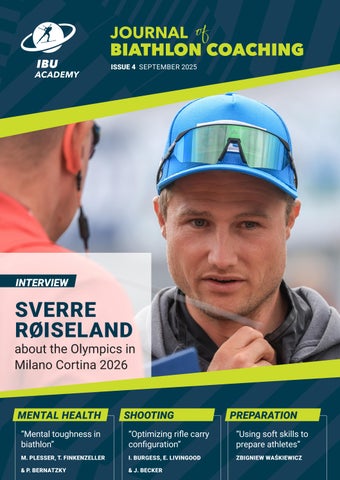
SVERRE RØISELAND
about the Olympics in Milano Cortina 2026
INTERVIEW SHOOTING
MENTAL HEALTH
“Mental toughness in biathlon”
M. PLESSER, T. FINKENZELLER & P. BERNATZKY
“Optimizing rifle carry configuration”
I. BURGESS, E. LIVINGOOD & J. BECKER
PREPARATION
“Using soft skills to prepare athletes”
ZBIGNIEW WAŚKIEWICZ
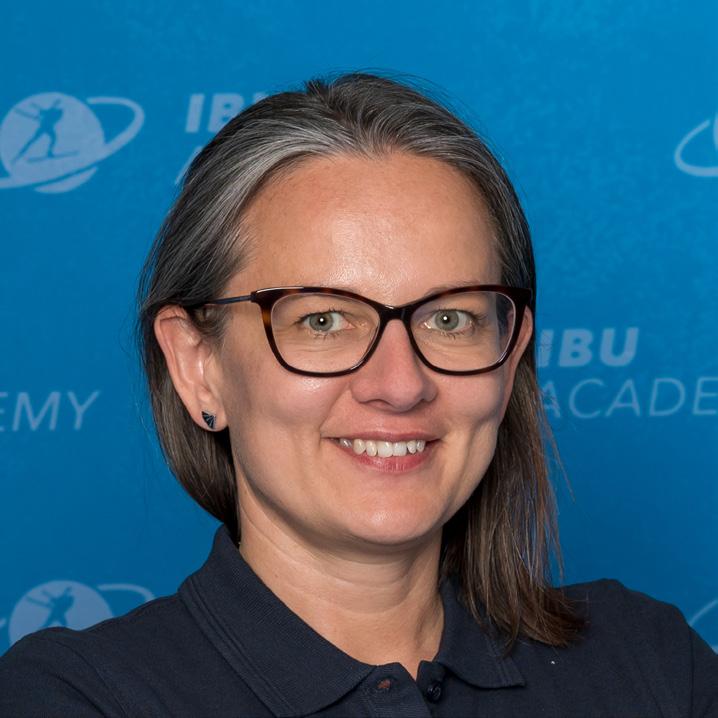
DAGMARA GERASIMUK
IBU Development Director
With this fourth edition, the Journal of Biathlon Coaching (JoBC) continues to strengthen its place within the international coaching and research community. A key step forward is the assignment of Digital Object Identifiers (DOIs), which make all contributions permanently citable and accessible, aligning JoBC with established scientific standards and securing its value for both practice and research. We are also proud to have established new university partnerships, which will help attract strong authors and ensure a vibrant flow of high-quality contributions in the future.
The journal is now available on the IAT SPONET database, and its articles are visible on Research Gate, expanding its reach and impact. This growing presence enhances JoBC’s role as a credible forum where coaches, scientists, and practitioners can share knowledge, exchange experiences and collectively advance the development of biathlon coaching worldwide.
PUBLISHER
INTERNATIONAL BIATHLON UNION (IBU)
Sonystrasse 20, 5081 Anif b. Salzburg, Austria
Telephone: +43-662-855050, www.biathlonworld.com
The IBU is an association according to Austrian law, seated in Anif b. Salzburg and registered in the Austrian Central Register of Associations with the ZVR number: 291698201.
IBU PRESIDENT Olle Dahlin
IBU VICE PRESIDENT Jiri Hamza
SECRETARY GENERAL Max Cobb
EDITOR Gerold Sattlecker
PROOFREADING JTA-Design
PICTURES Christian Manzoni, IBU Photopool, Adobe Stock
ARTWORK JTA-Design, Stefan Sporrer, dzign Rudolph Fischer
GEROLD SATTLECKER Head of
the IBU Academy
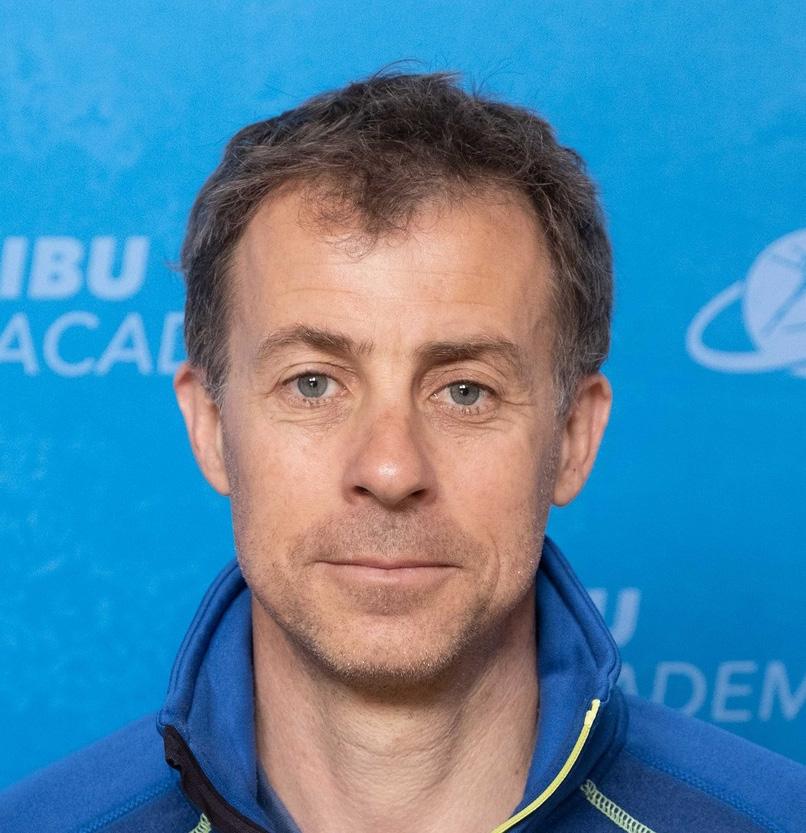
The fourth edition of the Journal of Biathlon Coaching once again offers a rich blend of scientific insight and practical expertise for both coaches and athletes. A particular highlight is the exclusive interview with German Head Coach Sverre Roiseland, who reflects on his work with the German team and shares perspectives on preparing for the 2026 Olympic Games.
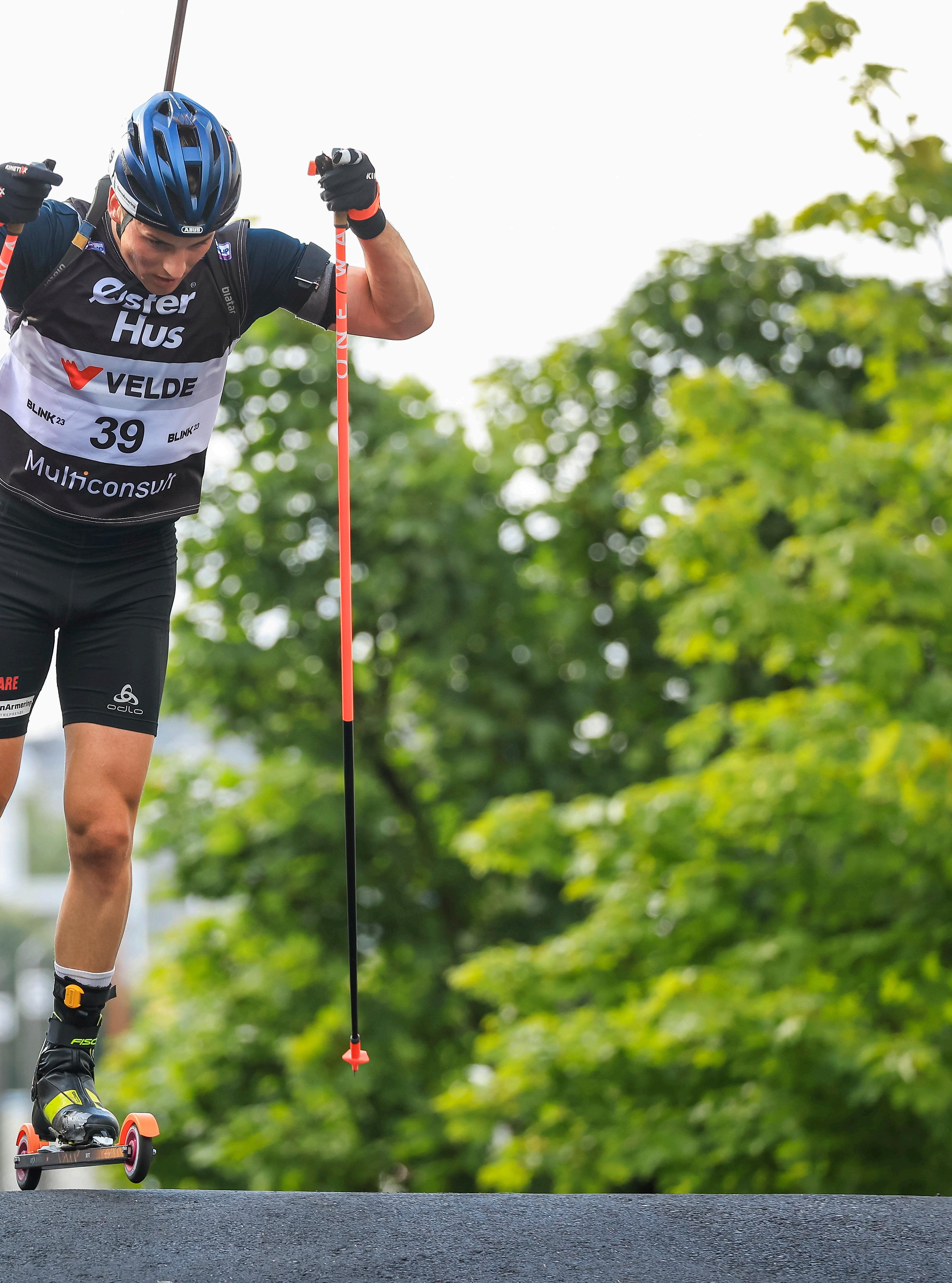
This issue also features a diverse range of research contributions:
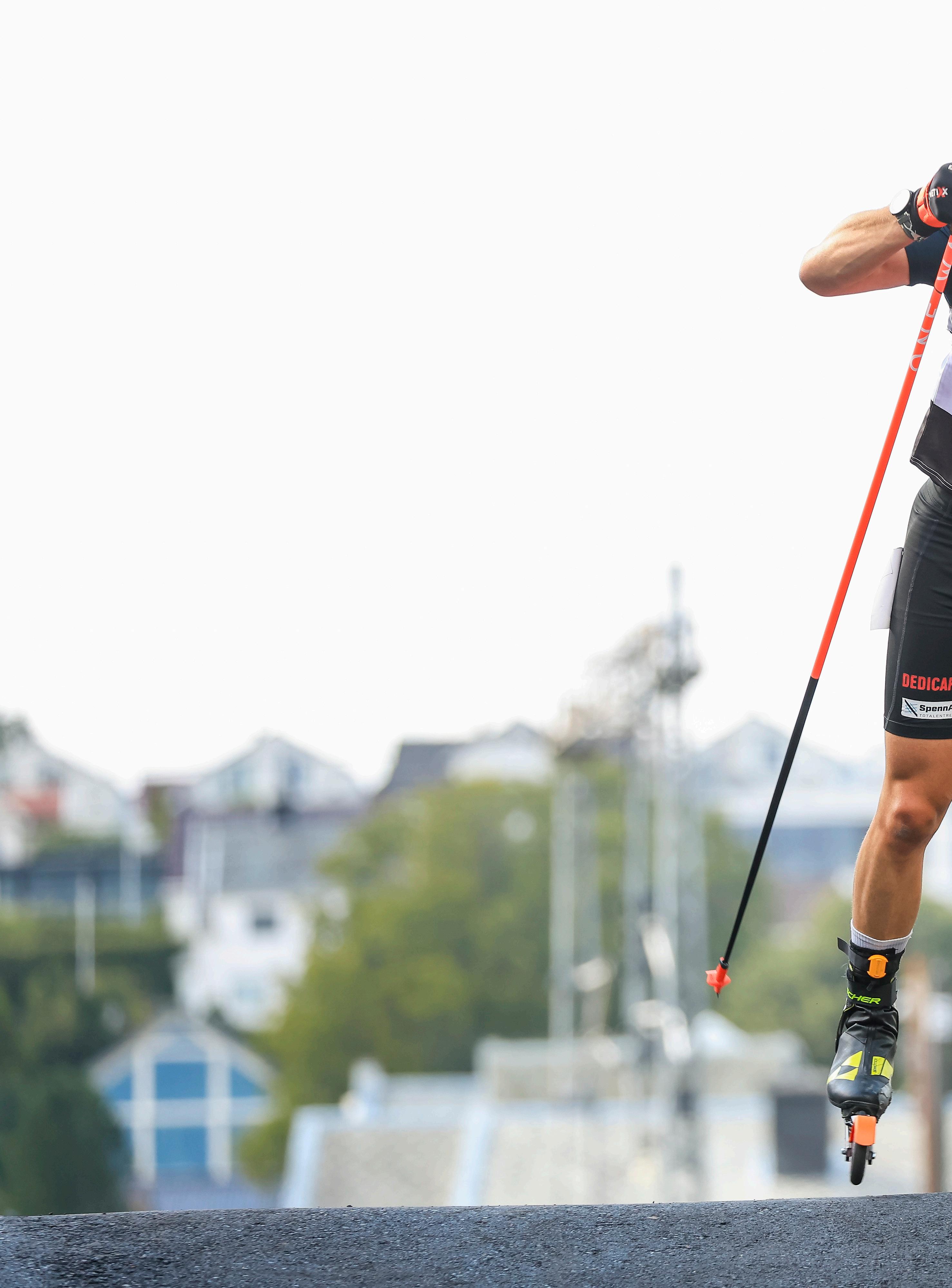
• James Becker and colleagues explore the biomechanics of optimal rifle carriage.
• Mario Plesser and his team examine the role of mental toughness and mental health in high-performance biathlon.
• Zbigniew Waskiewicz discusses the importance of coaches’ soft skills in fostering athlete development.
• Hannes Kock analyzes training approaches during the critical transition from junior to senior levels.
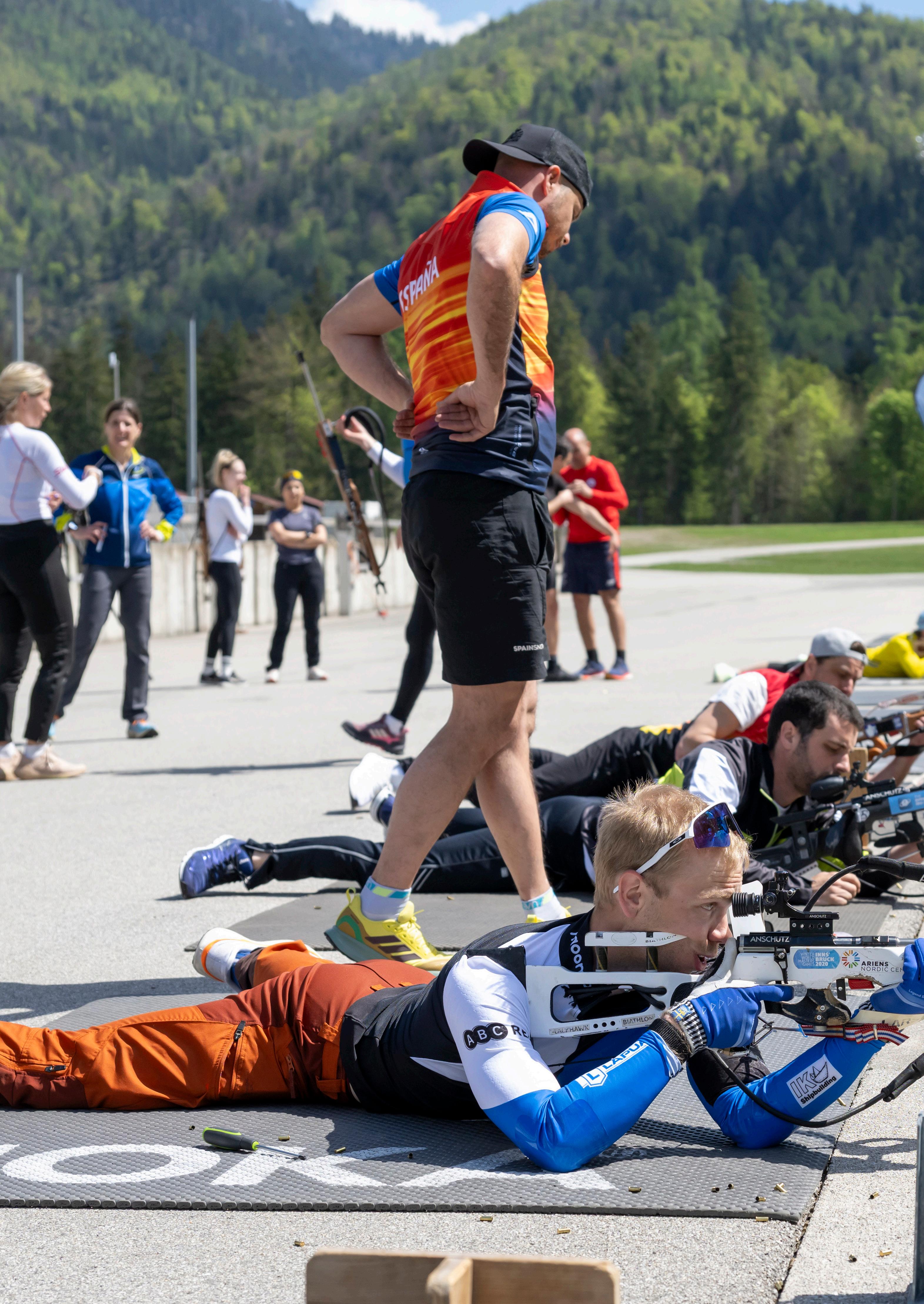
Together, these contributions provide a valuable resource for advancing both the theory and practice of biathlon coaching. They not only offer guidance for present-day training but also open new perspectives for the future development of the sport. We hope this edition inspires coaches, athletes and researchers alike to further explore, apply and expand upon the knowledge shared within these pages.
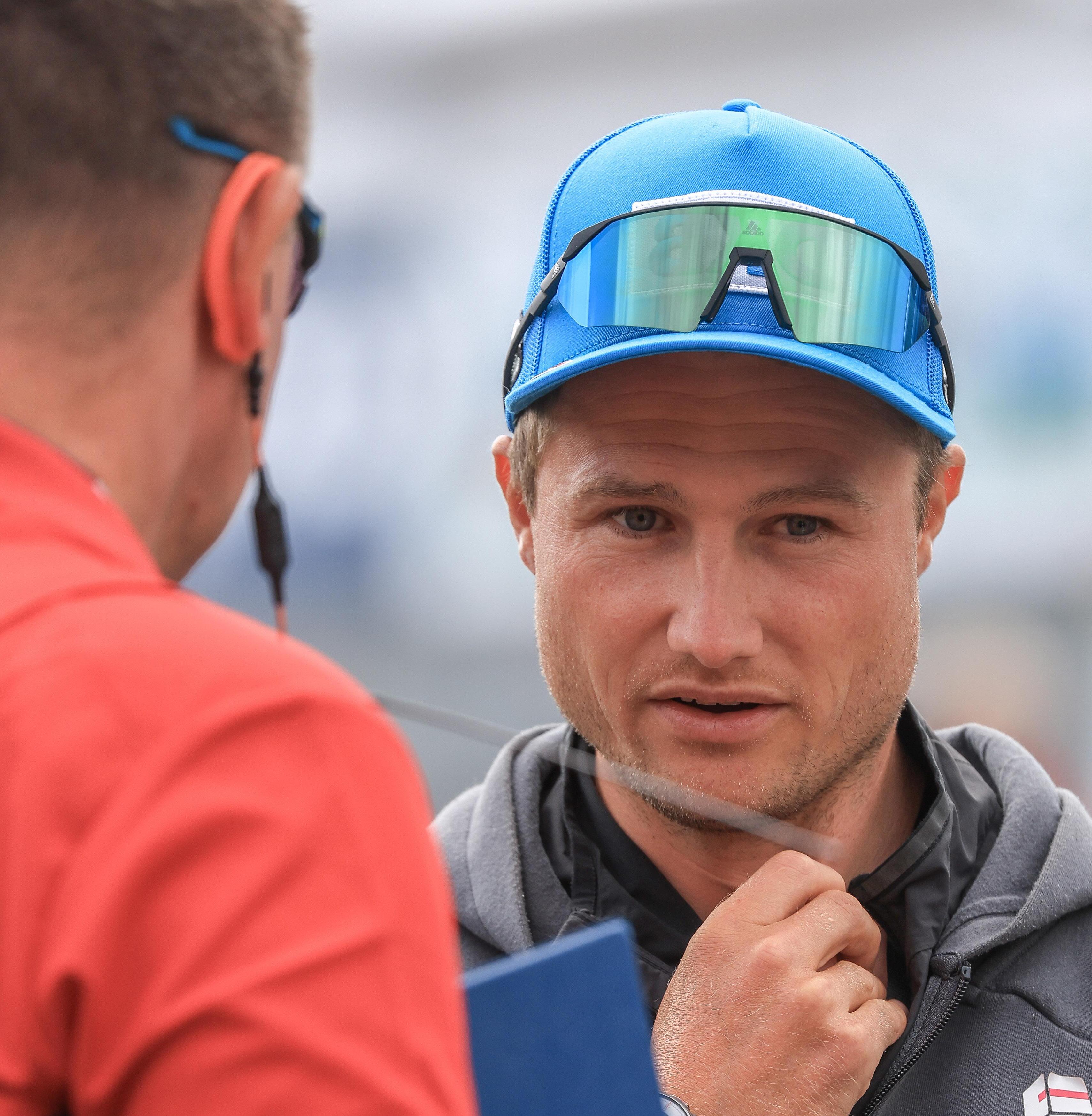
Røiseland speaks about the Olympics
MENTAL HEALTH
Mental health and mental toughness in biathlon: Practical implications from the coaches’ viewpoint
TRAINING Training progression from junior to senior levels in biathlon
HANNES KOCK
DOI: 10.71006/sgmv2318
Biathletes undergo extensive physical and shooting training to meet the unique demands of their sport. Their training emphasizes endurance at mostly low intensities, supported by strength and speed work, combined with large volumes of shooting practice performed both at rest and under physical stress. Training methods vary by individual and evolve as athletes progress from junior to senior levels, reflecting growing specialization and the increasing pace and complexity of competition. Understanding these training characteristics is essential to optimizing long-term development and performance in biathlon.
BACKGROUND
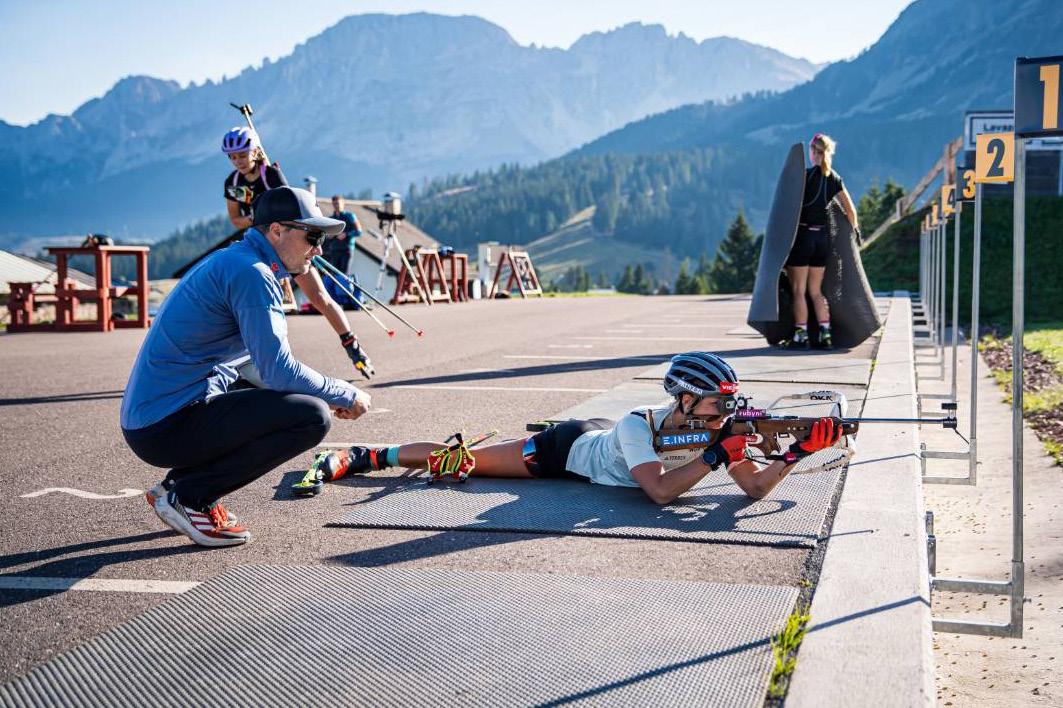
To excel in biathlon, biathletes perform extensive physical training utilizing different training modes across different training intensities. High annual training volumes (TV) with a large proportion of low-intensity training (LIT) have shown strong correlations with biathlon performance for one of the most successful male biathletes (Schmitt, Bouthiaux & Millet, 2021). Junior and senior biathletes, dependent on their age group typically allocate around 350 to 850 hours per year of their time to training, with 82% to 91% of that time spent at low intensities, 3% to 6% at moderate intensities, and the remaining 4% to 12% at high intensities (Laaksonen et al., 2018; Osborne et al., 2023; Kårström et al., 2023). Differences in annual TVs between junior and senior female biathletes have been reported to be around 11%, with a reported progression rate of 48% from junior to senior level. In contrast, the differences between junior and senior male biathletes, as well as their progression rates, are less extensively documented. Information about shooting training data from junior and senior biathletes is limited in the current literature. Junior biathletes (age 16–20) fire approximately 4,500 to 15,000 annual shots with the majority of shots (>60%) performed during precision shooting. Variations in annual shots may be attributed to the distinct training methodologies employed by different coaches. Some coaches might prioritize ski-related skills, while
others emphasize shootingspecific skills in the development of junior biathletes. In contrast, senior biathletes fire between 12,000 and 22,000 annual shots, of which 60% to 70% are performed in combination with endurance training at different intensities and modalities (skiing, roller skiing, running) and the remainder being fired at rest.
PURPOSE
Despite the larger body of literature available to describe XC skiers’ training progression, limited data is available on biathlon training characteristics. Accordingly, biathlon-specific demands may account for divergent patterns in training characteristics (volume, intensity, modality) seen in biathletes compared with XC skiers, in so far as biathletes may allocate more training time to shooting practice as well as to training using the skating technique. At the same time, the determinants of biathlon performance have changed significantly since the early 2000s, resulting in faster skiing speeds and shooting times with possible alterations in training practices to meet the evolving psychophysiological demands. Due to the continued lack of available data on training characteristics in top tier biathletes, the study aimed to retrospectively describe the annual training characteristics of tier 4/5 German junior and senior biathletes over two decades across different age groups.
Institute of Applied Training Science, University of Leipzig, Germany
METHODS AND RESULTS
Self-documented annual training data (intensity, distance, time, modality, number of shots) from 18 former elite biathletes (7f, 11m), during their respective observation periods, and who were active between seasons 1994/1995–2013/2014 were included in the study. In total, the selected athletes achieved 78 (34f, 44m) individual and 96 (31f, 65m) relay podiums in the selected events (Olympic Winter Games: 19; World Championships: 70; European Championships: 19; Junior World Championships: 56; Junior European Championships: 3; Roller Ski World Championships: 7) during the observation period. Athletes were clustered by sex into age groups (junior: 16–18 y, U23: 19–23 y, senior: >23 y) based on their age at the beginning of each new season in the data set. Total training volume (TTV) increased significantly across age groups for male biathletes only, with biathletes in the senior category engaging in 34 and 12% higher TTV compared with juniors and U23s. Endurance TV increased from junior to senior level in both male and female biathletes. The annual training intensity distribution (TID) followed a pyramidal pattern across all age groups for both male and female biathletes. The amount of total annual shots increased across age groups for male biathletes, with seniors shooting 4% and 15% more than U23s, and juniors predominantly due to a greater number of technical and in-competition shots. Although senior female biathletes performed more in-competition shots compared with juniors and U23s there were no differences in the amount of total annual shots.

PRACTICAL APPLICATION
Our data from male biathletes suggest that progressively increasing TTV through varied specific and nonspecific training, especially performed at low intensity, appears to be an important factor in long-term performance development. A high number of precision shots is crucial to improve the control of technical elements (body/rifle sway, triggering, etc.) under physical preload, in order to improve shooting accuracy during competition. However, coaches should ensure that technical shooting skills are first developed at rest before progressively introducing physical preload to ensure optimal progression of shooting skill.
CONCLUSION
The transition from junior to senior level involved different training changes between male and female biathletes, with female seniors generally underrepresented in the cohort. Male biathletes increased total training volume (TTV) by 230 hours, mainly by increasing specific training volumes (TVs), whereas there were no differences in TTV between female biathletes from junior to senior level. The progressive increase in TTV was typically achieved by increasing endurance TV, increasing low-intensity training, and progressively increasing the number of competitions per year to transfer skills developed during training into race performance. The number of precision shots was similar across all age groups, highlighting the continued importance of technical shooting training at rest.
ABOUT THE AUTHOR: HANNES KOCK
Hannes Kock currently works as an exercise physiologist at the Institute of Applied Training Sciences in conjunction with the German national biathlon team and is a PhD candidate at Mid Sweden University. His research focuses on unravelling the relevant determinants of biathlon performance on a macro- and microscopic level.
References: Kårström A, Laaksonen MS, Björklund G. School’soutforsummerdifferences in training characteristics between adolescent biathletes of different performance levels. PLoS One. 2023;18(8):e0290408.
Laaksonen MS, Jonsson M, Holmberg HC. The Olympic biathlonrecent advances and perspectives after pyeongchang. Front Physiol. 2018;9:796.
Osborne JO, Solli GS, Engseth TP, et al. Annual volume and distribution of physical training in Norwegian female cross-country skiers and biathletes: a comparison between sports, competition levels, and age categories—the FENDURA project. Int J Sports Physiol Perform. 2023:19(1):19–27.
Schmitt L, Bouthiaux S, Millet GP. Eleven years’ monitoring of the world’s most successful male biathlete of the last decade. Int J Sports Physiol Perform. 2021;16(6):900–905.
INTERVIEW
Sverre Røiseland speaks about the Olympics Milano Cortina 2026
GEROLD SATTLECKER
IBU Development Department, Head of IBU Academy
DOI: 10.71006/hunx8891
In this interview, Sverre Røiseland shares his experiences as a biathlon coach in Germany, highlighting cultural and coaching differences between Germany and Norway. He explains how he manages a female team with both young athletes and experienced stars like Franziska Preuss. Sverre covers key topics such as training organization, media engagement, and Olympic preparation, stressing the importance of team health and mental focus. He also reflects on how integrating new coaching approaches within the structured German system helps foster a supportive environment aimed at success in major competitions.
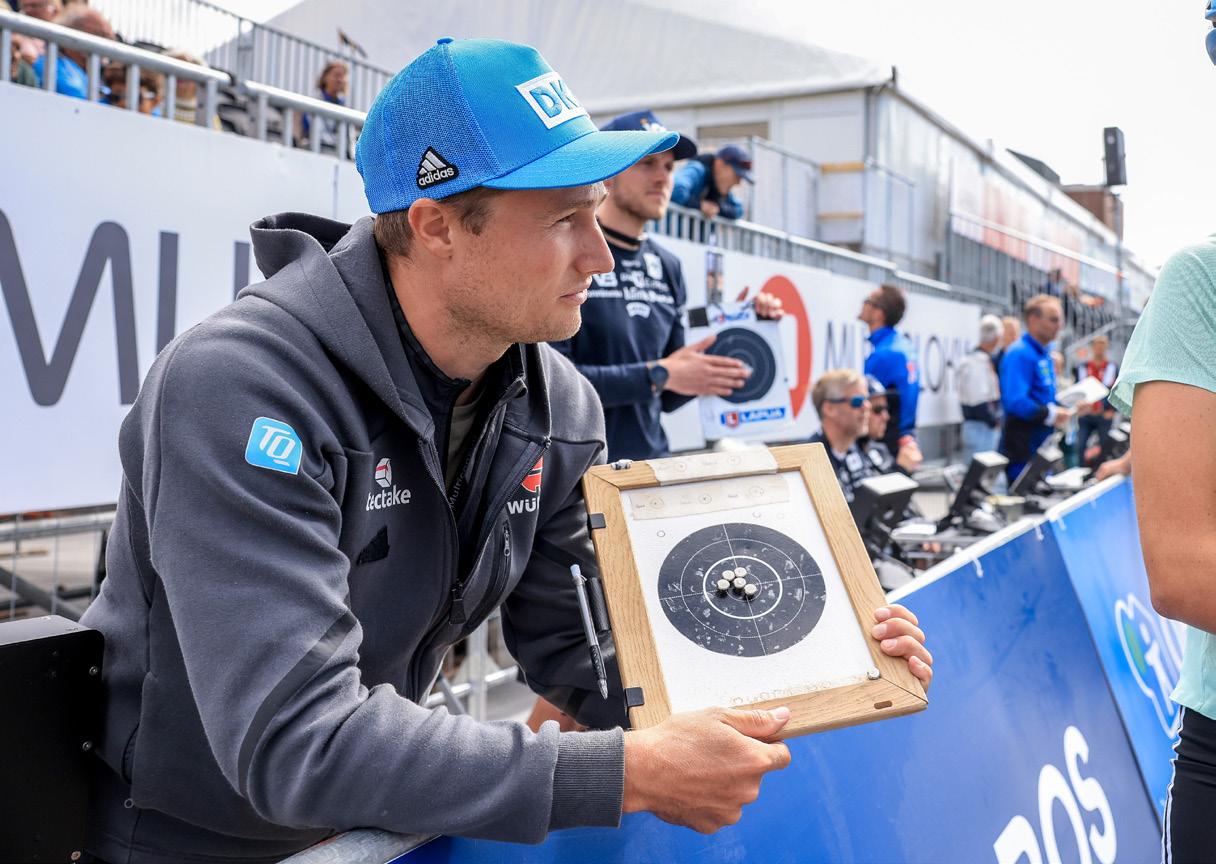
1. When you were hired to be a coach in Germany, what differences in the coaching approach and cultural differences did you observe?
Germany is a larger country and the training system here is very structured. In Norway, athletes are often responsible for their training outside of camps, whereas in Germany you have coaches present every day, offering feedback and support. Both systems have their strengths - some athletes do better with the independence of the Norwegian model, others with the daily guidance of the German one. In the end, becoming world-class depends on taking responsibility, believing in your own training, and finding inner motivation, not just following what a coach tells you.
2. How did you manage to handle different athletes, like young newcomers and a superstar like Franziska Preuss in the team, in terms of the training itself, but also when it comes to the different lifestyles they may have?
As a relatively young coach with 11 years of experience, I‘ve noticed the dynamics change within teams. In Norway, teams tended to be made up of athletes closer in age, but the German team has a wide range, from a new generation of young athletes to more experienced ones like Franziska. This age gap requires different training systems and coaching philosophies. With younger athletes, it’s important to teach them about training and equip them with tools they’ll need later. For the experienced athletes, it’s about trusting what has worked, making adjustments, and acting more as a guide or sparring partner rather than dictating every step. Coming from Norway, I brought fresh ideas but also learned a lot from the German system. Coaching is always a two-way learning process between athletes and coaches, working together to find the best approach. That’s what builds a strong team and strong athletes.
3. What are the main differences in the media appearance of biathlon in Norway and Germany?
Biathlon and the media have a mutual relationship - they need each other. In Norway, when I was coaching the B-team, media attention was limited, but in Germany, media interest is much bigger, especially with a new coach involved. German media focus heavily on results and performances, while Norwegian media also cover this but tend to generate more sensational content online to attract clicks. Norwegian media also show strong interest in Norwegian coaches working abroad, including in Germany, Poland, and Finland. In general, athletes need the media, but how much they engage is up to them. If they create big stories, they’ll face more questions and media time. Some find media involvement positive, others find it draining, so it’s important that each athlete handles it their own way.
4. Which are the main fields you focus on regarding the preparation for the Olympics?
This year’s team has a wide range of experience, from Franziska, who competed in the 2014 Sochi Olympics, to younger athletes just starting out. It’s challenging to balance focusing on this year’s Olympics while also preparing for future Games. Young athletes often fixate on the Olympics as their only goal, which can distract them from steady development in training and skills like skiing technique and shooting. We try to keep Olympic races feeling as normal as possible, preparing with specific sessions and altitude camps to handle the physical and shooting demands of the courses. Experience helps - older athletes manage altitude and training differently, relying more on season preparation and past knowledge, while younger ones need more guidance and adaptation to these challenges.
5. What do the last 6 weeks before the Olympics look like?
It’s a good question. Not everything is fixed, but certainly some athletes need to compete shortly before the Olympics because too much time between the last competition and the Games is not ideal. Others might skip some World Cups to focus on the Olympics. The main goal is to be fully prepared, not just skiing fast, but also being mentally ready, especially for shooting where the right tension and focus matter. Athletes need to be fresh both mentally and physically. We have a plan but we stay flexible, adjusting based on how tired or sick athletes are as the season progresses. We aim to have not just the four Olympic spots filled but five or six athletes in peak condition ready to compete.
6. How do you manage to keep your team healthy, physically and mentally?
The athletes who have pre-qualified for the first World Cups have it easier because they don’t need to go through qualification and can focus fully on preparation. For those who must qualify, there’s a lot of pressure leading up to it. A key challenge is avoiding peaking too early in the season, especially before Christmas, since maintaining top form through the season and into the Olympics is crucial. Athletes also need to learn how to manage breaks, like the Christmas period, to recover mentally and physically without overtraining or losing fitness. Sometimes skipping races is necessary to stay healthy and peak at the right moment. It’s tough for athletes who want to be in top shape all the time, but understanding and accepting this strategy builds confidence and helps them perform when it counts the most.
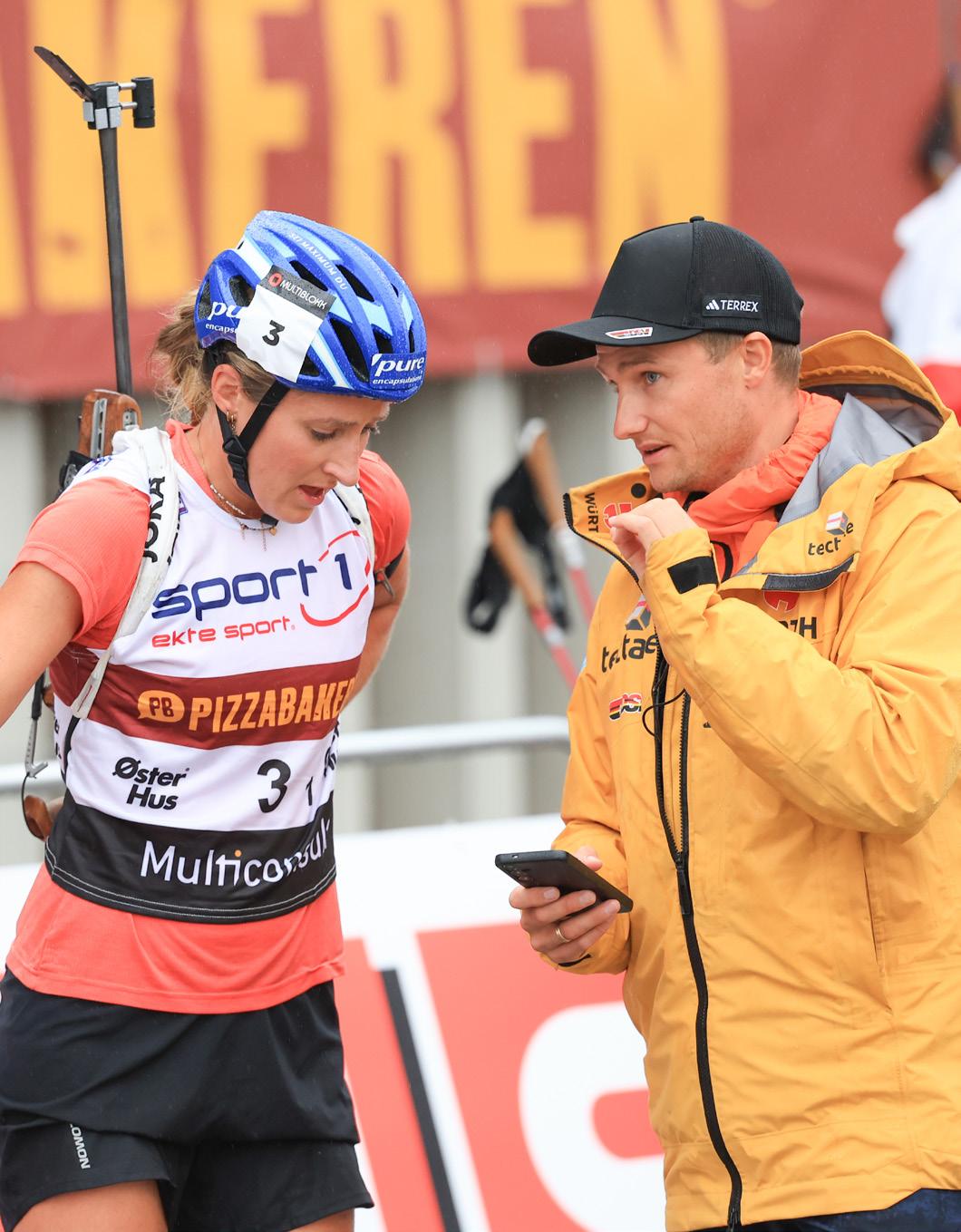
INTERVIEW
7. How do you keep a good atmosphere in the team during the Olympics?
I’ve never been to the Olympics before, this will be my first time as a coach as well. My colleagues and I are focused on keeping things normal, not trying to do anything special or different. What really matters is all the work we’ve done in the months leading up to the Games. At the Olympics, it’s about trusting that preparation, building confidence and focusing on positives rather than trying something new. Creating a good team atmosphere is important, having good food, cheering from the support staff, and managing training smartly around competitions. Even reserves play a key role by supporting their teammates, staying positive, and being ready to step in if needed. There’s always pressure during championships, and problems can happen, but handling them together as a team is crucial. The key is to trust the process, trust yourself, enjoy the experience and stay focused.
8. How do you deal with the altitude in Antholz?
We plan to stay at altitude because if it were just one race or a single weekend, staying at lower altitude might work fine. But for us, given our training background, preparing for a championship at altitude is different. Being at altitude before the Olympics helps athletes prepare physically and mentally. At the Games, we will stay at high altitude very close to the biathlon stadium. This allows the body to adapt to changes in altitude, which is important for achieving good results at the Olympics.
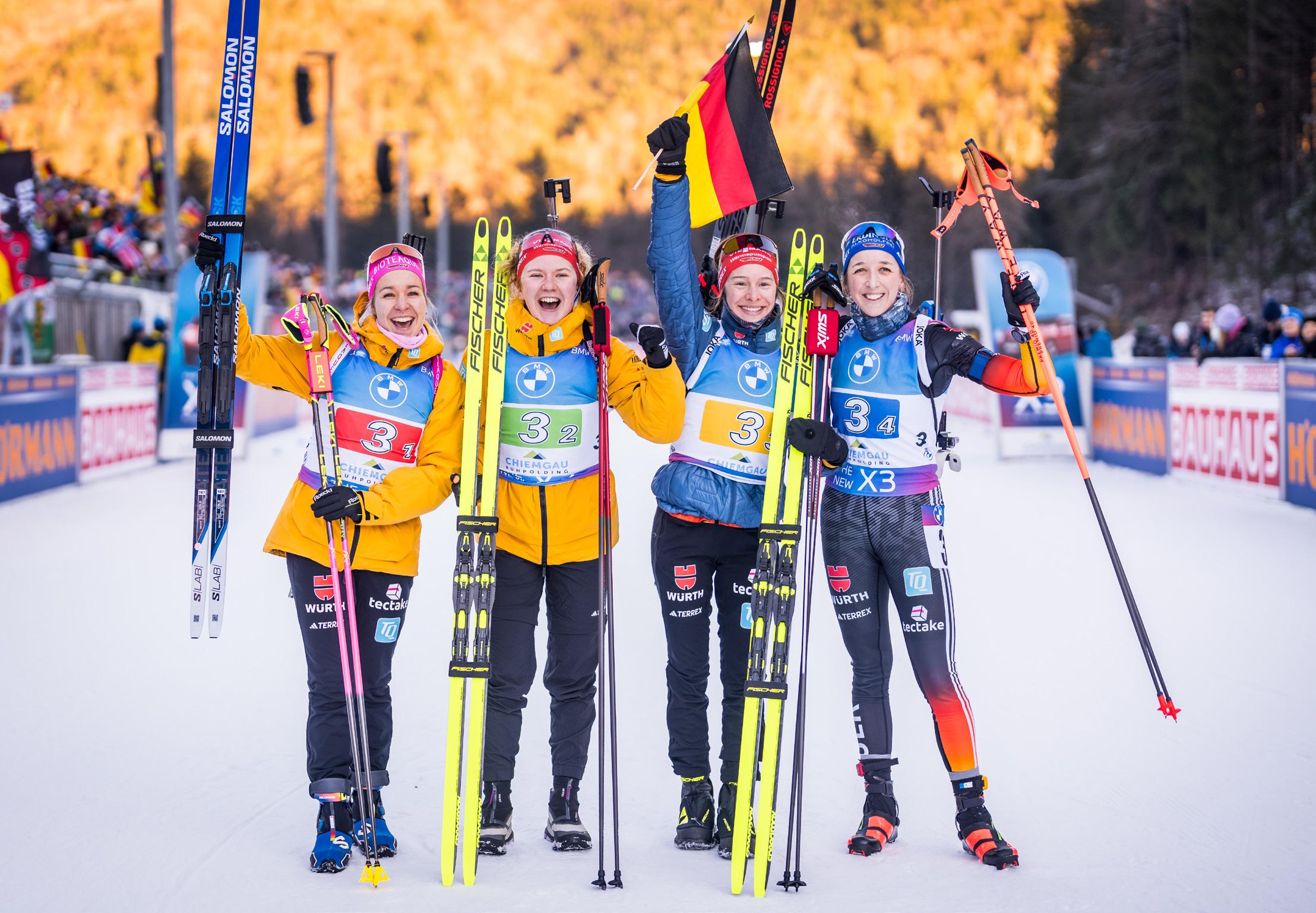
9. What are your expectations for the Olympics?
First of all, I hope and expect that we will deliver our best performance at the Olympics by working together on a solid plan focused on our main goal: winning Olympic races. The whole team is motivated and ready to work hard toward the Games. It’s hard to predict medals because we can only control our own performance, not what others do.
Franziska Preuss is not the only one who can fight for a medal. We have strong athletes like Selina Grotian, Juliane Frühwirt, Sophia Schneider, Vanessa Voigt, and Janina Hettich-Walz returning after her maternity break. If everything goes well and the athletes fight hard for their spots, I believe we’ll be well prepared. A medal in the relay is the main goal for me as a coach and for the team, while each athlete also has their own individual goals. Above all, I expect us to be prepared and to enjoy the Olympic experience.
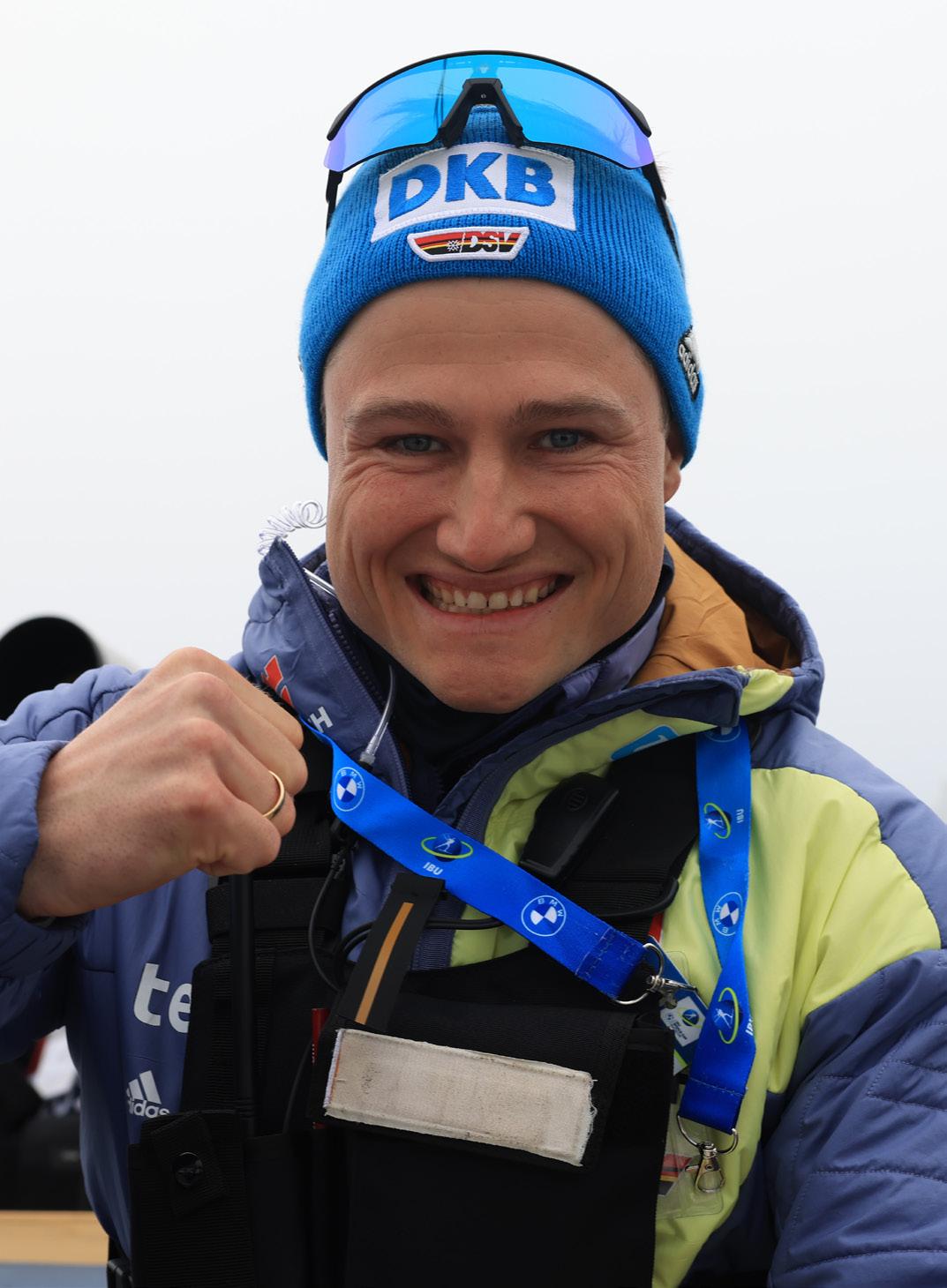
Click here to watch the full interview with Sverre Røiseland.
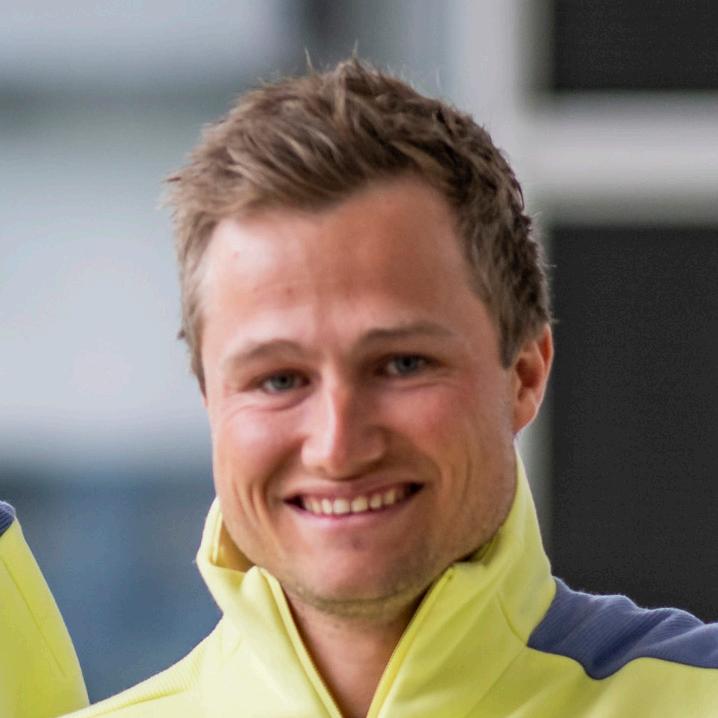
Sverre Olsbu Røiseland (born 1990 in Kvinesdal, Norway) is a former biathlete and current coach of the German women’s national biathlon team. After ending his competitive career in 2014 due to health issues, he coached Norway’s women‘s development team before joining the German Ski Association in 2022.
MENTAL HEALTH
Mental health and mental toughness in biathlon: Practical implications from the coaches’ viewpoint
MARIO PLESSER 1, THOMAS FINKENZELLER 2 & PATRICK BERNATZKY 3
1Department of Elective Subjects and Psychology, University of Salzburg, Austria
2Department of Sport and Exercise Science, University of Salzburg, Salzburg, Austria
3Department of Sports Science and Psychophysiology, University of Salzburg, Salzburg, Austria
DOI: 10.71006/vxyb8596
In the high-pressure domain of competitive sport, biathletes are recognized for their exceptional physical capabilities and mental toughness. However, increasing awareness of mental health challenges among elite athletes has prompted a critical examination of the dynamic interplay between mental toughness and mental health in sustaining long-term athletic success (Gucciardi, Hanton, & Fleming, 2017). While closely interrelated, these constructs represent distinct domains that necessitate differentiated and individualized approaches in the psychological support and care of athletes. Understanding this distinction is essential for developing holistic performance models that prioritize both competitive excellence and athlete well-being.
DEFINITION OF THE CONSTRUCTS
Mental health refers to an individual‘s emotional, psychological and social well-being. It affects how athletes think, feel and behave, and influences how they handle stress, relate to others, and make choices. Mental health challenges in sports can include anxiety, depression, burnout and trauma, often exacerbated by the pressures of competition and public scrutiny (Mack, Baron, & Reinert, 2023).
Mental toughness is a psychological edge that enables athletes to cope better than their opponents with the demands of sport. It includes traits such as confidence, resilience, focus and the ability to perform under pressure (Shapiro, 2021).
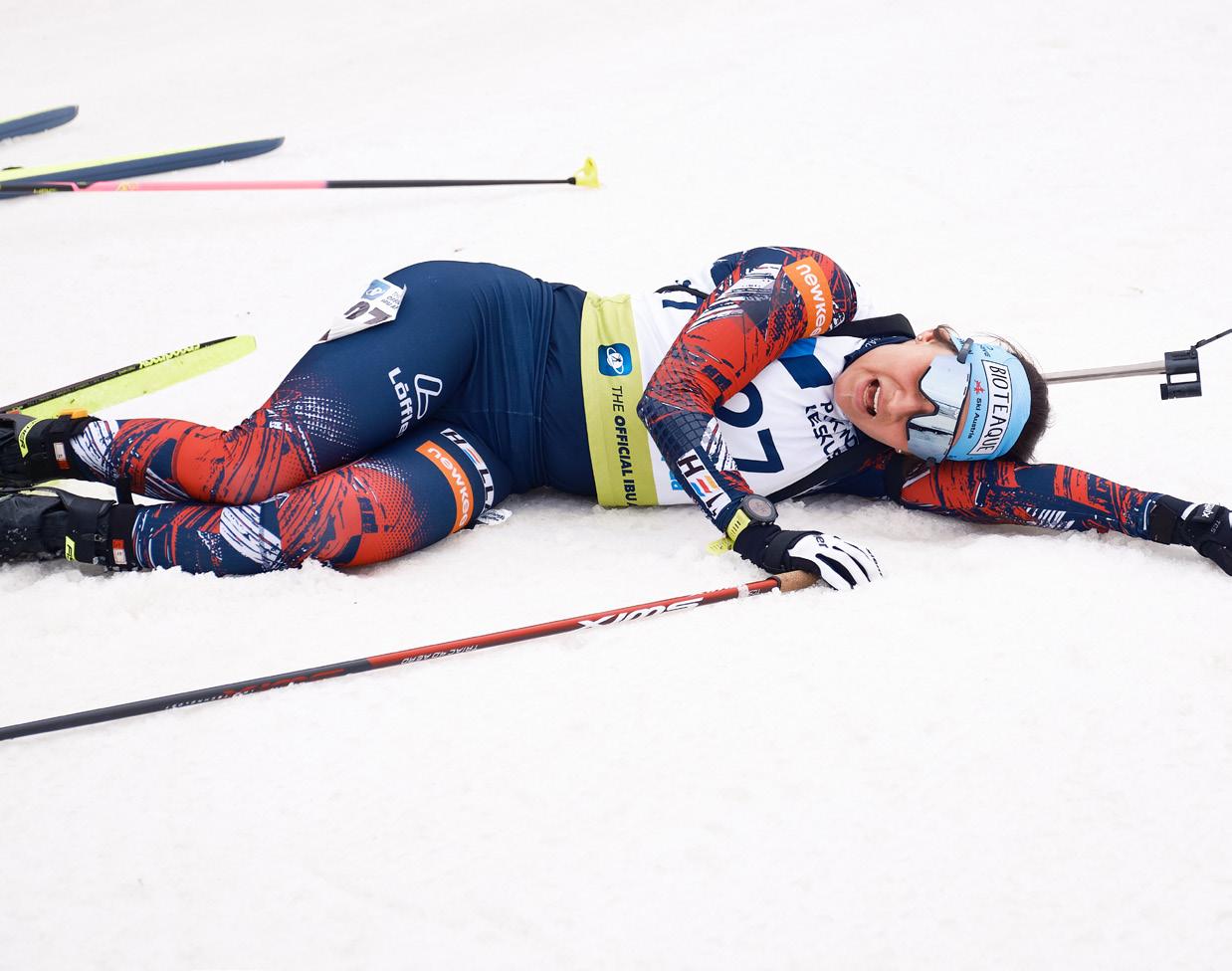
THE INTERPLAY: CAN YOU BE TOUGH AND UNWELL?
Mental toughness is often portrayed as a shield against mental health issues. However, research suggests that it does not protect athletes from psychological distress. In fact, athletes may use toughness to mask or suppress these issues, thereby delaying seeking help (Shapiro, 2021).
THE RISK OF MISINTERPRETATION
A recent meta-analysis by Hsieh et al. (2024) found that while mental toughness is moderately to strongly associated with
athletic performance (r = .36), it does not necessarily predict mental well-being. This distinction highlights a critical concern: the glorification of mental toughness may inadvertently discourage athletes from acknowledging psychological vulnerability. This „tough it out“ mentality can contribute to the underreporting of mental health issues and exacerbate conditions like anxiety, depression or burnout. It is therefore essential that coaches and sport organizations avoid conflating mental toughness with emotional invulnerability. Despite exhibiting considerable mental toughness and focus in competitive settings, athletes may still experience pronounced psychological distress in non-sporting contexts.
CREATING MENTALLY HEALTHY AND TOUGH SPORTING ENVIRONMENTS
The most effective elite sport environments foster both mental health and mental toughness.
This requires:
• Encouraging open dialogue to reduce stigma.
• Providing access to clinical psychological care.
• Providing performance-focused mental skills training.
• Promoting help-seeking as a strength.
Mental Health (Word Health Organization)
A state of mental well-being
It is a basic human right, it is more than the absence of mental disorders, it exists on a complex continuum
Realize their abilities
Learn well and work well
Cope with stresses of life
Contribute to their community
It is crucial for coaches and sport professionals to distinguish between mental health and mental toughness (Markser, & Bär, 2019). Misinterpreting psychological distress as a lack of resilience can lead to inadequate support. Accurate recognition of whether an athlete’s behavior reflects mental illness or challenges in mental toughness is vital for effective care and communication.
While mental toughness enhances performance and can be developed through psychological training, mental illness such as depression, anxiety or burnout can severely impair daily functioning and lead to serious consequences, including career disruption or suicide.
All stakeholders must acknowledge the presence of mental disorders in elite sport and that mislabeling symptoms as weakness can be harmful. Therefore, mental health literacy, clear support pathways, and integration of qualified professionals (e.g., psychologists, psychotherapists, psychiatrists) are essential. Figure 1 outlines key distinctions between mental health and mental toughness.
Mental Toughness
Competition readiness
Four Cs: confidence, control, commitment and challenge
Confidence: an athlete´s belief in one´s ability
Control: an athlete takes control and responsibility for the situation
Commitment: an athlete involves fully and with maximum effort
Challenge: stressful situations are seen by the athlete as a challenge and not as a threat
Figure 1. Differences between mental health and mental toughness.
MENTAL HEALTH
REFRAMING MENTAL HEALTH AS A PERFORMANCE ASSET
Recent literature emphasizes reframing mental health care in elite sports, not as a remedial or crisis-driven intervention, but as a legitimate and proactive performance enhancement strategy (Mack, Baron, & Reinert, 2023). This conceptual shift positions psychological support as integral to optimizing athletic performance, helping to reduce stigma and encouraging athletes to seek assistance without fear of being perceived as mentally weak or unfit for competition.
INTERVENTION STRATEGIES FOR ATHLETES, COACHES AND STAFF
The Mental Health in Sport (MHS) action plan (Sebbens et al., 2016), often applied in athlete-centered interventions, can be equally beneficial for coaches themselves. By adopting this structured, four-step approach, coaches can proactively identify, address and manage early signs of mental distress, thereby fostering a culture of psychological safety and resilience within the broader high-performance ecosystem. Before implementing an intervention plan, it is important to recognize that not every observable symptom such as reduced appetite, sadness or fear, necessarily indicates a mental disorder. These may represent normal, context-appropriate responses. However, if such symptoms persist or begin to interfere with daily
functioning, further steps should be considered. Figure 2 presents the Mental Health in Sport (MHS) plan, which outlines a four-step approach: Recognize, Reach out, Refer, Remain supportive.
The MHS action plan highlights the important role coaches should take in early interventions and the prevention of the development of mental illnesses. Coaches are closest to the athletes through their often daily contact and therefore may be the first to notice changes in behavior and have the opportunity to intervene.
CONCLUSION
Recognizing mental health and mental toughness differences and synergy is key to building healthier, more sustainable athletic careers. While awareness of mental health in elite sports is growing, full integration of support systems such as training programs, workshops and mental health professionals, remains limited. Embedding these resources into high-performance environments, alongside secure, calming structures and nonviolent communication practices, can foster both mental well-being and mental toughness. This synergistic approach has the potential to boost mental toughness and improve overall well-being, contributing to sustained peak performance in elite sports.

ABOUT THE AUTHOR: MARIO PLESSER
Mario Plesser studied education, elective subjects and psychology at the Paris Lodron University of Salzburg (PLUS). Trained as a systemic family therapist (ÖAS) and further trained in clinical hypnosis according to Milton Erickson (MEI Innsbruck). Currently working as a sports psychologist at the Salzburg Olympic Center Rif and in his own practice.
ABOUT THE AUTHOR: THOMAS FINKENZELLER
Thomas Finkenzeller is an Associate Professor at the Department of Sport and Exercise Science at the University of Salzburg, Austria. His research interests include psychophysiology in sport, executive functioning in sport, and sport psychological diagnostics. He is currently leading a research collaboration with the Austrian Network of Sport Psychology, fostering a bidirectional exchange between science and practice.
ABOUT THE AUTHOR: PATRICK BERNATZKY
Patrick Bernatzky studied sports science and psychophysiology and works in the Sports Psychology group at the Department of Sport and Exercise Science at the University of Salzburg. He is the Managing Director of the Austrian Federal Network for Sports Psychology (ÖBS) and has been supporting Austrian athletes in various sports as a mental coach for over 25 years.
References: Gucciardi, D. F., Hanton, S., & Fleming, S. (2017). Are mental toughness and mental health contradictory concepts in elite sport? A narrative review of theory and evidence. Journal of science and medicine in sport, 20(3), 307-311.
Hsieh, Y. C., Lu, F. J., Gill, D. L., Hsu, Y. W., Wong, T. L., & Kuan, G. (2024). Effects of mental toughness on athletic performance: a systematic review and meta-analysis. International Journal of Sport and Exercise Psychology, 22(6), 1317-1338.
Mack, A. A., Baron, D., & Reinert, J. (2023). The role of mental health care in reaching optimal performance in sports. Sports Psychiatry: Journal of Sports and Exercise Psychiatry, 2(4), 121–123.
Markser, V. Z. & Bär, K.-J. (2019). Seelische Gesundheit im Leistungssport. Grundlagen und Praxis der Sportpsychiatrie. Stuttgart: Schattauer. Sebbens, J., Hassmen, P., Crisp, D. & Wensley, K. (2016). Mental Health in Sport (MHS): Improving the Early Intervention Knowledge and Confidence of elite Sport Stuff. Frontiers in Psychology, 7, 1 -9.
Shapiro, J. (2021). Sport psychology, peak performance and athletes’ mental health. American Psychological Association Podcast. Retrieved at: https:// www.apa.org/news/podcasts/speaking-of-psychology/sport-mental-health (20.07.2025)
SHOOTING Optimizing rifle carry configuration
ISAAC BURGES, ETHAN LIVINGOOD & JAMES BECKER
Department of
Food Systems, Nutrition and Kinesiology, Montana State University, Bozeman MT, USA
Biathlon is a demanding winter sport that combines cross-country skiing with rifle shooting, requiring athletes to carry a rifle of at least 3.5 kg on their backs throughout the race. This added load creates unique physiological and biomechanical challenges, affecting energy use and movement patterns in ways distinct from traditional skiing. Despite its importance, there is limited research on how different ways of carrying the rifle, such as its position or harness tightness, impact performance. Our study aims to fill this gap by exploring how subtle changes in rifle carriage affect the physical and biomechanical demands of biathlon skiing, offering insights that could enhance training and competition strategies.
BACKGROUND
How modifying each of these parameters influences the physiological and biomechanical responses to skiing is largely unknown. One theoretical modeling study suggested that carrying the rifle tight and low on the back would be most efficient by minimizing the mechanical power needed to move the athlete-rifle system. However, to date there is no experimental evidence supporting this recommendation, and it does not consider how propulsion is created while skiing. Figure 1 shows how the propulsive forces during skiing are generated. From this it can be seen moving the rifle higher on the back would result in more propulsive force, and thus greater efficiency. In terms of harness tightness, again there is no experimental evidence in the literature supporting a tight or loose harness, however arguments can be made for each. A tight harness would minimize movements of the rifle relative to the body. However, from a dynamical systems perspective, a loose harness might provide more options for the athlete to explore while trying to find the most effective combinations of movement to optimize their technique. DOI:
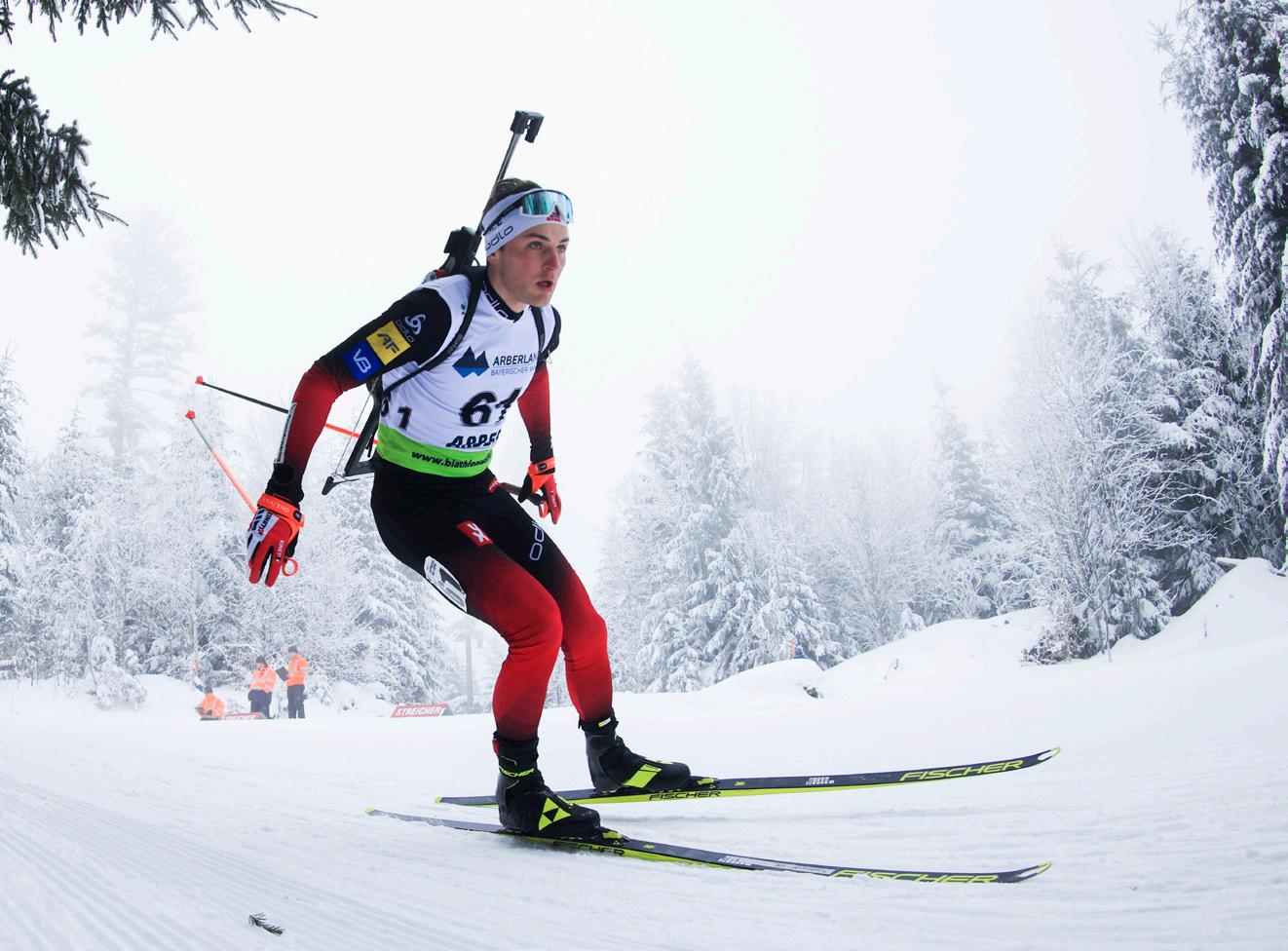
One factor that differentiates skiing during biathlon competitions from traditional cross-country skiing is that during races biathletes must always carry a rifle on their back. The International Biathlon Union (IBU) competition rules dictate the minimum mass of the rifle as 3.5 kg. Numerous studies have shown that carrying this extra mass has negative effects on skiing physiology and biomechanics (see recommended reading list). This raises the question of whether anything can be done to offset these effects? One possible solution might be to perform a higher percentage of ski training while carrying a rifle. However, the only study to date that has examined this topic found that a group that performed a greater percentage of training wearing a rifle did not show greater physiological improvements than a group who did not wear the rifle as frequently. If simply wearing the rifle more does not offset the negative effects of the added mass, then perhaps coaches should consider manipulating how the athlete carries the rifle? In this context there are two parts of the rifle which could be manipulated: the attachment of the top of the harness to the rifle stock and the length of the harness bungee.
Changing these parameters would change the position of the rifle on the athlete’s back or change the tightness of the harness.

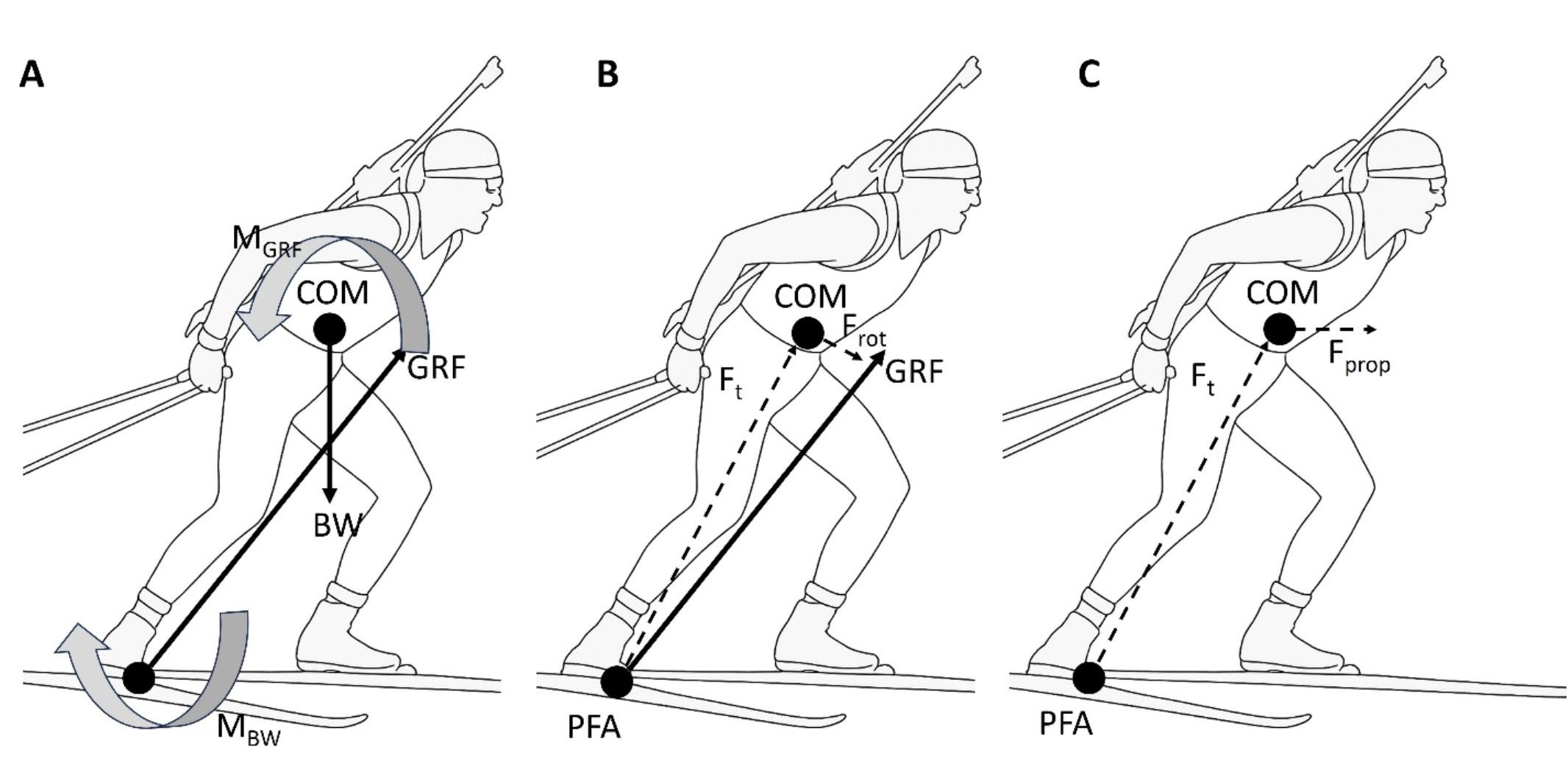
Figure 1. Illustration of the forces acting on the skier, adapted from Göpfert et al. (2017).
A: The center of mass (COM) is located anterior to the point of force application at the feet (PFA), thus creating a clockwise moment (MBW). This must be resisted by the ground reaction force (GRF) passing anterior to the COM, thus creating a counter-clockwise moment (MGRF).
B: The GRF can be decomposed into components parallel (Ft) and perpendicular (Fro) to the vector connecting PFA and COM. Frot creates the MGRF while Ft translates the COM.
C: Fprop is the component of Ft which points in the direction of skiing and accelerates the COM in the direction of skiing. Similar decomposition can be performed for the poling forces to obtain the total propulsive force accelerating the skier in direction of travel.
OUR STUDY
Given the lack of literature in this area, and the fact that theoretical arguments can be made for multiple rifle carrying configurations, we designed a study to examine the effects of manipulating both rifle position and harness tightness. Sixteen biathletes from a combination of the US National Team and a local elite club participated in the study. All participants had international competition experience at either World, IBU, or Junior Cup levels. On day one participants completed an incremental treadmill protocol to determine VO2 peak, and an approximate “race pace” speed which corresponded to 90% VO2 peak. On day two they skied three-minute bouts at this speed using five different rifle carry configurations: their habitual setup, the rifle high or low, and harnesses tight or loose (Figure 2). A distance of ten percent of the athlete’s torso length was used to move the harness attachment up or down, and tighten or loosen the bungee, all from the athlete’s habitual position. Each condition was followed immediately by a simulated dryfire shooting bout in the standing position.
During the trials respiratory parameters were measured using a wearable metabolic cart, whole body and cycle kinematics measured using 3D motion capture, and forces against the ski measured using inboot plantar pressure insoles. The time spent getting into and out of shooting position was also assessed using high speed video. Finally, athletes completed a survey of their perceptions of the different configurations.
The results showed carrying the rifle high on the back with a tight harness on average reduced oxygen consumption by 5% compared to the habitual condition while also increasing skiing efficiency by 6%. The increased efficiency in the high and tight condition was likely due to changes in skiing biomechanics. Compared to baseline, the high and tight condition showed a greater shoulder range of motion including a more flexed shoulder at pole plant and more torso range of motion while poling. In the lower extremity the high and tight condition resulted in a higher vertical excursion of the whole body center of mass, and less hip abduction during the preloading phase, changes which allowed athletes to apply greater overall and propulsive forces to the skis. Combined, these biomechanical
SHOOTING
changes suggest athletes could apply force more effectively through the poles and skis.
Thus, there were also longer cycle lengths and reduced cycle rates in the high and tight condition compared to the baseline condition, biomechanical variables which numerous studies have observed in faster and more efficient skiers. The tightness of the harness in the high tight condition had
no impact on shooting times. However, the survey results showed athletes clearly perceived the differences in the conditions. Interestingly, however, there was no consensus among the athletes as to which condition was best or worst for performance. In fact, for most athletes, the condition which they reported as feeling most efficient was not actually most efficient based on the physiological or biomechanical responses.
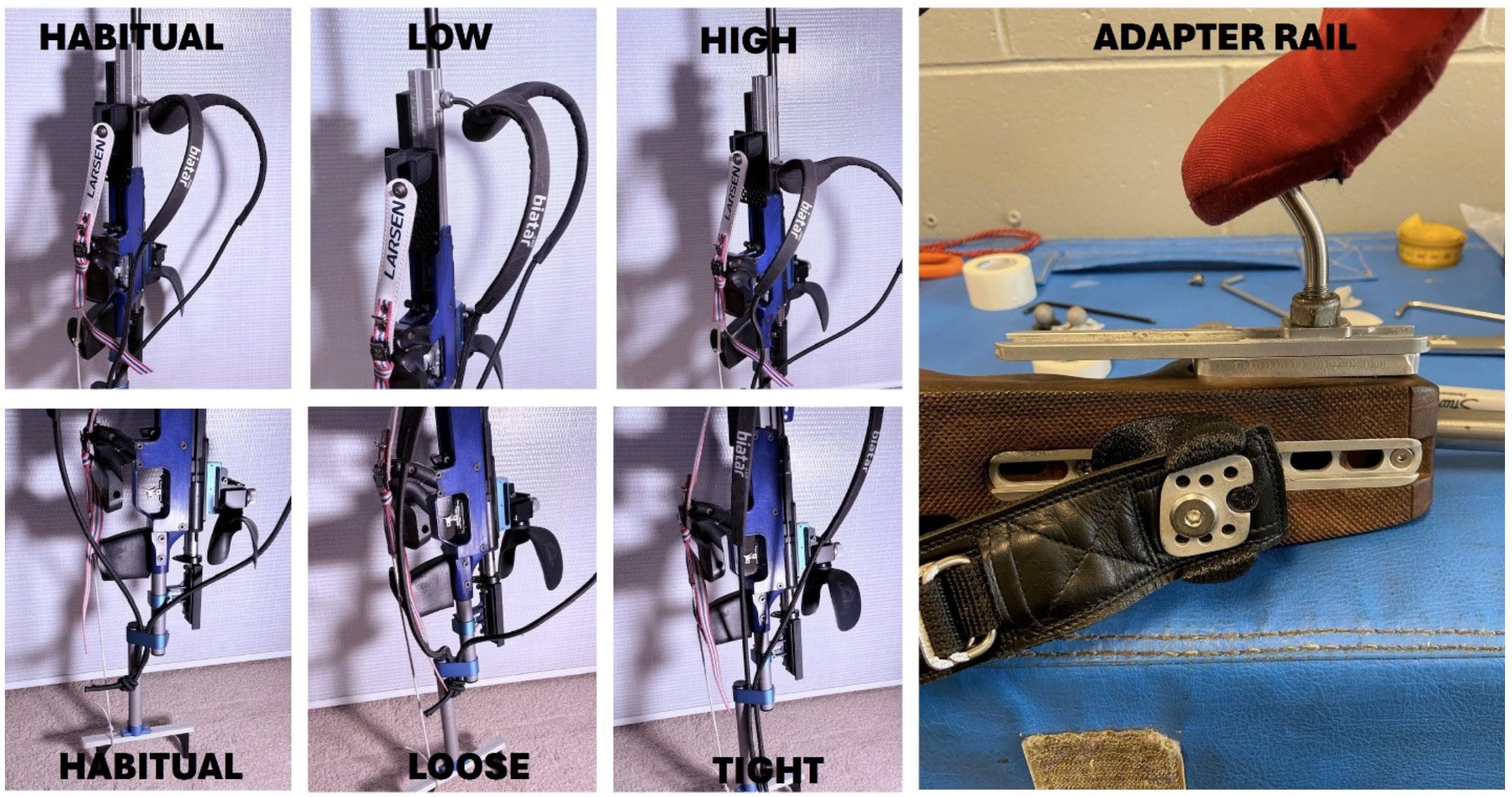
Figure 2. Examples of the habitual harness attachment and tightness (far left), low and hig (middle top), loose and tight (middle bottom) configurations, as well as the adapter rail which was used to fit onto every stock (far right).
Recommendations for Coaches
• When efficiency is the top priority use a rifle carry configuration which places the rifle high on the back with a tight harness. The harness may need to be tighter than the athlete is used to or initially finds comfortable.
• When adjusting harness height or tightness take measurements as small changes can add up to larger differences in physiological or biomechanical responses while skiing.
• While a tight harness was most efficient, it could be beneficial to practice with a loose harness during training, especially when working on developing adaptability in ski techniques. Using a loose harness might create mild instabilities which challenge an athlete’s balance and control, which could be one method for training for less than optimal snow or course conditions.
• While athlete perceptions of equipment set up are helpful, when finalizing a rifle carry configuration objective data from testing and measuring is vital as athlete perceptions may not match physiological or biomechanical reality.


ABOUT THE AUTHOR: ISAAC BURGES
Isaac Burgess is a PHD student in the Department of Food Systems, Nutrition, and Kinesiology at Montana State University. His education and research focuses on leveraging state-of-the-art technology and statistical tools for assessing sport performance through the lens of biomechancis and physiology. His research specifically aims to use wireless technology for assessing nordic skiing and biathlon performance outside of the lab.
ABOUT THE AUTHOR: ETHAN LIVINGOOD
Ethan is a PhD student in the Department of Food Systems, Nutrition, and Kinesiology at Montana State University. His research focuses on physiological and biomechanical factors influencing perfomance in Nordic skiing and biathlon, as well as applying that information in coaching settings with U.S Biathlon and the MSU Nordic Ski Teams. Outside of school he enjoys getting outside in the mountians on skis, foot or bike.
ABOUT THE AUTHOR: JAMES BECKER
Assoc.Prof. James Becker PHD is an Associate Professor in the Department of Food Systems, Nutrition, and Kinesioloy at Montana State University. His research focuses on biomechanical and physiologic factors influencing performance and injury, with particular emphasis on track and field, Nordic skiing, and biathlon. When not in the lab can often be found on the biathlon range trying to hit targets himself or coaching the adult team at the Crosscut Mountain Sports Center.
References: Göpfert, C., et al. (2017). Forward acceleration of the center of mass during skate skiing calculated from force and motion capture data. Sports Engineering. 20, pp. 141-153.
Kårström, M., et al. (2019). Physiological responses to rifle carriage during roller skiing in elite biathletes. Frontiers in Physiology. 10: 1519.
Kårström, M., et al. (2022). Kinematic effects of rifle carriage on roller skiing in welltrained female and male biathletes. Scandinavian Journal of Medicine and Science in Sports. 33, pp. 444 - 454.
Kårström, M., et al. (2022). Rifle carriage affects gear distribution during on-snow skiing in female and male biathletes. Journal of Sports Sciences. 40(24), pp. 2722 – 2731.
Staunton, C., et al. (2022). The effect of rifle carriage on physiological and accelerometer responses during biathlon skiing. Frontiers in Sports and Active Living. 4:813784.
Stöggl, T., et al. (2015). Effect of carrying a rifle in physiology and biomechanical response in biathletes. Medicine & Science in Sport and Exercise. 47(3), pp. 617 – 624.
Zhao, S., et al. (2022). Propulsion calculated by force and displacement of center of mass in treadmill cross country skiing. Sensors. 22, 2777.
Zhao, S., et al. (2024). Contribution and effectiveness of ski and pole forces in selected roller skiing techniques at moderate inclines. Frontiers in Sports and Active Living. 5:948919.
PREPARATION Coaching the mind: Practical guidelines for using soft skills to prepare athletes for competitive events
ZBIGNIEW WAŚKIEWICZ
Institute of Sport Sciences, Jerzy Kukuczka Academy of Physical Education in Katowice
DOI: 10.71006/eyhx3583
In the final days before competition, athletes often encounter escalating psychological demands. Anticipation, internal pressure and performance anxiety may compromise focus and emotional stability. While tactical plans and physical preparation remain essential, coaches are increasingly recognized as relational leaders—individuals who shape the psychological environment in which performance unfolds. Côté and Gilbert (2009) emphasize that effective coaching draws both from technical knowledge and from the coach’s interpersonal and intrapersonal capacities. These include the ability to manage emotional tone, build trust and adapt communication each athlete’s context. Especially under pressure, such relational skills enhance athlete competence, confidence and connection—the foundation of readiness in competitive sport.
COMMUNICATION: FROM INSTRUCTION TO CONNECTION
As competition nears, athletes often enter a state of cognitive saturation and emotional sensitivity. Their responsiveness to complex feedback diminishes, while their attunement to the coach’s tone and demeanor intensifies. In this phase, communication must shift from tactical density to psychological reinforcement. Although Thelwell et al. (2008) did not examine coach communication directly, their findings suggest that unpredictable interpersonal environments and perceived external threats significantly elevate stress levels. Coaches reporting stressors related to opponent behavior, officiating and interpersonal tension often described being emotionally
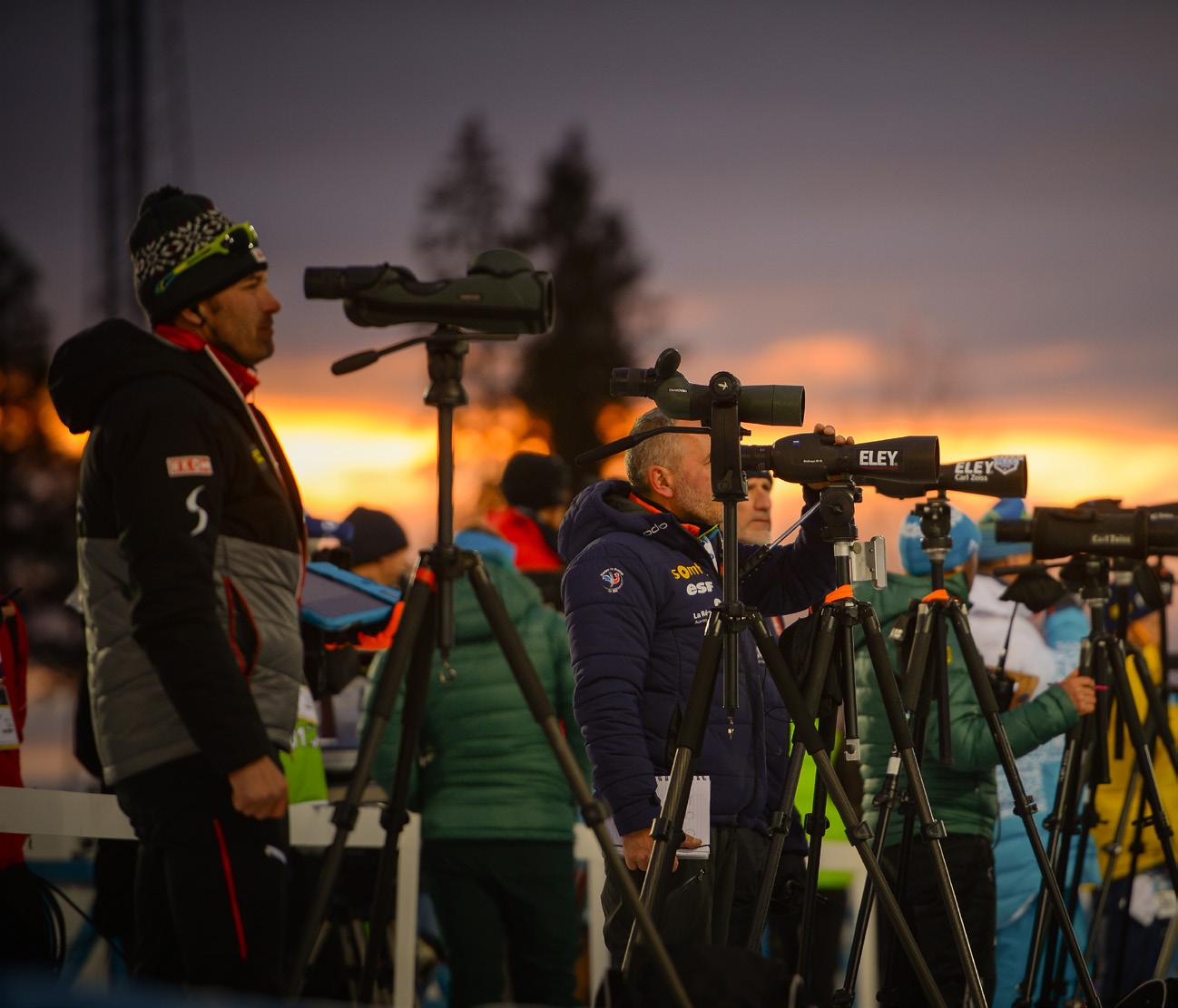
taxed. These observations imply that coach-led emotional clarity through calm verbal cues, steady body language and consistent presence may help buffer athlete anxiety. Communication thus becomes not merely informational but relational: a tool for emotional calibration during moments of strain.
EMPATHY: RECOGNIZING THE PERSON BEHIND THE PERFORMER
Empathy in high-performance contexts is often underappreciated, yet it plays a critical role in athletes’ ability to manage emotional load. Effective empathy is not about over-identification or excessive emotionality, but about accurate perception and timely response to athlete states.
According to Felton and Jowett (2013), athletes’ interpretations of how their coaches relate to them significantly influence their satisfaction of psychological needs such as competence, autonomy and relatedness. When coaches demonstrate respect, emotional presence and attuned responsiveness, athletes are more likely to report wellbeing and psychological readiness. Empathy allows coaches to recognize cues of suppressed anxiety, performance doubt or relational withdrawal. Responding with patience, creating space rather than pushing instruction, can stabilize an athlete in moments of inner turbulence.
MOTIVATION: REFRAMING SUCCESS UNDER PRESSURE
Motivational climate is particularly influential during precompetition periods. When coaches emphasize outcome-based goals or deliver controlling messages, they may inadvertently increase threat perceptions. In contrast, autonomy-supportive coaching enables athletes to retain a sense of agency and internal focus. Amorose and Anderson-Butcher (2007) found that athletes who perceived their coaches as supporting autonomy by encouraging goal setting, acknowledging emotions and offering rationale demonstrated stronger self-determined motivation. Increased feelings of competence, choice and social connection
mediated this relationship. In practice, this means framing performance through controllable processes (e.g., breathing, rhythm, pacing) rather than external comparisons to preserve athlete engagement and reduce anxiety. Coaches who facilitate personal meaning and ownership of goals foster a motivational climate that is resilient under pressure.
EMOTIONAL INTELLIGENCE: LEADERSHIP UNDER PRESSURE
In volatile performance environments, the coach’s regulatory capacities become central. Emotional intelligence (EI) enables coaches to recognize affective patterns in themselves and others, and to respond in ways that stabilize relationships. This capacity is not fixed—it can be cultivated through awareness and reflective practice. Chan and Mallett (2011) argue that EI is not merely an accessory to technical knowledge but a fundamental trait of high-performance coaching. Coaches who effectively deploy EI can regulate their tone, modulate timing and adjust verbal delivery based on their athlete’s emotional state. This is especially relevant during critical performance windows, where minor missteps in communication can destabilize focus. By managing their responses and modeling composure, emotionally intelligent coaches create an environment of safety and control, even as competitive uncertainty escalates.
Figure 1. Conceptual Framework: Mechanisms of Coach Soft Skills in Competitive Preparation.
PREPARATION
INTEGRATING SOFT SKILLS ON EVENT DAY
Competition day is a test of emotional systems as much as physical or tactical systems. Athletes scan for stability, not only within themselves, but in their surroundings. The coach’s behavior in warm-up zones, pre-start huddles and post-event reflections influences athlete affect as much as any training cue. Based on interviews with NCAA Division I coaches, Giacobbi et al. (2004) report that reflective awareness of one’s emotional responses can improve leadership behaviors. Coaches who consciously evaluate how their actions affect athlete motivation are better equipped to adjust in real time. On event day, this might involve resisting the urge to deliver new strategies and instead reinforcing trust and familiarity. After competition, this means listening before evaluating, validating effort before analyzing performance. These subtle actions signal psychological containment and sustain the coach-athlete relationship beyond the event itself.
CONCLUSION
In the high-stakes environment of elite sport, performance is never shaped by physical readiness alone. Relational and emotional factors, how coaches speak, how they listen, how they adapt form the invisible architecture of psychological preparedness. The science is increasingly clear: soft skills such as communication, empathy, emotional intelligence and motivational framing are not secondary tools, but primary instruments of effective coaching under pressure. These relational capacities help athletes feel stable in moments of doubt, focused when tension rises, and valued regardless of outcome. More importantly, they are not innate traits they can be taught, refined and embedded through structured reflection and deliberate practice. Coaches who invest in their relational competence elevate athlete performance and athlete experience.
Not good
• Use short, calming phrases before performance
• Reinforce confidence and preparation
• Match verbal and non-verbal tone
• Speak with clarity and individual focus
• Use athletes’ names and maintain eye contact
• Ask emotional check-in questions (“How are you feeling?”)
• Listen without judgment or fixing
• Normalize nerves and emotional tension
• Demonstrate attentiveness (face athlete, limit distractions)
• Emphasize effort and process-based goals
• Use inclusive language
• Celebrate small wins
• Let athletes define success cues
• Reconnect with purpose and growth
• Self-regulate before team talks (“Am I calm or reactive?”)
• Use reset phrases after setbacks
• Mirror calm, control, and consistency
• Adjust tone to athlete mood
• Greet athletes calmly and maintain routines
• Offer light affirmations during warm-up
• Use short, grounding messages in huddle
• Start debriefs with emotional check-in
• Deliver long or technical corrections on competition day
• Overload athletes with new info
• Raise voice/tension
• Generalize instructions to all athletes
• Be distracted, rushed- or inconsistent in tone
• Dismiss emotions (“Don’t worry about it”)
• Push through visible stress
• Assume silence = readiness
• Check phone or multitask during interactions
• Focus only on outcomes or rankings
• Compare athletes publicly
• Use fear-based messaging
• Give motivational speeches that contradict training
• Over-focus on medals or validation
• React emotionally to mistakes
• Project personal stress onto team
• Ignore own emotional state
• Apply rigid tone regardless of athlete affect
• Change routines or roles last-minute
• Introduce new content on event day
• Critique during warm-up
• Lead with criticism after the event
Figure 2. Soft Skills for Competition Preparation: Practical Dos and Don’ts for Coaches.
Recommendations for Coaches
• Communication: During zeroing and in the call room, keep verbal cues short and precise, “one click right on the rear sight,” “settle into your prone rhythm,” or “ski your lap split pace”, since athletes under pre-race arousal can process sight corrections and range-entry reminders, but not long tactical explanations.
• Empathy: Notice stress signals such as tight rifle handling, hurried prone preparation, or silent withdrawal in the waiting pen; respond with calm body language and presence behind the shooting lane, showing the athlete that they are supported as a person as well as a competitor.
• Motivation: Frame effort in controllable routines, “focus on breathing between shots,” “hold ski tempo through the stadium climb,” “reset after every target”, rather than outcome-based goals like avoiding the penalty loop or chasing rivals, so athletes anchor in their own rhythm and maintain confidence across prone and standing stages.
• Emotional Intelligence: When last-minute changes occur, shifts in wind flags, adjustments to ski selection due to snow, or delays in the start sequence, manage your own stress and model composure; athletes scan coaches for stability, and steady voice, calm gestures, and consistent range board signals reinforce trust in the preparation.

ABOUT THE AUTHOR: ZBIGNIEW WAŚKIEWICZ
Zbigniew Waśkiewicz holds a PhD and is a professor of sport management at the Jerzy Kukuczka Academy of Physical Education in Katowice, focusing on organizational ethics, leadership, and innovative approaches in sport. He has served as President of the Polish Biathlon Association and Vice President of the Polish Olympic Committee, combining academic expertise with practical experience in sport governance.
References: Amorose, A. J., & Anderson-Butcher, D. (2007). Autonomy-supportive coaching and self-determined motivation in high school and college athletes: A test of self-determination theory. Psychology of Sport and Exercise, 8(5), 654–670. https://doi.org/10.1016/j.psychsport.2006.11.003
Chan, J. T., & Mallett, C. J. (2011). The value of emotional intelligence for high performance coaching. International Journal of Sports Science & Coaching, 6(3), 315–328. https://doi.org/10.1260/1747-9541.6.3.315
Côté, J., & Gilbert, W. (2009). An integrative definition of coaching effectiveness and expertise. International Journal of Sports Science & Coaching, 4(3), 307–323. https://doi.org/10.1260/174795409789623892
Felton, L., & Jowett, S. (2013). What do coaches do when they care? The role of the caring climate in coaching and athlete development. Scandinavian Journal of Medicine & Science in Sports, 23(2), e130–e139. https://doi.org/10.1111/sms.12029
Giacobbi, P. R., Lynn, T. K., Wetherington, J. M., Jenkins, J., Bodendorf, M., & Langley, B. (2004). Stress and coping during the transition to NCAA Division I head coaching. The Sport Psychologist, 18(4), 424–445. https://doi.org/10.1123/tsp.18.4.424
Thelwell, R. C., Weston, N. J. V., Greenlees, I. A., & Hutchings, N. V. (2008). Stressors in elite sport: A coach perspective. Journal of Sports Sciences, 26(9), 905–918. https://doi.org/10.1080/02640410801885933
COACH EDUCATION
• Basic Course
• First Level Course
• Second Level Course
• Third Level Course
Click to get more info!
E - LEARNING
Join the IBU LearningSuite and explore the comprehensive hub of knowledge and resources:
• Freely available modules from the IBU Coach Education Programme
• Recordings from all our past webinars and seminars
• Free access to research about Biathlon
Click to register!
WEBINAR
• Athletes Webinar 10.09.2025
• Coach Webinar 02.10.2025
Click to get more info!
HOMEPAGE
Explore the new IBU Academy website for the latest courses, expert advice and key updates. Click to get more info!
NEWSLETTER
Stay connected with the IBU Academy newsletter. Subscribe here!